

2015, Handbook of Jewish Languages
…
66 pages

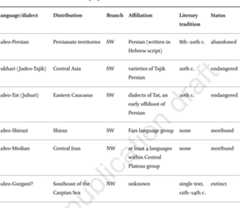
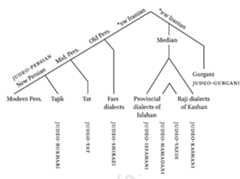
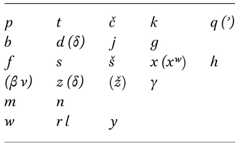
Judeo-PersianEarly Judeo-PersianBukhariJuhuriJudeo-ShiraziJudeo-KashaniJudeo-IsfahaniJudeo-HamadaniJudeo-YazdiJudeo-KermaniHebraismsSecret jargons“Judeo-Iranian Languages,” in Lily Kahn and Aaron D. Rubin, eds., A Handbook of Jewish Languages, Leiden and Boston: Brill, 2015, pp. 234-295; revised paperback edition, 2017, pp. 234-297.

AI
Arabic and Contact-Induced Change, 2020
Navigating Language in the Early Islamic World: Multilingualism and Language Change in the First Centuries of Islam, 2024
New Persian is commonly presented as an anomaly, particularly vis-a-vis Arabic. Nationalistic readings of Iranian history present it as a sign of national unity and "resistance" against Islam and the Arabic language. However, it has been also called the Second Language of Islam. The present article provides a glimpse of the transition from Middle Persian to New Persian in light of the political and social changes in the early Islamic period and proposes one reason for why the language appears first in Central Asia, not in south or southwest Iran, as one might have expected it.
2021
Ninth International Conference on Iranian Linguistics - online, hosted by the Institute of Iranian Studies OeAW-Vienna August 2021
Jewish Languages: Text Specimens, grammatical, lexical and cultural sketches, Porta Linguarum Orientalum, Harrassowitz Publishers, Wiesbaden 2021, pp. 698-710, 2021
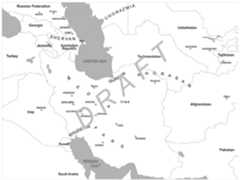
Introduction Juhuri / Judeo-Tat(i) / the Language of the Mountain Jews (zuhun tati; zuhun juhuri) is an Iranian language derived from a spoken form of a sister-language of Early New Persian [NP] and heavily influenced by Azeri Turkic and Russian. It was traditionally spoken in Jewish communities of the Eastern and Northern Caucasus (Northern Azerbaijan, Southern-Central Dagestan, Nalchik, Grozny, and more), known as the Mountain Jews (dağ-çifut; gorskie jevrei; yehudim harariyim / qavqaziyim). All speakers, especially males, were and are multilingual (Azeri and other languages in Azerbaijan, Azeri, and/ or Qumıq and other languages in Dagestan, Balqar/Malqar in Nal'chik, in addition to Russian, and to some extent, Hebrew. By now, the heritage-speakers of Juhuri speak Russian, Hebrew, English, and Azeri, sometimes, even all of these. There are two very similar dialects, the Northern, Derbendi, in Dagestan and Nal'chik, and the Southern, Qubai, in Azerbaijan; the first one is sometimes more archaic than New Persian and is more remote from NP than the second one (Griunberg 1982: 232). Judeo-Tat does not reflect dialectal unity with neighboring Tati dialects, spoken, mostly in the past, by Muslim populations (both Sunni and Shiʿi dialects 1); these Tati Muslim dialects of Azerbaijan and Dagestan, in turn, are to be distinguished from the so-called Southern Tati dialects of northern Iran. 2 On the other hand, Judeo-Tat is close to a dialect of the New Persian type spoken, in the past, by a small Armenian-Grigorian community in northwestern Azerbaijan. During the 19 th and 20 th centuries, Judeo-Tat was adopted by smaller Jewish linguistic minorities of Transcaucasia and northern Caucasus (Neo-Aramaic, Kurdish, Azeri, and probably Adyge-Circassian 3). Though Jewish populations had been recorded in northern and central Dagestan more than a millennium ago, we cannot be certain that there is a continuous link between these Jewish populations and the Mountain Jews of southern Dagestan and northern Azerbaijan. There is no linguistic evidence to support the claim that the Mountain Jews descend from Iranian military colonies established during the Sassanid period (226-641 CE) on

Loading Preview
Sorry, preview is currently unavailable. You can download the paper by clicking the button above.
AI
Judeo-Persian literature, flourishing from the 8th century CE, includes thousands of texts reflecting Jewish cultural identity among Persian speakers across regions such as Iran, Afghanistan, and Central Asia.
The evolution from Early Judeo-Persian to Standard New Persian reflects broader sociolinguistic changes, with significant texts emerging by the 14th century, maintaining Jewish narratives intertwined with Persian literary forms.
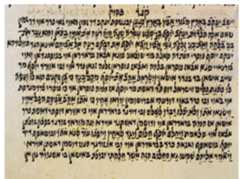
The Cairo Genizah yielded texts dating from the 10th to mid-13th century, containing personal letters and religious writings that illuminate the everyday linguistic experience of Persian-speaking Jews.
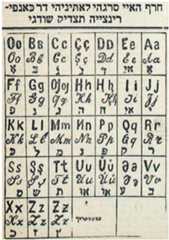
Soviet policies in the 1920s led to the Romanization of Judeo-Bukhari, merging it linguistically with Tajik, ultimately diminishing its distinctiveness as a variation of Persian.
Judeo-Tat exhibits unique phonological and grammatical traits due to substantial influences from surrounding languages, including distinctive verb forms and the use of hybrids within its lexicon.
JJL, 2019
This article studies the native language of the Isfahani Jewish community. A description of the provenance of the community is followed by the sociolinguistic situation in the diaspora. The language description includes phonology, and morphosyntax, with an emphasis on poorly studied features. The paper is supplemented with texts and a glossary. The data was collected in Isfahan and from the diaspora community in New York City.
The Languages of Berkeley: An Online Exhibition, 2020
Discussion of ‘Imrāni's Fath-Nāmeh (15th/16th century CE) and Vera Basch Moreen’s English translation.
Journal of Jewish Languages, 2014
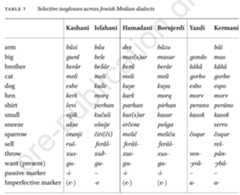
The Iranian languages spoken by the Jews are often lumped under the term “Judeo-Persian.” Yet properly construed, the latter term refers to forms of Persian written with the Hebrew script. The corpus of Judeo-Persian texts is significant for both linguistic and literary reasons, because it includes some of the earliest documents of New Persian, and because it constitutes a sizable literature written by Persian Jews. However, there are also several spoken languages, different from Judeo-Persian, that also belong to the Iranian stock and are associated with Jewish populations in Iran. What we refer to here as “Judeo-Median” are a number of languages that have their core in central Iran and are/were spoken by the Jewry of Isfahan, Kashan, Yazd, and outlying western towns. All of these varieties are on the verge of extinction, both in their original homeland and in diaspora. Belonging to the Northwest group of Iranian languages, Judeo-Median differs from Persian (a Southwest language) not only in pedigree but also in its vocabulary and grammar—rendering it unintelligible to Persian monolinguals. This article studies the Judeo-Median dialects collectively, exhibiting their major similarities and differences, and attempting to enumerate and arrive at a tentative classification.
Journal of Language Studies , 2018
All rights reserved. No part of this book may be reprinted or reproduced or utilized in any form or by any electronic, mechanical, or other means, now known or hereafter invented, including photocopying and recording, or in any information storage or retrieval system, without permission in writing from the publishers.
Post-predicate elements in the Western Asian Transition Zone: A corpus-based approach to areal typology, 2024
This chapter offers a brief overview of the word order typology of Neo-Aramaic dialects spoken by Jewish and Christian minorities of Iran and northeastern Iraq. A characteristic of the dialects in this region is the contact-induced shift from VO to OV word order under the influence of neighbouring Iranian and Turkic languages. In Iranian Azerbaijan, convergence with Azeri has resulted in an additional increase in Adjective-Noun order, and a different treatment of Addressees from Goals. In many respects, however, the constituent order remains consistent with that of so-called VO languages, such as prepositional marking and Noun-Genitive order.
Bulletin Of The Institute Of Oriental Studies (BIOS), 2023
Iranian Studies, 2020
This study concerns the native language of Shirazi Jews, most of whom are living in diasporic communities outside Iran. The language, Judeo-Shirazi, belongs to the Southwest Iranian group, as do most other native languages spoken in southern Iran. As such, Judeo-Shirazi shows general agreements with native rural varieties spoken in inland Fārs. There are however phonological features suggesting that Judeo-Shirazi is an insular survivor of the Medieval Shirazi language, from which sizable literature have survived up to the fifteenth century.
2009
Aspects of Iranian Linguistics introduces readers to recent research into various properties of a number of Iranian languages. The volume consists of twenty chapters that cover a full range of Iranian linguistics, including formal theoretical perspectives (from a syntactic and morphological point of view), typological and functional perspectives, and diachronic and areal perspectives. It also contains papers on computational linguistics and neurolinguistics, as well as the modern history of lexicography in Iran. Various Iranian languages are discussed in this volume, including Hawrami and Kermanji, two of the major dialects of Kurdish, Medival, Classical and Modern Persian, Balochi, Taleshi and Pamir. With the exception of Persian, other Iranian languages had not received much attention in the past. Thus this work, as the first volume ever published on various aspects of these languages and their linguistic properties, is a valuable contribution to our understanding of a less common...
Oxford Handbooks Online, 2018
The Oxford Handbook of Persian Linguistics is a comprehensive volume that offers a detailed overview of the field of Persian linguistics, discusses its development, and captures critical accounts of the cutting edge research within the major subfields of Persian linguistics. The handbook also discusses current debates and suggests productive lines of future research. Chapters are authored by internationally renowned leading scholars in the major subfields. The outline of the book is as follows: Chapter 1 is the introduction; Chapter 2 discusses the linguistic change from the Old to the New Persian; Chapter 3 is a discussion on the typological approaches and dialects; Chapter 4 focuses on phonetics, Chapter 5 on phonology, and Chapter 6 on the prosody. Chapter 7 focuses on generative approaches to Persian syntax, while Chapter 8 discusses other approaches to Persian syntax. Chapter 9 focuses on specific features of Persian syntax. Chapter 10 is on morphology, Chapter 11 on lexicograp...

 Habib Borjian