Shaping the future of climate adaptation through Resilient Reefs
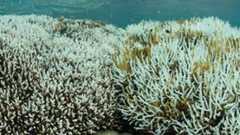
Climate change is today the biggest threat to coral reefs. Under a business-as-usual emissions scenario, nearly 90% of the 29 World Heritage-listed coral reefs are expected to severely bleach twice-per-decade by 2040.
TheResilient Reefs Initiative is a global partnership to support World Heritage reefs, and the communities that depend on them, to adapt to climate change by reducing local threats. Building resilience and adaptation is an essential component of the long-term response to climate change. It requires looking at ecosystems and communities holistically and securing the active and sustained engagement of stakeholders across the private and public sectors.
Resilient Reefs Highlights
The Lagoons of New Caledonia: Reef Diversity and Associated Ecosystems World Heritage site in France took a proactive step to safeguard its coral reefs with the launch of its strategic reef resilience plan. The document is backed by over USD$ 450,000 in project funding.
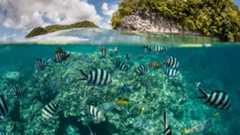
The Rock Islands Southern Lagoon in Palau launched its first comprehensive resilience strategy, in hand with four projects, valued at USD$620,000, each addressing crucial resilience challenges for the marine World Heritage site.
In May 2023, experts in resilience-based management and local teams from marine World Heritage sites met online to share best practices from the Resilient Reefs Initiative on designing and implementing a resilience strategy.
The Strategy for Reef Resilience in Belize was launched in April 2023, alongside initial seed funding to start implementation of priority actions, each addressing an important challenge that will strengthen the resilience of this globally iconic coral reef ecosystem.
In March 2023, the Ningaloo Coast World Heritage site in Australia released a pioneering resilience strategy that is aimed at securing the long-term conservation of the coral reef and its communities in a rapidly changing climate.
On 7 February 2023, leading figures from the Resilient Reefs Initiative led a symposium at the 5th International Marine Protected Area Congress (IMPAC5) on empowering reef communities to adapt to a changing climate.
In October 2022, the global partners of the Resilient Reefs Initiative met to collectively apply the principles of resilience-based management to real life projects being developed to bring positive change to reef and coastal communities in the four pilot sites.
In June 2022, the Resilient Reefs Initiative was launched in Palau with the appointment of its first Chief Resilience Officer, Ms. Andrea Ulchel, and Resilience Advisor, Mr. Ben Carroll.
In the framework of the 2022 UN Ocean Conference, UNESCO hosted a side event highlighting the successes of Resilient Reefs in hand with joint opportunities for prioritization of support to World Heritage-listed reefs as part of UNESCO’s emergency plan for coral reefs.
Led by new Chief Resilience Officer, Ms. Amélie Séchaud, work in the Lagoons of New Caledonia (France) is building momentum as the team refines their Resilience Strategy and moves into the detailed action design and implementation phase.
In January 2022, Resilient Reefs brought together local and global experts in a week-long virtual workshop to collaborate on new solutions to support resilient coastal development around the Belize Barrier Reef Reserve System.
In late 2021, Ningaloo’s Chief Resilience Officer coordinated community volunteers and National Park staff to improve and formalise access to Bundegi Beach following concerns from the community about the level of disturbance caused by frequented and informal 4WD routes.
In September 2021, Resilient Reefs hosted a virtual Solution Exchange, bringing together it’s site partners and their local stakeholders to engage deeply with global experts on challenges relating to advancing sustainable tourism at each pilot site.
TheJournée de la Tortue event on 8 July 2021 resulted in the historic signing of co-management agreements to preserve the green turtle population.by eight tribes within the Isle of Pines region of New Caledonia.
Following in the footsteps of the CROs at the Ningaloo Coast (Australia) and the Lagoons of New Caledonia (France), Ms. Kalene Eck, the newly appointed CRO in Belize, will be tasked with the development of a stakeholder-led climate resilience strategy.
The World Heritage-Listed Ningaloo Coast generates more than 1000 jobs for its local community and contributes over AU$100 million to the economy of Western Australia.
Resilient Reefs introduced its bold, inclusive approach to climate adaptation at the first G20 International Working Group on Coral Reef Conservation in July 2020.
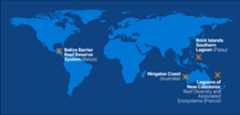
Pilot project sites
The Resilient Reefs Initiative is being developed in an initial four pilot sites including theRock Islands Southern Lagoon (Palau), the Belize Barrier Reef Reserve System (Belize), the Lagoons of New Caledonia: Reef Diversity and Associated Ecosystems (France) andNingaloo Coast (Australia). Australia's Great Barrier Reef plays a key knowledge sharing role in the initiative.
Key pathways to concrete solutions

Local Leadership
Resilient Reefs funds a Chief Resilience Officer (CRO) embedded within the local management organisation at each pilot site. The CRO galvanizes support across private entites, public sectors and local communities to collectively build a Resilience Strategy.

Strategic Planning
The initative provides financial support, capacity building and technical expertise to assist the selected coral reefs to develop a holistic Resilience Strategy. Impact is delivered through innovation and by amplifying work already performed on the ground.

Action Implementation
Implementation is at the heart of the initiative. Once the Resilience Strategy is in place, funding and design support is focussed on implementing solutions critical to strengthen the resilience of communities and ecosystems.

Global Expertise
Through a series of exchanges and sharing of best practices, the initative builds expertise at other coral reefs across the globe toward a holistic approach to resilience and adaptation in which both people and nature thrive.
Delivering resilience
At each pilot site, adoption of a resilience strategy enacts a collective fund of USD$ 2.6 million in collective seed funding, which finances actions to accelerate delivering resilience, leveraging co-funding where possible.
In Palau, Resilient Reefs and its partners are working to identify and secure new sources of revenue streams for sustainable financing, diversify revenue and reduce resliance on the Rock Islands User Fee to ensure resilient and on-going management for the World Heritage site.
In New Caledonia, the Crown of Thorns Starfish participatory monitoring network is being relaunched and made permanent. Local people will be made aware of the risk of COTS and managers will have the knowledge they need to manage this risk and implement management measures.
Resilient Reefs seeks to create a supportive environment for fishing communities in the Belize Barrier Reefs Reserve System to enhance economic resilience to climate change. This is accomplished by investigating additional livelihood opportunities to supplement traditional fishing activities.
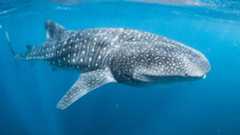
The ability to interact with marine megafauna has become a critical economic activity in the Ningaloo Coast, however this has driven an increase in vessel strikes with marine megafauna. To address this issue, a local community group is assessing and prioritising behaviour change tools that can reduce strikes.
Resilient Reefs is increasing understanding of coral adaptation potential in New Caledonia. This project will produce maps of the probability of coral adaptation to increased water temperature for the regions studied, as well as their inward and outward connectivity.
In collaboration with government and NGO partners, Resilient Reefs is updating the coastal-marine land tenure inventory for Belize. It is a key building block for a national blue carbon framework and will enable engagement with coastal stakeholders on the development of better policies, plans, practices, and actions to protect and restore coastal habitats.
Resilient Reefs is working to improve water quality by reducing land-based sources of pollution on the coral reef. The project is evaluating native plants for firebreaks, aiming to reduce soil erosion and coral destruction caused by wildfires.
Resilient Reefs is supporting outreach and advocacy around the need for the first ever fisheries management plan in the Koror State, as well as an assessment of local capacity to deliver on it.
To build the resilience of the marine ecosystem, Resilient Reefs is supporting the assessment of the health and resilience of coastal marine ecosystems and quantification of thresholds, which will inform sustainable adaptive management approaches towards system resilience.
Resilient Reefs is strengthening adaptive management and stakeholder engagement in Belize to respond to long-term threats and build restoration solutions. This locally-driven action will build national capacity in data analysis and data dissemination as well as stakeholder capacity to respond to reef threats.
Resilient Reefs is supporting a local community group to capture community and tourist concerns about the health of the local coral ecosystem within the Bills Bay area of Ningaloo Coast, and provide opportunities for interactive education and monitoring activities.
Working with the New Caledonia Coastal Observatory and the Observatoire du Littoral de Nouvelle-Calédonie, Resilient Reefs is developing a communication strategy on coastal risk caused by climate change to raise awareness, train, and educate local communities.
A Reef Restoration Framework for the Ningaloo Coast was developed, which sets the stage for coordinated research and learning, mitigates risks of restoration, and ensures that trials are designed in partnership with Traditional Owners, tourism operators, and community members.
Resilient Reefs supported athree-day event in 2021 on the sustainable management of turtles where eight tribal groups reconciled the importance of maintaining traditional customs with the critical need to protect and preserve the dwindling green turtle population.
Resilient Reefs delivered trainings to support managers in New Caledonia's Northern Province, including reviewing the local plan using the Reef Resilience Framework, identifying opportunities for redesigning actions to deliver more co-benefits, as well as recommendations for addressing gaps in communication, monitoring and evaluation and funding.
Aneconomic valuation was funded for the Ningaloo Coast World Heritage site, showing that Ningaloo’s reef contributes AUD$100M and 1,000 sustainable, full-time jobs, primarily in the tourism industry, to the local economy.
Helping to advance knowledge exchange and co-management with indigenous communities, Resilient Reefs hosted cultural mapping workshops with Traditional Owners at the Ningaloo Coast that documented tens of thousands of years of local Indigenous knowledge in Western Australia. The outputs of this project are owned by the Traditional Owners.
In 2020, Resilient Reefs contracted leading global experts to facilitate training for the local management team based in New Caledonia’s Northern Province. The main objective of the workshop was to pragmatically strengthen the capacities of the managers of freshwater environments and resources in the Northern Province.
Resilient Reefs funded a study that investigated opportunities for a payment mechanism for Marine Protected Areas in New Caledonia. The study explored a range of potential innovative user pays fee options for MPAs.
A rapid review of the Environmental Impact Assessment for dumping dredge spoil from Port of Belize was conducted by an external consultancy to support the local Belize team.
A week-long, virtual accelerator was organised bringing together local stakeholders, students, scholars, practitioners, and policy makers. Participants uncovered systematic challenges and opportunities related to coastal development and impacts on the reef, water quality, infrastructure, and livelihoods along Belize's coast.
With thanks to our partners
Initiated by the Great Barrier Reef Foundation, theResilient Reefs initiative is asix-year AUD$14 million (approximately USD$10.5 million at the time of writing) collaboration between the Nature Conservancy's Reef Resilience Network, the Center for Resilient Cities and Landscapes at Columbia University, the Resilient Cities Catalyst, UNESCO and AECOM. The program is supported by the BHP Foundation.


Photos: © Joel Johnsson/DBCA, © UNESCO 2023