The History of Tres Leches Cake Can Be Traced To Nestlé Cans, Nuns, And Maybe The Balkans
February 21, 2024
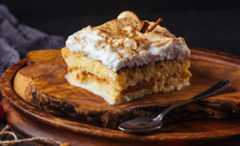
Tres leches: the soft, milk-soakedcake of our youth, always topped with merengue that makes usdance in our seats more than aJuan Luis Guerra song. The iconic Latino cake is known for its mix of evaporated, condensed, and whole milk, plus shiny merengue and, usually, an abuela-approved maraschino cherry on top. Harkening back to childhood birthday parties, Nochebuena, and other special occasions, you may know tres leches all too well. But do you know the cake’s history?
Tres Leches – Classic latino cake soaked in traditional three milks topped with merengue. 💕pic.twitter.com/hKwkwVz39n
— Son Cubano Restaurant (@SonCubanoNJ)May 28, 2020
Tres leches is the kind of Latino food that all of our countries have seemed to claim at some point. Is it Mexican? Nicaraguan? Puerto Rican? Well, the classic dessert’s story is actually pretty complex. It’s so complex that tres leches might even have shared roots with the Balkan-style “trileçe” cake and can be traced back toSpanish nunsandNestlé packaging.
Brace yourself for a ride through the merengue-topped mountains of Tres Leches’ surprising transatlantic history.
So, which country gets the Tres Leches’ claim to fame?
It seems like tres leches originated in several different countries many centuries ago. For one, in an interview withThrillist, Mexican chef Pati Jinich said the cake can be traced back to Spanish colonialism. “We owe many Mexican sweets to Spanish nuns that were baking in the convents,” she described.
Similarly,Food52 also traces the dessert to Europe— well, sort of. Sources from Nicaragua remember eating tres leches at high-society parties in Managua throughout the 20th century. However, the cake had a different name— it was referred to as delicias suecas, or Swedish delights. So, is this classic Latino cake, actually… Swedish? Not quite.
As per the outlet, tres leches may have roots in England as far back as the Middle Ages. During that time, the English developed a dessert called the trifle cake, which also involves soaking layers and adding cream or merengue.
Proving how global tres leches really is, we also have its“Balkan cousin” trileçe. Wildly similar to the cake we know and love, trileçe is popular in countries like Albania and Turkey. Speaking about the similarities, Macedonia-born chef İdris Bey toldCulinary Backstreets that tres leches and trileçe have shared roots. “Of course, it’s an old Spanish cake, as far as I know. Maybe Portugal.” Interestingly, another chef told the outlet that the dessert is a “traditional Albanian cake” he remembers from the 1940s.
Meanwhile, evenThe Washington Post took a deep dive into tres leches’ origins and found ittook off during 1800s Latin American industrialization. Why? Factories sold canned milk, which became the classic dessert’s star ingredient.
Now, anotherplot twist in merengue-topped history. While countries like Nicaragua and Mexico claim the cake as their own… so does Nestlé?
Yes, theNestlé corporation says they started printing the O.G. tres leches recipe on their condensed milk cans back in the early 1900s. The company’s recipe no doubt popularized the dessert, especially around the 1940s. But did Nestlé invent it?Debatable.
Love a good tres leches cake 😋pic.twitter.com/0gaM5IVACe
— Duh-Nitra🥥🌴 (@__OhSoYouNitra)February 15, 2024
So, who invented tres leches? It seems like Spanish colonization— and thecows and wheat they brought along— plus Latin American ingenuityandthe rise of canned milk all played a role.
Moreover, some think the dessert has more cousins (yes, a big family) throughout Latin America. For one, itmay share roots with the Mexican classic torta en leche, another milk-soaked sponge cake. Meanwhile, as perAustin Chronicle, Mexican chef Patricia Quintana says in her book “The Taste of Mexico” that tres leches can be traced to sweet delicacies from Sinaloa. In fact, it is similar to many age-old Latino desserts, includingsopa borracha and ante de suecas.
By the 1980s, Nicaraguan-run Miami restaurant Los Ranchos popularized tres leches even further. In fact, as per The Washington Post, the restaurant printed its iconic recipe on fliers— which surely spread the cake to Latino birthdayseverywhere.
So where is this classic cake from, after all? New York University food studies professor Lourdes Castro told theWall Street Journal, “While many Latin American countries like to claim ownership to the origin of the tres leches dessert, it belongs to Nicaragua—although some claim it started in Mexico.”
A-ha. With so many countries continuing to claim the cake as their own, this is quite a controversial debate. So, like the Chupacabra and La Llorona, let’s just file tres leches under “Big Latino Mysteries.”
craving some tres leches cake… mi gente latino
— mariam (@RIABOMBSHELL)January 17, 2024