#include <msgfmt.h>
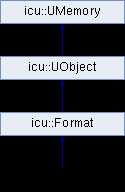
Public Types | |
| enum | EFormatNumber {kMaxFormat = 10 } |
| Enum type for kMaxFormat.More... | |
Public Member Functions | |
| U_I18N_API | MessageFormat (constUnicodeString &pattern,UErrorCode &status) |
| Constructs a newMessageFormat using the given pattern and the default locale.More... | |
| U_I18N_API | MessageFormat (constUnicodeString &pattern, constLocale &newLocale,UErrorCode &status) |
| Constructs a newMessageFormat using the given pattern and locale.More... | |
| U_I18N_API | MessageFormat (constUnicodeString &pattern, constLocale &newLocale,UParseError &parseError,UErrorCode &status) |
| Constructs a newMessageFormat using the given pattern and locale.More... | |
| U_I18N_API | MessageFormat (constMessageFormat &) |
| Constructs a newMessageFormat from an existing one.More... | |
| U_I18N_API constMessageFormat & | operator= (constMessageFormat &) |
| Assignment operator.More... | |
| virtualU_I18N_API | ~MessageFormat () |
| Destructor.More... | |
| virtualU_I18N_APIMessageFormat * | clone () const override |
| Clones thisFormat object polymorphically.More... | |
| virtualU_I18N_API bool | operator== (constFormat &other) const override |
| Returns true if the givenFormat objects are semantically equal.More... | |
| virtualU_I18N_API void | setLocale (constLocale &theLocale) |
| Sets the locale to be used for creating argumentFormat objects.More... | |
| virtualU_I18N_API constLocale & | getLocale () const |
| Gets the locale used for creating argumentFormat objects.More... | |
| virtualU_I18N_API void | applyPattern (constUnicodeString &pattern,UErrorCode &status) |
| Applies the given pattern string to this message format.More... | |
| virtualU_I18N_API void | applyPattern (constUnicodeString &pattern,UParseError &parseError,UErrorCode &status) |
| Applies the given pattern string to this message format.More... | |
| virtualU_I18N_API void | applyPattern (constUnicodeString &pattern,UMessagePatternApostropheMode aposMode,UParseError *parseError,UErrorCode &status) |
| Sets the UMessagePatternApostropheMode and the pattern used by this message format.More... | |
| U_I18N_APIUMessagePatternApostropheMode | getApostropheMode () const |
| virtualU_I18N_APIUnicodeString & | toPattern (UnicodeString &appendTo) const |
| Returns a pattern that can be used to recreate this object.More... | |
| virtualU_I18N_API void | adoptFormats (Format **formatsToAdopt, int32_t count) |
| Sets subformats.More... | |
| virtualU_I18N_API void | setFormats (constFormat **newFormats, int32_t cnt) |
| Sets subformats.More... | |
| virtualU_I18N_API void | adoptFormat (int32_t formatNumber,Format *formatToAdopt) |
| Sets one subformat.More... | |
| virtualU_I18N_API void | setFormat (int32_t formatNumber, constFormat &format) |
| Sets one subformat.More... | |
| virtualU_I18N_APIStringEnumeration * | getFormatNames (UErrorCode &status) |
| Gets format names.More... | |
| virtualU_I18N_APIFormat * | getFormat (constUnicodeString &formatName,UErrorCode &status) |
| Gets subformat pointer for given format name.More... | |
| virtualU_I18N_API void | setFormat (constUnicodeString &formatName, constFormat &format,UErrorCode &status) |
| Sets one subformat for given format name.More... | |
| virtualU_I18N_API void | adoptFormat (constUnicodeString &formatName,Format *formatToAdopt,UErrorCode &status) |
| Sets one subformat for given format name.More... | |
| virtualU_I18N_API constFormat ** | getFormats (int32_t &count) const |
| Gets an array of subformats of this object.More... | |
| U_I18N_APIUnicodeString & | format (constFormattable *source, int32_t count,UnicodeString &appendTo,FieldPosition &ignore,UErrorCode &status) const |
| Formats the given array of arguments into a user-readable string.More... | |
| virtualU_I18N_APIUnicodeString & | format (constFormattable &obj,UnicodeString &appendTo,FieldPosition &pos,UErrorCode &status) const override |
| Formats the given array of arguments into a user-readable string.More... | |
| U_I18N_APIUnicodeString & | format (constUnicodeString *argumentNames, constFormattable *arguments, int32_t count,UnicodeString &appendTo,UErrorCode &status) const |
| Formats the given array of arguments into a user-defined argument name array.More... | |
| virtualU_I18N_APIFormattable * | parse (constUnicodeString &source,ParsePosition &pos, int32_t &count) const |
| Parses the given string into an array of output arguments.More... | |
| virtualU_I18N_APIFormattable * | parse (constUnicodeString &source, int32_t &count,UErrorCode &status) const |
| Parses the given string into an array of output arguments.More... | |
| virtualU_I18N_API void | parseObject (constUnicodeString &source,Formattable &result,ParsePosition &pos) const override |
| Parses the given string into an array of output arguments stored within a singleFormattable of type kArray.More... | |
| U_I18N_APIUBool | usesNamedArguments () const |
| Returns true if thisMessageFormat uses named arguments, and false otherwise.More... | |
| U_I18N_API int32_t | getArgTypeCount () const |
| This API is for ICU internal use only.More... | |
| virtualU_I18N_APIUClassID | getDynamicClassID () const override |
| Returns a unique class ID POLYMORPHICALLY.More... | |
| U_I18N_APIUnicodeString & | format (constFormattable &obj,UnicodeString &appendTo,UErrorCode &status) const |
| Formats an object to produce a string.More... | |
| virtualU_I18N_APIUnicodeString & | format (constFormattable &obj,UnicodeString &appendTo,FieldPosition &pos,UErrorCode &status) const=0 |
| Format an object to produce a string.More... | |
| virtualU_I18N_APIUnicodeString & | format (constFormattable &obj,UnicodeString &appendTo,FieldPositionIterator *posIter,UErrorCode &status) const |
| Format an object to produce a string.More... | |
 Public Member Functions inherited fromicu::Format Public Member Functions inherited fromicu::Format | |
| virtualU_I18N_API | ~Format () |
| Destructor.More... | |
| U_I18N_API bool | operator!= (constFormat &other) const |
| Return true if the givenFormat objects are not semantically equal.More... | |
| U_I18N_APIUnicodeString & | format (constFormattable &obj,UnicodeString &appendTo,UErrorCode &status) const |
| Formats an object to produce a string.More... | |
| virtualU_I18N_APIUnicodeString & | format (constFormattable &obj,UnicodeString &appendTo,FieldPositionIterator *posIter,UErrorCode &status) const |
| Format an object to produce a string.More... | |
| U_I18N_API void | parseObject (constUnicodeString &source,Formattable &result,UErrorCode &status) const |
| Parses a string to produce an object.More... | |
| U_I18N_APILocale | getLocale (ULocDataLocaleType type,UErrorCode &status) const |
| Get the locale for this format object.More... | |
| U_I18N_API const char * | getLocaleID (ULocDataLocaleType type,UErrorCode &status) const |
| Get the locale for this format object.More... | |
| Public Member Functions inherited fromicu::UObject | |
| virtual | ~UObject () |
| Destructor.More... | |
Static Public Member Functions | |
| staticU_I18N_APIUnicodeString & | format (constUnicodeString &pattern, constFormattable *arguments, int32_t count,UnicodeString &appendTo,UErrorCode &status) |
| Formats the given array of arguments into a user-readable string using the given pattern.More... | |
| staticU_I18N_APIUnicodeString | autoQuoteApostrophe (constUnicodeString &pattern,UErrorCode &status) |
| Convert an 'apostrophe-friendly' pattern into a standard pattern.More... | |
| staticU_I18N_APIUClassID | getStaticClassID () |
| Return the class ID for this class.More... | |
| staticU_I18N_APIUBool | equalFormats (const void *left, const void *right) |
| Compares twoFormat objects.More... | |
Friends | |
| class | MessageFormatAdapter |
Additional Inherited Members | |
| Protected Member Functions inherited fromicu::Format | |
| U_I18N_API void | setLocaleIDs (const char *valid, const char *actual) |
| U_I18N_API | Format () |
| Default constructor for subclass use only.More... | |
| U_I18N_API | Format (constFormat &) |
| U_I18N_APIFormat & | operator= (constFormat &) |
| Static Protected Member Functions inherited fromicu::Format | |
| staticU_I18N_API void | syntaxError (constUnicodeString &pattern, int32_t pos,UParseError &parseError) |
| Simple function for initializing aUParseError from aUnicodeString.More... | |
Detailed Description
MessageFormat prepares strings for display to users, with optional arguments (variables/placeholders). The arguments can occur in any order, which is necessary for translation into languages with different grammars.
AMessageFormat is constructed from apattern string with arguments in {curly braces} which will be replaced by formatted values.
MessageFormat differs from the otherFormat classes in that you create aMessageFormat object with one of its constructors (not with acreateInstance style factory method). Factory methods aren't necessary becauseMessageFormat itself doesn't implement locale-specific behavior. Any locale-specific behavior is defined by the pattern that you provide and the subformats used for inserted arguments.
Arguments can be named (using identifiers) or numbered (using small ASCII-digit integers). Some of the API methods work only with argument numbers and throw an exception if the pattern has named arguments (seeusesNamedArguments()).
An argument might not specify any format type. In this case, a numeric value is formatted with a default (for the locale)NumberFormat, and a date/time value is formatted with a default (for the locale)DateFormat.
An argument might specify a "simple" type for which the specifiedFormat object is created, cached and used.
An argument might have a "complex" type with nestedMessageFormat sub-patterns. During formatting, one of these sub-messages is selected according to the argument value and recursively formatted.
After construction, a customFormat object can be set for a top-level argument, overriding the default formatting and parsing behavior for that argument. However, custom formatting can be achieved more simply by writing a typeless argument in the pattern string and supplying it with a preformatted string value.
When formatting,MessageFormat takes a collection of argument values and writes an output string. The argument values may be passed as an array (when the pattern contains only numbered arguments) or as an array of names and and an array of arguments (which works for both named and numbered arguments).
Each argument is matched with one of the input values by array index or argument name and formatted according to its pattern specification (or using a customFormat object if one was set). A numbered pattern argument is matched with an argument name that contains that number as an ASCII-decimal-digit string (without leading zero).
Patterns and Their Interpretation
MessageFormat uses patterns of the following form:
message = messageText (argument messageText)*argument = noneArg | simpleArg | complexArgcomplexArg = choiceArg | pluralArg | selectArg | selectordinalArgnoneArg = '{' argNameOrNumber '}'simpleArg = '{' argNameOrNumber ',' argType [',' argStyle] '}'choiceArg = '{' argNameOrNumber ',' "choice" ',' choiceStyle '}'pluralArg = '{' argNameOrNumber ',' "plural" ',' pluralStyle '}'selectArg = '{' argNameOrNumber ',' "select" ',' selectStyle '}'selectordinalArg = '{' argNameOrNumber ',' "selectordinal" ',' pluralStyle '}'choiceStyle: seeChoiceFormatpluralStyle: seePluralFormatselectStyle: seeSelectFormatargNameOrNumber = argName | argNumberargName = [^[[:Pattern_Syntax:][:Pattern_White_Space:]]]+argNumber = '0' | ('1'..'9' ('0'..'9')*)argType = "number" | "date" | "time" | "spellout" | "ordinal" | "duration"argStyle = "short" | "medium" | "long" | "full" | "integer" | "currency" | "percent" | argStyleText | "::" argSkeletonText- messageText can contain quoted literal strings including syntax characters. A quoted literal string begins with an ASCII apostrophe and a syntax character (usually a {curly brace}) and continues until the next single apostrophe. A double ASCII apostrophe inside or outside of a quoted string represents one literal apostrophe.
- Quotable syntax characters are the {curly braces} in all messageText parts, plus the '#' sign in a messageText immediately inside a pluralStyle, and the '|' symbol in a messageText immediately inside a choiceStyle.
- See alsoUMessagePatternApostropheMode
- In argStyleText, every single ASCII apostrophe begins and ends quoted literal text, and unquoted {curly braces} must occur in matched pairs.
Recommendation: Use the real apostrophe (single quote) character ’ (U+2019) for human-readable text, and use the ASCII apostrophe ' (U+0027) only in program syntax, like quoting inMessageFormat. See the annotations for U+0027 Apostrophe in The Unicode Standard.
Thechoice argument type is deprecated. Useplural arguments for proper plural selection, andselect arguments for simple selection among a fixed set of choices.
TheargType andargStyle values are used to create aFormat instance for the format element. The following table shows how the values map toFormat instances. Combinations not shown in the table are illegal. AnyargStyleText must be a valid pattern string for theFormat subclass used.
| argType | argStyle | resultingFormat object |
|---|---|---|
| (none) | null | |
number | (none) | NumberFormat.createInstance(getLocale(), status) |
integer | NumberFormat.createInstance(getLocale(), kNumberStyle, status) | |
currency | NumberFormat.createCurrencyInstance(getLocale(), status) | |
percent | NumberFormat.createPercentInstance(getLocale(), status) | |
| argStyleText | newDecimalFormat(argStyleText, new DecimalFormatSymbols(getLocale(), status), status) | |
| argSkeletonText | NumberFormatter::forSkeleton(argSkeletonText, status).locale(getLocale()).toFormat(status) | |
date | (none) | DateFormat.createDateInstance(kDefault, getLocale(), status) |
short | DateFormat.createDateInstance(kShort, getLocale(), status) | |
medium | DateFormat.createDateInstance(kDefault, getLocale(), status) | |
long | DateFormat.createDateInstance(kLong, getLocale(), status) | |
full | DateFormat.createDateInstance(kFull, getLocale(), status) | |
| argStyleText | new SimpleDateFormat(argStyleText, getLocale(), status) | |
| argSkeletonText | DateFormat::createInstanceForSkeleton(argSkeletonText, getLocale(), status) | |
time | (none) | DateFormat.createTimeInstance(kDefault, getLocale(), status) |
short | DateFormat.createTimeInstance(kShort, getLocale(), status) | |
medium | DateFormat.createTimeInstance(kDefault, getLocale(), status) | |
long | DateFormat.createTimeInstance(kLong, getLocale(), status) | |
full | DateFormat.createTimeInstance(kFull, getLocale(), status) | |
| argStyleText | new SimpleDateFormat(argStyleText, getLocale(), status) | |
spellout | argStyleText (optional) | new RuleBasedNumberFormat(URBNF_SPELLOUT, getLocale(), status) |
ordinal | argStyleText (optional) | new RuleBasedNumberFormat(URBNF_ORDINAL, getLocale(), status) |
duration | argStyleText (optional) | new RuleBasedNumberFormat(URBNF_DURATION, getLocale(), status) |
Argument formatting
Arguments are formatted according to their type, using the default ICU formatters for those types, unless otherwise specified.
There are also several ways to control the formatting.
We recommend you use default styles, predefined style values, skeletons, or preformatted values, but not pattern strings or custom format objects.
For more details, see theICU User Guide.
Usage Information
Here are some examples of usage: Example 1:
UErrorCode success =U_ZERO_ERROR;GregorianCalendar cal(success);Formattable arguments[] = {7L,Formattable( (Date) cal.getTime(success), Formattable::kIsDate),"a disturbance in the Force"};UnicodeString result;"At {1,time,::jmm} on {1,date,::dMMMM}, there was {2} on planet {0,number}.",arguments, 3, result, success );cout <<"result: " << result << endl;//<output>: At 4:34 PM on March 23, there was a disturbance// in the Force on planet 7.U_I18N_API UnicodeString & format(const Formattable &obj, UnicodeString &appendTo, UErrorCode &status) constFormats an object to produce a string.
Typically, the message format will come from resources, and the arguments will be dynamically set at runtime.
Example 2:
success =U_ZERO_ERROR;Formattable testArgs[] = {3L,"MyDisk"};MessageFormat form("The disk \"{1}\" contains {0} file(s).", success );UnicodeString string;FieldPosition fpos = 0;cout <<"format: " << form.format(testArgs, 2,string, fpos, success ) << endl;// output, with different testArgs:// output: The disk "MyDisk" contains 0 file(s).// output: The disk "MyDisk" contains 1 file(s).// output: The disk "MyDisk" contains 1,273 file(s).U_I18N_API MessageFormat(const UnicodeString &pattern, UErrorCode &status)Constructs a new MessageFormat using the given pattern and the default locale.
For messages that include plural forms, you can use a plural argument:
output:There are no files on disk "MyDisk".There are 3 files on "MyDisk".success =U_ZERO_ERROR;MessageFormat msgFmt("{num_files, plural, ""=0{There are no files on disk \"{disk_name}\".}""=1{There is one file on disk \"{disk_name}\".}""other{There are # files on disk \"{disk_name}\".}}",Locale("en"),success);FieldPosition fpos = 0;Formattable testArgs[] = {0L,"MyDisk"};UnicodeString testArgsNames[] = {"num_files","disk_name"};UnicodeString result;cout << msgFmt.format(testArgs, testArgsNames, 2, result, fpos, 0, success);testArgs[0] = 3L;cout << msgFmt.format(testArgs, testArgsNames, 2, result, fpos, 0, success);
SeePluralFormat andPluralRules for details.
Synchronization
MessageFormats are not synchronized. It is recommended to create separate format instances for each thread. If multiple threads access a format concurrently, it must be synchronized externally.
- Stable:
- ICU 2.0
Member Enumeration Documentation
◆ EFormatNumber
Constructor & Destructor Documentation
◆ MessageFormat()[1/4]
| U_I18N_API icu::MessageFormat::MessageFormat | ( | constUnicodeString & | pattern, |
| UErrorCode & | status | ||
| ) |
Constructs a newMessageFormat using the given pattern and the default locale.
- Parameters
pattern Pattern used to construct object. status Input/output error code. If the pattern cannot be parsed, set to failure code.
- Stable:
- ICU 2.0
◆ MessageFormat()[2/4]
| U_I18N_API icu::MessageFormat::MessageFormat | ( | constUnicodeString & | pattern, |
| constLocale & | newLocale, | ||
| UErrorCode & | status | ||
| ) |
Constructs a newMessageFormat using the given pattern and locale.
- Parameters
pattern Pattern used to construct object. newLocale The locale to use for formatting dates and numbers. status Input/output error code. If the pattern cannot be parsed, set to failure code.
- Stable:
- ICU 2.0
◆ MessageFormat()[3/4]
| U_I18N_API icu::MessageFormat::MessageFormat | ( | constUnicodeString & | pattern, |
| constLocale & | newLocale, | ||
| UParseError & | parseError, | ||
| UErrorCode & | status | ||
| ) |
Constructs a newMessageFormat using the given pattern and locale.
- Parameters
pattern Pattern used to construct object. newLocale The locale to use for formatting dates and numbers. parseError Struct to receive information on the position of an error within the pattern. status Input/output error code. If the pattern cannot be parsed, set to failure code.
- Stable:
- ICU 2.0
◆ MessageFormat()[4/4]
| U_I18N_API icu::MessageFormat::MessageFormat | ( | constMessageFormat & | ) |
Constructs a newMessageFormat from an existing one.
- Stable:
- ICU 2.0
◆ ~MessageFormat()
| virtual |
Destructor.
- Stable:
- ICU 2.0
Member Function Documentation
◆ adoptFormat()[1/2]
| virtual |
Sets one subformat for given format name.
See the class description about format name. This function supports both named and numbered arguments– if numbered, the formatName is the corresponding UnicodeStrings (e.g. "0", "1", "2"...). If there is no matched formatName or wrong type, the item will be ignored. The caller should not delete theFormat object after this call.
- Parameters
formatName Name of the subformat. formatToAdopt Format to be adopted. status output param set to success/failure code.
- Stable:
- ICU 4.0
◆ adoptFormat()[2/2]
| virtual |
Sets one subformat.
See the class description about format numbering. The caller should not delete theFormat object after this call. If the number is over the number of formats already set, the item will be deleted and ignored.
If this format uses named arguments, the new format is discarded and this format remains unchanged.
- Stable:
- ICU 2.0
- Parameters
formatNumber index of the subformat. formatToAdopt the format to be adopted.
◆ adoptFormats()
| virtual |
Sets subformats.
See the class description about format numbering. The caller should not delete theFormat objects after this call.The array formatsToAdopt is not itself adopted. Its ownership is retained by the caller. If the call fails because memory cannot be allocated, then the formats will be deleted by this method, and this object will remain unchanged.
If this format uses named arguments, the new formats are discarded and this format remains unchanged.
- Stable:
- ICU 2.0
- Parameters
formatsToAdopt the format to be adopted. count the size of the array.
◆ applyPattern()[1/3]
| virtual |
Applies the given pattern string to this message format.
- Parameters
pattern The pattern to be applied. status Input/output error code. If the pattern cannot be parsed, set to failure code.
- Stable:
- ICU 2.0
◆ applyPattern()[2/3]
| virtual |
Sets the UMessagePatternApostropheMode and the pattern used by this message format.
Parses the pattern and cachesFormat objects for simple argument types. Patterns and their interpretation are specified in theclass description.
This method is best used only once on a given object to avoid confusion about the mode, and after constructing the object with an empty pattern string to minimize overhead.
- Parameters
pattern The pattern to be applied. aposMode The new apostrophe mode. parseError Struct to receive information on the position of an error within the pattern. Can be nullptr. status Input/output error code. If the pattern cannot be parsed, set to failure code.
- Stable:
- ICU 4.8
◆ applyPattern()[3/3]
| virtual |
Applies the given pattern string to this message format.
- Parameters
pattern The pattern to be applied. parseError Struct to receive information on the position of an error within the pattern. status Input/output error code. If the pattern cannot be parsed, set to failure code.
- Stable:
- ICU 2.0
◆ autoQuoteApostrophe()
| static |
Convert an 'apostrophe-friendly' pattern into a standard pattern.
Standard patterns treat all apostrophes as quotes, which is problematic in some languages, e.g. French, where apostrophe is commonly used. This utility assumes that only an unpaired apostrophe immediately before a brace is a true quote. Other unpaired apostrophes are paired, and the resulting standard pattern string is returned.
Note it is not guaranteed that the returned pattern is indeed a valid pattern. The only effect is to convert between patterns having different quoting semantics.
- Parameters
pattern the 'apostrophe-friendly' patttern to convert status Input/output error code. If the pattern cannot be parsed, the failure code is set.
- Returns
- the standard equivalent of the original pattern
- Stable:
- ICU 3.4
◆ clone()
| overridevirtual |
Clones thisFormat object polymorphically.
The caller owns the result and should delete it when done.
- Stable:
- ICU 2.0
Implementsicu::Format.
◆ equalFormats()
| static |
◆ format()[1/7]
| overridevirtual |
Formats the given array of arguments into a user-readable string.
The array must be stored within a singleFormattable object of type kArray. If theFormattable object type is not of type kArray, then returns a failing UErrorCode.
If this format uses named arguments, appendTo is unchanged and status is set to U_ILLEGAL_ARGUMENT_ERROR.
- Parameters
obj AFormattable of type kArray containing arguments to be formatted. appendTo Output parameter to receive result. Result is appended to existing contents. pos On input: an alignment field, if desired. On output: the offsets of the alignment field. status Input/output error code. If the pattern cannot be parsed, set to failure code.
- Returns
- Reference to 'appendTo' parameter.
- Stable:
- ICU 2.0
Implementsicu::Format.
◆ format()[2/7]
| virtualU_I18N_APIUnicodeString& icu::Format::format |
Format an object to produce a string.
This is a pure virtual method which subclasses must implement. This method allows polymorphic formatting ofFormattable objects. If a subclass ofFormat receives aFormattable object type it doesn't handle (e.g., if a numericFormattable is passed to aDateFormat object) then it returns a failing UErrorCode.
- Parameters
obj The object to format. appendTo Output parameter to receive result. Result is appended to existing contents. pos On input: an alignment field, if desired. On output: the offsets of the alignment field. status Output param filled with success/failure status.
- Returns
- Reference to 'appendTo' parameter.
- Stable:
- ICU 2.0
◆ format()[3/7]
| virtualU_I18N_APIUnicodeString& icu::Format::format |
Format an object to produce a string.
Subclasses should override this method. This method allows polymorphic formatting ofFormattable objects. If a subclass ofFormat receives aFormattable object type it doesn't handle (e.g., if a numericFormattable is passed to aDateFormat object) then it returns a failing UErrorCode.
- Parameters
obj The object to format. appendTo Output parameter to receive result. Result is appended to existing contents. posIter On return, can be used to iterate over positions of fields generated by this format call. status Output param filled with success/failure status.
- Returns
- Reference to 'appendTo' parameter.
- Stable:
- ICU 4.4
◆ format()[4/7]
| U_I18N_APIUnicodeString& icu::Format::format |
Formats an object to produce a string.
- Parameters
obj The object to format. appendTo Output parameter to receive result. Result is appended to existing contents. status Output parameter filled in with success or failure status.
- Returns
- Reference to 'appendTo' parameter.
- Stable:
- ICU 2.0
◆ format()[5/7]
| U_I18N_APIUnicodeString& icu::MessageFormat::format | ( | constFormattable * | source, |
| int32_t | count, | ||
| UnicodeString & | appendTo, | ||
| FieldPosition & | ignore, | ||
| UErrorCode & | status | ||
| ) | const |
Formats the given array of arguments into a user-readable string.
Does not take ownership of the Formattable* array or its contents.
If this format uses named arguments, appendTo is unchanged and status is set to U_ILLEGAL_ARGUMENT_ERROR.
- Parameters
source An array of objects to be formatted. count The number of elements of 'source'. appendTo Output parameter to receive result. Result is appended to existing contents. ignore Not used; inherited from base class API. status Input/output error code. If the pattern cannot be parsed, set to failure code.
- Returns
- Reference to 'appendTo' parameter.
- Stable:
- ICU 2.0
◆ format()[6/7]
| static |
Formats the given array of arguments into a user-readable string using the given pattern.
If this format uses named arguments, appendTo is unchanged and status is set to U_ILLEGAL_ARGUMENT_ERROR.
- Parameters
pattern The pattern. arguments An array of objects to be formatted. count The number of elements of 'source'. appendTo Output parameter to receive result. Result is appended to existing contents. status Input/output error code. If the pattern cannot be parsed, set to failure code.
- Returns
- Reference to 'appendTo' parameter.
- Stable:
- ICU 2.0
◆ format()[7/7]
| U_I18N_APIUnicodeString& icu::MessageFormat::format | ( | constUnicodeString * | argumentNames, |
| constFormattable * | arguments, | ||
| int32_t | count, | ||
| UnicodeString & | appendTo, | ||
| UErrorCode & | status | ||
| ) | const |
Formats the given array of arguments into a user-defined argument name array.
This function supports both named and numbered arguments– if numbered, the formatName is the corresponding UnicodeStrings (e.g. "0", "1", "2"...).
- Parameters
argumentNames argument name array arguments An array of objects to be formatted. count The number of elements of 'argumentNames' and arguments. The number of argumentNames and arguments must be the same. appendTo Output parameter to receive result. Result is appended to existing contents. status Input/output error code. If the pattern cannot be parsed, set to failure code.
- Returns
- Reference to 'appendTo' parameter.
- Stable:
- ICU 4.0
◆ getApostropheMode()
| inline |
◆ getArgTypeCount()
| U_I18N_API int32_t icu::MessageFormat::getArgTypeCount | ( | ) | const |
This API is for ICU internal use only.
Please do not use it.
Returns argument types count in the parsed pattern. Used to distinguish pattern "{0} d" and "d".
- Returns
- The number of formattable types in the pattern
- Internal:
- Do not use. This API is for internal use only.
◆ getDynamicClassID()
| overridevirtual |
Returns a unique class ID POLYMORPHICALLY.
Pure virtual override. This method is to implement a simple version of RTTI, since not all C++ compilers support genuine RTTI. Polymorphicoperator==() andclone() methods call this method.
- Returns
- The class ID for this object. All objects of a given class have the same class ID. Objects of other classes have different class IDs.
- Stable:
- ICU 2.0
Reimplemented fromicu::UObject.
◆ getFormat()
| virtual |
Gets subformat pointer for given format name.
This function supports both named and numbered arguments. If numbered, the formatName is the corresponding UnicodeStrings (e.g. "0", "1", "2"...). The returnedFormat object should not be deleted by the caller, nor should the pointer of other object . The pointer and its contents remain valid only until the next call to any method of this class is made with this object.
- Parameters
formatName the name or number specifying a format status output param set to success/failure code.
- Stable:
- ICU 4.0
◆ getFormatNames()
| virtual |
Gets format names.
This function returns formatNames in StringEnumerations which can be used withgetFormat() andsetFormat() to export formattable array from currentMessageFormat to another. It is the caller's responsibility to delete the returned formatNames.
- Parameters
status output param set to success/failure code.
- Stable:
- ICU 4.0
◆ getFormats()
| virtual |
Gets an array of subformats of this object.
The returned array should not be deleted by the caller, nor should the pointers within the array. The array and its contents remain valid only until the next call to this format. See the class description about format numbering.
- Parameters
count output parameter to receive the size of the array
- Returns
- an array of count Format* objects, or nullptr if out of memory. Any or all of the array elements may be nullptr.
- Stable:
- ICU 2.0
◆ getLocale()
| virtual |
◆ getStaticClassID()
| static |
Return the class ID for this class.
This is useful only for comparing to a return value fromgetDynamicClassID(). For example:
. Base* polymorphic_pointer = createPolymorphicObject();. if (polymorphic_pointer->getDynamicClassID() ==. Derived::getStaticClassID()) ...
- Returns
- The class ID for all objects of this class.
- Stable:
- ICU 2.0
◆ operator=()
| U_I18N_API constMessageFormat& icu::MessageFormat::operator= | ( | constMessageFormat & | ) |
Assignment operator.
- Stable:
- ICU 2.0
◆ operator==()
| overridevirtual |
Returns true if the givenFormat objects are semantically equal.
Objects of different subclasses are considered unequal.
- Parameters
other the object to be compared with.
- Returns
- true if the givenFormat objects are semantically equal.
- Stable:
- ICU 2.0
Implementsicu::Format.
◆ parse()[1/2]
| virtual |
Parses the given string into an array of output arguments.
If this format uses named arguments, status is set to U_ARGUMENT_TYPE_MISMATCH.
- Parameters
source String to be parsed. count Output param to receive size of returned array. status Input/output error code. If the pattern cannot be parsed, set to failure code.
- Returns
- an array of parsed arguments. The caller owns both the array and its contents. Returns nullptr if status is not U_ZERO_ERROR.
- Stable:
- ICU 2.0
◆ parse()[2/2]
| virtual |
Parses the given string into an array of output arguments.
- Parameters
source String to be parsed. pos On input, starting position for parse. On output, final position after parse. Unchanged if parse fails. count Output parameter to receive the number of arguments parsed.
- Returns
- an array of parsed arguments. The caller owns both the array and its contents.
- Stable:
- ICU 2.0
◆ parseObject()
| overridevirtual |
Parses the given string into an array of output arguments stored within a singleFormattable of type kArray.
- Parameters
source The string to be parsed into an object. result Formattable to be set to the parse result. If parse fails, return contents are undefined. pos On input, starting position for parse. On output, final position after parse. Unchanged if parse fails.
- Stable:
- ICU 2.0
Implementsicu::Format.
◆ setFormat()[1/2]
| virtual |
Sets one subformat for given format name.
See the class description about format name. This function supports both named and numbered arguments– if numbered, the formatName is the corresponding UnicodeStrings (e.g. "0", "1", "2"...). If there is no matched formatName or wrong type, the item will be ignored.
- Parameters
formatName Name of the subformat. format the format to be set. status output param set to success/failure code.
- Stable:
- ICU 4.0
◆ setFormat()[2/2]
| virtual |
Sets one subformat.
See the class description about format numbering. If the number is over the number of formats already set, the item will be ignored.
- Parameters
formatNumber index of the subformat. format the format to be set.
- Stable:
- ICU 2.0
◆ setFormats()
| virtual |
Sets subformats.
See the class description about format numbering. Each item in the array is cloned into the internal array. If the call fails because memory cannot be allocated, then this object will remain unchanged.
If this format uses named arguments, the new formats are discarded and this format remains unchanged.
- Stable:
- ICU 2.0
- Parameters
newFormats the new format to be set. cnt the size of the array.
◆ setLocale()
| virtual |
◆ toPattern()
| virtual |
Returns a pattern that can be used to recreate this object.
- Parameters
appendTo Output parameter to receive the pattern. Result is appended to existing contents.
- Returns
- Reference to 'appendTo' parameter.
- Stable:
- ICU 2.0
◆ usesNamedArguments()
| U_I18N_APIUBool icu::MessageFormat::usesNamedArguments | ( | ) | const |
Returns true if thisMessageFormat uses named arguments, and false otherwise.
See class description.
- Returns
- true if named arguments are used.
- Stable:
- ICU 4.0
The documentation for this class was generated from the following file:
- i18n/unicode/msgfmt.h
