IMPORTANT: New users are strongly encouraged to see ifnumberformatter.h fits their use case.More...
#include <decimfmt.h>
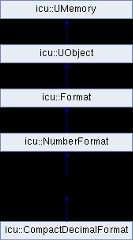
Public Types | |
| enum | EPadPosition {kPadBeforePrefix,kPadAfterPrefix,kPadBeforeSuffix,kPadAfterSuffix } |
| Pad position.More... | |
 Public Types inherited fromicu::NumberFormat Public Types inherited fromicu::NumberFormat | |
| enum | ERoundingMode { kRoundCeiling,kRoundFloor,kRoundDown,kRoundUp, kRoundHalfEven,kRoundHalfDown,kRoundHalfUp,kRoundUnnecessary, kRoundHalfOdd,kRoundHalfCeiling,kRoundHalfFloor } |
| Rounding mode.More... | |
| enum | EAlignmentFields { kIntegerField = UNUM_INTEGER_FIELD,kFractionField = UNUM_FRACTION_FIELD,kDecimalSeparatorField = UNUM_DECIMAL_SEPARATOR_FIELD,kExponentSymbolField = UNUM_EXPONENT_SYMBOL_FIELD, kExponentSignField = UNUM_EXPONENT_SIGN_FIELD,kExponentField = UNUM_EXPONENT_FIELD,kGroupingSeparatorField = UNUM_GROUPING_SEPARATOR_FIELD,kCurrencyField = UNUM_CURRENCY_FIELD, kPercentField = UNUM_PERCENT_FIELD,kPermillField = UNUM_PERMILL_FIELD,kSignField = UNUM_SIGN_FIELD,kMeasureUnitField = UNUM_MEASURE_UNIT_FIELD, kCompactField = UNUM_COMPACT_FIELD,INTEGER_FIELD = UNUM_INTEGER_FIELD,FRACTION_FIELD = UNUM_FRACTION_FIELD } |
| Alignment Field constants used to construct aFieldPosition object.More... | |
Public Member Functions | |
| DecimalFormat (UErrorCode &status) | |
| Create aDecimalFormat using the default pattern and symbols for the default locale.More... | |
| DecimalFormat (constUnicodeString &pattern,UErrorCode &status) | |
| Create aDecimalFormat from the given pattern and the symbols for the default locale.More... | |
| DecimalFormat (constUnicodeString &pattern,DecimalFormatSymbols *symbolsToAdopt,UErrorCode &status) | |
| Create aDecimalFormat from the given pattern and symbols.More... | |
| DecimalFormat (constUnicodeString &pattern,DecimalFormatSymbols *symbolsToAdopt,UNumberFormatStyle style,UErrorCode &status) | |
| This API is for ICU use only.More... | |
| virtualDecimalFormat & | setAttribute (UNumberFormatAttribute attr, int32_t newValue,UErrorCode &status) |
| Set an integer attribute on thisDecimalFormat.More... | |
| virtual int32_t | getAttribute (UNumberFormatAttribute attr,UErrorCode &status) const |
| Get an integer May return U_UNSUPPORTED_ERROR if this instance does not support the specified attribute.More... | |
| void | setGroupingUsed (UBool newValue) override |
| Set whether or not grouping will be used in this format.More... | |
| void | setParseIntegerOnly (UBool value) override |
| Sets whether or not numbers should be parsed as integers only.More... | |
| void | setLenient (UBool enable) override |
| Sets whether lenient parsing should be enabled (it is off by default).More... | |
| DecimalFormat (constUnicodeString &pattern,DecimalFormatSymbols *symbolsToAdopt,UParseError &parseError,UErrorCode &status) | |
| Create aDecimalFormat from the given pattern and symbols.More... | |
| DecimalFormat (constUnicodeString &pattern, constDecimalFormatSymbols &symbols,UErrorCode &status) | |
| Create aDecimalFormat from the given pattern and symbols.More... | |
| DecimalFormat (constDecimalFormat &source) | |
| Copy constructor.More... | |
| DecimalFormat & | operator= (constDecimalFormat &rhs) |
| Assignment operator.More... | |
| ~DecimalFormat () override | |
| Destructor.More... | |
| DecimalFormat * | clone () const override |
| Clone thisFormat object polymorphically.More... | |
| bool | operator== (constFormat &other) const override |
| Return true if the givenFormat objects are semantically equal.More... | |
| UnicodeString & | format (double number,UnicodeString &appendTo,FieldPosition &pos) const override |
| Format a double or long number using base-10 representation.More... | |
| UnicodeString & | format (double number,UnicodeString &appendTo,FieldPosition &pos,UErrorCode &status) const override |
| Format a double or long number using base-10 representation.More... | |
| UnicodeString & | format (double number,UnicodeString &appendTo,FieldPositionIterator *posIter,UErrorCode &status) const override |
| Format a double or long number using base-10 representation.More... | |
| UnicodeString & | format (int32_t number,UnicodeString &appendTo,FieldPosition &pos) const override |
| Format a long number using base-10 representation.More... | |
| UnicodeString & | format (int32_t number,UnicodeString &appendTo,FieldPosition &pos,UErrorCode &status) const override |
| Format a long number using base-10 representation.More... | |
| UnicodeString & | format (int32_t number,UnicodeString &appendTo,FieldPositionIterator *posIter,UErrorCode &status) const override |
| Format a long number using base-10 representation.More... | |
| UnicodeString & | format (int64_t number,UnicodeString &appendTo,FieldPosition &pos) const override |
| Format an int64 number using base-10 representation.More... | |
| UnicodeString & | format (int64_t number,UnicodeString &appendTo,FieldPosition &pos,UErrorCode &status) const override |
| Format an int64 number using base-10 representation.More... | |
| UnicodeString & | format (int64_t number,UnicodeString &appendTo,FieldPositionIterator *posIter,UErrorCode &status) const override |
| Format an int64 number using base-10 representation.More... | |
| UnicodeString & | format (StringPiece number,UnicodeString &appendTo,FieldPositionIterator *posIter,UErrorCode &status) const override |
| Format a decimal number.More... | |
| UnicodeString & | format (const number::impl::DecimalQuantity &number,UnicodeString &appendTo,FieldPositionIterator *posIter,UErrorCode &status) const override |
| Format a decimal number.More... | |
| UnicodeString & | format (const number::impl::DecimalQuantity &number,UnicodeString &appendTo,FieldPosition &pos,UErrorCode &status) const override |
| Format a decimal number.More... | |
| void | parse (constUnicodeString &text,Formattable &result,ParsePosition &parsePosition) const override |
| Parse the given string using this object's choices.More... | |
| CurrencyAmount * | parseCurrency (constUnicodeString &text,ParsePosition &pos) const override |
| Parses text from the given string as a currency amount.More... | |
| virtual constDecimalFormatSymbols * | getDecimalFormatSymbols () const |
| Returns the decimal format symbols, which is generally not changed by the programmer or user.More... | |
| virtual void | adoptDecimalFormatSymbols (DecimalFormatSymbols *symbolsToAdopt) |
| Sets the decimal format symbols, which is generally not changed by the programmer or user.More... | |
| virtual void | setDecimalFormatSymbols (constDecimalFormatSymbols &symbols) |
| Sets the decimal format symbols, which is generally not changed by the programmer or user.More... | |
| virtual constCurrencyPluralInfo * | getCurrencyPluralInfo () const |
| Returns the currency plural format information, which is generally not changed by the programmer or user.More... | |
| virtual void | adoptCurrencyPluralInfo (CurrencyPluralInfo *toAdopt) |
| Sets the currency plural format information, which is generally not changed by the programmer or user.More... | |
| virtual void | setCurrencyPluralInfo (constCurrencyPluralInfo &info) |
| Sets the currency plural format information, which is generally not changed by the programmer or user.More... | |
| UnicodeString & | getPositivePrefix (UnicodeString &result) const |
| Get the positive prefix.More... | |
| virtual void | setPositivePrefix (constUnicodeString &newValue) |
| Set the positive prefix.More... | |
| UnicodeString & | getNegativePrefix (UnicodeString &result) const |
| Get the negative prefix.More... | |
| virtual void | setNegativePrefix (constUnicodeString &newValue) |
| Set the negative prefix.More... | |
| UnicodeString & | getPositiveSuffix (UnicodeString &result) const |
| Get the positive suffix.More... | |
| virtual void | setPositiveSuffix (constUnicodeString &newValue) |
| Set the positive suffix.More... | |
| UnicodeString & | getNegativeSuffix (UnicodeString &result) const |
| Get the negative suffix.More... | |
| virtual void | setNegativeSuffix (constUnicodeString &newValue) |
| Set the negative suffix.More... | |
| UBool | isSignAlwaysShown () const |
| Whether to show the plus sign on positive (non-negative) numbers; for example, "+12".More... | |
| void | setSignAlwaysShown (UBool value) |
| Set whether to show the plus sign on positive (non-negative) numbers; for example, "+12".More... | |
| int32_t | getMultiplier () const |
| Get the multiplier for use in percent, permill, etc.More... | |
| virtual void | setMultiplier (int32_t newValue) |
| Set the multiplier for use in percent, permill, etc.More... | |
| int32_t | getMultiplierScale () const |
| Gets the power of ten by which number should be multiplied before formatting, which can be combined withsetMultiplier() to multiply by any arbitrary decimal value.More... | |
| void | setMultiplierScale (int32_t newValue) |
| Sets a power of ten by which number should be multiplied before formatting, which can be combined withsetMultiplier() to multiply by any arbitrary decimal value.More... | |
| virtual double | getRoundingIncrement () const |
| Get the rounding increment.More... | |
| virtual void | setRoundingIncrement (double newValue) |
| Set the rounding increment.More... | |
| virtualERoundingMode | getRoundingMode () const override |
| Get the rounding mode.More... | |
| virtual void | setRoundingMode (ERoundingMode roundingMode) override |
| Set the rounding mode.More... | |
| virtual int32_t | getFormatWidth () const |
| Get the width to which the output offormat() is padded.More... | |
| virtual void | setFormatWidth (int32_t width) |
| Set the width to which the output offormat() is padded.More... | |
| virtualUnicodeString | getPadCharacterString () const |
| Get the pad character used to pad to the format width.More... | |
| virtual void | setPadCharacter (constUnicodeString &padChar) |
| Set the character used to pad to the format width.More... | |
| virtualEPadPosition | getPadPosition () const |
| Get the position at which padding will take place.More... | |
| virtual void | setPadPosition (EPadPosition padPos) |
| Set the position at which padding will take place.More... | |
| virtualUBool | isScientificNotation () const |
| Return whether or not scientific notation is used.More... | |
| virtual void | setScientificNotation (UBool useScientific) |
| Set whether or not scientific notation is used.More... | |
| virtual int8_t | getMinimumExponentDigits () const |
| Return the minimum exponent digits that will be shown.More... | |
| virtual void | setMinimumExponentDigits (int8_t minExpDig) |
| Set the minimum exponent digits that will be shown.More... | |
| virtualUBool | isExponentSignAlwaysShown () const |
| Return whether the exponent sign is always shown.More... | |
| virtual void | setExponentSignAlwaysShown (UBool expSignAlways) |
| Set whether the exponent sign is always shown.More... | |
| int32_t | getGroupingSize () const |
| Return the grouping size.More... | |
| virtual void | setGroupingSize (int32_t newValue) |
| Set the grouping size.More... | |
| int32_t | getSecondaryGroupingSize () const |
| Return the secondary grouping size.More... | |
| virtual void | setSecondaryGroupingSize (int32_t newValue) |
| Set the secondary grouping size.More... | |
| int32_t | getMinimumGroupingDigits () const |
| Returns the minimum number of grouping digits.More... | |
| void | setMinimumGroupingDigits (int32_t newValue) |
| Sets the minimum grouping digits.More... | |
| UBool | isDecimalSeparatorAlwaysShown () const |
| Allows you to get the behavior of the decimal separator with integers.More... | |
| virtual void | setDecimalSeparatorAlwaysShown (UBool newValue) |
| Allows you to set the behavior of the decimal separator with integers.More... | |
| UBool | isDecimalPatternMatchRequired () const |
| Allows you to get the parse behavior of the pattern decimal mark.More... | |
| virtual void | setDecimalPatternMatchRequired (UBool newValue) |
| Allows you to set the parse behavior of the pattern decimal mark.More... | |
| UBool | isParseNoExponent () const |
| Returns whether to ignore exponents when parsing.More... | |
| void | setParseNoExponent (UBool value) |
| Specifies whether to stop parsing when an exponent separator is encountered.More... | |
| UBool | isParseCaseSensitive () const |
| Returns whether parsing is sensitive to case (lowercase/uppercase).More... | |
| void | setParseCaseSensitive (UBool value) |
| Whether to pay attention to case when parsing; default is to ignore case (perform case-folding).More... | |
| UBool | isFormatFailIfMoreThanMaxDigits () const |
| Returns whether truncation of high-order integer digits should result in an error.More... | |
| void | setFormatFailIfMoreThanMaxDigits (UBool value) |
| Sets whether truncation of high-order integer digits should result in an error.More... | |
| virtualUnicodeString & | toPattern (UnicodeString &result) const |
| Synthesizes a pattern string that represents the current state of thisFormat object.More... | |
| virtualUnicodeString & | toLocalizedPattern (UnicodeString &result) const |
| Synthesizes a localized pattern string that represents the current state of thisFormat object.More... | |
| virtual void | applyPattern (constUnicodeString &pattern,UParseError &parseError,UErrorCode &status) |
| Apply the given pattern to thisFormat object.More... | |
| virtual void | applyPattern (constUnicodeString &pattern,UErrorCode &status) |
| Sets the pattern.More... | |
| virtual void | applyLocalizedPattern (constUnicodeString &pattern,UParseError &parseError,UErrorCode &status) |
| Apply the given pattern to thisFormat object.More... | |
| virtual void | applyLocalizedPattern (constUnicodeString &pattern,UErrorCode &status) |
| Apply the given pattern to thisFormat object.More... | |
| void | setMaximumIntegerDigits (int32_t newValue) override |
| Sets the maximum number of digits allowed in the integer portion of a number.More... | |
| void | setMinimumIntegerDigits (int32_t newValue) override |
| Sets the minimum number of digits allowed in the integer portion of a number.More... | |
| void | setMaximumFractionDigits (int32_t newValue) override |
| Sets the maximum number of digits allowed in the fraction portion of a number.More... | |
| void | setMinimumFractionDigits (int32_t newValue) override |
| Sets the minimum number of digits allowed in the fraction portion of a number.More... | |
| int32_t | getMinimumSignificantDigits () const |
| Returns the minimum number of significant digits that will be displayed.More... | |
| int32_t | getMaximumSignificantDigits () const |
| Returns the maximum number of significant digits that will be displayed.More... | |
| void | setMinimumSignificantDigits (int32_t min) |
| Sets the minimum number of significant digits that will be displayed.More... | |
| void | setMaximumSignificantDigits (int32_t max) |
| Sets the maximum number of significant digits that will be displayed.More... | |
| UBool | areSignificantDigitsUsed () const |
| Returns true if significant digits are in use, or false if integer and fraction digit counts are in use.More... | |
| void | setSignificantDigitsUsed (UBool useSignificantDigits) |
| Sets whether significant digits are in use, or integer and fraction digit counts are in use.More... | |
| void | setCurrency (const char16_t *theCurrency,UErrorCode &ec) override |
| Sets the currency used to display currency amounts.More... | |
| virtual void | setCurrency (const char16_t *theCurrency) |
| Sets the currency used to display currency amounts.More... | |
| void | setCurrencyUsage (UCurrencyUsage newUsage,UErrorCode *ec) |
Sets theCurrency Usage object used to display currency.More... | |
| UCurrencyUsage | getCurrencyUsage () const |
Returns theCurrency Usage object used to display currency.More... | |
| void | formatToDecimalQuantity (double number, number::impl::DecimalQuantity &output,UErrorCode &status) const |
| Format a number and save it into the given DecimalQuantity.More... | |
| void | formatToDecimalQuantity (constFormattable &number, number::impl::DecimalQuantity &output,UErrorCode &status) const |
| Get a DecimalQuantity corresponding to a formattable as it would be formatted by thisDecimalFormat.More... | |
| constnumber::LocalizedNumberFormatter * | toNumberFormatter (UErrorCode &status) const |
| Converts thisDecimalFormat to a (Localized)NumberFormatter.More... | |
| UClassID | getDynamicClassID () const override |
| Returns a unique class ID POLYMORPHICALLY.More... | |
| virtualUnicodeString & | format (constFormattable &obj,UnicodeString &appendTo,FieldPosition &pos,UErrorCode &status) const override |
| Format an object to produce a string.More... | |
| virtualUnicodeString & | format (constFormattable &obj,UnicodeString &appendTo,FieldPositionIterator *posIter,UErrorCode &status) const override |
| Format an object to produce a string.More... | |
| UnicodeString & | format (double number,UnicodeString &appendTo) const |
| Format a double number.More... | |
| UnicodeString & | format (int32_t number,UnicodeString &appendTo) const |
| Format a long number.More... | |
| UnicodeString & | format (int64_t number,UnicodeString &appendTo) const |
| Format an int64 number.More... | |
| virtualUnicodeString & | format (double number,UnicodeString &appendTo,FieldPosition &pos) const=0 |
| Format a double number.More... | |
| virtualUnicodeString & | format (double number,UnicodeString &appendTo,FieldPosition &pos,UErrorCode &status) const |
| Format a double number.More... | |
| virtualUnicodeString & | format (double number,UnicodeString &appendTo,FieldPositionIterator *posIter,UErrorCode &status) const |
| Format a double number.More... | |
| virtualUnicodeString & | format (int32_t number,UnicodeString &appendTo,FieldPosition &pos) const=0 |
| Format a long number.More... | |
| virtualUnicodeString & | format (int32_t number,UnicodeString &appendTo,FieldPosition &pos,UErrorCode &status) const |
| Format a long number.More... | |
| virtualUnicodeString & | format (int32_t number,UnicodeString &appendTo,FieldPositionIterator *posIter,UErrorCode &status) const |
| Format an int32 number.More... | |
| virtualUnicodeString & | format (int64_t number,UnicodeString &appendTo,FieldPosition &pos) const |
| Format an int64 number.More... | |
| virtualUnicodeString & | format (int64_t number,UnicodeString &appendTo,FieldPosition &pos,UErrorCode &status) const |
| Format an int64 number.More... | |
| virtualUnicodeString & | format (int64_t number,UnicodeString &appendTo,FieldPositionIterator *posIter,UErrorCode &status) const |
| Format an int64 number.More... | |
| virtualUnicodeString & | format (StringPiece number,UnicodeString &appendTo,FieldPositionIterator *posIter,UErrorCode &status) const |
| Format a decimal number.More... | |
| virtualUnicodeString & | format (const number::impl::DecimalQuantity &number,UnicodeString &appendTo,FieldPositionIterator *posIter,UErrorCode &status) const |
| Format a decimal number.More... | |
| virtualUnicodeString & | format (const number::impl::DecimalQuantity &number,UnicodeString &appendTo,FieldPosition &pos,UErrorCode &status) const |
| Format a decimal number.More... | |
| virtual void | parse (constUnicodeString &text,Formattable &result,ParsePosition &parsePosition) const=0 |
| Return a long if possible (e.g.More... | |
| virtual void | parse (constUnicodeString &text,Formattable &result,UErrorCode &status) const |
| Parse a string as a numeric value, and return aFormattable numeric object.More... | |
| Public Member Functions inherited fromicu::NumberFormat | |
| virtual | ~NumberFormat () |
| Destructor.More... | |
| virtualUnicodeString & | format (constFormattable &obj,UnicodeString &appendTo,FieldPosition &pos,UErrorCode &status) const override |
| Format an object to produce a string.More... | |
| virtualUnicodeString & | format (constFormattable &obj,UnicodeString &appendTo,FieldPositionIterator *posIter,UErrorCode &status) const override |
| Format an object to produce a string.More... | |
| virtual void | parseObject (constUnicodeString &source,Formattable &result,ParsePosition &parse_pos) const override |
| Parse a string to produce an object.More... | |
| UnicodeString & | format (double number,UnicodeString &appendTo) const |
| Format a double number.More... | |
| UnicodeString & | format (int32_t number,UnicodeString &appendTo) const |
| Format a long number.More... | |
| UnicodeString & | format (int64_t number,UnicodeString &appendTo) const |
| Format an int64 number.More... | |
| virtual void | parse (constUnicodeString &text,Formattable &result,UErrorCode &status) const |
| Parse a string as a numeric value, and return aFormattable numeric object.More... | |
| UBool | isParseIntegerOnly () const |
| Return true if this format will parse numbers as integers only.More... | |
| virtualUBool | isLenient () const |
| Returns whether lenient parsing is enabled (it is off by default).More... | |
| UBool | isGroupingUsed () const |
| Returns true if grouping is used in this format.More... | |
| int32_t | getMaximumIntegerDigits () const |
| Returns the maximum number of digits allowed in the integer portion of a number.More... | |
| int32_t | getMinimumIntegerDigits () const |
| Returns the minimum number of digits allowed in the integer portion of a number.More... | |
| int32_t | getMaximumFractionDigits () const |
| Returns the maximum number of digits allowed in the fraction portion of a number.More... | |
| int32_t | getMinimumFractionDigits () const |
| Returns the minimum number of digits allowed in the fraction portion of a number.More... | |
| const char16_t * | getCurrency () const |
| Gets the currency used to display currency amounts.More... | |
| virtual void | setContext (UDisplayContext value,UErrorCode &status) |
| Set a particular UDisplayContext value in the formatter, such as UDISPCTX_CAPITALIZATION_FOR_STANDALONE.More... | |
| virtualUDisplayContext | getContext (UDisplayContextType type,UErrorCode &status) const |
| Get the formatter's UDisplayContext value for the specified UDisplayContextType, such as UDISPCTX_TYPE_CAPITALIZATION.More... | |
| U_I18N_APIUnicodeString & | format (constFormattable &obj,UnicodeString &appendTo,UErrorCode &status) const |
| Formats an object to produce a string.More... | |
| virtualU_I18N_APIUnicodeString & | format (constFormattable &obj,UnicodeString &appendTo,FieldPosition &pos,UErrorCode &status) const=0 |
| Format an object to produce a string.More... | |
| virtualU_I18N_APIUnicodeString & | format (constFormattable &obj,UnicodeString &appendTo,FieldPositionIterator *posIter,UErrorCode &status) const |
| Format an object to produce a string.More... | |
| Public Member Functions inherited fromicu::Format | |
| virtualU_I18N_API | ~Format () |
| Destructor.More... | |
| U_I18N_API bool | operator!= (constFormat &other) const |
| Return true if the givenFormat objects are not semantically equal.More... | |
| U_I18N_APIUnicodeString & | format (constFormattable &obj,UnicodeString &appendTo,UErrorCode &status) const |
| Formats an object to produce a string.More... | |
| U_I18N_API void | parseObject (constUnicodeString &source,Formattable &result,UErrorCode &status) const |
| Parses a string to produce an object.More... | |
| U_I18N_APILocale | getLocale (ULocDataLocaleType type,UErrorCode &status) const |
| Get the locale for this format object.More... | |
| U_I18N_API const char * | getLocaleID (ULocDataLocaleType type,UErrorCode &status) const |
| Get the locale for this format object.More... | |
| Public Member Functions inherited fromicu::UObject | |
| virtual | ~UObject () |
| Destructor.More... | |
Static Public Member Functions | |
| staticUClassID | getStaticClassID () |
| Return the class ID for this class.More... | |
| Static Public Member Functions inherited fromicu::NumberFormat | |
| staticNumberFormat * | createInstance (UErrorCode &) |
| Create a default styleNumberFormat for the current default locale.More... | |
| staticNumberFormat * | createInstance (constLocale &inLocale,UErrorCode &) |
| Create a default styleNumberFormat for the specified locale.More... | |
| staticNumberFormat * | createInstance (constLocale &desiredLocale,UNumberFormatStyle style,UErrorCode &errorCode) |
| Create a specific styleNumberFormat for the specified locale.More... | |
| staticNumberFormat * | internalCreateInstance (constLocale &desiredLocale,UNumberFormatStyle style,UErrorCode &errorCode) |
| ICU use only.More... | |
| static const SharedNumberFormat * | createSharedInstance (constLocale &inLocale,UNumberFormatStyle style,UErrorCode &status) |
| ICU use only.More... | |
| staticNumberFormat * | createCurrencyInstance (UErrorCode &) |
| Returns a currency format for the current default locale.More... | |
| staticNumberFormat * | createCurrencyInstance (constLocale &inLocale,UErrorCode &) |
| Returns a currency format for the specified locale.More... | |
| staticNumberFormat * | createPercentInstance (UErrorCode &) |
| Returns a percentage format for the current default locale.More... | |
| staticNumberFormat * | createPercentInstance (constLocale &inLocale,UErrorCode &) |
| Returns a percentage format for the specified locale.More... | |
| staticNumberFormat * | createScientificInstance (UErrorCode &) |
| Returns a scientific format for the current default locale.More... | |
| staticNumberFormat * | createScientificInstance (constLocale &inLocale,UErrorCode &) |
| Returns a scientific format for the specified locale.More... | |
| static constLocale * | getAvailableLocales (int32_t &count) |
| Get the set of Locales for which NumberFormats are installed.More... | |
| staticURegistryKey | registerFactory (NumberFormatFactory *toAdopt,UErrorCode &status) |
| Register a newNumberFormatFactory.More... | |
| staticUBool | unregister (URegistryKey key,UErrorCode &status) |
| Unregister a previously-registeredNumberFormatFactory using the key returned from the register call.More... | |
| staticStringEnumeration * | getAvailableLocales () |
| Return aStringEnumeration over the locales available at the time of the call, including registered locales.More... | |
| staticUClassID | getStaticClassID () |
| Return the class ID for this class.More... | |
Friends | |
| class | CompactDecimalFormat |
| class | MeasureFormat |
Additional Inherited Members | |
| Protected Member Functions inherited fromicu::NumberFormat | |
| NumberFormat () | |
| Default constructor for subclass use only.More... | |
| NumberFormat (constNumberFormat &) | |
| Copy constructor.More... | |
| NumberFormat & | operator= (constNumberFormat &) |
| Assignment operator.More... | |
| virtual void | getEffectiveCurrency (char16_t *result,UErrorCode &ec) const |
| Returns the currency in effect for this formatter.More... | |
| Protected Member Functions inherited fromicu::Format | |
| U_I18N_API void | setLocaleIDs (const char *valid, const char *actual) |
| U_I18N_API | Format () |
| Default constructor for subclass use only.More... | |
| U_I18N_API | Format (constFormat &) |
| U_I18N_APIFormat & | operator= (constFormat &) |
| Static Protected Member Functions inherited fromicu::NumberFormat | |
| staticNumberFormat * | makeInstance (constLocale &desiredLocale,UNumberFormatStyle style,UBool mustBeDecimalFormat,UErrorCode &errorCode) |
| Creates the specified number format style of the desired locale.More... | |
| Static Protected Member Functions inherited fromicu::Format | |
| staticU_I18N_API void | syntaxError (constUnicodeString &pattern, int32_t pos,UParseError &parseError) |
| Simple function for initializing aUParseError from aUnicodeString.More... | |
| Static Protected Attributes inherited fromicu::NumberFormat | |
| static const int32_t | gDefaultMaxIntegerDigits |
| static const int32_t | gDefaultMinIntegerDigits |
Detailed Description
IMPORTANT: New users are strongly encouraged to see ifnumberformatter.h fits their use case.
Although not deprecated, this header is provided for backwards compatibility only.
DecimalFormat is a concrete subclass ofNumberFormat that formats decimal numbers. It has a variety of features designed to make it possible to parse and format numbers in any locale, including support for Western, Arabic, or Indic digits. It also supports different flavors of numbers, including integers ("123"), fixed-point numbers ("123.4"), scientific notation ("1.23E4"), percentages ("12%"), and currency amounts ("$123", "USD123", "123 US dollars"). All of these flavors can be easily localized.
To obtain aNumberFormat for a specific locale (including the default locale) call one ofNumberFormat's factory methods such ascreateInstance(). Do not call theDecimalFormat constructors directly, unless you know what you are doing, since theNumberFormat factory methods may return subclasses other thanDecimalFormat.
Example Usage
Another example use createInstance(style)
Patterns
ADecimalFormat consists of apattern and a set ofsymbols. The pattern may be set directly usingapplyPattern(), or indirectly using other API methods which manipulate aspects of the pattern, such as the minimum number of integer digits. The symbols are stored in aDecimalFormatSymbols object. When using theNumberFormat factory methods, the pattern and symbols are read from ICU's locale data.
Special Pattern Characters
Many characters in a pattern are taken literally; they are matched during parsing and output unchanged during formatting. Special characters, on the other hand, stand for other characters, strings, or classes of characters. For example, the '#' character is replaced by a localized digit. Often the replacement character is the same as the pattern character; in the U.S. locale, the ',' grouping character is replaced by ','. However, the replacement is still happening, and if the symbols are modified, the grouping character changes. Some special characters affect the behavior of the formatter by their presence; for example, if the percent character is seen, then the value is multiplied by 100 before being displayed.
To insert a special character in a pattern as a literal, that is, without any special meaning, the character must be quoted. There are some exceptions to this which are noted below.
The characters listed here are used in non-localized patterns. Localized patterns use the corresponding characters taken from this formatter'sDecimalFormatSymbols object instead, and these characters lose their special status. Two exceptions are the currency sign and quote, which are not localized.
| Symbol | Location | Localized? | Meaning |
0 | Number | Yes | Digit |
1-9 | Number | Yes | '1' through '9' indicate rounding. |
@ | Number | No | Significant digit |
# | Number | Yes | Digit, zero shows as absent |
. | Number | Yes | Decimal separator or monetary decimal separator |
- | Number | Yes | Minus sign |
, | Number | Yes | Grouping separator |
E | Number | Yes | Separates mantissa and exponent in scientific notation.Need not be quoted in prefix or suffix. |
+ | Exponent | Yes | Prefix positive exponents with localized plus sign.Need not be quoted in prefix or suffix. |
; | Subpattern boundary | Yes | Separates positive and negative subpatterns |
% | Prefix or suffix | Yes | Multiply by 100 and show as percentage |
\u2030 | Prefix or suffix | Yes | Multiply by 1000 and show as per mille |
¤ (\u00A4) | Prefix or suffix | No | Currency sign, replaced by currency symbol. If doubled, replaced by international currency symbol. If tripled, replaced by currency plural names, for example, "US dollar" or "US dollars" for America. If present in a pattern, the monetary decimal separator is used instead of the decimal separator. |
' | Prefix or suffix | No | Used to quote special characters in a prefix or suffix, for example,"'#'#" formats 123 to"#123". To create a single quote itself, use two in a row:"# o''clock". |
* | Prefix or suffix boundary | Yes | Pad escape, precedes pad character |
ADecimalFormat pattern contains a positive and negative subpattern, for example, "#,##0.00;(#,##0.00)". Each subpattern has a prefix, a numeric part, and a suffix. If there is no explicit negative subpattern, the negative subpattern is the localized minus sign prefixed to the positive subpattern. That is, "0.00" alone is equivalent to "0.00;-0.00". If there is an explicit negative subpattern, it serves only to specify the negative prefix and suffix; the number of digits, minimal digits, and other characteristics are ignored in the negative subpattern. That means that "#,##0.0#;(#)" has precisely the same result as "#,##0.0#;(#,##0.0#)".
The prefixes, suffixes, and various symbols used for infinity, digits, thousands separators, decimal separators, etc. may be set to arbitrary values, and they will appear properly during formatting. However, care must be taken that the symbols and strings do not conflict, or parsing will be unreliable. For example, either the positive and negative prefixes or the suffixes must be distinct forparse() to be able to distinguish positive from negative values. Another example is that the decimal separator and thousands separator should be distinct characters, or parsing will be impossible.
Thegrouping separator is a character that separates clusters of integer digits to make large numbers more legible. It commonly used for thousands, but in some locales it separates ten-thousands. Thegrouping size is the number of digits between the grouping separators, such as 3 for "100,000,000" or 4 for "1 0000 0000". There are actually two different grouping sizes: One used for the least significant integer digits, theprimary grouping size, and one used for all others, thesecondary grouping size. In most locales these are the same, but sometimes they are different. For example, if the primary grouping interval is 3, and the secondary is 2, then this corresponds to the pattern "#,##,##0", and the number 123456789 is formatted as "12,34,56,789". If a pattern contains multiple grouping separators, the interval between the last one and the end of the integer defines the primary grouping size, and the interval between the last two defines the secondary grouping size. All others are ignored, so "#,##,###,####" == "###,###,####" == "##,#,###,####".
Illegal patterns, such as "#.#.#" or "#.###,###", will causeDecimalFormat to set a failing UErrorCode.
Pattern BNF
pattern := subpattern (';' subpattern)?subpattern := prefix? number exponent? suffix?number := (integer ('.' fraction)?) | sigDigitsprefix := '\u0000'..'\uFFFD' - specialCharacterssuffix := '\u0000'..'\uFFFD' - specialCharactersinteger := '#'* '0'* '0'fraction := '0'* '#'*sigDigits := '#'* '@' '@'* '#'*exponent := 'E' '+'? '0'* '0'padSpec := '*' padCharpadChar := '\u0000'..'\uFFFD' - quote Notation: X* 0 or more instances of X X? 0 or 1 instances of X X|Y either X or Y C..D any character from C up to D, inclusive S-T characters in S, except those in TThe first subpattern is for positive numbers. The second (optional) subpattern is for negative numbers.
Not indicated in the BNF syntax above:
The grouping separator ',' can occur inside the integer and sigDigits elements, between any two pattern characters of that element, as long as the integer or sigDigits element is not followed by the exponent element.
Two grouping intervals are recognized: That between the decimal point and the first grouping symbol, and that between the first and second grouping symbols. These intervals are identical in most locales, but in some locales they differ. For example, the pattern "#,##,###" formats the number 123456789 as "12,34,56,789".
The pad specifier
padSpecmay appear before the prefix, after the prefix, before the suffix, after the suffix, or not at all.- In place of '0', the digits '1' through '9' may be used to indicate a rounding increment.
Parsing
DecimalFormat parses all Unicode characters that represent decimal digits, as defined byu_charDigitValue(). In addition,DecimalFormat also recognizes as digits the ten consecutive characters starting with the localized zero digit defined in theDecimalFormatSymbols object. During formatting, the DecimalFormatSymbols-based digits are output.
During parsing, grouping separators are ignored if in lenient mode; otherwise, if present, they must be in appropriate positions.
For currency parsing, the formatter is able to parse every currency style formats no matter which style the formatter is constructed with. For example, a formatter instance gotten from NumberFormat.getInstance(ULocale, NumberFormat.CURRENCYSTYLE) can parse formats such as "USD1.00" and "3.00 US dollars".
If parse(UnicodeString&,Formattable&,ParsePosition&) fails to parse a string, it leaves the parse position unchanged. The convenience method parse(UnicodeString&,Formattable&,UErrorCode&) indicates parse failure by setting a failing UErrorCode.
Formatting
Formatting is guided by several parameters, all of which can be specified either using a pattern or using the API. The following description applies to formats that do not usescientific notation orsignificant digits.
If the number of actual integer digits exceeds themaximum integer digits, then only the least significant digits are shown. For example, 1997 is formatted as "97" if the maximum integer digits is set to 2.
If the number of actual integer digits is less than theminimum integer digits, then leading zeros are added. For example, 1997 is formatted as "01997" if the minimum integer digits is set to 5.
If the number of actual fraction digits exceeds themaximum fraction digits, then rounding is performed to the maximum fraction digits. For example, 0.125 is formatted as "0.12" if the maximum fraction digits is 2. This behavior can be changed by specifying a rounding increment and/or a rounding mode.
If the number of actual fraction digits is less than theminimum fraction digits, then trailing zeros are added. For example, 0.125 is formatted as "0.1250" if the minimum fraction digits is set to 4.
- Trailing fractional zeros are not displayed if they occurj positions after the decimal, wherej is less than the maximum fraction digits. For example, 0.10004 is formatted as "0.1" if the maximum fraction digits is four or less.
Special Values
NaN is represented as a single character, typically\uFFFD. This character is determined by theDecimalFormatSymbols object. This is the only value for which the prefixes and suffixes are not used.
Infinity is represented as a single character, typically\u221E, with the positive or negative prefixes and suffixes applied. The infinity character is determined by theDecimalFormatSymbols object.
Numbers in scientific notation are expressed as the product of a mantissa and a power of ten, for example, 1234 can be expressed as 1.234 x 10³. The mantissa is typically in the half-open interval [1.0, 10.0) or sometimes [0.0, 1.0), but it need not be.DecimalFormat supports arbitrary mantissas.DecimalFormat can be instructed to use scientific notation through the API or through the pattern. In a pattern, the exponent character immediately followed by one or more digit characters indicates scientific notation. Example: "0.###E0" formats the number 1234 as "1.234E3".
The number of digit characters after the exponent character gives the minimum exponent digit count. There is no maximum. Negative exponents are formatted using the localized minus sign,not the prefix and suffix from the pattern. This allows patterns such as "0.###E0 m/s". To prefix positive exponents with a localized plus sign, specify '+' between the exponent and the digits: "0.###E+0" will produce formats "1E+1", "1E+0", "1E-1", etc. (In localized patterns, use the localized plus sign rather than '+'.)
The minimum number of integer digits is achieved by adjusting the exponent. Example: 0.00123 formatted with "00.###E0" yields "12.3E-4". This only happens if there is no maximum number of integer digits. If there is a maximum, then the minimum number of integer digits is fixed at one.
The maximum number of integer digits, if present, specifies the exponent grouping. The most common use of this is to generateengineering notation, in which the exponent is a multiple of three, e.g., "##0.###E0". The number 12345 is formatted using "##0.####E0" as "12.345E3".
When using scientific notation, the formatter controls the digit counts using significant digits logic. The maximum number of significant digits limits the total number of integer and fraction digits that will be shown in the mantissa; it does not affect parsing. For example, 12345 formatted with "##0.##E0" is "12.3E3". See the section on significant digits for more details.
The number of significant digits shown is determined as follows: IfareSignificantDigitsUsed() returns false, then the minimum number of significant digits shown is one, and the maximum number of significant digits shown is the sum of theminimum integer andmaximum fraction digits, and is unaffected by the maximum integer digits. If this sum is zero, then all significant digits are shown. IfareSignificantDigitsUsed() returns true, then the significant digit counts are specified bygetMinimumSignificantDigits() andgetMaximumSignificantDigits(). In this case, the number of integer digits is fixed at one, and there is no exponent grouping.
- Exponential patterns may not contain grouping separators.
DecimalFormat has two ways of controlling how many digits are shows: (a) significant digits counts, or (b) integer and fraction digit counts. Integer and fraction digit counts are described above. When a formatter is using significant digits counts, the number of integer and fraction digits is not specified directly, and the formatter settings for these counts are ignored. Instead, the formatter uses however many integer and fraction digits are required to display the specified number of significant digits. Examples:
| Pattern | Minimum significant digits | Maximum significant digits | Number | Output offormat() |
@@@ | 3 | 3 | 12345 | 12300 |
@@@ | 3 | 3 | 0.12345 | 0.123 |
@@## | 2 | 4 | 3.14159 | 3.142 |
@@## | 2 | 4 | 1.23004 | 1.23 |
Significant digit counts may be expressed using patterns that specify a minimum and maximum number of significant digits. These are indicated by the
'@'and'#'characters. The minimum number of significant digits is the number of'@'characters. The maximum number of significant digits is the number of'@'characters plus the number of'#'characters following on the right. For example, the pattern"@@@"indicates exactly 3 significant digits. The pattern"@##"indicates from 1 to 3 significant digits. Trailing zero digits to the right of the decimal separator are suppressed after the minimum number of significant digits have been shown. For example, the pattern"@##"formats the number 0.1203 as"0.12".If a pattern uses significant digits, it may not contain a decimal separator, nor the
'0'pattern character. Patterns such as"@00"or"@.###"are disallowed.Any number of
'#'characters may be prepended to the left of the leftmost'@'character. These have no effect on the minimum and maximum significant digits counts, but may be used to position grouping separators. For example,"#,#@#"indicates a minimum of one significant digits, a maximum of two significant digits, and a grouping size of three.In order to enable significant digits formatting, use a pattern containing the
'@'pattern character. Alternatively, call setSignificantDigitsUsed(true).In order to disable significant digits formatting, use a pattern that does not contain the
'@'pattern character. Alternatively, call setSignificantDigitsUsed(false).The number of significant digits has no effect on parsing.
Significant digits may be used together with exponential notation. Such patterns are equivalent to a normal exponential pattern with a minimum and maximum integer digit count of one, a minimum fraction digit count of
getMinimumSignificantDigits() - 1, and a maximum fraction digit count ofgetMaximumSignificantDigits() - 1. For example, the pattern"@@###E0"is equivalent to"0.0###E0".If significant digits are in use, then the integer and fraction digit counts, as set via the API, are ignored. If significant digits are not in use, then the significant digit counts, as set via the API, are ignored.
Padding
DecimalFormat supports padding the result offormat() to a specific width. Padding may be specified either through the API or through the pattern syntax. In a pattern the pad escape character, followed by a single pad character, causes padding to be parsed and formatted. The pad escape character is '*' in unlocalized patterns, and can be localized usingDecimalFormatSymbols::setSymbol() with aDecimalFormatSymbols::kPadEscapeSymbol selector. For example,"$*x#,##0.00" formats 123 to"$xx123.00", and 1234 to"$1,234.00".
When padding is in effect, the width of the positive subpattern, including prefix and suffix, determines the format width. For example, in the pattern
"* #0 o''clock", the format width is 10.The width is counted in 16-bit code units (char16_ts).
Some parameters which usually do not matter have meaning when padding is used, because the pattern width is significant with padding. In the pattern "* ##,##,#,##0.##", the format width is 14. The initial characters "##,##," do not affect the grouping size or maximum integer digits, but they do affect the format width.
Padding may be inserted at one of four locations: before the prefix, after the prefix, before the suffix, or after the suffix. If padding is specified in any other location,applyPattern() sets a failing UErrorCode. If there is no prefix, before the prefix and after the prefix are equivalent, likewise for the suffix.
When specified in a pattern, the 32-bit code point immediately following the pad escape is the pad character. This may be any character, including a special pattern character. That is, the pad escapeescapes the following character. If there is no character after the pad escape, then the pattern is illegal.
Rounding
DecimalFormat supports rounding to a specific increment. For example, 1230 rounded to the nearest 50 is 1250. 1.234 rounded to the nearest 0.65 is 1.3. The rounding increment may be specified through the API or in a pattern. To specify a rounding increment in a pattern, include the increment in the pattern itself. "#,#50" specifies a rounding increment of
- "#,##0.05" specifies a rounding increment of 0.05.
In the absence of an explicit rounding increment numbers are rounded to their formatted width.
Rounding only affects the string produced by formatting. It does not affect parsing or change any numerical values.
Arounding mode determines how values are rounded; seeDecimalFormat::ERoundingMode. The default rounding mode isDecimalFormat::kRoundHalfEven. The rounding mode can only be set through the API; it can not be set with a pattern.
Some locales use rounding in their currency formats to reflect the smallest currency denomination.
- In a pattern, digits '1' through '9' specify rounding, but otherwise behave identically to digit '0'.
Synchronization
DecimalFormat objects are not synchronized. Multiple threads should not access one formatter concurrently.
Subclassing
User subclasses are not supported. While clients may write subclasses, such code will not necessarily work and will not be guaranteed to work stably from release to release.
Definition at line666 of filedecimfmt.h.
Member Enumeration Documentation
◆ EPadPosition
Constructor & Destructor Documentation
◆ DecimalFormat()[1/7]
| icu::DecimalFormat::DecimalFormat | ( | UErrorCode & | status | ) |
Create aDecimalFormat using the default pattern and symbols for the default locale.
This is a convenient way to obtain aDecimalFormat when internationalization is not the main concern.
To obtain standard formats for a given locale, use the factory methods onNumberFormat such as createInstance. These factories will return the most appropriate sub-class ofNumberFormat for a given locale.
NOTE: New users are strongly encouraged to useicu::number::NumberFormatter instead ofDecimalFormat.
- Parameters
status Output param set to success/failure code. If the pattern is invalid this will be set to a failure code.
- Stable:
- ICU 2.0
◆ DecimalFormat()[2/7]
| icu::DecimalFormat::DecimalFormat | ( | constUnicodeString & | pattern, |
| UErrorCode & | status | ||
| ) |
Create aDecimalFormat from the given pattern and the symbols for the default locale.
This is a convenient way to obtain aDecimalFormat when internationalization is not the main concern.
To obtain standard formats for a given locale, use the factory methods onNumberFormat such as createInstance. These factories will return the most appropriate sub-class ofNumberFormat for a given locale.
NOTE: New users are strongly encouraged to useicu::number::NumberFormatter instead ofDecimalFormat.
- Parameters
pattern A non-localized pattern string. status Output param set to success/failure code. If the pattern is invalid this will be set to a failure code.
- Stable:
- ICU 2.0
◆ DecimalFormat()[3/7]
| icu::DecimalFormat::DecimalFormat | ( | constUnicodeString & | pattern, |
| DecimalFormatSymbols * | symbolsToAdopt, | ||
| UErrorCode & | status | ||
| ) |
Create aDecimalFormat from the given pattern and symbols.
Use this constructor when you need to completely customize the behavior of the format.
To obtain standard formats for a given locale, use the factory methods onNumberFormat such as createInstance or createCurrencyInstance. If you need only minor adjustments to a standard format, you can modify the format returned by aNumberFormat factory method.
NOTE: New users are strongly encouraged to useicu::number::NumberFormatter instead ofDecimalFormat.
- Parameters
pattern a non-localized pattern string symbolsToAdopt the set of symbols to be used. The caller should not delete this object after making this call. status Output param set to success/failure code. If the pattern is invalid this will be set to a failure code.
- Stable:
- ICU 2.0
◆ DecimalFormat()[4/7]
| icu::DecimalFormat::DecimalFormat | ( | constUnicodeString & | pattern, |
| DecimalFormatSymbols * | symbolsToAdopt, | ||
| UNumberFormatStyle | style, | ||
| UErrorCode & | status | ||
| ) |
This API is for ICU use only.
Create aDecimalFormat from the given pattern, symbols, and style.
- Parameters
pattern a non-localized pattern string symbolsToAdopt the set of symbols to be used. The caller should not delete this object after making this call. style style of decimal format status Output param set to success/failure code. If the pattern is invalid this will be set to a failure code.
- Internal:
- Do not use. This API is for internal use only.
◆ DecimalFormat()[5/7]
| icu::DecimalFormat::DecimalFormat | ( | constUnicodeString & | pattern, |
| DecimalFormatSymbols * | symbolsToAdopt, | ||
| UParseError & | parseError, | ||
| UErrorCode & | status | ||
| ) |
Create aDecimalFormat from the given pattern and symbols.
Use this constructor when you need to completely customize the behavior of the format.
To obtain standard formats for a given locale, use the factory methods onNumberFormat such as createInstance or createCurrencyInstance. If you need only minor adjustments to a standard format, you can modify the format returned by aNumberFormat factory method.
NOTE: New users are strongly encouraged to useicu::number::NumberFormatter instead ofDecimalFormat.
- Parameters
pattern a non-localized pattern string symbolsToAdopt the set of symbols to be used. The caller should not delete this object after making this call. parseError Output param to receive errors occurred during parsing status Output param set to success/failure code. If the pattern is invalid this will be set to a failure code.
- Stable:
- ICU 2.0
◆ DecimalFormat()[6/7]
| icu::DecimalFormat::DecimalFormat | ( | constUnicodeString & | pattern, |
| constDecimalFormatSymbols & | symbols, | ||
| UErrorCode & | status | ||
| ) |
Create aDecimalFormat from the given pattern and symbols.
Use this constructor when you need to completely customize the behavior of the format.
To obtain standard formats for a given locale, use the factory methods onNumberFormat such as createInstance or createCurrencyInstance. If you need only minor adjustments to a standard format, you can modify the format returned by aNumberFormat factory method.
NOTE: New users are strongly encouraged to useicu::number::NumberFormatter instead ofDecimalFormat.
- Parameters
pattern a non-localized pattern string symbols the set of symbols to be used status Output param set to success/failure code. If the pattern is invalid this will be set to a failure code.
- Stable:
- ICU 2.0
◆ DecimalFormat()[7/7]
| icu::DecimalFormat::DecimalFormat | ( | constDecimalFormat & | source | ) |
◆ ~DecimalFormat()
| override |
Destructor.
- Stable:
- ICU 2.0
Member Function Documentation
◆ adoptCurrencyPluralInfo()
| virtual |
Sets the currency plural format information, which is generally not changed by the programmer or user.
- Parameters
toAdopt CurrencyPluralInfo to be adopted.
- Stable:
- ICU 4.2
◆ adoptDecimalFormatSymbols()
| virtual |
Sets the decimal format symbols, which is generally not changed by the programmer or user.
- Parameters
symbolsToAdopt DecimalFormatSymbols to be adopted.
- Stable:
- ICU 2.0
◆ applyLocalizedPattern()[1/2]
| virtual |
◆ applyLocalizedPattern()[2/2]
| virtual |
Apply the given pattern to thisFormat object.
The pattern is assumed to be in a localized notation. A pattern is a short-hand specification for the various formatting properties. These properties can also be changed individually through the various setter methods.
There is no limit to integer digits are set by this routine, since that is the typical end-user desire; use setMaximumInteger if you want to set a real value. For negative numbers, use a second pattern, separated by a semicolon
. Example "#,#00.0#" -> 1,234.56
This means a minimum of 2 integer digits, 1 fraction digit, and a maximum of 2 fraction digits.
Example: "#,#00.0#;(#,#00.0#)" for negatives in parentheses.
In negative patterns, the minimum and maximum counts are ignored; these are presumed to be set in the positive pattern.
- Parameters
pattern The localized pattern to be applied. parseError Struct to receive information on position of error if an error is encountered status Output param set to success/failure code on exit. If the pattern is invalid, this will be set to a failure result.
- Stable:
- ICU 2.0
◆ applyPattern()[1/2]
| virtual |
Sets the pattern.
- Parameters
pattern The pattern to be applied. status Output param set to success/failure code on exit. If the pattern is invalid, this will be set to a failure result.
- Stable:
- ICU 2.0
◆ applyPattern()[2/2]
| virtual |
Apply the given pattern to thisFormat object.
A pattern is a short-hand specification for the various formatting properties. These properties can also be changed individually through the various setter methods.
There is no limit to integer digits are set by this routine, since that is the typical end-user desire; use setMaximumInteger if you want to set a real value. For negative numbers, use a second pattern, separated by a semicolon
. Example "#,#00.0#" -> 1,234.56
This means a minimum of 2 integer digits, 1 fraction digit, and a maximum of 2 fraction digits.
. Example: "#,#00.0#;(#,#00.0#)" for negatives in parentheses.
In negative patterns, the minimum and maximum counts are ignored; these are presumed to be set in the positive pattern.
- Parameters
pattern The pattern to be applied. parseError Struct to receive information on position of error if an error is encountered status Output param set to success/failure code on exit. If the pattern is invalid, this will be set to a failure result.
- Stable:
- ICU 2.0
◆ areSignificantDigitsUsed()
| UBool icu::DecimalFormat::areSignificantDigitsUsed | ( | ) | const |
Returns true if significant digits are in use, or false if integer and fraction digit counts are in use.
- Returns
- true if significant digits are in use
- Stable:
- ICU 3.0
◆ clone()
| overridevirtual |
Clone thisFormat object polymorphically.
The caller owns the result and should delete it when done.
- Returns
- a polymorphic copy of thisDecimalFormat.
- Stable:
- ICU 2.0
Implementsicu::NumberFormat.
◆ format()[1/29]
| override |
Format an object to produce a string.
This method handlesFormattable objects with numeric types. If theFormattable object type is not a numeric type, then it returns a failing UErrorCode.
- Parameters
obj The object to format. appendTo Output parameter to receive result. Result is appended to existing contents. pos On input: an alignment field, if desired. On output: the offsets of the alignment field. status Output param filled with success/failure status.
- Returns
- Reference to 'appendTo' parameter.
- Stable:
- ICU 2.0
◆ format()[2/29]
| override |
Format an object to produce a string.
This method handlesFormattable objects with numeric types. If theFormattable object type is not a numeric type, then it returns a failing UErrorCode.
- Parameters
obj The object to format. appendTo Output parameter to receive result. Result is appended to existing contents. posIter On return, can be used to iterate over positions of fields generated by this format call. Can be nullptr. status Output param filled with success/failure status.
- Returns
- Reference to 'appendTo' parameter.
- Stable:
- ICU 4.4
◆ format()[3/29]
| virtualUnicodeString& icu::NumberFormat::format |
Format a decimal number.
The number is a DecimalQuantity wrapper onto a floating point decimal number. The default implementation inNumberFormat converts the decimal number to a double and formats that. Subclasses ofNumberFormat that want to specifically handle big decimal numbers must override this method. classDecimalFormat does so.
- Parameters
number The number, a DecimalQuantity format Decimal Floating Point. appendTo Output parameter to receive result. Result is appended to existing contents. pos On input: an alignment field, if desired. On output: the offsets of the alignment field. status Output param filled with success/failure status.
- Returns
- Reference to 'appendTo' parameter.
- Internal:
- Do not use. This API is for internal use only.
◆ format()[4/29]
| overridevirtual |
Format a decimal number.
The number is a DecimalQuantity wrapper onto a floating point decimal number. The default implementation inNumberFormat converts the decimal number to a double and formats that.
- Parameters
number The number, a DecimalQuantity format Decimal Floating Point. appendTo Output parameter to receive result. Result is appended to existing contents. pos On input: an alignment field, if desired. On output: the offsets of the alignment field. status Output param filled with success/failure status.
- Returns
- Reference to 'appendTo' parameter.
- Internal:
- Do not use. This API is for internal use only.
Reimplemented fromicu::NumberFormat.
◆ format()[5/29]
| virtualUnicodeString& icu::NumberFormat::format |
Format a decimal number.
The number is a DecimalQuantity wrapper onto a floating point decimal number. The default implementation inNumberFormat converts the decimal number to a double and formats that. Subclasses ofNumberFormat that want to specifically handle big decimal numbers must override this method. classDecimalFormat does so.
- Parameters
number The number, a DecimalQuantity format Decimal Floating Point. appendTo Output parameter to receive result. Result is appended to existing contents. posIter On return, can be used to iterate over positions of fields generated by this format call. status Output param filled with success/failure status.
- Returns
- Reference to 'appendTo' parameter.
- Internal:
- Do not use. This API is for internal use only.
◆ format()[6/29]
| overridevirtual |
Format a decimal number.
The number is a DecimalQuantity wrapper onto a floating point decimal number. The default implementation inNumberFormat converts the decimal number to a double and formats that.
- Parameters
number The number, a DecimalQuantity format Decimal Floating Point. appendTo Output parameter to receive result. Result is appended to existing contents. posIter On return, can be used to iterate over positions of fields generated by this format call. status Output param filled with success/failure status.
- Returns
- Reference to 'appendTo' parameter.
- Internal:
- Do not use. This API is for internal use only.
Reimplemented fromicu::NumberFormat.
◆ format()[7/29]
| UnicodeString& icu::NumberFormat::format |
Format a double number.
These methods call theNumberFormat pure virtualformat() methods with the defaultFieldPosition.
- Parameters
number The value to be formatted. appendTo Output parameter to receive result. Result is appended to existing contents.
- Returns
- Reference to 'appendTo' parameter.
- Stable:
- ICU 2.0
◆ format()[8/29]
| overridevirtual |
Format a double or long number using base-10 representation.
- Parameters
number The value to be formatted. appendTo Output parameter to receive result. Result is appended to existing contents. pos On input: an alignment field, if desired. On output: the offsets of the alignment field.
- Returns
- Reference to 'appendTo' parameter.
- Stable:
- ICU 2.0
Implementsicu::NumberFormat.
◆ format()[9/29]
| virtualUnicodeString& icu::NumberFormat::format |
Format a double number.
Concrete subclasses must implement these pure virtual methods.
- Parameters
number The value to be formatted. appendTo Output parameter to receive result. Result is appended to existing contents. pos On input: an alignment field, if desired. On output: the offsets of the alignment field.
- Returns
- Reference to 'appendTo' parameter.
- Stable:
- ICU 2.0
◆ format()[10/29]
| virtualUnicodeString& icu::NumberFormat::format |
Format a double number.
By default, the parent function simply calls the base class and does not return an error status. Therefore, the status may be ignored in some subclasses.
- Parameters
number The value to be formatted. appendTo Output parameter to receive result. Result is appended to existing contents. pos On input: an alignment field, if desired. On output: the offsets of the alignment field. status error status
- Returns
- Reference to 'appendTo' parameter.
- Internal:
- Do not use. This API is for internal use only.
◆ format()[11/29]
| overridevirtual |
Format a double or long number using base-10 representation.
- Parameters
number The value to be formatted. appendTo Output parameter to receive result. Result is appended to existing contents. pos On input: an alignment field, if desired. On output: the offsets of the alignment field. status
- Returns
- Reference to 'appendTo' parameter.
- Internal:
- Do not use. This API is for internal use only.
Reimplemented fromicu::NumberFormat.
◆ format()[12/29]
| virtualUnicodeString& icu::NumberFormat::format |
Format a double number.
Subclasses must implement this method.
- Parameters
number The value to be formatted. appendTo Output parameter to receive result. Result is appended to existing contents. posIter On return, can be used to iterate over positions of fields generated by this format call. Can be nullptr. status Output param filled with success/failure status.
- Returns
- Reference to 'appendTo' parameter.
- Stable:
- ICU 4.4
◆ format()[13/29]
| overridevirtual |
Format a double or long number using base-10 representation.
- Parameters
number The value to be formatted. appendTo Output parameter to receive result. Result is appended to existing contents. posIter On return, can be used to iterate over positions of fields generated by this format call. Can be nullptr. status Output param filled with success/failure status.
- Returns
- Reference to 'appendTo' parameter.
- Stable:
- ICU 4.4
Reimplemented fromicu::NumberFormat.
◆ format()[14/29]
| UnicodeString& icu::NumberFormat::format |
Format a long number.
These methods call theNumberFormat pure virtualformat() methods with the defaultFieldPosition.
- Parameters
number The value to be formatted. appendTo Output parameter to receive result. Result is appended to existing contents.
- Returns
- Reference to 'appendTo' parameter.
- Stable:
- ICU 2.0
◆ format()[15/29]
| overridevirtual |
Format a long number using base-10 representation.
- Parameters
number The value to be formatted. appendTo Output parameter to receive result. Result is appended to existing contents. pos On input: an alignment field, if desired. On output: the offsets of the alignment field.
- Returns
- Reference to 'appendTo' parameter.
- Stable:
- ICU 2.0
Implementsicu::NumberFormat.
◆ format()[16/29]
| virtualUnicodeString& icu::NumberFormat::format |
Format a long number.
Concrete subclasses must implement these pure virtual methods.
- Parameters
number The value to be formatted. appendTo Output parameter to receive result. Result is appended to existing contents. pos On input: an alignment field, if desired. On output: the offsets of the alignment field.
- Returns
- Reference to 'appendTo' parameter.
- Stable:
- ICU 2.0
◆ format()[17/29]
| virtualUnicodeString& icu::NumberFormat::format |
Format a long number.
Concrete subclasses may override this function to provide status return.
- Parameters
number The value to be formatted. appendTo Output parameter to receive result. Result is appended to existing contents. pos On input: an alignment field, if desired. On output: the offsets of the alignment field. status the output status.
- Returns
- Reference to 'appendTo' parameter.
- Internal:
- Do not use. This API is for internal use only.
◆ format()[18/29]
| overridevirtual |
Format a long number using base-10 representation.
- Parameters
number The value to be formatted. appendTo Output parameter to receive result. Result is appended to existing contents. pos On input: an alignment field, if desired. On output: the offsets of the alignment field. status Output param filled with success/failure status.
- Returns
- Reference to 'appendTo' parameter.
- Internal:
- Do not use. This API is for internal use only.
Reimplemented fromicu::NumberFormat.
◆ format()[19/29]
| virtualUnicodeString& icu::NumberFormat::format |
Format an int32 number.
Subclasses must implement this method.
- Parameters
number The value to be formatted. appendTo Output parameter to receive result. Result is appended to existing contents. posIter On return, can be used to iterate over positions of fields generated by this format call. Can be nullptr. status Output param filled with success/failure status.
- Returns
- Reference to 'appendTo' parameter.
- Stable:
- ICU 4.4
◆ format()[20/29]
| overridevirtual |
Format a long number using base-10 representation.
- Parameters
number The value to be formatted. appendTo Output parameter to receive result. Result is appended to existing contents. posIter On return, can be used to iterate over positions of fields generated by this format call. Can be nullptr. status Output param filled with success/failure status.
- Returns
- Reference to 'appendTo' parameter.
- Stable:
- ICU 4.4
Reimplemented fromicu::NumberFormat.
◆ format()[21/29]
| UnicodeString& icu::NumberFormat::format |
Format an int64 number.
These methods call theNumberFormat pure virtualformat() methods with the defaultFieldPosition.
- Parameters
number The value to be formatted. appendTo Output parameter to receive result. Result is appended to existing contents.
- Returns
- Reference to 'appendTo' parameter.
- Stable:
- ICU 2.8
◆ format()[22/29]
| virtualUnicodeString& icu::NumberFormat::format |
Format an int64 number.
(Not abstract to retain compatibility with earlier releases, however subclasses should override this method as it just delegates to format(int32_t number...);
- Parameters
number The value to be formatted. appendTo Output parameter to receive result. Result is appended to existing contents. pos On input: an alignment field, if desired. On output: the offsets of the alignment field.
- Returns
- Reference to 'appendTo' parameter.
- Stable:
- ICU 2.8
◆ format()[23/29]
| overridevirtual |
Format an int64 number using base-10 representation.
- Parameters
number The value to be formatted. appendTo Output parameter to receive result. Result is appended to existing contents. pos On input: an alignment field, if desired. On output: the offsets of the alignment field.
- Returns
- Reference to 'appendTo' parameter.
- Stable:
- ICU 2.8
Reimplemented fromicu::NumberFormat.
◆ format()[24/29]
| virtualUnicodeString& icu::NumberFormat::format |
Format an int64 number.
(Not abstract to retain compatibility with earlier releases, however subclasses should override this method as it just delegates to format(int32_t number...);
- Parameters
number The value to be formatted. appendTo Output parameter to receive result. Result is appended to existing contents. pos On input: an alignment field, if desired. On output: the offsets of the alignment field. status Output param filled with success/failure status.
- Returns
- Reference to 'appendTo' parameter.
- Internal:
- Do not use. This API is for internal use only.
◆ format()[25/29]
| overridevirtual |
Format an int64 number using base-10 representation.
- Parameters
number The value to be formatted. appendTo Output parameter to receive result. Result is appended to existing contents. pos On input: an alignment field, if desired. On output: the offsets of the alignment field. status Output param filled with success/failure status.
- Returns
- Reference to 'appendTo' parameter.
- Internal:
- Do not use. This API is for internal use only.
Reimplemented fromicu::NumberFormat.
◆ format()[26/29]
| virtualUnicodeString& icu::NumberFormat::format |
Format an int64 number.
Subclasses must implement this method.
- Parameters
number The value to be formatted. appendTo Output parameter to receive result. Result is appended to existing contents. posIter On return, can be used to iterate over positions of fields generated by this format call. Can be nullptr. status Output param filled with success/failure status.
- Returns
- Reference to 'appendTo' parameter.
- Stable:
- ICU 4.4
◆ format()[27/29]
| overridevirtual |
Format an int64 number using base-10 representation.
- Parameters
number The value to be formatted. appendTo Output parameter to receive result. Result is appended to existing contents. posIter On return, can be used to iterate over positions of fields generated by this format call. Can be nullptr. status Output param filled with success/failure status.
- Returns
- Reference to 'appendTo' parameter.
- Stable:
- ICU 4.4
Reimplemented fromicu::NumberFormat.
◆ format()[28/29]
| virtualUnicodeString& icu::NumberFormat::format |
Format a decimal number.
Subclasses must implement this method. The syntax of the unformatted number is a "numeric string" as defined in the Decimal Arithmetic Specification, available athttp://speleotrove.com/decimal
- Parameters
number The unformatted number, as a string, to be formatted. appendTo Output parameter to receive result. Result is appended to existing contents. posIter On return, can be used to iterate over positions of fields generated by this format call. Can be nullptr. status Output param filled with success/failure status.
- Returns
- Reference to 'appendTo' parameter.
- Stable:
- ICU 4.4
◆ format()[29/29]
| overridevirtual |
Format a decimal number.
The syntax of the unformatted number is a "numeric string" as defined in the Decimal Arithmetic Specification, available athttp://speleotrove.com/decimal
- Parameters
number The unformatted number, as a string. appendTo Output parameter to receive result. Result is appended to existing contents. posIter On return, can be used to iterate over positions of fields generated by this format call. Can be nullptr. status Output param filled with success/failure status.
- Returns
- Reference to 'appendTo' parameter.
- Stable:
- ICU 4.4
Reimplemented fromicu::NumberFormat.
◆ formatToDecimalQuantity()[1/2]
| void icu::DecimalFormat::formatToDecimalQuantity | ( | constFormattable & | number, |
| number::impl::DecimalQuantity & | output, | ||
| UErrorCode & | status | ||
| ) | const |
Get a DecimalQuantity corresponding to a formattable as it would be formatted by thisDecimalFormat.
Internal, not intended for public use.
- Internal:
- Do not use. This API is for internal use only.
◆ formatToDecimalQuantity()[2/2]
| void icu::DecimalFormat::formatToDecimalQuantity | ( | double | number, |
| number::impl::DecimalQuantity & | output, | ||
| UErrorCode & | status | ||
| ) | const |
◆ getAttribute()
| virtual |
Get an integer May return U_UNSUPPORTED_ERROR if this instance does not support the specified attribute.
- Parameters
attr the attribute to set status the error type
- Returns
- the attribute value. Undefined if there is an error.
- Stable:
- ICU 51
◆ getCurrencyPluralInfo()
| virtual |
Returns the currency plural format information, which is generally not changed by the programmer or user.
- Returns
- desiredCurrencyPluralInfo
- Stable:
- ICU 4.2
◆ getCurrencyUsage()
| UCurrencyUsage icu::DecimalFormat::getCurrencyUsage | ( | ) | const |
Returns theCurrency Usage object used to display currency.
- Stable:
- ICU 54
◆ getDecimalFormatSymbols()
| virtual |
Returns the decimal format symbols, which is generally not changed by the programmer or user.
- Returns
- desiredDecimalFormatSymbols
- See also
- DecimalFormatSymbols
- Stable:
- ICU 2.0
◆ getDynamicClassID()
| overridevirtual |
Returns a unique class ID POLYMORPHICALLY.
Pure virtual override. This method is to implement a simple version of RTTI, since not all C++ compilers support genuine RTTI. Polymorphicoperator==() andclone() methods call this method.
- Returns
- The class ID for this object. All objects of a given class have the same class ID. Objects of other classes have different class IDs.
- Stable:
- ICU 2.0
Implementsicu::NumberFormat.
◆ getFormatWidth()
| virtual |
◆ getGroupingSize()
| int32_t icu::DecimalFormat::getGroupingSize | ( | ) | const |
Return the grouping size.
Grouping size is the number of digits between grouping separators in the integer portion of a number. For example, in the number "123,456.78", the grouping size is 3.
- Returns
- the grouping size.
- See also
- setGroupingSize
- NumberFormat::isGroupingUsed
- DecimalFormatSymbols::getGroupingSeparator
- Stable:
- ICU 2.0
◆ getMaximumSignificantDigits()
| int32_t icu::DecimalFormat::getMaximumSignificantDigits | ( | ) | const |
Returns the maximum number of significant digits that will be displayed.
This value has no effect unlessareSignificantDigitsUsed() returns true.
- Returns
- the most significant digits that will be shown
- Stable:
- ICU 3.0
◆ getMinimumExponentDigits()
| virtual |
Return the minimum exponent digits that will be shown.
- Returns
- the minimum exponent digits that will be shown
- See also
- setScientificNotation
- isScientificNotation
- setMinimumExponentDigits
- isExponentSignAlwaysShown
- setExponentSignAlwaysShown
- Stable:
- ICU 2.0
◆ getMinimumGroupingDigits()
| int32_t icu::DecimalFormat::getMinimumGroupingDigits | ( | ) | const |
Returns the minimum number of grouping digits.
Grouping separators are output if there are at least this many digits to the left of the first (rightmost) grouping separator, that is, there are at least (minimum grouping + grouping size) integer digits. (Subject toisGroupingUsed().)
For example, if this value is 2, and the grouping size is 3, then 9999 -> "9999" and 10000 -> "10,000"
The default value for this attribute is 0. A value of 1, 0, or lower, means that the use of grouping separators only depends on the grouping size (and onisGroupingUsed()).
NOTE: The CLDR data is used in NumberFormatter but not inDecimalFormat. This is for backwards compatibility reasons.
For more control over grouping strategies, use NumberFormatter.
- Stable:
- ICU 64
◆ getMinimumSignificantDigits()
| int32_t icu::DecimalFormat::getMinimumSignificantDigits | ( | ) | const |
Returns the minimum number of significant digits that will be displayed.
This value has no effect unlessareSignificantDigitsUsed() returns true.
- Returns
- the fewest significant digits that will be shown
- Stable:
- ICU 3.0
◆ getMultiplier()
| int32_t icu::DecimalFormat::getMultiplier | ( | ) | const |
Get the multiplier for use in percent, permill, etc.
For a percentage, set the suffixes to have "%" and the multiplier to be 100. (For Arabic, use arabic percent symbol). For a permill, set the suffixes to have "\\u2031" and the multiplier to be 1000.
The number may also be multiplied by a power of ten; seegetMultiplierScale().
- Returns
- the multiplier for use in percent, permill, etc. Examples: with 100, 1.23 -> "123", and "123" -> 1.23
- Stable:
- ICU 2.0
◆ getMultiplierScale()
| int32_t icu::DecimalFormat::getMultiplierScale | ( | ) | const |
Gets the power of ten by which number should be multiplied before formatting, which can be combined withsetMultiplier() to multiply by any arbitrary decimal value.
A multiplier scale of 2 corresponds to multiplication by 100, and a multiplier scale of -2 corresponds to multiplication by 0.01.
This method is analogous to UNUM_SCALE in getAttribute.
- Returns
- the current value of the power-of-ten multiplier.
- Stable:
- ICU 62
◆ getNegativePrefix()
| UnicodeString& icu::DecimalFormat::getNegativePrefix | ( | UnicodeString & | result | ) | const |
Get the negative prefix.
- Parameters
result Output param which will receive the negative prefix.
- Returns
- A reference to 'result'. Examples: -123, ($123) (with negative suffix), sFr-123
- Stable:
- ICU 2.0
◆ getNegativeSuffix()
| UnicodeString& icu::DecimalFormat::getNegativeSuffix | ( | UnicodeString & | result | ) | const |
Get the negative suffix.
- Parameters
result Output param which will receive the negative suffix.
- Returns
- A reference to 'result'. Examples: -123%, ($123) (with positive suffixes)
- Stable:
- ICU 2.0
◆ getPadCharacterString()
| virtual |
Get the pad character used to pad to the format width.
The default is ' '.
- Returns
- a string containing the pad character. This will always have a length of one 32-bit code point.
- Stable:
- ICU 2.0
◆ getPadPosition()
| virtual |
◆ getPositivePrefix()
| UnicodeString& icu::DecimalFormat::getPositivePrefix | ( | UnicodeString & | result | ) | const |
Get the positive prefix.
- Parameters
result Output param which will receive the positive prefix.
- Returns
- A reference to 'result'. Examples: +123, $123, sFr123
- Stable:
- ICU 2.0
◆ getPositiveSuffix()
| UnicodeString& icu::DecimalFormat::getPositiveSuffix | ( | UnicodeString & | result | ) | const |
Get the positive suffix.
- Parameters
result Output param which will receive the positive suffix.
- Returns
- A reference to 'result'. Example: 123%
- Stable:
- ICU 2.0
◆ getRoundingIncrement()
| virtual |
Get the rounding increment.
- Returns
- A positive rounding increment, or 0.0 if a custom rounding increment is not in effect.
- Stable:
- ICU 2.0
◆ getRoundingMode()
| overridevirtual |
◆ getSecondaryGroupingSize()
| int32_t icu::DecimalFormat::getSecondaryGroupingSize | ( | ) | const |
Return the secondary grouping size.
In some locales one grouping interval is used for the least significant integer digits (the primary grouping size), and another is used for all others (the secondary grouping size). A formatter supporting a secondary grouping size will return a positive integer unequal to the primary grouping size returned bygetGroupingSize(). For example, if the primary grouping size is 4, and the secondary grouping size is 2, then the number 123456789 formats as "1,23,45,6789", and the pattern appears as "#,##,###0".
- Returns
- the secondary grouping size, or a value less than one if there is none
- See also
- setSecondaryGroupingSize
- NumberFormat::isGroupingUsed
- DecimalFormatSymbols::getGroupingSeparator
- Stable:
- ICU 2.4
◆ getStaticClassID()
| static |
Return the class ID for this class.
This is useful only for comparing to a return value fromgetDynamicClassID(). For example:
. Base* polymorphic_pointer = createPolymorphicObject();. if (polymorphic_pointer->getDynamicClassID() ==. Derived::getStaticClassID()) ...
- Returns
- The class ID for all objects of this class.
- Stable:
- ICU 2.0
◆ isDecimalPatternMatchRequired()
| UBool icu::DecimalFormat::isDecimalPatternMatchRequired | ( | ) | const |
Allows you to get the parse behavior of the pattern decimal mark.
- Returns
- true if input must contain a match to decimal mark in pattern
- Stable:
- ICU 54
◆ isDecimalSeparatorAlwaysShown()
| UBool icu::DecimalFormat::isDecimalSeparatorAlwaysShown | ( | ) | const |
Allows you to get the behavior of the decimal separator with integers.
(The decimal separator will always appear with decimals.)
- Returns
- true if the decimal separator always appear with decimals. Example: Decimal ON: 12345 -> 12345.; OFF: 12345 -> 12345
- Stable:
- ICU 2.0
◆ isExponentSignAlwaysShown()
| virtual |
Return whether the exponent sign is always shown.
- Returns
- true if the exponent is always prefixed with either the localized minus sign or the localized plus sign, false if only negative exponents are prefixed with the localized minus sign.
- See also
- setScientificNotation
- isScientificNotation
- setMinimumExponentDigits
- getMinimumExponentDigits
- setExponentSignAlwaysShown
- Stable:
- ICU 2.0
◆ isFormatFailIfMoreThanMaxDigits()
| UBool icu::DecimalFormat::isFormatFailIfMoreThanMaxDigits | ( | ) | const |
Returns whether truncation of high-order integer digits should result in an error.
By default, setMaximumIntegerDigits truncates high-order digits silently.
- Returns
- Whether an error code is set if high-order digits are truncated.
- See also
- setFormatFailIfMoreThanMaxDigits
- Stable:
- ICU 64
◆ isParseCaseSensitive()
| UBool icu::DecimalFormat::isParseCaseSensitive | ( | ) | const |
Returns whether parsing is sensitive to case (lowercase/uppercase).
- Returns
- Whether parsing is case-sensitive.
- See also
- setParseCaseSensitive
- Stable:
- ICU 64
◆ isParseNoExponent()
| UBool icu::DecimalFormat::isParseNoExponent | ( | ) | const |
Returns whether to ignore exponents when parsing.
- Returns
- Whether to ignore exponents when parsing.
- See also
- setParseNoExponent
- Stable:
- ICU 64
◆ isScientificNotation()
| virtual |
Return whether or not scientific notation is used.
- Returns
- true if this object formats and parses scientific notation
- See also
- setScientificNotation
- getMinimumExponentDigits
- setMinimumExponentDigits
- isExponentSignAlwaysShown
- setExponentSignAlwaysShown
- Stable:
- ICU 2.0
◆ isSignAlwaysShown()
| UBool icu::DecimalFormat::isSignAlwaysShown | ( | ) | const |
Whether to show the plus sign on positive (non-negative) numbers; for example, "+12".
For more control over sign display, use NumberFormatter.
- Returns
- Whether the sign is shown on positive numbers and zero.
- Stable:
- ICU 64
◆ operator=()
| DecimalFormat& icu::DecimalFormat::operator= | ( | constDecimalFormat & | rhs | ) |
◆ operator==()
| overridevirtual |
Return true if the givenFormat objects are semantically equal.
Objects of different subclasses are considered unequal.
- Parameters
other the object to be compared with.
- Returns
- true if the givenFormat objects are semantically equal.
- Stable:
- ICU 2.0
Reimplemented fromicu::NumberFormat.
◆ parse()[1/3]
| overridevirtual |
Parse the given string using this object's choices.
The method does string comparisons to try to find an optimal match. If no object can be parsed, index is unchanged, and nullptr is returned. The result is returned as the most parsimonious type ofFormattable that will accommodate all of the necessary precision. For example, if the result is exactly 12, it will be returned as a long. However, if it is 1.5, it will be returned as a double.
- Parameters
text The text to be parsed. result Formattable to be set to the parse result. If parse fails, return contents are undefined. parsePosition The position to start parsing at on input. On output, moved to after the last successfully parse character. On parse failure, does not change.
- See also
- Formattable
- Stable:
- ICU 2.0
Implementsicu::NumberFormat.
◆ parse()[2/3]
| virtual void icu::NumberFormat::parse |
Return a long if possible (e.g.
within range LONG_MAX, LONG_MAX], and with no decimals), otherwise a double. If IntegerOnly is set, will stop at a decimal point (or equivalent; e.g. for rational numbers "1 2/3", will stop after the 1).
If no object can be parsed, index is unchanged, and nullptr is returned.
This is a pure virtual which concrete subclasses must implement.
- Parameters
text The text to be parsed. result Formattable to be set to the parse result. If parse fails, return contents are undefined. parsePosition The position to start parsing at on input. On output, moved to after the last successfully parse character. On parse failure, does not change.
- Stable:
- ICU 2.0
◆ parse()[3/3]
| virtual void icu::NumberFormat::parse |
Parse a string as a numeric value, and return aFormattable numeric object.
This method parses integers only if IntegerOnly is set.
- Parameters
text The text to be parsed. result Formattable to be set to the parse result. If parse fails, return contents are undefined. status Output parameter set to a failure error code when a failure occurs. The error code when the string fails to parse is U_INVALID_FORMAT_ERROR, unless overridden by a subclass.
- See also
- NumberFormat::isParseIntegerOnly
- Stable:
- ICU 2.0
◆ parseCurrency()
| overridevirtual |
Parses text from the given string as a currency amount.
Unlike theparse() method, this method will attempt to parse a generic currency name, searching for a match of this object's locale's currency display names, or for a 3-letter ISO currency code. This method will fail if this format is not a currency format, that is, if it does not contain the currency pattern symbol (U+00A4) in its prefix or suffix.
- Parameters
text the string to parse pos input-output position; on input, the position within text to match; must have 0 <= pos.getIndex() < text.length(); on output, the position after the last matched character. If the parse fails, the position in unchanged upon output.
- Returns
- if parse succeeds, a pointer to a newly-createdCurrencyAmount object (owned by the caller) containing information about the parsed currency; if parse fails, this is nullptr.
- Stable:
- ICU 49
Reimplemented fromicu::NumberFormat.
◆ setAttribute()
| virtual |
Set an integer attribute on thisDecimalFormat.
May return U_UNSUPPORTED_ERROR if this instance does not support the specified attribute.
- Parameters
attr the attribute to set newValue new value status the error type
- Returns
- *this - for chaining (example: format.setAttribute(...).setAttribute(...) )
- Stable:
- ICU 51
◆ setCurrency()[1/2]
| virtual |
Sets the currency used to display currency amounts.
SeesetCurrency(const char16_t*, UErrorCode&).
- Deprecated:
- ICU 3.0. UsesetCurrency(const char16_t*, UErrorCode&).
◆ setCurrency()[2/2]
| overridevirtual |
Sets the currency used to display currency amounts.
This takes effect immediately, if this format is a currency format. If this format is not a currency format, then the currency is used if and when this object becomes a currency format through the application of a new pattern.
- Parameters
theCurrency a 3-letter ISO code indicating new currency to use. It need not be null-terminated. May be the empty string or nullptr to indicate no currency. ec input-output error code
- Stable:
- ICU 3.0
Reimplemented fromicu::NumberFormat.
◆ setCurrencyPluralInfo()
| virtual |
Sets the currency plural format information, which is generally not changed by the programmer or user.
- Parameters
info Currency Plural Info.
- Stable:
- ICU 4.2
◆ setCurrencyUsage()
| void icu::DecimalFormat::setCurrencyUsage | ( | UCurrencyUsage | newUsage, |
| UErrorCode * | ec | ||
| ) |
Sets theCurrency Usage object used to display currency.
This takes effect immediately, if this format is a currency format.
- Parameters
newUsage new currency usage object to use. ec input-output error code
- Stable:
- ICU 54
◆ setDecimalFormatSymbols()
| virtual |
Sets the decimal format symbols, which is generally not changed by the programmer or user.
- Parameters
symbols DecimalFormatSymbols.
- Stable:
- ICU 2.0
◆ setDecimalPatternMatchRequired()
| virtual |
Allows you to set the parse behavior of the pattern decimal mark.
if true, the input must have a decimal mark if one was specified in the pattern. When false the decimal mark may be omitted from the input.
- Parameters
newValue set true if input must contain a match to decimal mark in pattern
- Stable:
- ICU 54
◆ setDecimalSeparatorAlwaysShown()
| virtual |
Allows you to set the behavior of the decimal separator with integers.
(The decimal separator will always appear with decimals.)
- Parameters
newValue set true if the decimal separator will always appear with decimals. Example: Decimal ON: 12345 -> 12345.; OFF: 12345 -> 12345
- Stable:
- ICU 2.0
◆ setExponentSignAlwaysShown()
| virtual |
Set whether the exponent sign is always shown.
This has no effect unless scientific notation is in use.
- Parameters
expSignAlways true if the exponent is always prefixed with either the localized minus sign or the localized plus sign, false if only negative exponents are prefixed with the localized minus sign.
- See also
- setScientificNotation
- isScientificNotation
- setMinimumExponentDigits
- getMinimumExponentDigits
- isExponentSignAlwaysShown
- Stable:
- ICU 2.0
◆ setFormatFailIfMoreThanMaxDigits()
| void icu::DecimalFormat::setFormatFailIfMoreThanMaxDigits | ( | UBool | value | ) |
Sets whether truncation of high-order integer digits should result in an error.
By default, setMaximumIntegerDigits truncates high-order digits silently.
- Parameters
value Whether to set an error code if high-order digits are truncated.
- Stable:
- ICU 64
◆ setFormatWidth()
| virtual |
◆ setGroupingSize()
| virtual |
Set the grouping size.
Grouping size is the number of digits between grouping separators in the integer portion of a number. For example, in the number "123,456.78", the grouping size is 3.
- Parameters
newValue the new value of the grouping size.
- See also
- getGroupingSize
- NumberFormat::setGroupingUsed
- DecimalFormatSymbols::setGroupingSeparator
- Stable:
- ICU 2.0
◆ setGroupingUsed()
| overridevirtual |
Set whether or not grouping will be used in this format.
- Parameters
newValue True, grouping will be used in this format.
- See also
- getGroupingUsed
- Stable:
- ICU 53
Reimplemented fromicu::NumberFormat.
◆ setLenient()
| overridevirtual |
Sets whether lenient parsing should be enabled (it is off by default).
- Parameters
enable trueif lenient parsing should be used,falseotherwise.
- Stable:
- ICU 4.8
Reimplemented fromicu::NumberFormat.
◆ setMaximumFractionDigits()
| overridevirtual |
Sets the maximum number of digits allowed in the fraction portion of a number.
This override limits the fraction digit count to 340.
- Parameters
newValue the new value of the maximum number of digits allowed in the fraction portion of a number.
- Stable:
- ICU 2.0
Reimplemented fromicu::NumberFormat.
◆ setMaximumIntegerDigits()
| overridevirtual |
Sets the maximum number of digits allowed in the integer portion of a number.
This override limits the integer digit count to 309.
- Parameters
newValue the new value of the maximum number of digits allowed in the integer portion of a number.
- Stable:
- ICU 2.0
Reimplemented fromicu::NumberFormat.
◆ setMaximumSignificantDigits()
| void icu::DecimalFormat::setMaximumSignificantDigits | ( | int32_t | max | ) |
Sets the maximum number of significant digits that will be displayed.
Ifmax is less than one then it is set to one. If the minimum significant digits count is greater thanmax, then it is set tomax. This function also enables the use of significant digits by this formatter -areSignificantDigitsUsed() will return true.
- See also
- areSignificantDigitsUsed
- Parameters
max the most significant digits to be shown
- Stable:
- ICU 3.0
◆ setMinimumExponentDigits()
| virtual |
Set the minimum exponent digits that will be shown.
This has no effect unless scientific notation is in use.
- Parameters
minExpDig a value >= 1 indicating the fewest exponent digits that will be shown. Values less than 1 will be treated as 1.
- See also
- setScientificNotation
- isScientificNotation
- getMinimumExponentDigits
- isExponentSignAlwaysShown
- setExponentSignAlwaysShown
- Stable:
- ICU 2.0
◆ setMinimumFractionDigits()
| overridevirtual |
Sets the minimum number of digits allowed in the fraction portion of a number.
This override limits the fraction digit count to 340.
- Parameters
newValue the new value of the minimum number of digits allowed in the fraction portion of a number.
- Stable:
- ICU 2.0
Reimplemented fromicu::NumberFormat.
◆ setMinimumGroupingDigits()
| void icu::DecimalFormat::setMinimumGroupingDigits | ( | int32_t | newValue | ) |
Sets the minimum grouping digits.
Setting the value to
- 1: Turns off minimum grouping digits.
- 0 or -1: The behavior is undefined.
- UNUM_MINIMUM_GROUPING_DIGITS_AUTO: Display grouping using the default strategy for all locales.
- UNUM_MINIMUM_GROUPING_DIGITS_MIN2: Display grouping using locale defaults, except do not show grouping on values smaller than 10000 (such that there is a minimum of two digits before the first separator).
For more control over grouping strategies, use NumberFormatter.
- Parameters
newValue the new value of minimum grouping digits.
- See also
- getMinimumGroupingDigits
- Stable:
- ICU 64
◆ setMinimumIntegerDigits()
| overridevirtual |
Sets the minimum number of digits allowed in the integer portion of a number.
This override limits the integer digit count to 309.
- Parameters
newValue the new value of the minimum number of digits allowed in the integer portion of a number.
- Stable:
- ICU 2.0
Reimplemented fromicu::NumberFormat.
◆ setMinimumSignificantDigits()
| void icu::DecimalFormat::setMinimumSignificantDigits | ( | int32_t | min | ) |
Sets the minimum number of significant digits that will be displayed.
Ifmin is less than one then it is set to one. If the maximum significant digits count is less thanmin, then it is set tomin. This function also enables the use of significant digits by this formatter -areSignificantDigitsUsed() will return true.
- See also
- areSignificantDigitsUsed
- Parameters
min the fewest significant digits to be shown
- Stable:
- ICU 3.0
◆ setMultiplier()
| virtual |
Set the multiplier for use in percent, permill, etc.
For a percentage, set the suffixes to have "%" and the multiplier to be 100. (For Arabic, use arabic percent symbol). For a permill, set the suffixes to have "\\u2031" and the multiplier to be 1000.
This method only supports integer multipliers. To multiply by a non-integer, pair this method withsetMultiplierScale().
- Parameters
newValue the new value of the multiplier for use in percent, permill, etc. Examples: with 100, 1.23 -> "123", and "123" -> 1.23
- Stable:
- ICU 2.0
◆ setMultiplierScale()
| void icu::DecimalFormat::setMultiplierScale | ( | int32_t | newValue | ) |
Sets a power of ten by which number should be multiplied before formatting, which can be combined withsetMultiplier() to multiply by any arbitrary decimal value.
A multiplier scale of 2 corresponds to multiplication by 100, and a multiplier scale of -2 corresponds to multiplication by 0.01.
For example, to multiply numbers by 0.5 before formatting, you can do:
df.setMultiplier(5);df.setMultiplierScale(-1);
This method is analogous to UNUM_SCALE in setAttribute.
- Parameters
newValue the new value of the power-of-ten multiplier.
- Stable:
- ICU 62
◆ setNegativePrefix()
| virtual |
Set the negative prefix.
- Parameters
newValue the new value of the negative prefix to be set. Examples: -123, ($123) (with negative suffix), sFr-123
- Stable:
- ICU 2.0
◆ setNegativeSuffix()
| virtual |
Set the negative suffix.
- Parameters
newValue the new value of the negative suffix to be set. Examples: 123%
- Stable:
- ICU 2.0
◆ setPadCharacter()
| virtual |
Set the character used to pad to the format width.
If padding is not enabled, then this will take effect if padding is later enabled.
- Parameters
padChar a string containing the pad character. If the string has length 0, then the pad character is set to ' '. Otherwise padChar.char32At(0) will be used as the pad character.
- Stable:
- ICU 2.0
◆ setPadPosition()
| virtual |
Set the position at which padding will take place.
This is the location at which padding will be inserted if the result offormat() is shorter than the format width. This has no effect unless padding is enabled.
- Parameters
padPos the pad position, one of kPadBeforePrefix, kPadAfterPrefix, kPadBeforeSuffix, or kPadAfterSuffix.
- Stable:
- ICU 2.0
◆ setParseCaseSensitive()
| void icu::DecimalFormat::setParseCaseSensitive | ( | UBool | value | ) |
Whether to pay attention to case when parsing; default is to ignore case (perform case-folding).
For example, "A" == "a" in case-insensitive but not case-sensitive mode.
Currency symbols are never case-folded. For example, "us$1.00" will not parse in case-insensitive mode, even though "US$1.00" parses.
- Parameters
value true to enable case-sensitive parsing (the default); false to force case-sensitive parsing behavior.
- Stable:
- ICU 64
◆ setParseIntegerOnly()
| overridevirtual |
Sets whether or not numbers should be parsed as integers only.
- Parameters
value set True, this format will parse numbers as integers only.
- See also
- isParseIntegerOnly
- Stable:
- ICU 53
Reimplemented fromicu::NumberFormat.
◆ setParseNoExponent()
| void icu::DecimalFormat::setParseNoExponent | ( | UBool | value | ) |
Specifies whether to stop parsing when an exponent separator is encountered.
For example, parses "123E4" to 123 (with parse position 3) instead of 1230000 (with parse position 5).
- Parameters
value true to prevent exponents from being parsed; false to allow them to be parsed.
- Stable:
- ICU 64
◆ setPositivePrefix()
| virtual |
Set the positive prefix.
- Parameters
newValue the new value of the positive prefix to be set. Examples: +123, $123, sFr123
- Stable:
- ICU 2.0
◆ setPositiveSuffix()
| virtual |
Set the positive suffix.
- Parameters
newValue the new value of the positive suffix to be set. Example: 123%
- Stable:
- ICU 2.0
◆ setRoundingIncrement()
| virtual |
Set the rounding increment.
In the absence of a rounding increment, numbers will be rounded to the number of digits displayed.
- Parameters
newValue A positive rounding increment, or 0.0 to use the default rounding increment. Negative increments are equivalent to 0.0.
- Stable:
- ICU 2.0
◆ setRoundingMode()
| overridevirtual |
Set the rounding mode.
- Parameters
roundingMode A rounding mode
- Stable:
- ICU 2.0
Reimplemented fromicu::NumberFormat.
◆ setScientificNotation()
| virtual |
Set whether or not scientific notation is used.
When scientific notation is used, the effective maximum number of integer digits is <= 8. If the maximum number of integer digits is set to more than 8, the effective maximum will be 1. This allows this call to generate a 'default' scientific number format without additional changes.
- Parameters
useScientific true if this object formats and parses scientific notation
- See also
- isScientificNotation
- getMinimumExponentDigits
- setMinimumExponentDigits
- isExponentSignAlwaysShown
- setExponentSignAlwaysShown
- Stable:
- ICU 2.0
◆ setSecondaryGroupingSize()
| virtual |
Set the secondary grouping size.
If set to a value less than 1, then secondary grouping is turned off, and the primary grouping size is used for all intervals, not just the least significant.
- Parameters
newValue the new value of the secondary grouping size.
- See also
- getSecondaryGroupingSize
- NumberFormat::setGroupingUsed
- DecimalFormatSymbols::setGroupingSeparator
- Stable:
- ICU 2.4
◆ setSignAlwaysShown()
| void icu::DecimalFormat::setSignAlwaysShown | ( | UBool | value | ) |
Set whether to show the plus sign on positive (non-negative) numbers; for example, "+12".
For more control over sign display, use NumberFormatter.
- Parameters
value true to always show a sign; false to hide the sign on positive numbers and zero.
- Stable:
- ICU 64
◆ setSignificantDigitsUsed()
| void icu::DecimalFormat::setSignificantDigitsUsed | ( | UBool | useSignificantDigits | ) |
Sets whether significant digits are in use, or integer and fraction digit counts are in use.
- Parameters
useSignificantDigits true to use significant digits, or false to use integer and fraction digit counts
- Stable:
- ICU 3.0
◆ toLocalizedPattern()
| virtual |
Synthesizes a localized pattern string that represents the current state of thisFormat object.
- Parameters
result Output param which will receive the localized pattern. Previous contents are deleted.
- Returns
- A reference to 'result'.
- See also
- applyPattern
- Stable:
- ICU 2.0
◆ toNumberFormatter()
| constnumber::LocalizedNumberFormatter* icu::DecimalFormat::toNumberFormatter | ( | UErrorCode & | status | ) | const |
Converts thisDecimalFormat to a (Localized)NumberFormatter.
Starting in ICU 60, NumberFormatter is the recommended way to format numbers. You can use the returned LocalizedNumberFormatter to format numbers and get a FormattedNumber, which contains a string as well as additional annotations about the formatted value.
If a memory allocation failure occurs, the return value of this method might be null. If you are concerned about correct recovery from out-of-memory situations, use this pattern:
FormattedNumber result;if (auto* ptr = df->toNumberFormatter(status)) { result = ptr->formatDouble(123, status);}If you are not concerned about out-of-memory situations, or if your environment throws exceptions when memory allocation failure occurs, you can chain the methods, like this:
FormattedNumber result = df ->toNumberFormatter(status) ->formatDouble(123, status);
NOTE: The returned LocalizedNumberFormatter is owned by thisDecimalFormat. If a non-const method is called on theDecimalFormat, or if theDecimalFormat is deleted, the object becomes invalid. If you plan to keep the return value beyond the lifetime of theDecimalFormat, copy it to a local variable:
LocalizedNumberFormatter lnf;if (auto* ptr = df->toNumberFormatter(status)) { lnf = *ptr;}- Parameters
status Set on failure, like U_MEMORY_ALLOCATION_ERROR.
- Returns
- A pointer to an internal object, or nullptr on failure. Do not delete the return value!
- Stable:
- ICU 64
◆ toPattern()
| virtual |
Synthesizes a pattern string that represents the current state of thisFormat object.
- Parameters
result Output param which will receive the pattern. Previous contents are deleted.
- Returns
- A reference to 'result'.
- See also
- applyPattern
- Stable:
- ICU 2.0
The documentation for this class was generated from the following file:
- i18n/unicode/decimfmt.h
