SimpleDateFormat is a concrete class for formatting and parsing dates in a language-independent manner.More...
#include <smpdtfmt.h>
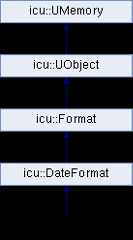
Public Member Functions | |
| U_I18N_API | SimpleDateFormat (UErrorCode &status) |
| Construct aSimpleDateFormat using the default pattern for the default locale.More... | |
| U_I18N_API | SimpleDateFormat (constUnicodeString &pattern,UErrorCode &status) |
| Construct aSimpleDateFormat using the given pattern and the default locale.More... | |
| U_I18N_API | SimpleDateFormat (constUnicodeString &pattern, constUnicodeString &override,UErrorCode &status) |
| Construct aSimpleDateFormat using the given pattern, numbering system override, and the default locale.More... | |
| U_I18N_API | SimpleDateFormat (constUnicodeString &pattern, constLocale &locale,UErrorCode &status) |
| Construct aSimpleDateFormat using the given pattern and locale.More... | |
| U_I18N_API | SimpleDateFormat (constUnicodeString &pattern, constUnicodeString &override, constLocale &locale,UErrorCode &status) |
| Construct aSimpleDateFormat using the given pattern, numbering system override, and locale.More... | |
| U_I18N_API | SimpleDateFormat (constUnicodeString &pattern,DateFormatSymbols *formatDataToAdopt,UErrorCode &status) |
| Construct aSimpleDateFormat using the given pattern and locale-specific symbol data.More... | |
| U_I18N_API | SimpleDateFormat (constUnicodeString &pattern, constDateFormatSymbols &formatData,UErrorCode &status) |
| Construct aSimpleDateFormat using the given pattern and locale-specific symbol data.More... | |
| U_I18N_API | SimpleDateFormat (constSimpleDateFormat &) |
| Copy constructor.More... | |
| U_I18N_APISimpleDateFormat & | operator= (constSimpleDateFormat &) |
| Assignment operator.More... | |
| virtualU_I18N_API | ~SimpleDateFormat () |
| Destructor.More... | |
| virtualU_I18N_APISimpleDateFormat * | clone () const override |
| Clone thisFormat object polymorphically.More... | |
| virtualU_I18N_API bool | operator== (constFormat &other) const override |
| Return true if the givenFormat objects are semantically equal.More... | |
| virtualU_I18N_APIUnicodeString & | format (Calendar &cal,UnicodeString &appendTo,FieldPosition &pos) const override |
| Format a date or time, which is the standard millis since 24:00 GMT, Jan 1, 1970.More... | |
| virtualU_I18N_APIUnicodeString & | format (Calendar &cal,UnicodeString &appendTo,FieldPositionIterator *posIter,UErrorCode &status) const override |
| Format a date or time, which is the standard millis since 24:00 GMT, Jan 1, 1970.More... | |
| virtualU_I18N_API void | parse (constUnicodeString &text,Calendar &cal,ParsePosition &pos) const override |
| Parse a date/time string beginning at the given parse position.More... | |
| virtualU_I18N_API void | set2DigitYearStart (UDate d,UErrorCode &status) |
| Set the start UDate used to interpret two-digit year strings.More... | |
| U_I18N_APIUDate | get2DigitYearStart (UErrorCode &status) const |
| Get the start UDate used to interpret two-digit year strings.More... | |
| virtualU_I18N_APIUnicodeString & | toPattern (UnicodeString &result) const |
| Return a pattern string describing this date format.More... | |
| virtualU_I18N_APIUnicodeString & | toLocalizedPattern (UnicodeString &result,UErrorCode &status) const |
| Return a localized pattern string describing this date format.More... | |
| virtualU_I18N_API void | applyPattern (constUnicodeString &pattern) |
| Apply the given unlocalized pattern string to this date format.More... | |
| virtualU_I18N_API void | applyLocalizedPattern (constUnicodeString &pattern,UErrorCode &status) |
| Apply the given localized pattern string to this date format.More... | |
| virtualU_I18N_API constDateFormatSymbols * | getDateFormatSymbols () const |
| Gets the date/time formatting symbols (this is an object carrying the various strings and other symbols used in formatting: e.g., month names and abbreviations, time zone names, AM/PM strings, etc.)More... | |
| virtualU_I18N_API void | adoptDateFormatSymbols (DateFormatSymbols *newFormatSymbols) |
| Set the date/time formatting symbols.More... | |
| virtualU_I18N_API void | setDateFormatSymbols (constDateFormatSymbols &newFormatSymbols) |
| Set the date/time formatting data.More... | |
| virtualU_I18N_APIUClassID | getDynamicClassID () const override |
| Returns a unique class ID POLYMORPHICALLY.More... | |
| virtualU_I18N_API void | adoptCalendar (Calendar *calendarToAdopt) override |
| Set the calendar to be used by this date format.More... | |
| virtualU_I18N_API void | adoptTimeZoneFormat (TimeZoneFormat *timeZoneFormatToAdopt) |
| Sets theTimeZoneFormat to be used by this date/time formatter.More... | |
| virtualU_I18N_API void | setTimeZoneFormat (constTimeZoneFormat &newTimeZoneFormat) |
| Sets theTimeZoneFormat to be used by this date/time formatter.More... | |
| virtualU_I18N_API constTimeZoneFormat * | getTimeZoneFormat () const |
| Gets the time zone format object associated with this date/time formatter.More... | |
| virtualU_I18N_API void | setContext (UDisplayContext value,UErrorCode &status) override |
| Set a particular UDisplayContext value in the formatter, such as UDISPCTX_CAPITALIZATION_FOR_STANDALONE.More... | |
| U_I18N_API void | adoptNumberFormat (NumberFormat *formatToAdopt) override |
| Overrides base class method and This method clears per fieldNumberFormat instances previously set by {.More... | |
| U_I18N_API void | adoptNumberFormat (constUnicodeString &fields,NumberFormat *formatToAdopt,UErrorCode &status) |
| Allow the user to set theNumberFormat for several fields It can be a single field like: "y"(year) or "M"(month) It can be several field combined together: "yM"(year and month) Note: 1 symbol field is enough for multiple symbol field (so "y" will override "yy", "yyy") If the field is not numeric, then override has no effect (like "MMM" will use abbreviation, not numerical field) Per fieldNumberFormat can also be cleared in {.More... | |
| U_I18N_API constNumberFormat * | getNumberFormatForField (char16_t field) const |
| Get the numbering system to be used for a particular field.More... | |
| U_I18N_APIUBool | isFieldUnitIgnored (UCalendarDateFields field) const |
| This is for ICU internal use only.More... | |
| U_I18N_API constLocale & | getSmpFmtLocale () const |
| This is for ICU internal use only.More... | |
| virtualU_I18N_APIUnicodeString & | format (constFormattable &obj,UnicodeString &appendTo,FieldPosition &pos,UErrorCode &status) const override |
| Format an object to produce a string.More... | |
| virtualU_I18N_APIUnicodeString & | format (constFormattable &obj,UnicodeString &appendTo,FieldPositionIterator *posIter,UErrorCode &status) const override |
| Format an object to produce a string.More... | |
| virtualU_I18N_APIUnicodeString & | format (Calendar &cal,UnicodeString &appendTo,FieldPosition &fieldPosition) const=0 |
| Formats a date into a date/time string.More... | |
| virtualU_I18N_APIUnicodeString & | format (Calendar &cal,UnicodeString &appendTo,FieldPositionIterator *posIter,UErrorCode &status) const |
| Formats a date into a date/time string.More... | |
| U_I18N_APIUnicodeString & | format (UDate date,UnicodeString &appendTo,FieldPosition &fieldPosition) const |
| Formats a UDate into a date/time string.More... | |
| U_I18N_APIUnicodeString & | format (UDate date,UnicodeString &appendTo,FieldPositionIterator *posIter,UErrorCode &status) const |
| Formats a UDate into a date/time string.More... | |
| U_I18N_APIUnicodeString & | format (UDate date,UnicodeString &appendTo) const |
| Formats a UDate into a date/time string.More... | |
| U_I18N_APIUnicodeString & | format (constFormattable &obj,UnicodeString &appendTo,UErrorCode &status) const |
| Formats an object to produce a string.More... | |
| virtualU_I18N_APIUnicodeString & | format (constFormattable &obj,UnicodeString &appendTo,FieldPosition &pos,UErrorCode &status) const =0 |
| Format an object to produce a string.More... | |
| virtualU_I18N_APIUnicodeString & | format (constFormattable &obj,UnicodeString &appendTo,FieldPositionIterator *posIter,UErrorCode &status) const |
| Format an object to produce a string.More... | |
| virtualU_I18N_APIUDate | parse (constUnicodeString &text,UErrorCode &status) const |
| Parse a date/time string.More... | |
| virtualU_I18N_API void | parse (constUnicodeString &text,Calendar &cal,ParsePosition &pos) const=0 |
| Parse a date/time string beginning at the given parse position.More... | |
| U_I18N_APIUDate | parse (constUnicodeString &text,ParsePosition &pos) const |
| Parse a date/time string beginning at the given parse position.More... | |
 Public Member Functions inherited fromicu::DateFormat Public Member Functions inherited fromicu::DateFormat | |
| virtualU_I18N_API | ~DateFormat () |
| Destructor.More... | |
| virtualU_I18N_APIUnicodeString & | format (constFormattable &obj,UnicodeString &appendTo,FieldPosition &pos,UErrorCode &status) const override |
| Format an object to produce a string.More... | |
| virtualU_I18N_APIUnicodeString & | format (constFormattable &obj,UnicodeString &appendTo,FieldPositionIterator *posIter,UErrorCode &status) const override |
| Format an object to produce a string.More... | |
| U_I18N_APIUnicodeString & | format (UDate date,UnicodeString &appendTo,FieldPosition &fieldPosition) const |
| Formats a UDate into a date/time string.More... | |
| U_I18N_APIUnicodeString & | format (UDate date,UnicodeString &appendTo,FieldPositionIterator *posIter,UErrorCode &status) const |
| Formats a UDate into a date/time string.More... | |
| U_I18N_APIUnicodeString & | format (UDate date,UnicodeString &appendTo) const |
| Formats a UDate into a date/time string.More... | |
| virtualU_I18N_APIUDate | parse (constUnicodeString &text,UErrorCode &status) const |
| Parse a date/time string.More... | |
| U_I18N_APIUDate | parse (constUnicodeString &text,ParsePosition &pos) const |
| Parse a date/time string beginning at the given parse position.More... | |
| virtualU_I18N_API void | parseObject (constUnicodeString &source,Formattable &result,ParsePosition &parse_pos) const override |
| Parse a string to produce an object.More... | |
| virtualU_I18N_APIUBool | isLenient () const |
| Returns whether both date/time parsing in the encapsulatedCalendar object andDateFormat whitespace & numeric processing is lenient.More... | |
| virtualU_I18N_API void | setLenient (UBool lenient) |
| Specifies whether date/time parsing is to be lenient.More... | |
| virtualU_I18N_APIUBool | isCalendarLenient () const |
| Returns whether date/time parsing in the encapsulatedCalendar object processing is lenient.More... | |
| virtualU_I18N_API void | setCalendarLenient (UBool lenient) |
| Specifies whether encapsulatedCalendar date/time parsing is to be lenient.More... | |
| virtualU_I18N_API constCalendar * | getCalendar () const |
| Gets the calendar associated with this date/time formatter.More... | |
| virtualU_I18N_API void | setCalendar (constCalendar &newCalendar) |
| Set the calendar to be used by this date format.More... | |
| virtualU_I18N_API constNumberFormat * | getNumberFormat () const |
| Gets the number formatter which this date/time formatter uses to format and parse the numeric portions of the pattern.More... | |
| virtualU_I18N_API void | setNumberFormat (constNumberFormat &newNumberFormat) |
| Allows you to set the number formatter.More... | |
| virtualU_I18N_API constTimeZone & | getTimeZone () const |
| Returns a reference to theTimeZone used by thisDateFormat's calendar.More... | |
| virtualU_I18N_API void | adoptTimeZone (TimeZone *zoneToAdopt) |
| Sets the time zone for the calendar of thisDateFormat object.More... | |
| virtualU_I18N_API void | setTimeZone (constTimeZone &zone) |
| Sets the time zone for the calendar of thisDateFormat object.More... | |
| virtualU_I18N_APIUDisplayContext | getContext (UDisplayContextType type,UErrorCode &status) const |
| Get the formatter's UDisplayContext value for the specified UDisplayContextType, such as UDISPCTX_TYPE_CAPITALIZATION.More... | |
| virtualU_I18N_APIDateFormat & | setBooleanAttribute (UDateFormatBooleanAttribute attr,UBool newvalue,UErrorCode &status) |
| Sets an boolean attribute on thisDateFormat.More... | |
| virtualU_I18N_APIUBool | getBooleanAttribute (UDateFormatBooleanAttribute attr,UErrorCode &status) const |
| Returns a boolean from thisDateFormat May return U_UNSUPPORTED_ERROR if this instance does not support the specified attribute.More... | |
| U_I18N_APIUnicodeString & | format (constFormattable &obj,UnicodeString &appendTo,UErrorCode &status) const |
| Formats an object to produce a string.More... | |
| virtualU_I18N_APIUnicodeString & | format (constFormattable &obj,UnicodeString &appendTo,FieldPosition &pos,UErrorCode &status) const=0 |
| Format an object to produce a string.More... | |
| virtualU_I18N_APIUnicodeString & | format (constFormattable &obj,UnicodeString &appendTo,FieldPositionIterator *posIter,UErrorCode &status) const |
| Format an object to produce a string.More... | |
| Public Member Functions inherited fromicu::Format | |
| virtualU_I18N_API | ~Format () |
| Destructor.More... | |
| U_I18N_API bool | operator!= (constFormat &other) const |
| Return true if the givenFormat objects are not semantically equal.More... | |
| U_I18N_APIUnicodeString & | format (constFormattable &obj,UnicodeString &appendTo,UErrorCode &status) const |
| Formats an object to produce a string.More... | |
| U_I18N_API void | parseObject (constUnicodeString &source,Formattable &result,UErrorCode &status) const |
| Parses a string to produce an object.More... | |
| U_I18N_APILocale | getLocale (ULocDataLocaleType type,UErrorCode &status) const |
| Get the locale for this format object.More... | |
| U_I18N_API const char * | getLocaleID (ULocDataLocaleType type,UErrorCode &status) const |
| Get the locale for this format object.More... | |
| Public Member Functions inherited fromicu::UObject | |
| virtual | ~UObject () |
| Destructor.More... | |
Static Public Member Functions | |
| staticU_I18N_APIUClassID | getStaticClassID () |
| Return the class ID for this class.More... | |
| staticU_I18N_APIUBool | isFieldUnitIgnored (constUnicodeString &pattern,UCalendarDateFields field) |
| This is for ICU internal use only.More... | |
| Static Public Member Functions inherited fromicu::DateFormat | |
| staticU_I18N_APIDateFormat * | createInstance () |
| Create a default date/time formatter that uses the SHORT style for both the date and the time.More... | |
| staticU_I18N_APIDateFormat * | createTimeInstance (EStyle style=kDefault, constLocale &aLocale=Locale::getDefault()) |
| Creates a time formatter with the given formatting style for the given locale.More... | |
| staticU_I18N_APIDateFormat * | createDateInstance (EStyle style=kDefault, constLocale &aLocale=Locale::getDefault()) |
| Creates a date formatter with the given formatting style for the given const locale.More... | |
| staticU_I18N_APIDateFormat * | createDateTimeInstance (EStyle dateStyle=kDefault,EStyle timeStyle=kDefault, constLocale &aLocale=Locale::getDefault()) |
| Creates a date/time formatter with the given formatting styles for the given locale.More... | |
| staticU_I18N_APIUnicodeString | getBestPattern (constLocale &locale, constUnicodeString &skeleton,UErrorCode &status) |
| Returns the best pattern given a skeleton and locale.More... | |
| staticU_I18N_APIDateFormat * | createInstanceForSkeleton (constUnicodeString &skeleton,UErrorCode &status) |
| Creates a date/time formatter for the given skeleton and default locale.More... | |
| staticU_I18N_APIDateFormat * | createInstanceForSkeleton (constUnicodeString &skeleton, constLocale &locale,UErrorCode &status) |
| Creates a date/time formatter for the given skeleton and locale.More... | |
| staticU_I18N_APIDateFormat * | createInstanceForSkeleton (Calendar *calendarToAdopt, constUnicodeString &skeleton, constLocale &locale,UErrorCode &status) |
| Creates a date/time formatter for the given skeleton and locale.More... | |
| staticU_I18N_API constLocale * | getAvailableLocales (int32_t &count) |
| Gets the set of locales for which DateFormats are installed.More... | |
Friends | |
| class | DateFormat |
| class | DateIntervalFormat |
Additional Inherited Members | |
| Public Types inherited fromicu::DateFormat | |
| enum | EStyle { kNone = -1,kFull = 0,kLong = 1,kMedium = 2, kShort = 3,kDateOffset = kShort + 1,kDateTime = 8,kDateTimeOffset = kDateTime + 1, kRelative = (1 << 7),kFullRelative = (kFull | kRelative),kLongRelative = kLong | kRelative,kMediumRelative = kMedium | kRelative, kShortRelative = kShort | kRelative,kDefault = kMedium,FULL = kFull,LONG = kLong, MEDIUM = kMedium,SHORT = kShort,DEFAULT = kDefault,DATE_OFFSET = kDateOffset, NONE = kNone,DATE_TIME = kDateTime } |
| Constants for various style patterns.More... | |
| enum | EField { kEraField = UDAT_ERA_FIELD,kYearField = UDAT_YEAR_FIELD,kMonthField = UDAT_MONTH_FIELD,kDateField = UDAT_DATE_FIELD, kHourOfDay1Field = UDAT_HOUR_OF_DAY1_FIELD,kHourOfDay0Field = UDAT_HOUR_OF_DAY0_FIELD,kMinuteField = UDAT_MINUTE_FIELD,kSecondField = UDAT_SECOND_FIELD, kMillisecondField = UDAT_FRACTIONAL_SECOND_FIELD,kDayOfWeekField = UDAT_DAY_OF_WEEK_FIELD,kDayOfYearField = UDAT_DAY_OF_YEAR_FIELD,kDayOfWeekInMonthField = UDAT_DAY_OF_WEEK_IN_MONTH_FIELD, kWeekOfYearField = UDAT_WEEK_OF_YEAR_FIELD,kWeekOfMonthField = UDAT_WEEK_OF_MONTH_FIELD,kAmPmField = UDAT_AM_PM_FIELD,kHour1Field = UDAT_HOUR1_FIELD, kHour0Field = UDAT_HOUR0_FIELD,kTimezoneField = UDAT_TIMEZONE_FIELD,kYearWOYField = UDAT_YEAR_WOY_FIELD,kDOWLocalField = UDAT_DOW_LOCAL_FIELD, kExtendedYearField = UDAT_EXTENDED_YEAR_FIELD,kJulianDayField = UDAT_JULIAN_DAY_FIELD,kMillisecondsInDayField = UDAT_MILLISECONDS_IN_DAY_FIELD,ERA_FIELD = UDAT_ERA_FIELD, YEAR_FIELD = UDAT_YEAR_FIELD,MONTH_FIELD = UDAT_MONTH_FIELD,DATE_FIELD = UDAT_DATE_FIELD,HOUR_OF_DAY1_FIELD = UDAT_HOUR_OF_DAY1_FIELD, HOUR_OF_DAY0_FIELD = UDAT_HOUR_OF_DAY0_FIELD,MINUTE_FIELD = UDAT_MINUTE_FIELD,SECOND_FIELD = UDAT_SECOND_FIELD,MILLISECOND_FIELD = UDAT_FRACTIONAL_SECOND_FIELD, DAY_OF_WEEK_FIELD = UDAT_DAY_OF_WEEK_FIELD,DAY_OF_YEAR_FIELD = UDAT_DAY_OF_YEAR_FIELD,DAY_OF_WEEK_IN_MONTH_FIELD = UDAT_DAY_OF_WEEK_IN_MONTH_FIELD,WEEK_OF_YEAR_FIELD = UDAT_WEEK_OF_YEAR_FIELD, WEEK_OF_MONTH_FIELD = UDAT_WEEK_OF_MONTH_FIELD,AM_PM_FIELD = UDAT_AM_PM_FIELD,HOUR1_FIELD = UDAT_HOUR1_FIELD,HOUR0_FIELD = UDAT_HOUR0_FIELD, TIMEZONE_FIELD = UDAT_TIMEZONE_FIELD } |
| Field selector forFieldPosition forDateFormat fields.More... | |
| Protected Member Functions inherited fromicu::DateFormat | |
| U_I18N_API | DateFormat () |
| Default constructor.More... | |
| U_I18N_API | DateFormat (constDateFormat &) |
| Copy constructor.More... | |
| U_I18N_APIDateFormat & | operator= (constDateFormat &) |
| Default assignment operator.More... | |
| Protected Member Functions inherited fromicu::Format | |
| U_I18N_API void | setLocaleIDs (const char *valid, const char *actual) |
| U_I18N_API | Format () |
| Default constructor for subclass use only.More... | |
| U_I18N_API | Format (constFormat &) |
| U_I18N_APIFormat & | operator= (constFormat &) |
| Static Protected Member Functions inherited fromicu::Format | |
| staticU_I18N_API void | syntaxError (constUnicodeString &pattern, int32_t pos,UParseError &parseError) |
| Simple function for initializing aUParseError from aUnicodeString.More... | |
| Protected Attributes inherited fromicu::DateFormat | |
| Calendar * | fCalendar |
| The calendar thatDateFormat uses to produce the time field values needed to implement date/time formatting.More... | |
| NumberFormat * | fNumberFormat |
| The number formatter thatDateFormat uses to format numbers in dates and times.More... | |
Detailed Description
SimpleDateFormat is a concrete class for formatting and parsing dates in a language-independent manner.
It allows for formatting (millis -> text), parsing (text -> millis), and normalization. Formats/Parses a date or time, which is the standard milliseconds since 24:00 GMT, Jan 1, 1970.
Clients are encouraged to create a date-time formatter using DateFormat::getInstance(), getDateInstance(), getDateInstance(), or getDateTimeInstance() rather than explicitly constructing an instance ofSimpleDateFormat. This way, the client is guaranteed to get an appropriate formatting pattern for whatever locale the program is running in. If the client needs more control, they should consider usingDateFormat::createInstanceForSkeleton(). However, if the client needs something more unusual than the default patterns in the locales, he can construct aSimpleDateFormat directly and give it an appropriate pattern (or use one of the factory methods onDateFormat and modify the pattern after the fact withtoPattern() andapplyPattern().
Date and Time Patterns:
Date and time formats are specified bydate and time pattern strings. The full syntax for date and time patterns can be found athttps://unicode.org/reports/tr35/tr35-dates.html#Date_Format_Patterns.
Within date and time pattern strings, all unquoted ASCII letters [A-Za-z] are reserved as pattern letters representing calendar fields. Some of the most commonly used pattern letters are:
| Sym. | No. | Example | Description | ||||||||||||||||||||||||||||||||||||
|---|---|---|---|---|---|---|---|---|---|---|---|---|---|---|---|---|---|---|---|---|---|---|---|---|---|---|---|---|---|---|---|---|---|---|---|---|---|---|---|
| G | 1..3 | AD | Era - Replaced with the Era string for the current date. One to three letters for the abbreviated form, four letters for the long (wide) form, five for the narrow form. | ||||||||||||||||||||||||||||||||||||
| y | 1..n | 1996 | Year. Normally the length specifies the padding, but for two letters it also specifies the maximum length. Example:
| ||||||||||||||||||||||||||||||||||||
| Q | 1..2 | 02 | Quarter - Use one or two for the numerical quarter, three for the abbreviation, or four for the full (wide) name (five for the narrow name is not yet supported). | ||||||||||||||||||||||||||||||||||||
| 3 | Q2 | ||||||||||||||||||||||||||||||||||||||
| 4 | 2nd quarter | ||||||||||||||||||||||||||||||||||||||
| M | 1..2 | 09 | Month - Use one or two for the numerical month, three for the abbreviation, four for the full (wide) name, or five for the narrow name. With two ("MM"), the month number is zero-padded if necessary (e.g. "08"). | ||||||||||||||||||||||||||||||||||||
| 3 | Sep | ||||||||||||||||||||||||||||||||||||||
| 4 | September | ||||||||||||||||||||||||||||||||||||||
| 5 | S | ||||||||||||||||||||||||||||||||||||||
| d | 1..2 | 1 | Date - Day of the month. Use "d" to show the minimum number of digits, or "dd" to always show two digits (zero-padding if necessary, e.g. "08"). | ||||||||||||||||||||||||||||||||||||
| E | 1..3 | Tue | Day of week - Use one through three letters for the short day, four for the full (wide) name, five for the narrow name, or six for the short name. | ||||||||||||||||||||||||||||||||||||
| 4 | Tuesday | ||||||||||||||||||||||||||||||||||||||
| 5 | T | ||||||||||||||||||||||||||||||||||||||
| 6 | Tu | ||||||||||||||||||||||||||||||||||||||
| a | 1 | AM | AM or PM | ||||||||||||||||||||||||||||||||||||
| h | 1..2 | 11 | Hour [1-12]. When used in skeleton data or in a skeleton passed in an API for flexible data pattern generation, it should match the 12-hour-cycle format preferred by the locale (h or K); it should not match a 24-hour-cycle format (H or k). Use hh for zero padding. | ||||||||||||||||||||||||||||||||||||
| H | 1..2 | 13 | Hour [0-23]. When used in skeleton data or in a skeleton passed in an API for flexible data pattern generation, it should match the 24-hour-cycle format preferred by the locale (H or k); it should not match a 12-hour-cycle format (h or K). Use HH for zero padding. | ||||||||||||||||||||||||||||||||||||
| m | 1..2 | 59 | Minute. Use "m" to show the minimum number of digits, or "mm" to always show two digits (zero-padding if necessary, e.g. "08").. | ||||||||||||||||||||||||||||||||||||
| s | 1..2 | 12 | Second. Use "s" to show the minimum number of digits, or "ss" to always show two digits (zero-padding if necessary, e.g. "08"). | ||||||||||||||||||||||||||||||||||||
| z | 1..3 | PDT | Time zone. Theshort specific non-location format. Where that is unavailable, falls back to theshort localized GMT format ("O"). | ||||||||||||||||||||||||||||||||||||
| 4 | Pacific Daylight Time | Thelong specific non-location format. Where that is unavailable, falls back to thelong localized GMT format ("OOOO"). | |||||||||||||||||||||||||||||||||||||
| v | 1 | PT | Time zone. Theshort generic non-location format. Where that is unavailable, falls back to thegeneric location format ("VVVV"), then theshort localized GMT format as the final fallback. | ||||||||||||||||||||||||||||||||||||
| 4 | Pacific Time | Thelong generic non-location format. Where that is unavailable, falls back togeneric location format ("VVVV"). |
Any characters in the pattern that are not in the ranges of ['a'..'z'] and ['A'..'Z'] will be treated as quoted text. For instance, characters like ':', '.', ' ', '#' and '@' will appear in the resulting time text even they are not embraced within single quotes.
A pattern containing any invalid pattern letter will result in a failing UErrorCode result during formatting or parsing.
Examples using the US locale:
Format Pattern Result-------------- -------"yyyy.MM.dd G 'at' HH:mm:ss vvvv" ->> 1996.07.10 AD at 15:08:56 Pacific Time"EEE, MMM d, ''yy" ->> Wed, July 10,'96"h:mm a" ->> 12:08 PM"hh 'o''clock' a, zzzz" ->> 12 o'clock PM, Pacific Daylight Time"K:mm a, vvv" ->> 0:00 PM, PT"yyyyy.MMMMM.dd GGG hh:mm aaa" ->> 1996.July.10 AD 12:08 PM
Code Sample:
UErrorCode success =U_ZERO_ERROR;SimpleTimeZone* pdt =new SimpleTimeZone(-8 * 60 * 60 * 1000,"PST");pdt->setStartRule( Calendar::APRIL, 1, Calendar::SUNDAY, 2*60*60*1000);pdt->setEndRule( Calendar::OCTOBER, -1, Calendar::SUNDAY, 2*60*60*1000);// Format the current time.SimpleDateFormat* formatterGregorianCalendar cal(success);UDate currentTime_1 = cal.getTime(success);FieldPosition fp(FieldPosition::DONT_CARE);UnicodeString dateString;formatter->format( currentTime_1, dateString, fp );cout <<"result: " << dateString << endl;// Parse the previous string back into a Date.ParsePosition pp(0);UDate currentTime_2 = formatter->parse(dateString, pp );U_I18N_API SimpleDateFormat(UErrorCode &status)Construct a SimpleDateFormat using the default pattern for the default locale.
In the above example, the time value "currentTime_2" obtained from parsing will be equal to currentTime_1. However, they may not be equal if the am/pm marker 'a' is left out from the format pattern while the "hour in am/pm" pattern symbol is used. This information loss can happen when formatting the time in PM.
When parsing a date string using the abbreviated year pattern ("y" or "yy"),SimpleDateFormat must interpret the abbreviated year relative to some century. It does this by adjusting dates to be within 80 years before and 20 years after the time theSimpleDateFormat instance is created. For example, using a pattern of "MM/dd/yy" and aSimpleDateFormat instance created on Jan 1, 1997, the string "01/11/12" would be interpreted as Jan 11, 2012 while the string "05/04/64" would be interpreted as May 4, 1964. During parsing, only strings consisting of exactly two digits, as defined byUnicode::isDigit(), will be parsed into the default century. Any other numeric string, such as a one digit string, a three or more digit string, or a two digit string that isn't all digits (for example, "-1"), is interpreted literally. So "01/02/3" or "01/02/003" are parsed (for the Gregorian calendar), using the same pattern, as Jan 2, 3 AD. Likewise (but only in lenient parse mode, the default) "01/02/-3" is parsed as Jan 2, 4 BC.
If the year pattern has more than two 'y' characters, the year is interpreted literally, regardless of the number of digits. So using the pattern "MM/dd/yyyy", "01/11/12" parses to Jan 11, 12 A.D.
When numeric fields abut one another directly, with no intervening delimiter characters, they constitute a run of abutting numeric fields. Such runs are parsed specially. For example, the format "HHmmss" parses the input text "123456" to 12:34:56, parses the input text "12345" to 1:23:45, and fails to parse "1234". In other words, the leftmost field of the run is flexible, while the others keep a fixed width. If the parse fails anywhere in the run, then the leftmost field is shortened by one character, and the entire run is parsed again. This is repeated until either the parse succeeds or the leftmost field is one character in length. If the parse still fails at that point, the parse of the run fails.
For time zones that have no names,SimpleDateFormat uses strings GMT+hours:minutes or GMT-hours:minutes.
The calendar defines what is the first day of the week, the first week of the year, whether hours are zero based or not (0 vs 12 or 24), and the timezone. There is one common number format to handle all the numbers; the digit count is handled programmatically according to the pattern.
User subclasses are not supported. While clients may write subclasses, such code will not necessarily work and will not be guaranteed to work stably from release to release.
Definition at line385 of filesmpdtfmt.h.
Constructor & Destructor Documentation
◆ SimpleDateFormat()[1/8]
| U_I18N_API icu::SimpleDateFormat::SimpleDateFormat | ( | UErrorCode & | status | ) |
Construct aSimpleDateFormat using the default pattern for the default locale.
[Note:] Not all locales supportSimpleDateFormat; for full generality, use the factory methods in theDateFormat class.
- Parameters
status Output param set to success/failure code.
- Stable:
- ICU 2.0
◆ SimpleDateFormat()[2/8]
| U_I18N_API icu::SimpleDateFormat::SimpleDateFormat | ( | constUnicodeString & | pattern, |
| UErrorCode & | status | ||
| ) |
Construct aSimpleDateFormat using the given pattern and the default locale.
The locale is used to obtain the symbols used in formatting (e.g., the names of the months), but not to provide the pattern.
[Note:] Not all locales supportSimpleDateFormat; for full generality, use the factory methods in theDateFormat class.
- Parameters
pattern the pattern for the format. status Output param set to success/failure code.
- Stable:
- ICU 2.0
◆ SimpleDateFormat()[3/8]
| U_I18N_API icu::SimpleDateFormat::SimpleDateFormat | ( | constUnicodeString & | pattern, |
| constUnicodeString & | override, | ||
| UErrorCode & | status | ||
| ) |
Construct aSimpleDateFormat using the given pattern, numbering system override, and the default locale.
The locale is used to obtain the symbols used in formatting (e.g., the names of the months), but not to provide the pattern.
A numbering system override is a string containing either the name of a known numbering system, or a set of field and numbering system pairs that specify which fields are to be formatted with the alternate numbering system. For example, to specify that all numeric fields in the specified date or time pattern are to be rendered using Thai digits, simply specify the numbering system override as "thai". To specify that just the year portion of the date be formatted using Hebrew numbering, use the override string "y=hebrew". Numbering system overrides can be combined using a semi-colon character in the override string, such as "d=decimal;M=arabic;y=hebrew", etc.
[Note:] Not all locales supportSimpleDateFormat; for full generality, use the factory methods in theDateFormat class.
- Parameters
pattern the pattern for the format. override the override string. status Output param set to success/failure code.
- Stable:
- ICU 4.2
◆ SimpleDateFormat()[4/8]
| U_I18N_API icu::SimpleDateFormat::SimpleDateFormat | ( | constUnicodeString & | pattern, |
| constLocale & | locale, | ||
| UErrorCode & | status | ||
| ) |
Construct aSimpleDateFormat using the given pattern and locale.
The locale is used to obtain the symbols used in formatting (e.g., the names of the months), but not to provide the pattern.
[Note:] Not all locales supportSimpleDateFormat; for full generality, use the factory methods in theDateFormat class.
- Parameters
pattern the pattern for the format. locale the given locale. status Output param set to success/failure code.
- Stable:
- ICU 2.0
◆ SimpleDateFormat()[5/8]
| U_I18N_API icu::SimpleDateFormat::SimpleDateFormat | ( | constUnicodeString & | pattern, |
| constUnicodeString & | override, | ||
| constLocale & | locale, | ||
| UErrorCode & | status | ||
| ) |
Construct aSimpleDateFormat using the given pattern, numbering system override, and locale.
The locale is used to obtain the symbols used in formatting (e.g., the names of the months), but not to provide the pattern.
A numbering system override is a string containing either the name of a known numbering system, or a set of field and numbering system pairs that specify which fields are to be formatted with the alternate numbering system. For example, to specify that all numeric fields in the specified date or time pattern are to be rendered using Thai digits, simply specify the numbering system override as "thai". To specify that just the year portion of the date be formatted using Hebrew numbering, use the override string "y=hebrew". Numbering system overrides can be combined using a semi-colon character in the override string, such as "d=decimal;M=arabic;y=hebrew", etc.
[Note:] Not all locales supportSimpleDateFormat; for full generality, use the factory methods in theDateFormat class.
- Parameters
pattern the pattern for the format. override the numbering system override. locale the given locale. status Output param set to success/failure code.
- Stable:
- ICU 4.2
◆ SimpleDateFormat()[6/8]
| U_I18N_API icu::SimpleDateFormat::SimpleDateFormat | ( | constUnicodeString & | pattern, |
| DateFormatSymbols * | formatDataToAdopt, | ||
| UErrorCode & | status | ||
| ) |
Construct aSimpleDateFormat using the given pattern and locale-specific symbol data.
The formatter takes ownership of theDateFormatSymbols object; the caller is no longer responsible for deleting it.
- Parameters
pattern the given pattern for the format. formatDataToAdopt the symbols to be adopted. status Output param set to success/faulure code.
- Stable:
- ICU 2.0
◆ SimpleDateFormat()[7/8]
| U_I18N_API icu::SimpleDateFormat::SimpleDateFormat | ( | constUnicodeString & | pattern, |
| constDateFormatSymbols & | formatData, | ||
| UErrorCode & | status | ||
| ) |
Construct aSimpleDateFormat using the given pattern and locale-specific symbol data.
TheDateFormatSymbols object is NOT adopted; the caller remains responsible for deleting it.
- Parameters
pattern the given pattern for the format. formatData the formatting symbols to be use. status Output param set to success/faulure code.
- Stable:
- ICU 2.0
◆ SimpleDateFormat()[8/8]
| U_I18N_API icu::SimpleDateFormat::SimpleDateFormat | ( | constSimpleDateFormat & | ) |
Copy constructor.
- Stable:
- ICU 2.0
◆ ~SimpleDateFormat()
| virtual |
Destructor.
- Stable:
- ICU 2.0
Member Function Documentation
◆ adoptCalendar()
| overridevirtual |
Set the calendar to be used by this date format.
Initially, the default calendar for the specified or default locale is used. The caller should not delete theCalendar object after it is adopted by this call. Adopting a new calendar will change to the default symbols.
- Parameters
calendarToAdopt Calendar object to be adopted.
- Stable:
- ICU 2.0
Reimplemented fromicu::DateFormat.
◆ adoptDateFormatSymbols()
| virtual |
Set the date/time formatting symbols.
The caller no longer owns theDateFormatSymbols object and should not delete it after making this call.
- Parameters
newFormatSymbols the given date-time formatting symbols to copy.
- Stable:
- ICU 2.0
◆ adoptNumberFormat()[1/2]
| U_I18N_API void icu::SimpleDateFormat::adoptNumberFormat | ( | constUnicodeString & | fields, |
| NumberFormat * | formatToAdopt, | ||
| UErrorCode & | status | ||
| ) |
Allow the user to set theNumberFormat for several fields It can be a single field like: "y"(year) or "M"(month) It can be several field combined together: "yM"(year and month) Note: 1 symbol field is enough for multiple symbol field (so "y" will override "yy", "yyy") If the field is not numeric, then override has no effect (like "MMM" will use abbreviation, not numerical field) Per fieldNumberFormat can also be cleared in {.
- Parameters
fields the fields to override(like y) formatToAdopt the NumbeferFormat used status Receives a status code, which will be U_ZERO_ERROR if the operation succeeds.
- Stable:
- ICU 54
◆ adoptNumberFormat()[2/2]
| overridevirtual |
Overrides base class method and This method clears per fieldNumberFormat instances previously set by {.
- See also
- adoptNumberFormat(const UnicodeString&, NumberFormat*, UErrorCode)}
- Parameters
formatToAdopt the NumbeferFormat used
- Stable:
- ICU 54
Reimplemented fromicu::DateFormat.
◆ adoptTimeZoneFormat()
| virtual |
Sets theTimeZoneFormat to be used by this date/time formatter.
The caller should not delete theTimeZoneFormat object after it is adopted by this call.
- Parameters
timeZoneFormatToAdopt TheTimeZoneFormat object to be adopted.
- Internal:
- Do not use. This API is for internal use only. ICU 49 technology preview
◆ applyLocalizedPattern()
| virtual |
Apply the given localized pattern string to this date format.
(seetoLocalizedPattern() for more information on localized patterns.)
- Parameters
pattern The localized pattern to be applied. status Output param set to success/failure code on exit. If the pattern is invalid, this will be set to a failure result.
- Stable:
- ICU 2.0
◆ applyPattern()
| virtual |
Apply the given unlocalized pattern string to this date format.
(i.e., after this call, this formatter will format dates according to the new pattern)
- Parameters
pattern The pattern to be applied.
- Stable:
- ICU 2.0
◆ clone()
| overridevirtual |
Clone thisFormat object polymorphically.
The caller owns the result and should delete it when done.
- Returns
- A copy of the object.
- Stable:
- ICU 2.0
Implementsicu::DateFormat.
◆ format()[1/12]
| virtualU_I18N_APIUnicodeString& icu::DateFormat::format |
Formats a date into a date/time string.
This is an abstract method which concrete subclasses must implement.
On input, theFieldPosition parameter may have its "field" member filled with an enum value specifying a field. On output, theFieldPosition will be filled in with the text offsets for that field.
For example, given a time text "1996.07.10 AD at 15:08:56 PDT", if the given fieldPosition.field is UDAT_YEAR_FIELD, the offsets fieldPosition.beginIndex and statfieldPositionus.getEndIndex will be set to 0 and 4, respectively.
Notice that if the same time field appears more than once in a pattern, the status will be set for the first occurrence of that time field. For instance, formatting a UDate to the time string "1 PM PDT (Pacific Daylight Time)" using the pattern "h a z (zzzz)" and the alignment field DateFormat::TIMEZONE_FIELD, the offsets fieldPosition.beginIndex and fieldPosition.getEndIndex will be set to 5 and 8, respectively, for the first occurrence of the timezone pattern character 'z'.
- Parameters
cal Calendar set to the date and time to be formatted into a date/time string. When the calendar type is different from the internal calendar held by thisDateFormat instance, the date and the time zone will be inherited from the input calendar, but other calendar field values will be calculated by the internal calendar. appendTo Output parameter to receive result. Result is appended to existing contents. fieldPosition On input: an alignment field, if desired (see examples above) On output: the offsets of the alignment field (see examples above)
- Returns
- Reference to 'appendTo' parameter.
- Stable:
- ICU 2.1
◆ format()[2/12]
| overridevirtual |
Format a date or time, which is the standard millis since 24:00 GMT, Jan 1, 1970.
OverridesDateFormat pure virtual method.
Example: using the US locale: "yyyy.MM.dd e 'at' HH:mm:ss zzz" ->> 1996.07.10 AD at 15:08:56 PDT
- Parameters
cal Calendar set to the date and time to be formatted into a date/time string. appendTo Output parameter to receive result. Result is appended to existing contents. pos The formatting position. On input: an alignment field, if desired. On output: the offsets of the alignment field.
- Returns
- Reference to 'appendTo' parameter.
- Stable:
- ICU 2.1
Implementsicu::DateFormat.
◆ format()[3/12]
| virtualU_I18N_APIUnicodeString& icu::DateFormat::format |
Formats a date into a date/time string.
Subclasses should implement this method.
- Parameters
cal Calendar set to the date and time to be formatted into a date/time string. When the calendar type is different from the internal calendar held by thisDateFormat instance, the date and the time zone will be inherited from the input calendar, but other calendar field values will be calculated by the internal calendar. appendTo Output parameter to receive result. Result is appended to existing contents. posIter On return, can be used to iterate over positions of fields generated by this format call. Field values are defined in UDateFormatField. Can be nullptr. status error status.
- Returns
- Reference to 'appendTo' parameter.
- Stable:
- ICU 4.4
◆ format()[4/12]
| overridevirtual |
Format a date or time, which is the standard millis since 24:00 GMT, Jan 1, 1970.
OverridesDateFormat pure virtual method.
Example: using the US locale: "yyyy.MM.dd e 'at' HH:mm:ss zzz" ->> 1996.07.10 AD at 15:08:56 PDT
- Parameters
cal Calendar set to the date and time to be formatted into a date/time string. appendTo Output parameter to receive result. Result is appended to existing contents. posIter On return, can be used to iterate over positions of fields generated by this format call. Field values are defined in UDateFormatField. status Input/output param set to success/failure code.
- Returns
- Reference to 'appendTo' parameter.
- Stable:
- ICU 4.4
Reimplemented fromicu::DateFormat.
◆ format()[5/12]
| virtualU_I18N_APIUnicodeString& icu::Format::format |
Format an object to produce a string.
This is a pure virtual method which subclasses must implement. This method allows polymorphic formatting ofFormattable objects. If a subclass ofFormat receives aFormattable object type it doesn't handle (e.g., if a numericFormattable is passed to aDateFormat object) then it returns a failing UErrorCode.
- Parameters
obj The object to format. appendTo Output parameter to receive result. Result is appended to existing contents. pos On input: an alignment field, if desired. On output: the offsets of the alignment field. status Output param filled with success/failure status.
- Returns
- Reference to 'appendTo' parameter.
- Stable:
- ICU 2.0
◆ format()[6/12]
| override |
Format an object to produce a string.
This method handlesFormattable objects with a UDate type. If a theFormattable object type is not a Date, then it returns a failing UErrorCode.
- Parameters
obj The object to format. Must be a Date. appendTo Output parameter to receive result. Result is appended to existing contents. pos On input: an alignment field, if desired. On output: the offsets of the alignment field. status Output param filled with success/failure status.
- Returns
- Reference to 'appendTo' parameter.
- Stable:
- ICU 2.0
◆ format()[7/12]
| virtualU_I18N_APIUnicodeString& icu::Format::format |
Format an object to produce a string.
Subclasses should override this method. This method allows polymorphic formatting ofFormattable objects. If a subclass ofFormat receives aFormattable object type it doesn't handle (e.g., if a numericFormattable is passed to aDateFormat object) then it returns a failing UErrorCode.
- Parameters
obj The object to format. appendTo Output parameter to receive result. Result is appended to existing contents. posIter On return, can be used to iterate over positions of fields generated by this format call. status Output param filled with success/failure status.
- Returns
- Reference to 'appendTo' parameter.
- Stable:
- ICU 4.4
◆ format()[8/12]
| override |
Format an object to produce a string.
This method handlesFormattable objects with a UDate type. If a theFormattable object type is not a Date, then it returns a failing UErrorCode.
- Parameters
obj The object to format. Must be a Date. appendTo Output parameter to receive result. Result is appended to existing contents. posIter On return, can be used to iterate over positions of fields generated by this format call. Field values are defined in UDateFormatField. Can be nullptr. status Output param filled with success/failure status.
- Returns
- Reference to 'appendTo' parameter.
- Stable:
- ICU 4.4
◆ format()[9/12]
| U_I18N_APIUnicodeString& icu::Format::format |
Formats an object to produce a string.
- Parameters
obj The object to format. appendTo Output parameter to receive result. Result is appended to existing contents. status Output parameter filled in with success or failure status.
- Returns
- Reference to 'appendTo' parameter.
- Stable:
- ICU 2.0
◆ format()[10/12]
| U_I18N_APIUnicodeString& icu::DateFormat::format |
Formats a UDate into a date/time string.
If there is a problem, you won't know, using this method. Use the overloadedformat() method which takes aFieldPosition& to detect formatting problems.
- Parameters
date The UDate value to be formatted into a string. appendTo Output parameter to receive result. Result is appended to existing contents.
- Returns
- Reference to 'appendTo' parameter.
- Stable:
- ICU 2.0
◆ format()[11/12]
| U_I18N_APIUnicodeString& icu::DateFormat::format |
Formats a UDate into a date/time string.
On input, theFieldPosition parameter may have its "field" member filled with an enum value specifying a field. On output, theFieldPosition will be filled in with the text offsets for that field.
For example, given a time text "1996.07.10 AD at 15:08:56 PDT", if the given fieldPosition.field is UDAT_YEAR_FIELD, the offsets fieldPosition.beginIndex and statfieldPositionus.getEndIndex will be set to 0 and 4, respectively.
Notice that if the same time field appears more than once in a pattern, the status will be set for the first occurrence of that time field. For instance, formatting a UDate to the time string "1 PM PDT (Pacific Daylight Time)" using the pattern "h a z (zzzz)" and the alignment field DateFormat::TIMEZONE_FIELD, the offsets fieldPosition.beginIndex and fieldPosition.getEndIndex will be set to 5 and 8, respectively, for the first occurrence of the timezone pattern character 'z'.
- Parameters
date UDate to be formatted into a date/time string. appendTo Output parameter to receive result. Result is appended to existing contents. fieldPosition On input: an alignment field, if desired (see examples above) On output: the offsets of the alignment field (see examples above)
- Returns
- Reference to 'appendTo' parameter.
- Stable:
- ICU 2.0
◆ format()[12/12]
| U_I18N_APIUnicodeString& icu::DateFormat::format |
Formats a UDate into a date/time string.
- Parameters
date UDate to be formatted into a date/time string. appendTo Output parameter to receive result. Result is appended to existing contents. posIter On return, can be used to iterate over positions of fields generated by this format call. Field values are defined in UDateFormatField. Can be nullptr. status error status.
- Returns
- Reference to 'appendTo' parameter.
- Stable:
- ICU 4.4
◆ get2DigitYearStart()
| inline |
Get the start UDate used to interpret two-digit year strings.
When dates are parsed having 2-digit year strings, they are placed within a assumed range of 100 years starting on the two digit start date. For example, the string "24-Jan-17" may be in the year 1817, 1917, 2017, or some other year.SimpleDateFormat chooses a year so that the resultant date is on or after the two digit start date and within 100 years of the two digit start date.
By default, the two digit start date is set to 80 years before the current time at which aSimpleDateFormat object is created.
- Parameters
status Filled in with U_ZERO_ERROR if the parse was successful, and with an error value if there was a parse error.
- Stable:
- ICU 2.0
Definition at line1313 of filesmpdtfmt.h.
◆ getDateFormatSymbols()
| virtual |
Gets the date/time formatting symbols (this is an object carrying the various strings and other symbols used in formatting: e.g., month names and abbreviations, time zone names, AM/PM strings, etc.)
- Returns
- a copy of the date-time formatting data associated with this date-time formatter.
- Stable:
- ICU 2.0
◆ getDynamicClassID()
| overridevirtual |
Returns a unique class ID POLYMORPHICALLY.
Pure virtual override. This method is to implement a simple version of RTTI, since not all C++ compilers support genuine RTTI. Polymorphicoperator==() andclone() methods call this method.
- Returns
- The class ID for this object. All objects of a given class have the same class ID. Objects of other classes have different class IDs.
- Stable:
- ICU 2.0
Reimplemented fromicu::UObject.
◆ getNumberFormatForField()
| U_I18N_API constNumberFormat* icu::SimpleDateFormat::getNumberFormatForField | ( | char16_t | field | ) | const |
Get the numbering system to be used for a particular field.
- Parameters
field The UDateFormatField to get
- Stable:
- ICU 54
◆ getSmpFmtLocale()
| U_I18N_API constLocale& icu::SimpleDateFormat::getSmpFmtLocale | ( | ) | const |
This is for ICU internal use only.
Please do not use. Get the locale of this simple date formatter. It is used inDateIntervalFormat.
- Returns
- locale in this simple date formatter
- Internal:
- Do not use. This API is for internal use only. ICU 4.0
◆ getStaticClassID()
| static |
Return the class ID for this class.
This is useful only for comparing to a return value fromgetDynamicClassID(). For example:
. Base* polymorphic_pointer = createPolymorphicObject();. if (polymorphic_pointer->getDynamicClassID() ==. erived::getStaticClassID()) ...
- Returns
- The class ID for all objects of this class.
- Stable:
- ICU 2.0
◆ getTimeZoneFormat()
| virtual |
Gets the time zone format object associated with this date/time formatter.
- Returns
- the time zone format associated with this date/time formatter.
- Internal:
- Do not use. This API is for internal use only. ICU 49 technology preview
◆ isFieldUnitIgnored()[1/2]
| static |
This is for ICU internal use only.
Please do not use. Check whether the 'field' is smaller than all the fields covered in pattern, return true if it is. The sequence of calendar field, from large to small is: ERA, YEAR, MONTH, DATE, AM_PM, HOUR, MINUTE,...
- Parameters
pattern the pattern to check against field the calendar field need to check against
- Returns
- true if the 'field' is smaller than all the fields covered in pattern. false otherwise.
- Internal:
- Do not use. This API is for internal use only. ICU 4.0
◆ isFieldUnitIgnored()[2/2]
| U_I18N_APIUBool icu::SimpleDateFormat::isFieldUnitIgnored | ( | UCalendarDateFields | field | ) | const |
This is for ICU internal use only.
Please do not use. Check whether the 'field' is smaller than all the fields covered in pattern, return true if it is. The sequence of calendar field, from large to small is: ERA, YEAR, MONTH, DATE, AM_PM, HOUR, MINUTE,...
- Parameters
field the calendar field need to check against
- Returns
- true if the 'field' is smaller than all the fields covered in pattern. false otherwise.
- Internal:
- Do not use. This API is for internal use only. ICU 4.0
◆ operator=()
| U_I18N_APISimpleDateFormat& icu::SimpleDateFormat::operator= | ( | constSimpleDateFormat & | ) |
Assignment operator.
- Stable:
- ICU 2.0
◆ operator==()
| overridevirtual |
Return true if the givenFormat objects are semantically equal.
Objects of different subclasses are considered unequal.
- Parameters
other the object to be compared with.
- Returns
- true if the givenFormat objects are semantically equal.
- Stable:
- ICU 2.0
Reimplemented fromicu::DateFormat.
◆ parse()[1/4]
| overridevirtual |
Parse a date/time string beginning at the given parse position.
For example, a time text "07/10/96 4:5 PM, PDT" will be parsed into a Date that is equivalent to Date(837039928046).
By default, parsing is lenient: If the input is not in the form used by this object's format method but can still be parsed as a date, then the parse succeeds. Clients may insist on strict adherence to the format by calling setLenient(false).
- See also
- DateFormat::setLenient(boolean)
- Parameters
text The date/time string to be parsed cal ACalendar set on input to the date and time to be used for missing values in the date/time string being parsed, and set on output to the parsed date/time. When the calendar type is different from the internal calendar held by thisSimpleDateFormat instance, the internal calendar will be cloned to a work calendar set to the same milliseconds and time zone as the cal parameter, field values will be parsed based on the work calendar, then the result (milliseconds and time zone) will be set in this calendar. pos On input, the position at which to start parsing; on output, the position at which parsing terminated, or the start position if the parse failed.
- Stable:
- ICU 2.1
Implementsicu::DateFormat.
◆ parse()[2/4]
| virtualU_I18N_API void icu::DateFormat::parse |
Parse a date/time string beginning at the given parse position.
For example, a time text "07/10/96 4:5 PM, PDT" will be parsed into a Date that is equivalent to Date(837039928046).
By default, parsing is lenient: If the input is not in the form used by this object's format method but can still be parsed as a date, then the parse succeeds. Clients may insist on strict adherence to the format by calling setLenient(false).
- See also
- DateFormat::setLenient(boolean)
- Parameters
text The date/time string to be parsed. cal ACalendar set on input to the date and time to be used for missing values in the date/time string being parsed, and set on output to the parsed date/time. When the calendar type is different from the internal calendar held by thisDateFormat instance, the internal calendar will be cloned to a work calendar set to the same milliseconds and time zone as the cal parameter, field values will be parsed based on the work calendar, then the result (milliseconds and time zone) will be set in this calendar. pos On input, the position at which to start parsing; on output, the position at which parsing terminated, or the start position if the parse failed.
- Stable:
- ICU 2.1
◆ parse()[3/4]
| U_I18N_APIUDate icu::DateFormat::parse |
Parse a date/time string beginning at the given parse position.
For example, a time text "07/10/96 4:5 PM, PDT" will be parsed into a Date that is equivalent to Date(837039928046).
By default, parsing is lenient: If the input is not in the form used by this object's format method but can still be parsed as a date, then the parse succeeds. Clients may insist on strict adherence to the format by calling setLenient(false).
- See also
- DateFormat::setLenient(boolean)
Note that the normal date formats associated with some calendars - such as the Chinese lunar calendar - do not specify enough fields to enable dates to be parsed unambiguously. In the case of the Chinese lunar calendar, while the year within the current 60-year cycle is specified, the number of such cycles since the start date of the calendar (in the ERA field of theCalendar object) is not normally part of the format, and parsing may assume the wrong era. For cases such as this it is recommended that clients parse using the method parse(const UnicodeString&, Calendar& cal, ParsePosition&) with theCalendar passed in set to the current date, or to a date within the era/cycle that should be assumed if absent in the format.
- Parameters
text The date/time string to be parsed into a UDate value. pos On input, the position at which to start parsing; on output, the position at which parsing terminated, or the start position if the parse failed.
- Returns
- A valid UDate if the input could be parsed.
- Stable:
- ICU 2.0
◆ parse()[4/4]
| virtualU_I18N_APIUDate icu::DateFormat::parse |
Parse a date/time string.
For example, a time text "07/10/96 4:5 PM, PDT" will be parsed into a UDate that is equivalent to Date(837039928046). Parsing begins at the beginning of the string and proceeds as far as possible. Assuming no parse errors were encountered, this function doesn't return any information about how much of the string was consumed by the parsing. If you need that information, use the version ofparse() that takes aParsePosition.
By default, parsing is lenient: If the input is not in the form used by this object's format method but can still be parsed as a date, then the parse succeeds. Clients may insist on strict adherence to the format by calling setLenient(false).
- See also
- DateFormat::setLenient(boolean)
Note that the normal date formats associated with some calendars - such as the Chinese lunar calendar - do not specify enough fields to enable dates to be parsed unambiguously. In the case of the Chinese lunar calendar, while the year within the current 60-year cycle is specified, the number of such cycles since the start date of the calendar (in the ERA field of theCalendar object) is not normally part of the format, and parsing may assume the wrong era. For cases such as this it is recommended that clients parse using the method parse(const UnicodeString&, Calendar& cal, ParsePosition&) with theCalendar passed in set to the current date, or to a date within the era/cycle that should be assumed if absent in the format.
- Parameters
text The date/time string to be parsed into a UDate value. status Output param to be set to success/failure code. If 'text' cannot be parsed, it will be set to a failure code.
- Returns
- The parsed UDate value, if successful.
- Stable:
- ICU 2.0
◆ set2DigitYearStart()
| virtual |
Set the start UDate used to interpret two-digit year strings.
When dates are parsed having 2-digit year strings, they are placed within a assumed range of 100 years starting on the two digit start date. For example, the string "24-Jan-17" may be in the year 1817, 1917, 2017, or some other year.SimpleDateFormat chooses a year so that the resultant date is on or after the two digit start date and within 100 years of the two digit start date.
By default, the two digit start date is set to 80 years before the current time at which aSimpleDateFormat object is created.
- Parameters
d start UDate used to interpret two-digit year strings. status Filled in with U_ZERO_ERROR if the parse was successful, and with an error value if there was a parse error.
- Stable:
- ICU 2.0
◆ setContext()
| overridevirtual |
Set a particular UDisplayContext value in the formatter, such as UDISPCTX_CAPITALIZATION_FOR_STANDALONE.
Note: For getContext, seeDateFormat.
- Parameters
value The UDisplayContext value to set. status Input/output status. If at entry this indicates a failure status, the function will do nothing; otherwise this will be updated with any new status from the function.
- Stable:
- ICU 53
Reimplemented fromicu::DateFormat.
◆ setDateFormatSymbols()
| virtual |
Set the date/time formatting data.
- Parameters
newFormatSymbols the given date-time formatting symbols to copy.
- Stable:
- ICU 2.0
◆ setTimeZoneFormat()
| virtual |
Sets theTimeZoneFormat to be used by this date/time formatter.
- Parameters
newTimeZoneFormat TheTimeZoneFormat object to copy.
- Internal:
- Do not use. This API is for internal use only. ICU 49 technology preview
◆ toLocalizedPattern()
| virtual |
Return a localized pattern string describing this date format.
In most cases, this will return the same thing astoPattern(), but a locale can specify characters to use in pattern descriptions in place of the ones described in this class's class documentation. (Presumably, letters that would be more mnemonic in that locale's language.) This function would produce a pattern using those letters.
Note: This implementation depends onDateFormatSymbols::getLocalPatternChars() to get localized format pattern characters. ICU does not include localized pattern character data, therefore, unless user sets localized pattern characters manually, this method returns the same result astoPattern().
- Parameters
result Receives the localized pattern. status Output param set to success/failure code on exit. If the pattern is invalid, this will be set to a failure result.
- Returns
- A reference to 'result'.
- Stable:
- ICU 2.0
◆ toPattern()
| virtual |
Return a pattern string describing this date format.
- Parameters
result Output param to receive the pattern.
- Returns
- A reference to 'result'.
- Stable:
- ICU 2.0
The documentation for this class was generated from the following file:
- i18n/unicode/smpdtfmt.h
