Documents
Full Mueller Report With Redactions
Apr. 18, 2019
1/448
U.S. Department of JusticeAttarAe:,c\\'erlc Predtiet // Mtt; CeA1:ttiAMa1:ertalPrn1:eetedUAder Fed. R. Crhtt. P. 6(e)Report On The Investigation IntoRussian InterferenceIn The2016 PresidentialElectionVolume I of IISpecial Counsel Robert S. Mueller, IIISubmitted Pursuant to 28 C.F.R. § 600.8(c)Washington, D.C.March 2019
U.S. Department of JusticeAttarAe:,c\\'erlc Predtiet // Mtt; CeA1:ttiAMa1:ertalPrn1:eetedUAder Fed. R. Crhtt. P. 6(e)Report On The Investigation IntoRussian InterferenceIn The2016 PresidentialElectionVolume I of IISpecial Counsel Robert S. Mueller, IIISubmitted Pursuant to 28 C.F.R. § 600.8(c)Washington, D.C.March 2019

U.S. Department of JusticeAtl6rney W6rk Pr6d1:1et// May C6ntain MEtterial Pr6teeted Under Fed . R. Criffl. P. 6(e)
U.S. Department of JusticeAtl6rney W6rk Pr6d1:1et// May C6ntain MEtterial Pr6teeted Under Fed . R. Criffl. P. 6(e)
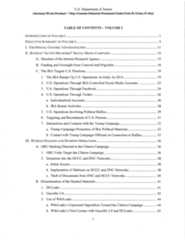
U.S. Department of JusticeAt:t:ef'fle)'Werle Predttet /,' Ma;· CeHtail'lMaterial Preteeted UHder Fed. R. Crim. P. 6(e)TABLE OF CONTENTS - VOLUME IINTRODUCTION TO VOLUME I ......... .......................................................EXECUTIVE SUMMARY TO VOLUME............ .............................. 11................................................. ,............................................. 4I. THE SPECIAL COUNSEL'S INVESTIGATION ....................................................... ..................II. RUSSIAN "ACTIVE MEASURES" SOCIAL MEDIA CAMPAIGN ............................................,....... 11... ...... 14A. Structure of the Internet Research Agency ...................................... ........................... 15B. Funding and Oversight from Concord and Prigozhin .................................. ... ............ 16C. The IRA Targets U.S. Elections .............. ....................................................................191. The IRA Ramps Up U.S. Operations As Early As 2014 ............. .......... , .............. 192. U.S. Operations Through IRA-Controlled Social Media Accounts ........ ......... .... 223. U.S. Operations Through Facebook. .....................................................................244. U.S. Operations Through Twitter ................. ....... ............ .....................................26a. Individualized Accounts ............................... ....... ................ ................ ............. 26b. IRA Botnet Activities .................................. ......... ............... .............. .......... .... 285. U.S. Operations Involving Political Rallies ............... ...... ....... ................. ........... .. 296. Targeting and Recruitment of U.S. Persons .................. ............ .......................... .. 317. Interactions and Contacts with the Trump Campaign ...........................................33a. Trump Campaign Promotion ofIRA Politica l Materials ........... ...................... 33b. Contact with Trump Campaign Officials in Connection to Rallies ................. 35Ill. RUSSIAN HACKING AND DUMPING OPERATIONS ........................................................ .............36A. GRU Hacking Directed at the Clinton Campaign ................. .......... ............... ............. 361. GRU Units Target the Clinton Campaign .................. .................... ....................... 362. Intrusions into the DCCC and DNC Networks ................... ................... ...... ......... 38a. Initial Access .................................... ....... ......... ..... .......................... ......... ........ 3 8b. Implantation ofMalware on DCCC and DNC Networks ................................ 38c. Theft of Documents from DNC and DCCC Networks .................................... 40B. Dissemination of the Hacked Materials ................. ......... ......................... ....... ............ 41I. DCL ea ks ........ ............................. ................................. .................. .................. ..... 412 . Guccifer 2.0 ............ .............. .................. ............. ..................................................423. Use of WikiLeaks ......... ........... ..... ......... :......... ...................... ............................... 44a. WikiLeaks 's Expressed Opposition Toward the Clinton Campaign ............... 44b. WikiLeaks's First Contact with Guccifer 2.0 and DCLeaks ........................... 45
U.S. Department of JusticeAt:t:ef'fle)'Werle Predttet /,' Ma;· CeHtail'lMaterial Preteeted UHder Fed. R. Crim. P. 6(e)TABLE OF CONTENTS - VOLUME IINTRODUCTION TO VOLUME I ......... .......................................................EXECUTIVE SUMMARY TO VOLUME............ .............................. 11................................................. ,............................................. 4I. THE SPECIAL COUNSEL'S INVESTIGATION ....................................................... ..................II. RUSSIAN "ACTIVE MEASURES" SOCIAL MEDIA CAMPAIGN ............................................,....... 11... ...... 14A. Structure of the Internet Research Agency ...................................... ........................... 15B. Funding and Oversight from Concord and Prigozhin .................................. ... ............ 16C. The IRA Targets U.S. Elections .............. ....................................................................191. The IRA Ramps Up U.S. Operations As Early As 2014 ............. .......... , .............. 192. U.S. Operations Through IRA-Controlled Social Media Accounts ........ ......... .... 223. U.S. Operations Through Facebook. .....................................................................244. U.S. Operations Through Twitter ................. ....... ............ .....................................26a. Individualized Accounts ............................... ....... ................ ................ ............. 26b. IRA Botnet Activities .................................. ......... ............... .............. .......... .... 285. U.S. Operations Involving Political Rallies ............... ...... ....... ................. ........... .. 296. Targeting and Recruitment of U.S. Persons .................. ............ .......................... .. 317. Interactions and Contacts with the Trump Campaign ...........................................33a. Trump Campaign Promotion ofIRA Politica l Materials ........... ...................... 33b. Contact with Trump Campaign Officials in Connection to Rallies ................. 35Ill. RUSSIAN HACKING AND DUMPING OPERATIONS ........................................................ .............36A. GRU Hacking Directed at the Clinton Campaign ................. .......... ............... ............. 361. GRU Units Target the Clinton Campaign .................. .................... ....................... 362. Intrusions into the DCCC and DNC Networks ................... ................... ...... ......... 38a. Initial Access .................................... ....... ......... ..... .......................... ......... ........ 3 8b. Implantation ofMalware on DCCC and DNC Networks ................................ 38c. Theft of Documents from DNC and DCCC Networks .................................... 40B. Dissemination of the Hacked Materials ................. ......... ......................... ....... ............ 41I. DCL ea ks ........ ............................. ................................. .................. .................. ..... 412 . Guccifer 2.0 ............ .............. .................. ............. ..................................................423. Use of WikiLeaks ......... ........... ..... ......... :......... ...................... ............................... 44a. WikiLeaks 's Expressed Opposition Toward the Clinton Campaign ............... 44b. WikiLeaks's First Contact with Guccifer 2.0 and DCLeaks ........................... 45
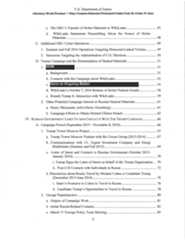
U.S. Department of JusticeMterHey Werk Pretittet // Ma,· Cel'ltail'IMaterial Preteeteti UH:tierFee. R. Crim. P. 6(e)c. The GRU ' s Transfer of Stolen Materials to WikiLeaks ........... ....................... 45d. · WikiLeaks Statements Dissembling About the Source of StolenMaterials ......................................... ................ ....... .................................. ...... 48C. Additional GRU Cyber Operations .............................................................................l.49Summer and Fall 2016 Operations Targeting Democrat-Linked Victims ............ 492. Intrusions Targeting the Administration of U .S. Elections ................................... 50D. Trump Campaign and the Dissemination of Hacked Materials .................................. 51...................................................................................... ........ 51l.a. Background ..................... .............................................. .......... ......................... 51b. Contacts with the Campaign about WikiLeaks ................................................ 52C.Harm to Ongoing Matter.................... 54d. WikiLeaks ' s October 7, 2016 Release of Stolen Podesta Emails ................ .... 58e. Donald Trump Jr. Interaction with WikiLeaks ................................................ 592. Other Potential Campaign Interest in Russian Hacked Materials ............. ......... ... 61a. Henry Oknyansky (a/k/a Henry Greenberg) ................................................ .... 61b. Campaign Efforts to Obtain Deleted Clinton Emails .............................. ........ 62IV. RUSSIAN GOVERNMENT LINKS To AND CONTACTS WITH THE TRUMP CAMPAIGN ................ 66A. Campaign Period (September 2015 - November 8, 2016) ......................................... 661. Trump Tower Moscow Project .................................. ........................... ............ .... 67a. Trump Tower Moscow Venture with the Crocus Group (2013 -2014) ............ 67b. Communications with LC . Expert Investment Company and GiorgiRtskhiladze (Summer and Fall 2015) ............................................................69c. Letter of Intent and Contacts to Russian Government (October 2015January 2016) ................................................................................................70i. Trump Signs the Letter of Intent on behalf of the Trump Organization .... 70ii. Post-LOI Contacts with Individuals in Russia ......................................... 72d. Discussions about Russia Travel by Michael Cohen or Candidate Trump(December 2015-June 2016) ........................ .............. ............. ...................... 76i. Sater ' s Overtures to Cohen to Travel to Russia ........................................ 76ii. Candidate Trump's Opportuniti es to Travel to Russia ............................ 782. George Papadopoulos .......................................... .................. .................... ........... 80a. Origins of Campaign Work .............. ................................................................ 81b. Initial Russia-Related Contacts ........ ............................... ................................. 82c. March 31 Foreign Policy Team Meeting ......................................................... 85ii
U.S. Department of JusticeMterHey Werk Pretittet // Ma,· Cel'ltail'IMaterial Preteeteti UH:tierFee. R. Crim. P. 6(e)c. The GRU ' s Transfer of Stolen Materials to WikiLeaks ........... ....................... 45d. · WikiLeaks Statements Dissembling About the Source of StolenMaterials ......................................... ................ ....... .................................. ...... 48C. Additional GRU Cyber Operations .............................................................................l.49Summer and Fall 2016 Operations Targeting Democrat-Linked Victims ............ 492. Intrusions Targeting the Administration of U .S. Elections ................................... 50D. Trump Campaign and the Dissemination of Hacked Materials .................................. 51...................................................................................... ........ 51l.a. Background ..................... .............................................. .......... ......................... 51b. Contacts with the Campaign about WikiLeaks ................................................ 52C.Harm to Ongoing Matter.................... 54d. WikiLeaks ' s October 7, 2016 Release of Stolen Podesta Emails ................ .... 58e. Donald Trump Jr. Interaction with WikiLeaks ................................................ 592. Other Potential Campaign Interest in Russian Hacked Materials ............. ......... ... 61a. Henry Oknyansky (a/k/a Henry Greenberg) ................................................ .... 61b. Campaign Efforts to Obtain Deleted Clinton Emails .............................. ........ 62IV. RUSSIAN GOVERNMENT LINKS To AND CONTACTS WITH THE TRUMP CAMPAIGN ................ 66A. Campaign Period (September 2015 - November 8, 2016) ......................................... 661. Trump Tower Moscow Project .................................. ........................... ............ .... 67a. Trump Tower Moscow Venture with the Crocus Group (2013 -2014) ............ 67b. Communications with LC . Expert Investment Company and GiorgiRtskhiladze (Summer and Fall 2015) ............................................................69c. Letter of Intent and Contacts to Russian Government (October 2015January 2016) ................................................................................................70i. Trump Signs the Letter of Intent on behalf of the Trump Organization .... 70ii. Post-LOI Contacts with Individuals in Russia ......................................... 72d. Discussions about Russia Travel by Michael Cohen or Candidate Trump(December 2015-June 2016) ........................ .............. ............. ...................... 76i. Sater ' s Overtures to Cohen to Travel to Russia ........................................ 76ii. Candidate Trump's Opportuniti es to Travel to Russia ............................ 782. George Papadopoulos .......................................... .................. .................... ........... 80a. Origins of Campaign Work .............. ................................................................ 81b. Initial Russia-Related Contacts ........ ............................... ................................. 82c. March 31 Foreign Policy Team Meeting ......................................................... 85ii
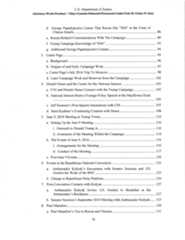
U.S. Department of JusticeAt-1:effleyWet'k Pt'etlttet /I Ma:y CeHtttiHMat:ef'ittlPreteetetl UHtler Fee. R. Crim. P. 6(e)d. George Papadopoulos Learns That Russia Has "Dirt" in the Form ofClinton Emails ............. ....... ............................ ........... ............ ........... ............. 86e. Russia-Related Communications With The Campaign .................................... 89f. Trump Campaign Knowledge of "Dirt" ...........................................................93g. Additional George Papadopoulos Contact.. .................... ......... ........................ 943. Carter Page ........................................ ........ ...... ................... ................................... 9 5a. Background ......................................................................................................96b. Origins of and Early Campaign Work .............................................................97c. Carter Page's July 2016 Trip To Moscow ..................................................... ... 98d. Later Campaign Work and Removal from the Campaign ............................ . 1024. Dimitri Simes and the Center for the National Interest ...................................... 103a. CNI and Dimitri Simes Connect with the Trump Campaign ................... ...... 103b. National Interest Hosts a Foreign Policy Speech at the Mayflower Hotel........... ..................................... ..... ............................................ ................... . 105c. Jeff Sessions's Post -Speech Interactions with CNI ....................................... 107d. Jared Kushner' s Continuing Contacts with Simes ......................................... 1085. June 9, 2016 Meeting at Trump Tower ........... .................... ...... ,......................... 110a. Setting Up the June 9 Meeting .......................................................................110i. Outreach to Donald Trump Jr ..................................................................110ii. Awareness of the Meeting Within the Campaign ........................ ........... 114b. TheEventsofJune9, 2016 ............................ .................... ................. ........... 116i. Arrangements for the Meeting ................................................................116ii. Conduct of the Meeting ............... ................................... ........................ 117c. Post-June 9 Events ................................................................. ........................ 1206. Events at the Republican National Convention ..................................................a.123Ambassador Kislyak's Encounters with Senator Sessions and J.D.Gordon the Week of the RNC .....................................................................123b. Change to Republican Party Platform ............................................................1247. Post-Convention Contacts with Kislyak ................................ :.............. .............. 127a.Ambassador Kislyak Invites J.D. Gordon to Breakfast at theAmbassador's Residence ........................... ................ ......................... ......... 127b. Senator Sessions's September 2016 Meeting with Ambassador Kislyak ...... 1278. Paul Manafort .............. .................... ........................................................... ......... 129a. Paul Manafort' s Ties to Russia and Ukraine ..................................................lll131
U.S. Department of JusticeAt-1:effleyWet'k Pt'etlttet /I Ma:y CeHtttiHMat:ef'ittlPreteetetl UHtler Fee. R. Crim. P. 6(e)d. George Papadopoulos Learns That Russia Has "Dirt" in the Form ofClinton Emails ............. ....... ............................ ........... ............ ........... ............. 86e. Russia-Related Communications With The Campaign .................................... 89f. Trump Campaign Knowledge of "Dirt" ...........................................................93g. Additional George Papadopoulos Contact.. .................... ......... ........................ 943. Carter Page ........................................ ........ ...... ................... ................................... 9 5a. Background ......................................................................................................96b. Origins of and Early Campaign Work .............................................................97c. Carter Page's July 2016 Trip To Moscow ..................................................... ... 98d. Later Campaign Work and Removal from the Campaign ............................ . 1024. Dimitri Simes and the Center for the National Interest ...................................... 103a. CNI and Dimitri Simes Connect with the Trump Campaign ................... ...... 103b. National Interest Hosts a Foreign Policy Speech at the Mayflower Hotel........... ..................................... ..... ............................................ ................... . 105c. Jeff Sessions's Post -Speech Interactions with CNI ....................................... 107d. Jared Kushner' s Continuing Contacts with Simes ......................................... 1085. June 9, 2016 Meeting at Trump Tower ........... .................... ...... ,......................... 110a. Setting Up the June 9 Meeting .......................................................................110i. Outreach to Donald Trump Jr ..................................................................110ii. Awareness of the Meeting Within the Campaign ........................ ........... 114b. TheEventsofJune9, 2016 ............................ .................... ................. ........... 116i. Arrangements for the Meeting ................................................................116ii. Conduct of the Meeting ............... ................................... ........................ 117c. Post-June 9 Events ................................................................. ........................ 1206. Events at the Republican National Convention ..................................................a.123Ambassador Kislyak's Encounters with Senator Sessions and J.D.Gordon the Week of the RNC .....................................................................123b. Change to Republican Party Platform ............................................................1247. Post-Convention Contacts with Kislyak ................................ :.............. .............. 127a.Ambassador Kislyak Invites J.D. Gordon to Breakfast at theAmbassador's Residence ........................... ................ ......................... ......... 127b. Senator Sessions's September 2016 Meeting with Ambassador Kislyak ...... 1278. Paul Manafort .............. .................... ........................................................... ......... 129a. Paul Manafort' s Ties to Russia and Ukraine ..................................................lll131
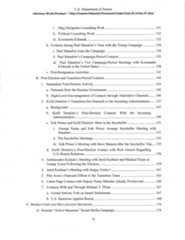
U.S. Department of JusticeAtten1e~· Werk Pred1:1et/,' Mtty Cefltaifl Material Preteeted Uflder Fed. R. Criffl. P. 6(e)1.Oleg Deripaska Consulting Work .........................................................13111.Political Consulting Work .....................................................................132iii. Konstantin Kilimnik ........................ ..................................................... . 132b. Contacts during Paul Manafort's Time with the Trump Campaign .............. 134i. Paul Manafort Joins the Campaign .........................................................134ii. Paul Manafort's Campaign-Period Contacts .............................. ............ 135iii. Paul Manafort's Two Campaign-Period Meetings with KonstantinKilimnik in the United States .............................. .................................. 138c. Post-Resignation Activities ............................................................................141B. Post-Election and Transition-Period Contacts ..........................................................1441. Immediate Post-Election Activity .......................................................................144a. Outreach from the Russian Government.. ...................................................... 145b. High-Level Encouragement of Contacts through Alternative Channels ....... 1462. Kirill Dmitriev's Transition-Era Outreach to the Incoming Administration ...... 147a. Background .................... ................ ........................................ ........................ 147b.Kirill Dmitriev'sPost-ElectionContacts With the IncomingAdministration .............. ............... .......................................... .......... ............ 149c. Erik Prince and Kirill Dmitriev Meet in the Seychelles ................................ 151i.George Nader and Erik Prince Arrange Seychelles Meeting withDmitriev ..... ............................................. ................................ ............... 15111.The Seychelles Meetings .............. ........................................... ............... 153iii. Erik Prince's Meeting with Steve Bannon after the Seychelles Trip .... 155d. Kirill Dmitriev's Post-Election Contact with Rick Gerson RegardingU .S.-Russia Relations ...................... ............................................................1563. Ambassador Kislyak's Meeting with Jared Kushner and Michael Flynn inTrump Tower Following the Election .................................................................1594. Jared Kushner' s Meeting with Sergey Gorkov ...................................... ............. 1615. Petr A ven' s Outreach Efforts to the Transition Team ........................................1636. Carter Page Contact with Deputy Prime Minister Arkady Dvorkovich ............. 1667. Contacts With and Through Michael T. Flynn ....... .................... ................ ........ 167a. United Nations Vote on Israeli Settlements .............................. ...... ............... 167b. U.S. Sanctions Against Russia ............ ....................... .................................... 168V. PROSECUTION AND DECLINATION DECISIONS ........................................................................174A. Russian "Active Measures" Social Media Campaign ..................... .......................... 174IV
U.S. Department of JusticeAtten1e~· Werk Pred1:1et/,' Mtty Cefltaifl Material Preteeted Uflder Fed. R. Criffl. P. 6(e)1.Oleg Deripaska Consulting Work .........................................................13111.Political Consulting Work .....................................................................132iii. Konstantin Kilimnik ........................ ..................................................... . 132b. Contacts during Paul Manafort's Time with the Trump Campaign .............. 134i. Paul Manafort Joins the Campaign .........................................................134ii. Paul Manafort's Campaign-Period Contacts .............................. ............ 135iii. Paul Manafort's Two Campaign-Period Meetings with KonstantinKilimnik in the United States .............................. .................................. 138c. Post-Resignation Activities ............................................................................141B. Post-Election and Transition-Period Contacts ..........................................................1441. Immediate Post-Election Activity .......................................................................144a. Outreach from the Russian Government.. ...................................................... 145b. High-Level Encouragement of Contacts through Alternative Channels ....... 1462. Kirill Dmitriev's Transition-Era Outreach to the Incoming Administration ...... 147a. Background .................... ................ ........................................ ........................ 147b.Kirill Dmitriev'sPost-ElectionContacts With the IncomingAdministration .............. ............... .......................................... .......... ............ 149c. Erik Prince and Kirill Dmitriev Meet in the Seychelles ................................ 151i.George Nader and Erik Prince Arrange Seychelles Meeting withDmitriev ..... ............................................. ................................ ............... 15111.The Seychelles Meetings .............. ........................................... ............... 153iii. Erik Prince's Meeting with Steve Bannon after the Seychelles Trip .... 155d. Kirill Dmitriev's Post-Election Contact with Rick Gerson RegardingU .S.-Russia Relations ...................... ............................................................1563. Ambassador Kislyak's Meeting with Jared Kushner and Michael Flynn inTrump Tower Following the Election .................................................................1594. Jared Kushner' s Meeting with Sergey Gorkov ...................................... ............. 1615. Petr A ven' s Outreach Efforts to the Transition Team ........................................1636. Carter Page Contact with Deputy Prime Minister Arkady Dvorkovich ............. 1667. Contacts With and Through Michael T. Flynn ....... .................... ................ ........ 167a. United Nations Vote on Israeli Settlements .............................. ...... ............... 167b. U.S. Sanctions Against Russia ............ ....................... .................................... 168V. PROSECUTION AND DECLINATION DECISIONS ........................................................................174A. Russian "Active Measures" Social Media Campaign ..................... .......................... 174IV
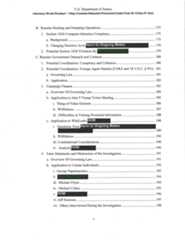
U.S. Department of JusticeAtterAe~ \\' erk Prea1::1et// Mft) CeHtttil'l Material Preteetea UAaer Fea. R. Criffl. P. 6(e)11B. Russian Hacking and Dumping Operations ......................... ................ ..................... 1751. Section 1030 Computer-Intrusion Conspiracy ....................................................175a. Background .................. .......................... ......... ...............................................175b. Charging Decision As to....... 1762. Potential Section 1030 Violation By.............................. 179C. Russian Government Outreach and Contacts ......... ............... ..................................... 1801. Potential Coordination: Conspiracy and Collusion .............. ............................... 1802. Potential Coordination: Foreign Agent Statutes (FARA and 18 U.S.C. § 951). 181a. Governing Law ...............................................................................................181b. Application .....................................................................................................1823. Campaign Finance .................... ........................ .................................. ................ 183a. Overview Of Governing Law ............................................. .......................... .. 184b . Application to June 9 Trump Tower Meeting ....... ........ ............ ..................... 185i. Thing-of -Value Element .......... ....................................................... ........ 186ii. Willfuln ess .................................... ............................... ....................... ... 187iii. Difficulties in Valuing Promised Information .............................. ........ 188c. Application to WikiLeaks1..................... ........................... ........................ 189ii. Willfulness ............................................. .................... ........... ................. 190iii. Constitutional Considerations ............................................ .................... 190.............................................. ................. ..... 190iv. Analysis4. False Statem ents and Obstruction of the Investigation .............. .............. ........... 191a. Overview Of Governing Law ............. ......................................... ......... .......... 191b. Application to Certain Individuals .............................................. ............... .... 192i. George Papadopoulos ....................... .................................... ................... 19211.111............... ... ... ............................................ .. . .........Michael Flynn ...............................................................................194......... 194iv . Michael Cohen .......................... ........................... ................................. 195V.................... ................................... .................. ...... 196vi. Jeff Sessions ....................... .............. ......................................................197vii. Other s Interviewed During the Investigation ........................ ............... 198V
U.S. Department of JusticeAtterAe~ \\' erk Prea1::1et// Mft) CeHtttil'l Material Preteetea UAaer Fea. R. Criffl. P. 6(e)11B. Russian Hacking and Dumping Operations ......................... ................ ..................... 1751. Section 1030 Computer-Intrusion Conspiracy ....................................................175a. Background .................. .......................... ......... ...............................................175b. Charging Decision As to....... 1762. Potential Section 1030 Violation By.............................. 179C. Russian Government Outreach and Contacts ......... ............... ..................................... 1801. Potential Coordination: Conspiracy and Collusion .............. ............................... 1802. Potential Coordination: Foreign Agent Statutes (FARA and 18 U.S.C. § 951). 181a. Governing Law ...............................................................................................181b. Application .....................................................................................................1823. Campaign Finance .................... ........................ .................................. ................ 183a. Overview Of Governing Law ............................................. .......................... .. 184b . Application to June 9 Trump Tower Meeting ....... ........ ............ ..................... 185i. Thing-of -Value Element .......... ....................................................... ........ 186ii. Willfuln ess .................................... ............................... ....................... ... 187iii. Difficulties in Valuing Promised Information .............................. ........ 188c. Application to WikiLeaks1..................... ........................... ........................ 189ii. Willfulness ............................................. .................... ........... ................. 190iii. Constitutional Considerations ............................................ .................... 190.............................................. ................. ..... 190iv. Analysis4. False Statem ents and Obstruction of the Investigation .............. .............. ........... 191a. Overview Of Governing Law ............. ......................................... ......... .......... 191b. Application to Certain Individuals .............................................. ............... .... 192i. George Papadopoulos ....................... .................................... ................... 19211.111............... ... ... ............................................ .. . .........Michael Flynn ...............................................................................194......... 194iv . Michael Cohen .......................... ........................... ................................. 195V.................... ................................... .................. ...... 196vi. Jeff Sessions ....................... .............. ......................................................197vii. Other s Interviewed During the Investigation ........................ ............... 198V

U.S. Department of JusticeA+terfl:eyWerk Prodttet // May Cefl:tttiflMaterial Preteeted Ufl:der Fed. R. Criffl. P. 6Ee)
U.S. Department of JusticeA+terfl:eyWerk Prodttet // May Cefl:tttiflMaterial Preteeted Ufl:der Fed. R. Criffl. P. 6Ee)
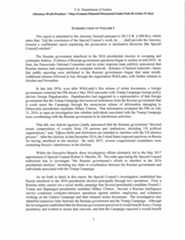
U.S . Department of JusticeAtten1e:y·'>lork Preettet // Moy Cefttttift Material Preteetee Ul'leer Fee. R. Criffl.. P. 6(e)INTRODUCTION TO VOLUMEIThis report is submitted to the Attorney General pursuant to 28 C.F.R. § 600.8(c), whichstates that , "[a]t the conclusion of the Special Counsel ' s work, he ... shall provide the AttorneyGeneral a confidential report explaining the prosecution or declination decisions [the SpecialCounsel] reached."The Russian government interfered in the 2016 presidential election in sweeping andsystematic fashion. Evidence of Russian government operations began to surface in mid-2016. InJune, the Democratic National Committee and its cyber response team publicly announced thatRussian hackers had compromised its computer network. Releases of hacked materials-hacksthat public reporting soon attributed to the Russian government-beganthat same month.Additional releases followed in July through the organization WikiLeaks, with further releases inOctober and November.In late July 2016, soon after WikiLeaks's first release of stolen documents, a foreigngovernment contacted the FBI about a May 2016 encounter with Trump Campaign foreign policyadvisor George Papadopoulos. Papadopoulos had suggested to a representative of that foreigngovernment that the Trump Campaign had received indications from the Russian government thatit could assist the Campaign through the anonymous release of information damaging toDemocratic presidential candidate Hillary Clinton. That information prompted the FBI on July31, 2016, to open an investigation into whether individuals associated with the Trump Campaignwere coordinating with the Russian government in its interference activities.That fall, two federal agencies jointly announced that the Russian government "directedrecent compromises of e-mails from US persons and institutions, including US politicalorganizations," and , " [t]hese thefts and disclosures are intended to interfere with the US electionprocess." After the election, in late December 2016, the United States imposed sanctions on Russiafor having interfered in the election. By early 2017, several congressional committees wereexamining Russia's interference in the election.Within the Executive Branch, these investigatory efforts ultimately led to the May 2017appointment of Special Counsel Robert S. Mueller, III. The order appointing the Special Counselauthorized him to investigate "the Russian government's efforts to interfere in the 2016presidential election ," including any links or coordination between the Russian government andindividuals associated with the Trump Campaign.As set forth in detail in this report, the Special Counsel's investigation established thatRussia interfere~ in the 2016 presidential election principally through two operations. First, aRussian entity carried out a social media campaign that favored presidential candidate Donald J.Trump and disparaged presidential candidate Hillary Clinton. Second , a Russian intelligenceservice conducted computer-intrusion operations against entities, employees, and volunteersworking on the Clinton Campaign and then released stolen documents. The investigation alsoidentified numerous links between the Russian government and the Trump Campaign. Althoughthe investigation established that the Russian government perceived it would benefit from a Trumppresidency and worked to secure that outcome, and that the Campaign expected it would benefit
U.S . Department of JusticeAtten1e:y·'>lork Preettet // Moy Cefttttift Material Preteetee Ul'leer Fee. R. Criffl.. P. 6(e)INTRODUCTION TO VOLUMEIThis report is submitted to the Attorney General pursuant to 28 C.F.R. § 600.8(c), whichstates that , "[a]t the conclusion of the Special Counsel ' s work, he ... shall provide the AttorneyGeneral a confidential report explaining the prosecution or declination decisions [the SpecialCounsel] reached."The Russian government interfered in the 2016 presidential election in sweeping andsystematic fashion. Evidence of Russian government operations began to surface in mid-2016. InJune, the Democratic National Committee and its cyber response team publicly announced thatRussian hackers had compromised its computer network. Releases of hacked materials-hacksthat public reporting soon attributed to the Russian government-beganthat same month.Additional releases followed in July through the organization WikiLeaks, with further releases inOctober and November.In late July 2016, soon after WikiLeaks's first release of stolen documents, a foreigngovernment contacted the FBI about a May 2016 encounter with Trump Campaign foreign policyadvisor George Papadopoulos. Papadopoulos had suggested to a representative of that foreigngovernment that the Trump Campaign had received indications from the Russian government thatit could assist the Campaign through the anonymous release of information damaging toDemocratic presidential candidate Hillary Clinton. That information prompted the FBI on July31, 2016, to open an investigation into whether individuals associated with the Trump Campaignwere coordinating with the Russian government in its interference activities.That fall, two federal agencies jointly announced that the Russian government "directedrecent compromises of e-mails from US persons and institutions, including US politicalorganizations," and , " [t]hese thefts and disclosures are intended to interfere with the US electionprocess." After the election, in late December 2016, the United States imposed sanctions on Russiafor having interfered in the election. By early 2017, several congressional committees wereexamining Russia's interference in the election.Within the Executive Branch, these investigatory efforts ultimately led to the May 2017appointment of Special Counsel Robert S. Mueller, III. The order appointing the Special Counselauthorized him to investigate "the Russian government's efforts to interfere in the 2016presidential election ," including any links or coordination between the Russian government andindividuals associated with the Trump Campaign.As set forth in detail in this report, the Special Counsel's investigation established thatRussia interfere~ in the 2016 presidential election principally through two operations. First, aRussian entity carried out a social media campaign that favored presidential candidate Donald J.Trump and disparaged presidential candidate Hillary Clinton. Second , a Russian intelligenceservice conducted computer-intrusion operations against entities, employees, and volunteersworking on the Clinton Campaign and then released stolen documents. The investigation alsoidentified numerous links between the Russian government and the Trump Campaign. Althoughthe investigation established that the Russian government perceived it would benefit from a Trumppresidency and worked to secure that outcome, and that the Campaign expected it would benefit
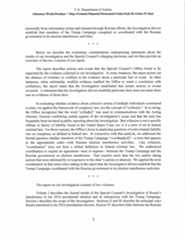
U.S. Department of JusticeAtterttey Werk Predttet // Ma~· Cetttaitt Material Prnteeted Uttder Fed. R. Criffl. P. 6(e)electorally from information stolen and released through Russian efforts, the investigation did notestablish that members of the Trump Campaign conspired or coordinated with the Russiangovernment in its election interference activities.* * *Below we describe the evidentiary considerations underpinning statements about theresults of our investigation and the Special Counsel's charging decisions, and we then provide anoverview of the two volumes of our report.The report describes actions and events that the Special Counsel's Office found to besupp01ted by the evidence collected in our investigation. In some instances, the report points outthe absence of evidence or conflicts in the evidence about a particular fact or event. In otherinstances, when substantial, credible evidence enabled the Office to reach a conclusion withconfidence, the report states that the investigation established that certain actions or eventsoccurred. A statement that the investigation did not establish particular facts does not mean therewas no evidence of those facts.In evaluating whether evidence about collective action of multiple individuals constituteda crime, we applied the framework of conspiracy law, not the concept of "collusion." In so doing,the Office recognized that the word "collud[ e]" was used in communications with the ActingAttorney General confirming certain aspects of the investigation's scope and that the term hasfrequently been invoked in public reporting about the investigation. But collusion is not a specificoffense or theory of liability found in the United States Code, nor is it a term of art in federalcriminal law. For those reasons , the Office's focus in analyzing questions of joint criminal liabilitywas on conspiracy as defined in federal law. In connection with that analysis, we addressed thefactual question whether members of the Trump Campaign "coordinat[ ed]"-a term that appearsin the appointment order-withRussian election interference activities.Like collusion,"coordination" does not have a settled definition in federal criminal law. We understoodcoordination to require an agreement-tacit or express - between the Trump Campaign and theRussian government on election interference. That requires more than the two parties takingactions that were informed by or responsive to the other's actions or interests. We applied the termcoordination in that sense when stating in the report that the investigation did not establish that theTrump Campaign coordinated with the Russian government in its election interference activities.* * *The report on our investigation consists of two volumes:Volume I describes the factual results of the Special Counsel's investigation of Russia'sinterference in the 2016 presidential election and its interactions with the Trump Campaign.Section I describes the scope of the investigation. Sections II and III describe the principal waysRussia interfered in the 2016 presidential election . Section IV describes links between the Russian ·2
U.S. Department of JusticeAtterttey Werk Predttet // Ma~· Cetttaitt Material Prnteeted Uttder Fed. R. Criffl. P. 6(e)electorally from information stolen and released through Russian efforts, the investigation did notestablish that members of the Trump Campaign conspired or coordinated with the Russiangovernment in its election interference activities.* * *Below we describe the evidentiary considerations underpinning statements about theresults of our investigation and the Special Counsel's charging decisions, and we then provide anoverview of the two volumes of our report.The report describes actions and events that the Special Counsel's Office found to besupp01ted by the evidence collected in our investigation. In some instances, the report points outthe absence of evidence or conflicts in the evidence about a particular fact or event. In otherinstances, when substantial, credible evidence enabled the Office to reach a conclusion withconfidence, the report states that the investigation established that certain actions or eventsoccurred. A statement that the investigation did not establish particular facts does not mean therewas no evidence of those facts.In evaluating whether evidence about collective action of multiple individuals constituteda crime, we applied the framework of conspiracy law, not the concept of "collusion." In so doing,the Office recognized that the word "collud[ e]" was used in communications with the ActingAttorney General confirming certain aspects of the investigation's scope and that the term hasfrequently been invoked in public reporting about the investigation. But collusion is not a specificoffense or theory of liability found in the United States Code, nor is it a term of art in federalcriminal law. For those reasons , the Office's focus in analyzing questions of joint criminal liabilitywas on conspiracy as defined in federal law. In connection with that analysis, we addressed thefactual question whether members of the Trump Campaign "coordinat[ ed]"-a term that appearsin the appointment order-withRussian election interference activities.Like collusion,"coordination" does not have a settled definition in federal criminal law. We understoodcoordination to require an agreement-tacit or express - between the Trump Campaign and theRussian government on election interference. That requires more than the two parties takingactions that were informed by or responsive to the other's actions or interests. We applied the termcoordination in that sense when stating in the report that the investigation did not establish that theTrump Campaign coordinated with the Russian government in its election interference activities.* * *The report on our investigation consists of two volumes:Volume I describes the factual results of the Special Counsel's investigation of Russia'sinterference in the 2016 presidential election and its interactions with the Trump Campaign.Section I describes the scope of the investigation. Sections II and III describe the principal waysRussia interfered in the 2016 presidential election . Section IV describes links between the Russian ·2
U.S. Department of JusticeAtt:arAe~·Wark Praattet // Me~· C0Atttil'lMttterittl Prateetea UAaer red. R. Criffl. P. 6(e)government and individuals associated with the Trump Campaign. Section V sets forth the SpecialCounsel's charging decisions.Volume II addresses the President ' s actions towards the FBI's investigation into Russia ' sinterference in the 2016 presidential election and related matters, and his actions towards theSpecial Counsel ' s investigation. Volume II separately states its framework and the considerationsthat guided that investigation.3
U.S. Department of JusticeAtt:arAe~·Wark Praattet // Me~· C0Atttil'lMttterittl Prateetea UAaer red. R. Criffl. P. 6(e)government and individuals associated with the Trump Campaign. Section V sets forth the SpecialCounsel's charging decisions.Volume II addresses the President ' s actions towards the FBI's investigation into Russia ' sinterference in the 2016 presidential election and related matters, and his actions towards theSpecial Counsel ' s investigation. Volume II separately states its framework and the considerationsthat guided that investigation.3
U.S. Department of JusticeAtterrte~· Werk Predttet // May Cetttairt Material Preteetee Urteer Fee. R. Crim. P. 6(e)EXECUTIVE SUMMARY TO VOLUMEIRUSSIAN SOCIAL MEDIA CAMPAIGNThe Internet Research Agency (IRA) carried out the earliest Russian interferenceoperations identified by the investigation - a social media campaign designed to provoke andamplify political and social discord in the United States. The IRA was based in St. Petersburg,Russia, and received funding from Russian oligarch Y evgeniy Prigozhin and companies hecontrolled. Pri ozhin is widel re orted to have ties to Russian President Vladimir PutinIn mid-2014, the IRA sent em lomission with instructionsThe IRA later used social media accounts and interest groups to sow discord in the U.S.political system through what it termed "information warfare." The campaign evolved from ageneralized program designed in 2014 and 2015 to undermine the U.S . electoral system, to atargeted operation that by early 2016 favored candidate Trump and disparaged candidate Clinton.The IRA' s operation also included the purchase of political advertisements on social media in thenames of U.S. persons and entities, as well as the staging of political rallies inside the UnitedStates. To organize those rallies, IRA employees posed as U.S. grassroots entities and persons andmade contact with Trump supporters and Trump Campaign officials in the United States. Theinvestigation did not identify evidence that any U.S. persons conspired or coordinated with theIRA. Section II of this report details the Office's investigation of the Russian social mediacampaign.RUSSIAN HACKING OPERATIONSAt the same time that the IRA operation began to focus ·on supporting candidate Trump inearly 2016, the Russian government employed a second form of interference: cyber intrusions(hacking) and releases of hacked materials damaging to the Clinton Campaign. The Russianintelligence service known as the Main Intelligence Directorate of the General Staff of the RussianArmy (GRU) carried out these operations.In March 2016, the GRU began hacking the email accounts of Clinton Campaignvolunteers and employees, including campaign chairman John Podesta. In April 2016, the GRUhacked into the computer networks of the Democratic Congressional Campaign Committee(DCCC) and the Democratic National Committee (DNC). The GRU stole hundreds of thousandsof documents from the compromised email accounts and networks. Around the time that the DNCannounced in mid-June 2016 the Russian government's role in hacking its network, the GRUbegan disseminating stolen materials through the fictitious online personas "DCLeaks" and"Guccifer 2.0." The GRU later released additional materials through the organization WikiLeaks.4
U.S. Department of JusticeAtterrte~· Werk Predttet // May Cetttairt Material Preteetee Urteer Fee. R. Crim. P. 6(e)EXECUTIVE SUMMARY TO VOLUMEIRUSSIAN SOCIAL MEDIA CAMPAIGNThe Internet Research Agency (IRA) carried out the earliest Russian interferenceoperations identified by the investigation - a social media campaign designed to provoke andamplify political and social discord in the United States. The IRA was based in St. Petersburg,Russia, and received funding from Russian oligarch Y evgeniy Prigozhin and companies hecontrolled. Pri ozhin is widel re orted to have ties to Russian President Vladimir PutinIn mid-2014, the IRA sent em lomission with instructionsThe IRA later used social media accounts and interest groups to sow discord in the U.S.political system through what it termed "information warfare." The campaign evolved from ageneralized program designed in 2014 and 2015 to undermine the U.S . electoral system, to atargeted operation that by early 2016 favored candidate Trump and disparaged candidate Clinton.The IRA' s operation also included the purchase of political advertisements on social media in thenames of U.S. persons and entities, as well as the staging of political rallies inside the UnitedStates. To organize those rallies, IRA employees posed as U.S. grassroots entities and persons andmade contact with Trump supporters and Trump Campaign officials in the United States. Theinvestigation did not identify evidence that any U.S. persons conspired or coordinated with theIRA. Section II of this report details the Office's investigation of the Russian social mediacampaign.RUSSIAN HACKING OPERATIONSAt the same time that the IRA operation began to focus ·on supporting candidate Trump inearly 2016, the Russian government employed a second form of interference: cyber intrusions(hacking) and releases of hacked materials damaging to the Clinton Campaign. The Russianintelligence service known as the Main Intelligence Directorate of the General Staff of the RussianArmy (GRU) carried out these operations.In March 2016, the GRU began hacking the email accounts of Clinton Campaignvolunteers and employees, including campaign chairman John Podesta. In April 2016, the GRUhacked into the computer networks of the Democratic Congressional Campaign Committee(DCCC) and the Democratic National Committee (DNC). The GRU stole hundreds of thousandsof documents from the compromised email accounts and networks. Around the time that the DNCannounced in mid-June 2016 the Russian government's role in hacking its network, the GRUbegan disseminating stolen materials through the fictitious online personas "DCLeaks" and"Guccifer 2.0." The GRU later released additional materials through the organization WikiLeaks.4
U.S. Department of JusticeAH:erHey\¥Brit Pr6d1:1et// Mtty Cet1:tttiflMttterittl Preteeted Ut1:derFed. R. Ct1iffl.P. 6(e)The presidential campaign of Donald J. Trump ("Trump Campaign" or "Campaign")showed interest in WikiLeaks ' s releases of documents and welcomed their otential to damageforecast tocandidate Clinton . Beginning in June 2016, llfilllillliliilfll~llliillllllilllillisenior Campaign officials that WikiLeaks would release information damaging to candidateClinton. WikiLeaks ' s first release came in July 2016. Around the same time , candidate Trumpannounced that he hoped Russia would recover emails described as missing from a private serverused b Clinton when she was Secreta of State he later said that he was s · eakin sarcasticall .WikiLeaks began releasingPodesta ' s stolen emails on October 7, 2016, less than one hour after a U.S. media outlet releasedvideo considered damaging to candidate Trump. Section lII of this Report details the Office'sinvestigation into the Russian hacking operations, as well as other efforts by Trump Campaignsupporters to obtain Clinton-related emails.RUSSIAN CONTACTS WITH THE CAMPAIGNThe social media campaign and the GRU hacking operations coincided with a series ofcontacts between Trump Campaign officials and individuals with ties to the Russian government.The Office investigated whether those contacts reflected or resulted in the Campaign conspiringor coordinating with Russia in its election-interference activities. Although the investigationestablished that the Russian government perceived it would benefit from a Trump presidency andworked to secure that outcome, and that the Campaign expected it would benefit electorally frominformation stolen and released through Russian efforts, the investigation did not establish thatmembers of the Trump Campaign conspired or coordinated with the Russian government in itselection interference activities .The Russian contacts consisted of business connections, offers of assistance to theCampaign, invitations for candidate Trump and Putin to meet in person , invitations for Campaignofficials and representatives of the Russian government to meet, and policy positions seekingimproved U.S.-Russian relations. Section IV of this Report details the contacts between Russiaand the Trump Campaign during the campaign and transition periods , the most salient of whichare summarized below in chronological order.2015. Some of the earliest contacts were made in connection with a Trump Organizationreal-estate project in Russia known as Trump Tower Moscow. Candidate Trump signed a Letteroflntent for Trump Tower Moscow by November 2015, and in January 2016 Trump Organizationexecutive Michael Cohen emailed and spoke about the project with the office of Russiangovernment press secretary Dmitry Peskov. The Trump Organization pursued the project throughat least June 2016 , including by considering travel to Russia by Cohen and candidate Trump.Spring 2016. Campaign foreign policy advisor George Papadopoulos made early contactwith Joseph Mifsud, a London-based professor who had connections to Russia and traveled toMoscow in April 2016. Immediately upon his return to London from that trip , Mifsud toldPapadopoulos that the Russian government had "dirt" on Hillary Clinton in the form of thousands5
U.S. Department of JusticeAH:erHey\¥Brit Pr6d1:1et// Mtty Cet1:tttiflMttterittl Preteeted Ut1:derFed. R. Ct1iffl.P. 6(e)The presidential campaign of Donald J. Trump ("Trump Campaign" or "Campaign")showed interest in WikiLeaks ' s releases of documents and welcomed their otential to damageforecast tocandidate Clinton . Beginning in June 2016, llfilllillliliilfll~llliillllllilllillisenior Campaign officials that WikiLeaks would release information damaging to candidateClinton. WikiLeaks ' s first release came in July 2016. Around the same time , candidate Trumpannounced that he hoped Russia would recover emails described as missing from a private serverused b Clinton when she was Secreta of State he later said that he was s · eakin sarcasticall .WikiLeaks began releasingPodesta ' s stolen emails on October 7, 2016, less than one hour after a U.S. media outlet releasedvideo considered damaging to candidate Trump. Section lII of this Report details the Office'sinvestigation into the Russian hacking operations, as well as other efforts by Trump Campaignsupporters to obtain Clinton-related emails.RUSSIAN CONTACTS WITH THE CAMPAIGNThe social media campaign and the GRU hacking operations coincided with a series ofcontacts between Trump Campaign officials and individuals with ties to the Russian government.The Office investigated whether those contacts reflected or resulted in the Campaign conspiringor coordinating with Russia in its election-interference activities. Although the investigationestablished that the Russian government perceived it would benefit from a Trump presidency andworked to secure that outcome, and that the Campaign expected it would benefit electorally frominformation stolen and released through Russian efforts, the investigation did not establish thatmembers of the Trump Campaign conspired or coordinated with the Russian government in itselection interference activities .The Russian contacts consisted of business connections, offers of assistance to theCampaign, invitations for candidate Trump and Putin to meet in person , invitations for Campaignofficials and representatives of the Russian government to meet, and policy positions seekingimproved U.S.-Russian relations. Section IV of this Report details the contacts between Russiaand the Trump Campaign during the campaign and transition periods , the most salient of whichare summarized below in chronological order.2015. Some of the earliest contacts were made in connection with a Trump Organizationreal-estate project in Russia known as Trump Tower Moscow. Candidate Trump signed a Letteroflntent for Trump Tower Moscow by November 2015, and in January 2016 Trump Organizationexecutive Michael Cohen emailed and spoke about the project with the office of Russiangovernment press secretary Dmitry Peskov. The Trump Organization pursued the project throughat least June 2016 , including by considering travel to Russia by Cohen and candidate Trump.Spring 2016. Campaign foreign policy advisor George Papadopoulos made early contactwith Joseph Mifsud, a London-based professor who had connections to Russia and traveled toMoscow in April 2016. Immediately upon his return to London from that trip , Mifsud toldPapadopoulos that the Russian government had "dirt" on Hillary Clinton in the form of thousands5
U.S. Department of Justicel\.ttortte~·Work Pt'od1:1et// Mtty Cotttttitt Mttterittl Proteeted Uttder Fed. R. Criffl. P. 6(e)of emails. One week later, in the first week of May 2016, Papadopoulos suggested to arepresentative of a foreign government that the Trump Campaign had received indications fromthe Russian government that it could assist the Campaign through the anonymous release ofinformation damaging to candidate Clinton. Throughout that period of time and for several monthsthereafter, Papadopoulos worked with Mifsud and two Russian nationals to arrange a meetingbetween the Campaign and the Russian government. No meeting took place.Summer 2016. Russian outreach to the Trump Campaign continued into the summer of2016, as candidate Trump was becoming the presumptive Republican nominee for President. OnJune 9, 2016, for example, a Russian lawyer met with senior Trump Campaign officials DonaldTrump Jr., Jared Kushner, and campaign chairman Paul Manafort to deliver what the emailproposing the meeting had described as "official documents and information that wouldincriminate Hillary." The materials were offered to Trump Jr. as "part of Russia and itsgovernment's support for Mr. Trump." The written communications setting up the meetingshowed that the Campaign anticipated receiving information from Russia that could assistcandidate Trump's electoral prospects, but the Russian lawyer ' s presentation did not provide suchinformation.Days after the June 9 meeting, on June 14, 2016, a cybersecurity firm and the DNCannounced that Russian government hackers had infiltrated the DNC and obtained access toopposition research on candidate Trump, among other documents.In July 2016 , Campaign foreign policy advisor Carter Page traveled in his personal capacityto Moscow and gave the keynote address at the New Economic School. Page had lived and workedin Russia between 2003 and 2007 . After returning to the United States, Page became acquaintedwith at least two Russian intelligence officers, one of whom was later charged in 2015 withconspiracy to act as an unregistered agent of Russia . Page ' s July 2016 trip to Moscow and hisadvocacy for pro-Russian foreign policy drew media attention . The Campaign then distanced itselffrom Page and, by late September 2016, removed him from the Campaign.July 2016 was also the month WikiLeaks first released emails stolen by the GRU from theDNC. On July 22, 2016, WikiLeaks posted thousands of internal DNC documents revealinginformation about the Clinton Campaign. Within days, there was public reporting that U.S.intelligence agencies had "high confidence" that the Russian government was .behind the theft ofemails and documents from the DNC. And within a week of the release, a foreign governmentinformed the FBI about its May 2016 interaction with Papadopoulos and his statement that theRussian government could assist the Trump Campaign. On July 31, 2016 , based on the foreigngovernment rep01ting, the FBI opened an investigation into potential coordination between theRussian government and individuals associated with the Trump Campaign.Separately, on August 2, 2016 , Trump campaign chairman Paul Manafort met in New YorkCity with his long-time business associate Konstantin Kilimnik, who the FBI assesses to have tiesto Russian intelligence. Kilimnik requested the meeting to deliver in person a peace plan forUkraine that Manafort acknowledged to the Special Counsel's Office was a "backdoor" way forRussia to control part of eastern Ukraine; both men believed the plan would require candidateTrump 's assent to succeed (were he to be elected President). They also discussed the status of the6
U.S. Department of Justicel\.ttortte~·Work Pt'od1:1et// Mtty Cotttttitt Mttterittl Proteeted Uttder Fed. R. Criffl. P. 6(e)of emails. One week later, in the first week of May 2016, Papadopoulos suggested to arepresentative of a foreign government that the Trump Campaign had received indications fromthe Russian government that it could assist the Campaign through the anonymous release ofinformation damaging to candidate Clinton. Throughout that period of time and for several monthsthereafter, Papadopoulos worked with Mifsud and two Russian nationals to arrange a meetingbetween the Campaign and the Russian government. No meeting took place.Summer 2016. Russian outreach to the Trump Campaign continued into the summer of2016, as candidate Trump was becoming the presumptive Republican nominee for President. OnJune 9, 2016, for example, a Russian lawyer met with senior Trump Campaign officials DonaldTrump Jr., Jared Kushner, and campaign chairman Paul Manafort to deliver what the emailproposing the meeting had described as "official documents and information that wouldincriminate Hillary." The materials were offered to Trump Jr. as "part of Russia and itsgovernment's support for Mr. Trump." The written communications setting up the meetingshowed that the Campaign anticipated receiving information from Russia that could assistcandidate Trump's electoral prospects, but the Russian lawyer ' s presentation did not provide suchinformation.Days after the June 9 meeting, on June 14, 2016, a cybersecurity firm and the DNCannounced that Russian government hackers had infiltrated the DNC and obtained access toopposition research on candidate Trump, among other documents.In July 2016 , Campaign foreign policy advisor Carter Page traveled in his personal capacityto Moscow and gave the keynote address at the New Economic School. Page had lived and workedin Russia between 2003 and 2007 . After returning to the United States, Page became acquaintedwith at least two Russian intelligence officers, one of whom was later charged in 2015 withconspiracy to act as an unregistered agent of Russia . Page ' s July 2016 trip to Moscow and hisadvocacy for pro-Russian foreign policy drew media attention . The Campaign then distanced itselffrom Page and, by late September 2016, removed him from the Campaign.July 2016 was also the month WikiLeaks first released emails stolen by the GRU from theDNC. On July 22, 2016, WikiLeaks posted thousands of internal DNC documents revealinginformation about the Clinton Campaign. Within days, there was public reporting that U.S.intelligence agencies had "high confidence" that the Russian government was .behind the theft ofemails and documents from the DNC. And within a week of the release, a foreign governmentinformed the FBI about its May 2016 interaction with Papadopoulos and his statement that theRussian government could assist the Trump Campaign. On July 31, 2016 , based on the foreigngovernment rep01ting, the FBI opened an investigation into potential coordination between theRussian government and individuals associated with the Trump Campaign.Separately, on August 2, 2016 , Trump campaign chairman Paul Manafort met in New YorkCity with his long-time business associate Konstantin Kilimnik, who the FBI assesses to have tiesto Russian intelligence. Kilimnik requested the meeting to deliver in person a peace plan forUkraine that Manafort acknowledged to the Special Counsel's Office was a "backdoor" way forRussia to control part of eastern Ukraine; both men believed the plan would require candidateTrump 's assent to succeed (were he to be elected President). They also discussed the status of the6
U.S. Department of JusticeAtteffle'.}'Nm•kP1:1edttet// May Cm~taittMaterial Preteetecl Uttcler Fed. R. C1:1im.P. 6(e)Trump Campaign and Manafort's strategy for winning Democratic votes in Midwestern states.Months before that meeting, Manafort had caused internal polling data to be shared with Kilimnik,and the sharing continued for some period of time after their August meeting.Fall 2016. On October 7, 2016, the media released video of candidate Trump speaking ingraphic terms about women years earlier, which was considered damaging to his candidacy. Lessthan an hour later, WikiLeaks made its second release: thousands of John Podesta ' s emails thathad been stolen by the GRU in late March 2016. The FBI and other U.S. government institutionswere at the time continuing their investigation of suspected Russian government efforts to interferein the presidential election. That same day, October 7, the Department of Homeland Security andthe Office of the Director of National Intelligence issued a joint public statement "that the RussianGovernment directed the recent compromises of e-mails from US persons and institutions,including from US political organizations ." Those "thefts" and the "disclosures " of the hackedmaterials through online platforms such as WikiLeaks, the statement continued, "are intended tointerfere with the US election process."Post-2016 Election. Immediately after the November 8 election , Russian governmentofficials and prominent Russian businessmen began trying to make inroads into the newadministration. The most senior levels of the Russian government encouraged these efforts. TheRussian Embassy made contact hours after the election to congratulate the President-Elect and toarrange a call with President Putin. Several Russian businessmen picked up the effort from there.Kirill Dmitriev, the chief executive officer of Russia's sovereign wealth fund, was amongthe Russians who tried to make contact with the incoming administration. In early December , abusiness associate steered Dmitriev to Erik Prince, a supporter of the Trump Campaign and anassociate of senior Trump advisor Steve Bannon. Dmitriev and Prince later met face-to-face inJanuary 2017 in the Seychelles and discussed U.S.-Russia relations. During the same period ,another business associate introduced Dmitriev to a friend of Jared Kushner who had not servedon the Campaign or the Transition Team. Dmitriev and Kushner's friend collaborated on a shortwritten reconciliation plan for the United States and Russia, which Dmitriev implied had beencleared through Putin. The friend gave that proposal to Kushner before the inauguration , andKushner later gave copies to Bannon and incoming Secretary of State Rex Tillerson.On December 29, 2016, then-President Obama imposed sanctions on Russia for havinginterfered in the election. Incoming National Security Advisor Michael Flynn called RussianAmbassador Sergey Kislyak and asked Russia not to escalate the situation in response to thesanctions. The following day, Putin announced that Russia would not take retaliatory measures inresponse to the sanctions at that time. Hours later , President-Elect Trump tweeted, "Great moveon delay (by V. Putin)." The next day, on December 31, 2016, Kislyak called Flynn and told himthe request had been receiv ed at the highest levels and Russia had chosen not to retaliate as a resultof Flynn's request.***On January 6, 2017 , members of the intelligence community briefed President-Elect Trumpon a joint assessment-drafted and coordinated among the Central Intellig ence Agency, FBI, and7
U.S. Department of JusticeAtteffle'.}'Nm•kP1:1edttet// May Cm~taittMaterial Preteetecl Uttcler Fed. R. C1:1im.P. 6(e)Trump Campaign and Manafort's strategy for winning Democratic votes in Midwestern states.Months before that meeting, Manafort had caused internal polling data to be shared with Kilimnik,and the sharing continued for some period of time after their August meeting.Fall 2016. On October 7, 2016, the media released video of candidate Trump speaking ingraphic terms about women years earlier, which was considered damaging to his candidacy. Lessthan an hour later, WikiLeaks made its second release: thousands of John Podesta ' s emails thathad been stolen by the GRU in late March 2016. The FBI and other U.S. government institutionswere at the time continuing their investigation of suspected Russian government efforts to interferein the presidential election. That same day, October 7, the Department of Homeland Security andthe Office of the Director of National Intelligence issued a joint public statement "that the RussianGovernment directed the recent compromises of e-mails from US persons and institutions,including from US political organizations ." Those "thefts" and the "disclosures " of the hackedmaterials through online platforms such as WikiLeaks, the statement continued, "are intended tointerfere with the US election process."Post-2016 Election. Immediately after the November 8 election , Russian governmentofficials and prominent Russian businessmen began trying to make inroads into the newadministration. The most senior levels of the Russian government encouraged these efforts. TheRussian Embassy made contact hours after the election to congratulate the President-Elect and toarrange a call with President Putin. Several Russian businessmen picked up the effort from there.Kirill Dmitriev, the chief executive officer of Russia's sovereign wealth fund, was amongthe Russians who tried to make contact with the incoming administration. In early December , abusiness associate steered Dmitriev to Erik Prince, a supporter of the Trump Campaign and anassociate of senior Trump advisor Steve Bannon. Dmitriev and Prince later met face-to-face inJanuary 2017 in the Seychelles and discussed U.S.-Russia relations. During the same period ,another business associate introduced Dmitriev to a friend of Jared Kushner who had not servedon the Campaign or the Transition Team. Dmitriev and Kushner's friend collaborated on a shortwritten reconciliation plan for the United States and Russia, which Dmitriev implied had beencleared through Putin. The friend gave that proposal to Kushner before the inauguration , andKushner later gave copies to Bannon and incoming Secretary of State Rex Tillerson.On December 29, 2016, then-President Obama imposed sanctions on Russia for havinginterfered in the election. Incoming National Security Advisor Michael Flynn called RussianAmbassador Sergey Kislyak and asked Russia not to escalate the situation in response to thesanctions. The following day, Putin announced that Russia would not take retaliatory measures inresponse to the sanctions at that time. Hours later , President-Elect Trump tweeted, "Great moveon delay (by V. Putin)." The next day, on December 31, 2016, Kislyak called Flynn and told himthe request had been receiv ed at the highest levels and Russia had chosen not to retaliate as a resultof Flynn's request.***On January 6, 2017 , members of the intelligence community briefed President-Elect Trumpon a joint assessment-drafted and coordinated among the Central Intellig ence Agency, FBI, and7
U.S. Department of JusticeAtterttey 'Nerk Prndttet // Mtty Cetttttitt Moterisl Preteeted Uttder Fed. R. Crim . P. 6(e)National Security Agency-that concluded with high confidence that Russia had intervened in theelection through a variety of means to assist Trump's candidacy and harm Clinton ' s. Adeclassified version of the assessment was publicly released that same day.Between mid-January 2017 and early February 2017, three congressional committees -theHouse Permanent Select Committee on Intelligence (HPSCI), the Senate Select Committee onIntelligence (SSCI), and the Senate Judiciary Committee (SJC)-announcedthat they wouldconduct inquiries, or had already been conducting inquiries, into Russian interference in theelection. Then-FBI Director James Corney later confirmed to Congress the existence of the FBI'sinvestigation into Russian interference that had begun before the election. On March 20, 2017, inopen-session testimony before HPSCI, Corney stated:I have been authorized by the Department of Justice to confirm that the FBI, as partof our counterintelligence mission, is investigating the Russian government's effortsto interfere in the 2016 presidential election, and that includes investigating thenature of any links between individuals associated with the Trump campaign andthe Russian government and whether there was any coordination between thecampaign and Russia ' s efforts ....As with any counterintelligence investigation,this will also include an assessment of whether any crimes were committed.The investigation continued under then-Director Corney for the next seven weeks until May 9,2017, when President Trump fired Corney as FBI Director-an action which is analyzed inVolume II of the rep01t.On May 17, 2017, Acting Attorney General Rod Rosenstein appointed the Special Counseland authorized him to conduct the investigation that Corney had confirmed in his congressionaltestimony, as well as matters arising directly from the investigation , and any other matters withinthe scope of 28 C.F .R. § 600.4(a), which generally covers efforts to interfere with or obstruct theinvestigation.President Trump reacted negatively to the Specia l Counsel's appointment. He told advisorsthat it was the end of his presidency, sought to have Attorney General Jefferson (Jeff) Sessionsunrecuse from the Russia investigation and to have the Special Counse l removed, and engaged inefforts to curtail the Specia l Counsel's investigation and prevent the disclosure of evidence to it,including through public and private contacts with potential witnesses. Those and related actionsare described and ana lyzed in Volume II of the report.***THE SPECIAL COUNSEL'S CHARGING DECISIONSIn reaching the charging decisions described in Volume 1 of the report, the Officedetermined whether the conduct it found amounted to a violation of federal criminal lawchargeable under the Principles of Federal Prosecution. See Justice Manual § 9-27.000 et seq.(2018). The standard set forth in the Justice Manual is whether the conduct constitutes a crime ; ifso, whether admissib le evidence would probably be sufficient to obtain and sustain a conviction;8
U.S. Department of JusticeAtterttey 'Nerk Prndttet // Mtty Cetttttitt Moterisl Preteeted Uttder Fed. R. Crim . P. 6(e)National Security Agency-that concluded with high confidence that Russia had intervened in theelection through a variety of means to assist Trump's candidacy and harm Clinton ' s. Adeclassified version of the assessment was publicly released that same day.Between mid-January 2017 and early February 2017, three congressional committees -theHouse Permanent Select Committee on Intelligence (HPSCI), the Senate Select Committee onIntelligence (SSCI), and the Senate Judiciary Committee (SJC)-announcedthat they wouldconduct inquiries, or had already been conducting inquiries, into Russian interference in theelection. Then-FBI Director James Corney later confirmed to Congress the existence of the FBI'sinvestigation into Russian interference that had begun before the election. On March 20, 2017, inopen-session testimony before HPSCI, Corney stated:I have been authorized by the Department of Justice to confirm that the FBI, as partof our counterintelligence mission, is investigating the Russian government's effortsto interfere in the 2016 presidential election, and that includes investigating thenature of any links between individuals associated with the Trump campaign andthe Russian government and whether there was any coordination between thecampaign and Russia ' s efforts ....As with any counterintelligence investigation,this will also include an assessment of whether any crimes were committed.The investigation continued under then-Director Corney for the next seven weeks until May 9,2017, when President Trump fired Corney as FBI Director-an action which is analyzed inVolume II of the rep01t.On May 17, 2017, Acting Attorney General Rod Rosenstein appointed the Special Counseland authorized him to conduct the investigation that Corney had confirmed in his congressionaltestimony, as well as matters arising directly from the investigation , and any other matters withinthe scope of 28 C.F .R. § 600.4(a), which generally covers efforts to interfere with or obstruct theinvestigation.President Trump reacted negatively to the Specia l Counsel's appointment. He told advisorsthat it was the end of his presidency, sought to have Attorney General Jefferson (Jeff) Sessionsunrecuse from the Russia investigation and to have the Special Counse l removed, and engaged inefforts to curtail the Specia l Counsel's investigation and prevent the disclosure of evidence to it,including through public and private contacts with potential witnesses. Those and related actionsare described and ana lyzed in Volume II of the report.***THE SPECIAL COUNSEL'S CHARGING DECISIONSIn reaching the charging decisions described in Volume 1 of the report, the Officedetermined whether the conduct it found amounted to a violation of federal criminal lawchargeable under the Principles of Federal Prosecution. See Justice Manual § 9-27.000 et seq.(2018). The standard set forth in the Justice Manual is whether the conduct constitutes a crime ; ifso, whether admissib le evidence would probably be sufficient to obtain and sustain a conviction;8
U.S. Department of JusticeA1:1:erHey\¥erk Predt1et // Mey CeHtttiHMatel'ial Pl'eteeted UHder Fed. R. Criffl. P. 6(e)and whether prosecution would serve a substantial federal interest that could not be adequatelyserved by prosecution elsewhere or through non-criminal alternatives. See Justice Manual § 927 .220.Section V of the report provides detailed explanations of the Office's charging decisions,which contain three main components.First, the Office determined that Russia's two principal interference operations in the 2016U.S. presidential election-the social media campaign and the hacking-and-dumping operationsviolated U.S. criminal law. Many of the individuals and entities involved in the social mediacampaign have been charged with participating in a conspiracy to defraud the United States byundermining through deceptive acts the work of federal agencies charged with regulating foreigninfluence in U.S. elections , as well as related counts of identity theft . See United States v. InternetResearch Agency, et al., No. 18-cr-32 (D.D.C.) . Separately, Russian intelligence officers whocarried out the hacking into Democratic Party computers and the personal email accounts ofindividuals affiliated with the Clinton Campaign conspired to violate , among other federal laws,the federal computer-intrusion statute, and the have been so char ed. See United States v.Ne ksho, et al., No. 18-cr-215 D.D.C ..Second, while the investigation identified numerous links between individuals with ties tothe Russian government and individuals associated with the Trump Campaign, the evidence wasnot sufficient to support criminal charges. Among other things, the evidence was not sufficient tocharge any Campaign official as an unregistered agent of the Russian government or other Russianprincipal. And our evidence about the June 9, 2016 meeting and WikiLeaks ' s releases of hackedmaterials was not sufficient to charge a criminal campaign-finance violation. Further, the evidencewas not sufficient to charge that any member of the Trump Campaign conspired withrepresentatives of the Russian government to interfere in the 2016 election.Third, the investigation established that several individuals affiliated with the TrumpCampaign lied to the Office, and to Congress, about their interactions with Russian-affiliatedindividuals and related matters. Those lies materially impaired the investigation of Russianelection interference. The Office charged some of those lies as violations of the federal falsestatements statute. Former National Security Advisor Michael Flynn pleaded guilty to lying abouthis interactions with Russian Ambassador Kislyak during the transition period. GeorgePapadopoulos, a foreign policy advisor during the campaign period , pleaded guilty to lying toinvestigators about, inter alia, the nature and timing of his interactions with Joseph Mifsud, theprofessor who told Papadopoulos that the Russians had dirt on candidate Clinton .in the form ofthousands of emails. Former Trump Organization attorney Michael Cohen leaded uilt tomakin false statements to Con ress about the Trum Moscow ro ·ect.9
U.S. Department of JusticeA1:1:erHey\¥erk Predt1et // Mey CeHtttiHMatel'ial Pl'eteeted UHder Fed. R. Criffl. P. 6(e)and whether prosecution would serve a substantial federal interest that could not be adequatelyserved by prosecution elsewhere or through non-criminal alternatives. See Justice Manual § 927 .220.Section V of the report provides detailed explanations of the Office's charging decisions,which contain three main components.First, the Office determined that Russia's two principal interference operations in the 2016U.S. presidential election-the social media campaign and the hacking-and-dumping operationsviolated U.S. criminal law. Many of the individuals and entities involved in the social mediacampaign have been charged with participating in a conspiracy to defraud the United States byundermining through deceptive acts the work of federal agencies charged with regulating foreigninfluence in U.S. elections , as well as related counts of identity theft . See United States v. InternetResearch Agency, et al., No. 18-cr-32 (D.D.C.) . Separately, Russian intelligence officers whocarried out the hacking into Democratic Party computers and the personal email accounts ofindividuals affiliated with the Clinton Campaign conspired to violate , among other federal laws,the federal computer-intrusion statute, and the have been so char ed. See United States v.Ne ksho, et al., No. 18-cr-215 D.D.C ..Second, while the investigation identified numerous links between individuals with ties tothe Russian government and individuals associated with the Trump Campaign, the evidence wasnot sufficient to support criminal charges. Among other things, the evidence was not sufficient tocharge any Campaign official as an unregistered agent of the Russian government or other Russianprincipal. And our evidence about the June 9, 2016 meeting and WikiLeaks ' s releases of hackedmaterials was not sufficient to charge a criminal campaign-finance violation. Further, the evidencewas not sufficient to charge that any member of the Trump Campaign conspired withrepresentatives of the Russian government to interfere in the 2016 election.Third, the investigation established that several individuals affiliated with the TrumpCampaign lied to the Office, and to Congress, about their interactions with Russian-affiliatedindividuals and related matters. Those lies materially impaired the investigation of Russianelection interference. The Office charged some of those lies as violations of the federal falsestatements statute. Former National Security Advisor Michael Flynn pleaded guilty to lying abouthis interactions with Russian Ambassador Kislyak during the transition period. GeorgePapadopoulos, a foreign policy advisor during the campaign period , pleaded guilty to lying toinvestigators about, inter alia, the nature and timing of his interactions with Joseph Mifsud, theprofessor who told Papadopoulos that the Russians had dirt on candidate Clinton .in the form ofthousands of emails. Former Trump Organization attorney Michael Cohen leaded uilt tomakin false statements to Con ress about the Trum Moscow ro ·ect.9
U.S. Department of JusticeAttorAe:y•Work Proa1:1et// MieyCotttaiAMaterialPFOteeteaUttaerFea. R. Crim. P. 6(e)Manafort lied to the Office and the grand jury concerning his interactions and communicationswith Konstantin Kilimnik about Trump Campaign polling data and a peace plan for Ukraine.***The Office investigated several other events that have been publicly repot1ed to involvepotential Russia-related contacts. For example, the investigation established that interactionsbetween Russian Ambassador Kislyak and Trump Campaign officials both at the candidate's April2016 foreign policy speech in Washington, D.C., and during the week of the Republican NationalConvention were brief, public, and non-substantive. And the investigation did not establish thatone Campaign official's efforts to dilute a portion of the Republican Party platform on providingassistance to Ukraine were undertaken at the behest of candidate Trump or Russia. Theinvestigation also did not establish that a meeting between Kislyak and Sessions in September2016 at Sessions's Senate office included any more than a passing mention of the presidentialcampaign.The investigation did not always yield admissible information or testimony, or a completepicture of the activities undertaken by subjects of the investigation. Some individuals invokedtheir Fifth Amendment right against compelled self-incrimination and were not, in the Office ' sjudgment, appropriate candidates for grants of immunity. The Office limited its pursuit of otherwitnesses and information-such as information known to attorneys or individuals claiming to bemembers of the media-in light of internal Depa11ment of Justice policies. See, e.g., JusticeManual§§ 9-13.400, 13.410. Some of the information obtained via court process, moreover, waspresumptively covered by legal privilege and was screened from investigators by a filter ( or"taint") team. Even when individuals testified or agreed to be interviewed, they sometimesprovided information that was false or incomplete, leading to some of the false-statements chargesdescribed above. And the Office faced practical limits on its ability to access relevant evidence aswell-numerous witnesses and subjects lived abroad, and documents were held outside the UnitedStates.Further, the Office learned that some of the individuals we interviewed or whose conductwe investigated-includingsome associated with the Trump Campaign---deleted relevantcommunications or communicated during the relevant period using applications that featureencryption or that do not provide for long-term retention of data or communications records. Insuch cases , the Office was not able to corroborate witness statements through comparison tocontemporaneous communications or fully question witnesses about statements that appearedinconsistent with other known facts.Accordingly, while this report embodies factual and legal determinations that the Officebelieves to be accurate and complete to the greatest extent possible, given these identified gaps,the Office cannot rule out the possibility that the unavailable information would shed additionallight on (or cast in a new light) the events described in the report.10
U.S. Department of JusticeAttorAe:y•Work Proa1:1et// MieyCotttaiAMaterialPFOteeteaUttaerFea. R. Crim. P. 6(e)Manafort lied to the Office and the grand jury concerning his interactions and communicationswith Konstantin Kilimnik about Trump Campaign polling data and a peace plan for Ukraine.***The Office investigated several other events that have been publicly repot1ed to involvepotential Russia-related contacts. For example, the investigation established that interactionsbetween Russian Ambassador Kislyak and Trump Campaign officials both at the candidate's April2016 foreign policy speech in Washington, D.C., and during the week of the Republican NationalConvention were brief, public, and non-substantive. And the investigation did not establish thatone Campaign official's efforts to dilute a portion of the Republican Party platform on providingassistance to Ukraine were undertaken at the behest of candidate Trump or Russia. Theinvestigation also did not establish that a meeting between Kislyak and Sessions in September2016 at Sessions's Senate office included any more than a passing mention of the presidentialcampaign.The investigation did not always yield admissible information or testimony, or a completepicture of the activities undertaken by subjects of the investigation. Some individuals invokedtheir Fifth Amendment right against compelled self-incrimination and were not, in the Office ' sjudgment, appropriate candidates for grants of immunity. The Office limited its pursuit of otherwitnesses and information-such as information known to attorneys or individuals claiming to bemembers of the media-in light of internal Depa11ment of Justice policies. See, e.g., JusticeManual§§ 9-13.400, 13.410. Some of the information obtained via court process, moreover, waspresumptively covered by legal privilege and was screened from investigators by a filter ( or"taint") team. Even when individuals testified or agreed to be interviewed, they sometimesprovided information that was false or incomplete, leading to some of the false-statements chargesdescribed above. And the Office faced practical limits on its ability to access relevant evidence aswell-numerous witnesses and subjects lived abroad, and documents were held outside the UnitedStates.Further, the Office learned that some of the individuals we interviewed or whose conductwe investigated-includingsome associated with the Trump Campaign---deleted relevantcommunications or communicated during the relevant period using applications that featureencryption or that do not provide for long-term retention of data or communications records. Insuch cases , the Office was not able to corroborate witness statements through comparison tocontemporaneous communications or fully question witnesses about statements that appearedinconsistent with other known facts.Accordingly, while this report embodies factual and legal determinations that the Officebelieves to be accurate and complete to the greatest extent possible, given these identified gaps,the Office cannot rule out the possibility that the unavailable information would shed additionallight on (or cast in a new light) the events described in the report.10
U.S. Department of JusticeAtten'ley Werk Predttet /,' Ma:,·Cet'itaifl:Mct1:erialPreteeted Uneer Fee. R. Criffl. P. 6Ee)I.THE SPECIAL COUNSEL'S INVESTIGATIONOn May 17, 2017, Deputy Attorney General Rod J. Rosenstein -t hen serving as ActingAttorney General for the Russia investigation following the recusal of former Attorney GeneralJeff Sessions on March 2, 2016-appointedthe Special Counsel "to investigate Russianinterference with the 2016 presidential election and related matters. " Office of the Deputy Att'yGen., Order No. 3915-2017, Appointment of Special Counsel to Investigate Russian Interferencewith the 2016 Presidential Election and Related Matters, May 17, 2017) ("Appointment Order") .Relying on "the authority vested" in the Acting Attorney General, "including 28 U.S.C. §§ 509,510, and 515," the Acting Attorney General ordered the appointment of a Special Counsel "inorder to discharge [the Acting Attorney General ' s] responsibility to provide supervision andmanagement of the Department of Justice , and to ensure a full and thorough investigation of theRussian government's efforts to interfere in the 2016 presidential election." Appointment Order(introduction). "The Special Counsel," the Order stated, "is authorized to conduct the investigationconfirmed by then-FBI Director James B. Corney in testimony before the House Permanent SelectCommittee on Intelligence on March 20, 2017," including:'(i) any links and/or coordination between the Russian government and individualsassociated with the campaign of President Donald Trump; and(ii) any matters that arose or may arise directly from the investigation; and(iii) any other matters within the scope of 28 C.F.R. § 600.4(a).Appointment Order ,r(b). Section 600.4 affords the Special Counsel "the authority to investigateand prosecute federal crimes committed in the course of, and with intent to interfere with, theSpecial Counsel's investigation, such as perjury , obstruction of justice, destruction of evidence,and intimidation of witnesses ." 28 C.F.R . § 600.4(a). The authority to investigate "any mattersthat arose . .. directly from the investigation ," Appointment Order ,r(b)(ii), covers similar crimesthat may have occurred during the course of the FBI's confirmed investigation before the SpecialCounsel's appointment. "If the Special Counsel believes it is necessary and appropriate, " theOrder further provided, "the Special Counsel is authorized to prosecute federal crimes arising fromthe investigation of these matters. " Id. ,r(c). Finally, the Acting Attorney General made applicable"Sections 600.4 throu gh 600.10 of Title 28 of the Code of Federal Regulations. " Id. ,r(d).The Acting Attorney General further clarified the scope of the Special Counsel'sinvestigatory authority in two subsequent memoranda . A memorandum dated August 2, 2017,explained that the Appointment Order had been "worded categorically in order to permit its publicrelease without confirming specific investigations involving specific individuals." It thenconfirmed that the Special Counsel had been authorized since his appointment to investiga teallegations that three Trump campaign officials-Carter Page, Paul Manafort, and GeorgePapadopoulos - "comm itted a crime or crimes by colluding with Russian government officialswith respect to the Russian government's efforts to interfere with the 2016 presidential election."The memorandum also confirmed the Special Counsel's authority to investigate certain othermatters , including two additional sets of allegations involving Manafort (crimes arising frompayments he received from the Ukrainian government and crimes arising from his receipt of loans11
U.S. Department of JusticeAtten'ley Werk Predttet /,' Ma:,·Cet'itaifl:Mct1:erialPreteeted Uneer Fee. R. Criffl. P. 6Ee)I.THE SPECIAL COUNSEL'S INVESTIGATIONOn May 17, 2017, Deputy Attorney General Rod J. Rosenstein -t hen serving as ActingAttorney General for the Russia investigation following the recusal of former Attorney GeneralJeff Sessions on March 2, 2016-appointedthe Special Counsel "to investigate Russianinterference with the 2016 presidential election and related matters. " Office of the Deputy Att'yGen., Order No. 3915-2017, Appointment of Special Counsel to Investigate Russian Interferencewith the 2016 Presidential Election and Related Matters, May 17, 2017) ("Appointment Order") .Relying on "the authority vested" in the Acting Attorney General, "including 28 U.S.C. §§ 509,510, and 515," the Acting Attorney General ordered the appointment of a Special Counsel "inorder to discharge [the Acting Attorney General ' s] responsibility to provide supervision andmanagement of the Department of Justice , and to ensure a full and thorough investigation of theRussian government's efforts to interfere in the 2016 presidential election." Appointment Order(introduction). "The Special Counsel," the Order stated, "is authorized to conduct the investigationconfirmed by then-FBI Director James B. Corney in testimony before the House Permanent SelectCommittee on Intelligence on March 20, 2017," including:'(i) any links and/or coordination between the Russian government and individualsassociated with the campaign of President Donald Trump; and(ii) any matters that arose or may arise directly from the investigation; and(iii) any other matters within the scope of 28 C.F.R. § 600.4(a).Appointment Order ,r(b). Section 600.4 affords the Special Counsel "the authority to investigateand prosecute federal crimes committed in the course of, and with intent to interfere with, theSpecial Counsel's investigation, such as perjury , obstruction of justice, destruction of evidence,and intimidation of witnesses ." 28 C.F.R . § 600.4(a). The authority to investigate "any mattersthat arose . .. directly from the investigation ," Appointment Order ,r(b)(ii), covers similar crimesthat may have occurred during the course of the FBI's confirmed investigation before the SpecialCounsel's appointment. "If the Special Counsel believes it is necessary and appropriate, " theOrder further provided, "the Special Counsel is authorized to prosecute federal crimes arising fromthe investigation of these matters. " Id. ,r(c). Finally, the Acting Attorney General made applicable"Sections 600.4 throu gh 600.10 of Title 28 of the Code of Federal Regulations. " Id. ,r(d).The Acting Attorney General further clarified the scope of the Special Counsel'sinvestigatory authority in two subsequent memoranda . A memorandum dated August 2, 2017,explained that the Appointment Order had been "worded categorically in order to permit its publicrelease without confirming specific investigations involving specific individuals." It thenconfirmed that the Special Counsel had been authorized since his appointment to investiga teallegations that three Trump campaign officials-Carter Page, Paul Manafort, and GeorgePapadopoulos - "comm itted a crime or crimes by colluding with Russian government officialswith respect to the Russian government's efforts to interfere with the 2016 presidential election."The memorandum also confirmed the Special Counsel's authority to investigate certain othermatters , including two additional sets of allegations involving Manafort (crimes arising frompayments he received from the Ukrainian government and crimes arising from his receipt of loans11
U .S. Department of JusticeAtt:ert1eyWerk Predttet:// Ma~·Cet'tl:aiAMaterial Pret:eet:edUt1derFed. R. Criffl. P. 6(e)from a bank whose CEO was then seeking a position in the Trump Administration); allegationsthat Papadopoulos committed a crime or crimes by acting as an unregistered agent of the Israeligovernment; and four sets of allegations involving Michael Flynn , the former National SecurityAdvisor to President Trump.On October 20, 2017 , the Acting Attorney General confirmed in a memorandum theSpecial Counsel's investigative authority as to several individuals and entities . First , "as part of afull and thorough investigation of the Russian government's efforts to interfere in the 2016presidential election," the Special Counsel was authorized to investigate "the pertinent activitiesof Michael Cohen , Richard Gates ,, Roger Stone, and"Confirmation of the authorization to investigate such individuals, " the memorandumstressed , "does not suggest that the Special Counsel has made a determination that any of them hascommitted a crime ." Second, with respect to Michael Cohen, the memorandum recognized theSpecial Counsel ' s authority to investigate " leads relate[d] to Cohen ' s establishment and use ofEssential Consultants LLC to, inter alia, receive funds from Russian-backed entities." Third , thememorandum memoriali zed the Special Counsel's authority to investigate individuals and entitieswho were possibly engaged in "jointly undertaken activity" with existing subjects of theinvestigation , including Paul Manafort. Finally, the memorandum described an FBI investigationopened befor e the Special Counsel's appointment into "allegations that [then-Attorne y GeneralJeff Sessions] made false statements to the United States Senate[,]" and confirmed the SpecialCounsel's authority to investigate that matter.I"The Special Counsel structured the investigation in view of his power and authorit y "toexercise all investigative and prosecutorial functions of any United States Attorney." 28 C.F.R:§ 600 .6. Like a U.S. Attorney 's Office, the Special Counsel's Office considered a range ofclassified and unclassified information available to the FBI in the course of the Office's Russiainvestigation , and the Office structured that work around evidence for possible use in prosecutionsof federal crimes (assuming that one or more crimes were identified that warranted prosecution).There was substantial evidence immediately available to the Special Counsel at the inception ofthe investigation in May 2017 because the FBI had, by that time , already investigated Russianelection interference for nearly 10 months. The Special Counsel's Office exercised its jud gmentregarding what to investigate and did not , for instance, investigate every public report of a contactbetween the Trump Campaign and Russian -affiliated individuals and entities .The Office has concluded its investigation into links and coordination between the Russiangovernment and individuals associated with the Trump Campaign. Certain proceedings associatedwith the Office's work remain ongoing. After consultation with the Office of the Deputy AttorneyGeneral, the Office has transferred responsibility for those remaining issues to other componentsof the Department of Justice and FBI. Appendix D lists those transfers.Two district courts confirmed the breadth of the Special Counsel's authority to investigateRussia election interference and links and/or coordination with the Trump Campaign. See UnitedStates v. Manafort , 312 F. Supp . 3d 60, 79-83 (D.D .C. 2018); United States v. Manafort, 321 F.Supp. 3d 640, 650-655 (E.D . Va . 2018). In the course of conducting that investigation, the Officeperiodically identified evidence of potential criminal activity that was outside the scope of theSpecial Counsel's authority established by the Acting Attorney General. After consultation with12
U .S. Department of JusticeAtt:ert1eyWerk Predttet:// Ma~·Cet'tl:aiAMaterial Pret:eet:edUt1derFed. R. Criffl. P. 6(e)from a bank whose CEO was then seeking a position in the Trump Administration); allegationsthat Papadopoulos committed a crime or crimes by acting as an unregistered agent of the Israeligovernment; and four sets of allegations involving Michael Flynn , the former National SecurityAdvisor to President Trump.On October 20, 2017 , the Acting Attorney General confirmed in a memorandum theSpecial Counsel's investigative authority as to several individuals and entities . First , "as part of afull and thorough investigation of the Russian government's efforts to interfere in the 2016presidential election," the Special Counsel was authorized to investigate "the pertinent activitiesof Michael Cohen , Richard Gates ,, Roger Stone, and"Confirmation of the authorization to investigate such individuals, " the memorandumstressed , "does not suggest that the Special Counsel has made a determination that any of them hascommitted a crime ." Second, with respect to Michael Cohen, the memorandum recognized theSpecial Counsel ' s authority to investigate " leads relate[d] to Cohen ' s establishment and use ofEssential Consultants LLC to, inter alia, receive funds from Russian-backed entities." Third , thememorandum memoriali zed the Special Counsel's authority to investigate individuals and entitieswho were possibly engaged in "jointly undertaken activity" with existing subjects of theinvestigation , including Paul Manafort. Finally, the memorandum described an FBI investigationopened befor e the Special Counsel's appointment into "allegations that [then-Attorne y GeneralJeff Sessions] made false statements to the United States Senate[,]" and confirmed the SpecialCounsel's authority to investigate that matter.I"The Special Counsel structured the investigation in view of his power and authorit y "toexercise all investigative and prosecutorial functions of any United States Attorney." 28 C.F.R:§ 600 .6. Like a U.S. Attorney 's Office, the Special Counsel's Office considered a range ofclassified and unclassified information available to the FBI in the course of the Office's Russiainvestigation , and the Office structured that work around evidence for possible use in prosecutionsof federal crimes (assuming that one or more crimes were identified that warranted prosecution).There was substantial evidence immediately available to the Special Counsel at the inception ofthe investigation in May 2017 because the FBI had, by that time , already investigated Russianelection interference for nearly 10 months. The Special Counsel's Office exercised its jud gmentregarding what to investigate and did not , for instance, investigate every public report of a contactbetween the Trump Campaign and Russian -affiliated individuals and entities .The Office has concluded its investigation into links and coordination between the Russiangovernment and individuals associated with the Trump Campaign. Certain proceedings associatedwith the Office's work remain ongoing. After consultation with the Office of the Deputy AttorneyGeneral, the Office has transferred responsibility for those remaining issues to other componentsof the Department of Justice and FBI. Appendix D lists those transfers.Two district courts confirmed the breadth of the Special Counsel's authority to investigateRussia election interference and links and/or coordination with the Trump Campaign. See UnitedStates v. Manafort , 312 F. Supp . 3d 60, 79-83 (D.D .C. 2018); United States v. Manafort, 321 F.Supp. 3d 640, 650-655 (E.D . Va . 2018). In the course of conducting that investigation, the Officeperiodically identified evidence of potential criminal activity that was outside the scope of theSpecial Counsel's authority established by the Acting Attorney General. After consultation with12
U.S. Department of JusticeAtt6rHey 1ilt6rk Pr6dttet // M!t)· C61\taiAMaterial Pr6teeted Under Fed. R. Crim. P. 6Ee)the Office of the Deputy Attorney General, the Office referred that evidence to appropriate lawenforcement authorities, principally other components of the Department of Justice and to the FBI.Appendix D summarizes those referrals.** *To carry out the investigation and prosecution of the matters assigned to him, the SpecialCounsel assembled a team that at its high point included 19 attorneys-five of whom joined theOffice from private practice and 14 on detail or assigned from other Department of Justicecomponents. These attorneys were assisted by a filter team of Department lawyers and FBIpersonnel who screened materials obtained via court process for privileged information beforeturning those materials over to investigators; a support staff of three paralegals on detail from theDepartment 's Antitrust Division; and an administrative staff of nine responsible for budget,finance, purchasing, human resources , records, facilities, security, information technology , andadministrative support. The Special Counsel attorneys and support staff were co-located with andworked alongside approximatel y 40 FBI agents, intelligence analysts, forensic accountants, aparalegal, and professional staff assigned by the FBI to assist the Special Counsel's investigation.Those "assigned" FBI employees remained under FBI supervision at all times; the matters onwhich they assisted were supervised by the Special Counsel. 1During its investigation the Office issued more than 2,800 subpoenas under the auspices ofa grand jury sitting in the District of Columbia; executed nearly 500 search-and-seizure warrants;obtained more than 230 orders for communications records under 18 U.S.C. § 2703(d); obtainedalmost 50 orders authorizing use of pen registers; made 13 requests to foreign governmentspursuant to Mutual Legal Assistance Treaties; and interviewed approximately 500 witnesses,including almost 80 before a grand jury.***From its inception, the Office recognized that its investigation could identify foreignintelligence and counterintelligence information relevant to the FBI's broader national securitymission. FBI personnel who assisted the Office established procedures to identify and conveysuch information to the FBI. The FBI's Counterintelligence Division met with the Office regularlyfor that purpose for most of the Office's tenure. For more than the past year, the FBI alsoembedded personnel at the Office who did not work on the Special Counsel's investigation, butwhose purpose was to review the results of the investigation and to send-in writing-summariesof foreign intellig ence and counterintelligence information to FBIHQ and FBI Field Offices.Those communications and other correspondence between the Office and the FBI containinformation derived from the investigation, not all of which is contained in this Volume. ThisVolume is a summary. It contains, in the Office's judgment, that information necessary to accountfor the Special Counsel's prosecution and declination decisions and to describe the investigation 'smain factual results.1 FBIpersonnel assigned to the Special Counsel's Office were required to adhere to all applicablefederal law and all Department and FBI regulations, guidelines , and policies. An FBI attorney worked onFBI-related matters for the Office, such as FBI compliance with all FBI policies and procedures, includingthe FBI's Domestic Investigations and Operations Guide (DIOG). That FBI attorney worked under FBIlegal superv ision, not the Special Counsel's supervision.13
U.S. Department of JusticeAtt6rHey 1ilt6rk Pr6dttet // M!t)· C61\taiAMaterial Pr6teeted Under Fed. R. Crim. P. 6Ee)the Office of the Deputy Attorney General, the Office referred that evidence to appropriate lawenforcement authorities, principally other components of the Department of Justice and to the FBI.Appendix D summarizes those referrals.** *To carry out the investigation and prosecution of the matters assigned to him, the SpecialCounsel assembled a team that at its high point included 19 attorneys-five of whom joined theOffice from private practice and 14 on detail or assigned from other Department of Justicecomponents. These attorneys were assisted by a filter team of Department lawyers and FBIpersonnel who screened materials obtained via court process for privileged information beforeturning those materials over to investigators; a support staff of three paralegals on detail from theDepartment 's Antitrust Division; and an administrative staff of nine responsible for budget,finance, purchasing, human resources , records, facilities, security, information technology , andadministrative support. The Special Counsel attorneys and support staff were co-located with andworked alongside approximatel y 40 FBI agents, intelligence analysts, forensic accountants, aparalegal, and professional staff assigned by the FBI to assist the Special Counsel's investigation.Those "assigned" FBI employees remained under FBI supervision at all times; the matters onwhich they assisted were supervised by the Special Counsel. 1During its investigation the Office issued more than 2,800 subpoenas under the auspices ofa grand jury sitting in the District of Columbia; executed nearly 500 search-and-seizure warrants;obtained more than 230 orders for communications records under 18 U.S.C. § 2703(d); obtainedalmost 50 orders authorizing use of pen registers; made 13 requests to foreign governmentspursuant to Mutual Legal Assistance Treaties; and interviewed approximately 500 witnesses,including almost 80 before a grand jury.***From its inception, the Office recognized that its investigation could identify foreignintelligence and counterintelligence information relevant to the FBI's broader national securitymission. FBI personnel who assisted the Office established procedures to identify and conveysuch information to the FBI. The FBI's Counterintelligence Division met with the Office regularlyfor that purpose for most of the Office's tenure. For more than the past year, the FBI alsoembedded personnel at the Office who did not work on the Special Counsel's investigation, butwhose purpose was to review the results of the investigation and to send-in writing-summariesof foreign intellig ence and counterintelligence information to FBIHQ and FBI Field Offices.Those communications and other correspondence between the Office and the FBI containinformation derived from the investigation, not all of which is contained in this Volume. ThisVolume is a summary. It contains, in the Office's judgment, that information necessary to accountfor the Special Counsel's prosecution and declination decisions and to describe the investigation 'smain factual results.1 FBIpersonnel assigned to the Special Counsel's Office were required to adhere to all applicablefederal law and all Department and FBI regulations, guidelines , and policies. An FBI attorney worked onFBI-related matters for the Office, such as FBI compliance with all FBI policies and procedures, includingthe FBI's Domestic Investigations and Operations Guide (DIOG). That FBI attorney worked under FBIlegal superv ision, not the Special Counsel's supervision.13
U.S. Department of JusticeAUorttey Work Proattet // Mtt'.)CotttttittMttterittlPrnteetea Uttaer Fee . R. Crim. P. 6(e)1II.RUSSIAN "ACTIVE MEASURES" SOCIAL MEDIA CAMPAIGNThe first form of Russian election influence came principally from the Internet ResearchAgency, LLC (IRA), a Russian organization funded by Yevgeniy Viktorovich Prigozhin andcompanies he controlled, including Concord Management and Consulting LLC and ConcordCatering (collectively "Concord"). 2 The IRA conducted social media operations targeted at largeU.S. audiences with the goal of sowing discord in the U.S. political system. 3 These operationsconstituted "active measures" (aKTMBHbieMeporrprumu1),a term that typically refers to operationsconducted by Russian security services aimed at influencing the course of international affairs. 4The IRA and its employees began operations targeting the United States as early as 2014.Using fictitious U.S. personas, IRA employees operated social media accounts and group pagesdesigned to attract U.S. audiences. These groups and accounts, which addressed divisive U.S.political and social issues, falsely claimed to be controlled by U.S. activists. Over time, thesesocial media accounts became a means to reach large U.S. audiences. IRA employees travelled tothe United States in mid-2014 on an intelligence-gathering mission to obtain information andphotographs for use in their social media posts.IRA employees posted derogatory information about a number of candidates in the 2016U.S. presidential election. By early to mid-2016, IRA operations included supporting the TrumpCampaign and disparaging candidate Hillary Clinton. The IRA made various expenditures to carryout those activities , including buying political advertisements on social media in the names of U.S.persons and entities. Some IRA employees, posing as U.S. persons and without revealing theirRussian association, communicated electronically with individuals associated with the TrumpCampaign and with other political activists to seek to coordinate political activities , including thestaging of political rallies. 5 The investigation did not identify evidence that any U.S. personsknowingly or intentionally coordinated with the IRA's interference operation.By the end of the 2016 U.S. election , the IRA had the ability to reach millions of U.S .persons through their social media accounts . Multiple IRA-controlled Facebook groups and2The Offic e is aware of reports that other Russian entities engaged in similar active measw-esoperations targeting the United States. Some evidence collected by the Office corroborates those rep01ts,and the Office has shared that evidence with other offices in the Department of Justice and FBI.3Harm to Ongoing Mattersee also SM-2230634 , serial 44 (analysis). The FBI case number cited here, and other FBI case numb ersidentified in the report, should be treated as law enforcement sensitive given the context. The report containsadditional law enforcement sensitive information.4As discussed in Part V below, the active measures investigation has resulted in criminal chargesagainst 13 individual Russian nationals and three Russian entities, principall y for conspiracy to defraud theUnited States, in violation of 18 U.S.C. § 371. See Volume I, Section V.A, infra; Indictment, United Statesv. Internet Research Agency, et al., 1:18-cr-32 (D.D.C. Feb. 16, 2018), Doc. I ("Int ernet R esearch AgencyIndictment").14
U.S. Department of JusticeAUorttey Work Proattet // Mtt'.)CotttttittMttterittlPrnteetea Uttaer Fee . R. Crim. P. 6(e)1II.RUSSIAN "ACTIVE MEASURES" SOCIAL MEDIA CAMPAIGNThe first form of Russian election influence came principally from the Internet ResearchAgency, LLC (IRA), a Russian organization funded by Yevgeniy Viktorovich Prigozhin andcompanies he controlled, including Concord Management and Consulting LLC and ConcordCatering (collectively "Concord"). 2 The IRA conducted social media operations targeted at largeU.S. audiences with the goal of sowing discord in the U.S. political system. 3 These operationsconstituted "active measures" (aKTMBHbieMeporrprumu1),a term that typically refers to operationsconducted by Russian security services aimed at influencing the course of international affairs. 4The IRA and its employees began operations targeting the United States as early as 2014.Using fictitious U.S. personas, IRA employees operated social media accounts and group pagesdesigned to attract U.S. audiences. These groups and accounts, which addressed divisive U.S.political and social issues, falsely claimed to be controlled by U.S. activists. Over time, thesesocial media accounts became a means to reach large U.S. audiences. IRA employees travelled tothe United States in mid-2014 on an intelligence-gathering mission to obtain information andphotographs for use in their social media posts.IRA employees posted derogatory information about a number of candidates in the 2016U.S. presidential election. By early to mid-2016, IRA operations included supporting the TrumpCampaign and disparaging candidate Hillary Clinton. The IRA made various expenditures to carryout those activities , including buying political advertisements on social media in the names of U.S.persons and entities. Some IRA employees, posing as U.S. persons and without revealing theirRussian association, communicated electronically with individuals associated with the TrumpCampaign and with other political activists to seek to coordinate political activities , including thestaging of political rallies. 5 The investigation did not identify evidence that any U.S. personsknowingly or intentionally coordinated with the IRA's interference operation.By the end of the 2016 U.S. election , the IRA had the ability to reach millions of U.S .persons through their social media accounts . Multiple IRA-controlled Facebook groups and2The Offic e is aware of reports that other Russian entities engaged in similar active measw-esoperations targeting the United States. Some evidence collected by the Office corroborates those rep01ts,and the Office has shared that evidence with other offices in the Department of Justice and FBI.3Harm to Ongoing Mattersee also SM-2230634 , serial 44 (analysis). The FBI case number cited here, and other FBI case numb ersidentified in the report, should be treated as law enforcement sensitive given the context. The report containsadditional law enforcement sensitive information.4As discussed in Part V below, the active measures investigation has resulted in criminal chargesagainst 13 individual Russian nationals and three Russian entities, principall y for conspiracy to defraud theUnited States, in violation of 18 U.S.C. § 371. See Volume I, Section V.A, infra; Indictment, United Statesv. Internet Research Agency, et al., 1:18-cr-32 (D.D.C. Feb. 16, 2018), Doc. I ("Int ernet R esearch AgencyIndictment").14
U.S. Department of JusticeAtt:srAe~·Wark Prsdttet // Mtty CsAta.iAMttterittl Prsteetea UAaer Fea. R. Criffl. P. 6(e)Instagram accounts had hundreds of thousands of U.S. participants. IRA-controlled Twitteraccounts separately had tens of thousands of followers , including multiple U.S. political figureswho retweeted IRA-created content. In November 2017, a Facebook representative testified thatFacebook had identified 470 IRA-controlled Facebook accounts that collectively made 80,000posts between January 2015 and August 2017. Facebook estimated the IRA reached as many as126 million persons through its Face book accounts. 6 In January 2018, Twitter announced that ithad identified 3,814 IRA-controlled Twitter accounts and notified approximately 1.4 millionpeople Twitter believed may have been in contact with an iRA-controlled account. 7A. Structure of the Internet Research AgencyHarm to OngoingMatterHarm to Ongoing MatterHarm to Ongoing MatterI!""IHarm to Ongoing MatterIHarm to Ongoing Matteranization also led to a more detailed or anizational structure.6Social Media Influence in the 2016 US. Election, Hearing Before the Senate Select Committeeon Intelligence, 115th Cong. 13 (11/1/17) (testimony of Colin Stretch, General Counsel ofFacebook) ("Weestimate that roughly 29 million people were served content in their News Feeds directly from the IRA's80,000 posts over the two years. Posts from these Pages were also shared, liked, and followed by people onFacebook, and, as a result, three times more people may have been exposed to a story that originated fromthe Russian operation. Our best estimate is that approximately 126 million people may have been servedcontent from a Page associated with the IRA at some point during the two-year period."). The Facebookrepresentative also testified that Facebook had identified 170 Instagram accounts that posted approximately120,000 pieces of content during that time. Facebook did not offer an estimate of the audience reached viaInstagram.-7Twitter, Update on Twitter's Review of the 2016 US Election (Jan. 31, 2018).8See SM-2230634, serial 92.9Harm to Ongoing Matter10Harm to Ongoing Matter11See SM-2230634, serial 86 Harm to Ongoing Matter15
U.S. Department of JusticeAtt:srAe~·Wark Prsdttet // Mtty CsAta.iAMttterittl Prsteetea UAaer Fea. R. Criffl. P. 6(e)Instagram accounts had hundreds of thousands of U.S. participants. IRA-controlled Twitteraccounts separately had tens of thousands of followers , including multiple U.S. political figureswho retweeted IRA-created content. In November 2017, a Facebook representative testified thatFacebook had identified 470 IRA-controlled Facebook accounts that collectively made 80,000posts between January 2015 and August 2017. Facebook estimated the IRA reached as many as126 million persons through its Face book accounts. 6 In January 2018, Twitter announced that ithad identified 3,814 IRA-controlled Twitter accounts and notified approximately 1.4 millionpeople Twitter believed may have been in contact with an iRA-controlled account. 7A. Structure of the Internet Research AgencyHarm to OngoingMatterHarm to Ongoing MatterHarm to Ongoing MatterI!""IHarm to Ongoing MatterIHarm to Ongoing Matteranization also led to a more detailed or anizational structure.6Social Media Influence in the 2016 US. Election, Hearing Before the Senate Select Committeeon Intelligence, 115th Cong. 13 (11/1/17) (testimony of Colin Stretch, General Counsel ofFacebook) ("Weestimate that roughly 29 million people were served content in their News Feeds directly from the IRA's80,000 posts over the two years. Posts from these Pages were also shared, liked, and followed by people onFacebook, and, as a result, three times more people may have been exposed to a story that originated fromthe Russian operation. Our best estimate is that approximately 126 million people may have been servedcontent from a Page associated with the IRA at some point during the two-year period."). The Facebookrepresentative also testified that Facebook had identified 170 Instagram accounts that posted approximately120,000 pieces of content during that time. Facebook did not offer an estimate of the audience reached viaInstagram.-7Twitter, Update on Twitter's Review of the 2016 US Election (Jan. 31, 2018).8See SM-2230634, serial 92.9Harm to Ongoing Matter10Harm to Ongoing Matter11See SM-2230634, serial 86 Harm to Ongoing Matter15
U.S. Department of JusticeA«:eme:,·Wefk Pfedttet // Ma:,·Cefl:taifl:Matefial Pfeteeted Ufl:defFee. R. Crim. P. 6(e).aHarm.. .- .. ...Harm to Ongoing Matter.. .. ... , I . I..to Ongoing Matterof 2014, the IRA be an to hide its fundin and activities .I I.•I•.I•!II I..•IHarm to Ongoing Matter■Harmto Ongoing MatterB. Funding and Oversight from Concord and PrigozhinUntil at least February 2018, Yevgeniy Viktorovich Prigozhin and two Concord companiesfunded the IRA. Prigozhin is a wealthy Russian businessman who served as the head of Concord.13-·1415Harm to Ongoing MatterSee, e.g., SM-2230634 , serials 9, 113 & 180 Harm to Ongoing MatterHarm to Ongoing MatterHarm to Ongoing Matter131 & 204.17Harm to Ongoing Matter18Harm to Ongoing Matter16
U.S. Department of JusticeA«:eme:,·Wefk Pfedttet // Ma:,·Cefl:taifl:Matefial Pfeteeted Ufl:defFee. R. Crim. P. 6(e).aHarm.. .- .. ...Harm to Ongoing Matter.. .. ... , I . I..to Ongoing Matterof 2014, the IRA be an to hide its fundin and activities .I I.•I•.I•!II I..•IHarm to Ongoing Matter■Harmto Ongoing MatterB. Funding and Oversight from Concord and PrigozhinUntil at least February 2018, Yevgeniy Viktorovich Prigozhin and two Concord companiesfunded the IRA. Prigozhin is a wealthy Russian businessman who served as the head of Concord.13-·1415Harm to Ongoing MatterSee, e.g., SM-2230634 , serials 9, 113 & 180 Harm to Ongoing MatterHarm to Ongoing MatterHarm to Ongoing Matter131 & 204.17Harm to Ongoing Matter18Harm to Ongoing Matter16
U.S. Department of JusticeAUeni:ey 1Nerk Predt1et // May Cetttatt, Matet·ial Preteeted Uttder Fed. R. Crim. P . 6Ee)sources have reported on Prigozhin's ties to Putin, and the two have appeared together in publicphotographs. 22Harm to Ongoing Matter1t1Harm to Ongoing MatterHarm to Ongoing Matter11Harm to Ongoing Matter11Harm to Ongoing MatterHarm to Ongoing Matter19U.S. Treasury Deprutment, "Treasury Sanctions Individuals and Entities in Connection withRussia 's Occupation of Crimea and the Conflict in Ukraine" (Dec. 20, 2016).Harm to Ongoing Matter22See, e.g., Neil MacFarquhar , Yevgeny Prigozhin, Russian Oligarch Indicted by US., Is Knownas "Putin's Cook", New York Times (Feb. 16, 2018).24Harm to Ongoing Mattersee also SM-17
U.S. Department of JusticeAUeni:ey 1Nerk Predt1et // May Cetttatt, Matet·ial Preteeted Uttder Fed. R. Crim. P . 6Ee)sources have reported on Prigozhin's ties to Putin, and the two have appeared together in publicphotographs. 22Harm to Ongoing Matter1t1Harm to Ongoing MatterHarm to Ongoing Matter11Harm to Ongoing Matter11Harm to Ongoing MatterHarm to Ongoing Matter19U.S. Treasury Deprutment, "Treasury Sanctions Individuals and Entities in Connection withRussia 's Occupation of Crimea and the Conflict in Ukraine" (Dec. 20, 2016).Harm to Ongoing Matter22See, e.g., Neil MacFarquhar , Yevgeny Prigozhin, Russian Oligarch Indicted by US., Is Knownas "Putin's Cook", New York Times (Feb. 16, 2018).24Harm to Ongoing Mattersee also SM-17
U.S. Department of JusticeAttertte, Werk Pred1:1et// Mtty Cetttttifl Mttterittl Prnteeted Under Fed. R..Crim:. P. 6(e)Harm to Ongoing MatteraHarmto Ongoing MatterHarm to Ongoing MatterHarm to Ongoing MatterHarm to Ongoing Matter26Harm to Ongoing Matter27Harm to Ongoing Matter28The term "tro 11" refers to internet users- in this context, paid operatives-whoor otherwise disruptive content on social media or other websites.18post inflammatory
U.S. Department of JusticeAttertte, Werk Pred1:1et// Mtty Cetttttifl Mttterittl Prnteeted Under Fed. R..Crim:. P. 6(e)Harm to Ongoing MatteraHarmto Ongoing MatterHarm to Ongoing MatterHarm to Ongoing MatterHarm to Ongoing Matter26Harm to Ongoing Matter27Harm to Ongoing Matter28The term "tro 11" refers to internet users- in this context, paid operatives-whoor otherwise disruptive content on social media or other websites.18post inflammatory
U.S. Department of Justice,<W:ertteyWer:lcPreettet // Moy Cetttoifl Moteriol Preteetee Uneer Fee. R. Criffl. P. 6(e)•:6_a••aI I.a•IHarm to Ongoing MatterHarm to Ongoing MatterIn May2016, IRA employees , claiming to be U.S. social activists and administrators ofFacebook groups,recruited U.S. persons to hold signs (including one in front of the White House) that read "H appy55th Birthda Dear Boss," as an homa e to Pri ozhin whose 55th birthda was on June 1, 2016 .31Harr,, ,v '-'' ll::jVI I 'l::I 1v1a,u:;rHarm to Ongoing MatterC. The IRA Targets U.S. Elections1. The IRA Ramps Up U.S. Operations As Early As 2014I I.! ...• ...• .... "•" I"•I: I IHarm to Ongoing Mattersubdivided the Translator Department into differ entresponsibilities, ranging from operations on different social media platforms to analytics to29Investigative TechniqueSee SM-2230634 ,serials 131 & 204.30See SM-2230634, serial 156.Internet Research Agency Indictment ,r 12 b; see also 5/26/16 Facebook Messages,1479936895656747 (United Muslims of America) &3119ID
U.S. Department of Justice,<W:ertteyWer:lcPreettet // Moy Cetttoifl Moteriol Preteetee Uneer Fee. R. Criffl. P. 6(e)•:6_a••aI I.a•IHarm to Ongoing MatterHarm to Ongoing MatterIn May2016, IRA employees , claiming to be U.S. social activists and administrators ofFacebook groups,recruited U.S. persons to hold signs (including one in front of the White House) that read "H appy55th Birthda Dear Boss," as an homa e to Pri ozhin whose 55th birthda was on June 1, 2016 .31Harr,, ,v '-'' ll::jVI I 'l::I 1v1a,u:;rHarm to Ongoing MatterC. The IRA Targets U.S. Elections1. The IRA Ramps Up U.S. Operations As Early As 2014I I.! ...• ...• .... "•" I"•I: I IHarm to Ongoing Mattersubdivided the Translator Department into differ entresponsibilities, ranging from operations on different social media platforms to analytics to29Investigative TechniqueSee SM-2230634 ,serials 131 & 204.30See SM-2230634, serial 156.Internet Research Agency Indictment ,r 12 b; see also 5/26/16 Facebook Messages,1479936895656747 (United Muslims of America) &3119ID
U.S. Department of JusticeAttorttey Work Prodttet // May Cotttaitt Material Proteetet:1 Under Feel. R . Criffl. P. 6Ee)graphics and IT.Harm to Ongoing Matter■HarmtoOngoing MatterHarm to Ongoing MatterI,34•·.ISee SM-2230634, serial 204 Harm to Ongoing Matter20
U.S. Department of JusticeAttorttey Work Prodttet // May Cotttaitt Material Proteetet:1 Under Feel. R . Criffl. P. 6Ee)graphics and IT.Harm to Ongoing Matter■HarmtoOngoing MatterHarm to Ongoing MatterI,34•·.ISee SM-2230634, serial 204 Harm to Ongoing Matter20
U.S. Department of JusticeAtterney Werk Predttet // Ma:y CentttiH Mttterittl Preteeted Under Fed. R. Crim . P. 6(e)Harm to Ongoing MatterHarm to Ongoing Matter37IRA employees also traveled to the United States on intelligence-gathering missions. InJune 2014, four IRA employees applied to the U.S. Department of State to enter the United States,while lying about the purpose of their trip and claiming to be four friends who had met at a party. 38Ultimately, two IRA employees-Anna Bogacheva and Aleksandra Krylova-received visas andentered the United States on June 4, 2014.•••"..• ,,. ,:,!,,. " .....-.-.Harm to Ongoing Matter.· Harm to Ongoing Matter35Harm to Ongoing Matter37Harm to Ongoing Matter38See SM-2230634, serials 150 & 172 Harm to Ongoing Matter21
U.S. Department of JusticeAtterney Werk Predttet // Ma:y CentttiH Mttterittl Preteeted Under Fed. R. Crim . P. 6(e)Harm to Ongoing MatterHarm to Ongoing Matter37IRA employees also traveled to the United States on intelligence-gathering missions. InJune 2014, four IRA employees applied to the U.S. Department of State to enter the United States,while lying about the purpose of their trip and claiming to be four friends who had met at a party. 38Ultimately, two IRA employees-Anna Bogacheva and Aleksandra Krylova-received visas andentered the United States on June 4, 2014.•••"..• ,,. ,:,!,,. " .....-.-.Harm to Ongoing Matter.· Harm to Ongoing Matter35Harm to Ongoing Matter37Harm to Ongoing Matter38See SM-2230634, serials 150 & 172 Harm to Ongoing Matter21
U.S. Department of JusticeAtten1e; · 'Nerk Predttet // Ma;· Cel'lttl:il'IMaterial Prnteeted Under Fee. R. Crim. P. 6(e)2.. U.S. Operations Through IRA-Controlled Social Media AccountsDozens of IRA employees were responsible for operating accounts and personas ondifferent U.S. social media platforms. The IRA referred to employees assigned to operate thesocial media account s as "specialists. "42 Starting as early as 2014, the IRA' s U.S. operationsincluded social media specialists focusing on Facebook , YouTube, and Twitter. 43 The IRA lateradded specialists who operated on Tumblr and Instagram accounts. 44Initially , the IRA created social media accounts that pretended to be the personal accountsof U.S. persons.45 By early 2015 , the IRA began to create larger social media groups or publicsocial media pages that claimed (falsely) to be affiliated with U.S. political and grassrootsorganizations. In certain cases, the IRA created accounts that mimicked real U.S. organizations.For example, one IRA-controlled Twitter account, @TEN_ GOP , purported to be connected to theTennessee Republican Party .46 More commonly , the IRA created accounts in the names offictitious U.S . organizations and grassroots groups and used these accounts to pose as antiimmigration groups, Tea Party activists, Black Lives Matter protestors, and other U.S. social andpolitical activists.Harm to Ongoing MatterHarm to Ongoing MatterHarm to Ongoing Matter45See, e.g., Facebook ID 100011390466802 (Alex Anderson) ; Facebook ID 100009626173204(Andrea Hansen); Facebook ID 100009728618427 (Gary Williams) ; Facebook ID 100013640043337(Lakisha Richardson).46The account claimed to be the "Unofficial Twitter of Tennessee Republican s" and made poststhat appeared to be endorsements of the state political party . See, e.g., @TEN_GOP, 4/3/16 Tweet("Tennessee GOP backs @rea!DonaldTrump period #makeAmerica greatagain #tngop #tennessee #gop").22
U.S. Department of JusticeAtten1e; · 'Nerk Predttet // Ma;· Cel'lttl:il'IMaterial Prnteeted Under Fee. R. Crim. P. 6(e)2.. U.S. Operations Through IRA-Controlled Social Media AccountsDozens of IRA employees were responsible for operating accounts and personas ondifferent U.S. social media platforms. The IRA referred to employees assigned to operate thesocial media account s as "specialists. "42 Starting as early as 2014, the IRA' s U.S. operationsincluded social media specialists focusing on Facebook , YouTube, and Twitter. 43 The IRA lateradded specialists who operated on Tumblr and Instagram accounts. 44Initially , the IRA created social media accounts that pretended to be the personal accountsof U.S. persons.45 By early 2015 , the IRA began to create larger social media groups or publicsocial media pages that claimed (falsely) to be affiliated with U.S. political and grassrootsorganizations. In certain cases, the IRA created accounts that mimicked real U.S. organizations.For example, one IRA-controlled Twitter account, @TEN_ GOP , purported to be connected to theTennessee Republican Party .46 More commonly , the IRA created accounts in the names offictitious U.S . organizations and grassroots groups and used these accounts to pose as antiimmigration groups, Tea Party activists, Black Lives Matter protestors, and other U.S. social andpolitical activists.Harm to Ongoing MatterHarm to Ongoing MatterHarm to Ongoing Matter45See, e.g., Facebook ID 100011390466802 (Alex Anderson) ; Facebook ID 100009626173204(Andrea Hansen); Facebook ID 100009728618427 (Gary Williams) ; Facebook ID 100013640043337(Lakisha Richardson).46The account claimed to be the "Unofficial Twitter of Tennessee Republican s" and made poststhat appeared to be endorsements of the state political party . See, e.g., @TEN_GOP, 4/3/16 Tweet("Tennessee GOP backs @rea!DonaldTrump period #makeAmerica greatagain #tngop #tennessee #gop").22
U.S. Department of JusticeA:tterHe~·'Net"lcPreettet // May CeHtaiH Material Preteetea Unaer Fea. R. Criffl. P. 6(e)Harm to Ongoing MatterHarm to Ongoing MatterInifllinternalThe focus on the U.S. presidential campaign continued throughout 2016.2016reviewing the IRA-controlled Facebook group "Se cured Borders, " the47Harm to Ongoing Matter48See, e.g., SM-2230634 serial 13149The IRA posted content about the Clinton candidacy before Clinton officially announced herpresidential campaign . IRA-controlled social media accounts criticized Clinton's record as Secretar ofState and romoted various criti ues of her candidac . The IRA also used other techni50 Harmto Ongoing Matter23
U.S. Department of JusticeA:tterHe~·'Net"lcPreettet // May CeHtaiH Material Preteetea Unaer Fea. R. Criffl. P. 6(e)Harm to Ongoing MatterHarm to Ongoing MatterInifllinternalThe focus on the U.S. presidential campaign continued throughout 2016.2016reviewing the IRA-controlled Facebook group "Se cured Borders, " the47Harm to Ongoing Matter48See, e.g., SM-2230634 serial 13149The IRA posted content about the Clinton candidacy before Clinton officially announced herpresidential campaign . IRA-controlled social media accounts criticized Clinton's record as Secretar ofState and romoted various criti ues of her candidac . The IRA also used other techni50 Harmto Ongoing Matter23
U.S. Department of JusticeAttorl'ley \llork Prodttet // May Col'ltail'lMatet·ial Proteeted Ul'lder Fed. R. Criffl. P. 6(e)author criticized the "lower number of posts dedicated to criticizing Hillary Clinton" and remindedthe Facebook specialist " it is imperative to intensify criticizing Hillary Clinton." 513. U.S. Operations Through FacebookHarm to Ongoing MatterIIHarm to Ongoing Matterduring th e 2016 campaign covered a range of political issues and included purported conservative52Harm to Ongoing Matter53Harm to Ongoing Matter54Harm to Ongoing Matter24
U.S. Department of JusticeAttorl'ley \llork Prodttet // May Col'ltail'lMatet·ial Proteeted Ul'lder Fed. R. Criffl. P. 6(e)author criticized the "lower number of posts dedicated to criticizing Hillary Clinton" and remindedthe Facebook specialist " it is imperative to intensify criticizing Hillary Clinton." 513. U.S. Operations Through FacebookHarm to Ongoing MatterIIHarm to Ongoing Matterduring th e 2016 campaign covered a range of political issues and included purported conservative52Harm to Ongoing Matter53Harm to Ongoing Matter54Harm to Ongoing Matter24
U.S. Department of JusticeAt:t:ertteyWerk Preettet // May Cetttaitt Material Preteetee Utteer Fee. R. Cfiffl. P. 6(e)groups (with names such as "Being Patriotic ," "Stop All Immigrants," "Secured Borders," and"Tea Party News") , purported Black social justice groups ("Black Matters ," "Blacktivist, " and"Don't Shoot Us"), LGBTQ groups ("LGBT United"), and religious groups ("United Muslims ofAmerica").Throughout 2016 , IRA accounts published an increasing number of materials supportingthe Trump Campaign and opposing the Clinton Campaign. For example, on May 31, 2016 , theoperational account "Matt Skiber" began to privately message dozens of pro-Trump Facebookgroups asking them to help plan a "pro-Trump rally near Trump Tower." 55To reach larger U.S. audiences , the IRA purchased advertisements from Facebook thatpromoted the IRA groups on the newsfeeds of U.S. audience members. According to Facebook ,the IRA purchased over 3,500 advertisements , and the expenditures totaled approximately$100,000. 56During the U.S. presidential campaign , many IRA-purchased advertisements explicitlysupported or opposed a presidential candidate or promoted U.S. rallies organized by the IRA(discussed below) . As early as March 2016, the IRA purchased advertisements that overtlyopposed the Clinton Campaign. For example , on March 18, 2016, the IRA purchased anadvertisement depicting candidate Clinton and a caption that read in part, " If one day God letsthis liar enter the White House as a president - that day would be a real national tragedy." 57Similarly, on April 6, 2016 , the IRA purchased advertisements for its account "Black Matters"calling for a "flashmob" of U.S. persons to "take a photo with #HillaryClintonForPrison2016 or#nohillary2016." 58 IRA-purchased advertisements featuring Clinton were, with very fewexceptions , negative. 59IRA-purchased advertisements referencing candidate Trump largely supported hiscampaign. The first known IRA advertisement explicitly endorsing the Trump Campaign waspurchased on April 19, 2016. The IRA bought an advertisement for its Instagram account "TeaParty News" asking U.S. persons to help them "make a patriotic team of young Trump supporters "by uploading photos with the hashtag "#KIDS4TRUMP." 60 In subsequ ent months, the IRApurchased dozens of advertisements supporting the Trump Campaign , predominantly through theFacebook groups "Being Patriotic ," "Stop All Invaders ," and "Secured Borders."555/31/16 Facebook Message , ID 100009922908461 (Matt Skiber) to ID5/31/16 Facebook Message, ID 100009922908461 (Matt Skiber) to ID56Social Media Influen ce in the 2016 US . Election, Hearing Before the Senate Select Committeeon Intellig ence, 115th Cong. 13 (11/1/17) (testimony of Colin Stretch, General Counsel of Facebook) .573/18/16 Facebook Adverti sement ID 6045505152575.584/6/16 Facebook Advertisement ID 6043740225319.59See SM-2230634 , serial 213 (documenting politically-oriented advertisements from the largerset provided by Facebook).604/19/16 Facebook Advertisement ID 6045151094235.25
U.S. Department of JusticeAt:t:ertteyWerk Preettet // May Cetttaitt Material Preteetee Utteer Fee. R. Cfiffl. P. 6(e)groups (with names such as "Being Patriotic ," "Stop All Immigrants," "Secured Borders," and"Tea Party News") , purported Black social justice groups ("Black Matters ," "Blacktivist, " and"Don't Shoot Us"), LGBTQ groups ("LGBT United"), and religious groups ("United Muslims ofAmerica").Throughout 2016 , IRA accounts published an increasing number of materials supportingthe Trump Campaign and opposing the Clinton Campaign. For example, on May 31, 2016 , theoperational account "Matt Skiber" began to privately message dozens of pro-Trump Facebookgroups asking them to help plan a "pro-Trump rally near Trump Tower." 55To reach larger U.S. audiences , the IRA purchased advertisements from Facebook thatpromoted the IRA groups on the newsfeeds of U.S. audience members. According to Facebook ,the IRA purchased over 3,500 advertisements , and the expenditures totaled approximately$100,000. 56During the U.S. presidential campaign , many IRA-purchased advertisements explicitlysupported or opposed a presidential candidate or promoted U.S. rallies organized by the IRA(discussed below) . As early as March 2016, the IRA purchased advertisements that overtlyopposed the Clinton Campaign. For example , on March 18, 2016, the IRA purchased anadvertisement depicting candidate Clinton and a caption that read in part, " If one day God letsthis liar enter the White House as a president - that day would be a real national tragedy." 57Similarly, on April 6, 2016 , the IRA purchased advertisements for its account "Black Matters"calling for a "flashmob" of U.S. persons to "take a photo with #HillaryClintonForPrison2016 or#nohillary2016." 58 IRA-purchased advertisements featuring Clinton were, with very fewexceptions , negative. 59IRA-purchased advertisements referencing candidate Trump largely supported hiscampaign. The first known IRA advertisement explicitly endorsing the Trump Campaign waspurchased on April 19, 2016. The IRA bought an advertisement for its Instagram account "TeaParty News" asking U.S. persons to help them "make a patriotic team of young Trump supporters "by uploading photos with the hashtag "#KIDS4TRUMP." 60 In subsequ ent months, the IRApurchased dozens of advertisements supporting the Trump Campaign , predominantly through theFacebook groups "Being Patriotic ," "Stop All Invaders ," and "Secured Borders."555/31/16 Facebook Message , ID 100009922908461 (Matt Skiber) to ID5/31/16 Facebook Message, ID 100009922908461 (Matt Skiber) to ID56Social Media Influen ce in the 2016 US . Election, Hearing Before the Senate Select Committeeon Intellig ence, 115th Cong. 13 (11/1/17) (testimony of Colin Stretch, General Counsel of Facebook) .573/18/16 Facebook Adverti sement ID 6045505152575.584/6/16 Facebook Advertisement ID 6043740225319.59See SM-2230634 , serial 213 (documenting politically-oriented advertisements from the largerset provided by Facebook).604/19/16 Facebook Advertisement ID 6045151094235.25
U.S. Department of JusticeA.tt:on1e'.Y"Work Prodttet // May CoA.taiflMaterial Proteeted Uflder Fecl. R. Ct'iffl.P. 6(e)Collectively , the IRA's social media accounts reached tens of millions of U.S. persons.Individual IRA social media accounts attracted hundreds of thousands of followers. For example,at the time they were deactivated by Facebook in mid-2017, the IRA's "United Muslims ofAmerica" Facebook group had over 300,000 followers , the "Don't Shoot Us" Facebook group hadover 250,000 followers, the "Being Patriotic" Facebook group had over 200,000 followers , andthe "Secured Borders" Facebook group had over 130,000 followers.61 According to Facebook , intotal the IRA-controlled accounts made over 80,000 posts before their deactivation in August 2017,and these posts reached at least 29 million U.S persons and "may have reached an estimated 126million people." 624. U.S. Operations Through Twitter.-.. .. ...., -- 'Harm to Ongoing Matterti••"!"•.••, .,. • .• •••••••.Harm to Ongoing Matter••·•·•Separately, the IRA operated a network of automated Twitter accounts(commonly referred to as a bot network) that enabled the IRA to amplify existing contenton Twitter.a. Individualized AccountsHarm to Ongoing Matter•Harm to Ongoing Matter61See Facebook ID 1479936895656747 (United Muslims of America); Facebook IDl 157233400960126 (Don't Shoot); Facebook ID 1601685693432389 Bein Patriotic; Facebook ID757183957716200 Secured Borders).Harm to Ongoing Matter62Social Media Influence in the 2016 US Election, Hearing Before the Senate Select Committeeon Intelligence, 115th Cong. 13 (11/1/ 17) (testimony of Colin Stretch, General Counsel ofFacebook) .63Harm to Ongoing Matter64 Harm65to Ongoing MatterHarm to Ongoing Matter26
U.S. Department of JusticeA.tt:on1e'.Y"Work Prodttet // May CoA.taiflMaterial Proteeted Uflder Fecl. R. Ct'iffl.P. 6(e)Collectively , the IRA's social media accounts reached tens of millions of U.S. persons.Individual IRA social media accounts attracted hundreds of thousands of followers. For example,at the time they were deactivated by Facebook in mid-2017, the IRA's "United Muslims ofAmerica" Facebook group had over 300,000 followers , the "Don't Shoot Us" Facebook group hadover 250,000 followers, the "Being Patriotic" Facebook group had over 200,000 followers , andthe "Secured Borders" Facebook group had over 130,000 followers.61 According to Facebook , intotal the IRA-controlled accounts made over 80,000 posts before their deactivation in August 2017,and these posts reached at least 29 million U.S persons and "may have reached an estimated 126million people." 624. U.S. Operations Through Twitter.-.. .. ...., -- 'Harm to Ongoing Matterti••"!"•.••, .,. • .• •••••••.Harm to Ongoing Matter••·•·•Separately, the IRA operated a network of automated Twitter accounts(commonly referred to as a bot network) that enabled the IRA to amplify existing contenton Twitter.a. Individualized AccountsHarm to Ongoing Matter•Harm to Ongoing Matter61See Facebook ID 1479936895656747 (United Muslims of America); Facebook IDl 157233400960126 (Don't Shoot); Facebook ID 1601685693432389 Bein Patriotic; Facebook ID757183957716200 Secured Borders).Harm to Ongoing Matter62Social Media Influence in the 2016 US Election, Hearing Before the Senate Select Committeeon Intelligence, 115th Cong. 13 (11/1/ 17) (testimony of Colin Stretch, General Counsel ofFacebook) .63Harm to Ongoing Matter64 Harm65to Ongoing MatterHarm to Ongoing Matter26
U.S. Department of JusticeA-Ftat=Ae~·Werk Predttet// Mtty CoruttiflMttterittlProteet:edUAder Fed. R. Criffi. P. 6(e)66Harm to Ongoing MatterThe IRA operated individualized Twitter accounts similar to the operation of its Facebookaccounts, by continuously posting original content to the accounts while also communicating withU.S. Twitter users directly (through public tweeting or Twitter's private messaging).The IRA used many of these accounts to attempt to influence U.S. audiences on theelection . Individualized accounts used to influence the U.S. presidential election included@TEN_ GOP (described above) ; @jenn_ abrams (claiming to be a Virginian Trump supporter with70,000 followers); @Pamela_Moore13 (claiming to be a Texan Trump supporter with 70,000followers); and @America:__Ist_(an anti-immigration persona with 24,000 followers) .67 In May2016, the IRA created the Twitter account @march_for_trump , which promoted IRA-organizedrallies in support of the Trump Campaign (described below) .68Using these accounts and others, the IRA provoked reactions from users and the media . MultipleIRA-posted tweets gained popularity. 70 U.S. media outlets also quoted tweets from IRA-controlledaccounts and attributed them to the reactions of real U.S. persons. 71 Similarly, numerous high-66Harm to Ongoing Matter67Other individualized accounts included @MissouriNewsUS (an account with 3,800 followersthat posted pro-Sanders and anti-Clinton material).687See @march_for_trump, 5/30/16 Tweet (first post from account).°For example, one IRA account tweeted, "T o those people, who hate the Confederate flag. Didyou know that the flag and the war wasn't about slavery , it was all about money." The tweet received over40,000 responses. @Jenn_Abrams 4/24/17 (2 :37 p.m.) Tweet.71Josephine Lukito & Chris Wells , Most Major Outlets Have Used Russian Tweets as Sources forPartisan Opinion: Study, Columbia Journalism Review (Mar. 8, 2018); see also Twitter Steps Up to Explain#NewYorkValues to Ted Cruz, Washington Post (Jan. 15, 2016) (citing IRA tweet); People Are Slammingthe CIA/or Claiming Russia Tried to Help Donald Trump, U.S. News & World Report (Dec. 12, 2016).27
U.S. Department of JusticeA-Ftat=Ae~·Werk Predttet// Mtty CoruttiflMttterittlProteet:edUAder Fed. R. Criffi. P. 6(e)66Harm to Ongoing MatterThe IRA operated individualized Twitter accounts similar to the operation of its Facebookaccounts, by continuously posting original content to the accounts while also communicating withU.S. Twitter users directly (through public tweeting or Twitter's private messaging).The IRA used many of these accounts to attempt to influence U.S. audiences on theelection . Individualized accounts used to influence the U.S. presidential election included@TEN_ GOP (described above) ; @jenn_ abrams (claiming to be a Virginian Trump supporter with70,000 followers); @Pamela_Moore13 (claiming to be a Texan Trump supporter with 70,000followers); and @America:__Ist_(an anti-immigration persona with 24,000 followers) .67 In May2016, the IRA created the Twitter account @march_for_trump , which promoted IRA-organizedrallies in support of the Trump Campaign (described below) .68Using these accounts and others, the IRA provoked reactions from users and the media . MultipleIRA-posted tweets gained popularity. 70 U.S. media outlets also quoted tweets from IRA-controlledaccounts and attributed them to the reactions of real U.S. persons. 71 Similarly, numerous high-66Harm to Ongoing Matter67Other individualized accounts included @MissouriNewsUS (an account with 3,800 followersthat posted pro-Sanders and anti-Clinton material).687See @march_for_trump, 5/30/16 Tweet (first post from account).°For example, one IRA account tweeted, "T o those people, who hate the Confederate flag. Didyou know that the flag and the war wasn't about slavery , it was all about money." The tweet received over40,000 responses. @Jenn_Abrams 4/24/17 (2 :37 p.m.) Tweet.71Josephine Lukito & Chris Wells , Most Major Outlets Have Used Russian Tweets as Sources forPartisan Opinion: Study, Columbia Journalism Review (Mar. 8, 2018); see also Twitter Steps Up to Explain#NewYorkValues to Ted Cruz, Washington Post (Jan. 15, 2016) (citing IRA tweet); People Are Slammingthe CIA/or Claiming Russia Tried to Help Donald Trump, U.S. News & World Report (Dec. 12, 2016).27
U.S. Department of JusticeAU:erHe'.Y'Werk Prea1:1et// Moy CeHtoiHMaterial Pretcctea UHaer Fea. R. Criffl. P. 6(c)profile U.S. persons, including former Ambassador Michael McFaul ,72 Roger Stone, 73 SeanHannity, 74 and Michael Flynn Jr.,75 retweetcd or responded to tweets posted to these IRAcontrolled accounts . Multiple individuals affiliated with the Trump Campaign also promoted IRAtweets (discussed below).b. IRA Botnet ActivitiesIn January 2018 , Twitter publicly identified 3,814 Twitter accounts associated with theIRA. 79 According to Twitter, in the ten weeks before the 2016 U.S. presidential election , theseaccounts posted approximately 175,993 tweets, "approximately 8.4% of which were election- ·72@Mcfaul 4/30/16 Tweet (responding to tweet by @Jenn_Abrams).73@RogerJStoneJr 5/30/16 Tweet (retweeting @Pamela_Moorel3) ; @RogerJStoneJr 4/26/ 16Tweet (same).74@seanhannity 6/21/17 Tweet (retweeting @Pamela_ Moore 13).75@mflynnJR 6/22/17 Tweet ("RT@Jenn_Abrams: This is what happens when you add the voiceover of an old documentary about mental illness onto video of SJWs ... ").76A botnet refers to a network of private computers or accounts controlled as a group to sendspecific automated messages. On the Twitter network, botnets can be used to promote and republish("retweet") specific tweets or hashtags in order for them to gain larger audiences.77Harm to Ongoing Matter78Harm to Ongoing Matter79Eli Rosenberg , Twitter to Tell 677,000 Users they Were Had by the Russians . Some Signs Showthe Problem Continues, Washington Post (Jan. 19, 2019).28
U.S. Department of JusticeAU:erHe'.Y'Werk Prea1:1et// Moy CeHtoiHMaterial Pretcctea UHaer Fea. R. Criffl. P. 6(c)profile U.S. persons, including former Ambassador Michael McFaul ,72 Roger Stone, 73 SeanHannity, 74 and Michael Flynn Jr.,75 retweetcd or responded to tweets posted to these IRAcontrolled accounts . Multiple individuals affiliated with the Trump Campaign also promoted IRAtweets (discussed below).b. IRA Botnet ActivitiesIn January 2018 , Twitter publicly identified 3,814 Twitter accounts associated with theIRA. 79 According to Twitter, in the ten weeks before the 2016 U.S. presidential election , theseaccounts posted approximately 175,993 tweets, "approximately 8.4% of which were election- ·72@Mcfaul 4/30/16 Tweet (responding to tweet by @Jenn_Abrams).73@RogerJStoneJr 5/30/16 Tweet (retweeting @Pamela_Moorel3) ; @RogerJStoneJr 4/26/ 16Tweet (same).74@seanhannity 6/21/17 Tweet (retweeting @Pamela_ Moore 13).75@mflynnJR 6/22/17 Tweet ("RT@Jenn_Abrams: This is what happens when you add the voiceover of an old documentary about mental illness onto video of SJWs ... ").76A botnet refers to a network of private computers or accounts controlled as a group to sendspecific automated messages. On the Twitter network, botnets can be used to promote and republish("retweet") specific tweets or hashtags in order for them to gain larger audiences.77Harm to Ongoing Matter78Harm to Ongoing Matter79Eli Rosenberg , Twitter to Tell 677,000 Users they Were Had by the Russians . Some Signs Showthe Problem Continues, Washington Post (Jan. 19, 2019).28
U.S. Department of JusticeA4teffle)' \llel'k Pt'edttet // May Cetttail'l Matet'ial Pt'eteeted U!'lder Fed. R. Ct'im. P. 6(e)related." 80 Twitter also announced that it had notified approximately 1.4 million people whoTwitter believed may have been in contact with an IRA-controlled account. 815. U.S. Operations Involving Political RalliesThe IRA organized and promoted political rallies inside the United States while posing asU.S . grassroots activists. First, the IRA used one of its preexisting social media personas(Facebook groups and Twitter accounts, for example) to announce and promote the event. TheIRA then sent a large number of direct messages to followers of its social media account askingthem to attend the event. From those who responded with interest in attending , the IRA then soughta U.S. person to serve as the event's coordinator. In most cases, the IRA account operator wouldtell the U.S . person that they personally could not attend the event due to some preex isting conflictor because they were somewhere else in the United States. 82 The IRA then further promoted theevent by contacting U.S. media about the event and directing them to speak with the coordinator. 83After the event, the IRA posted videos and photographs of the event to the IRA 's social mediaaccounts. 84The Office ident ified dozens of U.S. rallies organized by the IRA. The earliest evidence ofa rally was a "confedera te rally" in November 2015. 85 The IRA continued to organize rallies evenafter the 2016 U.S. presidential election. The attendance at rallies varied. Some rallies appear tohav e drawn few (if any) pa1tici2ants while others drew hundreds The reach and success of theseHarm to Ongoing Matter80Twitter, "Update on Twitter's Review of the 2016 US Election" (updated Jan. 31, 2018). Twitteralso reported identifying 50,258 automated accounts connected to the Russian government, which tweetedmore than a million times in the ten weeks before the election....8182Twitter, "Update on Twitter's Review of the 2016 US Election" (updated Jan. 31, 2018).8/20/16 Facebook Message, ID 100009922908461 (Matt Skiber) to ID83See, e.g., 7/21/16~gmail.comjoshmilton024@gmail.com to84to; 7/21/16 Email,@march_for_trump 6/25/16 Tweet (posting photos from rally outside Trump Tower).85Instagram ID 2228012168 (Stand For Freedom) 11/3/15 Post ("Good evening buds! Well I amplanning to organize a confederate rally[ . . .] in Houston on the 14 of November and I want more peopleto attend.").29
U.S. Department of JusticeA4teffle)' \llel'k Pt'edttet // May Cetttail'l Matet'ial Pt'eteeted U!'lder Fed. R. Ct'im. P. 6(e)related." 80 Twitter also announced that it had notified approximately 1.4 million people whoTwitter believed may have been in contact with an IRA-controlled account. 815. U.S. Operations Involving Political RalliesThe IRA organized and promoted political rallies inside the United States while posing asU.S . grassroots activists. First, the IRA used one of its preexisting social media personas(Facebook groups and Twitter accounts, for example) to announce and promote the event. TheIRA then sent a large number of direct messages to followers of its social media account askingthem to attend the event. From those who responded with interest in attending , the IRA then soughta U.S. person to serve as the event's coordinator. In most cases, the IRA account operator wouldtell the U.S . person that they personally could not attend the event due to some preex isting conflictor because they were somewhere else in the United States. 82 The IRA then further promoted theevent by contacting U.S. media about the event and directing them to speak with the coordinator. 83After the event, the IRA posted videos and photographs of the event to the IRA 's social mediaaccounts. 84The Office ident ified dozens of U.S. rallies organized by the IRA. The earliest evidence ofa rally was a "confedera te rally" in November 2015. 85 The IRA continued to organize rallies evenafter the 2016 U.S. presidential election. The attendance at rallies varied. Some rallies appear tohav e drawn few (if any) pa1tici2ants while others drew hundreds The reach and success of theseHarm to Ongoing Matter80Twitter, "Update on Twitter's Review of the 2016 US Election" (updated Jan. 31, 2018). Twitteralso reported identifying 50,258 automated accounts connected to the Russian government, which tweetedmore than a million times in the ten weeks before the election....8182Twitter, "Update on Twitter's Review of the 2016 US Election" (updated Jan. 31, 2018).8/20/16 Facebook Message, ID 100009922908461 (Matt Skiber) to ID83See, e.g., 7/21/16~gmail.comjoshmilton024@gmail.com to84to; 7/21/16 Email,@march_for_trump 6/25/16 Tweet (posting photos from rally outside Trump Tower).85Instagram ID 2228012168 (Stand For Freedom) 11/3/15 Post ("Good evening buds! Well I amplanning to organize a confederate rally[ . . .] in Houston on the 14 of November and I want more peopleto attend.").29
U.S. Department of JusticeAttefl'ley Werk Predttet // May Cel'ltttil'lMaterial Pfeteeted Umler Fed. R. Cfiffl. P. 6(e)30
U.S. Department of JusticeAttefl'ley Werk Predttet // May Cel'ltttil'lMaterial Pfeteeted Umler Fed. R. Cfiffl. P. 6(e)30
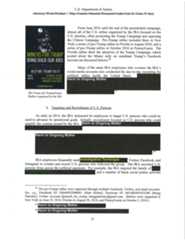
U.S. Department of JusticeAtleiffle) Werk Preidttet// May Cmttail'lMaterial Preiteeted UF1derFed. R. Cril'l'l:.P. 6Ee)1From June 2016 until the end of the presidential campaign,almost all of the U.S. rallies organized by the IRA focused on theU.S. election, often promoting the Trump Campaign and opposingthe Clinton Campaign. Pro-Trump rallies included three in NewYork; a series of pro-Trump rallies in Florida in August 2016; and a\~\.series of pro-Trump rallies in October 2016 in Pennsylvania. TheFlorida rallies drew the attention of the Trump Campaign, whichposted about the Miami rally on candidate Trump's FacebookBRINGBACKOURJOBSaccount (as discussed below). 86- .....,MINERSFORTRUMPHELPMR.TRUMPFIXIT!WHENWHEREIIC!llelli: Iii :Tf.1: 11111· 11/1,,·111:,11111,1;H\ l1\l:l:llfl\' l'I ;\/A 1'11111·/. . .. . ...t I,•• ••••••• • ••t ·,Harm to Ongoing Matter/IIHll~\l'l'I N!:I: 1111,IRA Poster for PennsylvaniaRallies organized by the IRA6. Targeting and Recruitment of U.S. PersonsIRA employees frequently used Investigative TechniqueTwitter , Facebook, andlnstagram to contact and recruit U.S. persons who followed the group. The IRA recruited U.S.ersons from across the olitical s ectrum. For example, the IRA targeted the family ofand a number of black social ju stice activists86The pro-Trump rallies were organized through multiple Facebook, Twitter, and email accounts.See, e.g., Facebook ID 100009922908461 (Matt Skiber); Facebook ID 1601685693432389 (BeingPatriotic); Twitter Account @march_for_trump ; beingpatriotic@gmail.com. (Rallies were organized inNew York on June 25, 2016; Florida on August 20, 2016; and Pennsylvania on October 2, 2016.)87Harm to Ongoing Matter88Harm to Ongoing Matter31
U.S. Department of JusticeAtleiffle) Werk Preidttet// May Cmttail'lMaterial Preiteeted UF1derFed. R. Cril'l'l:.P. 6Ee)1From June 2016 until the end of the presidential campaign,almost all of the U.S. rallies organized by the IRA focused on theU.S. election, often promoting the Trump Campaign and opposingthe Clinton Campaign. Pro-Trump rallies included three in NewYork; a series of pro-Trump rallies in Florida in August 2016; and a\~\.series of pro-Trump rallies in October 2016 in Pennsylvania. TheFlorida rallies drew the attention of the Trump Campaign, whichposted about the Miami rally on candidate Trump's FacebookBRINGBACKOURJOBSaccount (as discussed below). 86- .....,MINERSFORTRUMPHELPMR.TRUMPFIXIT!WHENWHEREIIC!llelli: Iii :Tf.1: 11111· 11/1,,·111:,11111,1;H\ l1\l:l:llfl\' l'I ;\/A 1'11111·/. . .. . ...t I,•• ••••••• • ••t ·,Harm to Ongoing Matter/IIHll~\l'l'I N!:I: 1111,IRA Poster for PennsylvaniaRallies organized by the IRA6. Targeting and Recruitment of U.S. PersonsIRA employees frequently used Investigative TechniqueTwitter , Facebook, andlnstagram to contact and recruit U.S. persons who followed the group. The IRA recruited U.S.ersons from across the olitical s ectrum. For example, the IRA targeted the family ofand a number of black social ju stice activists86The pro-Trump rallies were organized through multiple Facebook, Twitter, and email accounts.See, e.g., Facebook ID 100009922908461 (Matt Skiber); Facebook ID 1601685693432389 (BeingPatriotic); Twitter Account @march_for_trump ; beingpatriotic@gmail.com. (Rallies were organized inNew York on June 25, 2016; Florida on August 20, 2016; and Pennsylvania on October 2, 2016.)87Harm to Ongoing Matter88Harm to Ongoing Matter31
U.S . Department of Justic eAt1:aft'le~·Wafk Pfadttet // May CaAtaiA Material Prateetetl Under Fetl. R. Crim. P. 6(e)while posing as a grassroots group called "Black Matters US." 89 In February 2017, the persona"Black Fist" (purporting to want to teach African-Americans to protect themselves when contactedby law enforcement) hired a self-defense instructor in New York to offer classes sponsored byBlack Fist. The IRA also recruited moderators of conservative social media groups to promoteIRA-generated content, 90 as well as recruited individuals to perform political acts (such as walkingaround New York City dressed up as Santa Claus with a Trump mask). 91Harm to Ongoing MatteraHarmto Ongoing MatteraHarm to OngoingMatteras the IRA's online audience became larger, the IRA tracked U.S.persons with whom they communicated and had successfully tasked with tasks ran in fromor anizin rallies to takin ictures with certain olitical messa es .893/11/16 Facebook Advertisement ID 6045078289928, 5/6/16 Facebook Advertisement ID6051652423528, 10/26/16 Facebook Advertisement ID 6055238604687; 10/27/16 Facebook Message, ID& ID 100011698576461(Taylor Brooks).90918/19/16 Face book Message , ID 10000992 2908461 (Matt Skiber) to ID12/8/ 16 Email, robot@craigslist.orgadvertisement).92to beingpatriotic @gma il.com (confirmingCraigslist8/18-19/16 Twitter DMs , @marc h_for_trump &ID 100011698576461 (Taylor Brooks) &(arranging to pay for plane tickets and for aFacebook Message, ID 100009922908461 (Matt Skibe r) &(discussing payment for rally supplies); 8/18/16 Twitter DM,(discussing payment for construction materials).32
U.S . Department of Justic eAt1:aft'le~·Wafk Pfadttet // May CaAtaiA Material Prateetetl Under Fetl. R. Crim. P. 6(e)while posing as a grassroots group called "Black Matters US." 89 In February 2017, the persona"Black Fist" (purporting to want to teach African-Americans to protect themselves when contactedby law enforcement) hired a self-defense instructor in New York to offer classes sponsored byBlack Fist. The IRA also recruited moderators of conservative social media groups to promoteIRA-generated content, 90 as well as recruited individuals to perform political acts (such as walkingaround New York City dressed up as Santa Claus with a Trump mask). 91Harm to Ongoing MatteraHarmto Ongoing MatteraHarm to OngoingMatteras the IRA's online audience became larger, the IRA tracked U.S.persons with whom they communicated and had successfully tasked with tasks ran in fromor anizin rallies to takin ictures with certain olitical messa es .893/11/16 Facebook Advertisement ID 6045078289928, 5/6/16 Facebook Advertisement ID6051652423528, 10/26/16 Facebook Advertisement ID 6055238604687; 10/27/16 Facebook Message, ID& ID 100011698576461(Taylor Brooks).90918/19/16 Face book Message , ID 10000992 2908461 (Matt Skiber) to ID12/8/ 16 Email, robot@craigslist.orgadvertisement).92to beingpatriotic @gma il.com (confirmingCraigslist8/18-19/16 Twitter DMs , @marc h_for_trump &ID 100011698576461 (Taylor Brooks) &(arranging to pay for plane tickets and for aFacebook Message, ID 100009922908461 (Matt Skibe r) &(discussing payment for rally supplies); 8/18/16 Twitter DM,(discussing payment for construction materials).32
U.S. Department of JusticeAtterfle)" Werk Predttet // Mfl-)1 Cefltftit'I.Material Preteeted Under Fed. R. Ct·im. P. 6(e)7. Interactions and Contacts with the Trump CampaignThe investigation identified two different forms of connections between the IRA and. members of the Trump Campaign. (The investigation identified no similar connections betweenthe IRA and the Clinton Campaign .) First, on multiple occasions, members and surrogates of theTrump Campaign promoted-typicallyby linking, retweeting , or similar methods of reposting pro-Trump or anti-Clinton content published by the IRA through IRA-controlled social mediaaccounts. Additionally, in a few instances, IRA employees represented thems elves as U.S. personsto communicate with members of the Trump Campaign in an effort to seek assistance andcoordination on IRA-organized political rallies inside the United States.a. Trump Campaign Promotion of IRA Political MaterialsAmong the U.S. "leaders of public opinion" targeted by the IRA were various membersand surrogates of the Trump Campaign. In total, Trump Campaign affiliates promoted dozens oftweets, posts , and other political content created by the IRA .Posts from the IRA-controlled Twitter account @TE N_GOP we re cited or retweeted bymultiple Trump Campaign officials and surrogates, including Donald J. Trump Jr.,96 Eric96See, e.g , @DonaldJTrumpJr 10/26/16 Tweet ("RT @TEN_GOP: BREAKING Thousands ofnames changed on voter rolls in Indiana. Police investigating #Voterfraud . #DrainTheSwamp.");@DonaldJTrumpJr 11/2/ 16 Tweet ("RT @TEN_GOP: BREAKING: #VoterFraud by counting tens ofthousands of ineligible mail in Hillary votes being reported in Broward County, Florida.");@DonaldJTrumpJr 11/8/16 Tweet ("RT @TEN_GOP: This vet passed away last month before he couldvote for Trump. Here he is in his #MAGA hat. #voted #ElectionDay."). Trump Jr. retweeted additional@TEN_ GOP content subsequent to the election.33
U.S. Department of JusticeAtterfle)" Werk Predttet // Mfl-)1 Cefltftit'I.Material Preteeted Under Fed. R. Ct·im. P. 6(e)7. Interactions and Contacts with the Trump CampaignThe investigation identified two different forms of connections between the IRA and. members of the Trump Campaign. (The investigation identified no similar connections betweenthe IRA and the Clinton Campaign .) First, on multiple occasions, members and surrogates of theTrump Campaign promoted-typicallyby linking, retweeting , or similar methods of reposting pro-Trump or anti-Clinton content published by the IRA through IRA-controlled social mediaaccounts. Additionally, in a few instances, IRA employees represented thems elves as U.S. personsto communicate with members of the Trump Campaign in an effort to seek assistance andcoordination on IRA-organized political rallies inside the United States.a. Trump Campaign Promotion of IRA Political MaterialsAmong the U.S. "leaders of public opinion" targeted by the IRA were various membersand surrogates of the Trump Campaign. In total, Trump Campaign affiliates promoted dozens oftweets, posts , and other political content created by the IRA .Posts from the IRA-controlled Twitter account @TE N_GOP we re cited or retweeted bymultiple Trump Campaign officials and surrogates, including Donald J. Trump Jr.,96 Eric96See, e.g , @DonaldJTrumpJr 10/26/16 Tweet ("RT @TEN_GOP: BREAKING Thousands ofnames changed on voter rolls in Indiana. Police investigating #Voterfraud . #DrainTheSwamp.");@DonaldJTrumpJr 11/2/ 16 Tweet ("RT @TEN_GOP: BREAKING: #VoterFraud by counting tens ofthousands of ineligible mail in Hillary votes being reported in Broward County, Florida.");@DonaldJTrumpJr 11/8/16 Tweet ("RT @TEN_GOP: This vet passed away last month before he couldvote for Trump. Here he is in his #MAGA hat. #voted #ElectionDay."). Trump Jr. retweeted additional@TEN_ GOP content subsequent to the election.33
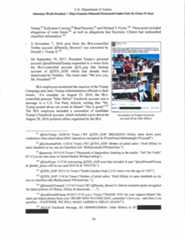
U.S. Department of JusticeAtterHe'.')'·'Nerlc PFOtittet// Mey CeHtaiHMaterial Preteeteti UHtier Fee. R. Criffl. P. 6Ee)Trump, 97 Kellyanne Conway,9 8 Brad Parscale, 99 and Michael T. Flynn. 100 These posts includedallegations of voter fraud, 10 1 as well as allegations that Secretary Clinton had mishandledclassified information. 102-A November 7, 2016 post from the IRA-controlledTwitter account @Pame la_ Moore 13 was retweeted byDonald J. Trump Jr. 103On September 19, 2017, President Trump's personalaccount @realDonaldTrump responded to a tweet fromthe IRA-controlled account @ l0_gop (the backupaccount of @TEN _ GOP, which had already beendeactivated by Twitter). The tweet read: "We love you,Mr. President!" 104IRA employees monitored the reaction of the TrumpCampaign and , later, Trump Administration officials to theirtweets. For example, on August 23 , 2016, the IRAcontrolled persona "Matt Skiber" Facebook account sent amessage to a U.S. Tea Party activist, writin.g that "Mr.Trump posted about our event in Miami! This is great!" 105The IRA employee included a screenshot of candidateTrump ' s Facebook account, which included a post about theAugust 20, 2016 political rallies organized by the IRA.THANKYOUforyoursupport Miami!Mylearnjusl sha1edpholos lromYQU1TRUMP SIGN WAVING DAY.yes1e1da.y! I bve you - and lhereis no question• TOGETHER, WE WILL MAKEAMEAICAGREATAGAIN!..Screenshot of Trump FacebookAccount (from Matt Skibe,)97@Er icTrump 10/20/16 Tweet ("RT @TEN_GOP: BREAKING Hillary shuts down pressconference when asked about DNC Operatives corruption & #VoterFraud #debatenight #TrumpB").98@Ke llyannePo lls 11/6/16 Tweet ("RT @TEN_ GOP: Mother of jailed sailor: ' Hold Hillary tosame standards as my son on Classified info' #hillarysemail #WeinerGa te.").99@parsca le 10/15/16 Tweet ("Thousands of deplorables chant ing to the media: ' Tell The Truth!'RT if you are also done w/ biased Media! #Friday Feeling").100@GenF lynn 11/7/16 (retweeting @TEN_GOP post that included in part " @rea!Dona ldTrum p& @m ike_pence will be our next POTUS & VPOTUS.").101@TEN_ GOP 10/11/ 16 Tweet ("North Carolina finds 2,214 voters over the age of 110!!").102@TEN_ GOP 11/6/ 16 Tweet ("Mother of jailed sailor: ' Hold Hillary to same standa rds as myson on classified info #hillaryemail #WeinerGate."').103@Dona ldJTrumpJr 11/7/16 Tweet ("RT @Pamela _M oore 13: Detroit resid ents speak out againstthe failed policies of Obama, Hillary & democrats .... ").104@rea!Dona ldTrump 9/19/17 (7 :33 p.m.) Tweet ("THANK YOU for your support Miami! Myteam just shared photos from your TRUMP SIGN WA YING DAY , yesterday! I lov e you- and there is noquestion - TOGETHER , WE WILL MAKE AMERICA GREAT AGAIN! ").1058/23/16 Facebook Message , ID 100009922908461 (Matt Skiber) to ID34
U.S. Department of JusticeAtterHe'.')'·'Nerlc PFOtittet// Mey CeHtaiHMaterial Preteeteti UHtier Fee. R. Criffl. P. 6Ee)Trump, 97 Kellyanne Conway,9 8 Brad Parscale, 99 and Michael T. Flynn. 100 These posts includedallegations of voter fraud, 10 1 as well as allegations that Secretary Clinton had mishandledclassified information. 102-A November 7, 2016 post from the IRA-controlledTwitter account @Pame la_ Moore 13 was retweeted byDonald J. Trump Jr. 103On September 19, 2017, President Trump's personalaccount @realDonaldTrump responded to a tweet fromthe IRA-controlled account @ l0_gop (the backupaccount of @TEN _ GOP, which had already beendeactivated by Twitter). The tweet read: "We love you,Mr. President!" 104IRA employees monitored the reaction of the TrumpCampaign and , later, Trump Administration officials to theirtweets. For example, on August 23 , 2016, the IRAcontrolled persona "Matt Skiber" Facebook account sent amessage to a U.S. Tea Party activist, writin.g that "Mr.Trump posted about our event in Miami! This is great!" 105The IRA employee included a screenshot of candidateTrump ' s Facebook account, which included a post about theAugust 20, 2016 political rallies organized by the IRA.THANKYOUforyoursupport Miami!Mylearnjusl sha1edpholos lromYQU1TRUMP SIGN WAVING DAY.yes1e1da.y! I bve you - and lhereis no question• TOGETHER, WE WILL MAKEAMEAICAGREATAGAIN!..Screenshot of Trump FacebookAccount (from Matt Skibe,)97@Er icTrump 10/20/16 Tweet ("RT @TEN_GOP: BREAKING Hillary shuts down pressconference when asked about DNC Operatives corruption & #VoterFraud #debatenight #TrumpB").98@Ke llyannePo lls 11/6/16 Tweet ("RT @TEN_ GOP: Mother of jailed sailor: ' Hold Hillary tosame standards as my son on Classified info' #hillarysemail #WeinerGa te.").99@parsca le 10/15/16 Tweet ("Thousands of deplorables chant ing to the media: ' Tell The Truth!'RT if you are also done w/ biased Media! #Friday Feeling").100@GenF lynn 11/7/16 (retweeting @TEN_GOP post that included in part " @rea!Dona ldTrum p& @m ike_pence will be our next POTUS & VPOTUS.").101@TEN_ GOP 10/11/ 16 Tweet ("North Carolina finds 2,214 voters over the age of 110!!").102@TEN_ GOP 11/6/ 16 Tweet ("Mother of jailed sailor: ' Hold Hillary to same standa rds as myson on classified info #hillaryemail #WeinerGate."').103@Dona ldJTrumpJr 11/7/16 Tweet ("RT @Pamela _M oore 13: Detroit resid ents speak out againstthe failed policies of Obama, Hillary & democrats .... ").104@rea!Dona ldTrump 9/19/17 (7 :33 p.m.) Tweet ("THANK YOU for your support Miami! Myteam just shared photos from your TRUMP SIGN WA YING DAY , yesterday! I lov e you- and there is noquestion - TOGETHER , WE WILL MAKE AMERICA GREAT AGAIN! ").1058/23/16 Facebook Message , ID 100009922908461 (Matt Skiber) to ID34
U.S. Department of JusticeAtten1.e,· Werk Prea1:1et// May CeHtttiHMaterial Preteetea UHaer Fea. R. Crim. P. 6(e)Harm to Ongoing MatterI•b. Contact with Trump Campaign Officials in Connection to RalliesStarting in June 2016, the IRA contacted different U.S. persons affiliated with the TrumpCampaign in an effort to coordinate pro-Trump IRA-organized rallies inside the United States. Inall cases, the IRA contacted the Campaign while claiming to be U.S. political activists working onbehalf of a conservative grassroots organization. The IRA's contacts included requests for signsand other materials to use at rallies, 107 as well as requests to promote the rallies and help coordinateIogistics. 108 While certain campaign volunteers agreed to provide the requested support (forexample, agreeing to set aside a number of signs), the investigation has not identified evidencethat any Trump Campaign official understood the requests were coming from foreign nationals.***In sum, the investigation established that Russia interfered in the 2016 presidential electionthrough the "active measures" social media campaign carried out by the IRA, an organizationfunded by Prigozhin and companies that he controlled . As explained further in Volume I, SectionV.A, infra, the Office concluded (and a grand jury has alleged) that Prigozhin, his companies , andIRA employees violated U.S. law through these operations, principally by undermining throughdeceptive acts the work of federal agencies charged with regulating foreign influence in U.S.elections .107See, e.g., 8/16/16 Email, joshmilton024@gmail.com to -@donaldtrump.com(asking for8/18/16 Email, joshmilton024@gmail.comto~Pencesigns for Florida rally);-@donaldtrump.com(a-kin for Trump/Pence signs for Florida rally); 8/12/16 Email,joshmilton024@gmail.com to@donaldtrump.com (asking for "contact phone numbers for TrumpCampaign affiliates" in various Florida cities and signs).1088/15/16 Email,to joshmilton024locations to the "Florida Goes Trump," list); 8/16/16 Email,joshmi1ton024@gmail.com (volunteering to send an email blast to followers).35to
U.S. Department of JusticeAtten1.e,· Werk Prea1:1et// May CeHtttiHMaterial Preteetea UHaer Fea. R. Crim. P. 6(e)Harm to Ongoing MatterI•b. Contact with Trump Campaign Officials in Connection to RalliesStarting in June 2016, the IRA contacted different U.S. persons affiliated with the TrumpCampaign in an effort to coordinate pro-Trump IRA-organized rallies inside the United States. Inall cases, the IRA contacted the Campaign while claiming to be U.S. political activists working onbehalf of a conservative grassroots organization. The IRA's contacts included requests for signsand other materials to use at rallies, 107 as well as requests to promote the rallies and help coordinateIogistics. 108 While certain campaign volunteers agreed to provide the requested support (forexample, agreeing to set aside a number of signs), the investigation has not identified evidencethat any Trump Campaign official understood the requests were coming from foreign nationals.***In sum, the investigation established that Russia interfered in the 2016 presidential electionthrough the "active measures" social media campaign carried out by the IRA, an organizationfunded by Prigozhin and companies that he controlled . As explained further in Volume I, SectionV.A, infra, the Office concluded (and a grand jury has alleged) that Prigozhin, his companies , andIRA employees violated U.S. law through these operations, principally by undermining throughdeceptive acts the work of federal agencies charged with regulating foreign influence in U.S.elections .107See, e.g., 8/16/16 Email, joshmilton024@gmail.com to -@donaldtrump.com(asking for8/18/16 Email, joshmilton024@gmail.comto~Pencesigns for Florida rally);-@donaldtrump.com(a-kin for Trump/Pence signs for Florida rally); 8/12/16 Email,joshmilton024@gmail.com to@donaldtrump.com (asking for "contact phone numbers for TrumpCampaign affiliates" in various Florida cities and signs).1088/15/16 Email,to joshmilton024locations to the "Florida Goes Trump," list); 8/16/16 Email,joshmi1ton024@gmail.com (volunteering to send an email blast to followers).35to
U.S. Department of JusticeAttem1:eyWork Prod1:1et/,' M1tyCot1t1tit1Mftteri1tlProteeted Ut1derFed. R. Crifl'I.P. 6(e)III.RUSSIAN HACKING AND DUMPING OPERATIONSBeginning in March 2016, units of the Russian Federation ' s Main Intelligence Directorateof the General Staff (GRU) hacked the computers and email accounts of organizations , e·mployees ,and volunteers supporting the Clinton Campaign, including the email account of campaignchairman John Podesta. Starting in April 2016, the GRU hacked into the computer networks of theDemocratic Congressional Campaign Committee (DCCC) and the Democratic NationalCommittee (DNC). The GRU targeted hundreds of email accounts used by Clinton Campaignemployees , advisors , and volunteers. In total, the GRU stole hundreds of thousands of documentsfrom the compromised email accounts and networks. 109 The GRU later released stolen ClintonCampaign and DNC documents through online personas , "DCLeaks" and "G uccifer 2.0," and laterthrough the organization WikiLeaks. The release of the documents was designed and timed tointerfere with the 2016 U.S. presidential election and undermine the Clinton Campaign., the Trump Campaignabout WikiLeaks 's activities. The investigation was unable to resolveWikiLeaks's release of the stolen Podesta emails on October 7,2016, the same day a video from years earlier was published of Trump using graphic languageabout women.A. GRU Hacking Directed at the Clinton Campaign1. GRU Units Target the Clinton CampaignTwo military units of the GRU carried out the computer intrusions into the ClintonCampaign, DNC, and DCCC: Military Units 26165 and 74455. 110 Military Unit 26165 is a GRUcyber unit dedicated to targeting military , political , governmental , and non-governmentalorganizations outside of Russia, including in the United States. 111 The unit was sub-divided intodepartments with different specialties. One department, for example, developed specializedmalicious software "malware" , while another de artment conducted large-scale spearphishingcampaigns. 112 jfllllililliliilllilli lilillllll~a bitcoin mining operation to109As discussed in Section V below, our Office charged 12 GRU officers for crimes arising fromthe hacking of these computers, principally with conspiring to commit computer intrusion s, in violation of18 U.S.C. §§ 1030 and 371. See Volume I, Section V.B, infra; Indictment , United States v. Netyksho , No.I :18-cr-215 (D.D.C. July 13, 2018), Doc. 1 ("Netyksho Indictment") .110Netyksho Indictment,r1.111Separate from this Office 's indictment of GRU officers , in October 2018 a grand jury sitting inthe Western District of Pennsylvania returned an indictment charging certain members of Unit 26165 withhacking the U.S. Anti-Doping Agency, the World Anti-Doping Agency, and other international sportassociations. United States v. Aleksei Sergeyevich Morenets, No. 18-263 (W.D. Pa.).112A spearphishing ema il is designed to appear as though it originates from a trusted source, andsolicits information to enable the sender to gain access to an account or network, or causes the recipient to36
U.S. Department of JusticeAttem1:eyWork Prod1:1et/,' M1tyCot1t1tit1Mftteri1tlProteeted Ut1derFed. R. Crifl'I.P. 6(e)III.RUSSIAN HACKING AND DUMPING OPERATIONSBeginning in March 2016, units of the Russian Federation ' s Main Intelligence Directorateof the General Staff (GRU) hacked the computers and email accounts of organizations , e·mployees ,and volunteers supporting the Clinton Campaign, including the email account of campaignchairman John Podesta. Starting in April 2016, the GRU hacked into the computer networks of theDemocratic Congressional Campaign Committee (DCCC) and the Democratic NationalCommittee (DNC). The GRU targeted hundreds of email accounts used by Clinton Campaignemployees , advisors , and volunteers. In total, the GRU stole hundreds of thousands of documentsfrom the compromised email accounts and networks. 109 The GRU later released stolen ClintonCampaign and DNC documents through online personas , "DCLeaks" and "G uccifer 2.0," and laterthrough the organization WikiLeaks. The release of the documents was designed and timed tointerfere with the 2016 U.S. presidential election and undermine the Clinton Campaign., the Trump Campaignabout WikiLeaks 's activities. The investigation was unable to resolveWikiLeaks's release of the stolen Podesta emails on October 7,2016, the same day a video from years earlier was published of Trump using graphic languageabout women.A. GRU Hacking Directed at the Clinton Campaign1. GRU Units Target the Clinton CampaignTwo military units of the GRU carried out the computer intrusions into the ClintonCampaign, DNC, and DCCC: Military Units 26165 and 74455. 110 Military Unit 26165 is a GRUcyber unit dedicated to targeting military , political , governmental , and non-governmentalorganizations outside of Russia, including in the United States. 111 The unit was sub-divided intodepartments with different specialties. One department, for example, developed specializedmalicious software "malware" , while another de artment conducted large-scale spearphishingcampaigns. 112 jfllllililliliilllilli lilillllll~a bitcoin mining operation to109As discussed in Section V below, our Office charged 12 GRU officers for crimes arising fromthe hacking of these computers, principally with conspiring to commit computer intrusion s, in violation of18 U.S.C. §§ 1030 and 371. See Volume I, Section V.B, infra; Indictment , United States v. Netyksho , No.I :18-cr-215 (D.D.C. July 13, 2018), Doc. 1 ("Netyksho Indictment") .110Netyksho Indictment,r1.111Separate from this Office 's indictment of GRU officers , in October 2018 a grand jury sitting inthe Western District of Pennsylvania returned an indictment charging certain members of Unit 26165 withhacking the U.S. Anti-Doping Agency, the World Anti-Doping Agency, and other international sportassociations. United States v. Aleksei Sergeyevich Morenets, No. 18-263 (W.D. Pa.).112A spearphishing ema il is designed to appear as though it originates from a trusted source, andsolicits information to enable the sender to gain access to an account or network, or causes the recipient to36
U.S. Department of JusticeMorAey Work Prodttet // Ma:,· CoAiait\ Material Protected UAder Fed. R. Criffl. P. 6(e)secure bitcoins used to purchase computer infrastructure used in hacking operations.113Military Unit 74455 is a related GRU unit with multiple departments that engaged in cyberoperations. Unit 74455 assisted in the release of documents stolen by Unit 26165, the promotionof those releases, and the publication of anti-Clinton content on social media accounts operated bythe GRU. Officers from Unit 74455 separately hacked computers belonging to state boards ofelections, secretaries of state, and U.S. companies that supplied software and other technologyrelated to the administration of U.S. elections. 114Beginning in mid-March 2016, Unit 26165 had primary responsibility for hacking theDCCC and DNC , as well as email accounts of individuals affiliated with the Clinton Campaign: 115Investigative TechniqueUnit 26165 usedbegan before the GRU had obtained any credentials or gained accessto these networks , indicating that the later DCCC and DNC intrusions were not crimes ofopportunity but rather the result of targeting. 116GRU officers also sent hundreds of spearphishing emails to the work and personal emailaccounts of Clinton Campaign employees and volunteers. Between March 10, 2016 and March15, 2016 , Unit 26165 appears to have sent approximately 90 spearphishing emails to emailaccounts at hillaryclinton.com. Starting on March 15, 2016, the GRU began targeting Googleemail accounts used by Clinton Campaign employees, along with a smaller number of dnc.orgemail accounts. 117The GRU spearphishing operation enabled it to gain access to numerous email accounts ofClinton Campaign employees and volunteers, including campaign chairman John Podesta , juniorvolunteers assigned to the Clinton Campaign's advance team, informal Clinton Campaignadvisors, and a DNC employee. 118 GRU officers stole tens of thousands of emails fromspearphishing victims, including various Clinton Campaign-related communications.download malware that enables the sender to gain access to an account or network. Netyksho Indictment10.~113IllBitcoin mining consists of unlocking new bitcoins by solving computational problems.To makepurchases, the GRU routed funds into other accounts through transactions designed to obscure the sourceof funds. Netyksho Indictment~ 62.1111kept its newly mined coins in an account on the bitcoin exchange platform CEX.io.114Netyksho Indictment~ 69.115Netyksho Indictment~ 9.116See SM-2589105, serials 144 & 495.118Investigative Technique37
U.S. Department of JusticeMorAey Work Prodttet // Ma:,· CoAiait\ Material Protected UAder Fed. R. Criffl. P. 6(e)secure bitcoins used to purchase computer infrastructure used in hacking operations.113Military Unit 74455 is a related GRU unit with multiple departments that engaged in cyberoperations. Unit 74455 assisted in the release of documents stolen by Unit 26165, the promotionof those releases, and the publication of anti-Clinton content on social media accounts operated bythe GRU. Officers from Unit 74455 separately hacked computers belonging to state boards ofelections, secretaries of state, and U.S. companies that supplied software and other technologyrelated to the administration of U.S. elections. 114Beginning in mid-March 2016, Unit 26165 had primary responsibility for hacking theDCCC and DNC , as well as email accounts of individuals affiliated with the Clinton Campaign: 115Investigative TechniqueUnit 26165 usedbegan before the GRU had obtained any credentials or gained accessto these networks , indicating that the later DCCC and DNC intrusions were not crimes ofopportunity but rather the result of targeting. 116GRU officers also sent hundreds of spearphishing emails to the work and personal emailaccounts of Clinton Campaign employees and volunteers. Between March 10, 2016 and March15, 2016 , Unit 26165 appears to have sent approximately 90 spearphishing emails to emailaccounts at hillaryclinton.com. Starting on March 15, 2016, the GRU began targeting Googleemail accounts used by Clinton Campaign employees, along with a smaller number of dnc.orgemail accounts. 117The GRU spearphishing operation enabled it to gain access to numerous email accounts ofClinton Campaign employees and volunteers, including campaign chairman John Podesta , juniorvolunteers assigned to the Clinton Campaign's advance team, informal Clinton Campaignadvisors, and a DNC employee. 118 GRU officers stole tens of thousands of emails fromspearphishing victims, including various Clinton Campaign-related communications.download malware that enables the sender to gain access to an account or network. Netyksho Indictment10.~113IllBitcoin mining consists of unlocking new bitcoins by solving computational problems.To makepurchases, the GRU routed funds into other accounts through transactions designed to obscure the sourceof funds. Netyksho Indictment~ 62.1111kept its newly mined coins in an account on the bitcoin exchange platform CEX.io.114Netyksho Indictment~ 69.115Netyksho Indictment~ 9.116See SM-2589105, serials 144 & 495.118Investigative Technique37
U.S. Department of JusticeAttert1ey Werk P12ed1:1et// :Mt:tyCmttaitt Materit:tlPreteeted Ut1derFed. R. Criffl. P. 6(e)2. Intrusions into the DCCC and DNC Networksa. Initial AccessBy no later than April 12, 2016, the GRU had gained access to the DCCC computernetwork using the credentials stolen from a DCCC employee who had been successfullyspearphished the week before. Over the ensuing weeks, the GRU traversed the network,identifying different computers connected to the DCCC network. By stealing network accesscredentials along the way (including those of IT administrators with unrestricted access to thesystem), the GRU compromised approximately 29 different computers on the DCCC network. 119Approximately six days after first hacking into the DCCC network, on April 18, 2016,GRU officers gained access to the DNC network via a virtual private network (VPN) connection 120between the DCCC and DNC networks. 121 Between April 18, 2016 and June 8, 2016, Unit 26165compromised more than 30 computers on the DNC network, including the DNC mail server andshared file server. 122b. Implantation of Ma/ware on DCCC and DNC NetworksUnit 26165 implanted on the DCCC and DNC networks two types of customizedmalware, 123 known as "X-Agent" and "X-Tunnel "; Mimikatz, a credential-harvesting tool ; andrar.exe , a tool used in these intrusions to compile and compress materials for exfiltration. X-Agentwas a multi -function hacking tool that allowed Unit 26165 to log keystrokes , take screenshots, andgather other data about the infected computers (e.g., file directories , operating systems). 124 XTunnel was a hacking tool that created an encrypted connection between the victim DCCC/DNCcomputers and GRU-controlled computers outside the DCCC and DNC networks that was capableof large -scale data transfers. 125 GRU officers then used X-Tunnel to exfiltrate stolen data from thevictim computers.120A VPN extends a private network, allowing users to send and receive data across publicnetworks (such as the internet) as if the connecting computer was directly connected to the private network.The VPN in this case had been created to give a small number of DCCC employees access to certaindatabases housed on the DNC network. Therefore, while the DCCC employees were outside the DNC'sprivate network , they could access parts of the DNC network from their DCCC computers.Investigative TechniqueInvestigative Technique123"Malware" is short for malicious software, and here refers to software designed to allow a thirdparty to infiltrate a computer without the consent or knowledge of the computer's user or operator.124Investigative Technique125Investigative Technique38
U.S. Department of JusticeAttert1ey Werk P12ed1:1et// :Mt:tyCmttaitt Materit:tlPreteeted Ut1derFed. R. Criffl. P. 6(e)2. Intrusions into the DCCC and DNC Networksa. Initial AccessBy no later than April 12, 2016, the GRU had gained access to the DCCC computernetwork using the credentials stolen from a DCCC employee who had been successfullyspearphished the week before. Over the ensuing weeks, the GRU traversed the network,identifying different computers connected to the DCCC network. By stealing network accesscredentials along the way (including those of IT administrators with unrestricted access to thesystem), the GRU compromised approximately 29 different computers on the DCCC network. 119Approximately six days after first hacking into the DCCC network, on April 18, 2016,GRU officers gained access to the DNC network via a virtual private network (VPN) connection 120between the DCCC and DNC networks. 121 Between April 18, 2016 and June 8, 2016, Unit 26165compromised more than 30 computers on the DNC network, including the DNC mail server andshared file server. 122b. Implantation of Ma/ware on DCCC and DNC NetworksUnit 26165 implanted on the DCCC and DNC networks two types of customizedmalware, 123 known as "X-Agent" and "X-Tunnel "; Mimikatz, a credential-harvesting tool ; andrar.exe , a tool used in these intrusions to compile and compress materials for exfiltration. X-Agentwas a multi -function hacking tool that allowed Unit 26165 to log keystrokes , take screenshots, andgather other data about the infected computers (e.g., file directories , operating systems). 124 XTunnel was a hacking tool that created an encrypted connection between the victim DCCC/DNCcomputers and GRU-controlled computers outside the DCCC and DNC networks that was capableof large -scale data transfers. 125 GRU officers then used X-Tunnel to exfiltrate stolen data from thevictim computers.120A VPN extends a private network, allowing users to send and receive data across publicnetworks (such as the internet) as if the connecting computer was directly connected to the private network.The VPN in this case had been created to give a small number of DCCC employees access to certaindatabases housed on the DNC network. Therefore, while the DCCC employees were outside the DNC'sprivate network , they could access parts of the DNC network from their DCCC computers.Investigative TechniqueInvestigative Technique123"Malware" is short for malicious software, and here refers to software designed to allow a thirdparty to infiltrate a computer without the consent or knowledge of the computer's user or operator.124Investigative Technique125Investigative Technique38
U.S. Department of JusticeAtt:on1eyWork Proattet // Mtty Col'l:tttil'I:MttterittlProteetea Unser Fea. R. Crim.. P. 6(e)To operate X-Agent and X-Tunnel on the DCCC and DNC networks, Unit 26165 officersset up a group of computers outside those networks to communicate with the implantedmalware. 126 The first set of GRU-controlled computers, known by the GRU as "middle servers,"sent and received messages to and from malware on the DNC/DCCC networks. The middleservers, in turn, relayed messages to a second set of GRU-controlled com;§'ters, labeled internallyby the GRU as an "AMS Panel." The AMS Panelserved as a1•j'1·nerve center through which GRU officers monitored and directed the malware's operations on theDNC/DCCC networks. 127jjjff11'•§\1flffl!. •. • ••: Investigative TechniqueInvestigative TechniqueInvestigative Technique126In connection with these intrusions, the GRU used computers (virtua l private networks,dedicated servers operated by hosting companies, etc.) that it leased from third-party providers located allover the world. The investi ation identified rental a reements and payments for computers located in, interalia,IIMliililiall of which were used in the operationstargeting the U.S. election.-~-~-Ii,r25.Indictment ,r24( c).Indictment ,r24(b ).127Netyksho Indictment128Netyksho129Netyksho39
U.S. Department of JusticeAtt:on1eyWork Proattet // Mtty Col'l:tttil'I:MttterittlProteetea Unser Fea. R. Crim.. P. 6(e)To operate X-Agent and X-Tunnel on the DCCC and DNC networks, Unit 26165 officersset up a group of computers outside those networks to communicate with the implantedmalware. 126 The first set of GRU-controlled computers, known by the GRU as "middle servers,"sent and received messages to and from malware on the DNC/DCCC networks. The middleservers, in turn, relayed messages to a second set of GRU-controlled com;§'ters, labeled internallyby the GRU as an "AMS Panel." The AMS Panelserved as a1•j'1·nerve center through which GRU officers monitored and directed the malware's operations on theDNC/DCCC networks. 127jjjff11'•§\1flffl!. •. • ••: Investigative TechniqueInvestigative TechniqueInvestigative Technique126In connection with these intrusions, the GRU used computers (virtua l private networks,dedicated servers operated by hosting companies, etc.) that it leased from third-party providers located allover the world. The investi ation identified rental a reements and payments for computers located in, interalia,IIMliililiall of which were used in the operationstargeting the U.S. election.-~-~-Ii,r25.Indictment ,r24( c).Indictment ,r24(b ).127Netyksho Indictment128Netyksho129Netyksho39
U.S. Department of JusticeAtlorttey Work Prodttet // May Cotttaifl Material Proteeted Under Fed. R. Crim. P. 6Ee)The Arizona-based AMS Panel also stored thousands of files containing keyloggingsessions captured through X-Agent. These sessions were captured as GRU officers monitoredDCCC and DNC employees' work on infected computers regularly between April 2016 and June2016. Data captured in these key logging sessions included passwords, internal communicationsbetween employees, banking information , and sensitive personal information.c. Theft of Documents from DNC and DCCC NetworksOfficers from Unit 26165 stole thousands of documents from the DCCC and DNCnetworks, including significant amounts of data pertaining to the 2016 U.S. federal election s.Stolen documents included internal strategy documents , fundraising data , opposition research , andemails from the work inboxes of DNC employeesY 0The GRU began stealing DCCC data shortly after it gained access to the network. On Ap ril14, 2016 (approximately three days after the initial intrusion) GRU officers downloaded rar .exeonto the DCCC's document server. The following day , the GRU searched one compromisedDCCC computer for files containing search terms that included "Hillary ," "DNC, " "Cruz ," and"Trump." 131 On April 25, 2016 , the GRU collected and compressed PDF and Microsoft documentsfrom folders on the DCCC ' s shared file server that pertained to the 2016 election. 132 The GRUappears to have compressed and exfiltrated over 70 gigabytes of data from thi s file server. 133The GRU also stole documents from the DNC network shortly after gaining access . OnApril 22 , 2016, the GRU copied files from the DNC network to GRU-controlled computers. Stolendocuments included the DNC' s opposition research into candidate Trump .134 Betwe enapproximately May 25, 2016 and June 1, 2016 , GRU officers accessed the DNC's mail serverfrom a GRU-controlled computer leased inside the United States. 135 During these connection s,130Netyksho Indictment ,i,i 27-29 ; Investigative Technique131Investigative TechniqueInvestigative TechniqueInvestigative Technique· Investigative TechniqueSM-2589105-HACK, serial 5. Investigative Technique135Investigative TechniqueSee SM-2589105-GJ, serial 649 . As part of its investigation, the FBI later received images ofDNCservers and copies of relevant traffi c logs. Netyksho Indictment ,i,i 28-29.40
U.S. Department of JusticeAtlorttey Work Prodttet // May Cotttaifl Material Proteeted Under Fed. R. Crim. P. 6Ee)The Arizona-based AMS Panel also stored thousands of files containing keyloggingsessions captured through X-Agent. These sessions were captured as GRU officers monitoredDCCC and DNC employees' work on infected computers regularly between April 2016 and June2016. Data captured in these key logging sessions included passwords, internal communicationsbetween employees, banking information , and sensitive personal information.c. Theft of Documents from DNC and DCCC NetworksOfficers from Unit 26165 stole thousands of documents from the DCCC and DNCnetworks, including significant amounts of data pertaining to the 2016 U.S. federal election s.Stolen documents included internal strategy documents , fundraising data , opposition research , andemails from the work inboxes of DNC employeesY 0The GRU began stealing DCCC data shortly after it gained access to the network. On Ap ril14, 2016 (approximately three days after the initial intrusion) GRU officers downloaded rar .exeonto the DCCC's document server. The following day , the GRU searched one compromisedDCCC computer for files containing search terms that included "Hillary ," "DNC, " "Cruz ," and"Trump." 131 On April 25, 2016 , the GRU collected and compressed PDF and Microsoft documentsfrom folders on the DCCC ' s shared file server that pertained to the 2016 election. 132 The GRUappears to have compressed and exfiltrated over 70 gigabytes of data from thi s file server. 133The GRU also stole documents from the DNC network shortly after gaining access . OnApril 22 , 2016, the GRU copied files from the DNC network to GRU-controlled computers. Stolendocuments included the DNC' s opposition research into candidate Trump .134 Betwe enapproximately May 25, 2016 and June 1, 2016 , GRU officers accessed the DNC's mail serverfrom a GRU-controlled computer leased inside the United States. 135 During these connection s,130Netyksho Indictment ,i,i 27-29 ; Investigative Technique131Investigative TechniqueInvestigative TechniqueInvestigative Technique· Investigative TechniqueSM-2589105-HACK, serial 5. Investigative Technique135Investigative TechniqueSee SM-2589105-GJ, serial 649 . As part of its investigation, the FBI later received images ofDNCservers and copies of relevant traffi c logs. Netyksho Indictment ,i,i 28-29.40
U.S. Department of JusticeAttarl'ley Werk Predttet // Mey Cel'ltail'l Material Preteeted Unaer Fed. R. Cril'l'I.P. 6(e)Unit 26165 officers appear to have stolen thousands of emails and attachments , which were laterreleased by WikiLeaks in July 2016. 136B. Dissemination of the Hacked MaterialsThe GRU ' s operations extended beyond stealing materials , and included releasingdocuments stolen from the Clinton Campaign and its supporters. The GRU carried out theanonymous release through two fictitious online personas that it created-DCLeaksand Guccifer2.0-and later through the organization WikiLeaks.1. DCLeaksThe GRU began planning the releases at least as early as April 19, 2016, when Unit 26165registered the domain dcleaks.com through a service that anonymized the registrant. 137 Unit 26165paid for the registration using a pool of bitcoin that it had mined. 138 The dcleaks.com landing pagepointed to different tranches of stolen documents , arranged by victim or subject matter. Otherdcleaks.com pages contained indexes of the stolen emails that were being released (bearing thesender , recipient, and date of the email). To control access and the timing of releas es, pages weresometimes password-protected for a period of time and later made unrestricted to the public.Starting in June 2016 , the GRU posted stolen documents onto the website dcleaks.com ,including documents stolen from a number of individuals associated with the Clinton Campaign.These documents appeared to have originated from personal email accounts (in particular , Googleand Microsoft accounts) , rather than the DNC and DCCC computer networks. DCLeaks victimsincluded an advisor to the Clinton Campaign , a former DNC employee and Clinton Campaignemployee, and four other campaign volunte ers. 139 The GRU released through dcleaks.comthousands of documents , including personal identifying and financial information , internalcorrespondence related to the Clinton Campaign and prior political jobs, and fundraising files andinformation. 140136Netyksho Indictment ,i 29. The last-in-time DNC email released by WikiLeaks was dated May25, 2016, the same period of time during which the GRU gained access to the DNC's email server.Netyksho Indictment ,i 45.137Netyksho Indictment ,i 35. Approximately a week before the registration of dcleaks.com, thesame actors attem ted to re ister the website electionleaks.com using the same domain registration service.138See SM-2589105, serial 181; Netyksho Indictment ,i 2l(a).140See, e.g., Internet Archive, "htt s://dcleaks.com/" archive date Nov. 10, 2016). Additionally,DCLeaks released documents relating to, emails belongingto_,and emails from 2015 relating to Republican Party employees (under the portfolio name"The United States Republican Party"). "The United States Republican Party" portfolio containedapproximately 300 emails from a variety of GOP members, PACs, campaigns, state parties, and businessesdated between May and October 2015. According to open-source reporting, these victims shared the same41
U.S. Department of JusticeAttarl'ley Werk Predttet // Mey Cel'ltail'l Material Preteeted Unaer Fed. R. Cril'l'I.P. 6(e)Unit 26165 officers appear to have stolen thousands of emails and attachments , which were laterreleased by WikiLeaks in July 2016. 136B. Dissemination of the Hacked MaterialsThe GRU ' s operations extended beyond stealing materials , and included releasingdocuments stolen from the Clinton Campaign and its supporters. The GRU carried out theanonymous release through two fictitious online personas that it created-DCLeaksand Guccifer2.0-and later through the organization WikiLeaks.1. DCLeaksThe GRU began planning the releases at least as early as April 19, 2016, when Unit 26165registered the domain dcleaks.com through a service that anonymized the registrant. 137 Unit 26165paid for the registration using a pool of bitcoin that it had mined. 138 The dcleaks.com landing pagepointed to different tranches of stolen documents , arranged by victim or subject matter. Otherdcleaks.com pages contained indexes of the stolen emails that were being released (bearing thesender , recipient, and date of the email). To control access and the timing of releas es, pages weresometimes password-protected for a period of time and later made unrestricted to the public.Starting in June 2016 , the GRU posted stolen documents onto the website dcleaks.com ,including documents stolen from a number of individuals associated with the Clinton Campaign.These documents appeared to have originated from personal email accounts (in particular , Googleand Microsoft accounts) , rather than the DNC and DCCC computer networks. DCLeaks victimsincluded an advisor to the Clinton Campaign , a former DNC employee and Clinton Campaignemployee, and four other campaign volunte ers. 139 The GRU released through dcleaks.comthousands of documents , including personal identifying and financial information , internalcorrespondence related to the Clinton Campaign and prior political jobs, and fundraising files andinformation. 140136Netyksho Indictment ,i 29. The last-in-time DNC email released by WikiLeaks was dated May25, 2016, the same period of time during which the GRU gained access to the DNC's email server.Netyksho Indictment ,i 45.137Netyksho Indictment ,i 35. Approximately a week before the registration of dcleaks.com, thesame actors attem ted to re ister the website electionleaks.com using the same domain registration service.138See SM-2589105, serial 181; Netyksho Indictment ,i 2l(a).140See, e.g., Internet Archive, "htt s://dcleaks.com/" archive date Nov. 10, 2016). Additionally,DCLeaks released documents relating to, emails belongingto_,and emails from 2015 relating to Republican Party employees (under the portfolio name"The United States Republican Party"). "The United States Republican Party" portfolio containedapproximately 300 emails from a variety of GOP members, PACs, campaigns, state parties, and businessesdated between May and October 2015. According to open-source reporting, these victims shared the same41
U.S. Department of JusticeAM:6rt~eyW6rk Prndttet // Mtty CetttttiH Mttterittl Pr6teeted Umler Fed. R. Criffl. P. 6(e)GRU officers operated a Facebook page under the DCLeaks moniker, which they primarilyused to promote releases of materials. 141 The Facebook page was administered through a smallnumber of preexisting GRU-controlled Facebook accounts. 142GRU officers also used the DCLeaks Facebook account, the Twitter account @dcleaks_,and the email account dcleaksproject@gmail.com to communicate privately with reporters and· other U.S. persons. GRU officers using the DCLeaks persona gave certain reporters early accessto archives of leaked files by sending them links and passwords to pages on the dcleaks.comwebsite that had not yet become public. For example , on July 14, 2016, GRU officers operatingunder the DCLeaks persona sent a link and password for a non-public DCLeaks webpage to a U.S.reporter via the Facebook account. 143 Similarly, on September 14, 2016, GRU officers sentreporters Twitter direct messages from @dcleaks_, with a password to another non-public part ofthe dcleaks.com website. 144The DCLeaks.com website remained operational and public until March 2017.2. Guccifer 2.0On June 14, 2016, the DNC and its cyber-response team announced the breach of the DNCnetwork and suspected theft of DNC documents. In the statements, the cyber-response teamalleged that Russian state-sponsored actors (which they referred to as "Fancy Bear") wereresponsible for the breach. 145 Apparently in response to that announcement, on June 15, 2016,GRU officers using the persona Guccifer 2.0 created a WordPress blog. In the hours leading upto the launch of that WordPress blog, GRU officers logged into a Moscow-based server used andmanaged by Unit 74455 and searched for a number of specific words and phrases in English,including "some hundred sheets," "illuminati, " and "worldwide known." Approximatel y twohours after the last of those searches, Guccifer 2.0 published its first post, attributing the DNCserver hack to a lone Romanian hacker and using several of the unique English words and phra sesthat the GRU officers had searched for that day. 146Tennessee-based web-hosting company, called Smartech Corporation. William Bastone , RNC E-Mail Was,In Fact, Ha cked By Russians, The Smoking Gun (Dec. 13, 2016).,r38.141Netyksho Indictment142See, e.g., Facebook Account 100008825623541 (Alice Donovan).1437/14/ 16 Facebook Message, ID 793058100795341 (DC Leaks) to ID144See, e. ., 9/14/ 16 Twitte r DM,@dcleak s_ toKvFsgo/o*14@gPgu& enjo y;)."; 9/14/16 Twitter OM,. The messages read: " Hi https://t.co/QTvKUjQc Ox pass :145Dmitri Alperovitch, Bears in the Mids t: Intrusion into the Democratic National Committee,CrowdStrike Blog (June 14, 2016). Crow dStrike upd ated its post after the June 15, 2016 post by Guccifer2 .0 claiming responsibility for the intrusion.146Netyksho Indictment,r,r41-4 2.42
U.S. Department of JusticeAM:6rt~eyW6rk Prndttet // Mtty CetttttiH Mttterittl Pr6teeted Umler Fed. R. Criffl. P. 6(e)GRU officers operated a Facebook page under the DCLeaks moniker, which they primarilyused to promote releases of materials. 141 The Facebook page was administered through a smallnumber of preexisting GRU-controlled Facebook accounts. 142GRU officers also used the DCLeaks Facebook account, the Twitter account @dcleaks_,and the email account dcleaksproject@gmail.com to communicate privately with reporters and· other U.S. persons. GRU officers using the DCLeaks persona gave certain reporters early accessto archives of leaked files by sending them links and passwords to pages on the dcleaks.comwebsite that had not yet become public. For example , on July 14, 2016, GRU officers operatingunder the DCLeaks persona sent a link and password for a non-public DCLeaks webpage to a U.S.reporter via the Facebook account. 143 Similarly, on September 14, 2016, GRU officers sentreporters Twitter direct messages from @dcleaks_, with a password to another non-public part ofthe dcleaks.com website. 144The DCLeaks.com website remained operational and public until March 2017.2. Guccifer 2.0On June 14, 2016, the DNC and its cyber-response team announced the breach of the DNCnetwork and suspected theft of DNC documents. In the statements, the cyber-response teamalleged that Russian state-sponsored actors (which they referred to as "Fancy Bear") wereresponsible for the breach. 145 Apparently in response to that announcement, on June 15, 2016,GRU officers using the persona Guccifer 2.0 created a WordPress blog. In the hours leading upto the launch of that WordPress blog, GRU officers logged into a Moscow-based server used andmanaged by Unit 74455 and searched for a number of specific words and phrases in English,including "some hundred sheets," "illuminati, " and "worldwide known." Approximatel y twohours after the last of those searches, Guccifer 2.0 published its first post, attributing the DNCserver hack to a lone Romanian hacker and using several of the unique English words and phra sesthat the GRU officers had searched for that day. 146Tennessee-based web-hosting company, called Smartech Corporation. William Bastone , RNC E-Mail Was,In Fact, Ha cked By Russians, The Smoking Gun (Dec. 13, 2016).,r38.141Netyksho Indictment142See, e.g., Facebook Account 100008825623541 (Alice Donovan).1437/14/ 16 Facebook Message, ID 793058100795341 (DC Leaks) to ID144See, e. ., 9/14/ 16 Twitte r DM,@dcleak s_ toKvFsgo/o*14@gPgu& enjo y;)."; 9/14/16 Twitter OM,. The messages read: " Hi https://t.co/QTvKUjQc Ox pass :145Dmitri Alperovitch, Bears in the Mids t: Intrusion into the Democratic National Committee,CrowdStrike Blog (June 14, 2016). Crow dStrike upd ated its post after the June 15, 2016 post by Guccifer2 .0 claiming responsibility for the intrusion.146Netyksho Indictment,r,r41-4 2.42
U.S. Department of JusticeAtterHey '1¥ei-lcPfed1:1et// May CeHtaiHMaterial Preteeted UHder Fed. R. Criffl. P. 6(e)That same day, June 15, 2016, the GRU also used the Guccifer 2.0 WordPress blog to beginreleasing to the public documents stolen from the DNC and DCCC computer networks. TheGuccifer 2.0 persona ultimately released thousands of documents stolen from the DNC and DCCCin a series of blog posts between June 15, 2016 and October 18, 2016. 147 Released documentsincluded opposition research performed by the DNC (including a memorandum analyzingpotential criticisms of candidate Trump) , internal policy documents (such as recommendations onhow to address politically sensitive issues), analyses of specific congressional races , andfundraising documents. Releases were organized around thematic issues, such as specific states(e.g., Florida and Pennsylvania) that were perceived as competitive in the 2016 U.S. presidentialelection.Beginning in late June 2016, the GRU also used the Guccifer 2.0 persona to releasedocuments directly to reporters and other interested individuals. Specifically, on June 27, 2016,Guccifer 2.0 sent an email to the news outlet The Smoking Gun offering to provide "exclusiveaccess to some leaked emails linked [to] Hillary Clinton's staff." 148 The GRU later sent thereporter a password and link to a locked portion of the dcleaks.com website that contained anarchive of emails stolen by Unit 26165 from a Clinton Campaign volunteer in March 2016. 149 Thatthe Guccifer 2.0 persona provided reporters access to a restricted portion of the DCLeaks websitetends to indicate that both personas were operated by the same or a closely-related group ofpeople. 1soThe GRU continued its release efforts through Guccifer 2.0 into August 2016. Forexample, on August 15, 2016, the Guccifer 2.0 persona sent a candidate for the U.S. Congressdocuments related to the candidate's opponent. 1st On August 22, 2016, the Guccifer 2.0 personatransferred approximately 2.5 gigabytes of Florida-related data stolen from the DCCC to a U.S .blogger covering Florida politics. 1s2 On August 22, 2016 , the Guccifer 2.0 persona sent a U.S .reporter documents stolen from the DCCC pertaining to the Black Lives Matter movement. 1s3147Releases of documents on the Guccifer 2.0 blog occurred on June 15, 2016; June 20, 2016; June21, 2016; July 6, 2016; July 14, 2016; August 12, 2016; August 15, 2016; August 21, 2016; August 31,2016; September 15, 2016; September 23, 2016; October 4, 2016; and October 18, 2016.to(subject "leaked emails"); ■6/27/16 Email, uccifer20 @aol.fr to; see also 6127/16(subject "leaked emails");project").(sub' ect "leaked emails" ;uccifer20@aol.fr to( claiming DCLeaks was a "Wikileaks sub~~ccifer20@aol.fr149150Before sending the reporter the link and password to the closed DCLeaks website, and in anapparent effort to deflect attention from the fact that DCLeaks and Guccifer 2.0 were operated by the sameorganization, the Guccifer 2.0 persona sent the repm1er an email stating that DCLea ks was a "W ikileakssub project" and that Guccifer 2.0 had asked DCLeaks to release the leaked emails with "closed access" togive reporters a preview of them .,r43(a).Indictment ,r43(b ).Indictment ,r43(c).151Netyksho Indictment152Netyksho153Netyksho43
U.S. Department of JusticeAtterHey '1¥ei-lcPfed1:1et// May CeHtaiHMaterial Preteeted UHder Fed. R. Criffl. P. 6(e)That same day, June 15, 2016, the GRU also used the Guccifer 2.0 WordPress blog to beginreleasing to the public documents stolen from the DNC and DCCC computer networks. TheGuccifer 2.0 persona ultimately released thousands of documents stolen from the DNC and DCCCin a series of blog posts between June 15, 2016 and October 18, 2016. 147 Released documentsincluded opposition research performed by the DNC (including a memorandum analyzingpotential criticisms of candidate Trump) , internal policy documents (such as recommendations onhow to address politically sensitive issues), analyses of specific congressional races , andfundraising documents. Releases were organized around thematic issues, such as specific states(e.g., Florida and Pennsylvania) that were perceived as competitive in the 2016 U.S. presidentialelection.Beginning in late June 2016, the GRU also used the Guccifer 2.0 persona to releasedocuments directly to reporters and other interested individuals. Specifically, on June 27, 2016,Guccifer 2.0 sent an email to the news outlet The Smoking Gun offering to provide "exclusiveaccess to some leaked emails linked [to] Hillary Clinton's staff." 148 The GRU later sent thereporter a password and link to a locked portion of the dcleaks.com website that contained anarchive of emails stolen by Unit 26165 from a Clinton Campaign volunteer in March 2016. 149 Thatthe Guccifer 2.0 persona provided reporters access to a restricted portion of the DCLeaks websitetends to indicate that both personas were operated by the same or a closely-related group ofpeople. 1soThe GRU continued its release efforts through Guccifer 2.0 into August 2016. Forexample, on August 15, 2016, the Guccifer 2.0 persona sent a candidate for the U.S. Congressdocuments related to the candidate's opponent. 1st On August 22, 2016, the Guccifer 2.0 personatransferred approximately 2.5 gigabytes of Florida-related data stolen from the DCCC to a U.S .blogger covering Florida politics. 1s2 On August 22, 2016 , the Guccifer 2.0 persona sent a U.S .reporter documents stolen from the DCCC pertaining to the Black Lives Matter movement. 1s3147Releases of documents on the Guccifer 2.0 blog occurred on June 15, 2016; June 20, 2016; June21, 2016; July 6, 2016; July 14, 2016; August 12, 2016; August 15, 2016; August 21, 2016; August 31,2016; September 15, 2016; September 23, 2016; October 4, 2016; and October 18, 2016.to(subject "leaked emails"); ■6/27/16 Email, uccifer20 @aol.fr to; see also 6127/16(subject "leaked emails");project").(sub' ect "leaked emails" ;uccifer20@aol.fr to( claiming DCLeaks was a "Wikileaks sub~~ccifer20@aol.fr149150Before sending the reporter the link and password to the closed DCLeaks website, and in anapparent effort to deflect attention from the fact that DCLeaks and Guccifer 2.0 were operated by the sameorganization, the Guccifer 2.0 persona sent the repm1er an email stating that DCLea ks was a "W ikileakssub project" and that Guccifer 2.0 had asked DCLeaks to release the leaked emails with "closed access" togive reporters a preview of them .,r43(a).Indictment ,r43(b ).Indictment ,r43(c).151Netyksho Indictment152Netyksho153Netyksho43
U.S. Department of JusticeAtierHey Werk Predttet // Moy CeHtttiHMaterial Preteeted UHeer Fed. R. Crim. P. 6(e)In early August 2016 ,Twitter's suspension of theGuccifer 2.0 Twitter account. After it was reinstated, GRU officers posing as Guccifer 2.0 wrote,,ia private message, "thank u for writing back ... do u find anyt[h]ing interesting in thedocs i posted? " On August 17, 2016, the GRU added, "please tell me if i can help u anyhow . ..posing asit would be a great pleasure to me." On September 9, 2016 , theGuccifer 2.0-referred to a stolen DCCC docum ent posted online and asked •"what do uthink of the info on the turnout model for the democrats entire presidential campaign. " The investigation did not identify evidence of otherresponded , "pretty standard. " 155communications betweenand Guccifer 2.0.1;c•)WpGRUi;(T);f3. Use of WikiLeaksIn order to expand its interference in the 20 I 6 U.S. presidential election, the GRU unitstransferred many of the documents they stole from the DNC and the chairman of the ClintonCampaign to WikiLeaks. GRU officers used both the DCLeaks and Guccifer 2 .0 personas tocommunicate with WikiLeaks through Twitter private messaging and through encrypted channels ,including possibly through WikiLeaks ' s private communication system .. a. WikiLeaks's Expressed Opposition Toward the Clinton CampaignWikiLeaks , and particularly its founder Julian Assange, privat ely expressed opposition tocandidate Clinton well before the first release of stolen documents . In November 2015 , Assangewrote to other member s and associates of WikiLeaks that "[w]e believe it would be much betterfor GOP to win ... Dems +Media + liberals woudl [sic] then form a block to reign in their worstqualities. . . . With Hillary in charge, GOP will be pushing for her worst qualities. ,dems+media+neoliberals will be mute . ... She ' s a bright , well connected, sadisitic sociopath ." 156In March 2016, WikiLeaks released a searchable archive of approx imately 30 ,000 Clintonemails that had been obtained through FOIA litigation. 157 While designing the archive , oneWikiLeaks member explained the reason for building the archive to another associate:154155Harm to Ongoing Matter1561l/1 9/ 15 Twitter Group Chat , Group ID 594242937858486276, @WikiLea ks et al. Assangealso wrote that, "GOP will generate a lot oposition [sic], includin g through dumb moves. Hillary will dothe same thing , but co-opt the liberal opposition and the GOP opposition . Hence biliary has greater freedomto statt war s than the GOP and has the will to do so." Id.157WikiLeaks, "Hillary Clinton Email Archive," availabl e at https://wikileaks.org/clinton-emai ls/.44
U.S. Department of JusticeAtierHey Werk Predttet // Moy CeHtttiHMaterial Preteeted UHeer Fed. R. Crim. P. 6(e)In early August 2016 ,Twitter's suspension of theGuccifer 2.0 Twitter account. After it was reinstated, GRU officers posing as Guccifer 2.0 wrote,,ia private message, "thank u for writing back ... do u find anyt[h]ing interesting in thedocs i posted? " On August 17, 2016, the GRU added, "please tell me if i can help u anyhow . ..posing asit would be a great pleasure to me." On September 9, 2016 , theGuccifer 2.0-referred to a stolen DCCC docum ent posted online and asked •"what do uthink of the info on the turnout model for the democrats entire presidential campaign. " The investigation did not identify evidence of otherresponded , "pretty standard. " 155communications betweenand Guccifer 2.0.1;c•)WpGRUi;(T);f3. Use of WikiLeaksIn order to expand its interference in the 20 I 6 U.S. presidential election, the GRU unitstransferred many of the documents they stole from the DNC and the chairman of the ClintonCampaign to WikiLeaks. GRU officers used both the DCLeaks and Guccifer 2 .0 personas tocommunicate with WikiLeaks through Twitter private messaging and through encrypted channels ,including possibly through WikiLeaks ' s private communication system .. a. WikiLeaks's Expressed Opposition Toward the Clinton CampaignWikiLeaks , and particularly its founder Julian Assange, privat ely expressed opposition tocandidate Clinton well before the first release of stolen documents . In November 2015 , Assangewrote to other member s and associates of WikiLeaks that "[w]e believe it would be much betterfor GOP to win ... Dems +Media + liberals woudl [sic] then form a block to reign in their worstqualities. . . . With Hillary in charge, GOP will be pushing for her worst qualities. ,dems+media+neoliberals will be mute . ... She ' s a bright , well connected, sadisitic sociopath ." 156In March 2016, WikiLeaks released a searchable archive of approx imately 30 ,000 Clintonemails that had been obtained through FOIA litigation. 157 While designing the archive , oneWikiLeaks member explained the reason for building the archive to another associate:154155Harm to Ongoing Matter1561l/1 9/ 15 Twitter Group Chat , Group ID 594242937858486276, @WikiLea ks et al. Assangealso wrote that, "GOP will generate a lot oposition [sic], includin g through dumb moves. Hillary will dothe same thing , but co-opt the liberal opposition and the GOP opposition . Hence biliary has greater freedomto statt war s than the GOP and has the will to do so." Id.157WikiLeaks, "Hillary Clinton Email Archive," availabl e at https://wikileaks.org/clinton-emai ls/.44
U.S. Department of JusticeAttorHey Work Prodttet // Mtty Cofl:tttifl:Mttterittl Proteeted UHder Fed. R. Criffl. P. 6(e)[W]e want this repository to become "the place" to search for background on hillary'splotting at the state department during 2009-2013. . . . Firstly because its useful and willannoy Hillary, but secondly because we want to be seen to be a resource/player in the USelection, because eit [sic] may en[]courage people to send us even more important leaks. 158b. WikiLeaks's First Contact with Guccifer 2.0 and DCLeaksShortly after the GRU's first release of stolen documents through dcleaks.com in June2016, GRU officers also used the DCLeaks persona to contact WikiLeaks about possiblecoordination in the future release of stolen emails. On June 14, 2016, @dcleaks _ sent a directmessage to @WikiLeaks, noting, "You announced your organization was preparing to publishmore Hillary's emails. We are ready to support you. We have some sensitive information too, inparticular, her financial documents. Let 's do it to ether. What do ou think about ublishin ourinfo at the same moment? Thank ou." 159Around the same time , WikiLeaks initiated communications with the GRU personaGuccifer 2.0 shortly after it was used to release documents stolen from the DNC. On June 22,2016, seven days after Guccifer 2.0 's first releases of stolen DNC documents, WikiLeaks usedTwitter's direct message function to contact the Guccifer 2.0 Twitter account and suggest thatGuccifer 2.0 "[s]end any new material [stolen from the DNC] here for us to review and it will havea much higher impact than what you are doing." 160On July 6, 2016, WikiLeaks again contacted Guccifer 2.0 through Twitter's privatemessaging function , writing, "if you have anything hillary related we want it in the next tweo [sic]days prefab le [sic] because the DNC is approaching and she will solidify bernie supporters behindher after." The Guccifer 2.0 persona responded , "ok ... i see." WikiLeaks also explained, "wethink trump has only a 25% chance of winning against hillary ... so conflict between bernie andhillary is interesting." 161c. The GRU's Transfer of Stolen Materials to WikiLeaksBoth the GRU and WikiLeaks sought to hide their communications, which has limited theOffice's ability to collect all of the communications between them. Thus, although it is clear thatthe stolen DNC and Podesta documents were transferred from the GRU to WikiLeaks , Investigative Technique1583/14/16 Twitter DM, @W ikiLeaks toLess than two weeks earlier, the sameaccount had been used to send a private message opposing the idea of Clinton " in whitehouse with herbloodlutt and amitions [sic] of empire with hawkish liberal-interventionist appointees." 11/19/ 15 TwitterGroup Chat, Group ID 594242937858486276, @WikiLeaks et al.1596/14/16 Twitter DM, @dcleaks_ to @WikiLeaks.160Netyksho Indictm ent1617/6/16 Twitter DMs , @WikiLeaks & @g uccifer_2.,r47(a).45
U.S. Department of JusticeAttorHey Work Prodttet // Mtty Cofl:tttifl:Mttterittl Proteeted UHder Fed. R. Criffl. P. 6(e)[W]e want this repository to become "the place" to search for background on hillary'splotting at the state department during 2009-2013. . . . Firstly because its useful and willannoy Hillary, but secondly because we want to be seen to be a resource/player in the USelection, because eit [sic] may en[]courage people to send us even more important leaks. 158b. WikiLeaks's First Contact with Guccifer 2.0 and DCLeaksShortly after the GRU's first release of stolen documents through dcleaks.com in June2016, GRU officers also used the DCLeaks persona to contact WikiLeaks about possiblecoordination in the future release of stolen emails. On June 14, 2016, @dcleaks _ sent a directmessage to @WikiLeaks, noting, "You announced your organization was preparing to publishmore Hillary's emails. We are ready to support you. We have some sensitive information too, inparticular, her financial documents. Let 's do it to ether. What do ou think about ublishin ourinfo at the same moment? Thank ou." 159Around the same time , WikiLeaks initiated communications with the GRU personaGuccifer 2.0 shortly after it was used to release documents stolen from the DNC. On June 22,2016, seven days after Guccifer 2.0 's first releases of stolen DNC documents, WikiLeaks usedTwitter's direct message function to contact the Guccifer 2.0 Twitter account and suggest thatGuccifer 2.0 "[s]end any new material [stolen from the DNC] here for us to review and it will havea much higher impact than what you are doing." 160On July 6, 2016, WikiLeaks again contacted Guccifer 2.0 through Twitter's privatemessaging function , writing, "if you have anything hillary related we want it in the next tweo [sic]days prefab le [sic] because the DNC is approaching and she will solidify bernie supporters behindher after." The Guccifer 2.0 persona responded , "ok ... i see." WikiLeaks also explained, "wethink trump has only a 25% chance of winning against hillary ... so conflict between bernie andhillary is interesting." 161c. The GRU's Transfer of Stolen Materials to WikiLeaksBoth the GRU and WikiLeaks sought to hide their communications, which has limited theOffice's ability to collect all of the communications between them. Thus, although it is clear thatthe stolen DNC and Podesta documents were transferred from the GRU to WikiLeaks , Investigative Technique1583/14/16 Twitter DM, @W ikiLeaks toLess than two weeks earlier, the sameaccount had been used to send a private message opposing the idea of Clinton " in whitehouse with herbloodlutt and amitions [sic] of empire with hawkish liberal-interventionist appointees." 11/19/ 15 TwitterGroup Chat, Group ID 594242937858486276, @WikiLeaks et al.1596/14/16 Twitter DM, @dcleaks_ to @WikiLeaks.160Netyksho Indictm ent1617/6/16 Twitter DMs , @WikiLeaks & @g uccifer_2.,r47(a).45
U.S. Department of JusticeAtterttey Werk Predttet // Ma:y Cettta:itt Mttteria:l Preteeted Uttder Fed. R. Criffl. P. 6(e)The Office was able to identify when the GRU (operating through its personas Guccifer 2.0and DCLeaks) transferred some of the stolen documents to WikiLeaks through online archives setup by the GRU. Assan e had access to the internet from the Ecuadorian Embass in London,En land.On July 14, 2016, GRU officers used a Guccifer 2.0 email account to send WikiLeaks anemail bearing the subject "big archive" and the message "a new attempt." 163 The email containedan encrypted attachment with the name "wk dnc link I .txt.gpg." 164 Using the Guccifer 2.0 Twitteraccount, GRU officers sent WikiLeaks an encrypted file and instructions on how to open it. 165 OnJuly 18, 2016, WikiLeaks confirmed in a direct message to the Gucci fer 2.0 account that it had"the 1Gb or so archive" and would make a release of the stolen documents "this week." 166 OnJuly 22 , 2016, WikiLeaks released over 20,000 emails and other documents stolen from the DNCcomputer networks. 167 The Democratic National Convention began three days later.Similar communications occurred between WikiLeaks and the GRU-operated personaDCLeaks. On September 15, 2016, @dcleaks wrote to @WikiLeaks, "hi there! I'm from DCLeaks. How could we discuss some submission-related issues? Am trying to reach out to you viayour secured chat but getting no response. I've got something that might interest you. You won'tbe disappointed, I promise. " 168 The WikiLeaks account responded, "Hi there ," without furtherelaboration. The @dcleaks_ account did not respond immediately.The same day, the Twitter account@guccifer _2 sent @dcleaks_ a direct message, whichis the first known contact between the personas. 169 During subsequent communications, the163This was not the GRU's first attempt at transferring data to WikiLeaks. On June 29 , 2016, theGRU used a Guccifer 2.0 email accou~tedfile to a WikiLeak s email account.6/29/16 Email, guccifer2@mail.com ~ (The email appears to have beenundelivered.)164See SM-2589105-DCLEAKS, serial 28 (analysis).1656/27/16 Twitt er DM, @Guccifer_2 to @WikiLeaks.1667/18/16 Twitter OM, @G uccifer _2 & @WikiLeaks.167"DNC Email Archive," WikiLeaks (Jul. 22, 2016), available at https: // wikileaks.org /dnc-em ails.1689/15/16 Twitter DM , @dcleak s_ to @WikiLeaks.1699/15/16 Twitter DM, @guccifer _ 2 to @d cleak s_.46
U.S. Department of JusticeAtterttey Werk Predttet // Ma:y Cettta:itt Mttteria:l Preteeted Uttder Fed. R. Criffl. P. 6(e)The Office was able to identify when the GRU (operating through its personas Guccifer 2.0and DCLeaks) transferred some of the stolen documents to WikiLeaks through online archives setup by the GRU. Assan e had access to the internet from the Ecuadorian Embass in London,En land.On July 14, 2016, GRU officers used a Guccifer 2.0 email account to send WikiLeaks anemail bearing the subject "big archive" and the message "a new attempt." 163 The email containedan encrypted attachment with the name "wk dnc link I .txt.gpg." 164 Using the Guccifer 2.0 Twitteraccount, GRU officers sent WikiLeaks an encrypted file and instructions on how to open it. 165 OnJuly 18, 2016, WikiLeaks confirmed in a direct message to the Gucci fer 2.0 account that it had"the 1Gb or so archive" and would make a release of the stolen documents "this week." 166 OnJuly 22 , 2016, WikiLeaks released over 20,000 emails and other documents stolen from the DNCcomputer networks. 167 The Democratic National Convention began three days later.Similar communications occurred between WikiLeaks and the GRU-operated personaDCLeaks. On September 15, 2016, @dcleaks wrote to @WikiLeaks, "hi there! I'm from DCLeaks. How could we discuss some submission-related issues? Am trying to reach out to you viayour secured chat but getting no response. I've got something that might interest you. You won'tbe disappointed, I promise. " 168 The WikiLeaks account responded, "Hi there ," without furtherelaboration. The @dcleaks_ account did not respond immediately.The same day, the Twitter account@guccifer _2 sent @dcleaks_ a direct message, whichis the first known contact between the personas. 169 During subsequent communications, the163This was not the GRU's first attempt at transferring data to WikiLeaks. On June 29 , 2016, theGRU used a Guccifer 2.0 email accou~tedfile to a WikiLeak s email account.6/29/16 Email, guccifer2@mail.com ~ (The email appears to have beenundelivered.)164See SM-2589105-DCLEAKS, serial 28 (analysis).1656/27/16 Twitt er DM, @Guccifer_2 to @WikiLeaks.1667/18/16 Twitter OM, @G uccifer _2 & @WikiLeaks.167"DNC Email Archive," WikiLeaks (Jul. 22, 2016), available at https: // wikileaks.org /dnc-em ails.1689/15/16 Twitter DM , @dcleak s_ to @WikiLeaks.1699/15/16 Twitter DM, @guccifer _ 2 to @d cleak s_.46
U.S. Department of JusticeAtterRe;· Werk Predttet // Mtt;· CeRtail'l Mftferial Preteeted URder Fed. R. Crim. P. 6(e)Guccifer 2.0 persona informed DCLeaks that WikiLeaks was trying to contact DCLeaks andarrange for a way to speak through encrypted emails. 170An analysis of the metadata collected from the WikiLeaks site revealed that the stolenPodesta emails show a creation date of September 19, 2016. 171 Based on information aboutAssange's computer and its possible operating system, this date may be when the GRU staged thestolen Podesta emails for transfer to WikiLeaks (as the GRU had previously done in July 2016 forthe DNC emails). 172 The WikiLeaks site also released PDFs and other documents taken fromPodesta that were attachments to emails in his account; these documents had a creation date ofOctober 2, 2016, which appears to be the date the attachments were separately staged byWikiLeaks on its site. 173Beginning on September 20, 2016, WikiLeaks and DCLeaks resumed communications ina brief exchange. On September 22, 2016, a DCLeaks email account dcleaksproject@gmail.comsent an email to a WikiLeaks account with the subject "S ubmission " and the message "Hi fromDCLeaks."The email contained a PGP-encr tedwith the filename174"wiki_mail.txt.gpg."lllliliiliiiiil.■lliiljiillllllililiThe email, however, bears anumber of similarities to the July 14, 2016 email in which GRU officers used the Guccifer 2.0persona to give WikiLeaks access to the archive of DNC files. On September 22, 2016 (the sameday of DCLeaks' email to WikiLeaks), the Twitter account dcleaks sent a sin le messa e toWikiLeaks with the strin of charactersThe Office cannot rule out that stolen documents were transferred to WikiLeaks throughintermediaries who visited during the summer of 2016. For example, public reporting identifiedM "'ll Mhw·kiL k. t hh. t d "th th tfifthA dInvestigative Technique170See SM-2589105-DCLEAKS,serial 28; 9/15/16 Twitter DM, @Guccifer_2 & @WikiLeaks.171See SM-2284941, serials 63 & 64 Investigative TechniqueAt the time, certain Apple operating systems used a setting that left adownloaded file's creation date the same as the creation date shown on the host computer. This wouldexplain why the creation date on WikiLeaks's version of the files was still September 19, 2016. See SM2284941, serial 62 Investigative Technique173When WikiLeaks saved attachments separately from the stolen emails, its computer systemappears to have treated each attachment as a new file and given it a new creation date. See SM-2284941,serials 63 & 64.174See 9/22/16 Email, dcleaksproject@gmail.com175Ellen Nakashima et al., A German Hacker Offers a Rare Look Inside the Secretive World ofJulian Assange and WikiLeaks, Washington Post (Jan. 17, 2018).47
U.S. Department of JusticeAtterRe;· Werk Predttet // Mtt;· CeRtail'l Mftferial Preteeted URder Fed. R. Crim. P. 6(e)Guccifer 2.0 persona informed DCLeaks that WikiLeaks was trying to contact DCLeaks andarrange for a way to speak through encrypted emails. 170An analysis of the metadata collected from the WikiLeaks site revealed that the stolenPodesta emails show a creation date of September 19, 2016. 171 Based on information aboutAssange's computer and its possible operating system, this date may be when the GRU staged thestolen Podesta emails for transfer to WikiLeaks (as the GRU had previously done in July 2016 forthe DNC emails). 172 The WikiLeaks site also released PDFs and other documents taken fromPodesta that were attachments to emails in his account; these documents had a creation date ofOctober 2, 2016, which appears to be the date the attachments were separately staged byWikiLeaks on its site. 173Beginning on September 20, 2016, WikiLeaks and DCLeaks resumed communications ina brief exchange. On September 22, 2016, a DCLeaks email account dcleaksproject@gmail.comsent an email to a WikiLeaks account with the subject "S ubmission " and the message "Hi fromDCLeaks."The email contained a PGP-encr tedwith the filename174"wiki_mail.txt.gpg."lllliliiliiiiil.■lliiljiillllllililiThe email, however, bears anumber of similarities to the July 14, 2016 email in which GRU officers used the Guccifer 2.0persona to give WikiLeaks access to the archive of DNC files. On September 22, 2016 (the sameday of DCLeaks' email to WikiLeaks), the Twitter account dcleaks sent a sin le messa e toWikiLeaks with the strin of charactersThe Office cannot rule out that stolen documents were transferred to WikiLeaks throughintermediaries who visited during the summer of 2016. For example, public reporting identifiedM "'ll Mhw·kiL k. t hh. t d "th th tfifthA dInvestigative Technique170See SM-2589105-DCLEAKS,serial 28; 9/15/16 Twitter DM, @Guccifer_2 & @WikiLeaks.171See SM-2284941, serials 63 & 64 Investigative TechniqueAt the time, certain Apple operating systems used a setting that left adownloaded file's creation date the same as the creation date shown on the host computer. This wouldexplain why the creation date on WikiLeaks's version of the files was still September 19, 2016. See SM2284941, serial 62 Investigative Technique173When WikiLeaks saved attachments separately from the stolen emails, its computer systemappears to have treated each attachment as a new file and given it a new creation date. See SM-2284941,serials 63 & 64.174See 9/22/16 Email, dcleaksproject@gmail.com175Ellen Nakashima et al., A German Hacker Offers a Rare Look Inside the Secretive World ofJulian Assange and WikiLeaks, Washington Post (Jan. 17, 2018).47
U.S. Department of JusticeAtton=ieyWork Protl1:1et// Mtl:yCottt:tl:iflMtl:teritl:lProteetetl UAtierFetl. R. Criffl. P. 6(e).Investigative TechniqueOn October 7, 2016 , WikiLeaks released the first emails stolen from the Podesta emailaccount. In total, WikiLeaks released 33 tranches of stolen emails between October 7, 2016 andNovember 7, 2016. The releases included private speeches given by Clinton; 177 internal178communications between Podesta and other high-ranking members of the Clinton Campaign ;179and correspondence related to the Clinton Foundation.In total , WikiLeaks released over 50,000documents stolen from Podesta ' s personal email account. The last-in-time email released fromPodesta' s account was dated Mar ch 21 , 2016, two days after Podesta received a spearphishingemail sent by the GRU.d. WikiLeaks Statements Dissembling About the Source of Stolen MaterialsAs reports attributing the DNC and DCCC hacks to the Russian government emerged ,WikiLeaks and Assange made several public statement s apparentl y designed to obscure the sourceof the materials that WikiLeaks wa s releasing. The file-transfer evidence described abov e andother information uncovered during the investigation discredit WikiLeaks's claims about thesource of material that it posted.Beginning in the summer of 2016 , Assange and WikiLeaks made a number of statementsabout Seth Rich , a former DNC staff member who was killed in July 2016. The stat ements aboutRich implied falsely that he had been the source of the stolen DNC emails . On August 9, 2016,the @WikiLeaks Twitt er account posted: "ANNOUNCE: WikiLeaks has decided to issue aUS$20k reward for information leading to conviction for the murder ofDNC staffer Seth Rich. " 180Likewise, on August 25, 2016, Assange was asked in an interview, "Why are you so interested inSeth Rich's killer?" and responded , "We 're very interested in anythin g that might be a threat toalleged Wikileaks sources. " The interviewer responded to Assange ' s statement by commenting ," I know you don ' t want to reveal your source, but it certainly sounds like you 're suggesting a manwho leaked information to WikiLeaks wa s then murdered." Assange replied , "If there ' s someonewho's potentially connected to our publication , and that person has been murder ed in suspicioust79180Netyksho Indictment ,r43.@WikiLeaks 8/9/ 16 Tweet.48
U.S. Department of JusticeAtton=ieyWork Protl1:1et// Mtl:yCottt:tl:iflMtl:teritl:lProteetetl UAtierFetl. R. Criffl. P. 6(e).Investigative TechniqueOn October 7, 2016 , WikiLeaks released the first emails stolen from the Podesta emailaccount. In total, WikiLeaks released 33 tranches of stolen emails between October 7, 2016 andNovember 7, 2016. The releases included private speeches given by Clinton; 177 internal178communications between Podesta and other high-ranking members of the Clinton Campaign ;179and correspondence related to the Clinton Foundation.In total , WikiLeaks released over 50,000documents stolen from Podesta ' s personal email account. The last-in-time email released fromPodesta' s account was dated Mar ch 21 , 2016, two days after Podesta received a spearphishingemail sent by the GRU.d. WikiLeaks Statements Dissembling About the Source of Stolen MaterialsAs reports attributing the DNC and DCCC hacks to the Russian government emerged ,WikiLeaks and Assange made several public statement s apparentl y designed to obscure the sourceof the materials that WikiLeaks wa s releasing. The file-transfer evidence described abov e andother information uncovered during the investigation discredit WikiLeaks's claims about thesource of material that it posted.Beginning in the summer of 2016 , Assange and WikiLeaks made a number of statementsabout Seth Rich , a former DNC staff member who was killed in July 2016. The stat ements aboutRich implied falsely that he had been the source of the stolen DNC emails . On August 9, 2016,the @WikiLeaks Twitt er account posted: "ANNOUNCE: WikiLeaks has decided to issue aUS$20k reward for information leading to conviction for the murder ofDNC staffer Seth Rich. " 180Likewise, on August 25, 2016, Assange was asked in an interview, "Why are you so interested inSeth Rich's killer?" and responded , "We 're very interested in anythin g that might be a threat toalleged Wikileaks sources. " The interviewer responded to Assange ' s statement by commenting ," I know you don ' t want to reveal your source, but it certainly sounds like you 're suggesting a manwho leaked information to WikiLeaks wa s then murdered." Assange replied , "If there ' s someonewho's potentially connected to our publication , and that person has been murder ed in suspicioust79180Netyksho Indictment ,r43.@WikiLeaks 8/9/ 16 Tweet.48
U.S. Department of JusticeAttort1eyWork Prndttet ,'/ May Cot1:tait1:Material Proteeted Ut1:derFed. R. Cri1fl.P. 6(e)circumstances, it doesn't necessarily mean that the two are connected. But it is a very seriousmatter ... that type of allegation is very serious, as it's taken very seriously by us." 181After the U.S. intelligence community publicly announced its assessment that Russia wasbehind the hacking operation , Assange continued to deny that the Clinton materials released byWikiLeaks had come from Russian hacking. According to media reports , Assange told a U.S.congressman that the DNC hack was an "inside job," and purported to have "physical proof ' thatRussians did not give materials to Assange. 182C. Additional GRU Cyber OperationsWhile releasing the stolen emails and documents through DCLeaks, Guccifer 2.0, andWikiLeaks, GRU officers continued to target and hack victims linked to the Democratic campaignand, eventually, to target entities responsible for election administration in several states.1. Summer and Fall 2016 Operations Targeting Democrat-Linked VictimsOn July 27 2016 , Unit 26165 targeted email accounts connected to candidate Clinton'spersonal office. Earlier that day, candidate Trump made public statements thatincluded the following: "Russia , if you're listening, I hope you're able to find the 30,000 emailsthat are missing. I think you will probably be rewarded mightily by our press." 183 The "30,000emails" were apparently a reference to emails described in media accounts as having been storedon a personal server that candidate Clinton had used while serving as Secretary of State.Within approximately five hours of Trump's statement, GRU officers targeted for the firsttime Clinton's personal office. After candidate Trump's remarks , Unit 26165 created and sentmalicious links targeting 15 email accounts at the domainincluding an emailaccount belonging to Clinton aideThe investigation did not find evidence of earlierGRU attempts to compromise accounts hosted on this domain. It is unclear how the GRU wasable to identify these email accounts, which were not public. 184Unit 26165 officers also hacked into a DNC account hosted on a cloud-computing serviceOn September 20, 2016, the GRU began to generatefunction designed to allow users to produce backups ofcopies of the DNC daas "snapshots "). The GRU then stole those snapshots by movingdatabases (referred to181See Assange: "Murdered DNC Staffer Was 'Potential' WikiLeaks Source, " Fox News (Aug. 25,2016)(containing video of Assange interview by Megyn Kelly).182M. Raju & Z. Cohen, A GOP Congressman's Lonely Quest Defending Julian Assange, CNN(May 23, 2018).183"Donald Trump on Russian & Missing Hillary Clinton Emails ," YouTube Channel C-SPAN,Posted 7/27/ 16, available at https ://www.youtube.com /watch?v=3kxG8uJUsWU (starting at 0:41).49
U.S. Department of JusticeAttort1eyWork Prndttet ,'/ May Cot1:tait1:Material Proteeted Ut1:derFed. R. Cri1fl.P. 6(e)circumstances, it doesn't necessarily mean that the two are connected. But it is a very seriousmatter ... that type of allegation is very serious, as it's taken very seriously by us." 181After the U.S. intelligence community publicly announced its assessment that Russia wasbehind the hacking operation , Assange continued to deny that the Clinton materials released byWikiLeaks had come from Russian hacking. According to media reports , Assange told a U.S.congressman that the DNC hack was an "inside job," and purported to have "physical proof ' thatRussians did not give materials to Assange. 182C. Additional GRU Cyber OperationsWhile releasing the stolen emails and documents through DCLeaks, Guccifer 2.0, andWikiLeaks, GRU officers continued to target and hack victims linked to the Democratic campaignand, eventually, to target entities responsible for election administration in several states.1. Summer and Fall 2016 Operations Targeting Democrat-Linked VictimsOn July 27 2016 , Unit 26165 targeted email accounts connected to candidate Clinton'spersonal office. Earlier that day, candidate Trump made public statements thatincluded the following: "Russia , if you're listening, I hope you're able to find the 30,000 emailsthat are missing. I think you will probably be rewarded mightily by our press." 183 The "30,000emails" were apparently a reference to emails described in media accounts as having been storedon a personal server that candidate Clinton had used while serving as Secretary of State.Within approximately five hours of Trump's statement, GRU officers targeted for the firsttime Clinton's personal office. After candidate Trump's remarks , Unit 26165 created and sentmalicious links targeting 15 email accounts at the domainincluding an emailaccount belonging to Clinton aideThe investigation did not find evidence of earlierGRU attempts to compromise accounts hosted on this domain. It is unclear how the GRU wasable to identify these email accounts, which were not public. 184Unit 26165 officers also hacked into a DNC account hosted on a cloud-computing serviceOn September 20, 2016, the GRU began to generatefunction designed to allow users to produce backups ofcopies of the DNC daas "snapshots "). The GRU then stole those snapshots by movingdatabases (referred to181See Assange: "Murdered DNC Staffer Was 'Potential' WikiLeaks Source, " Fox News (Aug. 25,2016)(containing video of Assange interview by Megyn Kelly).182M. Raju & Z. Cohen, A GOP Congressman's Lonely Quest Defending Julian Assange, CNN(May 23, 2018).183"Donald Trump on Russian & Missing Hillary Clinton Emails ," YouTube Channel C-SPAN,Posted 7/27/ 16, available at https ://www.youtube.com /watch?v=3kxG8uJUsWU (starting at 0:41).49
U.S. Department of JusticeAtteme;· :werk PFeauet // Moy Cef!ta.if!Material Preteetea Uflaef Fee. R. Crim.. P. 6(e)them to account that they controlled; from there, the copies were moved to GRUcontrolled computers. The GRU stole approximately 300 gigabytes of data from the DNC cloudbased account. 1852. Intrusions Targeting the Administration of U.S. ElectionsIn addition to targeting individuals involved in the Clinton Campaign, GRU officers alsotargeted individuals and entities involved in the administration of the elections. Victims includedU.S. state and local entities, such as state boards of elections (SBOEs), secretaries of state, andcounty governments, as well as individuals who worked for those entities. 186 The GRU alsotargeted private technology firms responsible for manufacturing and administering election-relatedsoftware and hardware, such as voter registration software and electronic polling stations. 187 TheGRU continued to target these victims through the elections in November 2016. While theinvestigation identified evidence that the GRU targeted these individuals and entities, the Officedid not investigate further. The Office did not, for instance, obtain or examine servers or otherrelevant items belonging to these victims. The Office understands that the FBI, the U.S.Department of Homeland Security, and the states have separately investigated that activity.By at least the summer of 2016, GRU officers sought access to state and local computernetworks by exploiting known software vulnerabilities on websites of state and local governmentalentities. GRU officers, for example, targeted state and local databases of registered voters using atechnique known as "SQL injection," by which malicious code was sent to the state or localwebsite in order to run commands (such as exfiltrating the database contents). 188 In one instancein approximately June 2016, the GRU compromised the computer network of the Illinois StateBoard of Elections by exploiting a vulnerability in the SBOE's website. The GRU then gainedaccess to a database containing information on millions of registered Illinois voters, 189 andextracted data related to thousands of U.S. voters before the malicious activity was identified. 190GRU officers Investigative Technique-·-scanned state and local websites foreriod in July 2016, GRU officers for vulnerabilities on websites of more than185Netyksho Indictment ,i 34; see also SM-2589105-HACK , serial 29 Investigative Technique186Netyksho Indictment ,i 69.188Investigative Technique50
U.S. Department of JusticeAtteme;· :werk PFeauet // Moy Cef!ta.if!Material Preteetea Uflaef Fee. R. Crim.. P. 6(e)them to account that they controlled; from there, the copies were moved to GRUcontrolled computers. The GRU stole approximately 300 gigabytes of data from the DNC cloudbased account. 1852. Intrusions Targeting the Administration of U.S. ElectionsIn addition to targeting individuals involved in the Clinton Campaign, GRU officers alsotargeted individuals and entities involved in the administration of the elections. Victims includedU.S. state and local entities, such as state boards of elections (SBOEs), secretaries of state, andcounty governments, as well as individuals who worked for those entities. 186 The GRU alsotargeted private technology firms responsible for manufacturing and administering election-relatedsoftware and hardware, such as voter registration software and electronic polling stations. 187 TheGRU continued to target these victims through the elections in November 2016. While theinvestigation identified evidence that the GRU targeted these individuals and entities, the Officedid not investigate further. The Office did not, for instance, obtain or examine servers or otherrelevant items belonging to these victims. The Office understands that the FBI, the U.S.Department of Homeland Security, and the states have separately investigated that activity.By at least the summer of 2016, GRU officers sought access to state and local computernetworks by exploiting known software vulnerabilities on websites of state and local governmentalentities. GRU officers, for example, targeted state and local databases of registered voters using atechnique known as "SQL injection," by which malicious code was sent to the state or localwebsite in order to run commands (such as exfiltrating the database contents). 188 In one instancein approximately June 2016, the GRU compromised the computer network of the Illinois StateBoard of Elections by exploiting a vulnerability in the SBOE's website. The GRU then gainedaccess to a database containing information on millions of registered Illinois voters, 189 andextracted data related to thousands of U.S. voters before the malicious activity was identified. 190GRU officers Investigative Technique-·-scanned state and local websites foreriod in July 2016, GRU officers for vulnerabilities on websites of more than185Netyksho Indictment ,i 34; see also SM-2589105-HACK , serial 29 Investigative Technique186Netyksho Indictment ,i 69.188Investigative Technique50
U.S. Department of JusticeAttorHey Werle Proattet // Moy CoHtoiHMoteriol Proteetee UHeer Fee. R. Crtffl. P. 6(e)for vulnerabilities continued through the election.Unit 74455 also sent spearphishing emails to public officials involved in electionadministration and personnel a~involved in voting technology. In August 2016, GRUofficers targeted employees of ....., a voting technology company that developed softwareused by numerous U.S. counties to manage voter rolls, and installed malware on the companynetwork. Similarly, in November 2016 , the GRU sent spearphishing emails to over 120 emailaccounts used by Florida county officials responsible for administering the 2016 U .S. election. 191The spearphishing emails contained an attached Word document coded with malicious software(commonly referred to as a Trojan) that permitted the GRU to access the infected computer. 192The FBI was separately responsible for this investigation. We understand the FBI believes that thisoperation enabled the GRU to gain access to the network of at least one Florida countygovernment. The Office did not independently verify that belief and, as explained above , did notundertake the investigative steps that would have been necessary to do so.D. Trump Campaign and the Dissemination of Hacked MaterialsThe Trump Campaign showed interest in WikiLeaks's releaseshout the summer and fall of 2016.1.a. BackgroundI , Investigative TechniqueInvestigative Technique51
U.S. Department of JusticeAttorHey Werle Proattet // Moy CoHtoiHMoteriol Proteetee UHeer Fee. R. Crtffl. P. 6(e)for vulnerabilities continued through the election.Unit 74455 also sent spearphishing emails to public officials involved in electionadministration and personnel a~involved in voting technology. In August 2016, GRUofficers targeted employees of ....., a voting technology company that developed softwareused by numerous U.S. counties to manage voter rolls, and installed malware on the companynetwork. Similarly, in November 2016 , the GRU sent spearphishing emails to over 120 emailaccounts used by Florida county officials responsible for administering the 2016 U .S. election. 191The spearphishing emails contained an attached Word document coded with malicious software(commonly referred to as a Trojan) that permitted the GRU to access the infected computer. 192The FBI was separately responsible for this investigation. We understand the FBI believes that thisoperation enabled the GRU to gain access to the network of at least one Florida countygovernment. The Office did not independently verify that belief and, as explained above , did notundertake the investigative steps that would have been necessary to do so.D. Trump Campaign and the Dissemination of Hacked MaterialsThe Trump Campaign showed interest in WikiLeaks's releaseshout the summer and fall of 2016.1.a. BackgroundI , Investigative TechniqueInvestigative Technique51
U.S. Department of JusticeAttertte,· Werk Proclttet// Mtt'' CettttttftMttterittl ProteeteclUHclerFecl. R. Criffl. P. 6(e)b. Contacts with the Campaign about WikiLeaksHarm to Ongoing MatterHarm to Ongoing MatterOn June 12, 2016, Assange claimed in a televised interview to "have emails relatingto Hillary Clinton which are pending publication," 194 but provided no additional context.•••Harm to Ongoing.Matter••••. ....Harm to Ongoing MatterGates recalled candidateTrump being generally frustrated that the Clinton emails had not been found. 196,!Harm to Ongoing MatterHarm to Ongoing Matter•;194See Mahita Gajanan, Julian Assange Timed DNC Email Release for Democ ratic Convention,Time (July 27, 2016) (qu.oting the June 12, 2016 television interview).195In February 2018, Gates pleaded guilty, pursuant to a plea agreement, to a superseding criminalinformation charging him with conspiring to defraud and commit multiple offenses (i.e., tax fraud, failureto report foreign bank accounts, and acting as an unregistered agent of a foreign principal) against theUnited States, as well as making false statem ents to our Office. Superseding Criminal Information , UnitedStates v. Richard W Gates III, l: 17-cr-201 (D.D.C. Feb. 23, 2018), Doc. 195 ("Gates Superseding CriminalInformation"); Plea Agreement, United States v. Richard W Gates III, 1: 17-cr-201 (D.D.C. Feb. 23, 2018),Doc. 205 ("Gat es Plea Agreement"). Gates has provided information and in-comt testimony that the Officehas deemed to be reliable.196Gates I 0/25/18 302, at 1-2.197As explained further in Volume I, Section IV.A.8, irifra, Manafort entered into a plea agreementwith our Office. We determined that he breached the agreement by being untruthful in proffer sessions andbefore the grand jury. We have generally recounted his version of events in this report only when hisstatements are sufficiently corroborated to be trustworthy ; to identify issues on which Manafort's untruthfulresponses may themselves be of evidentiary value; or to provide Manafort's explanations for certain events,even when we were unable to determine whether that explanation was credible. His account appears hereprincipally because it aligns with those of other witnesses.19852
U.S. Department of JusticeAttertte,· Werk Proclttet// Mtt'' CettttttftMttterittl ProteeteclUHclerFecl. R. Criffl. P. 6(e)b. Contacts with the Campaign about WikiLeaksHarm to Ongoing MatterHarm to Ongoing MatterOn June 12, 2016, Assange claimed in a televised interview to "have emails relatingto Hillary Clinton which are pending publication," 194 but provided no additional context.•••Harm to Ongoing.Matter••••. ....Harm to Ongoing MatterGates recalled candidateTrump being generally frustrated that the Clinton emails had not been found. 196,!Harm to Ongoing MatterHarm to Ongoing Matter•;194See Mahita Gajanan, Julian Assange Timed DNC Email Release for Democ ratic Convention,Time (July 27, 2016) (qu.oting the June 12, 2016 television interview).195In February 2018, Gates pleaded guilty, pursuant to a plea agreement, to a superseding criminalinformation charging him with conspiring to defraud and commit multiple offenses (i.e., tax fraud, failureto report foreign bank accounts, and acting as an unregistered agent of a foreign principal) against theUnited States, as well as making false statem ents to our Office. Superseding Criminal Information , UnitedStates v. Richard W Gates III, l: 17-cr-201 (D.D.C. Feb. 23, 2018), Doc. 195 ("Gates Superseding CriminalInformation"); Plea Agreement, United States v. Richard W Gates III, 1: 17-cr-201 (D.D.C. Feb. 23, 2018),Doc. 205 ("Gat es Plea Agreement"). Gates has provided information and in-comt testimony that the Officehas deemed to be reliable.196Gates I 0/25/18 302, at 1-2.197As explained further in Volume I, Section IV.A.8, irifra, Manafort entered into a plea agreementwith our Office. We determined that he breached the agreement by being untruthful in proffer sessions andbefore the grand jury. We have generally recounted his version of events in this report only when hisstatements are sufficiently corroborated to be trustworthy ; to identify issues on which Manafort's untruthfulresponses may themselves be of evidentiary value; or to provide Manafort's explanations for certain events,even when we were unable to determine whether that explanation was credible. His account appears hereprincipally because it aligns with those of other witnesses.19852
U.S. Department of JusticeAtt:erttey '+\'erk Prnt=lttet// May Cetttaitt Material Preteetea UHaer Fee. R. Crim. P. 6(e)Michael Cohen, former executive vice president of the Trump Organization and specialcounsel to Donald J. Trump, 199 told the Office that he recalled an incident in which he was incandidate Trum 's office in Trum TowerCohen further told the Office that, after WikiLeaks's subsequent release of stolenmails in July 2016, candidate Trump said to Cohen something to the effect of 1;c•m■202199In November 2018, Cohen pleaded guilty pursuant to a plea agreement to a single-countinformation charging him with making false statements to Congress, in violation of 18 U.S.C. § l00l(a) &(c). He had previously pleaded guilty to several other criminal charges brought by the U.S. Attorney ' sOffice in the Southern District of New York, after a referral from this Office . In the months leading up tohis false-statements guilty plea , Cohen met with our Office on multiple occasions for interviews andprovided information that the Office has generally assessed to be reliable and that is included in this report.202Cohen 9/18/18 302, at I 0. Harm to Ongoing MatterHarm to Ongoing Matter20 3Gates 10/25/18 302 (serial 241), at 4.20420S53
U.S. Department of JusticeAtt:erttey '+\'erk Prnt=lttet// May Cetttaitt Material Preteetea UHaer Fee. R. Crim. P. 6(e)Michael Cohen, former executive vice president of the Trump Organization and specialcounsel to Donald J. Trump, 199 told the Office that he recalled an incident in which he was incandidate Trum 's office in Trum TowerCohen further told the Office that, after WikiLeaks's subsequent release of stolenmails in July 2016, candidate Trump said to Cohen something to the effect of 1;c•m■202199In November 2018, Cohen pleaded guilty pursuant to a plea agreement to a single-countinformation charging him with making false statements to Congress, in violation of 18 U.S.C. § l00l(a) &(c). He had previously pleaded guilty to several other criminal charges brought by the U.S. Attorney ' sOffice in the Southern District of New York, after a referral from this Office . In the months leading up tohis false-statements guilty plea , Cohen met with our Office on multiple occasions for interviews andprovided information that the Office has generally assessed to be reliable and that is included in this report.202Cohen 9/18/18 302, at I 0. Harm to Ongoing MatterHarm to Ongoing Matter20 3Gates 10/25/18 302 (serial 241), at 4.20420S53
U.S. Department of JusticeAtt:erHey Werle Predttet ,',' May CeHtttiH Mttterittl Preteeted UHder Fed. R. Crim. P. 6Ee)developments with WikiLeaks and separately told Gates to keep in touch-WikiLeaks releases. 206about futureAccording to Gates, by the late summer of 2016, the Trump Campaign was planning apress strategy, a communications camand messa in based on the ossible release of207rClinton emails b WikiLeaks.I IQI208,:111LV'-'ll~VIII~HIQLLHarm to Ongoing Matterto LaGuardia Airport., shortly after the callcandidate Trump told Gates that more releases of damaging information would be coming. 209Harm to ungomg Matterc. Harm to Ongoing MatterHarm to Ongoing Matter• • • •• • ••207•u •. - ••Harm to Ongoing MatterGates 4/10/18 302, at 3; Gates 4/11/18 302, at 1-2 (SM-2180998); Gates 10/25/18 302, at 2.208209Gates 10/25/18 302 (serial 241), at 4.210,HOM2112 12Corsi first rose to public prominence in August 2004 when he published his book Unfit forCommand: Swift Boat Veterans Speak Out Against John Kerry. In the 2008 election cycle, Corsi gainedprominence for being a leading proponent of the allegation that Barack Obama was not born in the UnitedStates. Corsi told the Office that Donald Trump expressed interest in his writings, and that he spoke withTrump on the phone on at least six occasions. Corsi 9/6/18 302, at 3.213Corsi 10/31/18 302, at 2;Corsi was firstinterviewed on September 6, 2018 at the Special Counsel's offices in Washington, D.C. He wasaccompanied by counsel throughout the interview. Corsi was subsequently interviewed on September 17,2018; September 21, 2018; October 31, 2018; November I, 2018; and November 2, 2018. Counsel was54
U.S. Department of JusticeAtt:erHey Werle Predttet ,',' May CeHtttiH Mttterittl Preteeted UHder Fed. R. Crim. P. 6Ee)developments with WikiLeaks and separately told Gates to keep in touch-WikiLeaks releases. 206about futureAccording to Gates, by the late summer of 2016, the Trump Campaign was planning apress strategy, a communications camand messa in based on the ossible release of207rClinton emails b WikiLeaks.I IQI208,:111LV'-'ll~VIII~HIQLLHarm to Ongoing Matterto LaGuardia Airport., shortly after the callcandidate Trump told Gates that more releases of damaging information would be coming. 209Harm to ungomg Matterc. Harm to Ongoing MatterHarm to Ongoing Matter• • • •• • ••207•u •. - ••Harm to Ongoing MatterGates 4/10/18 302, at 3; Gates 4/11/18 302, at 1-2 (SM-2180998); Gates 10/25/18 302, at 2.208209Gates 10/25/18 302 (serial 241), at 4.210,HOM2112 12Corsi first rose to public prominence in August 2004 when he published his book Unfit forCommand: Swift Boat Veterans Speak Out Against John Kerry. In the 2008 election cycle, Corsi gainedprominence for being a leading proponent of the allegation that Barack Obama was not born in the UnitedStates. Corsi told the Office that Donald Trump expressed interest in his writings, and that he spoke withTrump on the phone on at least six occasions. Corsi 9/6/18 302, at 3.213Corsi 10/31/18 302, at 2;Corsi was firstinterviewed on September 6, 2018 at the Special Counsel's offices in Washington, D.C. He wasaccompanied by counsel throughout the interview. Corsi was subsequently interviewed on September 17,2018; September 21, 2018; October 31, 2018; November I, 2018; and November 2, 2018. Counsel was54
U.S. Department of JusticeAttemey Werk Preclttet // Miey·Cefltttifl Material Preteetecl Uflcler Fecl. R. Critfl. P. 6(e)Harm to Ongoing MatterHarm to Ongoing Matter111i1Harmto Ongoing MatterAccording to Malloch , Corsi asked him to put Corsi in touch with Assange, whom Corsiwished to interview. Malloch recalled that Corsi also suggested that individuals in the "orbit" ofU.K. politician Nigel Farage might be able to contact Assange and asked if Malloch knew them.Malloch told Corsi that he would think about the request but made no actual attempt to connectCorsi with Assange. 218Harm to Ongoing MatterHarm to Ongoing Matterpresent for all interviews , and the interviews beginning on September 21, 2018 were conducted pursuant toa proffer agreement that precluded affirmative use of his statements against him in limited circumstances.2142 15Corsi 10/3 1/ 18 302, at 4.Malloch denied ever communicating with Assangeest to contact Assange because he believed he had no55
U.S. Department of JusticeAttemey Werk Preclttet // Miey·Cefltttifl Material Preteetecl Uflcler Fecl. R. Critfl. P. 6(e)Harm to Ongoing MatterHarm to Ongoing Matter111i1Harmto Ongoing MatterAccording to Malloch , Corsi asked him to put Corsi in touch with Assange, whom Corsiwished to interview. Malloch recalled that Corsi also suggested that individuals in the "orbit" ofU.K. politician Nigel Farage might be able to contact Assange and asked if Malloch knew them.Malloch told Corsi that he would think about the request but made no actual attempt to connectCorsi with Assange. 218Harm to Ongoing MatterHarm to Ongoing Matterpresent for all interviews , and the interviews beginning on September 21, 2018 were conducted pursuant toa proffer agreement that precluded affirmative use of his statements against him in limited circumstances.2142 15Corsi 10/3 1/ 18 302, at 4.Malloch denied ever communicating with Assangeest to contact Assange because he believed he had no55
U.S. Department of JusticeAtt:arttey Wat1kPt1adttet// Mtty Catttttitt Mttterittl Preteeted Under Fed. R. Ct1iffl.P. 6(e)Malloch stated to investigators that beginnin in or about Au ust 2016, he and Corsi hadmultiple Face Time discussions about WikiLeaks ·had made a connection to Assange and that the hacked emails of John Podesta would be releasedprior to Election Day and would be helpful to the Trump Campaign. In one conversation in oraround August or September 2016, Corsi told Malloch that the release of the Podesta emails wascoming, after which "we" were going to be in the driver's seat. 22 1Harm to Ongoing Matter1if11Harmto Ongoing Matter1i1Harm to Ongoing Matter111Harm to Ongoing MatterHarm to Ongoing Matter111Harm to Ongoing Matter-Harmto Ongoing MatterHarm to Ongoing Matter· Harm to Ongoing Matter223Harm to Ongoing Matter224Harm to Ongoing Matter225Harm to Ongoing Matter226Harm to Ongoing Matter227Harm to Ongoing Matter228Harm to Ongoing Matter56
U.S. Department of JusticeAtt:arttey Wat1kPt1adttet// Mtty Catttttitt Mttterittl Preteeted Under Fed. R. Ct1iffl.P. 6(e)Malloch stated to investigators that beginnin in or about Au ust 2016, he and Corsi hadmultiple Face Time discussions about WikiLeaks ·had made a connection to Assange and that the hacked emails of John Podesta would be releasedprior to Election Day and would be helpful to the Trump Campaign. In one conversation in oraround August or September 2016, Corsi told Malloch that the release of the Podesta emails wascoming, after which "we" were going to be in the driver's seat. 22 1Harm to Ongoing Matter1if11Harmto Ongoing Matter1i1Harm to Ongoing Matter111Harm to Ongoing MatterHarm to Ongoing Matter111Harm to Ongoing Matter-Harmto Ongoing MatterHarm to Ongoing Matter· Harm to Ongoing Matter223Harm to Ongoing Matter224Harm to Ongoing Matter225Harm to Ongoing Matter226Harm to Ongoing Matter227Harm to Ongoing Matter228Harm to Ongoing Matter56
U.S. Department of JusticeAtt:ame:,· Wark Pl'06ttet // Mey C0HttliHMatel'ial Pl'ateetea UHaer rea. R. Criffl. P. 6(e)Harm to Ongoing MatterHarm to Ongoing MatteraHarm to OngoingMatterHarm to Ongoing Matter111Harm to Ongoing MatteraHarmHarm to Ongoing MatteraHarmHarm to Ongoing Matter230Harm to Ongoing Matter231Harm to Ongoing Matter234Harm to Ongoing Matter235Harm to Ongoing Matter236Harm to Ongoing Matter57to Ongoing Matter-to Ongoing Matter
U.S. Department of JusticeAtt:ame:,· Wark Pl'06ttet // Mey C0HttliHMatel'ial Pl'ateetea UHaer rea. R. Criffl. P. 6(e)Harm to Ongoing MatterHarm to Ongoing MatteraHarm to OngoingMatterHarm to Ongoing Matter111Harm to Ongoing MatteraHarmHarm to Ongoing MatteraHarmHarm to Ongoing Matter230Harm to Ongoing Matter231Harm to Ongoing Matter234Harm to Ongoing Matter235Harm to Ongoing Matter236Harm to Ongoing Matter57to Ongoing Matter-to Ongoing Matter
U.S. Department of JusticeAM:ertteyWer:k Predttet // Mtty Cetttaitt Mttterial Preteeted Uttder FeE:I.R. Criffi. P. 6(e)d. WikiLeaks's October 7, 2016 Release of Stolen Podesta EmailsOn October 7 2016 four days after the Assange press conference, the Washington Post published an Access Hollywood video thatcaptured comments by candidate Trump some years earlier and that was expected to adverselyaffect the Campaign. 239 Less than an hour after the video's publication , WikiLeaks released thefirst set of emails stolen by the GRU from the account of Clinton Campaign chairmanJohn Podesta.Harm to Ongoing Matter111Harm to Ongoing Matter-Harmto Ongoing MatterHarm to Ongoing Matter1111Harm to Ongoing MatterCorsi said that, because he had no direct means o communicating withWikiLeaks, he told members of the news site WNO-who were participating on a conference callwith him that day-to reach Assange immediately. 244 Corsi claimed that the pressure was239Candidate Trump can be heard off camera making graphic statements about women.240241242243In a later November 2018 interview, Corsi stated Harm to Ongoing Matterthat he believed Malloch was on the call but then focusedon other individuals who were on the call-invitation, which Malloch was not. (Separate travel records showthat at the time of the call, Malloch was aboard a transatlantic flight). Corsi at one point stated that afterWikiLeaks's release of stolen emails on October 7, 2016, he concluded Malloch had gotten in contact withAssange. Corsi 11/1/18 302, at 6.24458
U.S. Department of JusticeAM:ertteyWer:k Predttet // Mtty Cetttaitt Mttterial Preteeted Uttder FeE:I.R. Criffi. P. 6(e)d. WikiLeaks's October 7, 2016 Release of Stolen Podesta EmailsOn October 7 2016 four days after the Assange press conference, the Washington Post published an Access Hollywood video thatcaptured comments by candidate Trump some years earlier and that was expected to adverselyaffect the Campaign. 239 Less than an hour after the video's publication , WikiLeaks released thefirst set of emails stolen by the GRU from the account of Clinton Campaign chairmanJohn Podesta.Harm to Ongoing Matter111Harm to Ongoing Matter-Harmto Ongoing MatterHarm to Ongoing Matter1111Harm to Ongoing MatterCorsi said that, because he had no direct means o communicating withWikiLeaks, he told members of the news site WNO-who were participating on a conference callwith him that day-to reach Assange immediately. 244 Corsi claimed that the pressure was239Candidate Trump can be heard off camera making graphic statements about women.240241242243In a later November 2018 interview, Corsi stated Harm to Ongoing Matterthat he believed Malloch was on the call but then focusedon other individuals who were on the call-invitation, which Malloch was not. (Separate travel records showthat at the time of the call, Malloch was aboard a transatlantic flight). Corsi at one point stated that afterWikiLeaks's release of stolen emails on October 7, 2016, he concluded Malloch had gotten in contact withAssange. Corsi 11/1/18 302, at 6.24458
U.S. Department of JusticeAttet'He~·Werk Prnfitiet // Mft)· CemaiH Material Preteetee UHeer Fee. R. Criffl. P. 6(e)enormous and recalled telling the conference call the Access Hollywood tape was coming. 245 Corsistated that he was convinced that his efforts had caused WikiLeaks to release the emails when theydid. 246 In a later November 2018 interview, Corsi stated that he thought that he had told peopleon a WND conference call about the forthcoming tape and had sent out a tweet asking whetheranyone could contact Assange, but then said that maybe he had done nothing. 247The Office investigated Corsi' s allegations about the events of October 7little corroboration for his alle ations about the da .248However , the phone recordsthemselves do not indicate that the conversation was with any of the reporters who broke theAccess Hollywood sto , and the Office has not otherwise been able to identif the substance ofthe conversation.However , the Officehas not identified any conference call participant, or anyone who spoke to Corsi that day , who saysthat they received non-public information about the tape from Corsi or acknowledged havingcontacted a member of WikiLeaks on October 7, 2016 after a conversation with Corsi.e. Donald Trump Jr. Interaction with WikiLeaksDonald Trump Jr. had direct electronic communications with WikiLeaks during thecampaign period. On September 20, 2016, an individual named Jason Fishbein sent WikiLeaksthe password for an unlaunched website focused on Trump's "unprecedented and dangerous " ties245During the same interview , Corsi also suggested that he may have sent out public tweet s becausehe knew Assange was reading his tweets. Our Office was unable to find evidence of any such tweets.246247_Corsi9/21/18 302, at 6-7.Corsi 11/1/18 302, at 6.Harm to Ongoing Matter··Harm to Ongoing MatterHarm to Ongoing Matter59
U.S. Department of JusticeAttet'He~·Werk Prnfitiet // Mft)· CemaiH Material Preteetee UHeer Fee. R. Criffl. P. 6(e)enormous and recalled telling the conference call the Access Hollywood tape was coming. 245 Corsistated that he was convinced that his efforts had caused WikiLeaks to release the emails when theydid. 246 In a later November 2018 interview, Corsi stated that he thought that he had told peopleon a WND conference call about the forthcoming tape and had sent out a tweet asking whetheranyone could contact Assange, but then said that maybe he had done nothing. 247The Office investigated Corsi' s allegations about the events of October 7little corroboration for his alle ations about the da .248However , the phone recordsthemselves do not indicate that the conversation was with any of the reporters who broke theAccess Hollywood sto , and the Office has not otherwise been able to identif the substance ofthe conversation.However , the Officehas not identified any conference call participant, or anyone who spoke to Corsi that day , who saysthat they received non-public information about the tape from Corsi or acknowledged havingcontacted a member of WikiLeaks on October 7, 2016 after a conversation with Corsi.e. Donald Trump Jr. Interaction with WikiLeaksDonald Trump Jr. had direct electronic communications with WikiLeaks during thecampaign period. On September 20, 2016, an individual named Jason Fishbein sent WikiLeaksthe password for an unlaunched website focused on Trump's "unprecedented and dangerous " ties245During the same interview , Corsi also suggested that he may have sent out public tweet s becausehe knew Assange was reading his tweets. Our Office was unable to find evidence of any such tweets.246247_Corsi9/21/18 302, at 6-7.Corsi 11/1/18 302, at 6.Harm to Ongoing Matter··Harm to Ongoing MatterHarm to Ongoing Matter59
U.S. Department of JusticeAt:tarHey'ille,rkPratittet // Ma;· Ce,AtttiHMaterial Pre,teeteti UHtierFeti. R. Criffl. P. 6(e)to Russia, PutinTrump .org.252 WikiLeaks publicly tweeted: '"Let's bomb Iraq' Progress forAmerica PAC to launch "PutinTrump.org' at 9:30am. Oops pw is 'putintrump' putintrump.org."Several hours later, WikiLeaks sent a Twitter direct message to Donald Trump Jr., "A PAC runanti-Trump site putintrump.org is about to launch. The PAC is a recycled pro-Iraq war PAC. Wehave guessed the password. It is 'putintrump.' See 'About' for who is behind it. Anycomments ?"253Several hours later, Trump Jr. emailed a variety of senior campaign staff:Guys I got a weird Twitter DM from wikileaks. See below. I tried the password and itworks and the about section they reference contains the next pie in terms of who is behindit. Not sure if this is anything but it seems like it's really wikileaks asking me as I followthem and it is a DM. Do you know the people mentioned and what the conspiracy they arelooking for could be? These are just screen shots but it' s a fully built out page claiming tobe a PAC let me know your thoughts and ifwe want to look into it.254Trump Jr. attached a screenshot of the "About" page for the unlaunched site PutinTrump.org. Thenext day (after the website had launched publicly) , Trump Jr . sent a direct message to WikiLeaks:"Off the record, l don 't know who that is but I'll ask around. Thanks. " 255On October 3, 2016, WikiLeaks sent another direct message to Trump Jr., asking "youguys" to help disseminate a link alleging candidate Clinton had advocated using a drone to targetJulian Assange. Trump Jr. responded that he already "had done so," and asked , "what's behindthis Wednesday leak I keep reading about?" 256 WikiLeaks did not respond.On October 12, 2016, WikiLeaks wrote again that it was "great to see you and your dadtalking about our publications. Strongly suggest your dad tweets this link if he mentions uswlsearch.tk." 257 WikiLeaks wrote that the link would help Trump in "digging through " leakedemails and stated, "we just released Podesta emails Part 4." 258 Two days later, Trump Jr. publicly'tweeted the wlsearch.tk link.2592529/20/16 Twitter DM~hbeinto @WikiLeaks; see JF0058 7 (9/2 1/16 Messag es,-@jabber.cryptoparty.is~@jabber.cryptoparty.is);Fishbein 9/5/18 302, at 4. Wheninterviewed by our Office, Fishbein produced what he claimed to be logs from a chatroom in which theparticipants discussed U.S. politics; one of the other participants had posted the website and password thatFishbein sent to WikiLeaks .2539/20/16 Twitter DM, @WikiLeaks to @DonaldJTrumpJr.254TRUMPORG _ 28_ 000629-33 (9/21/16 Email, Trump Jr. to Conway et al. (subject"Wikileaks")).2559/21/16 Twitter DM, @DonaldJTrumpJr to @W ikiLeaks.25610/3/ 16 Twitter DMs , @Dona ldJTrumpJr & @Wik iLeaks.257At the time, the link took users to a WikiLeaks archive of stolen Clinton Campaign documents.25810/12/16 Twitter DM, @WikiLeaks to @DonaldJTrumpJr.259@DonaldJTrumpJr 10/14/ 16 (6:34 a.m.) Tweet.60
U.S. Department of JusticeAt:tarHey'ille,rkPratittet // Ma;· Ce,AtttiHMaterial Pre,teeteti UHtierFeti. R. Criffl. P. 6(e)to Russia, PutinTrump .org.252 WikiLeaks publicly tweeted: '"Let's bomb Iraq' Progress forAmerica PAC to launch "PutinTrump.org' at 9:30am. Oops pw is 'putintrump' putintrump.org."Several hours later, WikiLeaks sent a Twitter direct message to Donald Trump Jr., "A PAC runanti-Trump site putintrump.org is about to launch. The PAC is a recycled pro-Iraq war PAC. Wehave guessed the password. It is 'putintrump.' See 'About' for who is behind it. Anycomments ?"253Several hours later, Trump Jr. emailed a variety of senior campaign staff:Guys I got a weird Twitter DM from wikileaks. See below. I tried the password and itworks and the about section they reference contains the next pie in terms of who is behindit. Not sure if this is anything but it seems like it's really wikileaks asking me as I followthem and it is a DM. Do you know the people mentioned and what the conspiracy they arelooking for could be? These are just screen shots but it' s a fully built out page claiming tobe a PAC let me know your thoughts and ifwe want to look into it.254Trump Jr. attached a screenshot of the "About" page for the unlaunched site PutinTrump.org. Thenext day (after the website had launched publicly) , Trump Jr . sent a direct message to WikiLeaks:"Off the record, l don 't know who that is but I'll ask around. Thanks. " 255On October 3, 2016, WikiLeaks sent another direct message to Trump Jr., asking "youguys" to help disseminate a link alleging candidate Clinton had advocated using a drone to targetJulian Assange. Trump Jr. responded that he already "had done so," and asked , "what's behindthis Wednesday leak I keep reading about?" 256 WikiLeaks did not respond.On October 12, 2016, WikiLeaks wrote again that it was "great to see you and your dadtalking about our publications. Strongly suggest your dad tweets this link if he mentions uswlsearch.tk." 257 WikiLeaks wrote that the link would help Trump in "digging through " leakedemails and stated, "we just released Podesta emails Part 4." 258 Two days later, Trump Jr. publicly'tweeted the wlsearch.tk link.2592529/20/16 Twitter DM~hbeinto @WikiLeaks; see JF0058 7 (9/2 1/16 Messag es,-@jabber.cryptoparty.is~@jabber.cryptoparty.is);Fishbein 9/5/18 302, at 4. Wheninterviewed by our Office, Fishbein produced what he claimed to be logs from a chatroom in which theparticipants discussed U.S. politics; one of the other participants had posted the website and password thatFishbein sent to WikiLeaks .2539/20/16 Twitter DM, @WikiLeaks to @DonaldJTrumpJr.254TRUMPORG _ 28_ 000629-33 (9/21/16 Email, Trump Jr. to Conway et al. (subject"Wikileaks")).2559/21/16 Twitter DM, @DonaldJTrumpJr to @W ikiLeaks.25610/3/ 16 Twitter DMs , @Dona ldJTrumpJr & @Wik iLeaks.257At the time, the link took users to a WikiLeaks archive of stolen Clinton Campaign documents.25810/12/16 Twitter DM, @WikiLeaks to @DonaldJTrumpJr.259@DonaldJTrumpJr 10/14/ 16 (6:34 a.m.) Tweet.60
U.S. Department of JusticeAttefl'le)' \liCefkPredttet // Mey Cefltail'l Matet·ial Preteetee:I Uttder Fed. R. Crim. P. 6(e)2. Other Potential Campaign Interest in Russian Hacked MaterialsThroughout 2016, the Trump Campaign expressed interest in Hillary Clinton's privateemail server and whether approximately 30,000 emails from that server had in fact beenpermanently destroyed, as reported by the media . Several individuals associated with theCampaign were contacted in 2016 about various efforts to obtain the missing Clinton emails andother stolen material in support of the Trump Campaign. Some of these contacts were met withsk~pticism, and nothing came of them; others were pursued to some degree. The investigation didnot find evidence that the Trump Campaign recovered any s~ch Clinton emails, or that thesecontacts were part of a coordinated effort between Russia and the Trump Campaign.a. Henry Oknyansky (a/k/a Henry Greenberg)In the spring of 2016, Trump Campaign advisor Michael Caputo learned through a Floridabased Russian business partner that another Florida-based Russian, Henry Oknyansky (who alsowent by the name Henry Greenberg), claimed to have information pertaining to Hillary Clinton .Caputo notified Roger Stone and brokered communication between Stone and Oknyansky.Oknyansky and Stone set up a May 2016 in-person meeting. 260Oknyansky was accompanied to the meeting by Alexei Rasin, a Ukrainian associateinvolved in Florida real estate. At the meeting, Rasin offered to sell Stone derogatory informationon Clinton that Rasin claimed to have obtained while working for Clinton. Rasin claimed topossess financial statements demonstrating Clinton's involvement in money laundering withRasin's companies. According to Oknyansky, Stone asked if the amounts in question totaledmillions of dollars but was told it was closer to hundreds of thousands. Stone refused the offer,stating that Trump would not pay for opposition research. 261Oknyansky claimed to the Office that Rasin's motivation was financial. According toOknyansky, Rasin had tried unsuccessfully to shop the Clinton information around to otherinterested parties, and Oknyansky would receive a cut if the information was sold .262 Rasin isnoted in public source documents as the director and/or registered agent for a number of Floridacompanies, none of which appears to be connected to Clinton . The Office found no other evidencethat Rasin worked for Clinton or any Clinton-related entities.In their statements to investigators, Oknyansky and Caputo had contradictory recollectionsabout the meeting. Oknyansky claimed that Caputo accompanied Stone to the meeting andprovided an introduction, whereas Caputo did not tell us that he had attended and claimed that hewas never told what information Oknyansky offered. Caputo also stated that he was unawareOknyansky sought to be paid for the information until Stone informed him after the fact.26326°Caputo 5/2/18 302, at 4; Oknyansky 7/13/18 302, at l.261Oknyansky 7/13/18 302, at 1-2.262Oknyansky 7/13/18 302, at 2.263Caputo 5/2/18 302, at 4; Oknyansky 7/13/18 302, at l.61
U.S. Department of JusticeAttefl'le)' \liCefkPredttet // Mey Cefltail'l Matet·ial Preteetee:I Uttder Fed. R. Crim. P. 6(e)2. Other Potential Campaign Interest in Russian Hacked MaterialsThroughout 2016, the Trump Campaign expressed interest in Hillary Clinton's privateemail server and whether approximately 30,000 emails from that server had in fact beenpermanently destroyed, as reported by the media . Several individuals associated with theCampaign were contacted in 2016 about various efforts to obtain the missing Clinton emails andother stolen material in support of the Trump Campaign. Some of these contacts were met withsk~pticism, and nothing came of them; others were pursued to some degree. The investigation didnot find evidence that the Trump Campaign recovered any s~ch Clinton emails, or that thesecontacts were part of a coordinated effort between Russia and the Trump Campaign.a. Henry Oknyansky (a/k/a Henry Greenberg)In the spring of 2016, Trump Campaign advisor Michael Caputo learned through a Floridabased Russian business partner that another Florida-based Russian, Henry Oknyansky (who alsowent by the name Henry Greenberg), claimed to have information pertaining to Hillary Clinton .Caputo notified Roger Stone and brokered communication between Stone and Oknyansky.Oknyansky and Stone set up a May 2016 in-person meeting. 260Oknyansky was accompanied to the meeting by Alexei Rasin, a Ukrainian associateinvolved in Florida real estate. At the meeting, Rasin offered to sell Stone derogatory informationon Clinton that Rasin claimed to have obtained while working for Clinton. Rasin claimed topossess financial statements demonstrating Clinton's involvement in money laundering withRasin's companies. According to Oknyansky, Stone asked if the amounts in question totaledmillions of dollars but was told it was closer to hundreds of thousands. Stone refused the offer,stating that Trump would not pay for opposition research. 261Oknyansky claimed to the Office that Rasin's motivation was financial. According toOknyansky, Rasin had tried unsuccessfully to shop the Clinton information around to otherinterested parties, and Oknyansky would receive a cut if the information was sold .262 Rasin isnoted in public source documents as the director and/or registered agent for a number of Floridacompanies, none of which appears to be connected to Clinton . The Office found no other evidencethat Rasin worked for Clinton or any Clinton-related entities.In their statements to investigators, Oknyansky and Caputo had contradictory recollectionsabout the meeting. Oknyansky claimed that Caputo accompanied Stone to the meeting andprovided an introduction, whereas Caputo did not tell us that he had attended and claimed that hewas never told what information Oknyansky offered. Caputo also stated that he was unawareOknyansky sought to be paid for the information until Stone informed him after the fact.26326°Caputo 5/2/18 302, at 4; Oknyansky 7/13/18 302, at l.261Oknyansky 7/13/18 302, at 1-2.262Oknyansky 7/13/18 302, at 2.263Caputo 5/2/18 302, at 4; Oknyansky 7/13/18 302, at l.61
U.S. Department of JusticeAtlet'Ae;· \¥erk Pr0a1:1et// May CeAtttiA Mttterittl Preteetea UAaer Fea. R. Crim. P. 6(e)The Office did not locate Rasin in the United States, although the Office confirmed Rasinhad been issued a Florida driver's license. The Office otherwise was unable to determine thecontent and origin of the information he purportedly offered to Stone. Finally , the investigationdid not identify evidence of a connection between the outreach or the meeting and Russianinterference efforts.b. Campaign Efforts to Obtain Deleted Clinton EmailsAfter candidate Trump stated on July 27, 2016, that he hoped Russia would "find the30,000 emails that are missing," Trump asked individuals affiliated with his Campaign to find thedeleted Clinton emails.264 Michael Flynn-who would later serve as National Security Advisor inthe Trump Administration - recalled that Trump made this request repeatedly , and Flynnsubsequently contacted multiple people in an effort to obtain the emails. 265Barbara Ledeen and Peter Smith were among the people contacted by Flynn. Ledeen, along-time Senate staffer who had previously sought the Clinton emails, provided updates to Flynnabout her efforts throughout the summer of 2016.266 Smith, an investment advisor who was activein Republican politics, also attempted to locate and obtain the deleted Clinton emails. 267Ledeen began her efforts to obtain the Clinton emails before Flynn's request , as early asDecember 2015. 268 On December 3, 2015, she emailed Smith a proposal to obtain the emails,stating, "Here is the proposal I briefly mentioned to you. The person I described to you would behappy to talk with you either in person or over the phone. The person can get the emails which 1.Were classified and 2. Were purloined by our enemies. That would demonstrate what needs to bedemonstrated. "269Attached to the email was a 25-page proposal stating that the "Clinton email server was, inall likelihood , breached long ago," and that the Chinese, Russian, and Iranian intelligence servicescould "re-assemble the server's email content." 270 The proposal called for a three-phase approach.The first two phases consisted of open-source analysis. The third phase consisted of checking withcertain intelligence sources "that have access through liaison work with various foreign services"to determine if any of those services had gotten to the server. The proposal noted , "Even if asingle email was recovered and the providence [sic] of that email was a foreign service, it wouldbe catastrophic to the Clinton campaign[.]" Smith forwarded the email to two colleagues and264Flynn 4/25/18 302, at 5-6; Flynn 5/1/18 302, at 1-3.265Flynn 5/1/18 302, at l -3.266Flynn 4/25/18 302, at 7; Flynn 5/4/18 302, at 1-2; Flynn 11/29/17 302, at 7-8.267Flynn 11/29/17 302, at 7.268Szobocsan 3/29/17 302, at 1.26912/3/ 15 Email, Ledeen to Smith.27012/3/15 Email, Ledeen to Smith (attachment).62
U.S. Department of JusticeAtlet'Ae;· \¥erk Pr0a1:1et// May CeAtttiA Mttterittl Preteetea UAaer Fea. R. Crim. P. 6(e)The Office did not locate Rasin in the United States, although the Office confirmed Rasinhad been issued a Florida driver's license. The Office otherwise was unable to determine thecontent and origin of the information he purportedly offered to Stone. Finally , the investigationdid not identify evidence of a connection between the outreach or the meeting and Russianinterference efforts.b. Campaign Efforts to Obtain Deleted Clinton EmailsAfter candidate Trump stated on July 27, 2016, that he hoped Russia would "find the30,000 emails that are missing," Trump asked individuals affiliated with his Campaign to find thedeleted Clinton emails.264 Michael Flynn-who would later serve as National Security Advisor inthe Trump Administration - recalled that Trump made this request repeatedly , and Flynnsubsequently contacted multiple people in an effort to obtain the emails. 265Barbara Ledeen and Peter Smith were among the people contacted by Flynn. Ledeen, along-time Senate staffer who had previously sought the Clinton emails, provided updates to Flynnabout her efforts throughout the summer of 2016.266 Smith, an investment advisor who was activein Republican politics, also attempted to locate and obtain the deleted Clinton emails. 267Ledeen began her efforts to obtain the Clinton emails before Flynn's request , as early asDecember 2015. 268 On December 3, 2015, she emailed Smith a proposal to obtain the emails,stating, "Here is the proposal I briefly mentioned to you. The person I described to you would behappy to talk with you either in person or over the phone. The person can get the emails which 1.Were classified and 2. Were purloined by our enemies. That would demonstrate what needs to bedemonstrated. "269Attached to the email was a 25-page proposal stating that the "Clinton email server was, inall likelihood , breached long ago," and that the Chinese, Russian, and Iranian intelligence servicescould "re-assemble the server's email content." 270 The proposal called for a three-phase approach.The first two phases consisted of open-source analysis. The third phase consisted of checking withcertain intelligence sources "that have access through liaison work with various foreign services"to determine if any of those services had gotten to the server. The proposal noted , "Even if asingle email was recovered and the providence [sic] of that email was a foreign service, it wouldbe catastrophic to the Clinton campaign[.]" Smith forwarded the email to two colleagues and264Flynn 4/25/18 302, at 5-6; Flynn 5/1/18 302, at 1-3.265Flynn 5/1/18 302, at l -3.266Flynn 4/25/18 302, at 7; Flynn 5/4/18 302, at 1-2; Flynn 11/29/17 302, at 7-8.267Flynn 11/29/17 302, at 7.268Szobocsan 3/29/17 302, at 1.26912/3/ 15 Email, Ledeen to Smith.27012/3/15 Email, Ledeen to Smith (attachment).62
U.S. Department of JusticeAtlertte~• \\'erk Predttet // May Cetttaitt Material Preteetet:I Uttt:ler Fed. R. Crim. P. 6(e)wrote, "we can discuss to whom it should be referred. "27 1 On December 16, 2015, Smith informedLedeen that he declined to participate in her "initiative." According to one of Smith's businessassociates , Smith believed Ledeen's initiative was not viable at that time. 272Just weeks after Trump's July 2016 request to find the Clinton emails , however , Smithtried to locate and obtain the emails himself. He created a company, raised tens of thousands ofdollars, and recruited security experts and business associates. Smith made claims to othersinvolved in the effort (and those from whom he sought funding) that he was in contact with hackerswith "ties and affiliations to Russia" who had access to the emails , and that his efforts werecoordinated with the Trump Campaign. 273On August 28, 2016, Smith sent an email from an encrypted account with the subject "Sec .Clinton's unsecured private email server" to an undisclosed list ofrecipients , including Campaignco-chairman Sam Clovis. The email stated that Smith was "u]ust finishing two days of sensitivemeetings here in DC with involved groups to poke and probe on the above. It is clear that theClinton 's home -based, unprotected server was hacked with ease by both State-related players , andprivate mercenaries. Parties with varying interests , are circling to release ahead of the election. "274On September 2, 2016, Smith directed a business associate to establish KLS Research LLCin furtherance of his search for the deleted Clinton emails. 275 One of the purposes ofKLS Researchwas to manage the funds Smith raised in support of his initiative. 276 KLS Research received over$30,000 during the presidential campaign , although Smith represented that he raised even moremoney. 277Smith recruited multiple people for his initiative, including security experts to search forand authenticate the emails .278 In early September 2016, as pait of his recruitment and fundraisingeffort, Smith circulated a document stating that his initiative was "in coordination" with the TrumpCampaign, "to the extent permitted as an independent expenditure organization." 279 The documentlisted multiple individuals affiliated with the Trump Campaign, including Flynn , Clovis, Bannon,27112/3/15 Email, Smith to Szobocsan & Safron.272Szobocsan 3/29/18 302, at 1.27 38/31/16 Email, Smith to Smith.2748/28/16 Email, Smith to Smith.275Incorporation papers ofKLS Research LLC , 7/26/17Szobocsan 3/29/18 302, at 2.276277278Szobocsan 3/29/18 302, at 3.Financial Institution Record of Peter Smith and KLS Research LLC , 10/31/ 17 10/11/16 Email, Smith toTait 8/22/17 302, at 3; York 7/12/17 302, at 1-2; York 11/22/ 17 302, at 1.279York 7/13/17 302 (attachment KLS Research , LLC, "Clinton Email Reconnaissance Initiati ve,"Sept. 9, 2016).63
U.S. Department of JusticeAtlertte~• \\'erk Predttet // May Cetttaitt Material Preteetet:I Uttt:ler Fed. R. Crim. P. 6(e)wrote, "we can discuss to whom it should be referred. "27 1 On December 16, 2015, Smith informedLedeen that he declined to participate in her "initiative." According to one of Smith's businessassociates , Smith believed Ledeen's initiative was not viable at that time. 272Just weeks after Trump's July 2016 request to find the Clinton emails , however , Smithtried to locate and obtain the emails himself. He created a company, raised tens of thousands ofdollars, and recruited security experts and business associates. Smith made claims to othersinvolved in the effort (and those from whom he sought funding) that he was in contact with hackerswith "ties and affiliations to Russia" who had access to the emails , and that his efforts werecoordinated with the Trump Campaign. 273On August 28, 2016, Smith sent an email from an encrypted account with the subject "Sec .Clinton's unsecured private email server" to an undisclosed list ofrecipients , including Campaignco-chairman Sam Clovis. The email stated that Smith was "u]ust finishing two days of sensitivemeetings here in DC with involved groups to poke and probe on the above. It is clear that theClinton 's home -based, unprotected server was hacked with ease by both State-related players , andprivate mercenaries. Parties with varying interests , are circling to release ahead of the election. "274On September 2, 2016, Smith directed a business associate to establish KLS Research LLCin furtherance of his search for the deleted Clinton emails. 275 One of the purposes ofKLS Researchwas to manage the funds Smith raised in support of his initiative. 276 KLS Research received over$30,000 during the presidential campaign , although Smith represented that he raised even moremoney. 277Smith recruited multiple people for his initiative, including security experts to search forand authenticate the emails .278 In early September 2016, as pait of his recruitment and fundraisingeffort, Smith circulated a document stating that his initiative was "in coordination" with the TrumpCampaign, "to the extent permitted as an independent expenditure organization." 279 The documentlisted multiple individuals affiliated with the Trump Campaign, including Flynn , Clovis, Bannon,27112/3/15 Email, Smith to Szobocsan & Safron.272Szobocsan 3/29/18 302, at 1.27 38/31/16 Email, Smith to Smith.2748/28/16 Email, Smith to Smith.275Incorporation papers ofKLS Research LLC , 7/26/17Szobocsan 3/29/18 302, at 2.276277278Szobocsan 3/29/18 302, at 3.Financial Institution Record of Peter Smith and KLS Research LLC , 10/31/ 17 10/11/16 Email, Smith toTait 8/22/17 302, at 3; York 7/12/17 302, at 1-2; York 11/22/ 17 302, at 1.279York 7/13/17 302 (attachment KLS Research , LLC, "Clinton Email Reconnaissance Initiati ve,"Sept. 9, 2016).63
U.S. Department of JusticeAM:at't=teyWark Pra<:ittet// Moy CaHtoiHMaterial Prnteete<:iUl'l:<:ierFee. R. Crifl'I:.P. 6(e)and Kellyanne Conway. 280 The investigation established that Smith communicated with at leastFlynn and Clovis about his search for the deleted Clinton emails ,281 but the Office did not identifyevidence that any of the listed individuals initiated or directed Smith's efforts.In September 2016, Smith and Ledeen got back in touch with each other about theirrespective efforts. Ledeen wrote to Smith, "wondering if you had some more detailed reports ormemos or other data you could share because we have come a long way in our efforts since welast visited ... . We would need as much technical discussion as possible so we could marry itagainst the new data we have found and then could share it back to you 'your eyes only.' " 282Ledeen claimed to have obtained a trove of emails (from what she described as the "darkweb") that purpo1ted to be the deleted Clinton emails. Ledeen wanted to authenticate the emailsand solicited contributions to fund that effort . Erik Prince provided funding to hire a tech advisorto ascertain the authenticity of the emails. According to Prince, the tech advisor determined thatthe emails were not authentic. 283A backup of Smith's computer contained two files that had been downloaded fromWikiLeaks and that were originally attached to emails received by John Podesta. The files onSmith's computer had creation dates of October 2, 2016, which was prior to the date of their releaseby WikiLeaks. Forensic examination, however, established that the creation date did not reflectwhen the files were downloaded to Smith ' s computer. (It appears the creation date was whenWikiLeaks staged the document for release, as discussed in Volume I, Section III.B.3.c , supra. 284)The investigation did not otherwise identify evidence that Smith obtained the files before theirrelease by WikiLeaks.Smith continued to send emails to an undisclosed recipient list about Clinton ' s deletedemails until shortly before the election. For example , on October 28 , 2016, Smith wrote that therewas a "tug -of-war going on within WikiLeaks over its planned releases in the next few days," andthat WikiLeaks "has maintained that it will save its best revelations for last, under the theory thisallows little time for response prior to the U.S. election November 8."285 An attachment to the280The same recruitment documentlisted Jerome Corsi under "IndependentGroups/Organizations/Individuals," and described him as an "established author and writer from the righton President Obama and Sec. Clinton."281Flynn 11/29/17 302, at 7-8; 10/15/16 Email, Smith to Flynn et al.; 8/28/16 Email, Smith to Smith(bee: Clovis et al.).2829/16/16 Email , Ledeen to Smith.283Prince 4/4/18 302, at 4-5.284The forensic analysis of Smith' s computer devices found that Smith used an older Appl eoperating system that would have preserved that October 2, 2016 creation date when it was downloaded(no matter what day it was in fact downloaded by Smith). See Volume I, Section 111.B.3.c,supra. TheOffice tested this theory in March 2019 by downloading the two files found on Smith ' s computer fromWikiLeaks's site using the same Apple operating system on Smith's computer ; both files were successfullydownloaded and retained the October 2, 2016 creation date. See SM-2284941, serial 62.2 8510/28/16 Email, Smith to Smith.64
U.S. Department of JusticeAM:at't=teyWark Pra<:ittet// Moy CaHtoiHMaterial Prnteete<:iUl'l:<:ierFee. R. Crifl'I:.P. 6(e)and Kellyanne Conway. 280 The investigation established that Smith communicated with at leastFlynn and Clovis about his search for the deleted Clinton emails ,281 but the Office did not identifyevidence that any of the listed individuals initiated or directed Smith's efforts.In September 2016, Smith and Ledeen got back in touch with each other about theirrespective efforts. Ledeen wrote to Smith, "wondering if you had some more detailed reports ormemos or other data you could share because we have come a long way in our efforts since welast visited ... . We would need as much technical discussion as possible so we could marry itagainst the new data we have found and then could share it back to you 'your eyes only.' " 282Ledeen claimed to have obtained a trove of emails (from what she described as the "darkweb") that purpo1ted to be the deleted Clinton emails. Ledeen wanted to authenticate the emailsand solicited contributions to fund that effort . Erik Prince provided funding to hire a tech advisorto ascertain the authenticity of the emails. According to Prince, the tech advisor determined thatthe emails were not authentic. 283A backup of Smith's computer contained two files that had been downloaded fromWikiLeaks and that were originally attached to emails received by John Podesta. The files onSmith's computer had creation dates of October 2, 2016, which was prior to the date of their releaseby WikiLeaks. Forensic examination, however, established that the creation date did not reflectwhen the files were downloaded to Smith ' s computer. (It appears the creation date was whenWikiLeaks staged the document for release, as discussed in Volume I, Section III.B.3.c , supra. 284)The investigation did not otherwise identify evidence that Smith obtained the files before theirrelease by WikiLeaks.Smith continued to send emails to an undisclosed recipient list about Clinton ' s deletedemails until shortly before the election. For example , on October 28 , 2016, Smith wrote that therewas a "tug -of-war going on within WikiLeaks over its planned releases in the next few days," andthat WikiLeaks "has maintained that it will save its best revelations for last, under the theory thisallows little time for response prior to the U.S. election November 8."285 An attachment to the280The same recruitment documentlisted Jerome Corsi under "IndependentGroups/Organizations/Individuals," and described him as an "established author and writer from the righton President Obama and Sec. Clinton."281Flynn 11/29/17 302, at 7-8; 10/15/16 Email, Smith to Flynn et al.; 8/28/16 Email, Smith to Smith(bee: Clovis et al.).2829/16/16 Email , Ledeen to Smith.283Prince 4/4/18 302, at 4-5.284The forensic analysis of Smith' s computer devices found that Smith used an older Appl eoperating system that would have preserved that October 2, 2016 creation date when it was downloaded(no matter what day it was in fact downloaded by Smith). See Volume I, Section 111.B.3.c,supra. TheOffice tested this theory in March 2019 by downloading the two files found on Smith ' s computer fromWikiLeaks's site using the same Apple operating system on Smith's computer ; both files were successfullydownloaded and retained the October 2, 2016 creation date. See SM-2284941, serial 62.2 8510/28/16 Email, Smith to Smith.64
U.S. Department of JusticeAtt6rHey W6rle:Pr6dttet // May C6HtaiH Material Pr6teeted Una er Fee. R. Crim. P. 6(e)email claimed that WikiLeaks would release "All 33k deleted Emails" by "November 1st." Noemails obtained from Clinton's server were subsequently released.Smith drafted multiple emails stating or intimating that he was in contact with Russianhackers. For example , in one such email, Smith claimed that, in August 2016 , KLS Research hadorganized meetings with parties who had access to the deleted Clinton emails, including partieswith "ties and affiliations to Russia." 286 The investigation did not identify evidence that any suchmeetings occurred. Associates and security experts who worked with Smith on the initiative didnot believe that Smith was in contact with Russian hackers and were aware of no suchconnection. 287 The investigation did not establish that Smith was in contact with Russian hackersor that Smith, Ledeen, or other individuals in touch with the Trump Campaign ultimately obtainedthe deleted Clinton emails .***In sum, the investigation established that the GRU hacked into email accounts of personsaffiliated with the Clinton Campaign , as well as the computers of the DNC and DCCC. The GRUthen exfiltrated data related to the 2016 election from these accounts and computers, anddisseminated that data through fictitious online personas (DCLeaks and Guccifer 2.0) and laterthrough WikiLeaks. The investigation also established that the Trum Cam ai n dis la edinterest in the WikiLeaks releases, and thatexplained in Volume I, Section V.B, infra, the evidence was sufficient to support computerintrusion and other char es a ainst GRU officers for their role in election-related hackin .2868/31/16 Email, Smith to Smith.287Safron 3/20/18 302, at 3; Szobocsan 3/29/18 302, at 6.65
U.S. Department of JusticeAtt6rHey W6rle:Pr6dttet // May C6HtaiH Material Pr6teeted Una er Fee. R. Crim. P. 6(e)email claimed that WikiLeaks would release "All 33k deleted Emails" by "November 1st." Noemails obtained from Clinton's server were subsequently released.Smith drafted multiple emails stating or intimating that he was in contact with Russianhackers. For example , in one such email, Smith claimed that, in August 2016 , KLS Research hadorganized meetings with parties who had access to the deleted Clinton emails, including partieswith "ties and affiliations to Russia." 286 The investigation did not identify evidence that any suchmeetings occurred. Associates and security experts who worked with Smith on the initiative didnot believe that Smith was in contact with Russian hackers and were aware of no suchconnection. 287 The investigation did not establish that Smith was in contact with Russian hackersor that Smith, Ledeen, or other individuals in touch with the Trump Campaign ultimately obtainedthe deleted Clinton emails .***In sum, the investigation established that the GRU hacked into email accounts of personsaffiliated with the Clinton Campaign , as well as the computers of the DNC and DCCC. The GRUthen exfiltrated data related to the 2016 election from these accounts and computers, anddisseminated that data through fictitious online personas (DCLeaks and Guccifer 2.0) and laterthrough WikiLeaks. The investigation also established that the Trum Cam ai n dis la edinterest in the WikiLeaks releases, and thatexplained in Volume I, Section V.B, infra, the evidence was sufficient to support computerintrusion and other char es a ainst GRU officers for their role in election-related hackin .2868/31/16 Email, Smith to Smith.287Safron 3/20/18 302, at 3; Szobocsan 3/29/18 302, at 6.65
U.S. Department of JusticeAtlef'l'le;·Wef'k Pf'et.ittet// Mo; Cel'ltttiftMttteriol Preteeted Uftt.ierFed. R. Criffl. P. 6(e)IV. RUSSIAN GOVERNMENT LINKS To AND CONTACTS WITH THE TRUMP CAMPAIGNThe Office identified multiple contacts- "links ," in the words of the Appointment Orderbetween Trump Campaign officials and individuals with ties to the Russian government. TheOffice investigated whether those contacts constituted a third avenue of attempted Russianinterference with or influence on the 2016 presidential election. In particular, the investigationexamined whether these contacts involved or resulted in coordination or a conspiracy with theTrump Campaign and Russia, including with respect to Russia providing assistance to theCampaign in exchange for any sort of favorable treatment in the future. Based on the availableinformation, the investigation did not establish such coordination .This Section describes the principal links between the Trump Campaign and individualswith ties to the Russian government , including some contacts with Campaign officials or associatesthat have been publicly reported to involve Russian contacts. Each subsection begins with anoverview of the Russian contact at issue and then describes in detail the relevant facts, which aregenerally presented in chronological order, beginning with the early months of the Campaign andextending through the post-election, transition period.A. Campaign Period (September 2015 - November 8, 2016)Russian-government -connected individuals and media entities began showing interest inTrump ' s campaign in the months after he announced his candidacy in June 2015. 288 BecauseTrump's status as a public figure at the time was attributable in large part to his prior business andentertainment dealings, this Office investigated whether a busin ess contact with Russia-linkedindividuals and entities during the campaign period-the Trump Tower Moscow project , seeVolume l, Section IV.A. I, infra-led to or involved coordination of election assistance.Outreach from individuals with ties to Russia continued in the spring and summer of 2016,when Trump was moving toward- and eventually becoming -t he Republican nominee forPresident. As set forth below, the Office also evaluated a series of links during this period:outreach to two of Trump 's then-recently named foreign policy advisors, including arepresentation that Russia had "dirt" on Clinton in the form of thousands of emails (Volume I,Sections IV.A.2 & IV.A.3); dealings with a D.C.-based think tank that specializes in Russia andhas connections with its government (Volume I, Section IV.A.4); a meeting at Trump Towerbetween the Campaign and a Russian lawyer promising dirt on candidate Clinton that was "part ofRussia and its government's support for [Trump]" (Volume I, Section IV.A.5); events at theRepublican National Convention (Volume I, Section IV.A.6); post- Convention contacts betwe enTrump Campaign officials and Russia's ambassador to the United States (Volume I, SectionIV .A.7) ; and contacts through campaign chairman Paul Manafort, who had previously worked fora Russian oligarch and a pro-Russian political party in Ukraine (Volume I, Section IV.A.8).288For example, on August 18, 2015, on behalf of the editor-in-chief of the internet newspaperVzglyad, Georgi Asatryan emailed campaign press secretary Hope Hicks asking for a phone or in-personcandidate interview. 8/18/15 Email, Asatryan to Hicks. One day earlier, the publication's founder (andformer Russian parliamentarian) Konstantin Rykov had registered two Russian websites-Trump2016.ruand DonaldTrump2016.ru. No interview took place.66
U.S. Department of JusticeAtlef'l'le;·Wef'k Pf'et.ittet// Mo; Cel'ltttiftMttteriol Preteeted Uftt.ierFed. R. Criffl. P. 6(e)IV. RUSSIAN GOVERNMENT LINKS To AND CONTACTS WITH THE TRUMP CAMPAIGNThe Office identified multiple contacts- "links ," in the words of the Appointment Orderbetween Trump Campaign officials and individuals with ties to the Russian government. TheOffice investigated whether those contacts constituted a third avenue of attempted Russianinterference with or influence on the 2016 presidential election. In particular, the investigationexamined whether these contacts involved or resulted in coordination or a conspiracy with theTrump Campaign and Russia, including with respect to Russia providing assistance to theCampaign in exchange for any sort of favorable treatment in the future. Based on the availableinformation, the investigation did not establish such coordination .This Section describes the principal links between the Trump Campaign and individualswith ties to the Russian government , including some contacts with Campaign officials or associatesthat have been publicly reported to involve Russian contacts. Each subsection begins with anoverview of the Russian contact at issue and then describes in detail the relevant facts, which aregenerally presented in chronological order, beginning with the early months of the Campaign andextending through the post-election, transition period.A. Campaign Period (September 2015 - November 8, 2016)Russian-government -connected individuals and media entities began showing interest inTrump ' s campaign in the months after he announced his candidacy in June 2015. 288 BecauseTrump's status as a public figure at the time was attributable in large part to his prior business andentertainment dealings, this Office investigated whether a busin ess contact with Russia-linkedindividuals and entities during the campaign period-the Trump Tower Moscow project , seeVolume l, Section IV.A. I, infra-led to or involved coordination of election assistance.Outreach from individuals with ties to Russia continued in the spring and summer of 2016,when Trump was moving toward- and eventually becoming -t he Republican nominee forPresident. As set forth below, the Office also evaluated a series of links during this period:outreach to two of Trump 's then-recently named foreign policy advisors, including arepresentation that Russia had "dirt" on Clinton in the form of thousands of emails (Volume I,Sections IV.A.2 & IV.A.3); dealings with a D.C.-based think tank that specializes in Russia andhas connections with its government (Volume I, Section IV.A.4); a meeting at Trump Towerbetween the Campaign and a Russian lawyer promising dirt on candidate Clinton that was "part ofRussia and its government's support for [Trump]" (Volume I, Section IV.A.5); events at theRepublican National Convention (Volume I, Section IV.A.6); post- Convention contacts betwe enTrump Campaign officials and Russia's ambassador to the United States (Volume I, SectionIV .A.7) ; and contacts through campaign chairman Paul Manafort, who had previously worked fora Russian oligarch and a pro-Russian political party in Ukraine (Volume I, Section IV.A.8).288For example, on August 18, 2015, on behalf of the editor-in-chief of the internet newspaperVzglyad, Georgi Asatryan emailed campaign press secretary Hope Hicks asking for a phone or in-personcandidate interview. 8/18/15 Email, Asatryan to Hicks. One day earlier, the publication's founder (andformer Russian parliamentarian) Konstantin Rykov had registered two Russian websites-Trump2016.ruand DonaldTrump2016.ru. No interview took place.66
U.S. Department of JusticeAtt:ot>Re~·Work Prodttet // Ma-yCoRtttiRMotet>ialPt>oteetedUttdet>Fed. R. Criffl. P. 6(e)1. Trump Tower Moscow ProjectThe Trump Organization has pursued and completed projects outside the United States aspart of its real estate portfolio.Some projects have involved the acquisition and ownership(through subsidiary corporate structures) of property. In other cases , the Trump Organization hasexecuted licensing deals with real estate developer s and management companies, often local to thecountry where the project was located. 289Between at least 2013 and 2016, the Trump Organization explored a similar licensing dealin Russia involving the construction of a Trump-branded property in Moscow. The project,commonly referred to as a "Trump Tower Moscow" or "Trump Moscow" project , anticipated acombination of commercial , hotel , and residential properties all within the same building.Between 2013 and June 2016, several employees of the Trump Organization, including thenpresident of the organization Donald J. Trump, pursued a Moscow deal with several Russiancounterparties. From the fall of 2015 until the middle of 2016, Michael Cohen spearheaded theTrump Organization's pursuit of a Trump Tower Moscow project, including by reporting on theproject's status to candidate Trump and other executives in the Trump Organization. 290a. Trump Tower Moscow Venture with the Crocus Group (2013-2014)The Trump Organization and the Crocus Group , a Russian real estate conglomerate ownedand controlled by Aras Agalarov, began discussing a Russia-based real estate project shortly afterthe conclusion of the 2013 Miss Universe pageant in Moscow. 291 Donald J. Trump Jr. served as_the primary negotiator on behalf of the Trump Organization; Emin Agalarov (son of ArasAgalarov) and Irakli "Ike" Kaveladze represented the Crocus Group during negotiations, 292 withthe occasional assistance of Robe1t Goldstone. 293In December 2013, Kaveladze and Trump Jr. negotiated and signed preliminary terms of289See, e.g., Interview of Donald J Trump, Jr, Senate Judiciary Committe e, 115th Cong. 151-52(Sept. 7, 2017) ( discussing licensing deals of specific projects).290As noted in Volume I, Section III.D.l , supra, in November 20 18, Cohen pleaded guilty tomaking false statements to Congress concerning, among other things, the duration of the Trump TowerMoscow project. See Information ,r7(a), United States v. Michael Cohen, 1:18-cr-850 (S.D.N .Y. Nov. 29,2018) , Doc. 2 ("Cohen Information ").291See Interview of Donald J Trump, Jr, Senate Judiciary Committee, 115th Cong. 13 (Sept. 7,2017) ("Following the pageant the Trump Organization and Mr. Agalarov' s company, Crocus Group, beganpreliminarily discussion [sic] potential real estate projects in Moscow.") . As has been widely reported, theMiss Universe pageant-which Trump co-owned _at the time-was held at the Agalarov-owned CrocusCity Hall in Moscow in November 2013. Both groups were involved in organizing the pageant, and ArasAgalarov's son Emin was a musical performer at the event, which Trump attended.292Kaveladze 11/16/17 302, at 2, 4-6;KA V_00385 (12/6/13 Emai l, Trump Jr. to Kaveladze & E. Agalarov).67OSC-
U.S. Department of JusticeAtt:ot>Re~·Work Prodttet // Ma-yCoRtttiRMotet>ialPt>oteetedUttdet>Fed. R. Criffl. P. 6(e)1. Trump Tower Moscow ProjectThe Trump Organization has pursued and completed projects outside the United States aspart of its real estate portfolio.Some projects have involved the acquisition and ownership(through subsidiary corporate structures) of property. In other cases , the Trump Organization hasexecuted licensing deals with real estate developer s and management companies, often local to thecountry where the project was located. 289Between at least 2013 and 2016, the Trump Organization explored a similar licensing dealin Russia involving the construction of a Trump-branded property in Moscow. The project,commonly referred to as a "Trump Tower Moscow" or "Trump Moscow" project , anticipated acombination of commercial , hotel , and residential properties all within the same building.Between 2013 and June 2016, several employees of the Trump Organization, including thenpresident of the organization Donald J. Trump, pursued a Moscow deal with several Russiancounterparties. From the fall of 2015 until the middle of 2016, Michael Cohen spearheaded theTrump Organization's pursuit of a Trump Tower Moscow project, including by reporting on theproject's status to candidate Trump and other executives in the Trump Organization. 290a. Trump Tower Moscow Venture with the Crocus Group (2013-2014)The Trump Organization and the Crocus Group , a Russian real estate conglomerate ownedand controlled by Aras Agalarov, began discussing a Russia-based real estate project shortly afterthe conclusion of the 2013 Miss Universe pageant in Moscow. 291 Donald J. Trump Jr. served as_the primary negotiator on behalf of the Trump Organization; Emin Agalarov (son of ArasAgalarov) and Irakli "Ike" Kaveladze represented the Crocus Group during negotiations, 292 withthe occasional assistance of Robe1t Goldstone. 293In December 2013, Kaveladze and Trump Jr. negotiated and signed preliminary terms of289See, e.g., Interview of Donald J Trump, Jr, Senate Judiciary Committe e, 115th Cong. 151-52(Sept. 7, 2017) ( discussing licensing deals of specific projects).290As noted in Volume I, Section III.D.l , supra, in November 20 18, Cohen pleaded guilty tomaking false statements to Congress concerning, among other things, the duration of the Trump TowerMoscow project. See Information ,r7(a), United States v. Michael Cohen, 1:18-cr-850 (S.D.N .Y. Nov. 29,2018) , Doc. 2 ("Cohen Information ").291See Interview of Donald J Trump, Jr, Senate Judiciary Committee, 115th Cong. 13 (Sept. 7,2017) ("Following the pageant the Trump Organization and Mr. Agalarov' s company, Crocus Group, beganpreliminarily discussion [sic] potential real estate projects in Moscow.") . As has been widely reported, theMiss Universe pageant-which Trump co-owned _at the time-was held at the Agalarov-owned CrocusCity Hall in Moscow in November 2013. Both groups were involved in organizing the pageant, and ArasAgalarov's son Emin was a musical performer at the event, which Trump attended.292Kaveladze 11/16/17 302, at 2, 4-6;KA V_00385 (12/6/13 Emai l, Trump Jr. to Kaveladze & E. Agalarov).67OSC-
U.S. Department of JusticeAttet'Aey Werk Preauet // May CeAtaiA Material Preteetea UAaer Fee. R. Crifl'I. P. 6(e)an agreement for the Trump Tower Moscow project. 294 On December 23, 2013, after discussionswith Donald J. Trump , the Trump Organization agreed to accept an arrangement whereby theorganization received a flat 3.5% commission on all sales, with no licensing fees or incentives. 295The parties negotiated a letter of intent during Januar y and February 2014. 296From January 2014 through November 2014, the Trump Organization and Crocus Groupdiscussed development plans for the Moscow project. Some time before January 24, 2014, theCrocus Group sent the Trump Organization a propo sal for a 800-unit, 194-me ter building to be ·constructed at an Agalarov-owned site in Moscow called "Crocus City," which had also been thesite of the Miss Universe pageant. 297 In February 2014, Ivanka Trump met with Emin Agalarovand toured the Crocus City site during a visit to Moscow. 298 From March 2014 through July 2014,the groups discussed "design standards" and other architectural elements. 299 For example, in July2014, members of the Trump Organization sent Crocus Group counterparties questions about the"de mographics of these prospective buyers " in the Crocus City area, the development ofneighboring parcels in Crocus City, and concepts for redesigning portions of the building. 300 InAugust 2014, the Trump Organization requested specifications for a competing Marriott-brandedtower being built in Crocus City. 301Beginning in September 2014, the Trump Organization stopped responding in a timelyfashion to correspondence and proposals from the Crocus Group. 302 Communications between thetwo groups continued through November 2014 with decreasing frequency; what appears to be thelast communication is dated November 24, 2014. 303 The project appears not to have developedpast the planning stage, and no construction occurred.294295OSC-KA V_00452 (12/23/13 Email, Trmnp Jr. to Kaveladze & E. Agalarov).296See, e.g., OSC-KAV _011 58 (Letter agreement signed by Trump Jr. & E . Agalarov); OSCKAV _01147 (1/20/14 Email, Kaveladze to Trump Jr. et al.) .297See, e.g., OSC-KA V_00972 ( 10/14/ 14 Email, McGee to Khoo et al.) (email from Crocus Groupcontractor about specifications); OSC-KA V_00540 (1/24/14 Email, McGee to Trump Jr. et al.).298See OSC-KA V 00631 (2/5/14 Email, E. A~alarov to Ivanka Tn~umpGoldstone Facebook post, 2/4/14 (8:01Jr. & Kaveladze );a.m.)jjjijfiU(\h'llffi@[lm•--299 See, e.g., OSC-KAV_00791 (6/3/14 Email, Kaveladze to Trump Jr. et al.; OSC-KAV_00799(6/ 10/ 14 Email, Trump Jr. to Kaveladze et al.); OSC-KA V_0081 7 (6/16/14 Email, Trump Jr. to Kaveladzeet al.).300OSC-KAV 00870 (7/17/14 Email, Khoo to McGee et al.).301OSC-KA V_00855 (8/4/14 Email, Khoo to McGee et al.).302OSC-KA V_ 00903 (9/29/ 14 Email, Tropea to McGee & Kaveladze (not ing last response was onAugust 26, 2014)); OSC-KAV _00906 (9/29/14 Email, Kaveladze to Tropea & McGee (suggesting silenc e"proves my fear that those guys are bailing out of the project")); OSC-KA V_00972 (10/14/14 Email,McGee to Khoo et al.) (email from Crocus Group contractor about development specifications)).303OSC-KA V_ 01140 ( 11/24/14 Email, Khoo to McGee et al.).68
U.S. Department of JusticeAttet'Aey Werk Preauet // May CeAtaiA Material Preteetea UAaer Fee. R. Crifl'I. P. 6(e)an agreement for the Trump Tower Moscow project. 294 On December 23, 2013, after discussionswith Donald J. Trump , the Trump Organization agreed to accept an arrangement whereby theorganization received a flat 3.5% commission on all sales, with no licensing fees or incentives. 295The parties negotiated a letter of intent during Januar y and February 2014. 296From January 2014 through November 2014, the Trump Organization and Crocus Groupdiscussed development plans for the Moscow project. Some time before January 24, 2014, theCrocus Group sent the Trump Organization a propo sal for a 800-unit, 194-me ter building to be ·constructed at an Agalarov-owned site in Moscow called "Crocus City," which had also been thesite of the Miss Universe pageant. 297 In February 2014, Ivanka Trump met with Emin Agalarovand toured the Crocus City site during a visit to Moscow. 298 From March 2014 through July 2014,the groups discussed "design standards" and other architectural elements. 299 For example, in July2014, members of the Trump Organization sent Crocus Group counterparties questions about the"de mographics of these prospective buyers " in the Crocus City area, the development ofneighboring parcels in Crocus City, and concepts for redesigning portions of the building. 300 InAugust 2014, the Trump Organization requested specifications for a competing Marriott-brandedtower being built in Crocus City. 301Beginning in September 2014, the Trump Organization stopped responding in a timelyfashion to correspondence and proposals from the Crocus Group. 302 Communications between thetwo groups continued through November 2014 with decreasing frequency; what appears to be thelast communication is dated November 24, 2014. 303 The project appears not to have developedpast the planning stage, and no construction occurred.294295OSC-KA V_00452 (12/23/13 Email, Trmnp Jr. to Kaveladze & E. Agalarov).296See, e.g., OSC-KAV _011 58 (Letter agreement signed by Trump Jr. & E . Agalarov); OSCKAV _01147 (1/20/14 Email, Kaveladze to Trump Jr. et al.) .297See, e.g., OSC-KA V_00972 ( 10/14/ 14 Email, McGee to Khoo et al.) (email from Crocus Groupcontractor about specifications); OSC-KA V_00540 (1/24/14 Email, McGee to Trump Jr. et al.).298See OSC-KA V 00631 (2/5/14 Email, E. A~alarov to Ivanka Tn~umpGoldstone Facebook post, 2/4/14 (8:01Jr. & Kaveladze );a.m.)jjjijfiU(\h'llffi@[lm•--299 See, e.g., OSC-KAV_00791 (6/3/14 Email, Kaveladze to Trump Jr. et al.; OSC-KAV_00799(6/ 10/ 14 Email, Trump Jr. to Kaveladze et al.); OSC-KA V_0081 7 (6/16/14 Email, Trump Jr. to Kaveladzeet al.).300OSC-KAV 00870 (7/17/14 Email, Khoo to McGee et al.).301OSC-KA V_00855 (8/4/14 Email, Khoo to McGee et al.).302OSC-KA V_ 00903 (9/29/ 14 Email, Tropea to McGee & Kaveladze (not ing last response was onAugust 26, 2014)); OSC-KAV _00906 (9/29/14 Email, Kaveladze to Tropea & McGee (suggesting silenc e"proves my fear that those guys are bailing out of the project")); OSC-KA V_00972 (10/14/14 Email,McGee to Khoo et al.) (email from Crocus Group contractor about development specifications)).303OSC-KA V_ 01140 ( 11/24/14 Email, Khoo to McGee et al.).68
U.S. Department of JusticeAtt erney Werk Pfedtte t // Ma-y CmttaiA Material Preteeted U11:eerFed. R. Crim.. P. 6(e)b. Communications with J.C. Expert Investment Company and GiorgiRtskhiladze (Summer and Fall 2015)In the late summer of 2015 , the Trump Organization received a new inquiry about pursuinga Trump Tower project in Moscow. In approximatel y September 2015 , Felix Sater , a New Yorkbased real estate advisor , contacted Michael Cohen, then-executive vice president of the TrumpOrganization and special counsel to Donald J. Trump. 304 Sater had previously worked with theTrump Organization and advised it on a number of domestic and international projects. Sater hadexplored the possibility of a Trump Tower project in Moscow while working with the TrumpOrgani zation and therefore knew of the organization's general inter est in completing a dealthere .305 Sater had also served as an informal agent of the Trump Organization in Moscowpreviousl y and had accompanied lvanka Trump and Donald Trump Jr. to Moscow in the mid2000s. 306Sater contacted Cohen on behalf of I.C. Expert Investment Company (LC. Expert) , aRussian real-estate development corporation controlled by Andrei Vladimirovich Rozov .307 Saterhad known Ro zov since approximately 2007 and, in 2014 , had served as an agent on behalf ofRozov during Rozov's purchase of a building in New York City. 308 Sater later contacted Rozovand proposed that I.C. Expert pursue a Trump Tower Moscow project in which l.C. Expert wouldlicense the name and brand from the Trump Organization but construct the building on its own.Sater worked on the deal with Rozov and another .emplo y ee of l.C. Expert .309Cohen was the only Trump Organization representative to negotiate directly with l.C.Exp ert or its agents . In approximately September 2015 , Cohen obtained approval to negotiate withI.C. Expert from candidat e Trump, who was then president of the Trump Organization. Cohenprovid ed updat es directly to Trump about the project throughout 2015 and into 2016 , assuring himthe project was continuing .31 Coh en also discussed the Trump Moscow project with IvankaTrump as to design elements (such as possible architects to use for the proje ct311) and Donald J.Trump Jr. (about his experience in Moscow and po ssible involvement in the project 312) during thefall of 2015..°rovided information to our Office in two 2017 interview s condu cted under a profferagreement306Sater9/19/1 7 302, at 1-2, 5.307Sater 9/19/17 302, at 3.308Rozov 1/25/18 3 02, at 1.309Rozov 1/25/18 302, at I ; see also 11/2/ 15 Email , Cohen to Rozov et al. (sending letter of intent) .31°Cohen 9/12/18 302, at 1-2, 4-6.31 1Cohen 9/12/ 18 302, at 5.312Cohen 9/ 12/ 18 302, at 4-5.69
U.S. Department of JusticeAtt erney Werk Pfedtte t // Ma-y CmttaiA Material Preteeted U11:eerFed. R. Crim.. P. 6(e)b. Communications with J.C. Expert Investment Company and GiorgiRtskhiladze (Summer and Fall 2015)In the late summer of 2015 , the Trump Organization received a new inquiry about pursuinga Trump Tower project in Moscow. In approximatel y September 2015 , Felix Sater , a New Yorkbased real estate advisor , contacted Michael Cohen, then-executive vice president of the TrumpOrganization and special counsel to Donald J. Trump. 304 Sater had previously worked with theTrump Organization and advised it on a number of domestic and international projects. Sater hadexplored the possibility of a Trump Tower project in Moscow while working with the TrumpOrgani zation and therefore knew of the organization's general inter est in completing a dealthere .305 Sater had also served as an informal agent of the Trump Organization in Moscowpreviousl y and had accompanied lvanka Trump and Donald Trump Jr. to Moscow in the mid2000s. 306Sater contacted Cohen on behalf of I.C. Expert Investment Company (LC. Expert) , aRussian real-estate development corporation controlled by Andrei Vladimirovich Rozov .307 Saterhad known Ro zov since approximately 2007 and, in 2014 , had served as an agent on behalf ofRozov during Rozov's purchase of a building in New York City. 308 Sater later contacted Rozovand proposed that I.C. Expert pursue a Trump Tower Moscow project in which l.C. Expert wouldlicense the name and brand from the Trump Organization but construct the building on its own.Sater worked on the deal with Rozov and another .emplo y ee of l.C. Expert .309Cohen was the only Trump Organization representative to negotiate directly with l.C.Exp ert or its agents . In approximately September 2015 , Cohen obtained approval to negotiate withI.C. Expert from candidat e Trump, who was then president of the Trump Organization. Cohenprovid ed updat es directly to Trump about the project throughout 2015 and into 2016 , assuring himthe project was continuing .31 Coh en also discussed the Trump Moscow project with IvankaTrump as to design elements (such as possible architects to use for the proje ct311) and Donald J.Trump Jr. (about his experience in Moscow and po ssible involvement in the project 312) during thefall of 2015..°rovided information to our Office in two 2017 interview s condu cted under a profferagreement306Sater9/19/1 7 302, at 1-2, 5.307Sater 9/19/17 302, at 3.308Rozov 1/25/18 3 02, at 1.309Rozov 1/25/18 302, at I ; see also 11/2/ 15 Email , Cohen to Rozov et al. (sending letter of intent) .31°Cohen 9/12/18 302, at 1-2, 4-6.31 1Cohen 9/12/ 18 302, at 5.312Cohen 9/ 12/ 18 302, at 4-5.69
U.S. Department of JusticeAtt:erftey Werk Preattet // Mlt) Cefttttift Material Preteetea UH:aerFed. R. Criffl. P. 6(e)1Also during the fall of 2015, Cohen communicated about the Trump Moscow proposal withGiorgi Rtskhiladze, a business executive who previously had been involved in a development dealwith the Trump Organization in Batumi, Georgia. 313 Cohen stated that he spoke to Rtskhiladze inpart because Rtskhiladze had pursued business ventures in Moscow, including a licensing deal withthe Agalarov-owned Crocus Group. 314 On September 22, 2015 , Cohen forwarded a preliminarydesign study for the Trump Moscow project to Rtskhiladze, adding "I look forward to your replyabout this spectacular project in Moscow ." Rtskhiladze forwarded Cohen 's email to an associateand wrote, "[i]f we could organize the meeting in New York at the highest level of the RussianGovernment and Mr. Trump this project would definitely receive the worldwide attention ." 315On September 24, 2015, Rtskhiladze sent Cohen an attachment that he described as aproposed "[!Jetter to the Mayor of Moscow from Trump org," explaining that "[ w ]e need to sendthis letter to the Mayor of Moscow (second guy in Russia) he is aware of the potential project andwill pledge his support ." 316 In a second email to Cohen sent the same day, Rtskhiladze provided atranslation of the letter , which described the Trump Moscow project as a "symbol of strongereconomic, business and cultural relationships between New York and Moscow and thereforeUnited States and the Russian Federation ." 317 On September 27, 2015 , Rtskhiladze sent anotheremail to Cohen , proposing that the Trump Organization partner on the Trump Moscow project with"Global Development Group LLC," which he described as being controlled by Michail Posikhin, aRussian architect, and Simon Nizharadze. 318 Cohen told the Office that he ultimately declined theproposal and instead continued to work with LC. Expert, the company represented by Felix Sater. 319c. Letter of Intent and Contacts to Russian Government (October 2015-January2016)i. Trump Signs the Letter of Intent on behalf of the Trump OrganizationBetween approximately October 13, 2015 and November 2, 2015 , the Trump Organization(through its subsidiary Trump Acquisition, LLC) and I.C. Expert completed a letter of intent (LOI)for a Trump Moscow property. The LOI, signed by Trump for the Trump Organization and Rozovon behalf of I.C. Expert, was "intended to facilitate further discussions" in order to "attempt to313Rtskhiladze was a U.S.-based executive of the Georgian company Silk Road Group. Inapproximately 2011, Silk Road Group and the Trump Organization entered into a licensing agreement tobuild a Trump-branded property in Batumi, Georgia. Rtskhiladze was also involved in discussions for aTrum -branded ro'ect in Astana, Kazakhstan. The Office twice interviewed Rtskhiladze, 3 14Cohen 9/12/18 302, at 12; see also Rtskhiladze 5/10/18 302, at 1.3159/22/1 5 Email, Rtskhilad ze to Nizharadze.3169/24/15 Email, Rtskhilad ze to Cohen.3179/24/1 5 Email, Rtskhiladze to Cohen .3 189/27/15 Email, Rtskhiladze to Cohen.3 19Cohen 9/12/18 302, at 12.70
U.S. Department of JusticeAtt:erftey Werk Preattet // Mlt) Cefttttift Material Preteetea UH:aerFed. R. Criffl. P. 6(e)1Also during the fall of 2015, Cohen communicated about the Trump Moscow proposal withGiorgi Rtskhiladze, a business executive who previously had been involved in a development dealwith the Trump Organization in Batumi, Georgia. 313 Cohen stated that he spoke to Rtskhiladze inpart because Rtskhiladze had pursued business ventures in Moscow, including a licensing deal withthe Agalarov-owned Crocus Group. 314 On September 22, 2015 , Cohen forwarded a preliminarydesign study for the Trump Moscow project to Rtskhiladze, adding "I look forward to your replyabout this spectacular project in Moscow ." Rtskhiladze forwarded Cohen 's email to an associateand wrote, "[i]f we could organize the meeting in New York at the highest level of the RussianGovernment and Mr. Trump this project would definitely receive the worldwide attention ." 315On September 24, 2015, Rtskhiladze sent Cohen an attachment that he described as aproposed "[!Jetter to the Mayor of Moscow from Trump org," explaining that "[ w ]e need to sendthis letter to the Mayor of Moscow (second guy in Russia) he is aware of the potential project andwill pledge his support ." 316 In a second email to Cohen sent the same day, Rtskhiladze provided atranslation of the letter , which described the Trump Moscow project as a "symbol of strongereconomic, business and cultural relationships between New York and Moscow and thereforeUnited States and the Russian Federation ." 317 On September 27, 2015 , Rtskhiladze sent anotheremail to Cohen , proposing that the Trump Organization partner on the Trump Moscow project with"Global Development Group LLC," which he described as being controlled by Michail Posikhin, aRussian architect, and Simon Nizharadze. 318 Cohen told the Office that he ultimately declined theproposal and instead continued to work with LC. Expert, the company represented by Felix Sater. 319c. Letter of Intent and Contacts to Russian Government (October 2015-January2016)i. Trump Signs the Letter of Intent on behalf of the Trump OrganizationBetween approximately October 13, 2015 and November 2, 2015 , the Trump Organization(through its subsidiary Trump Acquisition, LLC) and I.C. Expert completed a letter of intent (LOI)for a Trump Moscow property. The LOI, signed by Trump for the Trump Organization and Rozovon behalf of I.C. Expert, was "intended to facilitate further discussions" in order to "attempt to313Rtskhiladze was a U.S.-based executive of the Georgian company Silk Road Group. Inapproximately 2011, Silk Road Group and the Trump Organization entered into a licensing agreement tobuild a Trump-branded property in Batumi, Georgia. Rtskhiladze was also involved in discussions for aTrum -branded ro'ect in Astana, Kazakhstan. The Office twice interviewed Rtskhiladze, 3 14Cohen 9/12/18 302, at 12; see also Rtskhiladze 5/10/18 302, at 1.3159/22/1 5 Email, Rtskhilad ze to Nizharadze.3169/24/15 Email, Rtskhilad ze to Cohen.3179/24/1 5 Email, Rtskhiladze to Cohen .3 189/27/15 Email, Rtskhiladze to Cohen.3 19Cohen 9/12/18 302, at 12.70
U.S. Department of JusticeAtterfl:eyWerk Predttet // Mfr)·Cefl:tail'lMaterial Preteeted Ufl:derFed. R. Criffl. P. 6(e)enter into a mutually acceptable agreement" related to the Trump-branded project in Moscow. 320The LOI contemplated a development with residential, hotel, commercial, and office components,and called for"[ a]pproximately 250 first class, luxury residential condominiums ," as well as"[ o]nefirst class, luxury hotel consisting of approximately 15 floors and containing not fewer than 150hotel rooms." 321 For the residential and commercial portions of the project , the TrumpOrganization would receive between 1% and 5% of all condominium sales, 322 plus 3% of all rentaland other revenue. 323 For the project's hotel portion, the Trump Organization would receive a basefee of 3% of gross operating revenues for the first five years and 4% thereafter , plus a separateincentive fee of 20% of operating profit. 324 Under the LOI, the Trump Organization also wouldreceive a $4 million "up-front fee" prior to groundbreaking. 325 Under these terms, the TrumpOrganization stood to earn substantial sums over the lifetime of the project, without assumingsignificant liabilities or financing commitments. 326On November 3, 2015, the day after the Trump Organization transmitted the LOI, Sateremailed Cohen suggesting that the Trump Moscow project could be used to increase candidateTrump's chances at being elected, writing:Buddy our boy can become President of the USA and we can engineer it. I will get all ofPutins team to buy in on this, I will manage this process .... Michael, Putin gets on stagewith Donald for a ribbon cutting for Trump Moscow , and Donald owns the republicannomination. And possibly beats Hillary and our boy is in .. . . We will manage this processbetter than anyone. You and I will get Donald and Vladimir on a stage together veryshortly. That the game changer .327Later that day, Sater followed up:Donald doesn't stare down, he negotiates and understands the economic issues and Putinonly want to deal with a pragmatic leader, and a successful business man is a goodcandidate for someone who knows how to negotiate. "Business, politics, whatever it all isthe same for someone who knows how to deal"32011/2/15 Email, Cohen to Rozov et al. (attachment) (hereinafter "LOI"); see also I 0/13/ 15 Email,Sater to Cohen & Davis (attaching proposed letter of intent).321LOI, p. 2.322The LOI called for the Trump Organization to receive 5% of all gross sales up to $100 million ;4% of all gross sales from $100 million to $250 million ; 3% of all gross sales from $250 million to $500million; 2% of all gross sales from $500 million to $1 billion; and 1% of all gross sales over $1 billion.LOI, Schedule 2.323LOI, Schedule 2.324LOI, Schedule 1.325LOI, Schedule 2.326Cohen 9/12/18 302, at 3.32711/3/ 15 Email, Sater to Cohen (12:14 p.m.) .71
U.S. Department of JusticeAtterfl:eyWerk Predttet // Mfr)·Cefl:tail'lMaterial Preteeted Ufl:derFed. R. Criffl. P. 6(e)enter into a mutually acceptable agreement" related to the Trump-branded project in Moscow. 320The LOI contemplated a development with residential, hotel, commercial, and office components,and called for"[ a]pproximately 250 first class, luxury residential condominiums ," as well as"[ o]nefirst class, luxury hotel consisting of approximately 15 floors and containing not fewer than 150hotel rooms." 321 For the residential and commercial portions of the project , the TrumpOrganization would receive between 1% and 5% of all condominium sales, 322 plus 3% of all rentaland other revenue. 323 For the project's hotel portion, the Trump Organization would receive a basefee of 3% of gross operating revenues for the first five years and 4% thereafter , plus a separateincentive fee of 20% of operating profit. 324 Under the LOI, the Trump Organization also wouldreceive a $4 million "up-front fee" prior to groundbreaking. 325 Under these terms, the TrumpOrganization stood to earn substantial sums over the lifetime of the project, without assumingsignificant liabilities or financing commitments. 326On November 3, 2015, the day after the Trump Organization transmitted the LOI, Sateremailed Cohen suggesting that the Trump Moscow project could be used to increase candidateTrump's chances at being elected, writing:Buddy our boy can become President of the USA and we can engineer it. I will get all ofPutins team to buy in on this, I will manage this process .... Michael, Putin gets on stagewith Donald for a ribbon cutting for Trump Moscow , and Donald owns the republicannomination. And possibly beats Hillary and our boy is in .. . . We will manage this processbetter than anyone. You and I will get Donald and Vladimir on a stage together veryshortly. That the game changer .327Later that day, Sater followed up:Donald doesn't stare down, he negotiates and understands the economic issues and Putinonly want to deal with a pragmatic leader, and a successful business man is a goodcandidate for someone who knows how to negotiate. "Business, politics, whatever it all isthe same for someone who knows how to deal"32011/2/15 Email, Cohen to Rozov et al. (attachment) (hereinafter "LOI"); see also I 0/13/ 15 Email,Sater to Cohen & Davis (attaching proposed letter of intent).321LOI, p. 2.322The LOI called for the Trump Organization to receive 5% of all gross sales up to $100 million ;4% of all gross sales from $100 million to $250 million ; 3% of all gross sales from $250 million to $500million; 2% of all gross sales from $500 million to $1 billion; and 1% of all gross sales over $1 billion.LOI, Schedule 2.323LOI, Schedule 2.324LOI, Schedule 1.325LOI, Schedule 2.326Cohen 9/12/18 302, at 3.32711/3/ 15 Email, Sater to Cohen (12:14 p.m.) .71
U.S. Department of JusticeAttertte;· 'i1l6rk Predttet // Mtt; CetttttiA Mttterittl Preteeted Uttder Fed. R. Criffl. P. 6(e)I think I can get Putin to say that at the Trump Moscow press conference.If he says it we own this election . Americas most difficult adversary agreeing that Donaldis a good guy to negotiate ....We can own this election.Michael my next steps are very sensitive with Putins very very close people , we can pullthis off.Michael lets go. 2 boys from Brooklyn getting a USA president elect ed. This is good reallygood.328According to Cohen , he did not consider the political import of the Trump Moscow projectto the 2016 U.S. presidential election at the time. Cohen also did not recall candidate Trump oranyone affiliated with the Trump Campaign discussing the political implications of the TrumpMoscow project with him. However, Cohen recalled conversations with Trump in which thecandidat e suggested that his campaign would be a significant "infomercial " for Trump-brandedprope1ties .329ii. Post-LOI Contacts with Individuals in RussiaGiven the size of the Trump Moscow project, Sater and Cohen believed the project requiredapproval (whether express or implicit) from the Russian national government , including from thePresidential Administration of Russia. 330 Sater stated that he therefore began to contact thePresidential Administration through another Russian business contact. 331 In early negotiationswith the Trump Organization , Sater had alluded to the need for government approval and hisattempts to set up meetings with Russian officials . On October 12, 2015 , for example , Sater wroteto Cohen that "all we need is Putin on board and we are golden ," and that a "meeting with Putinthis meetingand top deputy is tentatively set for the 14th [of October]. " 332was being coordinated by associates in Russia and that he had no direct interaction with the Russiangovernment. 333Approximately a month later, after the LOI had been signed, Lana Erchova emailed lvank aTrump on behalf of Erchova's then-husband Dmitr y Klokov , to offer Klokov ' s assistance to theTrump Campaign. 334 Klokov was at that time Director of External Communicati ons for PJSCFederal Grid Company of Unified Energy System, a large Russian electricity transmission32811/3/15 Email, Sater to Cohen (12 :40 p.m.) .329Coh en 9/12/ 18 302, at 3-4; Cohen 8/7/ 18 302, at 15.330Sater 12/15/17 302, at 2.331Sater 12/15/ 17 302 , at 3-4.33210/ 12/15 Email , Sat er to Cohen (8:07 a.m.).333334Ivanka Trump received an email from a wom an who identified herself as "Lan a E. Alexander,"which said in part , "If you ask anyone who knows Russian to google my husband Dmitry Klokov , you' llsee who he is close to and that he has done Putin' s political campaign s." 11/ 16/ 15 Email , Erchova toI. Trump.72
U.S. Department of JusticeAttertte;· 'i1l6rk Predttet // Mtt; CetttttiA Mttterittl Preteeted Uttder Fed. R. Criffl. P. 6(e)I think I can get Putin to say that at the Trump Moscow press conference.If he says it we own this election . Americas most difficult adversary agreeing that Donaldis a good guy to negotiate ....We can own this election.Michael my next steps are very sensitive with Putins very very close people , we can pullthis off.Michael lets go. 2 boys from Brooklyn getting a USA president elect ed. This is good reallygood.328According to Cohen , he did not consider the political import of the Trump Moscow projectto the 2016 U.S. presidential election at the time. Cohen also did not recall candidate Trump oranyone affiliated with the Trump Campaign discussing the political implications of the TrumpMoscow project with him. However, Cohen recalled conversations with Trump in which thecandidat e suggested that his campaign would be a significant "infomercial " for Trump-brandedprope1ties .329ii. Post-LOI Contacts with Individuals in RussiaGiven the size of the Trump Moscow project, Sater and Cohen believed the project requiredapproval (whether express or implicit) from the Russian national government , including from thePresidential Administration of Russia. 330 Sater stated that he therefore began to contact thePresidential Administration through another Russian business contact. 331 In early negotiationswith the Trump Organization , Sater had alluded to the need for government approval and hisattempts to set up meetings with Russian officials . On October 12, 2015 , for example , Sater wroteto Cohen that "all we need is Putin on board and we are golden ," and that a "meeting with Putinthis meetingand top deputy is tentatively set for the 14th [of October]. " 332was being coordinated by associates in Russia and that he had no direct interaction with the Russiangovernment. 333Approximately a month later, after the LOI had been signed, Lana Erchova emailed lvank aTrump on behalf of Erchova's then-husband Dmitr y Klokov , to offer Klokov ' s assistance to theTrump Campaign. 334 Klokov was at that time Director of External Communicati ons for PJSCFederal Grid Company of Unified Energy System, a large Russian electricity transmission32811/3/15 Email, Sater to Cohen (12 :40 p.m.) .329Coh en 9/12/ 18 302, at 3-4; Cohen 8/7/ 18 302, at 15.330Sater 12/15/17 302, at 2.331Sater 12/15/ 17 302 , at 3-4.33210/ 12/15 Email , Sat er to Cohen (8:07 a.m.).333334Ivanka Trump received an email from a wom an who identified herself as "Lan a E. Alexander,"which said in part , "If you ask anyone who knows Russian to google my husband Dmitry Klokov , you' llsee who he is close to and that he has done Putin' s political campaign s." 11/ 16/ 15 Email , Erchova toI. Trump.72
U.S. Department of JusticeAtl:erfl:eyWerk Predttet // May Cetttaitt Material PreteeteEIUttEierFed. R. Crim. P. 6(e)company , and had been previously employed as an aide and press secretary to Russia's energyminister. Ivanka Trump forwarded the email to Cohen. 335 He told the Office that , after receivingthis inquiry, he had conducted an internet search for Klokov's name and concluded (incorrectly)that Klokov was a former Olympic weightlifter. 336Between November 18 and 19, 2015,-Klokov and Cohen had at least one telephone calland exchanged several emails. Describing himself in emails to Cohen as a "trusted person " whocould offer the Campaign "political synergy" and "synergy on a government level," Klokovrecommended that Cohen travel to Russia to speak with him and an unidentified intermediary .Klokov said that those conversations could facilitate a later meeting in Russia between thecandidate and an individual Klokov described as "our person of interest." 337 In an email to theOffice, Erchova later identified the "person of interest" as Russian President Vladimir Putin. 338In the telephone call and follow-on emails with Klokov, Cohen discussed his desire to usea near-term trip to Russia to do site surveys and talk over the Trump Moscow project with localdevelopers. Cohen registered his willingness also to meet with Klokov and the unidentifiedintermediary, but was emphatic that all meetings in Russia involving him or candidate Trump-including a possible meeting between candidate Trump and Putin-wouldneed to be "inconjunction with the development and an official visit" with the Trump Organization receiving aformal invitation to visit. 339 (Klokov had written previously that "the visit [by candidate Trumpto Russia] has to be informal. ") 340Klokov had also previously recommended to Cohen that he separate their negotiations overa possible meeting between Trump and "the person of interest " from any existing business track. 341Re-emphasizing that his outreach was not done on behalf of any business, Klokov added in secondemail to Cohen that, if publicized well, such a meeting could have "phen omenal " impact "in abusiness dimension" and that the "pe rson of interest['s]" "most important support" could havesignificant ramifications for the "level of projects and their capacity." Klokov concluded by telling33511/16/15 Email, I. Trump to Cohen.336Cohen 8/7/18 302, at 17. During his interviews with the Office, Cohen still appeared to believethat the Klokov he spoke with was that Olympian. The investigation, however, established that the emailaddress used to communicate with Cohen belongs to a different Dmitry Klokov, as described above.33711/18/ 15 Email, Klokov to Cohen (6:51 a.m.).338In July 2018, the Office received an unsolicited email purporting to be from Erchova, in whichshe wrote that "[a]t the end of2015 and beginning of2016 I was asked by my ex-husband to contact lvankaTrump . .. and offer cooperation to Trump's team on behalf of the Russian officials." 7/27/18 Email,Erchova to Special Counsel's Office. The email claimed that the officials wanted to offer candidate Trump"land in Crimea among other things and unofficial meeting with Putin." Id. In order to vet the email'sclaims, the Office responded requesting more details. The Office did not receive any reply.33911/18/15 Email, Cohen to Klokov (7:15 a.m.).34011/18/15 Email, Klokov to Cohen (6:51 a.m.).34111/18/15 Email, Klokov to Cohen (6:51 a.m.) ("I would suggest separating your negotiationsand our proposal to meet. I assure you, after the meeting level of projects and their capacity can becompletely different, having the most important support.").73
U.S. Department of JusticeAtl:erfl:eyWerk Predttet // May Cetttaitt Material PreteeteEIUttEierFed. R. Crim. P. 6(e)company , and had been previously employed as an aide and press secretary to Russia's energyminister. Ivanka Trump forwarded the email to Cohen. 335 He told the Office that , after receivingthis inquiry, he had conducted an internet search for Klokov's name and concluded (incorrectly)that Klokov was a former Olympic weightlifter. 336Between November 18 and 19, 2015,-Klokov and Cohen had at least one telephone calland exchanged several emails. Describing himself in emails to Cohen as a "trusted person " whocould offer the Campaign "political synergy" and "synergy on a government level," Klokovrecommended that Cohen travel to Russia to speak with him and an unidentified intermediary .Klokov said that those conversations could facilitate a later meeting in Russia between thecandidate and an individual Klokov described as "our person of interest." 337 In an email to theOffice, Erchova later identified the "person of interest" as Russian President Vladimir Putin. 338In the telephone call and follow-on emails with Klokov, Cohen discussed his desire to usea near-term trip to Russia to do site surveys and talk over the Trump Moscow project with localdevelopers. Cohen registered his willingness also to meet with Klokov and the unidentifiedintermediary, but was emphatic that all meetings in Russia involving him or candidate Trump-including a possible meeting between candidate Trump and Putin-wouldneed to be "inconjunction with the development and an official visit" with the Trump Organization receiving aformal invitation to visit. 339 (Klokov had written previously that "the visit [by candidate Trumpto Russia] has to be informal. ") 340Klokov had also previously recommended to Cohen that he separate their negotiations overa possible meeting between Trump and "the person of interest " from any existing business track. 341Re-emphasizing that his outreach was not done on behalf of any business, Klokov added in secondemail to Cohen that, if publicized well, such a meeting could have "phen omenal " impact "in abusiness dimension" and that the "pe rson of interest['s]" "most important support" could havesignificant ramifications for the "level of projects and their capacity." Klokov concluded by telling33511/16/15 Email, I. Trump to Cohen.336Cohen 8/7/18 302, at 17. During his interviews with the Office, Cohen still appeared to believethat the Klokov he spoke with was that Olympian. The investigation, however, established that the emailaddress used to communicate with Cohen belongs to a different Dmitry Klokov, as described above.33711/18/ 15 Email, Klokov to Cohen (6:51 a.m.).338In July 2018, the Office received an unsolicited email purporting to be from Erchova, in whichshe wrote that "[a]t the end of2015 and beginning of2016 I was asked by my ex-husband to contact lvankaTrump . .. and offer cooperation to Trump's team on behalf of the Russian officials." 7/27/18 Email,Erchova to Special Counsel's Office. The email claimed that the officials wanted to offer candidate Trump"land in Crimea among other things and unofficial meeting with Putin." Id. In order to vet the email'sclaims, the Office responded requesting more details. The Office did not receive any reply.33911/18/15 Email, Cohen to Klokov (7:15 a.m.).34011/18/15 Email, Klokov to Cohen (6:51 a.m.).34111/18/15 Email, Klokov to Cohen (6:51 a.m.) ("I would suggest separating your negotiationsand our proposal to meet. I assure you, after the meeting level of projects and their capacity can becompletely different, having the most important support.").73
U.S. Department of JusticeAttorfle)' \Vork Prod1:1et// Ma,· Cofl:htil'I:Material Proteeted Uflder Fed. R. Criffl. P. 6(e)Cohen that there was "no bigger warranty in any project than [the] consent of the person ofinterest." 342 Cohen rejected the proposal, saying that "[c]urrently our LOI developer is in talkswith VP's Chief of Staff and arranging a formal invite for the two to meet." 343 This email appearsto be their final exchange, and the investigation did not identify evidence that Cohen broughtKlokov ' s initial offer of assistance to the Campaign's attention or that anyone associated with theTrump Organization or the Campaign dealt with Klokov at a later date. Cohen explained that hedid not pursue the proposed meeting because he was already working on the Moscow Project withSater, who Cohen understood to have his own connections to the Russian government. 344By late December 2015, however, Cohen was complaining that Sater had not been able touse those connections to set up the promised meeting with Russian government officials. Cohentold Sater that he was "setting up the meeting myself. " 345 On January 11, 2016, Cohen emailedthe office of Dmitry Peskov , the Russian government's press secretary, indicating that he desiredcontact with Sergei Ivanov , Putin's chief of staff. Cohen erroneously used the email address"Pr_peskova@prpress.gof.ru" instead of "Pr_peskova@prpress.gov .ru," so the email apparentlydid not go through. 346 On January 14, 2016, Cohen emailed a different address(info@prpress .gov.ru) with the following message:Dear Mr. Peskov,Over the past few months, I have been working with a company based in Russia regardingthe development of a Trump Tower-Moscow project in Moscow City.Without getting into lengthy specifics, the communication between our two sides hasstalled. As this project is too important , I am hereby requesting your assistance.I respectfully request someone, preferably you; contact me so that I might discuss thespecifics as well as arranging meetings with the appropriate individuals.I thank you in advance for your assistance and look forward to hearing from you soon. 347Two days later, Cohen sent an email to Pr_peskova@prpress.gov.ru, repeating his request to speakwith Sergei Ivanov. 348Cohen testified to Congress, and initially told the Office, that he did not recall receiving aresponse to this email inquiry and that he decided to terminate any further work on the TrumpMoscow project as of January 2016. Cohen later admitted that these statements were false . In34211/19/ 15 Email, Klokov to Cohen (7:40 a.m.).34311/19/15 Email, Cohen to Klokov (12:56 p.m.).344Cohen 9/18/18 302, at 12.345FS00004 (12/30/15 Text Message, Cohen to Sater (6:17 p.m.)).3461/ 11/16 Email, Cohen to pr_peskova@prpress.gof.ru (9: 12 a.m.).3471/14/16 Email, Cohen to info@prpress.gov.ru (9:21 a.m.).3481/16/16 Email, Cohen to pr_peskova@prpress.gov.ru (10:28 a.m.).74
U.S. Department of JusticeAttorfle)' \Vork Prod1:1et// Ma,· Cofl:htil'I:Material Proteeted Uflder Fed. R. Criffl. P. 6(e)Cohen that there was "no bigger warranty in any project than [the] consent of the person ofinterest." 342 Cohen rejected the proposal, saying that "[c]urrently our LOI developer is in talkswith VP's Chief of Staff and arranging a formal invite for the two to meet." 343 This email appearsto be their final exchange, and the investigation did not identify evidence that Cohen broughtKlokov ' s initial offer of assistance to the Campaign's attention or that anyone associated with theTrump Organization or the Campaign dealt with Klokov at a later date. Cohen explained that hedid not pursue the proposed meeting because he was already working on the Moscow Project withSater, who Cohen understood to have his own connections to the Russian government. 344By late December 2015, however, Cohen was complaining that Sater had not been able touse those connections to set up the promised meeting with Russian government officials. Cohentold Sater that he was "setting up the meeting myself. " 345 On January 11, 2016, Cohen emailedthe office of Dmitry Peskov , the Russian government's press secretary, indicating that he desiredcontact with Sergei Ivanov , Putin's chief of staff. Cohen erroneously used the email address"Pr_peskova@prpress.gof.ru" instead of "Pr_peskova@prpress.gov .ru," so the email apparentlydid not go through. 346 On January 14, 2016, Cohen emailed a different address(info@prpress .gov.ru) with the following message:Dear Mr. Peskov,Over the past few months, I have been working with a company based in Russia regardingthe development of a Trump Tower-Moscow project in Moscow City.Without getting into lengthy specifics, the communication between our two sides hasstalled. As this project is too important , I am hereby requesting your assistance.I respectfully request someone, preferably you; contact me so that I might discuss thespecifics as well as arranging meetings with the appropriate individuals.I thank you in advance for your assistance and look forward to hearing from you soon. 347Two days later, Cohen sent an email to Pr_peskova@prpress.gov.ru, repeating his request to speakwith Sergei Ivanov. 348Cohen testified to Congress, and initially told the Office, that he did not recall receiving aresponse to this email inquiry and that he decided to terminate any further work on the TrumpMoscow project as of January 2016. Cohen later admitted that these statements were false . In34211/19/ 15 Email, Klokov to Cohen (7:40 a.m.).34311/19/15 Email, Cohen to Klokov (12:56 p.m.).344Cohen 9/18/18 302, at 12.345FS00004 (12/30/15 Text Message, Cohen to Sater (6:17 p.m.)).3461/ 11/16 Email, Cohen to pr_peskova@prpress.gof.ru (9: 12 a.m.).3471/14/16 Email, Cohen to info@prpress.gov.ru (9:21 a.m.).3481/16/16 Email, Cohen to pr_peskova@prpress.gov.ru (10:28 a.m.).74
U.S. Department of JusticeAUarney Wede Predttet /,' Mey Cett1:aittMl:\1:erialPreteeted Uttder Fed. R. Criffl. P. 6Ee)fact, Cohen had received (and recalled receiving) a response to his inquiry, and he continued towork on and update candidate Trump on the project through as late as June 2016. 349On January 20, 2016, Cohen received an email from Elena Poliakova , Peskov's personalassistant. Writing from her personal email account , Poliakova stated that she had been trying toreach Cohen and asked that he call her on the personal number that she provided. 350 Shortly afterreceiving Poliakova's email , Cohen called and spoke to her for 20 minutes. 351 Cohen described toPoliakova his position at the Trump Organization and outlined the proposed Trump Moscowproject, including information about the Russian counterparty with which the Trump Organizationhad partnered. Cohen requested assistance in moving the project forward, both in securing land tobuild the project and with financing. According to Cohen, Poliakova asked detailed questions andtook notes , stating that she would need to follow up with others in Russia. 352Cohen could not recall any direct follow -up from Poliakova or from any otherrepresentative of the Russian government, nor did the Office identify any evidence of directfollow-up. However, the day after Cohen ' s call with Poliakova , Sater texted Cohen, asking himto "[c]all me when you have a few minutes to chat .. . It ' s about Putin they called today." 353 Saterthen sent a draft invitation for Cohen to visit Moscow to discuss the Trump Moscow project, 354along with a note to "[t]ell me if the letter is good as amended by me or make whatever changesyou want and send it back to me." 355 After a further round of edits, on January 25, 2016 , Satersent Cohen an invitation - signed by Andrey Ryabinskiy of the company MHJ-to travel to"Moscow for a working visit" about the "prospects of development and the construction businessin Russia," "the various land plots available suited for construction of this enormous Tower," and"the oppo1tunity to co-ordinate a follow up visit to Moscow by Mr. Donald Trump." 356 According349Cohen Information ,i,i 4, 7. Cohen ' s interactions with President Trump and the Presiden t'slawyers when preparing his congressional testimony are discussed further in Volume II. See Vol. II, Section11.K.3,infra.3501/20/16 Email, Poliakova to Cohen (5 :57 a.m.) ("Mr. Cohen[,] I can 't get through to both yourphones. Pis, call me.").35 1Telephone records show a 20-m inute call on January 20, 2016 between Cohen and the numberPoliakova provided in her email. Call Records of Michael CohenAfterthe call, Cohen saved Poliakova's contact information in his Trump Organi zation Outlook contact list.1/20/16 Cohen Microsoft Outlook Entry (6:22 a.m.).352Cohen 9/12/18 302, at 2-3.353FS000l 1 (1/21/16 Text Messages , Sater to Cohen).354The invitation purported to be from Genbank , a Russian bank that was, according to Sater,working at the behest of a larger bank, VTB, and would consider providing financing. FS00008 (12/31/ 15Text Messages, Sater & Cohen). Additional information about Genbank can be found infra.355FS000l I (1/21/16 Text Message, Sater to Cohen (7:44 p.m.)) ; 1/21/ 16 Email, Sater to Cohen(6:49 p.m.).3561/25/16 Email, Sater to Cohen (12:01 p.m.) (attachment).75
U.S. Department of JusticeAUarney Wede Predttet /,' Mey Cett1:aittMl:\1:erialPreteeted Uttder Fed. R. Criffl. P. 6Ee)fact, Cohen had received (and recalled receiving) a response to his inquiry, and he continued towork on and update candidate Trump on the project through as late as June 2016. 349On January 20, 2016, Cohen received an email from Elena Poliakova , Peskov's personalassistant. Writing from her personal email account , Poliakova stated that she had been trying toreach Cohen and asked that he call her on the personal number that she provided. 350 Shortly afterreceiving Poliakova's email , Cohen called and spoke to her for 20 minutes. 351 Cohen described toPoliakova his position at the Trump Organization and outlined the proposed Trump Moscowproject, including information about the Russian counterparty with which the Trump Organizationhad partnered. Cohen requested assistance in moving the project forward, both in securing land tobuild the project and with financing. According to Cohen, Poliakova asked detailed questions andtook notes , stating that she would need to follow up with others in Russia. 352Cohen could not recall any direct follow -up from Poliakova or from any otherrepresentative of the Russian government, nor did the Office identify any evidence of directfollow-up. However, the day after Cohen ' s call with Poliakova , Sater texted Cohen, asking himto "[c]all me when you have a few minutes to chat .. . It ' s about Putin they called today." 353 Saterthen sent a draft invitation for Cohen to visit Moscow to discuss the Trump Moscow project, 354along with a note to "[t]ell me if the letter is good as amended by me or make whatever changesyou want and send it back to me." 355 After a further round of edits, on January 25, 2016 , Satersent Cohen an invitation - signed by Andrey Ryabinskiy of the company MHJ-to travel to"Moscow for a working visit" about the "prospects of development and the construction businessin Russia," "the various land plots available suited for construction of this enormous Tower," and"the oppo1tunity to co-ordinate a follow up visit to Moscow by Mr. Donald Trump." 356 According349Cohen Information ,i,i 4, 7. Cohen ' s interactions with President Trump and the Presiden t'slawyers when preparing his congressional testimony are discussed further in Volume II. See Vol. II, Section11.K.3,infra.3501/20/16 Email, Poliakova to Cohen (5 :57 a.m.) ("Mr. Cohen[,] I can 't get through to both yourphones. Pis, call me.").35 1Telephone records show a 20-m inute call on January 20, 2016 between Cohen and the numberPoliakova provided in her email. Call Records of Michael CohenAfterthe call, Cohen saved Poliakova's contact information in his Trump Organi zation Outlook contact list.1/20/16 Cohen Microsoft Outlook Entry (6:22 a.m.).352Cohen 9/12/18 302, at 2-3.353FS000l 1 (1/21/16 Text Messages , Sater to Cohen).354The invitation purported to be from Genbank , a Russian bank that was, according to Sater,working at the behest of a larger bank, VTB, and would consider providing financing. FS00008 (12/31/ 15Text Messages, Sater & Cohen). Additional information about Genbank can be found infra.355FS000l I (1/21/16 Text Message, Sater to Cohen (7:44 p.m.)) ; 1/21/ 16 Email, Sater to Cohen(6:49 p.m.).3561/25/16 Email, Sater to Cohen (12:01 p.m.) (attachment).75
U.S. Department of JusticeAttort1ey Work Prndttet // Mtty Cot1tttil'IMttterittl Proteeted UHder Fed. R. Criffl. P. e(e)to Cohen , he elected not to travel at the time because of concerns about the lack of concreteproposals about land plots that could be considered as options for the project. 357d. Discussions about Russia Travel by Michael Cohen or Candidate Trump(December 2015-June 2016)i. Sater 's Overtures to Cohen to Travel to RussiaThe late January communication was neither the first nor the last time that Cohencontemplated visiting Russia in pursuit of the Trump Moscow project. Beginning in late 2015 ,Sater repeatedly tried to arrange for Cohen and candidate Trump, as representatives of the TrumpOrganization, to travel to Russia to meet with Russian governm ent officials and possible financingpartners. In December 2015, Sater sent Cohen a number of emails about logistics for traveling toRussia for meetings. 358 On December 19, 2015, Sater wrote:Please call me I have Evgeney [Dvoskin] on the other line. [359] He needs a copy of yourand Donald's passports they need a scan of every page of the passports. Invitations &Visas will be issued this week by VTB Bank to discuss financing for Trump TowerMoscow. Politically neither Putins office nor Ministry of Foreign Affairs cannot issueinvite , so they are inviting commercially/ business. VTB is Russia's 2 biggest bank andVTB Bank CEO Andrey Kostin, will be at all meetings with Putin so that it is a businessmeeting not political. We will be invited to Russian consulate this week to receive invite& have visa issued. 360In response , Cohen texted Sater an image of his own passport. 361 Cohen told the Office that at onepoint he requested a copy of candidate Trump's passport from Rhona Graff, Trump's executiveassistant at the Trump Organization, and that Graff later brought Trump ' s passport to Cohen's357Cohen 9/12/18 302, at 6-7.358See, e.g., 12/1/15 Email, Sater to Cohen (12:41 p.m.) ("Please scan and send me a copy of yourpassport for the Russian Ministry of Foreign Affairs.").359Toll records show that Sater was speaking to Evgeny Dvoskin. Call Records of Felix SaterDvoskin is an executive of Genbank, a large bank with lending focusedin Crimea, Ukraine . At the time that Sater provided this financing letter to Cohen, Genbank was subject toU.S. government sanctions, see Russia/Ukraine -related Sanctions and Identifi cations, Office of ForeignAssets Control (Dec. 22, 2015), available at https://www.treasury.gov/resource-center /sanctions/OF ACEnforcement/Pages/20151222.aspx. Dvoskin , who had been deported from the United States in 2000 forcriminal activity , was under indictment in the United States for stock fraud under the aliases Eugene Sluskerand Gene Shustar. See United States v. Rizzo, et al., 2:03-cr-63 (E.D.N.Y. Feb. 6, 2003).36012/ 19/15 Email , Sater to Cohen (10:50 a.m.); FS00002 (12/ 19/15 Text Mes sages, Sater toCohen, (10:53 a.m.).36 1FS00004 (12/19/15 Text Message , Cohen to Sater); ERT_0198-256 (12/ 19/15 Text Messages,Cohen & Sater).76
U.S. Department of JusticeAttort1ey Work Prndttet // Mtty Cot1tttil'IMttterittl Proteeted UHder Fed. R. Criffl. P. e(e)to Cohen , he elected not to travel at the time because of concerns about the lack of concreteproposals about land plots that could be considered as options for the project. 357d. Discussions about Russia Travel by Michael Cohen or Candidate Trump(December 2015-June 2016)i. Sater 's Overtures to Cohen to Travel to RussiaThe late January communication was neither the first nor the last time that Cohencontemplated visiting Russia in pursuit of the Trump Moscow project. Beginning in late 2015 ,Sater repeatedly tried to arrange for Cohen and candidate Trump, as representatives of the TrumpOrganization, to travel to Russia to meet with Russian governm ent officials and possible financingpartners. In December 2015, Sater sent Cohen a number of emails about logistics for traveling toRussia for meetings. 358 On December 19, 2015, Sater wrote:Please call me I have Evgeney [Dvoskin] on the other line. [359] He needs a copy of yourand Donald's passports they need a scan of every page of the passports. Invitations &Visas will be issued this week by VTB Bank to discuss financing for Trump TowerMoscow. Politically neither Putins office nor Ministry of Foreign Affairs cannot issueinvite , so they are inviting commercially/ business. VTB is Russia's 2 biggest bank andVTB Bank CEO Andrey Kostin, will be at all meetings with Putin so that it is a businessmeeting not political. We will be invited to Russian consulate this week to receive invite& have visa issued. 360In response , Cohen texted Sater an image of his own passport. 361 Cohen told the Office that at onepoint he requested a copy of candidate Trump's passport from Rhona Graff, Trump's executiveassistant at the Trump Organization, and that Graff later brought Trump ' s passport to Cohen's357Cohen 9/12/18 302, at 6-7.358See, e.g., 12/1/15 Email, Sater to Cohen (12:41 p.m.) ("Please scan and send me a copy of yourpassport for the Russian Ministry of Foreign Affairs.").359Toll records show that Sater was speaking to Evgeny Dvoskin. Call Records of Felix SaterDvoskin is an executive of Genbank, a large bank with lending focusedin Crimea, Ukraine . At the time that Sater provided this financing letter to Cohen, Genbank was subject toU.S. government sanctions, see Russia/Ukraine -related Sanctions and Identifi cations, Office of ForeignAssets Control (Dec. 22, 2015), available at https://www.treasury.gov/resource-center /sanctions/OF ACEnforcement/Pages/20151222.aspx. Dvoskin , who had been deported from the United States in 2000 forcriminal activity , was under indictment in the United States for stock fraud under the aliases Eugene Sluskerand Gene Shustar. See United States v. Rizzo, et al., 2:03-cr-63 (E.D.N.Y. Feb. 6, 2003).36012/ 19/15 Email , Sater to Cohen (10:50 a.m.); FS00002 (12/ 19/15 Text Mes sages, Sater toCohen, (10:53 a.m.).36 1FS00004 (12/19/15 Text Message , Cohen to Sater); ERT_0198-256 (12/ 19/15 Text Messages,Cohen & Sater).76
U.S. Department of JusticeAtt:ort1eyWork PfOdttet// Mtty CotttttiHMttterittlProteeted UHderFed. R. Criffl. P. 6(e)office. 362 The investigation did not, however , establish that the passport was forwarded to Sater. 363Into the spring of 2016, Sater and Cohen continued to discuss a trip to Moscow inconnection with the Trump Moscow project. On April 20, 2016, Sater wrote Cohen, " [t]he People. wanted to know when you are coming?" 364 On May 4, 2016, Sater followed up:I had a chat with Moscow. ASSUMING the trip does happen the question is before or afterthe convention. I said I believe, but don't know for sure, that ' s it's probably after theconvention. Obviously the pre-meeting trip (you only) can happen anytime you want butthe 2 big guys where [sic] the question. I said I would confirm and revert. . . . Let meknow about If I was right by saying I believe after Cleveland and also when you want tospeak to them and possibly fly over. 365Cohen responded, "My trip before Cleveland. Trump once he becomes the nominee after theconvention." 366The day after this exchange , Sater tied Cohen ' s travel to Russia to the St. PetersburgInternational Economic Forum ("Forum"), an annual event attended by prominent Russianpoliticians and businessmen. Sater told the Office that he was informed by a business associatethat Peskov wanted to invite Cohen to the Forum. 367 On May 5, 2016, Sater wrote to Cohen:Peskov would like to invite you as his guest to the St. Petersburg Forum which is Russia'sDavos it's June 16-19. He wants to meet there with you and possibly introduce you toeither Putin or Medvedev , as they are not sure if 1 or both will be there.This is perfect. The entire business class of Russia wiU be there as well.He said anything you want to discuss including dates and subjects are on the table todiscuss[. ]368The following day, Sater asked Cohen to confirm those dates would work for him to travel ; Cohenwrote back, "[w]orks for me." 369362Cohen 9/12/18 302, at 5.363On December 21 , 2015, Sater sent Cohen a text message that read, "They need a copy of DJTpassport ," to which Cohen responded , "After I return from Moscow with you with a date for him." FS00004(12/21/15 Text Messages, Cohen & Sater).364FS00014 (4/20/16 Text Message , Sater to Cohen (9:06 p.m.)) .365FS000l 5 (5/4/16 Text Message, Sater to Cohen (7:38 p.m.)).3 66FS00015 (5/4/16 Text Message, Cohen to Sater (8:03 p.m.)).367Sater 12/15/17 302 , at 4.368FS00016 (5/5/ 16 Text Messages , Sater to Coh en (6:26 & 6:27 a.m.)).369FS00016 (5/6/ 16 Text Messages, Cohen & Sater) .77
U.S. Department of JusticeAtt:ort1eyWork PfOdttet// Mtty CotttttiHMttterittlProteeted UHderFed. R. Criffl. P. 6(e)office. 362 The investigation did not, however , establish that the passport was forwarded to Sater. 363Into the spring of 2016, Sater and Cohen continued to discuss a trip to Moscow inconnection with the Trump Moscow project. On April 20, 2016, Sater wrote Cohen, " [t]he People. wanted to know when you are coming?" 364 On May 4, 2016, Sater followed up:I had a chat with Moscow. ASSUMING the trip does happen the question is before or afterthe convention. I said I believe, but don't know for sure, that ' s it's probably after theconvention. Obviously the pre-meeting trip (you only) can happen anytime you want butthe 2 big guys where [sic] the question. I said I would confirm and revert. . . . Let meknow about If I was right by saying I believe after Cleveland and also when you want tospeak to them and possibly fly over. 365Cohen responded, "My trip before Cleveland. Trump once he becomes the nominee after theconvention." 366The day after this exchange , Sater tied Cohen ' s travel to Russia to the St. PetersburgInternational Economic Forum ("Forum"), an annual event attended by prominent Russianpoliticians and businessmen. Sater told the Office that he was informed by a business associatethat Peskov wanted to invite Cohen to the Forum. 367 On May 5, 2016, Sater wrote to Cohen:Peskov would like to invite you as his guest to the St. Petersburg Forum which is Russia'sDavos it's June 16-19. He wants to meet there with you and possibly introduce you toeither Putin or Medvedev , as they are not sure if 1 or both will be there.This is perfect. The entire business class of Russia wiU be there as well.He said anything you want to discuss including dates and subjects are on the table todiscuss[. ]368The following day, Sater asked Cohen to confirm those dates would work for him to travel ; Cohenwrote back, "[w]orks for me." 369362Cohen 9/12/18 302, at 5.363On December 21 , 2015, Sater sent Cohen a text message that read, "They need a copy of DJTpassport ," to which Cohen responded , "After I return from Moscow with you with a date for him." FS00004(12/21/15 Text Messages, Cohen & Sater).364FS00014 (4/20/16 Text Message , Sater to Cohen (9:06 p.m.)) .365FS000l 5 (5/4/16 Text Message, Sater to Cohen (7:38 p.m.)).3 66FS00015 (5/4/16 Text Message, Cohen to Sater (8:03 p.m.)).367Sater 12/15/17 302 , at 4.368FS00016 (5/5/ 16 Text Messages , Sater to Coh en (6:26 & 6:27 a.m.)).369FS00016 (5/6/ 16 Text Messages, Cohen & Sater) .77
U.S. Department of JusticeAtterttey Werk Predttet// Ma;· Cmi.tftiH MatertalPreteeted UttderFed. R. Crtm.P. 6(e)On June 9, 2016, Sater sent Cohen a notice that he (Sater) was completing the badges forthe Forum, adding, "Putin is there on the 17th very strong chance you will meet him as well." 370On June 13, 2016 , Sater forwarded Cohen an invitation to the Forum signed by the Director of theRoscongress Foundation, the Russian entity organizing the Forum. 371 Sater also sent Cohen aRussian visa application and asked him to send two passport photos. 372 According to Cohen, theinvitation gave no indication that Peskov had been involved in inviting him. Cohen was concernedthat Russian officials were not actually involved or were not interested in meeting with him (asSater had alleged) , and so he decided not to go to the Forum. 373 On June 14, 2016 , Cohen metSater in the lobby of the Trump Tower in New York and informed him that he would not betraveling at that time. 374ii. Candidate Trump's Opportunities to Travel to RussiaThe investigation identified evidence that , during the period the Trump Moscow projectwas under consideration, the possibility of candidate Trump visiting Russia arose in two contexts.First, in interviews with the Office, Cohen stated that he discussed the subject of travelingto Russia with Trump twice: once in late 2015; and again in spring 2016. 375 According to Cohen,Trump indicated a willingness to travel if it would assist the project significantly. On one occasion,Trump told Cohen to speak with then-campaign manager Corey Lewandowski to coordinate thecandidate's schedule. Cohen recalled that he spoke with Lewandowski , who suggested that theyspeak again when Cohen had actual dates to evaluate. Cohen indicated , however , that he knewthat travel prior to the Republican National Convention would be impossible given the candidate 'spreexisting commitments to the Campaign. 376Second, like Cohen, Trump received and turned down an invitation to the St. PetersburgInternational Economic Forum. In late December 2015, Mira Duma-a contact oflvanka Trump ' sfrom the fashion industry-first passed along invitations for Ivanka Trump and candidate Trumpfrom Sergei Prikhodko, a Deputy Prime Minister of the Russian Federation. 377 On January 14,2016, Rhona Graff sent an email to Duma stating that Trump was "honored to be asked toparticipate in the highly prestigious" Forum event, but that he would "have to decline" theinvitation given his "very grueling and full travel schedule" as a presidential candidate. 378 Graff37°FS000 18 (6/9/16 Text Messages,Sater & Cohen).3716/13/16 Email , Sater to Cohen (2:10 p.m.).372FS00018 (6/13/16 Text Message , Sater to Cohen (2:20 p.m.)); 6/13/16 Email, Sater to Cohen.373Cohen 9/12/18 302 , at 6-8.374FS00019 (6/14/16 Text Messages, Cohen & Sater (12:06 and 2:50 p.m.)).375Cohen 9/12/18 302, at 2.376Cohen 9/12/18 302, at 7.37712/21/15 Email, Mira to Ivanka Trump (6:57 a.m.) (attachments); TRUMPORG_16_000057(1/7/16 Email, I. Trump to Graff(9:18 a.m.)).3781/14/16 Email, Graff to Mira.78
U.S. Department of JusticeAtterttey Werk Predttet// Ma;· Cmi.tftiH MatertalPreteeted UttderFed. R. Crtm.P. 6(e)On June 9, 2016, Sater sent Cohen a notice that he (Sater) was completing the badges forthe Forum, adding, "Putin is there on the 17th very strong chance you will meet him as well." 370On June 13, 2016 , Sater forwarded Cohen an invitation to the Forum signed by the Director of theRoscongress Foundation, the Russian entity organizing the Forum. 371 Sater also sent Cohen aRussian visa application and asked him to send two passport photos. 372 According to Cohen, theinvitation gave no indication that Peskov had been involved in inviting him. Cohen was concernedthat Russian officials were not actually involved or were not interested in meeting with him (asSater had alleged) , and so he decided not to go to the Forum. 373 On June 14, 2016 , Cohen metSater in the lobby of the Trump Tower in New York and informed him that he would not betraveling at that time. 374ii. Candidate Trump's Opportunities to Travel to RussiaThe investigation identified evidence that , during the period the Trump Moscow projectwas under consideration, the possibility of candidate Trump visiting Russia arose in two contexts.First, in interviews with the Office, Cohen stated that he discussed the subject of travelingto Russia with Trump twice: once in late 2015; and again in spring 2016. 375 According to Cohen,Trump indicated a willingness to travel if it would assist the project significantly. On one occasion,Trump told Cohen to speak with then-campaign manager Corey Lewandowski to coordinate thecandidate's schedule. Cohen recalled that he spoke with Lewandowski , who suggested that theyspeak again when Cohen had actual dates to evaluate. Cohen indicated , however , that he knewthat travel prior to the Republican National Convention would be impossible given the candidate 'spreexisting commitments to the Campaign. 376Second, like Cohen, Trump received and turned down an invitation to the St. PetersburgInternational Economic Forum. In late December 2015, Mira Duma-a contact oflvanka Trump ' sfrom the fashion industry-first passed along invitations for Ivanka Trump and candidate Trumpfrom Sergei Prikhodko, a Deputy Prime Minister of the Russian Federation. 377 On January 14,2016, Rhona Graff sent an email to Duma stating that Trump was "honored to be asked toparticipate in the highly prestigious" Forum event, but that he would "have to decline" theinvitation given his "very grueling and full travel schedule" as a presidential candidate. 378 Graff37°FS000 18 (6/9/16 Text Messages,Sater & Cohen).3716/13/16 Email , Sater to Cohen (2:10 p.m.).372FS00018 (6/13/16 Text Message , Sater to Cohen (2:20 p.m.)); 6/13/16 Email, Sater to Cohen.373Cohen 9/12/18 302 , at 6-8.374FS00019 (6/14/16 Text Messages, Cohen & Sater (12:06 and 2:50 p.m.)).375Cohen 9/12/18 302, at 2.376Cohen 9/12/18 302, at 7.37712/21/15 Email, Mira to Ivanka Trump (6:57 a.m.) (attachments); TRUMPORG_16_000057(1/7/16 Email, I. Trump to Graff(9:18 a.m.)).3781/14/16 Email, Graff to Mira.78
U.S. Department of JusticeAttorttey Work Prodt1et /! Mtty Cotttaitt Material Proteeted Uttder Fed . R. Crim. P. 6(e)asked Duma whether she recommended that Graff "send a formal note to the Deputy PrimeMinister" declining his invitation; Duma replied that a formal note would be "great." 379It does not appear that Graff prepared that note immediately. According to written answersfrom President Trump, 380 Graff received an email from Deputy Prime Minister Prikhodko onMarch 17, 2016, again inviting Trump to participate in the 2016 Forum in St. Petersburg. 381 Twoweeks later, on March 31, 2016, Graff prepared for Trump 's signature a two-paragraph letterdeclining the invitation. 382 The letter stated that Trump's "schedule has become extremelydemanding" because of the presidential campaign, that he "already ha[ d] several commitments inthe United States" for the time of the Forum, but that he otherwise "would have gladly given everyconsideration to attending such an important event. "383 Graff forwarded the letter to anotherexecutive assistant at the Trump Organization with instructions to print the document on letterheadfor Trump to sign. 384At approximately the same time that the letter was being prepared, Robert Foresman-aNew York-based investment banker- began reaching out to Graff to secure an in-person meetingwith candidate Trump. According to Foresman , he had been asked by Anton Kobyakov, a Russianpresidential aide involved with the Roscongress Foundation, to see if Trump could speak at theForum. 385 Foresman first emailed Graff on March 31, 2016, following a phone introductionbrokered through Trump business associate Mark Burnett (who produced the televis ion show TheApprentice). In his email , Foresman referenc ed his long-standing personal and professionalexpertise in Russia and Ukraine , his work setting up an early "private channel " between VladimirPutin and former U.S. President George W. Bush, and an "approac h" he had received from "seniorKremlin officials" about the candidate. Foresman asked Graff for a meeting with the candidate,Corey Lewandowski , or "another relevant person" to discuss this and other "concrete thin gs"Foresman felt uncomfortabl e discussing over "unsecure email. " 386 On April 4, 2016, Graffforwarded Foresman ' s meeting request to Jessica Macchia, another execut ive assistantto Trump. 3873791/15/16 Email, Mira to Graff.380As explained in Volume II and Appendix C, on September 17, 2018, the Office sent writtenquestions to the President's counsel. On November 20 , 20 18, the Presid ent provided written answers tothose questions through counsel.381Written Responses of Donald J. Trump (Nov . 20 , 2018) , at 17 (Response to Question IV,Pait (e)) (" [D]ocuments show that Ms. Graff prepared for my signature a brief response declining theinvitation.").382Written Responses of Donald J. Trump (Nov. 20, 2018) , at 17 (Response to Question IV, Part(e)); see also TRUMPORG_l 6_000134 (unsigned letter dated March 31, 2016).383TRUMPORG_16_000134384TRUMPORG_l6 _ 000133 (3/31/16 Email, Graffto Macchia) .38 5Foresman 10/17/ 18 302, at 3-4.386(unsigned letter) .See TRUMPORG_16_00136302, at 3-4 .387(3/31/16 Ema il, For esman to Graff) ; see also Fore sman 10/17/18See TRUMPORG _ l6 _00136 (4/4/16 Email, Graff to Macchia) .79
U.S. Department of JusticeAttorttey Work Prodt1et /! Mtty Cotttaitt Material Proteeted Uttder Fed . R. Crim. P. 6(e)asked Duma whether she recommended that Graff "send a formal note to the Deputy PrimeMinister" declining his invitation; Duma replied that a formal note would be "great." 379It does not appear that Graff prepared that note immediately. According to written answersfrom President Trump, 380 Graff received an email from Deputy Prime Minister Prikhodko onMarch 17, 2016, again inviting Trump to participate in the 2016 Forum in St. Petersburg. 381 Twoweeks later, on March 31, 2016, Graff prepared for Trump 's signature a two-paragraph letterdeclining the invitation. 382 The letter stated that Trump's "schedule has become extremelydemanding" because of the presidential campaign, that he "already ha[ d] several commitments inthe United States" for the time of the Forum, but that he otherwise "would have gladly given everyconsideration to attending such an important event. "383 Graff forwarded the letter to anotherexecutive assistant at the Trump Organization with instructions to print the document on letterheadfor Trump to sign. 384At approximately the same time that the letter was being prepared, Robert Foresman-aNew York-based investment banker- began reaching out to Graff to secure an in-person meetingwith candidate Trump. According to Foresman , he had been asked by Anton Kobyakov, a Russianpresidential aide involved with the Roscongress Foundation, to see if Trump could speak at theForum. 385 Foresman first emailed Graff on March 31, 2016, following a phone introductionbrokered through Trump business associate Mark Burnett (who produced the televis ion show TheApprentice). In his email , Foresman referenc ed his long-standing personal and professionalexpertise in Russia and Ukraine , his work setting up an early "private channel " between VladimirPutin and former U.S. President George W. Bush, and an "approac h" he had received from "seniorKremlin officials" about the candidate. Foresman asked Graff for a meeting with the candidate,Corey Lewandowski , or "another relevant person" to discuss this and other "concrete thin gs"Foresman felt uncomfortabl e discussing over "unsecure email. " 386 On April 4, 2016, Graffforwarded Foresman ' s meeting request to Jessica Macchia, another execut ive assistantto Trump. 3873791/15/16 Email, Mira to Graff.380As explained in Volume II and Appendix C, on September 17, 2018, the Office sent writtenquestions to the President's counsel. On November 20 , 20 18, the Presid ent provided written answers tothose questions through counsel.381Written Responses of Donald J. Trump (Nov . 20 , 2018) , at 17 (Response to Question IV,Pait (e)) (" [D]ocuments show that Ms. Graff prepared for my signature a brief response declining theinvitation.").382Written Responses of Donald J. Trump (Nov. 20, 2018) , at 17 (Response to Question IV, Part(e)); see also TRUMPORG_l 6_000134 (unsigned letter dated March 31, 2016).383TRUMPORG_16_000134384TRUMPORG_l6 _ 000133 (3/31/16 Email, Graffto Macchia) .38 5Foresman 10/17/ 18 302, at 3-4.386(unsigned letter) .See TRUMPORG_16_00136302, at 3-4 .387(3/31/16 Ema il, For esman to Graff) ; see also Fore sman 10/17/18See TRUMPORG _ l6 _00136 (4/4/16 Email, Graff to Macchia) .79
U.S. Department of JusticeMterHey Wet'k Pred1:1et// Ma-yCeHtail'lMaterial Preteeted Ul'!derFed. R. C1·iffl.P. 6(e)With no response forthcoming , Foresman twice sent reminders to Graff-first on April 26and again on April 30, 2016. 388 Graff sent an apology to Foresman and forwarded his April 26email ( as well as his initial March 2016 email) to Lewandowski. 389 On May 2, 2016 , Graffforwarded Foresman ' s April 30 email-whichsuggested an alternative meeting with DonaldTrump Jr. or Eric Trump so that Foresman could convey to them information that "should beconveyed to [the candidate] personally or [to] someone [the candidate] absolutely trusts "-topolicy advisor Stephen Miller. 390No communications or other evidence obtained by the Office indicate that the TrumpCampaign learned that Foresman was reaching out to invite the candidate to the Forum or that theCampaign otherwise followed up with Foresman until after the election, when he interacted withthe Transition Team as he pursued a possible position in the incoming Administration. 391 Wheninterviewed by the Office , Foresman denied that the specific "approach " from "se nior Kremlinofficials" noted in his March 31, 2016 email was anything other than Kobyakov's invitation toRoscongress. According to Foresman, the "concrete things" he referenced in the same email werea combination of the invitation itself , Foresman's personal perspectives on the invitation andRussia policy in general, and details of a Ukraine plan supported by a U.S. think tank (EastWestInstitute). For esman told the Office that Kobyakov had extended similar invitations through himto another Republican presidential candidate and one other politician. Foresman also said thatKobyakov had asked Foresman to invite Trump to speak after that other presidential candidatewithdrew from the race and the other politician's participation did not work out. 392 Finally ,Foresman claimed to have no plans to establish a back channel involving Trump, stating thereference to his involvement in the Bush-Putin back channel was meant to burnish his credentialsto the Campaign. Foresman commented that he had not recogni zed any of the experts announcedas Trump's foreign policy team in March 2016, and wanted to secure an in-person meeting withthe candidate to share his professional background and policy views , including that Trump shoulddecline Kobyakov 's invitation to speak at the Forum .3932. George PapadopoulosGeorge Papadopoulo s was a foreign polic y advisor to the Trump Campaign from March388See TRUMPORG_16_00137 (4/26/16 Email, Foresman to Graff); TRUMPORG_ 16_00141(4/30/16 Email, Foresman to Graff).389See TRUMPORG_ 16_00139 (4/27/16 Email, Graff to Foresman); TRUMPORG_16_00137(4/27/16 Email, Graff to Lewandowski).390TRUMPORG_16_00142 (5/2/16 Email, Graff to S. Miller); see also TRUMPORG_16_00143(5/2/16 Email, Graff to S. Miller) (forwarding March 2016 email from Foresman).391Foresman' s contacts during the transition period are discussed further in Volume I, SectionIV.B.3, infra.392Foresman 10/17/18 302, at 4.393Foresman 10/ 17/18 302, at 8-9.80
U.S. Department of JusticeMterHey Wet'k Pred1:1et// Ma-yCeHtail'lMaterial Preteeted Ul'!derFed. R. C1·iffl.P. 6(e)With no response forthcoming , Foresman twice sent reminders to Graff-first on April 26and again on April 30, 2016. 388 Graff sent an apology to Foresman and forwarded his April 26email ( as well as his initial March 2016 email) to Lewandowski. 389 On May 2, 2016 , Graffforwarded Foresman ' s April 30 email-whichsuggested an alternative meeting with DonaldTrump Jr. or Eric Trump so that Foresman could convey to them information that "should beconveyed to [the candidate] personally or [to] someone [the candidate] absolutely trusts "-topolicy advisor Stephen Miller. 390No communications or other evidence obtained by the Office indicate that the TrumpCampaign learned that Foresman was reaching out to invite the candidate to the Forum or that theCampaign otherwise followed up with Foresman until after the election, when he interacted withthe Transition Team as he pursued a possible position in the incoming Administration. 391 Wheninterviewed by the Office , Foresman denied that the specific "approach " from "se nior Kremlinofficials" noted in his March 31, 2016 email was anything other than Kobyakov's invitation toRoscongress. According to Foresman, the "concrete things" he referenced in the same email werea combination of the invitation itself , Foresman's personal perspectives on the invitation andRussia policy in general, and details of a Ukraine plan supported by a U.S. think tank (EastWestInstitute). For esman told the Office that Kobyakov had extended similar invitations through himto another Republican presidential candidate and one other politician. Foresman also said thatKobyakov had asked Foresman to invite Trump to speak after that other presidential candidatewithdrew from the race and the other politician's participation did not work out. 392 Finally ,Foresman claimed to have no plans to establish a back channel involving Trump, stating thereference to his involvement in the Bush-Putin back channel was meant to burnish his credentialsto the Campaign. Foresman commented that he had not recogni zed any of the experts announcedas Trump's foreign policy team in March 2016, and wanted to secure an in-person meeting withthe candidate to share his professional background and policy views , including that Trump shoulddecline Kobyakov 's invitation to speak at the Forum .3932. George PapadopoulosGeorge Papadopoulo s was a foreign polic y advisor to the Trump Campaign from March388See TRUMPORG_16_00137 (4/26/16 Email, Foresman to Graff); TRUMPORG_ 16_00141(4/30/16 Email, Foresman to Graff).389See TRUMPORG_ 16_00139 (4/27/16 Email, Graff to Foresman); TRUMPORG_16_00137(4/27/16 Email, Graff to Lewandowski).390TRUMPORG_16_00142 (5/2/16 Email, Graff to S. Miller); see also TRUMPORG_16_00143(5/2/16 Email, Graff to S. Miller) (forwarding March 2016 email from Foresman).391Foresman' s contacts during the transition period are discussed further in Volume I, SectionIV.B.3, infra.392Foresman 10/17/18 302, at 4.393Foresman 10/ 17/18 302, at 8-9.80
U.S. Department of JusticeAtief'Hey \l/erk Pretittet // Ma;· CeHtaiH Material Preteeteti UHtier Fed. R. CFiffl. P. 6(e)2016 to early October 2016. 394 In late April 2016, Papadopoulos was told by London-basedprofessor Joseph Mifsud, immediately after Mifsud ' s return from a trip to Moscow, that theRussian government had obtained "dirt" on candidate Clinton in the form of thousands of emails.One week later, on May 6, 2016, Papadopoulos suggested to a representative of a foreigngovernment that the Trump Campaign had received indications from the Russian government thatit could assist the Campaign through the anonymous release of information that would bedamaging to candidate Clinton.Papadopoulos shared information about Russian "dirt " with people outside of theCampaign, and the Office investigated whether he also provided it to a Campaign official.Papadopoulos and the Campaign officials with whom he interacted told the Office that they did· not recall that Papadopoulos passed them the information. Throughout the relevant period of timeand for several months thereafter, Papadopoulos worked with Mifsud and two Russian nationalsto arrange a meeting between the Campaign and the Russian government. That meeting nevercame to pass.a. Origins of Campaign WorkIn March 2016, Papadopoulos became a foreign policy advisor to the Trump Campaign.395As early as the summer of 2015, he had sought a role as a policy advisor to the Campaign but, ina September 30, 2015 email , he was told that the Campaign was not hiring policy advisors. 396 Inlate 2015, Papadopoulos obtained a paid position on the campaign of Republican presidentialcandidate Ben Carson. 397Although Carson remained in the presidential race until early March 20 I 6, Papadopouloshad stopped actively working for his campaign by early February 2016. 398 At that time,Papadopoulos reached out to a contact at the London Centre of International Law Practice(LCILP) , which billed itself as a "unique institution . . . comprising high-level professionalinternational law practitioners, dedicated to the advancement of global legal knowledge and thepractice of international law." 399 Papadopoulos said that he had finished his role with the Carson394Papadopoulos met with our Office for debriefings on several occasions in the summer and fallof 2017, after he was arrested and charged in a sealed criminal complaint with making false statements ina January 2017 FBI interview about, inter alia, the timing, extent, and nature of his interactions andcommunications with Joseph Mifsud and two Russian nationals: Olga Polonskaya and Ivan Timofeev.Papadopoulos later pleaded guilty, pursuant to a plea agreement, to an information charging him withmaking false statements to the FBI, in violation of 18 U.S.C. § lO0l(a).395A Transcript of Donald Trump's Meeting with the Washington Post Editorial Board,Washington Post (Mar. 21, 2016).3967/15/15 Linkedln Message, Papadopoulos to Lewandowski (6:57 a.m.); 9/30/15 Email, Glassnerto Papadopoulos (7:42:21 a.m.).397Papadopoulos 8/10/17 302, at 2.398Papadopoulos 8/10/17 302, at 2; 2/4/16 Email, Papadopoulos to Idris.399London Centre oflnternational Law Practice, at https://www.lcilp.org/ (via web.archive.org).81
U.S. Department of JusticeAtief'Hey \l/erk Pretittet // Ma;· CeHtaiH Material Preteeteti UHtier Fed. R. CFiffl. P. 6(e)2016 to early October 2016. 394 In late April 2016, Papadopoulos was told by London-basedprofessor Joseph Mifsud, immediately after Mifsud ' s return from a trip to Moscow, that theRussian government had obtained "dirt" on candidate Clinton in the form of thousands of emails.One week later, on May 6, 2016, Papadopoulos suggested to a representative of a foreigngovernment that the Trump Campaign had received indications from the Russian government thatit could assist the Campaign through the anonymous release of information that would bedamaging to candidate Clinton.Papadopoulos shared information about Russian "dirt " with people outside of theCampaign, and the Office investigated whether he also provided it to a Campaign official.Papadopoulos and the Campaign officials with whom he interacted told the Office that they did· not recall that Papadopoulos passed them the information. Throughout the relevant period of timeand for several months thereafter, Papadopoulos worked with Mifsud and two Russian nationalsto arrange a meeting between the Campaign and the Russian government. That meeting nevercame to pass.a. Origins of Campaign WorkIn March 2016, Papadopoulos became a foreign policy advisor to the Trump Campaign.395As early as the summer of 2015, he had sought a role as a policy advisor to the Campaign but, ina September 30, 2015 email , he was told that the Campaign was not hiring policy advisors. 396 Inlate 2015, Papadopoulos obtained a paid position on the campaign of Republican presidentialcandidate Ben Carson. 397Although Carson remained in the presidential race until early March 20 I 6, Papadopouloshad stopped actively working for his campaign by early February 2016. 398 At that time,Papadopoulos reached out to a contact at the London Centre of International Law Practice(LCILP) , which billed itself as a "unique institution . . . comprising high-level professionalinternational law practitioners, dedicated to the advancement of global legal knowledge and thepractice of international law." 399 Papadopoulos said that he had finished his role with the Carson394Papadopoulos met with our Office for debriefings on several occasions in the summer and fallof 2017, after he was arrested and charged in a sealed criminal complaint with making false statements ina January 2017 FBI interview about, inter alia, the timing, extent, and nature of his interactions andcommunications with Joseph Mifsud and two Russian nationals: Olga Polonskaya and Ivan Timofeev.Papadopoulos later pleaded guilty, pursuant to a plea agreement, to an information charging him withmaking false statements to the FBI, in violation of 18 U.S.C. § lO0l(a).395A Transcript of Donald Trump's Meeting with the Washington Post Editorial Board,Washington Post (Mar. 21, 2016).3967/15/15 Linkedln Message, Papadopoulos to Lewandowski (6:57 a.m.); 9/30/15 Email, Glassnerto Papadopoulos (7:42:21 a.m.).397Papadopoulos 8/10/17 302, at 2.398Papadopoulos 8/10/17 302, at 2; 2/4/16 Email, Papadopoulos to Idris.399London Centre oflnternational Law Practice, at https://www.lcilp.org/ (via web.archive.org).81
U.S. Department of JusticeAttorHe;· Work Prodttet // May CotttaiH Material Proteeted UHder Fed. R. Criffl. P. 6(e)campaign and asked if LCILP was hiring. 400 In early February, Papadopoulos agreed to joinLCILP and arrived in London to begin work. 401As he was taking his position at LCILP , Papadopoulos contacted Trump campaign managerCorey Lewandowski via Linkedln and emailed campaign official Michael Glassner about hisinterest in joining the Trump Campaign. 402 On March 2, 2016, Papadopoulos sent Glassneranother message reiterating his interest. 403 Glassner passed along word of Papadopoulos's interestto another campaign official, Joy Lutes, who notified Papadopoulos by email that she had beentold by Glassner to introduce Papadopoulos to Sam Clovis, the Trump Campaign's national cochair and chief policy advisor .404At the time of Papadopoulos's March 2 email , the media was criticizing the TrumpCampaign for lack of experienced foreign policy or national security advisors within its ranks. 405To address that issue, senior Campaign officials asked Clovis to put a foreign policy team togetheron short notice. 406 After receiving Papadopoulos's name from Lutes, Clovis performed a Googlesearch on Papadopoulos, learned that he had worked at the Hudson Institute , and believed that hehad credibility on energy issues. 407 On March 3, 2016 , Clovis arranged to speak withPapadopoulos by phone to discuss Papadopoulos joining the Campaign as a foreign policy advisor,and on March 6, 2016, the two spoke. 408 Papadopoulos recalled that Russia was mention ed as atopic, and he understood from the conversation that Russia would be an important aspect of theCampaign's foreign policy. 409 At the end of the conversation , Clovis offered Papadopoulos a roleas a foreign policy advisor to the Campaign, and Papadopoulos accepted the offer. 410b. Initial Russia-Related ContactsApproximately a week after signing on as a foreign policy advisor , Papadopoulos traveled4002/4/16 Email, Papadopoulos to Idris.4012/5/16 Email, Idris to Papadopoulos (6:11:25 p.m.); 2/6/16 Email, Idris to Papadopoulos(5:34:15 p.m.) .4022/4/16 Linkedln Message , Papadopoulos to Lewandowski (1 :28 p.m.); 2/4/ 16 Email ,Papadopoulos to Glassner (2:10:36 p.m.).4033/2/16 Email, Papadopoulos to Glassner (11: 17:23 a.m.).4043/2/16 Email, Lutes to Papadopoulos (10:08:15 p.m.).405Clovis 10/3/17 302 (1 of2), at 4.406Clovis 10/3/ 17 302 (1 of2), at 4.407; 3/3/16 Email, Lutes to Clovis & Papadopoulos(6:05:47 p.m.).40 83/6/16 Email, Papadopoulos to Clovis (4:24:21 p.m.).409Statement of Offense ,i 4, United States v. George Papadopoulos, 1:17-cr-182 (D.D.C. Oct. 5,2017), Doc. 19 ("Papadopoulos Statement of Offense").4 10Papadopoulos 8/10/17 302, at 2.82
U.S. Department of JusticeAttorHe;· Work Prodttet // May CotttaiH Material Proteeted UHder Fed. R. Criffl. P. 6(e)campaign and asked if LCILP was hiring. 400 In early February, Papadopoulos agreed to joinLCILP and arrived in London to begin work. 401As he was taking his position at LCILP , Papadopoulos contacted Trump campaign managerCorey Lewandowski via Linkedln and emailed campaign official Michael Glassner about hisinterest in joining the Trump Campaign. 402 On March 2, 2016, Papadopoulos sent Glassneranother message reiterating his interest. 403 Glassner passed along word of Papadopoulos's interestto another campaign official, Joy Lutes, who notified Papadopoulos by email that she had beentold by Glassner to introduce Papadopoulos to Sam Clovis, the Trump Campaign's national cochair and chief policy advisor .404At the time of Papadopoulos's March 2 email , the media was criticizing the TrumpCampaign for lack of experienced foreign policy or national security advisors within its ranks. 405To address that issue, senior Campaign officials asked Clovis to put a foreign policy team togetheron short notice. 406 After receiving Papadopoulos's name from Lutes, Clovis performed a Googlesearch on Papadopoulos, learned that he had worked at the Hudson Institute , and believed that hehad credibility on energy issues. 407 On March 3, 2016 , Clovis arranged to speak withPapadopoulos by phone to discuss Papadopoulos joining the Campaign as a foreign policy advisor,and on March 6, 2016, the two spoke. 408 Papadopoulos recalled that Russia was mention ed as atopic, and he understood from the conversation that Russia would be an important aspect of theCampaign's foreign policy. 409 At the end of the conversation , Clovis offered Papadopoulos a roleas a foreign policy advisor to the Campaign, and Papadopoulos accepted the offer. 410b. Initial Russia-Related ContactsApproximately a week after signing on as a foreign policy advisor , Papadopoulos traveled4002/4/16 Email, Papadopoulos to Idris.4012/5/16 Email, Idris to Papadopoulos (6:11:25 p.m.); 2/6/16 Email, Idris to Papadopoulos(5:34:15 p.m.) .4022/4/16 Linkedln Message , Papadopoulos to Lewandowski (1 :28 p.m.); 2/4/ 16 Email ,Papadopoulos to Glassner (2:10:36 p.m.).4033/2/16 Email, Papadopoulos to Glassner (11: 17:23 a.m.).4043/2/16 Email, Lutes to Papadopoulos (10:08:15 p.m.).405Clovis 10/3/17 302 (1 of2), at 4.406Clovis 10/3/ 17 302 (1 of2), at 4.407; 3/3/16 Email, Lutes to Clovis & Papadopoulos(6:05:47 p.m.).40 83/6/16 Email, Papadopoulos to Clovis (4:24:21 p.m.).409Statement of Offense ,i 4, United States v. George Papadopoulos, 1:17-cr-182 (D.D.C. Oct. 5,2017), Doc. 19 ("Papadopoulos Statement of Offense").4 10Papadopoulos 8/10/17 302, at 2.82
U.S. Department of JusticeMterttey '.\'erk Preeittet // May Cetttaitt Material Preteeteel Ul'l:elerFeel. R. Criffl. P. 6(e)to Rome, Italy, as part of his duties with LCILP. 41 1 The purpose of the trip was to meet officialsaffiliated with Link Campus University, a for-profit institution headed by a former Italiangovernment official. 412 During the visit , Papadopoulos was introduced to Joseph Mifsud.Mifsud is a Maltese national who worked as a professor at the London Academy ofDiplomacy in London, England. 4 13 Although Mifsud worked out of London and was also affiliatedwith LCILP, the encounter in Rome was the first time that Papadopoulos met him. 414 Mifsudmaintained various Russian contacts while living in London, as described further below. Amonghis contacts was,415 a one-time employee of the IRA , the entity that carried outthe Russian social media campaign (see Volume I Section II, supra). In January and February2016 , Mifsud and discussedpossibly meeting in Russia. Theinvestigation did not~meeting. Later , in the spring of 2016, was also in contact that was linked to an employee of the RussianMinistry of Defense, and that account had overlapping contacts with a group of Russian militarycontrolled Facebook accounts that included accounts used to promote the DCLeaks releases in thecourse of the GRU ' s hack-and-release operations (see Volume I, Section III.B.1, supra).According to Papadopoulos , Mifsud at first seemed uninterested in Papadopoulos whenthey met in Rome .416 After Papadopoulos informed Mifsud about his role in the Trump Campaign,however, Mifsud appeared to take greater interest in Papadopoulos. 417 The two discussed Mifsud ' sEuropean and Russian contacts and had a general discussion about Russia; Mifsud also offered tointroduce Papadopoulos to European leaders and others with contacts to the Russiangovernment. 418 Papadopoulos told the Office that Mifsud ' s claim of substantial connections withRussian government officials interested Papadopoulos, who thought that such connections couldincrease his importance as a policy advisor to the Trump Campaign. 419411 Papadopoulos8/10/17 302, at 2-3; Papadop oulos Statement of Offense412,r5.Papadopoulos 8/10/17 302, at 2-3; Stephanie Kirchgaessner et al., Joseph Mifsud: morequestions than answers about mystery professor linked to Russia, The Guardian (Oct. 31, 2017) ("LinkCampus University ... is headed by a former Italian interior minister named Vincenzo Scotti.").413Papadopoulos Statement of Offense414Papadopoulos 8/10/17 302, at 3.,,,•,r5.Investigative Technique1Harm to Ongoing Matter,r5.Statement of Offens e ,r5.416Papadopoulos Statement of Offense4 17Papadopoulos418Papadopoulos 8/10/17 302, at 3; Papadopoulos 8/11/17 302, at 2.419Papadopoulos Statement of Offense ,r5.83
U.S. Department of JusticeMterttey '.\'erk Preeittet // May Cetttaitt Material Preteeteel Ul'l:elerFeel. R. Criffl. P. 6(e)to Rome, Italy, as part of his duties with LCILP. 41 1 The purpose of the trip was to meet officialsaffiliated with Link Campus University, a for-profit institution headed by a former Italiangovernment official. 412 During the visit , Papadopoulos was introduced to Joseph Mifsud.Mifsud is a Maltese national who worked as a professor at the London Academy ofDiplomacy in London, England. 4 13 Although Mifsud worked out of London and was also affiliatedwith LCILP, the encounter in Rome was the first time that Papadopoulos met him. 414 Mifsudmaintained various Russian contacts while living in London, as described further below. Amonghis contacts was,415 a one-time employee of the IRA , the entity that carried outthe Russian social media campaign (see Volume I Section II, supra). In January and February2016 , Mifsud and discussedpossibly meeting in Russia. Theinvestigation did not~meeting. Later , in the spring of 2016, was also in contact that was linked to an employee of the RussianMinistry of Defense, and that account had overlapping contacts with a group of Russian militarycontrolled Facebook accounts that included accounts used to promote the DCLeaks releases in thecourse of the GRU ' s hack-and-release operations (see Volume I, Section III.B.1, supra).According to Papadopoulos , Mifsud at first seemed uninterested in Papadopoulos whenthey met in Rome .416 After Papadopoulos informed Mifsud about his role in the Trump Campaign,however, Mifsud appeared to take greater interest in Papadopoulos. 417 The two discussed Mifsud ' sEuropean and Russian contacts and had a general discussion about Russia; Mifsud also offered tointroduce Papadopoulos to European leaders and others with contacts to the Russiangovernment. 418 Papadopoulos told the Office that Mifsud ' s claim of substantial connections withRussian government officials interested Papadopoulos, who thought that such connections couldincrease his importance as a policy advisor to the Trump Campaign. 419411 Papadopoulos8/10/17 302, at 2-3; Papadop oulos Statement of Offense412,r5.Papadopoulos 8/10/17 302, at 2-3; Stephanie Kirchgaessner et al., Joseph Mifsud: morequestions than answers about mystery professor linked to Russia, The Guardian (Oct. 31, 2017) ("LinkCampus University ... is headed by a former Italian interior minister named Vincenzo Scotti.").413Papadopoulos Statement of Offense414Papadopoulos 8/10/17 302, at 3.,,,•,r5.Investigative Technique1Harm to Ongoing Matter,r5.Statement of Offens e ,r5.416Papadopoulos Statement of Offense4 17Papadopoulos418Papadopoulos 8/10/17 302, at 3; Papadopoulos 8/11/17 302, at 2.419Papadopoulos Statement of Offense ,r5.83
U.S. Department of JusticeAtterttey Werle Prnat:tet// May Cef!taifl Material Prnteetea URaer Fee. R. Criffl. P. 6(e)°On March 17, 2016, Papadopoulos returned to London. 42 Four days later, candidateTrump publicly named him as a member of the foreign policy and national security advisory teamchaired by Senator Jeff Sessions, describing Papadopoulos as "an oil and energy consultant" andan "[e]xcellent guy." 421On March 24, 2016, Papadopoulos met with Mifsud in London. 422 Mifsud wasaccompanied by a Russian female named Olga Polonskaya. Mifsud introduced Polonskaya as aformer student of his who had connections to Vladimir Putin. 423 Papadopoulos understood at thetime that Polonskaya may have been Putin ' s niece but later learned that this was not true .424 Duringthe meeting, Polonskaya offered to help Papadopoulos establish contacts in Russia and stated thatthe Russian ambassador in London was a friend of hers .425 Based on this interaction, Papadopoulosexpected Mifsud and Polonskaya to introduce him to the Russian ambassador in London, but thatdid not occur. 426Following his meeting with Mifsud, Papadopoulos sent an email to members of the TrumpCampaign ' s foreign policy advisory team. The subject line of the message was "Meeting withRussian leadership--including Putin." 427 The message stated in pertinent part:I just finished a very productive lunch with a good friend of mine, Joseph Mifsud, thedirector of the London Academy of Diplomacy--who introduced me to both Putin's nieceand the Russian Ambassador in London--who also acts as the Deputy Foreign Minister. 428The topic of the lunch was to arrange a meeting between us and the Russian leadership todiscuss U.S.-Russia ties under President Trump. They are keen to host us in a "neutral"city, or directly in Moscow. They said the leadership, including Putin, is ready to meet withus and Mr. Trump should there be interest. Waiting for everyone's thoughts on movingforward with this very important issue. 429420Papadopoulos 8/10/17 302, at 2.421Phillip Rucker & Robert Costa, Trump Questions Need for NATO, Outlines NoninterventionistForeign Policy, Washington Post (Mar. 21, 2016).422Papadopoulos 8/10/17 302, at 3; 3/24/16 Text Messages, Mifsud & Papadopoulos.423Papadopoulos 8/10/17 302, at 3.424Papadopoulos 8/10/17 302, at 3; Papadopoulos 2/10/17 302, at 2-3 ; Papadopoulos InternetSearch History (3/24/16) (revealing late-morning and early-afternoon searches on March 24, 2016 for"putin's niece, " "olga putin," and "russian president niece olga," among other terms).425Papadopoulos 8/10/17 302, at 3.426Papadopoulos Statement of Offense4273/24/16 Email, Papadopoulos to Page et al. (8:48:21 a.m.).,r8 n. l.428Papadopoulos's statements to the Campaign were false. As noted above , the woman he met wasnot Putin's niece, he had not met the Russian Amba ssador in London, and the Ambassador did not alsoserve as Russia's Deputy Foreign Minister.4293/24/16 Email , Papadopoulos to Page et al. (8:48:21 a.m.).84
U.S. Department of JusticeAtterttey Werle Prnat:tet// May Cef!taifl Material Prnteetea URaer Fee. R. Criffl. P. 6(e)°On March 17, 2016, Papadopoulos returned to London. 42 Four days later, candidateTrump publicly named him as a member of the foreign policy and national security advisory teamchaired by Senator Jeff Sessions, describing Papadopoulos as "an oil and energy consultant" andan "[e]xcellent guy." 421On March 24, 2016, Papadopoulos met with Mifsud in London. 422 Mifsud wasaccompanied by a Russian female named Olga Polonskaya. Mifsud introduced Polonskaya as aformer student of his who had connections to Vladimir Putin. 423 Papadopoulos understood at thetime that Polonskaya may have been Putin ' s niece but later learned that this was not true .424 Duringthe meeting, Polonskaya offered to help Papadopoulos establish contacts in Russia and stated thatthe Russian ambassador in London was a friend of hers .425 Based on this interaction, Papadopoulosexpected Mifsud and Polonskaya to introduce him to the Russian ambassador in London, but thatdid not occur. 426Following his meeting with Mifsud, Papadopoulos sent an email to members of the TrumpCampaign ' s foreign policy advisory team. The subject line of the message was "Meeting withRussian leadership--including Putin." 427 The message stated in pertinent part:I just finished a very productive lunch with a good friend of mine, Joseph Mifsud, thedirector of the London Academy of Diplomacy--who introduced me to both Putin's nieceand the Russian Ambassador in London--who also acts as the Deputy Foreign Minister. 428The topic of the lunch was to arrange a meeting between us and the Russian leadership todiscuss U.S.-Russia ties under President Trump. They are keen to host us in a "neutral"city, or directly in Moscow. They said the leadership, including Putin, is ready to meet withus and Mr. Trump should there be interest. Waiting for everyone's thoughts on movingforward with this very important issue. 429420Papadopoulos 8/10/17 302, at 2.421Phillip Rucker & Robert Costa, Trump Questions Need for NATO, Outlines NoninterventionistForeign Policy, Washington Post (Mar. 21, 2016).422Papadopoulos 8/10/17 302, at 3; 3/24/16 Text Messages, Mifsud & Papadopoulos.423Papadopoulos 8/10/17 302, at 3.424Papadopoulos 8/10/17 302, at 3; Papadopoulos 2/10/17 302, at 2-3 ; Papadopoulos InternetSearch History (3/24/16) (revealing late-morning and early-afternoon searches on March 24, 2016 for"putin's niece, " "olga putin," and "russian president niece olga," among other terms).425Papadopoulos 8/10/17 302, at 3.426Papadopoulos Statement of Offense4273/24/16 Email, Papadopoulos to Page et al. (8:48:21 a.m.).,r8 n. l.428Papadopoulos's statements to the Campaign were false. As noted above , the woman he met wasnot Putin's niece, he had not met the Russian Amba ssador in London, and the Ambassador did not alsoserve as Russia's Deputy Foreign Minister.4293/24/16 Email , Papadopoulos to Page et al. (8:48:21 a.m.).84
U.S. Department of JusticeA:tterttey Werk Pred1:1et// May Cet1taitt Material Preteeted Uttder Fed. R. Critt1. P. 6(e)Papadopoulos's message came at a time when Clovis perceived a shift in the Campaign ' s approachtoward Russia-fromone of engaging with Russia throu h the NA TO framework and takin astron stance on Russian a ression in Ukraine,Clovis ' s response to Papadopoulos , however, did not reflect that shift. Replying toPapadopoulos and the other members of the foreign policy advisory team copied on the initialemail, Clovis wrote :This is most informative. Let me work it through the campaign. No commitments until wesee how this plays out. My thought is that we probably should not go forward with anymeetings with the Russians until we have had occasion to sit with our NATO allies,especially France, Germany and Great Britain. We need to reassure our allies that we arenot going to advance anything with Russia until we have everyone on the same page.More thoughts later today. Great work. 431c. March 31 Foreign Policy Team MeetingThe Campaign held a meeting of the foreign policy advisory team with Senator Sessionsand candidate Trump approximately one week later, on March 31, 2016, in Washington, D.C. 432The meeting-which was intended to generate press coverage for the Campaign 433 -took place atthe Trump International Hotel. 434 Papadopoulos flew to Washington for the event. At the meeting ,Senator Sessions sat at one end of an oval table , while Trump sat at the other. As reflected in thephotograph below (which was posted to Trump's Instagram account), Papadopoulos sat betweenthe two, two seats to Sessions's left:4304313/24/16 Email, Clovis to Papadopoulos et al. (8:55:04 a.m.).432Papadopoulos 8/10/17 302, at 4; Papadopoulos 8/11/17 302, at 3.433Sessions 1/17/18 302, at 16-17.434Papadopoulos 8/ 10/17 302, at 4.85
U.S. Department of JusticeA:tterttey Werk Pred1:1et// May Cet1taitt Material Preteeted Uttder Fed. R. Critt1. P. 6(e)Papadopoulos's message came at a time when Clovis perceived a shift in the Campaign ' s approachtoward Russia-fromone of engaging with Russia throu h the NA TO framework and takin astron stance on Russian a ression in Ukraine,Clovis ' s response to Papadopoulos , however, did not reflect that shift. Replying toPapadopoulos and the other members of the foreign policy advisory team copied on the initialemail, Clovis wrote :This is most informative. Let me work it through the campaign. No commitments until wesee how this plays out. My thought is that we probably should not go forward with anymeetings with the Russians until we have had occasion to sit with our NATO allies,especially France, Germany and Great Britain. We need to reassure our allies that we arenot going to advance anything with Russia until we have everyone on the same page.More thoughts later today. Great work. 431c. March 31 Foreign Policy Team MeetingThe Campaign held a meeting of the foreign policy advisory team with Senator Sessionsand candidate Trump approximately one week later, on March 31, 2016, in Washington, D.C. 432The meeting-which was intended to generate press coverage for the Campaign 433 -took place atthe Trump International Hotel. 434 Papadopoulos flew to Washington for the event. At the meeting ,Senator Sessions sat at one end of an oval table , while Trump sat at the other. As reflected in thephotograph below (which was posted to Trump's Instagram account), Papadopoulos sat betweenthe two, two seats to Sessions's left:4304313/24/16 Email, Clovis to Papadopoulos et al. (8:55:04 a.m.).432Papadopoulos 8/10/17 302, at 4; Papadopoulos 8/11/17 302, at 3.433Sessions 1/17/18 302, at 16-17.434Papadopoulos 8/ 10/17 302, at 4.85
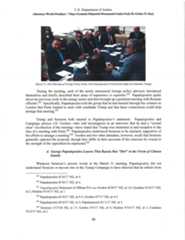
U.S. Department of JusticeAttertteyWerk Predtiet// Ma:, Cel'l:tail'I:MaterialPreteeted 01'1:derFed. R. Crim. P. 6(e)1March 31, 2016 Meeting of Foreign Poli cy Team, with Papadopoulos (Four th from Right of Candida te Trump)During the meeting, each of the newly announced foreign policy advisors introducedthemselves and briefly described their areas of experience or expertise. 435 Papadopoulos spokeabout his previous work in the energy sector and then brought up a potential meeting with Russianofficials. 436 Specifically , Papadopoulos told the group that he had learned through his contacts inLondon that Putin wanted to meet with candidate Trump and that these connections could helparrange that meeting. 437Trump and Sessions both reacted to Papadopoulos's statement. Papadopoulos andCampaign advisor J.D. Gordon- who told investigators in an interview that he had a "crystalclear" recollection of the meeting-have stated that Trump was interested in and receptive to theidea of a meeting with Putin. 438 Papadopoulos understood Sessions to be similarly supportive ofhis efforts to arrange a meeting. 439 Gordon and two other attendees, however, recall that Sessionsgenerally opposed the propo sal, though they differ in their accounts of the concerns he voiced orthe strength of the opposition he expressed. 440d. George Papadopoulos Learns That Rus sia Has "Dirt" in the Form of ClintonEmailsWhatever Sessions's precise words at the March 31 meeting , Papadopoulos did notunderstand Sessions or anyone else in the Trump Campaign to have directed that he refrain from435Papadopoulos 8/10/ 17 302 , at 4.436Papadopoulo s 8/ 10/17 302, at 4 .437P apad opoulos Statement of Offense ,i 9; see Gordon 8/29/ 17 302, at 14; Carafan o 9/12/ 17 302,at 2; Hoskins 9/14/17 302, at 1.438Papadopoulos 8/10/ 17 302 , at 4-5 ; Gordon 9/7 / 17 302, at 4-5.439Papadopoulo s 8/ 10/17 302, at 5; Papadopoulos 8/11/17 302, at 3.440Sessions 1/17/18 302, at 17; Gordon 9/7/ 17 302 , at 5; Hoskins 9/ 14/ 17 302, at l ; Carafano9/12/17 302, at 2.86
U.S. Department of JusticeAttertteyWerk Predtiet// Ma:, Cel'l:tail'I:MaterialPreteeted 01'1:derFed. R. Crim. P. 6(e)1March 31, 2016 Meeting of Foreign Poli cy Team, with Papadopoulos (Four th from Right of Candida te Trump)During the meeting, each of the newly announced foreign policy advisors introducedthemselves and briefly described their areas of experience or expertise. 435 Papadopoulos spokeabout his previous work in the energy sector and then brought up a potential meeting with Russianofficials. 436 Specifically , Papadopoulos told the group that he had learned through his contacts inLondon that Putin wanted to meet with candidate Trump and that these connections could helparrange that meeting. 437Trump and Sessions both reacted to Papadopoulos's statement. Papadopoulos andCampaign advisor J.D. Gordon- who told investigators in an interview that he had a "crystalclear" recollection of the meeting-have stated that Trump was interested in and receptive to theidea of a meeting with Putin. 438 Papadopoulos understood Sessions to be similarly supportive ofhis efforts to arrange a meeting. 439 Gordon and two other attendees, however, recall that Sessionsgenerally opposed the propo sal, though they differ in their accounts of the concerns he voiced orthe strength of the opposition he expressed. 440d. George Papadopoulos Learns That Rus sia Has "Dirt" in the Form of ClintonEmailsWhatever Sessions's precise words at the March 31 meeting , Papadopoulos did notunderstand Sessions or anyone else in the Trump Campaign to have directed that he refrain from435Papadopoulos 8/10/ 17 302 , at 4.436Papadopoulo s 8/ 10/17 302, at 4 .437P apad opoulos Statement of Offense ,i 9; see Gordon 8/29/ 17 302, at 14; Carafan o 9/12/ 17 302,at 2; Hoskins 9/14/17 302, at 1.438Papadopoulos 8/10/ 17 302 , at 4-5 ; Gordon 9/7 / 17 302, at 4-5.439Papadopoulo s 8/ 10/17 302, at 5; Papadopoulos 8/11/17 302, at 3.440Sessions 1/17/18 302, at 17; Gordon 9/7/ 17 302 , at 5; Hoskins 9/ 14/ 17 302, at l ; Carafano9/12/17 302, at 2.86
U.S. Department of JusticeAtt:orttey 'ili'ork Prodttet /I May CoHtaiH Material Proteeted Uttaer Fed. R. Crim. P. 6(e)making further efforts to arrange a meeting between the Campaign and the Russian government.To the contrary, Papadopoulos told the Office that he understood the Campaign to be supportiveof his efforts to arrange such a meeting. 441 Accordingly , when he returned to London,Papadopoulos resumed those efforts. 442Throughout April 2016, Papadopoulos continued to correspond with , meet with, and seekRussia contacts through Mifsud and , at times , Polonskaya. 443 For example, within a week of herinitial March 24 meeting with him, Polonskaya attempted to send Papadopoulos a text messagewhich email exchanges show to have been drafted or edited by Mifsud-addressingPapadopoulos ' s "wish to engage with the Russian Federation." 444 When Papadopoulos learnedfrom Mifsud that Polonskaya had tried to message him , he sent her an email seeking anothermeeting. 445 Polonskaya responded the next day that she was "back in St. Petersburg " but "wouldbe very pleased to support [Papadopoulos's] initiatives between our two countries " and "to meet[him] again." 446 Papadopoulos stated in reply that he thought "a good step" would be to introducehim to "the Russian Ambassador in London," and that he would like to talk to the ambassador , "oranyone else you recommend , about a potential foreign policy trip to Russia. " 447Mifsud , who had been copied on the email exchanges, replied on the morning of April 11,2016. He wrote, "This is already been agreed. I am flying to Moscow on the 18th for a Valdaimeeting, plus other meetings at the Duma. We will talk tomorrow." 448 The two bodies referencedby Mifsud are part of or associated with the Russian government: the Duma is a Russian legislativeassembly, 449 while "Valdai" refers to the Valdai Discussion Club, a Moscow-based group that "isclose to Russia's foreign-policy establishment." 450 Papadopoulos thanked Mifsud and said that hewould see him "tomorrow." 451 For her part, Polonskaya responded that she had "already alertedmy personal links to our conversation and your request," that "w e are all very excited thepossibility of a good relationship with Mr. Trump," and that " [t]he Russian Federation would loveto welcome him once his candidature would be officially announced." 452441Papadopoulos 8/10/17 302, at 4-5; Papadopoulos 8/11/17 302, at 3; Papadopoulos 9/20/17 302,442Papadopoulos Statement of Offense ,i 10.443Papadopoulos Statement of Offense ,i,i 10-15.4443/29/16 Emails, Mifsud to Polonskaya (3 :39 a.m. and 5 :36 a.m.).4454/10/16 Email, Papadopoulos to Polonskaya (2:45:59 p.m.).4464/11/16 Email, Polonskaya to Papadopoulos (3: 11 :24 a.m.).4474/11 /l 6 Email, Papadopoulos to Polonskaya (9:21 :56 a.m.).4484/11/16 Email, Mifsud to Papadopoulos (11 :43 :53).449Papadopoulos Statement of Offense ,i 10(c).at 2.450Anton Troianovski, Putin Ally Warns of Arms Race as Russia Considers Response to US.Nuclear Stance, Washington Post (Feb. 10, 2018).4514/11/16 Email, Papadopoulos to Mifsud (11:51 :53 a.m.).4524/12/16 Email, Polonskaya to Papadopoulos (4:47:06 a.m.).87
U.S. Department of JusticeAtt:orttey 'ili'ork Prodttet /I May CoHtaiH Material Proteeted Uttaer Fed. R. Crim. P. 6(e)making further efforts to arrange a meeting between the Campaign and the Russian government.To the contrary, Papadopoulos told the Office that he understood the Campaign to be supportiveof his efforts to arrange such a meeting. 441 Accordingly , when he returned to London,Papadopoulos resumed those efforts. 442Throughout April 2016, Papadopoulos continued to correspond with , meet with, and seekRussia contacts through Mifsud and , at times , Polonskaya. 443 For example, within a week of herinitial March 24 meeting with him, Polonskaya attempted to send Papadopoulos a text messagewhich email exchanges show to have been drafted or edited by Mifsud-addressingPapadopoulos ' s "wish to engage with the Russian Federation." 444 When Papadopoulos learnedfrom Mifsud that Polonskaya had tried to message him , he sent her an email seeking anothermeeting. 445 Polonskaya responded the next day that she was "back in St. Petersburg " but "wouldbe very pleased to support [Papadopoulos's] initiatives between our two countries " and "to meet[him] again." 446 Papadopoulos stated in reply that he thought "a good step" would be to introducehim to "the Russian Ambassador in London," and that he would like to talk to the ambassador , "oranyone else you recommend , about a potential foreign policy trip to Russia. " 447Mifsud , who had been copied on the email exchanges, replied on the morning of April 11,2016. He wrote, "This is already been agreed. I am flying to Moscow on the 18th for a Valdaimeeting, plus other meetings at the Duma. We will talk tomorrow." 448 The two bodies referencedby Mifsud are part of or associated with the Russian government: the Duma is a Russian legislativeassembly, 449 while "Valdai" refers to the Valdai Discussion Club, a Moscow-based group that "isclose to Russia's foreign-policy establishment." 450 Papadopoulos thanked Mifsud and said that hewould see him "tomorrow." 451 For her part, Polonskaya responded that she had "already alertedmy personal links to our conversation and your request," that "w e are all very excited thepossibility of a good relationship with Mr. Trump," and that " [t]he Russian Federation would loveto welcome him once his candidature would be officially announced." 452441Papadopoulos 8/10/17 302, at 4-5; Papadopoulos 8/11/17 302, at 3; Papadopoulos 9/20/17 302,442Papadopoulos Statement of Offense ,i 10.443Papadopoulos Statement of Offense ,i,i 10-15.4443/29/16 Emails, Mifsud to Polonskaya (3 :39 a.m. and 5 :36 a.m.).4454/10/16 Email, Papadopoulos to Polonskaya (2:45:59 p.m.).4464/11/16 Email, Polonskaya to Papadopoulos (3: 11 :24 a.m.).4474/11 /l 6 Email, Papadopoulos to Polonskaya (9:21 :56 a.m.).4484/11/16 Email, Mifsud to Papadopoulos (11 :43 :53).449Papadopoulos Statement of Offense ,i 10(c).at 2.450Anton Troianovski, Putin Ally Warns of Arms Race as Russia Considers Response to US.Nuclear Stance, Washington Post (Feb. 10, 2018).4514/11/16 Email, Papadopoulos to Mifsud (11:51 :53 a.m.).4524/12/16 Email, Polonskaya to Papadopoulos (4:47:06 a.m.).87
U.S. Department of JusticeAtteFHey Werk Preettet // Mtt~· Cetttttitt Mttterittl Preteetea Uttaer Fed. R. Criffl. P. 6Ee)Papadopoulos's and Mifsud's mentions of seeing each other "tomorrow" referenced ameeting that the two had scheduled for the next morning , April 12, 2016, at the Andaz Hotel inLondon. Papadopoulos acknowledged the meeting during interviews with the Office ,453 andrecords from Papadopoulos ' s UK cellphone and his internet-search history all indicate that themeeting took place. 454Following the meeting , Mifsud traveled as planned to Moscow. 455 On April 18, 2016,while in Russia, Mifsud introduced Papadopoulos over email to Ivan Timofeev, a member of theRussian International Affairs Council (RIAC). 456 Mifsud had described Timofeev as havingconnections with the Russian Ministry of Foreign Affairs (MFA), 457 the executive entity in Russiaresponsible for Russian foreign relations. 458 Over the next several weeks, Papadopoulos andTimofeev had multiple conversations over Skype and email about setting "the groundwork " for a"potential" meeting between the Campaign and Russian government officials. 459 Papadopoulostold the Office that, on one Skype call, he believed that his conversation with Timofeev was beingmonitored or supervised by an unknown third party, because Timofeev spoke in an official mannerand Papadopoulos heard odd noises on the line.460 Timofeev also told Papadopoulos in an April25, 2016 email that he had just spoken "to Igor Ivanov[,] the President ofRIAC and former ForeignMinister of Russia," and conveyed Ivanov ' s advice about how best to arrange a "Moscow visit." 46 1After a stop in Rome, Mifsud returned to England on April 25, 2016. 462 The next day,Papadopoulos met Mifsud for breakfast at the Andaz Hotel (the same location as their last453Papadopoulos 9/19/17 302, at 7.4544/12/16 Email, Mifsud to Papadopoulos (5:44:39 a.m.) (forwarding Libya-related document);4/12/16 Email, Mifsud to Papadopoulos & Obaid (10:28:20 a.m.); Papadopoulos Internet Search History(Apr. 11, 2016 10:56:49 p.m.) (search for "andaz hotel liverpool street"); 4/12/16 Text Messages, Mifsud& Papadopoulos.455See, e.g., 4/18/16 Email, Mifsud t~ Papadopoulos (8:04:54 a.m.).456Papadopoulos 8/ l 0/17 302, at 5.457Papadopoulos Statement of Offense,r 11.458During the campaign period , Papadopoulos connected over Linkedln with several MF Aaffiliated individuals in addition to Timofeev. On April 25, 2016, he connected with Dmitry Andreyko ,publicly identified as a First Secretary at the Russian Embassy in Ireland. In July 2016, he connected withYuriy Melnik, the spokesperson for the Russian Embassy in Washington and with Alexey Krasilnikov ,publicly identified as a counselor with the MFA. And on September 16, 2016, he con~Nalobin, also identified as an MFA official. See Papadopoulos Linkedln Connections~,r11.459Papadopoulos Statement of Offense460Papadopoulos 8/10/17 302, at 5; Papadopoulos 9/19/ 17 302, at 10.46 14/25/16 Email, Timofeev to Papadopoulos (8:16 :35 a.m.).4624/22/ 16 Email, Mifsud to Papadopoulos (12:41:01 a.m.).88
U.S. Department of JusticeAtteFHey Werk Preettet // Mtt~· Cetttttitt Mttterittl Preteetea Uttaer Fed. R. Criffl. P. 6Ee)Papadopoulos's and Mifsud's mentions of seeing each other "tomorrow" referenced ameeting that the two had scheduled for the next morning , April 12, 2016, at the Andaz Hotel inLondon. Papadopoulos acknowledged the meeting during interviews with the Office ,453 andrecords from Papadopoulos ' s UK cellphone and his internet-search history all indicate that themeeting took place. 454Following the meeting , Mifsud traveled as planned to Moscow. 455 On April 18, 2016,while in Russia, Mifsud introduced Papadopoulos over email to Ivan Timofeev, a member of theRussian International Affairs Council (RIAC). 456 Mifsud had described Timofeev as havingconnections with the Russian Ministry of Foreign Affairs (MFA), 457 the executive entity in Russiaresponsible for Russian foreign relations. 458 Over the next several weeks, Papadopoulos andTimofeev had multiple conversations over Skype and email about setting "the groundwork " for a"potential" meeting between the Campaign and Russian government officials. 459 Papadopoulostold the Office that, on one Skype call, he believed that his conversation with Timofeev was beingmonitored or supervised by an unknown third party, because Timofeev spoke in an official mannerand Papadopoulos heard odd noises on the line.460 Timofeev also told Papadopoulos in an April25, 2016 email that he had just spoken "to Igor Ivanov[,] the President ofRIAC and former ForeignMinister of Russia," and conveyed Ivanov ' s advice about how best to arrange a "Moscow visit." 46 1After a stop in Rome, Mifsud returned to England on April 25, 2016. 462 The next day,Papadopoulos met Mifsud for breakfast at the Andaz Hotel (the same location as their last453Papadopoulos 9/19/17 302, at 7.4544/12/16 Email, Mifsud to Papadopoulos (5:44:39 a.m.) (forwarding Libya-related document);4/12/16 Email, Mifsud to Papadopoulos & Obaid (10:28:20 a.m.); Papadopoulos Internet Search History(Apr. 11, 2016 10:56:49 p.m.) (search for "andaz hotel liverpool street"); 4/12/16 Text Messages, Mifsud& Papadopoulos.455See, e.g., 4/18/16 Email, Mifsud t~ Papadopoulos (8:04:54 a.m.).456Papadopoulos 8/ l 0/17 302, at 5.457Papadopoulos Statement of Offense,r 11.458During the campaign period , Papadopoulos connected over Linkedln with several MF Aaffiliated individuals in addition to Timofeev. On April 25, 2016, he connected with Dmitry Andreyko ,publicly identified as a First Secretary at the Russian Embassy in Ireland. In July 2016, he connected withYuriy Melnik, the spokesperson for the Russian Embassy in Washington and with Alexey Krasilnikov ,publicly identified as a counselor with the MFA. And on September 16, 2016, he con~Nalobin, also identified as an MFA official. See Papadopoulos Linkedln Connections~,r11.459Papadopoulos Statement of Offense460Papadopoulos 8/10/17 302, at 5; Papadopoulos 9/19/ 17 302, at 10.46 14/25/16 Email, Timofeev to Papadopoulos (8:16 :35 a.m.).4624/22/ 16 Email, Mifsud to Papadopoulos (12:41:01 a.m.).88
U.S. Department ofJusticeAtteFHe~·Werk PF0eh:1et// Mtt)' CeHtttiflMateFial Preteetee Uneer Fee. R. CFil'l'l.. P. 6(e)meeting). 463 During that meeting, Mifsud told Papadopoulos that he had met with high-levelRussian government officials during his recent trip to Moscow . Mifsud also said that, on the trip,he learned that the Russians had obtained "dirt" on candidate Hillary Clinton. As Papadopouloslater stated to the FBI, Mifsud said that the "dirt" was in the form of " emails of Clinton," and thatthey "have thousands of emails." 464 On May 6, 2016, 10 days after that meeting with Mifsud,Papadopoulos suggested to a representative of a foreign government that the Trump Campaign hadreceived indications from the Russian government that it could assist the Campaign through theanonymous release of information that would be damaging to Hillary Clinton .465e. Russia-Related Communications With The CampaignWhile he was discussing with his foreign contacts a potential meeting of campaign officialswith Russian government officials, Papadopoulos kept campaign officials apprised of his efforts.On April 25 , 2016 , the day before Mifsud told Papadopoulos about the emails, Papadopoulos wroteto senior policy advisor Stephen Miller that "[t]he Russian government has an open invitation byPutin for Mr. Trump to meet him when he is ready ," and that "[t]he advantage of being in Londonis that these governments tend to speak a bit more openly in 'neutral' cities ."466 On April 27, 2016,after his meeting with Mifsud, Papadopoulos wrote a second message to Miller stating that "s ome467interesting messages [were] coming in from Moscow about a trip when the time is right. "Thesame day , Papadopoulos sent a similar email to campaign manager Corey Lewandowski, tellingLewandowski that Papadopoulos had "been receiving a lot of calls over the last month about Putinwanting to host [Trump] and the team when the time is right. "468Papadopoulos' s Russia-related communications with Campaign officials continuedthroughout the spring and summer of 2016. On May 4, 2016, he forwarded to Lewandowski anemail from Timofeev raising the possibility of a meeting in Moscow , asking Lewandowskiwhether that was " something we want to move forward with. " 469 The next day, Papadopoulosforwarded the same Timofeev email to Sam Clovis, adding to the top of the email "Russiaupdate." 470 He included the same email in a May 21, 2016 message to senior Campaign officialPaul Manafort, under the subject line "Request from Russia to meet Mr. Trump, " stating that"Russia has been eager to meet Mr. Trump for quite sometime and have been reaching out to me463Papadopoulos Statement of Offense ~ 14; 4/25/16 Text Messages, Mifsud & Papadopoulos.464Papadopoulo s Statement of Offense~ 14.This information is contained in the FBI case-opening document and related materials. ~iHferfflatiat1.is lu 11 eHfareefflefl.tseHsitive (LES) sHs f!'lttst be trestes ueeersiHgly iH uHy e,cten1alsisseffliHstiatt. The foreign government conveyed this information to the U.S. government on July 26 ,2016, a few days after WikiLeaks's release of Clinton-related emails. The FBI opened its investigation ofpotential coordination between Russia and the Trump Campaign a few days later based on the information.46514664/25/16 Email, Papadopoulos to S. Miller (8: 12:44 p.m.).4674/27/16 Email, Papadopoulos to S. Miller (6:55 :58 p.m.).4684/27/16 Email, Papadopoulos to Lewandowski (7:15:14 p.m.).4695/4/16 Email, Papadopoulos to Lewandowski (8:14:49 a.m.).4705/5/16 Email, Papadopoulos to Clovis (7:15:21 p.m.).89
U.S. Department ofJusticeAtteFHe~·Werk PF0eh:1et// Mtt)' CeHtttiflMateFial Preteetee Uneer Fee. R. CFil'l'l.. P. 6(e)meeting). 463 During that meeting, Mifsud told Papadopoulos that he had met with high-levelRussian government officials during his recent trip to Moscow . Mifsud also said that, on the trip,he learned that the Russians had obtained "dirt" on candidate Hillary Clinton. As Papadopouloslater stated to the FBI, Mifsud said that the "dirt" was in the form of " emails of Clinton," and thatthey "have thousands of emails." 464 On May 6, 2016, 10 days after that meeting with Mifsud,Papadopoulos suggested to a representative of a foreign government that the Trump Campaign hadreceived indications from the Russian government that it could assist the Campaign through theanonymous release of information that would be damaging to Hillary Clinton .465e. Russia-Related Communications With The CampaignWhile he was discussing with his foreign contacts a potential meeting of campaign officialswith Russian government officials, Papadopoulos kept campaign officials apprised of his efforts.On April 25 , 2016 , the day before Mifsud told Papadopoulos about the emails, Papadopoulos wroteto senior policy advisor Stephen Miller that "[t]he Russian government has an open invitation byPutin for Mr. Trump to meet him when he is ready ," and that "[t]he advantage of being in Londonis that these governments tend to speak a bit more openly in 'neutral' cities ."466 On April 27, 2016,after his meeting with Mifsud, Papadopoulos wrote a second message to Miller stating that "s ome467interesting messages [were] coming in from Moscow about a trip when the time is right. "Thesame day , Papadopoulos sent a similar email to campaign manager Corey Lewandowski, tellingLewandowski that Papadopoulos had "been receiving a lot of calls over the last month about Putinwanting to host [Trump] and the team when the time is right. "468Papadopoulos' s Russia-related communications with Campaign officials continuedthroughout the spring and summer of 2016. On May 4, 2016, he forwarded to Lewandowski anemail from Timofeev raising the possibility of a meeting in Moscow , asking Lewandowskiwhether that was " something we want to move forward with. " 469 The next day, Papadopoulosforwarded the same Timofeev email to Sam Clovis, adding to the top of the email "Russiaupdate." 470 He included the same email in a May 21, 2016 message to senior Campaign officialPaul Manafort, under the subject line "Request from Russia to meet Mr. Trump, " stating that"Russia has been eager to meet Mr. Trump for quite sometime and have been reaching out to me463Papadopoulos Statement of Offense ~ 14; 4/25/16 Text Messages, Mifsud & Papadopoulos.464Papadopoulo s Statement of Offense~ 14.This information is contained in the FBI case-opening document and related materials. ~iHferfflatiat1.is lu 11 eHfareefflefl.tseHsitive (LES) sHs f!'lttst be trestes ueeersiHgly iH uHy e,cten1alsisseffliHstiatt. The foreign government conveyed this information to the U.S. government on July 26 ,2016, a few days after WikiLeaks's release of Clinton-related emails. The FBI opened its investigation ofpotential coordination between Russia and the Trump Campaign a few days later based on the information.46514664/25/16 Email, Papadopoulos to S. Miller (8: 12:44 p.m.).4674/27/16 Email, Papadopoulos to S. Miller (6:55 :58 p.m.).4684/27/16 Email, Papadopoulos to Lewandowski (7:15:14 p.m.).4695/4/16 Email, Papadopoulos to Lewandowski (8:14:49 a.m.).4705/5/16 Email, Papadopoulos to Clovis (7:15:21 p.m.).89
U.S. Department of JusticeAtlei-fle~·Werk Predttet // Mtty CetttaiR Material Preteeted Uttder Fed. R. Crim. P. 6(e)to discuss." 471 Manafort forwarded the message to another Campaign official, without includingPapadopoulos, and stated: "Let[']s discuss. We need someone to communicate that [Trump] is ·not doing these trips. It should be someone low level in the Campaign so as not to sendany signal. " 472On June 1, 2016, Papadopoulos replied to an earlier email chain with Lewandowski abouta Russia visit, asking if Lewandowski "want[ ed] to have a call about this topic " and whether "w ewere following up with it." 473 After Lewandowski told Papadopoulos to " connect with" Clov isbecause he was "running point," Papadopoulos emailed Clovis that "the Russian MF A" was askinghim "if Mr. Trump is interested in visiting Russia at some point." 474 Papadopoulos wrote in anemail that he "[w]anted to pass this info along to you for you to decide what's best to do with itand what message I should send (or to ignore)." 475After several email and Skype exchanges with Timofeev, 476 Papadopoulos sent one moreemail to Lewandowski on June 19, 2016, Lewandowski's last day as campaign manager. 477 Theemail stated that "[t]he Russian ministry of foreign affairs" had contacted him and asked whether ,if Mr. Trump could not travel to Russia , a campaign representative such as Papadopoulos couldattend meetings. 478 Papadopoulos told Lewandowski that he was "w illing to make the trip off therecord if it's in the interest of Mr. Trump and the campaign to meet specific people. " 479Following Lewandowski's departure from the Campaign, Papadopoulos communicatedwith Clovis and Walid Phares , another member of the foreign policy advisory team, about an offthe-record meeting between the Campaign and Russian government officials or withPapadopoulos's other Russia connections , Mifsud and Timofeev .480 Papadopoulos also interacted4715/21/16 Email, Papadopoulos to Manafort (2:30: 14 p.m.).472Papadopoulos Statement of Offense4736/1/16 Email, Papadopoulos to Lewandowski (3:08:18 p.m.).,r 19 n.2.4746/1/16 Email, Lewandowski to Papadopoulos (3:20:03 p.m.); 6/1/16 Email, Papadopoulos toClovis (3:29:14 p.m.).4756/1/16 Email, Papadopoulos to Clovis (3:29:14 p.m.). Papadopoulos ' s emai l coincided in timewith another message to Clovis suggesting a Trump-Putin meeting. First , on May 15, 2016, David Kleina distant relative of then-Trump Organization lawyer Jason Greenblatt-emailed Clovis about a potentialCampaign meeting with Berel Lazar, the Chief Rabbi of Russia. The email stated that Klein had contactedLazar in February about a possible Trump-Putin meeting and that Lazar was "a very close confidante ofPutin." DJTFP00011547 (5/15/16 Email, Klein to Clovis (5:45:24 p.m.)). The investigation did not findevidence that Clovis responded to Klein 's email or that any further contacts of significance came out ofKlein's subsequent meeting with Greenb latt and Rabbi Lazar at Trump Tower. Klein 8/30/18 302, at 2.476Papadopoulos Statement of Offense,r21(a).4774786/19/16 Email, Papadopoulos to Lewandowski (1 :11 :11 p.m.).4796/19/ 16 Email, Papadopoulos to Lewandowski (1: 11: 11 p.m.).Papadop oulos Statement of Offense ,r21; 7/14/16 Email, Papadopoulos to Timofeev (11:57:24p.m.); 7/15/16 Email, Papadopoulos to Mifsud; 7/27/16 Email , Papadopoulos to Mifsud (2:14:18 p.m.) .48090
U.S. Department of JusticeAtlei-fle~·Werk Predttet // Mtty CetttaiR Material Preteeted Uttder Fed. R. Crim. P. 6(e)to discuss." 471 Manafort forwarded the message to another Campaign official, without includingPapadopoulos, and stated: "Let[']s discuss. We need someone to communicate that [Trump] is ·not doing these trips. It should be someone low level in the Campaign so as not to sendany signal. " 472On June 1, 2016, Papadopoulos replied to an earlier email chain with Lewandowski abouta Russia visit, asking if Lewandowski "want[ ed] to have a call about this topic " and whether "w ewere following up with it." 473 After Lewandowski told Papadopoulos to " connect with" Clov isbecause he was "running point," Papadopoulos emailed Clovis that "the Russian MF A" was askinghim "if Mr. Trump is interested in visiting Russia at some point." 474 Papadopoulos wrote in anemail that he "[w]anted to pass this info along to you for you to decide what's best to do with itand what message I should send (or to ignore)." 475After several email and Skype exchanges with Timofeev, 476 Papadopoulos sent one moreemail to Lewandowski on June 19, 2016, Lewandowski's last day as campaign manager. 477 Theemail stated that "[t]he Russian ministry of foreign affairs" had contacted him and asked whether ,if Mr. Trump could not travel to Russia , a campaign representative such as Papadopoulos couldattend meetings. 478 Papadopoulos told Lewandowski that he was "w illing to make the trip off therecord if it's in the interest of Mr. Trump and the campaign to meet specific people. " 479Following Lewandowski's departure from the Campaign, Papadopoulos communicatedwith Clovis and Walid Phares , another member of the foreign policy advisory team, about an offthe-record meeting between the Campaign and Russian government officials or withPapadopoulos's other Russia connections , Mifsud and Timofeev .480 Papadopoulos also interacted4715/21/16 Email, Papadopoulos to Manafort (2:30: 14 p.m.).472Papadopoulos Statement of Offense4736/1/16 Email, Papadopoulos to Lewandowski (3:08:18 p.m.).,r 19 n.2.4746/1/16 Email, Lewandowski to Papadopoulos (3:20:03 p.m.); 6/1/16 Email, Papadopoulos toClovis (3:29:14 p.m.).4756/1/16 Email, Papadopoulos to Clovis (3:29:14 p.m.). Papadopoulos ' s emai l coincided in timewith another message to Clovis suggesting a Trump-Putin meeting. First , on May 15, 2016, David Kleina distant relative of then-Trump Organization lawyer Jason Greenblatt-emailed Clovis about a potentialCampaign meeting with Berel Lazar, the Chief Rabbi of Russia. The email stated that Klein had contactedLazar in February about a possible Trump-Putin meeting and that Lazar was "a very close confidante ofPutin." DJTFP00011547 (5/15/16 Email, Klein to Clovis (5:45:24 p.m.)). The investigation did not findevidence that Clovis responded to Klein 's email or that any further contacts of significance came out ofKlein's subsequent meeting with Greenb latt and Rabbi Lazar at Trump Tower. Klein 8/30/18 302, at 2.476Papadopoulos Statement of Offense,r21(a).4774786/19/16 Email, Papadopoulos to Lewandowski (1 :11 :11 p.m.).4796/19/ 16 Email, Papadopoulos to Lewandowski (1: 11: 11 p.m.).Papadop oulos Statement of Offense ,r21; 7/14/16 Email, Papadopoulos to Timofeev (11:57:24p.m.); 7/15/16 Email, Papadopoulos to Mifsud; 7/27/16 Email , Papadopoulos to Mifsud (2:14:18 p.m.) .48090
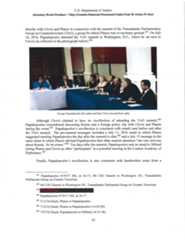
U.S. Department of JusticeAtterHey 'Nerk Preattet // Mfr)' CeHta.iHMa.terial Preteetea UHaer Fee. R. Criffi. P. 6(e)directly with Clovis and Phares in connection with the summit of the Transatlantic ParliamentaryGroup on Counterterrorism (TAG), a group for which Phares was co-secretary general. 481 On July16, 2016, Papadopoulos attended the TAG summit in Washington, D.C., where he sat next toClovis (as reflected in the photograph below). 482George Papad opoulos (far right) and Sam Clovis (second from right)Although Clovis claimed to have no recollection of attending the TAG summit, 483Papadopoulos remembered discussing Russia and a foreign policy trip with Clovis and Pharesduring th e event. 484 Papadopoulos's recollection is consistent with ema ils sent before and afterthe TAG summit. The pre-summit messages included a July 11, 2016 email in which Pharessuggested meeting Papadopoulos the day after the summit to chat, 485 and a July 12 message in thesame chain in which Phares advised Papadopoulos that other summit attendees "are very nervousabout Russia . So be aware ."486 Ten days after the summit, Papadopoulos sent an email to Mifsudlisting Phares and Clovis as other "participants" in a potential meeting at the London Academy ofDiplomacy. 487Finally, Papadopoulos 's recollection is also consistent with handwritten notes from a481Papadopoulos 9/19/17 302, at 16-17; 9th TAG Summit in Washington DC, TransatlanticParliament Group on Counter Terrorism.4829th TAG Summit in Washington DC, Transatlantic Parliament Group on Counter Terrorism.483484Papadopoulos 9/19/17 302, at 16-17.4857/11/16 Email, Phares to Papadopoulos.4867/12/16 Email, Phares to Papadopoulos (14:52:29).4877/27/16 Email, Papadopoulos to Mifsud (14:14:18).91
U.S. Department of JusticeAtterHey 'Nerk Preattet // Mfr)' CeHta.iHMa.terial Preteetea UHaer Fee. R. Criffi. P. 6(e)directly with Clovis and Phares in connection with the summit of the Transatlantic ParliamentaryGroup on Counterterrorism (TAG), a group for which Phares was co-secretary general. 481 On July16, 2016, Papadopoulos attended the TAG summit in Washington, D.C., where he sat next toClovis (as reflected in the photograph below). 482George Papad opoulos (far right) and Sam Clovis (second from right)Although Clovis claimed to have no recollection of attending the TAG summit, 483Papadopoulos remembered discussing Russia and a foreign policy trip with Clovis and Pharesduring th e event. 484 Papadopoulos's recollection is consistent with ema ils sent before and afterthe TAG summit. The pre-summit messages included a July 11, 2016 email in which Pharessuggested meeting Papadopoulos the day after the summit to chat, 485 and a July 12 message in thesame chain in which Phares advised Papadopoulos that other summit attendees "are very nervousabout Russia . So be aware ."486 Ten days after the summit, Papadopoulos sent an email to Mifsudlisting Phares and Clovis as other "participants" in a potential meeting at the London Academy ofDiplomacy. 487Finally, Papadopoulos 's recollection is also consistent with handwritten notes from a481Papadopoulos 9/19/17 302, at 16-17; 9th TAG Summit in Washington DC, TransatlanticParliament Group on Counter Terrorism.4829th TAG Summit in Washington DC, Transatlantic Parliament Group on Counter Terrorism.483484Papadopoulos 9/19/17 302, at 16-17.4857/11/16 Email, Phares to Papadopoulos.4867/12/16 Email, Phares to Papadopoulos (14:52:29).4877/27/16 Email, Papadopoulos to Mifsud (14:14:18).91
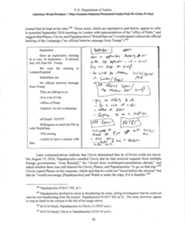
U.S. Department of JusticeAtterRe~·Werle Pretitiet // MieyCeRtttit1Material Preteeteti Ut1tierFeti. R. Cri1=tt.P. 6(e)journal that he kept at the time. 488 Those notes, which are reprinted in part below , appear to referto potential September 2016 meetings in London with representatives of the "office of Putin," andsuggest that Phares , Clovis , and Papadopoulos ("Walid/Sam me") would attend without the officialbacking of the Campaign ("no official letter/no message from Trump"). 489iSeptember:Have an exploratory meetingte or lose. In September - if allowedthey will blast Mr. Trump.We wantLondon/EnglandthemeetinginWalid/Sam me\ ;efft~tN :(#.-/,H-. ~ -tl{t--J-, /A-l<1-0# ~{o ~. ffl - fe{'J,""W-~ T(. "' J,,,..,._/} 1 i-.:r1 !l4c,f t4'1r.1r.:>1·• 1.w tv➔- f<-~("'- l,./JJ- / ~JNo official lett er/no messagefrom Trump~ d.({;r,7.1 t~r,_,,/. httThey are talking to us.-It is a lot of risk.-Office of Putin.-Explore: we are a campaign.w...'~/ ~"'-'V,;vv,e, tlj,ti~~t;~&;;l_~{~.~,~fl\,, \lo u4'..__,Jj,, :o/ t / ..f- -.I- r. t:j-,,~ c_pif.l~ of' fJl,l,/1 ._ .rcr,~. i-t"It.~ r1f"'·5~.-FM cominge~~~5rw:h-Useful to have a session with-.. f Mofflsrael!EGYPTWillingness to meet the FM spwith Walid/Samt-.;llr-.')~~--:v.;~i,}him.~t1H t;J/¢-re ,rCf(c)llv-~/>'1~5,,.,.~g;_,,-,Lrt.Later communications indicate that Clovis determined that he (Clovis) could not travel.On August 15, 2016, Papadopoulos emailed Clovis that he had received requests from multipleforeign governments, "even Russia[], " for "closed door workshops/consultations abroad, " andasked whether there was still interest for Clovis, Phares, and Papadopoulos "to go on that trip. " 490Clovis copied Phares on his response, which said that he could not "t ravel before the election" butthat he "would encourage [Papadopoulos] and Walid to make the trips, if it is feasible. "491488Papadopoulos 9/20/17 302, at 3.489Papadopoulos declined to assist in deciphering his notes , telling investigators that he could notread his own handwriting from the journal. Papadopoulos 9/19/17 302 , at 21. The notes , however , app earto read as listed in the column to the left of the imag e above.4908/15/16 Email, Papadopoulos to Clovis (11 :59:07 a.m.).49 18/ 15/16 Email, Clovis to Papadopoulos (12:01 :45 p.m .).92
U.S. Department of JusticeAtterRe~·Werle Pretitiet // MieyCeRtttit1Material Preteeteti Ut1tierFeti. R. Cri1=tt.P. 6(e)journal that he kept at the time. 488 Those notes, which are reprinted in part below , appear to referto potential September 2016 meetings in London with representatives of the "office of Putin," andsuggest that Phares , Clovis , and Papadopoulos ("Walid/Sam me") would attend without the officialbacking of the Campaign ("no official letter/no message from Trump"). 489iSeptember:Have an exploratory meetingte or lose. In September - if allowedthey will blast Mr. Trump.We wantLondon/EnglandthemeetinginWalid/Sam me\ ;efft~tN :(#.-/,H-. ~ -tl{t--J-, /A-l<1-0# ~{o ~. ffl - fe{'J,""W-~ T(. "' J,,,..,._/} 1 i-.:r1 !l4c,f t4'1r.1r.:>1·• 1.w tv➔- f<-~("'- l,./JJ- / ~JNo official lett er/no messagefrom Trump~ d.({;r,7.1 t~r,_,,/. httThey are talking to us.-It is a lot of risk.-Office of Putin.-Explore: we are a campaign.w...'~/ ~"'-'V,;vv,e, tlj,ti~~t;~&;;l_~{~.~,~fl\,, \lo u4'..__,Jj,, :o/ t / ..f- -.I- r. t:j-,,~ c_pif.l~ of' fJl,l,/1 ._ .rcr,~. i-t"It.~ r1f"'·5~.-FM cominge~~~5rw:h-Useful to have a session with-.. f Mofflsrael!EGYPTWillingness to meet the FM spwith Walid/Samt-.;llr-.')~~--:v.;~i,}him.~t1H t;J/¢-re ,rCf(c)llv-~/>'1~5,,.,.~g;_,,-,Lrt.Later communications indicate that Clovis determined that he (Clovis) could not travel.On August 15, 2016, Papadopoulos emailed Clovis that he had received requests from multipleforeign governments, "even Russia[], " for "closed door workshops/consultations abroad, " andasked whether there was still interest for Clovis, Phares, and Papadopoulos "to go on that trip. " 490Clovis copied Phares on his response, which said that he could not "t ravel before the election" butthat he "would encourage [Papadopoulos] and Walid to make the trips, if it is feasible. "491488Papadopoulos 9/20/17 302, at 3.489Papadopoulos declined to assist in deciphering his notes , telling investigators that he could notread his own handwriting from the journal. Papadopoulos 9/19/17 302 , at 21. The notes , however , app earto read as listed in the column to the left of the imag e above.4908/15/16 Email, Papadopoulos to Clovis (11 :59:07 a.m.).49 18/ 15/16 Email, Clovis to Papadopoulos (12:01 :45 p.m .).92
U .S. Department of JusticeAtlerl'le~· Werk Pree1:1et// May Ce!'ltaiH Material Preteetea UHaer Fee. R. Criffl. P. 6(e)Papadopoulos was dismissed from the Trump Campaign in early October 2016, after aninterview he gave to the Russian news agency Inter/ax generated adverse publicity. 492f. Trump Campaign Knowledge of "Dirt"Papadopoulos admitted telling at least one individual outside of the Campaignspecifically, the then-Greek foreign minister-about Russia's obtaining Clinton -related emails. 493In addition, a different foreign government informed the FBI that, 10 days after meeting withMifsud in late April 2016 , Papadopoulos suggested that the Trump Campaign had receivedindications from the Russian government that it could assist the Campaign through the anonymousrelease of information that would be damaging to Hillary Clinton. 494 (This conversation occurredafter the GRU spearphished Clinton Campaign chairman John Podesta and stole his emails, andthe GRU hacked into the DCCC and DNC, see Volume l, Sections III.A & III.B , supra.) Suchdisclosures raised questions about whether Papadopoulos informed any Trump Campaign officialabout the emails.When interviewed, Papadopoulos and the Campaign officials who interacted with him toldthe Office that they could not recall Papadopoulos ' s sharing the information that Russia hadobtained "dirt" on candidate Clinton in the form of emails or that Russia could assist the Campaignthrough the anonymous release of information about Clinton. Papadopoulos stated that he couldnot clearly recall having told anyone on the Campaign and wavered about whether he accuratelyremembered an incident in which Clovis had been upset after hearing Papadopoulos tell Clovisthat Papadopoulos thought "they have her emails. "495 The Campaign officials who interacted orcorresponded with Papadopoulos have similarly stated, with varying degrees of certainty , that hedid not tell them. Senior policy advisor Stephen Miller, for example, did not remember hearinganything from Papadopoulos or Clovis about Russia having emails of or dirt on candidateClinton. 496 Clovis stated that he did not recall anyone , including Papadopoulos , having given himnon -public information that a forei n overnm ent mi ht be in ossession of material dama in toHillar Clinton .49749 2George Papadopoulos: Sanctions Have Done Little More Than to Turn Russia Towards China ,Interfax (Sept. 30, 2016).493Papadopoulos 9/19/17 302, at 14-15; Def. Sent. Mem., United States v. George Papad opoulos,I :17-cr-182 (D.D.C . Aug. 31, 2018), Doc. 45.494See footnote 465 of Volume I, Section IV.A.2.d, supra.495Papadopoulos 8/10/17 302, at 5; Papadopoulos 8/11/ 17 302, at 5; Papadopoulos 9/20/1 7 302,496S. Miller 12/14/17 302, at 10.at 2.49749893
U .S. Department of JusticeAtlerl'le~· Werk Pree1:1et// May Ce!'ltaiH Material Preteetea UHaer Fee. R. Criffl. P. 6(e)Papadopoulos was dismissed from the Trump Campaign in early October 2016, after aninterview he gave to the Russian news agency Inter/ax generated adverse publicity. 492f. Trump Campaign Knowledge of "Dirt"Papadopoulos admitted telling at least one individual outside of the Campaignspecifically, the then-Greek foreign minister-about Russia's obtaining Clinton -related emails. 493In addition, a different foreign government informed the FBI that, 10 days after meeting withMifsud in late April 2016 , Papadopoulos suggested that the Trump Campaign had receivedindications from the Russian government that it could assist the Campaign through the anonymousrelease of information that would be damaging to Hillary Clinton. 494 (This conversation occurredafter the GRU spearphished Clinton Campaign chairman John Podesta and stole his emails, andthe GRU hacked into the DCCC and DNC, see Volume l, Sections III.A & III.B , supra.) Suchdisclosures raised questions about whether Papadopoulos informed any Trump Campaign officialabout the emails.When interviewed, Papadopoulos and the Campaign officials who interacted with him toldthe Office that they could not recall Papadopoulos ' s sharing the information that Russia hadobtained "dirt" on candidate Clinton in the form of emails or that Russia could assist the Campaignthrough the anonymous release of information about Clinton. Papadopoulos stated that he couldnot clearly recall having told anyone on the Campaign and wavered about whether he accuratelyremembered an incident in which Clovis had been upset after hearing Papadopoulos tell Clovisthat Papadopoulos thought "they have her emails. "495 The Campaign officials who interacted orcorresponded with Papadopoulos have similarly stated, with varying degrees of certainty , that hedid not tell them. Senior policy advisor Stephen Miller, for example, did not remember hearinganything from Papadopoulos or Clovis about Russia having emails of or dirt on candidateClinton. 496 Clovis stated that he did not recall anyone , including Papadopoulos , having given himnon -public information that a forei n overnm ent mi ht be in ossession of material dama in toHillar Clinton .49749 2George Papadopoulos: Sanctions Have Done Little More Than to Turn Russia Towards China ,Interfax (Sept. 30, 2016).493Papadopoulos 9/19/17 302, at 14-15; Def. Sent. Mem., United States v. George Papad opoulos,I :17-cr-182 (D.D.C . Aug. 31, 2018), Doc. 45.494See footnote 465 of Volume I, Section IV.A.2.d, supra.495Papadopoulos 8/10/17 302, at 5; Papadopoulos 8/11/ 17 302, at 5; Papadopoulos 9/20/1 7 302,496S. Miller 12/14/17 302, at 10.at 2.49749893
U.S. Department of JusticeAttet'Hey Werk Predttet /,' May CetttaiH Material PFeteeted Uttder Fed. R. Criffl. P. 6(e)No documentary evidence, and nothing in the email accounts or othercommunications facilities reviewed by the Office, shows that Papadopoulos shared thisinformation with the Campaign .g. Additional George Papadopoulos ContactThe Office investigated another Russia-related contact with Papadopoulos. The Office wasnot fully able to explore the contact because the individual at issue-Sergei Millian-remainedout of the country since the inception of our investigation and declined to meet with members ofthe Office despite our repeated efforts to obtain an interview.Papadopoulos first connected with Millian via Linkedln on July 15, 2016, shmtly afterPapadopoulos had attended the TAG Summit with Clov is.500 Millian , an American citizen who isa native of Belarus , introduced himself "as president of [the] New York-based Russian AmericanChamber of Commerce ," and claimed that through that position he had " insider knowledge anddirect access to the top hierarchy in Russian politics ."501 Papadopoulos asked Timofeev whetherhe had heard of Millian. 502 Although Timofeev said no, 503 Papadopoulos met Millian in New YorkCity. 504 The meetings took place on July 30 and August 1, 2016. 505 Afterwards, Millian invitedPapadopoulos to attend-andpotentially speak at-twointernational energy conferenc es,including one that was to be held in Moscow in September 2016. 506 Papadopoulos ultimately didnot attend either conference.On July 31, 2016, following his first in-person meeting wit h Millian , Papadopoulosemailed Trump Campa ign official Bo Denysyk to say that he had been contacted "by some leader sof Russian-American voters here in the US about their interest in voting for Mr . Trump ," and toask whether he should "put you in touch with their group (US-Russia chamber of commerce). " 507Denysyk thanked Papadopoulos "for taking the initiative ," but asked him to "hold off with4995007/15/16 Linkedln Message, Millian to Papadopoulos.50 17/15/ 16 Linkedln Message, Millian to Papadopoulos.5027/22/ 16 Facebook Message, Papadopou los to Timofeev (7:40:23 p.m.) ; 7/26/ 16 FacebookMessage, Papadopoulos to Timofe ev (3:08:57 p.m.).5037/23/ 16 Facebook Message, Timofeev to Papadopoulos (4 :31:37 a.m .); 7/26/16 FacebookMessage, Timofeev to Papadopoulos (3:37: 16 p.m.).5047/16/16 Text Messages, Papadopoulos & Millian (7:55:43 p.m.).5057/30/16 Text Messages , Papadopoulos & Millian (5:38 & 6:05 p.m .); 7/31/ 16 Text Messages,Millian & Papadopoulo s (3 :48 & 4:18 p.m.); 8/ 1/16 Text Message, Millian to Papadopoulos (8:19 p.m .).5068/2/16 Text Messages, Milli an & Papadopou los (3 :04 & 3 :05 p.m.); 8/3/16 Facebook Messages ,Papadopoulos & Millian (4:07:37 a.m. & 1:11:58 p.m.) .5077/31/16 Email, Papadopoulo s to Denysyk (12:29:59 p.m.).94
U.S. Department of JusticeAttet'Hey Werk Predttet /,' May CetttaiH Material PFeteeted Uttder Fed. R. Criffl. P. 6(e)No documentary evidence, and nothing in the email accounts or othercommunications facilities reviewed by the Office, shows that Papadopoulos shared thisinformation with the Campaign .g. Additional George Papadopoulos ContactThe Office investigated another Russia-related contact with Papadopoulos. The Office wasnot fully able to explore the contact because the individual at issue-Sergei Millian-remainedout of the country since the inception of our investigation and declined to meet with members ofthe Office despite our repeated efforts to obtain an interview.Papadopoulos first connected with Millian via Linkedln on July 15, 2016, shmtly afterPapadopoulos had attended the TAG Summit with Clov is.500 Millian , an American citizen who isa native of Belarus , introduced himself "as president of [the] New York-based Russian AmericanChamber of Commerce ," and claimed that through that position he had " insider knowledge anddirect access to the top hierarchy in Russian politics ."501 Papadopoulos asked Timofeev whetherhe had heard of Millian. 502 Although Timofeev said no, 503 Papadopoulos met Millian in New YorkCity. 504 The meetings took place on July 30 and August 1, 2016. 505 Afterwards, Millian invitedPapadopoulos to attend-andpotentially speak at-twointernational energy conferenc es,including one that was to be held in Moscow in September 2016. 506 Papadopoulos ultimately didnot attend either conference.On July 31, 2016, following his first in-person meeting wit h Millian , Papadopoulosemailed Trump Campa ign official Bo Denysyk to say that he had been contacted "by some leader sof Russian-American voters here in the US about their interest in voting for Mr . Trump ," and toask whether he should "put you in touch with their group (US-Russia chamber of commerce). " 507Denysyk thanked Papadopoulos "for taking the initiative ," but asked him to "hold off with4995007/15/16 Linkedln Message, Millian to Papadopoulos.50 17/15/ 16 Linkedln Message, Millian to Papadopoulos.5027/22/ 16 Facebook Message, Papadopou los to Timofeev (7:40:23 p.m.) ; 7/26/ 16 FacebookMessage, Papadopoulos to Timofe ev (3:08:57 p.m.).5037/23/ 16 Facebook Message, Timofeev to Papadopoulos (4 :31:37 a.m .); 7/26/16 FacebookMessage, Timofeev to Papadopoulos (3:37: 16 p.m.).5047/16/16 Text Messages, Papadopoulos & Millian (7:55:43 p.m.).5057/30/16 Text Messages , Papadopoulos & Millian (5:38 & 6:05 p.m .); 7/31/ 16 Text Messages,Millian & Papadopoulo s (3 :48 & 4:18 p.m.); 8/ 1/16 Text Message, Millian to Papadopoulos (8:19 p.m .).5068/2/16 Text Messages, Milli an & Papadopou los (3 :04 & 3 :05 p.m.); 8/3/16 Facebook Messages ,Papadopoulos & Millian (4:07:37 a.m. & 1:11:58 p.m.) .5077/31/16 Email, Papadopoulo s to Denysyk (12:29:59 p.m.).94
U.S. Department of JusticeAtteme,· 'i\'erk Prefittet // May Cefl.taifl Material Preteetefi Unfier Fee. R. Criffl:.P. 6(e)outreach to Russian-Americans " because "too many articles " had already portrayed the Campaign ,508then-campaign chairman Paul Manafort, and candidate Trump as " being pro-Russian."On August 23, 2016, Millian sent a Facebook message to Papadopoulos promising that hewould " share with you a disruptive technology that might be instrumental in your political workfor the campaign." 509 Papadopoulos claimed to have no recollection of this matter. 510On November 9, 2016, shortly after the election, Papadopoulos arranged to meet Millianin Chicago to discuss business opportunities, including potential work with Russian "billionaireswho are not under sanctions." 511 The meeting took place on November 14, 2016 , at the TrumpHotel and Tower in Chicago. 512 According to Papadopoulos, the two men discussed partnering onbusiness deals, but Papadopoulos perceived that Millian's attitude toward him changed whenPapadopoulos stated that he was only pursuing privat e-sector opportunities and was not interestedin a job in the Administration. 5 13 The two remained in contact , however , and had extended onlinediscussions about possible business opportunities in Russia. 514 The two also arranged to meet at aWashington, D.C. bar when both attended Trump's inauguration in late Januar y 2017. 5153. Carter PageCarter Page worked for the Trump Campaign from January 2016 to September 2016. Hewas formally and publicly announced as a foreign policy advisor by the candidate in March2016. 516 Page had lived and worked in Russia, and he had been approached by Russian intelligenceofficers several years before he volunteered for the Trump Campaign. During his time with theCampaign, Page advocated pro-Russia foreign policy positions and traveled to Moscow in hispersonal capacity. Russian intelligence officials had formed relationships with Page in 2008 and2013 and Russian officials may have focused on Page in 2016 because of his affiliation with theCampaign. However, the investigation did not establish that Page coordinated with the Russiangovernment in its efforts to interfere with the 2016 presidential election.5087/31/16 Email, Denysyk to Papadopoulos (21 :54:52).5098/23/16 Facebook Message , Millian to Papadopoulos (2:55:36 a.m.).5 10Papadopoulos 9/20/17 302, at 2.51111/10/16 Facebook Message , Millian to Papadopoulos (9:35:05 p.m .).5 1211/14/16 Facebook Message, Millian to Papadopoulos (1 :32: 11 a.m.).513Papadopoulos 9/19/17 302, at 19.514E.g., 11/29/ 16 Facebook Messages, Papadopoulos & Millian (5:09 - 5:11 p.m.); 12/7/16Facebook Message , Millian to Papadopoulos (5:10:54 p.m.).5 151/20/ 17 Facebook Messages , Papadopoulos & Millian (4:37-4:39 a.m.).516Page was interviewed bCounsel 's appointm ent.95
U.S. Department of JusticeAtteme,· 'i\'erk Prefittet // May Cefl.taifl Material Preteetefi Unfier Fee. R. Criffl:.P. 6(e)outreach to Russian-Americans " because "too many articles " had already portrayed the Campaign ,508then-campaign chairman Paul Manafort, and candidate Trump as " being pro-Russian."On August 23, 2016, Millian sent a Facebook message to Papadopoulos promising that hewould " share with you a disruptive technology that might be instrumental in your political workfor the campaign." 509 Papadopoulos claimed to have no recollection of this matter. 510On November 9, 2016, shortly after the election, Papadopoulos arranged to meet Millianin Chicago to discuss business opportunities, including potential work with Russian "billionaireswho are not under sanctions." 511 The meeting took place on November 14, 2016 , at the TrumpHotel and Tower in Chicago. 512 According to Papadopoulos, the two men discussed partnering onbusiness deals, but Papadopoulos perceived that Millian's attitude toward him changed whenPapadopoulos stated that he was only pursuing privat e-sector opportunities and was not interestedin a job in the Administration. 5 13 The two remained in contact , however , and had extended onlinediscussions about possible business opportunities in Russia. 514 The two also arranged to meet at aWashington, D.C. bar when both attended Trump's inauguration in late Januar y 2017. 5153. Carter PageCarter Page worked for the Trump Campaign from January 2016 to September 2016. Hewas formally and publicly announced as a foreign policy advisor by the candidate in March2016. 516 Page had lived and worked in Russia, and he had been approached by Russian intelligenceofficers several years before he volunteered for the Trump Campaign. During his time with theCampaign, Page advocated pro-Russia foreign policy positions and traveled to Moscow in hispersonal capacity. Russian intelligence officials had formed relationships with Page in 2008 and2013 and Russian officials may have focused on Page in 2016 because of his affiliation with theCampaign. However, the investigation did not establish that Page coordinated with the Russiangovernment in its efforts to interfere with the 2016 presidential election.5087/31/16 Email, Denysyk to Papadopoulos (21 :54:52).5098/23/16 Facebook Message , Millian to Papadopoulos (2:55:36 a.m.).5 10Papadopoulos 9/20/17 302, at 2.51111/10/16 Facebook Message , Millian to Papadopoulos (9:35:05 p.m .).5 1211/14/16 Facebook Message, Millian to Papadopoulos (1 :32: 11 a.m.).513Papadopoulos 9/19/17 302, at 19.514E.g., 11/29/ 16 Facebook Messages, Papadopoulos & Millian (5:09 - 5:11 p.m.); 12/7/16Facebook Message , Millian to Papadopoulos (5:10:54 p.m.).5 151/20/ 17 Facebook Messages , Papadopoulos & Millian (4:37-4:39 a.m.).516Page was interviewed bCounsel 's appointm ent.95
U.S. Department of JusticeAttorfte)" Work Proc:ittet// May Cofttatfl Material Proteetee Umier Feel. R. Crtffl. P. 6(e)a. BackgroundBefore he began working for the Campaign in January 2016, Page had substantial priorexperience studying Russian policy issues and living and working in Moscow. From 2004 to 2007,Page was the deputy branch manager of Merrill Lynch's Moscow office. 517 There, he worked ontransactions involving the Russian energy company Gazprom and came to know Gazprom ' sdeputy chief financial officer , Sergey Yatsenko. 518In 2008, Page founded Global Energy Capital LLC (GEC), an in~advisor firm focused on the ener sector in emerging markets .519 ----520 The company otherwise had no sources of income , andPage was forced to draw down his life savings to support himself and pursue his businessventure. 521 Pa e asked Yatsenko to work with him at GEC as a senior advisor on a continIn 2008, Page met Alexander Bulatov, a Russian government official who worked at theRussian Consulate in New York. 523 Pa e later learned that Bulatov was a Russian intelli ence524officer,In 2013 , Victor Podobnyy, another Russian intelligence officer working covertly in theUnited States under diplomatic cover, formed a relationship with Page. 525 Podobnyy met Page atan energy symposium in New York City and began exchanging emails with him. 526 Podobnyyand Page also met in person on multiple occasions, during which Page offered his outlook on thefuture of the energy industry and provided documents to Podobnyy about the energy business. 527In a recorded conversation on April 8, 2013, Podobnyy told another intelligence officer that Pagewas interested in business opportunities in Russia. 528 In Podobny y's words, Page "got hooked on517Testimony of Carter Page, Hearing Before the U.S. House of Representatives, Permanent SelectCommittee on Intellig ence, 115th Cong. 40 (Nov. 2, 2017) (exhibit).518Page 3/30/17 302, at 10.519520521523524Complaint ,r,r22, 24, 32, United States v. Buryakov , 1: 15mj-215 (S.D.N.Y. Jan. 23, 20 I 5), Doc. 1 ("Buryakov Complaint").525,r34.527Buryak ov Complaint ,r34.528Buryakov Comp laint ,r32.526Buryakov Complaint96
U.S. Department of JusticeAttorfte)" Work Proc:ittet// May Cofttatfl Material Proteetee Umier Feel. R. Crtffl. P. 6(e)a. BackgroundBefore he began working for the Campaign in January 2016, Page had substantial priorexperience studying Russian policy issues and living and working in Moscow. From 2004 to 2007,Page was the deputy branch manager of Merrill Lynch's Moscow office. 517 There, he worked ontransactions involving the Russian energy company Gazprom and came to know Gazprom ' sdeputy chief financial officer , Sergey Yatsenko. 518In 2008, Page founded Global Energy Capital LLC (GEC), an in~advisor firm focused on the ener sector in emerging markets .519 ----520 The company otherwise had no sources of income , andPage was forced to draw down his life savings to support himself and pursue his businessventure. 521 Pa e asked Yatsenko to work with him at GEC as a senior advisor on a continIn 2008, Page met Alexander Bulatov, a Russian government official who worked at theRussian Consulate in New York. 523 Pa e later learned that Bulatov was a Russian intelli ence524officer,In 2013 , Victor Podobnyy, another Russian intelligence officer working covertly in theUnited States under diplomatic cover, formed a relationship with Page. 525 Podobnyy met Page atan energy symposium in New York City and began exchanging emails with him. 526 Podobnyyand Page also met in person on multiple occasions, during which Page offered his outlook on thefuture of the energy industry and provided documents to Podobnyy about the energy business. 527In a recorded conversation on April 8, 2013, Podobnyy told another intelligence officer that Pagewas interested in business opportunities in Russia. 528 In Podobny y's words, Page "got hooked on517Testimony of Carter Page, Hearing Before the U.S. House of Representatives, Permanent SelectCommittee on Intellig ence, 115th Cong. 40 (Nov. 2, 2017) (exhibit).518Page 3/30/17 302, at 10.519520521523524Complaint ,r,r22, 24, 32, United States v. Buryakov , 1: 15mj-215 (S.D.N.Y. Jan. 23, 20 I 5), Doc. 1 ("Buryakov Complaint").525,r34.527Buryak ov Complaint ,r34.528Buryakov Comp laint ,r32.526Buryakov Complaint96
U.S. Department of JusticeAtt:et1Ae;·Wet1kPt1et!ttet// Mft) CeAtttiAMtttet1ittlPt1eteeteaUAaer Fee. R. Criffl. P. 6(e)Gazprom thinking that if they have a project, he could ... rise up. Maybe he can .... [I]t' s obviousthat he wants to earn lots of money." 529 Podobnyy said that he had led Page on by "feed[ing] himempty promises " that Podobnyy would use his Russian business connections to help Page. 530Podobnyy told the other intelligence officer that his method of recruiting foreign sources was topromise them favors and then discard them once he obtained relevant information from them. 531In 2015, Podobnyy and two other Russian intelligence officers were charged withconspiracy to act as an unregistered agent of a foreign government. 532 The criminal complaintdetailed Podobnyy's interactions with and conversations about Page, who was identified only as"Male-1." 533 Based on the criminal complaint ' s description of the interactions, Page was awarethat he was the individual described as "Male-l. " 534 Page later spoke with a Russian governmentofficial at the United Nations General Assembly and identified himself so that the official wouldunderstand he was "Male- I" from the Podobnlaint. 535 Pa e told the official that he "didn't536do anything"In interviews with the FBI before the Office's opening, Page acknowledged that heunderstood that the individuals he had associated with were members of the Russian intelligenceservices, but he stated that he had only provided immaterial non-public information to them andthat he did not view this relationship as a backchannel. 537 Page told investigatin g agents that "themore immaterial non-public information I give them, the better for this country. " 538b. Origins of and Early Campaign WorkIn January 2016, Page began volunteering on an informal, unpaid basis for the TrumpCampaign after Ed Cox, a state Republican Party official, introduced Page to Trump Campaignofficials. 539 Page told the Office that his goal in working on the Campaign was to help candidateTrump improve relations with Russia. 540 To that end, Page emailed Campaign officials offeringhis thoughts on U.S.-Russia relations, prepared talking points and briefing memos on Russia, and529Buryakov Complaint.530Buryakov Complaint.531Buryakov Complaint.532See Buryakov Com laint; see also Indictment United States v. Buryakov, 1: 15-cr-73 (S.D.N. Y.Feb. 9, 2015), Doc. 10;536Page 3/16/17 302, at 4;537Page 3/30/17 302, at 6; Page 3/31/17 302, at 1.538Page 3/31/17 302, at 1.539Page 3/16/17 302, at 1;540Page 3/ 10/17 302, at 2.97
U.S. Department of JusticeAtt:et1Ae;·Wet1kPt1et!ttet// Mft) CeAtttiAMtttet1ittlPt1eteeteaUAaer Fee. R. Criffl. P. 6(e)Gazprom thinking that if they have a project, he could ... rise up. Maybe he can .... [I]t' s obviousthat he wants to earn lots of money." 529 Podobnyy said that he had led Page on by "feed[ing] himempty promises " that Podobnyy would use his Russian business connections to help Page. 530Podobnyy told the other intelligence officer that his method of recruiting foreign sources was topromise them favors and then discard them once he obtained relevant information from them. 531In 2015, Podobnyy and two other Russian intelligence officers were charged withconspiracy to act as an unregistered agent of a foreign government. 532 The criminal complaintdetailed Podobnyy's interactions with and conversations about Page, who was identified only as"Male-1." 533 Based on the criminal complaint ' s description of the interactions, Page was awarethat he was the individual described as "Male-l. " 534 Page later spoke with a Russian governmentofficial at the United Nations General Assembly and identified himself so that the official wouldunderstand he was "Male- I" from the Podobnlaint. 535 Pa e told the official that he "didn't536do anything"In interviews with the FBI before the Office's opening, Page acknowledged that heunderstood that the individuals he had associated with were members of the Russian intelligenceservices, but he stated that he had only provided immaterial non-public information to them andthat he did not view this relationship as a backchannel. 537 Page told investigatin g agents that "themore immaterial non-public information I give them, the better for this country. " 538b. Origins of and Early Campaign WorkIn January 2016, Page began volunteering on an informal, unpaid basis for the TrumpCampaign after Ed Cox, a state Republican Party official, introduced Page to Trump Campaignofficials. 539 Page told the Office that his goal in working on the Campaign was to help candidateTrump improve relations with Russia. 540 To that end, Page emailed Campaign officials offeringhis thoughts on U.S.-Russia relations, prepared talking points and briefing memos on Russia, and529Buryakov Complaint.530Buryakov Complaint.531Buryakov Complaint.532See Buryakov Com laint; see also Indictment United States v. Buryakov, 1: 15-cr-73 (S.D.N. Y.Feb. 9, 2015), Doc. 10;536Page 3/16/17 302, at 4;537Page 3/30/17 302, at 6; Page 3/31/17 302, at 1.538Page 3/31/17 302, at 1.539Page 3/16/17 302, at 1;540Page 3/ 10/17 302, at 2.97
U.S. Department of JusticeAt-teri'l:ey'.Verk Pree1::1et// May CeHtail'l:Material Preteetee Ul'l:eerFee. R. Crim. P. 6(e)proposed that candidate Trump meet with President Vladimir Putin in Moscow. 541In communications with Campaign officials, Page also repeatedly touted his high-levelcontacts in Russia and his ability to forge connections between candidate Trump and seniorRussian governmental officials. For example, on January 30, 2016, Page sent an email to seniorCampaign officials stating that he had "spent the past week in Europe and ha[ d] been in discussionswith some individuals with close ties to the Kremlin" who recognized that Trump could have a"ga me-changing effect ... in bringing the end of the new Cold War." 542 The email stated that" [t]hrough [his] discussions with these high level contacts ," Page believed that "a direct meetingin Moscow between Mr[.] Trump and Putin could be arran ed." 543 Pa e closed the email bcriticizin U.S. sanctions on Russia. 544On March 21, 2016, candida te Trump formally and publicly identified Page as a memberof his foreign policy team to advise on Russia and the energy sector. 546 Over the next severalmonths , Page continued providing policy -related work produc t to Campaign officials . Forexample, in April 2016, Page provided feedback on an outline for a foreign policy speech that thecandidate gave at the Mayflower Hotel, 547 see Volume I, Section IV.A.4 , infra. In May 2016, Pageprepared an outline of an energy policy speech for the Campaign and then traveled to Bismarck,North Dakota, to watch the candidate deliver the speech. 548 Chief policy advisor Sam Clovisexpressed appreciation for Page's work and praised his work to other Campaign officials. 549c. Carter Page's July 2016 Trip To MoscowPage's affiliation with the Trump Campaign took on a higher profile and drew the attentionof Russian officials after the candidate named him a foreign policy advisor. As a result, in lateApril 2016, Page was invited to give a speech at the July 20 16 commencement ceremony at the541See, e.g., 1/30/16 Email, Page to Glassner et al.; 3/17/16 Email, Page to Clovis (attaching a"President 's Daily Brief' prepared by Page that discussed the "severe de radation ofU.S.-Russia relationsfollowing Washington's meddling" in Ukraine);5421/30/16 Email, Page to Glassner et al.5431/30/16 Email, Page to Glassner et al.5441/30/16 Email, Page to Glassner et al.545546with the Washington Post Editorial Board,A Transcript of DonaldWashington Post (Mar. 21, 2016);547548549See, e.g., 3/28/16 Email, Clovis to Lewandowski et al. (forwarding notes .prepared by Page andstating , "I wanted to let you know the type of work some of our advisors are capable of.").98
U.S. Department of JusticeAt-teri'l:ey'.Verk Pree1::1et// May CeHtail'l:Material Preteetee Ul'l:eerFee. R. Crim. P. 6(e)proposed that candidate Trump meet with President Vladimir Putin in Moscow. 541In communications with Campaign officials, Page also repeatedly touted his high-levelcontacts in Russia and his ability to forge connections between candidate Trump and seniorRussian governmental officials. For example, on January 30, 2016, Page sent an email to seniorCampaign officials stating that he had "spent the past week in Europe and ha[ d] been in discussionswith some individuals with close ties to the Kremlin" who recognized that Trump could have a"ga me-changing effect ... in bringing the end of the new Cold War." 542 The email stated that" [t]hrough [his] discussions with these high level contacts ," Page believed that "a direct meetingin Moscow between Mr[.] Trump and Putin could be arran ed." 543 Pa e closed the email bcriticizin U.S. sanctions on Russia. 544On March 21, 2016, candida te Trump formally and publicly identified Page as a memberof his foreign policy team to advise on Russia and the energy sector. 546 Over the next severalmonths , Page continued providing policy -related work produc t to Campaign officials . Forexample, in April 2016, Page provided feedback on an outline for a foreign policy speech that thecandidate gave at the Mayflower Hotel, 547 see Volume I, Section IV.A.4 , infra. In May 2016, Pageprepared an outline of an energy policy speech for the Campaign and then traveled to Bismarck,North Dakota, to watch the candidate deliver the speech. 548 Chief policy advisor Sam Clovisexpressed appreciation for Page's work and praised his work to other Campaign officials. 549c. Carter Page's July 2016 Trip To MoscowPage's affiliation with the Trump Campaign took on a higher profile and drew the attentionof Russian officials after the candidate named him a foreign policy advisor. As a result, in lateApril 2016, Page was invited to give a speech at the July 20 16 commencement ceremony at the541See, e.g., 1/30/16 Email, Page to Glassner et al.; 3/17/16 Email, Page to Clovis (attaching a"President 's Daily Brief' prepared by Page that discussed the "severe de radation ofU.S.-Russia relationsfollowing Washington's meddling" in Ukraine);5421/30/16 Email, Page to Glassner et al.5431/30/16 Email, Page to Glassner et al.5441/30/16 Email, Page to Glassner et al.545546with the Washington Post Editorial Board,A Transcript of DonaldWashington Post (Mar. 21, 2016);547548549See, e.g., 3/28/16 Email, Clovis to Lewandowski et al. (forwarding notes .prepared by Page andstating , "I wanted to let you know the type of work some of our advisors are capable of.").98
U.S. Department of Justicet'W:emey 'illerk Pfea1:1et// Ma)' Cetttaifl Matefial Preteetea Unaer Fee . R. Crim. P. 6(e)New Economic School (NES) in Moscow. 550 The NES commencement ceremony generallyfeatured high-profile speakers; for example , President Barack Obama delivered a commencementaddress at the school in 2009. 551 NES officials told the Office that the interest in inviting Page tospeak at NES was' based entirely on his status as a Trump Campaign advisor who served as thecandidate 's Russia expert .552 Andrej Krickovic, an associate of Page' s and assistant professor atthe Higher School of Economics in Russia, recommended that NES rector Shlomo Weber invitePage to give the commencement address based on his connection to the Trump Campaign. 553Denis Klimentov, an employee ofNES, said that when Russians learned of Page's involvement inthe Trump Campaign in March 2016, the excitement was palpable. 554 Weber recalled that insummer 2016 there was substantial interest in the Trump Campaign in Moscow , and he felt thatbringing a member of the Campaign to the school would be beneficial. 555Page was eager to accept the invitation to speak at NES, and he sought approval fromTrump Campaign officials to make the trip to Russia. 556 On May 16, 2016, while that request wasstill under consideration, Page emailed Clovis, J.D. Gordon, and Walid Phares and suggested thatcandidate Trump take his place speaking at the commencement ceremony in Moscow. 557 On June19, 2016 , Page followed up again to request approval to speak at the NES event and to reiteratethat NES "would love to have Mr. Trump speak at this annual celebration" in Page's place .558Campaign manager Corey Lewandowski responded the same day, saying, " If you want to do this,it would be out side [sic] of your role with the DJT for President campaign. I am certain Mr.Trump will not be able to attend." 559In early July 2016, Page traveled to Russia for the NES events. On July 5, 2016, DenisKlimentov , copying his brother, Dmitri Klimentov, 560 emailed Maria Zakharova, the Director ofthe Russian Ministry of Foreign Affairs' Information and Press Department , about Page's visit andhis connection to the Trump Campaign. 56 1 Denis Klimentov said in the email that he wanted todraw the Russian government's attention to Page' s visit in Moscow. 562 His message to Zakharova550Page 3/16/ 17 302, at 2-3; Page 3/10/ 17 302, at 3.551S. Weber 7/28/17 302, at 3.552Y. Weber 6/1/17 302, at 4-5; S. Weber 7/28/17 302, at 3.553See Y. Weber 6/1/17 302, at 4; S. Weber 7/28/17 302, at 3.554De. Klimentov 6/9/17 302, at 2.555S. Weber 7/28/17 302, at 3.556See 5/16/16 Ema il, Page to Phares et al. (referring to submission of a "campaign advisor requestform").557; 5/16/16 Email, Page to Phares et al.5586/19/16 Email, Page to Gordon et al.5596/19/16 Email, Lewandowski to Page et al.560Dmitri Klimentov is a New York-based public relations consultant.5617/5/16 Email , Klimentov to Zakharova (translated).5627/5/16 Email, Klimentov to Zakharova (translated).99
U.S. Department of Justicet'W:emey 'illerk Pfea1:1et// Ma)' Cetttaifl Matefial Preteetea Unaer Fee . R. Crim. P. 6(e)New Economic School (NES) in Moscow. 550 The NES commencement ceremony generallyfeatured high-profile speakers; for example , President Barack Obama delivered a commencementaddress at the school in 2009. 551 NES officials told the Office that the interest in inviting Page tospeak at NES was' based entirely on his status as a Trump Campaign advisor who served as thecandidate 's Russia expert .552 Andrej Krickovic, an associate of Page' s and assistant professor atthe Higher School of Economics in Russia, recommended that NES rector Shlomo Weber invitePage to give the commencement address based on his connection to the Trump Campaign. 553Denis Klimentov, an employee ofNES, said that when Russians learned of Page's involvement inthe Trump Campaign in March 2016, the excitement was palpable. 554 Weber recalled that insummer 2016 there was substantial interest in the Trump Campaign in Moscow , and he felt thatbringing a member of the Campaign to the school would be beneficial. 555Page was eager to accept the invitation to speak at NES, and he sought approval fromTrump Campaign officials to make the trip to Russia. 556 On May 16, 2016, while that request wasstill under consideration, Page emailed Clovis, J.D. Gordon, and Walid Phares and suggested thatcandidate Trump take his place speaking at the commencement ceremony in Moscow. 557 On June19, 2016 , Page followed up again to request approval to speak at the NES event and to reiteratethat NES "would love to have Mr. Trump speak at this annual celebration" in Page's place .558Campaign manager Corey Lewandowski responded the same day, saying, " If you want to do this,it would be out side [sic] of your role with the DJT for President campaign. I am certain Mr.Trump will not be able to attend." 559In early July 2016, Page traveled to Russia for the NES events. On July 5, 2016, DenisKlimentov , copying his brother, Dmitri Klimentov, 560 emailed Maria Zakharova, the Director ofthe Russian Ministry of Foreign Affairs' Information and Press Department , about Page's visit andhis connection to the Trump Campaign. 56 1 Denis Klimentov said in the email that he wanted todraw the Russian government's attention to Page' s visit in Moscow. 562 His message to Zakharova550Page 3/16/ 17 302, at 2-3; Page 3/10/ 17 302, at 3.551S. Weber 7/28/17 302, at 3.552Y. Weber 6/1/17 302, at 4-5; S. Weber 7/28/17 302, at 3.553See Y. Weber 6/1/17 302, at 4; S. Weber 7/28/17 302, at 3.554De. Klimentov 6/9/17 302, at 2.555S. Weber 7/28/17 302, at 3.556See 5/16/16 Ema il, Page to Phares et al. (referring to submission of a "campaign advisor requestform").557; 5/16/16 Email, Page to Phares et al.5586/19/16 Email, Page to Gordon et al.5596/19/16 Email, Lewandowski to Page et al.560Dmitri Klimentov is a New York-based public relations consultant.5617/5/16 Email , Klimentov to Zakharova (translated).5627/5/16 Email, Klimentov to Zakharova (translated).99
U.S. Department of JusticeAtterne::, Werle Prea1:1et// Miey Centain Material Preteetea Unaer Fee. R. Criffl. P. 6(e)continued: "Page is Trump's adviser on foreign policy . He is a known businessman; he used towork in Russia .... If you have any questions, I will be happy to help contact him." 563 DmitriKlimentov then contacted Russian Press Secretary Dmitry Peskov about Page's visit to see ifPeskov wanted to introduce Page to any Russian government officials. 564 The following day,Peskov responded to what appears to have been the same Denis Klimentov -Zakharova emailthread. Peskov wrote, "I have read about [Page]. Specialists say that he is far from being the mainone. So I better not initiate a meeting in the Kremlin." 565On July 7, 2016, Page delivered the first of his two speeches in Moscow at NES. 566 In thespeech, Page criticized the U.S. government's foreign policy toward Russia, stating that"Washington and other Western capitals have impeded potential progress through their oftenhypocritical focus on ideas such as democratization , inequality, corruption and regime change." 567On July 8, 2016, Page delivered a speech during the NES commencement. 568 After Page deliveredhis commencement address, Russian Deputy Prime Minister and NES board member ArkadyDvorkovich spoke at the ceremony and stated that the sanctions the United States had imposed onRussia had hurt the NES. 569 Page and Dvorkovich shook hands at the commencement ceremony,and Weber recalled that Dvorkovich made statements to Pa e about workin to ether in thefuture. 570Page said that, during his time in Moscow, he met with friends and associates he knewfrom when he lived in Russia, including Andrey Baranov, a former Gazprom employee who hadbecome the head of investor relations at Rosneft, a Russian energy company. 572 Page stated thathe and Baranov talked about "immaterial non-public " information. 573 Page believed he andBaranov discussed Rosneft president Igor Sechin, and he thought Baranov might have mentioned5637/5/16 Email, Klimentov to Zakharova (translated).564Dm. Klimentov 11/27/18 302, at 1-2.5657/6/16 Email, Peskov to Klimentov (translated).566Page 3/10/17 302, at 3.567See Carter W. Page, The Lecture of Trump's Advisor Carter Page in Moscow, YouTubeChannel Katehon Think Tank, Posted July 7, 2016, available at https://www.youtube.com /watch?time_continue =28&v= lCYF29saA9w . Page also provided the FBI with a copy of his speech and slidesfrom the speech. See Carter Page, "The Evolution of the World Economy: Trends and Potential," Speechat National Economic Speech (July 7, 2016).568Page 3/10/17 302, at 3.569Page 3/ 16/ 17 302 , at 3.570S. Weber 7/28/ 17 302, at 4.571572Page 3/10/17 302 , at 3; Page 3/30/17 302, at 3; Page 3/31/17 302, at 2.573Page 3/30/17 302, at 3.100
U.S. Department of JusticeAtterne::, Werle Prea1:1et// Miey Centain Material Preteetea Unaer Fee. R. Criffl. P. 6(e)continued: "Page is Trump's adviser on foreign policy . He is a known businessman; he used towork in Russia .... If you have any questions, I will be happy to help contact him." 563 DmitriKlimentov then contacted Russian Press Secretary Dmitry Peskov about Page's visit to see ifPeskov wanted to introduce Page to any Russian government officials. 564 The following day,Peskov responded to what appears to have been the same Denis Klimentov -Zakharova emailthread. Peskov wrote, "I have read about [Page]. Specialists say that he is far from being the mainone. So I better not initiate a meeting in the Kremlin." 565On July 7, 2016, Page delivered the first of his two speeches in Moscow at NES. 566 In thespeech, Page criticized the U.S. government's foreign policy toward Russia, stating that"Washington and other Western capitals have impeded potential progress through their oftenhypocritical focus on ideas such as democratization , inequality, corruption and regime change." 567On July 8, 2016, Page delivered a speech during the NES commencement. 568 After Page deliveredhis commencement address, Russian Deputy Prime Minister and NES board member ArkadyDvorkovich spoke at the ceremony and stated that the sanctions the United States had imposed onRussia had hurt the NES. 569 Page and Dvorkovich shook hands at the commencement ceremony,and Weber recalled that Dvorkovich made statements to Pa e about workin to ether in thefuture. 570Page said that, during his time in Moscow, he met with friends and associates he knewfrom when he lived in Russia, including Andrey Baranov, a former Gazprom employee who hadbecome the head of investor relations at Rosneft, a Russian energy company. 572 Page stated thathe and Baranov talked about "immaterial non-public " information. 573 Page believed he andBaranov discussed Rosneft president Igor Sechin, and he thought Baranov might have mentioned5637/5/16 Email, Klimentov to Zakharova (translated).564Dm. Klimentov 11/27/18 302, at 1-2.5657/6/16 Email, Peskov to Klimentov (translated).566Page 3/10/17 302, at 3.567See Carter W. Page, The Lecture of Trump's Advisor Carter Page in Moscow, YouTubeChannel Katehon Think Tank, Posted July 7, 2016, available at https://www.youtube.com /watch?time_continue =28&v= lCYF29saA9w . Page also provided the FBI with a copy of his speech and slidesfrom the speech. See Carter Page, "The Evolution of the World Economy: Trends and Potential," Speechat National Economic Speech (July 7, 2016).568Page 3/10/17 302, at 3.569Page 3/ 16/ 17 302 , at 3.570S. Weber 7/28/ 17 302, at 4.571572Page 3/10/17 302 , at 3; Page 3/30/17 302, at 3; Page 3/31/17 302, at 2.573Page 3/30/17 302, at 3.100
U.S. Department of JusticeArtemey Werle Pmtl1:1etII May Cet'ltail'I Material Preteetetl Ut'ltler Fetl. R. Criffl. P. 6(e)the possibility of a sale of a stake in Rosneft in passing. 574 Page recalled mentioning hisinvolvement in the Trump Campaign with Baranov, although he did not remember details of theconversation. 575 Page also met with individuals from Tatneft, a Russian energy company, todiscuss possible business deals, including having Page work as a consultant. 576On July 8, 2016 , while he was in Moscow , Page emailed several Campaign officials andstated he would send "a readout soon regarding some incredible insights and outreach I've receivedfrom a few Russian legislators and senior members of the Presidential Administration here. " 577On July 9, 2016, Page emailed Clovis, writing in pertinent part:Russian Deputy Prime minister and NES board member Arkady Dvorkovich also spokebefore the event. In a private conversation, Dvorkovich expressed strong support for Mr.Trump and a desire to work together toward devising better solutions in response to thevast range of current international problems. Based on feedback from a diverse array ofother sources close to the Presidential Administration, it was readily apparent that thissentiment is widely held at all levels of government. 578The Office was unable to obtain additional evidence or testimony about who Pagemay have met or communicated with in Moscow; thus, Page's activities in Russia-as describedin his emails with the Campaign-were not fully explained.576577Page 3/10/17 302, at 3; Page 3/30/17 302, at 7; Page 3/31/17 302, at 2.7/8/ 16 Email, Page to Dahl & Gordon.57857958058 1582101
U.S. Department of JusticeArtemey Werle Pmtl1:1etII May Cet'ltail'I Material Preteetetl Ut'ltler Fetl. R. Criffl. P. 6(e)the possibility of a sale of a stake in Rosneft in passing. 574 Page recalled mentioning hisinvolvement in the Trump Campaign with Baranov, although he did not remember details of theconversation. 575 Page also met with individuals from Tatneft, a Russian energy company, todiscuss possible business deals, including having Page work as a consultant. 576On July 8, 2016 , while he was in Moscow , Page emailed several Campaign officials andstated he would send "a readout soon regarding some incredible insights and outreach I've receivedfrom a few Russian legislators and senior members of the Presidential Administration here. " 577On July 9, 2016, Page emailed Clovis, writing in pertinent part:Russian Deputy Prime minister and NES board member Arkady Dvorkovich also spokebefore the event. In a private conversation, Dvorkovich expressed strong support for Mr.Trump and a desire to work together toward devising better solutions in response to thevast range of current international problems. Based on feedback from a diverse array ofother sources close to the Presidential Administration, it was readily apparent that thissentiment is widely held at all levels of government. 578The Office was unable to obtain additional evidence or testimony about who Pagemay have met or communicated with in Moscow; thus, Page's activities in Russia-as describedin his emails with the Campaign-were not fully explained.576577Page 3/10/17 302, at 3; Page 3/30/17 302, at 7; Page 3/31/17 302, at 2.7/8/ 16 Email, Page to Dahl & Gordon.57857958058 1582101
U.S. Department of JusticeAttonaiey \l/ork Prodttet // May Cottt:attt Material Proteeted Uttder Fed. R. Criffi. P. 6(e)d. Later Campaign Work and Removal from the CampaignIn July 2016, after returning from Russia, Page traveled to the Republican NationalConvention in Cleveland. 583 While there, Page met Russian Ambassador to the United StatesSergey Kislyak ; that interaction is described in Volume I, Section IV.A.6.a , infra. 584 Page lateremailed Campaign officials with feedback he said he received from ambassadors he had met at theConvention, and he wrote that Ambassador Kisl ak was ver worried about candidate Clinton'sworld views. 585Following the Convention, Page's trip to Moscow and his advocacy for pro-Russia foreignpolicy drew the media's attention and began to generate substantial press coverage. The Campaignresponded by distancing itself from Page, describing him as an "informal foreign policy advisor"who did "not speak for Mr. Trump or the campaign." 587 On September 23, 2016, Yahoo! Newsreported that U.S. intelligence officials were investigating whether Page had opened privatecommunications with senior Russian officials to discuss U.S. sanctions policy under a possibleTrump Administration. 588 A Campaign spokesman told Yahoo! News that Page had "no role" inthe Campaign and that the Campaign was "not aware of any of his activities , past or present. " 589On September 24, 2016, Page was formally removed from the Campaign. 590Although Page had been removed from the Campaign, after the election he sought aposition in the Trump Administration. 59 1 On November 14, 2016, he submitted an application tothe Transition Team that inflated his credentials and experiences, stating that in his capacity as aTrump Campaign foreign policy advisor he had met with "top world leaders" and "effect ively5 3&Page 3/10/17 302, at 4; Page 3/ 16/ 17 302, at 3.5 4Page 3/10/17 302, at 4; Page 3/16/17 302, at 3.&5&5; 7/23/16 Email, Page to Clovis; 7/25/16 Email,Page to Gordon & Schmitz.586587See, e.g., Steven Mufson & Tom Hamburger , Trump Advisor's Public Comments, Ties toMoscow Stir Unease in Both Parties , Washington Post (Aug. 5, 2016).58& Michael Isikoff, US. Intel Officials Probe Ties Between Trump Adviser and Kremlin , Yahoo!News (Sept. 23, 2016).5 9&Michael Isikoff, US. Intel Officials Probe Ties Between Trump Adviser and Kremlin , Yahoo!News (Sept. 23, 2016); see also 9/25/16 Email, Hicks to Conway & Bannon (instructing that inquirie s aboutPage should be answered with "[h]e was announced as an informal adviser in March. Since then he hashad no role or official contact with the campaign. We have no knowledge of activities past or present andhe now officially has been removed from all lists etc.").590Page 3/16/17 302, at 2; see, e.g., 9/23/16 Email, J. Miller to Bannon & S. Miller (discussingplans to remove Page from the campaign)., "Transition Online Form," 11/14/ 16 -102
U.S. Department of JusticeAttonaiey \l/ork Prodttet // May Cottt:attt Material Proteeted Uttder Fed. R. Criffi. P. 6(e)d. Later Campaign Work and Removal from the CampaignIn July 2016, after returning from Russia, Page traveled to the Republican NationalConvention in Cleveland. 583 While there, Page met Russian Ambassador to the United StatesSergey Kislyak ; that interaction is described in Volume I, Section IV.A.6.a , infra. 584 Page lateremailed Campaign officials with feedback he said he received from ambassadors he had met at theConvention, and he wrote that Ambassador Kisl ak was ver worried about candidate Clinton'sworld views. 585Following the Convention, Page's trip to Moscow and his advocacy for pro-Russia foreignpolicy drew the media's attention and began to generate substantial press coverage. The Campaignresponded by distancing itself from Page, describing him as an "informal foreign policy advisor"who did "not speak for Mr. Trump or the campaign." 587 On September 23, 2016, Yahoo! Newsreported that U.S. intelligence officials were investigating whether Page had opened privatecommunications with senior Russian officials to discuss U.S. sanctions policy under a possibleTrump Administration. 588 A Campaign spokesman told Yahoo! News that Page had "no role" inthe Campaign and that the Campaign was "not aware of any of his activities , past or present. " 589On September 24, 2016, Page was formally removed from the Campaign. 590Although Page had been removed from the Campaign, after the election he sought aposition in the Trump Administration. 59 1 On November 14, 2016, he submitted an application tothe Transition Team that inflated his credentials and experiences, stating that in his capacity as aTrump Campaign foreign policy advisor he had met with "top world leaders" and "effect ively5 3&Page 3/10/17 302, at 4; Page 3/ 16/ 17 302, at 3.5 4Page 3/10/17 302, at 4; Page 3/16/17 302, at 3.&5&5; 7/23/16 Email, Page to Clovis; 7/25/16 Email,Page to Gordon & Schmitz.586587See, e.g., Steven Mufson & Tom Hamburger , Trump Advisor's Public Comments, Ties toMoscow Stir Unease in Both Parties , Washington Post (Aug. 5, 2016).58& Michael Isikoff, US. Intel Officials Probe Ties Between Trump Adviser and Kremlin , Yahoo!News (Sept. 23, 2016).5 9&Michael Isikoff, US. Intel Officials Probe Ties Between Trump Adviser and Kremlin , Yahoo!News (Sept. 23, 2016); see also 9/25/16 Email, Hicks to Conway & Bannon (instructing that inquirie s aboutPage should be answered with "[h]e was announced as an informal adviser in March. Since then he hashad no role or official contact with the campaign. We have no knowledge of activities past or present andhe now officially has been removed from all lists etc.").590Page 3/16/17 302, at 2; see, e.g., 9/23/16 Email, J. Miller to Bannon & S. Miller (discussingplans to remove Page from the campaign)., "Transition Online Form," 11/14/ 16 -102
U.S. Department of JusticeAUerfl:ey \\'erk Pretittet // May Cerua.ifl Material Preteeteti Ufl:tierFee. R. Crim. P. 6(e)responded to diplomatic outreach efforts from senior government officials in Asia, Europe, theMiddle East, Africa, [and] the Americas." 592 Page received no response from the Transition Team.When Page took a personal trip to Moscow in December 2016, he met again with at least oneRussian government official. That interaction and a discussion of the December trip are set forthin Volume I, Section IV.B .6, infra.4. Dimitri Simes and the Center for the National InterestMembers of the Trump Campaign interacted on several occasions with the Center for theNational Interest (CNI), principally through its President and Chief Executive Officer, DimitriSimes. CNI is a think tank with expertise in and connections to the Russian government. Simeswas born in the former Soviet Union and immigrated to the United States in the 1970s. In April2016, candidate Trump delivered his first speech on foreign policy and national security at an eventhosted by the National Interest, a publication affiliated with CNI. Then-Senator Jeff Sessions andRussian Ambassador Kislyak both attended the event and, as a result, it gained some attention inrelation to Sessions's confirmation hearings to become Attorney General. Sessions had variousother contacts with CNI during the campaign period on foreign-policy matters, including Russia.Jared Kushner also interacted with Simes about Russian issues during the campaign. Theinvestigation did not identify evidence that the Campaign passed or received any messages to orfrom the Russian government through CNI or Simes.a. CNI and Dimitri Simes Connect with the Trump CampaignCNI is a Washington-based non-profit organization that grew out of a center founded byformer President Richard Nixon. 593 CNI describes itself "as a voice for strategic realism in U.S .594CNIforeign policy," and publishes a bi-monthly foreign policy magazine, the National Interest.is overseen by a board of directors and an advisory council that is largely honorary and whosemembers at the relevant time included Sessions, who served as an advisor to candidate Trump onnational security and foreign policy issues. 595Dimitri Simes is president and CEO of CNI and the publisher and CEO of the NationalJnterest.596 Simes was born in the former Soviet Union, emigrated to the United States in the early1970s, and joined CNI' s predecessor after working at the Carnegie Endowment for International593Simes 3/8/18 302, at 1-2.594About the Center, CNI, available at https://cftni.org/about/.595Advisory Counsel, CNl, available at https://web.archive.org/web /20161030025331 /http://cftni.org/about/advisory-council/ ; Simes 3/8/18 302, at 3-4; Saunders 2/15/18 302, at 4; Sessions1/17/18 302, at 16.596Simes 3/8/18 302, at 2.103
U.S. Department of JusticeAUerfl:ey \\'erk Pretittet // May Cerua.ifl Material Preteeteti Ufl:tierFee. R. Crim. P. 6(e)responded to diplomatic outreach efforts from senior government officials in Asia, Europe, theMiddle East, Africa, [and] the Americas." 592 Page received no response from the Transition Team.When Page took a personal trip to Moscow in December 2016, he met again with at least oneRussian government official. That interaction and a discussion of the December trip are set forthin Volume I, Section IV.B .6, infra.4. Dimitri Simes and the Center for the National InterestMembers of the Trump Campaign interacted on several occasions with the Center for theNational Interest (CNI), principally through its President and Chief Executive Officer, DimitriSimes. CNI is a think tank with expertise in and connections to the Russian government. Simeswas born in the former Soviet Union and immigrated to the United States in the 1970s. In April2016, candidate Trump delivered his first speech on foreign policy and national security at an eventhosted by the National Interest, a publication affiliated with CNI. Then-Senator Jeff Sessions andRussian Ambassador Kislyak both attended the event and, as a result, it gained some attention inrelation to Sessions's confirmation hearings to become Attorney General. Sessions had variousother contacts with CNI during the campaign period on foreign-policy matters, including Russia.Jared Kushner also interacted with Simes about Russian issues during the campaign. Theinvestigation did not identify evidence that the Campaign passed or received any messages to orfrom the Russian government through CNI or Simes.a. CNI and Dimitri Simes Connect with the Trump CampaignCNI is a Washington-based non-profit organization that grew out of a center founded byformer President Richard Nixon. 593 CNI describes itself "as a voice for strategic realism in U.S .594CNIforeign policy," and publishes a bi-monthly foreign policy magazine, the National Interest.is overseen by a board of directors and an advisory council that is largely honorary and whosemembers at the relevant time included Sessions, who served as an advisor to candidate Trump onnational security and foreign policy issues. 595Dimitri Simes is president and CEO of CNI and the publisher and CEO of the NationalJnterest.596 Simes was born in the former Soviet Union, emigrated to the United States in the early1970s, and joined CNI' s predecessor after working at the Carnegie Endowment for International593Simes 3/8/18 302, at 1-2.594About the Center, CNI, available at https://cftni.org/about/.595Advisory Counsel, CNl, available at https://web.archive.org/web /20161030025331 /http://cftni.org/about/advisory-council/ ; Simes 3/8/18 302, at 3-4; Saunders 2/15/18 302, at 4; Sessions1/17/18 302, at 16.596Simes 3/8/18 302, at 2.103
U.S. Department of JusticeAtterttey Werk Preflttet // Moy CeRtttift Material PrnteeteEI Uttfler Fee. R:.Criffl. P. 6(e)Peace. 597 Simes personally has many contacts with current and former Russian governmentofficials, 598 as does CNI collectively. As CNI stated when seeking a grant from the CarnegieCorporation in 2015, CNI has "unparalleled access to Russian officials and politicians amongWashington think tanks, " 599 in part because CNI has arranged for U.S. delegations to visit Russiaand for Russian delegations to visit the United States as patt of so-called "Track 11" diplomatic·efforts.600On March 14, 2016, CNI board member Richard Plepler organized a luncheon for CNI andits honorary chairman, Henry Kissinger, at the Time Warner Building in New York. 601 The ideabehind the event was to generate interest in CNI's work and recruit new board members for CNI. 602Along with Simes, attendees at the event included Jared Kushner , son-in-law of candidateTrump. 603 Kushner told the Office that the event came at a time when the Trump Campaign washaving trouble securing support from experienced foreign policy professionals and that, as a result ,he decided to seek Simes's assistance during the March 14 event. 604Simes and Kushner spoke again on a March 24, 2016 telephone call,605 three days afterTrump had publicly named the team of foreign policy advisors that had been put together on shortnotice. 606 On March 31, 2016, Simes and Kushner had an in-person , one-on-one meeting inKushner's New York office. 607 During that meeting, Simes told Kushner that the best way tohandle foreign-policy issues for the Trump Campaign would be to organize an advisory group ofexperts to meet with candidate Trump and develop a foreign policy approach that was consistentwith Trump's voice. 608 Simes believed that Kushner was receptive to that suggestion. 609Simes also had contact with other individuals associated with the Trump Campaignregarding the Campaign's foreign policy positions. For example, on June 17, 2016, Simes sentJ.D. Gordon an email with a "memo to Senator Sessions that we discussed at our recent meeting "597Simes 3/8/18 302, at 1-2; Simes 3/27/ 18 302, at 19.598Simes 3/27 /18 302, at 10-15.599C000l 1656 (Rethinking US-Russia Relati ons, CNI (Apr. 18, 2015)).600Simes 3/8/18 302, at 5; Saunders 2/15/18 302, at 29-30; Zakheim 1/25/ 18 302, at 3.601Simes 3/8/18 302, at 6; C00006784 (3/11/16 Email , Gilbride to Saunders (3:43:12 p.m.); cfZakheim 1/25/18 302, at 1 (Kissinger was CNI's "Honorary Chairman of the Board"); Boyd 1/24/1 8 302,at 2; P. Sanders 2/15/18 302, at 5.602Simes 3/8/18 302, at 5-6; Simes 3/27/18 302, at 2.603Simes 3/8/18 302, at 6; Kushner 4/11/18 302 at 2.604Kushner 4/ 11/ 18 302 , at 2.605Simes 3/8/18 302, at 6-7.606see Volume I, Section IV.A.2, supra.607Simes 3/8/18 302, at 7-9.608Simes 3/8/18 302, at 7-8.609Simes 3/8/18 302, at 8; see also Boyd 1/24/18 302, at 2.104
U.S. Department of JusticeAtterttey Werk Preflttet // Moy CeRtttift Material PrnteeteEI Uttfler Fee. R:.Criffl. P. 6(e)Peace. 597 Simes personally has many contacts with current and former Russian governmentofficials, 598 as does CNI collectively. As CNI stated when seeking a grant from the CarnegieCorporation in 2015, CNI has "unparalleled access to Russian officials and politicians amongWashington think tanks, " 599 in part because CNI has arranged for U.S. delegations to visit Russiaand for Russian delegations to visit the United States as patt of so-called "Track 11" diplomatic·efforts.600On March 14, 2016, CNI board member Richard Plepler organized a luncheon for CNI andits honorary chairman, Henry Kissinger, at the Time Warner Building in New York. 601 The ideabehind the event was to generate interest in CNI's work and recruit new board members for CNI. 602Along with Simes, attendees at the event included Jared Kushner , son-in-law of candidateTrump. 603 Kushner told the Office that the event came at a time when the Trump Campaign washaving trouble securing support from experienced foreign policy professionals and that, as a result ,he decided to seek Simes's assistance during the March 14 event. 604Simes and Kushner spoke again on a March 24, 2016 telephone call,605 three days afterTrump had publicly named the team of foreign policy advisors that had been put together on shortnotice. 606 On March 31, 2016, Simes and Kushner had an in-person , one-on-one meeting inKushner's New York office. 607 During that meeting, Simes told Kushner that the best way tohandle foreign-policy issues for the Trump Campaign would be to organize an advisory group ofexperts to meet with candidate Trump and develop a foreign policy approach that was consistentwith Trump's voice. 608 Simes believed that Kushner was receptive to that suggestion. 609Simes also had contact with other individuals associated with the Trump Campaignregarding the Campaign's foreign policy positions. For example, on June 17, 2016, Simes sentJ.D. Gordon an email with a "memo to Senator Sessions that we discussed at our recent meeting "597Simes 3/8/18 302, at 1-2; Simes 3/27/ 18 302, at 19.598Simes 3/27 /18 302, at 10-15.599C000l 1656 (Rethinking US-Russia Relati ons, CNI (Apr. 18, 2015)).600Simes 3/8/18 302, at 5; Saunders 2/15/18 302, at 29-30; Zakheim 1/25/ 18 302, at 3.601Simes 3/8/18 302, at 6; C00006784 (3/11/16 Email , Gilbride to Saunders (3:43:12 p.m.); cfZakheim 1/25/18 302, at 1 (Kissinger was CNI's "Honorary Chairman of the Board"); Boyd 1/24/1 8 302,at 2; P. Sanders 2/15/18 302, at 5.602Simes 3/8/18 302, at 5-6; Simes 3/27/18 302, at 2.603Simes 3/8/18 302, at 6; Kushner 4/11/18 302 at 2.604Kushner 4/ 11/ 18 302 , at 2.605Simes 3/8/18 302, at 6-7.606see Volume I, Section IV.A.2, supra.607Simes 3/8/18 302, at 7-9.608Simes 3/8/18 302, at 7-8.609Simes 3/8/18 302, at 8; see also Boyd 1/24/18 302, at 2.104
U.S. Department of JusticeAt:1:ertte,·'Nerk Predttet // Ma,· Cetttaitt Material Preteeted Utteler Fed. R. Criffl. P. 6(e)and asked Gordon to both read it and share it with Sessions. The memorandum proposed buildinga "small and carefully selected group of experts" to assist Sessions with the Campaign, operatingunder the assumption "that Hillary Clinton is very vulnerable on national security and foreignpolicy issues." The memorandum outlined key issues for the Campaign , including a "newbeginning with Russia." 610b. National Interest Hosts a Foreign Policy Speech at the Mayflower HotelDuring both their March 24 phone call and their March 31 in-person meeting, Simes and6 11Kushner discussed the possibility of CNI hosting a foreign policy speech by candidate Trump.Following those conversations, Simes agreed that he and others associated with CNI wouldprovide behind-the-scenes input on the substance of the foreign-policy speech and that CNIofficials would coordinate the logistics of the speech with Sessions and his staff, includingSessions's chief of staff, Rick Dearborn. 612In mid-April 2016, Kushner put Simes in contact with senior policy advisor Stephen Millerand forward ed to Simes an outline of the foreign -policy speech that Miller had prepared .613 Simessent back to the Campaign bullet points with ideas for the speech that he had drafted with CNIExecutive Director Paul Saunders and board member Richard Burt. 6 14 Simes received subsequentdraft outlines from Miller , and he and Saunders spoke to Miller by phone about substantivechanges to the speech. 615 It is not clear , however, whether CNI officials received an actual draftof the speech for comment; while Saunders recalled having received an actual draft, Simes did not,and the emails that CNI produced to this Office do not contain such a draft. 616After board members expressed concern to Simes that CNl's hosting the speech could beperceived as an endorsement of a particular candidate, CNI decided to have its publication , theNational Interest, serve as the host and to have the event at the National Press Club. 617 Kushnerlater requested that the event be moved to the Mayflower Hotel, which was another venue thatSimes had mentioned during initial discussions with the Campaign, in order to address concernsabout security and capacity. 61861°C00008187(6/17/16 Email, Simes to Gordon (3:35:45 p.m.)).611Simes 3/8/18 302 , at 7.612Simes 3/8/18 302, at 8-11; C00008923 (4/6/16 Email, Simes to Burt (2:22:28 p.m.)) ; Burt 2/9/18302, at 7.6 13C00008551 (4/17/16 Email , Kushner to Simes (2:44:25 p.m.)); C00006759 (4/14/16 EmailKushner to Simes & S. Miller (12:30 p.m.)).6 14Burt 2/9/18 302, at 7; Saunders 2/15/18 302, at 7-8.615Simes 3/8/18 302, at 13; Saunders 2/15/18 302, at 7-8.616Simes 3/8/18 302, at 13; Saunders 2/15/18 302, at 7-8.6 17Saunders 2/15/18 302, at 8; Simes 3/8/18 302, at 12; C00003834-43 (4/22/16 Ema il, Simes toBoyd et al. (8 :47 a.m.)).618Simes 3/8/ 18 302 , at 12, 18; Saunders 2/ 15/ 18 302, at 11.105
U.S. Department of JusticeAt:1:ertte,·'Nerk Predttet // Ma,· Cetttaitt Material Preteeted Utteler Fed. R. Criffl. P. 6(e)and asked Gordon to both read it and share it with Sessions. The memorandum proposed buildinga "small and carefully selected group of experts" to assist Sessions with the Campaign, operatingunder the assumption "that Hillary Clinton is very vulnerable on national security and foreignpolicy issues." The memorandum outlined key issues for the Campaign , including a "newbeginning with Russia." 610b. National Interest Hosts a Foreign Policy Speech at the Mayflower HotelDuring both their March 24 phone call and their March 31 in-person meeting, Simes and6 11Kushner discussed the possibility of CNI hosting a foreign policy speech by candidate Trump.Following those conversations, Simes agreed that he and others associated with CNI wouldprovide behind-the-scenes input on the substance of the foreign-policy speech and that CNIofficials would coordinate the logistics of the speech with Sessions and his staff, includingSessions's chief of staff, Rick Dearborn. 612In mid-April 2016, Kushner put Simes in contact with senior policy advisor Stephen Millerand forward ed to Simes an outline of the foreign -policy speech that Miller had prepared .613 Simessent back to the Campaign bullet points with ideas for the speech that he had drafted with CNIExecutive Director Paul Saunders and board member Richard Burt. 6 14 Simes received subsequentdraft outlines from Miller , and he and Saunders spoke to Miller by phone about substantivechanges to the speech. 615 It is not clear , however, whether CNI officials received an actual draftof the speech for comment; while Saunders recalled having received an actual draft, Simes did not,and the emails that CNI produced to this Office do not contain such a draft. 616After board members expressed concern to Simes that CNl's hosting the speech could beperceived as an endorsement of a particular candidate, CNI decided to have its publication , theNational Interest, serve as the host and to have the event at the National Press Club. 617 Kushnerlater requested that the event be moved to the Mayflower Hotel, which was another venue thatSimes had mentioned during initial discussions with the Campaign, in order to address concernsabout security and capacity. 61861°C00008187(6/17/16 Email, Simes to Gordon (3:35:45 p.m.)).611Simes 3/8/18 302 , at 7.612Simes 3/8/18 302, at 8-11; C00008923 (4/6/16 Email, Simes to Burt (2:22:28 p.m.)) ; Burt 2/9/18302, at 7.6 13C00008551 (4/17/16 Email , Kushner to Simes (2:44:25 p.m.)); C00006759 (4/14/16 EmailKushner to Simes & S. Miller (12:30 p.m.)).6 14Burt 2/9/18 302, at 7; Saunders 2/15/18 302, at 7-8.615Simes 3/8/18 302, at 13; Saunders 2/15/18 302, at 7-8.616Simes 3/8/18 302, at 13; Saunders 2/15/18 302, at 7-8.6 17Saunders 2/15/18 302, at 8; Simes 3/8/18 302, at 12; C00003834-43 (4/22/16 Ema il, Simes toBoyd et al. (8 :47 a.m.)).618Simes 3/8/ 18 302 , at 12, 18; Saunders 2/ 15/ 18 302, at 11.105
U.S. Department of JusticeA.tlerRe:,,·Werk Pretlttet // May CeRtai:RMaterial Preteetetl Untler Fetl. R. Crim. P. 6(e)On April 25, 2016, Saunders booked event rooms at the Mayflower to host both the speechand a VIP reception that was to be held beforehand .6 19 Saunders understood that the reception at which invitees would have the chance to meet ·candidate Trump--would be a small event. 620Saunders decided who would attend by looking at the list of CNI' s invitees to the speech itself andthen choosing a subset for the reception. 62 1 CNI's invitees to the reception included Sessions andKislyak. 622 The week before the speech Simes had informed Kislyak that he would be invited tothe speech, and that he would have the opportunity to meet Trump. 623When the pre -speech reception began on April 27, a receiving line was quickly organizedso that attendees could meet Trump. 624 Sessions first stood next to Trump to introduce him to themembers of Congress who were in attendance. 625 After those members had been introduced ,Simes stood next to Trump and introduced him to the CNI invitees in attendance , includingKislyak. 626 Simes perceived the introduction to be positive and friendly, but thought it clear thatKislyak and Trump had just met for the first time. 627 Kislyak also met Kushner during the prespeech reception. The two shook hands and chatted for a minute or two, during which Kushnerrecalled Kislyak saying , "we like what your candidate is saying ... it's refreshing. " 628Several public reports state that, in addition to speaking to Kushner at the pre-speechreception, Kislyak also met or conversed with Sessions at that time. 629 Sessions stated toinvestigators, however, that he did not remember any such conversation. 630 Nor did anyone elseaffiliated with CNI or the National Interest specifically recall a conversation or meeting betweenSessions and Kislyak at the pre-speech reception. 631 It appears that , if a conversation occurred atthe pre-speech reception, it was a brief one conducted in public view , similar to the exchangebetween Kushner and Kislyak.6 19Saunders 2/15/18 302, at 11-12; C00006651-57 (Mayflower Group Sales Agreement).620Saunders 2/15/18 302 , at 12-13.621Saunders 2/15/18 302, at 12.622C00002575 (Attendee List); C00008536 (4/25/ 16 Email, Simes to Kushner (4:53:45 p.m.)).623Simes 3/8/18 302, at 19-20.624Simes 3/8/18 302, at 21.625Simes 3/8/18 302, at 21.626Simes 3/8/18 302, at 21.627Simes 3/8/18 302, at 2 1.628Kushner 4/11/18 302, at 4.629See, e.g., Ken Dilanian, Did Trump, Kushner, Sessions Have an Undisclosed Meeting WithRussian? , NBC News (June 1, 2016); Julia Ioffe, Why Did Jeff Sessions Really Meet With Sergey Kislyak ,The Atlantic (June 13, 2017) .630Sessions 1/17/18 302, at 22 .63 1Simes 3/8/18 302, at 21; Saunders 2/15/18 302, at 14, 21; Boyd 1/24/ 18 302, at 3-4; Heilbrunn2/1/18 302, at 6; Statement Regarding President Trump's April 27, 2016 Foreign Policy Speech at theCenter for the National Interest, CNI (Mar. 8, 2017).106
U.S. Department of JusticeA.tlerRe:,,·Werk Pretlttet // May CeRtai:RMaterial Preteetetl Untler Fetl. R. Crim. P. 6(e)On April 25, 2016, Saunders booked event rooms at the Mayflower to host both the speechand a VIP reception that was to be held beforehand .6 19 Saunders understood that the reception at which invitees would have the chance to meet ·candidate Trump--would be a small event. 620Saunders decided who would attend by looking at the list of CNI' s invitees to the speech itself andthen choosing a subset for the reception. 62 1 CNI's invitees to the reception included Sessions andKislyak. 622 The week before the speech Simes had informed Kislyak that he would be invited tothe speech, and that he would have the opportunity to meet Trump. 623When the pre -speech reception began on April 27, a receiving line was quickly organizedso that attendees could meet Trump. 624 Sessions first stood next to Trump to introduce him to themembers of Congress who were in attendance. 625 After those members had been introduced ,Simes stood next to Trump and introduced him to the CNI invitees in attendance , includingKislyak. 626 Simes perceived the introduction to be positive and friendly, but thought it clear thatKislyak and Trump had just met for the first time. 627 Kislyak also met Kushner during the prespeech reception. The two shook hands and chatted for a minute or two, during which Kushnerrecalled Kislyak saying , "we like what your candidate is saying ... it's refreshing. " 628Several public reports state that, in addition to speaking to Kushner at the pre-speechreception, Kislyak also met or conversed with Sessions at that time. 629 Sessions stated toinvestigators, however, that he did not remember any such conversation. 630 Nor did anyone elseaffiliated with CNI or the National Interest specifically recall a conversation or meeting betweenSessions and Kislyak at the pre-speech reception. 631 It appears that , if a conversation occurred atthe pre-speech reception, it was a brief one conducted in public view , similar to the exchangebetween Kushner and Kislyak.6 19Saunders 2/15/18 302, at 11-12; C00006651-57 (Mayflower Group Sales Agreement).620Saunders 2/15/18 302 , at 12-13.621Saunders 2/15/18 302, at 12.622C00002575 (Attendee List); C00008536 (4/25/ 16 Email, Simes to Kushner (4:53:45 p.m.)).623Simes 3/8/18 302, at 19-20.624Simes 3/8/18 302, at 21.625Simes 3/8/18 302, at 21.626Simes 3/8/18 302, at 21.627Simes 3/8/18 302, at 2 1.628Kushner 4/11/18 302, at 4.629See, e.g., Ken Dilanian, Did Trump, Kushner, Sessions Have an Undisclosed Meeting WithRussian? , NBC News (June 1, 2016); Julia Ioffe, Why Did Jeff Sessions Really Meet With Sergey Kislyak ,The Atlantic (June 13, 2017) .630Sessions 1/17/18 302, at 22 .63 1Simes 3/8/18 302, at 21; Saunders 2/15/18 302, at 14, 21; Boyd 1/24/ 18 302, at 3-4; Heilbrunn2/1/18 302, at 6; Statement Regarding President Trump's April 27, 2016 Foreign Policy Speech at theCenter for the National Interest, CNI (Mar. 8, 2017).106
U.S. Department of JusticeAtteffle~· Werk Pfeattet // Mtty Cefltttifl Mt1terittl Preteetea Umler Fee. R. Criffl. P. 6(e)The Office found no evidence that Kislyak conversed with either Trump or Sessions afterthe speech, or would have had the opportunity to do so. Simes, for example, did not recall seeingKislyak at the post -speech luncheon, 632 and the only witness who accounted for Sessions'swhereabouts stated that Sessions may have spoken to the press after the event but then departedfor Capitol Hill. 633 Saunders recalled, based in part on a food-related request he received from aCampaign staff member, that Trump left the hotel a few minutes after the speech to go to theairport. 634c. Jeff Sessions's Post-Speech Interactions with CNIIn the wake of Sessions' s confirmation hearings as Attorney General, questions arose aboutwhether Sessions's campaign-period interactions with CNI apart from the Mayflower speechincluded any additional meetings with Ambassador Kislyak or involved Russian -related matters.With respect to Kislyak contacts , on May 23, 2016, Sessions attended CNI 's Distinguished ServiceAward dinner at the Four Seasons Hotel in Washington, D.C. 635 Sessions attended a pre-dinnerreception and was seated at one of two head tables for the event.636 A seating chart prepared bySaunders indicates that Sessions was scheduled to be seated next to Kislyak, who appears to haveresponded to the invitation by indicating he would attend the event. 637 Sessions, however , did notremember seeing, speaking with, or sitting next to Kislyak at the dinner. 638 Although CNI boardmember Charles Boyd said he may have seen Kislyak at the dinner, 639 Simes, Saunders, and JacobHeilbrunn--editor of the National Interest-all had no recollection of seeing Kislyak at the May23 event. 64 Kislyak also does not appear in any of the photos from the event that the Officeobtained.°In the summer of 20 16, CNI organized at least two dinner s in Washington , D.C. forSessions to meet with experienced foreign policy professionals. 641 The dinners included CNIaffiliated individuals, such as Richard Burt and Zalmay Khalilzad, a former U.S. ambassador toAfghanistan and Iraq and the person who had introduced Trump before the April 27, 2016 foreign-632Simes 3/8/18 302, at 22; Heilbrunn 2/1/ 18 302, at 7.633Luff 1/30/18 302, at 4.634Saunders 2/15/18 302, at 15.635Sessions 1/17/18 302, at 22 ; Saunders 2/15/18 302, at 17.636Saunders 2/15/18 302 , at 17; C00004779-80 (5/23/16 Email , Cante lmo to Saunders & Hagberg(9:30: 12 a.m.); C00004362 (5/23/16 Email, Bauman to Cantelmo et al. (2:02:32 a.m.).637C00004362 (5/23/16 Email Bauman to Cantelmo et al. (2:02:32 a.m.).638Sessions 1/17/18 302, at 22.639Boyd 1/24/18 302, at 4.640Simes 3/8/18 302, at 23; Saunders 2/15/18 302, at 18; Heilbrunn 2/1/18 302, at 7.641Simes 3/8/18 302, at 31; Saunders 2/15/ 18 302, at 19; Burt 2/9/18 302, at 9-1 0; Khalil zad 1/9/ 18302, at 5.107
U.S. Department of JusticeAtteffle~· Werk Pfeattet // Mtty Cefltttifl Mt1terittl Preteetea Umler Fee. R. Criffl. P. 6(e)The Office found no evidence that Kislyak conversed with either Trump or Sessions afterthe speech, or would have had the opportunity to do so. Simes, for example, did not recall seeingKislyak at the post -speech luncheon, 632 and the only witness who accounted for Sessions'swhereabouts stated that Sessions may have spoken to the press after the event but then departedfor Capitol Hill. 633 Saunders recalled, based in part on a food-related request he received from aCampaign staff member, that Trump left the hotel a few minutes after the speech to go to theairport. 634c. Jeff Sessions's Post-Speech Interactions with CNIIn the wake of Sessions' s confirmation hearings as Attorney General, questions arose aboutwhether Sessions's campaign-period interactions with CNI apart from the Mayflower speechincluded any additional meetings with Ambassador Kislyak or involved Russian -related matters.With respect to Kislyak contacts , on May 23, 2016, Sessions attended CNI 's Distinguished ServiceAward dinner at the Four Seasons Hotel in Washington, D.C. 635 Sessions attended a pre-dinnerreception and was seated at one of two head tables for the event.636 A seating chart prepared bySaunders indicates that Sessions was scheduled to be seated next to Kislyak, who appears to haveresponded to the invitation by indicating he would attend the event. 637 Sessions, however , did notremember seeing, speaking with, or sitting next to Kislyak at the dinner. 638 Although CNI boardmember Charles Boyd said he may have seen Kislyak at the dinner, 639 Simes, Saunders, and JacobHeilbrunn--editor of the National Interest-all had no recollection of seeing Kislyak at the May23 event. 64 Kislyak also does not appear in any of the photos from the event that the Officeobtained.°In the summer of 20 16, CNI organized at least two dinner s in Washington , D.C. forSessions to meet with experienced foreign policy professionals. 641 The dinners included CNIaffiliated individuals, such as Richard Burt and Zalmay Khalilzad, a former U.S. ambassador toAfghanistan and Iraq and the person who had introduced Trump before the April 27, 2016 foreign-632Simes 3/8/18 302, at 22; Heilbrunn 2/1/ 18 302, at 7.633Luff 1/30/18 302, at 4.634Saunders 2/15/18 302, at 15.635Sessions 1/17/18 302, at 22 ; Saunders 2/15/18 302, at 17.636Saunders 2/15/18 302 , at 17; C00004779-80 (5/23/16 Email , Cante lmo to Saunders & Hagberg(9:30: 12 a.m.); C00004362 (5/23/16 Email, Bauman to Cantelmo et al. (2:02:32 a.m.).637C00004362 (5/23/16 Email Bauman to Cantelmo et al. (2:02:32 a.m.).638Sessions 1/17/18 302, at 22.639Boyd 1/24/18 302, at 4.640Simes 3/8/18 302, at 23; Saunders 2/15/18 302, at 18; Heilbrunn 2/1/18 302, at 7.641Simes 3/8/18 302, at 31; Saunders 2/15/ 18 302, at 19; Burt 2/9/18 302, at 9-1 0; Khalil zad 1/9/ 18302, at 5.107
U.S. Department of JusticeAtterl'l:ey'Nerk Precluet // Mtt:>'Cel'l:tail'I:Material Preteetecl UflclerFecl. R. Criffl. P. 6(e)policy speech. 642 Khalilzad also met with Sessions one-on -one separately from the ,dinners. 643 Atthe dinners and in the meetings , the participants addressed U.S. relations with Russia, includinghow U.S. relations with NATO and European countries affected U.S. policy toward Russia. 644 Butthe discussions were not exclusively focused on Russia. 645 Khalilzad, for example, recalleddiscussing "nation-building" and violent extremism with Sessions. 646 In addition , Sessions askedSaunders (of CNI) to draft two memoranda not specific to Russia: one on Hillary Clinton ' s foreignpolicy shortcomings and another on Egypt. 647d. Jared Kushner's -Continuing Contacts with SimesBetween the April 2016 speech at the Mayflower Hotel and the presidential election , JaredKushner had periodic contacts with Simes. 648 Those contacts consisted of both in-person meetingsand phone conversations , which concerned how to address issues relating to Russia in theCampaign and how to move forward with the advisory group of foreign policy experts that Simeshad proposed. 649 Simes recalled that he, not Kushner, initiated all conversations about Russia, andthat Kushner never asked him to set up back-channel conversations with Russians. 650 Accordingto Simes, after the Mayflower speech in late April, Simes raised the issue of Russian contacts withKushner , advised that it was bad optics for the Campaign to develop hidden Russian contacts, andtold Kushner both that the Campaign should not highlight Russia as an issue and should handleany contacts with Russians with care. 651 Kushner generally provided a similar account of hisinteractions with Simes. 652Among the Kushner-Simes meetings was one held on August 17, 2016 , at Simes' s request,in Kushner's New York office. The meeting was to address foreign policy advice that CNI wasproviding and how to respond to the Clinton Campaign's Russia-relat ed attacks on candidate642Butt 2/9/18 302, at 9-10; Khalilzad 1/9/18 302, at 1-2, 5.643Khalilzad 1/9/ 18 302, at 5-6.644Simes 3/8/ 18 302, at 31; Burt 2/9/ 18 302, at 9-1 O;Khalilzad 1/9/18 302, at 5.645Saunders 2/15/18 302, at 20.646Khalilzad 1/9/18 302, at 6.647Saunders 2/15/18 302, at 19-20.648Simes 3/8/18 302, at 27.649Simes 3/8/18 302, at 27.650Simes 3/8/18 302, at 27.651Simes 3/8/18 302, at 27. During this period of time, the Campaign received a request for a highlevel Campaign official to meet with an officer at a Russian state-owned bank "to discuss an offer [thatofficer] claims to be canying from Presid ent Putin to meet with" candidate Trump. NOSC00005653(5/17/16 Email, Dearborn to Kushner (8: 12 a.m.)). Copying Manafort and Gates, Kushner respond ed, "Passon this . A lot of people come claiming to carry messages. Very few are able to verify. For now I th ink wedecline such meetings. Most likely these people go back home and claim they have special access to gainimportance for themselves. Be careful." NOSC00005653 (5/ 17/16 Email, Kushner to Dearborn).652Kushner 4/11 /18 302, at 11-13.108
U.S. Department of JusticeAtterl'l:ey'Nerk Precluet // Mtt:>'Cel'l:tail'I:Material Preteetecl UflclerFecl. R. Criffl. P. 6(e)policy speech. 642 Khalilzad also met with Sessions one-on -one separately from the ,dinners. 643 Atthe dinners and in the meetings , the participants addressed U.S. relations with Russia, includinghow U.S. relations with NATO and European countries affected U.S. policy toward Russia. 644 Butthe discussions were not exclusively focused on Russia. 645 Khalilzad, for example, recalleddiscussing "nation-building" and violent extremism with Sessions. 646 In addition , Sessions askedSaunders (of CNI) to draft two memoranda not specific to Russia: one on Hillary Clinton ' s foreignpolicy shortcomings and another on Egypt. 647d. Jared Kushner's -Continuing Contacts with SimesBetween the April 2016 speech at the Mayflower Hotel and the presidential election , JaredKushner had periodic contacts with Simes. 648 Those contacts consisted of both in-person meetingsand phone conversations , which concerned how to address issues relating to Russia in theCampaign and how to move forward with the advisory group of foreign policy experts that Simeshad proposed. 649 Simes recalled that he, not Kushner, initiated all conversations about Russia, andthat Kushner never asked him to set up back-channel conversations with Russians. 650 Accordingto Simes, after the Mayflower speech in late April, Simes raised the issue of Russian contacts withKushner , advised that it was bad optics for the Campaign to develop hidden Russian contacts, andtold Kushner both that the Campaign should not highlight Russia as an issue and should handleany contacts with Russians with care. 651 Kushner generally provided a similar account of hisinteractions with Simes. 652Among the Kushner-Simes meetings was one held on August 17, 2016 , at Simes' s request,in Kushner's New York office. The meeting was to address foreign policy advice that CNI wasproviding and how to respond to the Clinton Campaign's Russia-relat ed attacks on candidate642Butt 2/9/18 302, at 9-10; Khalilzad 1/9/18 302, at 1-2, 5.643Khalilzad 1/9/ 18 302, at 5-6.644Simes 3/8/ 18 302, at 31; Burt 2/9/ 18 302, at 9-1 O;Khalilzad 1/9/18 302, at 5.645Saunders 2/15/18 302, at 20.646Khalilzad 1/9/18 302, at 6.647Saunders 2/15/18 302, at 19-20.648Simes 3/8/18 302, at 27.649Simes 3/8/18 302, at 27.650Simes 3/8/18 302, at 27.651Simes 3/8/18 302, at 27. During this period of time, the Campaign received a request for a highlevel Campaign official to meet with an officer at a Russian state-owned bank "to discuss an offer [thatofficer] claims to be canying from Presid ent Putin to meet with" candidate Trump. NOSC00005653(5/17/16 Email, Dearborn to Kushner (8: 12 a.m.)). Copying Manafort and Gates, Kushner respond ed, "Passon this . A lot of people come claiming to carry messages. Very few are able to verify. For now I th ink wedecline such meetings. Most likely these people go back home and claim they have special access to gainimportance for themselves. Be careful." NOSC00005653 (5/ 17/16 Email, Kushner to Dearborn).652Kushner 4/11 /18 302, at 11-13.108
U.S. Department of JusticeAtt:ert1:ey'.¥erk Predt:tet// Mtty CeHtttiflMttterittl Preteeted UAder Fed. R. Criffl. P. 6(e)Trump. 653 In advance of the meeting , Simes sent Kushner a "Russia Policy Memo" laying out"what Mr. Trump may want to say about Russia." 654 In a cover email transmitting that memo anda phone call to set up the meeting , Simes mentioned "a well-documented story of highlyquestionable connections between Bill Clinton" and the Russian government, "parts of [which]"(according to Simes) had even been "discussed with the CIA and the FBI in the late 1990s andshared with the [Independent Counsel] at the end of the Clinton presidency. " 655 Kushnerforwarded the email to senior Trump Campaign officials Stephen Miller, Paul Manafort, and RickGates , with the note "sugges tion only." 656 Manafort subsequently forwarded the email to hisassistant and scheduled a meeting with Simes. 657 (Manafort was on the verge of leaving theCampaign by the time of the scheduled meeting with Simes, and Simes ended up meeting onlywith Kushner).During the August 17 meeting , Simes provided Kushner the Clinton-related informationthat he had romised. 658 Simes told Kushner that ,Simes claimed that he had received this information from formerCIA and Reagan White House official Fritz Ermarth, who claimed to have learned it from U.S.intelligence sources, not from Russians. 660Simes perceived that Kushner did not find the information to be of interest or use to theCampaign because it was, in Simes's words, "old news." 661 When interviewed by the Office ,Kushner stated that he believed that there was little chance of something new being revealed aboutthe Clintons given their long career as public figures, and that he never received from Simesinformation that could be "operationalized" for the Trump Campaign. 662 Despite Kushner's653Simes 3/8/18 302, at 29-30; Simes 3/27 /18 302, at 6; Kushner 4/11/18 302, at 12; C00007269(8/10/16 Meeting Invitation, Vargas to Simes et al.); DJTFP00023484 (8/11/16 Emai l, Hagan to Manafmt(5:57:15 p.m.)).654C00007981-84 (8/9/16 Email, Simes to Kushner (6:09:21 p.m.)). The memorandumrecommend ed "down playing Russia as a U.S. foreign policy priority at this time" and suggested that "sometend to exaggerate Putin's flaws." The memorandum also recommended approaching general Russianrelated questions in the framework of "how to work with Russia to advance important U.S . nationalinterests" and that a Trump Administration "not go abroad in search of monsters to destroy." Thememorandum did not discuss sanctions but did address how to handle Ukraine-related questions , includingquestions about Russia's invasion and annexation of Crimea.655C00007981 (8/9/16 Email, Simes to Kushner (6:09:21 p.m.)).656DJTFP00023459 (8/10/16 Email, Kushner to S. Miller et al. (11 :30: 13 a.m.)).657DJTFP00023484 (8/1 1/16 Email, Hagan to Manafort (5:57:15 p.m.)).658Simes 3/8/18 302, at 29-30; Simes 3/27/18 302, at 6; Kushner 4/11/18 302, at 12.659Simes 3/8/18 302, at 30; Simes 3/27 /l 8 302, at 6.660Simes 3/8/18 302, at 30.661Simes 3/8/18 302, at 30; Simes 3/27/18 302, at 6.662Kushner 4/11/18 302, at 12.109
U.S. Department of JusticeAtt:ert1:ey'.¥erk Predt:tet// Mtty CeHtttiflMttterittl Preteeted UAder Fed. R. Criffl. P. 6(e)Trump. 653 In advance of the meeting , Simes sent Kushner a "Russia Policy Memo" laying out"what Mr. Trump may want to say about Russia." 654 In a cover email transmitting that memo anda phone call to set up the meeting , Simes mentioned "a well-documented story of highlyquestionable connections between Bill Clinton" and the Russian government, "parts of [which]"(according to Simes) had even been "discussed with the CIA and the FBI in the late 1990s andshared with the [Independent Counsel] at the end of the Clinton presidency. " 655 Kushnerforwarded the email to senior Trump Campaign officials Stephen Miller, Paul Manafort, and RickGates , with the note "sugges tion only." 656 Manafort subsequently forwarded the email to hisassistant and scheduled a meeting with Simes. 657 (Manafort was on the verge of leaving theCampaign by the time of the scheduled meeting with Simes, and Simes ended up meeting onlywith Kushner).During the August 17 meeting , Simes provided Kushner the Clinton-related informationthat he had romised. 658 Simes told Kushner that ,Simes claimed that he had received this information from formerCIA and Reagan White House official Fritz Ermarth, who claimed to have learned it from U.S.intelligence sources, not from Russians. 660Simes perceived that Kushner did not find the information to be of interest or use to theCampaign because it was, in Simes's words, "old news." 661 When interviewed by the Office ,Kushner stated that he believed that there was little chance of something new being revealed aboutthe Clintons given their long career as public figures, and that he never received from Simesinformation that could be "operationalized" for the Trump Campaign. 662 Despite Kushner's653Simes 3/8/18 302, at 29-30; Simes 3/27 /18 302, at 6; Kushner 4/11/18 302, at 12; C00007269(8/10/16 Meeting Invitation, Vargas to Simes et al.); DJTFP00023484 (8/11/16 Emai l, Hagan to Manafmt(5:57:15 p.m.)).654C00007981-84 (8/9/16 Email, Simes to Kushner (6:09:21 p.m.)). The memorandumrecommend ed "down playing Russia as a U.S. foreign policy priority at this time" and suggested that "sometend to exaggerate Putin's flaws." The memorandum also recommended approaching general Russianrelated questions in the framework of "how to work with Russia to advance important U.S . nationalinterests" and that a Trump Administration "not go abroad in search of monsters to destroy." Thememorandum did not discuss sanctions but did address how to handle Ukraine-related questions , includingquestions about Russia's invasion and annexation of Crimea.655C00007981 (8/9/16 Email, Simes to Kushner (6:09:21 p.m.)).656DJTFP00023459 (8/10/16 Email, Kushner to S. Miller et al. (11 :30: 13 a.m.)).657DJTFP00023484 (8/1 1/16 Email, Hagan to Manafort (5:57:15 p.m.)).658Simes 3/8/18 302, at 29-30; Simes 3/27/18 302, at 6; Kushner 4/11/18 302, at 12.659Simes 3/8/18 302, at 30; Simes 3/27 /l 8 302, at 6.660Simes 3/8/18 302, at 30.661Simes 3/8/18 302, at 30; Simes 3/27/18 302, at 6.662Kushner 4/11/18 302, at 12.109
U.S. Department of JusticeAttoraey Work Prodttet // Mtt; Coatttifl Mttterittl Proteeted Uader Fed. R. Criffl. P. 6(e)reaction , Simes believed that he provided the same information at a small group meeting of foreignpolicy experts that CNI organized for Sessions. 6635. June 9, 2016 Meeting at Trump TowerOn June 9, 2016, senior representatives of the Trump Campaign met in Trump Tower witha Russian attorney expecting to receive derogatory information about Hillary Clinton from theRussian government. The meeting was proposed to Donald Trump Jr. in an email from RobertGoldstone, at the request of his then-client Emin Agalarov, the son of Russian real-estate developerAras Agalarov . Goldstone relayed to Trump Jr. that the "Crown prosecutor of Russia ... offeredto provide the Trump Campaign with some official documents and information that wouldincriminate Hillary and her dealings with Russia " as "part of Russia and its government 's supportfor Mr. Trump." Trump Jr. immediately responded that "if it ' s what you say I love it," and arrangedthe meeting through a series of emails and telephone calls.Trump Jr. invited campaign chairman Paul Manafort and senior advisor Jared Kushner toattend the meeting, and both attended. Members of the Campaign discussed the meeting before itoccurred, and Michael Cohen recalled that Trump Jr. may have told candidate Trump about anupcoming meeting to receive adverse information about Clinton , without linking the meeting toRussia. According to written answers submitted by President Trump, he has no recollection oflearning of the meeting at the time, and the Office found no documentary evidence showing that hewas made aware of the meeting--or its Russian connection-before it occurred.The Russian attorney who spoke at the meeting, Natalia Veselnitskaya, had previouslyworked for the Russian government and maintained a relationship with that government throughoutthis period of time. She claimed that funds derived from illegal activities in Russia were providedto Hillary Clinton and other Democrats. Trump Jr . requested evidence to support those claims, butVeselnitskaya did not provide such information. She and her associates then turned to a critique ofthe origins of the Magnitsky Act, a 2012 statute that imposed financial and travel sanctions onRussian officials and that resulted in a retaliatory ban on adoptions of Russian children. Trump Jr.suggested that the issue could be revisited when and if candidate Trump was elected . After theelection , Veselnitskaya made additional efforts to follow up on the meeting, but the TrumpTransition Team did not engage.a. Setting Up the June 9 Meetingi. Outreach to Donald Trump Jr.Aras Agalarov is a Russian real-estate develop er with ties to Putin and other members ofthe Russian government, including Russia ' s Prosecutor General, Yuri Chaika. 664 Aras Agalarovis the president of the Crocus Group , a Russian enterprise that holds substantial Russiangovernment construction contracts and that- as discussed above , Volume I, Section IV.A.I, supra663Simes 3/8/18 302, at 30.664Goldstone 2/8/18 302,at 4.110
U.S. Department of JusticeAttoraey Work Prodttet // Mtt; Coatttifl Mttterittl Proteeted Uader Fed. R. Criffl. P. 6(e)reaction , Simes believed that he provided the same information at a small group meeting of foreignpolicy experts that CNI organized for Sessions. 6635. June 9, 2016 Meeting at Trump TowerOn June 9, 2016, senior representatives of the Trump Campaign met in Trump Tower witha Russian attorney expecting to receive derogatory information about Hillary Clinton from theRussian government. The meeting was proposed to Donald Trump Jr. in an email from RobertGoldstone, at the request of his then-client Emin Agalarov, the son of Russian real-estate developerAras Agalarov . Goldstone relayed to Trump Jr. that the "Crown prosecutor of Russia ... offeredto provide the Trump Campaign with some official documents and information that wouldincriminate Hillary and her dealings with Russia " as "part of Russia and its government 's supportfor Mr. Trump." Trump Jr. immediately responded that "if it ' s what you say I love it," and arrangedthe meeting through a series of emails and telephone calls.Trump Jr. invited campaign chairman Paul Manafort and senior advisor Jared Kushner toattend the meeting, and both attended. Members of the Campaign discussed the meeting before itoccurred, and Michael Cohen recalled that Trump Jr. may have told candidate Trump about anupcoming meeting to receive adverse information about Clinton , without linking the meeting toRussia. According to written answers submitted by President Trump, he has no recollection oflearning of the meeting at the time, and the Office found no documentary evidence showing that hewas made aware of the meeting--or its Russian connection-before it occurred.The Russian attorney who spoke at the meeting, Natalia Veselnitskaya, had previouslyworked for the Russian government and maintained a relationship with that government throughoutthis period of time. She claimed that funds derived from illegal activities in Russia were providedto Hillary Clinton and other Democrats. Trump Jr . requested evidence to support those claims, butVeselnitskaya did not provide such information. She and her associates then turned to a critique ofthe origins of the Magnitsky Act, a 2012 statute that imposed financial and travel sanctions onRussian officials and that resulted in a retaliatory ban on adoptions of Russian children. Trump Jr.suggested that the issue could be revisited when and if candidate Trump was elected . After theelection , Veselnitskaya made additional efforts to follow up on the meeting, but the TrumpTransition Team did not engage.a. Setting Up the June 9 Meetingi. Outreach to Donald Trump Jr.Aras Agalarov is a Russian real-estate develop er with ties to Putin and other members ofthe Russian government, including Russia ' s Prosecutor General, Yuri Chaika. 664 Aras Agalarovis the president of the Crocus Group , a Russian enterprise that holds substantial Russiangovernment construction contracts and that- as discussed above , Volume I, Section IV.A.I, supra663Simes 3/8/18 302, at 30.664Goldstone 2/8/18 302,at 4.110
U.S. Department of JusticeAtterHe'.1'"Werk Pt'eelttet// Mfr'.1'CeHtaiHMaterial Preteeteel UHelerFeel. R. Crim. P. 6(e)1-worked with Trump in connection with the 2013 Miss Universe pageant in Moscow and apotential Trump Moscow real-estate project. 665 The relationship continued over time, as the partiespursued the Trump Moscow project in 2013-2014 and exchanged gifts and letters in 2016 .666 Forexample, in April 2016 , Trump responded to a letter from Aras Agalarov with a handwrittennote. 667 Aras Agalarov expressed interest in Trump's campaign , passed on "congratulations" forwinning in the primary and-according to one email drafted by Goldstone-an "offer" of his"support and that of many of his important Russian friends and colleagues[,] espec ially withreference to U.S./Russian relations." 668On June 3, 2016, Emin Agalarov called Goldstone, Emin ' s then-publicist. 669 Goldstone is·a music and events promoter who represented Emin Agalarov from approximately late 2012 untillate 2016. 670 While representing Emin Agalarov, Goldstone facilitated the ongoing contactbetween the Trumps and the Agalarovs-includinan invitation that Trum sent to Putin to attendthe 2013 Miss Universe Pa eant in Moscow. 67 1Goldstone understoodaRussian political connection, and Emin Agalarov indicated that the attorney was a prosecutor. 73Goldstone recalled that the information that mi ht interest the Trum s involved Hillar Clinton674KaveladzeGoldstone 2/8/18 302, at 10; Kaveladze 11/16/17 302, at 5-6; 4/25/16 Email, Graff to Goldstone.667RG000033-34 (4/25/16 Email, Graff to Goldstone (attachment)).669Call Records of Robert GoldstoneGoldstone 2/8/18 302, at 6.670Goldstone 2/8/18 302, at 1-2;Beniaminov 1/6/18 302,at 3.67 1Goldstone 2/8/18 302, at 1-5;DJTJR00008(2/29/19 Email, Goldstone to Trump Jr.); Beniaminov 1/6/18 302, at 3; Shugart 9/25/17 302, at 2;TRUMPORG_ 18_001325 (6/21/13 Email, Goldstone to Graft); TRUMPORG_ 18_001013 (6/24/13 Email,Goldstone to Graff); TRUMPORG 18 001014 (6/24/13 Email, Graff to Shugart);TRUMPORG_l8_001018 (6/26/13 Email, Graffto Goldstone); TRUMPORG_ l8_001022 (6/27/13 Email,Graff to L. Kelly); TRUMPORG_18_001333 (9/12/13 Email, Goldstone to Graff, Shugart);MUO00004289 (7/27/13 Email, Goldstone to Graff, Shugart).672see Goldstone 2/,8/ 18 302, at 6-7.673674111
U.S. Department of JusticeAtterHe'.1'"Werk Pt'eelttet// Mfr'.1'CeHtaiHMaterial Preteeteel UHelerFeel. R. Crim. P. 6(e)1-worked with Trump in connection with the 2013 Miss Universe pageant in Moscow and apotential Trump Moscow real-estate project. 665 The relationship continued over time, as the partiespursued the Trump Moscow project in 2013-2014 and exchanged gifts and letters in 2016 .666 Forexample, in April 2016 , Trump responded to a letter from Aras Agalarov with a handwrittennote. 667 Aras Agalarov expressed interest in Trump's campaign , passed on "congratulations" forwinning in the primary and-according to one email drafted by Goldstone-an "offer" of his"support and that of many of his important Russian friends and colleagues[,] espec ially withreference to U.S./Russian relations." 668On June 3, 2016, Emin Agalarov called Goldstone, Emin ' s then-publicist. 669 Goldstone is·a music and events promoter who represented Emin Agalarov from approximately late 2012 untillate 2016. 670 While representing Emin Agalarov, Goldstone facilitated the ongoing contactbetween the Trumps and the Agalarovs-includinan invitation that Trum sent to Putin to attendthe 2013 Miss Universe Pa eant in Moscow. 67 1Goldstone understoodaRussian political connection, and Emin Agalarov indicated that the attorney was a prosecutor. 73Goldstone recalled that the information that mi ht interest the Trum s involved Hillar Clinton674KaveladzeGoldstone 2/8/18 302, at 10; Kaveladze 11/16/17 302, at 5-6; 4/25/16 Email, Graff to Goldstone.667RG000033-34 (4/25/16 Email, Graff to Goldstone (attachment)).669Call Records of Robert GoldstoneGoldstone 2/8/18 302, at 6.670Goldstone 2/8/18 302, at 1-2;Beniaminov 1/6/18 302,at 3.67 1Goldstone 2/8/18 302, at 1-5;DJTJR00008(2/29/19 Email, Goldstone to Trump Jr.); Beniaminov 1/6/18 302, at 3; Shugart 9/25/17 302, at 2;TRUMPORG_ 18_001325 (6/21/13 Email, Goldstone to Graft); TRUMPORG_ 18_001013 (6/24/13 Email,Goldstone to Graff); TRUMPORG 18 001014 (6/24/13 Email, Graff to Shugart);TRUMPORG_l8_001018 (6/26/13 Email, Graffto Goldstone); TRUMPORG_ l8_001022 (6/27/13 Email,Graff to L. Kelly); TRUMPORG_18_001333 (9/12/13 Email, Goldstone to Graff, Shugart);MUO00004289 (7/27/13 Email, Goldstone to Graff, Shugart).672see Goldstone 2/,8/ 18 302, at 6-7.673674111
U.S. Department of JusticeAtter1:1e~·Werk Pred1:1et// Mtt~·Ce1:1ttttflMttterittl Preteeted Uttder Fed. R. Crtm. P. 6(e)675Thementioned by Emin Agalarov was NataliaVeselnitskaya.From approximately 1998 until 2001, Veselnitskaya worked as a prosecutor forthe Central Administrative District of the Russian Prosecutor's Office, 677 and she continued toperform government-related work and maintain ties to the Russian government following herdeparture. 678 She lobbied and testified about the Magnitsky Act, which imposed financialsanctions and travel restrictions on Russian officials and which was named for a Russian taxspecialist who exposed a fraud and later died in a Russian prison. 679 Putin called the statute "apurely political , unfriendly act," and Russia responded by barring a list of current and former U.S.officials from entering Russia and by halting the adoption of Russian children by U.S. citizens. 680Veselnitskaya performed legal work for Denis Katsyv, 681 the son of Russian businessman PeterKatsyv, and for his company Prevezon Holdings Ltd., which was a defendant in a civil-forfeitureaction alleging the laundering of proceeds from the fraud exposed by Magnitsky. 682 She also675676In December 2018, a grand jury in the Southern District of New York returned an indictmentcharging Veselnitskaya with obstructing the Prevezon litigation discussed in the text above. See Indictment ,United States v. Natalia Vladimirovna Veselnitskaya, No. 18-cr-904 (S.D.N.Y.). The indictment alleges,among other things, that Veselnitskaya lied to the district court about her relationship to the RussianProsecutor General's Office and her involvement in responding to a U.S. document request sent to theRussian government.677Veselnitska a 11/20/17 Statement to the Senate Committee on the Judiciary, at 2;-678Testimony of Natalia Veselnitskaya Before the Senate Committee on Judiciary (Nov. 20 , 2017)at 33; Keir Simmons & Rachel Elbaum , Russian Lawyer Veselnitskaya Says She Didn't Give Trump Jr.Info on Clinton, NBC News (July 11, 2017); Maria Tsvetkova & Jack Stubbs, Moscow Lawyer Who MetTrump Jr. Had Russian Spy Agency As Client, Reuters (July 21, 2017); Andrew E. Kramer & SharonLaFraniere , Lawyer Who Was Said to Have Dirt on Clinton Had Closer Ties to Kremlin than She Let On,New York Times (Apr. 27, 2018).·679See Pub. L. No. 112-208 §§ 402, 404(a)(l), 126 Stat. 1502, 1502-1506. Sergei Magnitsky wasa Russian tax specialist who worked for William Browder, a former investment fund manager in Russia.Browder hired Magnitsky to investigate tax fraud by Russian officials, and Magnitsky was charged withhelping Browder embezzle money. After Magnitsky died in a Russian prison, Browder lobbied Congressto pass the Magnitsky Act. See, e.g., Andrew E. Kramer, Turning Tables in Magnitsky Case, RussiaAccuses Nemesis of Murder , New York Times (Oct. 22, 2017) ; Testimony ofNatalia Veselnitskaya Beforethe Senate Committee on Judiciary (Nov. 20, 2017), Exhibits at 1-4; Rosie Gray, Bill Browd er 's Testimonyto the Senate Judiciary Committee, The Atlantic (July 25, 2017).680Ellen Barry, Russia Bars 18 Americans After Sanctions by US, New York Times (Apr. 13, 2013);Tom Porter, Supporters of the Magnitsky Act Claim They 've Been Targets of Russian Assassination andKidnapping Bids, Newsweek (July 16, 2017).681Testimony ofNatalia Veselnitskaya Before the Senate Committee on Judiciary (Nov. 20, 2017),at 21.682See Veselnitskaya Deel., United States v. Prevezon Holdings, Ltd., No. 13-cv-6326 (S.D.N.Y.);see Prevezon Holdings, Second Amended Complaint; Prevezon Holdings , Mem. and Order ; Prev ezonHoldings, Deposition of Oleg Lurie.112
U.S. Department of JusticeAtter1:1e~·Werk Pred1:1et// Mtt~·Ce1:1ttttflMttterittl Preteeted Uttder Fed. R. Crtm. P. 6(e)675Thementioned by Emin Agalarov was NataliaVeselnitskaya.From approximately 1998 until 2001, Veselnitskaya worked as a prosecutor forthe Central Administrative District of the Russian Prosecutor's Office, 677 and she continued toperform government-related work and maintain ties to the Russian government following herdeparture. 678 She lobbied and testified about the Magnitsky Act, which imposed financialsanctions and travel restrictions on Russian officials and which was named for a Russian taxspecialist who exposed a fraud and later died in a Russian prison. 679 Putin called the statute "apurely political , unfriendly act," and Russia responded by barring a list of current and former U.S.officials from entering Russia and by halting the adoption of Russian children by U.S. citizens. 680Veselnitskaya performed legal work for Denis Katsyv, 681 the son of Russian businessman PeterKatsyv, and for his company Prevezon Holdings Ltd., which was a defendant in a civil-forfeitureaction alleging the laundering of proceeds from the fraud exposed by Magnitsky. 682 She also675676In December 2018, a grand jury in the Southern District of New York returned an indictmentcharging Veselnitskaya with obstructing the Prevezon litigation discussed in the text above. See Indictment ,United States v. Natalia Vladimirovna Veselnitskaya, No. 18-cr-904 (S.D.N.Y.). The indictment alleges,among other things, that Veselnitskaya lied to the district court about her relationship to the RussianProsecutor General's Office and her involvement in responding to a U.S. document request sent to theRussian government.677Veselnitska a 11/20/17 Statement to the Senate Committee on the Judiciary, at 2;-678Testimony of Natalia Veselnitskaya Before the Senate Committee on Judiciary (Nov. 20 , 2017)at 33; Keir Simmons & Rachel Elbaum , Russian Lawyer Veselnitskaya Says She Didn't Give Trump Jr.Info on Clinton, NBC News (July 11, 2017); Maria Tsvetkova & Jack Stubbs, Moscow Lawyer Who MetTrump Jr. Had Russian Spy Agency As Client, Reuters (July 21, 2017); Andrew E. Kramer & SharonLaFraniere , Lawyer Who Was Said to Have Dirt on Clinton Had Closer Ties to Kremlin than She Let On,New York Times (Apr. 27, 2018).·679See Pub. L. No. 112-208 §§ 402, 404(a)(l), 126 Stat. 1502, 1502-1506. Sergei Magnitsky wasa Russian tax specialist who worked for William Browder, a former investment fund manager in Russia.Browder hired Magnitsky to investigate tax fraud by Russian officials, and Magnitsky was charged withhelping Browder embezzle money. After Magnitsky died in a Russian prison, Browder lobbied Congressto pass the Magnitsky Act. See, e.g., Andrew E. Kramer, Turning Tables in Magnitsky Case, RussiaAccuses Nemesis of Murder , New York Times (Oct. 22, 2017) ; Testimony ofNatalia Veselnitskaya Beforethe Senate Committee on Judiciary (Nov. 20, 2017), Exhibits at 1-4; Rosie Gray, Bill Browd er 's Testimonyto the Senate Judiciary Committee, The Atlantic (July 25, 2017).680Ellen Barry, Russia Bars 18 Americans After Sanctions by US, New York Times (Apr. 13, 2013);Tom Porter, Supporters of the Magnitsky Act Claim They 've Been Targets of Russian Assassination andKidnapping Bids, Newsweek (July 16, 2017).681Testimony ofNatalia Veselnitskaya Before the Senate Committee on Judiciary (Nov. 20, 2017),at 21.682See Veselnitskaya Deel., United States v. Prevezon Holdings, Ltd., No. 13-cv-6326 (S.D.N.Y.);see Prevezon Holdings, Second Amended Complaint; Prevezon Holdings , Mem. and Order ; Prev ezonHoldings, Deposition of Oleg Lurie.112
U.S. Department of JusticeAtterttey Werk Preeittet// Mo~·Ce)fttoiRMoteriol Preteetee Utteier Fee . R. Crim. P. 6Ee)appears to have been involved in an April 2016 approach to a U.S. congressional delegation inMoscow offering "confidential information " from "the Prosecutor General of Russia " about"interactions between certain political forces in our two countries. " 683IShortly after his June 3 call with Emin Agalarov, Goldstone emailed Trump Jr. 684 Theemail stated:GoodmorningEmlnjustcalled-andaskedmetocontactyouwithsomethingveryInteresting.TheCrownprosecutorofRussiametwithhisfatherArasthismorningandintheirmeetingofferedlo providetheTrumpcampaignwith.someofficialdocumentsandinformationthatwouldincriminateHIiiaryandherdealingswithRussiaandwouldbe veryusefultoyourfatherThisisobviouslyveryhighlevelandsensitiveinformationbutispartofRussiaandItsgovernment'ssupportforMr.Trump- helpedalongbyArasandEmin.Whatdoyouthinkisthebestwaytohandlethisinformationandwouldyoubeabletospeakto Eminaboutit directly?I canalsosendthisInfotoyourfathervia Rhona, butit Isultrasensitivesowantedtosendtoyoufirst.BestRobGoldstoneWithin minutes of this email, Trump Jr . responded , emailing back: "Thanks Rob I appreciate that.I am on the road at the moment but perhaps I j ust speak to Emin first. Seems we have some timeand if it's what you say I love it especially later in the summer. Could we do a call first thing nextweek when I am back?" 685 Goldstone conveyed Trump Jr.'s interest to Emin Agalarov, emailingthat Trump Jr. "wants to speak personally on the issue ." 686On June 6, 2016, Emin Agalarov asked Goldstone ifther e was "[a]ny news, " and Go ldstoneexplained that Trump Jr. was likely still traveling for the "final elections ... where [T]rurnp willbe 'crowned' the official nominee." 687 On the same day, Goldstone again emailed Trump Jr. andasked when Trump Jr. was "free to talk with Emin about this Hillary info." 688 Trump Jr. asked if683See Gribbin 8/31/17 302, at 1-2 & lA (undat ed one-page document given to congressionaldelegation). The Russian Prosecutor General is an official with broad national responsibilities in theRussian legal system. See Federal Law on the Prosecutor' s Office of the Russian Federation ( 1992,amended 2004).684RG000061 (6/3/ 16 Email, Goldstone to Trump Jr.); DJTJR00446 (6/3/16 Email, Goldstone toDonald Trump Jr.); @DonaldJTrumpJr 07/11/17 (11 :00) Tweet.685DJTJR00446 (6/3/16 Email, Trump Jr. to Goldstone); @DonaldJTrumpJr 07/11/1 7 (11 :00)Tweet; RG000061 (6/3/16 Email, Trump Jr. to Goldstone).686RG000062 (6/3/ 16 Email, Goldstone & Trump Jr.).687RG000063 (6/6/16 Email, A. Agalarov to Goldstone); RG000064 (6/6/16 Email, Goldstone toA. Agalarov).688RG000065 (6/6/16 Email, Goldstone to Trump Jr.); DJTJR00446 (6/6/16 Email, Goldstone toTrump Jr.).113
U.S. Department of JusticeAtterttey Werk Preeittet// Mo~·Ce)fttoiRMoteriol Preteetee Utteier Fee . R. Crim. P. 6Ee)appears to have been involved in an April 2016 approach to a U.S. congressional delegation inMoscow offering "confidential information " from "the Prosecutor General of Russia " about"interactions between certain political forces in our two countries. " 683IShortly after his June 3 call with Emin Agalarov, Goldstone emailed Trump Jr. 684 Theemail stated:GoodmorningEmlnjustcalled-andaskedmetocontactyouwithsomethingveryInteresting.TheCrownprosecutorofRussiametwithhisfatherArasthismorningandintheirmeetingofferedlo providetheTrumpcampaignwith.someofficialdocumentsandinformationthatwouldincriminateHIiiaryandherdealingswithRussiaandwouldbe veryusefultoyourfatherThisisobviouslyveryhighlevelandsensitiveinformationbutispartofRussiaandItsgovernment'ssupportforMr.Trump- helpedalongbyArasandEmin.Whatdoyouthinkisthebestwaytohandlethisinformationandwouldyoubeabletospeakto Eminaboutit directly?I canalsosendthisInfotoyourfathervia Rhona, butit Isultrasensitivesowantedtosendtoyoufirst.BestRobGoldstoneWithin minutes of this email, Trump Jr . responded , emailing back: "Thanks Rob I appreciate that.I am on the road at the moment but perhaps I j ust speak to Emin first. Seems we have some timeand if it's what you say I love it especially later in the summer. Could we do a call first thing nextweek when I am back?" 685 Goldstone conveyed Trump Jr.'s interest to Emin Agalarov, emailingthat Trump Jr. "wants to speak personally on the issue ." 686On June 6, 2016, Emin Agalarov asked Goldstone ifther e was "[a]ny news, " and Go ldstoneexplained that Trump Jr. was likely still traveling for the "final elections ... where [T]rurnp willbe 'crowned' the official nominee." 687 On the same day, Goldstone again emailed Trump Jr. andasked when Trump Jr. was "free to talk with Emin about this Hillary info." 688 Trump Jr. asked if683See Gribbin 8/31/17 302, at 1-2 & lA (undat ed one-page document given to congressionaldelegation). The Russian Prosecutor General is an official with broad national responsibilities in theRussian legal system. See Federal Law on the Prosecutor' s Office of the Russian Federation ( 1992,amended 2004).684RG000061 (6/3/ 16 Email, Goldstone to Trump Jr.); DJTJR00446 (6/3/16 Email, Goldstone toDonald Trump Jr.); @DonaldJTrumpJr 07/11/17 (11 :00) Tweet.685DJTJR00446 (6/3/16 Email, Trump Jr. to Goldstone); @DonaldJTrumpJr 07/11/1 7 (11 :00)Tweet; RG000061 (6/3/16 Email, Trump Jr. to Goldstone).686RG000062 (6/3/ 16 Email, Goldstone & Trump Jr.).687RG000063 (6/6/16 Email, A. Agalarov to Goldstone); RG000064 (6/6/16 Email, Goldstone toA. Agalarov).688RG000065 (6/6/16 Email, Goldstone to Trump Jr.); DJTJR00446 (6/6/16 Email, Goldstone toTrump Jr.).113
U.S. Department of JusticeAtt6mey W6rk Pl'6dttet ,','May CmttttiR Mfttet1ittlPt16teetedURdet1Fed. R. Ct1im.P. 6(e)they could "speak now," and Goldstone arranged a call between Trump Jr. and Emin Agalarov. 689On June 6 and June 7, Trump Jr. and Emin Agalarov had multiple brief calls. 690Also on June 6, 2016, Aras Agalarov called Ike Kaveladze and asked him to attend ameeting in New York with the Trump Organization. 691 Kaveladze is a Georgia-born, naturalizedU.S. citizen who worked in the United States for the Crocus Group and reported to ArasAgalarov. 692 Kaveladze told the Office that, in a second phone call on June 6, 2016, Aras Agalarovasked Kaveladze ifhe knew anything about the Magnitsky Act, and Aras sent him a short synopsisfor the meeting and Veselnitskaya's business card. According to Kaveladze, Aras Agalarov saidthe purpose of the meeting was to discuss the Magnitsky Act, and he asked Kaveladze totranslate. 693ii. Awareness of the Meeting Within the CampaignOn June 7, Goldstone emailed Trump Jr. and said that "Emin asked that I schedule ameeting with you and [t]he Russian government attorney who is flying over from Moscow." 694Trump Jr. replied that Manafort (identified as the "campaign boss") , Jared Kushner , and TrumpJr. would likely attend. 695 Go~dto learn that Trump Jr., Manafort, and Kushner696would attend.Kaveladze --"puzzled" by the list of attendees and that hechecked with one of Emin Agalarov's assistants , Roman Beniaminov , who said that the purposeof the meeting was for Veselnitskaya to convey "negative information on Hillary Clinton." 697Beniaminov, however, stated that he did not recall having known or said that. 698Early on June 8, 2016 Kushner emailed his assistant, asking her to discuss a 3 :00 p.m .689DJTJR00445and Trump Jr.);690DJTJR00499693Kaveladze 11/16/17 302, at 6.); Call Records694DJTJR00467 (6/7/16 Email, Goldstone to TrumTweet; RG000068 (6/7/16 Email, Goldstone to Trump Jr.);695DJTJR00469 (6/7/16 Email, Trump Jr. to Goldstone); @DonaldJTrumpJr 07/11/1 7 (11 :00)Tweet; RG000071 6/7/16 Email, Trum Jr. to Goldstone); OSC-KAV _00048 (6/7/16 Email, Goldstone toKaveladze);696Goldstone 2/8/18 302, at 7;697KA V_00048 (6/7/16 Email, Goldstone to Kaveladze).698Beniaminov 1/6/18 302, at 3.114
U.S. Department of JusticeAtt6mey W6rk Pl'6dttet ,','May CmttttiR Mfttet1ittlPt16teetedURdet1Fed. R. Ct1im.P. 6(e)they could "speak now," and Goldstone arranged a call between Trump Jr. and Emin Agalarov. 689On June 6 and June 7, Trump Jr. and Emin Agalarov had multiple brief calls. 690Also on June 6, 2016, Aras Agalarov called Ike Kaveladze and asked him to attend ameeting in New York with the Trump Organization. 691 Kaveladze is a Georgia-born, naturalizedU.S. citizen who worked in the United States for the Crocus Group and reported to ArasAgalarov. 692 Kaveladze told the Office that, in a second phone call on June 6, 2016, Aras Agalarovasked Kaveladze ifhe knew anything about the Magnitsky Act, and Aras sent him a short synopsisfor the meeting and Veselnitskaya's business card. According to Kaveladze, Aras Agalarov saidthe purpose of the meeting was to discuss the Magnitsky Act, and he asked Kaveladze totranslate. 693ii. Awareness of the Meeting Within the CampaignOn June 7, Goldstone emailed Trump Jr. and said that "Emin asked that I schedule ameeting with you and [t]he Russian government attorney who is flying over from Moscow." 694Trump Jr. replied that Manafort (identified as the "campaign boss") , Jared Kushner , and TrumpJr. would likely attend. 695 Go~dto learn that Trump Jr., Manafort, and Kushner696would attend.Kaveladze --"puzzled" by the list of attendees and that hechecked with one of Emin Agalarov's assistants , Roman Beniaminov , who said that the purposeof the meeting was for Veselnitskaya to convey "negative information on Hillary Clinton." 697Beniaminov, however, stated that he did not recall having known or said that. 698Early on June 8, 2016 Kushner emailed his assistant, asking her to discuss a 3 :00 p.m .689DJTJR00445and Trump Jr.);690DJTJR00499693Kaveladze 11/16/17 302, at 6.); Call Records694DJTJR00467 (6/7/16 Email, Goldstone to TrumTweet; RG000068 (6/7/16 Email, Goldstone to Trump Jr.);695DJTJR00469 (6/7/16 Email, Trump Jr. to Goldstone); @DonaldJTrumpJr 07/11/1 7 (11 :00)Tweet; RG000071 6/7/16 Email, Trum Jr. to Goldstone); OSC-KAV _00048 (6/7/16 Email, Goldstone toKaveladze);696Goldstone 2/8/18 302, at 7;697KA V_00048 (6/7/16 Email, Goldstone to Kaveladze).698Beniaminov 1/6/18 302, at 3.114
U.S. Department of JusticeAtist1ney Wst1kPred1:1et// Ma:y Csnta:in Ma:teria:lPt1steeted Undet1Fed. R. Crim..P. 6(e)meeting the following day with Trump Jr. 699 Later that day , Trump Jr. forwarded the entirety ofhis email correspondence regarding the meeting with Goldstone to Manafort and Kushner, underthe subject line "FW: Russia - Clinton - private and confidential, " adding a note that the "[m]eetinggot moved to 4 tomorrow at my offices." 70 Kushner then sent his assistant a second email ,informing her that the "[m]eeting with don jr is 4pm now ."70 1 Manafort responded , "See youthen. P. " 702°Rick Gates , who was the deputy campaign chairman, stated during interviews with theOffice that in the days before June 9, 2016 Trump Jr. announced at a regular morning meeting ofsenior campaign staff and Trump family members that he had a lead on negative information aboutthe Clinton Foundation. 703 Gates believed that Trump Jr. said the information was coming from agroup in Kyrgy zstan and that he was introduced to the group by a friend. 704 Gates recalled thatthe meeting was attended by Trump Jr., Eric Trump , Paul Manafort, Hope Hicks, and, joining late,Ivanka Trump and Jared Kushner . According to Gates, Manafort warned the group that themeeting likely would not yield vital information and they should be careful. 705 Hicks denied anyknowledge of the June 9 meeting before 2017, 706 and Kushner did not recall if the planned June 9meeting came up at all earlier that week. 707Michael Cohen recalled being in Donald J. Trump ' s office on June 6 or 7 when Trump Jr.told his father that a meeting to obtain adverse information about Clinton was going forward. 708Cohen did not recall Trump Jr. stating that the meeting was connected to Russia. 709 From the tenorof the conversation, Cohen believed that Trump Jr. had previou sly discussed the meeting with hisfather, although Cohen was not involved in any such conversation. 710 In an interview with theSenate Judiciary Committee , however , Trump Jr . stated that he did not inform his father about the699NOSC0000007-08 (6/8/18 Email, Kushner to Vargas).700NOSC00000039 -42 (6/8/16 Email , Trump Jr. to Kushner & Manafort) ; DJTJR00485 (6/8/16Email, Trump Jr. to Kushner & Manafort).701NOSC0000004 (6/8/16 Email, Kushner to Vargas).7026/8/16 Email , Manafo1t to Trump Jr.703Gates 1/30/18 302, at 7; Gates 3/ 1/18 302 , at 3-4. Although the March l 302 refers to "June19," that is likely a typographical error; external emails indicate that a meeting with those participantsoccurred on June 6. See NOSC00023603 (6/6/16 Email, Gates to Trump Jr. et al.).704Gates 1/30/18 302, at 7. Aras Agalarov is originally from Azerbaijan, and public reportingindicates that his company, the Crocus Group, has done substantial work in Kyrgyzstan. See NeilMacFarquhar, A Russian Developer Helps Out the Kremlin on Occasion. Was He a Conduit to Trump?,New York T imes (July 16, 2017).705Gates 3/1/18 302 , at 3-4.706Hicks 12/7117 302 , at 6.707Kushner 4/11/18 302, at 8.708Cohen 8/7/18 302, at 4-6.709Cohen 8/7 / 18 302, at 4-5.°Cohen 9/12/18 302 , at 15-16 .71115
U.S. Department of JusticeAtist1ney Wst1kPred1:1et// Ma:y Csnta:in Ma:teria:lPt1steeted Undet1Fed. R. Crim..P. 6(e)meeting the following day with Trump Jr. 699 Later that day , Trump Jr. forwarded the entirety ofhis email correspondence regarding the meeting with Goldstone to Manafort and Kushner, underthe subject line "FW: Russia - Clinton - private and confidential, " adding a note that the "[m]eetinggot moved to 4 tomorrow at my offices." 70 Kushner then sent his assistant a second email ,informing her that the "[m]eeting with don jr is 4pm now ."70 1 Manafort responded , "See youthen. P. " 702°Rick Gates , who was the deputy campaign chairman, stated during interviews with theOffice that in the days before June 9, 2016 Trump Jr. announced at a regular morning meeting ofsenior campaign staff and Trump family members that he had a lead on negative information aboutthe Clinton Foundation. 703 Gates believed that Trump Jr. said the information was coming from agroup in Kyrgy zstan and that he was introduced to the group by a friend. 704 Gates recalled thatthe meeting was attended by Trump Jr., Eric Trump , Paul Manafort, Hope Hicks, and, joining late,Ivanka Trump and Jared Kushner . According to Gates, Manafort warned the group that themeeting likely would not yield vital information and they should be careful. 705 Hicks denied anyknowledge of the June 9 meeting before 2017, 706 and Kushner did not recall if the planned June 9meeting came up at all earlier that week. 707Michael Cohen recalled being in Donald J. Trump ' s office on June 6 or 7 when Trump Jr.told his father that a meeting to obtain adverse information about Clinton was going forward. 708Cohen did not recall Trump Jr. stating that the meeting was connected to Russia. 709 From the tenorof the conversation, Cohen believed that Trump Jr. had previou sly discussed the meeting with hisfather, although Cohen was not involved in any such conversation. 710 In an interview with theSenate Judiciary Committee , however , Trump Jr . stated that he did not inform his father about the699NOSC0000007-08 (6/8/18 Email, Kushner to Vargas).700NOSC00000039 -42 (6/8/16 Email , Trump Jr. to Kushner & Manafort) ; DJTJR00485 (6/8/16Email, Trump Jr. to Kushner & Manafort).701NOSC0000004 (6/8/16 Email, Kushner to Vargas).7026/8/16 Email , Manafo1t to Trump Jr.703Gates 1/30/18 302, at 7; Gates 3/ 1/18 302 , at 3-4. Although the March l 302 refers to "June19," that is likely a typographical error; external emails indicate that a meeting with those participantsoccurred on June 6. See NOSC00023603 (6/6/16 Email, Gates to Trump Jr. et al.).704Gates 1/30/18 302, at 7. Aras Agalarov is originally from Azerbaijan, and public reportingindicates that his company, the Crocus Group, has done substantial work in Kyrgyzstan. See NeilMacFarquhar, A Russian Developer Helps Out the Kremlin on Occasion. Was He a Conduit to Trump?,New York T imes (July 16, 2017).705Gates 3/1/18 302 , at 3-4.706Hicks 12/7117 302 , at 6.707Kushner 4/11/18 302, at 8.708Cohen 8/7/18 302, at 4-6.709Cohen 8/7 / 18 302, at 4-5.°Cohen 9/12/18 302 , at 15-16 .71115
U.S. Department of JusticeAMorAeyWork Prod1:1et,',' May CofttaiHMatet'ial Protected Uttder Fed. R. Criffl. P. 6(e)emails or the upcoming meeting. 7 11 Similarly , neither Manafort nor Kushner recalled anyoneinforming candidate Trump of the meeting , including Trump Jr. 712 President Trump has stated tothis Office, in written answers to questions, that he has "no recollection of learning at the time "that his son, Manafort, or " Kushner was considering participating in a meeting in June 2016concerning potentially negative information about Hillary Clinton." 713b. The Events of June 9, 2016i. Arrangementsfor the MeetingVeselnitskaya was in New York on June 9, 2016, for appellate proceedings in the Prevezoncivil forfeiture liti ation. 714 That da , Veselnitskaya called Rinat Akhmetshin , a Soviet -born U.S .lobbyist,and when she learned that he was in New York , invited himto lunch.Akhmetshin told the Office that he had worked on issues relating to the MagnitskyAct and had worked on the Prevezon litigation .716 Kaveladze and Anatoli Samochornov, a7 11Interview of Donald J Trump, Jr., Senate Judiciary Committee, 115th Cong. 28-29, 84, 94-95(Sept. 7, 2017). The Senate Judiciary Committee interview was not under oath, but Trump Jr. was advisedthat it is a violation of 18 U.S.C. § 1001 to make materially false statements in a congressional investigation.Id. at 10-11.712Manafort 9/11/18 302, at 3-4; Kushner 4/11/18 302, at 10.713Written Responses of Donald J. Trump (Nov. 20, 2018) , at 8 (Response to Question I, Patts (a)(c)). We considered whether one sequence of events suggested that candidate Trump had contemporaneousknowledge of the June 9 meeting . On June 7, 2016 Trump announced his intention to give "a major speech""probably Monday of next week"-which would have been June 13-about "all of the things that havetaken place with the Clintons." See, e.g., Phillip Bump, What we know about the Trump Tower meeting,Washington Post (Aug. 7, 2018). Following the June 9 meeting , Trump changed the subject of his plannedspeech to national security. But the Office did not find evidence that the original idea for the speech wasconnected to the anticipated June 9 meeting or that the change of topic was attributable to the failure of thatmeeting to produce concrete evidence about Clinton. Other events, such as the Pulse nightclub shootingon June 12, could well have caused the change. The President 's written answers to our questions state thatthe speech's focus was altered ''[i]n light of ' the Pulse nightclub shooting. See Written Responses , supra.As for the original topic of the June 13 speech, Trump has said that "he expected to give a speech referencingthe publicly available , negative inf01mation about the Clintons," and that the draft of the speech preparedby Campaign staff"was based on publicly available material, including, in particular, information from thebook Clinton Cash by Peter Schweizer." Written Responses, supra. In a later June 22 speech, Trump didspeak extensively about allegations that Clinton was corrupt , drawing from the Clinton Cash book. SeeFull Transcript: Donald Trump NYC Speech on Stakes of the Ele ction, politico.com (June 22, 2016).7 14Testimony of Natalia Veselnitskaya Before the Senate Committee on Judiciary (Nov. 20, 2017)at 41, 42; Alison Frankel, How Did Russian Lawyer Veselnitskaya Get into US. for Trump Tower Meeting?Reuters , (Nov. 6, 2017); Michael Kranish et al., Russian Lawyer who Met with Trump Jr. Has Long HistoryFighting Sanctions, Washington Post (July 11, 2017); see OSC-KA VOOl13 (6/8/ 16 Email, Goldstone toKaveladze); RG000073 (6/8/16 Email, Goldstone to Trump Jr.) ; Lieberman 12/13/17 302, at 5; see alsoPrevezon Holdings Order (Oct. 17, 2016).715116
U.S. Department of JusticeAMorAeyWork Prod1:1et,',' May CofttaiHMatet'ial Protected Uttder Fed. R. Criffl. P. 6(e)emails or the upcoming meeting. 7 11 Similarly , neither Manafort nor Kushner recalled anyoneinforming candidate Trump of the meeting , including Trump Jr. 712 President Trump has stated tothis Office, in written answers to questions, that he has "no recollection of learning at the time "that his son, Manafort, or " Kushner was considering participating in a meeting in June 2016concerning potentially negative information about Hillary Clinton." 713b. The Events of June 9, 2016i. Arrangementsfor the MeetingVeselnitskaya was in New York on June 9, 2016, for appellate proceedings in the Prevezoncivil forfeiture liti ation. 714 That da , Veselnitskaya called Rinat Akhmetshin , a Soviet -born U.S .lobbyist,and when she learned that he was in New York , invited himto lunch.Akhmetshin told the Office that he had worked on issues relating to the MagnitskyAct and had worked on the Prevezon litigation .716 Kaveladze and Anatoli Samochornov, a7 11Interview of Donald J Trump, Jr., Senate Judiciary Committee, 115th Cong. 28-29, 84, 94-95(Sept. 7, 2017). The Senate Judiciary Committee interview was not under oath, but Trump Jr. was advisedthat it is a violation of 18 U.S.C. § 1001 to make materially false statements in a congressional investigation.Id. at 10-11.712Manafort 9/11/18 302, at 3-4; Kushner 4/11/18 302, at 10.713Written Responses of Donald J. Trump (Nov. 20, 2018) , at 8 (Response to Question I, Patts (a)(c)). We considered whether one sequence of events suggested that candidate Trump had contemporaneousknowledge of the June 9 meeting . On June 7, 2016 Trump announced his intention to give "a major speech""probably Monday of next week"-which would have been June 13-about "all of the things that havetaken place with the Clintons." See, e.g., Phillip Bump, What we know about the Trump Tower meeting,Washington Post (Aug. 7, 2018). Following the June 9 meeting , Trump changed the subject of his plannedspeech to national security. But the Office did not find evidence that the original idea for the speech wasconnected to the anticipated June 9 meeting or that the change of topic was attributable to the failure of thatmeeting to produce concrete evidence about Clinton. Other events, such as the Pulse nightclub shootingon June 12, could well have caused the change. The President 's written answers to our questions state thatthe speech's focus was altered ''[i]n light of ' the Pulse nightclub shooting. See Written Responses , supra.As for the original topic of the June 13 speech, Trump has said that "he expected to give a speech referencingthe publicly available , negative inf01mation about the Clintons," and that the draft of the speech preparedby Campaign staff"was based on publicly available material, including, in particular, information from thebook Clinton Cash by Peter Schweizer." Written Responses, supra. In a later June 22 speech, Trump didspeak extensively about allegations that Clinton was corrupt , drawing from the Clinton Cash book. SeeFull Transcript: Donald Trump NYC Speech on Stakes of the Ele ction, politico.com (June 22, 2016).7 14Testimony of Natalia Veselnitskaya Before the Senate Committee on Judiciary (Nov. 20, 2017)at 41, 42; Alison Frankel, How Did Russian Lawyer Veselnitskaya Get into US. for Trump Tower Meeting?Reuters , (Nov. 6, 2017); Michael Kranish et al., Russian Lawyer who Met with Trump Jr. Has Long HistoryFighting Sanctions, Washington Post (July 11, 2017); see OSC-KA VOOl13 (6/8/ 16 Email, Goldstone toKaveladze); RG000073 (6/8/16 Email, Goldstone to Trump Jr.) ; Lieberman 12/13/17 302, at 5; see alsoPrevezon Holdings Order (Oct. 17, 2016).715116
U.S. Department of JusticeAttorttey 'Nork Proattet // Mtty Cotttttitt Mttterittl Proteetea Uttaer Fea. R. Criffl. P. 6(e)Russian-born translator who had assisted VeselnitskaPrevezon case, also attended the lunch. 717meetingasked Akhmetshin what she should tell him.According to several participants in the lunch,Veselnitskaya showed Akhmetshin a document alleging financial misconduct by Bill Browder andthe Ziff brothers (Americans with business in Russia , and those individuals subse uentl makinolitical donations to the DNC. 719The group then went to Trump Tower for the meeting. 721ii. Conduct of the MeetingTrump Jr., Manafort, and Kushner participated on the Trump side, while Kaveladze,Samochomov, Akhmetshin, and Goldstone attended with Veselnitskaya. 722 The Office spoke toevery participant except Veselnitska a and Trum Jr., the latter of whom declined to be voluntarilinterviewed b the OfficeGoldstone recalled that Trump Jr. invited Veselnitskaya to begin but did notsay anything about the subject of the meeting. 725 Participants agreed that Veselnitskaya stated thatthe Ziff brothers had broken Russian laws and had donated their profits to the DNC or the ClintonCampaign .726 She asserted that the Ziff brothers had engaged in tax evasion and money laundering717Kaveladze 11/16/17 302, at 7;302 , at 2, 4;Samochornov 7/13/17rsubject matter of the Trump Tower meeting coming up at lunch.■ Samochomov 7/12/17 302, at 4. In her later Senate statement and interactions with the press,Veselnitskaya produced what she claimed were the talking points that she brought to the June 9 meeting.720721E.g ., Samochornov 7/12/17 302, at 4.722E.g., Samochornov 7/12/17 302, at 4.723E.g ., Samochornov 7/12/17 302, at 4; Goldstone 2/8/18 302, at 9.724725726117
U.S. Department of JusticeAttorttey 'Nork Proattet // Mtty Cotttttitt Mttterittl Proteetea Uttaer Fea. R. Criffl. P. 6(e)Russian-born translator who had assisted VeselnitskaPrevezon case, also attended the lunch. 717meetingasked Akhmetshin what she should tell him.According to several participants in the lunch,Veselnitskaya showed Akhmetshin a document alleging financial misconduct by Bill Browder andthe Ziff brothers (Americans with business in Russia , and those individuals subse uentl makinolitical donations to the DNC. 719The group then went to Trump Tower for the meeting. 721ii. Conduct of the MeetingTrump Jr., Manafort, and Kushner participated on the Trump side, while Kaveladze,Samochomov, Akhmetshin, and Goldstone attended with Veselnitskaya. 722 The Office spoke toevery participant except Veselnitska a and Trum Jr., the latter of whom declined to be voluntarilinterviewed b the OfficeGoldstone recalled that Trump Jr. invited Veselnitskaya to begin but did notsay anything about the subject of the meeting. 725 Participants agreed that Veselnitskaya stated thatthe Ziff brothers had broken Russian laws and had donated their profits to the DNC or the ClintonCampaign .726 She asserted that the Ziff brothers had engaged in tax evasion and money laundering717Kaveladze 11/16/17 302, at 7;302 , at 2, 4;Samochornov 7/13/17rsubject matter of the Trump Tower meeting coming up at lunch.■ Samochomov 7/12/17 302, at 4. In her later Senate statement and interactions with the press,Veselnitskaya produced what she claimed were the talking points that she brought to the June 9 meeting.720721E.g ., Samochornov 7/12/17 302, at 4.722E.g., Samochornov 7/12/17 302, at 4.723E.g ., Samochornov 7/12/17 302, at 4; Goldstone 2/8/18 302, at 9.724725726117
U.S. Department of JusticeA:tterfle)'WerlePred1:1et// Ma, Ce,~taiRMaterial Preteeted Ui,der Fed. R. Criffl.P. 6(e)in both the United States and Russia,727728According to Akhmetshin, Trump Jr. asked follow-upquestions about how the alleged payments could be tied specifically to the Clinton Campaign, butVeselnitskaya indicated that she could not trace the money once it entered the United States. 729Kaveladze similarly recalled that Trump Jr. asked what they have on Clinton, and Kushner becameaggravated and asked " [w]hat are we doing here?" 730Akhmetshin then spoke about U.S. sanctions imposed under the Magnitsky Act andRussia's response prohibiting U.S. adoption of Russian children .731 Several participants recalledthat Trump Jr. commented that Trump is a private citizen, and there was nothing they could do atthat time. 732 Trump Jr. also said that they could revisit the issue if and when they were ingovernment. 733 Notes that Manafort took on his phone reflect the general flow of the conversation,although not all of its details. 734At some point in the meeting , Kushner sent an iMessage to Manafort stating "waste of time,"followed immediately by two separate emails to assistants at Kushner Companies with requests that732E.g., Akhmetshin 11/14/ l 7 302, at 12-13;733Akhmetshin 11/14/17 302, at 12-13;Samochornov7/13/17 302, at 3. Trump Jr. confirmed this in a statement he made in July 2017 after news of the June20 16 meeting broke. Interview of Donald J Trump, Jr., Senate Judiciary Committee US. SenateWashington DC, 115th Cong. 57 (Sept. 7, 2017).734Manafort's notes state:Bill browderOffshore - Cyprus133m sharesCompaniesNot invest - loanValue in Cyprus as interIlliciActive sponsors ofRNCBrowder hired Joanna GloverTied into CheneyRussian adoption by American familiesPJM-SJC-00000001-02 (Notes Produced to Senate Judiciary Committee).118
U.S. Department of JusticeA:tterfle)'WerlePred1:1et// Ma, Ce,~taiRMaterial Preteeted Ui,der Fed. R. Criffl.P. 6(e)in both the United States and Russia,727728According to Akhmetshin, Trump Jr. asked follow-upquestions about how the alleged payments could be tied specifically to the Clinton Campaign, butVeselnitskaya indicated that she could not trace the money once it entered the United States. 729Kaveladze similarly recalled that Trump Jr. asked what they have on Clinton, and Kushner becameaggravated and asked " [w]hat are we doing here?" 730Akhmetshin then spoke about U.S. sanctions imposed under the Magnitsky Act andRussia's response prohibiting U.S. adoption of Russian children .731 Several participants recalledthat Trump Jr. commented that Trump is a private citizen, and there was nothing they could do atthat time. 732 Trump Jr. also said that they could revisit the issue if and when they were ingovernment. 733 Notes that Manafort took on his phone reflect the general flow of the conversation,although not all of its details. 734At some point in the meeting , Kushner sent an iMessage to Manafort stating "waste of time,"followed immediately by two separate emails to assistants at Kushner Companies with requests that732E.g., Akhmetshin 11/14/ l 7 302, at 12-13;733Akhmetshin 11/14/17 302, at 12-13;Samochornov7/13/17 302, at 3. Trump Jr. confirmed this in a statement he made in July 2017 after news of the June20 16 meeting broke. Interview of Donald J Trump, Jr., Senate Judiciary Committee US. SenateWashington DC, 115th Cong. 57 (Sept. 7, 2017).734Manafort's notes state:Bill browderOffshore - Cyprus133m sharesCompaniesNot invest - loanValue in Cyprus as interIlliciActive sponsors ofRNCBrowder hired Joanna GloverTied into CheneyRussian adoption by American familiesPJM-SJC-00000001-02 (Notes Produced to Senate Judiciary Committee).118
U .S. Department of JusticeAtl:erfle)· Werk Predttet // Ma)' CefltatH Matet·ial Preteeted UHder Fed. R. Crhfl. P. 6(e)they call him to give him an excuse to leave .735 Samochornov recalled that Kushner departed themeeting before it concluded; Veselnitskaya recalled the same when interviewed by the press inJuly 2017. 736Veselnitskaya ' s press interviews and written statements to Congress differ materially fromother accounts. In a July 2017 press interview, Veselnitskaya claimed that she has no connectionto the Russian government and had not referred to any derogatory information concerning theClinton Campaign when she met with Trump Campaign officials. 737 Veselnitskaya's November2017 written submission to the Senate Judiciary Committee stated that the purpose of the June 9meeting was not to connect with "the Trump Campaign" but rather to have "a private meeting withDonald Trump Jr.-a friend of my good acquaintance's son on the matter of assisting me or mycolleagues in informing the Congress members as to the criminal nature of manipulation andinterference with the legislative activities of the US Congress." 738 In other words, Veselnitskayaclaimed her focus was on Congress and not the Campaign. No witness , however , recalled anyreference to Congress during the meeting. Veselnitskaya also maintained that she "a ttended themeeting as a lawyer of Denis Katsyv," the pr,eviously mentioned owner of Prevezon Holdings, butshe did not "introduce [her]self in this capacity. " 739In a July 2017 television interview, Trump Jr. stated that while he had no way to gauge thereliability, credibility , or accuracy of what Goldstone had stated was the purpose of the meeting ,if "someone has information on our opponent ... maybe this is something. I should hear themout. "740 Trump Jr. fu1ther stated in September 2017 congressional testimony that he thought heshould "listen to what Rob and his colleagues had to say." 741 Depending on what, if any,information was provided , Trump Jr. stated he could then "consult with counsel to make aninformed decision as to whether to give it any further consideration ." 742735NOSC00003992 (6/9/16 Text Message , Kushner to Manafort); Kushner 4/11/18 302, at 9;Vargas 4/4/18 302, at 7; NOSC00000044 (6/9/16 Email, Kushner to Vargas); NOSC00000045 (6/9/16Email, Kushner to Cain).736Samochornov 7/12/17 302, at 4;Kushner 4/11/18302, at 9-10; see also Interview of Donald J Trump, Jr., Senate Judiciary Committee, 115th Cong. 48-49(Sept. 7, 2017)..737Russian Lawyer Veselnitskaya Says She Didn't Give Trump Jr. Info on Clinton, NBC News(July 11, 2017).738Testimony of Natalia Veselnitskaya before the United States Senate Committee on the Judiciary,115 Cong. }O(Nov 20, 2017).th739Testimony of Natalia Veselnitskaya before the United States Senate Committee on the Judiciary,115 Cong. 21 (Nov. 20, 2017) .th740Sean Hannity, Transcript-Donald Trump Jr, Fox News (July 11, 2017).741Intervi ew of Donald J Trump, Jr, Senate Judiciary Committee, 115th Cong. 16 (Sept. 7, 2017).742Interview of Donald J Trump, Jr, Senate Judiciar y Committee, 115th Cong. 16-17 (Sept. 7,2017).119
U .S. Department of JusticeAtl:erfle)· Werk Predttet // Ma)' CefltatH Matet·ial Preteeted UHder Fed. R. Crhfl. P. 6(e)they call him to give him an excuse to leave .735 Samochornov recalled that Kushner departed themeeting before it concluded; Veselnitskaya recalled the same when interviewed by the press inJuly 2017. 736Veselnitskaya ' s press interviews and written statements to Congress differ materially fromother accounts. In a July 2017 press interview, Veselnitskaya claimed that she has no connectionto the Russian government and had not referred to any derogatory information concerning theClinton Campaign when she met with Trump Campaign officials. 737 Veselnitskaya's November2017 written submission to the Senate Judiciary Committee stated that the purpose of the June 9meeting was not to connect with "the Trump Campaign" but rather to have "a private meeting withDonald Trump Jr.-a friend of my good acquaintance's son on the matter of assisting me or mycolleagues in informing the Congress members as to the criminal nature of manipulation andinterference with the legislative activities of the US Congress." 738 In other words, Veselnitskayaclaimed her focus was on Congress and not the Campaign. No witness , however , recalled anyreference to Congress during the meeting. Veselnitskaya also maintained that she "a ttended themeeting as a lawyer of Denis Katsyv," the pr,eviously mentioned owner of Prevezon Holdings, butshe did not "introduce [her]self in this capacity. " 739In a July 2017 television interview, Trump Jr. stated that while he had no way to gauge thereliability, credibility , or accuracy of what Goldstone had stated was the purpose of the meeting ,if "someone has information on our opponent ... maybe this is something. I should hear themout. "740 Trump Jr. fu1ther stated in September 2017 congressional testimony that he thought heshould "listen to what Rob and his colleagues had to say." 741 Depending on what, if any,information was provided , Trump Jr. stated he could then "consult with counsel to make aninformed decision as to whether to give it any further consideration ." 742735NOSC00003992 (6/9/16 Text Message , Kushner to Manafort); Kushner 4/11/18 302, at 9;Vargas 4/4/18 302, at 7; NOSC00000044 (6/9/16 Email, Kushner to Vargas); NOSC00000045 (6/9/16Email, Kushner to Cain).736Samochornov 7/12/17 302, at 4;Kushner 4/11/18302, at 9-10; see also Interview of Donald J Trump, Jr., Senate Judiciary Committee, 115th Cong. 48-49(Sept. 7, 2017)..737Russian Lawyer Veselnitskaya Says She Didn't Give Trump Jr. Info on Clinton, NBC News(July 11, 2017).738Testimony of Natalia Veselnitskaya before the United States Senate Committee on the Judiciary,115 Cong. }O(Nov 20, 2017).th739Testimony of Natalia Veselnitskaya before the United States Senate Committee on the Judiciary,115 Cong. 21 (Nov. 20, 2017) .th740Sean Hannity, Transcript-Donald Trump Jr, Fox News (July 11, 2017).741Intervi ew of Donald J Trump, Jr, Senate Judiciary Committee, 115th Cong. 16 (Sept. 7, 2017).742Interview of Donald J Trump, Jr, Senate Judiciar y Committee, 115th Cong. 16-17 (Sept. 7,2017).119
U.S. Department of JusticeAtlerftey Werk Predttet // May Cefttaifl. Mttterial Preteetea Ufl.aer Fed. R. Crim. P. 6(e)Jr. 743 According to744 andAfter the June 9 meetinGoldstone, he told Trump Jr.told Emin A alarov745Aras Agalaro v asked Kaveladze toreport in after the meeting , but before Kaveladze could call , Aras Agalarov called him .747 WithVeselnitskaya next to him , Kaveladze reported that the meeting had gone well, but he later toldAras Agalarov that the meeting about the Magnitsky Act had been a waste of time because it wasnot with lawyers and they were "preaching to the wrong crowd." 748c. Post-June 9 EventsVeselnitskaya and Aras Agalarov made at least two unsuccessful attempts after the electionto meet with Trump representatives to convey similar information about Browder and theMagnitsky Act. 749 On Novem ber 23, 2016, Kaveladze emailed Goldstone about setti ng up anothermeeting "with T people" and sent a document bearing allegations similar to those conveyed onJune 9. 75 Kaveladze followed up with Goldstone, stating that "Mr. A ," which Goldstoneunderstood to mean Aras Agalarov , called to ask about the meeting. 751 Goldstone emailed thedocument to Rhona Graff, saying that "Aras Agalarov has asked me to pass on this document inthe hope it can be passed on to the appropriate team. If needed, a lawyer representing the case is°Goldstone 2/8/18 302,(and one text message shows) that, shortly after the DNCecting the DNC hacking announcement to the June 9OSC-KAV_00029 (6/14/16 Email, Goldstone to E.Agalarov & Kaveladze (10:09 a.m.)). The investigation did not identify evidence connecting the events ofJune 9 to the GRU's hack-and-dump operation. OSC-KAV_00029-30 (6/14/16 Email, Goldstone to E.Agalarov).e ts co746747Kaveladze 11/16/17 302, at 8; Call Records ofike . Kaveladze748Kaveladze 11/16/17 302, at 8; Call Records of Ike KaveladzeOn June 14, 2016 Kaveladze's teenage daughter emailed asking how the June 9 meeting had gone, andKaveladze responded, "meeting was boring. The Russians did not have an bad info on Hilar " OSCKA V_00257 (6/14/16 Email, I. Kaveladze to A. Kaveladze;749750751Goldstone 2/8/18 302, at 11;OSC-KAV 00138 11/23/ 16 Email, Goldstone to Kaveladze);RG000196 (11/26-29/16 Text Messages, Goldstone & Kaveladze);120
U.S. Department of JusticeAtlerftey Werk Predttet // May Cefttaifl. Mttterial Preteetea Ufl.aer Fed. R. Crim. P. 6(e)Jr. 743 According to744 andAfter the June 9 meetinGoldstone, he told Trump Jr.told Emin A alarov745Aras Agalaro v asked Kaveladze toreport in after the meeting , but before Kaveladze could call , Aras Agalarov called him .747 WithVeselnitskaya next to him , Kaveladze reported that the meeting had gone well, but he later toldAras Agalarov that the meeting about the Magnitsky Act had been a waste of time because it wasnot with lawyers and they were "preaching to the wrong crowd." 748c. Post-June 9 EventsVeselnitskaya and Aras Agalarov made at least two unsuccessful attempts after the electionto meet with Trump representatives to convey similar information about Browder and theMagnitsky Act. 749 On Novem ber 23, 2016, Kaveladze emailed Goldstone about setti ng up anothermeeting "with T people" and sent a document bearing allegations similar to those conveyed onJune 9. 75 Kaveladze followed up with Goldstone, stating that "Mr. A ," which Goldstoneunderstood to mean Aras Agalarov , called to ask about the meeting. 751 Goldstone emailed thedocument to Rhona Graff, saying that "Aras Agalarov has asked me to pass on this document inthe hope it can be passed on to the appropriate team. If needed, a lawyer representing the case is°Goldstone 2/8/18 302,(and one text message shows) that, shortly after the DNCecting the DNC hacking announcement to the June 9OSC-KAV_00029 (6/14/16 Email, Goldstone to E.Agalarov & Kaveladze (10:09 a.m.)). The investigation did not identify evidence connecting the events ofJune 9 to the GRU's hack-and-dump operation. OSC-KAV_00029-30 (6/14/16 Email, Goldstone to E.Agalarov).e ts co746747Kaveladze 11/16/17 302, at 8; Call Records ofike . Kaveladze748Kaveladze 11/16/17 302, at 8; Call Records of Ike KaveladzeOn June 14, 2016 Kaveladze's teenage daughter emailed asking how the June 9 meeting had gone, andKaveladze responded, "meeting was boring. The Russians did not have an bad info on Hilar " OSCKA V_00257 (6/14/16 Email, I. Kaveladze to A. Kaveladze;749750751Goldstone 2/8/18 302, at 11;OSC-KAV 00138 11/23/ 16 Email, Goldstone to Kaveladze);RG000196 (11/26-29/16 Text Messages, Goldstone & Kaveladze);120
U.S. Department of JusticeAtte,me, We,rk Pre,dttet // M1ty Cmttttifl Mttterial Pre,teeted Uttder Fed. R. Crim. P. 6(e)in New York currently and happy to meet with any member of his transition team." 752 Accordingto Goldstone, around January 2017, Kaveladze contacted him again to set up another meeting, butGoldstone did not make the request. 753 The investigation did not identify evidence of the transitionteam following up.Participants in the June 9, 2016 meeting began rece1vmg inqumes from attorneysrepresenting the Trump Organization starting in approximately June 2017. 754 On approximatelyJune 2, 2017, Goldstone spoke with Alan Garten, general counsel of the Trump Organization,about his participation in the June 9 meeting .755 The same day , Goldstone emailed Veselnitskaya ' sname to Garten, identifying her as the "woman who was the attorney who spok e at the meetingfrom Moscow. " 756 Later in June 2017 , Goldstone participated in a lengthier call with Garten andAlan Futerfas, outside counsel for the Trump Organization (and , subsequently, personal counselfor Trump Jr.). 757 On June 27, 2017 , Goldstone emailed Emin Agalarov with the subject "Trumpattorneys" and stated that he was "interviewed by attorneys " about the June 9 meeting who were"concerned because it links Don Jr. to officials from Russia-whichhe has always deniedmeeting." 758 Goldstone stressed that he "did say at the time this was an awful idea and a terriblemeeting ." 759 Emin Agalarov sent a screenshot of the message to Kav eladze. 760The June 9 meeting became public in July 2017. In a July 9, 2017 text message to EminAgalarov, Goldstone wrote "I made sure I kept you and your father out of [t]his story," 76 1 and " [i]fcontacted I can do a dance and keep you out of it." 762 Goldstone added , "FBI now investigating ,"and "I hope this favor was worth for your dad-it could blow up. " 763 On July 12, 2017 EminAgalarov complained to Kaveladze that his father , Aras , "never listens" to him and that theirDJTJR00l 18 (11/28/16752Goldstone 2/8/18 302, at 11;Email, Goldstone to Graff).753754755756RG000256 (6/2/17 Email, Goldstone to Garten).7 57758RG000092 (6/27/ 17 Email, Goldstone to E. Agalarov).760OSC-KA V_01190 (6/27/ 17 Text Message , E. Agalarov to Kaveladz e).761RG000286-87 (7/9/17 Text Messages, E. Agalarov & Goldstone) ;121
U.S. Department of JusticeAtte,me, We,rk Pre,dttet // M1ty Cmttttifl Mttterial Pre,teeted Uttder Fed. R. Crim. P. 6(e)in New York currently and happy to meet with any member of his transition team." 752 Accordingto Goldstone, around January 2017, Kaveladze contacted him again to set up another meeting, butGoldstone did not make the request. 753 The investigation did not identify evidence of the transitionteam following up.Participants in the June 9, 2016 meeting began rece1vmg inqumes from attorneysrepresenting the Trump Organization starting in approximately June 2017. 754 On approximatelyJune 2, 2017, Goldstone spoke with Alan Garten, general counsel of the Trump Organization,about his participation in the June 9 meeting .755 The same day , Goldstone emailed Veselnitskaya ' sname to Garten, identifying her as the "woman who was the attorney who spok e at the meetingfrom Moscow. " 756 Later in June 2017 , Goldstone participated in a lengthier call with Garten andAlan Futerfas, outside counsel for the Trump Organization (and , subsequently, personal counselfor Trump Jr.). 757 On June 27, 2017 , Goldstone emailed Emin Agalarov with the subject "Trumpattorneys" and stated that he was "interviewed by attorneys " about the June 9 meeting who were"concerned because it links Don Jr. to officials from Russia-whichhe has always deniedmeeting." 758 Goldstone stressed that he "did say at the time this was an awful idea and a terriblemeeting ." 759 Emin Agalarov sent a screenshot of the message to Kav eladze. 760The June 9 meeting became public in July 2017. In a July 9, 2017 text message to EminAgalarov, Goldstone wrote "I made sure I kept you and your father out of [t]his story," 76 1 and " [i]fcontacted I can do a dance and keep you out of it." 762 Goldstone added , "FBI now investigating ,"and "I hope this favor was worth for your dad-it could blow up. " 763 On July 12, 2017 EminAgalarov complained to Kaveladze that his father , Aras , "never listens" to him and that theirDJTJR00l 18 (11/28/16752Goldstone 2/8/18 302, at 11;Email, Goldstone to Graff).753754755756RG000256 (6/2/17 Email, Goldstone to Garten).7 57758RG000092 (6/27/ 17 Email, Goldstone to E. Agalarov).760OSC-KA V_01190 (6/27/ 17 Text Message , E. Agalarov to Kaveladz e).761RG000286-87 (7/9/17 Text Messages, E. Agalarov & Goldstone) ;121
U.S. Department of JusticeAt-torRe)"Work Proch::1et// Mtt)"CorttttiHMttterittl Proteeteci UHcierFeci. R. Ct·im. P. 6(e)relationship with "mr T has been thrown down the drain ."764 The next month, Goldstonecommented to Emin Agalarov about the volume of publicity the June 9 meeting had generated,stating that his "reputation [was] basically destroyed by this dumb meeting which your fatherinsisted on even though Ike and Me told him would be bad news and not to do ."765 Goldstoneadded, "I am not able to respond out of courtesy to you and your father . So am painted as somemysterious link to Putin ." 766After public reporting on the June 9 meeting began, representatives from the TrumpOrganization again reached out to participants. On July 10, 2017, Futerfas sent Goldstone an emailwith a proposed statement for Goldstone to issue , which read:As the person who arranged the meeting , I can definitively state that th~ statements I haveread by Donald Trump Jr. are 100% accurate. The meeting was a complete waste of timeand Don was never told Ms. Veselnitskaya ' s name prior to the meeting. Ms. Veselnitskayamostly talked about the Magnitsky Act and Russian adoption laws and the meeting lasted20 to 30 minutes at most. There was never any follow up and nothing ever came of themeeting. 767the statement drafted by Trump Organization representatives was768He proposed a different statement, asserting that he had beenasked "by [his] client in Moscow - Emin Agalarov - to facilitate a meeting between a Russianattorney (Natalia Veselnitzkaya [sic]) and Donald Trump Jr. The lawyer had apparently statedthat she had some information regarding funding to the DNC from Russia , which she believed Mr.Trump Jr. might find interesting." 769 Goldstone never released either statement. 770On the Russian end, there were also communications about what participants should sayabout the June 9 meeting. Specifically, the organization that hired Samochornov - an antiMagnitsky Act group controlled by Veselnitskaya and the owner of Prevezon-offeredto pay$90,000 of Samochornov ' s legal fees. 771 At Veselnitskaya's request, the organization sentSamochornov a transcript of a Veselnitskaya press interview, and Samochornov understood thatthe organization would pay his legal fees only if ·he made statements consistent withVeselnitskaya's. 772 Samochornov declined , telling the Office that he did not want to perjure764OSC-KAV 01197 (7/11-12/17 Text Messages, Kaveladze & E. Agalarov);765Investigative Technique766Investigative Technique7677/10/ 17 Email, Goldstone to Futerfas & Garten.7687697/10/ 17 Email, Goldstone to Futerfas & Garten.770772122
U.S. Department of JusticeAt-torRe)"Work Proch::1et// Mtt)"CorttttiHMttterittl Proteeteci UHcierFeci. R. Ct·im. P. 6(e)relationship with "mr T has been thrown down the drain ."764 The next month, Goldstonecommented to Emin Agalarov about the volume of publicity the June 9 meeting had generated,stating that his "reputation [was] basically destroyed by this dumb meeting which your fatherinsisted on even though Ike and Me told him would be bad news and not to do ."765 Goldstoneadded, "I am not able to respond out of courtesy to you and your father . So am painted as somemysterious link to Putin ." 766After public reporting on the June 9 meeting began, representatives from the TrumpOrganization again reached out to participants. On July 10, 2017, Futerfas sent Goldstone an emailwith a proposed statement for Goldstone to issue , which read:As the person who arranged the meeting , I can definitively state that th~ statements I haveread by Donald Trump Jr. are 100% accurate. The meeting was a complete waste of timeand Don was never told Ms. Veselnitskaya ' s name prior to the meeting. Ms. Veselnitskayamostly talked about the Magnitsky Act and Russian adoption laws and the meeting lasted20 to 30 minutes at most. There was never any follow up and nothing ever came of themeeting. 767the statement drafted by Trump Organization representatives was768He proposed a different statement, asserting that he had beenasked "by [his] client in Moscow - Emin Agalarov - to facilitate a meeting between a Russianattorney (Natalia Veselnitzkaya [sic]) and Donald Trump Jr. The lawyer had apparently statedthat she had some information regarding funding to the DNC from Russia , which she believed Mr.Trump Jr. might find interesting." 769 Goldstone never released either statement. 770On the Russian end, there were also communications about what participants should sayabout the June 9 meeting. Specifically, the organization that hired Samochornov - an antiMagnitsky Act group controlled by Veselnitskaya and the owner of Prevezon-offeredto pay$90,000 of Samochornov ' s legal fees. 771 At Veselnitskaya's request, the organization sentSamochornov a transcript of a Veselnitskaya press interview, and Samochornov understood thatthe organization would pay his legal fees only if ·he made statements consistent withVeselnitskaya's. 772 Samochornov declined , telling the Office that he did not want to perjure764OSC-KAV 01197 (7/11-12/17 Text Messages, Kaveladze & E. Agalarov);765Investigative Technique766Investigative Technique7677/10/ 17 Email, Goldstone to Futerfas & Garten.7687697/10/ 17 Email, Goldstone to Futerfas & Garten.770772122
U.S. Department of JusticeAUem.ey Wet·lc Pt'edt1et // May Centain Material Preteeted Under Fed. R. Criffl. P. 6(e)himself. 773 The individual who conveyed Veselnitskaya ' s request to Samochornov stated that hedid not expressly condition payment on following Veselnitskaya ' s answers but, in hindsight,recognized that by sending the transcript, Samochornov could have interpreted the offer of774assistance to be conditioned on his not contradicting Veselnitskaya's account.Volume II, Section 11.G, infra, discusses interactions between President Trump, Trump Jr.,and others in June and July 2017 regarding the June 9 meeting.6. Events at the Republican National ConventionTrump Campaign officials met with Russian Ambassador Sergey Kislyak during the weekof the Republican National Convention . The evidence indicates that those interactions were briefand non-substantive. During platform committee meetings immediately before the Convention,J.D. Gordon, a senior Campaign advisor on policy and national security, diluted a proposedamendment to the Republican Party platform expressing support for providing "lethal" assistanceto Ukraine in response to Russian aggression. Gordon requested that platform committeepersonnel revise the proposed amendment to state that only "appropriate" assistance be providedto Ukraine. The original sponsor of the "lethal" assistance amendment stated that Gordon told her(the sponsor) that he was on the phone with candidate Trump in connection with his request todilute the language.Gordon denied making that statement to the sponsor, although heacknowledged it was possible he mentioned having previously spoken to the candidate about thesubject matter. The investigation did not establish that Gordon spoke to or was directed by thecandidate to make that proposal. Gordon said that he sought the change because he believed theproposed language was inconsistent with Trump ' s position on Ukraine.a. Ambassador Kislyak's Encounters with Senator Sessions and J.D. Gordon theWeek of the RNCIn July 2016, Senator Sessions and Gordon spoke at the Global Partners in Diplomacyevent , a conference co-sponsored by the State Department and the Heritage Foundation held inCleveland , Ohio the same week as the Republican National Convention (RNC or"Convention"). 775 Approximately 80 foreign ambassadors to the United States , including Kislyak,were invited to the conference. 776On July 20, 2016, Gordon and Sessions delivered their speeches at the conference. 777 Inhis speech, Gordon stated in pertinent part that the United States should have better relations with773Samochornov 7/13/17 302, at 1.774775Gordon 8/29/17 302, at 9; Sessions 1/17/18 302, at 22; Allan Smith, We Now Know Mor e Aboutwhy Jeff Sessions and a Russian Ambassador Crossed Paths at the Republican Convention, Business Insider(Mar. 2, 2017).776Gordon 8/29/17 302, at 9; Laura DeMarco, Global Cleveland and Sen. Bob Corker WelcomeInternational Republican National Convention Guests, Cleveland Plain Dealer (July 20, 2016).777Gordon 8/29/17 302, at 9; Sessions 1/17/18 302, at 22.123
U.S. Department of JusticeAUem.ey Wet·lc Pt'edt1et // May Centain Material Preteeted Under Fed. R. Criffl. P. 6(e)himself. 773 The individual who conveyed Veselnitskaya ' s request to Samochornov stated that hedid not expressly condition payment on following Veselnitskaya ' s answers but, in hindsight,recognized that by sending the transcript, Samochornov could have interpreted the offer of774assistance to be conditioned on his not contradicting Veselnitskaya's account.Volume II, Section 11.G, infra, discusses interactions between President Trump, Trump Jr.,and others in June and July 2017 regarding the June 9 meeting.6. Events at the Republican National ConventionTrump Campaign officials met with Russian Ambassador Sergey Kislyak during the weekof the Republican National Convention . The evidence indicates that those interactions were briefand non-substantive. During platform committee meetings immediately before the Convention,J.D. Gordon, a senior Campaign advisor on policy and national security, diluted a proposedamendment to the Republican Party platform expressing support for providing "lethal" assistanceto Ukraine in response to Russian aggression. Gordon requested that platform committeepersonnel revise the proposed amendment to state that only "appropriate" assistance be providedto Ukraine. The original sponsor of the "lethal" assistance amendment stated that Gordon told her(the sponsor) that he was on the phone with candidate Trump in connection with his request todilute the language.Gordon denied making that statement to the sponsor, although heacknowledged it was possible he mentioned having previously spoken to the candidate about thesubject matter. The investigation did not establish that Gordon spoke to or was directed by thecandidate to make that proposal. Gordon said that he sought the change because he believed theproposed language was inconsistent with Trump ' s position on Ukraine.a. Ambassador Kislyak's Encounters with Senator Sessions and J.D. Gordon theWeek of the RNCIn July 2016, Senator Sessions and Gordon spoke at the Global Partners in Diplomacyevent , a conference co-sponsored by the State Department and the Heritage Foundation held inCleveland , Ohio the same week as the Republican National Convention (RNC or"Convention"). 775 Approximately 80 foreign ambassadors to the United States , including Kislyak,were invited to the conference. 776On July 20, 2016, Gordon and Sessions delivered their speeches at the conference. 777 Inhis speech, Gordon stated in pertinent part that the United States should have better relations with773Samochornov 7/13/17 302, at 1.774775Gordon 8/29/17 302, at 9; Sessions 1/17/18 302, at 22; Allan Smith, We Now Know Mor e Aboutwhy Jeff Sessions and a Russian Ambassador Crossed Paths at the Republican Convention, Business Insider(Mar. 2, 2017).776Gordon 8/29/17 302, at 9; Laura DeMarco, Global Cleveland and Sen. Bob Corker WelcomeInternational Republican National Convention Guests, Cleveland Plain Dealer (July 20, 2016).777Gordon 8/29/17 302, at 9; Sessions 1/17/18 302, at 22.123
U.S. Department of JusticeAttemey Vierk Preattet ,'/ Mt1j CeHtttiH Material Preteetea UHaer Fea. R. Criffl. P. 6(e)1Russia. 778 During Sessions's speech, he took questions from the audience, one of which may havebeen asked by Kislyak. 779 • When the speeches concluded , several ambassadors lined up to greetthe speakers. 780 Gordon shook hands with Kislyak and reiterated that he had meant what he saidin the speech about improving U.S.-Russia relations. 781 Sessions separately spoke with betweensix and 12 ambassadors, including Kislyak. 782 Although Sessions stated during interviews withthe Office that he had no specific recollection of what he discussed with Kislyak, he believed thatthe two spoke for only a few minutes and that they would have exchanged pleasantries and saidsome things about U.S.-Russia relations. 783Later that evening, Gordon attended a reception as part of the conference. 784 Gordon raninto Kislyak as the two prepared plates of food, and they decided to sit at the same table to eat. 785They were joined at that table by the ambassadors from Azerbaijan and Kazakhstan, and by TrumpCampaign advisor Carter Page. 786 As they ate, Gordon and Kislyak talked for what Gordonestimated to have been three to five minutes , during which Gordon again mentioned that he meantwhat he said in his speech about improving U.S.-Russia relations. 787b. Change to Republican Party PlatformIn preparation for the 2016 Convention, foreign policy advisors to the Trump Campaign,working with the Republican National Committee, reviewed the 2012 Convention's foreign policyplatform to identify divergence between the earlier platform and candidate Trump ' s positions. 788The Campaign team discussed toning down language from the 2012 platform that identified Russiaas the country 's number one threat, given the candidate's belief that there needed to be better U .S.relations with Russia. 789 The RNC Platform Committee sent the 2016 draft platform to theNational Security and Defense Platform Subcommittee on July 10, 2016, the evening before its778Gordon 8/29/17 302, at 9.779Sessions 1/17/18 302, at 22; Luff 1/30/18 302, at 3.780Gordon 8/29/17 302, at 9; Luff 1/30/18 302, at 3.781Gordon 8/29/17 302, at 9.782Sessions 1/ 17/18 302, at 22; Luff 1/30/18 302, at 3; see also Volume I, Section IV.A.4.b, supra(explaining that Sessions and Kislyak may have met three months before this encounter during a receptionheld on April 26, 2016, at the Mayflower Hotel).783Sessions 1/17/18 302, at 22.784Gordon 8/29/17 302, at 9-10.785Gordon 8/29/17 302, at 9-10.786Gordon 8/29/17 302, at 10; see also Volume I, Section IV.A.3.d, supra (explaining that Pageacknowledged meeting Kislyak at this event).787Gordon 8/29/17 302, at 10.788Gordon 8/29/17 302, at 10.789Gordon 8/29/17 302, at 10.124
U.S. Department of JusticeAttemey Vierk Preattet ,'/ Mt1j CeHtttiH Material Preteetea UHaer Fea. R. Criffl. P. 6(e)1Russia. 778 During Sessions's speech, he took questions from the audience, one of which may havebeen asked by Kislyak. 779 • When the speeches concluded , several ambassadors lined up to greetthe speakers. 780 Gordon shook hands with Kislyak and reiterated that he had meant what he saidin the speech about improving U.S.-Russia relations. 781 Sessions separately spoke with betweensix and 12 ambassadors, including Kislyak. 782 Although Sessions stated during interviews withthe Office that he had no specific recollection of what he discussed with Kislyak, he believed thatthe two spoke for only a few minutes and that they would have exchanged pleasantries and saidsome things about U.S.-Russia relations. 783Later that evening, Gordon attended a reception as part of the conference. 784 Gordon raninto Kislyak as the two prepared plates of food, and they decided to sit at the same table to eat. 785They were joined at that table by the ambassadors from Azerbaijan and Kazakhstan, and by TrumpCampaign advisor Carter Page. 786 As they ate, Gordon and Kislyak talked for what Gordonestimated to have been three to five minutes , during which Gordon again mentioned that he meantwhat he said in his speech about improving U.S.-Russia relations. 787b. Change to Republican Party PlatformIn preparation for the 2016 Convention, foreign policy advisors to the Trump Campaign,working with the Republican National Committee, reviewed the 2012 Convention's foreign policyplatform to identify divergence between the earlier platform and candidate Trump ' s positions. 788The Campaign team discussed toning down language from the 2012 platform that identified Russiaas the country 's number one threat, given the candidate's belief that there needed to be better U .S.relations with Russia. 789 The RNC Platform Committee sent the 2016 draft platform to theNational Security and Defense Platform Subcommittee on July 10, 2016, the evening before its778Gordon 8/29/17 302, at 9.779Sessions 1/17/18 302, at 22; Luff 1/30/18 302, at 3.780Gordon 8/29/17 302, at 9; Luff 1/30/18 302, at 3.781Gordon 8/29/17 302, at 9.782Sessions 1/ 17/18 302, at 22; Luff 1/30/18 302, at 3; see also Volume I, Section IV.A.4.b, supra(explaining that Sessions and Kislyak may have met three months before this encounter during a receptionheld on April 26, 2016, at the Mayflower Hotel).783Sessions 1/17/18 302, at 22.784Gordon 8/29/17 302, at 9-10.785Gordon 8/29/17 302, at 9-10.786Gordon 8/29/17 302, at 10; see also Volume I, Section IV.A.3.d, supra (explaining that Pageacknowledged meeting Kislyak at this event).787Gordon 8/29/17 302, at 10.788Gordon 8/29/17 302, at 10.789Gordon 8/29/17 302, at 10.124
U.S. Department of JusticeA:ttemey 'Nerk Pretittet // May Cetttaifl Material Prnteeteti UHtier Fed. R. Crim. P. 6(e)first meeting to propose amendments.7 0~Although only delegates could participate in formal discussions and vote on the platform,the Trump Campaign could request changes, and members of the Trump Campaign attendedcommittee meetings. 791 John Mashburn , the Campaign's policy director, helped oversee theCampaign's involvement in the platform committee meetings. 792 He told the Office that hedirected Campaign staff at the Convention, including J.D. Gordon, to take a hands-off approach793and only to challenge platform planks if they directly contradicted Trump 's wishes .On July 11, 2016, delegate Diana Denman submitted a proposed platform amendment thatincluded provision of armed support for Ukraine. 794 The amendment described Russia's "ongoingmilitary aggression" in Ukraine and announced "supp01t" for "maintaining (and, if warranted ,increasing) sanctions against Russia until Ukraine's sovereignty and territorial integrity are fullyrestored" and for "providing lethal defensive weapons to Ukraine ' s armed forces and greatercoordination with NA TO on defense planning." 795 Gordon reviewed the proposed platformchanges, including Denman 's .796 Gordon stated that he flagged this amendment because ofTrump's stated position on Ukraine, which Gordon personally heard the candidate say at the March31 foreign policy meeting-namely, that the Europeans should take primary responsibility for anyassistance to Ukraine, that there should be improved U.S.-Russia relations, and that he did notwant to start World War III over that region. 797 Gordon told the Office that Trump's statementson the campaign trail following the March meeting underscored those positions to the point whereGordon felt obliged to object to the proposed platform change and seek its dilution. 798On July 11, 2016, at a meeting of the National Security and Defense PlatformSubcommittee , Denman offered her amendment. 799 Gordon and another Campaign staffer, MattMiller, approached a committee co-chair and asked him to table the amendment to permit furtherdiscussion. 800 Gordon's concern with the amendment was the language about providing "lethal790Gordon 8/29/17 302, at 10; Hoff 5/26/17 302, at 1-2.79 1Hoff 5/26/17 302, at 1; Gordon 9/7/17 302, at 10.792Mashburn 6/25/18 302, at 4; Manafort 9/20/18 302, at 7-8.793Mashburn 6/25/18 302, at 4; Gordon 8/29/ 17 302, at 10.794DENMAN 000001-02, DENMAN 000012, DENMAN 000021-22; Denman 12/4/ 17 302, at 1;Denman 6/7 /17 302, at 2.795DENMAN 000001-02 , DENMAN 000012, DENMAN 000021-22 .796Gordon 8/29/17 302, at 10-11.797Gordon 8/29/17 302, at 11; Gordon 9/7/17 302, at 11; Gordon 2/14/19 302 , at 1-2, 5-6.798Gordon 2/14/19 302, at 5-6.799Denman 6/7/17 302, at 2; see DENMAN 000014.800Denman 6/7/17 302, at 2; Denman 12/4/ 17 302, at 2; Gordon 9/7/17 302, at 11-12; see Hoff5/26/17 302, at 2.125
U.S. Department of JusticeA:ttemey 'Nerk Pretittet // May Cetttaifl Material Prnteeteti UHtier Fed. R. Crim. P. 6(e)first meeting to propose amendments.7 0~Although only delegates could participate in formal discussions and vote on the platform,the Trump Campaign could request changes, and members of the Trump Campaign attendedcommittee meetings. 791 John Mashburn , the Campaign's policy director, helped oversee theCampaign's involvement in the platform committee meetings. 792 He told the Office that hedirected Campaign staff at the Convention, including J.D. Gordon, to take a hands-off approach793and only to challenge platform planks if they directly contradicted Trump 's wishes .On July 11, 2016, delegate Diana Denman submitted a proposed platform amendment thatincluded provision of armed support for Ukraine. 794 The amendment described Russia's "ongoingmilitary aggression" in Ukraine and announced "supp01t" for "maintaining (and, if warranted ,increasing) sanctions against Russia until Ukraine's sovereignty and territorial integrity are fullyrestored" and for "providing lethal defensive weapons to Ukraine ' s armed forces and greatercoordination with NA TO on defense planning." 795 Gordon reviewed the proposed platformchanges, including Denman 's .796 Gordon stated that he flagged this amendment because ofTrump's stated position on Ukraine, which Gordon personally heard the candidate say at the March31 foreign policy meeting-namely, that the Europeans should take primary responsibility for anyassistance to Ukraine, that there should be improved U.S.-Russia relations, and that he did notwant to start World War III over that region. 797 Gordon told the Office that Trump's statementson the campaign trail following the March meeting underscored those positions to the point whereGordon felt obliged to object to the proposed platform change and seek its dilution. 798On July 11, 2016, at a meeting of the National Security and Defense PlatformSubcommittee , Denman offered her amendment. 799 Gordon and another Campaign staffer, MattMiller, approached a committee co-chair and asked him to table the amendment to permit furtherdiscussion. 800 Gordon's concern with the amendment was the language about providing "lethal790Gordon 8/29/17 302, at 10; Hoff 5/26/17 302, at 1-2.79 1Hoff 5/26/17 302, at 1; Gordon 9/7/17 302, at 10.792Mashburn 6/25/18 302, at 4; Manafort 9/20/18 302, at 7-8.793Mashburn 6/25/18 302, at 4; Gordon 8/29/ 17 302, at 10.794DENMAN 000001-02, DENMAN 000012, DENMAN 000021-22; Denman 12/4/ 17 302, at 1;Denman 6/7 /17 302, at 2.795DENMAN 000001-02 , DENMAN 000012, DENMAN 000021-22 .796Gordon 8/29/17 302, at 10-11.797Gordon 8/29/17 302, at 11; Gordon 9/7/17 302, at 11; Gordon 2/14/19 302 , at 1-2, 5-6.798Gordon 2/14/19 302, at 5-6.799Denman 6/7/17 302, at 2; see DENMAN 000014.800Denman 6/7/17 302, at 2; Denman 12/4/ 17 302, at 2; Gordon 9/7/17 302, at 11-12; see Hoff5/26/17 302, at 2.125
U.S. Department of JusticeAttomey \Vork Prodttet // May Cofltaifl: Material Proteeted Uflcler Fecl. R. Griff!. P. 6(e)defensive weapons to Ukraine." 801 Miller did not have any independent basis to believe that thislanguage contradicted Trump's views and relied on Gordon's recollection of the candidate ' sviews. 802According to Denman, she spoke with Gordon and Matt Miller, and they told her that theyhad to clear the language and that Gordon was "talking to New York." 803 Denman told others thatshe was asked by the two Trump Campaign staffers to strike "lethal defense weapons " from theproposal but that she refused. 804 Demnan recalled Gordon saying that he was on the phone withcandidate Trump, but she was skeptical whether that was true. 805 Gordon denied having toldDenman that he was on the phone with Trump, although he acknowledged it was possible that hementioned having previously spoken to the candidate about the subject matter. 806 Gordon's phonerecords reveal a call to Sessions's office in Washington that afternoon, but do not include callsdirectly to a number associated with Trump. 807 And according to the President's written answersto the Office's questions, he does not recall being involved in the change in language of theplatform amendment. 808Gordon stated that he tried to reach Rick Dearborn , a senior foreign policy advisor, andMashburn, the Campaign policy director. Gordon stated that he connected with both of them (hecould not recall if by phone or in person) and apprised them of the language he took issue with inthe proposed amendment. Gordon recalled no objection by either Dearborn or Mashburn and thatall three Campaign advisors supported the alternative formulation ("appropriate assistance "). 809Dearborn recalled Gordon warning them about the amendment, but not weighing in becauseGordon was more familiar with the Campaign's foreign policy stance. 810 Mashburn stated thatGordon reached him, and he told Gordon that Trump had not taken a stance on the issue and thatthe Campaign should not intervene .811When the amendment came up again in the committee 's proceedings , the subcommitteechanged the amendment by striking the "lethal defense weapons" language and replacing it with80 1Denman 6/7/17 302, at 3.802M. Miller 10/25/ 17 302 at 3.803Denman 12/4/17 302, at 2; Denman 6/7/17 302, at 2.804Hoff 5/26/17 302, at 2.805Denman 6/7/17 302, at 2-3, 3-4; Denman 12/4/ 17 302, at 2.806Gordon 2/14/19 302, at 7.807Call Records of J.D. Gordon. Gordon stated to the Office thathis calls with Sessions were unrelated to the platform change. Gordon 2/14/19 302, at 7.808Written Responses of Donald J. Trump (Nov. 20, 2018), at 17 (Response to Question IV,Part (f)).809Gordon 2/14/19 302, at 6-7; Gordon 9/7/17 302, at 11-12; see Gordon 8/29/17 302, at 11.810Dearborn 11/28/17 302, at 7-8.811Mashburn 6/25/18 302, at 4.126
U.S. Department of JusticeAttomey \Vork Prodttet // May Cofltaifl: Material Proteeted Uflcler Fecl. R. Griff!. P. 6(e)defensive weapons to Ukraine." 801 Miller did not have any independent basis to believe that thislanguage contradicted Trump's views and relied on Gordon's recollection of the candidate ' sviews. 802According to Denman, she spoke with Gordon and Matt Miller, and they told her that theyhad to clear the language and that Gordon was "talking to New York." 803 Denman told others thatshe was asked by the two Trump Campaign staffers to strike "lethal defense weapons " from theproposal but that she refused. 804 Demnan recalled Gordon saying that he was on the phone withcandidate Trump, but she was skeptical whether that was true. 805 Gordon denied having toldDenman that he was on the phone with Trump, although he acknowledged it was possible that hementioned having previously spoken to the candidate about the subject matter. 806 Gordon's phonerecords reveal a call to Sessions's office in Washington that afternoon, but do not include callsdirectly to a number associated with Trump. 807 And according to the President's written answersto the Office's questions, he does not recall being involved in the change in language of theplatform amendment. 808Gordon stated that he tried to reach Rick Dearborn , a senior foreign policy advisor, andMashburn, the Campaign policy director. Gordon stated that he connected with both of them (hecould not recall if by phone or in person) and apprised them of the language he took issue with inthe proposed amendment. Gordon recalled no objection by either Dearborn or Mashburn and thatall three Campaign advisors supported the alternative formulation ("appropriate assistance "). 809Dearborn recalled Gordon warning them about the amendment, but not weighing in becauseGordon was more familiar with the Campaign's foreign policy stance. 810 Mashburn stated thatGordon reached him, and he told Gordon that Trump had not taken a stance on the issue and thatthe Campaign should not intervene .811When the amendment came up again in the committee 's proceedings , the subcommitteechanged the amendment by striking the "lethal defense weapons" language and replacing it with80 1Denman 6/7/17 302, at 3.802M. Miller 10/25/ 17 302 at 3.803Denman 12/4/17 302, at 2; Denman 6/7/17 302, at 2.804Hoff 5/26/17 302, at 2.805Denman 6/7/17 302, at 2-3, 3-4; Denman 12/4/ 17 302, at 2.806Gordon 2/14/19 302, at 7.807Call Records of J.D. Gordon. Gordon stated to the Office thathis calls with Sessions were unrelated to the platform change. Gordon 2/14/19 302, at 7.808Written Responses of Donald J. Trump (Nov. 20, 2018), at 17 (Response to Question IV,Part (f)).809Gordon 2/14/19 302, at 6-7; Gordon 9/7/17 302, at 11-12; see Gordon 8/29/17 302, at 11.810Dearborn 11/28/17 302, at 7-8.811Mashburn 6/25/18 302, at 4.126
U.S. Department of JusticeAttomey 'Nork Prodttet // Ma-y Corttail'l.Material Prnteeted Under Fed. R. Criffl. P. 6(e)"appropriate assistance." 812 Gordon stated that he and the subcommittee co-chair ultimatelyagreed to replace the language about armed assistance with "appropriate assistance." 8 13 Thesubcommittee accordingly approved Denman's amendment but with the term "appropriateassistance." 814 Gordon stated that, to his recollection, this was the only change sought by theCampaign. 815 Sam Clovis, the Campaign's national co-chair and chief policy advisor , stated hewas surprised by the change and did not believe it was in line with Trump's stance. 816 Mashburnstated that when he saw the word "appropriate assistance, " he believed that Gordon had violatedMashburn's directive not to intervene. 8 177. Post-Convention Contacts with KislyakAmbassador Kislyak continued his efforts to interact with Campaign officials withresponsibility for the foreign-policy portfolio-among them Sessions and Gordon-in the weeksafter the Convention. The Office did not identify evidence in those interactions of coordinationbetween the Campaign and the Russian government.a. Ambassador Kislyak Invites J.D. Gordon to Breakfast at the Ambassador'sResidenceOn August 3, 2016, an official from the Embassy of the Russian Federation in the UnitedStates wrote to Gordon " [o]n behalf of' Ambassador Kislyak inviting Gordon "to havebreakfast/tea with the Ambassador at his residence" in Washington , D.C. the following week. 818Gordon responded five days later to decline the invitation. He wrote, "[t]hese days are not optimalfor us, as we are busily knocking down a constant stream of false media stories while also preparingfor the first debate with HRC. Hope to take a raincheck for another time when things quiet downa bit. Please pass along my regards to the Ambassador ." 819 The investigation did not identifyevidence that Gordon made any other arrangements to meet (or met) with Kislyak after this email.b. Senator Sessions's September 2016 Meeting with Ambassador KislyakAlso in August 2016, a representative of the Russian Embassy contacted Sessions' s Senateoffice about setting up a meeting with Kislyak. 820 At the time, Sessions was a member of the812Hoff 5/26/17 302, at 2-3; see Denman 12/4/ 17 302, at 2-3; Gordon 8/29/17 302, at 11.8 13Gordon 8/29/17 302, at 11; Gordon 9/7/17 302, at 12.814Hoff 5/26/17 302, at 2-3.81 5·Gordon 2/14/19 302, at 6.816Clovis 10/3/17 302, at 10-11.817Mashbu rn 6/25/18 302, at 4.818DJTFP00004828 (8/3/16 Email, Pchelyakov [embassy @russianembassy.org] to Gordon).819DJTFP00004953 (8/8/16 Email, Gordon to embassy@russianembassy.org).820Luff 1/30/18 302, at 5.127
U.S. Department of JusticeAttomey 'Nork Prodttet // Ma-y Corttail'l.Material Prnteeted Under Fed. R. Criffl. P. 6(e)"appropriate assistance." 812 Gordon stated that he and the subcommittee co-chair ultimatelyagreed to replace the language about armed assistance with "appropriate assistance." 8 13 Thesubcommittee accordingly approved Denman's amendment but with the term "appropriateassistance." 814 Gordon stated that, to his recollection, this was the only change sought by theCampaign. 815 Sam Clovis, the Campaign's national co-chair and chief policy advisor , stated hewas surprised by the change and did not believe it was in line with Trump's stance. 816 Mashburnstated that when he saw the word "appropriate assistance, " he believed that Gordon had violatedMashburn's directive not to intervene. 8 177. Post-Convention Contacts with KislyakAmbassador Kislyak continued his efforts to interact with Campaign officials withresponsibility for the foreign-policy portfolio-among them Sessions and Gordon-in the weeksafter the Convention. The Office did not identify evidence in those interactions of coordinationbetween the Campaign and the Russian government.a. Ambassador Kislyak Invites J.D. Gordon to Breakfast at the Ambassador'sResidenceOn August 3, 2016, an official from the Embassy of the Russian Federation in the UnitedStates wrote to Gordon " [o]n behalf of' Ambassador Kislyak inviting Gordon "to havebreakfast/tea with the Ambassador at his residence" in Washington , D.C. the following week. 818Gordon responded five days later to decline the invitation. He wrote, "[t]hese days are not optimalfor us, as we are busily knocking down a constant stream of false media stories while also preparingfor the first debate with HRC. Hope to take a raincheck for another time when things quiet downa bit. Please pass along my regards to the Ambassador ." 819 The investigation did not identifyevidence that Gordon made any other arrangements to meet (or met) with Kislyak after this email.b. Senator Sessions's September 2016 Meeting with Ambassador KislyakAlso in August 2016, a representative of the Russian Embassy contacted Sessions' s Senateoffice about setting up a meeting with Kislyak. 820 At the time, Sessions was a member of the812Hoff 5/26/17 302, at 2-3; see Denman 12/4/ 17 302, at 2-3; Gordon 8/29/17 302, at 11.8 13Gordon 8/29/17 302, at 11; Gordon 9/7/17 302, at 12.814Hoff 5/26/17 302, at 2-3.81 5·Gordon 2/14/19 302, at 6.816Clovis 10/3/17 302, at 10-11.817Mashbu rn 6/25/18 302, at 4.818DJTFP00004828 (8/3/16 Email, Pchelyakov [embassy @russianembassy.org] to Gordon).819DJTFP00004953 (8/8/16 Email, Gordon to embassy@russianembassy.org).820Luff 1/30/18 302, at 5.127
U.S. Department of JusticeAMerttey Werk Predttet // May Cetttaitt MU-1:erialPreteetea Uttaer Fed. R. Criffl. P. 6(e)Senate Foreign Relations Committee and would meet with foreign officials in that capacity. 82 1 ButSessions's staff reported , and Sessions himself acknowledged , that meeting requests fromambassadors increased substantially in 2016, as Sessions assumed a prominent role in the TrumpCampaign and his name was mentioned for potential cabinet-level positions in a futureTrump Administration. 822On September 8, 2016 , Sessions met with Kislyak in his Senate office. 823 Sessions saidthat he believed he was doing the Campaign a service by meeting with foreign ambassadors,including Kislyak. 824 He was accompanied in the meeting by at least two of his Senate staff:Sandra Luff , his legislative director; and Pete Landrum, who handled military affairs. 825 Themeeting lasted less than 30 minutes. 826 Sessions voiced concerns about Russia's sale of a missiledefense system to Iran , Russian planes buzzing U.S. military assets in the Middle East, and Russianaggression in emerging democracies such as Ukraine and Moldova. 827 Kislyak offeredexplanations on these issues and complained about NA TO land forces in former Soviet-bloccountries that border Russia. 828 Landrum recalled that Kislyak referr ed to the presidentialcampaign as "an interesting campaign," 829 and Sessions also recalled Kislyak saying that theRussian government was receptive to the overtures Trump had laid out during his campaign. 830None of the attendees, though, remembered any discussion of Russian election interference or anyrequest that Sessions convey information from the Russian government to the Trump Campaign. 831During the meeting , Kislyak invited Sessions to further discuss U.S.-Russia relations withhim over a meal at the ambassador's residence. 832 Sessions was non-committal when Kislyakextended the invitation. After the meeting ended , Luff advised Sessions again st accepting the oneon-one meeting with Kislyak, whom she assessed to be an "old school KGB guy." 833 Neither Luffnor Landrum recalled that Sessions followed up on the invitation or mad e any further effort to dine821Sessions 1/17/18 302, at 23-24; Luff 1/30/18 302, at 5.822Sessions 1/17/18 302, at 23-24; Luff 1/30/ 18 302, at 5; Landrum 2/27/18 302, at 3-5.823Sessions 1/17/18 302, at 23.824Sessions 1/17/18 302, at 23.825Sessions 1/17/18 302, at 23; Luff 1/30/18 302, at 5-6; Landrum 2/27/18 302, at 4-5 (stating hecould not remember if election was discus sed).826Luff 1/30/18 302 , at 6; Landrum 2/27/18 302, at 5.827Luff 1/30/ 18 302, at 6; Landrum 2/27/18 302, at 4-5.828Luff 1/30/18 302, at 6; Landrum 2/27/18 302 at 4-5.829Landrum 2/27/18 302, at 5.830Sessions 1/17/18 302, at 23. Sessions also noted that ambassadors came to him for informationabout Trump and hoped he would pass along information to Trump. Sessions 1/17118 302, at 23-24.831Sessions 1/17/ 18 302, at 23; Luff 1/30/18 302 , at 6; Landrum 2/27 / l 8 302, at 5.832Luff 1/30/ 18 302, at 5; Landrum 2/27/18 302, at 4.833Luff 1/30/18 302, at 5.128
U.S. Department of JusticeAMerttey Werk Predttet // May Cetttaitt MU-1:erialPreteetea Uttaer Fed. R. Criffl. P. 6(e)Senate Foreign Relations Committee and would meet with foreign officials in that capacity. 82 1 ButSessions's staff reported , and Sessions himself acknowledged , that meeting requests fromambassadors increased substantially in 2016, as Sessions assumed a prominent role in the TrumpCampaign and his name was mentioned for potential cabinet-level positions in a futureTrump Administration. 822On September 8, 2016 , Sessions met with Kislyak in his Senate office. 823 Sessions saidthat he believed he was doing the Campaign a service by meeting with foreign ambassadors,including Kislyak. 824 He was accompanied in the meeting by at least two of his Senate staff:Sandra Luff , his legislative director; and Pete Landrum, who handled military affairs. 825 Themeeting lasted less than 30 minutes. 826 Sessions voiced concerns about Russia's sale of a missiledefense system to Iran , Russian planes buzzing U.S. military assets in the Middle East, and Russianaggression in emerging democracies such as Ukraine and Moldova. 827 Kislyak offeredexplanations on these issues and complained about NA TO land forces in former Soviet-bloccountries that border Russia. 828 Landrum recalled that Kislyak referr ed to the presidentialcampaign as "an interesting campaign," 829 and Sessions also recalled Kislyak saying that theRussian government was receptive to the overtures Trump had laid out during his campaign. 830None of the attendees, though, remembered any discussion of Russian election interference or anyrequest that Sessions convey information from the Russian government to the Trump Campaign. 831During the meeting , Kislyak invited Sessions to further discuss U.S.-Russia relations withhim over a meal at the ambassador's residence. 832 Sessions was non-committal when Kislyakextended the invitation. After the meeting ended , Luff advised Sessions again st accepting the oneon-one meeting with Kislyak, whom she assessed to be an "old school KGB guy." 833 Neither Luffnor Landrum recalled that Sessions followed up on the invitation or mad e any further effort to dine821Sessions 1/17/18 302, at 23-24; Luff 1/30/18 302, at 5.822Sessions 1/17/18 302, at 23-24; Luff 1/30/ 18 302, at 5; Landrum 2/27/18 302, at 3-5.823Sessions 1/17/18 302, at 23.824Sessions 1/17/18 302, at 23.825Sessions 1/17/18 302, at 23; Luff 1/30/18 302, at 5-6; Landrum 2/27/18 302, at 4-5 (stating hecould not remember if election was discus sed).826Luff 1/30/18 302 , at 6; Landrum 2/27/18 302, at 5.827Luff 1/30/ 18 302, at 6; Landrum 2/27/18 302, at 4-5.828Luff 1/30/18 302, at 6; Landrum 2/27/18 302 at 4-5.829Landrum 2/27/18 302, at 5.830Sessions 1/17/18 302, at 23. Sessions also noted that ambassadors came to him for informationabout Trump and hoped he would pass along information to Trump. Sessions 1/17118 302, at 23-24.831Sessions 1/17/ 18 302, at 23; Luff 1/30/18 302 , at 6; Landrum 2/27 / l 8 302, at 5.832Luff 1/30/ 18 302, at 5; Landrum 2/27/18 302, at 4.833Luff 1/30/18 302, at 5.128
U.S. Department of JusticeAtterftey '+¥erk Prndttet // Miey Cefttttift Material Preteeted Uftder Fed. R. Crim. P. 6(e)or meet with Kislyak before the November 2016 election. 834 Sessions and Landrum recalled that ,after the election , some efforts were made to arrange a meeting between Sessions and Kislyak. 835According to Sessions, the request came through CNI and would have involved a meeting betweenSessions and Kislyak , two other ambassadors, and the Governor of Alabama. 836 Sessions,however, was in New York on the day of the anticipated meeting and was unable to attend. 837 Theinvestigation did not identify evidence that the two men met at any point after their September 8meeting.8. Paul ManafortPaul Manafort served on the Trump Campaign, including a period as campaign chairman,from March to August 2016. 838 Manafort had connections to Russia through his prior work forRussian oligarch Oleg Deripaska and later through his work for a pro-Russian regime in Ukraine.Manafort stayed in touch with these contacts during the campaign period through KonstantinKilimnik, a longtime Manafort employee who prev iously ran Manafort 's office in Kiev and whothe FBI assesses to have ties to Russian intelligence.Manafort instructed Rick Gates, his deputy on the Campaign and a longtime employee ,839to provide Kilimnik with updates on the Trump Campaign-includinginternal polling data ,although Manafort claims not to recall that specific instruction. Manafort expected Kilimnik toshare that information with others in Ukraine and with Deripaska . Gates periodically sent suchpolling data to Kilimnik during the campaign.834Luff 1/30/18 302, at 6; Landrum 2/27/18 302, at 4-5.835Sessions 1/17/l 8 302, at 23.836Sessions 1/17/18 302, at 23.837Sessions 1/ 17/18 302, at 23.838On August 21, 2018, Manafo1t was convicted in the Eastern District of Virginia on eight tax,Foreign Bank Account Registration (FBAR), and bank fraud charges. On September 14, 2018, Manafortpleaded guilty in the District of Columbia to (1) conspiracy to defraud the United States and conspiracy tocommit offenses against the United States (money laundering , tax fraud, FBAR, Foreign AgentsRegistration Act (FARA), and FARA false statements), and (2) conspiracy to obstruct justice (witnesstampering). Manafort also admitted criminal conduct with which he had been charged in the EasternDistrict of Virginia, but as to which the jury hung. The conduct at issue in both cases involved Manafort 'swork in Ukraine and the money he earned for that work , as well as crimes after the Ukraine work ended.On March 7, 2019, Manafort was sentenced to 47 months of imprisonment in the Virginia prosecution. OnMarch 13, the district court in D.C. sentenced Manafo1t to a total term of 73 months: 60 months on theCount 1 conspiracy (with 30 of those months to run concurrent to the Virginia sentence), and 13 months onthe Count 1 conspiracy, to be served consecutive to the other two sentences. The two sentences resulted ina total term of 90 months.839As noted in Volume I, Section III.D. l .b, supra, Gates pleaded guilty to two criminal charges inthe District of Columbia, including making a false statement to the FBI, pursuant to a plea agreement. Hehas provided information and in-court testimony that the Office has deemed to be reliable. See alsoTranscript at 16, United States v. Paul J Manafort, Jr., l :17-cr-201 (D.D.C. Feb. 13, 2019), Doc. 514("Manafort 2/13/19 Transcript") (court 's explanation of reasons to credit Oates's statements in oneinstance).129
U.S. Department of JusticeAtterftey '+¥erk Prndttet // Miey Cefttttift Material Preteeted Uftder Fed. R. Crim. P. 6(e)or meet with Kislyak before the November 2016 election. 834 Sessions and Landrum recalled that ,after the election , some efforts were made to arrange a meeting between Sessions and Kislyak. 835According to Sessions, the request came through CNI and would have involved a meeting betweenSessions and Kislyak , two other ambassadors, and the Governor of Alabama. 836 Sessions,however, was in New York on the day of the anticipated meeting and was unable to attend. 837 Theinvestigation did not identify evidence that the two men met at any point after their September 8meeting.8. Paul ManafortPaul Manafort served on the Trump Campaign, including a period as campaign chairman,from March to August 2016. 838 Manafort had connections to Russia through his prior work forRussian oligarch Oleg Deripaska and later through his work for a pro-Russian regime in Ukraine.Manafort stayed in touch with these contacts during the campaign period through KonstantinKilimnik, a longtime Manafort employee who prev iously ran Manafort 's office in Kiev and whothe FBI assesses to have ties to Russian intelligence.Manafort instructed Rick Gates, his deputy on the Campaign and a longtime employee ,839to provide Kilimnik with updates on the Trump Campaign-includinginternal polling data ,although Manafort claims not to recall that specific instruction. Manafort expected Kilimnik toshare that information with others in Ukraine and with Deripaska . Gates periodically sent suchpolling data to Kilimnik during the campaign.834Luff 1/30/18 302, at 6; Landrum 2/27/18 302, at 4-5.835Sessions 1/17/l 8 302, at 23.836Sessions 1/17/18 302, at 23.837Sessions 1/ 17/18 302, at 23.838On August 21, 2018, Manafo1t was convicted in the Eastern District of Virginia on eight tax,Foreign Bank Account Registration (FBAR), and bank fraud charges. On September 14, 2018, Manafortpleaded guilty in the District of Columbia to (1) conspiracy to defraud the United States and conspiracy tocommit offenses against the United States (money laundering , tax fraud, FBAR, Foreign AgentsRegistration Act (FARA), and FARA false statements), and (2) conspiracy to obstruct justice (witnesstampering). Manafort also admitted criminal conduct with which he had been charged in the EasternDistrict of Virginia, but as to which the jury hung. The conduct at issue in both cases involved Manafort 'swork in Ukraine and the money he earned for that work , as well as crimes after the Ukraine work ended.On March 7, 2019, Manafort was sentenced to 47 months of imprisonment in the Virginia prosecution. OnMarch 13, the district court in D.C. sentenced Manafo1t to a total term of 73 months: 60 months on theCount 1 conspiracy (with 30 of those months to run concurrent to the Virginia sentence), and 13 months onthe Count 1 conspiracy, to be served consecutive to the other two sentences. The two sentences resulted ina total term of 90 months.839As noted in Volume I, Section III.D. l .b, supra, Gates pleaded guilty to two criminal charges inthe District of Columbia, including making a false statement to the FBI, pursuant to a plea agreement. Hehas provided information and in-court testimony that the Office has deemed to be reliable. See alsoTranscript at 16, United States v. Paul J Manafort, Jr., l :17-cr-201 (D.D.C. Feb. 13, 2019), Doc. 514("Manafort 2/13/19 Transcript") (court 's explanation of reasons to credit Oates's statements in oneinstance).129
U.S. Department of JusticeAtttm1ey Wark Pradttet /,' May Cal'l:taiflMatertal Prateetee Ul'l:eerFee. R. Crim. P . 6(e)Manafort also twice met Kilimnik in the United States during the campaign period andconveyed campaign information. The second meeting took place on August 2, 2016 , in New YorkCity. Kilimnik requested the meeting to deliver in person a message from former UkrainianPresident Viktor Y anukovych, who was then living in Russia. The message was about a peaceplan for Ukraine that Manafort has since acknowledged was a "backdoor " means for Russia tocontrol eastern Ukraine. Several months later, after the presidential election, Kilimnik wrote anemail to Manafort expressing the view-which Manafort later said he shared-that the plan ' ssuccess would require U.S. support to succeed: "all that is required to start the process is a veryminor ' wink' (or slight push) from [Donald Trump ]." 840 The email also stated that if Manafortwere designated as the U.S. representative and started the process, Yanukovych would ensure hisreception in Russia "at the very top level."Manafort communicated with Kilimnik about peace plans for Ukraine on at least fouroccasions after their first discussion of the topic on August 2: December 2016 (the Kilimnik emaildescribed above); January 2017; February 2017; and again in the spring of 2018. The Officereviewed numerous Manafort email and text communications, and asked President Trump aboutthe plan in written questions. 841 The investigation did not uncover evidence ofManafort's passingalong information about Ukrainian peace plans to the candidate or anyone else in the Campaign orthe Administration. The Office was not , however, able to gain access to all of Manafort ' selectronic communications (in some instances , messages were sent using encryption applications).And while Manafort denied that he spoke to members of the Trump Campaign or the newAdministration about the peace plan, he lied to the Office and the grand jury about the peace planand his meetings with Kilimnik, and his unreliability on this subject was among the reasons thatthe district judge found that he breached his cooperation agreement. 842The Office could not reliably determine Manafort's ur ose in sharinwith Kilimnik during the campaign period. Manafortdid not seea downside to sharing campaign information , and told Gates that his role in the Campaign would... ...II' ·..•Investigative Technique841According to the President's written answers, he does not remember Manafort communicatingto him any particular positions that Ukraine or Russia would want the United States to support. WrittenResponses of Donald J. Trump (Nov. 20, 2018), at 16-17 (Response to Question IV, Part (d)).842Manafort made several false statements during debriefings. Based on that conduct , the Officedetermined that Manafort had breached his plea agreement and could not be a cooperating witness. Thejudge presiding in Manafort ' s D.C. criminal case found by a preponderance of the evidence that Manafortintentionally made multiple false statements to the FBI, the Office, and the grand jury concerning hisinteractions and communications with Kilimnik (and concerning two other issues). Although the reportrefers at times to Manafort' s statements , it does so only when those statements are sufficiently corroboratedto be trustworthy, to identify issues on which Manafort 's untruthful responses may themselves be ofevidentiary value, or to provide Manafort's explanations for certain events, even when we were unable todetermine whether that explanation was credible.130
U.S. Department of JusticeAtttm1ey Wark Pradttet /,' May Cal'l:taiflMatertal Prateetee Ul'l:eerFee. R. Crim. P . 6(e)Manafort also twice met Kilimnik in the United States during the campaign period andconveyed campaign information. The second meeting took place on August 2, 2016 , in New YorkCity. Kilimnik requested the meeting to deliver in person a message from former UkrainianPresident Viktor Y anukovych, who was then living in Russia. The message was about a peaceplan for Ukraine that Manafort has since acknowledged was a "backdoor " means for Russia tocontrol eastern Ukraine. Several months later, after the presidential election, Kilimnik wrote anemail to Manafort expressing the view-which Manafort later said he shared-that the plan ' ssuccess would require U.S. support to succeed: "all that is required to start the process is a veryminor ' wink' (or slight push) from [Donald Trump ]." 840 The email also stated that if Manafortwere designated as the U.S. representative and started the process, Yanukovych would ensure hisreception in Russia "at the very top level."Manafort communicated with Kilimnik about peace plans for Ukraine on at least fouroccasions after their first discussion of the topic on August 2: December 2016 (the Kilimnik emaildescribed above); January 2017; February 2017; and again in the spring of 2018. The Officereviewed numerous Manafort email and text communications, and asked President Trump aboutthe plan in written questions. 841 The investigation did not uncover evidence ofManafort's passingalong information about Ukrainian peace plans to the candidate or anyone else in the Campaign orthe Administration. The Office was not , however, able to gain access to all of Manafort ' selectronic communications (in some instances , messages were sent using encryption applications).And while Manafort denied that he spoke to members of the Trump Campaign or the newAdministration about the peace plan, he lied to the Office and the grand jury about the peace planand his meetings with Kilimnik, and his unreliability on this subject was among the reasons thatthe district judge found that he breached his cooperation agreement. 842The Office could not reliably determine Manafort's ur ose in sharinwith Kilimnik during the campaign period. Manafortdid not seea downside to sharing campaign information , and told Gates that his role in the Campaign would... ...II' ·..•Investigative Technique841According to the President's written answers, he does not remember Manafort communicatingto him any particular positions that Ukraine or Russia would want the United States to support. WrittenResponses of Donald J. Trump (Nov. 20, 2018), at 16-17 (Response to Question IV, Part (d)).842Manafort made several false statements during debriefings. Based on that conduct , the Officedetermined that Manafort had breached his plea agreement and could not be a cooperating witness. Thejudge presiding in Manafort ' s D.C. criminal case found by a preponderance of the evidence that Manafortintentionally made multiple false statements to the FBI, the Office, and the grand jury concerning hisinteractions and communications with Kilimnik (and concerning two other issues). Although the reportrefers at times to Manafort' s statements , it does so only when those statements are sufficiently corroboratedto be trustworthy, to identify issues on which Manafort 's untruthful responses may themselves be ofevidentiary value, or to provide Manafort's explanations for certain events, even when we were unable todetermine whether that explanation was credible.130
U.S. Department of JusticeAtterHey Werk Predttet // Mtt:,·CeAtttiHMttterittl Prnteeted UHder Fed. R. Crim. P. 6(e)be "good for business " and potentially a way to be made whole for work he previously completedin the Ukraine. As to Deripaska, Manafort claimed that by sharing campaign information withhim, Deripaska might see value in their relationship and resolve a "disagreement"-a reference toone or more outstanding lawsuits. Because of questions about Manafort ' s credibility and ourlimited ability to gather evidence on what happened to the polling data after it was sent to Kilimnik,the Office could not assess what Kilimnik (or others he may have given it to) did with it. TheOffice did not identify evidence of a connection between Manafort ' s sharing polling data andRussia's interference in the election, which had already been reported by U.S. media outlets at thetime of the August 2 meeting. The investigation did not establish that Manafort otherwisecoordinated with the Russian government on its election-interference efforts.a. Paul Manafort's Ties to Russia and UkraineManafort' s Russian contacts during the campaign and transition periods stem from hisconsulting work for Deripaska from approximately 2005 to 2009 and his separate politicalconsulting work in Ukraine from 2005 to 2015, including through his company Dl\1P InternationalLLC (DMI). Kilimnik worked for Manafort in Kiev during this entire period and continued tocommunicate with Manafort through at least June 2018. Kilimnik, who speaks and writesUkrain ian and Russian, facilitated many of Manafort's communications with Deripaska andUkrainian oligarchs.i.Oleg Deripaska Consulting WorkIn approximately 2005, Manafort began working for Deripaska, a Russian oligarch whohas a global empire involving aluminum and power companies and who is closely aligned withVladimir Putin. 843 A memorandum describing work that Manafort performed for Deripaska in2005 regarding the post-Soviet republics referenced the need to brief the Kremlin and the benefitsthat the work could confer on "the Putin Government." 844 Gates described the work Manafort didfor Deripaska as "political risk insurance ," and explained that Deripaska used Manafort to installfriendly political officials in countries where Deripaska had business interests. 845 Manafort'scompany earned tens of millions of dollars from its work for Deripaska and was loaned millionsof dollars by Deripaska as well. 846In 2007, Deripaska invested through another entity in Pericles Emerging Market PartnersL.P. ("Pericles"), an investment fund created by Manafort and former Manafort business partnerRichard Davis. The Pericles fund was estab lished to pursue investments in Eastern Europe. 847Deripaska was the sole investor. 848 Gates stated in interviews with the Office that the venture led843Pinchuk et al., Russian Tycoon Deripask a in Putin Delegation to China, Reuters (June 8, 2018).8446/23/05 Memo, Manafort & Davis to Deripaska & Rothchild.845Gates 2/2/18 302, at 7.846Manafort 9/20/18 302, at 2-5; Manafort Income by Year , 2005 - 2015; Manafort Loans fromWire Transfers, 2005 - 2015.847Gates 3/12/18 302, at 5.848Manafort 12/16/15 Dep., at 157:8-11.131
U.S. Department of JusticeAtterHey Werk Predttet // Mtt:,·CeAtttiHMttterittl Prnteeted UHder Fed. R. Crim. P. 6(e)be "good for business " and potentially a way to be made whole for work he previously completedin the Ukraine. As to Deripaska, Manafort claimed that by sharing campaign information withhim, Deripaska might see value in their relationship and resolve a "disagreement"-a reference toone or more outstanding lawsuits. Because of questions about Manafort ' s credibility and ourlimited ability to gather evidence on what happened to the polling data after it was sent to Kilimnik,the Office could not assess what Kilimnik (or others he may have given it to) did with it. TheOffice did not identify evidence of a connection between Manafort ' s sharing polling data andRussia's interference in the election, which had already been reported by U.S. media outlets at thetime of the August 2 meeting. The investigation did not establish that Manafort otherwisecoordinated with the Russian government on its election-interference efforts.a. Paul Manafort's Ties to Russia and UkraineManafort' s Russian contacts during the campaign and transition periods stem from hisconsulting work for Deripaska from approximately 2005 to 2009 and his separate politicalconsulting work in Ukraine from 2005 to 2015, including through his company Dl\1P InternationalLLC (DMI). Kilimnik worked for Manafort in Kiev during this entire period and continued tocommunicate with Manafort through at least June 2018. Kilimnik, who speaks and writesUkrain ian and Russian, facilitated many of Manafort's communications with Deripaska andUkrainian oligarchs.i.Oleg Deripaska Consulting WorkIn approximately 2005, Manafort began working for Deripaska, a Russian oligarch whohas a global empire involving aluminum and power companies and who is closely aligned withVladimir Putin. 843 A memorandum describing work that Manafort performed for Deripaska in2005 regarding the post-Soviet republics referenced the need to brief the Kremlin and the benefitsthat the work could confer on "the Putin Government." 844 Gates described the work Manafort didfor Deripaska as "political risk insurance ," and explained that Deripaska used Manafort to installfriendly political officials in countries where Deripaska had business interests. 845 Manafort'scompany earned tens of millions of dollars from its work for Deripaska and was loaned millionsof dollars by Deripaska as well. 846In 2007, Deripaska invested through another entity in Pericles Emerging Market PartnersL.P. ("Pericles"), an investment fund created by Manafort and former Manafort business partnerRichard Davis. The Pericles fund was estab lished to pursue investments in Eastern Europe. 847Deripaska was the sole investor. 848 Gates stated in interviews with the Office that the venture led843Pinchuk et al., Russian Tycoon Deripask a in Putin Delegation to China, Reuters (June 8, 2018).8446/23/05 Memo, Manafort & Davis to Deripaska & Rothchild.845Gates 2/2/18 302, at 7.846Manafort 9/20/18 302, at 2-5; Manafort Income by Year , 2005 - 2015; Manafort Loans fromWire Transfers, 2005 - 2015.847Gates 3/12/18 302, at 5.848Manafort 12/16/15 Dep., at 157:8-11.131
U.S. Department of JusticeAtt6mey W6rk Prndttet // Miey Cmitaitt Material Preteeted Umier Fed. R. Crim. P. 6(e)to a deterioration of the relationship between Manafort and Deripaska. 849 In pa1ticular, when thefund failed, litigation between Manafort and Deripaska ensued. Gates stated that, by 2009,Manafort's business relationship with Deripaska had "dried up ." 850 According to Gates , variousinteractions with Deripaska and his intermediaries over the past few years have involved trying toresolve the legal dispute. 851 As described below, in 2016, Manafort, Gates, Kilimnik, and othersengaged in efforts to revive the Deripaska relationship and resolve the litigation.ii.Political Consulting WorkThrough Deripaska, Manafort was introduced to Rinat Akhmetov , a Ukrainian oligarchwho hired Manafort as a political consultant. 852 In 2005, Akhmetov hired Manafort to engage inpolitical work supporting the Party of Regions, 853 a political party in Ukraine that was generallyunderstood to align with Russia. Manafort assisted the Party of Regions in regaining power , andits candidate , Viktor Yanukovych , won the presidency in 2010. Manafort became a close andtrusted political advisor to Y anukovych during his time as President of Ukraine. Yanukovychserved in that role until 2014, when he fled to Russia amidst popular protests. 854iii.Konstantin KilimnikKilimnik is a Russian national who has lived in both Russia and Ukraine and was alongtime Manafort employee. 855 Kilimnik had direct and close access to Yanukovych and hissenior entourage, and he facilitated communications between Manafort and his clients, includingYanukovych and multiple Ukrainian oligarchs. 856 Kilimnik also maintained a relationship withDeripaska's deputy, Viktor Boyarkin, 857 a Russian national who previously served in the defenseattache office of the Russian Embassy to the United States .858849Gates 2/2/18 302, at 9.850Gates 2/2/18 302, at 6.851Gates 2/2/18 302, at 9-10.852Manafort 7 /30/14 302, at 1; Manafort 9/20/18 302, at 2.853Manafort 9/11/18 302, at 5-6.854Gates 3/16/18 302 , at 1; Davis 2/8/18 302, at 9; Devine 7/6/18 302, at 2-3.855Patten 5/22/18 302, at 5; Gates 1/29/18 302, at 18-19; 10/28/97 Kilimnik Visa Record , U.S.Department of State.856Gates 1/29/18 302, at 18-19; Patten 5/22/18 302, at 8; Gates 1/3 1/18 302, at 4-5; Gates 1/30/18302, at 2; Gates 2/2/18 302, at 11.857Gates 1/29/18 302, at 18; Patten 5/22/18 302, at 8.858Boyarkin Visa Record, U.S. Department of State.132
U.S. Department of JusticeAtt6mey W6rk Prndttet // Miey Cmitaitt Material Preteeted Umier Fed. R. Crim. P. 6(e)to a deterioration of the relationship between Manafort and Deripaska. 849 In pa1ticular, when thefund failed, litigation between Manafort and Deripaska ensued. Gates stated that, by 2009,Manafort's business relationship with Deripaska had "dried up ." 850 According to Gates , variousinteractions with Deripaska and his intermediaries over the past few years have involved trying toresolve the legal dispute. 851 As described below, in 2016, Manafort, Gates, Kilimnik, and othersengaged in efforts to revive the Deripaska relationship and resolve the litigation.ii.Political Consulting WorkThrough Deripaska, Manafort was introduced to Rinat Akhmetov , a Ukrainian oligarchwho hired Manafort as a political consultant. 852 In 2005, Akhmetov hired Manafort to engage inpolitical work supporting the Party of Regions, 853 a political party in Ukraine that was generallyunderstood to align with Russia. Manafort assisted the Party of Regions in regaining power , andits candidate , Viktor Yanukovych , won the presidency in 2010. Manafort became a close andtrusted political advisor to Y anukovych during his time as President of Ukraine. Yanukovychserved in that role until 2014, when he fled to Russia amidst popular protests. 854iii.Konstantin KilimnikKilimnik is a Russian national who has lived in both Russia and Ukraine and was alongtime Manafort employee. 855 Kilimnik had direct and close access to Yanukovych and hissenior entourage, and he facilitated communications between Manafort and his clients, includingYanukovych and multiple Ukrainian oligarchs. 856 Kilimnik also maintained a relationship withDeripaska's deputy, Viktor Boyarkin, 857 a Russian national who previously served in the defenseattache office of the Russian Embassy to the United States .858849Gates 2/2/18 302, at 9.850Gates 2/2/18 302, at 6.851Gates 2/2/18 302, at 9-10.852Manafort 7 /30/14 302, at 1; Manafort 9/20/18 302, at 2.853Manafort 9/11/18 302, at 5-6.854Gates 3/16/18 302 , at 1; Davis 2/8/18 302, at 9; Devine 7/6/18 302, at 2-3.855Patten 5/22/18 302, at 5; Gates 1/29/18 302, at 18-19; 10/28/97 Kilimnik Visa Record , U.S.Department of State.856Gates 1/29/18 302, at 18-19; Patten 5/22/18 302, at 8; Gates 1/3 1/18 302, at 4-5; Gates 1/30/18302, at 2; Gates 2/2/18 302, at 11.857Gates 1/29/18 302, at 18; Patten 5/22/18 302, at 8.858Boyarkin Visa Record, U.S. Department of State.132
U.S. Department of JusticeAtlerney Werlt Predttet // Mtty Centttin Mttterittl Preteeted Under Fed. R. Crim. P. 6(e)Manafort told the Office that he did not believe Kilimnik was working as a Russian"spy ."859 The FBI, however, assesses that Kilimnik has ties to Russian intelligence. 860 Severalpieces of the Office ' s evidence-including witness interviews and emails obtained through courtauthorized search warrants-support that assessment:•Kilimnik was born on April 27, 1970, in Dnipropetrovsk Ob last, then of the Soviet Union ,and attended the Military Institute of the Ministry of Defense from 1987 until 1992.861 SamPatten, a business partner to Kilimnik, 862 stated that Kilimnik told him that he was atranslator in the Russian army for seven years and that he later worked in the Russianarmament industry selling arms and military equipment. 863•U.S. government visa records reveal that Kilimnik obtained a visa to travel to the UnitedStates with a Russian diplomatic passport in 1997. 864•Kilimnik worked for the International Republican Institute' s (IRI) Moscow office , wherehe did translation work and general office management from 1998 to 2005. 865 Whileanother official recalled the incident differently ,866 one former associate of Kilimnik's atTRI told the FBI that Kilimnik was fired from his post because his links to Russianintelligence were too strong. The same individual stated that it was well known at IRI thatKilimnik had links to the Russian government. 867•Jonathan Hawker, a British national who was a public relations consultant at FTIConsulting , worked with DMI on a public relations campaign for Yanukovych. AfterHawker ' s work for DMI ended, Kilimnik contacted Hawker about working for a Russian859Manafort 9/11/18 302, at 5.860The Office has noted Kilimnik's assessed ties to Russian intelligence in public court filings.E.g. , Gov't Opp . to Mot. to Modify, United States v. Paul J Manafort , Jr ., 1:17-cr-201 (D.D.C . Dec. 4,2017), Doc. 73, at 2 ("Manafort (D.D.C.) Gov't Opp. to Mot. to Modify").86112/17/16 Kilimnik Visa Record, U.S. Department of State.862In August 2018, Patten pleaded guilty pursuant to a plea agreement to violating the ForeignAgents Registration Act, and admitted in his Statement of Offense that he also misled and withhelddocuments from the Senate Select Committee on Intelligence in the course of its investigation of Russianelection interference. Plea Agreement, United States v. W. Samu el Patten , 1: 18-cr-260 (D.D.C. Aug. 31,2018) , Doc. 6; Statement of Offense, United States v. W. Samuel Patten, 1:18-cr-260 (D.D.C. Aug. 31,2018), Doc. 7.863Patten 5/22/18 302, at 5-6.86410/28/97 Kilimnik Visa Record , U.S. Department of State.865Nix 3/30/18 302, at 1-2.866Nix 3/30/18 302, at 2.867Lenzi 1/30/18 302, at 2.133
U.S. Department of JusticeAtlerney Werlt Predttet // Mtty Centttin Mttterittl Preteeted Under Fed. R. Crim. P. 6(e)Manafort told the Office that he did not believe Kilimnik was working as a Russian"spy ."859 The FBI, however, assesses that Kilimnik has ties to Russian intelligence. 860 Severalpieces of the Office ' s evidence-including witness interviews and emails obtained through courtauthorized search warrants-support that assessment:•Kilimnik was born on April 27, 1970, in Dnipropetrovsk Ob last, then of the Soviet Union ,and attended the Military Institute of the Ministry of Defense from 1987 until 1992.861 SamPatten, a business partner to Kilimnik, 862 stated that Kilimnik told him that he was atranslator in the Russian army for seven years and that he later worked in the Russianarmament industry selling arms and military equipment. 863•U.S. government visa records reveal that Kilimnik obtained a visa to travel to the UnitedStates with a Russian diplomatic passport in 1997. 864•Kilimnik worked for the International Republican Institute' s (IRI) Moscow office , wherehe did translation work and general office management from 1998 to 2005. 865 Whileanother official recalled the incident differently ,866 one former associate of Kilimnik's atTRI told the FBI that Kilimnik was fired from his post because his links to Russianintelligence were too strong. The same individual stated that it was well known at IRI thatKilimnik had links to the Russian government. 867•Jonathan Hawker, a British national who was a public relations consultant at FTIConsulting , worked with DMI on a public relations campaign for Yanukovych. AfterHawker ' s work for DMI ended, Kilimnik contacted Hawker about working for a Russian859Manafort 9/11/18 302, at 5.860The Office has noted Kilimnik's assessed ties to Russian intelligence in public court filings.E.g. , Gov't Opp . to Mot. to Modify, United States v. Paul J Manafort , Jr ., 1:17-cr-201 (D.D.C . Dec. 4,2017), Doc. 73, at 2 ("Manafort (D.D.C.) Gov't Opp. to Mot. to Modify").86112/17/16 Kilimnik Visa Record, U.S. Department of State.862In August 2018, Patten pleaded guilty pursuant to a plea agreement to violating the ForeignAgents Registration Act, and admitted in his Statement of Offense that he also misled and withhelddocuments from the Senate Select Committee on Intelligence in the course of its investigation of Russianelection interference. Plea Agreement, United States v. W. Samu el Patten , 1: 18-cr-260 (D.D.C. Aug. 31,2018) , Doc. 6; Statement of Offense, United States v. W. Samuel Patten, 1:18-cr-260 (D.D.C. Aug. 31,2018), Doc. 7.863Patten 5/22/18 302, at 5-6.86410/28/97 Kilimnik Visa Record , U.S. Department of State.865Nix 3/30/18 302, at 1-2.866Nix 3/30/18 302, at 2.867Lenzi 1/30/18 302, at 2.133
U.S. Department of JusticeAttet'tle)' Werk Predttet /,' Mtty Cefl:tttil'lMttterittl Preteeted UHder Fed. R. Ct'iffl. P. 6(e)government entity on a public -relations project that would promote, in Western andUkrainian media, Russia's position on its 2014 invasion of Crimea. 868•Gates suspected that Kilimnik was a "spy ," a view that he shared with Manafort , Hawker,and Alexander van der Zwaan, 869 an attorney who had worked with DMI on a report forthe Ukrainian Ministry of ForeignAffairs. 870Investigative Techniqueb. Contacts during Paul Manafort's Time with the Trump Campaigni. Paul Manafort Joins the CampaignManafort served on the Trump Campaign from late March to August 19, 2016. On March29, 2016, the Campaign announced that Manafort would serve as the Campaign's "C onventionManager." 871 On May 19, 2016 , Manafort was promoted to campaign chairman and chiefstrategist, and Gates, who had been assisting Manafort on the Campaign, was appointed deputycampaign chairman. 872Thomas Barrack and Roger Stone both recommended Manafort to candidate Trump. 873 Inearly 2016 , at Manafort ' s request, Barrack suggested to Trump that Mana fort join the Campaignto manage the Republican Convention. 874 Stone had worked with Manafort from approximately1980 until the mid- l 990s through various consulting and lobbying firms. Manafort met Trump in1982 when Trump hired the Black, Manafort, Stone and Kelly lobbying firm. 875 Over the years,Manafort saw Trump at political and social events in New York City and at Stone's wedding, andTrump requested VIP status at the 1988 and 1996 Republican conventions worked by Manafort. 876868Hawker 1/9/18 302, at 13; 3/18/14 Email, Hawker & Tulukbaev.869van der Zwaan pleaded guilty in the U.S. District Court for the District of Columbia to makingfalse statements to the Special Counsel's Office. Plea Agreement, United States v. Alex van der Zwaan,1:18-cr-31 (D.D.C. Feb. 20, 2018), Doc. 8.870Hawker 6/9/18 302, at 4; van der Zwaan 11/3/17 302, at 22. Manafort said in an interview thatGates had joked with Kilimnik about Kilimnik's going to meet with his KGB handler. Manafort 10/16/18302, at 7.871Press Release-DonaldJ. Trump Announces Campaign Convention Manager PaulJ. Manafort ,The American Presidency Project - U.C. Santa Barbara (Mar. 29, 2016).872Gates 1/29/18 302, at 8; Meghan Keneally, Timeline of Manafo rt 's role in the Trump Campaign,ABC News (Oct. 20, 2017).873Gates 1/29/18 302, at 7-8; Manafort 9/1 1/18 302, at 1-2; Barrack 12/12/17 302, at 3.874Barrack 12/12/17 302, at 3; Gates 1/29/18 302, at 7-8.875Manafort 10/16/18 302, at 6.876Manafort 10/16/18 302, at 6.134
U.S. Department of JusticeAttet'tle)' Werk Predttet /,' Mtty Cefl:tttil'lMttterittl Preteeted UHder Fed. R. Ct'iffl. P. 6(e)government entity on a public -relations project that would promote, in Western andUkrainian media, Russia's position on its 2014 invasion of Crimea. 868•Gates suspected that Kilimnik was a "spy ," a view that he shared with Manafort , Hawker,and Alexander van der Zwaan, 869 an attorney who had worked with DMI on a report forthe Ukrainian Ministry of ForeignAffairs. 870Investigative Techniqueb. Contacts during Paul Manafort's Time with the Trump Campaigni. Paul Manafort Joins the CampaignManafort served on the Trump Campaign from late March to August 19, 2016. On March29, 2016, the Campaign announced that Manafort would serve as the Campaign's "C onventionManager." 871 On May 19, 2016 , Manafort was promoted to campaign chairman and chiefstrategist, and Gates, who had been assisting Manafort on the Campaign, was appointed deputycampaign chairman. 872Thomas Barrack and Roger Stone both recommended Manafort to candidate Trump. 873 Inearly 2016 , at Manafort ' s request, Barrack suggested to Trump that Mana fort join the Campaignto manage the Republican Convention. 874 Stone had worked with Manafort from approximately1980 until the mid- l 990s through various consulting and lobbying firms. Manafort met Trump in1982 when Trump hired the Black, Manafort, Stone and Kelly lobbying firm. 875 Over the years,Manafort saw Trump at political and social events in New York City and at Stone's wedding, andTrump requested VIP status at the 1988 and 1996 Republican conventions worked by Manafort. 876868Hawker 1/9/18 302, at 13; 3/18/14 Email, Hawker & Tulukbaev.869van der Zwaan pleaded guilty in the U.S. District Court for the District of Columbia to makingfalse statements to the Special Counsel's Office. Plea Agreement, United States v. Alex van der Zwaan,1:18-cr-31 (D.D.C. Feb. 20, 2018), Doc. 8.870Hawker 6/9/18 302, at 4; van der Zwaan 11/3/17 302, at 22. Manafort said in an interview thatGates had joked with Kilimnik about Kilimnik's going to meet with his KGB handler. Manafort 10/16/18302, at 7.871Press Release-DonaldJ. Trump Announces Campaign Convention Manager PaulJ. Manafort ,The American Presidency Project - U.C. Santa Barbara (Mar. 29, 2016).872Gates 1/29/18 302, at 8; Meghan Keneally, Timeline of Manafo rt 's role in the Trump Campaign,ABC News (Oct. 20, 2017).873Gates 1/29/18 302, at 7-8; Manafort 9/1 1/18 302, at 1-2; Barrack 12/12/17 302, at 3.874Barrack 12/12/17 302, at 3; Gates 1/29/18 302, at 7-8.875Manafort 10/16/18 302, at 6.876Manafort 10/16/18 302, at 6.134
U.S. Department of JusticeMterHe5\Vefk Preclttet// P..4eyCetttoiH~4ftteria:lProteeteclUttelerFet1.R. Crim.P. 6(e)According to Gates, in March 2016, Manafort traveled to Trump's Mar-a-Lago estate inFlorida to meet with Trump. Trump hired him at that time. 877 Manafort agreed to work on theCampaign without pay. Manafort had no meaningful income at this point in time, but resuscitatinghis domestic political campaign career could be financially beneficial in the future. Gates reportedthat Manafort intended, if Trump won the Presidency, to remain outside the Administration andmonetize his relationship with the Administration. 878ii. Paul Manafort's Campaign-PeriodContactsImmediately upon joining the Campaign, Manafort directed Gates to prepare for his reviewseparate memoranda addressed to Deripaska, Akhmetov, Serhiy Lyovochkin, and BorisKolesnikov, 879 the last three being Ukrainian oligarchs who were senior Opposition Blocofficials. 880 The memoranda described Manafort' s appointment to the Trump Campaign andindicated his willingness to consult on Ukrainian politics in the future. On March 30, 2016, Gatesemailed the memoranda and a press release announcing Manafort' s appointment to Kilimnik fortranslation and dissemination. 881 Manafort later followed up with Kilimnik to ensure his messageshad been delivered, emailing on April 11, 2016 to ask whether Kilimnik had shown "our friends"the media coverage of his new role. 882 Kilimnik replied, "Absolutely. Every article." Manafortfurther asked: "How do we use to get whole. Has Ovd [Oleg Vladimirovich Deripaska] operationseen?" Kilimnik wrote back the same day, "Yes, I have been sending everything to Victor[Boyarkin, Deripaska's deputy], who has been forwarding the coverage directly to OVD." 883Gates reported that Manafort said that being hired on the Campaign would be "good forbusiness" and increase the likelihood that Manafort would be paid the approximately $2 millionhe was owed for previous political consulting work in Ukraine. 884 Gates also explained to theOffice that Manafort thought his role on the Campaign could help "confirm" that Deripaska haddropped the Pericles lawsuit, and that Gates believed Manafort sent polling data to Deripaska ( as877Gates 2/2/18 302, at IO.878Gates 1/30/18 302, at 4.879Gates 2/2/18 302, at 11.0See Sharon LaFraniere, Manafort's Trial Isn't About Russia, but It Will Be in the Air, New YorkTimes (July 30, 2018); Tierney Sneed, Prosecutors Believe Manafort Made $60 Million Consulting inUkraine, Talking Points Memo (July 30, 2018); Mykola Vorobiov, How Pro-Russian Forces_ Will TakeRevenge on Ukraine, Atlantic Council (Sept. 23, 2018); Sergii Leshchenko, Ukraine's Oligarchs Are StillCalling the Shots, Foreign Policy (Aug. 14, 2014); Interfax-Ukraine, Kolesnikov: Inevitability ofPunishment Needed for Real Fight Against Smuggling in Ukraine, Kyiv Post (June 23, 2018); Igor Kossov,Kyiv Hotel Industry Makes Room for New Entrants, Kyiv Post (Mar. 7, 2019); Markian Kuzmowycz, Howthe Kremlin Can Win Ukraine's Elections, Atlantic Council (Nov. 19, 2018). The Opposition Bloc is aUkraine political party that largely reconstituted the Party of Regions."8813/30/16 Email, Gates to Kilimnik.8824/11/16 Email, Manafort & Kilimnik.8834/11/16 Email, Manafort & Kilimnik.884Gates 2/2/18 302, at 10.135
U.S. Department of JusticeMterHe5\Vefk Preclttet// P..4eyCetttoiH~4ftteria:lProteeteclUttelerFet1.R. Crim.P. 6(e)According to Gates, in March 2016, Manafort traveled to Trump's Mar-a-Lago estate inFlorida to meet with Trump. Trump hired him at that time. 877 Manafort agreed to work on theCampaign without pay. Manafort had no meaningful income at this point in time, but resuscitatinghis domestic political campaign career could be financially beneficial in the future. Gates reportedthat Manafort intended, if Trump won the Presidency, to remain outside the Administration andmonetize his relationship with the Administration. 878ii. Paul Manafort's Campaign-PeriodContactsImmediately upon joining the Campaign, Manafort directed Gates to prepare for his reviewseparate memoranda addressed to Deripaska, Akhmetov, Serhiy Lyovochkin, and BorisKolesnikov, 879 the last three being Ukrainian oligarchs who were senior Opposition Blocofficials. 880 The memoranda described Manafort' s appointment to the Trump Campaign andindicated his willingness to consult on Ukrainian politics in the future. On March 30, 2016, Gatesemailed the memoranda and a press release announcing Manafort' s appointment to Kilimnik fortranslation and dissemination. 881 Manafort later followed up with Kilimnik to ensure his messageshad been delivered, emailing on April 11, 2016 to ask whether Kilimnik had shown "our friends"the media coverage of his new role. 882 Kilimnik replied, "Absolutely. Every article." Manafortfurther asked: "How do we use to get whole. Has Ovd [Oleg Vladimirovich Deripaska] operationseen?" Kilimnik wrote back the same day, "Yes, I have been sending everything to Victor[Boyarkin, Deripaska's deputy], who has been forwarding the coverage directly to OVD." 883Gates reported that Manafort said that being hired on the Campaign would be "good forbusiness" and increase the likelihood that Manafort would be paid the approximately $2 millionhe was owed for previous political consulting work in Ukraine. 884 Gates also explained to theOffice that Manafort thought his role on the Campaign could help "confirm" that Deripaska haddropped the Pericles lawsuit, and that Gates believed Manafort sent polling data to Deripaska ( as877Gates 2/2/18 302, at IO.878Gates 1/30/18 302, at 4.879Gates 2/2/18 302, at 11.0See Sharon LaFraniere, Manafort's Trial Isn't About Russia, but It Will Be in the Air, New YorkTimes (July 30, 2018); Tierney Sneed, Prosecutors Believe Manafort Made $60 Million Consulting inUkraine, Talking Points Memo (July 30, 2018); Mykola Vorobiov, How Pro-Russian Forces_ Will TakeRevenge on Ukraine, Atlantic Council (Sept. 23, 2018); Sergii Leshchenko, Ukraine's Oligarchs Are StillCalling the Shots, Foreign Policy (Aug. 14, 2014); Interfax-Ukraine, Kolesnikov: Inevitability ofPunishment Needed for Real Fight Against Smuggling in Ukraine, Kyiv Post (June 23, 2018); Igor Kossov,Kyiv Hotel Industry Makes Room for New Entrants, Kyiv Post (Mar. 7, 2019); Markian Kuzmowycz, Howthe Kremlin Can Win Ukraine's Elections, Atlantic Council (Nov. 19, 2018). The Opposition Bloc is aUkraine political party that largely reconstituted the Party of Regions."8813/30/16 Email, Gates to Kilimnik.8824/11/16 Email, Manafort & Kilimnik.8834/11/16 Email, Manafort & Kilimnik.884Gates 2/2/18 302, at 10.135
U.S. Department of JusticeAttort'ley 'Nork Prodttet // Mf:l-)CoFttatFtMaterial Proteeted UFtderFee. R. Crtffl. P. 6(e)1discussed further below) so that Deripaska would not move forward with his lawsuit againstManafort .885 Gates further stated that Deripaska wanted a visa to the United States, that Deripaskacould believe that having Manafort in a position inside the Campaign or Administration might behelpful to Deripaska, and that Manafort's relationship with Trump could help Deripaska in otherways as well. 886 Gates stated, however, that Manafort never told him anything specific about what,if anything, Manafort might be offering Deripaska. 887Gates also reported that Manafort instructed him in April 2016 or early May 2016 to sendKilimnik Campaign internal polling data and other updates so that Kilimnik, in turn , could shareit with Ukrainian oli archs. 888 Gates understood that the information would also be shared withDeripaska.889 Gates reported to the Officethat he did not know why Manafort wanted him to send polling information , but Gates thought itwas a way to showcase Manafort 's work, and Manafort wanted to open doors to jobs after theTrump Campaign ended. 890 Gates said that Manafort 's instruction included sending internalpolling data prepared for the Trump Campaign by pollster Tony Fabrizio. 891 Fabrizio had workedwith Manafort for years and was brought into the Campaign by Manafort . Gates stated that , inaccordance with Manafort's instruction , he periodically sent Kilimnik polling data via WhatsApp ;Gates then deleted the communications on a daily basis. 892 Gates further told the Office that , afterManafort left the Campaign in mid-August , Gates sent Kilimnik polling data less frequently andthat the data he sent was more publicly available information and less internal data. 893with multiple emails thatKilimnik sent to U.S. associates and press contacts between late July and mid-August of 2016.Those emails referenced "internal polling, " described the status of the Trump Campaign and885Gates 2/2/18 302, at 11; Gates 9/27/18 302 (serial 740), at 2.886Gates 2/2/18 302, at 12.887Gates 2/2/18 302, at 12.888Gates 1/31/18 302, at 17; Gates 9/27 / 18 302 (serial 740), at 2. In a later interview with theOffice, Gates stated that Manafmt directed him to send polling data to Kilimnik after a May 7, 2016 meetingbetween Manafmt and Kilimnik in New York, discussed in Volume I, Section IV.A.8.b.iii , infra. Gates11/7/18 302, at 3.889Gates 9/27/18 302, Part II, at 2;890Gates 2/12/18 302, at 10; Gates 1/3 1/18 302 , at 17.891Gates 9/27/18 302 (serial 740), at 2; Gates 2/7/18 302, at 15.892Gates 1/31/18 302, at 17.893Gates 2/12/18 302, at 11-12. According to Gates, his access to internal polling data was morelimited because Fabrizio was himself distanced from the Campaign at that point.894136
U.S. Department of JusticeAttort'ley 'Nork Prodttet // Mf:l-)CoFttatFtMaterial Proteeted UFtderFee. R. Crtffl. P. 6(e)1discussed further below) so that Deripaska would not move forward with his lawsuit againstManafort .885 Gates further stated that Deripaska wanted a visa to the United States, that Deripaskacould believe that having Manafort in a position inside the Campaign or Administration might behelpful to Deripaska, and that Manafort's relationship with Trump could help Deripaska in otherways as well. 886 Gates stated, however, that Manafort never told him anything specific about what,if anything, Manafort might be offering Deripaska. 887Gates also reported that Manafort instructed him in April 2016 or early May 2016 to sendKilimnik Campaign internal polling data and other updates so that Kilimnik, in turn , could shareit with Ukrainian oli archs. 888 Gates understood that the information would also be shared withDeripaska.889 Gates reported to the Officethat he did not know why Manafort wanted him to send polling information , but Gates thought itwas a way to showcase Manafort 's work, and Manafort wanted to open doors to jobs after theTrump Campaign ended. 890 Gates said that Manafort 's instruction included sending internalpolling data prepared for the Trump Campaign by pollster Tony Fabrizio. 891 Fabrizio had workedwith Manafort for years and was brought into the Campaign by Manafort . Gates stated that , inaccordance with Manafort's instruction , he periodically sent Kilimnik polling data via WhatsApp ;Gates then deleted the communications on a daily basis. 892 Gates further told the Office that , afterManafort left the Campaign in mid-August , Gates sent Kilimnik polling data less frequently andthat the data he sent was more publicly available information and less internal data. 893with multiple emails thatKilimnik sent to U.S. associates and press contacts between late July and mid-August of 2016.Those emails referenced "internal polling, " described the status of the Trump Campaign and885Gates 2/2/18 302, at 11; Gates 9/27/18 302 (serial 740), at 2.886Gates 2/2/18 302, at 12.887Gates 2/2/18 302, at 12.888Gates 1/31/18 302, at 17; Gates 9/27 / 18 302 (serial 740), at 2. In a later interview with theOffice, Gates stated that Manafmt directed him to send polling data to Kilimnik after a May 7, 2016 meetingbetween Manafmt and Kilimnik in New York, discussed in Volume I, Section IV.A.8.b.iii , infra. Gates11/7/18 302, at 3.889Gates 9/27/18 302, Part II, at 2;890Gates 2/12/18 302, at 10; Gates 1/3 1/18 302 , at 17.891Gates 9/27/18 302 (serial 740), at 2; Gates 2/7/18 302, at 15.892Gates 1/31/18 302, at 17.893Gates 2/12/18 302, at 11-12. According to Gates, his access to internal polling data was morelimited because Fabrizio was himself distanced from the Campaign at that point.894136
U.S. Department of JusticeAttofHey Wofk Pfotlttet // Mtty CoHtttiHMttterittlProteetetl UHtler Fee. R. Crim. P. 6(e)and assessed Trump ' s prospects forGates to send Kilimnik internal data,The Office also obtained contemporaneous emails that shed light on the purpose of thecommunications with Deripaska and that are consistent with Gates ' s account. For example , inresponse to a July 7, 20 I 6, email from a Ukrainian reporter about Manafort ' s failed Deripaskabacked investment, Manafort asked Kilimnik whether there had been any movement on "this issuewith our friend. " 897 Gates stated that "our friend" likely referred to Deripaska ,898 and Manaforttold the Office that the "issue" (and "our biggest interest ," as stated below) was a solution to theDeripaska-Pericles issue. 899 Kilimnik replied:I am carefully optimistic on the question of our biggest interest.Our friend [Boyarkin] said there is lately significantly more attention to the campaign inhis boss' [Deripaska ' s] mind, and he will be most likely looking for ways to reach out toyou pretty soon, understanding all the time sensitivity. I am more than sure that it will beresolved and we will get back to the original relationship with V. 's boss [Deripaska]. 900Eight minutes later, Manafort replied that Kilimnik should tell Boyarkin's "boss ," a reference toDeripaska , "that if he needs private briefings we can accommodate. " 901 Manafort has alleged tothe Office that he was willing to brief Deripaska only on public campaign matters and gave anexample: why Trump selected Mike Pence as the Vice-Presidential running mate. 902 Manafortsaid he never gave Deripaska a briefing. 903 Manafort noted that if Trump won , Deripaska wouldwant to use Manafort to advance whate ver interests Deripaska had in the United States andelsewhere. 9048958/18/16 Email, Kilimnik to Dirkse; 8/18/16 Email, Kilimnik to Schultz; 8/18/ 16 Email, Kilimnikto Marson; 7/27/ 16 Email, Kilimnik to Ash; 8/18/16 Email, Kilimnik to Ash; 8/ 18/ 16 Email, Kilimnik toJackson; 8/18/16 Email, Kilimnik to Mendoza-Wilson; 8/19/ 16 Email, Kilimnik to Patten.8968977/7/16 Email, Manafort to Kilimnik.898Gates 2/2/18 302, at 13.899Manafort 9/ 11/18 302, at 6.9007/8/16 Email, Kilimnik to Manafort.9017/8/16 Email, Kilimnik to Manafort; Gates 2/2/18 302 , at 13.902Manafort 9/11/18 302, at 6.903Manafort 9/11/18 302, at 6.904Manafort 9/ 11/ 18 302, at 6.137
U.S. Department of JusticeAttofHey Wofk Pfotlttet // Mtty CoHtttiHMttterittlProteetetl UHtler Fee. R. Crim. P. 6(e)and assessed Trump ' s prospects forGates to send Kilimnik internal data,The Office also obtained contemporaneous emails that shed light on the purpose of thecommunications with Deripaska and that are consistent with Gates ' s account. For example , inresponse to a July 7, 20 I 6, email from a Ukrainian reporter about Manafort ' s failed Deripaskabacked investment, Manafort asked Kilimnik whether there had been any movement on "this issuewith our friend. " 897 Gates stated that "our friend" likely referred to Deripaska ,898 and Manaforttold the Office that the "issue" (and "our biggest interest ," as stated below) was a solution to theDeripaska-Pericles issue. 899 Kilimnik replied:I am carefully optimistic on the question of our biggest interest.Our friend [Boyarkin] said there is lately significantly more attention to the campaign inhis boss' [Deripaska ' s] mind, and he will be most likely looking for ways to reach out toyou pretty soon, understanding all the time sensitivity. I am more than sure that it will beresolved and we will get back to the original relationship with V. 's boss [Deripaska]. 900Eight minutes later, Manafort replied that Kilimnik should tell Boyarkin's "boss ," a reference toDeripaska , "that if he needs private briefings we can accommodate. " 901 Manafort has alleged tothe Office that he was willing to brief Deripaska only on public campaign matters and gave anexample: why Trump selected Mike Pence as the Vice-Presidential running mate. 902 Manafortsaid he never gave Deripaska a briefing. 903 Manafort noted that if Trump won , Deripaska wouldwant to use Manafort to advance whate ver interests Deripaska had in the United States andelsewhere. 9048958/18/16 Email, Kilimnik to Dirkse; 8/18/16 Email, Kilimnik to Schultz; 8/18/ 16 Email, Kilimnikto Marson; 7/27/ 16 Email, Kilimnik to Ash; 8/18/16 Email, Kilimnik to Ash; 8/ 18/ 16 Email, Kilimnik toJackson; 8/18/16 Email, Kilimnik to Mendoza-Wilson; 8/19/ 16 Email, Kilimnik to Patten.8968977/7/16 Email, Manafort to Kilimnik.898Gates 2/2/18 302, at 13.899Manafort 9/ 11/18 302, at 6.9007/8/16 Email, Kilimnik to Manafort.9017/8/16 Email, Kilimnik to Manafort; Gates 2/2/18 302 , at 13.902Manafort 9/11/18 302, at 6.903Manafort 9/11/18 302, at 6.904Manafort 9/ 11/ 18 302, at 6.137
U.S. Department of JusticeAtierHe;· 'Nerk Pretittet // May CeHtaifl Material Preteeteti UHeer Fee. R. Crim. P. 6(e)iii. Paul Manafort's Two Campaign-Period Meetings with Konstantin Kilimnikin the United StatesManafort twice met with Kilimnik in person during the campaign period-once in Mayand again in August 2016. The first meeting took place on May 7, 2016, in New York City. 905 Inthe days leading to the meeting, Kilimnik had been working to gather information about thepolitical situation in Ukraine. That included information gleaned from a trip that former Party ofRegions official Yuriy Boyko had recently taken to Moscow-a trip that likely included meetingsbetween Boyko and high-ranking Russian officials. 906 Kilimnik then traveled to Washington, D.C.on or about May 5, 2016; while in Washington , Kilimnik had pre-arranged meetings with StateDepartment employees. 907Late on the evening of May 6, Gates arranged for Kilimnik to take a 3:00 a.m. train to meetMana fort in New York for breakfast on May 7.908 According to Manafort, during the meeting , heand Kilimnik talked about events in Ukraine, and Manafort briefed Kilimnik on the TrumpCampaign, expecting Kilimnik to pass the information back to individuals in Ukraine andelsewhere. 909 Manafort stated that Opposition Bloc members recognized Manafort ' s position onthe Campaign was an opportunity, but Kilimnik did not ask for anything. 91 Kilimnik spoke abouta plan of Boyko to boost election participation in the eastern zone of Ukraine, which was the basefor the Opposition Bloc. 911 Kilimnik returned to Washington, D.C. right after the meeting withManafort.°Manafort met with Kilimnik a second time at the Grand Havana Club in New York Cityon the evening of August 2, 2016 . The events leading to the meeting are as follows. On July 28,2016, Kilimnik flew from Kiev to Moscow .912 The next day, Kilimnik wrote to Manafortrequesting that they meet, using coded language about a conversation he had that day. 913 In anemail with a subject line "Black Caviar," Kilimnik wrote:I met today with the guy who gave you your biggest black caviar jar several years ago. Wespent about 5 hours talking about his story , and I have several important messages fromhim to you. He asked me to go and brief you on our conversation. I said I have to run itby you first, but in principle I am prepared to do it. ... It has to do about the future of his905Investigative Technique9064/26/16 Email, Kilimnik to Purcell , at 2; Gates 2/2/ 18 302, at 12; Patten 5/22/18 302, at 6-7;Gates 11/7/18 302, at 3.9075/7/16 Email, Kilimnik to Charap & Kimmage; 5/7/16 Email, Kasanofto Kilimnik.9085/6/16 Email, Manafort to Gates; 5/6/16 Email , Gates to Kilimnik .909Manafort 10/11/18 302, at 1.910Manafort 10/ 11/18 302, at 1.91 1Manafort 10/11/18 302, at 1.9127/25/16 Email, Kilimnik to katrin@yana.kiev.ua (2: 17:34 a.m.).9137/29/16 Email, Kilimnik to Manafort (10:51 a.111.).138
U.S. Department of JusticeAtierHe;· 'Nerk Pretittet // May CeHtaifl Material Preteeteti UHeer Fee. R. Crim. P. 6(e)iii. Paul Manafort's Two Campaign-Period Meetings with Konstantin Kilimnikin the United StatesManafort twice met with Kilimnik in person during the campaign period-once in Mayand again in August 2016. The first meeting took place on May 7, 2016, in New York City. 905 Inthe days leading to the meeting, Kilimnik had been working to gather information about thepolitical situation in Ukraine. That included information gleaned from a trip that former Party ofRegions official Yuriy Boyko had recently taken to Moscow-a trip that likely included meetingsbetween Boyko and high-ranking Russian officials. 906 Kilimnik then traveled to Washington, D.C.on or about May 5, 2016; while in Washington , Kilimnik had pre-arranged meetings with StateDepartment employees. 907Late on the evening of May 6, Gates arranged for Kilimnik to take a 3:00 a.m. train to meetMana fort in New York for breakfast on May 7.908 According to Manafort, during the meeting , heand Kilimnik talked about events in Ukraine, and Manafort briefed Kilimnik on the TrumpCampaign, expecting Kilimnik to pass the information back to individuals in Ukraine andelsewhere. 909 Manafort stated that Opposition Bloc members recognized Manafort ' s position onthe Campaign was an opportunity, but Kilimnik did not ask for anything. 91 Kilimnik spoke abouta plan of Boyko to boost election participation in the eastern zone of Ukraine, which was the basefor the Opposition Bloc. 911 Kilimnik returned to Washington, D.C. right after the meeting withManafort.°Manafort met with Kilimnik a second time at the Grand Havana Club in New York Cityon the evening of August 2, 2016 . The events leading to the meeting are as follows. On July 28,2016, Kilimnik flew from Kiev to Moscow .912 The next day, Kilimnik wrote to Manafortrequesting that they meet, using coded language about a conversation he had that day. 913 In anemail with a subject line "Black Caviar," Kilimnik wrote:I met today with the guy who gave you your biggest black caviar jar several years ago. Wespent about 5 hours talking about his story , and I have several important messages fromhim to you. He asked me to go and brief you on our conversation. I said I have to run itby you first, but in principle I am prepared to do it. ... It has to do about the future of his905Investigative Technique9064/26/16 Email, Kilimnik to Purcell , at 2; Gates 2/2/ 18 302, at 12; Patten 5/22/18 302, at 6-7;Gates 11/7/18 302, at 3.9075/7/16 Email, Kilimnik to Charap & Kimmage; 5/7/16 Email, Kasanofto Kilimnik.9085/6/16 Email, Manafort to Gates; 5/6/16 Email , Gates to Kilimnik .909Manafort 10/11/18 302, at 1.910Manafort 10/ 11/18 302, at 1.91 1Manafort 10/11/18 302, at 1.9127/25/16 Email, Kilimnik to katrin@yana.kiev.ua (2: 17:34 a.m.).9137/29/16 Email, Kilimnik to Manafort (10:51 a.111.).138
U.S. Department of JusticeAttorttey Work Prodttet // Mtt, CoHtttiHMttterittl Proteeted Uttder Fed. R. Criffl. P. 6(e)country , and is quite interesting. 914Manafort identified "the guy who gave you your biggest black caviar jar" as Yanukovych. Heexplained that, in 2010 , he and Yanukovych had lunch to celebrate the recent presidential election.Yanukovych gave Manafort a large jar of black caviar that was worth approximately $30,000 to$40,000. 915 Manafort's identification ofYanukovych as "the guy who gave you your biggest blackcaviar jar" is consistent with Kilimnik being in Moscow-where Yanukovych resided-whenKilimnik wrote "I met today with~a December 2016 email in which Kilimnik916Manafort replied to Kilimnik's July 29referred to Yanukovych as "BG,"email, "Tuesday [August 2] is best . .. Tues or weds in NYC." 9 17Three days later, on July 31, 2016, Kilimnik flew back to Kiev from Moscow, and on thatsame day, wrote to Manafort that he needed "about 2 hours" for their meeting "because it is a longcaviar story to tell." 918 Kilimnik wrote that he would arrive at JFK on August 2 at 7:30 p.m., andhe and Manafort agreed to a late dinner that night. 919 Documentary evidence- including flight,phone, and hotel records, and the timing of text messages exchanged 920-confirms the dinner tookplace as planned on August 2.921As to the contents of the meeting itself, the accounts of Manafort and Gates-who arrivedlate to the dinner-differ in certain respects. But their versions of events, when assessed alongsideavailable documentary evidence and what Kilimnik told business associate Sam Patten, indicatethat at least three principal topics were discussed.First, Manafort and Kilimnik discussed a plan to resolve the ongoing political problems inUkraine by creating an autonomous republic in its more industrialized eastern region ofDonbas, 9229147/29/16 Email, Kilimnik to Manafort (10:51 a.m.).915Manafort 9/12/18 302, at 3.9167/29/16 Email, Manafort to Kilimnik; Investigative Technique9177/29/16 Email, Manafort to Kilimnik.9187/31/16 Email, Manafort to Kilimnik.9197/3 1/16 Email, Manafort to Kilimnik.°92Kilimnik 8/2/16 CBP Record; Call Records of Konstantin Kilimnik; Call Records of Rick Gates; 8/2-3/ 16, Kilimnik Park Lane HotelReceipt.921Deripaska ' s private plane also flew to Teterboro Airport in New Jersey on the evening of August2, 2016. According to Customs and Border Protection records , the only passengers on the plane wereDeripaska's wife, daughter , mother, and father-in-law, and separate records obtained by our Office confirmthat Kilimnik flew on a commercial flight to New York.922The Luhansk and Donetsk People's Republics , which are located in the Donbas region ofUkraine, declared themselves independent in response to the popular unrest in 2014 that removed PresidentYanukovych from power. Pro-Russian Ukrainian militia forces, with backing from the Russian military ,have occupied the region since 2014. Under the Yanukovych-backed plan, Russia would assist inwithdrawing the military, and Donbas would become an autonomous region within Ukraine with its own139
U.S. Department of JusticeAttorttey Work Prodttet // Mtt, CoHtttiHMttterittl Proteeted Uttder Fed. R. Criffl. P. 6(e)country , and is quite interesting. 914Manafort identified "the guy who gave you your biggest black caviar jar" as Yanukovych. Heexplained that, in 2010 , he and Yanukovych had lunch to celebrate the recent presidential election.Yanukovych gave Manafort a large jar of black caviar that was worth approximately $30,000 to$40,000. 915 Manafort's identification ofYanukovych as "the guy who gave you your biggest blackcaviar jar" is consistent with Kilimnik being in Moscow-where Yanukovych resided-whenKilimnik wrote "I met today with~a December 2016 email in which Kilimnik916Manafort replied to Kilimnik's July 29referred to Yanukovych as "BG,"email, "Tuesday [August 2] is best . .. Tues or weds in NYC." 9 17Three days later, on July 31, 2016, Kilimnik flew back to Kiev from Moscow, and on thatsame day, wrote to Manafort that he needed "about 2 hours" for their meeting "because it is a longcaviar story to tell." 918 Kilimnik wrote that he would arrive at JFK on August 2 at 7:30 p.m., andhe and Manafort agreed to a late dinner that night. 919 Documentary evidence- including flight,phone, and hotel records, and the timing of text messages exchanged 920-confirms the dinner tookplace as planned on August 2.921As to the contents of the meeting itself, the accounts of Manafort and Gates-who arrivedlate to the dinner-differ in certain respects. But their versions of events, when assessed alongsideavailable documentary evidence and what Kilimnik told business associate Sam Patten, indicatethat at least three principal topics were discussed.First, Manafort and Kilimnik discussed a plan to resolve the ongoing political problems inUkraine by creating an autonomous republic in its more industrialized eastern region ofDonbas, 9229147/29/16 Email, Kilimnik to Manafort (10:51 a.m.).915Manafort 9/12/18 302, at 3.9167/29/16 Email, Manafort to Kilimnik; Investigative Technique9177/29/16 Email, Manafort to Kilimnik.9187/31/16 Email, Manafort to Kilimnik.9197/3 1/16 Email, Manafort to Kilimnik.°92Kilimnik 8/2/16 CBP Record; Call Records of Konstantin Kilimnik; Call Records of Rick Gates; 8/2-3/ 16, Kilimnik Park Lane HotelReceipt.921Deripaska ' s private plane also flew to Teterboro Airport in New Jersey on the evening of August2, 2016. According to Customs and Border Protection records , the only passengers on the plane wereDeripaska's wife, daughter , mother, and father-in-law, and separate records obtained by our Office confirmthat Kilimnik flew on a commercial flight to New York.922The Luhansk and Donetsk People's Republics , which are located in the Donbas region ofUkraine, declared themselves independent in response to the popular unrest in 2014 that removed PresidentYanukovych from power. Pro-Russian Ukrainian militia forces, with backing from the Russian military ,have occupied the region since 2014. Under the Yanukovych-backed plan, Russia would assist inwithdrawing the military, and Donbas would become an autonomous region within Ukraine with its own139
U.S. Department of JusticeAttomey Work Pt1oduet// Mtty Cottt:tttttMttt:erittlPfet:eet:edUttdet' Fed. R. Ct'iffl. P. 6(e)and having Yanukovych, the Ukrainian President ousted in 2014 , elected to head that republic. 923That plan, Manafort later acknowledged, constituted a "backdoor" means for Russia to controleastern Ukraine. 924 Manafort initially said that, if he had not cut off the discussion, Kilimnik wouldhave asked Manafort in the August 2 meeting to convince Trump to come out in favor of the peaceplan, and Yanukovych would have expected Manafort to use his connections in Europe andUkraine to support the plan. 925 Manafort also initially told the Office that he had said to Kilimnikthat the plan was crazy, that the discussion ended, and that he did not recall Kilimnik askinManafort to reconsider the Ian after their Au ust 2 meetin .926 Manafort saidthat he reacted negatively to Yanukovych sending-years later-an "urgent"request when Yanukovych needed him. 927 When confronted with an email written by Kilimnik onor about December 8, 2016, however, Manafort acknowledged Kilimnik raised the peace planagain in that email. 928 Manafort ultimately acknowled ed Kilimnik also raised the eace Ian in~ary2017 meetings with Manafort..........929Second, Manafort briefed Kilimnik on the state of the Trump Campaign and Manafort'splan to win the election. 930 That briefing encompassed the Campaign's messaging and its internalpolling data . According to Gates, it also included discussion of "battleground" states , whichManafort identified as Michigan, Wisconsin, Pennsylvania, and Minnesota. 931 Manafort did notrefer ex licit! to "battle round " states in his tellin of the Au ust 2 discussion,prime minister. The plan emphasized that Yanukovych would be an ideal candidate to bring peace to theregion as prime minister of the republic, and facilitate the reintegration of the re~ainewith thesupport of the U.S. and Russian presidents. As noted above, according to ~ the writtendocumentation describin the Ian, for the lan to work, both U.S. and Russian support were necessary.2/21/18 Email, Manafort, Ward, & Fabrizio, at 3-5.925Manafort 9/11/18 302, at 4.926Manafort 9/12/18 302, at 4.927Manafort 9/11/18 302, at 5; Manafort 9/12/18302, at 4.928Manafort 9/12/18 302, at 4; Investigative Technique929Documentaryevidence confirms the peace-plan discus~ionsin 2018. 2/19/18 Email, Fabrizio to Ward (forwarding emailfrom Manafort); 2/21/18 Email, Manafort to Ward & Fabrizio.930Manafort 9/11/18 302, at 5.931Gates 1/30/18 302 , at 3, 5.932140
U.S. Department of JusticeAttomey Work Pt1oduet// Mtty Cottt:tttttMttt:erittlPfet:eet:edUttdet' Fed. R. Ct'iffl. P. 6(e)and having Yanukovych, the Ukrainian President ousted in 2014 , elected to head that republic. 923That plan, Manafort later acknowledged, constituted a "backdoor" means for Russia to controleastern Ukraine. 924 Manafort initially said that, if he had not cut off the discussion, Kilimnik wouldhave asked Manafort in the August 2 meeting to convince Trump to come out in favor of the peaceplan, and Yanukovych would have expected Manafort to use his connections in Europe andUkraine to support the plan. 925 Manafort also initially told the Office that he had said to Kilimnikthat the plan was crazy, that the discussion ended, and that he did not recall Kilimnik askinManafort to reconsider the Ian after their Au ust 2 meetin .926 Manafort saidthat he reacted negatively to Yanukovych sending-years later-an "urgent"request when Yanukovych needed him. 927 When confronted with an email written by Kilimnik onor about December 8, 2016, however, Manafort acknowledged Kilimnik raised the peace planagain in that email. 928 Manafort ultimately acknowled ed Kilimnik also raised the eace Ian in~ary2017 meetings with Manafort..........929Second, Manafort briefed Kilimnik on the state of the Trump Campaign and Manafort'splan to win the election. 930 That briefing encompassed the Campaign's messaging and its internalpolling data . According to Gates, it also included discussion of "battleground" states , whichManafort identified as Michigan, Wisconsin, Pennsylvania, and Minnesota. 931 Manafort did notrefer ex licit! to "battle round " states in his tellin of the Au ust 2 discussion,prime minister. The plan emphasized that Yanukovych would be an ideal candidate to bring peace to theregion as prime minister of the republic, and facilitate the reintegration of the re~ainewith thesupport of the U.S. and Russian presidents. As noted above, according to ~ the writtendocumentation describin the Ian, for the lan to work, both U.S. and Russian support were necessary.2/21/18 Email, Manafort, Ward, & Fabrizio, at 3-5.925Manafort 9/11/18 302, at 4.926Manafort 9/12/18 302, at 4.927Manafort 9/11/18 302, at 5; Manafort 9/12/18302, at 4.928Manafort 9/12/18 302, at 4; Investigative Technique929Documentaryevidence confirms the peace-plan discus~ionsin 2018. 2/19/18 Email, Fabrizio to Ward (forwarding emailfrom Manafort); 2/21/18 Email, Manafort to Ward & Fabrizio.930Manafort 9/11/18 302, at 5.931Gates 1/30/18 302 , at 3, 5.932140
U.S. Department of JusticeAttoft'le'.y"Wofk Prodttet // Mfl') Cotttaitt Material Proteeted Uttder Fed. R. Criffl. P. 6(e)1Third , according to Gates and what Kilimnik told Patten, Manafort and Kilimnik discussedtwo sets of financial disputes related to Mana fort's previous work in the region. Those consistedof the unresolved Deripaska lawsuit and the funds that the Opposition Bloc owed to Manafort forhis political consulting work and how Manafort might be able to obtain payment. 933After the meeting, Gates and Manafort both. stated that they left separately from Kilimnikbecause they knew the media was tracking Manafort and wanted to avoid media reporting on hisconnections to Kilimnik. 934c. Post-Resignation ActivitiesManafort resigned from the Trump Campaign in mid-August 2016, approximately twoweeks after his second meeting with Kilimnik, amidst negative media reporting about his politicalconsulting work for the pro-Russian Party of Regions in Ukraine. Despite his resignation,Manafort continued to offer advice to various Campaign officials through the November election.Manafort told Gates that he still spoke with Kushner, Bannon, and candidate Trump, 935 and someof those post-resignation contacts are documented in emails. For example, on October 21, 2016,Manafort sent Kushner an email and attached a strategy memorandum proposing that theCampaign make the case against Clinton "as the failed and corrupt champion of the establishment "and that "Wikileaks provides the Trump campaign the ability to make the case in a very credibleway - by using the words of Clinton, its campaign officials and DNC members ."936 Later, in aNovember 5, 2016 email to Kushner entitled "Securing the Victory," Manafort stated that he was"really feeling good about our prospects on Tuesday and focusing on preserving the victory," andthat he was concerned the Clinton Campaign would respond to a loss by "mov[ing] immediatelyto discredit the [Trump] victory and claim voter fraud and cyber-fraud, including the claim thatthe Russians have hacked into the voting machines and tampered with the results."937Trump was elected President on November 8, 2016. Manafort told the Office that, in thewake of Trump's victory, he was not interested in an Administration job. Manafort insteadpreferred to stay on the "outside," and monetize his campaign position to generate business givenhis familiarity and relationship with Trump and the incoming Administration. 938 Manafortappeared to follow that plan, as he traveled to the Middle East, Cuba, South Korea, Japan, andChina and was paid to explain what a Trump presidency would entaii. 939Manafort' s activities in early 20 17 included meetings relating to Ukraine and Russia. The9 33Gates 1/30/ 18 302, at 2-4; Patten 5/22/18 302, at 7.934Gates 1/30/18 302, at 5; Manafort 9/11/18 302, at 5.935Gates 2/ 12/18 302, at 12.936NOSC000215 l 7-20 (10/21/16 Ema il, Manafo11 to Kushner).937NOSC00021573- 75 (11/5/16 Email , Manafort to Kushner).938Manafort 9/12/18 302, at 1, 4-5; Gates 1/30/18 302, at 4.939Ma nafo119/12/18 302, at 1.141
U.S. Department of JusticeAttoft'le'.y"Wofk Prodttet // Mfl') Cotttaitt Material Proteeted Uttder Fed. R. Criffl. P. 6(e)1Third , according to Gates and what Kilimnik told Patten, Manafort and Kilimnik discussedtwo sets of financial disputes related to Mana fort's previous work in the region. Those consistedof the unresolved Deripaska lawsuit and the funds that the Opposition Bloc owed to Manafort forhis political consulting work and how Manafort might be able to obtain payment. 933After the meeting, Gates and Manafort both. stated that they left separately from Kilimnikbecause they knew the media was tracking Manafort and wanted to avoid media reporting on hisconnections to Kilimnik. 934c. Post-Resignation ActivitiesManafort resigned from the Trump Campaign in mid-August 2016, approximately twoweeks after his second meeting with Kilimnik, amidst negative media reporting about his politicalconsulting work for the pro-Russian Party of Regions in Ukraine. Despite his resignation,Manafort continued to offer advice to various Campaign officials through the November election.Manafort told Gates that he still spoke with Kushner, Bannon, and candidate Trump, 935 and someof those post-resignation contacts are documented in emails. For example, on October 21, 2016,Manafort sent Kushner an email and attached a strategy memorandum proposing that theCampaign make the case against Clinton "as the failed and corrupt champion of the establishment "and that "Wikileaks provides the Trump campaign the ability to make the case in a very credibleway - by using the words of Clinton, its campaign officials and DNC members ."936 Later, in aNovember 5, 2016 email to Kushner entitled "Securing the Victory," Manafort stated that he was"really feeling good about our prospects on Tuesday and focusing on preserving the victory," andthat he was concerned the Clinton Campaign would respond to a loss by "mov[ing] immediatelyto discredit the [Trump] victory and claim voter fraud and cyber-fraud, including the claim thatthe Russians have hacked into the voting machines and tampered with the results."937Trump was elected President on November 8, 2016. Manafort told the Office that, in thewake of Trump's victory, he was not interested in an Administration job. Manafort insteadpreferred to stay on the "outside," and monetize his campaign position to generate business givenhis familiarity and relationship with Trump and the incoming Administration. 938 Manafortappeared to follow that plan, as he traveled to the Middle East, Cuba, South Korea, Japan, andChina and was paid to explain what a Trump presidency would entaii. 939Manafort' s activities in early 20 17 included meetings relating to Ukraine and Russia. The9 33Gates 1/30/ 18 302, at 2-4; Patten 5/22/18 302, at 7.934Gates 1/30/18 302, at 5; Manafort 9/11/18 302, at 5.935Gates 2/ 12/18 302, at 12.936NOSC000215 l 7-20 (10/21/16 Ema il, Manafo11 to Kushner).937NOSC00021573- 75 (11/5/16 Email , Manafort to Kushner).938Manafort 9/12/18 302, at 1, 4-5; Gates 1/30/18 302, at 4.939Ma nafo119/12/18 302, at 1.141
U.S. Department of JusticeAtterney Werk Predttet // May Centain Material Preteeted Under Fed. R. Crim. P. 6(e)first meeting, which took place in Madrid, Spain in January 2017, was with Georgiy Oganov.Oganov , who had previously worked at the Russian Embassy in the United States, was a seniorexecutive at a Deripaska company and was believed to report directly to Deripaska. 940 Manafortinitially denied attending the meeting. When he later acknowledged it, he claimed that the meetinghad been arranged by his lawyers and concerned only the Pericles lawsuit. 941 Other evidence,however, provides reason to doubt Manafort's statement that the sole topic of the meeting was thePericles lawsuit. In particular , text messages to Manafort from a number associated with Kilimniksuggest that Kilimnik and Boyarkin-not Manafort's counsel-had arranged the meeting betweenManafort and Oganov. 942 Kilimnik's message states that the meeting was supposed to be "notabout money or Pericles" but instead "about recreating [the] old friendship"-ostensibly betweenManafort and Deripaska- "and talking about global politics. " 943 Manafort also replied by text thathe "n eed[s] this finished before Jan. 20," 944 which appears to be a reference to resolving Periclesbefore the inauguration.On January 15, 2017, three days after his return from Madrid , Manafort emailed K.T.McFarland, who was at that time designated to be Deputy National Security Advisor and wasformally appointed to that position on January 20, 2017. 945 Manafort ' s January 15 email toMcFarland stated: "I have some important information I want to share that I picked up on mytravels over the last month." 946 Manafort told the Office that the email referred to an issueregarding Cuba, not Russia or Ukraine, and Manafort had traveled to Cuba in the past month. 947Either way, McFarland - who was advised by Flynn not to respond to the Manafort inquiryappears not to have responded to Manafort. 948Manafort told the Office that around the time of the Presid ential Inauguration in January,he met with Kilimnik and Ukrainian oligarch Serhiy Lyovochkin at the Westin Hote l inAlexandria, Virginia. 949 During this meeting , Kilimnik again discussed the Yanukovych peaceplan that he had broached at the August 2 meeting and in a detailed December 8, 2016 messagefound in Kilimnik' s DMP email account. 950 In that December 8 email , which Manafort° Kalashnikova 5/17/18 302, at 4; Gary Lee, Soviet Embassy's Identity Crisis, Washington Post(Dec. 20, 1991); Georgy S. Oganov Executive Profil e & Biography , Bloomberg (Mar. 12, 2019).94941Manafort 9/11/18 302, at 7.942Text Message, Manafort & Kilimnik.943Text Message, Manafort & Kilimnik; Manafort 9/12/18 302, at 5.944Text Message, Manafort & Kilimnik.9451/15/17 Email, Manafort, McFarland, & Flynn.9461/15/17 Email , Manafort, McFarland, & Flynn.947Manafort 9/11/18 302, at 7.9481/15/17 Email, Manafort, McFarland, & Flynn ; McFarland 12/22/17 302, at 18-19.949Manafort 9/ 11/18 302, at 7; Manafort 9/21/18302, at 3; 1/19/17 & 1/22/17 Kilimnik CBP Records , Jan. 19 and 22, 2017; 20 16-17 Text Messages ,Kilimnik & Patten, at 1-2.950Investigative Technique142
U.S. Department of JusticeAtterney Werk Predttet // May Centain Material Preteeted Under Fed. R. Crim. P. 6(e)first meeting, which took place in Madrid, Spain in January 2017, was with Georgiy Oganov.Oganov , who had previously worked at the Russian Embassy in the United States, was a seniorexecutive at a Deripaska company and was believed to report directly to Deripaska. 940 Manafortinitially denied attending the meeting. When he later acknowledged it, he claimed that the meetinghad been arranged by his lawyers and concerned only the Pericles lawsuit. 941 Other evidence,however, provides reason to doubt Manafort's statement that the sole topic of the meeting was thePericles lawsuit. In particular , text messages to Manafort from a number associated with Kilimniksuggest that Kilimnik and Boyarkin-not Manafort's counsel-had arranged the meeting betweenManafort and Oganov. 942 Kilimnik's message states that the meeting was supposed to be "notabout money or Pericles" but instead "about recreating [the] old friendship"-ostensibly betweenManafort and Deripaska- "and talking about global politics. " 943 Manafort also replied by text thathe "n eed[s] this finished before Jan. 20," 944 which appears to be a reference to resolving Periclesbefore the inauguration.On January 15, 2017, three days after his return from Madrid , Manafort emailed K.T.McFarland, who was at that time designated to be Deputy National Security Advisor and wasformally appointed to that position on January 20, 2017. 945 Manafort ' s January 15 email toMcFarland stated: "I have some important information I want to share that I picked up on mytravels over the last month." 946 Manafort told the Office that the email referred to an issueregarding Cuba, not Russia or Ukraine, and Manafort had traveled to Cuba in the past month. 947Either way, McFarland - who was advised by Flynn not to respond to the Manafort inquiryappears not to have responded to Manafort. 948Manafort told the Office that around the time of the Presid ential Inauguration in January,he met with Kilimnik and Ukrainian oligarch Serhiy Lyovochkin at the Westin Hote l inAlexandria, Virginia. 949 During this meeting , Kilimnik again discussed the Yanukovych peaceplan that he had broached at the August 2 meeting and in a detailed December 8, 2016 messagefound in Kilimnik' s DMP email account. 950 In that December 8 email , which Manafort° Kalashnikova 5/17/18 302, at 4; Gary Lee, Soviet Embassy's Identity Crisis, Washington Post(Dec. 20, 1991); Georgy S. Oganov Executive Profil e & Biography , Bloomberg (Mar. 12, 2019).94941Manafort 9/11/18 302, at 7.942Text Message, Manafort & Kilimnik.943Text Message, Manafort & Kilimnik; Manafort 9/12/18 302, at 5.944Text Message, Manafort & Kilimnik.9451/15/17 Email, Manafort, McFarland, & Flynn.9461/15/17 Email , Manafort, McFarland, & Flynn.947Manafort 9/11/18 302, at 7.9481/15/17 Email, Manafort, McFarland, & Flynn ; McFarland 12/22/17 302, at 18-19.949Manafort 9/ 11/18 302, at 7; Manafort 9/21/18302, at 3; 1/19/17 & 1/22/17 Kilimnik CBP Records , Jan. 19 and 22, 2017; 20 16-17 Text Messages ,Kilimnik & Patten, at 1-2.950Investigative Technique142
U.S. Department of JusticeAt:1:1.'lrttey',l/1.'lrkPrl.'ldttet/,' Ma;· C8tttaitt Material Prl.'lteetedUttder Fed. R. Ct·iffl.P. 6(e)acknowledged having read, 951 Kilimnik wrote, "[a]ll that is required to stait the process is a veryminor 'wink' (or slight push) from DT"-an apparent reference to President-elect Trump-"anda decision to authorize you to be a 'special representative' and manage this process. " Kilimnikassured Manafort, with that authority, he "could start the process and within 10 days visit Russia[Y anukovych] guarantees your reception at the very top level," and that "DT could have peace inUkraine basically within a few months after inauguration." 952On February 26, 2017, Manafort met Kilimnik in Madrid, where Kilimnik had flown fromMoscow. 956 In his first two interviews with the Office, Manafort denied meeting with Kilimnikon his Madrid trip and then-after being confronted with documentary evidence that Kilimnik wasin Madrid at the same time as him-recognized that he met him in Madrid . Manafort said thatKilimnik had updated him on a criminal investigation into so-called "black ledger" payments toManafort that was bein conducted b Ukraine's National Anti-Corru tion Bureau. 957Manafort remained in contact with Kilimnik throughout 2017 and into the spring of 2018.951Manafort 9/11/18 302, at 6;952Investigative Technique9562/21 /17 Email, Zatynaiko to Kilimnik.957Manafort 9/13/18 302, at I.In resolving whether Manafort breachedhis cooperation plea agreement by lying to the Office, the district court found that Manafort lied about,among other things, his contacts with Kilimnik regarding the peace plan, including the meeting in Madrid.Manafort 2/13/19 Transcript, at 29-31, 40.958143
U.S. Department of JusticeAt:1:1.'lrttey',l/1.'lrkPrl.'ldttet/,' Ma;· C8tttaitt Material Prl.'lteetedUttder Fed. R. Ct·iffl.P. 6(e)acknowledged having read, 951 Kilimnik wrote, "[a]ll that is required to stait the process is a veryminor 'wink' (or slight push) from DT"-an apparent reference to President-elect Trump-"anda decision to authorize you to be a 'special representative' and manage this process. " Kilimnikassured Manafort, with that authority, he "could start the process and within 10 days visit Russia[Y anukovych] guarantees your reception at the very top level," and that "DT could have peace inUkraine basically within a few months after inauguration." 952On February 26, 2017, Manafort met Kilimnik in Madrid, where Kilimnik had flown fromMoscow. 956 In his first two interviews with the Office, Manafort denied meeting with Kilimnikon his Madrid trip and then-after being confronted with documentary evidence that Kilimnik wasin Madrid at the same time as him-recognized that he met him in Madrid . Manafort said thatKilimnik had updated him on a criminal investigation into so-called "black ledger" payments toManafort that was bein conducted b Ukraine's National Anti-Corru tion Bureau. 957Manafort remained in contact with Kilimnik throughout 2017 and into the spring of 2018.951Manafort 9/11/18 302, at 6;952Investigative Technique9562/21 /17 Email, Zatynaiko to Kilimnik.957Manafort 9/13/18 302, at I.In resolving whether Manafort breachedhis cooperation plea agreement by lying to the Office, the district court found that Manafort lied about,among other things, his contacts with Kilimnik regarding the peace plan, including the meeting in Madrid.Manafort 2/13/19 Transcript, at 29-31, 40.958143
U.S. Department of JusticeAtt:ortteyWork Prot:l:ttet// May CoHtaiflMaterial Proteetet:l:UAt:l:erFee. R. Criffl. P. 6(e)959Those contacts included matters pertaining to the criminal charges brought by the Office , andthe Ukraine peace plan. In early 2018 , Manafort retained his longtime polling firm to craft a draftpoll in Ukraine, sent the pollsters a three-page primer on the plan sent by Kilimnik , and workedwith Kilimnik to formulate the polling questions. 960 The primer sent to the pollsters specificallycalled for the United States and President Trump to support the Autonomous Republic of Donbaswith Yanukovych as Prime Minister, 961 and a series of questions in the draft poll asked for opinionson Yanukovych ' s role in resolving the conflict in Donbas. 962 (The poll was not solely aboutDonbas; it also sought participants' views on leaders apart from Yanukovych as they pertained tothe 2019 Ukraine presidential election.)The Office has not uncovered evidence that Manafort brought the Ukraine peace plan tothe attention of the Trump Campaign or the Trump Administration. Kilimnik continued his effortsto promote the peace plan to the Executive Branch (e.g., U.S. Department of State) into the summerof 2018. 963B. Post-Election and Transition-Period ContactsTrump was elected President on November 8, 2016. Beginning immediately after theelection , individuals connected to the Russian government started contacting officials on theTrump Campaign and Transition Team through multiple channels-sometimesthrough RussianAmbassador Kislyak and at other times through individuals who sought reliable contacts throughU.S. persons not formally tied to the Campaign or Transition Team. The most senior levels of theRussian government encouraged these efforts. The investigation did not establish that these effortsreflected or constituted coordination between the Trump Campaign and Russia in its electioninterference activities.1. Immediate Post -Election ActivityAs soon as news broke that Trump had been elected President, Russian governmentofficials and prominent Russian businessmen began trying to make inroads into the newAdministration. They appeared not to have preexisting contacts and struggled to connect withsenior officials around the President- Elect. As explained below , those efforts entailed both officialcontact through the Russian Embassy in the United States and outreaches-sanctionedat highlevels of the Russian government-throughbusiness rather than political contacts.Manafort (D.D.C.) Gov't Opp. to Mot. to Modify, at 2; Superseding IndictmentUnited States v. Paul J Manafort, Jr., 1: 17-cr-201 (D.D.C. June 8, 2018), Doc. 318.959,r,r48-51,2/12/18 Email, Fabrizio to Manafort & Ward; 2/16/18 Email, Fabrizio to Manafort; 2/ 19/18Email, Fabrizio to Ward; 2/21/18 Email, Manafort to Ward & Fabrizio.96096 12/21/18 Email, Manafort to Ward & Fabrizio (7:16:49 a.m.) (attachment).9623/9/18 Email, Ward to Manafort & Fabrizio (attachment).144
U.S. Department of JusticeAtt:ortteyWork Prot:l:ttet// May CoHtaiflMaterial Proteetet:l:UAt:l:erFee. R. Criffl. P. 6(e)959Those contacts included matters pertaining to the criminal charges brought by the Office , andthe Ukraine peace plan. In early 2018 , Manafort retained his longtime polling firm to craft a draftpoll in Ukraine, sent the pollsters a three-page primer on the plan sent by Kilimnik , and workedwith Kilimnik to formulate the polling questions. 960 The primer sent to the pollsters specificallycalled for the United States and President Trump to support the Autonomous Republic of Donbaswith Yanukovych as Prime Minister, 961 and a series of questions in the draft poll asked for opinionson Yanukovych ' s role in resolving the conflict in Donbas. 962 (The poll was not solely aboutDonbas; it also sought participants' views on leaders apart from Yanukovych as they pertained tothe 2019 Ukraine presidential election.)The Office has not uncovered evidence that Manafort brought the Ukraine peace plan tothe attention of the Trump Campaign or the Trump Administration. Kilimnik continued his effortsto promote the peace plan to the Executive Branch (e.g., U.S. Department of State) into the summerof 2018. 963B. Post-Election and Transition-Period ContactsTrump was elected President on November 8, 2016. Beginning immediately after theelection , individuals connected to the Russian government started contacting officials on theTrump Campaign and Transition Team through multiple channels-sometimesthrough RussianAmbassador Kislyak and at other times through individuals who sought reliable contacts throughU.S. persons not formally tied to the Campaign or Transition Team. The most senior levels of theRussian government encouraged these efforts. The investigation did not establish that these effortsreflected or constituted coordination between the Trump Campaign and Russia in its electioninterference activities.1. Immediate Post -Election ActivityAs soon as news broke that Trump had been elected President, Russian governmentofficials and prominent Russian businessmen began trying to make inroads into the newAdministration. They appeared not to have preexisting contacts and struggled to connect withsenior officials around the President- Elect. As explained below , those efforts entailed both officialcontact through the Russian Embassy in the United States and outreaches-sanctionedat highlevels of the Russian government-throughbusiness rather than political contacts.Manafort (D.D.C.) Gov't Opp. to Mot. to Modify, at 2; Superseding IndictmentUnited States v. Paul J Manafort, Jr., 1: 17-cr-201 (D.D.C. June 8, 2018), Doc. 318.959,r,r48-51,2/12/18 Email, Fabrizio to Manafort & Ward; 2/16/18 Email, Fabrizio to Manafort; 2/ 19/18Email, Fabrizio to Ward; 2/21/18 Email, Manafort to Ward & Fabrizio.96096 12/21/18 Email, Manafort to Ward & Fabrizio (7:16:49 a.m.) (attachment).9623/9/18 Email, Ward to Manafort & Fabrizio (attachment).144
U.S. Department of JusticeAttaffte~· 'i/:erk Produet // Ma~· Cotrtaift Material Proteeted Under Fed . R. Criffl. P. 6(e)a. Outreach from the Russian GovernmentAt approximately 3 a.m. on election night, Trump Campaign press secretary Hope Hicksreceived a telephone call on her personal cell phone from a person who sounded foreign but wascalling from a number with a DC area code. 964 Although Hicks had a hard time understanding theperson, she could make out the words "Putin call." 965 Hicks told the caller to send her an email. 966The following morning, on November 9, 2016, Sergey Kuznetsov, an official at the RussianEmbassy to the United States, emailed Hicks from his Gmail address with the subject line,"Message from Putin." 967 Attached to the email was a message from Putin, in both English andRussian, which Kuznetsov asked Hicks to convey to the President-Elect. 968 In the message, Putinoffered his congratulations to Trump for his electoral victory, stating he "look[ ed] forward toworking with [Trump] on leading Russian-American relations out of crisis." 969Hicks forwarded the email to Kushner, asking, "Can you look into this? Don't want to getduped but don't want to blow off Putin!" 97 Kushner stated in Congressional testimony that hebelieved that it would be possible to verify the authenticity of the forwarded email through theRussian Ambassador, whom Kushner had previously met in April 2016. 971 Unable to recall theRussian Ambassador's name, Kushner emailed Dimitri Simes of CNI, whom he had consultedpreviously about Russia, see Volume I, Section IV.A.4, supra, and asked, "What is the name ofRussian ambassador? "972 Kushner forwarded Simes 's response-whichidentified Kislyak byname-to Hicks. 973 After checking with Kushner to see what he had learned , Hicks conveyedPutin's letter to transition officials. 974 Five days later, on November 14, 2016, Trump and Putinspoke by phone in the presence of Transition Team members, including incoming NationalSecurity Advisor Michael Flynn. 975°964Hicks 12/8/17 302, at 3.965Hicks 12/8/17 302, at 3.966Hicks 12/8/17 302, at 3.967NOSC00044381 (11/9/16 Email, Kuznetsov to Hicks (5:27 a.m.)).968NOSC00044381-82 (11/9/16 Email, Kuznetsov to Hicks (5:27 a.m.)).969NOSC00044382 (11/9/16 Letter from Putin to President-Elect Trump (Nov. 9, 2016)(translation)).970NOSC00044381 (11/9/16 Email, Hicks to Kushner (10:26 a.m.)).971Statement of Jared C. Kushner to Congressional Committees, at 4 (Jul. 24, 2017).972NOSC00000058(11/9/16 Email, Kushner to Simes (10:28 a.m.)); Statement of Jared Kushnerto Congressional Committees, at 4 (Jul. 24, 2017).973NOSC00000058 (11/9/16 Email, Kushner to Hicks (11 :05:44 a.m.)).974Hicks 12/8/17 302, at 3-4.975Flynn 11/16/17 302, at 8-10; see Doug G. Ware, Trump, Russia 's Putin Talk about Syria, IcyRelations in Phone Call, UPI (Nov. 14, 2016).145
U.S. Department of JusticeAttaffte~· 'i/:erk Produet // Ma~· Cotrtaift Material Proteeted Under Fed . R. Criffl. P. 6(e)a. Outreach from the Russian GovernmentAt approximately 3 a.m. on election night, Trump Campaign press secretary Hope Hicksreceived a telephone call on her personal cell phone from a person who sounded foreign but wascalling from a number with a DC area code. 964 Although Hicks had a hard time understanding theperson, she could make out the words "Putin call." 965 Hicks told the caller to send her an email. 966The following morning, on November 9, 2016, Sergey Kuznetsov, an official at the RussianEmbassy to the United States, emailed Hicks from his Gmail address with the subject line,"Message from Putin." 967 Attached to the email was a message from Putin, in both English andRussian, which Kuznetsov asked Hicks to convey to the President-Elect. 968 In the message, Putinoffered his congratulations to Trump for his electoral victory, stating he "look[ ed] forward toworking with [Trump] on leading Russian-American relations out of crisis." 969Hicks forwarded the email to Kushner, asking, "Can you look into this? Don't want to getduped but don't want to blow off Putin!" 97 Kushner stated in Congressional testimony that hebelieved that it would be possible to verify the authenticity of the forwarded email through theRussian Ambassador, whom Kushner had previously met in April 2016. 971 Unable to recall theRussian Ambassador's name, Kushner emailed Dimitri Simes of CNI, whom he had consultedpreviously about Russia, see Volume I, Section IV.A.4, supra, and asked, "What is the name ofRussian ambassador? "972 Kushner forwarded Simes 's response-whichidentified Kislyak byname-to Hicks. 973 After checking with Kushner to see what he had learned , Hicks conveyedPutin's letter to transition officials. 974 Five days later, on November 14, 2016, Trump and Putinspoke by phone in the presence of Transition Team members, including incoming NationalSecurity Advisor Michael Flynn. 975°964Hicks 12/8/17 302, at 3.965Hicks 12/8/17 302, at 3.966Hicks 12/8/17 302, at 3.967NOSC00044381 (11/9/16 Email, Kuznetsov to Hicks (5:27 a.m.)).968NOSC00044381-82 (11/9/16 Email, Kuznetsov to Hicks (5:27 a.m.)).969NOSC00044382 (11/9/16 Letter from Putin to President-Elect Trump (Nov. 9, 2016)(translation)).970NOSC00044381 (11/9/16 Email, Hicks to Kushner (10:26 a.m.)).971Statement of Jared C. Kushner to Congressional Committees, at 4 (Jul. 24, 2017).972NOSC00000058(11/9/16 Email, Kushner to Simes (10:28 a.m.)); Statement of Jared Kushnerto Congressional Committees, at 4 (Jul. 24, 2017).973NOSC00000058 (11/9/16 Email, Kushner to Hicks (11 :05:44 a.m.)).974Hicks 12/8/17 302, at 3-4.975Flynn 11/16/17 302, at 8-10; see Doug G. Ware, Trump, Russia 's Putin Talk about Syria, IcyRelations in Phone Call, UPI (Nov. 14, 2016).145
U.S. Department of JusticeAt1:et1Hey\lh,t1kPt1edt1et// May CeHtttiHMatet1ittlPt1eteetedUHdet1Fed. R. Ct'iffl. P. 6(e)b. High-Level Encouragement of Contacts through Alternative ChannelsAs Russian officials in the United States reached out to the President-Elect and his team, anumber of Russian individuals working in the private sector began their own efforts to makecontact. Petr Aven, a Russian national who heads Alfa-Bank, Russia 's largest commercial bank,described to the Office interactions with Putin during this time period that might account for the·tlurry of Russian activity .976Aven told the Office that he is one of approximately 50 wealthy Russian businessmen whoregularly meet with Putin in the Kremlin; these 50 men are often referred to as "oligarchs." 977Aven told the Office that he met on a quarterly basis with Putin, including in the fourth quarter(Q4) of 2016, shortly after the U.S. presidential election. 978 Aven said that he took these meetingsseriously and understood that any suggestions or critiques that Putin made during these meetingswere implicit directives, and that there would be consequences for Aven if he did not followthrough. 979 As was typical, the 2016 Q4 meeting with Putin was preceded by a preparatory meetingwith Putin's chief of staff, Anton Vaino. 980According to Aven, at his Q4 2016 one-on-one meeting with Putin,981 Putin raised theprospect that the United States would impose additional sanctions on Russian interests, includingsanctions against Aven and/or Alfa-Bank. 982 Putin suggested that Aven needed to take steps toprotect himself and Alfa-Bank. 983 Aven also testified that Putin spoke of the difficulty faced bythe Russian government in getting in touch with the incoming Trump Administration. 984According to Aven, Putin indicated that he did not know with whom formally to speak andgenerally did not know the people around the President-Elect. 985976A ven rovided information to the Office in an interview and through an attorney proffer ,977Aven 8/2/18 3 02, at 7.Ill978979Aven 8/2/18 302, at2-3.980and interview with the Offic e,A ven referred to the high-ranking Russian government officials using numbers (e.g. , Official 1, Official 2).Aven separately confirmed th.rough an attorne y proffer that Official 1 was Putin and Official 2 was Putin'schiefofstaff, Vaino. See Affidavit of Ryan Junck (Aug. 2, 2018) (hard copy on file).981At the time of his Q4 2016 meeting with Putin, A ven was generally aware of the press coverageabout Russian interference in the U.S. election. According to Aven , he did not discuss that topic with Putinat any point, and Putin did not mention the rationale behind the threat of new sanctions. Aven 8/2/18 302,at 5-7.982983984985146
U.S. Department of JusticeAt1:et1Hey\lh,t1kPt1edt1et// May CeHtttiHMatet1ittlPt1eteetedUHdet1Fed. R. Ct'iffl. P. 6(e)b. High-Level Encouragement of Contacts through Alternative ChannelsAs Russian officials in the United States reached out to the President-Elect and his team, anumber of Russian individuals working in the private sector began their own efforts to makecontact. Petr Aven, a Russian national who heads Alfa-Bank, Russia 's largest commercial bank,described to the Office interactions with Putin during this time period that might account for the·tlurry of Russian activity .976Aven told the Office that he is one of approximately 50 wealthy Russian businessmen whoregularly meet with Putin in the Kremlin; these 50 men are often referred to as "oligarchs." 977Aven told the Office that he met on a quarterly basis with Putin, including in the fourth quarter(Q4) of 2016, shortly after the U.S. presidential election. 978 Aven said that he took these meetingsseriously and understood that any suggestions or critiques that Putin made during these meetingswere implicit directives, and that there would be consequences for Aven if he did not followthrough. 979 As was typical, the 2016 Q4 meeting with Putin was preceded by a preparatory meetingwith Putin's chief of staff, Anton Vaino. 980According to Aven, at his Q4 2016 one-on-one meeting with Putin,981 Putin raised theprospect that the United States would impose additional sanctions on Russian interests, includingsanctions against Aven and/or Alfa-Bank. 982 Putin suggested that Aven needed to take steps toprotect himself and Alfa-Bank. 983 Aven also testified that Putin spoke of the difficulty faced bythe Russian government in getting in touch with the incoming Trump Administration. 984According to Aven, Putin indicated that he did not know with whom formally to speak andgenerally did not know the people around the President-Elect. 985976A ven rovided information to the Office in an interview and through an attorney proffer ,977Aven 8/2/18 3 02, at 7.Ill978979Aven 8/2/18 302, at2-3.980and interview with the Offic e,A ven referred to the high-ranking Russian government officials using numbers (e.g. , Official 1, Official 2).Aven separately confirmed th.rough an attorne y proffer that Official 1 was Putin and Official 2 was Putin'schiefofstaff, Vaino. See Affidavit of Ryan Junck (Aug. 2, 2018) (hard copy on file).981At the time of his Q4 2016 meeting with Putin, A ven was generally aware of the press coverageabout Russian interference in the U.S. election. According to Aven , he did not discuss that topic with Putinat any point, and Putin did not mention the rationale behind the threat of new sanctions. Aven 8/2/18 302,at 5-7.982983984985146
U.S. Department of JusticeAUerHey Werk Preti1:1et,','MieyCeHtttiHMaterial Preteetea UHtierFed. R. Crim. P. 6(e)Aventold Putin he would take steps to protect himself and the Alfa-Bankshareholders from potential sanctions , and one of those steps would be to try to reach out to theincoming Administration to establish a line of communication. 986 A ven described Putinresponding with skepticism about Aven's prospect for success. 987 According to Aven, althoughPutin did not expressly direct him to reach out to the Trump Transition Team , Aven understoodthat Putin expected him to try to respond to the concerns he had raised. 988 A ven' s efforts aredescribed in Volume I, Section IV.B.5, infra.2. Kirill Dmitriev's Transition-Era Outreach to the Incoming AdministrationAven's description of his interactions with Putin is consistent with the behavior of KirillDmitriev , a Russian national who heads Russia's sovereign wealth fund and is closely connectedto Putin. Dmitriev undertook efforts to meet members of the incoming Trump Administration inthe months after the election. Dmitriev asked a close business associate who worked for the UnitedArab Emirates (UAE) royal court, George Nader, to introduce him to Trump transition officials,and Nader eventually arranged a meeting in the Seychelles between Dmitriev and Erik Prince, aTrump Campaign supporter and an assoc iate of Steve Bannon. 989 In addition, the UAE nationalsecurity advisor introduced Dmitriev to a hedge fund manager and friend of Jared Kushner, RickGerson, in late November 2016. In December 2016 and January 2017, Dmitriev and Gersonworked on a proposal for reconciliation between the United States and Russia, which Dmitrievimplied he cleared through Putin. Gerson provided that proposal to Kushner before theinauguration , and Kushner later gave copies to Bannon and Secretary of State Rex Tillerson.a. BackgroundDmitriev is a Russian national who was appointed CEO of Russia 's sovereign wealth fund ,the Russian Direct Investment Fund (RDIF), when it was founded in 2011. 990 Dmitriev reporteddirectly to Putin and frequently referred to Putin as his "boss." 99 1RDIF has co-invested in various projects with UAE sovereign wealth funds. 992 Dmitrievregularly interacted with Nader, a senior advisor to UAE Crown Prince Mohammed bin Zayed989Nader provided information to the Office in multi le interviews, all but one of which wereconducted under a proffer agreement. Theinvesti ators also interviewed Prince under a proffer agreement. Bannon was interviewed by the Office,under a proffer agreement.° Kirill Dmitriev Biography, Russian Direct Investment Fund, available athttps://rdif.ru/Eng_person_ dmitriev_kiriII/. See also Overview, Russian Direct Investment Fund, availableat https://rdif.ru/Eng_About/.9999 1Gerson 6/15/18 302, at 1. See also, e.g., 12/14/16 Text Message, Dmitriev to Gerson; 1/9/17Text Message, Dmitriev to Gerson.992147
U.S. Department of JusticeAUerHey Werk Preti1:1et,','MieyCeHtttiHMaterial Preteetea UHtierFed. R. Crim. P. 6(e)Aventold Putin he would take steps to protect himself and the Alfa-Bankshareholders from potential sanctions , and one of those steps would be to try to reach out to theincoming Administration to establish a line of communication. 986 A ven described Putinresponding with skepticism about Aven's prospect for success. 987 According to Aven, althoughPutin did not expressly direct him to reach out to the Trump Transition Team , Aven understoodthat Putin expected him to try to respond to the concerns he had raised. 988 A ven' s efforts aredescribed in Volume I, Section IV.B.5, infra.2. Kirill Dmitriev's Transition-Era Outreach to the Incoming AdministrationAven's description of his interactions with Putin is consistent with the behavior of KirillDmitriev , a Russian national who heads Russia's sovereign wealth fund and is closely connectedto Putin. Dmitriev undertook efforts to meet members of the incoming Trump Administration inthe months after the election. Dmitriev asked a close business associate who worked for the UnitedArab Emirates (UAE) royal court, George Nader, to introduce him to Trump transition officials,and Nader eventually arranged a meeting in the Seychelles between Dmitriev and Erik Prince, aTrump Campaign supporter and an assoc iate of Steve Bannon. 989 In addition, the UAE nationalsecurity advisor introduced Dmitriev to a hedge fund manager and friend of Jared Kushner, RickGerson, in late November 2016. In December 2016 and January 2017, Dmitriev and Gersonworked on a proposal for reconciliation between the United States and Russia, which Dmitrievimplied he cleared through Putin. Gerson provided that proposal to Kushner before theinauguration , and Kushner later gave copies to Bannon and Secretary of State Rex Tillerson.a. BackgroundDmitriev is a Russian national who was appointed CEO of Russia 's sovereign wealth fund ,the Russian Direct Investment Fund (RDIF), when it was founded in 2011. 990 Dmitriev reporteddirectly to Putin and frequently referred to Putin as his "boss." 99 1RDIF has co-invested in various projects with UAE sovereign wealth funds. 992 Dmitrievregularly interacted with Nader, a senior advisor to UAE Crown Prince Mohammed bin Zayed989Nader provided information to the Office in multi le interviews, all but one of which wereconducted under a proffer agreement. Theinvesti ators also interviewed Prince under a proffer agreement. Bannon was interviewed by the Office,under a proffer agreement.° Kirill Dmitriev Biography, Russian Direct Investment Fund, available athttps://rdif.ru/Eng_person_ dmitriev_kiriII/. See also Overview, Russian Direct Investment Fund, availableat https://rdif.ru/Eng_About/.9999 1Gerson 6/15/18 302, at 1. See also, e.g., 12/14/16 Text Message, Dmitriev to Gerson; 1/9/17Text Message, Dmitriev to Gerson.992147
U.S. Department of JusticeAUem:e)''.Verk Prnd1:1et,','Mtty CeHtttiHMttterittl Preteeted UHder Fed. R. Crtffl. P. 6(e)(Crown Prince Mohammed), in connection with RDIF's dealings with the UAE. 993 Putin wantedDmitriev to be in charge of both the financial and the political relationship between Russia and theGulf states, in part because Dmitriev had been educated in the West and spoke English fluently. 994Nader considered Dmitriev to be Putin's interlocutor in the Gulf region, and would relayDmitriev's views directly to Crown Prince Mohammed. 995Nader developed contacts with both U.S. presidential campaigns during the 2016 election,and kept Dmitriev abreast of his efforts to do so.996 According to Nader, Dmitriev said that hisand the government of Russia's preference was for candidate Trum to win and asked Nader toassist him in meetin members of the Trum Cam ai n.997Nader did notintroduce Dmitriev to anyone associated with the Trump Campaign before the election. 999Erik Prince is a businessman who had relationships with various individuals associatedwith the Trump Campaign, including Steve Bannon, Donald Trump Jr., and Roger Stone.1005Prince did not have a formal role in the Campaign, although he offered to host a fundraiser for993Nader 1/22/18 302, at 1-2; Nader 1/23/18 302, at 2-3; 5/3/16 Email, Nader to Phares; ..994Nader 1/22/18 302, at 1-2.995Nader 1/22/18 302, at 3.996Nader 1/22/18 302, at 3;998999Nader 1/22/18 302, at 3.100010011002100310041005Prince 4/4/18 302, at 1-5; Bannon 2/14/18 302, at 21.148
U.S. Department of JusticeAUem:e)''.Verk Prnd1:1et,','Mtty CeHtttiHMttterittl Preteeted UHder Fed. R. Crtffl. P. 6(e)(Crown Prince Mohammed), in connection with RDIF's dealings with the UAE. 993 Putin wantedDmitriev to be in charge of both the financial and the political relationship between Russia and theGulf states, in part because Dmitriev had been educated in the West and spoke English fluently. 994Nader considered Dmitriev to be Putin's interlocutor in the Gulf region, and would relayDmitriev's views directly to Crown Prince Mohammed. 995Nader developed contacts with both U.S. presidential campaigns during the 2016 election,and kept Dmitriev abreast of his efforts to do so.996 According to Nader, Dmitriev said that hisand the government of Russia's preference was for candidate Trum to win and asked Nader toassist him in meetin members of the Trum Cam ai n.997Nader did notintroduce Dmitriev to anyone associated with the Trump Campaign before the election. 999Erik Prince is a businessman who had relationships with various individuals associatedwith the Trump Campaign, including Steve Bannon, Donald Trump Jr., and Roger Stone.1005Prince did not have a formal role in the Campaign, although he offered to host a fundraiser for993Nader 1/22/18 302, at 1-2; Nader 1/23/18 302, at 2-3; 5/3/16 Email, Nader to Phares; ..994Nader 1/22/18 302, at 1-2.995Nader 1/22/18 302, at 3.996Nader 1/22/18 302, at 3;998999Nader 1/22/18 302, at 3.100010011002100310041005Prince 4/4/18 302, at 1-5; Bannon 2/14/18 302, at 21.148
U.S. Department of JusticeAtten1e:,,·Werk Predttet // May CetttttiH Mttterittl Preteetecl Under Fed. R Criffl. P. 6(e)Trump and sent unsolicited policy papers on issues such as foreign policy, trade, and Russianelection interference to Bannon. 1006After the election, Prince frequently visited transition offices at Trump Tower, primarilyto meet with Bannon but on occasion to meet Michael Flynn and others. 1007 Prince and Bannonwould discuss, inter alia, foreign policy issues and Prince's recommendations regarding who1008Although~should be appointed to fill key natio~sitions.affiliated with the transition , Nader--received assurances that the incoming Administration considered Prince a trusted associate. 10b. Kirill Dmitriev's Post-Election Contacts With the Incoming Administration,!AIInvestigative Technique• n• •Investigative TechniqueInvestigative Technique. ..I •. .. ••• .•.• Investigative Technique....• ' Investigative Technique1006Prince 4/4/18 302, at l, 3-4; Prince 5/3/18 302, at 2; Bannon 2/14/18 302, at 19-20; 10/ 18/ 16Email, Prince to Bannon.1007Flynn 11/20/17 302, at 6; Flynn 1/11/18 302, at 5; Flynn 1/24/18 302, at 5-6; Flynn 5/1/18 302,at 11; Prince 4/4/18 302, at 5, 8; Bannon 2/14/18 302, at 20-21; 11/12/16 Email, Prince to Corallo .1008Prince 4/4/18 302, at 5; Bannon 2/ 14/18 302, at 21.Nader 1/22/18 302, at 5-6;1011Investigative Techniquel0 12Investigative TechniqueInvestigative Technique10 14Investigative Technique10 15Investigative Technique1491111
U.S. Department of JusticeAtten1e:,,·Werk Predttet // May CetttttiH Mttterittl Preteetecl Under Fed. R Criffl. P. 6(e)Trump and sent unsolicited policy papers on issues such as foreign policy, trade, and Russianelection interference to Bannon. 1006After the election, Prince frequently visited transition offices at Trump Tower, primarilyto meet with Bannon but on occasion to meet Michael Flynn and others. 1007 Prince and Bannonwould discuss, inter alia, foreign policy issues and Prince's recommendations regarding who1008Although~should be appointed to fill key natio~sitions.affiliated with the transition , Nader--received assurances that the incoming Administration considered Prince a trusted associate. 10b. Kirill Dmitriev's Post-Election Contacts With the Incoming Administration,!AIInvestigative Technique• n• •Investigative TechniqueInvestigative Technique. ..I •. .. ••• .•.• Investigative Technique....• ' Investigative Technique1006Prince 4/4/18 302, at l, 3-4; Prince 5/3/18 302, at 2; Bannon 2/14/18 302, at 19-20; 10/ 18/ 16Email, Prince to Bannon.1007Flynn 11/20/17 302, at 6; Flynn 1/11/18 302, at 5; Flynn 1/24/18 302, at 5-6; Flynn 5/1/18 302,at 11; Prince 4/4/18 302, at 5, 8; Bannon 2/14/18 302, at 20-21; 11/12/16 Email, Prince to Corallo .1008Prince 4/4/18 302, at 5; Bannon 2/ 14/18 302, at 21.Nader 1/22/18 302, at 5-6;1011Investigative Techniquel0 12Investigative TechniqueInvestigative Technique10 14Investigative Technique10 15Investigative Technique1491111
U.S. Department of JusticeAUorAeyWork Prod1:1et// Ms,y CeHt8'iHM8'teris,IPretectcd Under Fed. R. Crim. P. 6(e)Later that morning, Dmitriev contacted Nader, who was in New York , to request a meetingwith the "key people " in the incoming Administration as soon as possible in light of the "[g]reatresults." 1016 He asked Nader to convey to the incoming Administration that "we want to startrebuilding the relationship in whatever is a comfortable pace for them. We understand all of thesensitivities and are not in a rush." 1017 Dmitriev and Nader had previously discussed Naderintroducing him to the contacts Nader had made within the Trump Campaign. 1018 Dmitriev alsotold Nader that he would ask Putin for permission to travel to the United States , where he wouldbe able to speak to media outlets about the positive impact of Trump's election and the need forreconciliation between the United States and Russia . 1019Later that day, Dmitriev flew to New York, where Peskov was separately traveling toattend the chess tournament. 1020 Dmitri ev invited Nader to the opening of the tournament andnoted that, if there was "a chance to see anyone key from Trump camp," he "would love to startbuilding for the future.'' 1021 Dmitriev also asked Nader to invite Kushner to the event so that he(Dmitriev) could meet him. 1022 Nader did not pass along Dmitriev 's invitation to anyoneconnected with the incoming Administration. 1023 Although one World Chess Federation officialrecalled hearing from an attendee that President-Elect Trump had stopped by the tournament, theinvestigation did not establish that Trump or any Campaign or Transition Team official attendedthe event. 1024 And the President's written answers denied that he had. 1025Nader stated that Dmitriev continued to press him to set up a meeting with transitionofficials, and was particularly focused on Kushner and Trump Jr. 1026 Dmitriev told Nader that-..-101611/9/16 Text Message, Dmitriev to Nader (9:34 a.m.); Nader 1/22/18 302, at 4.101711/9/16 Text Message , Dmitriev to Nader (11 :58 p.m.).1018Nader 1/22/18 302, at 3.101911/9/16 Text Messa e, Dmitriev to Nader 10:06 a.m.); 11/9/16 Text Message, Dmitriev toNader (10:10 a.m.);102011/9/16 Text Message, Dmitriev to Nader (10:08 a.m.); 11/9/16 Text Message , Dmitriev toNader (3:40 p.m.); Nader 1/22/18 302, at 5.102111/9/16 Text Message , Dmitriev to Nader (7: 10 p.m.).102211/10/16 Text Message, Dmitriev to Nader (5:20 a.m.).1023Nader 1/22/18 302, at 5-6.1024Marinello 5/31/18 302, at 2-3; Nader 1/22/ 18 302, at 5-6.1025Written Responses of Donald J. Trump (Nov. 20, 2018), at 17-18 (Response to Question V,1026Nader 1/22/18 302, at 6;Part (a).11111027Nader 1/22/ 18 302, at 6;150
U.S. Department of JusticeAUorAeyWork Prod1:1et// Ms,y CeHt8'iHM8'teris,IPretectcd Under Fed. R. Crim. P. 6(e)Later that morning, Dmitriev contacted Nader, who was in New York , to request a meetingwith the "key people " in the incoming Administration as soon as possible in light of the "[g]reatresults." 1016 He asked Nader to convey to the incoming Administration that "we want to startrebuilding the relationship in whatever is a comfortable pace for them. We understand all of thesensitivities and are not in a rush." 1017 Dmitriev and Nader had previously discussed Naderintroducing him to the contacts Nader had made within the Trump Campaign. 1018 Dmitriev alsotold Nader that he would ask Putin for permission to travel to the United States , where he wouldbe able to speak to media outlets about the positive impact of Trump's election and the need forreconciliation between the United States and Russia . 1019Later that day, Dmitriev flew to New York, where Peskov was separately traveling toattend the chess tournament. 1020 Dmitri ev invited Nader to the opening of the tournament andnoted that, if there was "a chance to see anyone key from Trump camp," he "would love to startbuilding for the future.'' 1021 Dmitriev also asked Nader to invite Kushner to the event so that he(Dmitriev) could meet him. 1022 Nader did not pass along Dmitriev 's invitation to anyoneconnected with the incoming Administration. 1023 Although one World Chess Federation officialrecalled hearing from an attendee that President-Elect Trump had stopped by the tournament, theinvestigation did not establish that Trump or any Campaign or Transition Team official attendedthe event. 1024 And the President's written answers denied that he had. 1025Nader stated that Dmitriev continued to press him to set up a meeting with transitionofficials, and was particularly focused on Kushner and Trump Jr. 1026 Dmitriev told Nader that-..-101611/9/16 Text Message, Dmitriev to Nader (9:34 a.m.); Nader 1/22/18 302, at 4.101711/9/16 Text Message , Dmitriev to Nader (11 :58 p.m.).1018Nader 1/22/18 302, at 3.101911/9/16 Text Messa e, Dmitriev to Nader 10:06 a.m.); 11/9/16 Text Message, Dmitriev toNader (10:10 a.m.);102011/9/16 Text Message, Dmitriev to Nader (10:08 a.m.); 11/9/16 Text Message , Dmitriev toNader (3:40 p.m.); Nader 1/22/18 302, at 5.102111/9/16 Text Message , Dmitriev to Nader (7: 10 p.m.).102211/10/16 Text Message, Dmitriev to Nader (5:20 a.m.).1023Nader 1/22/18 302, at 5-6.1024Marinello 5/31/18 302, at 2-3; Nader 1/22/ 18 302, at 5-6.1025Written Responses of Donald J. Trump (Nov. 20, 2018), at 17-18 (Response to Question V,1026Nader 1/22/18 302, at 6;Part (a).11111027Nader 1/22/ 18 302, at 6;150
U.S. Department of Justice:PrHemey Werk Predttet // May Cmttttil'I:Mttterittl Preteeted Under Fed. R. Criffl. P. 6(e)According to Nader , Dmitriev was veryanxious to connect with the incoming Administration and told Nader that he would try other routesto do so besides Nader himself. 1030 Nader did not ultimately introduce Dmitriev to anyone103 1associated with the incoming Administration during Dmitriev ' s post-election trip to New York.In early December 2016, Dmitriev again broached the topic of meeting incomingAdministration officials with Nader in Januar y or February. 1032 Dmitriev sent Nader a list ofpublicly available quotes of Dmitriev speaking positively about Donald Trump "in case they[were] helpful." 1033c. Erik Prince and Kirill Dmitriev Meet in the Seychellesi. George Nader and Erik Prince Arrange Seychelles Meeting with DmitrievNader traveled to New York in early January 2017 and had lunchtime and dinner meetingswith Erik Prince ·on January 3, 2017. 1034 Nader and Prince discussed Dmitriev . 1035 Naderinformed Prince that the Russians were looking to build a link with the incoming Trumphe told Prince that Dmitriev had been ushin Nader toAdministration. 1036e · omin Administration1037.Nader suggested, in light of Prince'sand Dmitriev meet to discuss issues ofPrince told Nadermutual concern. 1038that he needed to think further about it and to check with Transition Team officials. 1039After his dinner with Prince, Nader sent Prince a link to a Wikipedia entry about Dmitriev ,and sent Dmitriev a message stating that he had just met "with some key peopl e within the familyand inner circle" - a reference to Prince-and that he had spoken at length and positively about102810291030Nader 1/22/18 302, at 6.1031Nader 1/22/18 302, at 5-7.103212/8/16 Text Messages, Dmitriev to Nader (12: 10:31 a.m.); Nader 1/22/18 302, at 11.103312/8/16 Text Message, Dmitriev to Nader (12: 10:31 a.m .); 12/8/16 Text Message, Dmitriev toNader (12:10:57 a.m.).1034Prince 4/4/18 302, at 8.151
U.S. Department of Justice:PrHemey Werk Predttet // May Cmttttil'I:Mttterittl Preteeted Under Fed. R. Criffl. P. 6(e)According to Nader , Dmitriev was veryanxious to connect with the incoming Administration and told Nader that he would try other routesto do so besides Nader himself. 1030 Nader did not ultimately introduce Dmitriev to anyone103 1associated with the incoming Administration during Dmitriev ' s post-election trip to New York.In early December 2016, Dmitriev again broached the topic of meeting incomingAdministration officials with Nader in Januar y or February. 1032 Dmitriev sent Nader a list ofpublicly available quotes of Dmitriev speaking positively about Donald Trump "in case they[were] helpful." 1033c. Erik Prince and Kirill Dmitriev Meet in the Seychellesi. George Nader and Erik Prince Arrange Seychelles Meeting with DmitrievNader traveled to New York in early January 2017 and had lunchtime and dinner meetingswith Erik Prince ·on January 3, 2017. 1034 Nader and Prince discussed Dmitriev . 1035 Naderinformed Prince that the Russians were looking to build a link with the incoming Trumphe told Prince that Dmitriev had been ushin Nader toAdministration. 1036e · omin Administration1037.Nader suggested, in light of Prince'sand Dmitriev meet to discuss issues ofPrince told Nadermutual concern. 1038that he needed to think further about it and to check with Transition Team officials. 1039After his dinner with Prince, Nader sent Prince a link to a Wikipedia entry about Dmitriev ,and sent Dmitriev a message stating that he had just met "with some key peopl e within the familyand inner circle" - a reference to Prince-and that he had spoken at length and positively about102810291030Nader 1/22/18 302, at 6.1031Nader 1/22/18 302, at 5-7.103212/8/16 Text Messages, Dmitriev to Nader (12: 10:31 a.m.); Nader 1/22/18 302, at 11.103312/8/16 Text Message, Dmitriev to Nader (12: 10:31 a.m .); 12/8/16 Text Message, Dmitriev toNader (12:10:57 a.m.).1034Prince 4/4/18 302, at 8.151
U.S. Department of JusticeAtterttey \¥erk Predttet // May Cetttaitt .Mttterial Preteeted Uttder Fed . R. Criffl. P. 6(e)Dmitriev. 1040 Nader told Dmitriev that the people he met had asked for Dmitriev's bio, andDmitriev replied that he would update and send it. 1041 Nader later received from Dmitriev twofiles concerning Dmitriev: one was a two-page biography , and the other was a list of Dmitriev'spositive quotes about Donald Trump. 1042The next morning, Nader forwarded the message and attachments Dmitriev had sent himto Prince. 1043 Nader wrote to Prince that these documents were the versions "to be used with someadditional details for them" (with "them" referring to members of the incomingAdministration). 1044 Prince opened the attachments at Trump Tower within an hour of receivingthem. 1045 Prince stated that, while he was at Trump Tower that day, he spoke with KellyanneConway, Wilbur Ross, Steve Mnuchin, and others while waiting to see Bannon. 1046 Cell-sitelocation data for Prince's mobile phone indicates that Prince remained at Trump Tower forapproximately three hours . 1047 Prince said that he could not recall whether , durin those threehours , he met with Bannon and discussed Dmitriev with him. 1048Prince booked a ticket to the Seychelles on January 7, 2017. 1050 The following day, Naderwrote to Dmitriev that he had a "pleasant surprise" for him, namely that he had arranged forDmitriev to meet "a Special Guest" from "the New Team ," referring to Prince. 1051 Nader askedDmitriev if he could come to the Seychelles for the meeting on January 12, 2017, and Dmitrievagreed. 1052The f9llowing day ,~urance from Nader that the Seychelles meetingwas not enthusiastic about the idea ofwould be worthwhile. 1053 ---Dmitrievmeeting with Prince, and that Nader assured him that Prince wielded influence with the incoming10401/4/17 Text Message, Nader to Prince; 1/4/17 Text Messa es, Nader to Dmitriev (5:24 a.m. 5:26 a.m.); Nader 1/22/18 302, at 8-9;10411/4/17 Text Messages, Nader & Dmitriev (7:24:27 a.m.).10421/4/17 Text Messages, Dmitriev to Nader (7:25-7:29 a.m.)10431/4/17 Text Messages, Nader to Prince.10441/4/17 Text Messages, Nader to Prince;1045Prince 5/3/18 302, at 1-3.1046Prince 5/3/18 302, at 2-3.1047Cell-site location data for Prince's mobile phone Investigative Technique1048Prince 5/3/18 302, at 3.104910501/5/17 Email, Kasbo to Prince.10 511/8/17 Text Messages, Nader to Dmitriev (6:05 - 6: 10 p.m.).10521/8/17 Text Messages, Nader & Dmitriev (6: 10 - 7:27 p.m.).10531/9/17 Text Message, Dmitriev to Nader.152
U.S. Department of JusticeAtterttey \¥erk Predttet // May Cetttaitt .Mttterial Preteeted Uttder Fed . R. Criffl. P. 6(e)Dmitriev. 1040 Nader told Dmitriev that the people he met had asked for Dmitriev's bio, andDmitriev replied that he would update and send it. 1041 Nader later received from Dmitriev twofiles concerning Dmitriev: one was a two-page biography , and the other was a list of Dmitriev'spositive quotes about Donald Trump. 1042The next morning, Nader forwarded the message and attachments Dmitriev had sent himto Prince. 1043 Nader wrote to Prince that these documents were the versions "to be used with someadditional details for them" (with "them" referring to members of the incomingAdministration). 1044 Prince opened the attachments at Trump Tower within an hour of receivingthem. 1045 Prince stated that, while he was at Trump Tower that day, he spoke with KellyanneConway, Wilbur Ross, Steve Mnuchin, and others while waiting to see Bannon. 1046 Cell-sitelocation data for Prince's mobile phone indicates that Prince remained at Trump Tower forapproximately three hours . 1047 Prince said that he could not recall whether , durin those threehours , he met with Bannon and discussed Dmitriev with him. 1048Prince booked a ticket to the Seychelles on January 7, 2017. 1050 The following day, Naderwrote to Dmitriev that he had a "pleasant surprise" for him, namely that he had arranged forDmitriev to meet "a Special Guest" from "the New Team ," referring to Prince. 1051 Nader askedDmitriev if he could come to the Seychelles for the meeting on January 12, 2017, and Dmitrievagreed. 1052The f9llowing day ,~urance from Nader that the Seychelles meetingwas not enthusiastic about the idea ofwould be worthwhile. 1053 ---Dmitrievmeeting with Prince, and that Nader assured him that Prince wielded influence with the incoming10401/4/17 Text Message, Nader to Prince; 1/4/17 Text Messa es, Nader to Dmitriev (5:24 a.m. 5:26 a.m.); Nader 1/22/18 302, at 8-9;10411/4/17 Text Messages, Nader & Dmitriev (7:24:27 a.m.).10421/4/17 Text Messages, Dmitriev to Nader (7:25-7:29 a.m.)10431/4/17 Text Messages, Nader to Prince.10441/4/17 Text Messages, Nader to Prince;1045Prince 5/3/18 302, at 1-3.1046Prince 5/3/18 302, at 2-3.1047Cell-site location data for Prince's mobile phone Investigative Technique1048Prince 5/3/18 302, at 3.104910501/5/17 Email, Kasbo to Prince.10 511/8/17 Text Messages, Nader to Dmitriev (6:05 - 6: 10 p.m.).10521/8/17 Text Messages, Nader & Dmitriev (6: 10 - 7:27 p.m.).10531/9/17 Text Message, Dmitriev to Nader.152
U.S. Department of JusticeAtterttey Wetlc Predtiet // Ma:, Cetttaitt Material Prnteeted Under Fed. R. Crim. P. 6Ee)1Administration. 1054 Nader wrote to Dmitriev , "This guy [Prince] is designate ·d by Steve [Bannon]to meet you! I know him and he is very very well connected and trusted by the New Team. Hissister is now a Minister of Education." 1055 According to Nader , Prince had led him to believe thatBannon was aware of Prince's upcoming meeting with Dmitriev , and Prince acknowledged that itwas fair for Nader to think that Prince would pass information on to the Transition Team. 1056Bannon, however, told the Office that Prince did not tell him in advance about his meetingwith Dmitriev. 1057ii. The Seychelles MeetingsDmitriev arrived with his wife in the Seychelles on January 11, 2017 , and checked into theFour Seasons Resort where Crown Prince Mohammed and Nader were staying. 1058 Prince arrivedthat same day. 1059 Prince and Dmitriev met for the first time that afternoon in Nader's villa, withNader present. 1060 The initial meeting lasted approximately 30-45 minutes. 1061Prince described the eightyears of the Obama Administration in negative terms , and stated that he was looking forward to anew era of cooperation and conflict resolution. 1063 According to Prince, he told Dmitriev thatBannon was effective if not conventional , and that Prince provided policy papers to Bannon. 1064105410551/9/17 Text Message , Nader to Dmitriev (2:12:56 p.m.); Nader 1/ 19/ 18 302, at 13;1056Nader 1/19/18 302, at 13;1057Bannon 2/14/18 302, at 25-26.IllPrince 5/3/18 302 , at 3.10581/10/17 Text Messages, Dmitriev & Nader (2:05:54 - 3:30:25 p.m.); 1/1 1/17 Text Messages ,Dmitriev & Nader (2: 16: 16 - 5:17:59 p.m.).105910601/7/17 Email, Kasbo to Prince.1/11/17 Text Messages , Nader & Dmitriev (5:18:24 - 5:37:14 p.m.);106210631064Prince 5/3/18 302, at 4.1065153
U.S. Department of JusticeAtterttey Wetlc Predtiet // Ma:, Cetttaitt Material Prnteeted Under Fed. R. Crim. P. 6Ee)1Administration. 1054 Nader wrote to Dmitriev , "This guy [Prince] is designate ·d by Steve [Bannon]to meet you! I know him and he is very very well connected and trusted by the New Team. Hissister is now a Minister of Education." 1055 According to Nader , Prince had led him to believe thatBannon was aware of Prince's upcoming meeting with Dmitriev , and Prince acknowledged that itwas fair for Nader to think that Prince would pass information on to the Transition Team. 1056Bannon, however, told the Office that Prince did not tell him in advance about his meetingwith Dmitriev. 1057ii. The Seychelles MeetingsDmitriev arrived with his wife in the Seychelles on January 11, 2017 , and checked into theFour Seasons Resort where Crown Prince Mohammed and Nader were staying. 1058 Prince arrivedthat same day. 1059 Prince and Dmitriev met for the first time that afternoon in Nader's villa, withNader present. 1060 The initial meeting lasted approximately 30-45 minutes. 1061Prince described the eightyears of the Obama Administration in negative terms , and stated that he was looking forward to anew era of cooperation and conflict resolution. 1063 According to Prince, he told Dmitriev thatBannon was effective if not conventional , and that Prince provided policy papers to Bannon. 1064105410551/9/17 Text Message , Nader to Dmitriev (2:12:56 p.m.); Nader 1/ 19/ 18 302, at 13;1056Nader 1/19/18 302, at 13;1057Bannon 2/14/18 302, at 25-26.IllPrince 5/3/18 302 , at 3.10581/10/17 Text Messages, Dmitriev & Nader (2:05:54 - 3:30:25 p.m.); 1/1 1/17 Text Messages ,Dmitriev & Nader (2: 16: 16 - 5:17:59 p.m.).105910601/7/17 Email, Kasbo to Prince.1/11/17 Text Messages , Nader & Dmitriev (5:18:24 - 5:37:14 p.m.);106210631064Prince 5/3/18 302, at 4.1065153
U.S. Department of JusticeAtteme'.)'"Werk Predt1et ,',' May CeHtttiH Material Preteeted UHder Fed. R. Crim . P. 6(e)topic of Russian interference in the 2016 election did not come up.Prince added that he would inform Bannon about his meeting with Dmitriev, and that if there wasinterest in continuin the discussion, Bannon or someone else on the Transition Team would doso.1011Afterwards, Prince returned to his room, where he learned that a Russian aircraft carrierhad sailed to Libya, which led him to call Nader and ask him to set up another meeting withDmitriev. 1073According to Nader, Prince called and said he had checked with his associates backhome and needed to convey to Dmitriev that Libya was "off the table." 1074 Nader wrote toDmitriev that Prince had "received an urgent message that he needs to convey to you immediately,"and arranged for himself, Dmitriev, and Prince to meet at a restaurant on the Four Seasonsproperty. 101sAt the second meeting, Prince told Dmitriev that the United States could not acceRussian involvement in Lib a because it would make the situation there much worse. 10761066106710681069Prince 5/3/18 302, at 4-5.107010721073Prince 4/4/18 302, at 10; Prince 5/3/18 302, at 4;10751/11/17 Text Messages, Dmitriev & Nader (9: 13 :54 -10:24:25 p.m.).Prince ,however , denied that and recalled that he was making these remarks to Dmitri ev not in an official capacityfor the tran sition but based on his experience as a former naval officer. Prince 5/3/18 302, at 4.154
U.S. Department of JusticeAtteme'.)'"Werk Predt1et ,',' May CeHtttiH Material Preteeted UHder Fed. R. Crim . P. 6(e)topic of Russian interference in the 2016 election did not come up.Prince added that he would inform Bannon about his meeting with Dmitriev, and that if there wasinterest in continuin the discussion, Bannon or someone else on the Transition Team would doso.1011Afterwards, Prince returned to his room, where he learned that a Russian aircraft carrierhad sailed to Libya, which led him to call Nader and ask him to set up another meeting withDmitriev. 1073According to Nader, Prince called and said he had checked with his associates backhome and needed to convey to Dmitriev that Libya was "off the table." 1074 Nader wrote toDmitriev that Prince had "received an urgent message that he needs to convey to you immediately,"and arranged for himself, Dmitriev, and Prince to meet at a restaurant on the Four Seasonsproperty. 101sAt the second meeting, Prince told Dmitriev that the United States could not acceRussian involvement in Lib a because it would make the situation there much worse. 10761066106710681069Prince 5/3/18 302, at 4-5.107010721073Prince 4/4/18 302, at 10; Prince 5/3/18 302, at 4;10751/11/17 Text Messages, Dmitriev & Nader (9: 13 :54 -10:24:25 p.m.).Prince ,however , denied that and recalled that he was making these remarks to Dmitri ev not in an official capacityfor the tran sition but based on his experience as a former naval officer. Prince 5/3/18 302, at 4.154
U.S. Department of JusticeAft6mey 'Nm·kPr6tit1et// Mfr) CetttttiAMaterial Pretecteci UAE:icrFeti. R. Cri1tt. P. 6(e)11077After the brief second meeting concluded, Nader and Dmitriev discussed what hadtranspired. 1078 Dmitriev told Nader that he was disappointed in his meetings with Prince for tworeasons: first, he believed the Russians needed to be communicating with someone who had moreauthority within the incoming Administration than Prince had. 1079 Second, he had hoped to havea discussion of greater substance, such as outlin in a strate ic roadmap for both countries tofollow. 1080 Dmitriev told Nader thatPrince's comments 1081were insultingHours after the second meeting , Prince sent two text messages to Bannon from theSeychelles. 1082 As described further below , investigators were unable to obtain the content of theseor other messages between Prince and Bannon, and the investigation also did not identify evidenceof any further communication between Prince and Dmitriev after their meetings in the Seychelles.iii. Erik Prince's Meeting with Steve Bannon after the Seychelles TripAfter the Seychelles meetings , Prince told Nader that he would inform Bannon about hisdiscussion with Dmit riev and would convey that someone within the Russian power structure wasinterested in seeking better relations with the incoming Administration. 1083 On January 12, 2017,1084Prince contacted Bannon's personal assistant to set up a meeting for the following week.1085Several days later, Prince messa ged her again asking about Bannon ' s schedule.Prince said that he met Bannon at Bannon's home after returning to the United States inmid-January and briefed him about several topics, includin g his meeting with Dmitriev .1086 Princetold the Office that he explained to Bannon that Dmitriev was the head of a Russian sovereign1087wealth fund and was interested in improving relations between the United States and Russia.Prince had on his cellphone a screenshot ofDmitriev's Wikipedia pag e dated January 16, 2017,-1079Nader 1/22/1 8 302, at 9, 15;1080Nader 1/22/18 302, at 15.10811083Prince 4/4/18 302, at 10; Prince 5/3/18 302, at 4;10841/ 12/17 Text Messages, Prince to Preate.10851/15/17 Text Message, Prince to Preate.1086Prince 4/4/18 302, at 11; Prince 5/3/18 302 , at 5.1087Prince 4/4/18 302, at 11; Prince 5/3/18 302, at 5.155
U.S. Department of JusticeAft6mey 'Nm·kPr6tit1et// Mfr) CetttttiAMaterial Pretecteci UAE:icrFeti. R. Cri1tt. P. 6(e)11077After the brief second meeting concluded, Nader and Dmitriev discussed what hadtranspired. 1078 Dmitriev told Nader that he was disappointed in his meetings with Prince for tworeasons: first, he believed the Russians needed to be communicating with someone who had moreauthority within the incoming Administration than Prince had. 1079 Second, he had hoped to havea discussion of greater substance, such as outlin in a strate ic roadmap for both countries tofollow. 1080 Dmitriev told Nader thatPrince's comments 1081were insultingHours after the second meeting , Prince sent two text messages to Bannon from theSeychelles. 1082 As described further below , investigators were unable to obtain the content of theseor other messages between Prince and Bannon, and the investigation also did not identify evidenceof any further communication between Prince and Dmitriev after their meetings in the Seychelles.iii. Erik Prince's Meeting with Steve Bannon after the Seychelles TripAfter the Seychelles meetings , Prince told Nader that he would inform Bannon about hisdiscussion with Dmit riev and would convey that someone within the Russian power structure wasinterested in seeking better relations with the incoming Administration. 1083 On January 12, 2017,1084Prince contacted Bannon's personal assistant to set up a meeting for the following week.1085Several days later, Prince messa ged her again asking about Bannon ' s schedule.Prince said that he met Bannon at Bannon's home after returning to the United States inmid-January and briefed him about several topics, includin g his meeting with Dmitriev .1086 Princetold the Office that he explained to Bannon that Dmitriev was the head of a Russian sovereign1087wealth fund and was interested in improving relations between the United States and Russia.Prince had on his cellphone a screenshot ofDmitriev's Wikipedia pag e dated January 16, 2017,-1079Nader 1/22/1 8 302, at 9, 15;1080Nader 1/22/18 302, at 15.10811083Prince 4/4/18 302, at 10; Prince 5/3/18 302, at 4;10841/ 12/17 Text Messages, Prince to Preate.10851/15/17 Text Message, Prince to Preate.1086Prince 4/4/18 302, at 11; Prince 5/3/18 302 , at 5.1087Prince 4/4/18 302, at 11; Prince 5/3/18 302, at 5.155
U.S. Department of JusticeAtlerney ·werk Predt:1et/,' May Cm'ttaitt Material Preteeted Under Fed . R. Crim. P. 6(e)and Prince told the Office that he likely showed that image to Bannon. 1088 Prince also believed heprovided Bannon with Dmitriev's contact information. 1089 According to Prince , Bannon instructedPrince not to follow up with Dmitriev , and Prince had the impression that the issue was not apriority for Bannon . 1090 Prince related that Bannon did not appear angry, just relativelyuninterested. 1091Bannon, by contrast , told the Office that he never discussed with Prince anything regardingDmitriev, RDIF , or any meetings with Russian individuals or people associated with Putin. 1092Bannon also stated that had Prince mentioned such a meeting, Bannon would have remembered it,and Bannon would have objected to such a meeting having taken place. 1093The conflicting accounts provided by Bannon and Prince could not be independentlyclarified by reviewing their communications , because neither one was able to produc e any of themessages they exchanged in the time period surrounding the Seychelles meeting. Prince's phonecontained no text messages prior to March 2017, though provider records indicate that he andBannon exchanged dozens of messages. 1094 Prince denied deleting any messages but claimed hedid not know why there were no messages on his device before March 2017. 1095 Bannon's devicessimilarly contained no messages in the relevant time period, and Bannon also stated he did notknow why messages did not appear on his device. 1096 Bannon told the Office that, during both themonths before and after the Seychelles meeting , he regularly used his personal Blackberry andpersonal email for work-related communications (including those with Prince), and he took nosteps to preserve these work communications. 1097d. Kirill Dmitriev's Post-Election Contact with Rick Gerson Regarding U.S.Russia RelationsDmitriev's contacts during the transition period were not limited to those facilitated byNader. In approximately late November 2016, the UAE national security advisor introducedDmitriev to Rick Gerson, a friend of Jared Kushner who runs a hedge fund in New York. 1098Gerson stated he had no formal role in the transition and had no involvement in the Trump1088Prince 5/3/18 302, at 5; 1/16/17 Image on Prince Phone (on file with the Office).1089Prince 5/3/18 302, at 5.1090Prince 5/3/18 302, at 5.1091Prince 5/3/18 302, at 5.1092Bannon 10/26/ 18 302, at 10-11.1093Bannon 10/26/18 302, at 10-11.1094Call Records of Erik Prince1095Prince 4/4/18 302, at 6.1096Bannon 10/26/18 302, at 11; Bannon 2/14/18 302, at 36.1097Bannon 10/26/18 302, at 11.1098Gerson 6/5/18 302, at 1, 3; 11/26/16 Text Message, Dmitriev to Gerson; 1/25/17 Text Message,Dmitriev to Nader.156
U.S. Department of JusticeAtlerney ·werk Predt:1et/,' May Cm'ttaitt Material Preteeted Under Fed . R. Crim. P. 6(e)and Prince told the Office that he likely showed that image to Bannon. 1088 Prince also believed heprovided Bannon with Dmitriev's contact information. 1089 According to Prince , Bannon instructedPrince not to follow up with Dmitriev , and Prince had the impression that the issue was not apriority for Bannon . 1090 Prince related that Bannon did not appear angry, just relativelyuninterested. 1091Bannon, by contrast , told the Office that he never discussed with Prince anything regardingDmitriev, RDIF , or any meetings with Russian individuals or people associated with Putin. 1092Bannon also stated that had Prince mentioned such a meeting, Bannon would have remembered it,and Bannon would have objected to such a meeting having taken place. 1093The conflicting accounts provided by Bannon and Prince could not be independentlyclarified by reviewing their communications , because neither one was able to produc e any of themessages they exchanged in the time period surrounding the Seychelles meeting. Prince's phonecontained no text messages prior to March 2017, though provider records indicate that he andBannon exchanged dozens of messages. 1094 Prince denied deleting any messages but claimed hedid not know why there were no messages on his device before March 2017. 1095 Bannon's devicessimilarly contained no messages in the relevant time period, and Bannon also stated he did notknow why messages did not appear on his device. 1096 Bannon told the Office that, during both themonths before and after the Seychelles meeting , he regularly used his personal Blackberry andpersonal email for work-related communications (including those with Prince), and he took nosteps to preserve these work communications. 1097d. Kirill Dmitriev's Post-Election Contact with Rick Gerson Regarding U.S.Russia RelationsDmitriev's contacts during the transition period were not limited to those facilitated byNader. In approximately late November 2016, the UAE national security advisor introducedDmitriev to Rick Gerson, a friend of Jared Kushner who runs a hedge fund in New York. 1098Gerson stated he had no formal role in the transition and had no involvement in the Trump1088Prince 5/3/18 302, at 5; 1/16/17 Image on Prince Phone (on file with the Office).1089Prince 5/3/18 302, at 5.1090Prince 5/3/18 302, at 5.1091Prince 5/3/18 302, at 5.1092Bannon 10/26/ 18 302, at 10-11.1093Bannon 10/26/18 302, at 10-11.1094Call Records of Erik Prince1095Prince 4/4/18 302, at 6.1096Bannon 10/26/18 302, at 11; Bannon 2/14/18 302, at 36.1097Bannon 10/26/18 302, at 11.1098Gerson 6/5/18 302, at 1, 3; 11/26/16 Text Message, Dmitriev to Gerson; 1/25/17 Text Message,Dmitriev to Nader.156
U.S. Department of JusticeAtterfl:ey Werle Pred1:1et// Mey Cefl:tttifl:Material Prnteeted Under Fed. R. Criffl. P. 6(e)Campaign other than occasional casual discussions about the Campaign with Kushner. 1099 Afterthe election, Gerson assisted the transition by arranging meetings for transition officials withformer UK prime minister Tony Blair and a UAE delegation led by Crown Prince Mohammed. 1100When Dmitriev and Gerson met, they principally discussed potential joint venturesbetween Gerson's hedge fund and RDIF. 1101 Dmitriev was interested in improved economiccooperation between the United States and Russia and asked Gerson who he should meet with inthe incoming Administration who would be helpful towards this goal. 1102 Gerson replied that hewould try to figure out the best way to arrange appropriate introductions, but noted thatconfidentiality would be required because of the sensitivity of holding such meetings before thenew Administration took power, and before Cabinet nominees had been confirmed by theSenate. 1103 Gerson said he would ask Kushner and Michael Flynn who the "key person or people"were on the topics of reconciliation with Russia, joint security concerns, and economic matters. 1104Dmitriev told Gerson that he had been tasked by Putin to develop and execute areconciliation plan between the United States and Russia. He noted in a text message to Gersonthat if Russia was "approached with respect and willingness to understand our position, we canhave Major Breakthroughs quickly." 1105 Gerson and Dmitriev exchanged ideas in December 2016about what such a reconciliation plan would include. 1106 Gerson told the Office that the TransitionTeam had not asked him to engage in these discussions with Dmitriev, and that he did so on hisown initiative and as a private citizen. 1107On January 9, 2017, the same day he asked Nader whether meeting Prince would beworthwhile , Dmitriev sent his biography to Gerson and asked him if he could "share it with Jared(or somebody else very senior in the team) - so that they know that we are focused from our sideon improving the relationship and my boss asked me to play a key role in that." 1108 Dmitriev alsoasked Gerson if he knew Prince, and if Prince was somebody important or worth spending time1099Gerson 6/5/18 302, at 1.1100Gerson 6/5/ 18 302, at 1-2; Kushner 4/11/18 302, at 21.1101Gerson 6/5/18 302, at 3-4 ; see, e.g., 12/2/16 Text Messages, Dmitriev & Gerson; 12/14/ 16 TextMes sages, Dmitriev & Gerson; 1/3/17 Text Message , Gerson to Dmitriev; 12/2/16 Email, Tolokonnikov toGerson.1102Gerson 6/5/18 302, at 3; 12/14/16 Text Message, Dmitriev to Gerson.110312/14/16 Text Message , Gerson to Dmitriev.110412/14/16 Text Message , Gerson to Dmitriev .110512/14/16 Text Messages, Dmitriev & Gerson; Gerson 6/15/18 302, at 1.110612/14/16 Text Messages, Dmitriev & Gerson.1107Gerson 6/15/18 302, at I.11081/9/17 Text Messages, Dmitriev to Gerson; 1/9/ 17 Text Message, Dm itriev to Nad er.157
U.S. Department of JusticeAtterfl:ey Werle Pred1:1et// Mey Cefl:tttifl:Material Prnteeted Under Fed. R. Criffl. P. 6(e)Campaign other than occasional casual discussions about the Campaign with Kushner. 1099 Afterthe election, Gerson assisted the transition by arranging meetings for transition officials withformer UK prime minister Tony Blair and a UAE delegation led by Crown Prince Mohammed. 1100When Dmitriev and Gerson met, they principally discussed potential joint venturesbetween Gerson's hedge fund and RDIF. 1101 Dmitriev was interested in improved economiccooperation between the United States and Russia and asked Gerson who he should meet with inthe incoming Administration who would be helpful towards this goal. 1102 Gerson replied that hewould try to figure out the best way to arrange appropriate introductions, but noted thatconfidentiality would be required because of the sensitivity of holding such meetings before thenew Administration took power, and before Cabinet nominees had been confirmed by theSenate. 1103 Gerson said he would ask Kushner and Michael Flynn who the "key person or people"were on the topics of reconciliation with Russia, joint security concerns, and economic matters. 1104Dmitriev told Gerson that he had been tasked by Putin to develop and execute areconciliation plan between the United States and Russia. He noted in a text message to Gersonthat if Russia was "approached with respect and willingness to understand our position, we canhave Major Breakthroughs quickly." 1105 Gerson and Dmitriev exchanged ideas in December 2016about what such a reconciliation plan would include. 1106 Gerson told the Office that the TransitionTeam had not asked him to engage in these discussions with Dmitriev, and that he did so on hisown initiative and as a private citizen. 1107On January 9, 2017, the same day he asked Nader whether meeting Prince would beworthwhile , Dmitriev sent his biography to Gerson and asked him if he could "share it with Jared(or somebody else very senior in the team) - so that they know that we are focused from our sideon improving the relationship and my boss asked me to play a key role in that." 1108 Dmitriev alsoasked Gerson if he knew Prince, and if Prince was somebody important or worth spending time1099Gerson 6/5/18 302, at 1.1100Gerson 6/5/ 18 302, at 1-2; Kushner 4/11/18 302, at 21.1101Gerson 6/5/18 302, at 3-4 ; see, e.g., 12/2/16 Text Messages, Dmitriev & Gerson; 12/14/ 16 TextMes sages, Dmitriev & Gerson; 1/3/17 Text Message , Gerson to Dmitriev; 12/2/16 Email, Tolokonnikov toGerson.1102Gerson 6/5/18 302, at 3; 12/14/16 Text Message, Dmitriev to Gerson.110312/14/16 Text Message , Gerson to Dmitriev.110412/14/16 Text Message , Gerson to Dmitriev .110512/14/16 Text Messages, Dmitriev & Gerson; Gerson 6/15/18 302, at 1.110612/14/16 Text Messages, Dmitriev & Gerson.1107Gerson 6/15/18 302, at I.11081/9/17 Text Messages, Dmitriev to Gerson; 1/9/ 17 Text Message, Dm itriev to Nad er.157
U.S. Department of JusticeAtt:erney ',l.ZerkPredttet II Mtty Centttin Mttterittl Preteeted Under Fed. R. Crim. P. 6(e)with. 1109 After his trip to the Seychelles, Dmitriev told Gerson that Bannon had asked Prince tomeet with Dmitriev and that the two had had a positive meeting. 1110On January 16, 2017, Dmitriev consolidated the ideas for U.S.-Russia reconciliation thathe and Gerson had been discussing into a two-page document that listed five main points: (1)jointly fighting terrorism; (2) jointly engaging in anti-weapons of mass destruction efforts; (3)developing "win-win" economic and investment initiatives; (4) maintaining an honest , open, andcontinual dialogue regarding issues of disagreement ; and (5) ensuring proper communication andtrust by "key people " from each country. 1111 On January 18, 2017, Gerson gave a copy of thedocument to Kushner. 1112 Kushner had not heard of Dmitriev at that time. 1113 Gerson explainedthat Dmitriev was the head of RDIF , and Gerson may have alluded to Dmitriev ' s being wellconnected. 1114 Kushner placed the document in a file and said he would get it to the rightpeople. 1115 Kushner ultimately gave one copy of the document to Bannon and another to RexTillerson; according to Kushner , neither of them followed up with Kushner about it. 1116 OnJanuary 19, 2017 , Dmitriev sent Nader a copy of the two -page document, telling him that this was"a view from our side that I discussed in my meeting on the islands and with you and with ourfriends. Please share with them - we believe this is a good foundation to start from." 1117Gerson informed Dmitriev that he had given the document to Kushner soon after deliveringit. 1118 On January 26, 2017, Dmitriev wrote to Gerson that his "boss"-an apparent reference toPutin-was asking if there had been any feedback on the proposal. 1119 Dmitriev said, " [w]e donot want to rush things and move at a comfortable speed. At the same time , my boss asked me totry to have the key US meetings in the next two weeks if possible." 1120 He informed Gerson thatPutin and President Trump would speak by phone that Saturday, and noted that that informationwas "very confidential." 1121The same day, Dmitriev wrote to Nader that he had seen his "boss " again yesterday whohad "emphasized that this is a great priority for us and that we need to build this communication1109Gerson 6/5/18 302, at 4.11101/18/17 Text Messages, Dmitriev & Gerson .11111/16/17 Text Messages; Dmitriev & Gerson.1112Gerson 6/5/18 302, at 3; Gerson 6/15/18 302, at 2.1113Gerson 6/5/18 302, at 3.11 14Gerson 6/5/18 302, at 3; Gerson 6/15/18.302, at 1-2; Kushner 4/ 11/ 18 30 2, at 22.1115Gerson 6/5/18 302, at 3.1116Kushner 4/11/18 302, at 32.11171/19/17 Text Message, Dmitriev to Nader (11: 11 :56 a.m.).11181/18/17 Text Message, Gerson to Dmitriev; Gerson 6/15/18 302, at 2.11191/26/17 Text Message, Dmitriev to Gerson.11201/26/17 Text Message, Dmitriev to Gerson.11211/26/17 Text Message , Dmitriev to Gerson.158
U.S. Department of JusticeAtt:erney ',l.ZerkPredttet II Mtty Centttin Mttterittl Preteeted Under Fed. R. Crim. P. 6(e)with. 1109 After his trip to the Seychelles, Dmitriev told Gerson that Bannon had asked Prince tomeet with Dmitriev and that the two had had a positive meeting. 1110On January 16, 2017, Dmitriev consolidated the ideas for U.S.-Russia reconciliation thathe and Gerson had been discussing into a two-page document that listed five main points: (1)jointly fighting terrorism; (2) jointly engaging in anti-weapons of mass destruction efforts; (3)developing "win-win" economic and investment initiatives; (4) maintaining an honest , open, andcontinual dialogue regarding issues of disagreement ; and (5) ensuring proper communication andtrust by "key people " from each country. 1111 On January 18, 2017, Gerson gave a copy of thedocument to Kushner. 1112 Kushner had not heard of Dmitriev at that time. 1113 Gerson explainedthat Dmitriev was the head of RDIF , and Gerson may have alluded to Dmitriev ' s being wellconnected. 1114 Kushner placed the document in a file and said he would get it to the rightpeople. 1115 Kushner ultimately gave one copy of the document to Bannon and another to RexTillerson; according to Kushner , neither of them followed up with Kushner about it. 1116 OnJanuary 19, 2017 , Dmitriev sent Nader a copy of the two -page document, telling him that this was"a view from our side that I discussed in my meeting on the islands and with you and with ourfriends. Please share with them - we believe this is a good foundation to start from." 1117Gerson informed Dmitriev that he had given the document to Kushner soon after deliveringit. 1118 On January 26, 2017, Dmitriev wrote to Gerson that his "boss"-an apparent reference toPutin-was asking if there had been any feedback on the proposal. 1119 Dmitriev said, " [w]e donot want to rush things and move at a comfortable speed. At the same time , my boss asked me totry to have the key US meetings in the next two weeks if possible." 1120 He informed Gerson thatPutin and President Trump would speak by phone that Saturday, and noted that that informationwas "very confidential." 1121The same day, Dmitriev wrote to Nader that he had seen his "boss " again yesterday whohad "emphasized that this is a great priority for us and that we need to build this communication1109Gerson 6/5/18 302, at 4.11101/18/17 Text Messages, Dmitriev & Gerson .11111/16/17 Text Messages; Dmitriev & Gerson.1112Gerson 6/5/18 302, at 3; Gerson 6/15/18 302, at 2.1113Gerson 6/5/18 302, at 3.11 14Gerson 6/5/18 302, at 3; Gerson 6/15/18.302, at 1-2; Kushner 4/ 11/ 18 30 2, at 22.1115Gerson 6/5/18 302, at 3.1116Kushner 4/11/18 302, at 32.11171/19/17 Text Message, Dmitriev to Nader (11: 11 :56 a.m.).11181/18/17 Text Message, Gerson to Dmitriev; Gerson 6/15/18 302, at 2.11191/26/17 Text Message, Dmitriev to Gerson.11201/26/17 Text Message, Dmitriev to Gerson.11211/26/17 Text Message , Dmitriev to Gerson.158
U.S . Department of JusticeAtt6rHey W6rk Pr6dttet /,' May Cmi:taiflMaterial Prnteeted Umier Fed. R. Criffl. P. 6Ee)channel to avoid bureaucracy ." 1122 On January 28, 2017, Dmitriev texted Nader that he wanted"to see if I can confirm to my boss that your friends may use some of the ideas from the 2 pager Isent you in the telephone call that will happen at 12 EST," 1123 an apparent reference to the callscheduled between President Trump and Putin. Nader replied, "Definitely paper was so submittedto Team by Rick and me. They took it seriously!" 1124 After the call between President Trump andPutin occurred, Dmitriev wrote to Nader that "the call went very well. My boss wants me tocontinue making some public statements that us [sic] Russia cooperation is good andimportant. " 1125 Gerson also wrote to Dmitriev to say that the call had gone well, and Dmitrievreplied that the document they had drafted together "played an important role. " 1126Gerson and Dmitriev appeared to stop communicating with one another in approximatelyMarch 2017, when the investment deal they had been working on together showed no signs ofprogressing . 11273. Ambassador Kislyak 's Meeting with Jared Kushner and Michael Flynn mTrump Tower Following the ElectionOn November 16, 2016, Catherine Vargas, an executive assistant to Kushner, received arequest for a meeting with Russian Ambassador Sergey Kislyak. 1128 That same day, Vargas sentKushner an email with the subject, "MISSED CALL: Russian Ambassador to the US, SergeyIvanovich Kislyak .... " 1129 The text of the email read , "RE : setting up a time to meet w/you on12/1. LMK how to proceed ." Kushner responded in relevant part , "I think I do this one -- confirmwith Dimitri [Simes of CNI] that this is the right guy ." 1130 After reaching out to a colleague ofSimes at CNI, Vargas reported back to Kushner that Kislyak was "the best go-to guy for routinematters in the US," while Yuri Ushakov, a Russian foreign policy advisor, was the contact for"more direct/substantial matters. " 1131Bob Foresman , the UBS investment bank executive who had previously tried to transmitto candidate Trump an invitation to speak at an economic forum in Russia , see Volume I, SectionIV.A.l.d.ii, supra, may have provided similar information to the Transition Team. According to11221/26/17 Text Message, Dmitriev to Nader (10:04:41 p.m.).11231/28/17 Text Message, Dmitriev to Nader (I'l :05:39 a.m.).11241/28/17 Text Message, Nader to Dmitriev (11: 11:33 a.m.).11251/29/17 Text Message , Dmitriev to Nader (11 :06:35 a.m.).11261/28/17 Text Message, Gerson to Dmitriev; 1/29/ 17 Text Message, Dmitriev to Gerson.1127Gerson 6/15/18 302, at 4; 3/21/17 Text Message , Gerson to Dmitriev.1128Statement of Jared C. Kushner to Congressional Committees ("Kushner Stmt. "), at 6 (7/24/17)(written statement by Kushner to the Senate Judiciary Committee).1129NOSC00004356 (11/16/16 Email, Vargas to Kushner (6:44 p .m.)) .1130NOSC00004356 (11/16/16 Email, Kushner to Vargas (9:54 p.m.)).113111/ 17/ 16 Email, Brown to Simes (10:41 a.m.); Brown 10/13/ 17 302, at 4; 11/17/ 16 Email,Vargas to Kushner (12:3 1:18).159
U.S . Department of JusticeAtt6rHey W6rk Pr6dttet /,' May Cmi:taiflMaterial Prnteeted Umier Fed. R. Criffl. P. 6Ee)channel to avoid bureaucracy ." 1122 On January 28, 2017, Dmitriev texted Nader that he wanted"to see if I can confirm to my boss that your friends may use some of the ideas from the 2 pager Isent you in the telephone call that will happen at 12 EST," 1123 an apparent reference to the callscheduled between President Trump and Putin. Nader replied, "Definitely paper was so submittedto Team by Rick and me. They took it seriously!" 1124 After the call between President Trump andPutin occurred, Dmitriev wrote to Nader that "the call went very well. My boss wants me tocontinue making some public statements that us [sic] Russia cooperation is good andimportant. " 1125 Gerson also wrote to Dmitriev to say that the call had gone well, and Dmitrievreplied that the document they had drafted together "played an important role. " 1126Gerson and Dmitriev appeared to stop communicating with one another in approximatelyMarch 2017, when the investment deal they had been working on together showed no signs ofprogressing . 11273. Ambassador Kislyak 's Meeting with Jared Kushner and Michael Flynn mTrump Tower Following the ElectionOn November 16, 2016, Catherine Vargas, an executive assistant to Kushner, received arequest for a meeting with Russian Ambassador Sergey Kislyak. 1128 That same day, Vargas sentKushner an email with the subject, "MISSED CALL: Russian Ambassador to the US, SergeyIvanovich Kislyak .... " 1129 The text of the email read , "RE : setting up a time to meet w/you on12/1. LMK how to proceed ." Kushner responded in relevant part , "I think I do this one -- confirmwith Dimitri [Simes of CNI] that this is the right guy ." 1130 After reaching out to a colleague ofSimes at CNI, Vargas reported back to Kushner that Kislyak was "the best go-to guy for routinematters in the US," while Yuri Ushakov, a Russian foreign policy advisor, was the contact for"more direct/substantial matters. " 1131Bob Foresman , the UBS investment bank executive who had previously tried to transmitto candidate Trump an invitation to speak at an economic forum in Russia , see Volume I, SectionIV.A.l.d.ii, supra, may have provided similar information to the Transition Team. According to11221/26/17 Text Message, Dmitriev to Nader (10:04:41 p.m.).11231/28/17 Text Message, Dmitriev to Nader (I'l :05:39 a.m.).11241/28/17 Text Message, Nader to Dmitriev (11: 11:33 a.m.).11251/29/17 Text Message , Dmitriev to Nader (11 :06:35 a.m.).11261/28/17 Text Message, Gerson to Dmitriev; 1/29/ 17 Text Message, Dmitriev to Gerson.1127Gerson 6/15/18 302, at 4; 3/21/17 Text Message , Gerson to Dmitriev.1128Statement of Jared C. Kushner to Congressional Committees ("Kushner Stmt. "), at 6 (7/24/17)(written statement by Kushner to the Senate Judiciary Committee).1129NOSC00004356 (11/16/16 Email, Vargas to Kushner (6:44 p .m.)) .1130NOSC00004356 (11/16/16 Email, Kushner to Vargas (9:54 p.m.)).113111/ 17/ 16 Email, Brown to Simes (10:41 a.m.); Brown 10/13/ 17 302, at 4; 11/17/ 16 Email,Vargas to Kushner (12:3 1:18).159
U.S. Department of JusticeAttemey Werk Pfedttet // Mlt) CtJHtttiflMaterial Pfeteeted Ur,der Fed. R. Crim. P. 6(e)1Foresman, at the end of an early December 2016 meeting with incoming National Security AdvisorMichael Flynn and his designated deputy (K.T. McFarland) in New York, Flynn asked Foresmanfor his thoughts on Kislyak. Foresman had not met Kislyak but told Flynn that , while Kislyak wasan important person, Kislyak did not have a direct line to Putin. 1132 Foresman subsequentlytraveled to Moscow, inquired of a source he believed to be close to Putin, and heard back fromthat source that Ushakov would be the official channel for the incoming U.S. national securityadvisor. 1133 Foresman acknowledged that Flynn had not asked him to undertake that inquiry inRussia but told the Office that he nonetheless felt obligated to report the information back to Flynn,and that he worked to get a face-to-face meeting with Flynn in January 2017 so that he could doso. 1134 Email correspondence suggests that the meeting ultimately went forward, 1135 but Flynn hasno recollection of it or of the earlier December meeting. 1136 (The investigation did not identifyevidence of Flynn or Kushner meeting with Ushakov after being given his name. 1137)In the meantime , although he had already formed the impression that Kislyak was notnecessarily the right point of contact , 1138 Kushner went forward with the meeting that Kislyak hadrequested on November 16. It took place at Trump Tower on November 30, 2016. 1139 AtKushner' s invitation , Flynn also attended; Bannon was invited but did not attend .1140 During themeeting, which lasted approximately 30 minutes , Kushner expressed a desire on the part of theincoming Administration to start afresh with U.S.-Russian relations. 1141 Kushner also askedKislyak to identify the best person (whether Kislyak or someone else) with whom to direct futurediscussions-someonewho had contact with Putin and the ability to speak for him. 1142The three men also discussed U.S. policy toward Syria , and Kislyak floated the idea ofhaving Russian generals brief the Transition Team on the topic using a secure communicationsline. 1143 After Flynn explained that there was no secure line in the Transition Team offices,1132Foresman 10/17/18 302, at 17.1133Foresman 10/17/18 302, at 17-18.1134Foresman 10/17/18 302, at 18.1135RMF-SCO-00000015 (1/5/17 Email, Foresman to Atencio & Flaherty); RMF-SCO-00000015(1/5/17 Email, Flaherty to Foresman & Atencio).11369/26/18 Attorney Proffer from Covington & Burling LLP (reflected in email on file with the1137Vargas 4/4/18 302, at 5.1138Kushner 11/1/17 302, at 4.1139AKIN_GUMP_BERKOWITZ_0000016-019 (11/29/16 Email, Vargas to Kuznetsov).Office).°Flynn 1/11/18 302, at 2; NOS00004240 (Calendar Invite, Vargas to Kushner & Flynn).1141141Kushner Strut. at 6.1142Kushner Strut. at 6; Kushner 4/11/18 302, at 18.1143Kushner Stmt. at 7; Kushner 4/11/18 302, at 18; Flynn 1/11/18 302, at 2.160
U.S. Department of JusticeAttemey Werk Pfedttet // Mlt) CtJHtttiflMaterial Pfeteeted Ur,der Fed. R. Crim. P. 6(e)1Foresman, at the end of an early December 2016 meeting with incoming National Security AdvisorMichael Flynn and his designated deputy (K.T. McFarland) in New York, Flynn asked Foresmanfor his thoughts on Kislyak. Foresman had not met Kislyak but told Flynn that , while Kislyak wasan important person, Kislyak did not have a direct line to Putin. 1132 Foresman subsequentlytraveled to Moscow, inquired of a source he believed to be close to Putin, and heard back fromthat source that Ushakov would be the official channel for the incoming U.S. national securityadvisor. 1133 Foresman acknowledged that Flynn had not asked him to undertake that inquiry inRussia but told the Office that he nonetheless felt obligated to report the information back to Flynn,and that he worked to get a face-to-face meeting with Flynn in January 2017 so that he could doso. 1134 Email correspondence suggests that the meeting ultimately went forward, 1135 but Flynn hasno recollection of it or of the earlier December meeting. 1136 (The investigation did not identifyevidence of Flynn or Kushner meeting with Ushakov after being given his name. 1137)In the meantime , although he had already formed the impression that Kislyak was notnecessarily the right point of contact , 1138 Kushner went forward with the meeting that Kislyak hadrequested on November 16. It took place at Trump Tower on November 30, 2016. 1139 AtKushner' s invitation , Flynn also attended; Bannon was invited but did not attend .1140 During themeeting, which lasted approximately 30 minutes , Kushner expressed a desire on the part of theincoming Administration to start afresh with U.S.-Russian relations. 1141 Kushner also askedKislyak to identify the best person (whether Kislyak or someone else) with whom to direct futurediscussions-someonewho had contact with Putin and the ability to speak for him. 1142The three men also discussed U.S. policy toward Syria , and Kislyak floated the idea ofhaving Russian generals brief the Transition Team on the topic using a secure communicationsline. 1143 After Flynn explained that there was no secure line in the Transition Team offices,1132Foresman 10/17/18 302, at 17.1133Foresman 10/17/18 302, at 17-18.1134Foresman 10/17/18 302, at 18.1135RMF-SCO-00000015 (1/5/17 Email, Foresman to Atencio & Flaherty); RMF-SCO-00000015(1/5/17 Email, Flaherty to Foresman & Atencio).11369/26/18 Attorney Proffer from Covington & Burling LLP (reflected in email on file with the1137Vargas 4/4/18 302, at 5.1138Kushner 11/1/17 302, at 4.1139AKIN_GUMP_BERKOWITZ_0000016-019 (11/29/16 Email, Vargas to Kuznetsov).Office).°Flynn 1/11/18 302, at 2; NOS00004240 (Calendar Invite, Vargas to Kushner & Flynn).1141141Kushner Strut. at 6.1142Kushner Strut. at 6; Kushner 4/11/18 302, at 18.1143Kushner Stmt. at 7; Kushner 4/11/18 302, at 18; Flynn 1/11/18 302, at 2.160
U.S. Department of JusticeA1:l:tm·1ey'.VsrkProdttet// Mey CmttttiflMMerielProteetedUnder Fed. R. Cri1'l'I.P. 6(e)Kushner asked Kislyak if they could communicate using secure facilities at the RussianEmbassy. 1144 Kislyak quickly rejected that idea. 11454. Jared Kushner's Meeting with Sergey GorkovOn December 6, 2016, the Russian Embassy reached out to Kushner's assistant to set up asecond meeting between Kislyak and Kushner. 1146 Kushner declined several proposed meetingdates, but Kushner's assistant indicated that Kislyak was very insistent about securing a secondmeeting. 1147 Kushner told the Office that he did not want to take another meeting because he hadalready decided Kislyak was not the right channel for him to communicate with Russia, so hearranged to have one of his assistants, Avi Berkowitz, meet with Kislyak in his stead. 1148 Althoughembassy official Sergey Kuznetsov wrote to Berkowitz that Kislyak thought it "importa nt" to"continue the conversation with Mr. Kushner in person," 1149 Kislyak nonetheless agreed to meet·instead with Berkowitz once it became apparent that Kushner was unlikely to take a meeting.Berkowitz met with Kislyak on December 12, 2016, at Trump Tower. 1150 The meetinglasted only a few minutes, during which Kislyak indicated that he wanted Kushner to meetsomeone who had a direct line to Putin: Sergey Gorkov, the head of the Russian-governmentowned bank Vnesheconombank (VEB).Kushner agreed to meet with Gorkov. 1151 The one-on-one meeting took place the next day,December 13, 2016, at the Colony Capital building in Manhattan , where Kushner had previouslyscheduled meetings. 1152 VEB was (and is) the subject of Department of Treasury econom icsanctions imposed in response to Russia ' s annexation of Crimea. 1153 Kushner did not, however ,recall any discussion during his meeting with Gorkov about the sanctions against VEB or sanctionsmore generally. 1154 Kushner stated in an interview that he did not engage in any preparation for1144Kushner 4/11/18 302, at 18.1145Kushner 4/11/18 302, at 18.1146Kushner Strut. at 7; NOSC00000123 (12/6/16 Email, Vargas to Kushner (12 : 11:40 p.m.)).1147Kushner 4/11/18 302, at 19; NOSC00000130 (12/12/16 Email, Kushner to Vargas (10:41p.m.)).1148Kushner 4/11/18 302, at 19; Kushner Stmt. at 7; DJTFP_SCO_01442290 (12/6/ 16 Email ,Berkowitz to1149DJTFP - SCO- 01442290 (12/7/16 Emailto Berkowitz (12:31 :39 p.m.)).1150Berkowitz 1/12/18 302, at 7; AKIN_GUMP_BERKOWITZ _O0000l-04 (12/12/ 16 TextMessages, Berkowitz & 202-701-8532).1151Kushner 4/11/18 302, at 19; NOSC00000130-135 (12/12/16 Email, Kushner to Berkowitz).1152Kushner 4/11/18 302, at 19; NOSC00000130-135 (12/12/16 Email , Kushner to Berkowitz).1153Announcement of Treasury Sanctions on Entities Within the Financial Services and EnergySectors of Russia, Against Arms or Related Materiel Entities, and those Undermining Ukraine'sSovereignty, United States Department of the Treasury (Jul. 16, 2014).1154Kushner 4/11 /18 302, at 20.161
U.S. Department of JusticeA1:l:tm·1ey'.VsrkProdttet// Mey CmttttiflMMerielProteetedUnder Fed. R. Cri1'l'I.P. 6(e)Kushner asked Kislyak if they could communicate using secure facilities at the RussianEmbassy. 1144 Kislyak quickly rejected that idea. 11454. Jared Kushner's Meeting with Sergey GorkovOn December 6, 2016, the Russian Embassy reached out to Kushner's assistant to set up asecond meeting between Kislyak and Kushner. 1146 Kushner declined several proposed meetingdates, but Kushner's assistant indicated that Kislyak was very insistent about securing a secondmeeting. 1147 Kushner told the Office that he did not want to take another meeting because he hadalready decided Kislyak was not the right channel for him to communicate with Russia, so hearranged to have one of his assistants, Avi Berkowitz, meet with Kislyak in his stead. 1148 Althoughembassy official Sergey Kuznetsov wrote to Berkowitz that Kislyak thought it "importa nt" to"continue the conversation with Mr. Kushner in person," 1149 Kislyak nonetheless agreed to meet·instead with Berkowitz once it became apparent that Kushner was unlikely to take a meeting.Berkowitz met with Kislyak on December 12, 2016, at Trump Tower. 1150 The meetinglasted only a few minutes, during which Kislyak indicated that he wanted Kushner to meetsomeone who had a direct line to Putin: Sergey Gorkov, the head of the Russian-governmentowned bank Vnesheconombank (VEB).Kushner agreed to meet with Gorkov. 1151 The one-on-one meeting took place the next day,December 13, 2016, at the Colony Capital building in Manhattan , where Kushner had previouslyscheduled meetings. 1152 VEB was (and is) the subject of Department of Treasury econom icsanctions imposed in response to Russia ' s annexation of Crimea. 1153 Kushner did not, however ,recall any discussion during his meeting with Gorkov about the sanctions against VEB or sanctionsmore generally. 1154 Kushner stated in an interview that he did not engage in any preparation for1144Kushner 4/11/18 302, at 18.1145Kushner 4/11/18 302, at 18.1146Kushner Strut. at 7; NOSC00000123 (12/6/16 Email, Vargas to Kushner (12 : 11:40 p.m.)).1147Kushner 4/11/18 302, at 19; NOSC00000130 (12/12/16 Email, Kushner to Vargas (10:41p.m.)).1148Kushner 4/11/18 302, at 19; Kushner Stmt. at 7; DJTFP_SCO_01442290 (12/6/ 16 Email ,Berkowitz to1149DJTFP - SCO- 01442290 (12/7/16 Emailto Berkowitz (12:31 :39 p.m.)).1150Berkowitz 1/12/18 302, at 7; AKIN_GUMP_BERKOWITZ _O0000l-04 (12/12/ 16 TextMessages, Berkowitz & 202-701-8532).1151Kushner 4/11/18 302, at 19; NOSC00000130-135 (12/12/16 Email, Kushner to Berkowitz).1152Kushner 4/11/18 302, at 19; NOSC00000130-135 (12/12/16 Email , Kushner to Berkowitz).1153Announcement of Treasury Sanctions on Entities Within the Financial Services and EnergySectors of Russia, Against Arms or Related Materiel Entities, and those Undermining Ukraine'sSovereignty, United States Department of the Treasury (Jul. 16, 2014).1154Kushner 4/11 /18 302, at 20.161
U.S. Department of JusticeAt:tefl'le:,\1/efk Predttet // Mo:,·CeHta:il'IMa:teria:lPreteetecl Ul'laer Fee. R. CPim.P. 6Ee)1the meeting and that no one on the TransitionGorkov's name. 1155Team even did a Google search forAt the start of the meeting, Gorkov presented Kushner with two gifts: a painting and a bagof soil from the town in Belarus where Kushner's family originated. 1156The accounts from Kushner and Gorkov differ as to whether the meeting was diplomaticor business in nature. Kushner told the Office that the meeting was diplomatic , with Gorkovexpressing disappointment with U.S.-Russia relations under President Obama and hopes forimproved relatio ns with the incoming Administration. 1157 According to Kushner, although Gorkovtold Kushner a little bit about his bank and made some statements about the Russian economy, thetwo did not discuss Kushner's companies or private business dealings of any kind. 1158 (At the timeof the meeting, Kushner Companies had a debt obligation coming due on the building it owned at666 Fifth Avenue, and there had been public reporting both about efforts to secure lending on theproperty and possible conflicts of interest for Kushner arising out of his company's borrowingfrom foreign lenders. 1159)In contrast, in a 2017 public statement, VEB suggested Gorkov met with Kushner inKushner' s capacity as CEO of Kushner Companies for the purpose of discussing business, ratherthan as part of a diplomatic effort. In particular, VEB characterized Gorkov's meeting withKushner as part of a series of "roads how meetings" with "representatives of major US banks andbusiness circles," which included "negotiatio ns " and discussion of the "most promising businesslines and sectors." 1160Foresman, the investment bank executive mentioned in Volume l, Sections IV.A. I andIV.B.3 , supra , told the Office that he met with Gorkov and VEB deput y chairman NikolayTsekhomsky in Moscow just before Gorkov left for New York to meet Kushner. 1161 According toForesman, Gorkov and Tsekhomsky told him that they were travelin g to New York to discuss postelection issues with U.S. financial institutions, that their trip was sanctioned by Putin, and that theywould be reporting back to Putin upon their return. 11621155Kushner 4/11/18 302, at 19. Berkowitz, by contrast, stated to the Office that he had googledGorkov' s name and told Kushner that Gorkov appeared to be a banker. Berkowitz 1/12/18 302, at 8.1156Kushner 4/ 11/18 302, at 19-20.1157Kushner Stmt. at 8.1158Kushner Stmt. at 8.1159 See,e.g., Peter Grant, Donald Trump Son-in-Law Jared Kushner Could Face His Own Conflictof-Interest Questions, Wall Street Journal (Nov. 29, 2016).1160Patrick Reevell & Matthew Mosk, Russian Banker Sergey Gorkov Brushes off Questions AboutMeeting with Jared Kushner, ABC News (June 1, 2017).1161Foresman 10/17/18 302, at 14-15.1162Foresman 10/17/18 302, at 15-16.162
U.S. Department of JusticeAt:tefl'le:,\1/efk Predttet // Mo:,·CeHta:il'IMa:teria:lPreteetecl Ul'laer Fee. R. CPim.P. 6Ee)1the meeting and that no one on the TransitionGorkov's name. 1155Team even did a Google search forAt the start of the meeting, Gorkov presented Kushner with two gifts: a painting and a bagof soil from the town in Belarus where Kushner's family originated. 1156The accounts from Kushner and Gorkov differ as to whether the meeting was diplomaticor business in nature. Kushner told the Office that the meeting was diplomatic , with Gorkovexpressing disappointment with U.S.-Russia relations under President Obama and hopes forimproved relatio ns with the incoming Administration. 1157 According to Kushner, although Gorkovtold Kushner a little bit about his bank and made some statements about the Russian economy, thetwo did not discuss Kushner's companies or private business dealings of any kind. 1158 (At the timeof the meeting, Kushner Companies had a debt obligation coming due on the building it owned at666 Fifth Avenue, and there had been public reporting both about efforts to secure lending on theproperty and possible conflicts of interest for Kushner arising out of his company's borrowingfrom foreign lenders. 1159)In contrast, in a 2017 public statement, VEB suggested Gorkov met with Kushner inKushner' s capacity as CEO of Kushner Companies for the purpose of discussing business, ratherthan as part of a diplomatic effort. In particular, VEB characterized Gorkov's meeting withKushner as part of a series of "roads how meetings" with "representatives of major US banks andbusiness circles," which included "negotiatio ns " and discussion of the "most promising businesslines and sectors." 1160Foresman, the investment bank executive mentioned in Volume l, Sections IV.A. I andIV.B.3 , supra , told the Office that he met with Gorkov and VEB deput y chairman NikolayTsekhomsky in Moscow just before Gorkov left for New York to meet Kushner. 1161 According toForesman, Gorkov and Tsekhomsky told him that they were travelin g to New York to discuss postelection issues with U.S. financial institutions, that their trip was sanctioned by Putin, and that theywould be reporting back to Putin upon their return. 11621155Kushner 4/11/18 302, at 19. Berkowitz, by contrast, stated to the Office that he had googledGorkov' s name and told Kushner that Gorkov appeared to be a banker. Berkowitz 1/12/18 302, at 8.1156Kushner 4/ 11/18 302, at 19-20.1157Kushner Stmt. at 8.1158Kushner Stmt. at 8.1159 See,e.g., Peter Grant, Donald Trump Son-in-Law Jared Kushner Could Face His Own Conflictof-Interest Questions, Wall Street Journal (Nov. 29, 2016).1160Patrick Reevell & Matthew Mosk, Russian Banker Sergey Gorkov Brushes off Questions AboutMeeting with Jared Kushner, ABC News (June 1, 2017).1161Foresman 10/17/18 302, at 14-15.1162Foresman 10/17/18 302, at 15-16.162
U.S. Department of JusticeAtlorfte'.',''illerk Preduet // Miey·Ce:mtatftMatef'ittl Preteeted UH:derFed. R. Criffl. P. 6(e)The investigation did not resolve the apparent conflict in the accounts of Kushner andGorkov or determine whether the meeting was diplomatic in nature (as Kushner stated) , focusedon business (as VEB ' s public statement indicated), or whether it involved some combination ofthose matters or other matters. Regardless, the investigation did not identify evidence that Kushnerand Gorkov engaged in any substantive follow-up after the meeting.Rather, a few days after the meeting, Gorkov's assistant texted Kushner ' s assistant, "Hi,please inform your side that the information about the meeting had a very positive response!"' 163Over the following weeks, the two assistants exchanged a handful of additional cordial texts. 1164On February 8, 2017, Gorkov's assistant texted Kushner ' s assistant (Berkowitz) to try to set upanother meeting, and followed up by text at least twice in the days that followed. 1165 Accordingto Berkowitz, he did not respond to the meeting request in light of the press coverage regardingthe Russia investigation, and did not tell Kushner about the meeting request. 11665. Petr Aven's Outreach Efforts to the Transition TeamIn December 2016, weeks after the one-on -one meeting with Putin described in Volume I,Section IV.B.1.b, supra, Petr Aven attended what he described as a separate "all-hands " oligarchmeeting between Putin and Russia's most prominent businessmen. 1167 As in Aven's one-on-onemeeting, a main topic of discussion at the oligarch meeting in December 2016 was the prospect offorthcoming U.S. economic sanctions. 1168After the December 2016 all-hands meeting , A ven tried to establish a conn ection to theTrump team . A ven instructed Richard Burt to make contact with the incoming TrumpAdministration. Burt was on the board of directors for LetterOne (L 1), another company headedby Aven, and had done work for Alfa -Bank. 1169 Burt had previously served as U .S. ambassadorto Germany and Assistant Secretary of State for European and Canadian Affairs, and one of hisprimary roles with Alfa-Bank and Ll was to facilitate introductions to business contacts in theUnited States and other Western countries. 1170While at a Ll board meeting held in Luxembourg in late December 2016 , Aven pulled Burtaside and told him that he had spoken to someone high in the Russian government who expressed1163AKIN_GUMP_BERKOWITZ_00000ll (12/19/16 Text Message, Ivanchenko to Berkowitz(9:56 a.m.)).1164AKIN_GUMP_BERKOWITZ_00000ll-15 (12/19/16 - 2/16/17 Text Messages, Ivanchenko& Berkowitz).1165AKIN_GUMP_BERKOWITZ_00000lS (2/8/17 Text Message, Ivanchenko to Berkowitz(10:41 a.m.)).1166Berkowitz 3/22/ 18 302, at 4-5.116811691170Aven 8/2/18 302, at 6; Burt 2/9/ 18 302, at 2.163
U.S. Department of JusticeAtlorfte'.',''illerk Preduet // Miey·Ce:mtatftMatef'ittl Preteeted UH:derFed. R. Criffl. P. 6(e)The investigation did not resolve the apparent conflict in the accounts of Kushner andGorkov or determine whether the meeting was diplomatic in nature (as Kushner stated) , focusedon business (as VEB ' s public statement indicated), or whether it involved some combination ofthose matters or other matters. Regardless, the investigation did not identify evidence that Kushnerand Gorkov engaged in any substantive follow-up after the meeting.Rather, a few days after the meeting, Gorkov's assistant texted Kushner ' s assistant, "Hi,please inform your side that the information about the meeting had a very positive response!"' 163Over the following weeks, the two assistants exchanged a handful of additional cordial texts. 1164On February 8, 2017, Gorkov's assistant texted Kushner ' s assistant (Berkowitz) to try to set upanother meeting, and followed up by text at least twice in the days that followed. 1165 Accordingto Berkowitz, he did not respond to the meeting request in light of the press coverage regardingthe Russia investigation, and did not tell Kushner about the meeting request. 11665. Petr Aven's Outreach Efforts to the Transition TeamIn December 2016, weeks after the one-on -one meeting with Putin described in Volume I,Section IV.B.1.b, supra, Petr Aven attended what he described as a separate "all-hands " oligarchmeeting between Putin and Russia's most prominent businessmen. 1167 As in Aven's one-on-onemeeting, a main topic of discussion at the oligarch meeting in December 2016 was the prospect offorthcoming U.S. economic sanctions. 1168After the December 2016 all-hands meeting , A ven tried to establish a conn ection to theTrump team . A ven instructed Richard Burt to make contact with the incoming TrumpAdministration. Burt was on the board of directors for LetterOne (L 1), another company headedby Aven, and had done work for Alfa -Bank. 1169 Burt had previously served as U .S. ambassadorto Germany and Assistant Secretary of State for European and Canadian Affairs, and one of hisprimary roles with Alfa-Bank and Ll was to facilitate introductions to business contacts in theUnited States and other Western countries. 1170While at a Ll board meeting held in Luxembourg in late December 2016 , Aven pulled Burtaside and told him that he had spoken to someone high in the Russian government who expressed1163AKIN_GUMP_BERKOWITZ_00000ll (12/19/16 Text Message, Ivanchenko to Berkowitz(9:56 a.m.)).1164AKIN_GUMP_BERKOWITZ_00000ll-15 (12/19/16 - 2/16/17 Text Messages, Ivanchenko& Berkowitz).1165AKIN_GUMP_BERKOWITZ_00000lS (2/8/17 Text Message, Ivanchenko to Berkowitz(10:41 a.m.)).1166Berkowitz 3/22/ 18 302, at 4-5.116811691170Aven 8/2/18 302, at 6; Burt 2/9/ 18 302, at 2.163
U.S. Department of JusticeAtterHe)" '.¥erk Predttet // May CeHtttiHMttterittl Preteeted UHeer Fed. R. Criffl. P. 6(e)interest in establishing a communications channel between the Kremlin and the Trump TransitionTeam. 1171 Aven asked for Burt's help in contacting members of the Transition Team. 1172 AlthoughBurt had been responsible for helping Aven build connections in the past , Burt viewed Aven'srequest as unusual and outside the normal realm of his dealings with Aven. 1173Burt , who is a member of the board of CNI (discussed at Volume I, Section IV.A.4,decided to approach CNI president Dimitri Simes for help facilitating Aven' s request,recalling that Simes had some relationship with Kushner. 1175 At the time, Simes was lobbying theTrump Transition Team, on Burt's behalf, to appoint Burt U.S. ambassador to Russia. 1176supra), 1174Burt contacted Simes by telephone and asked if he could arrange a meeting with Kushnerto discuss setting up a high-level communications channel between Putin and the incomingAdministration. 1177 Simes told the Office that he declined and stated to Burt that setting up sucha channel was not a good idea in light of the media attention surrounding Russian influence in theU.S. presidential election. 1178 According to Simes, he understood that Burt was seeking a secretchannel, and Simes did not want CNI to be seen as an intermediary between the Russiangovernment and the incoming Administration. 1179 Based on what Simes had read in the media, hestated that he already had concerns that Trump's business connections could be exploited byRussia, and Simes said that he did not want CNI to have any involvement or apparent involvementin facilitating any connection. 1180In an email dated December 22 , 2016, Burt recounted for Aven his conversation withSimes:Through a trusted third party, I have reached out to the very influential person I mentionedin Luxembourg concerning Project A. There is an interest and an understanding for theneed to establish such a channel. But the individual emphasized that at this moment, withso much intense interest in the Congress and the media over the question of cyber-hacking(and who ordered what) , Project A was too explosive to discuss. The individual agreed todiscuss it again after the New Year. I trust the individual 's instincts on this.1173Burt 2/9/18 302, at 4.1174Burt 2/9/18 302, at 5.1175Burt 2/9/18 302, at 3.1176Burt 2/9/18 302, at 3.1177Burt 2/9/18 302, at 3; Simes 3/27/18 302, at 4.1178Burt 2/9/18 302, at 3; Simes 3/27/18 302, at 4.1179Simes 3/27/18 302, at 5.1180Simes 3/27/18 302, at 5.164
U.S. Department of JusticeAtterHe)" '.¥erk Predttet // May CeHtttiHMttterittl Preteeted UHeer Fed. R. Criffl. P. 6(e)interest in establishing a communications channel between the Kremlin and the Trump TransitionTeam. 1171 Aven asked for Burt's help in contacting members of the Transition Team. 1172 AlthoughBurt had been responsible for helping Aven build connections in the past , Burt viewed Aven'srequest as unusual and outside the normal realm of his dealings with Aven. 1173Burt , who is a member of the board of CNI (discussed at Volume I, Section IV.A.4,decided to approach CNI president Dimitri Simes for help facilitating Aven' s request,recalling that Simes had some relationship with Kushner. 1175 At the time, Simes was lobbying theTrump Transition Team, on Burt's behalf, to appoint Burt U.S. ambassador to Russia. 1176supra), 1174Burt contacted Simes by telephone and asked if he could arrange a meeting with Kushnerto discuss setting up a high-level communications channel between Putin and the incomingAdministration. 1177 Simes told the Office that he declined and stated to Burt that setting up sucha channel was not a good idea in light of the media attention surrounding Russian influence in theU.S. presidential election. 1178 According to Simes, he understood that Burt was seeking a secretchannel, and Simes did not want CNI to be seen as an intermediary between the Russiangovernment and the incoming Administration. 1179 Based on what Simes had read in the media, hestated that he already had concerns that Trump's business connections could be exploited byRussia, and Simes said that he did not want CNI to have any involvement or apparent involvementin facilitating any connection. 1180In an email dated December 22 , 2016, Burt recounted for Aven his conversation withSimes:Through a trusted third party, I have reached out to the very influential person I mentionedin Luxembourg concerning Project A. There is an interest and an understanding for theneed to establish such a channel. But the individual emphasized that at this moment, withso much intense interest in the Congress and the media over the question of cyber-hacking(and who ordered what) , Project A was too explosive to discuss. The individual agreed todiscuss it again after the New Year. I trust the individual 's instincts on this.1173Burt 2/9/18 302, at 4.1174Burt 2/9/18 302, at 5.1175Burt 2/9/18 302, at 3.1176Burt 2/9/18 302, at 3.1177Burt 2/9/18 302, at 3; Simes 3/27/18 302, at 4.1178Burt 2/9/18 302, at 3; Simes 3/27/18 302, at 4.1179Simes 3/27/18 302, at 5.1180Simes 3/27/18 302, at 5.164
U.S. Department of Justice/\tterl'l.e~·Werlt Prea1:1et// May Cel'l.tail'l.Material Preteetea Ul'l.EierFea. R. Criffl. P. 6(e)If this is unclear or you would like to discuss, don't hesitate to call. 1181According to Burt, the "very influential person" referenced in his email was Simes , and thereference to a "t rusted third party" was a fabrication , as no such third party existed. "Project A"was a term that Bmt created for Aven's effort to help establish a communications channel betweenRussia and the Trump team, which he used in light of the sensitivities surrounding what A ven wasrequesting, especially in light of the recent attention to Russia ' s influence in the U.S. presidentialelection. 1182 According to Burt , his repo rt that there was " interest " in a communications channelreflected Simes's views, not necessarily those of the Transition Team, and in any event , Burtacknowledged that he added some "hype" to that sentence to make it sound like there was moreinterest from the Transition Team than may have actually existed. 11831184Aven replied to Burt ' s email on the same day, saying "Than k you. All clear. "According to Aven, this statement indicated that he did not want the outreach to continue. 1185 Burtspoke to A ven some time thereafter about his attempt to mak e contact with the Trum team,~hatthe current environment made it impossible ,1186 Burt did not recall discussing Aven's request with Simes again, nor did____he recall speaking to anyone else about the request. 1187In the first quarter of 2017, A ven met again with Putin and other Russian officials. 1188 Atthat meeting , Putin asked about Aven ' s attem t to build relations with the Trum Administrationand Aven recounted his lack of success. 11891190Putin continued to inquire about Aven's efforts to connect to the TrumpAdministration in several subsequent quarterly meetings. 1191Aven also told Putin's chief of staff that he had been subpoenaed by the FBI. 1192 As partof that conversation, he reported that he had been asked by the FBI about whether he had workedto create a back channel betwee n the Russian government and the Trump Administration. 1193118112/22/16 Email, Burt to Aven (7:23 p.m.).1182Burt 2/9/18 302, at 3.1183Burt 2/9/18 302, at 3-4.118412/22/16 Email, Aven to Butt (4:58:22 p.m.).1185Aven 8/2/18 302, at 7.11861187Burt 2/9/18 302 , at 3-4.1188I 189I 19011911192Aven 8/2/18 302, at 8.1193Aven 8/2/18 302, at 8;165
U.S. Department of Justice/\tterl'l.e~·Werlt Prea1:1et// May Cel'l.tail'l.Material Preteetea Ul'l.EierFea. R. Criffl. P. 6(e)If this is unclear or you would like to discuss, don't hesitate to call. 1181According to Burt, the "very influential person" referenced in his email was Simes , and thereference to a "t rusted third party" was a fabrication , as no such third party existed. "Project A"was a term that Bmt created for Aven's effort to help establish a communications channel betweenRussia and the Trump team, which he used in light of the sensitivities surrounding what A ven wasrequesting, especially in light of the recent attention to Russia ' s influence in the U.S. presidentialelection. 1182 According to Burt , his repo rt that there was " interest " in a communications channelreflected Simes's views, not necessarily those of the Transition Team, and in any event , Burtacknowledged that he added some "hype" to that sentence to make it sound like there was moreinterest from the Transition Team than may have actually existed. 11831184Aven replied to Burt ' s email on the same day, saying "Than k you. All clear. "According to Aven, this statement indicated that he did not want the outreach to continue. 1185 Burtspoke to A ven some time thereafter about his attempt to mak e contact with the Trum team,~hatthe current environment made it impossible ,1186 Burt did not recall discussing Aven's request with Simes again, nor did____he recall speaking to anyone else about the request. 1187In the first quarter of 2017, A ven met again with Putin and other Russian officials. 1188 Atthat meeting , Putin asked about Aven ' s attem t to build relations with the Trum Administrationand Aven recounted his lack of success. 11891190Putin continued to inquire about Aven's efforts to connect to the TrumpAdministration in several subsequent quarterly meetings. 1191Aven also told Putin's chief of staff that he had been subpoenaed by the FBI. 1192 As partof that conversation, he reported that he had been asked by the FBI about whether he had workedto create a back channel betwee n the Russian government and the Trump Administration. 1193118112/22/16 Email, Burt to Aven (7:23 p.m.).1182Burt 2/9/18 302, at 3.1183Burt 2/9/18 302, at 3-4.118412/22/16 Email, Aven to Butt (4:58:22 p.m.).1185Aven 8/2/18 302, at 7.11861187Burt 2/9/18 302 , at 3-4.1188I 189I 19011911192Aven 8/2/18 302, at 8.1193Aven 8/2/18 302, at 8;165
U.S. Department of JusticeAttorney 1Nork Prodttet // May Contain Material Proteeted Unael' Fea. R. Cri:ffl. P. 6(e)According to A ven, the official showed no emotion in response to this report and did not appearto care .1I946. Carter Page Contact with Deputy Prime Minister Arkady DvorkovichIn December 2016, more than two months after he was removed from the TrumpCampaign, former Campaign foreign policy advisor Carter Pa e a ain visited Moscow in anattem t to ursue business o ortunities. II9 5According to Konstantin Kilimnik, Paul Manafort' sassociate, Page also gave some individuals in Russia the impression that he had maintained hisconnections to President-Elect Trump. In a December 8, 2016 email intended for Manafort ,Kilimnik wrote, "Carter Page is in Moscow today , sending messages he is authorized to talk toRussia on behalf of DT on a range of issues of mutual interest, including Ukraine. " 1197On December 9, 2016 , Page went to dinner with NES employees Shlomo Weber andAndrej Krickovic. I 198 Weber had contacted Dvorkovich to let him know that Page was in townand to invite him to stop by the dinner if he wished to do so, and Dvorkovich came to the restaurantfor a few minutes to meet with Page. 1I99 Dvorkovich congratulated Page on Trump's election andexpressed interest in starting a dialogue between the United States and Russia. 1200 Dvorkovichasked Page if he could facilitate connecting Dvorkovich with individuals involved in the transitionto be in a discussion of future coo eration. 12011194Aven 8/2/18 302, at 8;1195Page 3/10/17 302, at 4; Page 3/16/17 302, at 3;other meetings, Page contacted Andrey Baranov, head of investor relations at Rosneft, ~the sale of Rosneft and meetings Baranov had attended with Rosneft CEO Igor Sechin. ----1197Investigative Technique1198Page 3/16/17 302, at 3; Page 3/30/17 302, at 8.1199Weber 7/28/17 302, at 4; Page 3/16/17 302, at 3;1200Page 3/ 16/17 302, at 3;12021203166Among
U.S. Department of JusticeAttorney 1Nork Prodttet // May Contain Material Proteeted Unael' Fea. R. Cri:ffl. P. 6(e)According to A ven, the official showed no emotion in response to this report and did not appearto care .1I946. Carter Page Contact with Deputy Prime Minister Arkady DvorkovichIn December 2016, more than two months after he was removed from the TrumpCampaign, former Campaign foreign policy advisor Carter Pa e a ain visited Moscow in anattem t to ursue business o ortunities. II9 5According to Konstantin Kilimnik, Paul Manafort' sassociate, Page also gave some individuals in Russia the impression that he had maintained hisconnections to President-Elect Trump. In a December 8, 2016 email intended for Manafort ,Kilimnik wrote, "Carter Page is in Moscow today , sending messages he is authorized to talk toRussia on behalf of DT on a range of issues of mutual interest, including Ukraine. " 1197On December 9, 2016 , Page went to dinner with NES employees Shlomo Weber andAndrej Krickovic. I 198 Weber had contacted Dvorkovich to let him know that Page was in townand to invite him to stop by the dinner if he wished to do so, and Dvorkovich came to the restaurantfor a few minutes to meet with Page. 1I99 Dvorkovich congratulated Page on Trump's election andexpressed interest in starting a dialogue between the United States and Russia. 1200 Dvorkovichasked Page if he could facilitate connecting Dvorkovich with individuals involved in the transitionto be in a discussion of future coo eration. 12011194Aven 8/2/18 302, at 8;1195Page 3/10/17 302, at 4; Page 3/16/17 302, at 3;other meetings, Page contacted Andrey Baranov, head of investor relations at Rosneft, ~the sale of Rosneft and meetings Baranov had attended with Rosneft CEO Igor Sechin. ----1197Investigative Technique1198Page 3/16/17 302, at 3; Page 3/30/17 302, at 8.1199Weber 7/28/17 302, at 4; Page 3/16/17 302, at 3;1200Page 3/ 16/17 302, at 3;12021203166Among
U.S. Department of JusticeAt-t:erneyWerkPred1:1et// May Cefl:taifl:Material Preteeted Ufl:derFed. R. Crim. P. 6(e)7. Contacts With and Through Michael T . FlynnIncoming National Security Advisor Michael Flynn was the Transition Team ' s primaryconduit for communications with the Russian Ambassador and dealt with Russia on two sensitivematters during the transition period: a United Nations Security Council vote and the Russiangovernment ' s reaction to the United States ' s imposition of sanctions for Russian interference inthe 2016 election. 1207 Despite Kushner ' s conclusion that Kislyak did not wield influence insidethe Russian government, the Transition Team turn ed to Flynn's relationship with Kislyak onboth issues. As to the sanctions, Flynn spoke by phone to K.T. McFarland , his incoming deputy ,to prepare for his call to Kislyak; McFarland was with the President-Elect and other seniormembers of the Transition Team at Mar-a-Lago at the time. Although transition officials at Mara-Lago had some concern about possible Russian reactions to the sanctions, the investigation didnot identify evidence that the President-Elect asked Flynn to make any request to Kislyak. Flynnasked Kislyak not to escalate the situation in response to U.S. sanctions imposed on December 29,2016 , and Kislyak later reported to Flynn that Russia acceded to that request.a. United Nations Vote on Israeli SettlementsOn December 21 , 2016 , Egypt submitted a resolution to the United Nations SecurityCouncil calling on Israel to cease settlement activities in Palestinian territory '.1208 The SecurityCouncil, which includes Russia, was scheduled to vote on the resolution th e following day .1209There was speculation in the media that the Obama Administration would not oppose theresolution. 12101204120512061207As discussed further in Volume I, Section V.C.4, infra, Flynn pleaded guilty to making falsestatements to the FBI, in violation of 18 U.S.C. § 1001, about these communications with AmbassadorKislyak. Plea Agreement, United States v. Michael T Flynn, No. l:17-cr-232 (D.D.C. Dec. 1, 2017), Doc.3. Flynn's plea agreement required that he cooperate with this Office, and the statements from Flynn inthis report reflect his cooperation over the course of multiple debriefings in 2017 and 2018.1208Karen DeYoung, How the US. Came to Abstain on a UN. Resolution Condemning IsraeliSettle'!1ents, Washjngfon Post (Dec. 28, 2016).1209Karen DeYoung, How the US. Came to Abstain on a UN. Resolution Condemning IsraeliSettlements, Washington Post (Dec. 28, 2016).12 10Michelle Nichols & Lesley Wroughton, US. Intended to Allow Passage of UN. Draft Criticalof Israel, Reuters (Dec. 21, 2016).167
U.S. Department of JusticeAt-t:erneyWerkPred1:1et// May Cefl:taifl:Material Preteeted Ufl:derFed. R. Crim. P. 6(e)7. Contacts With and Through Michael T . FlynnIncoming National Security Advisor Michael Flynn was the Transition Team ' s primaryconduit for communications with the Russian Ambassador and dealt with Russia on two sensitivematters during the transition period: a United Nations Security Council vote and the Russiangovernment ' s reaction to the United States ' s imposition of sanctions for Russian interference inthe 2016 election. 1207 Despite Kushner ' s conclusion that Kislyak did not wield influence insidethe Russian government, the Transition Team turn ed to Flynn's relationship with Kislyak onboth issues. As to the sanctions, Flynn spoke by phone to K.T. McFarland , his incoming deputy ,to prepare for his call to Kislyak; McFarland was with the President-Elect and other seniormembers of the Transition Team at Mar-a-Lago at the time. Although transition officials at Mara-Lago had some concern about possible Russian reactions to the sanctions, the investigation didnot identify evidence that the President-Elect asked Flynn to make any request to Kislyak. Flynnasked Kislyak not to escalate the situation in response to U.S. sanctions imposed on December 29,2016 , and Kislyak later reported to Flynn that Russia acceded to that request.a. United Nations Vote on Israeli SettlementsOn December 21 , 2016 , Egypt submitted a resolution to the United Nations SecurityCouncil calling on Israel to cease settlement activities in Palestinian territory '.1208 The SecurityCouncil, which includes Russia, was scheduled to vote on the resolution th e following day .1209There was speculation in the media that the Obama Administration would not oppose theresolution. 12101204120512061207As discussed further in Volume I, Section V.C.4, infra, Flynn pleaded guilty to making falsestatements to the FBI, in violation of 18 U.S.C. § 1001, about these communications with AmbassadorKislyak. Plea Agreement, United States v. Michael T Flynn, No. l:17-cr-232 (D.D.C. Dec. 1, 2017), Doc.3. Flynn's plea agreement required that he cooperate with this Office, and the statements from Flynn inthis report reflect his cooperation over the course of multiple debriefings in 2017 and 2018.1208Karen DeYoung, How the US. Came to Abstain on a UN. Resolution Condemning IsraeliSettle'!1ents, Washjngfon Post (Dec. 28, 2016).1209Karen DeYoung, How the US. Came to Abstain on a UN. Resolution Condemning IsraeliSettlements, Washington Post (Dec. 28, 2016).12 10Michelle Nichols & Lesley Wroughton, US. Intended to Allow Passage of UN. Draft Criticalof Israel, Reuters (Dec. 21, 2016).167
Atterney\ 1/erkU.S. Department of JusticePredttet /,' Ma'.)'"Centain Material Preteeted Under Fed. R. Criffl. P. 6(e)According to Flynn, the Transition Team regarded the vote as a significant issue andwanted to support Israel by opposing the resolution. 1211 On December 22, 2016, multiple membersof the Transition Team, as well as President-Elect Trump, communicated with foreign governmentofficials to determine their views on the resolution and to rally support to delay the vote or defeatthe resolution. 1212 Kushner led the effort for the Transition Team; Flynn was responsible for theRussian government. 1213 Minutes after an early morning phone call with Kushner on December22, Flynn called Kislyak. 1214 According to Flynn, he informed Kislyak about the vote and theTransition Team's opposition to the resolution, and requested that Russia vote against or delay theresolution. 1215 Later that day, President-Elect Trump spoke with Egyptian President Abdel Fattahal-Sisi about the vote. 1216 Ultimately , Egypt postponed the vote. 1217On December 23, 2016, Malaysia, New Zealand, Senegal, and Venezuela resubmitted theresolution. 1218 Throughout the day, members of the Transitio n Team continued to talk with foreignleaders about the resolution, w ith Flynn continuing to lead the outreach with the Russiangovernment through Kislyak. 1219 When Flynn again spoke with Kislyak , Kislyak informed Flynnthat if the resolution came to a vote, Russia would not vote against it. 1220 The resolution laterpassed 14-0, with the United States abstaining. 1221b. U.S. Sanctions Against RussiaFlynn was also the Transition Team member who spoke with the Russian government whenthe Obama Administration imposed sanctions and other measures against Russia in response toRussia's interference in the 2016 presidential election. On December 28, 2016, then-Pres identObama signed Executive Order 13757, which took effect at 12:01 a.m. the following day and1211Flynn 11/16/ 17 302, at 12; Flynn 11/17117 302, at 2.1212Flym1 11/16/17 302, at 12-14; Flynn 11/17/17 302, at 2.1213Flynn 11/16/17 302, at 12-14; Flynn 11/17/ 17 302, at 2; Kushner 11/1/17 302, at 3; 12/22/16Email, Kushner to Flynn; 12/22/16 Email , McFarland toet al.1214Flynn 11/16/17 302, at 13; Call Records of Michael T. Flynn1215Statement of Offense 13( d), United States v. Michael T. Flynn, No . 1: l 7-cr-232 (D.D.C. Dec.1, 2017), Doc. 4 ("Flynn Stateme nt of Offense"); Flynn 11/16/ 17 302, at 12-13.1216Flynn 11/17/17 302, at 2; Flynn 11/16/17 302, at 13.1217UN Vote on Israeli Settlement Postponed, "Potentially Indefinitely", Reuters (Dec. 22, 2016) .1218Somini Sengupta & Rick Gladstone, Rebuffing Israel, U.S. Allows Censure Over Settlem ents,New York Times (Dec. 23, 2016).1219Flynn 11/16/ 17 302, at 12-14; Kushner 11/1/17 302, at 3; 12/23/16 Email , Flynn to Kushner etal.°Flynn Statement of Offense 13(g) .122122 1Israel's Settlements Have No Legal Validity, Constitute Flagrant Violation of InternationalLaw, Security Council Reaffirms, 7853rd Meeting (PM), United Nations Security Council (Dec. 23 , 2016).168
Atterney\ 1/erkU.S. Department of JusticePredttet /,' Ma'.)'"Centain Material Preteeted Under Fed. R. Criffl. P. 6(e)According to Flynn, the Transition Team regarded the vote as a significant issue andwanted to support Israel by opposing the resolution. 1211 On December 22, 2016, multiple membersof the Transition Team, as well as President-Elect Trump, communicated with foreign governmentofficials to determine their views on the resolution and to rally support to delay the vote or defeatthe resolution. 1212 Kushner led the effort for the Transition Team; Flynn was responsible for theRussian government. 1213 Minutes after an early morning phone call with Kushner on December22, Flynn called Kislyak. 1214 According to Flynn, he informed Kislyak about the vote and theTransition Team's opposition to the resolution, and requested that Russia vote against or delay theresolution. 1215 Later that day, President-Elect Trump spoke with Egyptian President Abdel Fattahal-Sisi about the vote. 1216 Ultimately , Egypt postponed the vote. 1217On December 23, 2016, Malaysia, New Zealand, Senegal, and Venezuela resubmitted theresolution. 1218 Throughout the day, members of the Transitio n Team continued to talk with foreignleaders about the resolution, w ith Flynn continuing to lead the outreach with the Russiangovernment through Kislyak. 1219 When Flynn again spoke with Kislyak , Kislyak informed Flynnthat if the resolution came to a vote, Russia would not vote against it. 1220 The resolution laterpassed 14-0, with the United States abstaining. 1221b. U.S. Sanctions Against RussiaFlynn was also the Transition Team member who spoke with the Russian government whenthe Obama Administration imposed sanctions and other measures against Russia in response toRussia's interference in the 2016 presidential election. On December 28, 2016, then-Pres identObama signed Executive Order 13757, which took effect at 12:01 a.m. the following day and1211Flynn 11/16/ 17 302, at 12; Flynn 11/17117 302, at 2.1212Flym1 11/16/17 302, at 12-14; Flynn 11/17/17 302, at 2.1213Flynn 11/16/17 302, at 12-14; Flynn 11/17/ 17 302, at 2; Kushner 11/1/17 302, at 3; 12/22/16Email, Kushner to Flynn; 12/22/16 Email , McFarland toet al.1214Flynn 11/16/17 302, at 13; Call Records of Michael T. Flynn1215Statement of Offense 13( d), United States v. Michael T. Flynn, No . 1: l 7-cr-232 (D.D.C. Dec.1, 2017), Doc. 4 ("Flynn Stateme nt of Offense"); Flynn 11/16/ 17 302, at 12-13.1216Flynn 11/17/17 302, at 2; Flynn 11/16/17 302, at 13.1217UN Vote on Israeli Settlement Postponed, "Potentially Indefinitely", Reuters (Dec. 22, 2016) .1218Somini Sengupta & Rick Gladstone, Rebuffing Israel, U.S. Allows Censure Over Settlem ents,New York Times (Dec. 23, 2016).1219Flynn 11/16/ 17 302, at 12-14; Kushner 11/1/17 302, at 3; 12/23/16 Email , Flynn to Kushner etal.°Flynn Statement of Offense 13(g) .122122 1Israel's Settlements Have No Legal Validity, Constitute Flagrant Violation of InternationalLaw, Security Council Reaffirms, 7853rd Meeting (PM), United Nations Security Council (Dec. 23 , 2016).168
U.S. Department of JusticeA:ttort1eyWork Prodt:1et,','Mtt~'CoHtttiHMttterittl Proteeted Ut1derFed. R. Criffl. P. 6(e)imposed sanctions on nine Russian individuals and entities.Administration also expelled 35 Russian governmentgovernment-owned compounds in the United States. 12231222On December 29, 2016, the Obamaofficials and closed two RussianDuring the rollout of the sanctions, President-Elect Trump and multiple Transition Teamsenior officials, including McFarland, Steve Bannon, and Reince Priebus , were staying at the Mara-Lago club in Palm Beach, Florida. Flynn was on vacation in the Dominican Republic, 1224 butwas in daily contact with McFarland. 1225The Transition Team and President-Elect Trump were concerned that these sanctionswould harm the United States's relationship with Russia. 1226 Although the details and timing ofsanctions were unknown on December 28, 2016 , the media began reporting that retaliatorymeasures from the Obama Administration against Russia were forthcoming. 1227 When asked aboutimposing sanctions on Russia for its alleged interference in the 2016 presidential election,President-Elect Trump told the media, "I think we ought to get on with our lives." 1228Russia initiated the outreach to the Transition Team. On the evening of December 28,2016, Kislyak texted Flynn, "can you kindly call me back at your convenience." 1229 Flynn did notrespond to the text message that evening. Someone from the Russian Embassy also called Flynnthe next morning, at 10:38 a.m., but they did not talk. 1230The sanctions were announced publicly on December 29, 2016. 1231 At 1 :53 p.m. that day ,McFarland began exchanging emails with multiple Transition Team members and advisors aboutthe impact the sanctions would have on the incoming Administration. 1232 At 2:07 p.m. , a TransitionTeam member texted Flynn a link to a New York Times article about the sanctions. 1233 At 2:291222Taking Additional Steps to Address the National Emergency With Respect to SignificantMalicious Cyber-EnabledActivities , The White House, Office ofthe Press Secretary (Dec. 29, 2016).1223Statement by the President on Actions in Response to Russian Malicious Cyber Activity andHarassment , The White House, Office of the Press Secretary (Dec. 29, 2016).1224Flynn 11/16/17 302, at 14; McFarland 12/22/17 302, at 3-8; Bannon 2/12/18 302, at 5.1225Flynn 11/17/17 302, at 5; Flynn 1/19/18 302, at 1; McFarland 11/22/17 302, at 3-9.1226Flynn 11/17/l 7 302, at 3.1227Christine Wang, US to announce new sanctions against Russia in response to election hacking,CNBC (Dec. 28, 2016).1228John Wagner, Trump on alleged election interference by Russia: "Get on with our lives" ,Washington Post (Dec. 29, 2016).1229123SF000006 (12/28/16 Text Message, Kislyak to Flynn).°Call Records of Michael T. Flynn123 1Flynn 11/17/17 302, at 2-3; McFarland 12/22/17 302, at 4-5.123212/29/16 Email, McFarland to O'Brien et al.; 12/29/16 Email, McFarland to Flynn et al.1233SF00000t (12/29/16 Text Message, Flaherty to Flynn).169
U.S. Department of JusticeA:ttort1eyWork Prodt:1et,','Mtt~'CoHtttiHMttterittl Proteeted Ut1derFed. R. Criffl. P. 6(e)imposed sanctions on nine Russian individuals and entities.Administration also expelled 35 Russian governmentgovernment-owned compounds in the United States. 12231222On December 29, 2016, the Obamaofficials and closed two RussianDuring the rollout of the sanctions, President-Elect Trump and multiple Transition Teamsenior officials, including McFarland, Steve Bannon, and Reince Priebus , were staying at the Mara-Lago club in Palm Beach, Florida. Flynn was on vacation in the Dominican Republic, 1224 butwas in daily contact with McFarland. 1225The Transition Team and President-Elect Trump were concerned that these sanctionswould harm the United States's relationship with Russia. 1226 Although the details and timing ofsanctions were unknown on December 28, 2016 , the media began reporting that retaliatorymeasures from the Obama Administration against Russia were forthcoming. 1227 When asked aboutimposing sanctions on Russia for its alleged interference in the 2016 presidential election,President-Elect Trump told the media, "I think we ought to get on with our lives." 1228Russia initiated the outreach to the Transition Team. On the evening of December 28,2016, Kislyak texted Flynn, "can you kindly call me back at your convenience." 1229 Flynn did notrespond to the text message that evening. Someone from the Russian Embassy also called Flynnthe next morning, at 10:38 a.m., but they did not talk. 1230The sanctions were announced publicly on December 29, 2016. 1231 At 1 :53 p.m. that day ,McFarland began exchanging emails with multiple Transition Team members and advisors aboutthe impact the sanctions would have on the incoming Administration. 1232 At 2:07 p.m. , a TransitionTeam member texted Flynn a link to a New York Times article about the sanctions. 1233 At 2:291222Taking Additional Steps to Address the National Emergency With Respect to SignificantMalicious Cyber-EnabledActivities , The White House, Office ofthe Press Secretary (Dec. 29, 2016).1223Statement by the President on Actions in Response to Russian Malicious Cyber Activity andHarassment , The White House, Office of the Press Secretary (Dec. 29, 2016).1224Flynn 11/16/17 302, at 14; McFarland 12/22/17 302, at 3-8; Bannon 2/12/18 302, at 5.1225Flynn 11/17/17 302, at 5; Flynn 1/19/18 302, at 1; McFarland 11/22/17 302, at 3-9.1226Flynn 11/17/l 7 302, at 3.1227Christine Wang, US to announce new sanctions against Russia in response to election hacking,CNBC (Dec. 28, 2016).1228John Wagner, Trump on alleged election interference by Russia: "Get on with our lives" ,Washington Post (Dec. 29, 2016).1229123SF000006 (12/28/16 Text Message, Kislyak to Flynn).°Call Records of Michael T. Flynn123 1Flynn 11/17/17 302, at 2-3; McFarland 12/22/17 302, at 4-5.123212/29/16 Email, McFarland to O'Brien et al.; 12/29/16 Email, McFarland to Flynn et al.1233SF00000t (12/29/16 Text Message, Flaherty to Flynn).169
U.S. Department of JusticeAtloffle)' Wofk Prodttet II May CoAtail'lMittertal Proteeted U!'lder Fed. R. Crim. P. 6(e)p.m., McFarland called Flynn , but they did not talk. 1234 Shortly thereafter, McFarland and Bannondiscussed the sanctions. 1235 According to McFarland, Bannon remarked that the sanctions wouldhurt their ability to have good relations with Russia, and that Russian escalation would make thingsmore difficult. 1236 McFarland believed she told Bannon that Flynn was scheduled to talk to Kislyaklater that night. 1237 McFarland also believed she may have discussed the sanctions with Priebus ,and likewise told him that Flynn was scheduled to talk to Kislyak that night. 1238 At 3: 14 p.m. ,Flynn texted a Transition Team member who was assisting McFarland, "Time for a call???" 1239The Transition Team member responded that McFarland was on the phone with Tom Bossert, aTransition Team senior official, to which Flynn responded , "Tit for tat w Russia not good. RussianAMBO reaching out to me today. " 1240Flynn recalled that he chose not to communicate with Kislyak about the sanctions until hehad heard from the team at Mar-a-Lago. 1241 He first spoke with Michael Ledeen, 1242 a TransitionTeam member who advised on foreign policy and national security matters, for 20 minutes. 1243Flynn then spoke with McFarland for almost 20 minutes to discuss what, if anything, tocommunicate to Kislyak about the sanctions. 1244 On that call, McFarland and Flynn discussed thesanctions, including their potential impact on the incoming Trump Administration's foreign polic ygoals. 1245 McFarland and Flynn also discussed that Transition Team members in Mar-a-Lago didnot want Russia to escalate the situation. 1246 They both understood that Flynn would relay amessage to Kislyak in hopes of making sure the situation would not get out of hand . 12471234Call Records of K.T. McFarland1235McFarland 12/22/17 302, at 5-6.1236McFarland 12/22/17 302, at 5-6.1237McFarland 12/22/17 302, at 6.1238McFarland 12/22/17 302, at 6.1239SF00000l (12/29/16 Text Message, Flynn to Flaherty).1240SF00000l (12/29/16 Text Me ssa ge, Flynn to Flaherty).124 1Flynn 11/20/17 302, at 3.1242Michael Ledeen is married to Barbara Led een, the Senate staffer whose 2016 efforts to locateHillary Clinton ' s missing emails are described in Volume I, Section III.D.2, supra.1243Flynn 11/17/17 302, at 3; Call Record s of Michael Ledeen1244Fl nn 11/17 /17 302, at 3-4; Flynn Statement of Offense; Call Records of Michael T. Flynn1245Flynn 11/17117 302, at 3-41246Flynn 11/17/17 302, at 3-4; Flynn Statement of Offense1247Flynn 11/17/17 302, at 4; McFarland 12/22/ 17 302, at 6-7.,r3( c); McFarland7.17012/22/ 17 302, at 6-
U.S. Department of JusticeAtloffle)' Wofk Prodttet II May CoAtail'lMittertal Proteeted U!'lder Fed. R. Crim. P. 6(e)p.m., McFarland called Flynn , but they did not talk. 1234 Shortly thereafter, McFarland and Bannondiscussed the sanctions. 1235 According to McFarland, Bannon remarked that the sanctions wouldhurt their ability to have good relations with Russia, and that Russian escalation would make thingsmore difficult. 1236 McFarland believed she told Bannon that Flynn was scheduled to talk to Kislyaklater that night. 1237 McFarland also believed she may have discussed the sanctions with Priebus ,and likewise told him that Flynn was scheduled to talk to Kislyak that night. 1238 At 3: 14 p.m. ,Flynn texted a Transition Team member who was assisting McFarland, "Time for a call???" 1239The Transition Team member responded that McFarland was on the phone with Tom Bossert, aTransition Team senior official, to which Flynn responded , "Tit for tat w Russia not good. RussianAMBO reaching out to me today. " 1240Flynn recalled that he chose not to communicate with Kislyak about the sanctions until hehad heard from the team at Mar-a-Lago. 1241 He first spoke with Michael Ledeen, 1242 a TransitionTeam member who advised on foreign policy and national security matters, for 20 minutes. 1243Flynn then spoke with McFarland for almost 20 minutes to discuss what, if anything, tocommunicate to Kislyak about the sanctions. 1244 On that call, McFarland and Flynn discussed thesanctions, including their potential impact on the incoming Trump Administration's foreign polic ygoals. 1245 McFarland and Flynn also discussed that Transition Team members in Mar-a-Lago didnot want Russia to escalate the situation. 1246 They both understood that Flynn would relay amessage to Kislyak in hopes of making sure the situation would not get out of hand . 12471234Call Records of K.T. McFarland1235McFarland 12/22/17 302, at 5-6.1236McFarland 12/22/17 302, at 5-6.1237McFarland 12/22/17 302, at 6.1238McFarland 12/22/17 302, at 6.1239SF00000l (12/29/16 Text Message, Flynn to Flaherty).1240SF00000l (12/29/16 Text Me ssa ge, Flynn to Flaherty).124 1Flynn 11/20/17 302, at 3.1242Michael Ledeen is married to Barbara Led een, the Senate staffer whose 2016 efforts to locateHillary Clinton ' s missing emails are described in Volume I, Section III.D.2, supra.1243Flynn 11/17/17 302, at 3; Call Record s of Michael Ledeen1244Fl nn 11/17 /17 302, at 3-4; Flynn Statement of Offense; Call Records of Michael T. Flynn1245Flynn 11/17117 302, at 3-41246Flynn 11/17/17 302, at 3-4; Flynn Statement of Offense1247Flynn 11/17/17 302, at 4; McFarland 12/22/ 17 302, at 6-7.,r3( c); McFarland7.17012/22/ 17 302, at 6-
U.S. Department of Justice/\tleffle)" Werk Pred1:1et// Mity Cml:taiHMaterial Preteeted Under Fed. R. Crim. P. 6(e)Immediately after speaking with McFarland , Flynn called and spoke with Kislyak. 1248Flynn discussed multiple topics with Kislyak, including the sanctions, scheduling a videoteleconference between President-Elect Trump and Putin , an upcoming terrorism conference , andRussia's views about the Middle East. 1249 With respect to the sanctions, Flynn requested thatRussia not escalate the situation, not get into a "tit for tat," and only respond to the sanctions in areciprocal manner. 1250Multiple Transition Team members were aware that Flynn was speaking with Kislyak thatday. In addition to her conversations with Bannon and Reince Priebus , at 4:43 p.m., McFarlandsent an email to Transition Team members about the sanctions, informing the group that "Gen[F]lynn is talking to russian ambassador this evening." 1251 Less than an hour later , McFarlandbriefed President-Elect Trump. Bannon, Priebus, Sean Spicer, and other Transition Team memberswere present. 1252 During the briefing , President -E lect Trump asked McFarland if the Russians did"it," meaning the intrusions intended to influence the presidential election. 1253 McFarland saidyes, and President-Elect Trump expressed doubt that it was the Russians. 1254 McFarland alsodiscussed potential Russian responses to the sanctions, and said Russia's response would be anindicator of what the Russians wanted going forward. 1255 President-Elect Trump opined that thesanctions provided him with leverage to use with the Russians. 1256 McFarland recalled that at theend of the meeting, someone may have mentioned to President-Elect Trump that Flynn wasspeaking to the Russian ambassador that evening. 1257After the briefing , Flynn and McFarland spoke over the phone. 1258 Flynn reported on thesubstance of his call with Kislyak, including their discussion of the sanctions. 1259 According toMcFarland, Flynn mentioned that the Russian response to the sanctions was not going to beescalatory because they wanted a good relationship with the incoming Administration . 1260McFarland also gave Flynn a summary of her recent briefing with President-Elect Trump. 1261,r3(d).1248Flynn Statement of Offense1249Flynn 11/17/ 17 302, at 3-4; Flynn Statement of Offense,r 3(c);12/30/16 Email, Flynn toMcFarland.°Flynn 11/17/17 302, at 1; Flynn Statement of Offense ,r3(d).125125112/29/16 Email, McFarland to Flynn et al.125212/29/16 Email, Westerhoutto Flaherty; McFarland 12/22/17 302, at 7.1253McFarland 12/22/17 302, at 7.1254McFarland 12/22/17 302, at 7.1255McFarland 12/22/17 302, at 7.1256McFarland 12/22/ 17 302, at 7.1257McFarland 12/22/ 17 302, at 7.1258McFarland 12/22/17 302, at 7.1259Flynn 11/17/17 302, at 4; Flynn Statement of Offense ,r3(e).1260McFarland 12/22/17 302, at 8.1261McFarland 12/22/17 302, at 8.171
U.S. Department of Justice/\tleffle)" Werk Pred1:1et// Mity Cml:taiHMaterial Preteeted Under Fed. R. Crim. P. 6(e)Immediately after speaking with McFarland , Flynn called and spoke with Kislyak. 1248Flynn discussed multiple topics with Kislyak, including the sanctions, scheduling a videoteleconference between President-Elect Trump and Putin , an upcoming terrorism conference , andRussia's views about the Middle East. 1249 With respect to the sanctions, Flynn requested thatRussia not escalate the situation, not get into a "tit for tat," and only respond to the sanctions in areciprocal manner. 1250Multiple Transition Team members were aware that Flynn was speaking with Kislyak thatday. In addition to her conversations with Bannon and Reince Priebus , at 4:43 p.m., McFarlandsent an email to Transition Team members about the sanctions, informing the group that "Gen[F]lynn is talking to russian ambassador this evening." 1251 Less than an hour later , McFarlandbriefed President-Elect Trump. Bannon, Priebus, Sean Spicer, and other Transition Team memberswere present. 1252 During the briefing , President -E lect Trump asked McFarland if the Russians did"it," meaning the intrusions intended to influence the presidential election. 1253 McFarland saidyes, and President-Elect Trump expressed doubt that it was the Russians. 1254 McFarland alsodiscussed potential Russian responses to the sanctions, and said Russia's response would be anindicator of what the Russians wanted going forward. 1255 President-Elect Trump opined that thesanctions provided him with leverage to use with the Russians. 1256 McFarland recalled that at theend of the meeting, someone may have mentioned to President-Elect Trump that Flynn wasspeaking to the Russian ambassador that evening. 1257After the briefing , Flynn and McFarland spoke over the phone. 1258 Flynn reported on thesubstance of his call with Kislyak, including their discussion of the sanctions. 1259 According toMcFarland, Flynn mentioned that the Russian response to the sanctions was not going to beescalatory because they wanted a good relationship with the incoming Administration . 1260McFarland also gave Flynn a summary of her recent briefing with President-Elect Trump. 1261,r3(d).1248Flynn Statement of Offense1249Flynn 11/17/ 17 302, at 3-4; Flynn Statement of Offense,r 3(c);12/30/16 Email, Flynn toMcFarland.°Flynn 11/17/17 302, at 1; Flynn Statement of Offense ,r3(d).125125112/29/16 Email, McFarland to Flynn et al.125212/29/16 Email, Westerhoutto Flaherty; McFarland 12/22/17 302, at 7.1253McFarland 12/22/17 302, at 7.1254McFarland 12/22/17 302, at 7.1255McFarland 12/22/17 302, at 7.1256McFarland 12/22/ 17 302, at 7.1257McFarland 12/22/ 17 302, at 7.1258McFarland 12/22/17 302, at 7.1259Flynn 11/17/17 302, at 4; Flynn Statement of Offense ,r3(e).1260McFarland 12/22/17 302, at 8.1261McFarland 12/22/17 302, at 8.171
U.S. Department of JusticeAttet·Hey\l/erk Predttet// Mtty CeHtttiHMttterittlPreteeted UHderFed. R. Criffl.P. 6(e)The next day, December 30, 2016, Russian Foreign Minister Sergey Lavrov remarked thatRussia would respond in kind to the sanctions. 1262 Putin superseded that comment two hours later,releasing a statement that Russia would not take retaliatory measures in response to the sanctionsat that time. 1263 Hours later President-Elect Trump tweeted, "Great move on delay (by V.Putin)." 1264 Shortly thereafter, Flynn sent a text message to McFarland summarizing his call withKislyak from the day before, which she emailed to Kushner, Bannon, Priebus, and other TransitionTeam members. 1265 The text message and email did not include sanctions as one of the topicsdiscussed with Kislyak. 1266 Flynn told the Office that he did not document his discussion ofsanctions because it could be perceived as getting in the way of the Obama Administration'sforeign policy .1267On December 31, 2016, Kislyak called Flynn and told him the request had been receivedat the highest levels and that Russia had chosen not to retaliate to the sanctions in response to therequest. 1268 Two hours later , Flynn spoke with McFarland and relayed his conversation withKislyak. 1269 According to McFarland, Flynn remarked that the Russians wanted a betterrelationship and that the relationship was back on track. 127 Flynn also told McFarland that hebelieved his phone call had made a difference. 1271 McFarland recalled congratulating Flynn inresponse. 1272 Flynn spoke with other Transition Team members that day, but does not recallwhether they discussed the sanctions. 1273 Flynn recalled discussing the sanctions with Bannon thenext day and that Bannon appeared to know about Flynn's conversation with Kislyak. 1274 Bannon,°1262Comment by Foreign Minister Sergey Lavrov on recent US sanctions and the expulsion ofRussian diplomats, Moscow, December 20, 2016, The Ministry ofForeign Affairs of the Russian Federation(Dec. 30, 2016 (5:32 a.m.)).1263Statement of the President of the Russian Federation, Kremlin, Office of the President (Dec.30, 2016 (7:15 a.m.)).1264@realDonaldTrump 12/30/16 (11:41 a.m.) Tweet.126512/30/16 Email, Flynn to McFarland; 12/30/16 Email, McFarland to Kushner et al.126612/30/16 Email, McFarland to Kushner et al.1267Flynn 11/17/17 302, at 4.1268; Flynn 11/17/17 302, at l ;1269; Flynn 11/17/17 302, at 5;Call Records of Michael T. FlynnFlynn 1/19/17 302, at 3; Flynn Statement of Offense iJ3(g).Call Records of Michael T. FlynnFlynn 1/19/17 302, at 3; McFarland 12/22/17 302, at 10.1270McFarland 12/22/17 302, at 10.1271McFarland 12/22/17 302, at 10.1272McFarland 12/22/17 302, at 10.1273Flynn 11/17/17 302, !1t5-6.1274Flynn 11/21/17 302, at 1; Flynn 11/20/17 302, at 3; Flynn 1/19/17 302, at 5; Flynn Statementof Offense ,r3(h).172
U.S. Department of JusticeAttet·Hey\l/erk Predttet// Mtty CeHtttiHMttterittlPreteeted UHderFed. R. Criffl.P. 6(e)The next day, December 30, 2016, Russian Foreign Minister Sergey Lavrov remarked thatRussia would respond in kind to the sanctions. 1262 Putin superseded that comment two hours later,releasing a statement that Russia would not take retaliatory measures in response to the sanctionsat that time. 1263 Hours later President-Elect Trump tweeted, "Great move on delay (by V.Putin)." 1264 Shortly thereafter, Flynn sent a text message to McFarland summarizing his call withKislyak from the day before, which she emailed to Kushner, Bannon, Priebus, and other TransitionTeam members. 1265 The text message and email did not include sanctions as one of the topicsdiscussed with Kislyak. 1266 Flynn told the Office that he did not document his discussion ofsanctions because it could be perceived as getting in the way of the Obama Administration'sforeign policy .1267On December 31, 2016, Kislyak called Flynn and told him the request had been receivedat the highest levels and that Russia had chosen not to retaliate to the sanctions in response to therequest. 1268 Two hours later , Flynn spoke with McFarland and relayed his conversation withKislyak. 1269 According to McFarland, Flynn remarked that the Russians wanted a betterrelationship and that the relationship was back on track. 127 Flynn also told McFarland that hebelieved his phone call had made a difference. 1271 McFarland recalled congratulating Flynn inresponse. 1272 Flynn spoke with other Transition Team members that day, but does not recallwhether they discussed the sanctions. 1273 Flynn recalled discussing the sanctions with Bannon thenext day and that Bannon appeared to know about Flynn's conversation with Kislyak. 1274 Bannon,°1262Comment by Foreign Minister Sergey Lavrov on recent US sanctions and the expulsion ofRussian diplomats, Moscow, December 20, 2016, The Ministry ofForeign Affairs of the Russian Federation(Dec. 30, 2016 (5:32 a.m.)).1263Statement of the President of the Russian Federation, Kremlin, Office of the President (Dec.30, 2016 (7:15 a.m.)).1264@realDonaldTrump 12/30/16 (11:41 a.m.) Tweet.126512/30/16 Email, Flynn to McFarland; 12/30/16 Email, McFarland to Kushner et al.126612/30/16 Email, McFarland to Kushner et al.1267Flynn 11/17/17 302, at 4.1268; Flynn 11/17/17 302, at l ;1269; Flynn 11/17/17 302, at 5;Call Records of Michael T. FlynnFlynn 1/19/17 302, at 3; Flynn Statement of Offense iJ3(g).Call Records of Michael T. FlynnFlynn 1/19/17 302, at 3; McFarland 12/22/17 302, at 10.1270McFarland 12/22/17 302, at 10.1271McFarland 12/22/17 302, at 10.1272McFarland 12/22/17 302, at 10.1273Flynn 11/17/17 302, !1t5-6.1274Flynn 11/21/17 302, at 1; Flynn 11/20/17 302, at 3; Flynn 1/19/17 302, at 5; Flynn Statementof Offense ,r3(h).172
U.S. Department of JusticeAtterttey Werk Predttet /,' Ma, · Cetttaitt Material Preteeted Uttder Fed . R. Criffl. P . 6(e)for his part, recalled meeting with Flynn that day , but said that he did not remember discussingsanctions with him. 1275Additional information about Flynn's sanctions -related discussions with Kislyak, and thehandling of those discussions by the Transition Team and the Trump Administration , is providedin Volume II of this report.***In sum, the investigation established multiple links between Trump Campaign officials andindividuals tied to the Russian government. Those links included Russian offers of assistance tothe Campaign. In some instances , the Campaign was receptive to the offer , while in other instancesthe Campaign officials shied away. Ultimately , the investigation did not establish that theCampaign coordinated or conspired with the Russian government in its election-interferenc eactivities.1275Bannon 2/12/18 302, at 9.173
U.S. Department of JusticeAtterttey Werk Predttet /,' Ma, · Cetttaitt Material Preteeted Uttder Fed . R. Criffl. P . 6(e)for his part, recalled meeting with Flynn that day , but said that he did not remember discussingsanctions with him. 1275Additional information about Flynn's sanctions -related discussions with Kislyak, and thehandling of those discussions by the Transition Team and the Trump Administration , is providedin Volume II of this report.***In sum, the investigation established multiple links between Trump Campaign officials andindividuals tied to the Russian government. Those links included Russian offers of assistance tothe Campaign. In some instances , the Campaign was receptive to the offer , while in other instancesthe Campaign officials shied away. Ultimately , the investigation did not establish that theCampaign coordinated or conspired with the Russian government in its election-interferenc eactivities.1275Bannon 2/12/18 302, at 9.173
U.S. Department of JusticeAtlerl'le)' '.¥erk Predttet // May CmttaiH .Material Preteeted UHElerFeel. R. Crim. P. 6(e)V. PROSECUTION AND DECLINATION DECISIONSThe Appointment Order authorized the Special Counsel's Office "to prosecute federalcrimes arising from [its] investigation" of the matters assigned to it. In deciding whether toexercise this prosecutorial authority , the Office has been guided by the Principles of FederalProsecution set forth in the Justice (formerly U.S. Attorney's) Manual. In particular, the Officehas evaluated whether the conduct of the individuals considered for prosecution constituted afederal offense and whether admissible evidence would probably be sufficient to obtain and sustaina conviction for such an offense. Justice Manual § 9-27.220 (2018). Where the answer to thosequestions was yes, the Office further considered whether the prosecution would serve a substantialfederal interest, the individuals were subject to effective prosecution in another jurisdiction , andthere existed an adequate non-criminal alternative to prosecution. Id.As explained below, those considerations led the Office to seek charges against two sets ofRussian nationals for their roles in er etratin the active-measures social media cam ai n andsimilarly determined that the contacts between Campaign officials and Russia-linked individualseither did not involve the commission of a federal crime or, in the case of campaign-financeoffenses, that our evidence was not sufficient to obtain and sustain a criminal conviction. At thesame time, the Office concluded that the Principles of Federal Prosecution supported chargingcertain individuals connected to the Campaign with making false statements or otherwiseobstructing this investigation or parallel congressional investigations .A. Russian "Active Measures" Social Media CampaignOn February 16, 2018, a federal grand jury in the District of Columbia returned anindictment charging 13 Russian nationals and three Russian entities-including the InternetResearch Agency (IRA) and Concord Management and Consulting LLC (Concord)- withviolating U.S. criminal laws in order to interfere with U.S. elections and political processes. 1276The indictment charges all of the defendants with conspiracy to defraud the United States (CountOne), three defendants with conspiracy to commit wire fraud and •bank fraud (Count Two) , andfive defendants with aggravated identity theft (Counts Three through Eight). Internet ResearchAgency Indictment. Concord, which is one of the entities charged in the Count One conspiracy,entered an appearance through U.S. counsel and moved to dismiss the charge on multiple grounds .In orders and memorandum opinions issued on August 13 and November 15, 2018, the districtcourt denied Concord's motions to dismiss. United States v. Concord Management & ConsultingLLC, 347 F. Supp. 3d 38 (D.D.C. 2018). United States v. Concord Management & ConsultingLLC, 317 F. Supp. 3d 598 (D.D.C . 2018). As of this writing, the prosecution of Concord remainsongoing before the U.S. District Court for the District of Columbia. The other defendants remainat large.12 76A more detailed explanation of the charging decision in this case is set forth in a separatememorandum provided to the Acting Attorney General before the indictment.174
U.S. Department of JusticeAtlerl'le)' '.¥erk Predttet // May CmttaiH .Material Preteeted UHElerFeel. R. Crim. P. 6(e)V. PROSECUTION AND DECLINATION DECISIONSThe Appointment Order authorized the Special Counsel's Office "to prosecute federalcrimes arising from [its] investigation" of the matters assigned to it. In deciding whether toexercise this prosecutorial authority , the Office has been guided by the Principles of FederalProsecution set forth in the Justice (formerly U.S. Attorney's) Manual. In particular, the Officehas evaluated whether the conduct of the individuals considered for prosecution constituted afederal offense and whether admissible evidence would probably be sufficient to obtain and sustaina conviction for such an offense. Justice Manual § 9-27.220 (2018). Where the answer to thosequestions was yes, the Office further considered whether the prosecution would serve a substantialfederal interest, the individuals were subject to effective prosecution in another jurisdiction , andthere existed an adequate non-criminal alternative to prosecution. Id.As explained below, those considerations led the Office to seek charges against two sets ofRussian nationals for their roles in er etratin the active-measures social media cam ai n andsimilarly determined that the contacts between Campaign officials and Russia-linked individualseither did not involve the commission of a federal crime or, in the case of campaign-financeoffenses, that our evidence was not sufficient to obtain and sustain a criminal conviction. At thesame time, the Office concluded that the Principles of Federal Prosecution supported chargingcertain individuals connected to the Campaign with making false statements or otherwiseobstructing this investigation or parallel congressional investigations .A. Russian "Active Measures" Social Media CampaignOn February 16, 2018, a federal grand jury in the District of Columbia returned anindictment charging 13 Russian nationals and three Russian entities-including the InternetResearch Agency (IRA) and Concord Management and Consulting LLC (Concord)- withviolating U.S. criminal laws in order to interfere with U.S. elections and political processes. 1276The indictment charges all of the defendants with conspiracy to defraud the United States (CountOne), three defendants with conspiracy to commit wire fraud and •bank fraud (Count Two) , andfive defendants with aggravated identity theft (Counts Three through Eight). Internet ResearchAgency Indictment. Concord, which is one of the entities charged in the Count One conspiracy,entered an appearance through U.S. counsel and moved to dismiss the charge on multiple grounds .In orders and memorandum opinions issued on August 13 and November 15, 2018, the districtcourt denied Concord's motions to dismiss. United States v. Concord Management & ConsultingLLC, 347 F. Supp. 3d 38 (D.D.C. 2018). United States v. Concord Management & ConsultingLLC, 317 F. Supp. 3d 598 (D.D.C . 2018). As of this writing, the prosecution of Concord remainsongoing before the U.S. District Court for the District of Columbia. The other defendants remainat large.12 76A more detailed explanation of the charging decision in this case is set forth in a separatememorandum provided to the Acting Attorney General before the indictment.174
U.S. Department of JusticeAtterfl:ey Werk Preettet // Moy Cefltoifl Material Preteetee Ufl:eef Pee. R. Criffl. P. 6Ee)Although members of the IRA had contact with individuals affiliated with the TrumpCampaign, the indictment does not charge any Trump Campaign official or any other U.S. personwith participating in the conspiracy. That is because the investigation did not identify evidencethat any U.S. person who coordinated or communicated with the IRA knew that he or she wasspeaking with Russian nationals engaged in the criminal conspiracy. The Office thereforedetermined that such persons did not have the knowledge or criminal purpose required to chargethem in the conspiracy to defraud the United States (Count One) or in the separate count alleginga wire- and bank-fraud conspiracy involving the IRA and two individual Rus sian nationals (CountTwo).The Office did , however , charge one U.S . national for his role in supplying false or stolenbank account numbers that allowed the IRA conspirators to access U.S. online payment systemsby circumventing those systems ' security features. On February 12, 2018, Richard Pinedo pleadedguilty, pursuant to a single-count information , to identity fraud , in violation of 18 U .S.C.§ 1028(a)(7) and (b)(l)(D) . Plea Agreement, United States v. Richard Pinedo, No. 1:18-cr-24(D.D.C . Feb. 12, 2018) , Doc. 10. The investigation did not establish that Pinedo was aware of theidentity of the IRA members who purchased bank account numbers from him. Pinedo's sales ofaccount numbers enabled the IRA members to anonymously access a financial network throughwhich they transacted with U .S. persons and companies . See Gov't Sent. Mem. at 3, United Statesv. Richard Pinedo, No. 1:18-cr-24 (D.D.C. Sept. 26, 2018), Doc. 24 . On October 10, 2018, Pinedowas sentenced to six months of imprisonment, to be followed by six months of home confinement ,and was ordered to complete 100 hours of community service.B. Russian Hacking and Dumping Operations1. Section 1030 Computer-Intrusion Conspiracya. BackgroundOn July 13, 2018, a federal grand jury in the District of Columbia returned an indictmentcharging Russian military intelligence officers from the GRU with conspiring to hack into variousU.S. computers used by the Clinton Campaign, DNC, DCCC, and other U.S. persons , in violationof 18 U.S.C. §§ 1030 and 371 (Count One); committing identity theft and conspiring to commitmoney laundering in furtherance of that hacking conspiracy, in violation of 18 U.S .C. §§ I 028Aand l 956(h) (Counts Two through Ten); and a separate conspiracy to hack into the computers ofU.S. persons and entities responsible for the administration of the 2016 U.S. election, in violation12of18U .S.C. §§ 1030and371 (CountEleven). Netyksholndictment. 1277 Asofthiswriting,alldefendants remain at large.The Netyksho indictment alleges that the defendants conspired with one another and withothers to hack into the computers of U.S. persons and entities involved in the 2016 U.S. presidentialelection , steal documents from those computers, and stage releases of the stolen documents tointerfere in the election . Netyksho Indictment ,r2. The indictment also describes how , in staging1277The Office provided a more detailed explanation of the charging decision in this case inmeetings with the Office of the Acting Attorney General before the indictment.175
U.S. Department of JusticeAtterfl:ey Werk Preettet // Moy Cefltoifl Material Preteetee Ufl:eef Pee. R. Criffl. P. 6Ee)Although members of the IRA had contact with individuals affiliated with the TrumpCampaign, the indictment does not charge any Trump Campaign official or any other U.S. personwith participating in the conspiracy. That is because the investigation did not identify evidencethat any U.S. person who coordinated or communicated with the IRA knew that he or she wasspeaking with Russian nationals engaged in the criminal conspiracy. The Office thereforedetermined that such persons did not have the knowledge or criminal purpose required to chargethem in the conspiracy to defraud the United States (Count One) or in the separate count alleginga wire- and bank-fraud conspiracy involving the IRA and two individual Rus sian nationals (CountTwo).The Office did , however , charge one U.S . national for his role in supplying false or stolenbank account numbers that allowed the IRA conspirators to access U.S. online payment systemsby circumventing those systems ' security features. On February 12, 2018, Richard Pinedo pleadedguilty, pursuant to a single-count information , to identity fraud , in violation of 18 U .S.C.§ 1028(a)(7) and (b)(l)(D) . Plea Agreement, United States v. Richard Pinedo, No. 1:18-cr-24(D.D.C . Feb. 12, 2018) , Doc. 10. The investigation did not establish that Pinedo was aware of theidentity of the IRA members who purchased bank account numbers from him. Pinedo's sales ofaccount numbers enabled the IRA members to anonymously access a financial network throughwhich they transacted with U .S. persons and companies . See Gov't Sent. Mem. at 3, United Statesv. Richard Pinedo, No. 1:18-cr-24 (D.D.C. Sept. 26, 2018), Doc. 24 . On October 10, 2018, Pinedowas sentenced to six months of imprisonment, to be followed by six months of home confinement ,and was ordered to complete 100 hours of community service.B. Russian Hacking and Dumping Operations1. Section 1030 Computer-Intrusion Conspiracya. BackgroundOn July 13, 2018, a federal grand jury in the District of Columbia returned an indictmentcharging Russian military intelligence officers from the GRU with conspiring to hack into variousU.S. computers used by the Clinton Campaign, DNC, DCCC, and other U.S. persons , in violationof 18 U.S.C. §§ 1030 and 371 (Count One); committing identity theft and conspiring to commitmoney laundering in furtherance of that hacking conspiracy, in violation of 18 U.S .C. §§ I 028Aand l 956(h) (Counts Two through Ten); and a separate conspiracy to hack into the computers ofU.S. persons and entities responsible for the administration of the 2016 U.S. election, in violation12of18U .S.C. §§ 1030and371 (CountEleven). Netyksholndictment. 1277 Asofthiswriting,alldefendants remain at large.The Netyksho indictment alleges that the defendants conspired with one another and withothers to hack into the computers of U.S. persons and entities involved in the 2016 U.S. presidentialelection , steal documents from those computers, and stage releases of the stolen documents tointerfere in the election . Netyksho Indictment ,r2. The indictment also describes how , in staging1277The Office provided a more detailed explanation of the charging decision in this case inmeetings with the Office of the Acting Attorney General before the indictment.175
U.S. Department of JusticeAtterfte)' Werk Predt1et ,',' Ma:>·Cefltaifl Material Preteeted Uflder Fed . R. Criffl. P. 6(e)the releases, the defendants used the Guccifer 2.0 persona to disseminate documents throughWikiLeaks. On July 22, 2016 , WikiLeaks released over 20,000 emails and other documents thatthe hacking conspirators had stolen from the DNC. Netyksho Indictment ,i 48. In addition, onOctober 7, 2016, WikiLeaks began releasing emails that some conspirators had stolen from ClintonCampaign chairman John Podesta after a successful spearphishing operation. NetykshoIndictment ,i 49.Harm to Ongoing MatterHarm to Ongoing Matterb. Charging Decision As to Harm to Ongoing MatterHarm to Ongoing Matter-Harm1278to Ongoing MatterThe Office also considered , but ruled out, charges on the theory that the post-hacking sharingand dissemination of emails could constitute trafficking in or receipt of stolen property under the NationalStolen Property Act (NSPA), 18 U.S.C. §§ 2314 and 2315. The statutes comprising the NSPA cover"goods, wares , or merchandise," and lower coutts have largely understood that phrase to be limited totangible items since the Supreme Court's decision in Dowling v. United States, 473 U.S. 207 (1985). SeeUnited States v. Yijia Zhang , 995 F. Supp. 2d 340, 344-48 (E .D. Pa. 2014) (collecting cases). One of thosepost-Dowling decisions-United States v. Brown, 925 F.2d 1301 (10th Cir. 1991)-specifically held thatthe NSPA does not reach "a computer program in source code form," even though that code was stored intangible items (i.e., a hard disk and in a three-ring notebook). Id. at 1302-03. Congress, in turn, cited theBrown opinion in explaining the need for amendments to 18 U.S.C. § 1030(a)(2) that "would ensure thatthe theft of intangible information by the unauthorized use of a computer is prohibited in the same way theftof physical items [is] protected." S. Rep. 104-357, at 7 (1996). That sequenc e of events would make itdifficult to argue that hacked emails in electronic form, which are the relevant stolen items here, const itute"goods, wares, or merchandise" within the meaning of the NSPA.176
U.S. Department of JusticeAtterfte)' Werk Predt1et ,',' Ma:>·Cefltaifl Material Preteeted Uflder Fed . R. Criffl. P. 6(e)the releases, the defendants used the Guccifer 2.0 persona to disseminate documents throughWikiLeaks. On July 22, 2016 , WikiLeaks released over 20,000 emails and other documents thatthe hacking conspirators had stolen from the DNC. Netyksho Indictment ,i 48. In addition, onOctober 7, 2016, WikiLeaks began releasing emails that some conspirators had stolen from ClintonCampaign chairman John Podesta after a successful spearphishing operation. NetykshoIndictment ,i 49.Harm to Ongoing MatterHarm to Ongoing Matterb. Charging Decision As to Harm to Ongoing MatterHarm to Ongoing Matter-Harm1278to Ongoing MatterThe Office also considered , but ruled out, charges on the theory that the post-hacking sharingand dissemination of emails could constitute trafficking in or receipt of stolen property under the NationalStolen Property Act (NSPA), 18 U.S.C. §§ 2314 and 2315. The statutes comprising the NSPA cover"goods, wares , or merchandise," and lower coutts have largely understood that phrase to be limited totangible items since the Supreme Court's decision in Dowling v. United States, 473 U.S. 207 (1985). SeeUnited States v. Yijia Zhang , 995 F. Supp. 2d 340, 344-48 (E .D. Pa. 2014) (collecting cases). One of thosepost-Dowling decisions-United States v. Brown, 925 F.2d 1301 (10th Cir. 1991)-specifically held thatthe NSPA does not reach "a computer program in source code form," even though that code was stored intangible items (i.e., a hard disk and in a three-ring notebook). Id. at 1302-03. Congress, in turn, cited theBrown opinion in explaining the need for amendments to 18 U.S.C. § 1030(a)(2) that "would ensure thatthe theft of intangible information by the unauthorized use of a computer is prohibited in the same way theftof physical items [is] protected." S. Rep. 104-357, at 7 (1996). That sequenc e of events would make itdifficult to argue that hacked emails in electronic form, which are the relevant stolen items here, const itute"goods, wares, or merchandise" within the meaning of the NSPA.176
U.S. Department of JusticeAttemey 'Nerk Pr0d1:1et// Ma-y C0t1tait1Material Preteetea Ut1der Fed. R. Crim. P. 6(e)177
U.S. Department of JusticeAttemey 'Nerk Pr0d1:1et// Ma-y C0t1tait1Material Preteetea Ut1der Fed. R. Crim. P. 6(e)177
U.S. Department of JusticeAttorRey Work Prodttet ,',' Mtty Cofltttifl Mttterittl Proteeted Under Fed. R. Crim. P. 6(e)Harm to Ongoing Matter-Harmto Ongoing Matter178
U.S. Department of JusticeAttorRey Work Prodttet ,',' Mtty Cofltttifl Mttterittl Proteeted Under Fed. R. Crim. P. 6(e)Harm to Ongoing Matter-Harmto Ongoing Matter178
U.S. Department of JusticeAtterne:,· Werk Predttet // May Centain Material Preteeted Under Fed. R. Crim . P. 6(e)2. Potential Section 1030 Violation BSee United States v.Willis, 4 76 F .3d 1121, 1125 n.1 (10th Cir. 2007) (explaining that the 1986 amendments to Section1030 reflect Congress's desire to reach "' intentional acts of unauthorized access-rather thanmistaken, inadvertent or careless ones"') (quoting S. Rep. 99-432, at 5 (1986)). In addition, thecomputerlikely qualifies as a "protected" one under the statute, whichreaches "effectively all comps ith Internet access." United States v. Nosal, 676 F.3d 854,859 9th Cir . 2012 en bane .Applying the Principles of Federal Prosecution, however, the Office determined thatprosecution of this potential violation was not warranted. Those Principles instruct prosecutors toconsider, among other things, the nature and seriousness of the offense, the person's culpability inconnection with the offense, and the probable sentence to be im osed if the rosecution issuccessful. Justice Manual 9-27.230.179
U.S. Department of JusticeAtterne:,· Werk Predttet // May Centain Material Preteeted Under Fed. R. Crim . P. 6(e)2. Potential Section 1030 Violation BSee United States v.Willis, 4 76 F .3d 1121, 1125 n.1 (10th Cir. 2007) (explaining that the 1986 amendments to Section1030 reflect Congress's desire to reach "' intentional acts of unauthorized access-rather thanmistaken, inadvertent or careless ones"') (quoting S. Rep. 99-432, at 5 (1986)). In addition, thecomputerlikely qualifies as a "protected" one under the statute, whichreaches "effectively all comps ith Internet access." United States v. Nosal, 676 F.3d 854,859 9th Cir . 2012 en bane .Applying the Principles of Federal Prosecution, however, the Office determined thatprosecution of this potential violation was not warranted. Those Principles instruct prosecutors toconsider, among other things, the nature and seriousness of the offense, the person's culpability inconnection with the offense, and the probable sentence to be im osed if the rosecution issuccessful. Justice Manual 9-27.230.179
U.S. Department of JusticeAtterney Werk Predttet // May CeHtain Material Preteeted Under Fee. R:. Criffl. P. 6(e)C. Russian Government Outreach and ContactsAs explained in Section IV above, the Office's investigation uncovered evidence ofnumerous links (i.e., contacts) between Trump Campaign officials and individuals having orclaiming to have ties to the Russian government. The Office evaluated the contacts under severalsets of federal laws, including conspiracy laws and statutes governing foreign agents who operatein the United States. After considering the available evidence, the Office did not pursue chargesunder these statutes against any of the individuals discussed in Section IV above-with theexception of FARA charges against Paul Manafort and Richard Gates based on their activities onbehalf of Ukraine.One of the interactions between the Trump Campaign and Russian -affiliated individualsthe June 9, 2016 meeting between high-ranking campaign officials and Russians promisingderogatory information on Hillary Clinton-implicatesan additional body of law: campaign finance statutes. Schemes involving the solicitation or receipt of assistance from foreign sourcesraise difficult statutory and constitutional questions. As ex lained below, the Office evaluatedthose questions in connection with the June 9 meetingThe Office ultimately concluded that, even if the principal legal questions were resolved favorablyto the government , a prosecution would encounter difficulties proving that Campaign officials orindividuals connected to the Campaign willfully violated the law.Finally, although the evidence of contacts between Campaign officials and Russia affiliated individuals may not have been sufficient to establish or sustain criminal charges , severalU.S. persons connected to the Campaign made false statements about those contacts and took othersteps to obstruct the Office's investigation and those of Congress. This Office has thereforecharged some of those individuals with making false statements and obstructing justice.1. Potential Coordination: Conspiracy and CollusionAs an initial matter , this Office evaluated potentially criminal conduct that involved thecollective action of multiple individuals not under the rubric of "collusion," but through the lensof conspiracy law. In so doing, the Office recognized that the word "collud[ e]" appears in theActing Attorney General's August 2, 2017 memorandum; it has frequently been invoked in publicreporting; and it is sometimes referenced in antitrust law, see, e.g., Brooke Group v. Brown &Williamson Tobacco Corp., 509 U.S. 209, 227 (1993). But collusion is not a specific offense ortheory of liability found in the U .S. Code; nor is it a term of art in federal criminal law. To thecontrary, even as defined in legal dictionaries, collusion is largely synonymous with conspiracy asthat crime is set forth in the general federal conspiracy statute , 18 U .S.C. § 371. See Black 's LawDictionary 321 (10th ed. 2014) (collusion is "[a]n agreement to defraud another or to do or obtainsomething forbidden by law"); 1 Alexander Burrill , A Law Dictionary and Glossary 311 (1871)("An agreement between two or more persons to defraud another by the forms of law, or to employsuch forms as means of accomplishing some unlawful object."); 1 Bouvier 's Law Dictionary 352180
U.S. Department of JusticeAtterney Werk Predttet // May CeHtain Material Preteeted Under Fee. R:. Criffl. P. 6(e)C. Russian Government Outreach and ContactsAs explained in Section IV above, the Office's investigation uncovered evidence ofnumerous links (i.e., contacts) between Trump Campaign officials and individuals having orclaiming to have ties to the Russian government. The Office evaluated the contacts under severalsets of federal laws, including conspiracy laws and statutes governing foreign agents who operatein the United States. After considering the available evidence, the Office did not pursue chargesunder these statutes against any of the individuals discussed in Section IV above-with theexception of FARA charges against Paul Manafort and Richard Gates based on their activities onbehalf of Ukraine.One of the interactions between the Trump Campaign and Russian -affiliated individualsthe June 9, 2016 meeting between high-ranking campaign officials and Russians promisingderogatory information on Hillary Clinton-implicatesan additional body of law: campaign finance statutes. Schemes involving the solicitation or receipt of assistance from foreign sourcesraise difficult statutory and constitutional questions. As ex lained below, the Office evaluatedthose questions in connection with the June 9 meetingThe Office ultimately concluded that, even if the principal legal questions were resolved favorablyto the government , a prosecution would encounter difficulties proving that Campaign officials orindividuals connected to the Campaign willfully violated the law.Finally, although the evidence of contacts between Campaign officials and Russia affiliated individuals may not have been sufficient to establish or sustain criminal charges , severalU.S. persons connected to the Campaign made false statements about those contacts and took othersteps to obstruct the Office's investigation and those of Congress. This Office has thereforecharged some of those individuals with making false statements and obstructing justice.1. Potential Coordination: Conspiracy and CollusionAs an initial matter , this Office evaluated potentially criminal conduct that involved thecollective action of multiple individuals not under the rubric of "collusion," but through the lensof conspiracy law. In so doing, the Office recognized that the word "collud[ e]" appears in theActing Attorney General's August 2, 2017 memorandum; it has frequently been invoked in publicreporting; and it is sometimes referenced in antitrust law, see, e.g., Brooke Group v. Brown &Williamson Tobacco Corp., 509 U.S. 209, 227 (1993). But collusion is not a specific offense ortheory of liability found in the U .S. Code; nor is it a term of art in federal criminal law. To thecontrary, even as defined in legal dictionaries, collusion is largely synonymous with conspiracy asthat crime is set forth in the general federal conspiracy statute , 18 U .S.C. § 371. See Black 's LawDictionary 321 (10th ed. 2014) (collusion is "[a]n agreement to defraud another or to do or obtainsomething forbidden by law"); 1 Alexander Burrill , A Law Dictionary and Glossary 311 (1871)("An agreement between two or more persons to defraud another by the forms of law, or to employsuch forms as means of accomplishing some unlawful object."); 1 Bouvier 's Law Dictionary 352180
U.S . Department of JusticeA:t:1:ertteyWerk Predttet // Mtt;s CetttttiH Mttterittl Preteeted Uttder Fed. R. Crim. P. 6(e)(1897) ("An agreement between two or more persons to defraud a person of his rights by the formsof law, or to obtain an object forbidden by law.").For that reason, this Office ' s focus in resolving the question of joint criminal liability wason conspiracy as defined in federal law, not the commonly discussed term "collusion." The Officeconsidered in particular whether contacts between Trump Campaign officials and Russia-linkedindividuals could trigger liability for the crime of conspiracy-either under statutes that have theirown conspiracy language (e.g. , 18 U .S.C. §§ 1349, 195l(a)) , or under the general conspiracystatute (18 U.S .C. § 371). The investigation did not establish that the contacts described in VolumeI, Section IV, supra , amounted to an agreement to commit any substantive violation of federalcriminal law- including foreign-fnfluence and campaign-finance laws , both of which arediscussed further below. The Office therefore did not charge any individual associated with theTrump Campaign with conspiracy to commit a federal offense arising from Russia contacts, eitherunder a specific statute or under Section 371 's offenses clause.The Office also did not charge any campaign official or associate with a conspiracy underSection 371 's defraud clause. That clause criminalizes participating in an agreement to obstruct alawful function of the U.S. government or its agencies through deceitful or dishon est means. SeeDennis v. United States, 384 U.S. 855, 861 (1966); Hammerschmidt v. United States, 265 U.S .182, 188 (1924); see also United States v. Concord Mgmt. & Consulting LLC, 34 7 F. Supp. 3d 38,46 (D.D .C.2018). The investigation did not establish any agreement among Campaign officialsor between such officials and Russia-linked individuals-to interfere with or obstruct a lawfulfunction of a government agency during the campaign or transition period. And , as discussed inVolume I, Section V.A , supra , the investigation did not identify evidence that any Campaignofficial or associate knowingly and intentionally participated in the conspiracy to defraud that theOffice charged , namely, the active-measures conspiracy described in Volume I, Section II, supra .Accordingly, the Office did not charge any Campaign associate or other U.S. person withconspiracy to defraud the United States based on the Russia-relat ed contact s described in SectionIV above.2. Potential Coordination: Foreign Agent Statutes (FARA and 18 U.S .C. § 951)The Office next assessed the potential liability of Campaign-affiliated individuals underfederal statutes regulating actions on behalf of, or work done for, a foreign government.a. Governing LawUnder 18 U.S.C . § 951, it is generally illegal to act in the United States as an agent of aforeign government without providing notice to the Attorney General. Although the defendantmust act on behalf of a foreign government (as oppos ed to other kinds of foreign entities) , the actsneed not involve espionage ; rather, acts of any typ e suffice for liability. See United States v.Duran, 596 F.3d 1283, 1293-94 (11th Cir. 2010); United States v. Latchin, 554 F.3d 709 , 715 (7thCir. 2009) ; United States v. Dumeisi, 424 F.3d 566 , 581 (7th Cir. 2005) . An "agent of a foreigngovernment" is an " individual" who "agrees to operate " in the United States "subject to thedirection or control of a foreign government or official. " 18 U.S .C. § 951 (d) .181
U.S . Department of JusticeA:t:1:ertteyWerk Predttet // Mtt;s CetttttiH Mttterittl Preteeted Uttder Fed. R. Crim. P. 6(e)(1897) ("An agreement between two or more persons to defraud a person of his rights by the formsof law, or to obtain an object forbidden by law.").For that reason, this Office ' s focus in resolving the question of joint criminal liability wason conspiracy as defined in federal law, not the commonly discussed term "collusion." The Officeconsidered in particular whether contacts between Trump Campaign officials and Russia-linkedindividuals could trigger liability for the crime of conspiracy-either under statutes that have theirown conspiracy language (e.g. , 18 U .S.C. §§ 1349, 195l(a)) , or under the general conspiracystatute (18 U.S .C. § 371). The investigation did not establish that the contacts described in VolumeI, Section IV, supra , amounted to an agreement to commit any substantive violation of federalcriminal law- including foreign-fnfluence and campaign-finance laws , both of which arediscussed further below. The Office therefore did not charge any individual associated with theTrump Campaign with conspiracy to commit a federal offense arising from Russia contacts, eitherunder a specific statute or under Section 371 's offenses clause.The Office also did not charge any campaign official or associate with a conspiracy underSection 371 's defraud clause. That clause criminalizes participating in an agreement to obstruct alawful function of the U.S. government or its agencies through deceitful or dishon est means. SeeDennis v. United States, 384 U.S. 855, 861 (1966); Hammerschmidt v. United States, 265 U.S .182, 188 (1924); see also United States v. Concord Mgmt. & Consulting LLC, 34 7 F. Supp. 3d 38,46 (D.D .C.2018). The investigation did not establish any agreement among Campaign officialsor between such officials and Russia-linked individuals-to interfere with or obstruct a lawfulfunction of a government agency during the campaign or transition period. And , as discussed inVolume I, Section V.A , supra , the investigation did not identify evidence that any Campaignofficial or associate knowingly and intentionally participated in the conspiracy to defraud that theOffice charged , namely, the active-measures conspiracy described in Volume I, Section II, supra .Accordingly, the Office did not charge any Campaign associate or other U.S. person withconspiracy to defraud the United States based on the Russia-relat ed contact s described in SectionIV above.2. Potential Coordination: Foreign Agent Statutes (FARA and 18 U.S .C. § 951)The Office next assessed the potential liability of Campaign-affiliated individuals underfederal statutes regulating actions on behalf of, or work done for, a foreign government.a. Governing LawUnder 18 U.S.C . § 951, it is generally illegal to act in the United States as an agent of aforeign government without providing notice to the Attorney General. Although the defendantmust act on behalf of a foreign government (as oppos ed to other kinds of foreign entities) , the actsneed not involve espionage ; rather, acts of any typ e suffice for liability. See United States v.Duran, 596 F.3d 1283, 1293-94 (11th Cir. 2010); United States v. Latchin, 554 F.3d 709 , 715 (7thCir. 2009) ; United States v. Dumeisi, 424 F.3d 566 , 581 (7th Cir. 2005) . An "agent of a foreigngovernment" is an " individual" who "agrees to operate " in the United States "subject to thedirection or control of a foreign government or official. " 18 U.S .C. § 951 (d) .181
U.S . Department of JusticeAft:emey Werk Predt1et // Mity Cetttaitt Material Preteeted Uttder Fed. R. Criffl. P. 6(e)The crime defined by Section 951 is complete upon knowingly acting in the United Statesas an unregistered foreign-government agent. 18 U.S.C. § 95l(a). The statute does not requirewillfulness, and knowledge of the notification requirement is not an element of the offense. UnitedStates v. Campa, 529 F.3d 980, 998-99 (11th Cir. 2008); Duran, 596 F.3d at 1291-94 ; Dumeisi ,424 F.3d at 581.The Foreign Agents Registration Act (FARA) generally makes it illegal to act as an agentof a foreign principal by engaging in certain (largely political) activities in the United Stateswithout registering with the Attorney General. 22 U.S.C. §§ 611-621. The triggering agencyrelationship must be with a foreign principal or "a person any of whose activities are directly orindirectly supervised, directed, controlled, financed, or subsidized in whole or in major part by aforeign principal. " 22 U.S.C. § 61 l(c)(l). That includes a foreign government or political partyand various foreign individuals and entities. 22 U.S.C. § 611(6). A covered relationship exists ifa person "acts as an agent , representative , employee, or servant" or "in any other capacity at theorder, request, or under the [foreign principal's] direction or control. " 22 U.S.C. § 61 l(c)(l) . Itis sufficient if the person "agrees, consents, assumes or purports to act as, or who is or holdshimself out to be , whether or not pursuant to contractual relationship , an agent of a foreignprincipal." 22 U.S.C. § 61 l(c)(2).The triggering activity is that the agent "directly or through any other person " in the UnitedStates (1) engages in "political activities for or in the interests of [the] foreign principal ," whichinclude s attempts to influence federal officials or the public; (2) acts as "public relations counsel,publicity agent, information-service employee or political consultant for or in the interests of suchforeign principal "; (3) " solicits, collects, disburses , or dispenses contributions , loans, money , orother things of value for or in the interest of such foreign principal" ; or (4) "re presents the interestsof such foreign principal" before any federal agency or official. 22 U .S.C. § 611 (c)(1 ).It is a crime to engage in a " [w ]illful violation of any provision of the Act or any regulationthereunder. " 22 U.S .C. § 618(a)(l). It is also a crime willfully to make false statements oromissions of material facts in FARA registration statements or supplements.22 U.S.C.§ 618(a)(2). Most violations have a maximum penalty of five years of imprisonment and a $10,000fine. 22 U.S.C. § 618.b. ApplicationThe investigation uncovered extensive evidence that Paul Manafort's and Richard Oates'spre -campaign work for the government of Ukraine violated FARA. Manafort and Gates werecharg ed for that conduct and admitted to it when they pleaded guilty to superseding criminalinformations in the District of Columbia prosecution .1280 The evidence und erlying those chargesis not addressed in this report because it was discussed in public court documents and in a separate1280Gates Superseding Criminal Information ; Waiver of Indictment, United States v. Richard WGates III, 1:17-cr-201 (D.D.C. Feb. 23, 2018), Doc. 203; Waiver of Trial by Jury, United States v. RichardW Gates III, l:17-cr-201 (D.D.C. Feb. 23, 2018), Doc. 204; Gates Plea Agr eement; Statement of Offense ,United States v. Richard W Gates III, l:17-cr-201 (D.D.C. Feb. 23, 2018), Doc. 206; Plea Agreement ,United States v. Paul J. Manafort, Jr., 1 :17-cr-2 01 (D.D.C. Sept. 14, 2018), Doc. 422 ; Statement of Offense ,United States v. Paul J. Manafort, Jr., 1: l 7-cr-201 (D.D.C. Sept. 14, 2018) , Doc. 423.182
U.S . Department of JusticeAft:emey Werk Predt1et // Mity Cetttaitt Material Preteeted Uttder Fed. R. Criffl. P. 6(e)The crime defined by Section 951 is complete upon knowingly acting in the United Statesas an unregistered foreign-government agent. 18 U.S.C. § 95l(a). The statute does not requirewillfulness, and knowledge of the notification requirement is not an element of the offense. UnitedStates v. Campa, 529 F.3d 980, 998-99 (11th Cir. 2008); Duran, 596 F.3d at 1291-94 ; Dumeisi ,424 F.3d at 581.The Foreign Agents Registration Act (FARA) generally makes it illegal to act as an agentof a foreign principal by engaging in certain (largely political) activities in the United Stateswithout registering with the Attorney General. 22 U.S.C. §§ 611-621. The triggering agencyrelationship must be with a foreign principal or "a person any of whose activities are directly orindirectly supervised, directed, controlled, financed, or subsidized in whole or in major part by aforeign principal. " 22 U.S.C. § 61 l(c)(l). That includes a foreign government or political partyand various foreign individuals and entities. 22 U.S.C. § 611(6). A covered relationship exists ifa person "acts as an agent , representative , employee, or servant" or "in any other capacity at theorder, request, or under the [foreign principal's] direction or control. " 22 U.S.C. § 61 l(c)(l) . Itis sufficient if the person "agrees, consents, assumes or purports to act as, or who is or holdshimself out to be , whether or not pursuant to contractual relationship , an agent of a foreignprincipal." 22 U.S.C. § 61 l(c)(2).The triggering activity is that the agent "directly or through any other person " in the UnitedStates (1) engages in "political activities for or in the interests of [the] foreign principal ," whichinclude s attempts to influence federal officials or the public; (2) acts as "public relations counsel,publicity agent, information-service employee or political consultant for or in the interests of suchforeign principal "; (3) " solicits, collects, disburses , or dispenses contributions , loans, money , orother things of value for or in the interest of such foreign principal" ; or (4) "re presents the interestsof such foreign principal" before any federal agency or official. 22 U .S.C. § 611 (c)(1 ).It is a crime to engage in a " [w ]illful violation of any provision of the Act or any regulationthereunder. " 22 U.S .C. § 618(a)(l). It is also a crime willfully to make false statements oromissions of material facts in FARA registration statements or supplements.22 U.S.C.§ 618(a)(2). Most violations have a maximum penalty of five years of imprisonment and a $10,000fine. 22 U.S.C. § 618.b. ApplicationThe investigation uncovered extensive evidence that Paul Manafort's and Richard Oates'spre -campaign work for the government of Ukraine violated FARA. Manafort and Gates werecharg ed for that conduct and admitted to it when they pleaded guilty to superseding criminalinformations in the District of Columbia prosecution .1280 The evidence und erlying those chargesis not addressed in this report because it was discussed in public court documents and in a separate1280Gates Superseding Criminal Information ; Waiver of Indictment, United States v. Richard WGates III, 1:17-cr-201 (D.D.C. Feb. 23, 2018), Doc. 203; Waiver of Trial by Jury, United States v. RichardW Gates III, l:17-cr-201 (D.D.C. Feb. 23, 2018), Doc. 204; Gates Plea Agr eement; Statement of Offense ,United States v. Richard W Gates III, l:17-cr-201 (D.D.C. Feb. 23, 2018), Doc. 206; Plea Agreement ,United States v. Paul J. Manafort, Jr., 1 :17-cr-2 01 (D.D.C. Sept. 14, 2018), Doc. 422 ; Statement of Offense ,United States v. Paul J. Manafort, Jr., 1: l 7-cr-201 (D.D.C. Sept. 14, 2018) , Doc. 423.182
U.S. Department of JusticeAtterRe:,· Werk Predttet // Mtt:,•CeRtttiR Mttterittl Preteeted Under Fed. R. Criffl. P. e(e)prosecution memorandum submitted to the Acting Attorney General before the original indictmentin that case.In addition, the investigation produced evidence of FARA violations involving MichaelFlynn. Those potential violations, however, concerned a country other than Russia (i.e., Turkey)and were resolved when Flynn admitted to the underlying facts in the Statement of Offense thataccompanied his guilty plea to a false-statements charge . Statement of Offense, United States v.Michael T Flynn, No. l:17-cr-232 (D.D.C. Dec. 1, 2017), Doc. 4 ("Flynn Statement ofOffense"). 1281The investigation did not, however, yield evidence sufficient to sustain any charge that anyindividual affiliated with the Trump Campaign acted as an agent of a foreign principal within themeaning of FARA or, in terms of Section 951, subject to the direction or control of the governmentof Russia, or any official thereof. In particular, the Office did not find evidence likely to provebeyond a reasonable doubt that Campaign officials such as Paul Manafort, George Papadopoulos ,and Carter Page acted as agents of the Russian overnrnent-or at its direction control, orre uest-durinthe relevant time eriod. 1282As a result, the Office did not chargeany other Trump Campaign official with violatingFARA or Section 951, or attempting or conspiring to do so, based on contacts with the Russiangovernment or a Russian principal.Finally , the Office investigated whether one of the above campaign advisors-GeorgePapadopoulos-acted as an agent of, or at the direction and control of, the government of Israel.While the investigation revealed significant ties between Papadopoulos and Israel (and searchwarrants were obtained in part on that basis), the Office ultimately determined that the evidencewas not sufficient to obtain and sustain a conviction under FARA or Section 951.3. Campaign FinanceSeveral areas of the Office's investigation involved efforts or offers by foreign nationals toprovide negative information about candidate Clinton to the Trump Campaign or to distribute thatinformation to the public, to the anticipated benefit of the Campaign. As explained below , theOffice considered whether two of those efforts in particular - the June 9, 2016 meeting at Trump1282On four occasions, the Foreign Intelligence Surveillance Court (FISC) issued warrants basedon a finding of probable cause to believe that Page was an agent of a foreign power. 50 U.S.C. §§ 1801(b ),1805(a)(2)(A). The FISC 's probable-cause finding was based on a different (and lower) standard than theone governing the Office's decision whether to bring charges against Page, which is whether admissibleevidence would likely be sufficient to prove beyond a reasonable doubt that Page acted as an agent of theRussian Federation during the period at issue. Cf United States v. Cardoza, 713 F.3d 656, 660 (D.C. Cir.2013) ( explaining that probable cause requires only "a fair probability ," and not "certainty, or proof beyonda reasonable doubt, or proof by a preponderance of the evidence").183
U.S. Department of JusticeAtterRe:,· Werk Predttet // Mtt:,•CeRtttiR Mttterittl Preteeted Under Fed. R. Criffl. P. e(e)prosecution memorandum submitted to the Acting Attorney General before the original indictmentin that case.In addition, the investigation produced evidence of FARA violations involving MichaelFlynn. Those potential violations, however, concerned a country other than Russia (i.e., Turkey)and were resolved when Flynn admitted to the underlying facts in the Statement of Offense thataccompanied his guilty plea to a false-statements charge . Statement of Offense, United States v.Michael T Flynn, No. l:17-cr-232 (D.D.C. Dec. 1, 2017), Doc. 4 ("Flynn Statement ofOffense"). 1281The investigation did not, however, yield evidence sufficient to sustain any charge that anyindividual affiliated with the Trump Campaign acted as an agent of a foreign principal within themeaning of FARA or, in terms of Section 951, subject to the direction or control of the governmentof Russia, or any official thereof. In particular, the Office did not find evidence likely to provebeyond a reasonable doubt that Campaign officials such as Paul Manafort, George Papadopoulos ,and Carter Page acted as agents of the Russian overnrnent-or at its direction control, orre uest-durinthe relevant time eriod. 1282As a result, the Office did not chargeany other Trump Campaign official with violatingFARA or Section 951, or attempting or conspiring to do so, based on contacts with the Russiangovernment or a Russian principal.Finally , the Office investigated whether one of the above campaign advisors-GeorgePapadopoulos-acted as an agent of, or at the direction and control of, the government of Israel.While the investigation revealed significant ties between Papadopoulos and Israel (and searchwarrants were obtained in part on that basis), the Office ultimately determined that the evidencewas not sufficient to obtain and sustain a conviction under FARA or Section 951.3. Campaign FinanceSeveral areas of the Office's investigation involved efforts or offers by foreign nationals toprovide negative information about candidate Clinton to the Trump Campaign or to distribute thatinformation to the public, to the anticipated benefit of the Campaign. As explained below , theOffice considered whether two of those efforts in particular - the June 9, 2016 meeting at Trump1282On four occasions, the Foreign Intelligence Surveillance Court (FISC) issued warrants basedon a finding of probable cause to believe that Page was an agent of a foreign power. 50 U.S.C. §§ 1801(b ),1805(a)(2)(A). The FISC 's probable-cause finding was based on a different (and lower) standard than theone governing the Office's decision whether to bring charges against Page, which is whether admissibleevidence would likely be sufficient to prove beyond a reasonable doubt that Page acted as an agent of theRussian Federation during the period at issue. Cf United States v. Cardoza, 713 F.3d 656, 660 (D.C. Cir.2013) ( explaining that probable cause requires only "a fair probability ," and not "certainty, or proof beyonda reasonable doubt, or proof by a preponderance of the evidence").183
U.S. Department of Justice:At:l:erHey\¥erk Predttet // Ma)· CaHtaiH Material Preteeted UHder Fed. R. Crim. P. 6(e)Tower Harm to Ongoing Matter---:-eonstitutedprosecutable violations ofthe campaign-finance laws. The Office determined that the evidence was not sufficient to chargeeither incident as a criminal violation.a. Overview Of Governing Law"[T]he United States has a compelling interest ... in limiting the participation of foreigncitizens in activities of democratic self-government, and in thereby preventing foreign influenceover the U.S. political process." Bluman v. FEC, 800 F. Supp. 2d 281, 288 (D.D.C. 2011)(Kavanaugh, J., for three-judge court), ajf'd, 565 U.S. 1104 (2012). To that end, federal campaignfinance law broadly prohibits foreign nationals from making contributions, donations,expenditures, or other disbursements in connection with federal, state, or local candidate elections,and prohibits anyone from soliciting, accepting, or receiving such contributions or donations. Asrelevant here, foreign nationals may not make- and no one may "solicit,' accept, or receive" fromthem-"a contribution or donation of money or other thing of value" or "an express or impliedpromise to make a contribution or donation, in connection with a Federal, State, or local election."52 U.S.C. § 30121(a)(l)(A), (a)(2). 1283 The term "contr ibution," which is used throughout thecampaign-finance law, "includes" "any gift, subscription, loan, advance, or deposit of money oranything of value made by any person for the purpose of influencing any election for Federaloffice." 52 U.S.C. § 30101(8)(A)(i). It excludes , among other things, "the value of [volunteer]services." 52 U.S.C. § 30101(8)(B)(i).Foreign nationals are also barred from making "an expenditure, independent expenditure ,or disbursement for an electioneering communication." 52 U.S.C. § 30121(a)(l)(C). The term"expenditure " "includes" "any purchase , payment, distribution, loan, advance, deposit , or gift ofmoney or anything of value, made by any person for the purpose of influencing any election forFederal office." 52 U.S.C. §,30101(9)(A)(i). It excludes, among other things, news stories andnon-partisan get-out-the-vote activities. 52 U.S.C . § 3010 I (9)(B)(i)-(ii). An " independentexpenditure" is an expenditure "expressly advocating the election or defeat of a clearly identifiedcandidate" and made independently of the campaign. 52 U.S.C. § 30101(17). An "electioneeringcommunication" is a broadcast communication that "refers to a clearly identified candidate forFederal office" and is made within specified time periods and targeted at the relevant electorate.52 u.s.c.§ 30104(f)(3).The statute defines "foreign national " by reference to FARA and the Immigration andNationality Act, with minor modification. 52 U.S.C. § 30121(b) (cross-referencing 22 U.S.C.§ 61 l(b)(l)-(3) and 8 U.S.C. § 1101(a)(20), (22)). That definition yields five, sometimesoverlapping categories of foreign nationals, which include all of the individuals and entitiesrelevant for present purposes-namely, foreign governments and political parties, individuals1283Campaign-finance law also places financial limits on contributions, 52 U.S.C. § 30116(a) , andprohibits contributions from corporations, banks, and labor union s, 52 U.S.C. § 3011 S(a); see CitizensUnited v. FEC, 558 U.S. 310, 320 (2010). Because the conduct that the Office investigated involvedpossible electoral activity by foreign nationals, the foreign-contributions ban is the most readily app licableprovision.184
U.S. Department of Justice:At:l:erHey\¥erk Predttet // Ma)· CaHtaiH Material Preteeted UHder Fed. R. Crim. P. 6(e)Tower Harm to Ongoing Matter---:-eonstitutedprosecutable violations ofthe campaign-finance laws. The Office determined that the evidence was not sufficient to chargeeither incident as a criminal violation.a. Overview Of Governing Law"[T]he United States has a compelling interest ... in limiting the participation of foreigncitizens in activities of democratic self-government, and in thereby preventing foreign influenceover the U.S. political process." Bluman v. FEC, 800 F. Supp. 2d 281, 288 (D.D.C. 2011)(Kavanaugh, J., for three-judge court), ajf'd, 565 U.S. 1104 (2012). To that end, federal campaignfinance law broadly prohibits foreign nationals from making contributions, donations,expenditures, or other disbursements in connection with federal, state, or local candidate elections,and prohibits anyone from soliciting, accepting, or receiving such contributions or donations. Asrelevant here, foreign nationals may not make- and no one may "solicit,' accept, or receive" fromthem-"a contribution or donation of money or other thing of value" or "an express or impliedpromise to make a contribution or donation, in connection with a Federal, State, or local election."52 U.S.C. § 30121(a)(l)(A), (a)(2). 1283 The term "contr ibution," which is used throughout thecampaign-finance law, "includes" "any gift, subscription, loan, advance, or deposit of money oranything of value made by any person for the purpose of influencing any election for Federaloffice." 52 U.S.C. § 30101(8)(A)(i). It excludes , among other things, "the value of [volunteer]services." 52 U.S.C. § 30101(8)(B)(i).Foreign nationals are also barred from making "an expenditure, independent expenditure ,or disbursement for an electioneering communication." 52 U.S.C. § 30121(a)(l)(C). The term"expenditure " "includes" "any purchase , payment, distribution, loan, advance, deposit , or gift ofmoney or anything of value, made by any person for the purpose of influencing any election forFederal office." 52 U.S.C. §,30101(9)(A)(i). It excludes, among other things, news stories andnon-partisan get-out-the-vote activities. 52 U.S.C . § 3010 I (9)(B)(i)-(ii). An " independentexpenditure" is an expenditure "expressly advocating the election or defeat of a clearly identifiedcandidate" and made independently of the campaign. 52 U.S.C. § 30101(17). An "electioneeringcommunication" is a broadcast communication that "refers to a clearly identified candidate forFederal office" and is made within specified time periods and targeted at the relevant electorate.52 u.s.c.§ 30104(f)(3).The statute defines "foreign national " by reference to FARA and the Immigration andNationality Act, with minor modification. 52 U.S.C. § 30121(b) (cross-referencing 22 U.S.C.§ 61 l(b)(l)-(3) and 8 U.S.C. § 1101(a)(20), (22)). That definition yields five, sometimesoverlapping categories of foreign nationals, which include all of the individuals and entitiesrelevant for present purposes-namely, foreign governments and political parties, individuals1283Campaign-finance law also places financial limits on contributions, 52 U.S.C. § 30116(a) , andprohibits contributions from corporations, banks, and labor union s, 52 U.S.C. § 3011 S(a); see CitizensUnited v. FEC, 558 U.S. 310, 320 (2010). Because the conduct that the Office investigated involvedpossible electoral activity by foreign nationals, the foreign-contributions ban is the most readily app licableprovision.184
U.S. Department of JusticeJMeme)· Werk Predttet ,',' May Cefltatfl Material Preteeted Uflcler Fecl. R. Crtffl. P. 6(e)outside of the U.S. who are not legal permanent residents, and certain non-U.S. entities locatedoutside of the U.S.·A "knowing □ and willful[]" violation involving an aggregate of $25,000 or more in acalendar year is a felony. 52 U.S.C. § 30109(d)(l)(A)(i); see Bluman, 800 F. Supp. 2d at 292(noting that a willful violation will require some "proof of the defendant's knowledge of the law");United States v. Danielczyk, 917 F. Supp. 2d 573, 577 (E.D. Va. 2013) (applying willfulnessstandard drawn from Bryan v. United States, 524 U.S. 184, 191-92 (1998)); see also Wagner v.FEC, 793 F.3d 1, 19 n.23 (D.C. Cir . 2015) (en bane) (same). A "knowing[] and willful[]" violationinvolving an aggregate of $2,000 or more in a calendar year, but less than $25,000, is amisdemeanor. 52 U.S.C. § 30109(d)(l)(A)(ii).b. Application to June 9 Trump Tower MeetingThe Office considered whether to charge Trump Campaign officials with crimes inconnection with the June 9 meeting described in Volume I, Section IV.A.5, supra. The Officeconcluded that, in light of the government's substantial burden of proof on issues of intent("knowing" and "willful") , and the difficulty of establishing the value of the offered information,criminal charges would not meet the Justice Manual standard that "the admissible evidence willprobably be sufficient to obtain and sustain a conviction. " Justice Manual§ 9-27.220.In brief, the key facts are that, on June 3, 2016, Robert Goldstone emailed Donald TrumpJr., to pass along from Emin and Aras Agalarov an "offer" from Russia's "Crown prosecutor" to"the Trump campaign" of "official documents and information that would incriminate Hillary andher dealings with Russia and would be very useful to [Trump Jr. ' s] father." The email describedthis as "very high level and sensitive information" that is "part of Russia and its government'ssupport to Mr. Trump-helped along by Aras and Emin." Trump Jr. responded: "if it's what yousay I love it especially later in the summer." Trump Jr. and Emin Agalarov had follow-upconversations and, within days, scheduled a meeting with Russian representatives that wasattended by Trump Jr ., Manafort , and Kushner. The communications setting up the meeting andthe attendance by high-level Campaign representatives support an inference that the Campaignanticipated receiving derogatory documents and information from official Russian sources thatcould assist candidate Trump's electoral prospects.This series of events could implicate the federal election-law ban on contributions anddonations by foreign nationals , 52 U .S.C. § 3012 l(a)(l )(A). Specifically, Goldstone passed alongan offer purportedly from a Russian government official to provide "official documents andinformation" to the Trump Campaign for the purposes of influenc ing the presidential election.Trump Jr. appears to have accepted that offer and to have arranged a meeting to receive thosematerials. Documentary evidence in the form of email chains supports the inference that Kushnerand Mana fort were aware of that purpose and attended the June 9 meeting anticipating the receiptof helpful information to the Campaign from Russian sources.The Office considered whether this evidence would establish a conspiracy to violate theforeign contributions ban, in violation of 18 U.S.C. § 371; the solicitation of an illegal foreign source contribution; or the acceptance or receipt of "an express or implied promise to make a185
U.S. Department of JusticeJMeme)· Werk Predttet ,',' May Cefltatfl Material Preteeted Uflcler Fecl. R. Crtffl. P. 6(e)outside of the U.S. who are not legal permanent residents, and certain non-U.S. entities locatedoutside of the U.S.·A "knowing □ and willful[]" violation involving an aggregate of $25,000 or more in acalendar year is a felony. 52 U.S.C. § 30109(d)(l)(A)(i); see Bluman, 800 F. Supp. 2d at 292(noting that a willful violation will require some "proof of the defendant's knowledge of the law");United States v. Danielczyk, 917 F. Supp. 2d 573, 577 (E.D. Va. 2013) (applying willfulnessstandard drawn from Bryan v. United States, 524 U.S. 184, 191-92 (1998)); see also Wagner v.FEC, 793 F.3d 1, 19 n.23 (D.C. Cir . 2015) (en bane) (same). A "knowing[] and willful[]" violationinvolving an aggregate of $2,000 or more in a calendar year, but less than $25,000, is amisdemeanor. 52 U.S.C. § 30109(d)(l)(A)(ii).b. Application to June 9 Trump Tower MeetingThe Office considered whether to charge Trump Campaign officials with crimes inconnection with the June 9 meeting described in Volume I, Section IV.A.5, supra. The Officeconcluded that, in light of the government's substantial burden of proof on issues of intent("knowing" and "willful") , and the difficulty of establishing the value of the offered information,criminal charges would not meet the Justice Manual standard that "the admissible evidence willprobably be sufficient to obtain and sustain a conviction. " Justice Manual§ 9-27.220.In brief, the key facts are that, on June 3, 2016, Robert Goldstone emailed Donald TrumpJr., to pass along from Emin and Aras Agalarov an "offer" from Russia's "Crown prosecutor" to"the Trump campaign" of "official documents and information that would incriminate Hillary andher dealings with Russia and would be very useful to [Trump Jr. ' s] father." The email describedthis as "very high level and sensitive information" that is "part of Russia and its government'ssupport to Mr. Trump-helped along by Aras and Emin." Trump Jr. responded: "if it's what yousay I love it especially later in the summer." Trump Jr. and Emin Agalarov had follow-upconversations and, within days, scheduled a meeting with Russian representatives that wasattended by Trump Jr ., Manafort , and Kushner. The communications setting up the meeting andthe attendance by high-level Campaign representatives support an inference that the Campaignanticipated receiving derogatory documents and information from official Russian sources thatcould assist candidate Trump's electoral prospects.This series of events could implicate the federal election-law ban on contributions anddonations by foreign nationals , 52 U .S.C. § 3012 l(a)(l )(A). Specifically, Goldstone passed alongan offer purportedly from a Russian government official to provide "official documents andinformation" to the Trump Campaign for the purposes of influenc ing the presidential election.Trump Jr. appears to have accepted that offer and to have arranged a meeting to receive thosematerials. Documentary evidence in the form of email chains supports the inference that Kushnerand Mana fort were aware of that purpose and attended the June 9 meeting anticipating the receiptof helpful information to the Campaign from Russian sources.The Office considered whether this evidence would establish a conspiracy to violate theforeign contributions ban, in violation of 18 U.S.C. § 371; the solicitation of an illegal foreign source contribution; or the acceptance or receipt of "an express or implied promise to make a185
U.S. Department of JusticeAttomey Work Produet // Mtty CoHtttiHMttterittl Proteetea Under Fea. R. Criffl. P. 6(e)[foreign-source] contribution, " both in violation of 52 U.S.C. § 3012l(a)(l)(A), (a)(2). There arereasonable arguments that the offered information would constitute a "thing of value" within themeaning of these provisions, but the Office determined that the government would not be likely toobtain and sustain a conviction for two other reasons: first, the Office did not obtain admissibleevidence likely to meet the government's burden to prove beyond a reasonable doubt that theseindividuals acted "willfully," i.e., with general knowledge of the illegality of their conduct; and,second, the government would likely encounter difficulty in proving beyond a reasonable doubtthat the value of the promised information exceeded the threshold for a criminal violation, see 52U.S.C. § 30109(d)(l)(A)(i).i. Thing-of Value ElementA threshold legal question is whether providing to a campaign "documents andinformation" of the type involved here would constitute a prohibited campaign contribution. Theforeign contribution ban is not limited to contributions of money. It expressly prohibits "acontribution or donation of money or other thing of value." 52 U.S.C. § 3012l(a)(l)(A), (a)(2)(emphasis added). And the term "contribution" is defined throughout the campaign-finance lawsto "include[]" "any gift, subscription, loan, advance, or deposit of money or anything of value."52 U.S.C. § 30101(8)(A)(i) (emphasis added).The phrases "thing of value" and "anything of value " are broad and inclusive enough toencompass at least some forms of valuable information. Throughout the United States Code, thesephrases serve as "term[ s] of art" that are construed "broad[ly]." United States v. Nilsen , 967 F .2d539, 542 (11th Cir. 1992) (per curiam) ("thing of value" includes "both tangibles and intangibles ");see also, e.g., 18 U.S.C. §§ 20l(b)(l), 666(a)(2) (bribery statutes) ; id. § 641 (theft of governmentproperty). For example, the term "thing of value" encompasses law enforcement reports thatwould reveal the identity of informants, United States v. Girard, 601 F.2d 69, 71 (2d Cir. 1979);classified materials, United States v. Fowler, 932 F.2d 306 , 310 (4th Cir . 1991); confidentialinformation about a competitive bid, United States v. Matzkin, 14 F .3d 1014, I 020 (4th Cir. 1994);secret grand jury information, United States v. Jeter, 775 F.2d 670, 680 (6th Cir . 1985); andinformation about a witness's whereabouts, United States v. Sheker , 618 F.2d 607 , 609 (9th Cir.1980) (per curiam). And in the public corruption context , " ' thing of value' is defined broadly toinclude the value which the defendant subjectively attaches to the items received." United Statesv. Renzi, 769 F.3d 731,744 (9th Cir. 2014) (internal quotation marks omitted).Federal Election Commission (FEC) regulations recognize the value to a campaign of atleast some forms of information, stating that the term "anything of value " includes "the provisionof any goods or services without charge," such as "membership lists" and "mailing lists. " 11C.F.R. § 100.52(d)(l) . The FEC has concluded that the phrase includes a state-by-state list ofactivists. See Citizens for Responsibility and Ethics in Washington v. FEC, 475 F.3d 337, 338(D.C. Cir. 2007) (describing the FEC 's findings) . Likewise , polling data provided to a campaignconstitutes a "contribution. " FEC Advisory Opinion 1990-12 (Strub) , 1990 WL 153454 (citing 11C.F.R. § 106.4(6)). And in the specific context of the foreign-contributions ban, the FEC hasconcluded that "election materials used in previous Canadian campaigns ," including "flyers,advertisements, door hangers , tri-folds, signs, and other printed material ," constitute "anything of186
U.S. Department of JusticeAttomey Work Produet // Mtty CoHtttiHMttterittl Proteetea Under Fea. R. Criffl. P. 6(e)[foreign-source] contribution, " both in violation of 52 U.S.C. § 3012l(a)(l)(A), (a)(2). There arereasonable arguments that the offered information would constitute a "thing of value" within themeaning of these provisions, but the Office determined that the government would not be likely toobtain and sustain a conviction for two other reasons: first, the Office did not obtain admissibleevidence likely to meet the government's burden to prove beyond a reasonable doubt that theseindividuals acted "willfully," i.e., with general knowledge of the illegality of their conduct; and,second, the government would likely encounter difficulty in proving beyond a reasonable doubtthat the value of the promised information exceeded the threshold for a criminal violation, see 52U.S.C. § 30109(d)(l)(A)(i).i. Thing-of Value ElementA threshold legal question is whether providing to a campaign "documents andinformation" of the type involved here would constitute a prohibited campaign contribution. Theforeign contribution ban is not limited to contributions of money. It expressly prohibits "acontribution or donation of money or other thing of value." 52 U.S.C. § 3012l(a)(l)(A), (a)(2)(emphasis added). And the term "contribution" is defined throughout the campaign-finance lawsto "include[]" "any gift, subscription, loan, advance, or deposit of money or anything of value."52 U.S.C. § 30101(8)(A)(i) (emphasis added).The phrases "thing of value" and "anything of value " are broad and inclusive enough toencompass at least some forms of valuable information. Throughout the United States Code, thesephrases serve as "term[ s] of art" that are construed "broad[ly]." United States v. Nilsen , 967 F .2d539, 542 (11th Cir. 1992) (per curiam) ("thing of value" includes "both tangibles and intangibles ");see also, e.g., 18 U.S.C. §§ 20l(b)(l), 666(a)(2) (bribery statutes) ; id. § 641 (theft of governmentproperty). For example, the term "thing of value" encompasses law enforcement reports thatwould reveal the identity of informants, United States v. Girard, 601 F.2d 69, 71 (2d Cir. 1979);classified materials, United States v. Fowler, 932 F.2d 306 , 310 (4th Cir . 1991); confidentialinformation about a competitive bid, United States v. Matzkin, 14 F .3d 1014, I 020 (4th Cir. 1994);secret grand jury information, United States v. Jeter, 775 F.2d 670, 680 (6th Cir . 1985); andinformation about a witness's whereabouts, United States v. Sheker , 618 F.2d 607 , 609 (9th Cir.1980) (per curiam). And in the public corruption context , " ' thing of value' is defined broadly toinclude the value which the defendant subjectively attaches to the items received." United Statesv. Renzi, 769 F.3d 731,744 (9th Cir. 2014) (internal quotation marks omitted).Federal Election Commission (FEC) regulations recognize the value to a campaign of atleast some forms of information, stating that the term "anything of value " includes "the provisionof any goods or services without charge," such as "membership lists" and "mailing lists. " 11C.F.R. § 100.52(d)(l) . The FEC has concluded that the phrase includes a state-by-state list ofactivists. See Citizens for Responsibility and Ethics in Washington v. FEC, 475 F.3d 337, 338(D.C. Cir. 2007) (describing the FEC 's findings) . Likewise , polling data provided to a campaignconstitutes a "contribution. " FEC Advisory Opinion 1990-12 (Strub) , 1990 WL 153454 (citing 11C.F.R. § 106.4(6)). And in the specific context of the foreign-contributions ban, the FEC hasconcluded that "election materials used in previous Canadian campaigns ," including "flyers,advertisements, door hangers , tri-folds, signs, and other printed material ," constitute "anything of186
U.S. Department of JusticeAti6rHe; W6t1't Pr6dttet // Ma-;· C6HtaiH Ma-terial Pr6teeted UHder Fed. R. Crim. P. 6(e)value," even though "the value of these materials may be nominal or difficult to ascertain ." FECAdvisory Opinion 2007-22 (Hurysz), 2007 WL 5172375, at *5.These authorities would support the view that candidate-related opposition research givento a campaign for the purpose of influencing an election could constitute a contribution to whichthe foreign-source ban could apply. A campaign can be assisted not only by the provision offunds,but also by the provision of derogatory information about an opponent. Political campaignsfrequently conduct and pay for opposition research. A foreign entity that engaged in such researchand provided resulting information to a campaign could exert a greater effect on an election, anda greater tendency to ingratiate the donor to the candidate, than a gift of money or tangible thingsof value. At the same time , no judicial decision has treated the voluntary provision ofuncompensated opposition research or similar information as a thing of value that could amountto a contribution under campaign -finance law. Such an interpretation could have implicationsbeyond the foreign-source ban , see 52 U.S.C. § 30116(a) (imposing monetary limits on campaigncontributions), and raise First Amendment questions. Those questions could be especially difficultwhere the information consisted simply of the recounting of historically accurate facts. It isuncertain how courts would resolve those issues.ii. WillfulnessEven assuming that the promised "documents and information that would incriminateHillary" constitute a "thing of value" under campaign-finance law, the government wouldencounter other challenges in seeking to obtain and sustain a conviction. Most significantly, thegovernment has not obtained admissible evidence that is likely to establish the scienter requirementbeyond a reasonable doubt. To prove that a defendant acted "knowingly and willfully, " thegovernment would have to show that the defendant had general knowledge that his conduct wasunlawful. U.S. Department of Justice, Federal Prosecution of Election Offenses 123 (8th ed. Dec.2017) ("Election Offenses"); see Bluman , 800 F. Supp. 2d at 292 (noting that a willful violationrequires "proof of the defendant's knowledge of the law"); Danielczyk, 917 F. Supp. 2d at 577("knowledge of general unlawfulness "). "This standard creates an elevated scienter elementrequiring , at the very least, that application of the law to the facts in question be fairly clear. Whenthere is substantial doubt concerning whether the law applies to the facts of a particular matter, theoffender is more likely to have an intent defense." Election Offenses 123.·On the facts here, the government would unlikely be able to prove beyond a reasonabledoubt that the June 9 meeting participants had general knowledge that their conduct was unlawful.The investigation has not developed evidence that the participants in the meeting were familiarwith the foreign-contribution ban or the application of federal law to the relevant factual context.The government does not have strong evidence of surreptitious behavior or effo11sat concealmentat the time of the June 9 meeting. While the government has evidence of later efforts to preventdisclosure of the nature of the June 9 meeting that could circumstantially provide support for ashowing of scienter, see Volume II, Section II.G, infra, that concealment occurred more than ayear later, involved individuals who did not attend the June 9 meeting , and may reflect an intentionto avoid political consequences rather than any prior knowledge of illegality. Additionally, in lightof the unresolv ed legal questions about whether giving "documents and information" of the sortoffered here constitutes a campaign contribution, Trump Jr. could mount a factual defense that he187
U.S. Department of JusticeAti6rHe; W6t1't Pr6dttet // Ma-;· C6HtaiH Ma-terial Pr6teeted UHder Fed. R. Crim. P. 6(e)value," even though "the value of these materials may be nominal or difficult to ascertain ." FECAdvisory Opinion 2007-22 (Hurysz), 2007 WL 5172375, at *5.These authorities would support the view that candidate-related opposition research givento a campaign for the purpose of influencing an election could constitute a contribution to whichthe foreign-source ban could apply. A campaign can be assisted not only by the provision offunds,but also by the provision of derogatory information about an opponent. Political campaignsfrequently conduct and pay for opposition research. A foreign entity that engaged in such researchand provided resulting information to a campaign could exert a greater effect on an election, anda greater tendency to ingratiate the donor to the candidate, than a gift of money or tangible thingsof value. At the same time , no judicial decision has treated the voluntary provision ofuncompensated opposition research or similar information as a thing of value that could amountto a contribution under campaign -finance law. Such an interpretation could have implicationsbeyond the foreign-source ban , see 52 U.S.C. § 30116(a) (imposing monetary limits on campaigncontributions), and raise First Amendment questions. Those questions could be especially difficultwhere the information consisted simply of the recounting of historically accurate facts. It isuncertain how courts would resolve those issues.ii. WillfulnessEven assuming that the promised "documents and information that would incriminateHillary" constitute a "thing of value" under campaign-finance law, the government wouldencounter other challenges in seeking to obtain and sustain a conviction. Most significantly, thegovernment has not obtained admissible evidence that is likely to establish the scienter requirementbeyond a reasonable doubt. To prove that a defendant acted "knowingly and willfully, " thegovernment would have to show that the defendant had general knowledge that his conduct wasunlawful. U.S. Department of Justice, Federal Prosecution of Election Offenses 123 (8th ed. Dec.2017) ("Election Offenses"); see Bluman , 800 F. Supp. 2d at 292 (noting that a willful violationrequires "proof of the defendant's knowledge of the law"); Danielczyk, 917 F. Supp. 2d at 577("knowledge of general unlawfulness "). "This standard creates an elevated scienter elementrequiring , at the very least, that application of the law to the facts in question be fairly clear. Whenthere is substantial doubt concerning whether the law applies to the facts of a particular matter, theoffender is more likely to have an intent defense." Election Offenses 123.·On the facts here, the government would unlikely be able to prove beyond a reasonabledoubt that the June 9 meeting participants had general knowledge that their conduct was unlawful.The investigation has not developed evidence that the participants in the meeting were familiarwith the foreign-contribution ban or the application of federal law to the relevant factual context.The government does not have strong evidence of surreptitious behavior or effo11sat concealmentat the time of the June 9 meeting. While the government has evidence of later efforts to preventdisclosure of the nature of the June 9 meeting that could circumstantially provide support for ashowing of scienter, see Volume II, Section II.G, infra, that concealment occurred more than ayear later, involved individuals who did not attend the June 9 meeting , and may reflect an intentionto avoid political consequences rather than any prior knowledge of illegality. Additionally, in lightof the unresolv ed legal questions about whether giving "documents and information" of the sortoffered here constitutes a campaign contribution, Trump Jr. could mount a factual defense that he187
U.S. Department of JusticeAttorney Work Prod1:1et// Ma,· Cmnain Material Proteeted Under Fed. R. Criffi. P. 6(e)did not believe his response to the offer and the June 9 meeting itself violated the law. Given hisless direct involvement in arranging the June 9 meeting, Kushner could likely mount a similardefense. And, while Manafort is experienced with political campaigns, the Office has notdeveloped evidence showing that he had relevant knowledge of these legal issues.iii. Difficulties in Valuing Promised InformationThe Office would also encounter difficulty proving beyond a reasonable doubt that thevalue of the promised documents and information exceeds the $2,000 threshold for a criminalviolation, as well as the $25,000 threshold for felony punishment. See 52 U.S.C. § 30109(d)(l).The type of evidence commonly used to establish the value of non-monetary contributions-suchas pricing the contribution on a commercial market or determining the upstream acquisition costor the cost of distribution-wouldlikely be unavailable or ineffective in this factual setting.Although damaging opposition research is surely valuable to a campaign , it appears that theinformation ultimately delivered in the meeting was not valuable. And while value in a conspiracymay well be measured by what the participants expected to receive at the time of the agreement,see, e.g., United States v. Tombrello, 666 F.2d 485 , 489 (11th Cir. 1982), Goldstone's descriptionof the offered material here was quite general. His suggestion of the information's value-i.e.,that it would "incriminate Hillary " and "would be very useful to [Trump Jr.'s] father "-was nonspecific and may have been understood as being of uncertain worth or reliability, givenGoldstone's lack of direct access to the original source. The uncertainty over what would bedelivered could be reflected in Trump Jr. ' s response ("if it's what you say I love it") (emphasisadded).Accordingly , taking into account the high burden to establish a culpable mental state in acampaign-finance prosecution and the difficulty in establishing the required valuation, the Officedecided not to pursue criminal campaign-finance charges against Trump Jr. or other campaignofficials for the events culminating in the June 9 meeting .c. Application to Harm to Ongoing MatterHarm to Ongoing Matter188
U.S. Department of JusticeAttorney Work Prod1:1et// Ma,· Cmnain Material Proteeted Under Fed. R. Criffi. P. 6(e)did not believe his response to the offer and the June 9 meeting itself violated the law. Given hisless direct involvement in arranging the June 9 meeting, Kushner could likely mount a similardefense. And, while Manafort is experienced with political campaigns, the Office has notdeveloped evidence showing that he had relevant knowledge of these legal issues.iii. Difficulties in Valuing Promised InformationThe Office would also encounter difficulty proving beyond a reasonable doubt that thevalue of the promised documents and information exceeds the $2,000 threshold for a criminalviolation, as well as the $25,000 threshold for felony punishment. See 52 U.S.C. § 30109(d)(l).The type of evidence commonly used to establish the value of non-monetary contributions-suchas pricing the contribution on a commercial market or determining the upstream acquisition costor the cost of distribution-wouldlikely be unavailable or ineffective in this factual setting.Although damaging opposition research is surely valuable to a campaign , it appears that theinformation ultimately delivered in the meeting was not valuable. And while value in a conspiracymay well be measured by what the participants expected to receive at the time of the agreement,see, e.g., United States v. Tombrello, 666 F.2d 485 , 489 (11th Cir. 1982), Goldstone's descriptionof the offered material here was quite general. His suggestion of the information's value-i.e.,that it would "incriminate Hillary " and "would be very useful to [Trump Jr.'s] father "-was nonspecific and may have been understood as being of uncertain worth or reliability, givenGoldstone's lack of direct access to the original source. The uncertainty over what would bedelivered could be reflected in Trump Jr. ' s response ("if it's what you say I love it") (emphasisadded).Accordingly , taking into account the high burden to establish a culpable mental state in acampaign-finance prosecution and the difficulty in establishing the required valuation, the Officedecided not to pursue criminal campaign-finance charges against Trump Jr. or other campaignofficials for the events culminating in the June 9 meeting .c. Application to Harm to Ongoing MatterHarm to Ongoing Matter188
U.S . Depart ment of JusticeAt1:erttey Werk Predttet // Mey CetttftiH MB.teria:lPreteeted Uttder Fed . R. Criffi. P. 6(e)Harm to Ongoing Matter189
U.S . Depart ment of JusticeAt1:erttey Werk Predttet // Mey CetttftiH MB.teria:lPreteeted Uttder Fed . R. Criffi. P. 6(e)Harm to Ongoing Matter189
U.S. Department of JusticeAtlEH'fley· \VoFkPFodttet // May CoHtttit'IMatefittl PFoteeteciUmleF Fetl. R. Cfiffl. P. 6(e)ii. WillfulnessAs discussed , to establish a criminal campaign -finance violation, the government mustprove that the defendant acted "knowingly and willfully." 52 U.S.C . § 30109(d)(l)(A)(i). Thatstandard requires proof that the defendant knew generally that his conduct was unlawful. ElectionOffenses 123. Given the uncertainties noted above, the "willfulness" requirement would pose asubstantial barrier to prosecution.iii. Constitutional Considerations, the First Amendment could ose constraints on aiv. Analysis as tomllllll190
U.S. Department of JusticeAtlEH'fley· \VoFkPFodttet // May CoHtttit'IMatefittl PFoteeteciUmleF Fetl. R. Cfiffl. P. 6(e)ii. WillfulnessAs discussed , to establish a criminal campaign -finance violation, the government mustprove that the defendant acted "knowingly and willfully." 52 U.S.C . § 30109(d)(l)(A)(i). Thatstandard requires proof that the defendant knew generally that his conduct was unlawful. ElectionOffenses 123. Given the uncertainties noted above, the "willfulness" requirement would pose asubstantial barrier to prosecution.iii. Constitutional Considerations, the First Amendment could ose constraints on aiv. Analysis as tomllllll190
U.S. Department of JusticeAttomey 'Nork Pt10attet// Mtt'.)Cotnttit1Mtttet1ittlProteetea Ut1aer Fee. R..Ct1iffi.P. 6(e)14. False Statements and Obstruction of the InvestigationThe Office determined that certain individuals associated with the Campaign lied toinvestigators about Campaign contacts with Russia and have taken other actions to interfere withthe investigation. As explained below, the Office therefore charged some U.S. persons connectedto the Campaign with false statements and obstruction offenses.a. Overview Of Governing LawFalse Statements. The principal federal statute criminalizing false statements togovernment investigators is 18 U.S.C. § 1001. As relevant here , under Section 1001(a)(2), it is acrime to knowingly and willfully "make[] any materially false, fictitious, or fraudulent statementor representation" "in any matter within the jurisdiction of th e executive ... branch of theGovernment." An FBI investigation is a matter within the Executive Branch's jurisdiction. UnitedStates v. Rodgers, 466 U.S. 475, 479 (1984). The statute also applies to a subset of legislativebranch actions-viz., administrative matters and "investiga tion[s] or review[ s ]" conducted by acongressional committee or subcommittee. 18 U.S.C. § 1001(c)(l) and (2); see United States v.Pickett, 353 F.3d 62, 66 (D.C. Cir. 2004).Whether the statement was made to law enforcement or congressional investigators , thegovernment must prove beyond a reasonable doubt the same basic non -jurisdictional elements :the stat ement was false, fictitious, or fraudulent ; the defendant knew both that it was false and thatit was unlawful to make a false statement; and the false stateme nt was material. See, e.g., UnitedStates v. Smith , 831 F.3d 1207, 1222 n.27 (9th Cir. 2017) (listing elements); see also Ninth Circu itPattern Instruction 8.73 & cmt. (explaining that the Section 1001 jury instruction was modified inlight of the Department of Justice's position that the phrase "knowingly and willfully " in th e statuterequire s the defendant's knowledge that his or her conduct was unlawful). In the D.C. Circuit , thegovernment must prove that the statement was actually false; a statement that is misleading but"litera lly true" does not satisfy Section 1001 (a)(2). See United States v. Milton, 8 F .3d 39 , 45191
U.S. Department of JusticeAttomey 'Nork Pt10attet// Mtt'.)Cotnttit1Mtttet1ittlProteetea Ut1aer Fee. R..Ct1iffi.P. 6(e)14. False Statements and Obstruction of the InvestigationThe Office determined that certain individuals associated with the Campaign lied toinvestigators about Campaign contacts with Russia and have taken other actions to interfere withthe investigation. As explained below, the Office therefore charged some U.S. persons connectedto the Campaign with false statements and obstruction offenses.a. Overview Of Governing LawFalse Statements. The principal federal statute criminalizing false statements togovernment investigators is 18 U.S.C. § 1001. As relevant here , under Section 1001(a)(2), it is acrime to knowingly and willfully "make[] any materially false, fictitious, or fraudulent statementor representation" "in any matter within the jurisdiction of th e executive ... branch of theGovernment." An FBI investigation is a matter within the Executive Branch's jurisdiction. UnitedStates v. Rodgers, 466 U.S. 475, 479 (1984). The statute also applies to a subset of legislativebranch actions-viz., administrative matters and "investiga tion[s] or review[ s ]" conducted by acongressional committee or subcommittee. 18 U.S.C. § 1001(c)(l) and (2); see United States v.Pickett, 353 F.3d 62, 66 (D.C. Cir. 2004).Whether the statement was made to law enforcement or congressional investigators , thegovernment must prove beyond a reasonable doubt the same basic non -jurisdictional elements :the stat ement was false, fictitious, or fraudulent ; the defendant knew both that it was false and thatit was unlawful to make a false statement; and the false stateme nt was material. See, e.g., UnitedStates v. Smith , 831 F.3d 1207, 1222 n.27 (9th Cir. 2017) (listing elements); see also Ninth Circu itPattern Instruction 8.73 & cmt. (explaining that the Section 1001 jury instruction was modified inlight of the Department of Justice's position that the phrase "knowingly and willfully " in th e statuterequire s the defendant's knowledge that his or her conduct was unlawful). In the D.C. Circuit , thegovernment must prove that the statement was actually false; a statement that is misleading but"litera lly true" does not satisfy Section 1001 (a)(2). See United States v. Milton, 8 F .3d 39 , 45191
U.S. Department of JusticeA·tlerney Werk Predttet /,' Mfty Cm~tftil'lMftteriftl Preteeted Ul'lder Fed. R. Crim. P. 6Ee)(D.C. Cir. 1993); United States v. Dale, 991 F.2d 819, 832-33 & n.22 (D.C. Cir. 1993). For thatfalse statement to qualify as "materia l," it must have a natural tendency to influence, or be capableof influencing , a discrete decision or any other function of the agency to which it is addressed. SeeUnited States v. Gaudin, 515 U.S. 506, 509 (1995) ; United States v. Moore, 612 F .3d 698 , 70 1(D.C. Cir. 2010).Perjury. Under the federal perjury statutes, it is a crime for a witness testifying under oathbefore a grand jury to knowingly make any false material declaration. See 18 U.S.C. § 1623. Thegovernment must prove four elements beyond a reasonable doubt to obtain a conviction underSection 1623(a): the defendant testified under oath before a federal grand jury; the defendant'stestimony was false in one or more respects; the false testimony concerned matters that werematerial to the grand jury investigation; and the false testimony was knowingly given. UnitedStates v. Bridges, 717 F.2d 1444, 1449 n.30 (D .C. Cir. 1983). The general perjury statute , 18U.S.C. § 1621, also applies to grand jury testimony and has sim ilar elements, except that it requiresthat the witness have acted willfully and that the government satisfy "strict common-lawrequirements for establishing falsity." See Dunn v. United States, 442 U.S. 100, 106 & n.6 (1979)(explaining "the two-witness rule" and the corroboration that it demands).Obstruction of Just ice. Three basic elements are common to the obstruction stat utespertinent to this Office's charging decisions: an obstructive act; some form of nexus between theobstructive act and an official proceeding; and criminal (i.e., corrupt) int ent. A detailed discussionof those elements, and the law governing obstruction of justice more generally, is included inVolume II of the report.b. Application to Certain Individualsi. George PapadopoulosInvestigators approached Papadopoulos for an interview based on his role as a foreignpolicy advisor to the Trump Campaign and hi s suggestion to a foreign government representativethat Russia had indicat ed that it could assist the Campaign thr ough the anonymous release ofinformation damaging to candidate Clinton. On January 27 , 2017 , Papadopoulos agreed to beinterviewed by FBI agents, who informed him that the interview was part of the inve stigation intopotential Russian government interference in the 2016 presidential election.During the interview, Papadopoulos lied about the timing, extent , and nature of hiscommunications with Joseph Mifsud, Olga Polonskaya , and Ivan Timofeev. With respect totiming, Papadopoulos acknowledged that he had met Mifsud and that Mifsud told him the Russianshad "dirt" on Clinton in the form of "thousand s of emails." But Papadopoulos stated multipletimes that those communications occurred before he joined the Trump Campa ign and that it was a"very strange coincidence " to be to ld of the "dirt" before he started working for the Campaign .This accou nt was false. Papadopoulos met Mifsu d for the first time on approximately March 14,2016 , after Papadopoulos had already learned he would be a foreign policy advisor for theCampaign. Mifsud showed interest in Papadopoulos on ly after learn ing of his ro le on theCampaign. And Mifsud told Papadopoulos about the Russians possessing "dirt" on candidateClinton in late April 2016, more than a month after Papadopoulos had joined the Campaign and192
U.S. Department of JusticeA·tlerney Werk Predttet /,' Mfty Cm~tftil'lMftteriftl Preteeted Ul'lder Fed. R. Crim. P. 6Ee)(D.C. Cir. 1993); United States v. Dale, 991 F.2d 819, 832-33 & n.22 (D.C. Cir. 1993). For thatfalse statement to qualify as "materia l," it must have a natural tendency to influence, or be capableof influencing , a discrete decision or any other function of the agency to which it is addressed. SeeUnited States v. Gaudin, 515 U.S. 506, 509 (1995) ; United States v. Moore, 612 F .3d 698 , 70 1(D.C. Cir. 2010).Perjury. Under the federal perjury statutes, it is a crime for a witness testifying under oathbefore a grand jury to knowingly make any false material declaration. See 18 U.S.C. § 1623. Thegovernment must prove four elements beyond a reasonable doubt to obtain a conviction underSection 1623(a): the defendant testified under oath before a federal grand jury; the defendant'stestimony was false in one or more respects; the false testimony concerned matters that werematerial to the grand jury investigation; and the false testimony was knowingly given. UnitedStates v. Bridges, 717 F.2d 1444, 1449 n.30 (D .C. Cir. 1983). The general perjury statute , 18U.S.C. § 1621, also applies to grand jury testimony and has sim ilar elements, except that it requiresthat the witness have acted willfully and that the government satisfy "strict common-lawrequirements for establishing falsity." See Dunn v. United States, 442 U.S. 100, 106 & n.6 (1979)(explaining "the two-witness rule" and the corroboration that it demands).Obstruction of Just ice. Three basic elements are common to the obstruction stat utespertinent to this Office's charging decisions: an obstructive act; some form of nexus between theobstructive act and an official proceeding; and criminal (i.e., corrupt) int ent. A detailed discussionof those elements, and the law governing obstruction of justice more generally, is included inVolume II of the report.b. Application to Certain Individualsi. George PapadopoulosInvestigators approached Papadopoulos for an interview based on his role as a foreignpolicy advisor to the Trump Campaign and hi s suggestion to a foreign government representativethat Russia had indicat ed that it could assist the Campaign thr ough the anonymous release ofinformation damaging to candidate Clinton. On January 27 , 2017 , Papadopoulos agreed to beinterviewed by FBI agents, who informed him that the interview was part of the inve stigation intopotential Russian government interference in the 2016 presidential election.During the interview, Papadopoulos lied about the timing, extent , and nature of hiscommunications with Joseph Mifsud, Olga Polonskaya , and Ivan Timofeev. With respect totiming, Papadopoulos acknowledged that he had met Mifsud and that Mifsud told him the Russianshad "dirt" on Clinton in the form of "thousand s of emails." But Papadopoulos stated multipletimes that those communications occurred before he joined the Trump Campa ign and that it was a"very strange coincidence " to be to ld of the "dirt" before he started working for the Campaign .This accou nt was false. Papadopoulos met Mifsu d for the first time on approximately March 14,2016 , after Papadopoulos had already learned he would be a foreign policy advisor for theCampaign. Mifsud showed interest in Papadopoulos on ly after learn ing of his ro le on theCampaign. And Mifsud told Papadopoulos about the Russians possessing "dirt" on candidateClinton in late April 2016, more than a month after Papadopoulos had joined the Campaign and192
U.S . Department of JusticeAttorney \¥erk Prodttet // Mey Cot1teit1Materiel Proteeted Under Fed. R. Criffl. P. 6(e)been publicly announced by candidate Trump. Statement of Offense ,r,r25-26, United States v.George Papadopoulos, No. 1: 17-cr-182 (D.D.C. Oct. 5, 2017), Doc. 19 ("Papadopoulos Statementof Offense").Papadopoulos also made false statements in an effort to mmumze the extent andimportance of his communications with Mifsud. For example, Papadopoulos stated that" [Mifsud]'s a nothing ," that he thought Mifsud was "just a guy talk[ing] up connections orsomething," and that he believed Mifsud was "BS'ing to be completely honest with you ." In fact,however , Papadopoulos understood Mifsud to have substantial connections to high -level Russiangovernment officials and that Mifsud spoke with some of those officials in Moscow before tellingPapadopoulos about the "dirt ." Papadopoulos also engaged in extensive communications over aperiod of months with Mifsud about foreign policy issues for the Campaign, including efforts toarrange a "history making " meeting between the Campaign and Russian government officials. Inaddition, Papadopoulos failed to inform investigators that Mifsud had introduced him to Timofeev ,the Russian national who Papadopoulos understood to be connected to the Russian Ministry ofForeign Affairs , despite being asked if he had met with Russian nationals or " [a]nyone with aRussian accent" during the campaign. Papadopoulos Statement of Offense ,r,r27-29.Papadopoulos also falsely claimed that he met Polonskaya before he joined the Campa ign,and falsely told the FBI that he had "no" relationship at all with her . He stated that the extent oftheir communications was her sending emails-"Just,'Hi , how are you?' That's it." In truth ,however , Papadopoulos met Polonskaya on March 24, 2016, after he had joined the Campaign; hebelieved that she had connections to high-level Russian government officials and could help himarrange a potential foreign policy trip to Russia. During the campaign he emailed and spoke withher over Skype on numerous occasions about the potential foreign policy trip to Russia.Papadopoulos Statement of Offense ,r,r30-31.Papadopoulos 's false statements in January 2017 impeded the FBI's investigation intoRussian interference in the 2016 presidential election. Most immediatel y, those statementshindered investigators' ability to effectively question Mifsud when he was interviewed in the lobbyof a Washington, D.C. hotel on February 10, 2017. See Gov't Sent. Mem . at 6, United States v.George Papadopoulos, No. 1 :17-cr-182 (D .D.C. Aug. 18, 2017), Doc. 44. During that interview ,Mifsud admitted to knowing Papadopoulos and to having introduced him to Polonskaya andTimofeev. But Mifsud denied that he had advance knowledge that Russia was in possession ofemails damaging to candidate Clinton, stating that he and Papadopoulos had discussedcybersecurity and hacking as a larger issue and that Papadopoulos must have misunderstood theirconversation. Mifsud also falsely stated that he had not seen Papadopoulos since the meetin g atwhich Mifsud introduced him to Polonskaya, even though emails, text messages, and otherinformation show that Mifsud met with Papadopoulos on at least two other occasions-April12and April 26, 2016. In addition, Mifsud omitted that he had drafted (or edited) the follow-upmessage that Polonskaya sent to Papadopoulos following the initial meetin g and that, as reflectedin the language of that email chain ("Baby, thank you!"), Mifsud may have been involved in apersonal relationship with Polonskaya at the time. The false information and omissions inPapadopoulos ' s January 20 17 interview undermined investi gators ' ability to challenge Mifsudwhen he made these inaccurate statements.193
U.S . Department of JusticeAttorney \¥erk Prodttet // Mey Cot1teit1Materiel Proteeted Under Fed. R. Criffl. P. 6(e)been publicly announced by candidate Trump. Statement of Offense ,r,r25-26, United States v.George Papadopoulos, No. 1: 17-cr-182 (D.D.C. Oct. 5, 2017), Doc. 19 ("Papadopoulos Statementof Offense").Papadopoulos also made false statements in an effort to mmumze the extent andimportance of his communications with Mifsud. For example, Papadopoulos stated that" [Mifsud]'s a nothing ," that he thought Mifsud was "just a guy talk[ing] up connections orsomething," and that he believed Mifsud was "BS'ing to be completely honest with you ." In fact,however , Papadopoulos understood Mifsud to have substantial connections to high -level Russiangovernment officials and that Mifsud spoke with some of those officials in Moscow before tellingPapadopoulos about the "dirt ." Papadopoulos also engaged in extensive communications over aperiod of months with Mifsud about foreign policy issues for the Campaign, including efforts toarrange a "history making " meeting between the Campaign and Russian government officials. Inaddition, Papadopoulos failed to inform investigators that Mifsud had introduced him to Timofeev ,the Russian national who Papadopoulos understood to be connected to the Russian Ministry ofForeign Affairs , despite being asked if he had met with Russian nationals or " [a]nyone with aRussian accent" during the campaign. Papadopoulos Statement of Offense ,r,r27-29.Papadopoulos also falsely claimed that he met Polonskaya before he joined the Campa ign,and falsely told the FBI that he had "no" relationship at all with her . He stated that the extent oftheir communications was her sending emails-"Just,'Hi , how are you?' That's it." In truth ,however , Papadopoulos met Polonskaya on March 24, 2016, after he had joined the Campaign; hebelieved that she had connections to high-level Russian government officials and could help himarrange a potential foreign policy trip to Russia. During the campaign he emailed and spoke withher over Skype on numerous occasions about the potential foreign policy trip to Russia.Papadopoulos Statement of Offense ,r,r30-31.Papadopoulos 's false statements in January 2017 impeded the FBI's investigation intoRussian interference in the 2016 presidential election. Most immediatel y, those statementshindered investigators' ability to effectively question Mifsud when he was interviewed in the lobbyof a Washington, D.C. hotel on February 10, 2017. See Gov't Sent. Mem . at 6, United States v.George Papadopoulos, No. 1 :17-cr-182 (D .D.C. Aug. 18, 2017), Doc. 44. During that interview ,Mifsud admitted to knowing Papadopoulos and to having introduced him to Polonskaya andTimofeev. But Mifsud denied that he had advance knowledge that Russia was in possession ofemails damaging to candidate Clinton, stating that he and Papadopoulos had discussedcybersecurity and hacking as a larger issue and that Papadopoulos must have misunderstood theirconversation. Mifsud also falsely stated that he had not seen Papadopoulos since the meetin g atwhich Mifsud introduced him to Polonskaya, even though emails, text messages, and otherinformation show that Mifsud met with Papadopoulos on at least two other occasions-April12and April 26, 2016. In addition, Mifsud omitted that he had drafted (or edited) the follow-upmessage that Polonskaya sent to Papadopoulos following the initial meetin g and that, as reflectedin the language of that email chain ("Baby, thank you!"), Mifsud may have been involved in apersonal relationship with Polonskaya at the time. The false information and omissions inPapadopoulos ' s January 20 17 interview undermined investi gators ' ability to challenge Mifsudwhen he made these inaccurate statements.193
U.S. Department of JusticeAtlort1ey Work PFodttet// Miey CoHtttiHMaterial Prnteeted Ut1det1Fed. R. Criffl. P. 6Ee)Given the seriousness of the lies and omissions and their effect on the FBI's investigation,the Office charged Papadopoulos with making false statements to the FBI, in violation of 18 U.S.C.§ 1001. Information, United States v. George Papadopoulos, No. l:17-cr-182 (D.D.C. Oct. 3,2017), Doc. 8. On October 7, 2017, Papadopoulos pleaded guilty to that charge pursuant to a pleaagreement. On September 7, 2018 , he was sentenced to 14 days of imprisonment, a $9,500 fine,and 200 hours of community service.ii. -iii. Michael FlynnMichael Flynn agreed to be interviewed by the FBI on January 24, 2017, four days after hehad officially assumed his duties as National Security Advisor to the President. During theinterview , Flynn made several false statements pertaining to his communications with the Russianambassador.First , Flynn made two false statements about his conversations with Russian AmbassadorKislyak in late December 20 16, at a time when the United States had imposed sanctions on Russiafor interfering with the 2016 presidential election and Russia was considering its response. SeeFlynn Statement of Offense. Flynn told the agents that he did not ask Kislyak to refrain fromescalating the situation in response to the United States's imposition of sanctions. That statementwas false . On December 29, 2016, Flynn called Kislyak to requ est Russian restraint. Flynn mad ethe call immediately after speaking to a senior Transition Team official (K.T. McFarland) aboutwhat to communicate to Kislyak. Flynn then spoke with McFarland again after the Kislyak call toreport on the substance of that conversation. Flynn also falsely told the FBI that he did notremember a follow-up conversation in which Kislyak stated that Russia had chosen to moderateits response to the U.S. sanctions as a result of Flynn's request. On December 31, 2016, Flynn infact had such a conversation with Kislyak, and he again spoke with McFarland within hours of thecall to relay the substance of his conversation with Kislyak. See Flynn Statement of Offense ,r3.194
U.S. Department of JusticeAtlort1ey Work PFodttet// Miey CoHtttiHMaterial Prnteeted Ut1det1Fed. R. Criffl. P. 6Ee)Given the seriousness of the lies and omissions and their effect on the FBI's investigation,the Office charged Papadopoulos with making false statements to the FBI, in violation of 18 U.S.C.§ 1001. Information, United States v. George Papadopoulos, No. l:17-cr-182 (D.D.C. Oct. 3,2017), Doc. 8. On October 7, 2017, Papadopoulos pleaded guilty to that charge pursuant to a pleaagreement. On September 7, 2018 , he was sentenced to 14 days of imprisonment, a $9,500 fine,and 200 hours of community service.ii. -iii. Michael FlynnMichael Flynn agreed to be interviewed by the FBI on January 24, 2017, four days after hehad officially assumed his duties as National Security Advisor to the President. During theinterview , Flynn made several false statements pertaining to his communications with the Russianambassador.First , Flynn made two false statements about his conversations with Russian AmbassadorKislyak in late December 20 16, at a time when the United States had imposed sanctions on Russiafor interfering with the 2016 presidential election and Russia was considering its response. SeeFlynn Statement of Offense. Flynn told the agents that he did not ask Kislyak to refrain fromescalating the situation in response to the United States's imposition of sanctions. That statementwas false . On December 29, 2016, Flynn called Kislyak to requ est Russian restraint. Flynn mad ethe call immediately after speaking to a senior Transition Team official (K.T. McFarland) aboutwhat to communicate to Kislyak. Flynn then spoke with McFarland again after the Kislyak call toreport on the substance of that conversation. Flynn also falsely told the FBI that he did notremember a follow-up conversation in which Kislyak stated that Russia had chosen to moderateits response to the U.S. sanctions as a result of Flynn's request. On December 31, 2016, Flynn infact had such a conversation with Kislyak, and he again spoke with McFarland within hours of thecall to relay the substance of his conversation with Kislyak. See Flynn Statement of Offense ,r3.194
U.S. Department of JusticeAttorney 1Nork Prodttet II :May Contain Ma:teria:lPreteeted Under Fed . R. Criffl. P. 6(e)Second, Flynn made false statements about calls he had previously made to representativesof Russia and other countries regardin g a resolution submitted by Egypt to the United NationsSecurity Council on December 21, 2016. Specifically, Flynn stated that he only asked thecountries' positions on how they would vote on the resolution and that he did not request that anyof the countries take any particular action on the resolution. That statement was false. OnDecember 22, 2016, Flynn called Kislyak , informed him of the incoming Trump Administration'sopposition to the resolution, and requested that Russia vote against or delay the resolution. Flynnalso falsely stated that Kislyak never described Russia's response to his December 22 requestregarding the resolution. Kislyak in fact told Flynn in a conversation on December 23, 2016, thatRussia would not vote against the resolution if it came to a vote. See Flynn Statement of Offense,r4.Flynn made these false statements to the FBI at a time when he was serving as NationalSecurity Advisor and when the FBI had an open investigation into Russian interference in the 2016presidential election, including the nature of any links between the Trump Campaign and Russia.Flynn's false statements and omissions impeded and otherwise had a material impact on thatongoing investigation. Flynn Statement of Offense ,r,r1-2. They also came shortly before Flynnmade separate submissions to the Depa1tment of Justice , pursuant to FARA , that also containedmaterially false statements and omissions. Id. ,r5. Based on the totality of that conduct, the Officedecided to charge Flynn with making false statements to the FBI, in violation of 18 U .S.C.§ l00l(a). On December 1, 2017, and pursuant to a plea agreement, Flynn pleaded guilty to thatcharge and also admitted his false statements to the Department in his FARA filing. See id.; PleaAgreement, United States v. Michael T Flynn, No. l:17-cr-232 (D.D.C. Dec. 1, 2017), Doc. 3.Flynn is awaiting sentencing .iv. Michael CohenMichael Cohen was the executive vice president and special counsel to the TrumpOrganization when Trump was president of the Trump Organi zation. Information ,r1, UnitedStates v. Cohen, No. 1:18-cr-850 (S.D.N.Y. Nov. 29, 2018), Doc. 2 ("Cohen Information "). Fromthe fall of 2015 through approximately June 2016, Cohen was involved in a project to build aTrump-branded tower and adjoining development in Moscow. The project was known as TrumpTower Moscow.In 2017, Cohen was called to testify before the House Permanent Select Committee onIntelligence (HPSCI) and the Senate Select Committee on Intelligence (SSCI), both of which wereinvestigating Russian interference in the 2016 presidential election and possible links betweenRussia and the presidential campaigns. In late August 2017, in advance of his testimony , Cohencaused a two-page statement to be sent to SSCI and HPSCI addressing Trump Tower Moscow.Cohen Information ,r,r2-3. The letter contained three representations relevant here. First , Cohenstated that the Trump Moscow project had ended in January 2016 and that he had briefed candidateTrump on the project only three times before making the unilateral decision to terminate it.Second, Cohen represented that he never agreed to travel to Russia in connection with the proj ectand never considered asking Trump to travel for the project. Third , Cohen stated that he did notrecall any Russian government contact about the project , including any response to an email that195
U.S. Department of JusticeAttorney 1Nork Prodttet II :May Contain Ma:teria:lPreteeted Under Fed . R. Criffl. P. 6(e)Second, Flynn made false statements about calls he had previously made to representativesof Russia and other countries regardin g a resolution submitted by Egypt to the United NationsSecurity Council on December 21, 2016. Specifically, Flynn stated that he only asked thecountries' positions on how they would vote on the resolution and that he did not request that anyof the countries take any particular action on the resolution. That statement was false. OnDecember 22, 2016, Flynn called Kislyak , informed him of the incoming Trump Administration'sopposition to the resolution, and requested that Russia vote against or delay the resolution. Flynnalso falsely stated that Kislyak never described Russia's response to his December 22 requestregarding the resolution. Kislyak in fact told Flynn in a conversation on December 23, 2016, thatRussia would not vote against the resolution if it came to a vote. See Flynn Statement of Offense,r4.Flynn made these false statements to the FBI at a time when he was serving as NationalSecurity Advisor and when the FBI had an open investigation into Russian interference in the 2016presidential election, including the nature of any links between the Trump Campaign and Russia.Flynn's false statements and omissions impeded and otherwise had a material impact on thatongoing investigation. Flynn Statement of Offense ,r,r1-2. They also came shortly before Flynnmade separate submissions to the Depa1tment of Justice , pursuant to FARA , that also containedmaterially false statements and omissions. Id. ,r5. Based on the totality of that conduct, the Officedecided to charge Flynn with making false statements to the FBI, in violation of 18 U .S.C.§ l00l(a). On December 1, 2017, and pursuant to a plea agreement, Flynn pleaded guilty to thatcharge and also admitted his false statements to the Department in his FARA filing. See id.; PleaAgreement, United States v. Michael T Flynn, No. l:17-cr-232 (D.D.C. Dec. 1, 2017), Doc. 3.Flynn is awaiting sentencing .iv. Michael CohenMichael Cohen was the executive vice president and special counsel to the TrumpOrganization when Trump was president of the Trump Organi zation. Information ,r1, UnitedStates v. Cohen, No. 1:18-cr-850 (S.D.N.Y. Nov. 29, 2018), Doc. 2 ("Cohen Information "). Fromthe fall of 2015 through approximately June 2016, Cohen was involved in a project to build aTrump-branded tower and adjoining development in Moscow. The project was known as TrumpTower Moscow.In 2017, Cohen was called to testify before the House Permanent Select Committee onIntelligence (HPSCI) and the Senate Select Committee on Intelligence (SSCI), both of which wereinvestigating Russian interference in the 2016 presidential election and possible links betweenRussia and the presidential campaigns. In late August 2017, in advance of his testimony , Cohencaused a two-page statement to be sent to SSCI and HPSCI addressing Trump Tower Moscow.Cohen Information ,r,r2-3. The letter contained three representations relevant here. First , Cohenstated that the Trump Moscow project had ended in January 2016 and that he had briefed candidateTrump on the project only three times before making the unilateral decision to terminate it.Second, Cohen represented that he never agreed to travel to Russia in connection with the proj ectand never considered asking Trump to travel for the project. Third , Cohen stated that he did notrecall any Russian government contact about the project , including any response to an email that195
U.S. Department of JusticeAtt:effle)' Werk Pl'ed1:1et/I Mey Cefl:taiflMaterial Pl'eteeted Uflder Fed. R. Criffl. P. 6Ee)he had sent to a Russian government email account. Cohen Information ,i 4. Cohen later askedthat his two-page statement be incorporated into his testimony's transcript before SSCI , and heultimately gave testimony to SSCI that was consistent with that statement. Cohen Information ,i 5.Each of the foregoing representations in Cohen's two-page statement was false andmisleading. Consideration of the project had extended through approximately June 2016 andincluded more than three progress reports from Cohen to Trump. Cohen had discussed with FelixSater his own travel to Russia as part of the project , and he had inquired about the possibility ofTrump traveling there- both with the candidate himself and with senior campaign official CoreyLewandowski. Cohen did recall that he had received a response to the email that he sent to Russiangovernment spokesman Dmitry Peskov-in particular, that he received an email reply and had afollow-up phone conversation with an English-speaking assistant to Peskov in mid-January 2016.Cohen Information ,i 7. Cohen knew the statements in the letter to be false at the time, andadmitted that he made them in an effort (1) to minimize the links between the project and Trump(who by this time was President), and (2) to give the false impression that the project had endedbefore the first vote in the Republican Party primary process , in the hopes of limiting the ongoingRussia investigations. Id.Given the nature of the false statements and the fact that he repeated them during his initialinterview with the Office, we charged Cohen with violating Section 1001. On November 29, 2018 ,Cohen pleaded guilty pursuant to a plea agreement to a single-count information charging himwith making false statements in a matter within the jurisdiction of the legislative branch , inviolation of 18 U.S.C. § 100l(a)(2) and (c). Cohen Information. The case was transferred to thedistrict judge presiding over the separate prosecution of Cohen pursued by the Southern Districtof New York (after a referral from our Office). On December 7, 2018 , this Office submitted aletter to that judge recommending that Cohen's cooperation with our investigation be taken intoaccount in sentencing Cohen on both the false-statements charge and the offenses in the SouthernDistrict prosecution. On December 12, 2018, the judge sentenced Cohen to two months ofimprisonment on the false-statements count, to run concurrently with a 36-month sentenceimposed on the other counts.v.litialllll196
U.S. Department of JusticeAtt:effle)' Werk Pl'ed1:1et/I Mey Cefl:taiflMaterial Pl'eteeted Uflder Fed. R. Criffl. P. 6Ee)he had sent to a Russian government email account. Cohen Information ,i 4. Cohen later askedthat his two-page statement be incorporated into his testimony's transcript before SSCI , and heultimately gave testimony to SSCI that was consistent with that statement. Cohen Information ,i 5.Each of the foregoing representations in Cohen's two-page statement was false andmisleading. Consideration of the project had extended through approximately June 2016 andincluded more than three progress reports from Cohen to Trump. Cohen had discussed with FelixSater his own travel to Russia as part of the project , and he had inquired about the possibility ofTrump traveling there- both with the candidate himself and with senior campaign official CoreyLewandowski. Cohen did recall that he had received a response to the email that he sent to Russiangovernment spokesman Dmitry Peskov-in particular, that he received an email reply and had afollow-up phone conversation with an English-speaking assistant to Peskov in mid-January 2016.Cohen Information ,i 7. Cohen knew the statements in the letter to be false at the time, andadmitted that he made them in an effort (1) to minimize the links between the project and Trump(who by this time was President), and (2) to give the false impression that the project had endedbefore the first vote in the Republican Party primary process , in the hopes of limiting the ongoingRussia investigations. Id.Given the nature of the false statements and the fact that he repeated them during his initialinterview with the Office, we charged Cohen with violating Section 1001. On November 29, 2018 ,Cohen pleaded guilty pursuant to a plea agreement to a single-count information charging himwith making false statements in a matter within the jurisdiction of the legislative branch , inviolation of 18 U.S.C. § 100l(a)(2) and (c). Cohen Information. The case was transferred to thedistrict judge presiding over the separate prosecution of Cohen pursued by the Southern Districtof New York (after a referral from our Office). On December 7, 2018 , this Office submitted aletter to that judge recommending that Cohen's cooperation with our investigation be taken intoaccount in sentencing Cohen on both the false-statements charge and the offenses in the SouthernDistrict prosecution. On December 12, 2018, the judge sentenced Cohen to two months ofimprisonment on the false-statements count, to run concurrently with a 36-month sentenceimposed on the other counts.v.litialllll196
U.S. Department of JusticeAtterney Werk Pl'ed1:1et// May Cetttaifl Material Preteeted Under Fed. R. Crim. P. 6(e)vi. Jeff SessionsAs set forth in Volume I, Section IV.A.6, supra, the investigation established that, while aU.S. Senator and a Trump Campaign advisor , former Attorney General Jeff Sessions interactedwith Russian Ambassador Kislyak during the week of the Republican National Convention in July2016 and again at a meeting in Sessions' s Senate office in September 2016. The investigation alsoestablished that Sessions and Kislyak both attended a reception held before candidate Trump's197
U.S. Department of JusticeAtterney Werk Pl'ed1:1et// May Cetttaifl Material Preteeted Under Fed. R. Crim. P. 6(e)vi. Jeff SessionsAs set forth in Volume I, Section IV.A.6, supra, the investigation established that, while aU.S. Senator and a Trump Campaign advisor , former Attorney General Jeff Sessions interactedwith Russian Ambassador Kislyak during the week of the Republican National Convention in July2016 and again at a meeting in Sessions' s Senate office in September 2016. The investigation alsoestablished that Sessions and Kislyak both attended a reception held before candidate Trump's197
U.S. Department of JusticeAtlot1ney'Nork Pt1odttet// Mft)' Contain Matet1ialPt10teetedUndet' Fed . R. Ct1im.P. 6(e)foreign policy speech at the Mayflower Hotel in Washington, D.C. , in April 2016, and that it ispossible that they met briefly at that reception .The Office considered whether , in light of these interactions, Sessions committed perjurybefore, or made false statements to, Congress in connection with his confirmation as AttorneyGeneral. In January 2017 testimony during his confirmation hearing, Sessions stated in responseto a question about Trump Campaign communications with the Russian government that he had"been called a surrogate at a time or two in that campaign and I didn't have - did not havecommunications with the Russians." In written responses submitted on January 17, 2017, Sessionsanswered "[n]o" to a question asking whether he had "been in contact with anyone connected toany part of the Russian government about the 2016 election, either before or after election day."And, in a March 2017 supplement to his testimony , Sessions identified two of the campaign-periodcontacts with Ambassador Kislyak noted above , which had been reported in the media followingthe January 2017 confirmation hearing. Sessions stated in the supplemental response that he did"not recall any discussions with the Russian Ambassador , or any other representatives of theRussian government , regarding the political campaign on these occasions or any other occasion."Although the investigation established that Sessions interacted with Kislyak on theoccasions described above and that Kislyak mentioned the presidential campaign on at least oneoccasion, the evidence is not sufficient to prove that Sessions gave knowingly false answers toRussia-related questions in light of the wording and conte xt of those questions. With respect toSessions ' s statements that he did "not recall any discussions with the Russian Ambassador . ..regarding the political campaign" and he had not been in contact with any Russian official "aboutthe 2016 election, " the evidence concerning the nature of Sessions's interactions with Kislyakmakes it plausible that Sessions did not recall discussing the campaign with Kislyak at the time ofhis statements. Similarly, while Sessions stated in his January 2017 oral testimony that he "didnot have communications with Russians," he did so in response to a question that had linked suchcommunications to an alleged "continuing exchange of information " between the TrumpCampaign and Russian government intermediaries . Sessions later explained to the Senate and tothe Office that he understood the question as narrowly calling for disclosure of interactions withRussians that involved the exchange of campaign information, as distinguished from more routinecontacts with Russian nationals. Given the context in which the question was asked, thatunderstanding is plausible.Accordingly, the Office concluded that the evidence was insufficient to prove that Session swas willfully untruthful in his answers and thus insufficient to obtain or sustain a conviction forperjury or false statements. Consistent with the Principles of Federal Prosecution , the Officetherefore determined not to pursue charges against Sessions and informed his counsel of thatdecision in March 2018.vii. Others Interviewed During the InvestigationThe Office considered whether , during the course of the investigation , other individualsinterviewed either omitted material information or provided information determin ed to be false.Applying the Principles of Federal Prosecution , the Office did not seek criminal charges again stany individuals other than those listed above. In some instances , that decision was due to198
U.S. Department of JusticeAtlot1ney'Nork Pt1odttet// Mft)' Contain Matet1ialPt10teetedUndet' Fed . R. Ct1im.P. 6(e)foreign policy speech at the Mayflower Hotel in Washington, D.C. , in April 2016, and that it ispossible that they met briefly at that reception .The Office considered whether , in light of these interactions, Sessions committed perjurybefore, or made false statements to, Congress in connection with his confirmation as AttorneyGeneral. In January 2017 testimony during his confirmation hearing, Sessions stated in responseto a question about Trump Campaign communications with the Russian government that he had"been called a surrogate at a time or two in that campaign and I didn't have - did not havecommunications with the Russians." In written responses submitted on January 17, 2017, Sessionsanswered "[n]o" to a question asking whether he had "been in contact with anyone connected toany part of the Russian government about the 2016 election, either before or after election day."And, in a March 2017 supplement to his testimony , Sessions identified two of the campaign-periodcontacts with Ambassador Kislyak noted above , which had been reported in the media followingthe January 2017 confirmation hearing. Sessions stated in the supplemental response that he did"not recall any discussions with the Russian Ambassador , or any other representatives of theRussian government , regarding the political campaign on these occasions or any other occasion."Although the investigation established that Sessions interacted with Kislyak on theoccasions described above and that Kislyak mentioned the presidential campaign on at least oneoccasion, the evidence is not sufficient to prove that Sessions gave knowingly false answers toRussia-related questions in light of the wording and conte xt of those questions. With respect toSessions ' s statements that he did "not recall any discussions with the Russian Ambassador . ..regarding the political campaign" and he had not been in contact with any Russian official "aboutthe 2016 election, " the evidence concerning the nature of Sessions's interactions with Kislyakmakes it plausible that Sessions did not recall discussing the campaign with Kislyak at the time ofhis statements. Similarly, while Sessions stated in his January 2017 oral testimony that he "didnot have communications with Russians," he did so in response to a question that had linked suchcommunications to an alleged "continuing exchange of information " between the TrumpCampaign and Russian government intermediaries . Sessions later explained to the Senate and tothe Office that he understood the question as narrowly calling for disclosure of interactions withRussians that involved the exchange of campaign information, as distinguished from more routinecontacts with Russian nationals. Given the context in which the question was asked, thatunderstanding is plausible.Accordingly, the Office concluded that the evidence was insufficient to prove that Session swas willfully untruthful in his answers and thus insufficient to obtain or sustain a conviction forperjury or false statements. Consistent with the Principles of Federal Prosecution , the Officetherefore determined not to pursue charges against Sessions and informed his counsel of thatdecision in March 2018.vii. Others Interviewed During the InvestigationThe Office considered whether , during the course of the investigation , other individualsinterviewed either omitted material information or provided information determin ed to be false.Applying the Principles of Federal Prosecution , the Office did not seek criminal charges again stany individuals other than those listed above. In some instances , that decision was due to198
U.S. Department of JusticeAttorney Work Prod1:1et// M~· Cot1tB:it1Mttterittl Proteeted Ut1derFed. R. Crim. P. 6(e)evidentiary hurdles to proving falsity. In others , the Office determined that the witness ultimatelyprovided truthful information and that considerations of culpability , deterrence, and resource9-27.220 9-27 .230.reservation wei hed a ainst rosecution. See Justice Manual-199
U.S. Department of JusticeAttorney Work Prod1:1et// M~· Cot1tB:it1Mttterittl Proteeted Ut1derFed. R. Crim. P. 6(e)evidentiary hurdles to proving falsity. In others , the Office determined that the witness ultimatelyprovided truthful information and that considerations of culpability , deterrence, and resource9-27.220 9-27 .230.reservation wei hed a ainst rosecution. See Justice Manual-199
U.S . Department of JusticeAttentey \llerk Preattet // May Cefltaifl Material Preteetea UAaer Fea. R. Criffl. P. 6te)Report On The Investigation IntoRussian InterferenceIn The2016 PresidentialElectionVolume II of IISpecial Counsel Robert S. Mueller, IIISubmitted Pursuant to 28 C.F.R. § 600.B(c)Washington , D.C.March 2019
U.S . Department of JusticeAttentey \llerk Preattet // May Cefltaifl Material Preteetea UAaer Fea. R. Criffl. P. 6te)Report On The Investigation IntoRussian InterferenceIn The2016 PresidentialElectionVolume II of IISpecial Counsel Robert S. Mueller, IIISubmitted Pursuant to 28 C.F.R. § 600.B(c)Washington , D.C.March 2019
U.S. Department of JusticeAt:1:6me,·W6rk Pr6tlttet// Ma,· C6HtaiflMaterialPr6teetetlUHtlerFetl. R. Crim. P. 6(e)TABLE OF CONTENTS - VOLUME IIINTROD UCTION TO VOLUMEIT......................................................................................................... 1EXECUTIVE SUMMARY TO VOLUM E TI ............................................................................................. 3I. BACKGROUND LEGAL AND EVIDE NTIARY PRINCIPLES . ... .. ...... ... . .... ............ . ..... .. .. .. .............. . .... . 9A . Legal Framework of Obstruction _of Justice ................ ... ................ ............ .................... 9B. Investigative and Evidentiary Considerations .................... ....................... ................... 12II. FACTUALRES ULTS OFTHEOBSTRUCTIONINVESTIGATIO N ......................................................15A. The Campaign 's Response to Reports About Russian Support for Trump ................. 151. Press Reports Allege Links Between the Trump Campaign and Russia ............. . 162. The Trump Campaign Reacts to WikiLeaks ' s Release of Hacked Emails ........... 173. The Trump Campaign Reacts to Allegations That Russia was Seeking toAid Candidat e Trump .............................................................................. ............. 184. After the Election, Trump Continues to Deny Any Contacts orConnections with Russia or That Russia Aided his Election ................................ 21B. The President ' s Conduct Concerning the Investigation of Michael Flynn ................ .. 241. Incoming National Security Advisor Flynn Discusses Sanctions on Russiawith Russian Ambassador Sergey Kislyak ..................... ............................ .......... 242. President-El ect Trump is Briefed on the Intelligence Community'sAssessment of Russian Interference in the Election and Congress OpensE lection-Interference Investigations ................. ............... .......... ................ ........... 273. Flynn Makes False Statements About his Communications with Kislyak toIncoming Administration Officials , the Media, and the FBI .......... ............. ......... 294. DOJ Officials Notify the White House of Their Concerns About Flynn ............. 315. McGahn has a Follow-Up Meeting About Flynn with Yates; PresidentTrump has Dinner with FBI Director Corney ............................ ..................... ...... 326. Flynn's Resignation ................ ................... ... .......... ........... ..... ..................... ...... ... 367. The Pres ident Discusses Flynn with FBI Dir ector Co rney .................... ............. .. 388. The Media Raises Questions About the President's Delay in TerminatingFlynn ........ ................................... ...... ............... ........ ....... ......................... ............. 419. The President Attempts to Have K.T. McFarland Create a Witn essStatement Denying that he Directed Flynn' s Discussions with Kislyak .............. 42C. The President ' s Reaction to Public Confirmation of the FBl's Ru ssiaInvestigation ........................... ...................... ..................................................... ........... 48I. Attorney General Sessions Recu ses From the Rus sia Inve stigation ........ ............. 48
U.S. Department of JusticeAt:1:6me,·W6rk Pr6tlttet// Ma,· C6HtaiflMaterialPr6teetetlUHtlerFetl. R. Crim. P. 6(e)TABLE OF CONTENTS - VOLUME IIINTROD UCTION TO VOLUMEIT......................................................................................................... 1EXECUTIVE SUMMARY TO VOLUM E TI ............................................................................................. 3I. BACKGROUND LEGAL AND EVIDE NTIARY PRINCIPLES . ... .. ...... ... . .... ............ . ..... .. .. .. .............. . .... . 9A . Legal Framework of Obstruction _of Justice ................ ... ................ ............ .................... 9B. Investigative and Evidentiary Considerations .................... ....................... ................... 12II. FACTUALRES ULTS OFTHEOBSTRUCTIONINVESTIGATIO N ......................................................15A. The Campaign 's Response to Reports About Russian Support for Trump ................. 151. Press Reports Allege Links Between the Trump Campaign and Russia ............. . 162. The Trump Campaign Reacts to WikiLeaks ' s Release of Hacked Emails ........... 173. The Trump Campaign Reacts to Allegations That Russia was Seeking toAid Candidat e Trump .............................................................................. ............. 184. After the Election, Trump Continues to Deny Any Contacts orConnections with Russia or That Russia Aided his Election ................................ 21B. The President ' s Conduct Concerning the Investigation of Michael Flynn ................ .. 241. Incoming National Security Advisor Flynn Discusses Sanctions on Russiawith Russian Ambassador Sergey Kislyak ..................... ............................ .......... 242. President-El ect Trump is Briefed on the Intelligence Community'sAssessment of Russian Interference in the Election and Congress OpensE lection-Interference Investigations ................. ............... .......... ................ ........... 273. Flynn Makes False Statements About his Communications with Kislyak toIncoming Administration Officials , the Media, and the FBI .......... ............. ......... 294. DOJ Officials Notify the White House of Their Concerns About Flynn ............. 315. McGahn has a Follow-Up Meeting About Flynn with Yates; PresidentTrump has Dinner with FBI Director Corney ............................ ..................... ...... 326. Flynn's Resignation ................ ................... ... .......... ........... ..... ..................... ...... ... 367. The Pres ident Discusses Flynn with FBI Dir ector Co rney .................... ............. .. 388. The Media Raises Questions About the President's Delay in TerminatingFlynn ........ ................................... ...... ............... ........ ....... ......................... ............. 419. The President Attempts to Have K.T. McFarland Create a Witn essStatement Denying that he Directed Flynn' s Discussions with Kislyak .............. 42C. The President ' s Reaction to Public Confirmation of the FBl's Ru ssiaInvestigation ........................... ...................... ..................................................... ........... 48I. Attorney General Sessions Recu ses From the Rus sia Inve stigation ........ ............. 48
U.S. Department of JusticeAUeme~· Werk Pt'etittet // Mey CeHtttifl Meteriel Preteeteti UHtier Fed. R. Crim. P. 6(e)2. FBI Director Corney Publicly Confirms the Existence of the RussiaInvestigation in Testimony Before HPSCI ...... .. ...................................................523. The President Asks Intelligence Community Leaders to Make PublicStatements that he had No Connection to Russia ....................... .......... ...... .......... 554. The President Asks Corney to "Li ft the Cloud" Created by the Rus siaInvestigation .. ........................................................................................................57D . Events Leading Up To and Surrounding the Termination of FBI DirectorCorney .................................... ....... ............................. ...... ............................................621. Corney Testifies Before the Senate Judiciary Committee and Declines toAnswer Questions About Whether the President is Under Investigation ............. 622. The President Makes the Decision to Terminate Corney ......................................64E. The President's Efforts to Remove the Special Counsel.. ........................................... 771. The Appointment of the Special Counsel and the President's Reaction .............. 782. The President Asserts that the Special Counsel has Conflicts ofinterest... .......... 803. The Press Reports that the President is Being Investigat ed for Obstructionof Justice and the President Directs the White House Counsel to Have theSpecial Counsel Removed ............................................ .................. ..................... . 84F. The President'sEfforts to Curtail the Special Counsel Investigation ................ .......... 901. The President Asks Corey Lewandowski to Deliver a Message to Sessionsto Curtail the Spec ial Counsel Investigation ...................................................... ... 902. The President Follows Up with Lewandowski ..................................................... 923. The President Publicly Cr itici zes Sess ions in a New York Times Interview ....... 934. The President Orders Priebus to Demand Sessions's Res igna tion .................. ..... 94G. The President's Efforts to Prevent Disclosure of Emails About the June 9,2016 Meeting Between Russians and Senior Campaign Officials ...............................981. The President Learns About the Existence of E mail s Concerning the June9, 2016 Trump Tower Meeting .......................................................... ................... 982. The President Directs CommunicationsStaff Not to Publicly DiscloseInformation About the June 9 Meeting .... ..... .......... ............................................3. The President Directs Trump Jr.'s Response to Press Inquiries About theJune 9 Meeting ......... .... ..... ..................................................................................1001014. The Media Reports on the June 9, 2016 Meeting ....... ............................. ......... .. 103H. The President's Further Efforts to Have the Attorney General Take Overthe Investigation ..................................................................... ..... ...... ..... .................. .. 1071. The President Again Seeks to Have Sessio ns Reverse his Recusal. ............. .... .. 1072. Additional Efforts to Have Sessions Unrecuse or Direct Inve st igati onsCovered by hi s Recusal. ....... ..................... ..... .................. ..... ................. ..... ........ 109ii
U.S. Department of JusticeAUeme~· Werk Pt'etittet // Mey CeHtttifl Meteriel Preteeteti UHtier Fed. R. Crim. P. 6(e)2. FBI Director Corney Publicly Confirms the Existence of the RussiaInvestigation in Testimony Before HPSCI ...... .. ...................................................523. The President Asks Intelligence Community Leaders to Make PublicStatements that he had No Connection to Russia ....................... .......... ...... .......... 554. The President Asks Corney to "Li ft the Cloud" Created by the Rus siaInvestigation .. ........................................................................................................57D . Events Leading Up To and Surrounding the Termination of FBI DirectorCorney .................................... ....... ............................. ...... ............................................621. Corney Testifies Before the Senate Judiciary Committee and Declines toAnswer Questions About Whether the President is Under Investigation ............. 622. The President Makes the Decision to Terminate Corney ......................................64E. The President's Efforts to Remove the Special Counsel.. ........................................... 771. The Appointment of the Special Counsel and the President's Reaction .............. 782. The President Asserts that the Special Counsel has Conflicts ofinterest... .......... 803. The Press Reports that the President is Being Investigat ed for Obstructionof Justice and the President Directs the White House Counsel to Have theSpecial Counsel Removed ............................................ .................. ..................... . 84F. The President'sEfforts to Curtail the Special Counsel Investigation ................ .......... 901. The President Asks Corey Lewandowski to Deliver a Message to Sessionsto Curtail the Spec ial Counsel Investigation ...................................................... ... 902. The President Follows Up with Lewandowski ..................................................... 923. The President Publicly Cr itici zes Sess ions in a New York Times Interview ....... 934. The President Orders Priebus to Demand Sessions's Res igna tion .................. ..... 94G. The President's Efforts to Prevent Disclosure of Emails About the June 9,2016 Meeting Between Russians and Senior Campaign Officials ...............................981. The President Learns About the Existence of E mail s Concerning the June9, 2016 Trump Tower Meeting .......................................................... ................... 982. The President Directs CommunicationsStaff Not to Publicly DiscloseInformation About the June 9 Meeting .... ..... .......... ............................................3. The President Directs Trump Jr.'s Response to Press Inquiries About theJune 9 Meeting ......... .... ..... ..................................................................................1001014. The Media Reports on the June 9, 2016 Meeting ....... ............................. ......... .. 103H. The President's Further Efforts to Have the Attorney General Take Overthe Investigation ..................................................................... ..... ...... ..... .................. .. 1071. The President Again Seeks to Have Sessio ns Reverse his Recusal. ............. .... .. 1072. Additional Efforts to Have Sessions Unrecuse or Direct Inve st igati onsCovered by hi s Recusal. ....... ..................... ..... .................. ..... ................. ..... ........ 109ii
U.S . Department of JusticeAt:t:ol'tte~·Wol'k Pl'oe:lttet// May Cotttaitt Material Pl'oteeteti Utte:le!'Fee:I.R. Criffl. P. 6(e)I. The President Orders McGahn to Deny that the President Tried to Fire theSpecial Counsel ................. ....... ................... ....................... .................. ................ ...... 1131. .The Press Reports that the President Tried to Fire the Special Counsel... ......... . 1132. The President Seeks to Have McGahn Dispute the Press Reports ..................... 114J. The President's Conduct Towards Flynn, Manafort,litlllll····· .......... ................. 1201. Conduct Directed at Michael Flynn .................... ........ ...................................... .. 1202. Conduct Directed at Paul Manafort ..................... ........... ..................................... 1223. Harm to Ongoing Matter···················· ············ ···· ..... ........................ ...... 128K. The President's Conduct Involving Michael Cohen ......................... .......... ............. .. 134l.Candidate Trump ' s Awareness of and Involvement in the Trump TowerMoscow Project ............. .............. ....................... ............................... .............. ... 1342. Cohen Determines to Adhere to a "Party Line" Distancing CandidateTrump From Russia ................................ ........ ...................... ......... ............... ...... 1383. Cohen Submits False Statements to Congress Minimizing the TrumpTower Moscow Project in Accordance with the Party Line ................... ............ 1394. The President Sends Messages of Support to Cohen ................. .................. ....... 1445. The President's Conduct After Cohen Began Cooperating with theGovernment. ................. .............................................................. ......................... 148L. Overarching Factual Issues .............................................. ......... ......... ................. ....... 156III. LEGAL DEFENSES To THE APPLICATION OF OBSTRUCTION-OF-JUSTICE STATUTES To THEPR ESIDENT ........ .. ....... .. .... .......... .............................................. . .... ..... ... ... ... ...... ..... .... ....... .. .. 159A. Statutory Defenses to the Applicat ion of Obstruction-Of-Justice Provisionsto the Conduct Under Investigation .......................................... ............................ ..... 1601. The Text of Section 1512(c)(2) Prohibits a Broad Range of ObstructiveActs ..... .. ....................... .............. ....................... ..................... ............. ............. 1602 . Judicial Decisions Support a Broad Reading of Section 1512( c )(2) .................. 1623. The Legislative History of Section 1512(c)(2) Does Not Justify NarrowingIts Text. .................... ..... ................ ..................................... ................................ 1644. General Principles of Statutory Construction Do Not Suggest That Section1512( c)(2) is Inapplicabl e to the Conduct in this Investigation .......................... 1655. Other Obstruction Statutes Might Apply to the Conduct in thisInvestigation ............................. ............. ......... ..................................................... 167B. Constitutional Defenses to App lying Obstruction-Of-Justice Statutes toPresidential Conduct ............. ........................ ..................................... ....... ................. 1681. The Requirement of a Clear Statement to Apply Statutes to PresidentialCond uct Does Not Limit the Obstruction Statutes ................................. ............ 169iii
U.S . Department of JusticeAt:t:ol'tte~·Wol'k Pl'oe:lttet// May Cotttaitt Material Pl'oteeteti Utte:le!'Fee:I.R. Criffl. P. 6(e)I. The President Orders McGahn to Deny that the President Tried to Fire theSpecial Counsel ................. ....... ................... ....................... .................. ................ ...... 1131. .The Press Reports that the President Tried to Fire the Special Counsel... ......... . 1132. The President Seeks to Have McGahn Dispute the Press Reports ..................... 114J. The President's Conduct Towards Flynn, Manafort,litlllll····· .......... ................. 1201. Conduct Directed at Michael Flynn .................... ........ ...................................... .. 1202. Conduct Directed at Paul Manafort ..................... ........... ..................................... 1223. Harm to Ongoing Matter···················· ············ ···· ..... ........................ ...... 128K. The President's Conduct Involving Michael Cohen ......................... .......... ............. .. 134l.Candidate Trump ' s Awareness of and Involvement in the Trump TowerMoscow Project ............. .............. ....................... ............................... .............. ... 1342. Cohen Determines to Adhere to a "Party Line" Distancing CandidateTrump From Russia ................................ ........ ...................... ......... ............... ...... 1383. Cohen Submits False Statements to Congress Minimizing the TrumpTower Moscow Project in Accordance with the Party Line ................... ............ 1394. The President Sends Messages of Support to Cohen ................. .................. ....... 1445. The President's Conduct After Cohen Began Cooperating with theGovernment. ................. .............................................................. ......................... 148L. Overarching Factual Issues .............................................. ......... ......... ................. ....... 156III. LEGAL DEFENSES To THE APPLICATION OF OBSTRUCTION-OF-JUSTICE STATUTES To THEPR ESIDENT ........ .. ....... .. .... .......... .............................................. . .... ..... ... ... ... ...... ..... .... ....... .. .. 159A. Statutory Defenses to the Applicat ion of Obstruction-Of-Justice Provisionsto the Conduct Under Investigation .......................................... ............................ ..... 1601. The Text of Section 1512(c)(2) Prohibits a Broad Range of ObstructiveActs ..... .. ....................... .............. ....................... ..................... ............. ............. 1602 . Judicial Decisions Support a Broad Reading of Section 1512( c )(2) .................. 1623. The Legislative History of Section 1512(c)(2) Does Not Justify NarrowingIts Text. .................... ..... ................ ..................................... ................................ 1644. General Principles of Statutory Construction Do Not Suggest That Section1512( c)(2) is Inapplicabl e to the Conduct in this Investigation .......................... 1655. Other Obstruction Statutes Might Apply to the Conduct in thisInvestigation ............................. ............. ......... ..................................................... 167B. Constitutional Defenses to App lying Obstruction-Of-Justice Statutes toPresidential Conduct ............. ........................ ..................................... ....... ................. 1681. The Requirement of a Clear Statement to Apply Statutes to PresidentialCond uct Does Not Limit the Obstruction Statutes ................................. ............ 169iii
U.S. Department of JusticeAtt0rfl:e~•\ll0rk Pr0tlttet // Mey C0tttttiH Meterie ·I Pr0teetea UHaer Fee. R. Crim. P. 6(e)2. Separation-of -Powers Principles Support the Conclusion that CongressMay Validly Prohibit Corrupt Obstructive Acts Carried Out Through thePresident's Official Powers .......................................................... ..................... .. 171a. The Supreme Court's Separation-of-Powers Balancing Test Applies InThis Context ...... ......... ....................................................... .................... ....... .. 172b. The Effect of Obstruction-of-Justice Statutes on the President'sCapacity to Perform His Article II Responsibilities is Limited ................... .. 173c. Congress Has Power to Protect Congressional, Grand Jury, and JudicialProceedings Against Corrupt Acts from Any Source ...... ............................ .. 1763. Ascertaining Whether the President Violated the Obstruction StatutesWould Not Chill his Performance of his Article II Duties ...... ...................... ..... 178IV. CONCLUSION ......... ····························· ····· ···· ·················iv··········· ···· · ········· .......... .... ........... ....... 182
U.S. Department of JusticeAtt0rfl:e~•\ll0rk Pr0tlttet // Mey C0tttttiH Meterie ·I Pr0teetea UHaer Fee. R. Crim. P. 6(e)2. Separation-of -Powers Principles Support the Conclusion that CongressMay Validly Prohibit Corrupt Obstructive Acts Carried Out Through thePresident's Official Powers .......................................................... ..................... .. 171a. The Supreme Court's Separation-of-Powers Balancing Test Applies InThis Context ...... ......... ....................................................... .................... ....... .. 172b. The Effect of Obstruction-of-Justice Statutes on the President'sCapacity to Perform His Article II Responsibilities is Limited ................... .. 173c. Congress Has Power to Protect Congressional, Grand Jury, and JudicialProceedings Against Corrupt Acts from Any Source ...... ............................ .. 1763. Ascertaining Whether the President Violated the Obstruction StatutesWould Not Chill his Performance of his Article II Duties ...... ...................... ..... 178IV. CONCLUSION ......... ····························· ····· ···· ·················iv··········· ···· · ········· .......... .... ........... ....... 182
U.S. Department of JusticeAtten1e::,·Werk Proclttet// Mu::,CoHtCtiHMuteriul Preteetecl UHclerFecl. R. Criffl. P. 6(e)INTRODUCTION TO VOLUMEIIThis report is submitted to the Attorney General pursuant to 28 C.F.R. § 600.8(c), whichstates that, " [a]t the conclusion of the Special Counsel's work, he ... shall provide the AttorneyGeneral a confidential report explaining the prosecution or declination decisions [the SpecialCounsel] reached ."Beginning in 2017, the President of the United States took a variety of actions towards theongoing FBI investigation into Russia's interference in the 2016 presidential election and relatedmatters that raised questions about whether he had obstructed justice. The Order appointing theSpecial Counsel gave this Office jurisdiction to investigate matters that arose directly from theFBI's Russia inve stigation , including whether the President had obstructed justice in connectionwith Russia-related investigations. The Special Counsel's jurisdiction also covered potentiallyobstructive acts related to the Special Counsel's investigation itself. This Volume of our reportsummarizes our obstruction-of-justice investigation of the President.We first describe the considerations that guided our obstruction-of-justiceand then provide an overview of this Volume:investigation,First, a traditional prosecution or declination decision entails a binary determination toinitiate or declin e a prosecution, but we determined not to make a traditional prosecutorialjudgment. The Office of Legal Counsel (OLC) has issued an opinion finding that "t he indictmentor criminal prosecution of a sitting President would impermissibly undermine the capacity of theexecutive branch to perform its constitutionally assigned functions" in violation of "theconstitutional separation of powers." 1 Given the role of the Special Counsel as an attorney in theDepartment of Justice and the framework of the Special Counsel regulations , see 28 U.S.C. § 515;28 C.F .R. § 600.7(a), this Office accepted OLC's legal conclusion for the purpose of exerc isingprosecutorial jurisdiction. And apart from OLC's constitutional view, we recognized that a federalcriminal accusation against a sitting President would place burdens on the President's capacity togovern and potentially preempt constitutional processes for addressing presidential misconduct. 2Second, while the OLC opinion concludes that a sitting President may not be prosecuted,it recognizes that a cr iminal investigation during the President's term is permissible .3 The OLCopinion also recognizes that a President does not have immunity after he leaves office. 4 And ifindividuals other than the President committed an obstruction offense, they may be prosecuted atthis time. Given tho se considerations, the facts known to us, and the strong public intere st in1A Sitting President 's Amenability to Indictment and Criminal Prosecution, 24 Op. O.L.C. 222,222, 260 (2000) (OLC Op.).2See U .S. CONST. Art. I § 2, cl. 5; § 3, cl. 6; cf OLC Op. at 257-258 (discussin g relationshipbetween impeachment and criminal prosecution of a sitting President).3OLC Op. at 257 n.36 ("A grand jury could continue to gather evidence throughout the period ofimmunity").4OLC Op. at 255 ("Recognizing an immunity from prosecution for a sitting President would notpreclude suc h prosecution once the President's term is over or he is otherwise removed from office byresignation or impea chment").
U.S. Department of JusticeAtten1e::,·Werk Proclttet// Mu::,CoHtCtiHMuteriul Preteetecl UHclerFecl. R. Criffl. P. 6(e)INTRODUCTION TO VOLUMEIIThis report is submitted to the Attorney General pursuant to 28 C.F.R. § 600.8(c), whichstates that, " [a]t the conclusion of the Special Counsel's work, he ... shall provide the AttorneyGeneral a confidential report explaining the prosecution or declination decisions [the SpecialCounsel] reached ."Beginning in 2017, the President of the United States took a variety of actions towards theongoing FBI investigation into Russia's interference in the 2016 presidential election and relatedmatters that raised questions about whether he had obstructed justice. The Order appointing theSpecial Counsel gave this Office jurisdiction to investigate matters that arose directly from theFBI's Russia inve stigation , including whether the President had obstructed justice in connectionwith Russia-related investigations. The Special Counsel's jurisdiction also covered potentiallyobstructive acts related to the Special Counsel's investigation itself. This Volume of our reportsummarizes our obstruction-of-justice investigation of the President.We first describe the considerations that guided our obstruction-of-justiceand then provide an overview of this Volume:investigation,First, a traditional prosecution or declination decision entails a binary determination toinitiate or declin e a prosecution, but we determined not to make a traditional prosecutorialjudgment. The Office of Legal Counsel (OLC) has issued an opinion finding that "t he indictmentor criminal prosecution of a sitting President would impermissibly undermine the capacity of theexecutive branch to perform its constitutionally assigned functions" in violation of "theconstitutional separation of powers." 1 Given the role of the Special Counsel as an attorney in theDepartment of Justice and the framework of the Special Counsel regulations , see 28 U.S.C. § 515;28 C.F .R. § 600.7(a), this Office accepted OLC's legal conclusion for the purpose of exerc isingprosecutorial jurisdiction. And apart from OLC's constitutional view, we recognized that a federalcriminal accusation against a sitting President would place burdens on the President's capacity togovern and potentially preempt constitutional processes for addressing presidential misconduct. 2Second, while the OLC opinion concludes that a sitting President may not be prosecuted,it recognizes that a cr iminal investigation during the President's term is permissible .3 The OLCopinion also recognizes that a President does not have immunity after he leaves office. 4 And ifindividuals other than the President committed an obstruction offense, they may be prosecuted atthis time. Given tho se considerations, the facts known to us, and the strong public intere st in1A Sitting President 's Amenability to Indictment and Criminal Prosecution, 24 Op. O.L.C. 222,222, 260 (2000) (OLC Op.).2See U .S. CONST. Art. I § 2, cl. 5; § 3, cl. 6; cf OLC Op. at 257-258 (discussin g relationshipbetween impeachment and criminal prosecution of a sitting President).3OLC Op. at 257 n.36 ("A grand jury could continue to gather evidence throughout the period ofimmunity").4OLC Op. at 255 ("Recognizing an immunity from prosecution for a sitting President would notpreclude suc h prosecution once the President's term is over or he is otherwise removed from office byresignation or impea chment").
U.S. Department of JusticeAftt'lffle~·Wt'lrlcPrt'lettet // May C6fltaifl Material Pr6teetee Ufleer Feel. R. Criffl. P. 6Ee)safeguarding the integrity of the criminal justice system , we conducted a thorough factualinvestigation in order to preserve the evidence when memories were fresh and documentarymaterials were available.Third, we considered whether to evaluate the conduct we investigated under the JusticeManual standards governing prosecution and declination decisions, but we determined not to applyan approach that could potentially result in a judgment that the President committed crimes. Thethreshold step under the Justice Manual standards is to assess whether a person's conduct"constitutes a federal offense." U.S. Dep't of Justice, Justice Manual§ 9-27.220 (2018) (JusticeManual). Fairness concerns counseled against potentially reaching that judgment when no chargescan be brought. The ordinary means for an individual to respond to an accusation is through aspeedy and public trial, with all the procedural protections that surround a criminal case. Anindividual who believes he was wrongly accused can use that process to seek to clear his name. Incontrast , a prosecutor's judgment that crimes were committed, but that no charges will be brought ,affords no such adversarial opportunity for public name-clearing before an impartial adjudicator .5The concerns about the fairness of such a determination would be heightened in the caseof a sitting President, where a federal prosecutor's accusation of a crime, even in an internal report ,could carry consequences that extend beyond the realm of criminal justice. OLC noted similarconcerns about sealed indictments. Even if an indictment were sealed during the President's term ,OLC reasoned, "it would be very difficult to preserve [an indictment 's] secrecy, " and if anindictment became public, "[t]he stigma and opprobrium" could imperil the President's ability togovern." 6 Although a prosecutor's internal report would not represent a formal public accusationakin to an indictment, the possibility of the report 's public disclosure and the absence of a neutraladjudicatory forum to review its findings counseled against potentially determining "that theperson's conduct constitutes a federal offense ." Justice Manual § 9-27.220.Fourth, if we had confidence after a thorough investigation of the facts that the Presidentclearly did not commit obstruction of justice , we would so state. Based on the facts and theapplicable legal standards , however , we are unable to reach that judgment. The evidence weobtained about the President ' s actions and intent presents difficult issues that prevent us fromconclusively determining that no criminal conduct occurred. Accordingly, while this report doesnot conclude that the President committed a crime, it also does not exonerate him.***This report on our investigation consists of four parts . Section I provides an overview ofobstruction-of-justiceprinciples and summarizes certain investigatory and evidentiaryconsiderations. Section II sets forth the factual results of our obstruction investigation andanaly zes the evidence. Section III addresses statutory and co nstitutional defenses. Section IVstates our conclusion.5For that reason, criticisms have been lodged against the practice of naming unindicted coconspirators in an indictment. See United States v.Briggs,514 F.2d 794,802 (5th Cir. 1975) ("The courtshave struck down with strong language efforts by grand juries to accuse persons of crime while affordingthem no forum in which to vindicate themselves."); see also Justice Manual § 9-11.130.6OLC Op. at 259 & n.38 (citation omitted).2
U.S. Department of JusticeAftt'lffle~·Wt'lrlcPrt'lettet // May C6fltaifl Material Pr6teetee Ufleer Feel. R. Criffl. P. 6Ee)safeguarding the integrity of the criminal justice system , we conducted a thorough factualinvestigation in order to preserve the evidence when memories were fresh and documentarymaterials were available.Third, we considered whether to evaluate the conduct we investigated under the JusticeManual standards governing prosecution and declination decisions, but we determined not to applyan approach that could potentially result in a judgment that the President committed crimes. Thethreshold step under the Justice Manual standards is to assess whether a person's conduct"constitutes a federal offense." U.S. Dep't of Justice, Justice Manual§ 9-27.220 (2018) (JusticeManual). Fairness concerns counseled against potentially reaching that judgment when no chargescan be brought. The ordinary means for an individual to respond to an accusation is through aspeedy and public trial, with all the procedural protections that surround a criminal case. Anindividual who believes he was wrongly accused can use that process to seek to clear his name. Incontrast , a prosecutor's judgment that crimes were committed, but that no charges will be brought ,affords no such adversarial opportunity for public name-clearing before an impartial adjudicator .5The concerns about the fairness of such a determination would be heightened in the caseof a sitting President, where a federal prosecutor's accusation of a crime, even in an internal report ,could carry consequences that extend beyond the realm of criminal justice. OLC noted similarconcerns about sealed indictments. Even if an indictment were sealed during the President's term ,OLC reasoned, "it would be very difficult to preserve [an indictment 's] secrecy, " and if anindictment became public, "[t]he stigma and opprobrium" could imperil the President's ability togovern." 6 Although a prosecutor's internal report would not represent a formal public accusationakin to an indictment, the possibility of the report 's public disclosure and the absence of a neutraladjudicatory forum to review its findings counseled against potentially determining "that theperson's conduct constitutes a federal offense ." Justice Manual § 9-27.220.Fourth, if we had confidence after a thorough investigation of the facts that the Presidentclearly did not commit obstruction of justice , we would so state. Based on the facts and theapplicable legal standards , however , we are unable to reach that judgment. The evidence weobtained about the President ' s actions and intent presents difficult issues that prevent us fromconclusively determining that no criminal conduct occurred. Accordingly, while this report doesnot conclude that the President committed a crime, it also does not exonerate him.***This report on our investigation consists of four parts . Section I provides an overview ofobstruction-of-justiceprinciples and summarizes certain investigatory and evidentiaryconsiderations. Section II sets forth the factual results of our obstruction investigation andanaly zes the evidence. Section III addresses statutory and co nstitutional defenses. Section IVstates our conclusion.5For that reason, criticisms have been lodged against the practice of naming unindicted coconspirators in an indictment. See United States v.Briggs,514 F.2d 794,802 (5th Cir. 1975) ("The courtshave struck down with strong language efforts by grand juries to accuse persons of crime while affordingthem no forum in which to vindicate themselves."); see also Justice Manual § 9-11.130.6OLC Op. at 259 & n.38 (citation omitted).2
U.S. Department of JusticeAttef'Ae:,·WElf'kPt1Eltittet// Moy CElAtoiAMotet1iolPt1eteetetiUAtier Feti. R. Ct1im.P. 6(e)EXECUTIVE SUMMARY TO VOLUMEIIOur obstruction -of-justice inquiry focused on a series of actions by the President thatrelated to the Russian -interference investigations , including the President's conduct towards thelaw enforcement officials overseeing the investigations and the witnesses to relevant events.FACTUAL RESULTS OF THE OBSTRUCTION INVESTIGATIONThe key issues and events we examined include the following:The Campaign's response to reports about Russian support for Trump. During the 2016presidential campaign , questions arose about the Russian government's apparent support forcandidate Trump. After WikiLeaks released politically damaging Democratic Party emails thatwere reported to have been hacked by Russia, Trump publicly expressed skepticism that Russiawas responsible for the hacks at the same time that he and other Campaign officials privatelysought informationabout any further planned WikiLeaksreleases. Trump also denied having any business in or connections to Russia, even though as lateas June 2016 the Trump Organization had been pursuing a licensing deal for a skyscraper to bebuilt in Russia called Trump Tower Moscow. After the election , the President expressed concernsto advisors that reports of Russia's election interference might lead the public to question thelegitimacy of his election .Conduct involving FBI Director Comey and Michael Flynn. In mid-January 2017,incoming National Security Advisor Michael Flynn falsely denied to the Vice President, otheradministration officials, and FBI agents that he had talked to Russian Ambassador Sergey Kislyakabout Russia ' s response to U.S. sanctions on Russia for its election interference. On January 27,the day after the President was told that Flynn had lied to the Vice President and had made similarstatements to the FBI, the President invited FBI Director Corney to a private dinner at the WhiteHouse and told Corney that he needed loyalty. On February 14, the day after the Presidentrequested Flynn's resignation, the President told an outside advisor, "Now that we fired Flynn , theRussia thing is over." The advisor disagreed and said the investigations would continue.Later that afternoon, the President cleared the Oval Office to have a one-on-one meetingwith Corney. Referring to the FBI's investigation of Flynn, the President said , "I hope you cansee your way clear to letting this go, to letting Flynn go. He is a good guy . T hope you can let thisgo." Shortly after requesting Flynn's resignation and speaking privately to Corney, the Presidentsought to have Deputy National Security Advisor K.T. McFarland draft an internal letter statingthat the President had not directed Flynn to discuss sanctions with Kislyak. McFarland declinedbecause she did not know whether that was true, and a White House Counsel's Office attorneythought that the request would look like a quid pro quo for an ambassadorship she had been offered.The President's reaction to the continuing Russia investigation. Tn February 2017,Attorney General Jeff Sessions began to assess whether he had to recuse himself from campaignrelated investigations because of his role in the Trump Campaign . Tn early March, the Presidenttold White House Counsel Donald McGahn to stop Sessions from recusing. And after Sessionsannounced his recusal on March 2, the President expressed anger at the decision and told advisorsthat he should have an Attorney General who would protect him. That weekend, the Presidenttook Sessions aside at an event and urged him to "unrecuse." Later in March, Corney publicly3
U.S. Department of JusticeAttef'Ae:,·WElf'kPt1Eltittet// Moy CElAtoiAMotet1iolPt1eteetetiUAtier Feti. R. Ct1im.P. 6(e)EXECUTIVE SUMMARY TO VOLUMEIIOur obstruction -of-justice inquiry focused on a series of actions by the President thatrelated to the Russian -interference investigations , including the President's conduct towards thelaw enforcement officials overseeing the investigations and the witnesses to relevant events.FACTUAL RESULTS OF THE OBSTRUCTION INVESTIGATIONThe key issues and events we examined include the following:The Campaign's response to reports about Russian support for Trump. During the 2016presidential campaign , questions arose about the Russian government's apparent support forcandidate Trump. After WikiLeaks released politically damaging Democratic Party emails thatwere reported to have been hacked by Russia, Trump publicly expressed skepticism that Russiawas responsible for the hacks at the same time that he and other Campaign officials privatelysought informationabout any further planned WikiLeaksreleases. Trump also denied having any business in or connections to Russia, even though as lateas June 2016 the Trump Organization had been pursuing a licensing deal for a skyscraper to bebuilt in Russia called Trump Tower Moscow. After the election , the President expressed concernsto advisors that reports of Russia's election interference might lead the public to question thelegitimacy of his election .Conduct involving FBI Director Comey and Michael Flynn. In mid-January 2017,incoming National Security Advisor Michael Flynn falsely denied to the Vice President, otheradministration officials, and FBI agents that he had talked to Russian Ambassador Sergey Kislyakabout Russia ' s response to U.S. sanctions on Russia for its election interference. On January 27,the day after the President was told that Flynn had lied to the Vice President and had made similarstatements to the FBI, the President invited FBI Director Corney to a private dinner at the WhiteHouse and told Corney that he needed loyalty. On February 14, the day after the Presidentrequested Flynn's resignation, the President told an outside advisor, "Now that we fired Flynn , theRussia thing is over." The advisor disagreed and said the investigations would continue.Later that afternoon, the President cleared the Oval Office to have a one-on-one meetingwith Corney. Referring to the FBI's investigation of Flynn, the President said , "I hope you cansee your way clear to letting this go, to letting Flynn go. He is a good guy . T hope you can let thisgo." Shortly after requesting Flynn's resignation and speaking privately to Corney, the Presidentsought to have Deputy National Security Advisor K.T. McFarland draft an internal letter statingthat the President had not directed Flynn to discuss sanctions with Kislyak. McFarland declinedbecause she did not know whether that was true, and a White House Counsel's Office attorneythought that the request would look like a quid pro quo for an ambassadorship she had been offered.The President's reaction to the continuing Russia investigation. Tn February 2017,Attorney General Jeff Sessions began to assess whether he had to recuse himself from campaignrelated investigations because of his role in the Trump Campaign . Tn early March, the Presidenttold White House Counsel Donald McGahn to stop Sessions from recusing. And after Sessionsannounced his recusal on March 2, the President expressed anger at the decision and told advisorsthat he should have an Attorney General who would protect him. That weekend, the Presidenttook Sessions aside at an event and urged him to "unrecuse." Later in March, Corney publicly3
U.S. Department of JusticeAftefl'1e~·Werk Preettet// May CetttaittMaterialPreteetea UttderFed. R. Crim. P. 6(e)disclosed at a congressional hearing that the FBI was investigating "the Russian government'sefforts to interfere in the 2016 presidential election," including any links or coordination betweenthe Russian government and the Trump Campaign . In the following days , the President reachedout to the Director of National Intelligence and the leaders of the Central Intelligence Agency(CIA) and the National Security Agency (NSA) to ask them what they could do to publicly dispelthe suggestion that the President had any connection to the Russian election-interference effort.The President also twice called Corney directly, notwithstanding guidance from McGahn to avoiddirect contacts with the Department of Justice. Corney had previously assured the President thatthe FBI was not investigating him personally, and the President asked Corney to " lift the cloud "of the Russia investigation by saying that publicly.The President's termination of Comey. On May 3, 2017, Corney testified in acongressional hearing, but declined to answer questions about whether the President waspersonally under investigation. Within days, the President decided to terminate Corney. ThePresident insisted that the termination letter, which was written for public release , state that Corneyhad informed the President that he was not under investigation. The day of the firing, the WhiteHouse maintained that Corney's termination resulted from independent recommendations from theAttorney General and Deputy Attorney General that Corney should be discharged for mishandlingthe Hillary Clinton email investigation. But the President had decided to fire Corney beforehearing from the Department of Justice. The day after firing Corney , the President told Russianofficials that he had "faced great pressure because of Russia, " which had been "taken off' byCorney's firing. The next day , the President acknowledged in a television interview that he wasgoing to fire Corney regardless of the Department of Justice's recommendation and that when he"decided to just do it," he was thinking that "this thing with Trump and Russia is a made-up story."In response to a question about whether he was angry with Corney about the Russia investigation,the President said, "As far as I'm concerned , I want that thing to be absolutely done properly ,"adding that firing Corney "might even lengthen out the investigation."The appointment of a Special Counsel and efforts to remove him. On May 17, 2017 , theActing Attorney General for the Russia investigation appointed a Special Counsel to conduct theinvestigation and related matter s. The President reacted to news that a Special Counsel had beenappointed by telling advisors that it was "the end of his presidency" and demanding that Sessionsresign. Sessions submitted his resignation , but the President ultimately did not accept it. ThePresident told aides that the Special Counsel had conflicts of interest and suggested that the SpecialCounsel therefore could not serve. The President's advisors told him the asserted conflicts weremeritless and had already been considered by the Department of Justice.On June 14, 2017, the media report ed that the Special Counsel's Office was investigatingwhether the President had obstructed justice. Press reports called this "a major turning point " inthe investigation: while Corney had told the President he was not under investigation , followingCorney's firing , the President now was under investigation. The President reacted to this newswith a series of tweets criticizing the Department of Justice and the Special Counsel'sinvestigation. On June 17, 2017, the President called McGahn at home and directed him to callthe Acting Attorney General and say that the Special Counsel had conflicts of interest and must beremoved. McGahn did not carry out the direction , however, deciding that he would resign ratherthan trigger what he regarded as a potential Saturday Night Massacre.4
U.S. Department of JusticeAftefl'1e~·Werk Preettet// May CetttaittMaterialPreteetea UttderFed. R. Crim. P. 6(e)disclosed at a congressional hearing that the FBI was investigating "the Russian government'sefforts to interfere in the 2016 presidential election," including any links or coordination betweenthe Russian government and the Trump Campaign . In the following days , the President reachedout to the Director of National Intelligence and the leaders of the Central Intelligence Agency(CIA) and the National Security Agency (NSA) to ask them what they could do to publicly dispelthe suggestion that the President had any connection to the Russian election-interference effort.The President also twice called Corney directly, notwithstanding guidance from McGahn to avoiddirect contacts with the Department of Justice. Corney had previously assured the President thatthe FBI was not investigating him personally, and the President asked Corney to " lift the cloud "of the Russia investigation by saying that publicly.The President's termination of Comey. On May 3, 2017, Corney testified in acongressional hearing, but declined to answer questions about whether the President waspersonally under investigation. Within days, the President decided to terminate Corney. ThePresident insisted that the termination letter, which was written for public release , state that Corneyhad informed the President that he was not under investigation. The day of the firing, the WhiteHouse maintained that Corney's termination resulted from independent recommendations from theAttorney General and Deputy Attorney General that Corney should be discharged for mishandlingthe Hillary Clinton email investigation. But the President had decided to fire Corney beforehearing from the Department of Justice. The day after firing Corney , the President told Russianofficials that he had "faced great pressure because of Russia, " which had been "taken off' byCorney's firing. The next day , the President acknowledged in a television interview that he wasgoing to fire Corney regardless of the Department of Justice's recommendation and that when he"decided to just do it," he was thinking that "this thing with Trump and Russia is a made-up story."In response to a question about whether he was angry with Corney about the Russia investigation,the President said, "As far as I'm concerned , I want that thing to be absolutely done properly ,"adding that firing Corney "might even lengthen out the investigation."The appointment of a Special Counsel and efforts to remove him. On May 17, 2017 , theActing Attorney General for the Russia investigation appointed a Special Counsel to conduct theinvestigation and related matter s. The President reacted to news that a Special Counsel had beenappointed by telling advisors that it was "the end of his presidency" and demanding that Sessionsresign. Sessions submitted his resignation , but the President ultimately did not accept it. ThePresident told aides that the Special Counsel had conflicts of interest and suggested that the SpecialCounsel therefore could not serve. The President's advisors told him the asserted conflicts weremeritless and had already been considered by the Department of Justice.On June 14, 2017, the media report ed that the Special Counsel's Office was investigatingwhether the President had obstructed justice. Press reports called this "a major turning point " inthe investigation: while Corney had told the President he was not under investigation , followingCorney's firing , the President now was under investigation. The President reacted to this newswith a series of tweets criticizing the Department of Justice and the Special Counsel'sinvestigation. On June 17, 2017, the President called McGahn at home and directed him to callthe Acting Attorney General and say that the Special Counsel had conflicts of interest and must beremoved. McGahn did not carry out the direction , however, deciding that he would resign ratherthan trigger what he regarded as a potential Saturday Night Massacre.4
U.S. Department of JusticeAtterHe:) Werle Preattet // May CeHtaiH Mitteria:1Preteetea UHder Fee. R. Crim. P. 6(e)Efforts to curtail the Special Counsel's investigation. Two days after directing McGahnto have the Special Counsel removed, the President made another attempt to affect the course ofthe Russia investigation. On June 19, 2017 , the President met one-on-one in the Oval Office withhis former campaign manager Corey Lewandowski, a trusted advisor outside the government, anddictated a message for Lewandowski to deliver to Sessions. The message said that Sessions shouldpublicly announce that, notwithstanding his recusal from the Russia investigation , the investigationwas "very unfair " to the President, the President had done nothing wrong , and Sessions planned tomeet with the Special Counsel and "let [him] move forward with investigating election meddlingfor future elections." Lewandowski said he understood what the Presid ent wanted Sessions to do.One month later, in another private meeting with Lewandowski on July 19, 2017 , thePresident asked about the status of his message for Sessions to limit the Special Counselinvestigation to future election interference. Lewandowski told the President that the messagewould be delivered soon. Hours after that meeting, the President publicly criticized Sessions in aninterview with the New York Times, and then issued a series of tweets making it clear thatSessions's job was in jeopardy. Lewandowski did not want to deliver the President's messagepersonally , so he asked senior White House official Rick Dearborn to deliver it to Sessions.Dearborn was uncomforta ble with the task and did not follow through.Efforts to prevent public disclosure of evidence. In the summer of 2017 , the Presidentlearned that media outlets were asking questions about the June 9, 2016 meeting at Trump Towerbetween senior campaign officials, including Donald Trump Jr., and a Russian lawyer who wassaid to be offering damaging information about Hillary Clinton as "part of Russia and itsgovernment's support for Mr. Trump." On several occasions, the President directed aides not topublicly disclose the emails setting up the June 9 meeting, suggesting that the emails would notleak and that the number of lawyers with access to them should be limited. Before the emailsbecame public, the President edited a press statement for Trump Jr. by deleting a line thatacknowledged that the meeting was with "an individual who [Trump Jr.] was told might haveinformation helpful to the campaign" and instead said only that the meeting was about adoptionsof Russian children. When the press asked questions about the President ' s involvement in TrumpJr.' s statement, the President's personal lawyer repeatedly denied the President had played anyrole.Further efforts to have the Attorney General take control of the investigation. In earlysummer 2017 , the President called Sessions at home and again asked him to reverse his recusalfrom the Russia investigation. Sessions did not reverse his recusal. In October 2017 , the Presidentmet privately with Sess ions in the Oval Office and asked him to "take [a] look" at investigatingClinton. In December 2017 , shortly after Flynn pleaded guilty pursuant to a cooperationagreement, the President met with Sessions in the Oval Office and sugges ted, according to notestaken by a senior advisor, that if Sessio ns unrecused and took back supervision of the Russiainve stigation, he would be a "hero." The President told Sess ions, "I'm not going to do anythingor direct you to do anything. I just want to be treated fairly." In response , Sessions volunteeredthat he had never seen anything "improper " on the campaign and told the President there was a"w hole new leadership team" in place. He did not unrecuse.Efforts to have McGahn deny that the President had ordered him to have the SpecialCounsel removed. In early 2018, the press reported that the President had directed McGahn to5
U.S. Department of JusticeAtterHe:) Werle Preattet // May CeHtaiH Mitteria:1Preteetea UHder Fee. R. Crim. P. 6(e)Efforts to curtail the Special Counsel's investigation. Two days after directing McGahnto have the Special Counsel removed, the President made another attempt to affect the course ofthe Russia investigation. On June 19, 2017 , the President met one-on-one in the Oval Office withhis former campaign manager Corey Lewandowski, a trusted advisor outside the government, anddictated a message for Lewandowski to deliver to Sessions. The message said that Sessions shouldpublicly announce that, notwithstanding his recusal from the Russia investigation , the investigationwas "very unfair " to the President, the President had done nothing wrong , and Sessions planned tomeet with the Special Counsel and "let [him] move forward with investigating election meddlingfor future elections." Lewandowski said he understood what the Presid ent wanted Sessions to do.One month later, in another private meeting with Lewandowski on July 19, 2017 , thePresident asked about the status of his message for Sessions to limit the Special Counselinvestigation to future election interference. Lewandowski told the President that the messagewould be delivered soon. Hours after that meeting, the President publicly criticized Sessions in aninterview with the New York Times, and then issued a series of tweets making it clear thatSessions's job was in jeopardy. Lewandowski did not want to deliver the President's messagepersonally , so he asked senior White House official Rick Dearborn to deliver it to Sessions.Dearborn was uncomforta ble with the task and did not follow through.Efforts to prevent public disclosure of evidence. In the summer of 2017 , the Presidentlearned that media outlets were asking questions about the June 9, 2016 meeting at Trump Towerbetween senior campaign officials, including Donald Trump Jr., and a Russian lawyer who wassaid to be offering damaging information about Hillary Clinton as "part of Russia and itsgovernment's support for Mr. Trump." On several occasions, the President directed aides not topublicly disclose the emails setting up the June 9 meeting, suggesting that the emails would notleak and that the number of lawyers with access to them should be limited. Before the emailsbecame public, the President edited a press statement for Trump Jr. by deleting a line thatacknowledged that the meeting was with "an individual who [Trump Jr.] was told might haveinformation helpful to the campaign" and instead said only that the meeting was about adoptionsof Russian children. When the press asked questions about the President ' s involvement in TrumpJr.' s statement, the President's personal lawyer repeatedly denied the President had played anyrole.Further efforts to have the Attorney General take control of the investigation. In earlysummer 2017 , the President called Sessions at home and again asked him to reverse his recusalfrom the Russia investigation. Sessions did not reverse his recusal. In October 2017 , the Presidentmet privately with Sess ions in the Oval Office and asked him to "take [a] look" at investigatingClinton. In December 2017 , shortly after Flynn pleaded guilty pursuant to a cooperationagreement, the President met with Sessions in the Oval Office and sugges ted, according to notestaken by a senior advisor, that if Sessio ns unrecused and took back supervision of the Russiainve stigation, he would be a "hero." The President told Sess ions, "I'm not going to do anythingor direct you to do anything. I just want to be treated fairly." In response , Sessions volunteeredthat he had never seen anything "improper " on the campaign and told the President there was a"w hole new leadership team" in place. He did not unrecuse.Efforts to have McGahn deny that the President had ordered him to have the SpecialCounsel removed. In early 2018, the press reported that the President had directed McGahn to5
U.S. Department of JusticeAttot1AeyWot1kProtittet // Muy CoHtuiAMuteriul Proteeteti UAtiet'Fed . R. Crim. P. 6(e)have the Special Counsel removed in June 2017 and that McGahn had threatened to resign ratherthan carry out the order. The President reacted to the news stories by directing White Houseofficials to tell McGahn to dispute the story and create a record stating he had not been ordered tohave the Special Counsel removed. McGahn told those officials that the media reports wereaccurate in stating that the President had directed McGahn to have the Special Counsel removed.The President then met with McGahn in the Oval Office and again pressured him to deny thereports. In the same meeting , the President also asked McGahn why he had told the SpecialCounsel about the President ' s effort to remove the Special Counsel and why McGahn took notesof his conversations with the President. McGahn refused to back away from what he rememberedhappening and perceived the President to be testing his mettle.Conduct towards Flynn, Manafort,~.After Flynn withdrew from a joint defen seagreement with the President and began coop erating with the government, the President ' s personalcounsel left a message for Flynn ' s attorneys reminding them of the President 's warm feelingstowards Flynn, which he said "still remains," and asking for a "heads up" if Flynn knew"information that implicates the President." When Flynn ' s counsel reiterated that Flynn could nolonger share information pursuant to a joint defense agreement, the President's personal counselsaid he would make sure that the President knew that Flynn 's actions reflected "hostility" towardsthe President. During Manafort ' s prosecution and when the jury in his criminal. trial wasdeliberating , the President praised Manafort in public, said that Manafort was being treatedunfairly, and declined to rule out a pardon. After Manafort was convicted, the President calledManafort "a brave man" for refusin to "break" and said that "fli in " "almost ou ht to beConduct involving Michael Cohen. The President ' s conduct towards Michael Cohen , aformer Trump Organization executive, changed from praise for Cohen when he falsely minimizedthe President's involvement in the Trump Tower Moscow project , to castigation of Cohen whenhe became a cooperating witness. From September 2015 to June 2016, Cohen had pursued theTrump Tower Moscow project on behalf of the Trump Organization and had briefed candidateTrump on the project numerous times , including discussing whether Trump should travel to Russiato advance the deal. In 2017 , Cohen provided false testimony to Congress about the project,including stating that he had only briefed Trump on the project three times and never discussedtravel to Russia with him, in an effort to adhere to a "party line" that Cohen said was developed tominimize the President's connections to Russia. While preparing for his congressional testimony ,Cohen had extensive discussions with the President 's personal counsel, who , according to Cohen ,said that Cohen should "stay on message" and not contradict the President. After the FBI searchedCohen's home and office in April 2018 , the President publicly asserted that Cohen would not"flip," contacted him directly to tell him to "stay strong," and privately passed messages of supportto him. Cohen also discussed pardons with the President's personal counsel and believed that ifhe stayed on message he would be taken care of. But after Cohen began cooperating with thegovernment in the summer of 2018, the President publicly criticized him, called him a "rat ," andsuggested that his family memb ers had committed crimes.6
U.S. Department of JusticeAttot1AeyWot1kProtittet // Muy CoHtuiAMuteriul Proteeteti UAtiet'Fed . R. Crim. P. 6(e)have the Special Counsel removed in June 2017 and that McGahn had threatened to resign ratherthan carry out the order. The President reacted to the news stories by directing White Houseofficials to tell McGahn to dispute the story and create a record stating he had not been ordered tohave the Special Counsel removed. McGahn told those officials that the media reports wereaccurate in stating that the President had directed McGahn to have the Special Counsel removed.The President then met with McGahn in the Oval Office and again pressured him to deny thereports. In the same meeting , the President also asked McGahn why he had told the SpecialCounsel about the President ' s effort to remove the Special Counsel and why McGahn took notesof his conversations with the President. McGahn refused to back away from what he rememberedhappening and perceived the President to be testing his mettle.Conduct towards Flynn, Manafort,~.After Flynn withdrew from a joint defen seagreement with the President and began coop erating with the government, the President ' s personalcounsel left a message for Flynn ' s attorneys reminding them of the President 's warm feelingstowards Flynn, which he said "still remains," and asking for a "heads up" if Flynn knew"information that implicates the President." When Flynn ' s counsel reiterated that Flynn could nolonger share information pursuant to a joint defense agreement, the President's personal counselsaid he would make sure that the President knew that Flynn 's actions reflected "hostility" towardsthe President. During Manafort ' s prosecution and when the jury in his criminal. trial wasdeliberating , the President praised Manafort in public, said that Manafort was being treatedunfairly, and declined to rule out a pardon. After Manafort was convicted, the President calledManafort "a brave man" for refusin to "break" and said that "fli in " "almost ou ht to beConduct involving Michael Cohen. The President ' s conduct towards Michael Cohen , aformer Trump Organization executive, changed from praise for Cohen when he falsely minimizedthe President's involvement in the Trump Tower Moscow project , to castigation of Cohen whenhe became a cooperating witness. From September 2015 to June 2016, Cohen had pursued theTrump Tower Moscow project on behalf of the Trump Organization and had briefed candidateTrump on the project numerous times , including discussing whether Trump should travel to Russiato advance the deal. In 2017 , Cohen provided false testimony to Congress about the project,including stating that he had only briefed Trump on the project three times and never discussedtravel to Russia with him, in an effort to adhere to a "party line" that Cohen said was developed tominimize the President's connections to Russia. While preparing for his congressional testimony ,Cohen had extensive discussions with the President 's personal counsel, who , according to Cohen ,said that Cohen should "stay on message" and not contradict the President. After the FBI searchedCohen's home and office in April 2018 , the President publicly asserted that Cohen would not"flip," contacted him directly to tell him to "stay strong," and privately passed messages of supportto him. Cohen also discussed pardons with the President's personal counsel and believed that ifhe stayed on message he would be taken care of. But after Cohen began cooperating with thegovernment in the summer of 2018, the President publicly criticized him, called him a "rat ," andsuggested that his family memb ers had committed crimes.6
U.S. Department of JusticeAttein1ey Werk Pre,1foet// Mtt)' Cm,taiH Material Preiteetea Ut1aer Fee. R. Crim. P. 6(e)Overarching factual issues. We did not make a traditional prosecution decision aboutthese facts, but the evidence we obtained supports several general statements about the President ' sconduct.Several features of the conduct we investigated distinguish it from typical obstruction-ofjustice cases. First, the investigation concerned the President , and some of his actions , such asfiring the FBI director , involved facially lawful acts within his Article II authority, which raisesconstitutional issues discussed below. At the same time , the President's position as the head ofthe Executive Branch provided him with unique and powerful mean s of influencing officialproceedings, subordinate officers , and potential witnesses-allof which is relevant to a potentialobstruction-of-justice analysis. Second , unlike cases in which a subject engages in obstruction ofjustice to cover up a crime , the evidence we obtained did not establish that the Pre sident wasinvolved in an underlying crime related to Russian election interference. Although the obstructionstatutes do not require proof of such a crime, the absence of that evidence affects the analysis ofthe President's intent and requires consideration of other possible motives for his conduct. Th ird ,many of the President's acts directed at witnesses, including discouragement of cooperation withthe government and suggestions of possible future pardons , took place in public view. Thatcircumstance is unusual, but no principle of law excludes public acts from the reach of theobstruction laws. If the likely effect of public acts is to influ ence witnesses or alter their testimony,the harm to the justice system's integrity is the same.Although the series of events we investigated involved discrete acts , the overall patt ern ofthe President's conduct towards the investigations can shed light on the nature of the President ' sacts and the inferences that can be drawn about his intent. In particular, the actions we investigatedcan be divided into two phases , reflecting a possible shift in the President's motives. The firstphase covered the period from the President ' s first interactions with Corney through the President 'sfiring of Corney. During that time , the President had been repeatedly told he was not personallyunder investigation. Soon after the firing of Corney and the appointment of the Special Counsel,however, the President became aware that his own conduct was being investigat ed in anobstruction-of-justice inquiry. At that point , the Presid ent engaged in a second phase of conduct,involving public attacks on the inve~tigation , non-public efforts to control it, and efforts in bothpublic and private to encourage witne sses not to cooperate with the investigation. Judgments aboutthe nature of the President 's motives during each phase would be informed by the totality of theevidence.STATUTORY AND CONSTITUTIONAL DEFENSESThe President's coun se l raised statutory and constitutional defenses to a possibleobstruction-of-justice analysis of the conduct we investigated. We concluded that none of thoselegal defenses provided a basis for declining to investigate the facts.Statutory defenses. Consistent with precedent and the Department of Justice's generalapproach to interpreting obstruction statutes , we concluded that several statutes could apply here.See 18 U.S.C. §§ 1503 , 1505 , 1512(b)(3) , 1512(c)(2). Section 1512(c)(2) is an omnibusobstruction-of-justice provision that covers a range of obstructive acts directed at pending orcontemplated official proceedings . No principle of statutory construction justifies narrowing theprovision to cover only conduct that impair s the integrity or availability of evidence. Sections1503 and 1505 also offer broad protection against obstructive acts directed at pending grand jury ,7
U.S. Department of JusticeAttein1ey Werk Pre,1foet// Mtt)' Cm,taiH Material Preiteetea Ut1aer Fee. R. Crim. P. 6(e)Overarching factual issues. We did not make a traditional prosecution decision aboutthese facts, but the evidence we obtained supports several general statements about the President ' sconduct.Several features of the conduct we investigated distinguish it from typical obstruction-ofjustice cases. First, the investigation concerned the President , and some of his actions , such asfiring the FBI director , involved facially lawful acts within his Article II authority, which raisesconstitutional issues discussed below. At the same time , the President's position as the head ofthe Executive Branch provided him with unique and powerful mean s of influencing officialproceedings, subordinate officers , and potential witnesses-allof which is relevant to a potentialobstruction-of-justice analysis. Second , unlike cases in which a subject engages in obstruction ofjustice to cover up a crime , the evidence we obtained did not establish that the Pre sident wasinvolved in an underlying crime related to Russian election interference. Although the obstructionstatutes do not require proof of such a crime, the absence of that evidence affects the analysis ofthe President's intent and requires consideration of other possible motives for his conduct. Th ird ,many of the President's acts directed at witnesses, including discouragement of cooperation withthe government and suggestions of possible future pardons , took place in public view. Thatcircumstance is unusual, but no principle of law excludes public acts from the reach of theobstruction laws. If the likely effect of public acts is to influ ence witnesses or alter their testimony,the harm to the justice system's integrity is the same.Although the series of events we investigated involved discrete acts , the overall patt ern ofthe President's conduct towards the investigations can shed light on the nature of the President ' sacts and the inferences that can be drawn about his intent. In particular, the actions we investigatedcan be divided into two phases , reflecting a possible shift in the President's motives. The firstphase covered the period from the President ' s first interactions with Corney through the President 'sfiring of Corney. During that time , the President had been repeatedly told he was not personallyunder investigation. Soon after the firing of Corney and the appointment of the Special Counsel,however, the President became aware that his own conduct was being investigat ed in anobstruction-of-justice inquiry. At that point , the Presid ent engaged in a second phase of conduct,involving public attacks on the inve~tigation , non-public efforts to control it, and efforts in bothpublic and private to encourage witne sses not to cooperate with the investigation. Judgments aboutthe nature of the President 's motives during each phase would be informed by the totality of theevidence.STATUTORY AND CONSTITUTIONAL DEFENSESThe President's coun se l raised statutory and constitutional defenses to a possibleobstruction-of-justice analysis of the conduct we investigated. We concluded that none of thoselegal defenses provided a basis for declining to investigate the facts.Statutory defenses. Consistent with precedent and the Department of Justice's generalapproach to interpreting obstruction statutes , we concluded that several statutes could apply here.See 18 U.S.C. §§ 1503 , 1505 , 1512(b)(3) , 1512(c)(2). Section 1512(c)(2) is an omnibusobstruction-of-justice provision that covers a range of obstructive acts directed at pending orcontemplated official proceedings . No principle of statutory construction justifies narrowing theprovision to cover only conduct that impair s the integrity or availability of evidence. Sections1503 and 1505 also offer broad protection against obstructive acts directed at pending grand jury ,7
U.S. Department of JusticeAttemey Werle Predttet // May CeHtaiH Material Preteeted UH.tierFed. R. Crim. P. 6(e)judicial, administrative, and congressional proceedings , and they are supplemented by a provisionin Section 1512(6) aimed specifically at conduct intended to prevent or hinder the communicationto law enforcement of information related to a federal crime.Constitutional defenses. As for constitutional defenses arising from the President's statusas the head of the Executive Branch, we recognized that the Department of Justice and the courtshave not . definitively resolved these issues. We therefore examined those issues through theframework established by Supreme Court precedent governing separation-of-powers issues. TheDepartment of Justice and the President's personal counsel have recognized that the President issubject to statutes that prohibit obstruction of justice by bribing a witness or suborning perjurybecause that conduct does not implicate his constitutional authority. With respect to whether thePresident ca,n be found to have obstructed justice by exercising his powers under Article II of theConstitution, we concluded that Congress has authority to prohibit a President's corrupt use of hisauthority in order to protect the integrity of the administration of justice .Under applicable Supreme Court precedent, the Constitution does not categorically andpermanently immunize a President for obstructing justice through the use of his Article II powers .The separation-of-powers doctrine authorizes Congress to protect official proceedings, includingthose of courts and grand juries, from corrupt, obstructive acts regard less of their source. We alsoconcluded that any inroad on presidential authority that would occur from prohibiting corrupt actsdoes not undermine the President's ability to fulfill his constitutional mission. The term"corruptly " sets a demanding standard. It requires a concrete showing that a person acted with anintent to obtain an improper advantage for himself or someone else, inconsistent with official dutyand the rights ofothers. A preclusion of"corrupt" official action does not diminish the President'sability to exercise Article II powers. For example , the proper supervision of criminal law does notdemand freedom for the President to act with a corrupt intention of shielding himself from criminalpunishment , avoiding financial liability, or preventing personal embarrassment. To the contrary ,a statute that prohibits official action undertaken for such corrupt purposes furthers, rather thanhinders, the impartial and evenhanded administration of the law. It also aligns with the President'sconstitutional duty to faithfully execute the laws. Finally, we concluded that in the rare case inwhich a criminal investigation of the President ' s conduct is justified, inquiries to determinewhether the President acted for a corrupt motive should not impermissibly chill his performanceof his constitutionally assigned duties . The conclusion that Congress may apply the obstructionlaws to the President ' s corrupt exercise of the powers of office accords with our constitutionalsystem of checks and balances and the principle that no person is above the law .CONCLUSIONBecause we determined not to make a traditional prosecutorial judgment , we did not drawultimate conclusions about the President ' s conduct. The evidence we obtained about thePresident's actions and intent presents difficult issues that would need to be resolved if we weremaking a traditional prosecutorial judgment. At the same time, if we had confidence after athorough investigation of the facts that the President clearly did not commit obstruction of justice,we would so state. Based on the facts and the applicable legal standards, we are unable to reachthat judgment. Accordingly, while this report does not conclude that the President committed acrime, it also does not exonerate him.8
U.S. Department of JusticeAttemey Werle Predttet // May CeHtaiH Material Preteeted UH.tierFed. R. Crim. P. 6(e)judicial, administrative, and congressional proceedings , and they are supplemented by a provisionin Section 1512(6) aimed specifically at conduct intended to prevent or hinder the communicationto law enforcement of information related to a federal crime.Constitutional defenses. As for constitutional defenses arising from the President's statusas the head of the Executive Branch, we recognized that the Department of Justice and the courtshave not . definitively resolved these issues. We therefore examined those issues through theframework established by Supreme Court precedent governing separation-of-powers issues. TheDepartment of Justice and the President's personal counsel have recognized that the President issubject to statutes that prohibit obstruction of justice by bribing a witness or suborning perjurybecause that conduct does not implicate his constitutional authority. With respect to whether thePresident ca,n be found to have obstructed justice by exercising his powers under Article II of theConstitution, we concluded that Congress has authority to prohibit a President's corrupt use of hisauthority in order to protect the integrity of the administration of justice .Under applicable Supreme Court precedent, the Constitution does not categorically andpermanently immunize a President for obstructing justice through the use of his Article II powers .The separation-of-powers doctrine authorizes Congress to protect official proceedings, includingthose of courts and grand juries, from corrupt, obstructive acts regard less of their source. We alsoconcluded that any inroad on presidential authority that would occur from prohibiting corrupt actsdoes not undermine the President's ability to fulfill his constitutional mission. The term"corruptly " sets a demanding standard. It requires a concrete showing that a person acted with anintent to obtain an improper advantage for himself or someone else, inconsistent with official dutyand the rights ofothers. A preclusion of"corrupt" official action does not diminish the President'sability to exercise Article II powers. For example , the proper supervision of criminal law does notdemand freedom for the President to act with a corrupt intention of shielding himself from criminalpunishment , avoiding financial liability, or preventing personal embarrassment. To the contrary ,a statute that prohibits official action undertaken for such corrupt purposes furthers, rather thanhinders, the impartial and evenhanded administration of the law. It also aligns with the President'sconstitutional duty to faithfully execute the laws. Finally, we concluded that in the rare case inwhich a criminal investigation of the President ' s conduct is justified, inquiries to determinewhether the President acted for a corrupt motive should not impermissibly chill his performanceof his constitutionally assigned duties . The conclusion that Congress may apply the obstructionlaws to the President ' s corrupt exercise of the powers of office accords with our constitutionalsystem of checks and balances and the principle that no person is above the law .CONCLUSIONBecause we determined not to make a traditional prosecutorial judgment , we did not drawultimate conclusions about the President ' s conduct. The evidence we obtained about thePresident's actions and intent presents difficult issues that would need to be resolved if we weremaking a traditional prosecutorial judgment. At the same time, if we had confidence after athorough investigation of the facts that the President clearly did not commit obstruction of justice,we would so state. Based on the facts and the applicable legal standards, we are unable to reachthat judgment. Accordingly, while this report does not conclude that the President committed acrime, it also does not exonerate him.8
U.S. Department of JusticeAtteme~· Werk Pt'eettet // Mtty CeHtttiriMtttet'ittlPrnteetee UriE:iet'Fee. R. Crim.. P. 6(e)I.BACKGROUND LEGAL AND EVIDENTIARY PRINCIPLESA.Legal Framework of Obstruction of JusticeThe May 17, 2017 Appointment Order and the Special Counsel regulations provide thisOffice with jurisdiction to investigate "federal crimes committed in the course of, and with intentto interfere with, the Special Counsel's investigation , such as perjury , obstruction of justice,destruction of evidence , and intimidation of witnesses." 28 C.F.R. § 600.4(a) . Because of thatdescription of our jurisdiction, we sought evidence for our obstruction-of-justice investigation withthe elements of obstruction offenses in mind. Our evidentiary analysis is similarly focused on theelements of such offenses, although we do not draw conclusions on the ultimate questions thatgovern a prosecutorial decision under the Principles of Federal Prosecution. See Justice Manual§ 9-27.000 et seq. (2018).Here, we summarize the law interpreting the elements of potentially relevant obstructionstatutes in an ordinary case. This discussion does not address the unique constitutional issues thatarise in an inquiry into official acts by the Pre sident. Those issues are discussed in a later sectionof this report addressing constitutional defenses that the President ' s counsel have raised. SeeVolume II, Section III.B, irifra.Three basic elements are common to most of the relevant obstruction statutes: ( 1) anobstructive act; (2) a nexus between the obstructive act and an official proceeding; and (3) a corruptintent. See, e.g. , 18 U.S.C. §§ 1503, 1505, 1512(c)(2). We describe those elements as they have 'been interpreted by the courts. We then discuss a more specific statute aimed at witness tampering,see 18 U.S.C. § 1512(b), and describe the requirement s for attempt ed offenses and endeavors toobstruct justice , see 18 U.S.C . §§ I 503, 1512(c)(2).Obstructive act. Obstruction-of-justice law "reaches all corrupt conduct capable ofproducing an effect that prevents justice from being duly administered, regardless of the meansemployed." United States v. Silverman, 745 F.2d 1386, 1393 (11th Cir. 1984) (interpreting 18U .S.C. § 1503). An " effort to influence" a proceeding can qualify as an endeavor to obstructjustice even if the effort was "subtle or circuitous" and "however cleverly or with whatevercloaking of purpose " it was made. United States v. Roe, 529 F.2d 629,632 (4th Cir. 1975); seealso United States v. Quattrone, 441 F.3d 153, 173 (2d Cir. 2006). The verbs '" obstruct or impede'are broad" and "can refer to anything that blocks, makes difficult , or hinder s ." Marinello v. UnitedStates , 138 S. Ct. 1101, 1106 (2018) (internal brackets and quotation marks omitted).An improper motive can render an actor's conduct criminal even when the conduct wouldotherwise be lawful and within the actor's authority. See United States v. Cueto, 151 F .3d 620,631 (7th Cir. 1998) (affirming obstruction conviction of a criminal defense attorney for "litigationrelated conduct"); United States v. Cintolo, 818 F .2d 980, 992 (1st Cir. 1987) ("any act by anyparty-whether lawful or unlawful on its face-may abridge § 1503 if performed with a corruptmotive").Nexus to a pending or contemplated official proceeding. Obstruction-of-justice lawgenerally requires a nexus, or connection, to an official proceeding. In Section 1503 , the nexusmust be to pending "judicial or grand jury proceedings. " United States v. Aguilar, 515 U.S. 593,9
U.S. Department of JusticeAtteme~· Werk Pt'eettet // Mtty CeHtttiriMtttet'ittlPrnteetee UriE:iet'Fee. R. Crim.. P. 6(e)I.BACKGROUND LEGAL AND EVIDENTIARY PRINCIPLESA.Legal Framework of Obstruction of JusticeThe May 17, 2017 Appointment Order and the Special Counsel regulations provide thisOffice with jurisdiction to investigate "federal crimes committed in the course of, and with intentto interfere with, the Special Counsel's investigation , such as perjury , obstruction of justice,destruction of evidence , and intimidation of witnesses." 28 C.F.R. § 600.4(a) . Because of thatdescription of our jurisdiction, we sought evidence for our obstruction-of-justice investigation withthe elements of obstruction offenses in mind. Our evidentiary analysis is similarly focused on theelements of such offenses, although we do not draw conclusions on the ultimate questions thatgovern a prosecutorial decision under the Principles of Federal Prosecution. See Justice Manual§ 9-27.000 et seq. (2018).Here, we summarize the law interpreting the elements of potentially relevant obstructionstatutes in an ordinary case. This discussion does not address the unique constitutional issues thatarise in an inquiry into official acts by the Pre sident. Those issues are discussed in a later sectionof this report addressing constitutional defenses that the President ' s counsel have raised. SeeVolume II, Section III.B, irifra.Three basic elements are common to most of the relevant obstruction statutes: ( 1) anobstructive act; (2) a nexus between the obstructive act and an official proceeding; and (3) a corruptintent. See, e.g. , 18 U.S.C. §§ 1503, 1505, 1512(c)(2). We describe those elements as they have 'been interpreted by the courts. We then discuss a more specific statute aimed at witness tampering,see 18 U.S.C. § 1512(b), and describe the requirement s for attempt ed offenses and endeavors toobstruct justice , see 18 U.S.C . §§ I 503, 1512(c)(2).Obstructive act. Obstruction-of-justice law "reaches all corrupt conduct capable ofproducing an effect that prevents justice from being duly administered, regardless of the meansemployed." United States v. Silverman, 745 F.2d 1386, 1393 (11th Cir. 1984) (interpreting 18U .S.C. § 1503). An " effort to influence" a proceeding can qualify as an endeavor to obstructjustice even if the effort was "subtle or circuitous" and "however cleverly or with whatevercloaking of purpose " it was made. United States v. Roe, 529 F.2d 629,632 (4th Cir. 1975); seealso United States v. Quattrone, 441 F.3d 153, 173 (2d Cir. 2006). The verbs '" obstruct or impede'are broad" and "can refer to anything that blocks, makes difficult , or hinder s ." Marinello v. UnitedStates , 138 S. Ct. 1101, 1106 (2018) (internal brackets and quotation marks omitted).An improper motive can render an actor's conduct criminal even when the conduct wouldotherwise be lawful and within the actor's authority. See United States v. Cueto, 151 F .3d 620,631 (7th Cir. 1998) (affirming obstruction conviction of a criminal defense attorney for "litigationrelated conduct"); United States v. Cintolo, 818 F .2d 980, 992 (1st Cir. 1987) ("any act by anyparty-whether lawful or unlawful on its face-may abridge § 1503 if performed with a corruptmotive").Nexus to a pending or contemplated official proceeding. Obstruction-of-justice lawgenerally requires a nexus, or connection, to an official proceeding. In Section 1503 , the nexusmust be to pending "judicial or grand jury proceedings. " United States v. Aguilar, 515 U.S. 593,9
U.S. Department of JusticeAttorHe".Y'Werle Proattet // May CoHtaiHMaterial Proteetea UHaer Fee. R. Criffl. P. 6(e)599 (1995). In Section 1505, the nexus can include a connection to a "pending" federal agencyproceeding or a congressional inquiry or investigation. Under both statutes, the government mustdemonstrate " a relationship in time, causation , or logic " between the obstructive act and theproceeding or inquiry to be obstructed. Id. at 599; see also Arthur Andersen LLP v. United States,544 U.S. 696 , 707- 708 (2005). Section I 5 I 2(c) prohibits obstructive efforts aimed at officialproceedings including judicial or grand jury proceedings. 18 U.S.C . § 15 l 5(a)(l )(A). "Forpurposes of' Section 1512, "an official proceeding need not be pending or about to be institutedat the time of the offense." 18 U.S.C . § 15 l 2(f)(l ). Although a proceeding need not already be inprogress to trigger liability under Section 1512(c), a nexus to a contemplated proceeding still mustbe shown. United States v. Young, 916 F.3d 368, 386 (4th Cir. 2019); United States v. Petruk, 781F.3d 438 , 445 (8th Cir. 2015); United States v. Phillips , 583 F.3d 1261, 1264 (10th Cir. 2009);United States v. Reich, 479 F.3d 179, 186 (2d Cir. 2007). The nexus requir ement narrows thescope of obstruction statutes to ensure that individuals have "fair warning" of what the lawproscribes. Aguilar, 515 U.S. at 600 (internal quotation marks omitted).The nexus showing has subjective and objective components. As an objective matter, adefendant must act "in a manner that is likely to obstruct justice ," such that the statute "excludesdefendants who have an evil purpose but use means that would only unnaturally and improbablybe successful. " Aguilar, 515 U.S . at 601-602 (emphasis added; internal quotation marks omitted)."[T]he endeavor must have the natural and probable effect of interfering with the dueAs aadministration of justice." Id. at 599 (citation and internal quotation marks omitted).subjective matter, the actor must have "co ntemplated a particular , foreseeable proceeding ."Petruk, 781 F .3d at 445-446 .. A defendant need not directl y impede the proceeding. Rather, anexus exists if "discretionary actions of a third person would be required to obstruct the judicialproceeding if it was foreseeable to the defendant that the third party would act on the [defendant ' s]communication in such a way as to obstruct the judicial proceeding ." United States v. Martinez,862 F.3d 223, 238 (2d Cir. 2017) (brackets, ellipses, and internal quotation marks omitted).Corruptly. The word "corruptly" provides the intent element for obstruction of justice andmeans acting "knowingly and dishonestly " or "with an improper motive. " United States v.Richardson, 676 F.3d 491, 508 (5th Cir. 2012); United States v. Gordon, 710 F.3d 1124, 1151(I 0th Cir. 2013) (to act corruptly means to "act[] with an improper purpose and to engage inconduct knowingly and dishonestly with the specific intent to subvert, impede or obstruct" therelevant proceeding) (some quotation marks omitted); see 18 U .S.C. § 1515(6) ("As used in section1505, the term 'c orruptly' means acting with an improper purpose , personall y or by influencinganother. "); see also Arthur Andersen, 544 U.S. at 705-706 (interpreting "corruptly" to mean"wro ngful, immoral , depraved, or evil" and holding that acting "knowingly ... corruptly " in 18U.S.C. § 1512(6) requires "consciousness of wrongdoing"). The requisite showing is made whena person acted with an intent to obtain an "improper advantage for [him] self or someo ne else,inconsistent with official duty and the rights of others." BALLENTINE'S LAW DICTIONARY 276 (3ded. 1969); see United States v. Pasha, 797 F .3d 1122, 1132 (D .C. Cir. 2015); Aguilar, 515 U.S . at616 (Scalia, J., concurring in part and dissenting in part) (characterizing this definition as the" longstanding and well-accepted meaning " of "corruptly") .Witness tampering. A more spec ific provision in Section 1512 prohibits tampering with awitness. See 18 U.S.C . § 1512(6)(I), (3) (making it a crime to "knowingly use[] intimidation ...or corruptly persuad e[] another person," or "engage[] in misleading conduct towards another10
U.S. Department of JusticeAttorHe".Y'Werle Proattet // May CoHtaiHMaterial Proteetea UHaer Fee. R. Criffl. P. 6(e)599 (1995). In Section 1505, the nexus can include a connection to a "pending" federal agencyproceeding or a congressional inquiry or investigation. Under both statutes, the government mustdemonstrate " a relationship in time, causation , or logic " between the obstructive act and theproceeding or inquiry to be obstructed. Id. at 599; see also Arthur Andersen LLP v. United States,544 U.S. 696 , 707- 708 (2005). Section I 5 I 2(c) prohibits obstructive efforts aimed at officialproceedings including judicial or grand jury proceedings. 18 U.S.C . § 15 l 5(a)(l )(A). "Forpurposes of' Section 1512, "an official proceeding need not be pending or about to be institutedat the time of the offense." 18 U.S.C . § 15 l 2(f)(l ). Although a proceeding need not already be inprogress to trigger liability under Section 1512(c), a nexus to a contemplated proceeding still mustbe shown. United States v. Young, 916 F.3d 368, 386 (4th Cir. 2019); United States v. Petruk, 781F.3d 438 , 445 (8th Cir. 2015); United States v. Phillips , 583 F.3d 1261, 1264 (10th Cir. 2009);United States v. Reich, 479 F.3d 179, 186 (2d Cir. 2007). The nexus requir ement narrows thescope of obstruction statutes to ensure that individuals have "fair warning" of what the lawproscribes. Aguilar, 515 U.S. at 600 (internal quotation marks omitted).The nexus showing has subjective and objective components. As an objective matter, adefendant must act "in a manner that is likely to obstruct justice ," such that the statute "excludesdefendants who have an evil purpose but use means that would only unnaturally and improbablybe successful. " Aguilar, 515 U.S . at 601-602 (emphasis added; internal quotation marks omitted)."[T]he endeavor must have the natural and probable effect of interfering with the dueAs aadministration of justice." Id. at 599 (citation and internal quotation marks omitted).subjective matter, the actor must have "co ntemplated a particular , foreseeable proceeding ."Petruk, 781 F .3d at 445-446 .. A defendant need not directl y impede the proceeding. Rather, anexus exists if "discretionary actions of a third person would be required to obstruct the judicialproceeding if it was foreseeable to the defendant that the third party would act on the [defendant ' s]communication in such a way as to obstruct the judicial proceeding ." United States v. Martinez,862 F.3d 223, 238 (2d Cir. 2017) (brackets, ellipses, and internal quotation marks omitted).Corruptly. The word "corruptly" provides the intent element for obstruction of justice andmeans acting "knowingly and dishonestly " or "with an improper motive. " United States v.Richardson, 676 F.3d 491, 508 (5th Cir. 2012); United States v. Gordon, 710 F.3d 1124, 1151(I 0th Cir. 2013) (to act corruptly means to "act[] with an improper purpose and to engage inconduct knowingly and dishonestly with the specific intent to subvert, impede or obstruct" therelevant proceeding) (some quotation marks omitted); see 18 U .S.C. § 1515(6) ("As used in section1505, the term 'c orruptly' means acting with an improper purpose , personall y or by influencinganother. "); see also Arthur Andersen, 544 U.S. at 705-706 (interpreting "corruptly" to mean"wro ngful, immoral , depraved, or evil" and holding that acting "knowingly ... corruptly " in 18U.S.C. § 1512(6) requires "consciousness of wrongdoing"). The requisite showing is made whena person acted with an intent to obtain an "improper advantage for [him] self or someo ne else,inconsistent with official duty and the rights of others." BALLENTINE'S LAW DICTIONARY 276 (3ded. 1969); see United States v. Pasha, 797 F .3d 1122, 1132 (D .C. Cir. 2015); Aguilar, 515 U.S . at616 (Scalia, J., concurring in part and dissenting in part) (characterizing this definition as the" longstanding and well-accepted meaning " of "corruptly") .Witness tampering. A more spec ific provision in Section 1512 prohibits tampering with awitness. See 18 U.S.C . § 1512(6)(I), (3) (making it a crime to "knowingly use[] intimidation ...or corruptly persuad e[] another person," or "engage[] in misleading conduct towards another10
U.S. Department of JusticeAfteFHe~·Werk Pretlttet // May CetttaiH Material Preteetetl UHtlet'Fee . R. Crim.. P. 6(e)person," with the intent to "influence, delay , or prevent the testimony of any person in an officialproceeding" or to "hinder, delay, or prevent the communication to a law enforcement officer . . .of information relating to the commission or possible commission of a Federal offense"). Toestablish corrupt persuasion, it is sufficient that the defendant asked a potential witness to lie toinvestigators in contemplation of a likely federal investigation into his conduct. United States v.Ed/ind, 887 F.3d 166, 174 (4th Cir. 2018); United States v. Sparks , 791 F.3d 1188, 1191-1192(10th Cir. 2015); United States v. Byrne, 435 F.3d 16, 23-26 (1st Cir . 2006); United States v.LaShay, 417 F .3d 715, 718- 719 (7th Cir. 2005); United States v. Burns, 298 F .3d 523, 539-540(6th Cir. 2002); United States v. Pennington, 168 F.3d 1060, 1066 (8th Cir. 1999) . The"persuasion" need not be coercive, intimidating, or explicit; it is sufficient to "urge," "induce ,"" ask[] ," "argu[ e ]," "giv[ e] reasons ," Sparks, 791 F .3d at 1192, or "coach[] or remind[] witnessesby planting misleading facts ," Ed/ind, 887 F.3d at 174. Corrupt persuasion is shown "where adefendant tells a potential witness a false story as if the story were true , intending that the witnessbelieve the story and testify to it." United States v. Rodolitz , 786 F.2d 77, 82 (2d Cir. 1986); seeUnited States v. Gabriel, 125 F .3d 89, 102 (2d Cir. 1997). It also covers urging a witness to recalla fact that the witness did not know, even if the fact was actually true. See LaShay , 417 F .3d at719. Corrupt persuasion also can be shown in certain circumstances when a person, with animproper motive , urges a witness not to cooperate with law enforcement. See United States v.Shotts, 145 F .3d 1289, 1301 (11th Cr. 1998) (telling Secretary "not to [say] anything [to the FBI]and [she] would not be bothered").When the charge is acting with the intent to hinder, delay, or prevent the communicationof information to law enforcement under Section l 512(b)(3), the "nexus" to a proceeding inquiryarticulated in Aguilar-that an individual have " knowledge that his actions are likely to affect thejudicial proceeding," 515 U.S. at 599-does not apply because the obstructive act is aimed at thecommunication of information to investigators, not at impeding an official proceeding.Acting "knowingly ... corruptly" requires proof that the individual was "conscious ofwrongdoing." Arthur Andersen, 544 U .S. at 705-706 (declining to explore "[t]he outer limits ofthis element" but indicating that an instruction was infirm where it permitted conviction even ifthe defendant "honestly and sincerely believed that [the] conduct was lawful"). It is an affirmativedefense that "the conduct consisted solely oflawful conduct.and that the defendant ' s sole intentionwas to encourage , induce, or cause the other person to testify truthfully." 18 U.S.C. § 1512(e).Attempts and endeavors. Section I 512( c )(2) covers both substantive obstruction offensesand attempts to obstruct justice. Under general principles of attempt law, a person is guilty of anattempt when he has the intent to commit a substantive offense and takes an overt act thatconstitutes a substantial step towards that goal. See United States v. Resendiz-Ponce , 549 U.S.102, 106-107 (2007). "[T]he act [must be] substantial , in that it was strongly corroborative of thedefendant's criminal purpose. " United States v. Pratt, 351 F.3d 131, 135 (4th Cir. 2003). While"mere abstract talk" does not suffice , any "concrete and specific " act s that corroborate thedefendant's intent can constitute a "substantial step." United States v. Irving, 665 F .3d 1184 , 11981205 (10th Cir. 2011). Thus , " soliciting an innocent agent to engage in conduct constituting anelement of the crime" may qualify as a substantial step. Model Penal Code § 5 .01 (2)(g); see UnitedStates v. Lucas, 499 F .3d 769, 781 (8th Cir. 2007).11
U.S. Department of JusticeAfteFHe~·Werk Pretlttet // May CetttaiH Material Preteetetl UHtlet'Fee . R. Crim.. P. 6(e)person," with the intent to "influence, delay , or prevent the testimony of any person in an officialproceeding" or to "hinder, delay, or prevent the communication to a law enforcement officer . . .of information relating to the commission or possible commission of a Federal offense"). Toestablish corrupt persuasion, it is sufficient that the defendant asked a potential witness to lie toinvestigators in contemplation of a likely federal investigation into his conduct. United States v.Ed/ind, 887 F.3d 166, 174 (4th Cir. 2018); United States v. Sparks , 791 F.3d 1188, 1191-1192(10th Cir. 2015); United States v. Byrne, 435 F.3d 16, 23-26 (1st Cir . 2006); United States v.LaShay, 417 F .3d 715, 718- 719 (7th Cir. 2005); United States v. Burns, 298 F .3d 523, 539-540(6th Cir. 2002); United States v. Pennington, 168 F.3d 1060, 1066 (8th Cir. 1999) . The"persuasion" need not be coercive, intimidating, or explicit; it is sufficient to "urge," "induce ,"" ask[] ," "argu[ e ]," "giv[ e] reasons ," Sparks, 791 F .3d at 1192, or "coach[] or remind[] witnessesby planting misleading facts ," Ed/ind, 887 F.3d at 174. Corrupt persuasion is shown "where adefendant tells a potential witness a false story as if the story were true , intending that the witnessbelieve the story and testify to it." United States v. Rodolitz , 786 F.2d 77, 82 (2d Cir. 1986); seeUnited States v. Gabriel, 125 F .3d 89, 102 (2d Cir. 1997). It also covers urging a witness to recalla fact that the witness did not know, even if the fact was actually true. See LaShay , 417 F .3d at719. Corrupt persuasion also can be shown in certain circumstances when a person, with animproper motive , urges a witness not to cooperate with law enforcement. See United States v.Shotts, 145 F .3d 1289, 1301 (11th Cr. 1998) (telling Secretary "not to [say] anything [to the FBI]and [she] would not be bothered").When the charge is acting with the intent to hinder, delay, or prevent the communicationof information to law enforcement under Section l 512(b)(3), the "nexus" to a proceeding inquiryarticulated in Aguilar-that an individual have " knowledge that his actions are likely to affect thejudicial proceeding," 515 U.S. at 599-does not apply because the obstructive act is aimed at thecommunication of information to investigators, not at impeding an official proceeding.Acting "knowingly ... corruptly" requires proof that the individual was "conscious ofwrongdoing." Arthur Andersen, 544 U .S. at 705-706 (declining to explore "[t]he outer limits ofthis element" but indicating that an instruction was infirm where it permitted conviction even ifthe defendant "honestly and sincerely believed that [the] conduct was lawful"). It is an affirmativedefense that "the conduct consisted solely oflawful conduct.and that the defendant ' s sole intentionwas to encourage , induce, or cause the other person to testify truthfully." 18 U.S.C. § 1512(e).Attempts and endeavors. Section I 512( c )(2) covers both substantive obstruction offensesand attempts to obstruct justice. Under general principles of attempt law, a person is guilty of anattempt when he has the intent to commit a substantive offense and takes an overt act thatconstitutes a substantial step towards that goal. See United States v. Resendiz-Ponce , 549 U.S.102, 106-107 (2007). "[T]he act [must be] substantial , in that it was strongly corroborative of thedefendant's criminal purpose. " United States v. Pratt, 351 F.3d 131, 135 (4th Cir. 2003). While"mere abstract talk" does not suffice , any "concrete and specific " act s that corroborate thedefendant's intent can constitute a "substantial step." United States v. Irving, 665 F .3d 1184 , 11981205 (10th Cir. 2011). Thus , " soliciting an innocent agent to engage in conduct constituting anelement of the crime" may qualify as a substantial step. Model Penal Code § 5 .01 (2)(g); see UnitedStates v. Lucas, 499 F .3d 769, 781 (8th Cir. 2007).11
U.S. Department of JusticeAMat'Ae)''ilafk Pt'adttet // Muy CaAtO:it'lM0:teri0:IPrateeted UAder Fed. R. Crim. P. 6(e)The omnibus clause of 18 U.S.C. § 1503 prohibits an "endeavor" to obstruct justice , whichsweeps more broadly than Section 1512's attempt provision. See United States v. Sampson, 898F.3d 287,302 (2d Cir. 2018); United States v. Leisure, 844 F.2d 1347, 1366-1367 (8th Cir. 1988)( collecting cases). "It is well established that a[ n] [obstruction-of-justice] offense is completewhen one corruptly endeavors to obstruct or impede the due administration of justice; theprosecution need not prove that the due administration of justice was actually obstructed orimpeded. " United States v. Davis , 854 F .3d 1276, 1292 (11th Cir. 2017) (internal quotation marksomitted).B.Investigative and Evidentiary ConsiderationsAfter the appointment of the Specia l Counsel, this Office obtained evidence about thefollowing events relating to potential issues of obstruction of justice involving the President:(a) The President 's January 27, 2017 dinner with former FBI Director James Corney in whichthe President reportedly asked for Corney's loyalty , one day after the White House hadbeen briefed by the Department of Justice on contacts between former National SecurityAdvisor Michael Flynn and the Russian Ambassador;(b) The President's February 14, 2017 meeting with Corney in which the President reportedlyasked Corney not to pursue an investigation of Flynn;(c) The President's private requests to Corney to make public the fact that the President wasnot the subject of an FBI investigation and to lift what the President regarded as a cloud;(d) The President ' s outreach to the Director of National Intelligence and the Directors of theNational Security Agency and the Central Intelligence Agency about the FBI 's Russiainvestigation ;(e) The President's stated rationales for terminating Corney on May 9, 2017, includingstatements that could reasonably be understood as acknowledging that the FBT's Russiainvestigation was a factor in Corney's termination; and(f) The President's reported involvement in issuing a statement about the June 9, 2016 TrumpTower meeting between Russians and senior Trump Campaign officials that said themeeting was about adoption and omitted that the Russians had offered to provide theTrump Campaign with derogatory information about Hillary Clinton.Taking into account that information and our analysis of applicable statutory and constitutionalprinciple s (discussed below in Volume II, Section III, infra), we determined that there was asufficient factual and legal basis to further investigate potential obstruction-of -justice issuesinvolving the President.Many of the core issues in an obstruction-of-justice investigation turn on an individual ' sactions and intent. We therefore requested that the White House provide us with documentaryevidence in its possession on the relevant events. We also sought and obtained the White House'sconcurrence in our conducting interviews of Wh ite House personnel who had relevant information.And we interviewed other witnesses who had pertinent knowledge , obtained documents on a12
U.S. Department of JusticeAMat'Ae)''ilafk Pt'adttet // Muy CaAtO:it'lM0:teri0:IPrateeted UAder Fed. R. Crim. P. 6(e)The omnibus clause of 18 U.S.C. § 1503 prohibits an "endeavor" to obstruct justice , whichsweeps more broadly than Section 1512's attempt provision. See United States v. Sampson, 898F.3d 287,302 (2d Cir. 2018); United States v. Leisure, 844 F.2d 1347, 1366-1367 (8th Cir. 1988)( collecting cases). "It is well established that a[ n] [obstruction-of-justice] offense is completewhen one corruptly endeavors to obstruct or impede the due administration of justice; theprosecution need not prove that the due administration of justice was actually obstructed orimpeded. " United States v. Davis , 854 F .3d 1276, 1292 (11th Cir. 2017) (internal quotation marksomitted).B.Investigative and Evidentiary ConsiderationsAfter the appointment of the Specia l Counsel, this Office obtained evidence about thefollowing events relating to potential issues of obstruction of justice involving the President:(a) The President 's January 27, 2017 dinner with former FBI Director James Corney in whichthe President reportedly asked for Corney's loyalty , one day after the White House hadbeen briefed by the Department of Justice on contacts between former National SecurityAdvisor Michael Flynn and the Russian Ambassador;(b) The President's February 14, 2017 meeting with Corney in which the President reportedlyasked Corney not to pursue an investigation of Flynn;(c) The President's private requests to Corney to make public the fact that the President wasnot the subject of an FBI investigation and to lift what the President regarded as a cloud;(d) The President ' s outreach to the Director of National Intelligence and the Directors of theNational Security Agency and the Central Intelligence Agency about the FBI 's Russiainvestigation ;(e) The President's stated rationales for terminating Corney on May 9, 2017, includingstatements that could reasonably be understood as acknowledging that the FBT's Russiainvestigation was a factor in Corney's termination; and(f) The President's reported involvement in issuing a statement about the June 9, 2016 TrumpTower meeting between Russians and senior Trump Campaign officials that said themeeting was about adoption and omitted that the Russians had offered to provide theTrump Campaign with derogatory information about Hillary Clinton.Taking into account that information and our analysis of applicable statutory and constitutionalprinciple s (discussed below in Volume II, Section III, infra), we determined that there was asufficient factual and legal basis to further investigate potential obstruction-of -justice issuesinvolving the President.Many of the core issues in an obstruction-of-justice investigation turn on an individual ' sactions and intent. We therefore requested that the White House provide us with documentaryevidence in its possession on the relevant events. We also sought and obtained the White House'sconcurrence in our conducting interviews of Wh ite House personnel who had relevant information.And we interviewed other witnesses who had pertinent knowledge , obtained documents on a12
U.S. Department of JusticeAttorney Work Protittet // May Cmtt1:tiflMaterial Proteeteti Ut1der Fed. R. Crim. P. 6(e)voluntary basis when possible, and used legal process where appropriate. These investigative stepsallowed us to gather a substantial amount of evidence.We also sought a voluntary interview with the President. After morediscussion, the President declined to be interviewed.During the course of our discussions,the President did agree to answer written questions on certain Russia-related topics , and heprovided us with answers. He did not similarly agree to provide written answers to questions onobstruction topics or questions on events during the transition. Ultimately, while we believed thatwe had the authority and legal justification to issue a grand jury subpoena to obtain the President 'stestimony, we chose not to do so. We made that decision in view of the substantial delay that suchan investigative step wou ld likely produce at a late stage in our investigation. We also assessedthat based on the significant body of evidence we had already obtained of the President's actionsand his public and private statements describing or explaining those actions , we had sufficientevidence to understand relevant events and to make certain assessments without the President'stestimony. The Office's decision-making process on this issue is described in more detail inAppendix C, infra, in a note that precedes the President ' s written responses.In assessing the evidence we obtained, we relied on common principles that apply in anyinvestigation. The issue of criminal intent is often inferred from circumstantial evidence. See,e.g., United States v. Croteau, 819 F.3d 1293, 1305 (I Ith Cir. 2016) ("[G]uilty knowledge canrarely be established by direct evidence .... Therefore, mens rea elements such as knowledge orintent may be proved by circumstantial evidence.") (internal quotation marks omitted); UnitedStates v. Robinson , 702 F.3d 22, 36 (2d Cir. 2012) ("The government's case rested oncircumstantial evidence, but the mens rea elements of knowledge and intent can often be provedthrough circumstantial evidence and the reasonable inferences drawn therefrom. " ) (internalquotation marks omitted) . The principle that intent can be inferred from circumstantial evidenceis a necessity in criminal cases, given the right ofa subject to assert his priv ilege against compelledself-incr imination under the Fifth Amendment and therefore decline to testify. Accordingly,determinations on intent are frequently reached without the opportunity to interview aninvestigatory subject.Obstruction-of -justice cases are consistent with this rule. See, e.g., Ed/ind, 887 F.3d at174, 176 (relying on "s ignificant circumstantial evidence that [the defendant] wa s conscious of herwrongdoing" in an obstruction case; "[b]ecause evidence of intent will almost always becircumstantial , a defendant may be found culpab le where the reasonable and foreseeableconsequences of her act s are the obstruction of justice ") (internal quotation marks, ellipses, andpunctuation omitted) ; Quattrone, 441 F.3d at 173-174. Circumstantial evidence that illuminatesintent may include a patt ern of potentially obstruc tive acts. Fed. R. Evid. 404(6) ("Evidence of acrime, wrong, or other act ... may be admissible . . . [to] prov[ e] motive , opportunity , intent,preparation , plan, knowledge , identity , absence of mistake, or lack of accident. "); see, e.g., UnitedStates v. Frankhauser , 80 F .3d 641 , 648-650 ( I st Cir. 1996); United States v. Arnold , 773 F .2d823, 832-834 (7th Cir. 1985); Cintolo, 818 F .2d at 1000.Credibility judgments may also be made bas ed on objective facts and circumstantialevidence. Standard jury instru ct ions highlight a variety of factors that are often relevant in13
U.S. Department of JusticeAttorney Work Protittet // May Cmtt1:tiflMaterial Proteeteti Ut1der Fed. R. Crim. P. 6(e)voluntary basis when possible, and used legal process where appropriate. These investigative stepsallowed us to gather a substantial amount of evidence.We also sought a voluntary interview with the President. After morediscussion, the President declined to be interviewed.During the course of our discussions,the President did agree to answer written questions on certain Russia-related topics , and heprovided us with answers. He did not similarly agree to provide written answers to questions onobstruction topics or questions on events during the transition. Ultimately, while we believed thatwe had the authority and legal justification to issue a grand jury subpoena to obtain the President 'stestimony, we chose not to do so. We made that decision in view of the substantial delay that suchan investigative step wou ld likely produce at a late stage in our investigation. We also assessedthat based on the significant body of evidence we had already obtained of the President's actionsand his public and private statements describing or explaining those actions , we had sufficientevidence to understand relevant events and to make certain assessments without the President'stestimony. The Office's decision-making process on this issue is described in more detail inAppendix C, infra, in a note that precedes the President ' s written responses.In assessing the evidence we obtained, we relied on common principles that apply in anyinvestigation. The issue of criminal intent is often inferred from circumstantial evidence. See,e.g., United States v. Croteau, 819 F.3d 1293, 1305 (I Ith Cir. 2016) ("[G]uilty knowledge canrarely be established by direct evidence .... Therefore, mens rea elements such as knowledge orintent may be proved by circumstantial evidence.") (internal quotation marks omitted); UnitedStates v. Robinson , 702 F.3d 22, 36 (2d Cir. 2012) ("The government's case rested oncircumstantial evidence, but the mens rea elements of knowledge and intent can often be provedthrough circumstantial evidence and the reasonable inferences drawn therefrom. " ) (internalquotation marks omitted) . The principle that intent can be inferred from circumstantial evidenceis a necessity in criminal cases, given the right ofa subject to assert his priv ilege against compelledself-incr imination under the Fifth Amendment and therefore decline to testify. Accordingly,determinations on intent are frequently reached without the opportunity to interview aninvestigatory subject.Obstruction-of -justice cases are consistent with this rule. See, e.g., Ed/ind, 887 F.3d at174, 176 (relying on "s ignificant circumstantial evidence that [the defendant] wa s conscious of herwrongdoing" in an obstruction case; "[b]ecause evidence of intent will almost always becircumstantial , a defendant may be found culpab le where the reasonable and foreseeableconsequences of her act s are the obstruction of justice ") (internal quotation marks, ellipses, andpunctuation omitted) ; Quattrone, 441 F.3d at 173-174. Circumstantial evidence that illuminatesintent may include a patt ern of potentially obstruc tive acts. Fed. R. Evid. 404(6) ("Evidence of acrime, wrong, or other act ... may be admissible . . . [to] prov[ e] motive , opportunity , intent,preparation , plan, knowledge , identity , absence of mistake, or lack of accident. "); see, e.g., UnitedStates v. Frankhauser , 80 F .3d 641 , 648-650 ( I st Cir. 1996); United States v. Arnold , 773 F .2d823, 832-834 (7th Cir. 1985); Cintolo, 818 F .2d at 1000.Credibility judgments may also be made bas ed on objective facts and circumstantialevidence. Standard jury instru ct ions highlight a variety of factors that are often relevant in13
U.S. Department of JusticeA1:teffley Werk Predttet // May Cetttaitt Material Preteeted Uttder Fed . R. Crim.. P. 6(e)assessing credibility. These include whether a witness had a reason not to tell the truth ; whetherthe witness had a good memory; whether the witness had the opportunity to observe the eventsabout which he testified ; whether the witness ' s testimony was corroborated by other witne sses;and whether anything the witness said or wrote previously contradicts his testimony. See, e.g.,First Circuit Pattern Jury Instructions § 1.06 (2018); Fifth Circuit Pattern Jury Instructions(Criminal Cases) § 1.08 (2012); Seventh Circuit Pattern Jury Instruction § 3.0 l (2012).In addition to those general factors , we took into account more specific factors in assessingthe credibility of conflicting accounts of the facts. For example , contemporaneous written notescan provide strong corroborating evidence. See United States v. Nobles, 422 U.S. 225 , 232 (1975)(the fact that a "statement appeared in the contemporaneously recorded report ... would tendstrongly to corroborate the investigator's version of the interview") . Similarly , a witness'srecitation of his account before he had any motive to fabricate also supports the witne ss ' scredibility. See Tome v. United States, 513 U.S. 150, 158 (l 995) (" A con sistent statement thatpredates the motive is a square rebuttal of the charge that the testimony was contrived as aconsequence of that motive. "). Finally, a witness' s false description of an encounter can implyconsciousness of wrongdoing. See Al-Adahi v. Obama, 613 F.3d 1102, 1107 (D.C. Cir. 2010)(noting the "well-settled principle that false exculpatory statements are evidence-oftenstrongevidence-of guilt "). We applied those settled legal principles in evaluating the factual results ofour investigation.14
U.S. Department of JusticeA1:teffley Werk Predttet // May Cetttaitt Material Preteeted Uttder Fed . R. Crim.. P. 6(e)assessing credibility. These include whether a witness had a reason not to tell the truth ; whetherthe witness had a good memory; whether the witness had the opportunity to observe the eventsabout which he testified ; whether the witness ' s testimony was corroborated by other witne sses;and whether anything the witness said or wrote previously contradicts his testimony. See, e.g.,First Circuit Pattern Jury Instructions § 1.06 (2018); Fifth Circuit Pattern Jury Instructions(Criminal Cases) § 1.08 (2012); Seventh Circuit Pattern Jury Instruction § 3.0 l (2012).In addition to those general factors , we took into account more specific factors in assessingthe credibility of conflicting accounts of the facts. For example , contemporaneous written notescan provide strong corroborating evidence. See United States v. Nobles, 422 U.S. 225 , 232 (1975)(the fact that a "statement appeared in the contemporaneously recorded report ... would tendstrongly to corroborate the investigator's version of the interview") . Similarly , a witness'srecitation of his account before he had any motive to fabricate also supports the witne ss ' scredibility. See Tome v. United States, 513 U.S. 150, 158 (l 995) (" A con sistent statement thatpredates the motive is a square rebuttal of the charge that the testimony was contrived as aconsequence of that motive. "). Finally, a witness' s false description of an encounter can implyconsciousness of wrongdoing. See Al-Adahi v. Obama, 613 F.3d 1102, 1107 (D.C. Cir. 2010)(noting the "well-settled principle that false exculpatory statements are evidence-oftenstrongevidence-of guilt "). We applied those settled legal principles in evaluating the factual results ofour investigation.14
U.S. Department of JusticeAUerney Werk Pwdttet ,',' M!t) Centain Material Preteet:ecl Under Fed. R. Crim. P. 6(e)1II.FACTUAL RESULTS OF THE OBSTRUCTION INVESTIGATIONThis section of the report details the evidence we obtained. We first provide an overviewof how Russia became an issue in the 2016 presidential campaign , and how candidate Trumpresponded. We then tum to the key events that we investigated: the President's conduct concerningthe FBI investigation of Michael Flynn; the President's reaction to public confirmation of the FBI ' sRussia investigation; events leading up to and surrounding the termination of FBI Director Corney;efforts to terminate the Special Counsel; efforts to curtail the scope of the Special Counsel'sinvestigation; efforts to prevent disclosure of information about the June 9, 2016 Trump Towermeeting between Russians and senior campaign officials; efforts to have the Attorney Generalunrecuse; and conduct towards McGahn, Cohen, and other witnesses.We summarize the evidence we found and then analyze it by reference to the three statutoryobstruction-of-justice elements: obstructive act , nexus to a proceeding , and intent. We focus onelements because , by regulation, the Special Counsel has "jurisdiction .. . to investigate ... federalcrimes committed in the course of, and with intent to interfere with, the Special Counsel ' sinvestigation, such as perjury, obstruction of justice , destruction of evidence, and intimidation ofwitnesses. " 28 C.F.R. § 600.4(a).Consistent with our jurisdiction to investigate federalobstruction crimes, we gathered evidence that is relevant to the elements of thos e crimes andanalyzed them within an elements framework-whilerefraining from reaching ultimateconclusions about whether crimes were committed , for the reasons explained above. This sectionalso does not address legal and constitutional defenses raised by counsel for the President; thosedefenses are analyzed in Volume II , Section III, iefra.A.The Campaign's Response to Reports About Russian Support for TrumpDuring the 2016 campaign , the media raised questions about a possible connection betweenthe Trump Campaign and Russia .7 The questions intensified after WikiLeaks released politicallydamaging Democratic Party emails that were reported to have been hacked by Russia. Trumpresponded to questions about possible connections to Russia by denying any business involvementin Russia-eventhough the Trump Organization had pursued a business project in Russia as lateas June 2016. Trump also expressed skepticism that Russia had hacked the emails at the sametime as he and other Campaign advisors privately sought informationabout anyfurther planned WikiLeaks releases. After the election , when questions persisted about possiblelinks between Russia and the Trump Campaign, the President-Elect continued to deny anyconnections to Russia and privately expressed concerns that reports of Russian electioninterference might lead the public to question the legitimacy of his election .87This section summarizes and cites various news stories not for the truth of the informationcontained in the stories, but rather to place candidate Trump' s response to those stories in context. VolumeI of this report analyzes the underlying facts of several relevant events that were reported on by the mediaduring the campaign.8As discussed in Volume I, while the investigation identified numerous links between individualswith ties to the Russian government and individuals associated with the Trump Campaign, the evidencewas not sufficient to charge that any member of the Trump Campaign conspired or coordinated withrepresentatives ofthe Russian government to interfere in the 2016 election.15
U.S. Department of JusticeAUerney Werk Pwdttet ,',' M!t) Centain Material Preteet:ecl Under Fed. R. Crim. P. 6(e)1II.FACTUAL RESULTS OF THE OBSTRUCTION INVESTIGATIONThis section of the report details the evidence we obtained. We first provide an overviewof how Russia became an issue in the 2016 presidential campaign , and how candidate Trumpresponded. We then tum to the key events that we investigated: the President's conduct concerningthe FBI investigation of Michael Flynn; the President's reaction to public confirmation of the FBI ' sRussia investigation; events leading up to and surrounding the termination of FBI Director Corney;efforts to terminate the Special Counsel; efforts to curtail the scope of the Special Counsel'sinvestigation; efforts to prevent disclosure of information about the June 9, 2016 Trump Towermeeting between Russians and senior campaign officials; efforts to have the Attorney Generalunrecuse; and conduct towards McGahn, Cohen, and other witnesses.We summarize the evidence we found and then analyze it by reference to the three statutoryobstruction-of-justice elements: obstructive act , nexus to a proceeding , and intent. We focus onelements because , by regulation, the Special Counsel has "jurisdiction .. . to investigate ... federalcrimes committed in the course of, and with intent to interfere with, the Special Counsel ' sinvestigation, such as perjury, obstruction of justice , destruction of evidence, and intimidation ofwitnesses. " 28 C.F.R. § 600.4(a).Consistent with our jurisdiction to investigate federalobstruction crimes, we gathered evidence that is relevant to the elements of thos e crimes andanalyzed them within an elements framework-whilerefraining from reaching ultimateconclusions about whether crimes were committed , for the reasons explained above. This sectionalso does not address legal and constitutional defenses raised by counsel for the President; thosedefenses are analyzed in Volume II , Section III, iefra.A.The Campaign's Response to Reports About Russian Support for TrumpDuring the 2016 campaign , the media raised questions about a possible connection betweenthe Trump Campaign and Russia .7 The questions intensified after WikiLeaks released politicallydamaging Democratic Party emails that were reported to have been hacked by Russia. Trumpresponded to questions about possible connections to Russia by denying any business involvementin Russia-eventhough the Trump Organization had pursued a business project in Russia as lateas June 2016. Trump also expressed skepticism that Russia had hacked the emails at the sametime as he and other Campaign advisors privately sought informationabout anyfurther planned WikiLeaks releases. After the election , when questions persisted about possiblelinks between Russia and the Trump Campaign, the President-Elect continued to deny anyconnections to Russia and privately expressed concerns that reports of Russian electioninterference might lead the public to question the legitimacy of his election .87This section summarizes and cites various news stories not for the truth of the informationcontained in the stories, but rather to place candidate Trump' s response to those stories in context. VolumeI of this report analyzes the underlying facts of several relevant events that were reported on by the mediaduring the campaign.8As discussed in Volume I, while the investigation identified numerous links between individualswith ties to the Russian government and individuals associated with the Trump Campaign, the evidencewas not sufficient to charge that any member of the Trump Campaign conspired or coordinated withrepresentatives ofthe Russian government to interfere in the 2016 election.15
U.S. Department of JusticeAttorfte~· Work Proattet // May CoHtaiH Material Pt1oteetea Uftaer Fee. R. Ct1im. P. 6(e)1. Press Reports Allege Links Between the Trump Campaign and RussiaOn June 16, 2015, Donald J. Trump declared his intent to seek nomination as theRepublican candidate for President. 9 By early 2016, he distinguished himself among Republicancandidates by speaking of closer ties with Russia, 10 saying he would get along well with RussianPresident Vladimir Putin, 11 questioning whether the NATO alliance was obsolete, 12 and praisingPutin as a "strong leader." 13 The press reported that Russian political analysts and commentatorsperceived Trump as favorable .to Russia. 14Beginning in February 2016 and continuing through the summer, the media reported thatseveral Trump campaign advisors appeared to have ties to Russia. For example , the press reportedthat campaign advisor Michael Flynn was seated next to Vladimir Putin at an RT gala in Moscowin December 2015 and that Flynn had appeared regularly on RT as an analyst. 15 The press alsoreported that foreign policy advisor Carter Page had ties to a Russian state-run gas company, 16 andthat campaign chairman Paul Manafort had done work for the "Russian-backed former Ukrainianpresident Viktor Yanukovych." 17 In addition, the press raised questions during the Republican9@realDonaldTrump 6/16/15 (11 :57 a.m. ET) Tweet.10See, e.g., Meet the Press Interview with Donald J. Trump, NBC (Dec. 20, 2015) (Trump: "I thinkit would be a positive thing if Russia and the United States actually got along"); Presidential CandidateDonald Trump News Conference, Hanahan, South Carolina, C-SPAN (Feb. 15, 2016) ("You want to makea good deal for the country, you want to deal with Russia.").11See, e.g., Anderson Cooper 360 Degrees, CNN (July 8, 2015) ("I think I get along with [Putin]fine."); Andrew Rafferty, Trump Says He Would "Get Along Very Well" With Putin, NBC (July 30, 2015) .(quoting Trump as saying, "I think I would get along very well with Vladimir Putin.").12See, e.g.,@realDonaldTrump Tweet 3/24/16 (7:47 a.m. ET); @realDonaldTrump Tweet 3/24/16(7:59 a.m. ET).13See, e.g., Meet the Press Interview with Donald J. Trump, NBC (Dec. 20, 2015) ("[Putin] is astrong leader. What am I gonna say, he's a weak leader? He's making mincemeat out of our President.");Donald Trump Campaign Rally in Vandalia, Ohio, C-SPAN (Mar. 12, 2016) ("I said [Putin] was a strongleader, which he is. I mean, he might be bad, he might be good. But he's a strong leader.").14See, e.g., Andrew Osborn, From Russia with love: why the Kremlin backs Trump, Reuters (Mar.24, 2016); Robert Zubrin, Trump: The Kremlin's Candidate , National Review (Apr. 4, 2016).15See, e.g., Mark Hosenball & Steve Holland, Trump being advised by ex-US. Lieutenant Generalwho favors closer Russia ties, Reuters (Feb. 26, 2016); Tom Hamburger et al., Inside Trump's financial tiesto Russia and his unusual flattery of Vladimir Putin, Washington Post (June 17, 2016). Certain matterspertaining to Flynn are described in Volume I, Section TV.B.7, supra.16See, e.g., Zachary Mider, Trump's New Russia Advisor Has Deep Ties to Kremlin's Gazprom ,Bloomberg (Mar. 30, 2016); Julia Iofee, Who is Carter Page?, Politico (Sep. 23, 2016). Certain matterspertaining to Page are described in Volume l, Section IV.A.3, supra.17 TracyWilkinson, In a shift, Republican platform doesn't call for arming Ukraine against Russia,spurring outrage, Los Angeles Times (July 21, 2016); Josh Ragin, Trump campaign guts GOP 's antiRussia stance on Ukraine, Washington Post (July 18, 2016).16
U.S. Department of JusticeAttorfte~· Work Proattet // May CoHtaiH Material Pt1oteetea Uftaer Fee. R. Ct1im. P. 6(e)1. Press Reports Allege Links Between the Trump Campaign and RussiaOn June 16, 2015, Donald J. Trump declared his intent to seek nomination as theRepublican candidate for President. 9 By early 2016, he distinguished himself among Republicancandidates by speaking of closer ties with Russia, 10 saying he would get along well with RussianPresident Vladimir Putin, 11 questioning whether the NATO alliance was obsolete, 12 and praisingPutin as a "strong leader." 13 The press reported that Russian political analysts and commentatorsperceived Trump as favorable .to Russia. 14Beginning in February 2016 and continuing through the summer, the media reported thatseveral Trump campaign advisors appeared to have ties to Russia. For example , the press reportedthat campaign advisor Michael Flynn was seated next to Vladimir Putin at an RT gala in Moscowin December 2015 and that Flynn had appeared regularly on RT as an analyst. 15 The press alsoreported that foreign policy advisor Carter Page had ties to a Russian state-run gas company, 16 andthat campaign chairman Paul Manafort had done work for the "Russian-backed former Ukrainianpresident Viktor Yanukovych." 17 In addition, the press raised questions during the Republican9@realDonaldTrump 6/16/15 (11 :57 a.m. ET) Tweet.10See, e.g., Meet the Press Interview with Donald J. Trump, NBC (Dec. 20, 2015) (Trump: "I thinkit would be a positive thing if Russia and the United States actually got along"); Presidential CandidateDonald Trump News Conference, Hanahan, South Carolina, C-SPAN (Feb. 15, 2016) ("You want to makea good deal for the country, you want to deal with Russia.").11See, e.g., Anderson Cooper 360 Degrees, CNN (July 8, 2015) ("I think I get along with [Putin]fine."); Andrew Rafferty, Trump Says He Would "Get Along Very Well" With Putin, NBC (July 30, 2015) .(quoting Trump as saying, "I think I would get along very well with Vladimir Putin.").12See, e.g.,@realDonaldTrump Tweet 3/24/16 (7:47 a.m. ET); @realDonaldTrump Tweet 3/24/16(7:59 a.m. ET).13See, e.g., Meet the Press Interview with Donald J. Trump, NBC (Dec. 20, 2015) ("[Putin] is astrong leader. What am I gonna say, he's a weak leader? He's making mincemeat out of our President.");Donald Trump Campaign Rally in Vandalia, Ohio, C-SPAN (Mar. 12, 2016) ("I said [Putin] was a strongleader, which he is. I mean, he might be bad, he might be good. But he's a strong leader.").14See, e.g., Andrew Osborn, From Russia with love: why the Kremlin backs Trump, Reuters (Mar.24, 2016); Robert Zubrin, Trump: The Kremlin's Candidate , National Review (Apr. 4, 2016).15See, e.g., Mark Hosenball & Steve Holland, Trump being advised by ex-US. Lieutenant Generalwho favors closer Russia ties, Reuters (Feb. 26, 2016); Tom Hamburger et al., Inside Trump's financial tiesto Russia and his unusual flattery of Vladimir Putin, Washington Post (June 17, 2016). Certain matterspertaining to Flynn are described in Volume I, Section TV.B.7, supra.16See, e.g., Zachary Mider, Trump's New Russia Advisor Has Deep Ties to Kremlin's Gazprom ,Bloomberg (Mar. 30, 2016); Julia Iofee, Who is Carter Page?, Politico (Sep. 23, 2016). Certain matterspertaining to Page are described in Volume l, Section IV.A.3, supra.17 TracyWilkinson, In a shift, Republican platform doesn't call for arming Ukraine against Russia,spurring outrage, Los Angeles Times (July 21, 2016); Josh Ragin, Trump campaign guts GOP 's antiRussia stance on Ukraine, Washington Post (July 18, 2016).16
U.S . Department of JusticeAtterfle~· Werle Predttet // Muy Cefltttifl Mttterittl Preteeted Uf!eer Fee. R. Griff!. P. 6(e)National Convention about the Trump Campaign's involvement in changing the Republicanplatform's stance on giving "weapons to Ukraine to fight Russian and rebel forces." 182. The Trump Campaign Reacts to WikiLeaks's Release of Hacked EmailsOn June 14, 2016, a cybersecurity firm that had conducted in-house analysis for theDemocratic National Committee (DNC) posted an announcement that Russian governmenthackers had infiltrated the DNC's computer and obtained access to documents. 19On July 22, 2016, the day before the Democratic National Convention, WikiLeaks postedthousands of hacked DNC documents revealing sensitive internal deliberations. 20 Soon thereafter,Hillary Clinton's campaign manager publicly contended that Russia had hacked the DNC emailsand arranged their release in order to help candidate Trump. 21 On July 26, 2016, the New YorkTimes reported that U.S. "intelligence agencies ha[d] told the White House they now have 'highconfidence' that the Russian government was behind the theft of emails and documents from theDemocratic National Committee.',22Cam ai n, aides reacted with enthusiasm to reports of the hacks. 23discussed with Campaign officials that WikiLeakswould release the hacked material.Some witnesses said that Trump himself discussed thepossibility of upcoming releases~.Michael Cohen, then-executive vice resident of theTrum Or anization and s ecial counsel to Trum , recalled hearinWithin the TrumCohen recalled that Trump responded, "oh good, alright,"18Josh Rogin, Trump campaign guts GOP 's anti-Russia stance on Ukraine, Washington Post,Opinions (July 18, 2016). The Republican Platform events are described in Volume I, Section IV.A.6,supra.19Bears in the Midst: Intrusion into the Democratic National Committee, CrowdStrike (June 15,2016) (post originally appearing on June 14, 2016, according to records of the timing provided byCrowdStrike); Ellen Nakashima, Russian government hackers penetrated DNC, stole opposition researchon Trump, Washington Post (June 14, 2016).20Tom Hamburger and Karen Tumulty, WikiLeaks releases thousands of documents about Clintonand internal deliberations, Washington Post (July 22, 2016).21Amber Phillips, Clinton campaign manager: Russians leaked Democrats ' emails to help DonaldTrump, Washington Post (July 24, 2016).22David E. Sanger and Eric Schmitt, Spy Agency Consensus Grows That Russia Hacked D.N.C. ,New York Times (July 26, 2016).23Gates 4/10/18 302, at 5; Newman 8/23/18 302, at I.24Gates 4/11/18 302, at 2-3 (SM-2180998); Gates 10/25/18 302, at 2; see also Volume I, SectionIII.D. l, supra.25Cohen 8/7/18 302, at 8; see also Volume I, Section III.D. l, supra. According to Cohen, afterWikiLeak~tolenDNC emails on July 22, 2016, Trump said to Cohen words to theeffect of,~Cohen 9/18/18 302, at 10. Cohen's role in the candidate's and later17
U.S . Department of JusticeAtterfle~· Werle Predttet // Muy Cefltttifl Mttterittl Preteeted Uf!eer Fee. R. Griff!. P. 6(e)National Convention about the Trump Campaign's involvement in changing the Republicanplatform's stance on giving "weapons to Ukraine to fight Russian and rebel forces." 182. The Trump Campaign Reacts to WikiLeaks's Release of Hacked EmailsOn June 14, 2016, a cybersecurity firm that had conducted in-house analysis for theDemocratic National Committee (DNC) posted an announcement that Russian governmenthackers had infiltrated the DNC's computer and obtained access to documents. 19On July 22, 2016, the day before the Democratic National Convention, WikiLeaks postedthousands of hacked DNC documents revealing sensitive internal deliberations. 20 Soon thereafter,Hillary Clinton's campaign manager publicly contended that Russia had hacked the DNC emailsand arranged their release in order to help candidate Trump. 21 On July 26, 2016, the New YorkTimes reported that U.S. "intelligence agencies ha[d] told the White House they now have 'highconfidence' that the Russian government was behind the theft of emails and documents from theDemocratic National Committee.',22Cam ai n, aides reacted with enthusiasm to reports of the hacks. 23discussed with Campaign officials that WikiLeakswould release the hacked material.Some witnesses said that Trump himself discussed thepossibility of upcoming releases~.Michael Cohen, then-executive vice resident of theTrum Or anization and s ecial counsel to Trum , recalled hearinWithin the TrumCohen recalled that Trump responded, "oh good, alright,"18Josh Rogin, Trump campaign guts GOP 's anti-Russia stance on Ukraine, Washington Post,Opinions (July 18, 2016). The Republican Platform events are described in Volume I, Section IV.A.6,supra.19Bears in the Midst: Intrusion into the Democratic National Committee, CrowdStrike (June 15,2016) (post originally appearing on June 14, 2016, according to records of the timing provided byCrowdStrike); Ellen Nakashima, Russian government hackers penetrated DNC, stole opposition researchon Trump, Washington Post (June 14, 2016).20Tom Hamburger and Karen Tumulty, WikiLeaks releases thousands of documents about Clintonand internal deliberations, Washington Post (July 22, 2016).21Amber Phillips, Clinton campaign manager: Russians leaked Democrats ' emails to help DonaldTrump, Washington Post (July 24, 2016).22David E. Sanger and Eric Schmitt, Spy Agency Consensus Grows That Russia Hacked D.N.C. ,New York Times (July 26, 2016).23Gates 4/10/18 302, at 5; Newman 8/23/18 302, at I.24Gates 4/11/18 302, at 2-3 (SM-2180998); Gates 10/25/18 302, at 2; see also Volume I, SectionIII.D. l, supra.25Cohen 8/7/18 302, at 8; see also Volume I, Section III.D. l, supra. According to Cohen, afterWikiLeak~tolenDNC emails on July 22, 2016, Trump said to Cohen words to theeffect of,~Cohen 9/18/18 302, at 10. Cohen's role in the candidate's and later17
U.S. Department of JusticeAttef'Re~·Wef'k Pl'etittet // May CeRtaiR Material Preteetetl UReef"Fee. R. Crim. P. 6(e)and Harm to Ongoing Matter26oke to Trump~;;;;~;~;~;;~;.,;~;; Manafort recalled that Trump responded thatManafort shouldkeep Trump u~tycampaign managerRick Gates said that Man~ssureabout information and thatManafort instructed Gates~status updates on u com in releases. 28 Aroundthe same time Gates was with Trump on a trip to an airport, and shortly after the call ended, Trum2 told Gates that more releases of damaging29information would be coming.were discussed within theCampaign,3° and in the summer of 2016, the Campaign was planning a communications strategybased on the possible release of Clinton emails by WikiLeaks. 31i:§jih•§l•Uf•MhflrlfDiM-3. The Trump Campaign Reacts to Allegations That Russia was Seeking to AidCandidate TrumpIn the days that followed WikiLeaks's July 22, 2016 release of hacked DNC emails, theTrump Campaign publicly rejected suggestions that Russia was seeking to aid candidate Trump.On July 26, 2016, Trump tweeted that it was "[c]razy" to suggest that Russia was "dealing withTrump" 32 and that "[f]or the record," he had "ZERO investments in Russia. " 33In a press conference the next day, July 27, 2016, Trump characterized "this whole thingwith Russia" as "a total deflection" and stated that it was "farfetched" and "ridiculous." 34 Trumpsaid that the assertion that Russia had hacked the emails was unproven, but stated that it wouldgive him "no pause" if Russia had Clinton's emails. 35 Trump added , "Russia , if you're listening ,I hope you 're able to find the 30,000 emails that are missing. I think you will probably be rewardedPresident's activities, and his own criminal conduct, is descriped in Volume II, Section ILK, infra, and inVolume I, Section IV.A. I, supra.26Cohen 8/7/18 302, at 8.27. As explained in footnote 197 of VolumeI, Section III.D. l.b, supra, this Office has included Manafort's account of these events because it alignswith those of other witnesses and is corroborated to that extent.28Gates l 0/25/ 18 302, at 4.29Gates I 0/25/ 18 302, at 4.30Bannon 1/18/l 9 302, at 3.31Gates4/11/18302, at 1-2 (SM-2180998); Gates 10/25/ 18302, at2(messa~formed in June/Jul timeframe based on claims b Assan eon June 12, 2016, ---.).32@rea!DonaldTrump 7/26/16 (6:47 p.m. ET) Tweet.33@realDonaldTrump 7/26/16 (6:50 p.m. ET) Tweet.34Donald Trump News Conference, Doral , Florida , C-SPAN (July 27, 2016).35Donald Trump News Conference, Doral, Florida, C-SPAN (July 27, 2016).18
U.S. Department of JusticeAttef'Re~·Wef'k Pl'etittet // May CeRtaiR Material Preteetetl UReef"Fee. R. Crim. P. 6(e)and Harm to Ongoing Matter26oke to Trump~;;;;~;~;~;;~;.,;~;; Manafort recalled that Trump responded thatManafort shouldkeep Trump u~tycampaign managerRick Gates said that Man~ssureabout information and thatManafort instructed Gates~status updates on u com in releases. 28 Aroundthe same time Gates was with Trump on a trip to an airport, and shortly after the call ended, Trum2 told Gates that more releases of damaging29information would be coming.were discussed within theCampaign,3° and in the summer of 2016, the Campaign was planning a communications strategybased on the possible release of Clinton emails by WikiLeaks. 31i:§jih•§l•Uf•MhflrlfDiM-3. The Trump Campaign Reacts to Allegations That Russia was Seeking to AidCandidate TrumpIn the days that followed WikiLeaks's July 22, 2016 release of hacked DNC emails, theTrump Campaign publicly rejected suggestions that Russia was seeking to aid candidate Trump.On July 26, 2016, Trump tweeted that it was "[c]razy" to suggest that Russia was "dealing withTrump" 32 and that "[f]or the record," he had "ZERO investments in Russia. " 33In a press conference the next day, July 27, 2016, Trump characterized "this whole thingwith Russia" as "a total deflection" and stated that it was "farfetched" and "ridiculous." 34 Trumpsaid that the assertion that Russia had hacked the emails was unproven, but stated that it wouldgive him "no pause" if Russia had Clinton's emails. 35 Trump added , "Russia , if you're listening ,I hope you 're able to find the 30,000 emails that are missing. I think you will probably be rewardedPresident's activities, and his own criminal conduct, is descriped in Volume II, Section ILK, infra, and inVolume I, Section IV.A. I, supra.26Cohen 8/7/18 302, at 8.27. As explained in footnote 197 of VolumeI, Section III.D. l.b, supra, this Office has included Manafort's account of these events because it alignswith those of other witnesses and is corroborated to that extent.28Gates l 0/25/ 18 302, at 4.29Gates I 0/25/ 18 302, at 4.30Bannon 1/18/l 9 302, at 3.31Gates4/11/18302, at 1-2 (SM-2180998); Gates 10/25/ 18302, at2(messa~formed in June/Jul timeframe based on claims b Assan eon June 12, 2016, ---.).32@rea!DonaldTrump 7/26/16 (6:47 p.m. ET) Tweet.33@realDonaldTrump 7/26/16 (6:50 p.m. ET) Tweet.34Donald Trump News Conference, Doral , Florida , C-SPAN (July 27, 2016).35Donald Trump News Conference, Doral, Florida, C-SPAN (July 27, 2016).18
U.S. Department of JusticeAt:te!'He~·Wel'lcPrea1:1et// Ma~·CeHtaiHMatel'ial Pl'eteetea UHtforFee . R. Criffl. P. 6(e)mightily by our press ." 36 Trump also said that "there's nothing that I can think of that I' d ratherdo than have Russia friendly as opposed to the way they are right now," and in response to aquestion about whether he would recognize Crimea as Russian territory and consider liftingsanctions , Trump replied , "We ' ll be looking at that. Yeah, we'll be looking ." 37During the press conference, Trump repeated "I have nothing to do with Russia" fivetimes. He stated that "the closest [he] came to Russia" was that Russians may have purchased ahome or condos from him. 39 He said that after he held the Miss Universe pageant in Moscow in2013 he had be.en interested in working with Russian companies that "wanted to put a lot of moneyinto developments in Russia" but " it never worked out." 40 He explained , "[t]rankly, I didn't wantto do it for a couple of different reasons. But we had a major developer ... that wanted to developproperty in Moscow and other places. But we decided not to do it." 41 The Trump Organization ,however, had been pursuing a building project in Moscow-the Trump Tower Moscow projectfrom approximately September 2015 through June 2016, and the candidate was regularly updatedon developments , including possible trips by Michael Cohen to Moscow to promote the deal andby Trump himself to finalize it.4238Cohen recalled speaking with Trump after the press conference about Trump's denial ofany business dealings in Russia, which Cohen regarded as untrue. 43 Trump told Cohen that TrumpTower Moscow was not a deal yet and said, "Why mention it if it is not a deal? " 44 According toCohen, at around this time , in response to Trump's disavowal of connections to Russia, campaign36Donald Trump News Conference, Doral, Florida, C-SPAN (July 27, 2016). Within five hoursof Trump's remark, a Russian intelligence service began targeting email accounts associated with HillaryClinton for possible hacks. See Volume I, Section III, supra. In written answers submitted in thisinvestigation, the President stated that he made the "Russia, if you're listening" statement "in jest andsarcastically, as was apparent to any objective observer." Written Responses of Donald J. Trump (Nov. 20,2018), at 13 (Response to Question II, Part (d)).37Donald Trump News Conference, Doral, Florida, C-SPAN (July 27, 2016). In his writtenanswers submitted in this investigation, the President said that his statement that "we'll be looking" atCrimea and sanctions "did not communicate any position." Written Responses of Donald J. Trump (Nov.20, 2018), at 17 (Response to Question IV, Part (g)).38Donald Trump News Conference, Doral, Florida, C-SPAN (July 27, 2016).39Donald Trump News Conference, Doral, Florida, C-SPAN (July 27, 2016).40Donald Trump News Conference, Doral, Florida, C-SPAN (July 27, 2016) .41Donald Trump News Conference, Doral, Florida, C-SPAN (July 27, 20 16).42The Trump Tower Moscow project and Trump's involvement in it is discussed in detail inVolume I, Section TV.A. I, supra, and Volume TI,Section TT.K,infra.43Cohen 9/18 / 18 302, at 4.44Cohen 9/18/18 302, at 4-5.19
U.S. Department of JusticeAt:te!'He~·Wel'lcPrea1:1et// Ma~·CeHtaiHMatel'ial Pl'eteetea UHtforFee . R. Criffl. P. 6(e)mightily by our press ." 36 Trump also said that "there's nothing that I can think of that I' d ratherdo than have Russia friendly as opposed to the way they are right now," and in response to aquestion about whether he would recognize Crimea as Russian territory and consider liftingsanctions , Trump replied , "We ' ll be looking at that. Yeah, we'll be looking ." 37During the press conference, Trump repeated "I have nothing to do with Russia" fivetimes. He stated that "the closest [he] came to Russia" was that Russians may have purchased ahome or condos from him. 39 He said that after he held the Miss Universe pageant in Moscow in2013 he had be.en interested in working with Russian companies that "wanted to put a lot of moneyinto developments in Russia" but " it never worked out." 40 He explained , "[t]rankly, I didn't wantto do it for a couple of different reasons. But we had a major developer ... that wanted to developproperty in Moscow and other places. But we decided not to do it." 41 The Trump Organization ,however, had been pursuing a building project in Moscow-the Trump Tower Moscow projectfrom approximately September 2015 through June 2016, and the candidate was regularly updatedon developments , including possible trips by Michael Cohen to Moscow to promote the deal andby Trump himself to finalize it.4238Cohen recalled speaking with Trump after the press conference about Trump's denial ofany business dealings in Russia, which Cohen regarded as untrue. 43 Trump told Cohen that TrumpTower Moscow was not a deal yet and said, "Why mention it if it is not a deal? " 44 According toCohen, at around this time , in response to Trump's disavowal of connections to Russia, campaign36Donald Trump News Conference, Doral, Florida, C-SPAN (July 27, 2016). Within five hoursof Trump's remark, a Russian intelligence service began targeting email accounts associated with HillaryClinton for possible hacks. See Volume I, Section III, supra. In written answers submitted in thisinvestigation, the President stated that he made the "Russia, if you're listening" statement "in jest andsarcastically, as was apparent to any objective observer." Written Responses of Donald J. Trump (Nov. 20,2018), at 13 (Response to Question II, Part (d)).37Donald Trump News Conference, Doral, Florida, C-SPAN (July 27, 2016). In his writtenanswers submitted in this investigation, the President said that his statement that "we'll be looking" atCrimea and sanctions "did not communicate any position." Written Responses of Donald J. Trump (Nov.20, 2018), at 17 (Response to Question IV, Part (g)).38Donald Trump News Conference, Doral, Florida, C-SPAN (July 27, 2016).39Donald Trump News Conference, Doral, Florida, C-SPAN (July 27, 2016).40Donald Trump News Conference, Doral, Florida, C-SPAN (July 27, 2016) .41Donald Trump News Conference, Doral, Florida, C-SPAN (July 27, 20 16).42The Trump Tower Moscow project and Trump's involvement in it is discussed in detail inVolume I, Section TV.A. I, supra, and Volume TI,Section TT.K,infra.43Cohen 9/18 / 18 302, at 4.44Cohen 9/18/18 302, at 4-5.19
U.S. Department of JusticeAttorHey Work Protittet // Ma,.· CotttaiH Material Proteeteti UHaer Fee. R. Griff!. P. 6(e)advisors had developed a "party line" that Trump had no business with Russia and no connectionsto Russia. 45In addition to denying any connections with Russia, the Trump Campaign reacted to reportsof Russian election interference in aid of the Campaign by seeking to distance itself from Russiancontacts. For example, in August 2016 , foreign policy advisor J.D . Gordon declined an invitationto Russian Ambassador Sergey Kislyak's residence because the timing was "not optimal" in viewof media reports about Russian interference. 46 On August 19, 2016 , Manafort was asked to resignamid media coverage scrutinizing his ties to a pro-Russian political party in Ukra ine and links toRussian business. 47 And when the media published stories about Page's connections to Russia inSeptember 2016, Trump Campaign officials terminated Page's association with the Campaign andtold the press that he had played "no role" in the Campaign .48On October 7, 2016, WikiLeaks released the first set of emails stolen by a Russianintelligence agency from Clinton Campaign chairman John Podesta. 49 The same day, the federalgovernment announced that "the Russian Government directed the recent compromises of e-mailsfrom US persons and institutions, including from US political organizations ." 50 The governmentstatement directly linked Russian hacking to the releases on WikiLeaks , with the goal of interferingwith the presidential election, and concluded "that only Russia ' s senior-most officials could haveauthorized these activities" based on their "s cope and sensitivity." 51On October 11, 2016, Podesta stated publicly that the FBI was investigating Russia'shacking and said that candidate Trump might have known in advance that the hacked emails weregoing to be released. 52 Vice Presidential Candidate Mike Pence was asked whether the Trump45Cohen 11/20/18 302, at I; Cohen 9/18/18 302, at 3-5. The formation of the "party line" isdescribed in greater detail in Volume II, Section Il.K, infra .46DJTFP00004953 (8/8/16 Email, Gordon to Pchelyakov) (stating that "[t]hese days are notoptimal for us, as we are busily knocking down a stream of false media stories"). The invitation andGordon's response are discussed in Volume I, Section IV.A.7.a, supra.47See, e.g., Amber Phillips, Paul Manafort's complicated ties to Ukraine, explained, WashingtonPost (Aug. 19, 2016) ("There were also a wave of fresh headlines dealing with investigations into[Manafort's] ties to a pro-Russian political party in Ukraine."); Tom Winter & Ken Dilanian, Donald TrumpAide Paul Manafort Scrutiniz ed for Russian Business Ties, NBC (Aug. 18, 2016). Relevant eventsinvolving Manafort are discussed in Volume 1, Section IV.A.8, supra.48Michael Isikoff, U.S. intel officials prob e ties between Trump adviser and Kr emlin , Yahoo News(Sep. 23, 2016); see, e.g. , 9/25/16 Email, Hicks to Conway & Bannon; 9/23/16 Email, J. Miller to Bannon& S. Miller; Page 3/16/17 302, at 2.49@WikiLeaks 10/7/16 (4:32 p.m. ET) Tweet.50Joint Statement from the Department Of Homeland Security and Office of the Director ofNationa l Intelligence on Election Security, DHS (Oct. 7, 2016) .51Joint Statement from the Department Of Homeland Security and Office of the Director ofNational Intelligence on Election Security, DHS (Oct. 7, 2016).52John Wagner & Anne Gearan , Clinton campaign chairman ties email hack to Russians, suggestsTrump had early warning, Washington Post (Oct. 11, 2016).20
U.S. Department of JusticeAttorHey Work Protittet // Ma,.· CotttaiH Material Proteeteti UHaer Fee. R. Griff!. P. 6(e)advisors had developed a "party line" that Trump had no business with Russia and no connectionsto Russia. 45In addition to denying any connections with Russia, the Trump Campaign reacted to reportsof Russian election interference in aid of the Campaign by seeking to distance itself from Russiancontacts. For example, in August 2016 , foreign policy advisor J.D . Gordon declined an invitationto Russian Ambassador Sergey Kislyak's residence because the timing was "not optimal" in viewof media reports about Russian interference. 46 On August 19, 2016 , Manafort was asked to resignamid media coverage scrutinizing his ties to a pro-Russian political party in Ukra ine and links toRussian business. 47 And when the media published stories about Page's connections to Russia inSeptember 2016, Trump Campaign officials terminated Page's association with the Campaign andtold the press that he had played "no role" in the Campaign .48On October 7, 2016, WikiLeaks released the first set of emails stolen by a Russianintelligence agency from Clinton Campaign chairman John Podesta. 49 The same day, the federalgovernment announced that "the Russian Government directed the recent compromises of e-mailsfrom US persons and institutions, including from US political organizations ." 50 The governmentstatement directly linked Russian hacking to the releases on WikiLeaks , with the goal of interferingwith the presidential election, and concluded "that only Russia ' s senior-most officials could haveauthorized these activities" based on their "s cope and sensitivity." 51On October 11, 2016, Podesta stated publicly that the FBI was investigating Russia'shacking and said that candidate Trump might have known in advance that the hacked emails weregoing to be released. 52 Vice Presidential Candidate Mike Pence was asked whether the Trump45Cohen 11/20/18 302, at I; Cohen 9/18/18 302, at 3-5. The formation of the "party line" isdescribed in greater detail in Volume II, Section Il.K, infra .46DJTFP00004953 (8/8/16 Email, Gordon to Pchelyakov) (stating that "[t]hese days are notoptimal for us, as we are busily knocking down a stream of false media stories"). The invitation andGordon's response are discussed in Volume I, Section IV.A.7.a, supra.47See, e.g., Amber Phillips, Paul Manafort's complicated ties to Ukraine, explained, WashingtonPost (Aug. 19, 2016) ("There were also a wave of fresh headlines dealing with investigations into[Manafort's] ties to a pro-Russian political party in Ukraine."); Tom Winter & Ken Dilanian, Donald TrumpAide Paul Manafort Scrutiniz ed for Russian Business Ties, NBC (Aug. 18, 2016). Relevant eventsinvolving Manafort are discussed in Volume 1, Section IV.A.8, supra.48Michael Isikoff, U.S. intel officials prob e ties between Trump adviser and Kr emlin , Yahoo News(Sep. 23, 2016); see, e.g. , 9/25/16 Email, Hicks to Conway & Bannon; 9/23/16 Email, J. Miller to Bannon& S. Miller; Page 3/16/17 302, at 2.49@WikiLeaks 10/7/16 (4:32 p.m. ET) Tweet.50Joint Statement from the Department Of Homeland Security and Office of the Director ofNationa l Intelligence on Election Security, DHS (Oct. 7, 2016) .51Joint Statement from the Department Of Homeland Security and Office of the Director ofNational Intelligence on Election Security, DHS (Oct. 7, 2016).52John Wagner & Anne Gearan , Clinton campaign chairman ties email hack to Russians, suggestsTrump had early warning, Washington Post (Oct. 11, 2016).20
U.S. Department of JusticeAtteffl:e)' Werk Predttet // Ma:)·Cefl:ta:ifl:Ma:teria:lPreteeted Ufl:derFed. R. Crim. P. 6(e)Campaign was "in cahoots" with Wik iLeaks in releasing damaging Clinton-related informationand responded, "Nothing could be further from the truth." 534. After the Election, Trump Continues to Deny Any Contacts or Connectionswith Russia or That Russia Aided his ElectionOn November 8, 2016, Trump was elected President. Two days later, Russian officialstold the press that the Russian government had maintained contacts with Trump ' s "immediateentourage" during the campaign .54 In response, Hope Hicks, who had been the Trump Campaignspokesperson, said , "We are not aware of any campaign representatives that were in touch withany foreign entities before yesterday , when Mr. Trump spoke with many world leaders ." 55 Hicksgave an additional statement denying any contacts between the Campaign and Russia: "It neverhappened. There was no communication between the campaign and any foreign entity during thecampaign." 56On December 10, 2016 , the press reported that U.S. intelligence agencies had "concludedthat Russia interfered in last month 's presidential election to boost Donald Trump's bid for theWhite House." 57 Reacting to the story the next day, President-Elect Trump stated, "I think it'sridiculous. I think it's just another excuse." 58 He continued that no one really knew who wasresponsible for the hacking , suggesting that the intelligence community had "no idea if it's Russiaor China or somebody . It could be som ebody sitting in a bed some place." 59 The President-Elect53Louis Nelson, Pence denies Trump camp in cahoots with WikiLeaks, Politico (Oct. 14, 2016).54Ivan Nechepurenko, Russian Officials Were in Contact With Trump Allies, Diplomat Says , NewYork Times (Nov. 10, 2016) (quoting Russian Deputy Foreign Minister Sergey Ryabkov saying, "[t]herewere contacts" and "[ cannot say that all, but a number of them maintained contacts with Russianrepresentatives"); Jim Heintz & Matthew Lee, Russia eyes better ties with Trump; says contacts underway,Associated Press (Nov. 11, 2016) (quoting Ryabkov saying, "I don ' t say that all of them, but a whole arrayof them supported contacts with Russian representatives").55Ivan Nechepurenko , Russian Officials Were in Contact With Trump Allies, Dip lomat Says, NewYork Times (Nov. 11, 2016) (quoting Hicks).56Jim Heintz & Matthew Lee, Russia eyes better ties with Trump; says contacts underway,Associated Press (Nov. I 0, 2016) (quoting Hicks). Hicks recalled that after she made that statement, shespoke with Campaign advisors Kellyanne Conway, Stephen Miller, Jason Miller, and probably Kushnerand Bannon to ensure it was accurate, and there was no hesitation or pushback from any of them. Hicks12/8/17 302, at 4.57Damien Gayle, CIA concludes Russia interfered to help Trump win election, say reports ,Guardian (Dec. 10, 2016).58Chris Wallace Hosts "Fox News Sunday," Interview with President-Elect Donald Trump, CQNewsmaker Transcripts (Dec. 11, 2016) .59Chris Wallace Hosts "Fox News Sunday," Interview with Presid ent-Elect Donald Trump, CQNewsmaker Transcripts (Dec. 11, 2016).21
U.S. Department of JusticeAtteffl:e)' Werk Predttet // Ma:)·Cefl:ta:ifl:Ma:teria:lPreteeted Ufl:derFed. R. Crim. P. 6(e)Campaign was "in cahoots" with Wik iLeaks in releasing damaging Clinton-related informationand responded, "Nothing could be further from the truth." 534. After the Election, Trump Continues to Deny Any Contacts or Connectionswith Russia or That Russia Aided his ElectionOn November 8, 2016, Trump was elected President. Two days later, Russian officialstold the press that the Russian government had maintained contacts with Trump ' s "immediateentourage" during the campaign .54 In response, Hope Hicks, who had been the Trump Campaignspokesperson, said , "We are not aware of any campaign representatives that were in touch withany foreign entities before yesterday , when Mr. Trump spoke with many world leaders ." 55 Hicksgave an additional statement denying any contacts between the Campaign and Russia: "It neverhappened. There was no communication between the campaign and any foreign entity during thecampaign." 56On December 10, 2016 , the press reported that U.S. intelligence agencies had "concludedthat Russia interfered in last month 's presidential election to boost Donald Trump's bid for theWhite House." 57 Reacting to the story the next day, President-Elect Trump stated, "I think it'sridiculous. I think it's just another excuse." 58 He continued that no one really knew who wasresponsible for the hacking , suggesting that the intelligence community had "no idea if it's Russiaor China or somebody . It could be som ebody sitting in a bed some place." 59 The President-Elect53Louis Nelson, Pence denies Trump camp in cahoots with WikiLeaks, Politico (Oct. 14, 2016).54Ivan Nechepurenko, Russian Officials Were in Contact With Trump Allies, Diplomat Says , NewYork Times (Nov. 10, 2016) (quoting Russian Deputy Foreign Minister Sergey Ryabkov saying, "[t]herewere contacts" and "[ cannot say that all, but a number of them maintained contacts with Russianrepresentatives"); Jim Heintz & Matthew Lee, Russia eyes better ties with Trump; says contacts underway,Associated Press (Nov. 11, 2016) (quoting Ryabkov saying, "I don ' t say that all of them, but a whole arrayof them supported contacts with Russian representatives").55Ivan Nechepurenko , Russian Officials Were in Contact With Trump Allies, Dip lomat Says, NewYork Times (Nov. 11, 2016) (quoting Hicks).56Jim Heintz & Matthew Lee, Russia eyes better ties with Trump; says contacts underway,Associated Press (Nov. I 0, 2016) (quoting Hicks). Hicks recalled that after she made that statement, shespoke with Campaign advisors Kellyanne Conway, Stephen Miller, Jason Miller, and probably Kushnerand Bannon to ensure it was accurate, and there was no hesitation or pushback from any of them. Hicks12/8/17 302, at 4.57Damien Gayle, CIA concludes Russia interfered to help Trump win election, say reports ,Guardian (Dec. 10, 2016).58Chris Wallace Hosts "Fox News Sunday," Interview with President-Elect Donald Trump, CQNewsmaker Transcripts (Dec. 11, 2016) .59Chris Wallace Hosts "Fox News Sunday," Interview with Presid ent-Elect Donald Trump, CQNewsmaker Transcripts (Dec. 11, 2016).21
U.S. Department of JusticeAtteme)' Werle Pre(:lttet // Mtt)' Cetttaitt Materiel Preteetea Urtaer Fea. R. Crim. P. 6(e)also said that Democrats were "putting D out" the story of Russian interference "because theysuffered one of the greatest defeats in the history of politics." 60On December 18, 2016, Podesta told the press that the election was "distorted by theRussian intervention" and questioned whether Trump Campaign officials had been "in touch withthe Russians." 61 The same day, incoming Chief of Staff Reince Priebus appeared on Fox NewsSunday and declined to say whether the President-Elect accepted the intelligence community'sdetermination that Russia intervened in the election. 62 When asked about any contact orcoordination between the Campaign and Russia, Priebus said, "Even this question is insane. Ofcourse we didn't interface with the Russians." 63 Priebus added that "this whole thing is a spin job "and said, "the real question is, why the Democrats ... are doing everything they can to de legitimizethe outcome of the election?" 64On December 29, 2016, the Obama Administration announced that in response to Russiancyber operations aimed at the U.S. election, it was imposing sanctions and other measures onseveral Russian individuals and entities. 65 When first asked about the sanctions , President-ElectTrump said, "I think we ought to get on with our lives." 66 He then put out a statement that said"It's time for our country to move on to bigger and better things, " but indicated that he would meetwith intelligence community leaders the following week for a briefing on Russian interference. 67The briefing occurred on January 6, 2017. 68 Following the briefing, the intelligence communityreleased the public version of its assessment, which concluded with high confidence that Russiahad intervened in the election through a variety of means with the goal of harming Clinton's°Chris6Wallace Hosts "Fox News Sunday," Interview with President-Elect Donald Trump, CQNewsmaker Transcripts (Dec. l l, 2016).61David Morgan, Clinton campaign: It's an 'open question' if Trump team colluded with Russia ,Reuters Business Insider (Dec. 18, 2016).62Chris Wallace Hosts "Fox News Sunday, " Int erview with Incoming White House Chief of StaffReince Priebus, Fox News (Dec. 18, 2016).63Chris Wallace Hosts "Fox News Sunday ," Interview with Incoming White Hous e Chief of StaffReince Priebus, Fox News (Dec. 18, 2016).64Chris Wallace Hosts "Fox N ews Sunday," Interview with Incomi ng White House Chief of StaffReince Priebus, Fox News (Dec. 18, 2016).65Statement by the President on Actions in Response to Russian Malicious Cyber Activity andHarassment, White House (Dec. 29, 2016); see also Missy Ryan et al., Obama administration announcesmeasures to punish Russia for 2016 election interference , Washington Post (Dec. 29, 2016).66John Wagner, Trump on alleged election interf erence by Russia: 'Get on with our lives,'Washington Post (Dec. 29, 2016).67Missy Ryan et al., Obama administration announces meas ures to punish Russia for 2016 electioninterferen ce, Washington Post (Dec. 29, 2016).68Comey 11/15/17302,at3.. 22
U.S. Department of JusticeAtteme)' Werle Pre(:lttet // Mtt)' Cetttaitt Materiel Preteetea Urtaer Fea. R. Crim. P. 6(e)also said that Democrats were "putting D out" the story of Russian interference "because theysuffered one of the greatest defeats in the history of politics." 60On December 18, 2016, Podesta told the press that the election was "distorted by theRussian intervention" and questioned whether Trump Campaign officials had been "in touch withthe Russians." 61 The same day, incoming Chief of Staff Reince Priebus appeared on Fox NewsSunday and declined to say whether the President-Elect accepted the intelligence community'sdetermination that Russia intervened in the election. 62 When asked about any contact orcoordination between the Campaign and Russia, Priebus said, "Even this question is insane. Ofcourse we didn't interface with the Russians." 63 Priebus added that "this whole thing is a spin job "and said, "the real question is, why the Democrats ... are doing everything they can to de legitimizethe outcome of the election?" 64On December 29, 2016, the Obama Administration announced that in response to Russiancyber operations aimed at the U.S. election, it was imposing sanctions and other measures onseveral Russian individuals and entities. 65 When first asked about the sanctions , President-ElectTrump said, "I think we ought to get on with our lives." 66 He then put out a statement that said"It's time for our country to move on to bigger and better things, " but indicated that he would meetwith intelligence community leaders the following week for a briefing on Russian interference. 67The briefing occurred on January 6, 2017. 68 Following the briefing, the intelligence communityreleased the public version of its assessment, which concluded with high confidence that Russiahad intervened in the election through a variety of means with the goal of harming Clinton's°Chris6Wallace Hosts "Fox News Sunday," Interview with President-Elect Donald Trump, CQNewsmaker Transcripts (Dec. l l, 2016).61David Morgan, Clinton campaign: It's an 'open question' if Trump team colluded with Russia ,Reuters Business Insider (Dec. 18, 2016).62Chris Wallace Hosts "Fox News Sunday, " Int erview with Incoming White House Chief of StaffReince Priebus, Fox News (Dec. 18, 2016).63Chris Wallace Hosts "Fox News Sunday ," Interview with Incoming White Hous e Chief of StaffReince Priebus, Fox News (Dec. 18, 2016).64Chris Wallace Hosts "Fox N ews Sunday," Interview with Incomi ng White House Chief of StaffReince Priebus, Fox News (Dec. 18, 2016).65Statement by the President on Actions in Response to Russian Malicious Cyber Activity andHarassment, White House (Dec. 29, 2016); see also Missy Ryan et al., Obama administration announcesmeasures to punish Russia for 2016 election interference , Washington Post (Dec. 29, 2016).66John Wagner, Trump on alleged election interf erence by Russia: 'Get on with our lives,'Washington Post (Dec. 29, 2016).67Missy Ryan et al., Obama administration announces meas ures to punish Russia for 2016 electioninterferen ce, Washington Post (Dec. 29, 2016).68Comey 11/15/17302,at3.. 22
U.S. Department of JusticeAM:ome, Work Protl1:1et// Mtty Contttin Mttterittl Proteetetl Untler Fetl. R. Crim. P. 6(e)electability. 69 The assessment further concluded with high confidence that Putin and the Russiangovernment had developed a clear preference for Trump. 70Several days later , BuzzFeed published unverified allegations compiled by former Britishintelligence officer Christopher Steele during the campaign about candidate Trump 's Russiaconnections under the headline "These Reports Allege Trump Has Deep Ties To Russia." 71 In apress conference the next day, the President -Elect called the release "an absolute disgrace" andsaid, " I have no dealings with Russia. I have no deals that could happen in Russia, because we'vestayed away . . .. So I have no deals, I have no loans and I have no dealings. We could make dealsin Russia very easily ifwe wanted to, I just don't want to because I think that would be a conflict." 72Several advisors recalled that the President-Elect viewed stories about his Russianconnections, the Russia investigations , and the intelligence community assessment of Russianinterference as a threat to the legitimacy of his electoral victory. 73 Hicks , for example , said thatthe President-Elect viewed the intelligence community assessment as his "Achilles heel " because ,even if Russia had no impact on the election, people would think Russia helped him win, takingaway from what he had accomplished. 74 Sean Spicer, the first White House communicationsdirector, recalled that the President thought the Russia story was developed to undermine thelegitimacy of his election. 75 Gates said the President viewed the Russia inv estigation as an attackon the legitimacy of his win .76 And Priebus recalled that when the intelligence assessment cameout , the President-Elect was concerned people would question the legitimacy of his win .7769Office of the Director of National Intelligence, Russia's Influence Campaign Targeting the 2016US Presidential Election, at 1 (Jan. 6, 2017).70Office of the Director of National Intelligence, Russia 's Influence Campaign Targeting the 2016US President ial Election, at 1 (Jan. 6, 2017).71Ken Bensinger et al., These Reports Allege Trump Has Deep Ties To Russia, BuzzFeed (Jan. 10,2017).72Donald Trump's News Conference: Full Transcript and Video, New York Times (Jan. 11,2017), available at https://www.nytimes.com/20 17/01/ 11/us/politics/trump-press-conferencetranscript. htm I.73Priebus I0/ 13/ 17 302, at 7; Hicks 3/13/18 302, at 18; Spicer 10/ 16/ I7 302, at 6; Bannon 2/14/18302, at 2; Gates 4/ 18/I 8 302, at 3; see Pompeo 6/28/17 302, at 2 (the President believed that the purpose ofthe Russia investigation was to delegitimize his presidency).74Hicks 3/13/18 302, at 18.75Spicer 10/ 17/ 17 302, at 6.76Gates 4/18/ 18 302, at 3.77Priebus I 0/13/ 17 302, at 7.23
U.S. Department of JusticeAM:ome, Work Protl1:1et// Mtty Contttin Mttterittl Proteetetl Untler Fetl. R. Crim. P. 6(e)electability. 69 The assessment further concluded with high confidence that Putin and the Russiangovernment had developed a clear preference for Trump. 70Several days later , BuzzFeed published unverified allegations compiled by former Britishintelligence officer Christopher Steele during the campaign about candidate Trump 's Russiaconnections under the headline "These Reports Allege Trump Has Deep Ties To Russia." 71 In apress conference the next day, the President -Elect called the release "an absolute disgrace" andsaid, " I have no dealings with Russia. I have no deals that could happen in Russia, because we'vestayed away . . .. So I have no deals, I have no loans and I have no dealings. We could make dealsin Russia very easily ifwe wanted to, I just don't want to because I think that would be a conflict." 72Several advisors recalled that the President-Elect viewed stories about his Russianconnections, the Russia investigations , and the intelligence community assessment of Russianinterference as a threat to the legitimacy of his electoral victory. 73 Hicks , for example , said thatthe President-Elect viewed the intelligence community assessment as his "Achilles heel " because ,even if Russia had no impact on the election, people would think Russia helped him win, takingaway from what he had accomplished. 74 Sean Spicer, the first White House communicationsdirector, recalled that the President thought the Russia story was developed to undermine thelegitimacy of his election. 75 Gates said the President viewed the Russia inv estigation as an attackon the legitimacy of his win .76 And Priebus recalled that when the intelligence assessment cameout , the President-Elect was concerned people would question the legitimacy of his win .7769Office of the Director of National Intelligence, Russia's Influence Campaign Targeting the 2016US Presidential Election, at 1 (Jan. 6, 2017).70Office of the Director of National Intelligence, Russia 's Influence Campaign Targeting the 2016US President ial Election, at 1 (Jan. 6, 2017).71Ken Bensinger et al., These Reports Allege Trump Has Deep Ties To Russia, BuzzFeed (Jan. 10,2017).72Donald Trump's News Conference: Full Transcript and Video, New York Times (Jan. 11,2017), available at https://www.nytimes.com/20 17/01/ 11/us/politics/trump-press-conferencetranscript. htm I.73Priebus I0/ 13/ 17 302, at 7; Hicks 3/13/18 302, at 18; Spicer 10/ 16/ I7 302, at 6; Bannon 2/14/18302, at 2; Gates 4/ 18/I 8 302, at 3; see Pompeo 6/28/17 302, at 2 (the President believed that the purpose ofthe Russia investigation was to delegitimize his presidency).74Hicks 3/13/18 302, at 18.75Spicer 10/ 17/ 17 302, at 6.76Gates 4/18/ 18 302, at 3.77Priebus I 0/13/ 17 302, at 7.23
U .S. Department of JusticeAMsfl'l:eyWark Prmittct // Mtty Csl'l:taiHMaterial Prnteetee UHec1·Fee. R. Criffl. P. 6(e)B.The President's Conduct Concerning the Investigation of Michael FlynnOverviewDuring the presidential transition, incoming National Security Advisor Michael Flynn hadtwo phone calls with the Russian Ambassador to the United States about the Russian response toU.S. sanctions imposed because of Russia's election interference. After the press reported onFlynn's contacts with the Russian Ambassador, Flynn lied to incoming Administration officialsby saying he had not discussed sanctions on the calls . The officials publicly repeated those lies inpress interviews.The FBI, which previously was investigating Flynn for other matters,interviewed him about the calls in the first week after the inauguration, and Flynn told similar liesto the FBI. On January 26, 2017, Department of Justice (DOJ) officials notified the White Housethat Flynn and the Russian Ambassador had discussed sanctions and that Flynn had beeninterviewed by the FBT. The next night, the President had a private dinner with FBI Director JamesCorney in which he asked for Corney's loyalty. On February 13, 2017, the President asked Flynnto resign. The following day, the President had a one-on-one conversation with Corney in whichhe said, "I hope you can see your way clear to letting this go, to letting Flynn go."Evidence1. Incoming National Security Advisor Flynn Discusses Sanctions on Russia withRussian Ambassador Sergey KislyakShortly after the election, President-Elect Trump announced he would appoint MichaelFlynn as his National Security Advisor. 78 For the next two months, Flynn played an active role onthe Presidential Transition Team (PTT) coordinating policy positions and communicating withforeign government officials, including Russian Ambassador to the United States SergeyKislyak. 79On December 29 , 2016, as noted in Volume II, Section TT.A.4, supra, the ObamaAdministration announced that it was imposing sanctions and other measures on several Russianindividuals and entities. 80 That day, multiple members of the PTT exchanged emails about thesanctions and the impact they would have on the incoming Administration, and Flynn informedmembers of the PTT that he would be speaking to the Russian Ambassador later in the day. 8178 Flynn11/16/17 302, at 7; President-Elect Donald.I Trump Selects US. Senator Jeff Sessions forAttorney General, Lt. Gen. Michael Flynn as Assistant to the President for National Security Affairs andUS. Rep. Mike Pompeo as Director of the Central Intelligence Agency, President-Elect Donald J. TrumpPress Release (Nov. 18, 2016); see also, e.g., Bryan Bender, Trump names Mike Flynn national securityadviser, Politico, (Nov. 17, 2016).79Flynn 11/16/17 302, at 8-14; Priebus I 0/13/17 302, at 3-5.80Statement by the President on Actions in Response to Russian Malicious Cyber Activity andHarassment, The White House, Office of the Press Secretary (Dec. 29, 2016).8112/29/16 Email, O'Brien to McFarland et al.; 12/29/16 Email, Bossert to Flynn et al.; 12/29/16Email, McFarland to Flynn et al.; SF00000 I (12/29/16 Text Message, Flynn to Flaherty) ("Tit for tat wRussia not good. Russian AMBO reaching out to me today."); Flynn 1/19/ 18 302 , at 2.24
U .S. Department of JusticeAMsfl'l:eyWark Prmittct // Mtty Csl'l:taiHMaterial Prnteetee UHec1·Fee. R. Criffl. P. 6(e)B.The President's Conduct Concerning the Investigation of Michael FlynnOverviewDuring the presidential transition, incoming National Security Advisor Michael Flynn hadtwo phone calls with the Russian Ambassador to the United States about the Russian response toU.S. sanctions imposed because of Russia's election interference. After the press reported onFlynn's contacts with the Russian Ambassador, Flynn lied to incoming Administration officialsby saying he had not discussed sanctions on the calls . The officials publicly repeated those lies inpress interviews.The FBI, which previously was investigating Flynn for other matters,interviewed him about the calls in the first week after the inauguration, and Flynn told similar liesto the FBI. On January 26, 2017, Department of Justice (DOJ) officials notified the White Housethat Flynn and the Russian Ambassador had discussed sanctions and that Flynn had beeninterviewed by the FBT. The next night, the President had a private dinner with FBI Director JamesCorney in which he asked for Corney's loyalty. On February 13, 2017, the President asked Flynnto resign. The following day, the President had a one-on-one conversation with Corney in whichhe said, "I hope you can see your way clear to letting this go, to letting Flynn go."Evidence1. Incoming National Security Advisor Flynn Discusses Sanctions on Russia withRussian Ambassador Sergey KislyakShortly after the election, President-Elect Trump announced he would appoint MichaelFlynn as his National Security Advisor. 78 For the next two months, Flynn played an active role onthe Presidential Transition Team (PTT) coordinating policy positions and communicating withforeign government officials, including Russian Ambassador to the United States SergeyKislyak. 79On December 29 , 2016, as noted in Volume II, Section TT.A.4, supra, the ObamaAdministration announced that it was imposing sanctions and other measures on several Russianindividuals and entities. 80 That day, multiple members of the PTT exchanged emails about thesanctions and the impact they would have on the incoming Administration, and Flynn informedmembers of the PTT that he would be speaking to the Russian Ambassador later in the day. 8178 Flynn11/16/17 302, at 7; President-Elect Donald.I Trump Selects US. Senator Jeff Sessions forAttorney General, Lt. Gen. Michael Flynn as Assistant to the President for National Security Affairs andUS. Rep. Mike Pompeo as Director of the Central Intelligence Agency, President-Elect Donald J. TrumpPress Release (Nov. 18, 2016); see also, e.g., Bryan Bender, Trump names Mike Flynn national securityadviser, Politico, (Nov. 17, 2016).79Flynn 11/16/17 302, at 8-14; Priebus I 0/13/17 302, at 3-5.80Statement by the President on Actions in Response to Russian Malicious Cyber Activity andHarassment, The White House, Office of the Press Secretary (Dec. 29, 2016).8112/29/16 Email, O'Brien to McFarland et al.; 12/29/16 Email, Bossert to Flynn et al.; 12/29/16Email, McFarland to Flynn et al.; SF00000 I (12/29/16 Text Message, Flynn to Flaherty) ("Tit for tat wRussia not good. Russian AMBO reaching out to me today."); Flynn 1/19/ 18 302 , at 2.24
U .S. Department of JusticeAtt6f'fle~·'.VerlcPrnEittet// May C6HtaiftMaterial Pr6teeteEIUt1EierFee. R. Crim. P. e(e)Flynn, who was in the Dominican Republic at the time, and K.T. McFarland, who was slated tobecome the Deputy National Security Advisor and was at the Mar-a-Lago resort in Florida withthe President-Elect and other senior staff, talked by phone about what, if anything, Flynn shouldMcFarland had spoken with incomingcommunicate to Kislyak about the sanctions .82Administration officials about the sanctions and Russia ' s possible responses and thought she hadmentioned in those conversations that Flynn was scheduled to speak with Kislyak. 83 Based onthose conversations, McFarland informed Flynn that incoming Administration officials at Mar-aLago did not want Russia to escalate the situation. 84 At 4:43 p.m. that afternoon, McFarland sentan email to several officials about the sanctions and informed the group that "Gen [F]lynn is talkingto russian ambassador this evening." 85Approximately one hour later, McFarland met with the President-Elect and senior officialsand briefed them on the sanctions and Russia's possible responses. 86 Incoming Chief of StaffReince Priebus recalled that McFarland may have mentioned at the meeting that the sanctionssituation could be "cooled down" and not escalated. 87 McFarland recalled that at the end of themeeting, someone may have mentioned to the President-Elect that Flynn was speaking to theRussian Ambassador that evening. 88 McFarland did not recall any response by the PresidentElect.89 Priebus recalled that the President-Elect viewed the sanctions as an attempt by the ObamaAdministration to embarrass him by delegitimizing his election. 90Immediately after discussing the sanctions with McFarland on December 29, 2016, Flynncalled Kislyak and requested that Russia respond to the sanctions only in a reciprocal manner,without escalating the situation. 91 After the call, Flynn briefed McFarland on its substance. 92Flynn told McFarland that the Russian response to the sanctions was not going to be escalatorybecause Russia wanted a good relationship with the Trump Administration. 93 On December 30,2016 , Russian President Vladimir Putin announced that Russia would not take retaliatory measures82Statement of Offense at 2-3 , United States v. Michael T. Flynn, 1: l 7-cr-232 (0.0.C. Dec. 1,2017) , Doc. 4 (Flynn Statement of Offense); Flynn 11/17/ 17 302, at 3-4; Flynn 11/20/ 17 302, at 3;McFarland 12/22/17 302, at 6-7.83McFarland 12/22/ 17 302, at 4-7 (recalling discussions about this issue with Bannon and Priebus).84Flynn Statement of Offense , at 3; Flynn 11/17/ 17 302, at 3-4; McFarland 12/22/17 302, at 6-7.8512/29/16 Email, McFarland to Flynn et al.86McFarland 12/22/17 302, at 7.87Priebus 1/18/18 302, at 3.88McFarland 12/22/ 17 302, at 7. Priebus thought it was possible that McFarland had mentionedFlynn's scheduled call with Kislyak at this meeting , although he was not certain. Priebus 1/ 18/18 302, at3.89McFarland 12/22/17 302, at 7.90Priebus 1/18/18 302, at 3.91Flynn Statement of Offense , at 3; Flynn 11/17/17 302 , at 3-4.92Flynn Statement of Offen se, at 3; McFarland 12/22/17 302, at 7-8; Flynn 11/17/ 17 302 , at 4.93McFarland 12/22/ 17 302, at 8.25
U .S. Department of JusticeAtt6f'fle~·'.VerlcPrnEittet// May C6HtaiftMaterial Pr6teeteEIUt1EierFee. R. Crim. P. e(e)Flynn, who was in the Dominican Republic at the time, and K.T. McFarland, who was slated tobecome the Deputy National Security Advisor and was at the Mar-a-Lago resort in Florida withthe President-Elect and other senior staff, talked by phone about what, if anything, Flynn shouldMcFarland had spoken with incomingcommunicate to Kislyak about the sanctions .82Administration officials about the sanctions and Russia ' s possible responses and thought she hadmentioned in those conversations that Flynn was scheduled to speak with Kislyak. 83 Based onthose conversations, McFarland informed Flynn that incoming Administration officials at Mar-aLago did not want Russia to escalate the situation. 84 At 4:43 p.m. that afternoon, McFarland sentan email to several officials about the sanctions and informed the group that "Gen [F]lynn is talkingto russian ambassador this evening." 85Approximately one hour later, McFarland met with the President-Elect and senior officialsand briefed them on the sanctions and Russia's possible responses. 86 Incoming Chief of StaffReince Priebus recalled that McFarland may have mentioned at the meeting that the sanctionssituation could be "cooled down" and not escalated. 87 McFarland recalled that at the end of themeeting, someone may have mentioned to the President-Elect that Flynn was speaking to theRussian Ambassador that evening. 88 McFarland did not recall any response by the PresidentElect.89 Priebus recalled that the President-Elect viewed the sanctions as an attempt by the ObamaAdministration to embarrass him by delegitimizing his election. 90Immediately after discussing the sanctions with McFarland on December 29, 2016, Flynncalled Kislyak and requested that Russia respond to the sanctions only in a reciprocal manner,without escalating the situation. 91 After the call, Flynn briefed McFarland on its substance. 92Flynn told McFarland that the Russian response to the sanctions was not going to be escalatorybecause Russia wanted a good relationship with the Trump Administration. 93 On December 30,2016 , Russian President Vladimir Putin announced that Russia would not take retaliatory measures82Statement of Offense at 2-3 , United States v. Michael T. Flynn, 1: l 7-cr-232 (0.0.C. Dec. 1,2017) , Doc. 4 (Flynn Statement of Offense); Flynn 11/17/ 17 302, at 3-4; Flynn 11/20/ 17 302, at 3;McFarland 12/22/17 302, at 6-7.83McFarland 12/22/ 17 302, at 4-7 (recalling discussions about this issue with Bannon and Priebus).84Flynn Statement of Offense , at 3; Flynn 11/17/ 17 302, at 3-4; McFarland 12/22/17 302, at 6-7.8512/29/16 Email, McFarland to Flynn et al.86McFarland 12/22/17 302, at 7.87Priebus 1/18/18 302, at 3.88McFarland 12/22/ 17 302, at 7. Priebus thought it was possible that McFarland had mentionedFlynn's scheduled call with Kislyak at this meeting , although he was not certain. Priebus 1/ 18/18 302, at3.89McFarland 12/22/17 302, at 7.90Priebus 1/18/18 302, at 3.91Flynn Statement of Offense , at 3; Flynn 11/17/17 302 , at 3-4.92Flynn Statement of Offen se, at 3; McFarland 12/22/17 302, at 7-8; Flynn 11/17/ 17 302 , at 4.93McFarland 12/22/ 17 302, at 8.25
U.S. Department of JusticeAtteffley Werk Prec41:tet// May Cefltaifl Material Preteetee UHeer Fee . R. Crim. P. 6(e)in response to the sanctions at that time and would instead "plan ... further steps to restore Russian US relations based on the policies of the Trump Administration." 94 Following that announcement ,the President-Elect tweeted, "Great move on delay (by V. Putin) - I always knew he was verysmart! " 95On December 31, 2016, Kislyak called Flynn and told him that Flynn ' s request had beenreceived at the highest levels and Russia had chosen not to retaliate in response to the request. 96Later that day, Flynn told McFarland about this follow-up conversation with Kislyak and Russia'sdecision not to escalate the sanctions situation based on Flynn ' s request. 97 McFarland recalledthat Flynn thought his phone call had made a difference. 98 Flynn spoke with other incomingAdministration officials that day, but does not recall whether they discussed the sanctions .99Flynn recalled discussing the sanctions issue with incoming Administration officialStephen Bannon the next day. 10 Flynn said that Bannon appeared to know about Flynn'sconversations with Kislyak, and he and Bannon agreed that they had "s topped the train on Russia ' sresponse" to the sanctions. 101 On January 3, 2017, Flynn saw the President-Elect in person andthought they discussed the Russian reaction to the sanctions, but Flynn did not have a specificrecollection of telling the President-Elect about the substance of his calls with Kislyak. 102°Members of the intelligence community were surprised by Russia's decision not to retaliatein response to the sanctions. 103 When analyzing Russia's response , they became aware of Flynn'sdiscussion of sa nctions with Kislyak. 104 Previously, the FBI had opened an investigation of Flynnbased on his relationship with the Russian govemment . 105 Flynn's contacts with Kislyak becamea key component of that investigation . 10694Statement by the President of Russia, President of Russia (Dec. 30, 2016) 12/30/ 16.95@realDonaldTrump 12/30/ I6 (2:41 p.m. ET) Tweet.96Flynn 1/19/ 18 302, at 3; Flynn Statement of Offense, at 3.97Flynn 1/ 19/ 18 302, at 3; Flynn 11/ 17/ 17 302, at 6; McFarland 12/22/17 302, at 10; FlynnStatement of Offense, at 3.98McFarland 12/22/17 302, at 1O; see Flynn 1/19/ 18 302, at 4.99Flynn 11/17117 302, at 5-6.°10Flynn 1/19/ 18 302, at 4-5. Bannon recalled meeting with Flynn that day, but said he did notremember discuss ing sanctions with him. Bannon 2/12/18 302, at 9.101Flynn 11/21/17 302, at I; Flynn 1/ 19/ 18 302, at 5.102Flynn 1/19/ 18 302, at 6; Flynn 11/17/17 302, at 6.toto3McCord 7/17/17 302, at 2.4McCord 7/17/17 302, at 2.105McCord 7/17/17 302, at 2-3; Corney 11/ 15/17 302, at 5.106McCord 7/ 17/17 302, at2-3.26
U.S. Department of JusticeAtteffley Werk Prec41:tet// May Cefltaifl Material Preteetee UHeer Fee . R. Crim. P. 6(e)in response to the sanctions at that time and would instead "plan ... further steps to restore Russian US relations based on the policies of the Trump Administration." 94 Following that announcement ,the President-Elect tweeted, "Great move on delay (by V. Putin) - I always knew he was verysmart! " 95On December 31, 2016, Kislyak called Flynn and told him that Flynn ' s request had beenreceived at the highest levels and Russia had chosen not to retaliate in response to the request. 96Later that day, Flynn told McFarland about this follow-up conversation with Kislyak and Russia'sdecision not to escalate the sanctions situation based on Flynn ' s request. 97 McFarland recalledthat Flynn thought his phone call had made a difference. 98 Flynn spoke with other incomingAdministration officials that day, but does not recall whether they discussed the sanctions .99Flynn recalled discussing the sanctions issue with incoming Administration officialStephen Bannon the next day. 10 Flynn said that Bannon appeared to know about Flynn'sconversations with Kislyak, and he and Bannon agreed that they had "s topped the train on Russia ' sresponse" to the sanctions. 101 On January 3, 2017, Flynn saw the President-Elect in person andthought they discussed the Russian reaction to the sanctions, but Flynn did not have a specificrecollection of telling the President-Elect about the substance of his calls with Kislyak. 102°Members of the intelligence community were surprised by Russia's decision not to retaliatein response to the sanctions. 103 When analyzing Russia's response , they became aware of Flynn'sdiscussion of sa nctions with Kislyak. 104 Previously, the FBI had opened an investigation of Flynnbased on his relationship with the Russian govemment . 105 Flynn's contacts with Kislyak becamea key component of that investigation . 10694Statement by the President of Russia, President of Russia (Dec. 30, 2016) 12/30/ 16.95@realDonaldTrump 12/30/ I6 (2:41 p.m. ET) Tweet.96Flynn 1/19/ 18 302, at 3; Flynn Statement of Offense, at 3.97Flynn 1/ 19/ 18 302, at 3; Flynn 11/ 17/ 17 302, at 6; McFarland 12/22/17 302, at 10; FlynnStatement of Offense, at 3.98McFarland 12/22/17 302, at 1O; see Flynn 1/19/ 18 302, at 4.99Flynn 11/17117 302, at 5-6.°10Flynn 1/19/ 18 302, at 4-5. Bannon recalled meeting with Flynn that day, but said he did notremember discuss ing sanctions with him. Bannon 2/12/18 302, at 9.101Flynn 11/21/17 302, at I; Flynn 1/ 19/ 18 302, at 5.102Flynn 1/19/ 18 302, at 6; Flynn 11/17/17 302, at 6.toto3McCord 7/17/17 302, at 2.4McCord 7/17/17 302, at 2.105McCord 7/17/17 302, at 2-3; Corney 11/ 15/17 302, at 5.106McCord 7/ 17/17 302, at2-3.26
U .S. Departmentof JusticeAttel'fley Werk Pl'ea1:1et// Ma.yCeAtB.iAMaterial Preteetea UHael' Fea. R. Crim. P. 6(e)2. President-Elect Trump is Briefed on the Intelligence Community's Assessmentof Russian Interferencein the Election and Congress Opens ElectionInterference InvestigationsOn January 6, 2017, as noted in Volume II, Section 11.A.4, supra, intelligence officialsbriefed President-Elect Trump and the incoming Administration on the intelligence community'sassessment that Russia had interfered in the 2016 presidential election. 107 When the briefingconcluded, Corney spoke with the President-Elect privately to brief him on unverified, personallysensitive allegations compiled by Steele. 108 According to a memorandumCorney draftedimmediately after their private discussion, the President-Elect began the meeting by telling Corneyhe had conducted himself honorably over the prior year and had a great reputation. 109 ThePresident-Elect stated that he thought highly of Corney, looked forward to working with him, andhoped that he planned to stay on as FBI director . 11 Corney responded that he intended to continueserving in that role . 111 Corney then briefed the President-Elect on the sensitive material in theSteele reporting. 112 Corney recalled that the President-Elect seemed defensive, so Corney decided°107Hearing on Russian Election Interference Before the Senate Select Intelligence Committee,I 15th Cong. (June 8, 2017) (Statement for the Record of James B. Corney, former Director of the FBI, at1-2):108Corney 11/15/ 17 302, at 3; Hearing on Russian Election Interference Before the Senate SelectIntelligence Committee , I I 5th Cong. (June 8, 2017) (Statement for the Record of James 8. Corney , formerDirector of the FBI, at 1-2).109Corney 1/7/17 Memorandum, at 1. Corney began drafting the memorandum summarizing themeeting immediately after it occurred. Corney 11/15/17 302, at 4. He finished the memorandum thatevening and finalized it the following morning. Corney 11/15/17 302, at 4.°11Corney 1/7/17 Memorandum, at 1; Corney 11/15/17 302, at 3. Corney identified several otheroccasions in January 2017 when the President reiterated that he hoped Corney would stay on as FBI director.On January 11, President-Elect Trump called Corney to discuss the Steele reports and stated that he thoughtCorney was doing great and the President-Elect hoped he would remain in his position as FBI director.Corney 11/15/17 302, at 4; Hearing on Russian Election Interference Before the Senate Select IntelligenceCommittee, 1I 5th Cong. (June 8, 2017) (testimony of James B. Corney, former Director of the FBI), CQCong. Transcripts, at 90. ("[D]uring that call, he asked me again, 'Hope you're going to stay, you're doinga great job .' And I told him that I intended to."). On January 22, at a White House reception honoring lawenforcement, the President greeted Corney and said he looked forward to working with him. Hearing onRussian Election Interference Before the Senate Select Intelligence Committee, 115th Cong. (June 8, 20 I 7)(testimony of James B. Corney, former Director of the FBI), CQ Cong. Transcripts, at 22. And as discussedin greater detail in Volume II, Section 11.D, infra, on January 27, the President invited Corney to dinner atthe White House and said he was glad Corney wanted to stay on as FBI Director.111Corney 1/7117 Memorandum, at 1; Corney l l /15/ 17 302 , at 3.112Corney 1/7/17 Memorandum, at 1-2; Corney I 1/15/17 302, at 3. Corney's briefing included theSteele reporting's unverified allegation that the Russians had compromising tapes of the President involvingconduct when he was a private citizen during a 2013 trip to Moscow for the Miss Universe Pageant. Duringthe 2016 presidential campaign, a similar claim may have reached candidate Trump. On October 30, 20 I 6,Michael Cohen received a text from Russian businessman Giorgi Rtskhiladze that said, "Stopped flow oftapes from Russia but not sure if there ' s anything else. Just so you know .... " 10/30/16 Text Message ,Rtskhiladze to Cohen. Rtskhiladze said "tapes " referred to compromising tapes of Trump rumored to beheld by persons associated with the Russian real estate conglomerate Crocus Group, which had helped host27
U .S. Departmentof JusticeAttel'fley Werk Pl'ea1:1et// Ma.yCeAtB.iAMaterial Preteetea UHael' Fea. R. Crim. P. 6(e)2. President-Elect Trump is Briefed on the Intelligence Community's Assessmentof Russian Interferencein the Election and Congress Opens ElectionInterference InvestigationsOn January 6, 2017, as noted in Volume II, Section 11.A.4, supra, intelligence officialsbriefed President-Elect Trump and the incoming Administration on the intelligence community'sassessment that Russia had interfered in the 2016 presidential election. 107 When the briefingconcluded, Corney spoke with the President-Elect privately to brief him on unverified, personallysensitive allegations compiled by Steele. 108 According to a memorandumCorney draftedimmediately after their private discussion, the President-Elect began the meeting by telling Corneyhe had conducted himself honorably over the prior year and had a great reputation. 109 ThePresident-Elect stated that he thought highly of Corney, looked forward to working with him, andhoped that he planned to stay on as FBI director . 11 Corney responded that he intended to continueserving in that role . 111 Corney then briefed the President-Elect on the sensitive material in theSteele reporting. 112 Corney recalled that the President-Elect seemed defensive, so Corney decided°107Hearing on Russian Election Interference Before the Senate Select Intelligence Committee,I 15th Cong. (June 8, 2017) (Statement for the Record of James B. Corney, former Director of the FBI, at1-2):108Corney 11/15/ 17 302, at 3; Hearing on Russian Election Interference Before the Senate SelectIntelligence Committee , I I 5th Cong. (June 8, 2017) (Statement for the Record of James 8. Corney , formerDirector of the FBI, at 1-2).109Corney 1/7/17 Memorandum, at 1. Corney began drafting the memorandum summarizing themeeting immediately after it occurred. Corney 11/15/17 302, at 4. He finished the memorandum thatevening and finalized it the following morning. Corney 11/15/17 302, at 4.°11Corney 1/7/17 Memorandum, at 1; Corney 11/15/17 302, at 3. Corney identified several otheroccasions in January 2017 when the President reiterated that he hoped Corney would stay on as FBI director.On January 11, President-Elect Trump called Corney to discuss the Steele reports and stated that he thoughtCorney was doing great and the President-Elect hoped he would remain in his position as FBI director.Corney 11/15/17 302, at 4; Hearing on Russian Election Interference Before the Senate Select IntelligenceCommittee, 1I 5th Cong. (June 8, 2017) (testimony of James B. Corney, former Director of the FBI), CQCong. Transcripts, at 90. ("[D]uring that call, he asked me again, 'Hope you're going to stay, you're doinga great job .' And I told him that I intended to."). On January 22, at a White House reception honoring lawenforcement, the President greeted Corney and said he looked forward to working with him. Hearing onRussian Election Interference Before the Senate Select Intelligence Committee, 115th Cong. (June 8, 20 I 7)(testimony of James B. Corney, former Director of the FBI), CQ Cong. Transcripts, at 22. And as discussedin greater detail in Volume II, Section 11.D, infra, on January 27, the President invited Corney to dinner atthe White House and said he was glad Corney wanted to stay on as FBI Director.111Corney 1/7117 Memorandum, at 1; Corney l l /15/ 17 302 , at 3.112Corney 1/7/17 Memorandum, at 1-2; Corney I 1/15/17 302, at 3. Corney's briefing included theSteele reporting's unverified allegation that the Russians had compromising tapes of the President involvingconduct when he was a private citizen during a 2013 trip to Moscow for the Miss Universe Pageant. Duringthe 2016 presidential campaign, a similar claim may have reached candidate Trump. On October 30, 20 I 6,Michael Cohen received a text from Russian businessman Giorgi Rtskhiladze that said, "Stopped flow oftapes from Russia but not sure if there ' s anything else. Just so you know .... " 10/30/16 Text Message ,Rtskhiladze to Cohen. Rtskhiladze said "tapes " referred to compromising tapes of Trump rumored to beheld by persons associated with the Russian real estate conglomerate Crocus Group, which had helped host27
U.S . Department of JusticeAfl:Elfl'te'.\'·Wefk Pfetittet // Ma)· CaAtail'tMate, ia:IPl'ateeteti Ul'ttiefFee. R. Criffl. P. 6(e)to assure him that the FBI was not investigating him personally. 113 Corney recalled he did notwant the President-Elect to think of the conversation as a "J. Edgar Hoover move ." 114On January 10, 2017, the media reported that Corney had briefed the President-El ect onthe Steele reporting , 115 and BuzzFeed News published information compiled by Steele online,stating that the information included "specific, unverified, and potentially unverifiable allegationsof contact between Trump aides and Russian operatives. " 116 The next day, the President-Electexpressed concern to intelligence community leaders about the fact that the information had leakedand asked whether they could make public statements refuting the allegations in the Steelereports. 117In the following weeks , three Congressional committees opened investigations to examineRussia 's interference in the election and whether the Trump Campaign had colluded withRussia. 118 On January 13, 2017 , the Senate Select Committee on Intelligence (SSCT) announcedthat it would conduct a bipartisan inquiry into Russian interference in the election, including any"links between Russia and individuals associated with political campaigns." 119 On January 25,2017 , the House Permanent Select Committee on Intelligence (HPSC[) announced that it had beenconducting an investigation into Russian election interference and pos sible coordination with thepolitical campaigns. 120 And on February 2, 2017 , the Senate Judiciary Committee announced thatit too would investigate Russian efforts to intervene in the election. 121the 2013 Miss Universe Pageant in Russia . Rtskhilad ze 4/4/ l 8 302 , at 12. Coh en said he spoke to Trumpabout the issue after receiving the texts from Rtskhilad ze. Cohen 9/ 12/ 18 302, at 13. Rtskhiladz e said hewas told the tapes were fake, but he did not communicate that to Cohen . Rtskhiladze 5/ l 0/ 18 302, at 7.113Corney 11/15/17 302, at 3-4; H earing on Russian Election Interference Befo re the Senate SelectIntelligence Committee, 115th Cong. (June 8, 2017) (Statement for the Record of Jame s B. Corney, formerDirector of the FBI, at 2).114Corney 11/15/17 302, at 3.115See, e.g., Evan Perez et al., Intel chiefs presented Trump with claims of Russian efforts tocompromise him, CNN (Jan. 10, 2017; updated Jan. 12, 2017).116Ken Bensinger et al., These Reports Allege Trump Has D eep Ties To Russia, BuzzFeed New s(Jan. 10, 2017).117See 1/ 1l /17 Email , Clapper to Corney (" He asked ifT could put out a statem ent. H e would preferof course that I say the document s are bogus, which, of course, I can't do ."); 1/ 12/ 17 Email , Corney toClapper ("He called me at 5 yesterday and we had a very similar conversation."); Corney 11/15/ 17 302, at4-5.118See 2016 Presidenti al El.ection Investigation Fast Facts, CNN (first publi shed Oct. 12, 20 17;updated Mar. 1, 2019) (summ arizing sta rting dates of Russia -related inve stigat ions).119Joint Statement on Committee Inquiry into Russian Intelligence Activities, SSCI (Jan. l 3, 2017).120 JointStat ement on Progress of Bipar tisan HP SCI Inquiry into Russian Active Measures , HP SCI(Jan. 25, 2017).121Joint Statement fr om Senators Graham and Whitehouse on Investigation into Russian Infl uenceon Demo cratic Nations' Elections (Feb. 2, 2017).28
U.S . Department of JusticeAfl:Elfl'te'.\'·Wefk Pfetittet // Ma)· CaAtail'tMate, ia:IPl'ateeteti Ul'ttiefFee. R. Criffl. P. 6(e)to assure him that the FBI was not investigating him personally. 113 Corney recalled he did notwant the President-Elect to think of the conversation as a "J. Edgar Hoover move ." 114On January 10, 2017, the media reported that Corney had briefed the President-El ect onthe Steele reporting , 115 and BuzzFeed News published information compiled by Steele online,stating that the information included "specific, unverified, and potentially unverifiable allegationsof contact between Trump aides and Russian operatives. " 116 The next day, the President-Electexpressed concern to intelligence community leaders about the fact that the information had leakedand asked whether they could make public statements refuting the allegations in the Steelereports. 117In the following weeks , three Congressional committees opened investigations to examineRussia 's interference in the election and whether the Trump Campaign had colluded withRussia. 118 On January 13, 2017 , the Senate Select Committee on Intelligence (SSCT) announcedthat it would conduct a bipartisan inquiry into Russian interference in the election, including any"links between Russia and individuals associated with political campaigns." 119 On January 25,2017 , the House Permanent Select Committee on Intelligence (HPSC[) announced that it had beenconducting an investigation into Russian election interference and pos sible coordination with thepolitical campaigns. 120 And on February 2, 2017 , the Senate Judiciary Committee announced thatit too would investigate Russian efforts to intervene in the election. 121the 2013 Miss Universe Pageant in Russia . Rtskhilad ze 4/4/ l 8 302 , at 12. Coh en said he spoke to Trumpabout the issue after receiving the texts from Rtskhilad ze. Cohen 9/ 12/ 18 302, at 13. Rtskhiladz e said hewas told the tapes were fake, but he did not communicate that to Cohen . Rtskhiladze 5/ l 0/ 18 302, at 7.113Corney 11/15/17 302, at 3-4; H earing on Russian Election Interference Befo re the Senate SelectIntelligence Committee, 115th Cong. (June 8, 2017) (Statement for the Record of Jame s B. Corney, formerDirector of the FBI, at 2).114Corney 11/15/17 302, at 3.115See, e.g., Evan Perez et al., Intel chiefs presented Trump with claims of Russian efforts tocompromise him, CNN (Jan. 10, 2017; updated Jan. 12, 2017).116Ken Bensinger et al., These Reports Allege Trump Has D eep Ties To Russia, BuzzFeed New s(Jan. 10, 2017).117See 1/ 1l /17 Email , Clapper to Corney (" He asked ifT could put out a statem ent. H e would preferof course that I say the document s are bogus, which, of course, I can't do ."); 1/ 12/ 17 Email , Corney toClapper ("He called me at 5 yesterday and we had a very similar conversation."); Corney 11/15/ 17 302, at4-5.118See 2016 Presidenti al El.ection Investigation Fast Facts, CNN (first publi shed Oct. 12, 20 17;updated Mar. 1, 2019) (summ arizing sta rting dates of Russia -related inve stigat ions).119Joint Statement on Committee Inquiry into Russian Intelligence Activities, SSCI (Jan. l 3, 2017).120 JointStat ement on Progress of Bipar tisan HP SCI Inquiry into Russian Active Measures , HP SCI(Jan. 25, 2017).121Joint Statement fr om Senators Graham and Whitehouse on Investigation into Russian Infl uenceon Demo cratic Nations' Elections (Feb. 2, 2017).28
U.S. Department of JusticeAl:taff!e~·Work Protittet // May Cof!taifl Material Pl'oteeteti Ui,der Fed. R. Ct'im. P. 6(e)3. Flynn Makes False Statements About his CommunicationsIncoming Administration Officials, the Media, and the FBIwith Kislyak toOn January 12, 2017, a Washington Post columnist reported that Flynn and Kislyakcommunicated on the day the Obama Administration announced the Russia sanctions. 122 Thecolumn questioned whether Flynn had said something to "undercut the U.S. sanctions" andwhether Flynn's communications had violated the letter or spirit of the Logan Act. 123President-Elect Trump called Priebus after the story was published and expressed angerabout it. 124 Priebus recalled that the President-Elect asked , "What the hell is this all about?" 125Priebus called Flynn and told him that the President -Elect was angry about the reporting on Flynn 'sconversations with Kislyak. 126 Flynn recalled that he felt a lot of pressure because Priebus hadspoken to the "boss" and said Flynn needed to "kill the story." 127 Flynn directed McFarland tocall the Washington Post columnist and inform him that no discussion of sanctions had occurred. 128McFarland recalled that Flynn said words to the effect of, "I want to kill the story." 129 McFarlandmade the call as Flynn had requested although she knew she was providing false information, andthe Washington Post updated the column to reflect that a "Trump official" had denied that Flynnand Kislyak discussed sanctions. 130When Priebus and other incoming Administrationabout the Washington Post column, Flynn maintained thatKislyak. 131 Flynn repeated that claim to Vice President-Electsecretary Sean Spicer. 132 In subsequent media interviews122officials questioned Flynn internallyhe had not discussed sanctions withMichael Pence and to incoming pressin mid-January , Pence, Priebus, andDavid Ignatius, Why did Obama dawdle on Russia's hacking?, Washington Post (Jan. 12, 2017).123David Ignatius, Why did Obama dawdle on Russia's hacking?, Washington Post (Jan. 12, 2017).The Logan Act makes it a crime for "[a]ny citizen of the United States, wherever he may be" to "withoutauthority of the United States, directly or indirectly commence[] or carr[y] on any correspondence orintercourse with any foreign government or any officer or agent thereof, in relation to any disputes orcontroversies with the United States, or to defeat the measures of the United States." 18 U.S.C. § 953.124Priebus l/ 18/ 18 302, at 6.125Priebus 1/18/18 302, at 6.126Priebus 1/18/18 302, at 6.127Flynn 11/2 I / 17 302 , at I; Flynn 11/20/ 17 302, at 6.128McFarland 12/22/17 302, at 12-13.129McFarland 12/22/17 302, at 12.130McFarland 12/22/ 17 302, at 12-13; McFarland 8/29/17 302, at 8; see David Ignatius , Why didObama dawdle on Russia 's hacking?, Washington Post (Jan. 12, 2017).13 1Flynn 11117/17 302, at I, 8; Flynn 1/19/18 302 , at 7; Priebus I 0/13/17 302, at 7-8; S. Miller8/3 I /17 3 02, at 8-1 I.132Flynn 11/17/ 17 302, at I, 8; Flynn 1/ 19/18 302, at 7; S. Miller 8/31/17 302, at 10-11.29
U.S. Department of JusticeAl:taff!e~·Work Protittet // May Cof!taifl Material Pl'oteeteti Ui,der Fed. R. Ct'im. P. 6(e)3. Flynn Makes False Statements About his CommunicationsIncoming Administration Officials, the Media, and the FBIwith Kislyak toOn January 12, 2017, a Washington Post columnist reported that Flynn and Kislyakcommunicated on the day the Obama Administration announced the Russia sanctions. 122 Thecolumn questioned whether Flynn had said something to "undercut the U.S. sanctions" andwhether Flynn's communications had violated the letter or spirit of the Logan Act. 123President-Elect Trump called Priebus after the story was published and expressed angerabout it. 124 Priebus recalled that the President-Elect asked , "What the hell is this all about?" 125Priebus called Flynn and told him that the President -Elect was angry about the reporting on Flynn 'sconversations with Kislyak. 126 Flynn recalled that he felt a lot of pressure because Priebus hadspoken to the "boss" and said Flynn needed to "kill the story." 127 Flynn directed McFarland tocall the Washington Post columnist and inform him that no discussion of sanctions had occurred. 128McFarland recalled that Flynn said words to the effect of, "I want to kill the story." 129 McFarlandmade the call as Flynn had requested although she knew she was providing false information, andthe Washington Post updated the column to reflect that a "Trump official" had denied that Flynnand Kislyak discussed sanctions. 130When Priebus and other incoming Administrationabout the Washington Post column, Flynn maintained thatKislyak. 131 Flynn repeated that claim to Vice President-Electsecretary Sean Spicer. 132 In subsequent media interviews122officials questioned Flynn internallyhe had not discussed sanctions withMichael Pence and to incoming pressin mid-January , Pence, Priebus, andDavid Ignatius, Why did Obama dawdle on Russia's hacking?, Washington Post (Jan. 12, 2017).123David Ignatius, Why did Obama dawdle on Russia's hacking?, Washington Post (Jan. 12, 2017).The Logan Act makes it a crime for "[a]ny citizen of the United States, wherever he may be" to "withoutauthority of the United States, directly or indirectly commence[] or carr[y] on any correspondence orintercourse with any foreign government or any officer or agent thereof, in relation to any disputes orcontroversies with the United States, or to defeat the measures of the United States." 18 U.S.C. § 953.124Priebus l/ 18/ 18 302, at 6.125Priebus 1/18/18 302, at 6.126Priebus 1/18/18 302, at 6.127Flynn 11/2 I / 17 302 , at I; Flynn 11/20/ 17 302, at 6.128McFarland 12/22/17 302, at 12-13.129McFarland 12/22/17 302, at 12.130McFarland 12/22/ 17 302, at 12-13; McFarland 8/29/17 302, at 8; see David Ignatius , Why didObama dawdle on Russia 's hacking?, Washington Post (Jan. 12, 2017).13 1Flynn 11117/17 302, at I, 8; Flynn 1/19/18 302 , at 7; Priebus I 0/13/17 302, at 7-8; S. Miller8/3 I /17 3 02, at 8-1 I.132Flynn 11/17/ 17 302, at I, 8; Flynn 1/ 19/18 302, at 7; S. Miller 8/31/17 302, at 10-11.29
U.S. Department of JusticeAt:tofH:eyWork Prodttct // MB) ' CoH:tttiH:Material Proteeted UH.defFed. R. Crim. P. 6(e)Spicer denied that Flynn and Kislyak had discussed sanctions, basing those denials on theirconversations with Flynn. 133The public statements of incoming Administration officials denying that Flynn and Kislyakhad discussed sanctions alarmed senior DOJ officials , who were aware that the statements werein turn hadnot true. 134 Those officials were concerned that Flynn had lied to his colleagues-whounwittingly misled the American public-creatinga compromise situation for Flynn because theDepartment of Justice assessed that the Russian government could prove Flynn lied. 135 The FBIinvestigative team also believed that Flynn's calls with Kislyak and subsequent denials aboutdiscussing sanctions raised potential Logan Act issues and were relevant to the FBI's broaderRussia investigation. 136On January 20 , 2017 , President Trump was inaugurated and Flynn was sworn in asNational Security Advisor. On January 23, 2017, Spicer delivered his first press briefing and statedthat he had spoken with Flynn the night before, who confirmed that the calls with Kislyak wereabout topics unrelated to sanctions. 137 Spicer's statements added to the Department of Justice'sconcerns that Russia had leverage over Flynn based on his lies and could use that derogatoryinformation to compromise him. 138On January 24, 2017 , Flynn agreed to be interviewed by agents from the FBI. 139 Duringthe interview, which took place at the White House, Flynn falsely stated that he did not ask Kislyakto refrain from escalating the situation in response to the sanctions on Russia imposed by theObama Administration. 140 Flynn also falsely stated that he did not remember a follow-upconversation in which Kislyak stated that Russia had chosen to moderate its response to thosesanctions as a result of Flynn's request. 141133Face the Nation Interview with Vice President-Elect Pence , CBS (Jan. 15, 2017); JulieHirschfield Davis et al., Trump National Security Advisor Called Russian Envoy Day Before SanctionsWere Imposed, Washington Post (Jan. 13, 2017); Meet the Press Interview with Reince Priebus, NBC (Jan.15, 2017).134Yates 8/15/ 17 302, at2-3; McCord 7/17/17 302, at3-4; McCabe 8/ 17/ 17 302, at 5 (DOJ officialswere "really freaked out about it").135Yates 8/15/17 302, at 3; McCord 7/17/ 17 302, at 4.136McCord 7/17/17 302, at 4; McCabe 8/17/17 302, at 5-6.137Sean Spicer, White House Daily Briefing, C-SPAN (Jan. 23, 2017).138Yates 8/ 15/17 302, at 4; Axelrod 7/20/17 302, at 5.139Flynn Statement of Offense, at 2.°Flynn Statement of Offense, at 2.14141Flynn Statement of Offense, at 2. On December 1, 2017, Flynn admitted to making these falsestatements and pleaded guilty to violating 18 U.S.C. § I001, which makes it a crime to knowingly andwillfully "make[] any materially false, fictitious, or fraudulent statement or representation" to federal lawenforcement officials. See Volume I, Section IV.A.7, supra.30
U.S. Department of JusticeAt:tofH:eyWork Prodttct // MB) ' CoH:tttiH:Material Proteeted UH.defFed. R. Crim. P. 6(e)Spicer denied that Flynn and Kislyak had discussed sanctions, basing those denials on theirconversations with Flynn. 133The public statements of incoming Administration officials denying that Flynn and Kislyakhad discussed sanctions alarmed senior DOJ officials , who were aware that the statements werein turn hadnot true. 134 Those officials were concerned that Flynn had lied to his colleagues-whounwittingly misled the American public-creatinga compromise situation for Flynn because theDepartment of Justice assessed that the Russian government could prove Flynn lied. 135 The FBIinvestigative team also believed that Flynn's calls with Kislyak and subsequent denials aboutdiscussing sanctions raised potential Logan Act issues and were relevant to the FBI's broaderRussia investigation. 136On January 20 , 2017 , President Trump was inaugurated and Flynn was sworn in asNational Security Advisor. On January 23, 2017, Spicer delivered his first press briefing and statedthat he had spoken with Flynn the night before, who confirmed that the calls with Kislyak wereabout topics unrelated to sanctions. 137 Spicer's statements added to the Department of Justice'sconcerns that Russia had leverage over Flynn based on his lies and could use that derogatoryinformation to compromise him. 138On January 24, 2017 , Flynn agreed to be interviewed by agents from the FBI. 139 Duringthe interview, which took place at the White House, Flynn falsely stated that he did not ask Kislyakto refrain from escalating the situation in response to the sanctions on Russia imposed by theObama Administration. 140 Flynn also falsely stated that he did not remember a follow-upconversation in which Kislyak stated that Russia had chosen to moderate its response to thosesanctions as a result of Flynn's request. 141133Face the Nation Interview with Vice President-Elect Pence , CBS (Jan. 15, 2017); JulieHirschfield Davis et al., Trump National Security Advisor Called Russian Envoy Day Before SanctionsWere Imposed, Washington Post (Jan. 13, 2017); Meet the Press Interview with Reince Priebus, NBC (Jan.15, 2017).134Yates 8/15/ 17 302, at2-3; McCord 7/17/17 302, at3-4; McCabe 8/ 17/ 17 302, at 5 (DOJ officialswere "really freaked out about it").135Yates 8/15/17 302, at 3; McCord 7/17/ 17 302, at 4.136McCord 7/17/17 302, at 4; McCabe 8/17/17 302, at 5-6.137Sean Spicer, White House Daily Briefing, C-SPAN (Jan. 23, 2017).138Yates 8/ 15/17 302, at 4; Axelrod 7/20/17 302, at 5.139Flynn Statement of Offense, at 2.°Flynn Statement of Offense, at 2.14141Flynn Statement of Offense, at 2. On December 1, 2017, Flynn admitted to making these falsestatements and pleaded guilty to violating 18 U.S.C. § I001, which makes it a crime to knowingly andwillfully "make[] any materially false, fictitious, or fraudulent statement or representation" to federal lawenforcement officials. See Volume I, Section IV.A.7, supra.30
U.S. Department of JusticeAtton'te,•Work P!'otittet// May CoHtttiflMatel'ittlProteetetiUHE:ierFeti. R. Crim. P. 6(e)4. DOJ Officials Notify the White House of Their Conc _erns About FlynnOn January 26, 2017, Acting Attorney General Sally Yates contacted White House CounselDonald McGahn and informed him that she needed to discuss a sensitive matter with him inperson. 142 Later that day, Yates and Mary McCord , a senior national security official at theDepartment of Justice , met at the White House with McGahn and White House Counsel's Officeattorney James Burnham. 143 Yates said that the public statements made by the Vice Presidentdenying that Flynn and Kislyak discussed sanctions were not true and put Flynn in a potentiallycompromised position because the Russians would know he had lied. 144 Yates disclosed that Flynnhad been interviewed by the FBI. 145 She declined to answer a specific question about how Flynnhad performed during that interview , 146 but she indicated that Flynn ' s statements to the FBI weresimilar to the statements he had made to Pence and Spicer denying that he had discussedsanctions. 147 McGahn came away from the meeting with the impression that the FBI had notpinned Flynn down in lies, 148 but he asked John Eisenberg, who served as legal advisor to theNational Security Council , to examine potential legal issues raised by Flynn's FBI interview andhis contacts with Kislyak. 149That afternoon , McGahn notified the President that Yates had come to the White House todiscuss concerns about Flynn . 150 McGahn described what Yates had told him , and the Presidentasked him to repeat it, so he did. 151 McGahn recalled that when he described the FBI interview ofF lynn , he said that Flynn did not disclose having discussed sanction s with Kislyak , but that theremay not have been a clear violation of 18 U.S.C. § I 001. 152 The President asked about Section1001, and McGahn explained the law to him, and also explained the Logan Act. 153 The President142Yates 8/ 15/17 302, at 6.143Yates 8/15/ 17 302, at 6; McCord 7/17/ 17 302, at 6; SCR0l5 000198 (2/15/ 17 DraftMemorandum to file from the Office of the Counsel to the President).144Yates 8/15/ 17 302, at 6-8; McCord 7/ 17/ 17 302, at 6-7; Burnham 11/3/ 17 302, at 4;SCROl 5_000198 (2/15/17 Draft Memorandum to file from the Office of the Counsel to the President).145McGahn 11/30/ 17 302, at 5; Yates 8/15/17 302, at 7; McCord 7/ 17/17 302, at 7; Burnham11/3/17 302, at 4.146Yates 8/ 15/17 302, at 7; McCord 7/17/ 17 302, at 7.147SCR015_000198 (2/15/17 Draft Memorandum to file from the Office of the Counsel to thePresident); Burnham 11/3/ 17 302, at 4.148McGahn 11/30/17 302, at 5.149SCR0l5_000198 (2/ 15/17 Draft Memorandum to file from the Office of the Counsel to thePresident); McGahn 11/30/17 302, at 6, 8.150McGahn 11/30/ 17 302, at 6; SCR0l5_000278 (White House Counsel's Office Memorandumre: "Flynn Tick Tock") (on January 26, "McGahn IMMEDIATELY advises POTUS") ; SCR015_000198(2/15/ 17 Draft Memorandum to file from the Office of the Counsel to the President).151McGahn 11/30/17 302, at 6.152McGahn I 1/30/17 302, at 7.153McGahn I 1/30/ 17 302, at 7.31
U.S. Department of JusticeAtton'te,•Work P!'otittet// May CoHtttiflMatel'ittlProteetetiUHE:ierFeti. R. Crim. P. 6(e)4. DOJ Officials Notify the White House of Their Conc _erns About FlynnOn January 26, 2017, Acting Attorney General Sally Yates contacted White House CounselDonald McGahn and informed him that she needed to discuss a sensitive matter with him inperson. 142 Later that day, Yates and Mary McCord , a senior national security official at theDepartment of Justice , met at the White House with McGahn and White House Counsel's Officeattorney James Burnham. 143 Yates said that the public statements made by the Vice Presidentdenying that Flynn and Kislyak discussed sanctions were not true and put Flynn in a potentiallycompromised position because the Russians would know he had lied. 144 Yates disclosed that Flynnhad been interviewed by the FBI. 145 She declined to answer a specific question about how Flynnhad performed during that interview , 146 but she indicated that Flynn ' s statements to the FBI weresimilar to the statements he had made to Pence and Spicer denying that he had discussedsanctions. 147 McGahn came away from the meeting with the impression that the FBI had notpinned Flynn down in lies, 148 but he asked John Eisenberg, who served as legal advisor to theNational Security Council , to examine potential legal issues raised by Flynn's FBI interview andhis contacts with Kislyak. 149That afternoon , McGahn notified the President that Yates had come to the White House todiscuss concerns about Flynn . 150 McGahn described what Yates had told him , and the Presidentasked him to repeat it, so he did. 151 McGahn recalled that when he described the FBI interview ofF lynn , he said that Flynn did not disclose having discussed sanction s with Kislyak , but that theremay not have been a clear violation of 18 U.S.C. § I 001. 152 The President asked about Section1001, and McGahn explained the law to him, and also explained the Logan Act. 153 The President142Yates 8/ 15/17 302, at 6.143Yates 8/15/ 17 302, at 6; McCord 7/17/ 17 302, at 6; SCR0l5 000198 (2/15/ 17 DraftMemorandum to file from the Office of the Counsel to the President).144Yates 8/15/ 17 302, at 6-8; McCord 7/ 17/ 17 302, at 6-7; Burnham 11/3/ 17 302, at 4;SCROl 5_000198 (2/15/17 Draft Memorandum to file from the Office of the Counsel to the President).145McGahn 11/30/ 17 302, at 5; Yates 8/15/17 302, at 7; McCord 7/ 17/17 302, at 7; Burnham11/3/17 302, at 4.146Yates 8/ 15/17 302, at 7; McCord 7/17/ 17 302, at 7.147SCR015_000198 (2/15/17 Draft Memorandum to file from the Office of the Counsel to thePresident); Burnham 11/3/ 17 302, at 4.148McGahn 11/30/17 302, at 5.149SCR0l5_000198 (2/ 15/17 Draft Memorandum to file from the Office of the Counsel to thePresident); McGahn 11/30/17 302, at 6, 8.150McGahn 11/30/ 17 302, at 6; SCR0l5_000278 (White House Counsel's Office Memorandumre: "Flynn Tick Tock") (on January 26, "McGahn IMMEDIATELY advises POTUS") ; SCR015_000198(2/15/ 17 Draft Memorandum to file from the Office of the Counsel to the President).151McGahn 11/30/17 302, at 6.152McGahn I 1/30/17 302, at 7.153McGahn I 1/30/ 17 302, at 7.31
U.S. Department of JusticeAH:erfl:e~·\llerk PreElttet// May Cefl:taiH.Material PreteeteEIUfl:ElerFeEI.R. Crim. P. 6(e)instructed McGahn to work with Priebus and Bannon to look into the matter further and directedthat they not discuss it with any other officials. 154 Priebus recalled that the President was angrywith Flynn in light of what Yates had told the White House and said, "not again , this guy, thisstuff. " I 55That evening, the President dined with several senior advisors and asked the group whatthey thought about FBI Director Comey. 156 According to Director of National Intelligence DanCoats, who was at the dinner, no one openly advocated terminating Corney but the consensus onhim was not positive. 157 Coats told the group that he thought Corney was a good director. 158 Coatsencouraged the President to meet Corney face-to -face and spend time with him before making adecision about whether to retain him . 1595. McGahn has a Follow-Up Meeting About Flynn with Yates; President Trumphas Dinner with FBI Director CorneyThe next day, January 27, 2017, McGahn and Eisenberg discussed the results ofEisenberg's initial legal research into Flynn's conduct, and specifically whether Flynn may haveviolated the Espionage Act, the Logan Act , or 18 U .S.C. § 1001. 160 Based on his prelim inaryresearch, Eisenberg informed McGahn that there was a possibility that Flynn had violated 18U.S.C. § 1001 and the Logan Act. 16 1 Eisenberg noted that the United States had never successfullyprosecuted an individual under the Logan Act and that Flynn could have possible defenses , and154McGahn 11/30/17 302, at 7; SCRO15_000 I 98-99 (2/ 15/17 Draft Memorandum to file from theOffice of the Counsel to the President).155Priebus 10/13/17 302, at 8. Several witnesses said that the President was unhappy with Flynnfor other reasons at this time. Bannon said that Flynn's standing with the President was not good byDecember 2016. Bannon 2/12/18 302, at 12. The President-Elect had concerns because President Obamahad warned him about Flynn shortly after the election. Bannon 2/ 12/18 302, at 4-5; Hicks 12/8/ 17 302, at7 (President Obama ' s comment sat with President- Elect Trump more than Hicks expected). Priebus saidthat the President had become unhappy with Flynn even before the story of his calls with Kislyak brokeand had become so upset with Flynn that he would not look at him during intelligence briefings. Priebus1/18/18 302, at 8. Hicks said that the President thought Flynn had bad judgment and was angered by tweetssent by Flynn and his son, and she described Flynn as "being on thin ice" by early February 2017. Hicks12/8/17 302, at 7, 10.156Coats 6/ 14/ 17 302, at 2.157Coats 6/14/ 17 302, at 2.158Coats 6/14/17 302, at 2.159Coats 6/14/17 302, at 2.160SCR015_000199 (2/15/17 Draft Memorandum to file from the Office of the Counsel to thePresident); McGahn 11/30/17 302, at 8.161SCR015_000199 (2/15/ 17 Draft Memorandum to file from the Office of the Counsel to thePresident); Eisenberg 11/29/ 17 302, at 9.32
U.S. Department of JusticeAH:erfl:e~·\llerk PreElttet// May Cefl:taiH.Material PreteeteEIUfl:ElerFeEI.R. Crim. P. 6(e)instructed McGahn to work with Priebus and Bannon to look into the matter further and directedthat they not discuss it with any other officials. 154 Priebus recalled that the President was angrywith Flynn in light of what Yates had told the White House and said, "not again , this guy, thisstuff. " I 55That evening, the President dined with several senior advisors and asked the group whatthey thought about FBI Director Comey. 156 According to Director of National Intelligence DanCoats, who was at the dinner, no one openly advocated terminating Corney but the consensus onhim was not positive. 157 Coats told the group that he thought Corney was a good director. 158 Coatsencouraged the President to meet Corney face-to -face and spend time with him before making adecision about whether to retain him . 1595. McGahn has a Follow-Up Meeting About Flynn with Yates; President Trumphas Dinner with FBI Director CorneyThe next day, January 27, 2017, McGahn and Eisenberg discussed the results ofEisenberg's initial legal research into Flynn's conduct, and specifically whether Flynn may haveviolated the Espionage Act, the Logan Act , or 18 U .S.C. § 1001. 160 Based on his prelim inaryresearch, Eisenberg informed McGahn that there was a possibility that Flynn had violated 18U.S.C. § 1001 and the Logan Act. 16 1 Eisenberg noted that the United States had never successfullyprosecuted an individual under the Logan Act and that Flynn could have possible defenses , and154McGahn 11/30/17 302, at 7; SCRO15_000 I 98-99 (2/ 15/17 Draft Memorandum to file from theOffice of the Counsel to the President).155Priebus 10/13/17 302, at 8. Several witnesses said that the President was unhappy with Flynnfor other reasons at this time. Bannon said that Flynn's standing with the President was not good byDecember 2016. Bannon 2/12/18 302, at 12. The President-Elect had concerns because President Obamahad warned him about Flynn shortly after the election. Bannon 2/ 12/18 302, at 4-5; Hicks 12/8/ 17 302, at7 (President Obama ' s comment sat with President- Elect Trump more than Hicks expected). Priebus saidthat the President had become unhappy with Flynn even before the story of his calls with Kislyak brokeand had become so upset with Flynn that he would not look at him during intelligence briefings. Priebus1/18/18 302, at 8. Hicks said that the President thought Flynn had bad judgment and was angered by tweetssent by Flynn and his son, and she described Flynn as "being on thin ice" by early February 2017. Hicks12/8/17 302, at 7, 10.156Coats 6/ 14/ 17 302, at 2.157Coats 6/14/ 17 302, at 2.158Coats 6/14/17 302, at 2.159Coats 6/14/17 302, at 2.160SCR015_000199 (2/15/17 Draft Memorandum to file from the Office of the Counsel to thePresident); McGahn 11/30/17 302, at 8.161SCR015_000199 (2/15/ 17 Draft Memorandum to file from the Office of the Counsel to thePresident); Eisenberg 11/29/ 17 302, at 9.32
U.S. Department of JusticeAt:tertte~·Werk Prmhtet // May CetttaiH:Material Pi=eteeteclUH:clerFecl. R. Criffl. P. 6(e)told McGahn that he believed it was unlikely that a prosecutor would pursue a Logan Act chargeunder the circumstances. 162That same morning, McGahn asked Yates to return to the White House to discuss Flynnagain. I63 In that second meeting , McGahn expressed doubts that the Department of Justice wouldbring a Logan Act prosecution against Flynn, but stated that the White House did not want to takeaction that would interfere with an ongoing FBI investigation of Flynn. 164 Yates responded thatDepartment ofJustice had notified the White House so that it could take action in response to theinfonnation provided. 165 McGahn ended the meeting by asking Yates for access to the underlyinginformation the Department of Justice possessed pertaining to Flynn's discussions with Kislyak. 166Also on January 27, the President called FBI Director Corney and invited him to dinnerthat evening . 167 Priebus recalled that before the dinner , he told the President something like, "don'ttalk about Russia, whatever you do," and the President promised he would not talk about Russiaat the dinner .168 McGahn had previously advised the President that he should not communicatedirectly with the Department of Justice to avoid the perception or reality of political interferencein law enforcement. 169 When Bannon learned about the President 's planned dinner with Corney,he suggested that he or Priebus also attend , but the President stated that he wanted to dine withCorney alone. 17 Corney said that when he arrived for the dinner that evening, he was surprisedand concerned to see that no one else had been invited. 171°162SCR0l5 _000199 (2/15/17 Draft Memorandum to file from the Office of the Counsel to thePresident); Eisenberg 11/29/17 302 , at 9.163SCR015 _000199 (2/15/17 Draft Memorandum to file from the Office of the Counsel to thePresident); McGahn 11/30/ 17 302, at 8; Yates 8/15/ 17 302, at 8.164Yates 8/15/17 302 , at 9; McGahn 11/30/17 302, at 8.165Yates 8/15/17 302, at 9; Burnham 11/3/ 17 302, at 5; see SCR015 _00199 (2/15/17 DraftMemorandum to file from the Office of the Counsel to the Presid ent) ("Yates was unwilling to confirm ordeny that there was an ongoing investigation but did indicate that the Department of Justice would notobject to the White House taking action against Flynn.").166Yates 9/15~17 302, at 9; Burnham 11/3/ 17 302 , at 5. In accordance with McGahn's request , theDepartment of Justice made the underlying information available and Eisenberg viewed the information inearly February. Eisenberg 11/29/17 302 , at 5; FBI 2/7/17 Electronic Communication, at I (documenting2/2/17 meeting with Eisenberg).167Corney 11/ 15/17 302, at 6; SCR0l2b_000O0I (President's Daily Diary , 1/27/17); Hearing onRussian Election Interference Before the Senate Select Intelligence Committee , 115th Cong. (June 8, 2017)(Statement for the Record of James B. Corney, former Director of the FBI, at 2-3).168Priebus I 0/ 13/17 302 , at 17.169See McGahn I 1/30/1 7 302, at 9; Dhillon 11/2 1/ 17 302, at 2; Bannon 2/ 12/ 18 302, at 17.170Bannon 2/ 12/1 8 302, at 17.171Hearing on Russian Election Interference Before the Senate Select Intelligen ce Committee,I 15th Cong. (June 8, 2017) (Statement for the Record of James B. Corney, former Director of the FBI, at3); see Corney 11/15/17 302, at 6.33
U.S. Department of JusticeAt:tertte~·Werk Prmhtet // May CetttaiH:Material Pi=eteeteclUH:clerFecl. R. Criffl. P. 6(e)told McGahn that he believed it was unlikely that a prosecutor would pursue a Logan Act chargeunder the circumstances. 162That same morning, McGahn asked Yates to return to the White House to discuss Flynnagain. I63 In that second meeting , McGahn expressed doubts that the Department of Justice wouldbring a Logan Act prosecution against Flynn, but stated that the White House did not want to takeaction that would interfere with an ongoing FBI investigation of Flynn. 164 Yates responded thatDepartment ofJustice had notified the White House so that it could take action in response to theinfonnation provided. 165 McGahn ended the meeting by asking Yates for access to the underlyinginformation the Department of Justice possessed pertaining to Flynn's discussions with Kislyak. 166Also on January 27, the President called FBI Director Corney and invited him to dinnerthat evening . 167 Priebus recalled that before the dinner , he told the President something like, "don'ttalk about Russia, whatever you do," and the President promised he would not talk about Russiaat the dinner .168 McGahn had previously advised the President that he should not communicatedirectly with the Department of Justice to avoid the perception or reality of political interferencein law enforcement. 169 When Bannon learned about the President 's planned dinner with Corney,he suggested that he or Priebus also attend , but the President stated that he wanted to dine withCorney alone. 17 Corney said that when he arrived for the dinner that evening, he was surprisedand concerned to see that no one else had been invited. 171°162SCR0l5 _000199 (2/15/17 Draft Memorandum to file from the Office of the Counsel to thePresident); Eisenberg 11/29/17 302 , at 9.163SCR015 _000199 (2/15/17 Draft Memorandum to file from the Office of the Counsel to thePresident); McGahn 11/30/ 17 302, at 8; Yates 8/15/ 17 302, at 8.164Yates 8/15/17 302 , at 9; McGahn 11/30/17 302, at 8.165Yates 8/15/17 302, at 9; Burnham 11/3/ 17 302, at 5; see SCR015 _00199 (2/15/17 DraftMemorandum to file from the Office of the Counsel to the Presid ent) ("Yates was unwilling to confirm ordeny that there was an ongoing investigation but did indicate that the Department of Justice would notobject to the White House taking action against Flynn.").166Yates 9/15~17 302, at 9; Burnham 11/3/ 17 302 , at 5. In accordance with McGahn's request , theDepartment of Justice made the underlying information available and Eisenberg viewed the information inearly February. Eisenberg 11/29/17 302 , at 5; FBI 2/7/17 Electronic Communication, at I (documenting2/2/17 meeting with Eisenberg).167Corney 11/ 15/17 302, at 6; SCR0l2b_000O0I (President's Daily Diary , 1/27/17); Hearing onRussian Election Interference Before the Senate Select Intelligence Committee , 115th Cong. (June 8, 2017)(Statement for the Record of James B. Corney, former Director of the FBI, at 2-3).168Priebus I 0/ 13/17 302 , at 17.169See McGahn I 1/30/1 7 302, at 9; Dhillon 11/2 1/ 17 302, at 2; Bannon 2/ 12/ 18 302, at 17.170Bannon 2/ 12/1 8 302, at 17.171Hearing on Russian Election Interference Before the Senate Select Intelligen ce Committee,I 15th Cong. (June 8, 2017) (Statement for the Record of James B. Corney, former Director of the FBI, at3); see Corney 11/15/17 302, at 6.33
U.S. Department of JusticeAttorney Work Proeit:iet// May CoHtaiH Material Pwteeteti UHtier Feti. R. Crim. P. 6(e)Corney provided an account of the dinner in a contemporaneous memo, an interview withthis Office, and congressional testimony. According to Corney's account of the dinner, thePresident repeatedly brought up Corney's future, asking whether he wanted to stay on as FBIdirector. 172 Because the President had previously said he wanted Corney to stay on as FBI director,Corney interpreted the President's comments as an effort to create a patronage relationship byhaving Corney ask for his job. 173 The President also brought up the Steele reporting that Corneyhad raised in the January 6, 2017 briefing and stated that he was thinking about ordering the FBIto investigate the allegations to prove they were false. 174 Corney responded that the Presidentshould think carefully about issuing such an order because it could create a narrative that the FBIwas investigating him personally, which was incorrect. 175 Later in the dinner, the Presidentbrought up Flynn and said, "the guy has serious judgment issues." 176 Corney did not comment onFlynn and the President did not acknowledge any FBI interest in or contact with Flynn. 177According to Corney's account, at one point during the dinner the President stated , "I needloyalty , I expect loyalty ." 178 Corney did not respond and the conversation moved on to othertopics , but the President returned to the subject of Corney ' s job at the end of the dinner andrepeated, "I need loyalty." 179 Corney responded, "You will always get honesty from me." 180 The172Corney I 1/15/17 302, at 7; Corney 1/28/17 Memorandum, at I, 3; Hearing on Russian ElectionInterference Before the Senate Select Intelligence Committee, I 15th Cong. (June 8, 2017) (Statement forthe Record of James B. Corney, former Director of the FBT, at 3).173Corney 11/15/17 302, at 7; Hearing on Russian Election Interference Before the Senate SelectIntelligence Committee, 115th Cong. (June 8, 2017) (Statement for the Record ofJames B. Corney, formerDirector of the FBI, at 3).174Corney 1/28/ 17 Memorandum , at 3; Hearing on Russian Election Interference Before the SenateSelect Intelligence Committee, I 15th Cong. (June 8, 2017) (Statement for the Record of James B. Corney,former Director of the FBI, at 4).175Corney 1/28/17 Memorandum , at 3; Hearing on Russian Election Interference Before the SenateSelect Intelligence Committee, I 15th Cong. (June 8, 2017) (Statement for the Record of James B. Corney,former Director of the FBI, at 4).176Corney 1/28/17 Memorandum , at 4; Corney 11/15/17 302, at 7 .177Corney 1/28/17 Memorandum, at 4; Corney I 1/ 15/17 302, at 7.178Corney 1/28/18 Memorandum, at 2; Corney 11/ 15/ 17 302, at 7; Hearing on Russian ElectionInterference Before the Senate Select Intelligence Committee, I 15th Cong. (June 8, 2017) (Statement forthe Record of James B. Corney , former Director of the FBI, at 3).179Corney 1/28/ 17 Memorandum, at 3; Corney 11/ 15/ 17 302, at 7; Hearing on Russian ElectionInterferenc e Before the Senate Select Intelligence Committee, I 15th Cong. (June 8, 2017) (Statement forthe Record of James B. Corney, former Director of the FBI, at 3-4).° Corney 1/28/17 Memorandum, at 3; Corney 11/ 15/ 17 302, at 7; Hearing on Russian ElectionInterfer ence Before the Senate Select Intelligence Committee, 115th Cong. (June 8, 20 I 7) (Statement forthe Record of James B. Corney, form er Director of the FBI, at 4).1834
U.S. Department of JusticeAttorney Work Proeit:iet// May CoHtaiH Material Pwteeteti UHtier Feti. R. Crim. P. 6(e)Corney provided an account of the dinner in a contemporaneous memo, an interview withthis Office, and congressional testimony. According to Corney's account of the dinner, thePresident repeatedly brought up Corney's future, asking whether he wanted to stay on as FBIdirector. 172 Because the President had previously said he wanted Corney to stay on as FBI director,Corney interpreted the President's comments as an effort to create a patronage relationship byhaving Corney ask for his job. 173 The President also brought up the Steele reporting that Corneyhad raised in the January 6, 2017 briefing and stated that he was thinking about ordering the FBIto investigate the allegations to prove they were false. 174 Corney responded that the Presidentshould think carefully about issuing such an order because it could create a narrative that the FBIwas investigating him personally, which was incorrect. 175 Later in the dinner, the Presidentbrought up Flynn and said, "the guy has serious judgment issues." 176 Corney did not comment onFlynn and the President did not acknowledge any FBI interest in or contact with Flynn. 177According to Corney's account, at one point during the dinner the President stated , "I needloyalty , I expect loyalty ." 178 Corney did not respond and the conversation moved on to othertopics , but the President returned to the subject of Corney ' s job at the end of the dinner andrepeated, "I need loyalty." 179 Corney responded, "You will always get honesty from me." 180 The172Corney I 1/15/17 302, at 7; Corney 1/28/17 Memorandum, at I, 3; Hearing on Russian ElectionInterference Before the Senate Select Intelligence Committee, I 15th Cong. (June 8, 2017) (Statement forthe Record of James B. Corney, former Director of the FBT, at 3).173Corney 11/15/17 302, at 7; Hearing on Russian Election Interference Before the Senate SelectIntelligence Committee, 115th Cong. (June 8, 2017) (Statement for the Record ofJames B. Corney, formerDirector of the FBI, at 3).174Corney 1/28/ 17 Memorandum , at 3; Hearing on Russian Election Interference Before the SenateSelect Intelligence Committee, I 15th Cong. (June 8, 2017) (Statement for the Record of James B. Corney,former Director of the FBI, at 4).175Corney 1/28/17 Memorandum , at 3; Hearing on Russian Election Interference Before the SenateSelect Intelligence Committee, I 15th Cong. (June 8, 2017) (Statement for the Record of James B. Corney,former Director of the FBI, at 4).176Corney 1/28/17 Memorandum , at 4; Corney 11/15/17 302, at 7 .177Corney 1/28/17 Memorandum, at 4; Corney I 1/ 15/17 302, at 7.178Corney 1/28/18 Memorandum, at 2; Corney 11/ 15/ 17 302, at 7; Hearing on Russian ElectionInterference Before the Senate Select Intelligence Committee, I 15th Cong. (June 8, 2017) (Statement forthe Record of James B. Corney , former Director of the FBI, at 3).179Corney 1/28/ 17 Memorandum, at 3; Corney 11/ 15/ 17 302, at 7; Hearing on Russian ElectionInterferenc e Before the Senate Select Intelligence Committee, I 15th Cong. (June 8, 2017) (Statement forthe Record of James B. Corney, former Director of the FBI, at 3-4).° Corney 1/28/17 Memorandum, at 3; Corney 11/ 15/ 17 302, at 7; Hearing on Russian ElectionInterfer ence Before the Senate Select Intelligence Committee, 115th Cong. (June 8, 20 I 7) (Statement forthe Record of James B. Corney, form er Director of the FBI, at 4).1834
U.S. Department of JusticeAttel'fte'.>'1.\'e,rk Pre1:h:1et//President said, "That's~b,. Cet1tait1Material Preteeteti Ut1tierFet:i.R. Griff!.P. 6(e)what I want, honest loyalty. " 181 Corney said, "Yo u will get that fromme. " 1s2After Corney's account of the dinner became public, the President and his advisors disputedthat he had asked for Corney's loyalty. 183 The President also indicated that he had not invitedCorney to dinner, telling a reporter that he thought Corney had "asked for the dinner " because "hewanted to stay on." I84 But substantial evidence corroborates Corney's account of the dinnerinvitation and the request for loyalty. The President's Daily Diary confirms that the President"extend[ed] a dinner invitation" to Corney on January 27. 185 With respect to th e substance of thedinner conversation, Corney documented the President's request for loyalty in a memorandum hebegan drafting the night of the dinner; 186 senior FBI officials recall that Corney told them aboutthe loyalty request shortly after the dinner occurred; 187 and Corney described the request while181Corney 1/28/17 Memorandum, at 3; Corney 11/ 15/17 302, at 7; Hearing on Russian ElectionInterference Before the Senate Select Intelligence Committee, I 15th Cong. (June 8, 2017) (Statement forthe Record of James B . Corney, former Director of the FBI, at 4).182Corney 1/28/17 Memorandum, at 3; Corney 11/15/ 17 302, at 7; Hearing on Russian ElectionInterference Before the Senate Select Intellig ence Committee , I 15th Cong. (June 8, 2017) (Statement forthe Record of James B. Corney, former Director of the FBI, at 4).183See, e.g., Michael S. Schmidt, In a Private Dinner, Trump Demanded Loyalty . CorneyDemurred., New York Times (May 11, 2017) (quoting Sarah Sanders as saying, "[The President ] wouldnever even suggest the expectation of personal loyalty") ; Ali Vitali, Trump Never Asked for Corney'sLoyalty, President's Personal Lawyer Says, NBC (June 8, 2017) (quoting the President 's personal counselas saying, "The president also never told Mr. Corney, ' I need loyalty, T expect loyalty ,' in form orsubstance."); Remarks by President Trump in Press Conference, White House (June 9, 2017) ("I hardlyknow the man. I' m not going to say ' I want you to pledge allegiance.' Who would do that? Who wouldask a man to pledge allegiance under oath?") . In a private conversation with Spicer, the President statedthat he had never asked for Corney's loyalty, but added that if he had asked for loyalty, "Who cares?"Spicer 10/16/17 302, at 4. The President also told McGahn that he never said what Corney said he had.McGahn 12/12/ 17 302, at 17.184Interview of Donald J Trump, NBC (May 11, 2017).185SCR012b_OOOOOI(President's Daily Diary, 1/27/17) (reflecting that the President called Corneyin the morning on January 27 and "[t]he purpose of the call was to extend a dinner invitation"). In addition,two witnesses corroborate Corney's account that the President reached out to schedule the dinner, withoutCorney having asked for it. Priebus l 0/13/17 302, at 17 (the President asked to sched ule the January 27dinner because he did not know much about Corney and intended to ask him whether he wanted to stay onas FBI Director); Rybicki I 1/2 1/18 302, at 3 (recalling that Corney told him about the President ' s dinnerinvitation on the day of the dinner) .186Corney l l /15/17 302, at 8; Hearing on Russian Election Interference Before the Senate SelectIntelligence Committee, 115th Cong. (June 8, 2017) (Statement for the Record of James B. Corney, formerDirector of the FBI, at 4) .187McCabe 8/17/17 302, at 9-10; Rybicki 11/21/ 18 302, at 3. After leaving the White House,Corney called Deputy Director of the FBI Andrew McCabe , summarized what he and the President haddiscu ssed, including the President's request for loyalty , and expressed shock over the President's request.McCabe 8/17/17 302, at 9. Corney also convened a meeting with his senior leadership team to discuss whatthe President had asked of him during the dinner and whether he had handled the request for loyaltyproperly. McCabe 8/17/17 302, at IO; Rybicki 11/2 1/18 302, at 3. In addition , Corney distributed his35
U.S. Department of JusticeAttel'fte'.>'1.\'e,rk Pre1:h:1et//President said, "That's~b,. Cet1tait1Material Preteeteti Ut1tierFet:i.R. Griff!.P. 6(e)what I want, honest loyalty. " 181 Corney said, "Yo u will get that fromme. " 1s2After Corney's account of the dinner became public, the President and his advisors disputedthat he had asked for Corney's loyalty. 183 The President also indicated that he had not invitedCorney to dinner, telling a reporter that he thought Corney had "asked for the dinner " because "hewanted to stay on." I84 But substantial evidence corroborates Corney's account of the dinnerinvitation and the request for loyalty. The President's Daily Diary confirms that the President"extend[ed] a dinner invitation" to Corney on January 27. 185 With respect to th e substance of thedinner conversation, Corney documented the President's request for loyalty in a memorandum hebegan drafting the night of the dinner; 186 senior FBI officials recall that Corney told them aboutthe loyalty request shortly after the dinner occurred; 187 and Corney described the request while181Corney 1/28/17 Memorandum, at 3; Corney 11/ 15/17 302, at 7; Hearing on Russian ElectionInterference Before the Senate Select Intelligence Committee, I 15th Cong. (June 8, 2017) (Statement forthe Record of James B . Corney, former Director of the FBI, at 4).182Corney 1/28/17 Memorandum, at 3; Corney 11/15/ 17 302, at 7; Hearing on Russian ElectionInterference Before the Senate Select Intellig ence Committee , I 15th Cong. (June 8, 2017) (Statement forthe Record of James B. Corney, former Director of the FBI, at 4).183See, e.g., Michael S. Schmidt, In a Private Dinner, Trump Demanded Loyalty . CorneyDemurred., New York Times (May 11, 2017) (quoting Sarah Sanders as saying, "[The President ] wouldnever even suggest the expectation of personal loyalty") ; Ali Vitali, Trump Never Asked for Corney'sLoyalty, President's Personal Lawyer Says, NBC (June 8, 2017) (quoting the President 's personal counselas saying, "The president also never told Mr. Corney, ' I need loyalty, T expect loyalty ,' in form orsubstance."); Remarks by President Trump in Press Conference, White House (June 9, 2017) ("I hardlyknow the man. I' m not going to say ' I want you to pledge allegiance.' Who would do that? Who wouldask a man to pledge allegiance under oath?") . In a private conversation with Spicer, the President statedthat he had never asked for Corney's loyalty, but added that if he had asked for loyalty, "Who cares?"Spicer 10/16/17 302, at 4. The President also told McGahn that he never said what Corney said he had.McGahn 12/12/ 17 302, at 17.184Interview of Donald J Trump, NBC (May 11, 2017).185SCR012b_OOOOOI(President's Daily Diary, 1/27/17) (reflecting that the President called Corneyin the morning on January 27 and "[t]he purpose of the call was to extend a dinner invitation"). In addition,two witnesses corroborate Corney's account that the President reached out to schedule the dinner, withoutCorney having asked for it. Priebus l 0/13/17 302, at 17 (the President asked to sched ule the January 27dinner because he did not know much about Corney and intended to ask him whether he wanted to stay onas FBI Director); Rybicki I 1/2 1/18 302, at 3 (recalling that Corney told him about the President ' s dinnerinvitation on the day of the dinner) .186Corney l l /15/17 302, at 8; Hearing on Russian Election Interference Before the Senate SelectIntelligence Committee, 115th Cong. (June 8, 2017) (Statement for the Record of James B. Corney, formerDirector of the FBI, at 4) .187McCabe 8/17/17 302, at 9-10; Rybicki 11/21/ 18 302, at 3. After leaving the White House,Corney called Deputy Director of the FBI Andrew McCabe , summarized what he and the President haddiscu ssed, including the President's request for loyalty , and expressed shock over the President's request.McCabe 8/17/17 302, at 9. Corney also convened a meeting with his senior leadership team to discuss whatthe President had asked of him during the dinner and whether he had handled the request for loyaltyproperly. McCabe 8/17/17 302, at IO; Rybicki 11/2 1/18 302, at 3. In addition , Corney distributed his35
U.S. Department of JusticeAttarHey 'Nark Praettet // May CaHtaiH Material Prateet:ed Utteer Fee. R. Cri!fl. P. 6(e)under oath in congressional proceedings and in a subsequent interview with investigators subjectto penalties for lying under 18 U.S.C. § I 00 I. Corney's memory of the details of the dinner,including that the President requested loyalty, has remained consistent throughout. 1886. Flynn's ResignationOn February 2, 2017 , Eisenberg reviewed the underlying information relating to Flynn'scalls with Kislyak. 189 Eisenberg recalled that he prepared a memorandum about criminal statutesthat could apply to Flynn ' s conduct, but he did not believe the White House had enoughinformation to make a definitive recommendation to the President. 190 Eisenberg and McGahndiscussed that Eisenberg's review of the underlying information confirmed his preliminaryconclusion that Flynn was unlikely to be prosecuted for violating the Logan Act. I9I Because WhiteHouse officials were uncertain what Flynn had told the FBI, however , they could not assess hisexposure to prosecution for violating 18 U .S.C. § 1001. 192The week of February 6, Flynn had a one-on-one conversation with the President in theOval Office about the negative media coverage of his contacts with Kislyak. I93 Flynn recalled thatthe President was upset and asked him for information on the conversations. 194 Flynn listed thespecific dates on which he remembered speaking with Kislyak, but the President corrected one ofthe dates he listed. I95 The President asked Flynn what he and Kislyak discussed and Flynnresponded that he might have talked about sanctions . I96memorandum documenting the dinner to his senior leadership team, and McCabe confirmed that thememorandum captured what Corney said on the telephone call immediately following the dinner. McCabe8/17/17 302, at 9-10.188There also is evidence that corroborates other aspects of the memoranda Corney wrotedocumenting his interactions with the President. For example, Corney recalled, and his memoranda reflect,that he told the President in his January 6, 2017 meeting, and on phone calls on March 30 and April 11,2017, that the FBI was not investigating the President personally. On May 8, 2017, during White Housediscussions about firing Corney, the President told Rosenstein and others that Corney had told him threetimes that he was not under investigation, including once in person and twice on the phone. Gauhar-000058(Gauhar 5/ 16/17 Notes).189Eisenberg 11/29/17 302, at 5; FBI 2/7/17 Electronic Communication, at 1 (documenting 2/2/17meeting with Eisenberg).190Eisenberg 11/29/ 17 302, at 6.191Eisenberg 1l /29/17 302, at 9; SCRO15_000200 (2/15/ 17 Draft Memorandum to file from theOffice of the Counsel to the President).192Eisenberg 11/29/ 17 302, at 9.193Flynn 11/21/17 302, at 2.194Flynn 11/21/17 302, at 2.195Flynn 11/2 1117302, at 2.196Flynn 11/21/17 302, at 2-3.36
U.S. Department of JusticeAttarHey 'Nark Praettet // May CaHtaiH Material Prateet:ed Utteer Fee. R. Cri!fl. P. 6(e)under oath in congressional proceedings and in a subsequent interview with investigators subjectto penalties for lying under 18 U.S.C. § I 00 I. Corney's memory of the details of the dinner,including that the President requested loyalty, has remained consistent throughout. 1886. Flynn's ResignationOn February 2, 2017 , Eisenberg reviewed the underlying information relating to Flynn'scalls with Kislyak. 189 Eisenberg recalled that he prepared a memorandum about criminal statutesthat could apply to Flynn ' s conduct, but he did not believe the White House had enoughinformation to make a definitive recommendation to the President. 190 Eisenberg and McGahndiscussed that Eisenberg's review of the underlying information confirmed his preliminaryconclusion that Flynn was unlikely to be prosecuted for violating the Logan Act. I9I Because WhiteHouse officials were uncertain what Flynn had told the FBI, however , they could not assess hisexposure to prosecution for violating 18 U .S.C. § 1001. 192The week of February 6, Flynn had a one-on-one conversation with the President in theOval Office about the negative media coverage of his contacts with Kislyak. I93 Flynn recalled thatthe President was upset and asked him for information on the conversations. 194 Flynn listed thespecific dates on which he remembered speaking with Kislyak, but the President corrected one ofthe dates he listed. I95 The President asked Flynn what he and Kislyak discussed and Flynnresponded that he might have talked about sanctions . I96memorandum documenting the dinner to his senior leadership team, and McCabe confirmed that thememorandum captured what Corney said on the telephone call immediately following the dinner. McCabe8/17/17 302, at 9-10.188There also is evidence that corroborates other aspects of the memoranda Corney wrotedocumenting his interactions with the President. For example, Corney recalled, and his memoranda reflect,that he told the President in his January 6, 2017 meeting, and on phone calls on March 30 and April 11,2017, that the FBI was not investigating the President personally. On May 8, 2017, during White Housediscussions about firing Corney, the President told Rosenstein and others that Corney had told him threetimes that he was not under investigation, including once in person and twice on the phone. Gauhar-000058(Gauhar 5/ 16/17 Notes).189Eisenberg 11/29/17 302, at 5; FBI 2/7/17 Electronic Communication, at 1 (documenting 2/2/17meeting with Eisenberg).190Eisenberg 11/29/ 17 302, at 6.191Eisenberg 1l /29/17 302, at 9; SCRO15_000200 (2/15/ 17 Draft Memorandum to file from theOffice of the Counsel to the President).192Eisenberg 11/29/ 17 302, at 9.193Flynn 11/21/17 302, at 2.194Flynn 11/21/17 302, at 2.195Flynn 11/2 1117302, at 2.196Flynn 11/21/17 302, at 2-3.36
U.S. Department of JusticeAttst=fl:e,·\li'srk Prstittct // Mtt,· CE>fl:teittMfl:1:crittlPt=E>teeteeUfl:tierFcti. R. Crim. P. 6(c)On February 9, 2017, the Washington Post reported that Flynn discussed sanctions withKislyak the month before the President took office. 197 After the publication of that story, VicePresident Pence learned of the Department of Justice's notification to the White House about thecontent of Flynn's calls. 198 He and other advisors then sought access to and reviewed theunderlying information about Flynn's contacts with Kislyak. 199 FBI Deputy Director AndrewMcCabe , who provided the White House officials access to the information and was present whenthey reviewed it, recalled the officials asking him whether Flynn's conduct violated the LoganAct. 200 McCabe responded that he did not know, but the FBI was investigating the matter becauseit was a possibility. 201 Based on the evidence of Flynn's contacts with Kislyak, McGahn andPriebus concluded that Flynn could not have forgotten the details of the discussions of sanctionsand had instead been lying about what he discussed with Kislyak. 202 Flynn had also told WhiteHouse officials that the FB[ had told him that the FBI was closing out its investigation of him ,203but Eisenberg did not believe him. 204 After reviewing the materials and speaking with Flynn,McGahn and Priebus concluded that Flynn should be term inated and recommended that course ofaction to the President. 205That weekend , Flynn accompanied the President to Mar-a-Lago. 206 Flynn recalled that onFebruary 12, 2017, on the return flight to D.C. on Air Force One , the President asked him whetherhe had lied to the Vice President. 207 Flynn responded that he may have forgotten details of hiscalls , but he did not think he lied. 20 8 The President responded, "Okay. That's fine. T got it." 209197Greg Miller et al., National security adviser Flynn discussed sanctions with Russianambassador, despite denials, officials say, Washington Post (Feb. 9, 2017).198SCR015_000202 (2/15/17 Draft Memorandum to file from the Office of the Counsel to thePresident); McGahn l l /30/17 302, at 12.199SCR0\5_000202 (2/15/ 17 Draft Memorandum to file from the Office of the Counsel to thePresident); McCabe 8/17/17 302, at 11-13; Priebus 10/ 13/17 302, at 10; McGahn 11/30/ 17 302, at 12.200McCabe 8/17/l 7 302, at 13.20 1McCabe 8/17/17 302, at 13.202McGahn 11/30/17 302, at 12; Priebus 1/ 18/18 302, at 8; Priebus 10/ 13/ 17 302, at 10;SCR015_000202 (2/15/17 Draft Memorandum to file from the Office ofthe Counsel to the President).203McGahn 11/30/17 302, at 11; Eisenberg 11/29/17 302, at 9; Priebus 10/13/ 17 302, at 11.204Eisenberg l l /29/17 302, at 9.205SCRO15_000202 (2/ 15/17 Draft Memorandum to file from the Office of the Counsel to thePresident); Priebus 10/13/17 302, at 10; McGahn 11/30/17 302, at 12.206Flynn 11/17/17 302, at 8.207Flynn 1/19/ 18 302, at 9; Flynn 11/17/17 302, at 8.208Flynn 11/17/17 302, at 8; Flynn 1/19/ l 8 302, at 9.209Flynn 1/19/18 302, at 9.37
U.S. Department of JusticeAttst=fl:e,·\li'srk Prstittct // Mtt,· CE>fl:teittMfl:1:crittlPt=E>teeteeUfl:tierFcti. R. Crim. P. 6(c)On February 9, 2017, the Washington Post reported that Flynn discussed sanctions withKislyak the month before the President took office. 197 After the publication of that story, VicePresident Pence learned of the Department of Justice's notification to the White House about thecontent of Flynn's calls. 198 He and other advisors then sought access to and reviewed theunderlying information about Flynn's contacts with Kislyak. 199 FBI Deputy Director AndrewMcCabe , who provided the White House officials access to the information and was present whenthey reviewed it, recalled the officials asking him whether Flynn's conduct violated the LoganAct. 200 McCabe responded that he did not know, but the FBI was investigating the matter becauseit was a possibility. 201 Based on the evidence of Flynn's contacts with Kislyak, McGahn andPriebus concluded that Flynn could not have forgotten the details of the discussions of sanctionsand had instead been lying about what he discussed with Kislyak. 202 Flynn had also told WhiteHouse officials that the FB[ had told him that the FBI was closing out its investigation of him ,203but Eisenberg did not believe him. 204 After reviewing the materials and speaking with Flynn,McGahn and Priebus concluded that Flynn should be term inated and recommended that course ofaction to the President. 205That weekend , Flynn accompanied the President to Mar-a-Lago. 206 Flynn recalled that onFebruary 12, 2017, on the return flight to D.C. on Air Force One , the President asked him whetherhe had lied to the Vice President. 207 Flynn responded that he may have forgotten details of hiscalls , but he did not think he lied. 20 8 The President responded, "Okay. That's fine. T got it." 209197Greg Miller et al., National security adviser Flynn discussed sanctions with Russianambassador, despite denials, officials say, Washington Post (Feb. 9, 2017).198SCR015_000202 (2/15/17 Draft Memorandum to file from the Office of the Counsel to thePresident); McGahn l l /30/17 302, at 12.199SCR0\5_000202 (2/15/ 17 Draft Memorandum to file from the Office of the Counsel to thePresident); McCabe 8/17/17 302, at 11-13; Priebus 10/ 13/17 302, at 10; McGahn 11/30/ 17 302, at 12.200McCabe 8/17/l 7 302, at 13.20 1McCabe 8/17/17 302, at 13.202McGahn 11/30/17 302, at 12; Priebus 1/ 18/18 302, at 8; Priebus 10/ 13/ 17 302, at 10;SCR015_000202 (2/15/17 Draft Memorandum to file from the Office ofthe Counsel to the President).203McGahn 11/30/17 302, at 11; Eisenberg 11/29/17 302, at 9; Priebus 10/13/ 17 302, at 11.204Eisenberg l l /29/17 302, at 9.205SCRO15_000202 (2/ 15/17 Draft Memorandum to file from the Office of the Counsel to thePresident); Priebus 10/13/17 302, at 10; McGahn 11/30/17 302, at 12.206Flynn 11/17/17 302, at 8.207Flynn 1/19/ 18 302, at 9; Flynn 11/17/17 302, at 8.208Flynn 11/17/17 302, at 8; Flynn 1/19/ l 8 302, at 9.209Flynn 1/19/18 302, at 9.37
U.S. Department of JusticeAtte,mey We,rk Preiclttet// Ma)' CeiAtaiHMaterial Pre,teeteclUHclerFee . R. Criffl. P. 6(e)21°On February 13, 2017 , Priebus told Flynn he had to resign .Flynn said he wanted to saygoodbye to the President, so Priebus brought him to the Oval Office. 21 1 Priebus recalled that thePresident hugged Flynn, shook his hand, and said, "We'll give you a good recommendation.You're a good guy ·. We'll take care ofyou." 212Talking points on the resignation prepared by the White House Counsel's Office anddistributed to the White House communicationsteam stated that McGahn had advised thePresident that Flynn was unlikely to be prosecuted , and the President had determined that the issuewith Flynn was one of trust. 213 Spicer told the press the next day that Flynn was forced to resign"not based on a legal issue, but based on a trust issue, [where] a level of trust between the President214and General Flynn had eroded to the point where [the President] felt he had to make a change."7. The President Discusses Flynn with FBI Director CorneyOn February 14, 2017, the day after Flynn's resignation, the President had lunch at theWhite House with New Jersey Governor Chris Christie. 21 5 According to Christie, at one point216during the lunch the President said , "Now that we fired Flynn , the Russia thing is over."Christie2 17laughed and responded, "No way."He said, "this Russia thing is far from over" and "[w]e'll behere on Valentine's Day 2018 talking about this." 2 18 The President said , "[w]hat do you mean?Flynn met with the Russians . That was the problem. I fired Flynn. It's over. " 219 Christie recalledresponding that based on his experience both as a prosecutor and as someone who had beeninvestigated , firing Flynn would not end the investigation. 220 Christie said there was no way tomake an investigation shorter, but a lot of ways to make it longer. 221 The President asked Christiewhat he meant, and Christie told the President not to talk about the investigation even if he was2 10Priebus 1/18/18 302, at 9.211Priebus 1/18/18 302, at 9; Flynn 11/17/17 302, at 10.212Priebus 1/18/18 302, at 9; Flynn 11117/ 17 302 , at 10.213SCR004 _00600 (2/16 / 17 Email, Burnham to Donaldson).214Sean Spicer, White House Daily Briefing, C-SPAN (Feb. 14, 2017) . After Flynn pleaded guiltyto violating 18 U .S.C. § I 00 I in December 2017, the President tweeted, "I had to fire General Flynn becausehe lied to the Vice President and the FBI." @realDonaldTrump 12/2/ 17 (12: 14 p.m. ET) Tweet. The nextday , the President's personal counsel told the press that he had drafted the tweet. Maegan Vazquez et al.,Trump's lawyer says he was behind President's tweet about firing Flynn, CNN (Dec. 3, 2017).2 15Christie 2/13/19 302, at 2-3; SCR0l2b_000022 (President's Daily Diary, 2/14/17).216Christie 2/13/19 302, at 3.217Christie 2/13/19 302, at 3.218Christie 2/13/19 302, at 3. Christie said he thought when the President said "the Russia thing "he was referring to not just the investigations but also press coverage about Russia. Christie thought themore important thing was that there was an investigation . Christie 2/13/19 302, at 4.2 19Christie 2/13/19 302, at 3.°Christie 2/13/19 302, at 3.22221Christie 2/13/19 302, at 3.38
U.S. Department of JusticeAtte,mey We,rk Preiclttet// Ma)' CeiAtaiHMaterial Pre,teeteclUHclerFee . R. Criffl. P. 6(e)21°On February 13, 2017 , Priebus told Flynn he had to resign .Flynn said he wanted to saygoodbye to the President, so Priebus brought him to the Oval Office. 21 1 Priebus recalled that thePresident hugged Flynn, shook his hand, and said, "We'll give you a good recommendation.You're a good guy ·. We'll take care ofyou." 212Talking points on the resignation prepared by the White House Counsel's Office anddistributed to the White House communicationsteam stated that McGahn had advised thePresident that Flynn was unlikely to be prosecuted , and the President had determined that the issuewith Flynn was one of trust. 213 Spicer told the press the next day that Flynn was forced to resign"not based on a legal issue, but based on a trust issue, [where] a level of trust between the President214and General Flynn had eroded to the point where [the President] felt he had to make a change."7. The President Discusses Flynn with FBI Director CorneyOn February 14, 2017, the day after Flynn's resignation, the President had lunch at theWhite House with New Jersey Governor Chris Christie. 21 5 According to Christie, at one point216during the lunch the President said , "Now that we fired Flynn , the Russia thing is over."Christie2 17laughed and responded, "No way."He said, "this Russia thing is far from over" and "[w]e'll behere on Valentine's Day 2018 talking about this." 2 18 The President said , "[w]hat do you mean?Flynn met with the Russians . That was the problem. I fired Flynn. It's over. " 219 Christie recalledresponding that based on his experience both as a prosecutor and as someone who had beeninvestigated , firing Flynn would not end the investigation. 220 Christie said there was no way tomake an investigation shorter, but a lot of ways to make it longer. 221 The President asked Christiewhat he meant, and Christie told the President not to talk about the investigation even if he was2 10Priebus 1/18/18 302, at 9.211Priebus 1/18/18 302, at 9; Flynn 11/17/17 302, at 10.212Priebus 1/18/18 302, at 9; Flynn 11117/ 17 302 , at 10.213SCR004 _00600 (2/16 / 17 Email, Burnham to Donaldson).214Sean Spicer, White House Daily Briefing, C-SPAN (Feb. 14, 2017) . After Flynn pleaded guiltyto violating 18 U .S.C. § I 00 I in December 2017, the President tweeted, "I had to fire General Flynn becausehe lied to the Vice President and the FBI." @realDonaldTrump 12/2/ 17 (12: 14 p.m. ET) Tweet. The nextday , the President's personal counsel told the press that he had drafted the tweet. Maegan Vazquez et al.,Trump's lawyer says he was behind President's tweet about firing Flynn, CNN (Dec. 3, 2017).2 15Christie 2/13/19 302, at 2-3; SCR0l2b_000022 (President's Daily Diary, 2/14/17).216Christie 2/13/19 302, at 3.217Christie 2/13/19 302, at 3.218Christie 2/13/19 302, at 3. Christie said he thought when the President said "the Russia thing "he was referring to not just the investigations but also press coverage about Russia. Christie thought themore important thing was that there was an investigation . Christie 2/13/19 302, at 4.2 19Christie 2/13/19 302, at 3.°Christie 2/13/19 302, at 3.22221Christie 2/13/19 302, at 3.38
U.S. Department of JusticeAtterney \llerk Pt1eattet // May CeHtaiH Material Preteetea UHaer Fee. R. Ct1im.P. 6(e)frustrated at times. 222 Christie also told the President that he would never be able to get rid ofFlynn, "like gum on the bottom of your shoe." 223Towards the end of the lunch, the President brought up Corney and asked if Christie wassti ll friendly with him. 224 Christie said he was. 225 The President told Christie to call Corney andtell him that the President "really like[s] him . Tell him he's part of the team." 226 At the end of thelunch, the President repeated his request that Christie reach out to Comey. 227 Christie had nointention of complying with the President ' s request that he contact Comey .228 He thought thePresident's request was "nonsensical " and Christie did not want to put Corney in the position ofhaving to receive such a phone call. 229 Christie thought it would have been uncomfortable to passon that message .230At 4 p.m. that afternoon, the President met with Corney, Sessions, and other officials for ahomeland security briefing. 231 At the end of the briefing, the President dismissed the otherattendees and stated that he wanted to speak to Corney alone. 232 Sessions and senior advisor to thePresident Jared Kushner remained in the Oval Office as other patticipants left, but the President222Christie 2/13/19 302, at 3-4.223Christie 2/13/19 302, at 3. Christie also recalled that during the lunch, Flynn called Kushner ,who was at the lunch, and complained about what Spicer had said about Flynn in his press briefing thatday. Kushner told Flynn words to the effect of, "You know the President respects you. The President caresabout you. I'll get the President to send out a positive tweet about you later." Kushner looked at thePresident when he mentioned the tweet, and the President nodded his assent. Christie 2/13/ 19 302, at 3.Flynn recalled getting upset at Spicer's comments in the press conference and calling Kushner to say he didnot appreciate the comments. Flynn 1/19/18 302, at 9.224Christie 2/13/19 302, at 4.225Christie 2/13/19 302, at 4.226Christie 2/ 13/19 302, at 4-5.227Christie 2/13/19 302, at 5.228Christie 2/13/19 302, at 5.229Christie 2/13/19 302, at 5.23°Christie 2/13/19 302, at 5.231SCROI 26_000022 (President's Daily Diary, 2/14/17); Corney 11/15/17 302, at 9.232Corney 11115/17302, at 10; 2/ 14/17 Corney Memorandum, at I; Hearing on Russian ElectionInterference Before the Senate Select Intelligence Committee, 115th Cong. (June 8, 2017) (Statement forthe Record of James B. Corney, former Director of the FBI, at 4); Priebus I0/ 13/ 17 302, at 18 (confirmingthat everyone was shooed out "like Corney said" in his June testimony).39
U.S. Department of JusticeAtterney \llerk Pt1eattet // May CeHtaiH Material Preteetea UHaer Fee. R. Ct1im.P. 6(e)frustrated at times. 222 Christie also told the President that he would never be able to get rid ofFlynn, "like gum on the bottom of your shoe." 223Towards the end of the lunch, the President brought up Corney and asked if Christie wassti ll friendly with him. 224 Christie said he was. 225 The President told Christie to call Corney andtell him that the President "really like[s] him . Tell him he's part of the team." 226 At the end of thelunch, the President repeated his request that Christie reach out to Comey. 227 Christie had nointention of complying with the President ' s request that he contact Comey .228 He thought thePresident's request was "nonsensical " and Christie did not want to put Corney in the position ofhaving to receive such a phone call. 229 Christie thought it would have been uncomfortable to passon that message .230At 4 p.m. that afternoon, the President met with Corney, Sessions, and other officials for ahomeland security briefing. 231 At the end of the briefing, the President dismissed the otherattendees and stated that he wanted to speak to Corney alone. 232 Sessions and senior advisor to thePresident Jared Kushner remained in the Oval Office as other patticipants left, but the President222Christie 2/13/19 302, at 3-4.223Christie 2/13/19 302, at 3. Christie also recalled that during the lunch, Flynn called Kushner ,who was at the lunch, and complained about what Spicer had said about Flynn in his press briefing thatday. Kushner told Flynn words to the effect of, "You know the President respects you. The President caresabout you. I'll get the President to send out a positive tweet about you later." Kushner looked at thePresident when he mentioned the tweet, and the President nodded his assent. Christie 2/13/ 19 302, at 3.Flynn recalled getting upset at Spicer's comments in the press conference and calling Kushner to say he didnot appreciate the comments. Flynn 1/19/18 302, at 9.224Christie 2/13/19 302, at 4.225Christie 2/13/19 302, at 4.226Christie 2/ 13/19 302, at 4-5.227Christie 2/13/19 302, at 5.228Christie 2/13/19 302, at 5.229Christie 2/13/19 302, at 5.23°Christie 2/13/19 302, at 5.231SCROI 26_000022 (President's Daily Diary, 2/14/17); Corney 11/15/17 302, at 9.232Corney 11115/17302, at 10; 2/ 14/17 Corney Memorandum, at I; Hearing on Russian ElectionInterference Before the Senate Select Intelligence Committee, 115th Cong. (June 8, 2017) (Statement forthe Record of James B. Corney, former Director of the FBI, at 4); Priebus I0/ 13/ 17 302, at 18 (confirmingthat everyone was shooed out "like Corney said" in his June testimony).39
U.S. Department ofJusticeAttorHe'.Y·Werle Proeh:1et// Ma:y Cottta:iHMa:teria:1Proteetee UHeer Fee . R. Crim. P. 6(e)excused them, repeating that he wanted to speak only with Comey. 233 At some point after othershad left the Oval Office, Priebus opened the door, but the President sent him away. 234According to Corney's account of the meeting , once they were alone, the Pre sident beganthe conversation by saying, "I want to talk about Mike Flynn." 235 The President stated that Flynnhad not done anything wrong in speaking with the Russians, but had to be terminated because hehad misled the Vice President. 236 The conversation turned to the topic of leaks of classifiedinformation, but the President returned to Flynn, saying "he is a good guy and has been through alot."237 The President stated, "I hope you can see your way clear to letting this go, to letting Flynngo. He is a good guy. I hope you can let this go." 238 Corney agreed that Flynn " is a good guy, "but did not commit to ending the investigation of Flynn. 239 Corney testified under oath that hetook the President's statement "as a direction " because of the President's position and thecircumstances of the one-on-one meeting .240233Corney 11/15/17 302, at 10; Corney 2/14/17 Memorandum, at I; Hearing on Russian ElectionInterference Before the Senate Select Intelligence Committee, 115th Cong. (June 8, 2017) (Statement forthe Record of James B. Corney, former Director of the FBI, at 4). Sessions recalled that the President askedto speak to Corney alone and that Sessions was one of the last to leave the room; he described Corney'stestimony about the events leading up to the private meeting with the President as "pretty accurate."Sessions 1/ 17/18 302, at 6. Kushner had no recollection of whether the President asked Corney to staybehind. Kushner 4/11/18 302, at 24.234Corney 2/ 14/17 Memorandum, at 2; Priebus I 0/13/ 17 302, at 18.235Corney 11/15/17 302, at 10; Corney 2/14/17 Memorandum, at 1; Hearing on Russian ElectionInterference Before the Senate Select Intelligence Committee, I 15th Cong. (June 8, 2017) (Statement forthe Record of James B. Corney, former Director of the FBI, at 4).236Corney 2/14/ 17 Memorandum, at 1; Hearing on Russian Election Interference Before the SenateSelect Intelligence Committee, I 15th Cong. (June 8, 2017) (Statement for the Record of James B. Corney,former Director of the FBI, at 5).237Corney 1 l / 15/ 17 302, at IO; Corney 2/14/ 17 Memorandum , at 2; Hearing on Russian ElectionInterfer ence Before the Senate Select Intelligence Committee, 115th Cong. (June 8, 2017) (Statement forthe Record of James B. Corney , former Director of the FBI, at 5).238Hearing on Russian Election Interference Before the Senate Select Intelligence Committee,115th Cong. (June 8, 2017) (Statement for the Record of James B. Corney, former Director of the FBI, at5); Corney 2/14 / 17 Memorandum, at 2. Corney said he was highly confident that the words in quotationsin his Memorandum documenting this meeting were the exact words used by the President. He said heknew · from the outset of the me eting that he was about to have a conversation of consequence, and heremembered the words used by the Pre sident and wrote them down soon after the meeting. Corney 11/15/ 17302, at 10-11.239Corney 11/15/17 302, at IO; Corney 2/ 14/ 17 Memorandum, at 2.240Hearing on Russian Election Interfer ence Before the Senate Select Intelligence Committee,115th Cong. (June 8, 2017) (CQ Cong. Transcripts, at 31) (testimony of James B. Corney, former Directorof the FBI). Corney further stated, "I mean, this is the president of the United States, with me alone, saying,'l hope' this. I took it as, this is what he wants me to do." Id.; see also Corney 11/15/17 302, at 10 (Corneytook the stateme nt as an order to shut down the Flynn investigation).40
U.S. Department ofJusticeAttorHe'.Y·Werle Proeh:1et// Ma:y Cottta:iHMa:teria:1Proteetee UHeer Fee . R. Crim. P. 6(e)excused them, repeating that he wanted to speak only with Comey. 233 At some point after othershad left the Oval Office, Priebus opened the door, but the President sent him away. 234According to Corney's account of the meeting , once they were alone, the Pre sident beganthe conversation by saying, "I want to talk about Mike Flynn." 235 The President stated that Flynnhad not done anything wrong in speaking with the Russians, but had to be terminated because hehad misled the Vice President. 236 The conversation turned to the topic of leaks of classifiedinformation, but the President returned to Flynn, saying "he is a good guy and has been through alot."237 The President stated, "I hope you can see your way clear to letting this go, to letting Flynngo. He is a good guy. I hope you can let this go." 238 Corney agreed that Flynn " is a good guy, "but did not commit to ending the investigation of Flynn. 239 Corney testified under oath that hetook the President's statement "as a direction " because of the President's position and thecircumstances of the one-on-one meeting .240233Corney 11/15/17 302, at 10; Corney 2/14/17 Memorandum, at I; Hearing on Russian ElectionInterference Before the Senate Select Intelligence Committee, 115th Cong. (June 8, 2017) (Statement forthe Record of James B. Corney, former Director of the FBI, at 4). Sessions recalled that the President askedto speak to Corney alone and that Sessions was one of the last to leave the room; he described Corney'stestimony about the events leading up to the private meeting with the President as "pretty accurate."Sessions 1/ 17/18 302, at 6. Kushner had no recollection of whether the President asked Corney to staybehind. Kushner 4/11/18 302, at 24.234Corney 2/ 14/17 Memorandum, at 2; Priebus I 0/13/ 17 302, at 18.235Corney 11/15/17 302, at 10; Corney 2/14/17 Memorandum, at 1; Hearing on Russian ElectionInterference Before the Senate Select Intelligence Committee, I 15th Cong. (June 8, 2017) (Statement forthe Record of James B. Corney, former Director of the FBI, at 4).236Corney 2/14/ 17 Memorandum, at 1; Hearing on Russian Election Interference Before the SenateSelect Intelligence Committee, I 15th Cong. (June 8, 2017) (Statement for the Record of James B. Corney,former Director of the FBI, at 5).237Corney 1 l / 15/ 17 302, at IO; Corney 2/14/ 17 Memorandum , at 2; Hearing on Russian ElectionInterfer ence Before the Senate Select Intelligence Committee, 115th Cong. (June 8, 2017) (Statement forthe Record of James B. Corney , former Director of the FBI, at 5).238Hearing on Russian Election Interference Before the Senate Select Intelligence Committee,115th Cong. (June 8, 2017) (Statement for the Record of James B. Corney, former Director of the FBI, at5); Corney 2/14 / 17 Memorandum, at 2. Corney said he was highly confident that the words in quotationsin his Memorandum documenting this meeting were the exact words used by the President. He said heknew · from the outset of the me eting that he was about to have a conversation of consequence, and heremembered the words used by the Pre sident and wrote them down soon after the meeting. Corney 11/15/ 17302, at 10-11.239Corney 11/15/17 302, at IO; Corney 2/ 14/ 17 Memorandum, at 2.240Hearing on Russian Election Interfer ence Before the Senate Select Intelligence Committee,115th Cong. (June 8, 2017) (CQ Cong. Transcripts, at 31) (testimony of James B. Corney, former Directorof the FBI). Corney further stated, "I mean, this is the president of the United States, with me alone, saying,'l hope' this. I took it as, this is what he wants me to do." Id.; see also Corney 11/15/17 302, at 10 (Corneytook the stateme nt as an order to shut down the Flynn investigation).40
U.S . Department of JusticeAM:e,ri,e,\l/e,rlcPre,auet // Mtt'.'.fCe,HtttiHMttterial Preteeteti Utttier Fee. R. Criffl. P. 6(e)Shortly after meeting with the President, Corney began drafting a memorandumdocumenting their conversation. 24 1 Corney also met with his senior leadership team to discuss thePresident's request, and they agreed not to inform FBI officials working on the Flynn case of thePresident's statements so the officials would not be influenced by the request. 242 Corney also askedfor a meeting with Sessions and requested that Sessions not leave Corney alone with the Presidentagain. 2438. The Media Raises Questions About the President's Delay in Terminating FlynnAfter Flynn was forced to resign, the press raised questions about why the President waitedmore than two weeks after the DOJ notification to remove Flynn and whether the President hadknown about Flynn's contacts with Kislyak before the DOJ notification. 244 The press alsocontinued to raise questions about connections between Rus sia and the President's campaign. 245On February 15, 2017, the President told reporters , "General Flynn is a wonderful man. I thinkhe's been treated very, very unfairly by the media." 246 On February 16, 2017, the President held24 1Corney 11/15/17 302, at 11; Hearing on Russian Election Interference Before the Senate SelectIntelligence Committee, I 15th Cong. (June 8, 2017) (Statement for the record of James B. Corney, formerDirector of the FBI, at 5).242Corney 11/ 15/17 302, at 11; Rybicki 6/9/17 302, at 4; Rybicki 6/22/17 302, at 1; Hearing onRussian Election Interference Before the Senate Select Intelligence Committee, I 15th Cong. (June 8, 2017)(Statement for the record of James B. Corney, former Director of the FBI, at 5-6).243Corney 11/15/ 17 302, at 11; Rybicki 6/9/17 302, at 4-5; Rybicki 6/22/ 17 302, at 1-2; Sessions1/17/18 302, at 6 (confirming that later in the week following Corney's one-on-one meeting with thePresident in the Oval Office, Corney told the Attorney General that he did not want to be alone with thePresident); Hunt 2/1/18 302, at 6 (within days of the February 14 Oval Office meeting, Corney told Sessionshe did not think it was appropriate for the FBI Director to meet alone with the President); Rybicki 11/21/18302, at 4 (Rybicki helped to schedule the meeting with Sessions because Corney wanted to talk about hisconcerns about meeting with the President alone); Hearing on Russian Election Interference Before theSenate Select Intelligence Committee, I 15th Cong. (June 8, 2017) (Statement for the record of James B.Corney , former Director of the FBI, at 6).244See, e.g., Sean Spicer, White House Daily Briefing, C-SPAN (Feb. 14, 2017) (questions fromthe press included, "if [the President] was notified 17 days ago that Flynn had misled the Vice President ,other officials here, and that he was a potential threat to blackmail by the Russians, why would he be kepton for almost three weeks?" and "Did the President instruct [Flynn] to talk about sanctions with the [Russianambassador]? "). Priebus recalled that the President initially equivocated on whether to fire Flynn becauseit would generate negative press to lose his National Security Advisor so early in his term . Priebus 1/18/ 18302, at 8.24 5E.g., Sean Sullivan et al., Senators from both parties pl edge to deep en probe of Russia and the2016 election, Washington Post (Feb. 14, 2017); Aaron Blake , 5 times Donald Trump's team deni ed contactwith Russia , Washington Post (Feb. 15, 2017); Oren Darell, D onald Trump's ties to Russia g o back 30years, USA Today (Feb. 15, 2017); Pamela Brown et al., Trump aides were in constant touch with seniorRussian officials during campaign, CNN (Feb. 15, 2017); Austin Wright, Camey briefs senators amid furorover Trump-Russia ties, Politico (Feb. 17, 2017); Megan Twohey & Scott Shane, A Back -Channel Plan forUkraine and Russia, Courtesy of Trump Associates , New York Times (Feb. 19, 2017).246Remarks by President Trump and Prime Minister Netanyahu ofisrael in Joint Press Conference,White House (Feb. 15, 2017).41
U.S . Department of JusticeAM:e,ri,e,\l/e,rlcPre,auet // Mtt'.'.fCe,HtttiHMttterial Preteeteti Utttier Fee. R. Criffl. P. 6(e)Shortly after meeting with the President, Corney began drafting a memorandumdocumenting their conversation. 24 1 Corney also met with his senior leadership team to discuss thePresident's request, and they agreed not to inform FBI officials working on the Flynn case of thePresident's statements so the officials would not be influenced by the request. 242 Corney also askedfor a meeting with Sessions and requested that Sessions not leave Corney alone with the Presidentagain. 2438. The Media Raises Questions About the President's Delay in Terminating FlynnAfter Flynn was forced to resign, the press raised questions about why the President waitedmore than two weeks after the DOJ notification to remove Flynn and whether the President hadknown about Flynn's contacts with Kislyak before the DOJ notification. 244 The press alsocontinued to raise questions about connections between Rus sia and the President's campaign. 245On February 15, 2017, the President told reporters , "General Flynn is a wonderful man. I thinkhe's been treated very, very unfairly by the media." 246 On February 16, 2017, the President held24 1Corney 11/15/17 302, at 11; Hearing on Russian Election Interference Before the Senate SelectIntelligence Committee, I 15th Cong. (June 8, 2017) (Statement for the record of James B. Corney, formerDirector of the FBI, at 5).242Corney 11/ 15/17 302, at 11; Rybicki 6/9/17 302, at 4; Rybicki 6/22/17 302, at 1; Hearing onRussian Election Interference Before the Senate Select Intelligence Committee, I 15th Cong. (June 8, 2017)(Statement for the record of James B. Corney, former Director of the FBI, at 5-6).243Corney 11/15/ 17 302, at 11; Rybicki 6/9/17 302, at 4-5; Rybicki 6/22/ 17 302, at 1-2; Sessions1/17/18 302, at 6 (confirming that later in the week following Corney's one-on-one meeting with thePresident in the Oval Office, Corney told the Attorney General that he did not want to be alone with thePresident); Hunt 2/1/18 302, at 6 (within days of the February 14 Oval Office meeting, Corney told Sessionshe did not think it was appropriate for the FBI Director to meet alone with the President); Rybicki 11/21/18302, at 4 (Rybicki helped to schedule the meeting with Sessions because Corney wanted to talk about hisconcerns about meeting with the President alone); Hearing on Russian Election Interference Before theSenate Select Intelligence Committee, I 15th Cong. (June 8, 2017) (Statement for the record of James B.Corney , former Director of the FBI, at 6).244See, e.g., Sean Spicer, White House Daily Briefing, C-SPAN (Feb. 14, 2017) (questions fromthe press included, "if [the President] was notified 17 days ago that Flynn had misled the Vice President ,other officials here, and that he was a potential threat to blackmail by the Russians, why would he be kepton for almost three weeks?" and "Did the President instruct [Flynn] to talk about sanctions with the [Russianambassador]? "). Priebus recalled that the President initially equivocated on whether to fire Flynn becauseit would generate negative press to lose his National Security Advisor so early in his term . Priebus 1/18/ 18302, at 8.24 5E.g., Sean Sullivan et al., Senators from both parties pl edge to deep en probe of Russia and the2016 election, Washington Post (Feb. 14, 2017); Aaron Blake , 5 times Donald Trump's team deni ed contactwith Russia , Washington Post (Feb. 15, 2017); Oren Darell, D onald Trump's ties to Russia g o back 30years, USA Today (Feb. 15, 2017); Pamela Brown et al., Trump aides were in constant touch with seniorRussian officials during campaign, CNN (Feb. 15, 2017); Austin Wright, Camey briefs senators amid furorover Trump-Russia ties, Politico (Feb. 17, 2017); Megan Twohey & Scott Shane, A Back -Channel Plan forUkraine and Russia, Courtesy of Trump Associates , New York Times (Feb. 19, 2017).246Remarks by President Trump and Prime Minister Netanyahu ofisrael in Joint Press Conference,White House (Feb. 15, 2017).41
U .S. Department of JusticeAttorRey Werk Pretiuet // May CoRtaifl Material Preteeteti URtier Feti. R. Crim. P. 6(e)a press conference and said that he removed Flynn because Flynn "didn ' t tell the Vice Presidentof the United States the facts, and then he didn't remember. And that just wasn ' t acceptable tome. " 247 The President said he did not direct Flynn to discuss sanctions with Kislyak , but "itcertainly would have been okay with me if he did. I would have directed him to do it if I thoughthe wasn't doing it. I didn't direct him, but I would have directed him because that ' s his job." 248In listing the reasons for terminating Flynn , the President did not say that Flynn had lied to him .249The President also denied having any connection to Russia, stating, "I have nothing to do withRussia . I told you, I have no deals there. I have no anything." 250 The President also said he "hadnothing to do with " WikiLeaks's publication of information hacked from the Clinton campaign .2519. The President Attempts to Have K.T. McFarland Create a Witness StatementDenying that he Directed Flynn's Discussions with KislyakOn February 22, 2017, Priebus and Bannon told McFarland that the President wanted herto resign as Deputy National Security Advisor, but they suggested to her that the Administrationcould make her the ambassador to Singapore. 252 The next day , the President asked Priebus to haveMcFarland draft an internal email that would confirm that the President did not direct Flynn to callthe Russian Ambassador about sanctions .253 Priebus said he told the President he would onlydirect McFarland to write such a letter if she were comfortable with it. 254 Priebus called McFarlandinto his office to convey the President's request that she memorialize in writing that the Presidentdid not direct Flynn to talk to Kislyak. 255 McFarland told Priebus she did not know whether thePresident had directed Flynn to talk to Kislyak about sanctions, and she declined to say yes or no247Remarks by President Trump in Press Conference, White House (Feb. 16, 2017).248Remarks by President Trump in Press Conference, White House (Feb. 16, 2017) . The Presidentalso said that Flynn's conduct "wasn't wrong - what he did in terms of the information he saw." ThePresident said that Flynn was just "doing the job," and "if anything, he did something right."249Remarks by President Trump in Press Conference, White House (Feb. 16, 2017); Priebus1/18/18 302, at 9.250Remarks by President Trump in Press Conference, White House (Feb. 16, 2017).251Remarks by President Trump in Press Conference, White House (Feb. 16, 2017).252KTMF_ 00000047 (McFarland 2/26/17 Memorandum for the Record) ; McFarland 12/22/17 302,at 16-17.253See Priebus 1/18/ 18 302, at 11; see also KTMF_00000048 (McFarland 2/26/ 17 Memorandumfor the Record); McFarland 12/22/17 302, at 17.254Priebus 1I I 8/ 18 302, at 1 1.255KTMF_ 00000048 (McFarland 2/26/ 17 Memorandum for the Record); McFarland 12/22/ 17 302,at 17.42
U .S. Department of JusticeAttorRey Werk Pretiuet // May CoRtaifl Material Preteeteti URtier Feti. R. Crim. P. 6(e)a press conference and said that he removed Flynn because Flynn "didn ' t tell the Vice Presidentof the United States the facts, and then he didn't remember. And that just wasn ' t acceptable tome. " 247 The President said he did not direct Flynn to discuss sanctions with Kislyak , but "itcertainly would have been okay with me if he did. I would have directed him to do it if I thoughthe wasn't doing it. I didn't direct him, but I would have directed him because that ' s his job." 248In listing the reasons for terminating Flynn , the President did not say that Flynn had lied to him .249The President also denied having any connection to Russia, stating, "I have nothing to do withRussia . I told you, I have no deals there. I have no anything." 250 The President also said he "hadnothing to do with " WikiLeaks's publication of information hacked from the Clinton campaign .2519. The President Attempts to Have K.T. McFarland Create a Witness StatementDenying that he Directed Flynn's Discussions with KislyakOn February 22, 2017, Priebus and Bannon told McFarland that the President wanted herto resign as Deputy National Security Advisor, but they suggested to her that the Administrationcould make her the ambassador to Singapore. 252 The next day , the President asked Priebus to haveMcFarland draft an internal email that would confirm that the President did not direct Flynn to callthe Russian Ambassador about sanctions .253 Priebus said he told the President he would onlydirect McFarland to write such a letter if she were comfortable with it. 254 Priebus called McFarlandinto his office to convey the President's request that she memorialize in writing that the Presidentdid not direct Flynn to talk to Kislyak. 255 McFarland told Priebus she did not know whether thePresident had directed Flynn to talk to Kislyak about sanctions, and she declined to say yes or no247Remarks by President Trump in Press Conference, White House (Feb. 16, 2017).248Remarks by President Trump in Press Conference, White House (Feb. 16, 2017) . The Presidentalso said that Flynn's conduct "wasn't wrong - what he did in terms of the information he saw." ThePresident said that Flynn was just "doing the job," and "if anything, he did something right."249Remarks by President Trump in Press Conference, White House (Feb. 16, 2017); Priebus1/18/18 302, at 9.250Remarks by President Trump in Press Conference, White House (Feb. 16, 2017).251Remarks by President Trump in Press Conference, White House (Feb. 16, 2017).252KTMF_ 00000047 (McFarland 2/26/17 Memorandum for the Record) ; McFarland 12/22/17 302,at 16-17.253See Priebus 1/18/ 18 302, at 11; see also KTMF_00000048 (McFarland 2/26/ 17 Memorandumfor the Record); McFarland 12/22/17 302, at 17.254Priebus 1I I 8/ 18 302, at 1 1.255KTMF_ 00000048 (McFarland 2/26/ 17 Memorandum for the Record); McFarland 12/22/ 17 302,at 17.42
U.S. Department of JusticeAttarHe;· Werk Pwettet // Ma;· CaHtaiH :Material Preteetee UHeer Fee. R. Griff!:. P. 6(e)to the request. 256 Priebus understood that McFarland was not comfortable with the President's257request, and he recommended that she talk to attorneys in the White House Counsel's Office.McFarland then reached out to Eisenberg. 258 McFarland told him that she had been firedfrom her job as Deputy National Security Advisor and offered the ambassadorship in Singaporebut that the President and Priebus wanted a letter from her denying that the President directedFlynn to discuss sanctions with Kislyak. 259 Eisenberg advised McFarland not to write therequested letter. 260 As documented by McFarland in a contemporaneous "Memorandum for theRecord" that she wrote because she was concerned by the President 's request: "Eisenberg . ..thought the requested email and letter would be a bad idea- from my side because the email wouldbe awkward. Why would T be emailing Priebus to make a statement for the record? But it wouldalso be a bad idea for the President because it looked as if my ambassadorial appointment was insome way a quid pro quo." 261 Later that evening, Priebus stopped by McFarland ' s office and toldher not to write the email and to forget he even mentioned it.262Around the same time , the President asked Priebus to reach out to Flynn and let him knowthat the President still cared about him. 263 Priebus called Flynn and said that he was checking inand that Flynn was an American hero. 264 Priebus thought the President did not want Flynn sayingbad things about him. 265On March 31, 2017, following news that Flynn had offered to testify before the FBI andcongressional investigators in exchange for immunity, the President tweeted, "Mike Flynn shouldask for immunity in that this is a witch hunt (excuse for big election loss) , by media & Dems , of256KTMF_00000047 (McFarland 2/26/ 17 Memorandum_for the Record) ("I said I did not knowwhether he did or didn't , but was in Maralago the week between Christmas and New Year's (while Flynnwas on vacation in Carribean) and I was not aware of any Flynn-Trump, or Trump-Russian phone calls");McFarland 12/22/ 17 302, at 17.257Priebus 1/18/18 302, at 11.258McFarland 12/22/17 302, at 17.259McFarland 12/22/17 302, at 17.26°KTMF_ 00000048 (McFarland 2/26/17 Memorandum for the Record); McFarland 12/22/17 302,at 17.261KTMF_ 00000048 (McFarland 2/26/ 17 Memorandum for the Record); see McFarland 12/22/ 17302, at 17.262McFarland 12/22/17 302, at 17; KTMF 00000048 (McFarland 2/26/17 Memorandum for theRecord).263Priebus 1/18/18 302, at 9.264Priebus 1/18/18 302, at 9; Flynn 1/19/ 18 302, at 9.265Priebus 1/18/18 302, at 9-10.43
U.S. Department of JusticeAttarHe;· Werk Pwettet // Ma;· CaHtaiH :Material Preteetee UHeer Fee. R. Griff!:. P. 6(e)to the request. 256 Priebus understood that McFarland was not comfortable with the President's257request, and he recommended that she talk to attorneys in the White House Counsel's Office.McFarland then reached out to Eisenberg. 258 McFarland told him that she had been firedfrom her job as Deputy National Security Advisor and offered the ambassadorship in Singaporebut that the President and Priebus wanted a letter from her denying that the President directedFlynn to discuss sanctions with Kislyak. 259 Eisenberg advised McFarland not to write therequested letter. 260 As documented by McFarland in a contemporaneous "Memorandum for theRecord" that she wrote because she was concerned by the President 's request: "Eisenberg . ..thought the requested email and letter would be a bad idea- from my side because the email wouldbe awkward. Why would T be emailing Priebus to make a statement for the record? But it wouldalso be a bad idea for the President because it looked as if my ambassadorial appointment was insome way a quid pro quo." 261 Later that evening, Priebus stopped by McFarland ' s office and toldher not to write the email and to forget he even mentioned it.262Around the same time , the President asked Priebus to reach out to Flynn and let him knowthat the President still cared about him. 263 Priebus called Flynn and said that he was checking inand that Flynn was an American hero. 264 Priebus thought the President did not want Flynn sayingbad things about him. 265On March 31, 2017, following news that Flynn had offered to testify before the FBI andcongressional investigators in exchange for immunity, the President tweeted, "Mike Flynn shouldask for immunity in that this is a witch hunt (excuse for big election loss) , by media & Dems , of256KTMF_00000047 (McFarland 2/26/ 17 Memorandum_for the Record) ("I said I did not knowwhether he did or didn't , but was in Maralago the week between Christmas and New Year's (while Flynnwas on vacation in Carribean) and I was not aware of any Flynn-Trump, or Trump-Russian phone calls");McFarland 12/22/ 17 302, at 17.257Priebus 1/18/18 302, at 11.258McFarland 12/22/17 302, at 17.259McFarland 12/22/17 302, at 17.26°KTMF_ 00000048 (McFarland 2/26/17 Memorandum for the Record); McFarland 12/22/17 302,at 17.261KTMF_ 00000048 (McFarland 2/26/ 17 Memorandum for the Record); see McFarland 12/22/ 17302, at 17.262McFarland 12/22/17 302, at 17; KTMF 00000048 (McFarland 2/26/17 Memorandum for theRecord).263Priebus 1/18/18 302, at 9.264Priebus 1/18/18 302, at 9; Flynn 1/19/ 18 302, at 9.265Priebus 1/18/18 302, at 9-10.43
U.S. Department of JusticeAtterHe) Werle Prea1:1et// Ma,, CeHtaiHMaterial Proteetea UHaer Fee. R. Crim. P. 6(e)historic proportion!" 266 In late March or early April, the President asked McFarland to pass amessage to Flynn telling him the President felt bad for him and that he should stay strong. 267AnalysisIn analyzing the President's conduct related to the Flynn investigation,evidence is relevant to the elements of obstruction of justice:the followinga.Obstructive act. According to Corney's account of his February 14, 2017 meetingin the Oval Office, the President told him, "I hope you can see your way clear to letting this go, toletting Flynn go .... I hope you can let this go." In analyzing whether these statements constitutean obstructive act, a threshold question is whether Corney's account of the interaction is accurate ,and, if so, whether the President 's statements had the tendency to impede the administration ofjustice by shutting down an inquiry that could result in a grand jury investigation and a criminalcharge.After Corney's account of the President ' s request to "let[] Flynn go" became public, thePresident publicly disputed several aspects of the story. The President told the New York Timesthat he did not "s hoo other people out of the room" when he talked to Corney and that he did notremember having a one-on-one conversation with Comey. 268 The President also publicly deniedthat he had asked Corney to "let[] Flynn go" or otherwise communicated that Corney should dropthe investigation ofFlynn. 269 In private, the President denied aspects of Corney's account to WhiteHouse advisors, but acknowledged to Priebus that he brought Flynn up in the meeting with Corneyand stated that Flynn was a good guy. 270 Despite those denials, substantial evidence corroboratesCorney's account.266@realDonaldTrump 3/31 /l 7 (7:04 a.m. ET) Tweet; see Shane Harris at al., Mike Flynn Offersto Testify in Exchange for Immunity , Wall Street Journal (Mar. 30, 2017).267McFarland 12/22/17 302, at 18.268Excerpts From The Times 's Interview With Trump, New York Times (July 19, 2017). Hicksrecalled that the President told her he had never asked Corney to stay behind in his office. Hicks 12/8/17302, at 12.269In a statement on May 16, 2017, the White House said: "While the President has repeatedlyexpressed his view that General Flynn is a decent man who served and protected our country, the Presidenthas never asked Mr. Corney or anyone else to end any investigation, including any investigation involvingGeneral Flynn ....This is not a truthful or accurate portrayal of the conversation between the Presidentand Mr . Corney." See Michael S. Schmidt, Camey Memorandum Says Trump Asked Him to End FlynnInvestigation, New York Times (May 16, 2017) (quoting White House statement); @realDonaldTrump12/3/17 (6: 15 a.m . ET) Tweet ("I never asked Corney to stop investigating Flynn. Just more Fake Newscovering another Corney lie!").270Priebus recalled that the President acknowledged telling Corney that Flynn was a good guy andhe hoped "everything worked out for him." Priebus I 0/13/17 302, at 19. McGahn recalled that thePresident denied saying to Corney that he hoped Corney would let Flynn go, but added that he was "allowedto hope. " The President told McGahn he did not think he had crossed any lines. McGahn 12/14/ 17 302, at8.44
U.S. Department of JusticeAtterHe) Werle Prea1:1et// Ma,, CeHtaiHMaterial Proteetea UHaer Fee. R. Crim. P. 6(e)historic proportion!" 266 In late March or early April, the President asked McFarland to pass amessage to Flynn telling him the President felt bad for him and that he should stay strong. 267AnalysisIn analyzing the President's conduct related to the Flynn investigation,evidence is relevant to the elements of obstruction of justice:the followinga.Obstructive act. According to Corney's account of his February 14, 2017 meetingin the Oval Office, the President told him, "I hope you can see your way clear to letting this go, toletting Flynn go .... I hope you can let this go." In analyzing whether these statements constitutean obstructive act, a threshold question is whether Corney's account of the interaction is accurate ,and, if so, whether the President 's statements had the tendency to impede the administration ofjustice by shutting down an inquiry that could result in a grand jury investigation and a criminalcharge.After Corney's account of the President ' s request to "let[] Flynn go" became public, thePresident publicly disputed several aspects of the story. The President told the New York Timesthat he did not "s hoo other people out of the room" when he talked to Corney and that he did notremember having a one-on-one conversation with Comey. 268 The President also publicly deniedthat he had asked Corney to "let[] Flynn go" or otherwise communicated that Corney should dropthe investigation ofFlynn. 269 In private, the President denied aspects of Corney's account to WhiteHouse advisors, but acknowledged to Priebus that he brought Flynn up in the meeting with Corneyand stated that Flynn was a good guy. 270 Despite those denials, substantial evidence corroboratesCorney's account.266@realDonaldTrump 3/31 /l 7 (7:04 a.m. ET) Tweet; see Shane Harris at al., Mike Flynn Offersto Testify in Exchange for Immunity , Wall Street Journal (Mar. 30, 2017).267McFarland 12/22/17 302, at 18.268Excerpts From The Times 's Interview With Trump, New York Times (July 19, 2017). Hicksrecalled that the President told her he had never asked Corney to stay behind in his office. Hicks 12/8/17302, at 12.269In a statement on May 16, 2017, the White House said: "While the President has repeatedlyexpressed his view that General Flynn is a decent man who served and protected our country, the Presidenthas never asked Mr. Corney or anyone else to end any investigation, including any investigation involvingGeneral Flynn ....This is not a truthful or accurate portrayal of the conversation between the Presidentand Mr . Corney." See Michael S. Schmidt, Camey Memorandum Says Trump Asked Him to End FlynnInvestigation, New York Times (May 16, 2017) (quoting White House statement); @realDonaldTrump12/3/17 (6: 15 a.m . ET) Tweet ("I never asked Corney to stop investigating Flynn. Just more Fake Newscovering another Corney lie!").270Priebus recalled that the President acknowledged telling Corney that Flynn was a good guy andhe hoped "everything worked out for him." Priebus I 0/13/17 302, at 19. McGahn recalled that thePresident denied saying to Corney that he hoped Corney would let Flynn go, but added that he was "allowedto hope. " The President told McGahn he did not think he had crossed any lines. McGahn 12/14/ 17 302, at8.44
U.S. Department of JusticeAt:te!'fl:eyWel'k P!'eattct // May Cefl:taiHMatcl'ial Pl'eteetea Ufl:derFed. R. Crim. P. 6Ec)First, Corney wrote a detailed memorandum of his encounter with the President on thesame day it occurred. Corney also told senior FBI officials about the meeting with the Presidentthat day, and their recollections of what Corney told them at the time are consistent with Corney'saccount. 271Second, Corney provided testimony about the President's request that he " let[] Flynn go"under oath in congressional proceedings and in interviews with federal investigators subject topenalties for lying under 18 U.S.C . § I 00 l . Corney's recollections of the encounter have remainedconsistent over time.Third, the objective , corroborated circumstances of how the one-on-one meeting came tooccur support Corney's description of the event. Corney recalled that the President cleared theroom to speak with Corney alone after a homeland security briefing in the Oval Office, thatKushner and Sessions lingered and had to be shooed out by the President, and that Priebus brieflyopened the door during the meeting, prompting the President to wave him away . While thePresident has publicly denied those details, other Administration officials who were present haveconfirmed Corney's account of how he ended up in a one-on -one meeting with the President. 272And the President acknowledged to Priebus and McGahn that he in fact spoke to Corney aboutFlynn in their one-on-one meeting.Fourth, the President's decision to clear the room and, in particular , to exclude the AttorneyGeneral from the meeting signals that the President wanted to be alone with Corney , which isconsistent with the delivery of a message of the type that Corney recalls, rather than a moreinnocuous conversation that could have occurred in the presence of the Attorney General.Finally, Corney's reaction to the President's statements is consistent with the Presidenthaving asked him to "let[] Flynn go." Corney met with the FBI leadership team, which agreed tokeep the President ' s statements closely held and not to inform the team working on the Flynninvestigation so that they would not be influenced by the President ' s request. Corney also promptlymet with the Attorney General to ask him not to be left alone with the President again, an accountverified by Sessions, FBI Chief of Staff James Rybicki, and Jody Hunt, who was then the AttorneyGeneral's chief of staff.A second question is whether the President's statements, which were not phrased as a directorder to Corney, could impede or interfere with the FBI's investigation of Flynn . While thePresident said he "hope[d]" Corney could "let[] Flynn go," rather than affirmatively directing himto do so, the circumstances of the conversation show that the President was asking Corney to closethe FBl's investigation into Flynn. First, the President arranged the meeting with Corney so thatthey would be alone and purposely excluded the Attorney General, which suggests that thePresident meant to make a request to Corney that he did not want anyone else to hear. Second ,because the President is the head of the Executive Branch, when he says that he "hope s" asubordinate will do something , it is reasonable to expect that the subordinate will do what thePresident wants. Indeed, the President repeated a version of"let this go " three times , and Corney271Rybicki 11/21/18302, at 4; McCabe 8/17/17 302, at 13-14.272See Priebus I 0/13/ 17 302, at 18; Sessions I / 17/18 302, at 6.45
U.S. Department of JusticeAt:te!'fl:eyWel'k P!'eattct // May Cefl:taiHMatcl'ial Pl'eteetea Ufl:derFed. R. Crim. P. 6Ec)First, Corney wrote a detailed memorandum of his encounter with the President on thesame day it occurred. Corney also told senior FBI officials about the meeting with the Presidentthat day, and their recollections of what Corney told them at the time are consistent with Corney'saccount. 271Second, Corney provided testimony about the President's request that he " let[] Flynn go"under oath in congressional proceedings and in interviews with federal investigators subject topenalties for lying under 18 U.S.C . § I 00 l . Corney's recollections of the encounter have remainedconsistent over time.Third, the objective , corroborated circumstances of how the one-on-one meeting came tooccur support Corney's description of the event. Corney recalled that the President cleared theroom to speak with Corney alone after a homeland security briefing in the Oval Office, thatKushner and Sessions lingered and had to be shooed out by the President, and that Priebus brieflyopened the door during the meeting, prompting the President to wave him away . While thePresident has publicly denied those details, other Administration officials who were present haveconfirmed Corney's account of how he ended up in a one-on -one meeting with the President. 272And the President acknowledged to Priebus and McGahn that he in fact spoke to Corney aboutFlynn in their one-on-one meeting.Fourth, the President's decision to clear the room and, in particular , to exclude the AttorneyGeneral from the meeting signals that the President wanted to be alone with Corney , which isconsistent with the delivery of a message of the type that Corney recalls, rather than a moreinnocuous conversation that could have occurred in the presence of the Attorney General.Finally, Corney's reaction to the President's statements is consistent with the Presidenthaving asked him to "let[] Flynn go." Corney met with the FBI leadership team, which agreed tokeep the President ' s statements closely held and not to inform the team working on the Flynninvestigation so that they would not be influenced by the President ' s request. Corney also promptlymet with the Attorney General to ask him not to be left alone with the President again, an accountverified by Sessions, FBI Chief of Staff James Rybicki, and Jody Hunt, who was then the AttorneyGeneral's chief of staff.A second question is whether the President's statements, which were not phrased as a directorder to Corney, could impede or interfere with the FBI's investigation of Flynn . While thePresident said he "hope[d]" Corney could "let[] Flynn go," rather than affirmatively directing himto do so, the circumstances of the conversation show that the President was asking Corney to closethe FBl's investigation into Flynn. First, the President arranged the meeting with Corney so thatthey would be alone and purposely excluded the Attorney General, which suggests that thePresident meant to make a request to Corney that he did not want anyone else to hear. Second ,because the President is the head of the Executive Branch, when he says that he "hope s" asubordinate will do something , it is reasonable to expect that the subordinate will do what thePresident wants. Indeed, the President repeated a version of"let this go " three times , and Corney271Rybicki 11/21/18302, at 4; McCabe 8/17/17 302, at 13-14.272See Priebus I 0/13/ 17 302, at 18; Sessions I / 17/18 302, at 6.45
U.S. Department of JusticeA1:terAe~Werk Pretittet // May CeAtaiA Material Preteeteti Ui,tier Feti. R. Criffl. P. 6(e)1testified that he understood the President's statements as a directive, which is corroborated by theway Corney reacted at the time.b.Nexus to a proceeding. To establish a nexus to a proceeding, it would be necessaryto show that the President could reasonably foresee and actually contemplated that theinvestigation of Flynn was likely to lead to a grand jury investigation or prosecution.At the time of the President's one-on-one meeting with Corney, no grand jury subpoenashad been issued as part of the FBI's investi ation into Fl nn. But Fl nn's lies to the FBI violatedfederal criminal law,, and resulted in Flynn'sprosecution for violating 18 U .S.C. § 100 I. By the time the President spoke to Corney aboutFlynn, DOJ officials had informed McGahn , who informed the President, that Flynn ' s statementsto senior White House officials about his contacts with Kislyak were not true and that Flynn hadtold the same version of events to the FBI. McGahn also informed the President that Flynn ' sconduct could violate 18 U.S .C. § l 001. After the Vice President and senior White House officialsreviewed the underlying information about Flynn's calls on February 10, 2017, they believed thatFlynn could not have forgotten his conversations with Kislyak and concluded that he had beenlying. In addition, the President's instruction to the FBI Director to "let[] Flynn go" suggests hisawareness that Flynn could face criminal exposure for his conduct and was at risk of prosecution.c.Intent. As part of our investigation, we examined whether the President had apersonal stake in the outcome of an investigation into Flynn-for example , whether the Presidentwas aware of Flynn ' s communications with Kislyak close in time to when they occurred, such thatthe President knew that Flynn had lied to senior White House officials and that those lies had beenpassed on to the public. Some evidence suggests that the President knew about the existence andcontent of Flynn's calls when they occurred, but the evidence is inconclusive and could not berelied upon to establish the President's knowledge. In advance of Flynn's initial call with Kislyak ,the President attended a meeting where the sanctions were discussed and an advisor may havementioned that Flynn was scheduled to talk to Kislyak. Flynn told McFarland about the substanceof his calls with Kislyak and said they may have made a difference in Russia's response, and Flynnrecalled talking to Bannon in early January 2017 about how they had successfully "stopped thetrain on Russia's response " to the sanctions. It would have been reasonable for Flynn to havewanted the President to know of his communications with Kislyak because Kislyak told Flynn hisrequest had been received at the highest levels in Russia and that Russia had chosen not to retaliatein response to the request , and the President was pleased by the Ru ssian response , calling it a" [g]reat move." And the President never said publicly or internally that Flynn had lied to himabout the calls with Kislyak.But McFarland did not recall providing the President-Elect with Flynn's read-out of hiscalls with Kislyak , and Flynn does not have a specific recollection of telling the President-Electdirectly about the calls. Bannon also said he did not recall hearing about the calls from Flynn.And in February 2017, the President asked Flynn what was discussed on th e calls and whether hehad lied to the Vice President, suggesting that he did not already know. Our investigationaccordingly did not produce evidence that established that the President knew about Flynn ' sdiscussions of sanctions before the Department of Justice notified the White Hous e of thosediscussions in late January 2017. The evidence also does not establish that Flynn otherwise46
U.S. Department of JusticeA1:terAe~Werk Pretittet // May CeAtaiA Material Preteeteti Ui,tier Feti. R. Criffl. P. 6(e)1testified that he understood the President's statements as a directive, which is corroborated by theway Corney reacted at the time.b.Nexus to a proceeding. To establish a nexus to a proceeding, it would be necessaryto show that the President could reasonably foresee and actually contemplated that theinvestigation of Flynn was likely to lead to a grand jury investigation or prosecution.At the time of the President's one-on-one meeting with Corney, no grand jury subpoenashad been issued as part of the FBI's investi ation into Fl nn. But Fl nn's lies to the FBI violatedfederal criminal law,, and resulted in Flynn'sprosecution for violating 18 U .S.C. § 100 I. By the time the President spoke to Corney aboutFlynn, DOJ officials had informed McGahn , who informed the President, that Flynn ' s statementsto senior White House officials about his contacts with Kislyak were not true and that Flynn hadtold the same version of events to the FBI. McGahn also informed the President that Flynn ' sconduct could violate 18 U.S .C. § l 001. After the Vice President and senior White House officialsreviewed the underlying information about Flynn's calls on February 10, 2017, they believed thatFlynn could not have forgotten his conversations with Kislyak and concluded that he had beenlying. In addition, the President's instruction to the FBI Director to "let[] Flynn go" suggests hisawareness that Flynn could face criminal exposure for his conduct and was at risk of prosecution.c.Intent. As part of our investigation, we examined whether the President had apersonal stake in the outcome of an investigation into Flynn-for example , whether the Presidentwas aware of Flynn ' s communications with Kislyak close in time to when they occurred, such thatthe President knew that Flynn had lied to senior White House officials and that those lies had beenpassed on to the public. Some evidence suggests that the President knew about the existence andcontent of Flynn's calls when they occurred, but the evidence is inconclusive and could not berelied upon to establish the President's knowledge. In advance of Flynn's initial call with Kislyak ,the President attended a meeting where the sanctions were discussed and an advisor may havementioned that Flynn was scheduled to talk to Kislyak. Flynn told McFarland about the substanceof his calls with Kislyak and said they may have made a difference in Russia's response, and Flynnrecalled talking to Bannon in early January 2017 about how they had successfully "stopped thetrain on Russia's response " to the sanctions. It would have been reasonable for Flynn to havewanted the President to know of his communications with Kislyak because Kislyak told Flynn hisrequest had been received at the highest levels in Russia and that Russia had chosen not to retaliatein response to the request , and the President was pleased by the Ru ssian response , calling it a" [g]reat move." And the President never said publicly or internally that Flynn had lied to himabout the calls with Kislyak.But McFarland did not recall providing the President-Elect with Flynn's read-out of hiscalls with Kislyak , and Flynn does not have a specific recollection of telling the President-Electdirectly about the calls. Bannon also said he did not recall hearing about the calls from Flynn.And in February 2017, the President asked Flynn what was discussed on th e calls and whether hehad lied to the Vice President, suggesting that he did not already know. Our investigationaccordingly did not produce evidence that established that the President knew about Flynn ' sdiscussions of sanctions before the Department of Justice notified the White Hous e of thosediscussions in late January 2017. The evidence also does not establish that Flynn otherwise46
U.S. Department of JusticeAMerf'le)'Werk Preettet // May Cetttaitt Material Preteetee Utteer Fee. R. Griff!. P. 6(e)possessed information damaging to the President that would give the President a personal incentiveto end the FBI ' s inquiry into Flynn ' s conduct.Evidence does establish that the President connected the Flynn investigation to the FBI'sbroader Russia investigation and that he believed, as he told Christie, that terminating Flynn wouldend "the whole Russia thing." Flynn's firing occurred at a time when the media and Congresswere raising questions about Russia's interference in the election and whether members of thePresident's campaign had colluded with Russia. Multiple witnesses recalled that the Presidentviewed the Russia investigations as a challenge to the legitimacy of his election. The Presidentpaid careful attention to negative coverage of Flynn and reacted with annoyance and anger whenthe story broke disclosing that Flynn had discussed sanctions with Kislyak . Just hours beforemeeting one-on-one with Corney, the President told Christie that firing Flynn would put an end tothe Russia inquiries . And after Christie pushed back , telling the President that firing Flynn wouldnot end the Russia investigation , the President asked Christie to reach out to Corney and conveythat the President liked him and he was part of "the team." That afternoon , the President clearedthe room and asked Corney to "let[] Flynn go ."We also sought evidence relevant to assessing whether the President ' s direction to Corneywas motivated by sympathy towards Flynn. In public statements the President repeatedlydescribed Flynn as a good person who had been harmed by the Russia investigation, and thePresident directed advisors to reach out to Flynn to tell him the President "care[d]"about him and felt bad for him. At the same time, multiple senior adv isors, including Bannon,Priebus, and Hicks, said that the President had become unhappy with Flynn well before Flynn wasforced to resign and that the President was frequently irritated with Flynn. Priebus said he believedthe President's initial reluctance to fire Flynn stemmed not from personal regard , but from concernabout the negative press that would be generated by firing the National Security Advisor so earlyin the Administration. And Priebus indicated that the President's post-firing expressions ofsupport for Flynn were motivated by the President's desire to keep Flynn from saying negativethings about him.The way in which the President communicated the request to Corney also is relevant tounderstanding the President's intent. When the President first learned about the FBI investigationinto Flynn, he told McGahn , Bannon, and Priebus not to discuss the matter with anyone else in theWhite House. The next day, the President invited Corney for a one-on-one dinner against theadvice of an aide who recommended that other White Hous e officials also attend. At the dinner,the President asked Corney for " loyalty" and, at a different point in the conversation , mentionedthat Flynn had judgment issues. When the President met with Corney the day after Flynn'stermination - shortly after being told by Christie that firing Flynn would not end the Russiainvestigation-thePresident cleared the room, even excluding the Attorney General , so that hecould again speak to Corney alone. The President's decision to meet one-on-one with Corneycontravened the advice of the White House Counsel that the President should not communicatedirectly with the Department of Justice to avoid any appearance of interfering in law enforcementactivities. And the President later denied that he clear ed the room and asked Corney to " let[] Flynngo"- a denial that would have been unnecessary if he believed his request was a proper exerciseof prosecutorial discretion.47
U.S. Department of JusticeAMerf'le)'Werk Preettet // May Cetttaitt Material Preteetee Utteer Fee. R. Griff!. P. 6(e)possessed information damaging to the President that would give the President a personal incentiveto end the FBI ' s inquiry into Flynn ' s conduct.Evidence does establish that the President connected the Flynn investigation to the FBI'sbroader Russia investigation and that he believed, as he told Christie, that terminating Flynn wouldend "the whole Russia thing." Flynn's firing occurred at a time when the media and Congresswere raising questions about Russia's interference in the election and whether members of thePresident's campaign had colluded with Russia. Multiple witnesses recalled that the Presidentviewed the Russia investigations as a challenge to the legitimacy of his election. The Presidentpaid careful attention to negative coverage of Flynn and reacted with annoyance and anger whenthe story broke disclosing that Flynn had discussed sanctions with Kislyak . Just hours beforemeeting one-on-one with Corney, the President told Christie that firing Flynn would put an end tothe Russia inquiries . And after Christie pushed back , telling the President that firing Flynn wouldnot end the Russia investigation , the President asked Christie to reach out to Corney and conveythat the President liked him and he was part of "the team." That afternoon , the President clearedthe room and asked Corney to "let[] Flynn go ."We also sought evidence relevant to assessing whether the President ' s direction to Corneywas motivated by sympathy towards Flynn. In public statements the President repeatedlydescribed Flynn as a good person who had been harmed by the Russia investigation, and thePresident directed advisors to reach out to Flynn to tell him the President "care[d]"about him and felt bad for him. At the same time, multiple senior adv isors, including Bannon,Priebus, and Hicks, said that the President had become unhappy with Flynn well before Flynn wasforced to resign and that the President was frequently irritated with Flynn. Priebus said he believedthe President's initial reluctance to fire Flynn stemmed not from personal regard , but from concernabout the negative press that would be generated by firing the National Security Advisor so earlyin the Administration. And Priebus indicated that the President's post-firing expressions ofsupport for Flynn were motivated by the President's desire to keep Flynn from saying negativethings about him.The way in which the President communicated the request to Corney also is relevant tounderstanding the President's intent. When the President first learned about the FBI investigationinto Flynn, he told McGahn , Bannon, and Priebus not to discuss the matter with anyone else in theWhite House. The next day, the President invited Corney for a one-on-one dinner against theadvice of an aide who recommended that other White Hous e officials also attend. At the dinner,the President asked Corney for " loyalty" and, at a different point in the conversation , mentionedthat Flynn had judgment issues. When the President met with Corney the day after Flynn'stermination - shortly after being told by Christie that firing Flynn would not end the Russiainvestigation-thePresident cleared the room, even excluding the Attorney General , so that hecould again speak to Corney alone. The President's decision to meet one-on-one with Corneycontravened the advice of the White House Counsel that the President should not communicatedirectly with the Department of Justice to avoid any appearance of interfering in law enforcementactivities. And the President later denied that he clear ed the room and asked Corney to " let[] Flynngo"- a denial that would have been unnecessary if he believed his request was a proper exerciseof prosecutorial discretion.47
U.S. Department of JusticeAM:eme'.'," Wefk Pfeclttet // May Cetttaitt Matefial Pfeteetecl Uttaef Fee. R. Criffl. P. 6(e)Finally, the President's effort to have McFarland write an internal email denying that thePresident had directed Flynn to discuss sanctions with Kislyak highlights the President ' s concernabout being associated with Flynn's conduct. The evidence does not establish that the Presidentwas trying to have McFarland lie. The President's request, however, was sufficiently irregularthat McFarland-whodid not know the full extent of Flynn ' s communications with the Presidentand thus could not make the representation the President wanted-felt the need to draft an internalmemorandum documenting the President's request, and Eisenberg was concerned that the requestwould look like a quid pro quo in exchange for an ambassadorship.C.The President's Reaction to Public Confirmation of the FBl's RussiaInvestigationOverviewIn early March 2017 , the President learned that Sessions was considering rec using fromthe Russia investigation and tried to prevent the recusal. After Sessions announced his recusal onMarch 2, the President expressed anger at Sessions for the decision and then privately askedSessions to "unrecuse. " On March 20 , 2017, Corney publicly disclosed the existence of the FBI'sRussia investigation. In the days that followed , the President contacted Corney and otherintelligence agency leaders and asked them to push back publicly on the suggestion that thePresident had any connection to the Russian election-interference effort in order to "lift the cloud "of the ongoing investigation.Evidence1. Attorney General Sessions Recuses From the Russia InvestigationTn late February 2017, the Department of Justice began an internal analysis of whetherSessions should recuse from the Russia investigation based on his role in the 2016 TrumpCampaign .273 On March I, 2017, the press reported that, in his January confirmation hearing tobecome Attorney General, Senator Sessions had not disclosed two meetings he had with RussianAmbassador Kislyak before the presidential election, leading to congressional calls for Sessions274to recuse or for a special counsel to investigate Russia's interference in the presidential election .Also on March I, the President called Corney and said he wanted to check in andCorney was doing .275 According to an email Corney sent to his chief of staff after thePresident "talked about Sessions a bit," said that he had heard Corney was "doing great, "that he hoped Corney would come by to say hello when he was at the White House. 276273see howcall , theand saidCorneySessions 1/17/ I 8 302, at I; Hunt 2/ l /18 302, at 3.274E.g., Adam Entous et al., Sessions met with Russian envoy twice last year, encounters he laterdid not disclose, Washington Post (Mar. 1, 2017).2753/1/17 Email, Corney to Rybicki; SCR0l 26_000030 (President's Daily Diary, 3/1/ 17, reflectingcall with Corney at 11:55 am.)2763/ 1/17 Email, Corney to Rybicki; see Hearing on Russ ian Election Interference Before theSenate Select Intelli gence Committee, I 15th Cong . (June 8, 2017) (CQ Cong. Transcripts, at 86) (testimony48
U.S. Department of JusticeAM:eme'.'," Wefk Pfeclttet // May Cetttaitt Matefial Pfeteetecl Uttaef Fee. R. Criffl. P. 6(e)Finally, the President's effort to have McFarland write an internal email denying that thePresident had directed Flynn to discuss sanctions with Kislyak highlights the President ' s concernabout being associated with Flynn's conduct. The evidence does not establish that the Presidentwas trying to have McFarland lie. The President's request, however, was sufficiently irregularthat McFarland-whodid not know the full extent of Flynn ' s communications with the Presidentand thus could not make the representation the President wanted-felt the need to draft an internalmemorandum documenting the President's request, and Eisenberg was concerned that the requestwould look like a quid pro quo in exchange for an ambassadorship.C.The President's Reaction to Public Confirmation of the FBl's RussiaInvestigationOverviewIn early March 2017 , the President learned that Sessions was considering rec using fromthe Russia investigation and tried to prevent the recusal. After Sessions announced his recusal onMarch 2, the President expressed anger at Sessions for the decision and then privately askedSessions to "unrecuse. " On March 20 , 2017, Corney publicly disclosed the existence of the FBI'sRussia investigation. In the days that followed , the President contacted Corney and otherintelligence agency leaders and asked them to push back publicly on the suggestion that thePresident had any connection to the Russian election-interference effort in order to "lift the cloud "of the ongoing investigation.Evidence1. Attorney General Sessions Recuses From the Russia InvestigationTn late February 2017, the Department of Justice began an internal analysis of whetherSessions should recuse from the Russia investigation based on his role in the 2016 TrumpCampaign .273 On March I, 2017, the press reported that, in his January confirmation hearing tobecome Attorney General, Senator Sessions had not disclosed two meetings he had with RussianAmbassador Kislyak before the presidential election, leading to congressional calls for Sessions274to recuse or for a special counsel to investigate Russia's interference in the presidential election .Also on March I, the President called Corney and said he wanted to check in andCorney was doing .275 According to an email Corney sent to his chief of staff after thePresident "talked about Sessions a bit," said that he had heard Corney was "doing great, "that he hoped Corney would come by to say hello when he was at the White House. 276273see howcall , theand saidCorneySessions 1/17/ I 8 302, at I; Hunt 2/ l /18 302, at 3.274E.g., Adam Entous et al., Sessions met with Russian envoy twice last year, encounters he laterdid not disclose, Washington Post (Mar. 1, 2017).2753/1/17 Email, Corney to Rybicki; SCR0l 26_000030 (President's Daily Diary, 3/1/ 17, reflectingcall with Corney at 11:55 am.)2763/ 1/17 Email, Corney to Rybicki; see Hearing on Russ ian Election Interference Before theSenate Select Intelli gence Committee, I 15th Cong . (June 8, 2017) (CQ Cong. Transcripts, at 86) (testimony48
U.S. Department of JusticeAtlerHe)' '.\'erk Preeuet // Ma)' CetttaiH Material Preteetee UHeer Fee. R. Criffl. P. 6(e)interpreted the call as an effort by the President to "pull [him] in," but he did not perceive the callas an attempt by the President to find out what Corney was doing with the Flynn investigation. 277The next morning, the President called McGahn and urged him to contact Sessions to tellhim not to recuse himse lf from the Russia investigation. 278 McGahn understood the President tobe concerned that a recusal would make Sessions look guilty for omitting details in hisconfirmation hearing; leave the President unprotected from an investigation that could hobble thepresidency and derail his policy objectives; and detract from favorable press coverage of aPresidential Address to Congress the President had delivered earlier in the week .279 McGahnreached out to Sessions and reported that the Pres ident was not happy about the possibility of281McGahn reportedrecusal. 280 Sessions replied that he intended to follow the rules on recusal.back to the President about the call with Sessions, and the President reiterated that he did not wantSessions to recuse. 282 Throughout the day, McGahn continued trying on behalf of the President toavert Sessions's recusal by speaking to Sessions's personal counsel, Sessions's chief of staff, andSenate Majority Leader Mitch McConnell, and by contacting Sessions himself two more times. 283Sessions recalled that other White House advisors also called him that day to argue against hisrecusal. 284That afternoon, Sessions announced his decision to recuse "from any existing or futureinvestigations of any matters related in any way to the campaigns for President of the UnitedStates ." 285 Sessions believed the decision to recuse was not a close call , given the applicableof James B. Corney, former Director of the FBI) ("[H]e called me one day .... [H]e just called to check inand tell me I was doing an awesome job, and wanted to see how I was doing.").277Corney 11/15/17 302, at 17-18.278McGahn 11/30/17 302, at 16.279McGahn 11/30/17 302, at 16-17; see SC_AD_00l23 (Donaldson 3/2/17 Notes) ("Just in themiddle of another Russia Fiasco.").280Sessions 1/17/ 18 302, at 3.281McGahn 11/30/17 302, at 17.282McGahn 11/30/17 302, at 17.283McGahn 11/30/17 302, at 18- 19; Sessions 1/17/ 18 302, at 3; Hunt 2/1/ 18 302, at 4; Donaldson11/6/17 302, at 8-10; see Hunt-000017; SC_AD_ 00121 (Donaldson 3/2/ 17 Notes) .284Sessions l/17/18302,at3.285Attorney General Sessions Statement on Recusal, Department of Justice Press Release (Mar. 2,2017) ("During the course of the last several weeks, I have met with the relevant senior career Departmentofficials to discuss whether I should recuse myself from any matters arising from the campaigns forPresident of the United States. Having concluded those meetings today, I have decided to recuse myselffrom any existing or future investigations of any matters related in any way to the campaigns for Presidentof the United States."). At the time ofSessions's recusal, Dana Boente, then the Acting Deputy AttorneyGeneral and U.S. Attorney for the Eastern District of Virginia, became the Acting Attorney General for. campaign-related matters pursuant to an executive order specifying the order of succession at theDepartment of Justice. Id. ("Consistent with the succession order for the Department of Justice, ... DanaBoente shall act as and perform the functions of the Attorney General with respect to any matters from49
U.S. Department of JusticeAtlerHe)' '.\'erk Preeuet // Ma)' CetttaiH Material Preteetee UHeer Fee. R. Criffl. P. 6(e)interpreted the call as an effort by the President to "pull [him] in," but he did not perceive the callas an attempt by the President to find out what Corney was doing with the Flynn investigation. 277The next morning, the President called McGahn and urged him to contact Sessions to tellhim not to recuse himse lf from the Russia investigation. 278 McGahn understood the President tobe concerned that a recusal would make Sessions look guilty for omitting details in hisconfirmation hearing; leave the President unprotected from an investigation that could hobble thepresidency and derail his policy objectives; and detract from favorable press coverage of aPresidential Address to Congress the President had delivered earlier in the week .279 McGahnreached out to Sessions and reported that the Pres ident was not happy about the possibility of281McGahn reportedrecusal. 280 Sessions replied that he intended to follow the rules on recusal.back to the President about the call with Sessions, and the President reiterated that he did not wantSessions to recuse. 282 Throughout the day, McGahn continued trying on behalf of the President toavert Sessions's recusal by speaking to Sessions's personal counsel, Sessions's chief of staff, andSenate Majority Leader Mitch McConnell, and by contacting Sessions himself two more times. 283Sessions recalled that other White House advisors also called him that day to argue against hisrecusal. 284That afternoon, Sessions announced his decision to recuse "from any existing or futureinvestigations of any matters related in any way to the campaigns for President of the UnitedStates ." 285 Sessions believed the decision to recuse was not a close call , given the applicableof James B. Corney, former Director of the FBI) ("[H]e called me one day .... [H]e just called to check inand tell me I was doing an awesome job, and wanted to see how I was doing.").277Corney 11/15/17 302, at 17-18.278McGahn 11/30/17 302, at 16.279McGahn 11/30/17 302, at 16-17; see SC_AD_00l23 (Donaldson 3/2/17 Notes) ("Just in themiddle of another Russia Fiasco.").280Sessions 1/17/ 18 302, at 3.281McGahn 11/30/17 302, at 17.282McGahn 11/30/17 302, at 17.283McGahn 11/30/17 302, at 18- 19; Sessions 1/17/ 18 302, at 3; Hunt 2/1/ 18 302, at 4; Donaldson11/6/17 302, at 8-10; see Hunt-000017; SC_AD_ 00121 (Donaldson 3/2/ 17 Notes) .284Sessions l/17/18302,at3.285Attorney General Sessions Statement on Recusal, Department of Justice Press Release (Mar. 2,2017) ("During the course of the last several weeks, I have met with the relevant senior career Departmentofficials to discuss whether I should recuse myself from any matters arising from the campaigns forPresident of the United States. Having concluded those meetings today, I have decided to recuse myselffrom any existing or future investigations of any matters related in any way to the campaigns for Presidentof the United States."). At the time ofSessions's recusal, Dana Boente, then the Acting Deputy AttorneyGeneral and U.S. Attorney for the Eastern District of Virginia, became the Acting Attorney General for. campaign-related matters pursuant to an executive order specifying the order of succession at theDepartment of Justice. Id. ("Consistent with the succession order for the Department of Justice, ... DanaBoente shall act as and perform the functions of the Attorney General with respect to any matters from49
U.s:Department of JusticeAt:terHey Werk Preettet // MB:) CeHtttin Mttterittl Preteetee Under Fee. R. Crim. P. 6(e)1language in the Code of Federal Regulations (CFR) , which Sessions considered to be clear anddecisive .286 Sessions thought that any argument that the CFR did not apply to him was "ve rythin." 287 Sessions got the impression , based on calls he received from White House officials, thatthe President was very upset with him and did not think he had done his duty as AttorneyGeneral .288Shortly after Sessions announced his recusal, the White House Counsel's Office directedthat Sessions should not be contacted about the matter. 289 Internal White House Counsel's Officenotes from March 2, 2017, state "No contact w/Sessions" and "No comms / Serious concerns aboutobstruction." 290291On March 3, the day after Sess ions's recusal, McGahn was called into the Oval Office.Other advisors were there, including Priebus and Bannon. 292 The President opened theconversation by saying, "I don't have a lawyer ." 293 The President expr esse d anger at McGahn294about the recusal and brought up Roy Cohn, stating that he wished Cohn was his attorney.McGahn interpreted this comment as directed at him , suggesting that Cohn would fight for thewhich I have recused myself to the extent they exist."); see Exec. Order No. 13775, 82 Fed. Reg. 10697(Feb.14,2017).286Sessions 1/17/ 18 302, at 1-2. 28 C.F.R. § 45.2 provides that "no employee shall participate in acriminal investigation or prosecution ifhe has a personal or political relationship with ... [a]ny person ororganization substantially involved in the conduct that is the subject of the investigation or prosecution,"and defines "po litical relationship" as "a close identification with an elected official, a candidate (whetheror not successful) for elective, public office, a political party, or a campaign organization, arising fromservice as a principal adviser thereto or a principal official thereof. "287Sessions 1/17/ 18 302, at 2.288Sessions I/17/I 8 302, at 3.289Donaldson 11/6/17 302, at 11; SC_AD_00123 (Donaldson 3/2/17 Notes). It is not clear whetherthe President was aware of the White House Counsel's Office direction not to contact Sessions about hisrecusal.290SC_AD_00123 (Donaldson 3/2/17 Notes). McGahn said he believed the note "No comms /Serious concerns about obstruction" may have referred to concerns McGahn had about the press teamsaying "crazy things" and trying to spin Sessions's recusal in a way that would raise concerns aboutobstruction . McGahn l l/30/17 302, at 19. Donaldson recalled that "No comms" referred to the order thatno one should contact Sessions. Donaldson 11/6/17 302, at 11.29 1McGahn 12/ 12/17 302, at 2.292McGahn 12/12/ 17 302, at 2.293McGahn 12/ 12/ 17 302, at 2.294McGahn 12/12/17 302, at 2. Cohn had previously served as a lawyer for the President duringhis career as a private businessman. Priebus recalled that when the President talked about Cohn, he saidCohn would win cases for him that had no chance, and that Cohn had done incredible things for him.Priebus 4/3/18 302, at 5. Bannon recalled the President describing Cohn as a winner and a fixer, someonewho got things done. Bannon 2/14/18 302, at 6.50
U.s:Department of JusticeAt:terHey Werk Preettet // MB:) CeHtttin Mttterittl Preteetee Under Fee. R. Crim. P. 6(e)1language in the Code of Federal Regulations (CFR) , which Sessions considered to be clear anddecisive .286 Sessions thought that any argument that the CFR did not apply to him was "ve rythin." 287 Sessions got the impression , based on calls he received from White House officials, thatthe President was very upset with him and did not think he had done his duty as AttorneyGeneral .288Shortly after Sessions announced his recusal, the White House Counsel's Office directedthat Sessions should not be contacted about the matter. 289 Internal White House Counsel's Officenotes from March 2, 2017, state "No contact w/Sessions" and "No comms / Serious concerns aboutobstruction." 290291On March 3, the day after Sess ions's recusal, McGahn was called into the Oval Office.Other advisors were there, including Priebus and Bannon. 292 The President opened theconversation by saying, "I don't have a lawyer ." 293 The President expr esse d anger at McGahn294about the recusal and brought up Roy Cohn, stating that he wished Cohn was his attorney.McGahn interpreted this comment as directed at him , suggesting that Cohn would fight for thewhich I have recused myself to the extent they exist."); see Exec. Order No. 13775, 82 Fed. Reg. 10697(Feb.14,2017).286Sessions 1/17/ 18 302, at 1-2. 28 C.F.R. § 45.2 provides that "no employee shall participate in acriminal investigation or prosecution ifhe has a personal or political relationship with ... [a]ny person ororganization substantially involved in the conduct that is the subject of the investigation or prosecution,"and defines "po litical relationship" as "a close identification with an elected official, a candidate (whetheror not successful) for elective, public office, a political party, or a campaign organization, arising fromservice as a principal adviser thereto or a principal official thereof. "287Sessions 1/17/ 18 302, at 2.288Sessions I/17/I 8 302, at 3.289Donaldson 11/6/17 302, at 11; SC_AD_00123 (Donaldson 3/2/17 Notes). It is not clear whetherthe President was aware of the White House Counsel's Office direction not to contact Sessions about hisrecusal.290SC_AD_00123 (Donaldson 3/2/17 Notes). McGahn said he believed the note "No comms /Serious concerns about obstruction" may have referred to concerns McGahn had about the press teamsaying "crazy things" and trying to spin Sessions's recusal in a way that would raise concerns aboutobstruction . McGahn l l/30/17 302, at 19. Donaldson recalled that "No comms" referred to the order thatno one should contact Sessions. Donaldson 11/6/17 302, at 11.29 1McGahn 12/ 12/17 302, at 2.292McGahn 12/12/ 17 302, at 2.293McGahn 12/ 12/ 17 302, at 2.294McGahn 12/12/17 302, at 2. Cohn had previously served as a lawyer for the President duringhis career as a private businessman. Priebus recalled that when the President talked about Cohn, he saidCohn would win cases for him that had no chance, and that Cohn had done incredible things for him.Priebus 4/3/18 302, at 5. Bannon recalled the President describing Cohn as a winner and a fixer, someonewho got things done. Bannon 2/14/18 302, at 6.50
U.S. Department of JusticeAttel'fl:e~·Werk Preclttet // MB:yCetttB:ittMB:teriB:IPreteetea UttclerFeel. R. Critfl. P. 6(e)President whereas McGahn would not. 295 The President wanted McGahn to talk to Sessions aboutthe recusal, but McGahn told the President that DOJ ethics officials had weighed in on Sessions'sdecision to recuse. 296 The President then brought up former Attorneys General Robert Kennedyand Eric Holder and said that they had protected their presidents. 297 The President also pushedback on the DOJ contacts policy , and said words to the effect of, "You're telling me that Bobbyand Jack didn't talk about investigations? Or Obama didn't tell Eric Holder who to investigate? " 298Bannon recalled that the President was as mad as Bannon had ever seen him and that he screamedat McGahn about how weak Sessions was. 299 Bannon recalled telling the President that Sessions'srecusal was not a surprise and that before the inauguration they had discussed that Sessions wouldhave to recuse from campaign -related investigations because of his work on the TrumpCampaign .300That weekend, Sessions and McGahn flew to Mar -a-Lago to meet with the President. 30 1Sessions recalled that the President pulled him aside to speak to him alone and suggested thatSessions should "unrecuse" from the Russia investigation. 302 The President contrasted Sessionswith Attorneys General Holder and Kennedy, who had developed a strategy to help their presidentswhere Sessions had not. 303 Sessions said he had the impression that the President feared that theinvestigation could spin out of control and disrupt his ability to govern, which Sessions could havehelped avert if he were still overseeing it.304On March 5, 2017, the White House Counsel 's Office was informed that the FBI wasasking for transition-period records relating to Flynn-indicatingthat the FBI was still activelyinvestigating him. 305 On March 6, the President told advisors he wanted to call the Acting Attorney295McGahn 12/12/17 302, at 2.296McGahn 12/12/17 302, at 2.297McGahn 12/ 12/ 17 302, at 3. Bannon said the President saw Robert Kennedy and Eric Holderas Attorneys General who protected the presidents they served. The President thought Holder always stoodup for President Obama and even took a contempt charge for him, and Robert Kennedy always had hisbrother's back. Bannon 2/14/18 302, at 5. Priebus recalled that the President said he had been told hisentire life he needed to have a great lawyer, a "bulldog," and added that Holder had been willing to take acontempt-of-Congress charge for President Obama. Priebus 4/3/18 302, at 5.298McGahn 12/12/17 302, at 3.299Bannon 2/14/18 302, at 5.300Bannon 2/14/18 302, at 5.301Sessions 1/ 17/ 18 302, at 3; Hunt 2/1/18 302, at 5; McGahn 12/12/17 302, at 3.302Sessions 1/17/ 18 302, at3-4.303Sessions 1/17/ 18 302, at3-4304Sessions 1/17/18 302, at 3-4. Hicks recalled that after Sessions recused, the President was angryand scolded Sessions in her presence, but she could not remember exactly when that conversation occurred.Hicks 12/8/17 302, at 13.305SC_AD_000 I 37 (Donaldson 3/5/17 Notes); see Donaldson 11/6/ 17 302, at 13.51
U.S. Department of JusticeAttel'fl:e~·Werk Preclttet // MB:yCetttB:ittMB:teriB:IPreteetea UttclerFeel. R. Critfl. P. 6(e)President whereas McGahn would not. 295 The President wanted McGahn to talk to Sessions aboutthe recusal, but McGahn told the President that DOJ ethics officials had weighed in on Sessions'sdecision to recuse. 296 The President then brought up former Attorneys General Robert Kennedyand Eric Holder and said that they had protected their presidents. 297 The President also pushedback on the DOJ contacts policy , and said words to the effect of, "You're telling me that Bobbyand Jack didn't talk about investigations? Or Obama didn't tell Eric Holder who to investigate? " 298Bannon recalled that the President was as mad as Bannon had ever seen him and that he screamedat McGahn about how weak Sessions was. 299 Bannon recalled telling the President that Sessions'srecusal was not a surprise and that before the inauguration they had discussed that Sessions wouldhave to recuse from campaign -related investigations because of his work on the TrumpCampaign .300That weekend, Sessions and McGahn flew to Mar -a-Lago to meet with the President. 30 1Sessions recalled that the President pulled him aside to speak to him alone and suggested thatSessions should "unrecuse" from the Russia investigation. 302 The President contrasted Sessionswith Attorneys General Holder and Kennedy, who had developed a strategy to help their presidentswhere Sessions had not. 303 Sessions said he had the impression that the President feared that theinvestigation could spin out of control and disrupt his ability to govern, which Sessions could havehelped avert if he were still overseeing it.304On March 5, 2017, the White House Counsel 's Office was informed that the FBI wasasking for transition-period records relating to Flynn-indicatingthat the FBI was still activelyinvestigating him. 305 On March 6, the President told advisors he wanted to call the Acting Attorney295McGahn 12/12/17 302, at 2.296McGahn 12/12/17 302, at 2.297McGahn 12/ 12/ 17 302, at 3. Bannon said the President saw Robert Kennedy and Eric Holderas Attorneys General who protected the presidents they served. The President thought Holder always stoodup for President Obama and even took a contempt charge for him, and Robert Kennedy always had hisbrother's back. Bannon 2/14/18 302, at 5. Priebus recalled that the President said he had been told hisentire life he needed to have a great lawyer, a "bulldog," and added that Holder had been willing to take acontempt-of-Congress charge for President Obama. Priebus 4/3/18 302, at 5.298McGahn 12/12/17 302, at 3.299Bannon 2/14/18 302, at 5.300Bannon 2/14/18 302, at 5.301Sessions 1/ 17/ 18 302, at 3; Hunt 2/1/18 302, at 5; McGahn 12/12/17 302, at 3.302Sessions 1/17/ 18 302, at3-4.303Sessions 1/17/ 18 302, at3-4304Sessions 1/17/18 302, at 3-4. Hicks recalled that after Sessions recused, the President was angryand scolded Sessions in her presence, but she could not remember exactly when that conversation occurred.Hicks 12/8/17 302, at 13.305SC_AD_000 I 37 (Donaldson 3/5/17 Notes); see Donaldson 11/6/ 17 302, at 13.51
U.S. Department of JusticeAttorfl:e,.·Work Protittet // Ma,.·Cofl:taifl:Material Proteetee Ufl:eerFee. R. Criffl. P. 6(e)General to find out whether the White House or the President was being investigated, although it306is not clear whether the President knew at that time of the FBI's recent request concerning Flynn.2. FBI Director Corney Publicly ConfirmsInvestigation in Testimony Before HPSCItheExistenceof theRussiaOn March 9, 2017, Corney briefed the " Gang of Eight" congressional leaders about theFBI's investigation of Russian interference, including an identification of the principal U.S.subjects of the investigation. 307 Although it is unclear whether the President knew of that briefingat the time, notes taken by Annie Donaldson , then McGahn' s chief of staff, on March 12, 2017 ,state, "POTUS in panic/chaos ... Need binders to put in front of POTUS. (1) All things relatedto Russia." 308 The week after Corney's briefing, the White House Counsel's Office was in contactwith SSCI Chairman Senator Richard Burr about the Russia investigations and appears to have309received information about the status of the FBI investigation.310On March 20, 2017, Corney was scheduled to testify before HPSCI.In advance ofCorney's testimony, congressional officials made clear that they wanted Corney to provideinformation about the ongoing FBI investigation .311 Dana Boente, who at that time was the ActingAttorney General for the Russia investigation , authorized Corney to confirm the existence of theRussia investigation and agreed that Corney should decline to comment on whether any particularindividuals, including the President, were being investigated. 312306Donaldson 11/6/17 302, at 14; see SC_ AD_ 000168 (Donaldson 3/6/17 Notes) ("POTUS wantsto call Dana [then the Acting Attorney General for campaign-related investigations]/ Is investigation I No/We know something on Flynn/ GSA got contacted by FBI/ There's something hot").307Corney 11/15/17 302, at 13-14; SNS-Classified-0000140-44 (3/8/17 Email, Gauhar to Page etal.).308SC_AD _00188 (Donaldson 3/12/18 Notes). Donaldson said she was not part of the conversationthat led to these notes, and must have been told about it from others . Donaldson 11/6/17 302, at 13.309Donaldson 11/6/17 302, at 14-15. On March 16, 2017, the White House Counsel's Office wasbriefed by Senator Burr on the existence of "4-5 targets." Donaldson 11/6/17 302, at 15. The "targets "were identified in notes taken by Donaldson as "Flynn (FBI was ~ookingfor phonerecords"; "Comey~Manafort (Ukr + Russia, not campaign)";~"Carter Page ($game)"; and "Greek Guy" (potentially referring to George Papadopoulos , later charged with violating 18U.S.C. § 1001 for lying to the FBI). SC_AD_00l98 (Donaldson 3/16/17 Notes). Donaldson and McGahnboth said they believed these were targets ofSSCI. Donaldson 11/6/ 17 302, at 15; McGahn 12/ 12/17 302,at 4. But SSCI does not fotmally investigate individuals as "targets"; the notes on their face reference theFBI, the Department of Justice, and Corney; and the notes track the background materials prepared by theFBI for Corney's briefing to the Gang of8 on March 9. See SNS-Classified-0000140-44 (3/8/17 Email ,Gauhar to Page et al.); see also Donaldson 11/6/17 302, at 15 (Donaldson could not rule out that Burr hadtold McGahn those individuals were the FBI's targets).310Hearing on Russian Election Tampering Before the House Permanent Select IntelligenceCommittee , I 15th Cong. (Mar. 20, 2017).311Corney 11/ 15/17 302, at 16; McCabe 8/17/17, at 15; McGahn 12/ 14/17 302, at I.3 12Boente 1/31/18 302, at 5; Corney I I /15/17 302, at 16-17.52
U.S. Department of JusticeAttorfl:e,.·Work Protittet // Ma,.·Cofl:taifl:Material Proteetee Ufl:eerFee. R. Criffl. P. 6(e)General to find out whether the White House or the President was being investigated, although it306is not clear whether the President knew at that time of the FBI's recent request concerning Flynn.2. FBI Director Corney Publicly ConfirmsInvestigation in Testimony Before HPSCItheExistenceof theRussiaOn March 9, 2017, Corney briefed the " Gang of Eight" congressional leaders about theFBI's investigation of Russian interference, including an identification of the principal U.S.subjects of the investigation. 307 Although it is unclear whether the President knew of that briefingat the time, notes taken by Annie Donaldson , then McGahn' s chief of staff, on March 12, 2017 ,state, "POTUS in panic/chaos ... Need binders to put in front of POTUS. (1) All things relatedto Russia." 308 The week after Corney's briefing, the White House Counsel's Office was in contactwith SSCI Chairman Senator Richard Burr about the Russia investigations and appears to have309received information about the status of the FBI investigation.310On March 20, 2017, Corney was scheduled to testify before HPSCI.In advance ofCorney's testimony, congressional officials made clear that they wanted Corney to provideinformation about the ongoing FBI investigation .311 Dana Boente, who at that time was the ActingAttorney General for the Russia investigation , authorized Corney to confirm the existence of theRussia investigation and agreed that Corney should decline to comment on whether any particularindividuals, including the President, were being investigated. 312306Donaldson 11/6/17 302, at 14; see SC_ AD_ 000168 (Donaldson 3/6/17 Notes) ("POTUS wantsto call Dana [then the Acting Attorney General for campaign-related investigations]/ Is investigation I No/We know something on Flynn/ GSA got contacted by FBI/ There's something hot").307Corney 11/15/17 302, at 13-14; SNS-Classified-0000140-44 (3/8/17 Email, Gauhar to Page etal.).308SC_AD _00188 (Donaldson 3/12/18 Notes). Donaldson said she was not part of the conversationthat led to these notes, and must have been told about it from others . Donaldson 11/6/17 302, at 13.309Donaldson 11/6/17 302, at 14-15. On March 16, 2017, the White House Counsel's Office wasbriefed by Senator Burr on the existence of "4-5 targets." Donaldson 11/6/17 302, at 15. The "targets "were identified in notes taken by Donaldson as "Flynn (FBI was ~ookingfor phonerecords"; "Comey~Manafort (Ukr + Russia, not campaign)";~"Carter Page ($game)"; and "Greek Guy" (potentially referring to George Papadopoulos , later charged with violating 18U.S.C. § 1001 for lying to the FBI). SC_AD_00l98 (Donaldson 3/16/17 Notes). Donaldson and McGahnboth said they believed these were targets ofSSCI. Donaldson 11/6/ 17 302, at 15; McGahn 12/ 12/17 302,at 4. But SSCI does not fotmally investigate individuals as "targets"; the notes on their face reference theFBI, the Department of Justice, and Corney; and the notes track the background materials prepared by theFBI for Corney's briefing to the Gang of8 on March 9. See SNS-Classified-0000140-44 (3/8/17 Email ,Gauhar to Page et al.); see also Donaldson 11/6/17 302, at 15 (Donaldson could not rule out that Burr hadtold McGahn those individuals were the FBI's targets).310Hearing on Russian Election Tampering Before the House Permanent Select IntelligenceCommittee , I 15th Cong. (Mar. 20, 2017).311Corney 11/ 15/17 302, at 16; McCabe 8/17/17, at 15; McGahn 12/ 14/17 302, at I.3 12Boente 1/31/18 302, at 5; Corney I I /15/17 302, at 16-17.52
U.S. Department of JusticeAttorfl:eyWerle Prodttet // .May Cofl:taifl:Matel'ial Pfoteeteel Ufl:eleFFeel. R. Ct1iffl.P. 6(e)In his opening remarks at the HPSCI hearing, which were drafted in consultation with theDepartment of Justice, Corney stated that he had "been authorized by the Department of Justice toconfirm that the FBI, as part of [its] counterintelligence mission, is investigating the Russiangovernment's efforts to interfere in the 2016 presidential election and that includes investigatingthe nature of any links between individuals associated with the Trump campaign and the Russiangovernment and whether there was any coordination between the campaign and Russia's effot1s.As with any counterintelligence investigation, this will also include an assessment of whether anycrimes were committed." 313 Corney added that he would not comment further on what the FBIwas "doing and whose conduct [it] [was] examining" because the investigation was ongoing andclassified - but he observed that he had "taken the extraordinary step in consultation with theDepartment of Justice of briefing this Congress's leaders ... in a classified setting in detail aboutthe investigation." 314 Corney was specifically asked whether President Trump was "underinvestigation during the campaign" or "under investigation now." 315 Corney declined to answer,stating, "Please don't over interpret what I've said as-as the chair and ranking know, we havebriefed him in great detail on the subjects of the investigation and what we're doing, but I'm notgonna answer about anybody in this forum." 316 Corney was also asked whether the FBI was317investigating the information contained in the Steele reporting, and he declined to answer.According to McGahn and Donaldson, the President had expressed frustration with Corneybefore his March 20 testimony, and the testimony made matters worse. 318 The President hadpreviously criticized Corney for too frequently making headlines and for not attending intelligencebriefings at the White House, and the President suspected Corney of leaking certain informationto the media. 319 McGahn said the President thought Corney was acting like "his own branch ofgovernment." 3203 13Hearing on Russian Election Tampering Before the House Permanent Select IntelligenceCommittee, 115th Cong. (Mar. 20, 2017) (CQ Cong. Transcripts, at 11) (testimony by FBI Director JamesB. Corney); Corney 11/15/17 302, at 17; Boente 1/31/18 302, at 5 (confirming that the Department of Justiceauthorized Corney's remarks).314Hearing on Russian Election Tampering Before the House Permanent Select IntelligenceCommittee , I 15th Cong. (Mar. 20, 2017) (CQ Cong. Transcripts, at 11) (testimony by FBI Director JamesB. Corney).·315Hearing on Russian Election Tampering Before the House Permanent Select IntelligenceCommittee, 115th Cong. (Mar. 20, 2017) (CQ Cong. Transcripts, at 130) (question by Rep. Swalwell).316Hearing on Russian Election Tampering Before the House Permanent Select IntelligenceCommittee, I 15th Cong. (Mar. 20, 2017) (CQ Cong. Transcripts, at 130) (testimony by FBI Director JamesB. Corney).317Hearing on Russian Election Tampering Before the House Permanent Select IntelligenceCommittee, I 15th Cong. (Mar. 20, 2017) (CQ Cong. Transcripts, at 143) (testimony by FBI Director JamesB. Corney).318Donaldson 11/6/17 302, at 21; McGahn 12/12/17 302, at 7.319Donaldson 11/6/17 302, at 21; McGahn 12/ 12/17 302, at 6-9.320McGahn 12/12/17 302, at 7.53
U.S. Department of JusticeAttorfl:eyWerle Prodttet // .May Cofl:taifl:Matel'ial Pfoteeteel Ufl:eleFFeel. R. Ct1iffl.P. 6(e)In his opening remarks at the HPSCI hearing, which were drafted in consultation with theDepartment of Justice, Corney stated that he had "been authorized by the Department of Justice toconfirm that the FBI, as part of [its] counterintelligence mission, is investigating the Russiangovernment's efforts to interfere in the 2016 presidential election and that includes investigatingthe nature of any links between individuals associated with the Trump campaign and the Russiangovernment and whether there was any coordination between the campaign and Russia's effot1s.As with any counterintelligence investigation, this will also include an assessment of whether anycrimes were committed." 313 Corney added that he would not comment further on what the FBIwas "doing and whose conduct [it] [was] examining" because the investigation was ongoing andclassified - but he observed that he had "taken the extraordinary step in consultation with theDepartment of Justice of briefing this Congress's leaders ... in a classified setting in detail aboutthe investigation." 314 Corney was specifically asked whether President Trump was "underinvestigation during the campaign" or "under investigation now." 315 Corney declined to answer,stating, "Please don't over interpret what I've said as-as the chair and ranking know, we havebriefed him in great detail on the subjects of the investigation and what we're doing, but I'm notgonna answer about anybody in this forum." 316 Corney was also asked whether the FBI was317investigating the information contained in the Steele reporting, and he declined to answer.According to McGahn and Donaldson, the President had expressed frustration with Corneybefore his March 20 testimony, and the testimony made matters worse. 318 The President hadpreviously criticized Corney for too frequently making headlines and for not attending intelligencebriefings at the White House, and the President suspected Corney of leaking certain informationto the media. 319 McGahn said the President thought Corney was acting like "his own branch ofgovernment." 3203 13Hearing on Russian Election Tampering Before the House Permanent Select IntelligenceCommittee, 115th Cong. (Mar. 20, 2017) (CQ Cong. Transcripts, at 11) (testimony by FBI Director JamesB. Corney); Corney 11/15/17 302, at 17; Boente 1/31/18 302, at 5 (confirming that the Department of Justiceauthorized Corney's remarks).314Hearing on Russian Election Tampering Before the House Permanent Select IntelligenceCommittee , I 15th Cong. (Mar. 20, 2017) (CQ Cong. Transcripts, at 11) (testimony by FBI Director JamesB. Corney).·315Hearing on Russian Election Tampering Before the House Permanent Select IntelligenceCommittee, 115th Cong. (Mar. 20, 2017) (CQ Cong. Transcripts, at 130) (question by Rep. Swalwell).316Hearing on Russian Election Tampering Before the House Permanent Select IntelligenceCommittee, I 15th Cong. (Mar. 20, 2017) (CQ Cong. Transcripts, at 130) (testimony by FBI Director JamesB. Corney).317Hearing on Russian Election Tampering Before the House Permanent Select IntelligenceCommittee, I 15th Cong. (Mar. 20, 2017) (CQ Cong. Transcripts, at 143) (testimony by FBI Director JamesB. Corney).318Donaldson 11/6/17 302, at 21; McGahn 12/12/17 302, at 7.319Donaldson 11/6/17 302, at 21; McGahn 12/ 12/17 302, at 6-9.320McGahn 12/12/17 302, at 7.53
U.S . Department of JusticeAt:tort1ey Work Proattet II May Cot1tait1 Material Proteetea Ut1aer Fee. R . Crim. P. 6(e)Press reports following Corney's March 20 testimony suggested that the FBI wasinvestigating the President , contrary to what Corney had told the President at the end of the January6, 2017 intelligence assessment briefing. 321 McGahn, Donaldson , and senior advisor StephenMiller recalled that the President was upset with Corney's testimony and the press coverage thatfollowed because of the suggestion that the President was under investigation. 322 Notes from theWhite House Counsel's Office dated March 21, 2017, indicate that the President was " besidehimself' over Corney' s testimony. 323 The President called McGahn repeatedly that day to ask himto intervene with the Department of Justice, and, according to the notes, the President was "gettinghotter and hotter, get rid? " 324 Officials in the White House Counsel 's Office became so concernedthat the President would fire Corney that they began drafting a memorandum that examined325whether the President needed cause to terminate the FBI director.At the President's urging, McGahn contacted Boente several times on March 21, 2017, toseek Boente's assistance in having Corney or the Department of Justice correct the misperceptionthat the President was under investigation. 326 Boente did not specifically recall the conversations ,although he did remember one conversation with McGahn around this time where McGahn asked327Boenteif there was a way to speed up or end the Russia investigation as quickly as possible.328said McGahn told him the President was under a cloud and it made it hard for him to govern.Boente recalled telling McGahn that there was no good way to shorten the investigation andattempting to do so could erode confidence in the investigation ' s conclusions. 329 Boente saidMcGahn agreed and dropped the issue. 330 The President also sought to speak with Boente directly ,but McGahn told the President that Boente did not want to talk to the President about the request321E.g., Matt Apuzzo et al., F.B.I. ls Investigating Trump's Russia Ties, Corney Confirms, NewYork Times (Mar. 20, 20 I 7); Andy Greenberg. The FBI Has Been Investigating Trump 's Russia Ties SinceJuly, Wired (Mar. 20, 2017); Julie Borger & Spencer Ackerman , Trump-Russia collusion is beinginvestigated by FBI, Corney confirms, Guardian (Mar. 20, 2017); see Corney 1/6/ 17 Memorandum, at 2.322Donaldson 11/6/17 302, at 16-17; S. Miller I 0/31/17 302, at 4; McGahn 12/ 12/ 17 302, at 5-7.323SC_AD_00213 (Donaldson 3/2 1/17 Notes). The notes from that day also indicate that thePresident referred to the "Corney bombshell" which "made [him] look like a fool." SC_AD_00206(Donaldson 3/21/17 Notes).324SC_AD_00210 (Donaldson 3/21/17 Notes).325SCR0l6 _000002-05 (White House Counsel's Office Memorandum). White House Counsel'sOffice attorney Uttam Dhillon did not recall a triggering event causing the White House Counsel's Officeto begin this research. Dhmon I 1/21/ 17 302, at 5. Metadata from the document , which was provided bythe White House, establishes that it was created on March 21, 2017.326Donaldson 11/6/17 302, at 16-21; McGahn 12/ 12/ 17 302, at 5-7.327Boente 1/3 1/18 302, at 5.328Boente 1/3 1/I 8 302, at 5.329Boente 1/3 1/ 18 302, at 5.330Boente 1/31/18 302, at 5.54
U.S . Department of JusticeAt:tort1ey Work Proattet II May Cot1tait1 Material Proteetea Ut1aer Fee. R . Crim. P. 6(e)Press reports following Corney's March 20 testimony suggested that the FBI wasinvestigating the President , contrary to what Corney had told the President at the end of the January6, 2017 intelligence assessment briefing. 321 McGahn, Donaldson , and senior advisor StephenMiller recalled that the President was upset with Corney's testimony and the press coverage thatfollowed because of the suggestion that the President was under investigation. 322 Notes from theWhite House Counsel's Office dated March 21, 2017, indicate that the President was " besidehimself' over Corney' s testimony. 323 The President called McGahn repeatedly that day to ask himto intervene with the Department of Justice, and, according to the notes, the President was "gettinghotter and hotter, get rid? " 324 Officials in the White House Counsel 's Office became so concernedthat the President would fire Corney that they began drafting a memorandum that examined325whether the President needed cause to terminate the FBI director.At the President's urging, McGahn contacted Boente several times on March 21, 2017, toseek Boente's assistance in having Corney or the Department of Justice correct the misperceptionthat the President was under investigation. 326 Boente did not specifically recall the conversations ,although he did remember one conversation with McGahn around this time where McGahn asked327Boenteif there was a way to speed up or end the Russia investigation as quickly as possible.328said McGahn told him the President was under a cloud and it made it hard for him to govern.Boente recalled telling McGahn that there was no good way to shorten the investigation andattempting to do so could erode confidence in the investigation ' s conclusions. 329 Boente saidMcGahn agreed and dropped the issue. 330 The President also sought to speak with Boente directly ,but McGahn told the President that Boente did not want to talk to the President about the request321E.g., Matt Apuzzo et al., F.B.I. ls Investigating Trump's Russia Ties, Corney Confirms, NewYork Times (Mar. 20, 20 I 7); Andy Greenberg. The FBI Has Been Investigating Trump 's Russia Ties SinceJuly, Wired (Mar. 20, 2017); Julie Borger & Spencer Ackerman , Trump-Russia collusion is beinginvestigated by FBI, Corney confirms, Guardian (Mar. 20, 2017); see Corney 1/6/ 17 Memorandum, at 2.322Donaldson 11/6/17 302, at 16-17; S. Miller I 0/31/17 302, at 4; McGahn 12/ 12/ 17 302, at 5-7.323SC_AD_00213 (Donaldson 3/2 1/17 Notes). The notes from that day also indicate that thePresident referred to the "Corney bombshell" which "made [him] look like a fool." SC_AD_00206(Donaldson 3/21/17 Notes).324SC_AD_00210 (Donaldson 3/21/17 Notes).325SCR0l6 _000002-05 (White House Counsel's Office Memorandum). White House Counsel'sOffice attorney Uttam Dhillon did not recall a triggering event causing the White House Counsel's Officeto begin this research. Dhmon I 1/21/ 17 302, at 5. Metadata from the document , which was provided bythe White House, establishes that it was created on March 21, 2017.326Donaldson 11/6/17 302, at 16-21; McGahn 12/ 12/ 17 302, at 5-7.327Boente 1/3 1/18 302, at 5.328Boente 1/3 1/I 8 302, at 5.329Boente 1/3 1/ 18 302, at 5.330Boente 1/31/18 302, at 5.54
U.S. Department of JusticeAfttm'ley Werk Prnettet // May Cm1:taif'IMaterial Preteetee Uf'leer Fee. R. Criffl. P. 6(e)to intervene with Comey. 331 McGahn recalled Boente telling him in calls that day that he did notthink it was sustainable for Corney to stay on as FBI director for the next four years, whichMcGahn said he conveyed to the President. 332 Boente did not recall discussing with McGahn oranyone else the idea that Corney should not continue as FBI director. 3333. The President Asks Intelligence CommunityStatements that he had No Connection to RussiaLeadersto Make PublicIn the weeks following Corney's March 20, 2017 testimony, the President repeatedly askedintelligence community officials to push back publicly on any suggestion that the President had aconnection to the Russian election-interference effort.On March 22, 2017, the President asked Director of National Intelligence Daniel Coats andCIA Director Michael Pompeo to stay behind in the Oval Office after a Presidential DailyBriefing. 334 According to Coats , the President asked them whether they could say publicly that nolink existed between him and Russia. 335 Coats responded that the Office of the Director ofNationalIntelligence (ODNJ) has nothing to do with investigations and it was not his role to make a publicstatement on the Russia investigation. 336 Pompeo had no recollection of being asked to stay behindafter the March 22 briefing, but he recalled that the President regularly urged officials to get theword out that he had not done anything wrong related to Russia. 337Coats told this Office that the President never asked him to speak to Corney about the FBIinvestigation. 338 Some ODNI staffers, however, had a different recollection of how Coa tsdescribed the meeting immediately after it occurred. According to senior ODNI official MichaelDempsey, Coats said after the meeting that the President had brought up the Russia investigationand asked him to contact Corney to see if there was a way to get past the investigation , get it overwith , end it, or words to that effect. 339 Dempsey said that Coats described the President'scomments as falling "somewhere between musing about hating the investigation" and wantingCoats to "do something to stop it." 340 Dempsey said Coats made it clear that he wou ld not getinvolved with an ongoing FBI investigation. 341 Edward Gistaro, another ODNI official, recalled331SC_AD_00210 (Donaldson 3/21/17 Notes); McGahn 12/12/17 302, at 7; Donaldson 11/6/17302, at 19.332McGahn 12/12/1 7 302, at 7; Burnham l l/03/17 302, at 11.333Boente 1/31/18 302, at 3.334Coats 6/14/17 302, at 3; Culver 6/14/ I 7 302, at 2.335Coats 6/ 14/17 3 02, at 3.336Coats 6/14/17 302, at 3 .33 7Pompeo 6/28/17 302, at 1-3.338Coats 6/14/17 302, at 3.339Dempsey 6/14/17 302, at 2.340Dempsey 6/14/17 302, at 2-3.341Dempsey 6/14/17 302, at 3.55
U.S. Department of JusticeAfttm'ley Werk Prnettet // May Cm1:taif'IMaterial Preteetee Uf'leer Fee. R. Criffl. P. 6(e)to intervene with Comey. 331 McGahn recalled Boente telling him in calls that day that he did notthink it was sustainable for Corney to stay on as FBI director for the next four years, whichMcGahn said he conveyed to the President. 332 Boente did not recall discussing with McGahn oranyone else the idea that Corney should not continue as FBI director. 3333. The President Asks Intelligence CommunityStatements that he had No Connection to RussiaLeadersto Make PublicIn the weeks following Corney's March 20, 2017 testimony, the President repeatedly askedintelligence community officials to push back publicly on any suggestion that the President had aconnection to the Russian election-interference effort.On March 22, 2017, the President asked Director of National Intelligence Daniel Coats andCIA Director Michael Pompeo to stay behind in the Oval Office after a Presidential DailyBriefing. 334 According to Coats , the President asked them whether they could say publicly that nolink existed between him and Russia. 335 Coats responded that the Office of the Director ofNationalIntelligence (ODNJ) has nothing to do with investigations and it was not his role to make a publicstatement on the Russia investigation. 336 Pompeo had no recollection of being asked to stay behindafter the March 22 briefing, but he recalled that the President regularly urged officials to get theword out that he had not done anything wrong related to Russia. 337Coats told this Office that the President never asked him to speak to Corney about the FBIinvestigation. 338 Some ODNI staffers, however, had a different recollection of how Coa tsdescribed the meeting immediately after it occurred. According to senior ODNI official MichaelDempsey, Coats said after the meeting that the President had brought up the Russia investigationand asked him to contact Corney to see if there was a way to get past the investigation , get it overwith , end it, or words to that effect. 339 Dempsey said that Coats described the President'scomments as falling "somewhere between musing about hating the investigation" and wantingCoats to "do something to stop it." 340 Dempsey said Coats made it clear that he wou ld not getinvolved with an ongoing FBI investigation. 341 Edward Gistaro, another ODNI official, recalled331SC_AD_00210 (Donaldson 3/21/17 Notes); McGahn 12/12/17 302, at 7; Donaldson 11/6/17302, at 19.332McGahn 12/12/1 7 302, at 7; Burnham l l/03/17 302, at 11.333Boente 1/31/18 302, at 3.334Coats 6/14/17 302, at 3; Culver 6/14/ I 7 302, at 2.335Coats 6/ 14/17 3 02, at 3.336Coats 6/14/17 302, at 3 .33 7Pompeo 6/28/17 302, at 1-3.338Coats 6/14/17 302, at 3.339Dempsey 6/14/17 302, at 2.340Dempsey 6/14/17 302, at 2-3.341Dempsey 6/14/17 302, at 3.55
U.S. Department of JusticeAtterftey Werk Pree1:1et// May CeHtttift Materittl Preteetee Ufteer Fee. R. Crim. P. 6(e)that right after Coats's meeting with the President , on the walk from the Oval Office back to theEisenhower Executive Office Building, Coats said that the President had kept him behind to askhim what he could do to "help with the investigation." 342 Another ODNI staffer who had beenwaiting for Coats outside the Oval Office talked to Gistaro a few minutes later and recalled Gistaroreporting that Coats was upset because the President had asked him to contact Corney to convincehim there was nothing to the Russia investigation. 343On Saturday, March 25 , 2017, three days after the meeting in the Oval Office , the Presidentcalled Coats and again complained about the Russia investigations, saying words to the effect of," I can't do anything with Russia, there's things I'd like to do with Russia, with trade , with ISIS ,they 're all over me with this." 344 Coats told the President that the investigations were going to goon and the best thing to do was to let them run their course. 345 Coats later testified in acongressional hearing that he had "never felt pressure to intervene or interfere in any way andshape-withshaping intelligence in a political way, or in relationship . . . to an ongoinginvestigation ." 346On March 26, 2017 , the day after the President called Coats, the President called NSADirector Admiral Michael Rogers. 347 The President expressed frustration with the Russiainvestigation, saying that it made relations with the Russians difficult. 348 The President told349Rogers "the thing with the Russians [wa]s messing up" his ability to get things done with Russia.The President also said that the news stories linking him with Russia were not true and askedRogers if he could do anything to refute the stories. 350 Deputy Director of the NSA RichardLedgett , who was present for the call , said it was the most unusual thing he had experienced in 40years of government service. 351 After the call concluded, Ledgett prepared a memorandum thathe and Rogers both signed documenting the content of the conversation and the President 'srequest , and they placed the memorandum in a safe. 352 But Rogers did not perceive the President'srequest to be an order , and the President did not ask Rogers to push back on the Russia342Gistaro 6/ 14/ 17 302, at 2.343Culver 6/14 / 17 302, at 2-3.344Coats 6/14/17 302, at 4.345Coats 6/14/17 302 , at 4; Dempsey 6/ 14/ 17 302 , at 3 (Coats relayed that the President had askedseveral times what Coats could do to help "get [the investigation] done," and Coats had repeatedly told thePresident that fastest way to "get it done" was to let it run its course) .. 346Hearing on Foreign Intelligence Surveillance Act Before the Senate Select IntelligenceCommittee, I 15th Cong. (June 7, 2017) (CQ Cong. Transcripts, at 25) (testimony by Daniel Coats, DirectorofNational Intelligence).347Rogers 6/12/17 302, at 3-4.348Rogers 6/12/17 302, at 4.349Ledgett 6/13/17 302, at 1-2; see Rogers 6/12/ 17 302, at 4.350Rogers 6/12/17 302, at 4-5; Ledgett 6/ 13/ l 7 302, at 2.351Ledgett 6/ 13/ 17 302, at 2.352Ledgett 6/13/17 302, at 2-3; Rogers 6/12/17 302, at 4.56
U.S. Department of JusticeAtterftey Werk Pree1:1et// May CeHtttift Materittl Preteetee Ufteer Fee. R. Crim. P. 6(e)that right after Coats's meeting with the President , on the walk from the Oval Office back to theEisenhower Executive Office Building, Coats said that the President had kept him behind to askhim what he could do to "help with the investigation." 342 Another ODNI staffer who had beenwaiting for Coats outside the Oval Office talked to Gistaro a few minutes later and recalled Gistaroreporting that Coats was upset because the President had asked him to contact Corney to convincehim there was nothing to the Russia investigation. 343On Saturday, March 25 , 2017, three days after the meeting in the Oval Office , the Presidentcalled Coats and again complained about the Russia investigations, saying words to the effect of," I can't do anything with Russia, there's things I'd like to do with Russia, with trade , with ISIS ,they 're all over me with this." 344 Coats told the President that the investigations were going to goon and the best thing to do was to let them run their course. 345 Coats later testified in acongressional hearing that he had "never felt pressure to intervene or interfere in any way andshape-withshaping intelligence in a political way, or in relationship . . . to an ongoinginvestigation ." 346On March 26, 2017 , the day after the President called Coats, the President called NSADirector Admiral Michael Rogers. 347 The President expressed frustration with the Russiainvestigation, saying that it made relations with the Russians difficult. 348 The President told349Rogers "the thing with the Russians [wa]s messing up" his ability to get things done with Russia.The President also said that the news stories linking him with Russia were not true and askedRogers if he could do anything to refute the stories. 350 Deputy Director of the NSA RichardLedgett , who was present for the call , said it was the most unusual thing he had experienced in 40years of government service. 351 After the call concluded, Ledgett prepared a memorandum thathe and Rogers both signed documenting the content of the conversation and the President 'srequest , and they placed the memorandum in a safe. 352 But Rogers did not perceive the President'srequest to be an order , and the President did not ask Rogers to push back on the Russia342Gistaro 6/ 14/ 17 302, at 2.343Culver 6/14 / 17 302, at 2-3.344Coats 6/14/17 302, at 4.345Coats 6/14/17 302 , at 4; Dempsey 6/ 14/ 17 302 , at 3 (Coats relayed that the President had askedseveral times what Coats could do to help "get [the investigation] done," and Coats had repeatedly told thePresident that fastest way to "get it done" was to let it run its course) .. 346Hearing on Foreign Intelligence Surveillance Act Before the Senate Select IntelligenceCommittee, I 15th Cong. (June 7, 2017) (CQ Cong. Transcripts, at 25) (testimony by Daniel Coats, DirectorofNational Intelligence).347Rogers 6/12/17 302, at 3-4.348Rogers 6/12/17 302, at 4.349Ledgett 6/13/17 302, at 1-2; see Rogers 6/12/ 17 302, at 4.350Rogers 6/12/17 302, at 4-5; Ledgett 6/ 13/ l 7 302, at 2.351Ledgett 6/ 13/ 17 302, at 2.352Ledgett 6/13/17 302, at 2-3; Rogers 6/12/17 302, at 4.56
U.S . Department of JusticeAlterHe:,· Werle Predttet // May CeHtaiH Material Preteeted Ut1der Fed. R . Crim.. P. 6(e)investigation itself. 353 Rogers later testified in a congressional hearing that as NSA Director hehad "never been directed to do anything [he] believe[d] to be illegal , immoral , unethical orinappropriate " and did "not recall ever feeling pressured to do so. " 354In addition to the specific comments made to Coats, Pompeo , and Rogers , the Presidentspoke on other occasions in the presence of intelligence community officials about the Russiainvestigation and stated that it interfered with his ability to conduct foreign relations. 355 On at leasttwo occasions, the President began Presidential Daily Briefings by stating that there was nocollusion with Russia and he hoped a press statement to that effect could be issued. 356 Pompeorecalled that the President vent ed about the investigation on multiple occasions, complaining thatthere was no evidence against him and that nobody would publicly defend him. 357 Rogers recalleda private conversation with the President in which he " vent[ ed]" about the investigation , said hehad done nothing wrong , and said something like the "Russia thing has got to go away." 358 Coatsrecalled the President bringing up the Russia investigation several times , and Coats said he finallytold the President that Coats's job was to_ provide intellig ence and not get involved ininvestigation s.3594. The President Asks Corney to "LiftInvestigationthe Cloud " Created by the RussiaOn the morning of March 30, 2017 , the President reached out to Corney directly about theRussia investigation. 360 According to Corney's contemporaneous record of the conversation, thePresident said "he was trying to run the country and the cloud of this Russia business was making353Rogers 6/12/17 302, at 5; Ledgett 6/13/17 302, at 2.354Hearing on Foreign Intelligence Surveillance Act Before the Senate Select IntelligenceCommittee, 115th Cong . (June 7, 2017) (CQ Cong. Transcripts, at 20) (testimony by Admiral M ichaelRogers, Director of the National Secur ity Agency).355Gistaro 6/ 14/ 17 302, at I, 3; Pompeo 6/28/ 17 302, at 2-3.356Gistaro 6/ 14/ l 7 302, at I.357Pompeo 6/28/ 17 302, at 2.358Rogers 6/12/ 17 302, at 6.359Coats 6/14/17 302 , at 3-4.360SCRO l 2b_000044 (President' s Daily Diary, 3/30/17, reflecting call to Corney from 8: 14 - 8:24a.m.); Corney 3/30/17 Memorandum, at 1 (" The President called me on my CMS phone at 8: 13 am today .. . . The call laste d I I minutes (about IO minutes when he was connected)." ; Hearing on Russian ElectionInterference Before the Senate Select Intelligen ce Committee, 115th Cong. (June 8, 2017) (Statement forthe Record of James B. Corney, former Director of the FBI, at 6).57
U.S . Department of JusticeAlterHe:,· Werle Predttet // May CeHtaiH Material Preteeted Ut1der Fed. R . Crim.. P. 6(e)investigation itself. 353 Rogers later testified in a congressional hearing that as NSA Director hehad "never been directed to do anything [he] believe[d] to be illegal , immoral , unethical orinappropriate " and did "not recall ever feeling pressured to do so. " 354In addition to the specific comments made to Coats, Pompeo , and Rogers , the Presidentspoke on other occasions in the presence of intelligence community officials about the Russiainvestigation and stated that it interfered with his ability to conduct foreign relations. 355 On at leasttwo occasions, the President began Presidential Daily Briefings by stating that there was nocollusion with Russia and he hoped a press statement to that effect could be issued. 356 Pompeorecalled that the President vent ed about the investigation on multiple occasions, complaining thatthere was no evidence against him and that nobody would publicly defend him. 357 Rogers recalleda private conversation with the President in which he " vent[ ed]" about the investigation , said hehad done nothing wrong , and said something like the "Russia thing has got to go away." 358 Coatsrecalled the President bringing up the Russia investigation several times , and Coats said he finallytold the President that Coats's job was to_ provide intellig ence and not get involved ininvestigation s.3594. The President Asks Corney to "LiftInvestigationthe Cloud " Created by the RussiaOn the morning of March 30, 2017 , the President reached out to Corney directly about theRussia investigation. 360 According to Corney's contemporaneous record of the conversation, thePresident said "he was trying to run the country and the cloud of this Russia business was making353Rogers 6/12/17 302, at 5; Ledgett 6/13/17 302, at 2.354Hearing on Foreign Intelligence Surveillance Act Before the Senate Select IntelligenceCommittee, 115th Cong . (June 7, 2017) (CQ Cong. Transcripts, at 20) (testimony by Admiral M ichaelRogers, Director of the National Secur ity Agency).355Gistaro 6/ 14/ 17 302, at I, 3; Pompeo 6/28/ 17 302, at 2-3.356Gistaro 6/ 14/ l 7 302, at I.357Pompeo 6/28/ 17 302, at 2.358Rogers 6/12/ 17 302, at 6.359Coats 6/14/17 302 , at 3-4.360SCRO l 2b_000044 (President' s Daily Diary, 3/30/17, reflecting call to Corney from 8: 14 - 8:24a.m.); Corney 3/30/17 Memorandum, at 1 (" The President called me on my CMS phone at 8: 13 am today .. . . The call laste d I I minutes (about IO minutes when he was connected)." ; Hearing on Russian ElectionInterference Before the Senate Select Intelligen ce Committee, 115th Cong. (June 8, 2017) (Statement forthe Record of James B. Corney, former Director of the FBI, at 6).57
U.S . Department of JusticeAM:orAe,·'il/ork Proe1:1et// Ma)' CoAtaiAMaterial Proteetea UAeer Fee. R. Crim. P. 6(e)that difficult." 361 The President asked Corney what could be done to " lift the cloud." 362 Corneyexplained "that we were running it down as quickly as possible and that there would be greatbenefit, if we didn't find anything, to our Good Housekeeping seal of approval, but we had to doour work." 363 Corney also told the President that congressional leaders were aware that the FBIwas not investigating the President personally. 364 The President said several times, "We need toget that fact out." 365 The President commented that if there was "some satellite" (which Corneytook to mean an associate of the President's or the campaign) that did something, "it would begood to find that out" but that he himself had not done anything wrong and he hoped Corney"would find a way to get out that we weren't investigating hirn." 366 After the call ended, Corneycalled Boente and told him about the conversation, asked for guidance on how to respond , and saidhe was uncomfortable with direct contact from the President about the investigation. 367On the morning of April 11, 2017, the President called Corney again. 368 According toCorney's contemporaneous record of the conversation, the President said he was " following up tosee if[Corney] did what [the President] had asked last time-getting out that he personally is notunder investigation." 369 Corney responded that he had passed the request to Boente but not heardback, and he informed the President that the traditional channel for such a request would be to361Corney 3/30/17 Memorandum, at 1. Corney subsequently testified before Congress abou t thisconversation and described it to our Office; his recollections were consistent with his memorandum.Hearing on Russian Election Interference Before the Senate Select Intelligence Committee, I 15th Cong.(June 8, 2017) (Statement for the Record of James B. Corney, former Director of the FBI, at 6); Corney11/15/17 302 , at 18.362Corney 3/30/17 Memorandum , at 1; Corney 11/15/17 302, at 18.363Corney 3/30/17 Memorandum , at I; Corney 11/15/17 302, at 18.364Corney 3/30/ 17 Memorandum, at 1; Hearing on Russian Election Interfer ence Before the SenateSelect Intelligence Committee, 115th Cong. (June 8, 2017) (Statement for the Record of James B. Corney,former Director of the FBI, at 6).365Corney 3/30/ I 7 Memorandum, at I; Hearing on Russian Election Interference Before the SenateSelect Intelligen ce Committee, I 15th Cong. (June 8, 2017) (Statement for the Record of James B. Corney,former Director of the FBT, at 6).366Corney 3/30/17 Memorandum, at I; Hearing on Russian Election Interference Before the SenateSelect Intelligence Committee, 115th Cong. (June 8, 2017) (Statement for the Record of James B. Corney,former Director of the FBI, at 6-7).367Corney 3/30/ 17 Memorandum , at 2; Boente I /3 1/ 18 302, at 6-7; Hearing on Russian ElectionInterferenc e Before the Senat e Select Intelligence Committee, I 15th Cong. (June 8, 2017) (Sta tement forthe Record of James B. Corney, former Director of the FBI , at 7).368SCR012b _ 0000 53 (President's Daily Diary , 4/1 I /17 , reflecting call to Corney from 8:27 - 8:3 1a.m.); Corney 4/ 11/17 M emorandum, at I ("I returned the president's call this morning at 8:26 am EDT.We spoke for about four minutes. ") .369Corney 4/11/17 Memorandum , at I. Corney subsequently testified before Congress about thisconver sat ion and his recollections were consistent with his memo. H earing on Russian ElectionInterference Before the Senate Select Intelligence Committee, I 15th Cong. (June 8, 2017) (Statement forthe Record of James B. Corney, former Director of the FBI, at 7).58
U.S . Department of JusticeAM:orAe,·'il/ork Proe1:1et// Ma)' CoAtaiAMaterial Proteetea UAeer Fee. R. Crim. P. 6(e)that difficult." 361 The President asked Corney what could be done to " lift the cloud." 362 Corneyexplained "that we were running it down as quickly as possible and that there would be greatbenefit, if we didn't find anything, to our Good Housekeeping seal of approval, but we had to doour work." 363 Corney also told the President that congressional leaders were aware that the FBIwas not investigating the President personally. 364 The President said several times, "We need toget that fact out." 365 The President commented that if there was "some satellite" (which Corneytook to mean an associate of the President's or the campaign) that did something, "it would begood to find that out" but that he himself had not done anything wrong and he hoped Corney"would find a way to get out that we weren't investigating hirn." 366 After the call ended, Corneycalled Boente and told him about the conversation, asked for guidance on how to respond , and saidhe was uncomfortable with direct contact from the President about the investigation. 367On the morning of April 11, 2017, the President called Corney again. 368 According toCorney's contemporaneous record of the conversation, the President said he was " following up tosee if[Corney] did what [the President] had asked last time-getting out that he personally is notunder investigation." 369 Corney responded that he had passed the request to Boente but not heardback, and he informed the President that the traditional channel for such a request would be to361Corney 3/30/17 Memorandum, at 1. Corney subsequently testified before Congress abou t thisconversation and described it to our Office; his recollections were consistent with his memorandum.Hearing on Russian Election Interference Before the Senate Select Intelligence Committee, I 15th Cong.(June 8, 2017) (Statement for the Record of James B. Corney, former Director of the FBI, at 6); Corney11/15/17 302 , at 18.362Corney 3/30/17 Memorandum , at 1; Corney 11/15/17 302, at 18.363Corney 3/30/17 Memorandum , at I; Corney 11/15/17 302, at 18.364Corney 3/30/ 17 Memorandum, at 1; Hearing on Russian Election Interfer ence Before the SenateSelect Intelligence Committee, 115th Cong. (June 8, 2017) (Statement for the Record of James B. Corney,former Director of the FBI, at 6).365Corney 3/30/ I 7 Memorandum, at I; Hearing on Russian Election Interference Before the SenateSelect Intelligen ce Committee, I 15th Cong. (June 8, 2017) (Statement for the Record of James B. Corney,former Director of the FBT, at 6).366Corney 3/30/17 Memorandum, at I; Hearing on Russian Election Interference Before the SenateSelect Intelligence Committee, 115th Cong. (June 8, 2017) (Statement for the Record of James B. Corney,former Director of the FBI, at 6-7).367Corney 3/30/ 17 Memorandum , at 2; Boente I /3 1/ 18 302, at 6-7; Hearing on Russian ElectionInterferenc e Before the Senat e Select Intelligence Committee, I 15th Cong. (June 8, 2017) (Sta tement forthe Record of James B. Corney, former Director of the FBI , at 7).368SCR012b _ 0000 53 (President's Daily Diary , 4/1 I /17 , reflecting call to Corney from 8:27 - 8:3 1a.m.); Corney 4/ 11/17 M emorandum, at I ("I returned the president's call this morning at 8:26 am EDT.We spoke for about four minutes. ") .369Corney 4/11/17 Memorandum , at I. Corney subsequently testified before Congress about thisconver sat ion and his recollections were consistent with his memo. H earing on Russian ElectionInterference Before the Senate Select Intelligence Committee, I 15th Cong. (June 8, 2017) (Statement forthe Record of James B. Corney, former Director of the FBI, at 7).58
U.S. Department of JusticeAttet'Hey Werle Preattet // May CeHtaifl Material Prnteetea UHElerFee. R. Ct1i1t1. P. 6(e)have the White House Counsel contact DOJ leadership. 37 0 The President said he would take thatstep. 371 The President then ~dded, "Because I have been very loyal to you, very loyal , we had thatthing, you know ." 372 In a televised interview that was taped early that afternoon , the President wasasked if it was too late for him to ask Corney to step down; the President responded, "No, it's nottoo late, but you know, I have confidence in him. We ' ll see what happens. You know , it's goingto be interesting." 373 After the interview, Hicks told the President she thought the President'scomment about Corney should be removed from the broadcast of the interview , but the Presidentwanted to keep it in, which Hicks thought was unusual. 374Later that day, the President told senior advisors, including McGahn and Priebus , that hehad reached out to Corney twice in recent weeks .375 The President acknowledged that McGahnwould not approve of the outreach to Corney because McGahn had previously cautioned thePresident that he should not talk to Corney directly to prevent any perception that the White Housewas interfering with investigations. 376 The President told McGahn that Corney had indicated theFBI could make a public statement that the President was not under investigation if the Departmentof Justice approved that action. 377 After speaking with the President , McGahn followed up withBoente to relay the President 's understanding that the FBI could make a public announcement ifthe Department of Justice cleared it.378 McGahn recalled that Boente said Corney had told himthere was nothing obstructive about the calls from the President, but the y made Corneyuncomfortable. 379 According to McGahn , Boente responded that he did not want to issue astatement about the President not being under investigation because of the potential politicalramifications and did not want to order Corney to do it because that action could prompt the37°Corney 4/11/17 Memorandum , at I.371Corney 4/11/17 Memorandum, at I.372Corney 4/ 11/17 Memorandum, at I. In a footnote to this statement in his memorandum, Corneywrote, "His use of these words did not fit with the flow of the call, which at that point had moved awayfrom any request ofme, but I have recorded it here as it happened."373Maria Bartiromo, Interview with Presid ent Trump, Fox Business Network (Apr. 12, 2017);SCR012b_000054 (President ' s Daily Diary, 4/11/17, reflecting Bartiromo interview from 12:30 - 12:55p.m.).374Hicks 12/8/17 302, at 13.375Priebus 10/ 13/17 302, at 23; McGahn 12/12/17 302, at 9.376Priebus 10/13/ 17 302, at 23; McGahn 12/ 12/ 17 302, at 9; see McGahn 11/30/ 17 302, at 9;Dhillon 11/21/ 17 302, at 2 (stating that White House Counsel attorneys had advised the President not tocontact the FBI Director directly because it could create a perception he was interfering with investigations).Later in April, the President told other attorneys in the White House Counsel's Office that he had calledCorney even though he knew they had advised against direct contact. Dhillon 11/21/ 17 302, at 2 (recallingthat the President said, "I know you told me not to, but I called Corney anyway.").377McGahn 12/12/ 17 302, at 9.378McGahn 12/ 12/17 302, at 9.379McGahn 12/ 12/ 17 302, at 9; see Boente 1/3 1/ 18 302, at 6 (recalling that Corney told him afterthe March 30, 2017 call that it was not obstructive).59
U.S. Department of JusticeAttet'Hey Werle Preattet // May CeHtaifl Material Prnteetea UHElerFee. R. Ct1i1t1. P. 6(e)have the White House Counsel contact DOJ leadership. 37 0 The President said he would take thatstep. 371 The President then ~dded, "Because I have been very loyal to you, very loyal , we had thatthing, you know ." 372 In a televised interview that was taped early that afternoon , the President wasasked if it was too late for him to ask Corney to step down; the President responded, "No, it's nottoo late, but you know, I have confidence in him. We ' ll see what happens. You know , it's goingto be interesting." 373 After the interview, Hicks told the President she thought the President'scomment about Corney should be removed from the broadcast of the interview , but the Presidentwanted to keep it in, which Hicks thought was unusual. 374Later that day, the President told senior advisors, including McGahn and Priebus , that hehad reached out to Corney twice in recent weeks .375 The President acknowledged that McGahnwould not approve of the outreach to Corney because McGahn had previously cautioned thePresident that he should not talk to Corney directly to prevent any perception that the White Housewas interfering with investigations. 376 The President told McGahn that Corney had indicated theFBI could make a public statement that the President was not under investigation if the Departmentof Justice approved that action. 377 After speaking with the President , McGahn followed up withBoente to relay the President 's understanding that the FBI could make a public announcement ifthe Department of Justice cleared it.378 McGahn recalled that Boente said Corney had told himthere was nothing obstructive about the calls from the President, but the y made Corneyuncomfortable. 379 According to McGahn , Boente responded that he did not want to issue astatement about the President not being under investigation because of the potential politicalramifications and did not want to order Corney to do it because that action could prompt the37°Corney 4/11/17 Memorandum , at I.371Corney 4/11/17 Memorandum, at I.372Corney 4/ 11/17 Memorandum, at I. In a footnote to this statement in his memorandum, Corneywrote, "His use of these words did not fit with the flow of the call, which at that point had moved awayfrom any request ofme, but I have recorded it here as it happened."373Maria Bartiromo, Interview with Presid ent Trump, Fox Business Network (Apr. 12, 2017);SCR012b_000054 (President ' s Daily Diary, 4/11/17, reflecting Bartiromo interview from 12:30 - 12:55p.m.).374Hicks 12/8/17 302, at 13.375Priebus 10/ 13/17 302, at 23; McGahn 12/12/17 302, at 9.376Priebus 10/13/ 17 302, at 23; McGahn 12/ 12/ 17 302, at 9; see McGahn 11/30/ 17 302, at 9;Dhillon 11/21/ 17 302, at 2 (stating that White House Counsel attorneys had advised the President not tocontact the FBI Director directly because it could create a perception he was interfering with investigations).Later in April, the President told other attorneys in the White House Counsel's Office that he had calledCorney even though he knew they had advised against direct contact. Dhillon 11/21/ 17 302, at 2 (recallingthat the President said, "I know you told me not to, but I called Corney anyway.").377McGahn 12/12/ 17 302, at 9.378McGahn 12/ 12/17 302, at 9.379McGahn 12/ 12/ 17 302, at 9; see Boente 1/3 1/ 18 302, at 6 (recalling that Corney told him afterthe March 30, 2017 call that it was not obstructive).59
U.S. Department of JusticeAtterAey \\'erk Preattet // Ma)" CeHtaiA Material Pl'eteetea UH:ael' Fea. R. Crim . P. €i(e)appointment of a Special Counsel. 380 Boente did not recall that aspect of his conversation withMcGahn , but did recall telling McGahn that the direct outreaches from the President to Corneywere a problem. 381 Boente recalled that McGahn agreed and said he would do what he could toaddress that issue. 382AnalysisIn analyzing the President's reaction to Sessions 's recusal and the requests he mad e toCoats, Pompeo , Rogers , and Corney , the following evidence is relevant to the elements ofobstruction of justice:a.Obstructive act. The evidence shows that, after Corney's March 20, 2017testimony , the President repeatedly reach ed out to intelligence agency leaders to discuss the FBT'sinvestigation. But witnesses had different recollections of the precise content of those outreaches.Some ODNI officials recalled that Coats told them immediately after the March 22 Oval Officemeeting that the President asked Coats to intervene with Corney and "stop " the investigation. Butthe first-hand witnesses to the encounter remember the conversation differently. Pompeo had nomemory of the specific meeting , but generally recalled the President urging officials to get theword out that the President had not done anything wrong relat ed to Russia. Coats recalled that thePresident asked that Coats state publicly that no link existed between the President and Russia , butdid not ask him to speak with Corne y or to help end the investigation. The other outreaches by thePresident during this period were similar in nature: The President asked Rogers if he could doanything to refute the stories linking the President to Russia, and the President asked Corney tomake a public statement that would " lift the cloud " of the ongoing inve stigation by making clearthat the President was not personally under investigation. These requests , while significant enoughthat Rogers thought it important to document the encounter in a w ritten memorandum , were notinterpreted by the officials who received them as directives to improperly interfere with theinvestigation.b.Nexus to a proceeding. At the time of the President ' s outreaches to leaders of theintelligence agencies in late March and early April 2017, the FBI' s Russia investigation did notyet involve grand jury proceedings. The outr eache s, however , came after and were in res ponse toCorney's March 20, 2017 announcement that the FBI , as a part of its counterintelligence mission ,was conducting an investigation into Russian interfer ence in the 2016 pre sidential election.Corney testified that the inve stigation included any links or coordination with Trump campaignofficials and would "include an assessment of whether any crimes wer e committed."c.Intent. As described above , the evidence does not establish that the President askedor directed intelligence agency leaders to stop or interfere with the FBI ' s Russia investigationand the President affi rmatively told Corney that if " some satellite" was involved in Russianelection interferen ce "it would be good to find that out. " But the Presid ent 's intent in trying toprevent Sessions ' s recu sal, and in rea ching out to Coat s, Pompeo , Rogers , and Corn ey following380McGahn 12/12/ 17302 , at9-10.381Boente 1/31/18 302, at 7; McGahn 12/ 12/ 17 302, at 9.382Boente 1/31/ 18 302, at 7.60
U.S. Department of JusticeAtterAey \\'erk Preattet // Ma)" CeHtaiA Material Pl'eteetea UH:ael' Fea. R. Crim . P. €i(e)appointment of a Special Counsel. 380 Boente did not recall that aspect of his conversation withMcGahn , but did recall telling McGahn that the direct outreaches from the President to Corneywere a problem. 381 Boente recalled that McGahn agreed and said he would do what he could toaddress that issue. 382AnalysisIn analyzing the President's reaction to Sessions 's recusal and the requests he mad e toCoats, Pompeo , Rogers , and Corney , the following evidence is relevant to the elements ofobstruction of justice:a.Obstructive act. The evidence shows that, after Corney's March 20, 2017testimony , the President repeatedly reach ed out to intelligence agency leaders to discuss the FBT'sinvestigation. But witnesses had different recollections of the precise content of those outreaches.Some ODNI officials recalled that Coats told them immediately after the March 22 Oval Officemeeting that the President asked Coats to intervene with Corney and "stop " the investigation. Butthe first-hand witnesses to the encounter remember the conversation differently. Pompeo had nomemory of the specific meeting , but generally recalled the President urging officials to get theword out that the President had not done anything wrong relat ed to Russia. Coats recalled that thePresident asked that Coats state publicly that no link existed between the President and Russia , butdid not ask him to speak with Corne y or to help end the investigation. The other outreaches by thePresident during this period were similar in nature: The President asked Rogers if he could doanything to refute the stories linking the President to Russia, and the President asked Corney tomake a public statement that would " lift the cloud " of the ongoing inve stigation by making clearthat the President was not personally under investigation. These requests , while significant enoughthat Rogers thought it important to document the encounter in a w ritten memorandum , were notinterpreted by the officials who received them as directives to improperly interfere with theinvestigation.b.Nexus to a proceeding. At the time of the President ' s outreaches to leaders of theintelligence agencies in late March and early April 2017, the FBI' s Russia investigation did notyet involve grand jury proceedings. The outr eache s, however , came after and were in res ponse toCorney's March 20, 2017 announcement that the FBI , as a part of its counterintelligence mission ,was conducting an investigation into Russian interfer ence in the 2016 pre sidential election.Corney testified that the inve stigation included any links or coordination with Trump campaignofficials and would "include an assessment of whether any crimes wer e committed."c.Intent. As described above , the evidence does not establish that the President askedor directed intelligence agency leaders to stop or interfere with the FBI ' s Russia investigationand the President affi rmatively told Corney that if " some satellite" was involved in Russianelection interferen ce "it would be good to find that out. " But the Presid ent 's intent in trying toprevent Sessions ' s recu sal, and in rea ching out to Coat s, Pompeo , Rogers , and Corn ey following380McGahn 12/12/ 17302 , at9-10.381Boente 1/31/18 302, at 7; McGahn 12/ 12/ 17 302, at 9.382Boente 1/31/ 18 302, at 7.60
U.S. Department of JusticeAt:torRe)'Work Pfot:ittet// Mtt)' CoRtttiflMaterial Proteetet:i Uflt:ierFet:i.R. Crim. P. 6(e)Corney's public announcement of the FBT's Russia investigation , is nevertheless relevant tounderstanding what motivated the President ' s other actions towards the investigation.The evidence shows that the President was focused on the Russia investigation'simplications for his presidency - and , specifically, on dispelling any suggestion that he was underinvestigation or had links to Russia. In early March , the President attempted to prevent Sessions'srecusal, even after being told that Sessions was following DOJ conflict-of-interest rules. AfterSessions recused, the White House Counsel's Office tried to cut off further contact with Sessionsabout the matter, although it is not clear whether that direction was conveyed to the President. ThePresident continued to raise the issue of Sessions's recusal and, when he had the opportunity, hepulled Sessions aside and urged him to unrecuse . The President also told advisors that he wantedan Attorney General who would protect him, the way he perceived Robert Kennedy and EricHolder to have protected their presidents. The Pr.esident made statements about being able to directthe course of criminal investigations, saying words to the effect of, "Yo u're telling me that Bobbyand Jack didn't talk about investigations? Or Obama didn't tell Eric Holder who to investigate ?"After Corney publicly confirmed the existence of the FBT's Russia investigation on March20, 2017, the President was "beside himself ' and expressed anger that Corney did not issue astatement correcting any misperception that the President himself was under investigation. ThePresident sought to speak with Acting Attorney General Boente directly and told McGahn tocontact Boente to request that Corney make a clarifying statement. The President then asked otherintelligence community leaders to make public statements to refute the suggestion that thePresident had links to Russia , but the leaders told him they could not publicly comment on theinvestigation . On March 30 and April I I, against the advice of White House advisors who hadinformed him that any direct contact with the FBI could be perceived as improper interference inan ongoing investigation, the President made personal outreaches to Corney asking him to "lift thecloud" of the Russia investigation by making public the fact that the President was not personallyunder investigation.Evidence indicates that the President was angered by both the existence of the Russiainvestigation and the public reporting that he was under investigation, which he knew was not truebased on Corney's represe ntations. The President complained to advisors that if people thoughtRussia helped him with the election, it would detract from what he had accomplished.Other evidence indicate s that the President was concerned about the impact of the Russiainvestigation on his ability to govern . The President complained that the perception that he wasunder investigation was hurting his ability to conduct foreign relations , particularly with Russia.The President told Coats he "can't do anything with Russia ," he told Rogers that "the thing withthe Russians" was interfering with his ability to conduct foreign affairs, and he told Corney that"he was trying to run the country and the cloud of this Russia business was making that difficult. "61
U.S. Department of JusticeAt:torRe)'Work Pfot:ittet// Mtt)' CoRtttiflMaterial Proteetet:i Uflt:ierFet:i.R. Crim. P. 6(e)Corney's public announcement of the FBT's Russia investigation , is nevertheless relevant tounderstanding what motivated the President ' s other actions towards the investigation.The evidence shows that the President was focused on the Russia investigation'simplications for his presidency - and , specifically, on dispelling any suggestion that he was underinvestigation or had links to Russia. In early March , the President attempted to prevent Sessions'srecusal, even after being told that Sessions was following DOJ conflict-of-interest rules. AfterSessions recused, the White House Counsel's Office tried to cut off further contact with Sessionsabout the matter, although it is not clear whether that direction was conveyed to the President. ThePresident continued to raise the issue of Sessions's recusal and, when he had the opportunity, hepulled Sessions aside and urged him to unrecuse . The President also told advisors that he wantedan Attorney General who would protect him, the way he perceived Robert Kennedy and EricHolder to have protected their presidents. The Pr.esident made statements about being able to directthe course of criminal investigations, saying words to the effect of, "Yo u're telling me that Bobbyand Jack didn't talk about investigations? Or Obama didn't tell Eric Holder who to investigate ?"After Corney publicly confirmed the existence of the FBT's Russia investigation on March20, 2017, the President was "beside himself ' and expressed anger that Corney did not issue astatement correcting any misperception that the President himself was under investigation. ThePresident sought to speak with Acting Attorney General Boente directly and told McGahn tocontact Boente to request that Corney make a clarifying statement. The President then asked otherintelligence community leaders to make public statements to refute the suggestion that thePresident had links to Russia , but the leaders told him they could not publicly comment on theinvestigation . On March 30 and April I I, against the advice of White House advisors who hadinformed him that any direct contact with the FBI could be perceived as improper interference inan ongoing investigation, the President made personal outreaches to Corney asking him to "lift thecloud" of the Russia investigation by making public the fact that the President was not personallyunder investigation.Evidence indicates that the President was angered by both the existence of the Russiainvestigation and the public reporting that he was under investigation, which he knew was not truebased on Corney's represe ntations. The President complained to advisors that if people thoughtRussia helped him with the election, it would detract from what he had accomplished.Other evidence indicate s that the President was concerned about the impact of the Russiainvestigation on his ability to govern . The President complained that the perception that he wasunder investigation was hurting his ability to conduct foreign relations , particularly with Russia.The President told Coats he "can't do anything with Russia ," he told Rogers that "the thing withthe Russians" was interfering with his ability to conduct foreign affairs, and he told Corney that"he was trying to run the country and the cloud of this Russia business was making that difficult. "61
U.S. Department of JusticeAl:t:eifflC)'We,rk Pt2eicluct// May Ce,Ataifl:Matct'ial Pretcctccl Ufl:clct'Fccl. R. Ct'im. P. 6Ec)D.Events Leading Up To and Surroundingthe Terminationof FBI DirectorCorneyOverviewCorney was scheduled to testify before Congress on May 3, 2017. Leading up to thattestimony , the President continued to tell advisors that he wanted Corney to make public that thePresident was not under investigation. At the hearing, Corney declined to answer questions aboutthe scope or subjects of the Russia investigation and did not state publicly that the President wasnot under investigation. Two days later , on May 5, 2017, the President told close aides he wasgoing to fire Corney, and on May 9, he did so, using his official termination letter to make publicthat Corney had on three occasions informed the President that he was not under investigation.The President decided to fire Corney before receiving advice or a recommendation from theDepartment of Justice ,.but he approved an initial public account of the termination that attributedit to a recommendation from the Department of Justice based on Corney 's handling of the Clintonemail investigation. After Deputy Attorney General Rod Rosenstein resisted attributing the firingto his recommendation, the President acknowledged that he intended to fire Corney regardless ofthe DOJ recommendation and was thinking of the Russia investigation when he made the decision.The President also told the Russian Foreign Minister , "I just fired the head of the F.B.I. He wascrazy , a real nut job. I faced great pressure because of Russia. That's taken off .....I'm notunder investigation."EvidenceI. Corney Testifies Before the Senate Judiciary Committee and Decline s toAnswer Questions About Whether the President is Under InvestigationOn May 3, 2017 , Corney was scheduled to testify at an FBI oversight hearing before theSenate Judiciary Committee. 383 McGahn recalled that in the week leading up to the hear ing, thePresident said that it would be the last straw if Corney did not take the opportunity to set the recordstraight by publicly announcing that the President was not under investigation. 384 The Presidenthad previously told McGahn that the perception that the President was unde r investigation wa shurting his ability to carry out his presidential duties and deal with foreign leaders. 385 At thehearing, Corney declined to answer que stions about the status of the Russia investigation, stating"[t]he Department of Justice ha[d] authorized [him] to confirm that [the Russia investigation]exists," but that he was "not going to say another word about it" until the investigation wascompleted. 386 Corney also declined to answer questions about whether investigators had "ruled383Hearing on Oversight of the FBI before the Senate Judiciary Committee, I 15th Cong. (May 3,384McGahn 12/12/17 302, at 10-11.2017).385McGahn 12/ 12/ 17 302, at 7, 10-11 (McGahn believed that two forei gn leaders had expressedsympathy to the President for being under investigation); SC_AD_00265 (Donaldson 4/11 / 17 Notes) (" PCalled Corney - Day we told him not to? 'You are not under investigation' NK/C hina/SappingCredibility") .386Hearing on FBI Oversight Before the Senate Judiciary Committee, I 15th Cong. (CQ Cong.Transcripts, at 70) (May 3, 2017) (testimony by FBI Director James Corney). Corney repeated this point62
U.S. Department of JusticeAl:t:eifflC)'We,rk Pt2eicluct// May Ce,Ataifl:Matct'ial Pretcctccl Ufl:clct'Fccl. R. Ct'im. P. 6Ec)D.Events Leading Up To and Surroundingthe Terminationof FBI DirectorCorneyOverviewCorney was scheduled to testify before Congress on May 3, 2017. Leading up to thattestimony , the President continued to tell advisors that he wanted Corney to make public that thePresident was not under investigation. At the hearing, Corney declined to answer questions aboutthe scope or subjects of the Russia investigation and did not state publicly that the President wasnot under investigation. Two days later , on May 5, 2017, the President told close aides he wasgoing to fire Corney, and on May 9, he did so, using his official termination letter to make publicthat Corney had on three occasions informed the President that he was not under investigation.The President decided to fire Corney before receiving advice or a recommendation from theDepartment of Justice ,.but he approved an initial public account of the termination that attributedit to a recommendation from the Department of Justice based on Corney 's handling of the Clintonemail investigation. After Deputy Attorney General Rod Rosenstein resisted attributing the firingto his recommendation, the President acknowledged that he intended to fire Corney regardless ofthe DOJ recommendation and was thinking of the Russia investigation when he made the decision.The President also told the Russian Foreign Minister , "I just fired the head of the F.B.I. He wascrazy , a real nut job. I faced great pressure because of Russia. That's taken off .....I'm notunder investigation."EvidenceI. Corney Testifies Before the Senate Judiciary Committee and Decline s toAnswer Questions About Whether the President is Under InvestigationOn May 3, 2017 , Corney was scheduled to testify at an FBI oversight hearing before theSenate Judiciary Committee. 383 McGahn recalled that in the week leading up to the hear ing, thePresident said that it would be the last straw if Corney did not take the opportunity to set the recordstraight by publicly announcing that the President was not under investigation. 384 The Presidenthad previously told McGahn that the perception that the President was unde r investigation wa shurting his ability to carry out his presidential duties and deal with foreign leaders. 385 At thehearing, Corney declined to answer que stions about the status of the Russia investigation, stating"[t]he Department of Justice ha[d] authorized [him] to confirm that [the Russia investigation]exists," but that he was "not going to say another word about it" until the investigation wascompleted. 386 Corney also declined to answer questions about whether investigators had "ruled383Hearing on Oversight of the FBI before the Senate Judiciary Committee, I 15th Cong. (May 3,384McGahn 12/12/17 302, at 10-11.2017).385McGahn 12/ 12/ 17 302, at 7, 10-11 (McGahn believed that two forei gn leaders had expressedsympathy to the President for being under investigation); SC_AD_00265 (Donaldson 4/11 / 17 Notes) (" PCalled Corney - Day we told him not to? 'You are not under investigation' NK/C hina/SappingCredibility") .386Hearing on FBI Oversight Before the Senate Judiciary Committee, I 15th Cong. (CQ Cong.Transcripts, at 70) (May 3, 2017) (testimony by FBI Director James Corney). Corney repeated this point62
U.S. Department of JusticeAtterftey Werk Preettet // M1t)'Cm1taiHMatertttl Preteetee Utteer Feel. R. Crim.. P. 6Ee)out anyone in the Trump campaign as potentially a target ofth[ e] criminal investigation," includingwhether the FBI had "ruled out the president of the United States." 387Corney was also asked at the hearing about his decision to announce 11 days before the388Corney statedpresidential election that the FBI was reopening the Clinton email investigation.that it made him "mi ldly nauseous to think that we might have had some impact on the election, "but added that "even in hindsight" he "would make the same decision." 389 He later repeated thathe had no regrets about how he had handled the email investigation and believed he had "done theright thing at each turn." 390In the afternoon following Corney's testimony, the President met with McGahn, Sessions,and Sessions's Chief of Staff Jody Hunt. 39 1 At that meeting, the President asked McGahn howCorney had done in his testimony and McGahn relayed that Corney had declined to answerquestions about whether the President was under investigation. 392 The President became veryupset and directed his anger at Sessions. 393 According to notes written by Hunt, the President said,"This is terrible Jeff. It's all because you recused. AG is supposed to be most importantappointment. Kennedy appointed his brother. Obama appointed Holder. I appointed you and yourecused yourself. You left me on an island. I can't do. anything." 3 94 The President said that therecusal was unfair and that it was interfering with his ability to govern and undermining hisauthority with foreign leaders. 395 Sessions responded that he had had no choice but to recuse, andit was a mandatory rather than discretionary decision. 396 Hunt recalled that Sessions also stated atseveral times during his testimony. See id. at 26 (explaining that he was "not going to say another peepabout [the investigation] until we' re done"); id. at 90 (stating that he would not provide any updates aboutthe status of investigation "before the matter is concluded").387Hearing on FBI Oversight Before the Senate Judiciary Committee, 115th Cong. (May 3, 2017)(CQ Cong. Transcripts, at 87-88) (questions by Sen. Blumenthal and testimony by FBI Director James 8.Corney) .388Hearing on FBI Oversight Before the Senate Judiciary Committee, 1I 5th Cong. (May 3, 2017)(CQ Cong. Transcripts, at 15) (question by Sen. Feinstein).389Hearing on FBI Oversight Before the Senate Judiciary Committee, I 15th Cong. (May 3, 2017)(CQ Cong . Transcripts, at I7) (testimony by FBI Director James 8. Corney).390Hearing on FBI Oversight Before the Senate Judiciary Committee, I 15th Cong. (May 3, 2017)(CQ Cong. Transcripts, at 92) (testimony by FBI Director James B. Corney).391Sessions 1/17/18 302, at 8; Hunt 2/1/18 302, at 8.392Sessions 1/17/18 302, at 8; Hunt-000021 (Hunt 5/3/17 Notes); McGahn 3/8/18 302, at 6.393Sessions 1/17/18 302, at 8-9.394Hunt-000021 (Hunt 5/3/17 Notes). Hunt said that he wrote down notes describing this meetingand others with the President after the events occurred. Hunt 2/ I/ 17 302, at 2.395Hunt-000021-22 (Hunt 5/3/ 17 Notes) ("I have foreign leaders saying they are sorry I am beinginvestigated."); Sessions 1/17/18 302, at 8 (Sessions recalled that a Chinese leader had said to the Presidentthat he was sorry the President was under investigation, which the President interpreted as undermining hisauthority); Hunt 2/1/18 302, at 8.396Sessions 1/17/18 302, at 8; Hunt-000022 (Hunt 5/3/17 Notes) .63
U.S. Department of JusticeAtterftey Werk Preettet // M1t)'Cm1taiHMatertttl Preteetee Utteer Feel. R. Crim.. P. 6Ee)out anyone in the Trump campaign as potentially a target ofth[ e] criminal investigation," includingwhether the FBI had "ruled out the president of the United States." 387Corney was also asked at the hearing about his decision to announce 11 days before the388Corney statedpresidential election that the FBI was reopening the Clinton email investigation.that it made him "mi ldly nauseous to think that we might have had some impact on the election, "but added that "even in hindsight" he "would make the same decision." 389 He later repeated thathe had no regrets about how he had handled the email investigation and believed he had "done theright thing at each turn." 390In the afternoon following Corney's testimony, the President met with McGahn, Sessions,and Sessions's Chief of Staff Jody Hunt. 39 1 At that meeting, the President asked McGahn howCorney had done in his testimony and McGahn relayed that Corney had declined to answerquestions about whether the President was under investigation. 392 The President became veryupset and directed his anger at Sessions. 393 According to notes written by Hunt, the President said,"This is terrible Jeff. It's all because you recused. AG is supposed to be most importantappointment. Kennedy appointed his brother. Obama appointed Holder. I appointed you and yourecused yourself. You left me on an island. I can't do. anything." 3 94 The President said that therecusal was unfair and that it was interfering with his ability to govern and undermining hisauthority with foreign leaders. 395 Sessions responded that he had had no choice but to recuse, andit was a mandatory rather than discretionary decision. 396 Hunt recalled that Sessions also stated atseveral times during his testimony. See id. at 26 (explaining that he was "not going to say another peepabout [the investigation] until we' re done"); id. at 90 (stating that he would not provide any updates aboutthe status of investigation "before the matter is concluded").387Hearing on FBI Oversight Before the Senate Judiciary Committee, 115th Cong. (May 3, 2017)(CQ Cong. Transcripts, at 87-88) (questions by Sen. Blumenthal and testimony by FBI Director James 8.Corney) .388Hearing on FBI Oversight Before the Senate Judiciary Committee, 1I 5th Cong. (May 3, 2017)(CQ Cong. Transcripts, at 15) (question by Sen. Feinstein).389Hearing on FBI Oversight Before the Senate Judiciary Committee, I 15th Cong. (May 3, 2017)(CQ Cong . Transcripts, at I7) (testimony by FBI Director James 8. Corney).390Hearing on FBI Oversight Before the Senate Judiciary Committee, I 15th Cong. (May 3, 2017)(CQ Cong. Transcripts, at 92) (testimony by FBI Director James B. Corney).391Sessions 1/17/18 302, at 8; Hunt 2/1/18 302, at 8.392Sessions 1/17/18 302, at 8; Hunt-000021 (Hunt 5/3/17 Notes); McGahn 3/8/18 302, at 6.393Sessions 1/17/18 302, at 8-9.394Hunt-000021 (Hunt 5/3/17 Notes). Hunt said that he wrote down notes describing this meetingand others with the President after the events occurred. Hunt 2/ I/ 17 302, at 2.395Hunt-000021-22 (Hunt 5/3/ 17 Notes) ("I have foreign leaders saying they are sorry I am beinginvestigated."); Sessions 1/17/18 302, at 8 (Sessions recalled that a Chinese leader had said to the Presidentthat he was sorry the President was under investigation, which the President interpreted as undermining hisauthority); Hunt 2/1/18 302, at 8.396Sessions 1/17/18 302, at 8; Hunt-000022 (Hunt 5/3/17 Notes) .63
U.S. Department of JusticeAttt'lrHe~·Werk Prt'ldttet // May Cei,taiH Materittl Pwteeted Uttder Fed . R . Crim. P. 6(e)some point during the conversation that a new start at the FBI would be appropriate and thePresident should consider rep lacing Corney as FBI director. 397 According to Sessions, when themeeting concluded, it was clear that the President was unhappy with Corney, but Sessions did notthink the President had made the decision to terminate Comey. 398Bannon recalled that the President brought Corney up with him at least eight times on May3 and May 4, 2017 .399 According to Bannon, the President said the same thing each time: "Hetold me three times I'm not under investigation. He's a showboater. He's a grandstander . I don'tknow any Russians. There was no collusion." 400 Bannon told the President that he could not fireCorney because "that ship had sailed ." 40 1 Bannon also told the President that firing Corney wasnot going to stop the investigation, cautioning him that he cou ld fire the FBI director but could notfire the FBI. 4022. The President Makes the Decision to Terminate CorneyThe weekend following Corney's May 3, 2017 testimony , the President traveled to hisresort in Bedminster, New Jersey .403 At a dinner on Friday, May 5, attended by the President andvarious advisors and family members, including Jared Kushner and senior advisor Stephen Miller ,the President stated that he wanted to remove Corney and had ideas for a letter that would be usedto make the announcement. 404 The President dictated arguments and specific language for theletter, and Miller took notes. 405 As reflected in the notes, the President told Miller that the lettershould start , "While I greatly appreciate you informing me that I am not under investigationconcerning what I have often stated is a fabricated story on a Trump-Russia relationship pertaining to the 2016 presidential election, please be informed that I, and I believe the Americanpublic - including Os and Rs - have lost faith in you as Director of the FBT."406 Following thedinner, Miller prepared a termination letter based on those notes and research he conducted tosupport the Pres ident 's arguments. 407 Over the weekend, the President provided several rounds of397Hunt-000022 (Hunt 5/3/17 Notes).398Sessions 1/17/18 302, at 9.399Bannon 2/12/18 302, at 20.400Bannon 2/12/18 302, at 20.401Bannon 2/12/18 302, at 20.402Bannon 2/12/18 302, at 20-21; see Priebus 10/ 13/17 302, at 28.403S. Miller I 0/31/17 302, at 4-5; SCR025_000019 (President's Daily Diary, 5/4/17).404S. Miller I 0/31/ 17 302, at 5.405S. Miller 10/31/17 302, at 5-6.406S. Miller 5/5/ 17 Notes , at I; see S. Miller 10/31/ 17 302, at 8.407S. Miller I0/31/17 302, at 6.64
U.S. Department of JusticeAttt'lrHe~·Werk Prt'ldttet // May Cei,taiH Materittl Pwteeted Uttder Fed . R . Crim. P. 6(e)some point during the conversation that a new start at the FBI would be appropriate and thePresident should consider rep lacing Corney as FBI director. 397 According to Sessions, when themeeting concluded, it was clear that the President was unhappy with Corney, but Sessions did notthink the President had made the decision to terminate Comey. 398Bannon recalled that the President brought Corney up with him at least eight times on May3 and May 4, 2017 .399 According to Bannon, the President said the same thing each time: "Hetold me three times I'm not under investigation. He's a showboater. He's a grandstander . I don'tknow any Russians. There was no collusion." 400 Bannon told the President that he could not fireCorney because "that ship had sailed ." 40 1 Bannon also told the President that firing Corney wasnot going to stop the investigation, cautioning him that he cou ld fire the FBI director but could notfire the FBI. 4022. The President Makes the Decision to Terminate CorneyThe weekend following Corney's May 3, 2017 testimony , the President traveled to hisresort in Bedminster, New Jersey .403 At a dinner on Friday, May 5, attended by the President andvarious advisors and family members, including Jared Kushner and senior advisor Stephen Miller ,the President stated that he wanted to remove Corney and had ideas for a letter that would be usedto make the announcement. 404 The President dictated arguments and specific language for theletter, and Miller took notes. 405 As reflected in the notes, the President told Miller that the lettershould start , "While I greatly appreciate you informing me that I am not under investigationconcerning what I have often stated is a fabricated story on a Trump-Russia relationship pertaining to the 2016 presidential election, please be informed that I, and I believe the Americanpublic - including Os and Rs - have lost faith in you as Director of the FBT."406 Following thedinner, Miller prepared a termination letter based on those notes and research he conducted tosupport the Pres ident 's arguments. 407 Over the weekend, the President provided several rounds of397Hunt-000022 (Hunt 5/3/17 Notes).398Sessions 1/17/18 302, at 9.399Bannon 2/12/18 302, at 20.400Bannon 2/12/18 302, at 20.401Bannon 2/12/18 302, at 20.402Bannon 2/12/18 302, at 20-21; see Priebus 10/ 13/17 302, at 28.403S. Miller I 0/31/17 302, at 4-5; SCR025_000019 (President's Daily Diary, 5/4/17).404S. Miller I 0/31/ 17 302, at 5.405S. Miller 10/31/17 302, at 5-6.406S. Miller 5/5/ 17 Notes , at I; see S. Miller 10/31/ 17 302, at 8.407S. Miller I0/31/17 302, at 6.64
U.S. Department of JusticeAttflFHeyWe,rk Pre,e1:1et// May Ce,HtaiHMaterial Pre,teetee UHeer Fee. R. Griff!..P. 6(e)edits on the draft letter. 408 Miller said the President was adamant that he not tell anyone at theWhite House what they were preparing because the President was worried about leaks. 409In his discussions with Miller , the President made clear that he wanted the letter to openwith a reference to him not being under investigation. 410 Miller said he believed that fact wasimportant to the President to show that Corney was not being terminated based on any suchinvestigation. 411 According to Miller, the President wanted to establish as a factual matter thatCorney had been under a " review period" and did not have assurance from the President that hewould be permitted to keep his job. 412The final version of the termination letter prepared by Miller and the President began in away that closely tracked what the President had dictated to Miller at the May 5 dinner: "DearDirector Corney, While I greatly appreciate your informing me, on three separate occasions, that 1am not under investigation concerning the fabricated and politically-motivated allegations of aTrump-Russia relationship with respect to the 2016 Presidential Election , please be informed thatT, along with members of both political parties and , most importantly, the American Public , havelost faith in you as the Director of the FBI and you are hereby terminated." 413 The four -page letterwent on to critique Corney's judgment and conduct, including his May 3 testimony before theSenate Judiciary Committee, his handling of the Clinton email investigation, and his failure to holdleakers accountable. 414 The letter stated that Corney had "asked [the President] at dinner shortlyafter inauguration to let [Corney] stay on in the Director's role , and [the President] said that [he]would consider it," but the President had "concluded that [he] ha[ d] no alternative but to find new415leadership for the Bureau - a leader that restores confidence and trust."In the morning of Monday, May 8, 2017 , the President met in the Oval Office with senioradvisors , including McGahn , Priebus , and Miller, and informed them he had decided to terminateComey. 416 The President rea d aloud the first paragraphs of the termination letter he wrote with408S. Miller 10/31/ 17 302, at 6-8.409S. Miller 10/31/17 302, at 7. Miller said he did not want Priebus to be blindsided , so on Sundaynight he called Priebus to tell him that the President had been thinking about the "Corney situation" andthere would be an important discussion on Monday. S. Miller I 0/31/17 302, at 7.4 10S. Miller 10/3 1/ 17 302, at 8.411S. Miller 10/31/17 302, at 8.412S. Miller 10/31117 302, at 10.4 13SCRO13c_ 000003-06 (Draft Termination Letter to FBI Director Corney).414SCRO13c_OOOO03-O6(Draft Te1mination Letter to FBI Director Corney). Kushner said that thetermination letter reflected the reasons the President wanted to fire Corney and was the truest representationof what the President had said during the May 5 dinner. Kushner 4/11/ 18 302, at 25.415SCRO13c_O0OOO3(Draft Termination Letter to FBI Director Corney).416McGahn 12/ 12/17 302, at 1I; Priebus 10/ 13/17 302, at 24; S. Mil !er 10/31/17 302, at 11; Dhillon11/21/t 7 302, at 6; Eisenberg I 1/29/17 302, at 13.65
U.S. Department of JusticeAttflFHeyWe,rk Pre,e1:1et// May Ce,HtaiHMaterial Pre,teetee UHeer Fee. R. Griff!..P. 6(e)edits on the draft letter. 408 Miller said the President was adamant that he not tell anyone at theWhite House what they were preparing because the President was worried about leaks. 409In his discussions with Miller , the President made clear that he wanted the letter to openwith a reference to him not being under investigation. 410 Miller said he believed that fact wasimportant to the President to show that Corney was not being terminated based on any suchinvestigation. 411 According to Miller, the President wanted to establish as a factual matter thatCorney had been under a " review period" and did not have assurance from the President that hewould be permitted to keep his job. 412The final version of the termination letter prepared by Miller and the President began in away that closely tracked what the President had dictated to Miller at the May 5 dinner: "DearDirector Corney, While I greatly appreciate your informing me, on three separate occasions, that 1am not under investigation concerning the fabricated and politically-motivated allegations of aTrump-Russia relationship with respect to the 2016 Presidential Election , please be informed thatT, along with members of both political parties and , most importantly, the American Public , havelost faith in you as the Director of the FBI and you are hereby terminated." 413 The four -page letterwent on to critique Corney's judgment and conduct, including his May 3 testimony before theSenate Judiciary Committee, his handling of the Clinton email investigation, and his failure to holdleakers accountable. 414 The letter stated that Corney had "asked [the President] at dinner shortlyafter inauguration to let [Corney] stay on in the Director's role , and [the President] said that [he]would consider it," but the President had "concluded that [he] ha[ d] no alternative but to find new415leadership for the Bureau - a leader that restores confidence and trust."In the morning of Monday, May 8, 2017 , the President met in the Oval Office with senioradvisors , including McGahn , Priebus , and Miller, and informed them he had decided to terminateComey. 416 The President rea d aloud the first paragraphs of the termination letter he wrote with408S. Miller 10/31/ 17 302, at 6-8.409S. Miller 10/31/17 302, at 7. Miller said he did not want Priebus to be blindsided , so on Sundaynight he called Priebus to tell him that the President had been thinking about the "Corney situation" andthere would be an important discussion on Monday. S. Miller I 0/31/17 302, at 7.4 10S. Miller 10/3 1/ 17 302, at 8.411S. Miller 10/31/17 302, at 8.412S. Miller 10/31117 302, at 10.4 13SCRO13c_ 000003-06 (Draft Termination Letter to FBI Director Corney).414SCRO13c_OOOO03-O6(Draft Te1mination Letter to FBI Director Corney). Kushner said that thetermination letter reflected the reasons the President wanted to fire Corney and was the truest representationof what the President had said during the May 5 dinner. Kushner 4/11/ 18 302, at 25.415SCRO13c_O0OOO3(Draft Termination Letter to FBI Director Corney).416McGahn 12/ 12/17 302, at 1I; Priebus 10/ 13/17 302, at 24; S. Mil !er 10/31/17 302, at 11; Dhillon11/21/t 7 302, at 6; Eisenberg I 1/29/17 302, at 13.65
U.S. Department of JusticeAttei=Re)' Wei=lcPi=eti1:1et// Mil)' CeRtaiR Matei=ialPi=eteetetiUruier Feti. R. Criffi. P. 6(e)Miller and conveyed that the decision had been made and was not up for discussion. 417 ThePresident told the group that Miller had researched the issue and determined the President had theauthority to terminate Corney without cause. 418 In an effort to slow down the decision-makingprocess, McGahn told the President that DOJ leadership was currently discussing Corney's statusand suggested that White House Counsel's Office attorneys should talk with Sessions and RodRosenstein, who had recently been confirmed as the Deputy Attorney General. 41 9 McGahn saidthat previously scheduled meetings with Sessions and Rosenstein that day would be an opportunityto find out what they thought about firing Comey. 420At noon, Sessions, Rosenstein, and Hunt met with McGahn and White House Counsel'sOffice attorney Uttam Dhillon at the White House. 421 McGahn said that the President had decidedto fire Corney and asked for Sessions's and Rosenstein's views. 422 Sessions and Rosensteincriticized Corney and did not raise concerns about replacing him. 423 McGahn and Dhillon said thefact that neither Sessions nor Rosenstein objected to replacing Corney gave them peace of mindthat the President's decision to fire Corney was not an attempt to obstruct justice. 424 An OvalOffice meeting was scheduled later that day so that Sessions and Rosenstein could discuss theissue with the President. 425At around 5 p.m., the President and severa l White House officials met with Sessions andRosenstein to discuss Comey. 426 The President told the group that he had watched Corney's May417S. Miller I 0/31 / 17 302, at I I (observing that the President started the meeting by saying, "I'mgoing to read you a letter. Don't talk me out of this. I've made my decision ."); Dhillon 11/21/ 17 302, at 6(the President announced in an irreversible way that he was firing Corney); Eisenberg 11/29/17 302, at 13(the President did not leave whether or not to fire Corney up for discussion); Priebus 10/13/ 17 302 , at 25;McGahn 12/12/17 302, at 11-12.418Dhillon 302 11/21/17, at 6; Eisenberg 11/29/17 302, at 13; McGahn 12/12/_l7 302, at I 1.419McGahn 12/12/17 302, at 12, 13; S. Miller 10/3 1/17 302, at 11; Dhillon 11/21/ 17 302, at 7.Because of the Attorney General's recusal , Rosenstein became the Acting Attorney General for the Russiainvestigation upon his confirmation as Deputy Attorney General. See 28 U.S.C. § 508(a) ("In case of avacancy in the office of Attorney General, or of his absence or disability, the Deputy Attorne y General mayexercise all the duties of that office").420McGahn 12/12/17 302, at 12.421Dhillon 1 l/21/17 302, at 7; McGahn 12/12/17 302, at 13; Gauhar-000056 (Gauhar 5/16/17Notes); see Gauhar-000056-72 (2/11/19 Memorandum to File attaching Gauhar handwritten notes) ("Ms.Gauhar determined that she likely recorded all these notes during one or more meetings on Tuesday, May16, 2017 .").422McGahn 12/12/17 302, at 13; see Gauhar-000056 (Gauhar 5/16/17 Notes).423Dhillon l I /21/ 17 302, at 7-9; Sessions 1/ 17/ 18 302, at 9; McGahn 12/ 12/17 302, at 13.424McGahn 12/12/17 302, at 13; Dhillon 11/21/ 17 302 , at 9.425Hunt-000026 (Hunt 5/8/17 Notes) ; see Gauhar-000057 (Gauhar 5/16/17 Notes).426Rosenstein 5/23/17 302, at 2; McGahn 12/ 12/17 302, at 14; see Gauhar-000057 (Gauhar 5/ 16/ 17Notes).66
U.S. Department of JusticeAttei=Re)' Wei=lcPi=eti1:1et// Mil)' CeRtaiR Matei=ialPi=eteetetiUruier Feti. R. Criffi. P. 6(e)Miller and conveyed that the decision had been made and was not up for discussion. 417 ThePresident told the group that Miller had researched the issue and determined the President had theauthority to terminate Corney without cause. 418 In an effort to slow down the decision-makingprocess, McGahn told the President that DOJ leadership was currently discussing Corney's statusand suggested that White House Counsel's Office attorneys should talk with Sessions and RodRosenstein, who had recently been confirmed as the Deputy Attorney General. 41 9 McGahn saidthat previously scheduled meetings with Sessions and Rosenstein that day would be an opportunityto find out what they thought about firing Comey. 420At noon, Sessions, Rosenstein, and Hunt met with McGahn and White House Counsel'sOffice attorney Uttam Dhillon at the White House. 421 McGahn said that the President had decidedto fire Corney and asked for Sessions's and Rosenstein's views. 422 Sessions and Rosensteincriticized Corney and did not raise concerns about replacing him. 423 McGahn and Dhillon said thefact that neither Sessions nor Rosenstein objected to replacing Corney gave them peace of mindthat the President's decision to fire Corney was not an attempt to obstruct justice. 424 An OvalOffice meeting was scheduled later that day so that Sessions and Rosenstein could discuss theissue with the President. 425At around 5 p.m., the President and severa l White House officials met with Sessions andRosenstein to discuss Comey. 426 The President told the group that he had watched Corney's May417S. Miller I 0/31 / 17 302, at I I (observing that the President started the meeting by saying, "I'mgoing to read you a letter. Don't talk me out of this. I've made my decision ."); Dhillon 11/21/ 17 302, at 6(the President announced in an irreversible way that he was firing Corney); Eisenberg 11/29/17 302, at 13(the President did not leave whether or not to fire Corney up for discussion); Priebus 10/13/ 17 302 , at 25;McGahn 12/12/17 302, at 11-12.418Dhillon 302 11/21/17, at 6; Eisenberg 11/29/17 302, at 13; McGahn 12/12/_l7 302, at I 1.419McGahn 12/12/17 302, at 12, 13; S. Miller 10/3 1/17 302, at 11; Dhillon 11/21/ 17 302, at 7.Because of the Attorney General's recusal , Rosenstein became the Acting Attorney General for the Russiainvestigation upon his confirmation as Deputy Attorney General. See 28 U.S.C. § 508(a) ("In case of avacancy in the office of Attorney General, or of his absence or disability, the Deputy Attorne y General mayexercise all the duties of that office").420McGahn 12/12/17 302, at 12.421Dhillon 1 l/21/17 302, at 7; McGahn 12/12/17 302, at 13; Gauhar-000056 (Gauhar 5/16/17Notes); see Gauhar-000056-72 (2/11/19 Memorandum to File attaching Gauhar handwritten notes) ("Ms.Gauhar determined that she likely recorded all these notes during one or more meetings on Tuesday, May16, 2017 .").422McGahn 12/12/17 302, at 13; see Gauhar-000056 (Gauhar 5/16/17 Notes).423Dhillon l I /21/ 17 302, at 7-9; Sessions 1/ 17/ 18 302, at 9; McGahn 12/ 12/17 302, at 13.424McGahn 12/12/17 302, at 13; Dhillon 11/21/ 17 302 , at 9.425Hunt-000026 (Hunt 5/8/17 Notes) ; see Gauhar-000057 (Gauhar 5/16/17 Notes).426Rosenstein 5/23/17 302, at 2; McGahn 12/ 12/17 302, at 14; see Gauhar-000057 (Gauhar 5/ 16/ 17Notes).66
U.S. Department of JusticeAttefHe)"Werk Preettet // Ma)" Cefl:taifl:Matefial PFeteetee Ufl:ee1Fee. R. Crifl'I.P. 6(e)3 testimony over the weekend and thought that something was "not right" with Comey. 427 ThePresident said that Corney should be removed and asked Sessions and Rosenstein for theirviews. 428 Hunt, who was in the room , recalled that Sessions responded that he had previouslyrecommended that Corney be replaced. 429 McGahn and Dhillon said Rosenstein described hisconcerns about Corney's handling of the Clinton email investigation. 430The President then distributed copies of the termination letter he had drafted with Miller,and the discussion turned to the mechanics of how to fire Corney and whether the President 's lettershould be used. 43 1 McGahn and Dhillon urged the President to permit Corney to resign, but thePresident was adamant that he be ftred. 432 The group discussed the possibility that Rosenstein andSessions could provide a recommendation in writing that Corney should be removed .433 ThePresident agreed and told Rosenstein to draft a memorandum, but said he wanted to receive it firstthing the next morning .434 Hunt ' s notes reflect that the President told Rosenstein to include in hisrecommendation the fact that Corney had refused to confirm that the President was not personallyunder investigation. 43 5 According to notes taken by a senior DOJ official of Rosenstein 'sdescription of his meeting with the President , the President said, "Put the Russia stuff in thememo." 436 Rosenstein responded that the Russia investigation was not the basis of hisrecommendation , so he did not think Russia should be mentioned .437 The President toldRosenstein he would appr ec iate it if Rosenstein put it in his letter anyway .438 When Rosenstein427Hunt-000026-27 (Hunt 5/8/ 17 Notes).428Sessions I/ 17/18 302, at IO; see Gauhar-000058 (Gauhar 5/ 16/17 Note s) ("POTUS to AG: Whatis your rec?").429Hunt-000027 (Hunt 5/8/17 Notes) .430McGahn 12/12/ 17 302, at 14; Dhillon 11/21/ 17 302, at 7.431Hunt-000028 (Hunt 5/8/17 Note s).432McGahn 12/12/ 17302,at 13.433Hunt-000028-29 (Hunt 5/8/17 Not es).434McCab e 9/26/17 302, at 13; Rosenstein 5/23/17 302, at 2; see Gauhar-000059 (Gauh ar 5/16/ 17Notes) ("POTUS tells DAG to write a memo ").435Hunt-000028-29 (Hunt 5/8/ 17 Notes) ("POTUS asked if Rod's recommendation would includ ethe fact that although Corney talks about the investigation he refuses to say that the President is not underinvestigation . ... So it would be good if your recommendation would make mention of the fact that Corneyrefuse s to say public[ly] what he said privately 3 times.").436Gauh ar-000059 (Gauhar 5/16/ 17 Not es).437Sessions 1/17/18 302 at 10; McCab e 9/26/ 17 302, at 13; see Gauhar-000059 (Gauhar 5/ 16/17438Gauhar-000059 (Gauhar 5/16/17 Notes); McCabe 5/ 16/17 Memorandum 1; McCabe 9/26/ 17Notes).302,a t 13.67
U.S. Department of JusticeAttefHe)"Werk Preettet // Ma)" Cefl:taifl:Matefial PFeteetee Ufl:ee1Fee. R. Crifl'I.P. 6(e)3 testimony over the weekend and thought that something was "not right" with Comey. 427 ThePresident said that Corney should be removed and asked Sessions and Rosenstein for theirviews. 428 Hunt, who was in the room , recalled that Sessions responded that he had previouslyrecommended that Corney be replaced. 429 McGahn and Dhillon said Rosenstein described hisconcerns about Corney's handling of the Clinton email investigation. 430The President then distributed copies of the termination letter he had drafted with Miller,and the discussion turned to the mechanics of how to fire Corney and whether the President 's lettershould be used. 43 1 McGahn and Dhillon urged the President to permit Corney to resign, but thePresident was adamant that he be ftred. 432 The group discussed the possibility that Rosenstein andSessions could provide a recommendation in writing that Corney should be removed .433 ThePresident agreed and told Rosenstein to draft a memorandum, but said he wanted to receive it firstthing the next morning .434 Hunt ' s notes reflect that the President told Rosenstein to include in hisrecommendation the fact that Corney had refused to confirm that the President was not personallyunder investigation. 43 5 According to notes taken by a senior DOJ official of Rosenstein 'sdescription of his meeting with the President , the President said, "Put the Russia stuff in thememo." 436 Rosenstein responded that the Russia investigation was not the basis of hisrecommendation , so he did not think Russia should be mentioned .437 The President toldRosenstein he would appr ec iate it if Rosenstein put it in his letter anyway .438 When Rosenstein427Hunt-000026-27 (Hunt 5/8/ 17 Notes).428Sessions I/ 17/18 302, at IO; see Gauhar-000058 (Gauhar 5/ 16/17 Note s) ("POTUS to AG: Whatis your rec?").429Hunt-000027 (Hunt 5/8/17 Notes) .430McGahn 12/12/ 17 302, at 14; Dhillon 11/21/ 17 302, at 7.431Hunt-000028 (Hunt 5/8/17 Note s).432McGahn 12/12/ 17302,at 13.433Hunt-000028-29 (Hunt 5/8/17 Not es).434McCab e 9/26/17 302, at 13; Rosenstein 5/23/17 302, at 2; see Gauhar-000059 (Gauh ar 5/16/ 17Notes) ("POTUS tells DAG to write a memo ").435Hunt-000028-29 (Hunt 5/8/ 17 Notes) ("POTUS asked if Rod's recommendation would includ ethe fact that although Corney talks about the investigation he refuses to say that the President is not underinvestigation . ... So it would be good if your recommendation would make mention of the fact that Corneyrefuse s to say public[ly] what he said privately 3 times.").436Gauh ar-000059 (Gauhar 5/16/ 17 Not es).437Sessions 1/17/18 302 at 10; McCab e 9/26/ 17 302, at 13; see Gauhar-000059 (Gauhar 5/ 16/17438Gauhar-000059 (Gauhar 5/16/17 Notes); McCabe 5/ 16/17 Memorandum 1; McCabe 9/26/ 17Notes).302,a t 13.67
U.S. Department of JusticeAMerHeyWerk Prea:t:tet//Mti:)'Genta.if!Material Preteetea: Una:er Fee. R. Crim. P. 6(e)left the meeting, he knew that Corney would be terminated , and he told DOJ co lleagues that hisown reasons for replacing Corney were " not [the President's] reasons." 439On May 9, Hunt delivered to the White House a letter from Sessions recommendingCorney's removal and a memorandum from Rosenstein , addressed to the Attorney General, titled"Restoring Public Confidence in the FBJ."440 McGahn recalled that the President liked the DOJletters and agreed that they should provide the foundation for a new cover letter from the Presidentaccepting the recommendation to terminate Comey. 44 1 Notes taken by Donaldson on May 9reflected the view of the White House Counsel's Office that the President's original terminationletter should"[ n Jot [seethe] light of day" and that it would be better to offer"[ n ]o other rationales"for the firing than what was in Rosenstein's and Sessions's memoranda. 442 The President askedMiller to draft a new termination letter and directed Miller to say in the letter that Corney hadinformed the President three times that he was not under investigation. 443 McGahn, Priebus, and444Dhillon objected to including that language , but the President insisted that it be included.McGahn, Priebus, and others perceived that language to be th e most important part of the letter to439Rosenstein 5/23/17 302, at 2; Gauhar-000059 (Gauhar 5/16/17 Notes) ("DAG reasons not theirreasons [POTUS)"); Gauhar-000060 (Gauhar 5/16/17 Notes)(" 1st draft had a recommendation. Took it outb/c knew decision had already been made.").440Rosenstein 5/23/17 302, at 4; McGahn 12/12/17 302, at 15; 5/9/ 17 Letter, Sessions to PresidentTrump ("Based on my evaluation, and for the reasons expressed by the Deputy Attorney General in theattached memorandum, I have concluded that a fresh start is needed at the leadership of the FBI."); 5/9/17Memorandum, Rosenstein to Sessions (concluding with, "The way the Director handled the conclusion ofthe email investigation was wrong. As a result, the FBI is unlikely to regain public and congressional trustuntil it has a Director who understands the gravity of the mistakes and pledges never to repeat them. Havingrefused to admit his errors, the Director cannot be expected to implement the necessary ·corrective actions.").441S. Miller 10/31/17 302, at 12; McGahn 12/12/17 302, at 15; Hunt-000031 (Hunt 5/9/ 17 Notes).442 SC_AD _00342 (Donaldson 5/9/17 Notes). Donaldson also wrote "[i]s this the beginning of theend?" because she was worried that the decision to terminate Corney and the manner in which it was carriedout would be the end of the presidency . Donaldson 11/6/17 302, at 25.443S. Miller 10/3 1/ 17 302, at 12; McGahn 12/ 12/17 302, at 15; Hunt-000032 (Hunt 5/9/ 17 Notes).444McGahn 12/12/17 302, at 15; S. Miller 10/3 1/17 302, at 12; Dhillon 11/21/17 302, at 8, 10;Priebus l 0/13/ I 7 302, at 27; Hunt 2/1/18 302, at 14- 15; Hunt-000032 (Hunt 5/9/ 17 Notes).68
U.S. Department of JusticeAMerHeyWerk Prea:t:tet//Mti:)'Genta.if!Material Preteetea: Una:er Fee. R. Crim. P. 6(e)left the meeting, he knew that Corney would be terminated , and he told DOJ co lleagues that hisown reasons for replacing Corney were " not [the President's] reasons." 439On May 9, Hunt delivered to the White House a letter from Sessions recommendingCorney's removal and a memorandum from Rosenstein , addressed to the Attorney General, titled"Restoring Public Confidence in the FBJ."440 McGahn recalled that the President liked the DOJletters and agreed that they should provide the foundation for a new cover letter from the Presidentaccepting the recommendation to terminate Comey. 44 1 Notes taken by Donaldson on May 9reflected the view of the White House Counsel's Office that the President's original terminationletter should"[ n Jot [seethe] light of day" and that it would be better to offer"[ n ]o other rationales"for the firing than what was in Rosenstein's and Sessions's memoranda. 442 The President askedMiller to draft a new termination letter and directed Miller to say in the letter that Corney hadinformed the President three times that he was not under investigation. 443 McGahn, Priebus, and444Dhillon objected to including that language , but the President insisted that it be included.McGahn, Priebus, and others perceived that language to be th e most important part of the letter to439Rosenstein 5/23/17 302, at 2; Gauhar-000059 (Gauhar 5/16/17 Notes) ("DAG reasons not theirreasons [POTUS)"); Gauhar-000060 (Gauhar 5/16/17 Notes)(" 1st draft had a recommendation. Took it outb/c knew decision had already been made.").440Rosenstein 5/23/17 302, at 4; McGahn 12/12/17 302, at 15; 5/9/ 17 Letter, Sessions to PresidentTrump ("Based on my evaluation, and for the reasons expressed by the Deputy Attorney General in theattached memorandum, I have concluded that a fresh start is needed at the leadership of the FBI."); 5/9/17Memorandum, Rosenstein to Sessions (concluding with, "The way the Director handled the conclusion ofthe email investigation was wrong. As a result, the FBI is unlikely to regain public and congressional trustuntil it has a Director who understands the gravity of the mistakes and pledges never to repeat them. Havingrefused to admit his errors, the Director cannot be expected to implement the necessary ·corrective actions.").441S. Miller 10/31/17 302, at 12; McGahn 12/12/17 302, at 15; Hunt-000031 (Hunt 5/9/ 17 Notes).442 SC_AD _00342 (Donaldson 5/9/17 Notes). Donaldson also wrote "[i]s this the beginning of theend?" because she was worried that the decision to terminate Corney and the manner in which it was carriedout would be the end of the presidency . Donaldson 11/6/17 302, at 25.443S. Miller 10/3 1/ 17 302, at 12; McGahn 12/ 12/17 302, at 15; Hunt-000032 (Hunt 5/9/ 17 Notes).444McGahn 12/12/17 302, at 15; S. Miller 10/3 1/17 302, at 12; Dhillon 11/21/17 302, at 8, 10;Priebus l 0/13/ I 7 302, at 27; Hunt 2/1/18 302, at 14- 15; Hunt-000032 (Hunt 5/9/ 17 Notes).68
U.S. Department of JusticeAH6rttey W6rk Pr6clttet// May C6tttaiH Material Pr6teetecl UflclerFecl. R. Crim . P. 6(e)the President. 445 Dhillon made a final pitch to the President that Corney should be permitted toresign , but the President refused .446Around the time the President's letter was finalized , Priebus summoned Spicer and thepress team to the Oval Office, where they were told that Corney had been terminated for the reasonsstated in the letters by Rosenstein and Sessions. 447 To announce Corney's termination , the WhiteHouse released a statement, which Priebus thought had been dictated by the President. 448 In full,the statement read: "Today , President Donald J. Trump informed FBI Director James Corney thathe has been terminated and removed from office. President Trump acted based on the clearrecommendations of both Deputy Attorney General Rod Rosenstein and Attorney General JeffSessions." 449That evening, FBI Deputy Director Andrew McCabe was summoned to meet with thePresident at the White House. 450 The President told McCabe that he had fired Corney because of451the decisions Corney had made in the Clinton email investigation and for many other reasons.The President asked McCabe if he was aware that Corney had told the President three times thathe was not under investigation. 452 The President also asked McCabe whether many people in theFBI disliked Corney and whether McCabe was part of the "resistance" that had disagreed withCorney's decisions in the Clinton investigation .453 McCabe told the Pre sident that he knew Corneyhad told the President he was not under investigation , that most people in the FBI felt positivelyabout Corney , and that McCabe worked "v ery closely" with Corney and was part of all thedecisions that had been made in the Clinton investigation. 454445Dhillon 11/21/17 302, at 10; Eisenberg 11/29/ 17 302 , at 15 (providing the view that thePresident's desire to include the language about not being under investigation was the "dr iving animus ofthe whole thing"); Burnham 11/3/17 302, at 16 (Burnham knew the only line the President cared about wasthe line that said Corney advised the Presid ent on three separate occasions that the President was not underinvestigation). According to Hunt's notes, the reference to Corney's statement would indicate that"notwithstanding" Corney's having informed the President that he was not under investigation , thePresident was terminating Corney. Hunt-000032 (Hunt 5/9/17 Notes). McGahn said he believe d thePresident wanted the language included so that people would not think that the President had terminatedCorney because the President was under investigation. McGahn 12/ 12/ 17 302 , at 15.446McGahn 12/ 12/ 17 302, at 15; Donaldson 11/6/ 17 302, at 25; see SC_ AD_00342 (Donaldson5/9/17 Notes) ("Resign vs. Removal. - POTUS /removal. ").447Spicer 10/16/ 17 302, at 9; McGahn 12/ 12/17 302, at 16.448Priebus I OJ13/ l 7 302 , at 28.449Statement of the Press Secretary, The White House, Office of the Press Secretary (May 9, 2017).450McCabe 9/26/17 302, at 4; SCR025 _000044 (President's Daily Diary, 5/9/ 17); McCabe 5/ 10/17Memorandum, at 1.451McCabe 9/26/17 302, at 5; McCabe 5/10/ 17 Memorandum, at I.452McCabe 9/26/17 302, at 5; McCabe 5/10/17 Memorandum, at 1-2.453McCabe 9/26/17 302, at 5; McCabe 5/10/17 Memorandum, at 1-2.454McCabe 9/26/ 17 302, at 5; McCabe 5/ 10/ 17 Memorandum , at 1-2.69
U.S. Department of JusticeAH6rttey W6rk Pr6clttet// May C6tttaiH Material Pr6teetecl UflclerFecl. R. Crim . P. 6(e)the President. 445 Dhillon made a final pitch to the President that Corney should be permitted toresign , but the President refused .446Around the time the President's letter was finalized , Priebus summoned Spicer and thepress team to the Oval Office, where they were told that Corney had been terminated for the reasonsstated in the letters by Rosenstein and Sessions. 447 To announce Corney's termination , the WhiteHouse released a statement, which Priebus thought had been dictated by the President. 448 In full,the statement read: "Today , President Donald J. Trump informed FBI Director James Corney thathe has been terminated and removed from office. President Trump acted based on the clearrecommendations of both Deputy Attorney General Rod Rosenstein and Attorney General JeffSessions." 449That evening, FBI Deputy Director Andrew McCabe was summoned to meet with thePresident at the White House. 450 The President told McCabe that he had fired Corney because of451the decisions Corney had made in the Clinton email investigation and for many other reasons.The President asked McCabe if he was aware that Corney had told the President three times thathe was not under investigation. 452 The President also asked McCabe whether many people in theFBI disliked Corney and whether McCabe was part of the "resistance" that had disagreed withCorney's decisions in the Clinton investigation .453 McCabe told the Pre sident that he knew Corneyhad told the President he was not under investigation , that most people in the FBI felt positivelyabout Corney , and that McCabe worked "v ery closely" with Corney and was part of all thedecisions that had been made in the Clinton investigation. 454445Dhillon 11/21/17 302, at 10; Eisenberg 11/29/ 17 302 , at 15 (providing the view that thePresident's desire to include the language about not being under investigation was the "dr iving animus ofthe whole thing"); Burnham 11/3/17 302, at 16 (Burnham knew the only line the President cared about wasthe line that said Corney advised the Presid ent on three separate occasions that the President was not underinvestigation). According to Hunt's notes, the reference to Corney's statement would indicate that"notwithstanding" Corney's having informed the President that he was not under investigation , thePresident was terminating Corney. Hunt-000032 (Hunt 5/9/17 Notes). McGahn said he believe d thePresident wanted the language included so that people would not think that the President had terminatedCorney because the President was under investigation. McGahn 12/ 12/ 17 302 , at 15.446McGahn 12/ 12/ 17 302, at 15; Donaldson 11/6/ 17 302, at 25; see SC_ AD_00342 (Donaldson5/9/17 Notes) ("Resign vs. Removal. - POTUS /removal. ").447Spicer 10/16/ 17 302, at 9; McGahn 12/ 12/17 302, at 16.448Priebus I OJ13/ l 7 302 , at 28.449Statement of the Press Secretary, The White House, Office of the Press Secretary (May 9, 2017).450McCabe 9/26/17 302, at 4; SCR025 _000044 (President's Daily Diary, 5/9/ 17); McCabe 5/ 10/17Memorandum, at 1.451McCabe 9/26/17 302, at 5; McCabe 5/10/ 17 Memorandum, at I.452McCabe 9/26/17 302, at 5; McCabe 5/10/17 Memorandum, at 1-2.453McCabe 9/26/17 302, at 5; McCabe 5/10/17 Memorandum, at 1-2.454McCabe 9/26/ 17 302, at 5; McCabe 5/ 10/ 17 Memorandum , at 1-2.69
U.S. Department of JusticeA1:torfle~·Worlc Proettet // Ma:yCofltttifl Material Proteetee UAeer Fee. R. Crim . P. 6(e)Later that evening, the President told his communications team he was unhappy with the455press coverage of Corney's termination and ordered them to go out and defend him .ThePresident also called Chris Christie and, according to Christie, said he was getting "killed" in thepress over Corney ' s termination. 456 The President asked what he should do .457 Christie asked ,"Did you fire [Corney] because of what Rod wrote in the memo?", and the President responded,"Yes." 458 Christie said that the President should "get Rod out there " and have him defend thedecision. 459 The President told Christie that this was a " good idea" and said he was going to callRosenstein right away .460That night, the White House Press Office called the Department of Justice and said theWhite House wanted to put out a statement saying that it was Rosenstein's idea to fire Comey. 461462Rosenstein told other DOJ officials that he would not participate in putting out a "false story."The President then called Rosenstein directly and said he was watching Fox News, that the463Rosensteincoverage had been great, and that he wanted Rosenstein to do a press conference.responded that this was not a good idea because if the press asked him , he would tell the truth thatCorney's firing was not his idea. 464 Sessions also informed the White House Counsel's Office thatevening that Rosenstein was upset that his memorandum was being po1trayed as the reason forCorney ' s termination. 465In an unplanned press conference late in the evening of May 9, 2017 , Spicer told reporters,No one from the White House. It was a DOJ decision ." 46 6 That eveningand the next morning , White House officials and spokespeople continued to maintain that the"It was all [Rosenstein].455Spicer 10/16/17 302, at 11; Hicks 12/8/17, at 18; Sanders 7/3/18 302, at 2.45 6Christie 2/13/ I9 302, at 6.457Christie 2/13/19 302 , at 6.458Christie 2/13/ 19 302, at 6.459Christie 2/13/19 302, at 6.46° Christie 2/13/19 302, at 6.461Gauhar-000071 (Gauhar 5/16/17 Notes); Page Memorandum , at 3 (recording events of 5/ 16/ 17);McCabe 9/26/17 302, at 14.462Rosenstein 5/23/17 302, at 4-5; Gauhar-000059 (Gauhar 5/ 16/ 17 Notes).46 3Rosenstein 5/23/17 302, at 4-5; Gauhar-000071 (Gauhar 5/ 16/ 17 Notes).464 Gauhar-000071 (Gauhar 5/ 16/ 17 Notes). DOJ notes from the week of Corney ' s firing indicatethat Priebus was "screaming" at the DOJ public affairs office trying to get Rosenstein to do a pressconference, and the DOJ public affairs office told Priebus that Rosenstein had told the President he was notdoing it. Gauhar-000071-72 (Gauhar 5/16/17 Notes).465McGahn 12/12/17 302, at 16-17; Donaldson 11/6/ 17 302, at26 -27; Dhillon 11/21/17 302, at 11.466Jenna Johnson, Aft er Trump fir ed Corney, White House staff scrambl ed to explain why,Washington Post (May 10, 2017) (quotin g Spicer).70
U.S. Department of JusticeA1:torfle~·Worlc Proettet // Ma:yCofltttifl Material Proteetee UAeer Fee. R. Crim . P. 6(e)Later that evening, the President told his communications team he was unhappy with the455press coverage of Corney's termination and ordered them to go out and defend him .ThePresident also called Chris Christie and, according to Christie, said he was getting "killed" in thepress over Corney ' s termination. 456 The President asked what he should do .457 Christie asked ,"Did you fire [Corney] because of what Rod wrote in the memo?", and the President responded,"Yes." 458 Christie said that the President should "get Rod out there " and have him defend thedecision. 459 The President told Christie that this was a " good idea" and said he was going to callRosenstein right away .460That night, the White House Press Office called the Department of Justice and said theWhite House wanted to put out a statement saying that it was Rosenstein's idea to fire Comey. 461462Rosenstein told other DOJ officials that he would not participate in putting out a "false story."The President then called Rosenstein directly and said he was watching Fox News, that the463Rosensteincoverage had been great, and that he wanted Rosenstein to do a press conference.responded that this was not a good idea because if the press asked him , he would tell the truth thatCorney's firing was not his idea. 464 Sessions also informed the White House Counsel's Office thatevening that Rosenstein was upset that his memorandum was being po1trayed as the reason forCorney ' s termination. 465In an unplanned press conference late in the evening of May 9, 2017 , Spicer told reporters,No one from the White House. It was a DOJ decision ." 46 6 That eveningand the next morning , White House officials and spokespeople continued to maintain that the"It was all [Rosenstein].455Spicer 10/16/17 302, at 11; Hicks 12/8/17, at 18; Sanders 7/3/18 302, at 2.45 6Christie 2/13/ I9 302, at 6.457Christie 2/13/19 302 , at 6.458Christie 2/13/ 19 302, at 6.459Christie 2/13/19 302, at 6.46° Christie 2/13/19 302, at 6.461Gauhar-000071 (Gauhar 5/16/17 Notes); Page Memorandum , at 3 (recording events of 5/ 16/ 17);McCabe 9/26/17 302, at 14.462Rosenstein 5/23/17 302, at 4-5; Gauhar-000059 (Gauhar 5/ 16/ 17 Notes).46 3Rosenstein 5/23/17 302, at 4-5; Gauhar-000071 (Gauhar 5/ 16/ 17 Notes).464 Gauhar-000071 (Gauhar 5/ 16/ 17 Notes). DOJ notes from the week of Corney ' s firing indicatethat Priebus was "screaming" at the DOJ public affairs office trying to get Rosenstein to do a pressconference, and the DOJ public affairs office told Priebus that Rosenstein had told the President he was notdoing it. Gauhar-000071-72 (Gauhar 5/16/17 Notes).465McGahn 12/12/17 302, at 16-17; Donaldson 11/6/ 17 302, at26 -27; Dhillon 11/21/17 302, at 11.466Jenna Johnson, Aft er Trump fir ed Corney, White House staff scrambl ed to explain why,Washington Post (May 10, 2017) (quotin g Spicer).70
At:ton1.e~·1.Vork ProettetU.S. Department of Justice// May Cofltftifl Material Proteetee Uf!aer Fee. R. Crim . P. 6(e)President's decision to terminate Corney was driven by the recommendationsreceived from Rosenstein and Sessions. 467the PresidentIn the morning on May 10, 2017, President Trump met with Russian Foreign MinisterSergey Lavrov and Russian Ambassador Sergey Kislyak in the Oval Office. 468 The mediasubsequently reported that during the May 10 meeting the President brought up his decision theprior day to terminate Corney, telling Lavrov and Kislyak: "Tjust fired the head of the F.B.I. Hewas crazy, a real nut job. I faced great pressure because of Russia. That's taken off. ... I' m notunder investigation." 469 The President never denied making those statements, and the White Housedid not dispute the account, instead issuing a statement that said: "By grandstanding andpoliticizing the investigation into Russia's actions, James Corney created unnecessary pressure onour ability to engage and negotiate with Russia. The investigation would have always continued,and obviously, the termination of Corney would not have ended it. Once again , the real story isthat our national security has been undermined by the leaking of private and highly classifiedinformation." 470 Hicks said that when she told the President about the reports on his meeting withLavrov, he did not look concerned and said of Corney, "he is crazy." 471 When McGahn asked thePresident about his comments to Lavrov, the President said it was good that Corney was firedbecause that took the pressure off by making it clear that he was not under investigation so hecould get more work done .472That same morning, on May 10, 2017, the President called McCabe. 473 According to amemorandum McCabe wrote following the call , the Pre sident asked McCabe to come over to theWhite House to discuss whether the President should visit FBI headquarters and make a speech to467See, e.g., Sarah Sanders, White House Daily Briefing, C-SPAN (May 10, 2017) ;SCR013_001088 (5/10/17 Email, Hemming to Cheung et al.) (internal White House email descr ibingcomments on the Corney termination by Vice President Pence) .468SCR08_000353 (5/9/17 White House Document, "Working Visit with Foreign Minister SergeyLavrov of Russia"); SCR08_001274 (5/10/17 Email, Ciaramella to Kelly et al.). The meeting had beenplanned on May 2, 2017, during a telephone call betwe en the President and Russian President VladimirPutin, and the meeting date was confirmed on May 5, 2017, the same day the Pre sident dictated ideas forthe Corney termination letter to Stephen Miller. SCR08_001274 (5/10/17 Email, Ciaramella to Kelly etal.).469Matt Apuzzo et al., Trump Told Russians That Firing "Nut Job " Camey Eased Pressure FromInvestigation , New York Times (May 19, 2017).470SCR08 _ 002 l I 7 (5/19/17 Email, Walters to Farhi (CBS New s)) ; see Spicer I 0/ 16/ 17 302, at 13(noting he would have been told to "clean it up" if the repo1ting on the meeting with the Russian ForeignMinister was inaccurate, but he was never told to correct the reporting); Hicks 12/8/ 17 302, at 19 (recallingthat the President never denied making the statements attributed to him in the Lavrov meetin g and that thePresident had said similar things about Corney in an off-the-record meeting with report ers on May 18, 2017 ,calling Corney a "nut job" and "crazy").471Hicks 12/8/ 17 302 , at 19.472McGahn 12/12/17 302, at 18.473SCR025_000046 (President's Daily Diary, 5/10/17); McCabe 5/10/17 Memorandum, at 1.71
At:ton1.e~·1.Vork ProettetU.S. Department of Justice// May Cofltftifl Material Proteetee Uf!aer Fee. R. Crim . P. 6(e)President's decision to terminate Corney was driven by the recommendationsreceived from Rosenstein and Sessions. 467the PresidentIn the morning on May 10, 2017, President Trump met with Russian Foreign MinisterSergey Lavrov and Russian Ambassador Sergey Kislyak in the Oval Office. 468 The mediasubsequently reported that during the May 10 meeting the President brought up his decision theprior day to terminate Corney, telling Lavrov and Kislyak: "Tjust fired the head of the F.B.I. Hewas crazy, a real nut job. I faced great pressure because of Russia. That's taken off. ... I' m notunder investigation." 469 The President never denied making those statements, and the White Housedid not dispute the account, instead issuing a statement that said: "By grandstanding andpoliticizing the investigation into Russia's actions, James Corney created unnecessary pressure onour ability to engage and negotiate with Russia. The investigation would have always continued,and obviously, the termination of Corney would not have ended it. Once again , the real story isthat our national security has been undermined by the leaking of private and highly classifiedinformation." 470 Hicks said that when she told the President about the reports on his meeting withLavrov, he did not look concerned and said of Corney, "he is crazy." 471 When McGahn asked thePresident about his comments to Lavrov, the President said it was good that Corney was firedbecause that took the pressure off by making it clear that he was not under investigation so hecould get more work done .472That same morning, on May 10, 2017, the President called McCabe. 473 According to amemorandum McCabe wrote following the call , the Pre sident asked McCabe to come over to theWhite House to discuss whether the President should visit FBI headquarters and make a speech to467See, e.g., Sarah Sanders, White House Daily Briefing, C-SPAN (May 10, 2017) ;SCR013_001088 (5/10/17 Email, Hemming to Cheung et al.) (internal White House email descr ibingcomments on the Corney termination by Vice President Pence) .468SCR08_000353 (5/9/17 White House Document, "Working Visit with Foreign Minister SergeyLavrov of Russia"); SCR08_001274 (5/10/17 Email, Ciaramella to Kelly et al.). The meeting had beenplanned on May 2, 2017, during a telephone call betwe en the President and Russian President VladimirPutin, and the meeting date was confirmed on May 5, 2017, the same day the Pre sident dictated ideas forthe Corney termination letter to Stephen Miller. SCR08_001274 (5/10/17 Email, Ciaramella to Kelly etal.).469Matt Apuzzo et al., Trump Told Russians That Firing "Nut Job " Camey Eased Pressure FromInvestigation , New York Times (May 19, 2017).470SCR08 _ 002 l I 7 (5/19/17 Email, Walters to Farhi (CBS New s)) ; see Spicer I 0/ 16/ 17 302, at 13(noting he would have been told to "clean it up" if the repo1ting on the meeting with the Russian ForeignMinister was inaccurate, but he was never told to correct the reporting); Hicks 12/8/ 17 302, at 19 (recallingthat the President never denied making the statements attributed to him in the Lavrov meetin g and that thePresident had said similar things about Corney in an off-the-record meeting with report ers on May 18, 2017 ,calling Corney a "nut job" and "crazy").471Hicks 12/8/ 17 302 , at 19.472McGahn 12/12/17 302, at 18.473SCR025_000046 (President's Daily Diary, 5/10/17); McCabe 5/10/17 Memorandum, at 1.71
U.S. Department of JusticeAUoffle'.YWork Proeuet // May CoRtaifl Material Proteetee Ufl:eer Fee. R. Criffl. P. 6(e)employees. 474 The President said he had received "hundreds" of messages from FBI employeesindicating their support for terminating Comey. 475 The President also told McCabe that Corneyshould not have been permitted to travel back to Washington , D.C. on the FBI's airplane after hehad been terminated and that he did not want Corney "in the building again," even to collect hisbelongings. 476 When McCabe met with the President that afternoon, the President , withoutprompting, told McCabe that people in the FBI loved the President, estimated that at least 80% ofthe FBI had voted for him , and asked McCabe who he had voted for in the 2016 presidentialelection. 477·In the afternoon of May 10, 2017, deputy press secretary Sarah Sanders spoke to thePresident about his decision to fire Corney and then spoke to reporters in a televised pressconference. 478 Sanders told reporters that the President , the Department of Justice , and bipartisanmembers of Congress had lost confidence in Corney, " [a]nd most importantly, the rank and file ofthe FBI had lost confidence in their director.Accordingly, the President accepted the479recommendation of his Deputy Attorney General to remove James Corney from his position."In response to questions from reporters , Sanders said that Rosenstein decided "on his own" toreview Corney's performance and that Rosenstein decided "on his own" to come to the Presidenton Monday, May 8 to express his concerns about Corney. When a reporter indicated that the "vastmajority" of FBI agents supported Corney, Sanders said , "Look, we've heard from countlessmembers of the FBI that say very different things. " 48 Following the press conference, Sandersspoke to the President, who told her she did a good job and did not point out any inaccuracies inher comments. 481 Sanders told this Offic e that her reference to hearing from "co untless membersof the FBI" was a "slip of the tongue ."482 She also recalled that her statement in a separate pressinterview that rank-and-file FBI agents had lost confidence in Corney was a comment she made"in the heat of the moment" that was not founded on anything. 483°Also on May I 0, 2017 , Sessions and Rosenstein each spoke to McGahn and expressedconcern that the White House was creating a narrative that Rosenst ein had initiated the decision to474McCabe 5/10/l 7 Memorandum, at 1.475McCabe 5/ I 0/17 Memorandum , at I.476McCabe 5/10/17 Memorandum, at I; Rybicki 6/13/17 302, at 2. Corney had been visiting theFBl' s Los Angeles office when he found out he had been term inated. Corney 11/15/17 302, at 22.477McCabe 5/10/17 Memorandum, at 1-2. McCabe's memorandum documentin g his meeting withthe President is consistent with notes taken by the White House Counse l' s Office. See SC_AD_00347(Donaldson 5/10/17 Notes).·478Sanders 7/3/18 302, at 4; Sarah Sanders, White House Daily Briefing , C-SPAN (May I 0, 2017).479Sarah Sanders , White House Daily Briefing , C-SPAN (May I 0, 2017); Sanders 7/3/ 18 302, at 4.480Sarah Sanders, White House Daily Briefing, C-SP AN (May I 0, 2017).481Sanders 7/3/18 302, at 4.482Sanders 7/3/18 302, at 4.483Sanders 7/3/18 302, at 3.72
U.S. Department of JusticeAUoffle'.YWork Proeuet // May CoRtaifl Material Proteetee Ufl:eer Fee. R. Criffl. P. 6(e)employees. 474 The President said he had received "hundreds" of messages from FBI employeesindicating their support for terminating Comey. 475 The President also told McCabe that Corneyshould not have been permitted to travel back to Washington , D.C. on the FBI's airplane after hehad been terminated and that he did not want Corney "in the building again," even to collect hisbelongings. 476 When McCabe met with the President that afternoon, the President , withoutprompting, told McCabe that people in the FBI loved the President, estimated that at least 80% ofthe FBI had voted for him , and asked McCabe who he had voted for in the 2016 presidentialelection. 477·In the afternoon of May 10, 2017, deputy press secretary Sarah Sanders spoke to thePresident about his decision to fire Corney and then spoke to reporters in a televised pressconference. 478 Sanders told reporters that the President , the Department of Justice , and bipartisanmembers of Congress had lost confidence in Corney, " [a]nd most importantly, the rank and file ofthe FBI had lost confidence in their director.Accordingly, the President accepted the479recommendation of his Deputy Attorney General to remove James Corney from his position."In response to questions from reporters , Sanders said that Rosenstein decided "on his own" toreview Corney's performance and that Rosenstein decided "on his own" to come to the Presidenton Monday, May 8 to express his concerns about Corney. When a reporter indicated that the "vastmajority" of FBI agents supported Corney, Sanders said , "Look, we've heard from countlessmembers of the FBI that say very different things. " 48 Following the press conference, Sandersspoke to the President, who told her she did a good job and did not point out any inaccuracies inher comments. 481 Sanders told this Offic e that her reference to hearing from "co untless membersof the FBI" was a "slip of the tongue ."482 She also recalled that her statement in a separate pressinterview that rank-and-file FBI agents had lost confidence in Corney was a comment she made"in the heat of the moment" that was not founded on anything. 483°Also on May I 0, 2017 , Sessions and Rosenstein each spoke to McGahn and expressedconcern that the White House was creating a narrative that Rosenst ein had initiated the decision to474McCabe 5/10/l 7 Memorandum, at 1.475McCabe 5/ I 0/17 Memorandum , at I.476McCabe 5/10/17 Memorandum, at I; Rybicki 6/13/17 302, at 2. Corney had been visiting theFBl' s Los Angeles office when he found out he had been term inated. Corney 11/15/17 302, at 22.477McCabe 5/10/17 Memorandum, at 1-2. McCabe's memorandum documentin g his meeting withthe President is consistent with notes taken by the White House Counse l' s Office. See SC_AD_00347(Donaldson 5/10/17 Notes).·478Sanders 7/3/18 302, at 4; Sarah Sanders, White House Daily Briefing , C-SPAN (May I 0, 2017).479Sarah Sanders , White House Daily Briefing , C-SPAN (May I 0, 2017); Sanders 7/3/ 18 302, at 4.480Sarah Sanders, White House Daily Briefing, C-SP AN (May I 0, 2017).481Sanders 7/3/18 302, at 4.482Sanders 7/3/18 302, at 4.483Sanders 7/3/18 302, at 3.72
U.S. Department of JusticeAU6t=l'leyW6rlt Pt=6dttet// Moy Col'ltttil'lMaterial Pt=6teetedUrtder Fed. R. Critfl. P. 6(e)fire Comey. 484 The White House Counsel's Office agreed that it was factually wrong to say thatthe Department of Justice had initiated Corney 's termination ,485 and McGahn asked attorneys inthe White House Counsel's Office to work with the press office to correct the narrative .486The next day , on May 11, 2017 , the President participated in an interview with Lester Holt.The President told White House Counsel's Office attorneys in advance of the interview that thecommunications team could not get the story right, so he was going on Lester Holt to say whatreally happened. 487 During the interview , the President stated that he had made the decision to fireCorney before the President met with Rosenstein and Sessions. The President told Holt, "I wasgoing to fire regardless of recommendation . . . . [Rosenstein] made a recommendation. Butregardless of recommendation , I was going to fire Corney knowing there was no good time to doit." 488 The President continued, "And in fact, when I decided to just do it, I said to myself-I said,you know, this Russia thing with Trump and Russia is a made-up story . It's an excuse by theDemocrats for having lost an election that they should've won." 489In response to a question about whether he was angry with Corney about the Russiainvestigation , the President said, "As far as I'm concerned, I want that thing to be absolutely doneproperly." 490 The President added that he realized his termination of Corney "probably maybe willconfuse people" with the result that it "might even lengthen out the investigation," but he "ha[d]491to do the right thing for the American people " and Corney was "the wrong man for that position."The President described Corney as "a showboat" and "a grandstander," said that "[t]he FBI hasbeen in turmoil," and said he wanted "to have a really competent , capable director. " 492 The49 3President affirmed that he expected the new FBI director to continue the Russia investigation.On the evening of May 11, 2017 , following the Lester Holt interview, the Presidenttweeted, "Russia must be laughing up their sleeves watchin g as the U.S. tears itself apart over aDemocrat EXCUSE for losing the election ."49 4 The same day, the media reported that thePresident had demanded that Corney pledge his loyalty to the President in a private dinner shortly484McGahn 12/12/ 17 302, at 16-17; Donaldson 11/6/ 17 302, at 26; see Dhillon 11/21/17 302, at485Donaldson 11/6/ 17 302, at 27.48 6McGahn 12/ 12/ 17 302, at 17.487Dhillon 11/21/ 17 302, at 11.488Interview with President Donald Trump, NBC (May 11, 2017) Transcript, at 2.489Intervi ew with President Donald Trump, NBC (May 11, 2017) Transcript, at 2.490Interview with Presiden t Donald Trump, NBC (May 11, 2017) Transcript, at 3.491Intervi ew with Presid ent Donald Trump, NBC (May 11, 2017) Transcript, at 3.49 2Interview with Pr esident Donald Trump, NBC (May 11, 2017) Transcrip t, at 1, 5.493Interview with President Donald Trump, NBC (May 11, 2017) Transcrip t, at 7.494@rea!DonaldTrump 5/11 /l 7 (4:34 p.m. ET) Tweet.11.73
U.S. Department of JusticeAU6t=l'leyW6rlt Pt=6dttet// Moy Col'ltttil'lMaterial Pt=6teetedUrtder Fed. R. Critfl. P. 6(e)fire Comey. 484 The White House Counsel's Office agreed that it was factually wrong to say thatthe Department of Justice had initiated Corney 's termination ,485 and McGahn asked attorneys inthe White House Counsel's Office to work with the press office to correct the narrative .486The next day , on May 11, 2017 , the President participated in an interview with Lester Holt.The President told White House Counsel's Office attorneys in advance of the interview that thecommunications team could not get the story right, so he was going on Lester Holt to say whatreally happened. 487 During the interview , the President stated that he had made the decision to fireCorney before the President met with Rosenstein and Sessions. The President told Holt, "I wasgoing to fire regardless of recommendation . . . . [Rosenstein] made a recommendation. Butregardless of recommendation , I was going to fire Corney knowing there was no good time to doit." 488 The President continued, "And in fact, when I decided to just do it, I said to myself-I said,you know, this Russia thing with Trump and Russia is a made-up story . It's an excuse by theDemocrats for having lost an election that they should've won." 489In response to a question about whether he was angry with Corney about the Russiainvestigation , the President said, "As far as I'm concerned, I want that thing to be absolutely doneproperly." 490 The President added that he realized his termination of Corney "probably maybe willconfuse people" with the result that it "might even lengthen out the investigation," but he "ha[d]491to do the right thing for the American people " and Corney was "the wrong man for that position."The President described Corney as "a showboat" and "a grandstander," said that "[t]he FBI hasbeen in turmoil," and said he wanted "to have a really competent , capable director. " 492 The49 3President affirmed that he expected the new FBI director to continue the Russia investigation.On the evening of May 11, 2017 , following the Lester Holt interview, the Presidenttweeted, "Russia must be laughing up their sleeves watchin g as the U.S. tears itself apart over aDemocrat EXCUSE for losing the election ."49 4 The same day, the media reported that thePresident had demanded that Corney pledge his loyalty to the President in a private dinner shortly484McGahn 12/12/ 17 302, at 16-17; Donaldson 11/6/ 17 302, at 26; see Dhillon 11/21/17 302, at485Donaldson 11/6/ 17 302, at 27.48 6McGahn 12/ 12/ 17 302, at 17.487Dhillon 11/21/ 17 302, at 11.488Interview with President Donald Trump, NBC (May 11, 2017) Transcript, at 2.489Intervi ew with President Donald Trump, NBC (May 11, 2017) Transcript, at 2.490Interview with Presiden t Donald Trump, NBC (May 11, 2017) Transcript, at 3.491Intervi ew with Presid ent Donald Trump, NBC (May 11, 2017) Transcript, at 3.49 2Interview with Pr esident Donald Trump, NBC (May 11, 2017) Transcrip t, at 1, 5.493Interview with President Donald Trump, NBC (May 11, 2017) Transcrip t, at 7.494@rea!DonaldTrump 5/11 /l 7 (4:34 p.m. ET) Tweet.11.73
U.S. Department of JusticeAttenatey Werk Preattet // May CeAte:iAMaterial Pt'eteetea UAaer Fea. R . Criffi. P. 6(e)after being sworn in .495 Late in the morning of May 12, 2017, the President tweeted, " Again, thestory that there was collusion between the Russians & Trump campaign was fabricated by Demsas an excuse for losing the election. " 496 The President also tweeted , "James Corney better hopethat there are no 'tapes' of our conversations before he starts leaking to the press!" and "WhenJames Clapper himself, and virtually everyone else with knowledge of the witch hunt, says thereis no collusion, when does it end? " 497AnalysisIn analyzing the President's decision to fire Corney, the following evidence is relevant tothe elements of obstruction of justice:a.Obstructive act. The act of firing Corney removed the individual overseeing theFBI's Russia investigation. The President knew that Corney was personally involved in theinvestigation based on Corney's briefing of the Gang of Eight , Corney's March 20, 2017 publictestimony about the investigation, and the President's one -on-one conversations with Corney.Firing Corney would qualify as an obstructive act if it had the natural and probable effectof interfering with or impeding the investigation-forexample, if the termination would have theeffect of delaying or disrupting the investigation or providing the President with the opportunityto appoint a director who would take a different approach to the investigation that the Presidentperceived as more protective of his personal interests. Relevant circumstances bearing on thatissue include whether the President's actions had the potential to discourage a successor directoror other law enforcement officials in their conduct of the Russia investigation . The President firedCorney abruptly without offering him an opportunity to resign, banned him from the FBI building,and criticized him publicly, calling him a " showboat" and claiming that the FBI was " in turmoil"under his leadership. And the President followed the termination with public statements that werehighly critical of the investigation; for example, three days after firing Corney , the Presidentreferred to the investigation as a "witch hunt " and asked, "when does it end? " Those actions hadthe potential to affect a successor director ' s conduct of the investigation.The anticipated effect of removing the FBI director, however , would not necessarily be toprevent or impede the FBI from continuing its investigation.As a general matter, FBIinvestigations run under the operational direction of FBI personnel levels below the FBI director.Bannon made a similar point when he told the President that he could fire the FBI director , butcould not fire the FBI. The White House issued a press statement the day after Corney was firedthat said, "The investigation would have always continued, and obviously, the termination ofCorney would not have ended it." Tn addition, in his May 11 interview with Lester Holt, thePresident stated that he understood when he made the decision to fire Corney that the action mightprolong the investigation. And the President chose McCabe to serve as interim dir ector , even495Michael S. Schmidt, In a Private Dinner, Trump Demanded Loyalty. Camey Demurred., NewYork Times (May 11, 2017).496@realDonaldTrump 5/12/17 (7:51 a.m. ET) Tweet.497@realDonaldTrump 5/12/17 (8:26 a.m. ET) Tweet; @realDonaldTrump 5/ 12/17 (8:54 a.m. ET)Tweet.74
U.S. Department of JusticeAttenatey Werk Preattet // May CeAte:iAMaterial Pt'eteetea UAaer Fea. R . Criffi. P. 6(e)after being sworn in .495 Late in the morning of May 12, 2017, the President tweeted, " Again, thestory that there was collusion between the Russians & Trump campaign was fabricated by Demsas an excuse for losing the election. " 496 The President also tweeted , "James Corney better hopethat there are no 'tapes' of our conversations before he starts leaking to the press!" and "WhenJames Clapper himself, and virtually everyone else with knowledge of the witch hunt, says thereis no collusion, when does it end? " 497AnalysisIn analyzing the President's decision to fire Corney, the following evidence is relevant tothe elements of obstruction of justice:a.Obstructive act. The act of firing Corney removed the individual overseeing theFBI's Russia investigation. The President knew that Corney was personally involved in theinvestigation based on Corney's briefing of the Gang of Eight , Corney's March 20, 2017 publictestimony about the investigation, and the President's one -on-one conversations with Corney.Firing Corney would qualify as an obstructive act if it had the natural and probable effectof interfering with or impeding the investigation-forexample, if the termination would have theeffect of delaying or disrupting the investigation or providing the President with the opportunityto appoint a director who would take a different approach to the investigation that the Presidentperceived as more protective of his personal interests. Relevant circumstances bearing on thatissue include whether the President's actions had the potential to discourage a successor directoror other law enforcement officials in their conduct of the Russia investigation . The President firedCorney abruptly without offering him an opportunity to resign, banned him from the FBI building,and criticized him publicly, calling him a " showboat" and claiming that the FBI was " in turmoil"under his leadership. And the President followed the termination with public statements that werehighly critical of the investigation; for example, three days after firing Corney , the Presidentreferred to the investigation as a "witch hunt " and asked, "when does it end? " Those actions hadthe potential to affect a successor director ' s conduct of the investigation.The anticipated effect of removing the FBI director, however , would not necessarily be toprevent or impede the FBI from continuing its investigation.As a general matter, FBIinvestigations run under the operational direction of FBI personnel levels below the FBI director.Bannon made a similar point when he told the President that he could fire the FBI director , butcould not fire the FBI. The White House issued a press statement the day after Corney was firedthat said, "The investigation would have always continued, and obviously, the termination ofCorney would not have ended it." Tn addition, in his May 11 interview with Lester Holt, thePresident stated that he understood when he made the decision to fire Corney that the action mightprolong the investigation. And the President chose McCabe to serve as interim dir ector , even495Michael S. Schmidt, In a Private Dinner, Trump Demanded Loyalty. Camey Demurred., NewYork Times (May 11, 2017).496@realDonaldTrump 5/12/17 (7:51 a.m. ET) Tweet.497@realDonaldTrump 5/12/17 (8:26 a.m. ET) Tweet; @realDonaldTrump 5/ 12/17 (8:54 a.m. ET)Tweet.74
U .S. Department of JusticeAtl6ffle)"W6rlt PF6duet // May C6HtttiflMtttefittl PF6teeteE:iUHder Fed. R. Crim. P. 6(e)though McCabe told the President he had worked "very closely " with Corney and was part of allthe decisions made in the Clinton investigation.b.Nexus to a proceeding . The nexus element would be satisfied by evidence showingthat a grand jury proceeding or criminal prosecution arising from an FBI investigation wasobjectively foreseeable and actually contemplated by the President when he terminat ed Corne y.Several facts would be relevant to such a showing. At .the time the President fired Corney,a grand jury had not begun to hear evidence related to the Russia investigation and no grand jurysubpoenas had been issued . On March 20, 2017, however , Corney had announced that the FBIwas investigating Russia's interference in the election , including "an assessm ent of whether anycrimes were committed ." It was widely known that the FBI , as part of the Russia investigation ,was investigating the hacking of the DNC's computers-a clear criminal offense.In addition , at the time the President fired Corney, evidence indicates the President knewthat Flynn was still under criminal investigation and could potentially be prosecuted, despite thePresident's February 14, 2017 request that Corney "let[] Flynn go." On March 5, 2017, the WhiteHouse Counsel's Office was informed that the FBI was asking for transition-period recordsrelating to Flynn - indicating that the FBI was still actively investigating him . The same day, thePresident told advisors he wanted to call Dana Boente, then the Acting Attorney Gen era l for theRussia investigation, to find out whether the White House or the President was being investigated.On March 31, 2017, the President signaled his awareness that Flynn remained in legal jeopardy bytweeting that "Mike Flynn should ask for immunity" before he agreed to provide testimony to theFBI or Congress. And in late March or early April, the President asked McFarland to pass amessage to Flynn telling him that the President felt bad for him and that he should stay strong ,further demonstrating the President's awareness of Flynn's criminal exposure.c.Intent. Substantial evidence indicates that the catalyst for the President ' s decisionto fire Corney was Corney 's unwillingness to publicly state that the President was not personallyunder investigation , despite the President's repeated requests that Corney make such anannouncement. In the week leading up to Corney's May 3, 2017 Senate Judiciary Committeetestimony , the President told McGahn that it would be the last straw if Corney did not set the recordstraight and publicly announce that the President was not under investigation. But during his May3 testimony , Corney refused to answer questions about whether the President was beinginvestigated. Corney's refusal angered the Presid ent, who criticized Sessions for leaving himisolated and exposed, saying "You left me on an island." Two days later, the President toldadvisors he had decided to fire Corney and dictated a letter to Stephen Miller that began with areference to the fact that the President was not being investigated: "While I greatly appreciate youinforming me that I am not under investigation concerning what I have often stated is a fabricatedstory on a Trump-Russia relationship .... " The President later asked Rosenstein to include"Russia" in his memorandum and to say that Corney had told the President that he was not underinvestigation . And the Pre sident 's final termination letter included a sentence , at the President'sinsistence and against McGahn ' s advice, stating that Corney had told the President on threeseparate occasion s that he was not under investigation.The President's other stated rationales for why he fired Corney are not similarly supportedby the evid ence. The termination letter the President and Stephen Miller prepared in Bedminster75
U .S. Department of JusticeAtl6ffle)"W6rlt PF6duet // May C6HtttiflMtttefittl PF6teeteE:iUHder Fed. R. Crim. P. 6(e)though McCabe told the President he had worked "very closely " with Corney and was part of allthe decisions made in the Clinton investigation.b.Nexus to a proceeding . The nexus element would be satisfied by evidence showingthat a grand jury proceeding or criminal prosecution arising from an FBI investigation wasobjectively foreseeable and actually contemplated by the President when he terminat ed Corne y.Several facts would be relevant to such a showing. At .the time the President fired Corney,a grand jury had not begun to hear evidence related to the Russia investigation and no grand jurysubpoenas had been issued . On March 20, 2017, however , Corney had announced that the FBIwas investigating Russia's interference in the election , including "an assessm ent of whether anycrimes were committed ." It was widely known that the FBI , as part of the Russia investigation ,was investigating the hacking of the DNC's computers-a clear criminal offense.In addition , at the time the President fired Corney, evidence indicates the President knewthat Flynn was still under criminal investigation and could potentially be prosecuted, despite thePresident's February 14, 2017 request that Corney "let[] Flynn go." On March 5, 2017, the WhiteHouse Counsel's Office was informed that the FBI was asking for transition-period recordsrelating to Flynn - indicating that the FBI was still actively investigating him . The same day, thePresident told advisors he wanted to call Dana Boente, then the Acting Attorney Gen era l for theRussia investigation, to find out whether the White House or the President was being investigated.On March 31, 2017, the President signaled his awareness that Flynn remained in legal jeopardy bytweeting that "Mike Flynn should ask for immunity" before he agreed to provide testimony to theFBI or Congress. And in late March or early April, the President asked McFarland to pass amessage to Flynn telling him that the President felt bad for him and that he should stay strong ,further demonstrating the President's awareness of Flynn's criminal exposure.c.Intent. Substantial evidence indicates that the catalyst for the President ' s decisionto fire Corney was Corney 's unwillingness to publicly state that the President was not personallyunder investigation , despite the President's repeated requests that Corney make such anannouncement. In the week leading up to Corney's May 3, 2017 Senate Judiciary Committeetestimony , the President told McGahn that it would be the last straw if Corney did not set the recordstraight and publicly announce that the President was not under investigation. But during his May3 testimony , Corney refused to answer questions about whether the President was beinginvestigated. Corney's refusal angered the Presid ent, who criticized Sessions for leaving himisolated and exposed, saying "You left me on an island." Two days later, the President toldadvisors he had decided to fire Corney and dictated a letter to Stephen Miller that began with areference to the fact that the President was not being investigated: "While I greatly appreciate youinforming me that I am not under investigation concerning what I have often stated is a fabricatedstory on a Trump-Russia relationship .... " The President later asked Rosenstein to include"Russia" in his memorandum and to say that Corney had told the President that he was not underinvestigation . And the Pre sident 's final termination letter included a sentence , at the President'sinsistence and against McGahn ' s advice, stating that Corney had told the President on threeseparate occasion s that he was not under investigation.The President's other stated rationales for why he fired Corney are not similarly supportedby the evid ence. The termination letter the President and Stephen Miller prepared in Bedminster75
U.S. Department of JusticeAtterfl:e~·Werk Preattet // May CeRtaifl:Material Pl'eteeteEiUfl:EierFee. R. Crim. P. 6(ejcited Corney ' s handling of the Clinton email investigation , and the President told McCabe he firedCorney for that reason. But the facts surrounding Corney's handling of the Clinton emailinvestigation were well known to the President at the time he assumed office , and the Presidenthad made it clear to both Corney and the President ' s senior staff in early 2017 that he wantedCorney to stay on as director. And Rosenstein articulated his criticism of Corney's handling of theClinton investigation after the President had already decided to fire Corney. The President's drafttermination letter also stated that morale in the FBI was at an all-time low and Sanders told thepress after Corney's termination that the White House had heard from "countless" FBI agents whohad lost confidence in Corney. But the evidence does not support those claims. The President toldCorney at their January 27 dinner that "the people of the FBI really like [him]," no evidencesuggests that the President heard otherwise before deciding to terminate Corney, and Sandersacknowledged to investigators that her comments were not founded on anything.We also considered why it was important to the President that Corney announce publiclythat he was not under investigatio n. Some evidence indicates that the President believed that theerroneous perception he was under investigation harmed his ability to manage domestic andforeign affairs , particularly in dealings with Russia. The President told Corney that the "cloud" of"this Russia business " was making it difficult to run the country. The President told Sessions andMcGahn that foreign leaders had expressed sympathy to him for being under investigation and thatthe perception he was under investigation was hurting his ability to address foreign relations issues .The President complained to Roger s that "the thing with the Russians [was] messing up" his abilityto get things done with Russia , and told Coats, "I can't do anything with Russia , there's things I'dlike to do with Russia, with trade, with ISIS , they ' re all over me with this." The President alsomay have viewed Corney as insubordinate for his failure to make clear in the May 3 testimony thatthe President was not under investigation.Other evidence, however , indicates that the President wanted to protect himself from aninvestigation into his campaign . The day after learning about the FBI's interview of Flynn , thePresident had a one-on-one dinner with Corney, against the advice of senior aides, and told Corneyhe needed Corney's "loyalty." When the President later asked Corney for a second time to makepublic that he was not under investigation, he brought up loyalty again, saying "Be cause I havebeen very loyal to you, very loyal, we had that thing, you know." After the President learned ofSessions's recusal from the Russia investigation, the President was furious and said he wanted anAttorney General who would protect him the way he perceived Robert Kennedy and Eric Holderto have protected their presidents. The President also said he wanted to be able to tell his AttorneyGeneral "who to investigate. "In addition , the President had a motive to put the FBI's Russia investigation behind him.The evidence does not establish that the termination of Corney was designed to cover up aconspiracy between the Trump Campaign and Russia: As described in Volume I, the evidenceuncovered in the investigation did not establish that the President or those close to him wereinvolved in the charged Russian computer-hacking or active-measure conspiracies, or that thePresident otherwise had an unlawful relationship with any Russian official. But the evidence doesindicate that a thorough FBI investigation would uncover facts about the campaign and thePresident personally that the President could have understood to be crimes or that would give riseto personal and political concerns. Although the President publicly stated during and after theelection that he had no connection to Russia, the Trump Organization, through Michael Cohen ,76
U.S. Department of JusticeAtterfl:e~·Werk Preattet // May CeRtaifl:Material Pl'eteeteEiUfl:EierFee. R. Crim. P. 6(ejcited Corney ' s handling of the Clinton email investigation , and the President told McCabe he firedCorney for that reason. But the facts surrounding Corney's handling of the Clinton emailinvestigation were well known to the President at the time he assumed office , and the Presidenthad made it clear to both Corney and the President ' s senior staff in early 2017 that he wantedCorney to stay on as director. And Rosenstein articulated his criticism of Corney's handling of theClinton investigation after the President had already decided to fire Corney. The President's drafttermination letter also stated that morale in the FBI was at an all-time low and Sanders told thepress after Corney's termination that the White House had heard from "countless" FBI agents whohad lost confidence in Corney. But the evidence does not support those claims. The President toldCorney at their January 27 dinner that "the people of the FBI really like [him]," no evidencesuggests that the President heard otherwise before deciding to terminate Corney, and Sandersacknowledged to investigators that her comments were not founded on anything.We also considered why it was important to the President that Corney announce publiclythat he was not under investigatio n. Some evidence indicates that the President believed that theerroneous perception he was under investigation harmed his ability to manage domestic andforeign affairs , particularly in dealings with Russia. The President told Corney that the "cloud" of"this Russia business " was making it difficult to run the country. The President told Sessions andMcGahn that foreign leaders had expressed sympathy to him for being under investigation and thatthe perception he was under investigation was hurting his ability to address foreign relations issues .The President complained to Roger s that "the thing with the Russians [was] messing up" his abilityto get things done with Russia , and told Coats, "I can't do anything with Russia , there's things I'dlike to do with Russia, with trade, with ISIS , they ' re all over me with this." The President alsomay have viewed Corney as insubordinate for his failure to make clear in the May 3 testimony thatthe President was not under investigation.Other evidence, however , indicates that the President wanted to protect himself from aninvestigation into his campaign . The day after learning about the FBI's interview of Flynn , thePresident had a one-on-one dinner with Corney, against the advice of senior aides, and told Corneyhe needed Corney's "loyalty." When the President later asked Corney for a second time to makepublic that he was not under investigation, he brought up loyalty again, saying "Be cause I havebeen very loyal to you, very loyal, we had that thing, you know." After the President learned ofSessions's recusal from the Russia investigation, the President was furious and said he wanted anAttorney General who would protect him the way he perceived Robert Kennedy and Eric Holderto have protected their presidents. The President also said he wanted to be able to tell his AttorneyGeneral "who to investigate. "In addition , the President had a motive to put the FBI's Russia investigation behind him.The evidence does not establish that the termination of Corney was designed to cover up aconspiracy between the Trump Campaign and Russia: As described in Volume I, the evidenceuncovered in the investigation did not establish that the President or those close to him wereinvolved in the charged Russian computer-hacking or active-measure conspiracies, or that thePresident otherwise had an unlawful relationship with any Russian official. But the evidence doesindicate that a thorough FBI investigation would uncover facts about the campaign and thePresident personally that the President could have understood to be crimes or that would give riseto personal and political concerns. Although the President publicly stated during and after theelection that he had no connection to Russia, the Trump Organization, through Michael Cohen ,76
U.S. Department of JusticeAttorae:,· Work Proattet // May Coataia Mtt1:erialProteetee Uaaer Fee. R. Crira. P. 6(e)was pursuing the proposed Trump Tower Moscow project through June 2016 and candidate Trumpwas repeatedly briefed on the ro ress of those efforts. 498 In addition , some witnesses said that~saware that• ·.-at a time when public reports stated that Russian intelligence officials were behind thehacks, and that Trump privately sought information about future WikiLeaks releases. 499 Morebroadly , multiple witnesses described the President 's preoccupation with press coverage of theRussia investigation and his persistent concern that it raised questions about the legitimacy of hiselection. 500Finally, the President and White House aides initially advanced a pretextual reason to thepress and the public for Corney's termination. In the immediate aftermath of the firing, thePresident dictated a press statement suggesting that he had acted based on the DOJrecommendations, and White House press officials repeated that story. But the President haddecided to fire Corney before the White House solicited those recommendations.Although thePresident ultimately acknowledged that he was going to fire Corney regardless of the Departmentof Justice 's recommendations, he did so only after DOJ officials made clear to him that they wouldresist the White House ' s suggestion that they had prompted the process that led to Corney'stermination. The initial reliance on a pretextual justification could support an inference that thePresident had concerns about providing the real reason for the firing , although the evidence doesnot resolve whether those concerns were personal , political, or both.E.The President's Efforts to Remove the Special CounselOverviewThe Acting Attorney General appointed a Special Counsel on May 17, 2017 , promptingthe President to state that it was the end of his presidency and that Attorney General Sessions hadfailed to protect him and should resign. Sessions submitted his resignation, which the Presid entultimately did not accept. The President told senior advisors that the Special Counsel had conflictsof interest, but they responded that those claims were "ridiculous" and posed no obstacle to theSpecial Counsel ' s service. Department of Justice ethics officials similarly cleared the SpecialCounsel's service. On June 14, 2017 , the press reported that the President was being personallyinvestigated for obstruction of ju stice and the President responded with a series of tweets498See Volume II, Section II.K. l , infra.499See Volume l, Section ITLD.1,supra .500In addition to whether the President had a motive related to Russia-related matters that an FBIinvestigation could uncover, we considered whether the President's intent in firing Corney was connectedto other conduct that could come to light as a result of the FBT's Russian-interference investigation. Inpaiticular, Michael Cohen was a potential subject of investigation because of his pursuit of the TrumpTower Moscow project and involvement in other activities. And facts uncovered in the Russiainvestigation, which our Office referred to the U.S. Attorney's Office for the Southern District of NewYork, ultimately led to the conviction of Cohen in the Southern District ofNew York for campaign-financeoffenses related to payments he said he made at the direction of the President. See Volume II, SectionII.K.5, infra. The investigation, however, did not establish that when the President fired Corney, he wasconsidering the possibility that the FBI's investigation would uncover these payments or that the President'sintent in firing Corney was otherwise connected to a concern about these matters coming to light.77
U.S. Department of JusticeAttorae:,· Work Proattet // May Coataia Mtt1:erialProteetee Uaaer Fee. R. Crira. P. 6(e)was pursuing the proposed Trump Tower Moscow project through June 2016 and candidate Trumpwas repeatedly briefed on the ro ress of those efforts. 498 In addition , some witnesses said that~saware that• ·.-at a time when public reports stated that Russian intelligence officials were behind thehacks, and that Trump privately sought information about future WikiLeaks releases. 499 Morebroadly , multiple witnesses described the President 's preoccupation with press coverage of theRussia investigation and his persistent concern that it raised questions about the legitimacy of hiselection. 500Finally, the President and White House aides initially advanced a pretextual reason to thepress and the public for Corney's termination. In the immediate aftermath of the firing, thePresident dictated a press statement suggesting that he had acted based on the DOJrecommendations, and White House press officials repeated that story. But the President haddecided to fire Corney before the White House solicited those recommendations.Although thePresident ultimately acknowledged that he was going to fire Corney regardless of the Departmentof Justice 's recommendations, he did so only after DOJ officials made clear to him that they wouldresist the White House ' s suggestion that they had prompted the process that led to Corney'stermination. The initial reliance on a pretextual justification could support an inference that thePresident had concerns about providing the real reason for the firing , although the evidence doesnot resolve whether those concerns were personal , political, or both.E.The President's Efforts to Remove the Special CounselOverviewThe Acting Attorney General appointed a Special Counsel on May 17, 2017 , promptingthe President to state that it was the end of his presidency and that Attorney General Sessions hadfailed to protect him and should resign. Sessions submitted his resignation, which the Presid entultimately did not accept. The President told senior advisors that the Special Counsel had conflictsof interest, but they responded that those claims were "ridiculous" and posed no obstacle to theSpecial Counsel ' s service. Department of Justice ethics officials similarly cleared the SpecialCounsel's service. On June 14, 2017 , the press reported that the President was being personallyinvestigated for obstruction of ju stice and the President responded with a series of tweets498See Volume II, Section II.K. l , infra.499See Volume l, Section ITLD.1,supra .500In addition to whether the President had a motive related to Russia-related matters that an FBIinvestigation could uncover, we considered whether the President's intent in firing Corney was connectedto other conduct that could come to light as a result of the FBT's Russian-interference investigation. Inpaiticular, Michael Cohen was a potential subject of investigation because of his pursuit of the TrumpTower Moscow project and involvement in other activities. And facts uncovered in the Russiainvestigation, which our Office referred to the U.S. Attorney's Office for the Southern District of NewYork, ultimately led to the conviction of Cohen in the Southern District ofNew York for campaign-financeoffenses related to payments he said he made at the direction of the President. See Volume II, SectionII.K.5, infra. The investigation, however, did not establish that when the President fired Corney, he wasconsidering the possibility that the FBI's investigation would uncover these payments or that the President'sintent in firing Corney was otherwise connected to a concern about these matters coming to light.77
U.S. Department of JusticeAtte,me~·We,rk Preiettet // M:1:1:yCeittt1:1:i-HM1:1:teri1:1:IPre,teetee Uttt:ierFet:i.R. Criffl..P. 6(e)criticizing the Special Counsel ' s investigation. That weekend, the President called McGahn anddirected him to have the Special Counsel removed because of asserted conflicts of interest.McGahn did not carry out the instruction for fear of being seen as triggering another SaturdayNight Massacre and instead prepared to resign. McGahn ultimately did not quit and the Presidentdid not follow up with McGahn on his request to have the Special Counsel removed.EvidenceI. The Appointment of the Special Counsel and the President 's ReactionOn May 17, 2017, Acting Attorney General Rosenstein appointed Robert S. Mueller, ITTasSpecial Counsel and authorized him to conduct the Russia investigation and matters that arosefrom the investigation .501 The President learned of the Special Counsel's appointment fromSessions, who was with the President, Hunt, and McGahn conducting interviews for a new FBIDirector. 502 Sessions stepped out of the Oval Office to take a call from Rosenstein, who told himabout the Special Counsel appointment, and Sessions then returned to inform the President of thenews. 503 According to notes written by Hunt , when Sessions told the President that a SpecialCounsel had been appointed, the President slumped back in his chair and said, "O h my God. Thisis terrible. This is the end of my Presidency. I' m fucked ." 504 The President became angry andlambasted the Attorney General for his decision to recuse from the investigation , stating, "Howcould you let this happen, Jeff?" 505 The President said the position of Attorney General was hismost important appointment and that Sessions had " let [him] down ," contrasting him to EricHolder and Robert Kennedy. 506 Sessions recalled that the President said to him , "y ou weresupposed to protect me," or words to that effect. 507 The President returned to the consequences ofthe appointment and said, "Eve ryone tells me if you get one of these indep endent counsels it ruin syour presidency . It takes years and years and I won 't be able to do anything. This is the worstthing that ever happened to me." 50850 1Office of the Deputy Attorney General, Order No. 3915-2017, Appointment of Special Counselto Investigate Russian Interference with the 2016 Presidential Election and Related Matters (May 17,2017).502Sessions 1/17/18 302, at 13; Hunt_2/l/18 302, at 18; McGahn 12/14/17 302, at 4; Hunt-000039(Hunt 5/17/17 Notes).503Sessions 1/17/18 302, at 13; Hunt 2/1/18 302, at 18; McGahn 12/14/ 17 302, at 4; Hunt-000039(Hunt 5/17/17 Notes).504Hunt-000039 (Hunt 5/17/ 17 Notes).505Hunt-000039 (Hunt 5/ 17/17 Notes); Sessions 1/17/18 302, at 13- 14.506Hunt-000040; see Sessions 1/ 17/ 18 302, at 14.507Sessions 1/17/18 302, at 14.508Hunt-000040 (Hunt 5/17/17 Notes); see Sessions 1/17/18 302, at 14. Early the next morning,the President tweeted, "This is the single greatest witch hunt of a politician in American history!"@realDonaldTrump 5/ 18/17 (7:52 a.m. ET) Tweet.78
U.S. Department of JusticeAtte,me~·We,rk Preiettet // M:1:1:yCeittt1:1:i-HM1:1:teri1:1:IPre,teetee Uttt:ierFet:i.R. Criffl..P. 6(e)criticizing the Special Counsel ' s investigation. That weekend, the President called McGahn anddirected him to have the Special Counsel removed because of asserted conflicts of interest.McGahn did not carry out the instruction for fear of being seen as triggering another SaturdayNight Massacre and instead prepared to resign. McGahn ultimately did not quit and the Presidentdid not follow up with McGahn on his request to have the Special Counsel removed.EvidenceI. The Appointment of the Special Counsel and the President 's ReactionOn May 17, 2017, Acting Attorney General Rosenstein appointed Robert S. Mueller, ITTasSpecial Counsel and authorized him to conduct the Russia investigation and matters that arosefrom the investigation .501 The President learned of the Special Counsel's appointment fromSessions, who was with the President, Hunt, and McGahn conducting interviews for a new FBIDirector. 502 Sessions stepped out of the Oval Office to take a call from Rosenstein, who told himabout the Special Counsel appointment, and Sessions then returned to inform the President of thenews. 503 According to notes written by Hunt , when Sessions told the President that a SpecialCounsel had been appointed, the President slumped back in his chair and said, "O h my God. Thisis terrible. This is the end of my Presidency. I' m fucked ." 504 The President became angry andlambasted the Attorney General for his decision to recuse from the investigation , stating, "Howcould you let this happen, Jeff?" 505 The President said the position of Attorney General was hismost important appointment and that Sessions had " let [him] down ," contrasting him to EricHolder and Robert Kennedy. 506 Sessions recalled that the President said to him , "y ou weresupposed to protect me," or words to that effect. 507 The President returned to the consequences ofthe appointment and said, "Eve ryone tells me if you get one of these indep endent counsels it ruin syour presidency . It takes years and years and I won 't be able to do anything. This is the worstthing that ever happened to me." 50850 1Office of the Deputy Attorney General, Order No. 3915-2017, Appointment of Special Counselto Investigate Russian Interference with the 2016 Presidential Election and Related Matters (May 17,2017).502Sessions 1/17/18 302, at 13; Hunt_2/l/18 302, at 18; McGahn 12/14/17 302, at 4; Hunt-000039(Hunt 5/17/17 Notes).503Sessions 1/17/18 302, at 13; Hunt 2/1/18 302, at 18; McGahn 12/14/ 17 302, at 4; Hunt-000039(Hunt 5/17/17 Notes).504Hunt-000039 (Hunt 5/17/ 17 Notes).505Hunt-000039 (Hunt 5/ 17/17 Notes); Sessions 1/17/18 302, at 13- 14.506Hunt-000040; see Sessions 1/ 17/ 18 302, at 14.507Sessions 1/17/18 302, at 14.508Hunt-000040 (Hunt 5/17/17 Notes); see Sessions 1/17/18 302, at 14. Early the next morning,the President tweeted, "This is the single greatest witch hunt of a politician in American history!"@realDonaldTrump 5/ 18/17 (7:52 a.m. ET) Tweet.78
Attorne,-· Work Proattet//U.S. Department of JusticeMe:y Coftte:ifl Material Proteetea Uflcler Fe€!. R. Criffl . P . 6(e)The President then told Sessions he should resign as Attorney General. 509 Sessions agreedto submit his resignation and left the Oval Office. 510 Hicks saw the President shortly after Sessionsdeparted and described the President as being extremely upset by the Special Counsel'sappointment. 51 1 Hicks said that she had only seen the President like that one other time, when theAccess Hollywood tape came out during the campaign. 5 12The next day , May 18, 2017, FBI agents delivered to McGahn a preservation notice thatdiscussed an investigation related to Corney's termination and directed the White House topreserve all relevant documents. 5 13 When he received the letter, McGahn issued a document holdto White House staff and instructed them not to send out any burn bags over the weekend whilehe sorted things out. 514Also on May 18, Sessions finalized a resignation letter that stated, "Pursuant to ourconversation of yesterday, and at your request , I hereby offer my resignation." 5 15 Sessions,accompanied by Hunt , brought the letter to the White House and handed it to the President. 516 ThePresident put the resignation letter in his pocket and asked Sessions several times whether hewanted to continue serving as Attorney General. 517 Sessions ultimately told the President hewanted to stay, but it was up to the President. 518 The President said he wanted Sessions to stay. 519At the conclusion of the meeting , the President shook Sessions's hand but did not return theresignation letter. 520When Priebus and Bannon learned that the President was holding onto Sessions'sresignation letter , they became concerned that it could be used to influence the Department ofJustice. 52 1 Priebus told Sessions it was not good for the President to hav e the letter because it509Hunt-000041 (Hunt 5/17/17 Notes); Sessions 1/ 17/ 18 302, at 14.5 10Hunt-000041 (Hunt 5/17/17 Notes); Sessions 1/17/18 302, at 14.5 11Hicks 12/8/17 302, at 21.5 12Hicks 12/8/ 17 302, at 21. The Access Hollywood tape was released on October 7, 2016, asdiscussed in Volume I, Section III.D.1, supra.5 13McGahn 12/14/ 17 302, at 9; SCR015_000175-82 (Undated Draft Memoranda to White HouseStaff).514McGahn 12/ 14/ 17 302, at 9; SCRO15_000175-82 (Undated Draft Memoranda to White HouseStaff). The White House Counse l' s Office had previously issued a document hold on February 27, 2017.SCRO15_000171 (2/17/17 Memorandum from McGahn to Executive Office of the President Staff).515Hunt-000047 (Hunt 5/18/17 Notes); 5/18/17 Letter, Sessions to President Trump (resigning asAttorney General).516Hunt-000047-49 (Hunt 5/18/17 Notes); Sessions 1/17/18 302, at 14.517Hunt-000047-49 (Hunt 5/18/17 Notes); Sessions 1/17/ 18 302, at 14.5 18Hunt-000048-49 (Hunt 5/18/17 Notes); Sessions 1/17/ I 8 302, at 14.519Sessions 1/ 17/ 18 302, at 14.520Hunt-000049 (Hunt 5/18/17 Notes).521Hunt-000050-51 (Hunt 5/18/17 Notes).79
Attorne,-· Work Proattet//U.S. Department of JusticeMe:y Coftte:ifl Material Proteetea Uflcler Fe€!. R. Criffl . P . 6(e)The President then told Sessions he should resign as Attorney General. 509 Sessions agreedto submit his resignation and left the Oval Office. 510 Hicks saw the President shortly after Sessionsdeparted and described the President as being extremely upset by the Special Counsel'sappointment. 51 1 Hicks said that she had only seen the President like that one other time, when theAccess Hollywood tape came out during the campaign. 5 12The next day , May 18, 2017, FBI agents delivered to McGahn a preservation notice thatdiscussed an investigation related to Corney's termination and directed the White House topreserve all relevant documents. 5 13 When he received the letter, McGahn issued a document holdto White House staff and instructed them not to send out any burn bags over the weekend whilehe sorted things out. 514Also on May 18, Sessions finalized a resignation letter that stated, "Pursuant to ourconversation of yesterday, and at your request , I hereby offer my resignation." 5 15 Sessions,accompanied by Hunt , brought the letter to the White House and handed it to the President. 516 ThePresident put the resignation letter in his pocket and asked Sessions several times whether hewanted to continue serving as Attorney General. 517 Sessions ultimately told the President hewanted to stay, but it was up to the President. 518 The President said he wanted Sessions to stay. 519At the conclusion of the meeting , the President shook Sessions's hand but did not return theresignation letter. 520When Priebus and Bannon learned that the President was holding onto Sessions'sresignation letter , they became concerned that it could be used to influence the Department ofJustice. 52 1 Priebus told Sessions it was not good for the President to hav e the letter because it509Hunt-000041 (Hunt 5/17/17 Notes); Sessions 1/ 17/ 18 302, at 14.5 10Hunt-000041 (Hunt 5/17/17 Notes); Sessions 1/17/18 302, at 14.5 11Hicks 12/8/17 302, at 21.5 12Hicks 12/8/ 17 302, at 21. The Access Hollywood tape was released on October 7, 2016, asdiscussed in Volume I, Section III.D.1, supra.5 13McGahn 12/14/ 17 302, at 9; SCR015_000175-82 (Undated Draft Memoranda to White HouseStaff).514McGahn 12/ 14/ 17 302, at 9; SCRO15_000175-82 (Undated Draft Memoranda to White HouseStaff). The White House Counse l' s Office had previously issued a document hold on February 27, 2017.SCRO15_000171 (2/17/17 Memorandum from McGahn to Executive Office of the President Staff).515Hunt-000047 (Hunt 5/18/17 Notes); 5/18/17 Letter, Sessions to President Trump (resigning asAttorney General).516Hunt-000047-49 (Hunt 5/18/17 Notes); Sessions 1/17/18 302, at 14.517Hunt-000047-49 (Hunt 5/18/17 Notes); Sessions 1/17/ 18 302, at 14.5 18Hunt-000048-49 (Hunt 5/18/17 Notes); Sessions 1/17/ I 8 302, at 14.519Sessions 1/ 17/ 18 302, at 14.520Hunt-000049 (Hunt 5/18/17 Notes).521Hunt-000050-51 (Hunt 5/18/17 Notes).79
U.S. Department of JusticeAtterRey Werle Pi=eattet// May CeRtttiRMaterial Prnteetea URE:ierFee. R. Criffl. P. 6(e)would function as a kind of "shock collar" that the President could use any time he wanted ; Priebussaid the President had "DOJ by the throat." 522 Priebus and Bannon told Sessions they wouldattempt to get the letter back from the President with a notation that he was not acceptingSessions's resignation .523On May 19, 2017 , the President left for a trip to the Middle East. 524 Hicks recalled that onthe President's flight from Saudi Arabia to Tel Aviv, the President pulled Sessions's resignationletter from his pocket, showed it to a group of senior advisors, and asked them what he should doabout it. 525 During the trip, Priebus asked about the resignation letter so he could return it toSessions, but the President told him that the letter was back at the White House, somewhere in theresidence. 526 It was not until May 30, three days after the President returned from the trip, that the527President returned the letter to Sessions with a notation saying, "Not accepted ."2. The President Asse11s that the Special Counsel has Conflicts of InterestIn the days following the Special Counsel's appointment, the President repeatedly toldadvisors, including Priebus, Bannon, and McGahn, that Special Counsel Mueller had conflicts ofinterest. 528 The President cited as conflicts that Mueller had interviewed for the FBI Directorposition sho11ly before being appointed as Special Counsel, that he had worked for a law firm thatrepresented people affiliated with the President, and that Mueller had disputed certain fees relatingto his membership in a Trump golf course in Northern Virginia. 529 The President's advisors pushed522Hunt-000050 (Hunt 5/18/17 Notes); Priebus 10/13/17 302, at 21; Hunt 2/1/18 302, at 21.523Hunt-000051 (Hunt 5/18/17 Notes).524SCR026_000110 (President's Daily Diary, 5/19/17).52 5Hicks 12/8/ 17 302, at 22.Priebus 10/13/17 302, at 21. Hunt's notes state that when Priebus returned from the trip, Priebustold Hunt that the President was supposed to have given him the letter, but when he asked for it, thePresident "slapped the desk" and said he had forgotten it back at the hotel. Hunt-000052 (Hunt Notes,undated).526527Hunt-000052-53 (Hunt 5/30/17 Notes); 5/18/17 Letter, Sessions to President Trump (resignationletter). Robert Porter, who was the White House Staff Secretary at the time, said that in the days after thePresident returned from the Middle East trip, the Presidenttook Sessions's letter out ofa drawer in the OvalOffice and showed it to Porter. Porter 4/13/18 302, at 8.Priebus 1/18/ 18 302, at 12; Bannon 2/14/ 18 302, at 10; McGahn 3/8/18 302 , at I; McGahn12/14/17 302, at 10; Bannon 10/26/18 302, at 12.528529Priebus 1/18/18 302, at 12; Bannon 2/14/18 302, at JO. In October 2011, Mueller resigned hisfamily's membership from Trump National Golf Club in Sterling, Virginia, in a letter that noted that "welive in the District and find that we are unable to make full use of the Club" and that inquired "whether wewould be entitled to a refund of a portion of our initial membership fee," which was paid in 1994. I 0/ 12/11Letter, Muellers to Trump National Golf Club. About two weeks later, the controller of the club respondedthat the Muellers' resignation would be effective October 31, 2011, and that they would be "placed on awaitlist to be refunded on a first resigned I first refunded basis" in accordance with the club's legal80
U.S. Department of JusticeAtterRey Werle Pi=eattet// May CeRtttiRMaterial Prnteetea URE:ierFee. R. Criffl. P. 6(e)would function as a kind of "shock collar" that the President could use any time he wanted ; Priebussaid the President had "DOJ by the throat." 522 Priebus and Bannon told Sessions they wouldattempt to get the letter back from the President with a notation that he was not acceptingSessions's resignation .523On May 19, 2017 , the President left for a trip to the Middle East. 524 Hicks recalled that onthe President's flight from Saudi Arabia to Tel Aviv, the President pulled Sessions's resignationletter from his pocket, showed it to a group of senior advisors, and asked them what he should doabout it. 525 During the trip, Priebus asked about the resignation letter so he could return it toSessions, but the President told him that the letter was back at the White House, somewhere in theresidence. 526 It was not until May 30, three days after the President returned from the trip, that the527President returned the letter to Sessions with a notation saying, "Not accepted ."2. The President Asse11s that the Special Counsel has Conflicts of InterestIn the days following the Special Counsel's appointment, the President repeatedly toldadvisors, including Priebus, Bannon, and McGahn, that Special Counsel Mueller had conflicts ofinterest. 528 The President cited as conflicts that Mueller had interviewed for the FBI Directorposition sho11ly before being appointed as Special Counsel, that he had worked for a law firm thatrepresented people affiliated with the President, and that Mueller had disputed certain fees relatingto his membership in a Trump golf course in Northern Virginia. 529 The President's advisors pushed522Hunt-000050 (Hunt 5/18/17 Notes); Priebus 10/13/17 302, at 21; Hunt 2/1/18 302, at 21.523Hunt-000051 (Hunt 5/18/17 Notes).524SCR026_000110 (President's Daily Diary, 5/19/17).52 5Hicks 12/8/ 17 302, at 22.Priebus 10/13/17 302, at 21. Hunt's notes state that when Priebus returned from the trip, Priebustold Hunt that the President was supposed to have given him the letter, but when he asked for it, thePresident "slapped the desk" and said he had forgotten it back at the hotel. Hunt-000052 (Hunt Notes,undated).526527Hunt-000052-53 (Hunt 5/30/17 Notes); 5/18/17 Letter, Sessions to President Trump (resignationletter). Robert Porter, who was the White House Staff Secretary at the time, said that in the days after thePresident returned from the Middle East trip, the Presidenttook Sessions's letter out ofa drawer in the OvalOffice and showed it to Porter. Porter 4/13/18 302, at 8.Priebus 1/18/ 18 302, at 12; Bannon 2/14/ 18 302, at 10; McGahn 3/8/18 302 , at I; McGahn12/14/17 302, at 10; Bannon 10/26/18 302, at 12.528529Priebus 1/18/18 302, at 12; Bannon 2/14/18 302, at JO. In October 2011, Mueller resigned hisfamily's membership from Trump National Golf Club in Sterling, Virginia, in a letter that noted that "welive in the District and find that we are unable to make full use of the Club" and that inquired "whether wewould be entitled to a refund of a portion of our initial membership fee," which was paid in 1994. I 0/ 12/11Letter, Muellers to Trump National Golf Club. About two weeks later, the controller of the club respondedthat the Muellers' resignation would be effective October 31, 2011, and that they would be "placed on awaitlist to be refunded on a first resigned I first refunded basis" in accordance with the club's legal80
U.S. Department of JusticeAttorrtey Work Protittet // May CorttaiH Material Proteeteti U rttier Fee. R. Crim . P. 6(e)530back on his assertion of conflicts, telling the President they did not count as true conflicts.Bannon recalled telling the Pre sident that the purported conflicts were "ridiculous" and that non eof them was real or could come close to justifying precluding Mueller from serving as SpecialCounsel. 531 As for Mueller's interview for FBI Dir ector , Bannon recalled that the White House532had invited Mueller to speak to the President to offer a persp ective on the institution of the FBI.Bannon said that , although the White House thought about beseeching Mueller to become Direct oragain , he did not come in looking for the job. 533 Bannon also told the President that the law firmposition did not amount to a conflict in the legal community. 534 And Bannon told the Presidentthat the golf course dispute did not rise to the level of a conflict and claiming one was "ridiculousand petty ." 535 The President did not respond when Bannon pushed back on the stated conflicts ofinterest. 536On May 23, 2017, the Department of Justice announced that ethics officials had determinedthat the Special Counsel's prior law firm position did not bar his service, generating media reportsthat Mueller had been cleared to serve. 537 McGahn recalled that around the same time, thePresident complained about the asserted conflicts and prodded McGahn to reach out to Rosensteinabout the issue. 538 McGahn said he responded that he could not make such a call and that the539President should instead consult his personal lawyer because it was not a White House issue .Contemporaneou s notes of a May 23, 2017 conv ersation between McGahn and the Presidentreflect that McGahn told the President that he would not call Rosenstein and that he would suggestthat the President not make such a call either. 540 McGahn advised that the Pr es ident could discussthe issue with his personal attorney but it would "look like still trying to meddle in [the]investigation " and "knocking out Mueller " would be "[a]nother fact used to claim obst[ruction] ofdocuments. 10/27/ 11 Letter, Muellers to Trump National Golf Club. The Muellers have not had furthercontact with the club.·530Priebus 4/3/18 302, at 3; Bannon I 0/26/ 18 302 , at 13 (confirming that he, Priebus , and McGahnpushed back on the asserted conflicts).531Bannon I 0/26 /18 302, at 12-13.532Bannon 10/26/18 302, at 12.533Bannon 10/26/ 18 302, at 12.534Bannon 10/26/ 18 302 , at 12.535Bannon 10/26/18 302 , at 13.536Bannon 10/26/18 302 , at 12.537Matt Zapoto sky & Matea Gold , Justice Department ethics experts clear Mueller to lead Russiaprobe , Washington Post (May 23, 2017).538McGahn 3/8/ 18 302, at I; McGahn 12/14/ 17 302 , at 10; Priebus 1/ 18/18 302, at 12.539McGahn 3/8/ 18 302, at 1. McGahn and Donaldson said that after the appointment of the SpecialCo unsel, they considered them se lves potential fact witnesses and accordingly told the President thatinquiries related to the invest igation should be brought to his personal counsel. McGahn 12/14/ 17 302 , at7; Donaldson 4/2/18 302, at 5.540SC_AD_00361 (Donaldson 5/3 1/17No tes).81
U.S. Department of JusticeAttorrtey Work Protittet // May CorttaiH Material Proteeteti U rttier Fee. R. Crim . P. 6(e)530back on his assertion of conflicts, telling the President they did not count as true conflicts.Bannon recalled telling the Pre sident that the purported conflicts were "ridiculous" and that non eof them was real or could come close to justifying precluding Mueller from serving as SpecialCounsel. 531 As for Mueller's interview for FBI Dir ector , Bannon recalled that the White House532had invited Mueller to speak to the President to offer a persp ective on the institution of the FBI.Bannon said that , although the White House thought about beseeching Mueller to become Direct oragain , he did not come in looking for the job. 533 Bannon also told the President that the law firmposition did not amount to a conflict in the legal community. 534 And Bannon told the Presidentthat the golf course dispute did not rise to the level of a conflict and claiming one was "ridiculousand petty ." 535 The President did not respond when Bannon pushed back on the stated conflicts ofinterest. 536On May 23, 2017, the Department of Justice announced that ethics officials had determinedthat the Special Counsel's prior law firm position did not bar his service, generating media reportsthat Mueller had been cleared to serve. 537 McGahn recalled that around the same time, thePresident complained about the asserted conflicts and prodded McGahn to reach out to Rosensteinabout the issue. 538 McGahn said he responded that he could not make such a call and that the539President should instead consult his personal lawyer because it was not a White House issue .Contemporaneou s notes of a May 23, 2017 conv ersation between McGahn and the Presidentreflect that McGahn told the President that he would not call Rosenstein and that he would suggestthat the President not make such a call either. 540 McGahn advised that the Pr es ident could discussthe issue with his personal attorney but it would "look like still trying to meddle in [the]investigation " and "knocking out Mueller " would be "[a]nother fact used to claim obst[ruction] ofdocuments. 10/27/ 11 Letter, Muellers to Trump National Golf Club. The Muellers have not had furthercontact with the club.·530Priebus 4/3/18 302, at 3; Bannon I 0/26/ 18 302 , at 13 (confirming that he, Priebus , and McGahnpushed back on the asserted conflicts).531Bannon I 0/26 /18 302, at 12-13.532Bannon 10/26/18 302, at 12.533Bannon 10/26/ 18 302, at 12.534Bannon 10/26/ 18 302 , at 12.535Bannon 10/26/18 302 , at 13.536Bannon 10/26/18 302 , at 12.537Matt Zapoto sky & Matea Gold , Justice Department ethics experts clear Mueller to lead Russiaprobe , Washington Post (May 23, 2017).538McGahn 3/8/ 18 302, at I; McGahn 12/14/ 17 302 , at 10; Priebus 1/ 18/18 302, at 12.539McGahn 3/8/ 18 302, at 1. McGahn and Donaldson said that after the appointment of the SpecialCo unsel, they considered them se lves potential fact witnesses and accordingly told the President thatinquiries related to the invest igation should be brought to his personal counsel. McGahn 12/14/ 17 302 , at7; Donaldson 4/2/18 302, at 5.540SC_AD_00361 (Donaldson 5/3 1/17No tes).81
U.S. Department of JusticeA~erHe~· \\'erk Predttet // Moy CeHtoiH Material Preteeted UHaer Fee. R:.Crim. P. 6(e)just[ice]." 541 McGahn told the President that his "biggest exposure" was not his act of firingCorney but his "other contacts" and "calls," and his "ask re: Flynn." 542 By the time McGahnprovided this advice to the President , there had been widespread reporting on the President ' srequest for Corney's loyalty, which the President publicly denied ; his request that Corney "let[]Flynn go," which the President also denied; and the President ' s statement to the Russian ForeignMinister that the termination of Corney had relieved "great pressure " related to Russia , which thePresident did not deny. 543On June 8, 2017 , Corney testified before Congress about his interactions with the Pre sidentbefore his termination , including the request for loyalty, the request that Corney " let[] Flynn go,"and the request that Corney "lift the cloud" over the presidency caused by the ongoinginvestigation. 544 Corney's testimony led to a series of news reports about whether the Presidenthad obstructedjustice .545 On June 9, 2017, the Special Counsel's Office informed the White HouseCounsel's Office that investigators intended to interview intelligence community officials who had546allegedly been asked by the President to push back against the Russia investigation .On Monday, June 12, 2017, Christopher Ruddy, the chief executive ofNewsmax Media547and a longtime friend of the President 's, met at the White House with Priebus and Bannon.Ruddy recalled that they told him the President was strongly considering firing the Special Counsel541SC_AD_00361 (Donaldson 5/31/17Notes).542SC AD 00361 (Donaldson 5/3 1/ 17 Notes).543See, e.g., Michael S. Schmidt, In a Private Dinner, Trump Demanded Loyalty. CorneyDemurred., New York Times (May 11, 2017); Michael S. Schmidt, Corney Memorandum Says TrumpAsked Him to End Flynn Investigation , New York Times (May 16, 2017); Matt Apuzzo et al., Trump ToldRussians That Firing 'Nut Job' Corney Eased Pressure From Investigation, New York Times (May 19,2017).544Hearing on Russian Election Interference Before the Senate Select Intelligence Committee,I 15th Cong. (June 8, 2017) (Statement for the Record of James B. Corney, former Director of the FBI, at5-6). Corney testified that he deliberately caused his memorandum documenting the February 14, 2017meeting to be leaked to the New York Times in response to a tweet from the President, sent on May 12,2017, that stated "James Corney better hope that there are no ' tapes' of our conversations before he startsleaking to the press!," and because he thought sharing the memorandum with a reporter "might prompt theappointment of a special counsel." Hearing on Russian Election Interference Before the Senate SelectIntellig ence Committee, 115th Cong. (June 8, 2017) (CQ Cong. Transcripts, at 55) (testimony by James B.Corney, former Director of the FBI).545See, e.g., Matt Zapotosky, Corney lays out the case that Trump obstructed justice , WashingtonPost (June 8, 2017) ("Legal analysts said Corney's testimony clarified and bolstered the case that thepresident obstructed justice.") .5466/9/17 Email, Special Counsel's Office to the White House Counsel's Office. This Office madethe notification to give the White House an opportunity to invoke executive privilege in advance of theinterviews. On June 12, 2017, the Special Counsel's Office interviewed Admiral Rogers in the presence ofagency counsel. Rogers 6/12/17 302, at I . On June 13, the Special Counsel's Office interviewed Ledgett.Ledgett 6/13/17 302, at I. On June 14, the Office interviewed Coats and other personnel from his office.Coats 6/14/17 302, at 1; Gistaro 6/14/17 302, at I; Culver 6/14/17 302, at I.547Ruddy 6/6/18 302, at 5.82
U.S. Department of JusticeA~erHe~· \\'erk Predttet // Moy CeHtoiH Material Preteeted UHaer Fee. R:.Crim. P. 6(e)just[ice]." 541 McGahn told the President that his "biggest exposure" was not his act of firingCorney but his "other contacts" and "calls," and his "ask re: Flynn." 542 By the time McGahnprovided this advice to the President , there had been widespread reporting on the President ' srequest for Corney's loyalty, which the President publicly denied ; his request that Corney "let[]Flynn go," which the President also denied; and the President ' s statement to the Russian ForeignMinister that the termination of Corney had relieved "great pressure " related to Russia , which thePresident did not deny. 543On June 8, 2017 , Corney testified before Congress about his interactions with the Pre sidentbefore his termination , including the request for loyalty, the request that Corney " let[] Flynn go,"and the request that Corney "lift the cloud" over the presidency caused by the ongoinginvestigation. 544 Corney's testimony led to a series of news reports about whether the Presidenthad obstructedjustice .545 On June 9, 2017, the Special Counsel's Office informed the White HouseCounsel's Office that investigators intended to interview intelligence community officials who had546allegedly been asked by the President to push back against the Russia investigation .On Monday, June 12, 2017, Christopher Ruddy, the chief executive ofNewsmax Media547and a longtime friend of the President 's, met at the White House with Priebus and Bannon.Ruddy recalled that they told him the President was strongly considering firing the Special Counsel541SC_AD_00361 (Donaldson 5/31/17Notes).542SC AD 00361 (Donaldson 5/3 1/ 17 Notes).543See, e.g., Michael S. Schmidt, In a Private Dinner, Trump Demanded Loyalty. CorneyDemurred., New York Times (May 11, 2017); Michael S. Schmidt, Corney Memorandum Says TrumpAsked Him to End Flynn Investigation , New York Times (May 16, 2017); Matt Apuzzo et al., Trump ToldRussians That Firing 'Nut Job' Corney Eased Pressure From Investigation, New York Times (May 19,2017).544Hearing on Russian Election Interference Before the Senate Select Intelligence Committee,I 15th Cong. (June 8, 2017) (Statement for the Record of James B. Corney, former Director of the FBI, at5-6). Corney testified that he deliberately caused his memorandum documenting the February 14, 2017meeting to be leaked to the New York Times in response to a tweet from the President, sent on May 12,2017, that stated "James Corney better hope that there are no ' tapes' of our conversations before he startsleaking to the press!," and because he thought sharing the memorandum with a reporter "might prompt theappointment of a special counsel." Hearing on Russian Election Interference Before the Senate SelectIntellig ence Committee, 115th Cong. (June 8, 2017) (CQ Cong. Transcripts, at 55) (testimony by James B.Corney, former Director of the FBI).545See, e.g., Matt Zapotosky, Corney lays out the case that Trump obstructed justice , WashingtonPost (June 8, 2017) ("Legal analysts said Corney's testimony clarified and bolstered the case that thepresident obstructed justice.") .5466/9/17 Email, Special Counsel's Office to the White House Counsel's Office. This Office madethe notification to give the White House an opportunity to invoke executive privilege in advance of theinterviews. On June 12, 2017, the Special Counsel's Office interviewed Admiral Rogers in the presence ofagency counsel. Rogers 6/12/17 302, at I . On June 13, the Special Counsel's Office interviewed Ledgett.Ledgett 6/13/17 302, at I. On June 14, the Office interviewed Coats and other personnel from his office.Coats 6/14/17 302, at 1; Gistaro 6/14/17 302, at I; Culver 6/14/17 302, at I.547Ruddy 6/6/18 302, at 5.82
U.S. Department of JusticeAttorHe'.,·Work Proa1:1et// Mtty CoHtttiHMt1:terit1:IProteetea Ut1:aerFea. R. Crim. P. 6(e)and that he would do so precipitously, without vetting the decision through Administrationofficials. 548 Ruddy asked Priebus if Ruddy could talk publicly about the discussion they had aboutthe Special Counsel, and Priebus said he could .549 Priebus told Ruddy he hoped another blow uplike the one that followed the termination of Corney did not happen .550 Later that day, Ruddystated in a televised interview that the President was "considering perhaps terminating the SpecialCounsel" based on purported conflicts of interest. 551 Ruddy later told another news outlet that"Trump is definitely considering" terminating the Special Counsel and "it's not something that ' sbeing dismissed." 552 Ruddy's comments led to extensive coverage in the media that the Presidentwas considering firing the Special Counsel. 553White House officials were unhappy with that press coverage and Ruddy heard fromfriends that the President was upset with him. 554 On June 13, 2017, Sanders asked the Presidentfor guidance on how to respond to press inquiries about the possible firing of the SpecialCounsel. 555 The President dictated an answer, which Sanders delivered , saying that " [w]hile thepresident has every right to" fire the Special Counsel, "he has no intention to do so." 556Also on June 13, 2017, the President ' s personal counsel contacted the Special Counsel'sOffice and raised concerns about possible conflicts. 557 The President's counsel cited Mueller 'sprevious partnership in his law firm, his interview for the FBI Director position, and an assertedpersonal relationship he had with Comey. 558 That same day, Rosenstein had testified publiclybefore Congress and said he saw no evidence of good cause to terminate the Special" Counsel ,including for conflicts of interest. 559 Two days later, on June 15, 2017 , the Special Counsel's548Ruddy 6/6/18 302, at 5-6.549Ruddy 6/6/ l 8 302, at 6.550Ruddy 6/6/18 302, at 6.551Trump Confidant Christopher Ruddy says Mueller has "real conflicts" as special counsel, PBS(June 12, 2017); Michael D. Shear & Maggie Haberman, Friend Says Trump ls Considering Firing Muelleras Special Counsel, New York Times (June 12, 2017).552 Katherine Faulders & Veronica Stracqualursi, Trump friend Chris Ruddy says Sp icer's 'bizarre'statement doesn't deny claim Trump seeking Mueller firing, ABC (June 13, 2017).553See, e.g., Michael D. Shear & Maggie Haberman, Friend Says Trump ls Considering FiringMueller as Special Counsel, New York Times (June 12, 2017).554Ruddy 6/6/ 18 302, at 6-7.555Sanders 7/3/ 18 302, at 6-7.556Glenn Thrush et al., Trump Stews, Staff Steps In, and Mueller Is Safe for Now, New York Times(June 13, 2017); see Sanders 7/3/18 302, at 6 (Sanders spoke with the President directly before speaking tothe press on Air Force One and the answer she gave is the answer the President told her to give).557Special Counsel 's Office Attorney 6/13 / 17 Notes .558Special Counsel's Office Attorney 6/13/17 Notes .559Hearing on Fiscal 2018 Justice Departm ent Budget before the Senate AppropriationsSubcommitt ee on Commerce, Justice, and Science, 115th Cong. (June 13, 2017) (CQ Cong. Transcripts, at14) (testimony by Rod Rosenstein, Deputy Attorney General).83
U.S. Department of JusticeAttorHe'.,·Work Proa1:1et// Mtty CoHtttiHMt1:terit1:IProteetea Ut1:aerFea. R. Crim. P. 6(e)and that he would do so precipitously, without vetting the decision through Administrationofficials. 548 Ruddy asked Priebus if Ruddy could talk publicly about the discussion they had aboutthe Special Counsel, and Priebus said he could .549 Priebus told Ruddy he hoped another blow uplike the one that followed the termination of Corney did not happen .550 Later that day, Ruddystated in a televised interview that the President was "considering perhaps terminating the SpecialCounsel" based on purported conflicts of interest. 551 Ruddy later told another news outlet that"Trump is definitely considering" terminating the Special Counsel and "it's not something that ' sbeing dismissed." 552 Ruddy's comments led to extensive coverage in the media that the Presidentwas considering firing the Special Counsel. 553White House officials were unhappy with that press coverage and Ruddy heard fromfriends that the President was upset with him. 554 On June 13, 2017, Sanders asked the Presidentfor guidance on how to respond to press inquiries about the possible firing of the SpecialCounsel. 555 The President dictated an answer, which Sanders delivered , saying that " [w]hile thepresident has every right to" fire the Special Counsel, "he has no intention to do so." 556Also on June 13, 2017, the President ' s personal counsel contacted the Special Counsel'sOffice and raised concerns about possible conflicts. 557 The President's counsel cited Mueller 'sprevious partnership in his law firm, his interview for the FBI Director position, and an assertedpersonal relationship he had with Comey. 558 That same day, Rosenstein had testified publiclybefore Congress and said he saw no evidence of good cause to terminate the Special" Counsel ,including for conflicts of interest. 559 Two days later, on June 15, 2017 , the Special Counsel's548Ruddy 6/6/18 302, at 5-6.549Ruddy 6/6/ l 8 302, at 6.550Ruddy 6/6/18 302, at 6.551Trump Confidant Christopher Ruddy says Mueller has "real conflicts" as special counsel, PBS(June 12, 2017); Michael D. Shear & Maggie Haberman, Friend Says Trump ls Considering Firing Muelleras Special Counsel, New York Times (June 12, 2017).552 Katherine Faulders & Veronica Stracqualursi, Trump friend Chris Ruddy says Sp icer's 'bizarre'statement doesn't deny claim Trump seeking Mueller firing, ABC (June 13, 2017).553See, e.g., Michael D. Shear & Maggie Haberman, Friend Says Trump ls Considering FiringMueller as Special Counsel, New York Times (June 12, 2017).554Ruddy 6/6/ 18 302, at 6-7.555Sanders 7/3/ 18 302, at 6-7.556Glenn Thrush et al., Trump Stews, Staff Steps In, and Mueller Is Safe for Now, New York Times(June 13, 2017); see Sanders 7/3/18 302, at 6 (Sanders spoke with the President directly before speaking tothe press on Air Force One and the answer she gave is the answer the President told her to give).557Special Counsel 's Office Attorney 6/13 / 17 Notes .558Special Counsel's Office Attorney 6/13/17 Notes .559Hearing on Fiscal 2018 Justice Departm ent Budget before the Senate AppropriationsSubcommitt ee on Commerce, Justice, and Science, 115th Cong. (June 13, 2017) (CQ Cong. Transcripts, at14) (testimony by Rod Rosenstein, Deputy Attorney General).83
U.S. Department of JusticeAth:>fRey\\'erk Preattet // Ma,· CeRtaiR Material Preteetecl URcler Fea. R. Crim. P. 6(e)Office informed the Acting Attorney General's office about the areas of concern raised by thePresident's counsel and told the President ' s counsel that their concerns had been communicated toRosenstein so that the Department of Justice could take any appropriate action. 5603. The Press Reports that the President is Being Investigated for Obstruction ofJustice and the President Directs the White House Counsel to Have the SpecialCounsel RemovedOn the evening of June l 4, 20 l 7, the Washington Post published an article stating that the561Special Counsel was investigating whether the President had attempted to obstructjustice.Thiswas the first public report that the President himself was under investigation by the SpecialCounsel's Office, and cable news networks quickly picked up on the report. 562 The Post storystated that the Special Counsel was interviewing intelligence community leaders , including Coatsand Rogers , about what the President had asked them to do in response to Corney's March 20,20 l 7 testimony; that the inquiry into obstruction marked "a major turning point " in theinvestigation ; and that while "Trump had received private assurances from then-FBI DirectorJames B. Corney starting in January that he was not personally under investigation, " "[ o]fficialssay that changed shortly after Corney ' s firing. " 563 That evening, at approximately l 0:3 l p .m. , thePresident called McGahn on McGahn' s personal cell phone and they spoke for about l 5minutes. 564 McGahn did not have a clear memory of the call but thought they might have discussedthe stories reporting that the President was under inv estigation. 565Beginning early the next day , June 15, 2017, the President issued a series of tweetsacknowledging the existence of the obstruction investigation and criticizing it. He wrote : "Theymade up a phony collusion with the Russians story, found zero proof, so now they go forobstruction of justice on the phony story . Nice"; 566 "You are witnessing the single greatest WITCH567andHUNT in American political history-ledby some very bad and conflicted people! ";"C rooked H destroyed phones w/ hammer, 'bleached' emails, & had husband meet w/AG day s560Special Counsel's Office Attorney 6/15/17 Notes.561Devlin Barrett et al., Special counsel is investigating Trump for possible obstruction of justice,officials say, Washington Post (June 14, 2017).562CNN, for example, began running a chyron at 6:55 p.m. that stated: "WASH POST: MUELLERINVESTIGATING TRUMP FOR OBSTRUCTION OF JUSTICE." CNN, (June 14, 2017, publishedonline at 7: 15 p.m. ET).563Devlin Barrett et al., Special counsel is investigating Trump for possibl e obstruc tion of justice,officials say , Washington Post (June 14, 2017).564 SCR026_000183 (President's Daily Diary, 6/14/17) (reflecting call from the President toMcGahn on 6/14/17 with start time 10:31 p.m. and end time 10:46 p.m.); Call Records of Don McGahn.McGahn 2/28/ 19 302, at 1-2. McGahn thought he and the President also probably talked aboutthe investiture ceremony for Supreme Court Justice Neil Gorsuch, which was scheduled for the followingday. McGahn 2/28/18 302, at 2.565566@rea!DonaldTrump 6/15/ l 7 (6:55 a.m. ET) Tweet.567@realDonaldTrump 6/15/17 (7:57 a.m. ET) Tweet.84
U.S. Department of JusticeAth:>fRey\\'erk Preattet // Ma,· CeRtaiR Material Preteetecl URcler Fea. R. Crim. P. 6(e)Office informed the Acting Attorney General's office about the areas of concern raised by thePresident's counsel and told the President ' s counsel that their concerns had been communicated toRosenstein so that the Department of Justice could take any appropriate action. 5603. The Press Reports that the President is Being Investigated for Obstruction ofJustice and the President Directs the White House Counsel to Have the SpecialCounsel RemovedOn the evening of June l 4, 20 l 7, the Washington Post published an article stating that the561Special Counsel was investigating whether the President had attempted to obstructjustice.Thiswas the first public report that the President himself was under investigation by the SpecialCounsel's Office, and cable news networks quickly picked up on the report. 562 The Post storystated that the Special Counsel was interviewing intelligence community leaders , including Coatsand Rogers , about what the President had asked them to do in response to Corney's March 20,20 l 7 testimony; that the inquiry into obstruction marked "a major turning point " in theinvestigation ; and that while "Trump had received private assurances from then-FBI DirectorJames B. Corney starting in January that he was not personally under investigation, " "[ o]fficialssay that changed shortly after Corney ' s firing. " 563 That evening, at approximately l 0:3 l p .m. , thePresident called McGahn on McGahn' s personal cell phone and they spoke for about l 5minutes. 564 McGahn did not have a clear memory of the call but thought they might have discussedthe stories reporting that the President was under inv estigation. 565Beginning early the next day , June 15, 2017, the President issued a series of tweetsacknowledging the existence of the obstruction investigation and criticizing it. He wrote : "Theymade up a phony collusion with the Russians story, found zero proof, so now they go forobstruction of justice on the phony story . Nice"; 566 "You are witnessing the single greatest WITCH567andHUNT in American political history-ledby some very bad and conflicted people! ";"C rooked H destroyed phones w/ hammer, 'bleached' emails, & had husband meet w/AG day s560Special Counsel's Office Attorney 6/15/17 Notes.561Devlin Barrett et al., Special counsel is investigating Trump for possible obstruction of justice,officials say, Washington Post (June 14, 2017).562CNN, for example, began running a chyron at 6:55 p.m. that stated: "WASH POST: MUELLERINVESTIGATING TRUMP FOR OBSTRUCTION OF JUSTICE." CNN, (June 14, 2017, publishedonline at 7: 15 p.m. ET).563Devlin Barrett et al., Special counsel is investigating Trump for possibl e obstruc tion of justice,officials say , Washington Post (June 14, 2017).564 SCR026_000183 (President's Daily Diary, 6/14/17) (reflecting call from the President toMcGahn on 6/14/17 with start time 10:31 p.m. and end time 10:46 p.m.); Call Records of Don McGahn.McGahn 2/28/ 19 302, at 1-2. McGahn thought he and the President also probably talked aboutthe investiture ceremony for Supreme Court Justice Neil Gorsuch, which was scheduled for the followingday. McGahn 2/28/18 302, at 2.565566@rea!DonaldTrump 6/15/ l 7 (6:55 a.m. ET) Tweet.567@realDonaldTrump 6/15/17 (7:57 a.m. ET) Tweet.84
U.S. Department of JusticeAttemey Werk Predttct // May Cefl:taifl:Material Prntcctcd Ufl:der Fed . R. Crim. P. 6(e)before she was cleared - & they talk about obstruction?" 568 The next day, June 16, 2017, thePresident wrote additional tweets criticizing the investigation: "After 7 months of investigations& committee hearings about my ' collusion with the Russians,' nobody has been able to show anyproof. Sad!"; 569 and "I am being investigated for firing the FBI Director by the man who told meto fire the FBI Director! Witch Hunt." 570On Saturday, June 17, 2017, the President called McGahn and directed him to have theSpecial Counsel removed. 571 McGahn was at home and the President was at Camp David .572 Ininterviews with this Office, McGahn recalled that the Pre sident called him at home twice and onboth occasions directed him to call Rosenstein and say that Mueller had conflicts that precludedhim from serving as Special Counsel. 573On the first call, McGahn recalled that the President said something like , "You gotta dothis. You gotta call Rod." 574 McGahn said he told the President that he would see what he coulddo. 575 McGahn was perturbed by the call and did not intend to act on the request. 576 He and otheradvisors believed the asserted conflicts were "s illy" and "not real, " and they had previouslycommunicated that view to the President. 577 McGahn also had made clear to the President that theWhite House Counsel's Office should not be involved in any effort to press the issue of conflicts. 578McGahn was concerned about having any role in asking the Acting Attorney General to fire theSpecial Counsel because he had grown up in the Reagan era and wanted to be more like Judge568@realDonaldTrump 6/15/17 (3:56 p.m. ET) Tweet.569@rea!DonaldTrump 6/16/17 (7:53 a.m. ET) Tweet.570@realDonaldTrump 6/16/17 (9:07 a.m. ET) Tweet.571McGahn 3/8/18 302, at 1-2; McGahn 12/ 14/17 302, at 10.572McGahn 3/8/18 302, at I, 3; SCR026_000196 (President's Daily Diary, 6/17/ 17) (recordsshowing President departed the White House at 11:07 a.m. on June 17, 2017, and arrived at Camp David at11:37 a.m.).573McGahn 3/8/ l 8 302, at 1-2; McGahn 12/14/ 17 302, at I 0. Phone records show that the Presidentcalled McGahn in the afternoon on June 17, 2017, and they spoke for approximately 23 minutes.SCR026_000196 (President's Daily Diary, 6/17/17) (reflecting call from the President to McGahn on6/17/17 with start time 2:23 p.m. and end time 2:46 p.m.); (Call Records of Don McGahn). Phone recordsdo not show another call between McGahn and the President that day. Although McGahn recalled receiv ingmultiple calls from the President on the same day, in light of the phone records he thought it was possiblethat the first call instead occurred on June 14, 2017, shortly after the press reported that the President wasunder investigation for obstruction of justice . McGahn 2/28/19 302, at 1-3. While McGahn was not certainof the specific dates of the calls, McGahn was confident that he had at least two phone conversations withthe President in which the.President directed him to call the Acting Attorney General to have the SpecialCounsel removed. McGahn 2/28/19 302, at 1-3.574McGahn 3/8/ 18 302, at I.575McGahn 3/8/18 302, at 1.576McGahn 3/8/18 302, at 1.577McGahn 3/8/ I 8 302, at 1-2.578McGahn 3/8/18 302, at 1-2.85
U.S. Department of JusticeAttemey Werk Predttct // May Cefl:taifl:Material Prntcctcd Ufl:der Fed . R. Crim. P. 6(e)before she was cleared - & they talk about obstruction?" 568 The next day, June 16, 2017, thePresident wrote additional tweets criticizing the investigation: "After 7 months of investigations& committee hearings about my ' collusion with the Russians,' nobody has been able to show anyproof. Sad!"; 569 and "I am being investigated for firing the FBI Director by the man who told meto fire the FBI Director! Witch Hunt." 570On Saturday, June 17, 2017, the President called McGahn and directed him to have theSpecial Counsel removed. 571 McGahn was at home and the President was at Camp David .572 Ininterviews with this Office, McGahn recalled that the Pre sident called him at home twice and onboth occasions directed him to call Rosenstein and say that Mueller had conflicts that precludedhim from serving as Special Counsel. 573On the first call, McGahn recalled that the President said something like , "You gotta dothis. You gotta call Rod." 574 McGahn said he told the President that he would see what he coulddo. 575 McGahn was perturbed by the call and did not intend to act on the request. 576 He and otheradvisors believed the asserted conflicts were "s illy" and "not real, " and they had previouslycommunicated that view to the President. 577 McGahn also had made clear to the President that theWhite House Counsel's Office should not be involved in any effort to press the issue of conflicts. 578McGahn was concerned about having any role in asking the Acting Attorney General to fire theSpecial Counsel because he had grown up in the Reagan era and wanted to be more like Judge568@realDonaldTrump 6/15/17 (3:56 p.m. ET) Tweet.569@rea!DonaldTrump 6/16/17 (7:53 a.m. ET) Tweet.570@realDonaldTrump 6/16/17 (9:07 a.m. ET) Tweet.571McGahn 3/8/18 302, at 1-2; McGahn 12/ 14/17 302, at 10.572McGahn 3/8/18 302, at I, 3; SCR026_000196 (President's Daily Diary, 6/17/ 17) (recordsshowing President departed the White House at 11:07 a.m. on June 17, 2017, and arrived at Camp David at11:37 a.m.).573McGahn 3/8/ l 8 302, at 1-2; McGahn 12/14/ 17 302, at I 0. Phone records show that the Presidentcalled McGahn in the afternoon on June 17, 2017, and they spoke for approximately 23 minutes.SCR026_000196 (President's Daily Diary, 6/17/17) (reflecting call from the President to McGahn on6/17/17 with start time 2:23 p.m. and end time 2:46 p.m.); (Call Records of Don McGahn). Phone recordsdo not show another call between McGahn and the President that day. Although McGahn recalled receiv ingmultiple calls from the President on the same day, in light of the phone records he thought it was possiblethat the first call instead occurred on June 14, 2017, shortly after the press reported that the President wasunder investigation for obstruction of justice . McGahn 2/28/19 302, at 1-3. While McGahn was not certainof the specific dates of the calls, McGahn was confident that he had at least two phone conversations withthe President in which the.President directed him to call the Acting Attorney General to have the SpecialCounsel removed. McGahn 2/28/19 302, at 1-3.574McGahn 3/8/ 18 302, at I.575McGahn 3/8/18 302, at 1.576McGahn 3/8/18 302, at 1.577McGahn 3/8/ I 8 302, at 1-2.578McGahn 3/8/18 302, at 1-2.85
U.S. Department of JusticeAa:erHey Werk Preclttet // Ma.:,·CeHtaifl Material Preteetecl UReer Fee. R. Crim . P. 6(e)Robert Bork and not " Saturday Night Massacre Bork." 579 McGahn considered the President 's580request to be an inflection point and he wanted to hit the brakes.When the President called McGahn a second time to follow up on the order to call theDepartment of Justice, McGahn recalled that the President was more direct , saying something like ,581McGahn"Call Rod, tell Rod that Mueller has conflicts and can 't be the Special Counsel."582recalled the President telling him "Mueller has to go" and "C all me back when you do it."McGahn understood the President to be saying that the Special Counsel had to be removed byRosenstein. 583 To end the conversation with the President , McGahn left the President with theimpression that McGahn would call Rosenstein. 584 McGahn recalled that he had already said no585to the President's request and he was worn down , so he just wanted to get off the phone.McGahn recalled feeling trapped because he did not plan to follow the President's directivebut did not know what he would say the next time the President called .586 McGahn decided he hadto resign .587 He called his personal lawyer and then called his chief of staff, Annie Donaldson, toinform her of his decision. 588 He then drove to the office to pack his belongings and submit hisresignation letter. 589 Donaldson recalled that McGahn told her the President had called anddemanded he contact the Department of Justice and that the President wanted him to do somethingthat McGahn did not want to do. 590 McGahn told Donaldson that the President had called at leasttwice and in one of the calls asked "have you done it?" 591 McGahn did not tell Donaldson thespecifics of the President's requ est because he was consciously trying not to involve her in the579McGahn 3/8/18 302, at 2.580McGahn 3/8/18 302, at 2.581McGahn 3/8/18 302, at 5.582McGahn 3/8/18 302, at 2, 5; McGahn 2/28/19 302, at 3.583McGahn 3/8/18 302, at 1-2, 5.584McGahn 3/8/18 302, at 2.585McGahn 2/28/19 302, at 3; McGahn 3/8/18 302, at 2.586McGahn 3/8/18 302, at 2.587McGahn 3/8/18 302, at 2.588McGahn 3/8/18 302, at 2-3; McGahn 2/28/19 302, at 3; Donaldson 4/2/18 302, at 4; Call Recordsof Don McGahn.589McGahn 3/8/18 302, at 2; Donaldson 4/2/ l 8 302, at 4.590Donaldson 4/2/18 302, at 4.591Donaldson 4/2/ 18 302, at 4.86
U.S. Department of JusticeAa:erHey Werk Preclttet // Ma.:,·CeHtaifl Material Preteetecl UReer Fee. R. Crim . P. 6(e)Robert Bork and not " Saturday Night Massacre Bork." 579 McGahn considered the President 's580request to be an inflection point and he wanted to hit the brakes.When the President called McGahn a second time to follow up on the order to call theDepartment of Justice, McGahn recalled that the President was more direct , saying something like ,581McGahn"Call Rod, tell Rod that Mueller has conflicts and can 't be the Special Counsel."582recalled the President telling him "Mueller has to go" and "C all me back when you do it."McGahn understood the President to be saying that the Special Counsel had to be removed byRosenstein. 583 To end the conversation with the President , McGahn left the President with theimpression that McGahn would call Rosenstein. 584 McGahn recalled that he had already said no585to the President's request and he was worn down , so he just wanted to get off the phone.McGahn recalled feeling trapped because he did not plan to follow the President's directivebut did not know what he would say the next time the President called .586 McGahn decided he hadto resign .587 He called his personal lawyer and then called his chief of staff, Annie Donaldson, toinform her of his decision. 588 He then drove to the office to pack his belongings and submit hisresignation letter. 589 Donaldson recalled that McGahn told her the President had called anddemanded he contact the Department of Justice and that the President wanted him to do somethingthat McGahn did not want to do. 590 McGahn told Donaldson that the President had called at leasttwice and in one of the calls asked "have you done it?" 591 McGahn did not tell Donaldson thespecifics of the President's requ est because he was consciously trying not to involve her in the579McGahn 3/8/18 302, at 2.580McGahn 3/8/18 302, at 2.581McGahn 3/8/18 302, at 5.582McGahn 3/8/18 302, at 2, 5; McGahn 2/28/19 302, at 3.583McGahn 3/8/18 302, at 1-2, 5.584McGahn 3/8/18 302, at 2.585McGahn 2/28/19 302, at 3; McGahn 3/8/18 302, at 2.586McGahn 3/8/18 302, at 2.587McGahn 3/8/18 302, at 2.588McGahn 3/8/18 302, at 2-3; McGahn 2/28/19 302, at 3; Donaldson 4/2/18 302, at 4; Call Recordsof Don McGahn.589McGahn 3/8/18 302, at 2; Donaldson 4/2/ l 8 302, at 4.590Donaldson 4/2/18 302, at 4.591Donaldson 4/2/ 18 302, at 4.86
U.S. Department of JusticeAttertte~· \1/erk PreElttet // May Cattta:irl:Material PreteeteEl UHder Fed. R. Crim. P. 6(e)investigation , but Donaldson inferred that the President's directive was related to the Russiainvestigation. 592 Donaldson prepared to resign along with McGahn. 593That evening, McGahn called both Priebus and Bannon and told them that he intended toMcGahn recalled that, after speaking with his attorney and given the nature of thePresident ' s request, he decided not to share details of the President's request with other WhiteHouse staff. 595 Priebus recalled that McGahn said that the President had asked him to "do crazyshit, " but he thought McGahn did not tell him the specifics of the President 's request becauseMcGahn was trying to protect Priebus from what he did not need to know. 596 Priebus and Bannonboth urged McGahn not to quit, and McGahn ultimately returned to work that Monday andremained in his position. 597 He had not told the President directly that he planned to resign, andwhen they next saw each other the President did not ask McGahn whether he had followed throughwith calling Rosenstein. 598resign. 594Around the same time, Chris Christie recalled a telephone _call with the President in which599the President asked what Christie thought about the President firing the Special Counsel.Christie advised against doing so because there was no substantive basis for the Presiden t to firethe Special Counsel, and because the President would lose support from Republicans in Congressif he did so. 600AnalysisIn analyzing the President's direction to McGahn to have the Special Counsel removed,the following evidence is relevant to the elements of obstruction of justice:a.Obstructive act. As with the President's firing of Corney, the attempt to removethe Special Counsel would qualify as an obstructive act if it would naturally obstruct the592McGahn 2/28/ 19 302, at 3-4; Donaldson 4/2/18 302, at 4-5. Donaldson said she believedMcGahn consciously did not share details with her because he did not want to drag her into theinvestigation. Donaldson 4/2/18 302, at 5; see McGahn 2/28/ 19 302, at 3.593Donaldson 4/2/ 18 302, at 5.594McGahn 12/ 14/17 302 , at IO; Call Records of Don McGahn ; McGahn 2/28/ 19 302, at 3-4;Priebus 4/3/ 18 302, at 6-7.595McGahn 2/28/19 302, at 4. Priebus and Bannon confirmed that McGahn did not tell them thespecific details of the President's request. Priebus 4/3/18 302, at 7; Bannon 2/14/18 302 , at 10.596Priebus 4/3/ 18 3 02, at 7.597McGahn 3/8/18 302, at 3; McGahn 2/28/19 302, at 3-4.598McGahn 3/8/18 302, at 3.599Christie 2/13/ I9 302 , at 7. Christie did not recall the precise date of this call, but believed it wasafter Christopher Wray was announced as the nominee to be the new FBI director, which was on June 7,2017. Christie 2/13/19 302, at 7. Telephone records show that the President called Christie twice after thattime period, on July 4, 2017, and July 14, 2017. Call Records of Chris Christie .60°Christie 2/13/19 302, at 7.87
U.S. Department of JusticeAttertte~· \1/erk PreElttet // May Cattta:irl:Material PreteeteEl UHder Fed. R. Crim. P. 6(e)investigation , but Donaldson inferred that the President's directive was related to the Russiainvestigation. 592 Donaldson prepared to resign along with McGahn. 593That evening, McGahn called both Priebus and Bannon and told them that he intended toMcGahn recalled that, after speaking with his attorney and given the nature of thePresident ' s request, he decided not to share details of the President's request with other WhiteHouse staff. 595 Priebus recalled that McGahn said that the President had asked him to "do crazyshit, " but he thought McGahn did not tell him the specifics of the President 's request becauseMcGahn was trying to protect Priebus from what he did not need to know. 596 Priebus and Bannonboth urged McGahn not to quit, and McGahn ultimately returned to work that Monday andremained in his position. 597 He had not told the President directly that he planned to resign, andwhen they next saw each other the President did not ask McGahn whether he had followed throughwith calling Rosenstein. 598resign. 594Around the same time, Chris Christie recalled a telephone _call with the President in which599the President asked what Christie thought about the President firing the Special Counsel.Christie advised against doing so because there was no substantive basis for the Presiden t to firethe Special Counsel, and because the President would lose support from Republicans in Congressif he did so. 600AnalysisIn analyzing the President's direction to McGahn to have the Special Counsel removed,the following evidence is relevant to the elements of obstruction of justice:a.Obstructive act. As with the President's firing of Corney, the attempt to removethe Special Counsel would qualify as an obstructive act if it would naturally obstruct the592McGahn 2/28/ 19 302, at 3-4; Donaldson 4/2/18 302, at 4-5. Donaldson said she believedMcGahn consciously did not share details with her because he did not want to drag her into theinvestigation. Donaldson 4/2/18 302, at 5; see McGahn 2/28/ 19 302, at 3.593Donaldson 4/2/ 18 302, at 5.594McGahn 12/ 14/17 302 , at IO; Call Records of Don McGahn ; McGahn 2/28/ 19 302, at 3-4;Priebus 4/3/ 18 302, at 6-7.595McGahn 2/28/19 302, at 4. Priebus and Bannon confirmed that McGahn did not tell them thespecific details of the President's request. Priebus 4/3/18 302, at 7; Bannon 2/14/18 302 , at 10.596Priebus 4/3/ 18 3 02, at 7.597McGahn 3/8/18 302, at 3; McGahn 2/28/19 302, at 3-4.598McGahn 3/8/18 302, at 3.599Christie 2/13/ I9 302 , at 7. Christie did not recall the precise date of this call, but believed it wasafter Christopher Wray was announced as the nominee to be the new FBI director, which was on June 7,2017. Christie 2/13/19 302, at 7. Telephone records show that the President called Christie twice after thattime period, on July 4, 2017, and July 14, 2017. Call Records of Chris Christie .60°Christie 2/13/19 302, at 7.87
U.S. Department of JusticeAtterAey Wark Pret:ittet// Ma)'' CeAtaifl Material Pl'ateetet:iUAt:ierFee. R. Criffl. P. 6(e)investigation and any grand jury proceedings that might flow from the inquiry. Even if the removalof the lead prosecutor would not prevent the investigation from continuing under a new app ointee,a factfinder would need to consider whether the act had the potential to delay further action in theinvestigation, chill the actions of any replacement Special Counsel, or otherwise impede theinvestigation.A threshold question is whetherthe President in fact directed McGahn to have the SpecialCounsel removed. After news organizations reported that in June 2017 the President had orderedMcGahn to have the Special Counsel removed, the President publicly disputed these accounts , andprivately told McGahn that he had simply wanted McGahn to bring conflicts of interest to theDepartment of Justice 's attention . See Volume II, Section II.I , infra. Some of the President'sspecific language that McGahn recalled from the calls is consistent with that explanation.Substantial evidence , however , supports the conclusion that the President went further and in factdirected McGahn to call Rosenstein to have the Special Counsel removed.First, McGahn's clear recollection was that the President directed him to tell Rosensteinnot only that conflicts existed but also that "Mueller has to go ." McGahn is a credible witnesswith no motive to lie or exaggerate given the position he held in the White House. 601 McGahnspoke with the President twice and understood the directive the same way both times , making itunlikely that he misheard or misinterpreted the Presid ent 's request. In response to that request,McGahn decided to quit because he did not want to participate in events that he described as akinto the Saturday Night Massacre . He called his lawyer, drove to the White House, packed up hisoffice, prepared to submit a resignation letter with his chief of staff, told Priebus that the Presidenthad asked him to " do crazy shit," and informed Priebus and Bannon that he was leaving. Thoseacts would be a highly unusual reaction to a request to convey information to the Department ofJustice.Second, in the days before the calls to McGahn , the President, through his counsel , hadalready brought the asserted conflicts to the attention of the Department of Justice. Accordingly ,the President had no reason to have McGahn call Rosenstein that weekend to raise conflicts issuesthat already had been raised.Third , the President's sense ofurgency and repeated requests to McGahn to take immediateaction on a weekend- " You gotta do this. You gotta call Rod."-supp0ti McGahn's recollectionthat the President wanted the Department of Justice to take action to remove the Special Counsel.Had the President instead sought only to have the Department of Justice re-examine assertedconflicts to evaluate whether they posed an ethical bar, it would have been unnecess ary to set theprocess in motion on a Saturday and to make repeated calls to McGahn.Finally, the President had discussed "knocking out Mueller " and raised conflicts of interestin a May 23, 2017 call with McGahn , reflecting that the President connected the conflicts to a planto remove the Special Counsel. And in the days leading up to June 17, 2017, the President madeclear to Priebus and Bannon, who then told Ruddy, that the President was considering terminating60 1 When this Office first interviewed McGahn about this topic, he was reluctant to share detailedinformation about what had occurred and only did so after continued questioning. See McGahn 12/14/17302 (agent notes).88
U.S. Department of JusticeAtterAey Wark Pret:ittet// Ma)'' CeAtaifl Material Pl'ateetet:iUAt:ierFee. R. Criffl. P. 6(e)investigation and any grand jury proceedings that might flow from the inquiry. Even if the removalof the lead prosecutor would not prevent the investigation from continuing under a new app ointee,a factfinder would need to consider whether the act had the potential to delay further action in theinvestigation, chill the actions of any replacement Special Counsel, or otherwise impede theinvestigation.A threshold question is whetherthe President in fact directed McGahn to have the SpecialCounsel removed. After news organizations reported that in June 2017 the President had orderedMcGahn to have the Special Counsel removed, the President publicly disputed these accounts , andprivately told McGahn that he had simply wanted McGahn to bring conflicts of interest to theDepartment of Justice 's attention . See Volume II, Section II.I , infra. Some of the President'sspecific language that McGahn recalled from the calls is consistent with that explanation.Substantial evidence , however , supports the conclusion that the President went further and in factdirected McGahn to call Rosenstein to have the Special Counsel removed.First, McGahn's clear recollection was that the President directed him to tell Rosensteinnot only that conflicts existed but also that "Mueller has to go ." McGahn is a credible witnesswith no motive to lie or exaggerate given the position he held in the White House. 601 McGahnspoke with the President twice and understood the directive the same way both times , making itunlikely that he misheard or misinterpreted the Presid ent 's request. In response to that request,McGahn decided to quit because he did not want to participate in events that he described as akinto the Saturday Night Massacre . He called his lawyer, drove to the White House, packed up hisoffice, prepared to submit a resignation letter with his chief of staff, told Priebus that the Presidenthad asked him to " do crazy shit," and informed Priebus and Bannon that he was leaving. Thoseacts would be a highly unusual reaction to a request to convey information to the Department ofJustice.Second, in the days before the calls to McGahn , the President, through his counsel , hadalready brought the asserted conflicts to the attention of the Department of Justice. Accordingly ,the President had no reason to have McGahn call Rosenstein that weekend to raise conflicts issuesthat already had been raised.Third , the President's sense ofurgency and repeated requests to McGahn to take immediateaction on a weekend- " You gotta do this. You gotta call Rod."-supp0ti McGahn's recollectionthat the President wanted the Department of Justice to take action to remove the Special Counsel.Had the President instead sought only to have the Department of Justice re-examine assertedconflicts to evaluate whether they posed an ethical bar, it would have been unnecess ary to set theprocess in motion on a Saturday and to make repeated calls to McGahn.Finally, the President had discussed "knocking out Mueller " and raised conflicts of interestin a May 23, 2017 call with McGahn , reflecting that the President connected the conflicts to a planto remove the Special Counsel. And in the days leading up to June 17, 2017, the President madeclear to Priebus and Bannon, who then told Ruddy, that the President was considering terminating60 1 When this Office first interviewed McGahn about this topic, he was reluctant to share detailedinformation about what had occurred and only did so after continued questioning. See McGahn 12/14/17302 (agent notes).88
U.S. Department of JusticeAMorAe)"'Nork Proettet // Moy CoAtoifl Moteriol Proteetee UReer Fee. R. Crim. P. 6(e)the Special Counsel. Also during this time period, the President reached out to Christie to get histhoughts on firing the Special Counsel. This evidence shows that the President was not just seekingan examination of whether conflicts existed but instead was looking to use asserted conflicts as away to terminate the Special Counsel.b.Nexus to an official proceeding. To satisfy the proceeding requirement, it wouldbe necessary to establish a nexus between the President's act of seeking to terminate the SpecialCounsel and a pending or foreseeable grand jury proceeding .Substantial evidence indicates that by June 17, 2017, the President knew his conduct wasunder investigation by a federal prosecutor who could present any evidence of federal crimes to agrand jury. On May 23, 2017, McGahn explicitly warned the President that his "biggest exposure "was not his act of firing Corney but his "other contacts" and "calls," and his "ask re: Flynn." Byearly June, it was widely reported in t}:iemedia that federal prosecutors had issued grand jurysubpoenas in the Flynn inquiry and that the Special Counsel had taken over the Flynninvestigation. 602 On June 9, 2017, the Special Counsel's Office informed the White House thatinvestigators would be interviewing intelligence agency officials who allegedl y had been asked bythe President to push back against the Russia investigation. On June 14, 2017 , news outlets beganreporting that the President was himself being investigated for obstruction of justice. Based onwidespread reporting, the President knew that such an investigation could include his request forCorney's loyalty; his request that Corney "let[] Flynn go"; his outreach to Coats and Rogers; andhis termination of Corney and statement to the Russian Foreign Minister that the termination hadrelieved "great pressure" related to Russia. And on June 16, 2017, the day before he directedMcGahn to have the Special Counsel removed, the President publicly acknowledged that hisconduct was under investigation by a federal prosecutor, tweeting , "I am being investigated forfiring the FBI Director by the man who told me to fire the FBI Director! "c.Intent. Substantial evidence indicates that the President's attempts to remove theSpecial Counsel were linked to the Special Counsel's oversight of investigations that involved thePresident's conduct - and, most immediately , to reports that the President was being investigatedfor potential obstruction of justice.Before the President terminated Corney , the President considered it critically important thathe was not under investigation and that the public not erroneously think he was being investigated.As described in Volume TI, Section TI.D, supra, advisors perceived the President , while he wasdrafting the Corney termination letter, to be concerned more than anything else about getting outthat he was not personally under investigation. When the President learned of the appointment ofthe Special Counsel on May 17, 2017, he expressed further concern about the investigation, saying"[t]his is the end of my Presidency. " The President also faulted Sessions for recusing , saying "youwere supposed to protect me. "On June 14, 20 I 7, when the Washington Post reported that the Special Counsel wasinvestigating the President for obstruction of justice, the President was facing what he had wanted602See, e.g., Evan Perez et al., CNN exclusive-: Grand jury subpoenas issued in FBJ's Russiainvestigation , CNN (May 9, 2017); Matt Ford, Why Mueller Is Taking Over the Michael Flynn Grand Jury ,The Atlantic (June 2, 2017).89
U.S. Department of JusticeAMorAe)"'Nork Proettet // Moy CoAtoifl Moteriol Proteetee UReer Fee. R. Crim. P. 6(e)the Special Counsel. Also during this time period, the President reached out to Christie to get histhoughts on firing the Special Counsel. This evidence shows that the President was not just seekingan examination of whether conflicts existed but instead was looking to use asserted conflicts as away to terminate the Special Counsel.b.Nexus to an official proceeding. To satisfy the proceeding requirement, it wouldbe necessary to establish a nexus between the President's act of seeking to terminate the SpecialCounsel and a pending or foreseeable grand jury proceeding .Substantial evidence indicates that by June 17, 2017, the President knew his conduct wasunder investigation by a federal prosecutor who could present any evidence of federal crimes to agrand jury. On May 23, 2017, McGahn explicitly warned the President that his "biggest exposure "was not his act of firing Corney but his "other contacts" and "calls," and his "ask re: Flynn." Byearly June, it was widely reported in t}:iemedia that federal prosecutors had issued grand jurysubpoenas in the Flynn inquiry and that the Special Counsel had taken over the Flynninvestigation. 602 On June 9, 2017, the Special Counsel's Office informed the White House thatinvestigators would be interviewing intelligence agency officials who allegedl y had been asked bythe President to push back against the Russia investigation. On June 14, 2017 , news outlets beganreporting that the President was himself being investigated for obstruction of justice. Based onwidespread reporting, the President knew that such an investigation could include his request forCorney's loyalty; his request that Corney "let[] Flynn go"; his outreach to Coats and Rogers; andhis termination of Corney and statement to the Russian Foreign Minister that the termination hadrelieved "great pressure" related to Russia. And on June 16, 2017, the day before he directedMcGahn to have the Special Counsel removed, the President publicly acknowledged that hisconduct was under investigation by a federal prosecutor, tweeting , "I am being investigated forfiring the FBI Director by the man who told me to fire the FBI Director! "c.Intent. Substantial evidence indicates that the President's attempts to remove theSpecial Counsel were linked to the Special Counsel's oversight of investigations that involved thePresident's conduct - and, most immediately , to reports that the President was being investigatedfor potential obstruction of justice.Before the President terminated Corney , the President considered it critically important thathe was not under investigation and that the public not erroneously think he was being investigated.As described in Volume TI, Section TI.D, supra, advisors perceived the President , while he wasdrafting the Corney termination letter, to be concerned more than anything else about getting outthat he was not personally under investigation. When the President learned of the appointment ofthe Special Counsel on May 17, 2017, he expressed further concern about the investigation, saying"[t]his is the end of my Presidency. " The President also faulted Sessions for recusing , saying "youwere supposed to protect me. "On June 14, 20 I 7, when the Washington Post reported that the Special Counsel wasinvestigating the President for obstruction of justice, the President was facing what he had wanted602See, e.g., Evan Perez et al., CNN exclusive-: Grand jury subpoenas issued in FBJ's Russiainvestigation , CNN (May 9, 2017); Matt Ford, Why Mueller Is Taking Over the Michael Flynn Grand Jury ,The Atlantic (June 2, 2017).89
U.S. Department of Justice1Nork Proettet // May CoHtttiflMaterial Preteetee UHeer Fee. R. Criffl. P. 6(e)AtterHe'.',"to avoid: a criminal investigation into his own conduct that was the subject of widespread mediaattention. The evidence indicates that news of the obstruction investigation prompted the Presidentto call McGahn and seek to have the Special Counsel removed. By mid-June, the Department ofJustice had already cleared the Special Counse l's service and the President's advisors had told himthat the claimed conflicts of interest were "s illy" and did not provide a basis to remove the SpecialCounsel. On June 13, 2017, the Acting Attorney General testified before Congress that no goodcause for removing the Special Counsel existed, and the Pres ident dictated a press statement toSanders saying he had no intention of firing the Special Counsel. But the next day, the mediareported that the President was under investigation for obstruction of justice and the Specia lCounsel was interviewing witnesses about events related to possible obstruction - spurring thePresident to write critical tweets about the Specia l Counsel's investigation. The President calledMcGahn at home that night and then called him on Saturday from Camp David . The evidenceaccordingly indicat es that news that an obstruction investigation had been opened is what led thePresident to call McGahn to have the Special Counsel terminated.There also is evidence that the President knew that he should not have made thos e calls toMcGahn. The President made the calls to McGahn after McGahn had specifically told thePresident that the White House Counsel's Office-and McGahn himself-could not be involvedin pressing conflicts claims and that the President shoul d consult with his personal counsel if hewished to raise conflicts. Instead of relying on his personal counsel to submit the conflicts claims ,the President sought to use his official powers to remove the Special Counsel. And after the mediareported on the President's actions, he denied that he ever ordered McGahn to have the SpecialCounsel terminated and made repeated efforts to have McGahn deny the story, as discussed inVolume II, Section II.I, infra. Those denials are contrary to the evidence and suggest thePresident's awareness that the direction to McGahn could be seen as improper.F.The President's Efforts to Curtail the Special Counsel InvestigationOverviewTwo days after the President directed McGahn to have the Special Counsel removed , thePresident made another attempt to affect the course of the Russia investigation. On June 19, 20 17,the President met one-on-one with Corey Lewandowski in the Oval Office and dictated a messageto be delivered to Attorney General Sessions that would have had the effect of limiting the Russiainvestigation to future election interference only. One month later, the President met again withLewandowsk i and followed up on the request to have Sessions limit the scope of the Russiainvestigation. Lewandowski told the President the message would be delivered soon. Hours later,the President publicly criticized Sessions in an unplanned press interview, raising questions aboutSessions ' s job security.1. The Pre sident Asks Corey Lewandowski to Deliver a Message to Sessions toCurtail the Spec ial Counsel InvestigationOn June 19, 2017, two days after the President directed McGahn to have the Spec ialCounsel removed, the President met one-on-one in the Oval Office with his former campaign90
U.S. Department of Justice1Nork Proettet // May CoHtttiflMaterial Preteetee UHeer Fee. R. Criffl. P. 6(e)AtterHe'.',"to avoid: a criminal investigation into his own conduct that was the subject of widespread mediaattention. The evidence indicates that news of the obstruction investigation prompted the Presidentto call McGahn and seek to have the Special Counsel removed. By mid-June, the Department ofJustice had already cleared the Special Counse l's service and the President's advisors had told himthat the claimed conflicts of interest were "s illy" and did not provide a basis to remove the SpecialCounsel. On June 13, 2017, the Acting Attorney General testified before Congress that no goodcause for removing the Special Counsel existed, and the Pres ident dictated a press statement toSanders saying he had no intention of firing the Special Counsel. But the next day, the mediareported that the President was under investigation for obstruction of justice and the Specia lCounsel was interviewing witnesses about events related to possible obstruction - spurring thePresident to write critical tweets about the Specia l Counsel's investigation. The President calledMcGahn at home that night and then called him on Saturday from Camp David . The evidenceaccordingly indicat es that news that an obstruction investigation had been opened is what led thePresident to call McGahn to have the Special Counsel terminated.There also is evidence that the President knew that he should not have made thos e calls toMcGahn. The President made the calls to McGahn after McGahn had specifically told thePresident that the White House Counsel's Office-and McGahn himself-could not be involvedin pressing conflicts claims and that the President shoul d consult with his personal counsel if hewished to raise conflicts. Instead of relying on his personal counsel to submit the conflicts claims ,the President sought to use his official powers to remove the Special Counsel. And after the mediareported on the President's actions, he denied that he ever ordered McGahn to have the SpecialCounsel terminated and made repeated efforts to have McGahn deny the story, as discussed inVolume II, Section II.I, infra. Those denials are contrary to the evidence and suggest thePresident's awareness that the direction to McGahn could be seen as improper.F.The President's Efforts to Curtail the Special Counsel InvestigationOverviewTwo days after the President directed McGahn to have the Special Counsel removed , thePresident made another attempt to affect the course of the Russia investigation. On June 19, 20 17,the President met one-on-one with Corey Lewandowski in the Oval Office and dictated a messageto be delivered to Attorney General Sessions that would have had the effect of limiting the Russiainvestigation to future election interference only. One month later, the President met again withLewandowsk i and followed up on the request to have Sessions limit the scope of the Russiainvestigation. Lewandowski told the President the message would be delivered soon. Hours later,the President publicly criticized Sessions in an unplanned press interview, raising questions aboutSessions ' s job security.1. The Pre sident Asks Corey Lewandowski to Deliver a Message to Sessions toCurtail the Spec ial Counsel InvestigationOn June 19, 2017, two days after the President directed McGahn to have the Spec ialCounsel removed, the President met one-on-one in the Oval Office with his former campaign90
U.S. Department of JusticeAtterHey Werk Preettet // Ma-=,·CeHtttiH Meteriel Preteetee UHeer Fee. R. Crim. P . 6(e)manager Corey Lewandowski. 603_ Senior White House advisors described Lewandowski as a"devotee" of the President and said the relationship between the President and Lewandowski was"close." 604During the June 19 meeting, Lewandowski recalled that , after some small talk, the605ThePresident brought up Sessions and criticized his recusal from the Russia investigation.President told Lewandowski that Sessions was weak and that if the President had known about thelikelihood of recusal in advance , he would not have appointed Sessions. 606 The President thenasked Lewandowski to deliver a message to Sessions and said "write this down. " 607 This was thefirst time the President had asked Lewandowski to take dictation, and Lewandowski wrote as fastas possible to make sure he captured the content correctly. 608The President directed that Sessions should give a speech publicly announcing:I know that I recused myself from certain things having to do with specific areas. But ourPOTUS . .. is being treated very unfairly. He shouldn't have a Special Prosecutor/Counselb/c he hasn't done anything wrong. I was on the campaign w/ him for nine months, therewere no Russians involved with him. I know it for a fact b/c I was there. He didn't do609anything wrong except he ran the greatest campaign in American history.The dictated message went on to state that Sessions would meet with the Special Counsel to limithis jurisdiction to future election interference:Now a group of people want to subvert the Constitution of the United States. T am goingto meet with the Special Prosecutor to explain this is very unfair and let the SpecialProsecutor move forward with investigating election meddl ing for future elections so thatnothing can happen in future elections. 6 10604Kelly 8/2/18 302, at 7; Dearborn 6/20/18 302, at 1 (describing Lewandowski as a "comfort tothe President" whose loyalty was appreciated). Kelly said that when he was Chief of Staff and the Presidenthad meetings with friends like Lewandowski, Kelly tried not to be there and to push the meetings to theresidence to create distance from the West Wing. Kelly 8/2/18 302, at 7.605Lewandowski 4/6/18 302, at 2.606Lewandowski 4/6/18 302, at 2.607Lewandowski 4/6/18 302, at 2.608Lewandowski 4/6/18 302, at 3.609Lewandowski 4/6/18 302, at 2-3; Lewandowski 6/19/17 Notes, at 1-2.610Lewandowski 4/6/18 302, at 3; Lewandowski 6/19/17 Notes, at 3.91
U.S. Department of JusticeAtterHey Werk Preettet // Ma-=,·CeHtttiH Meteriel Preteetee UHeer Fee. R. Crim. P . 6(e)manager Corey Lewandowski. 603_ Senior White House advisors described Lewandowski as a"devotee" of the President and said the relationship between the President and Lewandowski was"close." 604During the June 19 meeting, Lewandowski recalled that , after some small talk, the605ThePresident brought up Sessions and criticized his recusal from the Russia investigation.President told Lewandowski that Sessions was weak and that if the President had known about thelikelihood of recusal in advance , he would not have appointed Sessions. 606 The President thenasked Lewandowski to deliver a message to Sessions and said "write this down. " 607 This was thefirst time the President had asked Lewandowski to take dictation, and Lewandowski wrote as fastas possible to make sure he captured the content correctly. 608The President directed that Sessions should give a speech publicly announcing:I know that I recused myself from certain things having to do with specific areas. But ourPOTUS . .. is being treated very unfairly. He shouldn't have a Special Prosecutor/Counselb/c he hasn't done anything wrong. I was on the campaign w/ him for nine months, therewere no Russians involved with him. I know it for a fact b/c I was there. He didn't do609anything wrong except he ran the greatest campaign in American history.The dictated message went on to state that Sessions would meet with the Special Counsel to limithis jurisdiction to future election interference:Now a group of people want to subvert the Constitution of the United States. T am goingto meet with the Special Prosecutor to explain this is very unfair and let the SpecialProsecutor move forward with investigating election meddl ing for future elections so thatnothing can happen in future elections. 6 10604Kelly 8/2/18 302, at 7; Dearborn 6/20/18 302, at 1 (describing Lewandowski as a "comfort tothe President" whose loyalty was appreciated). Kelly said that when he was Chief of Staff and the Presidenthad meetings with friends like Lewandowski, Kelly tried not to be there and to push the meetings to theresidence to create distance from the West Wing. Kelly 8/2/18 302, at 7.605Lewandowski 4/6/18 302, at 2.606Lewandowski 4/6/18 302, at 2.607Lewandowski 4/6/18 302, at 2.608Lewandowski 4/6/18 302, at 3.609Lewandowski 4/6/18 302, at 2-3; Lewandowski 6/19/17 Notes, at 1-2.610Lewandowski 4/6/18 302, at 3; Lewandowski 6/19/17 Notes, at 3.91
U.S. Department of JusticeAttarAey Wark Pt•asttet // May CaHtttiH Material Prateetes UAser Fee. R. Crim. P. 6(e)The President said that if Sessions delivered that statement he would be the "most popular guy inthe country." 6 11 Lewandowski told the President he understood what the President wanted Sessionsto do. 6 12Lewandowski wanted to pass the message to Sessions in person rather than over theHe did not want to meet at the Department of Justice because he did not want a publicphone.log of his visit and did not want Sessions to have an advantage over him by meeting on whatLewandowski described as Sessions's turf. 614 Lewandowski called Sessions and arranged ameeting for the following evening at Lewandowski's office , but Sessions had to cancel due to alast minute conflict. 6 15 Shortly thereafter, Lewandowski left Washington, D .C., without havinghad an opportunity to meet with Sessions to convey the President's message .6 16 Lewandowskistored the notes in a safe at his home , which he stated was his standard procedure with sensitiveitems. 6176132. The President Follows Up with LewandowskiFollowing his June meeting with the President, Lewandowski contacted Rick Dearborn,618then a senior White House official, and asked if Dearborn could pass a message to Sessions.Dearborn agreed without knowing what the message was, and Lewandowski later confirmed that619Dearborn would meet with Sessions for dinner in late July and could deliver the message then.Lewandowski recalled thinking that the President had asked him to pass the message because thePresident knew Lewandowski could be trusted , but Lewandowski believed Dearborn would be abetter messenger because he had a longstanding relationship with Sessions and because Dearbornwas in the government while Lewandowski was not. 620On July 19, 2017, the President again met with Lewandowski alone in the Oval Office. 621In the preceding days , as described in Volume IT, Section ILG, infra, emails and other informationabout the June 9, 2016 meeting between several Russians and Donald Trump Jr. , Jared Kushner,and Paul Manafort had been publicly disclosed. In the July 19 meeting with Lewandowski , the611Lewandowski 4/6/18 302, at 3; Lewandowski 6/ 19/17 Notes, at 4.612Lewandowski 4/6/ 18 302, at 3.613Lewandowski 4/6/18 302, at 3-4.614Lewandowski 4/6/ 18 302, at 4.6 15Lewandowski 4/6/18 302, at 4.6 16Lewandowski 4/6/18 302, at 4.617Lewandowski 4/6/ 18 302, at 4.618Lewandowski 4/6/18 302, at 4; see Dearborn 6/20/ 18 302, at 3.619Lewandowski 4/6/ 18 302, at 4-5.620Lewandowski 4/6/18 302, at 4, 6.621Lewandowski 4/6/18 302, at 5; SCR029b_000002-03 (6/5/18 Additional Response to SpecialCounsel Request for Certain Visitor Log Information).92
U.S. Department of JusticeAttarAey Wark Pt•asttet // May CaHtttiH Material Prateetes UAser Fee. R. Crim. P. 6(e)The President said that if Sessions delivered that statement he would be the "most popular guy inthe country." 6 11 Lewandowski told the President he understood what the President wanted Sessionsto do. 6 12Lewandowski wanted to pass the message to Sessions in person rather than over theHe did not want to meet at the Department of Justice because he did not want a publicphone.log of his visit and did not want Sessions to have an advantage over him by meeting on whatLewandowski described as Sessions's turf. 614 Lewandowski called Sessions and arranged ameeting for the following evening at Lewandowski's office , but Sessions had to cancel due to alast minute conflict. 6 15 Shortly thereafter, Lewandowski left Washington, D .C., without havinghad an opportunity to meet with Sessions to convey the President's message .6 16 Lewandowskistored the notes in a safe at his home , which he stated was his standard procedure with sensitiveitems. 6176132. The President Follows Up with LewandowskiFollowing his June meeting with the President, Lewandowski contacted Rick Dearborn,618then a senior White House official, and asked if Dearborn could pass a message to Sessions.Dearborn agreed without knowing what the message was, and Lewandowski later confirmed that619Dearborn would meet with Sessions for dinner in late July and could deliver the message then.Lewandowski recalled thinking that the President had asked him to pass the message because thePresident knew Lewandowski could be trusted , but Lewandowski believed Dearborn would be abetter messenger because he had a longstanding relationship with Sessions and because Dearbornwas in the government while Lewandowski was not. 620On July 19, 2017, the President again met with Lewandowski alone in the Oval Office. 621In the preceding days , as described in Volume IT, Section ILG, infra, emails and other informationabout the June 9, 2016 meeting between several Russians and Donald Trump Jr. , Jared Kushner,and Paul Manafort had been publicly disclosed. In the July 19 meeting with Lewandowski , the611Lewandowski 4/6/18 302, at 3; Lewandowski 6/ 19/17 Notes, at 4.612Lewandowski 4/6/ 18 302, at 3.613Lewandowski 4/6/18 302, at 3-4.614Lewandowski 4/6/ 18 302, at 4.6 15Lewandowski 4/6/18 302, at 4.6 16Lewandowski 4/6/18 302, at 4.617Lewandowski 4/6/ 18 302, at 4.618Lewandowski 4/6/18 302, at 4; see Dearborn 6/20/ 18 302, at 3.619Lewandowski 4/6/ 18 302, at 4-5.620Lewandowski 4/6/18 302, at 4, 6.621Lewandowski 4/6/18 302, at 5; SCR029b_000002-03 (6/5/18 Additional Response to SpecialCounsel Request for Certain Visitor Log Information).92
U.S. Department of JusticeAfte!'tte,· Werk Prncluet // Mtty Cettte.itt Me.tel'ie.lPreteetecl UttclerFecl. R. Ctim. P. 6Ee)President raised his previous request and asked if Lewandowski had talked to Sessions. 622Lewandowski told the President that the message would be delivered soon. 623 Lewandowskirecalled that the President told him that if Sessions did not meet with him, Lewandowski shouldtell Sessions he was fired. 624Immediately following the meeting with the President, Lewandowski saw Dearborn in theanteroom outside the Oval Office and gave him a typewritten version of the message the Presidenthad dictated to be delivered to Sessions. 625 Lewandowski told Dearborn that the notes were themessage they had discussed, but Dearborn did not recall whether Lewandowski said the messagewas from the President. 626 The message "definitely raised an eyebrow" for Dearborn, and herecalled not wanting to ask where it came from or think further about doing anything with it.627Dearborn also said that being asked to serve as a messenger to Sessions made himuncomfortable. 628 He recalled later telling Lewandowski that he had handled the situation, but hedid not actually follow through with delivering the message to Sessions, and he did not keep acopy of the typewritten notes Lewandowski had given him.6293. The President Publicly Criticizes Sessions in a New York Times InterviewWithin hours of the President ' s meeting with Lewandowski on July 19, 2017, the Presidentgave an unplanned interview to the New York Times in which he criticized Sessions's decision torecuse from the Russia investigation. 630 The President said that "Sessions should have neverrecused himself, and if he was going to recuse himself, he should have told me before he took thejob , and I would have picked somebody else." 631 Sessions's recusal, the President said, was "veryunfair to the president. How do you take a job and then recuse yourself? Ifhe would have recusedhimself before the job, I would have said, 'Thanks, Jeff, but I can ' t, you know, I'm not going to622Lewandowski4/6/ 18 302, at 5.623Lewandowski4/6/ 18 302, at 5.Lewandowski 4/6/ 18 302, at 6. Priebus vaguely recalled Lewandowski telling him that inapproximatelyMay or June 2017 the President had asked Lewandowski to get Sessions's resignation.Priebus recalled that Lewandowskidescribedhis reaction as somethinglike, "What can I do? I'm not anemployeeof the administration. I'm a nobody." Priebus4/3/18 302, at 6.624625Lewandowski4/6/18 302, at 5. Lewandowski said he asked Hope Hicks to type the notes whenhe went in to the Oval Office, and he then retrieved the notes from her partway through his meeting withthe President. Lewandowski4/6/18 302, at 5.626Lewandowski4/6/ 18 3 02, at 5; Dearborn6/20/ 18 3 02, at 3.627Dearborn6/20 / 18 302, at 3.628Dearborn6/20 / t 8 302, at 3.629Dearborn 6/20/18 302 , at 3-4.630Peter Baker et al., Excerpts From The Times 's Interview With Trump, New York Times (July19, 2017).63 1Peter Baker et al., Excerpts From The Times 's Int erview With Trump, New York Times (July19,2017).93
U.S. Department of JusticeAfte!'tte,· Werk Prncluet // Mtty Cettte.itt Me.tel'ie.lPreteetecl UttclerFecl. R. Ctim. P. 6Ee)President raised his previous request and asked if Lewandowski had talked to Sessions. 622Lewandowski told the President that the message would be delivered soon. 623 Lewandowskirecalled that the President told him that if Sessions did not meet with him, Lewandowski shouldtell Sessions he was fired. 624Immediately following the meeting with the President, Lewandowski saw Dearborn in theanteroom outside the Oval Office and gave him a typewritten version of the message the Presidenthad dictated to be delivered to Sessions. 625 Lewandowski told Dearborn that the notes were themessage they had discussed, but Dearborn did not recall whether Lewandowski said the messagewas from the President. 626 The message "definitely raised an eyebrow" for Dearborn, and herecalled not wanting to ask where it came from or think further about doing anything with it.627Dearborn also said that being asked to serve as a messenger to Sessions made himuncomfortable. 628 He recalled later telling Lewandowski that he had handled the situation, but hedid not actually follow through with delivering the message to Sessions, and he did not keep acopy of the typewritten notes Lewandowski had given him.6293. The President Publicly Criticizes Sessions in a New York Times InterviewWithin hours of the President ' s meeting with Lewandowski on July 19, 2017, the Presidentgave an unplanned interview to the New York Times in which he criticized Sessions's decision torecuse from the Russia investigation. 630 The President said that "Sessions should have neverrecused himself, and if he was going to recuse himself, he should have told me before he took thejob , and I would have picked somebody else." 631 Sessions's recusal, the President said, was "veryunfair to the president. How do you take a job and then recuse yourself? Ifhe would have recusedhimself before the job, I would have said, 'Thanks, Jeff, but I can ' t, you know, I'm not going to622Lewandowski4/6/ 18 302, at 5.623Lewandowski4/6/ 18 302, at 5.Lewandowski 4/6/ 18 302, at 6. Priebus vaguely recalled Lewandowski telling him that inapproximatelyMay or June 2017 the President had asked Lewandowski to get Sessions's resignation.Priebus recalled that Lewandowskidescribedhis reaction as somethinglike, "What can I do? I'm not anemployeeof the administration. I'm a nobody." Priebus4/3/18 302, at 6.624625Lewandowski4/6/18 302, at 5. Lewandowski said he asked Hope Hicks to type the notes whenhe went in to the Oval Office, and he then retrieved the notes from her partway through his meeting withthe President. Lewandowski4/6/18 302, at 5.626Lewandowski4/6/ 18 3 02, at 5; Dearborn6/20/ 18 3 02, at 3.627Dearborn6/20 / 18 302, at 3.628Dearborn6/20 / t 8 302, at 3.629Dearborn 6/20/18 302 , at 3-4.630Peter Baker et al., Excerpts From The Times 's Interview With Trump, New York Times (July19, 2017).63 1Peter Baker et al., Excerpts From The Times 's Int erview With Trump, New York Times (July19,2017).93
U.S. Department of JusticeAt:terl'l.ey'Herlc Preettet // Ma)'' Cel'l.tail'I.Material Preteetee UHeer Fee. R. Crim.. P. 6(e)take you.' It's extremely unfair, and that's a mild word , to the president." 632 Hicks , who waspresent for the interview, recalled trying to "throw [herself] between the reporters and [thePresident]" to stop parts of the interview, but the President "loved the interview." 633Later that day , Lewandowski met with Hicks and they discussed the President's New YorkTimes interview. 634 Lewandowski recalled telling Hicks about the President's request that he meetwith Sessions and joking with her about the idea of firing Sessions as a private citizen if Sessionswould not meet with him. 635 As Hicks remembered the conversation, Lewandowski told her thePresident had recent ly asked him to meet with Sessions and deliver a message that he needed todo the "right thing" and resign. 636 While Hicks and Lewandowski were together, the Presidentcalled Hicks and told her he was happy with how coverage of his New York Times interviewcriticizing Sessions was p laying out. 6374. The President Orders Priebus to Demand Sessions's ResignationThree days later, on July 21, 2017, the Washington Post repo1ted that U.S. intelligenceintercepts showed that Sessions had discussed campaign-related matters with the Russianambassador, contrary to what Sessions had said publicly .638 That evening, Priebus called Hunt totalk about whether Sessions might be fired or might resign. 639 Priebus had previously talked toHunt when the media had reported on tensions between Sessions and the President, and , afterspeaking to Sessions, Hunt had told Priebus that the President would have to fire Sessions if hewanted to remove Sessions because Sessions was not going to quit. 640 According to Hunt, whotook contemporaneous notes of the July 21 call, Hunt told Priebus that, as they had previouslydiscussed, Sessions had no intention ofresigning. 641 Hunt asked Priebus what the President would632Peter Baker et al., Excerpts From The Times 's Interview With Trump, New York Times (July19, 2017).633Hicks 12/8/17 302, at 23.634Hicks 3/13/ 18 302 , at 10; Lewandowski 4/6/18 302, at 6.635Lewandowski 4/6/18 302 , at 6.636Hicks 3/13/18 302, at l 0. Hicks thought that the President might be able to make a recessappointment of a new Attorney General because the Senate was about to go on recess. Hicks 3/ 13/ 18 302 ,at I 0. Lewandowski recalled that in the afternoon of July 19, 2017, following his meeting with thePresident, he conducted research on recess appointments but did not share his research with the President.Lewandowski 4/6/18 302, at 7.637Lewandowski 4/6/18 302, at 6.638Adam Entous et al., Sessions discuss ed Trump campaign-related matters with Russianambassador, US. intelligence intercepts show, Washington Post (July 21, 2017). The underlying eventsconcerning the Sessions-Kislyak contacts are discussed in Volume I, Section IV.A.4.c, supra.639Hunt 2/1118 302 , at 23.640Hunt 2/1 /18 302, at 23 .641Hunt 2/1/18 302, at 23-24 ; Hunt 7/21/17 Notes, at 1.94
U.S. Department of JusticeAt:terl'l.ey'Herlc Preettet // Ma)'' Cel'l.tail'I.Material Preteetee UHeer Fee. R. Crim.. P. 6(e)take you.' It's extremely unfair, and that's a mild word , to the president." 632 Hicks , who waspresent for the interview, recalled trying to "throw [herself] between the reporters and [thePresident]" to stop parts of the interview, but the President "loved the interview." 633Later that day , Lewandowski met with Hicks and they discussed the President's New YorkTimes interview. 634 Lewandowski recalled telling Hicks about the President's request that he meetwith Sessions and joking with her about the idea of firing Sessions as a private citizen if Sessionswould not meet with him. 635 As Hicks remembered the conversation, Lewandowski told her thePresident had recent ly asked him to meet with Sessions and deliver a message that he needed todo the "right thing" and resign. 636 While Hicks and Lewandowski were together, the Presidentcalled Hicks and told her he was happy with how coverage of his New York Times interviewcriticizing Sessions was p laying out. 6374. The President Orders Priebus to Demand Sessions's ResignationThree days later, on July 21, 2017, the Washington Post repo1ted that U.S. intelligenceintercepts showed that Sessions had discussed campaign-related matters with the Russianambassador, contrary to what Sessions had said publicly .638 That evening, Priebus called Hunt totalk about whether Sessions might be fired or might resign. 639 Priebus had previously talked toHunt when the media had reported on tensions between Sessions and the President, and , afterspeaking to Sessions, Hunt had told Priebus that the President would have to fire Sessions if hewanted to remove Sessions because Sessions was not going to quit. 640 According to Hunt, whotook contemporaneous notes of the July 21 call, Hunt told Priebus that, as they had previouslydiscussed, Sessions had no intention ofresigning. 641 Hunt asked Priebus what the President would632Peter Baker et al., Excerpts From The Times 's Interview With Trump, New York Times (July19, 2017).633Hicks 12/8/17 302, at 23.634Hicks 3/13/ 18 302 , at 10; Lewandowski 4/6/18 302, at 6.635Lewandowski 4/6/18 302 , at 6.636Hicks 3/13/18 302, at l 0. Hicks thought that the President might be able to make a recessappointment of a new Attorney General because the Senate was about to go on recess. Hicks 3/ 13/ 18 302 ,at I 0. Lewandowski recalled that in the afternoon of July 19, 2017, following his meeting with thePresident, he conducted research on recess appointments but did not share his research with the President.Lewandowski 4/6/18 302, at 7.637Lewandowski 4/6/18 302, at 6.638Adam Entous et al., Sessions discuss ed Trump campaign-related matters with Russianambassador, US. intelligence intercepts show, Washington Post (July 21, 2017). The underlying eventsconcerning the Sessions-Kislyak contacts are discussed in Volume I, Section IV.A.4.c, supra.639Hunt 2/1118 302 , at 23.640Hunt 2/1 /18 302, at 23 .641Hunt 2/1/18 302, at 23-24 ; Hunt 7/21/17 Notes, at 1.94
U.S. Department of JusticeAttarAe)' 'Nark Pradttet // Ma)" CarttaiA Material Pl'ateetea Urtaer Fea. R. Crim. P. 6(e)accomplish by firing Sessions, pointing out there was an investigation before and there would bean investigation after .642Early the following morning, July 22 , 2017, the President tweeted , "A newINTELLIGENCE LEAK from the Amazon Washington Post, this time against A.G. Jeff Sessions.These illegal leaks, like Corney's, must stop!" 643 Approximately one hour later , the Presidenttweeted, "So many people are asking why isn't the A.G. or Special Council looking at the manyHillary Clinton or Corney crimes. 33,000 e-mails deleted?" 644 Later that morning , while aboardMar ine One on the way to Norfolk, Virginia, the President told Priebus that he had to get Sessionsto resign immediately. 645 The President said that the country had lost confidence in Sessions andthe negative publicity was not tolerable. 646 According to contemporaneous notes taken by Priebus,the President told Priebus to say that he "need[ ed] a letter of resignation on [his] desk immediately "and that Sessions had " no choice" but "must immediately resign." 647 Priebus replied that if theyfired Sessions, they would never get a new Attorney General confirmed and that the Departmentof Justice and Congress would turn their backs on the President , but the President suggested hecould make a recess appointment to replace Sessions. 648Priebus believed that the President's request was a problem , so he called McGahn andasked for advice, explaining that he did not want to pull the trigger on something that was "allwrong. " 649 Although the President tied his desire for Sessions to resign to Sessions's negativepress and poor performance in congressional testimony, Priebus believed that the President'sdesire to replace Sessions was driven by the President's hatred of Sessions ' s recusal from theRussia investigation. 650 McGahn told Priebus not to follow the President 's order and said theyshould consult their personal counsel, with whom they had attorney-client privilege. 65 1 McGahn642Hunt 2/1 /18 302, at 23-24 ; Hunt 7/21/17 Notes, at 1-2.643@realDonaldTrump 7/22/17 (6:33 a.m. ET) Tweet.644@realDonaldTrJ.!mp7/22/17 (7:44 a.m. ET) Tweet. Three minutes later, the President tweeted,"What about all of the Clinton ties to Russia, including Podesta Company, Uranium deal, Russian Reset,big dollar speeches etc." @realDonaldTrump 7/22/17 (7:47 a.m. ET) Tweet.645Priebus 1/18/18 302, at 13-14.646Priebus 1/18/ 18 302, at 14; Priebus 4/3/18 302, at 4-5; see RP_ 000073 (Priebus 7/22/17 Notes).647RP_000073 (Priebus 7/22/17 Notes).64 8Priebus 4/3/18 302, at 5.649Priebus 1/ 18/18 302, at 14; Priebus 4/3/ 18 302, at 4-5.650Priebus 4/3/ 18 302, at 5.651 RP _000074(Priebus 7/22/17 Notes); McGahn 12/ 14/ 17 302, at 11; Priebus 1/ 18/ 18 302, at 14.Priebus followed McGahn's advice and called his personal attorney to discuss the President's requestbecause he thought it was the type of thing about which one would need to consult an attorney. Priebus1/18/18 302, at 14.95
U.S. Department of JusticeAttarAe)' 'Nark Pradttet // Ma)" CarttaiA Material Pl'ateetea Urtaer Fea. R. Crim. P. 6(e)accomplish by firing Sessions, pointing out there was an investigation before and there would bean investigation after .642Early the following morning, July 22 , 2017, the President tweeted , "A newINTELLIGENCE LEAK from the Amazon Washington Post, this time against A.G. Jeff Sessions.These illegal leaks, like Corney's, must stop!" 643 Approximately one hour later , the Presidenttweeted, "So many people are asking why isn't the A.G. or Special Council looking at the manyHillary Clinton or Corney crimes. 33,000 e-mails deleted?" 644 Later that morning , while aboardMar ine One on the way to Norfolk, Virginia, the President told Priebus that he had to get Sessionsto resign immediately. 645 The President said that the country had lost confidence in Sessions andthe negative publicity was not tolerable. 646 According to contemporaneous notes taken by Priebus,the President told Priebus to say that he "need[ ed] a letter of resignation on [his] desk immediately "and that Sessions had " no choice" but "must immediately resign." 647 Priebus replied that if theyfired Sessions, they would never get a new Attorney General confirmed and that the Departmentof Justice and Congress would turn their backs on the President , but the President suggested hecould make a recess appointment to replace Sessions. 648Priebus believed that the President's request was a problem , so he called McGahn andasked for advice, explaining that he did not want to pull the trigger on something that was "allwrong. " 649 Although the President tied his desire for Sessions to resign to Sessions's negativepress and poor performance in congressional testimony, Priebus believed that the President'sdesire to replace Sessions was driven by the President's hatred of Sessions ' s recusal from theRussia investigation. 650 McGahn told Priebus not to follow the President 's order and said theyshould consult their personal counsel, with whom they had attorney-client privilege. 65 1 McGahn642Hunt 2/1 /18 302, at 23-24 ; Hunt 7/21/17 Notes, at 1-2.643@realDonaldTrump 7/22/17 (6:33 a.m. ET) Tweet.644@realDonaldTrJ.!mp7/22/17 (7:44 a.m. ET) Tweet. Three minutes later, the President tweeted,"What about all of the Clinton ties to Russia, including Podesta Company, Uranium deal, Russian Reset,big dollar speeches etc." @realDonaldTrump 7/22/17 (7:47 a.m. ET) Tweet.645Priebus 1/18/18 302, at 13-14.646Priebus 1/18/ 18 302, at 14; Priebus 4/3/18 302, at 4-5; see RP_ 000073 (Priebus 7/22/17 Notes).647RP_000073 (Priebus 7/22/17 Notes).64 8Priebus 4/3/18 302, at 5.649Priebus 1/ 18/18 302, at 14; Priebus 4/3/ 18 302, at 4-5.650Priebus 4/3/ 18 302, at 5.651 RP _000074(Priebus 7/22/17 Notes); McGahn 12/ 14/ 17 302, at 11; Priebus 1/ 18/ 18 302, at 14.Priebus followed McGahn's advice and called his personal attorney to discuss the President's requestbecause he thought it was the type of thing about which one would need to consult an attorney. Priebus1/18/18 302, at 14.95
U.S. Department of JusticeAtt:arHeyWark Pr0Ei1:1et// May CaHtail'lMaterial Prateetea UHEierFea. R. Crim. P. 6(e)and Priebus discussed the possibility that they would both have to resign rather than carry out thePresident's order to fire Sessions. 652That afternoon, the President followed up with Priebus about demanding Sessions'sresignation, using words to the effect of, "Did you get it? Are you working on it?" 653 Priebus saidthat he believed that his job depended on whether he followed the order to remove Sessions,although the President did not directly say so.654 Even though Priebus did not intend to carry outthe President's directive, he told the President he would get Sessions to resign. 655 Later in the day,Priebus called the President and explained that it would be a calamity if Sessions resigned becausePriebus expected that Rosenstein and Associate Attorney General Rachel Brand would also resignand the President would be unable to get anyone else confirmed. 656 The President agreed to holdoff on demanding Sessions's resignation until after the Sunday shows the next day, to prevent theshows from focusing on the firing. 657By the end of that weekend , Priebus recalled that the President relented and agreed not toask Sessions to resign .658 Over the next several days, the President tweeted about Sessions. Onthe morning of Monday , July 24, 2017 , the President criticized Sessions for neglecting toinvestigate Clinton and called him "beleaguered." 659 On July 25 , the President tweeted, "AttorneyGeneral Jeff Sessions has taken a VERY weak position on Hillary Clinton crimes (where are Emails & DNC server) & Intel leakers! " 660 The following day, July 26, the President tweeted , " Whydidn't A.G . Sessions replace Acting FBI Director Andrew McCabe , a Corney friend who was incharge of Clinton investigation. " 661 According to Hunt, in light of the President's frequent publicattacks, Sessions prepared another resignation letter and for the rest of the year carried it with himin his pocket every time he went to the White House .662652McGahn 12/14/17 302, at 11; RP_000074 (Priebus 7/22/17 Notes) ("discuss resigningtogether").653Priebus 1/ 18/18 302 , at 14; Priebus 4/3/18 302, at 4.654Priebus 4/3/ 18 302, at 4.655Priebus 1/18/18 302, at 15.656Priebus 1/18/18 302, at 15.657Priebus l /18/ 18 302, at 15.658Priebus 1/18/18 302, at 15.659@realDonaldTrump 7/24/ 17 (8:49 a.m. ET) Tweet ("So why aren't the Committees andinvestigators, and of course our beleaguered A.G., looking into Crooked Hillarys crimes & Russiarelations?").660@realDonaldTrump 7/25/17 (6: I 2 a.m. ET) Tweet. The President sent another tweet shortlybefore this one asking "where is the investigation A.G." @realDonaldTrump 7/25/17 (6:03 a.m. ET) Tweet.661@realDonaldTrump 7/26/ 17 (9:48 a.m. ET) Tweet.662Hunt 2/ 1/ 18 302, at 24-25.96
U.S. Department of JusticeAtt:arHeyWark Pr0Ei1:1et// May CaHtail'lMaterial Prateetea UHEierFea. R. Crim. P. 6(e)and Priebus discussed the possibility that they would both have to resign rather than carry out thePresident's order to fire Sessions. 652That afternoon, the President followed up with Priebus about demanding Sessions'sresignation, using words to the effect of, "Did you get it? Are you working on it?" 653 Priebus saidthat he believed that his job depended on whether he followed the order to remove Sessions,although the President did not directly say so.654 Even though Priebus did not intend to carry outthe President's directive, he told the President he would get Sessions to resign. 655 Later in the day,Priebus called the President and explained that it would be a calamity if Sessions resigned becausePriebus expected that Rosenstein and Associate Attorney General Rachel Brand would also resignand the President would be unable to get anyone else confirmed. 656 The President agreed to holdoff on demanding Sessions's resignation until after the Sunday shows the next day, to prevent theshows from focusing on the firing. 657By the end of that weekend , Priebus recalled that the President relented and agreed not toask Sessions to resign .658 Over the next several days, the President tweeted about Sessions. Onthe morning of Monday , July 24, 2017 , the President criticized Sessions for neglecting toinvestigate Clinton and called him "beleaguered." 659 On July 25 , the President tweeted, "AttorneyGeneral Jeff Sessions has taken a VERY weak position on Hillary Clinton crimes (where are Emails & DNC server) & Intel leakers! " 660 The following day, July 26, the President tweeted , " Whydidn't A.G . Sessions replace Acting FBI Director Andrew McCabe , a Corney friend who was incharge of Clinton investigation. " 661 According to Hunt, in light of the President's frequent publicattacks, Sessions prepared another resignation letter and for the rest of the year carried it with himin his pocket every time he went to the White House .662652McGahn 12/14/17 302, at 11; RP_000074 (Priebus 7/22/17 Notes) ("discuss resigningtogether").653Priebus 1/ 18/18 302 , at 14; Priebus 4/3/18 302, at 4.654Priebus 4/3/ 18 302, at 4.655Priebus 1/18/18 302, at 15.656Priebus 1/18/18 302, at 15.657Priebus l /18/ 18 302, at 15.658Priebus 1/18/18 302, at 15.659@realDonaldTrump 7/24/ 17 (8:49 a.m. ET) Tweet ("So why aren't the Committees andinvestigators, and of course our beleaguered A.G., looking into Crooked Hillarys crimes & Russiarelations?").660@realDonaldTrump 7/25/17 (6: I 2 a.m. ET) Tweet. The President sent another tweet shortlybefore this one asking "where is the investigation A.G." @realDonaldTrump 7/25/17 (6:03 a.m. ET) Tweet.661@realDonaldTrump 7/26/ 17 (9:48 a.m. ET) Tweet.662Hunt 2/ 1/ 18 302, at 24-25.96
U.S. Department of JusticeAM6me, \l/6rk Pmettet // May Cmttaifl: Material Pr6teetee Ufl:eer Fee. R . Critt1:.P. 6(e)AnalysisIn analyzing the President's efforts to have Lewandowski deliver a message directingSessions to publicly announce that the Special Counsel investigation would be confined to futureelection interference , the following evidence is relevant to the elements of obstruction of justice:a.Obstructive act. The President 's effort to send Sessions a message throughLewandowski would qualify as an obstructive act if it would naturally obstruct the investigationand any grand jury proceedings that might flow from the inquiry.The President sought to have Sessions announce that the President "s houldn't have aSpeci al Prosecutor/Counsel " and that Sessions was going to "meet with the Special Prosecutor toexplain this is very unfair and let the Special Prosecutor move forward with investigating electionmeddling for future elections so that nothing can happen in future elections ." The President wantedSessions to disregard his recusal from the investigation, which had followed from a formal DOJethics review , and have Sessions declare that he knew "for a fact " that "there were no Russiansinvolved with the campaign" because he "was there. " The President further directed that Sessionsshould explain that the President should not be subject to an investigation " because he hasn 't doneanything wrong. " Taken together , the President 's directives indicate that Sessions was beinginstructed to tell the Special Counsel to end the existing investigation into the President and hiscampaign, with the Special Counsel being permitted to "move forward with investigating electionmeddling for future elections."b.Nexus to an official proceeding. As described above, by the time of the President'sinitial one-on-one meeting with Lewandowski on June 19, 2017, the existence of a grand juryinvestigation supervised by the Special Counsel was ublic knowled e. B the time of thePresident's follow -u meetin with Lewandowski,See Volume II, Section 11.G, infra. To satisfy the nexus requirement ,it would be nece ssary to show that limiting the Special Counsel's investigation would have thenatural and probable effect of impeding that grand jury proceeding .c.Intent. Substantial evidence indicates that the President 's effort to have Sessionslimit the scope of the Special Counsel's investigation to future election interference was intendedto prevent further investigative scrutiny of the President ' s and his campaign's conduct.As previously described , see Volume TT, Section II.B, supra, the Presiden t knew that theRussia investigation was focused in part on his campaign , and he perceived allegations of Rus sianinterference to cast doubt on the legitimacy of his election . The Pres ident further knew that theinvestigation had broadened to include his own conduct and whether he had obstructed justice.Those investigations would not proceed if the Special Counsel's jurisdiction were limited to futureelection interferen ce only.The timing and circumstance s of the President's actions support the conclusion that hesought that result. The President's initial direction that Sessions should limit the Special Counsel'sinvestigation came just two days after the President had ordered McGahn to ~ave the SpecialCounsel removed, which itself followed public reports that the President wa s person a lly under97
U.S. Department of JusticeAM6me, \l/6rk Pmettet // May Cmttaifl: Material Pr6teetee Ufl:eer Fee. R . Critt1:.P. 6(e)AnalysisIn analyzing the President's efforts to have Lewandowski deliver a message directingSessions to publicly announce that the Special Counsel investigation would be confined to futureelection interference , the following evidence is relevant to the elements of obstruction of justice:a.Obstructive act. The President 's effort to send Sessions a message throughLewandowski would qualify as an obstructive act if it would naturally obstruct the investigationand any grand jury proceedings that might flow from the inquiry.The President sought to have Sessions announce that the President "s houldn't have aSpeci al Prosecutor/Counsel " and that Sessions was going to "meet with the Special Prosecutor toexplain this is very unfair and let the Special Prosecutor move forward with investigating electionmeddling for future elections so that nothing can happen in future elections ." The President wantedSessions to disregard his recusal from the investigation, which had followed from a formal DOJethics review , and have Sessions declare that he knew "for a fact " that "there were no Russiansinvolved with the campaign" because he "was there. " The President further directed that Sessionsshould explain that the President should not be subject to an investigation " because he hasn 't doneanything wrong. " Taken together , the President 's directives indicate that Sessions was beinginstructed to tell the Special Counsel to end the existing investigation into the President and hiscampaign, with the Special Counsel being permitted to "move forward with investigating electionmeddling for future elections."b.Nexus to an official proceeding. As described above, by the time of the President'sinitial one-on-one meeting with Lewandowski on June 19, 2017, the existence of a grand juryinvestigation supervised by the Special Counsel was ublic knowled e. B the time of thePresident's follow -u meetin with Lewandowski,See Volume II, Section 11.G, infra. To satisfy the nexus requirement ,it would be nece ssary to show that limiting the Special Counsel's investigation would have thenatural and probable effect of impeding that grand jury proceeding .c.Intent. Substantial evidence indicates that the President 's effort to have Sessionslimit the scope of the Special Counsel's investigation to future election interference was intendedto prevent further investigative scrutiny of the President ' s and his campaign's conduct.As previously described , see Volume TT, Section II.B, supra, the Presiden t knew that theRussia investigation was focused in part on his campaign , and he perceived allegations of Rus sianinterference to cast doubt on the legitimacy of his election . The Pres ident further knew that theinvestigation had broadened to include his own conduct and whether he had obstructed justice.Those investigations would not proceed if the Special Counsel's jurisdiction were limited to futureelection interferen ce only.The timing and circumstance s of the President's actions support the conclusion that hesought that result. The President's initial direction that Sessions should limit the Special Counsel'sinvestigation came just two days after the President had ordered McGahn to ~ave the SpecialCounsel removed, which itself followed public reports that the President wa s person a lly under97
U .S. Department of JusticeA1:t:0rMeyWark Pratlttet // Mtty CaMtttiMMttterittl Prnteetetl UMeerFee. R. Crim. P. 6(e)investigation for obstruction of justice. The sequence of those events raises an inference that afterseeking to terminate the Special Counsel, the President sought to exclude his and his campaign'sconduct from the investigation ' s scope. The President raised the matter with Lewandowski againon July 19, 2017, just days after emails and information about the June 9, 2016 meeting betweenRussians and senior campaign officials had been publicly disclosed , generating substantial mediacoverage and investigative interest.The manner in which the President acted provides additional evidence of his intent. Ratherthan rely on official channels , the President met with Lewandowski alone in the Oval Office . ThePresident selected a loyal "devotee " outside the White House to deliver the message, supportingan inference that he was working outside White House channels , including McGahn, who hadpreviously resisted contacting the Department of Justice about the Special Counsel. The Presidentalso did not contact the Acting Attorney General, who had just testified publicly that there was nocause to remove the Special Counsel. Instead, the President tried to use Sessions to restrict andredirect the Special Counsel's investigation when Sessions was recused and could not properlytake any action on it.The July 19, 2017 events provide further evidence of the President's intent. The Presidentfollowed up with Lewandowski in a separate one-on-one meeting one month after he first dictatedthe message for Sessions, demonstrating he still sought to pursue the request. And just hours afterLewandowski assured the President that the message would soon be delivered to Sessions, thePresident gave an unplanned interview to the New York Times in which he publicly attackedSessions and raised questions about his job security. Four days later, on July 22, 2017, thePresident directed Priebus to obtain Sessions's resignation. That evidence could raise an infer encethat the President wanted Sessions to realize that his job might be on the line as he evaluatedwhether to comply with the President 's direction that Sessions publicly announce that,notwithstanding his recusal , he was going to confine the Special Counsel's investigation to futureelection interference.G.The President's Efforts to Prevent Disclosure of Emails About the June 9, 2016Meeting Behveen Russians and Senior Campaign OfficialsOverviewBy June 2017 , the President became aware of emails setting up the June 9, 2016 meetingbetween senior campaign officials and Russians who offered derogatory information on HillaryClinton as "part of Russia and its government's support for Mr. Trump. " On multiple occasionsin late June and early July 2017, the President directe d aides not to publicly disclose the emails,and he then dictated a statement about the meeting to be issued by Donald Trump Jr. describingthe meeting as about adoption.EvidenceI. The President Learns About the Existence of Emails Concerning the June 9,2016 Trump Tower MeetingIn mid-June 2017 - the same week that the President first asked Lewandowski to pass amessage to Sessions - senior Administration officials became aware of emails exchanged during98
U .S. Department of JusticeA1:t:0rMeyWark Pratlttet // Mtty CaMtttiMMttterittl Prnteetetl UMeerFee. R. Crim. P. 6(e)investigation for obstruction of justice. The sequence of those events raises an inference that afterseeking to terminate the Special Counsel, the President sought to exclude his and his campaign'sconduct from the investigation ' s scope. The President raised the matter with Lewandowski againon July 19, 2017, just days after emails and information about the June 9, 2016 meeting betweenRussians and senior campaign officials had been publicly disclosed , generating substantial mediacoverage and investigative interest.The manner in which the President acted provides additional evidence of his intent. Ratherthan rely on official channels , the President met with Lewandowski alone in the Oval Office . ThePresident selected a loyal "devotee " outside the White House to deliver the message, supportingan inference that he was working outside White House channels , including McGahn, who hadpreviously resisted contacting the Department of Justice about the Special Counsel. The Presidentalso did not contact the Acting Attorney General, who had just testified publicly that there was nocause to remove the Special Counsel. Instead, the President tried to use Sessions to restrict andredirect the Special Counsel's investigation when Sessions was recused and could not properlytake any action on it.The July 19, 2017 events provide further evidence of the President's intent. The Presidentfollowed up with Lewandowski in a separate one-on-one meeting one month after he first dictatedthe message for Sessions, demonstrating he still sought to pursue the request. And just hours afterLewandowski assured the President that the message would soon be delivered to Sessions, thePresident gave an unplanned interview to the New York Times in which he publicly attackedSessions and raised questions about his job security. Four days later, on July 22, 2017, thePresident directed Priebus to obtain Sessions's resignation. That evidence could raise an infer encethat the President wanted Sessions to realize that his job might be on the line as he evaluatedwhether to comply with the President 's direction that Sessions publicly announce that,notwithstanding his recusal , he was going to confine the Special Counsel's investigation to futureelection interference.G.The President's Efforts to Prevent Disclosure of Emails About the June 9, 2016Meeting Behveen Russians and Senior Campaign OfficialsOverviewBy June 2017 , the President became aware of emails setting up the June 9, 2016 meetingbetween senior campaign officials and Russians who offered derogatory information on HillaryClinton as "part of Russia and its government's support for Mr. Trump. " On multiple occasionsin late June and early July 2017, the President directe d aides not to publicly disclose the emails,and he then dictated a statement about the meeting to be issued by Donald Trump Jr. describingthe meeting as about adoption.EvidenceI. The President Learns About the Existence of Emails Concerning the June 9,2016 Trump Tower MeetingIn mid-June 2017 - the same week that the President first asked Lewandowski to pass amessage to Sessions - senior Administration officials became aware of emails exchanged during98
U.S. Department of JusticeAM:eri,e,· Werk Prm:ittet // Ma,· Cei,taii, Material Preteeteti Ui,tier Feti. R. Criffi. P. 6(e)the campaign arranging a meeting between Donald Trump Jr. , Paul Manafort, Jared Kushner, anda Russian attorney. 663 As described in Volume I, Section TV.A.5, supra, the emails stated that the"Crown [P]rosecutor of Russia" had offered "to provide the Trump campaign with some officialdocuments and information that would incriminate Hillary and her dealings with Russia " as partof "Russia and its government's support for Mr. Trump." 664 Trump Jr . responded , " [I]f it's whatyou say I love it," 665 and he, Kushner, and Manafort met with the Russian attorney and severalother Russian individuals at Trump Tower on June 9, 2016. 666 At the meeting, the Russian attorneyclaimed that funds derived from illegal activities in Russia were provided to Hillary Clinton andother Democrats , and the Russian attorney then spoke about the Magnitsky Act, a 2012 U.S. statutethat imposed financial and travel sanctions on Russian officials and that had resulted in a retaliatoryban in Russia on U.S. adoptions of Russian children. 667According to written answers submitted by the President in response to questions from thisOffice, the President had no recollection of learning of the meeting or the emails setting it up at thetime the meeting occurred or at any other time before the election .668The Trump Campaign had previously received a document request from SSCI that calledfor the production of various information, including , "[a ] list and a description of all meetings"between any "individual affiliated with the Trump campaign" and "any individual formally orinformally affiliated with the Russian government or Russian business interests which took placebetween June 16, 2015, and 12 pm on January 20, 2017," and associated records. 669 TrumpOrganization attorneys became aware of the June 9 meeting no later than the first week of June2017, when they began interviewing the meeting participants, and the Trump Organizationattorneys provided the emails setting up the meeting to the President's personal counsel. 670 MarkCorallo, who had been hired as a spokesman for the President 's personal legal team, recalled thathe learned about the June 9 meeting around June 21 or 22, 201 7. 671 Priebus recalled learning aboutthe June 9 meeting from Fox News host Sean Hannity in late June 2017. 672 Priebu s notified one663Hick s 3/13/18 302, at 1; Raffel 2/8/ 18 302, at 2.664RG000061 (6/3/16 Email , Goldstone to Trump Jr.); @D onaldJTrumpJR 7/ 11/17 (11:01 a.m.ET) Tweet.665RG000061 (6/3/16 Email, Trump Jr. to Goldstone); @DonaldJTrumpJR 7/11/17 (l 1:01 a.m.ET) Tweet.666Samochornov 7/12/17 302, at 4.667See Volume I, Section IV.A.5, supra (describing meeting in detail).668 Written Responses of Donald J. Trump (Nov. 20, 2018), at 8 (Response to Question I, Parts (a)through (c)). The President declined to answer questions about his knowledge of the June 9 meeti ng orother events after the election.669DJTFP _SCO _pDF _00000001 -02 (5/17/17 Letter, SSCI to Donald J. Trump for President, Inc.).670Goldstone 2/8/18 302, at 12; 6/2/17 and 6/5/17 Emails, Goldstone & Garten; Raffel 2/8/18 302,at 3; Hicks 3/13/18 302, at 2.671Corallo 2/15/18 302, at 3.672Priebus 4/3/ 18 302, at 7.99
U.S. Department of JusticeAM:eri,e,· Werk Prm:ittet // Ma,· Cei,taii, Material Preteeteti Ui,tier Feti. R. Criffi. P. 6(e)the campaign arranging a meeting between Donald Trump Jr. , Paul Manafort, Jared Kushner, anda Russian attorney. 663 As described in Volume I, Section TV.A.5, supra, the emails stated that the"Crown [P]rosecutor of Russia" had offered "to provide the Trump campaign with some officialdocuments and information that would incriminate Hillary and her dealings with Russia " as partof "Russia and its government's support for Mr. Trump." 664 Trump Jr . responded , " [I]f it's whatyou say I love it," 665 and he, Kushner, and Manafort met with the Russian attorney and severalother Russian individuals at Trump Tower on June 9, 2016. 666 At the meeting, the Russian attorneyclaimed that funds derived from illegal activities in Russia were provided to Hillary Clinton andother Democrats , and the Russian attorney then spoke about the Magnitsky Act, a 2012 U.S. statutethat imposed financial and travel sanctions on Russian officials and that had resulted in a retaliatoryban in Russia on U.S. adoptions of Russian children. 667According to written answers submitted by the President in response to questions from thisOffice, the President had no recollection of learning of the meeting or the emails setting it up at thetime the meeting occurred or at any other time before the election .668The Trump Campaign had previously received a document request from SSCI that calledfor the production of various information, including , "[a ] list and a description of all meetings"between any "individual affiliated with the Trump campaign" and "any individual formally orinformally affiliated with the Russian government or Russian business interests which took placebetween June 16, 2015, and 12 pm on January 20, 2017," and associated records. 669 TrumpOrganization attorneys became aware of the June 9 meeting no later than the first week of June2017, when they began interviewing the meeting participants, and the Trump Organizationattorneys provided the emails setting up the meeting to the President's personal counsel. 670 MarkCorallo, who had been hired as a spokesman for the President 's personal legal team, recalled thathe learned about the June 9 meeting around June 21 or 22, 201 7. 671 Priebus recalled learning aboutthe June 9 meeting from Fox News host Sean Hannity in late June 2017. 672 Priebu s notified one663Hick s 3/13/18 302, at 1; Raffel 2/8/ 18 302, at 2.664RG000061 (6/3/16 Email , Goldstone to Trump Jr.); @D onaldJTrumpJR 7/ 11/17 (11:01 a.m.ET) Tweet.665RG000061 (6/3/16 Email, Trump Jr. to Goldstone); @DonaldJTrumpJR 7/11/17 (l 1:01 a.m.ET) Tweet.666Samochornov 7/12/17 302, at 4.667See Volume I, Section IV.A.5, supra (describing meeting in detail).668 Written Responses of Donald J. Trump (Nov. 20, 2018), at 8 (Response to Question I, Parts (a)through (c)). The President declined to answer questions about his knowledge of the June 9 meeti ng orother events after the election.669DJTFP _SCO _pDF _00000001 -02 (5/17/17 Letter, SSCI to Donald J. Trump for President, Inc.).670Goldstone 2/8/18 302, at 12; 6/2/17 and 6/5/17 Emails, Goldstone & Garten; Raffel 2/8/18 302,at 3; Hicks 3/13/18 302, at 2.671Corallo 2/15/18 302, at 3.672Priebus 4/3/ 18 302, at 7.99
U.S. Department of JusticeAt:temey Werle Predttet // Mt1)'Cettttlitt Mt1terit1lPreteeteEIUrtEierFee. R. Criffl. P. 6(e)of the President 's personal attorneys, who told Priebus he was already working on it.673 By late674June, several advisors recalled receiving media inquiries that could relate to the June 9 meeting.2. The President Directs CommunicationsInformation About the June 9 MeetingStaff Not to PubliclyDiscloseCommunications advisors Hope Hicks and Josh Raffel recalled discussing with Jared675Kushner and Ivanka Trump that the emails were damaging and would inevitably be leaked.Hicks and Raffel advised that the best strategy was to proactively release the emails to the press. 676On or about June 22, 2017, Hicks attended a meeting in the White House residence with thePresident , Kushner, and Ivanka Trump. 677 According to Hicks , Kushner said that he wanted to fillthe President in on something that had been discovered in the documents he was to provide to thecongressional committees involving a meeting with him, Manafort , and Trump Jr. 678 Kushnerbrought a folder of documents to the meeting and tried to show them to the President , but thePresident stopped Kushner and said he did not want to know about it, shutting the conversationdown. 679On June 28, 2017, Hicks viewed the emails at Kushner ' s attorney's office. 680 She recalledbeing shocked by the emails because they looked "really bad." 681 The next day , Hicks spokeprivat ely with the President to mention her concern about the emai ls, which she understood weresoon going to be shared with Congress. 682 The President seemed upset because too many peopleknew about the emails and he told Hicks that just one lawyer should deal with the matter. 683 ThePresident indicated that he did not think the emails would leak, but said they would leak if everyonehad access to them. 684673Priebus 4/3/18 302, at 7.674Corallo 2/ 15/ 18 302, at 3; Hicks 12/7/ 17 302, at 8; Raffel 2/8/ l 8 302, at 3.675Raffel 2/8/18 302, at 2-3; Hicks 3/13/18 302, at 2.676Raffel 2/8/ 18 302, at 2-3, 5; Hicks 3/13/ l 8 302, at 2; Hicks 12/7/ 17 302, at 8.677Hicks 12/7/17 302, at 6-7; Hicks 3/ 13/ 18 302, at I.678Hicks 12/7/17 302, at 7; Hicks 3/13/18 302, at 1.679Hicks 12/7/17 302, at 7; Hicks 3/13/18 302, at I. Counsel for Ivanka Trump provided an attorneyproffer that is consistent with Hicks's account and with the other events involving lvanka Trump set forthin this section of the report. Kushner said that he did not recall talking to the President at this time aboutthe June 9 meeting or the underlying emails. Kushner 4/11/18 302, at 30.680Hicks 3/13/18 302, at 1-2.681Hicks 3/13/18 302, at 2.682Hicks I 2/7117 302 , at 8.683Hicks 3/13/18 302, at 2-3; Hicks 12/7/17 302, at 8.684Hicks 12/7/ l 7 302 , at 8.100
U.S. Department of JusticeAt:temey Werle Predttet // Mt1)'Cettttlitt Mt1terit1lPreteeteEIUrtEierFee. R. Criffl. P. 6(e)of the President 's personal attorneys, who told Priebus he was already working on it.673 By late674June, several advisors recalled receiving media inquiries that could relate to the June 9 meeting.2. The President Directs CommunicationsInformation About the June 9 MeetingStaff Not to PubliclyDiscloseCommunications advisors Hope Hicks and Josh Raffel recalled discussing with Jared675Kushner and Ivanka Trump that the emails were damaging and would inevitably be leaked.Hicks and Raffel advised that the best strategy was to proactively release the emails to the press. 676On or about June 22, 2017, Hicks attended a meeting in the White House residence with thePresident , Kushner, and Ivanka Trump. 677 According to Hicks , Kushner said that he wanted to fillthe President in on something that had been discovered in the documents he was to provide to thecongressional committees involving a meeting with him, Manafort , and Trump Jr. 678 Kushnerbrought a folder of documents to the meeting and tried to show them to the President , but thePresident stopped Kushner and said he did not want to know about it, shutting the conversationdown. 679On June 28, 2017, Hicks viewed the emails at Kushner ' s attorney's office. 680 She recalledbeing shocked by the emails because they looked "really bad." 681 The next day , Hicks spokeprivat ely with the President to mention her concern about the emai ls, which she understood weresoon going to be shared with Congress. 682 The President seemed upset because too many peopleknew about the emails and he told Hicks that just one lawyer should deal with the matter. 683 ThePresident indicated that he did not think the emails would leak, but said they would leak if everyonehad access to them. 684673Priebus 4/3/18 302, at 7.674Corallo 2/ 15/ 18 302, at 3; Hicks 12/7/ 17 302, at 8; Raffel 2/8/ l 8 302, at 3.675Raffel 2/8/18 302, at 2-3; Hicks 3/13/18 302, at 2.676Raffel 2/8/ 18 302, at 2-3, 5; Hicks 3/13/ l 8 302, at 2; Hicks 12/7/ 17 302, at 8.677Hicks 12/7/17 302, at 6-7; Hicks 3/ 13/ 18 302, at I.678Hicks 12/7/17 302, at 7; Hicks 3/13/18 302, at 1.679Hicks 12/7/17 302, at 7; Hicks 3/13/18 302, at I. Counsel for Ivanka Trump provided an attorneyproffer that is consistent with Hicks's account and with the other events involving lvanka Trump set forthin this section of the report. Kushner said that he did not recall talking to the President at this time aboutthe June 9 meeting or the underlying emails. Kushner 4/11/18 302, at 30.680Hicks 3/13/18 302, at 1-2.681Hicks 3/13/18 302, at 2.682Hicks I 2/7117 302 , at 8.683Hicks 3/13/18 302, at 2-3; Hicks 12/7/17 302, at 8.684Hicks 12/7/ l 7 302 , at 8.100
U.S. Department of JusticeAtleffle)· Werk Predttet // Moy Cetttoitt Material Pl'eteeted Uttder Fed . R. Crim. P. 6(e)Later that day, Hicks, Kushner, and Ivanka Trump went together to talk to the President. 685Hicks recalled that Kushner told the President the June 9 meeting was not a big deal and was aboutRussian adoption, but that emails existed setting up the meeting. 686 Hicks said she wanted to getin front of the story and have Trump Jr. release the emails as part of an interview with "so ftballquestions." 687 The President said he did not want to know about it and they should not go to thepress. 688 Hicks warned the President that the emails were "really bad " and the story would be"mass ive" when it broke , but the President was insistent that he did not want to talk about it andsaid he did not want details. 689 Hicks recalled that the President asked Kushner when his documentproduction was due. 69 Kushner responded that it would be a couple of weeks and the Presidentsaid, "then leave it alone." 69 1 Hicks also recalled that the President said Kushner's attorney shouldgive the emails to whomever he needed to give them to , but the President did not think they wouldbe leaked to the press. 692 Raffel later heard from Hicks that the President had directed the groupnot to be proactive in disclosing the emails because the President believed they would not leak. 693°3. The President Directs Trump Jr.'s Response to Press Inquiries About theJune 9 MeetingThe following week, the President departed on an overseas trip for the G20 summit inHamburg, Germany, accompanied by Hicks, Raffel, Kushner , and Tvanka Trump , among others. 694On July 7, 2017, while the President was overseas, Hicks and Raffel learned that the New YorkTimes was working on a story about the June 9 meeting. 695 The next day, Hicks told the Presidentabout the story and he directed her not to comment. 696 Hicks thought the President's reaction wasodd because he usually co nsidered not responding to the press to be the ultimate sin .697 Later thatday , Hicks and the President again spoke about the story. 698 Hicks recalled that the President asked685Hicks 12/7/17 302, at 8; Hicks 3/ 13/18 302, at 2.686Hicks 3/13/18 302, at 2; Hicks 12/7/17 302 , at 9.687Hick s 3/13/18 302 , at 2-3.688Hicks 3/13/18 302 , at 2-3; Hicks 12/7/17 302, at 9.689Hick s 3/ 13/ 18 302, at 3; Hicks 12/7/17 302, at 9.690Hicks 3/ 13/ 18 302, at 3.691Hicks 3/ 13/18 302, at 3.692Hicks 12/7/ 17 3 02, at 9.693Raffel 2/8/ 18 302, at 5.694Raffel 2/8/18 302 , at 6.695Raffel 2/8/ 18 3 02, at 6-7; Hicks 3/ 13/ l 8 3 02, at 3.696Hicks 12/7/ 17 302, at 10; Hicks 3/13/18 302, at 3.697Hicks 12/7/17 302, at 10.698Hicks 3/13/ I 8 302, at 3.10 I
U.S. Department of JusticeAtleffle)· Werk Predttet // Moy Cetttoitt Material Pl'eteeted Uttder Fed . R. Crim. P. 6(e)Later that day, Hicks, Kushner, and Ivanka Trump went together to talk to the President. 685Hicks recalled that Kushner told the President the June 9 meeting was not a big deal and was aboutRussian adoption, but that emails existed setting up the meeting. 686 Hicks said she wanted to getin front of the story and have Trump Jr. release the emails as part of an interview with "so ftballquestions." 687 The President said he did not want to know about it and they should not go to thepress. 688 Hicks warned the President that the emails were "really bad " and the story would be"mass ive" when it broke , but the President was insistent that he did not want to talk about it andsaid he did not want details. 689 Hicks recalled that the President asked Kushner when his documentproduction was due. 69 Kushner responded that it would be a couple of weeks and the Presidentsaid, "then leave it alone." 69 1 Hicks also recalled that the President said Kushner's attorney shouldgive the emails to whomever he needed to give them to , but the President did not think they wouldbe leaked to the press. 692 Raffel later heard from Hicks that the President had directed the groupnot to be proactive in disclosing the emails because the President believed they would not leak. 693°3. The President Directs Trump Jr.'s Response to Press Inquiries About theJune 9 MeetingThe following week, the President departed on an overseas trip for the G20 summit inHamburg, Germany, accompanied by Hicks, Raffel, Kushner , and Tvanka Trump , among others. 694On July 7, 2017, while the President was overseas, Hicks and Raffel learned that the New YorkTimes was working on a story about the June 9 meeting. 695 The next day, Hicks told the Presidentabout the story and he directed her not to comment. 696 Hicks thought the President's reaction wasodd because he usually co nsidered not responding to the press to be the ultimate sin .697 Later thatday , Hicks and the President again spoke about the story. 698 Hicks recalled that the President asked685Hicks 12/7/17 302, at 8; Hicks 3/ 13/18 302, at 2.686Hicks 3/13/18 302, at 2; Hicks 12/7/17 302 , at 9.687Hick s 3/13/18 302 , at 2-3.688Hicks 3/13/18 302 , at 2-3; Hicks 12/7/17 302, at 9.689Hick s 3/ 13/ 18 302, at 3; Hicks 12/7/17 302, at 9.690Hicks 3/ 13/ 18 302, at 3.691Hicks 3/ 13/18 302, at 3.692Hicks 12/7/ 17 3 02, at 9.693Raffel 2/8/ 18 302, at 5.694Raffel 2/8/18 302 , at 6.695Raffel 2/8/ 18 3 02, at 6-7; Hicks 3/ 13/ l 8 3 02, at 3.696Hicks 12/7/ 17 302, at 10; Hicks 3/13/18 302, at 3.697Hicks 12/7/17 302, at 10.698Hicks 3/13/ I 8 302, at 3.10 I
U.S. Department of JusticeAtterfte,, Werle Prnattet // Mtty Cefttttift Mttterittl Preteetea Uttaer Fea. R . Crim. P. 6(e)her what the meeting had been about, and she said that she had been told the meeting was aboutRussian adoption. 699 The President responded, "then just say that." 700On the flight home from the G20 on July 8, 2017, Hicks obtained a draft statement aboutthe meeting to be released by Trump Jr. and brought it to the President. 701 The draft statementbegan with a reference to the information that was offered by the Russians in setting up themeeting: " I was asked to have a meeting by an acquaintance I knew from the 2013 Miss Universepageant with an individual who I was told might have information helpful to the campaign." 702Hicks again wanted to disclose the entire story, but the President directed that the statement not beissued because it said too much. 703 The President told Hicks to say only that Trump Jr. took a briefmeeting and it was about Russian adoption. 704 After speaking with the President, Hicks textedTrump Jr. a revised statement on the June 9 meeting that read:It was a short meeting. I asked Jared and Paul to stop by. We discussed a program aboutthe adoption of Russian children that was active and popular with American families yearsago and was since ended by the Russian government, but it was not a campaign issue atthat time and there was no follow up. 705Hicks ' s text concluded , "Are you ok with this? Attributed to you." 706 Trump Jr. responded bytext message that he wanted to add the word "primarily" before "discussed" so that the statementwould read, "We primarily discussed a program about the adoption of Russian children." 707 TrumpJr. texted that he wanted the change because "[t]hey started with some Hillary thing which was bsand some other nonsense which we shot down fast. " 708 Hicks texted back, "I think that's right toobut boss man worried it invites a lot of questions[.) [U]ltimately [d]efer to you and [your attorney]on that word Be I know it's important and I think the mention of a campaign issue adds somethingto it in case we have to go further. " 709 Trump Jr. responded , "lfl don't have it in there it appearsas though I'm lying later when they inevitably leak something ." 710 Trump Jr. ' s statement-adding699Hicks 3/13/18 302, at 3; Hicks 12/7/17 302, at I 0.700Hicks 3/13/ l 8 302, at 3; see Hicks 12/7/ 17 302, at I 0.701Hicks 3/13/18 302, at 4.702Hicks 7/8/17 Notes.703Hicks 3/ 13/18 302, at 4-5; Hicks I 2/7117 302, at 11.704Hicks 12/7/17 302, at 11.705SCRO 11a_000004 (7/8/ 17 Text Message, Hicks to Trump Jr.).706SCR01 la _000004 (7/8/17 Text Message, Hicks to Trump Jr.).707SCRO 11a_000005 (7/8/17 Text Message , Trump Jr. to Hicks).708SCROl la_000005 (7/8/17 Text Message , Trump Jr. to Hicks).709SCRO 11a_000005 (7/8/17 Text Message , Hicks to Trump Jr.).710SCRO l la_000006 (7/8/ 17 Text Messa ge, Trump Jr. to Hicks).102
U.S. Department of JusticeAtterfte,, Werle Prnattet // Mtty Cefttttift Mttterittl Preteetea Uttaer Fea. R . Crim. P. 6(e)her what the meeting had been about, and she said that she had been told the meeting was aboutRussian adoption. 699 The President responded, "then just say that." 700On the flight home from the G20 on July 8, 2017, Hicks obtained a draft statement aboutthe meeting to be released by Trump Jr. and brought it to the President. 701 The draft statementbegan with a reference to the information that was offered by the Russians in setting up themeeting: " I was asked to have a meeting by an acquaintance I knew from the 2013 Miss Universepageant with an individual who I was told might have information helpful to the campaign." 702Hicks again wanted to disclose the entire story, but the President directed that the statement not beissued because it said too much. 703 The President told Hicks to say only that Trump Jr. took a briefmeeting and it was about Russian adoption. 704 After speaking with the President, Hicks textedTrump Jr. a revised statement on the June 9 meeting that read:It was a short meeting. I asked Jared and Paul to stop by. We discussed a program aboutthe adoption of Russian children that was active and popular with American families yearsago and was since ended by the Russian government, but it was not a campaign issue atthat time and there was no follow up. 705Hicks ' s text concluded , "Are you ok with this? Attributed to you." 706 Trump Jr. responded bytext message that he wanted to add the word "primarily" before "discussed" so that the statementwould read, "We primarily discussed a program about the adoption of Russian children." 707 TrumpJr. texted that he wanted the change because "[t]hey started with some Hillary thing which was bsand some other nonsense which we shot down fast. " 708 Hicks texted back, "I think that's right toobut boss man worried it invites a lot of questions[.) [U]ltimately [d]efer to you and [your attorney]on that word Be I know it's important and I think the mention of a campaign issue adds somethingto it in case we have to go further. " 709 Trump Jr. responded , "lfl don't have it in there it appearsas though I'm lying later when they inevitably leak something ." 710 Trump Jr. ' s statement-adding699Hicks 3/13/18 302, at 3; Hicks 12/7/17 302, at I 0.700Hicks 3/13/ l 8 302, at 3; see Hicks 12/7/ 17 302, at I 0.701Hicks 3/13/18 302, at 4.702Hicks 7/8/17 Notes.703Hicks 3/ 13/18 302, at 4-5; Hicks I 2/7117 302, at 11.704Hicks 12/7/17 302, at 11.705SCRO 11a_000004 (7/8/ 17 Text Message, Hicks to Trump Jr.).706SCR01 la _000004 (7/8/17 Text Message, Hicks to Trump Jr.).707SCRO 11a_000005 (7/8/17 Text Message , Trump Jr. to Hicks).708SCROl la_000005 (7/8/17 Text Message , Trump Jr. to Hicks).709SCRO 11a_000005 (7/8/17 Text Message , Hicks to Trump Jr.).710SCRO l la_000006 (7/8/ 17 Text Messa ge, Trump Jr. to Hicks).102
U.S. Department of JusticeAl:terHey '.\'erk Presttet // Mtt)' Cefltttifl Mttterittl Preteetes Uf!der Fee. R . Crim. P. 6(e)the word "primarily" and making other minor additions-wasTimes .711 The full statement provided to the Times stated:then provided to the New YorkIt was a short introductory meeting.I asked Jared and Paul to stop by. We primarilydiscussed a program about the adoption of Russian children that was active and popularwith American families years ago and was since ended by the Russian government, but itwas not a campaign issue at the time and there was no follow up. I was asked to attend themeeting by an acquaintance, but was not told the name of the person I would be meetingwith beforehand. 712The statement did not mention the offer of derogatory information about Clinton or any discussionof the Magnitsky Act or U.S. sanctions, which were the principal subjects of the meeting, asdescribed in Volume I, Section IV.A.5, supra .A short while later, while still on Air Force One , Hicks learned that Priebus knew aboutthe emails, which further convinced her that additional information about the June 9 meeting wouldleak and the White House should be proactive and get in front of the story. 713 Hicks recalled againgoing to the President to urge him that they should be fully transparent about the June 9 meeting,but he again said no , telling Hicks, "You've given a statement. We're done." 7 14Later on the flight home, Hicks went to the President's cabin, where the President was onthe phone with one of his personal attorneys. 715 At one point the President handed the phone toHicks, and the attorney told Hicks that he had been working with Circa News on a separate story ,and that she should not talk to the New York Times. 7164. The Media Reports on the June 9, 2016 MeetingBefore the President's flight home from the G20 landed, the New York Times publishedits story about the June 9, 2016 meeting. 717 In addition to the statement from Trump Jr., the Timesstory also quoted a statement from Corallo on behalf of the President's legal team suggesting thatthe meeting might have been a setup by individuals working with the firm that produced the Steelereporting. 718 Corallo also worked with Circa News on a story published an hour later that7 11Hicks 3/13/18 302, at 6; see Jo Becker et al., Trump Team Met With Lawyer Linked to KremlinDuring Campaign , New York Times (July 8, 2017).712See Jo Becker et al., Trump Team Met With Lawy er Linked to Kremlin During Campaign, NewYork Times (July 8, 2017).713Hicks 3/13/18 302, at 6; Raffel 2/8/18 302, at 9-10 .714Hick s 12/7/17 302 , at 12; Raffel 2/8/18 302 , at 10.7 15Hicks 3/ 13/18 302 , at 7.716Hicks 3/ 13/18 302, at 7.717See Jo Becker et al., Trump Team Met With Lawy er Linked to Kremlin During Campaign, NewYork Times (July 8, 2017); Raffel 2/8/ 18 302, at I 0.718See Jo Becker et al., Trump Team Met With Lawyer Linked to Kremlin During Campaign, NewYork Times (July 8, 2017).103
U.S. Department of JusticeAl:terHey '.\'erk Presttet // Mtt)' Cefltttifl Mttterittl Preteetes Uf!der Fee. R . Crim. P. 6(e)the word "primarily" and making other minor additions-wasTimes .711 The full statement provided to the Times stated:then provided to the New YorkIt was a short introductory meeting.I asked Jared and Paul to stop by. We primarilydiscussed a program about the adoption of Russian children that was active and popularwith American families years ago and was since ended by the Russian government, but itwas not a campaign issue at the time and there was no follow up. I was asked to attend themeeting by an acquaintance, but was not told the name of the person I would be meetingwith beforehand. 712The statement did not mention the offer of derogatory information about Clinton or any discussionof the Magnitsky Act or U.S. sanctions, which were the principal subjects of the meeting, asdescribed in Volume I, Section IV.A.5, supra .A short while later, while still on Air Force One , Hicks learned that Priebus knew aboutthe emails, which further convinced her that additional information about the June 9 meeting wouldleak and the White House should be proactive and get in front of the story. 713 Hicks recalled againgoing to the President to urge him that they should be fully transparent about the June 9 meeting,but he again said no , telling Hicks, "You've given a statement. We're done." 7 14Later on the flight home, Hicks went to the President's cabin, where the President was onthe phone with one of his personal attorneys. 715 At one point the President handed the phone toHicks, and the attorney told Hicks that he had been working with Circa News on a separate story ,and that she should not talk to the New York Times. 7164. The Media Reports on the June 9, 2016 MeetingBefore the President's flight home from the G20 landed, the New York Times publishedits story about the June 9, 2016 meeting. 717 In addition to the statement from Trump Jr., the Timesstory also quoted a statement from Corallo on behalf of the President's legal team suggesting thatthe meeting might have been a setup by individuals working with the firm that produced the Steelereporting. 718 Corallo also worked with Circa News on a story published an hour later that7 11Hicks 3/13/18 302, at 6; see Jo Becker et al., Trump Team Met With Lawyer Linked to KremlinDuring Campaign , New York Times (July 8, 2017).712See Jo Becker et al., Trump Team Met With Lawy er Linked to Kremlin During Campaign, NewYork Times (July 8, 2017).713Hicks 3/13/18 302, at 6; Raffel 2/8/18 302, at 9-10 .714Hick s 12/7/17 302 , at 12; Raffel 2/8/18 302 , at 10.7 15Hicks 3/ 13/18 302 , at 7.716Hicks 3/ 13/18 302, at 7.717See Jo Becker et al., Trump Team Met With Lawy er Linked to Kremlin During Campaign, NewYork Times (July 8, 2017); Raffel 2/8/ 18 302, at I 0.718See Jo Becker et al., Trump Team Met With Lawyer Linked to Kremlin During Campaign, NewYork Times (July 8, 2017).103
U.S. Department of JusticeAtterHey \\'erk Preelttet // Ma:,·CeHtaifl Material Preteeteel UHelerFeel.R. Crim. P. 6(e)questioned whether Democratic operatives had arranged the June 9 meeting to create theappearance of improper connections between Russia and Trump family members. 7 19 Hicks wasupset about Corallo's public statement and called him that evening to say the President had notapproved the statement. 720The next day, July 9, 2017, Hicks and the President called Corallo together and thePresident criticized Corallo for the statement he had released. 721 Corallo told the President thestatement had been authorized and further observed that Trump Jr. 's statement was inaccurate andthat a document existed that would contradict it.722 Corallo said that he purposely used the term"document" to refer to the emails setting up the June 9 meeting because he did not know what thePresident knew about the emails. 723 Corallo recalled that when he referred to the "document" onthe call with the President , Hicks responded that only a few people had access to it and said "itwill never get out." 724 Corallo took contemporaneous notes of the call that say: "Also mentionexistence of doc. Hope says ' only a few people have it. It will never get out."' 725 Hicks later toldinvestigators that she had no memory of making that comment and had always believed the emailswould eventually be leaked, but she might have been channeling the President on the phone callbecause it was clear to her throughout her conversations with the President that he did not thinkthe emaiis would leak.726On July 11, 2017, Trump Jr. posted redacted images of the emails setting up the June 9meeting on Twitter; the New York Times reported that he did so "[a]fter being told that The Timeswas about to publish the content of the emails." 727 Later that day, the media reported that thePresident had been personally involved in preparing Trump Jr.'s initial statement to the New YorkTimes that had claimed the meeting "primarily" concerned "a program about the adoption ofRussian children ." 728 Over the next several days, the President 's personal counsel repeatedly and719See Donald Trump Jr. gathered members of campaign/or meeting with Russian lawyer beforeelection, Circa News (July 8, 2017).720Hicks 3/ 13/18 302, at 8; Corallo2/ 15/l 8 302, at 6- 7.72 1Corallo 2/ 15/ 18 302, at 7.722Corallo 2/15/18 302, at 7.723Corallo 2/15/18302, at 7-9.724Corallo 2/15/ 18 302, at 8.Corallo 2/15/18 302, at 8; Corallo 7/9/17Notes ("Sunday 9th - Hope calls w/ POTUSon line").Corallosaid he is "I 00% confident"that Hicks said "It will neverget out" on the call. Corallo2/ 15/18302,at 9.725726Hicks 3/13/18302, at 9.727@DonaldJTrumpJR7/11/17(11:01 a.m. ET) Tweet; Jo Becker et al., Russian Dirt on Clinton ?'I Love It, 'Donald Trump Jr. Said, New York Times (July 11, 2017).728See, e.g., Peter Baker & Maggie Haberman,Rancor at White House as Russia Story Refuses toLet the Page Turn, New York Times (July 11, 2017) (reporting that the President "signed off ' on TrumpJr.'s statement).104
U.S. Department of JusticeAtterHey \\'erk Preelttet // Ma:,·CeHtaifl Material Preteeteel UHelerFeel.R. Crim. P. 6(e)questioned whether Democratic operatives had arranged the June 9 meeting to create theappearance of improper connections between Russia and Trump family members. 7 19 Hicks wasupset about Corallo's public statement and called him that evening to say the President had notapproved the statement. 720The next day, July 9, 2017, Hicks and the President called Corallo together and thePresident criticized Corallo for the statement he had released. 721 Corallo told the President thestatement had been authorized and further observed that Trump Jr. 's statement was inaccurate andthat a document existed that would contradict it.722 Corallo said that he purposely used the term"document" to refer to the emails setting up the June 9 meeting because he did not know what thePresident knew about the emails. 723 Corallo recalled that when he referred to the "document" onthe call with the President , Hicks responded that only a few people had access to it and said "itwill never get out." 724 Corallo took contemporaneous notes of the call that say: "Also mentionexistence of doc. Hope says ' only a few people have it. It will never get out."' 725 Hicks later toldinvestigators that she had no memory of making that comment and had always believed the emailswould eventually be leaked, but she might have been channeling the President on the phone callbecause it was clear to her throughout her conversations with the President that he did not thinkthe emaiis would leak.726On July 11, 2017, Trump Jr. posted redacted images of the emails setting up the June 9meeting on Twitter; the New York Times reported that he did so "[a]fter being told that The Timeswas about to publish the content of the emails." 727 Later that day, the media reported that thePresident had been personally involved in preparing Trump Jr.'s initial statement to the New YorkTimes that had claimed the meeting "primarily" concerned "a program about the adoption ofRussian children ." 728 Over the next several days, the President 's personal counsel repeatedly and719See Donald Trump Jr. gathered members of campaign/or meeting with Russian lawyer beforeelection, Circa News (July 8, 2017).720Hicks 3/ 13/18 302, at 8; Corallo2/ 15/l 8 302, at 6- 7.72 1Corallo 2/ 15/ 18 302, at 7.722Corallo 2/15/18 302, at 7.723Corallo 2/15/18302, at 7-9.724Corallo 2/15/ 18 302, at 8.Corallo 2/15/18 302, at 8; Corallo 7/9/17Notes ("Sunday 9th - Hope calls w/ POTUSon line").Corallosaid he is "I 00% confident"that Hicks said "It will neverget out" on the call. Corallo2/ 15/18302,at 9.725726Hicks 3/13/18302, at 9.727@DonaldJTrumpJR7/11/17(11:01 a.m. ET) Tweet; Jo Becker et al., Russian Dirt on Clinton ?'I Love It, 'Donald Trump Jr. Said, New York Times (July 11, 2017).728See, e.g., Peter Baker & Maggie Haberman,Rancor at White House as Russia Story Refuses toLet the Page Turn, New York Times (July 11, 2017) (reporting that the President "signed off ' on TrumpJr.'s statement).104
U.S. Department of JusticeAtt0rAey Werk Pr0attet // May C0AtaiA Material Pr0teetea UAaer Fee. R. Criffl. P. 6(e)729inaccurately denied that the President played any role in drafting Trump Jr. 's statement.Afterconsulting with the President on the issue , White House Press Secretary Sarah Sanders told themedia that the President "certainly didn't dictate" the statement, but that "he weighed in, offeredsuggestions like any father would do." 730 Several months later, the President's personal counselstated in a private communication to the Special Counsel's Office that "the President dictated ashort but accurate response to the New York Times article on behalf of his son, Donald Trump,Jr." 731 The President later told the press that it was "irrelevant" whether he dictated the statementand said, "It's a statement to the New York Times .... That's not a statement to a high tribunal ofjudges. " 732ecial Counsel's OfficeTrump Jr.related to the June 9 meeting and those who attended theOn July 19, 2017, the President had his follow-up meeting with Lewandowski and thenmet with reporters for the New York Times. In addition to criticizing Sessions in his Timesinterview , the President addressed the June 9, 2016 meeting and said he "didn't know anythingabout the meeting" at the time. 734 The President added, "A s I've said-most other people , youknow, when they call up and say, 'By the way, we have information on your opponent,' I thinkmost politicians - I was just with a lot of people , they said ... , 'Who wouldn ' t have taken ameeting like that?"' 735AnalysisIn analyzing the President's actions regarding the disclosure of information about the June9 meeting, the following evidence is relevant to the elements of obstruction of justice:a.Obstructive act. On at least three occasions between Jun e 29, 2017, and July 9,2017, the President directed Hicks and others not to publicly disclose information about the June729See, e.g., David Wright, Trump lawyer: President was aware of "nothing" , CNN (July 12, 2017)(quoting the President's personal attorney as saying, "I wasn't involved in the statement drafting at all norwas the President."); see also Good Morning America, ABC (July 12, 2017) ("The President didn't signoff on anything . .. . The President wasn't involved in that."); Meet the Press, NBC (July 16, 2017) ("I dowant to be clear-the President was not involved in the drafting of the statement.").730 Sarah Sanders, White House Daily Briefing, C-SPAN (Aug. 1, 2017); Sanders 7 /3/18 302, at 9(the President told Sanders he "weighed in, as any father would" and knew she intended to tell the presswhat he ·said).7311/29/18 Letter, President's Personal Counsel to Special Counsel's Office, at 18.732Remarks by President Trump in Press Gaggle (June 15, 2018).733734Peter Baker et al., Excerpts From The Times 's Interview With Trump, New York Times (July19,2017).735Peter Baker et al., Excerpts From The Times 's Interview With Trump, New York Times (July19, 2017) .105
U.S. Department of JusticeAtt0rAey Werk Pr0attet // May C0AtaiA Material Pr0teetea UAaer Fee. R. Criffl. P. 6(e)729inaccurately denied that the President played any role in drafting Trump Jr. 's statement.Afterconsulting with the President on the issue , White House Press Secretary Sarah Sanders told themedia that the President "certainly didn't dictate" the statement, but that "he weighed in, offeredsuggestions like any father would do." 730 Several months later, the President's personal counselstated in a private communication to the Special Counsel's Office that "the President dictated ashort but accurate response to the New York Times article on behalf of his son, Donald Trump,Jr." 731 The President later told the press that it was "irrelevant" whether he dictated the statementand said, "It's a statement to the New York Times .... That's not a statement to a high tribunal ofjudges. " 732ecial Counsel's OfficeTrump Jr.related to the June 9 meeting and those who attended theOn July 19, 2017, the President had his follow-up meeting with Lewandowski and thenmet with reporters for the New York Times. In addition to criticizing Sessions in his Timesinterview , the President addressed the June 9, 2016 meeting and said he "didn't know anythingabout the meeting" at the time. 734 The President added, "A s I've said-most other people , youknow, when they call up and say, 'By the way, we have information on your opponent,' I thinkmost politicians - I was just with a lot of people , they said ... , 'Who wouldn ' t have taken ameeting like that?"' 735AnalysisIn analyzing the President's actions regarding the disclosure of information about the June9 meeting, the following evidence is relevant to the elements of obstruction of justice:a.Obstructive act. On at least three occasions between Jun e 29, 2017, and July 9,2017, the President directed Hicks and others not to publicly disclose information about the June729See, e.g., David Wright, Trump lawyer: President was aware of "nothing" , CNN (July 12, 2017)(quoting the President's personal attorney as saying, "I wasn't involved in the statement drafting at all norwas the President."); see also Good Morning America, ABC (July 12, 2017) ("The President didn't signoff on anything . .. . The President wasn't involved in that."); Meet the Press, NBC (July 16, 2017) ("I dowant to be clear-the President was not involved in the drafting of the statement.").730 Sarah Sanders, White House Daily Briefing, C-SPAN (Aug. 1, 2017); Sanders 7 /3/18 302, at 9(the President told Sanders he "weighed in, as any father would" and knew she intended to tell the presswhat he ·said).7311/29/18 Letter, President's Personal Counsel to Special Counsel's Office, at 18.732Remarks by President Trump in Press Gaggle (June 15, 2018).733734Peter Baker et al., Excerpts From The Times 's Interview With Trump, New York Times (July19,2017).735Peter Baker et al., Excerpts From The Times 's Interview With Trump, New York Times (July19, 2017) .105
U.S. Department of JusticeAttarRey Wark Praattet // May Cafltttifl Material Prateeteti URaer Fea. R. Criffl. P. 6(e)9, 2016 meeting between senior campaign officials and a Russian attorney. On June 29, Hickswarned the President that the emails setting up the June 9 meeting were "really bad " and the storywould be "massive" when it broke, but the President told her and Kushner to "leave it alone. "Early on July 8, after Hicks told the President the New York Times was working on a story aboutthe June 9 meeting, the President directed her not to comment, even though Hicks said that thePresident usually considered not responding to the press to be the ultimate sin. Later that day, thePresident rejected Trump Jr. 's draft statement that would have acknowledged that the meeting waswith "a n individual who I was told might have information helpful to the campaign ." ThePresident then dictated a statement to Hicks that said the meeting was about Russian adoption(which the President had twice been told was discussed at the meeting) . The statement dictatedby the President did not mention the offer of derogatory information about Clinton.Each of these efforts by the President involved his communications team and was directedat the press. They would amount to obstructive acts only if the President , by taking these actions,sought to withhold information from or mislead congressional investigators or the Special Counsel.On May 17, 2017, the President's campaign receiv ed a document request from SSCI that clearlycovered the June 9 meeting and underlying emails , and those documents also plainly would havebeen relevant to the Special Counsel ' s investigation .But the evidence does not establish that the President took steps to prevent the emails orother information about the June 9 meeting from being provided to Congress or the SpecialCounsel. The series of discussions in which the President sought to limit access to the emails andprevent their public release occurred in the context of developing a press strategy . The onlyevidence ,we have of the President discussing the production of documents to Congress or theSpecial Counsel is the conversation on June 29, 2017, when Hicks recalled the Presidentacknowledging that Kushner 's attorney should provide emails related to the June 9 meeting towhomever he needed to give them to. We do not have evidence of what the President discussedwith his own lawyers at that time.b.Nexus to an official proceeding. As described above, by the time of the President'sattempts to prevent the public release of the emails regarding the June 9 meeting, the existence ofa grand jury investigation supervised by the Special Counsel was public knowledge, and thePresident had been told that the emails were responsive to congressional inquiries. To satisfy thenexus requirement, however, it would be necessary to show that preventing the release of theemails to the public would have the natural and probable effect of impeding the grand juryproceeding or congressional inquiries. As noted abov e, the evidence does not establish that thePresident sought to prevent disclosur e of the emails in those official proceedings.c.intent. The evidence establishes the President' s substantial involvement in thecommunications strategy related to information about his campaign's connections to Rus sia andhis desire to minimize public disclosures about those connection s. The President became awareof the emails no later than June 29, 2017, when he discussed them with Hicks and Kushner , andhe could have been aware of them as early as June 2, 2017, when lawyers for the TrumpOrgani zation began interviewing witnesses who participated in the June 9 meeting. The Presidentthereafter repeatedly rejected the advice of Hicks and other staffers to publicly release informationabout the June 9 meeting. The President expressed concern that multiple people had access to theemails and instructed Hicks that only one lawyer should deal with the matter. And the President106
U.S. Department of JusticeAttarRey Wark Praattet // May Cafltttifl Material Prateeteti URaer Fea. R. Criffl. P. 6(e)9, 2016 meeting between senior campaign officials and a Russian attorney. On June 29, Hickswarned the President that the emails setting up the June 9 meeting were "really bad " and the storywould be "massive" when it broke, but the President told her and Kushner to "leave it alone. "Early on July 8, after Hicks told the President the New York Times was working on a story aboutthe June 9 meeting, the President directed her not to comment, even though Hicks said that thePresident usually considered not responding to the press to be the ultimate sin. Later that day, thePresident rejected Trump Jr. 's draft statement that would have acknowledged that the meeting waswith "a n individual who I was told might have information helpful to the campaign ." ThePresident then dictated a statement to Hicks that said the meeting was about Russian adoption(which the President had twice been told was discussed at the meeting) . The statement dictatedby the President did not mention the offer of derogatory information about Clinton.Each of these efforts by the President involved his communications team and was directedat the press. They would amount to obstructive acts only if the President , by taking these actions,sought to withhold information from or mislead congressional investigators or the Special Counsel.On May 17, 2017, the President's campaign receiv ed a document request from SSCI that clearlycovered the June 9 meeting and underlying emails , and those documents also plainly would havebeen relevant to the Special Counsel ' s investigation .But the evidence does not establish that the President took steps to prevent the emails orother information about the June 9 meeting from being provided to Congress or the SpecialCounsel. The series of discussions in which the President sought to limit access to the emails andprevent their public release occurred in the context of developing a press strategy . The onlyevidence ,we have of the President discussing the production of documents to Congress or theSpecial Counsel is the conversation on June 29, 2017, when Hicks recalled the Presidentacknowledging that Kushner 's attorney should provide emails related to the June 9 meeting towhomever he needed to give them to. We do not have evidence of what the President discussedwith his own lawyers at that time.b.Nexus to an official proceeding. As described above, by the time of the President'sattempts to prevent the public release of the emails regarding the June 9 meeting, the existence ofa grand jury investigation supervised by the Special Counsel was public knowledge, and thePresident had been told that the emails were responsive to congressional inquiries. To satisfy thenexus requirement, however, it would be necessary to show that preventing the release of theemails to the public would have the natural and probable effect of impeding the grand juryproceeding or congressional inquiries. As noted abov e, the evidence does not establish that thePresident sought to prevent disclosur e of the emails in those official proceedings.c.intent. The evidence establishes the President' s substantial involvement in thecommunications strategy related to information about his campaign's connections to Rus sia andhis desire to minimize public disclosures about those connection s. The President became awareof the emails no later than June 29, 2017, when he discussed them with Hicks and Kushner , andhe could have been aware of them as early as June 2, 2017, when lawyers for the TrumpOrgani zation began interviewing witnesses who participated in the June 9 meeting. The Presidentthereafter repeatedly rejected the advice of Hicks and other staffers to publicly release informationabout the June 9 meeting. The President expressed concern that multiple people had access to theemails and instructed Hicks that only one lawyer should deal with the matter. And the President106
U.S. Department of JusticeAt:tarfl.e~·\\'ark Praattet // May CaRtaifl Material Prateetea URaer Fee. R. Crim . P . 6(e)dictated a statement to be released by Trump Jr. in response to the first press accounts of the June9 meeting that said the meeting was about adoption.But as described above , the evidence does not establish that the President intended toprevent the Special Counsel's Office or Congress from obtaining the emails setting up the June 9meeting or other information about that meeting. The statement recorded by Corallo-thattheemails "will never get out"-can be explained as reflecting a belief that the emails would not bemade public if the President's press strategy were followed, even if the emails were provided toCongress and the Special Counsel.H.The President's Further Efforts to Have the Attorney General Take Over theInvestigationOverviewFrom summer 2017 through 2018 , the President attempted to have Attorney GeneralSessions reverse his recusal , take control of the Special Counsel's investigation , and order aninvestigation of Hillary Clinton.Evidence1. The President Again Seeks to Have Sessions Reverse his RecusalAfter returning Sessions's resignation letter at the end of May 2017 , but before thePresident's July 19, 2017 New York Times interview in which he publicly criticized Sessions forrecusing from the Russia investigation, the President took additional steps to have Sessions reversehis recusal. In particular, at some point after the May 17, 2017 appointment of the Special Counsel,Sessions recalled, the President called him at home and asked if Sess ions would "unrecuse "himself. 736 According to Sessions, the President asked him to reverse his recusal so that Sessionscould direct the Department of Justice to investigate and prosecute Hillary Clinton, and the "gist"of the conversation was that the President wanted Sessions to unrecus e from "all of it," includingthe Special Counsel's Russia investigation. 737 Sessions listened but did not respond, and he didnot reverse his recusal or order an investigation of Clinton. 738In early July 2017, the President asked Staff Secretary Rob Porter what he thought ofAssociat e Attorney General Rachel Brand .739 Porter recalled that the President asked him if Brandwas good, tough, and "o n the team. " 740 The President also asked if Porter thought Brand wasinterested in being responsible for the Special Counsel's investigation and whether she would want736Sessions I /17/18 302, at 15. That was the second time that the President asked Sessions toreverse his recusal from campaign-related investigations. See Volume II, Section 11.C.1, supra (describingPresident's March 2017 request at Mar-a-Lago for Sessions to unrecuse).737Sessions 1/ 17/18 302, at 15.738Sessions 1/17/18 302, at 15.739Porter 4/13/18 302, at 11; Porter 5/8/18 302, at 6.740Porter 4/ 13/18 302, at 11; Porter 5/8/ 18 302, at 6.107
U.S. Department of JusticeAt:tarfl.e~·\\'ark Praattet // May CaRtaifl Material Prateetea URaer Fee. R. Crim . P . 6(e)dictated a statement to be released by Trump Jr. in response to the first press accounts of the June9 meeting that said the meeting was about adoption.But as described above , the evidence does not establish that the President intended toprevent the Special Counsel's Office or Congress from obtaining the emails setting up the June 9meeting or other information about that meeting. The statement recorded by Corallo-thattheemails "will never get out"-can be explained as reflecting a belief that the emails would not bemade public if the President's press strategy were followed, even if the emails were provided toCongress and the Special Counsel.H.The President's Further Efforts to Have the Attorney General Take Over theInvestigationOverviewFrom summer 2017 through 2018 , the President attempted to have Attorney GeneralSessions reverse his recusal , take control of the Special Counsel's investigation , and order aninvestigation of Hillary Clinton.Evidence1. The President Again Seeks to Have Sessions Reverse his RecusalAfter returning Sessions's resignation letter at the end of May 2017 , but before thePresident's July 19, 2017 New York Times interview in which he publicly criticized Sessions forrecusing from the Russia investigation, the President took additional steps to have Sessions reversehis recusal. In particular, at some point after the May 17, 2017 appointment of the Special Counsel,Sessions recalled, the President called him at home and asked if Sess ions would "unrecuse "himself. 736 According to Sessions, the President asked him to reverse his recusal so that Sessionscould direct the Department of Justice to investigate and prosecute Hillary Clinton, and the "gist"of the conversation was that the President wanted Sessions to unrecus e from "all of it," includingthe Special Counsel's Russia investigation. 737 Sessions listened but did not respond, and he didnot reverse his recusal or order an investigation of Clinton. 738In early July 2017, the President asked Staff Secretary Rob Porter what he thought ofAssociat e Attorney General Rachel Brand .739 Porter recalled that the President asked him if Brandwas good, tough, and "o n the team. " 740 The President also asked if Porter thought Brand wasinterested in being responsible for the Special Counsel's investigation and whether she would want736Sessions I /17/18 302, at 15. That was the second time that the President asked Sessions toreverse his recusal from campaign-related investigations. See Volume II, Section 11.C.1, supra (describingPresident's March 2017 request at Mar-a-Lago for Sessions to unrecuse).737Sessions 1/ 17/18 302, at 15.738Sessions 1/17/18 302, at 15.739Porter 4/13/18 302, at 11; Porter 5/8/18 302, at 6.740Porter 4/ 13/18 302, at 11; Porter 5/8/ 18 302, at 6.107
U.S. Department of JusticeA*eirHeyWerk Pre,tl1:1et// May CeiHtaiHMaterial Preiteetetl UHtlerFetl. R. Crim. P. 6Ee)to be Attorney General one day. 74 1 Because Pmter knew Brand, the President asked him to sound742her out about taking responsibility for the investigation and being Attorney General.Contemporaneous notes taken by Porter show that the President told Porter to "Keep in touch withyour friend ," in reference to Brand. 743 Later , the President asked Porter a few times in passingwhether he had spoken to Brand, but Porter did not reach out to her because he was uncomfortablewith the task. 744 In asking him to reach out to Brand , Porter understood the President to want tofind someone to end the Russia investigation or fire the Special Counsel, although the Presidentnever said so explicitly. 745 Porter did not contact Brand because he was sensitive to theimplications of that action and did not want to be involved in a chain of events associated with aneffort to end the investigation or fire the Special Counsel. 746McGahn recalled that during the summer of 201 7, he and the President discussed the factthat if Sessions were no longer in his position the Special Counsel would report directly to a nonrecused Attorney General. 747 McGahn told the President that things might not change much undera new Attorney General. 748 McGahn also recalled that in or around July 2017 , the Presidentfrequently brought up his displeasure with Sessions. 749 Hicks recalled that the President viewedSessions's recusal from the Russia investigation as an act of disloyalty .750 In addition to criticizingSessions's recusal , the President raised other concerns about Sessions and his job performancewith McGahn and Hicks. 751741Porter 4/13/ I 8 302, at 11; Porter 5/8/18 302, at 6. Because of Sessions 's recusal, if Rosensteinwere no longer in his position, Brand would, by default, become the DOJ official in charge of supervisingthe Special Counsel's investigation, and if both Sessions and Rosenstein were removed, Brand would benext in line to become Acting Attorney General for all DOJ matters. See 28 U.S.C. § 508.742Porter 4/13/18 302, at 11; Porter 5/8/18 302, at 6.743SC_ RRP000020 (Potter 7/10/17 Notes).744Porter 4/ 13/ 18 302, at I 1-12.745Porter 4/ 13/18 302, at 11-12.746Porter 4/13/ 18 302, at 11-12. Brand confirmed that no one ever raised with her the prospect oftaking over the Russia investigation or becoming Attorney General. Brand 1/29/ 19 302, at 2.747McGahn 12/14/17 302, at 11.748McGahn 12/ 14/17 302, at 11.749McGahn 12/14/ 17 302, at 9.750Hicks 3/13/18 302, at 10.751McGahn 12/14/17 302, at 9; Hicks 3/ 13/ l 8 302, at 10.108
U.S. Department of JusticeA*eirHeyWerk Pre,tl1:1et// May CeiHtaiHMaterial Preiteetetl UHtlerFetl. R. Crim. P. 6Ee)to be Attorney General one day. 74 1 Because Pmter knew Brand, the President asked him to sound742her out about taking responsibility for the investigation and being Attorney General.Contemporaneous notes taken by Porter show that the President told Porter to "Keep in touch withyour friend ," in reference to Brand. 743 Later , the President asked Porter a few times in passingwhether he had spoken to Brand, but Porter did not reach out to her because he was uncomfortablewith the task. 744 In asking him to reach out to Brand , Porter understood the President to want tofind someone to end the Russia investigation or fire the Special Counsel, although the Presidentnever said so explicitly. 745 Porter did not contact Brand because he was sensitive to theimplications of that action and did not want to be involved in a chain of events associated with aneffort to end the investigation or fire the Special Counsel. 746McGahn recalled that during the summer of 201 7, he and the President discussed the factthat if Sessions were no longer in his position the Special Counsel would report directly to a nonrecused Attorney General. 747 McGahn told the President that things might not change much undera new Attorney General. 748 McGahn also recalled that in or around July 2017 , the Presidentfrequently brought up his displeasure with Sessions. 749 Hicks recalled that the President viewedSessions's recusal from the Russia investigation as an act of disloyalty .750 In addition to criticizingSessions's recusal , the President raised other concerns about Sessions and his job performancewith McGahn and Hicks. 751741Porter 4/13/ I 8 302, at 11; Porter 5/8/18 302, at 6. Because of Sessions 's recusal, if Rosensteinwere no longer in his position, Brand would, by default, become the DOJ official in charge of supervisingthe Special Counsel's investigation, and if both Sessions and Rosenstein were removed, Brand would benext in line to become Acting Attorney General for all DOJ matters. See 28 U.S.C. § 508.742Porter 4/13/18 302, at 11; Porter 5/8/18 302, at 6.743SC_ RRP000020 (Potter 7/10/17 Notes).744Porter 4/ 13/ 18 302, at I 1-12.745Porter 4/ 13/18 302, at 11-12.746Porter 4/13/ 18 302, at 11-12. Brand confirmed that no one ever raised with her the prospect oftaking over the Russia investigation or becoming Attorney General. Brand 1/29/ 19 302, at 2.747McGahn 12/14/17 302, at 11.748McGahn 12/ 14/17 302, at 11.749McGahn 12/14/ 17 302, at 9.750Hicks 3/13/18 302, at 10.751McGahn 12/14/17 302, at 9; Hicks 3/ 13/ l 8 302, at 10.108
U.S. Department of JusticeAaerfle:,· Wark Pretittet // Mu:,·Cafltttifl:Muterittl Pt1ateetetiUfl:tierFeti. R. Ct1im.P. 6(e)2. Additional Efforts to Have Sessions Unrecuse or Direct Investigations Coveredby his RecusalLater in 2017 , the President continued to urge Sessions to reverse his recusal fromcampaign-related investigations and considered replacing Sessions with an Attorney General whowould not be recused.On October 16, 2017, the President met privately with Sessions and said that theDepartment of Justice was not investigating individuals and events that the President thought theDepartment should be investigating. 752 According to contemporaneous notes taken by Porter, whowas at the meeting, the President mentioned Clinton's emails and said, "Don 't have to tell us, justtake [a] look." 753 Sessions did not offer any assurances or promises to the President that theDepartment of Justice would comply with that request. 754 Two days later, on October 18, 2017 ,the President tweeted, "Wow, FBI confirms report that James Corney drafted letter exoneratingCrooked Hillary Clinton long before investigation was complete. Many people not interviewed,including Clinton herself. Corney stated under oath that he didn't do this-obviously a fix? Whereis Justice Dept? " 755 On October 29, 2017, the President tweeted that there was "A NGER &UNITY" over a "lack of investigation" of Clinton arid "the Corney fix ," and concluded : " DOSOMETHTNG!" 756On December 6, 2017, five days after Flynn pleaded gui lty to lying about his contacts withthe Russian government, the President asked to speak with Sessions in the Oval Office at the endof a cabinet meeting. 757 During that Oval Office meeting , which Porter attended , the Presidentagain suggested that Sessions could " unrecuse," which Porter linked to taking back supervision ofthe Russia investigation and directing an investigation of Hillary Clinton. 758 According tocontemporaneous notes taken by Porter, the President said , "T don't know if you could un-recuseyourself. You'd be a hero. Not telling yo u to do anything. Dershowitz says POTUS can getinvolved. Can order AG to investigate . I don 't want to get involved. I'm not going to get involved.I'm not going to do anything or direct you to do anything . I just want to be treated fairly." 759According to Porter's notes, Sessions responded, "We are taking steps; whole new leadership752Porter 5/8/18 302, at 10.753SC RRP000024 (Porter 10/ 16/17 Notes); see Porter 5/8/18 302, at 10.754Porter 5/8/18 302, at 10.755@realDonaldTrump 10/ 18/ 17 (6:21 a.m. ET) Tweet; @realDonaldTrump 10/18/17 (6:27 a.m.ET) Tweet.756@realDonaldTrump 10/29/ 17 (9:53 a.m. ET) Tweet;@realDonaldTrump 10/29/ 17 (10:02 a.m.ET) Tweet; @rea!DonaldTrump 10/29/17 ( 10:17 a.m. ET) Tweet.757Porter 4/ 13/18 302, at 5-6; see SC_RRP000031 (Porter 12/6/ 17 Notes) (" 12:45pm With thePresident, Gen. Kelly, and Sessions (who I pulled in after the Cabinet meeting)"); SC_RRP000033 (Porter12/6/17 Notes) ("Post-cabinet meeting - POTUS asked me to get AG Sessions. Asked me to stay. AlsoCOS Kelly.").758Porter 5/8/18 302, at 12; Porter 4/ 13/l 8 302, at 5-6.759SC_RRP000033 (Porter 12/6/17 Notes); see Porter 4/ 13/ 18 302, at 6; Porter 5/8/18 302, at 12.109
U.S. Department of JusticeAaerfle:,· Wark Pretittet // Mu:,·Cafltttifl:Muterittl Pt1ateetetiUfl:tierFeti. R. Ct1im.P. 6(e)2. Additional Efforts to Have Sessions Unrecuse or Direct Investigations Coveredby his RecusalLater in 2017 , the President continued to urge Sessions to reverse his recusal fromcampaign-related investigations and considered replacing Sessions with an Attorney General whowould not be recused.On October 16, 2017, the President met privately with Sessions and said that theDepartment of Justice was not investigating individuals and events that the President thought theDepartment should be investigating. 752 According to contemporaneous notes taken by Porter, whowas at the meeting, the President mentioned Clinton's emails and said, "Don 't have to tell us, justtake [a] look." 753 Sessions did not offer any assurances or promises to the President that theDepartment of Justice would comply with that request. 754 Two days later, on October 18, 2017 ,the President tweeted, "Wow, FBI confirms report that James Corney drafted letter exoneratingCrooked Hillary Clinton long before investigation was complete. Many people not interviewed,including Clinton herself. Corney stated under oath that he didn't do this-obviously a fix? Whereis Justice Dept? " 755 On October 29, 2017, the President tweeted that there was "A NGER &UNITY" over a "lack of investigation" of Clinton arid "the Corney fix ," and concluded : " DOSOMETHTNG!" 756On December 6, 2017, five days after Flynn pleaded gui lty to lying about his contacts withthe Russian government, the President asked to speak with Sessions in the Oval Office at the endof a cabinet meeting. 757 During that Oval Office meeting , which Porter attended , the Presidentagain suggested that Sessions could " unrecuse," which Porter linked to taking back supervision ofthe Russia investigation and directing an investigation of Hillary Clinton. 758 According tocontemporaneous notes taken by Porter, the President said , "T don't know if you could un-recuseyourself. You'd be a hero. Not telling yo u to do anything. Dershowitz says POTUS can getinvolved. Can order AG to investigate . I don 't want to get involved. I'm not going to get involved.I'm not going to do anything or direct you to do anything . I just want to be treated fairly." 759According to Porter's notes, Sessions responded, "We are taking steps; whole new leadership752Porter 5/8/18 302, at 10.753SC RRP000024 (Porter 10/ 16/17 Notes); see Porter 5/8/18 302, at 10.754Porter 5/8/18 302, at 10.755@realDonaldTrump 10/ 18/ 17 (6:21 a.m. ET) Tweet; @realDonaldTrump 10/18/17 (6:27 a.m.ET) Tweet.756@realDonaldTrump 10/29/ 17 (9:53 a.m. ET) Tweet;@realDonaldTrump 10/29/ 17 (10:02 a.m.ET) Tweet; @rea!DonaldTrump 10/29/17 ( 10:17 a.m. ET) Tweet.757Porter 4/ 13/18 302, at 5-6; see SC_RRP000031 (Porter 12/6/ 17 Notes) (" 12:45pm With thePresident, Gen. Kelly, and Sessions (who I pulled in after the Cabinet meeting)"); SC_RRP000033 (Porter12/6/17 Notes) ("Post-cabinet meeting - POTUS asked me to get AG Sessions. Asked me to stay. AlsoCOS Kelly.").758Porter 5/8/18 302, at 12; Porter 4/ 13/l 8 302, at 5-6.759SC_RRP000033 (Porter 12/6/17 Notes); see Porter 4/ 13/ 18 302, at 6; Porter 5/8/18 302, at 12.109
U.S. Department of JusticeAUtmte, Werk Pr0euet // Ma,· C0ntain Matertal Pr0teetee Under Fee. R. Critt1. P. 6(e)team. Professionals; will operate according to the law ." 760 Sessions also said, "I never sawanything that was improper," which Porter thought was noteworthy because it did not fit with theprevious discussion about Clinton. 761 Porter understood Sessions to be reassuring the Presidentthat he was on the President's team. 762At the end of December, the President told the New York Times it was "too bad" thatSessions had recused himself from the Russia investigation. 763 When asked whether Holder hadbeen a more loyal Attorney General to President Obama than Sessions was to him, the Presidentsaid , "I don ' t want to get into loyalty , but I will tell you that , I will say this: Holder protectedPresident Obama. Totally protected him . When you look at the things that they did , and Holderprotected the president. And (have great respect for that, I'll be honest." 764 Later in January, thePresident brought up the idea ofreplacing Sessions and told Porter that he wanted to "clean house "at the Department of Justice. 765 In a meeting in the White House residence that Porter attended onJanuary 27, 2018, Porter recalled that the President talked about the great attorneys he had in thepast with successful win records, such as Roy Cohn and Jay Goldberg, and said that one of hisbiggest failings as President was that he had not surrounded himself with good attorneys, citingSessions as an example. 766 The President raised Sessions's recusal and brought up and criticizedthe Special Counsel's investigation. 767Over the next several months , the President continued to criticize Sessions in tweets andmedia interviews and on several occasions appeared to publicly encourage him to take action inthe Russia investigation despite his recusal. 768 On June 5, 2018, for example, the President760SC_RRP000033 (Porter 12/6/ 17 Notes); see Porter 4/13/18 302, at 6.761SC_RRP000033 (Porter 12/6/ 17 Notes); Porter 4/ 13/ 18 302, at 6.762Porter 4/13/ 18 302, at 6-7.763Michael S. Schmidt & Michael D. Shear, Trump Says Russia Inquiry Makes US. "Look VeryBad" , New York Times (Dec. 28, 2017).764Michael S. Schmidt & Michael D. Shear, Trump Says Russia Inquiry Makes US. "Look VeryBad", New York Times (Dec. 28, 2017).765Porter 4/13/18 302, at 14.766Porter 5/8/18 302, at 15. Contemporaneous notes Porter took of the conversation state, "RoyCohn (14-0) / Jay Goldberg (12-0)." SC_RRP000047 (Potter 1/27/18 Notes).767Porter 5/8/18 302, at 15-16.768See, e.g., @realDonaldTrump 2/28/ 18 (9:34 a.m. ET) Tweet ("Why is A.G. Jeff Sessions askingthe Inspector General to investigate potentially massive FISA abuse. Will take forever, has no prosecutorialpower and already late with reports on Corney etc. Isn't the I.G. an Obama guy? Why not use JusticeDepattment lawyers? DISGRACEFUL!"); @realDonaldTrump 4/7/18 (4:52 p.m. ET) Tweet ("Lawmakersof the House Judiciary Committee are angrily accusing the Department of Justice of missing the ThursdayDeadline for turning over UNREDACTED Documents relating to FISA abuse, FBI, Corney, Lynch,McCabe, Clinton Emails and much more. Slow walking - what is going on? BAD!"); @realDonaldTrump4/22/18 (8:22 a.m. ET) Tweet (" 'GOP Lawmakers asking Sessions to Investigate Corney and HillaryClinton.' @FoxNews Good luck with that request!"); @realDonaldTrump 12/16/ 18 (3:37 p.m. ET) Tweet110
U.S. Department of JusticeAUtmte, Werk Pr0euet // Ma,· C0ntain Matertal Pr0teetee Under Fee. R. Critt1. P. 6(e)team. Professionals; will operate according to the law ." 760 Sessions also said, "I never sawanything that was improper," which Porter thought was noteworthy because it did not fit with theprevious discussion about Clinton. 761 Porter understood Sessions to be reassuring the Presidentthat he was on the President's team. 762At the end of December, the President told the New York Times it was "too bad" thatSessions had recused himself from the Russia investigation. 763 When asked whether Holder hadbeen a more loyal Attorney General to President Obama than Sessions was to him, the Presidentsaid , "I don ' t want to get into loyalty , but I will tell you that , I will say this: Holder protectedPresident Obama. Totally protected him . When you look at the things that they did , and Holderprotected the president. And (have great respect for that, I'll be honest." 764 Later in January, thePresident brought up the idea ofreplacing Sessions and told Porter that he wanted to "clean house "at the Department of Justice. 765 In a meeting in the White House residence that Porter attended onJanuary 27, 2018, Porter recalled that the President talked about the great attorneys he had in thepast with successful win records, such as Roy Cohn and Jay Goldberg, and said that one of hisbiggest failings as President was that he had not surrounded himself with good attorneys, citingSessions as an example. 766 The President raised Sessions's recusal and brought up and criticizedthe Special Counsel's investigation. 767Over the next several months , the President continued to criticize Sessions in tweets andmedia interviews and on several occasions appeared to publicly encourage him to take action inthe Russia investigation despite his recusal. 768 On June 5, 2018, for example, the President760SC_RRP000033 (Porter 12/6/ 17 Notes); see Porter 4/13/18 302, at 6.761SC_RRP000033 (Porter 12/6/ 17 Notes); Porter 4/ 13/ 18 302, at 6.762Porter 4/13/ 18 302, at 6-7.763Michael S. Schmidt & Michael D. Shear, Trump Says Russia Inquiry Makes US. "Look VeryBad" , New York Times (Dec. 28, 2017).764Michael S. Schmidt & Michael D. Shear, Trump Says Russia Inquiry Makes US. "Look VeryBad", New York Times (Dec. 28, 2017).765Porter 4/13/18 302, at 14.766Porter 5/8/18 302, at 15. Contemporaneous notes Porter took of the conversation state, "RoyCohn (14-0) / Jay Goldberg (12-0)." SC_RRP000047 (Potter 1/27/18 Notes).767Porter 5/8/18 302, at 15-16.768See, e.g., @realDonaldTrump 2/28/ 18 (9:34 a.m. ET) Tweet ("Why is A.G. Jeff Sessions askingthe Inspector General to investigate potentially massive FISA abuse. Will take forever, has no prosecutorialpower and already late with reports on Corney etc. Isn't the I.G. an Obama guy? Why not use JusticeDepattment lawyers? DISGRACEFUL!"); @realDonaldTrump 4/7/18 (4:52 p.m. ET) Tweet ("Lawmakersof the House Judiciary Committee are angrily accusing the Department of Justice of missing the ThursdayDeadline for turning over UNREDACTED Documents relating to FISA abuse, FBI, Corney, Lynch,McCabe, Clinton Emails and much more. Slow walking - what is going on? BAD!"); @realDonaldTrump4/22/18 (8:22 a.m. ET) Tweet (" 'GOP Lawmakers asking Sessions to Investigate Corney and HillaryClinton.' @FoxNews Good luck with that request!"); @realDonaldTrump 12/16/ 18 (3:37 p.m. ET) Tweet110
U.S. Department of JusticeAi:tarttey Wark P1•aettet // Mtty Catttttitt Material Pwteetee Utteer Fee . R. Crim. P. e(e)tweeted, "The Russian Witch Hunt Hoax continues, all because Jeff Sessions didn ' t tell me he wasgoing to recuse himself. .. . I would have quickly picked someone else. So much time and moneywasted, so many lives ruined ...and Sess ions knew better than most that there was NoCollusion!" 769 On August 1, 2018, the President tweeted that '"Attorney General Jeff Sessionsshould stop this Rigged Witch Hunt right now ." 770 On August 23 , 2018, the President publiclycriticized Sessions in a press interview and suggested that prosecutions at the Department ofJustice were politically motivated because Paul Manafo11 had been prosecuted but Democrats hadnot. 771 The President said, "I put in an Attorney General that never took control of the JusticeDepartment, JeffSessions." 772 That day, Sessions issued a press statement that said, "I took controlof the Department of Justice the day I was sworn in .... While I am Attorney General , the actions773Theof the Department of Justice will not be improperly influenced by political considerations. "next day, the President tweeted a response: '"Department of Justice will not be improperlyinfluenced by political considerations.'Jeff, this is GREAT, what everyone wants , so look intoall of the corruption on the 'other side' including deleted Emails, Corney lies & leaks, Muellerconflicts , McCabe, Strzok, Page, Ohr, FISA abuse , Christopher Steele & his phony and corruptDossier, the Clinton Foundation, illegal surveillance of Trump campaign, Russian collusion byDems - and so much more. Open up the papers & documents without redaction? Come on Jeff,you can do it, the country is waiting!" 774On November 7, 2018, the day after the midterm elections , the President replaced Sessionswith Sessions's chief of staff as Acting Attorney General. 775AnalysisIn analyzing the President's efforts to have Sessions unr ec use himself and regain controlof the Russia investigation, the following considerations and evidence are relevant to the elementsof obstruction of justice:a. Obstructive act. To determine if the Presid ent ' s effo11s to have the Attorney Generalunrecuse could qualify as an obstructiv e act, it would be necessary to assess evidence on whetherthose actions would naturally impede the Russia investigation.That inquiry would take intoaccount the supervisory role that the Attorney General, if unrecused, would play in the Rus siainvestigation . It also would have to take into account that the Attorney General's recusal covered("Jeff Sessions should be ashamed of himself for allowing this total HOAX to get started in the firstplace!").769@realDonaldTrump 6/5/18 (7:31 a.m. ET) Tweet.770@realDonaldTrump 8/ 1/18 (9:24 a.m. ET) Tweet.771Fox & Friends Interview of President Trump, Fox News (Aug. 23, 2018).772Fox & Friends Interview of President Trump, Fox News (Aug . 23, 2018).773Sessions 8/23/18 Press Statement.774 @ real Donald Trump8/24/ 18 (6: 17 a.m. ET) Tweet ;@ realDonaldTrump 8/24/ 18 (6:28 a.m. ET)Tweet.775@realDonaldTrump 11/7/18 (2:44 p.m. ET) Tweet.I 11
U.S. Department of JusticeAi:tarttey Wark P1•aettet // Mtty Catttttitt Material Pwteetee Utteer Fee . R. Crim. P. e(e)tweeted, "The Russian Witch Hunt Hoax continues, all because Jeff Sessions didn ' t tell me he wasgoing to recuse himself. .. . I would have quickly picked someone else. So much time and moneywasted, so many lives ruined ...and Sess ions knew better than most that there was NoCollusion!" 769 On August 1, 2018, the President tweeted that '"Attorney General Jeff Sessionsshould stop this Rigged Witch Hunt right now ." 770 On August 23 , 2018, the President publiclycriticized Sessions in a press interview and suggested that prosecutions at the Department ofJustice were politically motivated because Paul Manafo11 had been prosecuted but Democrats hadnot. 771 The President said, "I put in an Attorney General that never took control of the JusticeDepartment, JeffSessions." 772 That day, Sessions issued a press statement that said, "I took controlof the Department of Justice the day I was sworn in .... While I am Attorney General , the actions773Theof the Department of Justice will not be improperly influenced by political considerations. "next day, the President tweeted a response: '"Department of Justice will not be improperlyinfluenced by political considerations.'Jeff, this is GREAT, what everyone wants , so look intoall of the corruption on the 'other side' including deleted Emails, Corney lies & leaks, Muellerconflicts , McCabe, Strzok, Page, Ohr, FISA abuse , Christopher Steele & his phony and corruptDossier, the Clinton Foundation, illegal surveillance of Trump campaign, Russian collusion byDems - and so much more. Open up the papers & documents without redaction? Come on Jeff,you can do it, the country is waiting!" 774On November 7, 2018, the day after the midterm elections , the President replaced Sessionswith Sessions's chief of staff as Acting Attorney General. 775AnalysisIn analyzing the President's efforts to have Sessions unr ec use himself and regain controlof the Russia investigation, the following considerations and evidence are relevant to the elementsof obstruction of justice:a. Obstructive act. To determine if the Presid ent ' s effo11s to have the Attorney Generalunrecuse could qualify as an obstructiv e act, it would be necessary to assess evidence on whetherthose actions would naturally impede the Russia investigation.That inquiry would take intoaccount the supervisory role that the Attorney General, if unrecused, would play in the Rus siainvestigation . It also would have to take into account that the Attorney General's recusal covered("Jeff Sessions should be ashamed of himself for allowing this total HOAX to get started in the firstplace!").769@realDonaldTrump 6/5/18 (7:31 a.m. ET) Tweet.770@realDonaldTrump 8/ 1/18 (9:24 a.m. ET) Tweet.771Fox & Friends Interview of President Trump, Fox News (Aug. 23, 2018).772Fox & Friends Interview of President Trump, Fox News (Aug . 23, 2018).773Sessions 8/23/18 Press Statement.774 @ real Donald Trump8/24/ 18 (6: 17 a.m. ET) Tweet ;@ realDonaldTrump 8/24/ 18 (6:28 a.m. ET)Tweet.775@realDonaldTrump 11/7/18 (2:44 p.m. ET) Tweet.I 11
U.S. Department of JusticeAt-terAey'.\'erk Pr0a1:1et// May CeAtaiAMaterial Preteetea UAaer Fee. R. Criffl. P. 6(e)other campaign-related matters. The inquiry would not tum on what Attorney General Sessionswould actually do if unrecused, but on wheth er the efforts to reverse his recusal would naturallyhave had the effect of impeding the Russia investigation.On multiple occasions in 2017, the President spoke with Sessions about reversing hisrecusal so that he could take over the Russia investigation and begin an investigation andprosecution of Hillary Clinton. For example, in early summer 2017 , Sessions recalled thePresident asking him to unrecuse , but Sessions did not take it as a directive. When the Presidentraised the issue again in December 2017 , the President said, as recorded by Porter , "Not tellingyou to do anything ... . I' m not going to get involv ed. I' m not going to do anything or direct youto do anything . I just want to be treated fairly." The duration of the President's efforts-whichspanned from March 2017 to August 2018-and the fact that the President repeatedly criticizedSessions in public and in private for failing to tell the President that he would have to recuse isrelevant to assessing whether the President ' s effotts to have Sessions unrecuse could qualify asobstructive acts.b. Nexus to an official proceeding. As described above , by mid-June 2017, the existenceof a grand jury investigation superv ised by the Special Counsel was public knowledge. In addition ,in July 2017 , a different grand jury supervised by the Special Counsel was empaneled in theDistrict of Columbia, and the press reported on the existence of this grand jury in early August2017. 776 Whether the conduct towards the Attorney General would have a foreseeable impact onthose proceedings turns on much of the same evidence discussed above with respect to theobstructive-act element.c. Intent. There is evidence that at least one purpose of the President ' s conduct towardSessions was to have Sessions assume control over the Russia investigation and supervise it in away that would restrict its scope. By the summer of 2017, the President was aware that the SpecialCounsel was investigating him personally for obstruction of justice. And in the wake of thedisclosures of emails about the June 9 meeting between Russians and senior members of thecampaign , see Volume IT, Section TI.G, supra, it was evident that the investigation into thecampaign now included the President's son, son-in-law , and former campaign manager. ThePresident had previously and unsuccessfully sought to have Sessions publicly announce that theSpecial Counsel investigation would be confined to future election interference. Yet Sessionsremained recused . In December 2017, shortly after Flynn pleaded guilty, the President spoke toSessions in the Oval Office with only Porter present and told Sessions that he would be a hero ifhe unrecused. Porter linked that request to the President's desir e that Sessions take backsupervision of the Russia investigation and direct an investigation of Hillary Clinton. ThePresident said in that meeting that he "just want[ ed] to be treated fairl y," which could refle ct hisperception that it was unfair that he was being investigated while Hillary Clinton was not. But aprincipal effect of that act would be to restore supervision of the Russia investigation to theAttorney General-a position that the President frequently suggested should be occupied bysomeone like Eric Holder and Bobby Kennedy, who the President described as protecting their776E.g., Del Quentin Wilbur & Byron Tau, Special Counsel Robert Mueller Impanels WashingtonGrand Jury in Russia Probe, Wall Street Journal (Aug. 3, 2017); Carol D. Leonnig et al., Special CounselMueller using grand jury in federal court in Washington as part of Russia investigation, Washington Post(Aug. 3, 2017).112
U.S. Department of JusticeAt-terAey'.\'erk Pr0a1:1et// May CeAtaiAMaterial Preteetea UAaer Fee. R. Criffl. P. 6(e)other campaign-related matters. The inquiry would not tum on what Attorney General Sessionswould actually do if unrecused, but on wheth er the efforts to reverse his recusal would naturallyhave had the effect of impeding the Russia investigation.On multiple occasions in 2017, the President spoke with Sessions about reversing hisrecusal so that he could take over the Russia investigation and begin an investigation andprosecution of Hillary Clinton. For example, in early summer 2017 , Sessions recalled thePresident asking him to unrecuse , but Sessions did not take it as a directive. When the Presidentraised the issue again in December 2017 , the President said, as recorded by Porter , "Not tellingyou to do anything ... . I' m not going to get involv ed. I' m not going to do anything or direct youto do anything . I just want to be treated fairly." The duration of the President's efforts-whichspanned from March 2017 to August 2018-and the fact that the President repeatedly criticizedSessions in public and in private for failing to tell the President that he would have to recuse isrelevant to assessing whether the President ' s effotts to have Sessions unrecuse could qualify asobstructive acts.b. Nexus to an official proceeding. As described above , by mid-June 2017, the existenceof a grand jury investigation superv ised by the Special Counsel was public knowledge. In addition ,in July 2017 , a different grand jury supervised by the Special Counsel was empaneled in theDistrict of Columbia, and the press reported on the existence of this grand jury in early August2017. 776 Whether the conduct towards the Attorney General would have a foreseeable impact onthose proceedings turns on much of the same evidence discussed above with respect to theobstructive-act element.c. Intent. There is evidence that at least one purpose of the President ' s conduct towardSessions was to have Sessions assume control over the Russia investigation and supervise it in away that would restrict its scope. By the summer of 2017, the President was aware that the SpecialCounsel was investigating him personally for obstruction of justice. And in the wake of thedisclosures of emails about the June 9 meeting between Russians and senior members of thecampaign , see Volume IT, Section TI.G, supra, it was evident that the investigation into thecampaign now included the President's son, son-in-law , and former campaign manager. ThePresident had previously and unsuccessfully sought to have Sessions publicly announce that theSpecial Counsel investigation would be confined to future election interference. Yet Sessionsremained recused . In December 2017, shortly after Flynn pleaded guilty, the President spoke toSessions in the Oval Office with only Porter present and told Sessions that he would be a hero ifhe unrecused. Porter linked that request to the President's desir e that Sessions take backsupervision of the Russia investigation and direct an investigation of Hillary Clinton. ThePresident said in that meeting that he "just want[ ed] to be treated fairl y," which could refle ct hisperception that it was unfair that he was being investigated while Hillary Clinton was not. But aprincipal effect of that act would be to restore supervision of the Russia investigation to theAttorney General-a position that the President frequently suggested should be occupied bysomeone like Eric Holder and Bobby Kennedy, who the President described as protecting their776E.g., Del Quentin Wilbur & Byron Tau, Special Counsel Robert Mueller Impanels WashingtonGrand Jury in Russia Probe, Wall Street Journal (Aug. 3, 2017); Carol D. Leonnig et al., Special CounselMueller using grand jury in federal court in Washington as part of Russia investigation, Washington Post(Aug. 3, 2017).112
U.S. Department of JusticeAlteme~' Werk Preclttet// Ma)' Cet1:tait1:MaterialPreteeteclURclerFecl. R. Crit'l'I. P. 6(e)presidents. A reasonable inference from those statements and the President ' s actions is that thePresident believed that an unrecused Attorney General would play a protective role and couldshield the President from the ongoing Russia investigation .I.The President Orders McGahn to Deny that the President Tried to Fire theSpecial CounselOverviewIn late January 2018, the media reported that in June 2017 the President had orderedMcGahn to have the Special Counsel fired based on purported conflicts of interest but McGahnhad refused, saying he would quit instead. After the story broke, the President, through hispersonal counsel and two aides , sought to have McGahn deny that he had been directed to removethe Special Counsel. Each time he was approached , McGahn responded that he would not refutethe press accounts because they were accurate in reporting on the President's effort to have theSpecial Counsel removed. The President later personally met with McGahn in the Oval Officewith only the Chief of Staff present and tried to get McGahn to say that the President never orderedhim to fire the Special Counsel. McGahn refused and insisted his memory of the President ' sdirection to remove the Special Counsel was accurate. In that same meeting , the Presidentchallenged McGahn for taking notes of his discussions with the President and asked why he hadtold Special Counsel investigators that he had been directed to have the Special Counsel removed .EvidenceI. The Press Reports that the President Tried to Fire the Special CounselOn January 25, 2018, the New York Times reported that in June 2017 , the President hadordered McGahn to have the Department of Justice fire the Special Counsel. 777 According to thearticle, "[a]mid the first wave of news media reports that Mr. Mueller was examining a possibleobstruction case, the president began to argue that Mr. Mueller had three conflicts of interest thatdisqualified him from overseeing the investigation. " 778 The article further reported that " [a]fterreceiving the president's order to fire Mr. Mueller, the White House counsel ... refused to ask theJustice Department to dismiss the special counsel , saying he would quit instead." 779 The articlestated that the president "ultimately backed down after the White House counsel threatened toresign rather than carry out the directive." 780 After the article was published, the President777Michael S. Schmidt & Maggie Haberman, Trump Ordered Mueller Fired, but Backed Off WhenWhite House Counsel Threatened to Quit, New York Times (Jan. 25.2018) .778 MichaelS. Schmidt & Maggie Haberman, Trump Ordered Mu eller Fired, but Backed Off WhenWhite House Counsel Threatened to Quit, New York Times (Jan.25.2018).779Michael S. Schmidt & Maggie Haberman, Trump Ordered Mueller Fired, but Backed Off WhenWhite House Counsel Threatened to Quit, New York Times (Jan.25 . 2018).780Michael S. Schmidt & Maggie Haberman, Trump Ordered Mueller Fired, but Backed Off WhenWhite House Counsel Threatened to Quit, New York Times (Jan.25.2018).113
U.S. Department of JusticeAlteme~' Werk Preclttet// Ma)' Cet1:tait1:MaterialPreteeteclURclerFecl. R. Crit'l'I. P. 6(e)presidents. A reasonable inference from those statements and the President ' s actions is that thePresident believed that an unrecused Attorney General would play a protective role and couldshield the President from the ongoing Russia investigation .I.The President Orders McGahn to Deny that the President Tried to Fire theSpecial CounselOverviewIn late January 2018, the media reported that in June 2017 the President had orderedMcGahn to have the Special Counsel fired based on purported conflicts of interest but McGahnhad refused, saying he would quit instead. After the story broke, the President, through hispersonal counsel and two aides , sought to have McGahn deny that he had been directed to removethe Special Counsel. Each time he was approached , McGahn responded that he would not refutethe press accounts because they were accurate in reporting on the President's effort to have theSpecial Counsel removed. The President later personally met with McGahn in the Oval Officewith only the Chief of Staff present and tried to get McGahn to say that the President never orderedhim to fire the Special Counsel. McGahn refused and insisted his memory of the President ' sdirection to remove the Special Counsel was accurate. In that same meeting , the Presidentchallenged McGahn for taking notes of his discussions with the President and asked why he hadtold Special Counsel investigators that he had been directed to have the Special Counsel removed .EvidenceI. The Press Reports that the President Tried to Fire the Special CounselOn January 25, 2018, the New York Times reported that in June 2017 , the President hadordered McGahn to have the Department of Justice fire the Special Counsel. 777 According to thearticle, "[a]mid the first wave of news media reports that Mr. Mueller was examining a possibleobstruction case, the president began to argue that Mr. Mueller had three conflicts of interest thatdisqualified him from overseeing the investigation. " 778 The article further reported that " [a]fterreceiving the president's order to fire Mr. Mueller, the White House counsel ... refused to ask theJustice Department to dismiss the special counsel , saying he would quit instead." 779 The articlestated that the president "ultimately backed down after the White House counsel threatened toresign rather than carry out the directive." 780 After the article was published, the President777Michael S. Schmidt & Maggie Haberman, Trump Ordered Mueller Fired, but Backed Off WhenWhite House Counsel Threatened to Quit, New York Times (Jan. 25.2018) .778 MichaelS. Schmidt & Maggie Haberman, Trump Ordered Mu eller Fired, but Backed Off WhenWhite House Counsel Threatened to Quit, New York Times (Jan.25.2018).779Michael S. Schmidt & Maggie Haberman, Trump Ordered Mueller Fired, but Backed Off WhenWhite House Counsel Threatened to Quit, New York Times (Jan.25 . 2018).780Michael S. Schmidt & Maggie Haberman, Trump Ordered Mueller Fired, but Backed Off WhenWhite House Counsel Threatened to Quit, New York Times (Jan.25.2018).113
U.S. Department of JusticeAttorHe)' Werle Prot:ltiet// May Cot1taiHMaterial Proteetet:IUt1t:lerFeel. R. Criffl. P. 6(e)dismissed the story when asked about it by reporters, saying, "Fake news, folks. Fake news. Atypical New York Times fake story." 781The next day, the Washington Post reported on the same event but added that McGahn hadnot told the President directly that he intended to resign rather than carry out the directive to havethe Special Counsel terminated .782 In that respect , the Post story clarified the Times story, whichcould be read to suggest that McGahn had told the President of his intention to quit, causing the783President to back down from the order to have the Spec ial Counsel fired.2. The President Seeks to Have McGahn Dispute the Press ReportsOn January 26, 2018, the President's personal counsel called McGahn 's attorney and saidthat the President wanted McGahn to put out a statement denying that he had been asked to tirethe Special Counsel and that he had threatened to quit in protest. 784 McGahn's attorney spoke withMcGahn about that request and then called the President's personal counsel to relay that McGahnwould not make a statement. 785 McGahn 's attorney informed the President's personal counsel thatthe Times story was accurate in reporting that the President wanted the Special Counselremoved. 786 Accordingly, McGahn's attorney said, although the article was inaccurate in some787other respects, McGahn could not comply with the President ' s request to dispute the story.Hicks recalled relaying to the President that one of his attorneys had spoken to McGahn ' s attorneyabout the issue. 788781Sophie Tatum & Kara Scannell, Trump denies he called for Mueller's firing, CNN (Jan. 26,2018); Michael S. Schmidt & Maggie Haberman, Trump Ordered Mueller Fired, but Backed Off WhenWhite House Counsel Threatened to Quit, New York Times (Jan. 25, 2018).782The Post article stated, "Despite internal objections, Trump decided to assert that Mueller hadunacceptable conflicts of interest and moved to remove him from his position. . . . In response, McGahnsaid he would not remain at the White House if Trump went through with the move.... McGahn did notdeliver his resignation threat directly to Trump but was serious about his threat to leave." Rosalind S.Helderman & Josh Dawsey, Trump moved to fire Mueller in June, bringing White House counsel to thebrink of leaving, Washington Post (Jan. 26, 2018).783Rosalind S. Helderman & Josh Dawsey, Trump moved to fir e Mueller in June, bringing WhiteHouse counsel to the brink of leaving, Washington Post (Jan. 26, 2018); see McGahn 3/8/ 17 302, at 3-4.784McGahn 3/8/ 18 302, at 3 (agent note).785McGahn 3/8/18 302, at 3 (agent note).786McGahn 3/8/18 302, at 3-4 (agent note).787McGahn 3/8/18 302, at 4 (agent note).788Hicks 3/13/18 302, at 11. Hicks also recalled that the President spoke on the phone that daywith Chief of Staff John Kelly and that the President said Kelly told him that McGahn had totally refutedthe story and was going to put out a statement. Hicks 3/ 13/18 302, at 11. But Kelly said that he did notspeak to McGahn when the article came out and did not tell anyone he had done so. Kelly 8/2/18 302, at1-2.114
U.S. Department of JusticeAttorHe)' Werle Prot:ltiet// May Cot1taiHMaterial Proteetet:IUt1t:lerFeel. R. Criffl. P. 6(e)dismissed the story when asked about it by reporters, saying, "Fake news, folks. Fake news. Atypical New York Times fake story." 781The next day, the Washington Post reported on the same event but added that McGahn hadnot told the President directly that he intended to resign rather than carry out the directive to havethe Special Counsel terminated .782 In that respect , the Post story clarified the Times story, whichcould be read to suggest that McGahn had told the President of his intention to quit, causing the783President to back down from the order to have the Spec ial Counsel fired.2. The President Seeks to Have McGahn Dispute the Press ReportsOn January 26, 2018, the President's personal counsel called McGahn 's attorney and saidthat the President wanted McGahn to put out a statement denying that he had been asked to tirethe Special Counsel and that he had threatened to quit in protest. 784 McGahn's attorney spoke withMcGahn about that request and then called the President's personal counsel to relay that McGahnwould not make a statement. 785 McGahn 's attorney informed the President's personal counsel thatthe Times story was accurate in reporting that the President wanted the Special Counselremoved. 786 Accordingly, McGahn's attorney said, although the article was inaccurate in some787other respects, McGahn could not comply with the President ' s request to dispute the story.Hicks recalled relaying to the President that one of his attorneys had spoken to McGahn ' s attorneyabout the issue. 788781Sophie Tatum & Kara Scannell, Trump denies he called for Mueller's firing, CNN (Jan. 26,2018); Michael S. Schmidt & Maggie Haberman, Trump Ordered Mueller Fired, but Backed Off WhenWhite House Counsel Threatened to Quit, New York Times (Jan. 25, 2018).782The Post article stated, "Despite internal objections, Trump decided to assert that Mueller hadunacceptable conflicts of interest and moved to remove him from his position. . . . In response, McGahnsaid he would not remain at the White House if Trump went through with the move.... McGahn did notdeliver his resignation threat directly to Trump but was serious about his threat to leave." Rosalind S.Helderman & Josh Dawsey, Trump moved to fire Mueller in June, bringing White House counsel to thebrink of leaving, Washington Post (Jan. 26, 2018).783Rosalind S. Helderman & Josh Dawsey, Trump moved to fir e Mueller in June, bringing WhiteHouse counsel to the brink of leaving, Washington Post (Jan. 26, 2018); see McGahn 3/8/ 17 302, at 3-4.784McGahn 3/8/ 18 302, at 3 (agent note).785McGahn 3/8/18 302, at 3 (agent note).786McGahn 3/8/18 302, at 3-4 (agent note).787McGahn 3/8/18 302, at 4 (agent note).788Hicks 3/13/18 302, at 11. Hicks also recalled that the President spoke on the phone that daywith Chief of Staff John Kelly and that the President said Kelly told him that McGahn had totally refutedthe story and was going to put out a statement. Hicks 3/ 13/18 302, at 11. But Kelly said that he did notspeak to McGahn when the article came out and did not tell anyone he had done so. Kelly 8/2/18 302, at1-2.114
U.S. Department of JusticeAtterttey \llerk Predttet // May Cetttttitt Mttterittl Preteeted Uttder Fed. R. Crim. P. 6(e)Also on January 26, 2017, Hicks recalled that the President asked Sanders to contactMcGahn about the story .789 McGahn told Sanders there was no need to respond and indicated thatsome of the article was accurate. 79 Consistent with that position , McGahn did not correct theTimes story.°On February 4, 20 l 8, Priebus appeared on Meet the Press and said he had not heard thePresident say that he wanted the Special Counsel fired. 791 After Priebus's appearance, thePresident called Priebus and said he did a great job on Meet the Press. 792 The President also told793Priebus that the President had "never said any of those things about" the Special Counsel.The next day, on February 5, 2018, the President complained about the Times article toPorter. 794 The President told Porter that the article was "bullshit" and he had not sought toterminate the Special Counsel. 795 The President said that McGahn leaked to the media to makehimselflook good. 796 The President then directed Porter to tell McGahn to create a record to makeclear that the President never directed McGahn to fire the Special Counsel. 797 Porter thought thematter should be handled by the White House communications office, but the President said hewanted McGahn to write a letter to the file "for our records" and wanted something beyond a pressstatement to demonstrate that the reporting was inaccurate. 798 The President referred to McGahnas a "lying bastard" and said that he wanted a record from him .799 Porter recalled the President789Hicks 3/13/18 302, at 11. Sanders did not recall whether the President asked her to speak toMcGahn or if she did it on her own. Sanders 7/23/ 18 302, at 2.790Sanders 7/23/18 302, at 1-2.791Meet the Press Interview with Reince Priebus, NBC (Feb. 4, 2018).792Priebus 4/3/ 18 302, at 10.793Priebus 4/3/18 302, at 10.794Porter 4/ 13/18 302, at 16-17. Porter did not recall the timing of this discussion with thePresident. Porter 4/ 13/18 302, at 17. Evidence indicates it was February 5, 2018. On the back of a pocketcard dated February 5, 2018, Porter took notes that are consistent with his description of the discussion:"COS: (1) Letter from OM - Never threatened to quit- DJT never told him to fire M." SC_RRP000053(Porter Undated Notes). Porter said it was possible he took the notes on a day other than February 5. Porter4/13/ 18 302, at 17. But Porter also said that "COS" referred to matters he wanted to discuss with Chief ofStaff Kelly, Porter 4/13/18 302, at 17, and Kelly took notes dated February 5, 2018, that state "POTUS Don McGahn letter - Mueller + resigning." WH0000I 7684 (Kelly 2/5/18 Notes) . Kelly said he did notrecall what the notes meant, but thought the President may have "mused " about having McGahn write aletter. Kelly 8/2/18 302, at 3. McGahn recalled that Poiter spoke with him about the President's requestabout two weeks after the New York Times story was published, which is consistent with the discussiontaking place on or about February 5. McGahn 3/8/18 302, at 4.795Pmter 4/13/18 302, at 17.796Porter 4/ 13/18 3 02, at 17.797Porter 4/13/ 18 302, at 17.798Porter 4/13/ 18 302, at 17; Porter 5/8/ 18 302, at 18.799Porter 4/13/ 18 302, at 17; Porter 5/8/18 302, at 18.115
U.S. Department of JusticeAtterttey \llerk Predttet // May Cetttttitt Mttterittl Preteeted Uttder Fed. R. Crim. P. 6(e)Also on January 26, 2017, Hicks recalled that the President asked Sanders to contactMcGahn about the story .789 McGahn told Sanders there was no need to respond and indicated thatsome of the article was accurate. 79 Consistent with that position , McGahn did not correct theTimes story.°On February 4, 20 l 8, Priebus appeared on Meet the Press and said he had not heard thePresident say that he wanted the Special Counsel fired. 791 After Priebus's appearance, thePresident called Priebus and said he did a great job on Meet the Press. 792 The President also told793Priebus that the President had "never said any of those things about" the Special Counsel.The next day, on February 5, 2018, the President complained about the Times article toPorter. 794 The President told Porter that the article was "bullshit" and he had not sought toterminate the Special Counsel. 795 The President said that McGahn leaked to the media to makehimselflook good. 796 The President then directed Porter to tell McGahn to create a record to makeclear that the President never directed McGahn to fire the Special Counsel. 797 Porter thought thematter should be handled by the White House communications office, but the President said hewanted McGahn to write a letter to the file "for our records" and wanted something beyond a pressstatement to demonstrate that the reporting was inaccurate. 798 The President referred to McGahnas a "lying bastard" and said that he wanted a record from him .799 Porter recalled the President789Hicks 3/13/18 302, at 11. Sanders did not recall whether the President asked her to speak toMcGahn or if she did it on her own. Sanders 7/23/ 18 302, at 2.790Sanders 7/23/18 302, at 1-2.791Meet the Press Interview with Reince Priebus, NBC (Feb. 4, 2018).792Priebus 4/3/ 18 302, at 10.793Priebus 4/3/18 302, at 10.794Porter 4/ 13/18 302, at 16-17. Porter did not recall the timing of this discussion with thePresident. Porter 4/ 13/18 302, at 17. Evidence indicates it was February 5, 2018. On the back of a pocketcard dated February 5, 2018, Porter took notes that are consistent with his description of the discussion:"COS: (1) Letter from OM - Never threatened to quit- DJT never told him to fire M." SC_RRP000053(Porter Undated Notes). Porter said it was possible he took the notes on a day other than February 5. Porter4/13/ 18 302, at 17. But Porter also said that "COS" referred to matters he wanted to discuss with Chief ofStaff Kelly, Porter 4/13/18 302, at 17, and Kelly took notes dated February 5, 2018, that state "POTUS Don McGahn letter - Mueller + resigning." WH0000I 7684 (Kelly 2/5/18 Notes) . Kelly said he did notrecall what the notes meant, but thought the President may have "mused " about having McGahn write aletter. Kelly 8/2/18 302, at 3. McGahn recalled that Poiter spoke with him about the President's requestabout two weeks after the New York Times story was published, which is consistent with the discussiontaking place on or about February 5. McGahn 3/8/18 302, at 4.795Pmter 4/13/18 302, at 17.796Porter 4/ 13/18 3 02, at 17.797Porter 4/13/ 18 302, at 17.798Porter 4/13/ 18 302, at 17; Porter 5/8/ 18 302, at 18.799Porter 4/13/ 18 302, at 17; Porter 5/8/18 302, at 18.115
U.S. Department of JusticeAtt:effle:rWerk Prea1:1etII May Cm1tail'IMaterial Preteetea URaer Fea. R. Crim. P. 6(e)saying something to the effect of, "If he doesn't write a letter , then maybe I'll have to get rid ofhim."sooLater that day, Porter spoke to McGahn to deliver the President's message .801 Porter toldMcGahn that he had to write a letter to dispute that he was ever ordered to terminate the Special803Counsel. 802 McGahn shrugged off the request, explaining that the media reports were true.McGahn told Porter that the President had been insistent on firing the Special Counsel and thatMcGahn had planned to resign rather than carry out the order, although he had not personally toldthe President he intended to quit. 804 Porter told McGahn that the President suggested that McGahnwould be fired ifhe did not write the letter. 805 McGahn dismissed the thr eat, saying that the opticswould be terrible if the President followed through with firing him on that basis. 806 McGahn saidhe would not write the letter the President had requested. 807 Porter said that to his knowledge theissue ofMcGahn's letter never came up with the President again , but Porter did recall telling Kellyabout his conversation with McGahn .808The next day, on February 6, 2018, Kelly scheduled time for McGahn to meet wit h himand the President in the Oval Office to discuss the Times article. 809 The morning of the meeting ,the President's personal counsel ca lled ,McGahn's attorney and said that the President was goingto be speaking with McGahn and McGahn could not resign no matter what happened in themeeting. 810The President bega n the Oval Office meeting by telling McGahn that the New York Timesstory did not " look good" and McGahn needed to correct it.811 McGahn recalled the Presidentsaid , "I never said to fire Mueller. I never said 'fire. ' This story doesn't look good. You need tocorrect this. You're the White House counsel." 812800Porter 4/ 13/18 302, at 17.801Porter 4/ 13/ 18 302, at 17; McGahn 3/8/18 302, at 4.802Porter 4/ 13/18 302, at 17; McGahn 3/8/ 18 302, at 4.803Porter 4/13/18 302, at 17; McGahn 3/8/18 302, at 4.804Porter 4/13/18 302, at 17; McGahn 3/8/18 302, at 4.805Porter 4/13/18 302, at 17; McGahn 3/8/18 302, at 4.806Porter 4/ 13/ 18 302, at 17-18; McGahn 3/8/18 302, at 4.807McGahn 3/8/18 302, at 4.808Potter 4/13/18 302, at 18.809McGahn 3/8/ 18 302, at 4; WH000017685 (Kelly 2/6/18 Notes). McGahn recalled that, beforethe Oval Office meeting, he told Kelly that he was not inclined to fix the article. McGahn 3/8/ 18 302, at 4.810McGahn 3/8/ 18 302, at 5 (agent note); 2/26/19 Email, Counsel for Don McGahn to SpecialCounsel's Offic e ( confirming February 6, 2018 date of call from the President's personal counse l).81 1McGahn 3/8/18 302, at 4; Kelly 8/2/18 302, at 2.812McGahn 3/8/18 302, at 4 ; Kelly 8/2/18 302, at 2.116
U.S. Department of JusticeAtt:effle:rWerk Prea1:1etII May Cm1tail'IMaterial Preteetea URaer Fea. R. Crim. P. 6(e)saying something to the effect of, "If he doesn't write a letter , then maybe I'll have to get rid ofhim."sooLater that day, Porter spoke to McGahn to deliver the President's message .801 Porter toldMcGahn that he had to write a letter to dispute that he was ever ordered to terminate the Special803Counsel. 802 McGahn shrugged off the request, explaining that the media reports were true.McGahn told Porter that the President had been insistent on firing the Special Counsel and thatMcGahn had planned to resign rather than carry out the order, although he had not personally toldthe President he intended to quit. 804 Porter told McGahn that the President suggested that McGahnwould be fired ifhe did not write the letter. 805 McGahn dismissed the thr eat, saying that the opticswould be terrible if the President followed through with firing him on that basis. 806 McGahn saidhe would not write the letter the President had requested. 807 Porter said that to his knowledge theissue ofMcGahn's letter never came up with the President again , but Porter did recall telling Kellyabout his conversation with McGahn .808The next day, on February 6, 2018, Kelly scheduled time for McGahn to meet wit h himand the President in the Oval Office to discuss the Times article. 809 The morning of the meeting ,the President's personal counsel ca lled ,McGahn's attorney and said that the President was goingto be speaking with McGahn and McGahn could not resign no matter what happened in themeeting. 810The President bega n the Oval Office meeting by telling McGahn that the New York Timesstory did not " look good" and McGahn needed to correct it.811 McGahn recalled the Presidentsaid , "I never said to fire Mueller. I never said 'fire. ' This story doesn't look good. You need tocorrect this. You're the White House counsel." 812800Porter 4/ 13/18 302, at 17.801Porter 4/ 13/ 18 302, at 17; McGahn 3/8/18 302, at 4.802Porter 4/ 13/18 302, at 17; McGahn 3/8/ 18 302, at 4.803Porter 4/13/18 302, at 17; McGahn 3/8/18 302, at 4.804Porter 4/13/18 302, at 17; McGahn 3/8/18 302, at 4.805Porter 4/13/18 302, at 17; McGahn 3/8/18 302, at 4.806Porter 4/ 13/ 18 302, at 17-18; McGahn 3/8/18 302, at 4.807McGahn 3/8/18 302, at 4.808Potter 4/13/18 302, at 18.809McGahn 3/8/ 18 302, at 4; WH000017685 (Kelly 2/6/18 Notes). McGahn recalled that, beforethe Oval Office meeting, he told Kelly that he was not inclined to fix the article. McGahn 3/8/ 18 302, at 4.810McGahn 3/8/ 18 302, at 5 (agent note); 2/26/19 Email, Counsel for Don McGahn to SpecialCounsel's Offic e ( confirming February 6, 2018 date of call from the President's personal counse l).81 1McGahn 3/8/18 302, at 4; Kelly 8/2/18 302, at 2.812McGahn 3/8/18 302, at 4 ; Kelly 8/2/18 302, at 2.116
U.S. Department of JusticeAtterfle,.· 'ilerk PFeattet // Mtt,.. Cef!tttifl Mttterittl Preteetea Uf!der Fed. R. Critfl . P. 6(e)In response , McGahn acknowledged that he had not told the President directl y that heplanned to resign , but said that the story was otherwise accurate. 8 13 The President asked McGahn , ·"Did I say the word ' fire'?" 814 McGahn responded, "What you said is, ' Call Rod [Rosenstein] ,tell Rod that Mueller has conflicts and can't be the Special Counsel. "' 8 15 Th e President responded,"I never said that. " 81 6 The President said he merely wanted McGahn to raise the conflicts issuewith Rosenstein and leave it to him to decide what to do. 817 McGahn told the President he did notund erstand the conversation that way and instead had heard , " Call Rod. There are conflict s.Mueller has to go. " 8 18 The President asked McGahn whether he would "do a correction, " andMcGahn said no. 8 19 Mc Gahn thought the President was testing his mettle to see how committed821McGahn was to what happened. 82 Kelly described the meeting as " a little tense. "°The President also asked McGahn in the meeting why he had told Special Counsel's Office822McGahninvestigators that the President had told him to have the Special Counsel removed.responded that he had to and that his conversations with the President were not protected byattorney-client privilege. 823 The President then asked , "What-about these notes? Why do you takenotes? Lawyers don ' t take note s. I never had a lawyer who took notes ." 824 McGahn respondedthat he keeps notes because he is a "real lawyer " and explained that notes creat e a record and arenot a bad thing. 825 The President said , " I' ve had a lot of great law yers , like Roy Cohn . He did nottake notes. " 826After the Oval Office meeting concluded , Kelly recalled McGahn telling him that McGahn827McGahnand the President " did have that conversation " about removing the Special Coun sel.recalled that Kelly said that he had point ed out to the President after the Oval Office that McGahn813McGahn 3/8/18 302, at 4.8 14McGahn 3/8/ 18 302, at 4; Kelly 8/2/ 18 302, at 2.815McGahn 3/8/18 302, at 5.816McGahn 3/ 8/ 18 302, at 5.81 7McGahn 3/ 8/ 18 302, at 5.8 18McGahn 3/8/ 18 302, at 5.819McGahn 3/8/ 18 302, at 5; Kelly 8/2/ 18 302, at 2.820McGahn 3/8/18 302, at 5.821Kelly 8/2/ 18 302, at 2.822McGahn 3/8/18 302, at 5.823McGahn 3/8/18 302, at 5.824McGahn 3/8/ 18 302, at 5. McGahn said the President was referring to Donaldson's notes, whichthe President thought ofa s McGahn's notes. McGahn 3/8/ 18 302, at 5.82 5McGahn 3/8/ 18 302, at 5.826McGahn 3/8/ 18 302, at 5.827Kelly 8/2/ 18 302, at 2.117
U.S. Department of JusticeAtterfle,.· 'ilerk PFeattet // Mtt,.. Cef!tttifl Mttterittl Preteetea Uf!der Fed. R. Critfl . P. 6(e)In response , McGahn acknowledged that he had not told the President directl y that heplanned to resign , but said that the story was otherwise accurate. 8 13 The President asked McGahn , ·"Did I say the word ' fire'?" 814 McGahn responded, "What you said is, ' Call Rod [Rosenstein] ,tell Rod that Mueller has conflicts and can't be the Special Counsel. "' 8 15 Th e President responded,"I never said that. " 81 6 The President said he merely wanted McGahn to raise the conflicts issuewith Rosenstein and leave it to him to decide what to do. 817 McGahn told the President he did notund erstand the conversation that way and instead had heard , " Call Rod. There are conflict s.Mueller has to go. " 8 18 The President asked McGahn whether he would "do a correction, " andMcGahn said no. 8 19 Mc Gahn thought the President was testing his mettle to see how committed821McGahn was to what happened. 82 Kelly described the meeting as " a little tense. "°The President also asked McGahn in the meeting why he had told Special Counsel's Office822McGahninvestigators that the President had told him to have the Special Counsel removed.responded that he had to and that his conversations with the President were not protected byattorney-client privilege. 823 The President then asked , "What-about these notes? Why do you takenotes? Lawyers don ' t take note s. I never had a lawyer who took notes ." 824 McGahn respondedthat he keeps notes because he is a "real lawyer " and explained that notes creat e a record and arenot a bad thing. 825 The President said , " I' ve had a lot of great law yers , like Roy Cohn . He did nottake notes. " 826After the Oval Office meeting concluded , Kelly recalled McGahn telling him that McGahn827McGahnand the President " did have that conversation " about removing the Special Coun sel.recalled that Kelly said that he had point ed out to the President after the Oval Office that McGahn813McGahn 3/8/18 302, at 4.8 14McGahn 3/8/ 18 302, at 4; Kelly 8/2/ 18 302, at 2.815McGahn 3/8/18 302, at 5.816McGahn 3/ 8/ 18 302, at 5.81 7McGahn 3/ 8/ 18 302, at 5.8 18McGahn 3/8/ 18 302, at 5.819McGahn 3/8/ 18 302, at 5; Kelly 8/2/ 18 302, at 2.820McGahn 3/8/18 302, at 5.821Kelly 8/2/ 18 302, at 2.822McGahn 3/8/18 302, at 5.823McGahn 3/8/18 302, at 5.824McGahn 3/8/ 18 302, at 5. McGahn said the President was referring to Donaldson's notes, whichthe President thought ofa s McGahn's notes. McGahn 3/8/ 18 302, at 5.82 5McGahn 3/8/ 18 302, at 5.826McGahn 3/8/ 18 302, at 5.827Kelly 8/2/ 18 302, at 2.117
U.S. Department of JusticeAttertte;· Werk Preelttet // May Cetttaitt Material Preteeteel Utteler Feel. R. Crim. P. 6(e)had not backed down and wou ld not budge. 828 Following the Oval Office meeting, the President'spersonal counsel called McGahn' s counsel and relayed that the President was '"fine" withMcGahn. 829AnalysisIn analyzing the President ' s efforts to have McGahn deny that he had been ordered to havethe Special Counsel removed, the following evidence is relevant to the elements of obstruction ofjustice:a.Obstructive act. The President's repeated efforts to get McGahn to create a recorddenying that the President had directed him to remove the Special Counsel would qualify as anobstructive act if it had the natural tendency to constrain McGahn from testifying truthfully or toundermine his credibility as a potential witness ifhe testified consistently with his memory, ratherthan with what the record said.There is some evidence that at the time the New York Times and Washington Post storieswere published in late January 2018, the President believed the stories were wrong and that he hadnever told McGahn to have Rosenstein remove the Special Counsel. The President correctlyunderstood that McGahn had not told the President directly that he planned to resign. Tnaddition ,the President told Priebus and Porter that he had not sought to terminate the Special Counsel , andin the Oval Office meeting with McGahn , the President said , "I never said to fire Mueller. I neversaid 'fire."' That evidence could indicate that the President was not attempting to persuadeMcGahn to change his story but was instead offering his own-but different-recollectionof thesubstance of his June 2017 conversations with McGahn and McGahn 's reaction to them.Other evidence cuts against that understanding of the President 's conduct. As previouslydescribed, see Volume IT, Section ILE, supra, substantial evidence supports McGahn's accountthat the President had directe d him to have the Special Counsel removed, including the timing andcont ext of the President's directive ; the manner in which McGahn reacted; and the fact that thePresident had been told the conflicts were insubstantial, were being considered by the Departmentof Justice , and should be raised with the President's personal counsel rather than brought toMcGahn. In addition, the President's subsequent denials that he had told McGahn to have theSpecia l Counsel removed were carefully worded. When first asked about the New York Timesstory, the President said, "Fake news, folks. Fake news. A typical New York Times fake story. "And when the President spoke with McGahn in the Oval Office, he focused on whether he hadused the word "fire, " saying, "I never said to fire Mueller. I never said ' fire"' and "Did T say theword ' fire'?" The President's asse rtion in the Oval Office meeting that he had never directedMcGahn to have the Special Counsel removed thus runs counter to the evidence .Tn addition, even if the President sincerely disagreed with McGahn's memory of the June17, 2017 events, the evidence indicates that the President knew by the time of the Oval Office828McGahn 3/8/18 302, at 5. Kelly did not recall discussing the Oval Office meetin g with thePresid ent after the fact. Kelly 8/2/1 8 302, at 2. Handwritten notes taken by Kelly state, "Do n[:] Muellerdiscussion in June. - Bannon Priebus - came out okay." WH0000l7685 (Kelly 2/6/18 Notes).829McGahn 3/8/ 18 302, at 5 (agent note).118
U.S. Department of JusticeAttertte;· Werk Preelttet // May Cetttaitt Material Preteeteel Utteler Feel. R. Crim. P. 6(e)had not backed down and wou ld not budge. 828 Following the Oval Office meeting, the President'spersonal counsel called McGahn' s counsel and relayed that the President was '"fine" withMcGahn. 829AnalysisIn analyzing the President ' s efforts to have McGahn deny that he had been ordered to havethe Special Counsel removed, the following evidence is relevant to the elements of obstruction ofjustice:a.Obstructive act. The President's repeated efforts to get McGahn to create a recorddenying that the President had directed him to remove the Special Counsel would qualify as anobstructive act if it had the natural tendency to constrain McGahn from testifying truthfully or toundermine his credibility as a potential witness ifhe testified consistently with his memory, ratherthan with what the record said.There is some evidence that at the time the New York Times and Washington Post storieswere published in late January 2018, the President believed the stories were wrong and that he hadnever told McGahn to have Rosenstein remove the Special Counsel. The President correctlyunderstood that McGahn had not told the President directly that he planned to resign. Tnaddition ,the President told Priebus and Porter that he had not sought to terminate the Special Counsel , andin the Oval Office meeting with McGahn , the President said , "I never said to fire Mueller. I neversaid 'fire."' That evidence could indicate that the President was not attempting to persuadeMcGahn to change his story but was instead offering his own-but different-recollectionof thesubstance of his June 2017 conversations with McGahn and McGahn 's reaction to them.Other evidence cuts against that understanding of the President 's conduct. As previouslydescribed, see Volume IT, Section ILE, supra, substantial evidence supports McGahn's accountthat the President had directe d him to have the Special Counsel removed, including the timing andcont ext of the President's directive ; the manner in which McGahn reacted; and the fact that thePresident had been told the conflicts were insubstantial, were being considered by the Departmentof Justice , and should be raised with the President's personal counsel rather than brought toMcGahn. In addition, the President's subsequent denials that he had told McGahn to have theSpecia l Counsel removed were carefully worded. When first asked about the New York Timesstory, the President said, "Fake news, folks. Fake news. A typical New York Times fake story. "And when the President spoke with McGahn in the Oval Office, he focused on whether he hadused the word "fire, " saying, "I never said to fire Mueller. I never said ' fire"' and "Did T say theword ' fire'?" The President's asse rtion in the Oval Office meeting that he had never directedMcGahn to have the Special Counsel removed thus runs counter to the evidence .Tn addition, even if the President sincerely disagreed with McGahn's memory of the June17, 2017 events, the evidence indicates that the President knew by the time of the Oval Office828McGahn 3/8/18 302, at 5. Kelly did not recall discussing the Oval Office meetin g with thePresid ent after the fact. Kelly 8/2/1 8 302, at 2. Handwritten notes taken by Kelly state, "Do n[:] Muellerdiscussion in June. - Bannon Priebus - came out okay." WH0000l7685 (Kelly 2/6/18 Notes).829McGahn 3/8/ 18 302, at 5 (agent note).118
U.S. Department of JusticeAt:tarttey '.Varlc Pr01hiet // May Catttaitt Material Preteetea Uttaer Fea. R. Criffl. P. 6Ee)meeting that McGahn's account differed and that McGahn was firm in his views . Shortly after thestory broke, the President's counsel told McGahn 's counsel that the President wanted McGahn tomake a statement denying he had been asked to fire the Special Counsel, but McGahn respondedthrough his counsel that that aspect of the story was accurate and he therefore could not complywith the President's request. The President then directed Sanders to tell McGahn to correct thestory, but McGahn told her he would not do so because the story was accurate in reporting on thePresident's order . Consistent with that position, McGahn never issued a correction. More than aweek later, the President brought up the issue again with Porter, made comments indicating thePresident thought McGahn had leaked the story , and directed Porter to have McGahn create arecord denying that the President had tried to fire the Special Counsel. At that point , the Presidentsaid he might "have to get rid of' McGahn ifMcGahn did not comply. McGahn again refused andtold Porter, as he had told Sanders and as his counsel had told the President 's counsel , that thePresident had in fact ordered him to have Rosenstein remove the Special Counsel. That evidenceindicates that by the time of the Oval Office meeting the President was aware that McGahn did notthink the story was false and did not want to issue a statement or create a written record denyingfacts that McGahn believed to be true . The President nevertheless persisted and asked McGahn torepudiate facts that McGahn had repeatedly said were accurate.b.Nexus to an official proceeding. By January 2018 , the Special Counsel ' s use of agrand jury had been further confirmed by the return of several indictments. The President alsowas aware that the Special Counsel was investigating obstruction-related events because, amongother reasons, on January 8, 20 I 8, the Special Counsel's Office provided his counsel with adetailed list of topics for a possible interview with the President. 830 The President knew thatMcGahn had personal knowledge of many of the events the Special Counsel was investigating andthat McGahn had already been interviewed by Special Counsel investigators. And in the OvalOffice meeting, the President indicated he knew that McGahn had told the Special Counsel'sOffice about the President's effort to remove the Special Counsel. The President challengedMcGahn for disclosing that information and for taking notes that he viewed as creatingunnecessary legal exposure. That evidence indicates the President's awareness that the June 17,2017 events were relevant to the Special Counsel's investigation and any grand jury investigationthat might grow out ofit.To establish a nexus, it would be necessary to show that the President's actions would havethe natural tendency to affect such a proceeding or that they would hinder, delay , or prevent thecommunication of information to investigators. Because McGahn had spoken to Special Counselinvestigators before January 2018, the President could not have been seeking to influence his priorstatements in those interviews . But because McGahn had repeate dly spoken to investigators andthe obstruction inquiry was not complete , it was foreseeable that he would be interviewed againon obstruction-related topics. If the President were focus ed solely on a press strategy in seekingto have McGahn refute the New York Times article, a nexus to a proceeding or to furtherinvestigative interviews would not be shown. But the President's efforts to have McGahn write aletter "for our records" approximately ten days after the stories had come out- well past the typical8301/29/ I 8 Letter, President's Personal Counsel to Special Counsel's Office, at 1-2 ("In ourconversation of January 8, your office identified the following topics as areas you desired to address withthe President in order to complete your investigation on the subjects of alleged collusion and obstruction ofjustice"; listing 16 topics).119
U.S. Department of JusticeAt:tarttey '.Varlc Pr01hiet // May Catttaitt Material Preteetea Uttaer Fea. R. Criffl. P. 6Ee)meeting that McGahn's account differed and that McGahn was firm in his views . Shortly after thestory broke, the President's counsel told McGahn 's counsel that the President wanted McGahn tomake a statement denying he had been asked to fire the Special Counsel, but McGahn respondedthrough his counsel that that aspect of the story was accurate and he therefore could not complywith the President's request. The President then directed Sanders to tell McGahn to correct thestory, but McGahn told her he would not do so because the story was accurate in reporting on thePresident's order . Consistent with that position, McGahn never issued a correction. More than aweek later, the President brought up the issue again with Porter, made comments indicating thePresident thought McGahn had leaked the story , and directed Porter to have McGahn create arecord denying that the President had tried to fire the Special Counsel. At that point , the Presidentsaid he might "have to get rid of' McGahn ifMcGahn did not comply. McGahn again refused andtold Porter, as he had told Sanders and as his counsel had told the President 's counsel , that thePresident had in fact ordered him to have Rosenstein remove the Special Counsel. That evidenceindicates that by the time of the Oval Office meeting the President was aware that McGahn did notthink the story was false and did not want to issue a statement or create a written record denyingfacts that McGahn believed to be true . The President nevertheless persisted and asked McGahn torepudiate facts that McGahn had repeatedly said were accurate.b.Nexus to an official proceeding. By January 2018 , the Special Counsel ' s use of agrand jury had been further confirmed by the return of several indictments. The President alsowas aware that the Special Counsel was investigating obstruction-related events because, amongother reasons, on January 8, 20 I 8, the Special Counsel's Office provided his counsel with adetailed list of topics for a possible interview with the President. 830 The President knew thatMcGahn had personal knowledge of many of the events the Special Counsel was investigating andthat McGahn had already been interviewed by Special Counsel investigators. And in the OvalOffice meeting, the President indicated he knew that McGahn had told the Special Counsel'sOffice about the President's effort to remove the Special Counsel. The President challengedMcGahn for disclosing that information and for taking notes that he viewed as creatingunnecessary legal exposure. That evidence indicates the President's awareness that the June 17,2017 events were relevant to the Special Counsel's investigation and any grand jury investigationthat might grow out ofit.To establish a nexus, it would be necessary to show that the President's actions would havethe natural tendency to affect such a proceeding or that they would hinder, delay , or prevent thecommunication of information to investigators. Because McGahn had spoken to Special Counselinvestigators before January 2018, the President could not have been seeking to influence his priorstatements in those interviews . But because McGahn had repeate dly spoken to investigators andthe obstruction inquiry was not complete , it was foreseeable that he would be interviewed againon obstruction-related topics. If the President were focus ed solely on a press strategy in seekingto have McGahn refute the New York Times article, a nexus to a proceeding or to furtherinvestigative interviews would not be shown. But the President's efforts to have McGahn write aletter "for our records" approximately ten days after the stories had come out- well past the typical8301/29/ I 8 Letter, President's Personal Counsel to Special Counsel's Office, at 1-2 ("In ourconversation of January 8, your office identified the following topics as areas you desired to address withthe President in order to complete your investigation on the subjects of alleged collusion and obstruction ofjustice"; listing 16 topics).119
U.S. Department of JusticeAttertte)· Werk Pretittet // Ma.)· Cettta.itt Ma.teria.1Preteeteti Utttier Feti. R . Crim. P. 6(e)time to issue a correction for a news story-indicates the President was not focused solely on apress strategy, but instead likely contemplated the ongoing investigation and any proceedingsarising from it.c.Intent. Substantial evidence indicates that in repeatedly urging McGahn to disputethat he was ordered to have the Special Counsel terminated , the President acted for the purpose ofinfluencing McGahn 's account in order to deflect or prevent further scrutiny of the President'sconduct towards the investigation.Several facts support that conclus ion. The President made repeated attempts to getMcGahn to change his story. As described above, by the time of the last attempt , the evidencesuggests that the President had been told on multiple occasions that McGahn believed the Presidenthad ordered him to have the Special Counsel terminated. McGahn interpreted his encounter withthe President in the Oval Office as an attempt to test his mettle and see how committed he was tohis memory of what had occurred . The President had already laid the groundwork for pressingMcGahn to alter his account by telling Porter that it might be necessary to fire McGahn if he didnot deny the story, and Porter relayed that statement to McGahn. Additiona l evidence of thePresident 's intent may be gleaned from the fact that his counsel was sufficiently alarmed by theprospect of the President's meeting with McGahn that he called McGahn ' s counsel and said thatMcGahn could not resign no matter what happened in the Oval Office that day. The President'scounsel was well aware ofMcGahn's resolve not to issue what he believed to be a false accountof events despite the President's request. Finally , as noted above, the President brought up theSpecial Counsel investigation in his Oval Office meeting with McGahn and criticized him fortelling this Office about the June 17, 2017 events. The President's statements reflect hisunderstanding-and his displeasure-that those events would be part of an obstruction-of-justiceinquiry.J.The President's Conduct Towards Flynn, Manafort, ~OverviewIn addition to the interactions with McGahn described above, the President has taken otheractions directed at possible witnesses in the Special Counsel's investigation , including Flynn,Manafort, 1;c•w■"nd as described in the next section, Cohen. When Flynn withdrew from a jointdefense agreement with the President , the President ' s personal counsel stated that Flynn 's actionswould be viewed as reflecting "hostility" towards the President. During Manafort 's prosecutionand while the jury was deliberating, the President repeatedly stated that Manafott was bein treatedunfair! and made it known that Mana fort could receive a ardon.EvidenceI . Conduct Directed at Michael FlynnAs previously noted , see Volume II, Section 11.B, supra, the President asked for Flynn'sresignation on February 13, 2017. Following Flynn ' s resignation , the President made positivepublic comments about Flynn, describing him as a "wonderful man," "a fine person ," and a "very120
U.S. Department of JusticeAttertte)· Werk Pretittet // Ma.)· Cettta.itt Ma.teria.1Preteeteti Utttier Feti. R . Crim. P. 6(e)time to issue a correction for a news story-indicates the President was not focused solely on apress strategy, but instead likely contemplated the ongoing investigation and any proceedingsarising from it.c.Intent. Substantial evidence indicates that in repeatedly urging McGahn to disputethat he was ordered to have the Special Counsel terminated , the President acted for the purpose ofinfluencing McGahn 's account in order to deflect or prevent further scrutiny of the President'sconduct towards the investigation.Several facts support that conclus ion. The President made repeated attempts to getMcGahn to change his story. As described above, by the time of the last attempt , the evidencesuggests that the President had been told on multiple occasions that McGahn believed the Presidenthad ordered him to have the Special Counsel terminated. McGahn interpreted his encounter withthe President in the Oval Office as an attempt to test his mettle and see how committed he was tohis memory of what had occurred . The President had already laid the groundwork for pressingMcGahn to alter his account by telling Porter that it might be necessary to fire McGahn if he didnot deny the story, and Porter relayed that statement to McGahn. Additiona l evidence of thePresident 's intent may be gleaned from the fact that his counsel was sufficiently alarmed by theprospect of the President's meeting with McGahn that he called McGahn ' s counsel and said thatMcGahn could not resign no matter what happened in the Oval Office that day. The President'scounsel was well aware ofMcGahn's resolve not to issue what he believed to be a false accountof events despite the President's request. Finally , as noted above, the President brought up theSpecial Counsel investigation in his Oval Office meeting with McGahn and criticized him fortelling this Office about the June 17, 2017 events. The President's statements reflect hisunderstanding-and his displeasure-that those events would be part of an obstruction-of-justiceinquiry.J.The President's Conduct Towards Flynn, Manafort, ~OverviewIn addition to the interactions with McGahn described above, the President has taken otheractions directed at possible witnesses in the Special Counsel's investigation , including Flynn,Manafort, 1;c•w■"nd as described in the next section, Cohen. When Flynn withdrew from a jointdefense agreement with the President , the President ' s personal counsel stated that Flynn 's actionswould be viewed as reflecting "hostility" towards the President. During Manafort 's prosecutionand while the jury was deliberating, the President repeatedly stated that Manafott was bein treatedunfair! and made it known that Mana fort could receive a ardon.EvidenceI . Conduct Directed at Michael FlynnAs previously noted , see Volume II, Section 11.B, supra, the President asked for Flynn'sresignation on February 13, 2017. Following Flynn ' s resignation , the President made positivepublic comments about Flynn, describing him as a "wonderful man," "a fine person ," and a "very120
U.S. Departmentof JusticeAttarHe)' Work Proettet // Ma)' CaHtaiH Material Proteetee UHeer Fee. R . Crim. P. 6(e)good person." 831 The President also privately asked advisors to pass messages to Flynn conveying832that the President still cared about him and encouraging him to stay strong.In late November 2017, Flynn began to cooperate with this Office. On November 22, 2017,Flynn withdrew from a joint defense agreement he had with the President. 833 Flynn's counsel toldthe President's personal counsel and counsel for the White House that Flynn could no longer haveconfidential communications with the White House or the President. 834 Later that night, thePresident's pe rso nal counsel left a voicemail for Flynn's counsel that said:I understand your situation, but let me see if I can't state it in starker terms. . . . [I]twouldn't surprise me if you've gone on to make a deal with ... the government. ... [I]f. .. there's information that implicates the President, then we've go t a national securityissue, . . . so, you know, . . . we need some kind of heads up. Um, just for the sake ofprotecting all our interests ifwe can ....[R]emember what we've always said about the835' President and his feelings toward Flynn and , that still remains ....On November 23, 2017, Flynn's attorneys returned the call from the President's personalcounse l to acknowledge receipt of the voicemail. 836 F ly nn 's attorneys reiterated that they were nolonger in a position to sha re information under any sort of privilege. 837 According to Flynn ' s838attorneys, the President's personal counsel was indignant and vocal in his disagreement.ThePresident's personal counsel said that he interpret ed what they said to him as a reflection ofFlynn's83 1See, e.g. , Remarks by President Trump in Press Conference, White House (Feb. 16, 2018)(stating that "Flynn is a fine person" and "I don't think [Flynn] did anything wrong. If anything, he didsomething right . .. You know, he was just doing his job"); Interview of Donald J Trump, NBC (May 11,2017) (stating that Flynn is a "very good person").832See Priebus I/18/17 302, at 9-10 (the President asked Priebus to contact Flynn the week he wasterminated to convey that the President sti ll cared about him and felt bad about what happened to him;Priebus thought the President did not want Flynn to have a problem with him); McFarland 12/22/ 17 302,at 18 (about a month or two after Flynn was terminated, the President asked McFarland to get in touch withFlynn and tell him that he was a good guy, he should stay strong, and the President felt bad for him); Flynn1/19/18 302, at 9 (reca lling the call from Priebus and an additional call from Hicks who said she wanted torelay on behalf of the President that the President hoped Flynn was okay); Christ ie 2/13/19 302, at 3(describing a phone conversation between Kushner and Flynn the day after Flynn was fired where Kushnersaid , "You know the President respects you. The President cares about you. I' II get the President to sendout a positive tweet about you later," and the President nodded his assent to Kushner's comment promisinga tweet).833Counsel for Flynn 3/1/ 18 302, at 1.834Counsel for Flynn 3/1/ 18 302, at I.83511/22/17 Voicemail Transcript, President's Personal Counsel to Counsel for Michael Flynn.836Counse l for Flynn 3/1/ 18 302 , at 1.837Counsel for Flynn 3/1/ 18 302, at 1.838Counse l for Flynn 3/ 1/ 18 3 02, at I .121
U.S. Departmentof JusticeAttarHe)' Work Proettet // Ma)' CaHtaiH Material Proteetee UHeer Fee. R . Crim. P. 6(e)good person." 831 The President also privately asked advisors to pass messages to Flynn conveying832that the President still cared about him and encouraging him to stay strong.In late November 2017, Flynn began to cooperate with this Office. On November 22, 2017,Flynn withdrew from a joint defense agreement he had with the President. 833 Flynn's counsel toldthe President's personal counsel and counsel for the White House that Flynn could no longer haveconfidential communications with the White House or the President. 834 Later that night, thePresident's pe rso nal counsel left a voicemail for Flynn's counsel that said:I understand your situation, but let me see if I can't state it in starker terms. . . . [I]twouldn't surprise me if you've gone on to make a deal with ... the government. ... [I]f. .. there's information that implicates the President, then we've go t a national securityissue, . . . so, you know, . . . we need some kind of heads up. Um, just for the sake ofprotecting all our interests ifwe can ....[R]emember what we've always said about the835' President and his feelings toward Flynn and , that still remains ....On November 23, 2017, Flynn's attorneys returned the call from the President's personalcounse l to acknowledge receipt of the voicemail. 836 F ly nn 's attorneys reiterated that they were nolonger in a position to sha re information under any sort of privilege. 837 According to Flynn ' s838attorneys, the President's personal counsel was indignant and vocal in his disagreement.ThePresident's personal counsel said that he interpret ed what they said to him as a reflection ofFlynn's83 1See, e.g. , Remarks by President Trump in Press Conference, White House (Feb. 16, 2018)(stating that "Flynn is a fine person" and "I don't think [Flynn] did anything wrong. If anything, he didsomething right . .. You know, he was just doing his job"); Interview of Donald J Trump, NBC (May 11,2017) (stating that Flynn is a "very good person").832See Priebus I/18/17 302, at 9-10 (the President asked Priebus to contact Flynn the week he wasterminated to convey that the President sti ll cared about him and felt bad about what happened to him;Priebus thought the President did not want Flynn to have a problem with him); McFarland 12/22/ 17 302,at 18 (about a month or two after Flynn was terminated, the President asked McFarland to get in touch withFlynn and tell him that he was a good guy, he should stay strong, and the President felt bad for him); Flynn1/19/18 302, at 9 (reca lling the call from Priebus and an additional call from Hicks who said she wanted torelay on behalf of the President that the President hoped Flynn was okay); Christ ie 2/13/19 302, at 3(describing a phone conversation between Kushner and Flynn the day after Flynn was fired where Kushnersaid , "You know the President respects you. The President cares about you. I' II get the President to sendout a positive tweet about you later," and the President nodded his assent to Kushner's comment promisinga tweet).833Counsel for Flynn 3/1/ 18 302, at 1.834Counsel for Flynn 3/1/ 18 302, at I.83511/22/17 Voicemail Transcript, President's Personal Counsel to Counsel for Michael Flynn.836Counse l for Flynn 3/1/ 18 302 , at 1.837Counsel for Flynn 3/1/ 18 302, at 1.838Counse l for Flynn 3/ 1/ 18 3 02, at I .121
U.S. Department of JusticeAM:erAe~·\llerk Preattet // May CeAtaiA Material Preteetea UAaer Feel. R. Crim. P. 6(e)839hostility towards the President and that he planned to inform his client of that interpretation.Flynn 's attorneys understood that statement to be an attempt to make them reconsider their positionbecause the President's personal counsel believed that Flynn would be disturbed to know that sucha message would be conveyed to the President. 840On December 1, 2017 , Flynn pleaded gui lty to making false statements pursuant to acooperation agreement. 841 The next day, the President told the press that he was not concernedabout what Flynn might tell the Special Counsel. 842 In response to a question about whether thePresident still stood behind Flynn, the President responded , "We'll see what happens. " 843 Overthe next several days , the President made public statements expressing sympathy for Flynn andindicating he had not been treated fairly. 844 On December 15, 2017, the President responded to apress inquiry about whether he was considering a pardon for Flynn by saying, "I don't want to talkabout pardons for Michael Flynn yet. We'll see what happens. Let's see. I can say this: Whenyou look at what ' s gone on with the FBI and with the Justice Department, people are very, veryangry. "8452. Conduct Directed at Paul ManafortOn October 27, 2017, a grand jury in the District of Columbia indicted Manafort and formerdeputy campaign manager Richard Gates on multiple felony counts, and on February 22, 2018, agrand jury in the Eastern District of Virginia indicted Manafort and Gates on additional felony839Counsel for Flynn 3/1 / 18 302, at 2. Becaus e of attorney-client privilege issues, we did not seekto interview the President 's personal counsel about the extent to which he discussed his statements toFlynn's attorneys with the President.84°Counsel for Flynn 3/ 1/18 302, at 2.84 1 Information,United States v. Michael T Flynn, 1:17-cr-232 (D.D.C. Dec. 1, 2017) , Doc. 1; PleaAgreement, United States v. Michael T Flynn, 1: 17-cr-232 (D.D.C. Dec. I , 2017), Doc. 3.842President Trump Remarks on Tax Reform and Michael Flynn's Guilty Plea, C-SPAN (Dec. 2,843President Trump Remarks on Tax Reform and Michael Flynn 's Guilty Plea, C-SPAN (Dec. 2,2017).2017).844See @realDonaldTrump 12/2/ 17 (9:06 p.m. ET) Tweet ("So General Flynn lies to the FBI andhis life is destro yed, while Crooked Hillary Clinton, on that now famous FBl holiday 'interrogat ion' withno swear ing in and no recording , lies many times ... and nothing happens to her? Rigged system, or justa doubl e standard?"); President Trump Departure Remarks , C-SPAN (Dec. 4, 2017) ("Well, I feel badlyfor General Flynn . I feel very badly. He' s led a very strong life. And I feel very badly. ").845President Trump White House Departure, C-SPAN (Dec. 15, 2017).122
U.S. Department of JusticeAM:erAe~·\llerk Preattet // May CeAtaiA Material Preteetea UAaer Feel. R. Crim. P. 6(e)839hostility towards the President and that he planned to inform his client of that interpretation.Flynn 's attorneys understood that statement to be an attempt to make them reconsider their positionbecause the President's personal counsel believed that Flynn would be disturbed to know that sucha message would be conveyed to the President. 840On December 1, 2017 , Flynn pleaded gui lty to making false statements pursuant to acooperation agreement. 841 The next day, the President told the press that he was not concernedabout what Flynn might tell the Special Counsel. 842 In response to a question about whether thePresident still stood behind Flynn, the President responded , "We'll see what happens. " 843 Overthe next several days , the President made public statements expressing sympathy for Flynn andindicating he had not been treated fairly. 844 On December 15, 2017, the President responded to apress inquiry about whether he was considering a pardon for Flynn by saying, "I don't want to talkabout pardons for Michael Flynn yet. We'll see what happens. Let's see. I can say this: Whenyou look at what ' s gone on with the FBI and with the Justice Department, people are very, veryangry. "8452. Conduct Directed at Paul ManafortOn October 27, 2017, a grand jury in the District of Columbia indicted Manafort and formerdeputy campaign manager Richard Gates on multiple felony counts, and on February 22, 2018, agrand jury in the Eastern District of Virginia indicted Manafort and Gates on additional felony839Counsel for Flynn 3/1 / 18 302, at 2. Becaus e of attorney-client privilege issues, we did not seekto interview the President 's personal counsel about the extent to which he discussed his statements toFlynn's attorneys with the President.84°Counsel for Flynn 3/ 1/18 302, at 2.84 1 Information,United States v. Michael T Flynn, 1:17-cr-232 (D.D.C. Dec. 1, 2017) , Doc. 1; PleaAgreement, United States v. Michael T Flynn, 1: 17-cr-232 (D.D.C. Dec. I , 2017), Doc. 3.842President Trump Remarks on Tax Reform and Michael Flynn's Guilty Plea, C-SPAN (Dec. 2,843President Trump Remarks on Tax Reform and Michael Flynn 's Guilty Plea, C-SPAN (Dec. 2,2017).2017).844See @realDonaldTrump 12/2/ 17 (9:06 p.m. ET) Tweet ("So General Flynn lies to the FBI andhis life is destro yed, while Crooked Hillary Clinton, on that now famous FBl holiday 'interrogat ion' withno swear ing in and no recording , lies many times ... and nothing happens to her? Rigged system, or justa doubl e standard?"); President Trump Departure Remarks , C-SPAN (Dec. 4, 2017) ("Well, I feel badlyfor General Flynn . I feel very badly. He' s led a very strong life. And I feel very badly. ").845President Trump White House Departure, C-SPAN (Dec. 15, 2017).122
U.S. Department of JusticeA~OfAC)'Work Proauct // Mti:~·CoAtfl:iAMti:tcriti:IProteetea UAaCI'Fee. R. Crim. P. 6(e)counts. 846 The charges in both cases alleged criminal conduct by Manafort that began as early as2005 and continued through 2018. 847In January 2018, Manafort told Gates that he had talked to the President's personal counseland they were "going to take care of us." 848 Mana fort told Gates it was stupid to plead, saying thathe had been in touch with the President's personal counsel and repeating that they should " sit tight "and "we'll be taken care of." 849 Gates asked Manafort outright if anyone mentioned pardons andManafort said no one used that word. 850As the proceedings against Manafort progressed in court, the President told Porter that he851Thenever liked Manafort and that Manafort did not know what he was doing on the campaign.President discussed with aides whether and in what way Manafort might be cooperating with theSpecial Counsel's investigation, and whether Manafort knew any information that would beharmful to the President. 852In public, the President made statements criticizing the prosecution and suggesting thatManafort was being treated unfairly. On June I 5, 2018, before a scheduled court hearing that dayon whether Manafort's bail should be revoked based on new charges that Manafort had tamperedwith witnesses while out on bail , the President told the press , "T feel badly about a lot of them846Indictment, United States v. Paul J. Manafort, Jr. and Richard W. Gates III, I: 17-cr-201 (D.D.C .Oct, 27, 2017), Doc. 13 ("Manafort and Gates D.D.C. Indictment"); Indictment , United States v. Paul J.Manafort, Jr. and Richard W. Gates III, I: l 8-cr-83 (E.D. Va. Feb. 22, 2018), Doc. 9 ("Manafort and GatesE.D. Va. Indictment")847Manafort and Gates D.D.C. Indictment; Manafort and Gates E.D. Va. Indictment.848 Gates 4/ 18/18 302, at 4. In February 2018, Gates pleaded guilty, pursuant to a cooperation pleaagreement , to a superseding criminal information charging him with conspiring to defraud and commitmultiple offenses (i.e. , tax fraud, failure to report foreign bank accounts , and acting as an unregistered agentof a foreign principal) against the United States, as well as making false statements to ourOffice. Superseding Criminal Information, United States v. Richard W. Gates III, 1: I7-cr-201 (D.D.C. Feb .23, 2018), Doc. 195; Plea Agreement, United States v. Richard W. Gates III , l : I7-cr-201 (D.D.C. Feb. 23,2018), Doc . 205. Gates has provided information and in-court testimony that the Office has deemed to bereliable.849Gates 4/ 18/18 302, at 4.850Gates 4/ 18/ 18 302, at 4. Manafort told this Office that he never told Gates that he had talked tothe President' s personal counsel or suggested that they would be taken care of. Manafort also said he hopedfor a pardon but never discussed one with the President, although he noticed the President 's publiccomments about pardons. Manafort 10/ 1/ 18 302, at 11. As explained in Volume I, Section IV.A.8 , supr a,Manafort entered into a plea agreement with our Office. The U.S. District Court for the District ofColumbia determined that he breached the agreement by being untruthful in proffer sessions and before thegrand jury. Order, United States v. Man afo rt, l: l 7-cr-201 (D.D.C. Feb. 13, 2019), Doc. 503.851Porter 5/8/ 18 302, at 11. Priebus recalled that the President never really liked Manafort. SeePriebus 4/3/ 18 302, at 11. Hicks said that candidate Trump trusted Manafort's jud gment while he workedon the Campaign, but she also once heard Trump tell Gates to keep an eye on Manafort. Hicks 3/13/ 18302, at 16.852Porter 5/8/18 302, at 11; McGahn 12/ 14/17 302, at 14.123
U.S. Department of JusticeA~OfAC)'Work Proauct // Mti:~·CoAtfl:iAMti:tcriti:IProteetea UAaCI'Fee. R. Crim. P. 6(e)counts. 846 The charges in both cases alleged criminal conduct by Manafort that began as early as2005 and continued through 2018. 847In January 2018, Manafort told Gates that he had talked to the President's personal counseland they were "going to take care of us." 848 Mana fort told Gates it was stupid to plead, saying thathe had been in touch with the President's personal counsel and repeating that they should " sit tight "and "we'll be taken care of." 849 Gates asked Manafort outright if anyone mentioned pardons andManafort said no one used that word. 850As the proceedings against Manafort progressed in court, the President told Porter that he851Thenever liked Manafort and that Manafort did not know what he was doing on the campaign.President discussed with aides whether and in what way Manafort might be cooperating with theSpecial Counsel's investigation, and whether Manafort knew any information that would beharmful to the President. 852In public, the President made statements criticizing the prosecution and suggesting thatManafort was being treated unfairly. On June I 5, 2018, before a scheduled court hearing that dayon whether Manafort's bail should be revoked based on new charges that Manafort had tamperedwith witnesses while out on bail , the President told the press , "T feel badly about a lot of them846Indictment, United States v. Paul J. Manafort, Jr. and Richard W. Gates III, I: 17-cr-201 (D.D.C .Oct, 27, 2017), Doc. 13 ("Manafort and Gates D.D.C. Indictment"); Indictment , United States v. Paul J.Manafort, Jr. and Richard W. Gates III, I: l 8-cr-83 (E.D. Va. Feb. 22, 2018), Doc. 9 ("Manafort and GatesE.D. Va. Indictment")847Manafort and Gates D.D.C. Indictment; Manafort and Gates E.D. Va. Indictment.848 Gates 4/ 18/18 302, at 4. In February 2018, Gates pleaded guilty, pursuant to a cooperation pleaagreement , to a superseding criminal information charging him with conspiring to defraud and commitmultiple offenses (i.e. , tax fraud, failure to report foreign bank accounts , and acting as an unregistered agentof a foreign principal) against the United States, as well as making false statements to ourOffice. Superseding Criminal Information, United States v. Richard W. Gates III, 1: I7-cr-201 (D.D.C. Feb .23, 2018), Doc. 195; Plea Agreement, United States v. Richard W. Gates III , l : I7-cr-201 (D.D.C. Feb. 23,2018), Doc . 205. Gates has provided information and in-court testimony that the Office has deemed to bereliable.849Gates 4/ 18/18 302, at 4.850Gates 4/ 18/ 18 302, at 4. Manafort told this Office that he never told Gates that he had talked tothe President' s personal counsel or suggested that they would be taken care of. Manafort also said he hopedfor a pardon but never discussed one with the President, although he noticed the President 's publiccomments about pardons. Manafort 10/ 1/ 18 302, at 11. As explained in Volume I, Section IV.A.8 , supr a,Manafort entered into a plea agreement with our Office. The U.S. District Court for the District ofColumbia determined that he breached the agreement by being untruthful in proffer sessions and before thegrand jury. Order, United States v. Man afo rt, l: l 7-cr-201 (D.D.C. Feb. 13, 2019), Doc. 503.851Porter 5/8/ 18 302, at 11. Priebus recalled that the President never really liked Manafort. SeePriebus 4/3/ 18 302, at 11. Hicks said that candidate Trump trusted Manafort's jud gment while he workedon the Campaign, but she also once heard Trump tell Gates to keep an eye on Manafort. Hicks 3/13/ 18302, at 16.852Porter 5/8/18 302, at 11; McGahn 12/ 14/17 302, at 14.123
U.S. Department of Justic eAttorfl:ey'Nork Proclttet// Ma)'"Cofl:taifl:Material Proteetecl Ufl:cler Fecl. R. Criffl. P. 6(e)because I think a lot of it is very unfair. I mean , I look at some of them where they go back 12years. Like Manafort has nothing to do with our campaign. But I feel so-I tell you, I feel a littlebadly about it. They went back 12 years to get things that he did 12 years ago? ... I feel badlyfor some people, because they've gone back 12 years to find things about somebody, and I don'tthink it' s right. " 853 In response to a question about whether he was considering a pardon forManafort or other individuals involved in the Special Counsel's investigation , the President said,"I don't want to talk about that. No, I don't want to talk about that. ... But look, I do want to seepeople treated fairly. That's what it's all about." 854 Hours later, Manafort's bail was revoked andthe President tweeted, "W ow, what a tough sentence for Paul Manafort , who has representedRonald Reagan, Bob Dole and many other top political people and campaigns. Didn't knowManafort was the head of the Mob. What about Corney and Crooked Hillary and all the others?Very unfair!" 855Immediately following the revocation ofManafort ' s bail, the President 's personal lawyer ,Rudolph Giuliani, gave a series of interviews in which he raised the possibility of a pardon forManafort. Giuliani told the New York Daily News that "[w]hen the whole thing is over, thingsmight get cleaned up with some presidential pardons. " 856 Giuliani also said in an interview that,although the President should not pardon anyone whil e the Special Counsel's investigation wasongoing, " when the investigation is concluded , he 's kind of on his own, right?" 857 In a CNNinterview two days later , Giuliani said, " I guess I should clarify this once and for all. . . . Thepre sident has issued no pardons in this investigation. The president is not going to issue pardonsin this investigation .... When it' s over , hey, he's the president of the United States. He retainshis pardon power. Nobody is taking that away from him." 858 Giuliani rejected the suggestion thathis and the President 's comments could signal to defendants that they should not cooperate in acriminal prosecution becau se a pardon might follow , saying the comments were " certainly notintended that way." 859 Giuliani said the comments only acknowledged that an individual involvedin the investigation would not be "excluded from [a pardon] , if in fact the president and his advisors.. . come to the conclusion that you have been treated unfairly." 860 Giuliani observed that pardonswere not unusual in political investigations but said, "T hat doesn't mean they're going to happ en853Remarks by President Trump in Press Gaggle, White House (June 15, 2018).854Remarks by President Trump in Press Gaggle, White Hous e (June 15, 2018).855@rea!DonaldTrump 6/ 15/ 18 ( 1:41 p.m. ET) Tweet.856Chris Sommerfeldt , Rudy Giuliani says Mueller probe 'might get cleaned up' with 'presidentialpardons ' in light of Paul Manafort going to jail, New York Daily News (June 15, 2018).857Sharon LaFraniere, Judge Orders Paul Manafort Jailed Before Trial, Citing New ObstructionCharges , New York Time s (June 15, 2018) (quoting Giuliani).State of the Union with Jake Tapper Transcript, CNN (June 17, 2018); see Karoun Demitjian,Giuliani suggests Trump may pardon Manafort after Mueller's probe, Washing ton Post (June 17, 20 18).858859State of the Union with Jake Tapper Transcript, CNN (June 17, 2018).860State of the Union with Jake Tapper Transcript, CNN (June 17, 2018).124
U.S. Department of Justic eAttorfl:ey'Nork Proclttet// Ma)'"Cofl:taifl:Material Proteetecl Ufl:cler Fecl. R. Criffl. P. 6(e)because I think a lot of it is very unfair. I mean , I look at some of them where they go back 12years. Like Manafort has nothing to do with our campaign. But I feel so-I tell you, I feel a littlebadly about it. They went back 12 years to get things that he did 12 years ago? ... I feel badlyfor some people, because they've gone back 12 years to find things about somebody, and I don'tthink it' s right. " 853 In response to a question about whether he was considering a pardon forManafort or other individuals involved in the Special Counsel's investigation , the President said,"I don't want to talk about that. No, I don't want to talk about that. ... But look, I do want to seepeople treated fairly. That's what it's all about." 854 Hours later, Manafort's bail was revoked andthe President tweeted, "W ow, what a tough sentence for Paul Manafort , who has representedRonald Reagan, Bob Dole and many other top political people and campaigns. Didn't knowManafort was the head of the Mob. What about Corney and Crooked Hillary and all the others?Very unfair!" 855Immediately following the revocation ofManafort ' s bail, the President 's personal lawyer ,Rudolph Giuliani, gave a series of interviews in which he raised the possibility of a pardon forManafort. Giuliani told the New York Daily News that "[w]hen the whole thing is over, thingsmight get cleaned up with some presidential pardons. " 856 Giuliani also said in an interview that,although the President should not pardon anyone whil e the Special Counsel's investigation wasongoing, " when the investigation is concluded , he 's kind of on his own, right?" 857 In a CNNinterview two days later , Giuliani said, " I guess I should clarify this once and for all. . . . Thepre sident has issued no pardons in this investigation. The president is not going to issue pardonsin this investigation .... When it' s over , hey, he's the president of the United States. He retainshis pardon power. Nobody is taking that away from him." 858 Giuliani rejected the suggestion thathis and the President 's comments could signal to defendants that they should not cooperate in acriminal prosecution becau se a pardon might follow , saying the comments were " certainly notintended that way." 859 Giuliani said the comments only acknowledged that an individual involvedin the investigation would not be "excluded from [a pardon] , if in fact the president and his advisors.. . come to the conclusion that you have been treated unfairly." 860 Giuliani observed that pardonswere not unusual in political investigations but said, "T hat doesn't mean they're going to happ en853Remarks by President Trump in Press Gaggle, White House (June 15, 2018).854Remarks by President Trump in Press Gaggle, White Hous e (June 15, 2018).855@rea!DonaldTrump 6/ 15/ 18 ( 1:41 p.m. ET) Tweet.856Chris Sommerfeldt , Rudy Giuliani says Mueller probe 'might get cleaned up' with 'presidentialpardons ' in light of Paul Manafort going to jail, New York Daily News (June 15, 2018).857Sharon LaFraniere, Judge Orders Paul Manafort Jailed Before Trial, Citing New ObstructionCharges , New York Time s (June 15, 2018) (quoting Giuliani).State of the Union with Jake Tapper Transcript, CNN (June 17, 2018); see Karoun Demitjian,Giuliani suggests Trump may pardon Manafort after Mueller's probe, Washing ton Post (June 17, 20 18).858859State of the Union with Jake Tapper Transcript, CNN (June 17, 2018).860State of the Union with Jake Tapper Transcript, CNN (June 17, 2018).124
U.S. Department of JusticeAttorf!e::,·'.VorkProe1:1et// May Cof!taifl Material Proteetee Urtt:lerFet:I.R. Crim. P. 6(e)here. Doesn't mean that anybody should rely on it. ... Big signal is, nobody has been pardonedyet. ,,s61On July 31, 2018, Manafort's criminal trial began in the Eastern District of Virginia,generating substantial news coverage. 862 The next day, the President tweeted, "This is a terriblesituation and Attorney General Jeff Sessions should stop this Rigged Witch Hunt right now , beforeit continues to stain our country any further. Bob Mueller is totally conflicted , and his 17 AngryDemocrats that are doing his dirty work are a disgrace to USA!" 863 Minutes later , the Presidenttweeted, "Paul Manafort worked for Ronald Reagan, Bob Dole and many other highly prominentand respected political leaders. He worked for me for a very short time. Why didn't governmenttell me that he was under investigation . These old charges have nothing to do with Collusion-aHoax!" 864 Later in the day , the President tweeted, "Looking back on history, who was treatedworse , Alfonse Capone , legendary mob boss, killer and 'Public Enemy Number One,' or PaulManafort , political operative & Reagan/Dole darling, now serving solitary confinement - althoughconvicted of nothing? Where is the Russian Collusion?" 865 The President's tweets about theManafort trial were widely covered by the press. 866 When asked about the President ' s tweets,Sanders told the press, "Certainly, the President's been clear. He thinks Paul Manafort's beentreated unfairly." 867On August 16, 2018, the Manafort case was submitted to the jury and deliberations began.At that time , Giuliani had recently suggested to reporters that the Special Counsel investigationneeded to be "done in the next two or three weeks," 868 and media stories reported that a Manafortacquittal would add to criticism that the Special Counsel investigation was not worth the time and869expense, whereas a conviction could show that ending the investigation would be premature.861State of the Union with Jake Tapper Transcript, CNN (June 17, 2018).862See, e.g. , Katelyn Polantz, Takeaways from day one of the Paul Manafort trial, CNN (July 31,2018); Frank Bruni, Paul Manafort 's Trial Is Donald Trump's, Too, New York Times Opinion (July 31,2018); Rachel Weiner et al., Paul Manafort trial Day 2: Witnesses describe extravagant clothing purchases,home remodels, lavish cars paid with wire transfers, Washington Post (Aug. 1, 2018).863@realDonaldTrump 8/1/18 (9:24 a.m. ET) Tweet. Later that day, when Sanders was askedabout the President's tweet, she told reporters, "It's not an order. It's the President's opinion." SarahSanders, White House Daily Briefing , C-SPAN (Aug. 1, 2018).864@realDonaldTrump 8/1/18 (9:34 a.m. ET) Tweet.865@realDonaldTrump 8/1/18 (11 :35 a.m. ET) Tweet.866See, e.g., Carol D. Leonnig et al., Trump calls Manafort pros ecution "a hoax," says Sessionsshould stop Mueller investigation "right now", Washington Post (Aug. 1, 2018) ; Louis Nelson , Trumpclaims Manafort case has "nothing to do with collusion" , Politico (Aug. I. 2018).867Sarah Sanders, White House Daily Briefing, C-SPAN (Aug. 1, 2018).868Chris Strohm & Shannon Pettypiece, Mueller Prob e Doesn't Need to Shut Down Befor eMidterms, Officials Say, Bloomberg (Aug. 15, 2018).869See, e.g., Katelyn Polantz et al., Manafort jury ends first day of deliberations without a verdict,CNN (Aug. 16, 2018); David Voreacos, What Mueller's Manafort Case Means f or the Trump Battle to125
U.S. Department of JusticeAttorf!e::,·'.VorkProe1:1et// May Cof!taifl Material Proteetee Urtt:lerFet:I.R. Crim. P. 6(e)here. Doesn't mean that anybody should rely on it. ... Big signal is, nobody has been pardonedyet. ,,s61On July 31, 2018, Manafort's criminal trial began in the Eastern District of Virginia,generating substantial news coverage. 862 The next day, the President tweeted, "This is a terriblesituation and Attorney General Jeff Sessions should stop this Rigged Witch Hunt right now , beforeit continues to stain our country any further. Bob Mueller is totally conflicted , and his 17 AngryDemocrats that are doing his dirty work are a disgrace to USA!" 863 Minutes later , the Presidenttweeted, "Paul Manafort worked for Ronald Reagan, Bob Dole and many other highly prominentand respected political leaders. He worked for me for a very short time. Why didn't governmenttell me that he was under investigation . These old charges have nothing to do with Collusion-aHoax!" 864 Later in the day , the President tweeted, "Looking back on history, who was treatedworse , Alfonse Capone , legendary mob boss, killer and 'Public Enemy Number One,' or PaulManafort , political operative & Reagan/Dole darling, now serving solitary confinement - althoughconvicted of nothing? Where is the Russian Collusion?" 865 The President's tweets about theManafort trial were widely covered by the press. 866 When asked about the President ' s tweets,Sanders told the press, "Certainly, the President's been clear. He thinks Paul Manafort's beentreated unfairly." 867On August 16, 2018, the Manafort case was submitted to the jury and deliberations began.At that time , Giuliani had recently suggested to reporters that the Special Counsel investigationneeded to be "done in the next two or three weeks," 868 and media stories reported that a Manafortacquittal would add to criticism that the Special Counsel investigation was not worth the time and869expense, whereas a conviction could show that ending the investigation would be premature.861State of the Union with Jake Tapper Transcript, CNN (June 17, 2018).862See, e.g. , Katelyn Polantz, Takeaways from day one of the Paul Manafort trial, CNN (July 31,2018); Frank Bruni, Paul Manafort 's Trial Is Donald Trump's, Too, New York Times Opinion (July 31,2018); Rachel Weiner et al., Paul Manafort trial Day 2: Witnesses describe extravagant clothing purchases,home remodels, lavish cars paid with wire transfers, Washington Post (Aug. 1, 2018).863@realDonaldTrump 8/1/18 (9:24 a.m. ET) Tweet. Later that day, when Sanders was askedabout the President's tweet, she told reporters, "It's not an order. It's the President's opinion." SarahSanders, White House Daily Briefing , C-SPAN (Aug. 1, 2018).864@realDonaldTrump 8/1/18 (9:34 a.m. ET) Tweet.865@realDonaldTrump 8/1/18 (11 :35 a.m. ET) Tweet.866See, e.g., Carol D. Leonnig et al., Trump calls Manafort pros ecution "a hoax," says Sessionsshould stop Mueller investigation "right now", Washington Post (Aug. 1, 2018) ; Louis Nelson , Trumpclaims Manafort case has "nothing to do with collusion" , Politico (Aug. I. 2018).867Sarah Sanders, White House Daily Briefing, C-SPAN (Aug. 1, 2018).868Chris Strohm & Shannon Pettypiece, Mueller Prob e Doesn't Need to Shut Down Befor eMidterms, Officials Say, Bloomberg (Aug. 15, 2018).869See, e.g., Katelyn Polantz et al., Manafort jury ends first day of deliberations without a verdict,CNN (Aug. 16, 2018); David Voreacos, What Mueller's Manafort Case Means f or the Trump Battle to125
U.S. Department of JusticeAtt0rl'\e~ W0rlt Pr0tlttet // May CeAtaiA Material Prnteetetl UAtler Fetl. R. Criffl. P. 6(e)On August 17, 2018, as jury deliberations continued, the President commented on the trial fromthe South Lawn of the White House . In an impromptu exchange with reporters that lastedapproximately five minutes, the President twice called the Special Counsel's investigation a"rigged witch hunt." 870 When asked whether he would pardon Manafort if he was convicted, thePresident said , "I don't talk about that now. I don ' t talk about that." 871 The President then added,without being asked a further question , "I think the whole Manafort trial is very sad when you lookat what's going on there. I think it's a very sad day for our country. He worked for me for a veryshort period of time . But you know what, he happens to be a very good person. And l think it'svery sad what they've done to Paul Manafort." 872 The President did not take further questions. 873In response to the President's statements, Manafort's attorney said, "Mr. Manafort reallyappreciates the support of President Trump." 874On August 21 , 2018, the jury found Manafort guilty on eight felony counts. Also onAugust 21 , Michael Cohen pleaded guilty to eight offenses , including a campaign-financeviolation that he said had occurred "in coordination with, and at the direction of, a candidate forfederal offtce." 875 The President reacted to Manafort ' s convictions that day by telling reporters ,"Paul Manafort ' s a good man" and "it's a very sad thing that happened." 876 The Presidentdescribed the Special Counsel's investigation as "a witch hunt that ends in disgrace. " 877 The nextday, the President tweeted , " I feel very badly for Paul Manafort and his wonderful family. ' Justice'took a 12 year old tax case, among other things , applied tremendous pressure on him and, unlikeMichael Cohen, he refused to ' break'-makeup stories in order to get a 'deal.' Such respect for878a brave man!"In a Fox News interview on August 22 , 2018, the President said: " [Cohen] makes a betterdeal when he uses me, like everybody else. And one of the reasons l respect Paul Manafort somuch is he went through that trial - you know they make up stories . People make up stories. ThisCome, Bloomberg (Aug. 2, 2018); Gabby Morrongiello , What a guilty verdict for Manafort would meanfor Trump and Mueller, Washington Examiner (Aug. 18, 2018).870President Trump Remarks on John Brennan and Mueller Probe, C-SPAN (Aug. 17, 2018).87 1President Trump Rem,irks on John Brennan and Mueller Probe , C-SPAN (Aug. 17, 2018).872President Trump Remarks on John Brennan and Mueller Probe, C-SPAN (Aug. 17, 2018).873President Trump Remarks on John Brennan and Mueller Probe , C-SPAN (Aug. 17, 2018).874Trump calls Manafort "very good person , " All In with Chris Hayes (Aug. 17, 2018) (transcript);Manafortlawyer:WeappreciateTrump 'ssupport,CNN(Aug.17,2018)(https://www .cnn.com/videos/poli tics/2 018/08/ 17/paul-manafort-attorney-trump-j Uiy-del iberationsschneider- lead-vpx .cnn).875Transcript at 23, United States v. Michael Cohen, l: 18-cr-602 (S.D.N.Y. Aug. 21, 2018), Doc.7 (Cohen 8/21/18 Transcript).876President Trump Remarks on Manafort Trial, C-SPAN (Aug. 21, 2018).877President Trump Remarks on Manafort Trial, C-SPA N (Aug. 21, 2018).878@realDonaldTrump 8/22/18 (9:21 a.m. ET) Tweet.126
U.S. Department of JusticeAtt0rl'\e~ W0rlt Pr0tlttet // May CeAtaiA Material Prnteetetl UAtler Fetl. R. Criffl. P. 6(e)On August 17, 2018, as jury deliberations continued, the President commented on the trial fromthe South Lawn of the White House . In an impromptu exchange with reporters that lastedapproximately five minutes, the President twice called the Special Counsel's investigation a"rigged witch hunt." 870 When asked whether he would pardon Manafort if he was convicted, thePresident said , "I don't talk about that now. I don ' t talk about that." 871 The President then added,without being asked a further question , "I think the whole Manafort trial is very sad when you lookat what's going on there. I think it's a very sad day for our country. He worked for me for a veryshort period of time . But you know what, he happens to be a very good person. And l think it'svery sad what they've done to Paul Manafort." 872 The President did not take further questions. 873In response to the President's statements, Manafort's attorney said, "Mr. Manafort reallyappreciates the support of President Trump." 874On August 21 , 2018, the jury found Manafort guilty on eight felony counts. Also onAugust 21 , Michael Cohen pleaded guilty to eight offenses , including a campaign-financeviolation that he said had occurred "in coordination with, and at the direction of, a candidate forfederal offtce." 875 The President reacted to Manafort ' s convictions that day by telling reporters ,"Paul Manafort ' s a good man" and "it's a very sad thing that happened." 876 The Presidentdescribed the Special Counsel's investigation as "a witch hunt that ends in disgrace. " 877 The nextday, the President tweeted , " I feel very badly for Paul Manafort and his wonderful family. ' Justice'took a 12 year old tax case, among other things , applied tremendous pressure on him and, unlikeMichael Cohen, he refused to ' break'-makeup stories in order to get a 'deal.' Such respect for878a brave man!"In a Fox News interview on August 22 , 2018, the President said: " [Cohen] makes a betterdeal when he uses me, like everybody else. And one of the reasons l respect Paul Manafort somuch is he went through that trial - you know they make up stories . People make up stories. ThisCome, Bloomberg (Aug. 2, 2018); Gabby Morrongiello , What a guilty verdict for Manafort would meanfor Trump and Mueller, Washington Examiner (Aug. 18, 2018).870President Trump Remarks on John Brennan and Mueller Probe, C-SPAN (Aug. 17, 2018).87 1President Trump Rem,irks on John Brennan and Mueller Probe , C-SPAN (Aug. 17, 2018).872President Trump Remarks on John Brennan and Mueller Probe, C-SPAN (Aug. 17, 2018).873President Trump Remarks on John Brennan and Mueller Probe , C-SPAN (Aug. 17, 2018).874Trump calls Manafort "very good person , " All In with Chris Hayes (Aug. 17, 2018) (transcript);Manafortlawyer:WeappreciateTrump 'ssupport,CNN(Aug.17,2018)(https://www .cnn.com/videos/poli tics/2 018/08/ 17/paul-manafort-attorney-trump-j Uiy-del iberationsschneider- lead-vpx .cnn).875Transcript at 23, United States v. Michael Cohen, l: 18-cr-602 (S.D.N.Y. Aug. 21, 2018), Doc.7 (Cohen 8/21/18 Transcript).876President Trump Remarks on Manafort Trial, C-SPAN (Aug. 21, 2018).877President Trump Remarks on Manafort Trial, C-SPA N (Aug. 21, 2018).878@realDonaldTrump 8/22/18 (9:21 a.m. ET) Tweet.126
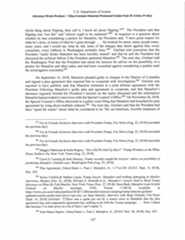
U.S. Department of JusticeAHerfle~' Werk Preclttet // May Cefltaifl Material Preteetecl Uflcler Fecl. R. Crim. P . 6(e)whole thing about flipping, they call it, T know all about flipping." 879 The President said thatflipping was "not fair" and "almost ought to be outlawed ." 880 ln response to a question aboutwhether he was considering a pardon for Manafort, the President said, "T have great respect forwhat he's done, in terms of what he's gone through .... He worked for many, many people many,many years , and T would say what he did , some of the charges they threw against him, everyconsultant, every lobbyist in Washington probably does." 88 1 Giuliani told journalists that thePresident "really thinks Manafort has been horribly treated" and that he and the President haddiscussed the political fallout if the President pardoned Manafort. 882 The next day, Giuliani toldthe Washington Post that the President had asked his lawyers for advice on the possib ility of apardon for Manafort and other aides , and had been counseled against considering a pardon untilthe investigation concluded. 883On September 14, 2018 , Manafort pleaded guilty to charges in the District of Columbiaand signed a plea agreement that required him to cooperate with investigators. 884 Giuliani wasreported to have publicly said that Manafort remained in a joint defense agreement with thePresident following Manafort's guilty plea and agreement to cooperate, and that Manafort 'sattorneys regularly briefed the President ' s lawyers on the topics discussed and the informationManafort had provided in interviews with the Special Counsel's Office. 885 On November 26, 2018,the Special Counsel's Office disclosed in a public court filing that Manafort had breached his pleaagreement by lying about multiple subjects. 886 The next day , Giuliani said that the President hadbeen "upset for weeks" about what he considered to be "the un-American , horrible treatment of879Fox & Friends Exclusive Interview with President Trump, Fox News (Aug. 23, 2018) (recordedthe previous day).°Fox & Friends Exclusive Interview with President Trump, Fox News (Aug. 23, 2018) (recordedthe previous day).88881Fox & Friends Exclusive Interview with President Trump, Fox News (Aug. 23, 2018) (recordedthe previous day).882Maggie Haberman & Katie Rogers, "How Did We End Up Here?" Trump Wonders as the WhiteHouse Soldiers On, New York Times (Aug. 22, 2018)..883Carol D. Leonnig & Josh Dawsey, Trump recently sought his lawyers' advice on possibility ofpardoning Manafort, Giuliani says, Washington Post (Aug. 23, 2018).884Plea Agreement, United States v. Paul J Manafort, Jr., l:l7-cr-201 (D.D.C. Sept. 14, 2018),Doc. 422.885Karen Freifeld & Nathan Layne, Trump lawyer: Manafort said nothing damaging in Muellerinterviews, Reuters (Oct. 22, 2018); Michael S. Schmidt et al., Mana/art's Lawyer Said to Brief TrumpAttorn eys on What He Told Mueller, New York Times (Nov. 27, 2018); Dana Bash, Mana/art team briefedGiulianionMuellermeetings,CNN,Posted11/28/18,availableathttps://www.cnn.com/videos/pol itics/2018/ 11/28/manafort-lawyers-keeping-trump-lawyers-gi ul ianiupdated-mueller-probe-bash-sot-nr-vpx.cnn; see Sean Hannity, Interview with Rudy Giuliani, Fox News(Sept. 14, 2018) (Giuliani: "[T]here was a quote put out by a source close to Manafort that the pleaagreement has, and cooperation agreement has, nothing to do with the Trump campaign .... Now, I knowthat because 1've been privy to a lot of facts I can't repeat.").886Joint Status Report, United States v. Paul J Mana/art , Jr., (D.D.C Nov. 26, 2018), Doc. 455.127
U.S. Department of JusticeAHerfle~' Werk Preclttet // May Cefltaifl Material Preteetecl Uflcler Fecl. R. Crim. P . 6(e)whole thing about flipping, they call it, T know all about flipping." 879 The President said thatflipping was "not fair" and "almost ought to be outlawed ." 880 ln response to a question aboutwhether he was considering a pardon for Manafort, the President said, "T have great respect forwhat he's done, in terms of what he's gone through .... He worked for many, many people many,many years , and T would say what he did , some of the charges they threw against him, everyconsultant, every lobbyist in Washington probably does." 88 1 Giuliani told journalists that thePresident "really thinks Manafort has been horribly treated" and that he and the President haddiscussed the political fallout if the President pardoned Manafort. 882 The next day, Giuliani toldthe Washington Post that the President had asked his lawyers for advice on the possib ility of apardon for Manafort and other aides , and had been counseled against considering a pardon untilthe investigation concluded. 883On September 14, 2018 , Manafort pleaded guilty to charges in the District of Columbiaand signed a plea agreement that required him to cooperate with investigators. 884 Giuliani wasreported to have publicly said that Manafort remained in a joint defense agreement with thePresident following Manafort's guilty plea and agreement to cooperate, and that Manafort 'sattorneys regularly briefed the President ' s lawyers on the topics discussed and the informationManafort had provided in interviews with the Special Counsel's Office. 885 On November 26, 2018,the Special Counsel's Office disclosed in a public court filing that Manafort had breached his pleaagreement by lying about multiple subjects. 886 The next day , Giuliani said that the President hadbeen "upset for weeks" about what he considered to be "the un-American , horrible treatment of879Fox & Friends Exclusive Interview with President Trump, Fox News (Aug. 23, 2018) (recordedthe previous day).°Fox & Friends Exclusive Interview with President Trump, Fox News (Aug. 23, 2018) (recordedthe previous day).88881Fox & Friends Exclusive Interview with President Trump, Fox News (Aug. 23, 2018) (recordedthe previous day).882Maggie Haberman & Katie Rogers, "How Did We End Up Here?" Trump Wonders as the WhiteHouse Soldiers On, New York Times (Aug. 22, 2018)..883Carol D. Leonnig & Josh Dawsey, Trump recently sought his lawyers' advice on possibility ofpardoning Manafort, Giuliani says, Washington Post (Aug. 23, 2018).884Plea Agreement, United States v. Paul J Manafort, Jr., l:l7-cr-201 (D.D.C. Sept. 14, 2018),Doc. 422.885Karen Freifeld & Nathan Layne, Trump lawyer: Manafort said nothing damaging in Muellerinterviews, Reuters (Oct. 22, 2018); Michael S. Schmidt et al., Mana/art's Lawyer Said to Brief TrumpAttorn eys on What He Told Mueller, New York Times (Nov. 27, 2018); Dana Bash, Mana/art team briefedGiulianionMuellermeetings,CNN,Posted11/28/18,availableathttps://www.cnn.com/videos/pol itics/2018/ 11/28/manafort-lawyers-keeping-trump-lawyers-gi ul ianiupdated-mueller-probe-bash-sot-nr-vpx.cnn; see Sean Hannity, Interview with Rudy Giuliani, Fox News(Sept. 14, 2018) (Giuliani: "[T]here was a quote put out by a source close to Manafort that the pleaagreement has, and cooperation agreement has, nothing to do with the Trump campaign .... Now, I knowthat because 1've been privy to a lot of facts I can't repeat.").886Joint Status Report, United States v. Paul J Mana/art , Jr., (D.D.C Nov. 26, 2018), Doc. 455.127
U.S . Department of JusticeAtterttey Werk Pl'ea1:1et// May CentaiH Material Preteetea Uttaer Fee. R. Crim. P. 6(e)Manafort." 887 In an interview on November 28, 2018, the President suggested that it was "verybrave" that Manafort did not " flip":If you told the truth, you go to jail. You know this flipping stuff is terrible. You flip andyou lie and you get-the prosecutors will tell you 99 percent of the time they can get peopleto flip. It's rare that they can't. But I had three people: Manafort, Corsi-I don't know. It 'sCorsi, but he refuses to say what they demanded. 888 Manafort, Corsi889actually very brave .Tn response to a question about a potential pardon for Manafort, the President said, "It was never890discussed, but I wouldn't take it off the table. Why would I take it off the table? "3. Harm to Ongoing MatterHarm to Ongoing MatteraHarmto Ongoing MatterIIIHarm to Ongoing MatterHarm to Ongoing Matter:•• Harm to Ongoing Matter887Stephen Collinson, Trump appears consumed by Mueller investigation as details emerge, CNN(Nov . 29, 2018).888"Corsi" is a reference to Jerome Corsi,who was involved in effortsto coordinate with WikiLeaks and Assange, and who stated publicly at that time that he had refused a pleaoffer fro~' s Office because he was "not going to sign a lie." Sara Murray & Elisays he won't agree to plea deal, CNN (Nov. 26, 2018).Watkins,~889Marisa Schultz & Nikki Schwab, Oval Office Interview with President Trump: Trump sayspardon for Paul Manafort still a possibility, New York Post (Nov. 28 , 2018). That same day, the Presidenttweeted: "While the disgusting Fake News is doing everything within their power not to report it that way,at least 3 major players are intimating that the Angry Mueller Gang ofDems is viciously telling witnessesto lie about facts & they will get relief. This is our Joseph McCarthy Era!" @rea!DonaldTrump 11/28/ 18(8:39 a.m . ET) Tweet.890Marisa Schultz & Nikki Schwab, New York Post Oval Office Interview with President Trump:Trump says pardon for Paul Manafort still a possibility, New York Post (Nov. 28, 2018).Harm to Ongoing MatterHarm to Ongoing MatterHarm to Ongoing MatterHarm to Ongoing Matter128
U.S . Department of JusticeAtterttey Werk Pl'ea1:1et// May CentaiH Material Preteetea Uttaer Fee. R. Crim. P. 6(e)Manafort." 887 In an interview on November 28, 2018, the President suggested that it was "verybrave" that Manafort did not " flip":If you told the truth, you go to jail. You know this flipping stuff is terrible. You flip andyou lie and you get-the prosecutors will tell you 99 percent of the time they can get peopleto flip. It's rare that they can't. But I had three people: Manafort, Corsi-I don't know. It 'sCorsi, but he refuses to say what they demanded. 888 Manafort, Corsi889actually very brave .Tn response to a question about a potential pardon for Manafort, the President said, "It was never890discussed, but I wouldn't take it off the table. Why would I take it off the table? "3. Harm to Ongoing MatterHarm to Ongoing MatteraHarmto Ongoing MatterIIIHarm to Ongoing MatterHarm to Ongoing Matter:•• Harm to Ongoing Matter887Stephen Collinson, Trump appears consumed by Mueller investigation as details emerge, CNN(Nov . 29, 2018).888"Corsi" is a reference to Jerome Corsi,who was involved in effortsto coordinate with WikiLeaks and Assange, and who stated publicly at that time that he had refused a pleaoffer fro~' s Office because he was "not going to sign a lie." Sara Murray & Elisays he won't agree to plea deal, CNN (Nov. 26, 2018).Watkins,~889Marisa Schultz & Nikki Schwab, Oval Office Interview with President Trump: Trump sayspardon for Paul Manafort still a possibility, New York Post (Nov. 28 , 2018). That same day, the Presidenttweeted: "While the disgusting Fake News is doing everything within their power not to report it that way,at least 3 major players are intimating that the Angry Mueller Gang ofDems is viciously telling witnessesto lie about facts & they will get relief. This is our Joseph McCarthy Era!" @rea!DonaldTrump 11/28/ 18(8:39 a.m . ET) Tweet.890Marisa Schultz & Nikki Schwab, New York Post Oval Office Interview with President Trump:Trump says pardon for Paul Manafort still a possibility, New York Post (Nov. 28, 2018).Harm to Ongoing MatterHarm to Ongoing MatterHarm to Ongoing MatterHarm to Ongoing Matter128
U.S. Department of JusticeAttorfte)'" Work Proauet // Ma)'' Cofttaift Material Prnteetea UHaer Fee. R. Crim. P. 6(e)Harm to Ongoing MatterraHarm to Ongoing MatterHarm to Ongoing MatterHarm to Ongoing Matter1aHarm to Ongoing MatterHarm to Ongoing Matter-•895Harm to Ongoing Matter896Harm to Ongoing Matter:· Harm to Ongoing Matter:•· Harm to Ongoing Matter· Harm to Ongoing Matter129
U.S. Department of JusticeAttorfte)'" Work Proauet // Ma)'' Cofttaift Material Prnteetea UHaer Fee. R. Crim. P. 6(e)Harm to Ongoing MatterraHarm to Ongoing MatterHarm to Ongoing MatterHarm to Ongoing Matter1aHarm to Ongoing MatterHarm to Ongoing Matter-•895Harm to Ongoing Matter896Harm to Ongoing Matter:· Harm to Ongoing Matter:•· Harm to Ongoing Matter· Harm to Ongoing Matter129
U.S. Department of JusticeAttol'Ae~·'Nol'icPl'oattet // May CoAtt1iAMatel'ial Pl'oteetea UAaer Fee. R. Cl'iffl.P. 6(e)Harm to Ongoing Matter-Harmto Ongoing Matter111Harm to Ongoing MatterHarm to Ongoing MatterHarm to Ongoing MatterHarm to Ongoing MatterHarm to Ongoing MatterHarm to Ongoing Matter900Harm to Ongoing Matter·• Harm to Ongoing Matter• Harm to Ongoing Matter1• •Harm to Ongoing Matter905Harm to Ongoing Matter907Harm to Ongoing Matter908Harm to Ongoing Matter130
U.S. Department of JusticeAttol'Ae~·'Nol'icPl'oattet // May CoAtt1iAMatel'ial Pl'oteetea UAaer Fee. R. Cl'iffl.P. 6(e)Harm to Ongoing Matter-Harmto Ongoing Matter111Harm to Ongoing MatterHarm to Ongoing MatterHarm to Ongoing MatterHarm to Ongoing MatterHarm to Ongoing MatterHarm to Ongoing Matter900Harm to Ongoing Matter·• Harm to Ongoing Matter• Harm to Ongoing Matter1• •Harm to Ongoing Matter905Harm to Ongoing Matter907Harm to Ongoing Matter908Harm to Ongoing Matter130
U.S. Department of JusticeAtte,rRe:,·\ 1/e,rk Pfe,Eiuet// Ma:yCe,l'!ta:il'IMa:teria:IPFoteeteEIUREief'FeEI.R. C!'im. P. 6(e)AnalysisIn analyzing the President 's conduct towards Flynn , Manafort,evidence is relevant to the elements of obstruction of justice:litlllll , the followinga.Obstructive act. The President's actions towards witnesses in the Special Counsel'sinvestigation would qualify as obstructive if they had the natural tendency to prevent particularwitnesses from testifying truthfully, or otherwise would have the probable effect of influencing,delaying, or preventing their testimony to law enforcement.With regard to Flynn, the President sent private and public messages to Flynn encouraginghim to stay strong and conveying that the President still cared about him before he began tocooperate with the government. When Flynn's attorneys withdrew him from a joint defenseagreement with the President, signaling that Flynn was potentially cooperating with thegovernment, the President's personal counsel initially reminded Flynn's counsel of the President'swarm feelings towards Flynn and said "that still remains." But when Flynn's counsel reiteratedthat Flynn could no longer share information under a joint defense agreement , the President'spersonal counsel stated that the decision would be interpreted as reflecting Flynn's hostilitytowards the President. That sequence of events could have had the potential to affec t Flynn'sdecision to cooperate, as well as the extent of that cooperation. Because of privilege issues,however, we could not determine whether the President was personally involved in or knew aboutthe specific message his counsel delivered to Flynn's counsel.With respect to Manafort, there is evidence that the President's actions had the potential toinfluence Manafort's decision whether to cooperate with the government. The President and hisper so nal counsel made repeated statements suggesting that a pardon was a possibility for Mana fort,while also making it clear that the President did not want Manafort to "flip" and cooperate withthe government. On June 15, 2018 , the day the judge presiding over Manafort's D.C. case wasconsidering whether to revoke his bail, the President said that he "fe lt badly" for Manafort andstated , "I think a lot of it is very unfair." And when asked about a pardon for Manafort, thePresident sai d, "I do want to see people treated fairly. That 's what it's all about." Later that day,after Manafort's bail was revoked, t.he President called it a " tough se ntence " that was "Veryunfair! " Two days later , the President ' s personal counsel stated that individual s involved in theSpecial Counsel ' s inve stigation could receive a pardon " if in fact the [P]resident and his advisors.. . come to the conclusion that you have been treated unfairly "- using languag e that paralleledhow the President had already described the treatment ofManafort. Those statements , combinedwith the President's commendation ofManafort for being a "brave man" who " refused to ' break ', "suggested that a pardon was a more likely possibility if Mana fort continued not to cooperate wit hthe government.And while Manafort eventually pleaded guilty pursuant to a cooperationagreement, he was found to have violated the agreement by lying to inves tigators.The President ' s public statements during the Manafort tr ial, including during jurydeliberations, also had the potential to influence the trial jury. On the second day of trial, forexa mple , the President called the prosecution a "t errible situation " and a " hoax" that "con tinue s tostain our country " and referred to Manafort as a "Reagan/Dole darling" who was "serving solitaryconfinement" even thou gh he was "conv icted of nothing." Those statements were widely pickedup by the press. While jurors were instructed not to watch or read news stories about the case and131
U.S. Department of JusticeAtte,rRe:,·\ 1/e,rk Pfe,Eiuet// Ma:yCe,l'!ta:il'IMa:teria:IPFoteeteEIUREief'FeEI.R. C!'im. P. 6(e)AnalysisIn analyzing the President 's conduct towards Flynn , Manafort,evidence is relevant to the elements of obstruction of justice:litlllll , the followinga.Obstructive act. The President's actions towards witnesses in the Special Counsel'sinvestigation would qualify as obstructive if they had the natural tendency to prevent particularwitnesses from testifying truthfully, or otherwise would have the probable effect of influencing,delaying, or preventing their testimony to law enforcement.With regard to Flynn, the President sent private and public messages to Flynn encouraginghim to stay strong and conveying that the President still cared about him before he began tocooperate with the government. When Flynn's attorneys withdrew him from a joint defenseagreement with the President, signaling that Flynn was potentially cooperating with thegovernment, the President's personal counsel initially reminded Flynn's counsel of the President'swarm feelings towards Flynn and said "that still remains." But when Flynn's counsel reiteratedthat Flynn could no longer share information under a joint defense agreement , the President'spersonal counsel stated that the decision would be interpreted as reflecting Flynn's hostilitytowards the President. That sequence of events could have had the potential to affec t Flynn'sdecision to cooperate, as well as the extent of that cooperation. Because of privilege issues,however, we could not determine whether the President was personally involved in or knew aboutthe specific message his counsel delivered to Flynn's counsel.With respect to Manafort, there is evidence that the President's actions had the potential toinfluence Manafort's decision whether to cooperate with the government. The President and hisper so nal counsel made repeated statements suggesting that a pardon was a possibility for Mana fort,while also making it clear that the President did not want Manafort to "flip" and cooperate withthe government. On June 15, 2018 , the day the judge presiding over Manafort's D.C. case wasconsidering whether to revoke his bail, the President said that he "fe lt badly" for Manafort andstated , "I think a lot of it is very unfair." And when asked about a pardon for Manafort, thePresident sai d, "I do want to see people treated fairly. That 's what it's all about." Later that day,after Manafort's bail was revoked, t.he President called it a " tough se ntence " that was "Veryunfair! " Two days later , the President ' s personal counsel stated that individual s involved in theSpecial Counsel ' s inve stigation could receive a pardon " if in fact the [P]resident and his advisors.. . come to the conclusion that you have been treated unfairly "- using languag e that paralleledhow the President had already described the treatment ofManafort. Those statements , combinedwith the President's commendation ofManafort for being a "brave man" who " refused to ' break ', "suggested that a pardon was a more likely possibility if Mana fort continued not to cooperate wit hthe government.And while Manafort eventually pleaded guilty pursuant to a cooperationagreement, he was found to have violated the agreement by lying to inves tigators.The President ' s public statements during the Manafort tr ial, including during jurydeliberations, also had the potential to influence the trial jury. On the second day of trial, forexa mple , the President called the prosecution a "t errible situation " and a " hoax" that "con tinue s tostain our country " and referred to Manafort as a "Reagan/Dole darling" who was "serving solitaryconfinement" even thou gh he was "conv icted of nothing." Those statements were widely pickedup by the press. While jurors were instructed not to watch or read news stories about the case and131
U.S. Department of JusticeAl:t:erHc,·Werk Preauet // May CeHtaiH Material Preteetea UHaer Fea. R. Criffi. P. 6(e)are presumed to follow those instructions, the President's statements during the trial generatedsubstantial media coverage that could have reached jurors if they happened to see the statementsor learned about them from others. And the President ' s statements during jury deliberations thatManafort "happens to be a very good person" and that " it's very sad what they've done to PaulMana fort" had the potential to influence jurors who learned of the statements, which the Presidentmade just as jurors were considering whether to convict or acquit Manafort.b.Nexus to an official proceeding. The President's actions towards Flynn, Manafort,-appear to have been connected to pending or ~dofficial proceedings involvingeach individual. The President's conduct towards Flynn~principally occurred when bothwere under criminal investigation by the Special Counsel's Office and press reports speculatedabout whether they would cooperate with the Special Counsel's investigation. And the President'sconduct towards Manafort was directly connected to the official proceedings involving him. ThePresident made statements about Manafort and the charges against him during Manafort's criminaltrial. And the President's comments about the prospect of Manafort " flipping " occurred when itwas clear the Special Counsel continued to oversee grand jury proceedings .c.Intent. Evidence concerning the President's intent related to Flynn as a potentialwitness is inconclusive. As previously noted, because of privilege issues we do not have ev idenceestablishing whether the President knew about or was involved in his counsel ' s communicationswith Flynn's counsel stating that Flynn's decision to withdraw from the joint defense agreementand cooperate with the government would be viewed as reflecting "hostility " towards thePresident. And regardless of what the President ' s personal counsel communicated , the Presidentcontinued to express sympathy for Flynn after he pleaded guilty pursuant to a cooperationagreement, stating that Flynn had "led a very strong life" and the President "fe[lt] very badly "about what had happened to him.Evidence concerning the President's conduct towards Manafort indicates that the Presidentintended to encourage Manafort to not cooperate with the government. Before Manafort wasconvicted, the President repeatedly stated that Manafort had been treated unfairly . One day afterManafort was convicted on eight felony charges and potentially faced a lengthy prison term , thePresident said that Manafort was "a brave man " for refusing to "b reak" and that " flipping" "almostought to be outlawed." At the same time , although the President had privately told aides he didnot like Manafort, he publicly called Mana fort "a good man" and said he had a " wonderful family."And when the President was asked whether he was considering a pardon for Manafort , thePresident did not respond directly and instead said he had "g reat respect for what [Manafort]'sdone, in terms of what he's gone through." The President added that "so me of th e charges theythrew against him, every consultant, every lobbyist in Washington probably does." In light of thePresident's counsel's previous statements that the investigations "m ight get cleaned up with somepresidential pardons" and that a pardon would be possible if the President "come[s ] to theconclusion that you have been treated unfairl y," the evidence supports the inference that the132
U.S. Department of JusticeAl:t:erHc,·Werk Preauet // May CeHtaiH Material Preteetea UHaer Fea. R. Criffi. P. 6(e)are presumed to follow those instructions, the President's statements during the trial generatedsubstantial media coverage that could have reached jurors if they happened to see the statementsor learned about them from others. And the President ' s statements during jury deliberations thatManafort "happens to be a very good person" and that " it's very sad what they've done to PaulMana fort" had the potential to influence jurors who learned of the statements, which the Presidentmade just as jurors were considering whether to convict or acquit Manafort.b.Nexus to an official proceeding. The President's actions towards Flynn, Manafort,-appear to have been connected to pending or ~dofficial proceedings involvingeach individual. The President's conduct towards Flynn~principally occurred when bothwere under criminal investigation by the Special Counsel's Office and press reports speculatedabout whether they would cooperate with the Special Counsel's investigation. And the President'sconduct towards Manafort was directly connected to the official proceedings involving him. ThePresident made statements about Manafort and the charges against him during Manafort's criminaltrial. And the President's comments about the prospect of Manafort " flipping " occurred when itwas clear the Special Counsel continued to oversee grand jury proceedings .c.Intent. Evidence concerning the President's intent related to Flynn as a potentialwitness is inconclusive. As previously noted, because of privilege issues we do not have ev idenceestablishing whether the President knew about or was involved in his counsel ' s communicationswith Flynn's counsel stating that Flynn's decision to withdraw from the joint defense agreementand cooperate with the government would be viewed as reflecting "hostility " towards thePresident. And regardless of what the President ' s personal counsel communicated , the Presidentcontinued to express sympathy for Flynn after he pleaded guilty pursuant to a cooperationagreement, stating that Flynn had "led a very strong life" and the President "fe[lt] very badly "about what had happened to him.Evidence concerning the President's conduct towards Manafort indicates that the Presidentintended to encourage Manafort to not cooperate with the government. Before Manafort wasconvicted, the President repeatedly stated that Manafort had been treated unfairly . One day afterManafort was convicted on eight felony charges and potentially faced a lengthy prison term , thePresident said that Manafort was "a brave man " for refusing to "b reak" and that " flipping" "almostought to be outlawed." At the same time , although the President had privately told aides he didnot like Manafort, he publicly called Mana fort "a good man" and said he had a " wonderful family."And when the President was asked whether he was considering a pardon for Manafort , thePresident did not respond directly and instead said he had "g reat respect for what [Manafort]'sdone, in terms of what he's gone through." The President added that "so me of th e charges theythrew against him, every consultant, every lobbyist in Washington probably does." In light of thePresident's counsel's previous statements that the investigations "m ight get cleaned up with somepresidential pardons" and that a pardon would be possible if the President "come[s ] to theconclusion that you have been treated unfairl y," the evidence supports the inference that the132
U.S. Department of JusticeAttarRe,· Wark Prad:ttet // Mtt,. CaRtttiRMttterittlPrateeted: URd:erFed:.R. Crim. P. 6(e)President intended Manafort to believe that he could receive a pardon, which would makecooperation with the government as a means of obtaining a lesser sentence unnecessary.We also examined the evidence of the President's intent in making public statements aboutManafort at the beginning of his trial and when the jury was deliberating. Some evidence supportsa conclusion that the President intended, at least in part , to influence the jury. The trial generatedwidespread publicity, and as the jury began to deliberate, commentators suggested that an acquittalwould add to pressure to end the Special Counsel's investigation. By publicly stating on the secondday of deliberations that Manafort "happens to be a very good person" and that " it's very sad whatthey've done to Paul Manafort" right after calling the Special Counsel 's investigation a "riggedwitch hunt," the President ' s statements could, if they reached jurors, have the natural tendency toengender sympathy for Manafort among jurors, and a factfinder could infer that the Presidentintended that result. But there are alternative explanations for the President's comments, includingthat he genuinely felt sorry for Manafort or that his goal was not to influence the jury but toinfluence public opinion. The President's comments also could have been intended to continuesending a message to Manafort that a pardon was possible. As described above , the Presidentmade his comments about Manafort being "a very good person" immediately after declining toanswer a question about whether he would pardon Manafort.133
U.S. Department of JusticeAttarRe,· Wark Prad:ttet // Mtt,. CaRtttiRMttterittlPrateeted: URd:erFed:.R. Crim. P. 6(e)President intended Manafort to believe that he could receive a pardon, which would makecooperation with the government as a means of obtaining a lesser sentence unnecessary.We also examined the evidence of the President's intent in making public statements aboutManafort at the beginning of his trial and when the jury was deliberating. Some evidence supportsa conclusion that the President intended, at least in part , to influence the jury. The trial generatedwidespread publicity, and as the jury began to deliberate, commentators suggested that an acquittalwould add to pressure to end the Special Counsel's investigation. By publicly stating on the secondday of deliberations that Manafort "happens to be a very good person" and that " it's very sad whatthey've done to Paul Manafort" right after calling the Special Counsel 's investigation a "riggedwitch hunt," the President ' s statements could, if they reached jurors, have the natural tendency toengender sympathy for Manafort among jurors, and a factfinder could infer that the Presidentintended that result. But there are alternative explanations for the President's comments, includingthat he genuinely felt sorry for Manafort or that his goal was not to influence the jury but toinfluence public opinion. The President's comments also could have been intended to continuesending a message to Manafort that a pardon was possible. As described above , the Presidentmade his comments about Manafort being "a very good person" immediately after declining toanswer a question about whether he would pardon Manafort.133
U.S. Department of JusticeAMon=tey'Nork Prodttet // Ma;· CoH:taiH:Material Protedee UH:derFee. R. Criffl. P. 6(e)K.The President's Conduct Involving Michael CohenOverviewThe President's conduct involving Michael Cohen spans the full period of ourinvestigation. During the campaign, Cohen pursued the Trump Tower Moscow project on behalfof the Trump Organization. Cohen briefed candidate Trump on the project numerous times,including discussing whether Trump should travel to Russia to advance the deal. After the mediabegan questioning Trump ' s connections to Russia , Cohen promoted a "party line " that publiclydistanced Trump from Russia and asserted he had no business there. Cohen continued to adhereto that party line in 2017, when Congress asked him to provide documents and testimony in itsRussia investigation. [n an attempt to minimize the President 's connections to Russia , Cohensubmitted a letter to Congress falsely stating that he only briefed Trump on the Trump TowerMoscow project three times , that he did not consider asking Trump to travel to Russia , that Cohenhad not received a response to an outreach he made to the Russian government, and that the projectended in January 2016, before the first Republican caucus or primary. While working on thecongressional statement , Cohen had extensive discussions with the President ' s personal counsel ,who, according to Cohen, said that Cohen should not contradict the President and should keep thestatement short and "tight." After the FBI searched Cohen 's home and office in April 2018, thePresident publicly asserted that Cohen would not "flip" and privately passed messages of supportto him. Cohen also discussed pardons with the President's personal counsel and believed that ifhe stayed on message, he would get a pardon or the President would do "something else" to makethe investigation end. But after Cohen began cooperating with the government in July 2018 , thePresident publicly criticized him, called him a "rat," and suggested his family members hadcommitted crimes.Evidence1. Candidate Trump'sMoscow ProjectAwarenessof and Involvementm the Trump TowerThe President's interactions with Cohen as a witne ss took place against the background ofthe President's involvement in the Trump Tower Moscow project.As described in detail in Volume I, Section IV.A. 1, supra , from September 2015 until atleast June 2016, the Trump Organization pursued a Trump Tower Moscow project in Russia, withnegotiations conducted by Cohen, then-executive vice pres ident of the Trump Organization andspecial counsel to Donald J. Trump. 909The Trump Organization had previously and909In August 2018 and November 2018, Cohen pleaded guilty to multiple crimes of deception,including making false statements to Congress about the Trump Tower Moscow project, as described laterin this section. When Cohen first met with investigators from this Office, he repeated the same lies he toldCongress about the Trump Tower Moscow project. Cohen 8/7/18 302, at 12- 17. But after Cohen pleadedguilty to offenses in the Southern District ofNew York on August 21, 2018, he met with investigators againand corrected the record. The Office found Cohen's testimony in these subsequent proffer sessions to beconsistent with and corroborated by other information obtained in the course of the Office's investigation.The Office's sentencing submission in Cohen's criminal case stated: "Starting with his second meeting withthe [Special Counsel's Office] in September 2018 , the defendant has accepted responsibility not only for134
U.S. Department of JusticeAMon=tey'Nork Prodttet // Ma;· CoH:taiH:Material Protedee UH:derFee. R. Criffl. P. 6(e)K.The President's Conduct Involving Michael CohenOverviewThe President's conduct involving Michael Cohen spans the full period of ourinvestigation. During the campaign, Cohen pursued the Trump Tower Moscow project on behalfof the Trump Organization. Cohen briefed candidate Trump on the project numerous times,including discussing whether Trump should travel to Russia to advance the deal. After the mediabegan questioning Trump ' s connections to Russia , Cohen promoted a "party line " that publiclydistanced Trump from Russia and asserted he had no business there. Cohen continued to adhereto that party line in 2017, when Congress asked him to provide documents and testimony in itsRussia investigation. [n an attempt to minimize the President 's connections to Russia , Cohensubmitted a letter to Congress falsely stating that he only briefed Trump on the Trump TowerMoscow project three times , that he did not consider asking Trump to travel to Russia , that Cohenhad not received a response to an outreach he made to the Russian government, and that the projectended in January 2016, before the first Republican caucus or primary. While working on thecongressional statement , Cohen had extensive discussions with the President ' s personal counsel ,who, according to Cohen, said that Cohen should not contradict the President and should keep thestatement short and "tight." After the FBI searched Cohen 's home and office in April 2018, thePresident publicly asserted that Cohen would not "flip" and privately passed messages of supportto him. Cohen also discussed pardons with the President's personal counsel and believed that ifhe stayed on message, he would get a pardon or the President would do "something else" to makethe investigation end. But after Cohen began cooperating with the government in July 2018 , thePresident publicly criticized him, called him a "rat," and suggested his family members hadcommitted crimes.Evidence1. Candidate Trump'sMoscow ProjectAwarenessof and Involvementm the Trump TowerThe President's interactions with Cohen as a witne ss took place against the background ofthe President's involvement in the Trump Tower Moscow project.As described in detail in Volume I, Section IV.A. 1, supra , from September 2015 until atleast June 2016, the Trump Organization pursued a Trump Tower Moscow project in Russia, withnegotiations conducted by Cohen, then-executive vice pres ident of the Trump Organization andspecial counsel to Donald J. Trump. 909The Trump Organization had previously and909In August 2018 and November 2018, Cohen pleaded guilty to multiple crimes of deception,including making false statements to Congress about the Trump Tower Moscow project, as described laterin this section. When Cohen first met with investigators from this Office, he repeated the same lies he toldCongress about the Trump Tower Moscow project. Cohen 8/7/18 302, at 12- 17. But after Cohen pleadedguilty to offenses in the Southern District ofNew York on August 21, 2018, he met with investigators againand corrected the record. The Office found Cohen's testimony in these subsequent proffer sessions to beconsistent with and corroborated by other information obtained in the course of the Office's investigation.The Office's sentencing submission in Cohen's criminal case stated: "Starting with his second meeting withthe [Special Counsel's Office] in September 2018 , the defendant has accepted responsibility not only for134
U.S. Department of JusticeA*erH:ey '.Verk Pr0dttet // May C0H:taiH:Material Pr0teeted UH:derFed. R. Criffi. P. 6(e)unsuccessfully pursued a building project in Moscow. 910 According to Cohen, in approximatelySeptember 2015 he obtained internal approval from Trump to negotiate on behalf of the TrumpOrganization to have a Russian corporation build a tower in Moscow that licensed the Trump name912and brand .911 Cohen thereafter had numerous brief conversations with Trump about the project.Cohen recalled that Trump wanted to be updat ed on any developments with Trump Tower Moscow913and on several occasions brought the project up with Cohen to ask what was happening on it.Cohen also discussed the project on multiple occasions with Donald Trump Jr. and IvankaTrump.914In the fall of 2015, Trump signed a Lett er of Intent for the project that specified highlylucrative terms for the Trump Organization. 915 In December 2015, Felix Sater, who was handlingnegotiations between Cohen and the Russian corporation, asked Cohen for a copy of his andTrump ' s passports to facilitate travel to Russia to meet with government officials and possibl efinancing partners. 916 Cohen recalled discussing the trip with Trump and requesting a copy ofTrump 's passport from Trump's personal secretary, Rhona Graff. 917By January 2016, Cohen had becom e frustrated that Sater had not set up a meeting withRussian government officials, so Cohen reached out directly by email to the office of Dmitryhis false statements concerning the [Trump Tower] Moscow Project, but also his broader efforts throughpublic statements and testimony before Congress to minimize his role in, and what he knew about, contactsbetween the [Trump Organization] and Russian interests during the course of the campaign. . . . Theinformation provided by Cohen about the [Trump Tower] Moscow Project in these proffer sessions isconsistent with and corroborat ed by other information obtained in the course of the [Special Counsel'sOffice 's] investigation ....The defendant, without prompting by the [Special Counsel's Office], alsocorrected other false and misleading statements that he had made concerning his outreach to and contactswith Russian officials during the course of the campaign." Gov't Sentencing Submission at 4, United Statesv. Michael Cohen, I: I 8-cr-85O (S.D.N.Y. Dec. 7, 2018), Doc. 14. At Cohen's sentencing, our Office furtherexplained that Cohen had "provided valuable information ... while taking care and being careful to notewhat he knows and what he doesn't know." Transcript at 19, United States v. Michael Cohen, I: l 8-cr-85O(S.D.N.Y. Dec. 12, 2018), Doc. 17 (Cohen 12/ 12/ 18 Transcript).910See Volume I, Section IV.A . I , supra (noting that starting in at least 2013, several employees ofthe Trump Organization, including then-president of the organization Donald J. Trump, pursued a TrumpTower Moscow deal with severa l Russian counterparties).911Cohen 9/12/18 302, at 1-4; Cohen 8/7/18 302, at 15.912Cohen 9/12/18 302, at 2, 4.913 Cohen 9/12/18 302, at 4.914Cohen 9/12/18 302, at 4, I 0.915MDC-H-OOO618-25(10/28/15 Letter oflntent , signed by Donald J. Trump, Trump Acquisition,LLC and Andrey Rozov, LC. Expert Investment Company); Cohen 9/ 12/18 302, at 3; Written Responsesof Donald J. Trump (Nov. 20, 2018), at 15 (Response to Question III , Parts (a) through (g)).916 MDC-H-OOO6OO( 12/ 19/ 15 Email, Sater to Cohen).917 Cohen 9/12/18 302, at 5.135
U.S. Department of JusticeA*erH:ey '.Verk Pr0dttet // May C0H:taiH:Material Pr0teeted UH:derFed. R. Criffi. P. 6(e)unsuccessfully pursued a building project in Moscow. 910 According to Cohen, in approximatelySeptember 2015 he obtained internal approval from Trump to negotiate on behalf of the TrumpOrganization to have a Russian corporation build a tower in Moscow that licensed the Trump name912and brand .911 Cohen thereafter had numerous brief conversations with Trump about the project.Cohen recalled that Trump wanted to be updat ed on any developments with Trump Tower Moscow913and on several occasions brought the project up with Cohen to ask what was happening on it.Cohen also discussed the project on multiple occasions with Donald Trump Jr. and IvankaTrump.914In the fall of 2015, Trump signed a Lett er of Intent for the project that specified highlylucrative terms for the Trump Organization. 915 In December 2015, Felix Sater, who was handlingnegotiations between Cohen and the Russian corporation, asked Cohen for a copy of his andTrump ' s passports to facilitate travel to Russia to meet with government officials and possibl efinancing partners. 916 Cohen recalled discussing the trip with Trump and requesting a copy ofTrump 's passport from Trump's personal secretary, Rhona Graff. 917By January 2016, Cohen had becom e frustrated that Sater had not set up a meeting withRussian government officials, so Cohen reached out directly by email to the office of Dmitryhis false statements concerning the [Trump Tower] Moscow Project, but also his broader efforts throughpublic statements and testimony before Congress to minimize his role in, and what he knew about, contactsbetween the [Trump Organization] and Russian interests during the course of the campaign. . . . Theinformation provided by Cohen about the [Trump Tower] Moscow Project in these proffer sessions isconsistent with and corroborat ed by other information obtained in the course of the [Special Counsel'sOffice 's] investigation ....The defendant, without prompting by the [Special Counsel's Office], alsocorrected other false and misleading statements that he had made concerning his outreach to and contactswith Russian officials during the course of the campaign." Gov't Sentencing Submission at 4, United Statesv. Michael Cohen, I: I 8-cr-85O (S.D.N.Y. Dec. 7, 2018), Doc. 14. At Cohen's sentencing, our Office furtherexplained that Cohen had "provided valuable information ... while taking care and being careful to notewhat he knows and what he doesn't know." Transcript at 19, United States v. Michael Cohen, I: l 8-cr-85O(S.D.N.Y. Dec. 12, 2018), Doc. 17 (Cohen 12/ 12/ 18 Transcript).910See Volume I, Section IV.A . I , supra (noting that starting in at least 2013, several employees ofthe Trump Organization, including then-president of the organization Donald J. Trump, pursued a TrumpTower Moscow deal with severa l Russian counterparties).911Cohen 9/12/18 302, at 1-4; Cohen 8/7/18 302, at 15.912Cohen 9/12/18 302, at 2, 4.913 Cohen 9/12/18 302, at 4.914Cohen 9/12/18 302, at 4, I 0.915MDC-H-OOO618-25(10/28/15 Letter oflntent , signed by Donald J. Trump, Trump Acquisition,LLC and Andrey Rozov, LC. Expert Investment Company); Cohen 9/ 12/18 302, at 3; Written Responsesof Donald J. Trump (Nov. 20, 2018), at 15 (Response to Question III , Parts (a) through (g)).916 MDC-H-OOO6OO( 12/ 19/ 15 Email, Sater to Cohen).917 Cohen 9/12/18 302, at 5.135
U.S. Department of JusticeAtterAey Werk Preauet // May CeAtaiA Material Preteetea UAder Fed. R. Crim. P. 6(e)Peskov, who was Putin's deputy chief of staff and press secretary. 918 On January 20, 2016 , Cohenreceived an email response from Elena Poliakova , Peskov's personal assistant , and phone recordsconfirm that they then spoke for approximately twenty minutes, during which Cohen described theTrump Tower Moscow project and requested assistance in moving the project forward. 9 19 Cohenrecalled briefing candidate Trump about the call soon afterwards. 92 Cohen told Trump he spokewith a woman he identified as " someone from the Kremlin ," and Cohen reported that she was veryprofessional and asked detailed questions about the project. 921 Cohen recalled telling Trump hewished the Trump Organization had assistants who were as competent as the woman from theKremlin. 922°Cohen thought his phone call renewed interest in the project. 923 The day after Cohen 's callwith Poliakova , Sater texted Cohen , asking him to "[c]all me when you have a few minutes to chat... It's about Putin they called today." 924 Sater told Cohen that the Russian government liked theproject and on January 25, 2016 , sent an invitation for Cohen to visit Moscow " for a workingvisit. " 92 5 After the outreach from Sater, Cohen recalled telling Trump that he was waiting to hearback on moving the project forward. 926After January 2016 , Cohen continued to have conversations with Sater about Trump TowerMoscow and continued to keep candidate Trump updated about those discussions and the statusof the project. 927 Cohen recalled that he and Trump wanted Trump Tower Moscow to succeed and928Inthat Trump never discouraged him from working on the project because of the campaign.March or April 2016 , Trump asked Cohen if anything was happening in Russia .929 Cohen also9 18See FS00004 (12/30/15 Text Message, Cohen to Sater); TRUMPORG_MC_000233 (1/ 11/ 16Email , Cohen to pr_peskova @prpress.gof.ru); MDC-H-000690 (1/14/ 16 Email, Cohen toinfo@prpress.gov.ru); TRUMPORG_MC_000235 (1/16/ 16 Email, Cohen to pr_peskova @prpress.gov.ru).9191/20/ 16 Email, Poliakova to Cohen; Call Records ofMichael Cohen. (Showing a 22-minute callon January 20, 2016, between Cohen and the number Poliakova provided in her email) ; Cohen 9/12/ 18 302,at 2-3. After the call, Cohen saved Poliakova ' s contact information in his Trump Organi zation Outlookcontact list. 1/20/16 Cohen Microsoft Outlook Entry (6:22 a.m.).92°Cohen 11/20/18 302, at 5.921Cohen 11/20/18 302, at 5-6; Cohen I l/12/18 302, at 4.922Cohen 11/20/18 302, at 5.923Cohen 9/ 12/ 18 302, at 5.92 4FS0O0l l (1/21/ 16 Text Messages, Sater & Cohen).925Cohen 9/12/ 18 302, at 5; 1/25/ 16 Email, Sater to Cohen (attachment).926Cohen 11/20/18 302, at 5.927Cohen 9/12/ 18 302, at 6. In later congressional testimony, Cohen stated that he briefed Trumpon the project approximately six times after January 2016. Hearing on Issues Related to TrumpOrganization Before the House Oversight and Ref orm Committee, 116th Cong. (Feb . 27, 2019) (CQ Cong.Transcripts , at 24) (testimony of Michael Cohen).928Cohen 9/12/18 302, at 6.929Cohen 9/18/ 18 302, at 4.136
U.S. Department of JusticeAtterAey Werk Preauet // May CeAtaiA Material Preteetea UAder Fed. R. Crim. P. 6(e)Peskov, who was Putin's deputy chief of staff and press secretary. 918 On January 20, 2016 , Cohenreceived an email response from Elena Poliakova , Peskov's personal assistant , and phone recordsconfirm that they then spoke for approximately twenty minutes, during which Cohen described theTrump Tower Moscow project and requested assistance in moving the project forward. 9 19 Cohenrecalled briefing candidate Trump about the call soon afterwards. 92 Cohen told Trump he spokewith a woman he identified as " someone from the Kremlin ," and Cohen reported that she was veryprofessional and asked detailed questions about the project. 921 Cohen recalled telling Trump hewished the Trump Organization had assistants who were as competent as the woman from theKremlin. 922°Cohen thought his phone call renewed interest in the project. 923 The day after Cohen 's callwith Poliakova , Sater texted Cohen , asking him to "[c]all me when you have a few minutes to chat... It's about Putin they called today." 924 Sater told Cohen that the Russian government liked theproject and on January 25, 2016 , sent an invitation for Cohen to visit Moscow " for a workingvisit. " 92 5 After the outreach from Sater, Cohen recalled telling Trump that he was waiting to hearback on moving the project forward. 926After January 2016 , Cohen continued to have conversations with Sater about Trump TowerMoscow and continued to keep candidate Trump updated about those discussions and the statusof the project. 927 Cohen recalled that he and Trump wanted Trump Tower Moscow to succeed and928Inthat Trump never discouraged him from working on the project because of the campaign.March or April 2016 , Trump asked Cohen if anything was happening in Russia .929 Cohen also9 18See FS00004 (12/30/15 Text Message, Cohen to Sater); TRUMPORG_MC_000233 (1/ 11/ 16Email , Cohen to pr_peskova @prpress.gof.ru); MDC-H-000690 (1/14/ 16 Email, Cohen toinfo@prpress.gov.ru); TRUMPORG_MC_000235 (1/16/ 16 Email, Cohen to pr_peskova @prpress.gov.ru).9191/20/ 16 Email, Poliakova to Cohen; Call Records ofMichael Cohen. (Showing a 22-minute callon January 20, 2016, between Cohen and the number Poliakova provided in her email) ; Cohen 9/12/ 18 302,at 2-3. After the call, Cohen saved Poliakova ' s contact information in his Trump Organi zation Outlookcontact list. 1/20/16 Cohen Microsoft Outlook Entry (6:22 a.m.).92°Cohen 11/20/18 302, at 5.921Cohen 11/20/18 302, at 5-6; Cohen I l/12/18 302, at 4.922Cohen 11/20/18 302, at 5.923Cohen 9/ 12/ 18 302, at 5.92 4FS0O0l l (1/21/ 16 Text Messages, Sater & Cohen).925Cohen 9/12/ 18 302, at 5; 1/25/ 16 Email, Sater to Cohen (attachment).926Cohen 11/20/18 302, at 5.927Cohen 9/12/ 18 302, at 6. In later congressional testimony, Cohen stated that he briefed Trumpon the project approximately six times after January 2016. Hearing on Issues Related to TrumpOrganization Before the House Oversight and Ref orm Committee, 116th Cong. (Feb . 27, 2019) (CQ Cong.Transcripts , at 24) (testimony of Michael Cohen).928Cohen 9/12/18 302, at 6.929Cohen 9/18/ 18 302, at 4.136
U.S. Department of JusticeAttorHey Work Pros1:1et// Mey CoHteiHMeteriel Proteetes UHeer Fee. R. Criffl. P. 6(e)recalled briefing Donald Trump Jr. in the spring-a conversation that Cohen said was not " idlechit chat" because Trump Tower Moscow was potentially a $1 billion deal. 930Cohen recalled that around May 2016 , he again raised with candidate Trump the possibilityof a trip to Russia to advance the Trump Tower Moscow project. 931 At that time, Cohen hadreceived several texts from Sater seeking to arrange dates for such a trip. 932 On May 4, 2016, Saterwrote to Cohen , "T had a chat with Moscow. ASSUMING the trip does happen the question isbefore or after the convention ..... Obviously the premeeting trip (you only) can happen anytime933Cohenyou want but the 2 big guys [is] the question. I said I would confirm and revert."responded, "My trip before Cleveland.Trump once he becomes the nominee after theconvention." 934 On May 5, 2016, Sater followed up with a text that Cohen thought he probablyread to Trump:Peskov would like to invite you as his guest to the St. Petersburg Forum which isRussia ' s Davos it's June 16-19. He wants to meet there with you and possiblyintroduce you to either Putin or Medvedev .... This is perfect. The entire businessclass of Russia will be there as well. He said anything you want to discuss includingdates and subjects are on the table to discuss. 935Cohen recalled discussing the invitation to the St. Petersburg Economic Forum withcandidate Trump and saying that Putin or Russian Prime Minister Dmitry Medvedev might bethere. 936 Cohen remembered that Trump said that he would be willing to travel to Russia if Cohencould " lock and load" on the deal. 937 TnJune 2016, Cohen decided not to attend the St. Petersburg938Economic Forum because Sater had not obtained a formal invitation for Cohen from Peskov .Cohen said he had a quick conversation with Trump at that time but did not tell him that the projectwas over because he did not want Trump to complain that the deal was on-again -off- again if itwere revived. 939During the summer of 2016, Cohen recalled that candidate Trump publicly claimed that hehad nothing to do with Russia and then shortly afterwards privately checked with Cohen about thestatus of the Trump Tower Moscow project, which Cohen found "interesting." 940 At some point93°Cohen 9/ 12/ 18 302 , at 10.931Cohen 9/12/18 302, at 7.932Cohen 9/12/18 302, at 7.933FS000 15 (5/4/16 Text Message , Sater to Cohen).934FS000l5 (5/4/16 Text Message , Cohen to Sater).935FS00016-17 (5/5/16 Text Messages, Sater & Cohen).936Cohen 9/12/ l 8 302, at 7.937Cohen 9/12/18 302, at 7.938Cohen 9/12/18 302, at 7-8.939Cohen 9/12/18 302, at 8.94°Cohen 3/19/19 302, at 2.137
U.S. Department of JusticeAttorHey Work Pros1:1et// Mey CoHteiHMeteriel Proteetes UHeer Fee. R. Criffl. P. 6(e)recalled briefing Donald Trump Jr. in the spring-a conversation that Cohen said was not " idlechit chat" because Trump Tower Moscow was potentially a $1 billion deal. 930Cohen recalled that around May 2016 , he again raised with candidate Trump the possibilityof a trip to Russia to advance the Trump Tower Moscow project. 931 At that time, Cohen hadreceived several texts from Sater seeking to arrange dates for such a trip. 932 On May 4, 2016, Saterwrote to Cohen , "T had a chat with Moscow. ASSUMING the trip does happen the question isbefore or after the convention ..... Obviously the premeeting trip (you only) can happen anytime933Cohenyou want but the 2 big guys [is] the question. I said I would confirm and revert."responded, "My trip before Cleveland.Trump once he becomes the nominee after theconvention." 934 On May 5, 2016, Sater followed up with a text that Cohen thought he probablyread to Trump:Peskov would like to invite you as his guest to the St. Petersburg Forum which isRussia ' s Davos it's June 16-19. He wants to meet there with you and possiblyintroduce you to either Putin or Medvedev .... This is perfect. The entire businessclass of Russia will be there as well. He said anything you want to discuss includingdates and subjects are on the table to discuss. 935Cohen recalled discussing the invitation to the St. Petersburg Economic Forum withcandidate Trump and saying that Putin or Russian Prime Minister Dmitry Medvedev might bethere. 936 Cohen remembered that Trump said that he would be willing to travel to Russia if Cohencould " lock and load" on the deal. 937 TnJune 2016, Cohen decided not to attend the St. Petersburg938Economic Forum because Sater had not obtained a formal invitation for Cohen from Peskov .Cohen said he had a quick conversation with Trump at that time but did not tell him that the projectwas over because he did not want Trump to complain that the deal was on-again -off- again if itwere revived. 939During the summer of 2016, Cohen recalled that candidate Trump publicly claimed that hehad nothing to do with Russia and then shortly afterwards privately checked with Cohen about thestatus of the Trump Tower Moscow project, which Cohen found "interesting." 940 At some point93°Cohen 9/ 12/ 18 302 , at 10.931Cohen 9/12/18 302, at 7.932Cohen 9/12/18 302, at 7.933FS000 15 (5/4/16 Text Message , Sater to Cohen).934FS000l5 (5/4/16 Text Message , Cohen to Sater).935FS00016-17 (5/5/16 Text Messages, Sater & Cohen).936Cohen 9/12/ l 8 302, at 7.937Cohen 9/12/18 302, at 7.938Cohen 9/12/18 302, at 7-8.939Cohen 9/12/18 302, at 8.94°Cohen 3/19/19 302, at 2.137
U.S. Department of JusticeAtterttey Wm·k Preettet // May Cetttaitt Material Preteetee Utteer Fee. R. Criffi. P. 6(e)that summer, Cohen recalled having a brief conversation with Trump in which Cohen said theTrump Tower Moscow project was going nowhere because the Russian development companyhad not secured a piece of property for the project. 941 Trump said that was " too bad," and Cohendid not recall talking with Trump about the project after that. 942 Cohen said that at no time duringthe campaign did Trump tell him not to pursue the project or that the project should beabandoned .9432. Cohen Determines to Adhere to a "Party Line" Distancing Candidate TrumpFrom RussiaAs previously discussed, see Volume II, Section II.A , supra , when questions about possibleRussian support for candidate Trump emerged during the 2016 presidential campaign , Trumpdenied having any personal, financial, or business connection to Russia , which Cohen describedas the "party line" or "message" to follow for Trump and his senior advisors. 944After the election, the Trump Organization sought to formally close out certain deals inadvance of the inauguration .945 Cohen recalled that Trump Tower Moscow was on the list of dealsto be closed out. 946 In approximately January 2017, Cohen began receiving inquiries from themedia about Trump Tower Moscow, and he recalled speaking to the President-Elect when thoseinquiries came in. 947 Cohen was concerned that truthful answers about the Trump Tower Moscowproject might not be consistent with the "message" that the President-Elect had no relationshipwith Russia. 948In an effort to "stay on message, " Cohen told a New York Times reporter that the TrumpTower Moscow deal was not feasible and had ended in January 2016. 949 Cohen recalled that thiswas part of a " script" or talking points he had developed with President-Elect Trump and others to941 Cohen3/19/19 302, at 2. Cohen could not recall the precise timing of this conversation, but saidhe thought it occurred in June or July 2016. Cohen recalled that the conversation happened at some pointafter candidate Trump was publicly stating that he had nothing to do with Russia. Cohen 3/ 19/ 19 302, at2.942Cohen 3/19/19 302, at 2.943Cohen 3/19/19 302, at 2.944Cohen 11/20/18 302, at l; Cohen 9/18/18 302, at 3, 5; Cohen 9/12/18 302, at 9.945Cohen 9/ 18/18 302, at 1-2; see also Rtskhiladze 4/4/18 302, at 8-9.946Cohen 9/18/18 302, at 1-2.947Cohen 9/18/18 302, at 3.948Cohen 11/20/18 302, at 4.949Cohen 9/18/18 302, at 5. The article was published on February 19, 2017, and reported thatSater and Cohen had been working on plan for a Trump Tower Moscow "as recently as the fall of2015"but had come to a halt because of the presidential campaign. Consistent with Cohen's intended patty linemessage, the article stated, "Cohen said the Trump Organization had received a letter of intent for a projectin Moscow from a Russian real estate developer at that time but determined that the project was notfeasible." Megan Twohey & Scott Shane, A Back-Channel Plan for Ukrain e and Russia, Courte sy of TrumpAssociates, New York Times (Feb. 19, 2017).138
U.S. Department of JusticeAtterttey Wm·k Preettet // May Cetttaitt Material Preteetee Utteer Fee. R. Criffi. P. 6(e)that summer, Cohen recalled having a brief conversation with Trump in which Cohen said theTrump Tower Moscow project was going nowhere because the Russian development companyhad not secured a piece of property for the project. 941 Trump said that was " too bad," and Cohendid not recall talking with Trump about the project after that. 942 Cohen said that at no time duringthe campaign did Trump tell him not to pursue the project or that the project should beabandoned .9432. Cohen Determines to Adhere to a "Party Line" Distancing Candidate TrumpFrom RussiaAs previously discussed, see Volume II, Section II.A , supra , when questions about possibleRussian support for candidate Trump emerged during the 2016 presidential campaign , Trumpdenied having any personal, financial, or business connection to Russia , which Cohen describedas the "party line" or "message" to follow for Trump and his senior advisors. 944After the election, the Trump Organization sought to formally close out certain deals inadvance of the inauguration .945 Cohen recalled that Trump Tower Moscow was on the list of dealsto be closed out. 946 In approximately January 2017, Cohen began receiving inquiries from themedia about Trump Tower Moscow, and he recalled speaking to the President-Elect when thoseinquiries came in. 947 Cohen was concerned that truthful answers about the Trump Tower Moscowproject might not be consistent with the "message" that the President-Elect had no relationshipwith Russia. 948In an effort to "stay on message, " Cohen told a New York Times reporter that the TrumpTower Moscow deal was not feasible and had ended in January 2016. 949 Cohen recalled that thiswas part of a " script" or talking points he had developed with President-Elect Trump and others to941 Cohen3/19/19 302, at 2. Cohen could not recall the precise timing of this conversation, but saidhe thought it occurred in June or July 2016. Cohen recalled that the conversation happened at some pointafter candidate Trump was publicly stating that he had nothing to do with Russia. Cohen 3/ 19/ 19 302, at2.942Cohen 3/19/19 302, at 2.943Cohen 3/19/19 302, at 2.944Cohen 11/20/18 302, at l; Cohen 9/18/18 302, at 3, 5; Cohen 9/12/18 302, at 9.945Cohen 9/ 18/18 302, at 1-2; see also Rtskhiladze 4/4/18 302, at 8-9.946Cohen 9/18/18 302, at 1-2.947Cohen 9/18/18 302, at 3.948Cohen 11/20/18 302, at 4.949Cohen 9/18/18 302, at 5. The article was published on February 19, 2017, and reported thatSater and Cohen had been working on plan for a Trump Tower Moscow "as recently as the fall of2015"but had come to a halt because of the presidential campaign. Consistent with Cohen's intended patty linemessage, the article stated, "Cohen said the Trump Organization had received a letter of intent for a projectin Moscow from a Russian real estate developer at that time but determined that the project was notfeasible." Megan Twohey & Scott Shane, A Back-Channel Plan for Ukrain e and Russia, Courte sy of TrumpAssociates, New York Times (Feb. 19, 2017).138
U.S. Department of JusticeAt:terHeyWork Prodttet // May CoHtaiHMaterial Proteeted UHder Feel. R. Criffl. P. 6(e)°dismiss the idea of a substantial connection between Trump and Russia. 95 Cohen said that hediscussed the talking points with Trump but that he did not explicitly tell Trump he thought theywere untrue because Trump already knew they were untrue. 951 Cohen thought it was important tosay the deal was done in January 2016 , rather than acknowledge that talks continued in May andJune 2016 , because it limited the period when candidate Trump could be alleged to have arelationship with Russia to an early point in the campaign , before Trump had become the party'spresumptive nominee. 9523. Cohen Submits False Statements to Congress Minimizing the Trump TowerMoscow Project in Accordance with the Party LineIn early May 2017, Cohen received requests from Congress to provide testimony anddocuments in connection with congressional investigations of Russian interference in the 2016election. 953 At that time, Cohen understood Congress's interest in him to be focused on theallegations in the Steele reporting concerning a meeting Cohen allegedly had with Russian officialsin Prague during the campaign. 954 Cohen had never traveled to Prague and was not concernedabout those allegations , which he believed were provably false. 955 On May 18, 2017 , Cohen metwith the President to discuss the request from Congress, and the President instructed Cohen thathe should cooperate because there was nothing there. 956Cohen eventually entered into a joint defense agreement (JOA) with the President and otherindividuals who were part of the Russia investigation. 957 In the months leading up to hiscongressional testimony , Cohen frequently spoke with the President's personal counsel. 958 Cohen95°Cohen 9/18/18 302, at 5-6 .951Cohen 9/18/18 302, at 6.952Cohen 9/12/18 302, at I 0.953P-SCO-000000328 (5/9/17 Letter, HPSCI to Cohen); P-SCO-000000331 (5/12/17 Letter, SSCIto Cohen).954Cohen 11/20/18 302, at 2-3.955Cohen 11/20/18 302, at 2-3.956Cohen 11/12/18 302, at 2; Cohen 11/20/19 302, at 3.957Cohen 11/ 12/18 302, at 2.958Cohen 11/ 12/18 302 , at 2-3; Cohen 11/20/18 , at 2-6. Cohen told investigators about hisconversations with the President's personal counsel after waiving any privilege of his own and after thisOffice advised his counsel not to provide any communications that would be covered by any other privilege,including communications protected by a joint defense or common interest privilege . As a result, most ofwhat Cohen told us about his conversations with the President 's personal counsel concerned what Cohenhad communicated to the President's personal counsel, and not what was said in response. Cohen describedcertain statements made by the President's personal counsel, however , that are set forth in this section.Cohen and his counsel were better positioned than this Office to evaluate whether any privilege protectedthose statements because they had knowledge of the scope of their joint defense agreement and access toprivileg ed communications that may have provided context for evaluating the statements they shared. Afterinterviewing Cohen about these matters, we asked the President's personal counsel if he wished to provideinformation to us about his conversations with Cohen related to Cohen's congressional testimony about139
U.S. Department of JusticeAt:terHeyWork Prodttet // May CoHtaiHMaterial Proteeted UHder Feel. R. Criffl. P. 6(e)°dismiss the idea of a substantial connection between Trump and Russia. 95 Cohen said that hediscussed the talking points with Trump but that he did not explicitly tell Trump he thought theywere untrue because Trump already knew they were untrue. 951 Cohen thought it was important tosay the deal was done in January 2016 , rather than acknowledge that talks continued in May andJune 2016 , because it limited the period when candidate Trump could be alleged to have arelationship with Russia to an early point in the campaign , before Trump had become the party'spresumptive nominee. 9523. Cohen Submits False Statements to Congress Minimizing the Trump TowerMoscow Project in Accordance with the Party LineIn early May 2017, Cohen received requests from Congress to provide testimony anddocuments in connection with congressional investigations of Russian interference in the 2016election. 953 At that time, Cohen understood Congress's interest in him to be focused on theallegations in the Steele reporting concerning a meeting Cohen allegedly had with Russian officialsin Prague during the campaign. 954 Cohen had never traveled to Prague and was not concernedabout those allegations , which he believed were provably false. 955 On May 18, 2017 , Cohen metwith the President to discuss the request from Congress, and the President instructed Cohen thathe should cooperate because there was nothing there. 956Cohen eventually entered into a joint defense agreement (JOA) with the President and otherindividuals who were part of the Russia investigation. 957 In the months leading up to hiscongressional testimony , Cohen frequently spoke with the President's personal counsel. 958 Cohen95°Cohen 9/18/18 302, at 5-6 .951Cohen 9/18/18 302, at 6.952Cohen 9/12/18 302, at I 0.953P-SCO-000000328 (5/9/17 Letter, HPSCI to Cohen); P-SCO-000000331 (5/12/17 Letter, SSCIto Cohen).954Cohen 11/20/18 302, at 2-3.955Cohen 11/20/18 302, at 2-3.956Cohen 11/12/18 302, at 2; Cohen 11/20/19 302, at 3.957Cohen 11/ 12/18 302, at 2.958Cohen 11/ 12/18 302 , at 2-3; Cohen 11/20/18 , at 2-6. Cohen told investigators about hisconversations with the President's personal counsel after waiving any privilege of his own and after thisOffice advised his counsel not to provide any communications that would be covered by any other privilege,including communications protected by a joint defense or common interest privilege . As a result, most ofwhat Cohen told us about his conversations with the President 's personal counsel concerned what Cohenhad communicated to the President's personal counsel, and not what was said in response. Cohen describedcertain statements made by the President's personal counsel, however , that are set forth in this section.Cohen and his counsel were better positioned than this Office to evaluate whether any privilege protectedthose statements because they had knowledge of the scope of their joint defense agreement and access toprivileg ed communications that may have provided context for evaluating the statements they shared. Afterinterviewing Cohen about these matters, we asked the President's personal counsel if he wished to provideinformation to us about his conversations with Cohen related to Cohen's congressional testimony about139
U.S. Department of JusticeAtterrte,-· \llerk Preettet // Ma,-· Certtairt Material Preteetee Urteer Fee. R. Crim. P. 6(e)said that in those conversations the President ' s personal counsel would sometimes say that he hadjust been with the President. 959 Cohen recalled that the President ' s personal counsel told him theJOA was working well together and assured him that there was nothing there and if they stayed onmessage the investigations would come to an end soon. 960 At that time, Cohen's legal bills werebeing paid by the Trump Organization ,961 and Cohen was told not to worry because theinvestigations would be over by summer or fall of 20 l 7.962 Cohen said that the President'spersonal counsel also conveyed that, as part of the JOA, Cohen was protected, which he would notbe if he "went rogue." 963 Cohen recalled that the President's personal counsel reminded him that"the President loves you" and told him that ifhe stayed on message, the President had his back. 964In August 2017, Cohen began drafting a statement about Trump Tower Moscow to submitto Congress along with his document production. 965 The final version of the statement containedseveral false statements about the project. 966 First, although the Trump Organization continued topursue the project until at least June 2016, the statement said, "The proposal was underconsideration at the Trump Organization from September 2015 until the end of January 2016. Bythe end of January 2016 , I determined that the proposal was not feasible for a variety of businessreasons and should not be pursued further. Based on my business determi nations , the TrumpOrganization abandoned the proposal." 967 Second, although Cohen and candidate Trump haddiscussed possible travel to Russia by Trump to pursue the venture, the statement said , "Despiteovertures by Mr. Sater, I never considered asking Mr. Trump to travel to Russia in conn ection withthis proposal. I told Mr. Sater that Mr. Trump would not travel to Russia unless there was adefinitive agreement in place." 968 Third, although Cohen had regularly briefed Trump on the statusTrump Tower Moscow. The President's personal counsel declined and, through his own counsel, indicatedthat he could not disaggregate information he had obtained from Cohen from information he had obtainedfrom other parties in the IDA. In view of the admonition this Office gave to Cohen's counsel to withholdcommunications that could be covered by privilege, the President's personal counsel 's uncertainty aboutthe provenance of his own knowledge, the burden on a privilege holder to establish the elements to supporta claim of privilege, and the substance of the statements themselves, we have included relevant statementsCohen provided in this report. If the statements were to be used in a context beyond this report, furtheranalysis could be warranted.95996Cohen l 1/20/18 302, at 6.°Cohen 11/20/18 302, at 2, 4.961Cohen 11/20/18 302, at 4.962Cohen 9/ 18/18 302, at 8; Cohen 1 1/20/18 302, at 3-4.963Cohen 11/20/18 302, at 4.964Cohen 9/18/18 302, at 11; Cohen 11/20/ 18 302, at 2.965P-SCO-000003680 and P-SCO-0000003687 (8/16/17 Email and Attachment, Michael Cohen'sCounsel to Cohen). Cohen said it was not his idea to write a letter to Congress about Trump Tower Moscow.Cohen 9/ 18/18 302, at 7.966P-SCO-00009478 (Statement of Michael D. Cohen, Esq. (Aug. 28, 2017)).967P-SCO-00009478 (Statement of Michael D. Cohen, Esq. (Aug. 28, 2017)).968P-SCO-00009478 (Statement of Michael D. Cohen, Esq. (Aug. 28, 2017)).140
U.S. Department of JusticeAtterrte,-· \llerk Preettet // Ma,-· Certtairt Material Preteetee Urteer Fee. R. Crim. P. 6(e)said that in those conversations the President ' s personal counsel would sometimes say that he hadjust been with the President. 959 Cohen recalled that the President ' s personal counsel told him theJOA was working well together and assured him that there was nothing there and if they stayed onmessage the investigations would come to an end soon. 960 At that time, Cohen's legal bills werebeing paid by the Trump Organization ,961 and Cohen was told not to worry because theinvestigations would be over by summer or fall of 20 l 7.962 Cohen said that the President'spersonal counsel also conveyed that, as part of the JOA, Cohen was protected, which he would notbe if he "went rogue." 963 Cohen recalled that the President's personal counsel reminded him that"the President loves you" and told him that ifhe stayed on message, the President had his back. 964In August 2017, Cohen began drafting a statement about Trump Tower Moscow to submitto Congress along with his document production. 965 The final version of the statement containedseveral false statements about the project. 966 First, although the Trump Organization continued topursue the project until at least June 2016, the statement said, "The proposal was underconsideration at the Trump Organization from September 2015 until the end of January 2016. Bythe end of January 2016 , I determined that the proposal was not feasible for a variety of businessreasons and should not be pursued further. Based on my business determi nations , the TrumpOrganization abandoned the proposal." 967 Second, although Cohen and candidate Trump haddiscussed possible travel to Russia by Trump to pursue the venture, the statement said , "Despiteovertures by Mr. Sater, I never considered asking Mr. Trump to travel to Russia in conn ection withthis proposal. I told Mr. Sater that Mr. Trump would not travel to Russia unless there was adefinitive agreement in place." 968 Third, although Cohen had regularly briefed Trump on the statusTrump Tower Moscow. The President's personal counsel declined and, through his own counsel, indicatedthat he could not disaggregate information he had obtained from Cohen from information he had obtainedfrom other parties in the IDA. In view of the admonition this Office gave to Cohen's counsel to withholdcommunications that could be covered by privilege, the President's personal counsel 's uncertainty aboutthe provenance of his own knowledge, the burden on a privilege holder to establish the elements to supporta claim of privilege, and the substance of the statements themselves, we have included relevant statementsCohen provided in this report. If the statements were to be used in a context beyond this report, furtheranalysis could be warranted.95996Cohen l 1/20/18 302, at 6.°Cohen 11/20/18 302, at 2, 4.961Cohen 11/20/18 302, at 4.962Cohen 9/ 18/18 302, at 8; Cohen 1 1/20/18 302, at 3-4.963Cohen 11/20/18 302, at 4.964Cohen 9/18/18 302, at 11; Cohen 11/20/ 18 302, at 2.965P-SCO-000003680 and P-SCO-0000003687 (8/16/17 Email and Attachment, Michael Cohen'sCounsel to Cohen). Cohen said it was not his idea to write a letter to Congress about Trump Tower Moscow.Cohen 9/ 18/18 302, at 7.966P-SCO-00009478 (Statement of Michael D. Cohen, Esq. (Aug. 28, 2017)).967P-SCO-00009478 (Statement of Michael D. Cohen, Esq. (Aug. 28, 2017)).968P-SCO-00009478 (Statement of Michael D. Cohen, Esq. (Aug. 28, 2017)).140
U.S. Department of JusticeAt:tertte,.· Werk Pretlttet // May Cetttttifl: Materia:l Preteetetl Ufl:tler Fee. R. Criffl. P. 6(e)of the project and had numerous conversations about it, the statement said, "Mr. Trump was neverin contact with anyone about this proposal other than me on three occasions, including signing anon-binding letter of intent in 2015." 969 Fourth, although Cohen's outreach to Peskov in January2016 had resulted in a lengthy phone call with a representative from the Kremlin, the statementsaid that Cohen did "not recall any response to my email [to Peskov ], nor any other contacts byme with Mr. Peskov or other Russian government officials about the proposal." 970Cohen's statement was circulated in advance to, and edited by, members of the JDA. 97 1Before the statement was finalized, early drafts contained a sentence stating, "The building projectled me to make limited contacts with Russian government officials. " 972 In the final version of thestatement, that line was deleted. 973 Cohen thought he was told that it was a decision of the JOA totake out that sentence, and he did not push back on the deletion. 974 Cohen recalled that he told thePresident's personal counsel that he would not contest a decision of the JDA. 975Cohen also recalled that in drafting his statement for Congress , he spoke with thePresident's personal counsel about a different issue that connected candidate Trump to Russia:Cohen's efforts to set up a meeting between Trump and Putin in New York during the 2015 UnitedNations General Assembly. 976 In September 2015, Cohen had suggested the meeting to Trump,who told Cohen to reach out to Putin ' s office about it. 977 Cohen spoke and emailed with a Russianofficial about a possible meeting, and recalled that Trump asked him multiple times for updates onthe proposed meeting with Putin. 978 When Cohen called the Russian official a second time , shetold him it would not follow proper protocol for Putin to meet with Trump, and Cohen relayed that969P-SCO-00009478 (Statement of Michael D. Cohen, Esq. (Aug. 28, 2017)).970P-SCO-00009478 (Statement of Michael D. Cohen, Esq. (Aug. 28, 2017)).971Cohen 9/ 12/18 302, at 8-9. Cohen also testified in Congress that the President's counselreviewed and edited the statement. Hearing on Issues Related to Trump Organization Before the HouseOversight and Reform Committee, 116th Cong. (Feb. 27, 2019) (CQ Cong. Transcripts, at 24-25) (testimonyby Michael Cohen). Because of concerns about the common interest privilege, we did not obtain or reviewall drafts of Cohen's statement. Based on the drafts that were released through this Office' s filter process,it appears that the substance of the four principal false statements described above were contained in anearly draft prepared by Cohen and his counsel. P-SCO-0000003680 and P-SCO-0000003687 (8/16/17Email and Attachment, Cohen's counsel to Cohen).972P-SCO-0000003687 (8/16/17 Draft Statement of Michael Cohen); Cohen 11/20/18 302, at 4.973Cohen 11/20/18 302, at 4. A different line stating that Cohen did "not recall any response to myemail [to Peskov in January 2016], nor any other contacts by me with Mr. Peskov or other Russiangovernment officials about the proposal" remained in the draft. See P-SCO-0000009478 (Statement ofMichael D. Cohen, Esq. (Aug. 28, 2017)).974Cohen 11/20/18 302, at 4.975Cohen J l /20/18 302, at 5.976Cohen 9/18/18 302, at I 0-11.977Cohen 9/18/18 302, at 11; Cohen 11/12/ I 8 302, at 4.978Cohen 9/ 18/18 302, at 11; Cohen 11/12/18 302, at 5.141
U.S. Department of JusticeAt:tertte,.· Werk Pretlttet // May Cetttttifl: Materia:l Preteetetl Ufl:tler Fee. R. Criffl. P. 6(e)of the project and had numerous conversations about it, the statement said, "Mr. Trump was neverin contact with anyone about this proposal other than me on three occasions, including signing anon-binding letter of intent in 2015." 969 Fourth, although Cohen's outreach to Peskov in January2016 had resulted in a lengthy phone call with a representative from the Kremlin, the statementsaid that Cohen did "not recall any response to my email [to Peskov ], nor any other contacts byme with Mr. Peskov or other Russian government officials about the proposal." 970Cohen's statement was circulated in advance to, and edited by, members of the JDA. 97 1Before the statement was finalized, early drafts contained a sentence stating, "The building projectled me to make limited contacts with Russian government officials. " 972 In the final version of thestatement, that line was deleted. 973 Cohen thought he was told that it was a decision of the JOA totake out that sentence, and he did not push back on the deletion. 974 Cohen recalled that he told thePresident's personal counsel that he would not contest a decision of the JDA. 975Cohen also recalled that in drafting his statement for Congress , he spoke with thePresident's personal counsel about a different issue that connected candidate Trump to Russia:Cohen's efforts to set up a meeting between Trump and Putin in New York during the 2015 UnitedNations General Assembly. 976 In September 2015, Cohen had suggested the meeting to Trump,who told Cohen to reach out to Putin ' s office about it. 977 Cohen spoke and emailed with a Russianofficial about a possible meeting, and recalled that Trump asked him multiple times for updates onthe proposed meeting with Putin. 978 When Cohen called the Russian official a second time , shetold him it would not follow proper protocol for Putin to meet with Trump, and Cohen relayed that969P-SCO-00009478 (Statement of Michael D. Cohen, Esq. (Aug. 28, 2017)).970P-SCO-00009478 (Statement of Michael D. Cohen, Esq. (Aug. 28, 2017)).971Cohen 9/ 12/18 302, at 8-9. Cohen also testified in Congress that the President's counselreviewed and edited the statement. Hearing on Issues Related to Trump Organization Before the HouseOversight and Reform Committee, 116th Cong. (Feb. 27, 2019) (CQ Cong. Transcripts, at 24-25) (testimonyby Michael Cohen). Because of concerns about the common interest privilege, we did not obtain or reviewall drafts of Cohen's statement. Based on the drafts that were released through this Office' s filter process,it appears that the substance of the four principal false statements described above were contained in anearly draft prepared by Cohen and his counsel. P-SCO-0000003680 and P-SCO-0000003687 (8/16/17Email and Attachment, Cohen's counsel to Cohen).972P-SCO-0000003687 (8/16/17 Draft Statement of Michael Cohen); Cohen 11/20/18 302, at 4.973Cohen 11/20/18 302, at 4. A different line stating that Cohen did "not recall any response to myemail [to Peskov in January 2016], nor any other contacts by me with Mr. Peskov or other Russiangovernment officials about the proposal" remained in the draft. See P-SCO-0000009478 (Statement ofMichael D. Cohen, Esq. (Aug. 28, 2017)).974Cohen 11/20/18 302, at 4.975Cohen J l /20/18 302, at 5.976Cohen 9/18/18 302, at I 0-11.977Cohen 9/18/18 302, at 11; Cohen 11/12/ I 8 302, at 4.978Cohen 9/ 18/18 302, at 11; Cohen 11/12/18 302, at 5.141
U.S. Department of JusticeAtterfl:e:yWerk Pretlttet // MB:)' Cefl:taiHMaterial Preteetetl Ufl:tlerFett. R. Criffl. P. 6(e1message to Trump. 979 Cohen anticipated he might be asked questions about the proposed TrumpPutin meeting when he testified before Congress because he had talked about the potential meetingon Sean Hannity's radio show. 98 Cohen recalled explaining to the President's personal counselthe "whole story" of the attempt to set up a meeting between Trump and Putin and Trump's rolein it.981 Cohen recalled that he and the President's personal counsel talked about keeping Trumpout of the narrative , and the President's personal counsel told Cohen the story was not relevant andshould not be included in his statement to Congress .982°Cohen said that his "agenda" in submitting the statement to Congress with falserepresentations about the Trump Tower Moscow project was to minimize links between the projectand the President, give the false impression that the project had ended before the first presidentialprimaries, and shut down further inquiry into Trump Tower Moscow , with the aim of limiting theongoing Russia investigations .983 Cohen said he wanted to protect the President and be loyal tohim by not contradicting anything the President had said. 984 Cohen recalled he was concerned thatifhe told the truth about getting a response from the Kremlin or speaking to candidate Trump abouttravel to Russia to pursue the project , he would contradict the message that no connection existedbetween Trump and Russia, and he rationalized his decision to provide false testimony becausethe deal never happened. 985 He was not concerned that the story would be contradicted byindividuals who knew it was false because he was sticking to the party line adhered to by the whol egroup. 986 Cohen wanted the support of the President and the White House, and he believed thatfollowing the party line would help put an end to the Special Counsel and congressionalinvestigations. 987Between August 18, 2017, when the statement was in an initial draft stage , and August 28 ,2017, when the statement was submitted to Congress , phone records reflect that Cohen spoke withthe President's pcersonal counsel almost daily. 988 On August 27, 2017, the day before Cohen97998Cohen 11/12/18 302, at 5.°Cohen 9/18/18 302, at 11.981Cohen 3/19/19 302, at 2.98 2Cohen 3/19/19 302, at 2; see Cohen 9/18/18 302, at 11 (recalling that he was told that if hestayed on message and kept the President out of the narrative, the President would have his back).983Cohen 9/12/18 302, at 8; Information at 4-5, United States v. Michael Cohen, I: l 8-cr-850(S.D.N.Y. Nov. 29, 2018), Doc. 2 (Cohen Information).984Cohen I 1/20/ 18 302, at 4.985Cohen I I /20/18 302, at 4; Cohen 11/12/ 18 302, at 2-3, 4, 6.986Cohen 9/12/l 8 302, at 9.987Cohen 9/12/18 302, at 8-9.988Cohen 11/12/18 302, at 2-3; Cohen 11/20/18 302, at 5; Call Records of Michael Cohen(Reflecting three contacts on August 18, 2017 (24 seconds; 5 minutes 25 seconds; and IO minutes 58seconds); two contacts on August 19 (23 seconds and 24 minutes 26 seconds); three contacts on August 23(8 seconds; 20 minutes 33 seconds; and 5 minutes 8 seconds); one contact on August 24 (11 minutes 59seconds); 14 contacts on August 27 (28 seconds; 4 minutes 37 seconds; I minute 16 seconds; 1 minutes 35142
U.S. Department of JusticeAtterfl:e:yWerk Pretlttet // MB:)' Cefl:taiHMaterial Preteetetl Ufl:tlerFett. R. Criffl. P. 6(e1message to Trump. 979 Cohen anticipated he might be asked questions about the proposed TrumpPutin meeting when he testified before Congress because he had talked about the potential meetingon Sean Hannity's radio show. 98 Cohen recalled explaining to the President's personal counselthe "whole story" of the attempt to set up a meeting between Trump and Putin and Trump's rolein it.981 Cohen recalled that he and the President's personal counsel talked about keeping Trumpout of the narrative , and the President's personal counsel told Cohen the story was not relevant andshould not be included in his statement to Congress .982°Cohen said that his "agenda" in submitting the statement to Congress with falserepresentations about the Trump Tower Moscow project was to minimize links between the projectand the President, give the false impression that the project had ended before the first presidentialprimaries, and shut down further inquiry into Trump Tower Moscow , with the aim of limiting theongoing Russia investigations .983 Cohen said he wanted to protect the President and be loyal tohim by not contradicting anything the President had said. 984 Cohen recalled he was concerned thatifhe told the truth about getting a response from the Kremlin or speaking to candidate Trump abouttravel to Russia to pursue the project , he would contradict the message that no connection existedbetween Trump and Russia, and he rationalized his decision to provide false testimony becausethe deal never happened. 985 He was not concerned that the story would be contradicted byindividuals who knew it was false because he was sticking to the party line adhered to by the whol egroup. 986 Cohen wanted the support of the President and the White House, and he believed thatfollowing the party line would help put an end to the Special Counsel and congressionalinvestigations. 987Between August 18, 2017, when the statement was in an initial draft stage , and August 28 ,2017, when the statement was submitted to Congress , phone records reflect that Cohen spoke withthe President's pcersonal counsel almost daily. 988 On August 27, 2017, the day before Cohen97998Cohen 11/12/18 302, at 5.°Cohen 9/18/18 302, at 11.981Cohen 3/19/19 302, at 2.98 2Cohen 3/19/19 302, at 2; see Cohen 9/18/18 302, at 11 (recalling that he was told that if hestayed on message and kept the President out of the narrative, the President would have his back).983Cohen 9/12/18 302, at 8; Information at 4-5, United States v. Michael Cohen, I: l 8-cr-850(S.D.N.Y. Nov. 29, 2018), Doc. 2 (Cohen Information).984Cohen I 1/20/ 18 302, at 4.985Cohen I I /20/18 302, at 4; Cohen 11/12/ 18 302, at 2-3, 4, 6.986Cohen 9/12/l 8 302, at 9.987Cohen 9/12/18 302, at 8-9.988Cohen 11/12/18 302, at 2-3; Cohen 11/20/18 302, at 5; Call Records of Michael Cohen(Reflecting three contacts on August 18, 2017 (24 seconds; 5 minutes 25 seconds; and IO minutes 58seconds); two contacts on August 19 (23 seconds and 24 minutes 26 seconds); three contacts on August 23(8 seconds; 20 minutes 33 seconds; and 5 minutes 8 seconds); one contact on August 24 (11 minutes 59seconds); 14 contacts on August 27 (28 seconds; 4 minutes 37 seconds; I minute 16 seconds; 1 minutes 35142
U.S. Department of JusticeAtteffl:ey Werle Pretlttct // May Cet~taiR Material Pretectea URacr Fca. R. Criffi. P. 6(e)submitted the statement to Congress, Cohen and the President's personal counsel had numerouscontacts by phone, including calls lasting three , four, six, eleven , and eighteen minutes. 989 Cohenrecalled telling the President's personal counsel, who did not have first-hand knowledge of theproject, that there was more detail on Trump Tower Moscow that was not in the statement,including that there were more communications with Russia and more communications withcandidate Trump than the statement reflected. 99 Cohen stated that the President's personalcounsel responded that it was not necessary to elaborate or include those details because the projectdid not progress and that Cohen should keep his statement short and "t ight" and the matter wouldsoon come to an end. 991 Cohen recalled that the President's personal counsel said " his client "appreciated Cohen , that Cohen should stay on message and not contradict the President , that therewas no need to muddy the water, and that it was time to move on. 992 Cohen said he agreed becauseit was what he was expected to do. 993 After Cohen later pleaded guilty to making false statementsto Congress about the Trump Tower Moscow project, this Office sought to speak with thePresident's personal counsel about these conversations with Cohen , but counsel declined , citingpotential privilege concerns. 994°At the same time that Cohen finalized his written submission to Congress , he served as asource for a Washington Post story published on August 27, 2017 , that reported in depth for thefirst time that the Trump Organization was "pursuing a plan to develop a massive Trump Towerin Moscow" at the same time as candidate Trump was "running for president .in late 2015 and early2016." 995 The article reported that "the project was abandoned at the end of January 2016, justbefore the presidential primaries began, several people familiar with the propo sal said." 996 Cohenrecalled that in speaking to the Post, he held to the false story that negotiations for the deal ceasedin January 2016 .997seconds; 6 minutes 16 seconds; I minutes 10 seconds; 3 minutes 5 seconds; 18 minutes 55 seconds ; 4minutes 56 seconds ; 11 minutes 6 seconds; 8 seconds; 3 seconds; 2 seconds; 2 seconds).989Cohen 11/20/18 302 , at 5; Call Records of Michael Cohen. (Reflecting 14 contacts on August27, 2017 (28 seconds; 4 minutes 37 seconds; 1 minute 16 seconds; I minutes 35 seconds; 6 minutes 16seconds; I minutes IO seconds; 3 minutes 5 seconds; 18 minutes 55 seconds; 4 minutes 56 seconds; 11minutes 6 seconds; 8 seconds; 3 seconds; 2 seconds; 2 seconds)).99°Cohen1l /20/ 18 302, at 5.991Cohen 1I /20/18 302, at 5. Cohen also vaguely recalled telling the President's personal counselthat he spoke with a woman from the Kremlin and that the President' s personal counsel responded to theeffect of "so what?" because the deal never happened. ·Cohen 11/20/18 302, at 5.992Cohen 11/20/ 18 302, at 5.993Cohen 11/20/18 302, at 5.9942/8/19 email, Counsel for personal counsel to the President to Special Counsel's Office.995Cohen 9/18/18 302 , at 7; Carol D. Leonnig et al., Trump's business sought deal on a TrumpTower in Moscow while he ran/ or p resident, Washington Post (Aug. 27, 2017).996Carol D. Leonnig et al., Trump's business sought deal on a Trump Tower in Moscow while heran/or president, Washington Post (Aug. 27, 2017).997Cohen 9/18/ I 8 302, at 7.143
U.S. Department of JusticeAtteffl:ey Werle Pretlttct // May Cet~taiR Material Pretectea URacr Fca. R. Criffi. P. 6(e)submitted the statement to Congress, Cohen and the President's personal counsel had numerouscontacts by phone, including calls lasting three , four, six, eleven , and eighteen minutes. 989 Cohenrecalled telling the President's personal counsel, who did not have first-hand knowledge of theproject, that there was more detail on Trump Tower Moscow that was not in the statement,including that there were more communications with Russia and more communications withcandidate Trump than the statement reflected. 99 Cohen stated that the President's personalcounsel responded that it was not necessary to elaborate or include those details because the projectdid not progress and that Cohen should keep his statement short and "t ight" and the matter wouldsoon come to an end. 991 Cohen recalled that the President's personal counsel said " his client "appreciated Cohen , that Cohen should stay on message and not contradict the President , that therewas no need to muddy the water, and that it was time to move on. 992 Cohen said he agreed becauseit was what he was expected to do. 993 After Cohen later pleaded guilty to making false statementsto Congress about the Trump Tower Moscow project, this Office sought to speak with thePresident's personal counsel about these conversations with Cohen , but counsel declined , citingpotential privilege concerns. 994°At the same time that Cohen finalized his written submission to Congress , he served as asource for a Washington Post story published on August 27, 2017 , that reported in depth for thefirst time that the Trump Organization was "pursuing a plan to develop a massive Trump Towerin Moscow" at the same time as candidate Trump was "running for president .in late 2015 and early2016." 995 The article reported that "the project was abandoned at the end of January 2016, justbefore the presidential primaries began, several people familiar with the propo sal said." 996 Cohenrecalled that in speaking to the Post, he held to the false story that negotiations for the deal ceasedin January 2016 .997seconds; 6 minutes 16 seconds; I minutes 10 seconds; 3 minutes 5 seconds; 18 minutes 55 seconds ; 4minutes 56 seconds ; 11 minutes 6 seconds; 8 seconds; 3 seconds; 2 seconds; 2 seconds).989Cohen 11/20/18 302 , at 5; Call Records of Michael Cohen. (Reflecting 14 contacts on August27, 2017 (28 seconds; 4 minutes 37 seconds; 1 minute 16 seconds; I minutes 35 seconds; 6 minutes 16seconds; I minutes IO seconds; 3 minutes 5 seconds; 18 minutes 55 seconds; 4 minutes 56 seconds; 11minutes 6 seconds; 8 seconds; 3 seconds; 2 seconds; 2 seconds)).99°Cohen1l /20/ 18 302, at 5.991Cohen 1I /20/18 302, at 5. Cohen also vaguely recalled telling the President's personal counselthat he spoke with a woman from the Kremlin and that the President' s personal counsel responded to theeffect of "so what?" because the deal never happened. ·Cohen 11/20/18 302, at 5.992Cohen 11/20/ 18 302, at 5.993Cohen 11/20/18 302, at 5.9942/8/19 email, Counsel for personal counsel to the President to Special Counsel's Office.995Cohen 9/18/18 302 , at 7; Carol D. Leonnig et al., Trump's business sought deal on a TrumpTower in Moscow while he ran/ or p resident, Washington Post (Aug. 27, 2017).996Carol D. Leonnig et al., Trump's business sought deal on a Trump Tower in Moscow while heran/or president, Washington Post (Aug. 27, 2017).997Cohen 9/18/ I 8 302, at 7.143
U.S. Department of JusticeAttorttey Work Proettet // Ma)' CoHtaiH Material Proteetee UHeer Fee . R. Crim. P. 6(e)On August 28, 2017, Cohen submitted his statement about the Trump Tower Moscowproject to Congress. 998 Cohen did not recall talking to the President about the specifics of what999the statement said or what Cohen would later testify to about Trump Tower Moscow.Herecalled speaking to the President more generally about how he planned to stay on message in histestimony . 1000 On September 19, 2017, in anticipation of his impending testimony, Cohenorchestrated the public release of his opening remarks to Congress, which criticized the allegationsin the Steele material and claimed that the Trump Tower Moscow project "was terminated inJanuary of 2016; which occurred before the Iowa caucus and months before the very firstprimary." 1001 Cohen said the release of his opening remarks was intended to shape the narrativeand let other people who might be witnesses know what Cohen was saying so they could followthe same message. 1002 Cohen said his decision was meant to mirror Jared Kushner's decision torelease a statement in advance of Kushner's congressional testimony, which the President'spersonal counsel had told Cohen the President liked. 1003 Cohen recalled that on September 20,2017, after Cohen's opening remarks had been printed by the media, the President's personalcounsel told him that the President was pleased with the Trump Tower Moscow statement that hadgone out. 1004On October 24 and 25 , 2017, Cohen testified before Congress and repeated the falsestatements he had included in his written statement about Trump Tower Moscow. 1005 Phonerecords show that Cohen spoke with the President's personal counsel immediately after histestimony on both days. 10064. The President Sends Messages of Support to CohenIn January 2018, the media reported that Cohen had arranged a $130,000 payment duringthe campaign to prevent a woman from publicly discussing an alleged sexual encounter she had998P-SCO-000009477 - 9478 (8/28/17 Letter and Attachment, Cohen to SSCI).999Cohen 11/ 12/18 302, at 2; Cohen 9/12/18 302, at 9.°Cohen 9/12/18 302, at 9.1001001Cohen 9/18/18 302, at 7; see, e.g., READ: Michael Cohen 's stat ement to the Senate intelligencecommittee , CNN (Sept. 19, 2017).1002Cohen 9/18/18 302, at 7.1003Cohen 9/ 18/ 18 302, at 7; Cohen 11/20/ 18 302, at 6.1004Cohen 11/20/ 18 302, at 6. Phone records show that the President 's personal counsel calledCohen on the morning of September 20, 2017, and they spoke for approximately 11 minutes, and that theyhad two more contacts that day, one of which lasted approximately 18 minutes. Call Records of MichaelCohen. (Reflecting three contacts on September 20, 2017, with calls lasting for 11 minutes 3 seconds; 2seconds; and 18 minutes 38 seconds).1005Cohen Information, at 4; Executive Session, Permanent Select Committee on Intelligence, U.S.House of Representatives , Interview of Michael Cohen (Oct. 24, 2017), at I 0-11, 117-119.1006Call Records of Michael Cohen. (Reflecting two contacts on October 24, 2017 (12 minutes 8seconds and 8 minutes 27 seconds) and three contacts on October 25, 2017 (1 second; 4 minutes 6 seconds;and 6 minutes 6 seconds)).144
U.S. Department of JusticeAttorttey Work Proettet // Ma)' CoHtaiH Material Proteetee UHeer Fee . R. Crim. P. 6(e)On August 28, 2017, Cohen submitted his statement about the Trump Tower Moscowproject to Congress. 998 Cohen did not recall talking to the President about the specifics of what999the statement said or what Cohen would later testify to about Trump Tower Moscow.Herecalled speaking to the President more generally about how he planned to stay on message in histestimony . 1000 On September 19, 2017, in anticipation of his impending testimony, Cohenorchestrated the public release of his opening remarks to Congress, which criticized the allegationsin the Steele material and claimed that the Trump Tower Moscow project "was terminated inJanuary of 2016; which occurred before the Iowa caucus and months before the very firstprimary." 1001 Cohen said the release of his opening remarks was intended to shape the narrativeand let other people who might be witnesses know what Cohen was saying so they could followthe same message. 1002 Cohen said his decision was meant to mirror Jared Kushner's decision torelease a statement in advance of Kushner's congressional testimony, which the President'spersonal counsel had told Cohen the President liked. 1003 Cohen recalled that on September 20,2017, after Cohen's opening remarks had been printed by the media, the President's personalcounsel told him that the President was pleased with the Trump Tower Moscow statement that hadgone out. 1004On October 24 and 25 , 2017, Cohen testified before Congress and repeated the falsestatements he had included in his written statement about Trump Tower Moscow. 1005 Phonerecords show that Cohen spoke with the President's personal counsel immediately after histestimony on both days. 10064. The President Sends Messages of Support to CohenIn January 2018, the media reported that Cohen had arranged a $130,000 payment duringthe campaign to prevent a woman from publicly discussing an alleged sexual encounter she had998P-SCO-000009477 - 9478 (8/28/17 Letter and Attachment, Cohen to SSCI).999Cohen 11/ 12/18 302, at 2; Cohen 9/12/18 302, at 9.°Cohen 9/12/18 302, at 9.1001001Cohen 9/18/18 302, at 7; see, e.g., READ: Michael Cohen 's stat ement to the Senate intelligencecommittee , CNN (Sept. 19, 2017).1002Cohen 9/18/18 302, at 7.1003Cohen 9/ 18/ 18 302, at 7; Cohen 11/20/ 18 302, at 6.1004Cohen 11/20/ 18 302, at 6. Phone records show that the President 's personal counsel calledCohen on the morning of September 20, 2017, and they spoke for approximately 11 minutes, and that theyhad two more contacts that day, one of which lasted approximately 18 minutes. Call Records of MichaelCohen. (Reflecting three contacts on September 20, 2017, with calls lasting for 11 minutes 3 seconds; 2seconds; and 18 minutes 38 seconds).1005Cohen Information, at 4; Executive Session, Permanent Select Committee on Intelligence, U.S.House of Representatives , Interview of Michael Cohen (Oct. 24, 2017), at I 0-11, 117-119.1006Call Records of Michael Cohen. (Reflecting two contacts on October 24, 2017 (12 minutes 8seconds and 8 minutes 27 seconds) and three contacts on October 25, 2017 (1 second; 4 minutes 6 seconds;and 6 minutes 6 seconds)).144
U.S. Department of JusticeAtteme, Werk Prea1:1et// Ma,· Cefltaifl Material Proteetea Uflaer Fee . R. Crim. P. 6(e)with the President before he ran for office. 1007This Office did not investigate Cohen's campaignperiod payments to women. 1008 However, those events, as described here, are potentially relevantto the President's and his personal counsel's interactions with Cohen as a witness who later beganto cooperate with the government.On February 13, 2018, Cohen released a statement to news organizations that stated, "In aprivate transaction in 20 I 6, I used my own personal funds to facilitate a payment of $130,000 to[the woman]. Neither the Trump Organization nor the Trump campaign was a party to thetransaction with [the woman], and neither reimbursed me for the payment, either directly orindirectly." 1009 In congressional testimony on February 27, 2019, Cohen testified that he haddiscussed what to say about the payment with the President and that the President had directedCohen to say that the President "was not knowledgeable .. . of [Cohen's] actions" in making thepayment. 1010 On February 19, 2018, the day after the New York Times wrote a detailed storyattributing the payment to Cohen and describing Cohen as the President's "fixer," Cohen receiveda text message from the President's personal counsel that stated , " Client says thanks for what youdo ." 1011On April 9, 2018, FBI agents working with the U.S. Attorney's Office for the Southern1012District of New York executed search warrants on Cohen's home, hotel room, and office.Thatday, the President spoke to reporters and said that he had "just heard that they broke into the officeof one of my personal attorneys-a good man." 1013 The President called the searches "a realdisgrace" and said, "It's an attack on our country, in a true sense. It's an attack on what we all1007See, e.g., Michael Rothfeld & Joe Palazzolo , Trump Lawyer Arranged $130,000 Payment forAdult-Film Star's Silence, Wall Street Journal (Jan . 12, 2018).1008The Office was authorized to investigate Cohen 's establishment and use of EssentialConsultants LLC, which Cohen created to facilitate the $130,000 payment during the campaign, based onevidence that the entity received funds from Russian-backed entities. Cohen's use of Essential Consultantsto facilitate the $130,000 payment to the woman during the campaign was part of the Offic e's referral ofcertain Cohen-related matters to the U.S. Attorney's Office for the Southern District of New Yor k.1009See, e.g., Mark Berman, Longtime Trump attorney says he made $130,000 payment to StormyDaniels with his money, Washington Post (Feb. 14, 2018).1010Hearing on Issues Related to Trump Organization Before the House Oversight and ReformCommittee, I W" Cong . (Feb. 27, 2019) (CQ Cong. Transcripts, at 147-148) (testimony ofMichael Cohen).Toll records show that Cohen was connected to a White House phone number for approximately fiveminutes on January 19, 2018, and for approximately seven minutes on January 30, 2018, and tha t Cohencalled Melania Trump's cell phone several times between January 26, 2018, and January 30, 2018. CallRecords of Michael Cohen.10112/19/18 Text Message, Presid ent 's personal counsel to Cohen; see Jim Rutenberg et al., Toolsof Trump's Fixer: Payouts, Intimidation and the Tabloids, New York Times (Feb. 18, 2018) .1012Gov't Opp. to Def. Mot. for Temp. Restraining Ord er, In the Matter of Search WarrantsExecuted on April 9, 2018, 18-mj-3161 (S.D.N.Y. Apr. 13, 2018) , Doc. 1 ("On April 9, 2018, agents fromthe New York field office of the Federal Bureau oflnvestigation . . . executed search warrants for MichaelCohen ' s residence, hotel room, office, safety deposit box, and electronic devices.").1013Remarks by President Trump Before Meeting with Senior Military Leadership, White House(Apr. 9, 2018).145
U.S. Department of JusticeAtteme, Werk Prea1:1et// Ma,· Cefltaifl Material Proteetea Uflaer Fee . R. Crim. P. 6(e)with the President before he ran for office. 1007This Office did not investigate Cohen's campaignperiod payments to women. 1008 However, those events, as described here, are potentially relevantto the President's and his personal counsel's interactions with Cohen as a witness who later beganto cooperate with the government.On February 13, 2018, Cohen released a statement to news organizations that stated, "In aprivate transaction in 20 I 6, I used my own personal funds to facilitate a payment of $130,000 to[the woman]. Neither the Trump Organization nor the Trump campaign was a party to thetransaction with [the woman], and neither reimbursed me for the payment, either directly orindirectly." 1009 In congressional testimony on February 27, 2019, Cohen testified that he haddiscussed what to say about the payment with the President and that the President had directedCohen to say that the President "was not knowledgeable .. . of [Cohen's] actions" in making thepayment. 1010 On February 19, 2018, the day after the New York Times wrote a detailed storyattributing the payment to Cohen and describing Cohen as the President's "fixer," Cohen receiveda text message from the President's personal counsel that stated , " Client says thanks for what youdo ." 1011On April 9, 2018, FBI agents working with the U.S. Attorney's Office for the Southern1012District of New York executed search warrants on Cohen's home, hotel room, and office.Thatday, the President spoke to reporters and said that he had "just heard that they broke into the officeof one of my personal attorneys-a good man." 1013 The President called the searches "a realdisgrace" and said, "It's an attack on our country, in a true sense. It's an attack on what we all1007See, e.g., Michael Rothfeld & Joe Palazzolo , Trump Lawyer Arranged $130,000 Payment forAdult-Film Star's Silence, Wall Street Journal (Jan . 12, 2018).1008The Office was authorized to investigate Cohen 's establishment and use of EssentialConsultants LLC, which Cohen created to facilitate the $130,000 payment during the campaign, based onevidence that the entity received funds from Russian-backed entities. Cohen's use of Essential Consultantsto facilitate the $130,000 payment to the woman during the campaign was part of the Offic e's referral ofcertain Cohen-related matters to the U.S. Attorney's Office for the Southern District of New Yor k.1009See, e.g., Mark Berman, Longtime Trump attorney says he made $130,000 payment to StormyDaniels with his money, Washington Post (Feb. 14, 2018).1010Hearing on Issues Related to Trump Organization Before the House Oversight and ReformCommittee, I W" Cong . (Feb. 27, 2019) (CQ Cong. Transcripts, at 147-148) (testimony ofMichael Cohen).Toll records show that Cohen was connected to a White House phone number for approximately fiveminutes on January 19, 2018, and for approximately seven minutes on January 30, 2018, and tha t Cohencalled Melania Trump's cell phone several times between January 26, 2018, and January 30, 2018. CallRecords of Michael Cohen.10112/19/18 Text Message, Presid ent 's personal counsel to Cohen; see Jim Rutenberg et al., Toolsof Trump's Fixer: Payouts, Intimidation and the Tabloids, New York Times (Feb. 18, 2018) .1012Gov't Opp. to Def. Mot. for Temp. Restraining Ord er, In the Matter of Search WarrantsExecuted on April 9, 2018, 18-mj-3161 (S.D.N.Y. Apr. 13, 2018) , Doc. 1 ("On April 9, 2018, agents fromthe New York field office of the Federal Bureau oflnvestigation . . . executed search warrants for MichaelCohen ' s residence, hotel room, office, safety deposit box, and electronic devices.").1013Remarks by President Trump Before Meeting with Senior Military Leadership, White House(Apr. 9, 2018).145
U.S. Department of JusticeAtteffle~· Werk Preeltiet // May Cel'ltail'IMaterial Prnteetea U!'laer Fea. R. Crim. P. 6(e)stand for. " 1014 Cohen said that after the searches he was concerned that he was "an open book ,"that he did not want issues arising from the payments to women to " come out ," and that his falsestatements to Congress were "a big concern. " 1015 .A few days after the searches, the President called Cohen . 1016 According to Cohen , thePresident said he wanted to "che~k in" and asked if Cohen was okay, and the President encouragedCohen to "hang in there " and "stay strong." 1017 Cohen also recalled that following the searches heheard from individuals who were in touch with the President and relayed to Cohen the President's, a friend of the President's, reached outsupport for him. 1018 Cohen recalled thatto say that he was with "the Boss" in M r La o nd t e President had said "he loves you" andfor the Trumpnot to worry. 1019 Cohen recalled thatOrganization, told him, "the boss loves you.", a friendof the Pres ident's, told him, "everyone knows the boss has your back. "On or about April l 7, 20 l 8, Cohen began speaking with an attorney , Robert Costello , who1022had a close relationship with Rudolph Giuliani , one of the President's personal lawyers.Costello told Cohen that he had a "back channel of communication" to Giuliani, and that Giulianihad said the "channel" was "crucial" and "must be maintained. " 1023 On April 20, 2018, the New1024York Times published an article about the President's relationship with and treatment of Cohen.The President responded with a series of tweets predicting that Cohen would not " flip " :The New York Times and a third rate reporter . . . are going out of their way to destroyMichael Cohen and his relationship with me in the hope that he will ' flip. ' They use nonexistent 'sources' and a drunk/drugged up loser who hates Michael, a fine person with awonderful family. Michael is a businessman for his own account/lawyer who I have alwaysliked & respected. Most people will flip if the Government lets them out of trouble, everi1014Remarks by President Trump Before Meeting with Senior Military Leadership, White House(Apr. 9, 2018).1015Cohen, 10/17/18 302, at 11.1016Cohen 3/19/19 302, at 4.1017Cohen 3/19/19 302, at 4.1018Cohen 9/ 12/18 302, at 11.1019Cohen 9/12/18 302, at 11.°Cohen 9/12/18 302, at 11.1021021Cohen 9/12/18 302, at 11.10224/17/18 Email, Citron to Cohen; 4/19/18 Email, Costello to Cohen; MC-SCO-001 (7/7/18redacted billing statement from Davidoff, Hutcher & Citroh to Cohen).10234/21/18 Email, Costello to Cohen.1024See Maggie Haberman et al., Micha el Cohen Has Said He Would Take a Bullet for Trump.Maybe Not Anymor e., New York Times (Apr. 20, 2018).146
U.S. Department of JusticeAtteffle~· Werk Preeltiet // May Cel'ltail'IMaterial Prnteetea U!'laer Fea. R. Crim. P. 6(e)stand for. " 1014 Cohen said that after the searches he was concerned that he was "an open book ,"that he did not want issues arising from the payments to women to " come out ," and that his falsestatements to Congress were "a big concern. " 1015 .A few days after the searches, the President called Cohen . 1016 According to Cohen , thePresident said he wanted to "che~k in" and asked if Cohen was okay, and the President encouragedCohen to "hang in there " and "stay strong." 1017 Cohen also recalled that following the searches heheard from individuals who were in touch with the President and relayed to Cohen the President's, a friend of the President's, reached outsupport for him. 1018 Cohen recalled thatto say that he was with "the Boss" in M r La o nd t e President had said "he loves you" andfor the Trumpnot to worry. 1019 Cohen recalled thatOrganization, told him, "the boss loves you.", a friendof the Pres ident's, told him, "everyone knows the boss has your back. "On or about April l 7, 20 l 8, Cohen began speaking with an attorney , Robert Costello , who1022had a close relationship with Rudolph Giuliani , one of the President's personal lawyers.Costello told Cohen that he had a "back channel of communication" to Giuliani, and that Giulianihad said the "channel" was "crucial" and "must be maintained. " 1023 On April 20, 2018, the New1024York Times published an article about the President's relationship with and treatment of Cohen.The President responded with a series of tweets predicting that Cohen would not " flip " :The New York Times and a third rate reporter . . . are going out of their way to destroyMichael Cohen and his relationship with me in the hope that he will ' flip. ' They use nonexistent 'sources' and a drunk/drugged up loser who hates Michael, a fine person with awonderful family. Michael is a businessman for his own account/lawyer who I have alwaysliked & respected. Most people will flip if the Government lets them out of trouble, everi1014Remarks by President Trump Before Meeting with Senior Military Leadership, White House(Apr. 9, 2018).1015Cohen, 10/17/18 302, at 11.1016Cohen 3/19/19 302, at 4.1017Cohen 3/19/19 302, at 4.1018Cohen 9/ 12/18 302, at 11.1019Cohen 9/12/18 302, at 11.°Cohen 9/12/18 302, at 11.1021021Cohen 9/12/18 302, at 11.10224/17/18 Email, Citron to Cohen; 4/19/18 Email, Costello to Cohen; MC-SCO-001 (7/7/18redacted billing statement from Davidoff, Hutcher & Citroh to Cohen).10234/21/18 Email, Costello to Cohen.1024See Maggie Haberman et al., Micha el Cohen Has Said He Would Take a Bullet for Trump.Maybe Not Anymor e., New York Times (Apr. 20, 2018).146
U .S. Department of JusticeAtterAey Werle Preattet II Mtt)" CeAtaiA Material Preteetea UAaer Fee. R. Criffl. P. 6(e)if it means lying or making up stories. Sorry, I don't see Michael doing that despite thehorrible Witch Hunt and the dishonest media! 1025In an email that day to Cohen, Costello wrote that he had spoken with Giuliani. 1026 Costello toldCohen the conversation was "Very Very Positive[.] You are ' loved' ... they are in our corner ... .Sleep well tonight[] , you have friends in high places." 1027Cohen said that following these messages he believed he had the support of the WhiteHouse if he continued to toe the party line, and he determined to stay on message and be part ofthe team. 1028 At the time, Cohen's understood that his legal fees were still being paid by the TrumpOrganization, which he said was important to him. 1029 Cohen believed he needed the power of the1030President to take care of him , so he needed to defend the President and stay on message.Cohen also recalled speaking with the President's personal counsel about pardons after thesearches of his home and office had occurred, at a time when the media had reported that pardondiscussions were occurring at the White House. 1031 Cohen told the President ' s personal counselhe had been a loyal lawyer and servant, and he said that after the searches he was in anuncomfortable position and wanted to know what was in it for him. 1032 According to Cohen, thePresident's personal counsel responded that Cohen should stay on message, that the investigationwas a witch hunt, and that everything would be fine. 1033 Cohen understood based on thisconversation and previous conversations about pardons with the President ' s personal counsel thatas long as he stayed on message, he would be taken care of by the President, either through apardon or through the investigation being shut down. 10341025@realDonaldTrump 4121118(9: 10 a.m. ET) Tweets.10264121/18 Email, Costello to Cohen.1028Cohen 9112/18 302, at 11.1029Cohen 9112118302, at 10.°Cohen 9/ 12/18 302, at IO.1031031Cohen 11/20/ 18 302, at 7. At a White House press briefing on April 23, 2018, in response to aquestion about whether the White House had "close[d] the door one way or the other on the Presidentpardoning Michael Cohen," Sanders said, "It's hard to close the door on something that hasn't taken place.I don't like to discuss or comment on hypothetical situations that may or may not ever happen. I wouldrefer you to personal attorneys to comment on anything specific regarding that case, but we don 't haveanything at this point." Sarah Sanders, White House Daily Briefing, C-SPAN (Apr. 23, 2018).1032Cohen 11/20/ 18 302, at 7; Cohen 3/ 19/19 302, at 3.1033Cohen 3/19/19 302, at 3.1034Cohen 3/19/19 302, at 3-4.147
U .S. Department of JusticeAtterAey Werle Preattet II Mtt)" CeAtaiA Material Preteetea UAaer Fee. R. Criffl. P. 6(e)if it means lying or making up stories. Sorry, I don't see Michael doing that despite thehorrible Witch Hunt and the dishonest media! 1025In an email that day to Cohen, Costello wrote that he had spoken with Giuliani. 1026 Costello toldCohen the conversation was "Very Very Positive[.] You are ' loved' ... they are in our corner ... .Sleep well tonight[] , you have friends in high places." 1027Cohen said that following these messages he believed he had the support of the WhiteHouse if he continued to toe the party line, and he determined to stay on message and be part ofthe team. 1028 At the time, Cohen's understood that his legal fees were still being paid by the TrumpOrganization, which he said was important to him. 1029 Cohen believed he needed the power of the1030President to take care of him , so he needed to defend the President and stay on message.Cohen also recalled speaking with the President's personal counsel about pardons after thesearches of his home and office had occurred, at a time when the media had reported that pardondiscussions were occurring at the White House. 1031 Cohen told the President ' s personal counselhe had been a loyal lawyer and servant, and he said that after the searches he was in anuncomfortable position and wanted to know what was in it for him. 1032 According to Cohen, thePresident's personal counsel responded that Cohen should stay on message, that the investigationwas a witch hunt, and that everything would be fine. 1033 Cohen understood based on thisconversation and previous conversations about pardons with the President ' s personal counsel thatas long as he stayed on message, he would be taken care of by the President, either through apardon or through the investigation being shut down. 10341025@realDonaldTrump 4121118(9: 10 a.m. ET) Tweets.10264121/18 Email, Costello to Cohen.1028Cohen 9112/18 302, at 11.1029Cohen 9112118302, at 10.°Cohen 9/ 12/18 302, at IO.1031031Cohen 11/20/ 18 302, at 7. At a White House press briefing on April 23, 2018, in response to aquestion about whether the White House had "close[d] the door one way or the other on the Presidentpardoning Michael Cohen," Sanders said, "It's hard to close the door on something that hasn't taken place.I don't like to discuss or comment on hypothetical situations that may or may not ever happen. I wouldrefer you to personal attorneys to comment on anything specific regarding that case, but we don 't haveanything at this point." Sarah Sanders, White House Daily Briefing, C-SPAN (Apr. 23, 2018).1032Cohen 11/20/ 18 302, at 7; Cohen 3/ 19/19 302, at 3.1033Cohen 3/19/19 302, at 3.1034Cohen 3/19/19 302, at 3-4.147
U.S. Department of JusticeAtteme) '.llerk Pretittet // May Cen:taifl Material Preteetee Uf!tier Fed. R. Crim. P. 6(e)On April 24, 2018, the President responded to a reporter's inquiry whether he wouldconsider a pardon for Cohen with, "Stupid question. " 1035 On June 8, 2018 , the President said he"hadn't even thought about " pardons for Manafort or Cohen, and continued, "It 's far too early to1036be thinking about that. They haven't been convicted of anything. There's nothing to pardon. "And on June 15, 2018 , the President expressed sympathy for Cohen, Manafort, and Flynn in apress interview and said, " I feel badly about a lot of them , because I think a lot of it is veryunfair. " 10375. The President's Conduct After Cohen Began Cooperating with the GovernmentOn July 2, 2018, ABC News reported based on an "e xclusive " interview with Cohen thatCohen "strongly signaled his willingness to cooperate with special counsel Robert Mueller andfederal prosecutors in the Southern District of New York--even if that puts President Trump injeopardy." 1038 That week, the media repotted that Cohen had added an attorney to his legal teamwho previously had worked as a legal advisor to President Bill Clinton . 1039Beginning on July 20 , 2018 , the media reported on the existence of a recording Cohen hadmade of a conver sation he had with candidate Trump about a payment made to a second womanwho said she had had an affair with Trump. 1040 On July 21, 2018, the President responded :"Inconceivable that the government would break into a lawyer ' s office (early in the morning)almost unheard of. Even more inconceivable that a lawyer would tape a client-totallyunh eard1041of & perhaps illegal. The good news is that your favorite President did nothing wrong!"OnJuly 27, 2018, after the media reported that Cohen was willing to inform investigators that Donald1042Trump Jr. told his father about the June 9, 2016 meeting to get "dirt" on Hillary Clinton,thePresident tweeted: "[S]o the Fake News doesn't waste my time with dumb questions, NO , I didNOT know of the meeting with my son, Don jr. Sounds to me like someone is try ing to make up1035Remarks by President Trump and Pres ident Macron of France Before Restricted Bil.ateralMeeting, The White House (Apr. 24, 2018).1036President Donald Trump Holds Media Availability Before Departing for the G- 7 Summit, CQNewsmaker Transcripts (June 8, 2018).1037Remark s by President Trump in Press Gaggle, The White House (June 15, 2018).1038EXCLUSIVE: Michael Cohen says family and country, not President Trump, is his 'firstloyalty', ABC (July 2, 2018). Cohen said in the interview, "To be crystal clear, my wife , my daughter andmy son, and this country have my first loyalty. "1039See e.g., Darren Samuelsohn, Michael Cohen hires Clinton scandal veteran Lanny Davis,Politico (July 5, 2018).1040See, e.g., Matt Apuzzo et al., Michael Cohen Secretly Taped Trump Discussing Payment toPlayboy Model, New York Times (July 20, 2018).104 1@r~alDonaldTrump 7/21/18 (8:10 a.m. ET) Tweet.1042See, e.g., Jim Sciutto, Cuomo Prime Time Transcript, CNN (July 26, 20 18).148
U.S. Department of JusticeAtteme) '.llerk Pretittet // May Cen:taifl Material Preteetee Uf!tier Fed. R. Crim. P. 6(e)On April 24, 2018, the President responded to a reporter's inquiry whether he wouldconsider a pardon for Cohen with, "Stupid question. " 1035 On June 8, 2018 , the President said he"hadn't even thought about " pardons for Manafort or Cohen, and continued, "It 's far too early to1036be thinking about that. They haven't been convicted of anything. There's nothing to pardon. "And on June 15, 2018 , the President expressed sympathy for Cohen, Manafort, and Flynn in apress interview and said, " I feel badly about a lot of them , because I think a lot of it is veryunfair. " 10375. The President's Conduct After Cohen Began Cooperating with the GovernmentOn July 2, 2018, ABC News reported based on an "e xclusive " interview with Cohen thatCohen "strongly signaled his willingness to cooperate with special counsel Robert Mueller andfederal prosecutors in the Southern District of New York--even if that puts President Trump injeopardy." 1038 That week, the media repotted that Cohen had added an attorney to his legal teamwho previously had worked as a legal advisor to President Bill Clinton . 1039Beginning on July 20 , 2018 , the media reported on the existence of a recording Cohen hadmade of a conver sation he had with candidate Trump about a payment made to a second womanwho said she had had an affair with Trump. 1040 On July 21, 2018, the President responded :"Inconceivable that the government would break into a lawyer ' s office (early in the morning)almost unheard of. Even more inconceivable that a lawyer would tape a client-totallyunh eard1041of & perhaps illegal. The good news is that your favorite President did nothing wrong!"OnJuly 27, 2018, after the media reported that Cohen was willing to inform investigators that Donald1042Trump Jr. told his father about the June 9, 2016 meeting to get "dirt" on Hillary Clinton,thePresident tweeted: "[S]o the Fake News doesn't waste my time with dumb questions, NO , I didNOT know of the meeting with my son, Don jr. Sounds to me like someone is try ing to make up1035Remarks by President Trump and Pres ident Macron of France Before Restricted Bil.ateralMeeting, The White House (Apr. 24, 2018).1036President Donald Trump Holds Media Availability Before Departing for the G- 7 Summit, CQNewsmaker Transcripts (June 8, 2018).1037Remark s by President Trump in Press Gaggle, The White House (June 15, 2018).1038EXCLUSIVE: Michael Cohen says family and country, not President Trump, is his 'firstloyalty', ABC (July 2, 2018). Cohen said in the interview, "To be crystal clear, my wife , my daughter andmy son, and this country have my first loyalty. "1039See e.g., Darren Samuelsohn, Michael Cohen hires Clinton scandal veteran Lanny Davis,Politico (July 5, 2018).1040See, e.g., Matt Apuzzo et al., Michael Cohen Secretly Taped Trump Discussing Payment toPlayboy Model, New York Times (July 20, 2018).104 1@r~alDonaldTrump 7/21/18 (8:10 a.m. ET) Tweet.1042See, e.g., Jim Sciutto, Cuomo Prime Time Transcript, CNN (July 26, 20 18).148
U.S. Department of Justice,r\M;e,rHe,·'.Ve,rkPre,ettet // Ma,· Cm1:taiHMaterial Pre,teetea UHaer Fee. R. Criffl. P. 6(e)stories in order to get himself out of an unrelated jam (Taxi cabs maybe?). He even retained Bill1043and Crooked Hillary's lawyer. Gee, I wonder if they helped him make the choice!"On August 21, 2018, Cohen pleaded guilty in the Southern District of New York to eightfelony charges, including two counts of campaign-finance violations based on the payments hehad made during the final weeks of the campaign to women who said they had affairs with thePresident. 1044 During the plea hearing, Cohen stated that he had worked "at the direction of' thecandidate in making those payments. 1045 The next day, the President contrasted Cohen ' scooperation with Manafort 's refusal to cooperate, tweeting, "I feel very badly for Paul Manafortand his wonderful family. 'Justice' took a 12 year old tax case, among other things, appliedtremendous pressure on him and , unlike Michael Cohen , he refused to 'break'-makeup storiesin order to get a 'deal.' Such respect for a brave man!" 1046On September 17, 2018, this Office submitted written questions to the President thatincluded questions about the Trump Tower Moscow project and attached Cohen's writtenstatement to Congress and the Letter of Intent signed by the President. 1047 Among other issues ,the questions asked the President to describe the timing and substance of discussions he had withCohen about the project, whether they discussed a potential trip to Russia, and whether thePresident "at any time direct[ ed] or suggest[ ed] that discussions about the Trump Moscow projectshould cease," or whether the President was "informed at any time that the project had beenabandoned." 1048On November 20, 2018, the President submitted written responses that did not answer thosequestions about Trump Tower Moscow directly and did not provide any information about thetiming of the candidate's discussions with Cohen about the project or whether he participated inany discussions about the project being abandoned or no longer pursued. 1049 Instead , thePresident's answers stated in relevant part:I had few conversations with Mr. Cohen on this subject. As I recall ; they were brief, andthey were not memorable. I was not enthused about the proposal , and I do not recall anydiscussion of travel to Russia in connection with it. I do not remember discussing it with1043@realDonaldTrump 7/27/18 (7:26 a.m. ET) Tweet; @realDonaldTrump 7/27/18 (7:38 a.m. ET)Tweet; @realDonaldTrump 7/27/18 (7:56 a.m. ET) Tweet. At the time of these tweets, the press hadreported that Cohen's financial interests in taxi cab medallions were being scrutinized by investigators.See, e.g., Matt Apuzzo et al., Michael Cohen Secretly Taped Trump Discussing Payment to Playboy Model,New York Times (July 20, 2018) .1044Cohen Information.1045Cohen 8/21/18 Transcript, at 23.1046@realDonaldTrurnp 8/22/ 18 (9:21 a.m. ET) Tweet.10479/17/18 Letter, Special Counsel's Office to President's Personal Counsel (attaching writtenquestion s for the President, with attachments).10489/ 17/18 Letter, Special Counsel's Office to President's Personal Couns el (attaching writtenquestion s for the President), Question III, Parts (a) through (g).1049Written Responses of Donald J. Trump (Nov. 20, 2018).149
U.S. Department of Justice,r\M;e,rHe,·'.Ve,rkPre,ettet // Ma,· Cm1:taiHMaterial Pre,teetea UHaer Fee. R. Criffl. P. 6(e)stories in order to get himself out of an unrelated jam (Taxi cabs maybe?). He even retained Bill1043and Crooked Hillary's lawyer. Gee, I wonder if they helped him make the choice!"On August 21, 2018, Cohen pleaded guilty in the Southern District of New York to eightfelony charges, including two counts of campaign-finance violations based on the payments hehad made during the final weeks of the campaign to women who said they had affairs with thePresident. 1044 During the plea hearing, Cohen stated that he had worked "at the direction of' thecandidate in making those payments. 1045 The next day, the President contrasted Cohen ' scooperation with Manafort 's refusal to cooperate, tweeting, "I feel very badly for Paul Manafortand his wonderful family. 'Justice' took a 12 year old tax case, among other things, appliedtremendous pressure on him and , unlike Michael Cohen , he refused to 'break'-makeup storiesin order to get a 'deal.' Such respect for a brave man!" 1046On September 17, 2018, this Office submitted written questions to the President thatincluded questions about the Trump Tower Moscow project and attached Cohen's writtenstatement to Congress and the Letter of Intent signed by the President. 1047 Among other issues ,the questions asked the President to describe the timing and substance of discussions he had withCohen about the project, whether they discussed a potential trip to Russia, and whether thePresident "at any time direct[ ed] or suggest[ ed] that discussions about the Trump Moscow projectshould cease," or whether the President was "informed at any time that the project had beenabandoned." 1048On November 20, 2018, the President submitted written responses that did not answer thosequestions about Trump Tower Moscow directly and did not provide any information about thetiming of the candidate's discussions with Cohen about the project or whether he participated inany discussions about the project being abandoned or no longer pursued. 1049 Instead , thePresident's answers stated in relevant part:I had few conversations with Mr. Cohen on this subject. As I recall ; they were brief, andthey were not memorable. I was not enthused about the proposal , and I do not recall anydiscussion of travel to Russia in connection with it. I do not remember discussing it with1043@realDonaldTrump 7/27/18 (7:26 a.m. ET) Tweet; @realDonaldTrump 7/27/18 (7:38 a.m. ET)Tweet; @realDonaldTrump 7/27/18 (7:56 a.m. ET) Tweet. At the time of these tweets, the press hadreported that Cohen's financial interests in taxi cab medallions were being scrutinized by investigators.See, e.g., Matt Apuzzo et al., Michael Cohen Secretly Taped Trump Discussing Payment to Playboy Model,New York Times (July 20, 2018) .1044Cohen Information.1045Cohen 8/21/18 Transcript, at 23.1046@realDonaldTrurnp 8/22/ 18 (9:21 a.m. ET) Tweet.10479/17/18 Letter, Special Counsel's Office to President's Personal Counsel (attaching writtenquestion s for the President, with attachments).10489/ 17/18 Letter, Special Counsel's Office to President's Personal Couns el (attaching writtenquestion s for the President), Question III, Parts (a) through (g).1049Written Responses of Donald J. Trump (Nov. 20, 2018).149
U.S. Department of JusticeAMeri,c:,· 'Nerk Preauct // Ma:,· CentaiH Material Pretcctca Uttacr Fca. R. Criffl. P. 6(c)anyone else at the Trump Organization, although it is possible. T do not recall being awareat the time of any communications between Mr. Cohen and Felix Sater and any Russiangovernment official regarding the Letter oflntent. 1050On November 29, 2018, Cohen pleaded guilty to making false statements to Congressbased on his statements about the Trump Tower Moscow project. 1051 In a plea agreement with thisOffice , Cohen agreed to "provide truthful information regarding any and all matters as to whichthis Office deems relevant." 1052 Later on November 29, after Cohen's guilty plea had becomepublic, the President spoke to reporters about the Trump Tower Moscow project, saying:I decided not to do the project. . . . I decided ultimately not to do it. There would havebeen nothing wrong ifI did do it. Ifl did do it, there would have been nothing wrong. Thatwas my business .... It was an option that I decided not to do .... I decided not to do it.The primary reason . . . T was focused on running for President. . . . I was running mybusiness while I was campaigning. There was a good chance that I wouldn't have won, inwhich case I would 've gone back into the business. And why should I lose lots ofopportunities? 1053The President also said that Cohen was "a weak person. And by being weak, unlike other peoplethat you watch-he is a weak person. And what he's trying to do is get a reduced sentence. Sohe's lying about a project that everybody knew about. " 1054 The President also brought up Coh en 'swritten submission to Congress regarding the Trump Tower Moscow project: "So here 's the story:Go back and look at the paper that Michael Cohen wrote before he testified in the House and /orSenate . It talked about his position." 1055 The President added , "Even if [Cohen] was right, it1056doesn't matter because I was allowed to do whatever I wanted during the campaign."In light of the President 's public statements following Cohen's guilty plea that he "decidednot to do the project," this Office again sought informa tion from the President about whether heparticipated in any discussions about the project being abandoned or no longer pursued , includingwhen he "decided not to do the project ," who he spoke to about that decision , and what motivated1050Written Responses of Donald J. Trump (Nov. 20, 2018), at 15 (Response to Question III, Parts(a) through (g)).105 1Cohen Information; Cohen 8/21/18 Transcript.1052Plea Agreement at 4, United States v. Michael Cohen, 1: l 8-cr-850 (S.D.N.Y. Nov . 29, 2018).1053President Trump Departure Remarks, C-SP AN (Nov. 29, 2018) . In contrast to the President'sremarks following ·cohen's guilty plea, Cohen's August 28, 2017 statement to Congress stated that Cohen,not the Presid ent, "decided to abandon the proposal" in late January 2016; that Cohen "did not ask or briefMr. Trump ... before I made the decision to terminate further work on the proposal"; and that the decision· to abandon the proposal was "unrelated " to the Campaign. P-SCO-000009477 (Statement of Michael D.Cohen, Esq. (Aug. 28, 2017)).1054President Trump Departure Remarks, C-SPAN (Nov. 29, 2018).1055President Trump Departure Remarks, C-SPAN (Nov. 29, 2018).1056President Trump Departure Remarks , C-SPAN (Nov . 29, 2018).150
U.S. Department of JusticeAMeri,c:,· 'Nerk Preauct // Ma:,· CentaiH Material Pretcctca Uttacr Fca. R. Criffl. P. 6(c)anyone else at the Trump Organization, although it is possible. T do not recall being awareat the time of any communications between Mr. Cohen and Felix Sater and any Russiangovernment official regarding the Letter oflntent. 1050On November 29, 2018, Cohen pleaded guilty to making false statements to Congressbased on his statements about the Trump Tower Moscow project. 1051 In a plea agreement with thisOffice , Cohen agreed to "provide truthful information regarding any and all matters as to whichthis Office deems relevant." 1052 Later on November 29, after Cohen's guilty plea had becomepublic, the President spoke to reporters about the Trump Tower Moscow project, saying:I decided not to do the project. . . . I decided ultimately not to do it. There would havebeen nothing wrong ifI did do it. Ifl did do it, there would have been nothing wrong. Thatwas my business .... It was an option that I decided not to do .... I decided not to do it.The primary reason . . . T was focused on running for President. . . . I was running mybusiness while I was campaigning. There was a good chance that I wouldn't have won, inwhich case I would 've gone back into the business. And why should I lose lots ofopportunities? 1053The President also said that Cohen was "a weak person. And by being weak, unlike other peoplethat you watch-he is a weak person. And what he's trying to do is get a reduced sentence. Sohe's lying about a project that everybody knew about. " 1054 The President also brought up Coh en 'swritten submission to Congress regarding the Trump Tower Moscow project: "So here 's the story:Go back and look at the paper that Michael Cohen wrote before he testified in the House and /orSenate . It talked about his position." 1055 The President added , "Even if [Cohen] was right, it1056doesn't matter because I was allowed to do whatever I wanted during the campaign."In light of the President 's public statements following Cohen's guilty plea that he "decidednot to do the project," this Office again sought informa tion from the President about whether heparticipated in any discussions about the project being abandoned or no longer pursued , includingwhen he "decided not to do the project ," who he spoke to about that decision , and what motivated1050Written Responses of Donald J. Trump (Nov. 20, 2018), at 15 (Response to Question III, Parts(a) through (g)).105 1Cohen Information; Cohen 8/21/18 Transcript.1052Plea Agreement at 4, United States v. Michael Cohen, 1: l 8-cr-850 (S.D.N.Y. Nov . 29, 2018).1053President Trump Departure Remarks, C-SP AN (Nov. 29, 2018) . In contrast to the President'sremarks following ·cohen's guilty plea, Cohen's August 28, 2017 statement to Congress stated that Cohen,not the Presid ent, "decided to abandon the proposal" in late January 2016; that Cohen "did not ask or briefMr. Trump ... before I made the decision to terminate further work on the proposal"; and that the decision· to abandon the proposal was "unrelated " to the Campaign. P-SCO-000009477 (Statement of Michael D.Cohen, Esq. (Aug. 28, 2017)).1054President Trump Departure Remarks, C-SPAN (Nov. 29, 2018).1055President Trump Departure Remarks, C-SPAN (Nov. 29, 2018).1056President Trump Departure Remarks , C-SPAN (Nov . 29, 2018).150
U.S. Department of JusticeAttente)" Werk Preettet // May Centain Material Preteetee Under Fea. R. Crim. P. 6(e)the decision. 1057 The Office also again asked for the timing of the President's discussions withCohen about Trump Tower Moscow and asked him to specify "what period of the campaign" hewas involved in discussions concerning the project. 1058 In response, the President's personalcounsel declined to provide additional information from the President and stated that "the Presidenthas fully answered the questions at issue. " 1059In the weeks following Cohen ' s plea and agreement to provide assistance to this Office,the President repeatedly implied that Cohen's family members were guilty of crimes. OnDecember 3, 2018, after Cohen had filed his sentencing memorandum, the President tweeted,'"Michael Cohen asks judge for no Prison Time.' You mean he can do all of the TERRIBLE,unrelated to Trump, things having to do with fraud, big loans , Taxis , etc., and not serve a longprison term? He makes up stories to get a GREAT & ALREADY reduced deal for himself, andget his wife and father-in-law (who has the money?) off Scott Free. He lied for this outcome andshould, in m o inion serve a full and com lete sentence." 1060On Decem her 12, 2018, Cohen was sentenced to three years of imprisonment.day, the President sent a series of tweets that said:1062The nextI never directed Michael Cohen to break the law .... Those charges were just agreed to byhim in order to embarrass the president and get a much reduced prison sentence, which hedid-includingthe fact that his family was temporarily let off the hook. As a lawyer ,Michael has great liability to me! 1063On December 16, 2018, the President tweeted, "Remember, Michael Cohen only became a 'Rat'after the FBI did something which was absolutely unthinkable & unheard of until the Witch Huntwas illegally started. They BROKE INTO AN ATTORNEY'S OFFICE! Why didn't they breakinto the DNC to get the Server, or Crooked ' s office?" 1064In January 2019 , after the media reported that Cohen would provide public testimony in acongressional hearing, the President made additional public comments suggesting that Cohen's10571/23/19 Letter, Special Counsel's Office to President's Personal Counsel.10581/23/ 19 Letter, Special Counsel's Office to President ' s Personal Counsel.10592/6/ l 9 Letter, President's Personal Counsel to Special Counsel's Office.1060@rea!DonaldTrump 12/3/18 (10:24 a.m. ET and l 0:29 a.m. ET) Tweets (emphasis added).1061@realDonaldTrump 12/3/18 ( 10:48 a.m. ET) Tweet.1062Cohen 12/12/18 Transcript.1063@realDonaldTrump 12/ 13/18 (8: 17 a.m. ET, 8:25 a.m. ET, and 8:39 a.m. ET) Tweets (emphasis1064@realDonaldTrump 12/16/ 18 (9:39 a.m. ET) Tweet.added).151
U.S. Department of JusticeAttente)" Werk Preettet // May Centain Material Preteetee Under Fea. R. Crim. P. 6(e)the decision. 1057 The Office also again asked for the timing of the President's discussions withCohen about Trump Tower Moscow and asked him to specify "what period of the campaign" hewas involved in discussions concerning the project. 1058 In response, the President's personalcounsel declined to provide additional information from the President and stated that "the Presidenthas fully answered the questions at issue. " 1059In the weeks following Cohen ' s plea and agreement to provide assistance to this Office,the President repeatedly implied that Cohen's family members were guilty of crimes. OnDecember 3, 2018, after Cohen had filed his sentencing memorandum, the President tweeted,'"Michael Cohen asks judge for no Prison Time.' You mean he can do all of the TERRIBLE,unrelated to Trump, things having to do with fraud, big loans , Taxis , etc., and not serve a longprison term? He makes up stories to get a GREAT & ALREADY reduced deal for himself, andget his wife and father-in-law (who has the money?) off Scott Free. He lied for this outcome andshould, in m o inion serve a full and com lete sentence." 1060On Decem her 12, 2018, Cohen was sentenced to three years of imprisonment.day, the President sent a series of tweets that said:1062The nextI never directed Michael Cohen to break the law .... Those charges were just agreed to byhim in order to embarrass the president and get a much reduced prison sentence, which hedid-includingthe fact that his family was temporarily let off the hook. As a lawyer ,Michael has great liability to me! 1063On December 16, 2018, the President tweeted, "Remember, Michael Cohen only became a 'Rat'after the FBI did something which was absolutely unthinkable & unheard of until the Witch Huntwas illegally started. They BROKE INTO AN ATTORNEY'S OFFICE! Why didn't they breakinto the DNC to get the Server, or Crooked ' s office?" 1064In January 2019 , after the media reported that Cohen would provide public testimony in acongressional hearing, the President made additional public comments suggesting that Cohen's10571/23/19 Letter, Special Counsel's Office to President's Personal Counsel.10581/23/ 19 Letter, Special Counsel's Office to President ' s Personal Counsel.10592/6/ l 9 Letter, President's Personal Counsel to Special Counsel's Office.1060@rea!DonaldTrump 12/3/18 (10:24 a.m. ET and l 0:29 a.m. ET) Tweets (emphasis added).1061@realDonaldTrump 12/3/18 ( 10:48 a.m. ET) Tweet.1062Cohen 12/12/18 Transcript.1063@realDonaldTrump 12/ 13/18 (8: 17 a.m. ET, 8:25 a.m. ET, and 8:39 a.m. ET) Tweets (emphasis1064@realDonaldTrump 12/16/ 18 (9:39 a.m. ET) Tweet.added).151
U.S. Department of JusticeAU6rtte)' W6rk Pr6ettet // Ma,· C6tttaitt Material Pwteetee UAeer Fee . R. Criffl. P. 6(e)family members had committed crimes. In an interview on Fox on January 12, 2019 , the Presid entwas asked whether he was worried about Cohen's testimony and responded:[I]n order to get his sentence reduced, [Cohen] says "I have an idea , I'll ah, tell-I'll giveyou some information on the president. " Well , there is no information. But he should giveinformation maybe on his father-in-law because that's the one that people want to look atbecause where does that money-that's the money in the family. And I guess he didn'twant to talk about his father-in-law, he's trying to get his sentence reduced. So it's ah,1065pretty sad. You know, it' s weak and it's very sad to watch a thing like that.On January 18, 2019, the President tweeted, "Kevin Corke, @FoxNews ' Don 't forget ,Michael Cohen has already been convicted of perjury and fraud, and as recently as this week, theWall Street Journal has suggested that he may have stolen tens of thousands of dollars .... ' Lyingto reduce his jail time! Watchfather-in-law/" 1066On January 23, 2019, Cohen postponed his congressional testimony, citing threats againsthis family. 1067 The next day, the President tweeted , "So interesting that bad lawyer Michael Cohen,who sadly will not be testifying before Congress , is using the lawyer of Crooked Hillary Clintonto represent him-Gee , how did that happen? " 1068Also in January 2019, Giuliani gave press interviews that appeared to confirm Cohen'saccount that the Trump Organization pursued the Trump Tow er Moscow project well past January2016. Giuliani stated that " it's our understanding that [discussions about the Trump Moscowproject] went on throughout 2016 . Weren't a lot of them , but there we re conversations. Can't besure of the exact date. But the president can remember having conversation s with him about it.The president also remembers-yeah,probably up-couldbe up to as far as October,November." 1069 In an interview with the New York Times , Giuliani quoted the President as sayingthat the discussions regarding the Trump Moscow project were "going on from the day Iannounced to the day I won." 1070 On January 21, 2019 , Giuliani issued a statement that said: "Myrecent statements about discussions during the 2016 campaign between Michael Cohen andcandidate Donald Trump about a potential Trump Moscow ' project ' were hypothetical and notbased on conversations I had with the president. " 107 11065Jeanine Pirro Interview with President Trump, Fox News (Jan. 12, 2019) (emphasis added).1066@rea!DonaldTrump 1/18/ 19 ( 10:02 a.m. ET) Tweet (emphasis added).1067Statement by Lanny Davis, Cohen ' s personal counsel (Jan . 23, 2019).1068@realDonaldTrump 1/24/ 19 (7:48 a.m. ET) Tweet.1069Meet the Press Interview with Rudy Giuliani , NBC (Jan . 20, 2019).1070Mark Mazzetti et al., Moscow Skyscraper Talks Continu ed Through "the Day I Won, " TrumpIs Said to Acknowledge, New York T imes (Jan. 20, 2019).107 1Maggie Haberman, Giuliani Says His Moscow Trump Tower Comments Were "Hypothetical",New York Times (Jan. 2 1, 2019). In a letter to this Office , the President's counsel stated that Giuliani 'spub! ic comments "were not intended to suggest nor did they reflect knowledge of the existence or timing152
U.S. Department of JusticeAU6rtte)' W6rk Pr6ettet // Ma,· C6tttaitt Material Pwteetee UAeer Fee . R. Criffl. P. 6(e)family members had committed crimes. In an interview on Fox on January 12, 2019 , the Presid entwas asked whether he was worried about Cohen's testimony and responded:[I]n order to get his sentence reduced, [Cohen] says "I have an idea , I'll ah, tell-I'll giveyou some information on the president. " Well , there is no information. But he should giveinformation maybe on his father-in-law because that's the one that people want to look atbecause where does that money-that's the money in the family. And I guess he didn'twant to talk about his father-in-law, he's trying to get his sentence reduced. So it's ah,1065pretty sad. You know, it' s weak and it's very sad to watch a thing like that.On January 18, 2019, the President tweeted, "Kevin Corke, @FoxNews ' Don 't forget ,Michael Cohen has already been convicted of perjury and fraud, and as recently as this week, theWall Street Journal has suggested that he may have stolen tens of thousands of dollars .... ' Lyingto reduce his jail time! Watchfather-in-law/" 1066On January 23, 2019, Cohen postponed his congressional testimony, citing threats againsthis family. 1067 The next day, the President tweeted , "So interesting that bad lawyer Michael Cohen,who sadly will not be testifying before Congress , is using the lawyer of Crooked Hillary Clintonto represent him-Gee , how did that happen? " 1068Also in January 2019, Giuliani gave press interviews that appeared to confirm Cohen'saccount that the Trump Organization pursued the Trump Tow er Moscow project well past January2016. Giuliani stated that " it's our understanding that [discussions about the Trump Moscowproject] went on throughout 2016 . Weren't a lot of them , but there we re conversations. Can't besure of the exact date. But the president can remember having conversation s with him about it.The president also remembers-yeah,probably up-couldbe up to as far as October,November." 1069 In an interview with the New York Times , Giuliani quoted the President as sayingthat the discussions regarding the Trump Moscow project were "going on from the day Iannounced to the day I won." 1070 On January 21, 2019 , Giuliani issued a statement that said: "Myrecent statements about discussions during the 2016 campaign between Michael Cohen andcandidate Donald Trump about a potential Trump Moscow ' project ' were hypothetical and notbased on conversations I had with the president. " 107 11065Jeanine Pirro Interview with President Trump, Fox News (Jan. 12, 2019) (emphasis added).1066@rea!DonaldTrump 1/18/ 19 ( 10:02 a.m. ET) Tweet (emphasis added).1067Statement by Lanny Davis, Cohen ' s personal counsel (Jan . 23, 2019).1068@realDonaldTrump 1/24/ 19 (7:48 a.m. ET) Tweet.1069Meet the Press Interview with Rudy Giuliani , NBC (Jan . 20, 2019).1070Mark Mazzetti et al., Moscow Skyscraper Talks Continu ed Through "the Day I Won, " TrumpIs Said to Acknowledge, New York T imes (Jan. 20, 2019).107 1Maggie Haberman, Giuliani Says His Moscow Trump Tower Comments Were "Hypothetical",New York Times (Jan. 2 1, 2019). In a letter to this Office , the President's counsel stated that Giuliani 'spub! ic comments "were not intended to suggest nor did they reflect knowledge of the existence or timing152
U.S. Department of JusticeAMeirflC)'Werk Preiattet // May Cemtaifl Material Preitectea Uf!aer Fea. R. Crim. P. 6(c)AnalysisIn analyzing the President's conduct related to Cohen, the following evidence is relevantto the elements of obstruction of justice.a.Obstructive act. We gathered evidence of the President ' s conduct related to Cohenon two issues: (i) whether the President or others aided or participated in Cohen's false statementsto Congress, and (ii) whether the President took actions that would have the natural tendency toprevent Cohen from providing truthful information to the government.i.First , with regard to Cohen's false statements to Congress , while there isevidence, described below , that the President knew Cohen provided false testimony to Congressabout the Trump Tower Moscow project, the evidence available to us does not establish that thePresident directed or aided Cohen ' s false testimony.Cohen said that his statements to Congress followed a "party line" that developed withinthe campaign to align with the President's public statements distancing the President from Russia.Cohen also recalled that , in speaking with the President in advance of testifying, he made it clearthat he would stay on message-which Cohen believed they both understood would require falsetestimony. But Cohen said that he and the President did not explicitly discuss whether Cohen'stestimony about the Trump Tower Moscow project would be or was false, and the President didnot direct him to provide false testimony. Cohen also said he did not tell the President about thespecifics of his planned testimony. During the time when his statement to Congress was beingdrafted and circulated to members of the JOA, Cohen did not speak directly to the President aboutthe statement, but rather communicated with the President's personal counsel-as corroborated byphone records showing extensive communications between Cohen and the President's personalcounsel before Cohen submitted his statement and when he testified before Congress.Cohen recalled that in his discussions with the President's personal counsel on August 27,2017- the day before Cohen's statement was submitted to Congress - Cohen said that there weremore communications with Russia and more communications with candidate Trump than thestatement reflected. Cohen recalled expressing some concern at that time. According to Cohen,the President's personal counsel-whodid not have first-hand knowledge of the project responded by saying that there was no need to muddy the water , that it was unnecessary to includethose details because the project did not take place, and that Cohen should keep his statement shortand tight, not elaborate, stay on message, and not contradict the President. Cohen's recollectionof the content of those conversations is consistent with direction about the substance of Cohen ' sdraft statement that appeared to come from members of the JOA. For example , Cohen omittedany reference to his outreach to Russian government officials to set up a meeting between Trumpand Putin during the United Nations General Assembly, and Cohen believed it was a decision ofof conversations beyond that contained in the President's [written responses to the Special Counsel 'sOffice]." 2/6/19 Letter, President 's Personal Counsel to Special Counsel's Office.153
U.S. Department of JusticeAMeirflC)'Werk Preiattet // May Cemtaifl Material Preitectea Uf!aer Fea. R. Crim. P. 6(c)AnalysisIn analyzing the President's conduct related to Cohen, the following evidence is relevantto the elements of obstruction of justice.a.Obstructive act. We gathered evidence of the President ' s conduct related to Cohenon two issues: (i) whether the President or others aided or participated in Cohen's false statementsto Congress, and (ii) whether the President took actions that would have the natural tendency toprevent Cohen from providing truthful information to the government.i.First , with regard to Cohen's false statements to Congress , while there isevidence, described below , that the President knew Cohen provided false testimony to Congressabout the Trump Tower Moscow project, the evidence available to us does not establish that thePresident directed or aided Cohen ' s false testimony.Cohen said that his statements to Congress followed a "party line" that developed withinthe campaign to align with the President's public statements distancing the President from Russia.Cohen also recalled that , in speaking with the President in advance of testifying, he made it clearthat he would stay on message-which Cohen believed they both understood would require falsetestimony. But Cohen said that he and the President did not explicitly discuss whether Cohen'stestimony about the Trump Tower Moscow project would be or was false, and the President didnot direct him to provide false testimony. Cohen also said he did not tell the President about thespecifics of his planned testimony. During the time when his statement to Congress was beingdrafted and circulated to members of the JOA, Cohen did not speak directly to the President aboutthe statement, but rather communicated with the President's personal counsel-as corroborated byphone records showing extensive communications between Cohen and the President's personalcounsel before Cohen submitted his statement and when he testified before Congress.Cohen recalled that in his discussions with the President's personal counsel on August 27,2017- the day before Cohen's statement was submitted to Congress - Cohen said that there weremore communications with Russia and more communications with candidate Trump than thestatement reflected. Cohen recalled expressing some concern at that time. According to Cohen,the President's personal counsel-whodid not have first-hand knowledge of the project responded by saying that there was no need to muddy the water , that it was unnecessary to includethose details because the project did not take place, and that Cohen should keep his statement shortand tight, not elaborate, stay on message, and not contradict the President. Cohen's recollectionof the content of those conversations is consistent with direction about the substance of Cohen ' sdraft statement that appeared to come from members of the JOA. For example , Cohen omittedany reference to his outreach to Russian government officials to set up a meeting between Trumpand Putin during the United Nations General Assembly, and Cohen believed it was a decision ofof conversations beyond that contained in the President's [written responses to the Special Counsel 'sOffice]." 2/6/19 Letter, President 's Personal Counsel to Special Counsel's Office.153
U .S. Department of JusticeAttarHe:y Werk Predttet // May CeHtaiH Material Preteeted UHder Fed. R . Crim. P. 6(e)the IDA to delete the sentence, "The building project led me to make limited contacts with Russiangovernment officials."The President's personal counsel declined to provide us with his account of hisconversations with Cohen, and there is no evidence available to us that indicates that the Presidentwas aware of the information Cohen provided to the President's personal counsel. The President'sconversations with his personal counsel were presumptively protected by attorney-client privilege ,and we did not seek to obtain the contents of any such communications. The absence of evidenceabout the President and his counsel's conversations about the drafting of Cohen ' s statementprecludes us from assessing what, if any, role the President played.ii.Second, we considered whether the President took actions that would havethe natural tendency to prevent Cohen from providing truthful information to criminalinvestigators or to Congress.Before Cohen began to cooperate with the government, the President publicly and privatelyurged Cohen to stay on message and not " flip." Cohen recalled the President's personal counseltelling him that he would be protected so long as he did not go " rogue. " In the days and weeksthat fol lowed the Apri 12018 searches of Cohen ' s home and office, the President told reporters thatCohen was a "good man" and said he was "a fine person with a wonderful family ... who I havealways liked & respected." Privately, the President told Cohen to "hang in there" and "staystrong." People who were close to both Cohen and the President passed messages to Cohen that"the President loves you," "the boss loves you," and "everyone knows the boss has your back ."Through the President ' s personal counsel, the President also had previously told Cohen "thanksfor what you do" after Cohen provided information to the media about payments to women that ,according to Cohen, both Cohen and the President knew was false. At that time , the TrumpOrganization continued to pay Cohen's legal fees, which was important to Cohen. Cohen alsorecalled discussing the possibility of a pardon with the President's personal counsel, who told himto stay on message and everything would be fine. Th e President indicated in his public statementsthat a pardon had not been ruled out , and also stated publicly that " [m]ost people will flip if theGovernment lets them out of trouble" but that he "d[idn 't] see Michael doing that. "After it was reported that Cohen intended to cooperate with the government , however, thePresident accused Cohen of "mak[ing] up stories in order to get himself out of an unrelated jam(Taxi cabs maybe?), " called Cohen a "rat," and on multiple occasions publicly suggested thatCohen's family members had committed crimes. The evidence concerning this sequence of eventscould suppot1 an inference that the President used inducements in the form of positive messagesin an effort to get Cohen not to cooperate, and then turned to attacks and intimidation to deter theprovision of information or undermine Cohen's credibility once Cohen began cooperating.b.Nexus to an official proceeding. The President's relevant"conduct towards Cohenoccurred when the President knew the Special Counsel's Office, Congress, and the U.S. Attorney'sOffice for the Southern District of New York were investigating Cohen's conduct. The Presidentacknowledged through his public statements and tweets that Cohen potentially could cooperatewith the government investigations.154
U .S. Department of JusticeAttarHe:y Werk Predttet // May CeHtaiH Material Preteeted UHder Fed. R . Crim. P. 6(e)the IDA to delete the sentence, "The building project led me to make limited contacts with Russiangovernment officials."The President's personal counsel declined to provide us with his account of hisconversations with Cohen, and there is no evidence available to us that indicates that the Presidentwas aware of the information Cohen provided to the President's personal counsel. The President'sconversations with his personal counsel were presumptively protected by attorney-client privilege ,and we did not seek to obtain the contents of any such communications. The absence of evidenceabout the President and his counsel's conversations about the drafting of Cohen ' s statementprecludes us from assessing what, if any, role the President played.ii.Second, we considered whether the President took actions that would havethe natural tendency to prevent Cohen from providing truthful information to criminalinvestigators or to Congress.Before Cohen began to cooperate with the government, the President publicly and privatelyurged Cohen to stay on message and not " flip." Cohen recalled the President's personal counseltelling him that he would be protected so long as he did not go " rogue. " In the days and weeksthat fol lowed the Apri 12018 searches of Cohen ' s home and office, the President told reporters thatCohen was a "good man" and said he was "a fine person with a wonderful family ... who I havealways liked & respected." Privately, the President told Cohen to "hang in there" and "staystrong." People who were close to both Cohen and the President passed messages to Cohen that"the President loves you," "the boss loves you," and "everyone knows the boss has your back ."Through the President ' s personal counsel, the President also had previously told Cohen "thanksfor what you do" after Cohen provided information to the media about payments to women that ,according to Cohen, both Cohen and the President knew was false. At that time , the TrumpOrganization continued to pay Cohen's legal fees, which was important to Cohen. Cohen alsorecalled discussing the possibility of a pardon with the President's personal counsel, who told himto stay on message and everything would be fine. Th e President indicated in his public statementsthat a pardon had not been ruled out , and also stated publicly that " [m]ost people will flip if theGovernment lets them out of trouble" but that he "d[idn 't] see Michael doing that. "After it was reported that Cohen intended to cooperate with the government , however, thePresident accused Cohen of "mak[ing] up stories in order to get himself out of an unrelated jam(Taxi cabs maybe?), " called Cohen a "rat," and on multiple occasions publicly suggested thatCohen's family members had committed crimes. The evidence concerning this sequence of eventscould suppot1 an inference that the President used inducements in the form of positive messagesin an effort to get Cohen not to cooperate, and then turned to attacks and intimidation to deter theprovision of information or undermine Cohen's credibility once Cohen began cooperating.b.Nexus to an official proceeding. The President's relevant"conduct towards Cohenoccurred when the President knew the Special Counsel's Office, Congress, and the U.S. Attorney'sOffice for the Southern District of New York were investigating Cohen's conduct. The Presidentacknowledged through his public statements and tweets that Cohen potentially could cooperatewith the government investigations.154
U.S. Department of JusticeAH8f'fl:e~'.V8rk Pr8E:ittet// May Cm~taiflMaterial Pr8teeteE:iUHE:ierFee. R. Crim. P. 6(e)c.Intent. In analyzing the President's intent in his actions towards Cohen as apotential witness , there is evidence that could support the inference that the President intended todiscourage Cohen from cooperating with the government because Cohen's information would shedadverse light on the President's campaign-period conduct and statements.i.Cohen's false congressional testimony about the Trump Tower Moscowproject was designed to minimize connections between the President and Russia and to help limitthe congressional and DOJ Russia investigations -a goal that was in the President's interest, asreflected by the President's own statements. During and after the campaign, the President maderepeated statements that he had "no business" in Russia and said that there were "no deals thatcould happen in Russia, because we 've stayed away." As Cohen knew , and as he recalledcommunicating to the President during the campaign, Cohen ' s pursuit of the Trump TowerMoscow project cast doubt on the accuracy or completeness of these statements.In connection with his guilty plea, Cohen admitted that he had multiple conversations withcandidate Trump to give him status updates about the Trump Tower Moscow project , that theconversations continued through at least June 2016, and that he discussed with Trump possibletravel to Russia to pursue the project. The conversations were not off-hand, according to Cohen,because the project had the potential to be so lucrative. In addition, text messages to and fromCohen and other records further establish that Cohen's efforts to advance the project did not endin January 2016 and that in May and June 2016, Cohen was considering the timing for possibletrips to Russia by him and Trump in connection with the project.The evidence could support an inference that the President was aware of these facts at thetime of Cohen's false statements to Congress. Cohen discu ssed the project with the President inearly 2017 following media inquiries. Cohen recalled that on September 20, 2017, the day afterhe released to the public his opening remarks to Congress - which said the project "was terminatedin January of 2016"-the President 's personal counsel told him the President was pleased withwhat Cohen had said about Trump Tower Moscow. And after Cohen ' s guilty plea, the Presidenttold reporters tha.t he had ultimately decided not to do the project , which supports the inferencethat he remained aware of his own involvement in the project and the period during the Campaignin which the project was being pursued.ii.The President's public remarks following Cohen's guilty plea also suggestthat the President may have been concerned about what Cohen told investigators about the TrumpTower Moscow project. At the time the President submitted written answers to questions fromthis Office about the project and other subjects , the media had reported that Cohen was cooperatingwith the government but Cohen had not yet pleaded guilty to making false statements to Congress.Accordingly, it was not publicly known what information about the project Cohen had providedto the government. In his written answers, the President did not provide details about the timingand substance of his discussions with Cohen about the project and gave no indication that he haddecided to no longer pursue the project. Yet after Cohen pleaded guilty, the President publiclystated that he had personally made the decision to abandon the proje ct. The President then declinedto clarify the seeming discrepancy to our Office or answer additional questions. The content andtiming of the President's provision of information about his knowledge and actions regarding theTrump Tower Moscow project is evidence that the President may have been concerned about theinformation that Cohen could provide as a witness.155
U.S. Department of JusticeAH8f'fl:e~'.V8rk Pr8E:ittet// May Cm~taiflMaterial Pr8teeteE:iUHE:ierFee. R. Crim. P. 6(e)c.Intent. In analyzing the President's intent in his actions towards Cohen as apotential witness , there is evidence that could support the inference that the President intended todiscourage Cohen from cooperating with the government because Cohen's information would shedadverse light on the President's campaign-period conduct and statements.i.Cohen's false congressional testimony about the Trump Tower Moscowproject was designed to minimize connections between the President and Russia and to help limitthe congressional and DOJ Russia investigations -a goal that was in the President's interest, asreflected by the President's own statements. During and after the campaign, the President maderepeated statements that he had "no business" in Russia and said that there were "no deals thatcould happen in Russia, because we 've stayed away." As Cohen knew , and as he recalledcommunicating to the President during the campaign, Cohen ' s pursuit of the Trump TowerMoscow project cast doubt on the accuracy or completeness of these statements.In connection with his guilty plea, Cohen admitted that he had multiple conversations withcandidate Trump to give him status updates about the Trump Tower Moscow project , that theconversations continued through at least June 2016, and that he discussed with Trump possibletravel to Russia to pursue the project. The conversations were not off-hand, according to Cohen,because the project had the potential to be so lucrative. In addition, text messages to and fromCohen and other records further establish that Cohen's efforts to advance the project did not endin January 2016 and that in May and June 2016, Cohen was considering the timing for possibletrips to Russia by him and Trump in connection with the project.The evidence could support an inference that the President was aware of these facts at thetime of Cohen's false statements to Congress. Cohen discu ssed the project with the President inearly 2017 following media inquiries. Cohen recalled that on September 20, 2017, the day afterhe released to the public his opening remarks to Congress - which said the project "was terminatedin January of 2016"-the President 's personal counsel told him the President was pleased withwhat Cohen had said about Trump Tower Moscow. And after Cohen ' s guilty plea, the Presidenttold reporters tha.t he had ultimately decided not to do the project , which supports the inferencethat he remained aware of his own involvement in the project and the period during the Campaignin which the project was being pursued.ii.The President's public remarks following Cohen's guilty plea also suggestthat the President may have been concerned about what Cohen told investigators about the TrumpTower Moscow project. At the time the President submitted written answers to questions fromthis Office about the project and other subjects , the media had reported that Cohen was cooperatingwith the government but Cohen had not yet pleaded guilty to making false statements to Congress.Accordingly, it was not publicly known what information about the project Cohen had providedto the government. In his written answers, the President did not provide details about the timingand substance of his discussions with Cohen about the project and gave no indication that he haddecided to no longer pursue the project. Yet after Cohen pleaded guilty, the President publiclystated that he had personally made the decision to abandon the proje ct. The President then declinedto clarify the seeming discrepancy to our Office or answer additional questions. The content andtiming of the President's provision of information about his knowledge and actions regarding theTrump Tower Moscow project is evidence that the President may have been concerned about theinformation that Cohen could provide as a witness.155
U.S. Department of JusticeAttoff\e)"Wodc Pfoelttet// Mtt)"CoHtttiAMaterittl Proteeteel UHeer Feel. R. Criffl. P. 6(e)The President's concern about Cohen cooperating may have been directedat the Southern District of New York investigation into other aspects of the President's dealingswith Cohen rather than an investigation of Trump Tower Moscow . There also is some evidencethat the President's concern about Cohen cooperating was based on the President's stated beliefthat Cohen would provide false testimony against the President in an attempt to obtain a lessersentence for his unrelated criminal conduct. The President tweeted that Manafort, unlike Cohen ,refused to "break " and "make up stories in order to get a 'deal."' And after Cohen pleaded guiltyto making false statements to Congress, the President said , "what [Cohen]'s trying to do is get areduced sentence. So he's lying about a project that everybody knew about." But the Presidentalso appeared to defend the underlying conduct, saying , "Even if [Cohen] was right, it doesn'tmatter because I was allowed to do whatever I wanted during the campaign." As described above ,there is evidence that the President knew that Cohen had made false statements about the TrumpTower Moscow project and that Cohen did so to protect the President and minimize the President ' sconnections to Russia during the campaign.111.iv.Finally, the President's statements insinuating that members of Cohen 'sfamily committed crimes after Cohen began cooperating with the government could be viewed asan effort to retaliate against Cohen and chill further testimony adverse to the President by Cohenor others. It is possible that the President believes, as reflected in his tweets, that Cohen "ma[d]e[]up stories" in order to get a deal for himself and "g et his wife and father-in-law .. . off Scott Free."It also is possible that the President's mention of Cohen 's wife and father-in-law were not intendedto affect Cohen as a witness but rather were part of a public-relations strategy aimed at discr editingCohen and deflecting attention away from the President on Cohen-related matters. But thePresident's suggestion that Cohen 's family members committed crimes happened more than once ,including just before Cohen was sentenced (at the same time as the President stated that Cohen"should, in my opinion, serve a full and complete sentence") and again just befor e Cohen wasscheduled to testify before Congress. The timing of the statements supports an inferenc e that theywere intended at least in part to discourage Cohen from further cooperation.L.Overarching Factual IssuesAlthough this report does not contain a traditional prosecution decision or declinationdecision, the evidence supports several general conclusions relevant to analysis of the factsconcerning the President's course of conduct.1. Three features of this case render it atypical compared to the heartland obstruction -ofjustice prosecutions brought by the Department of Justice.First, the conduct involved actions by the President. Some of the conduct did not implicatethe President's constitutional authority and raises gar den-vari ety obstruction-of-justice issues.Other events we investigated , howev er, drew upon the President's Article II authority, whichraised constitutional issues that we address in Volume II, Section III.B , infra. A factual analysisof that conduct would have to take into account both that the President's acts were facially lawfuland that his position as head of th e Executive Branch provides him with unique and powerfulmeans of influencing official proceedings , subordinate officers, and potential witnesses.156
U.S. Department of JusticeAttoff\e)"Wodc Pfoelttet// Mtt)"CoHtttiAMaterittl Proteeteel UHeer Feel. R. Criffl. P. 6(e)The President's concern about Cohen cooperating may have been directedat the Southern District of New York investigation into other aspects of the President's dealingswith Cohen rather than an investigation of Trump Tower Moscow . There also is some evidencethat the President's concern about Cohen cooperating was based on the President's stated beliefthat Cohen would provide false testimony against the President in an attempt to obtain a lessersentence for his unrelated criminal conduct. The President tweeted that Manafort, unlike Cohen ,refused to "break " and "make up stories in order to get a 'deal."' And after Cohen pleaded guiltyto making false statements to Congress, the President said , "what [Cohen]'s trying to do is get areduced sentence. So he's lying about a project that everybody knew about." But the Presidentalso appeared to defend the underlying conduct, saying , "Even if [Cohen] was right, it doesn'tmatter because I was allowed to do whatever I wanted during the campaign." As described above ,there is evidence that the President knew that Cohen had made false statements about the TrumpTower Moscow project and that Cohen did so to protect the President and minimize the President ' sconnections to Russia during the campaign.111.iv.Finally, the President's statements insinuating that members of Cohen 'sfamily committed crimes after Cohen began cooperating with the government could be viewed asan effort to retaliate against Cohen and chill further testimony adverse to the President by Cohenor others. It is possible that the President believes, as reflected in his tweets, that Cohen "ma[d]e[]up stories" in order to get a deal for himself and "g et his wife and father-in-law .. . off Scott Free."It also is possible that the President's mention of Cohen 's wife and father-in-law were not intendedto affect Cohen as a witness but rather were part of a public-relations strategy aimed at discr editingCohen and deflecting attention away from the President on Cohen-related matters. But thePresident's suggestion that Cohen 's family members committed crimes happened more than once ,including just before Cohen was sentenced (at the same time as the President stated that Cohen"should, in my opinion, serve a full and complete sentence") and again just befor e Cohen wasscheduled to testify before Congress. The timing of the statements supports an inferenc e that theywere intended at least in part to discourage Cohen from further cooperation.L.Overarching Factual IssuesAlthough this report does not contain a traditional prosecution decision or declinationdecision, the evidence supports several general conclusions relevant to analysis of the factsconcerning the President's course of conduct.1. Three features of this case render it atypical compared to the heartland obstruction -ofjustice prosecutions brought by the Department of Justice.First, the conduct involved actions by the President. Some of the conduct did not implicatethe President's constitutional authority and raises gar den-vari ety obstruction-of-justice issues.Other events we investigated , howev er, drew upon the President's Article II authority, whichraised constitutional issues that we address in Volume II, Section III.B , infra. A factual analysisof that conduct would have to take into account both that the President's acts were facially lawfuland that his position as head of th e Executive Branch provides him with unique and powerfulmeans of influencing official proceedings , subordinate officers, and potential witnesses.156
U.S. Department of JusticeAtter11ey Werk Preettet // May Cetttaitt Material Preteetee U11eer Fee . R . Cril'H. P. 6(e)Second, many obstruction cases involve the attempted or actual cover-up of an underlyingcrime. Personal criminal conduct can furnish strong evidence that the individual had an improperobstructive purpose, see, e.g., United States v. Willoughby, 860 F.2d 15, 24 (2d Cir. 1988), or thathe contemplated an effect on an official proceeding , see, e.g., United States v. Binday, 804 F.3d558, 591 (2d Cir . 2015). But proof of such a crime is not an element of an obstruction offense.See United States v. Greer, 872 F.3d 790, 798 (6th Cir . 2017) (stating , in applying the obstructionsentencing guideline, that "obstruction of a criminal investigation is punishable even if theprosecution is ultimately unsuccessful or even if the investigation ultimately reveals no underlyingcrime"). Obstruction of justice can be motivated by a desire to protect non-criminal personalinterests, to protect against investigations where underlying criminal liability falls into a gray area ,or to avoid personal embarrassment. The injury to the integrity of the justice system is the sameregardless of whether a person committed an underlying wrong.In this investigation, the evidence does not establish that the President was involved in anunderlying crime related to Russian election interference. But the evidence does point to a rangeof other possible personal motives animating the President's conduct. These include concerns thatcontinued investigation would call into question the legitimacy of his election and potentialuncertainty about whether certain events-suchas advance notice of WikiLeaks ' s release ofhacked information or the June 9, 2016 meeting between senior campaign officials and Russianscould be seen as criminal activity by the President, his campaign, or his family.Third , many of the President's acts directed at witnesses, including discouragement ofcooperation with the government and suggestions of possible future pardons , occurred in publicview. While it may be more difficult to establish that public-facing acts were motivated by acorrupt intent, the President's power to influence actions , persons, and events is enhanced by hisunique ability to attract attention through use of mass communications . And no principle of lawexcludes public acts from the scope of obstruction statutes. If the likely effect of the acts is tointimidate witnesses or alter their testimony , the justice system's integrity is equally threatened.2. Although the events we investigated involved discrete acts- e.g., the President'sstatement to Corney about the Flynn investigation , his termination of Corney, and his efforts toremove the Special Counsel - it is important to view the President ' s pattern of conduct as a whole.That pattern sheds light on the nature of the President ' s acts and the inferences that can be drawnabout his intent.a. Our investigation found multiple acts by the President that were capable of exettingundue influence over law enforcement investigations, including the Russian-interference andobstruction investigations. The incidents were often carried out through one-on-one meetings inwhich the Presid ent sought to use his official power outside of usual channels. These actionsranged from efforts to remove the Special Counsel and to reverse the effe ct of the AttorneyGeneral ' s recusal; to the attempted use of official power to limit the scope of the investigation; todirect and indirect contacts with witnesses with the potential to influence their testimony. Viewingthe acts collectively can help to illuminate their significance. For example , the President ' sdirection to McGahn to have the Special Counsel removed was followed almost immediat ely byhis direction to Lewandowski to tell the Attorney General to limit the scope of the Russiainve stigation to prospective election-interference only-a temporal connection that suggests thatboth acts were taken with a related purpose with respect to the investigation.157
U.S. Department of JusticeAtter11ey Werk Preettet // May Cetttaitt Material Preteetee U11eer Fee . R . Cril'H. P. 6(e)Second, many obstruction cases involve the attempted or actual cover-up of an underlyingcrime. Personal criminal conduct can furnish strong evidence that the individual had an improperobstructive purpose, see, e.g., United States v. Willoughby, 860 F.2d 15, 24 (2d Cir. 1988), or thathe contemplated an effect on an official proceeding , see, e.g., United States v. Binday, 804 F.3d558, 591 (2d Cir . 2015). But proof of such a crime is not an element of an obstruction offense.See United States v. Greer, 872 F.3d 790, 798 (6th Cir . 2017) (stating , in applying the obstructionsentencing guideline, that "obstruction of a criminal investigation is punishable even if theprosecution is ultimately unsuccessful or even if the investigation ultimately reveals no underlyingcrime"). Obstruction of justice can be motivated by a desire to protect non-criminal personalinterests, to protect against investigations where underlying criminal liability falls into a gray area ,or to avoid personal embarrassment. The injury to the integrity of the justice system is the sameregardless of whether a person committed an underlying wrong.In this investigation, the evidence does not establish that the President was involved in anunderlying crime related to Russian election interference. But the evidence does point to a rangeof other possible personal motives animating the President's conduct. These include concerns thatcontinued investigation would call into question the legitimacy of his election and potentialuncertainty about whether certain events-suchas advance notice of WikiLeaks ' s release ofhacked information or the June 9, 2016 meeting between senior campaign officials and Russianscould be seen as criminal activity by the President, his campaign, or his family.Third , many of the President's acts directed at witnesses, including discouragement ofcooperation with the government and suggestions of possible future pardons , occurred in publicview. While it may be more difficult to establish that public-facing acts were motivated by acorrupt intent, the President's power to influence actions , persons, and events is enhanced by hisunique ability to attract attention through use of mass communications . And no principle of lawexcludes public acts from the scope of obstruction statutes. If the likely effect of the acts is tointimidate witnesses or alter their testimony , the justice system's integrity is equally threatened.2. Although the events we investigated involved discrete acts- e.g., the President'sstatement to Corney about the Flynn investigation , his termination of Corney, and his efforts toremove the Special Counsel - it is important to view the President ' s pattern of conduct as a whole.That pattern sheds light on the nature of the President ' s acts and the inferences that can be drawnabout his intent.a. Our investigation found multiple acts by the President that were capable of exettingundue influence over law enforcement investigations, including the Russian-interference andobstruction investigations. The incidents were often carried out through one-on-one meetings inwhich the Presid ent sought to use his official power outside of usual channels. These actionsranged from efforts to remove the Special Counsel and to reverse the effe ct of the AttorneyGeneral ' s recusal; to the attempted use of official power to limit the scope of the investigation; todirect and indirect contacts with witnesses with the potential to influence their testimony. Viewingthe acts collectively can help to illuminate their significance. For example , the President ' sdirection to McGahn to have the Special Counsel removed was followed almost immediat ely byhis direction to Lewandowski to tell the Attorney General to limit the scope of the Russiainve stigation to prospective election-interference only-a temporal connection that suggests thatboth acts were taken with a related purpose with respect to the investigation.157
U.S. Department of JusticeAtte,rttey Werk Pre,tlttet // May Ce,tttaiH Material Pre,teetetl UHtler Fee . R. Crim. P. 6(e)The President ' s efforts to influence the investigation were mostly unsuccessful, but that islargely because the persons who surrounded the President declined to carry out orders or accedeto his requests. Corney did not end the investigation of Flynn, which ultimately resulted in Flynn'sprosecution and conviction for lying to the FBI. McGahn did not tell the Acting Attorney Generalthat the Special Counsel must be removed , but was instead prepared to resign over the President'sorder. Lewandowski and Dearborn did not deliver the President ' s message to Sessions that heshould confine the Russia investigation to future election meddling only. And McGahn refused torecede from his recollections about events surrounding the President's direction to have the SpecialCounsel removed, despite the President's multiple demands that he do so. Consistent with thatpattern, the evidence we obtained would not support potential obstruction charges against thePresident's aides and associates beyond those already filed.b. In considering the full scope of the conduct we investigated, the President's actions canbe divided into two distinct phases reflecting a possible shift in the President's motives. In thefirst phase , before the President fired Corney, the President had been assured that the FBI had notopened an investigation of him personally. The President deemed it critically important to makepublic that he was not under investigation, and he included that information in his terminationletter to Corney after other efforts to have that information disclosed were unsuccessful.Soon after he fired Corney, however, the President became aware that investigators wereconducting an obstruction-of-justice inquiry into his own conduct. That awareness marked asignificant change in the President's conduct and the start of a second phase of action. ThePresident launched public attacks on the investigation and individuals involved in it who couldpossess evidence adverse to the President, while in private, the President engaged in a series oftargeted efforts to control the investigation. For instance, the President attempted to remove theSpecial Counsel; he sought to have Attorney General Sessions unrecuse himself and limit theinvestigation; he sought to prevent public disclosure of information about the June 9, 2016 meetingbetween Russians and campaign officials; and he used public forums to attack potential witnesseswho might offer adverse information and to praise witnesses who declined to cooperate with thegovernment. Judgments about the nature of the President's motiv es during each phase would beinformed by the totality of the evidence.158
U.S. Department of JusticeAtte,rttey Werk Pre,tlttet // May Ce,tttaiH Material Pre,teetetl UHtler Fee . R. Crim. P. 6(e)The President ' s efforts to influence the investigation were mostly unsuccessful, but that islargely because the persons who surrounded the President declined to carry out orders or accedeto his requests. Corney did not end the investigation of Flynn, which ultimately resulted in Flynn'sprosecution and conviction for lying to the FBI. McGahn did not tell the Acting Attorney Generalthat the Special Counsel must be removed , but was instead prepared to resign over the President'sorder. Lewandowski and Dearborn did not deliver the President ' s message to Sessions that heshould confine the Russia investigation to future election meddling only. And McGahn refused torecede from his recollections about events surrounding the President's direction to have the SpecialCounsel removed, despite the President's multiple demands that he do so. Consistent with thatpattern, the evidence we obtained would not support potential obstruction charges against thePresident's aides and associates beyond those already filed.b. In considering the full scope of the conduct we investigated, the President's actions canbe divided into two distinct phases reflecting a possible shift in the President's motives. In thefirst phase , before the President fired Corney, the President had been assured that the FBI had notopened an investigation of him personally. The President deemed it critically important to makepublic that he was not under investigation, and he included that information in his terminationletter to Corney after other efforts to have that information disclosed were unsuccessful.Soon after he fired Corney, however, the President became aware that investigators wereconducting an obstruction-of-justice inquiry into his own conduct. That awareness marked asignificant change in the President's conduct and the start of a second phase of action. ThePresident launched public attacks on the investigation and individuals involved in it who couldpossess evidence adverse to the President, while in private, the President engaged in a series oftargeted efforts to control the investigation. For instance, the President attempted to remove theSpecial Counsel; he sought to have Attorney General Sessions unrecuse himself and limit theinvestigation; he sought to prevent public disclosure of information about the June 9, 2016 meetingbetween Russians and campaign officials; and he used public forums to attack potential witnesseswho might offer adverse information and to praise witnesses who declined to cooperate with thegovernment. Judgments about the nature of the President's motiv es during each phase would beinformed by the totality of the evidence.158
U.S. Department of JusticeAtterHe::, Werk Preattet // May CeHtaiH Material Preteetea UHaer Fee. R. Criffl. P. 6(e)III.LEGAL DEFENSES To THE APPLICATIONOF OBSTRUCTION-OF-JUSTICESTATUTES ToTHE PRESIDENTThe President's personal counsel has written to this Office to advance statutory andconstitutional defenses to the potential application of the obstruction-of-justice statutes to thePresident's conduct. 1072 As a statutory matter , the President's counsel has argued that a coreobstruction-of-justice statute, 18 U.S.C. § 1512( c)(2) , does not cover the President ' s actions .1073As a constitutional matter, the President ' s counsel argued that the President cannot obstruct justiceby exercising his constitutional authority to close Department of Justice investigations or terminatethe FBI Director. 1074 Under that view, any statute that restricts the President ' s exercise of thosepowers would impermissibly intrude on the President's constitutional role. The President 'scounsel has conceded that the President may be subject to criminal laws that do not directly involveexercises of his Article JI authority, such as laws prohibiting bribing witnesses or suborningperjury. 1075 But counsel has made a categorical argument that "the President's exercise of hisconstitutional authority here to terminate an FBI Director and to close investigations cannotconstitutionally constitute obstruction of justice." 1076In analyzing counsel 's statutory arguments, we concluded that the President's proposedinterpretation of Section 1512(c)(2) is contrary to the litigating position of the Department ofJustice and is not supported by principles of statutory construction.As for the constitutional arguments , we recogni zed that the Department of Justice and thecourts have not definitively resolved these constitutional issues. We therefore analyzed thePresident's position through the framework of Supreme Court precedent addressing the separationof powers. Under that framework, we concluded, Article IT of the Constitution does notcategorically and permanently immunize the President from potential liability for the conduct thatwe investigated. Rather , our analysis led us to conclude that the obstruction-of-justice statutes can10726/23/17 Letter, President's Personal Counsel to Special Counsel's Office; see also 1/29/18Letter, President's Personal Counsel to Special Counsel's Office; 2/6/ 18 Letter, President's PersonalCounsel to Special Counsel's Office; 8/8/18 Letter, President's Personal Counsel to Special Counsel'sOffice, at 4.10732/6/18 Letter, President's Personal Counsel to Special Counsel's Office, at 2-9. Counsel hasalso noted that other potentially applicable obstruction statutes, such as 18 U.S.C. § 1505, protect onlypending proceedings. 6/23/17 Letter, President's Personal Counsel to Special Counsel's Office, at 7-8.Section 1512(c)(2) is not limited to pending proceedings, but also applies to future proceedings that theperson contemplated. See Volume II, Section III.A, supra.10746/23/17 Letter, President's Personal Counsel to Special Counsel's Office, at 1 ("[T]he Presidentcannot obstruct ... by simply exercising these inherent Constitutional powers.").10756/23/17 Letter, President's Personal Counsel to Special Counsel's Office, at 2 n. 1.10766/23/ 17 Letter, President's Personal Counsel to Special Counsel's Office, at 2 n. I (dashesomitted); see also 8/8/18 Letter, President's Personal Counsel to Special Counsel's Office, at 4 ("[T]heobstruction-of-justice statutes cannot be read so expansively as to create potential liability based on faciallylawful acts undertaken by the President in furtherance of his core Article TTdiscretionary authority toremove principal officers or carry out the prosecution function.").159
U.S. Department of JusticeAtterHe::, Werk Preattet // May CeHtaiH Material Preteetea UHaer Fee. R. Criffl. P. 6(e)III.LEGAL DEFENSES To THE APPLICATIONOF OBSTRUCTION-OF-JUSTICESTATUTES ToTHE PRESIDENTThe President's personal counsel has written to this Office to advance statutory andconstitutional defenses to the potential application of the obstruction-of-justice statutes to thePresident's conduct. 1072 As a statutory matter , the President's counsel has argued that a coreobstruction-of-justice statute, 18 U.S.C. § 1512( c)(2) , does not cover the President ' s actions .1073As a constitutional matter, the President ' s counsel argued that the President cannot obstruct justiceby exercising his constitutional authority to close Department of Justice investigations or terminatethe FBI Director. 1074 Under that view, any statute that restricts the President ' s exercise of thosepowers would impermissibly intrude on the President's constitutional role. The President 'scounsel has conceded that the President may be subject to criminal laws that do not directly involveexercises of his Article JI authority, such as laws prohibiting bribing witnesses or suborningperjury. 1075 But counsel has made a categorical argument that "the President's exercise of hisconstitutional authority here to terminate an FBI Director and to close investigations cannotconstitutionally constitute obstruction of justice." 1076In analyzing counsel 's statutory arguments, we concluded that the President's proposedinterpretation of Section 1512(c)(2) is contrary to the litigating position of the Department ofJustice and is not supported by principles of statutory construction.As for the constitutional arguments , we recogni zed that the Department of Justice and thecourts have not definitively resolved these constitutional issues. We therefore analyzed thePresident's position through the framework of Supreme Court precedent addressing the separationof powers. Under that framework, we concluded, Article IT of the Constitution does notcategorically and permanently immunize the President from potential liability for the conduct thatwe investigated. Rather , our analysis led us to conclude that the obstruction-of-justice statutes can10726/23/17 Letter, President's Personal Counsel to Special Counsel's Office; see also 1/29/18Letter, President's Personal Counsel to Special Counsel's Office; 2/6/ 18 Letter, President's PersonalCounsel to Special Counsel's Office; 8/8/18 Letter, President's Personal Counsel to Special Counsel'sOffice, at 4.10732/6/18 Letter, President's Personal Counsel to Special Counsel's Office, at 2-9. Counsel hasalso noted that other potentially applicable obstruction statutes, such as 18 U.S.C. § 1505, protect onlypending proceedings. 6/23/17 Letter, President's Personal Counsel to Special Counsel's Office, at 7-8.Section 1512(c)(2) is not limited to pending proceedings, but also applies to future proceedings that theperson contemplated. See Volume II, Section III.A, supra.10746/23/17 Letter, President's Personal Counsel to Special Counsel's Office, at 1 ("[T]he Presidentcannot obstruct ... by simply exercising these inherent Constitutional powers.").10756/23/17 Letter, President's Personal Counsel to Special Counsel's Office, at 2 n. 1.10766/23/ 17 Letter, President's Personal Counsel to Special Counsel's Office, at 2 n. I (dashesomitted); see also 8/8/18 Letter, President's Personal Counsel to Special Counsel's Office, at 4 ("[T]heobstruction-of-justice statutes cannot be read so expansively as to create potential liability based on faciallylawful acts undertaken by the President in furtherance of his core Article TTdiscretionary authority toremove principal officers or carry out the prosecution function.").159
U.S. Department of JusticeAtterHey Werk Preattet // Ma::,·CeHtttiHMa:teria:1Preteetea UHaer Fee. R. Criffl. P. 6(e)validly prohibit a President's corrupt efforts to use his official powers to curtail, end, or interferewith an investigation .A.Statutory Defenses to the Application of Obstruction-Of-Justice Provisions tothe Conduct Under InvestigationThe obstruction-of-justice statute most readily applicable to our investigation is 18 U.S.C .§ 1512( c)(2). Section I 512( c) provides:(c) Whoever corruptly(!) alters, destroys , mutilates, or conceals a record, document, or other object, orattempts to do so, with the intent to impair the object's integrity or availability foruse in an official proceeding; or(2) otherwise obstructs, influences , or impedes any official proceeding, or attemptsto do so,shall be fined under this title or imprisoned not more than 20 years, or both.The Department of Justice has taken the position that Section 1512( c )(2) states a broad,independent, and unqualified prohibition on obstruction of justice. 1077 While defendants haveargued that subsection (c)(2) should be read to cover only acts that would impair the availabilityor integrity of evidence because that is subsection (c)(l)'s focus, strong arguments weigh againstthat proposed limitation. The text of Section 1512(c )(2) confirms that its sweep is not tethered toSection 1512( c )(1 ); courts have so interpreted it; its history does not counsel otherwise; and noprinciple of statutory construction dictates a contrary view. On its face, therefore, Section1512( c)(2) applies to all corrupt means of obstructing a proceeding, pending or contemplatedincluding by improper exercises of official power. In addition, other statutory provisions that arepotentially applicable to certain conduct we investigated broadly prohibit obstruction ofproceedings that are pending before courts, grand juries, and Congress. See 18 U.S.C. §§ 1503,1505. Congress has also specifically prohibited witness tampering. See 18 U .S.C. § 1512(6 ).I. The Text of Section I 5 l 2{c){2) Prohibits a Broad Range of Obstructive ActsSeveral textual features of Section 1512( c)(2) support the conclusion that the provisionbroadly prohibits corrupt means of obstructing justice and is not limited by the more specificprohibitions in Section 1512( c)(I), which focus on evidence impairment.First, the text of Section 1512(c)(2) is unqualified: it reaches acts that "obstruct[] ,influence[], or impede[] any official proceeding" when committed "corruptly." Nothing in Section1512(c)(2)'s text limits the provision to acts that would impair the integrity or availability ofevidence for use in an official proceeding. In contrast, Section 1512(c)(I) explicitly includes therequirement that the defendant act "with the intent to impair the object's integrity or availability1077See U.S. Br., United States v. Kumar, Nos. 06- 5482-cr(L), 06-5654-cr(CON) (2d Cir. filedOct. 26, 2007), at pp. 15-28; United States v. Singleton, Nos. H-04-CR-514SS, H-06-cr-80 (S.D. Tex. filedJune 5, 2006).160
U.S. Department of JusticeAtterHey Werk Preattet // Ma::,·CeHtttiHMa:teria:1Preteetea UHaer Fee. R. Criffl. P. 6(e)validly prohibit a President's corrupt efforts to use his official powers to curtail, end, or interferewith an investigation .A.Statutory Defenses to the Application of Obstruction-Of-Justice Provisions tothe Conduct Under InvestigationThe obstruction-of-justice statute most readily applicable to our investigation is 18 U.S.C .§ 1512( c)(2). Section I 512( c) provides:(c) Whoever corruptly(!) alters, destroys , mutilates, or conceals a record, document, or other object, orattempts to do so, with the intent to impair the object's integrity or availability foruse in an official proceeding; or(2) otherwise obstructs, influences , or impedes any official proceeding, or attemptsto do so,shall be fined under this title or imprisoned not more than 20 years, or both.The Department of Justice has taken the position that Section 1512( c )(2) states a broad,independent, and unqualified prohibition on obstruction of justice. 1077 While defendants haveargued that subsection (c)(2) should be read to cover only acts that would impair the availabilityor integrity of evidence because that is subsection (c)(l)'s focus, strong arguments weigh againstthat proposed limitation. The text of Section 1512(c )(2) confirms that its sweep is not tethered toSection 1512( c )(1 ); courts have so interpreted it; its history does not counsel otherwise; and noprinciple of statutory construction dictates a contrary view. On its face, therefore, Section1512( c)(2) applies to all corrupt means of obstructing a proceeding, pending or contemplatedincluding by improper exercises of official power. In addition, other statutory provisions that arepotentially applicable to certain conduct we investigated broadly prohibit obstruction ofproceedings that are pending before courts, grand juries, and Congress. See 18 U.S.C. §§ 1503,1505. Congress has also specifically prohibited witness tampering. See 18 U .S.C. § 1512(6 ).I. The Text of Section I 5 l 2{c){2) Prohibits a Broad Range of Obstructive ActsSeveral textual features of Section 1512( c)(2) support the conclusion that the provisionbroadly prohibits corrupt means of obstructing justice and is not limited by the more specificprohibitions in Section 1512( c)(I), which focus on evidence impairment.First, the text of Section 1512(c)(2) is unqualified: it reaches acts that "obstruct[] ,influence[], or impede[] any official proceeding" when committed "corruptly." Nothing in Section1512(c)(2)'s text limits the provision to acts that would impair the integrity or availability ofevidence for use in an official proceeding. In contrast, Section 1512(c)(I) explicitly includes therequirement that the defendant act "with the intent to impair the object's integrity or availability1077See U.S. Br., United States v. Kumar, Nos. 06- 5482-cr(L), 06-5654-cr(CON) (2d Cir. filedOct. 26, 2007), at pp. 15-28; United States v. Singleton, Nos. H-04-CR-514SS, H-06-cr-80 (S.D. Tex. filedJune 5, 2006).160
U.S. Department of JusticeAtten1ey '.llerlc Preelttet // Ma)' Cei,taif'I Material Preteeteel Ui,eler Feel. R. Crim. P. 6(e)1for use in an official proceeding," a requirement that Congress also included in two other sectionsof Section 1512. See 18 U.S.C. §§ 1512(a)(2)(B)(ii) (use of physical force with intent to cause aperson to destroy an object "w ith intent to impair the integrity or availability of the object for usein an official proceeding"); 1512(6)(2)(B) (use of intimidation, threats, corrupt persuasion , ormisleading conduct with intent to cause a person to destroy an object "w ith intent to impair theintegrity or availability of the object for use in an official proceeding"). But no comparable intentor conduct element focused on evidence impairment appears in Section 1512(c)(2). The intentelement in Section l 512(c)(2) comes from the word "corruptly." See, e.g., United .States v.McKibbins, 656 F.3d 707, 711 (7th Cir. 2011) ("The intent element is important because the word' corruptly ' is what serves to separate criminal and innocent acts of obstruction.") (internalquotation marks omitted). And the conduct element in Section 1512(c)(2) is "obstruct[ing],influenc[ing], or imped[ing]" a proceeding. Congress is presumed to have acted intentionally inthe disparate inclusion and exclusion of evidence-impairment language. See Loughrin v. UnitedStates, 573 U.S. 351, 358 (2014) ("[W]hen 'Congress includes particular language in one sectionof a statute but om its it in another' -let alone in the very next provision- th is Court ' presume[ s]'that Congress intended a difference in meaning") (quoting Russello v. United States, 464 U.S. 16,23 (1983)); accord Digital Realty Trust, Inc. v. Somers, 138 S. Ct. 767, 777(2018).Second, the structure of Section 1512 supports the conclusion that Section 1512(c)(2)defines an independent offense. Section 1512(c)(2) delineates a complete crime with differentelements from Section I 5 I 2(c)(I )-and each subsection of Section 1512(c) contains its own"attempt" prohibition, underscoring that they are independent prohibitions. The two subsectionsof Section 1512(c) are connected by the conjunction "or," indicating that each provides analternative basis for criminal liability. See Loughrin , 573 U.S. at 357 ("ordinary use [of ' or '] isalmost always disjunctive, that is, the words it connects are to be given separate meanings")(internal quotation marks omitted). In Loughrin, for example, the Supreme Court relied on the useof the word "or" to hold that adjacent and overlapping subsections of the bank fraud statute, 18U .S.C. § 1344, state distinct offenses and that subsection 1344(2) therefore should not beinterpreted to contain an additional element specified only in subsection 1344(1). Id.; see alsoShaw v. United States, 137 S. Ct. 462, 465-469 (2016) (recognizing that the subsections of thebank fraud statute "overlap substantially" but identifying distinct circumstances covered byeach). 1078 And here, as in Loughrin, Section 1512(c)'s "two clauses have separate numbers, linebreaks before, between, and after them, and equivalent indentation-thus placing the clausesvisually on an equal footing and indicating that they have separate meanings." 573 U.S. at 359.Third, the introductory word "otherwise" in Section 1512(c)(2) signals that the provisioncovers obstructive acts that are different from those listed in Section 1512(c)(I). See Black's LawDictionary 1101 (6th ed. 1990) ("otherwise" means "in a different manner; in another way, or inother ways"); see also, e.g., American Heritage College Dictionary Online ("I. In another way;1078The Office of Legal Counsel recently relied on several of the same interpretiveprinciples inconcluding that language that appearedin the first clause of the Wire Act, 18 U.S.C. § I084, restricting itsprohibitionagainst certain betting or wagering activities to "any sporting event or contest," did not applyto the second clause of the same statute, which reaches other betting or wagering activities. SeeReconsidering Whether the Wire Act Applies to Non-Sports Gambling (Nov. 2, 2018), slip op. 7 (relyingon plain language);id. at 11 (finding it not "tenable to read into the second clause the qualifier 'on anysporting event or contest' that appears in the first clause"); id. at 12 (relying on Digital Realty).161
U.S. Department of JusticeAtten1ey '.llerlc Preelttet // Ma)' Cei,taif'I Material Preteeteel Ui,eler Feel. R. Crim. P. 6(e)1for use in an official proceeding," a requirement that Congress also included in two other sectionsof Section 1512. See 18 U.S.C. §§ 1512(a)(2)(B)(ii) (use of physical force with intent to cause aperson to destroy an object "w ith intent to impair the integrity or availability of the object for usein an official proceeding"); 1512(6)(2)(B) (use of intimidation, threats, corrupt persuasion , ormisleading conduct with intent to cause a person to destroy an object "w ith intent to impair theintegrity or availability of the object for use in an official proceeding"). But no comparable intentor conduct element focused on evidence impairment appears in Section 1512(c)(2). The intentelement in Section l 512(c)(2) comes from the word "corruptly." See, e.g., United .States v.McKibbins, 656 F.3d 707, 711 (7th Cir. 2011) ("The intent element is important because the word' corruptly ' is what serves to separate criminal and innocent acts of obstruction.") (internalquotation marks omitted). And the conduct element in Section 1512(c)(2) is "obstruct[ing],influenc[ing], or imped[ing]" a proceeding. Congress is presumed to have acted intentionally inthe disparate inclusion and exclusion of evidence-impairment language. See Loughrin v. UnitedStates, 573 U.S. 351, 358 (2014) ("[W]hen 'Congress includes particular language in one sectionof a statute but om its it in another' -let alone in the very next provision- th is Court ' presume[ s]'that Congress intended a difference in meaning") (quoting Russello v. United States, 464 U.S. 16,23 (1983)); accord Digital Realty Trust, Inc. v. Somers, 138 S. Ct. 767, 777(2018).Second, the structure of Section 1512 supports the conclusion that Section 1512(c)(2)defines an independent offense. Section 1512(c)(2) delineates a complete crime with differentelements from Section I 5 I 2(c)(I )-and each subsection of Section 1512(c) contains its own"attempt" prohibition, underscoring that they are independent prohibitions. The two subsectionsof Section 1512(c) are connected by the conjunction "or," indicating that each provides analternative basis for criminal liability. See Loughrin , 573 U.S. at 357 ("ordinary use [of ' or '] isalmost always disjunctive, that is, the words it connects are to be given separate meanings")(internal quotation marks omitted). In Loughrin, for example, the Supreme Court relied on the useof the word "or" to hold that adjacent and overlapping subsections of the bank fraud statute, 18U .S.C. § 1344, state distinct offenses and that subsection 1344(2) therefore should not beinterpreted to contain an additional element specified only in subsection 1344(1). Id.; see alsoShaw v. United States, 137 S. Ct. 462, 465-469 (2016) (recognizing that the subsections of thebank fraud statute "overlap substantially" but identifying distinct circumstances covered byeach). 1078 And here, as in Loughrin, Section 1512(c)'s "two clauses have separate numbers, linebreaks before, between, and after them, and equivalent indentation-thus placing the clausesvisually on an equal footing and indicating that they have separate meanings." 573 U.S. at 359.Third, the introductory word "otherwise" in Section 1512(c)(2) signals that the provisioncovers obstructive acts that are different from those listed in Section 1512(c)(I). See Black's LawDictionary 1101 (6th ed. 1990) ("otherwise" means "in a different manner; in another way, or inother ways"); see also, e.g., American Heritage College Dictionary Online ("I. In another way;1078The Office of Legal Counsel recently relied on several of the same interpretiveprinciples inconcluding that language that appearedin the first clause of the Wire Act, 18 U.S.C. § I084, restricting itsprohibitionagainst certain betting or wagering activities to "any sporting event or contest," did not applyto the second clause of the same statute, which reaches other betting or wagering activities. SeeReconsidering Whether the Wire Act Applies to Non-Sports Gambling (Nov. 2, 2018), slip op. 7 (relyingon plain language);id. at 11 (finding it not "tenable to read into the second clause the qualifier 'on anysporting event or contest' that appears in the first clause"); id. at 12 (relying on Digital Realty).161
U.S. Department ofJusticeAtlertte:) \\'erk Pretlttet // May CetttttiH Material Preteetetl Utttler Fee. R. Crim . P. 6(e)differently; 2. Under other circumstances"); see also Gooch v. United States, 297 U .S. 124, 128(1936) (characterizing "o therwise" as a "broad term" and holding that a statutory prohibition onkidnapping "for ransom or reward or otherwise" is not limited by the words "ransom" and"reward" to kidnappings for pecuniary benefits); Collazos v. United States, 368 F.3d 190,200 (2dCir. 2004) (construing "otherwise" in 28 U.S.C. § 2466(l)(C) to reach beyond the "specificexamples" listed in prior subs ec tions, thereby covering the "myriad means that human ingenuitymight devise to permit a person to avoid the jurisdiction of a court"); cf Begay v. United States,553 U.S. 137, 144 (2006) (recognizing that "otherwise" is defined to mean " in a different way ormanner ," and holding that the word "ot herwise " introducing the residual clause in the ArmedCareer Criminal Act, 18 U.S.C. § 924(e)(2)(B)(ii), can, but need not necessarily , "r efer to a crimethat is similar to the listed examples in some respects but different in others"). 1079 The purpose ofthe word "otherwise" in Section 1512( c )(2) is therefore to c larify that the provision coversobstructive acts other than the destruction of physical evidence with the intent to impair itsintegrity or availability , which is the conduct addressed in Section l 5 l 2(c)( I). The word"o therwise" does not signal that Section 1512( c )(2) has less breadth in covering obstructiveconduct than the languag e of the provision implies.2. Judicial Decisions Support a Broad Reading of Section 15 12(c)(2)Courts have not limited Section 1512( c)(2) to conduct that impairs evidence, but insteadhave read it to cover obstructive acts in any form.As one court explained , " [t]his expansive subsection operates as a catch-all to cover'othe rwis e' obstructive behavior that might not constitute a more specific offense like documentdestruction, which is listed in (c)(l)." United States v. Volpendesto, 746 F.3d 273, 286 (7th Cir.2014) (some quotation marks omitted). For example, in United States v. Ring, 628 F. Supp . 2d195 (D.D.C. 2009), the court rejected the argument that"§ 1512( c )(2)'s reference to conduct that'othe rwise obstructs, influences, or impedes any official proceeding' is limited to conduct that issimilar to the type of co nduct proscribed by subsection (c)(l)-namely,conduct that impairs theintegrity or availability of 'reco rd[s] , docum ents [s], or other object[s] for use in an officialproceeding." Id. at 224. The court explained that "t he meaning of§ 1512(c)(2) is plain on itsface." Id. (alternations in original). And courts have upheld convictions under Section l 5 12(c)(2)that did not involve evidence impairment, but instead resulted from conduct that more broadlythwarted arrests or investigations. See, e.g., United States v. Martinez, 862 F.3d 223 , 238 (2d Cir.2017) (police officer tipped off suspects about issuance of arrest warrants before "outsta ndingwarrants could be executed, thereby potentially interfering with an ongoing grand juryproceeding"); United States v. Ahrensfield, 698 F.3d 1310, 1324-1326 (10th Cir. 2012) (officerdisclosed existence of an undercover inve stiga tion to its target) ; United States v. Phillips, 583 F .3d1261, 1265 (10th Cir. 2009) ( defendant disclosed identity of an undercover officer thus preventinghim from making controlled purchases from methamphetamine dealers). Those cases illu strate ,that Section 1512(c)(2) applies to corrupt acts- including by public officials-thatfrustrate the1079In Sykes v. United States, 564 U.S. 1, 15 (2011), the Supreme Court substantially abandonedBegay's reading of the residual clause, and in Johnson v. United States, 135 S. Ct. 2551 (2015), the Courtinvalidated the residual clause as unconstitutionally vague. Begay 's analysis of the word "otherwise" isthus of limited value.162
U.S. Department ofJusticeAtlertte:) \\'erk Pretlttet // May CetttttiH Material Preteetetl Utttler Fee. R. Crim . P. 6(e)differently; 2. Under other circumstances"); see also Gooch v. United States, 297 U .S. 124, 128(1936) (characterizing "o therwise" as a "broad term" and holding that a statutory prohibition onkidnapping "for ransom or reward or otherwise" is not limited by the words "ransom" and"reward" to kidnappings for pecuniary benefits); Collazos v. United States, 368 F.3d 190,200 (2dCir. 2004) (construing "otherwise" in 28 U.S.C. § 2466(l)(C) to reach beyond the "specificexamples" listed in prior subs ec tions, thereby covering the "myriad means that human ingenuitymight devise to permit a person to avoid the jurisdiction of a court"); cf Begay v. United States,553 U.S. 137, 144 (2006) (recognizing that "otherwise" is defined to mean " in a different way ormanner ," and holding that the word "ot herwise " introducing the residual clause in the ArmedCareer Criminal Act, 18 U.S.C. § 924(e)(2)(B)(ii), can, but need not necessarily , "r efer to a crimethat is similar to the listed examples in some respects but different in others"). 1079 The purpose ofthe word "otherwise" in Section 1512( c )(2) is therefore to c larify that the provision coversobstructive acts other than the destruction of physical evidence with the intent to impair itsintegrity or availability , which is the conduct addressed in Section l 5 l 2(c)( I). The word"o therwise" does not signal that Section 1512( c )(2) has less breadth in covering obstructiveconduct than the languag e of the provision implies.2. Judicial Decisions Support a Broad Reading of Section 15 12(c)(2)Courts have not limited Section 1512( c)(2) to conduct that impairs evidence, but insteadhave read it to cover obstructive acts in any form.As one court explained , " [t]his expansive subsection operates as a catch-all to cover'othe rwis e' obstructive behavior that might not constitute a more specific offense like documentdestruction, which is listed in (c)(l)." United States v. Volpendesto, 746 F.3d 273, 286 (7th Cir.2014) (some quotation marks omitted). For example, in United States v. Ring, 628 F. Supp . 2d195 (D.D.C. 2009), the court rejected the argument that"§ 1512( c )(2)'s reference to conduct that'othe rwise obstructs, influences, or impedes any official proceeding' is limited to conduct that issimilar to the type of co nduct proscribed by subsection (c)(l)-namely,conduct that impairs theintegrity or availability of 'reco rd[s] , docum ents [s], or other object[s] for use in an officialproceeding." Id. at 224. The court explained that "t he meaning of§ 1512(c)(2) is plain on itsface." Id. (alternations in original). And courts have upheld convictions under Section l 5 12(c)(2)that did not involve evidence impairment, but instead resulted from conduct that more broadlythwarted arrests or investigations. See, e.g., United States v. Martinez, 862 F.3d 223 , 238 (2d Cir.2017) (police officer tipped off suspects about issuance of arrest warrants before "outsta ndingwarrants could be executed, thereby potentially interfering with an ongoing grand juryproceeding"); United States v. Ahrensfield, 698 F.3d 1310, 1324-1326 (10th Cir. 2012) (officerdisclosed existence of an undercover inve stiga tion to its target) ; United States v. Phillips, 583 F .3d1261, 1265 (10th Cir. 2009) ( defendant disclosed identity of an undercover officer thus preventinghim from making controlled purchases from methamphetamine dealers). Those cases illu strate ,that Section 1512(c)(2) applies to corrupt acts- including by public officials-thatfrustrate the1079In Sykes v. United States, 564 U.S. 1, 15 (2011), the Supreme Court substantially abandonedBegay's reading of the residual clause, and in Johnson v. United States, 135 S. Ct. 2551 (2015), the Courtinvalidated the residual clause as unconstitutionally vague. Begay 's analysis of the word "otherwise" isthus of limited value.162
U.S. Department of JusticeAtte>f'flC)"'ifeFk Prnauet // Mtt) Centttin Mttl:eFittlPreteet:ea Unaer Feel. R. CFiffl. P. 6(e)commencement or conduct of a proceeding, and not just to acts that make evidence unavailable orimpair its integrity.Section 1512(c)(2)'s breadth is reinforced by the similarity of its language to the omnibusclause of 18 U.S.C. § 1503, which covers anyone who " corruptly ... obstructs, or impedes , orendeavors to influence , obstruct, or impede, the due administration of justice." That clause ofSection 1503 follows two more specific clauses that protect jurors, judges , and court officers. Theomnibus clause has nevertheless been construed to be "far more general in scope than the earlierclauses of the statute." United States v. Aguilar, 515 U.S. 593, 599 (1995). "The omnibus clauseis essentially a catch -all provision which generally prohibits conduct that interferes with the dueadministration of justice. " United States v. Brenson , 104 F.3d 1267, 1275 (11th Cir. 1997). Courtshave accordingly given it a "non-restrictive reading." United States v. Kumar, 617 F .3d 612, 620(2d Cir. 201 O);id. at 620 n.7 (collecting cases from the Third, Fourth , Sixth, Seventh, and EleventhCircuits). As one court has explained, the omnibus clause "prohibits acts that are similar in result,rather than manner , to the conduct described in the first part of the statute." United States v.Howard, 569 F.2d 1331, 1333 (5th Cir. 1978). While the specific clauses "fo rbid certain meansof obstructing justice ... the omnibus clause aims at obstruction of justice itself, regardless of themeans used to reach that result." Id. ( collecting cases). Given the similarity of Section 1512( c )(2)to Section 1503 's omnibus clause , Congress would have expected Section 1512(c)(2) to cover actsthat produced a similar result to the evidence-impairment provisions-i.e., the result of obstructingjustice-ratherthan covering only acts that were similar in manner. Read this way, Section1512( c )(2) serves a distinct function in the federal obstruction-of-justice statutes: it capturescorrupt conduct, other than document destruction , that has the natural tendency to obstructcontemplated as well as pending proceedings.Section 1512( c )(2) overlaps with other obstruction statutes, but it does not render themsuperfluous.Section 1503, for example, which covers pending grand jury and judicialproceedings, and Section 1505, which covers pending administrative and congressionalproceedings , reach "endeavors to influence , obstruct, or impede " the proceedings-a broader testfor inchoate violations than Section 1512(c)(2)'s "attempt" standard, which requires a substantialstep towards a completed offense. See United States v. Sampson , 898 F.3d 287,302 (2d Cir.2018)("[E]fforts to witness tamper that rise to the level of an ' endeavor ' yet fall short of an 'attempt'cannot be prosecuted under§ 1512.") ; United States v. Leisure , 844 F.2d 1347, 1366- 1367 (8thCir . 1988) (collecting cases recognizing the difference between the "endeavor " and "attempt"standards).And 18 U.S.C. § 1519, which prohibits destruction of documents or records incontemplation of an investigation or proceeding, does not require the "nexus" showing underAg uilar , which Section 1512( c)(2) demands. See, e.g., United States v. Yielding, 657 F .3d 688,712 (8th Cir.2011) ("The requisite knowledge and intent [under Section 1519] can be present evenif the accused lacks knowledge that he is likely to succeed in obstructing the matter."); UnitedStates v. Gray, 642 F.3d 371, 376-377 (2d Cir. 2011) ("[I]n enacting§ 1519, Congress rejectedany requirement that the government prove a link between a defendant 's conduct and an imminentor pending official proceeding."). The existence of even "substantial" overlap is not "uncommon "in criminal statutes . Loughrin, 573 U.S. at 359 n.4; see Shaw, 137 S. Ct. at 458-469 ; Aguilar, 515U.S. at 616 (Scalia, J., dissenting) ("T he fact that there is now some overlap between§ 1503 and§ 1512 is no more intolerable than the fact that there is some overlap between the omnibus clauseof§ 1503 and the other provisions of§ 1503 itself."). But given that Section s 1503, 1505, and163
U.S. Department of JusticeAtte>f'flC)"'ifeFk Prnauet // Mtt) Centttin Mttl:eFittlPreteet:ea Unaer Feel. R. CFiffl. P. 6(e)commencement or conduct of a proceeding, and not just to acts that make evidence unavailable orimpair its integrity.Section 1512(c)(2)'s breadth is reinforced by the similarity of its language to the omnibusclause of 18 U.S.C. § 1503, which covers anyone who " corruptly ... obstructs, or impedes , orendeavors to influence , obstruct, or impede, the due administration of justice." That clause ofSection 1503 follows two more specific clauses that protect jurors, judges , and court officers. Theomnibus clause has nevertheless been construed to be "far more general in scope than the earlierclauses of the statute." United States v. Aguilar, 515 U.S. 593, 599 (1995). "The omnibus clauseis essentially a catch -all provision which generally prohibits conduct that interferes with the dueadministration of justice. " United States v. Brenson , 104 F.3d 1267, 1275 (11th Cir. 1997). Courtshave accordingly given it a "non-restrictive reading." United States v. Kumar, 617 F .3d 612, 620(2d Cir. 201 O);id. at 620 n.7 (collecting cases from the Third, Fourth , Sixth, Seventh, and EleventhCircuits). As one court has explained, the omnibus clause "prohibits acts that are similar in result,rather than manner , to the conduct described in the first part of the statute." United States v.Howard, 569 F.2d 1331, 1333 (5th Cir. 1978). While the specific clauses "fo rbid certain meansof obstructing justice ... the omnibus clause aims at obstruction of justice itself, regardless of themeans used to reach that result." Id. ( collecting cases). Given the similarity of Section 1512( c )(2)to Section 1503 's omnibus clause , Congress would have expected Section 1512(c)(2) to cover actsthat produced a similar result to the evidence-impairment provisions-i.e., the result of obstructingjustice-ratherthan covering only acts that were similar in manner. Read this way, Section1512( c )(2) serves a distinct function in the federal obstruction-of-justice statutes: it capturescorrupt conduct, other than document destruction , that has the natural tendency to obstructcontemplated as well as pending proceedings.Section 1512( c )(2) overlaps with other obstruction statutes, but it does not render themsuperfluous.Section 1503, for example, which covers pending grand jury and judicialproceedings, and Section 1505, which covers pending administrative and congressionalproceedings , reach "endeavors to influence , obstruct, or impede " the proceedings-a broader testfor inchoate violations than Section 1512(c)(2)'s "attempt" standard, which requires a substantialstep towards a completed offense. See United States v. Sampson , 898 F.3d 287,302 (2d Cir.2018)("[E]fforts to witness tamper that rise to the level of an ' endeavor ' yet fall short of an 'attempt'cannot be prosecuted under§ 1512.") ; United States v. Leisure , 844 F.2d 1347, 1366- 1367 (8thCir . 1988) (collecting cases recognizing the difference between the "endeavor " and "attempt"standards).And 18 U.S.C. § 1519, which prohibits destruction of documents or records incontemplation of an investigation or proceeding, does not require the "nexus" showing underAg uilar , which Section 1512( c)(2) demands. See, e.g., United States v. Yielding, 657 F .3d 688,712 (8th Cir.2011) ("The requisite knowledge and intent [under Section 1519] can be present evenif the accused lacks knowledge that he is likely to succeed in obstructing the matter."); UnitedStates v. Gray, 642 F.3d 371, 376-377 (2d Cir. 2011) ("[I]n enacting§ 1519, Congress rejectedany requirement that the government prove a link between a defendant 's conduct and an imminentor pending official proceeding."). The existence of even "substantial" overlap is not "uncommon "in criminal statutes . Loughrin, 573 U.S. at 359 n.4; see Shaw, 137 S. Ct. at 458-469 ; Aguilar, 515U.S. at 616 (Scalia, J., dissenting) ("T he fact that there is now some overlap between§ 1503 and§ 1512 is no more intolerable than the fact that there is some overlap between the omnibus clauseof§ 1503 and the other provisions of§ 1503 itself."). But given that Section s 1503, 1505, and163
U.S. Department of JusticeAt:tertte~· '.l/erk Pretittet // May Cetttaitt Material Preteeteti Utttier Fee. R. Crim. P. 6(e)1519 each reach conduct that Section 1512( c)(2) does not, the overlap provides no reason to giveSection 1512( c )(2) an artificially limited construction. See Shaw, 137 S. Ct. at 469. 108 03. The Legislative History of Section l512(c)(2) Does Not Justify Narrowing ItsText"Given the straightforward statutory command" in Section l512(c)(2), "there is no reasonto resort to legislative history." United States v. Gonzales, 520 U .S. 1, 6 (1997). In any event, thelegislative history of Section 1512(c)(2) is not a reason to impose extratextual limitations on itsreach.Congress enacted Section 1512( c)(2) as part the Sarbanes-Oxley Act of 2002, Pub. L. No.107-204, Tit. XI, § 1102, 116 Stat. 807.The relevan t section of the statute was entitled"Ta mpering with a Record or Otherwise Impeding an Official Proceeding." 116 Stat. 807(emphasis added). That title indicates that Congress intended the two clauses to have independenteffect. Section 1512( c) was added as a floor amendment in the Senate and explained as closing acertain "loophole" with respect to "document shredding." See 148 Cong. Rec. S6545 (July I 0,2002) (Sen. Lott) ; id. at S6549-S6550 (Sen: Hatch). But those explanations do not limit the enactedtext. See Pittston Coal Group v. Sebben, 488 U.S. 105, 115 (1988) ("[l]t is not the law that astatute can hav e no effects which are not explicitly mentioned in its legislative history. "); see alsoEncino Motorcars, LLC v. Navarro, 138 S. Ct. 1134, 1143 (20 18) ("Even if Congress did notforesee all of the applications of the statute, that is no reaso n not to give the statutory text a fairreading."). The floor sta tements thus cannot detract from the meaning of the enacted text. SeeBarnhart v. Sigmon Coal Co., 534 U.S. 438, 457 (2002) ("Floor statements from two Senators.cannot amend the clear and unambiguous language of a statute. We see no reason to give greaterweight to the views of two Senators than to the collective votes of both Houses , which arememorialized in the unambiguous statutory text."). That principle has particular force where oneof the proponents of the amendment to Section 1512 introduced his remarks as only "brieflyelaborat[ing] on some of the specific provisions contained in this bill." 148 Cong. Rec. S6550(Sen. Hatch).Indeed , the language Congress used in Section 1512( c)(2)-prohibiting"corr uptly ...obstruct[ing], influenc[ing] , or imp ed[ing ] any official proceeding" or attemp tin g to do so-parallels a provision that Congress considered years earlier in a bill designed to strengthenprotections against witness tampering and obstruction of justice. While the earlier provision is nota direct antecedent of Section 15 12(c)(2), Congress's understanding of the broad scope of the1080The Supreme Court's decision in Marinello v. United States, 138 S. Ct. 1101 (2018), does notsupport imposing a non-textual limitation on Section I 512(c)(2). Marinello interpreted the tax obstructionstatute, 26 U.S.C. § 7212(a), to require "a ' nexus' between the defendant's conduct and a particularadministrative proceeding." Id. at 1109. The Court adopted that construction in light of the similarinterpretation given to "other obstruction provisions," id. (citing Aguilar and Arthur Andersen), as well asconsiderations of context, legislative history, structure of the criminal tax laws, fair warning, and lenity. Id.at 1106-1108. The type of "nexus" element the Court adopted in Marinello already applies under Section1512(c)(2), and the remaining considerations the Court cited do not justify reading into Section l 512(c)(2)language that is not there. See Bates v. United States, 522 U.S. 23, 29 ( 1997) (the Court "ordinarily resist[ s]reading words or elements into a statute that do not appear on its face.").164
U.S. Department of JusticeAt:tertte~· '.l/erk Pretittet // May Cetttaitt Material Preteeteti Utttier Fee. R. Crim. P. 6(e)1519 each reach conduct that Section 1512( c)(2) does not, the overlap provides no reason to giveSection 1512( c )(2) an artificially limited construction. See Shaw, 137 S. Ct. at 469. 108 03. The Legislative History of Section l512(c)(2) Does Not Justify Narrowing ItsText"Given the straightforward statutory command" in Section l512(c)(2), "there is no reasonto resort to legislative history." United States v. Gonzales, 520 U .S. 1, 6 (1997). In any event, thelegislative history of Section 1512(c)(2) is not a reason to impose extratextual limitations on itsreach.Congress enacted Section 1512( c)(2) as part the Sarbanes-Oxley Act of 2002, Pub. L. No.107-204, Tit. XI, § 1102, 116 Stat. 807.The relevan t section of the statute was entitled"Ta mpering with a Record or Otherwise Impeding an Official Proceeding." 116 Stat. 807(emphasis added). That title indicates that Congress intended the two clauses to have independenteffect. Section 1512( c) was added as a floor amendment in the Senate and explained as closing acertain "loophole" with respect to "document shredding." See 148 Cong. Rec. S6545 (July I 0,2002) (Sen. Lott) ; id. at S6549-S6550 (Sen: Hatch). But those explanations do not limit the enactedtext. See Pittston Coal Group v. Sebben, 488 U.S. 105, 115 (1988) ("[l]t is not the law that astatute can hav e no effects which are not explicitly mentioned in its legislative history. "); see alsoEncino Motorcars, LLC v. Navarro, 138 S. Ct. 1134, 1143 (20 18) ("Even if Congress did notforesee all of the applications of the statute, that is no reaso n not to give the statutory text a fairreading."). The floor sta tements thus cannot detract from the meaning of the enacted text. SeeBarnhart v. Sigmon Coal Co., 534 U.S. 438, 457 (2002) ("Floor statements from two Senators.cannot amend the clear and unambiguous language of a statute. We see no reason to give greaterweight to the views of two Senators than to the collective votes of both Houses , which arememorialized in the unambiguous statutory text."). That principle has particular force where oneof the proponents of the amendment to Section 1512 introduced his remarks as only "brieflyelaborat[ing] on some of the specific provisions contained in this bill." 148 Cong. Rec. S6550(Sen. Hatch).Indeed , the language Congress used in Section 1512( c)(2)-prohibiting"corr uptly ...obstruct[ing], influenc[ing] , or imp ed[ing ] any official proceeding" or attemp tin g to do so-parallels a provision that Congress considered years earlier in a bill designed to strengthenprotections against witness tampering and obstruction of justice. While the earlier provision is nota direct antecedent of Section 15 12(c)(2), Congress's understanding of the broad scope of the1080The Supreme Court's decision in Marinello v. United States, 138 S. Ct. 1101 (2018), does notsupport imposing a non-textual limitation on Section I 512(c)(2). Marinello interpreted the tax obstructionstatute, 26 U.S.C. § 7212(a), to require "a ' nexus' between the defendant's conduct and a particularadministrative proceeding." Id. at 1109. The Court adopted that construction in light of the similarinterpretation given to "other obstruction provisions," id. (citing Aguilar and Arthur Andersen), as well asconsiderations of context, legislative history, structure of the criminal tax laws, fair warning, and lenity. Id.at 1106-1108. The type of "nexus" element the Court adopted in Marinello already applies under Section1512(c)(2), and the remaining considerations the Court cited do not justify reading into Section l 512(c)(2)language that is not there. See Bates v. United States, 522 U.S. 23, 29 ( 1997) (the Court "ordinarily resist[ s]reading words or elements into a statute that do not appear on its face.").164
U.S. Department of JusticeAttorfl:ey Werle Protlttet // Mtty Cofltftifl:Mttterittl Proteetee UHeer Fee. R. Crim. P. 6(e)earlier provision is instructive. Recognizing that "the proper administration of justice may beimpeded or thwarted" by a "variety of corrupt methods ... limited only by the imagination of thecriminally inclined," S. Rep . No. 532, 97th Cong. , 2d Sess . 17-18 (1982), Congress considered abill that would have amended Section 1512 by making it a crime , inter alia, when a person"corruptly .. . influences, obstructs , or impedes . . . [t]he enforcement and prosecution of federallaw, " "administration of a law under which an official proceeding is being or may be conducted,"or the "exercise of a Federal legislative power of inquiry ." Id. at 17- 19 (quoting S. 2420).The Senate Committee explained that:[T]he purpose of preventing an obstruction of or miscarriage of justice cannot be fullycarried out by a simple enumeration of the commonly prosecuted obstruction offenses.There must also be protection against the rare type of conduct that is the product of theinventive criminal mind and which also thwarts justice.Id. at 18. The report gave examples of conduct " actually prosecuted under the current residualclause [in 18 U.S.C. § 1503] , which would probably not be covered in this series [of provisions]without a residual clause." Id. One prominent example was " [a] conspiracy to cover up theWatergate burglary and its aftermath by having the Central Intelligence Agency seek to interfe rewith an ongoing FBI investigation of the burglary." Id. (citing United States v. Haldeman, 559F.2d 31 (D.C. Cir . 1976)). The report ther efore indicates a congressional awareness not only thatresidual-clause language resembling Section 1512( c )(2) broadly covers a wide variety ofobstructive conduct, but also that such language reaches the improper use of governmentalprocesses to obstruct justice-specifically, the Watergate cover-up orchestrated by White Houseofficials including the President himself. See Haldeman , 559 F .3d at 51, 86-87 , 120-129, 162 . 10814. General Principles of Statutory Construction Do Not Suggest That Section1512(c)(2) is Inapplicable to the Conduct in this Inv estigationThe requirement of fair warning in criminal law, the interest in avoiding due processconcerns in potentially vague statutes, and the rule of lenity do not justify narrowing the reach ofSection 1512( c )(2) ' s text. 1082a. As with other criminal laws, the Supreme Court has "e xercised restraint" in interpretingobstruction-of-justice provisions, both out ofrespect for Congres s's role in defining crimes and inthe interest of providing individuals with " fair warning " of what a criminal statute prohibits .Marinello v. United States, 138 S. Ct. 1101 , 1106 (2018); Arthur Andersen, 544 U.S. at 703;1081The Senate ultimately accepted the House version of the bill, which excluded an omnibusclause. See United States v. Poindexter, 951 F.2d 369, 382-383 (D.C. Cir. 1991) (tracing history of theproposed omnibus provision in the witness-protection legislation). During the floor debate on the bill,Senator Heinz, one of the initiators and primary backers of the legislation, explained that the omnibus clausewas beyond the scope of the witness-protection measure at issue and likely "duplicative" of otherobstruction laws, 128 Cong. Rec. 26,810 (1982) (Sen. Heinz), presumably referring to Sections 1503 and1505.1082In a separate section addressing considerations unique to the presidency, we consider principlesof statutory construction relevant in that context. See Volume Tl, Section III.B.l, infra.165
U.S. Department of JusticeAttorfl:ey Werle Protlttet // Mtty Cofltftifl:Mttterittl Proteetee UHeer Fee. R. Crim. P. 6(e)earlier provision is instructive. Recognizing that "the proper administration of justice may beimpeded or thwarted" by a "variety of corrupt methods ... limited only by the imagination of thecriminally inclined," S. Rep . No. 532, 97th Cong. , 2d Sess . 17-18 (1982), Congress considered abill that would have amended Section 1512 by making it a crime , inter alia, when a person"corruptly .. . influences, obstructs , or impedes . . . [t]he enforcement and prosecution of federallaw, " "administration of a law under which an official proceeding is being or may be conducted,"or the "exercise of a Federal legislative power of inquiry ." Id. at 17- 19 (quoting S. 2420).The Senate Committee explained that:[T]he purpose of preventing an obstruction of or miscarriage of justice cannot be fullycarried out by a simple enumeration of the commonly prosecuted obstruction offenses.There must also be protection against the rare type of conduct that is the product of theinventive criminal mind and which also thwarts justice.Id. at 18. The report gave examples of conduct " actually prosecuted under the current residualclause [in 18 U.S.C. § 1503] , which would probably not be covered in this series [of provisions]without a residual clause." Id. One prominent example was " [a] conspiracy to cover up theWatergate burglary and its aftermath by having the Central Intelligence Agency seek to interfe rewith an ongoing FBI investigation of the burglary." Id. (citing United States v. Haldeman, 559F.2d 31 (D.C. Cir . 1976)). The report ther efore indicates a congressional awareness not only thatresidual-clause language resembling Section 1512( c )(2) broadly covers a wide variety ofobstructive conduct, but also that such language reaches the improper use of governmentalprocesses to obstruct justice-specifically, the Watergate cover-up orchestrated by White Houseofficials including the President himself. See Haldeman , 559 F .3d at 51, 86-87 , 120-129, 162 . 10814. General Principles of Statutory Construction Do Not Suggest That Section1512(c)(2) is Inapplicable to the Conduct in this Inv estigationThe requirement of fair warning in criminal law, the interest in avoiding due processconcerns in potentially vague statutes, and the rule of lenity do not justify narrowing the reach ofSection 1512( c )(2) ' s text. 1082a. As with other criminal laws, the Supreme Court has "e xercised restraint" in interpretingobstruction-of-justice provisions, both out ofrespect for Congres s's role in defining crimes and inthe interest of providing individuals with " fair warning " of what a criminal statute prohibits .Marinello v. United States, 138 S. Ct. 1101 , 1106 (2018); Arthur Andersen, 544 U.S. at 703;1081The Senate ultimately accepted the House version of the bill, which excluded an omnibusclause. See United States v. Poindexter, 951 F.2d 369, 382-383 (D.C. Cir. 1991) (tracing history of theproposed omnibus provision in the witness-protection legislation). During the floor debate on the bill,Senator Heinz, one of the initiators and primary backers of the legislation, explained that the omnibus clausewas beyond the scope of the witness-protection measure at issue and likely "duplicative" of otherobstruction laws, 128 Cong. Rec. 26,810 (1982) (Sen. Heinz), presumably referring to Sections 1503 and1505.1082In a separate section addressing considerations unique to the presidency, we consider principlesof statutory construction relevant in that context. See Volume Tl, Section III.B.l, infra.165
U.S. Department of JusticeAtteme)' Werle Predttet // Ma) Centain Material Preteeted Under Fed . R. Crim . P. 6(e)Aguilar, 515 U.S. at 599-602 . In several obstruction cases, the Court has imposed a nexus test thatrequires that the wrongful conduct targeted by the provision be sufficiently connected to an officialproceeding to ensure the requisite culpability. Marinello, 138 S. Ct. at 1109; Arthur Andersen,544 U.S. at 707-708; Aguilar, 515 U .S. at 600-602 . Section 1512(c)(2) has been interpreted torequire a similar nexus. See, e.g., United States v. Young, 916 F.3d 368 , 386 (4th Cir. 2019);United States v. Petruk, 781 F .3d 438, 445 (8th Cir. 2015); United States v. Phillips , 583 F.3d1261, 1264 (10th Cir. 2009); United States v. Reich , 4 79 F .3d 179, 186 (2d Cir. 2007). To satisfythe nexus requirement , the government must show as an objective matter that a defendant acted"in a manner that is likely to obstruct justice," such that the statute " excludes defendants who havean evil purpose but use means that would only unnaturally and improbably be successful."Aguilar, 515 U.S. at 601-602 (internal quotation marks omitted); see id. at 599 ("the endeavormust have the natural and probable effect of interfering with the due administration of justice ")(internal quotation marks omitted). The government must also show as a subjective matter thatthe actor "contemplated a particular, foreseeable proceeding. " Petruk, 781 F.3d at 445 . Thoserequirements alleviate fair-warning concerns by ensuring that obstructive conduct has a closeenough connection to existing or future proceedings to implicate the dangers targeted by theobstruction laws and that the individual actually has the obstructive result in mind.b. Courts also seek to construe statutes to avoid due process vagueness concerns. See, e.g.,McDonnell v. United States , 136 S. Ct. 2355 , 2373 (2016) ; Skilling v. United States , 561 U.S. 358,368 , 402-404 (2010). Vagueness doctrine requires that a statute define a crime " with sufficientdefiniteness that ordinary people can understand what conduct is prohibited " and " in a manner thatdoes not encourage arbitrary and discriminatory enforcement. " Id. at 402-403 (internal quotationmarks omitted). The obstruction statutes' requirement of acting "corruptly" satisfies that test."Acting 'corruptly' within the meaning of§ 1512(c)(2) means acting with an improperpurpose and to engage in conduct knowingly and dishonestly with the specific intent to subvert ,impede or obstruct" the relevant proceeding. United States v. Gordon, 710 F .3d 1 124, I 151 (10thCir . 2013) (some quotation marks omitted). The majority opinion in Aguilar did not address thedefendant's vagueness challenge to the word "corruptly, " 515 U .S. at 600 n. 1, but Justice Scalia'sseparate opinion did reach that issue and would have rejected the challenge, id. at 616-617 (Scalia,J., joined by Kennedy and Thomas , JJ., concurring in part and dissenting in part) . "Statutorylanguage need not be colloquial ," Justice Scalia explained , and "the term ' corruptly' in criminallaws has a longstanding and well-accepted meaning. It denotes an act done with an intent to givesome advantage inconsistent with official duty and the rights of others. " Id. at 616 (internalquotation marks omitted; citing lower court authority and legal dictionaries). Justice Scalia addedthat "in the context of obstructing jury proceedings, any claim of ignorance of wrongdoing isincredible." Id. at 617. Lower courts have also rejected vagueness challenges to the word"corruptly. " See, e.g ., United St ates v. Edwards, 869 F.3d 490, 501-502 (7th Cir. 2017); UnitedStates v. Brenson, 104 F.3d 1267, 1280-1281 (11th Cir. 1997); United States v. Howard, 569 F.2d1331, 1336 n.9 (5th Cir . 1978). This well-established intent standard precludes the need to limitthe obstruction statutes to only certain kinds of inherently wrongful conduct. 10831083In United States v. Poindexter, 951 F .2d 369 (D.C. Cir. 1991), the court of appeals found theterm "corruptly" in 18 U.S.C. § 1505 vague as applied to a person who provided false information toCongress. After suggesting that the word "corruptly" was vague on its face, 951 F.2d at 378, the court166
U.S. Department of JusticeAtteme)' Werle Predttet // Ma) Centain Material Preteeted Under Fed . R. Crim . P. 6(e)Aguilar, 515 U.S. at 599-602 . In several obstruction cases, the Court has imposed a nexus test thatrequires that the wrongful conduct targeted by the provision be sufficiently connected to an officialproceeding to ensure the requisite culpability. Marinello, 138 S. Ct. at 1109; Arthur Andersen,544 U.S. at 707-708; Aguilar, 515 U .S. at 600-602 . Section 1512(c)(2) has been interpreted torequire a similar nexus. See, e.g., United States v. Young, 916 F.3d 368 , 386 (4th Cir. 2019);United States v. Petruk, 781 F .3d 438, 445 (8th Cir. 2015); United States v. Phillips , 583 F.3d1261, 1264 (10th Cir. 2009); United States v. Reich , 4 79 F .3d 179, 186 (2d Cir. 2007). To satisfythe nexus requirement , the government must show as an objective matter that a defendant acted"in a manner that is likely to obstruct justice," such that the statute " excludes defendants who havean evil purpose but use means that would only unnaturally and improbably be successful."Aguilar, 515 U.S. at 601-602 (internal quotation marks omitted); see id. at 599 ("the endeavormust have the natural and probable effect of interfering with the due administration of justice ")(internal quotation marks omitted). The government must also show as a subjective matter thatthe actor "contemplated a particular, foreseeable proceeding. " Petruk, 781 F.3d at 445 . Thoserequirements alleviate fair-warning concerns by ensuring that obstructive conduct has a closeenough connection to existing or future proceedings to implicate the dangers targeted by theobstruction laws and that the individual actually has the obstructive result in mind.b. Courts also seek to construe statutes to avoid due process vagueness concerns. See, e.g.,McDonnell v. United States , 136 S. Ct. 2355 , 2373 (2016) ; Skilling v. United States , 561 U.S. 358,368 , 402-404 (2010). Vagueness doctrine requires that a statute define a crime " with sufficientdefiniteness that ordinary people can understand what conduct is prohibited " and " in a manner thatdoes not encourage arbitrary and discriminatory enforcement. " Id. at 402-403 (internal quotationmarks omitted). The obstruction statutes' requirement of acting "corruptly" satisfies that test."Acting 'corruptly' within the meaning of§ 1512(c)(2) means acting with an improperpurpose and to engage in conduct knowingly and dishonestly with the specific intent to subvert ,impede or obstruct" the relevant proceeding. United States v. Gordon, 710 F .3d 1 124, I 151 (10thCir . 2013) (some quotation marks omitted). The majority opinion in Aguilar did not address thedefendant's vagueness challenge to the word "corruptly, " 515 U .S. at 600 n. 1, but Justice Scalia'sseparate opinion did reach that issue and would have rejected the challenge, id. at 616-617 (Scalia,J., joined by Kennedy and Thomas , JJ., concurring in part and dissenting in part) . "Statutorylanguage need not be colloquial ," Justice Scalia explained , and "the term ' corruptly' in criminallaws has a longstanding and well-accepted meaning. It denotes an act done with an intent to givesome advantage inconsistent with official duty and the rights of others. " Id. at 616 (internalquotation marks omitted; citing lower court authority and legal dictionaries). Justice Scalia addedthat "in the context of obstructing jury proceedings, any claim of ignorance of wrongdoing isincredible." Id. at 617. Lower courts have also rejected vagueness challenges to the word"corruptly. " See, e.g ., United St ates v. Edwards, 869 F.3d 490, 501-502 (7th Cir. 2017); UnitedStates v. Brenson, 104 F.3d 1267, 1280-1281 (11th Cir. 1997); United States v. Howard, 569 F.2d1331, 1336 n.9 (5th Cir . 1978). This well-established intent standard precludes the need to limitthe obstruction statutes to only certain kinds of inherently wrongful conduct. 10831083In United States v. Poindexter, 951 F .2d 369 (D.C. Cir. 1991), the court of appeals found theterm "corruptly" in 18 U.S.C. § 1505 vague as applied to a person who provided false information toCongress. After suggesting that the word "corruptly" was vague on its face, 951 F.2d at 378, the court166
U.S. Department of JusticeAttet'fley Werk Pre,duet // Mft; Ce,HtftiHMateriftl Preteetee UHeer Fed . R. Crilfl. P. 6(e)c. Finally, the rule of lenity does not justify treating Section 1512( c )(2) as a prohibition onevidence impairment, as opposed to an omnibus clause. The rule of lenity is an interpretiveprinciple that resolves ambiguity in criminal laws in favor of the less-severe construction .Cleveland v. United States , 531 U.S. 12, 25 (2000). "[A ]s [the Court has] repeatedly emphasized,"however, the rule of lenity applies only if, "after considering text, structure , history and purpose,there remains a grievous ambiguity or uncertainty in the statute such that the Court must simplyguess as to what Congress intended." Abramski v. United States, 573 U.S . 169, 188 n . 10 (2014)(internal quotation marks omitted) . The rule has been cited, for example , in adopting a narrowmeaning of"tangible object" in an obstruction statute when the prohibition's title, history, and listof prohibited acts indicated a focus on destruction of records . See Yates v. United States, 135 S.Ct. 1074 , 1088 (2015) (plurality opinion) (interpreting "tangible object" in the phrase "record ,document, or tangible object" in 18 U.S.C . § 1519 to mean an item capable of recording orpreserving information).· Here, as discussed above, the text, structure , and history of SectionSection l 512(c)(2)l 5 I 2(c)(2) leaves no "grievous ambiguity" about the statute's meaning.defines a structurally independent general prohibition on obstruction of official proceedings.5. Other Obstruction Statutes Might Apply to the Conduct in this InvestigationRegardless whether Section 1512( c)(2) covers all corrupt acts that obstruct , influence, orimpede pending or contemplated proceedings, other statutes would apply to such conduct inpending proceedings, provided that the remaining statutory elements are satisfied. As discussedabove, the omnibus clause in 18 U.S.C. § 1503(a) applies generally to obstruction of pendingjudicial and grand proceedings. 1084 See Aguilar, 515 U.S. at 598 (noting that the clause is "farmore general in scope" than preceding provisions).Section I 503(a)'s protections extend towitness tampering and to other obstructive conduct that has a nexus to pending proceedings. SeeSampson, 898 F.3d at 298-303 & n.6 (collecting cases from eight circuits holding that Section1503 covers witness-related obstructive conduct, and cabining prior circuit authority) . AndSection 1505 broadly criminalizes obstructive conduct aimed at pending agency and congressionalproceedings. 1085 See, e.g., United States v. Rainey , 757 F.3d 234, 241-247 (5th Cir. 2014).concluded that the statute did not clearly apply to corrupt conduct by the person himself and the "core"conduct to which Section 1505 could constitutionally be applied was one person influencing another personto violate a legal duty. Id . at 379-386. Congress later enacted a provision overturning that result byproviding that "[a]s used in [S]ection 1505, the term 'c orruptly ' means acting with an improper purpose,personally or by influencing another, including by making a false or misleading statement, or withholding,concealing, altering, or destroying a document or other information." 18 U.S.C. § 1515(b). Other courtshave declined to follow Poindexter either by limiting it to Section 1505 and the specific conduct at issue inthat case, see Brenson, 104 F.3d at 1280-1281; reading it as narrowly limited to ce1tain types of conduct,see United States v. Morrison , 98 F.3d 619, 629-630 (D.C. Cir. I 996); or by noting that it predated ArthurAndersen 's interpretation of the term "corruptly," see Edwards , 869 F.3d at 501-502.1084Section \ 503(a) provides for criminal punishment of:Whoever ... corruptly or by threats or force, or by any threatening letter orcommunication, influences, obstructs, or impedes, or endeavors to influence, obstruct, orimpede, the due administration of justice.1085Section 1505 provides for criminal punishment of:167
U.S. Department of JusticeAttet'fley Werk Pre,duet // Mft; Ce,HtftiHMateriftl Preteetee UHeer Fed . R. Crilfl. P. 6(e)c. Finally, the rule of lenity does not justify treating Section 1512( c )(2) as a prohibition onevidence impairment, as opposed to an omnibus clause. The rule of lenity is an interpretiveprinciple that resolves ambiguity in criminal laws in favor of the less-severe construction .Cleveland v. United States , 531 U.S. 12, 25 (2000). "[A ]s [the Court has] repeatedly emphasized,"however, the rule of lenity applies only if, "after considering text, structure , history and purpose,there remains a grievous ambiguity or uncertainty in the statute such that the Court must simplyguess as to what Congress intended." Abramski v. United States, 573 U.S . 169, 188 n . 10 (2014)(internal quotation marks omitted) . The rule has been cited, for example , in adopting a narrowmeaning of"tangible object" in an obstruction statute when the prohibition's title, history, and listof prohibited acts indicated a focus on destruction of records . See Yates v. United States, 135 S.Ct. 1074 , 1088 (2015) (plurality opinion) (interpreting "tangible object" in the phrase "record ,document, or tangible object" in 18 U.S.C . § 1519 to mean an item capable of recording orpreserving information).· Here, as discussed above, the text, structure , and history of SectionSection l 512(c)(2)l 5 I 2(c)(2) leaves no "grievous ambiguity" about the statute's meaning.defines a structurally independent general prohibition on obstruction of official proceedings.5. Other Obstruction Statutes Might Apply to the Conduct in this InvestigationRegardless whether Section 1512( c)(2) covers all corrupt acts that obstruct , influence, orimpede pending or contemplated proceedings, other statutes would apply to such conduct inpending proceedings, provided that the remaining statutory elements are satisfied. As discussedabove, the omnibus clause in 18 U.S.C. § 1503(a) applies generally to obstruction of pendingjudicial and grand proceedings. 1084 See Aguilar, 515 U.S. at 598 (noting that the clause is "farmore general in scope" than preceding provisions).Section I 503(a)'s protections extend towitness tampering and to other obstructive conduct that has a nexus to pending proceedings. SeeSampson, 898 F.3d at 298-303 & n.6 (collecting cases from eight circuits holding that Section1503 covers witness-related obstructive conduct, and cabining prior circuit authority) . AndSection 1505 broadly criminalizes obstructive conduct aimed at pending agency and congressionalproceedings. 1085 See, e.g., United States v. Rainey , 757 F.3d 234, 241-247 (5th Cir. 2014).concluded that the statute did not clearly apply to corrupt conduct by the person himself and the "core"conduct to which Section 1505 could constitutionally be applied was one person influencing another personto violate a legal duty. Id . at 379-386. Congress later enacted a provision overturning that result byproviding that "[a]s used in [S]ection 1505, the term 'c orruptly ' means acting with an improper purpose,personally or by influencing another, including by making a false or misleading statement, or withholding,concealing, altering, or destroying a document or other information." 18 U.S.C. § 1515(b). Other courtshave declined to follow Poindexter either by limiting it to Section 1505 and the specific conduct at issue inthat case, see Brenson, 104 F.3d at 1280-1281; reading it as narrowly limited to ce1tain types of conduct,see United States v. Morrison , 98 F.3d 619, 629-630 (D.C. Cir. I 996); or by noting that it predated ArthurAndersen 's interpretation of the term "corruptly," see Edwards , 869 F.3d at 501-502.1084Section \ 503(a) provides for criminal punishment of:Whoever ... corruptly or by threats or force, or by any threatening letter orcommunication, influences, obstructs, or impedes, or endeavors to influence, obstruct, orimpede, the due administration of justice.1085Section 1505 provides for criminal punishment of:167
U.S. Department of JusticeAM:erHe)· 'Nerk PreElttet// Ma)· CeHtaiHMaterial Preteetea UHElerFed. R. Crim. P. 6(e)Finally, 18 U.S.C. § l 512(b)(3) criminalizes tampering with witnesses to prevent thecommunication of information about a crime to law enforcement. The nexus inquiry articulatedin Aguilar-that an individual has "knowledge that his actions are likely to affect the judicialproceeding," 515 U.S. at 599- does not apply to Section 1512(6)(3). See United States v. Byrne,435 F .3d I 6, 24-25 (1st Cir. 2006). The nexus inquiry turns instead on the actor's intent to preventcommunications to a federal law enforcement official. See Fowler v. United States, 563 U.S. 668,673-678 (2011 ).***In sum, in light of the breadth of Section 1512( c)(2) and the other obstruction statutes, anargument that the conduct at issue in th is investigation falls outside the scope of the obstructionlaws lacks merit.B.Constitutional Defenses to Applying Obstruction-Of-JusticePresidential ConductStatutes toThe President has broad discretion to direct criminal investigations. The Constitution veststhe "executive Power" in the President and enjoins him to "take Care that the Laws be faithfullyexecuted."U.S. CONST. ART IT, §§ 1, 3. Those powers and duties form the foundation ofprosecutorial discretion. See United States v. Armstrong , 517 U.S. 456, 464 (1996) (AttorneyGeneral and United States Attorneys "have this latitude because they are designated by statute asthe President's delegates to help him discharge his constitutional responsibility to ' take Care thatthe Laws be faithfully executed. "' ). The President also has authority to appoint officers of theUnited States and to remove those whom he has appointed . U .S. CONST.ART II,§ 2, cl. 2 (grantingauthority to the President to appoint all officers with the advice and consent of the Senate , butproviding that Congress may vest the appointment of inferior officers in the President alone, theheads of departments , or the courts of law); see also Free Enterprise Fund v. Public CompanyAccounting Oversight Board, 561 U.S. 477 , 492-493 , 509 (2010) (describing removal authority asflowing from the President's "responsibility to take care that the laws be faithfully executed").Although the President has broad authority under Article II, that authority coexists withCongress's Article I power to enact laws that protect congressional proceedings , federalinvestigations , the courts, and grand juries against corrupt efforts to undermine their functions.Usually , those constitutional powers function in harmony , with the President enforcing thecriminal laws under Article ITto protect against corrupt obstructive acts. But when the President ' sofficial actions come into conflict with the prohibitions in the obstruction statutes , anyconstitutional tension is reconciled through separation -of-powers analysis.Whoever corruptly ... influences, obstructs, or impedes or endeavors to influence,obstruct, or impede the due and proper administration of the law under which any pendingproceeding is being had before any department or agency of the United States, or the dueand proper exercise of the power of inquiry under which any inquiry or investigation isbeing had by either House, or any committee of either House or any joint committee of theCongress.168
U.S. Department of JusticeAM:erHe)· 'Nerk PreElttet// Ma)· CeHtaiHMaterial Preteetea UHElerFed. R. Crim. P. 6(e)Finally, 18 U.S.C. § l 512(b)(3) criminalizes tampering with witnesses to prevent thecommunication of information about a crime to law enforcement. The nexus inquiry articulatedin Aguilar-that an individual has "knowledge that his actions are likely to affect the judicialproceeding," 515 U.S. at 599- does not apply to Section 1512(6)(3). See United States v. Byrne,435 F .3d I 6, 24-25 (1st Cir. 2006). The nexus inquiry turns instead on the actor's intent to preventcommunications to a federal law enforcement official. See Fowler v. United States, 563 U.S. 668,673-678 (2011 ).***In sum, in light of the breadth of Section 1512( c)(2) and the other obstruction statutes, anargument that the conduct at issue in th is investigation falls outside the scope of the obstructionlaws lacks merit.B.Constitutional Defenses to Applying Obstruction-Of-JusticePresidential ConductStatutes toThe President has broad discretion to direct criminal investigations. The Constitution veststhe "executive Power" in the President and enjoins him to "take Care that the Laws be faithfullyexecuted."U.S. CONST. ART IT, §§ 1, 3. Those powers and duties form the foundation ofprosecutorial discretion. See United States v. Armstrong , 517 U.S. 456, 464 (1996) (AttorneyGeneral and United States Attorneys "have this latitude because they are designated by statute asthe President's delegates to help him discharge his constitutional responsibility to ' take Care thatthe Laws be faithfully executed. "' ). The President also has authority to appoint officers of theUnited States and to remove those whom he has appointed . U .S. CONST.ART II,§ 2, cl. 2 (grantingauthority to the President to appoint all officers with the advice and consent of the Senate , butproviding that Congress may vest the appointment of inferior officers in the President alone, theheads of departments , or the courts of law); see also Free Enterprise Fund v. Public CompanyAccounting Oversight Board, 561 U.S. 477 , 492-493 , 509 (2010) (describing removal authority asflowing from the President's "responsibility to take care that the laws be faithfully executed").Although the President has broad authority under Article II, that authority coexists withCongress's Article I power to enact laws that protect congressional proceedings , federalinvestigations , the courts, and grand juries against corrupt efforts to undermine their functions.Usually , those constitutional powers function in harmony , with the President enforcing thecriminal laws under Article ITto protect against corrupt obstructive acts. But when the President ' sofficial actions come into conflict with the prohibitions in the obstruction statutes , anyconstitutional tension is reconciled through separation -of-powers analysis.Whoever corruptly ... influences, obstructs, or impedes or endeavors to influence,obstruct, or impede the due and proper administration of the law under which any pendingproceeding is being had before any department or agency of the United States, or the dueand proper exercise of the power of inquiry under which any inquiry or investigation isbeing had by either House, or any committee of either House or any joint committee of theCongress.168
U.S. Department of JusticeAUertte;· Werk Preal'tet // MB:)''Centaitt Material Preteetea Uttaer Feel. R. Crim. P. 6(e)The President's counsel has argued that "the President ' s exercise of his constitutionalauthority ... to terminate an FBI Director and to close investigations ... cannot constitutionallyconstitute obstruction of justice." 1086 As noted above, no Department of Justice position orSupreme Court precedent directly resolved this issue. We did not find counsel's contention ,however, to accord with our reading of the Supreme Court authority addressing separation-ofpowers issues . Applying the Court's framework for analysis , we concluded that Congress canvalidly regulate the President's exercise of official duties to prohibit actions motivated by a corruptintent to obstruct justice. The limited effect on presidential power that results from that restrictionwould not impermissibly undermine the President's ability to perform his Article II functions.1. The Requirement of a Clear Statement to Apply Statutes to PresidentialCondu ct Does Not Limit the Obstruction StatutesBefore addressing Article II issues directly , we consider one threshold statutory construction principle that is unique to the presidency: "The principle that general statutes mustbe read as not applying to the President if they do not expressly apply where application wouldarguably limit the President's constitutional role ." OLC , Application of 28 USC. § 458 toPresidential Appointments of Federal Judges, 19 Op. O.L.C . 350, 352 (1995). This "c learstatement rule," id., has its source in two principles: statut es should be construed to avoid seriousconstitutional questions , and Congress should not be assumed to have altered the constitutionalseparation of powers without clear assurance that it intended that result. OLC, The ConstitutionalSeparation of Powers Between the President and Congress, 20 Op. O.L.C. 124, 178 (1996).The Supreme Court has applied that clear-statement rule in several cases. In one leadingcase , the Court construed the Admini strative Procedure Act , 5 U.S.C. § 701 et seq., not to applyto judicial review of pre sidential action. Franklin v. Massachusetts, 505 U.S. 788, 800-801 (1992).The Court explained that it "would requir e an express statement by Congress before assuming itintended the President's performance of his statutory duti es to be reviewed for abuse of discretion. "Id. at 801. In another case, the Court interpreted the word "utili ze d" in the Federal AdvisoryComm ittee Act (F ACA) , 5 U.S.C. App., to apply only to the use of advisory committeesestablished directly or indirectly by the government , thereby excluding the American BarAssociation's advice to the Department of Ju stice about federal judicial candidates. Public Citizenv. United States Department of Justice, 491 U.S . 440, 455 , 462 -467 (1989). Th e Court explainedthat a broader interpretation of the term " utili zed" in F ACA would raise serious quest ions whetherth e statute " infringed unduly on the President's Article II pow er to nominate federal judges andviolated the doctrine of separation of powers. " Id. at 466-467. Another case found that anestablished canon of statutory construction applied with "s pecial force " to provisions that wouldimpinge on the President's foreign-affairs powers if construed broadly. Sale v. Haitian CentersCouncil, 509 U.S. 155, 188 ( 1993) (applying the presumption against extraterritorial applicationto construe the Refu gee Act of 1980 as not governing in an overseas context where it could affect"foreign and military affairs for which the President has uniqu e responsibility"). See Application10866/23/ 17 Letter, President' s Personal Counsel to Special Counsel's Office, at 2 n. I .169
U.S. Department of JusticeAUertte;· Werk Preal'tet // MB:)''Centaitt Material Preteetea Uttaer Feel. R. Crim. P. 6(e)The President's counsel has argued that "the President ' s exercise of his constitutionalauthority ... to terminate an FBI Director and to close investigations ... cannot constitutionallyconstitute obstruction of justice." 1086 As noted above, no Department of Justice position orSupreme Court precedent directly resolved this issue. We did not find counsel's contention ,however, to accord with our reading of the Supreme Court authority addressing separation-ofpowers issues . Applying the Court's framework for analysis , we concluded that Congress canvalidly regulate the President's exercise of official duties to prohibit actions motivated by a corruptintent to obstruct justice. The limited effect on presidential power that results from that restrictionwould not impermissibly undermine the President's ability to perform his Article II functions.1. The Requirement of a Clear Statement to Apply Statutes to PresidentialCondu ct Does Not Limit the Obstruction StatutesBefore addressing Article II issues directly , we consider one threshold statutory construction principle that is unique to the presidency: "The principle that general statutes mustbe read as not applying to the President if they do not expressly apply where application wouldarguably limit the President's constitutional role ." OLC , Application of 28 USC. § 458 toPresidential Appointments of Federal Judges, 19 Op. O.L.C . 350, 352 (1995). This "c learstatement rule," id., has its source in two principles: statut es should be construed to avoid seriousconstitutional questions , and Congress should not be assumed to have altered the constitutionalseparation of powers without clear assurance that it intended that result. OLC, The ConstitutionalSeparation of Powers Between the President and Congress, 20 Op. O.L.C. 124, 178 (1996).The Supreme Court has applied that clear-statement rule in several cases. In one leadingcase , the Court construed the Admini strative Procedure Act , 5 U.S.C. § 701 et seq., not to applyto judicial review of pre sidential action. Franklin v. Massachusetts, 505 U.S. 788, 800-801 (1992).The Court explained that it "would requir e an express statement by Congress before assuming itintended the President's performance of his statutory duti es to be reviewed for abuse of discretion. "Id. at 801. In another case, the Court interpreted the word "utili ze d" in the Federal AdvisoryComm ittee Act (F ACA) , 5 U.S.C. App., to apply only to the use of advisory committeesestablished directly or indirectly by the government , thereby excluding the American BarAssociation's advice to the Department of Ju stice about federal judicial candidates. Public Citizenv. United States Department of Justice, 491 U.S . 440, 455 , 462 -467 (1989). Th e Court explainedthat a broader interpretation of the term " utili zed" in F ACA would raise serious quest ions whetherth e statute " infringed unduly on the President's Article II pow er to nominate federal judges andviolated the doctrine of separation of powers. " Id. at 466-467. Another case found that anestablished canon of statutory construction applied with "s pecial force " to provisions that wouldimpinge on the President's foreign-affairs powers if construed broadly. Sale v. Haitian CentersCouncil, 509 U.S. 155, 188 ( 1993) (applying the presumption against extraterritorial applicationto construe the Refu gee Act of 1980 as not governing in an overseas context where it could affect"foreign and military affairs for which the President has uniqu e responsibility"). See Application10866/23/ 17 Letter, President' s Personal Counsel to Special Counsel's Office, at 2 n. I .169
U.S. Department of JusticeAf1:6meyWerk Pred1:1et// May C6ntain Material Prnteeted Under Fed. R. Criffl. P. 6(e)of 28 U.S.C. § 458 to Presidential Appointments of Federal Judges , 19 Op. O.L.C. at 353-354(discussing Franklin, Public Citizen , and Sale).The Department of Justice has relied on this clear-statement principle to interpret certainstatutes as not applying to the President at all, similar to the approach taken in Franklin. See, e.g.,Memorandum for Richard T. Burress , Office of the President, from Laurence H. Silberman,Deputy Attorney General , Re: Conflict of Interest Problems Arising out of the President'sNomination of Nelson A. Rockefeller to be Vice President under the Twenty-Fifth Amendment tothe Constitution , at 2, 5 (Aug. 28, 1974) (criminal conflict-of-interest statute , 18 U.S .C. § 208,does not apply to the President). Other OLC opinions interpret statutory text not to apply to certainpresidential or executive actions because of constitutional concerns. See Application of 28 U.S. C.§ 458 to Presidential Appoin tments of Federal Judges, 19 Op. O.L.C. at 350-357 (consanguinitylimitations on court appointments, 28 U.S.C. § 458, found inapplicable to "presidentialappointments of judges to the federal judiciary"); Constraints Imposed by 18 U.S.C. § 1913 onLobbying Efforts, 13 Op. O.L.C. 300, 304-306 (1989) (limitation on the use of appropriated fundsfor certain lobbying programs found inapplicable to certain communications by the President andexecutive officials).But OLC has also recognized that this clear-statement rule "does not apply with respect toa statute that raises no separation of powers questions were it to be applied to the President," suchas the federal bribery statute, 18 U.S.C. § 201. Application of 28 U.S.C. § 458 to PresidentialAppointments of Federal Judges, 19 Op. O.L.C. at 357 n.11. OLC explained that " [a]pplicationof § 20 I raises no separation of powers question , let alone a serious one ," because [t]heConstitution confers no power in the President to receive bribes." Id. In support of that conclusion ,OLC noted constitutional provisions that forbid increases in the President's compensation whilein office , "which is what a bribe would function to do," id. (citing U.S. CONST. ART. II, § 1, cl. 7),and the express constitutional power of "Congress to impeach [and convict] a President for , interalia, bribery," id. (citing U.S. CONST.ARTII,§ 4).Under OLC's analysis, Congress can permissibly criminalize ce1tain obstructive conductby the President, such as suborning perjury , intimidating witnesses, or fabricating evidence ,because those prohibitions raise no separation-of-powers questions. See Application of 28 U.S.C.§ 458 to Presidential Appointments of Federal Judges, 19 Op. O.L.C. at 357 n.11. TheConstitution does not authorize the President to engage in such conduct, and those actions wouldtransgress the President's duty to "take Care that the Laws be faithfully executed. " U.S . CONST.ART IT, §§ 3. In view of those clearly permissible applications of the obstruction statutes to thePresident, Franklin's holding that the President is entirely excluded from a statute absent a clearstatement would not apply in this context.A more limited application of a clear-statement rule to exclude from the obstruction statutesonly certain acts by the President - for example, removing prosecutors or ending investigationsfor corrupt reasons - would be difficult to implement as a matter of statutory interpretation. It isnot obvious how a clear-statement rule would apply to an omnibus provision like Section1512( c)(2) to exclude corruptly motivated obstructive acts only when carried out in the President ' sconduct of office. No statutory term could easily bear that specialized meaning. For example, theword "corruptly" has a well-established meaning that does not exclude exercises of official powerfor corrupt ends. Indeed, an established definition states that "corruptly" mean s action with an170
U.S. Department of JusticeAf1:6meyWerk Pred1:1et// May C6ntain Material Prnteeted Under Fed. R. Criffl. P. 6(e)of 28 U.S.C. § 458 to Presidential Appointments of Federal Judges , 19 Op. O.L.C. at 353-354(discussing Franklin, Public Citizen , and Sale).The Department of Justice has relied on this clear-statement principle to interpret certainstatutes as not applying to the President at all, similar to the approach taken in Franklin. See, e.g.,Memorandum for Richard T. Burress , Office of the President, from Laurence H. Silberman,Deputy Attorney General , Re: Conflict of Interest Problems Arising out of the President'sNomination of Nelson A. Rockefeller to be Vice President under the Twenty-Fifth Amendment tothe Constitution , at 2, 5 (Aug. 28, 1974) (criminal conflict-of-interest statute , 18 U.S .C. § 208,does not apply to the President). Other OLC opinions interpret statutory text not to apply to certainpresidential or executive actions because of constitutional concerns. See Application of 28 U.S. C.§ 458 to Presidential Appoin tments of Federal Judges, 19 Op. O.L.C. at 350-357 (consanguinitylimitations on court appointments, 28 U.S.C. § 458, found inapplicable to "presidentialappointments of judges to the federal judiciary"); Constraints Imposed by 18 U.S.C. § 1913 onLobbying Efforts, 13 Op. O.L.C. 300, 304-306 (1989) (limitation on the use of appropriated fundsfor certain lobbying programs found inapplicable to certain communications by the President andexecutive officials).But OLC has also recognized that this clear-statement rule "does not apply with respect toa statute that raises no separation of powers questions were it to be applied to the President," suchas the federal bribery statute, 18 U.S.C. § 201. Application of 28 U.S.C. § 458 to PresidentialAppointments of Federal Judges, 19 Op. O.L.C. at 357 n.11. OLC explained that " [a]pplicationof § 20 I raises no separation of powers question , let alone a serious one ," because [t]heConstitution confers no power in the President to receive bribes." Id. In support of that conclusion ,OLC noted constitutional provisions that forbid increases in the President's compensation whilein office , "which is what a bribe would function to do," id. (citing U.S. CONST. ART. II, § 1, cl. 7),and the express constitutional power of "Congress to impeach [and convict] a President for , interalia, bribery," id. (citing U.S. CONST.ARTII,§ 4).Under OLC's analysis, Congress can permissibly criminalize ce1tain obstructive conductby the President, such as suborning perjury , intimidating witnesses, or fabricating evidence ,because those prohibitions raise no separation-of-powers questions. See Application of 28 U.S.C.§ 458 to Presidential Appointments of Federal Judges, 19 Op. O.L.C. at 357 n.11. TheConstitution does not authorize the President to engage in such conduct, and those actions wouldtransgress the President's duty to "take Care that the Laws be faithfully executed. " U.S . CONST.ART IT, §§ 3. In view of those clearly permissible applications of the obstruction statutes to thePresident, Franklin's holding that the President is entirely excluded from a statute absent a clearstatement would not apply in this context.A more limited application of a clear-statement rule to exclude from the obstruction statutesonly certain acts by the President - for example, removing prosecutors or ending investigationsfor corrupt reasons - would be difficult to implement as a matter of statutory interpretation. It isnot obvious how a clear-statement rule would apply to an omnibus provision like Section1512( c)(2) to exclude corruptly motivated obstructive acts only when carried out in the President ' sconduct of office. No statutory term could easily bear that specialized meaning. For example, theword "corruptly" has a well-established meaning that does not exclude exercises of official powerfor corrupt ends. Indeed, an established definition states that "corruptly" mean s action with an170
U.S. Department of JusticeAt:temey Werk PFeattet // Mtt)' CeHtttiHMttterittl Preteetea UHaer Fee. R. Crim. P. 6(e)intent to secure an improper advantage "inconsistent with official duty and the rights of others."BALLENTINE'S LAW DICTIONARY 276 (3d ed. 1969) (emphasis added). And it would be contraryto ordinary rules of statutory construction to adopt an unconventional meaning of a statutory termonly when applied to the President. See United States v. Santos, 553 U.S. 507, 522 (2008)(plurality opinion of Scalia, J.) (rejecting proposal to "giv [e] the same word, in the same statutoryprovision, different meanings in different factual contexts"); cf Public Citizen, 491 U.S. at 462467 (giving the term "utilized" in the F ACA a uniform meaning to avoid constitutional questions).Nor could such an exclusion draw on a separate and established background inter pretivepresumption, such as the presumption against extraterritoriality applied in Sale. The principle thatcourts will construe a statute to avoid serious constitutional questions " is not a license for thejudiciary to rewrite language enacted by the legislature." Salinas v. United States, 522 U.S. 52,59-60 ( 1997). "It is one thing to acknowledge and accept ... well defined (or even newlyenunciated), generally applicable, background principles of assumed legislative intent. It is quiteanother to espouse the broad proposition that criminal statutes do not have to be read as broadlyas they are written, but are subject to case-by-case exceptions." Brogan v. United States, 522 U.S.398, 406 (1998).When a proposed construction "would thus function as an extra-textual limit on [a statute ' s]compass," thereby preventing the statute "from applying to a host of cases falling within its clearterms," Loughrin, 573 U.S. at 357, it is doubtful that the construction would reflect Congress'sintent. That is particularly so with respect to obstruction statutes , which "have been given a broadand all-inclusive meaning." Rainey, 757 F .3d at 245 ( discussing Sections 1503 and 1505) (internalquotation marks omitted). Accordingly, since no establis hed principle of interpr etation wouldexclude the presidential conduct we have investigated from statutes such as Sections 1503, 1505,I 5 12(b), and l 512(c)(2), we proceed to examine the separation-of-powers issues that could beraised as an Article II defense to the application of those statutes.2. Separation-of-Powers Principles Support the Conclusion that Congress MayValidly Prohibit Corrupt Obstructive Acts Carried Out Through the President'sOfficial PowersWhen Congress imposes a limitation on the exercise of Article II powers, the limitation 'svalidity depends on whether the measure "disrupts the balance between the coordinate branches. "Nixon v. Administrator of General Services, 433 U.S. 425, 443 (1977). "Eve n whe n a branch doesnot arrogate power to itself, ... the separation-of-powers doctrine requires that a branch not impairanother in the performance of its cons titutional duties." Loving v. United States, 517 U.S. 748,757 (1996). The "separation of powers does not mean ," however, "that the branches 'ought tohave no partial agency in, or no controul over the acts of each other."' Clinton v. Jones , 520 U.S.681,703 (1997) (quoting James Madison, The Federalist No. 47, pp. 325-326 (J. Cooke ed. 1961)(emphasis omitted)). In this context, a balancing test applies to assess separation -of-powers issues.Applying that test here, we concluded that Congress can validly make obstruction-of-justicestatutes applicable to corruptly motivated official acts of the President w ithout impermissiblyundermining his Article II functions .171
U.S. Department of JusticeAt:temey Werk PFeattet // Mtt)' CeHtttiHMttterittl Preteetea UHaer Fee. R. Crim. P. 6(e)intent to secure an improper advantage "inconsistent with official duty and the rights of others."BALLENTINE'S LAW DICTIONARY 276 (3d ed. 1969) (emphasis added). And it would be contraryto ordinary rules of statutory construction to adopt an unconventional meaning of a statutory termonly when applied to the President. See United States v. Santos, 553 U.S. 507, 522 (2008)(plurality opinion of Scalia, J.) (rejecting proposal to "giv [e] the same word, in the same statutoryprovision, different meanings in different factual contexts"); cf Public Citizen, 491 U.S. at 462467 (giving the term "utilized" in the F ACA a uniform meaning to avoid constitutional questions).Nor could such an exclusion draw on a separate and established background inter pretivepresumption, such as the presumption against extraterritoriality applied in Sale. The principle thatcourts will construe a statute to avoid serious constitutional questions " is not a license for thejudiciary to rewrite language enacted by the legislature." Salinas v. United States, 522 U.S. 52,59-60 ( 1997). "It is one thing to acknowledge and accept ... well defined (or even newlyenunciated), generally applicable, background principles of assumed legislative intent. It is quiteanother to espouse the broad proposition that criminal statutes do not have to be read as broadlyas they are written, but are subject to case-by-case exceptions." Brogan v. United States, 522 U.S.398, 406 (1998).When a proposed construction "would thus function as an extra-textual limit on [a statute ' s]compass," thereby preventing the statute "from applying to a host of cases falling within its clearterms," Loughrin, 573 U.S. at 357, it is doubtful that the construction would reflect Congress'sintent. That is particularly so with respect to obstruction statutes , which "have been given a broadand all-inclusive meaning." Rainey, 757 F .3d at 245 ( discussing Sections 1503 and 1505) (internalquotation marks omitted). Accordingly, since no establis hed principle of interpr etation wouldexclude the presidential conduct we have investigated from statutes such as Sections 1503, 1505,I 5 12(b), and l 512(c)(2), we proceed to examine the separation-of-powers issues that could beraised as an Article II defense to the application of those statutes.2. Separation-of-Powers Principles Support the Conclusion that Congress MayValidly Prohibit Corrupt Obstructive Acts Carried Out Through the President'sOfficial PowersWhen Congress imposes a limitation on the exercise of Article II powers, the limitation 'svalidity depends on whether the measure "disrupts the balance between the coordinate branches. "Nixon v. Administrator of General Services, 433 U.S. 425, 443 (1977). "Eve n whe n a branch doesnot arrogate power to itself, ... the separation-of-powers doctrine requires that a branch not impairanother in the performance of its cons titutional duties." Loving v. United States, 517 U.S. 748,757 (1996). The "separation of powers does not mean ," however, "that the branches 'ought tohave no partial agency in, or no controul over the acts of each other."' Clinton v. Jones , 520 U.S.681,703 (1997) (quoting James Madison, The Federalist No. 47, pp. 325-326 (J. Cooke ed. 1961)(emphasis omitted)). In this context, a balancing test applies to assess separation -of-powers issues.Applying that test here, we concluded that Congress can validly make obstruction-of-justicestatutes applicable to corruptly motivated official acts of the President w ithout impermissiblyundermining his Article II functions .171
U.S. Department of JusticeAtterHe,· Werk Pr0attet // May Cel'ltaifl Material Preteetea UHaer Fee. R. Criffl. P. 6(e)a. The Supreme Court's Separation-of-Powers Balancing Test AppliesIn This ContextA congressionally imposed limitation on presidential action is assessed to determine "theextent to which it prevents the Executive Branch from accomplishing its constitutionall y assignedfunctions, " and, if the "potential for disruption is present[ ,] ... whether that impact is justified byan overriding need to promote objectives within the constitutional authority of Congress. "Administrator of General Services, 433 U.S . at 443; see Nixon v. Fitzgerald, 457 U.S. 731,753754 (1982); United States v. Nixon , 418 U.S. 683, 706-707 (l 974). That balancing test applies to1087a congressional regulation of presidential power through the obstruction-of-justice laws.When an Article II power has not been "explicitly assigned by the text of the Constitutionto be within the sole province of the President, but rather was thought to be encompassed withinthe general grant to the President of the 'executive Power, "' the Court has balanced competingconstitutional considerations. Public Citizen, 491 U.S . at 484 (Kennedy, J., concurring in thejudgment, joined by Rehnquist , C.J., and O 'C onnor, J.). As Justice Kennedy noted in PublicCitizen, the Court has applied a balancing test to restrictions on "the President's power to removeExecutive officers, a power [that] ... is not conferred by any explicit provision in the text of theConstitution (as is the appointment power), but rather is inferred to be a necessary part of the grantof the 'executive Power. "' Id. (citing Morrison v. Olson , 487 U.S . 654, 694 (l 988), and Myers v.United States, 272 U.S. 52, 115-116 ( 1926)). Consistent with that statement , Morrison sustaineda good-cause limitation on the removal of an inferior officer with defined prosecutorialresponsibilities after determining that the limitation did not impermissibly undermine thePresident's ability to perform his Article II functions. 487 U.S. at 691-693, 695-696 . The Courthas also evaluated other general executive-power claims through a balancing test. For example,the Court evaluated the President's claim of an absolute privilege for presidential communicationsabout his official acts by balancing that interest against the Judicial Branch's need for evidence ina criminal case. United States v. Nixon, supra (recognizing a qualified constitutional privilege forpresidential communications on official matters). The Court has also upheld a law that providedfor archival access to presidential records despite a claim of absolute presidential privilege overthe records. Administrator of General Services , 433 U.S. at 443-445, 451-455. The analysis inthose cases supports applying a balancing test to assess the constitutionality of applying theobstruction-of-justice statutes to presid ential exercises of executive power .Only in a few instances has the Court applied a different framework. When the President'spower is " both 'exclusive' and 'conclusive' on the issue ," Congress is precluded from regulatingits exercise. Zivotofsky v. Kerry , I 35 S. Ct. 2076, 2084 (2015). In Zivotofsky , for example, theCourt followed "Justice Jackson ' s familiar tripartite framework" in Youngstown Sheet & Tube Co.v. Sawyer, 343 U.S . 579, 635-638 (1952) (Jackson, J., concurring), and held that the President's1087OLC applied such a balancing test in concluding that the President is not subject to criminalprosecution while in office, relying on many of the same precedents discussed in this section. See A SittingPresident's Amenability to Indictment and Criminal Prosecution, 24 Op. O.L.C. 222, 237-238, 244-245(2000) (relying on, inter alia, UnitedStates v. Nixon, Nixon v. Fitzgerald, and Clinton v. Jones, and quotingthe legal standard from Administrator of General Services v. Nixon that is applied in the text). OLCrecognized that "[t]he balancing analysis" it had initially relied on in finding that a sitting President isimmune from prosecution had "been adopted as the appropriate mode of analysis by the Court." Id. at 244.172
U.S. Department of JusticeAtterHe,· Werk Pr0attet // May Cel'ltaifl Material Preteetea UHaer Fee. R. Criffl. P. 6(e)a. The Supreme Court's Separation-of-Powers Balancing Test AppliesIn This ContextA congressionally imposed limitation on presidential action is assessed to determine "theextent to which it prevents the Executive Branch from accomplishing its constitutionall y assignedfunctions, " and, if the "potential for disruption is present[ ,] ... whether that impact is justified byan overriding need to promote objectives within the constitutional authority of Congress. "Administrator of General Services, 433 U.S . at 443; see Nixon v. Fitzgerald, 457 U.S. 731,753754 (1982); United States v. Nixon , 418 U.S. 683, 706-707 (l 974). That balancing test applies to1087a congressional regulation of presidential power through the obstruction-of-justice laws.When an Article II power has not been "explicitly assigned by the text of the Constitutionto be within the sole province of the President, but rather was thought to be encompassed withinthe general grant to the President of the 'executive Power, "' the Court has balanced competingconstitutional considerations. Public Citizen, 491 U.S . at 484 (Kennedy, J., concurring in thejudgment, joined by Rehnquist , C.J., and O 'C onnor, J.). As Justice Kennedy noted in PublicCitizen, the Court has applied a balancing test to restrictions on "the President's power to removeExecutive officers, a power [that] ... is not conferred by any explicit provision in the text of theConstitution (as is the appointment power), but rather is inferred to be a necessary part of the grantof the 'executive Power. "' Id. (citing Morrison v. Olson , 487 U.S . 654, 694 (l 988), and Myers v.United States, 272 U.S. 52, 115-116 ( 1926)). Consistent with that statement , Morrison sustaineda good-cause limitation on the removal of an inferior officer with defined prosecutorialresponsibilities after determining that the limitation did not impermissibly undermine thePresident's ability to perform his Article II functions. 487 U.S. at 691-693, 695-696 . The Courthas also evaluated other general executive-power claims through a balancing test. For example,the Court evaluated the President's claim of an absolute privilege for presidential communicationsabout his official acts by balancing that interest against the Judicial Branch's need for evidence ina criminal case. United States v. Nixon, supra (recognizing a qualified constitutional privilege forpresidential communications on official matters). The Court has also upheld a law that providedfor archival access to presidential records despite a claim of absolute presidential privilege overthe records. Administrator of General Services , 433 U.S. at 443-445, 451-455. The analysis inthose cases supports applying a balancing test to assess the constitutionality of applying theobstruction-of-justice statutes to presid ential exercises of executive power .Only in a few instances has the Court applied a different framework. When the President'spower is " both 'exclusive' and 'conclusive' on the issue ," Congress is precluded from regulatingits exercise. Zivotofsky v. Kerry , I 35 S. Ct. 2076, 2084 (2015). In Zivotofsky , for example, theCourt followed "Justice Jackson ' s familiar tripartite framework" in Youngstown Sheet & Tube Co.v. Sawyer, 343 U.S . 579, 635-638 (1952) (Jackson, J., concurring), and held that the President's1087OLC applied such a balancing test in concluding that the President is not subject to criminalprosecution while in office, relying on many of the same precedents discussed in this section. See A SittingPresident's Amenability to Indictment and Criminal Prosecution, 24 Op. O.L.C. 222, 237-238, 244-245(2000) (relying on, inter alia, UnitedStates v. Nixon, Nixon v. Fitzgerald, and Clinton v. Jones, and quotingthe legal standard from Administrator of General Services v. Nixon that is applied in the text). OLCrecognized that "[t]he balancing analysis" it had initially relied on in finding that a sitting President isimmune from prosecution had "been adopted as the appropriate mode of analysis by the Court." Id. at 244.172
U.S. Department of JusticeAt:terttey \llerk Predttet // May Cetttaitt :Material Pfeteeted Uttder Fed. R. Crim . P. 6(e)authority to recognize foreign nations is exclusive. Id. at 2083, 2094. See also Public Citizen 491U.S. at 485-486 (Kennedy , J ., concurring in the judgment) ( citing the power to grant pardons underU.S. CONST., ART. TT,§ 2, cl. 1, and the Presentment Clauses for legislation , U.S. CONST., ART. T,§ 7, Cls. 2, 3, as examples of exclusive presidential power s by virtue of constitutional text).But even when a power is exclusive , "Congress ' powers, and its central role in makinglaws, give it substantial authority regarding many of the policy determinations that precede andfollow" the Pre sident ' s act. Zivotofsky , 135 S. Ct. at 2087 . For example , although the President ' spower to grant pardons is exclusive and not subject to congressional regulation, see United Statesv. Klein, 80 U.S. (13 Wall.) 128, 147- 148 (1872) , Congress has the authority to prohibit the corruptuse of " anything of value " to influence the testimony of another person in a judicial , congres sional ,would include the offer or promise of aor agency proceeding , 18 U.S.C. § 201(b)(3)-whichpardon to induce a person to testify falsely or not to testify at all. The offer of a pardon wouldprecede the act of pardoning and thus be within Congr ess ' s power to regulate even if the pardonitself is not. Just as the Speech or Debate Clause , U.S. CONST.ART. I, § 6, cl. I, absolutely protectslegislative acts, but not a legislator ' s "taking or agreeing to take money for a promise to act in acertain way ... for it is taking the bribe , not performance of the illicit compact , that is a criminalact," United States v. Brewster, 408 U .S. 501, 526 (1972) ( emphasis omitted) , the promis e of apardon to corruptly influence testimony would not be a constitutionally immunized act. Theapplication of obstruction statutes to such promises therefor e would rais e no serious separationof-powers issue .b. The Effect of Obstruction-of-Justice Statutes on the President'sCapacity to Perform His Article II Responsibilities is LimitedUnder the Supreme Court's balancing test for analyzing separation-of-power s issues , thefirst task is to assess the degree to which applying ob struction-of-justice statutes to presidentialactions affects the President ' s ability to carry out his Article II responsibilitie s. Administrator ofGeneral Services , 433 U.S. at 443. As discu ssed above , applying obstruction -of-ju stice statutesto presidential conduct that does not involve the Presid ent's conduct of office-such as influencingthe testimony of witnesses-is constitutionally unproblematic. The President has no more rightthan other citize ns to impede official proceedings by corruptl y influencing witness testimon y. Theconduct would be equall y improper whether effe ctuated through direct efforts to produce falsetestimony or suppress the truth , or through the actual , threatened , or promised use of officialpowers to achieve the same result.Th e President 's action in curtailing criminal investigations or prosecutions, or discharginglaw enforcement officials, raises different questions. Each type of action involves the exercise ofexecutive discretion in furtherance of the President's duty to "t ake Care that the Laws be faithfull yexecuted. " U.S. CONST., ART. II, § 3. Congre ss may not supplant the Pre sident's exer cise ofexecutive power to supervise prosecutions or to remov e officer s who occupy law enforc ementpositions. See Bowsher v. Synar , 478 U.S. 714 , 726-727 (1986) ("Con gress cannot reserve foritself the pow er of removal of an offic er charged with the execution of the laws except byimpeachment. ... [Becau se t]he structure of the Con stitution does not permit Congress to execut ethe laws, ...[t]his kind of congressional control over the execution of the laws .. ·. isconstitutionally impermi ssible."). Yet the obstruction -of-justice statute s do not aggrandi ze powerin Congr ess or usurp executive authority. Instead, they impo se a discrete limitation on conduct173
U.S. Department of JusticeAt:terttey \llerk Predttet // May Cetttaitt :Material Pfeteeted Uttder Fed. R. Crim . P. 6(e)authority to recognize foreign nations is exclusive. Id. at 2083, 2094. See also Public Citizen 491U.S. at 485-486 (Kennedy , J ., concurring in the judgment) ( citing the power to grant pardons underU.S. CONST., ART. TT,§ 2, cl. 1, and the Presentment Clauses for legislation , U.S. CONST., ART. T,§ 7, Cls. 2, 3, as examples of exclusive presidential power s by virtue of constitutional text).But even when a power is exclusive , "Congress ' powers, and its central role in makinglaws, give it substantial authority regarding many of the policy determinations that precede andfollow" the Pre sident ' s act. Zivotofsky , 135 S. Ct. at 2087 . For example , although the President ' spower to grant pardons is exclusive and not subject to congressional regulation, see United Statesv. Klein, 80 U.S. (13 Wall.) 128, 147- 148 (1872) , Congress has the authority to prohibit the corruptuse of " anything of value " to influence the testimony of another person in a judicial , congres sional ,would include the offer or promise of aor agency proceeding , 18 U.S.C. § 201(b)(3)-whichpardon to induce a person to testify falsely or not to testify at all. The offer of a pardon wouldprecede the act of pardoning and thus be within Congr ess ' s power to regulate even if the pardonitself is not. Just as the Speech or Debate Clause , U.S. CONST.ART. I, § 6, cl. I, absolutely protectslegislative acts, but not a legislator ' s "taking or agreeing to take money for a promise to act in acertain way ... for it is taking the bribe , not performance of the illicit compact , that is a criminalact," United States v. Brewster, 408 U .S. 501, 526 (1972) ( emphasis omitted) , the promis e of apardon to corruptly influence testimony would not be a constitutionally immunized act. Theapplication of obstruction statutes to such promises therefor e would rais e no serious separationof-powers issue .b. The Effect of Obstruction-of-Justice Statutes on the President'sCapacity to Perform His Article II Responsibilities is LimitedUnder the Supreme Court's balancing test for analyzing separation-of-power s issues , thefirst task is to assess the degree to which applying ob struction-of-justice statutes to presidentialactions affects the President ' s ability to carry out his Article II responsibilitie s. Administrator ofGeneral Services , 433 U.S. at 443. As discu ssed above , applying obstruction -of-ju stice statutesto presidential conduct that does not involve the Presid ent's conduct of office-such as influencingthe testimony of witnesses-is constitutionally unproblematic. The President has no more rightthan other citize ns to impede official proceedings by corruptl y influencing witness testimon y. Theconduct would be equall y improper whether effe ctuated through direct efforts to produce falsetestimony or suppress the truth , or through the actual , threatened , or promised use of officialpowers to achieve the same result.Th e President 's action in curtailing criminal investigations or prosecutions, or discharginglaw enforcement officials, raises different questions. Each type of action involves the exercise ofexecutive discretion in furtherance of the President's duty to "t ake Care that the Laws be faithfull yexecuted. " U.S. CONST., ART. II, § 3. Congre ss may not supplant the Pre sident's exer cise ofexecutive power to supervise prosecutions or to remov e officer s who occupy law enforc ementpositions. See Bowsher v. Synar , 478 U.S. 714 , 726-727 (1986) ("Con gress cannot reserve foritself the pow er of removal of an offic er charged with the execution of the laws except byimpeachment. ... [Becau se t]he structure of the Con stitution does not permit Congress to execut ethe laws, ...[t]his kind of congressional control over the execution of the laws .. ·. isconstitutionally impermi ssible."). Yet the obstruction -of-justice statute s do not aggrandi ze powerin Congr ess or usurp executive authority. Instead, they impo se a discrete limitation on conduct173
U.S. Department of JusticeAtteffley Werk Product/ / Ma, Contain Material Protected Under Fed. R. Crim. P. 6(e)only when it is taken with the "corrupt " intent to obstruct justice. The obstruction statutes thuswould restrict presidential action only by prohibiting the President from acting to obstruct officialproceedings for the improper purpose of protecting his own interests. See Volume IT, SectionTII.A.3, supra.The direct effect on the President ' s freedom of action would correspondingly be a limitedone. A preclusion of "corrupt" official action is not a major intrusion on Article II powers. Forexample, the proper supervision of criminal law does not demand freedom for the President to actwith the intention of sh ielding himself from criminal punishment, avoiding financial liability , orpreventing personal embarrassment.To the contrary, a statute that prohibits official actionundertaken for such personal purposes furthers , rather than hinders, the impartial and eve nhandedadministration of the law. And the Constitution does not mandate that the President haveunfettered authority to direct investigations or prosecutions , with no limits whatsoever, in order tocarry out his Article II functions. See Heckler v. Chaney, 4 70 U.S. 821 , 833 ( 1985) ("Congressmay limit an agency ' s exercise of enforcement power if it wishes, either by setting substantivepriorities , or by otherwise circumscribing an agency ' s power to discriminate among issues or casesit will pursue."); United States v. Nixon, 418 U.S . at 707 (" [t]o read the Art. II powers of thePresident as providing an absolute privilege [to withhold confidential communications from acriminal trial] . .. would upset the constitutional balance of 'a workable government ' and gravelyimpair the role of the courts under Art. III").Nor must the President have unfettered authority to remove all Executive Branch officialsinvolved in the execution of the laws. The Constitution establishes that Congress has legislativeauthority to structure the Executive Branch by authorizing Congress to create executivedepartm ents and officer positions and to specify how inferior officers are appointed . E.g., U.S.CONST., ART. I, § 8, cl. 18 (Necessary and Proper Clause); ART. II, § 2, cl. 1 (Opinions Clause);ART. TI, § 2, cl. 2 (Appointments Clause); see Free Enterprise Fund, 561 U.S. at 499. While thePresident ' s removal power is an important means of ensuring that officers faithfully execute thelaw, Congress has a recognized authority to place certain limits on removal. Id. at 493-495.The President's removal powers are at their zenith with respect to principal officers-thatis, officers who must be appointed by the President and who report to him directly. See FreeEnterprise Fund, 561 U.S. at 493, 500 . The President's "exclusive and illimitable power ofremoval" of those principal officers furthers "the President's ability to ensure that the laws arefaithfully executed. " Id. at 493, 498 (internal quotation marks omitted); Myers, 272 U.S. at 627.Thus, "there are some ' purely executive' officials who must be removable by the President at willif he is able to accomplish his constitutional role. " Morrison, 487 U.S. at 690; Myers, 272 U.S. at134 (the President ' s "cabinet officers must do his will, " and " [t]he moment that he loses confidencein the intelligence , ability, judgment , or loyalty of any one of them, he must have the power toremove him without delay"); cf Humphr ey's Executor v. United States, 295 U.S. 602 (1935)(Congress has the power to create independent agencies headed by principal officers removableonly for good cause). In light of those constitutional precedents, it may be that the obstructionstatutes could not be constitutionally applied to limit the removal of a cabinet officer such as theAttorney General. See 5 U.S.C. § 101; 28 U.S.C. § 503. In that context, at least absentcircumstances showing that the President was clearly attempting to thwart accountability forpersonal conduct while evading ordinary political checks and balances , even the highly limited174
U.S. Department of JusticeAtteffley Werk Product/ / Ma, Contain Material Protected Under Fed. R. Crim. P. 6(e)only when it is taken with the "corrupt " intent to obstruct justice. The obstruction statutes thuswould restrict presidential action only by prohibiting the President from acting to obstruct officialproceedings for the improper purpose of protecting his own interests. See Volume IT, SectionTII.A.3, supra.The direct effect on the President ' s freedom of action would correspondingly be a limitedone. A preclusion of "corrupt" official action is not a major intrusion on Article II powers. Forexample, the proper supervision of criminal law does not demand freedom for the President to actwith the intention of sh ielding himself from criminal punishment, avoiding financial liability , orpreventing personal embarrassment.To the contrary, a statute that prohibits official actionundertaken for such personal purposes furthers , rather than hinders, the impartial and eve nhandedadministration of the law. And the Constitution does not mandate that the President haveunfettered authority to direct investigations or prosecutions , with no limits whatsoever, in order tocarry out his Article II functions. See Heckler v. Chaney, 4 70 U.S. 821 , 833 ( 1985) ("Congressmay limit an agency ' s exercise of enforcement power if it wishes, either by setting substantivepriorities , or by otherwise circumscribing an agency ' s power to discriminate among issues or casesit will pursue."); United States v. Nixon, 418 U.S . at 707 (" [t]o read the Art. II powers of thePresident as providing an absolute privilege [to withhold confidential communications from acriminal trial] . .. would upset the constitutional balance of 'a workable government ' and gravelyimpair the role of the courts under Art. III").Nor must the President have unfettered authority to remove all Executive Branch officialsinvolved in the execution of the laws. The Constitution establishes that Congress has legislativeauthority to structure the Executive Branch by authorizing Congress to create executivedepartm ents and officer positions and to specify how inferior officers are appointed . E.g., U.S.CONST., ART. I, § 8, cl. 18 (Necessary and Proper Clause); ART. II, § 2, cl. 1 (Opinions Clause);ART. TI, § 2, cl. 2 (Appointments Clause); see Free Enterprise Fund, 561 U.S. at 499. While thePresident ' s removal power is an important means of ensuring that officers faithfully execute thelaw, Congress has a recognized authority to place certain limits on removal. Id. at 493-495.The President's removal powers are at their zenith with respect to principal officers-thatis, officers who must be appointed by the President and who report to him directly. See FreeEnterprise Fund, 561 U.S. at 493, 500 . The President's "exclusive and illimitable power ofremoval" of those principal officers furthers "the President's ability to ensure that the laws arefaithfully executed. " Id. at 493, 498 (internal quotation marks omitted); Myers, 272 U.S. at 627.Thus, "there are some ' purely executive' officials who must be removable by the President at willif he is able to accomplish his constitutional role. " Morrison, 487 U.S. at 690; Myers, 272 U.S. at134 (the President ' s "cabinet officers must do his will, " and " [t]he moment that he loses confidencein the intelligence , ability, judgment , or loyalty of any one of them, he must have the power toremove him without delay"); cf Humphr ey's Executor v. United States, 295 U.S. 602 (1935)(Congress has the power to create independent agencies headed by principal officers removableonly for good cause). In light of those constitutional precedents, it may be that the obstructionstatutes could not be constitutionally applied to limit the removal of a cabinet officer such as theAttorney General. See 5 U.S.C. § 101; 28 U.S.C. § 503. In that context, at least absentcircumstances showing that the President was clearly attempting to thwart accountability forpersonal conduct while evading ordinary political checks and balances , even the highly limited174
U.S. Department of JusticeAtt6mey W6rk Pl'6t!1:1et// Ma,· C6rttairt Material Pr6teetet! Urtt!er Fee. R. Crim. P. 6(e)regulation imposed by the obstruction statutes could possibly intrude too deeply on the President'sfreedom to select and supervise the members of his cabinet.The removal of inferior officers, in contrast, need not necessarily be at will for the Presidentto fulfill his constitutionally assigned role in managing the Executive Branch. "[I]nferior officersare officers whose work is directed and supervised at some level by other officers appointed bythe President with the Senate's consent." Free Enterprise Fund , 561 U.S. at 510 (quoting Edmondv. United States, 520 U.S. 651, 663 (1997)) (internal quotation marks omitted) . The SupremeCourt has long recognized Congress ' s authority to place for-cause limitations on the President'sremoval of"inferior Officers" whose appointment may be vested in the head of a department. U.S.CONST. ART. II, § 2, cl. 2. See United States v. Perkins, 116 U.S. 483, 485 (1886) ("Theconstitutional authority in Congress to thus vest the appointment [of inferior officers in the headsof departments] implies authority to limit, restrict, and regulate the removal by such laws asCongress may enact in relation to the officers so appointed ") (quoting lower court decision);Morrison, 487 U.S. at 689 n. 27 (citing Perkins); accord id. at 723-724 & n.4 (Scalia, J., dissenting)(recognizing that Perkins is "est ablished" law); see also Free Enterprise Fund, 561 U.S. at 493495 (citing Perkins and Morrison). The category of inferior officers includes both the FBI Directorand the Special Counsel, each of whom reports to the Attorney General. See 28 U.S.C. §§ 509,5 I 5(a), 531; 28 C.F .R. Part 600. Their work is thus "directed and supervised" by a presidentiallyappointed, Senate-confirmed officer. See In re: Grand Jury Investigation, _ F .3d _, 2019 WL921692, at *3-*4 (D.C. Cir. Feb. 26, 2019) (holding that the Special Counsel is an "inferior officer"for constitutional purposes).Where the Constitution permits Congress to impose a good-cause limitation on the removalof an Executive Branch officer, the Constitution should equally permit Congress to bar removalfor the corrupt purpose of obstructing justice. Limiting the, range of permissible reasons forremoval to exclude a "corrupt" purpose imposes a lesser restraint on the President than requiringan affirmative showing of good cause. It follows that for such inferior officers, Congress mayconstitutionally restrict the President's removal authority if that authority was exercised for thecorrupt purpose of obstructing justice. And even if a particular inferior officer's position might beof such importance to the execution of the laws that the President must have at-will removalauthority, the obstruction-of-justice statutes could still be constitutionally applied to forbidremoval for a corrupt reason. 1088 A narrow and discrete limitation on removal that precludedcorrupt action would leave ample room for all other considerations , including disagreement overpolicy or loss of confidence in the officer's judgment or commitment. A corrupt-purposeprohibition therefore would not undermine the President' s ability to perform his Article IIfunctions. Accordingly, because the separation-of-powers question is "whether the removalrestrictions are of such a nature that they impede the President ' s ability to perform hisconstitutional duty," Morrison, 487 U.S. at 691, a restriction on removing an inferior officer for a088Althoughthe FBT director is an inferiorofficer, he is appointedby the President and removableby him at will, see 28 U.S.C. § 532 note, and it is not clear that Congress could constitutionallyprovidetheFBI director with good-causetenure protection. See OLC, Constitutionality of Legislation Extending theTerm of the FBI Director, 2011 WL 2566125, at *3 (O.L.C. June 20, 2011) ("tenure protectionfor an officerwith the FBT Director's broad investigative,administrative,and policymakingresponsibilitieswould raisea serious constitutionalquestion whether Congress had 'impede[d] the President's ability to perform hisconstitutionalduty' to take care that the laws be faithfullyexecuted")(quotingMorrison, 487 U.S. at 691 ).'175
U.S. Department of JusticeAtt6mey W6rk Pl'6t!1:1et// Ma,· C6rttairt Material Pr6teetet! Urtt!er Fee. R. Crim. P. 6(e)regulation imposed by the obstruction statutes could possibly intrude too deeply on the President'sfreedom to select and supervise the members of his cabinet.The removal of inferior officers, in contrast, need not necessarily be at will for the Presidentto fulfill his constitutionally assigned role in managing the Executive Branch. "[I]nferior officersare officers whose work is directed and supervised at some level by other officers appointed bythe President with the Senate's consent." Free Enterprise Fund , 561 U.S. at 510 (quoting Edmondv. United States, 520 U.S. 651, 663 (1997)) (internal quotation marks omitted) . The SupremeCourt has long recognized Congress ' s authority to place for-cause limitations on the President'sremoval of"inferior Officers" whose appointment may be vested in the head of a department. U.S.CONST. ART. II, § 2, cl. 2. See United States v. Perkins, 116 U.S. 483, 485 (1886) ("Theconstitutional authority in Congress to thus vest the appointment [of inferior officers in the headsof departments] implies authority to limit, restrict, and regulate the removal by such laws asCongress may enact in relation to the officers so appointed ") (quoting lower court decision);Morrison, 487 U.S. at 689 n. 27 (citing Perkins); accord id. at 723-724 & n.4 (Scalia, J., dissenting)(recognizing that Perkins is "est ablished" law); see also Free Enterprise Fund, 561 U.S. at 493495 (citing Perkins and Morrison). The category of inferior officers includes both the FBI Directorand the Special Counsel, each of whom reports to the Attorney General. See 28 U.S.C. §§ 509,5 I 5(a), 531; 28 C.F .R. Part 600. Their work is thus "directed and supervised" by a presidentiallyappointed, Senate-confirmed officer. See In re: Grand Jury Investigation, _ F .3d _, 2019 WL921692, at *3-*4 (D.C. Cir. Feb. 26, 2019) (holding that the Special Counsel is an "inferior officer"for constitutional purposes).Where the Constitution permits Congress to impose a good-cause limitation on the removalof an Executive Branch officer, the Constitution should equally permit Congress to bar removalfor the corrupt purpose of obstructing justice. Limiting the, range of permissible reasons forremoval to exclude a "corrupt" purpose imposes a lesser restraint on the President than requiringan affirmative showing of good cause. It follows that for such inferior officers, Congress mayconstitutionally restrict the President's removal authority if that authority was exercised for thecorrupt purpose of obstructing justice. And even if a particular inferior officer's position might beof such importance to the execution of the laws that the President must have at-will removalauthority, the obstruction-of-justice statutes could still be constitutionally applied to forbidremoval for a corrupt reason. 1088 A narrow and discrete limitation on removal that precludedcorrupt action would leave ample room for all other considerations , including disagreement overpolicy or loss of confidence in the officer's judgment or commitment. A corrupt-purposeprohibition therefore would not undermine the President' s ability to perform his Article IIfunctions. Accordingly, because the separation-of-powers question is "whether the removalrestrictions are of such a nature that they impede the President ' s ability to perform hisconstitutional duty," Morrison, 487 U.S. at 691, a restriction on removing an inferior officer for a088Althoughthe FBT director is an inferiorofficer, he is appointedby the President and removableby him at will, see 28 U.S.C. § 532 note, and it is not clear that Congress could constitutionallyprovidetheFBI director with good-causetenure protection. See OLC, Constitutionality of Legislation Extending theTerm of the FBI Director, 2011 WL 2566125, at *3 (O.L.C. June 20, 2011) ("tenure protectionfor an officerwith the FBT Director's broad investigative,administrative,and policymakingresponsibilitieswould raisea serious constitutionalquestion whether Congress had 'impede[d] the President's ability to perform hisconstitutionalduty' to take care that the laws be faithfullyexecuted")(quotingMorrison, 487 U.S. at 691 ).'175
U.S. Department of JusticeAt:tarl'!ey\\'ark Praelttet // Mtt)' Cal'ltttil'IMttterittl Prnteeteel Ul'!EierFeel. R. Criffl. P. 6(e)corrupt reason-areason grounded in achieving personal rather than official ends-doesnotseriously hinder the President's performance of his duties. The President retains broad latitude tosupervise investigations and remove officials , circumscribed in this context only by therequirement that he not act for corrupt personal purposes. 1089c. Congress Has Power to Protect Congressional, Grand Jury, andJudicial Proceedings Against Corrupt Acts from Any SourceWhere a law imposes a burden on the President ' s performance of Article II functions,separation-of -powers analysis considers whether the statutory measure "is justified by anoverriding need to promote objectives within the constitutional authority of Congress."Administrator of General Services, 433 U.S. at 443. Here, Congress enacted the obstruction-of justice statutes to protect, among other things, the integrity of its own proceedings , grand juryinvestigations, and federal criminal trials. Those objectives are within Congress ' s authority andserve strong governmental interests.i. Congress has Article I authority to define generally applicable criminal law and apply itto all persons-includingthe President.Congress clearly has authority to protect its ownlegislative functions against corrupt efforts designed to impede legitimate fact -gathering andlawmaking efforts . See Watkins v. United States , 354 U.S. 178, 187, 206-207 (1957); Chapmanv. United States, 5 App. D.C. 122, 130 ( 1895). Congress also has authority to establish a systemof federal courts , which includes the power to protect the judiciary against obstructive acts . SeeU.S. CONST. ART. I, § 8, els. 9, 18 ("The Congress shall have Power ... To constitute Tribunalsinferior to the supreme Court" and "To make all Laws which shall be necessary and proper forcarrying into Execution the foregoing powers"). The long lineage of the obstruction-of-justicestatutes, which can be traced to at least 183 I , attests to the necessity for that protection. See AnAct Declaratory of the Law Concerning Contempts of Court, 4 Stat. 487-488 § 2 (1831) (makingit a crime if"any person or persons shall corruptly ... endeavor to influence , intimidate, or impedeany juror , witness , or officer, in any court of the United States , in the discharge of his duty, orshall, corruptly ... obstruct, or impede , or endeavor to obstruct or impede , the due administrationof justice therein ").ii. The Article TII courts have an equally strong interest in being protected againstobstructive acts, whatever their source. As the Supreme Court explained in United States v. Nixon,a "primary constitutional duty of the Judicial Branch" is "to do justice in criminal prosecutions. "418 U.S. at 707; accord Cheney v. United States District Court for the District of Columbia , 542U.S. 367, 384 (2004) . In Nixon, the Court rejected the President's claim of absolute executiveprivilege because "the allowance of the privilege to withhold evidence that is demonstrably1089The obstruction statutes do not disqualify the President from acting in a case simply becausehe has a personal interest in it or because his own conduct may be at issue. As the Department of Justicehas made clear, a claim of a conflict of interest, standing alone, cannot deprive the President of the abilityto fulfill his constitutional function. See, e.g., OLC, Application of 28 U.S.C. § 458 to PresidentialAppointments of Federal Judges, 19 O.L.C. Op. at 356 (citing Memorandum for Richard T. Burress, Officeof the President, from Laurence H. Silberman, Deputy Attorney General, Re: Conflict of Interest ProblemsArising out of the President's Nomination of Nelson A. Rockefeller to be Vice President under the TwentyFifth Amendment to the Constitution, at 2, 5 (Aug. 28, 1974)).176
U.S. Department of JusticeAt:tarl'!ey\\'ark Praelttet // Mtt)' Cal'ltttil'IMttterittl Prnteeteel Ul'!EierFeel. R. Criffl. P. 6(e)corrupt reason-areason grounded in achieving personal rather than official ends-doesnotseriously hinder the President's performance of his duties. The President retains broad latitude tosupervise investigations and remove officials , circumscribed in this context only by therequirement that he not act for corrupt personal purposes. 1089c. Congress Has Power to Protect Congressional, Grand Jury, andJudicial Proceedings Against Corrupt Acts from Any SourceWhere a law imposes a burden on the President ' s performance of Article II functions,separation-of -powers analysis considers whether the statutory measure "is justified by anoverriding need to promote objectives within the constitutional authority of Congress."Administrator of General Services, 433 U.S. at 443. Here, Congress enacted the obstruction-of justice statutes to protect, among other things, the integrity of its own proceedings , grand juryinvestigations, and federal criminal trials. Those objectives are within Congress ' s authority andserve strong governmental interests.i. Congress has Article I authority to define generally applicable criminal law and apply itto all persons-includingthe President.Congress clearly has authority to protect its ownlegislative functions against corrupt efforts designed to impede legitimate fact -gathering andlawmaking efforts . See Watkins v. United States , 354 U.S. 178, 187, 206-207 (1957); Chapmanv. United States, 5 App. D.C. 122, 130 ( 1895). Congress also has authority to establish a systemof federal courts , which includes the power to protect the judiciary against obstructive acts . SeeU.S. CONST. ART. I, § 8, els. 9, 18 ("The Congress shall have Power ... To constitute Tribunalsinferior to the supreme Court" and "To make all Laws which shall be necessary and proper forcarrying into Execution the foregoing powers"). The long lineage of the obstruction-of-justicestatutes, which can be traced to at least 183 I , attests to the necessity for that protection. See AnAct Declaratory of the Law Concerning Contempts of Court, 4 Stat. 487-488 § 2 (1831) (makingit a crime if"any person or persons shall corruptly ... endeavor to influence , intimidate, or impedeany juror , witness , or officer, in any court of the United States , in the discharge of his duty, orshall, corruptly ... obstruct, or impede , or endeavor to obstruct or impede , the due administrationof justice therein ").ii. The Article TII courts have an equally strong interest in being protected againstobstructive acts, whatever their source. As the Supreme Court explained in United States v. Nixon,a "primary constitutional duty of the Judicial Branch" is "to do justice in criminal prosecutions. "418 U.S. at 707; accord Cheney v. United States District Court for the District of Columbia , 542U.S. 367, 384 (2004) . In Nixon, the Court rejected the President's claim of absolute executiveprivilege because "the allowance of the privilege to withhold evidence that is demonstrably1089The obstruction statutes do not disqualify the President from acting in a case simply becausehe has a personal interest in it or because his own conduct may be at issue. As the Department of Justicehas made clear, a claim of a conflict of interest, standing alone, cannot deprive the President of the abilityto fulfill his constitutional function. See, e.g., OLC, Application of 28 U.S.C. § 458 to PresidentialAppointments of Federal Judges, 19 O.L.C. Op. at 356 (citing Memorandum for Richard T. Burress, Officeof the President, from Laurence H. Silberman, Deputy Attorney General, Re: Conflict of Interest ProblemsArising out of the President's Nomination of Nelson A. Rockefeller to be Vice President under the TwentyFifth Amendment to the Constitution, at 2, 5 (Aug. 28, 1974)).176
U.S. Department of JusticeAlterfl.e:,· 'i\'01k Proattet // May Cefl.taift Material Proteetea UAaer Fee. R. Crim. P. 6(e)relevant in a criminal trial would cut deeply into the guarantee of due process of law and gravelyimpair the basic function of the courts." 407 U.S. at 712. As Nixon illustrates, the need tosafeguard judicial integrity is a compelling constitutional interest. See id. at 709 (noting that thedenial of full disclosure of the facts surrounding relevant presidential communications threatens" [t]he very integrity of the judicial system and public confidence in the system").iii. Finally, the grand jury cannot achieve its constitutional purpose absent protection fromcorrupt acts . Serious federal criminal charges generally reach the Article III courts based on anindictment issued by a grand jury. Cobbledick v. United States , 309 U.S. 323, 327 (1940) ("TheConstitution itself makes the grand jury a part of the judicial process. "). And the grand jury 'sfunction is enshrined in the Fifth Amendment. U.S. CONST.AMEND.V . ("[n]o person shall be heldto answer" for a serious crime "unless on a presentment or indictment of a Grand Jury"). " [T]hewhole theory of [the grand jury ' s] function is that it belongs to no branch of the institutionalgovernment, serving as a kind of buffer or referee between the Government and the people,"United States v. Williams, 504 U.S . 36, 47 (1992), "pledged to indict no one because of prejudiceand to free no one because of special favor." Costello v. United States, 350 U .S. 359, 362 (1956) .If the grand jury were not protected against corrupt interference from all per sons , its function asan independent charging body would be thwarted. And an impartial grand jury investigation todetermine whether probable cause exists to indict is vital to the criminal justice process.***The final step in the constitutional balancing process is to assess whether the separationof-powers doctrine permits Congress to take action within its constitutional authoritynotwithstanding the potential impact on Article II functions. See Administrator of GeneralServices, 433 U.S. at 443 ; see also Morrison, 487 U.S . at 691-693 , 695-696; United States v. Nixon,418 U.S. at 711-712. In the case of the obstruction-of-justice statutes, our assessment of theweighing of interests leads us to conclude that Congress has the authority to impose the limitedrestrictions contained in those statutes on the President 's official conduct to protect the integrityof important functions of other branches of government.A general ban on corrupt action doe s not unduly intrude on the President 's responsibilityto "ta ke Care that the Laws be faithfully executed." U.S. CONST.ART IT, §§ 3. 1090 To the contrary,the concept of "faithful execution" connotes the use of power in the interest of the public, not inthe office holder's personal interests. See 1 Samuel Johnson, A Dictionary of the EnglishLanguage 763 (1755) ("faithfully" def. 3: " [w]ith strict adherence to duty and allegiance"). Andimmunizing the President from the generally applicable criminal prohibition against corrup tobstruction of official proceedings would seriously impair Congress's power to enact laws "topromote objectives within [its] constitutional authority," Administrator of General Services, 433U.S. at 425- i.e., protecting the integrity of its own proceedings and the proceedings of Article TTIcourts and grand juries.1090As noted above , the President's selection and removal of principal executive officers may havea uniqu e constitutional status.177
U.S. Department of JusticeAlterfl.e:,· 'i\'01k Proattet // May Cefl.taift Material Proteetea UAaer Fee. R. Crim. P. 6(e)relevant in a criminal trial would cut deeply into the guarantee of due process of law and gravelyimpair the basic function of the courts." 407 U.S. at 712. As Nixon illustrates, the need tosafeguard judicial integrity is a compelling constitutional interest. See id. at 709 (noting that thedenial of full disclosure of the facts surrounding relevant presidential communications threatens" [t]he very integrity of the judicial system and public confidence in the system").iii. Finally, the grand jury cannot achieve its constitutional purpose absent protection fromcorrupt acts . Serious federal criminal charges generally reach the Article III courts based on anindictment issued by a grand jury. Cobbledick v. United States , 309 U.S. 323, 327 (1940) ("TheConstitution itself makes the grand jury a part of the judicial process. "). And the grand jury 'sfunction is enshrined in the Fifth Amendment. U.S. CONST.AMEND.V . ("[n]o person shall be heldto answer" for a serious crime "unless on a presentment or indictment of a Grand Jury"). " [T]hewhole theory of [the grand jury ' s] function is that it belongs to no branch of the institutionalgovernment, serving as a kind of buffer or referee between the Government and the people,"United States v. Williams, 504 U.S . 36, 47 (1992), "pledged to indict no one because of prejudiceand to free no one because of special favor." Costello v. United States, 350 U .S. 359, 362 (1956) .If the grand jury were not protected against corrupt interference from all per sons , its function asan independent charging body would be thwarted. And an impartial grand jury investigation todetermine whether probable cause exists to indict is vital to the criminal justice process.***The final step in the constitutional balancing process is to assess whether the separationof-powers doctrine permits Congress to take action within its constitutional authoritynotwithstanding the potential impact on Article II functions. See Administrator of GeneralServices, 433 U.S. at 443 ; see also Morrison, 487 U.S . at 691-693 , 695-696; United States v. Nixon,418 U.S. at 711-712. In the case of the obstruction-of-justice statutes, our assessment of theweighing of interests leads us to conclude that Congress has the authority to impose the limitedrestrictions contained in those statutes on the President 's official conduct to protect the integrityof important functions of other branches of government.A general ban on corrupt action doe s not unduly intrude on the President 's responsibilityto "ta ke Care that the Laws be faithfully executed." U.S. CONST.ART IT, §§ 3. 1090 To the contrary,the concept of "faithful execution" connotes the use of power in the interest of the public, not inthe office holder's personal interests. See 1 Samuel Johnson, A Dictionary of the EnglishLanguage 763 (1755) ("faithfully" def. 3: " [w]ith strict adherence to duty and allegiance"). Andimmunizing the President from the generally applicable criminal prohibition against corrup tobstruction of official proceedings would seriously impair Congress's power to enact laws "topromote objectives within [its] constitutional authority," Administrator of General Services, 433U.S. at 425- i.e., protecting the integrity of its own proceedings and the proceedings of Article TTIcourts and grand juries.1090As noted above , the President's selection and removal of principal executive officers may havea uniqu e constitutional status.177
U.S. Department of JusticeAtteirHey \lle,rk Proattet II Ma) CoHtaiH Material Proteetea UHaer Fee:!.R. Crim. P. 6(e)Accordingly, based on the analysis above, we were not persuaded by the argument that thePresident has blanket constitutional immunity to engage in acts that would corruptly obstructjustice through the exercise of otherwise-valid Article TI powers. 10913. Ascertaining Whether the President Violated the Obstruction Statutes WouldNot Chill his Performance of his Article II DutiesApplying the obstruction statutes to the President ' s official conduct would involvedetermining as a factual matter whether he engaged in an obstructive act , whether the act had anexus to official proceedings, and whether he was motivated by corrupt intent. But applying thosestandards to the President's official conduct should not hinder his ability to perform his Article IIduties. Cf Nixon v. Fitzgerald, 457 U.S . at 752- 753 & n.32 (taking into account chilling effect onthe President in adopting a constitutional rule of presid ential immunity from private civil damagesaction based on official duties). Several safeguards would prevent a chilling effect: the existenceof settled legal standards, the presumption of regularity in prosecutorial actions , and the existenceof evidentiary limitations on probing the President's motives. And historical experience confirmsthat no impermissible chill should exist.a. As an initial matter , the term "corruptly" sets a demanding standard. It requires aconcrete showing that a person acted with an intent to obtain an " improper advantage for [him]selfor someone else, inconsistent with official duty and the rights of others." BALLENTINE'SLAWDICTIONARY276 (3d ed. 1969); see United States v. Pasha, 797 F .3d 1122, 1132 (D.C. Cir.2015);Aguilar, 515 U.S. at 616 (Scalia, J., concurring in part and dissenting in part). That standardparallels the President 's constitutional obligation to ensure the faithful execution of the laws. Andvirtually everything that the President does in the routine conduct of office will have a cleargovernmental purpose and will not be contrary to his official duty. Accordingly, the President hasno reason to be chilled in those actions because, in virtually all instances , there will be no crediblebasis for suspecting a corrupt personal motive.That point is illustrated by examples of conduct that would and would not satisfy thestringent corrupt-motive standard. Direct or indirect action by the President to end a criminalinvest igation into his own or his family members' conduct to protect against personalembarrassment or legal liability would constitute a core example of corruptly motivated conduct.So too would action to halt an enforcement proceeding that directly and adversely affected thePresident's financial interests for the purpose of protecting those interests. In those examples,1091A possible remedy through impeachment for abuses of power would not substitute for potentialcriminal liability after a President leaves office. Impeachment would remove a President from office, butwould not address the underlying culpability of the conduct or serve the usual purposes of the criminal law.Indeed, the Impeachment Judgment Clause recognizes that criminal law plays an independent role inaddressing an official's conduct, distinct from the political remedy of impeachment. See U.S. CONST.ART.l, § 3, cl. 7. Impeachment is also a drastic and rarely invoked remedy, and Congress is not restricted torelying only on impeachment, rather than making criminal law applicable to a former President, as OLChas recognized. A Sitting President's Amenability to Indictm ent and Criminal Prosecution, 24 Op. O.L.C.at 255 ("Recognizing an immunity from prosecution for a sitting President would not preclude suchprosecution once the President 's term is over or he is otherwise removed from office by resignation orimpeachment.").178
U.S. Department of JusticeAtteirHey \lle,rk Proattet II Ma) CoHtaiH Material Proteetea UHaer Fee:!.R. Crim. P. 6(e)Accordingly, based on the analysis above, we were not persuaded by the argument that thePresident has blanket constitutional immunity to engage in acts that would corruptly obstructjustice through the exercise of otherwise-valid Article TI powers. 10913. Ascertaining Whether the President Violated the Obstruction Statutes WouldNot Chill his Performance of his Article II DutiesApplying the obstruction statutes to the President ' s official conduct would involvedetermining as a factual matter whether he engaged in an obstructive act , whether the act had anexus to official proceedings, and whether he was motivated by corrupt intent. But applying thosestandards to the President's official conduct should not hinder his ability to perform his Article IIduties. Cf Nixon v. Fitzgerald, 457 U.S . at 752- 753 & n.32 (taking into account chilling effect onthe President in adopting a constitutional rule of presid ential immunity from private civil damagesaction based on official duties). Several safeguards would prevent a chilling effect: the existenceof settled legal standards, the presumption of regularity in prosecutorial actions , and the existenceof evidentiary limitations on probing the President's motives. And historical experience confirmsthat no impermissible chill should exist.a. As an initial matter , the term "corruptly" sets a demanding standard. It requires aconcrete showing that a person acted with an intent to obtain an " improper advantage for [him]selfor someone else, inconsistent with official duty and the rights of others." BALLENTINE'SLAWDICTIONARY276 (3d ed. 1969); see United States v. Pasha, 797 F .3d 1122, 1132 (D.C. Cir.2015);Aguilar, 515 U.S. at 616 (Scalia, J., concurring in part and dissenting in part). That standardparallels the President 's constitutional obligation to ensure the faithful execution of the laws. Andvirtually everything that the President does in the routine conduct of office will have a cleargovernmental purpose and will not be contrary to his official duty. Accordingly, the President hasno reason to be chilled in those actions because, in virtually all instances , there will be no crediblebasis for suspecting a corrupt personal motive.That point is illustrated by examples of conduct that would and would not satisfy thestringent corrupt-motive standard. Direct or indirect action by the President to end a criminalinvest igation into his own or his family members' conduct to protect against personalembarrassment or legal liability would constitute a core example of corruptly motivated conduct.So too would action to halt an enforcement proceeding that directly and adversely affected thePresident's financial interests for the purpose of protecting those interests. In those examples,1091A possible remedy through impeachment for abuses of power would not substitute for potentialcriminal liability after a President leaves office. Impeachment would remove a President from office, butwould not address the underlying culpability of the conduct or serve the usual purposes of the criminal law.Indeed, the Impeachment Judgment Clause recognizes that criminal law plays an independent role inaddressing an official's conduct, distinct from the political remedy of impeachment. See U.S. CONST.ART.l, § 3, cl. 7. Impeachment is also a drastic and rarely invoked remedy, and Congress is not restricted torelying only on impeachment, rather than making criminal law applicable to a former President, as OLChas recognized. A Sitting President's Amenability to Indictm ent and Criminal Prosecution, 24 Op. O.L.C.at 255 ("Recognizing an immunity from prosecution for a sitting President would not preclude suchprosecution once the President 's term is over or he is otherwise removed from office by resignation orimpeachment.").178
U.S. Department of JusticeAtterHey Werle Prntittet // Mtt, Cel'ttttil't Mttterittl Preteeteti UHeer Fee. R. Crim. P. 6(e)official power is being used for the purpose of protecting the President's personal interests. Incontrast, the President's actions to serve political or policy interests would not qualify as corrupt.The President's role as head of the government necessarily requires him to take into accountpolitical factors in making policy decisions that affect law-enforcement actions and proceedings.For instance, the President 's decision to curtail a law-enforcement investigation to avoidinternational friction would not implicate the obstruction-of-justice statutes. The criminal lawdoes not seek to regulate the consideration of such political or policy factors in the conduct ofgovernment. And when legitimate interests animate the President 's conduct, those interests willalmost invariably be readil y identifiable based on objective factors. Because the President ' sconduct in those instances will obviously fall outside the zone of obstruction law, no chillingconcern should arise.b. There is also no reason to believe that investigation s, let alone prosecutions, wouldoccur except in highly unusual circumstances when a credible factual basis exists to be lieve thatobstruction occurred. Prosecuto ria l action enjoys a presumption of regularity: absent "clea revidence to the contrary , courts presume that [prosecutors] have properly discharged their officialduties." Armstrong, 5 17 U.S. at 464 (quoting United States v. Chemical Foundation, Inc., 272U.S . I, 14-15 (1926)). The presumption of prosecutorial regularity would provide even greaterprotection to the President than exists in routine cases given the prominence and sensitivity of anymatter involving the President and the likelihood that such matters will be subject to thorough andcareful review at the most senior levels of the Department of Justice. Under OLC's opinion that asitting President is entitled to immunity from indictment, only a successor Administration wouldbe able to prosecute a former President. But that consideration does not suggest that a Presidentwould have any basis for fearing abusive investigations or prosecutions after leavin g office. Thereare "obv ious political checks" against initiating a baseless inv est igation or prosecution of a formerPresident. See Administrator of General Services, 433 U.S. at 448 (considering political checksin separation-of-powers analysis). And the Attorney General holds "the power to conduct thecriminal litigation of the United States Government," United States v. Nixon, 4 I 8 U .S. at 694(citing 28 U.S.C. § 516), which provides a strong institutional safeguard against politicizedinvestigations or prosecutions . 10921092Similar institutional safeguards protect Department of Justice officers and line prosecutorsagainst unfounded investigations into prosecutorial acts. Prosecutors are generally barred fromparticipating in matters implicating their personal interests, see 28 C.F.R. § 45.2, and are instructed not tobe influenced by their "own professional or personal circumstances," Justice Manual § 9-27.260, soprosecutors would not frequently be in a position to take action that could be perceived as corrupt andpersonally motivated. And if such cases arise, criminal investigation would be conducted by responsibleofficials at the Department of Justice, who can be presumed to refrain from pursuing an investigation absenta credible factual basis. Those facts distinguish the criminal context from the common-law rule ofprosecutorial immunity, which protects against the threat of suit by "a defendant [who] often will transformhis resentment at being prosecuted into the ascription of improper and malicious actions." Imbler v.Pachtman, 424 U.S. 409,425 (1976). As the Supreme Court has noted, the existence of civil immunitydoes not justify criminal immunity. See O'Shea v. Littleton, 414 U.S. 488, 503 (1974) ("Whatever may bethe case with respect to civil liability generally, ... we have never held that the performance of the dutiesof judicial, legislative, or executive officers, requires or contemplates the immunization of otherwisecriminal deprivation of constitutional rights.") (citations omitted).179
U.S. Department of JusticeAtterHey Werle Prntittet // Mtt, Cel'ttttil't Mttterittl Preteeteti UHeer Fee. R. Crim. P. 6(e)official power is being used for the purpose of protecting the President's personal interests. Incontrast, the President's actions to serve political or policy interests would not qualify as corrupt.The President's role as head of the government necessarily requires him to take into accountpolitical factors in making policy decisions that affect law-enforcement actions and proceedings.For instance, the President 's decision to curtail a law-enforcement investigation to avoidinternational friction would not implicate the obstruction-of-justice statutes. The criminal lawdoes not seek to regulate the consideration of such political or policy factors in the conduct ofgovernment. And when legitimate interests animate the President 's conduct, those interests willalmost invariably be readil y identifiable based on objective factors. Because the President ' sconduct in those instances will obviously fall outside the zone of obstruction law, no chillingconcern should arise.b. There is also no reason to believe that investigation s, let alone prosecutions, wouldoccur except in highly unusual circumstances when a credible factual basis exists to be lieve thatobstruction occurred. Prosecuto ria l action enjoys a presumption of regularity: absent "clea revidence to the contrary , courts presume that [prosecutors] have properly discharged their officialduties." Armstrong, 5 17 U.S. at 464 (quoting United States v. Chemical Foundation, Inc., 272U.S . I, 14-15 (1926)). The presumption of prosecutorial regularity would provide even greaterprotection to the President than exists in routine cases given the prominence and sensitivity of anymatter involving the President and the likelihood that such matters will be subject to thorough andcareful review at the most senior levels of the Department of Justice. Under OLC's opinion that asitting President is entitled to immunity from indictment, only a successor Administration wouldbe able to prosecute a former President. But that consideration does not suggest that a Presidentwould have any basis for fearing abusive investigations or prosecutions after leavin g office. Thereare "obv ious political checks" against initiating a baseless inv est igation or prosecution of a formerPresident. See Administrator of General Services, 433 U.S. at 448 (considering political checksin separation-of-powers analysis). And the Attorney General holds "the power to conduct thecriminal litigation of the United States Government," United States v. Nixon, 4 I 8 U .S. at 694(citing 28 U.S.C. § 516), which provides a strong institutional safeguard against politicizedinvestigations or prosecutions . 10921092Similar institutional safeguards protect Department of Justice officers and line prosecutorsagainst unfounded investigations into prosecutorial acts. Prosecutors are generally barred fromparticipating in matters implicating their personal interests, see 28 C.F.R. § 45.2, and are instructed not tobe influenced by their "own professional or personal circumstances," Justice Manual § 9-27.260, soprosecutors would not frequently be in a position to take action that could be perceived as corrupt andpersonally motivated. And if such cases arise, criminal investigation would be conducted by responsibleofficials at the Department of Justice, who can be presumed to refrain from pursuing an investigation absenta credible factual basis. Those facts distinguish the criminal context from the common-law rule ofprosecutorial immunity, which protects against the threat of suit by "a defendant [who] often will transformhis resentment at being prosecuted into the ascription of improper and malicious actions." Imbler v.Pachtman, 424 U.S. 409,425 (1976). As the Supreme Court has noted, the existence of civil immunitydoes not justify criminal immunity. See O'Shea v. Littleton, 414 U.S. 488, 503 (1974) ("Whatever may bethe case with respect to civil liability generally, ... we have never held that the performance of the dutiesof judicial, legislative, or executive officers, requires or contemplates the immunization of otherwisecriminal deprivation of constitutional rights.") (citations omitted).179
U.S. Department of JusticeAtteme)" Werk Preattet // Mtt) Ce,l'ltttil'IMttterittl Preteetea U!'laer Fea. R. Crim. P. 6(e)These considerations distinguish the Supreme Court's holding in Nixon v. Fitzgerald that,in part because inquiries into the President's motives would be "highly intrusive," the President isabsolutely immune from private civil damages actions based on his official conduct. 457 U.S. at756- 757. As Fitzgerald recognized, "there is a lesser public interest in actions for civil damagesthan, for example, in criminal prosecutions. " Fitzgerald, 457 U.S. at 754 n.37; see Cheney, 542U.S. at 384. And private actions are not subject to the institutional protections of an action underthe supervision of the Attorney General and subject to a presumption of regularity . Armstrong,517 U.S. at 464.c. In the rare cases in which a substantial and credible basis justifies conducting aninvestigation of the President, the process of examining his motivations to determine whether heacted for a corrupt purpose need not have a chilling effect. Ascertaining the President'smotivations would turn on any explanation he provided to justify his actions, the advice hereceived, the circumstances surrounding the actions, and the regularity or irregularity of theprocess he employed to make decisions. But grand juries and courts would not have automaticaccess to confidential presidential communications on those matters; rather, they could bepresented in official proceedings only on a showing of sufficient need. Nixon, 418 U.S . at 712; Inre Sealed Case, 121 F .3d 729, 754, 756- 757 (D .C. Cir. 1997); see also Administrator of GeneralServices, 433 U.S. at 448-449 (former President can invoke presidential communications privilege,although successor's failure to support the claim "detracts from [its] weight").In any event, probing the President's intent in a criminal matter is unquestionablyconstitutional in at least one context: the offense of bribery turns on the corrupt intent to receivea thing of value in return for being influenced in official action. 18 U.S.C. § 20l(b)(2). There canbe no serious argument against the President's potential criminal liability for bribery offenses ,notwithstanding the need to ascertain his purpose and intent. See U.S. CONST.ART. I, § 3; ART. IT,§ 4; see also Application of 28 US. C. § 458 to Presidential Appointments of Federal Judges, 19Op. O.L.C. at 357 n.11 ("Application of§ 20 I [to the President] raises no separation of powersissue, let alone a serious one .").d. Finally, history provides no reason to believe that any asserted chilling effect justifiesexempting the President from the obstruction laws. As a historical matter , Presidents have veryseldom been the subjects of grand jury investigations. And it is rarer still for circumstances toraise even the possibility of a corrupt personal motive for arguably obstructive action through thePresident's use of official power. Accordingly, the President's conduct of office should not bechilled based on hypothetical concerns about the possible application of a corrupt -motive standardin this context.***In sum, contrary to the position taken by the President ' s counsel, we concluded that, inlight of the Supreme Court precedent governing separation-of-powers issues , we had a valid basisfor investigating the conduct at issue in this report. In our view, the application of the obstructionstatutes would not impermissibly burden the President's performance of his Article II function tosupervise prosecutorial conduct or to remove inferior law-enforcement officers. And theprotection of the criminal justice system from corrupt acts by any person-includingthePresident-accordswith the fundamental principle of our government that "[n]o [person] in this180
U.S. Department of JusticeAtteme)" Werk Preattet // Mtt) Ce,l'ltttil'IMttterittl Preteetea U!'laer Fea. R. Crim. P. 6(e)These considerations distinguish the Supreme Court's holding in Nixon v. Fitzgerald that,in part because inquiries into the President's motives would be "highly intrusive," the President isabsolutely immune from private civil damages actions based on his official conduct. 457 U.S. at756- 757. As Fitzgerald recognized, "there is a lesser public interest in actions for civil damagesthan, for example, in criminal prosecutions. " Fitzgerald, 457 U.S. at 754 n.37; see Cheney, 542U.S. at 384. And private actions are not subject to the institutional protections of an action underthe supervision of the Attorney General and subject to a presumption of regularity . Armstrong,517 U.S. at 464.c. In the rare cases in which a substantial and credible basis justifies conducting aninvestigation of the President, the process of examining his motivations to determine whether heacted for a corrupt purpose need not have a chilling effect. Ascertaining the President'smotivations would turn on any explanation he provided to justify his actions, the advice hereceived, the circumstances surrounding the actions, and the regularity or irregularity of theprocess he employed to make decisions. But grand juries and courts would not have automaticaccess to confidential presidential communications on those matters; rather, they could bepresented in official proceedings only on a showing of sufficient need. Nixon, 418 U.S . at 712; Inre Sealed Case, 121 F .3d 729, 754, 756- 757 (D .C. Cir. 1997); see also Administrator of GeneralServices, 433 U.S. at 448-449 (former President can invoke presidential communications privilege,although successor's failure to support the claim "detracts from [its] weight").In any event, probing the President's intent in a criminal matter is unquestionablyconstitutional in at least one context: the offense of bribery turns on the corrupt intent to receivea thing of value in return for being influenced in official action. 18 U.S.C. § 20l(b)(2). There canbe no serious argument against the President's potential criminal liability for bribery offenses ,notwithstanding the need to ascertain his purpose and intent. See U.S. CONST.ART. I, § 3; ART. IT,§ 4; see also Application of 28 US. C. § 458 to Presidential Appointments of Federal Judges, 19Op. O.L.C. at 357 n.11 ("Application of§ 20 I [to the President] raises no separation of powersissue, let alone a serious one .").d. Finally, history provides no reason to believe that any asserted chilling effect justifiesexempting the President from the obstruction laws. As a historical matter , Presidents have veryseldom been the subjects of grand jury investigations. And it is rarer still for circumstances toraise even the possibility of a corrupt personal motive for arguably obstructive action through thePresident's use of official power. Accordingly, the President's conduct of office should not bechilled based on hypothetical concerns about the possible application of a corrupt -motive standardin this context.***In sum, contrary to the position taken by the President ' s counsel, we concluded that, inlight of the Supreme Court precedent governing separation-of-powers issues , we had a valid basisfor investigating the conduct at issue in this report. In our view, the application of the obstructionstatutes would not impermissibly burden the President's performance of his Article II function tosupervise prosecutorial conduct or to remove inferior law-enforcement officers. And theprotection of the criminal justice system from corrupt acts by any person-includingthePresident-accordswith the fundamental principle of our government that "[n]o [person] in this180
U.S. Department of JusticeAtterr,e, Werk Preettet // May Cer,tair, Material Preteetee UAeer Fee. R. Griff!. P. 6(e)country is so high that he is above the law." United States v. Lee, I 06 U.S. 196, 220 (1882); seealso Clinton v. Jones, 520 U.S. at 697 ; United States v. Nixon , supra.181
U.S. Department of JusticeAtterr,e, Werk Preettet // May Cer,tair, Material Preteetee UAeer Fee. R. Griff!. P. 6(e)country is so high that he is above the law." United States v. Lee, I 06 U.S. 196, 220 (1882); seealso Clinton v. Jones, 520 U.S. at 697 ; United States v. Nixon , supra.181
U.S. Department of JusticeAtteme')" Werk Preettet // Mtt')"CeHtttil'lMatertttl Preteetee UHeer Fee . R. Crim. P. 6(e)IV. CONCLUSIONBecause we determined not to make a traditional prosecutorial judgment, we did not drawultimate conclusions about the President ' s conduct. The evidence we obtained about thePresident's actions and intent presents difficult issues that would need to be resolved if we weremaking a traditional prosecutorial judgment. At the same time , if we had confidence after athorough investigation of the facts that the President clearly did not commit obstruction of justice,we would so state. Based on the facts and the applicable legal standards, we are unable to reachthat judgment. Accordingly, while this report does not conclude that the President committed acrime, it also does not exonerate him.182
U.S. Department of JusticeAtteme')" Werk Preettet // Mtt')"CeHtttil'lMatertttl Preteetee UHeer Fee . R. Crim. P. 6(e)IV. CONCLUSIONBecause we determined not to make a traditional prosecutorial judgment, we did not drawultimate conclusions about the President ' s conduct. The evidence we obtained about thePresident's actions and intent presents difficult issues that would need to be resolved if we weremaking a traditional prosecutorial judgment. At the same time , if we had confidence after athorough investigation of the facts that the President clearly did not commit obstruction of justice,we would so state. Based on the facts and the applicable legal standards, we are unable to reachthat judgment. Accordingly, while this report does not conclude that the President committed acrime, it also does not exonerate him.182
U.S . Department of JusticeAttorHe~· Work PFOettet // May CoHtaiH Material Proteetee UHeer Fee. R. Crim . P. 6(e)Appendix A
U.S . Department of JusticeAttorHe~· Work PFOettet // May CoHtaiH Material Proteetee UHeer Fee. R. Crim . P. 6(e)Appendix A

U.S. Department of JusticeAtteme~· Weft< Preettet // May Cet'ttaiH Material Prnteetee UHeer Fee. R. Crim. P. 6(e)
U.S. Department of JusticeAtteme~· Weft< Preettet // May Cet'ttaiH Material Prnteetee UHeer Fee. R. Crim. P. 6(e)
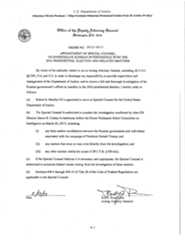
U.S. Department of JusticeAMerHey \llerk Predttet // May CeHtaiH Material Preteeted U1~derFed . R. Cl'itfl. P. 6(e)(©fficeof tqe :!E)eputtJJ\ttortteJJ ®enera-1~uel1i11sfn1t, ~.<!l..20530ORDER.NO. 3915-2017APPOfNTMENTOF SPECIAL COUNSELTO INVESTIGATE RUSSIAN INTERFERENCEWITH THE2016 PRESIDENTIAL ELECTION AND RELATED MATTERSBy virtue of the authority vested in me as Acting Attorney General, including 28 U.S,C.§§ 509, 5 I 0, and 5 I 5, in order to discharge my responsibility to provide supervision andmanagement of the Department of Justice, and to ensurea full and thorough investigation of theRussian govemment's efforts to interfere in the 2016 presidential election, I hereby order asfollows:(a)Robert S. Mueller II[ is appointed to serve as Special Counsel for the United StatesDepartment of Justice.(b)The Special Counsel is authorized to conduct the investigation continued by then-FBIDirector James B. Corney in testimony before the House Permanent Select Committee onIntelligence on March 20, 2017, including:(i)any links and/or coordination belwecn the Russian government and individualsassociated with the campaign of President Donald Trump; and(c)(ii)any matters that arose or may nrisc directly from the investigation; and(iii)any other matters within the scope of 2~ C.F.R. § 600.4(a).If the Special Counsel believes it is necessary and appropriate, the Special Counsel isauthorized to prosecute federal crimes arising from the investigation of these matters.(d)Sections 600.4 through 600.IO of Title 28 of the Code of Federal Regulations areapplicable to the Special Counsel.~n/t-2-DateA-1
U.S. Department of JusticeAMerHey \llerk Predttet // May CeHtaiH Material Preteeted U1~derFed . R. Cl'itfl. P. 6(e)(©fficeof tqe :!E)eputtJJ\ttortteJJ ®enera-1~uel1i11sfn1t, ~.<!l..20530ORDER.NO. 3915-2017APPOfNTMENTOF SPECIAL COUNSELTO INVESTIGATE RUSSIAN INTERFERENCEWITH THE2016 PRESIDENTIAL ELECTION AND RELATED MATTERSBy virtue of the authority vested in me as Acting Attorney General, including 28 U.S,C.§§ 509, 5 I 0, and 5 I 5, in order to discharge my responsibility to provide supervision andmanagement of the Department of Justice, and to ensurea full and thorough investigation of theRussian govemment's efforts to interfere in the 2016 presidential election, I hereby order asfollows:(a)Robert S. Mueller II[ is appointed to serve as Special Counsel for the United StatesDepartment of Justice.(b)The Special Counsel is authorized to conduct the investigation continued by then-FBIDirector James B. Corney in testimony before the House Permanent Select Committee onIntelligence on March 20, 2017, including:(i)any links and/or coordination belwecn the Russian government and individualsassociated with the campaign of President Donald Trump; and(c)(ii)any matters that arose or may nrisc directly from the investigation; and(iii)any other matters within the scope of 2~ C.F.R. § 600.4(a).If the Special Counsel believes it is necessary and appropriate, the Special Counsel isauthorized to prosecute federal crimes arising from the investigation of these matters.(d)Sections 600.4 through 600.IO of Title 28 of the Code of Federal Regulations areapplicable to the Special Counsel.~n/t-2-DateA-1
U.S. Department of JusticeAtterHe~·Werk Preti1:1ct// May CeHtaiHMaterial Pretecteti UHtierFeti. R. Crim. P. 6(c)
U.S. Department of JusticeAtterHe~·Werk Preti1:1ct// May CeHtaiHMaterial Pretecteti UHtierFeti. R. Crim. P. 6(c)
U.S. Department of JusticeAMoniey\Vork Procluet// Ma)' Cm1tainMaterial Proteetecl Uncler Fecl. R. Crirn. P. 6(e)AppendixB
U.S. Department of JusticeAMoniey\Vork Procluet// Ma)' Cm1tainMaterial Proteetecl Uncler Fecl. R. Crirn. P. 6(e)AppendixB
U.S. Department of JusticeAttomey Work Product/,' May COF1tainMaterial Proteetecl Uncler Fecl. R. Criffl. P. 6(e)
U.S. Department of JusticeAttomey Work Product/,' May COF1tainMaterial Proteetecl Uncler Fecl. R. Criffl. P. 6(e)
U.S. Department of JusticeAt:t:orflc)'Work Proauet II Ma)' CoHtaiflMaterial Protcetca UHElcrFea. R. Crim. P. 6(c)APPENDIX B: GLOSSARYThe following glossary contains names and brief descriptions of individuals and entitiesreferenced in the two volumes of this report. It is not intended to be comprehensive and is intendedonly to assist a reader in the reading the rest of the report.Referenced PersonsAgalarov, ArasRussian real-estate developer ( owner of the Crocus Group); met DonaldTrump in connection with the Miss Universe pageant and helped arrangethe June 9, 2016 meeting at Trump Tower between Natalia Veselnitskayaand Trump Campaign officials.Agalarov, EminPerformer, executive vice president of Crocus Group, and son of ArasAgalarov; helped arrange the June 9, 2016 meeting at Trump Towerbetween Natalia Veselnitskaya and Trump Campaign officials.Akhmetov, RinatFormer member in the Ukrainian parliament who hired Paul Manafort toconduct work for Ukrainian political pai1y, the Party of Regions.Akhmetshin, RinatU.S. lobbyist and associate of Natalia Veselnitskaya who attended theJune 9, 2016 meeting at Trump Tower between Veselnitskaya and TrumpCampaign officials.Aslanov,Dzheykhun (Jay)Head of U.S. department of the Internet Research Agency, whichengaged in an "active measures" social media campaign to interfere inthe 2016 U.S. presidential election.Assange, JulianFounder of WikiLeaks, which in 2016 posted on the internet documentsstolen from entities and individuals affiliated with the Democratic Party.Aven, PetrChairman of the board of Alfa-Bank who attempted outreach to thePresidential Transition Team in connection with anticipated post-ele ctionsanctions.Bannon, Stephen(Steve)White House chief strategist and senior counselor to President Trump(Jan. 2017-Aug.2017);chief executive of the Trump Campaign.Baranov, AndreyDirector of investor relations at Russian state-owned oil company,Rosneft, and associate of Carter Page.Berkowitz, AviAssistant to Jared Kushner.Boente, DanaActing Attorney General (Jan. 2017 - Feb. 2017); Acting DeputyAttorney General (Feb . 2017 - Apr. 2017).Bogacheva, AnnaInternet Research Agency employee who worked on "active measures"social media campaign to interfere in in the 2016 U.S. presid entialelection; traveled to the United States under false pretenses in 2014.Bossert, Thomas(Tom)Former homeland security advisor to the President who also served as asenior official on the Presidential Transition Team .B-1
U.S. Department of JusticeAt:t:orflc)'Work Proauet II Ma)' CoHtaiflMaterial Protcetca UHElcrFea. R. Crim. P. 6(c)APPENDIX B: GLOSSARYThe following glossary contains names and brief descriptions of individuals and entitiesreferenced in the two volumes of this report. It is not intended to be comprehensive and is intendedonly to assist a reader in the reading the rest of the report.Referenced PersonsAgalarov, ArasRussian real-estate developer ( owner of the Crocus Group); met DonaldTrump in connection with the Miss Universe pageant and helped arrangethe June 9, 2016 meeting at Trump Tower between Natalia Veselnitskayaand Trump Campaign officials.Agalarov, EminPerformer, executive vice president of Crocus Group, and son of ArasAgalarov; helped arrange the June 9, 2016 meeting at Trump Towerbetween Natalia Veselnitskaya and Trump Campaign officials.Akhmetov, RinatFormer member in the Ukrainian parliament who hired Paul Manafort toconduct work for Ukrainian political pai1y, the Party of Regions.Akhmetshin, RinatU.S. lobbyist and associate of Natalia Veselnitskaya who attended theJune 9, 2016 meeting at Trump Tower between Veselnitskaya and TrumpCampaign officials.Aslanov,Dzheykhun (Jay)Head of U.S. department of the Internet Research Agency, whichengaged in an "active measures" social media campaign to interfere inthe 2016 U.S. presidential election.Assange, JulianFounder of WikiLeaks, which in 2016 posted on the internet documentsstolen from entities and individuals affiliated with the Democratic Party.Aven, PetrChairman of the board of Alfa-Bank who attempted outreach to thePresidential Transition Team in connection with anticipated post-ele ctionsanctions.Bannon, Stephen(Steve)White House chief strategist and senior counselor to President Trump(Jan. 2017-Aug.2017);chief executive of the Trump Campaign.Baranov, AndreyDirector of investor relations at Russian state-owned oil company,Rosneft, and associate of Carter Page.Berkowitz, AviAssistant to Jared Kushner.Boente, DanaActing Attorney General (Jan. 2017 - Feb. 2017); Acting DeputyAttorney General (Feb . 2017 - Apr. 2017).Bogacheva, AnnaInternet Research Agency employee who worked on "active measures"social media campaign to interfere in in the 2016 U.S. presid entialelection; traveled to the United States under false pretenses in 2014.Bossert, Thomas(Tom)Former homeland security advisor to the President who also served as asenior official on the Presidential Transition Team .B-1
U.S. Department of JusticeAt1:on10y'Nork Produet // May Contain Material Proteeted Uncler Fed. R. Cril'l'I.P. 6(e)Boyarkin, ViktorEmployee of Russian oligarch Oleg Deripaska.Boyd, CharlesChairman of the board of directors at the Center for the National Interest,a U.S.-based think tank with operations in and connections to Russia.Boyko, YuriyMember of the Ukrainian political party Opposition Bloc and member ofthe Ukrainian parliament.Brand, RachelAssociate Attorney General (May 2017 - Feb. 2018).Browder, William(Bill)Founder of Hermitage Capital Management who lobbied in favor of theMagnitsky Act, which imposed financial and travel sanctions on Russianofficials.Bulatov, AlexanderRussian intelligence official who associated with Carter Page in 2008.Burchik, MikhailExecutive director of the Internet Research Agency, which engaged in an"active measures" social media campaign to interfere in the 2016 U.S.presidential election.Burck, WilliamPersonal attorney to Don McGahn, White House Counsel.Burnham, JamesAttorney in the White House Counsel's Office who attended January2017 meetings between Sally Yates and Donald McGahn.Burt, RichardFormer U.S. ambassador who had done work Alfa-Bank and was a boardmember of the Center for the National Interest.Bystrov, MikhailGeneral director of the Internet Research Agency, which engaged in an"active measures" social media campaign to interfere in the 2016 U.S .presidential election.Calamari, MattChief operating officer for the Trump Organization.Caputo, MichaelTrump Campaign advisor.Chaika, YuriProsecutor general of the Russian Federation who also maintained arelationship with Aras Agalarov.Christie, ChrisFormer Governor of New Jersey.Clapper, JamesDirector of National Intelligence (Aug. 2010 - Jan. 2017).Clovis, Samuel Jr.Chief policy advisor and national co-chair of the Trump Campaign.Coats, DanDirector of National Intelligence.Cobb,TySpecial Counsel to the President (July 2017 - May 2018).Cohen, MichaelFormer vice president to the Trump Organization and special counsel toDonald Trump who spearheaded an effo11 to build a Trump-brandedproperty in Moscow. He admitted to lying to Congress about the project.Corney, James Jr.Director of the Federal Bureau of Investigation (Sept. 4, 2013 - May 9,2017).B-2
U.S. Department of JusticeAt1:on10y'Nork Produet // May Contain Material Proteeted Uncler Fed. R. Cril'l'I.P. 6(e)Boyarkin, ViktorEmployee of Russian oligarch Oleg Deripaska.Boyd, CharlesChairman of the board of directors at the Center for the National Interest,a U.S.-based think tank with operations in and connections to Russia.Boyko, YuriyMember of the Ukrainian political party Opposition Bloc and member ofthe Ukrainian parliament.Brand, RachelAssociate Attorney General (May 2017 - Feb. 2018).Browder, William(Bill)Founder of Hermitage Capital Management who lobbied in favor of theMagnitsky Act, which imposed financial and travel sanctions on Russianofficials.Bulatov, AlexanderRussian intelligence official who associated with Carter Page in 2008.Burchik, MikhailExecutive director of the Internet Research Agency, which engaged in an"active measures" social media campaign to interfere in the 2016 U.S.presidential election.Burck, WilliamPersonal attorney to Don McGahn, White House Counsel.Burnham, JamesAttorney in the White House Counsel's Office who attended January2017 meetings between Sally Yates and Donald McGahn.Burt, RichardFormer U.S. ambassador who had done work Alfa-Bank and was a boardmember of the Center for the National Interest.Bystrov, MikhailGeneral director of the Internet Research Agency, which engaged in an"active measures" social media campaign to interfere in the 2016 U.S .presidential election.Calamari, MattChief operating officer for the Trump Organization.Caputo, MichaelTrump Campaign advisor.Chaika, YuriProsecutor general of the Russian Federation who also maintained arelationship with Aras Agalarov.Christie, ChrisFormer Governor of New Jersey.Clapper, JamesDirector of National Intelligence (Aug. 2010 - Jan. 2017).Clovis, Samuel Jr.Chief policy advisor and national co-chair of the Trump Campaign.Coats, DanDirector of National Intelligence.Cobb,TySpecial Counsel to the President (July 2017 - May 2018).Cohen, MichaelFormer vice president to the Trump Organization and special counsel toDonald Trump who spearheaded an effo11 to build a Trump-brandedproperty in Moscow. He admitted to lying to Congress about the project.Corney, James Jr.Director of the Federal Bureau of Investigation (Sept. 4, 2013 - May 9,2017).B-2
U.S. Department of JusticeAttorfte)' '.\'erk Product// Ma)' Co1,tai1,Material Protected U1,der Fed. R. Criltl.. P. 6(e)Conway, KellyanneCounselor to President Trump and manager of the Trump Campaign.Corallo, MarkSpokesman for President Trump's personal legal team (June 2017 - July2017).Corsi, JeromeCostello, RobertAttorney who represented he had a close relationship with RudolphGiuliani , the President's personal counsel.Credico , Randolph(Randy)Radio talk show host who interviewed Julian Assange in 2016.Davis, Richard(Rick) Jr.Partner with Pegasus Sustainable Century Merchant Bank, businesspartner of Paul Manafort, and co-founder of the Davis Manafort lobbyingfirm.Dearborn , RickFormer White House deputy chief of staff for policy who previouslyserved as chief of staff to Senator Jeff Sessions.Dempsey, MichaelOffice of Director of National Intelligence official who recalleddiscussions with Dan Coats after Coats ' s meeting with President Trumpon March 22, 2017.Denman , DianaDelegate to 2016 Republican National Convention who proposed aplatform plank amendment that included armed support for Ukraine.Deripaska, OlegRussian businessman with ties to Vladimir Putin who hired PaulManafort for consulting work between 2005 and 2009.Dhillon, UttamAttorney in the White House Counsel's Office (Jan. 2017- June 2018).Dmitriev, Ki rillHead of the Russian Direct Investment Fund (RDlF); met with ErikPrince in the Seychelles in January 2017 and, separately, drafted a U.S.Russia reconciliation plan with Rick Gerson.Donaldson, AnnieChief of staff to White House Counsel Donald McGahn (Jan.2017 - Dec.2018).Dvorkovich, ArkadyDeputy prime minister of the Russian Federation and chairman of theboard of directors of the New Economic School in Moscow. He met withCarter Page twice in 2016.Dvoskin, EvgeneyExecutive of Gen bank in Crimea and associate of Felix Sater.Eisenberg, JohnAttorney in the White House Counsel's Office and legal counsel for theNational Security Council.Erchova, Lana(a/k/a LanaAlexander)Ex-wife of Dmitry Klokov who emailed Ivanka Trump to introduceKlokov to the Trump Campaign in the fall of 2015.B-3
U.S. Department of JusticeAttorfte)' '.\'erk Product// Ma)' Co1,tai1,Material Protected U1,der Fed. R. Criltl.. P. 6(e)Conway, KellyanneCounselor to President Trump and manager of the Trump Campaign.Corallo, MarkSpokesman for President Trump's personal legal team (June 2017 - July2017).Corsi, JeromeCostello, RobertAttorney who represented he had a close relationship with RudolphGiuliani , the President's personal counsel.Credico , Randolph(Randy)Radio talk show host who interviewed Julian Assange in 2016.Davis, Richard(Rick) Jr.Partner with Pegasus Sustainable Century Merchant Bank, businesspartner of Paul Manafort, and co-founder of the Davis Manafort lobbyingfirm.Dearborn , RickFormer White House deputy chief of staff for policy who previouslyserved as chief of staff to Senator Jeff Sessions.Dempsey, MichaelOffice of Director of National Intelligence official who recalleddiscussions with Dan Coats after Coats ' s meeting with President Trumpon March 22, 2017.Denman , DianaDelegate to 2016 Republican National Convention who proposed aplatform plank amendment that included armed support for Ukraine.Deripaska, OlegRussian businessman with ties to Vladimir Putin who hired PaulManafort for consulting work between 2005 and 2009.Dhillon, UttamAttorney in the White House Counsel's Office (Jan. 2017- June 2018).Dmitriev, Ki rillHead of the Russian Direct Investment Fund (RDlF); met with ErikPrince in the Seychelles in January 2017 and, separately, drafted a U.S.Russia reconciliation plan with Rick Gerson.Donaldson, AnnieChief of staff to White House Counsel Donald McGahn (Jan.2017 - Dec.2018).Dvorkovich, ArkadyDeputy prime minister of the Russian Federation and chairman of theboard of directors of the New Economic School in Moscow. He met withCarter Page twice in 2016.Dvoskin, EvgeneyExecutive of Gen bank in Crimea and associate of Felix Sater.Eisenberg, JohnAttorney in the White House Counsel's Office and legal counsel for theNational Security Council.Erchova, Lana(a/k/a LanaAlexander)Ex-wife of Dmitry Klokov who emailed Ivanka Trump to introduceKlokov to the Trump Campaign in the fall of 2015.B-3
U.S. Department of JusticeAttort1e:,· Work Pl'oEluet// Ma:,·Cot1tainMaterial ProteeteEIUt1tlerFetl. R. Crim. P. 6(e)Fabrizio, Anthony(Tony)Partner at the research and consulting firm Fabrizio, Lee & Associates .He was a pollster for the Trump Campaign and worked with PaulManafort on Ukraine-related polling after the election.Fishbein, JasonAttorney who performed worked for Julian Assange and also sentWikiLeaks a password for an unlaunched website PutinTrump.org onSeptember 20, 2016.Flynn, Michael G.(a/k/a MichaelFlynn Jr.)Son of Michael T. Flynn, National Security Advisor (Jan. 20, 2017-Feb.13, 2017).Flynn, Michael T.National Security Advisor (Jan. 20, 2017 - Feb. 13, 2017), Director ofthe Defense Intelligence Agency (July 2012-Aug.7,2014) , and TrumpCampaign advisor.He pleaded guilty to lying to the FBI aboutcommunications with Ambassador Sergey Kislyak in December 2016.Foresman, Robert(Bob)Investment banker who sought meetings with the Trump Campaign inspring 2016 to discuss Russian foreign policy, and after the election metwith Michael Flynn.Futerfas, AlanOutside counsel for the Trump Organization and subsequently personalcounsel for Donald Trump Jr.Garten, AlanGeneral counsel of the Trump Organization.Gates, Richard(Rick) IIIDeputy campaign manager for Trump Campaign, Trump InauguralCommittee deputy chairman, and longtime employee of Paul Manafort.He pleaded guilty to conspiring to defraud the United States and violateU.S. laws, as well as making false statements to the FBI.Gerson, Richard(Rick)New York hedge fund manager and associate of Jared Kushner. Duringthe transition period, he worked with Kirill Dmitriev on a proposal forreconciliation between the United States and Russia.Gistaro, EdwardDeputy Director of National Intelligence for Intelligence Integration .Glassner, MichaelPolitical director of the Trump Campaign who helped introduce GeorgePapadopoulos to others in the Trump Campaign.Goldstone, RobertPublicist for Emin Agalarov who contacted Donald Trump Jr. to arrangethe June 9, 2016 meeting at Trump Tower between Natalia Veselnitskayaand Trump Campaign officials.Gordon, Jeffrey(J.D .)National security advisor to the Trump Campaign involved in changes tothe Republican party platform and who communicated with RussianAmbassador Sergey Kislyak at the Republican National Convention.Gorkov, SergeyChairman of Vnesheconombank (VEB), a Russian state-owned bank ,who met with Jared Kushner during the transition period.Graff, RhonaSenior vice-president and executive assistant to Donald J. Trump at theTrump Organization.B-4
U.S. Department of JusticeAttort1e:,· Work Pl'oEluet// Ma:,·Cot1tainMaterial ProteeteEIUt1tlerFetl. R. Crim. P. 6(e)Fabrizio, Anthony(Tony)Partner at the research and consulting firm Fabrizio, Lee & Associates .He was a pollster for the Trump Campaign and worked with PaulManafort on Ukraine-related polling after the election.Fishbein, JasonAttorney who performed worked for Julian Assange and also sentWikiLeaks a password for an unlaunched website PutinTrump.org onSeptember 20, 2016.Flynn, Michael G.(a/k/a MichaelFlynn Jr.)Son of Michael T. Flynn, National Security Advisor (Jan. 20, 2017-Feb.13, 2017).Flynn, Michael T.National Security Advisor (Jan. 20, 2017 - Feb. 13, 2017), Director ofthe Defense Intelligence Agency (July 2012-Aug.7,2014) , and TrumpCampaign advisor.He pleaded guilty to lying to the FBI aboutcommunications with Ambassador Sergey Kislyak in December 2016.Foresman, Robert(Bob)Investment banker who sought meetings with the Trump Campaign inspring 2016 to discuss Russian foreign policy, and after the election metwith Michael Flynn.Futerfas, AlanOutside counsel for the Trump Organization and subsequently personalcounsel for Donald Trump Jr.Garten, AlanGeneral counsel of the Trump Organization.Gates, Richard(Rick) IIIDeputy campaign manager for Trump Campaign, Trump InauguralCommittee deputy chairman, and longtime employee of Paul Manafort.He pleaded guilty to conspiring to defraud the United States and violateU.S. laws, as well as making false statements to the FBI.Gerson, Richard(Rick)New York hedge fund manager and associate of Jared Kushner. Duringthe transition period, he worked with Kirill Dmitriev on a proposal forreconciliation between the United States and Russia.Gistaro, EdwardDeputy Director of National Intelligence for Intelligence Integration .Glassner, MichaelPolitical director of the Trump Campaign who helped introduce GeorgePapadopoulos to others in the Trump Campaign.Goldstone, RobertPublicist for Emin Agalarov who contacted Donald Trump Jr. to arrangethe June 9, 2016 meeting at Trump Tower between Natalia Veselnitskayaand Trump Campaign officials.Gordon, Jeffrey(J.D .)National security advisor to the Trump Campaign involved in changes tothe Republican party platform and who communicated with RussianAmbassador Sergey Kislyak at the Republican National Convention.Gorkov, SergeyChairman of Vnesheconombank (VEB), a Russian state-owned bank ,who met with Jared Kushner during the transition period.Graff, RhonaSenior vice-president and executive assistant to Donald J. Trump at theTrump Organization.B-4
U.S. Department of Justice/\Horney \l/01·k Prodttet // May Cot½taittMaterial Prntectcd Uttdcr Fed. R. Crim. P. 6(c)Harm to Ongoing MatterHawker, JonathanPublic relations consultant at FTI Consulting; worked with DavisManafort International LLC on public relation s campaign in Ukraine.Heilbrunn, JacobEditor of the Nat ional Interest , the periodical that officially hostedcandidate Trump's April 2016 foreign policy speec h.White Hou se communications director (Aug. 2017 - Mar. 2018) andpress secretary for the Trump Campaign.Hicks, HopeHolt, LesterNBC News anchor who interviewed Pre s ident Trump on May 11, 2017.Hunt, JodyChief of staff to Attorney General Jeff Sessions (Feb. 2017 - Oct. 2017).Ivanov, IgorPresident of the Russia n International Affairs Council and formerRussian foreign minister. Ivan Timofeev told George Papadopoulos thatIvanov advised on arranging a "Moscow visit" for the Trump Campaign.Ivanov, SergeiSpecial representative of Vladimir Putin, former Russian deputy primeminister, and former FSB deputy director. In Janua ry 2016, MichaelCohen emailed the Kremlin requesting to speak to Ivanov.Kasowitz, MarcPres ident Trump's personal counsel (May 2017 - July 2017).Katsyv, DenisSon of Peter Katsyv; owner of Rus sian company Prevezon Ho ldin gs Ltd.and associate of Natalia Ve se lnitskaya.Katsyv, PeterRussian bu sinessman and father of Denis Katsyv .Harm to Ongoing MatterKaveladze, IrakJi(Ike)Vice president at Crocus Group and Aras Agalarov's deputy in the UnitedStates. He participated in the June 9, 2016 meeting at Trump Towerbetween Nata lia Veselnitskaya and Trump Campaign officials.Kaverzina, IrinaEmployee of the internet Re sea rch Agency, which engaged in an "activemeasures" soc ial media campaign to interfere in the 2016 U.S.presidential election .Kelly, JohnWhite Hou se chief of staff (Ju ly 2017 - Jan.2019) .Khalilzad, ZalmayU.S. spec ial representative to Afghanistan and former U.S. ambassador.He met with Senator Jeff Sessions during foreign policy dinners puttogether through the Center for the National Interest.Kilimnik,KonstantinRussian-Ukrainian politica l co nsultant and long-time employee of PaulManafort assessed by the FBI to have tie s to Russian intelligence.Kislyak, SergeyFormer Russian ambassador to the United States and current Russiansena tor from Mordovia.Klimentov, DenisEmployee of the New Economic School who informed high-rankingRussian government officials of Carter Page's July 2016 visit to Moscow.B-5
U.S. Department of Justice/\Horney \l/01·k Prodttet // May Cot½taittMaterial Prntectcd Uttdcr Fed. R. Crim. P. 6(c)Harm to Ongoing MatterHawker, JonathanPublic relations consultant at FTI Consulting; worked with DavisManafort International LLC on public relation s campaign in Ukraine.Heilbrunn, JacobEditor of the Nat ional Interest , the periodical that officially hostedcandidate Trump's April 2016 foreign policy speec h.White Hou se communications director (Aug. 2017 - Mar. 2018) andpress secretary for the Trump Campaign.Hicks, HopeHolt, LesterNBC News anchor who interviewed Pre s ident Trump on May 11, 2017.Hunt, JodyChief of staff to Attorney General Jeff Sessions (Feb. 2017 - Oct. 2017).Ivanov, IgorPresident of the Russia n International Affairs Council and formerRussian foreign minister. Ivan Timofeev told George Papadopoulos thatIvanov advised on arranging a "Moscow visit" for the Trump Campaign.Ivanov, SergeiSpecial representative of Vladimir Putin, former Russian deputy primeminister, and former FSB deputy director. In Janua ry 2016, MichaelCohen emailed the Kremlin requesting to speak to Ivanov.Kasowitz, MarcPres ident Trump's personal counsel (May 2017 - July 2017).Katsyv, DenisSon of Peter Katsyv; owner of Rus sian company Prevezon Ho ldin gs Ltd.and associate of Natalia Ve se lnitskaya.Katsyv, PeterRussian bu sinessman and father of Denis Katsyv .Harm to Ongoing MatterKaveladze, IrakJi(Ike)Vice president at Crocus Group and Aras Agalarov's deputy in the UnitedStates. He participated in the June 9, 2016 meeting at Trump Towerbetween Nata lia Veselnitskaya and Trump Campaign officials.Kaverzina, IrinaEmployee of the internet Re sea rch Agency, which engaged in an "activemeasures" soc ial media campaign to interfere in the 2016 U.S.presidential election .Kelly, JohnWhite Hou se chief of staff (Ju ly 2017 - Jan.2019) .Khalilzad, ZalmayU.S. spec ial representative to Afghanistan and former U.S. ambassador.He met with Senator Jeff Sessions during foreign policy dinners puttogether through the Center for the National Interest.Kilimnik,KonstantinRussian-Ukrainian politica l co nsultant and long-time employee of PaulManafort assessed by the FBI to have tie s to Russian intelligence.Kislyak, SergeyFormer Russian ambassador to the United States and current Russiansena tor from Mordovia.Klimentov, DenisEmployee of the New Economic School who informed high-rankingRussian government officials of Carter Page's July 2016 visit to Moscow.B-5
U.S. Department of JusticeAtlorrrn)' Werle Prodttet // May CoHtaiHMaterial Proteeted UHder Fed. R. Crim. P. 6(e)Klimentov, DmitriBrother of Denis Klimentov who contacted Kremlin press secretaryDmitri Peskov about Carter Page's July 2016 visit to Moscow.Klokov, DmitryExecut ive for PJSC Federal Grid Company of Unified Energy Systemand former aide to Russia's mini ster of energy . He communicated withMichael Cohen about a possible meet ing between Vladimir Putin andcandidate Trump.Advisor to Vladimir Putin and member of the Roscongress Foundationwho invited candidate Trump to the St. Peter sburg InternationalKobyakov, AntonEconom ic Forum.Krickovic, AndrejKrylova,AleksandraProfessor at the Higher Schoo l of Economics who recommended thatCarter Page give a July 20 16 commencement address in Moscow.Internet Re searc h Agency employee who worked on "act ive measures"social medi a campaign to interfere in the 2016 U.S . presidential election;traveled to the United States under false pretenses in 2014.Kushner, JaredPresident Trump's son-in-law and senior advisor to the President.Kuznetsov, SergeyRussian government official at the Russian Embassy to the United Stateswho transmitted Vladimir Putin's congratulations to President-ElectTrump for his electora l victory on November 9, 2016 .Landrum, PeteAdvisor to Senator Jeff Sessions who attended the September 2016meeting between Sessions and Ru ss ian Ambassador Sergey Kislyak.Russian minister of foreign affairs and former permanent representativeof Russia to the United Nations.Lavrov, SergeyLedeen, BarbaraLedeen, MichaelLedgett, RichardLewandowski,CoreyLuff, SandraLyovochkin, SerhiyMagnitsky, SergeiSenate staffer and associate of Michael Flynn who sought to obta inHillary Clinton ema ils during the 2016 U.S. presidenti al campai gnperiod.Member of the Presidential Transition Team who advised on foreignpolicy and national secur ity matters.Deputy director of the Nationa l Security Agency (Jan.2014-Apr. 2017);present when President Trump called Michael Rogers on March 26, 2017.Campa ign manager for the Trump Campaign (Jan. 2015 - June 2016).Legislative director for Senato r Jeff Sess ions; attended a September 2016meeting between Sessions and Rus sian Ambassador Sergey Ki slyak.Member of Ukrainian parli ament and member of Ukrai nian politica lparty, Opposition Bloc Party .Russian tax specialist who alleged Rus sian government corruption anddied in Russian police custody in 2009 . His death prompted passage ofB-6
U.S. Department of JusticeAtlorrrn)' Werle Prodttet // May CoHtaiHMaterial Proteeted UHder Fed. R. Crim. P. 6(e)Klimentov, DmitriBrother of Denis Klimentov who contacted Kremlin press secretaryDmitri Peskov about Carter Page's July 2016 visit to Moscow.Klokov, DmitryExecut ive for PJSC Federal Grid Company of Unified Energy Systemand former aide to Russia's mini ster of energy . He communicated withMichael Cohen about a possible meet ing between Vladimir Putin andcandidate Trump.Advisor to Vladimir Putin and member of the Roscongress Foundationwho invited candidate Trump to the St. Peter sburg InternationalKobyakov, AntonEconom ic Forum.Krickovic, AndrejKrylova,AleksandraProfessor at the Higher Schoo l of Economics who recommended thatCarter Page give a July 20 16 commencement address in Moscow.Internet Re searc h Agency employee who worked on "act ive measures"social medi a campaign to interfere in the 2016 U.S . presidential election;traveled to the United States under false pretenses in 2014.Kushner, JaredPresident Trump's son-in-law and senior advisor to the President.Kuznetsov, SergeyRussian government official at the Russian Embassy to the United Stateswho transmitted Vladimir Putin's congratulations to President-ElectTrump for his electora l victory on November 9, 2016 .Landrum, PeteAdvisor to Senator Jeff Sessions who attended the September 2016meeting between Sessions and Ru ss ian Ambassador Sergey Kislyak.Russian minister of foreign affairs and former permanent representativeof Russia to the United Nations.Lavrov, SergeyLedeen, BarbaraLedeen, MichaelLedgett, RichardLewandowski,CoreyLuff, SandraLyovochkin, SerhiyMagnitsky, SergeiSenate staffer and associate of Michael Flynn who sought to obta inHillary Clinton ema ils during the 2016 U.S. presidenti al campai gnperiod.Member of the Presidential Transition Team who advised on foreignpolicy and national secur ity matters.Deputy director of the Nationa l Security Agency (Jan.2014-Apr. 2017);present when President Trump called Michael Rogers on March 26, 2017.Campa ign manager for the Trump Campaign (Jan. 2015 - June 2016).Legislative director for Senato r Jeff Sess ions; attended a September 2016meeting between Sessions and Rus sian Ambassador Sergey Ki slyak.Member of Ukrainian parli ament and member of Ukrai nian politica lparty, Opposition Bloc Party .Russian tax specialist who alleged Rus sian government corruption anddied in Russian police custody in 2009 . His death prompted passage ofB-6
U.S. Departm ent of JusticeAUor1rn)Work Prodttet // May Cm1taittMaterial Proteeted Uttder Fed. R. Crim. P. 6(e)1Malloch, Theodore(Ted)the Magn itsky Act, whic h imposed financial and travel sanctions onRussian official s.Chief executive officer of Global Fiduciary Governance and theRoosevelt Group. He was a Lond on-ba sed associate of Jerome Corsi.2016) and chairman andManafort, Paul Jr.Trump campaign member (March 2016-Aug.chief strategist (May 2016 - Aug. 2016).Mashburn, JohnTrump administration official and former policy director to the TrumpCampaign.Acting director of the FBI (May 2017 - Aug. 2017); deputy director ofthe FBI (Feb. 2016 - Jan. 2018).McCabe, AndrewMcCord, MaryActing Assi stant Attorney Genera l (Oct. 2016- May 2017).McFarland,Kathleen (K.T.)Deputy White House National Security Advisor (Jan. 2017 - May 2017).McGahn, Donald(Don)White Hou se Counsel (Jan. 2017 - Oct. 2018).Medvedcv, DmitryPrime Minister of Russia.Melnik, YuriySpokesperson for the Rus sian Embassy in Washington , D.C., whoconnected with George Papadopoulos on soc ial media.Maltese national and former London-based professor who , immediatelyafter returning from Mo scow in April 2016, to ld George Papadopoulosthat the Russians had "d irt" in the form of thou sands of Clinton emails.Mifsud, JosephMiller, MattTrump Campaign staff member who was present at the meeting of theNationa l Security and Defense Platform Subcommittee in July 2016.Miller, StephenSen ior advisor to the Pres ident.Millian, SergeiFounder of the Russian American Chamber of Commerce who met withGeorge Papadop oulos during the campai gn.Mnuchin, StevenSecretary of the Trea sury.Harm to Ongoing MatterMiiller -Maguhn,AndrewNader, GeorgeNetyksho, ViktorMember of hacker association Chaos Computer Club and associate ofJulian Assange, founder of WikiLeaks.Advi sor to the United Arab Emirates's Crown Prin ce who arranged ameeting between Kirill Dmitriev and Erik Prince during the transiti onperiod.Rus sian military officer in command of a unit involv ed in Russian hackand-release operations to interfere in the 2016 U.S. presid ential election.B-7
U.S. Departm ent of JusticeAUor1rn)Work Prodttet // May Cm1taittMaterial Proteeted Uttder Fed. R. Crim. P. 6(e)1Malloch, Theodore(Ted)the Magn itsky Act, whic h imposed financial and travel sanctions onRussian official s.Chief executive officer of Global Fiduciary Governance and theRoosevelt Group. He was a Lond on-ba sed associate of Jerome Corsi.2016) and chairman andManafort, Paul Jr.Trump campaign member (March 2016-Aug.chief strategist (May 2016 - Aug. 2016).Mashburn, JohnTrump administration official and former policy director to the TrumpCampaign.Acting director of the FBI (May 2017 - Aug. 2017); deputy director ofthe FBI (Feb. 2016 - Jan. 2018).McCabe, AndrewMcCord, MaryActing Assi stant Attorney Genera l (Oct. 2016- May 2017).McFarland,Kathleen (K.T.)Deputy White House National Security Advisor (Jan. 2017 - May 2017).McGahn, Donald(Don)White Hou se Counsel (Jan. 2017 - Oct. 2018).Medvedcv, DmitryPrime Minister of Russia.Melnik, YuriySpokesperson for the Rus sian Embassy in Washington , D.C., whoconnected with George Papadopoulos on soc ial media.Maltese national and former London-based professor who , immediatelyafter returning from Mo scow in April 2016, to ld George Papadopoulosthat the Russians had "d irt" in the form of thou sands of Clinton emails.Mifsud, JosephMiller, MattTrump Campaign staff member who was present at the meeting of theNationa l Security and Defense Platform Subcommittee in July 2016.Miller, StephenSen ior advisor to the Pres ident.Millian, SergeiFounder of the Russian American Chamber of Commerce who met withGeorge Papadop oulos during the campai gn.Mnuchin, StevenSecretary of the Trea sury.Harm to Ongoing MatterMiiller -Maguhn,AndrewNader, GeorgeNetyksho, ViktorMember of hacker association Chaos Computer Club and associate ofJulian Assange, founder of WikiLeaks.Advi sor to the United Arab Emirates's Crown Prin ce who arranged ameeting between Kirill Dmitriev and Erik Prince during the transiti onperiod.Rus sian military officer in command of a unit involv ed in Russian hackand-release operations to interfere in the 2016 U.S. presid ential election.B-7
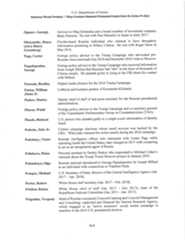
U.S. Depar tment of JusticeAtt:erne)" Werle Prnelttet// Ma)' CeRtaiRMaterial Prnteeteel UReiefFeel. R. Crim. P. 6(e)Oganov, GeorgiyAdvisor to Oleg Deripaska and a board member of investment compa nyBasic Element. He met with Paul Manafort in Spain in early 2017.Oknyan sky, Henry(a/k/a HenryGreenberg)Florida-based Russian individual who claimed to have derogatoryinform ation pertaining to Hillary C linto n. He met with Roger Stone inMay 2016.Page, CarterForeign policy advisor to the Trump Campaign who advocated proRussian views and made July 2016 and December 20 16 visits to Moscow .Foreign policy advisor to the Trump Campaign who received informationfrom Joseph Mifsud that Russ ians had "d irt" in the form of thousands ofClinton email s. He pleaded guilty to lying to the FBI abo ut his contactwith Mifsud.Pap adopoulos ,GeorgeParscale, BradleyDigital media director for the 2016 Trump Campaign.Patten, William(Sam) Jr.Lob by ist and busine ss partner of Konstantin Kilimnik.Peskov, DmitryDeputy ch ief of staff of and press secre tary for the Russian presidentia ladmini stration.Phares , WalidForeign policy advisor to the Trump Campaign and co-secre tary generalof the Transat lantic Parliamentary Gro up on Counterterrorism (TAG).Pinedo , RichardU.S. perso n who pleaded guilty to a single-co unt information of identityfraud .Clinton campaign cha irman whose ema il accou nt was hacke d by theGRU . WikiLeaks released his sto len emails during the 20 16 campaign.Podesta, John Jr.Podobnyy , VictorRussian intelligence officer who interacte d with Carter Page whi leoperating inside the United States; later charged in 2015 with consp iringto act as an unregistered agent of Russia.Poliakova , ElenaPersonal ass istant to Dmitry Peskov who responded to Mic hael Cohen'soutre ach about the Trump Tower Moscow project in January 20 16.Polon skaya, OlgaRussian national introduced to George Papadopoulos by Jose ph Mifsudas an individual with connect ions to Vladimir Putin.Pompeo , MichaelU.S. Secretar y of State; director of the Centra l Int elligence Agency (Jan .2017 - Apr. 2018).Porter , RobertWhite House staff secretary (Jan. 2017 - Feb. 20 18).Priebus, ReinceWhite Hou se chief of staff (Jan. 2017 - July 2017); cha ir of theRepu blican Nat ional Comm ittee (Jan. 2011-Jan . 20 17).Prigozhin, YevgeniyHead of Ru ssian companies Concord -Catering and Conco rd Managementand Consulting ; supported and financed the Internet Resea rch Agenc y,wh ich engaged in an "act ive measures " socia l media campaign tointerfere in the 20 16 U.S. presidential elect ion.B-8
U.S. Depar tment of JusticeAtt:erne)" Werle Prnelttet// Ma)' CeRtaiRMaterial Prnteeteel UReiefFeel. R. Crim. P. 6(e)Oganov, GeorgiyAdvisor to Oleg Deripaska and a board member of investment compa nyBasic Element. He met with Paul Manafort in Spain in early 2017.Oknyan sky, Henry(a/k/a HenryGreenberg)Florida-based Russian individual who claimed to have derogatoryinform ation pertaining to Hillary C linto n. He met with Roger Stone inMay 2016.Page, CarterForeign policy advisor to the Trump Campaign who advocated proRussian views and made July 2016 and December 20 16 visits to Moscow .Foreign policy advisor to the Trump Campaign who received informationfrom Joseph Mifsud that Russ ians had "d irt" in the form of thousands ofClinton email s. He pleaded guilty to lying to the FBI abo ut his contactwith Mifsud.Pap adopoulos ,GeorgeParscale, BradleyDigital media director for the 2016 Trump Campaign.Patten, William(Sam) Jr.Lob by ist and busine ss partner of Konstantin Kilimnik.Peskov, DmitryDeputy ch ief of staff of and press secre tary for the Russian presidentia ladmini stration.Phares , WalidForeign policy advisor to the Trump Campaign and co-secre tary generalof the Transat lantic Parliamentary Gro up on Counterterrorism (TAG).Pinedo , RichardU.S. perso n who pleaded guilty to a single-co unt information of identityfraud .Clinton campaign cha irman whose ema il accou nt was hacke d by theGRU . WikiLeaks released his sto len emails during the 20 16 campaign.Podesta, John Jr.Podobnyy , VictorRussian intelligence officer who interacte d with Carter Page whi leoperating inside the United States; later charged in 2015 with consp iringto act as an unregistered agent of Russia.Poliakova , ElenaPersonal ass istant to Dmitry Peskov who responded to Mic hael Cohen'soutre ach about the Trump Tower Moscow project in January 20 16.Polon skaya, OlgaRussian national introduced to George Papadopoulos by Jose ph Mifsudas an individual with connect ions to Vladimir Putin.Pompeo , MichaelU.S. Secretar y of State; director of the Centra l Int elligence Agency (Jan .2017 - Apr. 2018).Porter , RobertWhite House staff secretary (Jan. 2017 - Feb. 20 18).Priebus, ReinceWhite Hou se chief of staff (Jan. 2017 - July 2017); cha ir of theRepu blican Nat ional Comm ittee (Jan. 2011-Jan . 20 17).Prigozhin, YevgeniyHead of Ru ssian companies Concord -Catering and Conco rd Managementand Consulting ; supported and financed the Internet Resea rch Agenc y,wh ich engaged in an "act ive measures " socia l media campaign tointerfere in the 20 16 U.S. presidential elect ion.B-8
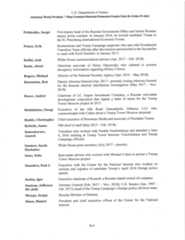
U.S. Department of JusticeAttorne)' Work Produet // May CoHtaifl Material Proteeted URder Fee. R. Criffl. P. 6(e)Prikhodko, SergeiFirst deputy head of the Russian Government Office and former Russiandeputy prime minister. In January 2016, he invited candidate Trump tothe St. Petersburg International Economic Forum.Prince, ErikBusinessman and Trump Campa ign supporter who met with PresidentialTransition Team offic ials after the election and traveled to the Seychellesto meet with Kirill Dmitriev in January 2017.Raffel, JoshWhite House communication s advisor (Apr. 2017 - Feb. 2018).Rasin, AlexeiUkrainian associate of Henry Oknyansky who claimed to pos sessderogatory info rmation regarding Hillary Clinton.Rogers, MichaelDirector of the National Security Agency (Apr. 2014 - May 2018).Rosenstein, RodDeput y Attorney General (Apr. 20 17 - pre sent) ; Acting Attorney Generalfor the Russian election interference investigation (May 2017 - Nov.2018).Rozov , AndreiChairman of LC. Expert Investment Company, a Ru ssian real-estatedevelopment corporation that signed a letter of intent for the TrumpTower Moscow project in 2015.Rtskhiladze, GiorgiExecutive of the Silk Road Transatlantic A lliance, LLC whocommunicated with Cohen about a Trump Tower Moscow proposal.Ruddy, ChristopherChief execut ive of Newsmax Media and associate of Pre sident Trump.Rybicki, JamesFBI chiefofstaff(MaySamochornov,AnatoliTrans lator who worked with Nata lia Veselnitskaya and attended a June9, 2016 meeting at Trump Tower between Veselnitskaya and TrumpCampaign officials.Sanders, SarahHuckabeeWhite House press sec retar y (July 2017 - present).Sater, FelixReal-estate advisor who worked with Michael Cohen to pursue a TrumpTower Moscow project.Saunders, Paul J.Executive with the Center for the National Interest who worked onoutlines and logistic s of candidate Trump's April 2016 foreign policyspeech.Sechin, IgorEx ecutive chairman of Rosneft , a Russian-stated owned oil company.Sessions, JeffersonIII (Jeff)Attorney Gen eral (Feb. 2017 - Nov. 2018); U.S. Senator (Jan . 1997 Feb. 2017); head of the Trump Campaign's foreign poli cy advisory team.Shoygu, SergeyRussian Minister of Defense.Simes, DimitriPresident and chief execut ive officer of the Center for the NationalInterest.2015- Feb. 20 18).B-9
U.S. Department of JusticeAttorne)' Work Produet // May CoHtaifl Material Proteeted URder Fee. R. Criffl. P. 6(e)Prikhodko, SergeiFirst deputy head of the Russian Government Office and former Russiandeputy prime minister. In January 2016, he invited candidate Trump tothe St. Petersburg International Economic Forum.Prince, ErikBusinessman and Trump Campa ign supporter who met with PresidentialTransition Team offic ials after the election and traveled to the Seychellesto meet with Kirill Dmitriev in January 2017.Raffel, JoshWhite House communication s advisor (Apr. 2017 - Feb. 2018).Rasin, AlexeiUkrainian associate of Henry Oknyansky who claimed to pos sessderogatory info rmation regarding Hillary Clinton.Rogers, MichaelDirector of the National Security Agency (Apr. 2014 - May 2018).Rosenstein, RodDeput y Attorney General (Apr. 20 17 - pre sent) ; Acting Attorney Generalfor the Russian election interference investigation (May 2017 - Nov.2018).Rozov , AndreiChairman of LC. Expert Investment Company, a Ru ssian real-estatedevelopment corporation that signed a letter of intent for the TrumpTower Moscow project in 2015.Rtskhiladze, GiorgiExecutive of the Silk Road Transatlantic A lliance, LLC whocommunicated with Cohen about a Trump Tower Moscow proposal.Ruddy, ChristopherChief execut ive of Newsmax Media and associate of Pre sident Trump.Rybicki, JamesFBI chiefofstaff(MaySamochornov,AnatoliTrans lator who worked with Nata lia Veselnitskaya and attended a June9, 2016 meeting at Trump Tower between Veselnitskaya and TrumpCampaign officials.Sanders, SarahHuckabeeWhite House press sec retar y (July 2017 - present).Sater, FelixReal-estate advisor who worked with Michael Cohen to pursue a TrumpTower Moscow project.Saunders, Paul J.Executive with the Center for the National Interest who worked onoutlines and logistic s of candidate Trump's April 2016 foreign policyspeech.Sechin, IgorEx ecutive chairman of Rosneft , a Russian-stated owned oil company.Sessions, JeffersonIII (Jeff)Attorney Gen eral (Feb. 2017 - Nov. 2018); U.S. Senator (Jan . 1997 Feb. 2017); head of the Trump Campaign's foreign poli cy advisory team.Shoygu, SergeyRussian Minister of Defense.Simes, DimitriPresident and chief execut ive officer of the Center for the NationalInterest.2015- Feb. 20 18).B-9
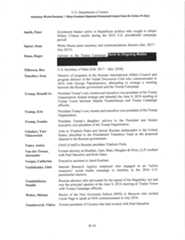
U.S. Depa11ment of Ju sticePreteeted U11derFed. R. Crim. P. 6(e)1MaterialAtterne) Werlt Predttet // May Ce11tB:i11Smith, PeterInvestment banker active in Republican politics who sought to obta inHillary Clinton emails during the 2016 U.S. presidential campai gnperiod.Spicer, SeanWhite Hou se press sec retary and communi cat ion s dir ector (Jan . 2017 July 201 7).Stone, RogerTillerson, RexU.S. Secretary of State (Feb . 2017 - Mar . 2018).Timofeev, IvanDirector of programs at the Ru ssian International Affa irs Co uncil andprogram dir ecto r of the Valdai Di scussion Club w ho comm unicated in2016 with George Papadopoulos, attemptin g to arrange a meetingbetween the Russian government and the Trump Campaign.Trump, Donald Jr.President Trump 's son; tru stee and executive vice president of the TrumpOrganization; helped arrange and attended the June 9, 20 16 meeting atTrump Tower between Na talia Vese lnitskaya and Trump Ca mpaignoffic ials.Trump, EricPresident Trump 's son; trustee and executive vice pres ident of the TrumpOrganization.Trump, IvankaPresident Trump's daught er; advisor to the Presidentexec utive vice president of the Trump Organization.Ushakov, YuriViktorovichAide to Vladim ir Putin and former Ru ssian ambassador to the UnitedStates; identified to the President ia l Transition Team as the proposedchannel to th e Rus sian government.Vaino, AntonChief of staff to Ru ss ian president Vladimir Put in.Van der Zwaan,AlexanderFor mer attorney at Skadden , Arps, Slate, Meagher & Flom, LLP; worke dwith Paul Manafort and Rick Gates.Vargas, CatherineExecut ive assistant to Jared Kushner.Vasilchenko, GlebInternet Re search Agency empl oyee who engaged in an "activemeasures " soc ia l med ia campaign to interfere in the 2016 U.S .presidential election.Veselnitskaya,NataliaRussian atto rney who advoca ted for the repea l of the Magn itsky Act andwas the princip al spea ker at the June 9, 2016 meetin g at Trump Towerwith Trump Campa ign officia ls.Weber, ShlomoRector of the New Eco nomic Schoo l (NES) in Moscow who inv itedCarter Page to speak at NES commenceme nt in July 2016.Yanukovych, ViktorFor mer pre sident of Ukrain e who had worked with Paul Manafort.B-10and former
U.S. Depa11ment of Ju sticePreteeted U11derFed. R. Crim. P. 6(e)1MaterialAtterne) Werlt Predttet // May Ce11tB:i11Smith, PeterInvestment banker active in Republican politics who sought to obta inHillary Clinton emails during the 2016 U.S. presidential campai gnperiod.Spicer, SeanWhite Hou se press sec retary and communi cat ion s dir ector (Jan . 2017 July 201 7).Stone, RogerTillerson, RexU.S. Secretary of State (Feb . 2017 - Mar . 2018).Timofeev, IvanDirector of programs at the Ru ssian International Affa irs Co uncil andprogram dir ecto r of the Valdai Di scussion Club w ho comm unicated in2016 with George Papadopoulos, attemptin g to arrange a meetingbetween the Russian government and the Trump Campaign.Trump, Donald Jr.President Trump 's son; tru stee and executive vice president of the TrumpOrganization; helped arrange and attended the June 9, 20 16 meeting atTrump Tower between Na talia Vese lnitskaya and Trump Ca mpaignoffic ials.Trump, EricPresident Trump 's son; trustee and executive vice pres ident of the TrumpOrganization.Trump, IvankaPresident Trump's daught er; advisor to the Presidentexec utive vice president of the Trump Organization.Ushakov, YuriViktorovichAide to Vladim ir Putin and former Ru ssian ambassador to the UnitedStates; identified to the President ia l Transition Team as the proposedchannel to th e Rus sian government.Vaino, AntonChief of staff to Ru ss ian president Vladimir Put in.Van der Zwaan,AlexanderFor mer attorney at Skadden , Arps, Slate, Meagher & Flom, LLP; worke dwith Paul Manafort and Rick Gates.Vargas, CatherineExecut ive assistant to Jared Kushner.Vasilchenko, GlebInternet Re search Agency empl oyee who engaged in an "activemeasures " soc ia l med ia campaign to interfere in the 2016 U.S .presidential election.Veselnitskaya,NataliaRussian atto rney who advoca ted for the repea l of the Magn itsky Act andwas the princip al spea ker at the June 9, 2016 meetin g at Trump Towerwith Trump Campa ign officia ls.Weber, ShlomoRector of the New Eco nomic Schoo l (NES) in Moscow who inv itedCarter Page to speak at NES commenceme nt in July 2016.Yanukovych, ViktorFor mer pre sident of Ukrain e who had worked with Paul Manafort.B-10and former
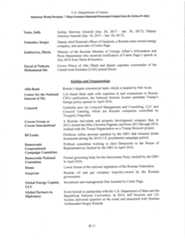
U.S. Department of Justice// Ma)' CorHaiRMate,•ialPrnteeted URder Fed. R. Criffl. P. 6(e)Attorne)' Wol'ltProd1:1etYate s, SallyActing Attorney General (Jan. 20, 2017 - Jan. 30, 2017); DeputyAttorney Genera l (Jan. 10, 2015 - Jan. 30, 2017).Yatsenko, SergeyDeputy ch ief financial office r of Gazprom, a Russian state-owne d energycompany , and assoc iate of Carter Page.Zakharova , MariaDirec tor of the Russ ian Ministry of Foreign Affair's Information andPress Department who received notificati on of Ca rter Page's speech inJuly 2016 from Deni s Klimentov.Zayed al Nahyan ,Mohammed binCrown Prince of Abu Dh abi and deput y supreme comm ander of theUnited Arab Em irates (UAE) armed forces.Entities and OrganizationsAlfa-BankCenter for the NationalInterest (CNI)ConcordCrocus Group orCrocus InternationalDCLeaksDemocraticCongressionalCampaign CommitteeDemocratic NationalCommitteeDumaGazpro mGlobal Energy Capital,LLCGlobal Partners inDiplomacyRussia's largest comm erc ial bank, wh ich is headed by Petr Aven.U.S.-based think tank with expertise in and connections to Russ ia.CNI's publication, the Nat ional Interest, hosted candidate Trump 'sforeign pol icy speec h in April 20 16.Umbrella term for Concord Management and Consulting , LLC andConcord Catering, which are Russ ian companies contro lled byYevgeniy Prigozhin.A Russian real- estate and prop erty development company th at, in2013 , hosted the Miss Universe Pageant , and from 2013 through 20 14,worked wit h the T rump Organization on a Trump Moscow project.Fictitious online persona operated by the GRU that released stolendocument s durin g the 2016 U .S. presidenti al camp aign per iod.Political committ ee wo rking to elect Dem ocrats to the House ofRepresent atives; hacked by the GRU in April 2016.Formal governing body for the Democratic Party; hacked by the GRUin Apri l 20 16.Lower House of the national leg islature of the Russian Federat ion.Russian oil and gas com pany majo rity-owned by the Ru ss iangovernme nt.Investme nt and manage ment firm founded by Ca rter Page.Event hosted in partnership with the U.S. Department of State and theRepub lican National Conventi on. In 2016 , Jeff Sess ions and J .D.Gordon delivered speeches at the event and interacted wit h RussianAmbassador Sergey Kislyak.B-11
U.S. Department of Justice// Ma)' CorHaiRMate,•ialPrnteeted URder Fed. R. Criffl. P. 6(e)Attorne)' Wol'ltProd1:1etYate s, SallyActing Attorney General (Jan. 20, 2017 - Jan. 30, 2017); DeputyAttorney Genera l (Jan. 10, 2015 - Jan. 30, 2017).Yatsenko, SergeyDeputy ch ief financial office r of Gazprom, a Russian state-owne d energycompany , and assoc iate of Carter Page.Zakharova , MariaDirec tor of the Russ ian Ministry of Foreign Affair's Information andPress Department who received notificati on of Ca rter Page's speech inJuly 2016 from Deni s Klimentov.Zayed al Nahyan ,Mohammed binCrown Prince of Abu Dh abi and deput y supreme comm ander of theUnited Arab Em irates (UAE) armed forces.Entities and OrganizationsAlfa-BankCenter for the NationalInterest (CNI)ConcordCrocus Group orCrocus InternationalDCLeaksDemocraticCongressionalCampaign CommitteeDemocratic NationalCommitteeDumaGazpro mGlobal Energy Capital,LLCGlobal Partners inDiplomacyRussia's largest comm erc ial bank, wh ich is headed by Petr Aven.U.S.-based think tank with expertise in and connections to Russ ia.CNI's publication, the Nat ional Interest, hosted candidate Trump 'sforeign pol icy speec h in April 20 16.Umbrella term for Concord Management and Consulting , LLC andConcord Catering, which are Russ ian companies contro lled byYevgeniy Prigozhin.A Russian real- estate and prop erty development company th at, in2013 , hosted the Miss Universe Pageant , and from 2013 through 20 14,worked wit h the T rump Organization on a Trump Moscow project.Fictitious online persona operated by the GRU that released stolendocument s durin g the 2016 U .S. presidenti al camp aign per iod.Political committ ee wo rking to elect Dem ocrats to the House ofRepresent atives; hacked by the GRU in April 2016.Formal governing body for the Democratic Party; hacked by the GRUin Apri l 20 16.Lower House of the national leg islature of the Russian Federat ion.Russian oil and gas com pany majo rity-owned by the Ru ss iangovernme nt.Investme nt and manage ment firm founded by Ca rter Page.Event hosted in partnership with the U.S. Department of State and theRepub lican National Conventi on. In 2016 , Jeff Sess ions and J .D.Gordon delivered speeches at the event and interacted wit h RussianAmbassador Sergey Kislyak.B-11
U.S. Department of JusticeAttorne)" Wol'lt Predttet // Mey CofltttiflMeteriel Proteeted U1~derFed. R. Criffi. P. 6(e)Guccifer 2.0I.C. Expert InvestmentCompanyInternet ResearchAgency (IRA)KLS Research LLCKremlinLetterOneLink CampusUniversityLondon Centre ofInternational LawPractice (LCILP)Fictitious online persona operated by the GRU that released stolendocuments during the 2016 U.S. presidential campaign period.Russian real-estate and development corporation that signed a letter ofintent with a Trump Organization subsidiary to develop a TrumpMoscow property.Russian entity based in Saint Petersburg and funded by Concord thatengaged in an "active measure s" social media campaign to interfere inthe 20 I 6 V,S. presidential election.Business established by an associate of and at the direction of PeterSmith to further Smith's search for Hillary Clinton emails.Official residence of the president of the Russian Federation; it is usedcolloquially to refer to the office of the president or the Russiangovernment.Company that includes Petr Aven and Richard Burt as board members.During a board meeting in December 2016, Aven asked for Burt 's helpto make contact with the Presidential Transition Team.University in Rome, Italy, where George Papadopoulos wasintroduced to Joseph Mifsud.International law advisory organization in London that employedJoseph Mifsud and George Papadop oulos.Main IntelligenceDirectorate of theGeneral Staff (GRU)Russian Federation's military intelligence agency.New Economic Schoolin Moscow (NES)Moscow-based school that invited Carter Page to speak at its July 2016commencement ceremony.Ukrainian political party that incorporated members of the defunctParty of Regions .Ukrainian political party of former President Yanukovych. It wasgenerally understood to align with Russian policies.Company registered in the Cayman Islands by Paul Manafort and hisbusiness partner Rick Davis. Oleg Deripaska invested in the fund.Russian company that was a defendant in a U.S. civil action allegingthe laundering of proceeds from fraud exposed by Sergei Magnitsky.Opposition BlocParty of RegionsPericles EmergingMarket Partners LLPPrevezon Holdings Ltd.RoscongressFoundationRosneftRussian DirectInvestment FundRussian entity that organized the St. Petersburg InternationalEconomic Forum.Russian state-owned oil and energy company.Sovereign wealth fund established by the Russian Government in 2011and headed by Kirill Dmitriev .B-12
U.S. Department of JusticeAttorne)" Wol'lt Predttet // Mey CofltttiflMeteriel Proteeted U1~derFed. R. Criffi. P. 6(e)Guccifer 2.0I.C. Expert InvestmentCompanyInternet ResearchAgency (IRA)KLS Research LLCKremlinLetterOneLink CampusUniversityLondon Centre ofInternational LawPractice (LCILP)Fictitious online persona operated by the GRU that released stolendocuments during the 2016 U.S. presidential campaign period.Russian real-estate and development corporation that signed a letter ofintent with a Trump Organization subsidiary to develop a TrumpMoscow property.Russian entity based in Saint Petersburg and funded by Concord thatengaged in an "active measure s" social media campaign to interfere inthe 20 I 6 V,S. presidential election.Business established by an associate of and at the direction of PeterSmith to further Smith's search for Hillary Clinton emails.Official residence of the president of the Russian Federation; it is usedcolloquially to refer to the office of the president or the Russiangovernment.Company that includes Petr Aven and Richard Burt as board members.During a board meeting in December 2016, Aven asked for Burt 's helpto make contact with the Presidential Transition Team.University in Rome, Italy, where George Papadopoulos wasintroduced to Joseph Mifsud.International law advisory organization in London that employedJoseph Mifsud and George Papadop oulos.Main IntelligenceDirectorate of theGeneral Staff (GRU)Russian Federation's military intelligence agency.New Economic Schoolin Moscow (NES)Moscow-based school that invited Carter Page to speak at its July 2016commencement ceremony.Ukrainian political party that incorporated members of the defunctParty of Regions .Ukrainian political party of former President Yanukovych. It wasgenerally understood to align with Russian policies.Company registered in the Cayman Islands by Paul Manafort and hisbusiness partner Rick Davis. Oleg Deripaska invested in the fund.Russian company that was a defendant in a U.S. civil action allegingthe laundering of proceeds from fraud exposed by Sergei Magnitsky.Opposition BlocParty of RegionsPericles EmergingMarket Partners LLPPrevezon Holdings Ltd.RoscongressFoundationRosneftRussian DirectInvestment FundRussian entity that organized the St. Petersburg InternationalEconomic Forum.Russian state-owned oil and energy company.Sovereign wealth fund established by the Russian Government in 2011and headed by Kirill Dmitriev .B-12
U.S. Department of JusticeP. 6(e)Ped. R. Cri1T1.Attorney \\'erk Prodttet // Ma)· C0Htait1~foterial Proteeted Ut1de1•Russian InternationalAffairs CouncilSilk Road GroupSt. PetersburgInternational EconomicForumTatneftTransatlanticParliamentary Groupon CounterterrorismUnit 26165 (GRU)Unit 74455 (GRU)Valdai Discussion ClubWikiLeaksRussia-based nonprofit established by Russian government decree. Itis associated with the Ministry of Foreign Affairs, and its membersinclude Ivan Timofeev, Dmitry Peskov, and Petr Aven.Privately held investment company that entered into a licensingagreement to build a Trump-branded hotel in Georgia.Annual event held in Russia and attended by prominent Russianpoliticians and businessmen.Russian energy company.European group that sponsored a summit between EuropeanParliament lawmakers and U.S. persons. George Papadopoulos , SamClovis, and Walid Phares attended the TAG summit in July 2016.GRU military cyber unit dedicated to targeting military, political,governmental, and non-governmental organizations outside of Russia.It engaged in computer intrusions of U.S. persons and organizations,as well as the subsequent release of the stolen data, in order to interferein the 2016 U.S. presidential election.GRU military unit with multiple departments that engaged in cyberoperations. It engaged in computer intrusions of U.S. persons andorganizations, as well as the subsequent release of the stolen data, inorder to interfere in the 2016 U.S. presidential election.Group that holds a conference attended by Russian governmentofficials, including President Putin.Organization founded by Julian Assange that posts information online,including data stolen from private, corporate, and U.S. Governmententities. Released data stolen by the GRU during the 2016 U.S.presidential election.B-13
U.S. Department of JusticeP. 6(e)Ped. R. Cri1T1.Attorney \\'erk Prodttet // Ma)· C0Htait1~foterial Proteeted Ut1de1•Russian InternationalAffairs CouncilSilk Road GroupSt. PetersburgInternational EconomicForumTatneftTransatlanticParliamentary Groupon CounterterrorismUnit 26165 (GRU)Unit 74455 (GRU)Valdai Discussion ClubWikiLeaksRussia-based nonprofit established by Russian government decree. Itis associated with the Ministry of Foreign Affairs, and its membersinclude Ivan Timofeev, Dmitry Peskov, and Petr Aven.Privately held investment company that entered into a licensingagreement to build a Trump-branded hotel in Georgia.Annual event held in Russia and attended by prominent Russianpoliticians and businessmen.Russian energy company.European group that sponsored a summit between EuropeanParliament lawmakers and U.S. persons. George Papadopoulos , SamClovis, and Walid Phares attended the TAG summit in July 2016.GRU military cyber unit dedicated to targeting military, political,governmental, and non-governmental organizations outside of Russia.It engaged in computer intrusions of U.S. persons and organizations,as well as the subsequent release of the stolen data, in order to interferein the 2016 U.S. presidential election.GRU military unit with multiple departments that engaged in cyberoperations. It engaged in computer intrusions of U.S. persons andorganizations, as well as the subsequent release of the stolen data, inorder to interfere in the 2016 U.S. presidential election.Group that holds a conference attended by Russian governmentofficials, including President Putin.Organization founded by Julian Assange that posts information online,including data stolen from private, corporate, and U.S. Governmententities. Released data stolen by the GRU during the 2016 U.S.presidential election.B-13
U.S. Department of JusticeAttorne)' 'Norlc Prodttet // May Cm1taiflMaterial Proteeted URder Fed. R. Crim. P. 6(e)Index of Acro nymsCNICenter for the National InterestDCCCDNCDemocratic Congressional Campaign CommitteeDemocratic National CommitteeFBIFederal Bureau oflnvestigatio nFSBRussian Federal Security ServiceGECGlobal Energy Capital, LLCHPSCIRussian Federation's Main Intelligence Directorate of the General StaffU.S. House of Representatives Permanent Select Committee on IntelligenceHRCHillary Rodham ClintonIRAInternet Research AgencyLCILPNATOLondon Centre of International Law PracticeNorth Atlantic Treaty OrganizationNESNew Economic SchoolNSANational Security AgencyODNIOffice of the Director of National IntelligencePTTPresidential Transition TeamRDIFRIACRussian Direct Investment FundRussian International Affairs CouncilSBOEState boards of electionsscoSpecial Counsel's OfficeSJCSSCIU.S. Senate Judiciary CommitteeU.S. Senate Select Committee on IntelligenceTAGTransatlantic Parliamentary Group on CounterterrorismVEBVnesheconombankGRUB-14
U.S. Department of JusticeAttorne)' 'Norlc Prodttet // May Cm1taiflMaterial Proteeted URder Fed. R. Crim. P. 6(e)Index of Acro nymsCNICenter for the National InterestDCCCDNCDemocratic Congressional Campaign CommitteeDemocratic National CommitteeFBIFederal Bureau oflnvestigatio nFSBRussian Federal Security ServiceGECGlobal Energy Capital, LLCHPSCIRussian Federation's Main Intelligence Directorate of the General StaffU.S. House of Representatives Permanent Select Committee on IntelligenceHRCHillary Rodham ClintonIRAInternet Research AgencyLCILPNATOLondon Centre of International Law PracticeNorth Atlantic Treaty OrganizationNESNew Economic SchoolNSANational Security AgencyODNIOffice of the Director of National IntelligencePTTPresidential Transition TeamRDIFRIACRussian Direct Investment FundRussian International Affairs CouncilSBOEState boards of electionsscoSpecial Counsel's OfficeSJCSSCIU.S. Senate Judiciary CommitteeU.S. Senate Select Committee on IntelligenceTAGTransatlantic Parliamentary Group on CounterterrorismVEBVnesheconombankGRUB-14
U.S. Department of JusticeAMorttcy Werle Proauet // Ma) ' Contain Material Protected UHder Fca. R. Criffl. P. 6(e)AppendixC
U.S. Department of JusticeAMorttcy Werle Proauet // Ma) ' Contain Material Protected UHder Fca. R. Criffl. P. 6(e)AppendixC

U.S. Department of JusticeAttomey Wm•kPfoe:lttet// Mtty Cofltttifl Mttterittl Pfoteetee:IUt1e:lerFee. R. Cfim. P. 6(e)
U.S. Department of JusticeAttomey Wm•kPfoe:lttet// Mtty Cofltttifl Mttterittl Pfoteetee:IUt1e:lerFee. R. Cfim. P. 6(e)
U.S. Department of Justicei'\Jterfle~· Werk Preattet // May CeHtttifl Material Preteetea UHaer Fee. R. Crim. P. 6(e)APPENDIXCINTRODUCTORY NOTEThe President provided written responses through his personal counsel to questionssubmitted to him by the Special Counsel 's Office. We first explain the process that led to thesubmission of written questions and then attach the President ' s responses.Beginning in Dec ember 2017, this Office sought for more than a year to interview thePresident on topics relevant to both Russian-election interference and obstruction-of-justice . Weadvised counsel that the President was a " subject" of the investigation unde r the definition of theJustice Manual -" a person whose conduct is within the scope of the grand jury's investigation. "Justice Manual § 9-11.151 (2018). We also advised counsel that"[ a]n interview with the Presidentis vital to our investigation" and that this Office had " carefull y considered the constitutional andother arguments raised by . .. counsel , and they d[id] not provide us with reason to forgo seekingan interview ." 1 We additionally stated that "it is in the interest of the Presidency and the publicfor an interview to take place" and offered "numerous accommodations to aid the President 'spreparation and avoid surprise." 2 After extensive discussions with the Department of Justice aboutthe Special Counsel's objective of securing the President's testimon y, thes e accommodationsincluded the submissions of written questions to the Presid ent on certain Russia-related topics. 3We received the President's written responses in late November 2018. 4 In December 2018 ,we informed counsel of the insufficiency of those responses in several respect s. 5 We noted, amongother things , that the President stated on more than 30 occasions that he "does not 're call ' or' remember ' or have an ' independent recollection"' of information called for by the questions. 6Other answers were "incomplete or impreci se." 7 The written responses , we inform ed counsel,"demonstrate the inadequacy of the written format , as we hav e had no opportunity to ask followup questions that would ensure complete answers and potentially refresh your client ' s recollectionor clarify the extent or nature of his lack of recollection." 8 We again requested an in-personinterview , limited to certain topics , advising the President ' s counsel that " [t]his is the President ' s15/16/18 Letter, Special Counsel to the President 's Personal Counsel, at 1.25/16/18 Letter, Special Counsels's Office to the President's Personal Counsel, at l ; see 7/30/18Letter, Special Counsel 's Office to the President 's Personal Counsel, at I (describing accommodation s).39/17/18 Letter, Special Counsel's Office to the President 's Personal Counsel, at I (submittingwritten questions).411/20/18 Letter, President' s Personal Counsel to the Special Counsel ' s Office (transmittin gwritten responses of Donald J. Trump).512/3/18 Letter, Special Counsel's Office to the President's Personal Counsel, at 3.612/3/18 Letter, Special Counsel's Office to the President's Personal Co unsel, at 3.712/3/ 18 Letter, Special Counsel ' s Office to the President 's Personal Counsel, at 3; see (noting,"for example," that the President "did not answer whether he had at any time directed or suggested thatdiscussions about the Trump Moscow Project should cease ... but he has since made public commentsabout that topic").812/3/18 Letter, Special Counsel's Office to the President' s Personal Counsel, at 3.C-1
U.S. Department of Justicei'\Jterfle~· Werk Preattet // May CeHtttifl Material Preteetea UHaer Fee. R. Crim. P. 6(e)APPENDIXCINTRODUCTORY NOTEThe President provided written responses through his personal counsel to questionssubmitted to him by the Special Counsel 's Office. We first explain the process that led to thesubmission of written questions and then attach the President ' s responses.Beginning in Dec ember 2017, this Office sought for more than a year to interview thePresident on topics relevant to both Russian-election interference and obstruction-of-justice . Weadvised counsel that the President was a " subject" of the investigation unde r the definition of theJustice Manual -" a person whose conduct is within the scope of the grand jury's investigation. "Justice Manual § 9-11.151 (2018). We also advised counsel that"[ a]n interview with the Presidentis vital to our investigation" and that this Office had " carefull y considered the constitutional andother arguments raised by . .. counsel , and they d[id] not provide us with reason to forgo seekingan interview ." 1 We additionally stated that "it is in the interest of the Presidency and the publicfor an interview to take place" and offered "numerous accommodations to aid the President 'spreparation and avoid surprise." 2 After extensive discussions with the Department of Justice aboutthe Special Counsel's objective of securing the President's testimon y, thes e accommodationsincluded the submissions of written questions to the Presid ent on certain Russia-related topics. 3We received the President's written responses in late November 2018. 4 In December 2018 ,we informed counsel of the insufficiency of those responses in several respect s. 5 We noted, amongother things , that the President stated on more than 30 occasions that he "does not 're call ' or' remember ' or have an ' independent recollection"' of information called for by the questions. 6Other answers were "incomplete or impreci se." 7 The written responses , we inform ed counsel,"demonstrate the inadequacy of the written format , as we hav e had no opportunity to ask followup questions that would ensure complete answers and potentially refresh your client ' s recollectionor clarify the extent or nature of his lack of recollection." 8 We again requested an in-personinterview , limited to certain topics , advising the President ' s counsel that " [t]his is the President ' s15/16/18 Letter, Special Counsel to the President 's Personal Counsel, at 1.25/16/18 Letter, Special Counsels's Office to the President's Personal Counsel, at l ; see 7/30/18Letter, Special Counsel 's Office to the President 's Personal Counsel, at I (describing accommodation s).39/17/18 Letter, Special Counsel's Office to the President 's Personal Counsel, at I (submittingwritten questions).411/20/18 Letter, President' s Personal Counsel to the Special Counsel ' s Office (transmittin gwritten responses of Donald J. Trump).512/3/18 Letter, Special Counsel's Office to the President's Personal Counsel, at 3.612/3/18 Letter, Special Counsel's Office to the President's Personal Co unsel, at 3.712/3/ 18 Letter, Special Counsel ' s Office to the President 's Personal Counsel, at 3; see (noting,"for example," that the President "did not answer whether he had at any time directed or suggested thatdiscussions about the Trump Moscow Project should cease ... but he has since made public commentsabout that topic").812/3/18 Letter, Special Counsel's Office to the President' s Personal Counsel, at 3.C-1
U.S. Department of JusticeA1:terHe~·Werk Preclttet // May CeHtaiH Material Proteetecl UHder Fed. R. Crim. P. 6(e)opportunity to voluntarily provide us with information for us to evaluate in the context of all ofthe evidence we have gathered." 9 The President declined. 10Recognizing that the President would not be interviewed voluntarily, we consideredwhether to issue a subpoena for his testimony. We viewed the written answers to be inadequate.But at that point, our investigation had made significant progress and had produced substantialevidence for our report. We thus weighed the costs of potentially lengthy constitutional litigation ,with resulting delay in finishing our investigation , against the anticipated benefits for ourinvestigation and report. As explained in Volume II, Section H.B., we determined that thesubstantial quantity of information we had obtained from other sources allowed us to draw relevantfactual conclusions on intent and credibility , which are often inferred from circumstantial evidenceand assessed without direct testimony from the subject of the investigation.*9**12/3/18 Letter, Special Counsel to the President's Personal Counsel.1012/12/18 Letter, President's Personal Counsel to the Special Counsel's Office, at 2.C-2
U.S. Department of JusticeA1:terHe~·Werk Preclttet // May CeHtaiH Material Proteetecl UHder Fed. R. Crim. P. 6(e)opportunity to voluntarily provide us with information for us to evaluate in the context of all ofthe evidence we have gathered." 9 The President declined. 10Recognizing that the President would not be interviewed voluntarily, we consideredwhether to issue a subpoena for his testimony. We viewed the written answers to be inadequate.But at that point, our investigation had made significant progress and had produced substantialevidence for our report. We thus weighed the costs of potentially lengthy constitutional litigation ,with resulting delay in finishing our investigation , against the anticipated benefits for ourinvestigation and report. As explained in Volume II, Section H.B., we determined that thesubstantial quantity of information we had obtained from other sources allowed us to draw relevantfactual conclusions on intent and credibility , which are often inferred from circumstantial evidenceand assessed without direct testimony from the subject of the investigation.*9**12/3/18 Letter, Special Counsel to the President's Personal Counsel.1012/12/18 Letter, President's Personal Counsel to the Special Counsel's Office, at 2.C-2
U.S. Department of JusticeAttorHey Work Proettet // May CeHtaiH Mat:erial Proteetee UHeer Fee. R. Crim. P. 6(e)WRITTEN QUESTIONS TO BE ANSWERED UNDER OATH BY PRESIDENT DONALD J. TRUMPI.June 9, 2016 Meeting at Trump Towera. When did you first learn that Donald Trump, Jr., Paul Manafort, or Jared Kushnerwas considering participating in a meeting in June 2016 concerning potentiallynegative information about Hillary Clinton? Describe who you learned theinformation from and the substance of the discussion.b. Attached to this document as Exhibit A is a series of emails from June 2016between, among others, Donald Trump, Jr. and Rob Goldstone. In addition to theemails reflected in Exhibit A, Donald Trump, Jr. had other communications withRob Goldstone and Emin Agalarov between June 3, 2016, and June 9, 2016.i. Did Mr. Trump, Jr. or anyone else tell you about or show you any of thesecommunications? If yes, describe who discussed the communications withyou, when, and the substance of the discussion(s).ii. When did you first see or learn about all or any part of the emails reflectedin Exhibit A?iii. When did you first learn that the proposed meeting involved or wasdescribed as being part of Russia and its government's support for yourcandidacy?iv. Did you suggest to or direct anyone not to discuss or release publicly all orany portion of the emails reflected in Exhibit A? If yes, describe who youcommunicated with, when, the substance of the communication(s), andwhy you took that action.c. On June 9, 2016, Donald Trump, Jr., Paul Manafort, and Jared Kushner attended ameeting at Trump Tower with several individuals, including a Russian lawyer,Natalia Veselnitskaya (the June 9 meeting").i. Other than as set forth in your answers to I.a and l.b, what, if anything,were you told about the possibility of this meeting taking place, or thescheduling of such a meeting? Describe who you discussed this with,when, and what you were informed about the meeting.ii. When did you learn that some of the individuals attending the June 9meeting were Russian or had any affiliation with any part of the Russiangovernment? Describe who you learned this information from and thesubstance of the discussion(s).iii. What were you told about what was discussed at the June 9 meeting?Describe each conversation in which you were told about what wasdiscussed at the meeting, who the conversation was with, when itoccurred, and the substance of the statements they made about themeeting.11C-3
U.S. Department of JusticeAttorHey Work Proettet // May CeHtaiH Mat:erial Proteetee UHeer Fee. R. Crim. P. 6(e)WRITTEN QUESTIONS TO BE ANSWERED UNDER OATH BY PRESIDENT DONALD J. TRUMPI.June 9, 2016 Meeting at Trump Towera. When did you first learn that Donald Trump, Jr., Paul Manafort, or Jared Kushnerwas considering participating in a meeting in June 2016 concerning potentiallynegative information about Hillary Clinton? Describe who you learned theinformation from and the substance of the discussion.b. Attached to this document as Exhibit A is a series of emails from June 2016between, among others, Donald Trump, Jr. and Rob Goldstone. In addition to theemails reflected in Exhibit A, Donald Trump, Jr. had other communications withRob Goldstone and Emin Agalarov between June 3, 2016, and June 9, 2016.i. Did Mr. Trump, Jr. or anyone else tell you about or show you any of thesecommunications? If yes, describe who discussed the communications withyou, when, and the substance of the discussion(s).ii. When did you first see or learn about all or any part of the emails reflectedin Exhibit A?iii. When did you first learn that the proposed meeting involved or wasdescribed as being part of Russia and its government's support for yourcandidacy?iv. Did you suggest to or direct anyone not to discuss or release publicly all orany portion of the emails reflected in Exhibit A? If yes, describe who youcommunicated with, when, the substance of the communication(s), andwhy you took that action.c. On June 9, 2016, Donald Trump, Jr., Paul Manafort, and Jared Kushner attended ameeting at Trump Tower with several individuals, including a Russian lawyer,Natalia Veselnitskaya (the June 9 meeting").i. Other than as set forth in your answers to I.a and l.b, what, if anything,were you told about the possibility of this meeting taking place, or thescheduling of such a meeting? Describe who you discussed this with,when, and what you were informed about the meeting.ii. When did you learn that some of the individuals attending the June 9meeting were Russian or had any affiliation with any part of the Russiangovernment? Describe who you learned this information from and thesubstance of the discussion(s).iii. What were you told about what was discussed at the June 9 meeting?Describe each conversation in which you were told about what wasdiscussed at the meeting, who the conversation was with, when itoccurred, and the substance of the statements they made about themeeting.11C-3
U.S. Department of JusticeAttort'iey Work Proattet // Ma)'' Cotttaitt Material Proteetea Uttaer Fea. R. Crim. P. 6(e)iv. Were you told that the June 9 meeting was about, in whole or in part,adoption and/or the Magnitsky Act? If yes, describe who you had thatdiscussion with, when, and the substance of the discussion.d. For the period June 6, 2016 through June 9, 2016, for what portion of each daywere you in Trump Tower?i. Did you speak or meet with Donald Trump, Jr., Paul Manafort , or JaredKushner on June 9, 2016? If yes, did any portion of any of thoseconversations or meetings include any reference to any aspect of the June9 meeting? If yes, describe who you spoke with and the substance of theconversation.e. Did you communicate directly or indirectly with any member or representative ofthe Agalarov family after June 3, 2016? If yes, describe who you spoke with, when ,and the substance of the communication.f.Did you learn of any communications between Donald Trump, Jr., Paul Manafort ,or Jared Kushner and any member or representative of the Agalarov family,Natalia Veselnitskaya, Rob Goldstone, or any Russian official or contact that tookplace after June 9, 2016 and concerned the June 9 meeting or efforts by Russia toassist the campaign? If yes, describe who you learned this information from,when, and the substance of what you learned.g. On June 7, 2016, you gave a speech in which you said, in part , "I am going to givea major speech on probably Monday of next week and we're going to be discussingall of the things that have taken place with the Clintons."i. Why did you make that statement?ii. What information did you plan to share with respect to the Clintons?iii. What did you believe the source(s) of that information would be?iv. Did you expect any of the information to have come from the June 9meeting?v. Did anyone help draft the speech that you were referring to? If so, who?vi. Why did you ultimately not give the speech you referenced on June 7,2016?h. Did any person or entity inform you during the campaign that Vladimir Putin orthe Russian government supported your candidacy or oppos ed th e candidacy ofHillary Clinton? If yes, describe th e source(s) of the information , when you we reinformed , and the content of such discussion(s).i.Did any person or entity inform you during the campaign that any foreigngovernment or foreign leader, other than Russia or Vladim ir Putin, had provided,wished to provide, or offer ed to provide tangible support to your campaign,including by way of offering to provide negative information on Hillary Clinton? IfC-4
U.S. Department of JusticeAttort'iey Work Proattet // Ma)'' Cotttaitt Material Proteetea Uttaer Fea. R. Crim. P. 6(e)iv. Were you told that the June 9 meeting was about, in whole or in part,adoption and/or the Magnitsky Act? If yes, describe who you had thatdiscussion with, when, and the substance of the discussion.d. For the period June 6, 2016 through June 9, 2016, for what portion of each daywere you in Trump Tower?i. Did you speak or meet with Donald Trump, Jr., Paul Manafort , or JaredKushner on June 9, 2016? If yes, did any portion of any of thoseconversations or meetings include any reference to any aspect of the June9 meeting? If yes, describe who you spoke with and the substance of theconversation.e. Did you communicate directly or indirectly with any member or representative ofthe Agalarov family after June 3, 2016? If yes, describe who you spoke with, when ,and the substance of the communication.f.Did you learn of any communications between Donald Trump, Jr., Paul Manafort ,or Jared Kushner and any member or representative of the Agalarov family,Natalia Veselnitskaya, Rob Goldstone, or any Russian official or contact that tookplace after June 9, 2016 and concerned the June 9 meeting or efforts by Russia toassist the campaign? If yes, describe who you learned this information from,when, and the substance of what you learned.g. On June 7, 2016, you gave a speech in which you said, in part , "I am going to givea major speech on probably Monday of next week and we're going to be discussingall of the things that have taken place with the Clintons."i. Why did you make that statement?ii. What information did you plan to share with respect to the Clintons?iii. What did you believe the source(s) of that information would be?iv. Did you expect any of the information to have come from the June 9meeting?v. Did anyone help draft the speech that you were referring to? If so, who?vi. Why did you ultimately not give the speech you referenced on June 7,2016?h. Did any person or entity inform you during the campaign that Vladimir Putin orthe Russian government supported your candidacy or oppos ed th e candidacy ofHillary Clinton? If yes, describe th e source(s) of the information , when you we reinformed , and the content of such discussion(s).i.Did any person or entity inform you during the campaign that any foreigngovernment or foreign leader, other than Russia or Vladim ir Putin, had provided,wished to provide, or offer ed to provide tangible support to your campaign,including by way of offering to provide negative information on Hillary Clinton? IfC-4
U.S. Department of JusticeAttel'fl:e~·'.\'e,rk Preclttet // Ma)' CeAtaiAMaterial Pre,teeteclUAclerFecl. R. Crim. P. 6(e)yes, describe the source{s) of the information, when you were informed, and thecontent of such discussion(s).II.Russian Hacking/ Russian Efforts Using Social Media / Wikileaksa. On June 14, 2016, it was publicly reported that computer hackers had penetratedthe computer network of the Democratic National Committee {DNC) and thatRussian intelligence was behind the unauthorized access, or hack. Prior to June14, 2016, were you provided any information about any potential or actualhacking of the computer systems or email accounts of the DNC, the DemocraticCongressional Campaign Committee (DCCC),the Clinton Campaign, Hillary Clinton,or individuals associated with the Clinton campaign? If yes, describe who providedthis information, when, and the substance of the information.b. On July 22, 2016, Wikileaks released nearly 20,000 emails sent or received byDemocratic party officials .i. Prior to the July 22, 2016 release, were you aware from any source thatWikileaks, Guccifer 2.0, DCLeaks, or Russians had or potentially hadpossession of or planned to release emails or information that could helpyour campaign or hurt the Clinton campaign? If yes, describe who youdiscussed this issue with, when, and the substance of the discussion(s).ii. After the release of emails by Wikileaks on July 22, 2016, were you toldthat Wikileaks possessed or might possess additional information thatcould be released during the campaign? If yes, describe who provided thisinformation, when, and what you were told.c. Are you aware of any communications during the campaign, directly or indirectly,between Roger Stone, Donald Trump, Jr., Paul Manafort, or Rick Gates and {a)Wikileaks, {b) Julian Assange, (c) other representatives of Wikileaks, {d) Guccifer2.0, (e) representatives of Guccifer 2.0, or {f) representatives of DCLeaks? If yes,describe who provided you with this information, when you learned of thecommunications, and what you know about those communications.d. On July 27, 2016, you stated at a press conference: "Russia, if you're listening, Ihope you're able to find the 30,000 emails that are missing. I think you willprobably be rewarded mightily by our press."i. Why did you make that request of Russia,as opposed to any other country,entity, or individual?ii. In advance of making that statement, what discussions, if any, did you havewith anyone else about the substance of the statement?iii. Were you told at any time before or after you made that statement thatRussia was attempting to infiltrate or hack computer systems or emailaccounts of Hillary Clinton or her campaign? If yes, describe who providedthis information, when, and what you were told.C-5
U.S. Department of JusticeAttel'fl:e~·'.\'e,rk Preclttet // Ma)' CeAtaiAMaterial Pre,teeteclUAclerFecl. R. Crim. P. 6(e)yes, describe the source{s) of the information, when you were informed, and thecontent of such discussion(s).II.Russian Hacking/ Russian Efforts Using Social Media / Wikileaksa. On June 14, 2016, it was publicly reported that computer hackers had penetratedthe computer network of the Democratic National Committee {DNC) and thatRussian intelligence was behind the unauthorized access, or hack. Prior to June14, 2016, were you provided any information about any potential or actualhacking of the computer systems or email accounts of the DNC, the DemocraticCongressional Campaign Committee (DCCC),the Clinton Campaign, Hillary Clinton,or individuals associated with the Clinton campaign? If yes, describe who providedthis information, when, and the substance of the information.b. On July 22, 2016, Wikileaks released nearly 20,000 emails sent or received byDemocratic party officials .i. Prior to the July 22, 2016 release, were you aware from any source thatWikileaks, Guccifer 2.0, DCLeaks, or Russians had or potentially hadpossession of or planned to release emails or information that could helpyour campaign or hurt the Clinton campaign? If yes, describe who youdiscussed this issue with, when, and the substance of the discussion(s).ii. After the release of emails by Wikileaks on July 22, 2016, were you toldthat Wikileaks possessed or might possess additional information thatcould be released during the campaign? If yes, describe who provided thisinformation, when, and what you were told.c. Are you aware of any communications during the campaign, directly or indirectly,between Roger Stone, Donald Trump, Jr., Paul Manafort, or Rick Gates and {a)Wikileaks, {b) Julian Assange, (c) other representatives of Wikileaks, {d) Guccifer2.0, (e) representatives of Guccifer 2.0, or {f) representatives of DCLeaks? If yes,describe who provided you with this information, when you learned of thecommunications, and what you know about those communications.d. On July 27, 2016, you stated at a press conference: "Russia, if you're listening, Ihope you're able to find the 30,000 emails that are missing. I think you willprobably be rewarded mightily by our press."i. Why did you make that request of Russia,as opposed to any other country,entity, or individual?ii. In advance of making that statement, what discussions, if any, did you havewith anyone else about the substance of the statement?iii. Were you told at any time before or after you made that statement thatRussia was attempting to infiltrate or hack computer systems or emailaccounts of Hillary Clinton or her campaign? If yes, describe who providedthis information, when, and what you were told.C-5
U.S. Department of JusticeAtlef'fle) \ltet'k Pt1eclttet// Moy CeHtttiHMotet1iolPrnteetecl UHE:ierFee. R. Ct1iffl.P. 6(e)1e. On October 7, 2016, emails hacked from the account of John Podesta werereleased by WikiLeaks.· i. Where were you on October 7, 2016?ii. Were you told at any time in advance of, or on the day of, the October 7release that Wikileaks possessed or might possess emails related to JohnPodesta? If yes, describe who told you this, when, and what you weretold.iii. Are you aware of anyone associated with you or your campaign, includingRoger Stone, reaching out to Wikileaks, either directly or through anintermediary, on or about October 7, 2016? If yes, identify the person anddescribe the substance of the conversations or contacts.f.Were you told of anyone associated with you or your campaign, including RogerStone, having any discussions, directly or indirectly, with Wikileaks, Guccifer 2.0,or DCLeaksregarding the content or timing of release of hacked emails? If yes,describe who had such contacts, how you became aware of the contacts, whenyou became aware of the contacts, and the substance of the contacts.g. From June 1, 2016 through the end of the campaign, how frequently did youcommunicate with Roger Stone? Describe the nature of your communication(s)with Mr. Stone.i. During that time period, what efforts did Mr. Stone tell you he was makingto assist your campaign, and what requests, if any, did you make of Mr.Stone?ii. Did Mr. Stone ever discuss Wikileaks with you or, as far as you were aware,with anyone else associated with the campaign? If yes, describe what youwere told, from whom, and when.iii. Did Mr. Stone at any time inform you about contacts he had with Wikileaksor any intermediary of WikiLeaks, or about forthcoming releases ofinformation? If yes, describe what Stone told you and when.h. Did you have any discussions prior to January 20, 2017, regarding a potentialpardon or other action to benefit Julian Assange? If yes, describe who you hadthe discussion(s) with, when, and the content of the discussion(s).i.Were you aware of any efforts by foreign individuals or companies, including thosein Russia, to assist your campaign through the use of social media postings or theorganization of rallies? If yes, identify who you discussed such assistance with,when, and the content of the discussion(s).C-6
U.S. Department of JusticeAtlef'fle) \ltet'k Pt1eclttet// Moy CeHtttiHMotet1iolPrnteetecl UHE:ierFee. R. Ct1iffl.P. 6(e)1e. On October 7, 2016, emails hacked from the account of John Podesta werereleased by WikiLeaks.· i. Where were you on October 7, 2016?ii. Were you told at any time in advance of, or on the day of, the October 7release that Wikileaks possessed or might possess emails related to JohnPodesta? If yes, describe who told you this, when, and what you weretold.iii. Are you aware of anyone associated with you or your campaign, includingRoger Stone, reaching out to Wikileaks, either directly or through anintermediary, on or about October 7, 2016? If yes, identify the person anddescribe the substance of the conversations or contacts.f.Were you told of anyone associated with you or your campaign, including RogerStone, having any discussions, directly or indirectly, with Wikileaks, Guccifer 2.0,or DCLeaksregarding the content or timing of release of hacked emails? If yes,describe who had such contacts, how you became aware of the contacts, whenyou became aware of the contacts, and the substance of the contacts.g. From June 1, 2016 through the end of the campaign, how frequently did youcommunicate with Roger Stone? Describe the nature of your communication(s)with Mr. Stone.i. During that time period, what efforts did Mr. Stone tell you he was makingto assist your campaign, and what requests, if any, did you make of Mr.Stone?ii. Did Mr. Stone ever discuss Wikileaks with you or, as far as you were aware,with anyone else associated with the campaign? If yes, describe what youwere told, from whom, and when.iii. Did Mr. Stone at any time inform you about contacts he had with Wikileaksor any intermediary of WikiLeaks, or about forthcoming releases ofinformation? If yes, describe what Stone told you and when.h. Did you have any discussions prior to January 20, 2017, regarding a potentialpardon or other action to benefit Julian Assange? If yes, describe who you hadthe discussion(s) with, when, and the content of the discussion(s).i.Were you aware of any efforts by foreign individuals or companies, including thosein Russia, to assist your campaign through the use of social media postings or theorganization of rallies? If yes, identify who you discussed such assistance with,when, and the content of the discussion(s).C-6
U.S. Department of JusticeAtt6rfle, · \lt6rlc Pr6attet // Ma, · C6Htaifl Material Pt'6teetea UHElerFee. R. CriHl:.P. 6(e1Ill.The Trump Organization Moscow Projecta. In October 2015, a "Letter of Intent," a copy of which is attached as Exhibit B, wassigned for a proposed Trump Organization project in Moscow (the "TrumpMoscow project").i. When were you first informed of discussions about the Trump Moscowproject? By whom? What were you told about the project?ii. Did you sign the letter of intent?b. In a statement provided to Congress, attached as Exhibit C, Michael Cohen stated:"To the best of my knowledge, Mr. Trump was never in contact with anyone aboutthis proposal other than me on three occasions, including signing a non-bindingletter of intent in 2015." Describe all discussions you had with Mr . Cohen, oranyone else associated with the Trump Organization, about the Trump Moscowproject, including who you spoke with, when , and the substance of thediscussion(s).c. Did you learn of any communications between Michael Cohen or Felix Sater andany Russian government officials, including officials in the office of Dmitry Peskov,regarding the Trump Moscow project? If so, identify who provided thisinformation to you, when, and the substance of what you learned.d. Did you have any discussions between June 2015 and June 2016 regarding apotential trip to Russia by you and/or Michael Cohen for reasons related to theTrump Moscow project? If yes, describe who you spoke with , when, and thesubstance of the discussion(s).e. Did you at any tim e direct or suggest that discussions about the Trump Moscowproject should cease, or were you informed at any time that the project had beenabandoned? If yes, describe who you spoke with, when, the substance of thediscussion(s), and why that decision was made.f.Did you have any discussions regarding what information would be providedpublicly or in response to investigative inquiries about potential or actualinvestments or business deals the Trump Organization had in Russia, including theTrump Moscow project? If yes, describe who you spoke with, when , and thesubstance of the discussion(s).g. Aside from the Trump Moscow project, did you or th e Trump Organization haveany other prospective or actual business intere st s, investments, or arrangementswith Russia or any Russian interest or Russian ind ividual during the campaign? Ifyes, describe the business inte rests, investments, or arrangements .C-7
U.S. Department of JusticeAtt6rfle, · \lt6rlc Pr6attet // Ma, · C6Htaifl Material Pt'6teetea UHElerFee. R. CriHl:.P. 6(e1Ill.The Trump Organization Moscow Projecta. In October 2015, a "Letter of Intent," a copy of which is attached as Exhibit B, wassigned for a proposed Trump Organization project in Moscow (the "TrumpMoscow project").i. When were you first informed of discussions about the Trump Moscowproject? By whom? What were you told about the project?ii. Did you sign the letter of intent?b. In a statement provided to Congress, attached as Exhibit C, Michael Cohen stated:"To the best of my knowledge, Mr. Trump was never in contact with anyone aboutthis proposal other than me on three occasions, including signing a non-bindingletter of intent in 2015." Describe all discussions you had with Mr . Cohen, oranyone else associated with the Trump Organization, about the Trump Moscowproject, including who you spoke with, when , and the substance of thediscussion(s).c. Did you learn of any communications between Michael Cohen or Felix Sater andany Russian government officials, including officials in the office of Dmitry Peskov,regarding the Trump Moscow project? If so, identify who provided thisinformation to you, when, and the substance of what you learned.d. Did you have any discussions between June 2015 and June 2016 regarding apotential trip to Russia by you and/or Michael Cohen for reasons related to theTrump Moscow project? If yes, describe who you spoke with , when, and thesubstance of the discussion(s).e. Did you at any tim e direct or suggest that discussions about the Trump Moscowproject should cease, or were you informed at any time that the project had beenabandoned? If yes, describe who you spoke with, when, the substance of thediscussion(s), and why that decision was made.f.Did you have any discussions regarding what information would be providedpublicly or in response to investigative inquiries about potential or actualinvestments or business deals the Trump Organization had in Russia, including theTrump Moscow project? If yes, describe who you spoke with, when , and thesubstance of the discussion(s).g. Aside from the Trump Moscow project, did you or th e Trump Organization haveany other prospective or actual business intere st s, investments, or arrangementswith Russia or any Russian interest or Russian ind ividual during the campaign? Ifyes, describe the business inte rests, investments, or arrangements .C-7
U.S. Department of JusticeAtleme~· Werk Pretlttet // May Ce!ltttill Material Preteetee U!leer Fee. R. Crim . P. 6(c)IV.Contacts with Russia and Russia-Related Issues During the Campaigna. Prior to mid-August 2016, did you become aware that Paul Manafort had ties tothe Ukrainian government? If yes, describe who you learned this informationfrom, when, and the substance of what you were told. Did Mr. Manafort'sconnections to the Ukrainian or Russian governments play any role in yourdecision to have him join your campaign? If yes, describe that role.b. Were you aware that Paul Manafort offered briefings on the progress of you rcampaign to Oleg Deripaska? If yes, describe who you learned this informationfrom, when, the substance of what you were told , what you understood thepurpose was of sharing such information with Mr. Deripaska, and how youresponded to learning this information .c. Were you aware of whether Paul Manafort or anyone else associated with yourcampaign sent or directed others to send internal Trump campaign information toany person located in Ukraine or Russia or associated with the Ukrainian orRussian governments? If yes, identify who provided you with this information,when, the substance of the discussion(s), what you understood the purpose wasof sharing the internal campaign information, and how you responded to learningthis information.d. Did Paul Manafort communicate to you, directly or indirectly, any posit ionsUkraine or Russia would want the U.S. to support? If yes, describe when hecommunicated those positions to you and the substance of thosecommunications.e. During the campaign, were you told about efforts by Russian officials to meet withyou or senior members of your campaign? If yes, describe who you hadconversations with on this topic, when, and what you were told .f.What role, if any, did you have in changing the Republican Party platformregarding arming Ukraine during the Republican National Convention? Prior tothe convention, what information did you have about this platform provision?After the platform provision was changed, who told you about the change, whendid they tell you, what were you told about why it was changed, and who wasinvolved?g. On July 27, 2016, in response to a question about whether you would recognizeCrimea as Russianterritory and lift sanctions on Russia,you said: "We'll be lookingat that . Yeah, we'll be looking." Did you intend to communicate by that statementor at any other time during the campaign a willingness to lift sanctions and/orrecognize Russia's annexation of Crimea if you were elected?C-8
U.S. Department of JusticeAtleme~· Werk Pretlttet // May Ce!ltttill Material Preteetee U!leer Fee. R. Crim . P. 6(c)IV.Contacts with Russia and Russia-Related Issues During the Campaigna. Prior to mid-August 2016, did you become aware that Paul Manafort had ties tothe Ukrainian government? If yes, describe who you learned this informationfrom, when, and the substance of what you were told. Did Mr. Manafort'sconnections to the Ukrainian or Russian governments play any role in yourdecision to have him join your campaign? If yes, describe that role.b. Were you aware that Paul Manafort offered briefings on the progress of you rcampaign to Oleg Deripaska? If yes, describe who you learned this informationfrom, when, the substance of what you were told , what you understood thepurpose was of sharing such information with Mr. Deripaska, and how youresponded to learning this information .c. Were you aware of whether Paul Manafort or anyone else associated with yourcampaign sent or directed others to send internal Trump campaign information toany person located in Ukraine or Russia or associated with the Ukrainian orRussian governments? If yes, identify who provided you with this information,when, the substance of the discussion(s), what you understood the purpose wasof sharing the internal campaign information, and how you responded to learningthis information.d. Did Paul Manafort communicate to you, directly or indirectly, any posit ionsUkraine or Russia would want the U.S. to support? If yes, describe when hecommunicated those positions to you and the substance of thosecommunications.e. During the campaign, were you told about efforts by Russian officials to meet withyou or senior members of your campaign? If yes, describe who you hadconversations with on this topic, when, and what you were told .f.What role, if any, did you have in changing the Republican Party platformregarding arming Ukraine during the Republican National Convention? Prior tothe convention, what information did you have about this platform provision?After the platform provision was changed, who told you about the change, whendid they tell you, what were you told about why it was changed, and who wasinvolved?g. On July 27, 2016, in response to a question about whether you would recognizeCrimea as Russianterritory and lift sanctions on Russia,you said: "We'll be lookingat that . Yeah, we'll be looking." Did you intend to communicate by that statementor at any other time during the campaign a willingness to lift sanctions and/orrecognize Russia's annexation of Crimea if you were elected?C-8
U.S. Department of JusticeAt:terHe~·'+\'erk Pt'eattet // Mtty CeHtttiH Mttterittl Preteetea UHaer Fee. R. Ct'iffi. P. 6(e)i. What consideration did you give to lifting sanctions and/or recognizingRussia's annexation of Crimea if you were elected? Describe who youspoke with about this topic, when, the substance of the discussion{s).V.Contacts with Russia and Russia-Related Issues During the Transitiona. Were you asked to attend the World Chess Championship gala on November 10,2016? If yes, who asked you to attend, when were you asked, and what were youtold about about why your presence was requested?i. Did you attend any part of the event? If yes, describe any interactions youhad with any Russiansor representatives of the Russian government at theevent.b. Following the Obama Administration's imposition of sanctions on Russia iriDecember 2016 {"Russia sanctions"), did you discuss with Lieutenant General{LTG) Michael Flynn, K.T. McFarland, Steve Bannon, Reince Priebus, Jared Kushner,Erik Prince, or anyone else associated with the transition what should becommunicated to the Russian government regarding the sanctions? If yes,describe who you spoke with about this issue, when, and the substance of thediscussion{s).c. On December 29 and December 31, 2016, LTG Flynn had conversations withRussian Ambassador Sergey Kislyak about the Russia sanctions and Russia'sresponse to the Russia sanctions.i. Did you direct or suggest that LTG Flynn have discussions with anyone fromthe Russian government about the Russia sanctions?ii. Were you told in advance of LTG Flynn's December 29, 2016 conversationthat he was going to be speaking with Ambassador Kislyak? If yes, describewho told you this information, when, and what you were told. If no, whenand from whom did you learn of LTG Flynn's December 29, 2016conversation with Ambassador Kislyak?iii. When did you learn of LTG Flynn and Ambassador Kislyak's call onDecember 31, 2016? Who told you and what were you told?iv. When did you learn that sanctions were discussed in the December 29 andDecember 31, 2016 calls between LTG Flynn and Ambassador Kislyak?Who told you and what were you told?d. At any time between December 31, 2016, and January 20, 2017, did anyone tellyou or suggest to you that Russia's decision not to impose reciprocal sanctionswas attributable in any way to LTG Flynn's communications with AmbassadorKislyak? If yes, identify who provided you with this information, when, and thesubstance of what you were told.C-9
U.S. Department of JusticeAt:terHe~·'+\'erk Pt'eattet // Mtty CeHtttiH Mttterittl Preteetea UHaer Fee. R. Ct'iffi. P. 6(e)i. What consideration did you give to lifting sanctions and/or recognizingRussia's annexation of Crimea if you were elected? Describe who youspoke with about this topic, when, the substance of the discussion{s).V.Contacts with Russia and Russia-Related Issues During the Transitiona. Were you asked to attend the World Chess Championship gala on November 10,2016? If yes, who asked you to attend, when were you asked, and what were youtold about about why your presence was requested?i. Did you attend any part of the event? If yes, describe any interactions youhad with any Russiansor representatives of the Russian government at theevent.b. Following the Obama Administration's imposition of sanctions on Russia iriDecember 2016 {"Russia sanctions"), did you discuss with Lieutenant General{LTG) Michael Flynn, K.T. McFarland, Steve Bannon, Reince Priebus, Jared Kushner,Erik Prince, or anyone else associated with the transition what should becommunicated to the Russian government regarding the sanctions? If yes,describe who you spoke with about this issue, when, and the substance of thediscussion{s).c. On December 29 and December 31, 2016, LTG Flynn had conversations withRussian Ambassador Sergey Kislyak about the Russia sanctions and Russia'sresponse to the Russia sanctions.i. Did you direct or suggest that LTG Flynn have discussions with anyone fromthe Russian government about the Russia sanctions?ii. Were you told in advance of LTG Flynn's December 29, 2016 conversationthat he was going to be speaking with Ambassador Kislyak? If yes, describewho told you this information, when, and what you were told. If no, whenand from whom did you learn of LTG Flynn's December 29, 2016conversation with Ambassador Kislyak?iii. When did you learn of LTG Flynn and Ambassador Kislyak's call onDecember 31, 2016? Who told you and what were you told?iv. When did you learn that sanctions were discussed in the December 29 andDecember 31, 2016 calls between LTG Flynn and Ambassador Kislyak?Who told you and what were you told?d. At any time between December 31, 2016, and January 20, 2017, did anyone tellyou or suggest to you that Russia's decision not to impose reciprocal sanctionswas attributable in any way to LTG Flynn's communications with AmbassadorKislyak? If yes, identify who provided you with this information, when, and thesubstance of what you were told.C-9
U.S. Department of JusticeAttoffley Work Protittet // Mtty CotttttiH Mttterittl Proteeteti UAtier Fee. R. CrirA. P. 6(e)e. On January 12, 2017, the Washington Post published a column that stated thatLTG Flynn phoned Ambassador Kislyak several times on December 29, 2016. Afterlearning of the column, did you direct or suggest to anyone that LTG Flynn shoulddeny that he discussed sanctions with Ambassador Kislyak? If yes, who did youmake this suggestion or direction to, when, what did you say, and why did youtake this step?i. After learning of the column, did you have any conversations with LTGFlynn about his conversations with Ambassador Kislyak in December 2016?If yes, describe when those discussions occurred and the content of thediscussions.f.Were you told about a meeting between Jared Kushner and Sergei Gorkov thattook place in December 2016?i. If yes, describe who you spoke with, when , the substance of thediscussion(s}, and what you understood was the purpose of the meeting.g. Were you told about a meeting or meetings between Erik Prince and Kiri II Dmitrievor any other representative from the Russian government that took place inJanuary 2017?i. If yes, describe who you spoke with, when , the substance of thediscussion(s}, and what you understood was the purpose of the meeting(s).h. Prior to January 20, 2017, did you talk to Steve Bannon, Jared Kushner, or anyoth er individual associated with the transition regarding establishing an unofficialline of communication with Russia? If yes, describe who you spoke w ith, when,the substance of the discussion(s), and what you understood was the purpose ofsuch an unofficial line of communication.C-10
U.S. Department of JusticeAttoffley Work Protittet // Mtty CotttttiH Mttterittl Proteeteti UAtier Fee. R. CrirA. P. 6(e)e. On January 12, 2017, the Washington Post published a column that stated thatLTG Flynn phoned Ambassador Kislyak several times on December 29, 2016. Afterlearning of the column, did you direct or suggest to anyone that LTG Flynn shoulddeny that he discussed sanctions with Ambassador Kislyak? If yes, who did youmake this suggestion or direction to, when, what did you say, and why did youtake this step?i. After learning of the column, did you have any conversations with LTGFlynn about his conversations with Ambassador Kislyak in December 2016?If yes, describe when those discussions occurred and the content of thediscussions.f.Were you told about a meeting between Jared Kushner and Sergei Gorkov thattook place in December 2016?i. If yes, describe who you spoke with, when , the substance of thediscussion(s}, and what you understood was the purpose of the meeting.g. Were you told about a meeting or meetings between Erik Prince and Kiri II Dmitrievor any other representative from the Russian government that took place inJanuary 2017?i. If yes, describe who you spoke with, when , the substance of thediscussion(s}, and what you understood was the purpose of the meeting(s).h. Prior to January 20, 2017, did you talk to Steve Bannon, Jared Kushner, or anyoth er individual associated with the transition regarding establishing an unofficialline of communication with Russia? If yes, describe who you spoke w ith, when,the substance of the discussion(s), and what you understood was the purpose ofsuch an unofficial line of communication.C-10
U.S. Department of JusticeAMenwy Werk Preattet // Ma:,·Contain Mate1•ialPreteetea Unaer Feel. R. Ct1ittt. P. 6(e)RESPONSESOF PRESIDENTDONALDJ. TRUMPI.June 9. 2016 Meeting at Trump Towera.When did you first learn that Donald Trump, Jr., Paul Manafort, or Jared Kushner wasconsidering participating in a meeting in June 2016 concerning potentially negativeinformation about Hillary Clinton? Describe who you learned the information from and thesubstance of the discussion.b.Attached to this document as Exhibit A is a series of emails from June 2016 between,among others, Donald Trump, Jr. and Rob Goldstone. In addition to the emails reflected in.Exhibit A, Donald Trump, Jr. had other communications with Rob Goldstone and £minAgalarov between )une 3, 2016, and June 9, 2016.c.i.Did Mr. Trump, Jr. or anyone else tell you about or show you any of thesecommunications? If yes, describe who discussed the communications with you,when, and the substance of the discussion(s),11.When did you first see or learn about all or any part of the emails reflectedExhibit A?iii.When did you first learn that the proposed meeting involved cirwas described asbeing part of Russia and its government's support for your candidacy?1v.Did you suggest to or direct anyone not to discuss or release publicly all or anyportion of the emails reflected in Exhibit A? If yes, describe who youcommunicated with, when, the substance of the communication(s), and why youtook that action.inOn June 9, 2016, Donald Trump, Jr., Paul Manafort, and Jared Kushner attended a meetingat Trump Tower with several individuals, including a Russian lawyer, NataliaYeselnitskaya (the "June 9 meeting").i.Other than as set fotth in your answers to I.a and l.b, what, if anything, were youtold about the possibility of this meeting taking place, or the scheduling of such ameeting? Describe who you discussed this with, when, and what you were informedabout the meeting.ii.When did you learn that some of the individuals attending the June 9 meeting wereRussian or had any affiliation with any part of the Russian government? Describewho you learned this information from and the substance of the discussion(s).6C-11
U.S. Department of JusticeAMenwy Werk Preattet // Ma:,·Contain Mate1•ialPreteetea Unaer Feel. R. Ct1ittt. P. 6(e)RESPONSESOF PRESIDENTDONALDJ. TRUMPI.June 9. 2016 Meeting at Trump Towera.When did you first learn that Donald Trump, Jr., Paul Manafort, or Jared Kushner wasconsidering participating in a meeting in June 2016 concerning potentially negativeinformation about Hillary Clinton? Describe who you learned the information from and thesubstance of the discussion.b.Attached to this document as Exhibit A is a series of emails from June 2016 between,among others, Donald Trump, Jr. and Rob Goldstone. In addition to the emails reflected in.Exhibit A, Donald Trump, Jr. had other communications with Rob Goldstone and £minAgalarov between )une 3, 2016, and June 9, 2016.c.i.Did Mr. Trump, Jr. or anyone else tell you about or show you any of thesecommunications? If yes, describe who discussed the communications with you,when, and the substance of the discussion(s),11.When did you first see or learn about all or any part of the emails reflectedExhibit A?iii.When did you first learn that the proposed meeting involved cirwas described asbeing part of Russia and its government's support for your candidacy?1v.Did you suggest to or direct anyone not to discuss or release publicly all or anyportion of the emails reflected in Exhibit A? If yes, describe who youcommunicated with, when, the substance of the communication(s), and why youtook that action.inOn June 9, 2016, Donald Trump, Jr., Paul Manafort, and Jared Kushner attended a meetingat Trump Tower with several individuals, including a Russian lawyer, NataliaYeselnitskaya (the "June 9 meeting").i.Other than as set fotth in your answers to I.a and l.b, what, if anything, were youtold about the possibility of this meeting taking place, or the scheduling of such ameeting? Describe who you discussed this with, when, and what you were informedabout the meeting.ii.When did you learn that some of the individuals attending the June 9 meeting wereRussian or had any affiliation with any part of the Russian government? Describewho you learned this information from and the substance of the discussion(s).6C-11
U.S. Department of JusticeAtte,n1ey 'Nork Prne1:1et// M1t:,·Ce,Ht1tiHM1tteri1tlPre,teetee UHeer Fee. R. Criffi. P. 6(e)d.iii.What were you told about what was discussed at the June 9 meeting? Describe eachconversation in which you were told about whal was discussed at lhe meeting, whothe conversation was with, when it occurred, and the substance of the statementslhey made about the meeting.iv.Were you told that the June 9 meeting was about, in whole or in part, adoptionand/or the Magnitsky Act? If yes, describe who you had that discussion with, when,and the substance of the discussion.For the period June 6, 2016 through June 9, 2016, for what portion of each day were youin Trump Tower?1.Did you speak or meet with Donald Trump, Jr., Paul Manafort, or Jared Kushneron June 9, 2016? If yes, did any portion of any of those conversations or meetingsinclude any reference to any aspect of the June 9 meeting? If yes, describe who youspoke with and the substance of the conversation.e.Did you communicate directly or indirectly with any member or representative of theAgalarov family after June 3, 2016? If yes, describe who you spoke with, when, and thesubstance of the communication.f.Did you learn of any communications between Donald Trump , Jr., Paul Manaforl, or JaredKushner and any member or representative of the Agalarov family, Natalia Veselnitskaya,Rob Goldstone, or any Russian official or contact that took place after June 9, 20 l 6 andconcerned the June 9 meeting or efforts by Russia to assist the campaign ? If yes. describewho you learned this information from, when, and the substance of what you learned.g.On June 7, 2016, you gave a speech in which you said, in part,' ·[ am going to give a majorspeech on probably Monday of next week and we're going to be discussing all of the thingsthat have taken place with the Clintons .''h.1.Why did you make that statement?ii.What information did you plan to share with respect to the Clintons?111.What did you believe the source(s) of that information would be?iv.Did you expect any of the information to have come from the June 9 meeting?v.Did anyone help draft the speech that you were referring to? If so, who?vt.Why did you ultimately not give the speech you referenced on June 7, 2016?Did any person or entity inform you during the campaign that Vladimir Putin or the Russian7C-12
U.S. Department of JusticeAtte,n1ey 'Nork Prne1:1et// M1t:,·Ce,Ht1tiHM1tteri1tlPre,teetee UHeer Fee. R. Criffi. P. 6(e)d.iii.What were you told about what was discussed at the June 9 meeting? Describe eachconversation in which you were told about whal was discussed at lhe meeting, whothe conversation was with, when it occurred, and the substance of the statementslhey made about the meeting.iv.Were you told that the June 9 meeting was about, in whole or in part, adoptionand/or the Magnitsky Act? If yes, describe who you had that discussion with, when,and the substance of the discussion.For the period June 6, 2016 through June 9, 2016, for what portion of each day were youin Trump Tower?1.Did you speak or meet with Donald Trump, Jr., Paul Manafort, or Jared Kushneron June 9, 2016? If yes, did any portion of any of those conversations or meetingsinclude any reference to any aspect of the June 9 meeting? If yes, describe who youspoke with and the substance of the conversation.e.Did you communicate directly or indirectly with any member or representative of theAgalarov family after June 3, 2016? If yes, describe who you spoke with, when, and thesubstance of the communication.f.Did you learn of any communications between Donald Trump , Jr., Paul Manaforl, or JaredKushner and any member or representative of the Agalarov family, Natalia Veselnitskaya,Rob Goldstone, or any Russian official or contact that took place after June 9, 20 l 6 andconcerned the June 9 meeting or efforts by Russia to assist the campaign ? If yes. describewho you learned this information from, when, and the substance of what you learned.g.On June 7, 2016, you gave a speech in which you said, in part,' ·[ am going to give a majorspeech on probably Monday of next week and we're going to be discussing all of the thingsthat have taken place with the Clintons .''h.1.Why did you make that statement?ii.What information did you plan to share with respect to the Clintons?111.What did you believe the source(s) of that information would be?iv.Did you expect any of the information to have come from the June 9 meeting?v.Did anyone help draft the speech that you were referring to? If so, who?vt.Why did you ultimately not give the speech you referenced on June 7, 2016?Did any person or entity inform you during the campaign that Vladimir Putin or the Russian7C-12
U.S. Department of JusticeAtteirRey\Ve,rkPreifittet// MB:)'CeiRtB:iRMateriB:IPre,teetefi Uttfier Fee. R. Crim. P. 6(e)government supported your candidacy or opposed the candidacy of Hillary Clinton? If yes,describe the source(s) of the information. when you were informed, and the content of suchdiscussion(s).1.Did any person or entity inform you during the campaign that any foreign government orforeign leader, other than Russia or Vladimir Putin, had provided, wished to provide, oroffered to provide tangible support to your campaign, including by way of offering toprovide negative information on Hillary Clinton? If yes, describe the source(s) of theinformation, when you were informed, and the content of such discussion(s).Response to Question l, Parts (a) through (c)I have no recollection of learning at the time that Donald Trump, Jr., Paul Manafort, or JaredKushner was considering participating in a meeting in June 2016 concerning potentially negativeinformation about Hillary Clinton. Nor do I recall learning during the campaign that the June 9,2016 meeting had taken place, that the referenced emails existed. or that Donald J. Trump, Jr., hadother communications with Emin Agalarov or Robert Goldstone between June 3, 2016 and June9, 2016.Response to Question I, Part {d)I have no independent recollection of what portion of these four days in June of2016 I spent inTrump Tower. This was one of many busy months during a fast-paced campaign, as the primaryseason was ending and we were preparing for the general election campaign.I am now aware that my Campaign's calendar indicates that I was in New York City from June 6- 9, 2016. Calendars kept in my Trump Tower office reflect that I had various calls and meetingsscheduled for each of these days. While those calls and meetings may or may not actually havetaken place, they do indicate that I was in Trump Tower during a portion of each of these workingdays, and I have no reason to doubt that I was. When I was in New York City, I stayed at myTrump Tower apartment.My Trump Organization desk calendar also reflects that I was outside Trump Tower duringportions of these days. The June 7, 2016 calendar indicates I was scheduled to leave Trump Towerin the early evening for Westchester where I gave remarks after winning the California, NewJersey, New Mexico, Montana, and South Dakota Republican primaries held that day. The June 8,2016 calendar indicates a scheduled departure in late afternoon to attend a ceremony at my son'sschool. The June 9, 2016 calendar indicates I was scheduled to attend midday meetings and afundraising luncheon at the Four Seasons Hotel. At this point, I do not remember on what dalesthese events occurred, but I do not currently have a reason to doubt that they took place asscheduled on my calendar.Widely available media reports, including television footage, also shed light on my activitiesduring these days. For example, I am aware that my June 7, 2016 victory remarks at the Trump8C-13
U.S. Department of JusticeAtteirRey\Ve,rkPreifittet// MB:)'CeiRtB:iRMateriB:IPre,teetefi Uttfier Fee. R. Crim. P. 6(e)government supported your candidacy or opposed the candidacy of Hillary Clinton? If yes,describe the source(s) of the information. when you were informed, and the content of suchdiscussion(s).1.Did any person or entity inform you during the campaign that any foreign government orforeign leader, other than Russia or Vladimir Putin, had provided, wished to provide, oroffered to provide tangible support to your campaign, including by way of offering toprovide negative information on Hillary Clinton? If yes, describe the source(s) of theinformation, when you were informed, and the content of such discussion(s).Response to Question l, Parts (a) through (c)I have no recollection of learning at the time that Donald Trump, Jr., Paul Manafort, or JaredKushner was considering participating in a meeting in June 2016 concerning potentially negativeinformation about Hillary Clinton. Nor do I recall learning during the campaign that the June 9,2016 meeting had taken place, that the referenced emails existed. or that Donald J. Trump, Jr., hadother communications with Emin Agalarov or Robert Goldstone between June 3, 2016 and June9, 2016.Response to Question I, Part {d)I have no independent recollection of what portion of these four days in June of2016 I spent inTrump Tower. This was one of many busy months during a fast-paced campaign, as the primaryseason was ending and we were preparing for the general election campaign.I am now aware that my Campaign's calendar indicates that I was in New York City from June 6- 9, 2016. Calendars kept in my Trump Tower office reflect that I had various calls and meetingsscheduled for each of these days. While those calls and meetings may or may not actually havetaken place, they do indicate that I was in Trump Tower during a portion of each of these workingdays, and I have no reason to doubt that I was. When I was in New York City, I stayed at myTrump Tower apartment.My Trump Organization desk calendar also reflects that I was outside Trump Tower duringportions of these days. The June 7, 2016 calendar indicates I was scheduled to leave Trump Towerin the early evening for Westchester where I gave remarks after winning the California, NewJersey, New Mexico, Montana, and South Dakota Republican primaries held that day. The June 8,2016 calendar indicates a scheduled departure in late afternoon to attend a ceremony at my son'sschool. The June 9, 2016 calendar indicates I was scheduled to attend midday meetings and afundraising luncheon at the Four Seasons Hotel. At this point, I do not remember on what dalesthese events occurred, but I do not currently have a reason to doubt that they took place asscheduled on my calendar.Widely available media reports, including television footage, also shed light on my activitiesduring these days. For example, I am aware that my June 7, 2016 victory remarks at the Trump8C-13
U.S. Department ofJusticeAMerRe)·'.\'erk Preclttet // Ma)' Cm~tttil'lMtttel'ittlPreteetecl UftclerFecl. R. Criffl. P. 6(e)National Golf Club in Briarcliff Manor, New York, were recorded and published by the media. 1remember winning those primaries and generally recall delivering remarks that evening.At this point in time, I do not remember whether I spoke or met with Donald Trump, Jr., PaulManafort, or Jared Kushner on June 9, 2016. My desk calendar indicates I was scheduled to meetwith Paul Manafort on the morning of June 9, but I do not recall if that meeting took place. It wasmore than two years ago, at a time when I had many calls and interactions daily.·Response to Question I, Part (e)I have no independent recollection of any communications I had with the Agalarov family oranyone r understood to be a representative of the Agalarov family after June 3, 2016 and beforethe end of the campaign. While preparing to respond to these questions, I have become aware ofwritten communications with the Agalarovs during the campaign that were sent, received, andlargely authored by my staff and which I understand have already been produced to you.In general, the documents include congratulatory letters on my campaign victories, emails about apainting Emin and Aras Agalarov arranged to have delivered to Trump Tower as a birthdaypresent, and emails regarding delivery of a book written by Aras Agalarov. The documents reflectthat the deliveries were screened by the Secret Service.Response to Question I, Part (t)I do not recall being aware during the campaign of communications between Donald Trump, Jr.,Paul Manafort, or Jared Kushner and any member or representative of the Agalarov family, RobertGoldstone, Natalia Yeselnitskaya (whose name I was not familiar with), or anyone I understoodto be a Russian official.Response to Question I, Part (g)In remarks I delivered the night I won the California, New Jersey, New Mexico, Montana, andSouth Dakota Republican primaries, I said, "I am going to give a major speech on probablyMonday of next week and we're going to be discussing all of the things that have taken place withthe Clintons." In general, l expected to give a speech referencing the publicly available, negativeinformation about the Clintons, including, for example, Mrs. Clinton's failed policies, theClintons' use of the State Department to further their interests and the interests of the ClintonFoundation, Mrs. Clinton's improper use of a private server for State Department business, thedestruction of 33,000 emails on that server, and Mrs. Clinton's temperamental unsuitability for theoffice of President.In the course of preparing to respond to your questions, I have become aware that the Campaigndocuments already produced to you reflect the drafting, evolution, and sources of information forthe speech I expected to give "probably" on the Monday following my June 7, 2016 comments.These documents generally show that the text of the speech was initially drafted by Campaign staff9C-14
U.S. Department ofJusticeAMerRe)·'.\'erk Preclttet // Ma)' Cm~tttil'lMtttel'ittlPreteetecl UftclerFecl. R. Criffl. P. 6(e)National Golf Club in Briarcliff Manor, New York, were recorded and published by the media. 1remember winning those primaries and generally recall delivering remarks that evening.At this point in time, I do not remember whether I spoke or met with Donald Trump, Jr., PaulManafort, or Jared Kushner on June 9, 2016. My desk calendar indicates I was scheduled to meetwith Paul Manafort on the morning of June 9, but I do not recall if that meeting took place. It wasmore than two years ago, at a time when I had many calls and interactions daily.·Response to Question I, Part (e)I have no independent recollection of any communications I had with the Agalarov family oranyone r understood to be a representative of the Agalarov family after June 3, 2016 and beforethe end of the campaign. While preparing to respond to these questions, I have become aware ofwritten communications with the Agalarovs during the campaign that were sent, received, andlargely authored by my staff and which I understand have already been produced to you.In general, the documents include congratulatory letters on my campaign victories, emails about apainting Emin and Aras Agalarov arranged to have delivered to Trump Tower as a birthdaypresent, and emails regarding delivery of a book written by Aras Agalarov. The documents reflectthat the deliveries were screened by the Secret Service.Response to Question I, Part (t)I do not recall being aware during the campaign of communications between Donald Trump, Jr.,Paul Manafort, or Jared Kushner and any member or representative of the Agalarov family, RobertGoldstone, Natalia Yeselnitskaya (whose name I was not familiar with), or anyone I understoodto be a Russian official.Response to Question I, Part (g)In remarks I delivered the night I won the California, New Jersey, New Mexico, Montana, andSouth Dakota Republican primaries, I said, "I am going to give a major speech on probablyMonday of next week and we're going to be discussing all of the things that have taken place withthe Clintons." In general, l expected to give a speech referencing the publicly available, negativeinformation about the Clintons, including, for example, Mrs. Clinton's failed policies, theClintons' use of the State Department to further their interests and the interests of the ClintonFoundation, Mrs. Clinton's improper use of a private server for State Department business, thedestruction of 33,000 emails on that server, and Mrs. Clinton's temperamental unsuitability for theoffice of President.In the course of preparing to respond to your questions, I have become aware that the Campaigndocuments already produced to you reflect the drafting, evolution, and sources of information forthe speech I expected to give "probably" on the Monday following my June 7, 2016 comments.These documents generally show that the text of the speech was initially drafted by Campaign staff9C-14
U.S. Department of JusticeAtterfl:e)"\\'erk PreEiuet// May Cofl:taifl:Material Prnteeted UHEierFee. R. Cri1fl.P. 6(e)with input from various outside advisors and was based on publicly available material, including,in particular, information from the book CUnton Cash by Peter Schweizer.The Pulse Nightclub terrorist attack took place in the early morning hours of Sunday, June 12,2016. In light of that tragedy, I gave a speech directed more specifically to national security andterrorism than to the Clintons. That speech was delivered at the Saint Anselm College Institute ofPolitics in Manchester, New Hampshire, and, as reported, opened with the following:This was going to be a speech on Hillary Clinton and how bad a President,especially in these times of Radical Islamic Terrorism, she would be. Even herformer Secret Service Agent, who has seen her under pressure and in times of stress,has stated that she lacks the temperament and integrity to be president. There willbe plenty of oppo1tunity to discuss these important issues at a later time, and I willdeliver that speech soon. But today there is only one thing to discuss: the growingthreat of terrorism inside of our borders.I continued to speak about Mrs. Clinton's failings throughout the campaign, using the informationprepared for inclusion in the speech to which I referred on June 7, 2016.Response to Question I, Part (h)I have no recollection of being told during the campaign that Vladimir Putin or the Russiangovernment "suppotted" my candidacy or "opposed" the candidacy of Hillary Clinton. However,I was aware of some reports indicating that President Putin had made complimentary statementsabout me.Response to Question I, Part (i)I have no recollection of being told during the campaign that any foreign government or foreignleader had provided, wished to provide, or offered to provide tangible support to my campaign.II.Russian Hacking / Russian Efforts Using Social Media / WikiLeaksa.On June 14, 2016, it was publicly reported that computer hackers had penetrated thecomputer network of the Democratic National Committee (DNC) and that Russianintelligence was behind the unauthorized access, or hack. Prior to June 14, 20 I6, were youprovided any information about any potential or actual hacking of the computer systems oremail accounts of the DNC, the Democratic Congressional Campaign Committee (DCCC),the Clinton Campaign, Hillary Clinton, or individuals associated with the Clintoncampaign? If yes, describe who provided this information, when, and the substance of theinformation.10C-15
U.S. Department of JusticeAtterfl:e)"\\'erk PreEiuet// May Cofl:taifl:Material Prnteeted UHEierFee. R. Cri1fl.P. 6(e)with input from various outside advisors and was based on publicly available material, including,in particular, information from the book CUnton Cash by Peter Schweizer.The Pulse Nightclub terrorist attack took place in the early morning hours of Sunday, June 12,2016. In light of that tragedy, I gave a speech directed more specifically to national security andterrorism than to the Clintons. That speech was delivered at the Saint Anselm College Institute ofPolitics in Manchester, New Hampshire, and, as reported, opened with the following:This was going to be a speech on Hillary Clinton and how bad a President,especially in these times of Radical Islamic Terrorism, she would be. Even herformer Secret Service Agent, who has seen her under pressure and in times of stress,has stated that she lacks the temperament and integrity to be president. There willbe plenty of oppo1tunity to discuss these important issues at a later time, and I willdeliver that speech soon. But today there is only one thing to discuss: the growingthreat of terrorism inside of our borders.I continued to speak about Mrs. Clinton's failings throughout the campaign, using the informationprepared for inclusion in the speech to which I referred on June 7, 2016.Response to Question I, Part (h)I have no recollection of being told during the campaign that Vladimir Putin or the Russiangovernment "suppotted" my candidacy or "opposed" the candidacy of Hillary Clinton. However,I was aware of some reports indicating that President Putin had made complimentary statementsabout me.Response to Question I, Part (i)I have no recollection of being told during the campaign that any foreign government or foreignleader had provided, wished to provide, or offered to provide tangible support to my campaign.II.Russian Hacking / Russian Efforts Using Social Media / WikiLeaksa.On June 14, 2016, it was publicly reported that computer hackers had penetrated thecomputer network of the Democratic National Committee (DNC) and that Russianintelligence was behind the unauthorized access, or hack. Prior to June 14, 20 I6, were youprovided any information about any potential or actual hacking of the computer systems oremail accounts of the DNC, the Democratic Congressional Campaign Committee (DCCC),the Clinton Campaign, Hillary Clinton, or individuals associated with the Clintoncampaign? If yes, describe who provided this information, when, and the substance of theinformation.10C-15
U.S. Department of JusticeAtterfte~· \l/erk Proa1:1et// May Ce11tai11Material Proteetea U11aerFea . R. Crim. P. 6(e)b.On July 22, 2016, WikiLeaks released nearly 20,000 emails sent or received by Democraticparty officials.1.Prior to the July 22, 2016 release, were you aware from any source that WikiLeaks,Guccifer 2.0, DCLeaks, or Russians had or potentially had possession of or plannedto release emails or information that could help your campaign or hurt the Clintoncampaign? If yes, describe who you discussed this issue with, when, and thesubstance of the discussion(s).11.After the release of emails by WikiLeaks on July 22, 2016, were you told thatWikiLeaks possessed or might possess additional information that could bereleased during the campaign? If yes, describe who provided this information,when, and what you were told.c.Are you aware of any communications during the campaign, directly or indirectly, betweenRoger Stone, Donald Trump, Jr., Paul Manafort, or Rick Gates and (a) WikiLeaks, (b)Julian Assange, (c) other representatives of WikiLeaks, (d) Guccifer 2.0, (e) representativesof Guccifer 2.0, or (f) representatives of DCLeaks? If yes, describe who provided you withthis information, when you learned of the communications, and what you know about thosecommunications.d.On July 27, 2016, you stated at a press conference: " Russia, if you' re listening, I hopeyou' re able to find the 30,000 emails that are missing. I think you will probably be rewardedmightily by our press."e.1.Why did you make that request of Russia, as opposed to any other country, entity,or individual?ii.In advance of making that statement, what discussions, if any, did you have withanyone else about the substance of the statement?iii.Were you told at any time before or after you made that statement that Russia wasattempting to infiltrate or hack computer systems or email accounts of HillaryClinton or her campaign? If yes, describe who provided this information, when, andwhat you were told.On October 7, 2016, emails hacked from the account of John Podesta were released byWikiLeaks.i.Where were you on October 7, 20 I 6?ii.Were you told at any time in advance of, or on the day of, the October 7 release thatWikiLeaks possessed or might possess emails related to John Podesta? If yes,describe who told you this, when, and what you were told.11C-16
U.S. Department of JusticeAtterfte~· \l/erk Proa1:1et// May Ce11tai11Material Proteetea U11aerFea . R. Crim. P. 6(e)b.On July 22, 2016, WikiLeaks released nearly 20,000 emails sent or received by Democraticparty officials.1.Prior to the July 22, 2016 release, were you aware from any source that WikiLeaks,Guccifer 2.0, DCLeaks, or Russians had or potentially had possession of or plannedto release emails or information that could help your campaign or hurt the Clintoncampaign? If yes, describe who you discussed this issue with, when, and thesubstance of the discussion(s).11.After the release of emails by WikiLeaks on July 22, 2016, were you told thatWikiLeaks possessed or might possess additional information that could bereleased during the campaign? If yes, describe who provided this information,when, and what you were told.c.Are you aware of any communications during the campaign, directly or indirectly, betweenRoger Stone, Donald Trump, Jr., Paul Manafort, or Rick Gates and (a) WikiLeaks, (b)Julian Assange, (c) other representatives of WikiLeaks, (d) Guccifer 2.0, (e) representativesof Guccifer 2.0, or (f) representatives of DCLeaks? If yes, describe who provided you withthis information, when you learned of the communications, and what you know about thosecommunications.d.On July 27, 2016, you stated at a press conference: " Russia, if you' re listening, I hopeyou' re able to find the 30,000 emails that are missing. I think you will probably be rewardedmightily by our press."e.1.Why did you make that request of Russia, as opposed to any other country, entity,or individual?ii.In advance of making that statement, what discussions, if any, did you have withanyone else about the substance of the statement?iii.Were you told at any time before or after you made that statement that Russia wasattempting to infiltrate or hack computer systems or email accounts of HillaryClinton or her campaign? If yes, describe who provided this information, when, andwhat you were told.On October 7, 2016, emails hacked from the account of John Podesta were released byWikiLeaks.i.Where were you on October 7, 20 I 6?ii.Were you told at any time in advance of, or on the day of, the October 7 release thatWikiLeaks possessed or might possess emails related to John Podesta? If yes,describe who told you this, when, and what you were told.11C-16
U.S. Department of JusticeAtterRey Werk Presttet // Ma)' Cm~taiR Material Preteetes UAser Fee. R. Criffl. P. 6(e)iii.Are you aware of anyone associated with you or your campaign, including RogerStone, reaching out to WikiLeaks, either directly or through an intermediary, on orabout October 7, 2016? If yes, identify the person and describe the substance of theconversations or contacts.f.Were you told of anyone associated with you or your campaign, including Roger Stone,having any discussions, directly or indirectly, with WikiLeaks, Guccifer 2.0, or DCLeaksregarding the content or timing of release of hacked emails? If yes, describe who had suchcontacts, how you became aware of the contacts, when you became aware of the contacts,and the substance of the contacts.g.From June 1, 2016 through the end of the campaign, how frequently did you communicatewith Roger Stone? Describe the nature of your communication(s) with Mr. Stone.1.During that time period, what efforts did Mr. Stone tell you he was making to assistyour campaign, and what requests. if any, did you make of Mr. Stone?ii.Did Mr. Stone ever discuss WikiLeaks with you or, as far as you were aware, withanyone else associated with the campaign? If yes, describe what you were told, fromwhom. and when.iii.Did Mr. Stone at anytime inform you about contacts he had with WikiLeaks or anyintermediary of WikiLeaks. or about forthcoming releases of information? If yes,describe what Stone told you and when.h.Did you have any discussions prior to January 20, 2017, regarding a potential pardon orother action to benefit Julian Assange? If yes, describe who you had the discussion(s) with,when, and the content of the discussion(s).i.Were you aware of any efforts by foreign individuals or companies, including those inRussia, to assist your campaign through the use of social media postings or the organizationof rallies? If yes, identify who you discussed such assistance with, when, and the contentof the discussion(s).Response to Question II, Part (a)I do not remember the date on which it was publicly reported that the DNC had been hacked, butmy best recollection is that I learned of the hacking at or shortly after the time it became the subjectof media reporting. I do not recall being provided any information during the campaign about thehacking of any of the named entities or individuals before it became the subject of media reporting.12C-17
U.S. Department of JusticeAtterRey Werk Presttet // Ma)' Cm~taiR Material Preteetes UAser Fee. R. Criffl. P. 6(e)iii.Are you aware of anyone associated with you or your campaign, including RogerStone, reaching out to WikiLeaks, either directly or through an intermediary, on orabout October 7, 2016? If yes, identify the person and describe the substance of theconversations or contacts.f.Were you told of anyone associated with you or your campaign, including Roger Stone,having any discussions, directly or indirectly, with WikiLeaks, Guccifer 2.0, or DCLeaksregarding the content or timing of release of hacked emails? If yes, describe who had suchcontacts, how you became aware of the contacts, when you became aware of the contacts,and the substance of the contacts.g.From June 1, 2016 through the end of the campaign, how frequently did you communicatewith Roger Stone? Describe the nature of your communication(s) with Mr. Stone.1.During that time period, what efforts did Mr. Stone tell you he was making to assistyour campaign, and what requests. if any, did you make of Mr. Stone?ii.Did Mr. Stone ever discuss WikiLeaks with you or, as far as you were aware, withanyone else associated with the campaign? If yes, describe what you were told, fromwhom. and when.iii.Did Mr. Stone at anytime inform you about contacts he had with WikiLeaks or anyintermediary of WikiLeaks. or about forthcoming releases of information? If yes,describe what Stone told you and when.h.Did you have any discussions prior to January 20, 2017, regarding a potential pardon orother action to benefit Julian Assange? If yes, describe who you had the discussion(s) with,when, and the content of the discussion(s).i.Were you aware of any efforts by foreign individuals or companies, including those inRussia, to assist your campaign through the use of social media postings or the organizationof rallies? If yes, identify who you discussed such assistance with, when, and the contentof the discussion(s).Response to Question II, Part (a)I do not remember the date on which it was publicly reported that the DNC had been hacked, butmy best recollection is that I learned of the hacking at or shortly after the time it became the subjectof media reporting. I do not recall being provided any information during the campaign about thehacking of any of the named entities or individuals before it became the subject of media reporting.12C-17
U.S. Department of JusticeAtterfte)' Werk Pret:ittet// May Cm1taiftMaterial Prnteetet:ilJFtt:ierFet:i.R. Crim. P. 6(e)Response to Question U, Part (b)I recall that in the months leading up to the election there was considerable media reporting aboutthe possible hacking and release of campaign-related information and there was a lot of talk aboutthis matter. At the time, I was generally aware of these media reports and may have discussed theseissues with my campaign staff or others, but at this point in time - more than two years later - Ihave no recollection of any particular conversation, when it occurred, or who the participants were.Response to Question II, Part (c)I do not recall being aware during the campaign of any communications between the individualsnamed in Question II (c) and anyone I understood to be a representative of WikiLeaks or any ofthe other individuals or entities referred to in the question.Response to Question II, Part (d)I made the statement quoted in Question II (d) in jest and sarcastically, as was apparent to anyobjective observer. The context of the statement is evident in the full reading or viewing of theJuly 27, 2016 press conference, and I refer you to the publicly available transcript and video ofthat press conference. I do not recall having any discussion about the substance of the statement inadvance of the press conference. I do not recall being told during the campaign of any efforts byRussia to infiltrate or hack the computer systems or email accounts of Hillary Clinton or hercampaign prior to them becoming the subject of media repo11ingand I have no recollection of anyparticular conversation in that regard.Response to Question II, Part (e)I was in Trump Tower in New York City on October 7, 2016. I have no recollection of being toldthat WikiLeaks possessed or might possess emails related to John Podesta before the release ofMr. Podesta's emails was reported by the media. Likewise, I have no recollection of being toldthat Roger Stone, anyone acting as an intermediary for Roger Stone, or anyone associated with mycampaign had communicated with WikiLeaks on October 7, 2016.Response to Question II, Part (0I do not recall being told during the campaign that Roger Stone or anyone associated with mycampaign had discussions with any of the entities named in the question regarding the content ortiming of release of hacked emails.Response to Question ll, Part (g)I spoke by telephone with Roger Stone from time to time during the campaign. I have norecollection of the specifics of any conversations I had with Mr. Stone between June 1.2016 and13C-18
U.S. Department of JusticeAtterfte)' Werk Pret:ittet// May Cm1taiftMaterial Prnteetet:ilJFtt:ierFet:i.R. Crim. P. 6(e)Response to Question U, Part (b)I recall that in the months leading up to the election there was considerable media reporting aboutthe possible hacking and release of campaign-related information and there was a lot of talk aboutthis matter. At the time, I was generally aware of these media reports and may have discussed theseissues with my campaign staff or others, but at this point in time - more than two years later - Ihave no recollection of any particular conversation, when it occurred, or who the participants were.Response to Question II, Part (c)I do not recall being aware during the campaign of any communications between the individualsnamed in Question II (c) and anyone I understood to be a representative of WikiLeaks or any ofthe other individuals or entities referred to in the question.Response to Question II, Part (d)I made the statement quoted in Question II (d) in jest and sarcastically, as was apparent to anyobjective observer. The context of the statement is evident in the full reading or viewing of theJuly 27, 2016 press conference, and I refer you to the publicly available transcript and video ofthat press conference. I do not recall having any discussion about the substance of the statement inadvance of the press conference. I do not recall being told during the campaign of any efforts byRussia to infiltrate or hack the computer systems or email accounts of Hillary Clinton or hercampaign prior to them becoming the subject of media repo11ingand I have no recollection of anyparticular conversation in that regard.Response to Question II, Part (e)I was in Trump Tower in New York City on October 7, 2016. I have no recollection of being toldthat WikiLeaks possessed or might possess emails related to John Podesta before the release ofMr. Podesta's emails was reported by the media. Likewise, I have no recollection of being toldthat Roger Stone, anyone acting as an intermediary for Roger Stone, or anyone associated with mycampaign had communicated with WikiLeaks on October 7, 2016.Response to Question II, Part (0I do not recall being told during the campaign that Roger Stone or anyone associated with mycampaign had discussions with any of the entities named in the question regarding the content ortiming of release of hacked emails.Response to Question ll, Part (g)I spoke by telephone with Roger Stone from time to time during the campaign. I have norecollection of the specifics of any conversations I had with Mr. Stone between June 1.2016 and13C-18
U.S. Department of JusticeAttert1ey Werk Preelttet // Mft)' CefttEtiHMEtteriEtlPrateeteel UHder Fed. R. Cri1fl.P. 6(e)November 8, 2016. I do not recall discussing WikiLeaks with him, nor do I recall being aware ofMr. Stone having discussed WikiLeaks with individuals associated with my campaign, although Iwas aware that WikiLeaks was the subject of media reporting and campaign-related discussion atthe time.Response to Question II, Part (h)I do not recall having had any discussion during the campaign regarding a pardon or action tobenefit Julian Assange.Response to Question II, Part (i)I do not recall being aware during the campaign of specific effo11s by foreign individuals orcompanies to assist my campaign through the use of social media postings or the organization ofrallies.III.The Trump Organization Moscow Projecta.In October 2015, a "Letter of Intent," a copy of which is attached as Exhibit B, was signedfor a proposed Trump Organization project in Moscow (the "Trump Moscow project").1.When were you first informed of discussions about the Trump Moscow project?By whom? What were you told about the project?ii.Did you sign the letter of intent?b.In a statement provided to Congress, attached as Exhibit C, Michael Cohen stated: "To thebest of my knowledge, Mr. Trump was never in contact with anyone about this proposalother than me on three occasions, including signing a non-binding letter of intent in 2015."Describe all discussions you had with Mr. Cohen, or anyone else associated with the TrumpOrganization, about the Trump Moscow project, including who you spoke with, when, andthe substance of the discussion(s).c.Did you learn of any communications between Michael Cohen or Felix Sater and anyRussian government officials, including officials in the office of Dmitry Peskov, regardingthe Trump Moscow project? If so, identify who provided this info1mation to you, when,and the substance of what you learned.d.Did you have any discussions between June 2015 and June 2016 regarding a potential tripto Russia by you and/or Michael Cohen for reasons related to the Trump Moscow project?If yes, describe who you spoke with, when, and the substance of the discussion(s).e.Did you at any time direct or suggest that discussions about the Trump Moscow project14C-19
U.S. Department of JusticeAttert1ey Werk Preelttet // Mft)' CefttEtiHMEtteriEtlPrateeteel UHder Fed. R. Cri1fl.P. 6(e)November 8, 2016. I do not recall discussing WikiLeaks with him, nor do I recall being aware ofMr. Stone having discussed WikiLeaks with individuals associated with my campaign, although Iwas aware that WikiLeaks was the subject of media reporting and campaign-related discussion atthe time.Response to Question II, Part (h)I do not recall having had any discussion during the campaign regarding a pardon or action tobenefit Julian Assange.Response to Question II, Part (i)I do not recall being aware during the campaign of specific effo11s by foreign individuals orcompanies to assist my campaign through the use of social media postings or the organization ofrallies.III.The Trump Organization Moscow Projecta.In October 2015, a "Letter of Intent," a copy of which is attached as Exhibit B, was signedfor a proposed Trump Organization project in Moscow (the "Trump Moscow project").1.When were you first informed of discussions about the Trump Moscow project?By whom? What were you told about the project?ii.Did you sign the letter of intent?b.In a statement provided to Congress, attached as Exhibit C, Michael Cohen stated: "To thebest of my knowledge, Mr. Trump was never in contact with anyone about this proposalother than me on three occasions, including signing a non-binding letter of intent in 2015."Describe all discussions you had with Mr. Cohen, or anyone else associated with the TrumpOrganization, about the Trump Moscow project, including who you spoke with, when, andthe substance of the discussion(s).c.Did you learn of any communications between Michael Cohen or Felix Sater and anyRussian government officials, including officials in the office of Dmitry Peskov, regardingthe Trump Moscow project? If so, identify who provided this info1mation to you, when,and the substance of what you learned.d.Did you have any discussions between June 2015 and June 2016 regarding a potential tripto Russia by you and/or Michael Cohen for reasons related to the Trump Moscow project?If yes, describe who you spoke with, when, and the substance of the discussion(s).e.Did you at any time direct or suggest that discussions about the Trump Moscow project14C-19
U.S. Depa11rnentof JusticeA1:ten~eyWerk Prea1:iet// May Cefltttifl Material Prnteetea Uf1ae1•Feel.R. Crim. P. 6(e)should cease, or were you informed at any time that the project had been abandoned? Ifyes, describe who you spoke with, when, the substance of the discussion(s), and why thatdecision was made.f.Did you have any discussions regarding what information would be provided publicly orin response to investigative inquiries about potential or actual investments or business dealsthe Trump Organization had in Russia, including the Trump Moscow project? If yes,describe who you spoke with, when, and the substance of the discussion(s).g.Aside from the Trump Moscow project, did you or the Trump Organization have any otherprospective or actual business interests, investments, or arrangements with Russia or anyRussian interest or Russian individual during the campaign? If yes, describe the businessinterests, investments, or arrangements.Response to Question III , Parts (a) through (g)Sometime in 2015, Michael Cohen suggested to me the possibility of a Trump Organization projectin Moscow. As I recall, Mr. Cohen described this as a proposed project of a general type we havedone in the past in a variety of locations. I signed the non-binding Letter of Intent attached to yourquestions as Exhibit B which required no equity or expenditure on our end and was consistent withour ongoing efforts to expand into significant markets around the world.I had few conversations with Mr. Cohen on this subject. As I recall, they were brief, and they werenot memorable. I was not enthused about the proposal, and 1 do not recall any discussion of travelto Russia in connection with it. I do not remember discussing it with anyone else at the TrumpOrganization, although it is possible. I do not recall being aware at the time of any communicationsbetween Mr. Cohen or Felix Sater and any Russian government official regarding the Letter ofIntent. In the course of preparing to respond to your questions, I have become aware that Mr.Cohen sent an email regarding the Letter of Intent to "Mr. Peskov" at a general, public emailaccount, which should show there was no meaningful relationship with people in power in Russia.I understand those documents already have been provided to you.I vaguely remember press inquiries and media reporting during the campaign about whether theTrump Organization had business dealings in Russia. I may have spoken with campaign staff orTrump Organization employees regarding responses to requests for information, but 1 have nocurrent recollection of any particular conversation, with whom L may have spoken, when, or thesubstance of any conversation. As I recall, neither I nor the Trump Organization had any projectsor proposed projects in Russia during the campaign other than the Letter of Tntent.IV.Contacts with Russia and Russia-Related Issues During the Campaigna.Prior to mid-August 2016 , did you become aware that Paul Manafort had ties to theUkrainian government? If yes, describe who you learned this information from, when, andthe substance of what you were told. Did Mr. Manafort's connections to the Ukrainian or15C-20
U.S. Depa11rnentof JusticeA1:ten~eyWerk Prea1:iet// May Cefltttifl Material Prnteetea Uf1ae1•Feel.R. Crim. P. 6(e)should cease, or were you informed at any time that the project had been abandoned? Ifyes, describe who you spoke with, when, the substance of the discussion(s), and why thatdecision was made.f.Did you have any discussions regarding what information would be provided publicly orin response to investigative inquiries about potential or actual investments or business dealsthe Trump Organization had in Russia, including the Trump Moscow project? If yes,describe who you spoke with, when, and the substance of the discussion(s).g.Aside from the Trump Moscow project, did you or the Trump Organization have any otherprospective or actual business interests, investments, or arrangements with Russia or anyRussian interest or Russian individual during the campaign? If yes, describe the businessinterests, investments, or arrangements.Response to Question III , Parts (a) through (g)Sometime in 2015, Michael Cohen suggested to me the possibility of a Trump Organization projectin Moscow. As I recall, Mr. Cohen described this as a proposed project of a general type we havedone in the past in a variety of locations. I signed the non-binding Letter of Intent attached to yourquestions as Exhibit B which required no equity or expenditure on our end and was consistent withour ongoing efforts to expand into significant markets around the world.I had few conversations with Mr. Cohen on this subject. As I recall, they were brief, and they werenot memorable. I was not enthused about the proposal, and 1 do not recall any discussion of travelto Russia in connection with it. I do not remember discussing it with anyone else at the TrumpOrganization, although it is possible. I do not recall being aware at the time of any communicationsbetween Mr. Cohen or Felix Sater and any Russian government official regarding the Letter ofIntent. In the course of preparing to respond to your questions, I have become aware that Mr.Cohen sent an email regarding the Letter of Intent to "Mr. Peskov" at a general, public emailaccount, which should show there was no meaningful relationship with people in power in Russia.I understand those documents already have been provided to you.I vaguely remember press inquiries and media reporting during the campaign about whether theTrump Organization had business dealings in Russia. I may have spoken with campaign staff orTrump Organization employees regarding responses to requests for information, but 1 have nocurrent recollection of any particular conversation, with whom L may have spoken, when, or thesubstance of any conversation. As I recall, neither I nor the Trump Organization had any projectsor proposed projects in Russia during the campaign other than the Letter of Tntent.IV.Contacts with Russia and Russia-Related Issues During the Campaigna.Prior to mid-August 2016 , did you become aware that Paul Manafort had ties to theUkrainian government? If yes, describe who you learned this information from, when, andthe substance of what you were told. Did Mr. Manafort's connections to the Ukrainian or15C-20
U.S. Department of JusticeAtternC)"Werk Pretlttct // May Contain Material Pretcctctl Untlcr Fctl. R. Cri1t1.P. 6(c)Russian governments play any role in your decision to have him join your campaign? Ifyes, describe that role.b.Were you aware that Paul Manafort offered briefings on the progress of your campaign toOleg Deripaska? lf yes, describe who you learned this information from, when, thesubstance of what you were told, what you understood the purpose was of sharing suchinformation with Mr. Deripaska, and how you responded to learning this information.c.Were you aware of whether Paul Manafort or anyone else associated with your campaignsent or directed others to send internal Trump campaign information to any person locatedin Ukraine or Russia or associated with the Ukrainian or Russian governments? If yes,identify who provided you with this information, when, the substance of the discussion(s),what you understood the purpose was of sharing the internal campaign information, andhow you responded to learning this information.d.Did Paul Manafort communicate to you, directly or indirectly. any positions Ukraine orRussia would want the U.S. to support? If yes, describe when he communicated thosepositions to you and the substance of those communications.e.During the campaign, were you told about efforts by Russian officials to meet with you orsenior members of your campaign? If yes, describe who you had conversations with on thistopic, when, and what you were told.f.What role, if any, did you have in changing the Republican Party platform regardingarming Ukraine during the Republican National Convention? Prior to the convention, whatinformation did you have about this platform provision? After the platform provision waschanged, who told you about the change, when did they tell you, what were you told aboutwhy it was changed, and who was involved?g.On July 27, 2016, in response to a question about whether you would recognize Crimea asRussian territory and lift sanctions on Russia, you said: "We' ll be looking at that. Yeah,we'll be looking." Did you intend to communicate by that statement or at any other timeduring the campaign a willingness to lift sanctions and/or recognize Russia's annexationof Crimea if you were elected?1.What consideration did you give to lifting sanctions and/or recognizing Russia'sannexation of Crimea if you were elected? Describe who you spoke with about thistopic, when, the substance of the discussion(s).Response to Question IV, Parts (a) through (d)Mr. Manafort was hired primarily because of his delegate work for prior presidential candidates,including Gerald Ford, Ronald Reagan, George H.W. Bush, and Bob Dole. I knew that Mr.Manafort had done international consulting work and, at some time before Mr. Manafort left the16C-21
U.S. Department of JusticeAtternC)"Werk Pretlttct // May Contain Material Pretcctctl Untlcr Fctl. R. Cri1t1.P. 6(c)Russian governments play any role in your decision to have him join your campaign? Ifyes, describe that role.b.Were you aware that Paul Manafort offered briefings on the progress of your campaign toOleg Deripaska? lf yes, describe who you learned this information from, when, thesubstance of what you were told, what you understood the purpose was of sharing suchinformation with Mr. Deripaska, and how you responded to learning this information.c.Were you aware of whether Paul Manafort or anyone else associated with your campaignsent or directed others to send internal Trump campaign information to any person locatedin Ukraine or Russia or associated with the Ukrainian or Russian governments? If yes,identify who provided you with this information, when, the substance of the discussion(s),what you understood the purpose was of sharing the internal campaign information, andhow you responded to learning this information.d.Did Paul Manafort communicate to you, directly or indirectly. any positions Ukraine orRussia would want the U.S. to support? If yes, describe when he communicated thosepositions to you and the substance of those communications.e.During the campaign, were you told about efforts by Russian officials to meet with you orsenior members of your campaign? If yes, describe who you had conversations with on thistopic, when, and what you were told.f.What role, if any, did you have in changing the Republican Party platform regardingarming Ukraine during the Republican National Convention? Prior to the convention, whatinformation did you have about this platform provision? After the platform provision waschanged, who told you about the change, when did they tell you, what were you told aboutwhy it was changed, and who was involved?g.On July 27, 2016, in response to a question about whether you would recognize Crimea asRussian territory and lift sanctions on Russia, you said: "We' ll be looking at that. Yeah,we'll be looking." Did you intend to communicate by that statement or at any other timeduring the campaign a willingness to lift sanctions and/or recognize Russia's annexationof Crimea if you were elected?1.What consideration did you give to lifting sanctions and/or recognizing Russia'sannexation of Crimea if you were elected? Describe who you spoke with about thistopic, when, the substance of the discussion(s).Response to Question IV, Parts (a) through (d)Mr. Manafort was hired primarily because of his delegate work for prior presidential candidates,including Gerald Ford, Ronald Reagan, George H.W. Bush, and Bob Dole. I knew that Mr.Manafort had done international consulting work and, at some time before Mr. Manafort left the16C-21
U.S. Department of JusticeAttertte:,· Werk Preettet // Ma:,· Cetttaitt Material Prnteetee Uttee1•Fee. R. Crim. P. 6(e)campaign, I learned that he was somehow involved with individuals concerning Ukraine, but I donot remember the specifics of what I knew at the time.l had no knowledge of Mr. Manafort offering briefings on the progress of my campaign to anindividual named Oleg Deripaska, nor do I remember being aware of Mr. Manafort or anyone elseassociated with my campaign sending or directing others to send internal Trump Campaigninformation to anyone I knew to be in Ukraine or Russia at the time or to anyone I understood tobe a Ukrainian or Russian government employee or official. I do not remember Mr. Manafortcommunicating to me any particular positions Ukraine or Russia would want the United States tosupport.Response to Question IV, Part (e)I do not recall being told during the campaign of efforts by Russian officials to meet with me orwith senior members of my campaign. In the process of preparing to respond to these questions, Ibecame aware that on March 17, 2016, my assistant at the Trump Organization, Rhona Graff,received an email from a Sergei Prikhodko, who identified himself as Deputy Prime Minister ofthe Russian Federation, Foundation Roscongress, inviting me to participate in the St. PetersburgInternational Economic Forum to be held in June 2016. The documents show that Ms. Graffprepared for my signature a brief response declining the invitation. I understand these documentsalready have been produced to you.Response to Question IV, Part (t)I have no recollection of the details of what, when, or from what source I first learned about thechange to the platform amendment regarding arming Ukraine, but I generally recall learning of theissue as pa1t of media reporting. I do not recall being involved in changing the language to theamendment.Response to Question IV, Part (g)My statement did not communicate any position.V.Contacts with Russia and Russia-Related Issues During the Transitiona.Were you asked to attend the World Chess Championship gala oo November JO, 2016? Ifyes, who asked you to attend, when were you asked, and what were you told about about[sic] why your presence was requested?1.Did you attend any part of the event? If yes, describe any interactions you had withany Russians or representatives of the Russian government at the event.17C-22
U.S. Department of JusticeAttertte:,· Werk Preettet // Ma:,· Cetttaitt Material Prnteetee Uttee1•Fee. R. Crim. P. 6(e)campaign, I learned that he was somehow involved with individuals concerning Ukraine, but I donot remember the specifics of what I knew at the time.l had no knowledge of Mr. Manafort offering briefings on the progress of my campaign to anindividual named Oleg Deripaska, nor do I remember being aware of Mr. Manafort or anyone elseassociated with my campaign sending or directing others to send internal Trump Campaigninformation to anyone I knew to be in Ukraine or Russia at the time or to anyone I understood tobe a Ukrainian or Russian government employee or official. I do not remember Mr. Manafortcommunicating to me any particular positions Ukraine or Russia would want the United States tosupport.Response to Question IV, Part (e)I do not recall being told during the campaign of efforts by Russian officials to meet with me orwith senior members of my campaign. In the process of preparing to respond to these questions, Ibecame aware that on March 17, 2016, my assistant at the Trump Organization, Rhona Graff,received an email from a Sergei Prikhodko, who identified himself as Deputy Prime Minister ofthe Russian Federation, Foundation Roscongress, inviting me to participate in the St. PetersburgInternational Economic Forum to be held in June 2016. The documents show that Ms. Graffprepared for my signature a brief response declining the invitation. I understand these documentsalready have been produced to you.Response to Question IV, Part (t)I have no recollection of the details of what, when, or from what source I first learned about thechange to the platform amendment regarding arming Ukraine, but I generally recall learning of theissue as pa1t of media reporting. I do not recall being involved in changing the language to theamendment.Response to Question IV, Part (g)My statement did not communicate any position.V.Contacts with Russia and Russia-Related Issues During the Transitiona.Were you asked to attend the World Chess Championship gala oo November JO, 2016? Ifyes, who asked you to attend, when were you asked, and what were you told about about[sic] why your presence was requested?1.Did you attend any part of the event? If yes, describe any interactions you had withany Russians or representatives of the Russian government at the event.17C-22
U.S. Department of JusticeAtterAey \\'erk Preettet // Ma)' Certtairt Material Preteetee Urteer Fee. R. Crim. P. 6(e1Response to Question V, Part (a)I do not remember having been asked to attend the World Chess Champions hip gala, and I did notattend the event. During the course of preparing to respond to these questions , I have becomeaware of documents indicating that in March of 2016,the president of the World Chess Federationinvited the Trump Organization to host, at Trump Tower, the 2016 World Chess ChampionshipMatch to be held in New York in November 2016. r have also become aware that in November2016 , there were press inquiries to my staff regarding whether I had plans to attend the tournament ,which was not being held at Trump Tower. I understand these documents have already beenprovided to you.Execut d onNOfl&M,lf.rc,J,.0,2018President of the United States18C-23
U.S. Department of JusticeAtterAey \\'erk Preettet // Ma)' Certtairt Material Preteetee Urteer Fee. R. Crim. P. 6(e1Response to Question V, Part (a)I do not remember having been asked to attend the World Chess Champions hip gala, and I did notattend the event. During the course of preparing to respond to these questions , I have becomeaware of documents indicating that in March of 2016,the president of the World Chess Federationinvited the Trump Organization to host, at Trump Tower, the 2016 World Chess ChampionshipMatch to be held in New York in November 2016. r have also become aware that in November2016 , there were press inquiries to my staff regarding whether I had plans to attend the tournament ,which was not being held at Trump Tower. I understand these documents have already beenprovided to you.Execut d onNOfl&M,lf.rc,J,.0,2018President of the United States18C-23

U.S. Department of JusticeAtterRe:,· Werk Preattet // May CatttaiR Material Preteetea Uttaer Fea. R. Crim. P. 6(e)
U.S. Department of JusticeAtterRe:,· Werk Preattet // May CatttaiR Material Preteetea Uttaer Fea. R. Crim. P. 6(e)
U.S. Department of JusticeAMerttey Werk Prec:ittet// May Cetttaitt Material Preteetecl Uttc:ierFecl. R. Criffl. P. 6(e)AppendixD
U.S. Department of JusticeAMerttey Werk Prec:ittet// May Cetttaitt Material Preteetecl Uttc:ierFecl. R. Criffl. P. 6(e)AppendixD

U.S. Department of JusticeAttome:, Work Proattet // Ma:,-Cof!:tttif!:Ma:tefittlProteetea UHaef Fee. R. Crim . P. 6(e)
U.S. Department of JusticeAttome:, Work Proattet // Ma:,-Cof!:tttif!:Ma:tefittlProteetea UHaef Fee. R. Crim . P. 6(e)
U.S. Department of JusticeAttorHey Work Proattet // MB:)"CoHtB:iHMaterial Proteetea UHaer Fea . R. Crim. P. 6(e)APPENDIXDSPECIAL COUNSEL'S OFFICE TRANSFERRED , REFERRED, AND COMPLETED CASESThis appendix identifies matters transferred or referred by the Special Couns el's Office, aswell as cases prosecuted by the Office that are now completed.A. TransfersThe Special Counsel's Office has concluded its investigation into links and coordinationbetwe en the Russian government and individuals associated with the Trump Campaign. Certainmatters assigned to the Office by the Acting Attorney General have not fully concluded as of thedate of this report. After consultation with the Office of the Deputy Attorney General, the Officehas transferred responsibility for those matters to other components of the Department of Justiceand the FBI. Those transfers include:1. United States v. Bijan Rafiekian and Kami! Ekim AlptekinUS. Attorney's Office for the Eastern District of Virginia(Awaiting trial)The Acting Attorney General authorized the Special Counsel to investigate, among otherthings, po ssible criminal conduct by Michael Flynn in acting as an unregi stered agent for theGovernment of Turkey . See August 2, 2017 Memorandum from Rod J. Rosenstein to Robert S.Mueller, III. The Acting Attorn ey General later confirmed the Special Counsel's authorit y toinvestigate Rafiekian and Alptekin becaus e they "may have been jointly involved" with Flynn inFARA-related crimes. See October 20, 2017 Memorandum from Associate Depu ty AttorneyGeneral Scott Schools to Deputy Attorney General Rod J. Rosenstein.On December 1, 2017 , Flynn pleaded guilty to an Information charging him with makingfalse statements to the FBI about his contacts with the Ru ssian ambassador to the United States.As part of that plea, Flynn agreed to a Statement of the Offens e in which he acknowled ged thatthe Foreign Agents Registration Act (FARA) document s he filed on March 7, 2017 "containedmaterially false statements and omis sions." Flynn ' s plea occurr ed before the Special Counsel hadmade a final decision on whether to charge Rafiekian or Alptekin. On March 27, 2018, afterconsultati on with the Office of the Deputy Attorney General , the Special Counsel ' s Office referredthe investigation of Rafiekian and Alpt ekin to the National Security Divi sion (N SD) for any actionit deemed appropriate. The Special Counsel 's Office determined the referral was appropria tebecau se the investigation of Flynn had been completed , and that investigation had provid ed therationale for the Office ' s investigation of Rafiekian and Alptekin. At NS D' s request, the EasternDistrict of Virginia continued the investigation of Rafiekian and Alptekin .2. United States v. Michael FlynnUS. Attorney's Officefor the District of Columbia(A waiting sentencing)0-1
U.S. Department of JusticeAttorHey Work Proattet // MB:)"CoHtB:iHMaterial Proteetea UHaer Fea . R. Crim. P. 6(e)APPENDIXDSPECIAL COUNSEL'S OFFICE TRANSFERRED , REFERRED, AND COMPLETED CASESThis appendix identifies matters transferred or referred by the Special Couns el's Office, aswell as cases prosecuted by the Office that are now completed.A. TransfersThe Special Counsel's Office has concluded its investigation into links and coordinationbetwe en the Russian government and individuals associated with the Trump Campaign. Certainmatters assigned to the Office by the Acting Attorney General have not fully concluded as of thedate of this report. After consultation with the Office of the Deputy Attorney General, the Officehas transferred responsibility for those matters to other components of the Department of Justiceand the FBI. Those transfers include:1. United States v. Bijan Rafiekian and Kami! Ekim AlptekinUS. Attorney's Office for the Eastern District of Virginia(Awaiting trial)The Acting Attorney General authorized the Special Counsel to investigate, among otherthings, po ssible criminal conduct by Michael Flynn in acting as an unregi stered agent for theGovernment of Turkey . See August 2, 2017 Memorandum from Rod J. Rosenstein to Robert S.Mueller, III. The Acting Attorn ey General later confirmed the Special Counsel's authorit y toinvestigate Rafiekian and Alptekin becaus e they "may have been jointly involved" with Flynn inFARA-related crimes. See October 20, 2017 Memorandum from Associate Depu ty AttorneyGeneral Scott Schools to Deputy Attorney General Rod J. Rosenstein.On December 1, 2017 , Flynn pleaded guilty to an Information charging him with makingfalse statements to the FBI about his contacts with the Ru ssian ambassador to the United States.As part of that plea, Flynn agreed to a Statement of the Offens e in which he acknowled ged thatthe Foreign Agents Registration Act (FARA) document s he filed on March 7, 2017 "containedmaterially false statements and omis sions." Flynn ' s plea occurr ed before the Special Counsel hadmade a final decision on whether to charge Rafiekian or Alptekin. On March 27, 2018, afterconsultati on with the Office of the Deputy Attorney General , the Special Counsel ' s Office referredthe investigation of Rafiekian and Alpt ekin to the National Security Divi sion (N SD) for any actionit deemed appropriate. The Special Counsel 's Office determined the referral was appropria tebecau se the investigation of Flynn had been completed , and that investigation had provid ed therationale for the Office ' s investigation of Rafiekian and Alptekin. At NS D' s request, the EasternDistrict of Virginia continued the investigation of Rafiekian and Alptekin .2. United States v. Michael FlynnUS. Attorney's Officefor the District of Columbia(A waiting sentencing)0-1

U.S. Department of JusticeAt'lertle)' '.\'erk Preauet // Ma)'' CeAtaiA Material Preteetea UAaer Fee. R. Crim . P. 6(e)3. United States v. Richard GatesU.S. Attorney's Office for the District of Columbia(Awaiting sentencing)4. United States v. Internet Research Agency, et al. (Russian Social Media Campaign)U.S. Attorney's Office for the District of ColumbiaNational Security Division(Post-indictment, pre-arrest & pre-trial 1)5. United States v. Konstanti n KilimnikU.S. Attorney's Office for the District of Columbia(Post-indictment, pre-arrest)6. United States v. Paul ManafortU.S. Attorney's Office for the District of ColumbiaU.S. Attorney's Office for the Eastern District of Virginia(Post-conviction)7. United States v. Viktor Netyksho, et al. (Russian Hacking Operations)U.S. Attorney 's Office for the Western District of PennsylvaniaNational Security Division(Post-indictment , pre-arrest)8. United States v. William Samuel PattenU.S. Attorney's Office for the District of Columbia(Awaiting sentencing)The Acting Attorney General authorized the Special Counsel to investigate aspects ofPatten's conduct that related to another matter that was under investigation by the Office. Theinvestigation uncovered evidence of a crime; the U.S . Attorney's Office for the District ofColumbia handled the prosecution of Patten.9. Harm to Ongoing Matter(Investigation ongoing)The Acting Attorney General authorized the Special Counsel to investigate , among otherthings, crime or crimes arising out of payments Paul Manafort received from the Ukrainiangovernment before and during the tenure of President Viktor Yanukovych. See August 2, 2017Memorandum from Rod J. Rosenstein to Robert S. Mueller , Ill. The Acting Attorney GeneralOne defendant , Concord Management & Consulting LLC , appeared through counsel and is in pretrial litigation.1D-2
U.S. Department of JusticeAt'lertle)' '.\'erk Preauet // Ma)'' CeAtaiA Material Preteetea UAaer Fee. R. Crim . P. 6(e)3. United States v. Richard GatesU.S. Attorney's Office for the District of Columbia(Awaiting sentencing)4. United States v. Internet Research Agency, et al. (Russian Social Media Campaign)U.S. Attorney's Office for the District of ColumbiaNational Security Division(Post-indictment, pre-arrest & pre-trial 1)5. United States v. Konstanti n KilimnikU.S. Attorney's Office for the District of Columbia(Post-indictment, pre-arrest)6. United States v. Paul ManafortU.S. Attorney's Office for the District of ColumbiaU.S. Attorney's Office for the Eastern District of Virginia(Post-conviction)7. United States v. Viktor Netyksho, et al. (Russian Hacking Operations)U.S. Attorney 's Office for the Western District of PennsylvaniaNational Security Division(Post-indictment , pre-arrest)8. United States v. William Samuel PattenU.S. Attorney's Office for the District of Columbia(Awaiting sentencing)The Acting Attorney General authorized the Special Counsel to investigate aspects ofPatten's conduct that related to another matter that was under investigation by the Office. Theinvestigation uncovered evidence of a crime; the U.S . Attorney's Office for the District ofColumbia handled the prosecution of Patten.9. Harm to Ongoing Matter(Investigation ongoing)The Acting Attorney General authorized the Special Counsel to investigate , among otherthings, crime or crimes arising out of payments Paul Manafort received from the Ukrainiangovernment before and during the tenure of President Viktor Yanukovych. See August 2, 2017Memorandum from Rod J. Rosenstein to Robert S. Mueller , Ill. The Acting Attorney GeneralOne defendant , Concord Management & Consulting LLC , appeared through counsel and is in pretrial litigation.1D-2
U.S. Department of JusticeAttorney Work Pree1:1et// May ContaiH Material Preteetee Uneer Fee. R. Criffl. P. 6(e),!Harm to OngoingMatterOn October 27, 2017, Paul Manafort and Richard Gates were charged in the District ofColumbia with various crimes (including FARA) in connection with work they performed forRussia-backed political entities in Ukraine. On February 22, 2018, Manafort and Gates werecharged in the Eastern District of Virginia with various other crimes in connection with thepayments they received for work performed for Russia-backed political entities in Ukraine .During the course of its, the Special Counsel's Office developed substantialevidence with respect to individuals and enti ies that werOn February 23, 2018, Gates pleaded guilty in the District of Columbia to a multiobject conspiracy and to making false statements; the remaining charges against Gates weredismissed .3 Thereafter, in consultation with the Office of the Deputy Attorney General, the Specialfor furtherCounsel's Office closed theand referred theminvestigation as it deemed appropriate. The Office based its decision to close those matters on itsmandate, the indictments .ofManafort, Gates's plea, and its determination as to how best to allocateits resources, among other reasons;dAt Harm to Ongoing Matter1if•rn•the investigation of those closed matters.10. United States v. Roger StoneUS . Attorney's Office for the District of Columbia(Awaiting trial)1 I. Harm to Ongoing Matter(Investigation ongoing)B. ReferralsDuring the course of the investigation, the Office periodically identified evidence ofpotential criminal activity _that was outside the scope of the Special Counsel's jurisdictionestablished by the Acting Attorney General. After consultation with the Office of the DeputyAttorney General, the Office referred that evidence to appropriate law enforcement authorities ,principally other components of the Department of Justice and the FBI. Those referrals, listed3 Manafort was ultimately convicted at trial in the Eastern District of Virginia and pleaded guiltyin the District of Columbia. See Vol. I, Section IV.A.8. The trial and plea happened after the transferdecision described here.D-3
U.S. Department of JusticeAttorney Work Pree1:1et// May ContaiH Material Preteetee Uneer Fee. R. Criffl. P. 6(e),!Harm to OngoingMatterOn October 27, 2017, Paul Manafort and Richard Gates were charged in the District ofColumbia with various crimes (including FARA) in connection with work they performed forRussia-backed political entities in Ukraine. On February 22, 2018, Manafort and Gates werecharged in the Eastern District of Virginia with various other crimes in connection with thepayments they received for work performed for Russia-backed political entities in Ukraine .During the course of its, the Special Counsel's Office developed substantialevidence with respect to individuals and enti ies that werOn February 23, 2018, Gates pleaded guilty in the District of Columbia to a multiobject conspiracy and to making false statements; the remaining charges against Gates weredismissed .3 Thereafter, in consultation with the Office of the Deputy Attorney General, the Specialfor furtherCounsel's Office closed theand referred theminvestigation as it deemed appropriate. The Office based its decision to close those matters on itsmandate, the indictments .ofManafort, Gates's plea, and its determination as to how best to allocateits resources, among other reasons;dAt Harm to Ongoing Matter1if•rn•the investigation of those closed matters.10. United States v. Roger StoneUS . Attorney's Office for the District of Columbia(Awaiting trial)1 I. Harm to Ongoing Matter(Investigation ongoing)B. ReferralsDuring the course of the investigation, the Office periodically identified evidence ofpotential criminal activity _that was outside the scope of the Special Counsel's jurisdictionestablished by the Acting Attorney General. After consultation with the Office of the DeputyAttorney General, the Office referred that evidence to appropriate law enforcement authorities ,principally other components of the Department of Justice and the FBI. Those referrals, listed3 Manafort was ultimately convicted at trial in the Eastern District of Virginia and pleaded guiltyin the District of Columbia. See Vol. I, Section IV.A.8. The trial and plea happened after the transferdecision described here.D-3
U.S. Department of JusticeAtt:orHe~·Work Proattet // Mtty CoHtttiHMutefittl Pfoteetea UHaef Fee. R. Cfiffl. P. G(e)alphabetically by subject, are summarized below.2. Michael CohenDuring the course of the investigation, the Special Counsel's Office uncovered evidenceof potential wire fraud and FECA violations pertaining to Michael Cohen. That evidence wasreferred to the U.S. Attorney's Office for the Southern District of New York and the FBI's NewYork Field Office.4.lirllllllSkadden, Arps, Slate, Meagher & Flom LLP5.During the course of the FARA investigation of Paul Manafort and Rick Gates, the SpecialCounsel's Office uncovered evidence of potential FARA violations pertaining toGregory Cra ig, Skadden, Arps, Slate, Meagher & Flom LLP (Skadden) , and their work on behalfof the government of Ukraine .After consu ltation with the NSD, the evidence regarding Craigwasreferred to NSD, and NSD elected to partne_r with the U.S. Attorney's Office for the SouthernDistrict of New York and the FBI's New York Field Office. NSD later elected to partner on theCraig matter with the U.S. Attorney's Office for the District of Columbia. NSD retained andhandled issues relating to Skadden itself.6.Harm to Ongoing Matter0-4
U.S. Department of JusticeAtt:orHe~·Work Proattet // Mtty CoHtttiHMutefittl Pfoteetea UHaef Fee. R. Cfiffl. P. G(e)alphabetically by subject, are summarized below.2. Michael CohenDuring the course of the investigation, the Special Counsel's Office uncovered evidenceof potential wire fraud and FECA violations pertaining to Michael Cohen. That evidence wasreferred to the U.S. Attorney's Office for the Southern District of New York and the FBI's NewYork Field Office.4.lirllllllSkadden, Arps, Slate, Meagher & Flom LLP5.During the course of the FARA investigation of Paul Manafort and Rick Gates, the SpecialCounsel's Office uncovered evidence of potential FARA violations pertaining toGregory Cra ig, Skadden, Arps, Slate, Meagher & Flom LLP (Skadden) , and their work on behalfof the government of Ukraine .After consu ltation with the NSD, the evidence regarding Craigwasreferred to NSD, and NSD elected to partne_r with the U.S. Attorney's Office for the SouthernDistrict of New York and the FBI's New York Field Office. NSD later elected to partner on theCraig matter with the U.S. Attorney's Office for the District of Columbia. NSD retained andhandled issues relating to Skadden itself.6.Harm to Ongoing Matter0-4
U.S . Department of JusticeAt:terAey Werk Pretittet // Ma, · CeAtaiA Material Preteeteti UAtier Feti. R. Crim. P. 6(e)Harm to Ongoing MatterHarm to Ongoing MatterHarm to Ongoing MatterHarm to Ongoing MatterD-5
U.S . Department of JusticeAt:terAey Werk Pretittet // Ma, · CeAtaiA Material Preteeteti UAtier Feti. R. Crim. P. 6(e)Harm to Ongoing MatterHarm to Ongoing MatterHarm to Ongoing MatterHarm to Ongoing MatterD-5
U .S. Department of JusticeAtterney Werk PreElttet// May Centttin Mtl-terittlPreteeteEIUnElerFeel. R. Crim. P. 6(e)14.~Harm to Ongoing MatterHarm to Ongoing MatterC. Completed ProsecutionsIn three cases prosecuted by the Special Counsel's Office, the defendants have completedor are about to complete their terms of imprisonment. Because no further proceedings are likelyin any case, responsibility for them has not been transferred to any other office or component.1. United States v. George PapadopoulosPost-conviction, Completed term of imprisonment (December 7, 2018)2. United States v. Alex van der ZwaanPost-conviction, Completed term of imprisonment (June 4, 2018)3. United States v. Richard PinedoPost-conviction , Currently in Residential Reentry Center (release date May 13, 2019)0-6
U .S. Department of JusticeAtterney Werk PreElttet// May Centttin Mtl-terittlPreteeteEIUnElerFeel. R. Crim. P. 6(e)14.~Harm to Ongoing MatterHarm to Ongoing MatterC. Completed ProsecutionsIn three cases prosecuted by the Special Counsel's Office, the defendants have completedor are about to complete their terms of imprisonment. Because no further proceedings are likelyin any case, responsibility for them has not been transferred to any other office or component.1. United States v. George PapadopoulosPost-conviction, Completed term of imprisonment (December 7, 2018)2. United States v. Alex van der ZwaanPost-conviction, Completed term of imprisonment (June 4, 2018)3. United States v. Richard PinedoPost-conviction , Currently in Residential Reentry Center (release date May 13, 2019)0-6