Movatterモバイル変換


[0]ホーム

URL:


ReadThe Diplomat,Know The Asia-Pacific

Regions
Topics
Blogs
More
Newsletter
Diplomat Brief
Weekly Newsletter
The Diplomat
The Pulse

Should Pakistan Be Designated A State Sponsor of Terror?

Recent Features

The Addis Ababa-Djibouti Railway: Still Growing 8 Years Later
Economy

The Addis Ababa-Djibouti Railway: Still Growing 8 Years Later

Is Central Asia Still Russia’s Backyard?
Videos

Is Central Asia Still Russia’s Backyard?

What We Know About China’s Secretive Nuclear Submarine Fleet
Security

What We Know About China’s Secretive Nuclear Submarine Fleet

Beyond the Peninsula: What OPCON Transfer Means for the Indo-Pacific
Security

Beyond the Peninsula: What OPCON Transfer Means for the Indo-Pacific

Southeast Asia’s Mercenary Pipeline
Security

Southeast Asia’s Mercenary Pipeline

Winds of Change: Can Taiwan’s Offshore Wind Deliver Fair Work Too?
Economy

Winds of Change: Can Taiwan’s Offshore Wind Deliver Fair Work Too?

Conservative Bhumjaithai Party Wins Decisive Victory in Thai General Election
ASEAN Beat

Conservative Bhumjaithai Party Wins Decisive Victory in Thai General Election

Bangladesh’s Left Returns to the Ballot. Can It Escape Political Irrelevance?
Politics

Bangladesh’s Left Returns to the Ballot. Can It Escape Political Irrelevance?

What Is Greenland’s Role in China’s Arctic Strategy?
Videos

What Is Greenland’s Role in China’s Arctic Strategy?

The Plastic Pollution Crisis
Environment

The Plastic Pollution Crisis

Can Pakistan and China Revive Their ‘All-Weather Friendship’?
Diplomacy

Can Pakistan and China Revive Their ‘All-Weather Friendship’?

Asia’s Tigers Benefit When Scientists Collaborate Beyond Borders 
Environment

Asia’s Tigers Benefit When Scientists Collaborate Beyond Borders 

The Pulse

Should Pakistan Be Designated A State Sponsor of Terror?

It’s long been time to reconsider this question.
June 26, 2015
Should Pakistan Be Designated A State Sponsor of Terror?
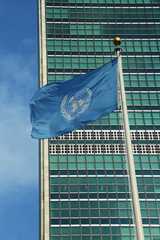
Credit:UN via Shutterstock.com

Ahead of Indian Prime Minister Narendra Modi’s visit to Beijing last month, China’s Premier Li Keqiang stated in an interview withIndia Today that “China and India … share common interests and face similar challenges in fighting terrorism. China is ready to deepen counterterrorism cooperation with India to better safeguard the development and security interests of our two countries.”

But China’s actions this week at the United Nations Sanctions Committee belie the Premier’s assertions. Reportedly, China blocked India’s attempt through the UN to seek action on Pakistan for releasing Zaki ur-Rehman Lakhvi, the leader of Lashkar-e-Taiba and mastermind of the November 2008 terrorist attacks in Mumbai. (see: “Why China Snubbed India on a Pakistan-based Terrorist at the UN“)

China’s interceding at the UN Sanctions Committee on behalf of Pakistan is neither new nor unexpected. In May 2015, China blocked India’s attempt to sanction Syed Salahuddin, the leader of a Pakistan-based terrorist proxy, the Hizb ul-Mujahideen. Suhasini Haider, Diplomatic Affairs Editor inThe Hindu notes that since December 2014, India has filed “at least three proposals on Pakistan-based terrorists, each of which has been reportedly delayed or stopped by China.”

Prior to the November 2008 terrorist attacks in Mumbai, Chinablocked at least three other attempts by India to proscribe four members of the Lashkar-e-Taiba (and its parent organization, Jamaat ud-Dawah) — Lakhvi, JuD chief Hafiz Mohammed Saeed, chief of finance Haji Mohammad Ashraf and Saudi-based financier and one of JuD’s founders, Mahmoud Bahaziq.

China had also stalled specific sanctions against Hafiz Saeed on two occasions. Prior to 2008, China blocked India-sponsored UN sanctions against al-Akhtar Trust (a front for Jaish-e-Mohammed, yet another Pakistani terrorist proxy) and al-Rashid Trust (a Pakistani Deobandi terrorist group active in Jammu & Kashmir, among other places).

It was only after considerable pressure was put on China by the United States and India after the Mumbai 2008 terrorist attacks that it acceded to sanctions under UNSC Resolution 1267 on Saeed, Lakhvi, Ashraf, Bahaziq as well as against Lashkar-e-Taiba/Jamaat ud-Dawah. This, however, offered India only temporary respite.

Barely a year later in August 2009, China blocked India-sponsored sanctions against Masood Azhar, the founder of Jaish-e-Mohammed, which was responsible for, among other things, the December 2001 attack on the Indian Parliament.

China’s history of prevarication and clandestine support to Pakistan’s nuclear program is a matter of record. China not only provided a veritable nuclear umbrella under which Pakistan prosecutes a campaign of terror against India, it now also provides diplomatic cover for these Pakistan-funded terrorist proxies through the power of a United Nations Security Council veto.

But how does India address China’s repeated intervention on Pakistan’s behalf at the UN? Nitin Pai, my colleague at the Takshashila Institution, quite rightly suggests that India must proactively liaise with China and other permanent members of the UNSC to ensure that its interests are protected.

Indeed, if India claims it accords the highest of priorities to countering the asymmetric war that it is subjected to by Pakistan, it must marshal its diplomatic and political resources more effectively to convey the importance it attaches to rooting out the scourge of terrorism that it faces.

On Pakistan however, the question of just how effective the sanctions under UNSC Resolution 1267 have been must be asked. Arguably, UN sanctions against Hafiz Saeed and the JuD have neither disrupted nor diminished the capabilities of the group. In fact, the JuD held its largest annual congregation (to which it claimed to have attracted over 400,000 participants) just last year.

Sanctions under UNSC Resolution 1267 requires member-states to impose asset freezes, travel bans and arms embargos on persons and entities designated to be affiliated with al-Qaeda. Yet, these sanctions have not had a material impact on terror groups in Pakistan. Pakistan’s Interior Ministryclaimed rather incredulously that JuD did not have any bank accounts in Pakistan and that Hafiz Saeed’s passport had expired several years ago and had not been requested to be renewed, thus rendering the travel ban moot.

More importantly, Resolution 1267 has had limited success in disrupting the activities of groups like Jamaat ud-Dawah because they enjoy the support of the Pakistan Army, which shields, nurtures and utilizes them to advance domestic or foreign policy objectives. Thus, when pressure mounted on Pakistan to act against all terrorist groups following thePeshawar tragedy, a Pakistani minister in the ruling government claimed that Jamaat ud-Dawah was a charity, not a terrorist group.

When Masood Azhar addressed a rally in Muzaffarabad in which hethreatened India with “dreaded revenge,” Pakistan’s Foreign Office spokesperson sought to downplay the incident byclaiming that it was “probably a one-time event.”

So a more effective strategy would be to target not specific individuals or terrorist groups, but the Pakistani state itself to make it cost prohibitive for it to continue prosecuting sub-conventional wars across its eastern and western borders. In its Country Reports on Terrorism (2014), the U.S. State Departmentmaintains that Pakistan “did not take action against groups such as Lashkar-e-Tayyiba, which continued to operate, train, rally, propagandize, and fundraise in Pakistan.”

As Indian and U.S. perceptions on terrorism converge as part of the overall bilateral relationship, India must better liaise with the U.S. to impose costs on Pakistan for sponsoring terrorism in its neighborhood. The U.S., under the Clinton Administration,came close to designating Pakistan a “State Sponsor of Terrorism,” which would have carried with it a ban on defense exports and sales to Pakistan as well as foreign assistance and financial restrictions. The designation can therefore impose significant costs on the Pakistani state, which might in turn convince it to reconsider some of its poor strategic choices. The George W. Bush and Obama Administrations were hamstrung by their reliance on Pakistan for the war in Afghanistan to act decisively against Pakistan, even when Osama bin Laden wasdiscovered to be living a mile away from the Pakistani Military Academy in Abbottabad.

An opportunity will exist, sooner than later, to revisit that designation for Pakistan. India would do well to continue to build a case with the U.S. to make it happen.

Latest Stories

Why North Korea Is Unlikely to Renew Cooperation at Kaesong

Why North Korea Is Unlikely to Renew Cooperation at Kaesong

What Colby’s Northeast Asia Tour Tells Us About the Future of Japan-Korea-US Trilateral Deterrence

What Colby’s Northeast Asia Tour Tells Us About the Future of Japan-Korea-US Trilateral Deterrence

A Course Correction for Pakistan’s Space Ambitions

A Course Correction for Pakistan’s Space Ambitions

Honduras Shows How the US Is Limiting China’s Diplomatic Gains in Central America

Honduras Shows How the US Is Limiting China’s Diplomatic Gains in Central America

Diplomat Brief

Weekly Newsletter

Get briefed on the story of the week, and developing stories to watch across the Asia-Pacific.

Get the Newsletter

Related

Does India Gain Anything From the Shanghai Cooperation Organization?

Does India Gain Anything From the Shanghai Cooperation Organization?

ByKrzysztof Iwanek
Any benefits from the SCO are cancelled out by the presence of China and Pakistan.
Why Was the Pakistani Prime Minister in Nepal?

Why Was the Pakistani Prime Minister in Nepal?

ByKamal Dev Bhattarai
Pakistan and Nepal rarely exchange bilateral visits. This trip -- under the gaze of India and China -- has made waves.

Pakistan’s Bad Reaction to the BRICS Declaration

Pakistan’s Bad Reaction to the BRICS Declaration

ByKunwar Khuldune Shahid
Islamabad’s defensive reaction was more self-damaging than the BRICS’ original statement.
Has Kashmir Ceased to Be Pakistan’s Jugular Vein? 

Has Kashmir Ceased to Be Pakistan’s Jugular Vein? 

ByUmair Jamal
It is high time that Pakistan’s policymakers trim the size of their Kashmir narrative to match the evident realities.

Most Read

Japan After the Landslide: Takaichi’s Supermajority and the Trump Challenge

Japan After the Landslide: Takaichi’s Supermajority and the Trump Challenge

ByTakahashi Kosuke
Takaichi has the largest majority of any Japanese PM since World War II. Now she must decide how to tackle Japan’s difficult strategic environment.
What Is Greenland’s Role in China’s Arctic Strategy?

What Is Greenland’s Role in China’s Arctic Strategy?

Trump’s obsession with Greenland could actually create the result he is so afraid of: increasing China's Arctic presence.

Inside China’s Rerouted Supply Chains

Inside China’s Rerouted Supply Chains

ByHannah Pedone
New data shows that Chinese exporters are increasingly transiting goods through lower-tariff trade partners. But is the practice legal? 
Why EU-India Trade Deal Could Be Bad News for Bangladesh

Why EU-India Trade Deal Could Be Bad News for Bangladesh

ByMd Obaidullah
India has secured tariff-free access to the EU’s garment market even as Bangladesh’s loss of preferential status looms.

Features

The Addis Ababa-Djibouti Railway: Still Growing 8 Years Later

The Addis Ababa-Djibouti Railway: Still Growing 8 Years Later

ByIstvan Tarrosy, Zoltan Voros, andAli Miganeh Hadi
Two years after the handover to local control, the China-built railway is not done transforming the region.
What We Know About China’s Secretive Nuclear Submarine Fleet

What We Know About China’s Secretive Nuclear Submarine Fleet

ByRick Joe
With the 09IIIB class and future 09V class, China’s development of nuclear-powered (and nuclear capable) submarines is at an inflection point.

Beyond the Peninsula: What OPCON Transfer Means for the Indo-Pacific

Beyond the Peninsula: What OPCON Transfer Means for the Indo-Pacific

ByClint Work
Wartime OPCON transition would have implications for a more regionally-oriented U.S. force posture and South Korea’s broadening responsibilities.
Southeast Asia’s Mercenary Pipeline

Southeast Asia’s Mercenary Pipeline

ByMunira Mustaffa
Russia is recruiting increasing numbers of fighters from the region, using deceptive practices pioneered by Southeast Asia-based online scam operations.

Latest Stories

Why North Korea Is Unlikely to Renew Cooperation at Kaesong

Why North Korea Is Unlikely to Renew Cooperation at Kaesong

ByMichael MacArthur Bosack
The Lee administration may be hoping to resume cooperation at the Kaesong Industrial Complex. But Pyongyang is just not interested.
What Colby’s Northeast Asia Tour Tells Us About the Future of Japan-Korea-US Trilateral Deterrence

What Colby’s Northeast Asia Tour Tells Us About the Future of Japan-Korea-US Trilateral Deterrence

ByDavid Dichoso
Colby’s visits to South Korea and Japan served to reinforce the Trump administration’s Indo-Pacific vision, in which allies’ shoulder “their fair share” of collective defense. 

A Course Correction for Pakistan’s Space Ambitions

A Course Correction for Pakistan’s Space Ambitions

ByAkash Shah
Ultimately, SUPARCO’s contemporary relevance is defined by its alignment with Pakistan’s existential challenges: climate resilience, precision agriculture, and national security.
Honduras Shows How the US Is Limiting China’s Diplomatic Gains in Central America

Honduras Shows How the US Is Limiting China’s Diplomatic Gains in Central America

ByJuan Fernando Herrera Ramos
As Honduras openly reconsiders its ties with the PRC, it highlights the strong pull still exerted by the United States.

[8]ページ先頭

©2009-2026 Movatter.jp