

Kōrero: Radiata pine
When first introduced from its native California, radiata pine may have seemed like an unlikely tree to become a New Zealand national icon. But breeding programmes and the development of planting, pruning and thinning techniques, have made fast-growing radiata pine plantations the core of New Zealand’s forestry industry.
He kōrero nā Peter Berg
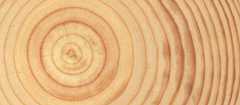
Te āhua nui: Cross-section of a pine log


He kōrero whakarapopoto
Radiata pine is a species of pine tree that originally comes from California.
Introduction to New Zealand
Radiata pines were introduced to New Zealand to see if they could be grown for wood. They grew quickly in different climates and soils, and so were a good tree for plantation forests.
Extensive pine forests were planted, and now most of New Zealand’s wood comes from these.
Growing better trees
Forest scientists have bred radiata pines so that they:
- grow straighter to produce higher-quality wood
- are able to grow better in particular soils or climates
- are resistant to plant diseases.
Planting
Pine trees can be grown from seed or cuttings. When they have grown to about 30 centimetres high, they are ready to take out of the nursery for planting.
Pruning
In the early stages of growth, some trees will be cut down to make room for the trees around them to grow better.
When the trees are five and seven years old, the lower branches are usually pruned to make their wood less knotty.
Harvesting
When the trees are ready for harvest, they are cut down with chainsaws and moved using tractors and other mechanical equipment.
Wood
Wood from pine trees is used to make many things, including houses, furniture and paper.
Logs and wood products are sold in New Zealand and to other countries.
Me pēnei te tohu i te whārang
Peter Berg, Radiata pine, Te Ara – the Encyclopedia of New Zealand, https://teara.govt.nz/mi/radiata-pine (accessed 16 February 2026).
He kōrero nā Peter Berg, i tāngia i te 1 March 2009.