Movatterモバイル変換


[0]ホーム

URL:


Teaching American History
1492
Discovery and Settlement
1650
Colonial America
1763
The Revolution & Confederation
1783
The Founding
1789
Early Republic
1825
Expansion and Sectionalism
1860
Civil War and Reconstruction
1870
Industrialization and Urbanization
1890
Progressivism and World War 1
1929
The Great Depression and the New Deal
1941
World War II
1945
Cold War America
1992
Contemporary America
Progressivism and World War 1
The New Nationalism
August 31, 1910
Theodore Roosevelt
The Constitution and Slavery
March 16, 1849
Frederick Douglass
The Destiny of Colored Americans
November 16, 1849
Frederick Douglass
The Educational Outlook in the South
July 16, 1884
Booker T. Washington
Annual Message to Congress (1889)
December 03, 1889
Benjamin Harrison
The State
1889
Woodrow Wilson
Annual Message to Congress (1891)
December 09, 1891
Benjamin Harrison
The Significance of History
1891
Frederick Jackson Turner
The Tariff History of the United States (Part I)
1892
F.W. Taussig
The Tariff History of the United States (Part II)
1892
F.W. Taussig
Some Reasons Why We Oppose Votes for Women
1894
National Association Opposed to Woman Suffrage
Should Women Be Executed?
November 14, 1896
Clara Foltz
The Warfare of Science with Theology
1896
Andrew White
A Speech at the Unveiling of the Robert Gould Shaw...
May 31, 1897
Booker T. Washington
The Conservation of Races
1897
W.E.B. Du Bois
The Annexation of Hawaii
December 31, 1898
William McKinley
The March of the Flag Campaign Speech
September 16, 1898
Albert J. Beveridge
Chapter 20: Progressive Foreign Policy: The Philip...
The American Birthright and the Philippine Pottage
November, 1898
Henry Van Dyke
Army reorganization : speech of Hon. George H. Whi...
January 26, 1899
George Henry White
An Abraham Lincoln Memorial Address in Philadelphi...
February 14, 1899
Booker T. Washington
In Support of an American Empire
January 09, 1900
Albert J. Beveridge
Lynch Law in America
January, 1900
Ida B. Wells-Barnett
Lynch Law in America
January, 1900
Ida B. Wells-Barnett
Speech in the Senate on the Disenfranchisement of...
March 23, 1900
Benjamin R. Tillman
The Problem of the South
July 11, 1900
Booker T. Washington
An Address before the National Educational Associa...
July 11, 1900
Booker T. Washington
Address Accepting Democratic Presidential Nominati...
August 08, 1900
William Jennings Bryan
Politics and Administration
1900
Frank Johnson Goodnow
Senate Debate on the Platt Amendment
February 27, 1901
John T. Morgan
Downes v. Bidwell
May 27, 1901
Edward D. White
First Annual Message to Congress (1901)
December 03, 1901
Theodore Roosevelt
Letter from Theodore Roosevelt to Robert Bacon (19...
October 05, 1902
Theodore Roosevelt
The Command of the Pacific
1902
Albert J. Beveridge
Filial Relations
1902
Jane Addams
The Forethought
February 01, 1903
W.E.B. Du Bois
The Educational and Industrial Emancipation of the...
February 22, 1903
Booker T. Washington
Mother Jones Writes Plea to Roosevelt
July 30, 1903
Mary Harris Jones
Industrial Education for the Negro
October 1, 1903
Booker T. Washington
"The Fruits of Industrial Training"
October, 1903
Booker T. Washington
Annual Message to Congress (1903)
December 07, 1903
Theodore Roosevelt
Of Our Spiritual Strivings
1903
W.E.B. Du Bois
Of Booker T. Washington and Others: The Souls of B...
1903
W.E.B. Du Bois
Of the Training of Black Men
1903
W.E.B. Du Bois
"Of the Sons of Master and Man," from The Souls of...
1903
W.E.B. Du Bois
"Of the Faith of the Fathers," from The Souls of B...
1903
W.E.B. Du Bois
Of the Sorrow Songs
1903
W.E.B. Du Bois
The Souls of Black Folk: "Afterthought"
1903
W.E.B. Du Bois
Recent Tendencies
December 31, 1903
Charles E. Merriam
Holiness Camp Meetings
1903
Hannah Whitall Smith
Race and Civil Rights
The Souls of Black Folk
December 31, 1903
W.E.B. Du Bois
A Governor Bitterly Opposes Negro Education
February 04, 1904
James K. Vardaman
Annual Message to Congress (1904)
December 06, 1904
Theodore Roosevelt
The Corruption of Municipal Politics
1904
Lincoln Steffens
Inaugural Address (1905)
March 04, 1905
Theodore Roosevelt
Chapter 19: The Progressive Era: Eugenics
Veto of Pennsylvania Eugenics Law
March 30, 1905
Governor Samuel W. Pennypacker
Lochner v. New York
April 17, 1905
John M. Harlan
Annual Message to Congress (1905)
December 05, 1905
Theodore Roosevelt
Niagara Movement Speech
1905
W.E.B. Du Bois
Stimulants and Narcotics
1905
Ellen G. White
Plunkitt of Tammany Hall
1905
Race and Civil Rights
An Address to the Country
August 19, 1906
W.E.B. Du Bois
Address at the Dedication Ceremony of the New Stat...
October 04, 1906
Theodore Roosevelt
Annual Message to Congress (1906)
December 04, 1906
Theodore Roosevelt
“How to Preserve the Local Self-Government of the...
December 12, 1906
Elihu Root
On Making Our Race Life Count in the Life of the N...
1906
Booker T. Washington
The Modern City and the Municipal Franchise for Wo...
1906
Jane Addams
"The Author and Signers of the Declaration"
September, 1907
Woodrow Wilson
Annual Message to Congress (1907)
December 3, 1907
Theodore Roosevelt
Christianity and the Social Crisis
December 31, 1907
Walter Rauschenbusch
What is Constitutional Government?
March 24, 1908
Woodrow Wilson
Theodore Roosevelt to Lincoln Steffens
June 05, 1908
Theodore Roosevelt
Annual Message to Congress (1908)
December 08, 1908
Theodore Roosevelt
Constitutional Government in the United States: C...
1908
Woodrow Wilson
Party Government in the United States
1908
Woodrow Wilson
Muller v. Oregon
1908
David Brewer
Constitutional Government in the United States
1908
Woodrow Wilson
An Address on Abraham Lincoln
February 12, 1909
Booker T. Washington
Election of 1912
Inaugural Address (1909)
March 04, 1909
William Howard Taft
Annual Message to Congress (1909)
December 07, 1909
William Howard Taft
National Association for the Advancement of Colore...
1909
The Revolt of 1910 Against Speaker Joseph Cannon
March 17, 1910
United States House of Representatives
Speech on Party Leadership in Congress
March 19, 1910
Joseph Cannon
The New Nationalism
September 01, 1910
Theodore Roosevelt
The Crisis
November, 1910
W.E.B. Du Bois
Agitation
November, 1910
W.E.B. Du Bois
Election of 1912
Annual Message to Congress (1910)
December 06, 1910
William Howard Taft
Speech of Quanah Parker
1910
Quanah Parker
Annual Message to Congress (1911)
December 05, 1911
William Howard Taft
The Intellectuals and the Boston Mob
1911
Booker T. Washington
Religious Education and Contemporary Social Condit...
1911
Jane Addams
Religious Education and Contemporary Social Condit...
December 31, 1911
Jane Addams
Eugenics as a New Creed
1911
G. Stanley Hall
I Am Resolved
January, 1912
A Charter for Democracy
February 21, 1912
Theodore Roosevelt
My Confession of Faith: Speech before the Progress...
August 06, 1912
Theodore Roosevelt
Election of 1912
The Judiciary and Progress Address at Toledo, Ohio
March 12, 1912
William Howard Taft
election of 1912
The Socialist Party Platform of 1912
May 18, 1912
Political Appeal to American Workers
June 16, 1912
Eugene V. Debs
Election of 1912
The Republican Party Platform 1912
June 22, 1912
Republican Party
election of 1912
The Democratic Party Platform 1912
July 02, 1912
Democratic Party
Election of 1912
Letter Accepting the Republican Nomination
August 01, 1912
William Howard Taft
National Progressive Convention
August 06, 1912
Woodrow Wilson's Acceptance of the Democratic Part...
August 07, 1912
Woodrow Wilson
Campaign Address in Scranton, Penn.
September 23, 1912
Woodrow Wilson
Address at Pueblo, Colorado
October 07, 1912
Woodrow Wilson
Progressive Party Platform of 1912
November 05, 1912
"Is the Negro Having a Fair Chance?"
November, 1912
Booker T. Washington
Annual Message to Congress (1912): Dollar Diplomac...
1912
William Howard Taft
The Heirs of Abraham Lincoln
February 12, 1913
Theodore Roosevelt
Election of 1912
Inaugural Address (1913)
March 04, 1913
Woodrow Wilson
A Statement on the Pending Chinese Loan
March 18, 1913
Woodrow Wilson
Open Letters to Woodrow Wilson
September, 1913
W.E.B. Du Bois
New York Times: “Pastors for Eugenics”
June 06, 1913
Anonymous
Another Open Letter to Woodrow Wilson
September, 1913
W.E.B. Du Bois
Annual Message to Congress (1913)
December 02, 1913
Woodrow Wilson
On the Source of Executive Power
1916
Theodore Roosevelt
An Economic Interpretation of the Constitution of...
1913
Election of 1912
Popular Government
1913
William Howard Taft
What Is Progress?
December 31, 1913
Woodrow Wilson
What Is Progress?
1913
Woodrow Wilson
Theodore Roosevelt: An Autobiography
1913
Theodore Roosevelt
An Address to Congress on the Mexican Crisis
April 20, 1914
Woodrow Wilson
Election of 1912
Declaration of Neutrality
August 19, 1914
Woodrow Wilson
Annual Message to Congress (1914)
December 08, 1914
Woodrow Wilson
Clayton Antitrust Act
1914
Progressive Democracy, chapters 12–13 (excerpts)
December 31, 1914
Herbert Croly
Progressive Democracy
December 31, 1914
Herbert Croly
Letter from William Jennings Bryan to the Chairman...
January 20, 1915
William Jennings Bryan
Strict Accountability
February 10, 1915
Woodrow Wilson
The President's Protest to Germany
July 21, 1915
Woodrow Wilson
Let My People Go!
September 30, 1915
Carlos Montezuma
The House-Grey Memorandum
October 08, 1915
Edward House
Race and Civil Rights
My View of Segregation Laws
December 02, 1915
Booker T. Washington
Annual Message to Congress (1915)
December 07, 1915
Woodrow Wilson
Invisible Government Speech
1915
Elihu Root
Your Congress
December 31, 1915
Lynn Haines
Enlist
1915
Fred Spear
I Didn’t Raise My Boy to Be a Soldier
1915
Alfred Bryan
Responding to German Submarine Warfare
April 19, 1916
Woodrow Wilson
Platform of the National Woman’s Party
June, 1916
National Women's Party
Father Blakely States the Issue
July 29, 1916
Catholicism Contra Mundum
September 02, 1916
Election of 1912
Annual Message to Congress (1916)
December 06, 1916
Woodrow Wilson
Democracy and Education Chapter 6
1916
John Dewey
Democracy and Education Chapter 7
1916
John Dewey
The American Conception of Liberty
December 31, 1916
Frank Johnson Goodnow
The Zimmermann Telegram
January 16, 1917
Arthur Zimmermann
Inaugural Address (1917)
March 05, 1917
Woodrow Wilson
Lansing’s Memorandum of the Cabinet Meeting
March 20, 1917
Voluntary Motherhood
March, 1917
Margaret Sanger
War Message (1917)
April 02, 1917
Woodrow Wilson
The World Must Be Made Safe for Democracy
April 02, 1917
Woodrow Wilson
Opposition to Wilson’s War Message
April 04, 1917
Robert M. LaFollette
Opposition to Wilson’s War Message
April 04, 1917
George Norris
Opposition to War
April 4, 1917
George Norris
Espionage Act
June 15, 1917
Congress
Wake Up America!
August, 1917
Socialist Party
Letter from the Russian Ambassador to the U.S. Sec...
November 22, 1917
Open Address to the U.S. Congress
November, 1917
Carrie Chapman Catt
Election of 1912
Annual Message to Congress (1917)
December 04, 1917
Woodrow Wilson
Knights of Columbus
1917
William Balfour Ker
Alice Paul in Prison
1917
Doris Stevens
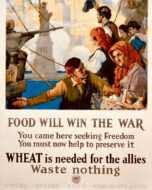
Food Will Win the War
1917
Food Administration
Recruitment Poster: I Want YOU for U.S. Army
1917
James Montgomery Flagg
The Fourteen Points
January 8, 1918
Woodrow Wilson
The Black Man and the Unions
February, 1918
W.E.B. Du Bois
Sedition Act
May 16, 1918
Congress
The Archangel Expedition
July 17, 1918
Robert Lansing
Close Ranks
July, 1918
W.E.B. Du Bois
Fighting in World War I
September, 1918
A. Judson Hanna
The Allies’ Conditional Acceptance of the Fourteen...
November 05, 1918
Letters from a Working Wife
1918
Lucille Fee
Election of 1912
Annual Message to Congress (1918)
December 02, 1918
Woodrow Wilson
Natural Law
1918
Oliver Wendell Holmes
Can Christianity Tolerate the Church?
January 18, 1919
Joseph Ernest McAfee
Address to Peace Conference: Article XXVI
February 14, 1919
Woodrow Wilson
Schenck v. United States
March 03, 1919
Oliver Wendell Holmes
Schenck v. United States
March 3, 1919
Oliver Wendell Holmes
A Black Soldier’s Experience in France
May 17, 1919
Charles R. Isum
Navigating the North
May 17, 1919
Chicago Defender
Returning Soldiers
May, 1919
W.E.B. Du Bois
Returning Soldiers
May, 1919
W.E.B. Du Bois
Final Report on Negro Subversion
August 06, 1919
William Howard Loving
Opposing the League of Nations
August 12, 1919
Henry Cabot Lodge
Defending the League of Nations: “The Pueblo Speec...
September 25, 1919
Woodrow Wilson
Defending the Versailles Peace Treaty
September 25, 1919
Woodrow Wilson
Defending the Versailles Peace Treaty
September 25, 1919
Woodrow Wilson
Abrams v. United States
November 10, 1919
John H. Clarke
Election of 1912
Annual Message to Congress (1919)
December 02, 1919
Woodrow Wilson
League of Nations Covenant
1919
What About Those Manifestations?
1919
Aimee Semple McPherson
Great Migration
The Negro Exodus from the South
1919
W. T. B. Williams
The Case against the ‘Reds’
February, 1920
A. Mitchell Palmer
Return to Normalcy
May 14, 1920
Warren G. Harding
The Bible at the Center of the Modern University
June 20, 1920
A.C. Dixon
The Bible at the Center of the Modern University
June, 1920
A.C. Dixon
Lincoln as a Leader of Men
August 28, 1920
Elihu Root
Judgment on Eugenics Law
November, 1920
Supreme Court of Indiana
Now We Can Begin
December 01, 1920
Crystal Eastman
Election of 1912
Annual Message to Congress (1920)
December 07, 1920
Woodrow Wilson
Inaugural Address (1921)
March 04, 1921
Warren G. Harding
An Open Letter to Warren Gamaliel Harding
March, 1921
W.E.B. Du Bois
William E. Borah on the Necessity for Naval Disarm...
September, 1921
William E. Borah
The Problem of Japan: A Japanese Liberal's View
November 09, 1921
K. K. Kawakami
Laying to Rest an Unknown American Soldier
November 11, 1921
Warren G. Harding
Annual Message to Congress (1921)
December 06, 1921
Warren G. Harding
President Harding and Social Equality
December, 1921
W.E.B. Du Bois
Debating Darwinism: God and Evolution
February 26, 1922
William Jennings Bryan
Debating Darwinism: Evolution and Mr. Bryan
March 12, 1922
Harry Emerson Fosdick
Some Notes on Color
March, 1922
Jessie Fauset
Henry Ford’s Five-Day Week
April 29, 1922
Literary Digest
A Naval View of the Washington Treaties, April 192...
William Howard Gardiner
Shall the Fundamentalists Win?
June 10, 1922
Harry Emerson Fosdick
Religion
Shall the Fundamentalists Win?
June 10, 1922
Harry Emerson Fosdick
Abraham Lincoln
July, 1922
W.E.B. Du Bois
Again, Lincoln
September, 1922
W.E.B. Du Bois
Annual Message to Congress (1922)
December 08, 1922
Warren G. Harding
The True Solution of the Negro Problem
1922
Marcus Garvey
Race Assimilation
1922
Marcus Garvey
Personal Reactions In Time of War
1922
Jane Addams
Our Experiment in National Prohibition: What Progr...
January 01, 1923
William H. Stayton
The Negro’s Place in World Reorganization
March 24, 1923
Marcus Garvey
Who and What is a Negro
April 16, 1923
Marcus Garvey
The Destiny of America
May 30, 1923
Calvin Coolidge
My Everyday Problems
July, 1923
Woman’s Home Companion
Annual Message to Congress (1923)
December 06, 1923
Calvin Coolidge
An Appeal to the Conscience of the Black Race to S...
1923
Marcus Garvey
An Appeal to the Soul of White America
1923
Marcus Garvey
Aims and Objects of the Movement for Solution of t...
1923
Marcus Garvey
The Bible
1923
J. Gersham Machen
Racial Reforms and Reformers
1923
Marcus Garvey
The Bible, from Christianity and Liberalism
December 31, 1923
J. Gersham Machen
The Black Mammy Monument
1923
Mary Church Terrell
Speech to Calvin Coolidge
December, 1923
Ruth Muskrat Bronson
Equal Rights Amendment to the Federal Constitution
February, 1924
Alice Paul
Racial Ideals
March 16, 1924
Marcus Garvey
At the Convention of the National Education Associ...
July 04, 1924
Calvin Coolidge
The Outlawry of War: A Debate Between Robert Lansi...
August 16, 1924
Robert Lansing
The Outlawry of War: A Debate Between Robert Lansi...
September 13, 1924
Robert Lansing
Progressive Party Platform of 1924
November 04, 1924
Annual Message to Congress (1924)
December 03, 1924
Calvin Coolidge
Inaugural Address (1925)
March 04, 1925
Calvin Coolidge
Enter the New Negro
March, 1925
Alain Locke
Memorial Day Address at Arlington National Cemeter...
May 30, 1925
Calvin Coolidge
Dissenting Opinion in Gitlow v. New York
June 08, 1925
Oliver Wendell Holmes
Gitlow v. New York
June 08, 1925
Edward T. Sanford
Prohibition: Success or Failure?
June, 1925
North American Review
Annual Message to Congress (1925)
December 08, 1925
Calvin Coolidge
Speech on the 150th Anniversary of the Declaration...
July 5, 1926
Calvin Coolidge
Myers v. United States
October 25, 1926
William Howard Taft
Annual Message to Congress (1926)
December 07, 1926
Calvin Coolidge
Myers v. US
1926
Oliver Wendell Holmes
Buck v. Bell
May 02, 1927
Oliver Wendell Holmes
Whitney v. California
May 16, 1927
Edward T. Sanford
Me and My Flapper Daughters
August, 1927
William Oscar Saunders
Annual Message to Congress (1927)
December 06, 1927
Calvin Coolidge
Mail-Order Houses
1925
Sears, Roebuck and Co.
The Name "Negro"
March, 1928
W.E.B. Du Bois
Address at Gettysburg Battle Field
May 30, 1928
Calvin Coolidge
Renouncing War: The Kellogg-Briand Pact
June 11, 1928
Frank B. Kellogg
Principles and Ideals of the United States Governm...
October 22, 1928
Herbert Hoover
The Constructive Side of Government
November 02, 1928
Herbert Hoover
Annual Message to Congress (1928)
December 04, 1928
Calvin Coolidge
The Kellogg-Briand Peace Pact: A Contemporary Crit...
December, 1928
Henry Cabot Lodge
Inaugural Address (1929)
March 04, 1929
Herbert Hoover
Everybody Ought to Be Rich
August, 1929
John J. Raskob
Annual Message to Congress (1929)
December 03, 1929
Herbert Hoover
Better Baby Contest, Indiana State Fair
1931
Anonymous
Who is a Progressive?
April -31, 1912
Theodore Roosevelt
Teaching American History

The Constitution and Slavery

by Frederick Douglass
  • March 16, 1849

The assertion which we made five weeks ago, that “the Constitution,if strictly construed according to its reading,” is not a pro-slavery instrument, has excited some interest amongst our Anti-Slavery brethren. Letters have reached us from different quarters on the subject. Some of these express agreement and pleasure with our views, and others, surprise and dissatisfaction. Each class of opinion and feeling is represented in the letters which we have placed in another part of this week’s paper. The one from our friend Gerrit Smith, represents the view which the Liberty party take of this subject, and that of Mr. Robert Forten is consistent with the ground occupied by a majority of the American Anti-Slavery Society.

Whether we shall be able to set ourselves right in the minds of those on the one side of this question or the other, and at the same time vindicate the correctness of our former assertion, remains to be seen. Of one thing, however, we can assure our readers, and this is, that we bring to the consideration of this subject no partisan feelings, nor the slightest wish to make ourselves consistent with the creed of either Anti-Slavery party, and that our only aim is to know what is truth and what is duty in respect to the matter in dispute, holding ourselves perfectly free to change our opinion in any direction, and at any time which may be indicated by our immediate apprehension of truth, unbiased by the smiles or frowns of any class or party of abolitionists. The only truly consistent man is he who will, for the sake of being right today, contradict what he said wrong yesterday. “Sufficient unto the day is the evil thereof.” True stability consists not in being of the same opinion now as formerly, but in a fixed principle of honesty, even urging us to the adoption or rejection of that which may seem to us true or false at the ever-present now.

Before entering upon a discussion of the main question, it may be proper to remove a misapprehension into which Gerrit Smith and Robert Forten seem to have fallen, in respect to what we mean by the term, “strictly construed according to its reading,” as used by us in regard to the Constitution. Upon a second reading of these words, we can readily see how easily they can be made to mean more than we intended. What we mean then, and what we would be understood to man now, is simply this — that the Constitution of the United States, standing alone, and construedonly in the light of its letter, without reference to the opinions of the men who framed and adopted it, or to the uniform, universal and undeviating practice of the nation under it, from the time of its adoption until now, is not a pro-slavery instrument. Of this admission we are perfectly willing to give our esteemed friend Gerrit Smith, and all who think with him on this subject, the fullest benefit; accompanied, however, with this explanation, that it was made with no view to give the public to understand that we held this construction to be the proper one of that instrument, and that it was drawn out merely because we were unwilling to go before the public on so narrow an issue, and one about which there could be so little said on either side. How a document would appear under one construction, is one thing; but whether the construction be the right one, is quite another and a very different thing. Confounding these two things, has led Gerrit Smith to think too favorably of us, and Robert Forten too unfavorably. We may agree with the Roman Catholic, that the language of Christ, with respect to the sacrament, if construed according to reading, teaches the doctrine of transubstantiation. But the admission is not final, neither are we understood by doing so, to sanction that irrational though literal doctrine. Neither Roman Catholic nor Protestant could attach any importance to such an admission. It would neither afford pleasure to the Catholic, nor pain to the Protestant. Hoping that we have now made ourselves understood on this point, we proceed to the general question.

THE CONSTITUTIONALITY OF SLAVERY

The Constitution of the United States. — What is it? Who made it? For whom and for what was it made? Is it from heaven or from men? How, and in what light are we to understand it? If it be divine, divine light must be our means of understanding it; if human, humanity, with all its vice and crimes, as well as its virtues, must help us to a proper understanding of it. All attempts to explain it in the light of heaven must fail. It is human, and must be explained in the light of those maxims and principles which human beings have laid down as guides to the understanding of all written instruments, covenants, contracts and agreements, emanating from human beings, and to which human beings are parties, both on the first and the second part. It is in such a light that we propose to examine the Constitution; and in this light we hold it to be a most cunningly-devised and wicked compact, demanding the most constant and earnest efforts of the friends of righteous freedom for its complete overthrow. It was “conceived in sin, and shapen in iniquity.” But this will be called mere declamation, and assertion — mere “heat without light” — sound and fury signify nothing. — Have it so. Let us then argue the question with all the coolness and clearness of which an learned fugitive slave, smarting under the wrongs inflicted by this unholy Union, is capable. We cannot talk “lawyer like” about law — about its emanating from the bosom of God! — about government, and of its seat in the great heart of the Almighty! — nor can we, in connection with such an ugly matter-of-fact looking thing as the United States Constitution, bring ourselves to split hairs about the alleged legal rule of interpretation, which declares that an “act of the Legislature may be set aside when it contravenes natural justice.” We have to do with facts, rather than theory. The Constitution is not an abstraction. It is a living breathing fact, exerting a mighty power over the nation of which it is the bond of the Union.

Had the Constitution dropped down from the blue overhanging sky, upon a land uncursed by slavery , and without an interpreter, although some difficulty might have occurred in applying its manifold provisions, yet so cunningly is it framed, that no one would have imagined that it recognized or sanctioned slavery. But having a terrestrial, and not a celestial origin, we find no difficulty in ascertaining its meaning in all the parts which we allege to relate to slavery. Slavery existed before the Constitution, in the very States by whom it was made and adopted. — Slaveholders took a large share in making it. It was made in view of the existence of slavery, and in a manner well calculated to aid and strengthen that heaven-daring crime.

Take, for instance, article 1st, section 2d, to wit: “Representatives and direct taxes shall be apportioned among several States which may be included within this Union, according to their respective numbers, which shall be determined by adding to the whole number offree persons, including those bound to service for a term of years, and including Indians not taxed,three-fifths of all other persons.

A diversity of persons are here described —persons bound to service for aterm of years, Indians not taxed, and three-fifths ofall other persons. Now, we ask, in the name of common sense, can there be an honest doubt that, in States where there are slaves, that they are included in this basis of representation? To us, it is as plain as the sun in the heavens that this clause does, and was intended to mean, that the slave States should enjoy a representation of their human chattels under this Constitution. Beside, the term free, which is generally, though not always, used as the correlative of slave, “all other persons,” settles the question forever that slaves are here included.

Its is contended on this point by Lysander Spooner and others, that the words, “all other persons,” used in this article of the Constitution, relatesonly to aliens. We deny that the words bear any such construction. Are we to presume that the Constitution, which so carefully points out a class of persons for exclusion, such as “Indians not taxed,” would be silent with respect to another class which it was meant equally to exclude? We have never studied logic, but it does seem to us that such a presumption would be very much like an absurdity. And the absurdity is all the more glaring, when it is remembered and the language used immediately after the words “excluding Indians are not taxed,” (having done with exclusions) it includes “all other persons.” It is as easy to suppose that the Constitution contemplatesincluding Indians, (against its express declaration to the contrary,) as it is to suppose that it should be construed to mean the exclusion of slaves from the basis of representation, against the express language, “including all other persons.” Where all are included, none remain to be excluded. The reasonings of those who are likely to take the opposite view of the clause, appears very much like quibbling, to use no harsher word. One thing is certain about this clause of the Constitution. It is this — that under it, the slave system has enjoyed a large and domineering representation in Congress, which has given laws to the whole Union in regard to slavery, ever since the formation of the government.

Satisfied that the view we have given of this clause of the Constitution is the only sound interpretation of it, we throw at once all those parts and particulars of the instrument which refer to slavery, and constitute what we conceive to be the slaveholding compromises of the Constitution, before the reader, and beg that he will look with candor upon the comments which we propose to make upon them.

“Art. 5th, Sect. 8th. — Congress shall have power to suppress insurrections.”

“Art. 1st, Sect. 9th. — The migration or importation of any such persons as any of the States now existing shall think proper to admit, shall not be prohibited by Congress prior to the year one thousand eight hundred and eight; but a tax or duty may be imposed, not exceeding ten dollars each person.”

“Art. 4th, Sec. 2nd. — No person held to service or labor in one State, escaping into another, shall in consequence of any law or regulation therein, be discharged from such service or labor, but shall be delivered up on claim of the party to whom such service or labor may be due.”

“Art. 4th, Sec. 4th — The United States shall guarantee to every State in this Union a Republican form of Government; and shall protect each of them against invasion; and on application of the Legislature, or of the Executive, (when the Legislature cannot be convened,) against Domestic violence.”

The first article and ninth section is a full, complete and broad sanction of the slavetrade for twenty years. In this compromise of the Constitution, the parties to it pledged the national arm to protect that infernal trade for twenty years. While all other subjects of commerce were left under the control of Congress, this species of commerce alone was Constitutionally exempted. And why was this the case? Simply because South Carolina and Georgia declared, through their delegates that framed the Constitution, that they would not come into the Union if this traffic in human flesh should be prohibited. Mr. Rutledge, of South Carolina, (a distinguished member of the Convention that framed the Constitution,) said, “if the Convention thinks that North Carolina, South Carolina, and Georgia, will ever agree to the plan,unless their right to import slaves be untouched, the expectation is vain.” Mr. Pinckney said, South Carolina could never receive the plan, “if it prohibits the slavetrade.” In consequence of the determination of these States to sand out of the Union in case of the traffic in human flesh should prohibited, and from one was adopted, as acompromise; and shameful as it is, it is by no means more shameful than others which preceded and succeeded it. The slaveholding South, by that unyielding tenacity and consistency which they usually contend for their measures, triumphed, and the doughface North was brought to the disgraceful terms in question, just s they have been ever since on all questions touching the subject of slavery.

As a compensation for their base treachery to human freedom and justice, the North were permitted to impose a tax of ten dollars for each person imported, with which to swell the coffers of the national treasury, thus baptizing the infant Republic with the blood-stained gold.

Art. 4, Sec. 2. — This article was adopted with a view to restoring fugitive slaves to their masters — ambiguous, to be sure, but sufficiently explicit to answer the end sought to be attained. Under it, and in accordance with it, the Congress enacted the atrocious “law of ’93,” making it penal in a high degree to harbor or shelter the flying fugitive. The whole nation that adopted it, consented to become kidnappers, and the whole land converted into slave-hunting ground.

Art. 4, Sec. 4. — Pledges the national arm to protect the slaveholder fromdomestic violence, and is the safeguard of the Southern tyrant against the vengeance of the outraged and plundered slave. Under it, the nation is bound to do the bidding of the slaveholder, to bring out the whole naval and military power of the country, to crush the refractory slaves into obedience to their cruel masters. Thus has the North, under the Constitution, not only consented to form bulwarks around the system of slavery, with all its bloody enormities, to prevent the slave from escape, but has planted its uncounted feet and tremendous weight on the heaving hearts of American bondmen, to prevent them from rising to gain their freedom. Could Pandemonium devise a Union more inhuman, unjust, and affronting to God and man, than this? Yet such is the Union consummated under the Constitution of the United States. It is truly a compact demanding immediate disannulment, and one which, with our view of its wicked requirements, we can never enter.

We might just here drop the pen and the subject, and assume the Constitution to be what we have briefly attempted to prove it to be, radically and essentially pro-slavery, in fact as well as in its tendency; and regard our position to be correct beyond the possibility of an honest doubt, and treat those who differ from us as mere cavilers, bent upon making the worse appear the better reason; or we might anticipate the objections which are supposed to be valid against that position. We are, however, disposed to do neither. — We have too much respect for the men opposed to us to do the former, and have too strong a desire to have those objections put in their most favorable light, to do the latter. — We are prepared to hear all sides, and to give the arguments of our opponents a candid consideration. Where an honest expression of views is allowed, Truth has nothing to fear.

And now if our friend Gerrit Smith desires to be heard on the other side, the columns of theNorth Star are at his service. We can assure him that he cannot have a stronger wish to turn every rightful instrumentality against slavery, than we have; and if the Constitution can be so turned, and he can satisfy us of the fact, we shall readily, gladly and zealously, turn our feeble energies in that direction. The case which our friend Gerrit Smith put to us in his letter is a good one, but fails in a most important particular, and that is,analogy. The only likeness which we can see in the supposed case of a bargain with Brown, to that of the bargain entered into by the North and the South, is that there is gross dishonesty in both. So far, there is a striking similarity, but no further. The parties that made the Constitution, aimed to cheat and defraud the slave, who was no himself a party to the compact or agreement. It was entered into understandingly on both sides. They both designed to purchase their freedom and safety at the expense of the imbruted slave. The North are willing to become the body guards of slavery — suppressing insurrection — returning fugitive slaves to bondage — importing slaves for twenty years, and as much longer as the Congress should see fit to leave it unprohibited, and virtually to give slaveholders three votes for ever five slaves they could plunder from Africa, and all this to form a Union by which to repel invasion, and otherwise promoted their interest. No, friend Smith, we are not asked to act the honorable part of “Judge Douglass” with respect to this “contract,” but to become a guilty party to it, and in reply we say — No!


Teacher Programs

Conversation-based seminars for collegial PD, one-day and multi-day seminars, graduate credit seminars (MA degree), online and in-person.


[8]ページ先頭

©2009-2025 Movatter.jp