
The mission of our federal program is to promote tax and fiscal policy that leads to greater U.S. competitiveness, higher economic growth, and improved quality of life for all taxpayers.
We have several projects, such as theGrowth and Opportunity Agenda andOptions for Reforming America’s Tax Code, which help us educate taxpayers, journalists, and policymakers on how the U.S. tax system works and the impact of federal tax changes on taxpayers and the economy.
Our Center for Federal Tax Policy hostsTax Foundation University, a crash course designed to educate congressional staff on the economics of tax policy. Our experts are also a go-to source in the media and are frequently cited in top outlets likeThe Wall Street Journal,The New York Times, and The Washington Post.See Our Experts
Economic and Tax Modeling
Since 2012, we have used our Taxes and Growth (TAG) macroeconomic model to analyze dozens of legislative and campaign tax proposals, including every major tax plan put forth during the 2016 presidential campaigns, the House GOP’s 2016 Tax Reform Blueprint, the Tax Cuts and Jobs Act, and President Biden’s tax reform agenda.See Our Economic and Tax Modeling
For a look at where tax modeling started, explore the extensive body of work from the Institute for Research on the Economics of Taxation (IRET), the think tank that pioneered dynamic tax modeling.Explore the IRET Archives
Featured Issues
One Big beautiful bill act Tariffs & Trade Debt & Deficits
Cost Recovery | Taxes & Inflation | Taxes on Savers & Investors | Carbon Taxes
Featured Projects
FAQ: The One Big Beautiful Bill, Explained
Our experts explain how this major tax legislation may affect you and how policymakers can better improve the tax code.
24 min read
2026 Tax Calculator: How the One Big Beautiful Bill Act’s Tax Changes Will Affect You
How will recent federal tax changes affect you?
4 min read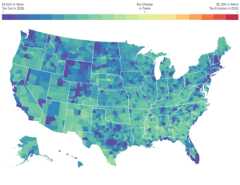
The One Big Beautiful Bill Cuts Taxes Across the US, New Analysis Finds
We estimate the OBBBA will reduce federal taxes on average for individual taxpayers in every state. Across all individual tax filers throughout the US, the average tax cut per taxpayer will be over $3,700 in 2026.
4 min read
One Big Beautiful Bill Act Tax Policies: Details and Analysis
Our analysis of the major tax provisions included in the OBBBA finds it will increase long-run GDP by 0.7 percent. The major tax provisions will reduce federal tax revenue by nearly $5.2 trillion between 2025 and 2034, on a conventional basis.
12 min read
Trump Tariffs: Tracking the Economic Impact of the Trump Trade War
The Trump tariffs are the largest US tax increase as a percent of GDP since 1993 and amount to an average tax increase per US household of $1,500 in 2026.
48 min read
How Much Revenue Can Tariffs Really Raise for the Federal Government?
Could tariffs, a form of government finance heavily relied upon in the 18th and 19th centuries, function as a major source of revenue for a modern, developed economy in the 21st century?
16 min read
Budget Reconciliation: Tracking the 2025 Trump Tax Cuts
President Trump signed the One Big Beautiful Bill Act into law on July 4, 2025.
18 min read
Making the Tax Cuts and Jobs Act Permanent: Economic, Revenue, and Distributional Effects
Permanently extending the Tax Cuts and Jobs Act would boost long-run economic output by 1.1 percent, the capital stock by 0.7 percent, wages by 0.5 percent, and hours worked by 847,000 full-time equivalent jobs.
6 min read
Options for Navigating the 2025 Tax Cuts and Jobs Act Expirations
Policymakers should have two priorities in the upcoming economic policy debates: a larger economy and fiscal responsibility. Principled, pro-growth tax policy can help accomplish both.
21 min read
A Tax Reform Plan for Growth and Opportunity: Details & Analysis
This tax reform plan would boost long-run GDP by 2.5%, grow wages by 1.4%, and add 1.3M jobs, all while collecting a similar amount of tax revenue as the current code and reducing the long-run debt burden.
38 min read
The Unsustainable US Debt Course and Impacts of Potential Tax Changes
Given the poor state of the budget process and worsening debt trajectory, lawmakers should move boldly and quickly to address the issue, including via a fiscal commission process. Issues to consider should include reforms to both spending and taxes.
42 min read
Risks to the US Tax Base from Pillar Two
A growing international tax agreement known as Pillar Two presents two new threats to the US tax base: potential lost revenue and limitations on Congress’s ability to set its own tax policy.
39 min readAll Related Articles
Refine Results
One Big Beautiful Bill Act Tax Policies: Details and Analysis
Our analysis of the major tax provisions included in the OBBBA finds it will increase long-run GDP by 0.7 percent. The major tax provisions will reduce federal tax revenue by nearly $5.2 trillion between 2025 and 2034, on a conventional basis.
12 min readTrump Tariffs: Tracking the Economic Impact of the Trump Trade War
The Trump tariffs are the largest US tax increase as a percent of GDP since 1993 and amount to an average tax increase per US household of $1,500 in 2026.
48 min read
The Federal Payroll Tax: A Primer
With changes to payroll taxes likely to be part of a toolkit for reform, both policymakers and the public would benefit from understanding how the payroll tax works, who pays it, and its impact on the economy.
21 min read
How to Refuel the Highway Trust Fund
Examples from other countries and US states show that well-designed user fees can fund transportation infrastructure effectively.
19 min read
Federal Revenue and Distributional Impacts of Limiting the Tax Exclusion for Employer-Sponsored Health Insurance Premiums
Policymakers are considering ways to extend the enhancements made to Affordable Care Act premium tax credits that expire at the end of the year, which could cost $350 billion over the next decade. Any expansion of the credits should be offset by reducing other healthcare subsidies or preferences in the tax code, the largest of which is the exclusion for employer-sponsored health insurance (ESI) premiums, estimated to cost more than $5 trillion over the next decade due to reduced income and payroll tax revenue.
10 min read
One Big Beautiful Bill Act Makes the Individual Income Tax More Complex
While the OBBBA brings some stability by making many of the TCJA’s reforms permanent, it generally fails to reform the tax code’s accumulating complexity.
31 min read