RxDock: a fast, versatile, and open-source program for docking ligands to proteins and nucleic acids
RxDock is a fast and versatileopen-source docking program that can be usedto docksmall molecules againstproteins andnucleic acids. It isdesigned for high-throughput virtual screening (HTVS) campaigns and binding modeprediction studies.
RxDock is mainly written in C++ and accessory scripts and programs are written inC++, Perl or Python languages.
The full RxDock software package requiresless than 50 MB of hard disk spaceand it is compilable (at this moment,only) inall Linux computers.
Thanks to its design and implementation[rDock2014], it can be installed on acomputation cluster and deployed on anunlimited number of CPUs, allowingHTVS campaigns to be carried out in amatter of days.
Besides its main Docking program, the RxDock software package also provides a setof tools and scripts to facilitatepreparation of the input files andpost-processing andanalysis of results.
About
Download
Please visit RxDock GitLab page for most up to date releases.
Features
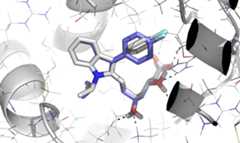
Fig. 1The above image illustrates the first binding mode solution for ASTEX system1hwi, with an RMSD of 0.88 Å.
- Docking preparation
Define cavities usingknown binders or with user-supplied3Dcoordinates. Allow -OH and -NH2 receptor side chains to rotate. Addexplicit solvent molecules and structural waters. Supply pharmacophoricrestraints as a bias toguide docking.
- Pre-processing of input files
Define common ligand structure for performingtethered docking (requiresOpen Babel Python bindings). Sort, filter or split ligand files forfacilitatingparallelization. FindHTVS protocol for optimizingcalculation time. Pre-calculate grids to decrease subsequent calculationtimes.
- Post-processing and analysis of results
Summarize results in a tabular format. Sort, filter, merge or split resultsfiles. CalculateRMSD with a reference structure taking into accountinternal symmetries (requires Open Babel Python bindings).
- Binding mode prediction
Predict how a ligand will bind to a given molecule. The ASTEX non-redundanttest set for proteins and DOCK and RxDock test sets for RNA have been used forvalidating and comparing RxDock with other programs.
- High-throughput virtual screening
Run for million of compounds in short time by exploiting the capabilities ofcomputer calculation farms. Ease ofparallelization in relativelyunlimited CPUs to optimize HTVS running times. The DUD set has been used forvalidating RxDock and comparing its performance to other reference dockingprograms.
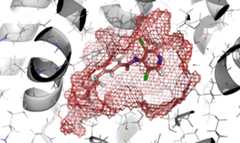
Fig. 2In red mesh, definition of the cavity obtained by execution ofrbcavityprogram.
History
The RiboDock program was developed from 1998 to 2006 by the software team atRiboTargets (subsequentlyVernalis (R&D) Ltd)[RiboDock2004]. In 2006, the software was licensed to theUniversity of York for maintenance and distribution under thename rDock.
In 2012, Vernalis and the University of York agreed to release the program asopen-source software[rDock2014]. This version is developed with support fromtheUniversity of Barcelona –sourceforge.net/projects/rdock.
The development of rDock stalled in 2014. Since 2019,RxTx is developing a fork of rDock under the nameRxDock.
License
RxDock is licensed under GNU LGPL version 3.0.
Contributor concordat
RxDock adheres both to No Code of Conduct and Code of Merit.
References
If you are using RxDock in your research, please cite[rDock2014]. Formersoftware reference provided for completeness is[RiboDock2004].
Ruiz-Carmona, S., Alvarez-Garcia, D., Foloppe, N.,Garmendia-Doval, A. B., Juhos S., et al. (2014) rDock: A Fast,Versatile and Open Source Program for Docking Ligands to Proteinsand Nucleic Acids. PLoS Comput Biol 10(4): e1003571.doi:10.1371/journal.pcbi.1003571
Morley, S. D. and Afshar, M. (2004) Validation of an empiricalRNA-ligand scoring function for fast flexible docking usingRiboDock®. J Comput Aided Mol Des, 18: 189–208.doi:10.1023/B:JCAM.0000035199.48747.1e
Getting started guide
In this section, you have the documentation with installation and validationinstructions for first-time users.
To continue with a short validation experiment (contained in theGettingstarted guide), please visit theValidationexperiments section.
Reference guide
In this section you can find the documentation containing full explanation ofall RxDock software package and features.
For installation details and first-users instructions, please visitInstallation andGetting started sections.
User guide
Developer guide
Support
If you are having some trouble regarding usage, compilation, development oranything else, you can use different options to ask for support.
Mailing lists
If you are having any kind of trouble, you have any questions or anythingrelated to general usage of the program please search and use our the discussionsection ofRxDock channel on Telegram.
Issue tracker
Mostly for developers and code-related problems. If you find a bug, pleasereport it inissues section in RxDock GitLab project.