White House proposes new taxes to boost US shipbuilding
Plan includes fees on foreign-built commercial vessels, tax on imports at land ports of entry
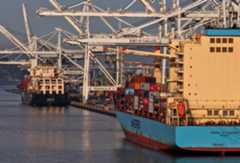
The Trump administration on Friday proposed a new set of cargo taxes on goods entering the United States as part of a sweeping plan to revitalize domestic commercial shipbuilding capacity and port infrastructure.
To help fund shipyard improvements, the administration wants to impose a new fee on all foreign-built commercial vessels bringing merchandise into U.S. ports.
The tax would be assessed based on the weight of imported tonnage; the “Maritime Action Plan” doesn’t specify the rate of tax, leaving the details for later. The report offers a range of possibilities, from a 1-cent-per-kilogram tax, raising $66 billion over a decade, to a 25-cent tax raising $1.5 trillion.
The revenue would be parked in a new Maritime Security Trust Fund, a mandatory funding stream used for shipbuilding investment, supporting the U.S. merchant marine and workforce development.
The Office of the U.S. Trade Representative, through authorities granted under Section 301 of the Trade Act of 1974, previously levied a separate fee on Chinese-built or Chinese-owned vessels entering U.S. ports based on containers or tonnage. After a deal struck between the U.S. and China last October, the fees were suspended for at least a year, until Nov. 10, 2026.
The new universal service fee would be broader in scope, and doesn’t appear tied to a specific trade remedy under existing U.S. law, such as the one USTR used last year to impose the China-specific fees.
The report also suggests creation of a new Land Port Maintenance Tax, similar to the existing Harbor Maintenance Tax. Cargo ships entering U.S. seaports are currently subject to a 0.125 percent tax on the merchandise value, which is used to fund harbor and channel dredging and other Army Corps of Engineers waterways maintenance projects.
The White House proposal would impose the same tax on cargo entering the U.S. via land ports of entry. The report says this would address “the diversion of cargo from U.S. ports of entry by leveling the playing field between land ports and seaports.” This funding would be placed in a new Land Port Maintenance Trust Fund.
The proposals are included in a 42-page report released by Secretary of State Marco Rubio and Office of Management and Budget Director Russ Vought, in response to an executive order that President Donald Trump signed last April aimed at growing the maritime industrial base.
“Less than one percent of new commercial ships are built in the United States,” the report states. “Strategic competitors, meanwhile, dominate the market and build ships at a fraction of the cost of U.S. production. This status quo poses significant security and supply chain dependency issues.”
Maritime Prosperity Zones
The report calls on Congress to implement other legislative proposals the administration says will be incorporated into Trump’s fiscal 2027 budget request. These include tax incentives to lower the after-tax cost of vessel construction and shipyard investments and “national maritime scholarships” to help train U.S. workers.
Another tax proposal would create Maritime Prosperity Zones, modeled on Opportunity Zones established under the 2017 tax overhaul package.
Opportunity Zones allow reinvestment of capital gains into low-income communities to promote economic development; investors in these funds can defer and potentially eliminate capital gains tax depending on how long they keep their money in the fund. Maritime Prosperity Zones would do the same, but for waterfront communities and maritime industries.
The administration also wants to expand the Maritime Administration’s Capital Construction Fund program, which enables U.S. vessel owners and operators to defer taxes on earnings deposited in the fund if the money is used to build, refurbish or buy new ships. A similar tax-deferred fund could be used by shipyards to invest in infrastructure and equipment or pay down debt under the plan.
Rubio and Vought in the report also touted prior legislative efforts in Congress with similar goals, including a package introduced by bipartisan lawmakers in both chambers led by Sens. Mark Kelly, D-Ariz., and Todd Young, R-Ind., as well as Reps. Trent Kelly, R-Miss., and John Garamendi, D-Calif.
Those bills would create a similar Maritime Security Trust Fund financed by existing customs fees and penalties, including revenue collected due to USTR’s Section 301 action against China. It would impose a new per-ton penalty on vessels owned or operated by a “foreign country of concern,” including China, Russia, Iran or North Korea, or shipowners doing significant amounts of business with China. Creating Maritime Prosperity Zones and expanding tax-deferred maritime construction funds are also features of the bipartisan bills.
A separate tax incentives bill from Kelly and Young that was introduced as part of the shipbuilding package would create a 25 percent tax credit for domestic shipyard investments, among other provisions.
In a statement Friday, Young cited areas of overlap between the president’s plan and his.
“The announcement today should serve as a wake-up call for Congress to act quickly on this bill in order to provide the legal authorities and resources necessary to make this plan a reality,” he said. “It’s time to make American ships again.”