

David Askew
David Askew
The Latest From David Askew
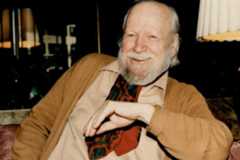
Because the Nobel winner owed his fame to what he regarded as a minor work, he resentedLord of the Flies and referred to the benefits of its success as 'Monopoly money'
Sep 17 2025
8 mins
- Premium
Niccolò Machiavelli: An Intellectual Biography by Corrado Vivanti Princeton […]
Oct 01 2013
27 mins
- Premium
Edmund Burke: Philosopher, Politician, Prophet by Jesse Norman HarperCollins, 2013, […]
Sep 01 2013
14 mins
- Premium
Macaulay: The Tragedy of Power, by Robert E. Sullivan; Harvard University Press, 2010, 624 pages, US$39.95.
Of those works published on Thomas Babington (later Lord) Macaulay (1800–1859), the most notable is the superb 1973 biography by John Leonard Clive,ThomasBabington Macaulay: The Shaping of the Historian, which describes the first half of the life of a highly talented and successful man of letters. In purchasing and then reading this latest biography of Macaulay, written, as it happens, by one of Clive’s students, I was expecting, even hoping, to find a warm, fond account of the Macaulay of theEssays andThe Historyof England, the eminent literary figure of his day and popular historian who cast such a long shadow over his era. Instead, Sullivan’sMacaulay: The Tragedy of Power is a quite different book.
Jul 01 2010
10 mins
- Premium
Hobbes and the Law of Nature, by Perez Zagorin; Princeton University Press, 2009, 177 pages, US$29.95.
Thomas Hobbes is known today as the political philosopher who wroteLeviathan. Although quoted frequently—“the life of man, solitary, poor, nasty, brutish, and short”—Leviathan is nevertheless a classic work comparable to, say, de Tocqueville’sDemocracy in America—often cited but seldom read. This is a pity. Hobbes discussed the foundations of sovereign authority and political obligation in a way that still has much relevance.
Jun 01 2010
9 mins
- Premium
Marx’s General: The Revolutionary Life of Friedrich Engels, by Tristram Hunt; Metropolitan Books, 2009, US$35.
Karl Marx once famously said that while philosophers have only interpreted the world, the point is to change it. Since Marx and his intellectual collaborator, Friedrich Engels, did exactly that, judgments of both have ranged from ardent devotion at one extreme to vigorous deprecation at the other. Tristram Hunt occupies the narrow middle ground. Born in 1974, he is an ideal biographer because, despite his links to the Labour Party, he comes to Engels without the partisan feelings of earlier generations. Two decades after the Berlin Wall was demolished, it is perhaps possible to take a more objective approach to Engels and his thought. InMarx’s General(published in the UK asThe Frock-Coated Communist), Hunt attempts just this.
Apr 01 2010
9 mins