Quentin Reynolds
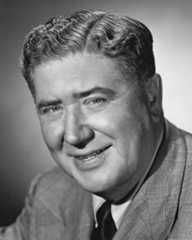
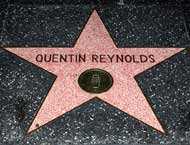
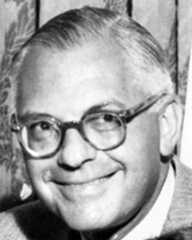
Quentin Reynolds was the author-war correspondent who won acclaim for his World War II reporting on the Dieppe raid and the London blitz.
A New York native, Reynolds began his writing career at the New York Evening World as a sports reporter. He started a 21-year association with Colliers magazine in 1934 with a report on the rise of the Hitler youth movement.
Reynolds was described once as the "light-heavyweight champion of the underdog."
He published 25 books over his career, including "The Wounded Don’t Cry," "London Diary" and "Dress Rehearsal." He also published an autobiography, "By Quentin Reynolds."
After World War II, Reynolds was best known for his libel suit against right-wing Hearst columnist Westbrook Pegler, who called him a coward and an "absentee war correspondent." Reynolds won $175,001, at the time the largest libel judgment ever. The trial was later made into a Broadway play, "A Case of Libel," which was twice adapted as TV movies.
Related stars
|
Points of interest
Seven thoughts about Quentin Reynolds
“”— Richard M Sanderson, November 19, 2011 at 11:24 a.m.“I just came across one of his books, "They Fought for the Sky", which he wrote in 1957. This is a history of the importance of aerial activity during World War I and I found it to be wonderfully inspiring as he related the tales of so many fliers of the day as well as the development and importance of strategic aerial combat. Very sad that he died at such a young age.
”— person, April 9, 2012 at 9:53 a.m.“i really don't know him 2 much but he seems okay
”— FRED J ABRAHAMS, September 1, 2014 at 4:50 p.m.“When I was in the US Army I was stationed in Karlsruhe Germany 1956/7. I had a friend who was the son of Quentin Reynolds. Very bright, spoke excellent German, I lost track of him after leaving the service. Any info?
”— Peter Whitelam, September 23, 2014 at 1:27 a.m.“In the late 50's, I was the writer/director of "The Quentin Reynolds Show" which appeared every week
on the Dumont Network. The producer was Jason Philips and our offices were at 130 West 57th Street
in New York City. The half hour program profiled leading companies and institutions, such as the Glass
Institute or the Manhattan School of Music. During these documentary films, Quentin would conduct a short interview with the CEO or President. As a highly professional journalist, Quentin Reynolds was
both affable and well prepared for these shows, and it was a pleasure to work with him. The program,
which had a different format from the original "Operation Success" series on Dumont, used Quentin
Reynolds as the anchor instead of "Operation Success" host Bob Pfeiffer.
”— James Sanders, January 15, 2015 at 2:43 a.m.“As a teenager in 1965 I purchased the paperback book They Fought For The Sky. Admittedly my purchase choice may have been by cover design but the content was superbly written and entertaining and it was a book that I could not put down till finished, which is saying alot for a young man with a short attention span. It has been through out my life I have encountered others that too read They Fought For The Sky at a young age and we give a smile and nod, Quentin Reynolds introduced us to the great tales of WWI aerial combat.
”— BERNIE ZUCH, July 27, 2015 at 7:57 p.m.“I was the cameraman on the OPERATION SUCCESS show with Quentin Reynolds. We always shot the interviews at the Hilton Suite of the New Yorker hotel. Everyone associated with that show is presently deceased except for me. I'm 80 years old and I've got fond memories of those years.
BERNIE ZUCH
”— BERNIE ZUCH, September 14, 2015 at 12:52 p.m.I forgot to mention this little tidbit about Mr. Reynolds... The Hotel New Yorker here in New York gave us the exquisite Hilton Suite at no cost because we gave them a nice "plug" at the end of each show. Show was always on at Saturday mornings at a local station here in NYC.
Each time we gathered to film the interviews there (once a week on Thursdays) .... I was told that Quent (as we all called him) must have 1 or 2 cold bottles of his favorite beer. As I recall, it was MICHELOBE ! He only wanted that brand... and no other !
I found him to be extremly intelligent and easy and very pleasant to work with. I shot alot of the interviews with an Auricon 16MM camera using a 1200 ft magazine. Both I and my good childhood friend Michael Shrayer always went out on location to film the assorted 15 minute segments for the show. Michael was my excellent teacher and tutor in my becoming a cameraman and I owe him my gratitude for that. The director we both worked with was the beautiful Maggie Sullivan and Michael eventually married her.
Although Michael is now deceased, I myself still stay in touch with his sister Rina who is fully retired and now lives in Israel.
Share a thought about Quentin Reynolds
- Did you ever meet Quentin Reynolds? Share your memory.
- Which other stars on the Hollywood Walk of Fame have connections to Quentin Reynolds?
- Are other places in the world important to Quentin Reynolds?
- Does Quentin Reynolds deserve this star on the Hollywood Walk of Fame?