Health and Medicine

AIDS and AIDS Activism
Doctors in Philadelphia diagnosed the first local case of what would later become known as AIDS (Acquired Immune Deficiency Syndrome) in September 1981, just months after the Centers for Disease Control first reported mysterious outbreaks in New York and Los Angeles that marked the beginning of the recognized AIDS epidemic in the United ...

Board of Health (Philadelphia)
Philadelphia suffered numerous outbreaks of epidemic disease throughout the seventeenth and eighteenth centuries, but it was not until 1794, in the wake of the disastrous 1793 yellow fever outbreak, that a group of concerned citizens founded the Board of Health, independent of the city’s control. In the nineteenth century, the city supported the board with an annual budget and continuously ...
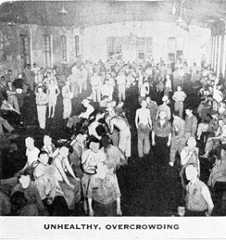
Byberry (Philadelphia State Hospital)
From the arrival of its first patients in 1911 to 1990, when the Commonwealth formally closed it down, the Philadelphia State Hospital, popularly known as Byberry, was the home for thousands of mental ...
Cholera
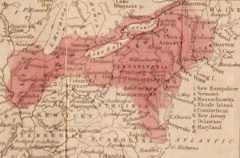
Cholera epidemics that struck Philadelphia in 1832, 1849, and 1866 provided a catalyst for transforming the health and hygiene standards of the ...
City of Medicine
In 1843, a student at the “med school of the University of Pennsylvania,” as he called it in a letter to a friend in Boston, declared Philadelphia “decidedly the city of the Union for doctors, the facilities for study making it a perfect little Paris.” The comparison reflected the renown of the French capital at ...
College of Physicians of Philadelphia
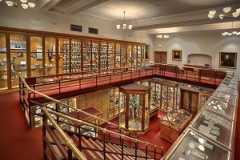
One of the oldest professional medical societies in the United States, the College of Physicians of Philadelphia was founded in 1787 “to advance the science of medicine and to thereby lessen human misery.” At the time, Philadelphia, home to the first general hospital and medical college, was the center of American medicine. The College of Physicians of Philadelphia created professional ...
Coronaviruses
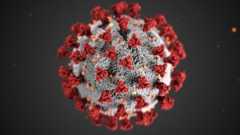
Two major coronavirus epidemics in the early twenty-first century left their mark on the Greater Philadelphia region. The second of these epidemics, beginning in 2019, caused considerable loss of life; prompted major restrictions on education, social life, and the area’s economy; and exposed urban inequalities. Vaccine research undertaken in Philadelphia, however, played a critical role in ...

Deafness and the Deaf
Documentation of the lives of deaf individuals in the Philadelphia region, and elsewhere, is limited. Historic accounts depict desperate individuals roaming the streets or begging. Prior to the advent of public schools for the deaf, only elite deaf individuals received private tutoring. In the early nineteenth century, Philadelphia philanthropists, religious figures, educators, merchants, and ...

Dentistry and Dentists
As dentistry slowly emerged as a profession in the eighteenth and nineteenth centuries, innovative dentists in Philadelphia helped to shape dental care, procedures, and tools. Beginning in the mid-nineteenth century, dental colleges, journals, and societies contributed to the expansion of dental training and practice, which gradually but increasingly became accessible to women and people of ...

Dispensaries
Free clinics known as dispensaries served the “working poor” of European, British, and American cities from the eighteenth through the early twentieth centuries. Paid or volunteer physicians saw patients on site or at their homes in the dispensary’s district, caring for both minor ailments and more serious diseases. The Philadelphia Dispensary for the Medical Relief ...
Duffy’s Cut
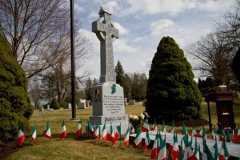
At Duffy’s Cut, a railroad construction site in Chester County, Pennsylvania, fifty-seven Irish immigrant railroad workers died amid a cholera epidemic in the summer of 1832 and were buried in a mass grave. The Irishmen from Donegal, Tyrone, and Derry were hired to dig a railroad cut and construct an earthen fill in lieu of a bridge at mile 59 of the Philadelphia and Columbia Railroad (P&C), ...

Eugenics
In 1883 Francis Galton (1822–1911), an English statistician and sociologist, invented a term for his decades-long genealogical investigations into “fit” and “unfit” families: eugenics, the scientific study of being well-born. While Galton tended to focus on the fit, in the United States, enthusiasts for eugenics more often focused on those deemed biologically unfit. Elwyn, Pennsylvania, ...
Gross Clinic (The)
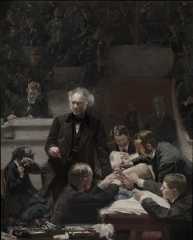
The Gross Clinic, painted in 1875 by Thomas Eakins (1844-1916), is among the most highly regarded American artworks from the nineteenth century. It depicts Dr. Samuel D. Gross (1805-84), an internationally celebrated surgeon who taught at Jefferson Medical College in Philadelphia from 1856 to 1882, overseeing surgery on a patient's left ...
Home Remedies
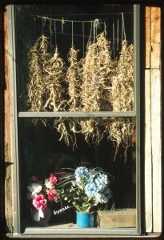
Although Philadelphia has been a premier city for medical innovation since the mid-eighteenth century, the diverse peoples of the region also have used home remedies to heal themselves. Home remedies preserve traditional domestic healthcare practices, and they have persisted into the twenty-first century as part of alternative medicine and mainstream scientific therapies. Medical recipes often ...
Infectious Diseases and Epidemics
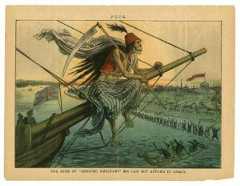
Despite Philadelphia’s prominence, throughout its history, as a center for medical education and care, the region has experienced numerous epidemics of infectious disease. British America’s largest city in the eighteenth century, Philadelphia suffered dreadful outbreaks of smallpox and yellow fever, while the nineteenth century brought an exotic new disease—cholera—that killed hundreds. ...

Influenza (“Spanish Flu” Pandemic, 1918-19)
As World War I drew to a close in November 1918, the influenza virus that took the lives of an estimated 50 million people worldwide in 1918 and 1919 began its deadly ascent. The pandemic hit Philadelphia exceptionally hard after sailors, carrying the virus from Boston, arrived at the Philadelphia Navy Yard in early September 1918. In a city of almost two million people, a half a million or more ...

Lazaretto
Situated roughly ten miles south of Philadelphia, in Essington, on the west bank of the Delaware River, the Lazaretto is considered to be the oldest and last surviving quarantine station in the United ...
Legionnaires’ Disease
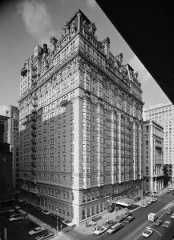
The outbreak of a mysterious pneumonia-like disease in the Philadelphia region in the summer of 1976 puzzled doctors and public health officials. Many of the sick had attended an American Legion convention at the Bellevue-Stratford Hotel, giving the new illness the name “Legionnaires’ disease.” Months later, doctors discovered that bacteria in the hotel’s air conditioning ...

Medical Publishing
The U.S. medical publishing industry got its start in Philadelphia in the early nineteenth century, and the Philadelphia region has maintained its preeminence in the industry ever ...
Medicine (Colonial Era)
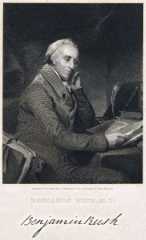
In colonial Philadelphia, physicians and other medical practitioners contended with a difficult disease environment. The best medical efforts of the day were often inadequate or even harmful in the face of chronic illness and epidemic ...
Mütter Museum
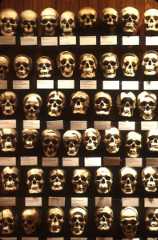
In 1849, the College of Physicians of Philadelphia, following trends in medical education and research, created a museum of anatomy and pathology. After Thomas Dent Mütter (1811-59) donated his world-class collection in 1858, the expanded institution became the Mütter Museum—one of the best medical collections in the city and in the country. Together, as their ...

Nursing
The history of nursing in the Philadelphia area is one of long and storied traditions. Men and women have often nursed their sick families and friends at home, which for millennia represented the best, safest, and most comforting site for treatment and care. Bringing a stranger into that home to provide nursing care was a ...
Pennhurst State School and Hospital
During eight decades of continuous operation (1908-87), Pennhurst evolved from a model facility into the subject of tremendous public scandal and controversy before the federal courts ordered it closed and the remaining residents moved ...
Pharmaceutical Industry
Philadelphia played a key role in the birth of the American pharmaceutical industry in the early nineteenth century, and the region remained a major pharmaceutical center into the early twenty-first century. Home since the colonial period to many of America’s leading scientific, educational, and medical institutions, Philadelphia was well-positioned to support the emergence of a ...
Phrenology
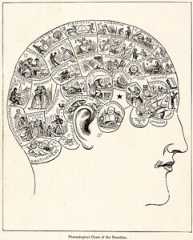
Although later regarded as a pseudoscience grounded on racism and racial discrimination, phrenology initially represented an emerging science of investigating individuals’ intellectual capacity and mental faculty based upon the physical features of their skulls and brains. Originated in Europe at the end of the eighteenth century, phrenology came to Philadelphia as a new science in ...
Pollution
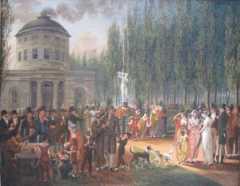
In its various forms, pollution immeasurably shaped the history and geography of greater Philadelphia. For nearly four centuries, contamination of the region’s air, land, and water reflected the civic and economic ambitions of people, businesses, and communities. Yet such contamination also compelled individuals, groups, and elected officials to address environmental and public health concerns ...
Public Baths and Bathing
The importance of cleanliness and personal hygiene increased considerably during the nineteenth century. Philadelphia's working class rarely had access to facilities for regular bathing until the 1890s, when the construction of public baths aided in the fight against urban ...
Public Health
From the moment Native Americans, Europeans, and Africans came together in the Delaware Valley, they confronted a host of health threats. Philadelphia’s earliest public health efforts reflected the lack of scientific understanding of infectious diseases, and usually began only after an outbreak commenced. After the terrible 1793 yellow fever epidemic, Philadelphia’s leaders founded a ...
Root Beer
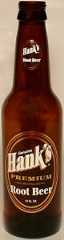
Root beer, a popular beverage in the United States since the late eighteenth century, began as a medicinal beverage produced at home. In the nineteenth century, carbonated root beer grew in popularity, particularly after Philadelphia pharmacist Charles Elmer Hires (1851-1937) presented his version of root beer at the 1876 Centennial Exhibition. Although the popularity of ...
Smoking and Smoking Regulations
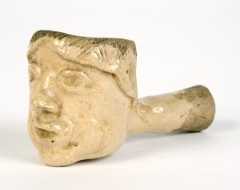
The origins of smoking tobacco in the Philadelphia region can be traced to the era before European colonization and evolved from pipes and cigars to the commercialization of cigarettes beginning in the late nineteenth century. Philadelphia-area farmers grew tobacco, local manufacturers produced cigars and cigarettes, and the N.W. Ayer advertising agency helped Camel cigarettes become ...

Trails (Recreational)
An expanding network of recreational paths for walkers, hikers, cyclists, joggers, and commuters serves the Greater Philadelphia region. The first recreational paths date to the mid-nineteenth century, when upper-class residents sought idyllic walking grounds in rural cemeteries and urban parks. In the twentieth century, grassroots hiking clubs built additional footpaths, but by the early ...

Typhoid Fever and Filtered Water
Philadelphia in the late nineteenth century stood shamefully high among large American cities in rates of death from typhoid fever (also known as enteric fever). Caused by a type of Salmonella bacterium, the disease had become common in Philadelphia and other cities with crowded populations, inadequate disposal of human waste, and lack of water treatment. ...

University City Science Center
The University City Science Center, the nation’s first and oldest urban research park, represents a pivotal chapter in the story of American urban renewal, its associated racial tensions, and the important role played by institutions of higher education. Established in 1960 in West Philadelphia adjacent to and intertwining the campuses of the University of Pennsylvania ...

Woman’s Medical College of Pennsylvania
The Woman’s Medical College of Pennsylvania, founded in 1850 as the Female Medical College of Pennsylvania, was the first medical school in the world for women authorized to award them the M.D. It was established in Philadelphia by a group of progressive Quakers and a businessman who believed that women had a right to education ...
Yellow Fever
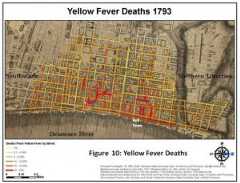
For more than a century beginning in the late seventeenth century, sudden outbreaks of yellow fever sowed death and panic throughout Philadelphia and its environs. With medical science seemingly powerless against it, yellow fever was a terrifying and mysterious threat that rivaled any disease of the era in its capacity to take lives and disrupt ...