DOI:10.1130/0016-7606(2002)114<1070:DHOPDS>2.0.CO;2 - Corpus ID: 17130391
Depositional history of pre-Devonian strata and timing of Ross orogenic tectonism in the central Transantarctic Mountains, Antarctica
@article{Myrow2002DepositionalHO, title={Depositional history of pre-Devonian strata and timing of Ross orogenic tectonism in the central Transantarctic Mountains, Antarctica}, author={Paul M. Myrow and Michael C. Pope and John W. Goodge and Woodward W. Fischer and Allison Ralph Palmer}, journal={Geological Society of America Bulletin}, year={2002}, volume={114}, pages={1070-1088}, url={https://api.semanticscholar.org/CorpusID:17130391}}- P. MyrowM. PopeA. R. Palmer
- Published1 September 2002
- Environmental Science, Geology
- Geological Society of America Bulletin
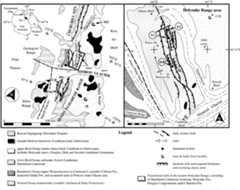
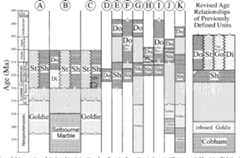
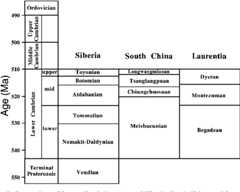
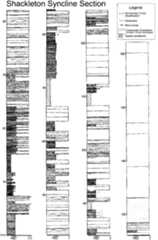
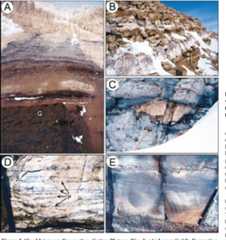
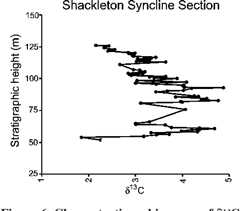
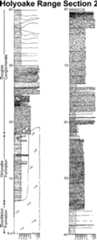
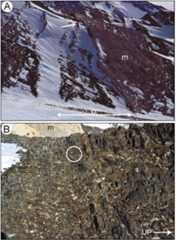
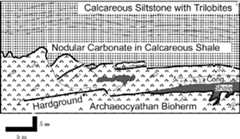
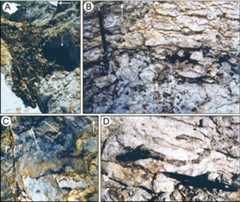
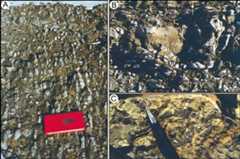
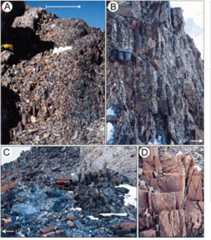
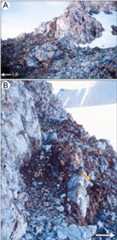
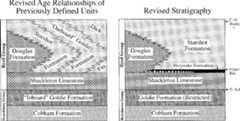
A combination of field mapping, detailed sedimentology, carbon isotope chemostratigraphy, and new paleontological finds provides a significantly improved understanding of the depositional and tectonic history of uppermost Neoproterozoic and lower Paleozoic strata of the central Transantarctic Mountains. On the basis of these data, we suggest revision of the existing stratigraphy, including introduction of new formations, as follows. The oldest rocks appear to record late Neoproterozoic…
Figures from this paper
89 Citations
Provenance of Neoproterozoic and lower Paleozoic siliciclastic rocks of the central Ross orogen, Antarctica: Detrital record of rift-, passive-, and active-margin sedimentation
- J. GoodgeI. WilliamsP. Myrow
- 2004
Geology, Environmental Science
Siliciclastic rocks in the Transantarctic Mountains record the tectonic transformation from a Neoproterozoic rift-margin setting to a passive-margin and ultimately to an active early Paleozoic…
Metamorphism in the Ross orogen and its bearing on Gondwana margin tectonics
- J. Goodge
- 2007
Environmental Science, Geology
The Ross orogen of Antarctica is one of Earth’s great Phanerozoic mountain belts. It is thought from igneous geochemistry, deformation patterns, and sedimentation history to be the result of late…
Siliciclastic record of rapid denudation in response to convergent-margin orogenesis, Ross Orogen, Antarctica
- J. GoodgeP. MyrowD. PhillipsC. FanningI. Williams
- 2004
Environmental Science, Geology
Siliciclastic rocks of the upper Byrd Group in the Transantarctic Mountains record rapid denudation and molasse deposition during Ross orogenesis along the early Paleozoic convergent margin of…
Mesoarchean and Paleoproterozoic history of the Nimrod Complex, central Transantarctic Mountains, Antarctica: Stratigraphic revisions and relation to the Mawson Continent in East Gondwana
- J. GoodgeC. Fanning
- 2016
Geology, Environmental Science
Depositional Environments of the Byrd Group, Byrd Glacier Area: A Cambrian Record of Sedimentation, Tectonism, and Magmatism
The geology of the Byrd Group immediately south of Byrd Glacier records a major sequence of geologic events, beginning with the development of a carbonate platform (Shackleton Limestone) during the…
Interaction between collisional orogenesis and convergent-margin processes: evolution of the Cambrian proto-Pacific margin of East Gondwana
- R. J. SquireC. Wilson
- 2005
Geology
Difficulties in correlating the Cambrian magmatic, depositional, structural and metamorphic events along the proto-Pacific margin of East Gondwana have led to subdivision of the region into the…
Early Palaeozoic near-surface deformation in the Neptune Range, Antarctica: implications for the Ross and Gondwanian orogenies
The Neptune Range of the Pensacola Mountains, East Antarctica, exposes a record of Early Palaeozoic to Early Mesozoic polyphase deformation along the former East Antarctic margin of Gondwana that is…
Paleozoic siliciclastic rocks from northern Victoria Land (Antarctica): Provenance, timing of deformation, and implications for the Antarctica-Australia connection
- G. VincenzoA. GrandeF. Rossetti
- 2014
Geology, Environmental Science
Paleozoic sequences exposed along the Transantarctic Mountains in Antarctica and in southeastern Australia are segments of a formerly contiguous accretionary orogen that developed along the eastern…
Provenance of the Lower Paleozoic Balcarce Formation (Tandilia System, Buenos Aires Province, Argentina): Implications for paleogeographic reconstructions of SW Gondwana
- U. ZimmermannL. Spalletti
- 2009
Geology
Crustal Architecture of the Paleo‐Pacific Rift Margin of East Antarctica: Evidence From U‐Pb Ages and O‐Hf Isotope Compositions of Ross Orogen Granitoids
- J. GoodgeC. FanningC. FisherJ. Vervoort
- 2024
Geology, Environmental Science
Granitic batholiths of the ∼500 Ma Ross Orogen in Antarctica are voluminous in scale, reflecting prolific magmatism along the active early Paleozoic convergent margin of Gondwana. New age and…
...
68 References
Latest Neoproterozoic to Mid-Cambrian age for the main deformation phases of the Transantarctic Mountains: new stratigraphic and isotopic constraints from the Pensacola Mountains, Antarctica
- A. J. RowellW. Van SchmusB. StoreyA. FetterK. Evans
- 2001
Geology, Environmental Science
New isotopic ages and a fresh understanding of stratigraphic relations among siliciclastic strata in the Pensacola Mountains along the northern margin of the East Antarctic craton result in removal…
Early Palaeozoic history of the upper Beardmore Glacier area: implications for a major Antarctic structural boundary within the Transantarctic Mountains
- A. J. RowellM. N. Rees
- 1989
Geology, Environmental Science
The central and western Transantarctic Mountains appear to be divided longitudinally by one or more terrane boundaries that separate two regions characterized by different Lower Palaeozoic…
Latest Neoproterozoic basin inversion of the Beardmore Group, central Transantarctic Mountains, Antarctica
- J. Goodge
- 1997
Geology, Environmental Science
Structural and age relationships in Beardmore Group rocks in the central Transantarctic Mountains of Antarctica indicate that they experienced a single deformation in latest Neoproterozoic to early…
Early paleozoic history of the central transantarctic mountains: evidence from the Holyoake Range, Antarctica
- A. J. RowellM. N. ReesR. CooperB. Pratt
- 1988
Geology, Environmental Science
Abstract New stratigraphic observations within the Byrd Group of the northern Holyoake Range show, that Paleozoic sedimentation commenced in this part of East Antarctica by at least middle Early…
Neoproterozoic-Cambrian basement-involved orogenesis within the Antarctic margin of Gondwana
High-grade metamorphic tectonites of the Nimrod Group in the central Transantarctic Mountains compose a major ductile shear zone that formed within the paleo-Pacific margin of Gondwana. Despite…
Isotopic structure and tectonics of the central Transantarctic mountains
- S. BorgD. DePaoloBrian M. Smith
- 1990
Geology, Environmental Science
Regional patterns of Nd, Sr, and O isotopic ratios of ∼500 Ma granitic rocks are used to identify the ages and areal extents of three crustal provinces in the central Transantarctic Mountains. One of…
Timing of events during the late Proterozoic Beardmore Orogeny, Antarctica: Geological evidence from the La Gorce Mountains
The Beardmore Orogeny previously has been designated for deformational and magmatic activity that occurred during the late Proterozoic in the central Transantarctic Mountains. It is recognized in…
Geomorphology and stratigraphy of the nimrod glacier–beaumont bay region, Southern Victoria land, Antarctica
- M. Laird
- 1963
Geology, Environmental Science
Abstract An account is given of the geomorphology and stratigraphy of about 3,000 square miles of southern Victoria Land between the Nimrod Glacier and Beaumont Bay. The present topography has…
Evidence of major Middle Cambrian deformation in the Ross orogen, Antarctica
- A. J. RowellM. N. ReesK. Evans
- 1992
Geology, Environmental Science
Long-lived polyphase tectonism in the Cambrian history of the Ross orogen is demonstrated by recent stratigraphic studies in both the central and Weddell Sea segments of the Transantarctic Mountains.…
A New Look at Evolutionary Rates in Deep Time: Uniting Paleontology and High-Precision Geochronology
- S. BowringD. ErwinT. Toronto
- 1998
Geology
It is now possible to routinely determine the age of 200–600-m.y.-old volcanic rocks interlayered with fossilbearing deposits to uncertainties of less than 1 m.y. with uranium-lead zircon…
...
Related Papers
Showing 1 through 3 of 0 Related Papers