

About PDB-101
PDB-101 is an online portal for exploring the world of proteins and nucleic acids. The shapes and functions of biological macromolecules help explain all aspects of biomedicine and agriculture, from protein synthesis to health and disease to biological energy.
Our mission is to build and support the broad PDB user community with a wide range of resources for understanding 3D biostructures.
- Training materials, such as theGuide to Understanding PDB Data and webinars, are available to help graduate students, postdoctoral scholars, and researchers use PDB data and RCSB PDB tools.
- Outreach content, including theMolecule of the Month series andmolecular animations, demonstrate how PDB data can be used to understand fundamental biology, biomedicine, bioengineering/biotechnology, and energy sciences in 3D by a multidisciplinary user community.
- Education Materials, such asCurriculum Modules, provide lessons and activities for teaching and learning.
Why PDB-101? Researchers around the world are studying molecules at the atomic level. These 3D structures are freely available at the Protein Data Bank (PDB), the central storehouse of biomolecular structures. This website builds introductory materials to help users get started using PDB data and RCSB PDB tools for learning ("101", as in an entry-level course).
Since 2011, PDB-101 has been developed by RCSB PDB, a global resource for the advancement of research and education in biology and medicine. Along with our Worldwide PDB collaborators, RCSB PDB curates, annotates, and makes publicly available the PDB data deposited by scientists around the globe. The RCSB PDB then provides a window to these data through a rich online resource with powerful searching, reporting, and visualization tools for researchers atRCSB.org. This information is then streamlined into Training, Outreach, and Education resources and materials at PDB-101.
RCSB PDB Core Operations are funded by theU.S. National Science Foundation (DBI-2321666), theUS Department of Energy (DE-SC0019749), and theNational Cancer Institute,National Institute of Allergy and Infectious Diseases, andNational Institute of General Medical Sciences of theNational Institutes of Health under grant R01GM157729.
RCSB PDB receives guidance from anAdvisory Committee and theTraining, Outreach, and Education Working Group.
 The Science Gateways Community Institute supported a PDB-101 intern and provided consultation services.
RCSB Protein Data Bank Privacy Statement
Cite PDB-101:
PDB-101: Educational resources supporting molecular explorations through biology and medicine. Christine Zardecki, Shuchismita Dutta, David S. Goodsell, Robert Lowe, Maria Voigt, Stephen K. Burley. (2022)Protein Science 31: 129-140 doi:10.1002/pro.4200
Awards and Recognitions
2024 | |
|---|---|
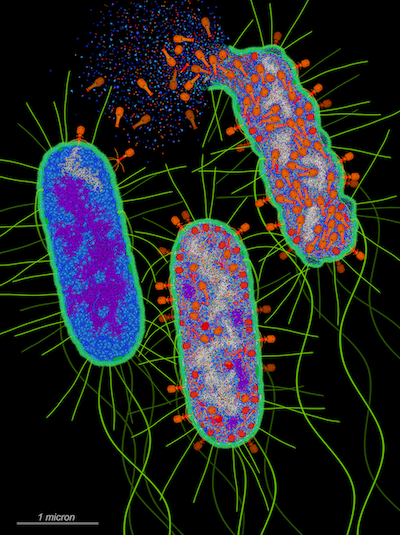 | 2023 Wiki Science Competition (non-photographic media), Wikimedia Commons Winner: National Jury's Choice Award (USA). Category: non-photographic media. |
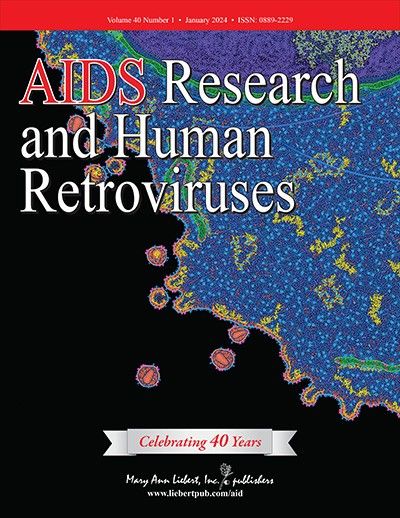 | Journal Cover Art contest forAIDS Research and Human Retroviruses Winner:HIV-Infected Cell, 2022. Illustration by David S. Goodsell, B-HIVE Center, RCSB Protein Data Bank and Scripps Research. doi:10.2210/rcsb_pdb/goodsell-gallery-047. |
2023 | |
 | Finalist,EdTech Awards |
2022 | |
 | Shuchismita Dutta named a Fellow of theAmerican Association for the Advancement of Science |
 | Molecule of the Month creator David S. Goodsell was honored with
|
2021 | |
 | Wiki Science Competition 2021: Wikipedia Finalist:United States andInternational |
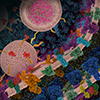 | Wiki Science Competition 2021: Wikipedia Finalist:United States andInternational |
| Winner (Other Life Science Images Category): |
2020 | |
 | 2020 American Public Health Association Film Festival Official selection: |
2019 | |
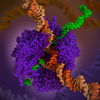 | Wiki Science Competition 2019: Wikipedia National finalist andInternational Runner-Up inNon-photographic media category: |
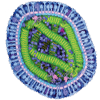 | BioArt Awards: FASEB Winner: |
2018 | |
 | BioArt Awards: FASEB Winner: |
2017 | |
 | Genetic Engineering & Biotechnology News 37: 30. "Best of the Web". |
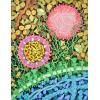 | Vizzies Awards: National Science Foundation (NSF) and Popular Science Winner: |
2016 | |
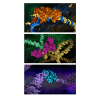 | BioArt Awards: FASEB Winner: |
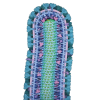 | Wellcome Image Awards: Wellcome Trust Winner: |
 | Wellcome Image Awards: Wellcome Trust Winner: |
2015 | |
| BioArt Awards: FASEB Winner: |
About PDB-101
Researchers around the globe make 3D structures freely available from the Protein Data Bank (PDB) archive. PDB-101 training materials help graduate students, postdoctoral scholars, and researchers use PDB data and RCSB PDB tools. Outreach content demonstrate how PDB data impact fundamental biology, biomedicine, bioengineering/biotechnology, and energy sciences in 3D by a multidisciplinary user community. Education Materials provide lessons and activities for teaching and learning.
PDB-101 is developed by theRCSB PDB.




RCSB PDB Core Operations are funded by theU.S. National Science Foundation (DBI-2321666), theUS Department of Energy (DE-SC0019749), and theNational Cancer Institute,National Institute of Allergy and Infectious Diseases, andNational Institute of General Medical Sciences of theNational Institutes of Health under grant R01GM157729.