

Biomolecular Structural Biology
methods for determining atomic structures
Scientists use a variety of experimental methods to discover the inner workings of biological molecules. These include X-ray crystallography, NMR spectroscopy, and electron microscopy. Each method has specific advantages for the exploration of biological molecules.
Molecule of the Month Articles (19)
 | Activity-regulated cytoskeleton-associated protein (Arc) An unexpected link between viruses and the brain |
 | Adenine Riboswitch in Action XFEL serial crystallography reveals what happens when adenine binds to a riboswitch |
 | Apolipoprotein B-100 and LDL Receptor Insights into how LDL is removed from the bloodstream |
 | Enoyl-CoA Carboxylases/Reductases Enzymes that can quickly and efficiently fix carbon |
 | Fifty Years of Open Access to PDB Structures The Protein Data Bank is celebrating its golden anniversary! |
 | GLP-1 Receptor Agonists Popular and effective drugs for the treatment of obesity and diabetes |
 | Histones Across the Tree of Life Uncovering the evolutionary diversity of histones |
 | Incretins GLP-1 and GIP are hormones that are released soon after you eat a meal |
 | Lysozyme Lysozyme attacks the cell walls of bacteria |
 | Myoglobin Myoglobin was the first protein to have its atomic structure determined, revealing how it stores oxygen in muscle cells. |
 | Nanodiscs and HDL Nanodiscs conveniently package a small piece of membrane for experimental studies. |
 | Natural RNA-Only Assemblies Large and intricate naturally occurring structures composed exclusively of RNA |
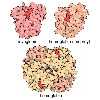 | PDB Pioneers A dozen historic structures set the foundation for the PDB archive |
 | Pepsin Pepsin digests proteins in strong stomach acid |
 | Photoactive Yellow Protein Researchers use synchrotrons and X-ray lasers to reveal the rapid processes of light sensing. |
 | Ribonuclease A Ribonuclease cuts and controls RNA |
 | Selenocysteine Synthase Selenium is used in place of sulfur to build proteins for special tasks |
 | Trypsin An activated serine amino acid in trypsin cleaves protein chains |
 | Twenty Years of Molecules Celebrating the structural biology revolution |
Learning Resources (14)
 | Quasisymmetry in Icosahedral Viruses Activity Page Build 3D paper models of several viruses to explore how quasisymmetry builds capsids with different sizes. |
 | 200 Icosahedral Viruses Poster |
 | Expanding Boundaries of Complexity with 3DEM Flyer 3D electron microscopy (3DEM) is revolutionizing the field of structural biology. |
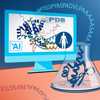 | Computed Structure Models and PDB Experimental Structures Poster Poster Simultaneous delivery of PDB data and Computed Structure Models on RCSB.org provides access to 3D structural information from across the human proteome, model organisms, and selected pathogens |
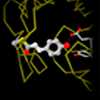 | Photoactive Yellow Protein and XFEL/SFX GIF Structures of photoactive yellow protein were determined by serial femtosecond crystallography after illumination, capturing the isomerization of the chromophore after it absorbs light. Structures included in this movie include: 5hd3 (ground state), 5hdc (100-400 femtoseconds after illumination), 5hdd (800-1200 femtoseconds), 5hds (3 picoseconds), 4b9o (100 picoseconds), 5hd5 (200 nanoseconds) and 1ts0 (1 millisecond). For more, see the Molecule of the Month on Photoactive Yellow Protein and Guide to Understanding PDB Data: Methods for Determining Atomic Structures |
 | Celebrating 50 Years of the Protein Data Bank Archive Video In 1971, the structural biology community established the single worldwide archive for macromolecular structure data–the Protein Data Bank (PDB). From its inception, the PDB has embraced a culture of open access, leading to its widespread use by the research community. PDB data are used by hundreds of data resources and millions of users exploring fundamental biology, energy, and biomedicine. This video looks at the history and the milestones that shaped the PDB into the leading resource for research and education it is today. |
 | Discovering Biology Through Crystallography Coloring Book Color the diverse 3D shapes studied by crystallographers. Created with support from the ACA. Available as a PDF and individual images. |
 | Biological Assemblies Guide |
 | Computed Structure Models Guide New machine-learning methods for predicting protein structures build on and complement the PDB archive of experimentally-determined structures. |
 | Methods for Determining Structure Guide |
 | Crystallographic Data Guide |
 | Molecular Backgrounds For Virtual Meetings Other Resources Download images created by David Goodsell to add a molecular backdrop to your next virtual meeting. Click on the image to expand. |
 | PDB50 the Game Other Resource A PDB “worker placement” board game that explores the process of structure discovery |
 | Exploring Structural Biology with Computed Structure Models (CSMs) Article Computational methods like AlphaFold2 and RoseTTAFold2 use structures in the PDB archive to predict the folding of proteins. |
Curriculum Resources (11)
Structural Biology Highlights (6)



Geis Digital Archive (6)
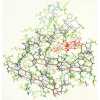 | Myoglobin Geis highlights the hundreds of chemical bonds in the lattice of myoglobin. |
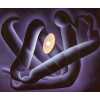 | Myoglobin Fold Geis illustrated the structure of myoglobin, focusing on the folding pattern of the secondary structure of the protein. Unlike previous myoglobin Illustrations, this painting focuses on the tertiary structure of the molecule rather than the sequence or surface. |
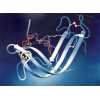 | Ribonuclease S Geis illustrates the structure of the ribonuclease S that highlights the dinucleotide RNA substrate in red and the four disulfide bonds in yellow. |
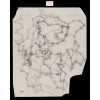 | Trypsin Geis illustrates the structure of bovine trypsin, an enzyme that breaks down proteins, which was first revealed by X-ray crystallography in 1971 and further explored in 1974 (Krieger et al., 1974). This illustration was originally published inScientific American (Stroud, 1984). Trypsin is a protease, an enzyme that catalyzes cleavage of polypeptide chains (Stroud, 1984). Geis' sketch depicts the structure with a ball-and-stick model and displays the sidechains of aspartic acid (Asp102), histidine (His57), and serine (Ser195), known as the catalytic triad. |
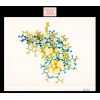 | Crambin In Hendrickson and Teeter's molecular study in 1981, the crystal structure of crambin, a small seed storage protein, was determined based on the location of sulfur atoms in the protein. Using an artistic approach, Geis utilizes bright yellow shading and orange coloring to highlight the importance of these 6 sulfur atoms in this ball-and-stick representation. The backbone of the protein is depicted in blue. |
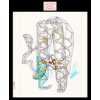 | Myohemerythrin The colored print depicts the structure of myohemerythrin, which was first revealed by X-ray crystallography in 1975 (Hendrickson et al., 1975) and further refined in 1987 (Sheriff et al., 1987). Geis's illustration depicts the tertiary structure of the protein, highlighting the four anti-parallel alpha-helices and the presence of mu-oxo-diiron (iron atoms in red and oxygen atom in pink) located within the core of the macromolecule (Myohemerythrin). |
About PDB-101
Researchers around the globe make 3D structures freely available from the Protein Data Bank (PDB) archive. PDB-101 training materials help graduate students, postdoctoral scholars, and researchers use PDB data and RCSB PDB tools. Outreach content demonstrate how PDB data impact fundamental biology, biomedicine, bioengineering/biotechnology, and energy sciences in 3D by a multidisciplinary user community. Education Materials provide lessons and activities for teaching and learning.
PDB-101 is developed by theRCSB PDB.




RCSB PDB Core Operations are funded by theU.S. National Science Foundation (DBI-2321666), theUS Department of Energy (DE-SC0019749), and theNational Cancer Institute,National Institute of Allergy and Infectious Diseases, andNational Institute of General Medical Sciences of theNational Institutes of Health under grant R01GM157729.