USRE43394E1 - Apparatus for connecting TV and computer - Google Patents
Apparatus for connecting TV and computerDownload PDFInfo
- Publication number
- USRE43394E1 USRE43394E1US12/901,340US90134010AUSRE43394EUS RE43394 E1USRE43394 E1US RE43394E1US 90134010 AUS90134010 AUS 90134010AUS RE43394 EUSRE43394 EUS RE43394E
- Authority
- US
- United States
- Prior art keywords
- signal
- computer
- packet signal
- receiving
- unit
- Prior art date
- Legal status (The legal status is an assumption and is not a legal conclusion. Google has not performed a legal analysis and makes no representation as to the accuracy of the status listed.)
- Expired - Lifetime, expires
Links
Images
Classifications
- G—PHYSICS
- G06—COMPUTING OR CALCULATING; COUNTING
- G06F—ELECTRIC DIGITAL DATA PROCESSING
- G06F3/00—Input arrangements for transferring data to be processed into a form capable of being handled by the computer; Output arrangements for transferring data from processing unit to output unit, e.g. interface arrangements
- G06F3/01—Input arrangements or combined input and output arrangements for interaction between user and computer
- G06F3/03—Arrangements for converting the position or the displacement of a member into a coded form
- G06F3/033—Pointing devices displaced or positioned by the user, e.g. mice, trackballs, pens or joysticks; Accessories therefor
- G06F3/038—Control and interface arrangements therefor, e.g. drivers or device-embedded control circuitry
- H—ELECTRICITY
- H04—ELECTRIC COMMUNICATION TECHNIQUE
- H04N—PICTORIAL COMMUNICATION, e.g. TELEVISION
- H04N5/00—Details of television systems
- H04N5/44—Receiver circuitry for the reception of television signals according to analogue transmission standards
- G—PHYSICS
- G06—COMPUTING OR CALCULATING; COUNTING
- G06F—ELECTRIC DIGITAL DATA PROCESSING
- G06F3/00—Input arrangements for transferring data to be processed into a form capable of being handled by the computer; Output arrangements for transferring data from processing unit to output unit, e.g. interface arrangements
- G06F3/14—Digital output to display device ; Cooperation and interconnection of the display device with other functional units
- G06F3/1454—Digital output to display device ; Cooperation and interconnection of the display device with other functional units involving copying of the display data of a local workstation or window to a remote workstation or window so that an actual copy of the data is displayed simultaneously on two or more displays, e.g. teledisplay
- G—PHYSICS
- G09—EDUCATION; CRYPTOGRAPHY; DISPLAY; ADVERTISING; SEALS
- G09G—ARRANGEMENTS OR CIRCUITS FOR CONTROL OF INDICATING DEVICES USING STATIC MEANS TO PRESENT VARIABLE INFORMATION
- G09G5/00—Control arrangements or circuits for visual indicators common to cathode-ray tube indicators and other visual indicators
- G09G5/003—Details of a display terminal, the details relating to the control arrangement of the display terminal and to the interfaces thereto
- H—ELECTRICITY
- H04—ELECTRIC COMMUNICATION TECHNIQUE
- H04N—PICTORIAL COMMUNICATION, e.g. TELEVISION
- H04N21/00—Selective content distribution, e.g. interactive television or video on demand [VOD]
- H04N21/40—Client devices specifically adapted for the reception of or interaction with content, e.g. set-top-box [STB]; Operations thereof
- H04N21/41—Structure of client; Structure of client peripherals
- H04N21/4104—Peripherals receiving signals from specially adapted client devices
- H04N21/4113—PC
- H—ELECTRICITY
- H04—ELECTRIC COMMUNICATION TECHNIQUE
- H04N—PICTORIAL COMMUNICATION, e.g. TELEVISION
- H04N21/00—Selective content distribution, e.g. interactive television or video on demand [VOD]
- H04N21/40—Client devices specifically adapted for the reception of or interaction with content, e.g. set-top-box [STB]; Operations thereof
- H04N21/41—Structure of client; Structure of client peripherals
- H04N21/422—Input-only peripherals, i.e. input devices connected to specially adapted client devices, e.g. global positioning system [GPS]
- H04N21/42203—Input-only peripherals, i.e. input devices connected to specially adapted client devices, e.g. global positioning system [GPS] sound input device, e.g. microphone
- H—ELECTRICITY
- H04—ELECTRIC COMMUNICATION TECHNIQUE
- H04N—PICTORIAL COMMUNICATION, e.g. TELEVISION
- H04N21/00—Selective content distribution, e.g. interactive television or video on demand [VOD]
- H04N21/40—Client devices specifically adapted for the reception of or interaction with content, e.g. set-top-box [STB]; Operations thereof
- H04N21/41—Structure of client; Structure of client peripherals
- H04N21/426—Internal components of the client ; Characteristics thereof
- H—ELECTRICITY
- H04—ELECTRIC COMMUNICATION TECHNIQUE
- H04N—PICTORIAL COMMUNICATION, e.g. TELEVISION
- H04N21/00—Selective content distribution, e.g. interactive television or video on demand [VOD]
- H04N21/40—Client devices specifically adapted for the reception of or interaction with content, e.g. set-top-box [STB]; Operations thereof
- H04N21/43—Processing of content or additional data, e.g. demultiplexing additional data from a digital video stream; Elementary client operations, e.g. monitoring of home network or synchronising decoder's clock; Client middleware
- H04N21/436—Interfacing a local distribution network, e.g. communicating with another STB or one or more peripheral devices inside the home
- H04N21/4363—Adapting the video stream to a specific local network, e.g. a Bluetooth® network
- H—ELECTRICITY
- H04—ELECTRIC COMMUNICATION TECHNIQUE
- H04N—PICTORIAL COMMUNICATION, e.g. TELEVISION
- H04N21/00—Selective content distribution, e.g. interactive television or video on demand [VOD]
- H04N21/40—Client devices specifically adapted for the reception of or interaction with content, e.g. set-top-box [STB]; Operations thereof
- H04N21/43—Processing of content or additional data, e.g. demultiplexing additional data from a digital video stream; Elementary client operations, e.g. monitoring of home network or synchronising decoder's clock; Client middleware
- H04N21/436—Interfacing a local distribution network, e.g. communicating with another STB or one or more peripheral devices inside the home
- H04N21/4363—Adapting the video stream to a specific local network, e.g. a Bluetooth® network
- H04N21/43632—Adapting the video stream to a specific local network, e.g. a Bluetooth® network involving a wired protocol, e.g. IEEE 1394
- H—ELECTRICITY
- H04—ELECTRIC COMMUNICATION TECHNIQUE
- H04N—PICTORIAL COMMUNICATION, e.g. TELEVISION
- H04N21/00—Selective content distribution, e.g. interactive television or video on demand [VOD]
- H04N21/40—Client devices specifically adapted for the reception of or interaction with content, e.g. set-top-box [STB]; Operations thereof
- H04N21/47—End-user applications
- H04N21/478—Supplemental services, e.g. displaying phone caller identification, shopping application
- H—ELECTRICITY
- H04—ELECTRIC COMMUNICATION TECHNIQUE
- H04N—PICTORIAL COMMUNICATION, e.g. TELEVISION
- H04N7/00—Television systems
- H04N7/14—Systems for two-way working
- G—PHYSICS
- G06—COMPUTING OR CALCULATING; COUNTING
- G06F—ELECTRIC DIGITAL DATA PROCESSING
- G06F2203/00—Indexing scheme relating to G06F3/00 - G06F3/048
- G06F2203/038—Indexing scheme relating to G06F3/038
- G06F2203/0384—Wireless input, i.e. hardware and software details of wireless interface arrangements for pointing devices
- G—PHYSICS
- G09—EDUCATION; CRYPTOGRAPHY; DISPLAY; ADVERTISING; SEALS
- G09G—ARRANGEMENTS OR CIRCUITS FOR CONTROL OF INDICATING DEVICES USING STATIC MEANS TO PRESENT VARIABLE INFORMATION
- G09G2370/00—Aspects of data communication
- G09G2370/04—Exchange of auxiliary data, i.e. other than image data, between monitor and graphics controller
- G—PHYSICS
- G09—EDUCATION; CRYPTOGRAPHY; DISPLAY; ADVERTISING; SEALS
- G09G—ARRANGEMENTS OR CIRCUITS FOR CONTROL OF INDICATING DEVICES USING STATIC MEANS TO PRESENT VARIABLE INFORMATION
- G09G2370/00—Aspects of data communication
- G09G2370/10—Use of a protocol of communication by packets in interfaces along the display data pipeline
- G—PHYSICS
- G09—EDUCATION; CRYPTOGRAPHY; DISPLAY; ADVERTISING; SEALS
- G09G—ARRANGEMENTS OR CIRCUITS FOR CONTROL OF INDICATING DEVICES USING STATIC MEANS TO PRESENT VARIABLE INFORMATION
- G09G2370/00—Aspects of data communication
- G09G2370/16—Use of wireless transmission of display information
- H—ELECTRICITY
- H04—ELECTRIC COMMUNICATION TECHNIQUE
- H04N—PICTORIAL COMMUNICATION, e.g. TELEVISION
- H04N21/00—Selective content distribution, e.g. interactive television or video on demand [VOD]
- H04N21/40—Client devices specifically adapted for the reception of or interaction with content, e.g. set-top-box [STB]; Operations thereof
- H04N21/43—Processing of content or additional data, e.g. demultiplexing additional data from a digital video stream; Elementary client operations, e.g. monitoring of home network or synchronising decoder's clock; Client middleware
- H04N21/436—Interfacing a local distribution network, e.g. communicating with another STB or one or more peripheral devices inside the home
- H04N21/43615—Interfacing a Home Network, e.g. for connecting the client to a plurality of peripherals
Definitions
- the present inventionrelates to an apparatus for connecting a TV and a computer.
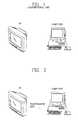
- FIG. 1is a view illustrating a state that a TV and a computer are separately used.
- the TVis generally placed on a floor of a certain room so that a viewer can view a certain broadcast program, and a computer is installed in a certain room separately from the TV. A certain number of software programs are installed in the computer.
- the societyAs the society is advanced, there is a need for providing various functions such as an internet browsing function, a bi-directional broadcasting function, etc. to the TV compared to the conventional TV which is used for just viewing a simple broadcast program.
- the TVhas a function similar to the function of the computer.
- the computerhas an advanced multi-media function, so that the functions of the computer and TV are overlapped in a digital video image, a video conference system, etc.
- the TV and computerare separately used. A certain interactive function and a data communication are not effectively performed between the TV and computer.
- a certain interactive control functionis provided between the TV and the computer for transmitting and receiving data, it is possible to more effectively use the TV and computer.
- a transmission linecapable of inputting and outputting a control signal, video signal and audio signal is connected between a TV and a computer.
- an apparatus for connecting a computer and a TVwhich includes a TV coding unit for encoding various control signals such as a TV signal, etc. generated in a TV and generating a first packet signal, a computer coding unit for encoding a computer signal such as a video signal, audio signal and various control signals generated in a computer and generating a second packet signal, a TV transmission and receiving unit for receiving the first packet signal, transmitting the received first packet signal to the outside and receiving the second packet signal from the outside, a computer transmission and receiving unit for receiving the second packet signal, transmitting the received second packet signal to the outside and receiving the first packet signal from the outside, a TV decoding unit for receiving the second packet signal from the TV transmission and receiving unit, decoding the same and recovering into an original signal, a computer decoding unit for receiving the first packet signal from the computer transmission and receiving unit, decoding the received first packet signal and recovering into an original signal, and a transmission line connected between the TV transmission and receiving unit and the computer transmission and receiving unit for transmitting
- FIG. 1is a view illustrating an example that a computer and a TV are separately used in a certain home;
- FIG. 2is a schematic view illustrating a structure for connecting a TV and a computer
- FIGS. 3A and 3B(hereafter collectively referred to as FIG. 3 ) illustrate elements according to the present invention
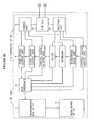
- FIG. 4is a view illustrating a structure of a transmission line and a packet signal transmitted through the transmission line according to the present invention
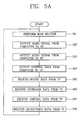
- FIG. 5Ais a flow chart illustrating an operation of a computer according to the present invention.
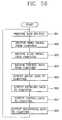
- FIG. 5Bis a flow chart illustrating an operation of a TV according to the present invention.
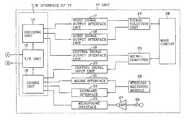
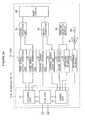
- FIG. 3is a block diagram of elements of the present invention which includes a TV system and a computer system.
- the TV systemincludes a TV coding unit 16 for encoding various signals such as an input signal of a mouse, keyboard, microphone, etc. and a control signal, a TV transmission and receiving unit 15 for transmitting a first packet signal encoded by the TV coding unit 16 to the outside and receiving a second packet signal such as a video signal, an audio signal and a control from the outside, a TV decoding unit 14 for decoding a second packet signal from the TV transmission and receiving unit 15 , a video signal interface unit 17 for receiving a video signal from the TV decoding unit 14 , all audio signal output interface unit 18 for receiving an audio signal from the TV decoding unit 14 , a control signal output interface unit 19 for receiving a control signal from the TV decoding unit 14 , a control signal input interface unit 20 for outputting a control signal to the TV coding unit 16 , a wireless receiving module 26 for receiving a wireless signal, a wireless mouse interface unit 21 for receiving a signal from the wireless receiving module 26 and outputting a wireless mouse signal to the TV coding unit 16
- the computer systemincludes a computer decoding unit 13 for decoding various signals such as an input signal of a mouse, a keyboard, and a microphone and a control signal, a computer coding unit 11 for encoding a video signal, an audio signal and control signal, a computer transmission and receiving unit 12 tor transmitting a second packet signal encoded by the computer coding unit 11 to the outside and receiving a first packet signal such as an input signal of a mouse, keyboard and microphone and a control signal, a video signal output unit 4 for outputting a video signal to the computer coding unit 11 , an audio signal output unit 5 for outputting an audio signal to the computer coding unit 11 , a control signal output unit 6 for outputting a control signal to the computer coding unit 11 , a mouse 7 for receiving a mouse signal from the computer decoding unit 13 , a keyboard 8 for receiving a keyboard signal from the computer decoding unit 13 , a microphone input unit 9 for receiving a microphone input signal from the computer decoding unit 13 , a control signal output unit 10 for
- the TV coding unit 16encodes a TV signal such as various control signals generated in the TV and generates a first packet signal.
- a chrome signal and control signal generated by the TV main circuit 28are selected by the TV microcomputer 25 and are applied to the TV coding unit 16 through the control input interface unit 20 .
- the above-described various control signals applied to the TV coding unit 16include a microphone signal inputted through the microphone 29 connected with the TV, the amplifier 27 connected with the microphone 29 , and the microphone interface unit 23 , and a wireless mouse signal and a wireless keyboard signal inputted from the wireless mouse interface unit 21 and the wireless keyboard interface unit 22 through the wireless receiving module 26 .
- the computer coding unit 11encodes a video and audio signal generated in the computer and various control signals and generates a second packet signal.
- Various signals generated by the main board 2 of the computerare applied to the computer coding unit 11 through the transmission bus 1 and the bus interface unit 3 of the computer and the video output unit 4 , the audio output unit 5 and the control signal output unit 6 .
- the TV transmission and receiving unit 15outputs the first packet signal generated by the TV coding unit 16 to the outside and receives a second packet signal generated by the computer coding unit 11 .
- the computer transmission and receiving unit 12transmits the second packet signal generated by the computer coding unit to the outside and receives the first packet signal generated by the TV coding unit 16 .
- the computer coding unit 11is installed in the computer, and the TV coding unit 16 is installed in the TV. Therefore, an additional transmission line which connects the TV transmission and receiving unit 15 and the computer transmission and receiving unit 12 is needed so that the TV transmission and receiving unit 15 and the computer transmission and receiving unit 12 transmit and receive the first packet signal and the second packet signal.
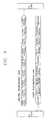
- FIG. 4illustrates a transmission line structure according to the present invention and a packet signal transmitted through the transmission line.
- the transmission linemay be implemented based on a physical line or a wireless type between the TV transmission and receiving unit 15 and the computer transmission and receiving unit 12 for transmitting and receiving the first and second packet signals.
- the physical transmission lineincludes a first transmission line for transmitting a first packet signal from the TV transmission and receiving unit 15 to the computer transmission and receiving unit 12 , and a second transmission line for transmitting a second packet signal from the computer transmission and receiving unit 12 to the TV transmission and receiving unit 15 .
- the first packet signal that the mouse signal, keyboard signal, microphone signal and control signal are encoded in the TVis transmitted through the first transmission line
- the second packet signal that the video signal, audio signal and control signal are encoded in the computeris transmitted through the second transmission line.
- the TV decoding unit 14decodes the second packet signal transmitted from the computer transmission and receiving unit 12 through the second transmission line and recovers to an original signal. Therefore, the second packet signal is recovered into a video signal, audio signal and various control signals by the TV decoding unit 14 .
- the thusly recovered signalsare applied to the video signal output interface unit 17 , the audio signal output interface unit 18 , and the control signal output interface unit 19 , respectively.
- the computer decoding unit 13decodes the first packet signal transmitted from the TV transmission and receiving unit 15 through the first transmission line and recovers into an original signal. Therefore, the first packet signal is recovered by the computer decoding unit 13 into a control signal outputted from the TV.
- the above-described signalincludes various signals for controlling the operation of the computer, a microphone signal, a wireless keyboard signal, a wireless mouse signal, etc.
- the TV connected with the computer by the connection apparatusincludes a TC coding unit 16 and a TV decoding unit 14 , a TV transmission and receiving unit 15 , and a signal selection unit 24 for selecting the signal recovered by the TV decoding unit 14 and a current broadcast video signal.
- the signal selection unit 24selects a signal among the current broadcast TV video signal and the TV audio signal and inputs the selected signal into the TV main circuit 28 . Therefore, the TV can selectively displays a video signal and a broadcast signal of the computer using the signal selection unit 24 , and the audio signal and broadcast signal of the computer are selectively outputted to the speaker.
- the TV microcomputer 25applies a TV control signal to the control input interface and receives a computer control signal recovered by the TV decoding unit 14 through the control output interface and applies to the TV main circuit.
- the computer connected with the TV by the connection apparatusincludes a computer coding unit 11 and a computer decoding unit 13 , a computer transmission and receiving unit 12 , and a bus interface unit 3 and various input interfaces for applying a signal recovered by the computer decoding unit 13 to the main board 2 of the computer.
- Various input interface unitsinclude a mouse input unit 7 , a keyboard input unit 9 , a control signal input unit 10 , etc. for thereby inputting various control signals generated in the TV to the main board 2 of the computer.
- connection apparatusThe operation of the connection apparatus according to the present invention will be explained with reference to the accompanying drawings.
- the video signal and audio signal generated by the main circuit 28 of the TVare controlled by the TV microcomputer 25 , and the TV control signal is applied to the TV coding unit 16 through the control signal input interface unit 20 and is encoded thereby.
- the microphone signal generated by the microphone 29 which is separately installed in the TVis amplified by the amplifier 27 and is applied to the TV coding unit 16 through the microphone interface unit 23 and is encoded thereby.
- the mouse signal and keyboard signal inputted through the wireless receiving module 26are applied to the TV coding unit 16 through the mouse interface unit 21 and the keyboard interface unit 22 .
- the first packet signal encoded by the TV coding unit 16is applied to the TV transmission and receiving unit 15 and is transmitted to the computer transmission and receiving unit 12 through the transmission line.
- the first packet signal transmitted to the computer transmission and receiving unit 12is applied to the computer decoding unit 13 and is recovered to an original signal. Namely, the first packet signal is recovered into a TV control signal, a mouse control signal, a keyboard signal and a microphone signal by the computer decoding unit 13 , respectively.
- the signals recovered by the computer decoding unit 13are applied to various bus interface units 3 and are inputted into the main board of the computer through the transmission bus 1 of the computer. As a result, the user controls the computer by operating the TV.
- the video signal, audio signal and various control signalsare inputted into the video output unit 4 , the audio output unit 5 and the control signal output unit through the transmission bus 1 of the computer and the bus interface unit 3 .
- the video signal and audio signal inputted into each output unitare encoded into a second packet signal by the computer coding unit 11 , respectively, and are transmitted to the TV transmission and receiving unit 15 through the transmission line.
- the sizes of the first packet signal and second packet signalmay be decreased or increased based on the transmission amount of the data.
- the second packet transmission signal transmitted to the TV transmission and receiving unit 15are applied to the TV decoding unit 14 and are recovered into an original computer video signal, audio signal and control signal.
- the computer video signal recovered by the TV decoding unit 14is applied to the signal selection unit 24 of the TV through the video signal output interface unit.
- One of the computer video signal and the TV video signalis selected by the signal selection unit 24 and is inputted into the main circuit 28 of the TV. Therefore, the video signal of the computer is displayed on the screen of the TV by the operation of the signal selection unit 24 .
- the computer audio signal recovered by the TV decoding unit 14is applied to the TV signal selection unit 24 through the audio signal output interface unit.
- One of the computer audio signal and TV audio signalis selected by the signal selection unit 24 and is inputted into the main circuit 28 of the TV. Therefore, the audio signal of the computer is outputted through the computer speaker based on the operation of the signal selection unit 24 .
- the computer control signal recovered by the TV decoding unit 14is applied to the microcomputer of the TV through the control signal output interface unit 19 .
- the microcomputerwhich receives the computer control signal controls the main circuit 28 of the TV, so that the video and audio-based operation is implemented by the computer.
- FIG. 5Ais a flow chart of the operation of the computer according to the present invention
- FIG. 5Bis a flow chart of the operation of the TV according to the present invention.
- a conventional computer work routineis performed in Step S 11 , and the video signal, audio signal and control signal of the computer are outputted to the TV in Steps S 12 , S 13 and S 14 .
- the mouse signal, keyboard signal, various control signals and microphone signal transmitted from the TVare received in Steps S 15 , S 16 , S 17 and S 18 .
- the computer work routineis repeatedly performed based on the above-described signals.
- a conventional TV work routineis performed in Step S 21 , and the video signal, audio signal and control signal transmitted from the computer are received in Steps S 22 , S 23 and S 24 , and then the video signal and audio signal of the computer are outputted, and the TV work routine is repeatedly performed based on the received signals.
- the mouse signal and keyboard signalwhich control the computer and various control signals and microphone signal are outputted to the computer in Step S 25 , S 26 , S 27 and S 28 .
- a user who uses the TV and computer according to the present inventionis capable of controlling the computer through the TV and is capable of implementing computer video and audio signals on the TV by operating the computer.
- connection apparatussince the computer and TV which are separately used in the conventional art are connected by a transmission line, it is possible to integrally control the computer and TV. Therefore, the connection apparatus according to the present invention is capable of effectively connecting the computer and TV compared to the conventional art.
Landscapes
- Engineering & Computer Science (AREA)
- Signal Processing (AREA)
- Multimedia (AREA)
- Theoretical Computer Science (AREA)
- General Engineering & Computer Science (AREA)
- Physics & Mathematics (AREA)
- General Physics & Mathematics (AREA)
- Human Computer Interaction (AREA)
- Computer Networks & Wireless Communication (AREA)
- Computer Hardware Design (AREA)
- Two-Way Televisions, Distribution Of Moving Picture Or The Like (AREA)
- Small-Scale Networks (AREA)
- Compression Or Coding Systems Of Tv Signals (AREA)
Abstract
Description
This is a reissue of U.S. Pat. No. 7,320,136 issued Jan. 15, 2008, which claims priority of Korean Patent Application No. 1999-49266 filed Nov. 8, 1999. The entire contents of each of these applications are hereby incorporated by reference.
1. Field of the Invention
The present invention relates to an apparatus for connecting a TV and a computer.
2. Description of the Background Art
The TV is generally placed on a floor of a certain room so that a viewer can view a certain broadcast program, and a computer is installed in a certain room separately from the TV. A certain number of software programs are installed in the computer.
As the society is advanced, there is a need for providing various functions such as an internet browsing function, a bi-directional broadcasting function, etc. to the TV compared to the conventional TV which is used for just viewing a simple broadcast program. Recently, the TV has a function similar to the function of the computer. In addition, the computer has an advanced multi-media function, so that the functions of the computer and TV are overlapped in a digital video image, a video conference system, etc.
In the conventional art, the TV and computer are separately used. A certain interactive function and a data communication are not effectively performed between the TV and computer. When a certain interactive control function is provided between the TV and the computer for transmitting and receiving data, it is possible to more effectively use the TV and computer.
Accordingly, it is an object of the present invention to provide an apparatus for connecting a TV and a computer which is capable of more effectively using a TV and a computer by controlling a computer at the side of a TV by connecting the TV and computer and transmitting a certain data between the computer and TV.
In the present invention, a transmission line capable of inputting and outputting a control signal, video signal and audio signal is connected between a TV and a computer.
To achieve the above object, there is provided an apparatus for connecting a computer and a TV which includes a TV coding unit for encoding various control signals such as a TV signal, etc. generated in a TV and generating a first packet signal, a computer coding unit for encoding a computer signal such as a video signal, audio signal and various control signals generated in a computer and generating a second packet signal, a TV transmission and receiving unit for receiving the first packet signal, transmitting the received first packet signal to the outside and receiving the second packet signal from the outside, a computer transmission and receiving unit for receiving the second packet signal, transmitting the received second packet signal to the outside and receiving the first packet signal from the outside, a TV decoding unit for receiving the second packet signal from the TV transmission and receiving unit, decoding the same and recovering into an original signal, a computer decoding unit for receiving the first packet signal from the computer transmission and receiving unit, decoding the received first packet signal and recovering into an original signal, and a transmission line connected between the TV transmission and receiving unit and the computer transmission and receiving unit for transmitting the first packet signal and the second packet signal.
The present invention will become better understood with reference to the accompanying drawings which are given only by way of illustration and thus are not limitative of the present invention, wherein:
The TV system includes aTV coding unit 16 for encoding various signals such as an input signal of a mouse, keyboard, microphone, etc. and a control signal, a TV transmission and receivingunit 15 for transmitting a first packet signal encoded by theTV coding unit 16 to the outside and receiving a second packet signal such as a video signal, an audio signal and a control from the outside, aTV decoding unit 14 for decoding a second packet signal from the TV transmission and receivingunit 15, a videosignal interface unit 17 for receiving a video signal from theTV decoding unit 14, all audio signaloutput interface unit 18 for receiving an audio signal from theTV decoding unit 14, a control signaloutput interface unit 19 for receiving a control signal from theTV decoding unit 14, a control signalinput interface unit 20 for outputting a control signal to theTV coding unit 16, awireless receiving module 26 for receiving a wireless signal, a wirelessmouse interface unit 21 for receiving a signal from thewireless receiving module 26 and outputting a wireless mouse signal to theTV coding unit 16, a wirelesskeyboard interface unit 22 for receiving a signal from thewireless receiving module 26 and outputting a wireless keyboard signal to theTV coding unit 16, anamplifier 27 for amplifying a signal from themicrophone 29, amicrophone interface unit 23 for receiving a signal from theamplifier 27 and outputting a microphone signal, anAV switch 24 for receiving signals from the video signaloutput interface unit 17 and the audio signaloutput interface unit 18 and switching the receiving signals, a TV microcomputer for controlling elements of the TV and a TVmain unit 28.
Next, the computer system includes acomputer decoding unit 13 for decoding various signals such as an input signal of a mouse, a keyboard, and a microphone and a control signal, acomputer coding unit 11 for encoding a video signal, an audio signal and control signal, a computer transmission and receivingunit 12 tor transmitting a second packet signal encoded by thecomputer coding unit 11 to the outside and receiving a first packet signal such as an input signal of a mouse, keyboard and microphone and a control signal, a video signal output unit4 for outputting a video signal to thecomputer coding unit 11, an audiosignal output unit 5 for outputting an audio signal to thecomputer coding unit 11, a controlsignal output unit 6 for outputting a control signal to thecomputer coding unit 11, amouse 7 for receiving a mouse signal from thecomputer decoding unit 13, akeyboard 8 for receiving a keyboard signal from thecomputer decoding unit 13, amicrophone input unit 9 for receiving a microphone input signal from thecomputer decoding unit 13, a controlsignal output unit 10 for receiving a control signal from thecomputer decoding unit 13, amain board 2 of the computer, atransmission bus 1 of the computer, and abus interface unit 3 for interfacing each element of the computer.
The operation and effects of the present invention will be explained with reference toFIGS. 3 ,4 and5.
First, theTV coding unit 16 encodes a TV signal such as various control signals generated in the TV and generates a first packet signal. A chrome signal and control signal generated by the TVmain circuit 28 are selected by theTV microcomputer 25 and are applied to theTV coding unit 16 through the controlinput interface unit 20.
The above-described various control signals applied to theTV coding unit 16 include a microphone signal inputted through themicrophone 29 connected with the TV, theamplifier 27 connected with themicrophone 29, and themicrophone interface unit 23, and a wireless mouse signal and a wireless keyboard signal inputted from the wirelessmouse interface unit 21 and the wirelesskeyboard interface unit 22 through thewireless receiving module 26.
Thecomputer coding unit 11 encodes a video and audio signal generated in the computer and various control signals and generates a second packet signal. Various signals generated by themain board 2 of the computer are applied to thecomputer coding unit 11 through thetransmission bus 1 and thebus interface unit 3 of the computer and the video output unit4, theaudio output unit 5 and the controlsignal output unit 6.
The TV transmission and receivingunit 15 outputs the first packet signal generated by theTV coding unit 16 to the outside and receives a second packet signal generated by thecomputer coding unit 11. In addition, the computer transmission and receivingunit 12 transmits the second packet signal generated by the computer coding unit to the outside and receives the first packet signal generated by theTV coding unit 16.
At this time, thecomputer coding unit 11 is installed in the computer, and theTV coding unit 16 is installed in the TV. Therefore, an additional transmission line which connects the TV transmission and receivingunit 15 and the computer transmission and receivingunit 12 is needed so that the TV transmission and receivingunit 15 and the computer transmission and receivingunit 12 transmit and receive the first packet signal and the second packet signal.
The transmission line may be implemented based on a physical line or a wireless type between the TV transmission and receivingunit 15 and the computer transmission and receivingunit 12 for transmitting and receiving the first and second packet signals. The physical transmission line includes a first transmission line for transmitting a first packet signal from the TV transmission and receivingunit 15 to the computer transmission and receivingunit 12, and a second transmission line for transmitting a second packet signal from the computer transmission and receivingunit 12 to the TV transmission and receivingunit 15.
The first packet signal that the mouse signal, keyboard signal, microphone signal and control signal are encoded in the TV is transmitted through the first transmission line, and the second packet signal that the video signal, audio signal and control signal are encoded in the computer is transmitted through the second transmission line.
TheTV decoding unit 14 decodes the second packet signal transmitted from the computer transmission and receivingunit 12 through the second transmission line and recovers to an original signal. Therefore, the second packet signal is recovered into a video signal, audio signal and various control signals by theTV decoding unit 14. The thusly recovered signals are applied to the video signaloutput interface unit 17, the audio signaloutput interface unit 18, and the control signaloutput interface unit 19, respectively.
Thecomputer decoding unit 13 decodes the first packet signal transmitted from the TV transmission and receivingunit 15 through the first transmission line and recovers into an original signal. Therefore, the first packet signal is recovered by thecomputer decoding unit 13 into a control signal outputted from the TV. The above-described signal includes various signals for controlling the operation of the computer, a microphone signal, a wireless keyboard signal, a wireless mouse signal, etc.
The TV connected with the computer by the connection apparatus according to the present invention includes aTC coding unit 16 and aTV decoding unit 14, a TV transmission and receivingunit 15, and asignal selection unit 24 for selecting the signal recovered by theTV decoding unit 14 and a current broadcast video signal. Thesignal selection unit 24 selects a signal among the current broadcast TV video signal and the TV audio signal and inputs the selected signal into the TVmain circuit 28. Therefore, the TV can selectively displays a video signal and a broadcast signal of the computer using thesignal selection unit 24, and the audio signal and broadcast signal of the computer are selectively outputted to the speaker. In addition, theTV microcomputer 25 applies a TV control signal to the control input interface and receives a computer control signal recovered by theTV decoding unit 14 through the control output interface and applies to the TV main circuit.
The computer connected with the TV by the connection apparatus according to the present invention includes acomputer coding unit 11 and acomputer decoding unit 13, a computer transmission and receivingunit 12, and abus interface unit 3 and various input interfaces for applying a signal recovered by thecomputer decoding unit 13 to themain board 2 of the computer. Various input interface units include amouse input unit 7, akeyboard input unit 9, a controlsignal input unit 10, etc. for thereby inputting various control signals generated in the TV to themain board 2 of the computer.
The operation of the connection apparatus according to the present invention will be explained with reference to the accompanying drawings.
The video signal and audio signal generated by themain circuit 28 of the TV are controlled by theTV microcomputer 25, and the TV control signal is applied to theTV coding unit 16 through the control signalinput interface unit 20 and is encoded thereby. In addition, the microphone signal generated by themicrophone 29 which is separately installed in the TV is amplified by theamplifier 27 and is applied to theTV coding unit 16 through themicrophone interface unit 23 and is encoded thereby. The mouse signal and keyboard signal inputted through thewireless receiving module 26 are applied to theTV coding unit 16 through themouse interface unit 21 and thekeyboard interface unit 22. In addition, the first packet signal encoded by theTV coding unit 16 is applied to the TV transmission and receivingunit 15 and is transmitted to the computer transmission and receivingunit 12 through the transmission line.
The first packet signal transmitted to the computer transmission and receivingunit 12 is applied to thecomputer decoding unit 13 and is recovered to an original signal. Namely, the first packet signal is recovered into a TV control signal, a mouse control signal, a keyboard signal and a microphone signal by thecomputer decoding unit 13, respectively. The signals recovered by thecomputer decoding unit 13 are applied to variousbus interface units 3 and are inputted into the main board of the computer through thetransmission bus 1 of the computer. As a result, the user controls the computer by operating the TV.
In addition, the video signal, audio signal and various control signals are inputted into the video output unit4, theaudio output unit 5 and the control signal output unit through thetransmission bus 1 of the computer and thebus interface unit 3. The video signal and audio signal inputted into each output unit are encoded into a second packet signal by thecomputer coding unit 11, respectively, and are transmitted to the TV transmission and receivingunit 15 through the transmission line.
The sizes of the first packet signal and second packet signal may be decreased or increased based on the transmission amount of the data.
The second packet transmission signal transmitted to the TV transmission and receivingunit 15 are applied to theTV decoding unit 14 and are recovered into an original computer video signal, audio signal and control signal. The computer video signal recovered by theTV decoding unit 14 is applied to thesignal selection unit 24 of the TV through the video signal output interface unit. One of the computer video signal and the TV video signal is selected by thesignal selection unit 24 and is inputted into themain circuit 28 of the TV. Therefore, the video signal of the computer is displayed on the screen of the TV by the operation of thesignal selection unit 24.
In addition, the computer audio signal recovered by theTV decoding unit 14 is applied to the TVsignal selection unit 24 through the audio signal output interface unit. One of the computer audio signal and TV audio signal is selected by thesignal selection unit 24 and is inputted into themain circuit 28 of the TV. Therefore, the audio signal of the computer is outputted through the computer speaker based on the operation of thesignal selection unit 24.
The computer control signal recovered by theTV decoding unit 14 is applied to the microcomputer of the TV through the control signaloutput interface unit 19. The microcomputer which receives the computer control signal controls themain circuit 28 of the TV, so that the video and audio-based operation is implemented by the computer.
Therefore, it is possible to output a video and audio signals of the computer by operating the screen and speaker of the TV based on a user's computer operation.
In the computer according to the present invention, a conventional computer work routine is performed in Step S11, and the video signal, audio signal and control signal of the computer are outputted to the TV in Steps S12, S13 and S14. The mouse signal, keyboard signal, various control signals and microphone signal transmitted from the TV are received in Steps S15, S16, S17 and S18. The computer work routine is repeatedly performed based on the above-described signals.
In the TV according to the present invention, a conventional TV work routine is performed in Step S21, and the video signal, audio signal and control signal transmitted from the computer are received in Steps S22, S23 and S24, and then the video signal and audio signal of the computer are outputted, and the TV work routine is repeatedly performed based on the received signals. In addition, the mouse signal and keyboard signal which control the computer and various control signals and microphone signal are outputted to the computer in Step S25, S26, S27 and S28.
Therefore, a user who uses the TV and computer according to the present invention is capable of controlling the computer through the TV and is capable of implementing computer video and audio signals on the TV by operating the computer.
Namely, in the connection apparatus according to the present invention, since the computer and TV which are separately used in the conventional art are connected by a transmission line, it is possible to integrally control the computer and TV. Therefore, the connection apparatus according to the present invention is capable of effectively connecting the computer and TV compared to the conventional art.
As the present invention may be embodied in several forms without departing from the spirit or essential characteristics thereof, it should also be understood that the above-described embodiment is not limited by any of the details of the foregoing description, unless otherwise specified, but rather should be construed broadly within its spirit and scope as defined in the appended claims, and therefore all changes and modifications that fall within the meets and bounds of the claims, or equivalences of such meets and bounds are therefore intended to be embraced by the appended claims.
Claims (9)
1. An apparatus for connecting a TV (Television Set) and a computer, comprising:
a TV coding unit for encoding control signals including at least one of a mouse signal, a keyboard signal, a microphone signal and control signals for controlling a computer, which are generated in a TV and generating a first packet signal by using the encoded control signals;
a computer coding unit for encoding computer signals including at least one of a video signal, an audio signal and a control signal generated in the computer and generating a second packet signal by using the encoded computer signals;
a TV transmission and receiving unit, provided in the TV, for receiving the first packet signal from the TV coding unit, transmitting the received first packet signal to the computer and receiving the second packet signal from the computer;
a computer transmission and receiving unit, provided in the computer, for receiving the second packet signal from the computer coding unit, transmitting the received second packet signal to the TV and receiving the first packet signal from the TV;
a TV decoding unit, provided in the TV, for receiving the second packet signal from the TV transmission and receiving unit, decoding the received second packet signal and recovering the decoded second packet signal into the video signal, the audio signal and the control signal of the computer;
a computer decoding unit for receiving the first packet signal from the computer transmission and receiving unit, decoding the received first packet signal and recovering the decoded first packet signal into the mouse signal, the keyboard signal, the microphone signal and the control signals for controlling the computer; and
a transmission line connected between the TV transmission and receiving unit of the TV and the computer transmission and receiving unit of the computer for transmitting the first packet signal and the second packet signal.
2. The apparatus ofclaim 1 , wherein said transmission line includes:
a first transmission line for transmitting the first packet signal from the TV transmission and receiving unit to the computer transmission and receiving unit; and
a second transmission line for transmitting the second packet signal from the computer transmission and receiving unit to the TV transmission and receiving unit.
3. A method for controlling a personal computer using a television, comprising:
generating, in a the television, control signals including at least one of a mouse signal, a keyboard signal, a microphone signal and control signals for controlling a the personal computer;
encoding, in the television, the generated control signals;
generating, in the television, a packet signal by using the encoded control signals; and
sending the generated packet signal to a personal computer,
wherein the personal computer, interfaced with the television, can be operated by receiving the generated packet signal sent from the television;
decoding the received signal for input into a circuit of the personal computer; and
performing the function of the personal computer according to the decoded signal.
4. The method ofclaim 3 , wherein the generated packet signal output from the television is received along a wireless link.
5. The method ofclaim 3 , wherein the generated packet signal output from a television circuit of the television is wirelessly transmitted to the personal computer.
6. A system for implementing a computer video signal on a television, comprising:
a first interface unit in a television; and the television, operatively coupled to a second interface unit that is operatively coupled to a personal computer,
wherein the first interface unit, in the television, generates is configured to generate control signals including at least one of a mouse signal, a keyboard signal, a microphone signal and control signals for controlling the personal computer,
wherein the first interface unit is further encodingconfigured to encode the generated control signals in the television and generatinggenerate a first packet signal in the television by using the encoded control signals, and the first interface unit sendingis configured to send the first packet signal from the television to the personal computer over a communications link, the first packet signal controllingconfigured to control a function performed by the personal computer, and
wherein the first interface unit is further configured to decode a second packet signal generated in the personal computer when the second interface unit sends athe second packet signal generated in the personal computer to the television over the communications link, and
wherein the second packet signal includes at least one of a monitor display signal and a sound signal to be projected and to be played through the television;
a signal selection unit configured to select a decoded video signal from the first interface unit among a plurality of inputted video signals; and
a screen configured to display the selected video signal.
7. The system ofclaim 6 , wherein the control signals include microphone data.
8. The system ofclaim 5 , wherein the communications link is a wireless link.
9. A method for controlling a computer at the side of a TV (television set), comprising:
encoding control signals including at least one of a mouse signal, a keyboard signal, a microphone signal and control signals for controlling a computer, which are generated in a TV and generating a first packet signal by using the encoded control signals;
encoding computer signals including at least one of a PC monitor display signal, sound signals and control signals generated in the computer and generating a second packet signal by using the encoded computer signals;
receiving the first packet signal from the TV, transmitting the received first packet signal to the computer and receiving the second packet signal from the computer;
receiving the second packet signal from the computer, transmitting the received second packet signal to the TV and receiving the first packet signal from the TV;
decoding the received second packet signal and recovering the decoded second packet signal into the PC monitor display signal, the sound signals and the control signals of the computer; and
decoding the received first packet signal and recovering the decoded first packet signal into the control signal including the mouse signal, the keyboard signal, the microphone signal and the control signals for controlling the computer.
Priority Applications (1)
| Application Number | Priority Date | Filing Date | Title |
|---|---|---|---|
| US12/901,340USRE43394E1 (en) | 1999-11-08 | 2010-10-08 | Apparatus for connecting TV and computer |
Applications Claiming Priority (4)
| Application Number | Priority Date | Filing Date | Title |
|---|---|---|---|
| KR1999-49266 | 1999-11-08 | ||
| KR1019990049266AKR100331833B1 (en) | 1999-11-08 | 1999-11-08 | Apparatus for conneting between TV and computer |
| US09/706,792US7320136B1 (en) | 1999-11-08 | 2000-11-07 | Apparatus for connecting TV and computer |
| US12/901,340USRE43394E1 (en) | 1999-11-08 | 2010-10-08 | Apparatus for connecting TV and computer |
Related Parent Applications (1)
| Application Number | Title | Priority Date | Filing Date |
|---|---|---|---|
| US09/706,792ReissueUS7320136B1 (en) | 1999-11-08 | 2000-11-07 | Apparatus for connecting TV and computer |
Publications (1)
| Publication Number | Publication Date |
|---|---|
| USRE43394E1true USRE43394E1 (en) | 2012-05-15 |
Family
ID=19619066
Family Applications (2)
| Application Number | Title | Priority Date | Filing Date |
|---|---|---|---|
| US09/706,792CeasedUS7320136B1 (en) | 1999-11-08 | 2000-11-07 | Apparatus for connecting TV and computer |
| US12/901,340Expired - LifetimeUSRE43394E1 (en) | 1999-11-08 | 2010-10-08 | Apparatus for connecting TV and computer |
Family Applications Before (1)
| Application Number | Title | Priority Date | Filing Date |
|---|---|---|---|
| US09/706,792CeasedUS7320136B1 (en) | 1999-11-08 | 2000-11-07 | Apparatus for connecting TV and computer |
Country Status (5)
| Country | Link |
|---|---|
| US (2) | US7320136B1 (en) |
| JP (1) | JP2001145040A (en) |
| KR (1) | KR100331833B1 (en) |
| CN (2) | CN1295410A (en) |
| FR (1) | FR2800961B1 (en) |
Cited By (1)
| Publication number | Priority date | Publication date | Assignee | Title |
|---|---|---|---|---|
| US20120182475A1 (en)* | 2011-01-18 | 2012-07-19 | Hon Hai Precision Industry Co., Ltd. | Computer with tv module and startup method |
Families Citing this family (6)
| Publication number | Priority date | Publication date | Assignee | Title |
|---|---|---|---|---|
| FR2810833B1 (en)* | 2000-06-27 | 2002-09-20 | Thomson Multimedia Sa | MULTIMEDIA AUDIOVISUAL TRANSMISSION RECEIVING APPARATUS |
| WO2003045059A1 (en)* | 2001-11-22 | 2003-05-30 | Renesas Technology Corp. | Settop box system for cable television |
| CN1315326C (en)* | 2004-04-14 | 2007-05-09 | 赵红刚 | Method of realizing set-top function based on software |
| KR20050120960A (en)* | 2004-06-21 | 2005-12-26 | 엘지전자 주식회사 | Apparatus and method for displaying pc video |
| KR101493906B1 (en)* | 2008-08-25 | 2015-02-16 | 삼성전자 주식회사 | Image processing apparatus, display apparatus, and control method of display apparatus |
| US20100245668A1 (en)* | 2009-03-24 | 2010-09-30 | Sony Corporation And Sony Electronics Inc. | Pc dock for tv |
Citations (16)
| Publication number | Priority date | Publication date | Assignee | Title |
|---|---|---|---|---|
| JPH08278773A (en) | 1995-04-10 | 1996-10-22 | Fujitsu General Ltd | Superimpose device |
| JPH1040190A (en) | 1996-07-19 | 1998-02-13 | Mitsumi Electric Co Ltd | Data transmission and reception system for personal computer |
| WO1998016065A1 (en) | 1996-10-08 | 1998-04-16 | Matsushita Electric Corporation Of America | Computer interface extension system and method |
| JPH10116145A (en) | 1996-08-22 | 1998-05-06 | Hitachi Ltd | Television receiver |
| JPH10145796A (en) | 1996-11-15 | 1998-05-29 | Hitachi Ltd | Video display system |
| WO1998034377A1 (en) | 1997-01-31 | 1998-08-06 | Sharewave, Inc. | A digital wireless home computer system |
| JPH10224701A (en) | 1997-02-07 | 1998-08-21 | Hitachi Ltd | Television receiver |
| WO1998039766A1 (en) | 1997-03-07 | 1998-09-11 | Intel Corporation | Wireless connectivity between a personal computer and a television |
| JPH10244701A (en) | 1997-03-05 | 1998-09-14 | Sharp Corp | Image forming device |
| JPH10275481A (en) | 1997-02-03 | 1998-10-13 | Toshiba Corp | Nonvolatile semiconductor memory device |
| US5850340A (en) | 1996-04-05 | 1998-12-15 | York; Matthew | Integrated remote controlled computer and television system |
| GB2330722A (en) | 1997-10-24 | 1999-04-28 | Gen Instrument Corp | Personal computer based set-top converter for television services |
| US6189148B1 (en) | 1999-01-28 | 2001-02-13 | Douglas G. Brown | Methods and circuits using frequency shift keying modulation to transfer data over transmission lines simultaneous with television signals |
| US6219839B1 (en) | 1998-05-12 | 2001-04-17 | Sharp Laboratories Of America, Inc. | On-screen electronic resources guide |
| US6239845B1 (en) | 1996-08-22 | 2001-05-29 | Hitachi, Ltd. | Television receiver and receiving method thereof |
| US6567032B1 (en) | 1999-06-30 | 2003-05-20 | International Business Machines Corp. | Method of directing communication between addressable targets using a generalized pointing device |
- 1999
- 1999-11-08KRKR1019990049266Apatent/KR100331833B1/ennot_activeExpired - Lifetime
- 2000
- 2000-11-07USUS09/706,792patent/US7320136B1/ennot_activeCeased
- 2000-11-08JPJP2000340063Apatent/JP2001145040A/enactivePending
- 2000-11-08CNCN00133487Apatent/CN1295410A/enactivePending
- 2000-11-08CNCN2008101681368Apatent/CN101547321B/ennot_activeExpired - Lifetime
- 2000-11-08FRFR0014332Apatent/FR2800961B1/ennot_activeExpired - Lifetime
- 2010
- 2010-10-08USUS12/901,340patent/USRE43394E1/ennot_activeExpired - Lifetime
Patent Citations (18)
| Publication number | Priority date | Publication date | Assignee | Title |
|---|---|---|---|---|
| JPH08278773A (en) | 1995-04-10 | 1996-10-22 | Fujitsu General Ltd | Superimpose device |
| US5850340A (en) | 1996-04-05 | 1998-12-15 | York; Matthew | Integrated remote controlled computer and television system |
| JPH1040190A (en) | 1996-07-19 | 1998-02-13 | Mitsumi Electric Co Ltd | Data transmission and reception system for personal computer |
| JPH10116145A (en) | 1996-08-22 | 1998-05-06 | Hitachi Ltd | Television receiver |
| US6239845B1 (en) | 1996-08-22 | 2001-05-29 | Hitachi, Ltd. | Television receiver and receiving method thereof |
| US6084638A (en) | 1996-10-08 | 2000-07-04 | Hare; Charles S. | Computer interface extension system and method |
| WO1998016065A1 (en) | 1996-10-08 | 1998-04-16 | Matsushita Electric Corporation Of America | Computer interface extension system and method |
| JPH10145796A (en) | 1996-11-15 | 1998-05-29 | Hitachi Ltd | Video display system |
| WO1998034377A1 (en) | 1997-01-31 | 1998-08-06 | Sharewave, Inc. | A digital wireless home computer system |
| JPH10275481A (en) | 1997-02-03 | 1998-10-13 | Toshiba Corp | Nonvolatile semiconductor memory device |
| JPH10224701A (en) | 1997-02-07 | 1998-08-21 | Hitachi Ltd | Television receiver |
| JPH10244701A (en) | 1997-03-05 | 1998-09-14 | Sharp Corp | Image forming device |
| WO1998039766A1 (en) | 1997-03-07 | 1998-09-11 | Intel Corporation | Wireless connectivity between a personal computer and a television |
| JPH11275481A (en) | 1997-10-24 | 1999-10-08 | General Instr Corp | Personal computer based set-top converter for television services |
| GB2330722A (en) | 1997-10-24 | 1999-04-28 | Gen Instrument Corp | Personal computer based set-top converter for television services |
| US6219839B1 (en) | 1998-05-12 | 2001-04-17 | Sharp Laboratories Of America, Inc. | On-screen electronic resources guide |
| US6189148B1 (en) | 1999-01-28 | 2001-02-13 | Douglas G. Brown | Methods and circuits using frequency shift keying modulation to transfer data over transmission lines simultaneous with television signals |
| US6567032B1 (en) | 1999-06-30 | 2003-05-20 | International Business Machines Corp. | Method of directing communication between addressable targets using a generalized pointing device |
Cited By (2)
| Publication number | Priority date | Publication date | Assignee | Title |
|---|---|---|---|---|
| US20120182475A1 (en)* | 2011-01-18 | 2012-07-19 | Hon Hai Precision Industry Co., Ltd. | Computer with tv module and startup method |
| US8482669B2 (en)* | 2011-01-18 | 2013-07-09 | Hon Hai Precision Industry Co., Ltd. | Computer with TV module and startup method |
Also Published As
| Publication number | Publication date |
|---|---|
| KR100331833B1 (en) | 2002-04-09 |
| KR20010045813A (en) | 2001-06-05 |
| JP2001145040A (en) | 2001-05-25 |
| CN101547321A (en) | 2009-09-30 |
| FR2800961A1 (en) | 2001-05-11 |
| FR2800961B1 (en) | 2004-02-13 |
| CN101547321B (en) | 2010-12-08 |
| CN1295410A (en) | 2001-05-16 |
| US7320136B1 (en) | 2008-01-15 |
Similar Documents
| Publication | Publication Date | Title |
|---|---|---|
| USRE43394E1 (en) | Apparatus for connecting TV and computer | |
| USRE44694E1 (en) | Apparatus and method of interacting with a mobile phone using a TV system | |
| US7224323B2 (en) | Bi-directional communication system, display apparatus, base apparatus and bi-directional communication method | |
| US20040004630A1 (en) | Interactive audio-visual system with visual remote control unit | |
| WO2004006563A1 (en) | Image display system, image display method and display unit | |
| JP4148555B2 (en) | System and method for converting remote control signals into computer keyboard signals | |
| US20050200695A1 (en) | Transceiver system, transmitter and receiver and information processing method | |
| JP4143102B2 (en) | Remote control system | |
| US20070022451A1 (en) | Broadcasting receiving/transmitting device, wireless A/V system and control method of wireless A/V system | |
| KR100258474B1 (en) | Personal computer control method and apparatus using set top box | |
| US20070245365A1 (en) | Display/response system, display/response apparatus and display/response program storage medium | |
| CN100379276C (en) | Image providing system and method thereof | |
| US20030214604A1 (en) | Display system and method of controlling the same | |
| US20030027518A1 (en) | Remote control transceiver and data communication system using the same | |
| JP3795266B2 (en) | Digital broadcast receiving apparatus, television receiver, and digital broadcast receiving method | |
| JPH0946653A (en) | Interactive text multiplex system | |
| JPH0946654A (en) | Interactive text multiplex system | |
| JPS61177088A (en) | Picture display device | |
| KR19990039706A (en) | PC communication device using modem communication of satellite broadcasting receiver | |
| KR20030006107A (en) | Device for displaying internet data to television monitor | |
| KR20080042576A (en) | Audio output device of digital television with computer and method thereof | |
| KR20060077502A (en) | Television Receivers and Methods for Selective Use of Remote Controls | |
| KR20080008471A (en) | Input Mode Switching Method of Image System |
Legal Events
| Date | Code | Title | Description |
|---|---|---|---|
| FEPP | Fee payment procedure | Free format text:PAYOR NUMBER ASSIGNED (ORIGINAL EVENT CODE: ASPN); ENTITY STATUS OF PATENT OWNER: LARGE ENTITY | |
| FPAY | Fee payment | Year of fee payment:8 | |
| MAFP | Maintenance fee payment | Free format text:PAYMENT OF MAINTENANCE FEE, 12TH YEAR, LARGE ENTITY (ORIGINAL EVENT CODE: M1553); ENTITY STATUS OF PATENT OWNER: LARGE ENTITY Year of fee payment:12 |