US9992450B1 - Systems and methods for background concealment in video conferencing session - Google Patents
Systems and methods for background concealment in video conferencing sessionDownload PDFInfo
- Publication number
- US9992450B1 US9992450B1US15/468,919US201715468919AUS9992450B1US 9992450 B1US9992450 B1US 9992450B1US 201715468919 AUS201715468919 AUS 201715468919AUS 9992450 B1US9992450 B1US 9992450B1
- Authority
- US
- United States
- Prior art keywords
- border
- background
- clusters
- cluster
- region
- Prior art date
- Legal status (The legal status is an assumption and is not a legal conclusion. Google has not performed a legal analysis and makes no representation as to the accuracy of the status listed.)
- Active
Links
Images

Classifications
- H—ELECTRICITY
- H04—ELECTRIC COMMUNICATION TECHNIQUE
- H04N—PICTORIAL COMMUNICATION, e.g. TELEVISION
- H04N7/00—Television systems
- H04N7/14—Systems for two-way working
- H04N7/15—Conference systems
- H—ELECTRICITY
- H04—ELECTRIC COMMUNICATION TECHNIQUE
- H04N—PICTORIAL COMMUNICATION, e.g. TELEVISION
- H04N7/00—Television systems
- H04N7/14—Systems for two-way working
- H04N7/141—Systems for two-way working between two video terminals, e.g. videophone
- H04N7/147—Communication arrangements, e.g. identifying the communication as a video-communication, intermediate storage of the signals
- G—PHYSICS
- G06—COMPUTING OR CALCULATING; COUNTING
- G06F—ELECTRIC DIGITAL DATA PROCESSING
- G06F18/00—Pattern recognition
- G06F18/20—Analysing
- G06F18/23—Clustering techniques
- G06F18/232—Non-hierarchical techniques
- G06F18/2321—Non-hierarchical techniques using statistics or function optimisation, e.g. modelling of probability density functions
- G06K9/00711—
- G06K9/4604—
- G—PHYSICS
- G06—COMPUTING OR CALCULATING; COUNTING
- G06V—IMAGE OR VIDEO RECOGNITION OR UNDERSTANDING
- G06V10/00—Arrangements for image or video recognition or understanding
- G06V10/20—Image preprocessing
- G06V10/28—Quantising the image, e.g. histogram thresholding for discrimination between background and foreground patterns
- G—PHYSICS
- G06—COMPUTING OR CALCULATING; COUNTING
- G06V—IMAGE OR VIDEO RECOGNITION OR UNDERSTANDING
- G06V10/00—Arrangements for image or video recognition or understanding
- G06V10/70—Arrangements for image or video recognition or understanding using pattern recognition or machine learning
- G06V10/762—Arrangements for image or video recognition or understanding using pattern recognition or machine learning using clustering, e.g. of similar faces in social networks
- G06V10/763—Non-hierarchical techniques, e.g. based on statistics of modelling distributions
- G—PHYSICS
- G06—COMPUTING OR CALCULATING; COUNTING
- G06V—IMAGE OR VIDEO RECOGNITION OR UNDERSTANDING
- G06V20/00—Scenes; Scene-specific elements
- G06V20/40—Scenes; Scene-specific elements in video content
- G06K2009/4666—
- H—ELECTRICITY
- H04—ELECTRIC COMMUNICATION TECHNIQUE
- H04N—PICTORIAL COMMUNICATION, e.g. TELEVISION
- H04N5/00—Details of television systems
- H04N5/222—Studio circuitry; Studio devices; Studio equipment
- H04N5/262—Studio circuits, e.g. for mixing, switching-over, change of character of image, other special effects ; Cameras specially adapted for the electronic generation of special effects
Definitions
- the present disclosurerelates to video processing and, more particularly, background concealment in a video conferencing session.
- Video conferencing systemsprovide services to transmit a video stream from a first device to one or more other devices that participate in a video conferencing session.
- the content of the video streamdepicts the user of the video conferencing system, as captured by a video capture device such as a camera.
- the video streamalso may depict a background behind the user. It is sometimes desirable to hide or replace the background, such as for security or privacy purposes. Yet, distinguishing foreground elements in a video stream (e.g., the user) from other background elements often can be a computationally intense process, one that cannot be performed in real time by processing devices such as mobile phones that have limited processing resources.
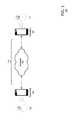
- FIG. 1illustrates a system according to an embodiment of the present disclosure.
- FIG. 2illustrates system according to an embodiment of the present disclosure.
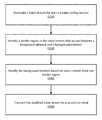
- FIG. 3illustrates a method according to an embodiment of the present disclosure.
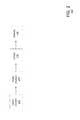
- FIG. 4illustrates a method according to an embodiment of the present disclosure.
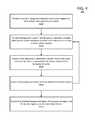
- FIG. 5illustrates a method according to an embodiment of the present disclosure.
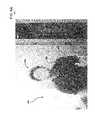
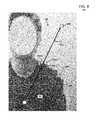
- FIG. 6Aillustrates a frame of a video conferencing video stream according to an embodiment of the present disclosure.
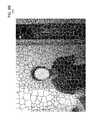
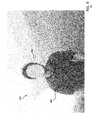
- FIG. 6Billustrates a frame of a video conferencing video stream according to an embodiment of the present disclosure.
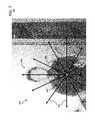
- FIG. 7illustrates a frame of a video conferencing video stream according to an embodiment of the present disclosure.
- FIG. 8illustrates a close-up view of a portion of a frame of a video conferencing video stream according to an embodiment of the present disclosure.
- FIG. 9illustrates a modified frame of a video conferencing video stream according to an embodiment of the present disclosure.
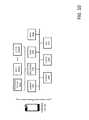
- FIG. 10illustrates a terminal according to an embodiment of the present disclosure.
- Embodiments of the present disclosureprovide systems and methods for background concealment in a video conferencing session.
- a first terminalmay generate a video stream.
- a border regionmay be identified in the video stream.
- the border regionmay comprise a boundary between a foreground element of the video stream and a background element of the video stream.
- the background elementmay be modified, based at least in part, on video content from the border region.
- the modified video steammay thereafter be transmitted to a second terminal.
- FIG. 1illustrates a system 100 according to an embodiment of the present disclosure.
- the system 100may include a pair of terminals 110 , 120 that communicate via a channel 130 .
- a first terminal 110may capture video data of a local environment, which includes a representation of an operator 102 of the terminal 110 .
- the first terminal 110may code the captured video and transmit the coded video to the second terminal 120 .
- the second terminal 120may decode the coded video and render it locally on the device to an operator 104 of the second terminal. If bidirectional exchange of video is desired, the second terminal 120 may capture video data of its local environment, which includes a representation of the operator 104 .
- the second terminal 120may code the captured video and transmit the coded video to the first terminal 110 .
- the first terminal 110may decode the coded video that it receives and render it locally on the device to the operator 102 .
- the terminals 110 , 120are illustrated as smart phones but the principles of the present disclosure are not so limited. Embodiments of the present disclosure find application with laptop computers, tablet computers, media players and/or dedicated video conferencing equipment. Furthermore, while the present disclosure discusses application of the methods and techniques disclosed herein within the context of video conferencing, such methods and techniques are further applicable to other systems involving video coding. For example, the methods and techniques of the present disclosure may find application in a unidirectional video broadcast platform, such as a live video game streaming platform (e.g., Twitch) in which a live depiction of the player may be superimposed over the gameplay.
- a live video game streaming platforme.g., Twitch
- the channel 130represents communication or storage media through which coded video streams are exchanged between the terminals 110 , 120 .
- the channel 130may be provided by one or more of networks 150 that convey coded video data among the terminals 110 , 120 , including for example wireline and/or wireless communication networks.
- a communication network 150may exchange data in circuit-switched and/or packet-switched channels.
- Representative networksinclude telecommunications networks, local area networks, wide area networks and/or the Internet.
- the channel 130may be provided as a storage device (not shown), for example, an electrical, optical or magnetic storage device.
- the architecture and topology of the channel 130is immaterial to the operation of the present disclosure unless explained herein below.
- FIG. 2illustrates a system 200 according to an embodiment of the present disclosure.
- a video source 210may provide video data, which may include image content of a foreground element (e.g., an operator) and one or more background elements, to an image analyzer 220 .
- the image analyzer 220may process the video data by performing one or more background concealment methods and techniques disclosed herein. For example, the image analyzer 220 may identify a border region between the foreground element and the background element(s) in the video data and may modify the background element(s) based on video content from the border region.
- the modified video datamay be provided to a coder 230 .
- the coder 230may encode the modified video data according to various video coding algorithms or standards, such as H.264.
- the coded video datamay thereafter be provided as a transmission 240 , which may be sent to a terminal for decoding and display.
- the video source 210may be embodied in various forms.
- the video source 210may comprise one or more cameras incorporated or otherwise connected with a terminal and which may capture the video data.
- the video source 210may comprise an application, such as a video game, that may execute on a terminal. It will be understood that the video source 210 may comprise more than one type of video source.
- the video source 210may include both video data captured by a camera (e.g., video data depicting an operator) and video data generated by an application (e.g., gameplay video of a video game).
- the video source 210may comprise a digital storage medium, such as an optical storage medium (e.g., a digital video disc (DVD)), a non-volatile storage medium (e.g., a hard disk drive, a solid-state drive, or flash memory), or a volatile storage medium (e.g., random-access memory (RAM)).
- DVDdigital video disc
- RAMrandom-access memory
- the video data provided by the video source 210is not necessarily live or near live, but may include video data that was initially generated prior in time and stored for later processing and encoding according to the methods and techniques disclosed herein.
- the image analyzer 220may receive the video data from the video source 210 .
- the image analyzer 220may process the received video data according to one or more methods and techniques described herein.
- the image analyzer 220may identify a foreground element and one or more background elements in the video data.
- the foreground elementmay include an operator, for example.
- the background element(s)may include the environment occupied by the operator or other foreground subject.
- the background element(s)may include the background walls, desk, whiteboard, or other objects within an office occupied by the operator.
- the image analyzer 220may further identify a border region that forms a boundary between the foreground element and the background element(s).
- the border regionmay represent a portion of video content at which it is relatively uncertain as to whether the portion should be included as part of the foreground element or as part of the background element(s).
- the image analyzer 220may modify the background element(s) based on video content from the border region. For example, in one aspect, the image analyzer 220 may partition each of the background element(s) and the border region into pluralities of clusters. The image analyzer 220 may compare the video content (e.g. color) of each background cluster with the video content of one or more of the border clusters to determine a border cluster with video content that most closely matches that of the respective background cluster. The determined border cluster may thereby be used to replace the respective background cluster. As another example, the image analyzer 220 may again partition each of the background element(s) and the border region into pluralities of clusters.
- the image analyzer 220may again partition each of the background element(s) and the border region into pluralities of clusters.
- the image analyzer 220may identify a center of the foreground element.
- the centermay represent, as examples, the center of the operator's chest region or the center of the operator's face. Further, the image analyzer 220 may define a plurality of vectors extending from the center of the foreground element into at least a portion of the background element(s). Each vector may point to a particular background cluster and thereby may be associated with that background cluster. For each background cluster, the image analyzer 220 may replace the background cluster with a border cluster through which the associated vector passes. Selection of the particular border cluster to use in the replacement may be performed, as examples, according to the nearest match in video content with that of the background cluster or according to the border cluster that is nearest the background cluster.
- the coder 230may encode the modified video data according to one or more known video coding algorithms or standards.
- the modified video datamay be encoded according to the H.264, H.320, or other encoding standard known in the art.
- the encoded video datamay thereafter be provided as the transmission 240 .
- the transmission 240may be sent to another terminal, at which the transmission 240 may be decoded and displayed to the operator of that terminal.
- the transmission 240may be sent over the channel 130 , including the network 150 , described in relation to FIGS. 1 and 10 .
- system 200may be implemented by software, hardware, or a combination of software and hardware.
- system 200 or portions thereofmay be implemented with software executing on and/or hardware incorporated with one or more of the terminals 110 , 120 described in relation to FIGS. 1 and 10 .
- the system 200 or portions thereofmay be implemented as a set of instructions that may be stored on a non-transitory computer-readable medium and executed by a processor.
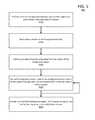
- FIG. 3illustrates a method 300 according to an embodiment of the present disclosure.
- the method 300may begin by generating a video stream for use in a video coding session (box 310 ).
- the method 300may identify from the video stream a border region that occurs between a foreground element of the video stream and a background element of the video stream (box 320 ).
- the method 300may modify the background element of the video stream based on video content from the border region (box 330 ). Thereafter, the method 300 may transmit the modified video stream to a second terminal (box 340 ).
- Operation of the method 300is expected to be computationally inexpensive as compared to other techniques that attempt to classify video data either as foreground or background elements on a pixel-by-pixel basis.
- a boundary regionmay be defined having a width sufficient to capture a transition between foreground content and background content.
- the method 300may obscure image artifacts that otherwise might arise if background content were masked from a region outside the boundary region but background content persisted in the boundary region.
- the method 300may occur in a variety of ways. It is expected that the method 300 typically will operate on video data captured by cameras, which includes image content of a foreground element and image content of one or more background elements. The method 300 , however, also can be performed on computer-generated video data, such as video data output by an application executing on the device that performs the method 300 (for example, a video game). And, further, the method 300 may execute on video data that represents a composite of video data captured by a camera and computer-generated video elements, which might be generated by an application that augments camera video data with icons or other graphical elements.
- Identification of the border regionmay comprise an identification of the foreground element and/or the background element.
- the foreground elementmay include, for example, an operator of the terminal and a participant in a video conferencing session.
- the foreground elementmay comprise a portion of (including the entirety of) a foreground region.
- the background elementmay comprise a portion of (including the entirety of) a background region.
- the background regionmay comprise the operator's present environment and the background element may include one or more objects in that environment (e.g., a back wall, a desk, a doorway, a whiteboard, etc.).
- FIG. 6Ashows a frame 600 of a video stream of a video coding session, such as a video stream captured by a camera associated with a first terminal.
- the frame 600depicts an operator 610 of the first terminal within an office setting.
- a foreground element 602is identified in a foreground region and generally includes most of the portions of the frame 600 that represent the operator 610 .
- a background element 604 in a background regionis also identified.
- the background regiongenerally includes most of the portions of the frame 600 that do not represent the operator 610 and instead represent one or more objects in the office setting (e.g., a wall, a door, a hallway, etc.) in which the operator 610 is present.
- a border region 606is further identified.
- the border region 606generally comprises portions of the frame 600 that are between the background element 604 and the foreground element 602 , thus forming a thin contour over the boundary therebetween.
- the border regionmay represent a region in which it is relatively uncertain as to whether it comprises part of the foreground element or the background element.
- the determination of the background element, the foreground element, and the border regionmay incorporate a probability or certainty aspect in which portions (e.g., a pixel or cluster of pixels) of the frame of the video stream is determined to belong to the background element or the foreground element to a calculated certainty. If the calculated certainty of a portion is above a pre-determined certainty threshold, then the portion may be deemed to comprise, at least in part, the background element or the foreground element, as the case may be. If the calculated certainty of the portion is below the pre-determined certainty threshold, then the portion may be deemed to comprise the border region.
- portionse.g., a pixel or cluster of pixels
- an example certainty thresholdmay be 90% certainty. If a portion of the frame of the video stream is determined to be part of the background element with a 95% certainty, that portion may comprise, at least in part, the background element. Similarly, if another portion of the frame of the video stream is determined to be part of the foreground element with a 99% certainty, that portion may comprise, at least in part, the foreground element. However, if yet another portion of the frame of the video stream is determined to be part of the background element with a 60% certainty and determined to be part of the foreground element with a 40% certainty, that portion may comprise, at least in part, the border region because the certainty value for that portion does not meet or exceed the certainty threshold of 90%.
- the background element, the foreground element, and the border regionmay be identified using one or more of a variety of techniques.
- the background and foreground elements and/or the border regionmay be identified using a depth mapping technique.
- a depth for each pixel or other sub-region of a frame of the video streammay be determined.
- the depthmay represent a position of the object in the pixel or other sub-region relative to the camera 206 of the first terminal 110 .
- the depth for each pixel or sub-regionmay be determined, as one example, based on motion detected between frames of the video stream.
- a parallax effectmay be recognized between objects in the video stream and may be used to determine depth.
- the binocular disparity of objects in the resultant stereoscopic video streammay be analyzed and leveraged to determine a depth for each pixel or other sub-region of a frame of the video stream.
- Such methods of determining depthare merely illustrative and other techniques known in the art may be similarly employed.
- the various depths of portions of the video streammay be determined based on the degree of focus or sharpness of the portion.
- the background and foreground elements and/or the border regionmay be identified accordingly.
- an edge-based range segmentation algorithmmay be utilized to identify the background and foreground elements and/or the border region based on the determined depth map of the frame of the video stream.
- the background and foreground elements and/or the border region in the video streammay be identified using an object recognition technique.
- a facial and/or body recognition algorithmmay be used to identify one or more operators in the video stream. Since the operator is the primary subject of the video chat, portions of the frame of the video stream that are identified, above a pre-determined threshold of certainty, as corresponding to the operator's head and/or body may comprise the foreground element. Likewise, areas of the frame of the video stream that are identified, above a pre-determined threshold of certainty, as not corresponding to the operator's head and/or body may comprise the background element. Areas of the frame of the video that were not determined to belong to either of the foreground or background elements above the pre-determined certainty thresholds may comprise the border region.
- exemplary techniques by which the background and foreground elements and/or the border region may be determinedmay include edge detection, motion detection, or region-growing methods. The disclosure is not limited to the aforementioned techniques. It is contemplated that other image processing techniques known in the art may be employed to identify the background and foreground elements and/or the border region in the video stream.
- the background elementmay be modified based, at least in part, on video content from the border region.
- the background elementmay be modified based on one or more colors present in the border region.
- the background element and the border regionmay each be partitioned into a plurality of clusters. For each cluster of the background element, the cluster may be replaced with a cluster of the border region that most closely matches the color of the cluster of the background element.
- a center of the operator comprising the foreground elementmay be determined. With a series of vectors extending outward from the center of the operator, the background element may be modified according to a color of the border region through which the respective vector passes. Thus the color of the border region may be effectively extended outward into the background element.
- the modification of the background elementmay have the effect of obscuring details in the background region, thus maintaining an element of privacy and informational security in the video conferencing session. For example, private writings or formulas on a whiteboard behind the operator may be obscured so that the writings or formulas are unintelligible in the modified background element.
- a blur effectmay optionally be applied to the background element.
- a Gaussian blur effectmay be applied to the background element.
- the blur effectmay act to further obscure any remaining details in the background element as well as to remove visual artifacts from any clustering that may have been performed on the background element.
- the video stream with the modified background elementmay be encoded prior to transmittal to the second terminal.
- the encodingmay include a compression process according to one of any known compression standards, such as H.264 or H.320.
- the encoded video streammay then be transmitted to the second terminal where the video stream may be decoded and viewed by a second operator.
- program instructions implementing the method 300 and other methods and techniques disclosed hereinmay be stored on a non-transitory computer-readable medium.
- FIG. 4illustrates a method 400 of modifying one or more frames of a video stream according to an embodiment of the present disclosure.
- the method 400may be utilized, for example, during such a modification performed in the method 300 discussed in relation to FIG. 3 . It is assumed that the background element, the foreground element, and/or the border region have already been identified in one or more frames of the video stream.
- the method 400may initially partition the background element into a plurality of background clusters and the border region into a plurality of border clusters (box 410 ). For each of one or more background clusters, the method 400 may compare video content of the background cluster with video content of one or more border clusters (box 420 ). Based on this comparison, the method 400 may determine a border cluster with video content that most closely matches the video content of the background cluster (box 430 ). The method 400 may replace the background cluster with the determined border cluster (box 440 ). Thereafter, the method 400 may encode the modified background element in an encoded video stream, which may be transmitted to a second terminal (box 450 ).
- the method 400may be less computationally demanding than other techniques that attempt to classify video data either as foreground or background elements on a pixel-by-pixel basis.
- the method 400may serve to obscure private or security-sensitive information that may be present in any background elements of the video data.
- the visual delineation between the background element and the boundary region and/or foreground elementmay be minimized.
- a viewermay be able to perceive the delineation between the foreground element (e.g., the depicted operator) and background element(s).
- the entirety of the frame of the video streammay be partitioned into a plurality of clusters with some clusters being associated with the background element, some clusters being associated with the border region, and some clusters being associated with the foreground element.
- Each clustermay comprise a pixel or a group of pixels.
- a clustermay comprise an N ⁇ N cluster of pixels, such as a 4 ⁇ 4 or 8 ⁇ 8 cluster of pixels.
- the frame of the video streammay be partitioned into a grid of cells, with each cell of the grid comprising a cluster.
- Each of the cells of the gridmay thereby be identified as corresponding to one of the background element, the border region, and/or the foreground element.
- clusteringmay be observed in the frame 600 of the video stream shown in FIG. 6A , particularly with respect to the stepped edges of the respective borders between the border region 606 and the foreground element 602 and the border region 606 and the background element 604 .
- the frame of the video streammay be partitioned into variably sized and/or shaped clusters. Such variably sized and shaped clusters may be observed in the frame 600 B of FIG. 6B .
- the example methods and techniques of the present disclosureare described with reference to N ⁇ N clusters of pixels.
- FIGS. 6A, 6B, and 7-9the operator depicted in FIGS. 6A, 6B, and 7-9 is obscured for reasons of privacy and such visual effect is not relevant to the present disclosure.
- the method 400may compare video content of a background cluster of the plurality of background clusters (i.e., the clusters comprising the background element) with video content of one or more border clusters of the plurality of border clusters (i.e., the clusters comprising the border region).
- video content of the background clustermay be successively compared against video content of one or more of the foregrounds clusters until video content is found that sufficiently matches the video content of the background cluster.
- video content of the background clustermay be compared against video content of each of the border clusters.
- the video content of a clustermay comprise a color, which, in turn, may be defined by one or more color appearance parameters.
- Color appearance parametersmay include, but are not limited to, hue, lightness, brightness, chroma, colorfulness, saturation, or any combination thereof. Accordingly, the comparison of the video content of the background cluster with the video content of one or more border clusters may comprise a comparison of one or more of said color appearance parameters.
- a color appearance parametermay be represented as one or more numerical values. For example, in a color defined according to an RGB color model, the color may be represented by a triplet of numerical values, with the values of the triplet corresponding to a respective numerical value (e.g., 0 to 255) of the red, green, and blue aspects of the color. As another example, a brightness of a color may be represented by a percentage value, such as a value between 0% and 100%.
- a background cluster and/or border clusterincludes more than one color (or other characteristic of video content)
- this scenariomay be addressed in one of several ways.
- a predominant colormay be determined and deemed to represent the color of that cluster. For example, if a 4 ⁇ 4 pixel cluster includes three white pixels and one tan pixel, the cluster may be considered to be white for comparison purposes.
- an average color of the colors of the clustermay be determined and used as the representative color for that cluster. Recalling that a color may be defined by one or more color appearance parameters, which may each be represented by a numerical value, a mathematical average may be used to determine the average color representing a cluster.
- a 2 ⁇ 2 pixel clustermay contains pixels each with the same color hue but with two pixels having a lightness value of 75% and two pixels having a lightness value of 25%.
- a mathematical average of the four lightness valuesmay be performed to arrive at a 50% lightness value for the cluster, which may be used as the representative color appearance parameter for the cluster.
- Such a techniquemay be similarly performed with other color appearance parameters defining the color(s) of the pixels of a cluster.
- the border clustermay be determined according to the numerical value of the color appearance parameter of the border cluster that is numerically closest to the numerical value of the color appearance parameter of the background cluster.
- the steps of comparing video content of a background cluster with video content of one or more border clusters, determining a border cluster with the most closely matching video content, and replacing the background cluster with the determined border clustermay be repeated for additional background clusters. For example, these steps may be repeated for each background cluster comprising the background element until each is replaced with a border cluster with a most closely matching video content.
- a blur effectmay optionally be applied to the background element with the replaced clusters.
- the blur effectmay minimize or eliminate any visual artifacts caused by the clustering as well as further obscuring the background region.
- FIG. 5illustrates another method 500 of modifying one or more frames of a video stream according to an embodiment of the present disclosure.
- the method 500may be utilized, for example, during such a modification performed in the method 300 discussed in relation to FIG. 3 . It is assumed that the background element, the foreground element, and/or the border region have already been identified in one or more frames of the video stream.
- the method 500may initially partition the background element into a plurality of background clusters and the border region into a plurality of border clusters (box 510 ).
- the method 500may determine a center of the foreground element (box 520 ).
- the method 500may further define a plurality of vectors extending outward from the center of the foreground element (box 530 ).
- the method 500may replace the background cluster with a border cluster through which an associated vector of the plurality of vectors passes (box 540 ).
- the method 500may encode the modified background element in an encoded video stream, which may be transmitted to a second terminal (box 550 ).
- each clustermay comprise one or more pixels.
- each clustermay comprise an N ⁇ N cluster of pixels, such as 2 ⁇ 2 or 4 ⁇ 4 cluster of pixels.
- the determination of the center of the foreground elementmay comprise determining a center (e.g., a center of “mass”) of an operator depicted in the foreground element. This may be accomplished through various object recognition techniques known in the art. For example, a body recognition algorithm may be used to identify the body of the operator. Accordingly, a point in the chest region of the operator may be determined as the center of the foreground element. As another example, a facial recognition algorithm may be used to identify the face of the operator and/or facial feature(s) of the operator. A central feature of the face, such as the nose, may define the center of the foreground element.
- a centere.g., a center of “mass”
- each vector of the defined plurality of vectorsmay extend outward from the center of the foreground element.
- a vectormay be defined that extends from the center of the foreground element to that background cluster. That vector may thereby be associated with that background cluster.
- each vector of the plurality of vectorsmay pass through one or more border clusters of the border region.
- the method 500may replace a background cluster with a border cluster through which an associated vector of the plurality of vectors passes from the center of the foreground element to that background cluster.
- that border clustermay replace the background cluster.
- the border cluster with which to replace the background clustermay be determined according to one or more of several techniques.
- the border cluster with which to replace the background clustermay be determined according to the video content (e.g., the color or color appearance parameter) of the border clusters through which the associated vector passes.
- the video content of the background clustermay be compared with the video content of the border clusters through which the vector passes.
- the border cluster to use in replacing the background clustermay be selected according to which border cluster has video content that most closely matches that of the background cluster.
- the comparison of the video content of the background cluster and border clusters and subsequent determination of one of the border clustersmay be performed in a similar manner as that described above in relation to the method 400 of FIG. 4 , except that the set of border clusters from which to compare and select is limited to the border clusters that the particular vector passes through.
- the border clustermay be determined according to the relative positions of the border clusters along the vector. For example, in one aspect, the border cluster (of the border clusters through which the vector passes) that is farthest away from the center of the foreground element (or in other words, the one closest to the background cluster) may be selected to replace the background cluster.
- the steps to replace a background cluster with a border cluster through which an associated vector passesmay be repeated for additional and/or all background clusters comprising the background element.
- a visual effectmay be achieved in which the outermost border clusters extend outward into the background element, thereby obscuring details in the background region that the operator 102 may wish to keep private, as well as minimizing the visual delineation between the border region and the background element.
- a blur effectmay additionally be applied to the background element, which may act to further obscure any private or sensitive details in the background region, as well as remove visual artifacts caused by the clustering of the background element.
- FIGS. 7-9illustrate an example application of the method 500 described in relation to FIG. 5 .
- FIG. 7depicts a frame 700 of a video stream based on the frame 600 shown in FIG. 6A .
- the frame 700includes the identified background element 604 , the foreground element 602 , and the border region 606 .
- a center 710 of the foreground element 602may be determined that generally corresponds with a central point of the operator's 610 chest region. As described above, the center 710 may be determined according to a body recognition algorithm.
- a plurality of vectors 712may be defined that extend outward from the center 710 of the foreground element 602 to the background element 604 .
- each vector 712may extend from the center 710 of the foreground element 602 to a particular background cluster (not shown in FIG. 7 ) of the background element 604 .
- the background element 604may comprise a great number of background clusters, the number of vectors 712 depicted in FIG. 7 is merely illustrative and limited for sake of visual clarity. It is contemplated that many more vectors 712 may be defined than are shown in FIG. 7 .
- FIG. 8depicts a close-up view 800 of a portion of the frame 700 of FIG. 7 .
- the close-up view 800depicts an example vector 712 . 1 (the other vectors 712 show in FIG. 7 have been omitted for simplicity) that extends from the center 702 of the foreground element 602 to an example background cluster 820 in the background element 604 .
- the vector 712 . 1passes through a portion of the border region 606 .
- the vector 712 . 1passes through the border clusters 822 . 1 , 822 . 2 , and 822 . 3 .
- the background cluster 820may be replaced with one of the border clusters 822 . 1 , 822 . 2 , 822 . 3 through which the vector 712 . 1 passes.
- one of the border clusters 822 . 1 , 822 . 2 , 822 . 3may be selected to use in the replacement by comparing the respective video content (e.g., the color or color appearance parameter(s)) of the border clusters 822 . 1 , 822 . 2 , 822 . 3 with the video content of the background cluster 820 .
- the video content of the border cluster 822 . 2may most closely match the video content of the background cluster 820 . Therefore, the background cluster 820 may be replaced with the border cluster 822 . 2 .
- one of the border clusters 822 . 1 , 822 . 2 , 822 . 3may be selected to replace the background cluster 820 by comparing the relative positions of the border clusters 822 . 1 , 822 . 2 , 822 . 3 along the vector 712 . 1 with respect to the position of the center 702 of the foreground element 602 and/or the position of the background cluster 820 .
- the border cluster 822 . 1 , 822 . 2 , 822 . 3 that is closest to the background cluster 820 (or, conversely, that is farthest away from the center 702 of the foreground element 602 )may be selected to use in the replacement of the background cluster 820 .
- the border cluster 822 . 2is closest to the background cluster 820 and therefore may be used to replace the background cluster 820 .
- One or more of the aforementioned techniquesmay be applied to each of the background clusters to replace that cluster with one of the border clusters, thereby modifying the background element 604 to obscure personal or security-sensitive details in the background element 604 and minimize the visual delineation between the border region 606 and the background element 604 .
- FIG. 9depicts a resultant frame 900 of the video stream modified from the frames 600 , 700 shown in FIGS. 6 and 7 .
- the background cluster 820has been replaced with the border cluster 822 . 2 from FIG. 8 .
- the other background clusters comprising the background element 604have also been similarly replaced with a respective border cluster.
- a blur effecthas also been provided to the background element 604 to eliminate visual artifacts from the clustering and to further obscure details in the background element 604 .
- the frame 900may be encoded and included in a video stream provided to another terminal participating in the video conferencing session.
- the identified background elementmay be replaced with a pre-determined background element.
- the system 200 of FIG. 2may include a background element repository (not shown) of pre-determined background elements.
- the background element repositorymay include pre-determined background elements having a variety of color profiles and/or patterns.
- the various background concealment methods and techniques described hereinmay proceed using the pre-determined background element.
- the pre-determined background elementmay include a background that is artistically composed or may be a realistic background template, such as a pre-determined office background.
- the pre-determined backgroundmay be selected so that the resultant modified background element is relatively easy to encode, such as to minimize extensive details in the modified background element that are computationally intensive to encode. Further, a pre-determined background element may be pre-processed so that the border region may be extended into the pre-determined background element in a natural way.
- the modified background elementmay be generated to impart an artistic quality to the modified background element.
- the modified background elementmay be generated based on the border region.
- the modified background elementinstead may be generated independent of the instant background element.
- this modified background elementmay be generated from a “blank” background element having no image content.
- the modified background elementmay be generated from a background element having a particular color profile and/or pattern that produces an aesthetically attractive effect in the resultant modified background element.
- a machine learning techniquemay be applied in generating the modified background elements over multiple frames of the video data. For example, statistical data may be generated from processing multiple frames of the video data. This statistical data may be used as training set data for a machine learning algorithm.
- the sequence of multiple frames in the video datamay be leveraged to generate the modified background element.
- One or more frames of the video data that are sequentially prior to a present framemay be analyzed, such as by the image analyzer 220 of FIG. 2 , to select a pre-determined background element (e.g., from the aforementioned background element repository) that is most appropriate given the background element and/or border region of the previous frames.
- a pre-determined background elemente.g., from the aforementioned background element repository
- the selection of the pre-determined background elementmay be based on the color profile of the border region and/or background elements of one or more frames previous to the present frame.
- the selection of the pre-determined background elementmay be based on an approximate or best match of the color profile of the pre-determined background element with the color profile of the border region and/or background element of the present frame.
- the selected pre-determined background elementmay replace the background element of the present frame to generate the modified background element.
- the selected pre-determined background elementmay replace the background element of the present frame and further apply one or more of the various techniques described herein to modify the present background element based on the present border region.
- the selected pre-determined background elementmay be modified based on the border region of a previous frame. Such a technique may take advantage of visual commonalities between sequential frames of the video data.
- the various background concealment methods and techniques described hereinprovide one or more advantages.
- One advantageis that a fast, yet potentially imperfect, segmentation method may be used to identify the background, border, and/or foreground regions. This, in turn, allows the background concealment techniques to be used in real-time and to be used in applications in which power consumption and/or processing power are limited, such as with a mobile device.
- Another advantage providedis that the boundary (e.g., the border region) between the background and foreground elements may be preserved in the resulting encoded video stream.
- the background regionis effectively hidden or obscured so that private or security-sensitive details in the background region are not communicated to other operators in the video conferencing session. Furthermore, the visual delineation that may otherwise occur between the background element and the border region may be minimized.
- FIG. 10illustrates a simplified block diagram of the terminals 110 , 120 ( FIG. 1 ) according to an embodiment of the present disclosure.
- Each terminal 110 , 120may be embodied as a computing device, such as mobile device (e.g., smart phone, laptop, or tablet computer) or a stationary computing device (e.g., a personal computer, a gaming console, or a set-top digital media player).
- a personal computer or other type of computing devicemay include a main hardware unit as well as attached peripherals, such as an external camera (e.g., a “webcam”) and/or an external microphone.
- the several terminals 110 , 120do not necessarily have to comprise the same type of computing device.
- the first terminal 110may comprise a smart phone and the second terminal 120 may comprise a personal computer.
- Each of the terminals 110 , 120may be configured with a processor 1002 and memory 1004 .
- the memory 1004may store an operating system 1014 and one or more applications 1016 . 1 - 1016 .N that may perform various operations relating to video chat background concealment described herein.
- the one or more applications 1016 . 1 - 1016 .Nmay include a video chat application that receives a video stream and encodes and/or otherwise processes the video stream, such as performing background concealment, before sending the video stream to an analogous video application running on another terminal.
- the video chat applicationmay receive the video stream from another terminal, decode the video stream, and cause the video stream to be displayed to the operator.
- the operating system 1014 and applications 1016 . 1 - 1016 .Nmay be executed by the processor 202 .
- Each of the terminals 110 , 120may further include a camera 1006 and a microphone 1012 .
- the camera 1006may be pointed at the operator 102 , 104 or other subject and capture a video stream of the operator 102 , 104 or other subject.
- the video stream from the camera 1006may accordingly be provided to the video chat application for encoding or other processing.
- the camera 1006may be incorporated into the terminal 110 , 120 , such as is typically the case with a smart phone or tablet computer, or may be separate from but connected to the main body of the terminal 110 , 120 .
- the camera 1006may be embodied as an external camera (e.g., a “webcam”) that is connected to a personal computer.
- the terminals 110 , 120may each include multiple cameras 1006 .
- the terminal 110 , 120may include a pair of similarly-faced cameras 1006 that together capture a stereoscopic video stream.
- a stereoscopic video streammay be useful in determining the depths of objects in the video stream which, in turn, may aid in distinguishing a foreground object (e.g., an operator) from the background.
- the microphone 1012may capture audio, such as the voice of an operator participating in a video chat.
- the captured audiomay be provided to the video chat application.
- the video chat applicationmay synchronize and combine the audio with the video stream from the camera 1006 .
- reference to a video stream or the likemay include a video stream with an audio component or a video stream without an audio component.
- Each of the terminals 110 , 120may further include a transceiver 1008 to effectuate communication with the network 150 and other terminals.
- the transceiver 1008may include a wireless and/or a wired communication interface to effectuate said communication.
- the transceiver 1008may include a Wi-Fi interface to communicate with a Wi-Fi access point.
- the transceiver 1008may include a cellular communication interface to enable communication over a cellular network.
- the transceiver 1008may include an network interface controller (NIC) with an Ethernet adapter for connecting to a wired Ethernet network.
- NICnetwork interface controller
- Each of the terminals 110 , 120may yet further be configured with a display 1010 .
- the display 1010may be used, for example, to enable interaction with the video chat application, as well as to view the video stream provided by the video chat application.
- the display 1010may be incorporated with the terminal 110 , 120 , as is commonly the case with a smart phone or tablet computer, and may include an LCD (liquid crystal display).
- the display 1010may be a separate connected component to the main hardware unit.
- the display 1010may include an LCD or LED (light emitting diode) computer monitor connected to a personal computer.
- An input mechanism 1018may further be provided with the terminals 110 , 120 to facilitate interaction by the operator 102 , 104 .
- the input mechanism 1018may include a touch-sensitive screen, a keyboard, or a mouse or other pointing device, as some examples.
Landscapes
- Engineering & Computer Science (AREA)
- Physics & Mathematics (AREA)
- Multimedia (AREA)
- Theoretical Computer Science (AREA)
- General Physics & Mathematics (AREA)
- Signal Processing (AREA)
- Software Systems (AREA)
- Evolutionary Computation (AREA)
- Artificial Intelligence (AREA)
- Computer Vision & Pattern Recognition (AREA)
- Data Mining & Analysis (AREA)
- Probability & Statistics with Applications (AREA)
- Health & Medical Sciences (AREA)
- General Health & Medical Sciences (AREA)
- Medical Informatics (AREA)
- Databases & Information Systems (AREA)
- Computing Systems (AREA)
- Life Sciences & Earth Sciences (AREA)
- Bioinformatics & Cheminformatics (AREA)
- Bioinformatics & Computational Biology (AREA)
- Evolutionary Biology (AREA)
- General Engineering & Computer Science (AREA)
- Compression Or Coding Systems Of Tv Signals (AREA)
- Two-Way Televisions, Distribution Of Moving Picture Or The Like (AREA)
Abstract
Description
The present disclosure relates to video processing and, more particularly, background concealment in a video conferencing session.
Video conferencing systems provide services to transmit a video stream from a first device to one or more other devices that participate in a video conferencing session. In one use case, the content of the video stream depicts the user of the video conferencing system, as captured by a video capture device such as a camera. The video stream also may depict a background behind the user. It is sometimes desirable to hide or replace the background, such as for security or privacy purposes. Yet, distinguishing foreground elements in a video stream (e.g., the user) from other background elements often can be a computationally intense process, one that cannot be performed in real time by processing devices such as mobile phones that have limited processing resources.
Accordingly, there is a need for improved video chat processing to efficiently conceal a background in a video stream that conserves processing resources in a processing device.
Embodiments of the present disclosure provide systems and methods for background concealment in a video conferencing session. In one example method, a first terminal may generate a video stream. A border region may be identified in the video stream. The border region may comprise a boundary between a foreground element of the video stream and a background element of the video stream. The background element may be modified, based at least in part, on video content from the border region. The modified video steam may thereafter be transmitted to a second terminal.
InFIG. 1 , theterminals
Thechannel 130 represents communication or storage media through which coded video streams are exchanged between theterminals channel 130 may be provided by one or more ofnetworks 150 that convey coded video data among theterminals communication network 150 may exchange data in circuit-switched and/or packet-switched channels. Representative networks include telecommunications networks, local area networks, wide area networks and/or the Internet. In another embodiment, thechannel 130 may be provided as a storage device (not shown), for example, an electrical, optical or magnetic storage device. For the purposes of the present discussion, the architecture and topology of thechannel 130 is immaterial to the operation of the present disclosure unless explained herein below.
Thevideo source 210 may be embodied in various forms. For example, thevideo source 210 may comprise one or more cameras incorporated or otherwise connected with a terminal and which may capture the video data. As another example, thevideo source 210 may comprise an application, such as a video game, that may execute on a terminal. It will be understood that thevideo source 210 may comprise more than one type of video source. For example, thevideo source 210 may include both video data captured by a camera (e.g., video data depicting an operator) and video data generated by an application (e.g., gameplay video of a video game). As another example, thevideo source 210 may comprise a digital storage medium, such as an optical storage medium (e.g., a digital video disc (DVD)), a non-volatile storage medium (e.g., a hard disk drive, a solid-state drive, or flash memory), or a volatile storage medium (e.g., random-access memory (RAM)). As such, the video data provided by thevideo source 210 is not necessarily live or near live, but may include video data that was initially generated prior in time and stored for later processing and encoding according to the methods and techniques disclosed herein.
As indicated, theimage analyzer 220 may receive the video data from thevideo source 210. Theimage analyzer 220 may process the received video data according to one or more methods and techniques described herein. For example, theimage analyzer 220 may identify a foreground element and one or more background elements in the video data. The foreground element may include an operator, for example. The background element(s) may include the environment occupied by the operator or other foreground subject. For example, the background element(s) may include the background walls, desk, whiteboard, or other objects within an office occupied by the operator. Theimage analyzer 220 may further identify a border region that forms a boundary between the foreground element and the background element(s). The border region may represent a portion of video content at which it is relatively uncertain as to whether the portion should be included as part of the foreground element or as part of the background element(s).
Having identified the foreground element, the background element(s), and/or the border region, theimage analyzer 220 may modify the background element(s) based on video content from the border region. For example, in one aspect, theimage analyzer 220 may partition each of the background element(s) and the border region into pluralities of clusters. Theimage analyzer 220 may compare the video content (e.g. color) of each background cluster with the video content of one or more of the border clusters to determine a border cluster with video content that most closely matches that of the respective background cluster. The determined border cluster may thereby be used to replace the respective background cluster. As another example, theimage analyzer 220 may again partition each of the background element(s) and the border region into pluralities of clusters. Theimage analyzer 220 may identify a center of the foreground element. The center may represent, as examples, the center of the operator's chest region or the center of the operator's face. Further, theimage analyzer 220 may define a plurality of vectors extending from the center of the foreground element into at least a portion of the background element(s). Each vector may point to a particular background cluster and thereby may be associated with that background cluster. For each background cluster, theimage analyzer 220 may replace the background cluster with a border cluster through which the associated vector passes. Selection of the particular border cluster to use in the replacement may be performed, as examples, according to the nearest match in video content with that of the background cluster or according to the border cluster that is nearest the background cluster.
After theimage analyzer 220 processes the video data, thecoder 230 may encode the modified video data according to one or more known video coding algorithms or standards. For example, the modified video data may be encoded according to the H.264, H.320, or other encoding standard known in the art.
The encoded video data may thereafter be provided as thetransmission 240. Thetransmission 240 may be sent to another terminal, at which thetransmission 240 may be decoded and displayed to the operator of that terminal. Thetransmission 240 may be sent over thechannel 130, including thenetwork 150, described in relation toFIGS. 1 and 10 .
One skilled in the art will appreciate that thesystem 200 may be implemented by software, hardware, or a combination of software and hardware. For example, thesystem 200 or portions thereof may be implemented with software executing on and/or hardware incorporated with one or more of theterminals FIGS. 1 and 10 . Furthermore, thesystem 200 or portions thereof may be implemented as a set of instructions that may be stored on a non-transitory computer-readable medium and executed by a processor.
Operation of themethod 300 is expected to be computationally inexpensive as compared to other techniques that attempt to classify video data either as foreground or background elements on a pixel-by-pixel basis. Using the technique illustrated inFIG. 3 , precise classifications can be avoided and, instead, a boundary region may be defined having a width sufficient to capture a transition between foreground content and background content. Thereafter, by using image content of the boundary region to mask background content, themethod 300 may obscure image artifacts that otherwise might arise if background content were masked from a region outside the boundary region but background content persisted in the boundary region.
Generation of the video stream may occur in a variety of ways. It is expected that themethod 300 typically will operate on video data captured by cameras, which includes image content of a foreground element and image content of one or more background elements. Themethod 300, however, also can be performed on computer-generated video data, such as video data output by an application executing on the device that performs the method300 (for example, a video game). And, further, themethod 300 may execute on video data that represents a composite of video data captured by a camera and computer-generated video elements, which might be generated by an application that augments camera video data with icons or other graphical elements.
Identification of the border region may comprise an identification of the foreground element and/or the background element. The foreground element may include, for example, an operator of the terminal and a participant in a video conferencing session. The foreground element may comprise a portion of (including the entirety of) a foreground region. Similarly, the background element may comprise a portion of (including the entirety of) a background region. For example the background region may comprise the operator's present environment and the background element may include one or more objects in that environment (e.g., a back wall, a desk, a doorway, a whiteboard, etc.).
As an illustrative example,FIG. 6A shows aframe 600 of a video stream of a video coding session, such as a video stream captured by a camera associated with a first terminal. Theframe 600 depicts anoperator 610 of the first terminal within an office setting. Aforeground element 602 is identified in a foreground region and generally includes most of the portions of theframe 600 that represent theoperator 610. Abackground element 604 in a background region is also identified. The background region generally includes most of the portions of theframe 600 that do not represent theoperator 610 and instead represent one or more objects in the office setting (e.g., a wall, a door, a hallway, etc.) in which theoperator 610 is present. Aborder region 606 is further identified. Theborder region 606 generally comprises portions of theframe 600 that are between thebackground element 604 and theforeground element 602, thus forming a thin contour over the boundary therebetween.
With attention again to themethod 300 ofFIG. 3 , the border region may represent a region in which it is relatively uncertain as to whether it comprises part of the foreground element or the background element. For example, the determination of the background element, the foreground element, and the border region may incorporate a probability or certainty aspect in which portions (e.g., a pixel or cluster of pixels) of the frame of the video stream is determined to belong to the background element or the foreground element to a calculated certainty. If the calculated certainty of a portion is above a pre-determined certainty threshold, then the portion may be deemed to comprise, at least in part, the background element or the foreground element, as the case may be. If the calculated certainty of the portion is below the pre-determined certainty threshold, then the portion may be deemed to comprise the border region.
To illustrate, an example certainty threshold may be 90% certainty. If a portion of the frame of the video stream is determined to be part of the background element with a 95% certainty, that portion may comprise, at least in part, the background element. Similarly, if another portion of the frame of the video stream is determined to be part of the foreground element with a 99% certainty, that portion may comprise, at least in part, the foreground element. However, if yet another portion of the frame of the video stream is determined to be part of the background element with a 60% certainty and determined to be part of the foreground element with a 40% certainty, that portion may comprise, at least in part, the border region because the certainty value for that portion does not meet or exceed the certainty threshold of 90%.
The background element, the foreground element, and the border region may be identified using one or more of a variety of techniques.
As one example, the background and foreground elements and/or the border region may be identified using a depth mapping technique. In such a technique, a depth for each pixel or other sub-region of a frame of the video stream may be determined. The depth may represent a position of the object in the pixel or other sub-region relative to the camera206 of thefirst terminal 110. The depth for each pixel or sub-region may be determined, as one example, based on motion detected between frames of the video stream. A parallax effect may be recognized between objects in the video stream and may be used to determine depth. In embodiments in which thefirst terminal 110 includes a pair of similarly-faced cameras, the binocular disparity of objects in the resultant stereoscopic video stream may be analyzed and leveraged to determine a depth for each pixel or other sub-region of a frame of the video stream. Such methods of determining depth are merely illustrative and other techniques known in the art may be similarly employed. For example, the various depths of portions of the video stream may be determined based on the degree of focus or sharpness of the portion. With the depth of each pixel or other sub-region of the frame of the video stream determined, the background and foreground elements and/or the border region may be identified accordingly. For example, an edge-based range segmentation algorithm may be utilized to identify the background and foreground elements and/or the border region based on the determined depth map of the frame of the video stream.
As another example, the background and foreground elements and/or the border region in the video stream may be identified using an object recognition technique. Specifically, a facial and/or body recognition algorithm may be used to identify one or more operators in the video stream. Since the operator is the primary subject of the video chat, portions of the frame of the video stream that are identified, above a pre-determined threshold of certainty, as corresponding to the operator's head and/or body may comprise the foreground element. Likewise, areas of the frame of the video stream that are identified, above a pre-determined threshold of certainty, as not corresponding to the operator's head and/or body may comprise the background element. Areas of the frame of the video that were not determined to belong to either of the foreground or background elements above the pre-determined certainty thresholds may comprise the border region.
Other exemplary techniques by which the background and foreground elements and/or the border region may be determined may include edge detection, motion detection, or region-growing methods. The disclosure is not limited to the aforementioned techniques. It is contemplated that other image processing techniques known in the art may be employed to identify the background and foreground elements and/or the border region in the video stream.
As noted above, the background element may be modified based, at least in part, on video content from the border region. As one example, the background element may be modified based on one or more colors present in the border region. In one exemplary method of modifying the background element, discussed in detail below in relation toFIG. 4 , the background element and the border region may each be partitioned into a plurality of clusters. For each cluster of the background element, the cluster may be replaced with a cluster of the border region that most closely matches the color of the cluster of the background element. In another exemplary method of modifying the background element, discussed in detail below in relation toFIG. 5 , a center of the operator comprising the foreground element may be determined. With a series of vectors extending outward from the center of the operator, the background element may be modified according to a color of the border region through which the respective vector passes. Thus the color of the border region may be effectively extended outward into the background element.
The modification of the background element may have the effect of obscuring details in the background region, thus maintaining an element of privacy and informational security in the video conferencing session. For example, private writings or formulas on a whiteboard behind the operator may be obscured so that the writings or formulas are unintelligible in the modified background element.
Responsive to the background element being modified, a blur effect may optionally be applied to the background element. For example, a Gaussian blur effect may be applied to the background element. The blur effect may act to further obscure any remaining details in the background element as well as to remove visual artifacts from any clustering that may have been performed on the background element.
The video stream with the modified background element may be encoded prior to transmittal to the second terminal. For example, the encoding may include a compression process according to one of any known compression standards, such as H.264 or H.320. The encoded video stream may then be transmitted to the second terminal where the video stream may be decoded and viewed by a second operator.
It will be understood that themethod 300, as well as other methods and techniques described herein, may be implemented as program instructions. To this end, program instructions implementing themethod 300 and other methods and techniques disclosed herein may be stored on a non-transitory computer-readable medium.
Themethod 400 may initially partition the background element into a plurality of background clusters and the border region into a plurality of border clusters (box410). For each of one or more background clusters, themethod 400 may compare video content of the background cluster with video content of one or more border clusters (box420). Based on this comparison, themethod 400 may determine a border cluster with video content that most closely matches the video content of the background cluster (box430). Themethod 400 may replace the background cluster with the determined border cluster (box440). Thereafter, themethod 400 may encode the modified background element in an encoded video stream, which may be transmitted to a second terminal (box450).
As with themethod 300, themethod 400 may be less computationally demanding than other techniques that attempt to classify video data either as foreground or background elements on a pixel-by-pixel basis. Themethod 400 may serve to obscure private or security-sensitive information that may be present in any background elements of the video data. By replacing video content in the background element with most-closely matched video content from the boundary region, the visual delineation between the background element and the boundary region and/or foreground element may be minimized. For example, before applying one or more of the methods or techniques disclosed herein, a viewer may be able to perceive the delineation between the foreground element (e.g., the depicted operator) and background element(s).
As one example technique of partitioning the background element and the border region into respective pluralities of clusters, the entirety of the frame of the video stream may be partitioned into a plurality of clusters with some clusters being associated with the background element, some clusters being associated with the border region, and some clusters being associated with the foreground element. Each cluster may comprise a pixel or a group of pixels. For example, a cluster may comprise an N×N cluster of pixels, such as a 4×4 or 8×8 cluster of pixels. In one aspect, the frame of the video stream may be partitioned into a grid of cells, with each cell of the grid comprising a cluster. Each of the cells of the grid may thereby be identified as corresponding to one of the background element, the border region, and/or the foreground element. As an example, clustering may be observed in theframe 600 of the video stream shown inFIG. 6A , particularly with respect to the stepped edges of the respective borders between theborder region 606 and theforeground element 602 and theborder region 606 and thebackground element 604. In another aspect, the frame of the video stream may be partitioned into variably sized and/or shaped clusters. Such variably sized and shaped clusters may be observed in theframe 600B ofFIG. 6B . However, for purposes of illustration, the example methods and techniques of the present disclosure are described with reference to N×N clusters of pixels.
It is noted that the operator depicted inFIGS. 6A, 6B, and 7-9 is obscured for reasons of privacy and such visual effect is not relevant to the present disclosure.
As indicated above, themethod 400 may compare video content of a background cluster of the plurality of background clusters (i.e., the clusters comprising the background element) with video content of one or more border clusters of the plurality of border clusters (i.e., the clusters comprising the border region). For example, video content of the background cluster may be successively compared against video content of one or more of the foregrounds clusters until video content is found that sufficiently matches the video content of the background cluster. As another example video content of the background cluster may be compared against video content of each of the border clusters. It is noted that the video content of a cluster may comprise a color, which, in turn, may be defined by one or more color appearance parameters. Color appearance parameters may include, but are not limited to, hue, lightness, brightness, chroma, colorfulness, saturation, or any combination thereof. Accordingly, the comparison of the video content of the background cluster with the video content of one or more border clusters may comprise a comparison of one or more of said color appearance parameters. A color appearance parameter may be represented as one or more numerical values. For example, in a color defined according to an RGB color model, the color may be represented by a triplet of numerical values, with the values of the triplet corresponding to a respective numerical value (e.g., 0 to 255) of the red, green, and blue aspects of the color. As another example, a brightness of a color may be represented by a percentage value, such as a value between 0% and 100%.
In the event that a background cluster and/or border cluster includes more than one color (or other characteristic of video content), this scenario may be addressed in one of several ways. In one aspect, a predominant color may be determined and deemed to represent the color of that cluster. For example, if a 4×4 pixel cluster includes three white pixels and one tan pixel, the cluster may be considered to be white for comparison purposes. In another aspect, an average color of the colors of the cluster may be determined and used as the representative color for that cluster. Recalling that a color may be defined by one or more color appearance parameters, which may each be represented by a numerical value, a mathematical average may be used to determine the average color representing a cluster. As an example, a 2×2 pixel cluster may contains pixels each with the same color hue but with two pixels having a lightness value of 75% and two pixels having a lightness value of 25%. A mathematical average of the four lightness values may be performed to arrive at a 50% lightness value for the cluster, which may be used as the representative color appearance parameter for the cluster. Such a technique may be similarly performed with other color appearance parameters defining the color(s) of the pixels of a cluster.
As one example technique to determine a border cluster with video content that most closely matches video content of the background cluster, particularly when the respective video content comprises color appearance parameters represented by numerical values, the border cluster may be determined according to the numerical value of the color appearance parameter of the border cluster that is numerically closest to the numerical value of the color appearance parameter of the background cluster.
The steps of comparing video content of a background cluster with video content of one or more border clusters, determining a border cluster with the most closely matching video content, and replacing the background cluster with the determined border cluster may be repeated for additional background clusters. For example, these steps may be repeated for each background cluster comprising the background element until each is replaced with a border cluster with a most closely matching video content.
In an aspect, a blur effect may optionally be applied to the background element with the replaced clusters. The blur effect may minimize or eliminate any visual artifacts caused by the clustering as well as further obscuring the background region.
Themethod 500 may initially partition the background element into a plurality of background clusters and the border region into a plurality of border clusters (box510). Themethod 500 may determine a center of the foreground element (box520). Themethod 500 may further define a plurality of vectors extending outward from the center of the foreground element (box530). For each of one or more background clusters, themethod 500 may replace the background cluster with a border cluster through which an associated vector of the plurality of vectors passes (box540). Thereafter, themethod 500 may encode the modified background element in an encoded video stream, which may be transmitted to a second terminal (box550).
Partitioning the background element into a plurality of background clusters and the border region into a plurality of border clusters may be performed in a similar manner as described above with respect to themethod 400 ofFIG. 4 . For example, each cluster may comprise one or more pixels. For instance, each cluster may comprise an N×N cluster of pixels, such as 2×2 or 4×4 cluster of pixels.
The determination of the center of the foreground element may comprise determining a center (e.g., a center of “mass”) of an operator depicted in the foreground element. This may be accomplished through various object recognition techniques known in the art. For example, a body recognition algorithm may be used to identify the body of the operator. Accordingly, a point in the chest region of the operator may be determined as the center of the foreground element. As another example, a facial recognition algorithm may be used to identify the face of the operator and/or facial feature(s) of the operator. A central feature of the face, such as the nose, may define the center of the foreground element.
As indicated, each vector of the defined plurality of vectors may extend outward from the center of the foreground element. For example, for each background cluster, a vector may be defined that extends from the center of the foreground element to that background cluster. That vector may thereby be associated with that background cluster.
As the border region may be situated between at least a portion of the background element and at least a portion of the foreground element, it is noted that each vector of the plurality of vectors may pass through one or more border clusters of the border region. Accordingly, as already mentioned above, themethod 500 may replace a background cluster with a border cluster through which an associated vector of the plurality of vectors passes from the center of the foreground element to that background cluster. In the event that the associated vector passes through only a single border cluster, that border cluster may replace the background cluster. However, if the associated vector passes through multiple border clusters, the border cluster with which to replace the background cluster may be determined according to one or more of several techniques.
In one exemplary technique, the border cluster with which to replace the background cluster may be determined according to the video content (e.g., the color or color appearance parameter) of the border clusters through which the associated vector passes. For example, the video content of the background cluster may be compared with the video content of the border clusters through which the vector passes. Based on the comparison, the border cluster to use in replacing the background cluster may be selected according to which border cluster has video content that most closely matches that of the background cluster. The comparison of the video content of the background cluster and border clusters and subsequent determination of one of the border clusters may be performed in a similar manner as that described above in relation to themethod 400 ofFIG. 4 , except that the set of border clusters from which to compare and select is limited to the border clusters that the particular vector passes through.
In another exemplary technique for determining the border cluster with which to replace the background cluster, the border cluster may be determined according to the relative positions of the border clusters along the vector. For example, in one aspect, the border cluster (of the border clusters through which the vector passes) that is farthest away from the center of the foreground element (or in other words, the one closest to the background cluster) may be selected to replace the background cluster.
The steps to replace a background cluster with a border cluster through which an associated vector passes may be repeated for additional and/or all background clusters comprising the background element. In this manner, a visual effect may be achieved in which the outermost border clusters extend outward into the background element, thereby obscuring details in the background region that theoperator 102 may wish to keep private, as well as minimizing the visual delineation between the border region and the background element.
A blur effect may additionally be applied to the background element, which may act to further obscure any private or sensitive details in the background region, as well as remove visual artifacts caused by the clustering of the background element.
A plurality of vectors712 (not all labeled) may be defined that extend outward from thecenter 710 of theforeground element 602 to thebackground element 604. For example, eachvector 712 may extend from thecenter 710 of theforeground element 602 to a particular background cluster (not shown inFIG. 7 ) of thebackground element 604. It will be appreciated that since thebackground element 604 may comprise a great number of background clusters, the number ofvectors 712 depicted inFIG. 7 is merely illustrative and limited for sake of visual clarity. It is contemplated that manymore vectors 712 may be defined than are shown inFIG. 7 .
According to one technique described above, one of the border clusters822.1,822.2,822.3 may be selected to use in the replacement by comparing the respective video content (e.g., the color or color appearance parameter(s)) of the border clusters822.1,822.2,822.3 with the video content of thebackground cluster 820. Here, the video content of the border cluster822.2 may most closely match the video content of thebackground cluster 820. Therefore, thebackground cluster 820 may be replaced with the border cluster822.2.
According to another technique described above, one of the border clusters822.1,822.2,822.3 may be selected to replace thebackground cluster 820 by comparing the relative positions of the border clusters822.1,822.2,822.3 along the vector712.1 with respect to the position of thecenter 702 of theforeground element 602 and/or the position of thebackground cluster 820. In particular, the border cluster822.1,822.2,822.3 that is closest to the background cluster820 (or, conversely, that is farthest away from thecenter 702 of the foreground element602) may be selected to use in the replacement of thebackground cluster 820. In this example, the border cluster822.2 is closest to thebackground cluster 820 and therefore may be used to replace thebackground cluster 820.
One or more of the aforementioned techniques may be applied to each of the background clusters to replace that cluster with one of the border clusters, thereby modifying thebackground element 604 to obscure personal or security-sensitive details in thebackground element 604 and minimize the visual delineation between theborder region 606 and thebackground element 604.
In an alternative embodiment, after the background element is identified but before the various background concealment methods and techniques described above are applied, the identified background element may be replaced with a pre-determined background element. For example, thesystem 200 ofFIG. 2 may include a background element repository (not shown) of pre-determined background elements. The background element repository may include pre-determined background elements having a variety of color profiles and/or patterns. After the identified background element is replaced with the pre-determined background element, the various background concealment methods and techniques described herein may proceed using the pre-determined background element. The pre-determined background element may include a background that is artistically composed or may be a realistic background template, such as a pre-determined office background. The pre-determined background may be selected so that the resultant modified background element is relatively easy to encode, such as to minimize extensive details in the modified background element that are computationally intensive to encode. Further, a pre-determined background element may be pre-processed so that the border region may be extended into the pre-determined background element in a natural way.
In an alternative embodiment, the modified background element may be generated to impart an artistic quality to the modified background element. In one aspect, the modified background element may be generated based on the border region. However, rather than using and modifying the instant background element, the modified background element instead may be generated independent of the instant background element. For example, this modified background element may be generated from a “blank” background element having no image content. As another example, the modified background element may be generated from a background element having a particular color profile and/or pattern that produces an aesthetically attractive effect in the resultant modified background element.
A machine learning technique may be applied in generating the modified background elements over multiple frames of the video data. For example, statistical data may be generated from processing multiple frames of the video data. This statistical data may be used as training set data for a machine learning algorithm.
In yet another alternative embodiment, the sequence of multiple frames in the video data may be leveraged to generate the modified background element. One or more frames of the video data that are sequentially prior to a present frame may be analyzed, such as by theimage analyzer 220 ofFIG. 2 , to select a pre-determined background element (e.g., from the aforementioned background element repository) that is most appropriate given the background element and/or border region of the previous frames. For example, the selection of the pre-determined background element may be based on the color profile of the border region and/or background elements of one or more frames previous to the present frame. For instance, the selection of the pre-determined background element may be based on an approximate or best match of the color profile of the pre-determined background element with the color profile of the border region and/or background element of the present frame.
The selected pre-determined background element may replace the background element of the present frame to generate the modified background element. Alternatively, the selected pre-determined background element may replace the background element of the present frame and further apply one or more of the various techniques described herein to modify the present background element based on the present border region. In yet another alternative implementation, the selected pre-determined background element may be modified based on the border region of a previous frame. Such a technique may take advantage of visual commonalities between sequential frames of the video data.
It has been observed that the various background concealment methods and techniques described herein provide one or more advantages. One advantage is that a fast, yet potentially imperfect, segmentation method may be used to identify the background, border, and/or foreground regions. This, in turn, allows the background concealment techniques to be used in real-time and to be used in applications in which power consumption and/or processing power are limited, such as with a mobile device. Another advantage provided is that the boundary (e.g., the border region) between the background and foreground elements may be preserved in the resulting encoded video stream. Yet another advantage is that the background region is effectively hidden or obscured so that private or security-sensitive details in the background region are not communicated to other operators in the video conferencing session. Furthermore, the visual delineation that may otherwise occur between the background element and the border region may be minimized.
Each of theterminals processor 1002 andmemory 1004. Thememory 1004 may store anoperating system 1014 and one or more applications1016.1-1016.N that may perform various operations relating to video chat background concealment described herein. For example, the one or more applications1016.1-1016.N may include a video chat application that receives a video stream and encodes and/or otherwise processes the video stream, such as performing background concealment, before sending the video stream to an analogous video application running on another terminal. Conversely, the video chat application may receive the video stream from another terminal, decode the video stream, and cause the video stream to be displayed to the operator. Theoperating system 1014 and applications1016.1-1016.N may be executed by the processor202.
Each of theterminals camera 1006 and amicrophone 1012. Thecamera 1006 may be pointed at theoperator operator camera 1006 may accordingly be provided to the video chat application for encoding or other processing. Thecamera 1006 may be incorporated into the terminal110,120, such as is typically the case with a smart phone or tablet computer, or may be separate from but connected to the main body of the terminal110,120. For example, thecamera 1006 may be embodied as an external camera (e.g., a “webcam”) that is connected to a personal computer. In some aspects, theterminals multiple cameras 1006. For example, the terminal110,120 may include a pair of similarly-facedcameras 1006 that together capture a stereoscopic video stream. A stereoscopic video stream may be useful in determining the depths of objects in the video stream which, in turn, may aid in distinguishing a foreground object (e.g., an operator) from the background. Themicrophone 1012 may capture audio, such as the voice of an operator participating in a video chat. The captured audio may be provided to the video chat application. The video chat application may synchronize and combine the audio with the video stream from thecamera 1006. As used herein, unless indicated otherwise explicitly or by context, reference to a video stream or the like may include a video stream with an audio component or a video stream without an audio component.
Each of theterminals transceiver 1008 to effectuate communication with thenetwork 150 and other terminals. Thetransceiver 1008 may include a wireless and/or a wired communication interface to effectuate said communication. For example, thetransceiver 1008 may include a Wi-Fi interface to communicate with a Wi-Fi access point. As another example, thetransceiver 1008 may include a cellular communication interface to enable communication over a cellular network. As yet another example, thetransceiver 1008 may include an network interface controller (NIC) with an Ethernet adapter for connecting to a wired Ethernet network.
Each of theterminals display 1010. Thedisplay 1010 may be used, for example, to enable interaction with the video chat application, as well as to view the video stream provided by the video chat application. Thedisplay 1010 may be incorporated with the terminal110,120, as is commonly the case with a smart phone or tablet computer, and may include an LCD (liquid crystal display). In other aspects, thedisplay 1010 may be a separate connected component to the main hardware unit. For example, thedisplay 1010 may include an LCD or LED (light emitting diode) computer monitor connected to a personal computer. Aninput mechanism 1018 may further be provided with theterminals operator input mechanism 1018 may include a touch-sensitive screen, a keyboard, or a mouse or other pointing device, as some examples.
Several embodiments of the disclosure are specifically illustrated and/or described herein. However, it will be appreciated that modifications and variations of the disclosure are covered by the above teachings and within the purview of the appended claims without departing from the spirit and intended scope of the disclosure.
Claims (34)
1. A method comprising:
generating, by a first terminal, a video stream;
identifying a border region in a frame of the video stream, the border region enclosing a boundary between a foreground element of the frame and a background element of the frame;
modifying the background element of the frame based, at least in part, on content from the border region; and
transmitting the video stream with the modified frame to a second terminal.
2. The method ofclaim 1 , wherein the foreground element includes content representing an operator of the first terminal.
3. The method ofclaim 1 , further comprising identifying a region of the foreground element and a region of the background element by depth estimation, wherein the identifying the border region includes identifying a region between the regions of the foreground and background elements.
4. The method ofclaim 1 , further comprising identifying a region of the foreground element by object recognition, wherein the identifying the border region includes identifying a region about a periphery of the object of the foreground element.
5. The method ofclaim 1 , further comprising identifying a region of the foreground element by edge detection, wherein the identifying the border region includes identifying a region along an edge of the foreground element.
6. The method ofclaim 1 , further comprising identifying a region of the foreground element and a region of the background element by motion detection, wherein the identifying the border region includes identifying a region between the regions of the foreground and background elements.
7. The method ofclaim 1 , wherein modifying the background element comprises:
replacing content of a portion of the background element with content of the border region according to a determination that video content of the portion of the border region most closely matches, relative to the video content of the other portions of the border region, video content of the portion of the background element.
8. The method ofclaim 1 , wherein modifying the background element comprises:
defining a vector from a center of the foreground element to a portion of the background element, the vector passing through the border region; and
replacing the portion of the background element with a portion of the border region through which the vector passes.
9. The method ofclaim 1 , further comprising applying a blur effect to the modified background element.
10. The method ofclaim 1 , wherein the modifying the background element is further based on content from a pre-determined background element different from the background element of the frame.
11. The method ofclaim 1 , wherein the modifying the background element is further based on content from a second background element, the second background element generated based on content from a border region of a second frame prior in the video stream to the frame.
12. The method ofclaim 11 , wherein the modifying the background element comprises replacing the background element with the second background element.
13. A method comprising:
generating, by a first terminal, a video stream;
identifying a border region in the video stream, the border region a boundary between a foreground element of the video stream and a background element of the video stream;
partitioning the background element into a plurality of background clusters;
partitioning the border region into a plurality of border clusters;
comparing video content of a background cluster of the plurality of background clusters with video content of one or more border clusters of the plurality of border clusters;
based at least in part on the comparison, determining a border cluster of the plurality of border clusters with video content that most closely matches, relative to the respective video content of the other border clusters of the plurality of border clusters, the video content of the background cluster;
modifying the background element by replacing the background cluster with the determined border cluster; and
transmitting the modified video stream to a second terminal.
14. The method ofclaim 13 , wherein the video content of the border clusters of the plurality of border clusters and the video content of the background cluster are defined, at least in part, by a color appearance parameter comprising at least one of: hue, lightness, brightness, chroma, colorfulness, and saturation.
15. The method ofclaim 13 , wherein the border clusters of the plurality of border clusters and the background clusters of the plurality of background clusters each comprise a plurality of pixels, each pixel having a color.
16. The method ofclaim 15 , wherein the color of one or more of the border clusters of the plurality of border clusters or the color of the background cluster is represented by a color predominant among the colors of the pixels of the cluster.
17. The method ofclaim 15 , wherein the color of one or more of the border clusters of the plurality of border clusters or the color of the background cluster is represented by a color average of the colors of the pixels of the cluster.
18. The method ofclaim 13 , further comprising applying a blur effect to the modified background element.
19. A method comprising:
generating, by a first terminal, a video stream;
identifying a border region in the video stream, the border region a boundary between a foreground element of the video stream and a background element of the video stream;
partitioning the background element into a plurality of background clusters;
partitioning the border region into a plurality of border clusters;
determining a center of the foreground element;
defining a vector extending from the center of the foreground element to a background cluster of the plurality of background clusters, the vector passing through one or more border clusters of the plurality of border clusters;
selecting a border cluster from the one or more border clusters through which the vector passes;
modifying the background element by replacing the background cluster with the selected border cluster; and
transmitting the modified video stream to a second terminal.
20. The method ofclaim 19 , wherein the determining the center of the foreground element comprises:
determining a portion of the foreground element corresponding to a body of an operator of the first terminal; and
determining a chest region of the body of the operator, the center of the foreground element being located in the chest region.
21. The method ofclaim 19 , wherein the determining the center of the foreground element comprises:
determining a portion of the foreground element corresponding to a face of an operator of the first terminal; and
determining a facial feature on the face of the operator, the center of the foreground element being located at the facial feature.
22. The method ofclaim 19 , wherein the selecting the border cluster from the one or more border clusters through which the vector passes is based, at least in part, on respective colors of the one or more border clusters and a color of the background cluster.
23. The method ofclaim 19 , wherein the selecting the border cluster from the one or more border clusters through which the vector passes is based, at least in part, on a relative position of the selected border cluster with the background cluster.
24. The method ofclaim 23 , wherein the selected border cluster is the border cluster of the one or more border cluster though which the vector passes that is most near to the background cluster.
25. The method ofclaim 19 , further comprising applying a blur effect to the modified background element.
26. An apparatus comprising:
a processor; and
a computer-readable medium having instructions that, when executed by the processor, effectuate operations comprising:
identifying a border region in a video stream, the border region a boundary between a foreground element of the video stream and a background element of the video stream;
modifying the background element of the video stream based, at least in part, on video content from the border region; and
transmitting the modified video stream.
27. The apparatus ofclaim 26 , wherein the instructions further cause the processor to, as part of the modifying:
partition the background element into a plurality of background clusters;
partition the border region into a plurality of border clusters;
compare video content of a background cluster of the plurality of background clusters with video content of one or more border clusters of the plurality of border clusters;
based at least in part on the comparison, determining a border cluster of the plurality of border clusters with video content that most closely matches, relative to the respective video content of the other border clusters of the plurality of border clusters, the video content of the background cluster; and
modifying the background element by replacing the background cluster with the determined border cluster.
28. The apparatus ofclaim 26 , wherein the instructions further cause the processor to, as part of the modifying:
partition the background element into a plurality of background clusters;
partition the border region into a plurality of border clusters;
determine a center of the foreground element;
define a vector extending from the center of the foreground element to a background cluster of the plurality of background clusters, the vector passing through one or more border clusters of the plurality of border clusters;
select a border cluster from the one or more border clusters through which the vector passes; and
modify the background element by replacing the background cluster with the selected border cluster.
29. A computer-readable medium having instructions that, when executed by a processor, effectuate operations comprising:
generating, by a first terminal, a video stream;
identifying a border region in the video stream, the border region a boundary between a foreground element of the video stream and a background element of the video stream;
modifying the background element of the video stream based, at least in part, on video content from the border region; and
transmitting the modified video stream to a second terminal.
30. The medium ofclaim 29 , wherein the program instruction further cause the processor to, as part of the modifying:
partition the background element into a plurality of background clusters;
partition the border region into a plurality of border clusters;
compare video content of a background cluster of the plurality of background clusters with video content of one or more border clusters of the plurality of border clusters;
based at least in part on the comparison, determining a border cluster of the plurality of border clusters with video content that most closely matches, relative to the respective video content of the other border clusters of the plurality of border clusters, the video content of the background cluster; and
modifying the background element by replacing the background cluster with the determined border cluster.
31. The medium ofclaim 29 , wherein the program instruction further cause the processor to, as part of the modifying:
partition the background element into a plurality of background clusters;
partition the border region into a plurality of border clusters;
determine a center of the foreground element;
define a vector extending from the center of the foreground element to a background cluster of the plurality of background clusters, the vector passing through one or more border clusters of the plurality of border clusters;
select a border cluster from the one or more border clusters through which the vector passes; and
modify the background element by replacing the background cluster with the selected border cluster.
32. The method ofclaim 1 , wherein modifying the background element comprises replacing content of the background element using content derived from content from the border region.
33. The method ofclaim 1 , wherein modifying the background element comprises:
modifying a portion of the background element based on the content of a select portion of the border region, wherein the selection of the select portion of the border region is based on a distance from the select portion of the border region to the portion of the background element.
34. The method ofclaim 33 , wherein the select portion of the border region is most near the portion of the background element relative to the other portions of the border region.
Priority Applications (1)
| Application Number | Priority Date | Filing Date | Title |
|---|---|---|---|
| US15/468,919US9992450B1 (en) | 2017-03-24 | 2017-03-24 | Systems and methods for background concealment in video conferencing session |
Applications Claiming Priority (1)
| Application Number | Priority Date | Filing Date | Title |
|---|---|---|---|
| US15/468,919US9992450B1 (en) | 2017-03-24 | 2017-03-24 | Systems and methods for background concealment in video conferencing session |
Publications (1)
| Publication Number | Publication Date |
|---|---|
| US9992450B1true US9992450B1 (en) | 2018-06-05 |
Family
ID=62235518
Family Applications (1)
| Application Number | Title | Priority Date | Filing Date |
|---|---|---|---|
| US15/468,919ActiveUS9992450B1 (en) | 2017-03-24 | 2017-03-24 | Systems and methods for background concealment in video conferencing session |
Country Status (1)
| Country | Link |
|---|---|
| US (1) | US9992450B1 (en) |
Cited By (24)
| Publication number | Priority date | Publication date | Assignee | Title |
|---|---|---|---|---|
| CN110392213A (en)* | 2019-07-30 | 2019-10-29 | 联想(北京)有限公司 | A kind of information processing method and electronic equipment |
| US20200077035A1 (en)* | 2018-08-28 | 2020-03-05 | Baidu Online Network Technology (Beijing) Co., Ltd. | Video recording method and apparatus, electronic device and readable storage medium |
| CN113157357A (en)* | 2020-01-23 | 2021-07-23 | 华为技术有限公司 | Page display method, device, terminal and storage medium |
| WO2022125050A3 (en)* | 2020-12-13 | 2022-07-14 | Turkcell Teknoloji Arastirma Ve Gelistirme Anonim Sirketi | A system for offering a background suggestion in video calls |
| US20220239848A1 (en)* | 2021-01-26 | 2022-07-28 | Dell Products, Lp | System and method for operating an intelligent videoframe privacy monitoring management system for videoconferencing applications |
| US20220277490A1 (en)* | 2019-08-21 | 2022-09-01 | Nippon Telegraph And Telephone Corporation | Image processing method, image processing apparatus and program |
| US20230076877A1 (en)* | 2021-09-06 | 2023-03-09 | Mohammad S Huq | Method and softwre for selection of background image for a display screen or software output window |
| US20230308492A1 (en)* | 2020-09-25 | 2023-09-28 | Microsoft Technology Licensing, Llc | Image security using source identification |
| US11798144B2 (en)* | 2020-11-03 | 2023-10-24 | Dell Products L.P. | Systems and methods for dynamic camera filtering |
| KR20240005977A (en)* | 2021-01-31 | 2024-01-12 | 애플 인크. | User interfaces for wide angle video conference |
| US20240202992A1 (en)* | 2021-12-17 | 2024-06-20 | Zoom Video Communications, Inc. | Reframing Video Feeds Around Background Layer |
| US20240243937A1 (en)* | 2021-09-30 | 2024-07-18 | Snap Inc. | Configuring 360-degree video within a virtual conferencing system |
| US12101567B2 (en) | 2021-04-30 | 2024-09-24 | Apple Inc. | User interfaces for altering visual media |
| US20240380859A1 (en)* | 2023-05-12 | 2024-11-14 | Google Llc | Generating a composite video stream having digital content and a participant video for real-time presentation in a user interface of a video conference system |
| US12170579B2 (en) | 2021-03-05 | 2024-12-17 | Apple Inc. | User interfaces for multi-participant live communication |
| US12184916B2 (en) | 2020-09-25 | 2024-12-31 | Microsoft Technology Licensing, Llc | Image security using segmentation |
| US12210730B2 (en) | 2017-09-29 | 2025-01-28 | Apple Inc. | User interface for multi-user communication session |
| US12242702B2 (en) | 2021-05-15 | 2025-03-04 | Apple Inc. | Shared-content session user interfaces |
| US12267622B2 (en) | 2021-09-24 | 2025-04-01 | Apple Inc. | Wide angle video conference |
| US12265696B2 (en) | 2020-05-11 | 2025-04-01 | Apple Inc. | User interface for audio message |
| US12302035B2 (en) | 2010-04-07 | 2025-05-13 | Apple Inc. | Establishing a video conference during a phone call |
| US12301979B2 (en) | 2021-01-31 | 2025-05-13 | Apple Inc. | User interfaces for wide angle video conference |
| US12368946B2 (en) | 2021-09-24 | 2025-07-22 | Apple Inc. | Wide angle video conference |
| US12381924B2 (en) | 2021-05-15 | 2025-08-05 | Apple Inc. | Real-time communication user interface |
Citations (23)
| Publication number | Priority date | Publication date | Assignee | Title |
|---|---|---|---|---|
| US20010028735A1 (en)* | 2000-04-07 | 2001-10-11 | Discreet Logic Inc. | Processing image data |
| US20020093670A1 (en)* | 2000-12-07 | 2002-07-18 | Eastman Kodak Company | Doubleprint photofinishing service with the second print having subject content-based modifications |
| US20040032906A1 (en)* | 2002-08-19 | 2004-02-19 | Lillig Thomas M. | Foreground segmentation for digital video |
| US6973130B1 (en)* | 2000-04-25 | 2005-12-06 | Wee Susie J | Compressed video signal including information for independently coded regions |
| US20060126719A1 (en)* | 2000-12-21 | 2006-06-15 | Adobe Systems Incorporated, A Delaware Corporation | Image extraction from complex scenes in digital video |
| US20070097268A1 (en)* | 2005-10-31 | 2007-05-03 | Broadcom Corporation | Video background subtractor system |
| US20080077953A1 (en)* | 2006-09-22 | 2008-03-27 | Objectvideo, Inc. | Video background replacement system |
| US7433535B2 (en)* | 2003-09-30 | 2008-10-07 | Hewlett-Packard Development Company, L.P. | Enhancing text-like edges in digital images |
| US20100110481A1 (en)* | 2008-11-05 | 2010-05-06 | Samsung Electronics Co., Ltd | Host apparatus connected to image forming apparatus, image forming system comprising the same and modifying method of background for image forming apparatus |
| US20120327172A1 (en)* | 2011-06-22 | 2012-12-27 | Microsoft Corporation | Modifying video regions using mobile device input |
| US20130127844A1 (en)* | 2010-07-19 | 2013-05-23 | Frauhofer-Gesellschaft zur Foerderung der angerwandten Forschung e.V. | Filling disocclusions in a virtual view |
| US20140089326A1 (en)* | 2012-09-21 | 2014-03-27 | Zhe Lin | Image Search by Query Object Segmentation |
| US20140368669A1 (en)* | 2012-10-04 | 2014-12-18 | Google Inc. | Gpu-accelerated background replacement |
| US20150003725A1 (en)* | 2013-06-28 | 2015-01-01 | Canon Kabushiki Kaisha | Depth constrained superpixel-based depth map refinement |
| US20150089348A1 (en)* | 2013-09-23 | 2015-03-26 | Yahoo! Inc. | System and method for web page background image delivery |
| US9013536B2 (en)* | 2013-03-13 | 2015-04-21 | Futurewei Technologies, Inc. | Augmented video calls on mobile devices |
| US20160027187A1 (en)* | 2014-07-23 | 2016-01-28 | Xiaomi Inc. | Techniques for image segmentation |
| US20160350585A1 (en)* | 2013-12-31 | 2016-12-01 | Personify Inc. | Systems and methods for persona identification using combined probability maps |
| US20160350592A1 (en)* | 2013-09-27 | 2016-12-01 | Kofax, Inc. | Content-based detection and three dimensional geometric reconstruction of objects in image and video data |
| US20170064199A1 (en)* | 2014-02-21 | 2017-03-02 | Samsung Electronics Co., Ltd. | Electronic device and method for processing image |
| US20170142371A1 (en)* | 2015-11-18 | 2017-05-18 | Avaya Inc. | Background replacement based on attribute of remote user or endpoint |
| US20170200315A1 (en)* | 2016-01-07 | 2017-07-13 | Brendan Lockhart | Live stereoscopic panoramic virtual reality streaming system |
| US20170228867A1 (en)* | 2016-02-10 | 2017-08-10 | Intel Corporation | Method and system of image segmentation refinement for image processing |
- 2017
- 2017-03-24USUS15/468,919patent/US9992450B1/enactiveActive
Patent Citations (24)
| Publication number | Priority date | Publication date | Assignee | Title |
|---|---|---|---|---|
| US20010028735A1 (en)* | 2000-04-07 | 2001-10-11 | Discreet Logic Inc. | Processing image data |
| US6751347B2 (en)* | 2000-04-07 | 2004-06-15 | Autodesk Canada Inc. | Color diamond chroma keying |
| US6973130B1 (en)* | 2000-04-25 | 2005-12-06 | Wee Susie J | Compressed video signal including information for independently coded regions |
| US20020093670A1 (en)* | 2000-12-07 | 2002-07-18 | Eastman Kodak Company | Doubleprint photofinishing service with the second print having subject content-based modifications |
| US20060126719A1 (en)* | 2000-12-21 | 2006-06-15 | Adobe Systems Incorporated, A Delaware Corporation | Image extraction from complex scenes in digital video |
| US20040032906A1 (en)* | 2002-08-19 | 2004-02-19 | Lillig Thomas M. | Foreground segmentation for digital video |
| US7433535B2 (en)* | 2003-09-30 | 2008-10-07 | Hewlett-Packard Development Company, L.P. | Enhancing text-like edges in digital images |
| US20070097268A1 (en)* | 2005-10-31 | 2007-05-03 | Broadcom Corporation | Video background subtractor system |
| US20080077953A1 (en)* | 2006-09-22 | 2008-03-27 | Objectvideo, Inc. | Video background replacement system |
| US20100110481A1 (en)* | 2008-11-05 | 2010-05-06 | Samsung Electronics Co., Ltd | Host apparatus connected to image forming apparatus, image forming system comprising the same and modifying method of background for image forming apparatus |
| US20130127844A1 (en)* | 2010-07-19 | 2013-05-23 | Frauhofer-Gesellschaft zur Foerderung der angerwandten Forschung e.V. | Filling disocclusions in a virtual view |
| US20120327172A1 (en)* | 2011-06-22 | 2012-12-27 | Microsoft Corporation | Modifying video regions using mobile device input |
| US20140089326A1 (en)* | 2012-09-21 | 2014-03-27 | Zhe Lin | Image Search by Query Object Segmentation |
| US20140368669A1 (en)* | 2012-10-04 | 2014-12-18 | Google Inc. | Gpu-accelerated background replacement |
| US9013536B2 (en)* | 2013-03-13 | 2015-04-21 | Futurewei Technologies, Inc. | Augmented video calls on mobile devices |
| US20150003725A1 (en)* | 2013-06-28 | 2015-01-01 | Canon Kabushiki Kaisha | Depth constrained superpixel-based depth map refinement |
| US20150089348A1 (en)* | 2013-09-23 | 2015-03-26 | Yahoo! Inc. | System and method for web page background image delivery |
| US20160350592A1 (en)* | 2013-09-27 | 2016-12-01 | Kofax, Inc. | Content-based detection and three dimensional geometric reconstruction of objects in image and video data |
| US20160350585A1 (en)* | 2013-12-31 | 2016-12-01 | Personify Inc. | Systems and methods for persona identification using combined probability maps |
| US20170064199A1 (en)* | 2014-02-21 | 2017-03-02 | Samsung Electronics Co., Ltd. | Electronic device and method for processing image |
| US20160027187A1 (en)* | 2014-07-23 | 2016-01-28 | Xiaomi Inc. | Techniques for image segmentation |
| US20170142371A1 (en)* | 2015-11-18 | 2017-05-18 | Avaya Inc. | Background replacement based on attribute of remote user or endpoint |
| US20170200315A1 (en)* | 2016-01-07 | 2017-07-13 | Brendan Lockhart | Live stereoscopic panoramic virtual reality streaming system |
| US20170228867A1 (en)* | 2016-02-10 | 2017-08-10 | Intel Corporation | Method and system of image segmentation refinement for image processing |
Cited By (28)
| Publication number | Priority date | Publication date | Assignee | Title |
|---|---|---|---|---|
| US12302035B2 (en) | 2010-04-07 | 2025-05-13 | Apple Inc. | Establishing a video conference during a phone call |
| US12210730B2 (en) | 2017-09-29 | 2025-01-28 | Apple Inc. | User interface for multi-user communication session |
| US20200077035A1 (en)* | 2018-08-28 | 2020-03-05 | Baidu Online Network Technology (Beijing) Co., Ltd. | Video recording method and apparatus, electronic device and readable storage medium |
| US10880495B2 (en)* | 2018-08-28 | 2020-12-29 | Baidu Online Network Technology (Beijing) Co., Ltd. | Video recording method and apparatus, electronic device and readable storage medium |
| CN110392213A (en)* | 2019-07-30 | 2019-10-29 | 联想(北京)有限公司 | A kind of information processing method and electronic equipment |
| US20220277490A1 (en)* | 2019-08-21 | 2022-09-01 | Nippon Telegraph And Telephone Corporation | Image processing method, image processing apparatus and program |
| CN113157357A (en)* | 2020-01-23 | 2021-07-23 | 华为技术有限公司 | Page display method, device, terminal and storage medium |
| US12265696B2 (en) | 2020-05-11 | 2025-04-01 | Apple Inc. | User interface for audio message |
| US20230308492A1 (en)* | 2020-09-25 | 2023-09-28 | Microsoft Technology Licensing, Llc | Image security using source identification |
| US12184916B2 (en) | 2020-09-25 | 2024-12-31 | Microsoft Technology Licensing, Llc | Image security using segmentation |
| US11798144B2 (en)* | 2020-11-03 | 2023-10-24 | Dell Products L.P. | Systems and methods for dynamic camera filtering |
| WO2022125050A3 (en)* | 2020-12-13 | 2022-07-14 | Turkcell Teknoloji Arastirma Ve Gelistirme Anonim Sirketi | A system for offering a background suggestion in video calls |
| US20220239848A1 (en)* | 2021-01-26 | 2022-07-28 | Dell Products, Lp | System and method for operating an intelligent videoframe privacy monitoring management system for videoconferencing applications |
| US11838684B2 (en)* | 2021-01-26 | 2023-12-05 | Dell Products, Lp | System and method for operating an intelligent videoframe privacy monitoring management system for videoconferencing applications |
| US12301979B2 (en) | 2021-01-31 | 2025-05-13 | Apple Inc. | User interfaces for wide angle video conference |
| KR20240005977A (en)* | 2021-01-31 | 2024-01-12 | 애플 인크. | User interfaces for wide angle video conference |
| US12170579B2 (en) | 2021-03-05 | 2024-12-17 | Apple Inc. | User interfaces for multi-participant live communication |
| US12101567B2 (en) | 2021-04-30 | 2024-09-24 | Apple Inc. | User interfaces for altering visual media |
| US12381924B2 (en) | 2021-05-15 | 2025-08-05 | Apple Inc. | Real-time communication user interface |
| US12242702B2 (en) | 2021-05-15 | 2025-03-04 | Apple Inc. | Shared-content session user interfaces |
| US12260059B2 (en) | 2021-05-15 | 2025-03-25 | Apple Inc. | Shared-content session user interfaces |
| US20230076877A1 (en)* | 2021-09-06 | 2023-03-09 | Mohammad S Huq | Method and softwre for selection of background image for a display screen or software output window |
| US12267622B2 (en) | 2021-09-24 | 2025-04-01 | Apple Inc. | Wide angle video conference |
| US12368946B2 (en) | 2021-09-24 | 2025-07-22 | Apple Inc. | Wide angle video conference |
| US20240243937A1 (en)* | 2021-09-30 | 2024-07-18 | Snap Inc. | Configuring 360-degree video within a virtual conferencing system |
| US20240202992A1 (en)* | 2021-12-17 | 2024-06-20 | Zoom Video Communications, Inc. | Reframing Video Feeds Around Background Layer |
| US20240380859A1 (en)* | 2023-05-12 | 2024-11-14 | Google Llc | Generating a composite video stream having digital content and a participant video for real-time presentation in a user interface of a video conference system |
| US12401756B2 (en)* | 2023-05-12 | 2025-08-26 | Google Llc | Generating a composite video stream having digital content and a participant video for real-time presentation in a user interface of a video conference system |
Similar Documents
| Publication | Publication Date | Title |
|---|---|---|
| US9992450B1 (en) | Systems and methods for background concealment in video conferencing session | |
| US11290682B1 (en) | Background modification in video conferencing | |
| US9232189B2 (en) | Background modification in video conferencing | |
| US11431953B2 (en) | Opportunistic volumetric video editing | |
| US8570359B2 (en) | Video region of interest features | |
| US11908241B2 (en) | Method for correction of the eyes image using machine learning and method for machine learning | |
| US20140176548A1 (en) | Facial image enhancement for video communication | |
| US10574892B2 (en) | Depth camera based image stabilization | |
| CN113206971B (en) | Image processing method and display device | |
| CN114786040B (en) | Data communication method, system, electronic device and storage medium | |
| US12368819B2 (en) | Privacy preserving online video capturing and recording | |
| US11887313B2 (en) | Computing platform using machine learning for foreground mask estimation | |
| Li et al. | FAIVconf: Face enhancement for AI-based video conference with low bit-rate | |
| KR20230086999A (en) | A recording medium recording a virtual character content creation program | |
| KR20230086998A (en) | A computer program that creates virtual character contnet by adding noise to face segment regions | |
| Zeng et al. | Ultra-low bit rate facial coding hybrid model based on saliency detection | |
| Zhu et al. | Augmented video calls on mobile devices | |
| KR20230086995A (en) | Device for processing image restoration based on learning algorithm | |
| KR20230086997A (en) | Recording medium | |
| KR20230086994A (en) | Method for creating fictional character content | |
| KR20230086993A (en) | Method for extracting a face image for a virtual person based on the noise adding process | |
| KR20230086991A (en) | A method and a device for generating face image of virtual person using image restoration algorithm | |
| CN117714712A (en) | Data steganography method, equipment and storage medium for video conference |
Legal Events
| Date | Code | Title | Description |
|---|---|---|---|
| AS | Assignment | Owner name:APPLE INC., CALIFORNIA Free format text:ASSIGNMENT OF ASSIGNORS INTEREST;ASSIGNORS:CHUNG, CHRIS Y.;ZHANG, DAZHONG;YUAN, HANG;AND OTHERS;REEL/FRAME:041730/0042 Effective date:20170324 | |
| STCF | Information on status: patent grant | Free format text:PATENTED CASE | |
| MAFP | Maintenance fee payment | Free format text:PAYMENT OF MAINTENANCE FEE, 4TH YEAR, LARGE ENTITY (ORIGINAL EVENT CODE: M1551); ENTITY STATUS OF PATENT OWNER: LARGE ENTITY Year of fee payment:4 |