US9848157B2 - Method of automatically switching television channels - Google Patents
Method of automatically switching television channelsDownload PDFInfo
- Publication number
- US9848157B2 US9848157B2US11/846,069US84606907AUS9848157B2US 9848157 B2US9848157 B2US 9848157B2US 84606907 AUS84606907 AUS 84606907AUS 9848157 B2US9848157 B2US 9848157B2
- Authority
- US
- United States
- Prior art keywords
- television
- program
- channel
- event
- viewer
- Prior art date
- Legal status (The legal status is an assumption and is not a legal conclusion. Google has not performed a legal analysis and makes no representation as to the accuracy of the status listed.)
- Active, expires
Links
Images
Classifications
- H—ELECTRICITY
- H04—ELECTRIC COMMUNICATION TECHNIQUE
- H04N—PICTORIAL COMMUNICATION, e.g. TELEVISION
- H04N5/00—Details of television systems
- H04N5/44—Receiver circuitry for the reception of television signals according to analogue transmission standards
- H04N5/50—Tuning indicators; Automatic tuning control
- H—ELECTRICITY
- H04—ELECTRIC COMMUNICATION TECHNIQUE
- H04N—PICTORIAL COMMUNICATION, e.g. TELEVISION
- H04N21/00—Selective content distribution, e.g. interactive television or video on demand [VOD]
- H04N21/20—Servers specifically adapted for the distribution of content, e.g. VOD servers; Operations thereof
- H04N21/25—Management operations performed by the server for facilitating the content distribution or administrating data related to end-users or client devices, e.g. end-user or client device authentication, learning user preferences for recommending movies
- H04N21/262—Content or additional data distribution scheduling, e.g. sending additional data at off-peak times, updating software modules, calculating the carousel transmission frequency, delaying a video stream transmission, generating play-lists
- H04N21/26291—Content or additional data distribution scheduling, e.g. sending additional data at off-peak times, updating software modules, calculating the carousel transmission frequency, delaying a video stream transmission, generating play-lists for providing content or additional data updates, e.g. updating software modules, stored at the client
- H—ELECTRICITY
- H04—ELECTRIC COMMUNICATION TECHNIQUE
- H04N—PICTORIAL COMMUNICATION, e.g. TELEVISION
- H04N21/00—Selective content distribution, e.g. interactive television or video on demand [VOD]
- H04N21/40—Client devices specifically adapted for the reception of or interaction with content, e.g. set-top-box [STB]; Operations thereof
- H04N21/41—Structure of client; Structure of client peripherals
- H04N21/426—Internal components of the client ; Characteristics thereof
- H04N21/42607—Internal components of the client ; Characteristics thereof for processing the incoming bitstream
- H04N21/4263—Internal components of the client ; Characteristics thereof for processing the incoming bitstream involving specific tuning arrangements, e.g. two tuners
- H—ELECTRICITY
- H04—ELECTRIC COMMUNICATION TECHNIQUE
- H04N—PICTORIAL COMMUNICATION, e.g. TELEVISION
- H04N21/00—Selective content distribution, e.g. interactive television or video on demand [VOD]
- H04N21/40—Client devices specifically adapted for the reception of or interaction with content, e.g. set-top-box [STB]; Operations thereof
- H04N21/43—Processing of content or additional data, e.g. demultiplexing additional data from a digital video stream; Elementary client operations, e.g. monitoring of home network or synchronising decoder's clock; Client middleware
- H04N21/44—Processing of video elementary streams, e.g. splicing a video clip retrieved from local storage with an incoming video stream or rendering scenes according to encoded video stream scene graphs
- H04N21/44008—Processing of video elementary streams, e.g. splicing a video clip retrieved from local storage with an incoming video stream or rendering scenes according to encoded video stream scene graphs involving operations for analysing video streams, e.g. detecting features or characteristics in the video stream
- H—ELECTRICITY
- H04—ELECTRIC COMMUNICATION TECHNIQUE
- H04N—PICTORIAL COMMUNICATION, e.g. TELEVISION
- H04N21/00—Selective content distribution, e.g. interactive television or video on demand [VOD]
- H04N21/40—Client devices specifically adapted for the reception of or interaction with content, e.g. set-top-box [STB]; Operations thereof
- H04N21/43—Processing of content or additional data, e.g. demultiplexing additional data from a digital video stream; Elementary client operations, e.g. monitoring of home network or synchronising decoder's clock; Client middleware
- H04N21/442—Monitoring of processes or resources, e.g. detecting the failure of a recording device, monitoring the downstream bandwidth, the number of times a movie has been viewed, the storage space available from the internal hard disk
- H04N21/44245—Monitoring the upstream path of the transmission network, e.g. its availability, bandwidth
- H—ELECTRICITY
- H04—ELECTRIC COMMUNICATION TECHNIQUE
- H04N—PICTORIAL COMMUNICATION, e.g. TELEVISION
- H04N21/00—Selective content distribution, e.g. interactive television or video on demand [VOD]
- H04N21/60—Network structure or processes for video distribution between server and client or between remote clients; Control signalling between clients, server and network components; Transmission of management data between server and client, e.g. sending from server to client commands for recording incoming content stream; Communication details between server and client
- H04N21/65—Transmission of management data between client and server
- H04N21/654—Transmission by server directed to the client
- H04N21/6543—Transmission by server directed to the client for forcing some client operations, e.g. recording
- H—ELECTRICITY
- H04—ELECTRIC COMMUNICATION TECHNIQUE
- H04N—PICTORIAL COMMUNICATION, e.g. TELEVISION
- H04N21/00—Selective content distribution, e.g. interactive television or video on demand [VOD]
- H04N21/80—Generation or processing of content or additional data by content creator independently of the distribution process; Content per se
- H04N21/81—Monomedia components thereof
- H04N21/8126—Monomedia components thereof involving additional data, e.g. news, sports, stocks, weather forecasts
- H04N21/814—Monomedia components thereof involving additional data, e.g. news, sports, stocks, weather forecasts comprising emergency warnings
- H—ELECTRICITY
- H04—ELECTRIC COMMUNICATION TECHNIQUE
- H04N—PICTORIAL COMMUNICATION, e.g. TELEVISION
- H04N21/00—Selective content distribution, e.g. interactive television or video on demand [VOD]
- H04N21/80—Generation or processing of content or additional data by content creator independently of the distribution process; Content per se
- H04N21/81—Monomedia components thereof
- H04N21/8146—Monomedia components thereof involving graphical data, e.g. 3D object, 2D graphics
- H—ELECTRICITY
- H04—ELECTRIC COMMUNICATION TECHNIQUE
- H04N—PICTORIAL COMMUNICATION, e.g. TELEVISION
- H04N5/00—Details of television systems
- H04N5/76—Television signal recording
- H04N5/765—Interface circuits between an apparatus for recording and another apparatus
- H—ELECTRICITY
- H04—ELECTRIC COMMUNICATION TECHNIQUE
- H04N—PICTORIAL COMMUNICATION, e.g. TELEVISION
- H04N5/00—Details of television systems
- H04N5/76—Television signal recording
- H04N5/765—Interface circuits between an apparatus for recording and another apparatus
- H04N5/775—Interface circuits between an apparatus for recording and another apparatus between a recording apparatus and a television receiver
Definitions
- the present inventionrelates to methods and systems associated with automatically switching between multiple television channels or content sources based on events occurring in a non-viewed channel or content source.
- Television viewersare often interested in monitoring events occurring on different channels, such as if a viewer is interested in watching multiple sporting events showing on different channels.
- the viewerIn order to keep up with the event of each sporting event, the viewer is required to periodically switch between the channels, i.e., from a viewed channel to a non-viewed channel, by manually actuating a remote control or other channel change device.
- the current events on the switched to channelmay not apprise the viewer of the latest events, such as if the channel is changed during a commercial event or after occurrence of a significant event (touchdown, goal, stock price change, etc.). Accordingly, a need exists to allow viewers to switch between channels while events of interest are showing on the switch to channel.
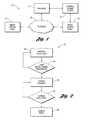
- FIG. 1illustrates a system for automatically switching channels or content sources in accordance with one non-limiting aspect of the present invention
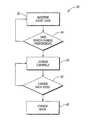
- FIG. 2illustrates a flowchart for a method of automatically switching television channels in accordance with one non-limiting aspect of the present invention.
- FIG. 1illustrates a system 10 for automatically switching channels or content sources in accordance with one non-limiting aspect of the present invention.
- the system 10generally applies to any environment where content associated with a provider 12 may be delivered to and between multiple media access points 14 - 16 having features to facilitate interfacing the media with a user or other entity.
- the system 10may be adapted to any number of environments and configured to carry or otherwise facilitate any type of electronically transmissible media having content.
- the mediamay be transmitted over a network 18 or other communication medium (portable memory, etc.) having capabilities sufficient to deliver the media from one location to another.
- the provider 12may be associated with any type of media provider having capabilities to transmit media and/or any number of affiliated or non-affiliated content sources having capabilities to transmit content to the access points 14 - 16 .
- the content sourcemay be associated with a multiple system operator (MSO) or other entity associated with providing services to any number of subscribers by way of any number of media access points.
- MSOmultiple system operator
- Such MSO'smay include but are not limited to cable, satellite, or broadcast television service providers, communication or cellular providers, internet service providers (data), and the like.
- the network 18may be associated with any type of network and include any combination of wireline and/or wireless features and devices to facilitate the electronic transmission of media.
- the networkmay include multiple connection points and devices to facilitate media transmission, including but not limited to transmissions occurring through fixed media (CDs, DVDs, portable memory) and transmissions over electronic networks, such as but not limited to wireline and wireless networks.
- the networkis intended to represent a method of transferring electronic media (portable memory) and/or an infrastructure for transferring electronic media (wireline/wireless network).
- the access points 14 - 16may be associated with any type of access point suitable for interfacing the media with the user and/or otherwise processing the media for subsequent use.
- the access pointmay include but is not limited to a settop box (STB), digital video recorder (DVR), personal computer (PC), television (which may include embedded user interface, conditional access, and/or other processing capabilities), outlet digital adapter (ODA), media access point adapter (MTA), cable modem (CM), personal digital assistant (PDA), computer, mobile device (phone, computer, etc.), personal media device, audio/video player, and/or any other feature having capabilities for processing media.
- STBsettop box
- DVRdigital video recorder
- PCpersonal computer
- televisionwhich may include embedded user interface, conditional access, and/or other processing capabilities
- ODAoutlet digital adapter
- MTAmedia access point adapter
- CMcable modem
- PDApersonal digital assistant
- computermobile device
- phonephone, computer, etc.
- personal media deviceaudio/video player, and/or any other feature
- the system 10may further include a channel change device 20 .
- the channel change device 20may be configured in accordance with the present invention to facilitate automatically changing a channel or other content source accessed through a device at one of the media access points 14 - 16 .
- operation of the channel changing device 20is predominantly described with respect to changing a television channel tuned to by a STB associated with a television at the media access point.
- the present inventionfully contemplates automatically switching television channels or other content sources in any other manner, and not necessarily through issuing instructions to an STB tuned to different channels.
- the channel change device 20may be configured to monitor live event data generated proximate in time to live events occurring in a number of programs showing on a number of television channels being broadcasted in real-time from the provider.
- the live event datamay be metadata or other forms of data associated with the events occurring in the various programs.
- the event datamay be continuously updated to reflect ongoing changes in the programs, such as but not limited to reflecting score changes or other significant events occurring during a sporting broadcast showing on one or more of the channels.
- the live event data used to track and otherwise monitor the events showing on the channelscan be determined from any number of sources.
- the live event datamay be determined from closed-caption data included with broadcasting of the programs showing on the various channels.
- the closed-caption datamay be determined in real time by a user typing in dialogue and other information associated with the events occurring within the program.
- the live event datamay also be determined from other data entered manually during the showing of the program by a system operator. This may include having a dedicated system operator that enters specific event codes or other instructions upon occurrence of particular events occurring within the programs, instead of slavishly recited dialogue and other non-eventful information. This short-hand method of tracking the events may be advantageous over the closed-caption data in that it requires less processing and monitoring of the event data.
- any other methodcan be used to generate the data without deviating from the scope and contemplation of the present invention, including computers or artificial intelligent systems that may be able to automatically generate non-predetermined metadata after an event has occurred, i.e., after a score in a sporting event.
- the channel change device 20may issue instructions to facilitate taking a number of other actions based on the live event data, including issuing instructions to the STB for switching the STB from a viewed channel to a non-viewed channel as a function of the live event data.
- the television channel change devicemay include a number of channel change event preferences for subscribers associated with the provider.
- the channel change event preferencesmay specify differing events of interest to the subscriber that may be used to determine whether the subscriber would desire to switch to another channel based on the events occurring in that channel while the viewer is watching another channel.
- the channel change device 20may be configured to execute additional operations besides simply switching the STB from one channel to another. This may include, for example, engaging the recording device to record a portion of the program showing on the non-viewed channel prior to switching to the non-viewed channel so that the event showing prior to switching to the non-viewed channel can be viewed by the viewer. This may be particularly advantageous since the live event data may be generated after the event of interest has occurred such that even the fastest channel switching may necessarily switch after the event of interest has expired.
- This type of operationmight require that the STB or other device associated with the access point, such as a network based recording element or VOD system, to include capabilities to view one channel and record or pause a program showing on another non-viewed channel.
- the recording devicemay also be configured and/or instructed by the channel change device to record the program showing on the viewed channel after the channel is changed to the non-viewed channel. This can be advantageous in allowing the user to switch back to the previously viewed channel and review events that may have occurred while tuned to the non-viewed channel.
- the channel change preferencesmay specify the non-viewed channel being recorded while another channel is being viewed.
- the channel change preferencesmay further specify a number of non-viewed channels to be recorded while the viewed channel is being viewed so that the channel can be changed to any one of the recorded channels.
- the content showing on the non-viewed channelsmay be buffered for a limited period of time, such as but not limited to a period of time sufficient to rewind the program to a period in time before the occurrence of the events prompting the channel change.
- the channel change device 20may issue instructions to facilitate taking a number of other actions, such as but not limited to switching the channel showing in a picture-in-picture window on the television.
- the picture-in-picture applicationmay include a larger window within the television shown one channel and a smaller window showing another channel.
- the channel change device 20may be configured to swap the channel showing in the larger window with the channel showing in the smaller window, to change the channel showing in either one of the windows, and/or to switch both of the primary and secondary channels showing on the television.
- the instructions issued from the channel change device 20may be communicated to the access point 14 - 16 , or more particularly to the device used to descramble the television signals or otherwise facilitate access to the content from the provider, over the network 18 or through other means.
- Thismay include the channel change device 20 issuing instructions from a headend associated with the provider through out-of-band messaging or other cable based network communication strategies for receipt by the STB. These instructions may be directly received by the television or STB, i.e., the device making the channel change.
- the channel change device 20may also issue instructions over an intermediary device by way of instructions carried over a high speed data network or other data based network for communication to the STB.
- the present inventioncontemplates an application where wireless signals may be communicated to the STB from an intermediary device connected to a home network of the subscriber located at the media access point, such as but not limited to a computer having a wireless or IR blaster.
- This applicationmay include communicating at least a portion of the channel change instructions over the home network, data network or other network in communication therewith for receipt by the computer or other device connected to the home network and located remotely from the STB.
- This deviceupon receipt of the instructions, can then issue a wireless signal for receipt by the STB.
- FIG. 2illustrates a flowchart 30 for a method of automatically switching television channels in accordance with one non-limiting aspect of the present invention.
- the methodis described with respect to switching television channels for illustrative purposes only.
- the present inventionfully contemplates switching between any content source, and not just television channels, such as switching between audio sources, internet events (webpages), instant messages (text), etc.
- the methodmay operate with any system used to provide electronic media to one or more subscribers, such as but not limited the above-described cable television system.
- Block 32relates to monitoring live event data for content available on a number of television channels.
- the live event datamay be generated from closed-captioned data, system operator comments, or through any other source having capabilities to reflect ongoing changes in the programs showing on the various television channels or other live or non-predefined events associated with other content sources, such as but not limited to instant messages, home alarm events, etc.
- the live event datamay be different from data normally included for television programs, sit-coms, sporting events in so far as the live event data may be determined as the program is being broadcasted, i.e., after the events have occurred, as opposed to being canned information determined prior to broadcasting.
- the event datamay include predefined information, such as commercial markers and other indicators of known or pre-determinable events that may be appropriate for switching channels.
- Block 34relates to determining whether the event data matches with channel change preferences for a particular viewer watching television.
- the channel change preferencesmay specify switching channels for any number of reasons.
- One preferencemay relate to switching channels during sporting events, such as switching channels upon a goal being scored, a lead change, a time period expiration (quarter about to end, etc.).
- One preferencemay relate to switching channels during news broadcasts, such as switching channels when particular news items are being discussed, like stock prices, health tips, etc.
- One preferencemay relate to switching channels during commercials, such as switching back to a previously viewed channels once commercials showing on that channel are completed.
- Block 36relates to changing channels upon matching the live event data with the channel change preferences.
- the channel changemay be executed in any suitable manner, including communicating channel changes signals to the television (STB) from a headend unit or indirectly by way of wireless signals communicated from a device connected to a home network, i.e., a device not connected to the television.
- the channel changes preferencesmay also specify taking other action. These actions may include swapping channels showing in a picture-in-picture window, coordinating recording of content showing in viewed and non-viewed channels, and any number of other operations associated with facilitating channel switching so as to allow the viewer to view non-viewed content of interest.
- Blocks 38 - 40relate to determining and executing change back events after the channel has been changed due to a previous channel change event.
- the channel change preferencemay include information regarding the change back events. This may include switching back to the previously tuned to channel. This may include switching back to the previously viewed channel after the event of interest has been watched.
- a timing featuremay be included to time the event of interest for coordinating channel switch back and/or the ending of the event of interest may be determined from the live event data associated therewith.
- the change back eventmay also include rewinding a recording of the previously viewed channel to view content shown on the channel while viewing another channel.
- One non-limiting aspect of the present inventionmay relate to a system and method that may use live metadata to initiate a channel change or selection of live content for viewing based on events registered by a user.
- Thismay include a computer or set-top-based controller that allows the user to register for events of interest in order to set content selection criteria.
- the computer or other controller with remote control capabilityIP-based or infrared
- IP-based or infraredmay be used to switch to a particular channel or content source based on live event metadata.
- Thismay include a DVR and instructing the DVR to pause the current programming being interrupted to replace it with the programming associated with the event of interest.
- the monitoringmay be done offline by a separate computing device (such as a computer connected to the Internet).
Landscapes
- Engineering & Computer Science (AREA)
- Multimedia (AREA)
- Signal Processing (AREA)
- Databases & Information Systems (AREA)
- Computer Graphics (AREA)
- Computer Networks & Wireless Communication (AREA)
- Business, Economics & Management (AREA)
- Emergency Management (AREA)
- Two-Way Televisions, Distribution Of Moving Picture Or The Like (AREA)
Abstract
Description
1. Field of the Invention
The present invention relates to methods and systems associated with automatically switching between multiple television channels or content sources based on events occurring in a non-viewed channel or content source.
2. Background Art
Television viewers are often interested in monitoring events occurring on different channels, such as if a viewer is interested in watching multiple sporting events showing on different channels. In order to keep up with the event of each sporting event, the viewer is required to periodically switch between the channels, i.e., from a viewed channel to a non-viewed channel, by manually actuating a remote control or other channel change device. When the viewer switches channels, the current events on the switched to channel may not apprise the viewer of the latest events, such as if the channel is changed during a commercial event or after occurrence of a significant event (touchdown, goal, stock price change, etc.). Accordingly, a need exists to allow viewers to switch between channels while events of interest are showing on the switch to channel.
The present invention is pointed out with particularity in the appended claims. However, other features of the present invention will become more apparent and the present invention will be best understood by referring to the following detailed description in conjunction with the accompany drawings in which:
Theprovider 12 may be associated with any type of media provider having capabilities to transmit media and/or any number of affiliated or non-affiliated content sources having capabilities to transmit content to the access points14-16. For exemplary purposes only and without intending to limit the scope and contemplation of the present invention, the content source may be associated with a multiple system operator (MSO) or other entity associated with providing services to any number of subscribers by way of any number of media access points. Such MSO's may include but are not limited to cable, satellite, or broadcast television service providers, communication or cellular providers, internet service providers (data), and the like.
Thenetwork 18 may be associated with any type of network and include any combination of wireline and/or wireless features and devices to facilitate the electronic transmission of media. The network may include multiple connection points and devices to facilitate media transmission, including but not limited to transmissions occurring through fixed media (CDs, DVDs, portable memory) and transmissions over electronic networks, such as but not limited to wireline and wireless networks. The network is intended to represent a method of transferring electronic media (portable memory) and/or an infrastructure for transferring electronic media (wireline/wireless network).
The access points14-16 may be associated with any type of access point suitable for interfacing the media with the user and/or otherwise processing the media for subsequent use. The access point may include but is not limited to a settop box (STB), digital video recorder (DVR), personal computer (PC), television (which may include embedded user interface, conditional access, and/or other processing capabilities), outlet digital adapter (ODA), media access point adapter (MTA), cable modem (CM), personal digital assistant (PDA), computer, mobile device (phone, computer, etc.), personal media device, audio/video player, and/or any other feature having capabilities for processing media.
Thesystem 10 may further include achannel change device 20. Thechannel change device 20 may be configured in accordance with the present invention to facilitate automatically changing a channel or other content source accessed through a device at one of the media access points14-16. For exemplary purposes only and without intending to limit the scope and contemplation of the present invention, operation of thechannel changing device 20 is predominantly described with respect to changing a television channel tuned to by a STB associated with a television at the media access point. The present invention fully contemplates automatically switching television channels or other content sources in any other manner, and not necessarily through issuing instructions to an STB tuned to different channels.
In operation, thechannel change device 20 may be configured to monitor live event data generated proximate in time to live events occurring in a number of programs showing on a number of television channels being broadcasted in real-time from the provider. The live event data may be metadata or other forms of data associated with the events occurring in the various programs. The event data may be continuously updated to reflect ongoing changes in the programs, such as but not limited to reflecting score changes or other significant events occurring during a sporting broadcast showing on one or more of the channels.
The live event data used to track and otherwise monitor the events showing on the channels can be determined from any number of sources. The live event data may be determined from closed-caption data included with broadcasting of the programs showing on the various channels. The closed-caption data may be determined in real time by a user typing in dialogue and other information associated with the events occurring within the program. The live event data may also be determined from other data entered manually during the showing of the program by a system operator. This may include having a dedicated system operator that enters specific event codes or other instructions upon occurrence of particular events occurring within the programs, instead of slavishly recited dialogue and other non-eventful information. This short-hand method of tracking the events may be advantageous over the closed-caption data in that it requires less processing and monitoring of the event data. Of course, any other method can be used to generate the data without deviating from the scope and contemplation of the present invention, including computers or artificial intelligent systems that may be able to automatically generate non-predetermined metadata after an event has occurred, i.e., after a score in a sporting event.
Thechannel change device 20 may issue instructions to facilitate taking a number of other actions based on the live event data, including issuing instructions to the STB for switching the STB from a viewed channel to a non-viewed channel as a function of the live event data. Optionally, the television channel change device may include a number of channel change event preferences for subscribers associated with the provider. The channel change event preferences may specify differing events of interest to the subscriber that may be used to determine whether the subscriber would desire to switch to another channel based on the events occurring in that channel while the viewer is watching another channel.
If the media access point or a device in communication therewith includes capabilities to record or tune to multiple channels, thechannel change device 20 may be configured to execute additional operations besides simply switching the STB from one channel to another. This may include, for example, engaging the recording device to record a portion of the program showing on the non-viewed channel prior to switching to the non-viewed channel so that the event showing prior to switching to the non-viewed channel can be viewed by the viewer. This may be particularly advantageous since the live event data may be generated after the event of interest has occurred such that even the fastest channel switching may necessarily switch after the event of interest has expired.
This type of operation might require that the STB or other device associated with the access point, such as a network based recording element or VOD system, to include capabilities to view one channel and record or pause a program showing on another non-viewed channel. The recording device may also be configured and/or instructed by the channel change device to record the program showing on the viewed channel after the channel is changed to the non-viewed channel. This can be advantageous in allowing the user to switch back to the previously viewed channel and review events that may have occurred while tuned to the non-viewed channel.
Optionally, the channel change preferences may specify the non-viewed channel being recorded while another channel is being viewed. The channel change preferences may further specify a number of non-viewed channels to be recorded while the viewed channel is being viewed so that the channel can be changed to any one of the recorded channels. To limit the recording time and space needed to record a non-viewed channel, the content showing on the non-viewed channels may be buffered for a limited period of time, such as but not limited to a period of time sufficient to rewind the program to a period in time before the occurrence of the events prompting the channel change.
In addition to switching and recording channels, thechannel change device 20 may issue instructions to facilitate taking a number of other actions, such as but not limited to switching the channel showing in a picture-in-picture window on the television. The picture-in-picture application may include a larger window within the television shown one channel and a smaller window showing another channel. Thechannel change device 20 may be configured to swap the channel showing in the larger window with the channel showing in the smaller window, to change the channel showing in either one of the windows, and/or to switch both of the primary and secondary channels showing on the television.
The instructions issued from thechannel change device 20 may be communicated to the access point14-16, or more particularly to the device used to descramble the television signals or otherwise facilitate access to the content from the provider, over thenetwork 18 or through other means. This may include thechannel change device 20 issuing instructions from a headend associated with the provider through out-of-band messaging or other cable based network communication strategies for receipt by the STB. These instructions may be directly received by the television or STB, i.e., the device making the channel change.
Thechannel change device 20 may also issue instructions over an intermediary device by way of instructions carried over a high speed data network or other data based network for communication to the STB. For example, the present invention contemplates an application where wireless signals may be communicated to the STB from an intermediary device connected to a home network of the subscriber located at the media access point, such as but not limited to a computer having a wireless or IR blaster. This application may include communicating at least a portion of the channel change instructions over the home network, data network or other network in communication therewith for receipt by the computer or other device connected to the home network and located remotely from the STB. This device upon receipt of the instructions, can then issue a wireless signal for receipt by the STB.
Blocks38-40 relate to determining and executing change back events after the channel has been changed due to a previous channel change event. The channel change preference may include information regarding the change back events. This may include switching back to the previously tuned to channel. This may include switching back to the previously viewed channel after the event of interest has been watched. A timing feature may be included to time the event of interest for coordinating channel switch back and/or the ending of the event of interest may be determined from the live event data associated therewith. The change back event may also include rewinding a recording of the previously viewed channel to view content shown on the channel while viewing another channel.
One non-limiting aspect of the present invention may relate to a system and method that may use live metadata to initiate a channel change or selection of live content for viewing based on events registered by a user. (For example, tune to a particular sporting even when a team scores.) This may include a computer or set-top-based controller that allows the user to register for events of interest in order to set content selection criteria. The computer or other controller with remote control capability (IP-based or infrared) may be used to switch to a particular channel or content source based on live event metadata. This may include a DVR and instructing the DVR to pause the current programming being interrupted to replace it with the programming associated with the event of interest. The monitoring may be done offline by a separate computing device (such as a computer connected to the Internet).
As required, detailed embodiments of the present invention are disclosed herein; however, it is to be understood that the disclosed embodiments are merely exemplary of the invention that may be embodied in various and alternative forms. The figures are not necessarily to scale, some features may be exaggerated or minimized to show details of particular components. Therefore, specific structural and functional details disclosed herein are not to be interpreted as limiting, but merely as a representative basis for the claims and/or as a representative basis for teaching one skilled in the art to variously employ the present invention.
While embodiments of the invention have been illustrated and described, it is not intended that these embodiments illustrate and describe all possible forms of the invention. Rather, the words used in the specification are words of description rather than limitation, and it is understood that various changes may be made without departing from the spirit and scope of the invention.
Claims (1)
1. A non-transitory computer-readable medium having a plurality of non-transitory instructions, which when executed with a processor of a controller, are sufficient to facilitate switching between a plurality of television channels used to deliver a plurality of television programs, the non-transitory instructions being sufficient for:
wirelessly instructing a television with signals carried over a wireless network to tune to a first television channel of the plurality of television channels for playback of a first program of the plurality of programs to a viewer;
determining a one or more of the plurality of television channels desired for recording based on user inputs manually input by the viewer to the controller while the television is tuned to the first television channel to facilitate viewing of the first program;
while the first program is being viewed, wirelessly instructing the television with signals carried over the wireless network to generate a recording of a second television channel of the plurality of television channels corresponding with the one or more of the plurality of television channels desired for recording such that the recording records a second program of the plurality of programs while unviewed by the viewer;
monitoring event coding included within the second television channel to identify a plurality of events occurring in the second program while the first program is being viewed and the second program is being unviewed by the viewer, the event coding being different from and independent of closed-captioning included within the second television channel to identify the plurality of events;
determining one of the plurality of events to be associated with a tuning event specified by the viewer with user inputs manually input by the viewer to the controller while the first program is being viewed;
instigating a tuning operation after determining occurrence of the tuning event within the second program while the first program is being viewed and the second program is being unviewed, the tuning operation occurring after a first event at a beginning of the second program and prior to a last event at an ending of the second program such that the tuning operation occurs after the beginning and prior to the ending of the second program, the tuning operation including:
i) wireless instructing the television with signals carried over the wireless network to cease playback of the first program to the viewer;
ii) wireless instructing the television with signals carried over the wireless network to rewind the recording to a point in the recording occurring before occurrence of the tuning event; and
iii) wireless instructing the television with signals carried over the wireless network to playback the recording beginning at the point.
Priority Applications (2)
| Application Number | Priority Date | Filing Date | Title |
|---|---|---|---|
| US11/846,069US9848157B2 (en) | 2007-08-28 | 2007-08-28 | Method of automatically switching television channels |
| US15/847,773US10567695B2 (en) | 2007-08-28 | 2017-12-19 | Method of automatically switching television channels |
Applications Claiming Priority (1)
| Application Number | Priority Date | Filing Date | Title |
|---|---|---|---|
| US11/846,069US9848157B2 (en) | 2007-08-28 | 2007-08-28 | Method of automatically switching television channels |
Related Child Applications (1)
| Application Number | Title | Priority Date | Filing Date |
|---|---|---|---|
| US15/847,773ContinuationUS10567695B2 (en) | 2007-08-28 | 2017-12-19 | Method of automatically switching television channels |
Publications (2)
| Publication Number | Publication Date |
|---|---|
| US20090064221A1 US20090064221A1 (en) | 2009-03-05 |
| US9848157B2true US9848157B2 (en) | 2017-12-19 |
Family
ID=40409615
Family Applications (2)
| Application Number | Title | Priority Date | Filing Date |
|---|---|---|---|
| US11/846,069Active2033-03-03US9848157B2 (en) | 2007-08-28 | 2007-08-28 | Method of automatically switching television channels |
| US15/847,773ActiveUS10567695B2 (en) | 2007-08-28 | 2017-12-19 | Method of automatically switching television channels |
Family Applications After (1)
| Application Number | Title | Priority Date | Filing Date |
|---|---|---|---|
| US15/847,773ActiveUS10567695B2 (en) | 2007-08-28 | 2017-12-19 | Method of automatically switching television channels |
Country Status (1)
| Country | Link |
|---|---|
| US (2) | US9848157B2 (en) |
Cited By (2)
| Publication number | Priority date | Publication date | Assignee | Title |
|---|---|---|---|---|
| US20140184917A1 (en)* | 2012-12-31 | 2014-07-03 | Sling Media Pvt Ltd | Automated channel switching |
| US20180115736A1 (en)* | 2007-08-28 | 2018-04-26 | Cable Television Laboratories, Inc. | Method of automatically switching television channels |
Families Citing this family (24)
| Publication number | Priority date | Publication date | Assignee | Title |
|---|---|---|---|---|
| KR101366324B1 (en)* | 2007-03-12 | 2014-02-20 | 엘지전자 주식회사 | Method for selecting broadcast channel and broadcast receiver capable of implementing the same |
| US8495693B2 (en)* | 2007-09-21 | 2013-07-23 | Echostar Technologies L.L.C | Systems and methods for time shifting in multiple video presentation |
| US9015755B2 (en)* | 2008-07-29 | 2015-04-21 | Centurylink Intellectual Property Llc | System and method for an automatic television channel change |
| US9032461B2 (en)* | 2008-09-12 | 2015-05-12 | Centurylink Intellectual Property Llc | System and method for video conferencing through a television forwarding device |
| US9357247B2 (en) | 2008-11-24 | 2016-05-31 | Time Warner Cable Enterprises Llc | Apparatus and methods for content delivery and message exchange across multiple content delivery networks |
| US9215423B2 (en) | 2009-03-30 | 2015-12-15 | Time Warner Cable Enterprises Llc | Recommendation engine apparatus and methods |
| US11076189B2 (en) | 2009-03-30 | 2021-07-27 | Time Warner Cable Enterprises Llc | Personal media channel apparatus and methods |
| EP2315429B1 (en) | 2009-10-06 | 2016-03-30 | Nokia Solutions and Networks Oy | Method, device and system for selective release of multimedia contents |
| US10264029B2 (en) | 2009-10-30 | 2019-04-16 | Time Warner Cable Enterprises Llc | Methods and apparatus for packetized content delivery over a content delivery network |
| US9519728B2 (en) | 2009-12-04 | 2016-12-13 | Time Warner Cable Enterprises Llc | Apparatus and methods for monitoring and optimizing delivery of content in a network |
| US9342661B2 (en) | 2010-03-02 | 2016-05-17 | Time Warner Cable Enterprises Llc | Apparatus and methods for rights-managed content and data delivery |
| US9906838B2 (en) | 2010-07-12 | 2018-02-27 | Time Warner Cable Enterprises Llc | Apparatus and methods for content delivery and message exchange across multiple content delivery networks |
| US9467723B2 (en) | 2012-04-04 | 2016-10-11 | Time Warner Cable Enterprises Llc | Apparatus and methods for automated highlight reel creation in a content delivery network |
| US20140082645A1 (en) | 2012-09-14 | 2014-03-20 | Peter Stern | Apparatus and methods for providing enhanced or interactive features |
| EP2854410A1 (en)* | 2013-09-30 | 2015-04-01 | Thomson Licensing | Method and apparatus for simultaneously displaying and supervising video programs |
| US20150113571A1 (en)* | 2013-10-22 | 2015-04-23 | Time Warner Cable Enterprises Llc | Methods and apparatus for content switching |
| US10135896B1 (en)* | 2014-02-24 | 2018-11-20 | Amazon Technologies, Inc. | Systems and methods providing metadata for media streaming |
| US10116676B2 (en) | 2015-02-13 | 2018-10-30 | Time Warner Cable Enterprises Llc | Apparatus and methods for data collection, analysis and service modification based on online activity |
| US9912997B2 (en)* | 2015-03-03 | 2018-03-06 | Darryl Adderly | System and method to determine content items and associated toggle triggers for a viewer |
| US10404758B2 (en) | 2016-02-26 | 2019-09-03 | Time Warner Cable Enterprises Llc | Apparatus and methods for centralized message exchange in a user premises device |
| US10587924B2 (en) | 2017-01-03 | 2020-03-10 | Turner Broadcasting System, Inc | Personalized, event-driven, and location-based consumption of media content |
| US20180213290A1 (en)* | 2017-01-20 | 2018-07-26 | Essential Products, Inc. | Contextual user interface based on media playback |
| US10359993B2 (en) | 2017-01-20 | 2019-07-23 | Essential Products, Inc. | Contextual user interface based on environment |
| US10166465B2 (en) | 2017-01-20 | 2019-01-01 | Essential Products, Inc. | Contextual user interface based on video game playback |
Citations (22)
| Publication number | Priority date | Publication date | Assignee | Title |
|---|---|---|---|---|
| US5900916A (en)* | 1996-12-30 | 1999-05-04 | Mitsubishi Consumer Electronics America, Inc. | Apparatus for control of images from multiple sources |
| US6052145A (en)* | 1995-01-05 | 2000-04-18 | Gemstar Development Corporation | System and method for controlling the broadcast and recording of television programs and for distributing information to be displayed on a television screen |
| US20020029386A1 (en)* | 1999-12-21 | 2002-03-07 | Robbins Thomas Dean | Method of broadcasting data for programming a receiver |
| US20020059637A1 (en)* | 2000-01-14 | 2002-05-16 | Rakib Selim Shlomo | Home gateway for video and data distribution from various types of headend facilities and including digital video recording functions |
| US20020157101A1 (en)* | 2001-03-02 | 2002-10-24 | Schrader Joseph A. | System for creating and delivering enhanced television services |
| US20030043789A1 (en)* | 2001-08-29 | 2003-03-06 | Pioneer Corporation | Channel switching apparatus, channel switching method and channel switching program |
| US20040034873A1 (en)* | 2002-04-04 | 2004-02-19 | Ian Zenoni | Event driven interactive television notification |
| US6839901B1 (en)* | 1997-10-24 | 2005-01-04 | Canal + Societe Anonyme | Multichannel digital television system |
| US20050044570A1 (en)* | 2003-08-20 | 2005-02-24 | Thomas Poslinski | Caching data from multiple channels simultaneously |
| US20050138659A1 (en)* | 2003-12-17 | 2005-06-23 | Gilles Boccon-Gibod | Personal video recorders with automated buffering |
| US20060037044A1 (en)* | 1993-03-29 | 2006-02-16 | Microsoft Corporation | Pausing television programming in response to selection of hypertext link |
| US7089575B2 (en)* | 2001-09-04 | 2006-08-08 | Koninklijke Philips Electronics N.V. | Method of using transcript information to identify and learn commercial portions of a program |
| US20060177197A1 (en)* | 2005-02-10 | 2006-08-10 | Taku Nakamura | Recording and playback apparatus and method |
| US20060179462A1 (en)* | 2001-11-13 | 2006-08-10 | Brittish Sky Broadcasting Ltd. | Receivers for television signals |
| US20060200842A1 (en)* | 2005-03-01 | 2006-09-07 | Microsoft Corporation | Picture-in-picture (PIP) alerts |
| US20080066111A1 (en)* | 2006-07-31 | 2008-03-13 | Guideworks, Llc | Systems and methods for providing enhanced sports watching media guidance |
| US20080077959A1 (en)* | 2004-08-02 | 2008-03-27 | Masayuki Kirimura | Broadcast Receiving Apparatus and Broadcast Receiving Method |
| US7383563B1 (en)* | 1999-12-29 | 2008-06-03 | Intel Corporation | Automatic channel switching |
| US20080155636A1 (en)* | 2006-12-21 | 2008-06-26 | Verizon Services Corp. | Set top box apparatus having a radio frequency antenna and an associated method |
| US20080168500A1 (en)* | 2007-01-04 | 2008-07-10 | Carlson Michael P | System and method to automatically change the channel to a predefined channel during commercials |
| US20080320513A1 (en)* | 2007-06-22 | 2008-12-25 | Microsoft Corporation | Dynamic channel surfing guide and customized television home page |
| US20170127143A1 (en)* | 1998-06-16 | 2017-05-04 | Rovi Guides, Inc. | Program guide system with real-time data sources |
Family Cites Families (3)
| Publication number | Priority date | Publication date | Assignee | Title |
|---|---|---|---|---|
| US20040027487A1 (en)* | 2002-08-09 | 2004-02-12 | Rzadzki Robert J. | System to provide custom text and graphic information to a television system infrastructure |
| KR100556375B1 (en)* | 2003-09-16 | 2006-03-03 | 엘지전자 주식회사 | Set-top box with multiple displays |
| US9848157B2 (en)* | 2007-08-28 | 2017-12-19 | Cable Television Laboratories, Inc. | Method of automatically switching television channels |
- 2007
- 2007-08-28USUS11/846,069patent/US9848157B2/enactiveActive
- 2017
- 2017-12-19USUS15/847,773patent/US10567695B2/enactiveActive
Patent Citations (23)
| Publication number | Priority date | Publication date | Assignee | Title |
|---|---|---|---|---|
| US20060037044A1 (en)* | 1993-03-29 | 2006-02-16 | Microsoft Corporation | Pausing television programming in response to selection of hypertext link |
| US6052145A (en)* | 1995-01-05 | 2000-04-18 | Gemstar Development Corporation | System and method for controlling the broadcast and recording of television programs and for distributing information to be displayed on a television screen |
| US5900916A (en)* | 1996-12-30 | 1999-05-04 | Mitsubishi Consumer Electronics America, Inc. | Apparatus for control of images from multiple sources |
| US6839901B1 (en)* | 1997-10-24 | 2005-01-04 | Canal + Societe Anonyme | Multichannel digital television system |
| US20170127143A1 (en)* | 1998-06-16 | 2017-05-04 | Rovi Guides, Inc. | Program guide system with real-time data sources |
| US20020029386A1 (en)* | 1999-12-21 | 2002-03-07 | Robbins Thomas Dean | Method of broadcasting data for programming a receiver |
| US7383563B1 (en)* | 1999-12-29 | 2008-06-03 | Intel Corporation | Automatic channel switching |
| US20020059637A1 (en)* | 2000-01-14 | 2002-05-16 | Rakib Selim Shlomo | Home gateway for video and data distribution from various types of headend facilities and including digital video recording functions |
| US20020157101A1 (en)* | 2001-03-02 | 2002-10-24 | Schrader Joseph A. | System for creating and delivering enhanced television services |
| US20030043789A1 (en)* | 2001-08-29 | 2003-03-06 | Pioneer Corporation | Channel switching apparatus, channel switching method and channel switching program |
| US7089575B2 (en)* | 2001-09-04 | 2006-08-08 | Koninklijke Philips Electronics N.V. | Method of using transcript information to identify and learn commercial portions of a program |
| US20060179462A1 (en)* | 2001-11-13 | 2006-08-10 | Brittish Sky Broadcasting Ltd. | Receivers for television signals |
| US20040034873A1 (en)* | 2002-04-04 | 2004-02-19 | Ian Zenoni | Event driven interactive television notification |
| US20050044570A1 (en)* | 2003-08-20 | 2005-02-24 | Thomas Poslinski | Caching data from multiple channels simultaneously |
| US20050138659A1 (en)* | 2003-12-17 | 2005-06-23 | Gilles Boccon-Gibod | Personal video recorders with automated buffering |
| US20080077959A1 (en)* | 2004-08-02 | 2008-03-27 | Masayuki Kirimura | Broadcast Receiving Apparatus and Broadcast Receiving Method |
| US20060177197A1 (en)* | 2005-02-10 | 2006-08-10 | Taku Nakamura | Recording and playback apparatus and method |
| US20060200842A1 (en)* | 2005-03-01 | 2006-09-07 | Microsoft Corporation | Picture-in-picture (PIP) alerts |
| US20080066106A1 (en)* | 2006-07-31 | 2008-03-13 | Guideworks, Llc | Systems and methods for providing media guidance planners |
| US20080066111A1 (en)* | 2006-07-31 | 2008-03-13 | Guideworks, Llc | Systems and methods for providing enhanced sports watching media guidance |
| US20080155636A1 (en)* | 2006-12-21 | 2008-06-26 | Verizon Services Corp. | Set top box apparatus having a radio frequency antenna and an associated method |
| US20080168500A1 (en)* | 2007-01-04 | 2008-07-10 | Carlson Michael P | System and method to automatically change the channel to a predefined channel during commercials |
| US20080320513A1 (en)* | 2007-06-22 | 2008-12-25 | Microsoft Corporation | Dynamic channel surfing guide and customized television home page |
Cited By (3)
| Publication number | Priority date | Publication date | Assignee | Title |
|---|---|---|---|---|
| US20180115736A1 (en)* | 2007-08-28 | 2018-04-26 | Cable Television Laboratories, Inc. | Method of automatically switching television channels |
| US10567695B2 (en)* | 2007-08-28 | 2020-02-18 | Cable Television Laboratories, Inc. | Method of automatically switching television channels |
| US20140184917A1 (en)* | 2012-12-31 | 2014-07-03 | Sling Media Pvt Ltd | Automated channel switching |
Also Published As
| Publication number | Publication date |
|---|---|
| US20180115736A1 (en) | 2018-04-26 |
| US20090064221A1 (en) | 2009-03-05 |
| US10567695B2 (en) | 2020-02-18 |
Similar Documents
| Publication | Publication Date | Title |
|---|---|---|
| US10567695B2 (en) | Method of automatically switching television channels | |
| US6483986B1 (en) | Method and apparatus for recording streaming video data upon selection of alternative subject matter | |
| US8934758B2 (en) | Methods and apparatus for presenting supplemental content in association with recorded content | |
| US7249365B1 (en) | System and method for ensuring presentation of embedded rich media across station boundaries | |
| CA2670629C (en) | Viewer data collection in a multi-room network | |
| EP2105013B2 (en) | Systems and methods for viewing substitute media while fast forwarding past an advertisement | |
| JP4625656B2 (en) | Interactive content without triggers | |
| US7206497B1 (en) | Electronic program guide subsystem for receiving and processing electronic program guide information from a set-top box | |
| CN104285448B (en) | Automatic Commercial Replay System | |
| US20100071007A1 (en) | Method and Apparatus for Control of a Set-Top Box/Digital Video Recorder Using a Mobile Device | |
| US20120311641A1 (en) | Techniques to Consume Content and Metadata | |
| US20060218573A1 (en) | Television program highlight tagging | |
| US8254763B2 (en) | Apparatus and method for recording content | |
| US20120002111A1 (en) | Synchronization of 2nd screen applications | |
| US20090167940A1 (en) | Methods and apparatus for presenting text data during trick play mode of video content | |
| US20040143845A1 (en) | Remote control video recording and playing system and its method | |
| EP1493066A1 (en) | Improved utilization of data broadcasting technology with handheld control apparatus | |
| WO2002104037A9 (en) | System and apparatus for displaying substitute content | |
| KR20080000968A (en) | IPTV service system and its audience survey method | |
| EP3312782A1 (en) | Device and method for targeted advertising | |
| JP4396202B2 (en) | Broadcast receiver that can output operation logs | |
| US20110265131A1 (en) | Recording and Playback of Video Using A Live TV Buffer | |
| HK1201660B (en) | Automatic commercial playback system | |
| KR20050112814A (en) | System for processing statistics using television and method for processing statistics using the same | |
| JP2011023813A (en) | Broadcast receiving apparatus |
Legal Events
| Date | Code | Title | Description |
|---|---|---|---|
| AS | Assignment | Owner name:CABLE TELEVISION LABORATORIES, INC., COLORADO Free format text:ASSIGNMENT OF ASSIGNORS INTEREST;ASSIGNOR:STEVENS, CLARKE;REEL/FRAME:019759/0716 Effective date:20070817 | |
| FEPP | Fee payment procedure | Free format text:ENTITY STATUS SET TO SMALL (ORIGINAL EVENT CODE: SMAL) | |
| STCF | Information on status: patent grant | Free format text:PATENTED CASE | |
| MAFP | Maintenance fee payment | Free format text:PAYMENT OF MAINTENANCE FEE, 4TH YR, SMALL ENTITY (ORIGINAL EVENT CODE: M2551); ENTITY STATUS OF PATENT OWNER: SMALL ENTITY Year of fee payment:4 | |
| FEPP | Fee payment procedure | Free format text:MAINTENANCE FEE REMINDER MAILED (ORIGINAL EVENT CODE: REM.); ENTITY STATUS OF PATENT OWNER: SMALL ENTITY |