US9774571B2 - Automatic provisioning of meeting room device - Google Patents
Automatic provisioning of meeting room deviceDownload PDFInfo
- Publication number
- US9774571B2 US9774571B2US14/643,941US201514643941AUS9774571B2US 9774571 B2US9774571 B2US 9774571B2US 201514643941 AUS201514643941 AUS 201514643941AUS 9774571 B2US9774571 B2US 9774571B2
- Authority
- US
- United States
- Prior art keywords
- meeting room
- room device
- meeting
- service
- information
- Prior art date
- Legal status (The legal status is an assumption and is not a legal conclusion. Google has not performed a legal analysis and makes no representation as to the accuracy of the status listed.)
- Active
Links
Images


Classifications
- H—ELECTRICITY
- H04—ELECTRIC COMMUNICATION TECHNIQUE
- H04L—TRANSMISSION OF DIGITAL INFORMATION, e.g. TELEGRAPHIC COMMUNICATION
- H04L63/00—Network architectures or network communication protocols for network security
- H04L63/04—Network architectures or network communication protocols for network security for providing a confidential data exchange among entities communicating through data packet networks
- H04L63/0428—Network architectures or network communication protocols for network security for providing a confidential data exchange among entities communicating through data packet networks wherein the data content is protected, e.g. by encrypting or encapsulating the payload
- G—PHYSICS
- G06—COMPUTING OR CALCULATING; COUNTING
- G06Q—INFORMATION AND COMMUNICATION TECHNOLOGY [ICT] SPECIALLY ADAPTED FOR ADMINISTRATIVE, COMMERCIAL, FINANCIAL, MANAGERIAL OR SUPERVISORY PURPOSES; SYSTEMS OR METHODS SPECIALLY ADAPTED FOR ADMINISTRATIVE, COMMERCIAL, FINANCIAL, MANAGERIAL OR SUPERVISORY PURPOSES, NOT OTHERWISE PROVIDED FOR
- G06Q10/00—Administration; Management
- G06Q10/10—Office automation; Time management
- H—ELECTRICITY
- H04—ELECTRIC COMMUNICATION TECHNIQUE
- H04L—TRANSMISSION OF DIGITAL INFORMATION, e.g. TELEGRAPHIC COMMUNICATION
- H04L12/00—Data switching networks
- H04L12/02—Details
- H04L12/16—Arrangements for providing special services to substations
- H04L12/18—Arrangements for providing special services to substations for broadcast or conference, e.g. multicast
- H04L12/1813—Arrangements for providing special services to substations for broadcast or conference, e.g. multicast for computer conferences, e.g. chat rooms
- H04L12/1818—Conference organisation arrangements, e.g. handling schedules, setting up parameters needed by nodes to attend a conference, booking network resources, notifying involved parties
- H—ELECTRICITY
- H04—ELECTRIC COMMUNICATION TECHNIQUE
- H04L—TRANSMISSION OF DIGITAL INFORMATION, e.g. TELEGRAPHIC COMMUNICATION
- H04L41/00—Arrangements for maintenance, administration or management of data switching networks, e.g. of packet switching networks
- H04L41/08—Configuration management of networks or network elements
- H04L41/0803—Configuration setting
- H04L41/0806—Configuration setting for initial configuration or provisioning, e.g. plug-and-play
- H—ELECTRICITY
- H04—ELECTRIC COMMUNICATION TECHNIQUE
- H04L—TRANSMISSION OF DIGITAL INFORMATION, e.g. TELEGRAPHIC COMMUNICATION
- H04L65/00—Network arrangements, protocols or services for supporting real-time applications in data packet communication
- H04L65/1066—Session management
- H04L65/1069—Session establishment or de-establishment
- H—ELECTRICITY
- H04—ELECTRIC COMMUNICATION TECHNIQUE
- H04L—TRANSMISSION OF DIGITAL INFORMATION, e.g. TELEGRAPHIC COMMUNICATION
- H04L65/00—Network arrangements, protocols or services for supporting real-time applications in data packet communication
- H04L65/40—Support for services or applications
- H04L65/403—Arrangements for multi-party communication, e.g. for conferences
- H04L67/16—
- H—ELECTRICITY
- H04—ELECTRIC COMMUNICATION TECHNIQUE
- H04L—TRANSMISSION OF DIGITAL INFORMATION, e.g. TELEGRAPHIC COMMUNICATION
- H04L67/00—Network arrangements or protocols for supporting network services or applications
- H04L67/50—Network services
- H04L67/51—Discovery or management thereof, e.g. service location protocol [SLP] or web services
- H—ELECTRICITY
- H04—ELECTRIC COMMUNICATION TECHNIQUE
- H04L—TRANSMISSION OF DIGITAL INFORMATION, e.g. TELEGRAPHIC COMMUNICATION
- H04L9/00—Cryptographic mechanisms or cryptographic arrangements for secret or secure communications; Network security protocols
- H04L9/08—Key distribution or management, e.g. generation, sharing or updating, of cryptographic keys or passwords
- H—ELECTRICITY
- H04—ELECTRIC COMMUNICATION TECHNIQUE
- H04L—TRANSMISSION OF DIGITAL INFORMATION, e.g. TELEGRAPHIC COMMUNICATION
- H04L9/00—Cryptographic mechanisms or cryptographic arrangements for secret or secure communications; Network security protocols
- H04L9/30—Public key, i.e. encryption algorithm being computationally infeasible to invert or user's encryption keys not requiring secrecy
Definitions
- Online meetingshave become increasingly more popular in the last several years. Online meetings enable people at different locations to meet and collaborate in a high-quality meeting experience. Yet, existing meeting room devices such as video conferencing systems are expensive and typically require expert attention from, for example, an information technology (IT) professional in order to set up and provision the system. In the recent past, one industry trend has been toward lower cost meeting room devices that can be purchased by end-users. A major challenge for users of these devices lies in adequately provisioning a particular device in the absence of an IT professional while ensuring that such provisioning is secure and performed for an authorized device/user.
- ITinformation technology
- Various embodimentsenable meeting room devices to be produced such that, after purchase, the devices can be automatically provisioned by a meeting service. Automatic provisioning takes place over a communication network through a trust relationship that is established between the meeting room device and the meeting service.
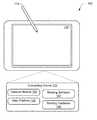
- FIG. 1is an illustration of an example meeting room device in accordance with one or more embodiments.
- FIG. 2is an illustration of an example environment in accordance with one or more embodiments.
- FIG. 3is an example system in accordance with one or more embodiments.
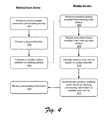
- FIG. 4is a flow diagram that describes steps in a method in accordance with one or more embodiments.
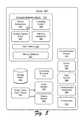
- FIG. 5illustrates an example meeting room device that can be utilized to implement various embodiments described herein.
- Various embodimentsenable meeting room devices to be produced such that, after purchase, the devices can be automatically provisioned by a meeting service. Automatic provisioning takes place over a communication network through a trust relationship that is established between the meeting room device and the meeting service.
- the various embodimentsthus provide an out-of-the-box solution that helps end users easily and seamlessly acquire a meeting room device and have it automatically provisioned by a meeting service without requiring much more than simply plugging it in.
- FIG. 1is an illustration of an environment 100 in an example implementation that is operable to employ the techniques as described herein.
- the illustrated environment 100includes an example of a meeting room device 102 that may be configured in a variety of ways.
- meeting room device 102represents a computing device that is utilized to plan and conduct a meeting.
- the meeting room device 102typically resides in a meeting room or conference room in which many different types of meetings can take place.
- the meeting room device 102may be configured as a traditional computer (e.g., a desktop personal computer, laptop computer, and so on), a mobile station, a wireless phone, a netbook, a handheld device, and so forth as further described in relation to FIG. 2 .
- the meeting room device 102may range from full resource devices with substantial memory and processor resources (e.g., personal computers) to a low-resource device with limited memory and/or processing resources.
- the meeting room device 102also includes software that causes the meeting room device 102 to perform one or more operations as described below.
- the meeting room device 102is a large form factor device that provides a canvas for idea collaboration.
- Meeting room device 102can include, by way of example and not limitation, a number of different components including a gesture module 104 , a web platform 106 , meeting software 107 , and meeting hardware 108 .
- the gesture module 104is operational to provide gesture functionality.
- the gesture module 104can be implemented in connection with any suitable type of hardware, software, firmware or combination thereof.
- the gesture module 104is implemented in software that resides on some type of computer-readable storage medium examples of which are provided below.
- Gesture module 104is representative of functionality that recognizes gestures that can be performed by one or more fingers, and causes operations to be performed that correspond to the gestures.
- the gesturesmay be recognized by module 104 in a variety of different ways.
- the gesture module 104may be configured to recognize a touch input, such as a finger of a user's hand as proximal to display device 110 of the meeting room device 102 using touchscreen functionality.
- gesture module 104can be utilized to recognize single-finger gestures and bezel gestures, multiple-finger/same-hand gestures and bezel gestures, and/or multiple-finger/different-hand gestures and bezel gestures.
- the meeting room device 102may be configured to detect and differentiate between a touch input (e.g., provided by one or more fingers of the user's hand) and a stylus or pen input (e.g., provided by a stylus 116 ).
- the differentiationmay be performed in a variety of ways, such as by detecting an amount of the display device 110 that is contacted by the finger of the user's hand versus an amount of the display device 110 that is contacted by the stylus 116 .
- the gesture module 104may support a variety of different gesture techniques through recognition and leverage of a division between stylus and touch inputs, as well as different types of touch inputs.
- the web platform 106is a platform that works in connection with content of the web, e.g. public content.
- a web platform 106can include and make use of many different types of technologies such as, by way of example and not limitation, URLs, HTTP, REST, HTML, CSS, JavaScript, DOM, and the like.
- the web platform 106can also work with a variety of data formats such as XML, JSON, and the like.
- Web platform 106can include various web browsers, web applications (i.e. “web apps”), and the like.
- the web platform 106When executed, the web platform 106 allows the computing device to retrieve web content such as electronic documents in the form of webpages (or other forms of electronic documents, such as a document file, XML file, PDF file, XLS file, etc.) from a Web server and display them on the display device 110 .
- web contentsuch as electronic documents in the form of webpages (or other forms of electronic documents, such as a document file, XML file, PDF file, XLS file, etc.) from a Web server and display them on the display device 110 .
- meeting room device 102could be any computing device that is capable of displaying Web pages/documents and connect to the Internet.
- Meeting software 107is representative of software that enables meetings to be conducted using various features which can include, by way of example and not limitation, instant messaging, Voice over IP, video conferencing, and the like.
- the meeting softwarecan also include such things as a cloud-based whiteboard tool that enables meeting participants to write upon the display device 110 .
- the meeting softwarecan also include provisioning software that enables the meeting room device to be automatically provisioned as described below in more detail.
- Meeting hardware 108is representative of hardware that enables meetings to be conducted as described above and below.
- the hardwarecan include, by way of example and not limitation, built-in sensors to help the meeting room device wakeup when a person is in close proximity and track a person's movement so that one or more cameras (e.g., 1080p cameras on each side of the meeting room device) can follow the person.
- the meeting hardware 108can work in concert with the meeting software 107 to provide meeting starts using a single touch.
- the hardware and software of the meeting room devicecan also allow participants to share content wirelessly, thus making meetings engaging and productive.
- the meeting hardware 108can also include a built-in microphone array.
- the meeting hardware 108can include information and data that can be utilized by the meeting software to execute an automatic provisioning process. The information and data can be stored on the meeting room device in protected storage.
- FIG. 2illustrates an example system 200 showing the components of FIG. 1 , e.g., meeting software 107 and meeting hardware 108 , as being implemented in an environment where multiple devices are interconnected through a central computing device.
- the meeting software 107 and meeting hardware 108can enable the meeting room device, i.e. computing device 102 , to be automatically provisioned as described below.
- meetingscan be conducted using various features which can include, by way of example and not limitation, instant messaging, Voice over IP, video conferencing, whiteboard functionality, content sharing and the like.
- the central computing devicemay be local to the multiple devices or may be located remotely from the multiple devices.
- the central computing deviceis a “cloud” server farm, which comprises one or more server computers that are connected to the multiple devices through a network or the Internet or other means.
- this interconnection architectureenables functionality to be delivered across multiple devices to provide a common and seamless experience to the user of the multiple devices.
- Each of the multiple devicesmay have different physical requirements and capabilities, and the central computing device uses a platform to enable the delivery of an experience to the device that is both tailored to the device and yet common to all devices.
- a “class” of target deviceis created and experiences are tailored to the generic class of devices.
- a class of devicemay be defined by physical features or usage or other common characteristics of the devices.
- the meeting room device 102may be configured in a variety of different ways, such as for mobile 202 , computer 204 , and television 206 uses.
- the meeting room device 102may be configured as one of these device classes in this example system 200 .
- the meeting room device 102may assume the mobile 202 class of device which includes mobile telephones, music players, game devices, and so on.
- the meeting room device 102may also assume a computer 204 class of device that includes personal computers, laptop computers, netbooks, tablets, large form factor devices, and so on.
- the television 206 configurationincludes configurations of device that involve display in a casual environment, e.g., televisions, set-top boxes, game consoles, and so on.
- the techniques described hereinmay be supported by these various configurations of the meeting room device 102 and are not limited to the specific examples described in the following sections.
- meeting room device 102includes meeting software 107 that operates as described above and below.
- Cloud 208is illustrated as including a platform 210 for web services 212 .
- the platform 210abstracts underlying functionality of hardware (e.g., servers) and software resources of the cloud 208 and thus may act as a “cloud operating system.”
- the platform 210may abstract resources to connect the meeting room device 102 with other computing devices.
- the platform 210may also serve to abstract scaling of resources to provide a corresponding level of scale to encountered demand for the web services 212 that are implemented via the platform 210 .
- Web services 212can include a meeting service that is configured to automatically provision a meeting room device as described above and below.
- the cloud 208is included as a part of the strategy that pertains to software and hardware resources that are made available to the meeting room device 102 via the Internet or other networks.
- aspects of the meeting software 107may be implemented in part on the meeting room device 102 as well as in a distributed fashion via platform 210 that supports web services 212 .
- system 200can include one or more remote computing devices 214 associated with remote participants who can participate in a meeting organized and conducted through meeting room device 102 .
- Each of the remote computing devices 214can execute a meeting client that enables communication with meeting software 107 .
- any of the functions described hereincan be implemented using software, firmware, hardware (e.g., fixed logic circuitry), manual processing, or a combination of these implementations.
- the terms “module,” “functionality,” and “logic” as used hereingenerally represent software, firmware, hardware, or a combination thereof.
- the module, functionality, or logicrepresents program code that performs specified tasks when executed on or by a processor (e.g., CPU or CPUs).
- the program codecan be stored in one or more computer readable memory devices.
- the computing devicemay also include an entity (e.g., software) that causes hardware or virtual machines of the computing device to perform operations, e.g., processors, functional blocks, and so on.
- the computing devicemay include a computer-readable medium that may be configured to maintain instructions that cause the computing device, and more particularly the operating system and associated hardware of the computing device to perform operations.
- the instructionsfunction to configure the operating system and associated hardware to perform the operations and in this way result in transformation of the operating system and associated hardware to perform functions.
- the instructionsmay be provided by the computer-readable medium to the computing device through a variety of different configurations.
- One such configuration of a computer-readable mediumis a signal bearing medium and thus is configured to transmit the instructions (e.g., as a carrier wave) to the computing device, such as via a network.
- the computer-readable mediummay also be configured as a computer-readable storage medium and thus is not a signal bearing medium. Examples of a computer-readable storage medium include a random-access memory (RAM), read-only memory (ROM), an optical disc, flash memory, hard disk memory, and other memory devices that may use magnetic, optical, and other techniques to store instructions and other data.
- a section entitled “Automatically Provisioning a Meeting Room Device”describes how a meeting room device can be automatically provisioned in accordance with one or more embodiments.
- a section entitled “Example Meeting Room Device”describes aspects of an example device that can be utilized to implement one or more embodiments.
- One of the challenges with meeting room devicesis that these devices are produced by the thousands and can typically be sold through retail channels to any consumer. As such, and because the ultimate destination of each meeting room device is not known when it is built at the factory, the devices cannot typically be pre-provisioned, e.g., provided with information and data for the people who wish to use it. Such information can include, by way of example and not limitation, specific account information, connectivity information, various policies that are to be applied to the device, and the like.
- Various embodimentsenable meeting room devices to be produced such that, after purchase, the devices can be automatically provisioned by a meeting service. Automatic provisioning takes place over a communication network through a trust relationship that is established between the meeting room device and the meeting service.
- FIG. 3illustrates four different entities including a manufacturer 300 , a retailer 302 , an end user 304 , and a meeting service 306 .
- One goal of the automatic provisioning processis to be able to establish a trust relationship between a particular meeting room device and the meeting service 306 .
- the foundation of this trust relationshipcan begin at the manufacturer 300 . That is, when the meeting room devices are manufactured, the manufacturer 300 provides, for each meeting room device, information that can be later utilized to establish a trust relationship with the meeting service 300 . Any suitable type of information can be utilized. Typically this information enables the meeting service 306 to establish that the meeting room device is, in fact, an authorized and legitimate meeting room device. In the illustrated and described embodiment, this information includes a unique identifier for each particular meeting room device. In addition to the unique identifier, the manufacturer can provide a key, such as a unique key, on each device.
- Any suitable type of keycan be utilized including, by way of example and not limitation, a private key of a public/private key pair.
- the private keyis burned into hardware of each meeting room device and remains in a protected space.
- the corresponding public keyis maintained by the meeting service 306 .
- Each unique identifiercan be added to a table which is provided from the manufacturer 300 to the meeting service 306 so that the meeting service can look for the meeting room devices when the meeting room devices attempt to register with the meeting service 306 .
- the manufacturer 300then provides the meeting room devices to the retailer 302 for sale. Subsequently, an end user 304 purchases a particular meeting room device and wishes to activate it to conduct meetings.
- the meeting room deviceis configured to automatically discover the meeting service 306 once the meeting room device has been connected to a suitable network, such as cloud 208 .
- Automatic discovery of the meeting servicecan be enabled in any suitable way such as, by way of example and not limitation, a URL that points to the meeting room service and instructions to contact the meeting service. Discovery can also take place by way of DNS SRV record, auto discovery record, preconfigured URL, and the like.
- a setup processis initiated. To begin with, the meeting room device encrypts its unique identifier using its key, e.g., a private key.
- the encrypted unique identifieris then transmitted to the meeting service 306 which, in turn, decrypts the unique identifier using the corresponding public key.
- the meeting service 306crosschecks the unique identifier against unique identifiers appearing in the table that was previously provided to it by the manufacturer 300 . If the unique identifier has a match, then a trust relationship is established and provisioning can automatically take place. That is, based on the matching unique identifiers, the meeting room device can be activated and automatically provisioned, as by having various policies transmitted to the meeting room device that control how the meeting room device works. For example, various default policies can be assigned to the meeting room device based on the device type, such as by way of example and not limitation, bandwidth allocation, video resolution, and user authentication type allowed.
- an account generation processcan be invoked to establish an account for the meeting room device that it can use to automatically and directly connect to the meeting service 306 . Any suitable technique can be utilized to enable the meeting room device to automatically connect to the meeting service 306 .
- the meeting service 306can automatically generate a communications identity that the meeting room device uses to directly communicate with the meeting service.
- a communications identityis a SIP URI or an HTTP URL.
- a SIP URIis the SIP (Session Initiation Protocol) addressing scheme that communicates who to call via SIP.
- a SIP URIis a user's phone number or identifier such as “meetingdevice1234@service.com”.
- a direct connection to the meeting service 306can be made using an identifier associated with a particular user, such as the user's own pre-existing SIP URI or meeting ID.
- the meeting room devicehas been automatically provisioned, they can participate in and enable meetings to be conducted.
- FIG. 4is a flow diagram that describes steps in a method in accordance with one or more embodiments.
- the methodcan be implemented in connection with any suitable hardware, software, firmware, or combination thereof.
- aspects of the methodcan be implemented by a suitably-configured meeting room device executing meeting software. These aspects appear under the heading “Meeting Room Device.”
- Yet other aspects of the methodcan be implemented by a suitably-configured meeting service. These aspects appear under the heading “Meeting Service.”
- Step 400establishes a communication connection with a meeting service.
- This stepcan be automatically performed by the meeting room device when the meeting room device is connected to a suitably-configured network. That is, the meeting room device can have information thereon which describes a particular meeting service to contact, and how to contact that meeting service.
- Step 402encrypts a unique identifier. Any suitable unique identifier can be utilized in any suitable method of encryption can be utilized. For example, encryption (and decryption) can take place using a symmetric key. Alternately, encryption can take place, as described above, using a private key of a public/private key pair.
- Step 404transmits the encrypted unique identifier to the meeting service.
- Step 406receives the encrypted unique identifier from a meeting room device.
- Step 408decrypts the encrypted unique identifier that was received from the meeting room device.
- This stepcan be performed in any suitable way. For example, if a symmetric key was used to encrypt the unique identifier, the same symmetric key can be utilized to decrypt unique identifier. Alternately, if the unique identifier was encrypted using a private key of a public/private key pair, the corresponding public key can be utilized to decrypt the unique identifier.
- Step 410validates the meeting room device based on the unique identifier. This step can be performed in any suitable way.
- validationcan take place by comparing the unique identifier with a table of unique identifiers that was previously received from a manufacturer. Responsive to validating the unique identifier, step 412 automatically provisions the meeting room device by sending provisioning information to the meeting room device. Any suitable type of provisioning information can be utilized. Provisioning information can include, by way of example and not limitation, various default policies, operational parameters, connectivity information to enable the meeting room device to directly connect to the meeting service, and the like.
- Step 414receives the provisioning information from the meeting service and uses the provisioning information to automatically provision the meeting room device.
- FIG. 5illustrates various components of an example meeting room device 500 that can be implemented as any type of computing device as described with reference to FIGS. 1 and 2 to implement embodiments of the techniques described herein. Aspects of device 500 can be utilized to implement a computing device that executes a meeting service as described herein.
- Device 500includes communication devices 502 that enable wired and/or wireless communication of device data 504 (e.g., received data, data that is being received, data scheduled for broadcast, data packets of the data, etc.).
- the device data 504 or other device contentcan include configuration settings of the device, media content stored on the device, and/or information associated with a user of the device.
- Media content stored on device 500can include any type of audio, video, and/or image data.
- Device 500includes one or more data inputs 506 via which any type of data, media content, and/or inputs can be received, such as user-selectable inputs, messages, music, television media content, recorded video content, and any other type of audio, video, and/or image data received from any content and/or data source.
- Device 500also includes communication interfaces 508 that can be implemented as any one or more of a serial and/or parallel interface, a wireless interface, any type of network interface, a modem, and as any other type of communication interface.
- the communication interfaces 508provide a connection and/or communication links between device 500 and a communication network by which other electronic, computing, and communication devices communicate data with device 500 , such as in the context of the meeting.
- Device 500includes one or more processors 510 (e.g., any of microprocessors, controllers, and the like) which process various computer-executable instructions to control the operation of device 500 and to implement embodiments of the techniques described herein.
- processors 510e.g., any of microprocessors, controllers, and the like
- device 500can be implemented with any one or combination of hardware, firmware, or fixed logic circuitry that is implemented in connection with processing and control circuits which are generally identified at 512 .
- device 500can include a system bus or data transfer system that couples the various components within the device.
- a system buscan include any one or combination of different bus structures, such as a memory bus or memory controller, a peripheral bus, a universal serial bus, and/or a processor or local bus that utilizes any of a variety of bus architectures.
- Device 500also includes computer-readable media 514 , such as one or more memory components, examples of which include random access memory (RAM), non-volatile memory (e.g., any one or more of a read-only memory (ROM), flash memory, EPROM, EEPROM, etc.), and a disk storage device.
- RAMrandom access memory
- non-volatile memorye.g., any one or more of a read-only memory (ROM), flash memory, EPROM, EEPROM, etc.
- a disk storage devicemay be implemented as any type of magnetic or optical storage device, such as a hard disk drive, a recordable and/or rewriteable compact disc (CD), any type of a digital versatile disc (DVD), and the like.
- Device 500can also include a mass storage media device 516 .
- Computer-readable media 514provides data storage mechanisms to store the device data 504 , as well as various device applications 518 and any other types of information and/or data related to operational aspects of device 500 .
- an operating system 520can be maintained as a computer application with the computer-readable media 514 and executed on processors 510 .
- the device applications 518can include a device manager (e.g., a control application, software application, signal processing and control module, code that is native to a particular device, a hardware abstraction layer for a particular device, etc.).
- the device applications 518also include any system components or modules to implement embodiments of the techniques described herein.
- the device applications 518include an interface application 522 and a gesture capture driver 524 that are shown as software modules and/or computer applications.
- the gesture capture driver 524is representative of software that is used to provide an interface with a device configured to capture a gesture, such as a touchscreen, track pad, camera, and so on.
- the interface application 522 and the gesture capture driver 524can be implemented as hardware, software, firmware, or any combination thereof.
- computer readable media 514can include a web platform 525 and meeting software 1027 that functions as described above.
- Device 500also includes an audio and/or video input-output system 526 that provides audio data to an audio system 528 and/or provides video data to a display system 530 .
- the audio system 528 and/or the display system 530can include any devices that process, display, and/or otherwise render audio, video, and image data.
- Video signals and audio signalscan be communicated from device 500 to an audio device and/or to a display device via an RF (radio frequency) link, S-video link, composite video link, component video link, DVI (digital video interface), analog audio connection, or other similar communication link.
- the audio system 528 and/or the display system 530are implemented as external components to device 500 .
- the audio system 528 and/or the display system 530are implemented as integrated components of example device 500 .
- Example implementations described hereininclude, but are not limited to, one or any combination of one or more of the following example:
- a computer-implemented methodcomprising: establishing, by a meeting room device, a communication connection with a meeting service; encrypting, by the meeting room device, information that can be used to establish a trust relationship with the meeting service; transmitting, by the meeting room device, the encrypted information to the meeting service effective to enable the meeting service to identify and validate the meeting room device; and receiving, by the meeting room device, provisioning information from the meeting service and using the provisioning information to automatically provision the meeting room device.
- the informationcomprises a unique identifier, the unique identifier identifying the meeting room device and having been provided on the meeting room device prior to purchase.
- the meeting room deviceis configured to automatically discover the meeting service.
- provisioning informationincludes one or more policies that control how the meeting room device works.
- provisioning informationincludes one or more of bandwidth allocation, video resolution, or user authentication type allowed.
- provisioning informationincludes information to enable the meeting room device to directly connect to the meeting service.
- a computer-implemented methodcomprising: receiving, at a meeting service, encrypted information that can be used to establish a trust relationship with a meeting room device to enable the meeting room device to be automatically provisioned by the meeting service; decrypting, at the meeting service, the encrypted information that was received from the meeting room device; validating, at the meeting service, the meeting room device based on the information that was received from the meeting room device; responsive to validating the information received from the meeting room device, automatically provisioning the meeting room device by sending provisioning information to the meeting room device.
- the informationcomprises a unique identifier identifying the meeting room device.
- a method as described above, wherein said validatingis performed by comparing the information that was received from the meeting room device with information received from a manufacturer of the meeting room device.
- provisioning informationincludes one or more policies that control how the meeting room device works.
- provisioning informationincludes one or more of bandwidth allocation, video resolution, or user authentication type allowed.
- provisioning informationincludes information to enable the meeting room device to directly connect to the meeting service.
- a meeting room devicecomprising: one or more processors; one or more computer readable media; computer-readable instructions embodied on the one or more computer readable media and executable by the one or more processors to perform operations comprising: establishing a communication connection with a meeting service; encrypting information that can be used to establish a trust relationship with the meeting service; transmitting the encrypted information to the meeting service effective to enable the meeting service to identify and validate the meeting room device; and receiving provisioning information from the meeting service and using the provisioning information to automatically provision the meeting room device.
- provisioning informationincludes at least one of: one or more policies that control how the meeting room device works; one or more of bandwidth allocation, video resolution, or user authentication type allowed; or information to enable the meeting room device to directly connect to the meeting service.
- a computing devicecomprising: one or more processors; one or more computer readable media; computer-readable instructions embodied on the one or more computer readable media and executable by the one or more processors to implement a meeting service configured to perform operations comprising: receiving encrypted information that can be used to establish a trust relationship with a meeting room device to enable the meeting room device to be automatically provisioned by the meeting service; decrypting the encrypted information that was received from the meeting room device; validating the meeting room device based on the unique identifier; and responsive to validating the information received from the meeting room device, automatically provisioning the meeting room device by sending provisioning information to the meeting room device.
- a computing device as described above, wherein said validatingis performed by comparing the information that was received from the meeting room device with information received from a manufacturer of the meeting room device.
- provisioning informationincludes at least one of: one or more policies that control how the meeting room device works; one or more of bandwidth allocation, video resolution, or user authentication type allowed; or information to enable the meeting room device to directly connect to the meeting service.
- Various embodimentsenable meeting room devices to be produced such that, after purchase, the devices can be automatically provisioned by a meeting service. Automatic provisioning takes place over a communication network through a trust relationship that is established between the meeting room device and the meeting service.
Landscapes
- Engineering & Computer Science (AREA)
- Signal Processing (AREA)
- Computer Networks & Wireless Communication (AREA)
- Business, Economics & Management (AREA)
- Multimedia (AREA)
- Computer Security & Cryptography (AREA)
- General Business, Economics & Management (AREA)
- Entrepreneurship & Innovation (AREA)
- Human Resources & Organizations (AREA)
- Strategic Management (AREA)
- General Engineering & Computer Science (AREA)
- Theoretical Computer Science (AREA)
- Computing Systems (AREA)
- Marketing (AREA)
- General Physics & Mathematics (AREA)
- Quality & Reliability (AREA)
- Operations Research (AREA)
- Physics & Mathematics (AREA)
- Economics (AREA)
- Tourism & Hospitality (AREA)
- Data Mining & Analysis (AREA)
- Computer Hardware Design (AREA)
- Telephonic Communication Services (AREA)
- Information Transfer Between Computers (AREA)
Abstract
Description
Online meetings have become increasingly more popular in the last several years. Online meetings enable people at different locations to meet and collaborate in a high-quality meeting experience. Yet, existing meeting room devices such as video conferencing systems are expensive and typically require expert attention from, for example, an information technology (IT) professional in order to set up and provision the system. In the recent past, one industry trend has been toward lower cost meeting room devices that can be purchased by end-users. A major challenge for users of these devices lies in adequately provisioning a particular device in the absence of an IT professional while ensuring that such provisioning is secure and performed for an authorized device/user.
This Summary is provided to introduce a selection of concepts in a simplified form that are further described below in the Detailed Description. This Summary is not intended to identify key features or essential features of the claimed subject matter, nor is it intended to be used as an aid in determining the scope of the claimed subject matter.
Various embodiments enable meeting room devices to be produced such that, after purchase, the devices can be automatically provisioned by a meeting service. Automatic provisioning takes place over a communication network through a trust relationship that is established between the meeting room device and the meeting service.
The detailed description is described with reference to the accompanying figures. In the figures, the left-most digit(s) of a reference number identifies the figure in which the reference number first appears. The use of the same reference numbers in different instances in the description and the figures may indicate similar or identical items.
Overview
Various embodiments enable meeting room devices to be produced such that, after purchase, the devices can be automatically provisioned by a meeting service. Automatic provisioning takes place over a communication network through a trust relationship that is established between the meeting room device and the meeting service. The various embodiments thus provide an out-of-the-box solution that helps end users easily and seamlessly acquire a meeting room device and have it automatically provisioned by a meeting service without requiring much more than simply plugging it in.
In the following discussion, an example environment is first described that is operable to employ the techniques described herein. The techniques may be employed in the example environment, as well as in other environments.
Example Environment
Themeeting room device 102 may be configured as a traditional computer (e.g., a desktop personal computer, laptop computer, and so on), a mobile station, a wireless phone, a netbook, a handheld device, and so forth as further described in relation toFIG. 2 . Thus, themeeting room device 102 may range from full resource devices with substantial memory and processor resources (e.g., personal computers) to a low-resource device with limited memory and/or processing resources. Themeeting room device 102 also includes software that causes themeeting room device 102 to perform one or more operations as described below. In at least some embodiments, themeeting room device 102 is a large form factor device that provides a canvas for idea collaboration.
Thegesture module 104 is operational to provide gesture functionality. Thegesture module 104 can be implemented in connection with any suitable type of hardware, software, firmware or combination thereof. In at least some embodiments, thegesture module 104 is implemented in software that resides on some type of computer-readable storage medium examples of which are provided below.
It is to be appreciated and understood that a variety of different types of gestures may be recognized by thegesture module 104 including, by way of example and not limitation, gestures that are recognized from a single type of input (e.g., touch gestures such as a drag-and-drop gesture) as well as gestures involving multiple types of inputs. For example,module 104 can be utilized to recognize single-finger gestures and bezel gestures, multiple-finger/same-hand gestures and bezel gestures, and/or multiple-finger/different-hand gestures and bezel gestures.
For example, themeeting room device 102 may be configured to detect and differentiate between a touch input (e.g., provided by one or more fingers of the user's hand) and a stylus or pen input (e.g., provided by a stylus116). The differentiation may be performed in a variety of ways, such as by detecting an amount of thedisplay device 110 that is contacted by the finger of the user's hand versus an amount of thedisplay device 110 that is contacted by thestylus 116.
Thus, thegesture module 104 may support a variety of different gesture techniques through recognition and leverage of a division between stylus and touch inputs, as well as different types of touch inputs.
Theweb platform 106 is a platform that works in connection with content of the web, e.g. public content. Aweb platform 106 can include and make use of many different types of technologies such as, by way of example and not limitation, URLs, HTTP, REST, HTML, CSS, JavaScript, DOM, and the like. Theweb platform 106 can also work with a variety of data formats such as XML, JSON, and the like.Web platform 106 can include various web browsers, web applications (i.e. “web apps”), and the like. When executed, theweb platform 106 allows the computing device to retrieve web content such as electronic documents in the form of webpages (or other forms of electronic documents, such as a document file, XML file, PDF file, XLS file, etc.) from a Web server and display them on thedisplay device 110. It should be noted thatmeeting room device 102 could be any computing device that is capable of displaying Web pages/documents and connect to the Internet.
The central computing device may be local to the multiple devices or may be located remotely from the multiple devices. In one embodiment, the central computing device is a “cloud” server farm, which comprises one or more server computers that are connected to the multiple devices through a network or the Internet or other means.
In one embodiment, this interconnection architecture enables functionality to be delivered across multiple devices to provide a common and seamless experience to the user of the multiple devices. Each of the multiple devices may have different physical requirements and capabilities, and the central computing device uses a platform to enable the delivery of an experience to the device that is both tailored to the device and yet common to all devices. In one embodiment, a “class” of target device is created and experiences are tailored to the generic class of devices. A class of device may be defined by physical features or usage or other common characteristics of the devices. For example, as previously described themeeting room device 102 may be configured in a variety of different ways, such as for mobile202,computer 204, andtelevision 206 uses. Each of these configurations has a generally corresponding screen size and thus themeeting room device 102 may be configured as one of these device classes in thisexample system 200. For instance, themeeting room device 102 may assume the mobile202 class of device which includes mobile telephones, music players, game devices, and so on. Themeeting room device 102 may also assume acomputer 204 class of device that includes personal computers, laptop computers, netbooks, tablets, large form factor devices, and so on. Thetelevision 206 configuration includes configurations of device that involve display in a casual environment, e.g., televisions, set-top boxes, game consoles, and so on. Thus, the techniques described herein may be supported by these various configurations of themeeting room device 102 and are not limited to the specific examples described in the following sections.
As described above,meeting room device 102 includesmeeting software 107 that operates as described above and below.
Thus, thecloud 208 is included as a part of the strategy that pertains to software and hardware resources that are made available to themeeting room device 102 via the Internet or other networks. For example, aspects of themeeting software 107 may be implemented in part on themeeting room device 102 as well as in a distributed fashion viaplatform 210 that supportsweb services 212.
In addition,system 200 can include one or moreremote computing devices 214 associated with remote participants who can participate in a meeting organized and conducted throughmeeting room device 102. Each of theremote computing devices 214 can execute a meeting client that enables communication withmeeting software 107.
Generally, any of the functions described herein can be implemented using software, firmware, hardware (e.g., fixed logic circuitry), manual processing, or a combination of these implementations. The terms “module,” “functionality,” and “logic” as used herein generally represent software, firmware, hardware, or a combination thereof. In the case of a software implementation, the module, functionality, or logic represents program code that performs specified tasks when executed on or by a processor (e.g., CPU or CPUs). The program code can be stored in one or more computer readable memory devices. The features of the gesture techniques described below are platform-independent, meaning that the techniques may be implemented on a variety of commercial computing platforms having a variety of processors.
For example, the computing device may also include an entity (e.g., software) that causes hardware or virtual machines of the computing device to perform operations, e.g., processors, functional blocks, and so on. For example, the computing device may include a computer-readable medium that may be configured to maintain instructions that cause the computing device, and more particularly the operating system and associated hardware of the computing device to perform operations. Thus, the instructions function to configure the operating system and associated hardware to perform the operations and in this way result in transformation of the operating system and associated hardware to perform functions. The instructions may be provided by the computer-readable medium to the computing device through a variety of different configurations.
One such configuration of a computer-readable medium is a signal bearing medium and thus is configured to transmit the instructions (e.g., as a carrier wave) to the computing device, such as via a network. The computer-readable medium may also be configured as a computer-readable storage medium and thus is not a signal bearing medium. Examples of a computer-readable storage medium include a random-access memory (RAM), read-only memory (ROM), an optical disc, flash memory, hard disk memory, and other memory devices that may use magnetic, optical, and other techniques to store instructions and other data.
In the discussion that follows, a section entitled “Automatically Provisioning a Meeting Room Device” describes how a meeting room device can be automatically provisioned in accordance with one or more embodiments. Last, a section entitled “Example Meeting Room Device” describes aspects of an example device that can be utilized to implement one or more embodiments.
Having considered an example operating environment, consider now a discussion of how a meeting room device can be automatically provisioned in accordance with one or more embodiments.
Automatically Provisioning a Meeting Room Device
One of the challenges with meeting room devices, such as the one described in this document, is that these devices are produced by the thousands and can typically be sold through retail channels to any consumer. As such, and because the ultimate destination of each meeting room device is not known when it is built at the factory, the devices cannot typically be pre-provisioned, e.g., provided with information and data for the people who wish to use it. Such information can include, by way of example and not limitation, specific account information, connectivity information, various policies that are to be applied to the device, and the like.
Various embodiments enable meeting room devices to be produced such that, after purchase, the devices can be automatically provisioned by a meeting service. Automatic provisioning takes place over a communication network through a trust relationship that is established between the meeting room device and the meeting service.
As an example of how an automatic provisioning process can be implemented, considerFIG. 3 and the various entities appearing therein. Specifically,FIG. 3 illustrates four different entities including amanufacturer 300, aretailer 302, an end user304, and ameeting service 306.
One goal of the automatic provisioning process is to be able to establish a trust relationship between a particular meeting room device and themeeting service 306. In one or more embodiments, the foundation of this trust relationship can begin at themanufacturer 300. That is, when the meeting room devices are manufactured, themanufacturer 300 provides, for each meeting room device, information that can be later utilized to establish a trust relationship with themeeting service 300. Any suitable type of information can be utilized. Typically this information enables themeeting service 306 to establish that the meeting room device is, in fact, an authorized and legitimate meeting room device. In the illustrated and described embodiment, this information includes a unique identifier for each particular meeting room device. In addition to the unique identifier, the manufacturer can provide a key, such as a unique key, on each device. Any suitable type of key can be utilized including, by way of example and not limitation, a private key of a public/private key pair. The private key is burned into hardware of each meeting room device and remains in a protected space. The corresponding public key is maintained by themeeting service 306. Each unique identifier can be added to a table which is provided from themanufacturer 300 to themeeting service 306 so that the meeting service can look for the meeting room devices when the meeting room devices attempt to register with themeeting service 306.
Themanufacturer 300 then provides the meeting room devices to theretailer 302 for sale. Subsequently, an end user304 purchases a particular meeting room device and wishes to activate it to conduct meetings.
In the illustrated and described embodiment, the meeting room device is configured to automatically discover themeeting service 306 once the meeting room device has been connected to a suitable network, such ascloud 208. Automatic discovery of the meeting service can be enabled in any suitable way such as, by way of example and not limitation, a URL that points to the meeting room service and instructions to contact the meeting service. Discovery can also take place by way of DNS SRV record, auto discovery record, preconfigured URL, and the like. Once connected to themeeting service 306, a setup process is initiated. To begin with, the meeting room device encrypts its unique identifier using its key, e.g., a private key. The encrypted unique identifier is then transmitted to themeeting service 306 which, in turn, decrypts the unique identifier using the corresponding public key. Themeeting service 306 crosschecks the unique identifier against unique identifiers appearing in the table that was previously provided to it by themanufacturer 300. If the unique identifier has a match, then a trust relationship is established and provisioning can automatically take place. That is, based on the matching unique identifiers, the meeting room device can be activated and automatically provisioned, as by having various policies transmitted to the meeting room device that control how the meeting room device works. For example, various default policies can be assigned to the meeting room device based on the device type, such as by way of example and not limitation, bandwidth allocation, video resolution, and user authentication type allowed.
Once the meeting room device is provisioned or as an additional part of the provisioning process, an account generation process can be invoked to establish an account for the meeting room device that it can use to automatically and directly connect to themeeting service 306. Any suitable technique can be utilized to enable the meeting room device to automatically connect to themeeting service 306.
For example, themeeting service 306, through a communication service, can automatically generate a communications identity that the meeting room device uses to directly communicate with the meeting service. One example of a communications identity is a SIP URI or an HTTP URL. A SIP URI is the SIP (Session Initiation Protocol) addressing scheme that communicates who to call via SIP. In other words, a SIP URI is a user's phone number or identifier such as “meetingdevice1234@service.com”. Alternately or additionally, a direct connection to themeeting service 306 can be made using an identifier associated with a particular user, such as the user's own pre-existing SIP URI or meeting ID.
Now that the meeting room device has been automatically provisioned, they can participate in and enable meetings to be conducted.
Step400 establishes a communication connection with a meeting service. This step can be automatically performed by the meeting room device when the meeting room device is connected to a suitably-configured network. That is, the meeting room device can have information thereon which describes a particular meeting service to contact, and how to contact that meeting service. Step402 encrypts a unique identifier. Any suitable unique identifier can be utilized in any suitable method of encryption can be utilized. For example, encryption (and decryption) can take place using a symmetric key. Alternately, encryption can take place, as described above, using a private key of a public/private key pair. Step404 transmits the encrypted unique identifier to the meeting service.
Step406 receives the encrypted unique identifier from a meeting room device. Step408 decrypts the encrypted unique identifier that was received from the meeting room device. This step can be performed in any suitable way. For example, if a symmetric key was used to encrypt the unique identifier, the same symmetric key can be utilized to decrypt unique identifier. Alternately, if the unique identifier was encrypted using a private key of a public/private key pair, the corresponding public key can be utilized to decrypt the unique identifier. Step410 validates the meeting room device based on the unique identifier. This step can be performed in any suitable way. For example, in at least some embodiments, validation can take place by comparing the unique identifier with a table of unique identifiers that was previously received from a manufacturer. Responsive to validating the unique identifier, step412 automatically provisions the meeting room device by sending provisioning information to the meeting room device. Any suitable type of provisioning information can be utilized. Provisioning information can include, by way of example and not limitation, various default policies, operational parameters, connectivity information to enable the meeting room device to directly connect to the meeting service, and the like.
Step414 receives the provisioning information from the meeting service and uses the provisioning information to automatically provision the meeting room device.
Having considered automatic provisioning of a meeting room device in accordance with one or more embodiments, consider now a discussion of an example meeting room device in accordance with one or more embodiments.
Example Meeting Room Device
Computer-readable media 514 provides data storage mechanisms to store thedevice data 504, as well asvarious device applications 518 and any other types of information and/or data related to operational aspects ofdevice 500. For example, anoperating system 520 can be maintained as a computer application with the computer-readable media 514 and executed onprocessors 510. Thedevice applications 518 can include a device manager (e.g., a control application, software application, signal processing and control module, code that is native to a particular device, a hardware abstraction layer for a particular device, etc.). Thedevice applications 518 also include any system components or modules to implement embodiments of the techniques described herein. In this example, thedevice applications 518 include aninterface application 522 and agesture capture driver 524 that are shown as software modules and/or computer applications. Thegesture capture driver 524 is representative of software that is used to provide an interface with a device configured to capture a gesture, such as a touchscreen, track pad, camera, and so on. Alternatively or in addition, theinterface application 522 and thegesture capture driver 524 can be implemented as hardware, software, firmware, or any combination thereof. Additionally, computerreadable media 514 can include aweb platform 525 and meeting software1027 that functions as described above.
Example Implementations
Example implementations described herein include, but are not limited to, one or any combination of one or more of the following example:
A computer-implemented method comprising: establishing, by a meeting room device, a communication connection with a meeting service; encrypting, by the meeting room device, information that can be used to establish a trust relationship with the meeting service; transmitting, by the meeting room device, the encrypted information to the meeting service effective to enable the meeting service to identify and validate the meeting room device; and receiving, by the meeting room device, provisioning information from the meeting service and using the provisioning information to automatically provision the meeting room device.
A method as described above, wherein said encrypting is performed using a symmetric key.
A method as described above, wherein said encrypting is performed using a private key of a public/private key pair.
A method as described above, wherein the information comprises a unique identifier, the unique identifier identifying the meeting room device and having been provided on the meeting room device prior to purchase.
A method as described above, wherein the meeting room device is configured to automatically discover the meeting service.
A method as described above, wherein said provisioning information includes one or more policies that control how the meeting room device works.
A method as described above, wherein said provisioning information includes one or more of bandwidth allocation, video resolution, or user authentication type allowed.
A method as described above, wherein said provisioning information includes information to enable the meeting room device to directly connect to the meeting service.
A computer-implemented method comprising: receiving, at a meeting service, encrypted information that can be used to establish a trust relationship with a meeting room device to enable the meeting room device to be automatically provisioned by the meeting service; decrypting, at the meeting service, the encrypted information that was received from the meeting room device; validating, at the meeting service, the meeting room device based on the information that was received from the meeting room device; responsive to validating the information received from the meeting room device, automatically provisioning the meeting room device by sending provisioning information to the meeting room device.
A method as described above, wherein said decrypting is performed using a symmetric key.
A method as described above, wherein said decrypting is performed using a public key of a public/private key pair, the private key having been used to encrypt the information.
A method as described above, wherein the information comprises a unique identifier identifying the meeting room device.
A method as described above, wherein said validating is performed by comparing the information that was received from the meeting room device with information received from a manufacturer of the meeting room device.
A method as described above, wherein said provisioning information includes one or more policies that control how the meeting room device works.
A method as described above, wherein said provisioning information includes one or more of bandwidth allocation, video resolution, or user authentication type allowed.
A method as described above, wherein said provisioning information includes information to enable the meeting room device to directly connect to the meeting service.
A meeting room device comprising: one or more processors; one or more computer readable media; computer-readable instructions embodied on the one or more computer readable media and executable by the one or more processors to perform operations comprising: establishing a communication connection with a meeting service; encrypting information that can be used to establish a trust relationship with the meeting service; transmitting the encrypted information to the meeting service effective to enable the meeting service to identify and validate the meeting room device; and receiving provisioning information from the meeting service and using the provisioning information to automatically provision the meeting room device.
A meeting room device as described above, wherein said encrypting is performed using a private key of a public/private key pair.
A meeting room device as described above, wherein the information comprises a unique identifier, the unique identifier identifying the meeting room device and having been provided on the meeting room device prior to purchase.
A meeting room device as described above, wherein said provisioning information includes at least one of: one or more policies that control how the meeting room device works; one or more of bandwidth allocation, video resolution, or user authentication type allowed; or information to enable the meeting room device to directly connect to the meeting service.
A computing device comprising: one or more processors; one or more computer readable media; computer-readable instructions embodied on the one or more computer readable media and executable by the one or more processors to implement a meeting service configured to perform operations comprising: receiving encrypted information that can be used to establish a trust relationship with a meeting room device to enable the meeting room device to be automatically provisioned by the meeting service; decrypting the encrypted information that was received from the meeting room device; validating the meeting room device based on the unique identifier; and responsive to validating the information received from the meeting room device, automatically provisioning the meeting room device by sending provisioning information to the meeting room device.
A computing device as described above, wherein said decrypting is performed using a public key of a public/private key pair, the private key having been used to encrypt the information.
A computing device as described above, wherein the information comprises a unique identifier identifying the meeting room device.
A computing device as described above, wherein said validating is performed by comparing the information that was received from the meeting room device with information received from a manufacturer of the meeting room device.
A computing device as described above, wherein said provisioning information includes at least one of: one or more policies that control how the meeting room device works; one or more of bandwidth allocation, video resolution, or user authentication type allowed; or information to enable the meeting room device to directly connect to the meeting service.
Conclusion
Various embodiments enable meeting room devices to be produced such that, after purchase, the devices can be automatically provisioned by a meeting service. Automatic provisioning takes place over a communication network through a trust relationship that is established between the meeting room device and the meeting service.
Although the embodiments have been described in language specific to structural features and/or methodological acts, it is to be understood that the embodiments defined in the appended claims are not necessarily limited to the specific features or acts described. Rather, the specific features and acts are disclosed as example forms of implementing the claimed embodiments.
Claims (25)
1. A computer-implemented method comprising:
establishing, by a meeting room device, a communication connection with a meeting service implemented as a web service, the meeting room device usable to participate in a meeting with other devices via a communication network;
encrypting, by the meeting room device, information that can be used to establish a trust relationship with the meeting service;
transmitting, by the meeting room device, the encrypted information to the meeting service effective to enable the meeting service to identify and validate the meeting room device;
receiving, by the meeting room device, provisioning information from the meeting service related to a class of devices corresponding to the meeting room device;
using the provisioning information to automatically provision the meeting room device by at least setting an operational parameter of the meeting room device to support participation in the meeting; and
responsive to using the provisioning information to provision the meeting room device, automatically invoking an account generation process to establish an account usable by the meeting room device to automatically and directly connect to the meeting service.
2. The method ofclaim 1 , wherein said encrypting is performed using a symmetric key.
3. The method ofclaim 1 , wherein said encrypting is performed using a private key of a public/private key pair.
4. The method ofclaim 1 , wherein the information comprises a unique identifier, the unique identifier identifying the meeting room device and having been provided on the meeting room device prior to purchase.
5. The method ofclaim 1 , wherein the meeting room device is configured to automatically discover the meeting service responsive to connection of the meeting room device to the communication network.
6. The method ofclaim 1 , wherein said provisioning information includes one or more policies that control how the meeting room device works.
7. The method ofclaim 1 , wherein said provisioning information includes one or more of bandwidth allocation, video resolution, or user authentication type allowed.
8. The method ofclaim 1 , wherein said provisioning information includes information to enable the meeting room device to directly connect to the meeting service responsive to connection of the meeting room device to the communication network.
9. A computer-implemented method comprising:
receiving, at a meeting service, encrypted information that can be used to establish a trust relationship with a meeting room device to enable the meeting room device to be automatically provisioned by the meeting service, the meeting service implemented as a web service via a web platform;
decrypting, at the meeting service, the encrypted information that was received from the meeting room device;
validating, at the meeting service, the meeting room device based on the information that was received from the meeting room device;
responsive to validating the information received from the meeting room device, sending provisioning information to the meeting room device, the provisioning information related to a class of devices corresponding to the meeting room device and said sending the provisioning information effective to automatically provision the meeting room device by at least specifying an operational parameter of the meeting room device to support participation in a meeting; and
responsive to automatically provisioning the meeting room device, automatically invoking an account generation process to establish an account usable for automatically establishing a direct connection between the meeting room device and the meeting service.
10. The computer-implemented method ofclaim 9 , wherein said decrypting is performed using a symmetric key.
11. The computer-implemented method ofclaim 9 , wherein said decrypting is performed using a public key of a public/private key pair, the private key having been used to encrypt the information.
12. The computer-implemented method ofclaim 9 , wherein the information comprises a unique identifier identifying the meeting room device.
13. The computer-implemented method ofclaim 9 , wherein said validating is performed by comparing the information that was received from the meeting room device with information received from a manufacturer of the meeting room device.
14. The computer-implemented method ofclaim 9 , wherein said provisioning information includes one or more policies that control how the meeting room device works.
15. The computer-implemented method ofclaim 9 , wherein said provisioning information includes one or more of bandwidth allocation, video resolution, or user authentication type allowed.
16. The computer-implemented method ofclaim 9 , wherein said provisioning information includes information to enable the meeting room device to directly connect to the meeting service responsive to connection of the meeting room device to a network.
17. A meeting room device comprising:
one or more processors;
one or more computer readable storage media;
computer-readable instructions embodied on the one or more computer readable storage media and executable by the one or more processors to perform operations comprising:
establishing a communication connection with a meeting service implemented as a web service;
encrypting information that can be used to establish a trust relationship with the meeting service;
transmitting the encrypted information to the meeting service effective to enable the meeting service to identify and validate the meeting room device;
receiving provisioning information from the meeting service related to a class of devices corresponding to the meeting room device;
using the provisioning information to automatically provision the meeting room device by at least setting an operational parameter of the meeting room device to support participation in a meeting; and
automatically initiating an account generation process to establish an account usable by the meeting room device to automatically and directly connect to the meeting service and conduct a meeting with one or more additional devices.
18. The meeting room device ofclaim 17 , wherein said encrypting is performed using a private key of a public/private key pair.
19. The meeting room device ofclaim 17 , wherein the information comprises a unique identifier, the unique identifier identifying the meeting room device and having been provided on the meeting room device prior to purchase.
20. The meeting room device ofclaim 17 , wherein said provisioning information includes at least one of:
one or more policies that control how the meeting room device works; or
one or more of bandwidth allocation, video resolution, or user authentication type allowed.
21. A computing device comprising:
one or more processors;
one or more computer readable media;
computer-readable instructions embodied on the one or more computer readable media and executable by the one or more processors to implement a web service via a web platform, the web service comprising a meeting service configured to perform operations comprising:
receiving encrypted information that can be used to establish a trust relationship with a meeting room device to enable the meeting room device to be automatically provisioned by the meeting service;
decrypting the encrypted information that was received from the meeting room device;
validating the meeting room device based on the unique identifier;
responsive to validating the information received from the meeting room device, sending provisioning information to the meeting room device, the provisioning information related to a class of devices corresponding to the meeting room device and said sending the provisioning information effective to automatically provision the meeting room device by at least specifying an operational parameter of the meeting room device to support participation in a meeting; and
responsive to provisioning the meeting room device, automatically initiating an account generation process to establish an account associated with the meeting room device, the account being usable to establish an automatic and direct connection between the meeting service and the meeting room device.
22. The computing device ofclaim 21 , wherein said decrypting is performed using a public key of a public/private key pair, the private key having been used to encrypt the information.
23. The computing device ofclaim 21 , wherein the information comprises a unique identifier identifying the meeting room device.
24. The computing device ofclaim 21 , wherein said validating is performed by comparing the information that was received from the meeting room device with information received from a manufacturer of the meeting room device.
25. The computing device ofclaim 21 , wherein said provisioning information includes at least one of:
one or more policies that control how the meeting room device works; or
one or more of bandwidth allocation, video resolution, or user authentication type allowed.
Priority Applications (2)
| Application Number | Priority Date | Filing Date | Title |
|---|---|---|---|
| US14/643,941US9774571B2 (en) | 2015-03-10 | 2015-03-10 | Automatic provisioning of meeting room device |
| PCT/US2016/021413WO2016144985A1 (en) | 2015-03-10 | 2016-03-09 | Automatic provisioning of meeting room device |
Applications Claiming Priority (1)
| Application Number | Priority Date | Filing Date | Title |
|---|---|---|---|
| US14/643,941US9774571B2 (en) | 2015-03-10 | 2015-03-10 | Automatic provisioning of meeting room device |
Publications (2)
| Publication Number | Publication Date |
|---|---|
| US20160269366A1 US20160269366A1 (en) | 2016-09-15 |
| US9774571B2true US9774571B2 (en) | 2017-09-26 |
Family
ID=55587376
Family Applications (1)
| Application Number | Title | Priority Date | Filing Date |
|---|---|---|---|
| US14/643,941ActiveUS9774571B2 (en) | 2015-03-10 | 2015-03-10 | Automatic provisioning of meeting room device |
Country Status (2)
| Country | Link |
|---|---|
| US (1) | US9774571B2 (en) |
| WO (1) | WO2016144985A1 (en) |
Cited By (2)
| Publication number | Priority date | Publication date | Assignee | Title |
|---|---|---|---|---|
| US20180123986A1 (en)* | 2016-11-01 | 2018-05-03 | Microsoft Technology Licensing, Llc | Notification of a Communication Session in a Different User Experience |
| US10798545B2 (en)* | 2017-03-02 | 2020-10-06 | Amazon Technologies, Inc. | Techniques for device discovery and configuration |
Families Citing this family (2)
| Publication number | Priority date | Publication date | Assignee | Title |
|---|---|---|---|---|
| US20160269409A1 (en) | 2015-03-13 | 2016-09-15 | Microsoft Technology Licensing, Llc | Meeting Join for Meeting Device |
| CN106792245B (en)* | 2016-11-22 | 2018-04-20 | 广州华多网络科技有限公司 | Direct broadcasting room video flowing synthetic method, device and terminal device |
Citations (51)
| Publication number | Priority date | Publication date | Assignee | Title |
|---|---|---|---|---|
| US20020018569A1 (en)* | 1998-12-04 | 2002-02-14 | Prakash Panjwani | Enhanced subscriber authentication protocol |
| US20020023217A1 (en) | 2000-08-04 | 2002-02-21 | Wheeler Lynn Henry | Manufacturing unique devices that generate digital signatures |
| JP2004240932A (en) | 2003-02-05 | 2004-08-26 | Mitsuru Sato | Establishment method of private chat room |
| US20060075234A1 (en)* | 2004-10-04 | 2006-04-06 | Samsung Electronics Co., Ltd. | Method of authenticating device using broadcast cryptography |
| WO2006085269A1 (en) | 2005-02-14 | 2006-08-17 | Nxp B.V. | Communication system for enabling at least two handheld apparatuses to join a network service |
| EP1715690A1 (en) | 2005-04-18 | 2006-10-25 | Leadtek Research Inc. | Method of videophone data transmission |
| US7428638B1 (en) | 2001-11-13 | 2008-09-23 | Microsoft Corporation | Architecture for manufacturing authenticatable gaming systems |
| US20090132682A1 (en)* | 2007-11-19 | 2009-05-21 | Verizon Services Organization, Inc. | System and Method for Secure Configuration of Network Attached Devices |
| US20090179983A1 (en) | 2008-01-14 | 2009-07-16 | Microsoft Corporation | Joining users to a conferencing session |
| US20090210490A1 (en) | 2008-02-20 | 2009-08-20 | Microsoft Corporation | Techniques to automatically configure resources for a multimedia confrence event |
| US20090325491A1 (en) | 2008-06-05 | 2009-12-31 | Bell Robert T | System for utilizing identity based on pairing of wireless devices |
| US7809124B2 (en) | 2005-02-11 | 2010-10-05 | Microsoft Corporation | Meeting lobby for web conferencing |
| US7920706B2 (en) | 2002-10-28 | 2011-04-05 | Nokia Corporation | Method and system for managing cryptographic keys |
| US7929703B2 (en) | 2005-12-28 | 2011-04-19 | Alcatel-Lucent Usa Inc. | Methods and system for managing security keys within a wireless network |
| US20110197266A1 (en) | 2005-12-09 | 2011-08-11 | Citicorp Development Center, Inc. | Methods and systems for secure user authentication |
| US20110225417A1 (en)* | 2006-12-13 | 2011-09-15 | Kavi Maharajh | Digital rights management in a mobile environment |
| US20110258434A1 (en)* | 2010-04-15 | 2011-10-20 | General Instrument Corporation | Online secure device provisioning with updated offline identity data generation and offline device binding |
| US8045489B2 (en) | 2007-03-30 | 2011-10-25 | Cisco Technology, Inc. | Method and system for the automatic configuration of conference resources |
| US20110271332A1 (en) | 2010-04-30 | 2011-11-03 | American Teleconferencing Services Ltd. | Participant Authentication via a Conference User Interface |
| US8082509B2 (en) | 2005-04-22 | 2011-12-20 | Hewlett-Packard Development Company, L.P. | Systems and methods for providing immediate access to virtual collaboration facilities |
| US8131828B2 (en) | 2008-10-03 | 2012-03-06 | Cisco Technology, Inc. | Selectively joining clients to meeting servers |
| US8200819B2 (en) | 2008-03-14 | 2012-06-12 | Industrial Technology Research Institute | Method and apparatuses for network society associating |
| US8214880B1 (en)* | 2006-06-22 | 2012-07-03 | Verizon Patent And Licensing Inc. | Methods and systems for securely configuring a network device |
| US20120185291A1 (en)* | 2011-01-19 | 2012-07-19 | Muralidharan Ramaswamy | Automatic meeting invitation based on proximity |
| US20120213370A1 (en)* | 2011-02-18 | 2012-08-23 | General Instrument Corporation | Secure management and personalization of unique code signing keys |
| US8254578B2 (en) | 2004-04-08 | 2012-08-28 | Texas Instruments Incorporated | Process of manufacturing a handheld device, involving keys |
| US8295191B2 (en) | 2008-03-04 | 2012-10-23 | Microsoft Corporation | Endpoint report aggregation in unified communication systems |
| US20130145284A1 (en) | 2010-01-28 | 2013-06-06 | Arun Anantharaman | Access policy based on collaboration participation |
| EP2608449A1 (en) | 2011-12-22 | 2013-06-26 | Huawei Technologies Co., Ltd. | Method and system for having a conference across im systems |
| US20130179509A1 (en) | 2012-01-06 | 2013-07-11 | International Business Machines Corporation | Identifying guests in web meetings |
| US20130219479A1 (en) | 2012-02-17 | 2013-08-22 | Daniel B. DeSoto | Login Using QR Code |
| US8522019B2 (en) | 2007-02-23 | 2013-08-27 | Qualcomm Incorporated | Method and apparatus to create trust domains based on proximity |
| US8576750B1 (en) | 2011-03-18 | 2013-11-05 | Google Inc. | Managed conference calling |
| US20140047524A1 (en)* | 2012-08-09 | 2014-02-13 | Desire2Learn Incorporated | Code-based authorization of mobile device |
| US20140095867A1 (en)* | 2012-09-28 | 2014-04-03 | Ned M. Smith | Device, method, and system for secure trust anchor provisioning and protection using tamper-resistant hardware |
| US20140093074A1 (en)* | 2012-09-28 | 2014-04-03 | Kevin C. Gotze | Secure provisioning of secret keys during integrated circuit manufacturing |
| US20140104372A1 (en) | 2012-10-15 | 2014-04-17 | Bank Of America Corporation | Multiple-participant customer service conference |
| US8718626B2 (en) | 2011-07-11 | 2014-05-06 | Blackberry Limited | Communication system utilizing near field communication (NFC) to provide enhanced teleconference features and related methods |
| US20140137205A1 (en) | 2012-04-05 | 2014-05-15 | Openpeak Inc. | System and Method for Automatic Provisioning of Managed Devices |
| US20140149570A1 (en) | 2012-11-27 | 2014-05-29 | Videxio As | Provisioning ip terminals |
| US20140181521A1 (en)* | 2012-12-22 | 2014-06-26 | Wigwag, Llc | Provisioning of electronic devices |
| US20140179276A1 (en) | 2012-12-26 | 2014-06-26 | Samsung Electronics Co., Ltd. | Service providing terminal connection method and apparatus |
| US8812837B2 (en) | 2012-06-01 | 2014-08-19 | At&T Intellectual Property I, Lp | Apparatus and methods for activation of communication devices |
| US20140297820A1 (en)* | 2013-04-02 | 2014-10-02 | General Electric Company | System and method for automated provisioning of a wireless device |
| US20140313282A1 (en) | 2011-05-11 | 2014-10-23 | Blue Jeans Network | Methods and systems for using a mobile device to join a video conference endpoint into a video conference |
| US20150012990A1 (en)* | 2013-07-02 | 2015-01-08 | Open Text S.A. | System and Method for Controlling Access |
| US20150081837A1 (en)* | 2013-09-13 | 2015-03-19 | Google Inc. | Provisioning a plurality of computing devices |
| US20150113592A1 (en)* | 2013-10-17 | 2015-04-23 | Arm Ip Limited | Method of establishing a trusted identity for an agent device |
| US20150304851A1 (en)* | 2014-04-22 | 2015-10-22 | Broadcom Corporation | Portable authorization device |
| US9240984B2 (en)* | 2011-07-25 | 2016-01-19 | Qterics, Inc. | Configuring an electronic device based on a transaction |
| US20160269409A1 (en) | 2015-03-13 | 2016-09-15 | Microsoft Technology Licensing, Llc | Meeting Join for Meeting Device |
- 2015
- 2015-03-10USUS14/643,941patent/US9774571B2/enactiveActive
- 2016
- 2016-03-09WOPCT/US2016/021413patent/WO2016144985A1/ennot_activeCeased
Patent Citations (51)
| Publication number | Priority date | Publication date | Assignee | Title |
|---|---|---|---|---|
| US20020018569A1 (en)* | 1998-12-04 | 2002-02-14 | Prakash Panjwani | Enhanced subscriber authentication protocol |
| US20020023217A1 (en) | 2000-08-04 | 2002-02-21 | Wheeler Lynn Henry | Manufacturing unique devices that generate digital signatures |
| US7428638B1 (en) | 2001-11-13 | 2008-09-23 | Microsoft Corporation | Architecture for manufacturing authenticatable gaming systems |
| US7920706B2 (en) | 2002-10-28 | 2011-04-05 | Nokia Corporation | Method and system for managing cryptographic keys |
| JP2004240932A (en) | 2003-02-05 | 2004-08-26 | Mitsuru Sato | Establishment method of private chat room |
| US8254578B2 (en) | 2004-04-08 | 2012-08-28 | Texas Instruments Incorporated | Process of manufacturing a handheld device, involving keys |
| US20060075234A1 (en)* | 2004-10-04 | 2006-04-06 | Samsung Electronics Co., Ltd. | Method of authenticating device using broadcast cryptography |
| US7809124B2 (en) | 2005-02-11 | 2010-10-05 | Microsoft Corporation | Meeting lobby for web conferencing |
| WO2006085269A1 (en) | 2005-02-14 | 2006-08-17 | Nxp B.V. | Communication system for enabling at least two handheld apparatuses to join a network service |
| EP1715690A1 (en) | 2005-04-18 | 2006-10-25 | Leadtek Research Inc. | Method of videophone data transmission |
| US8082509B2 (en) | 2005-04-22 | 2011-12-20 | Hewlett-Packard Development Company, L.P. | Systems and methods for providing immediate access to virtual collaboration facilities |
| US20110197266A1 (en) | 2005-12-09 | 2011-08-11 | Citicorp Development Center, Inc. | Methods and systems for secure user authentication |
| US7929703B2 (en) | 2005-12-28 | 2011-04-19 | Alcatel-Lucent Usa Inc. | Methods and system for managing security keys within a wireless network |
| US8214880B1 (en)* | 2006-06-22 | 2012-07-03 | Verizon Patent And Licensing Inc. | Methods and systems for securely configuring a network device |
| US20110225417A1 (en)* | 2006-12-13 | 2011-09-15 | Kavi Maharajh | Digital rights management in a mobile environment |
| US8522019B2 (en) | 2007-02-23 | 2013-08-27 | Qualcomm Incorporated | Method and apparatus to create trust domains based on proximity |
| US8045489B2 (en) | 2007-03-30 | 2011-10-25 | Cisco Technology, Inc. | Method and system for the automatic configuration of conference resources |
| US20090132682A1 (en)* | 2007-11-19 | 2009-05-21 | Verizon Services Organization, Inc. | System and Method for Secure Configuration of Network Attached Devices |
| US20090179983A1 (en) | 2008-01-14 | 2009-07-16 | Microsoft Corporation | Joining users to a conferencing session |
| US20090210490A1 (en) | 2008-02-20 | 2009-08-20 | Microsoft Corporation | Techniques to automatically configure resources for a multimedia confrence event |
| US8295191B2 (en) | 2008-03-04 | 2012-10-23 | Microsoft Corporation | Endpoint report aggregation in unified communication systems |
| US8200819B2 (en) | 2008-03-14 | 2012-06-12 | Industrial Technology Research Institute | Method and apparatuses for network society associating |
| US20090325491A1 (en) | 2008-06-05 | 2009-12-31 | Bell Robert T | System for utilizing identity based on pairing of wireless devices |
| US8131828B2 (en) | 2008-10-03 | 2012-03-06 | Cisco Technology, Inc. | Selectively joining clients to meeting servers |
| US20130145284A1 (en) | 2010-01-28 | 2013-06-06 | Arun Anantharaman | Access policy based on collaboration participation |
| US20110258434A1 (en)* | 2010-04-15 | 2011-10-20 | General Instrument Corporation | Online secure device provisioning with updated offline identity data generation and offline device binding |
| US20110271332A1 (en) | 2010-04-30 | 2011-11-03 | American Teleconferencing Services Ltd. | Participant Authentication via a Conference User Interface |
| US20120185291A1 (en)* | 2011-01-19 | 2012-07-19 | Muralidharan Ramaswamy | Automatic meeting invitation based on proximity |
| US20120213370A1 (en)* | 2011-02-18 | 2012-08-23 | General Instrument Corporation | Secure management and personalization of unique code signing keys |
| US8576750B1 (en) | 2011-03-18 | 2013-11-05 | Google Inc. | Managed conference calling |
| US20140313282A1 (en) | 2011-05-11 | 2014-10-23 | Blue Jeans Network | Methods and systems for using a mobile device to join a video conference endpoint into a video conference |
| US8718626B2 (en) | 2011-07-11 | 2014-05-06 | Blackberry Limited | Communication system utilizing near field communication (NFC) to provide enhanced teleconference features and related methods |
| US9240984B2 (en)* | 2011-07-25 | 2016-01-19 | Qterics, Inc. | Configuring an electronic device based on a transaction |
| EP2608449A1 (en) | 2011-12-22 | 2013-06-26 | Huawei Technologies Co., Ltd. | Method and system for having a conference across im systems |
| US20130179509A1 (en) | 2012-01-06 | 2013-07-11 | International Business Machines Corporation | Identifying guests in web meetings |
| US20130219479A1 (en) | 2012-02-17 | 2013-08-22 | Daniel B. DeSoto | Login Using QR Code |
| US20140137205A1 (en) | 2012-04-05 | 2014-05-15 | Openpeak Inc. | System and Method for Automatic Provisioning of Managed Devices |
| US8812837B2 (en) | 2012-06-01 | 2014-08-19 | At&T Intellectual Property I, Lp | Apparatus and methods for activation of communication devices |
| US20140047524A1 (en)* | 2012-08-09 | 2014-02-13 | Desire2Learn Incorporated | Code-based authorization of mobile device |
| US20140093074A1 (en)* | 2012-09-28 | 2014-04-03 | Kevin C. Gotze | Secure provisioning of secret keys during integrated circuit manufacturing |
| US20140095867A1 (en)* | 2012-09-28 | 2014-04-03 | Ned M. Smith | Device, method, and system for secure trust anchor provisioning and protection using tamper-resistant hardware |
| US20140104372A1 (en) | 2012-10-15 | 2014-04-17 | Bank Of America Corporation | Multiple-participant customer service conference |
| US20140149570A1 (en) | 2012-11-27 | 2014-05-29 | Videxio As | Provisioning ip terminals |
| US20140181521A1 (en)* | 2012-12-22 | 2014-06-26 | Wigwag, Llc | Provisioning of electronic devices |
| US20140179276A1 (en) | 2012-12-26 | 2014-06-26 | Samsung Electronics Co., Ltd. | Service providing terminal connection method and apparatus |
| US20140297820A1 (en)* | 2013-04-02 | 2014-10-02 | General Electric Company | System and method for automated provisioning of a wireless device |
| US20150012990A1 (en)* | 2013-07-02 | 2015-01-08 | Open Text S.A. | System and Method for Controlling Access |
| US20150081837A1 (en)* | 2013-09-13 | 2015-03-19 | Google Inc. | Provisioning a plurality of computing devices |
| US20150113592A1 (en)* | 2013-10-17 | 2015-04-23 | Arm Ip Limited | Method of establishing a trusted identity for an agent device |
| US20150304851A1 (en)* | 2014-04-22 | 2015-10-22 | Broadcom Corporation | Portable authorization device |
| US20160269409A1 (en) | 2015-03-13 | 2016-09-15 | Microsoft Technology Licensing, Llc | Meeting Join for Meeting Device |
Non-Patent Citations (18)
| Title |
|---|
| "Cisco TelePresence Video Systems", Available at: <http://www.cisco.com/c/dam/en/us/td/docs/telepresence/endpoint/ex-series/tc5/getting-started-guide/video-systems-getting-started-guide-tc50.pdf>, Nov. 2011, 42 pages. |
| "Final Office Action", U.S. Appl. No. 14/657,918, Nov. 7, 2016, 42 pages. |
| "International Preliminary Report on Patentability", Application No. PCT/US2016/021413, Jun. 6, 2017, 6 pages. |
| "International Preliminary Report on Patentability", Application No. PCT/US2016/021897, May 18, 2017, 6 pages. |
| "International Search Report and Written Opinion", Application No. PCT/US2016/021413, Jun. 14, 2016, 10 pages. |
| "International Search Report and Written Opinion", Application No. PCT/US2016/021897, Apr. 22, 2016, 11 pages. |
| "Lobby Functionality and Live Meeting Capabilities in Communicator "14"", Retrieved From: <http://blogs.technet.com/b/lync/archive/2010/09/03/lobby-functionality-and-live-meeting-capabilities-in-communicator-14.aspx>, Sep. 3, 2010, 3 pages. |
| "Non-Final Office Action", U.S. Appl. No. 14/657,918, Jul. 17, 2017, 43 pages. |
| "Non-Final Office Action", U.S. Appl. No. 14/657,918, Jul. 18, 2016, 27 pages. |
| "Second Written Opinion Issued in PCT Application No. PCT/US2016/021413", Mailed Date: Feb. 14, 2017, 5 Pages. |
| "Second Written Opinion Issued in PCT Application No. PCT/US2016/021897", Mailed Date: Feb. 7, 2017, 5 Pages. |
| "The Wimba Classroom Tool in Blackboard", Saint Joseph's University Technology Service Center Facebook-Retrieved from the internet: www.facebook.com/SJUTSC/posts/25310168149273-on Apr. 13, 2016, 1 pages. |
| "Using Wimba Live", Adams Online Blackboard Learn + Tutorials-Retrieved from the internet at: www.adams.edu/academics/ait/img/usingwimba.pdf-on Apr. 13, 2016, 13 pages. |
| "Cisco TelePresence Video Systems", Available at: <http://www.cisco.com/c/dam/en/us/td/docs/telepresence/endpoint/ex-series/tc5/getting—started—guide/video—systems—getting—started—guide—tc50.pdf>, Nov. 2011, 42 pages. |
| "The Wimba Classroom Tool in Blackboard", Saint Joseph's University Technology Service Center Facebook—Retrieved from the internet: www.facebook.com/SJUTSC/posts/25310168149273—on Apr. 13, 2016, 1 pages. |
| "Using Wimba Live", Adams Online Blackboard Learn + Tutorials—Retrieved from the internet at: www.adams.edu/academics/ait/img/usingwimba.pdf—on Apr. 13, 2016, 13 pages. |
| Mark Stefik; Beyond the Chdlkboard:Computer Support for Coiia0oration and Problem Soivihig /IV Meetings;ACM, Jan. 1987 vol. 30 No. 1; p. 32-47.* |
| Schertz,"Third-Party Video Conferencing with Lync", Retrieved From: <http://blog.schertz.name/2011/10/lync-3rd-party-video-interop/> Mar. 19, 2015, Oct. 13, 2011, 13 pages. |
Cited By (3)
| Publication number | Priority date | Publication date | Assignee | Title |
|---|---|---|---|---|
| US20180123986A1 (en)* | 2016-11-01 | 2018-05-03 | Microsoft Technology Licensing, Llc | Notification of a Communication Session in a Different User Experience |
| US10616150B2 (en) | 2016-11-01 | 2020-04-07 | Microsoft Technology Licensing, Llc | Indication of communication across applications |
| US10798545B2 (en)* | 2017-03-02 | 2020-10-06 | Amazon Technologies, Inc. | Techniques for device discovery and configuration |
Also Published As
| Publication number | Publication date |
|---|---|
| US20160269366A1 (en) | 2016-09-15 |
| WO2016144985A1 (en) | 2016-09-15 |
Similar Documents
| Publication | Publication Date | Title |
|---|---|---|
| EP3787261B1 (en) | Simultaneous interaction by a plurality of users with an operating system of a computing device | |
| US11627129B2 (en) | Method and system for contextual access control | |
| US12411623B2 (en) | Data migration synchronization process using a manifest from a source device to a new destination device | |
| KR102005458B1 (en) | Shared item account selection | |
| US10491685B2 (en) | Session transfer between resources | |
| US11388173B2 (en) | Meeting join for meeting device | |
| CN105378768A (en) | Proximity and context aware mobile workspaces in enterprise systems | |
| CA2931620C (en) | System and method for seamlessly transitioning device-based interaction | |
| US9774571B2 (en) | Automatic provisioning of meeting room device | |
| US20160191575A1 (en) | Bridge Device for Large Meetings | |
| US20160255127A1 (en) | Directing Meeting Entrants Based On Meeting Role | |
| US9531703B2 (en) | Single sign-on via application or browser | |
| JPWO2017094774A1 (en) | Control system, communication control method, and program | |
| JP2017097652A (en) | Management system, communication system, communication control method, and program | |
| CN104980452A (en) | Document sharing method, device, and system | |
| WO2016095449A1 (en) | Virtual desktop display method, terminal and storage medium | |
| US9699243B2 (en) | User interface delegation to a delegated device | |
| JP2017098780A (en) | Management system, communication system, communication control method, and program | |
| US9319358B2 (en) | Terminal interaction methods and related devices and systems | |
| TW201618554A (en) | Sharing circle management system and method | |
| CN104252427A (en) | Data processing system and method |
Legal Events
| Date | Code | Title | Description |
|---|---|---|---|
| AS | Assignment | Owner name:MICROSOFT TECHNOLOGY LICENSING, LLC, WASHINGTON Free format text:ASSIGNMENT OF ASSIGNORS INTEREST;ASSIGNORS:KRANTZ, ANTON W.;FRIED, CHAIM;SIGNING DATES FROM 20150306 TO 20150722;REEL/FRAME:036155/0809 | |
| STCF | Information on status: patent grant | Free format text:PATENTED CASE | |
| MAFP | Maintenance fee payment | Free format text:PAYMENT OF MAINTENANCE FEE, 4TH YEAR, LARGE ENTITY (ORIGINAL EVENT CODE: M1551); ENTITY STATUS OF PATENT OWNER: LARGE ENTITY Year of fee payment:4 | |
| MAFP | Maintenance fee payment | Free format text:PAYMENT OF MAINTENANCE FEE, 8TH YEAR, LARGE ENTITY (ORIGINAL EVENT CODE: M1552); ENTITY STATUS OF PATENT OWNER: LARGE ENTITY Year of fee payment:8 |