BACKGROUNDDistributed computer systems include multiple distributed machines, which often generate a substantial number of traces. Moreover, each trace usually includes a substantial number of trace records. Complex correlations often exist among the events that are indicated by the trace records. Due to clock skew between the machines, it is often difficult to determine the order of the events, which makes analysis of the traces a challenging endeavor.
If the various traces were merely merged based on the local timestamps of the respective machines, some of the causalities associated with the events may be lost in the merged trace due to the clock skew between the machines. For example, if machine A sends a message to machine B, the message is likely to be received at machine B after several milliseconds. However, the trace record for the send event that is generated at machine A may have a timestamp that is greater than the timestamp of the trace record for the receive event that is generated at machine B. When this happens, the merged trace likely will not accurately reflect the temporal order of the events. Accordingly, trace analysis performed on the merged trace may be relatively challenging. For example, it may not be possible to generate an accurate snapshot of the states of the distributed computer system (i.e., a distributed snapshot) or to perform an accurate distributed invariance check of the distributed computer system.
One proposed solution for ordering trace records in a distributed computer system is referred to as the “Lamport Clock” algorithm. The algorithm requires that whenever a message is sent, the sender's local timestamp is attached to the message. Accordingly, the sender's local timestamp serves as the timestamp of the send event. The receiver of the message assigns a timestamp to the receive event that is greater than the timestamp of the send event, which often involves making the timestamp of the receive event greater than the receiver's local timestamp. The Lamport Clock algorithm is commonly used to generate a distributed snapshot. Theoretically, the Lamport Clock should enable the traces from the various machines in the distributed computer system to be merged to obtain a consistent order that captures all the causalities associated with the events that are indicated by the trace records. However, in practice, achieving the ordering and capturing the causalities often is not possible for a variety of reasons.
For example, the Lamport Clock algorithm requires each machine that produces a trace to implement the algorithm, which is not trivial. In another example, some low level protocol messages cannot have a Lamport Clock timestamp. For instance, if an attempt is made to connect to a port of a machine and the port is not being monitored, an Internet Control Message Protocol (ICMP) message may be generated to indicate that the connection has been rejected. However, because the ICMP message is part of the TCP/IP stack, it is not possible to add a Lamport Clock timestamp to the ICMP message. In yet another example, correlation between machines sometimes is achieved by using correlated timers, rather than by passing messages. For instance, if machine A is aware that machine B starts a timer earlier than machine A starts its timer with the same duration, machine A may infer that its timer will expire after the timer of machine B. This inference enables partially synchronous systems (e.g., those on timers) to implement certain behaviors that are theoretically impossible in a completely asynchronous system.
SUMMARYVarious approaches are described herein for, among other things, establishing causality order of computer trace records. A computer trace record is information that indicates an event that occurs with regard to execution of a computer program. For instance, machines in a distributed computer system may generate such computer trace records as the machines execute the computer program. The computer trace records that are generated by each machine are referred to as a trace. Accordingly, each machine generates its own trace. The traces generated by the respective machines may be combined to provide an aggregated trace.
The approaches described herein are capable of ordering the computer trace records in the aggregated trace to accurately reflect the causality order of the computer trace records. A causality order of computer trace records is a temporal sequence of the computer trace records in which each cause event is indicated to occur before each effect event that is caused by the cause event. A cause event is an event that causes an effect event. For instance, the cause event may cause a single effect event or multiple effect events. An effect event is an event that is caused by a cause event. For instance, the effect event may be caused by a single cause event or multiple cause events.
In a first example approach, computer trace records include first record(s), second record(s), and third record(s). The first record(s) are identified to be respective cause record(s). Each cause record indicates a cause event that causes an effect event. The second record(s) are identified to be respective effect record(s). Each effect record indicates an effect event that is caused by a cause event. The third record(s) are identified to be respective normal record(s). Each normal record indicates a normal event. A normal event is not a cause event and is not an effect event. In a non-runtime context, each cause record is correlated with each effect record that indicates an effect event that is caused by a cause event that is indicated by the respective cause record based on one or more criteria to establish an accurate causality order of the computer trace records. In the non-runtime context, the aggregated trace is generated to include the computer trace records in accordance with the accurate causality order.
In a second example approach, computer trace records include first record(s), second record(s), and third record(s). The first record(s) are categorized into a cause category based on each first record indicating a cause event that causes an effect event. The second record(s) are categorized into an effect category based on each second record indicating an effect event that is caused by a cause event. The third record(s) are categorized into a normal category based on each third record indicating a normal event. A normal event is not a cause event and is not an effect event. In a non-runtime context, each first record from the cause category is correlated with each second record from the effect category that indicates an effect event that is caused by a cause event that is indicated by the respective first record based on one or more criteria to establish an accurate causality order of the computer trace records. In the non-runtime context, the aggregated trace is generated to include the computer trace records in accordance with the accurate causality order.
This Summary is provided to introduce a selection of concepts in a simplified form that are further described below in the Detailed Description. This Summary is not intended to identify key features or essential features of the claimed subject matter, nor is it intended to be used to limit the scope of the claimed subject matter. Moreover, it is noted that the invention is not limited to the specific embodiments described in the Detailed Description and/or other sections of this document. Such embodiments are presented herein for illustrative purposes only. Additional embodiments will be apparent to persons skilled in the relevant art(s) based on the teachings contained herein.
BRIEF DESCRIPTION OF THE DRAWINGS/FIGURESThe accompanying drawings, which are incorporated herein and form part of the specification, illustrate embodiments of the present invention and, together with the description, further serve to explain the principles involved and to enable a person skilled in the relevant art(s) to make and use the disclosed technologies.
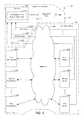
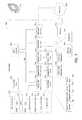
FIG. 1 is a block diagram of an example networked system in accordance with an embodiment.
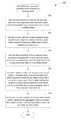
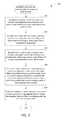
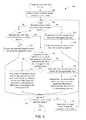
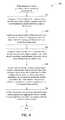
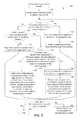
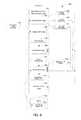
FIGS. 2-5 depict flowcharts of example methods for establishing an accurate causality order of computer trace records in accordance with embodiments.
FIG. 6 is a block diagram of an example machine shown inFIG. 1 in accordance with an embodiment.
FIG. 7 depicts an example computer in which embodiments may be implemented.
The features and advantages of the disclosed technologies will become more apparent from the detailed description set forth below when taken in conjunction with the drawings, in which like reference characters identify corresponding elements throughout. In the drawings, like reference numbers generally indicate identical, functionally similar, and/or structurally similar elements. The drawing in which an element first appears is indicated by the leftmost digit(s) in the corresponding reference number.
DETAILED DESCRIPTIONI. IntroductionThe following detailed description refers to the accompanying drawings that illustrate exemplary embodiments of the present invention. However, the scope of the present invention is not limited to these embodiments, but is instead defined by the appended claims. Thus, embodiments beyond those shown in the accompanying drawings, such as modified versions of the illustrated embodiments, may nevertheless be encompassed by the present invention.
References in the specification to “one embodiment,” “an embodiment,” “an example embodiment,” or the like, indicate that the embodiment described may include a particular feature, structure, or characteristic, but every embodiment may not necessarily include the particular feature, structure, or characteristic. Moreover, such phrases are not necessarily referring to the same embodiment. Furthermore, when a particular feature, structure, or characteristic is described in connection with an embodiment, it is submitted that it is within the knowledge of one skilled in the relevant art(s) to implement such feature, structure, or characteristic in connection with other embodiments whether or not explicitly described.
In this document, terms such as “first”, “second”, and “third” are used merely to facilitate the discussion and are not intended to be limiting. Such terms are not intended to indicate a sequence. For example, first record(s) need not necessarily precede second and/or third record(s) in time. In another example, second record(s) need not necessarily follow first record(s) and need not necessarily precede third record(s).
II. Example EmbodimentsExample embodiments described herein are capable of establishing causality order of computer trace records. A computer trace record is information that indicates an event that occurs with regard to execution of a computer program. For instance, machines in a distributed computer system may generate such computer trace records as the machines execute the computer program. The computer trace records that are generated by each machine are referred to as a trace. Accordingly, each machine generates its own trace in accordance with a tracing technique. The traces generated by the respective machines may be combined to provide an aggregated trace.
The approaches described herein are capable of ordering the computer trace records in the aggregated trace to accurately reflect the causality order of the computer trace records. A causality order of computer trace records is a temporal sequence of the computer trace records in which each cause event is indicated to occur before each effect event that is caused by the cause event. A cause event is an event that causes an effect event. For instance, the cause event may cause a single effect event or multiple effect events. An effect event is an event that is caused by a cause event. For instance, the effect event may be caused by a single cause event or multiple cause events.
Example techniques described herein have a variety of benefits as compared to conventional techniques that attempt to order computer trace records. For instance, the example techniques may be capable of establishing an accurate causality order of the computer trace records in a non-runtime context. Accordingly, the example techniques may enable traces from respective machines in a distributed computer system to be merged to obtain a consistent order that captures all the causalities associated with the events that are indicated by the computer trace records in the traces. For instance, the example techniques may enable the traces to be merged to obtain the consistent order that captures all the causalities associated with the events without requiring a change to the runtime system, which may reduce a runtime cost of the distributed computer system. Expressing the causalities in an aggregated trace in the non-runtime context may increase efficiency and/or reduce complexity of the operation of the distributed computer system, as compared to techniques that attempt to order computer trace records in a runtime context. For instance, the distributed computer system may support relatively few relationship types, and expressing such relationship types, such as the aforementioned causalities, may be relatively easy to do.
The example techniques may not be negatively affected by clock skew between the machines that generate the respective traces. The example techniques may enable analysis of the traces that are generated by the respective machines to be performed more accurately and/or more efficiently than the conventional techniques. For instance, the example techniques may be capable of generating an accurate snapshot of the states of the distributed computer system and/or performing an accurate distributed invariance check of the distributed computer system. An invariance is a property of a system that is always true. An invariance check is configured to determine whether an invariance of the system is detected as being true. The example techniques may be capable of accurately ordering events associated with low level protocol messages. The example techniques may be capable of accurately ordering events associated with machines that have correlated timers. The example techniques may substantially reduce an amount of time and/or resources (e.g., processor cycles) that are consumed to perform trace analysis with regard to a computer program in a distributed computer system.
FIG. 1 is a block diagram of an examplenetworked system100 in accordance with an embodiment. Generally speaking,networked system100 operates to provide information to users in response to requests (e.g., hypertext transfer protocol (HTTP) requests) that are received from the users. The information may include documents (e.g., Web pages, images, audio files, video files, etc.), output of executables, and/or any other suitable type of information. In accordance with example embodiments described herein,networked system100 establishes causality order of computer trace records. Detail regarding techniques for establishing causality order of computer trace records is provided in the following discussion.
As shown inFIG. 1,networked system100 includes aruntime system140 and a non-runtime (e.g., offline)system150.Runtime system140 operates at runtime to generatetraces112A-112N.Non-runtime system150 operates offline (i.e., not at runtime) to process thetraces112A-112N.Runtime system140 andnon-runtime system150 are discussed in further detail below.
Runtime system140 includes a plurality ofclient devices102A-102M, anetwork104, and a plurality ofservers106A-106N. Communication amongclient devices102A-102M andservers106A-106N is carried out overnetwork104 using well-known network communication protocols.Network104 may be a wide-area network (e.g., the Internet), a local area network (LAN), another type of network, or a combination thereof.
Client devices102A-102M are processing systems that are capable of communicating withservers106A-106N. An example of a processing system is a system that includes at least one processor that is capable of manipulating data in accordance with a set of instructions. For instance, a processing system may be a computer, a personal digital assistant, etc.Client devices102A-102M are configured to provide requests toservers106A-106N for requesting information stored on (or otherwise accessible via)servers106A-106N. For instance, a user may initiate a request for executing a computer program (e.g., an application) using a client (e.g., a Web browser, Web crawler, or other type of client) deployed on a client device102 that is owned by or otherwise accessible to the user. In accordance with some example embodiments,client devices102A-102M are capable of accessing domains (e.g., Web sites) hosted by servers104A-104N, so thatclient devices102A-102M may access information that is available via the domains. Such domain may include Web pages, which may be provided as hypertext markup language (HTML) documents and objects (e.g., files) that are linked therein, for example.
Client devices102A-102M may include any client-enabled system or device, including but not limited to a desktop computer, a laptop computer, a tablet computer, a personal digital assistant, a cellular telephone, a wearable device, or the like. It will be recognized that any one ormore client devices102A-102M may communicate with any one ormore servers106A-106N.
Servers106A-106N are processing systems that are capable of communicating withclient devices102A-102M.Servers106A-106N are configured to execute computer programs that provide information to users in response to receiving requests from the users. For example, the information may include documents (e.g., Web pages, images, audio files, video files, etc.), output of executables, or any other suitable type of information. In accordance with some example embodiments,servers106A-106N are configured to host respective Web sites, so that the Web sites are accessible to users ofnetworked system100.
Servers106A-106N are further configured to generaterespective traces112A-112N in response to execution of a computer program. For instance,servers106A-106N may generate therespective traces112A-112N in response to execution of respective portions of the computer program. Each of thetraces112A-112N includes a respective subset of a plurality of computer trace records for which a causality order is to be established in accordance with one or more techniques described herein. For purposes of illustration, it may be presumed that the computer trace record(s) in each subset are accurately temporally ordered. For instance, if a computer trace includes a first computer trace record, which indicates event A, that precedes a second computer trace record, which indicates event B, it may be presumed that event A occurred before event B.
Non-runtime system150 includesmachine108.Machine108 is a processing system that is capable of processing computer trace records.Machine108 includes non-runtime tracerecord order logic110 configured to establish the causality order of the computer trace records that are included in thetraces112A-112N. Non-runtime tracerecord order logic110 is further configured to generate an aggregatedtrace114 that includes the computer trace records in accordance with the established causality order. Thetraces112A-112N may be modeled as respective input streams, and the aggregatedtrace114 may be modeled as an output stream, though the scope of the example embodiments is not limited in this respect.
Example techniques for establish a causality order of computer trace records are discussed in greater detail below with reference toFIGS. 2-6.
Non-runtime tracerecord order logic110 is shown to be incorporated inmachine108 for illustrative purposes and is not intended to be limiting. It will be recognized that at least a portion (e.g., all) of non-runtime tracerecord order logic110 may be external tomachine108. For example, at least a portion of non-runtime tracerecord order logic110 may be incorporated in any one or more of theclient devices102A-102M and/or any one or more of theservers106A-106N. In accordance with this example, client-side aspects of non-runtime tracerecord order logic110 may be incorporated in one or more of theclient devices102A-102M, and server-side aspects of non-runtime tracerecord order logic110 may be incorporated in one or more of theservers106A-106N and/ormachine108.
Non-runtime tracerecord order logic110 may be implemented in various ways to establish causality order of computer trace records, including being implemented in hardware, software, firmware, or any combination thereof. For example, non-runtime tracerecord order logic110 may be implemented as computer program code configured to be executed in one or more processors. In another example, non-runtime tracerecord order logic110 may be implemented as hardware logic/electrical circuitry. For instance, non-runtime tracerecord order logic110 may be implemented in a field-programmable gate array (FPGA), an application-specific integrated circuit (ASIC), an application-specific standard product (ASSP), a system-on-a-chip system (SoC), a complex programmable logic device (CPLD), etc. A SoC may include an integrated circuit chip that includes one or more of a processor (e.g., a microcontroller, microprocessor, digital signal processor (DSP), etc.), memory, one or more communication interfaces, and/or further circuits and/or embedded firmware to perform its functions.
It will be recognized that any one or more ofclient devices102A-102M, any one or more ofservers106A-106N, and/ormachine108 may be implemented as a virtual machine, though the scope of the example embodiments is not limited in this respect.
FIGS. 2-5 depictflowcharts200,300,400, and500 of example methods for establishing an accurate causality order of computer trace records in accordance with embodiments.Flowcharts200,300,400, and500 may be performed bymachine108 shown inFIG. 1, for example. For illustrative purposes,flowcharts200,300,400, and500 are described with respect to amachine600 shown inFIG. 6. As shown inFIG. 6,machine600 includes non-runtime tracerecord order logic610 andstore612. Non-runtime tracerecord order logic610 includesidentification logic602,assignment logic604,correlation logic606,generation logic608, anddetermination logic614. Further structural and operational embodiments will be apparent to persons skilled in the relevant art(s) based on thediscussion regarding flowcharts200,300,400, and500.
As shown inFIG. 2, the method offlowchart200 begins atstep202. Instep202, first record(s) of the computer trace records are identified to be respective cause record(s). Each cause record indicates a cause event that causes an effect event. Each of the cause record(s) may be generated before occurrence of the cause event that is indicated by the respective cause record, though the example embodiments are not limited in this respect. For instance, if a cause record indicates that a message is to be sent, the cause record may be produced before the message is sent. In an example implementation,identification logic602 identifies first record(s) ofcomputer trace records616 to be respective cause record(s)618.
Atstep204, second record(s) of the computer trace records are identified to be respective effect record(s). Each effect record indicates an effect event that is caused by a cause event. In an example implementation,identification logic602 identifies second record(s) ofcomputer trace records616 to be respective effect record(s)620.
Atstep206, third record(s) of the computer trace records are identified to be respective normal record(s). Each normal record indicates a normal event. A normal event is an event that is not a cause event and that is not an effect event. For instance, each normal event may not be involved in a cause-effect relationship with regard to execution of the computer program. In an example implementation,identification logic602 identifies third record(s) ofcomputer trace records616 to be respective normal record(s)622.
Atstep208, in a non-runtime context of the processor-based system, each cause record is correlated with each effect record that indicates an effect event that is caused by a cause event that is indicated by the respective cause record based on one or more criteria to establish the accurate causality order of the computer trace records. For instance, a determination whether the one or more criteria are satisfied may be made based on semantic information associated with the cause record(s) and the effect record(s). In an example implementation, in a non-runtime context of themachine600,correlation logic606 correlates each of the cause record(s)618 with each of the effect record(s)620 that indicates an effect event that is caused by a cause event that is indicated by the respective cause record based on one or more criteria to establish the accurate causality order of the computer trace records616. For example,correlation logic606 may provide anorder instruction626 in response to establishing the accurate causality order. In accordance with this example, theorder instruction626 may specify that the computer trace records616 are to be ordered in accordance with the accurate causality order.
Atstep210, in the non-runtime context of the processor-based system, the aggregated trace is generated to include the computer trace records in accordance with the accurate causality order. For instance, the aggregated trace may be generated such that the computer trace records are arranged to be in the accurate causality order. In an example implementation, in the non-runtime context of themachine600,generation logic608 generates an aggregatedtrace630 to include the computer trace records616 in accordance with the accurate causality order. For instance,generation logic608 may generate the aggregatedtrace630 to include the computer trace records616 in accordance with the accurate causality order in response to (e.g., based on) receipt of theorder instruction626.
In an example embodiment, a designated cause record of the cause record(s) indicates that a first timer is expired. In accordance with this embodiment, a designated effect record of the effect record(s) indicates that a second timer is started. The second timer is related to the first timer. In further accordance with this embodiment,step208 includes, in the non-runtime context of the processor-based system, correlating the designated cause record with the designated effect record based on the first timer being related to the second timer.
In another example embodiment, a designated cause record of the cause record(s) indicates that specified data is written to a store that is external to the processing system that generated the designated cause record. In accordance with this embodiment, a designated effect record of the effect record(s) indicates that the specified data is read from the store. In further accordance with this embodiment,step208 includes, in the non-runtime context of the processor-based system, correlating the designated cause record with the designated effect record based on the one or more criteria.
In some example embodiments, one ormore steps202,204,206,208, and/or210 offlowchart200 may not be performed. Moreover, steps in addition to or in lieu ofsteps202,204,206,208, and/or210 may be performed. For instance, in an example embodiment, the method offlowchart200 includes assigning identifier(s) to the respective cause record(s). Each identifier uniquely identifies the cause record to which the identifier is assigned. In an aspect, the identifier(s) are globally unique identifier(s) (GUID(s)). For example,assignment logic604 may assign identifier(s)624 to the respective cause record(s)618. In accordance with this embodiment,step208 includes, in the non-runtime context of the processor-based system, correlating each of the cause record(s) with each of the effect record(s) that indicates an effect event that is caused by a cause event that is indicated by the respective cause record based on each of the effect record(s) that indicates an effect event that is caused by a cause event that is indicated by the respective cause record being associated with the respective identifier. For example,correlation logic606 may correlate each of the cause record record(s)618 with each of the effect record(s)620 that indicates an effect event that is caused by a cause event that is indicated by the respective cause record in response to (e.g., based on) receipt of the identifier(s)624.
In another example embodiment, a first cause record of the cause record(s) indicates that a specified message is sent. In accordance with this embodiment, a first effect record of the effect record(s) indicates that the specified message is received. In further accordance with this embodiment, the method offlowchart200 includes assigning a message identifier to the specified message. In an aspect,assignment logic604 may assign the message identifier to the specified message. In accordance with this aspect, the message identifier may be included in identifier(s)624. In further accordance with this embodiment,step208 includes, in the non-runtime context of the processor-based system, correlating the first cause record with the first effect record based on the message identifier being assigned to the specified message. For instance,correlation logic606 may correlate the first cause record with the first effect record in response to (e.g., based on) receipt of the message identifier.
In yet another example embodiment, the method offlowchart200 includes the steps shown inflowchart300 ofFIG. 3. As shown inFIG. 3, the method offlowchart300 begins atstep302. Instep302, a trace record is detected among the computer trace records. For instance,determination logic614 may detect the computer trace record among the computer trace records616.
Atstep304, a determination is made whether the detected computer trace record is identified as a cause record. If the detected computer trace record is identified as a cause record (e.g., at step202), flow continues to step306. Otherwise, flow continues to step310. In an example implementation,determination logic614 determines whether the detected computer trace record is identified as a cause record.
Atstep306, the detected computer trace record is output (e.g., incorporated) into the aggregated trace. For instance,generation logic608 may output the detected computer trace record into the aggregatedtrace630.
Atstep308, the detected computer trace record is assigned to a pending cause list. The pending cause list may be a hash table, though the scope of the example embodiments is not limited in this respect. In an example implementation,store612 stores apending cause list628. In accordance with this example,assignment logic604 may assign the detected computer trace record to thepending cause list628. It will be recognized thatstore612 may be any suitable type of store. One type of store is a database. For instance,store612 may be a relational database, an entity-relationship database, an object database, an object relational database, an extensible markup language (XML) database, etc.Store612 is shown inFIG. 6 to be internal tomachine600 for illustrative purposes and is not intended to be limiting. It will be recognized thatstore612 or a portion thereof may be external tomachine600. It will also be recognized thatstore612 or a portion thereof may be distributed across two or more ofservers106A-106N or acrossmachine600 and one or more ofservers106A-106N. It will be further recognized thatstore612 or a portion thereof may be included in non-runtime tracerecord order logic610. Upon completion ofstep308, flow continues to step322.
Atstep310, a determination is made whether the detected computer trace record is identified as an effect record. If the detected computer trace record is identified as an effect record (e.g., at step204), flow continues to step314. Otherwise, flow continues to step312. For instance, if the detected computer trace record is not identified as an effect record, the detected computer trace record may be identified as a normal record (e.g., at step206). In an example implementation,determination logic614 determines whether the detected computer trace record is identified as an effect record.
Atstep312, the detected computer trace record is output into the aggregated trace. For instance,generation logic608 may output the detected computer trace record into the aggregatedtrace630. Upon completion ofstep312, flow continues to step322.
Atstep314, a determination is made whether each cause record that indicates a cause event that causes an effect that is indicated by the effect record is assigned to the pending cause list. If each cause record that indicates a cause event that causes an effect that is indicated by the effect record is assigned to the pending cause list, flow continues to step316. Otherwise, flow continues to step320. In an example implementation,determination logic614 determines whether each of the cause record(s)618 that indicates a cause event that causes an effect that is indicated by the effect record is assigned to thepending cause list628.
Atstep316, the detected computer trace record is output into the aggregated trace. For instance,generation logic608 may output the detected computer trace record into the aggregatedtrace630.
Atstep318, each cause record that indicates a cause event that causes the effect that is indicated by the effect record is removed from the pending cause list. For instance,generation logic608 may remove each cause record that indicates a cause event that causes the effect that is indicated by the effect record from the pendingcause list628. Upon completion ofstep318, flow continues to step322.
In an example embodiment, the effect record mentioned instep318 may be one of multiple effect records indicating respective effects that are caused by one or more causes that are indicated by one or more respective cause records. In accordance with this embodiment, removing each cause record that indicates a cause event that causes the effect that is indicated by the effect record from the pending cause list may be delayed until all of the multiple effect records indicating respective effects that are caused by the respective cause are output into the aggregated trace.
Atstep320, output of the effect record into the aggregated trace is delayed until each cause record that indicates a cause event that causes an effect that is indicated by the effect record is assigned to the pending cause list. For instance,generation logic608 may delay output of the effect record into the aggregatedtrace630 until each of the cause record(s)618 that indicates a cause event that causes an effect that is indicated by the effect record is assigned to thepending cause list628. Upon completion ofstep320, flow continues to step322.
In an example embodiment, the computer trace records (e.g., computer trace records616) are included among traces (e.g., traces112A-112N) that are generated by respective processing systems (e.g.,servers106A-106N). In accordance with this embodiment, each trace includes a respective subset of the computer trace records. Each subset includes one or more of the computer trace records. In further accordance with this embodiment,step320 includes delaying output of other computer trace records in the subset that includes the effect record into the aggregated trace until each cause record that indicates a cause event that causes an effect that is indicated by the effect record is assigned to the pending cause list. For instance,generation logic608 may delay output of others of the computer trace records616 in the subset that includes the effect record into the aggregatedtrace630 until each cause record that indicates a cause event that causes an effect that is indicated by the effect record is assigned to thepending cause list628. In an aspect, step320 may include not delaying output of other computer trace records in subsets other than the subset that includes the effect record into the aggregated trace until each cause record that indicates a cause event that causes an effect that is indicated by the effect record is assigned to the pending cause list.
Atstep322, a determination is made whether all of the computer trace records have been processed. If all of the computer trace records have been processed,flowchart300 ends. Otherwise, flow continues to step324. For instance,determination logic614 may determine whether all of the computer trace records616 have been processed.
Atstep324, another trace record is detected among the computer trace records. For instance,determination logic614 may detect another trace record among the computer trace records616. Upon completion ofstep324, flow returns to step304.
In some example embodiments, one ormore steps302,304,306,308,310,312,314,316,318,320,322, and/or324 offlowchart300 may not be performed. Moreover, steps in addition to or in lieu ofsteps302,304,306,308,310,312,314,316,318,320,322, and/or324 may be performed.
As shown inFIG. 4, the method offlowchart400 begins atstep402. Instep202, first record(s) of the computer trace records are categorized into a cause category based on each first record indicating a cause event that causes an effect event. Each first record may be generated before occurrence of the cause event that is indicated by the respective first record, though the example embodiments are not limited in this respect. In an example implementation,identification logic602 categorizes first record(s) of computer trace records616 into the cause category.
Atstep404, second record(s) of the computer trace records are categorized into an effect category based on each second record indicating an effect event that is caused by a cause event. In an example implementation,identification logic602 categorizes second record(s) of computer trace records616 into the effect category.
Atstep406, third record(s) of the computer trace records are categorized into a normal category based on each third record indicating a normal event that is not a cause event and that is not an effect event. In an example implementation,identification logic602 categorizes third record(s) of computer trace records616 into the normal category.
Atstep408, in a non-runtime context of the processor-based system, each first record from the cause category is correlated with each second record from the effect category that indicates an effect event that is caused by a cause event that is indicated by the respective first record based on one or more criteria to establish the accurate causality order of the computer trace records. In an example implementation, in a non-runtime context of themachine600,correlation logic606 correlates each first record from the cause category (e.g., each of the cause record(s)618) with each second record from the effect category (e.g., each of the effect record(s)620) that indicates an effect event that is caused by a cause event that is indicated by the respective first record based on one or more criteria to establish the accurate causality order of the computer trace records616. For example,correlation logic606 may provide anorder instruction626 in response to establishing the accurate causality order. In accordance with this example, theorder instruction626 may specify that the computer trace records616 are to be ordered in accordance with the accurate causality order.
Atstep410, in the non-runtime context of the processor-based system, the aggregated trace is generated to include the computer trace records in accordance with the accurate causality order. For instance, the aggregated trace may be generated such that the computer trace records are arranged to be in the accurate causality order. In an example implementation, in the non-runtime context of themachine600,generation logic608 generates an aggregatedtrace630 to include the computer trace records616 in accordance with the accurate causality order. For instance,generation logic608 may generate the aggregatedtrace630 to include the computer trace records616 in accordance with the accurate causality order in response to (e.g., based on) receipt of theorder instruction626.
In an example embodiment, a designated first record of the first record(s) indicates that a first timer is expired. In accordance with this embodiment, a designated second record of the second record(s) indicates that a second timer is started. The second timer is related to the first timer. In further accordance with this embodiment,step408 includes, in the non-runtime context of the processor-based system, correlating the designated first record with the designated second record based on the first timer being related to the second timer.
In another example embodiment, a designated first record of the first record(s) indicates that specified data is written to a store that is external to the processing system that generated the designated first record. In accordance with this embodiment, a designated second record of the second record(s) indicates that the specified data is read from the store. In further accordance with this embodiment,step208 includes, in the non-runtime context of the processor-based system, correlating the designated first record with the designated second record based on the one or more criteria.
In some example embodiments, one ormore steps402,404,406,408, and/or410 offlowchart400 may not be performed. Moreover, steps in addition to or in lieu ofsteps402,404,406,408, and/or410 may be performed. For instance, in an example embodiment, the method offlowchart400 includes assigning identifier(s) to the respective first record(s). Each identifier uniquely identifies the first record to which the identifier is assigned. For example,assignment logic604 may assign identifier(s)624 to the respective first record(s)618. In accordance with this embodiment,step208 includes, in the non-runtime context of the processor-based system, correlating each first record with each second record that indicates an effect event that is caused by a cause event that is indicated by the respective first record based on each second record that indicates an effect event that is caused by a cause event that is indicated by the respective first record being associated with the respective identifier. For example,correlation logic606 may correlate each first record with each second record that indicates an effect event that is caused by a cause event that is indicated by the respective first record in response to (e.g., based on) receipt of the identifier(s)624.
In another example embodiment, a designated first record of the first record(s) indicates that a specified message is sent. In accordance with this embodiment, a designated second record of the second record(s) indicates that the specified message is received. In further accordance with this embodiment, the method offlowchart400 includes assigning a message identifier to the specified message. In an aspect,assignment logic604 may assign the message identifier to the specified message. In accordance with this aspect, the message identifier may be included in identifier(s)624. In further accordance with this embodiment,step408 includes, in the non-runtime context of the processor-based system, correlating the designated first record with the designated second record based on the message identifier being assigned to the specified message. For instance,correlation logic606 may correlate the designated first record with the designated second record in response to (e.g., based on) receipt of the message identifier.
In yet another example embodiment, the method offlowchart400 includes the steps shown inflowchart500 ofFIG. 5. As shown inFIG. 5, the method offlowchart500 begins at step502. In step502, a trace record is detected among the computer trace records. For instance,determination logic614 may detect a trace record among the computer trace records616.
Atstep504, a determination is made whether the detected computer trace record is categorized into the cause category. If the detected computer trace record is categorized into the cause category (e.g., at step402), flow continues to step506. Otherwise, flow continues to step510. In an example implementation,determination logic614 determines whether the detected computer trace record is categorized into the cause category.
Atstep506, the detected computer trace record is output (e.g., incorporated) into the aggregated trace. For instance,generation logic608 may output the detected computer trace record into the aggregatedtrace630.
Atstep508, the detected computer trace record is assigned to a pending cause list. The pending cause list may be a hash table, though the scope of the example embodiments is not limited in this respect. In an example implementation,store612 stores apending cause list628. In accordance with this example,assignment logic604 may assign the detected computer trace record to thepending cause list628. Upon completion ofstep508, flow continues to step522.
Atstep510, a determination is made whether the detected computer trace record is categorized into the effect category. If the detected computer trace record is categorized into the effect category (e.g., at step404), flow continues to step514. Otherwise, flow continues to step512. For instance, if the detected computer trace record is not categorized into the effect category, the detected computer trace record may be categorized into the normal category (e.g., at step406). In an example implementation,determination logic614 determines whether the detected computer trace record is categorized into the effect category.
Atstep512, the detected computer trace record is output into the aggregated trace. For instance,generation logic608 may output the detected computer trace record into the aggregatedtrace630. Upon completion ofstep512, flow continues to step522.
Atstep514, a determination is made whether each computer trace record that is categorized in the cause category and that indicates a cause event that causes an effect that is indicated by the detected computer trace record is assigned to the pending cause list. If each computer trace record that is categorized in the cause category and that indicates a cause event that causes an effect that is indicated by the detected computer trace record is assigned to the pending cause list, flow continues to step516. Otherwise, flow continues to step520. In an example implementation,determination logic614 determines whether each of the computer trace records616 that is categorized in the cause category and that indicates a cause event that causes an effect that is indicated by the detected computer trace record is assigned to thepending cause list628.
Atstep516, the detected computer trace record is output into the aggregated trace. For instance,generation logic608 may output the detected computer trace record into the aggregatedtrace630.
Atstep518, each computer trace record that is categorized in the cause category and that indicates a cause event that causes the effect that is indicated by the detected computer trace record is removed from the pending cause list. For instance,generation logic608 may remove each computer trace record that is categorized in the cause category and that indicates a cause event that causes the effect that is indicated by the detected computer trace record from the pendingcause list628. Upon completion ofstep518, flow continues to step522.
In an example embodiment, the detected computer trace record may be one of multiple computer trace records categorized in the effect category that indicate respective effects that are caused by one or more causes that are indicated by one or more respective computer trace records categorized in the cause category. In accordance with this embodiment, removing each computer trace record that is categorized in the cause category and that indicates a cause event that causes the effect that is indicated by the detected computer trace record from the pending cause list may be delayed until all of the multiple computer trace records categorized in the effect category that indicate respective effects that are caused by the respective cause are output into the aggregated trace.
Atstep520, output of the detected computer trace record into the aggregated trace is delayed until each computer trace record that is categorized in the cause category and that indicates a cause event that causes an effect that is indicated by the detected computer trace record is assigned to the pending cause list. For instance,generation logic608 may delay output of the detected computer trace record into the aggregatedtrace630 until each computer trace record that is categorized in the cause category and that indicates a cause event that causes an effect that is indicated by the detected computer trace record is assigned to thepending cause list628. Upon completion ofstep520, flow continues to step522.
In an example embodiment, the computer trace records (e.g., computer trace records616) are included among traces (e.g., traces112A-112N) that are generated by respective processing systems (e.g.,servers106A-106N). In accordance with this embodiment, each trace includes a respective subset of the computer trace records. Each subset includes one or more of the computer trace records. In further accordance with this embodiment,step520 includes delaying output of other computer trace records in the subset that includes the detected computer trace record into the aggregated trace until each computer trace record that is categorized in the cause category and that indicates a cause event that causes an effect that is indicated by the detected computer trace record is assigned to the pending cause list. For instance,generation logic608 may delay output of others of the computer trace records616 in the subset that includes the detected computer trace record into the aggregatedtrace630 until each computer trace record that indicates a cause event that is categorized in the cause category and that causes an effect that is indicated by the detected computer trace record is assigned to thepending cause list628. In an aspect, step320 may include not delaying output of other computer trace records in subsets other than the subset that includes the detected computer trace record into the aggregated trace until each computer trace record that is categorized in the cause category and that indicates a cause event that causes an effect that is indicated by the detected computer trace record is assigned to the pending cause list.
At step522, a determination is made whether all of the computer trace records have been processed. If all of the computer trace records have been processed,flowchart500 ends. Otherwise, flow continues to step524. For instance,determination logic614 may determine whether all of the computer trace records have been processed.
At step524, another trace record is detected among the computer trace records. For instance,determination logic614 may detect another trace record among the computer trace records616. Upon completion of step524, flow returns to step504.
In some example embodiments, one ormore steps502,504,506,508,510,512,514,516,518,520,522, and/or524 offlowchart500 may not be performed. Moreover, steps in addition to or in lieu ofsteps502,504,506,508,510,512,514,516,518,520,522, and/or524 may be performed.
It will be recognized thatmachine600 may not include one or more of non-runtime tracerecord order logic610,store612,identification logic602,assignment logic604,correlation logic606,generation logic608, and/ordetermination logic614. Furthermore,machine600 may include components in addition to or in lieu of non-runtime tracerecord order logic610,store612,identification logic602,assignment logic604,correlation logic606,generation logic608, and/ordetermination logic614.
Any one or more ofclient devices102A-102M, any one or more ofservers106A-106N,machine108,identification logic602,assignment logic604,correlation logic606,generation logic608, non-runtime tracerecord order logic610,determination logic614,flowchart200,flowchart300,flowchart400, and/orflowchart500 may be implemented in hardware, software, firmware, or any combination thereof.
For example, any one or more ofclient devices102A-102M, any one or more ofservers106A-106N,machine108,identification logic602,assignment logic604,correlation logic606,generation logic608, non-runtime tracerecord order logic610,determination logic614,flowchart200,flowchart300,flowchart400, and/orflowchart500 may be implemented, at least in part, as computer program code configured to be executed in one or more processors.
In another example, any one or more ofclient devices102A-102M, any one or more ofservers106A-106N,machine108,identification logic602,assignment logic604,correlation logic606,generation logic608, non-runtime tracerecord order logic610,determination logic614,flowchart200,flowchart300,flowchart400, and/orflowchart500 may be implemented, at least in part, as hardware logic/electrical circuitry. Such hardware logic/electrical circuitry may include one or more hardware logic components. Examples of a hardware logic component include but are not limited to a field-programmable gate array (FPGA), an application-specific integrated circuit (ASIC), an application-specific standard product (ASSP), a system-on-a-chip system (SoC), a complex programmable logic device (CPLD), etc. For instance, a SoC may include an integrated circuit chip that includes one or more of a processor (e.g., a microcontroller, microprocessor, digital signal processor (DSP), etc.), memory, one or more communication interfaces, and/or further circuits and/or embedded firmware to perform its functions.
III. Further Discussion of Some Example EmbodimentsIn a first example method of establishing an accurate causality order of a plurality of computer trace records, which correspond to a plurality of respective events that occur with regard to execution of a computer program, in an aggregated trace using one or more processors of a processor-based system that is coupled to a plurality of distributed processing systems via a network, one or more first records of the plurality of computer trace records are identified, using at least one of the one or more processors, to be one or more respective cause records. Each cause record indicates a cause event that causes an effect event. The plurality of computer trace records includes a plurality of subsets. Each subset of the plurality of subsets includes one or more computer trace records of the plurality of computer trace records that are included in a respective trace that is generated by a respective processing system of the plurality of processing systems. One or more second records of the plurality of computer trace records are identified, using at least one of the one or more processors, to be one or more respective effect records. Each effect record indicates an effect event that is caused by a cause event. One or more third records of the plurality of computer trace records are identified, using at least one of the one or more processors, to be one or more respective normal records. Each normal record indicates a normal event that is not a cause event and that is not an effect event. In a non-runtime context of the processor-based system, each cause record of the one or more cause records is correlated, using at least one of the one or more processors, with each effect record of the one or more effect records that indicates an effect event that is caused by a cause event that is indicated by the respective cause record based on one or more criteria to establish the accurate causality order of the plurality of computer trace records. In the non-runtime context of the processor-based system, the aggregated trace is generated, using at least one of the one or more processors, to include the plurality of computer trace records in accordance with the accurate causality order.
In a first aspect of the first example method, each cause record of the one or more cause records is generated before occurrence of the cause event that is indicated by the respective cause record.
In a second aspect of the first example method, the first example method further comprises assigning one or more identifiers to the one or more respective cause records. In accordance with the second aspect, each identifier uniquely identifies the cause record to which the identifier is assigned. In further accordance with the second aspect, in the non-runtime context of the processor-based system, each cause record of the one or more cause records is correlated with each effect record of the one or more effect records that is caused by the respective cause record comprises, in the non-runtime context of the processor-based system, correlating each cause record of the one or more cause records with each effect record of the one or more effect records that indicates an effect event that is caused by a cause event that is indicated by the respective cause record based on each effect record of the one or more effect records that indicates an effect event that is caused by a cause event that is indicated by the respective cause record being associated with the respective identifier of the one or more identifiers. The second aspect of the first example method may be implemented in combination with the first aspect of the first example method, though the example embodiments are not limited in this respect.
In a third aspect of the first example method, a first cause record of the one or more cause records indicates that a specified message is sent. In accordance with the third aspect, a first effect record of the one or more effect records indicates that the specified message is received. In further accordance with the third aspect, the first example method further comprises assigning a message identifier to the specified message. In further accordance with the third aspect, in the non-runtime context of the processor-based system, correlating each cause record of the one or more cause records with each effect record of the one or more effect records that indicates an effect event that is caused by a cause event that is indicated by the respective cause record comprises, in the non-runtime context of the processor-based system, correlating the first cause record with the first effect record based on the message identifier being assigned to the specified message. The third aspect of the first example method may be implemented in combination with the first and/or second aspect of the first example method, though the example embodiments are not limited in this respect.
In a fourth aspect of the first example method, a designated cause record of the one or more cause records indicates that a first timer is expired. In accordance with the fourth aspect, a designated effect record of the one or more effect records indicates that a second timer, which is related to the first timer, is started. In further accordance with the fourth aspect, in the non-runtime context of the processor-based system, correlating each cause record of the one or more cause records with each effect record of the one or more effect records that indicates an effect event that is caused by a cause event that is indicated by the respective cause record comprises, in the non-runtime context of the processor-based system, correlating the designated cause record with the designated effect record based on the first timer being related to the second timer. The fourth aspect of the first example method may be implemented in combination with the first, second, and/or third aspect of the first example method, though the example embodiments are not limited in this respect.
In a fifth aspect of the first example method, a designated cause record of the one or more cause records indicates that specified data is written to a store that is external to the processing system that generated the designated cause record. In accordance with the fifth aspect, a designated effect record of the one or more effect records indicates that the specified data is read from the store. In further accordance with the fifth aspect, in the non-runtime context of the processor-based system, correlating each cause record of the one or more cause records with each effect record of the one or more effect records that indicates an effect event that is caused by a cause event that is indicated by the respective cause record comprises, in the non-runtime context of the processor-based system, correlating the designated cause record with the designated effect record based on the one or more criteria. The fifth aspect of the first example method may be implemented in combination with the first, second, third, and/or fourth aspect of the first example method, though the example embodiments are not limited in this respect.
In a sixth aspect of the first example method, generating the aggregated trace comprises outputting each computer trace record of the plurality of computer trace records that is identified as a normal record into the aggregated trace. In accordance with the sixth aspect, generating the aggregated trace further comprises outputting each computer trace record of the plurality of computer trace records that is identified as a cause record into the aggregated trace. In further accordance with the sixth aspect, the first example method further comprises assigning each computer trace record of the plurality of computer trace records that is identified as a cause record to a pending cause list. In further accordance with the sixth aspect, the first example method further comprises, for each computer trace record of the plurality of computer trace records that is identified as an effect record, determining whether a designated condition is satisfied. In further accordance with the sixth aspect, the designated condition is that each cause record that indicates a cause event that causes an effect that is indicated by the effect record is assigned to the pending cause list. In further accordance with the sixth aspect, generating the aggregated trace comprises, for each computer trace record of the plurality of computer trace records that is identified as an effect record, performing a first operation or a second operation depending on whether the designated condition is satisfied. In further accordance with the sixth aspect, the first operation comprises, in response to the designated condition being satisfied, outputting the effect record into the aggregated trace and removing each cause record that indicates a cause event that causes the effect that is indicated by the effect record from the pending cause list. In further accordance with the sixth aspect, the second operation comprises, in response to the designated condition not being satisfied, delaying output of the effect record into the aggregated trace until the designated condition is satisfied.
In an example of the sixth aspect of the first example method, the second operation further comprises, in response to the designated condition not being satisfied, delaying output of other computer trace records in the subset that includes the effect record into the aggregated trace until the designated condition is satisfied.
The sixth aspect of the first example method may be implemented in combination with the first, second, third, fourth, and/or fifth aspect of the first example method, though the example embodiments are not limited in this respect.
In a second example method of establishing an accurate causality order of a plurality of computer trace records, which are associated with a computer program, in an aggregated trace using one or more processors of a processor-based system that is coupled to a plurality of distributed processing systems via a network, one or more first records of the plurality of computer trace records are categorized, using at least one of the one or more processors, into a cause category based on each first record indicating a cause event that causes an effect event. The plurality of computer trace records includes a plurality of subsets. Each subset of the plurality of subsets includes one or more computer trace records of the plurality of computer trace records that are included in a respective trace that is generated by a respective distributed processing system of the plurality of distributed processing systems. One or more second records of the plurality of computer trace records are categorized, using at least one of the one or more processors, into an effect category based on each second record indicating an effect event that is caused by a cause event. One or more third records of the plurality of computer trace records are categorized, using at least one of the one or more processors, into a normal category based on each third record indicating a normal event that is not a cause event and that is not an effect event. In a non-runtime context of the processor-based system, each first record from the cause category is correlated, using at least one of the one or more processors, with each second record from the effect category that indicates an effect event that is caused by a cause event that is indicated by the respective first record based on one or more criteria to establish the accurate causality order of the plurality of computer trace records. In the non-runtime context of the processor-based system, the aggregated trace is generated, using at least one of the one or more processors, to include the plurality of computer trace records in accordance with the accurate causality order.
In a first aspect of the second example method, each first record of the one or more first records is generated before occurrence of the cause event that is indicated by the respective first record.
In a second aspect of the second example method, the first example method further comprises assigning one or more identifiers to the one or more respective first records. Each identifier uniquely identifies the first record to which the identifier is assigned. In accordance with the second aspect, in the non-runtime context of the processor-based system, correlating each first record with each second record that is caused by the respective first record comprises, in the non-runtime context of the processor-based system, correlating each first record with each second record that indicates an effect event that is caused by a cause event that is indicated by the respective first record based on each second record that indicates an effect event that is caused by a cause event that is indicated by the respective first record being associated with the respective identifier of the one or more identifiers. The second aspect of the second example method may be implemented in combination with the first aspect of the second example method, though the example embodiments are not limited in this respect.
In a third aspect of the second example method, a designated first record of the one or more first records indicates that a specified message is sent. In accordance with the third aspect, a designated second record of the one or more second records indicates that the specified message is received. In further accordance with the third aspect, the second example method further comprises assigning a message identifier to the specified message. In further accordance with the third aspect, in the non-runtime context of the processor-based system, correlating each first record with each second record that indicates an effect event that is caused by a cause event that is indicated by the respective first record comprises, in the non-runtime context of the processor-based system, correlating the designated first record with the designated second record based on the message identifier being assigned to the specified message. The third aspect of the second example method may be implemented in combination with the first and/or second aspect of the second example method, though the example embodiments are not limited in this respect.
In a fourth aspect of the second example method, a designated first record of the one or more first records indicates that a first timer is expired. In accordance with the fourth aspect, a designated second record of the one or more second records indicates that a second timer, which is related to the first timer, is started. In further accordance with the fourth aspect, in the non-runtime context of the processor-based system, correlating each first record with each second record that indicates an effect event that is caused by a cause event that is indicated by the respective first record comprises, in the non-runtime context of the processor-based system, correlating the designated first record with the designated second record based on the first timer being related to the second timer. The fourth aspect of the second example method may be implemented in combination with the first, second, and/or third aspect of the second example method, though the example embodiments are not limited in this respect.
In a fifth aspect of the second example method, a designated first record of the one or more first records indicates that specified data is written to a store that is external to the distributed processing system that generated the designated first record. In accordance with the fifth aspect, a designated second record of the one or more second records indicates that the specified data is read from the store. In further accordance with the fifth aspect, in the non-runtime context of the processor-based system, correlating each first record with each second record that indicates an effect event that is caused by a cause event that is indicated by the respective first record comprises, in the non-runtime context of the processor-based system, correlating the designated first record with the designated second record based on the one or more criteria. The fifth aspect of the second example method may be implemented in combination with the first, second, third, and/or fourth aspect of the second example method, though the example embodiments are not limited in this respect.
In a sixth aspect of the second example method, generating the aggregated trace comprises outputting each third record of the one or more third records into the aggregated trace. In accordance with the sixth aspect, generating the aggregated trace further comprises outputting each first record of the one or more first records into the aggregated trace. In further accordance with the sixth aspect, the first example method further comprises assigning each first record of the one or more first records to a pending cause list. In further accordance with the sixth aspect, the first example method further comprises, for each third record of the one or more third records, determining whether a designated condition is satisfied. In further accordance with the sixth aspect, the designated condition is that each first record that indicates a cause event that causes an effect that is indicated by the third record is assigned to the pending cause list. In further accordance with the sixth aspect, generating the aggregated trace comprises, for each third record, performing a first operation or a second operation depending on whether the designated condition is satisfied. In further accordance with the sixth aspect, the first operation comprises, in response to the designated condition being satisfied, outputting the third record into the aggregated trace and removing each first record that indicates a cause event that causes the effect that is indicated by the third record from the pending cause list. In further accordance with the sixth aspect, the second operation comprises, in response to the designated condition not being satisfied, delaying output of the third record into the aggregated trace until the designated condition is satisfied.
In an example of the sixth aspect of the second example method, the second operation further comprises, in response to the designated condition not being satisfied, delaying output of other computer trace records in the subset that includes the third record into the aggregated trace until the designated condition is satisfied.
The sixth aspect of the second example method may be implemented in combination with the first, second, third, fourth, and/or fifth aspect of the second example method, though the example embodiments are not limited in this respect.
A first example processor-based system to establish an accurate causality order of a plurality of computer trace records, which correspond to a plurality of respective events that occur with regard to execution of a computer program, in an aggregated trace, comprises one or more processors, identification logic, correlation logic, and generation logic. The identification logic, which is implemented using at least one of the one or more processors, is configured to identify one or more first records of the plurality of computer trace records to be one or more respective cause records. Each cause record indicates a cause event that causes an effect event. The plurality of computer trace records includes a plurality of subsets. Each subset of the plurality of subsets includes one or more computer trace records of the plurality of computer trace records that are included in a respective trace that is generated by a respective processing system of a plurality of distributed processing systems. The identification logic is further configured to identify one or more second records of the plurality of computer trace records to be one or more respective effect records. Each effect record indicates an effect event that is caused by a cause event. The identification logic is further configured to identify one or more third records of the plurality of computer trace records to be one or more respective normal records. Each normal record indicates a normal event that is not a cause event and that is not an effect event. The correlation logic, which is implemented using at least one of the one or more processors, is configured to, in a non-runtime context of the processor-based system, correlate each cause record of the one or more cause records with each effect record of the one or more effect records that indicates an effect event that is caused by a cause event that is indicated by the respective cause record based on one or more criteria to establish the accurate causality order of the plurality of computer trace records. The generation logic, which is implemented using at least one of the one or more processors, is configured to, in the non-runtime context of the processor-based system, generate the aggregated trace to include the plurality of computer trace records in accordance with the accurate causality order.
In a first aspect of the first example processor-based system, each cause record of the one or more cause records is generated before occurrence of the cause event that is indicated by the respective cause record.
In a second aspect of the first example processor-based system, the first example processor-based system further comprises assignment logic, which implemented using at least one of the one or more processors, configured to assign one or more identifiers to the one or more respective cause records. Each identifier uniquely identifies the cause record to which the identifier is assigned. In accordance with the second aspect, the correlation logic is configured to, in the non-runtime context of the processor-based system, correlate each cause record of the one or more cause records with each effect record of the one or more effect records that indicates an effect event that is caused by a cause event that is indicated by the respective cause record based on each effect record of the one or more effect records that indicates an effect event that is caused by a cause event that is indicated by the respective cause record being associated with the respective identifier of the one or more identifiers. The second aspect of the first example processor-based system may be implemented in combination with the first aspect of the first example processor-based system, though the example embodiments are not limited in this respect.
In a third aspect of the first example processor-based system, a first cause record of the one or more cause records indicates that a specified message is sent. In accordance with the third aspect, a first effect record of the one or more effect records indicates that the specified message is received. In further accordance with the third aspect, the first example processor-based system further comprises assignment logic, implemented using at least one of the one or more processors, configured to assign a message identifier to the specified message. In further accordance with the third aspect, the correlation logic is configured to, in the non-runtime context of the processor-based system, correlate the first cause record with the first effect record based on the message identifier being assigned to the specified message. The third aspect of the first example processor-based system may be implemented in combination with the first and/or second aspect of the first example processor-based system, though the example embodiments are not limited in this respect.
In a fourth aspect of the first example processor-based system, a designated cause record of the one or more cause records indicates that a first timer is expired. In accordance with the fourth aspect, a designated effect record of the one or more effect records indicates that a second timer, which is related to the first timer, is started. In further accordance with the fourth aspect, the correlation logic is configured to, in the non-runtime context of the processor-based system, correlate the designated cause record with the designated effect record based on the first timer being related to the second timer. The fourth aspect of the first example processor-based system may be implemented in combination with the first, second, and/or third aspect of the first example processor-based system, though the example embodiments are not limited in this respect.
In a fifth aspect of the first example processor-based system, a designated cause record of the one or more cause records indicates that specified data is written to a store that is external to the processing system that generated the designated cause record. In accordance with the fifth aspect, a designated effect record of the one or more effect records indicates that the specified data is read from the store. In further accordance with the fifth aspect, the correlation logic is configured to, in the non-runtime context of the processor-based system, correlate the designated cause record with the designated effect record based on the one or more criteria. The fifth aspect of the first example processor-based system may be implemented in combination with the first, second, third, and/or fourth aspect of the first example processor-based system, though the example embodiments are not limited in this respect.
In a sixth aspect of the first example processor-based system, the generation logic is configured to output each computer trace record of the plurality of computer trace records that is identified as a normal record into the aggregated trace. In accordance with the sixth aspect, the generation logic is configured to output each computer trace record of the plurality of computer trace records that is identified as a cause record into the aggregated trace. In further accordance with the sixth aspect, the generation logic is configured to assign each computer trace record of the plurality of computer trace records that is identified as a cause record to a pending cause list. In further accordance with the sixth aspect, the first example processor-based system further comprises determination logic configured to, for each computer trace record of the plurality of computer trace records that is identified as an effect record, determine whether a designated condition is satisfied. In accordance with the sixth aspect, the designated condition is that each cause record that indicates a cause event that causes an effect that is indicated by the effect record is assigned to the pending cause list. In further accordance with the sixth aspect, the generation logic is configured to, for each computer trace record of the plurality of computer trace records that is identified as an effect record, perform a first operation or a second operation depending on whether the designated condition is satisfied. In further accordance with the sixth aspect, the first operation is configured to, in response to the designated condition being satisfied, output the effect record into the aggregated trace and remove each cause record that indicates a cause event that causes the effect that is indicated by the effect record from the pending cause list. In further accordance with the sixth aspect, the second operation is configured to, in response to the designated condition not being satisfied, delay outputting the effect record into the aggregated trace until the designated condition is satisfied.
In an example of the sixth aspect of the first example processor-based system, the second operation is further configured to, in response to the designated condition not being satisfied, delay output of other computer trace records in the subset that includes the effect record into the aggregated trace until the designated condition is satisfied.
The sixth aspect of the first example processor-based system may be implemented in combination with the first, second, third, fourth, and/or fifth aspect of the first example processor-based system, though the example embodiments are not limited in this respect.
A second example processor-based system to establish an accurate causality order of a plurality of computer trace records, which are associated with a computer program, in an aggregated trace, comprises one or more processors, categorization logic, correlation logic, and generation logic. The categorization logic, which is implemented using at least one of the one or more processors, is configured to categorize one or more first records of the plurality of computer trace records into a cause category based on each first record indicating a cause event that causes an effect event. The plurality of computer trace records includes a plurality of subsets. Each subset of the plurality of subsets includes one or more computer trace records of the plurality of computer trace records that are included in a respective trace that is generated by a respective distributed processing system of the plurality of distributed processing systems. The categorization logic is further configured to categorize one or more second records of the plurality of computer trace records into an effect category based on each second record indicating an effect event that is caused by a cause event. The categorization logic is further configured to categorize one or more third records of the plurality of computer trace records into a normal category based on each third record indicating a normal event that is not a cause event and that is not an effect event. The correlation logic, which is implemented using at least one of the one or more processors, is configured to, in a non-runtime context of the processor-based system, correlate each first record from the cause category with each second record from the effect category that indicates an effect event that is caused by a cause event that is indicated by the respective first record based on one or more criteria to establish the accurate causality order of the plurality of computer trace records. The generation logic, which is implemented using at least one of the one or more processors, is configured to, in the non-runtime context of the processor-based system, generate the aggregated trace to include the plurality of computer trace records in accordance with the accurate causality order.
In a first aspect of the second example processor-based system, each first record of the one or more first records is generated before occurrence of the cause event that is indicated by the respective first record.
In a second aspect of the second example processor-based system, the second example processor-based system further comprises assignment logic, implemented using at least one of the one or more processors, configured to assign one or more identifiers to the one or more respective first records. In accordance with the second aspect, each identifier uniquely identifies the first record to which the identifier is assigned. In further accordance with the second aspect, the correlation logic is configured to, in the non-runtime context of the processor-based system, correlate each first record with each second record that indicates an effect event that is caused by a cause event that is indicated by the respective first record based on each second record that indicates an effect event that is caused by a cause event that is indicated by the respective first record being associated with the respective identifier of the one or more identifiers. The second aspect of the second example processor-based system may be implemented in combination with the first aspect of the second example processor-based system, though the example embodiments are not limited in this respect.
In a third aspect of the second example processor-based system, a designated first record of the one or more first records indicates that a specified message is sent. In accordance with the third aspect, a designated second record of the one or more second records indicates that the specified message is received. In further accordance with the third aspect, the second example processor-based system further comprises assignment logic, implemented using at least one of the one or more processors, configured to assign a message identifier to the specified message. In further accordance with the third aspect, the correlation logic is configured to, in the non-runtime context of the processor-based system, correlate the designated first record with the designated second record based on the message identifier being assigned to the specified message. The third aspect of the second example processor-based system may be implemented in combination with the first and/or second aspect of the second example processor-based system, though the example embodiments are not limited in this respect.
In a fourth aspect of the second example processor-based system, a designated first record of the one or more first records indicates that a first timer is expired. In accordance with the fourth aspect, a designated second record of the one or more second records indicates that a second timer, which is related to the first timer, is started. In further accordance with the fourth aspect, the correlation logic is configured to, in the non-runtime context of the processor-based system, correlate the designated first record with the designated second record based on the first timer being related to the second timer. The fourth aspect of the second example processor-based system may be implemented in combination with the first, second, and/or third aspect of the second example processor-based system, though the example embodiments are not limited in this respect.
In a fifth aspect of the second example processor-based system, a designated first record of the one or more first records indicates that specified data is written to a store that is external to the distributed processing system that generated the designated first record. In accordance with the fifth aspect, a designated second record of the one or more second records indicates that the specified data is read from the store. In further accordance with the fifth aspect, the correlation logic is configured to, in the non-runtime context of the processor-based system, correlate the designated first record with the designated second record based on the one or more criteria. The fifth aspect of the second example processor-based system may be implemented in combination with the first, second, third, and/or fourth aspect of the second example processor-based system, though the example embodiments are not limited in this respect.
In a sixth aspect of the second example processor-based system, the generation logic is configured to output each third record of the one or more third records into the aggregated trace. In accordance with the sixth aspect, the generation logic is configured to output each first record of the one or more first records into the aggregated trace. In further accordance with the sixth aspect, the second example processor-based system further comprises assignment logic, implemented using at least one of the one or more processors, configured to assign each first record of the one or more first records to a pending cause list. In further accordance with the sixth aspect, the second example processor-based system further comprises determination logic, implemented using at least one of the one or more processors, configured to, for each third record of the one or more third records, determine whether a designated condition is satisfied. In further accordance with the sixth aspect, the designated condition is that each first record that indicates a cause event that causes an effect that is indicated by the third record is assigned to the pending cause list. In further accordance with the sixth aspect, the generation logic is configured to, for each third record, perform a first operation or a second operation depending on whether the designated condition is satisfied. In further accordance with the sixth aspect, the first operation is configured to, in response to the designated condition being satisfied, output the third record into the aggregated trace and remove each first record that indicates a cause event that causes the effect that is indicated by the third record from the pending cause list. In further accordance with the sixth aspect, the second operation is configured to, in response to the designated condition not being satisfied, delay output of the third record into the aggregated trace until the designated condition is satisfied.
In an example of the sixth aspect of the second example processor-based system, the second operation is further configured to, in response to the designated condition not being satisfied, delay output of other computer trace records in the subset that includes the third record into the aggregated trace until the designated condition is satisfied.
The sixth aspect of the second example processor-based system may be implemented in combination with the first, second, third, fourth, and/or fifth aspect of the second example processor-based system, though the example embodiments are not limited in this respect.
A first example computer program product comprises a computer-readable storage medium having computer program logic recorded thereon for enabling a processor-based system to establish an accurate causality order of a plurality of computer trace records, which correspond to a plurality of respective events that occur with regard to execution of a computer program, in an aggregated trace. The computer program logic comprises first program logic, second program logic, and third program logic. The first program logic is for enabling the processor-based system to identify one or more first records of the plurality of computer trace records to be one or more respective cause records. Each cause record indicates a cause event that causes an effect event. The plurality of computer trace records includes a plurality of subsets. Each subset of the plurality of subsets includes one or more computer trace records of the plurality of computer trace records that are included in a respective trace that is generated by a respective processing system of a plurality of distributed processing systems. The first program logic is further for enabling the processor-based system to identify one or more second records of the plurality of computer trace records to be one or more respective effect records. Each effect record indicates an effect event that is caused by a cause event. The first program logic is further for enabling the processor-based system to identify one or more third records of the plurality of computer trace records to be one or more respective normal records. Each normal record indicates a normal event that is not a cause event and that is not an effect event. The second program logic is for enabling the processor-based system to, in a non-runtime context of the processor-based system, correlate each cause record of the one or more cause records with each effect record of the one or more effect records that indicates an effect event that is caused by a cause event that is indicated by the respective cause record based on one or more criteria to establish the accurate causality order of the plurality of computer trace records. The third program logic is for enabling the processor-based system to, in the non-runtime context of the processor-based system, generate the aggregated trace to include the plurality of computer trace records in accordance with the accurate causality order.
A second example computer program product comprises a computer-readable storage medium having computer program logic recorded thereon for enabling a processor-based system to establish an accurate causality order of a plurality of computer trace records, which are associated with a computer program, in an aggregated trace. The computer program logic comprises first program logic, second program logic, and third program logic. The first program logic is for enabling the processor-based system to categorize one or more first records of the plurality of computer trace records into a cause category based on each first record indicating a cause event that causes an effect event. The plurality of computer trace records includes a plurality of subsets. Each subset of the plurality of subsets includes one or more computer trace records of the plurality of computer trace records that are included in a respective trace that is generated by a respective distributed processing system of the plurality of distributed processing systems. The first program logic is further for enabling the processor-based system to categorize one or more second records of the plurality of computer trace records into an effect category based on each second record indicating an effect event that is caused by a cause event. The first program logic is further for enabling the processor-based system to categorize one or more third records of the plurality of computer trace records into a normal category based on each third record indicating a normal event that is not a cause event and that is not an effect event. The second program logic is for enabling the processor-based system to, in a non-runtime context of the processor-based system, correlate each first record from the cause category with each second record from the effect category that indicates an effect event that is caused by a cause event that is indicated by the respective first record based on one or more criteria to establish the accurate causality order of the plurality of computer trace records. The third program logic is for enabling the processor-based system to, in the non-runtime context of the processor-based system, generate the aggregated trace to include the plurality of computer trace records in accordance with the accurate causality order.
IV. Example Computer SystemFIG. 7 depicts anexample computer700 in which embodiments may be implemented. Any one or more ofclient devices102A-102M, any one or more ofservers106A-106N, and/ormachine108 shown inFIG. 1; and/oridentification logic602,assignment logic604,correlation logic606,generation logic608, non-runtime tracerecord order logic610,store612, and/ordetermination logic614 shown inFIG. 6 may be implemented usingcomputer700, including one or more features ofcomputer700 and/or alternative features.Computer700 may be a general-purpose computing device in the form of a conventional personal computer, a mobile computer, or a workstation, for example, orcomputer700 may be a special purpose computing device. The description ofcomputer700 provided herein is provided for purposes of illustration, and is not intended to be limiting. Embodiments may be implemented in further types of computer systems, as would be known to persons skilled in the relevant art(s).
As shown inFIG. 7,computer700 includes aprocessing unit702, asystem memory704, and abus706 that couples various system components includingsystem memory704 toprocessing unit702.Bus706 represents one or more of any of several types of bus structures, including a memory bus or memory controller, a peripheral bus, an accelerated graphics port, and a processor or local bus using any of a variety of bus architectures.System memory704 includes read only memory (ROM)708 and random access memory (RAM)710. A basic input/output system712 (BIOS) is stored inROM708.
Computer700 also has one or more of the following drives: ahard disk drive714 for reading from and writing to a hard disk, amagnetic disk drive716 for reading from or writing to a removablemagnetic disk718, and anoptical disk drive720 for reading from or writing to a removableoptical disk722 such as a CD ROM, DVD ROM, or other optical media.Hard disk drive714,magnetic disk drive716, andoptical disk drive720 are connected tobus706 by a harddisk drive interface724, a magneticdisk drive interface726, and anoptical drive interface728, respectively. The drives and their associated computer-readable storage media provide nonvolatile storage of computer-readable instructions, data structures, program modules and other data for the computer. Although a hard disk, a removable magnetic disk and a removable optical disk are described, other types of computer-readable storage media can be used to store data, such as flash memory cards, digital video disks, random access memories (RAMs), read only memories (ROM), and the like.
A number of program modules may be stored on the hard disk, magnetic disk, optical disk, ROM, or RAM. These programs include anoperating system730, one ormore application programs732,other program modules734, andprogram data736.Application programs732 orprogram modules734 may include, for example, computer program logic for implementing any one or more ofidentification logic602,assignment logic604,correlation logic606,generation logic608, non-runtime tracerecord order logic610,determination logic614, flowchart200 (including any step of flowchart200), flowchart300 (including any step of flowchart300), flowchart400 (including any step of flowchart400), and/or flowchart500 (including any step of flowchart500), as described herein.
A user may enter commands and information into thecomputer700 through input devices such askeyboard738 andpointing device740. Other input devices (not shown) may include a microphone, joystick, game pad, satellite dish, scanner, touch screen, camera, accelerometer, gyroscope, or the like. These and other input devices are often connected to theprocessing unit702 through aserial port interface742 that is coupled tobus706, but may be connected by other interfaces, such as a parallel port, game port, or a universal serial bus (USB).
A display device744 (e.g., a monitor) is also connected tobus706 via an interface, such as avideo adapter746. In addition todisplay device744,computer700 may include other peripheral output devices (not shown) such as speakers and printers.
Computer700 is connected to a network748 (e.g., the Internet) through a network interface oradapter750, amodem752, or other means for establishing communications over the network.Modem752, which may be internal or external, is connected tobus706 viaserial port interface742.
As used herein, the terms “computer program medium” and “computer-readable storage medium” are used to generally refer to media (e.g., non-transitory media) such as the hard disk associated withhard disk drive714, removablemagnetic disk718, removableoptical disk722, as well as other media such as flash memory cards, digital video disks, random access memories (RAMs), read only memories (ROM), and the like. Such computer-readable storage media are distinguished from and non-overlapping with communication media (do not include communication media). Communication media embodies computer-readable instructions, data structures, program modules or other data in a modulated data signal such as a carrier wave. The term “modulated data signal” means a signal that has one or more of its characteristics set or changed in such a manner as to encode information in the signal. By way of example, and not limitation, communication media includes wireless media such as acoustic, RF, infrared and other wireless media, as well as wired media. Example embodiments are also directed to such communication media.
As noted above, computer programs and modules (includingapplication programs732 and other program modules734) may be stored on the hard disk, magnetic disk, optical disk, ROM, or RAM. Such computer programs may also be received vianetwork interface750 orserial port interface742. Such computer programs, when executed or loaded by an application, enablecomputer700 to implement features of embodiments discussed herein. Accordingly, such computer programs represent controllers of thecomputer700.
Example embodiments are also directed to computer program products comprising software (e.g., computer-readable instructions) stored on any computer-useable medium. Such software, when executed in one or more data processing devices, causes data processing device(s) to operate as described herein. Embodiments may employ any computer-useable or computer-readable medium, known now or in the future. Examples of computer-readable mediums include, but are not limited to storage devices such as RAM, hard drives, floppy disks, CD ROMs, DVD ROMs, zip disks, tapes, magnetic storage devices, optical storage devices, MEMS-based storage devices, nanotechnology-based storage devices, and the like.
It will be recognized that the disclosed technologies are not limited to any particular computer or type of hardware. Certain details of suitable computers and hardware are well known and need not be set forth in detail in this disclosure.
V. ConclusionAlthough the subject matter has been described in language specific to structural features and/or acts, it is to be understood that the subject matter defined in the appended claims is not necessarily limited to the specific features or acts described above. Rather, the specific features and acts described above are disclosed as examples of implementing the claims, and other equivalent features and acts are intended to be within the scope of the claims.