US9672512B1 - Processor routing number for mobile communication service provider billing - Google Patents
Processor routing number for mobile communication service provider billingDownload PDFInfo
- Publication number
- US9672512B1 US9672512B1US14/146,489US201414146489AUS9672512B1US 9672512 B1US9672512 B1US 9672512B1US 201414146489 AUS201414146489 AUS 201414146489AUS 9672512 B1US9672512 B1US 9672512B1
- Authority
- US
- United States
- Prior art keywords
- payment
- mobile communication
- processor
- service provider
- communication device
- Prior art date
- Legal status (The legal status is an assumption and is not a legal conclusion. Google has not performed a legal analysis and makes no representation as to the accuracy of the status listed.)
- Expired - Fee Related, expires
Links
Images



Classifications
- G—PHYSICS
- G06—COMPUTING OR CALCULATING; COUNTING
- G06Q—INFORMATION AND COMMUNICATION TECHNOLOGY [ICT] SPECIALLY ADAPTED FOR ADMINISTRATIVE, COMMERCIAL, FINANCIAL, MANAGERIAL OR SUPERVISORY PURPOSES; SYSTEMS OR METHODS SPECIALLY ADAPTED FOR ADMINISTRATIVE, COMMERCIAL, FINANCIAL, MANAGERIAL OR SUPERVISORY PURPOSES, NOT OTHERWISE PROVIDED FOR
- G06Q20/00—Payment architectures, schemes or protocols
- G06Q20/30—Payment architectures, schemes or protocols characterised by the use of specific devices or networks
- G06Q20/32—Payment architectures, schemes or protocols characterised by the use of specific devices or networks using wireless devices
- G06Q20/327—Short range or proximity payments by means of M-devices
- G06Q20/3278—RFID or NFC payments by means of M-devices
- G—PHYSICS
- G06—COMPUTING OR CALCULATING; COUNTING
- G06Q—INFORMATION AND COMMUNICATION TECHNOLOGY [ICT] SPECIALLY ADAPTED FOR ADMINISTRATIVE, COMMERCIAL, FINANCIAL, MANAGERIAL OR SUPERVISORY PURPOSES; SYSTEMS OR METHODS SPECIALLY ADAPTED FOR ADMINISTRATIVE, COMMERCIAL, FINANCIAL, MANAGERIAL OR SUPERVISORY PURPOSES, NOT OTHERWISE PROVIDED FOR
- G06Q20/00—Payment architectures, schemes or protocols
- G06Q20/08—Payment architectures
- G06Q20/085—Payment architectures involving remote charge determination or related payment systems
- G06Q20/0855—Payment architectures involving remote charge determination or related payment systems involving a third party
- G—PHYSICS
- G06—COMPUTING OR CALCULATING; COUNTING
- G06Q—INFORMATION AND COMMUNICATION TECHNOLOGY [ICT] SPECIALLY ADAPTED FOR ADMINISTRATIVE, COMMERCIAL, FINANCIAL, MANAGERIAL OR SUPERVISORY PURPOSES; SYSTEMS OR METHODS SPECIALLY ADAPTED FOR ADMINISTRATIVE, COMMERCIAL, FINANCIAL, MANAGERIAL OR SUPERVISORY PURPOSES, NOT OTHERWISE PROVIDED FOR
- G06Q20/00—Payment architectures, schemes or protocols
- G06Q20/02—Payment architectures, schemes or protocols involving a neutral party, e.g. certification authority, notary or trusted third party [TTP]
- G06Q20/027—Payment architectures, schemes or protocols involving a neutral party, e.g. certification authority, notary or trusted third party [TTP] involving a payment switch or gateway
- G—PHYSICS
- G06—COMPUTING OR CALCULATING; COUNTING
- G06Q—INFORMATION AND COMMUNICATION TECHNOLOGY [ICT] SPECIALLY ADAPTED FOR ADMINISTRATIVE, COMMERCIAL, FINANCIAL, MANAGERIAL OR SUPERVISORY PURPOSES; SYSTEMS OR METHODS SPECIALLY ADAPTED FOR ADMINISTRATIVE, COMMERCIAL, FINANCIAL, MANAGERIAL OR SUPERVISORY PURPOSES, NOT OTHERWISE PROVIDED FOR
- G06Q20/00—Payment architectures, schemes or protocols
- G06Q20/08—Payment architectures
- G06Q20/10—Payment architectures specially adapted for electronic funds transfer [EFT] systems; specially adapted for home banking systems
- G06Q20/102—Bill distribution or payments
- G—PHYSICS
- G06—COMPUTING OR CALCULATING; COUNTING
- G06Q—INFORMATION AND COMMUNICATION TECHNOLOGY [ICT] SPECIALLY ADAPTED FOR ADMINISTRATIVE, COMMERCIAL, FINANCIAL, MANAGERIAL OR SUPERVISORY PURPOSES; SYSTEMS OR METHODS SPECIALLY ADAPTED FOR ADMINISTRATIVE, COMMERCIAL, FINANCIAL, MANAGERIAL OR SUPERVISORY PURPOSES, NOT OTHERWISE PROVIDED FOR
- G06Q20/00—Payment architectures, schemes or protocols
- G06Q20/08—Payment architectures
- G06Q20/14—Payment architectures specially adapted for billing systems
- G—PHYSICS
- G06—COMPUTING OR CALCULATING; COUNTING
- G06Q—INFORMATION AND COMMUNICATION TECHNOLOGY [ICT] SPECIALLY ADAPTED FOR ADMINISTRATIVE, COMMERCIAL, FINANCIAL, MANAGERIAL OR SUPERVISORY PURPOSES; SYSTEMS OR METHODS SPECIALLY ADAPTED FOR ADMINISTRATIVE, COMMERCIAL, FINANCIAL, MANAGERIAL OR SUPERVISORY PURPOSES, NOT OTHERWISE PROVIDED FOR
- G06Q20/00—Payment architectures, schemes or protocols
- G06Q20/08—Payment architectures
- G06Q20/16—Payments settled via telecommunication systems
- G—PHYSICS
- G06—COMPUTING OR CALCULATING; COUNTING
- G06Q—INFORMATION AND COMMUNICATION TECHNOLOGY [ICT] SPECIALLY ADAPTED FOR ADMINISTRATIVE, COMMERCIAL, FINANCIAL, MANAGERIAL OR SUPERVISORY PURPOSES; SYSTEMS OR METHODS SPECIALLY ADAPTED FOR ADMINISTRATIVE, COMMERCIAL, FINANCIAL, MANAGERIAL OR SUPERVISORY PURPOSES, NOT OTHERWISE PROVIDED FOR
- G06Q20/00—Payment architectures, schemes or protocols
- G06Q20/08—Payment architectures
- G06Q20/20—Point-of-sale [POS] network systems
- G06Q20/202—Interconnection or interaction of plural electronic cash registers [ECR] or to host computer, e.g. network details, transfer of information from host to ECR or from ECR to ECR
- G—PHYSICS
- G06—COMPUTING OR CALCULATING; COUNTING
- G06Q—INFORMATION AND COMMUNICATION TECHNOLOGY [ICT] SPECIALLY ADAPTED FOR ADMINISTRATIVE, COMMERCIAL, FINANCIAL, MANAGERIAL OR SUPERVISORY PURPOSES; SYSTEMS OR METHODS SPECIALLY ADAPTED FOR ADMINISTRATIVE, COMMERCIAL, FINANCIAL, MANAGERIAL OR SUPERVISORY PURPOSES, NOT OTHERWISE PROVIDED FOR
- G06Q20/00—Payment architectures, schemes or protocols
- G06Q20/38—Payment protocols; Details thereof
- G06Q20/40—Authorisation, e.g. identification of payer or payee, verification of customer or shop credentials; Review and approval of payers, e.g. check credit lines or negative lists
- G—PHYSICS
- G06—COMPUTING OR CALCULATING; COUNTING
- G06Q—INFORMATION AND COMMUNICATION TECHNOLOGY [ICT] SPECIALLY ADAPTED FOR ADMINISTRATIVE, COMMERCIAL, FINANCIAL, MANAGERIAL OR SUPERVISORY PURPOSES; SYSTEMS OR METHODS SPECIALLY ADAPTED FOR ADMINISTRATIVE, COMMERCIAL, FINANCIAL, MANAGERIAL OR SUPERVISORY PURPOSES, NOT OTHERWISE PROVIDED FOR
- G06Q20/00—Payment architectures, schemes or protocols
- G06Q20/38—Payment protocols; Details thereof
- G06Q20/40—Authorisation, e.g. identification of payer or payee, verification of customer or shop credentials; Review and approval of payers, e.g. check credit lines or negative lists
- G06Q20/401—Transaction verification
- G06Q20/4012—Verifying personal identification numbers [PIN]
- G—PHYSICS
- G06—COMPUTING OR CALCULATING; COUNTING
- G06Q—INFORMATION AND COMMUNICATION TECHNOLOGY [ICT] SPECIALLY ADAPTED FOR ADMINISTRATIVE, COMMERCIAL, FINANCIAL, MANAGERIAL OR SUPERVISORY PURPOSES; SYSTEMS OR METHODS SPECIALLY ADAPTED FOR ADMINISTRATIVE, COMMERCIAL, FINANCIAL, MANAGERIAL OR SUPERVISORY PURPOSES, NOT OTHERWISE PROVIDED FOR
- G06Q2220/00—Business processing using cryptography
Definitions
- Mobile communication devicesmay be used to complete payment transactions.
- a near field communication (NFC) transceiver of the mobile communication devicemay engage in a payment transaction with a point-of-sale (POS) terminal to pay for goods and services.
- POSpoint-of-sale
- Such a payment transactionmay be completed based on a secure element (SE) of the mobile communication device coupled to the near field communication transceiver, where the secure element stores electronic funds that may be reduced by payment transactions and incremented by deposit or “top up” transactions.
- SEsecure element
- a payment transactionmay be completed based on a credit card number stored in a memory of the mobile communication device, for example stored in an “electronic wallet” application executing on the mobile communication device.
- the credit card numbermay be associated with a credit card issued to a mobile communication service subscriber, for example a major credit card, a gas company credit card, or other credit card.
- the payment transaction using such a credit cardmay involve the near field communication transceiver transmitting confidential information associated with the credit card number stored in the memory of the mobile communication device.
- the credit card numbermay be unique and statically associated with a single subscriber and/or user associated with the mobile communication device.
- a mobile communication devicecomprises a near field communication (NFC) transceiver, a radio transceiver, a display, a processor, a memory, and an application stored in the memory.
- NFCnear field communication
- the applicationin response to receiving a message from a point-of-sale (POS) terminal, presents a prompt to input identification information on the display, transmits a request for a processor routing number via the radio transceiver, and receives the processor routing number via the radio transceiver.
- POSpoint-of-sale
- the applicationfurther transmits the processor routing number and one of a phone number of the mobile communication device or an equipment identification of the mobile communication device to the point-of-sale terminal via the near field communication transceiver, whereby a payment transaction is completed with the point-of-sale terminal by the mobile communication device.
- a method of processing a credit card payment transactioncomprises receiving a credit card payment request from a point-of-sale (POS) terminal, wherein the credit card payment request is associated with a purchase transaction initiated by a mobile communication device with the point-of-sale terminal, wherein the mobile communication device is associated with a mobile communication service account with a mobile communication service provider, wherein the credit card payment request comprises identification information associated with the mobile communication service account and comprises a processor routing number.
- POSpoint-of-sale
- the methodfurther comprises, based on the processor routing number, sending a request for service provider billing approval to the mobile communication service provider, wherein the request for service provider billing approval comprises the identification information associated with the mobile communication service account, receiving approval to bill the purchase transaction to the mobile communication service account associated with the mobile communication device from the mobile communication service provider, and, in response to receiving approval to bill the purchase transaction to the mobile communication service account, transmitting a credit card payment approval to the point-of-sale terminal.
- a method of billing a payment transaction to a mobile communication service accountcomprises receiving a request for mobile communication service provider billing approval from a payment processor, wherein the request comprises one of a phone number associated with a mobile communication service account or an equipment identification of a mobile communication device associated with the mobile communication service account.
- the requestcomprises a payment amount and a processor routing number, wherein the processor routing number is consistent in format with one of a block of numbers maintained by a mobile communication service provider, and wherein the processor routing number is used by different mobile communication devices associated with different mobile communication service accounts to complete payment transactions.
- the methodfurther comprises identifying the mobile communication service account based on one of the phone number or the equipment identification of the mobile communication device, charging the payment amount against the mobile communication service account, and transmitting a service provider billing approval to the payment processor.
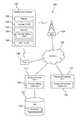
- FIG. 1is a block diagram of a communication system according to an embodiment.
- FIG. 2is a flow chart of a method according to an embodiment of the disclosure.
- FIG. 3is a flow chart of another method according to an embodiment of the disclosure.
- FIG. 4is an illustration of a mobile communication device according to an embodiment of the disclosure.
- FIG. 5is a block diagram of a hardware architecture of a mobile communication device according to an embodiment of the disclosure.
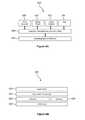
- FIG. 6Ais a block diagram of a software architecture of a mobile communication device according to an embodiment of the disclosure.
- FIG. 6Bis a block diagram of another software architecture of a mobile communication device according to an embodiment of the disclosure.
- FIG. 7is a block diagram of a computer system according to an embodiment of the disclosure.
- the disclosureteaches an electronic payment system for use by mobile communication devices in completing purchases, where payment for purchases is made by a mobile communication service provider and the cost is placed on a mobile communication service account bill associated with the device.
- this payment methodmay be referred to as mobile communication service provider billing, service provider billing, or carrier billing.
- a mobile communication deviceuses a near field communication (NFC) transceiver to initiate a payment transaction with a point-of-sale (POS) terminal, for example a POS terminal embedded in a parking meter.
- POSpoint-of-sale
- a service provider billing client application executing on the mobile communication devicemay prompt a user of the device to enter a code or security token, such as a personal identification number (PIN).
- PINpersonal identification number
- the client applicationafter verifying that the input code matches a stored code, establishes a communication session with a mobile communication service provider system via a wireless cellular communication link with a base transceiver station (BTS) or via another wireless communication link, for example via a WiFi radio link or via a Bluetooth® radio link.
- BTSbase transceiver station
- the mobile communication service providerselects a processor routing number managed by the provider for use in a service provider billing program and returns this processor routing number to the mobile communication device via the wireless communication link.
- the service providermay manage a single processor routing number that is used by a plurality of mobile communication devices that participate in the service provider billing program to complete payment transactions with POS terminals. Alternately, the service provider may manage a plurality of processor routing numbers, for example about 10 processor routing numbers, about 100 processor routing numbers, about 1000 processor routing numbers, or some other number of processor routing numbers.
- the processor routing numberscomprise 16 decimal digits (e.g., a digit in the range ‘0’ to ‘9’) that are consistent with known standard credit card number formats, but the teachings of the present disclosure may be adapted for use with other credit card number formats either now in use or to be implemented in the future.
- the mobile communication devicethen engages in a payment transaction via near field communication with the POS terminal, providing the processor routing number transmitted to it by the mobile communication service provider as well as other data about the device and/or mobile communication service subscriber. Said in other words, the mobile communication device provides the processor routing number and metadata to the POS terminal.
- the processor routing numberlacks the customary association to a unique payer, which in this case is the mobile communication service subscriber associated with the mobile communication device.
- the association to the unique payeris provided by the metadata.
- the processor routing numberprovides the association to (e.g., provides the routing to) a payment processor and to a mobile communication service provider, and the metadata provides information that the service provider can use to identify the unique payer—one of the subscribers to the mobile communication service delivered by the mobile communication service provider.
- the metadatacomprises information identifying the specific mobile communication device and/or identifying a subscriber.
- the metadatamay further comprise the code entered by the user.
- the POS terminalsends a standard credit card payment request to the payment processor that is identified by the processor routing number, where the request comprises the requested payment amount, the processor routing number, the metadata, and a merchant code that identifies the general business category of the POS terminal.
- the payment request sent by the POS terminalmay comprise additional information, for example an identification of the POS terminal and/or information about the goods and/or services being purchased.
- the POS terminaldetermines to which of a plurality of payment processors to send the request (e.g., to which payment processor to route the request) based on the processor routing number.
- the payment processormay be identified or addressed by the POS terminal based on a leading digit of the processor routing number or based on some other sub-set of the digits of the complete processor routing number.
- the requestmay further comprise a unique identification of the POS terminal, for example an address of the POS terminal, a name of the POS terminal, a geographical coordinate of the POS terminal, or other identifier.
- the requestmay further comprise an indication of the good or goods that are being purchased via the POS terminal.
- the payment processoranalyzes the processor routing number contained in the payment request and determines it is associated with (e.g., routes to or identifies) the mobile communication service provider for use in service provider billing transactions.
- Some payment requests received from the POS terminal by the payment processorcan be expected to be conventional credit card payment requests and not payment requests related to service provider billing.
- the payment providermakes the distinction between conventional credit card payment requests and payment requests related to service provider billing based on the processor routing number or credit card number provided in the request (e.g., based on encoding or lack of encoding of the mobile communication service provider in the number).
- one or more digits in the processor routing numbermay indicate that the number is to be processed as a processor routing number pursuant to service provider billing, thereby promoting easy and/or convenient discrimination from a number to be treated as a conventional credit card number.
- a digitmay be constrained to a first range if the number is to be treated as a conventional credit card number and may be constrained to a second range if the number is to be treated as a processor routing number and processed pursuant to service provider billing.
- a digitmay be constrained to the range 0-4 for convention credit card numbers and constrained to the range 5-9 for processor routing numbers.
- the payment processormay determine or identify the mobile communication service provider based on a leading digit of the processor routing number or based on some other sub-set of the digits of the complete processor routing number.
- the digit signature that identifies the payment processormay be different from the digit signature that identifies the mobile communication service provider.
- the leading digit of the processor routing numbermay identify and/or route to the payment processor
- the second digit of the processor routing numbermay identify and/or route to the mobile communication service provider.
- the leading digit of the processor routing numbermay identify the payment processor
- the second and third digits togethermay identify the mobile communication service provider.
- the first and second digits togethermay identify the payment processor
- the third digitmay identify the mobile communication service provider.
- the payment processoranalyzes the metadata to determine the merchant code associated with the POS terminal.
- the payment processorrejects payment requests having merchant codes that are not approved by the mobile communication service provider.
- the service providermay publish a white list to the payment processor, where the white list identifies the merchant codes approved by the service provider for participating in service provider billing transactions.
- the payment processormay encapsulate a reason message in a payment refusal message returned to the POS terminal, and the POS terminal may in turn encapsulate the reason message in a transaction termination message that it sends to the mobile communication device.
- the service provider billing client application executing on the mobile communication devicemay present a message on a display of the device that informs the user that the attempted payment transaction is not supported by the service provider billing system.
- the usermay complete the transaction with the POS terminal using some other payment vehicle, for example using a physical credit card, a physical debit card, cash, check, or some other payment means.
- the payment processorsends a request for service provider billing approval to the mobile communication service provider, where the request comprises the requested payment amount, the processor routing number, and the metadata.
- the requestmay further comprise the merchant code.
- the requestmay further comprise an identification of the POS terminal, for example an address of the POS terminal, a unique name of the POS terminal, a geographical coordinate of the POS terminal, or other identifier.
- the requestmay further comprise an indication of the good or goods that are being purchased via the POS terminal.
- the mobile communication service providermay accumulate data on POS terminal transactions and analyze the accumulated data to derive marketing information and/or marketing insights.
- the service provideranalyzes the request to determine a subscriber associated with the request.
- the service providermay analyze the code or personal identification number that is contained in the metadata and verify that the code matches a stored code associated with the subscriber.
- the service providerdetermines whether the subscriber account associated with the request is in good standing, for example if the subscriber is registered in the service provider billing program and if the subscriber's account balance is current (e.g., if payment on the account balance is not in arrears).
- the service providermay further check to see if a sum of service provider billing by the subscriber during a predefined billing period does not exceed a maximum per billing period.
- the approved merchant codesmay be restricted to business categories associated with small purchase values, for example parking meters, vending machines (e.g., soft drink machines), taxi-cabs and the like.
- Restricting merchant codes to these business categoriesmay be a risk reduction strategy—the opportunities for fraud and for consequent financial losses to the mobile communication service provider may be reduced.
- the limitation of the sum of service provider billing during a billing period by a subscribermay also be viewed as a risk reduction strategy.
- Approved merchant codesmay be expanded to other business categories over time and as confidence builds in the security of this novel payment system.
- the service providerdebits the subscriber's billing account and sends payment approval to the payment processor.
- the payment processorsends credit card payment approval to the POS terminal.
- the POS terminalcompletes the sales transaction with the mobile communication device.
- the mobile communication deviceerases the processor routing number, for example from a memory of the device.
- the processor routing numberis stored in dynamically allocated memory by the provider billing application, and when the provider billing application finishes execution on completion of the payment transaction, the dynamically allocated memory storing the processor routing number is released and is virtually erased thereby (e.g., is not readable and/or recoverable by any conventional application that may execute on the mobile communication device).
- the payment processormay aggregate payment amounts over a period of time and settle with the service provider on periodic intervals, for example at the end of a business day, at the end of a month, at the end of a quarter, or at some other time interval.
- the service providermay keep a deposit account controlled by the payment provider and maintain the account balance in a positive balance and/or with a minimum positive balance, and the payment processor may recover funds from that deposit account.
- Yet other financing arrangements between the service provider and the payment processorare contemplated by the present disclosure.
- the mobile communication service providermay maintain one or more actual credit card numbers that equate to the processor routing numbers.
- the processor routing numberis effectively a credit card number to some nodes in the payment transaction network, for example to the POS terminal.
- This aspect of the processor routing numberallows it to be used by existing nodes in the payment system without change, for example to tunnel the payment transaction through the POS terminal and complete the payment transaction with service provider billing without the POS terminal having to be updated to perform according to a new paradigm or a new protocol.
- the compatibility of the processor routing number with existing credit card numbers and payment systemsmay have the benefit of making the deployment of a service provider billing model easier and may obviate the need to overcome resistance from existing retailers who have traditional POS terminals.
- the processor routing numberis different from a credit card number in how it is processed or treated at other nodes in the payment transaction network, for example at the payment processor and at the mobile communication service provider.
- the processor routing numberdoes not serve the purpose of identifying the specific payer associated with a payment transaction, as is the case in a customary credit card payment transaction.
- identification of the specific payeris supported by the metadata, for example the information identifying the mobile communication device and/or the subscriber.
- the mobile communication service providermay pay to own or maintain credit card numbers that correspond to the processor routing numbers. Maintaining a large number of credit card numbers has a cost. By using processor routing numbers that are shared among a plurality of participants in the service provider billing program, fewer credit card numbers are maintained and a considerable cost savings can be realized by the mobile communication service provider with reference to a system that depends on unique credit card numbers statically assigned to each participant.
- the same processor routing numbermay be used by different subscribers at different times to complete payment transactions or used by different subscribers at substantially the same time to complete payment transactions.
- the mobile communication service providermay use only a single processor routing number for the entire service provider billing program and hence only pay to maintain one standard credit card number.
- the mobile communication service providermay allocate processor routing numbers in a way to promote tracking purchasing behavior or recording purchasing behavior. For example, processor routing numbers may be allocated based on the location of subscribers. The processor routing numbers may be allocated based on time of purchase. The processor routing numbers may be allocated based on a subscriber payment date. The processor routing numbers may be allocated based on yet other bases. In an embodiment, multiple allocation schemes can be overlapped. Thus, participants residing in ten different regions may be allocated processor routing numbers with fifth and sixth digits that has numbers 0-9 to region 1, 10-19 to region two, . . . , 90-99 to region ten. Participants residing in region one may be allocated processor fifth and sixth digits of the routing numbers 0-4 during the week and processor routing numbers 5-9 on weekends. Other like encoding schemes for imbedding information about transactions in the processor routing number are contemplated by the present disclosure.
- the service provider billing system described hereincan promote efficient business practices, by reducing the cost of maintaining credit card numbers by sharing processor routing numbers among subscribers. Additionally, the service provider billing system restricts knowledge of the specific payer associated with a payment transaction to the mobile communication service provider, thereby providing new privacy protections relative to existing credit card payment systems where multiple nodes in the payment network are able to identify the specific payer (e.g., can know the credit card number that is uniquely associated to and hence is a proxy identity for the specific payer). This system also provides the opportunity to protect and restrict access to valuable mobile communication service subscriber profile and marketing information.
- the system 100comprises a mobile communication device 102 , a base transceiver station 104 , a network 106 , a point-of-sale (POS) terminal 108 , a payment processor server 110 , and a service provider server 112 .
- the mobile communication device 102may be a mobile phone, a smart phone, a media player, or a personal digital assistant. In an embodiment, alternatively, the mobile communication device 102 may be a laptop computer, a tablet computer, or a notebook computer.
- the network 106may be any combination of private and/or public communication networks.
- the servers 110 , 112 and the POS 108may be implemented as computer systems. Computer systems are described further hereinafter.
- the mobile communication device 102comprises a display 120 , a cellular radio transceiver 122 , a memory 124 that stores a service provider billing client 126 , and a near field communication transceiver 128 .
- the cellular radio transceiver 122may be used to establish a wireless communication link with the base transceiver station 104 , and the base transceiver station 104 may provide connectivity to the network 106 to the device 102 .
- the wireless communication linkmay be established using one or more of a code division multiple access (CDMA) wireless communication protocol, a long term evolution (LTE) wireless communication protocol, a global system for mobile communication (GSM) wireless communication protocol, a worldwide interoperability for microwave access (WiMAX) wireless communication protocol, or another wireless communication protocol.
- CDMAcode division multiple access
- LTElong term evolution
- GSMglobal system for mobile communication
- WiMAXworldwide interoperability for microwave access
- the base transceiver station 104may be an enhanced node B (eNB), a cell tower, or other radio access network (RAN) radio node.
- the mobile communication device 102may further comprise a WiFi radio transceiver, a Bluetooth® radio transceiver, or other non-cellular radio transceiver.
- the near field communication transceiver 128may be used to establish a wireless communication link between the device 102 and the POS 108 .
- the wireless communication linkmay be limited to a relatively short range, for example less than 10 feet, while the wireless communication link between the device 102 and the base transceiver station 104 may promote communication over a relatively long range, for example at least 100 feet or over several miles.
- the wireless link between the near field communication transceiver 128 and the POS 108may be provided by radio communication links, by optical communication links (e.g., infrared), or by acoustic communication links.
- the near field communication transceiveris a radio transceiver.
- the POS 108may be a point-of-sale terminal associated with a wide variety of businesses.
- the usermay use the device 102 to complete an electronic payment with a POS 108 embedded in a parking meter, for example to pay for an hour's worth of parking.
- the usermay use the device 102 to complete an electronic payment with a POS 108 embedded in a vending machine, for example to purchase a soft drink, to purchase stamps, or to rent a video.
- the usermay use the device 102 to complete an electronic payment with a POS 108 embedded in or mounted in a taxi-cab, for example to pay a taxi fare.
- the usermay use the device 102 to complete an electronic payment with a POS 108 located in a grocery store, for example to purchase a load of groceries. It is understood that the teachings of the present disclosure may be applicable to completing electronic payment transactions with a point-of-sale terminal embedded in or located in a wide range of businesses, organizations, or services.
- the provider billing client 126may be activated or execute on a processor of the device 102 . This may involve launching a process and/or thread associated with live execution of the provider billing client 126 . After completion of the payment transaction with the POS 108 , the process and/or thread associated with the live execution of the provider billing client 126 may be killed, deactivated, terminated, and/or unloaded and memory allocated for use by the provider billing client 126 when it was executing may be released and/or deallocated. In some contexts the provider billing client 126 may be referred to as a provider billing application.
- the provider billing client 126may open a dialog box on the display 120 prompting a user of the device 102 to enter a code, for example to enter a personal identification number (PIN).
- the provider billing client 126may compare the code entered by the user to a stored value of the code or PIN. If the entered code matches the stored value, the provider billing client 126 proceeds with provider billing processing. If the entered code does not match the stored value, the provider billing client 126 may terminate provider billing processing, for example after a predefined number of failed code input attempts.
- the codemay be transmitted to the service provider server 112 , for example at the time a request for a processor routing number is transmitted from the device 102 to the server 112 , and a provider billing application 150 executing on the server 112 may authenticate the user based on comparing the input code to a stored value of the code. It is contemplated that in an embodiment user authentication may be completed by the provider billing client 126 comparing a user input biometric, for example a fingerprint signature or a retina scan signature sensed by a biometric sensor integrated with the device 102 , to a stored value of the biometric.
- a user input biometricfor example a fingerprint signature or a retina scan signature sensed by a biometric sensor integrated with the device 102 , to a stored value of the biometric.
- the provider billing client 126may generate a processor routing number internally or may request a processor routing number from the service provider server 112 .
- the routing numbers 154may be stored by the service provider in a data store 152 .
- the client 126may be provisioned with a range of processor routing numbers maintained by the mobile communication service provider and associated to the service provider by the payment processor.
- the provider billing client 126may select one of the processor routing numbers by an algorithmic process.
- the provider billing client 126may hash a seed value to randomly generate a number in the range of processor routing numbers, for example hashing a current time or some other seed to a processor routing number in the provisioned number range.
- a processor routing numbermay have the format of an ordinary credit card number and may be processed as an ordinary credit card number by some elements of the payment system, for example by the POS 108 .
- the processor routing numberis a 16-digit processor routing number.
- the processor routing numberhas an ordinary numerical structure and/or value range. Said in other words, the processor routing number looks like a standard credit card number. Unlike an ordinary credit card number, however, the processor routing number is not uniquely associated with and/or allocated to a single payer (e.g., a single mobile communication service account subscriber), and a processor routing number may be used by different users at different times or even, in an embodiment, at substantially the same time.
- the provider billing client 126may request the provider billing application 150 to provide a processor routing number to it.
- the client 126may send the code input by the user with the request for the processor routing number to the provider billing application 150 . If the code sent with the request does not match a stored code value, the provider billing application 150 may reject the request for the processor routing number.
- the provider billing application 150may return a processor routing number selected from a range of numbers maintained by the mobile communication service provider, for example a processor routing number may be selected from a bank identification number (BIN) range or from an issuer identification number (IIN) range maintained by the service provider.
- BINbank identification number
- IINissuer identification number
- the provider billing application 150may maintain or manage only a single processor routing number selected from a single BIN or single IIN paid for and/or maintained by the mobile communication service provider.
- the processor routing numbermay be selected from a range of about 10, a range of about 100, a range of about 1000, or some other range of BINs or IINs paid for and/or maintained by the mobile communication service provider.
- the provider billing client 126may request and the provider billing application 150 may return the processor routing number via a wireless link provided to the mobile communication device 102 by the base transceiver station 104 or an eNB, via a wireless link provided to the mobile communication device 102 provided by a WiFi access point, via a wireless link provided to the mobile communication device 102 provided by a Bluetooth® access point, or via another wireless link.
- the provider billing client 126sends the processor routing number along with other information that may be referred to as metadata or associated data to the POS 108 .
- the metadatamay comprise information that identifies the device 102 , the user of the device, and/or the subscription account under which the device 102 receives mobile communication service from the mobile communication service provider. This identifying information may comprise a phone number, a mobile equipment identifier (MEID), an account number, or other.
- the metadatamay further comprise the code input by the user.
- the metadatamay comprise other information that relates to a context of the payment transaction such as a location of the device 102 such as geographical coordinates or an identity of the base transceiver station 104 with which the device 102 is currently attached.
- the POS 108identifies a payment processor based on the processor routing number. It is noted that from the perspective of the POS 108 , the processor routing number appears to be an ordinary credit card number. The unusual character of the processor routing number does not attach to the structure or value of the number itself but rather attaches to how the payment processor and the mobile communication service provider use or process transactions involving the processor routing number. For example, the POS 108 may identify a payment processor based on the leading digit of the processor routing number and sends a credit card payment request to the payment processor server 110 associated with that identified payment processor.
- the credit card payment requestcomprises the payment amount, the processor routing number, the metadata, and a merchant code associated with the POS 108 .
- the credit card payment requestmay comprise other information about the context to the payment request, such as an identification of the POS 108 and/or information about the goods and/or services being purchased.
- a payment processor application 140executes on the payment processor server 110 .
- the payment processor application 140receives the credit card payment request from the POS 108 , analyzes the processor routing number, and determines that the processor routing number is to be processed as a service provider billing transaction.
- the payment processormay pay the POS 108 the amount of the transaction and recover or bill this amount from the mobile communication service provider and/or from a deposit account or line of credit maintained by the mobile communication service provider.
- the payment processor application 140when processing a service provider billing transaction, filters the credit card payment requests from the POS 108 based on the merchant code sent in the requests, refusing credit card payment requests from those POS 108 having a merchant code that is not supported by the provider billing system of the subject mobile communication service provider.
- the payment processor application 140may send an explanatory message back with the payment refusal, and the POS 108 may forward this message back to the device 102 .
- the device 102 and/or provider billing client 126may present a message on the display 120 stating that the requested transaction is not supported by the service provider billing system.
- the payment processor application 140sends a service provider billing approval request to the service provider server 112 .
- the service provider billing approval requestcomprises the payment amount, the processor routing number, the metadata, optionally the code input by the user on the mobile communication device 102 , and optionally the merchant code.
- the service provider billing approval requestmay further comprise contextual information provided by the POS 108 , for example an identity of the POS 108 and information about the goods and/or services being purchased.
- the service provider billing application 150is invoked to process the request.
- the service provider billing application 150may use the metadata to identify the mobile communication service account associated with the device 102 , for example identifying the service account based on a phone number of the device 102 or based on a mobile equipment identifier.
- the service provider billing application 150may authenticate the user of the device 102 by comparing a code provided in the metadata with a stored value of the code before processing further. If the authentication fails, the service provider billing application 150 may send a payment disapproval, a payment rejection, or payment refusal message back to the payment processor server 110 and/or the payment processor application 140 . In response, the payment processor application 140 may send a payment refusal message back to the POS 108 .
- the provider billing application 150may determine if the mobile communication service account associated with the payment request is in good standing, for example determine that the account balance is not in arrears or that a periodic payment associated with the account is not overdue. If the account balance is in good order, the provider billing application 150 may send a payment approval message to the payment processor server 110 . The payment processor application 140 may send a payment approval message to the POS 108 , thereby effectively paying the POS 108 according to customary credit card payment methods. At the same time the payment processor application 140 may transfer funds from a deposit account or draw on a standing line of credit maintained by the mobile communication service provider commensurate with the payment by the payment processor to the POS 108 . The POS 108 completes the purchase transaction with the device 102 .
- a service provider billing per periodic interval limitmay be imposed by the service provider.
- a participantmay be limited to charging a maximum of a predefined amount of money per billing cycle, for example limited to charging a maximum of $50 per month. It is understood that other predefined amounts of money may be used as limits and other periodic billing intervals are consistent with the present disclosure.
- the predefined limits on participant periodic service provider billingmay be different for different participants, for example different based on a payment history of the participants and/or based on a credit score of the participants. This limit on service provider billing per time interval may promote limiting fraud exposure for the mobile communication service provider and may make the system financially viable which otherwise might be prohibitively risky.
- a credit card payment requestis received from a point-of-sale (POS) terminal, for example by the payment processor server 110 and/or by the payment processor application 140 .
- the credit card payment requestis associated with a purchase transaction initiated by a mobile communication device with the point-of-sale terminal, wherein the mobile communication device is associated with a mobile communication service account with a mobile communication service provider.
- the credit card payment requestcomprises identification information associated with the mobile communication service account and comprises a processor routing number.
- the identification informationmay comprise a phone number or a mobile equipment identify (MEID) of the mobile communication device that are associated with the mobile communication service account.
- the credit card payment requestmay further comprise a merchant code.
- the payment processor server 110 and/or the payment processor application 140filters payment requests based in part on the merchant code, as described further above.
- a request for service provider billing approvalis sent based on the processor routing number to the mobile communication service provider.
- the request for service provider billing approvalcomprises the identification information associated with the mobile communication service account.
- the requestmay further comprise the payment amount.
- the requestmay further comprise a code or personal identification number.
- approvalis received from the mobile communication service provider to bill the purchase transaction to the mobile communication service account associated with the mobile communication device 102 .
- transmit a credit card payment approvalto the point-of-sale terminal.
- a request for mobile communication service provider billing approvalis received from a payment processor.
- the requestcomprises one of a phone number associated with a mobile communication service account or an equipment identification of a mobile communication device associated with the mobile communication service account.
- the requestcomprises a payment amount and a processor routing number, wherein the processor routing number is consistent with the form of a credit card number from a block of credit card numbers maintained by a mobile communication service provider, and wherein the processor routing number is used by different mobile communication devices associated with different mobile communication service accounts to complete payment transactions.
- a processor routing number that is consistent with the form of a credit card numberhas the same number of digits as the credit card number, and each digit of the processor routing number has the same value as the corresponding digit of the credit card number. See above for further clarification and definition of the term ‘processor routing number.’
- the mobile communication service accountis identified based on one of the phone number or the equipment identification of the mobile communication device.
- the payment amountis charged against the mobile communication service account.
- other activitiesare performed. For example, the participation of a subscriber account in the service provider billing program or service may be confirmed. The account balance of the subscriber account may be analyzed to assure the account is not in arrears and is in good standing. The accumulation of charges to service provider billing during the current billing period may be determined and compared to a maximum predefined periodic limit applied to the subscriber account. The results of these other activities may cause the request for service provider billing to be rejected.
- a service provider billing approvalis transmitted to the payment processor.
- the method 220further comprises receiving a request for a processor routing number from a second mobile communication device, wherein the second mobile communication device is different from the mobile communication device and not associated with the mobile communication service account associated with the mobile communication device 102 .
- the method 220further comprises transmitting the same processor routing number provided in the request for mobile communication service provider billing approval in block 224 to the second mobile communication device, whereby the mobile communication device and the second mobile communication device use the same processor routing number to complete payment transactions.
- the same processor routing numbermay be used to complete payment transactions by the different mobile communication devices at different times. Alternatively, in an embodiment, the same processor routing number may be allocated to the different mobile communication devices at substantially the same times and to complete payment transactions at substantially the same time.
- the method 220further comprises receiving a second request for mobile communication service provider billing approval from the payment processor.
- the second requestcomprises one of a second phone number associated with a second mobile communication service account or a second equipment identification of the second mobile communication device associated with the second mobile communication service account.
- the requestcomprises a second payment amount and the same processor routing number used by the mobile communication device in block 222 above.
- the second mobile communication service accountis identified based on one of the second phone number or the second equipment identification of the second mobile communication device.
- the second payment amountis charged against the second mobile communication service account.
- a second service provider billing approvalis transmitted to the payment processor.
- FIG. 4depicts the mobile device 400 , which is operable for implementing aspects of the present disclosure, but the present disclosure should not be limited to these implementations.
- the mobile device 400may take various forms including a wireless handset, a pager, a personal digital assistant (PDA), a gaming device, or a media player.
- the mobile device 400includes a display 402 and a touch-sensitive surface and/or keys 404 for input by a user.
- the mobile device 400may present options for the user to select, controls for the user to actuate, and/or cursors or other indicators for the user to direct.
- the mobile device 400may further accept data entry from the user, including numbers to dial or various parameter values for configuring the operation of the handset.
- the mobile device 400may further execute one or more software or firmware applications in response to user commands. These applications may configure the mobile device 400 to perform various customized functions in response to user interaction. Additionally, the mobile device 400 may be programmed and/or configured over-the-air, for example from a wireless base station, a wireless access point, or a peer mobile device 400 . The mobile device 400 may execute a web browser application which enables the display 402 to show a web page. The web page may be obtained via wireless communications with a base transceiver station, a wireless network access node, a peer mobile device 400 or any other wireless communication network or system.
- FIG. 5shows a block diagram of the mobile device 400 . While a variety of known components of handsets are depicted, in an embodiment a subset of the listed components and/or additional components not listed may be included in the mobile device 400 .
- the mobile device 400includes a digital signal processor (DSP) 502 and a memory 504 .
- DSPdigital signal processor
- the mobile device 400may further include an antenna and front end unit 506 , a radio frequency (RF) transceiver 508 , a baseband processing unit 510 , a microphone 512 , an earpiece speaker 514 , a headset port 516 , an input/output interface 518 , a removable memory card 520 , a universal serial bus (USB) port 522 , an infrared port 524 , a vibrator 526 , a keypad 528 , a touch screen liquid crystal display (LCD) with a touch sensitive surface 530 , a touch screen/LCD controller 532 , a camera 534 , a camera controller 536 , and a global positioning system (GPS) receiver 538 .
- RFradio frequency
- the mobile device 400may include another kind of display that does not provide a touch sensitive screen.
- the DSP 502may communicate directly with the memory 504 without passing through the input/output interface 518 .
- the mobile device 400may comprise other peripheral devices that provide other functionality.
- the DSP 502or some other form of controller or central processing unit operates to control the various components of the mobile device 400 in accordance with embedded software or firmware stored in memory 504 or stored in memory contained within the DSP 502 itself.
- the DSP 502may execute other applications stored in the memory 504 or made available via information carrier media such as portable data storage media like the removable memory card 520 or via wired or wireless network communications.
- the application softwaremay comprise a compiled set of machine-readable instructions that configure the DSP 502 to provide the desired functionality, or the application software may be high-level software instructions to be processed by an interpreter or compiler to indirectly configure the DSP 502 .
- the DSP 502may communicate with a wireless network via the analog baseband processing unit 510 .
- the communicationmay provide Internet connectivity, enabling a user to gain access to content on the Internet and to send and receive e-mail or text messages.
- the input/output interface 518interconnects the DSP 502 and various memories and interfaces.
- the memory 504 and the removable memory card 520may provide software and data to configure the operation of the DSP 502 .
- the interfacesmay be the USB port 522 and the infrared port 524 .
- the USB port 522may enable the mobile device 400 to function as a peripheral device to exchange information with a personal computer or other computer system.
- the infrared port 524 and other optional portssuch as a Bluetooth® interface or an IEEE 802.11 compliant wireless interface may enable the mobile device 400 to communicate wirelessly with other nearby handsets and/or wireless base stations.
- the keypad 528couples to the DSP 502 via the input/output interface 518 to provide one mechanism for the user to make selections, enter information, and otherwise provide input to the mobile device 400 .
- Another input mechanismmay be the touch screen LCD 530 , which may also display text and/or graphics to the user.
- the touch screen LCD controller 532couples the DSP 502 to the touch screen LCD 530 .
- the GPS receiver 538is coupled to the DSP 502 to decode global positioning system signals, thereby enabling the mobile device 400 to determine its position.
- FIG. 6Aillustrates a software environment 602 that may be implemented by the DSP 502 .
- the DSP 502executes operating system software 604 that provides a platform from which the rest of the software operates.
- the operating system software 604may provide a variety of drivers for the handset hardware with standardized interfaces that are accessible to application software.
- the operating system software 604may be coupled to and interact with application management services (AMS) 606 that transfer control between applications running on the mobile device 400 .
- AMSapplication management services
- FIG. 6Aare also shown in FIG. 6A a web browser application 608 , a media player application 610 , and JAVA applets 612 .
- the web browser application 608may be executed by the mobile device 400 to browse content and/or the Internet, for example when the mobile device 400 is coupled to a network via a wireless link.
- the web browser application 608may permit a user to enter information into forms and select links to retrieve and view web pages.
- the media player application 610may be executed by the mobile device 400 to play audio or audiovisual media.
- the JAVA applets 612may be executed by the mobile device 400 to provide a variety of functionality including games, utilities, and other functionality.
- the service provider billing client 126may execute “on top of” or relying on service provided by the application management services 606 and/or by the operating system software 604 .
- FIG. 6Billustrates an alternative software environment 620 that may be implemented by the DSP 502 .
- the DSP 502executes operating system kernel (OS kernel) 628 and an execution runtime 630 .
- the DSP 502executes applications 622 that may execute in the execution runtime 630 and may rely upon services provided by the application framework 624 .
- Applications 622 and the application framework 624may rely upon functionality provided via the libraries 626 .
- FIG. 7illustrates a computer system 380 suitable for implementing one or more embodiments disclosed herein.
- the computer system 380includes a processor 382 (which may be referred to as a central processor unit or CPU) that is in communication with memory devices including secondary storage 384 , read only memory (ROM) 386 , random access memory (RAM) 388 , input/output (I/O) devices 390 , and network connectivity devices 392 .
- the processor 382may be implemented as one or more CPU chips.
- a design that is still subject to frequent changemay be preferred to be implemented in software, because re-spinning a hardware implementation is more expensive than re-spinning a software design.
- a design that is stable that will be produced in large volumemay be preferred to be implemented in hardware, for example in an application specific integrated circuit (ASIC), because for large production runs the hardware implementation may be less expensive than the software implementation.
- ASICapplication specific integrated circuit
- a designmay be developed and tested in a software form and later transformed, by well known design rules, to an equivalent hardware implementation in an application specific integrated circuit that hardwires the instructions of the software.
- a machine controlled by a new ASICis a particular machine or apparatus, likewise a computer that has been programmed and/or loaded with executable instructions may be viewed as a particular machine or apparatus.
- the secondary storage 384is typically comprised of one or more disk drives or tape drives and is used for non-volatile storage of data and as an over-flow data storage device if RAM 388 is not large enough to hold all working data. Secondary storage 384 may be used to store programs which are loaded into RAM 388 when such programs are selected for execution.
- the ROM 386is used to store instructions and perhaps data which are read during program execution. ROM 386 is a non-volatile memory device which typically has a small memory capacity relative to the larger memory capacity of secondary storage 384 .
- the RAM 388is used to store volatile data and perhaps to store instructions. Access to both ROM 386 and RAM 388 is typically faster than to secondary storage 384 .
- the secondary storage 384 , the RAM 388 , and/or the ROM 386may be referred to in some contexts as computer readable storage media and/or non-transitory computer readable media.
- I/O devices 390may include printers, video monitors, liquid crystal displays (LCDs), touch screen displays, keyboards, keypads, switches, dials, mice, track balls, voice recognizers, card readers, paper tape readers, or other well-known input devices.
- LCDsliquid crystal displays
- touch screen displayskeyboards, keypads, switches, dials, mice, track balls, voice recognizers, card readers, paper tape readers, or other well-known input devices.
- the network connectivity devices 392may take the form of modems, modem banks, Ethernet cards, universal serial bus (USB) interface cards, serial interfaces, token ring cards, fiber distributed data interface (FDDI) cards, wireless local area network (WLAN) cards, radio transceiver cards such as code division multiple access (CDMA), global system for mobile communications (GSM), long-term evolution (LTE), worldwide interoperability for microwave access (WiMAX), and/or other air interface protocol radio transceiver cards, and other well-known network devices. These network connectivity devices 392 may enable the processor 382 to communicate with the Internet or one or more intranets.
- USBuniversal serial bus
- FDDIfiber distributed data interface
- WLANwireless local area network
- radio transceiver cardssuch as code division multiple access (CDMA), global system for mobile communications (GSM), long-term evolution (LTE), worldwide interoperability for microwave access (WiMAX), and/or other air interface protocol radio transceiver cards, and other well-known network devices.
- CDMAcode
- the processor 382might receive information from the network, or might output information to the network in the course of performing the above-described method steps. Such information, which is often represented as a sequence of instructions to be executed using processor 382 , may be received from and outputted to the network, for example, in the form of a computer data signal embodied in a carrier wave.
- Such informationmay be received from and outputted to the network, for example, in the form of a computer data baseband signal or signal embodied in a carrier wave.
- the baseband signal or signal embedded in the carrier wavemay be generated according to several methods well known to one skilled in the art.
- the baseband signal and/or signal embedded in the carrier wavemay be referred to in some contexts as a transitory signal.
- the processor 382executes instructions, codes, computer programs, scripts which it accesses from hard disk, floppy disk, optical disk (these various disk based systems may all be considered secondary storage 384 ), ROM 386 , RAM 388 , or the network connectivity devices 392 . While only one processor 382 is shown, multiple processors may be present. Thus, while instructions may be discussed as executed by a processor, the instructions may be executed simultaneously, serially, or otherwise executed by one or multiple processors.
- Instructions, codes, computer programs, scripts, and/or data that may be accessed from the secondary storage 384for example, hard drives, floppy disks, optical disks, and/or other device, the ROM 386 , and/or the RAM 388 may be referred to in some contexts as non-transitory instructions and/or non-transitory information.
- the computer system 380may comprise two or more computers in communication with each other that collaborate to perform a task.
- an applicationmay be partitioned in such a way as to permit concurrent and/or parallel processing of the instructions of the application.
- the data processed by the applicationmay be partitioned in such a way as to permit concurrent and/or parallel processing of different portions of a data set by the two or more computers.
- virtualization softwaremay be employed by the computer system 380 to provide the functionality of a number of servers that is not directly bound to the number of computers in the computer system 380 .
- virtualization softwaremay provide twenty virtual servers on four physical computers.
- Cloud computingmay comprise providing computing services via a network connection using dynamically scalable computing resources.
- Cloud computingmay be supported, at least in part, by virtualization software.
- a cloud computing environmentmay be established by an enterprise and/or may be hired on an as-needed basis from a third party provider.
- Some cloud computing environmentsmay comprise cloud computing resources owned and operated by the enterprise as well as cloud computing resources hired and/or leased from a third party provider.
- the computer program productmay comprise one or more computer readable storage medium having computer usable program code embodied therein to implement the functionality disclosed above.
- the computer program productmay comprise data structures, executable instructions, and other computer usable program code.
- the computer program productmay be embodied in removable computer storage media and/or non-removable computer storage media.
- the removable computer readable storage mediummay comprise, without limitation, a paper tape, a magnetic tape, magnetic disk, an optical disk, a solid state memory chip, for example analog magnetic tape, compact disk read only memory (CD-ROM) disks, floppy disks, jump drives, digital cards, multimedia cards, and others.
- the computer program productmay be suitable for loading, by the computer system 380 , at least portions of the contents of the computer program product to the secondary storage 384 , to the ROM 386 , to the RAM 388 , and/or to other non-volatile memory and volatile memory of the computer system 380 .
- the processor 382may process the executable instructions and/or data structures in part by directly accessing the computer program product, for example by reading from a CD-ROM disk inserted into a disk drive peripheral of the computer system 380 .
- the processor 382may process the executable instructions and/or data structures by remotely accessing the computer program product, for example by downloading the executable instructions and/or data structures from a remote server through the network connectivity devices 392 .
- the computer program productmay comprise instructions that promote the loading and/or copying of data, data structures, files, and/or executable instructions to the secondary storage 384 , to the ROM 386 , to the RAM 388 , and/or to other non-volatile memory and volatile memory of the computer system 380 .
- the secondary storage 384 , the ROM 386 , and the RAM 388may be referred to as a non-transitory computer readable medium or a computer readable storage media.
- a dynamic RAM embodiment of the RAM 388likewise, may be referred to as a non-transitory computer readable medium in that while the dynamic RAM receives electrical power and is operated in accordance with its design, for example during a period of time during which the computer system 380 is turned on and operational, the dynamic RAM stores information that is written to it.
- the processor 382may comprise an internal RAM, an internal ROM, a cache memory, and/or other internal non-transitory storage blocks, sections, or components that may be referred to in some contexts as non-transitory computer readable media or computer readable storage media.
Landscapes
- Business, Economics & Management (AREA)
- Accounting & Taxation (AREA)
- Engineering & Computer Science (AREA)
- Finance (AREA)
- Theoretical Computer Science (AREA)
- General Business, Economics & Management (AREA)
- General Physics & Mathematics (AREA)
- Physics & Mathematics (AREA)
- Strategic Management (AREA)
- Computer Security & Cryptography (AREA)
- Development Economics (AREA)
- Economics (AREA)
- Computer Networks & Wireless Communication (AREA)
- Mobile Radio Communication Systems (AREA)
- Telephonic Communication Services (AREA)
- Financial Or Insurance-Related Operations Such As Payment And Settlement (AREA)
Abstract
Description
Claims (20)
Priority Applications (2)
| Application Number | Priority Date | Filing Date | Title |
|---|---|---|---|
| US14/146,489US9672512B1 (en) | 2014-01-02 | 2014-01-02 | Processor routing number for mobile communication service provider billing |
| US15/582,482US10318954B1 (en) | 2014-01-02 | 2017-04-28 | Processor routing number for mobile communication service provider billing |
Applications Claiming Priority (1)
| Application Number | Priority Date | Filing Date | Title |
|---|---|---|---|
| US14/146,489US9672512B1 (en) | 2014-01-02 | 2014-01-02 | Processor routing number for mobile communication service provider billing |
Related Child Applications (1)
| Application Number | Title | Priority Date | Filing Date |
|---|---|---|---|
| US15/582,482ContinuationUS10318954B1 (en) | 2014-01-02 | 2017-04-28 | Processor routing number for mobile communication service provider billing |
Publications (1)
| Publication Number | Publication Date |
|---|---|
| US9672512B1true US9672512B1 (en) | 2017-06-06 |
Family
ID=58778583
Family Applications (2)
| Application Number | Title | Priority Date | Filing Date |
|---|---|---|---|
| US14/146,489Expired - Fee RelatedUS9672512B1 (en) | 2014-01-02 | 2014-01-02 | Processor routing number for mobile communication service provider billing |
| US15/582,482Active2034-04-24US10318954B1 (en) | 2014-01-02 | 2017-04-28 | Processor routing number for mobile communication service provider billing |
Family Applications After (1)
| Application Number | Title | Priority Date | Filing Date |
|---|---|---|---|
| US15/582,482Active2034-04-24US10318954B1 (en) | 2014-01-02 | 2017-04-28 | Processor routing number for mobile communication service provider billing |
Country Status (1)
| Country | Link |
|---|---|
| US (2) | US9672512B1 (en) |
Cited By (8)
| Publication number | Priority date | Publication date | Assignee | Title |
|---|---|---|---|---|
| CN107403317A (en)* | 2017-06-27 | 2017-11-28 | 北京初识科技有限公司 | A kind of stored value card information sharing method and its system |
| US20180089672A1 (en)* | 2016-09-28 | 2018-03-29 | Mastercard Asia/Pacific Pte. Ltd. | Payment Facilitation Device and Payment Facilitation Method |
| US10318954B1 (en) | 2014-01-02 | 2019-06-11 | Sprint Communications Company L.P. | Processor routing number for mobile communication service provider billing |
| US10535054B1 (en) | 2016-01-12 | 2020-01-14 | Square, Inc. | Purchase financing via an interactive digital receipt |
| US10692140B1 (en)* | 2017-11-15 | 2020-06-23 | Square, Inc. | Customized financing based on transaction information |
| US10755349B1 (en) | 2015-02-06 | 2020-08-25 | Square, Inc. | Payment processor financing of customer purchases |
| US10796363B1 (en) | 2017-11-15 | 2020-10-06 | Square, Inc. | Customized financing based on transaction information |
| US10872362B1 (en) | 2015-03-31 | 2020-12-22 | Square, Inc. | Invoice financing and repayment |
Families Citing this family (2)
| Publication number | Priority date | Publication date | Assignee | Title |
|---|---|---|---|---|
| US12406055B2 (en) | 2022-11-10 | 2025-09-02 | Bank Of America Corporation | System and method for identifying and redirecting incoming unauthorized data access requests |
| US12407684B2 (en) | 2022-11-10 | 2025-09-02 | Bank Of America Corporation | System and method for implementing authentication control protocols via components of an entity device |
Citations (17)
| Publication number | Priority date | Publication date | Assignee | Title |
|---|---|---|---|---|
| US20060196930A1 (en)* | 2005-03-04 | 2006-09-07 | Hart Matt E | Categorization of financial transactions |
| US20080082601A1 (en)* | 2006-09-29 | 2008-04-03 | Microsoft Corporation | Resource standardization in an off-premise environment |
| US20090037461A1 (en)* | 2007-08-02 | 2009-02-05 | Intuit Inc. | Method and system for automatic recognition and categorization of transactions |
| US20090150265A1 (en)* | 2007-12-07 | 2009-06-11 | Jpmorgan Chase Bank, N.A. | System and Method for Associating Financial Transaction Data with a User's Project Data |
| US7571139B1 (en)* | 1999-02-19 | 2009-08-04 | Giordano Joseph A | System and method for processing financial transactions |
| US20090222365A1 (en)* | 2008-02-29 | 2009-09-03 | Mcglynn Joseph A | Community-Based Transaction Categorization |
| US7742967B1 (en)* | 1999-10-01 | 2010-06-22 | Cardinalcommerce Corporation | Secure and efficient payment processing system |
| US7774271B1 (en)* | 2000-07-19 | 2010-08-10 | Globys, Inc. | Electronic financial management and analysis system and related methods |
| US20110047045A1 (en)* | 2008-08-14 | 2011-02-24 | Michael Brody | System and method for paying a merchant by a registered user using a cellular telephone account |
| US20110295750A1 (en)* | 2009-02-14 | 2011-12-01 | Net2Text Limited | Secure payment and billing method using mobile phone number or account |
| US8073759B1 (en)* | 2008-03-28 | 2011-12-06 | Intuit Inc. | Method and system for predictive event budgeting based on financial data from similarly situated consumers |
| US20120005342A1 (en)* | 2010-07-01 | 2012-01-05 | International Business Machines Corporation | Cloud Service Cost-Optimal Data Center Assignment |
| US8160941B1 (en)* | 2007-12-07 | 2012-04-17 | Jpmorgan Chase Bank, N.A. | Interactive account management system and method |
| US20130166448A1 (en)* | 2011-12-27 | 2013-06-27 | Infosys Limited | Financial transfers from mobile devices |
| US20140101034A1 (en)* | 2012-10-10 | 2014-04-10 | Mastercard International Incorporated | Methods and systems for prepaid mobile payment staging accounts |
| US20140137215A1 (en)* | 2012-11-13 | 2014-05-15 | Advanced Micro Devices, Inc. | Data flow processing in a network environment |
| US8856539B2 (en)* | 2001-03-16 | 2014-10-07 | Universal Secure Registry, Llc | Universal secure registry |
Family Cites Families (1)
| Publication number | Priority date | Publication date | Assignee | Title |
|---|---|---|---|---|
| US9672512B1 (en) | 2014-01-02 | 2017-06-06 | Sprint Communications Company L.P. | Processor routing number for mobile communication service provider billing |
- 2014
- 2014-01-02USUS14/146,489patent/US9672512B1/ennot_activeExpired - Fee Related
- 2017
- 2017-04-28USUS15/582,482patent/US10318954B1/enactiveActive
Patent Citations (23)
| Publication number | Priority date | Publication date | Assignee | Title |
|---|---|---|---|---|
| US7571139B1 (en)* | 1999-02-19 | 2009-08-04 | Giordano Joseph A | System and method for processing financial transactions |
| US20100241570A1 (en)* | 1999-10-01 | 2010-09-23 | Cardinalcommerce Corporation | Secure and efficient payment processing system |
| US7742967B1 (en)* | 1999-10-01 | 2010-06-22 | Cardinalcommerce Corporation | Secure and efficient payment processing system |
| US7774271B1 (en)* | 2000-07-19 | 2010-08-10 | Globys, Inc. | Electronic financial management and analysis system and related methods |
| US8856539B2 (en)* | 2001-03-16 | 2014-10-07 | Universal Secure Registry, Llc | Universal secure registry |
| US20060196930A1 (en)* | 2005-03-04 | 2006-09-07 | Hart Matt E | Categorization of financial transactions |
| US20080082601A1 (en)* | 2006-09-29 | 2008-04-03 | Microsoft Corporation | Resource standardization in an off-premise environment |
| US20090037461A1 (en)* | 2007-08-02 | 2009-02-05 | Intuit Inc. | Method and system for automatic recognition and categorization of transactions |
| US20090150265A1 (en)* | 2007-12-07 | 2009-06-11 | Jpmorgan Chase Bank, N.A. | System and Method for Associating Financial Transaction Data with a User's Project Data |
| US8321310B1 (en)* | 2007-12-07 | 2012-11-27 | Jpmorgan Chase Bank, N.A. | Interactive account management system and method |
| US8160941B1 (en)* | 2007-12-07 | 2012-04-17 | Jpmorgan Chase Bank, N.A. | Interactive account management system and method |
| US20090222365A1 (en)* | 2008-02-29 | 2009-09-03 | Mcglynn Joseph A | Community-Based Transaction Categorization |
| US8073759B1 (en)* | 2008-03-28 | 2011-12-06 | Intuit Inc. | Method and system for predictive event budgeting based on financial data from similarly situated consumers |
| US20140172710A1 (en)* | 2008-08-14 | 2014-06-19 | Payfone, Inc. | System and method for paying a merchant by a registered user using a cellular telephone account |
| US20110047045A1 (en)* | 2008-08-14 | 2011-02-24 | Michael Brody | System and method for paying a merchant by a registered user using a cellular telephone account |
| US20140172711A1 (en)* | 2008-08-14 | 2014-06-19 | Payfone, Inc. | System and method for paying a merchant by a registered user using a cellular telephone account |
| US8606640B2 (en)* | 2008-08-14 | 2013-12-10 | Payfone, Inc. | System and method for paying a merchant by a registered user using a cellular telephone account |
| US20110295750A1 (en)* | 2009-02-14 | 2011-12-01 | Net2Text Limited | Secure payment and billing method using mobile phone number or account |
| US8682792B2 (en)* | 2009-02-14 | 2014-03-25 | Net2Text Ltd | Secure payment and billing method using mobile phone number or account |
| US20120005342A1 (en)* | 2010-07-01 | 2012-01-05 | International Business Machines Corporation | Cloud Service Cost-Optimal Data Center Assignment |
| US20130166448A1 (en)* | 2011-12-27 | 2013-06-27 | Infosys Limited | Financial transfers from mobile devices |
| US20140101034A1 (en)* | 2012-10-10 | 2014-04-10 | Mastercard International Incorporated | Methods and systems for prepaid mobile payment staging accounts |
| US20140137215A1 (en)* | 2012-11-13 | 2014-05-15 | Advanced Micro Devices, Inc. | Data flow processing in a network environment |
Cited By (11)
| Publication number | Priority date | Publication date | Assignee | Title |
|---|---|---|---|---|
| US10318954B1 (en) | 2014-01-02 | 2019-06-11 | Sprint Communications Company L.P. | Processor routing number for mobile communication service provider billing |
| US10755349B1 (en) | 2015-02-06 | 2020-08-25 | Square, Inc. | Payment processor financing of customer purchases |
| US10872362B1 (en) | 2015-03-31 | 2020-12-22 | Square, Inc. | Invoice financing and repayment |
| US10535054B1 (en) | 2016-01-12 | 2020-01-14 | Square, Inc. | Purchase financing via an interactive digital receipt |
| US11948140B1 (en) | 2016-01-12 | 2024-04-02 | Block, Inc. | Interactive electronic notification |
| US20180089672A1 (en)* | 2016-09-28 | 2018-03-29 | Mastercard Asia/Pacific Pte. Ltd. | Payment Facilitation Device and Payment Facilitation Method |
| CN107403317A (en)* | 2017-06-27 | 2017-11-28 | 北京初识科技有限公司 | A kind of stored value card information sharing method and its system |
| US10692140B1 (en)* | 2017-11-15 | 2020-06-23 | Square, Inc. | Customized financing based on transaction information |
| US10796363B1 (en) | 2017-11-15 | 2020-10-06 | Square, Inc. | Customized financing based on transaction information |
| US11423476B1 (en) | 2017-11-15 | 2022-08-23 | Block, Inc. | Customized financing based on transaction information |
| US12346962B1 (en) | 2017-11-15 | 2025-07-01 | Block, Inc. | Mobile device integrating virtual payment card |
Also Published As
| Publication number | Publication date |
|---|---|
| US10318954B1 (en) | 2019-06-11 |
Similar Documents
| Publication | Publication Date | Title |
|---|---|---|
| US10318954B1 (en) | Processor routing number for mobile communication service provider billing | |
| US10382447B2 (en) | Enhanced data interface for contactless communications | |
| US10922675B2 (en) | Remote transaction system, method and point of sale terminal | |
| US10902415B2 (en) | Payment card binding method, trust evaluation method, apparatus, and electronic device | |
| AU2016380941A1 (en) | Method for determining if a current wallet-based transaction initiated by a digital wallet user is fraudulent | |
| US20200027115A1 (en) | Pay with points at point of service | |
| AU2025200629A1 (en) | Remote transaction system, method and point of sale terminal | |
| US20180268476A1 (en) | Method and apparatus for facilitating multi-element bidding for influencing a position on a payment list generated by an automated authentication engine | |
| US10354251B1 (en) | Assigning risk levels to electronic commerce transactions | |
| US20170124542A1 (en) | Methods and Systems for Dispensing Physical Currency | |
| US8924287B1 (en) | System and methods for mobile electronic funds transfers | |
| US11126993B1 (en) | Carrier assisted mobile phone on-line payment | |
| US9792603B1 (en) | Companion applets for web-based transactions | |
| KR20160147015A (en) | System and method for provisioning credit | |
| US20240070677A1 (en) | Aggregated transaction accounts | |
| KR102413534B1 (en) | Method and system for mobile payment including check of validity based on geographic location | |
| CN113168626A (en) | Post-Transaction Tipping Using Modified Transaction Message Fields | |
| US11682017B2 (en) | Systems and methods for electronic payments with fraud prevention | |
| US11956244B2 (en) | Method and system for initiating a transfer of resources | |
| US20250111361A1 (en) | System and method using resource provider application on mobile device as an access device | |
| CN112136302B (en) | Mobile network operator authentication protocol |
Legal Events
| Date | Code | Title | Description |
|---|---|---|---|
| AS | Assignment | Owner name:SPRINT COMMUNICATIONS COMPANY L.P., KANSAS Free format text:ASSIGNMENT OF ASSIGNORS INTEREST;ASSIGNORS:GAILLOUX, MICHAEL A.;SMITH, BRIAN T.;SIGNING DATES FROM 20131220 TO 20140102;REEL/FRAME:031892/0784 | |
| AS | Assignment | Owner name:DEUTSCHE BANK TRUST COMPANY AMERICAS, NEW YORK Free format text:GRANT OF FIRST PRIORITY AND JUNIOR PRIORITY SECURITY INTEREST IN PATENT RIGHTS;ASSIGNOR:SPRINT COMMUNICATIONS COMPANY L.P.;REEL/FRAME:041895/0210 Effective date:20170203 | |
| STCF | Information on status: patent grant | Free format text:PATENTED CASE | |
| AS | Assignment | Owner name:SPRINT COMMUNICATIONS COMPANY L.P., KANSAS Free format text:TERMINATION AND RELEASE OF FIRST PRIORITY AND JUNIOR PRIORITY SECURITY INTEREST IN PATENT RIGHTS;ASSIGNOR:DEUTSCHE BANK TRUST COMPANY AMERICAS;REEL/FRAME:052969/0475 Effective date:20200401 Owner name:DEUTSCHE BANK TRUST COMPANY AMERICAS, NEW YORK Free format text:SECURITY AGREEMENT;ASSIGNORS:T-MOBILE USA, INC.;ISBV LLC;T-MOBILE CENTRAL LLC;AND OTHERS;REEL/FRAME:053182/0001 Effective date:20200401 | |
| MAFP | Maintenance fee payment | Free format text:PAYMENT OF MAINTENANCE FEE, 4TH YEAR, LARGE ENTITY (ORIGINAL EVENT CODE: M1551); ENTITY STATUS OF PATENT OWNER: LARGE ENTITY Year of fee payment:4 | |
| AS | Assignment | Owner name:T-MOBILE INNOVATIONS LLC, KANSAS Free format text:ASSIGNMENT OF ASSIGNORS INTEREST;ASSIGNOR:SPRINT COMMUNICATIONS COMPANY L.P.;REEL/FRAME:055604/0001 Effective date:20210303 | |
| AS | Assignment | Owner name:SPRINT SPECTRUM LLC, KANSAS Free format text:RELEASE BY SECURED PARTY;ASSIGNOR:DEUTSCHE BANK TRUST COMPANY AMERICAS;REEL/FRAME:062595/0001 Effective date:20220822 Owner name:SPRINT INTERNATIONAL INCORPORATED, KANSAS Free format text:RELEASE BY SECURED PARTY;ASSIGNOR:DEUTSCHE BANK TRUST COMPANY AMERICAS;REEL/FRAME:062595/0001 Effective date:20220822 Owner name:SPRINT COMMUNICATIONS COMPANY L.P., KANSAS Free format text:RELEASE BY SECURED PARTY;ASSIGNOR:DEUTSCHE BANK TRUST COMPANY AMERICAS;REEL/FRAME:062595/0001 Effective date:20220822 Owner name:SPRINTCOM LLC, KANSAS Free format text:RELEASE BY SECURED PARTY;ASSIGNOR:DEUTSCHE BANK TRUST COMPANY AMERICAS;REEL/FRAME:062595/0001 Effective date:20220822 Owner name:CLEARWIRE IP HOLDINGS LLC, KANSAS Free format text:RELEASE BY SECURED PARTY;ASSIGNOR:DEUTSCHE BANK TRUST COMPANY AMERICAS;REEL/FRAME:062595/0001 Effective date:20220822 Owner name:CLEARWIRE COMMUNICATIONS LLC, KANSAS Free format text:RELEASE BY SECURED PARTY;ASSIGNOR:DEUTSCHE BANK TRUST COMPANY AMERICAS;REEL/FRAME:062595/0001 Effective date:20220822 Owner name:BOOST WORLDWIDE, LLC, KANSAS Free format text:RELEASE BY SECURED PARTY;ASSIGNOR:DEUTSCHE BANK TRUST COMPANY AMERICAS;REEL/FRAME:062595/0001 Effective date:20220822 Owner name:ASSURANCE WIRELESS USA, L.P., KANSAS Free format text:RELEASE BY SECURED PARTY;ASSIGNOR:DEUTSCHE BANK TRUST COMPANY AMERICAS;REEL/FRAME:062595/0001 Effective date:20220822 Owner name:T-MOBILE USA, INC., WASHINGTON Free format text:RELEASE BY SECURED PARTY;ASSIGNOR:DEUTSCHE BANK TRUST COMPANY AMERICAS;REEL/FRAME:062595/0001 Effective date:20220822 Owner name:T-MOBILE CENTRAL LLC, WASHINGTON Free format text:RELEASE BY SECURED PARTY;ASSIGNOR:DEUTSCHE BANK TRUST COMPANY AMERICAS;REEL/FRAME:062595/0001 Effective date:20220822 Owner name:PUSHSPRING, LLC, WASHINGTON Free format text:RELEASE BY SECURED PARTY;ASSIGNOR:DEUTSCHE BANK TRUST COMPANY AMERICAS;REEL/FRAME:062595/0001 Effective date:20220822 Owner name:LAYER3 TV, LLC, WASHINGTON Free format text:RELEASE BY SECURED PARTY;ASSIGNOR:DEUTSCHE BANK TRUST COMPANY AMERICAS;REEL/FRAME:062595/0001 Effective date:20220822 Owner name:IBSV LLC, WASHINGTON Free format text:RELEASE BY SECURED PARTY;ASSIGNOR:DEUTSCHE BANK TRUST COMPANY AMERICAS;REEL/FRAME:062595/0001 Effective date:20220822 | |
| FEPP | Fee payment procedure | Free format text:MAINTENANCE FEE REMINDER MAILED (ORIGINAL EVENT CODE: REM.); ENTITY STATUS OF PATENT OWNER: LARGE ENTITY | |
| LAPS | Lapse for failure to pay maintenance fees | Free format text:PATENT EXPIRED FOR FAILURE TO PAY MAINTENANCE FEES (ORIGINAL EVENT CODE: EXP.); ENTITY STATUS OF PATENT OWNER: LARGE ENTITY | |
| STCH | Information on status: patent discontinuation | Free format text:PATENT EXPIRED DUE TO NONPAYMENT OF MAINTENANCE FEES UNDER 37 CFR 1.362 | |
| FP | Lapsed due to failure to pay maintenance fee | Effective date:20250606 |