US9652088B2 - Fabrication of touch sensor panel using laser ablation - Google Patents
Fabrication of touch sensor panel using laser ablationDownload PDFInfo
- Publication number
- US9652088B2 US9652088B2US12/847,987US84798710AUS9652088B2US 9652088 B2US9652088 B2US 9652088B2US 84798710 AUS84798710 AUS 84798710AUS 9652088 B2US9652088 B2US 9652088B2
- Authority
- US
- United States
- Prior art keywords
- conductive layer
- regions
- portions
- dummy
- touch sensors
- Prior art date
- Legal status (The legal status is an assumption and is not a legal conclusion. Google has not performed a legal analysis and makes no representation as to the accuracy of the status listed.)
- Expired - Fee Related, expires
Links
Images



Classifications
- G—PHYSICS
- G06—COMPUTING OR CALCULATING; COUNTING
- G06F—ELECTRIC DIGITAL DATA PROCESSING
- G06F3/00—Input arrangements for transferring data to be processed into a form capable of being handled by the computer; Output arrangements for transferring data from processing unit to output unit, e.g. interface arrangements
- G06F3/01—Input arrangements or combined input and output arrangements for interaction between user and computer
- G06F3/03—Arrangements for converting the position or the displacement of a member into a coded form
- G06F3/041—Digitisers, e.g. for touch screens or touch pads, characterised by the transducing means
- G06F3/044—Digitisers, e.g. for touch screens or touch pads, characterised by the transducing means by capacitive means
- G06F3/0445—Digitisers, e.g. for touch screens or touch pads, characterised by the transducing means by capacitive means using two or more layers of sensing electrodes, e.g. using two layers of electrodes separated by a dielectric layer
- G—PHYSICS
- G06—COMPUTING OR CALCULATING; COUNTING
- G06F—ELECTRIC DIGITAL DATA PROCESSING
- G06F3/00—Input arrangements for transferring data to be processed into a form capable of being handled by the computer; Output arrangements for transferring data from processing unit to output unit, e.g. interface arrangements
- G06F3/01—Input arrangements or combined input and output arrangements for interaction between user and computer
- G06F3/03—Arrangements for converting the position or the displacement of a member into a coded form
- G06F3/041—Digitisers, e.g. for touch screens or touch pads, characterised by the transducing means
- G06F3/044—Digitisers, e.g. for touch screens or touch pads, characterised by the transducing means by capacitive means
- G—PHYSICS
- G06—COMPUTING OR CALCULATING; COUNTING
- G06F—ELECTRIC DIGITAL DATA PROCESSING
- G06F2203/00—Indexing scheme relating to G06F3/00 - G06F3/048
- G06F2203/041—Indexing scheme relating to G06F3/041 - G06F3/045
- G06F2203/04111—Cross over in capacitive digitiser, i.e. details of structures for connecting electrodes of the sensing pattern where the connections cross each other, e.g. bridge structures comprising an insulating layer, or vias through substrate
Definitions
- Thisrelates generally to touch sensor panels and, more particularly, to fabrication of a touch sensor panel using laser ablation.
- Touch sensor panelsare increasingly used as input devices to a computing system.
- a touch sensor panelcan include a cover substrate (formed from glass, polymer, or the like) to input information via touch and a sensor substrate (also formed from glass, polymer, or the like) with touch sensors to sense the touch on the cover substrate.
- a cover substrateformed from glass, polymer, or the like
- a sensor substratealso formed from glass, polymer, or the like
- successfully providing a touch sensor panel without the sensor substratehas not been easy.
- the cover substrateis glass that has been cut and shaped from a motherglass sheet. Then, for strength and durability, the cover glass is typically chemically treated with a strong ionic solution to strengthen all the glass surfaces, including the cut, shaped edges. Because chemical strengthening can damage the thin films of the touch sensors, it can be ineffective to place the touch sensors on the cover glass prior to strengthening.
- a fabrication methodcan include ablating a first conductive layer to define a first part of the touch sensors and then ablating a second conductive layer proximate to the first conductive layer to define a second part of the touch sensors.
- Another fabrication methodcan include ablating a first conductive layer to partially define the first part of the touch sensors, then ablating the first conductive layer and a proximate second conductive layer together to define the remainder of the first part of the touch sensors in the first conductive layer and to partially define the second part of the touch sensors in the second conductive layer, and finally ablating the second conductive layer to define the remainder of the second part of the touch sensors.
- These fabrication methodscan advantageously provide touch sensors on an undersurface of a cover substrate of a touch sensor panel, thereby resulting in a thinner panel. Additionally, using conductive layers rather than discrete elements to form the touch sensors can avoid some visual artifacts that might otherwise appear in the panel.
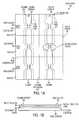
- FIGS. 1 a through 1 dillustrate an exemplary touch sensor panel fabricated using laser ablation according to various embodiments.
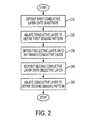
- FIG. 2illustrates an exemplary method for fabricating a touch sensor panel using laser ablation according to various embodiments.
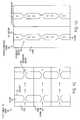
- FIGS. 3 a through 3 cillustrate an exemplary touch sensor panel fabricated using the method of FIG. 2 according to various embodiments.
- FIG. 4illustrates another exemplary method for fabricating a touch sensor panel using laser ablation according to various embodiments.
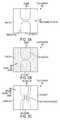
- FIGS. 5 a through 5 dillustrate an exemplary touch sensor panel fabricated using the method of FIG. 4 according to various embodiments.
- FIG. 6illustrates another exemplary touch sensor panel fabricated using laser ablation according to various embodiments.
- FIG. 7illustrates a cross-sectional view of another exemplary touch sensor panel fabricated using laser ablation according to various embodiments.
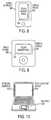
- FIG. 8illustrates an exemplary mobile telephone having a touch sensor panel fabricated using laser ablation according to various embodiments.
- FIG. 9illustrates an exemplary digital media player having a touch sensor panel fabricated using laser ablation according to various embodiments.
- FIG. 10illustrates an exemplary personal computer having a touch sensitive display and a touchpad fabricated using laser ablation according to various embodiments.
- the fabricated touch sensor panelcan have touch sensors formed from two conductive layers disposed on a surface such as an undersurface of a cover substrate.
- a fabrication methodcan include depositing a first conductive layer onto a substrate, ablating the first conductive layer to define part of the touch sensors, depositing a dielectric material onto the first conductive layer to separate the first and subsequently deposited second conductive layers, depositing the second conductive layer onto the dielectric layer, and ablating the second conductive layer to define the remaining part of the touch sensors.
- Another fabrication methodcan include depositing a first conductive layer onto a substrate, ablating the first conductive layer to define first crossover portions of the touch sensors (crossover referring to portions of the touch sensors, e.g., rows and columns, crossing over each other), depositing a dielectric layer onto the first conductive layer to separate the first and subsequently deposited second conductive layers, depositing the second conductive layer onto the dielectric layer, ablating all three layers together to complete the portion of the touch sensors in the first conductive layer and to define part of the touch sensors in the second conductive layer, and further ablating the second conductive layer to define second crossover portions of the touch sensors to complete the portion of the touch sensors in the second conductive layer.
- These fabrication methodscan advantageously provide touch sensors on surfaces such as an undersurface of a cover substrate of a touch sensor panel, thereby resulting in a thinner panel. Additionally, using conductive layers that fully blanket the cover substrate can avoid some visual artifacts in the panel that might otherwise appear with discrete conductive elements.
- FIGS. 1 a through 1 dillustrate an exemplary touch sensor panel fabricated using laser ablation according to various embodiments.
- FIG. 1 aillustrates a plan view of the exemplary touch sensor panel's cover substrate's undersurface.
- FIG. 1 billustrates a cross-sectional view of the panel.
- FIG. 1 cillustrates a plan view of a first conductive layer of the panel with horizontal components of the panel's touch sensors.
- FIG. 1 dillustrates a plan view of a second conductive layer of the panel with vertical components of the panel's touch sensors.
- touch sensor panel 100can include cover substrate 140 having touch surface 142 for touching by an object, such as a user's finger, a stylus, and the like.
- the touch sensor panel 100can also include first conductive layer 136 , dielectric layer 166 , and second conductive layer 196 on an undersurface of the cover substrate 140 , where the conductive layers can form touch sensors 120 for sensing a touch on the touch surface 142 and the dielectric layer 166 can electrically isolate the conductive layers from each other.
- the first conductive layer 136can be ablated using a laser to define row components of the touch sensors 120 . As illustrated in FIG. 1 c , the first conductive layer 136 can be ablated to make row gaps 102 to separate the rows 101 from dummy regions 151 . Although various gaps (e.g., row gaps, column gaps, contact gaps, row separation gaps, column separation gaps, and so on) are symbolically illustrated herein as lines, these gaps are actually areas at which the conductive layer material has been removed, thereby segmenting the conductive layer into multiple pieces.
- the row gaps 102can isolate the rows 101 , which can be electrically charged during operation (as illustrated by the horizontal arrows), from the dummy regions 151 , which are electrically isolated during operation.
- the dummy regions 151can not electrically interfere with the columns 103 in the proximate second conductive layer 196 .
- the first conductive layer 136can be further ablated to make row separation gaps 112 to separate the rows 101 from each other.
- the separation gaps 112can prevent the rows 101 from electrically interfering with each other.
- the second conductive layer 196can be ablated using a laser to define column components of the touch sensors 120 . As illustrated in FIG. 1 d , the second conductive layer 196 can be ablated to make column gaps 104 to separate the columns 103 from dummy regions 152 .
- the column gaps 104can isolate the columns 103 , which are electrically charged during operation (as illustrated by the vertical arrows), from the dummy regions 152 , which are electrically isolated during operation. By being electrically isolated, the dummy regions 152 can not electrically interfere with the rows 101 in the proximate first conductive layer 136 .
- the second conductive layer 196can be further ablated to make column separation gaps 114 across the layer.
- the column separation gaps 114can be regularly spaced with the column gaps 104 so as to reduce visual sensitivity to the column gaps had the column gaps been provided alone.
- other patternscan be created in the dummy regions 151 and 152 , as well as in the regions of the rows 101 and the columns 103 to minimize visual sensitivity to the gaps defining the rows and columns.
- the rows 101 of the first conductive layer 136 and the columns 103 of the second conductive layer 196can cross over each other to form capacitive touch sensors 120 .
- the first conductive layer 136 and the second conductive layer 196can be ablated to be substantially narrower at the crossover regions 128 so as to reduce the coupling area between the two layers, thereby reducing the amount of unwanted capacitive coupling therebetween.
- first conductive layer 136is underneath the second conductive layer 196 , which is symbolically illustrated by dashed lines for the first conductive layer's row gaps 102 and row separation gaps 112 . It is to be understood however that the first and second conductive layers could be reversed with the second conductive layer underneath, depending on the needs of the panel.
- the rows 101can be drive lines and the columns 103 can be sense lines, where the rows can drive the touch sensors 120 to sense a touch at the touch sensor panel 100 and the columns can transmit a touch signal indicative of the touch to sense circuitry (not shown).
- Column contacts 106can electrically connect the columns 103 to the sense circuitry for further processing. As illustrated in FIGS. 1 a and 1 b , each column 103 can have a column contact 106 disposed at one end of the column.
- Row contacts 105can electrically connect the rows 101 to drive circuitry to receive drive signals. As illustrated in FIGS. 1 a and 1 b , each row 101 can have a row contact 105 disposed at one end of the row.
- first conductive layer 136is covered by the dielectric layer 166 and the second conductive layer 196 , openings can be made in the dielectric layer and the second conductive layer to reach the first conductive layer so as to contact the rows.
- the second conductive layercan be further ablated to form contact gap 107 around the row contacts 105 so as to electrically isolate the contacts from the second conductive layer.
- the rows 101can be the sense lines and the columns 103 can be the drive lines, where the columns can drive the touch sensors 120 to sense a touch and the rows can transmit a touch signal to sense circuitry for further processing.
- the cover substrate 140can be glass, polymer, or any suitable material for providing a touch surface and a touch sensor surface.
- the conductive layers 136 , 196can be indium-tin-oxide (ITO), polymers, or any suitable conductive material.
- the conductive materialcan be transparent, semi-transparent, or opaque according to the needs of the touch sensor panel.
- the dielectric layer 166can be any suitable insulating material.
- the dielectric materialcan also be transparent, semi-transparent, or opaque according to the needs of the panel.
- the row and column contactscan be conductive carbon ink, silver ink, or any suitable conductive material.
- touch sensors 120are not limited to a row-column arrangement illustrated here, but can include radial, circular, diamond, and other arrangements capable of sensing a touch.
- FIG. 2illustrates an exemplary method for fabricating a touch sensor panel using laser ablation according to various embodiments.
- a first conductive layercan be deposited onto a surface such as an undersurface of a cover substrate to blanket the undersurface, where the undersurface is opposite the cover substrate's touch surface ( 210 ).
- the conductive layercan be deposited using a sputtering technique, for example.
- a lasercan ablate the first conductive layer to define rows for touch sensors ( 220 ).
- the lasercan remove some strips of the conductive layer to create gaps separating and electrically isolating the rows from each other and separating and electrically isolating the rows from dummy regions.
- the gapscan be patterned to divide the conductive layer into essentially horizontal continuous regions (forming rows) and essentially vertical discontinuous regions (forming dummy regions), where the horizontal regions can have narrowing portions at locations where the rows will cross over with the columns of the later deposited second conductive layer.
- Other patterns of the first conductive layerare also possible according to the desired touch sensor arrangement.
- a dielectric layercan be deposited onto the first conductive layer to blanket the layer ( 230 ).
- the dielectric layercan be deposited using a sputtering technique or as a liquid polymer that is cured, for example.
- a second conductive layercan be deposited onto the dielectric layer to blanket the dielectric layer ( 240 ).
- the conductive layercan be deposited using a sputtering technique, for example.
- a lasercan ablate the second conductive layer to define columns for touch sensors ( 250 ).
- the lasercan remove some strips of the conductive layer to create gaps separating and electrically isolating the columns from dummy regions.
- the gapscan be patterned to divide the conductive layer into essentially vertical continuous regions (forming columns) and essentially horizontal discontinuous regions (forming dummy regions), where the vertical regions can have narrowing portions at locations where the columns will cross over with the rows of the underlying first conductive layer.
- the lasercan further remove some of the second conductive layer to create gaps separating and electrically isolating the layer from electrical contacts to the underlying rows.
- the lasercan remove some of the conductive layer to create vertical gaps at regular spacing between adjacent columns so as to reduce visual sensitivity to the column gaps.
- Other patterns of the second conductive layerare also possible according to the desired touch sensor arrangement.
- the dielectric layercan absorb laser light during ablation of the second conductive layer to prevent the light from adversely affecting the underlying first conductive layer.
- the first conductive layercan be ablated to define columns and the second conductive layer can be ablated to define rows similar to the method of FIG. 2 .
- FIGS. 3 a through 3 cillustrate an exemplary touch sensor panel fabricated using the method of FIG. 2 .
- touch sensor 300 of a touch sensor panelcan include first conductive layer 336 deposited onto a surface such as a cover substrate (not shown), where the conductive layer can be ablated to define row 301 and dummy region 351 .
- Row gap 302 made during the ablationcan separate and electrically isolate the row 301 from the dummy region 351 .
- a horizontal row gap (not shown) made during the ablationcan separate the row 301 from an adjacent row.
- the row 301can include a narrowing portion at the crossover region with the to-be-defined column.
- dielectric layer 366can be deposited onto the first conductive layer 336 to cover the ablated row and dummy region pattern.
- the first conductive layer 336 being underneath the dielectric layer 366is symbolically illustrated by the dashed lines for the row gaps 302 .
- second conductive layer 396can be deposited onto the dielectric layer 366 to cover the dielectric layer.
- the second conductive layer 396can be ablated to define column 302 and dummy regions 352 .
- Column gap 304 made during the ablationcan separate and electrically isolate the column 302 from the dummy regions 352 .
- a vertical column gap(not shown) can optionally be made during ablation between adjacent columns.
- the column 302can include a narrowing portion at the crossover region 328 with the underlying row's 301 narrowing portion.
- the column gap 304can be located so that the column 302 falls within the boundary of the first conductive layer's dummy region 351 , with some offset so that the gaps are not too close that they appear as one thick gap.
- FIG. 4illustrates another exemplary method for fabricating a touch sensor panel using laser ablation according to various embodiments.
- a first conductive layercan be deposited onto a surface such as an undersurface of a cover substrate to blanket the undersurface, where the undersurface is opposite the cover substrate's touch surface ( 410 ).
- the conductive layercan be deposited using a sputtering technique, for example.
- a lasercan ablate the first conductive layer to partially define rows for touch sensors ( 420 ).
- the lasercan remove some of the conductive layer to create horizontal gaps at positions where the rows will cross over with the columns of the later deposited second conductive layer.
- the lasercan also remove some of the first conductive layer to create gaps separating and electrically isolating the rows from each other.
- a dielectric layercan be deposited onto the first conductive layer to blanket the layer ( 430 ).
- the dielectric layercan be deposited using a sputtering technique, for example.
- a second conductive layercan be deposited onto the dielectric layer to blanket the dielectric layer ( 440 ).
- the conductive layercan be deposited using a sputtering technique, for example.
- a lasercan ablate the first conductive layer further, the dielectric layer, and the second conductive layer at the same time to define the remaining portions of the rows for the touch sensors in the first conductive layer and to partially define columns for the touch sensors in the second conductive layer ( 450 ).
- the lasercan remove more of the conductive layer to create additional gaps that connect with the previously-made horizontal gaps, thereby completing the row gaps in the first conductive layer.
- the completed gapscan separate and electrically isolate the rows from dummy regions.
- the row gapscan be patterned to divide the conductive layer into essentially horizontal continuous regions (forming rows) and essentially vertical discontinuous regions (forming dummy regions), where the horizontal regions can have narrowing portions at locations where the rows will cross over with the columns of the later deposited second conductive layer.
- the lasercan remove some of the conductive layer to create vertical gaps that define most of the columns, except the portions where the columns will cross over the underlying rows
- a lasercan further ablate the second conductive layer to define the crossover portions of the columns for the touch sensors ( 460 ).
- the lasercan remove more of the conductive layer to create vertical gaps at the positions where the columns cross over the underlying rows.
- the vertical gapscan connect with the previously-made gaps to complete the column gaps in the second conductive layer.
- the completed gapscan separate and electrically isolate the columns from dummy regions.
- the column gapscan be patterned to divide the conductive layer into essentially vertical continuous regions (forming columns) and essentially horizontal discontinuous regions (forming dummy regions), where the vertical regions can have narrowing portions at locations where the columns will cross over with the rows of the underlying first conductive layer.
- the lasercan further remove some of the conductive layer to create gaps separating and electrically isolating the layer from electrical contacts to the underlying rows.
- the lasercan remove some of the conductive layer to create vertical gaps at regular spacing between adjacent columns so as to reduce visual sensitivity to the column gaps.
- the laser wavelength, pulse duration, power, and the likecan be tuned so that the laser can ablate the first conductive layer, then ablate both conductive layers and the dielectric layer together, and then ablate only the second conductive layer without adversely affecting the underlying first conductive layer.
- the first conductive layercan be ablated to define columns and the second conductive layer can be ablated to define rows.
- the first conductive layercan be ablated to form the pairs of vertical gaps. All the layers can be ablated to complete the columns in the first conductive layer and to partially define the rows in the second conductive layer.
- the second conductive layercan be ablated to form the pairs of horizontal gaps to complete the rows in the second conductive layer.
- FIGS. 5 a through 5 dillustrate an exemplary touch sensor panel fabricated using the method of FIG. 4 .
- touch sensor 500 of a touch sensor panelcan include first conductive layer 536 deposited onto a cover substrate (not shown), where the conductive layer can be ablated to define a portion of a row.
- a pair of small horizontal row gaps 502can form the narrowing portion of the row to cross over with the to-be-defined column in the second conductive layer.
- a longer horizontal row gap (not shown) made during the ablationcan separate the row from an adjacent row.
- dielectric layer 566can be deposited onto the first conductive layer 536 to cover the ablated pattern.
- the first conductive layer 536 being underneath the dielectric layer 566is symbolically illustrated by the dashed lines of the row gap 502 .
- second conductive layer 596can be deposited onto the dielectric layer 566 to cover the dielectric layer.
- the first conductive layer 536 , the dielectric layer 566 , and the second conductive layer 596can be ablated together to complete the row in the first conductive layer and to define a portion of a column in the second conductive layer.
- the row and column gaps 508can connect with the previously-made row gaps 502 in the first conductive layer 536 to separate and electrically isolate the row from a dummy region.
- FIG. 5 cThe first conductive layer 536 being underneath the dielectric layer 566 is symbolically illustrated by the dashed lines of the row gap 502 .
- second conductive layer 596can be deposited onto the dielectric layer 566 to cover the dielectric layer.
- the second conductive layer 596can be ablated to complete the column in the conductive layer.
- a pair of vertical column gaps 504can form the narrowing portion of the column to cross over the underlying row's narrowing portion.
- the column gaps 504can connect with the previously-made row and column gaps 508 in the second conductive layer 596 to separate and electrically isolate the column from a dummy region.
- a vertical column gap(not shown) can optionally be made during ablation between adjacent columns. Because all the layers are ablated together, the row in the first conductive layer can align with the dummy region in the second conductive layer and the column in the second conductive layer can align with the dummy region in the first conductive layer.
- FIG. 6illustrates another exemplary touch sensor panel fabricated using laser ablation according to various embodiments.
- the touch sensor panel of FIG. 6can be the same as the touch sensor panel of FIGS. 1 a through 1 d with the following addition.
- black mask 686can be formed around the boundary of touch sensor panel 600 to form an aesthetic barrier.
- An opaque dielectric material forming the black maskcan be printed around the boundary of the second conductive layer with a print device utilizing ink jet printing, screen printing, or other suitable printing techniques.
- the black maskcan be printed around the boundary of the cover substrate on the substrate's undersurface before the first conductive layer is deposited.
- FIG. 7illustrates a cross-sectional view of the touch sensor panel of FIG. 6 .
- conductive carbon inkcan be printed onto the second conductive layer to form column contact 706 with the second conductive layer.
- Silver inkcan be printed onto the carbon ink to form traces for routing electrical signals between the column contact 706 and touch circuitry (not shown).
- conductive carbon inkcan be printed into openings in the second conductive layer 796 and dielectric layer 766 to form row contact 705 with first conductive layer 736 .
- Silver inkcan be printed onto the carbon ink to form traces for routing electrical signals between the row contact 705 and touch circuitry (not shown).
- Other conductive inks and/or materialscan be used according to various embodiments.
- FIG. 8illustrates an exemplary mobile telephone 800 that can include a display 836 and a touch sensor panel 824 fabricated using laser ablation according to various embodiments.
- FIG. 9illustrates an exemplary digital media player 900 that can include a display 936 and a touch sensor panel 924 fabricated using laser ablation according to various embodiments.
- FIG. 10illustrates an exemplary personal computer 1000 that can include a touch sensitive display 1036 and a touch sensor panel (trackpad) 1024 , where the touch sensitive display and the trackpad can be fabricated using laser ablation according to various embodiments.
- the mobile telephone, media player, and personal computer of FIGS. 8 through 10can be thinner and can avoid some visual artifacts by utilizing a touch sensor panel fabricated according to various embodiments.
- touch sensorsbeing formed on a single side of a strengthened, formed cover substrate, it is to be understood that the touch sensors or portions thereof can be formed on multiple sides of the cover substrate or some other suitable substrate ready for use in a touch sensor panel.
Landscapes
- Engineering & Computer Science (AREA)
- General Engineering & Computer Science (AREA)
- Theoretical Computer Science (AREA)
- Human Computer Interaction (AREA)
- Physics & Mathematics (AREA)
- General Physics & Mathematics (AREA)
- Position Input By Displaying (AREA)
Abstract
Description
This relates generally to touch sensor panels and, more particularly, to fabrication of a touch sensor panel using laser ablation.
Touch sensor panels are increasingly used as input devices to a computing system. Generally, a touch sensor panel can include a cover substrate (formed from glass, polymer, or the like) to input information via touch and a sensor substrate (also formed from glass, polymer, or the like) with touch sensors to sense the touch on the cover substrate. In a drive to make a thinner touch sensor panel, it is desirable to eliminate the unwanted thickness of the sensor substrate. However, successfully providing a touch sensor panel without the sensor substrate has not been easy.
Elimination of the sensor substrate requires that the touch sensors be located on preferably another existing surface in the panel. One such surface has been the cover substrate. However, the cover substrate has proven to be a difficult option for at least some of the following reasons. In some embodiments, the cover substrate is glass that has been cut and shaped from a motherglass sheet. Then, for strength and durability, the cover glass is typically chemically treated with a strong ionic solution to strengthen all the glass surfaces, including the cut, shaped edges. Because chemical strengthening can damage the thin films of the touch sensors, it can be ineffective to place the touch sensors on the cover glass prior to strengthening. However, after the chemical strengthening has been completed, conventional touch sensor placement processes, such as photolithography and etching, which were developed for the larger motherglass sheets, can be either technically infeasible or too costly for the smaller cover glass. As a result, it can be difficult to use conventional placement processes to place the touch sensors on the cover glass after strengthening.
Accordingly, this approach to thinner touch sensor panels has been problematic.
This relates to fabrication of a touch sensor panel using laser ablation, in which the panel's touch sensors can be formed from two conductive layers on a surface such as an undersurface of the panel's cover substrate. A fabrication method can include ablating a first conductive layer to define a first part of the touch sensors and then ablating a second conductive layer proximate to the first conductive layer to define a second part of the touch sensors. Another fabrication method can include ablating a first conductive layer to partially define the first part of the touch sensors, then ablating the first conductive layer and a proximate second conductive layer together to define the remainder of the first part of the touch sensors in the first conductive layer and to partially define the second part of the touch sensors in the second conductive layer, and finally ablating the second conductive layer to define the remainder of the second part of the touch sensors. These fabrication methods can advantageously provide touch sensors on an undersurface of a cover substrate of a touch sensor panel, thereby resulting in a thinner panel. Additionally, using conductive layers rather than discrete elements to form the touch sensors can avoid some visual artifacts that might otherwise appear in the panel.
In the following description of various embodiments, reference is made to the accompanying drawings which form a part hereof, and in which it is shown by way of illustration specific embodiments which can be practiced. It is to be understood that other embodiments can be used and structural changes can be made without departing from the scope of the various embodiments.
This relates to fabrication of a touch sensor panel using laser ablation. The fabricated touch sensor panel can have touch sensors formed from two conductive layers disposed on a surface such as an undersurface of a cover substrate. A fabrication method can include depositing a first conductive layer onto a substrate, ablating the first conductive layer to define part of the touch sensors, depositing a dielectric material onto the first conductive layer to separate the first and subsequently deposited second conductive layers, depositing the second conductive layer onto the dielectric layer, and ablating the second conductive layer to define the remaining part of the touch sensors. Another fabrication method can include depositing a first conductive layer onto a substrate, ablating the first conductive layer to define first crossover portions of the touch sensors (crossover referring to portions of the touch sensors, e.g., rows and columns, crossing over each other), depositing a dielectric layer onto the first conductive layer to separate the first and subsequently deposited second conductive layers, depositing the second conductive layer onto the dielectric layer, ablating all three layers together to complete the portion of the touch sensors in the first conductive layer and to define part of the touch sensors in the second conductive layer, and further ablating the second conductive layer to define second crossover portions of the touch sensors to complete the portion of the touch sensors in the second conductive layer.
These fabrication methods can advantageously provide touch sensors on surfaces such as an undersurface of a cover substrate of a touch sensor panel, thereby resulting in a thinner panel. Additionally, using conductive layers that fully blanket the cover substrate can avoid some visual artifacts in the panel that might otherwise appear with discrete conductive elements.
The firstconductive layer 136 can be ablated using a laser to define row components of thetouch sensors 120. As illustrated inFIG. 1c , the firstconductive layer 136 can be ablated to makerow gaps 102 to separate therows 101 fromdummy regions 151. Although various gaps (e.g., row gaps, column gaps, contact gaps, row separation gaps, column separation gaps, and so on) are symbolically illustrated herein as lines, these gaps are actually areas at which the conductive layer material has been removed, thereby segmenting the conductive layer into multiple pieces. Therow gaps 102 can isolate therows 101, which can be electrically charged during operation (as illustrated by the horizontal arrows), from thedummy regions 151, which are electrically isolated during operation. By being electrically isolated, thedummy regions 151 can not electrically interfere with thecolumns 103 in the proximate secondconductive layer 196. The firstconductive layer 136 can be further ablated to makerow separation gaps 112 to separate therows 101 from each other. Theseparation gaps 112 can prevent therows 101 from electrically interfering with each other.
The secondconductive layer 196 can be ablated using a laser to define column components of thetouch sensors 120. As illustrated inFIG. 1d , the secondconductive layer 196 can be ablated to makecolumn gaps 104 to separate thecolumns 103 fromdummy regions 152. Thecolumn gaps 104 can isolate thecolumns 103, which are electrically charged during operation (as illustrated by the vertical arrows), from thedummy regions 152, which are electrically isolated during operation. By being electrically isolated, thedummy regions 152 can not electrically interfere with therows 101 in the proximate firstconductive layer 136. Optionally, the secondconductive layer 196 can be further ablated to makecolumn separation gaps 114 across the layer. Thecolumn separation gaps 114 can be regularly spaced with thecolumn gaps 104 so as to reduce visual sensitivity to the column gaps had the column gaps been provided alone. In addition to simple lines, other patterns can be created in thedummy regions rows 101 and thecolumns 103 to minimize visual sensitivity to the gaps defining the rows and columns.
Therows 101 of the firstconductive layer 136 and thecolumns 103 of the secondconductive layer 196 can cross over each other to formcapacitive touch sensors 120. The firstconductive layer 136 and the secondconductive layer 196 can be ablated to be substantially narrower at thecrossover regions 128 so as to reduce the coupling area between the two layers, thereby reducing the amount of unwanted capacitive coupling therebetween.
In the example ofFIG. 1a , firstconductive layer 136 is underneath the secondconductive layer 196, which is symbolically illustrated by dashed lines for the first conductive layer'srow gaps 102 androw separation gaps 112. It is to be understood however that the first and second conductive layers could be reversed with the second conductive layer underneath, depending on the needs of the panel.
In some embodiments, therows 101 can be drive lines and thecolumns 103 can be sense lines, where the rows can drive thetouch sensors 120 to sense a touch at thetouch sensor panel 100 and the columns can transmit a touch signal indicative of the touch to sense circuitry (not shown).Column contacts 106 can electrically connect thecolumns 103 to the sense circuitry for further processing. As illustrated inFIGS. 1aand 1b , eachcolumn 103 can have acolumn contact 106 disposed at one end of the column. Rowcontacts 105 can electrically connect therows 101 to drive circuitry to receive drive signals. As illustrated inFIGS. 1aand 1b , eachrow 101 can have arow contact 105 disposed at one end of the row. Because the firstconductive layer 136 is covered by thedielectric layer 166 and the secondconductive layer 196, openings can be made in the dielectric layer and the second conductive layer to reach the first conductive layer so as to contact the rows. To prevent the first and secondconductive layers contact gap 107 around therow contacts 105 so as to electrically isolate the contacts from the second conductive layer.
In some alternate embodiments, therows 101 can be the sense lines and thecolumns 103 can be the drive lines, where the columns can drive thetouch sensors 120 to sense a touch and the rows can transmit a touch signal to sense circuitry for further processing.
Thecover substrate 140 can be glass, polymer, or any suitable material for providing a touch surface and a touch sensor surface. Theconductive layers dielectric layer 166 can be any suitable insulating material. The dielectric material can also be transparent, semi-transparent, or opaque according to the needs of the panel. The row and column contacts can be conductive carbon ink, silver ink, or any suitable conductive material.
It is to be understood that thetouch sensors 120 are not limited to a row-column arrangement illustrated here, but can include radial, circular, diamond, and other arrangements capable of sensing a touch.
A laser can ablate the first conductive layer to define rows for touch sensors (220). The laser can remove some strips of the conductive layer to create gaps separating and electrically isolating the rows from each other and separating and electrically isolating the rows from dummy regions. The gaps can be patterned to divide the conductive layer into essentially horizontal continuous regions (forming rows) and essentially vertical discontinuous regions (forming dummy regions), where the horizontal regions can have narrowing portions at locations where the rows will cross over with the columns of the later deposited second conductive layer. Other patterns of the first conductive layer are also possible according to the desired touch sensor arrangement.
A dielectric layer can be deposited onto the first conductive layer to blanket the layer (230). The dielectric layer can be deposited using a sputtering technique or as a liquid polymer that is cured, for example. A second conductive layer can be deposited onto the dielectric layer to blanket the dielectric layer (240). The conductive layer can be deposited using a sputtering technique, for example.
A laser can ablate the second conductive layer to define columns for touch sensors (250). The laser can remove some strips of the conductive layer to create gaps separating and electrically isolating the columns from dummy regions. The gaps can be patterned to divide the conductive layer into essentially vertical continuous regions (forming columns) and essentially horizontal discontinuous regions (forming dummy regions), where the vertical regions can have narrowing portions at locations where the columns will cross over with the rows of the underlying first conductive layer. The laser can further remove some of the second conductive layer to create gaps separating and electrically isolating the layer from electrical contacts to the underlying rows. Optionally, the laser can remove some of the conductive layer to create vertical gaps at regular spacing between adjacent columns so as to reduce visual sensitivity to the column gaps. Other patterns of the second conductive layer are also possible according to the desired touch sensor arrangement.
The dielectric layer can absorb laser light during ablation of the second conductive layer to prevent the light from adversely affecting the underlying first conductive layer.
In some alternate embodiments, the first conductive layer can be ablated to define columns and the second conductive layer can be ablated to define rows similar to the method ofFIG. 2 .
A laser can ablate the first conductive layer to partially define rows for touch sensors (420). The laser can remove some of the conductive layer to create horizontal gaps at positions where the rows will cross over with the columns of the later deposited second conductive layer. The laser can also remove some of the first conductive layer to create gaps separating and electrically isolating the rows from each other.
A dielectric layer can be deposited onto the first conductive layer to blanket the layer (430). The dielectric layer can be deposited using a sputtering technique, for example. A second conductive layer can be deposited onto the dielectric layer to blanket the dielectric layer (440). The conductive layer can be deposited using a sputtering technique, for example.
A laser can ablate the first conductive layer further, the dielectric layer, and the second conductive layer at the same time to define the remaining portions of the rows for the touch sensors in the first conductive layer and to partially define columns for the touch sensors in the second conductive layer (450). For the first conductive layer, the laser can remove more of the conductive layer to create additional gaps that connect with the previously-made horizontal gaps, thereby completing the row gaps in the first conductive layer. The completed gaps can separate and electrically isolate the rows from dummy regions. The row gaps can be patterned to divide the conductive layer into essentially horizontal continuous regions (forming rows) and essentially vertical discontinuous regions (forming dummy regions), where the horizontal regions can have narrowing portions at locations where the rows will cross over with the columns of the later deposited second conductive layer.
For the second conductive layer, the laser can remove some of the conductive layer to create vertical gaps that define most of the columns, except the portions where the columns will cross over the underlying rows
A laser can further ablate the second conductive layer to define the crossover portions of the columns for the touch sensors (460). The laser can remove more of the conductive layer to create vertical gaps at the positions where the columns cross over the underlying rows. The vertical gaps can connect with the previously-made gaps to complete the column gaps in the second conductive layer. The completed gaps can separate and electrically isolate the columns from dummy regions. The column gaps can be patterned to divide the conductive layer into essentially vertical continuous regions (forming columns) and essentially horizontal discontinuous regions (forming dummy regions), where the vertical regions can have narrowing portions at locations where the columns will cross over with the rows of the underlying first conductive layer. The laser can further remove some of the conductive layer to create gaps separating and electrically isolating the layer from electrical contacts to the underlying rows. Optionally, the laser can remove some of the conductive layer to create vertical gaps at regular spacing between adjacent columns so as to reduce visual sensitivity to the column gaps.
Other patterns of the first and second conductive layers are also possible according to the desired touch sensor arrangement.
The laser wavelength, pulse duration, power, and the like can be tuned so that the laser can ablate the first conductive layer, then ablate both conductive layers and the dielectric layer together, and then ablate only the second conductive layer without adversely affecting the underlying first conductive layer.
In some alternate embodiments, the first conductive layer can be ablated to define columns and the second conductive layer can be ablated to define rows. In such an alternate embodiment, the first conductive layer can be ablated to form the pairs of vertical gaps. All the layers can be ablated to complete the columns in the first conductive layer and to partially define the rows in the second conductive layer. The second conductive layer can be ablated to form the pairs of horizontal gaps to complete the rows in the second conductive layer.
In some alternate embodiments, the black mask can be printed around the boundary of the cover substrate on the substrate's undersurface before the first conductive layer is deposited.
The mobile telephone, media player, and personal computer ofFIGS. 8 through 10 can be thinner and can avoid some visual artifacts by utilizing a touch sensor panel fabricated according to various embodiments.
Although embodiments describe touch sensors, it is to be understood that proximity and other types of sensors can also be used.
Although embodiments describe the touch sensors being formed on a single side of a strengthened, formed cover substrate, it is to be understood that the touch sensors or portions thereof can be formed on multiple sides of the cover substrate or some other suitable substrate ready for use in a touch sensor panel.
Although embodiments have been fully described with reference to the accompanying drawings, it is to be noted that various changes and modifications will become apparent to those skilled in the art. Such changes and modifications are to be understood as being included within the scope of the various embodiments as defined by the appended claims.
Claims (10)
1. A method comprising:
ablating a first conductive layer to define first portions of touch sensors and a first plurality of dummy regions, the first portions connected by multiple crossover regions, wherein each dummy region of the first plurality of dummy regions is formed entirely by portions of the first conductive layer, and wherein each dummy region of the first plurality of dummy regions is electrically isolated from the first portions of touch sensors;
after ablating the first conductive layer, depositing a dielectric layer onto the first conductive layer, wherein the first portions of touch sensors and the first plurality of dummy regions are completely covered by the dielectric layer; and
after depositing the dielectric layer onto the first conductive layer, ablating a second conductive layer proximate to the first conductive layer to define second portions of the touch sensors and a second plurality of dummy regions, the second portions connected by multiple crossover regions, wherein each dummy region of the second plurality of dummy regions is formed entirely by portions of the second conductive layer, wherein each dummy region of the second plurality of dummy regions is electrically isolated from the second portions of touch sensors, wherein the first and second portions cross over at the respective crossover regions, wherein the first portions of touch sensors and the second plurality of dummy regions overlap, and wherein the second portions of touch sensors and the first plurality of dummy regions overlap.
2. The method ofclaim 1 , wherein ablating the first conductive layer comprises defining either drive lines or sense lines of the touch sensors.
3. The method ofclaim 1 , wherein ablating the second conductive layer comprises defining either drive lines or sense lines of the touch sensors.
4. The method ofclaim 1 , wherein ablating the first conductive layer comprises separating the first conductive layer into electrically connected regions and electrically disconnected regions, the electrically connected regions comprising the first portions of the touch sensors.
5. The method ofclaim 1 , wherein ablating the second conductive layer comprises separating the second conductive layer into electrically connected regions and electrically disconnected regions, the electrically connected regions comprising the second portions of the touch sensors.
6. The method ofclaim 1 , comprising depositing a mask around a boundary of at least one of the first and second conductive layers.
7. The method ofclaim 1 , comprising forming a first set of contacts on the first portions of the touch sensors and a second set of contacts on the second portions of the touch sensors to electrically contact touch circuitry.
8. The method ofclaim 1 , wherein the crossover regions are narrower than the first and second portions to reduce unwanted capacitive coupling between the first and second portions.
9. A method comprising:
depositing a first conductive layer onto a substrate;
laser ablating the first conductive layer to create gaps in the first conductive layer that divide the first conductive layer into a first touch sensing pattern and a first plurality of dummy regions, wherein each dummy region of the first plurality of dummy regions is formed entirely by portions of the first conductive layer, and wherein each dummy region of the first plurality of dummy regions is electrically isolated from the first touch sensing pattern;
depositing a dielectric layer onto the first conductive layer, wherein the first touch sensing pattern and the first plurality of dummy regions are covered by the dielectric layer;
depositing a second conductive layer onto the dielectric layer; and
laser ablating the second conductive layer to create gaps in the second conductive layer that divide the second conductive layer into a second touch sensing pattern and a second plurality of dummy regions, wherein each dummy region of the second plurality of dummy regions is formed entirely by portions of the second conductive layer, wherein each dummy region of the second plurality of dummy regions is electrically isolated from the second touch sensing pattern, wherein the first plurality of dummy regions at least partially overlap the second touch sensing pattern, and wherein the second plurality of dummy regions at least partially overlap the first touch sensing pattern.
10. The method defined inclaim 9 , wherein laser ablating the first conductive layer comprises removing strips of the first conductive layer, and wherein laser ablating the second conductive layer comprises removing strips of the second conductive layer.
Priority Applications (1)
| Application Number | Priority Date | Filing Date | Title |
|---|---|---|---|
| US12/847,987US9652088B2 (en) | 2010-07-30 | 2010-07-30 | Fabrication of touch sensor panel using laser ablation |
Applications Claiming Priority (1)
| Application Number | Priority Date | Filing Date | Title |
|---|---|---|---|
| US12/847,987US9652088B2 (en) | 2010-07-30 | 2010-07-30 | Fabrication of touch sensor panel using laser ablation |
Publications (2)
| Publication Number | Publication Date |
|---|---|
| US20120026099A1 US20120026099A1 (en) | 2012-02-02 |
| US9652088B2true US9652088B2 (en) | 2017-05-16 |
Family
ID=45526210
Family Applications (1)
| Application Number | Title | Priority Date | Filing Date |
|---|---|---|---|
| US12/847,987Expired - Fee RelatedUS9652088B2 (en) | 2010-07-30 | 2010-07-30 | Fabrication of touch sensor panel using laser ablation |
Country Status (1)
| Country | Link |
|---|---|
| US (1) | US9652088B2 (en) |
Families Citing this family (28)
| Publication number | Priority date | Publication date | Assignee | Title |
|---|---|---|---|---|
| US8633915B2 (en) | 2007-10-04 | 2014-01-21 | Apple Inc. | Single-layer touch-sensitive display |
| US20090174676A1 (en) | 2008-01-04 | 2009-07-09 | Apple Inc. | Motion component dominance factors for motion locking of touch sensor data |
| US20100059294A1 (en)* | 2008-09-08 | 2010-03-11 | Apple Inc. | Bandwidth enhancement for a touch sensor panel |
| US9261997B2 (en)* | 2009-02-02 | 2016-02-16 | Apple Inc. | Touch regions in diamond configuration |
| US8922521B2 (en) | 2009-02-02 | 2014-12-30 | Apple Inc. | Switching circuitry for touch sensitive display |
| US8593410B2 (en) | 2009-04-10 | 2013-11-26 | Apple Inc. | Touch sensor panel design |
| US8957874B2 (en) | 2009-06-29 | 2015-02-17 | Apple Inc. | Touch sensor panel design |
| US20110134050A1 (en)* | 2009-12-07 | 2011-06-09 | Harley Jonah A | Fabrication of touch sensor panel using laser ablation |
| US9429608B2 (en)* | 2011-11-11 | 2016-08-30 | Plantronics, Inc. | Separation of capacitive touch areas |
| US9329723B2 (en) | 2012-04-16 | 2016-05-03 | Apple Inc. | Reconstruction of original touch image from differential touch image |
| US9886141B2 (en) | 2013-08-16 | 2018-02-06 | Apple Inc. | Mutual and self capacitance touch measurements in touch panel |
| FR3013472B1 (en) | 2013-11-19 | 2016-07-08 | Fogale Nanotech | COVERING ACCESSORY DEVICE FOR AN ELECTRONIC AND / OR COMPUTER PORTABLE APPARATUS, AND APPARATUS EQUIPPED WITH SUCH AN ACCESSORY DEVICE |
| US20150212609A1 (en)* | 2014-01-28 | 2015-07-30 | Apple Inc. | Light block for transparent touch sensors |
| WO2015178920A1 (en) | 2014-05-22 | 2015-11-26 | Onamp Research Llc | Panel bootstrapping architectures for in-cell self-capacitance |
| US10289251B2 (en) | 2014-06-27 | 2019-05-14 | Apple Inc. | Reducing floating ground effects in pixelated self-capacitance touch screens |
| US9880655B2 (en) | 2014-09-02 | 2018-01-30 | Apple Inc. | Method of disambiguating water from a finger touch on a touch sensor panel |
| WO2016048269A1 (en) | 2014-09-22 | 2016-03-31 | Onamp Research Llc | Ungrounded user signal compensation for pixelated self-capacitance touch sensor panel |
| KR102256461B1 (en)* | 2014-10-10 | 2021-05-26 | 삼성디스플레이 주식회사 | Touch sensor and display including the same |
| EP3213173A4 (en) | 2014-10-27 | 2018-06-06 | Apple Inc. | Pixelated self-capacitance water rejection |
| US10795488B2 (en) | 2015-02-02 | 2020-10-06 | Apple Inc. | Flexible self-capacitance and mutual capacitance touch sensing system architecture |
| US10488992B2 (en) | 2015-03-10 | 2019-11-26 | Apple Inc. | Multi-chip touch architecture for scalability |
| US10365773B2 (en) | 2015-09-30 | 2019-07-30 | Apple Inc. | Flexible scan plan using coarse mutual capacitance and fully-guarded measurements |
| AU2017208277B2 (en) | 2016-09-06 | 2018-12-20 | Apple Inc. | Back of cover touch sensors |
| US10642418B2 (en) | 2017-04-20 | 2020-05-05 | Apple Inc. | Finger tracking in wet environment |
| WO2019200263A1 (en)* | 2018-04-13 | 2019-10-17 | Tactual Labs Co. | Capacitively coupled conductors |
| US12159983B2 (en) | 2018-09-04 | 2024-12-03 | Hutchinson Technology Incorporated | Sensored battery pouch |
| US11157109B1 (en) | 2019-09-06 | 2021-10-26 | Apple Inc. | Touch sensing with water rejection |
| US11662867B1 (en) | 2020-05-30 | 2023-05-30 | Apple Inc. | Hover detection on a touch sensor panel |
Citations (142)
| Publication number | Priority date | Publication date | Assignee | Title |
|---|---|---|---|---|
| US4087625A (en) | 1976-12-29 | 1978-05-02 | International Business Machines Corporation | Capacitive two dimensional tablet with single conductive layer |
| US4090092A (en) | 1976-07-16 | 1978-05-16 | General Electric Company | Shielding arrangement for a capacitive touch switch device |
| US4304976A (en) | 1978-03-16 | 1981-12-08 | Texas Instruments Incorporated | Capacitive touch switch panel |
| US4475235A (en) | 1982-01-04 | 1984-10-02 | Rolm Corporation | Signature verification sensor |
| GB2144146A (en) | 1983-07-28 | 1985-02-27 | Snam Progetti | Process for the recovery of butene-1 |
| US4659874A (en) | 1985-09-23 | 1987-04-21 | Sanders Associates, Inc. | X-Y position sensor |
| US5194862A (en) | 1990-06-29 | 1993-03-16 | U.S. Philips Corporation | Touch sensor array systems and display systems incorporating such |
| US5317919A (en) | 1992-06-16 | 1994-06-07 | Teledyne Industries, Inc. | A precision capacitor sensor |
| US5459463A (en) | 1990-05-25 | 1995-10-17 | Sextant Avionique | Device for locating an object situated close to a detection area and a transparent keyboard using said device |
| US5483261A (en) | 1992-02-14 | 1996-01-09 | Itu Research, Inc. | Graphical input controller and method with rear screen image detection |
| US5488204A (en) | 1992-06-08 | 1996-01-30 | Synaptics, Incorporated | Paintbrush stylus for capacitive touch sensor pad |
| EP0853230A1 (en) | 1997-01-08 | 1998-07-15 | David Alan Woodfield | Device and method for obtaining positional information |
| US5825352A (en) | 1996-01-04 | 1998-10-20 | Logitech, Inc. | Multiple fingers contact sensing method for emulating mouse buttons and mouse operations on a touch sensor pad |
| US5835079A (en) | 1996-06-13 | 1998-11-10 | International Business Machines Corporation | Virtual pointing device for touchscreens |
| US5841078A (en) | 1992-06-08 | 1998-11-24 | Synaptics, Inc. | Object position detector |
| US5844506A (en) | 1994-04-05 | 1998-12-01 | Binstead; Ronald Peter | Multiple input proximity detector and touchpad system |
| US5880411A (en) | 1992-06-08 | 1999-03-09 | Synaptics, Incorporated | Object position detector with edge motion feature and gesture recognition |
| JP2000163031A (en) | 1998-11-25 | 2000-06-16 | Seiko Epson Corp | Portable information devices and information storage media |
| US6163313A (en) | 1997-12-12 | 2000-12-19 | Aroyan; James L. | Touch sensitive screen and method |
| US6188391B1 (en) | 1998-07-09 | 2001-02-13 | Synaptics, Inc. | Two-layer capacitive touchpad and method of making same |
| US6310610B1 (en) | 1997-12-04 | 2001-10-30 | Nortel Networks Limited | Intelligent touch display |
| US6323846B1 (en) | 1998-01-26 | 2001-11-27 | University Of Delaware | Method and apparatus for integrating manual input |
| WO2001097204A1 (en) | 2000-06-10 | 2001-12-20 | Koninklijke Philips Electronics N.V. | Active matrix array devices |
| EP1192585A1 (en) | 1999-06-02 | 2002-04-03 | Elo Touchsystems, Inc. | Projective capacitive touchscreen |
| US6452514B1 (en) | 1999-01-26 | 2002-09-17 | Harald Philipp | Capacitive sensor and array |
| JP2002342033A (en) | 2001-05-21 | 2002-11-29 | Sony Corp | Non-contact type user input device |
| US20030076325A1 (en) | 2001-10-18 | 2003-04-24 | Hewlett-Packard Company | Active pixel determination for line generation in regionalized rasterizer displays |
| US20040017362A1 (en) | 2002-07-23 | 2004-01-29 | Mulligan Roger C. | Thin face capacitive touch screen |
| US6690387B2 (en) | 2001-12-28 | 2004-02-10 | Koninklijke Philips Electronics N.V. | Touch-screen image scrolling system and method |
| US6730863B1 (en) | 1999-06-22 | 2004-05-04 | Cirque Corporation | Touchpad having increased noise rejection, decreased moisture sensitivity, and improved tracking |
| US20040090429A1 (en) | 2002-11-12 | 2004-05-13 | Geaghan Bernard O. | Touch sensor and method of making |
| US20040119701A1 (en) | 2002-12-19 | 2004-06-24 | Mulligan Roger C. | Lattice touch-sensing system |
| US20040239650A1 (en) | 2003-06-02 | 2004-12-02 | Mackey Bob Lee | Sensor patterns for a capacitive sensing apparatus |
| US20050069718A1 (en) | 2003-09-30 | 2005-03-31 | Voss-Kehl Jessica L. | Printable insulating compositions and printable articles |
| JP2005084128A (en) | 2003-09-04 | 2005-03-31 | Sony Corp | Image display device |
| US20050073507A1 (en) | 2003-10-06 | 2005-04-07 | Richter Paul J. | Touch input sensing device |
| US20050083307A1 (en) | 2003-10-15 | 2005-04-21 | Aufderheide Brian E. | Patterned conductor touch screen having improved optics |
| US20050126831A1 (en) | 2003-12-15 | 2005-06-16 | Richter Paul J. | Wiring harness and touch sensor incorporating same |
| US20050146509A1 (en) | 2003-12-30 | 2005-07-07 | Geaghan Bernard O. | Touch sensor with linearized response |
| EP1573706A2 (en) | 2002-08-02 | 2005-09-14 | Cirque Corporation | Single-layer touchpad having touch zones |
| WO2005114369A2 (en) | 2004-05-06 | 2005-12-01 | Apple Computer, Inc. | Multipoint touchscreen |
| US20050270039A1 (en) | 2004-06-03 | 2005-12-08 | Mackey Bob L | One layer capacitive sensing apparatus having varying width sensing elements |
| US20060026521A1 (en) | 2004-07-30 | 2006-02-02 | Apple Computer, Inc. | Gestures for touch sensitive input devices |
| US20060038791A1 (en) | 2004-08-19 | 2006-02-23 | Mackey Bob L | Capacitive sensing apparatus having varying depth sensing elements |
| US7015894B2 (en) | 2001-09-28 | 2006-03-21 | Ricoh Company, Ltd. | Information input and output system, method, storage medium, and carrier wave |
| EP1644918A2 (en) | 2003-06-20 | 2006-04-12 | Cirque Corporation | Single-layer touchpad and methods of use |
| US7030860B1 (en) | 1999-10-08 | 2006-04-18 | Synaptics Incorporated | Flexible transparent touch sensing system for electronic devices |
| CN1782837A (en) | 2004-12-03 | 2006-06-07 | 三星电子株式会社 | Touch sensible display device |
| US20060146484A1 (en) | 2004-12-30 | 2006-07-06 | Samsung Electro-Mechanics Co., Ltd. | High frequency signal transmission line having reduced noise |
| CN1818842A (en) | 2001-08-22 | 2006-08-16 | 夏普株式会社 | Touch sensor, display with touch sensor, and method for generating position data |
| US20060197753A1 (en) | 2005-03-04 | 2006-09-07 | Hotelling Steven P | Multi-functional hand-held device |
| WO2006104745A2 (en) | 2005-03-30 | 2006-10-05 | 3M Innovative Properties Company | Touch location determination with error correction for sensor movement |
| US7138686B1 (en) | 2005-05-31 | 2006-11-21 | Freescale Semiconductor, Inc. | Integrated circuit with improved signal noise isolation and method for improving signal noise isolation |
| WO2006130584A2 (en) | 2005-05-31 | 2006-12-07 | 3M Innovative Properties Company | Detection of and compensation for stray capacitance in capacitive touch sensors |
| US20060278444A1 (en) | 2003-06-14 | 2006-12-14 | Binstead Ronald P | Touch technology |
| US20070008299A1 (en) | 2005-07-08 | 2007-01-11 | Harald Philipp | Two-Dimensional Position Sensor |
| US20070012665A1 (en)* | 2005-07-12 | 2007-01-18 | Hewlett-Packard Development Company Lp | Laser ablation |
| WO2007012899A1 (en) | 2005-07-25 | 2007-02-01 | Plastic Logic Limited | Flexible touch screen display |
| WO2007034591A1 (en) | 2005-09-21 | 2007-03-29 | Smk Corporation | Touch panel |
| US20070074914A1 (en) | 2005-10-05 | 2007-04-05 | Geaghan Bernard O | Interleaved electrodes for touch sensing |
| CN101046720A (en) | 2006-03-30 | 2007-10-03 | 苹果电脑有限公司 | Force imaging input device and system |
| US20070229470A1 (en) | 2006-03-31 | 2007-10-04 | Warren Snyder | Capacitive touch sense device having polygonal shaped sensor elements |
| US20070229468A1 (en) | 2006-03-30 | 2007-10-04 | Cypress Semiconductor Corporation | Apparatus and method for reducing average scan rate to detect a conductive object on a sensing device |
| WO2007115032A2 (en) | 2006-03-31 | 2007-10-11 | 3M Innovative Properties Company | Touch screen having reduced visibility transparent conductor pattern |
| US20070247443A1 (en) | 2006-04-25 | 2007-10-25 | Harald Philipp | Hybrid Capacitive Touch Screen Element |
| GB2437827A (en) | 2006-05-05 | 2007-11-07 | Harald Philipp | Touch screen element |
| CN101071354A (en) | 2006-05-09 | 2007-11-14 | 苹果电脑有限公司 | Force and location sensitive display |
| US20070262963A1 (en) | 2006-05-11 | 2007-11-15 | Cypress Semiconductor Corporation | Apparatus and method for recognizing a button operation on a sensing device |
| US20070279395A1 (en) | 2006-05-31 | 2007-12-06 | Harald Philipp | Two Dimensional Position Sensor |
| US20070283832A1 (en) | 2006-06-09 | 2007-12-13 | Apple Computer, Inc. | Imprint circuit patterning |
| WO2007146785A2 (en) | 2006-06-09 | 2007-12-21 | Apple Inc. | Touch screen liquid crystal display |
| WO2008007118A2 (en) | 2006-07-13 | 2008-01-17 | Synaptics (Uk) Limited | Transducer |
| US20080024456A1 (en) | 2006-07-31 | 2008-01-31 | Tao Peng | Grounded button for cap sense |
| US20080074398A1 (en) | 2006-09-26 | 2008-03-27 | David Gordon Wright | Single-layer capacitive sensing device |
| US20080136787A1 (en) | 2006-12-11 | 2008-06-12 | I-Hau Yeh | Touchpad having Single Layer Layout |
| WO2008076237A2 (en) | 2006-12-15 | 2008-06-26 | Apple Inc. | Pet-based touchpad |
| US20080158167A1 (en) | 2007-01-03 | 2008-07-03 | Apple Computer, Inc. | Simultaneous sensing arrangement |
| US20080158181A1 (en) | 2007-01-03 | 2008-07-03 | Apple Computer, Inc. | Double-sided touch sensitive panel and flex circuit bonding |
| WO2008108514A1 (en) | 2007-03-05 | 2008-09-12 | Melfas, Inc. | Touch location detecting panel having a simple layer structure |
| EP1986084A1 (en)* | 2007-04-27 | 2008-10-29 | TPK Touch Solutions Inc. | Conductor pattern structure of capatitive touch panel |
| US20080264699A1 (en) | 2007-04-27 | 2008-10-30 | Trendon Touch Technology Corp. | Conductor pattern structure of capacitive touch panel |
| TWM344522U (en) | 2008-03-18 | 2008-11-11 | Cando Corp | Sensory structure of capacitive touch panel and capacitive touch panel having the same |
| TWM344544U (en) | 2007-12-25 | 2008-11-11 | Cando Corp | Sensory structure of touch panel |
| WO2008135713A1 (en) | 2007-05-07 | 2008-11-13 | Qrg Limited | Two-dimensional position sensor |
| US20080277259A1 (en) | 2007-05-11 | 2008-11-13 | Sense Pad Tech Co., Ltd | Capacitive type touch panel |
| US20080283175A1 (en) | 2007-05-18 | 2008-11-20 | Pixtronix, Inc. | Methods for manufacturing fluid-filled mems displays |
| US20080303022A1 (en) | 2007-06-11 | 2008-12-11 | Hitachi, Ltd. | Optical sensor element, optical sensor device and image display device using optical sensor element |
| GB2450207A (en) | 2007-06-13 | 2008-12-17 | Apple Inc | Touch sensor position/motion cursor control |
| US20080309635A1 (en) | 2007-06-14 | 2008-12-18 | Epson Imaging Devices Corporation | Capacitive input device |
| US20080309633A1 (en) | 2007-06-13 | 2008-12-18 | Apple Inc. | Touch-sensitive display |
| US20090002337A1 (en) | 2007-06-28 | 2009-01-01 | Sense Pad Tech Co., Ltd | Capacitive-type touch panel |
| US20090019344A1 (en) | 2007-07-12 | 2009-01-15 | Hynix Semiconductor Inc. | Apparatus and method for generating error detection codes |
| US20090054107A1 (en) | 2007-08-20 | 2009-02-26 | Synaptics Incorporated | Handheld communication device and method for conference call initiation |
| US20090085894A1 (en) | 2007-09-28 | 2009-04-02 | Unidym, Inc. | Multipoint nanostructure-film touch screen |
| US20090091551A1 (en) | 2007-10-04 | 2009-04-09 | Apple Inc. | Single-layer touch-sensitive display |
| US20090135157A1 (en) | 2007-11-27 | 2009-05-28 | Avago Technologies Ecbu Ip (Singapore) Pte. Ltd. | Capacitive Sensing Input Device with Reduced Sensitivity to Humidity and Condensation |
| US7548073B2 (en) | 2006-01-30 | 2009-06-16 | Synaptics Incorporated | Capacitive sensing apparatus designs |
| EP2077489A1 (en) | 2007-12-28 | 2009-07-08 | Wacom Co., Ltd. | Position detecting device |
| US20090182189A1 (en) | 2007-11-06 | 2009-07-16 | President And Fellows Of Harvard College | Architectural Strategies to obtain light characteristics appropriate for human circadian stimulation |
| US20090184937A1 (en) | 2008-01-23 | 2009-07-23 | Grivna Edward L | Capacitance sensor, sense method, and manufacturing method |
| US20090205879A1 (en) | 2007-07-27 | 2009-08-20 | Donnelly Corporation | Touch sensor and method for manufacturing same |
| US20090207151A1 (en)* | 2008-02-18 | 2009-08-20 | Tpk Touch Solutions Inc. | Capacitive Touch Panel |
| WO2009103946A1 (en) | 2008-02-23 | 2009-08-27 | M-Solv Limited | Laser processing a workpiece |
| US20090236151A1 (en) | 2008-03-21 | 2009-09-24 | I-Hau Yeh | Touch Panel Device |
| US20090242283A1 (en) | 2008-03-25 | 2009-10-01 | Chiu Yen-Ch | Touch Panel Device |
| WO2009132146A1 (en) | 2008-04-25 | 2009-10-29 | Apple Inc. | Brick layout and stackup for a touch screen |
| WO2009132150A1 (en) | 2008-04-25 | 2009-10-29 | Apple Inc. | Ground guard for capacitive sensing |
| US20090273577A1 (en) | 2008-04-30 | 2009-11-05 | Apple Inc. | Moire-Free Touch Screen with Tilted or Curved ITO Pattern |
| US20090303189A1 (en) | 2008-06-06 | 2009-12-10 | Grunthaner Martin Paul | High Resistivity Metal Fan Out |
| US20090309850A1 (en) | 2008-06-16 | 2009-12-17 | Kai-Ti Yang | Capacitive touch panel |
| US20090315854A1 (en) | 2008-06-18 | 2009-12-24 | Epson Imaging Devices Corporation | Capacitance type input device and display device with input function |
| US7639234B2 (en) | 2007-01-04 | 2009-12-29 | Avago Technologies Ecbu Ip (Singapore) Pte. Ltd. | Capacitive sensing and absolute position mapping in displacement type pointing devices |
| US20090322702A1 (en) | 2008-06-25 | 2009-12-31 | Au Optronics Corporation | Touch sensing display panel, touch sensing color filter and fabricating method thereof |
| US20100001973A1 (en) | 2008-07-03 | 2010-01-07 | Apple Inc. | Display with dual-function capacitive elements |
| US20100007616A1 (en) | 2008-07-11 | 2010-01-14 | Brent Jang | Organic light emitting display device |
| US20100059294A1 (en) | 2008-09-08 | 2010-03-11 | Apple Inc. | Bandwidth enhancement for a touch sensor panel |
| US20100079384A1 (en) | 2008-09-26 | 2010-04-01 | Cypress Semiconductor Corporation | Capacitance touch screen |
| US20100110035A1 (en) | 2008-11-05 | 2010-05-06 | Edwin Joseph Selker | Flat Panel Display with Capacitance Sensing Touch Screen |
| US20100117985A1 (en) | 2008-11-06 | 2010-05-13 | Bahar Wadia | Capacitive touch screen and strategic geometry isolation patterning method for making touch screens |
| US20100143848A1 (en) | 2008-12-09 | 2010-06-10 | Kanti Jain | Patterning methods for stretchable structures |
| US20100149108A1 (en) | 2008-12-11 | 2010-06-17 | Steve Porter Hotelling | Single layer touch panel with segmented drive and sense electrodes |
| US20100182255A1 (en)* | 2009-01-16 | 2010-07-22 | Samsung Mobile Display Co., Ltd. | Touch screen panel |
| US20100194696A1 (en) | 2009-02-02 | 2010-08-05 | Shih Chang Chang | Touch Regions in Diamond Configuration |
| US20100253638A1 (en) | 2009-04-06 | 2010-10-07 | Marduke Yousefpor | Integrated Touch Sensitive Display Gate Driver |
| WO2010117882A2 (en) | 2009-04-10 | 2010-10-14 | Apple Inc. | Improved touch sensor panel design |
| US20100328228A1 (en) | 2009-06-29 | 2010-12-30 | John Greer Elias | Touch sensor panel design |
| US20100328248A1 (en) | 2009-06-24 | 2010-12-30 | Ocular Lcd Inc. | Capacitive touch screen with reduced electrode trace resistance |
| US20110007020A1 (en) | 2009-04-10 | 2011-01-13 | Seung Jae Hong | Touch sensor panel design |
| US20110025629A1 (en) | 2009-07-28 | 2011-02-03 | Cypress Semiconductor Corporation | Dynamic Mode Switching for Fast Touch Response |
| US7932898B2 (en) | 2005-09-20 | 2011-04-26 | Atmel Corporation | Touch sensitive screen |
| US20110096016A1 (en)* | 2009-10-26 | 2011-04-28 | Esat Yilmaz | Sense electrode design |
| US20110134050A1 (en) | 2009-12-07 | 2011-06-09 | Harley Jonah A | Fabrication of touch sensor panel using laser ablation |
| WO2011137200A1 (en) | 2010-04-30 | 2011-11-03 | Microchip Technology Incorporated | Capacitive touch system using both self and mutual capacitance |
| US8120371B2 (en) | 2008-06-27 | 2012-02-21 | Synaptics, Inc. | Object position sensing apparatus |
| US20120044199A1 (en) | 2010-08-23 | 2012-02-23 | Cypress Semiconductor Corporation | Capacitance Scanning Proximity Detection |
| US20120154324A1 (en) | 2009-07-28 | 2012-06-21 | Cypress Semiconductor Corporation | Predictive Touch Surface Scanning |
| US20120169653A1 (en) | 2010-12-30 | 2012-07-05 | Egalax_Empia Technology Inc. | Capacitive touch screen |
| US8259078B2 (en) | 2006-06-09 | 2012-09-04 | Apple Inc. | Touch screen liquid crystal display |
| US8258986B2 (en) | 2007-07-03 | 2012-09-04 | Cypress Semiconductor Corporation | Capacitive-matrix keyboard with multiple touch detection |
| US8283935B2 (en) | 2008-05-12 | 2012-10-09 | Tpk Touch Solutions Inc. | Method of forming touch sensing circuit pattern |
| US8441464B1 (en) | 2009-07-29 | 2013-05-14 | Cando Corporation | Capacitive touch panel |
| US20140347574A1 (en) | 2013-05-21 | 2014-11-27 | Apple Inc. | Method of plastic touch sensor process |
- 2010
- 2010-07-30USUS12/847,987patent/US9652088B2/ennot_activeExpired - Fee Related
Patent Citations (185)
| Publication number | Priority date | Publication date | Assignee | Title |
|---|---|---|---|---|
| US4090092A (en) | 1976-07-16 | 1978-05-16 | General Electric Company | Shielding arrangement for a capacitive touch switch device |
| GB1546317A (en) | 1976-12-29 | 1979-05-23 | Ibm | Capacitive tablets |
| US4087625A (en) | 1976-12-29 | 1978-05-02 | International Business Machines Corporation | Capacitive two dimensional tablet with single conductive layer |
| US4304976A (en) | 1978-03-16 | 1981-12-08 | Texas Instruments Incorporated | Capacitive touch switch panel |
| US4475235A (en) | 1982-01-04 | 1984-10-02 | Rolm Corporation | Signature verification sensor |
| GB2144146A (en) | 1983-07-28 | 1985-02-27 | Snam Progetti | Process for the recovery of butene-1 |
| US4659874A (en) | 1985-09-23 | 1987-04-21 | Sanders Associates, Inc. | X-Y position sensor |
| US5459463A (en) | 1990-05-25 | 1995-10-17 | Sextant Avionique | Device for locating an object situated close to a detection area and a transparent keyboard using said device |
| US5194862A (en) | 1990-06-29 | 1993-03-16 | U.S. Philips Corporation | Touch sensor array systems and display systems incorporating such |
| US5483261A (en) | 1992-02-14 | 1996-01-09 | Itu Research, Inc. | Graphical input controller and method with rear screen image detection |
| US5841078A (en) | 1992-06-08 | 1998-11-24 | Synaptics, Inc. | Object position detector |
| US5488204A (en) | 1992-06-08 | 1996-01-30 | Synaptics, Incorporated | Paintbrush stylus for capacitive touch sensor pad |
| US5880411A (en) | 1992-06-08 | 1999-03-09 | Synaptics, Incorporated | Object position detector with edge motion feature and gesture recognition |
| US5317919A (en) | 1992-06-16 | 1994-06-07 | Teledyne Industries, Inc. | A precision capacitor sensor |
| US6137427A (en) | 1994-04-05 | 2000-10-24 | Binstead; Ronald Peter | Multiple input proximity detector and touchpad system |
| US5844506A (en) | 1994-04-05 | 1998-12-01 | Binstead; Ronald Peter | Multiple input proximity detector and touchpad system |
| US5825352A (en) | 1996-01-04 | 1998-10-20 | Logitech, Inc. | Multiple fingers contact sensing method for emulating mouse buttons and mouse operations on a touch sensor pad |
| US5835079A (en) | 1996-06-13 | 1998-11-10 | International Business Machines Corporation | Virtual pointing device for touchscreens |
| EP0853230A1 (en) | 1997-01-08 | 1998-07-15 | David Alan Woodfield | Device and method for obtaining positional information |
| US6310610B1 (en) | 1997-12-04 | 2001-10-30 | Nortel Networks Limited | Intelligent touch display |
| US6163313A (en) | 1997-12-12 | 2000-12-19 | Aroyan; James L. | Touch sensitive screen and method |
| US6323846B1 (en) | 1998-01-26 | 2001-11-27 | University Of Delaware | Method and apparatus for integrating manual input |
| US6188391B1 (en) | 1998-07-09 | 2001-02-13 | Synaptics, Inc. | Two-layer capacitive touchpad and method of making same |
| JP2000163031A (en) | 1998-11-25 | 2000-06-16 | Seiko Epson Corp | Portable information devices and information storage media |
| US6452514B1 (en) | 1999-01-26 | 2002-09-17 | Harald Philipp | Capacitive sensor and array |
| EP1192585A1 (en) | 1999-06-02 | 2002-04-03 | Elo Touchsystems, Inc. | Projective capacitive touchscreen |
| EP1192585B1 (en) | 1999-06-02 | 2005-12-28 | ELO TouchSystems, Inc. | Projective capacitive touchscreen |
| US6730863B1 (en) | 1999-06-22 | 2004-05-04 | Cirque Corporation | Touchpad having increased noise rejection, decreased moisture sensitivity, and improved tracking |
| US7030860B1 (en) | 1999-10-08 | 2006-04-18 | Synaptics Incorporated | Flexible transparent touch sensing system for electronic devices |
| WO2001097204A1 (en) | 2000-06-10 | 2001-12-20 | Koninklijke Philips Electronics N.V. | Active matrix array devices |
| JP2004503835A (en) | 2000-06-10 | 2004-02-05 | コーニンクレッカ フィリップス エレクトロニクス エヌ ヴィ | Active matrix array device |
| JP2002342033A (en) | 2001-05-21 | 2002-11-29 | Sony Corp | Non-contact type user input device |
| CN1818842A (en) | 2001-08-22 | 2006-08-16 | 夏普株式会社 | Touch sensor, display with touch sensor, and method for generating position data |
| US7015894B2 (en) | 2001-09-28 | 2006-03-21 | Ricoh Company, Ltd. | Information input and output system, method, storage medium, and carrier wave |
| US20030076325A1 (en) | 2001-10-18 | 2003-04-24 | Hewlett-Packard Company | Active pixel determination for line generation in regionalized rasterizer displays |
| US6690387B2 (en) | 2001-12-28 | 2004-02-10 | Koninklijke Philips Electronics N.V. | Touch-screen image scrolling system and method |
| US7184064B2 (en) | 2001-12-28 | 2007-02-27 | Koninklijke Philips Electronics N.V. | Touch-screen image scrolling system and method |
| CN1672119A (en) | 2002-07-23 | 2005-09-21 | 3M创新有限公司 | Thin face capacitive touch screen |
| US20040017362A1 (en) | 2002-07-23 | 2004-01-29 | Mulligan Roger C. | Thin face capacitive touch screen |
| US20050280639A1 (en) | 2002-08-02 | 2005-12-22 | Cirque Corporation | Single-layer touchpad having touch zones |
| EP1573706A2 (en) | 2002-08-02 | 2005-09-14 | Cirque Corporation | Single-layer touchpad having touch zones |
| EP1573706A3 (en) | 2002-08-02 | 2005-09-28 | Cirque Corporation | Single-layer touchpad having touch zones |
| CN1711520A (en) | 2002-11-12 | 2005-12-21 | 3M创新有限公司 | Touch sensor and method of making |
| US20040090429A1 (en) | 2002-11-12 | 2004-05-13 | Geaghan Bernard O. | Touch sensor and method of making |
| US20040119701A1 (en) | 2002-12-19 | 2004-06-24 | Mulligan Roger C. | Lattice touch-sensing system |
| US6970160B2 (en) | 2002-12-19 | 2005-11-29 | 3M Innovative Properties Company | Lattice touch-sensing system |
| US20040239650A1 (en) | 2003-06-02 | 2004-12-02 | Mackey Bob Lee | Sensor patterns for a capacitive sensing apparatus |
| US7129935B2 (en) | 2003-06-02 | 2006-10-31 | Synaptics Incorporated | Sensor patterns for a capacitive sensing apparatus |
| US20060278444A1 (en) | 2003-06-14 | 2006-12-14 | Binstead Ronald P | Touch technology |
| EP1644918A2 (en) | 2003-06-20 | 2006-04-12 | Cirque Corporation | Single-layer touchpad and methods of use |
| JP2005084128A (en) | 2003-09-04 | 2005-03-31 | Sony Corp | Image display device |
| US20050069718A1 (en) | 2003-09-30 | 2005-03-31 | Voss-Kehl Jessica L. | Printable insulating compositions and printable articles |
| US20050073507A1 (en) | 2003-10-06 | 2005-04-07 | Richter Paul J. | Touch input sensing device |
| CN1864124A (en) | 2003-10-06 | 2006-11-15 | 3M创新有限公司 | Touch input sensing device |
| US20050083307A1 (en) | 2003-10-15 | 2005-04-21 | Aufderheide Brian E. | Patterned conductor touch screen having improved optics |
| US20050126831A1 (en) | 2003-12-15 | 2005-06-16 | Richter Paul J. | Wiring harness and touch sensor incorporating same |
| US20050146509A1 (en) | 2003-12-30 | 2005-07-07 | Geaghan Bernard O. | Touch sensor with linearized response |
| WO2005114369A3 (en) | 2004-05-06 | 2006-01-26 | Apple Computer | Multipoint touchscreen |
| US7663607B2 (en) | 2004-05-06 | 2010-02-16 | Apple Inc. | Multipoint touchscreen |
| WO2005114369A2 (en) | 2004-05-06 | 2005-12-01 | Apple Computer, Inc. | Multipoint touchscreen |
| US20050270039A1 (en) | 2004-06-03 | 2005-12-08 | Mackey Bob L | One layer capacitive sensing apparatus having varying width sensing elements |
| US20060026521A1 (en) | 2004-07-30 | 2006-02-02 | Apple Computer, Inc. | Gestures for touch sensitive input devices |
| US8479122B2 (en) | 2004-07-30 | 2013-07-02 | Apple Inc. | Gestures for touch sensitive input devices |
| WO2006023147A3 (en) | 2004-08-19 | 2006-05-04 | Synaptics Inc | Capacitive sensing apparatus having varying depth sensing elements |
| JP2008510251A (en) | 2004-08-19 | 2008-04-03 | シナプティクス インコーポレイテッド | Capacitive detection device having a sensing element with varying depth |
| WO2006023147A2 (en) | 2004-08-19 | 2006-03-02 | Synaptics Incorporated | Capacitive sensing apparatus having varying depth sensing elements |
| US20060038791A1 (en) | 2004-08-19 | 2006-02-23 | Mackey Bob L | Capacitive sensing apparatus having varying depth sensing elements |
| US20060132463A1 (en) | 2004-12-03 | 2006-06-22 | Lee Joo-Hyung | Touch sensible display device |
| CN1782837A (en) | 2004-12-03 | 2006-06-07 | 三星电子株式会社 | Touch sensible display device |
| US20060146484A1 (en) | 2004-12-30 | 2006-07-06 | Samsung Electro-Mechanics Co., Ltd. | High frequency signal transmission line having reduced noise |
| US20060197753A1 (en) | 2005-03-04 | 2006-09-07 | Hotelling Steven P | Multi-functional hand-held device |
| WO2006104745A2 (en) | 2005-03-30 | 2006-10-05 | 3M Innovative Properties Company | Touch location determination with error correction for sensor movement |
| WO2006104745A3 (en) | 2005-03-30 | 2007-05-03 | 3M Innovative Properties Co | Touch location determination with error correction for sensor movement |
| US7138686B1 (en) | 2005-05-31 | 2006-11-21 | Freescale Semiconductor, Inc. | Integrated circuit with improved signal noise isolation and method for improving signal noise isolation |
| WO2006130584A2 (en) | 2005-05-31 | 2006-12-07 | 3M Innovative Properties Company | Detection of and compensation for stray capacitance in capacitive touch sensors |
| WO2006130584A3 (en) | 2005-05-31 | 2007-05-31 | 3M Innovative Properties Co | Detection of and compensation for stray capacitance in capacitive touch sensors |
| US20070008299A1 (en) | 2005-07-08 | 2007-01-11 | Harald Philipp | Two-Dimensional Position Sensor |
| JP2007018515A (en) | 2005-07-08 | 2007-01-25 | Harald Philipp | Two-dimensional position sensor |
| CN1945516A (en) | 2005-07-08 | 2007-04-11 | 哈拉尔德·菲利普 | Two-dimensional position sensor |
| US8223133B2 (en) | 2005-07-08 | 2012-07-17 | Atmel Corporation | Two-dimensional position sensor |
| GB2428306A (en) | 2005-07-08 | 2007-01-24 | Harald Philipp | Two-dimensional capacitive position sensor |
| US20070012665A1 (en)* | 2005-07-12 | 2007-01-18 | Hewlett-Packard Development Company Lp | Laser ablation |
| WO2007012899A1 (en) | 2005-07-25 | 2007-02-01 | Plastic Logic Limited | Flexible touch screen display |
| US7932898B2 (en) | 2005-09-20 | 2011-04-26 | Atmel Corporation | Touch sensitive screen |
| WO2007034591A1 (en) | 2005-09-21 | 2007-03-29 | Smk Corporation | Touch panel |
| US20090267902A1 (en) | 2005-09-21 | 2009-10-29 | Smk Corporation | Touch Panel |
| US20070074914A1 (en) | 2005-10-05 | 2007-04-05 | Geaghan Bernard O | Interleaved electrodes for touch sensing |
| US7548073B2 (en) | 2006-01-30 | 2009-06-16 | Synaptics Incorporated | Capacitive sensing apparatus designs |
| US20070229468A1 (en) | 2006-03-30 | 2007-10-04 | Cypress Semiconductor Corporation | Apparatus and method for reducing average scan rate to detect a conductive object on a sensing device |
| US7538760B2 (en) | 2006-03-30 | 2009-05-26 | Apple Inc. | Force imaging input device and system |
| CN101046720A (en) | 2006-03-30 | 2007-10-03 | 苹果电脑有限公司 | Force imaging input device and system |
| US20070229470A1 (en) | 2006-03-31 | 2007-10-04 | Warren Snyder | Capacitive touch sense device having polygonal shaped sensor elements |
| WO2007115032A2 (en) | 2006-03-31 | 2007-10-11 | 3M Innovative Properties Company | Touch screen having reduced visibility transparent conductor pattern |
| US20070247443A1 (en) | 2006-04-25 | 2007-10-25 | Harald Philipp | Hybrid Capacitive Touch Screen Element |
| GB2437827A (en) | 2006-05-05 | 2007-11-07 | Harald Philipp | Touch screen element |
| CN101071354A (en) | 2006-05-09 | 2007-11-14 | 苹果电脑有限公司 | Force and location sensitive display |
| US20070262963A1 (en) | 2006-05-11 | 2007-11-15 | Cypress Semiconductor Corporation | Apparatus and method for recognizing a button operation on a sensing device |
| US20070279395A1 (en) | 2006-05-31 | 2007-12-06 | Harald Philipp | Two Dimensional Position Sensor |
| WO2007146785A3 (en) | 2006-06-09 | 2008-05-08 | Apple Inc | Touch screen liquid crystal display |
| US8259078B2 (en) | 2006-06-09 | 2012-09-04 | Apple Inc. | Touch screen liquid crystal display |
| US20080062140A1 (en) | 2006-06-09 | 2008-03-13 | Apple Inc. | Touch screen liquid crystal display |
| WO2007146785A2 (en) | 2006-06-09 | 2007-12-21 | Apple Inc. | Touch screen liquid crystal display |
| US20070283832A1 (en) | 2006-06-09 | 2007-12-13 | Apple Computer, Inc. | Imprint circuit patterning |
| WO2008007118A2 (en) | 2006-07-13 | 2008-01-17 | Synaptics (Uk) Limited | Transducer |
| WO2008007118A3 (en) | 2006-07-13 | 2008-08-28 | Synaptics Uk Ltd | Transducer |
| US20080024456A1 (en) | 2006-07-31 | 2008-01-31 | Tao Peng | Grounded button for cap sense |
| US20080074398A1 (en) | 2006-09-26 | 2008-03-27 | David Gordon Wright | Single-layer capacitive sensing device |
| US20080136787A1 (en) | 2006-12-11 | 2008-06-12 | I-Hau Yeh | Touchpad having Single Layer Layout |
| WO2008076237A2 (en) | 2006-12-15 | 2008-06-26 | Apple Inc. | Pet-based touchpad |
| US20080158181A1 (en) | 2007-01-03 | 2008-07-03 | Apple Computer, Inc. | Double-sided touch sensitive panel and flex circuit bonding |
| US20080158167A1 (en) | 2007-01-03 | 2008-07-03 | Apple Computer, Inc. | Simultaneous sensing arrangement |
| US7639234B2 (en) | 2007-01-04 | 2009-12-29 | Avago Technologies Ecbu Ip (Singapore) Pte. Ltd. | Capacitive sensing and absolute position mapping in displacement type pointing devices |
| WO2008108514A1 (en) | 2007-03-05 | 2008-09-12 | Melfas, Inc. | Touch location detecting panel having a simple layer structure |
| EP1986084A1 (en)* | 2007-04-27 | 2008-10-29 | TPK Touch Solutions Inc. | Conductor pattern structure of capatitive touch panel |
| US20080264699A1 (en) | 2007-04-27 | 2008-10-30 | Trendon Touch Technology Corp. | Conductor pattern structure of capacitive touch panel |
| DE112008001245T5 (en) | 2007-05-07 | 2010-03-04 | Atmel Corp., San Jose | Two-dimensional position sensor |
| WO2008135713A1 (en) | 2007-05-07 | 2008-11-13 | Qrg Limited | Two-dimensional position sensor |
| US20080277259A1 (en) | 2007-05-11 | 2008-11-13 | Sense Pad Tech Co., Ltd | Capacitive type touch panel |
| US20080283175A1 (en) | 2007-05-18 | 2008-11-20 | Pixtronix, Inc. | Methods for manufacturing fluid-filled mems displays |
| US20080303022A1 (en) | 2007-06-11 | 2008-12-11 | Hitachi, Ltd. | Optical sensor element, optical sensor device and image display device using optical sensor element |
| US20080309633A1 (en) | 2007-06-13 | 2008-12-18 | Apple Inc. | Touch-sensitive display |
| GB2450207A (en) | 2007-06-13 | 2008-12-17 | Apple Inc | Touch sensor position/motion cursor control |
| US20080309635A1 (en) | 2007-06-14 | 2008-12-18 | Epson Imaging Devices Corporation | Capacitive input device |
| US20090002337A1 (en) | 2007-06-28 | 2009-01-01 | Sense Pad Tech Co., Ltd | Capacitive-type touch panel |
| US8258986B2 (en) | 2007-07-03 | 2012-09-04 | Cypress Semiconductor Corporation | Capacitive-matrix keyboard with multiple touch detection |
| US20090019344A1 (en) | 2007-07-12 | 2009-01-15 | Hynix Semiconductor Inc. | Apparatus and method for generating error detection codes |
| US20090205879A1 (en) | 2007-07-27 | 2009-08-20 | Donnelly Corporation | Touch sensor and method for manufacturing same |
| US20090054107A1 (en) | 2007-08-20 | 2009-02-26 | Synaptics Incorporated | Handheld communication device and method for conference call initiation |
| US20090085894A1 (en) | 2007-09-28 | 2009-04-02 | Unidym, Inc. | Multipoint nanostructure-film touch screen |
| US20090091551A1 (en) | 2007-10-04 | 2009-04-09 | Apple Inc. | Single-layer touch-sensitive display |
| WO2009046363A1 (en) | 2007-10-04 | 2009-04-09 | Apple Inc. | Single-layer touch-sensitive display |
| US20090182189A1 (en) | 2007-11-06 | 2009-07-16 | President And Fellows Of Harvard College | Architectural Strategies to obtain light characteristics appropriate for human circadian stimulation |
| US20090135157A1 (en) | 2007-11-27 | 2009-05-28 | Avago Technologies Ecbu Ip (Singapore) Pte. Ltd. | Capacitive Sensing Input Device with Reduced Sensitivity to Humidity and Condensation |
| TWM344544U (en) | 2007-12-25 | 2008-11-11 | Cando Corp | Sensory structure of touch panel |
| EP2077489A1 (en) | 2007-12-28 | 2009-07-08 | Wacom Co., Ltd. | Position detecting device |
| US20090184937A1 (en) | 2008-01-23 | 2009-07-23 | Grivna Edward L | Capacitance sensor, sense method, and manufacturing method |
| US20090207151A1 (en)* | 2008-02-18 | 2009-08-20 | Tpk Touch Solutions Inc. | Capacitive Touch Panel |
| WO2009103946A1 (en) | 2008-02-23 | 2009-08-27 | M-Solv Limited | Laser processing a workpiece |
| TWM344522U (en) | 2008-03-18 | 2008-11-11 | Cando Corp | Sensory structure of capacitive touch panel and capacitive touch panel having the same |
| US20090236151A1 (en) | 2008-03-21 | 2009-09-24 | I-Hau Yeh | Touch Panel Device |
| US20090242283A1 (en) | 2008-03-25 | 2009-10-01 | Chiu Yen-Ch | Touch Panel Device |
| US20090314621A1 (en) | 2008-04-25 | 2009-12-24 | Apple Inc. | Brick Layout and Stackup for a Touch Screen |
| WO2009132150A1 (en) | 2008-04-25 | 2009-10-29 | Apple Inc. | Ground guard for capacitive sensing |
| WO2009132146A1 (en) | 2008-04-25 | 2009-10-29 | Apple Inc. | Brick layout and stackup for a touch screen |
| US8487898B2 (en) | 2008-04-25 | 2013-07-16 | Apple Inc. | Ground guard for capacitive sensing |
| US20090273577A1 (en) | 2008-04-30 | 2009-11-05 | Apple Inc. | Moire-Free Touch Screen with Tilted or Curved ITO Pattern |
| US8283935B2 (en) | 2008-05-12 | 2012-10-09 | Tpk Touch Solutions Inc. | Method of forming touch sensing circuit pattern |
| US20090303189A1 (en) | 2008-06-06 | 2009-12-10 | Grunthaner Martin Paul | High Resistivity Metal Fan Out |
| US20090309850A1 (en) | 2008-06-16 | 2009-12-17 | Kai-Ti Yang | Capacitive touch panel |
| US20090315854A1 (en) | 2008-06-18 | 2009-12-24 | Epson Imaging Devices Corporation | Capacitance type input device and display device with input function |
| US20090322702A1 (en) | 2008-06-25 | 2009-12-31 | Au Optronics Corporation | Touch sensing display panel, touch sensing color filter and fabricating method thereof |
| US8120371B2 (en) | 2008-06-27 | 2012-02-21 | Synaptics, Inc. | Object position sensing apparatus |
| US20100001973A1 (en) | 2008-07-03 | 2010-01-07 | Apple Inc. | Display with dual-function capacitive elements |
| US20100007616A1 (en) | 2008-07-11 | 2010-01-14 | Brent Jang | Organic light emitting display device |
| US20100059294A1 (en) | 2008-09-08 | 2010-03-11 | Apple Inc. | Bandwidth enhancement for a touch sensor panel |
| US20100079384A1 (en) | 2008-09-26 | 2010-04-01 | Cypress Semiconductor Corporation | Capacitance touch screen |
| US20100110035A1 (en) | 2008-11-05 | 2010-05-06 | Edwin Joseph Selker | Flat Panel Display with Capacitance Sensing Touch Screen |
| US20100117985A1 (en) | 2008-11-06 | 2010-05-13 | Bahar Wadia | Capacitive touch screen and strategic geometry isolation patterning method for making touch screens |
| US20100143848A1 (en) | 2008-12-09 | 2010-06-10 | Kanti Jain | Patterning methods for stretchable structures |
| US8319747B2 (en) | 2008-12-11 | 2012-11-27 | Apple Inc. | Single layer touch panel with segmented drive and sense electrodes |
| US20100149108A1 (en) | 2008-12-11 | 2010-06-17 | Steve Porter Hotelling | Single layer touch panel with segmented drive and sense electrodes |
| US20100182255A1 (en)* | 2009-01-16 | 2010-07-22 | Samsung Mobile Display Co., Ltd. | Touch screen panel |
| US20100194696A1 (en) | 2009-02-02 | 2010-08-05 | Shih Chang Chang | Touch Regions in Diamond Configuration |
| US20100253638A1 (en) | 2009-04-06 | 2010-10-07 | Marduke Yousefpor | Integrated Touch Sensitive Display Gate Driver |
| US20110007020A1 (en) | 2009-04-10 | 2011-01-13 | Seung Jae Hong | Touch sensor panel design |
| US8593425B2 (en) | 2009-04-10 | 2013-11-26 | Apple Inc. | Touch sensor panel design |
| US20130120303A1 (en) | 2009-04-10 | 2013-05-16 | Apple Inc. | Touch sensor panel design |
| WO2010117882A2 (en) | 2009-04-10 | 2010-10-14 | Apple Inc. | Improved touch sensor panel design |
| US20100328248A1 (en) | 2009-06-24 | 2010-12-30 | Ocular Lcd Inc. | Capacitive touch screen with reduced electrode trace resistance |
| US20100328228A1 (en) | 2009-06-29 | 2010-12-30 | John Greer Elias | Touch sensor panel design |
| US8957874B2 (en) | 2009-06-29 | 2015-02-17 | Apple Inc. | Touch sensor panel design |
| US20120154324A1 (en) | 2009-07-28 | 2012-06-21 | Cypress Semiconductor Corporation | Predictive Touch Surface Scanning |
| US20110025629A1 (en) | 2009-07-28 | 2011-02-03 | Cypress Semiconductor Corporation | Dynamic Mode Switching for Fast Touch Response |
| US8441464B1 (en) | 2009-07-29 | 2013-05-14 | Cando Corporation | Capacitive touch panel |
| US20110096016A1 (en)* | 2009-10-26 | 2011-04-28 | Esat Yilmaz | Sense electrode design |
| US20110134050A1 (en) | 2009-12-07 | 2011-06-09 | Harley Jonah A | Fabrication of touch sensor panel using laser ablation |
| US20120113047A1 (en) | 2010-04-30 | 2012-05-10 | Microchip Technology Incorporated | Capacitive touch system using both self and mutual capacitance |
| WO2011137200A1 (en) | 2010-04-30 | 2011-11-03 | Microchip Technology Incorporated | Capacitive touch system using both self and mutual capacitance |
| US20120044199A1 (en) | 2010-08-23 | 2012-02-23 | Cypress Semiconductor Corporation | Capacitance Scanning Proximity Detection |
| US20120169653A1 (en) | 2010-12-30 | 2012-07-05 | Egalax_Empia Technology Inc. | Capacitive touch screen |
| US20120169652A1 (en) | 2010-12-30 | 2012-07-05 | Egalax_Empia Technology Inc. | Capacitive touch screen |
| US20120169656A1 (en) | 2010-12-30 | 2012-07-05 | Egalax_Empia Technology Inc. | Capacitive touch screen |
| US8614688B2 (en) | 2010-12-30 | 2013-12-24 | Egalax—Empia Technology Inc. | Capacitive touch screen |
| US20120169655A1 (en) | 2010-12-30 | 2012-07-05 | Egalax_Empia Technology Inc. | Capacitive touch screen |
| US20140347574A1 (en) | 2013-05-21 | 2014-11-27 | Apple Inc. | Method of plastic touch sensor process |
Non-Patent Citations (59)
| Title |
|---|
| Cassidy, R. (Feb. 23, 2007). "The Tissot T-Touch Watch—A Groundbreaking Timepiece," located at <http://ezinearticles.com/?The-Tissot-T-Touch-Watch—A-Groundbreaking-Timepiece&id . . . >, last visited Jan. 23, 2009, two pages. |
| Chinese Search Report completed Jun. 3, 2011, for CN Patent Application No. ZL2009201524013, with English Translation, 20 pages. |
| Chinese Search Report mailed Jan. 10, 2011, for CN Application No. 2008201338142, filed Sep. 27, 2008, with English Translation, 25 pages. |
| Chinese Search Report mailed Jan. 7, 2011, for CN Application No. 2009200081997, filed Apr. 24, 2009, with English Translation, 14 pages. |
| European Search Report mailed Mar. 19, 2009, for EP Application No. 08017396.6, filed Oct. 8, 2008, seven pages. |
| Final Office Action mailed Apr. 30, 2013, for U.S. Appl. No. 12/494,173, filed Jun. 29, 2009, 7 pages. |
| Final Office Action mailed Aug. 31, 2012, for U.S. Appl. No. 12/110,075, filed Apr. 25, 2008, 15 pages. |
| Final Office Action mailed Dec. 15, 2011, for U.S. Appl. No. 12/333,250, filed Dec. 11, 2008, 12 pages. |
| Final Office Action mailed Dec. 24, 2012, for U.S. Appl. No. 12/110,024, filed Apr. 25, 2008, 21 pages. |
| Final Office Action mailed Feb. 1, 2013, for U.S. Appl. No. 12/642,466, filed Dec. 18, 2009, nine pages. |
| Final Office Action mailed Feb. 5, 2013, for U.S. Appl. No. 12/500,911, filed Jul. 10, 2009, 15 pages. |
| Final Office Action mailed Jan. 19, 2012, for U.S. Appl. No. 12/110,024, filed Apr. 25, 2008, 12 pages. |
| Final Office Action mailed Jan. 27, 2014, for U.S. Appl. No. 12/206,680, filed Sep. 8, 2008, 20 pages. |
| Final Office Action mailed Jan. 3, 2013, for U.S. Appl. No. 11/818,498, filed Jun. 13, 2007, 17 pages. |
| Final Office Action mailed Jan. 5, 2012, for U.S. Appl. No. 12/206,680, filed Sep. 8, 2008, 15 pages. |
| Final Office Action mailed Jul. 16, 2014, for U.S. Appl. No. 12/545,604, filed Aug. 21, 2009, 18 pages. |
| Final Office Action mailed Jul. 19, 2013, for U.S. Appl. No. 12,545/604, filed Aug. 21, 2009, 17 pages. |
| Final Office Action mailed Jun. 8, 2011, for U.S. Appl. No. 12/038,760, filed Feb. 27, 2008, 20 pages. |
| Final Office Action mailed May 22, 2013, for U.S. Appl. No. 12/206,680, filed Sep. 8, 2008, 16 pages. |
| Final Office Action mailed May 9, 2014, for U.S. Appl. No. 12/642,466, filed Dec. 18, 2009, 13 pages. |
| Great Britain Search Report mailed Jan. 19, 2009, for GB Application No. GB0817242.1, filed Sep. 22, 2008, two pages. |
| Great Britain Search Report mailed Jan. 19, 2010, for GB Application No. GB0817242.1, filed Sep. 22, 2008, two pages. |
| International Search Report mailed Aug. 5, 2009, for PCT Application No. PCT/US2009/041465, filed Apr. 22, 2009, four pages. |
| International Search Report mailed Jan. 14, 2011, for PCT Application No. PCT/US2010/029698, filed Apr. 1, 2010, 4 pages. |
| International Search Report mailed Jul. 17, 2009, for PCT Application No. PCT/US2009/041460, three pages. |
| International Search Report mailed May 2, 2011, for PCT Application No. PCT/US2010/058988, filed Dec. 3, 2010, four pages. |
| International Search Report mailed on Mar. 19, 2009, for PCT Application No. PCT/US2008/078836, filed on Oct. 3, 2008, four pages. |
| Lee, S.K. et al. (Apr. 1985). "A Multi-Touch Three Dimensional Touch-Sensitive Tablet," Proceedings of CHI: ACM Conference on Human Factors in Computing Systems, pp. 21-25. |
| Non-Final Office Action mailed Apr. 10, 2014, for U.S. Appl. No. 14/055,717, filed Oct. 16, 2013, 10 pages. |
| Non-Final Office Action mailed Aug. 17, 2011, for U.S. Appl. No. 12/333,250, filed Dec. 11, 2008, 12 pages. |
| Non-Final Office Action mailed Aug. 28, 2012, for U.S. Appl. No. 12/642,466, filed Dec. 18, 2009, nine pages. |
| Non-Final office Action mailed Dec. 19, 2013, for U.S. Appl. No. 12/545,604, filed Aug. 21, 2009, 17 pages. |
| Non-Final Office Action mailed Feb. 4, 2011, for U.S. Appl. No. 12/038,760, filed Feb. 27, 2008, 18 pages. |
| Non-Final Office Action mailed Jan. 2, 2013, for U.S. Appl. No. 12/038,760, filed Feb. 27, 2008, 20 pages. |
| Non-Final Office Action mailed Jan. 25, 2012, for U.S. Appl. No. 12/110,075, filed Apr. 25, 2008, 21 pages. |
| Non-Final office Action mailed Jan. 7, 2013, for U.S. Appl. No. 12/545,604, filed Aug. 21, 2009, 12 pages. |
| Non-Final Office Action mailed Jul. 11, 2011, for U.S. Appl. No. 12/110,024, filed Apr. 25, 2008, 12 pages. |
| Non-Final Office Action mailed Jul. 3, 2012, for U.S. Appl. No. 12/110,024, filed Apr. 25, 2008, 19 pages. |
| Non-Final Office Action mailed Jul. 8, 2011, for U.S. Appl. No. 12/110,075, filed Apr. 25, 2008, 14 pages. |
| Non-Final Office Action mailed Jun. 7, 2012, for U.S. Appl. No. 12/500,911, filed Jul. 10, 2009, 16 pages. |
| Non-Final Office Action mailed Jun. 9, 2011, for U.S. Appl. No. 12/206,680, filed Sep. 8, 2008, 13 pages. |
| Non-Final Office Action mailed Mar. 28, 2013, for U.S. Appl. No. 12/110,075 filed Apr. 25, 2008, 14 pages. |
| Non-Final Office Action mailed Mar. 29, 2013 for U.S. Appl. No. 13/737,779, filed Jan. 9, 2013, nine pages. |
| Non-Final Office Action mailed May 25, 2012, for U.S. Appl. No. 11/818,498, filed Jun. 13, 2007, 16 pages. |
| Non-Final Office Action mailed Nov. 28, 2012, for U.S. Appl. No. 12/494,173, filed Jun. 29, 2009, six pages. |
| Non-Final Office Action mailed Nov. 8, 2013, for U.S. Appl. No. 12/642,466, filed Dec. 18, 2009, 12 pages. |
| Non-Final Office Action mailed Sep. 26, 2012, for U.S. Appl. No. 12/206,680, filed Sep. 8, 2008, 14 pages. |
| Non-Final Office Action mailed Sep. 30, 2013, for U.S. Appl. No. 12/206,680, filed Sep. 8, 2008, 18 pages. |
| Notice of Allowance mailed Aug. 19, 2013, for U.S. Appl. No. 12/500,911, filed Jul. 10, 2009, six pages. |
| Notice of Allowance mailed Aug. 28, 2012, for U.S. Appl. No. 12/333,250, filed Dec. 11, 2008, nine pages. |
| Notice of Allowance mailed May 23, 2013, for U.S. Appl. No. 12/110,024, filed Apr. 25, 2008, five pages. |
| Notice of Allowance mailed Nov. 7, 2014, for U.S. Appl. No. 14/055,717, filed Oct. 16, 2013, six pages. |
| Notice of Allowance mailed Oct. 15, 2014, for U.S. Appl. No. 12/494,173, filed Jun. 29, 2009, eight pages. |
| Notice of Allowance mailed Sep. 3, 2013, for U.S. Appl. No. 13/737,779, filed Jan. 9, 2013, 10 pages. |
| Rubine, D.H. (Dec. 1991). "The Automatic Recognition of Gestures," CMU-CS-91-202, Submitted in Partial Fulfillment of the Requirements of the Degree of Doctor of Philosophy in Computer Science at Carnegie Mellon University, 285 pages. |
| Rubine, D.H. (May 1992). "Combining Gestures and. Direct Manipulation," CHI '92, pp. 659-660. |
| Search Report mailed Apr. 29, 2009, for NL Application No. 2001672, with English translation of Written Opinion, eight pages. |
| U.S. Appl. No. 12/642,466, by Harley, filed Dec. 18, 2009. (copy not attached). |
| Westerman, W. (Spring 1999). "Hand Tracking, Finger Identification, and Chordic Manipulation on a Multi-Touch Surface," A Dissertation Submitted to the Faculty of the University of Delaware in Partial Fulfillment of the Requirements for the Degree of Doctor of Philosophy in Electrical Engineering, 364 pages. |
Also Published As
| Publication number | Publication date |
|---|---|
| US20120026099A1 (en) | 2012-02-02 |
Similar Documents
| Publication | Publication Date | Title |
|---|---|---|
| US9652088B2 (en) | Fabrication of touch sensor panel using laser ablation | |
| US20110134050A1 (en) | Fabrication of touch sensor panel using laser ablation | |
| US9971459B2 (en) | Touch sensitive module with integrated sensor and artwork | |
| US9911550B2 (en) | Touch sensitive device with multiple ablation fluence values | |
| JP5063500B2 (en) | Panel-type input device, method for manufacturing panel-type input device, and electronic apparatus including panel-type input device | |
| CN103049121B (en) | Contactor control device and manufacture method thereof | |
| JP5091182B2 (en) | Touch screen panel and manufacturing method thereof | |
| US8274486B2 (en) | Diamond pattern on a single layer | |
| KR101366886B1 (en) | Touch screen stack-ups | |
| KR101330779B1 (en) | Electrode structure of the touch panel, method thereof and touch panel | |
| CN102736780B (en) | Input device | |
| US20100053114A1 (en) | Touch panel apparatus and method for manufacturing the same | |
| US20110001717A1 (en) | Narrow Border for Capacitive Touch Panels | |
| US20120251800A1 (en) | Touch panel glass substrate and method for manufacturing same | |
| TW201220171A (en) | Touch screen panel and method of fabricating the same | |
| KR20120058535A (en) | Capacitive touch panels | |
| KR101048930B1 (en) | Touch screen panel | |
| TWI509315B (en) | Touch screen panel and method for manufacturing thereof | |
| US20110141038A1 (en) | Touch-sensing display panel and touch-sensing substrate | |
| US9292141B2 (en) | Double sided touch sensor on transparent substrate | |
| KR20100006987A (en) | Touch screen panel and fabricating method for the same | |
| CN202433856U (en) | Touch position sensing panel and touch sensing device | |
| US20150169090A1 (en) | Laser patterning of frame wire area on touch panel | |
| CN102662519B (en) | Touch panel and manufacturing method thereof | |
| JP2012142016A (en) | Panel type input device, panel type input device manufacturing method, and electronic apparatus including the panel type input device |
Legal Events
| Date | Code | Title | Description |
|---|---|---|---|
| AS | Assignment | Owner name:APPLE INC., CALIFORNIA Free format text:ASSIGNMENT OF ASSIGNORS INTEREST;ASSIGNOR:HARLEY, JONAH A.;REEL/FRAME:024911/0141 Effective date:20100730 | |
| STCF | Information on status: patent grant | Free format text:PATENTED CASE | |
| MAFP | Maintenance fee payment | Free format text:PAYMENT OF MAINTENANCE FEE, 4TH YEAR, LARGE ENTITY (ORIGINAL EVENT CODE: M1551); ENTITY STATUS OF PATENT OWNER: LARGE ENTITY Year of fee payment:4 | |
| FEPP | Fee payment procedure | Free format text:MAINTENANCE FEE REMINDER MAILED (ORIGINAL EVENT CODE: REM.); ENTITY STATUS OF PATENT OWNER: LARGE ENTITY | |
| LAPS | Lapse for failure to pay maintenance fees | Free format text:PATENT EXPIRED FOR FAILURE TO PAY MAINTENANCE FEES (ORIGINAL EVENT CODE: EXP.); ENTITY STATUS OF PATENT OWNER: LARGE ENTITY | |
| STCH | Information on status: patent discontinuation | Free format text:PATENT EXPIRED DUE TO NONPAYMENT OF MAINTENANCE FEES UNDER 37 CFR 1.362 | |
| FP | Lapsed due to failure to pay maintenance fee | Effective date:20250516 |