Movatterモバイル変換


[0]ホーム

URL:


US9554909B2 - Orthopedic anchoring system and methods - Google Patents

Orthopedic anchoring system and methods
Download PDF

Info

Publication number
US9554909B2
US9554909B2US14/413,318US201314413318AUS9554909B2US 9554909 B2US9554909 B2US 9554909B2US 201314413318 AUS201314413318 AUS 201314413318AUS 9554909 B2US9554909 B2US 9554909B2
Authority
US
United States
Prior art keywords
implant
fastener
outer layer
guide
implant body
Prior art date
Legal status (The legal status is an assumption and is not a legal conclusion. Google has not performed a legal analysis and makes no representation as to the accuracy of the status listed.)
Active
Application number
US14/413,318
Other versions
US20150150683A1 (en
Inventor
Edward Jeffrey Donner
Christopher Thomas Donner
Current Assignee (The listed assignees may be inaccurate. Google has not performed a legal analysis and makes no representation or warranty as to the accuracy of the list.)
JCBD LLC
Original Assignee
JCBD LLC
Priority date (The priority date is an assumption and is not a legal conclusion. Google has not performed a legal analysis and makes no representation as to the accuracy of the date listed.)
Filing date
Publication date
Application filed by JCBD LLCfiledCriticalJCBD LLC
Priority to US14/413,318priorityCriticalpatent/US9554909B2/en
Assigned to JCBD, LLCreassignmentJCBD, LLCASSIGNMENT OF ASSIGNORS INTEREST (SEE DOCUMENT FOR DETAILS).Assignors: DONNER, CHRISTOPHER THOMAS, DONNER, EDWARD JEFFREY
Publication of US20150150683A1publicationCriticalpatent/US20150150683A1/en
Priority to US15/385,446prioritypatent/US10335197B2/en
Application grantedgrantedCritical
Publication of US9554909B2publicationCriticalpatent/US9554909B2/en
Priority to US16/455,308prioritypatent/US10596004B2/en
Priority to US16/741,877prioritypatent/US11129718B2/en
Activelegal-statusCriticalCurrent
Anticipated expirationlegal-statusCritical

Links

Images

Classifications

Definitions

Landscapes

Abstract

Systems and methods for performing orthopedic surgical procedures to treat a patient are presented herein. The orthopedic anchoring system may include an implant assembly and a delivery tool to perform the orthopedic surgical procedure. The implant assembly may include an implant outer layer, an implant body situated within the implant outer layer, and a fastener attached to a locking element of the implant body. The delivery tool may include a targeting arm, a fastener guide removably attached at a first end of the targeting arm and an implant guide removably attached to a second end of the targeting arm. The delivery tool may maintain a fixed spatial relationship between a longitudinal axis of the fastener and a longitudinal axis of the implant outer layer and implant body. The orthopedic anchoring system may be used to perform orthopedic surgical procedures related to joint reinforcement or immobilization.

Description

CROSS REFERENCE TO RELATED APPLICATIONS
This application claims priority to U.S. Provisional Application No. 61/798,922 filed Mar. 15, 2013, which is entitled “Orthopedic Anchoring System and Methods”, and also claims priority to U.S. Provisional Application No. 61/674,233, which is entitled “Orthopedic Anchoring System and Methods” filed Jul. 20, 2012.
All of the aforementioned applications are hereby incorporated by reference in their entireties into the present application.
FIELD OF THE INVENTION
Aspects of the present invention relate to systems and methods related to a medical apparatus. More specifically, the present invention relates to devices and methods for joint, vertebral or intervertebral joint reinforcement or immobilization.
BACKGROUND OF THE INVENTION
Reinforcement, stabilization, or fusion of a joint or vertebrae may be indicated as a treatment of an afflicted region of a patient. Examples of specific treatments include spinal stabilization, spinal fusion, posterolateral spinal fusion, vertebral immobilization or reinforcement, intervertebral joint immobilization or reinforcement, degenerative disk stabilization, repair of traumatic fracture or dislocation of the pelvis, treatment of degenerative arthritis, treatment of sacroiliitis (an inflammation or degenerative condition of the sacroiliac joint), osteitis condensans ilii, and treatments of other degenerative conditions of joints or vertebrae.
This reinforcement of intervertebral joints, sacroiliac joints, or other joint stabilizations may be accomplished by one or more existing methods, including inserting rods and/or other implants into the afflicted regions. These rods and/or other implants may be anchored in place using existing orthopedic fasteners such as pedicle screws. One limitation of many existing fusion procedures involves the challenge of situating a fusion implant in suitably close alignment with the removed tissues of the patient to achieve a stable fixation of the joint or vertebrae. Existing implant structures may have insufficient engagement with the articular surfaces or cortical bone of the joint for adequate fixation or fusion. This failure to sufficiently stabilize and fuse the joint with the conventional implant structures and methods may result in a failure to relieve the condition being treated.
It may be desirable to limit the movement and/or loosening over time of the anchoring implant and/or associated fasteners to enhance the long-term effectiveness of a fusion implant. Existing pedicle screws and/or implants may loosen, back out, or otherwise functionally degrade due to the cumulative effect of forces and torques experienced as a result of normal posture and/or movements including bending, sitting, walking, and any other typical movements. Therefore, there exists a need for a stabilized anchor that is resistant to these forces for applications in vertebral immobilization/stabilization, intervertebral immobilization/stabilization, sacroiliac joint immobilization, and other surgical interventions.
The inventive fusion system described herein addresses the problems associated with conventional methods and apparatuses used in fixation and fusion.
BRIEF SUMMARY OF THE INVENTION
Disclosed herein is an implant assembly for providing an anchor attached to a bone of a patient, the assembly comprising: a hollow elongate implant outer layer comprising a lumen wall defining a lumen; an elongate implant body comprising a locking element, wherein at least a portion of the implant body is situated within the lumen; and a fastener comprising an attachment fitting, wherein the attachment fitting is attached to the locking element in a locked mechanical engagement. The lumen opens to an outer layer proximal end opposite to an outer layer distal end of the implant outer layer. The outer layer is situated within a bore formed within the bone of the patient. The locking element is situated outside of the lumen of the implant outer layer. The locking element is situated within the lumen and the implant outer layer further includes a fastener opening aligned with the locking element, wherein the lumen opens to the fastener opening to provide access to the locking element through the lumen wall. The fastener opening may further includes an additional locking element that engages in cooperation with the locking element of the implant body to form the locked mechanical engagement with the attachment fitting of the fastener. The fastener fitting may be chosen from: a ball fitting, a rounded fitting, a cone fitting, and a divoted fitting. The locking element may be chosen from: a self-locking retaining ring, a slot, a threaded fitting, a divoted fitting, one or more projections forming a slot. The fastener may be chosen from a screw, a nail, a pin, and a staple. The lumen may include a cross-sectional profile that is essentially matched to an external cross-sectional profile of the implant body.
Also disclosed herein is a delivery tool for performing an orthopedic surgical procedure, including: an elongate targeting arm including a first arm end and a second arm end; a fastener guide releasably attached to the first arm end, wherein the fastener guide includes a fastener guide longitudinal axis and a fastener guide distal end; and an implant guide releasably attached to the second arm end, wherein the implant guide includes an implant guide longitudinal axis and an implant guide distal end. The targeting arm maintains a fixed arrangement of the fastener guide longitudinal axis and the implant guide longitudinal axis during the orthopedic surgical procedure. The targeting arm may include a single rigid element formed into an elongate shape chosen from: a curved arcuate shape, a polygonal shape, a right-angle shape. The fixed arrangement maintained by the targeting arm may include a coplanar alignment of the fastener guide longitudinal axis and the implant guide longitudinal axis and a non-adjustable angle ranging from about 60° to 90° between the fastener guide longitudinal axis and the implant guide longitudinal axis. The targeting arm may also include a first element and a second element, wherein the first element and the second element are formed into elongate shapes chosen from: a linear shape, a curved arcuate shape, and a polygonal shape. The first element may include the first end and an opposite first joined end, the second element may include the second end and an opposite second joined end, and the first joined end and the second joined end are joined in an adjustable locked mechanical engagement. The fixed arrangement may include a coplanar alignment of the fastener guide longitudinal axis and the implant guide longitudinal axis and an adjustable angle ranging from about 60° to 90° between the fastener guide longitudinal axis and the implant guide longitudinal axis. The targeting arm may include a first element and a second element, wherein the adjustable locked mechanical engagement is chosen from: a hinged engagement wherein a lockable hinged joint joins the first joined end and the second joined end; a clamped engagement wherein a first attachment device attached to the first joined end is removably attached to the second element at any position between the second end and the second joined end; and a telescoping arrangement wherein the first joined end is nested within the second joined end and the first joined end may be inserted into the second joined end or extended from the second joined end and then reversibly locked in place. The fastener guide may further include a tool releasably attached at the fastener guide distal end, wherein the tool is chosen from: a screwdriver head, a socket driver, a drill, a bone cutter, a fiber optic camera, a laser, a conduit, and any combination thereof. The implant guide may further include a tool releasably attached at the implant guide distal end, wherein the tool is chosen from: a screwdriver head, a drill, a bone cutter, a fiber optic camera, a laser, a conduit, and any combination thereof.
Also disclosed herein is an orthopedic anchoring system for providing a stable anchor attached to a bone of a patient, including an implant assembly. The implant assembly may further include a hollow elongate implant outer layer including an outer layer proximal end, an outer layer distal end opposite to the outer layer proximal end, and a lumen wall defining a lumen. The implant assembly may further include an elongate implant body including a body proximal end, and a locking element at a body distal end opposite to the body proximal end, wherein at least a portion of the implant body is situated within the lumen. The implant assembly may further include an elongate fastener including a fastener head at a fastener proximal end and an attachment fitting at a fastener distal end opposite to the fastener proximal end, wherein the attachment fitting is attached to the locking element in a locked mechanical engagement. The orthopedic anchoring system may further include a delivery tool including: an elongate targeting arm including a first arm end and a second arm end; a fastener guide releasably attached to the first arm end, wherein the fastener guide comprises a fastener guide longitudinal axis and a fastener guide distal end releasably attached to the fastener head; and an implant guide releasably attached to the second arm end, wherein the implant guide includes an implant guide longitudinal axis and an implant guide distal end releasably attached to the outer layer proximal end and/or the body proximal end. The targeting arm maintains a fixed arrangement of the fastener guide longitudinal axis and the implant guide longitudinal axis during the orthopedic surgical procedure. The lumen may open to the outer layer proximal end. The implant outer layer may be situated within a bore formed within the bone of the patient. The locking element may be situated outside of the lumen of the implant outer layer. The locking element may be situated within the lumen and the implant outer layer may further include a fastener opening aligned with the locking element, wherein the lumen opens to the fastener opening to provide access to the locking element through the lumen wall. The fastener opening may further include an additional locking element that engages in cooperation with the locking element of the implant body to form the locked mechanical engagement with the attachment fitting of the fastener. The fastener fitting may be chosen from: a ball fitting, a rounded fitting, a cone fitting, and a divoted fitting. The locking element may be chosen from: a self-locking retaining ring, a slot, a threaded fitting, a divoted fitting, and one or more projections forming a slot. The fastener may be chosen from a screw, a nail, a pin, and a staple. The fixed arrangement may include a coplanar alignment of the fastener guide longitudinal axis and the implant guide longitudinal axis and a fixed angle ranging from about 60° to 90° between the fastener guide longitudinal axis and the implant guide longitudinal axis. The fastener guide may further include a tool releasably attached at the fastener guide distal end, wherein the tool is chosen from: a screwdriver head, a socket driver, a drill, a bone cutter, a fiber optic camera, a laser, a conduit, and any combination thereof. The implant guide may further include a tool releasably attached at the implant guide distal end, wherein the tool is chosen from: a screwdriver head, a drill, a bone cutter, a fiber optic camera, a laser, a conduit, and any combination thereof.
Also disclosed herein is a method for performing an orthopedic surgical procedure to treat an afflicted region of a patient, including providing a delivery tool including an elongate targeting arm comprising a first arm end and a second arm end, a fastener guide releasably attached to the first arm end, wherein the fastener guide includes a fastener guide longitudinal axis and a fastener guide distal end, and an implant guide releasably attached to the second arm end, wherein the implant guide includes an implant guide longitudinal axis and an implant guide distal end. The targeting arm maintains a fixed arrangement of the fastener guide longitudinal axis and the implant guide longitudinal axis during the orthopedic surgical procedure. The method also includes: forming a bore within a bone within the afflicted region by removing a portion of the bone using a bone removal tool reversibly attached to the implant guide distal end and reversibly attaching an outer layer proximal end of an implant outer layer to the implant guide distal end, wherein the implant outer layer further includes a lumen wall defining a lumen, the lumen opening to the outer layer proximal end situated opposite to an outer layer distal end. The method also comprises inserting the outer layer distal end into the bore to situate at least a portion of the implant outer layer within the bore and reversibly attaching a body proximal end of an implant body to the implant guide distal end, wherein the implant body further includes a locking element and a body distal end situated opposite to the body proximal end. The method also includes inserting the body proximal end into the lumen to situate at least a portion of the implant body within the lumen and reversibly attaching a fastener head of a fastener situated at a fastener proximal end to the fastener guide distal end, wherein the fastener further includes an attachment fitting situated at a fastener distal end opposite to the fastener proximal end. The method also includes engaging the attachment fitting of the fastener with the locking element of the implant body to form a locked mechanical engagement. The method may further include forming a fastener channel within the bone using a second bone removal tool reversibly attached to the fastener guide distal end. The bone removal tool and the second bone removal tool may be chosen from: a drill, a bone cutter, a fiber optic camera, a laser, a conduit, and any combination thereof.
Also disclosed herein is an orthopedic anchoring system including an implant assembly including: i) an implant body including at least a portion of a locking element; and ii) a fastener including an attachment feature configured to mechanically interlock with the locking element. The system also includes a delivery tool including: i) an implant guide configured to releasably couple to the implant body; and a fastener guide operably coupled to the implant guide and configured to deliver the attachment feature of the fastener to the locking element. A final manufactured configuration of the delivery tool and a final manufactured configuration of the implant assembly are such that, when the system is assembled such that the implant guide is releasably coupled to the implant body, a delivery arrangement automatically exists such that the fastener guide is correctly oriented to deliver the attachment feature to the locking element. The system may further include an implant outer layer including a longitudinal axis and a lumen extending parallel to the longitudinal axis, wherein the lumen is configured to receive at least a portion of the implant body within the lumen. In being coupled together, the implant guide and fastener guide may form an angle relative to each other, and the angle is non-adjustable. The attachment feature may be configured to mechanically interlock with the locking element in a force-fit mechanical engagement. The locking element may be a self-locking retaining ring and the attachment feature may be a fastener distal end selected from a ball end, a rounded end, and a cone end attached to the fastener by a contracted neck region. The fastener distal end may be configured to be forced through the self-locking retaining ring to produce the force-fit mechanical engagement. The locking element may be situated near a distal end of the implant body. The distal end of the implant body may be configured to protrude from the lumen of the implant outer layer to expose the locking element. The implant outer layer may further include a fastener opening configured to provide a path through which the attachment feature passes to engage the locking element on a force-fit mechanical engagement. The attachment feature may be configured to mechanically interlock with the locking element in an interference mechanical engagement. The attachment feature may include a fastener distal end selected from a ball end, a rounded end, and a cone end attached to the fastener by contracted neck region; the locking element may include a slot formed within the implant body and extending from a distal end of the implant body in a direction parallel with the longitudinal axis, wherein the slot comprises a slot width between the diameter of the neck region and the diameter of the ball end; and the slot may be configured to receive the neck region of the attachment feature to retain the fastener distal end and to produce the interference mechanical engagement. The fastener may be situated in a final fastener position and the implant body may be advanced in a distal direction to form the interference mechanical engagement. The implant outer layer may further include a second locking element including a fastener opening configured to receive the attachment feature and to produce the interference mechanical engagement cooperatively with the locking element of the implant body when the implant body is advanced distally within the lumen of the implant outer layer. The implant outer layer may further include a first alignment feature and the implant body may further include a second alignment feature, wherein the first alignment feature is configured to operatively connect to the second alignment feature, resulting in a predetermined angular alignment of the implant body within the lumen about a rotational axis aligned parallel to the longitudinal axis and situated along a centerline of the implant body. The first alignment feature may include a first non-circular cross-sectional profile, the second alignment feature may include a second non-circular cross-sectional profile corresponding to the first non-circular cross-sectional profile, and the first cross-sectional profile and the second non-circular cross-sectional profile may be aligned only at the predetermined angular alignment. The first alignment feature may be chosen from a longitudinal ridge or groove formed on an outer surface of the implant body and aligned with the longitudinal axis, the second alignment feature may be chosen from a corresponding longitudinal groove or ridge formed on an inner surface defining the lumen of the implant outer layer and aligned with the longitudinal axis; and the longitudinal ridge or groove may meshes with the corresponding longitudinal groove or ridge as the implant body is advanced distally into the lumen only at the predetermined angular alignment. The implant guide may be further configured to releasably couple with the implant outer layer. The delivery tool may further include a targeting arm including a first arm end and an opposite second arm end, wherein the first arm end is configured to releasably attach the fastener guide and the second arm end is configured to releasably attach the implant guide to operatively couple the fastener guide and the implant guide. The targeting arm may include a fixed structural element configured to operatively couple the fastener guide and the implant guide at a non-adjustable angle relative to each other. The targeting arm may include two or more linked structural elements configured to operatively couple the fastener guide and the implant guide at an adjustable angle relative to each other.
Also disclosed herein is a method of implanting an orthopedic anchor, including: a) approaching a bore formed within a bone tissue with an implant body including at least comprising at least a portion of a locking element; b) delivering the joint implant body into the bore, the joint implant body being oriented in the bore such that the locking element is aligned opposite to an opening of the bore at a surface of the bone tissue; and c) causing an attachment feature of a fastener to mechanically interlock with the locking element. The method may further include approaching a bore formed within the bone tissue with an implant outer body and situating the implant body within a lumen formed within the implant outer layer. The method may further include: a) releasably coupling the implant outer layer to an implant guide of a delivery tool prior to approaching the bore; b) releasably coupling the implant inner layer to the implant guide prior to situating the implant within the lumen; and c) releasably coupling the fastener to a fastener guide of the delivery tool to cause the attachment feature of the fastener to mechanically interlock with the locking element; wherein the implant guide and the fastener guide are operably coupled such that, when the implant guide is releasably coupled to the implant body, a delivery arrangement automatically exists such that the fastener guide is correctly oriented to mechanically interlock the attachment feature with the locking element.
While multiple embodiments are disclosed, still other embodiments of the present disclosure will become apparent to those skilled in the art from the following detailed description, which shows and describes illustrative embodiments of the disclosure. As will be realized, the invention is capable of modifications in various aspects, all without departing from the spirit and scope of the present disclosure. Accordingly, the drawings and detailed description are to be regarded as illustrative in nature and not restrictive.
BRIEF DESCRIPTION OF THE DRAWINGS
The following figures illustrate various aspects of the disclosure.
FIG. 1 is a side view of an orthopedic anchoring system.
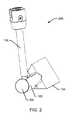
FIG. 2 is side view of an implant assembly.
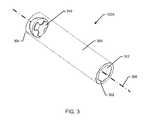
FIG. 3 is a proximal perspective view of a solid cylindrical implant body.
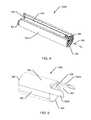
FIG. 4 is proximal perspective view of a hollow cylindrical implant body with a longitudinal groove.
FIG. 5 is a distal perspective view of a solid cylindrical implant body with longitudinal projections.
FIG. 6 is a top perspective view of a rectangular flat plate implant body with dual self-locking retaining rings.
FIG. 7 is a bottom perspective view of a rectangular arcuate plate implant body with a single self-locking retaining ring.
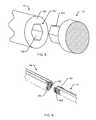
FIG. 8 is an exploded perspective view of a hexagonal tool receptacle and corresponding tool fitting.
FIG. 9 is an exploded perspective view of a threaded tool receptacle and corresponding tool fitting.
FIG. 10 is a transverse cross-sectional view of a hexagonal retaining rod with retractable pins.
FIG. 11 is a longitudinal cross-sectional view of a retaining rod end inserted within a tool fitting.
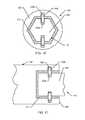
FIG. 12 is a top view of a self-locking retaining ring.
FIG. 13 is a top view of a hexagonal self-locking retaining ring.
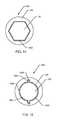
FIG. 14 is a transverse cross-sectional view of a non-circular cross-sectioned implant body fitted within a non-circular cross-sectioned lumen of an implant outer layer.
FIG. 15 is a transverse cross-sectional view of a circular cross-sectioned implant body fitted within a circular cross-sectioned lumen of an implant outer layer.
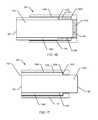
FIG. 16 is a longitudinal cross-sectional view of a circular cross-sectioned implant body fitted within a circular cross-sectioned lumen of an implant outer layer.
FIG. 17 is a longitudinal cross-sectional view of a protruding end of an implant body limited by a distal stop formed within an implant outer layer.
FIG. 18A is a transverse cross-sectional view of a hollow cylindrical implant body with a longitudinal groove.
FIG. 18B is a transverse cross-sectional view of a longitudinal ridge projecting from a lumen of an implant outer layer.
FIG. 18C is a transverse cross-sectional view of an implant body with a longitudinal groove inserted in a lumen with a projecting longitudinal ridge situated within the longitudinal groove.
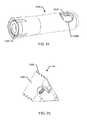
FIG. 19 is a distal perspective view of an implant outer layer with a triangular external cross-sectional profile.
FIG. 20 is an exploded perspective view of a tool fitting with indentations and a corresponding end of a retaining rod.
FIG. 21 is a proximal perspective view of an implant body and end of a retaining rod in an interlocked arrangement.
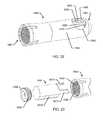
FIG. 22 is a proximal perspective view of an implant outer layer showing a fastener opening.
FIG. 23 is an exploded perspective view of an implant outer layer with a fastener opening and a solid implant body.
FIG. 24 is a proximal perspective view of an implant body mechanically locked in place within an implant outer layer.
FIG. 25 is a proximal perspective view of an implant outer layer with anti-migration serrated edges.
FIG. 26 is a proximal perspective view of an implant outer layer with anti-migration wedge-shaped ridges.
FIG. 27 is a proximal perspective view of an implant outer layer with a plurality of perforations.
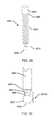
FIG. 28 is an exploded side view of a fastener and threaded compression nut.
FIG. 29 is a side view of a fastener with a peg-like head.
FIG. 30 is a side detail view of a fastener with a ball fitting.
FIG. 31 is a side detail view of a fastener with a rounded fitting.
FIG. 32 is a side detail view of a fastener with a cone fitting.
FIG. 33 is a side detail view of a fastener with a divoted fitting.
FIG. 34 is a distal perspective view of an implant assembly that includes a slotted implant body and a fastener with a ball fitting, shown assembled to illustrate a locking mechanism.
FIG. 35 is a longitudinal cross-sectional view of an implant assembly that includes a solid implant body with a self-locking retaining ring and a fastener with a rounded fitting, shown assembled to illustrate a locking mechanism.
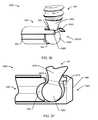
FIG. 36 is a side perspective view of an implant assembly that includes an implant body with longitudinal projections and a fastener with a ball fitting situated within the longitudinal projections.
FIG. 37 is a longitudinal cross-sectional view of the implant assembly illustrating the spatial relationships between a ball fitting, an implant body, and an implant outer layer in a locking mechanism.
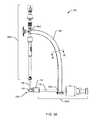
FIG. 38 is a side view of a delivery tool attached to an implant assembly.
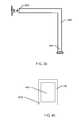
FIG. 39 is a side view of a targeting arm with a right-angle shape.
FIG. 40 is a transverse cross-sectional view of a targeting arm of the delivery tool illustrated inFIG. 38 taken at cross-sectional plane A-A.
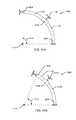
FIGS. 41A and 41B are side views of a telescoping targeting arm with arcuate shape.
FIGS. 42A and 42B are side views of an adjustable targeting arm with a right-angle shape.
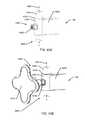
FIGS. 43A and 43B are detailed perspective views of a first end of the targeting arm illustrated inFIG. 38.
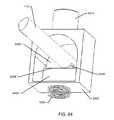
FIG. 44A is a detailed perspective view of a second end of a targeting arm and a retaining rod.
FIG. 44B is an exploded perspective view of the implant guide attachment fitting illustrated inFIG. 44A.
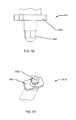
FIG. 45 is a side view of the fastener guide illustrated inFIG. 38.
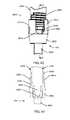
FIG. 46 is a detailed side view of the bone screw inserter illustrated inFIG. 45 with the threaded sleeve and removable handle removed.
FIG. 47 is a detailed proximal perspective view of the proximal end of the bone screw inserter illustrated inFIG. 46.
FIG. 48 is a detailed perspective view of a proximal end of a bone screw inserter.
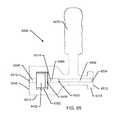
FIG. 49 is a bottom view of a removable handle.
FIG. 50 is a detailed side view of the distal end of the bone screw inserter illustrated inFIG. 46.
FIG. 51 is a distal perspective view of the distal end of the bone screw inserter illustrated inFIG. 46.
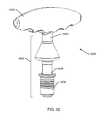
FIG. 52 is an enlarged side view of the removable handle illustrated inFIG. 45 with the threaded sleeve and bone screw inserter removed.
FIG. 53 is a side perspective view of a removable handle with the collar and underlying components removed.
FIG. 54 is a longitudinal cross-sectional view of a removable handle taken at the plane B-B denoted inFIG. 53 and with the collar and underlying components removed.
FIG. 55 is a detailed side view of a distal end of a handle with a sliding collar removed.
FIG. 56 is a longitudinal cross-sectional view taken through the collar and underlying components illustrated inFIG. 52 with the distal portion of the handle removed.
FIG. 57 is a longitudinal cross-sectional view taken through a collar and underlying components, a distal end of a handle, and a proximal end of a bone screw inserter.
FIG. 58 is a longitudinal cross-section of a threaded sleeve taken in a plane approximately parallel with the drawing plane ofFIG. 45 and coincident with a longitudinal axis of a threaded sleeve.
FIG. 59 is a longitudinal cross-sectional view ofFIG. 58 with the bone screw inserter included.
FIG. 60 is a side view of a head of a fastener attached to a bone screw inserter and threaded sleeve.
FIG. 61 is a detailed cross-sectional view of a head of a fastener attached to a bone screw inserter and threaded sleeve taken along the plane C-C illustrated inFIG. 60.
FIG. 62 is a side view of an implant guide.
FIG. 63 is a detailed proximal side view of an implant guide with handle body housing, grip, and proximal access port removed.
FIG. 64 is a detailed proximal perspective view of an implant guide with handle body housing, grip, and proximal access port removed.
FIG. 65 is a lateral cross-sectional view of the implant guide handle illustrated inFIG. 62 taken in the drawing plane ofFIG. 62.
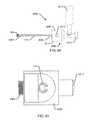
FIG. 66 is a distal perspective view of a dual-element retaining rod.
FIG. 67 is a distal perspective view of a central shaft of a dual-element retaining rod.
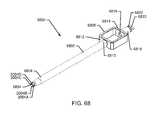
FIG. 68 is a distal perspective view of an outer sleeve of a dual-element retaining rod.
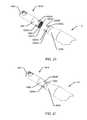
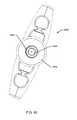
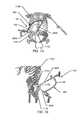
FIG. 69 is an illustration of a simulated orthopedic procedure to stabilize a sacroiliac joint using an orthopedic anchoring system, viewed from a craniolateral and posterior vantage.
FIG. 70 is an illustration of a simulated orthopedic procedure to provide an anchor for an orthopedic appliance using an orthopedic anchoring system viewed from a posteriocaudal vantage.
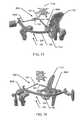
FIG. 71 is an illustration of an orthopedic anchoring system situated on a patient, viewed from a cranioposterior vantage.
FIG. 72 is an illustration of an orthopedic anchoring system situated on a patient, viewed from a posteriocaudal vantage.
FIG. 73 is an illustration of an orthopedic anchoring system situated on a patient, viewed from a posteriocaudal vantage, with all soft tissues removed.
FIG. 74 is an illustration of an orthopedic anchoring system situated on a patient, viewed from an anteriolateral/cranial vantage, with all soft tissues removed.
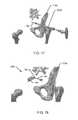
FIG. 75 is an illustration of an orthopedic anchoring system situated on a patient, viewed from a posteriolateral/cranial vantage, with all soft tissues and the patient's left ilium removed.
FIG. 76 is an illustration of an orthopedic anchoring system situated on a patient, viewed from a posteriolateral/cranial vantage, with all soft tissues and the patient's left ilium, sacrum, and L5 vertebra removed, and the implant outer layer of an implant assembly removed.
FIG. 77 is an illustration of an orthopedic anchoring system situated on a patient, viewed from a posteriolateral/cranial vantage, with all soft tissues and the patient's left ilium, sacrum, and L5 vertebra removed, as well as the targeting arm, implant guide arm, implant body and implant outer layer removed.
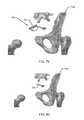
FIG. 78 is an illustration of an implant assembly situated on a patient, viewed from a posteriolateral/cranial vantage, with all soft tissues and the patient's left ilium, sacrum, and L5 vertebra removed.
FIG. 79 is an illustration of an implant assembly with the implant outer layer removed situated on a patient, viewed from a posteriolateral/cranial vantage, with all soft tissues and the patient's left ilium, sacrum, and L5 vertebra removed.
FIG. 80 is an illustration of a fastener of an implant situated on a patient, viewed from a posteriolateral/cranial vantage, with all soft tissues and the patient's left ilium, sacrum, and L5 vertebra removed.
Corresponding reference characters and labels indicate corresponding elements among the views of the drawings. The headings used in the figures should not be interpreted to limit the scope of the claims.
DETAILED DESCRIPTION
Disclosed herein is an orthopedic anchoring system and method for providing structural support, reinforcement, and/or anchoring for a variety of orthopedic appliances. Non-limiting examples of orthopedic devices compatible with aspects of the orthopedic anchoring system include: vertebral reinforcement or immobilization devices; intervertebral joint reinforcement or immobilization devices; internal fixation devices; and any other orthopedic appliances or orthopedic applications known in the art.
A side view of the elements of anorthopedic anchoring system100 is illustrated inFIG. 1. In an aspect, thesystem100 includes animplant assembly200 and adelivery tool300. Theimplant assembly200 may be situated and installed within a selected afflicted region of a patient, such as an intervertebral joint, using thedelivery tool300. In an aspect, theimplant assembly200 may include animplant body102, an implantouter layer104 and afastener106. Theimplant assembly200 may provide a highly stable anchor that is resistant to loosening, backing out or otherwise functionally degrading due to the cumulative effect of forces and torques. In an aspect, the forces and torques may be experienced by theimplant assembly200 as a result of normal posture and/or movements including, but not limited to, bending, sitting, walking, and any other typical movements or postures. This stabilizedorthopedic fastener106 and other elements of theimplant assembly200 are particularly well-suited for a variety of orthopedic applications such as intervertebral joint immobilization, intervertebral joint stabilization, and other such surgical interventions.
Thedelivery tool300 may facilitate the alignment and mechanical attachment of thefastener106 to theimplant body102 in a safe and reliable manner. In an aspect, thedelivery tool300 may include a targetingarm108 and a retainingrod110. The retainingrod110 may be releasably secured to theimplant body102 and/or the implantouter layer104 when situating theimplant assembly200 within the afflicted region of the patient. The targetingarm108 may situate and maintain thefastener106 in precise alignment with theimplant body102 and/or implantouter layer104 during insertion of thefastener106 and the attachment of thefastener106 to theimplant body102 and/or implantouter layer104.
Theimplant body102 may include additional features to provide additional functions to theimplant body102. Non-limiting examples of enhanced functions of theimplant body102 include: providing a receptacle and/or other means of mechanical attachment for thefastener106; providing a means of detachably fastening a component of thedelivery tool300 such as the retainingrod110 to theimplant body102 during the placement of theimplant body102; and facilitating the alignment and/or orientation of theimplant body102 within the implantouter layer104 during the formation of theimplant assembly200.
Aspects of theorthopedic anchoring system100 described herein provide a robust anchoring element for orthopedic appliances and devices. Various elements of theimplant assembly200, including the implantouter layer104, may facilitate the integration of surrounding bone tissue into the peripheral margins of theimplant assembly200, further stabilizing theimplant assembly200.
Detailed descriptions of various embodiments of theimplant assembly200,delivery tool300, and methods of using thesystem100 are provided herein below.
I. Implant Assembly
The elements of animplant assembly200 in one aspect are illustrated inFIG. 2. In this aspect, theimplant assembly200 may include animplant body102, an implantouter layer104 and afastener106. The implantouter layer104 may house at least a portion of theimplant body102; a remaining portion of theimplant body102 may protrude from the implantouter layer104, as illustrated inFIG. 2. Thefastener106 may mechanically attach to theimplant body102 and/or the implantouter layer104. The implantouter layer104 may be inserted within a bore (not shown) formed within bone tissue situated within or adjacent to an afflicted region of the patient to provide a stationary anchor for theimplant body102 andfastener106. In an aspect, theimplant body102 and/or the implantouter layer104 may further incorporate additional features to engage thefastener106 in a locked mechanical attachment.
a. Implant Body
In various aspects, theimplant body102 may provide structural support and anchoring for thefastener106.FIG. 3 is a drawing illustrating animplant body102A in one aspect. In this aspect, theimplant body102A includes a bodyproximal end302 and a bodydistal end304. Theimplant body102 may have an elongate cylindrical form, as illustrated inFIG. 3, or any other shape without limitation.Additional implant body102 shapes in various aspects are described herein below.
Theimplant body102 may further include a bodyexternal surface306 and a bodycentral axis308 extending from the bodyproximal end302 to the bodydistal end304 of theimplant body102A and aligned with a longitudinal axis of theimplant body102. In various aspects, theimplant body102 may further include at least onelocking element310 for receiving the end of the fastener106 (not shown), a tool fitting312 for receiving an end of the retaining rod110 (not shown) at the bodyproximal end302 opposite thelocking element310, as well as ridges and/or grooves associated with the bodyexternal surface306 for alignment of theimplant body102A within the implant outer layer104 (not shown) during the process of assembling theimplant assembly200.
In one aspect, theimplant body102 may be machined, molded, formed, or otherwise manufactured from stainless steel, titanium, ceramic, polymer, composite, bone or other biocompatible materials.
i. Implant Body External Shape and Cross-sectional Shape
As indicated inFIGS. 3-7, theimplant body102 may have a variety of external shapes and cross-sectional profiles depending upon the desired properties and uses of theimplant body102. For example, different shapes, sizes, and/or cross-sectional profiles of theimplant body102 may be selected to accommodate various orthopedic surgical areas and/or procedures, patient morphologies, shapes and types of orthopedic fasteners, and/or any other relevant criterion.
Theimplant body102 may be provided as any external shape without limitation, so long as theimplant body102 is capable of performing all aspects of the implant body's function. For example, the external shape may be selected to fit either partially or entirely within aninterior lumen1402 of the implantouter layer104 in various aspects. In another example, the external shape may be selected to have a non-circular cross-section in order to inhibit rotation of theimplant body102 within thelumen1402 of the implantouter layer104. The external shape may be selected to include one or more longitudinal ridges or other features projecting outward or inward perpendicular to the bodyexternal surface306 in an aspect. For example, theimplant body102 may include one or morelongitudinal grooves506 extending along the length of theimplant body102 and projecting inward relative to the bodyexternal surface306, as illustrated inFIG. 5.
Non-limiting examples of suitable external shapes for theimplant body102 include: a solid cylinder, as illustrated inFIG. 3 andFIG. 5; a hollow cylinder, as illustrated inFIG. 4; a planar flat plate, as illustrated inFIG. 6; or an arcuate flat plate, as illustrated inFIG. 7. In various aspects, the external shapes of theimplant body102 may be generally elongate such that the length of theimplant body102 from the bodyproximal end302 to the bodydistal end304 is longer than the thickness of theimplant body102. Theimplant body102 may also be any length which allows afastener106 with a connection fitting to attach to theimplant body102 at thelocking element310.
In another aspect, the cross-sectional shape of theimplant body102 may have any solid or hollow profile, without limitation. Non-limiting examples of suitable cross-sectional shapes of the implant body include circular, elliptical, semi-circular, rectangular, triangular, any other polygonal geometry, and any other non-circular geometry. In an additional aspect, the cross-sectional shape and size may be uniform along the full length of theimplant body102 to facilitate the insertion of theimplant body102 into thelumen1402 of the implantouter layer104.
In yet another aspect, theimplant body102 may include abody lumen402 contained within the interior of theimplant body102. Thebody lumen402 may extend the entire length of theimplant body102, as illustrated inFIG. 4. In this aspect, thebody lumen402 extends from the bodyproximal end302 to the bodydistal end304. In other aspects, thebody lumen402 may extend only a portion of the length of theimplant body102. For example, thebody lumen402 may open outward through the bodyproximal end302, but may be bounded somewhere between the bodyproximal end302 and the bodydistal end304 at a transition from a hollow body cross-section to a solid body cross-section. In another example, thebody lumen402 may open outward through the bodydistal end304, but may be similarly bounded somewhere between the bodyproximal end302 and the bodydistal end304 at a transition from a hollow cross-section to a solid cross-section.
Thebody lumen402 may further open laterally through the bodyexternal surface306 in one or more regions along the length of theimplant body102. These one or more lateral openings may be in the form of discrete openings including, but not limited to, holes, slits, or any other discrete opening type. The one or more discrete openings may be arranged in any distribution without limitation. In one aspect, the one or more lateral openings may take the form of alongitudinal groove404, as illustrated inFIG. 4. The lateral openings may provide various functions to theimplant body102 including, but not limited to: an alignment guide for aligning theimplant body102 within the implantouter layer104 during the process of assembling theimplant assembly200; a structural feature forming at least a portion of alocking element310; and/or a structural feature forming at least a portion of atool fitting312.
In another aspect, theimplant body102 may include one or more longitudinal projections extending in a direction essentially parallel with the bodycentral axis308 in a proximal and/or distal direction. For example, theimplant body102 may include a pair oflongitudinal projections502A and502B as illustrated inFIG. 5. Thelongitudinal projections502A and502B may define the lateral sides of aslot504 in this aspect. Theslot504 may function in a variety of ways in theimplant assembly200 including, but not limited to, functioning as part of alocking element310.
Specific examples of the function of the features of the implant body as a tool fitting, a locking element, and other functions are described in further detail herein below.
ii. Tool Fitting
In various aspects, theimplant body102 includes a tool fitting312 to provide a means of releasably connecting an end of the retainingrod110 to the bodyproximal end302 during insertion of theimplant body102 into the implantouter layer104 and/or securing theimplant body102 in a fixed alignment while thefastener106 is mechanically connected to theimplant body102.
The tool fitting312 may be situated at the bodyproximal end302 of theimplant body102 in one aspect, as illustrated inFIG. 3. In this aspect, the tool fitting312 may be provided in the form of a hexagonal recess within the bodyproximal end302. As illustrated inFIG. 8, the hexagonal cross-sectional shape and dimensions of therecess802 forming the tool fitting312 are selected such that acorresponding end804 of the retainingrod110, which also has a hexagonal cross-section, fits closely within thehexagonal recess804 in this aspect. Any cross-sectional shape for therecess802 forming the tool fitting312 may be selected without limitation, so long as this cross-sectional shape corresponds to the cross-sectional shape of thecorresponding end804 of the retainingrod110.
In another aspect (not shown), theend804 of the retainingrod110 may include a recess within which a tool fitting312 in the form of a protrusion extending from the bodyproximal end302 may fit. In this aspect, any cross-sectional shape for the recess within the end of the retainingrod110 may be selected without limitation, so long as this cross-sectional shape is matched to the cross-sectional shape of the tool fitting312 extending from the bodyproximal end302. Any non-circular cross-section may be selected for the tool fitting312 of the retainingrod110 and corresponding bodyproximal end302 including, but not limited to: any non-circular polygonal cross-section such as triangular, square, and hexagonal; other non-circular cross-sections such as elliptical.
The tool fitting312 may incorporate other features such as corresponding threaded fittings to releasably connect the end of the retainingrod110 to the bodyproximal end302. Referring toFIG. 9, the bodyproximal end302 may include a threadedreceptacle406 that receives a corresponding threadedend902 of the retainingrod110. In this aspect, the threadedend902 may be advanced into the threadedreceptacle406 until the threadedend902 has advanced the full extent of the threads in the threadedreceptacle406. In another aspect (not shown), the end of the retainingrod110 may include a threaded recess into which a threaded end of the bodyproximal end302 may be advanced to releasably connect the bodyproximal end302 to the end of the retainingrod110.
In additional aspects, the tool fitting312 may incorporate features such as retractable pins or fins to releasably connect the end of the retaining rod to the body proximal end. In one additional aspect, illustrated inFIG. 10 as a transverse cross-section, the retaining rod end1002 may include one or moreretractable pins1004 or fins (not shown) that project laterally outward from the surface of the retaining rod end1002 in an extended position. These one or moreretractable pins1004 may be retracted into correspondinginner receptacles1006 formed within the retaining rod end1002 during the insertion of the retaining rod end1002 into the tool fitting312 in the bodyproximal end302. Upon insertion, the retaining rod end1002 may be reversibly locked into place within the tool fitting312 by extending theretractable pins1004 radially outward to engage correspondingouter pin receptacles1008 formed within the wall surrounding thetool fitting312. After theimplant assembly200 is installed within the afflicted region of the patient, the retainingrod110 may be removed from theimplant body102 by retracting the one or moreretractable pins1004 and sliding the retaining rod end1002 from thetool fitting312.FIG. 11 is a longitudinal cross-section of the retaining rod end1002 inserted within the tool fitting312, showing theretractable pins1004 engaged with the correspondingouter pin receptacles1008, thereby locking the retaining rod end1002 in place.
In another additional aspect (not shown) theretractable pins1004 may retract outward into the correspondingouter pin receptacles1008 during insertion and/or removal of the retaining rod end1002 from thetool fitting312. The retaining rod end1002 may be locked into the tool fitting312 by extending theretractable pins1004 radially inward to engage correspondinginner pin receptacles1006 formed within the retaining rod end1002.
iii. Locking Element
Theimplant body102 may further include at least onelocking element310 for receiving afastener106. In various aspects, the lockingelement310 may reversibly or irreversibly engage a corresponding attachment fitting2810 of thefastener106 in a locked engagement to form an anchor for an orthopedic appliance, orthopedic procedure, or other treatment of an afflicted region of a patient.
FIG. 3 is a perspective view of animplant body102 that includes alocking element310 in one aspect. The location of thelocking element310 on theimplant body102 may include, but is not limited to, any position situated between the bodydistal end304 and the bodyproximal end302, as well as extending distally away from the bodydistal end304. The lockingelement310 may extend any portion of the length of theimplant body102 from the bodyproximal end302 to bodydistal end304 up to the entire length of theimplant body102. For example, thelongitudinal groove404, shown illustrated in the perspective view of animplant body102B inFIG. 4, may function as alocking element310 that extends the entire length of theimplant body102B. As an additional example, as illustrated in the perspective view ofFIG. 5, aslot504 formed between a pair oflongitudinal projections502A and502B may function as the lockingelement310.
Any known means of securing afastener106 to alocking element310 may be suitable for use in theimplant assembly200. Due to the limited visibility inherent in many orthopedic surgical procedures, a means of securing ablind fastener106 may be particularly well-suited for use in theimplant assembly200. The type of lockingelement310 may be selected to be compatible with the particular attachment fitting2810 of thefastener106 used in theimplant assembly200. The lockingelement310 may further be selected to provide for limited movements of thefastener106 in one or more predefined directions after the fastener is attached in a locked engagement with the lockingelement310.
Non-limiting examples of suitable locking elements include: self-locking retaining ring, slots, threaded fittings, divoted fittings, and one or more longitudinal projections forming slots. The lockingelements310 may be situated entirely within or upon theimplant body102 in one aspect. In another aspect, at least onelocking element310 may be situated within or upon theimplant body102 and one or more other locking elements may be situated within or upon the implantouter layer104. In this aspect, the locking elements of theimplant body102 and the implantouter layer104 may interact in an interlocking manner to form the locked engagement with attachment fitting2810 of thefastener106. In additional aspects, theimplant body102 may include asingle locking element310, as illustrated inFIGS. 3-5 andFIG. 7, or theimplant body102 may include two ormore locking elements310, as illustrated inFIG. 6.
In one aspect, the lockingelement310 opens laterally outward in a direction generally perpendicular to the bodycentral axis308 of theimplant body102. The opening formed by the lockingelement310 may extend fully through the entire implant body, as illustrated inFIG. 6 andFIG. 7. In another aspect, the lockingelement310 may extend from the bodyexternal surface306 to the interior of theimplant body102, which may be of solid cross-section, as illustrated inFIG. 3. In yet another aspect, illustrated inFIG. 4, the lockingelement310, provided in this aspect as alongitudinal groove404, may extend from the bodyexternal surface306 into thebody lumen402 of thehollow implant body102B.
In another aspect, the lockingelement310 may be a self-lockingretaining ring1202. A top view of a self-lockingretaining ring1202 is illustrated inFIG. 12. The self-lockingretaining ring1202 may include a planarcircular opening1204 with at least threearcuate members1206A,1206B, and1206C distributed around a circumference of the planarcircular opening1204 and projecting radially inward toward acenter1208 of the planarcircular opening1204. The at least threearcuate members1206A,1206B, and1206C may be separated by a distance corresponding to a narrowed region of the attachment fitting of the fastener106 (not shown), described in detail herein below. The at least threearcuate members1206A,1206B, and1206C may be flexible to facilitate the deformation of thearcuate members1206A,1206B, and1206C to accommodate larger-diameter elements of thefastener106 during its insertion into the self-lockingretaining ring1202. The self-lockingretaining ring1202 allows an attachment fitting of afastener106 to be inserted into the lockingelement310 of theimplant body102 but restricts the movement of thefastener106 out of thelocking element310 once inserted. A detailed description of the attachment of thefastener106 to theimplant body102 via the self-lockingretaining ring1202 is provided herein below.
In other aspects, the self-lockingretaining ring1202 may include a planar non-circular opening with at least three flexible arcuate or non-arcuate members projecting from a perimeter of the non-circular opening into a center of the non-circular opening. For example, the non-circular opening may be provided as a polygonal shape such as ahexagonal opening1302, as illustrated inFIG. 13. In this aspect, six flexiblenon-arcuate members1306A-1306F project from a perimeter of thehexagonal opening1304 toward thehexagon center1308. In other additional aspects, the self-lockingretaining ring1202 may be non-planar. For example, alocking element310 such as a self-lockingretaining ring1202 may be provided as an arcuate shape to conform to the shape of anarcuate implant body102E, as illustrated inFIG. 7.
In additional aspects the lockingelement310 may be provided in the form of alongitudinal groove404. Referring toFIG. 4, thelongitudinal groove404 may extend from the bodydistal end304 to the bodyproximal end302 of theimplant body102 and may be aligned parallel to the bodycentral axis308. In general, thelongitudinal groove404 may have any intermediate length up to the full length of theimplant body102. The dimensions of thelongitudinal groove404 including, but not limited to, groove width, groove depth, and any other groove dimension may be selected to provide a compatible fit with the corresponding attachment fitting of thefastener106. For example, thelongitudinal groove404 may have a minimum width corresponding to the narrowest region of the attachment fitting2810 of thefastener106. This width may allow the attachment fitting2810 of thefastener106 to extend through thelongitudinal groove404 but retain the attachment fitting2810 within thelongitudinal groove404 once thefastener106 is inserted through thelongitudinal groove404.
In another aspect, the lockingelement310 may be provided in the form of aslot504 formed between a pair oflongitudinal projections502A and502B as illustrated inFIG. 5. Thelongitudinal projections502A and502B may have a minimum length that is essentially equal to the cross-sectional diameter of the attachment fitting of thefastener106. In this aspect, thelongitudinal projections502A and502B may lock an attachment fitting of afastener106 using a meshing engagement withadditional locking elements310 formed within the implantouter layer104, as described herein below. To facilitate this meshing engagement, thedistal end304 of theimplant body102 may further contain additional features including, but not limited to, adistal body depression508 contoured to the shape of the attachment fitting2810 of thefastener106 that projects through theslot504 after insertion of thefastener106.
iv. Alignment Features
In an aspect, theimplant body102 may further include surface features on the bodyexternal surface306 to guide the placement and/or orientation of theimplant body102 within the implantouter layer104 during the formation of theimplant assembly200. These surface features may facilitate the alignment of thelocking element310 with acorresponding fastener opening2202 in the implantouter layer104. The surface features may limit the insertion depth of theimplant body102 through the implantouter layer104 to ensure that the bodydistal end304 protrudes from the implantouter layer104 by an appropriate amount for purposes of alignment of thefastener106 with the locking features of the implantouter layer104 and/or lockingelement310. The surface features may ensure an appropriate alignment of thefastener106 locked within the implantouter layer104 and/or theimplant body102 for function as an anchor.
Any known method of aligning a pair of nested elements may be selected for use as alignment features for theimplant body102 so long as the alignment features are compatible with corresponding alignment features of the implantouter layer104. In one aspect, illustrated as a transverse cross-section inFIG. 14, the alignment feature may be provided in the form of a non-circular cross-sectional shape of theimplant body102 that may closely fit within alumen1402 of theouter layer104 with a corresponding non-circular cross-sectional profile. In this aspect, the non-circular cross-sectional profile of theimplant body102 andlumen1402 inhibit the rotation of theimplant body102 relative to the implantouter layer104, thereby maintaining a predetermined alignment during the formation of theimplant assembly200.
In another aspect, theimplant body102 and implantouter layer104 may have matching cross-sectional shapes including circular cross-sectional shapes, as illustrated in the transverse cross-sectional view ofFIG. 15. In this aspect, the alignment feature may be provided in the form of at least onelongitudinal ridge1502 projecting outward from the bodyexternal surface306 that may be situated within a correspondinggroove1504 formed within alumen wall1506 that defines thelumen1402 of the implantouter layer104.
A longitudinal cross-section of theimplant assembly200 ofFIG. 15 is illustrated inFIG. 16. During the insertion of theimplant body102 within thelumen1402 of the implantouter layer104, eachlongitudinal ridge1502 may slide within a correspondinggroove1504, ensuring proper alignment of theimplant body102 within the implantouter layer104. Eachlongitudinal ridge1502 andcorresponding groove1504 may extend the entire length of theimplant body102 andouter layer104, respectively, or eachlongitudinal ridge1502 andcorresponding groove1504 may extend only a partial length of the implantouter layer104, as illustrated inFIG. 16.
Referring again toFIG. 16, eachlongitudinal ridge1502 may end in adistal face1602 and eachcorresponding groove1504 may end in adistal stop1604. In another aspect, illustrated in the longitudinal cross-section ofFIG. 17, the distance at which theprotruding end1702 of theimplant body102 extends from the implantouter layer104 may be limited by the mechanical interference of thedistal stop1604 with thedistal face1602. During the formation of theimplant assembly200, theimplant body102 may be inserted within thelumen1402 of the implantouter layer104 until thedistal face1602 contacts thedistal stop1604, preventing further insertion of theimplant body102.
In another aspect, illustrated inFIG. 18A as a transverse cross-section of theimplant body102B illustrated inFIG. 4, the alignment feature may be provided in the form of alongitudinal groove1802 formed within theimplant body102B. In this aspect, thelongitudinal groove1802 may fit within alongitudinal ridge1804 projecting inward toward thelumen1402 of an implantouter layer104, as illustrated in the transverse cross-section illustrated inFIG. 18B. When theimplant assembly200 is produced by inserting theimplant body102B into thelumen1402 as illustrated in the transverse cross-section ofFIG. 18C, the meshing of thelongitudinal ridge1804 within thelongitudinal groove1802 maintains the desired alignment of theimplant body102 within the implantouter layer104.
In an additional aspect (not shown), the alignment feature may be provided in the form of at least one discrete extendable pin projecting from the bodyexternal surface306 of theimplant body102. Each extendable pin may fit within a corresponding pin receptacle formed within thelumen wall1506 of the implantouter layer104 when theimplant body102 is situated in a predetermined alignment within the implantouter layer104. In another additional aspect, the alignment feature may be provided in the form of one or more pin receptacles formed within the bodyexternal surface306 of theimplant body102 that receive corresponding extendable pins projecting inward from thelumen wall1506 when theimplant body102 is situated in a predetermined alignment within thelumen1402.
In yet other aspects (not shown), the alignment feature may be provided in the form of circumferential threads formed within the bodyexternal surface306 of theimplant body102. In this aspect, the circumferential threads may extend from the bodydistal end304 toward the bodyproximal end302 up to the full length of theimplant body102. The circumferential threads may engage mechanically with a circumferential threaded fitting formed within thelumen wall1506 of the implantouter layer104. This circumferential threaded fitting may extend from the outer layerproximal end1902 of the implantouter layer104 in a distal direction up to the full length of thelumen1402 of the implantouter layer104. In this aspect, the length of the circumferential threads and/or circumferential threaded fitting may determine the degree of penetration of theimplant body102 through thelumen1402 of the implantouter layer104, thereby controlling the distance at which theimplant body102 projects from the implantouter layer104.
b. Implant Outer Layer
Theimplant body102 may be partially or fully contained within an implantouter layer104 in various aspects. The implantouter layer104 in one aspect is illustrated inFIG. 19. The implantouter layer104 may be inserted within a bore (not shown) formed within the afflicted region of the patient to provide a stationary anchor for theimplant body102 and fastener106 (not shown). The implantouter layer104 may interact mechanically and/or biologically with the bone tissue within the bore and may provide features that may encourage bone growth, prevent migration and/or loosening of theimplant assembly200 within the bore, and/or otherwise stabilize the position of theimplant assembly200.
In an aspect, the implantouter layer104 may include an outer layerproximal end1902 and an outer layerdistal end1904. The implantouter layer104 further contains alumen1402 bounded by alumen wall1906; thelumen1402 extends from the outer layerproximal end1902 to the outer layerdistal end1904. During the formation of theimplant assembly200, theimplant body102 may be inserted into thelumen1402. In various aspects, theimplant body102 may be contained completely within thelumen1402, or the bodydistal end304 may protrude from the outer layerdistal end1904. In some aspects, the implantouter layer104 may include one ormore locking elements310 that may help to secure thefastener106 in a locked attachment during the formation of theimplant assembly200. In other additional aspects, the implantouter layer104 may further include anexternal surface1908 that contacts the inner surface of the bore formed in the bone tissue of the patient within an afflicted area. In these other additional aspects, theexternal surface1908 of the implantouter layer104 may further include surface textures, surface coatings, holes or pores, and any other surface features known in the art to encourage the incorporation of bone tissue; these surface features may inhibit the movement or loosening of theimplant assembly200 within the bore over extended post-implantation periods.
In one aspect, the implantouter layer104 may be machined, molded, formed, or otherwise manufactured from stainless steel, titanium, ceramic, polymer, composite, bone or other biocompatible materials.
i. Outer Layer External and Cross-sectional Shape
The implantouter layer104 may have a variety of cross-sectional shapes in various aspects. The cross-sectional shape of the implantouter layer104 may facilitate the anchoring of the implantouter layer104 within the bore, may provide one ormore locking elements310 to secure the attachment fitting of thefastener106, and/or may provide one or more corresponding alignment features to ensure the proper alignment and/or insertion depth of theimplant body102 within thelumen1402.
The implantouter layer104 may have a variety of external shapes and cross-sectional profiles without limitation, depending upon the desired properties and uses of the implantouter layer104. For example, different shapes, sizes, and/or cross-sectional profiles of the implantouter layer104 may be selected to accommodate various orthopedic surgical areas and/or procedures, patient morphologies, shapes and types ofimplant bodies102, shapes and types offasteners106, and/or any other suitable criterion.
The implantouter layer104 may be provided as any external shape without limitation, so long as the implantouter layer104 is capable of performing all aspects of the outer layer's function. In one aspect, the external cross-sectional profile of the implantouter layer104 may be selected to fit within the bore formed within the afflicted area of the patient. In this aspect, the external cross-sectional profile may be selected to match a cross-sectional profile of a bore formed using known orthopedic surgical techniques. For example, the external cross-sectional profile of the implantouter layer104 may be circular to match a bore created by a drill-type surgical bone removal device. In other aspects, the external cross-sectional profile of the implantouter layer104 may be a non-circular profile to enhance the stability of the outer layer within the bore; for example an implantouter layer104 with a triangular external cross-sectional profile, as illustrated inFIG. 19, may impart a resistance to twisting within the bore during subsequent use. Non-limiting examples of non-circular cross-sectional profiles include elliptical, semi-circular, rectangular, triangular, any other polygonal geometry, and any other non-circular geometry.
Referring again toFIG. 19, the cross-sectional profile of the implantouter layer104 includes thelumen1402 for receiving theimplant body102 in various aspects. The cross-sectional profile of thelumen wall1906 that forms thelumen1402 may be selected independently of the external cross-sectional profile of the implantouter layer104. The cross-sectional profile of thelumen wall1906 may be selected to match the cross-sectional profile of theimplant body102. In an aspect, the cross-sectional profile of thelumen wall1906 may be relatively constant along the length of the implantouter layer104 to facilitate the insertion of theimplant body102 during the formation of theimplant assembly200. In another aspect (not shown), the cross-sectional profile of thelumen wall1906 may be wider at the outer layerproximal end1902 and narrower at the outer layerdistal end1904. In this aspect, the narrower cross-sectional profile at the outer layerdistal end1904 may limit the degree of insertion of theimplant body102 to a predetermined distance in theimplant assembly200.
In another aspect, thelumen wall1906 may include at least one alignment feature to ensure that theimplant body102 is contained within the implantouter layer104 at a predetermined orientation and/or insertion distance. In this aspect, the alignment features included in thelumen wall1906 may be selected to be compatible with the corresponding alignment features included on the bodyexternal surface306 of theimplant body102. Non-limiting examples of suitable alignment features included in or on thelumen wall1906 include longitudinal ridges, longitudinal grooves, extendable pins, pin receptacles, threaded receptacles, and any other suitable alignment feature known in the art. For example, thelumen wall1906 may include alongitudinal ridge1804, illustrated inFIG. 19, which may be situated within thelongitudinal groove404 of theimplant body102B when theimplant body102 is inserted and/or contained within the implantouter layer104 to maintain the desired alignment.
ii. Tool Fitting
In an aspect, the implantouter layer104 may include a tool fitting for releasably connecting an end of the retainingrod110 to the outer layerproximal end402 of the implantouter layer104. The tool fitting may include, but is not limited to a threaded fitting1910, a hexagonal connection, orindentations2002A-2002D for interlocking withcorresponding tines2004A-2004D on the retainingrod110. The implantouter layer104 may connect with the retainingrod110 to accurately situate the implantouter layer104 within the bore formed at the surgical site and to fix the implantouter layer104 in place while thefastener106 is implanted.
For example, the outer layer may include a tool fitting in the form of a threaded fitting1910, as illustrated inFIG. 19. In another example, illustrated as a perspective view inFIG. 20, the implantouter layer104B may include a tool fitting in the form ofindentations2002A-2002D formed within theexternal surface1908 of the implantouter layer104B to reversibly attach to theend2006 of the retainingrod110 during formation of theimplant assembly200. In this aspect, theindentations2002A-2002D may be situated and dimensioned to engage correspondingtines2004A-2004D projecting from theend2006 of the retainingrod110 in a reversibly interlocked arrangement.FIG. 21 is a perspective view illustrating theimplant body102 and theend2006 of the retainingrod110 in the interlocked arrangement.
iii. Fastener Opening or Fitting
Referring back toFIG. 2, the implantouter layer104 may be open at both the proximal and distal ends. In this aspect, the distal end of theimplant body102 may project from the implantouter layer104, exposing thelocking element310 formed within theimplant body102. Thefastener106 may attach directly to the exposed lockingelement310 within theimplant body102 without mechanical interference from the implantouter layer104.
FIG. 22 is a perspective view of an implantouter layer104B showing afastener opening2202 in another aspect. In this aspect, thelumen1402 of theouter layer104B is closed at the outer layerdistal end1904. As a result, the implant body102 (not shown) fits completely within thelumen1402. The implantouter layer104B may include afastener opening2202 formed through thelumen wall1906 to provide access to thelocking element310 of theimplant body102. Thefastener opening2202 may be formed near the outer layerdistal end1904 and extend from theexternal surface1908 into thelumen1402. Thefastener opening2202 may be situated in alignment with thecorresponding locking elements310 on the implant body102 (not shown) to allow thefastener106 access to thecorresponding locking element310 of theimplant body102 through the implantouter layer104.
The implantouter layer104 may further include additional locking elements that mechanically engage with thefastener106 along with the lockingelements310 formed within theimplant body102 to stabilize and/or immobilize the fastener106 (not shown) within theimplant assembly200. Referring back toFIG. 22, the implantouter layer104B may further include additional locking elements in the form of alock slot2204 formed within thelumen1402 of the implantouter layer104B in an aspect. Thelock slot2204 may define awider region2206 for receiving an attachment fitting of afastener106 at its widest diameter, as well as anarrower region2208 to securely contain a narrower region of an attachment fitting of thefastener106 in cooperation with the lockingelements310 of theimplant body102. The additional locking elements may further include contoured surfaces, such as acurved face2210 illustrated inFIG. 22 at the distal end of thelumen1402. In an aspect, thecurved face2210 may be shaped to correspond with the curvature of an attachment fitting2810 of thefastener106 to enhance the locked engagement formed between the attachment fitting2810 of thefastener106, the locking element(s)310 of theimplant body102, and the additional locking element(s) of the implantouter layer104. A detailed description of the locked engagement of thefastener106 within the implantouter layer104 and/or theimplant body102 is provided herein below.
In other aspects, thefastener opening2202 may include additional locking elements in additional forms including, but not limited to: threaded fittings, self-locking retaining rings, and divoted fittings similar to those described herein above in association with the locking element of theimplant body102.
The implantouter layer104 may further include a mechanism to lock the implantouter layer104 to theimplant body102.FIG. 23 is an exploded view illustrating the implantouter layer104B illustrated previously inFIG. 22, as well as theimplant body102C previously illustrated inFIG. 5. In this aspect, theimplant body102C may be inserted into thelumen1402 of the implantouter layer104B, followed by a threadedplug2302. The threadedplug2302 includescircumferential threads2308 that mesh with the threads of a threadedreceptacle2306 within the implantouter layer104B. The threadedplug2302 may be advanced within the threadedreceptacle2306 thereby pushing theimplant body102C further within thelumen1402 ahead of the threadedplug2302. The advancement of the threadedplug2302 may be limited by the contact of thelongitudinal projections502A and502B of theimplant body102C with the closed distal end of thelumen1402. In this assembled configuration, illustrated as a perspective view inFIG. 24, theimplant body102C may be mechanically locked into place between the closed distal end of thelumen1402 and the threadedplug2302.
iv. Alignment Features
The implantouter layer104 may have features on theinner surface1506 of thelumen1402 for interacting with corresponding features on the bodyexternal surface306 of theimplant body102, as described previously herein above in association with the description of the alignment features of theimplant body102. In one aspect, the cross-sectional contour of thelumen1402 may be a non-circular polygon, ellipsoid or any other shape dimensioned to closely fit a correspondingly-contouredimplant body102, as illustrated inFIG. 14. In another aspect, theinner surface1506 of thelumen1402 may include ridges orgrooves1504 to interlock with corresponding grooves orridges1502 on the bodyexternal surface306 of theimplant body102, as illustrated inFIGS. 15-17. In an additional aspect, the implantouter layer104 include retractable pins and/or pin receptacles that mechanically interlock with corresponding pin receptacles and/or retractable pins formed or attached to the bodyexternal surface306 of theimplant body102. In yet another aspect, the implantouter layer104 may further include features such as circumferential threads or threaded receptacles that mechanically intermesh with corresponding threaded receptacles or circumferential threads included in theimplant body102.
v. External Surface Texture
The implantouter layer104 may further include surface features and/or textures on theexternal surface1908. This exposedexternal surface1908 may interact with the bone tissue mechanically and/or biologically and may include anti-migration surface features. These anti-migration surface features may assist in preventing theimplant assembly200 from moving or migrating within the afflicted area during prolonged use by the patient.
The implantouter layer104 may include an anti-migration texture projecting outward from theexternal surface1908 and/or other anti-migration surface features. Non-limiting examples of anti-migration surface features include a plurality of projections, a plurality of serrated teeth or ridges, a plurality of perforations, or any other surface feature on theexternal surface1908 which may reduce the migration of theimplant body102 and/or implantouter layer104. The surface features may be unidirectional in an aspect.
In various aspects, theexternal surface1908 of the implantouter layer104 may have a plurality of projections as an anti-migration texture. The plurality of projections may extend to a projection height ranging from about 0.2 mm to about 5 mm from the surface. The plurality of projections may be distributed essentially uniformly over theexternal surface1908. The plurality of projections may project essentially perpendicularly from theexternal surface1908.
In another aspect, theexternal surface1908 may have a plurality of unidirectional serrated teeth or ridges. Each serrated tooth or ridge may include a right triangular cross-section with a base, a side, and an apex. The base of each serrated tooth or ridge may extend perpendicularly from theexternal surface1908 to a height ranging from about 0.2 mm to about 5 mm. The side of each serrated tooth or ridge may be coincident with theexternal surface1908. The apex of each serrated tooth or ridge may be situated nearer to the outer layerdistal end1904 relative to the base.FIG. 25 is a perspective view of an implantouter layer104 that includes an anti-migration texture in the form ofserrated edges2502 in one aspect.FIG. 26 is a perspective view of an implantouter layer104 that includes an anti-migration texture in the form of wedge-shapedridges2602 on theexternal surface1908 in another aspect.
Theexternal surface1908 of the implantouter layer104 may have a plurality ofperforations2702 that may extend from theexternal surface1908 into thelumen1402.FIG. 27 is a perspective view of an implantouter layer104 that includes a plurality ofperforations2702 in theexternal surface1908 in an aspect. The plurality ofperforations2702 may provide spaces for the incorporation of bone tissue. The plurality ofperforations2702 may be distributed essentially uniformly over theexternal surface1908, as illustrated inFIG. 27, or the plurality ofperforations2702 may be distributed in a non-uniform pattern in another aspect. In this other aspect, the plurality ofperforations2702 may be spaced in a closer distribution in close proximity to edges of the outer layer such as the outer layerproximal end1902, outer layerdistal end1904, or in any other suitable pattern known in the art. The plurality ofperforations2702 may further include a compound suitable for inducing or enhancing a variety of effects to reinforce the fixation of the implantouter layer104 and associatedimplant assembly200 within the bore. Non-limiting examples of suitable effects for reinforcing the fixation of the anchor assembly within the bore include: stimulating the incorporation of bone tissue into theperforations2702, enhancing the biocompatibility of the implant assembly, enhancing the bonding of theexternal surface1908 to the surrounding bone tissue of the bore, and any combination thereof. Non-limiting examples of suitable compounds to include within the plurality ofperforations2702 include: a bone growth factor, a nutrient, bone tissue transplant cells, bone stem cells, anti-rejection compounds, biocompatible bone cement, and/or any other suitable compound in any combination.
In one aspect, theexternal surface1908 of the implantouter layer104 may be treated with a bone growth factor or other compounds to encourage bone tissue growth around theimplant assembly200. In another aspect, thelumen1402 may be filled with a bone paste material. In this aspect, the bone paste material may be pressed out through the plurality ofperforations2702 when theimplant body102 is inserted into thelumen1402 during the formation of theimplant assembly200; the bone paste material pressed out of thelumen1402 may be situated within any voids between the bore and theexternal surface1908 of the implantouter layer104.
c. Fastener
In various aspects, theimplant assembly200 of theorthopedic anchoring system100 may include anfastener106 attached at one end to the implantouter layer104 and/orimplant body102. Thefastener106 may attach in a locked engagement to the implantouter layer104 and/orimplant body102 at one or more locking elements, forming a robust anchor for an orthopedic procedure, orthopedic device or appliance, or any other related treatment of an afflicted region of a patient.
FIG. 28 is a side view of afastener106 in one aspect. The fastener may include ahead2802, ashaft2804 including atop end2806, and an attachment fitting2810 opposite to thetop end2806. In an aspect, the attachment fitting2810 may include anend3002 and aneck3004. The attachment fitting2810 may mechanically attach to acorresponding locking element310 of animplant body102 and/or a locking element of an implantouter layer104.
Thefastener106 may be any surgical fastener type suitable for and/or compatible with various orthopedic interventions and treatments known in the art. Non-limiting examples of suitable surgical fasteners include nails, pins, screws, pegs, staples, and any other known surgical fastener type. In one aspect, thefastener106 may be an orthopedic pedicle screw with a tulip-like head suitable for a variety of orthopedic procedures either in isolation or in combination with other orthopedic devices, appliances, and/or implants including, but not limited to, reinforcing rods, reinforcing wires, reinforcing plates, and any other reinforcing structural element.
In one aspect, thefastener106 may be machined, molded, formed, or otherwise manufactured from stainless steel, titanium, ceramic, polymer, composite, bone or other biocompatible materials. The material of thefastener106 may be compatible for continuous contact with theimplant body102 and implantouter layer104.
i. Head
In one aspect, thefastener106 may include ahead2802. Thehead2802 may be provided in any form known in the art. The particular form of thehead2802 may be selected to be compatible with the orthopedic device or appliance to be implanted within the afflicted region of the patient as part of an orthopedic surgical procedure. Referring back toFIG. 28, thehead2802 may be provided in the form of a tulip-like head in one aspect. In this aspect, thehead2802 may include at least twosupport elements2812 and2814 forming the sides of at least one upward-opening groove2816. Thehead2802 may further include acompression element2818 forming the bottom surface of thegroove2816. The inner surfaces of the at least twosupport elements2812 and2814 may further form a threaded fitting2820 into which a threadedcompression nut2822 may be inserted during use.
In this aspect, thehead2802 may be attached to thetop end2806 of theshaft2804 such that thehead2802 may rotate freely about a longitudinal axis of theshaft2804, but may not otherwise translate or rotate. In use, an elongate reinforcing element such as a rod (not shown) may be situated within thegroove2816. Thecompression nut2822 may be situated within the threaded fitting2820 and advanced until the reinforcing element is held fixed between thecompression nut2822 and thecompression element2818. In another aspect, the introduction of a compressive force onto thecompression element2818 by thecompression nut2822 via the reinforcement element may further introduce a holding force within the attachment of thehead2802 to thetop end2806 of theshaft2804 such that thehead2802 may no longer rotate freely.
FIG. 29 is a side view of afastener106A in another aspect. In this aspect, thehead2802 of thefastener106A may be a peg-like head. In this aspect, thehead2802 may be in the form of a cylinder attached in a fixed engagement to thetop end2806 of theshaft2804. In other aspects, the peg-like head may be modified with raised circumferential rings, circumferential depressions (not shown), radial bores, or any other fitting suitable for forming an interlocked mechanical engagement with a corresponding element of an orthopedic device or appliance.
ii. Shaft
Referring back toFIG. 28, theshaft2804 of thefastener106 includes thetop end2806 attached to thehead2802 and thetip2808 with associated attachment fitting2810. Theshaft2804 may be unthreaded, as illustrated inFIG. 28, or the shaft may be threaded, as illustrated inFIG. 29. Theshaft2804 may have a transverse cross-sectional profile that is any known profile, including, but not limited to, circular as illustrated inFIG. 28, semicircular, elliptical, polygonal including triangular, square, rectangular, and hexagonal.
In an aspect, thefastener106 may be any suitable length for use in an orthopedic surgical procedure. The length of thefastener106 may be selected based at least one of several factors including, but not limited to the individual patient's morphology, the particular type of surgical procedure in which the fastener is to be used, the anatomical location in which thefastener106 is to be used, the desired strength or rigidity of the fastener, and any other related selection factor known in the art.
When attached to the implantouter layer104 and/orimplant body102, theshaft2804 may extend away from theimplant body102 at any angle ranging from about 0° to about 20° relative to a plane perpendicular to thecentral axis308. The angle or range of angles at which theshaft2804 extends away from theimplant body102 may be selected based on the desired surgical use of thefastener106. In one aspect, theshaft2804 may extend away from theimplant body102 at a relatively fixed angle within the range described herein previously. In another aspect, theshaft2804 may extend away from the implant body at an angle that varies freely within any angular sub-range within the range described herein previously.
iii. Tip with Attachment Fitting
In various aspects, thefastener106 includes an attachment fitting2810 situated near thetip2808 for mechanically attaching thefastener106 to the implant locking element(s) of the implantouter layer104 and/orimplant body102. The attachment fitting2810 may form a locked engagement with one or more locking elements within theimplant body102 and implantouter layer104. In an aspect, the attachment fitting2810 is provided in a form that is compatible and/or capable of forming a locked engagement with the locking elements of the implantouter layer104 and/orimplant body102. The attachment fitting2810 may allow thefastener106 to lock into place in a fixed engagement or an engagement with limited movement once attached to the implantouter layer104 and/orimplant body102.
The attachment fitting2810 may be provided in any known form without limitation, so long as the attachment fitting2810 is compatible with the locking elements of the implantouter layer104 and/orimplant body102. Non-limiting examples of suitable attachment fittings include a ball end, a rounded end, and a cone end.
The attachment fitting2810 may be provided in the form of a ball fitting in one aspect.FIG. 30 is a side view of a ball fitting2810A. The ball fitting2810A may include a spherically-shapedend3002 and atapered neck3004 that includes awide neck end3006 and oppositenarrow neck end3008. In this aspect, thewide neck end3006 is attached to theshaft2804 and thenarrow neck end3008 is attached to the spherically-shapedend3002. Thewide neck end3006 may have a diameter that is essentially equal to the cross-sectional diameter of theshaft2804, and thenarrow neck end3008 may have a narrow end diameter that may be at least 10% smaller than the cross-sectional diameter of theshaft2804. In other aspects, the neck may not be tapered but instead may have a constant diameter at least 10% smaller than the cross-sectional diameter of theshaft2804. The ball fitting2810A may be used in combination with any form ofshaft2804 including, but not limited to, a threaded shaft as illustrated inFIG. 28 and an unthreaded shaft as illustrated inFIG. 29.
The attachment fitting2810 may be a rounded fitting.FIG. 31 is a side view showing a rounded fitting2810B in one aspect. Therounded fitting2810B may include arounded end3102 and aneck3104. Theneck3104 may be a narrow cylindrical section attached to theflat face3106 of therounded end3102 and to theshaft2804 at opposite ends of theneck3104. Therounded end3102 may include a spherical section and theflat face3106. Therounded end3102 may have a maximum cross-sectional diameter that is essentially equal to the cross-sectional diameter of theshaft2804. The cross-sectional diameter of theneck3104 may be at least 10% smaller than the cross-sectional diameter of theshaft2804.
The attachment fitting2810 may be a cone fitting.FIG. 32 is a side view showing a cone fitting2810C in one aspect. The cone fitting2810C may include aconical tip3202 with aflat face3206 and aneck3204. Theneck3204 may be a cylindrical segment attached at one end to theflat face3206 and attached at the opposite end to theshaft2804. Thecylindrical neck3204 may have a cross-sectional diameter of at least 10% less than the cross-sectional diameter of theshaft2804.
In another additional aspect, the attachment fitting2810 may be a divoted fitting.FIG. 33 is a side view showing a divoted fitting28100 in one aspect. The divoted fitting28100 may include aconical tip3302 with aflat face3306 and adivoted neck3304. Thedivoted neck3304 may be a cylindrical segment attached at one end to theflat face3306 and attached at the opposite end to theshaft2804. The cylindrical segment of thedivoted neck3304 may have a cross-sectional diameter that is essentially equal to the cross-sectional diameter of theshaft2804. From about one to about tendivots3308 may be formed within thedivoted neck3304. Eachdivot3308 may extend from the one end to the opposite end of thedivoted neck3304. Thedivots3308 may fit within a divoted locking element (not shown) provided as part of the locking elements on theimplant body102 and/or implantouter layer104 in an aspect. The divoted locking element may be contoured to mechanically intermesh with the one ormore divots3308 when thefastener106 is inserted, providing a locked engagement with the divoted fitting28100.
The attachment fitting2810 may be provided in any other suitable form without limitation, so long as the attachment fitting2810 is capable of forming a locked engagement with the one or more locking elements associated with the implantouter layer104 and/orimplant body102. For example, any attachment fitting2810 with a non-circular cross-sectional profile, but with an overall tapered profile at thetip2808 and a reduced-width neck segment similar to the ball fitting2810A, rounded fitting2810B, or cone fitting2810C may be used as anattachment fitting2810, depending on the particular configuration of the corresponding locking element(s). Non-limiting examples of suitable other attachment fittings include a pyramidal-tipped fitting and a tapered blade-like fitting. In addition, any other attachment fitting profile without limitation may be suitable for use in thefastener106 so long as the attachment fitting2810 is capable of forming the locked engagement with the one or more locking elements using any known locking mechanism.
d. Fastener Locking Mechanisms
Any suitable locking mechanism known in the art may be incorporated into the design of theimplant assembly200 without limitation. The locking mechanism may be selected based on any one or more of at least several factors including, but not limited to: the desired orientation of thefastener106 within theimplant assembly200, the desired degree of allowable movement of thefastener106 within theimplant assembly200, the ease of attaching thefastener106 during the formation of theimplant assembly200, and the needed strength of the locked mechanical engagement of thefastener106 to the implantouter layer104 and/orimplant body102 within theimplant assembly200.
FIG. 34 is a perspective view of animplant assembly200A illustrating a locking mechanism in one aspect. Theimplant assembly200A in this aspect may include the slottedimplant body102B illustrated previously inFIG. 4, the triangularouter layer104A illustrated previously inFIG. 19, and thefastener106 with a ball fitting2810A illustrated previously inFIG. 30. In this aspect, thefastener106 and implantouter layer104A may be implanted into the afflicted region and then theimplant body102A may be inserted such that thelongitudinal groove404 slides over the taperedneck3004 of thefastener106. Upon formation of theimplant assembly200A, the spherically-shapedend3002 may be situated within thebody lumen402 of theimplant body102B, and the taperedneck3004 may be situated within thelongitudinal groove404. Because the diameter of the spherically-shapedend3002 is too large to pass through thelongitudinal groove404 and the bodydistal end304 of theimplant body102A is butted up against the bottom of the bore formed within the afflicted region of the patient, thefastener106 is locked into place. In this aspect, the implantouter layer104A may further limit the movement of thefastener106 along the length of theimplant body102B.
In this aspect, the rounded profile of the spherically-shapedend3002 and the relatively open design of thelongitudinal groove404 along the length of theimplant body102B may provide a limited envelope of movement of thefastener106 within theimplant assembly200 during use. Without being limited to any particular theory, this limited movement may be well-suited for orthopedic surgical applications such as the reinforcement of spinal segments or intervertebral joints that ordinarily undergo limited movements during normal patient activities such as bending or walking. The degree of angular movement of thefastener106 may be governed by any one or more of at least several factors including, but not limited to: the diameter of the spherically-shapedend3002 relative to the diameter of thebody lumen402 and/or the width of thelongitudinal groove404, the taper angle of the taperedneck3004, and various dimensions of thelongitudinal groove404 such as the groove width and the groove depth. The degree of translation of thefastener106 along the length of theimplant body102B may be governed by any one or more of at least several factors including, but not limited to the distance at which theimplant body102B protrudes from the implantouter layer104A in theimplant assembly200A. In addition, thefastener106 may remain free to rotate about the longitudinal axis of thefastener106 in this aspect.
FIG. 35 is a longitudinal cross-sectional view of animplant assembly200B illustrating a locking mechanism in another aspect. Theimplant assembly200B in this aspect may include thesolid implant body102A illustrated previously inFIG. 3 with a self-lockingretaining ring1202, illustrated previously inFIG. 12, and an attachedfastener106 with arounded fitting2810B illustrated previously inFIG. 31. In this aspect, the implantouter layer104 andimplant body102A may be implanted into the afflicted region and thefastener106 may then be inserted with a force sufficient to penetrate the self-lockingretaining ring1202 with therounded end3102. Upon formation of theimplant assembly200B, therounded end3102 may be situated within aninner volume3502 of theimplant body102, and theneck3104 may be situated between thearcuate members1206A,1206B and1206C (not shown) of the self-lockingretaining ring1202. During insertion of therounded end3102 into the self-lockingretaining ring1202, the insertion force reversibly deforms thearcuate members1206A,1206B and1206C downward, resulting in a transient increase in the space between thearcuate members1206A,1206B and1206C to accommodate the insertion of therounded end3102. Because the diameter of therounded end3102 is too large to pass through the undeflectedarcuate members1206A-1206C without application of a sizeable removal force, thefastener106 is locked into place. In other aspects, anyfastener106 having a tapered tip and a reduced-diameter neck may be locked into place in this manner including, but not limited to a ball fitting2810A and a cone fitting2810C.
In this aspect, the movement of thefastener106 within theimplant assembly200B may be more restrained relative to the degree of movement afforded by theimplant assembly200A due to the relatively close fit of the self-lockingretaining ring1202 around theneck3104 of thefastener106. The degree of movement of thefastener106 within theimplant assembly200B may be governed by any one or more of at least several factors, including but not limited to: the height and diameter of theneck3104, the diameter of the opening of the self-lockingretaining ring1202, and the thickness and stiffness of thearcuate members1206A,1206B and1206C. In addition, thefastener106 may remain free to rotate about the longitudinal axis of thefastener106 in this aspect.
FIG. 36 is a perspective view of animplant assembly200C illustrating a locking mechanism in another additional aspect. Theimplant assembly200C in this aspect may include theimplant body102C withlongitudinal projections502A and502B illustrated previously inFIG. 5, the implantouter layer104B illustrated previously inFIGS. 20-24, and thefastener106 with a ball fitting2810A illustrated previously inFIG. 30. The implantouter layer104 is omitted inFIG. 36 to facilitate visualization of the locking mechanism. In this aspect, thefastener106 and implantouter layer104 may be situated within the afflicted area of the patient and then theimplant body102C may be inserted into the implantouter layer104 as discussed herein previously and illustrated inFIGS. 22-24. The taperedneck3004 of thefastener106 may be situated within aslot508 formed between the pair oflongitudinal projections502A and502B of theimplant body102C. In addition, the spherically-shapedend3002 may fit closely within thedistal body depression508 of theimplant body102C.
In this aspect, additional locking elements associated with the implantouter layer104B may further secure the ball fitting2810A in place.FIG. 37 is a longitudinal cross-section of theimplant assembly200C illustrating the spatial relationships between the ball fitting2810A, theimplant body102C, and the implantouter layer104B. During the formation of theimplant assembly200C, theimplant body102C is inserted within thelumen1402 of the implantouter layer104B and shifted toward the outer layerdistal end1904 as illustrated inFIGS. 23-24. When theimplant body102C is fully inserted, the spherically-shapedend3002 may be compressed between thedistal body depression508 of theimplant body102C and thecurved face2210 of the implantouter layer104B. As a result, the spherically-shapedend3002 is secured in a locked configuration within the space formed between thedistal body depression508, thecurved face2210, and thelongitudinal projections502A and502B.
Prior to compression of the spherically-shapedend3002 between thedistal body depression508 and thecurved face2210, thefastener106 may be positioned anywhere within a relatively wide range of movement comparable to the range of movement afforded by theimplant assembly200A described previously. However, the compression of the spherically-shapedend3002 may render the fastener relatively immobile, even with respect to rotational movements of thefastener106 about the fastener's longitudinal axis. The tightly locked-in engagement of thefastener106 in this aspect may be suitable for use in orthopedic surgical treatments in which the efficacy of the treatment may rely upon maintaining a fixed position within the afflicted area.
In another aspect, afastener106 with a divoted fitting28100 may be attached to any implant body that includes a self-lockingretaining ring1202 including, but not limited to implantbody102A illustrated inFIG. 3,implant body102D illustrated inFIG. 6, andimplant body102E illustrated inFIG. 7. Referring toFIGS. 12 and 33, the one ormore divots3308 may mesh witharcuate members1206A,1206B and1206C, forming a locked engagement. Thearcuate members1206A,1206B and1206C may deform to permit insertion of the divoted fitting28100 into the self-lockingretaining ring1202, but once inserted, thearcuate members1206A,1206B and1206C may mechanically resist the removal of the divoted fitting28100 from the self-lockingretaining ring1202.
II. Delivery Tool
Referring back toFIG. 1, theorthopedic system100 may include adelivery tool300 to implement the preparation of the afflicted region of the patient and the formation of theimplant assembly200. Thedelivery tool300 may be designed to perform a variety of surgical procedures associated with the formation of theimplant assembly200 within the afflicted region of the patient. Thedelivery tool300 may be used to remove bone or other tissue within the afflicted region of the patient, to form a bore within which the implantouter layer104 may be inserted, to form a guide hole through which thefastener106 may be inserted, to obtain visual or other images of the afflicted region, to introduce one or more therapeutic compositions, and any combination thereof.
FIG. 38 is a side view of thedelivery tool300 attached to animplant assembly200 in one aspect. Thedelivery tool300 may include an elongate targetingarm108 with afirst arm end3802 and asecond arm end3804 opposite to thefirst arm end3802. Afastener guide3806 may be attached to the targetingarm108 at thefirst arm end3802 and animplant guide3808 may be attached at thesecond arm end3804. The targetingarm108 maintains thefastener guide3806 and theimplant guide3808 in a fixed orientation relative to one another, thereby facilitating the preparation of the afflicted area of the patient to receive theimplant assembly200 and implementing the subsequent formation of theimplant assembly200.
Detailed descriptions of various aspects of thedelivery tool300 including the targetingarm108,fastener guide3806, andimplant guide3808 are provided herein below.
a. Targeting Arm
Referring again toFIG. 38, the targetingarm108 in this aspect is an elongate element that may be fastened to thefastener guide3806 at thefirst arm end3802 and may further be fastened to theimplant guide3808 at thesecond arm end3804. The targetingarm108 in this aspect is an arcuate elongate element that functions as a robust structural member to maintain the fixed orientation of thefastener guide3806 and theimplant guide3808 throughout an orthopedic surgical procedure. The targetingarm108 may possess any known elongate shape without limitation including, but not limited to: a general curved arcuate shape as illustrated inFIG. 38, a circular arc shape, an elliptical arc shape, a polygonal shape, and a right-angle shape.FIG. 39 is a side view of a targetingarm108A with a right-angle shape.
The cross-sectional profile of the targetingarm108 may be any profile without limitation.FIG. 40 is a transverse cross-section taken across the cross-sectional plane A-A illustrated inFIG. 38. In this aspect, the cross-sectional profile may be a hollow rectangular profile that includes anouter layer4002 enclosing aninner lumen4004. In other aspects, the cross-sectional profile may be a solid section rather than a hollow section. Other non-limiting examples if suitable cross-sectional profiles for the targetingarm108 include: circular, elliptical, polygonal, triangular, square, rectangular, hexagonal, and any other known closed cross-sectional profile.
In other additional aspects, the cross-sectional profile of the targetingarm108 may be essentially constant in size and shape along the length of the targetingarm108, or the cross-sectional shape may vary along the length of the targetingarm108. For example, the cross-sectional profile of the targetingarm108 may thicken at thefirst arm end3802 andsecond arm end3804 to provide structural reinforcement for the attachment of thefastener guide3806 and theimplant guide3808.
i. Adjustable Targeting Arms
In one aspect, the targetingarm108 may be provided as a single continuous structural element as illustrated inFIGS. 38 and 39, thereby providing a fixed elongate shape. In another aspect, the targetingarm108 may be provided in the form of two or more linked structural elements thereby providing an adjustable elongate shape. For example,FIG. 41A andFIG. 41B are side views of atelescoping targeting arm108B. Referring toFIG. 41A, the targetingarm108B may include afirst section4102 ending in thefirst arm end3802 and asecond section4104 ending in thesecond arm end3804; bothsections4102 and4104 may have matched circular arc shapes with acommon center4110 as illustrated inFIG. 41A. In an aspect, thesecond section4104 may have a hollow cross-section with a central lumen (not shown), and thefirst section4102 may be shaped and dimensioned to fit within the central lumen by sliding along the arc length of thesecond section4104.
FIG. 41B illustrates the targetingarm108B with a portion of thefirst section4102 nested within the central lumen of thesecond section4104, resulting in a shorter elongate shape. Thesecond section4104 includes thesecond arm end3804 as well as a sliding attachment fitting4106 at an end of thesecond section4104 opposite to thesecond arm end3804. The sliding attachment fitting4106 may slide along thefirst section4102 to adjust the relative position of thefirst arm end3802 andsecond arm end3804 as illustrated inFIG. 41B. The elongate shape of the targetingarm108B and the sliding attachment fitting4106 may be locked into a fixed position using a locking mechanism including, but not limited to, aset screw4108 as illustrated inFIG. 41A. Any other known locking mechanism may be used to lock theadjustable targeting arm108B into a locked position including, but not limited to clamps, pegs, compression fittings, and any combination thereof. In this aspect, the shorter elongate shape illustrated inFIG. 41B may result in a change in theangle4112 between thefastener106 and/orfastener guide3806 and theimplant body102 and/or implant guide3808 (not shown). The adjustability of the targetingarm108B may further facilitate fine-tuning the entry paths of the various components during formation of theimplant assembly200 to account for variability in patient morphology and/or to avoid injury to vulnerable tissues including, but not limited to, neurons and/or blood vessels.
FIGS. 42A and 42B are side views of anotheradjustable targeting arm108C in another aspect. In this aspect, the targetingarm108C includes a straighthorizontal segment4202 and a straightvertical segment4204. Thevertical segment4204 includes thesecond arm end3804 as well as a sliding attachment fitting4206 at an end of thevertical segment4204 opposite to thesecond arm end3804. The sliding attachment fitting4206 may slide in a horizontal direction along thehorizontal segment4202 to adjust the relative position of thefirst arm end3802 andsecond arm end3804 as illustrated inFIG. 42B. The position of the sliding attachment fitting4206 may be locked into place using any known locking mechanism described previously above including, but not limited to, aset screw4208 as illustrated inFIG. 42B.
In various other aspects, the targetingarm108 may be made adjustable by the incorporation of any other adjustable elements known in the art. Non-limiting examples of suitable adjustable elements include: two or more hinged or jointed subsections of the targetingarm108, two or more telescoping subsections of the targetingarm108, one or more bendable subsections of the targetingarm108 having limited deformability, and any combination thereof. In other additional aspects, different sizes of fixed-geometry targeting arms108 may be used to provide a suitable range of installation tool geometries to account for differences in patient morphologies, differences in orthopedic surgical procedures, and any other variable factor governing the selection of a targeting arm geometry.
ii. Fastener Guide Attachment Fitting
Referring again toFIG. 38, the targetingarm108 may be attached to thefastener guide3806 at thefirst arm end3802.FIGS. 43A and 43B are close-up perspective views of thefirst arm end3802 of the targetingarm108 illustrated inFIG. 38. As illustrated inFIG. 43A, thefirst arm end3802 may include a fastenerguide attachment fitting4300. The fastener guide attachment fitting4300 may be designed to receive a portion of thefastener guide3806 such as afastener guide shaft4304 in a reversibly locked mechanical engagement. When unlocked, the fastener guide attachment fitting4300 may allow limited movement of thefastener guide3806 including, but not limited to, rotation of thefastener guide3806 about the fastenerlongitudinal axis4306 and/or translation of thefastener guide3806 along the fastenerlongitudinal axis4306. However, even when unlocked, the fastener guide attachment fitting4300 may maintain a fixed orientation between the fastenerlongitudinal axis4306 and the implant longitudinal axis (not shown).
The fastener guide attachment fitting4300 may incorporate any known mechanical attachment elements including acollar4302 as illustrated inFIG. 43A. In this aspect, thecollar4302 may further include a threaded fitting4308 that extends through the entire thickness of thecollar wall4310. Aset screw4312 may be advanced through the threaded fitting4308 until the screw tip (not shown) compresses thefastener guide shaft4304, thereby locking thefastener guide shaft4304 in a reversibly locked mechanical engagement.
In other aspects, any other known mechanical elements capable of forming a reversibly locked mechanical engagement may be incorporated into the fastenerguide attachment fitting4300. Non-limiting examples of other mechanical elements suitable for incorporation into the fastener guide attachment fitting4300 include: collars and one or more set screws; collars and one or more cotter pins, pegs, and or any other insertable elongate element; clamps; bands; compression fittings, and any combination thereof.
iii. Implant Guide Attachment Fitting
Referring again toFIG. 38, the targetingarm108 may be attached to theimplant guide3808 at thesecond arm end3804.FIG. 44A is a close-up perspective view of thesecond arm end3804 of the targetingarm108 and the retainingrod110. As illustrated inFIG. 44A, thesecond arm end3804 may include an implantguide attachment fitting4400. The implant guide attachment fitting4400 may be designed to receive a portion of theimplant guide3808 such as a retainingrod110 in a reversibly locked mechanical engagement. When unlocked, the implant guide attachment fitting4400 may allow limited movement of theimplant guide3808 including, but not limited to, the rotation of the retainingrod110 about the implantlongitudinal axis4402. However, even when unlocked, the implant guide attachment fitting4400 may maintain a fixed orientation between the implantlongitudinal axis4402 and the fastener longitudinal axis4306 (not shown).
As illustrated inFIG. 44A, the implant guide attachment fitting4400 may include aguide block4404 locked into place by apin assembly4406. Together, theguide block4404 and thesecond arm end3804 form achannel4408 within which a section of the retainingrod110 may be locked in place. Thechannel4408 is typically shaped and dimensioned to closely fit the cross-sectional profile and dimensions of the retainingrod110. Thechannel4408 may be any cross-sectional shape without limitation. In one aspect, thechannel4408 may include projections extending radially inward or depressions extending radially outward from the implantlongitudinal axis4402, discrete pins and/or pin receptacles, or any other feature known in the art for securing a section of an elongate member and/or inhibiting translation and/or rotation of the elongate member. For example, thechannel4408 may include a downward-projectingfinger4436 formed within thesecond arm end3804 of the targetingarm108 that fits closely within agroove4438 extending longitudinally along at least a section of the retainingrod110 as illustrated inFIG. 44A.
FIG. 44B is an exploded perspective view of the implant guide attachment fitting4400 illustrated inFIG. 44A. Thepin assembly4406 may include a pair ofpins4410 and4412 projecting from apin handle4414. Thesecond arm end3804 may include a pair offlanges4416 and4418 projecting downward from thesecond arm end3804. A first pair ofholes4420 and4422 may be formed in thefirst flange4416 and a second pair ofholes4424 and4426 may be formed in thesecond flange4418 that extend through the full width of theflanges4416 and4418.Holes4420 and4424 are aligned and dimensioned to receivepin4412;holes4422 and4426 are similarly aligned and dimensioned.
Theguide block4404 may be shaped and dimensioned to fit snugly between theflanges4416 and4418. Anupper surface4432 may be shaped and dimensioned to match the cross-sectional profile of a lower portion of the retainingrod110. Together, thelower surface4434 of thesecond arm end3804 and theupper surface4432 of theguide block4404 may define thechannel4408. In one aspect, thelower surface4434 and/orupper surface4432 may further include a surface texture to inhibit slipping of the retainingrod110 when the implant guide attachment fitting4400 is in a locked mechanical engagement with the retainingrod110.
Theguide block4404 may further include a pair ofholes4428 and4430 that extend through the width of theguide block4404 and align withholes4422/4426 and4420/4424 respectively to receivepins4410 and4412 during assembly of the implantguide attachment fitting4400. In one aspect, theholes4428 and4430 on theguiding block4404 may be situated such that theupper surface4432 may compress the retainingrod110 against thelower surface4434 of thesecond arm end3804 when thepin assembly4406 is inserted though theflanges4416/4418 and theguide block4404. In this aspect, the compression may be sufficient to result in a friction fit to hold the retainingrod110 locked into place.
In other aspects, any other known mechanical elements capable of forming a reversibly locked mechanical engagement may be incorporated into the implantguide attachment fitting4400. Non-limiting examples of other mechanical elements suitable for incorporation into the implant guide attachment fitting4400 include: collars and one or more set screws; collars and one or more cotter pins, pegs, and or any other insertable elongate element; clamps; bands; compression fittings, and any combination thereof.
b. Fastener Guide
Referring again toFIG. 38, thedelivery tool300 may include afastener guide3806 fastened to thefirst arm end3802 of the targetingarm108. Thefastener guide3806 may be used to prepare the afflicted region of the patient for the insertion of afastener106 and to implement the delivery and attachment of thefastener106 as part of the formation of theimplant assembly200. In various aspects, the preparation of the afflicted region of the patient may include drilling, cutting, grinding, or otherwise removing intervening tissues such as connective tissues and bone tissues to facilitate the subsequent insertion of thefastener106. The preparation of the afflicted region of the patient may further include obtaining images of the afflicted region before, during, and/or after the insertion of thefastener106. The delivery and attachment of thefastener106 may further include standard surgical fastener insertion techniques known in the art including, but not limited to the insertion and withdrawal of a trocar, a guidewire, a drill, a screwdriver, a chisel, and/or any other known surgical tool associated with the delivery and attachment of surgical fasteners. In various aspects, thefastener guide3806 may be used to perform the surgical procedures associated with insertion and attachment of thefastener106 to the other elements of theimplant assembly200 while maintaining a precise alignment of thefastener106 relative to these other elements of theimplant assembly200.
By way of example,FIG. 45 is a side view of thefastener guide3806 illustrated inFIG. 38. In this aspect, thefastener guide3806 may include abone screw inserter4502 nested within a threadedsleeve4504. Theproximal end4506 of thebone screw inserter4502 may be reversibly attached to aremovable handle4508. Thedistal end4510 of thebone screw inserter4502 may protrude from thedistal end4512 of the threadedsleeve4504. Thebone screw inserter4502 may further include acircumferential groove4514 or other fitting element to which the fastener guide attachment fitting4300 of the targetingarm108 may attach in a reversible locked engagement. For example, thecircumferential groove4514 may be dimensioned and situated to receive the tip of theset screw4312 of the fastener guide attachment fitting4300 as illustrated inFIG. 43B.
i. Bone Screw Inserter
FIG. 46 is a side view of thebone screw inserter4502 illustrated inFIG. 45 with the threadedsleeve4504 and theremovable handle4508 removed to expose the features of thebone screw inserter4502. Thebone screw inserter4502 may include afastener guide shaft4304 with theproximal end4506 and the oppositedistal end4510. Theproximal end4506 of thebone screw inserter4502 may include features that mechanically interlock with corresponding features of theremovable handle4508.FIG. 47 is an enlargement of the side view of theproximal end4506 of thebone screw inserter4502 illustrated inFIG. 46.
Theproximal end4506 may include aproximal tip segment4702 having a non-circular cross-sectional profile that transitions to a cylindrical segment4706 situated between theproximal tip segment4702 and a secondcircumferential groove4704.FIG. 48 is a perspective view of theproximal end4506 at a scale comparable to the scale of the view illustrated in side view in.
FIG. 47.FIG. 49 is a bottom view of theremovable handle4508. Referring toFIGS. 48 and 49, theproximal tip segment4702 of thebone screw inserter4502 fits within a corresponding four-sided fitting4904 at the bottom of acentral bore4902 formed within avertical portion4906 of theremovable handle4508.
Referring back toFIG. 47, the secondcircumferential groove4704 includes agroove wall4708 with a semi-circular cross-sectional profile. Thiscircumferential groove4704 may be designed to accommodate additional corresponding elements of theremovable handle4508, including but not limited to retaining balls (not shown). A more detailed description of the mechanical interaction of the proximal end of thebone screw inserter4502 and theremovable handle4508 are provided herein below.
Referring back toFIG. 46, thebone screw inserter4502 may further include acylindrical collar4604 attached to thefastener guide shaft4304 using a reversibly locking mechanism such as aset screw4606. In an aspect, thecollar4604 may fit tightly within the threaded sleeve4504 (not shown). Thecollar4604 may inhibit lateral play of thebone screw inserter4502 within the threadedsleeve4504 during use, and/or may limit the range of motion of thebone screw inserter4502 within thebone screw inserter4502 in the proximal-distal direction. For example, thecollar4604 may be situated in a position on thefastener guide shaft4304 such that the maximal distal protrusion of thedistal end4510 may be such that the fastener106 (not shown) interlocks with corresponding locking element of the implant assembly200 (not shown) without overshooting and/or damaging the corresponding locking element.
Again referring toFIG. 46, thebone screw inserter4502 may further include adistal end4510 that includes elements to mechanically interact with the fastener106 (not shown) during formation of the implant assembly200 (not shown). As illustrated inFIG. 45, thedistal end4510 of thebone screw inserter4502 protrudes from thedistal end4512 of the threadedsleeve4504. The twodistal ends4510 and4512 and associated features act in concert to situate and install a fastener106 (not shown) as part of the formation of the implant assembly200 (not shown). A detailed description of the mechanical interaction of thefastener106 anddistal ends4510 and4512 are provided herein below.
FIG. 50 is a close-up side view of thedistal end4510 of thebone screw inserter4502 illustrated inFIG. 46.FIG. 51 is a perspective view of thedistal end4510 at a similar scale to thedistal end4510 illustrated inFIG. 50. Referring toFIGS. 50 and 51, thedistal end4510 may include ascrewdriver tip5002 and an additional screw head fitting5004 situated proximally relative to thescrewdriver tip5002. Thescrewdriver tip5002 may have a cross-sectional profile corresponding to any known screw head fitting5004 including, but not limited to: flat blade profile, Phillips head profile, hexagonal profile as illustrated inFIGS. 50 and 51, star profile, and any other known screwdriver profile.
ii. Removable Handle
Referring back toFIG. 45, thefastener guide3806 may include aremovable handle4508 in an aspect. In this aspect, theremovable handle4508 may be reversibly attached in a locked mechanical engagement to theproximal end4506 any fastener guide tool such as thebone screw inserter4502 as illustrated inFIG. 45. When attached, theremovable handle4508 may be used to twist thebone screw inserter4502 about the longitudinal axis of thebone screw inserter4502, to translate thebone screw inserter4502 along its longitudinal axis in a proximal or distal direction, or to maintain thebone screw inserter4502 and/or attached fastener106 (not shown) in a fixed orientation relative to the other elements of the implant assembly200 (not shown) during the formation of theimplant assembly200.
FIG. 52 is an enlarged side view of theremovable handle4508 illustrated inFIG. 45 with the threadedsleeve4504 and thebone screw inserter4502 removed to better expose the features of theremovable handle4508. Theremovable handle4508 may include avertical portion4906 and agrip portion5202. Thegrip portion5202 may be grasped by a single hand and/or two hands by an orthopedic surgeon or other practitioner performing an orthopedic procedure.
In another aspect (not shown), thegrip portion5202 may include additional adaptor elements that may interact with powered actuators that may be used to situate and attach thefastener106 during the formation of the implant assembly. Non-limiting examples of powered actuators include hydraulic and electromechanical pistons, electrical motors including stepper motors, screwjacks, and any other powered actuator known in the art. In this other aspect, the powered actuators may be operator-controlled and/or automatically controlled. Non-controlling examples of suitable additional adaptor elements include threaded fittings, projecting threaded and unthreaded shafts, gears, and any other adaptor element suitable for establishing a mechanical engagement with an actuator.
Referring back toFIG. 52, aproximal end5204 of thevertical portion4906 may be attached to thegrip portion5202. In addition, adistal end5206 of thevertical portion4906 may be situated within a slidingcollar5208; the slidingcollar5208 may be used to lock and unlock theremovable handle4508 from theproximal end4506 of thebone screw inserter4502.FIG. 53 is a perspective view of the removable handle with thecollar5208 and underlying components removed to expose the underlyingdistal end5206 of theremovable handle4508. Thedistal end5206 may further include acircumferential groove5302 and a pair ofholes5304 and5306 to contain a pair of retaining bearings (not shown). The external cross-sectional profile of thedistal end5206 may be any shape without limitation including, but not limited to the circular profile illustrated inFIG. 53 andFIG. 49.
FIG. 54 is a cross-sectional view taken at the plane B-B denoted inFIG. 53. Thecentral bore4902 is situated within thedistal end5206 that opens to achannel5402 proximally and to thedistal face5404 distally. The most proximal region of thecentral bore4902, situated most deeply within the bore, forms the four-sided fitting4904 that receives the square proximal tip segment4702 (not shown). In addition, theholes5306 and5304 (not shown) extend from thecentral bore4902 to the outer surface of theremovable handle4508. Thehollow channel5402 is situated within thegrip portion5202 and may extend from theproximal end5204 of thegrip portion5202 to the four-sided fitting4904 within thecentral bore4902. Thechannel5402 may be used to introduce guidewires, optical fibers, drill bits, and any other known device or element suitable for use in an orthopedic procedure.
FIG. 55 is a close-up side view of thedistal end5206 of theremovable handle4508 with the slidingcollar5208 removed to expose the underlying elements of the locking mechanism of theremovable handle4508. In this aspect, a largelock washer coil5502 is situated just proximal to thecircumferential groove5302 illustrated inFIGS. 53 and 54. Alock washer5504 is situated within the circumferential groove adjacent in the distal direction to the largelock washer coil5502. A smalllock washer coil5506 is situated adjacent to thelock washer5504 opposite to the largelock washer coil5502, and aspring5508 is situated adjacent to the smalllock washer coil5506 opposite to thelock washer5504. Retainingbearings5510 and5512 are situated withinholes5304 and5406, respectively, such that the retainingbearings5510 and5512 protrude into thecentral bore4902 distal to the four-sided fitting illustrated inFIG. 54.
FIG. 56 is a longitudinal cross-section taken through thecollar5208 and underlying components illustrated inFIG. 52 with thedistal end5206 of theremovable handle4508 removed to enhance the visualization of the orientation of the underlying components within the inner surface of thecollar5208. Thecollar5208 in this aspect contains a series of lumen segments arranged in order from theproximal end5614 to thedistal end5616 of thecollar5208, a large-diameterproximal opening segment5618, an expandedcircumferential groove segment5602, a large-diameter spring segment5604, a smaller-diameter restriction segment5606, anexpansion section5608 with a smaller-diameterproximal end5626 and a larger-diameterdistal end5624, a seconddistal restriction section5620, and a smaller-diameterdistal opening section5622.
In this aspect, the largelock washer coil5502 is situated within thecircumferential groove segment5602, and thelock washer5504, the smalllock washer coil5506, and thespring5508 are situated within the large-diameter spring segment5604. The retainingbearings5510 and5512 (not shown) are situated in various segments depending on the locked or unlocked condition of thecollar5208 including, but not limited to, the smaller-diameter restriction segment5606 in the locked condition and within theexpansion section5608 in the unlocked condition.
FIG. 57 is a longitudinal cross-section similar toFIG. 56 taken through thecollar5208 and underlying components as well as thedistal end5206 of theremovable handle4508 and theproximal end4506 of thebone screw inserter4502. In the locked position, the retainingbearings5510/5512 may be situated within the smaller-diameter restriction segment5606 of thecollar5208, thereby forcing the retainingbearings5510/5512 into thecircumferential groove4704 of thebone screw inserter4502, thereby locking thebone screw inserter4502 in place within theremovable handle4508. To unlock thebone screw inserter4502 from theremovable handle4508, thecollar5208 may be displaced in a proximal (upward) direction, thereby situating the retainingbearings5510/5512 within the larger-diameterdistal end5624. When thebone screw inserter4502 is slid distally (downward) out of theremovable handle4508, the retainingbearings5510/5512 may now fall out of thecircumferential groove4704, allowing the removal of thebone screw inserter4502. Because thespring5508 is compressed between thelock washer5504 and ashoulder5612 within the large-diameter spring segment5604, thecollar5208 passively returns to a locked position when thespring5508 extends to the uncompressed position illustrated inFIG. 57.
iii. Threaded Sleeve
Referring back toFIG. 45, thefastener guide3806 may include a threadedsleeve4504 in an aspect. In this aspect, thebone screw inserter4502 may be situated within the threadedsleeve4504 such that thedistal end4510 of thebone screw inserter4502 protrudes from thedistal end4512 of the threadedsleeve4504.FIG. 58 is a longitudinal cross-section of the threadedsleeve4504 taken in a plane approximately parallel with the drawing plane ofFIG. 45 and coincident with the longitudinal axis of the threadedsleeve4504. Thebone screw inserter4502 was removed from this cross-section to expose the internal features of the threadedsleeve4504 in this aspect.
As illustrated inFIG. 58, the threadedsleeve4504 encloses a constant-diameter channel5802 that runs the full length of the threadedsleeve4504 and opens at theproximal face5804 and at thedistal face5806. The cross-sectional profile and diameter of thechannel5802 may be selected to closely fit the outer cross-sectional profile of thefastener guide shaft4304 of thebone screw inserter4502. Thedistal end4512 of the threadedsleeve4504 may end in a threadedend5808.
The threadedsleeve4504 further encloses a larger-diameter expandedchannel segment5810. The cross-sectional diameter of the expandedchannel segment5810 may be selected to accommodate the outer diameter of thecollar4604 attached to thefastener guide shaft4304 of thebone screw inserter4502. The smaller diameter of thechannel5802 situated proximally and distally to the expandedchannel segment5810 cannot accommodate the outer diameter of thecollar4604 thereby restraining the movement of thecollar4604 and the attachedbone screw inserter4502 to within the expandedchannel segment5810.
The expandedchannel segment5810 may further include one ormore windows5812 opening to the outside of the threadedsleeve4504 to provide a visual indication of the position and movements of thecollar4604 within the threadedsleeve4504. In an aspect, a pair ofwindows5812 may be situated in a diametrically opposed orientation. In another aspect (not shown), thefastener guide shaft4304 may include radially projecting arms that project through the one or more windows. For example, if an orthopedic nail is selected as thefastener106, the projecting arms may be used to produce a significant distally-directed force on thefastener guide shaft4304 to hammer the orthopedic nail into place in theimplant assembly200.
Thechannel5802 may further include one ormore holes5814 opening to the outside of the threadedsleeve4504. In one aspect (not shown), a pair of diametrically opposed holes may be included to provide access for a locking pin, set screw, or other mechanical locking element to lock thefastener guide shaft4304 into a fixed position within the threadedsleeve4504. In this aspect, the mechanical locking element would enter the threadedsleeve4504 through a first hole5814A, pass through a second hole formed within thefastener guide shaft4304, and exit the threadedsleeve4504 through a third hole5814B situated diametrically opposite to the first hole5814A.
FIG. 59 is the same longitudinal cross-sectional view of the threadedsleeve4504 illustrated inFIG. 58 with thebone screw inserter4502 included to illustrate the spatial relationship of the elements of thebone screw inserter4502 within the threadedsleeve4504. Thefastener guide shaft4304 of thebone screw inserter4502 is situated within thecentral channel5802 of the threadedsleeve4504; thefastener guide shaft4304 of thebone screw inserter4502 protrudes proximally from theproximal face5804 and thedistal end4510 of thebone screw inserter4502 distally from thedistal face5806 of the threadedsleeve4504. Thecollar4604 attached to thebone screw inserter4502 is situated within the expandedchannel segment5810 of the threadedsleeve4504.
In an aspect, the threadedend5808 of the threadedsleeve4504 and thescrewdriver tip5002 and screw head fitting5004 of thebone screw inserter4502 cooperatively attach reversibly to the head of a fastener106 (not shown) in a mechanically locked engagement during the formation of the implant assembly200 (not shown).FIG. 60 is a side view of thehead2802 of afastener106 attached to thebone screw inserter4502 and the threadedsleeve4504.FIG. 61 is a cross-sectional view taken along the plane C-C illustrated inFIG. 60.
Referring toFIGS. 60 and 61, thescrewdriver tip5002 is situated within a corresponding screwdriver fitting6002 formed within thehead2802 of thefastener106, and thescrew head fitting5004 is situated within the upward-opening groove2816 formed within thesupport elements2812 and2814 of thefastener head2802. The threadedend5808 of the threadedsleeve4504 is advanced into the threaded fitting2820 formed within thesupport elements2812 and2814 of thefastener head2802.
c. Implant Guide
Referring again toFIG. 38, thedelivery tool300 may include animplant guide3808 fastened to thesecond arm end3804 of the targetingarm108. Theimplant guide3808 may be used to prepare a bore within the afflicted region of the patient, to insert the implantouter layer104 andimplant body102 into the bore and to help implement the attachment of thefastener106 as part of the formation of theimplant assembly200. In various aspects, the preparation of the bore within the afflicted region of the patient may include drilling, cutting, grinding, or otherwise removing intervening tissues such as connective tissues and bone tissues to facilitate the subsequent insertion of the implantouter layer104 andimplant body102. The preparation of the bore within the afflicted region of the patient may further include obtaining images of the afflicted region before, during, and/or after the insertion of the implantouter layer104 andimplant body102. The delivery and placement of the implantouter layer104 andimplant body102 may further include standard surgical fastener insertion techniques known in the art including, but not limited to the insertion and withdrawal of a trocar, a guidewire, a drill, a screwdriver, a chisel, and/or any other known surgical tool associated with the delivery and attachment of surgical implants. In various aspects, theimplant guide3808 may be used to perform the surgical procedures associated with delivery and placement of the implantouter layer104 andimplant body102 within the bore, and the attachment of the implantouter layer104 and/orimplant body102 to thefastener106 during the formation of theimplant assembly200 while maintaining a precise alignment of thefastener106 relative to the implantouter layer104 andimplant body102.
By way of example,FIG. 62 is a top view of theimplant guide3808 illustrated inFIG. 38. In this aspect, theimplant guide3808 includes a retainingrod110 with adistal rod end6202 and aproximal rod end6204 attached to a robustimplant guide handle6206. In this aspect, theimplant guide handle6206 includes ahandle body6208, agrip6210 projecting essentially perpendicularly from thehandle body6208, and aproximal access port6212. Thehandle body6208 may contain various internal locking elements (not shown) within ahandle body housing6216 to provide a reversible locked mechanical engagement of theproximal rod end6204 within thehandle body6208. In this aspect, this reversible locked mechanical engagement may be unlocked by depressing abutton6214 and sliding theproximal rod end6204 out of thehandle body6208.
FIG. 63 is a proximal side view of theimplant guide3808 in which thehandle body housing6216,grip6210, andproximal access port6212 are removed to expose the internal locking elements. In this aspect, the internal locking elements may include a slidingblock6302 attached to thebutton6214 at one end and operably attached to abias spring6304 which biases the position of the slidingblock6302 in the direction of thebutton6214, causing thebutton6214 to protrude from thehandle body housing6216 as illustrated inFIG. 62.
FIG. 64 is a perspective view of the locking elements illustrated inFIG. 63. The slidingblock6302 may enclose aninternal volume6402 containing ablade element6404 extending the width of theinternal volume6402. When the slidingblock6302 is biased toward thebutton6214 by the force generated by thebias spring6304, theblade edge6406 is pressed into anotch6408 formed into the material of the retainingrod110 to form the locked engagement. When thebutton6214 is depressed, the slidingblock6302 shifts toward thebias spring6304, thereby shifting theblade edge6406 out of thenotch6408, allowing the removal of the retainingrod110 from theimplant guide handle6206.
In various other aspects, any other known reversible locking mechanism may be used attach the retainingrod110 within theimplant guide handle6206. Non-limiting examples of suitable locking mechanisms include collars with one or more set screws, pins, pegs, and/or any other insertable elongate element; clamps; bands; compression fittings; and any combination thereof.
FIG. 65 is a cross-sectional view of the implant guide handle6206 illustrated inFIG. 62 taken in the drawing plane. The retainingrod110 is removed inFIG. 65 to expose the internal cavities of theimplant guide handle6206. The slidingblock6302 andblade element6404 are contained within thehandle body housing6216 as described herein previously. In addition, thehandle body housing6216 contains achannel6518 that extends the entire length of theimplant guide handle6206, opening at aproximal opening6504 in theproximal handle face6512 as well as at adistal opening6510 in thedistal handle face6516. Thechannel6518 may include one or more sections including, but not limited to: adistal channel segment6508 situated between thedistal face6518 and theinternal volume6402 enclosed by the slidingblock6302; acentral channel segment6506 situated between theinternal volume6402 and aproximal channel segment6502; and theproximal channel element6502 ending at theproximal opening6504. In this aspect, thedistal channel segment6508 and thecentral channel segment6506 may have a cross-sectional profile that is matched to the exterior cross-sectional profile of the retainingrod110 such that the retaining rod fits closely within thechannel segments6506 and6508. The proximal channel segment may have a cross-sectional profile that is smaller than the corresponding exterior cross-sectional profile of the retainingrod110; the proximal end of thecentral channel segment6506 may end in acontraction6520 that limits the insertion distance of the retainingrod110.
Referring back toFIG. 62, thedistal rod end6202 of the retainingrod110 may terminate in a retaining roddistal end804 designed to operatively connect to various tool fittings (not shown) associated with theimplant body102 and/or implantouter layer104 in a reversible locked engagement. Various aspects of the retaining roddistal end804 were described herein previously in association withFIGS. 8-11 andFIGS. 20-21. For example, the retaining roddistal end804 may be provided as a threaded tip that may be advanced into corresponding threaded receptacles formed within theimplant body102 and/or the implant outer layer106 (not shown). Any other suitable reversible locking mechanism may be incorporated into the retaining roddistal end804 without limitation.
FIG. 66 is a perspective view of a dual-element retaining rod110A in another aspect. In this aspect, the dual-element retaining rod110A includes acentral shaft6602 nested within anouter sleeve6604. A perspective view of thecentral shaft6602 only is illustrated inFIG. 67, and a perspective view of theouter sleeve6604 only is illustrated inFIG. 68 expose the features of the individual elements. Referring toFIGS. 66-68, thecentral shaft6602 may include anelongate rod6702 with a threadedtip6704 situated at thedistal rod end6706. Aproximal end6708 may be extend through a channel formed within acylindrical knob6710 attached using a set screw, pin, or any other known method of fixing a cylindrical knob to a shaft. The cylindrical knob may be provided with a surface texture such as raisedridges6712 as illustrated inFIGS. 66-67, or other surface textures such as knurling to facilitate the twisting of thecentral shaft6602 within theouter sleeve6604.
Theouter sleeve6604 includes a hollowcylindrical tube6802 at withtines2004A-2004D (seeFIG. 20) projecting distally from thedistal tube end6804. Thetines2004A-2004D may interlock with corresponding indentations in the implantouter layer104 as illustrated inFIGS. 20-21. Referring back toFIGS. 66-68, the hollowcylindrical tube6802 encloses a central channel (not shown) that opens at the distal end in a distal opening6806. The threadedtip6704 of thecentral shaft6602 protrudes distally from this distal opening6806.
Theouter sleeve6604 also includes aframe6808 attached at one end to aproximal end6810 of the hollowcylindrical tube6802. Thedistal edge6812 of theframe6808 contains an opening aligned with the central channel of the hollowcylindrical tube6802 to allow the insertion of theproximal end6708 of thecentral shaft6602. Theproximal edge6814 of theframe6808 contains ablind fitting6816 to receive theproximal end6708 of thecentral shaft6602. Theouter sleeve6604 further includes a cylindrical proximal handle attachment fitting6818 attached to theproximal edge6814 of theframe6808 opposite to theblind fitting6816. The handle attachment fitting6818 may include features for attaching to a handle (not shown) similar to the implant guide handle6206 described previously herein in connection withFIGS. 62-65. The attachment features may include a blade-like element6820 protruding proximally from the attachment fitting6818, acircumferential groove6822, and any other attachment feature known in the art in any combination.
III. Methods of Treatment Using Orthopedic Anchoring System
In various aspects, theorthopedic anchoring system100 described herein may be used to implement a variety of orthopedic surgical methods. Non-limiting examples of suitable orthopedic surgical methods include: vertebral reinforcement or immobilization devices; intervertebral joint reinforcement or immobilization devices; internal fixation devices; and any other orthopedic appliances or orthopedic applications known in the art.
FIG. 69 is an illustration of a simulated orthopedic procedure to stabilize a sacroiliac joint using theorthopedic anchoring system100 in an aspect. In this aspect, thedelivery tool300 is used to situate an implantouter layer104 within a bore formed within the sacrum6902 and ileum6904 of a patient. Afastener106 is then introduced through the ileum6904 at a predetermined penetration distance and orientation by thefastener guide3806. Theimplant body102 is then inserted through theouter layer104 to lock thefastener106 in place to produce theimplant assembly200. Theimplant assembly200 was described previously herein previously and was illustrated inFIG. 34.
FIG. 70 is an illustration of a simulated orthopedic procedure to provide an anchor for an orthopedic appliance using theorthopedic anchoring system100. Theimplant assembly200 was described herein previously and illustrated inFIGS. 22-24 andFIGS. 36-37. In this aspect, the implant outer layer (not visible) is inserted into abore7004 formed within avertebral arch7002 using theimplant guide3808. Afastener106 is then introduced through thevertebral arch7002 at a predetermined penetration distance and orientation by the fastener guide3806 (not shown). The implant body102 (not visible) is then inserted through theouter layer104 followed by a threaded plug2302 (not visible) using theimplant guide3808 to lock thefastener106 in place to produce theimplant assembly200.
FIGS. 71 and 72 are posteriocaudal and posteriocranial perspective views illustrating theorthopedic anchoring system100 situated on apatient7100 as part of the procedure used to produce theimplant assembly200 in an afflicted area. In various aspects, the implantouter layer104 is situated into position on thepatient7100 for the desired procedure. The positioning of thedelivery tool300 may be confirmed using any suitable medical imaging method including, but not limited to fluoroscopy, CT scanning, X-ray imaging, and any other suitable medical imaging method. In various aspects, thedelivery tool300 may be adjusted to compensate for variations in the morphology of individual patients, using any of the targeting arm adjustment means described herein previously.
FIGS. 73 and 74 are posteriocranial and anteriolateral perspective views illustrating theorthopedic anchoring system100 situated on apatient7100 for which the soft tissue has been removed to reveal the positions and orientations at which thefastener guide3806 and theimplant guide3808 enter thesacrum7102 andileum7104, respectively during a procedure to stabilize the sacroiliac joint7106 of thepatient7100 in one aspect of the method. Once in position, thedelivery tool300 maintains thefastener guide3806 and theimplant guide3808 in a fixed geometric arrangement relative to one another, ensuring precise alignment of thefastener106, the implantouter layer104, and theimplant body102 during the surgical procedure. In addition, the cutting paths of various surgical tools used to prepare the bore to receive the implant outer layer and the hole to receive thefastener106 are maintained in appropriate alignment with the eventual insertion paths of the components of theimplant assembly200 using thedelivery tool300.
FIG. 69 is an illustration of a simulated orthopedic procedure to stabilize an sacroiliac joint of apatient7100 using theorthopedic anchoring system100 in one aspect. Theileum7104 has been partially removed inFIG. 69 to facilitate visualization of the arrangement of the elements of theorthopedic anchoring system100. In this aspect, thedelivery tool300 may be used to situate an implantouter layer104 within a bore formed within thesacrum7102 andileum7104 of apatient7100 using theimplant guide3808. Afastener106 is then introduced through theileum7104 at a predetermined penetration distance and orientation by thefastener guide3806. Theimplant body102 may then be inserted through theouter layer104 to lock thefastener106 in place to produce theimplant assembly200. Theimplant assembly200 was described previously herein previously and was illustrated inFIG. 34.
FIGS. 75-80 are additional illustrations of the simulated orthopedic procedure to stabilize an sacroiliac joint using theorthopedic anchoring system100 in the preceding aspect; all figures are posterior perspective views.FIG. 75 is a view of the procedure with both thesacrum7102 and the afflictedileum7104 of thepatient7100 removed to enhance the visualization of the spatial arrangement of theimplant body102, the implantouter layer104, and thefastener106 of theimplant assembly200.FIG. 76 is a similar view toFIG. 75, with the implantouter layer104 removed to illustrate the mechanical link between thefastener106 and theimplant body102, and the significance of the alignment of these elements made possible by thefastener guide3806 and theimplant guide3808 of thedelivery device300.FIG. 77 is a similar view toFIG. 76, with theimplant guide3808 and targetingarm108 of thedelivery device300 removed to show thefastener guide3806 and attachedfastener106.
FIG. 78 is a similar view to previousFIGS. 75-77, but with thedelivery device300 removed to reveal the spatial arrangement of theimplant body102, the implantouter layer104, and thefastener106 of theimplant assembly200. The implantouter layer104 is additionally removed inFIG. 79 to reveal the spatial arrangement of theimplant body102 and attachedfastener106 of theimplant assembly200.FIG. 80 additionally removes theimplant body102, the implantouter layer104, and thefastener106 of theimplant assembly200 to reveal the alignment of thefastener106 in this simulated orthopedic procedure.
In addition to stabilization of a sacroiliac joint or intravertebral joints, theimplant assembly200 may be used as a robust anchor to provide support for other orthopedic stabilization appliances.FIG. 70 is an illustration of a simulated orthopedic procedure to provide an anchor for an orthopedic appliance using theorthopedic anchoring system100 in another aspect. Theimplant assembly200 was described herein previously and illustrated inFIGS. 22-24 andFIGS. 36-37. In this aspect, the implant outer layer (not visible) is inserted into abore7004 formed within avertebral arch7002 using theimplant guide3808; in this aspect thevertebral arch7002 is a part of the 5thlumbar vertebra7006. Afastener106 may then be introduced through thevertebral arch7002 at a predetermined penetration distance and orientation by the fastener guide3806 (not shown). The implant body102 (not visible) is then inserted through theouter layer104 followed by a threaded plug2302 (not visible) using theimplant guide3808 to lock thefastener106 in place to produce theimplant assembly200.
In the various aspects of the methods described previously herein, thefastener106, the implantouter layer104 andimplant body102 may be implanted in any possible sequence without limitation. The particular sequence of elements implanted in any aspect of the method may be influenced by one or more factors including, but not limited to: the particular orthopedic surgical procedure to be performed, the location and condition of the tissues in the afflicted area, and the particular design of the elements of theimplant assembly200 as described previously herein.
The foregoing merely illustrates the principles of the invention. Various modifications and alterations to the described embodiments will be apparent to those skilled in the art in view of the teachings herein. It will thus be appreciated that those skilled in the art will be able to devise numerous systems, arrangements and methods which, although not explicitly shown or described herein, embody the principles of the invention and are thus within the spirit and scope of the present invention. From the above description and drawings, it will be understood by those of ordinary skill in the art that the particular embodiments shown and described are for purposes of illustrations only and are not intended to limit the scope of the present invention. References to details of particular embodiments are not intended to limit the scope of the invention.
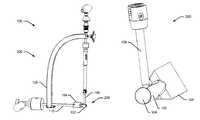
Claims (52)

What is claimed is:
1. An orthopedic anchoring system comprising:
an implant assembly comprising:
an implant body comprising at least a portion of a locking element comprising a slot having lateral sides formed in the implant body;
an implant outer layer comprising a longitudinal axis and a lumen extending parallel to the longitudinal axis, wherein the lumen is configured to receive at least a portion of the implant body within the lumen; and
a fastener comprising an attachment feature configured to mechanically interlock with the locking element in a force-fit mechanical engagement, the attachment feature comprising a fastener distal end attached to the fastener by a contracted neck region, wherein the fastener distal end is configured to be forced through the slot to produce the force-fit mechanical engagement between the lateral sides of the slot and the fastener distal end;
a delivery tool comprising:
an implant guide configured to releasably couple to at least one of the implant body or the implant outer layer; and
a fastener guide operably coupled to the implant guide and configured to deliver the attachment feature of the fastener to the locking element;
wherein a final manufactured configuration of the delivery tool and a final manufactured configuration of the implant assembly are such that, when the system is assembled such that the implant guide is releasably coupled to at least one of the implant body or the implant outer layer, a delivery arrangement automatically exists such that the fastener guide is correctly oriented to deliver the attachment feature to the locking element.
2. The system ofclaim 1, wherein in being coupled together, the implant guide and fastener guide form an angle relative to each other, and the angle is non-adjustable.
3. The system ofclaim 1, wherein the locking element is situated near a distal end of the implant body.
4. The system ofclaim 3, wherein the implant outer layer further comprises a fastener opening configured to provide a path through which the attachment feature passes to engage the locking element in a force-fit mechanical engagement.
5. The system ofclaim 1, wherein the implant outer layer further comprises a first alignment feature and the implant body further comprises an second alignment feature, wherein the first alignment feature is configured to operatively connect to the second alignment feature, resulting in a predetermined angular alignment of the implant body within the lumen about a rotational axis aligned parallel to the longitudinal axis and situated along a centerline of the implant body.
6. The system ofclaim 5, wherein:
the first alignment feature comprises a first non-circular cross-sectional profile,
the second alignment feature comprises a second non-circular cross-sectional profile corresponding to the first non-circular cross-sectional profile, and
the first non-circular cross-sectional profile and the second non-circular cross-sectional profile are aligned only at the predetermined angular alignment.
7. The system ofclaim 5, wherein:
the first alignment feature is chosen from a longitudinal ridge or groove formed on an outer surface of the implant body and aligned with the longitudinal axis;
the second alignment feature is chosen from corresponding longitudinal groove or ridge formed on an inner surface defining the lumen of the implant outer layer and aligned with the longitudinal axis; and
the longitudinal ridge or groove meshes with the corresponding longitudinal groove or ridge as the implant body is advanced distally into the lumen only at the predetermined angular alignment.
8. The system ofclaim 1, wherein the delivery tool further comprises a targeting arm comprising a first arm end and an opposite second arm end, wherein the first arm end is configured to releasably attach the fastener guide and the second arm end is configured to releasably attach the implant guide to operatively couple the fastener guide and the implant guide.
9. The system ofclaim 8, wherein the targeting arm comprises a fixed structural element configured to operatively couple the fastener guide and the implant guide at a non-adjustable angle relative to each other.
10. The system ofclaim 1, wherein a pair of longitudinal projections comprises the lateral sides and forms the slot between the pair of longitudinal projections, wherein the fastener distal end is configured to be forced through the slot to produce the force-fit mechanical engagement between the pair of longitudinal projections and the fastener distal end.
11. The system ofclaim 1, wherein the fastener distal end comprises a ball end.
12. The system ofclaim 1, wherein the fastener distal end comprises a rounded end.
13. The system ofclaim 1, wherein the fastener distal end comprises a cone end.
14. An orthopedic anchoring system comprising:
an implant assembly comprising:
an implant body comprising at least a portion of a locking element comprising a slot formed within the implant body;
an implant outer layer comprising a longitudinal axis and a lumen extending parallel to the longitudinal axis, wherein the lumen is configured to receive at least a portion of the implant body within the lumen; and
a fastener comprising an attachment feature configured to mechanically interlock with the locking element in an interference mechanical engagement, the attachment feature comprises a fastener distal end attached to the fastener by contracted neck region, the locking element extending from a distal end of the implant body in a direction parallel with the longitudinal axis, wherein the slot comprises a slot width between a diameter of the neck region and a diameter of the fastener distal end, the slot is configured to receive the neck region of the attachment feature to retain the fastener distal end and to produce the interference mechanical engagement;
a delivery tool comprising:
an implant guide configured to releasably couple to at least one of the implant body or the implant outer layer; and
a fastener guide operably coupled to the implant guide and configured to deliver the attachment feature of the fastener to the locking element;
wherein a final manufactured configuration of the delivery tool and a final manufactured configuration of the implant assembly are such that, when the system is assembled such that the implant guide is releasably coupled to the implant body, a delivery arrangement automatically exists such that the fastener guide is correctly oriented to deliver the attachment feature to the locking element.
15. The system ofclaim 14, wherein the fastener is situated in a final fastener position and the implant body is advanced in a distal direction to form the interference mechanical engagement.
16. The system ofclaim 15, wherein the implant outer layer further comprises a second locking element comprising a fastener opening configured to receive the attachment feature and to produce the interference mechanical engagement cooperatively with the locking element of the implant body when the implant body is advanced distally within the lumen of the implant outer layer.
17. The system ofclaim 14, wherein:
the implant outer layer further comprises a first alignment feature and the implant body further comprises an second alignment feature, wherein the first alignment feature is configured to operatively connect to the second alignment feature, resulting in a predetermined angular alignment of the implant body within the lumen about a rotational axis aligned parallel to the longitudinal axis and situated along a centerline of the implant body,
the first alignment feature comprises a first non-circular cross-sectional profile,
the second alignment feature comprises a second non-circular cross-sectional profile corresponding to the first non-circular cross-sectional profile, and
the first non-circular cross-sectional profile and the second non-circular cross-sectional profile are aligned only at the predetermined angular alignment.
18. The system ofclaim 14, wherein:
the implant outer layer further comprises a first alignment feature and the implant body further comprises an second alignment feature, wherein the first alignment feature is configured to operatively connect to the second alignment feature, resulting in a predetermined angular alignment of the implant body within the lumen about a rotational axis aligned parallel to the longitudinal axis and situated along a centerline of the implant body,
the first alignment feature is chosen from a longitudinal ridge or groove formed on an outer surface of the implant body and aligned with the longitudinal axis;
the second alignment feature is chosen from corresponding longitudinal groove or ridge formed on an inner surface defining the lumen of the implant outer layer and aligned with the longitudinal axis; and
the longitudinal ridge or groove meshes with the corresponding longitudinal groove or ridge as the implant body is advanced distally into the lumen only at the predetermined angular alignment.
19. The system ofclaim 5, wherein the attachment feature is configured to mechanically interlock with the locking element in an interference mechanical engagement, and wherein:
the first alignment feature is chosen from a pin or pin receptacle formed on an outer surface of the implant body;
the second alignment feature is chosen from a corresponding pin receptacle or pin formed on an inner surface defining the lumen of the implant outer layer; and
wherein when the implant body is actuated within the lumen the locking element is guided in a predetermined orientation as a result of the first alignment feature being operatively connected to the second alignment feature via a meshing of the pin or pin receptacle with the corresponding pin receptacle or pin.
20. The system ofclaim 14, wherein:
the implant body further comprises a distal region comprising a body depression contoured to a shape of at least a portion of the attachment feature; and
wherein when the body depression is compressed against the attachment feature a meshing engagement therebetween comprises the interference mechanical engagement.
21. The system ofclaim 20, wherein:
the implant outer layer comprises a contoured surface at a distal end of the lumen shaped to correspond with a shape of at least a portion of the attachment feature to enhance a locked engagement formed between the attachment feature of the fastener and the locking element of the implant body.
22. The system ofclaim 20, wherein:
at least a portion of the attachment feature comprises a spherical shape and the body depression comprises a contour which is a general surface negative of the spherical shape; and
wherein the spherical shape of the at least a portion of the attachment feature is configured and dimensioned to fit closely within the body depression.
23. The system ofclaim 21, wherein:
at least a portion of the attachment feature comprises a spherical shape and the contoured surface at a distal end of the lumen comprises a contour which is a general surface negative of the spherical shape; and
wherein the spherical shape of the at least a portion of the attachment feature is configured and dimensioned to fit closely within the contoured surface at a distal end of the lumen.
24. The system ofclaim 14, wherein the fastener distal end comprises a ball end.
25. The system ofclaim 14, wherein the fastener distal end comprises a rounded end.
26. The system ofclaim 14, wherein the fastener distal end comprises a cone end.
27. An orthopedic anchoring system comprising:
an implant assembly comprising:
an implant body comprising at least a portion of a locking element;
an implant outer layer comprising a longitudinal axis and a lumen extending parallel to the longitudinal axis, wherein the lumen is configured to receive at least a portion of the implant body within the lumen, the implant outer layer further comprises a first alignment feature formed on the inner surface of the lumen, an exterior surface, a fastener opening, a fastener opening perimeter; and
a fastener comprising an attachment feature configured to mechanically interlock with the locking element in an interference mechanical engagement, the attachment feature comprising a distal end attached to the fastener by a contracted neck region;
a delivery tool comprising:
an implant guide configured to releasably couple to at least one of the implant body or the implant outer layer; and
a fastener guide operably coupled to the implant guide and configured to deliver the attachment feature of the fastener to the locking element;
wherein a final manufactured configuration of the delivery tool and a final manufactured configuration of the implant assembly are such that, when the system is assembled such that the implant guide is releasably coupled to at least one of the implant body or the implant outer layer, a delivery arrangement automatically exists such that the fastener guide is correctly oriented to deliver the attachment feature to the locking element, wherein
the fastener opening communicates between the exterior surface and the lumen through a lumen wall and is configured to provide a path through which the attachment feature passes to engage the locking element in the interference mechanical engagement;
the implant body further comprises a second alignment feature formed on an exterior surface of the implant body configured to operatively engage with the first alignment feature;
the locking element comprises a slot formed through the implant body at a distal region of the implant body, wherein the slot comprises a first end and a second end opposite the first end, a first slot side and a second slot side opposite the first slot side, each of the first and second slot sides attached to the first end and toward the second slot end, a slot width extending between the first slot side and second slot side near a first slot end and dimensioned to include a width which is between a diameter of the contracted neck region and a diameter of the distal end of the attachment feature of the fastener; and the slot is configured to receive the contracted neck region of the attachment feature to retain the distal end of the attachment feature and to produce the interference mechanical engagement; and
wherein, when the implant assembly transitions from a first or open condition to a second or locked condition, the first alignment feature being operatively connected to the second feature results in a predetermined alignment of both the implant body relative to the implant outer layer and the slot relative to a position of the attachment feature when received within the lumen through the fastener opening such that the slot and the attachment feature mechanically interlock once in the second or locked condition, the first or open condition being when the locking element does not engage the attachment feature and the second or locked condition being when the locking element engages the attachment feature.
28. The system ofclaim 27, wherein:
the fastener further comprises a proximal end, a distal end opposite the proximal end, a threaded shaft extending between the proximal and distal ends, and a head coupled to the proximal end configured to selectively rotate freely relative to the shaft and further configured to couple with an elongate reinforcing element.
29. The system ofclaim 28, wherein:
the implant outer layer comprising an exterior surface with a transverse cross sectional profile comprising at least three apices.
30. The system ofclaim 28, wherein:
the first alignment feature comprises a first non-circular cross-sectional profile,
the second alignment feature comprises a second non-circular cross-sectional profile corresponding to the first non-circular cross-sectional profile, and
the first non-circular cross-sectional profile and the second non-circular cross-sectional profile are aligned only at the predetermined alignment.
31. The system ofclaim 28, wherein:
the first alignment feature is chosen from a longitudinal ridge or groove formed on an outer surface of the implant body and aligned with the longitudinal axis;
the second alignment feature is chosen from corresponding longitudinal groove or ridge formed on an inner surface defining the lumen of the implant outer layer and aligned with the longitudinal axis; and
the longitudinal ridge or groove meshes with the corresponding longitudinal groove or ridge as the implant body is advanced distally into the lumen only at the predetermined alignment.
32. The system ofclaim 28, wherein:
the first alignment feature is chosen from a pin or pin receptacle formed on an outer surface of the implant body;
the second alignment feature is chosen from corresponding pin receptacle or pin formed on an inner surface defining the lumen of the implant outer layer; and
wherein when the implant body is actuated within the lumen the locking element is guided in a predetermined orientation as a result of the first alignment feature being operatively connected to the second alignment feature via a meshing of the pin or pin receptacle with the corresponding pin receptacle or pin.
33. The system ofclaim 28, wherein:
the implant body further comprises a distal region comprising a body depression contoured to a shape of at least a portion of the attachment feature; and
wherein when the body depression is compressed against the attachment feature a meshing engagement therebetween comprises the interference mechanical engagement.
34. The system ofclaim 33, wherein:
the implant outer layer comprises a contoured surface at a distal end of the lumen shaped to correspond with the shape of the at least a portion of the attachment feature to enhance a locked engagement formed between the attachment feature of the fastener and the locking element of the implant body.
35. The system ofclaim 33, wherein:
the at least a portion of the attachment feature comprises a spherical shape and the body depression comprises a contour which is a general surface negative of the spherical shape; and
wherein the spherical shape of the at least a portion of the attachment feature is configured and dimensioned to fit closely within the body depression.
36. The system ofclaim 34, wherein:
the at least a portion of the attachment feature comprises a spherical shape and the contoured surface at the distal end of the lumen comprises a contour which is a general surface negative of the spherical shape; and
wherein the spherical shape of the at least a portion of the attachment feature is configured and dimensioned to fit closely within the contoured surface at the distal end of the lumen.
37. The system ofclaim 28, wherein:
the fastener guide is operably coupled to the implant guide via a targeting arm comprising a single continuous structural element having a fixed elongate shape.
38. The system ofclaim 28, wherein:
the fastener guide is operably coupled to the implant guide via a targeting arm comprising two or more linked structural elements having an adjustable elongate shape.
39. The system ofclaim 38, wherein:
the targeting arm comprises a telescoping arrangement via the two or more linked structural elements.
40. The system ofclaim 39, wherein:
the targeting arm comprises a first section ending in a first arm end and a second section ending in a second arm end; both sections having matched circular arc shapes with a common center.
41. The system ofclaim 40, wherein:
one of the first or second sections comprises a hollow cross-section having a central lumen, and one of the second or first sections is shaped and dimensioned to fit within the central lumen by sliding along an arc length of one of the first or second sections.
42. The system ofclaim 38, wherein:
the targeting arm further comprises a sliding attachment fitting which permits sliding between the two or more linked structural elements to adjust a relative position thereof.
43. The system ofclaim 42, wherein:
the targeting arm further comprises a locking mechanism selected from at least one of a set screw, a clamp, a peg, a compression fitting, and any combination thereof and configured such that the elongate shape of the targeting arm and the sliding attachment fitting may be locked into a fixed position when employing the locking mechanism.
44. The system ofclaim 42, wherein:
the two or more linked structural elements comprises a horizontal segment linked to a vertical segment wherein the arrangement between the horizontal segment and vertical segment result in a sliding in a horizontal direction along the horizontal segment to adjust a relative position of the vertical segment.
45. The system ofclaim 28, wherein:
the targeting arm comprises two or more hinged or jointed subsections resulting in the delivery arrangement.
46. The system ofclaim 28, wherein:
the targeting arm comprises one or more bendable subsections having limited deformability resulting in the delivery arrangement.
47. The system ofclaim 28, wherein:
the fastener guide is operably couple to the implant guide via a targeting arm, the targeting arm attached to the fastener guide at a fastener guide attachment fitting, the fastener guide attachment fitting configured to receive a portion of the fastener guide in a reversibly locked mechanical engagement; wherein when unlocked the fastener guide attachment fitting allows limited movement of the fastener guide including at least one of rotation of the fastener guide about a fastener longitudinal axis and translation of the fastener guide along the fastener longitudinal axis such that even when unlocked the fastener guide attachment fitting is configured to maintain a fixed orientation between the fastener longitudinal axis and the longitudinal axis of the implant outer layer.
48. The system ofclaim 47, wherein:
the fastener guide attachment fitting comprises a collar having a locking mechanism configured to compresses a fastener guide shaft, thereby locking the fastener guide shaft in a reversibly locked mechanical engagement, the locking mechanism selected from one or more set screws, cotter pins, pegs, clamps, bands, compression fittings, and any combination thereof.
49. The system ofclaim 28, wherein:
the fastener guide includes a bone screw inserter nested within a sleeve comprising a threaded distal end, a distal end of the bone screw inserter configured to protrude from the threaded distal end of the sleeve, the distal end of the bone screw inserter comprising a screwdriver tip, a screw head fitting positioned proximal the screwdriver tip and wherein the threaded distal end of the sleeve and the screw head fitting of the bone screw inserter are configured to cooperatively reversibly attach to the head of the fastener in a mechanically locked engagement during a formation of the implant assembly and wherein the screwdriver tip is configured to be received within a corresponding screwdriver fitting formed within a portion of the fastener at the proximal end, the screw head fitting configured to be received within an upward-opening groove formed within support elements of the head of the fastener.
50. The system ofclaim 27, wherein the distal end of the attachment feature comprises a ball end.
51. The system ofclaim 27, wherein the distal end of the attachment feature comprises a rounded end.
52. The system ofclaim 27. wherein the distal end of the attachment feature comprises a cone end.
US14/413,3182010-01-132013-07-19Orthopedic anchoring system and methodsActiveUS9554909B2 (en)

Priority Applications (4)

Application NumberPriority DateFiling DateTitle
US14/413,318US9554909B2 (en)2012-07-202013-07-19Orthopedic anchoring system and methods
US15/385,446US10335197B2 (en)2012-07-202016-12-20Orthopedic anchoring methods
US16/455,308US10596004B2 (en)2010-01-132019-06-27Spinopelvic fixation technology
US16/741,877US11129718B2 (en)2010-01-132020-01-14Methods and systems for immobilization and stabilization of the sacroiliac joint (SIJ) for providing a foundation for long spinopelvic fixation constructs

Applications Claiming Priority (4)

Application NumberPriority DateFiling DateTitle
US201261674233P2012-07-202012-07-20
US201361798922P2013-03-152013-03-15
US14/413,318US9554909B2 (en)2012-07-202013-07-19Orthopedic anchoring system and methods
PCT/US2013/051381WO2014015309A1 (en)2012-07-202013-07-19Orthopedic anchoring system and methods

Related Parent Applications (1)

Application NumberTitlePriority DateFiling Date
PCT/US2013/051381A-371-Of-InternationalWO2014015309A1 (en)2010-01-132013-07-19Orthopedic anchoring system and methods

Related Child Applications (1)

Application NumberTitlePriority DateFiling Date
US15/385,446ContinuationUS10335197B2 (en)2010-01-132016-12-20Orthopedic anchoring methods

Publications (2)

Publication NumberPublication Date
US20150150683A1 US20150150683A1 (en)2015-06-04
US9554909B2true US9554909B2 (en)2017-01-31

Family

ID=49949288

Family Applications (2)

Application NumberTitlePriority DateFiling Date
US14/413,318ActiveUS9554909B2 (en)2010-01-132013-07-19Orthopedic anchoring system and methods
US15/385,446Active2033-12-18US10335197B2 (en)2010-01-132016-12-20Orthopedic anchoring methods

Family Applications After (1)

Application NumberTitlePriority DateFiling Date
US15/385,446Active2033-12-18US10335197B2 (en)2010-01-132016-12-20Orthopedic anchoring methods

Country Status (2)

CountryLink
US (2)US9554909B2 (en)
WO (1)WO2014015309A1 (en)

Cited By (35)

* Cited by examiner, † Cited by third party
Publication numberPriority datePublication dateAssigneeTitle
US9839448B2 (en)2013-10-152017-12-12Si-Bone Inc.Implant placement
US20180092669A1 (en)*2010-01-132018-04-05Jcbd, LlcMethods of Fusing a Sacroiliac Joint with an Additively Manufactured Sacroiliac Joint Implant
US9949843B2 (en)2004-08-092018-04-24Si-Bone Inc.Apparatus, systems, and methods for the fixation or fusion of bone
US10166033B2 (en)2014-09-182019-01-01Si-Bone Inc.Implants for bone fixation or fusion
US10194962B2 (en)2014-09-182019-02-05Si-Bone Inc.Matrix implant
US10201427B2 (en)2012-03-092019-02-12Si-Bone Inc.Integrated implant
US10363140B2 (en)2012-03-092019-07-30Si-Bone Inc.Systems, device, and methods for joint fusion
US10376206B2 (en)2015-04-012019-08-13Si-Bone Inc.Neuromonitoring systems and methods for bone fixation or fusion procedures
US10603055B2 (en)2017-09-152020-03-31Jcbd, LlcSystems for and methods of preparing and fusing a sacroiliac joint
US10624686B2 (en)*2016-09-082020-04-21DePuy Synthes Products, Inc.Variable angel bone plate
US10772665B2 (en)2018-03-292020-09-15DePuy Synthes Products, Inc.Locking structures for affixing bone anchors to a bone plate, and related systems and methods
US10820930B2 (en)2016-09-082020-11-03DePuy Synthes Products, Inc.Variable angle bone plate
US10905476B2 (en)2016-09-082021-02-02DePuy Synthes Products, Inc.Variable angle bone plate
US10925651B2 (en)2018-12-212021-02-23DePuy Synthes Products, Inc.Implant having locking holes with collection cavity for shavings
US10959758B2 (en)2013-03-152021-03-30Si-Bone Inc.Implants for spinal fixation or fusion
US11013541B2 (en)2018-04-302021-05-25DePuy Synthes Products, Inc.Threaded locking structures for affixing bone anchors to a bone plate, and related systems and methods
US11026727B2 (en)2018-03-202021-06-08DePuy Synthes Products, Inc.Bone plate with form-fitting variable-angle locking hole
US11116519B2 (en)2017-09-262021-09-14Si-Bone Inc.Systems and methods for decorticating the sacroiliac joint
US11147688B2 (en)2013-10-152021-10-19Si-Bone Inc.Implant placement
US11202674B2 (en)2018-04-032021-12-21Convergent Dental, Inc.Laser system for surgical applications
US11234830B2 (en)2019-02-142022-02-01Si-Bone Inc.Implants for spinal fixation and or fusion
US11259851B2 (en)2003-08-262022-03-01DePuy Synthes Products, Inc.Bone plate
US11291484B2 (en)2004-01-262022-04-05DePuy Synthes Products, Inc.Highly-versatile variable-angle bone plate system
US11291485B2 (en)2012-05-042022-04-05Si-Bone Inc.Fenestrated implant
US11369419B2 (en)2019-02-142022-06-28Si-Bone Inc.Implants for spinal fixation and or fusion
US11571245B2 (en)2019-11-272023-02-07Si-Bone Inc.Bone stabilizing implants and methods of placement across SI joints
US11633292B2 (en)2005-05-242023-04-25Si-Bone Inc.Apparatus, systems, and methods for the fixation or fusion of bone
US11660126B1 (en)*2019-06-282023-05-30Advance Research System, LlcIliac anchor system
US11752011B2 (en)2020-12-092023-09-12Si-Bone Inc.Sacro-iliac joint stabilizing implants and methods of implantation
US20240180710A1 (en)*2022-12-012024-06-06Globus Medical, Inc.Sacroiliac joint fixation
US12083026B2 (en)2019-12-092024-09-10Si-Bone Inc.Sacro-iliac joint stabilizing implants and methods of implantation
US12419668B2 (en)2019-11-212025-09-23Si-Bone Inc.Rod coupling assemblies for bone stabilization constructs
US12427028B2 (en)2018-03-282025-09-30Si-Bone Inc.Threaded implants and methods of use across bone segments
US12433733B2 (en)2023-08-152025-10-07Si-Bone Inc.Pelvic stabilization implants, methods of use and manufacture
US12440255B2 (en)2022-11-072025-10-14Medos International SárlBone screw inserters and methods

Families Citing this family (40)

* Cited by examiner, † Cited by third party
Publication numberPriority datePublication dateAssigneeTitle
US9333090B2 (en)2010-01-132016-05-10Jcbd, LlcSystems for and methods of fusing a sacroiliac joint
US9421109B2 (en)2010-01-132016-08-23Jcbd, LlcSystems and methods of fusing a sacroiliac joint
CA3002234C (en)2010-01-132020-07-28Jcbd, LlcSacroiliac joint fixation fusion system
EP2720628B1 (en)2011-06-172021-08-11Jcbd, LlcSacroiliac joint implant system
EP4252686A3 (en)2012-12-282023-12-27Paragon 28, Inc.Alignment guide apparatus
US9700356B2 (en)2013-07-302017-07-11Jcbd, LlcSystems for and methods of fusing a sacroiliac joint
US9119732B2 (en)2013-03-152015-09-01Orthocision, Inc.Method and implant system for sacroiliac joint fixation and fusion
WO2014146018A1 (en)2013-03-152014-09-18Jcbd, LlcSystems and methods for fusing a sacroiliac joint and anchoring an orthopedic appliance
US10245087B2 (en)2013-03-152019-04-02Jcbd, LlcSystems and methods for fusing a sacroiliac joint and anchoring an orthopedic appliance
US9826986B2 (en)2013-07-302017-11-28Jcbd, LlcSystems for and methods of preparing a sacroiliac joint for fusion
US9717539B2 (en)2013-07-302017-08-01Jcbd, LlcImplants, systems, and methods for fusing a sacroiliac joint
US9801546B2 (en)2014-05-272017-10-31Jcbd, LlcSystems for and methods of diagnosing and treating a sacroiliac joint disorder
US9730684B2 (en)2014-07-072017-08-15Warsaw Orthopedic, Inc.Multiple spinal surgical pathways systems and methods
CN104434294A (en)*2014-12-152015-03-25庄岩Guiding device special for pelvis
US10449051B2 (en)2015-04-292019-10-22Institute for Musculoskeletal Science and Education, Ltd.Implant with curved bone contacting elements
JP6768001B2 (en)2015-04-292020-10-14インスティテュート フォー マスキュロスケレタル サイエンス アンド エジュケイション,リミテッド Coiled implants and systems and how to make them
US10492921B2 (en)2015-04-292019-12-03Institute for Musculoskeletal Science and Education, Ltd.Implant with arched bone contacting elements
US20170209188A1 (en)*2016-01-262017-07-27Gerald SchellRodless bivertebral transpedicular fixation with interbody fusion
EP3528716B1 (en)2016-10-242024-02-14Paragon 28, Inc.Osteotomy systems
US10478312B2 (en)2016-10-252019-11-19Institute for Musculoskeletal Science and Education, Ltd.Implant with protected fusion zones
US11033394B2 (en)2016-10-252021-06-15Institute for Musculoskeletal Science and Education, Ltd.Implant with multi-layer bone interfacing lattice
ES2993743T3 (en)2017-02-272025-01-08Paragon 28 IncTargeting instruments and systems
EP3585287B1 (en)2017-02-272024-11-13Paragon 28, Inc.Intramedullary nail fixation systems
US10512549B2 (en)2017-03-132019-12-24Institute for Musculoskeletal Science and Education, Ltd.Implant with structural members arranged around a ring
US10918431B2 (en)2017-03-302021-02-16Paragon 28, Inc.Bone fixation system, assembly, implants, devices, alignment guides, and methods of use
EP3651699B1 (en)2017-07-112025-09-17Paragon 28, Inc.Bone fixation system, assembly, implants, devices and insertion guides
DE102017116755A1 (en)*2017-07-252019-01-31Silony Medical International AG Bone anchor for triangular iliosacral osteosynthesis
US10940015B2 (en)2017-11-212021-03-09Institute for Musculoskeletal Science and Education, Ltd.Implant with improved flow characteristics
US10744001B2 (en)2017-11-212020-08-18Institute for Musculoskeletal Science and Education, Ltd.Implant with improved bone contact
USD921898S1 (en)2017-12-222021-06-08Orthocision Inc.Helical implant
EP3820382B1 (en)2018-07-112025-09-10Paragon 28, Inc.Systems comprising alignment guides and implants
US10893910B2 (en)2018-10-182021-01-19Warsaw Orthopedic, Inc.Spinal implant system and method
EP3923842A4 (en)2019-02-132022-11-23Paragon 28, Inc. IMPLANTS, ALIGNMENT GUIDES, SYSTEMS AND METHODS OF USE
JP7562547B2 (en)2019-02-142024-10-07パラゴン28・インコーポレイテッド Threaded targeting instruments, systems, and methods of use
AU2020228309B2 (en)2019-02-282025-10-02Paragon 28, Inc.Fusion systems, instruments, bone plates and methods of use
CN110123436A (en)*2019-06-212019-08-16创辉医疗器械江苏有限公司A kind of sacroiliac fusion system and application method
CN114404017B (en)*2022-03-292022-07-08中国医学科学院北京协和医院 A device for convenient positioning of pedicle screws
WO2024020411A2 (en)*2022-07-182024-01-25Dignity HealthSystems and methods for a manually-actuated fastener delivery device
CN117503313B (en)*2023-12-042024-09-10季丰琨 Orthopedic reduction forceps
US12295623B1 (en)2024-03-082025-05-13EMPLASE Medical Technologies, LLCSurgical and stabilization techniques for treatment of sacroiliac joints

Citations (376)

* Cited by examiner, † Cited by third party
Publication numberPriority datePublication dateAssigneeTitle
US4488542A (en)1981-11-271984-12-18Per HellandExternal setting and correction device for the treatment of bone fractures
US4569338A (en)1984-02-091986-02-11Edwards Charles CSacral fixation device
US4590928A (en)1980-09-251986-05-27South African Invention Development CorporationSurgical implant
US4622959A (en)1985-03-051986-11-18Marcus Randall EMulti-use femoral intramedullary nail
US4714469A (en)1987-02-261987-12-22Pfizer Hospital Products Group, Inc.Spinal implant
US4773402A (en)1985-09-131988-09-27Isola Implants, Inc.Dorsal transacral surgical implant
US4794918A (en)1985-05-061989-01-03Dietmar WolterBone plate arrangement
US4863476A (en)1986-08-291989-09-05Shepperd John A NSpinal implant
US4881535A (en)1988-09-061989-11-21Sohngen Gary WIntramedullary rod targeting device
US4911153A (en)1988-02-041990-03-27Biomet, Inc.Orthopedic surgical instrument
US4920958A (en)1986-11-051990-05-01Minnesota Mining And Manufacturing CompanyDrill guide assembly
US4950270A (en)1989-02-031990-08-21Boehringer Mannheim CorporationCannulated self-tapping bone screw
US5026373A (en)1988-10-171991-06-25Surgical Dynamics, Inc.Surgical method and apparatus for fusing adjacent bone structures
US5052375A (en)1990-02-211991-10-01John G. StarkInstrumented orthopedic restraining device and method of use
US5108397A (en)1990-04-191992-04-28Joseph WhiteMethod and apparatus for stabilization of pelvic fractures
US5112337A (en)1991-02-051992-05-12Depuy Du Pont OrthopaedicsVariable angle, selective length tibial drill guide
US5176681A (en)1987-12-141993-01-05Howmedica International Inc.Intramedullary intertrochanteric fracture fixation appliance and fitting device
US5192327A (en)1991-03-221993-03-09Brantigan John WSurgical prosthetic implant for vertebrae
WO1993008745A1 (en)1991-11-041993-05-13University Of FloridaLumbosacral fixation and fusion method and device
US5282861A (en)1992-03-111994-02-01UltrametOpen cell tantalum structures for cancellous bone implants and cell and tissue receptors
US5334192A (en)1991-01-301994-08-02Homwedica GmbhTargeting device for an implant
US5334205A (en)1993-06-301994-08-02The United States Of America As Represented By The Secretary Of The Air ForceSacroiliac joint fixation guide
US5336225A (en)1991-05-241994-08-09Orthopaedic Biosystems, Ltd.Bone fastening device
US5368593A (en)1992-07-071994-11-29Stark; John G.Devices and methods for attachment of spine fixation devices
US5437674A (en)1992-08-251995-08-01Alexandre WorcelOsteosynthesis device
US5443509A (en)1992-12-101995-08-22Linvatec CorporationInterference bone-fixation screw with multiple interleaved threads
WO1995023559A1 (en)1994-03-031995-09-08Societe De Fabrication De Materiel Orthopedique (Sofamor)Connector used in spinal osteosynthesis equipment for lumbar, sacral or iliosacral fixation
US5456267A (en)1994-03-181995-10-10Stark; John G.Bone marrow harvesting systems and methods and bone biopsy systems and methods
WO1995031947A1 (en)1994-05-231995-11-30Spine-Tech, Inc.Intervertebral fusion implant
US5480402A (en)1993-08-051996-01-02Kim; Andrew C.Shoulder compression interlocking system
US5591235A (en)1995-03-151997-01-07Kuslich; Stephen D.Spinal fixation device
US5593407A (en)1991-10-261997-01-14Reis; Nicolas D.Internal ilio-lumbar fixator
US5607424A (en)1995-04-101997-03-04Tropiano; PatrickDomed cage
US5609635A (en)1988-06-281997-03-11Michelson; Gary K.Lordotic interbody spinal fusion implants
US5626434A (en)1995-08-211997-05-06Cook; Robert W.Connector for variable-curvature spaceframe structural system
US5669909A (en)1995-03-271997-09-23Danek Medical, Inc.Interbody fusion device and method for restoration of normal spinal anatomy
CN2265765Y (en)1996-02-161997-10-29文益民Repositor for fracture and dislocation of sacro-iliac joints
US5688284A (en)1996-09-201997-11-18Medicinelodge, Inc.Variable angle drill guide and ligament fixation method
US5743914A (en)1996-06-061998-04-28Skiba; Jeffry B.Bone screw
US5772594A (en)1995-10-171998-06-30Barrick; Earl F.Fluoroscopic image guided orthopaedic surgery system with intraoperative registration
US5823975A (en)1990-02-211998-10-20Stark; John G.Local monitoring system for an instrumented orthopedic restraining device and method therefor
WO1998048717A1 (en)1997-04-301998-11-05Jean TaylorApparatus for interlocking two contiguous, in particular lumbar, vertebrae
US5888224A (en)1993-09-211999-03-30Synthesis (U.S.A.)Implant for intervertebral space
US5891150A (en)1996-12-041999-04-06Chan; Kwan-HoApparatus and method for fixing a ligament in a bone tunnel
US5919193A (en)1996-03-141999-07-06Slavitt; Jerome A.Method and kit for surgically correcting malformations in digits of a finger or toe
US5928239A (en)1998-03-161999-07-27University Of WashingtonPercutaneous surgical cavitation device and method
US5929782A (en)1990-02-211999-07-27Stark; John G.Communication system for an instrumented orthopedic restraining device and method therefor
US5993463A (en)1997-05-151999-11-30Regents Of The University Of MinnesotaRemote actuation of trajectory guide
US6053916A (en)1999-02-172000-04-25Moore; Michael R.Sacroiliac implant
US6056749A (en)1999-03-152000-05-02Spineology, Inc.Method and device for fixing and correcting spondylolisthesis anteriorly
US6063442A (en)1998-10-262000-05-16Implex CorporationBonding of porous materials to other materials utilizing chemical vapor deposition
US6175758B1 (en)1997-07-152001-01-16Parviz KambinMethod for percutaneous arthroscopic disc removal, bone biopsy and fixation of the vertebrae
WO2001030264A2 (en)1999-10-222001-05-03Reiley Mark AAnkle replacement system
US6236891B1 (en)1998-07-312001-05-22Surx, Inc.Limited heat transfer devices and methods to shrink tissues
US6241771B1 (en)1997-08-132001-06-05Cambridge Scientific, Inc.Resorbable interbody spinal fusion devices
US20010005796A1 (en)1995-03-272001-06-28Thomas ZdeblickMethods and instruments for interbody fusion
US20010018616A1 (en)1998-07-022001-08-30Schwab Jan M.Device for anchoring an endoprosthesis in a bone
US20010020143A1 (en)1997-03-242001-09-06Stark John G.Instrumented accelerometers for patient monitoring
US6290724B1 (en)1998-05-272001-09-18Nuvasive, Inc.Methods for separating and stabilizing adjacent vertebrae
US6302885B1 (en)1998-01-152001-10-16Holger K. EssigerBone nail
US6322562B1 (en)1998-12-192001-11-27Dietmar WolterFixation system for bones
WO2001095823A1 (en)2000-06-132001-12-20Sdgi Holdings, Inc.Percutaneous needle alignment system
US20020032484A1 (en)2000-06-132002-03-14Hyde Edward R.Magnetic array implant and prosthesis
US20020029784A1 (en)1999-06-112002-03-14Izex Technologies, Inc.Database management for an orthopedic treatment system
US20020068977A1 (en)2000-12-052002-06-06Jackson Roger P.Anterior variable expandable fusion cage
US20020082701A1 (en)1999-06-042002-06-27Zdeblick Thomas A.Artificial disc implant
US6413278B1 (en)1998-03-302002-07-02J. Alexander MarchoskyProsthetic system
US20020087161A1 (en)2001-01-032002-07-04Randall Bernard L.Cannulated locking screw system especially for transiliac implant
US6432140B1 (en)1999-12-102002-08-13Chih-I LinIntervertebral retrieval device
US6432107B1 (en)2000-01-152002-08-13Bret A. FerreeEnhanced surface area spinal fusion devices
US20020147461A1 (en)2001-04-062002-10-10Aldrich William N.Apparatus and methods for closing openings in spinal discs
US20020147496A1 (en)2001-04-062002-10-10Integrated Vascular Systems, Inc.Apparatus for treating spinal discs
US20020183846A1 (en)1989-07-062002-12-05Sulzer Spine-Tech Inc.Spinal implant
US6515593B1 (en)1995-02-152003-02-04Izex Technologies, Inc.Communication system for an instrumented orthopedic restraining device and method therefor
US6520990B1 (en)1990-10-052003-02-18Sdgi Holdings, Inc.Lateral fixation plates for a spinal system
US6547823B2 (en)1999-01-222003-04-15Osteotech, Inc.Intervertebral implant
US6547795B2 (en)2001-08-132003-04-15Depuy Acromed, Inc.Surgical guide system for stabilization of the spine
US6558423B1 (en)1999-05-052003-05-06Gary K. MichelsonInterbody spinal fusion implants with multi-lock for locking opposed screws
US6565605B2 (en)2000-12-132003-05-20Medicinelodge, Inc.Multiple facet joint replacement
US6572622B1 (en)1999-10-182003-06-03Bernd SchäferBone plate
US6579318B2 (en)2000-06-122003-06-17Ortho Development CorporationIntervertebral spacer
US20030114931A1 (en)2001-12-132003-06-19Lee Choon SungSpinal prosthetic implant and insertion instrument
US20030124486A1 (en)2001-12-282003-07-03Mcdevitt DennisExpandable polymer dental implant and method of use
US6607487B2 (en)2001-01-232003-08-19The Regents Of The University Of CaliforniaUltrasound image guided acetabular implant orientation during total hip replacement
US20030181981A1 (en)2000-05-112003-09-25Jean-Philippe LemaireAnterior lumbar interbody implant
US6641614B1 (en)1997-05-012003-11-04Spinal Concepts, Inc.Multi-variable-height fusion device
US20030208202A1 (en)2002-05-042003-11-06Falahee Mark H.Percutaneous screw fixation system
US6660224B2 (en)2001-08-162003-12-09National Research Council Of CanadaMethod of making open cell material
US6669698B1 (en)2000-10-242003-12-30Sdgi Holdings, Inc.Vertebrae fastener placement guide
US6682563B2 (en)2002-03-042004-01-27Michael S. ScharfSpinal fixation device
US6682567B1 (en)2001-09-192004-01-27Biomet, Inc.Method and apparatus for providing a shell component incorporating a porous ingrowth material and liner
US6716245B2 (en)2000-07-122004-04-06Spine NextIntersomatic implant
US20040073216A1 (en)2000-10-052004-04-15The Cleveland Clinic FoundationApparatus and method for attaching adjacent bones
US6723099B1 (en)2001-11-082004-04-20Biomet, Inc.Three sided tack for bone fixation
US6743256B2 (en)2000-10-112004-06-01Michael D. MasonGraftless spinal fusion device
US6746451B2 (en)2001-06-012004-06-08Lance M. MiddletonTissue cavitation device and method
US20040127988A1 (en)2001-04-182004-07-01Goble E. MarloweApparatus and method for attaching a graft ligament to a bone
US20040162616A1 (en)2002-10-212004-08-19Simonton T. AndrewSystems and techniques for restoring and maintaining intervertebral anatomy
US20040162558A1 (en)2003-02-182004-08-19Hegde Sajan K.Spinal plate having an integral rod connector portion
US20040186482A1 (en)2003-03-212004-09-23Kolb Eric D.Modular drill guide
US20040199256A1 (en)2003-04-042004-10-07Chao-Jan WangSupport device for supporting between spinal vertebrae
US20040220668A1 (en)2003-02-122004-11-04Sdgi Holdings, Inc.Method and device for correcting spondylolisthesis from the lateral approach
US20040228901A1 (en)2002-09-182004-11-18Trieu Hai H.Collagen-based materials and methods for treating synovial joints
US6824564B2 (en)1997-04-252004-11-30Stryker France, SasTwo-part intersomatic implant
US6827670B1 (en)1999-10-112004-12-07Izex Technologies, Inc.System for medical protocol management
US20040260286A1 (en)1999-10-082004-12-23Ferree Bret A.Intradiscal devices with anti-extrusion keels
US6835208B2 (en)1998-03-302004-12-28J. Alexander MarchoskyProsthetic system
US6855166B2 (en)1998-03-202005-02-15Zimmer Spine, Inc.Intevertebral implant with reduced contact area and method
US6855167B2 (en)2001-12-052005-02-15Osteotech, Inc.Spinal intervertebral implant, interconnections for such implant and processes for making
US20050043660A1 (en)2003-03-312005-02-24Izex Technologies, Inc.Orthoses
US6872187B1 (en)1998-09-012005-03-29Izex Technologies, Inc.Orthoses for joint rehabilitation
US6875236B2 (en)1999-10-222005-04-05Advanced Total Ankles, Inc.Intramedullary guidance systems and methods for installing ankle replacement prostheses
US20050113652A1 (en)1999-06-232005-05-26Izex Technologies, Inc.Remote psychological evaluation
US6902567B2 (en)2000-05-312005-06-07Silvana VeseDevice for fixing bone sections separated because of a fracture
US6908465B2 (en)2001-03-302005-06-21Triage Medical, Inc.Distal bone anchors for bone fixation with secondary compression
US20050149192A1 (en)2003-11-202005-07-07St. Francis Medical Technologies, Inc.Intervertebral body fusion cage with keels and implantation method
US20050154391A1 (en)2003-12-302005-07-14Thomas DohertyBone anchor assemblies
US6945448B2 (en)2002-06-182005-09-20Zimmer Technology, Inc.Method for attaching a porous metal layer to a metal substrate
US20050216088A1 (en)1998-05-272005-09-29Nu Vasive, Inc.Bone blocks and methods for inserting bone blocks into intervertebral spaces
US20050240264A1 (en)2004-04-222005-10-27Archus Orthopedics, Inc.Anti-rotation fixation element for spinal prostheses
US20050245925A1 (en)2003-01-312005-11-03Kobi IkiCartilage treatment probe
US20050267482A1 (en)2004-04-222005-12-01Hyde Edward R JrBone treatment method with implants and instrumentation
US6972019B2 (en)2001-01-232005-12-06Michelson Gary KInterbody spinal implant with trailing end adapted to receive bone screws
US20050273099A1 (en)2002-10-072005-12-08Christian BaccelliPlate fixing system
US6974461B1 (en)1999-09-142005-12-13Dietmar WolterFixation system for bones
WO2006020463A1 (en)2004-08-092006-02-23Reiley Mark ASystems and methods for the fixation or fusion of bone
US7011660B2 (en)1999-10-202006-03-14Sdgi Holdings, Inc.Instruments and methods for stabilization of bony structures
US20060054171A1 (en)2004-09-152006-03-16Bruce DallMethod and apparatus of approaching a joint
US20060058876A1 (en)2004-09-142006-03-16Mckinley Laurence MSystem and method for spinal fusion
US20060069438A1 (en)2004-09-292006-03-30Zucherman James FMulti-piece artificial spinal disk replacement device with multi-segmented support plates
US20060085068A1 (en)2004-10-182006-04-20Barry Richard JSpine microsurgery techniques, training aids and implants
US20060089716A1 (en)2004-10-272006-04-27Felix Brent ASurgical implant
US20060095134A1 (en)2004-10-282006-05-04Sdgi Holdings, Inc.Materials, devices and methods for implantation of transformable implants
US20060129244A1 (en)2004-10-252006-06-15Alphaspine, Inc.Expandable intervertebral spacer method and apparatus
US20060147332A1 (en)2004-12-302006-07-06Howmedica Osteonics Corp.Laser-produced porous structure
US20060161154A1 (en)2004-12-102006-07-20Mcafee PaulProsthetic spinous process and method
US20060167547A1 (en)2005-01-212006-07-27Loubert SuddabyExpandable intervertebral fusion implants having hinged sidewalls
US7087056B2 (en)2001-10-032006-08-08Vaughan Medical Technologies, Inc.Vertebral stabilization assembly and method
US7087058B2 (en)2000-02-162006-08-08Trans1, Inc.Method and apparatus for providing posterior or anterior trans-sacral access to spinal vertebrae
US7108828B2 (en)2001-08-272006-09-19National Research Council Of CanadaMethod of making open cell material
WO2006099270A2 (en)2005-03-142006-09-21Topez Orthopedics, Inc.Ankle replacement system
US20060229729A1 (en)2003-08-052006-10-12Gordon Charles RExpandable intervertebral implant for use with instrument
US7144399B2 (en)2002-10-252006-12-05Zimmer Technology, Inc.Instrumentation guide for orthopedic surgery
US20070027543A1 (en)2005-08-012007-02-01Gimble Jeffrey MUse of adipose tissue-derived stromal cells in spinal fusion
WO2007022790A1 (en)2005-08-232007-03-01Synthes GmbhAn osteosynthetic clamp for attaching a bone anchor to a support rod
US20070055374A1 (en)2004-02-132007-03-08Copf, Franz, Jr.Intervertebral implant and surgical method for spondylodesis of a lumbar vertebral column
US7192447B2 (en)2002-12-192007-03-20Synthes (Usa)Intervertebral implant
US7201775B2 (en)2002-09-242007-04-10Bogomir GorensekStabilizing device for intervertebral disc, and methods thereof
US7208222B2 (en)2003-07-242007-04-24Viasys Healthcare Inc.Assembled non-random foams
US7217291B2 (en)2003-12-082007-05-15St. Francis Medical Technologies, Inc.System and method for replacing degenerated spinal disks
US7235101B2 (en)2003-09-152007-06-26Warsaw Orthopedic, Inc.Revisable prosthetic device
US7235105B2 (en)2003-09-182007-06-26Jackson Roger PThreaded center line cage with winged end gap
US20070156241A1 (en)2004-08-092007-07-05Reiley Mark ASystems and methods for the fixation or fusion of bone
US20070162134A1 (en)2002-12-132007-07-12Theirry MarnayIntervertebral implant, insertion tool and method of inserting same
US7247157B2 (en)2003-01-232007-07-24Stryker Trauma GmbhImplant for osteosynthesis
US20070179621A1 (en)2006-01-252007-08-02Spinemedica CorporationSpinal disc implants with flexible keels and methods of fabricating implants
US7255712B1 (en)1997-04-152007-08-14Active Implants CorporationBone growth promoting implant
US20070198093A1 (en)2006-02-172007-08-23Amedica CorporationSpinal implant with offset keels
US20070225714A1 (en)*2003-10-182007-09-27Georg GradlSystem for the Minimally Invasive Treatment of a Bone Fracture, Especially of a Proximal Humeral or Femoral Fracture
WO2007115295A2 (en)2006-04-042007-10-11Serola Richard JSacroiliac belt and composite structure
JP2007275592A (en)2006-04-062007-10-25Biedermann Motech GmbhBone anchoring device
US20070270879A1 (en)2006-04-192007-11-22Depuy Spine, Inc.Sacroiliac joint fusion alignment guide
US20070270968A1 (en)2004-02-102007-11-22Baynham Bret OPlif opposing wedge ramp
US20070276501A1 (en)2006-05-252007-11-29Spinemedica Corp.Patient-specific spinal implants and related systems and methods
US7303563B2 (en)2004-06-172007-12-04Sdgi Holdings, Inc.Orthopedic fixation system and method of use
US20070293949A1 (en)2004-10-082007-12-20Salerni Anthony AInterior connecting interbody cage insertional tools, methods and devices
US20070299525A1 (en)2004-08-052007-12-27Biomedica S.R.L.Bone Spacer
EP1663037B1 (en)2003-09-082008-01-02Smith & Nephew, Inc.Orthopedic implant and bone screw assembly
US20080021456A1 (en)2006-07-212008-01-24Depuy Spine, Inc.Sacral or iliac cross connector
US20080021454A1 (en)2006-07-212008-01-24Depuy Spine, Inc.Sacral or iliac connector
US20080021455A1 (en)2006-07-212008-01-24Depuy Spine, Inc.Articulating Sacral or Iliac Connector
WO2008011410A2 (en)2006-07-172008-01-24Kyphon SarlKit and methods for medical procedures within a sacrum
US20080039843A1 (en)2006-08-112008-02-14Abdou M SSpinal motion preservation devices and methods of use
US20080045968A1 (en)2006-08-182008-02-21Warsaw Orthopedic, Inc.Instruments and Methods for Spinal Surgery
US20080140207A1 (en)2006-12-072008-06-12Interventional Spine, Inc.Intervertebral implant
CN201073333Y (en)2007-09-172008-06-18郑琦Iliosacral joint anatomizing type steel plate internal fixation device
US20080154314A1 (en)2006-08-162008-06-26Mcdevitt Dennis MComposite interference screw for attaching a graft ligament to a bone, and other apparatus for making attachments to bone
US7396360B2 (en)2004-09-292008-07-08The Cleveland Clinic FoundationMinimally invasive method and apparatus for fusing adjacent vertebrae
WO2008089537A1 (en)2007-01-222008-07-31Baylis Medical Company Inc.Positioning tool for positioning an instrument at a treatment site
US20080183293A1 (en)2007-11-122008-07-31John ParryOrthopaedic Implants and Protheses
US7410501B2 (en)2001-03-272008-08-12Warsaw Orthopedic, Inc.Radially expanding interbody spinal fusion implants, instrumentation, and method of insertion
US20080228276A1 (en)2007-03-142008-09-18Warsaw Orthopedic, Inc.Intervertebral Prosthesis, Instruments, and Methods of Implanting
US20080262621A1 (en)2007-04-172008-10-23K2M, Inc.I-beam spacer
CN201139628Y (en)2007-11-132008-10-29刘锦波 Sacroiliac joint internal fixation plate
US20080281425A1 (en)2007-02-212008-11-13John ThalgottOrthopaedic Implants and Prostheses
US20080288081A1 (en)2007-05-162008-11-20Joel ScraftonImplant articular surface wear reduction system
US7458991B2 (en)2002-02-082008-12-02Howmedica Osteonics Corp.Porous metallic scaffold for tissue ingrowth
US20080300685A1 (en)2007-06-202008-12-04Warsaw Orthopedic, Inc.Posterior Total Joint Replacement
US7465317B2 (en)2003-07-232008-12-16Ebi, LlcExpandable spinal implant
US20090018660A1 (en)2007-07-132009-01-15Roush Thomas FHybrid fusion/arthroplasty device
US20090024174A1 (en)2007-07-172009-01-22Stark John GBone screws and particular applications to sacroiliac joint fusion
US20090024217A1 (en)2007-07-172009-01-22Levy Mark MExpandable bone device
US20090043394A1 (en)1995-03-272009-02-12Thomas ZdeblickSpinal fusion implants and tools for insertion and revision
WO2009029074A1 (en)2007-08-312009-03-05Ilion Medical LlcSacroiliac joint immobilzation
US20090076553A1 (en)1999-09-142009-03-19Dietmar WolterFixation system for bones
US20090088849A1 (en)2007-09-272009-04-02Warsaw Orthopedic, Inc.Intervertebral Implant
US7520898B2 (en)2001-10-012009-04-21Scandius Biomedical, Inc.Apparatus and method for reconstructing a ligament
US20090105834A1 (en)2007-10-222009-04-23Spinalmotion, Inc.Dynamic Spacer Device and Method for Spanning a Space Formed upon Removal of an Intervertebral Disc
US20090132035A1 (en)2004-02-272009-05-21Roth Alex TProsthetic Heart Valves, Support Structures and Systems and Methods for Implanting the Same
US20090131986A1 (en)2007-11-192009-05-21David LeeMethod and apparatus for spinal facet joint fusion using irregularly shaped cortical bone implants
US7537616B1 (en)1999-10-202009-05-26Warsaw Orthopedic, Inc.Impacted orthopedic bone support implant
US20090149957A1 (en)2007-12-072009-06-11Custom Spine, Inc.Modular lateral expansion device
CN201275132Y (en)2008-10-292009-07-22张前法Internal fixer for cacroiliac joint
CN201275134Y (en)2008-10-292009-07-22张前法Three-dimension internal fixer for cacroiliac joint
CN201275133Y (en)2008-10-292009-07-22张前法Two-dimension internal fixer for cacroiliac joint
US20090192621A1 (en)2003-10-082009-07-30Biomet Manufacturing Corp.Shoulder Implant Assembly
US7575600B2 (en)2004-09-292009-08-18Kyphon SarlArtificial vertebral disk replacement implant with translating articulation contact surface and method
RU2364359C1 (en)2008-03-122009-08-20РФ Государственное учреждение Санкт-Петербургский научно-исследовательский институт скорой помощи им. И.И. ДжанелидзеTreatment method for pelvis damages involving solution of continuity of its anterior and posterior parts
US20090216238A1 (en)2008-02-272009-08-27Stark John GTools for performing less invasive orthopedic joint procedures
US20090216276A1 (en)2005-04-072009-08-27Denis PasquetIntervertebral implant for lumbosacral joint
US20090248163A1 (en)2008-03-312009-10-01King Emily ESpinal surgery interbody
US20090259316A1 (en)2008-04-152009-10-15Ginn Richard SSpacer Devices and Systems for the Treatment of Spinal Stenosis and Methods for Using the Same
US20090259261A1 (en)2004-08-092009-10-15Mark A ReileySystems and methods for the fixation or fusion of bone at or near a sacroiliac joint
US20090287254A1 (en)2008-05-132009-11-19Warsaw Orthopedic, Inc.Ilio-Sacral Connector System and Method
US7621939B2 (en)1997-01-022009-11-24Kyphon SarlSupplemental spine fixation device and method
US20090306671A1 (en)2008-06-062009-12-10Providence Medical Technology, Inc.Facet joint implants and delivery tools
US7635447B2 (en)2006-02-172009-12-22Biomet Manufacturing Corp.Method and apparatus for forming porous metal implants
US7637954B2 (en)1999-05-052009-12-29Warsaw Orthopedic, Inc.Apparatus for inserting nested interbody spinal fusion implants
US7648509B2 (en)2003-03-102010-01-19Ilion Medical LlcSacroiliac joint immobilization
US7666209B2 (en)1997-01-022010-02-23Kyphon SarlSpine distraction implant and method
US7670383B1 (en)2004-05-042010-03-02Biomet Manufacturing Corp.Pubic catch
US20100057204A1 (en)2008-02-222010-03-04Murali KadabaHydraulically Actuated Expanding Spine Cage With Extendable Locking Anchor
US20100094290A1 (en)2008-10-092010-04-15Rahul VaidyaMethod for minimally invasive treatment of unstable pelvic ring injuries with an internal anterior fixator and posterior lliosacral screws
US20100100135A1 (en)2008-10-212010-04-22Phan Christopher UBone fixation device having an expandable anchor
US7704279B2 (en)2005-04-122010-04-27Moskowitz Mosheh TBi-directional fixating transvertebral body screws, zero-profile horizontal intervertebral miniplates, expansile intervertebral body fusion devices, and posterior motion-calibrating interarticulating joint stapling device for spinal fusion
WO2010045749A1 (en)2008-10-212010-04-29Ww Technology AgFusion device and tool set for fusing a human or animal joint
US20100137919A1 (en)2006-12-202010-06-03Dietmar WolterBone screw
US20100137910A1 (en)2008-11-112010-06-03Trace CawleyFacet distraction device, facet joint implant, and associated methods
WO2010065015A1 (en)2008-12-042010-06-10Si-Bone, Inc.Systems and methods for the fixation or fusion of bone at or near a sacroiliac joint
US20100152785A1 (en)2008-12-162010-06-17Abbott Spine Inc.Coaxially lockable poly-axial bone fastener assemblies
US20100179552A1 (en)2006-12-222010-07-15Dietmar WolterRepositioning and fixation system for bone fragments
US20100185292A1 (en)2009-01-222010-07-22Stephen HochschulerApparatus and method for stabilizing adjacent bone portions
US7771441B2 (en)2005-04-202010-08-10Arthroscopic Innovations LlcMethod and apparatus for providing suture in a passageway
US20100204795A1 (en)2008-11-122010-08-12Stout Medical Group, L.P.Fixation device and method
US20100211176A1 (en)2008-11-122010-08-19Stout Medical Group, L.P.Fixation device and method
US7789895B2 (en)2006-12-262010-09-07Warsaw Orthopedic, Inc.Sacral reconstruction fixation device
US7794465B2 (en)2003-09-102010-09-14Warsaw Orthopedic, Inc.Artificial spinal discs and associated implantation instruments and methods
WO2010108166A1 (en)2009-03-202010-09-23Minsurg International, Inc.Surgical methods and tools
US7819869B2 (en)2004-11-152010-10-26Kimberly-Clark Inc.Methods of treating the sacroilac region of a patient's body
US20100286785A1 (en)2009-05-012010-11-11Danny Wayne GraysonMethod and apparatus for spinal interbody fusion
US20100286779A1 (en)2009-05-062010-11-11Thibodeau Lee LExpandable spinal implant apparatus and method of use
US20100292800A1 (en)2006-09-212010-11-18Spinecore, Inc.Intervertebral disc implants and tooling
US20100292796A1 (en)2009-05-142010-11-18Stout Medical Group, L.P.Expandable support device and method of use
US7837732B2 (en)2003-11-202010-11-23Warsaw Orthopedic, Inc.Intervertebral body fusion cage with keels and implantation methods
US20100305702A1 (en)2002-02-022010-12-02Michelson Gary KSpinal implant having deployable bone engaging projections and method for installation thereof
US20100305704A1 (en)2006-02-272010-12-02Synthes GmbhIntervertebral implant with fixation geometry
US7846162B2 (en)2005-05-182010-12-07Sonoma Orthopedic Products, Inc.Minimally invasive actuable bone fixation devices
US7850690B2 (en)2003-09-182010-12-14Synthes Usa, LlcDevice for the treatment of femoral fractures
US7850719B2 (en)2004-05-262010-12-14Warsaw Orthopedic, Inc.Spinal implant apparatus
US7850732B2 (en)2006-12-112010-12-14Warsaw Orthopedic, Inc.Sacral prosthesis and surgical method
US20100324607A1 (en)2009-06-232010-12-23Davis Reginald JPedicle screw with expansion anchor sleeve
US20100331981A1 (en)2009-06-302010-12-30Zimmer, Inc.Screw thread placement in a porous medical device
WO2011014135A2 (en)2009-07-082011-02-03Tasarim Med Tibbi Mamuller Sanayi Ve Ticaret Limited SirketiInterlocked double sacrum screw system
US20110034957A1 (en)2009-07-282011-02-10Markku BiedermannBone anchoring device
US20110046737A1 (en)2009-08-192011-02-24Jacques TeisenMethod and apparatus for augmenting bone
US7909871B2 (en)2005-10-032011-03-22Samy AbdouDevices and methods for inter-vertebral orthopedic device placement
US20110071635A1 (en)2009-09-232011-03-24Zimmer Spine, Inc.Composite implant
US20110071568A1 (en)2009-09-242011-03-24Ginn Richard SSpacer Devices Having Retainers And Systems For The Treatment Of Spinal Stenosis And Methods For Using The Same
US7918891B1 (en)2004-03-292011-04-05Nuvasive Inc.Systems and methods for spinal fusion
US20110087294A1 (en)2004-08-092011-04-14SI Bone, Inc.Systems and methods for the fusion of the sacral-iliac joint
US20110093074A1 (en)2009-10-152011-04-21Chad GlerumExpandable Fusion Device and Method of Installation Thereof
US20110098816A1 (en)2009-10-282011-04-28Warsaw Orthopedic, Inc.Sacro-iliac joint implant system and method
US20110098817A1 (en)2009-10-282011-04-28Warsaw Orthopedic, Inc.Sacro-iliac joint implant system and method
KR101037206B1 (en)2010-09-072011-05-26주식회사 지에스메디칼 Spinal implant assistant screw and insertion tool
US7963970B2 (en)2005-11-232011-06-21Trinity OrthopedicsPercutaneous transpedicular access, fusion, discectomy, and stabilization system and method
US7972382B2 (en)2006-12-262011-07-05Warsaw Orthopedic, Inc.Minimally invasive spinal distraction devices and methods
US7972363B2 (en)2005-04-122011-07-05Moskowitz Ahmnon DBi-directional fixating/locking transvertebral body screw/intervertebral cage stand-alone constructs and posterior cervical and lumbar interarticulating joint stapling guns and devices for spinal fusion
US20110172774A1 (en)2010-01-112011-07-14Armando VarelaExpandable intervertebral implant and associated surgical method
WO2011087912A1 (en)2010-01-132011-07-21Jcbd, LlcSacroiliac joint fixation fusion system
US7985255B2 (en)2003-04-212011-07-26Rsb Spine LlcImplant subsidence control
US20110184518A1 (en)2010-01-222011-07-28Warsaw Orthopedic, Inc.Sacro-iliac joint implant
US20110185306A1 (en)2006-10-062011-07-28Veveo, Inc.Methods and Systems for a Linear Character Selection Display Interface for Ambiguous Text Input
US20110184519A1 (en)2010-01-262011-07-28Warsaw Orthopedic, Inc.Sacro-iliac joint implant system, method and instrument
US20110184520A1 (en)2010-01-272011-07-28Warsaw Orthopedic, Inc.Sacro-iliac joint implant, method and apparatus
US20110238181A1 (en)2010-03-292011-09-29Warsaw Orthopedic, Inc., A Indiana CorporationSacro-iliac joint implant system and method
US20110264233A1 (en)2010-04-222011-10-27Song Benjamin Soo-IlMinimal Invasive Hip Arthroplasty Device
US20110295272A1 (en)2010-05-282011-12-01Zyga Technology, Inc.Radial deployment surgical tool
US8070782B2 (en)2006-04-252011-12-06Warsaw Orthopedic, Inc.Facet fusion implants and methods of use
US8075561B2 (en)2004-07-192011-12-13Dietmar WolterBone-fixation system and filler element for bone-fixation
US8083796B1 (en)2008-02-292011-12-27Nuvasive, Inc.Implants and methods for spinal fusion
US8088163B1 (en)2008-02-062012-01-03Kleiner Jeffrey BTools and methods for spinal fusion
US20120022595A1 (en)2010-07-222012-01-26Khiem PhamSacral-Iliac Stabilization System
WO2012015976A1 (en)2010-07-272012-02-02Ginn Richard SSystem for sacro-iliac stabilization
US8128666B2 (en)2003-03-242012-03-06Medical Designs, LlcLow profile screw anchor with variable axis/angle fixation
US8162981B2 (en)2007-05-222012-04-24Vg Innovations, LlcMethod and apparatus for spinal facet fusion
US20120116454A1 (en)2010-11-102012-05-10Kyphon SÀRLSystems and methods for facet joint stabilization
US8187332B2 (en)2004-11-032012-05-29Mcluen Design, Inc.Bone fusion device
CN202235633U (en)2011-09-022012-05-30谢杨Iliac steel plate screw inner fixing device for combined lumb-saero-iliac fixation
US20120150300A1 (en)2010-12-082012-06-14Raj NihalaniInter-vertebral-body spacer
US20120185049A1 (en)2010-01-112012-07-19Innova Spinal Technologies, LlcExpandable intervertebral implant and associated surgical method
US8231661B2 (en)2009-09-302012-07-31Warsaw OrthopedicSystems and methods for minimally invasive facet fusion
US20120259370A1 (en)2008-10-092012-10-11Rahul VaidyaMethod for Minimally Invasive Treatment of Unstable Pelvic Ring Injuries
US20120271424A1 (en)2009-11-062012-10-25Mark CrawfordSpinal surgery apparatus and method
US20120271200A1 (en)2004-11-152012-10-25Izex Technologies, Inc.Instrumented implantable stents, vascular grafts and other medical devices
US20120296428A1 (en)2010-01-132012-11-22Jcbd, LlcSystems for and methods of fusing a sacroiliac joint
US8317862B2 (en)2008-10-102012-11-27Marcus TrogerMethod for replacing a ligament in a knee
US20120323285A1 (en)2011-06-092012-12-20Zyga Technology, Inc.Bone screw
US8343189B2 (en)2007-09-252013-01-01Zyga Technology, Inc.Method and apparatus for facet joint stabilization
US8343219B2 (en)2007-06-082013-01-01Ldr MedicalIntersomatic cage, intervertebral prosthesis, anchoring device and implantation instruments
US20130006361A1 (en)2009-10-152013-01-03Chad GlerumExpandable Fusion Device and Method of Installation Thereof
US8348950B2 (en)2010-01-042013-01-08Zyga Technology, Inc.Sacroiliac fusion system
US20130018427A1 (en)2011-07-152013-01-17Khiem PhamScrew Implants For Bone Fusion
US20130023994A1 (en)2009-10-152013-01-24Chad GlerumExpandable Fusion Device and Method of Installation Thereof
US20130030456A1 (en)2010-01-042013-01-31Zyga Technology Inc.Sacroiliac fusion system
WO2013020123A2 (en)2011-08-042013-02-07Devin DattaSurgical devices and methods providing sacroiliac stabilization
US20130053902A1 (en)2011-08-242013-02-28Jeffrey L. TrudeauApparatus and methods for immobilization and fusion of a synovial joint
US20130053964A1 (en)2011-08-252013-02-28Vikram TalwarInterbody fusion implant and screw guide
US20130053854A1 (en)2011-08-312013-02-28Biomet Manufacturing Corp.Patient-specific sacroiliac guides and associated methods
US20130060337A1 (en)2011-09-062013-03-07Samuel PetersheimSpinal Plate
US20130066426A1 (en)2004-11-152013-03-14Izex Technologies, Inc.Instrumented orthopedic and other medical implants
US20130085535A1 (en)2011-09-212013-04-04Flexmedex, LLCSupport device and method
US8414648B2 (en)2004-08-092013-04-09Si-Bone Inc.Apparatus, systems, and methods for achieving trans-iliac lumbar fusion
US20130090735A1 (en)2011-10-072013-04-11Daniel Ryan MermuysIntervertebral Implant
US8425603B2 (en)2008-12-222013-04-23Synthes Usa, LlcOrthopedic implant with flexible keel
US8425570B2 (en)2004-08-092013-04-23Si-Bone Inc.Apparatus, systems, and methods for achieving anterior lumbar interbody fusion
US20130116790A1 (en)2011-11-092013-05-09Jody L. SeifertIntervertebral Spinal Implant
US8439925B2 (en)2009-05-112013-05-14Trinity Orthopedics, LlcTransiliac-transsacral method of performing lumbar spinal interventions
US20130123923A1 (en)2011-05-102013-05-16Paul PavlovFacet interference cage
US20130123850A1 (en)2011-08-312013-05-16Biomet Manufacturing Corp.Patient-specific sacroiliac and pedicle guides
US8444693B2 (en)2004-08-092013-05-21Si-Bone Inc.Apparatus, systems, and methods for achieving lumbar facet fusion
US20130144343A1 (en)2011-11-012013-06-06Imds CorporationSacroiliac Fusion Cage
US20130158669A1 (en)2012-02-132013-06-20Arno SungarianExpandable Self-Anchoring Interbody Cage for Orthopedic Applications
US8470037B2 (en)2004-08-182013-06-25Covidien LpMethod and apparatus for reconstructing a ligament
US8470004B2 (en)2004-08-092013-06-25Si-Bone Inc.Apparatus, systems, and methods for stabilizing a spondylolisthesis
US8496712B2 (en)1999-10-222013-07-30Inbone Technologies, Inc.Systems and methods for installing ankle replacement prostheses
US8501690B2 (en)2010-04-302013-08-06John G. StarkUse of selective estrogen receptor modulator for joint fusion and other repair or healing of connective tissue
US8518120B2 (en)2009-10-152013-08-27Globus Medical, Inc.Expandable fusion device and method of installation thereof
US20130245703A1 (en)2012-03-022013-09-19Interventional Spine, Inc.Method and apparatus for sacroiliac joint fixation
US20130253650A1 (en)2008-12-102013-09-26Coalign Innovations, Inc.Adjustable Distraction Cage With Linked Locking Mechanisms
US8551171B2 (en)2007-10-122013-10-08Globus Medical, Inc.Methods of stabilizing the sacroiliac joint
US8562651B2 (en)2011-03-302013-10-22Warsaw Orthopedic, Inc.Sacroiliac terminal anchor device and method
WO2013166496A1 (en)2012-05-042013-11-07Si-Bone Inc.Fenestrated implant
US8585744B2 (en)2009-07-142013-11-19Imds CorporationJoint arthrodesis and arthroplasty
USD697209S1 (en)2012-09-242014-01-07NuTech Spine, Inc.Sacroiliac joint implant
US8623062B2 (en)2008-09-292014-01-07Dimitriy G. KondrashovSystem and method to stablize a spinal column including a spinolaminar locking plate
US20140012340A1 (en)2012-07-052014-01-09Warsaw Orthopedic, Inc.Sacro-iliac joint implant system and method
US20140031935A1 (en)2010-01-132014-01-30Jcbd, LlcSystems for and methods of fusing a sacroiliac joint
US20140031934A1 (en)2012-07-262014-01-30Warsaw Orthopedic, Inc.Sacro-iliac joint implant system and method
US20140039628A1 (en)2006-09-132014-02-06Musculoskeletal Transplant FoundationAllograft intervertebral implant and method of manufacturing the same
US20140046380A1 (en)2012-08-092014-02-13Wilson Theophilo AsforaJoint fusion
US20140074175A1 (en)2012-09-052014-03-13Signus Medizintechnik GmbhImplant for pelvic ring fractures
US20140088707A1 (en)2010-01-132014-03-27Jcbd, LlcSystems and methods of fusing a sacroiliac joint
US20140100662A1 (en)2012-10-092014-04-10Titan Spine, LlcExpandable spinal implant with expansion wedge and anchor
WO2014055529A2 (en)2012-10-012014-04-10Stachniak Rebecca EPosterior stabilization systems and methods
US20140114415A1 (en)2012-10-192014-04-24Jeffrey TyberOrthopedic Systems for Spine and Tracking Control
DE102013011322A1 (en)2012-10-252014-05-15Wolfgang DreißigArtificial joint for replacing sacroiliac joint with impaired physiological function due to disease, has freely movable inlay elements that are arranged between concave-shaped mutually movable metal elements
US20140135927A1 (en)2012-11-122014-05-15Paul PavlovInterbody interference implant and instrumentation
US20140135850A1 (en)2011-06-282014-05-15Spinologics, Inc.Bone screw, and bone fixation system and method
US20140142700A1 (en)2010-01-132014-05-22Jcbd, LlcSacroiliac joint implant system
US20140156007A1 (en)2012-11-262014-06-05Spontech Spine Intelligence AgExpandable Cage for the Intercorporal Fusion of Lumbar Vertebrae
US8778026B2 (en)2012-03-092014-07-15Si-Bone Inc.Artificial SI joint
US20140200618A1 (en)2010-01-132014-07-17Jcbd, LlcSystems and methods for fusing a sacroiliac joint and anchoring an orthopedic appliance
US8808380B2 (en)2007-08-272014-08-19William Casey FoxMethod and apparatus for an osteotomy fixation or arthrodesis cage
US8821546B2 (en)2007-11-062014-09-02Stanus Investments, Inc.Vertebral screw arrangement with locking pin
US20140249581A1 (en)2011-04-012014-09-04Rebecca Elizabeth StachniakPosterior Stabilization Systems and Methods
US20140257411A1 (en)2013-03-082014-09-11Warsaw Orthopedic, Inc.Bone fastener and methods of use
US20140257399A1 (en)2013-03-082014-09-11Warsaw Orthopedic, Inc.Iliac connectors
US20140257408A1 (en)2013-03-072014-09-11Warsaw Orthopedic, Inc.Surgical implant system and method
US20140257486A1 (en)2013-03-112014-09-11Stryker SpineExpandable implant
US20140257294A1 (en)2013-03-072014-09-11Philippe GédetImprovements in and relating to implants
US20140277460A1 (en)2013-03-152014-09-18Orthocision, Inc.Method and implant system for sacroiliac joint fixation and fusion
US20140277504A1 (en)2013-03-142014-09-18Osteomed LlcBone Fusion Implant Device
US20140277478A1 (en)2013-03-132014-09-18K2M, Inc.Spinal implant and surgical method
US20140288601A1 (en)2013-03-142014-09-25Atlas Spine, Inc.Facet fixation with anchor wire
US20140343678A1 (en)2013-05-202014-11-20K2M, Inc.Adjustable Implant and Insertion Tool
US8894708B2 (en)2009-11-092014-11-25Centinal Spine, Inc.Spinal implant configured for lateral insertion
US8945224B2 (en)2010-03-182015-02-03Warsaw, Orthopedic, Inc.Sacro-iliac implant system, method and apparatus
US20150039037A1 (en)2013-07-302015-02-05Jcbd, LlcSystems for and methods of preparing a sacroiliac joint for fusion
US8992579B1 (en)2011-03-082015-03-31Nuvasive, Inc.Lateral fixation constructs and related methods
US20150094765A1 (en)2013-07-302015-04-02Jcbd, LlcImplants, systems, and methods for fusing a sacroiliac joint
US9039768B2 (en)2006-12-222015-05-26Medos International SarlComposite vertebral spacers and instrument
US9044321B2 (en)2012-03-092015-06-02Si-Bone Inc.Integrated implant
US9060815B1 (en)2012-03-082015-06-23Nuvasive, Inc.Systems and methods for performing spine surgery
US20150173805A1 (en)2013-07-302015-06-25Jcbd, LlcSystems for and methods of fusing a sacroiliac joint
US20150182268A1 (en)2013-03-152015-07-02Jcbd, LlcSystems and methods for fusing a sacroiliac joint and anchoring an orthopedic appliance
US20150342753A1 (en)2014-05-272015-12-03Jcbd, LlcSystems for and Methods of Diagnosing and Treating a Sacroiliac Joint Disorder

Family Cites Families (29)

* Cited by examiner, † Cited by third party
Publication numberPriority datePublication dateAssigneeTitle
US6120502A (en)1988-06-132000-09-19Michelson; Gary KarlinApparatus and method for the delivery of electrical current for interbody spinal arthrodesis
US6641582B1 (en)2000-07-062003-11-04Sulzer Spine-Tech Inc.Bone preparation instruments and methods
US6558387B2 (en)2001-01-302003-05-06Fastemetix, LlcPorous interbody fusion device having integrated polyaxial locking interference screws
US7060097B2 (en)2003-03-312006-06-13Depuy Spine, Inc.Method and apparatus for implant stability
EP1701657A4 (en)2004-01-092011-08-24Kent D YundtMethod, system and apparatus for interbody fusion
ATE503442T1 (en)2004-05-192011-04-15Zimmer Gmbh GLENOID ANCHORAGE
US7942903B2 (en)2005-04-122011-05-17Moskowitz Ahmnon DBi-directional fixating transvertebral body screws and posterior cervical and lumbar interarticulating joint calibrated stapling devices for spinal fusion
DE102005061932A1 (en)2005-12-232007-07-05Biedermann Motech GmbhPlaceholder for implantation to the human vertebrae has three tubular bodies having different lengths and diameters that are inserted and connected to each other by pins so that they project over the edges of the next larger tubular body
US20070239278A1 (en)2006-04-062007-10-11Sdgi Holdings, Inc.Intervertebral prosthetic devices and methods
US20070299445A1 (en)2006-06-222007-12-27Shadduck John HSpine treatment devices and methods
US7967847B2 (en)2006-07-242011-06-28Warsaw Orthopedic, Inc.Spinal stabilization and reconstruction with fusion rods
US20110144441A9 (en)2006-08-312011-06-16Catholic Heathcare West (CHW)Inflatable surgical retractor
US20080133016A1 (en)2006-11-302008-06-05Warsaw Orthopedic, Inc.Spinal arthroplasty device compatible with neural integrity monitoring
US7850734B2 (en)2007-10-102010-12-14Custom Spine, Inc.Sliding intervertebral implant
EP2087857A1 (en)2008-02-072009-08-12K2M, Inc.Expandable vertebral device with cam lock
AU2009252835A1 (en)2008-05-262009-12-03Medtech ResearchIntersomatic cage
JP5602739B2 (en)2008-09-022014-10-08ジンテス ゲゼルシャフト ミット ベシュレンクテル ハフツング Intervertebral implant having blades for connection to adjacent vertebral bodies
US20100168798A1 (en)2008-12-302010-07-01Clineff Theodore DBioactive composites of polymer and glass and method for making same
EP2496187B1 (en)2009-11-032016-12-21Howmedica Osteonics Corp.Intervertebral implant with integrated fixation
FR2955247B1 (en)2010-01-212013-04-26Tornier Sa GLENOIDAL COMPONENT OF SHOULDER PROSTHESIS
US9480511B2 (en)2009-12-172016-11-01Engage Medical Holdings, LlcBlade fixation for ankle fusion and arthroplasty
GB201006798D0 (en)2010-04-232010-06-09Orthofitz Implants LtdSpinal implants and spinal fixings
US20120032808A1 (en)2010-08-042012-02-09Alimed, Inc.Connector for patient monitoring device
US9254130B2 (en)2011-11-012016-02-09Hyun BaeBlade anchor systems for bone fusion
US8882818B1 (en)2012-09-242014-11-11Vg Innovations, LlcMethod for deploying a fusion device for sacroiliac joint fusion
US9186155B2 (en)2013-03-142015-11-17NuTech Spine, Inc.Sacroiliac joint stabilization method
US10433880B2 (en)2013-03-152019-10-08Jcbd, LlcSystems and methods for fusing a sacroiliac joint and anchoring an orthopedic appliance
WO2014145902A1 (en)2013-03-152014-09-18Si-Bone Inc.Implants for spinal fixation or fusion
US20160310188A1 (en)*2015-04-272016-10-27Trinity Orthopedics, LlcDevices and Methods for Sacroiliac Joint Arthrodesis and Fixation

Patent Citations (464)

* Cited by examiner, † Cited by third party
Publication numberPriority datePublication dateAssigneeTitle
US4590928A (en)1980-09-251986-05-27South African Invention Development CorporationSurgical implant
US4488542A (en)1981-11-271984-12-18Per HellandExternal setting and correction device for the treatment of bone fractures
US4569338A (en)1984-02-091986-02-11Edwards Charles CSacral fixation device
US4622959A (en)1985-03-051986-11-18Marcus Randall EMulti-use femoral intramedullary nail
US4794918A (en)1985-05-061989-01-03Dietmar WolterBone plate arrangement
US4773402A (en)1985-09-131988-09-27Isola Implants, Inc.Dorsal transacral surgical implant
US4863476A (en)1986-08-291989-09-05Shepperd John A NSpinal implant
US4920958A (en)1986-11-051990-05-01Minnesota Mining And Manufacturing CompanyDrill guide assembly
US4714469A (en)1987-02-261987-12-22Pfizer Hospital Products Group, Inc.Spinal implant
US5176681A (en)1987-12-141993-01-05Howmedica International Inc.Intramedullary intertrochanteric fracture fixation appliance and fitting device
US4911153A (en)1988-02-041990-03-27Biomet, Inc.Orthopedic surgical instrument
US5609635A (en)1988-06-281997-03-11Michelson; Gary K.Lordotic interbody spinal fusion implants
US4881535A (en)1988-09-061989-11-21Sohngen Gary WIntramedullary rod targeting device
US5026373A (en)1988-10-171991-06-25Surgical Dynamics, Inc.Surgical method and apparatus for fusing adjacent bone structures
US4950270A (en)1989-02-031990-08-21Boehringer Mannheim CorporationCannulated self-tapping bone screw
US20020183846A1 (en)1989-07-062002-12-05Sulzer Spine-Tech Inc.Spinal implant
US5368546A (en)1990-02-211994-11-29John G. StarkInstrumented orthopedic restraining device and method of use
US6296595B1 (en)1990-02-212001-10-02Izex Technologies, Inc.Method of optimizing isometric exercise
US5484389A (en)1990-02-211996-01-16John G. StarkInstrumented orthopedic restraining device and method of use
US5052375A (en)1990-02-211991-10-01John G. StarkInstrumented orthopedic restraining device and method of use
US5823975A (en)1990-02-211998-10-20Stark; John G.Local monitoring system for an instrumented orthopedic restraining device and method therefor
US6184797B1 (en)1990-02-212001-02-06John G. StarkCommunication system for an instrumented orthopedic restraining device and method therefor
US5929782A (en)1990-02-211999-07-27Stark; John G.Communication system for an instrumented orthopedic restraining device and method therefor
US5108397A (en)1990-04-191992-04-28Joseph WhiteMethod and apparatus for stabilization of pelvic fractures
US6520990B1 (en)1990-10-052003-02-18Sdgi Holdings, Inc.Lateral fixation plates for a spinal system
US5334192A (en)1991-01-301994-08-02Homwedica GmbhTargeting device for an implant
US5112337A (en)1991-02-051992-05-12Depuy Du Pont OrthopaedicsVariable angle, selective length tibial drill guide
US5192327A (en)1991-03-221993-03-09Brantigan John WSurgical prosthetic implant for vertebrae
US5336225A (en)1991-05-241994-08-09Orthopaedic Biosystems, Ltd.Bone fastening device
US5593407A (en)1991-10-261997-01-14Reis; Nicolas D.Internal ilio-lumbar fixator
US5242444A (en)1991-11-041993-09-07University Of FloridaLumbosacral fixation and fusion method and device
WO1993008745A1 (en)1991-11-041993-05-13University Of FloridaLumbosacral fixation and fusion method and device
US5282861A (en)1992-03-111994-02-01UltrametOpen cell tantalum structures for cancellous bone implants and cell and tissue receptors
US5368593A (en)1992-07-071994-11-29Stark; John G.Devices and methods for attachment of spine fixation devices
US5437674A (en)1992-08-251995-08-01Alexandre WorcelOsteosynthesis device
US5443509A (en)1992-12-101995-08-22Linvatec CorporationInterference bone-fixation screw with multiple interleaved threads
US5334205A (en)1993-06-301994-08-02The United States Of America As Represented By The Secretary Of The Air ForceSacroiliac joint fixation guide
US5480402A (en)1993-08-051996-01-02Kim; Andrew C.Shoulder compression interlocking system
US5888224A (en)1993-09-211999-03-30Synthesis (U.S.A.)Implant for intervertebral space
WO1995023559A1 (en)1994-03-031995-09-08Societe De Fabrication De Materiel Orthopedique (Sofamor)Connector used in spinal osteosynthesis equipment for lumbar, sacral or iliosacral fixation
US5456267A (en)1994-03-181995-10-10Stark; John G.Bone marrow harvesting systems and methods and bone biopsy systems and methods
US5609636A (en)1994-05-231997-03-11Spine-Tech, Inc.Spinal implant
US5658337A (en)1994-05-231997-08-19Spine-Tech, Inc.Intervertebral fusion implant
WO1995031947A1 (en)1994-05-231995-11-30Spine-Tech, Inc.Intervertebral fusion implant
US6515593B1 (en)1995-02-152003-02-04Izex Technologies, Inc.Communication system for an instrumented orthopedic restraining device and method therefor
US5591235A (en)1995-03-151997-01-07Kuslich; Stephen D.Spinal fixation device
US20090043394A1 (en)1995-03-272009-02-12Thomas ZdeblickSpinal fusion implants and tools for insertion and revision
US5669909A (en)1995-03-271997-09-23Danek Medical, Inc.Interbody fusion device and method for restoration of normal spinal anatomy
US20010005796A1 (en)1995-03-272001-06-28Thomas ZdeblickMethods and instruments for interbody fusion
US5607424A (en)1995-04-101997-03-04Tropiano; PatrickDomed cage
US5626434A (en)1995-08-211997-05-06Cook; Robert W.Connector for variable-curvature spaceframe structural system
US5772594A (en)1995-10-171998-06-30Barrick; Earl F.Fluoroscopic image guided orthopaedic surgery system with intraoperative registration
CN2265765Y (en)1996-02-161997-10-29文益民Repositor for fracture and dislocation of sacro-iliac joints
US5919193A (en)1996-03-141999-07-06Slavitt; Jerome A.Method and kit for surgically correcting malformations in digits of a finger or toe
US5743914A (en)1996-06-061998-04-28Skiba; Jeffry B.Bone screw
US5688284A (en)1996-09-201997-11-18Medicinelodge, Inc.Variable angle drill guide and ligament fixation method
US5891150A (en)1996-12-041999-04-06Chan; Kwan-HoApparatus and method for fixing a ligament in a bone tunnel
US7621939B2 (en)1997-01-022009-11-24Kyphon SarlSupplemental spine fixation device and method
US7666209B2 (en)1997-01-022010-02-23Kyphon SarlSpine distraction implant and method
US6540707B1 (en)1997-03-242003-04-01Izex Technologies, Inc.Orthoses
US20010020143A1 (en)1997-03-242001-09-06Stark John G.Instrumented accelerometers for patient monitoring
US7255712B1 (en)1997-04-152007-08-14Active Implants CorporationBone growth promoting implant
US6824564B2 (en)1997-04-252004-11-30Stryker France, SasTwo-part intersomatic implant
WO1998048717A1 (en)1997-04-301998-11-05Jean TaylorApparatus for interlocking two contiguous, in particular lumbar, vertebrae
US6641614B1 (en)1997-05-012003-11-04Spinal Concepts, Inc.Multi-variable-height fusion device
US5993463A (en)1997-05-151999-11-30Regents Of The University Of MinnesotaRemote actuation of trajectory guide
US6175758B1 (en)1997-07-152001-01-16Parviz KambinMethod for percutaneous arthroscopic disc removal, bone biopsy and fixation of the vertebrae
US6241771B1 (en)1997-08-132001-06-05Cambridge Scientific, Inc.Resorbable interbody spinal fusion devices
US6302885B1 (en)1998-01-152001-10-16Holger K. EssigerBone nail
US5928239A (en)1998-03-161999-07-27University Of WashingtonPercutaneous surgical cavitation device and method
US6855166B2 (en)1998-03-202005-02-15Zimmer Spine, Inc.Intevertebral implant with reduced contact area and method
US20050131539A1 (en)1998-03-202005-06-16Zimmer Spine, Inc.Intervertebral implant with reduced contact area and method
US6413278B1 (en)1998-03-302002-07-02J. Alexander MarchoskyProsthetic system
US6835208B2 (en)1998-03-302004-12-28J. Alexander MarchoskyProsthetic system
US6290724B1 (en)1998-05-272001-09-18Nuvasive, Inc.Methods for separating and stabilizing adjacent vertebrae
US20050216088A1 (en)1998-05-272005-09-29Nu Vasive, Inc.Bone blocks and methods for inserting bone blocks into intervertebral spaces
US20010018616A1 (en)1998-07-022001-08-30Schwab Jan M.Device for anchoring an endoprosthesis in a bone
US6236891B1 (en)1998-07-312001-05-22Surx, Inc.Limited heat transfer devices and methods to shrink tissues
US6872187B1 (en)1998-09-012005-03-29Izex Technologies, Inc.Orthoses for joint rehabilitation
US20050101887A1 (en)1998-09-012005-05-12Izex Technologies, Inc.Orthoses for joint rehabilitation
US20070155588A1 (en)1998-09-012007-07-05Izex Technologies, Inc.Remote monitoring of a patient
US6063442A (en)1998-10-262000-05-16Implex CorporationBonding of porous materials to other materials utilizing chemical vapor deposition
US6322562B1 (en)1998-12-192001-11-27Dietmar WolterFixation system for bones
US6547823B2 (en)1999-01-222003-04-15Osteotech, Inc.Intervertebral implant
AU1753200A (en)1999-02-172000-08-24Michael R. MooreSacroiliac
US6053916A (en)1999-02-172000-04-25Moore; Michael R.Sacroiliac implant
US6056749A (en)1999-03-152000-05-02Spineology, Inc.Method and device for fixing and correcting spondylolisthesis anteriorly
US6558423B1 (en)1999-05-052003-05-06Gary K. MichelsonInterbody spinal fusion implants with multi-lock for locking opposed screws
US7637954B2 (en)1999-05-052009-12-29Warsaw Orthopedic, Inc.Apparatus for inserting nested interbody spinal fusion implants
US20020082701A1 (en)1999-06-042002-06-27Zdeblick Thomas A.Artificial disc implant
US6371123B1 (en)1999-06-112002-04-16Izex Technology, Inc.System for orthopedic treatment protocol and method of use thereof
US20120116806A1 (en)1999-06-112012-05-10Izex Technologies, Inc.Database management for a treatment system
US20020029784A1 (en)1999-06-112002-03-14Izex Technologies, Inc.Database management for an orthopedic treatment system
US20100121160A1 (en)1999-06-232010-05-13Izex Technologies, Inc.Remote psychological evaluation
US20050113652A1 (en)1999-06-232005-05-26Izex Technologies, Inc.Remote psychological evaluation
US7416537B1 (en)1999-06-232008-08-26Izex Technologies, Inc.Rehabilitative orthoses
US20090076553A1 (en)1999-09-142009-03-19Dietmar WolterFixation system for bones
US6974461B1 (en)1999-09-142005-12-13Dietmar WolterFixation system for bones
US20040260286A1 (en)1999-10-082004-12-23Ferree Bret A.Intradiscal devices with anti-extrusion keels
US20040249675A1 (en)1999-10-112004-12-09Izex Technology, Inc.System for medical protocol management
US6827670B1 (en)1999-10-112004-12-07Izex Technologies, Inc.System for medical protocol management
US6572622B1 (en)1999-10-182003-06-03Bernd SchäferBone plate
US7537616B1 (en)1999-10-202009-05-26Warsaw Orthopedic, Inc.Impacted orthopedic bone support implant
US7011660B2 (en)1999-10-202006-03-14Sdgi Holdings, Inc.Instruments and methods for stabilization of bony structures
US6663669B1 (en)1999-10-222003-12-16Mark A ReileyAnkle replacement system
US8808389B2 (en)1999-10-222014-08-19Inbone Technologies, Inc.Ankle replacement system
US6875236B2 (en)1999-10-222005-04-05Advanced Total Ankles, Inc.Intramedullary guidance systems and methods for installing ankle replacement prostheses
US20140336775A1 (en)1999-10-222014-11-13Inbone Technologies, Inc.Ankle replacement system
US8480755B2 (en)1999-10-222013-07-09Inbone Technologies, Inc.Ankle replacement system
WO2001030264A2 (en)1999-10-222001-05-03Reiley Mark AAnkle replacement system
US6860902B2 (en)1999-10-222005-03-01Advanced Total Ankles, Inc.Ankle replacement system
US8034115B2 (en)1999-10-222011-10-11Inbone Technologies, Inc.Ankle replacement system
US7641697B2 (en)1999-10-222010-01-05Inbone Technologies, Inc.Systems and methods for installing ankle replacement prostheses
US8034114B2 (en)1999-10-222011-10-11Inbone Technologies, Inc.Systems and methods for installing ankle replacement prostheses
US8496712B2 (en)1999-10-222013-07-30Inbone Technologies, Inc.Systems and methods for installing ankle replacement prostheses
US8048164B2 (en)1999-10-222011-11-01Inbone Technologies, Inc.Ankle replacement system
US20130297035A1 (en)1999-10-222013-11-07Inbone Technologies, Inc.Systems and methods for installing ankle replacement prostheses
US6432140B1 (en)1999-12-102002-08-13Chih-I LinIntervertebral retrieval device
US6432107B1 (en)2000-01-152002-08-13Bret A. FerreeEnhanced surface area spinal fusion devices
US7087058B2 (en)2000-02-162006-08-08Trans1, Inc.Method and apparatus for providing posterior or anterior trans-sacral access to spinal vertebrae
US20030181981A1 (en)2000-05-112003-09-25Jean-Philippe LemaireAnterior lumbar interbody implant
US6902567B2 (en)2000-05-312005-06-07Silvana VeseDevice for fixing bone sections separated because of a fracture
US6579318B2 (en)2000-06-122003-06-17Ortho Development CorporationIntervertebral spacer
WO2001095823A1 (en)2000-06-132001-12-20Sdgi Holdings, Inc.Percutaneous needle alignment system
US20020032484A1 (en)2000-06-132002-03-14Hyde Edward R.Magnetic array implant and prosthesis
US6716245B2 (en)2000-07-122004-04-06Spine NextIntersomatic implant
US20040073216A1 (en)2000-10-052004-04-15The Cleveland Clinic FoundationApparatus and method for attaching adjacent bones
US7163560B2 (en)2000-10-112007-01-16Mason Michael DMethod for graftless spinal fusion
US6743256B2 (en)2000-10-112004-06-01Michael D. MasonGraftless spinal fusion device
US6669698B1 (en)2000-10-242003-12-30Sdgi Holdings, Inc.Vertebrae fastener placement guide
US20020068977A1 (en)2000-12-052002-06-06Jackson Roger P.Anterior variable expandable fusion cage
US6565605B2 (en)2000-12-132003-05-20Medicinelodge, Inc.Multiple facet joint replacement
WO2002067759A2 (en)2001-01-032002-09-06Randall Bernard LCannulated locking screw system especially for transiliac implant
US6635059B2 (en)2001-01-032003-10-21Bernard L. RandallCannulated locking screw system especially for transiliac implant
US20020087161A1 (en)2001-01-032002-07-04Randall Bernard L.Cannulated locking screw system especially for transiliac implant
US6972019B2 (en)2001-01-232005-12-06Michelson Gary KInterbody spinal implant with trailing end adapted to receive bone screws
US6607487B2 (en)2001-01-232003-08-19The Regents Of The University Of CaliforniaUltrasound image guided acetabular implant orientation during total hip replacement
US7410501B2 (en)2001-03-272008-08-12Warsaw Orthopedic, Inc.Radially expanding interbody spinal fusion implants, instrumentation, and method of insertion
US6908465B2 (en)2001-03-302005-06-21Triage Medical, Inc.Distal bone anchors for bone fixation with secondary compression
US20020147461A1 (en)2001-04-062002-10-10Aldrich William N.Apparatus and methods for closing openings in spinal discs
US20020147496A1 (en)2001-04-062002-10-10Integrated Vascular Systems, Inc.Apparatus for treating spinal discs
US7229448B2 (en)2001-04-182007-06-12Medicinelodge, Inc.Apparatus and method for attaching a graft ligament to a bone
US20040127988A1 (en)2001-04-182004-07-01Goble E. MarloweApparatus and method for attaching a graft ligament to a bone
US6746451B2 (en)2001-06-012004-06-08Lance M. MiddletonTissue cavitation device and method
US6547795B2 (en)2001-08-132003-04-15Depuy Acromed, Inc.Surgical guide system for stabilization of the spine
US6660224B2 (en)2001-08-162003-12-09National Research Council Of CanadaMethod of making open cell material
US7108828B2 (en)2001-08-272006-09-19National Research Council Of CanadaMethod of making open cell material
US6682567B1 (en)2001-09-192004-01-27Biomet, Inc.Method and apparatus for providing a shell component incorporating a porous ingrowth material and liner
US7520898B2 (en)2001-10-012009-04-21Scandius Biomedical, Inc.Apparatus and method for reconstructing a ligament
US7713290B2 (en)2001-10-032010-05-11Vaughan Medical Technologies, Inc.Vertebral stabilization assembly and method
US7087056B2 (en)2001-10-032006-08-08Vaughan Medical Technologies, Inc.Vertebral stabilization assembly and method
US6723099B1 (en)2001-11-082004-04-20Biomet, Inc.Three sided tack for bone fixation
US6855167B2 (en)2001-12-052005-02-15Osteotech, Inc.Spinal intervertebral implant, interconnections for such implant and processes for making
US20030114931A1 (en)2001-12-132003-06-19Lee Choon SungSpinal prosthetic implant and insertion instrument
US20030124486A1 (en)2001-12-282003-07-03Mcdevitt DennisExpandable polymer dental implant and method of use
US20100305702A1 (en)2002-02-022010-12-02Michelson Gary KSpinal implant having deployable bone engaging projections and method for installation thereof
US7740795B2 (en)2002-02-082010-06-22Howmedica Osteonics Corp.Porous metallic scaffold for tissue ingrowth
US7458991B2 (en)2002-02-082008-12-02Howmedica Osteonics Corp.Porous metallic scaffold for tissue ingrowth
US6682563B2 (en)2002-03-042004-01-27Michael S. ScharfSpinal fixation device
US20030208202A1 (en)2002-05-042003-11-06Falahee Mark H.Percutaneous screw fixation system
US6945448B2 (en)2002-06-182005-09-20Zimmer Technology, Inc.Method for attaching a porous metal layer to a metal substrate
US20040228901A1 (en)2002-09-182004-11-18Trieu Hai H.Collagen-based materials and methods for treating synovial joints
US7201775B2 (en)2002-09-242007-04-10Bogomir GorensekStabilizing device for intervertebral disc, and methods thereof
US20050273099A1 (en)2002-10-072005-12-08Christian BaccelliPlate fixing system
US20040162616A1 (en)2002-10-212004-08-19Simonton T. AndrewSystems and techniques for restoring and maintaining intervertebral anatomy
US7144399B2 (en)2002-10-252006-12-05Zimmer Technology, Inc.Instrumentation guide for orthopedic surgery
US20070162134A1 (en)2002-12-132007-07-12Theirry MarnayIntervertebral implant, insertion tool and method of inserting same
US7192447B2 (en)2002-12-192007-03-20Synthes (Usa)Intervertebral implant
US20070239164A1 (en)2003-01-232007-10-11Stryker Trauma GmbhImplant for osteosynthesis
US7247157B2 (en)2003-01-232007-07-24Stryker Trauma GmbhImplant for osteosynthesis
US20050245925A1 (en)2003-01-312005-11-03Kobi IkiCartilage treatment probe
US20040220668A1 (en)2003-02-122004-11-04Sdgi Holdings, Inc.Method and device for correcting spondylolisthesis from the lateral approach
US7331995B2 (en)2003-02-122008-02-19Sdgi Holdings, Inc.Method for inserting an articular disc prosthesis via the transforaminal approach
US20040162558A1 (en)2003-02-182004-08-19Hegde Sajan K.Spinal plate having an integral rod connector portion
US20130282012A1 (en)2003-03-102013-10-24Ilion Medical LlcSacroiliac joint immobilization
US7648509B2 (en)2003-03-102010-01-19Ilion Medical LlcSacroiliac joint immobilization
US8454618B2 (en)2003-03-102013-06-04John G. StarkSacroiliac joint immobilization
US20040186482A1 (en)2003-03-212004-09-23Kolb Eric D.Modular drill guide
US8128666B2 (en)2003-03-242012-03-06Medical Designs, LlcLow profile screw anchor with variable axis/angle fixation
US20050043660A1 (en)2003-03-312005-02-24Izex Technologies, Inc.Orthoses
US20040199256A1 (en)2003-04-042004-10-07Chao-Jan WangSupport device for supporting between spinal vertebrae
US7985255B2 (en)2003-04-212011-07-26Rsb Spine LlcImplant subsidence control
US7465317B2 (en)2003-07-232008-12-16Ebi, LlcExpandable spinal implant
US7208222B2 (en)2003-07-242007-04-24Viasys Healthcare Inc.Assembled non-random foams
US20060229729A1 (en)2003-08-052006-10-12Gordon Charles RExpandable intervertebral implant for use with instrument
EP1663037B1 (en)2003-09-082008-01-02Smith & Nephew, Inc.Orthopedic implant and bone screw assembly
US7794465B2 (en)2003-09-102010-09-14Warsaw Orthopedic, Inc.Artificial spinal discs and associated implantation instruments and methods
US7235101B2 (en)2003-09-152007-06-26Warsaw Orthopedic, Inc.Revisable prosthetic device
US7850690B2 (en)2003-09-182010-12-14Synthes Usa, LlcDevice for the treatment of femoral fractures
US7235105B2 (en)2003-09-182007-06-26Jackson Roger PThreaded center line cage with winged end gap
US20090192621A1 (en)2003-10-082009-07-30Biomet Manufacturing Corp.Shoulder Implant Assembly
US20070225714A1 (en)*2003-10-182007-09-27Georg GradlSystem for the Minimally Invasive Treatment of a Bone Fracture, Especially of a Proximal Humeral or Femoral Fracture
US7837732B2 (en)2003-11-202010-11-23Warsaw Orthopedic, Inc.Intervertebral body fusion cage with keels and implantation methods
US8491653B2 (en)2003-11-202013-07-23Warsaw Orthopedic, Inc.Intervertebral body fusion cage with keels and implantation methods
US20050149192A1 (en)2003-11-202005-07-07St. Francis Medical Technologies, Inc.Intervertebral body fusion cage with keels and implantation method
US7837734B2 (en)2003-12-082010-11-23Warsaw Orthopedic, Inc.System and method for replacing degenerated spinal disks
US7217291B2 (en)2003-12-082007-05-15St. Francis Medical Technologies, Inc.System and method for replacing degenerated spinal disks
US20050203515A1 (en)2003-12-302005-09-15Thomas DohertyBone anchor assemblies
US20050154391A1 (en)2003-12-302005-07-14Thomas DohertyBone anchor assemblies
US20070270968A1 (en)2004-02-102007-11-22Baynham Bret OPlif opposing wedge ramp
US20070055374A1 (en)2004-02-132007-03-08Copf, Franz, Jr.Intervertebral implant and surgical method for spondylodesis of a lumbar vertebral column
US20090132035A1 (en)2004-02-272009-05-21Roth Alex TProsthetic Heart Valves, Support Structures and Systems and Methods for Implanting the Same
US20120209388A1 (en)2004-03-292012-08-16Nuvasive, Inc.Systems and Methods for Spinal Fusion
US20120029641A1 (en)2004-03-292012-02-02Matthew CurranSystem and Methods for Spinal Fusion
US7918891B1 (en)2004-03-292011-04-05Nuvasive Inc.Systems and methods for spinal fusion
US20050240264A1 (en)2004-04-222005-10-27Archus Orthopedics, Inc.Anti-rotation fixation element for spinal prostheses
US20050267482A1 (en)2004-04-222005-12-01Hyde Edward R JrBone treatment method with implants and instrumentation
US7670383B1 (en)2004-05-042010-03-02Biomet Manufacturing Corp.Pubic catch
US7850719B2 (en)2004-05-262010-12-14Warsaw Orthopedic, Inc.Spinal implant apparatus
US7303563B2 (en)2004-06-172007-12-04Sdgi Holdings, Inc.Orthopedic fixation system and method of use
US8075561B2 (en)2004-07-192011-12-13Dietmar WolterBone-fixation system and filler element for bone-fixation
US20070299525A1 (en)2004-08-052007-12-27Biomedica S.R.L.Bone Spacer
US8308779B2 (en)2004-08-092012-11-13Si-Bone, Inc.Systems and methods for the fixation or fusion of bone
US8414648B2 (en)2004-08-092013-04-09Si-Bone Inc.Apparatus, systems, and methods for achieving trans-iliac lumbar fusion
US20080065215A1 (en)2004-08-092008-03-13Inbone Technologies, Inc.Systems and methods for the fixation or fusion of bone
US8470004B2 (en)2004-08-092013-06-25Si-Bone Inc.Apparatus, systems, and methods for stabilizing a spondylolisthesis
US8444693B2 (en)2004-08-092013-05-21Si-Bone Inc.Apparatus, systems, and methods for achieving lumbar facet fusion
US8840651B2 (en)2004-08-092014-09-23Si-Bone Inc.Systems and methods for the fixation or fusion of bone
US8425570B2 (en)2004-08-092013-04-23Si-Bone Inc.Apparatus, systems, and methods for achieving anterior lumbar interbody fusion
US8202305B2 (en)2004-08-092012-06-19Si-Bone Inc.Systems and methods for the fixation or fusion of bone
US20070156241A1 (en)2004-08-092007-07-05Reiley Mark ASystems and methods for the fixation or fusion of bone
US7922765B2 (en)2004-08-092011-04-12Si-Bone, Inc.Systems and methods for the fixation or fusion of bone
WO2006020463A1 (en)2004-08-092006-02-23Reiley Mark ASystems and methods for the fixation or fusion of bone
US20110087294A1 (en)2004-08-092011-04-14SI Bone, Inc.Systems and methods for the fusion of the sacral-iliac joint
US20110118796A1 (en)2004-08-092011-05-19Reiley Mark ASystems and methods for the fixation or fusion of bone
US8388667B2 (en)2004-08-092013-03-05Si-Bone, Inc.Systems and methods for the fixation or fusion of bone using compressive implants
US20090259261A1 (en)2004-08-092009-10-15Mark A ReileySystems and methods for the fixation or fusion of bone at or near a sacroiliac joint
US8470037B2 (en)2004-08-182013-06-25Covidien LpMethod and apparatus for reconstructing a ligament
US7799081B2 (en)2004-09-142010-09-21Aeolin, LlcSystem and method for spinal fusion
US20060058876A1 (en)2004-09-142006-03-16Mckinley Laurence MSystem and method for spinal fusion
US20060054171A1 (en)2004-09-152006-03-16Bruce DallMethod and apparatus of approaching a joint
US7575600B2 (en)2004-09-292009-08-18Kyphon SarlArtificial vertebral disk replacement implant with translating articulation contact surface and method
US7396360B2 (en)2004-09-292008-07-08The Cleveland Clinic FoundationMinimally invasive method and apparatus for fusing adjacent vertebrae
US20060069438A1 (en)2004-09-292006-03-30Zucherman James FMulti-piece artificial spinal disk replacement device with multi-segmented support plates
US20070293949A1 (en)2004-10-082007-12-20Salerni Anthony AInterior connecting interbody cage insertional tools, methods and devices
US20060085068A1 (en)2004-10-182006-04-20Barry Richard JSpine microsurgery techniques, training aids and implants
US20060129244A1 (en)2004-10-252006-06-15Alphaspine, Inc.Expandable intervertebral spacer method and apparatus
US20060089716A1 (en)2004-10-272006-04-27Felix Brent ASurgical implant
US20060095134A1 (en)2004-10-282006-05-04Sdgi Holdings, Inc.Materials, devices and methods for implantation of transformable implants
US8187332B2 (en)2004-11-032012-05-29Mcluen Design, Inc.Bone fusion device
US20120271200A1 (en)2004-11-152012-10-25Izex Technologies, Inc.Instrumented implantable stents, vascular grafts and other medical devices
US7819869B2 (en)2004-11-152010-10-26Kimberly-Clark Inc.Methods of treating the sacroilac region of a patient's body
US8491572B2 (en)2004-11-152013-07-23Izex Technologies, Inc.Instrumented orthopedic and other medical implants
US20130066426A1 (en)2004-11-152013-03-14Izex Technologies, Inc.Instrumented orthopedic and other medical implants
US7824404B2 (en)2004-11-152010-11-02Kimberly-Clark, Inc.Methods of treating the sacroiliac region of a patient's body
US8308794B2 (en)2004-11-152012-11-13IZEK Technologies, Inc.Instrumented implantable stents, vascular grafts and other medical devices
US20060161154A1 (en)2004-12-102006-07-20Mcafee PaulProsthetic spinous process and method
US20060147332A1 (en)2004-12-302006-07-06Howmedica Osteonics Corp.Laser-produced porous structure
US20060167547A1 (en)2005-01-212006-07-27Loubert SuddabyExpandable intervertebral fusion implants having hinged sidewalls
WO2006099270A2 (en)2005-03-142006-09-21Topez Orthopedics, Inc.Ankle replacement system
US20090216276A1 (en)2005-04-072009-08-27Denis PasquetIntervertebral implant for lumbosacral joint
US7972363B2 (en)2005-04-122011-07-05Moskowitz Ahmnon DBi-directional fixating/locking transvertebral body screw/intervertebral cage stand-alone constructs and posterior cervical and lumbar interarticulating joint stapling guns and devices for spinal fusion
US20120010714A1 (en)2005-04-122012-01-12Ahmnon D MoskowitzBi-directional fixating/locking transvertebral body screw/intervertebral cage stand-alone constructs and posterior cervical and lumbar interarticulating joint stapling guns and devices for spinal fusion
US7704279B2 (en)2005-04-122010-04-27Moskowitz Mosheh TBi-directional fixating transvertebral body screws, zero-profile horizontal intervertebral miniplates, expansile intervertebral body fusion devices, and posterior motion-calibrating interarticulating joint stapling device for spinal fusion
US7771441B2 (en)2005-04-202010-08-10Arthroscopic Innovations LlcMethod and apparatus for providing suture in a passageway
US7846162B2 (en)2005-05-182010-12-07Sonoma Orthopedic Products, Inc.Minimally invasive actuable bone fixation devices
US20070027543A1 (en)2005-08-012007-02-01Gimble Jeffrey MUse of adipose tissue-derived stromal cells in spinal fusion
WO2007022790A1 (en)2005-08-232007-03-01Synthes GmbhAn osteosynthetic clamp for attaching a bone anchor to a support rod
US7909871B2 (en)2005-10-032011-03-22Samy AbdouDevices and methods for inter-vertebral orthopedic device placement
US7963970B2 (en)2005-11-232011-06-21Trinity OrthopedicsPercutaneous transpedicular access, fusion, discectomy, and stabilization system and method
US20070179621A1 (en)2006-01-252007-08-02Spinemedica CorporationSpinal disc implants with flexible keels and methods of fabricating implants
US20070198093A1 (en)2006-02-172007-08-23Amedica CorporationSpinal implant with offset keels
US7635447B2 (en)2006-02-172009-12-22Biomet Manufacturing Corp.Method and apparatus for forming porous metal implants
US20100305704A1 (en)2006-02-272010-12-02Synthes GmbhIntervertebral implant with fixation geometry
WO2007115295A2 (en)2006-04-042007-10-11Serola Richard JSacroiliac belt and composite structure
JP2007275592A (en)2006-04-062007-10-25Biedermann Motech GmbhBone anchoring device
US20070265621A1 (en)2006-04-062007-11-15Wilfried MatthisBone anchoring device
US20070270879A1 (en)2006-04-192007-11-22Depuy Spine, Inc.Sacroiliac joint fusion alignment guide
US8579912B2 (en)2006-04-192013-11-12DePuy Synthes Products, LLCSacroiliac joint fusion alignment guide
US8070782B2 (en)2006-04-252011-12-06Warsaw Orthopedic, Inc.Facet fusion implants and methods of use
US20070276501A1 (en)2006-05-252007-11-29Spinemedica Corp.Patient-specific spinal implants and related systems and methods
US20080140082A1 (en)2006-07-172008-06-12Eren ErdemKit and methods for medical procedures within a sacrum
WO2008011410A2 (en)2006-07-172008-01-24Kyphon SarlKit and methods for medical procedures within a sacrum
US20080021456A1 (en)2006-07-212008-01-24Depuy Spine, Inc.Sacral or iliac cross connector
US20080021454A1 (en)2006-07-212008-01-24Depuy Spine, Inc.Sacral or iliac connector
US20080021455A1 (en)2006-07-212008-01-24Depuy Spine, Inc.Articulating Sacral or Iliac Connector
US20080039843A1 (en)2006-08-112008-02-14Abdou M SSpinal motion preservation devices and methods of use
US20080154314A1 (en)2006-08-162008-06-26Mcdevitt Dennis MComposite interference screw for attaching a graft ligament to a bone, and other apparatus for making attachments to bone
US20080045968A1 (en)2006-08-182008-02-21Warsaw Orthopedic, Inc.Instruments and Methods for Spinal Surgery
US20140039628A1 (en)2006-09-132014-02-06Musculoskeletal Transplant FoundationAllograft intervertebral implant and method of manufacturing the same
US20100292800A1 (en)2006-09-212010-11-18Spinecore, Inc.Intervertebral disc implants and tooling
US20110185306A1 (en)2006-10-062011-07-28Veveo, Inc.Methods and Systems for a Linear Character Selection Display Interface for Ambiguous Text Input
US20080140207A1 (en)2006-12-072008-06-12Interventional Spine, Inc.Intervertebral implant
US7850732B2 (en)2006-12-112010-12-14Warsaw Orthopedic, Inc.Sacral prosthesis and surgical method
US20100137919A1 (en)2006-12-202010-06-03Dietmar WolterBone screw
US9039768B2 (en)2006-12-222015-05-26Medos International SarlComposite vertebral spacers and instrument
US20100179552A1 (en)2006-12-222010-07-15Dietmar WolterRepositioning and fixation system for bone fragments
US7972382B2 (en)2006-12-262011-07-05Warsaw Orthopedic, Inc.Minimally invasive spinal distraction devices and methods
US7789895B2 (en)2006-12-262010-09-07Warsaw Orthopedic, Inc.Sacral reconstruction fixation device
WO2008088685A2 (en)2007-01-162008-07-24Inbone Technologies, Inc.Systems and methods for the fixation or fusion of bone
WO2008089537A1 (en)2007-01-222008-07-31Baylis Medical Company Inc.Positioning tool for positioning an instrument at a treatment site
US20080281425A1 (en)2007-02-212008-11-13John ThalgottOrthopaedic Implants and Prostheses
US20080228276A1 (en)2007-03-142008-09-18Warsaw Orthopedic, Inc.Intervertebral Prosthesis, Instruments, and Methods of Implanting
US20080262621A1 (en)2007-04-172008-10-23K2M, Inc.I-beam spacer
US20080288081A1 (en)2007-05-162008-11-20Joel ScraftonImplant articular surface wear reduction system
US8162981B2 (en)2007-05-222012-04-24Vg Innovations, LlcMethod and apparatus for spinal facet fusion
US8343219B2 (en)2007-06-082013-01-01Ldr MedicalIntersomatic cage, intervertebral prosthesis, anchoring device and implantation instruments
US20080300685A1 (en)2007-06-202008-12-04Warsaw Orthopedic, Inc.Posterior Total Joint Replacement
US20090018660A1 (en)2007-07-132009-01-15Roush Thomas FHybrid fusion/arthroplasty device
US20100106200A1 (en)2007-07-172010-04-29Ilion Medical, LlcBone screws and particular applications to sacroiliac joint fusion
US20090024174A1 (en)2007-07-172009-01-22Stark John GBone screws and particular applications to sacroiliac joint fusion
WO2009011774A2 (en)2007-07-172009-01-22Ilion Medical LlcBone screws and particular applications to sacroiliac joint fusion
US20090024217A1 (en)2007-07-172009-01-22Levy Mark MExpandable bone device
US8808380B2 (en)2007-08-272014-08-19William Casey FoxMethod and apparatus for an osteotomy fixation or arthrodesis cage
WO2009029074A1 (en)2007-08-312009-03-05Ilion Medical LlcSacroiliac joint immobilzation
CN201073333Y (en)2007-09-172008-06-18郑琦Iliosacral joint anatomizing type steel plate internal fixation device
US8343189B2 (en)2007-09-252013-01-01Zyga Technology, Inc.Method and apparatus for facet joint stabilization
US20090088849A1 (en)2007-09-272009-04-02Warsaw Orthopedic, Inc.Intervertebral Implant
US8551171B2 (en)2007-10-122013-10-08Globus Medical, Inc.Methods of stabilizing the sacroiliac joint
US20140012330A1 (en)2007-10-122014-01-09II Donald R. JohnsonMethods of Stabilizing the Sacroiliac Joint
US20090105833A1 (en)2007-10-222009-04-23Spinalmotion, Inc.Method and Spacer Device for Spanning a Space Formed upon Removal of an Intervertebral Disc
US20090105834A1 (en)2007-10-222009-04-23Spinalmotion, Inc.Dynamic Spacer Device and Method for Spanning a Space Formed upon Removal of an Intervertebral Disc
US8821546B2 (en)2007-11-062014-09-02Stanus Investments, Inc.Vertebral screw arrangement with locking pin
US20080183293A1 (en)2007-11-122008-07-31John ParryOrthopaedic Implants and Protheses
CN201139628Y (en)2007-11-132008-10-29刘锦波 Sacroiliac joint internal fixation plate
US20090131986A1 (en)2007-11-192009-05-21David LeeMethod and apparatus for spinal facet joint fusion using irregularly shaped cortical bone implants
US20090149957A1 (en)2007-12-072009-06-11Custom Spine, Inc.Modular lateral expansion device
US8088163B1 (en)2008-02-062012-01-03Kleiner Jeffrey BTools and methods for spinal fusion
US8808305B2 (en)2008-02-062014-08-19Jeffrey B. KleinerSpinal fusion cage system with inserter
US20100057204A1 (en)2008-02-222010-03-04Murali KadabaHydraulically Actuated Expanding Spine Cage With Extendable Locking Anchor
WO2009108318A2 (en)2008-02-272009-09-03Ilion Medical LlcTools for performing less invasive orthopedic joint procedures
US20090216238A1 (en)2008-02-272009-08-27Stark John GTools for performing less invasive orthopedic joint procedures
US20120316565A1 (en)2008-02-272012-12-13Ilion Medical LlcTools for performing less invasive orthopedic joint procedures
US8083796B1 (en)2008-02-292011-12-27Nuvasive, Inc.Implants and methods for spinal fusion
RU2364359C1 (en)2008-03-122009-08-20РФ Государственное учреждение Санкт-Петербургский научно-исследовательский институт скорой помощи им. И.И. ДжанелидзеTreatment method for pelvis damages involving solution of continuity of its anterior and posterior parts
US20090248163A1 (en)2008-03-312009-10-01King Emily ESpinal surgery interbody
US20090259316A1 (en)2008-04-152009-10-15Ginn Richard SSpacer Devices and Systems for the Treatment of Spinal Stenosis and Methods for Using the Same
US20090287254A1 (en)2008-05-132009-11-19Warsaw Orthopedic, Inc.Ilio-Sacral Connector System and Method
US20090306671A1 (en)2008-06-062009-12-10Providence Medical Technology, Inc.Facet joint implants and delivery tools
US8623062B2 (en)2008-09-292014-01-07Dimitriy G. KondrashovSystem and method to stablize a spinal column including a spinolaminar locking plate
US20120259370A1 (en)2008-10-092012-10-11Rahul VaidyaMethod for Minimally Invasive Treatment of Unstable Pelvic Ring Injuries
US20100094290A1 (en)2008-10-092010-04-15Rahul VaidyaMethod for minimally invasive treatment of unstable pelvic ring injuries with an internal anterior fixator and posterior lliosacral screws
US8317862B2 (en)2008-10-102012-11-27Marcus TrogerMethod for replacing a ligament in a knee
US20120022535A1 (en)2008-10-212012-01-26Ww Technology AgMethod for fusing a human or animal joint as well as fusion device and tool set for carrying out the method
US20100100135A1 (en)2008-10-212010-04-22Phan Christopher UBone fixation device having an expandable anchor
WO2010045749A1 (en)2008-10-212010-04-29Ww Technology AgFusion device and tool set for fusing a human or animal joint
CN201275133Y (en)2008-10-292009-07-22张前法Two-dimension internal fixer for cacroiliac joint
CN201275134Y (en)2008-10-292009-07-22张前法Three-dimension internal fixer for cacroiliac joint
CN201275132Y (en)2008-10-292009-07-22张前法Internal fixer for cacroiliac joint
US20100137910A1 (en)2008-11-112010-06-03Trace CawleyFacet distraction device, facet joint implant, and associated methods
US20100211176A1 (en)2008-11-122010-08-19Stout Medical Group, L.P.Fixation device and method
US20100204795A1 (en)2008-11-122010-08-12Stout Medical Group, L.P.Fixation device and method
WO2010065015A1 (en)2008-12-042010-06-10Si-Bone, Inc.Systems and methods for the fixation or fusion of bone at or near a sacroiliac joint
US20130253650A1 (en)2008-12-102013-09-26Coalign Innovations, Inc.Adjustable Distraction Cage With Linked Locking Mechanisms
US20100152785A1 (en)2008-12-162010-06-17Abbott Spine Inc.Coaxially lockable poly-axial bone fastener assemblies
US8425603B2 (en)2008-12-222013-04-23Synthes Usa, LlcOrthopedic implant with flexible keel
US20100185292A1 (en)2009-01-222010-07-22Stephen HochschulerApparatus and method for stabilizing adjacent bone portions
US20100268228A1 (en)2009-03-202010-10-21Minsurg International, Inc.Surgical methods and tools
WO2010108166A1 (en)2009-03-202010-09-23Minsurg International, Inc.Surgical methods and tools
US20100286785A1 (en)2009-05-012010-11-11Danny Wayne GraysonMethod and apparatus for spinal interbody fusion
US20100286779A1 (en)2009-05-062010-11-11Thibodeau Lee LExpandable spinal implant apparatus and method of use
US8439925B2 (en)2009-05-112013-05-14Trinity Orthopedics, LlcTransiliac-transsacral method of performing lumbar spinal interventions
US20100292796A1 (en)2009-05-142010-11-18Stout Medical Group, L.P.Expandable support device and method of use
US20100324607A1 (en)2009-06-232010-12-23Davis Reginald JPedicle screw with expansion anchor sleeve
US20100331981A1 (en)2009-06-302010-12-30Zimmer, Inc.Screw thread placement in a porous medical device
WO2011014135A2 (en)2009-07-082011-02-03Tasarim Med Tibbi Mamuller Sanayi Ve Ticaret Limited SirketiInterlocked double sacrum screw system
US8585744B2 (en)2009-07-142013-11-19Imds CorporationJoint arthrodesis and arthroplasty
US8808336B2 (en)2009-07-142014-08-19Neil DuggalJoint arthrodesis and arthroplasty
US20110034957A1 (en)2009-07-282011-02-10Markku BiedermannBone anchoring device
US20110046737A1 (en)2009-08-192011-02-24Jacques TeisenMethod and apparatus for augmenting bone
US20110071635A1 (en)2009-09-232011-03-24Zimmer Spine, Inc.Composite implant
US20110071568A1 (en)2009-09-242011-03-24Ginn Richard SSpacer Devices Having Retainers And Systems For The Treatment Of Spinal Stenosis And Methods For Using The Same
US8231661B2 (en)2009-09-302012-07-31Warsaw OrthopedicSystems and methods for minimally invasive facet fusion
US20110093074A1 (en)2009-10-152011-04-21Chad GlerumExpandable Fusion Device and Method of Installation Thereof
US20120035729A1 (en)2009-10-152012-02-09Chad GlerumExpandable Fusion Device and Method of Installation Thereof
US8518120B2 (en)2009-10-152013-08-27Globus Medical, Inc.Expandable fusion device and method of installation thereof
US20130006361A1 (en)2009-10-152013-01-03Chad GlerumExpandable Fusion Device and Method of Installation Thereof
US20130023994A1 (en)2009-10-152013-01-24Chad GlerumExpandable Fusion Device and Method of Installation Thereof
WO2011056690A2 (en)2009-10-282011-05-12Warsaw Orthopedic, Inc.Sacro-iliac joint implant system and method
WO2011066053A2 (en)2009-10-282011-06-03Warsaw Orthopedic, Inc.Sacro-iliac joint implant system and method
US20110098817A1 (en)2009-10-282011-04-28Warsaw Orthopedic, Inc.Sacro-iliac joint implant system and method
US20110098816A1 (en)2009-10-282011-04-28Warsaw Orthopedic, Inc.Sacro-iliac joint implant system and method
US20120271424A1 (en)2009-11-062012-10-25Mark CrawfordSpinal surgery apparatus and method
US8894708B2 (en)2009-11-092014-11-25Centinal Spine, Inc.Spinal implant configured for lateral insertion
US8348950B2 (en)2010-01-042013-01-08Zyga Technology, Inc.Sacroiliac fusion system
US20130030456A1 (en)2010-01-042013-01-31Zyga Technology Inc.Sacroiliac fusion system
US20130226181A1 (en)2010-01-042013-08-29Zyga Technology, Inc.Sacroiliac fusion system
US20120185049A1 (en)2010-01-112012-07-19Innova Spinal Technologies, LlcExpandable intervertebral implant and associated surgical method
US20110172774A1 (en)2010-01-112011-07-14Armando VarelaExpandable intervertebral implant and associated surgical method
US8979928B2 (en)2010-01-132015-03-17Jcbd, LlcSacroiliac joint fixation fusion system
US20120296428A1 (en)2010-01-132012-11-22Jcbd, LlcSystems for and methods of fusing a sacroiliac joint
US20140142700A1 (en)2010-01-132014-05-22Jcbd, LlcSacroiliac joint implant system
US20160184105A1 (en)2010-01-132016-06-30Jcbd, LlcMethods of fusing a sacroiliac joint
US20140200618A1 (en)2010-01-132014-07-17Jcbd, LlcSystems and methods for fusing a sacroiliac joint and anchoring an orthopedic appliance
US20140031935A1 (en)2010-01-132014-01-30Jcbd, LlcSystems for and methods of fusing a sacroiliac joint
US20150209087A1 (en)2010-01-132015-07-30Jcbd, LlcMethods of fusing a sacroiliac joint
US20140336763A1 (en)2010-01-132014-11-13Jcbd, LlcSystems for and methods of fusing a sacroiliac joint
US20140088707A1 (en)2010-01-132014-03-27Jcbd, LlcSystems and methods of fusing a sacroiliac joint
WO2011087912A1 (en)2010-01-132011-07-21Jcbd, LlcSacroiliac joint fixation fusion system
US8808377B2 (en)2010-01-132014-08-19Jcbd, LlcSacroiliac joint fixation system
US9017407B2 (en)2010-01-132015-04-28Jcbd, LlcSystems for and methods of fusing a sacroiliac joint
WO2011091349A2 (en)2010-01-222011-07-28Warsaw Orthopedic, Inc.Sacro-iliac joint implant
US20110184518A1 (en)2010-01-222011-07-28Warsaw Orthopedic, Inc.Sacro-iliac joint implant
US8221428B2 (en)2010-01-262012-07-17Warsaw Orthopedic, Inc.Sacro-iliac joint implant system, method and instrument
US20110184519A1 (en)2010-01-262011-07-28Warsaw Orthopedic, Inc.Sacro-iliac joint implant system, method and instrument
US20110184520A1 (en)2010-01-272011-07-28Warsaw Orthopedic, Inc.Sacro-iliac joint implant, method and apparatus
US8945224B2 (en)2010-03-182015-02-03Warsaw, Orthopedic, Inc.Sacro-iliac implant system, method and apparatus
US20110238181A1 (en)2010-03-292011-09-29Warsaw Orthopedic, Inc., A Indiana CorporationSacro-iliac joint implant system and method
US20110264233A1 (en)2010-04-222011-10-27Song Benjamin Soo-IlMinimal Invasive Hip Arthroplasty Device
US8501690B2 (en)2010-04-302013-08-06John G. StarkUse of selective estrogen receptor modulator for joint fusion and other repair or healing of connective tissue
US20130295202A1 (en)2010-04-302013-11-07John G. StarkUse of selective estrogen receptor modulator for joint fusion and other repair or healing of connective tissue
US20110295272A1 (en)2010-05-282011-12-01Zyga Technology, Inc.Radial deployment surgical tool
US20120022595A1 (en)2010-07-222012-01-26Khiem PhamSacral-Iliac Stabilization System
US20130231746A1 (en)2010-07-272013-09-05Tenon Medical, Inc.System for sacro-iliac stabilization
WO2012015976A1 (en)2010-07-272012-02-02Ginn Richard SSystem for sacro-iliac stabilization
US20120083883A1 (en)2010-07-272012-04-05Ginn Richard SSystem and method for sacro-iliac stabilization
US20130218215A1 (en)2010-07-272013-08-22Tenon Medical, Inc.Method for sacro-iliac stabilization
KR101037206B1 (en)2010-09-072011-05-26주식회사 지에스메디칼 Spinal implant assistant screw and insertion tool
US20130197590A1 (en)2010-11-032013-08-01Zyga Technology, Inc.Sacroiliac fusion system
US20120116454A1 (en)2010-11-102012-05-10Kyphon SÀRLSystems and methods for facet joint stabilization
US20120150300A1 (en)2010-12-082012-06-14Raj NihalaniInter-vertebral-body spacer
US8992579B1 (en)2011-03-082015-03-31Nuvasive, Inc.Lateral fixation constructs and related methods
US8562651B2 (en)2011-03-302013-10-22Warsaw Orthopedic, Inc.Sacroiliac terminal anchor device and method
US20140249581A1 (en)2011-04-012014-09-04Rebecca Elizabeth StachniakPosterior Stabilization Systems and Methods
US20130123923A1 (en)2011-05-102013-05-16Paul PavlovFacet interference cage
US20120323285A1 (en)2011-06-092012-12-20Zyga Technology, Inc.Bone screw
US20140135850A1 (en)2011-06-282014-05-15Spinologics, Inc.Bone screw, and bone fixation system and method
US20130018427A1 (en)2011-07-152013-01-17Khiem PhamScrew Implants For Bone Fusion
WO2013020123A2 (en)2011-08-042013-02-07Devin DattaSurgical devices and methods providing sacroiliac stabilization
US20130035727A1 (en)2011-08-042013-02-07Devin DattaSurgical devices and methods providing sacroiliac stabilization
US20130053902A1 (en)2011-08-242013-02-28Jeffrey L. TrudeauApparatus and methods for immobilization and fusion of a synovial joint
US20130053964A1 (en)2011-08-252013-02-28Vikram TalwarInterbody fusion implant and screw guide
US20130123850A1 (en)2011-08-312013-05-16Biomet Manufacturing Corp.Patient-specific sacroiliac and pedicle guides
US20130053854A1 (en)2011-08-312013-02-28Biomet Manufacturing Corp.Patient-specific sacroiliac guides and associated methods
CN202235633U (en)2011-09-022012-05-30谢杨Iliac steel plate screw inner fixing device for combined lumb-saero-iliac fixation
US20130060337A1 (en)2011-09-062013-03-07Samuel PetersheimSpinal Plate
US20130085535A1 (en)2011-09-212013-04-04Flexmedex, LLCSupport device and method
US20130090735A1 (en)2011-10-072013-04-11Daniel Ryan MermuysIntervertebral Implant
US20130144343A1 (en)2011-11-012013-06-06Imds CorporationSacroiliac Fusion Cage
US20130116790A1 (en)2011-11-092013-05-09Jody L. SeifertIntervertebral Spinal Implant
US20130158669A1 (en)2012-02-132013-06-20Arno SungarianExpandable Self-Anchoring Interbody Cage for Orthopedic Applications
US20130245703A1 (en)2012-03-022013-09-19Interventional Spine, Inc.Method and apparatus for sacroiliac joint fixation
US9060815B1 (en)2012-03-082015-06-23Nuvasive, Inc.Systems and methods for performing spine surgery
US8778026B2 (en)2012-03-092014-07-15Si-Bone Inc.Artificial SI joint
US9044321B2 (en)2012-03-092015-06-02Si-Bone Inc.Integrated implant
WO2013166496A1 (en)2012-05-042013-11-07Si-Bone Inc.Fenestrated implant
US20140012340A1 (en)2012-07-052014-01-09Warsaw Orthopedic, Inc.Sacro-iliac joint implant system and method
US20140031934A1 (en)2012-07-262014-01-30Warsaw Orthopedic, Inc.Sacro-iliac joint implant system and method
US20140046380A1 (en)2012-08-092014-02-13Wilson Theophilo AsforaJoint fusion
US20140074175A1 (en)2012-09-052014-03-13Signus Medizintechnik GmbhImplant for pelvic ring fractures
USD697209S1 (en)2012-09-242014-01-07NuTech Spine, Inc.Sacroiliac joint implant
WO2014055529A2 (en)2012-10-012014-04-10Stachniak Rebecca EPosterior stabilization systems and methods
US20140100662A1 (en)2012-10-092014-04-10Titan Spine, LlcExpandable spinal implant with expansion wedge and anchor
US20140114415A1 (en)2012-10-192014-04-24Jeffrey TyberOrthopedic Systems for Spine and Tracking Control
DE102013011322A1 (en)2012-10-252014-05-15Wolfgang DreißigArtificial joint for replacing sacroiliac joint with impaired physiological function due to disease, has freely movable inlay elements that are arranged between concave-shaped mutually movable metal elements
WO2014074853A1 (en)2012-11-122014-05-15DePuy Synthes Products, LLCInterbody interference implant and instrumentation
US20140135927A1 (en)2012-11-122014-05-15Paul PavlovInterbody interference implant and instrumentation
US20140156007A1 (en)2012-11-262014-06-05Spontech Spine Intelligence AgExpandable Cage for the Intercorporal Fusion of Lumbar Vertebrae
US20140257408A1 (en)2013-03-072014-09-11Warsaw Orthopedic, Inc.Surgical implant system and method
US20140257294A1 (en)2013-03-072014-09-11Philippe GédetImprovements in and relating to implants
US20140257399A1 (en)2013-03-082014-09-11Warsaw Orthopedic, Inc.Iliac connectors
US20140257411A1 (en)2013-03-082014-09-11Warsaw Orthopedic, Inc.Bone fastener and methods of use
US20140257486A1 (en)2013-03-112014-09-11Stryker SpineExpandable implant
US20140277478A1 (en)2013-03-132014-09-18K2M, Inc.Spinal implant and surgical method
US20140288601A1 (en)2013-03-142014-09-25Atlas Spine, Inc.Facet fixation with anchor wire
US20140277504A1 (en)2013-03-142014-09-18Osteomed LlcBone Fusion Implant Device
US20150182268A1 (en)2013-03-152015-07-02Jcbd, LlcSystems and methods for fusing a sacroiliac joint and anchoring an orthopedic appliance
US20150250612A1 (en)2013-03-152015-09-10Orthocision Inc.Method and implant system for sacroiliac joint fixation and fusion
US20140277460A1 (en)2013-03-152014-09-18Orthocision, Inc.Method and implant system for sacroiliac joint fixation and fusion
US20140343678A1 (en)2013-05-202014-11-20K2M, Inc.Adjustable Implant and Insertion Tool
US20150094765A1 (en)2013-07-302015-04-02Jcbd, LlcImplants, systems, and methods for fusing a sacroiliac joint
US20150039037A1 (en)2013-07-302015-02-05Jcbd, LlcSystems for and methods of preparing a sacroiliac joint for fusion
US20150173805A1 (en)2013-07-302015-06-25Jcbd, LlcSystems for and methods of fusing a sacroiliac joint
US20150342753A1 (en)2014-05-272015-12-03Jcbd, LlcSystems for and Methods of Diagnosing and Treating a Sacroiliac Joint Disorder

Non-Patent Citations (145)

* Cited by examiner, † Cited by third party
Title
Advisory Action, U.S. Appl. No. 12/998,712, dated Jan. 28, 2014, 4 pages.
Advisory Action, U.S. Appl. No. 13/135,381, mailed Jul. 23, 2013, 3 pages.
Amendment and Response to Restriction, U.S. Appl. No. 14/447,612, dated Sep. 2, 2016.
Amendment Under 1.312, U.S. Appl. No. 13/475,695, dated Mar. 25, 2016.
Amendment Under 1.312, U.S. Appl. No. 13/945,053, dated May 19, 2016.
Amendment Under 1.312, U.S. Appl. No. 13/946,790, dated Dec. 14, 2015.
Appeal Brief, U.S. Appl. No. 13/135,381, dated Dec. 23, 2013, 20 pages.
Arman et al. The Human Sacrum and Safe Approaches for Screw Placement. Journal of Clinical Neuroscience 2008 Elsevier Inc.;16(2009):1046-1049.
Atlihan et al. Anatomy of the Posterior Illiac Crest as a Reference to Sacral Bar Insertion. Clin Orthop 2004;418:141-145.
AU Patent Examination Report No. 1, AU2012312658, dated Jul. 18, 2016.
Australian Examination Report, AU2014204494, dated May 15, 2015.
Baria, Dinah, "Sacroiliac Joint Biomechanics and Effects of Fusion" (2010). Open Access Dissertations. Paper 466. http://scholarlyrepository.miami.edu/oa-dissertations, 179 pages.
Belanger, et al. "Sacroiliac Arthrodesis Using a Posterior Midline Fascial Splitting Approach and Pedicle Screw Instrumentation: A New Technique." Journal of Spinal Disorders, vol. 14 No. 2, pp. 118-124, 2001.
Buchowski, et al. "Functional and Radiographic Outcome of Sacroiliac Arthrodesis for the Disorders of the Sacroiliac Joint." The Spine Journal, 5, 2005, pp. 520-528.
Cecil et al. Projection of the S2 Pedicle Onto the Posterolateral Surface of the Ilium: A Technique for Lag Screw Fixation, Sacral Fractures or Sacroiliac Joint Dislocations. Spine 1996;21(7):875-878.
Chang et al. Low Profile Pelvic Fixation. Spine 2009;34(5):436-440.
Chinese Office Action, CN201180001537.4, dated Mar. 19, 2015.
Dall et al., Surgery for the Painful, Dysfunctional Sacroiliac Joint, Springer International Publishing, Switzerland, 2015.
Dayer R. et al. Pelvic fixation for neuromuscular scoliosis deformity correction. Curr Rev Musculoskelet Med (2012) 5:91-101.
DePuy Spine. ISOLA® Spinopelvic System, Surgical Technique. c. 2003 DePuy Spine, Inc., 28 pages.
Ebraheim, et al. "A Posterior Approach for Inspection of Reduction of Sacroiliac Joint Disruption." Surg. Radiol. Anat., 1999, 21(5), pp. 305-307.
Ebraheim, et al. "Anatomic considerations for Posterior Approach to the Sacroiliac Joint." Spine, 21(23), Dec. 1, 1996, pp. 2709-2712.
EP Examination Report, EP11733183.5, dated Sep. 9, 2015.
European Search Report, EP Appl. No. 11733183.5, dated Dec. 18, 2013, 4 pages.
European Search Report, EP Appl. No. 12799773.2, dated Oct. 29, 2014.
European Search Report, EP12834000.7, dated Jul. 13, 2015.
Examination Report, SG Application No. 201205104-1, dated Jul. 17, 2014, Intellectual Property Office of Singapore.
Final Rejection, U.S. Appl. No. 12/998,712, mailed Nov. 7, 2013, 24 pages.
Final Rejection, U.S. Appl. No. 13/135,381, mailed May 9, 2013, 14 pages.
Final Rejection, U.S. Appl. No. 13/236,411, dated Jan. 2, 2015.
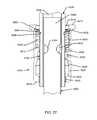
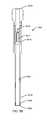
Final Rejection, U.S. Appl. No. 13/945,053, dated Dec. 22, 2015.
Garrido B.J. et al. Navigated placement of iliac bolts: description of a new technique. The Spine Journal 11 (2011) 331-335.
Giannikas, et al. "Sacroiliac Joint Fusion for Chronic Pain: A Simple Technique Avoiding the Use of Metalwork." Eur. Spine J, 13, 2004, pp. 253-256.
Globus Medical. REVERE® ADDITION® Sacroiliac Components, Surgical Technique. c. 2012 Globus Medical, 64 pages.
Globus Medical. SI-LOK(TM) Sacroiliac Joint Fixation System, Surgical Technique. c. 2011 Globus Medical, 44 pages.
Globus Medical. SI-LOK™ Sacroiliac Joint Fixation System, Surgical Technique. c. 2011 Globus Medical, 44 pages.
Guner, et al. "Anterior Sacroiliac Fusion. A New Video-Assisted Endoscopic Technique." Surgical Laparoscopy & Endoscopy, 8(3), pp. 233-236.
International Search Report and Written Opinion, PCT application No. PCT/US2011/000070, dated Mar. 21, 2011, 13 pages.
International Search Report and Written Opinion, PCT application No. PCT/US2012/042823, dated Nov. 5, 2012, 16 pages.
International Search Report and Written Opinion, PCT Application No. PCT/US2012/055892, dated Mar. 25, 2013, 22 pages.
International Search Report and Written Opinion, PCT/US2013/051381, dated Nov. 4, 2013.
International Search Report and Written Opinion, PCT/US2014/030889, dated Jul. 16, 2014.
International Search Report and Written Opinion, PCT/US2014/048990, dated Nov. 18, 2014.
Japanese Office Action, JP2012-548960, dated Oct. 7, 2014.
Japanese Office Action, JP2015-042238, dated Dec. 22, 2015.
LDR. Avenue® L Lateral Lumbar Cage. Sep. 2011, 3 pages.
LDR. ROI-A(TM) Anterior Approach Implant. Apr. 2008, 2 pages.
LDR. ROI-A™ Anterior Approach Implant. Apr. 2008, 2 pages.
LDR. Surgical Technique ROI-C(TM) Anterior Cervical Cage. Apr. 2010, 15 pages.
LDR. Surgical Technique ROI-C™ Anterior Cervical Cage. Apr. 2010, 15 pages.
Lee et al. Trajectory of Transsacral Iliac Screw for Lumbopelvic Fixation. J Spinal Disord Tech 2011;24(3):151-156.
Lehman, Jr. et al. Advantage of Pedicle Screw Fixation Directed Into the Apex of the Sacral Promontory Over Bicortical Fixation. Spine 2002;27(8):806-811.
Liebergall, Meir (Iri) M.D., Lumbosacral and Spinopelvic Fixation, Lippincott-Raven, Philadelphia, PA, 1996, Chap. 48, "Sacroiliac Joint Fusion," pp. 611-618.
Luk et al. A Stronger Bicortical Sacral Pedicle Screw Fixation Through the S1 Endplate. Spine 2005;30(5):525-529.
Margulies, J.Y. et al., Movement, Stability & Low Back Pain, The essential role of the pelvis, Churchill Livingstone, London, 1997, Chapters 44-47, "Surgical Fusion of the Spine to the Sacrum, etc.," pp. 555-593.
Marotta N. et al. A novel minimally invasive presacral approach and instrumentation technique for anterior L5-S1 intervertebral disectomy and fusion. Neurosurg Focus, vol. 20, Jan. 2006, 8 pages.
Martin et al. Sacropelvic Fixation: Two Case Reports of a New Percutaneous Technique. Spine 2011;36(9):E618-21.
McLauchlan, et al. "Sacral and Iliac Articular Cartilage Thickness and Cellularity: Relationship to Subchrondral Bone End-Plate Thickness and Cancellous Bone Density." Rheumatology 2002; 41:375-380.
Medtronic Sofamor Danek. Colorado 2(TM) Sacro-Iliac Fixation, Surgical Technique. © 2003 Medtronic Sofamor Danek USA, Inc.
Medtronic Sofamor Danek. Colorado 2(TM) The New Revolution, Surgical Technique. ©2000 Medtronic Sofamor Danek, Inc.
Medtronic Sofamor Danek. Colorado 2™ Sacro-Iliac Fixation, Surgical Technique. © 2003 Medtronic Sofamor Danek USA, Inc.
Medtronic Sofamor Danek. Colorado 2™ The New Revolution, Surgical Technique. ©2000 Medtronic Sofamor Danek, Inc.
Mendel et al. The Lateral Sacral Triangle-A Decision Support for Secure Transverse Sacroiliac Screw Insertion. Injury J. Care Injured 2010;42(2011):1164-1170.
Moshirfar et al. Pelvic Fixation in Spine Surgery. The Journal of Bone & Joint Surgery 2005;87-A(2 Suppl):89-106.
Non-Final Office Action, U.S. Appl. No. 12/998,712, dated Aug. 1, 2014.
Non-Final Office Action, U.S. Appl. No. 12/998,712, mailed May 31, 2013, 44 pages.
Non-Final Office Action, U.S. Appl. No. 13/135,381, mailed Nov. 5, 2012, 19 pages.
Non-Final Office Action, U.S. Appl. No. 13/236,411, dated Apr. 11, 2014.
Non-Final Office Action, U.S. Appl. No. 13/475,695, dated Jul. 30, 2015.
Non-Final Office Action, U.S. Appl. No. 13/945,053, dated Apr. 3, 2015.
Non-Final Office Action, U.S. Appl. No. 14/127,119, dated Sep. 8, 2016.
Non-Final Office Action, U.S. Appl. No. 14/216,975, dated Jun. 20, 2016.
Non-Final Office Action, U.S. Appl. No. 14/567,956, dated Feb. 12, 2016.
Non-Final Office Action, U.S. Appl. No. 14/681,882, dated Oct. 6, 2016.
Notice of Allowance, U.S. Appl. No. 12/998,712, dated Dec. 23, 2014.
Notice of Allowance, U.S. Appl. No. 13/135,381, dated Apr. 17, 2014.
Notice of Allowance, U.S. Appl. No. 13/236,411, dated Mar. 16, 2015.
Notice of Allowance, U.S. Appl. No. 13/475,695, dated Feb. 18, 2016.
Notice of Allowance, U.S. Appl. No. 13/945,053, dated Jul. 5, 2016.
Notice of Allowance, U.S. Appl. No. 13/945,053, dated Mar. 28, 2016.
Notice of Allowance, U.S. Appl. No. 13/946,790, dated Feb. 16, 2016.
Notice of Allowance, U.S. Appl. No. 13/946,790, dated Nov. 20, 2015.
Notice of Allowance, U.S. Appl. No. 14/567,956, dated Sep. 13, 2016.
O'Brien et al. An Anatomic Study of the S2 Iliac Technique for Lumbopelvic Screw Placement. Spine 2009;34(12):E439-E442.
O'Brien et al. Feasibility of Minimally Invasive Sacropelvic Fixation. Spine 2010;35(4):460-464.
O'Brien et al. Sacropelvic Instrumentation: Anatomic and Biomechanical Zones of Fixation. Seminars in Spine Surgery 2004;16(2):76-90.
Ouellet et al. Surgical Anatomy of the Pelvis, Sacrum, and Lumbar Spine Relevant to Spinal Surgery. Seminars in Spine Surgery 2004 Elsevier Inc.;16:91-100.
Pan W. et al. The invention of an iliosacral screw fixation guide and its preliminary clinical application. Orthopaedic Surgery (2012), vol. 4, No. 1, pp. 55-59.
Puhakka, et al. "MR Imaging of the Normal Sacroiliac Joint with Correlation to Histology." Skeletal Radiol., 33, 2004, pp. 15-28.
Response to Advisory Action, U.S. Appl. No. 13/135,381, filed Aug. 20, 2013, 12 pages.
Response to Final Office Action, U.S. Appl. No. 12/998,712, dated Jan. 7, 2014, 16 pages.
Response to Final Office Action, U.S. Appl. No. 13/135,381, filed Jul. 9, 2013, 11 pages.
Response to Final Office Action, U.S. Appl. No. 13/236,411, dated Mar. 4, 2015.
Response to Non-Final Office Action, U.S. Appl. No. 12/998,712, dated Sep. 4, 2014.
Response to Non-Final Office Action, U.S. Appl. No. 12/998,712, filed Aug. 28, 2013, 17 pages.
Response to Non-Final Office Action, U.S. Appl. No. 13/135,381, filed Feb. 4, 2013, 7 pages.
Response to Non-Final Office Action, U.S. Appl. No. 13/236,411, dated Sep. 11, 2014.
Response to Non-Final Office Action, U.S. Appl. No. 13/475,695, dated Oct. 30, 2015.
Response to Non-Final Office Action, U.S. Appl. No. 13/945,053, dated Aug. 31, 2015.
Response to Non-Final Office Action, U.S. Appl. No. 14/567,956, dated May 10, 2016.
Response to Restriction, U.S. Appl. No. 13/236,411, filed Jun. 10, 2013, 13 pages.
Response to Restriction, U.S. Appl. No. 13/236,411, filed Nov. 12, 2013, 14 pages.
Response to Restriction, U.S. Appl. No. 13/475,695, dated Jun. 30, 2015.
Response to Restriction, U.S. Appl. No. 13/945,053, dated Nov. 19, 2014.
Response to Restriction, U.S. Appl. No. 13/946,790, dated Sep. 14, 2015.
Response to Restriction, U.S. Appl. No. 14/127,119, dated Jun. 6, 2016.
Response to Restriction, U.S. Appl. No. 14/216,975, dated Jan. 22, 2016.
Response to Restriction, U.S. Appl. No. 14/344,876, dated Aug. 29, 2016.
Response to Restriction, U.S. Appl. No. 14/514,221, dated Oct. 24, 2016.
Response to Restriction, U.S. Appl. No. 14/567,956, dated Jan. 19, 2016.
Restriction Requirement, U.S. Appl. No. 13/236,411, mailed May 10, 2013, 5 pages.
Restriction Requirement, U.S. Appl. No. 13/236,411, mailed Oct. 16, 2013, 7 pages.
Restriction Requirement, U.S. Appl. No. 13/475,695, dated Mar. 30, 2015.
Restriction Requirement, U.S. Appl. No. 13/945,053, dated Sep. 25, 2014.
Restriction Requirement, U.S. Appl. No. 13/946,790, dated Jul. 14, 2015.
Restriction Requirement, U.S. Appl. No. 14/127,119, dated Apr. 5, 2016.
Restriction Requirement, U.S. Appl. No. 14/216,975, dated Oct. 23, 2015.
Restriction Requirement, U.S. Appl. No. 14/447,612, dated Jul. 6, 2016.
Restriction Requirement, U.S. Appl. No. 14/514,221, dated Aug. 25, 2016.
Restriction Requirement, U.S. Appl. No. 14/567,956, dated Nov. 20, 2015.
SI-Bone iFuse Implant System(TM). SI-Bone, Inc. 2010, 4 pages.
SI-Bone iFuse Implant System, Surgical Technique Manual. c. 2011 SI-Bone, Inc., 35 pages.
SI-Bone iFuse Implant System™. SI-Bone, Inc. 2010, 4 pages.
Signus Medizintechnik GmbH. Diana Operationstechnik. Rev. 2010-05/01, 20 pages.
Singapore Search Report and Written Opinion, SG Appl. No. 201205104-1, dated Oct. 31, 2013, 29 pages.
Sponseller P.D. et al. Low profile pelvic fixation with the sacral alar iliac technique in the pediatric population improves results at two-year mninimum follow-up. Spine vol. 35, No. 20, pp. 1887-1892.
Stark J. G. et al. The history of sacroiliac joint arthrodesis: a critical review and introduction of a new technique. Current Orthopaedic Practice, vol. 22, No. 6, Nov./Dec. 2011, pp. 545-557.
Stark. "The Diagnosis and Treatment of Sacroiliac Joint Abnormalities." Current Orthopedic Practice, 21(4), Jul./Aug. 2010, pp. 336-347.
Supplemental Amendment, U.S. Appl. No. 12/998,712, dated Apr. 14, 2014, 14 pages.
Synthes GmbH. Sacral Bars. Fixation of the posterior pelvis in cases of fractures or sacroiliac joint dislocations. © Apr. 2009 Synthes, Inc.
Synthes Spine. ProDisc-C Total Disc Replacement. Product Information. © 2008 Synthes, Inc., 14 pages.
Synthes Spine. SynFix-LR System. Instruments and implants for stand-alone anterior lumbar interbody fusion (ALIF). Technique Guide. © 2008 Synthes, Inc., 45 pages.
Synthes Spine. Universal Spinal System (USS) Polyaxial and Iliosacral Spine Fixation. A versatile system for posterior stabilization of spinal segments. Technique Guide, c. 2009 Synthes, Inc., 61 pages.
Szadek, et al. "Possible Nociceptive Structures in the Sacroiliac Joint Cartilage: An Immunohistochemical Study." Clinical Anatomy, 23, 2010, pp. 192-198.
Taiwan Examination Report, TW100114376, dated Oct. 5, 2015.
Tenon Medical, Catamaran SI Joint Implant, http://tctig.com/projects (last visited Nov. 19, 2014).
tifix® Technology Pressure Plate Technology: Multidirectional Locking Technology Titanium Plate and Screw Systems, General & Specific Instructions. litos/GmbH & Co. KG, Rev: Sep. 9, 2008.
Tobler W.D. et al. The presacral retroperitoneal approach for axial lumbar interbody fusion. J Bone Joint Surg [Br], vol. 93-B, No. 7, Jul. 2011, pp. 955-60.
Ugur, et al. "New Needle Holder Facilitates Percutaneous Fluoroscopy-Guided Sacroiliac Puncture." Acta Radiologica, 2006, 47(5), pp. 481-483.
Vanelderen, et al. "Evidence-Based Medicine. Evidence-Based Interventional Pain Medicine According to Clinical Diagnoses. 13. Sacroiliac Joint Pain." Pain Practice, 10(5), 2010, pp. 470-478.
Waisbrod, et al. "Sacroiliac Joint Arthrodesis for Chronic Lower Back Pain." Arch. Orthop. Trauma Surg., 106, 1987, pp. 238-240.
Wise, et al. "Minimally Invasive Sacroiliac Arthrodesis. Outcomes of a New Technique." Spinal Disord. Tech., 21(8), Dec. 2008, pp. 579-584.
Yin, et al. "Sensory Stimulation-Guided Sacroiliac Joint Radiofrequency Neurotomy: Technique Based on Neuroanatomy of the Dorsal Sacral Plexus." Spine, 28(20), pp. 2419-2425.
Zyga Technology, Inc. Slmmetry Sacroiliac Joint Fusion System, Surgeon Didactic, c. 2012 Zyga Technology, Inc., 45 pages.
Zyga Technology, Inc. Slmmetry Sacroiliac Joint Fusion System, Technique Guide, known at least as early as Mar. 1, 2013, 20 pages.

Cited By (58)

* Cited by examiner, † Cited by third party
Publication numberPriority datePublication dateAssigneeTitle
US11259851B2 (en)2003-08-262022-03-01DePuy Synthes Products, Inc.Bone plate
US11291484B2 (en)2004-01-262022-04-05DePuy Synthes Products, Inc.Highly-versatile variable-angle bone plate system
US9949843B2 (en)2004-08-092018-04-24Si-Bone Inc.Apparatus, systems, and methods for the fixation or fusion of bone
US11986397B2 (en)2005-05-242024-05-21Si-Bone Inc.Apparatus, systems, and methods for the fixation or fusion of bone
US11633292B2 (en)2005-05-242023-04-25Si-Bone Inc.Apparatus, systems, and methods for the fixation or fusion of bone
US12004961B2 (en)2005-05-242024-06-11Si-Bone Inc.Apparatus, systems, and methods for the fixation or fusion of bone
US20180092669A1 (en)*2010-01-132018-04-05Jcbd, LlcMethods of Fusing a Sacroiliac Joint with an Additively Manufactured Sacroiliac Joint Implant
US10646236B2 (en)*2010-01-132020-05-12Jcbd, LlcMethods of fusing a sacroiliac joint with an additively manufactured sacroiliac joint implant
US10363140B2 (en)2012-03-092019-07-30Si-Bone Inc.Systems, device, and methods for joint fusion
US11672664B2 (en)2012-03-092023-06-13Si-Bone Inc.Systems, devices, and methods for joint fusion
US11337821B2 (en)2012-03-092022-05-24Si-Bone Inc.Integrated implant
US10201427B2 (en)2012-03-092019-02-12Si-Bone Inc.Integrated implant
US12213886B2 (en)2012-03-092025-02-04Si-Bone Inc.Systems, devices, and methods for joint fusion
US11471286B2 (en)2012-03-092022-10-18Si-Bone Inc.Systems, devices, and methods for joint fusion
US12023079B2 (en)2012-05-042024-07-02Si-Bone Inc.Fenestrated implant
US11446069B2 (en)2012-05-042022-09-20Si-Bone Inc.Fenestrated implant
US11291485B2 (en)2012-05-042022-04-05Si-Bone Inc.Fenestrated implant
US11478287B2 (en)2012-05-042022-10-25Si-Bone Inc.Fenestrated implant
US11980399B2 (en)2013-03-152024-05-14Si-Bone Inc.Implants for spinal fixation or fusion
US10959758B2 (en)2013-03-152021-03-30Si-Bone Inc.Implants for spinal fixation or fusion
US11147688B2 (en)2013-10-152021-10-19Si-Bone Inc.Implant placement
US9839448B2 (en)2013-10-152017-12-12Si-Bone Inc.Implant placement
US12220326B2 (en)2013-10-152025-02-11Si-Bone Inc.Implant placement
US10166033B2 (en)2014-09-182019-01-01Si-Bone Inc.Implants for bone fixation or fusion
US11071573B2 (en)2014-09-182021-07-27Si-Bone Inc.Matrix implant
US11684378B2 (en)2014-09-182023-06-27Si-Bone Inc.Implants for bone fixation or fusion
US10194962B2 (en)2014-09-182019-02-05Si-Bone Inc.Matrix implant
US12161374B2 (en)2014-09-182024-12-10Si-Bone Inc.Matrix implant
US10376206B2 (en)2015-04-012019-08-13Si-Bone Inc.Neuromonitoring systems and methods for bone fixation or fusion procedures
US10905476B2 (en)2016-09-082021-02-02DePuy Synthes Products, Inc.Variable angle bone plate
US10820930B2 (en)2016-09-082020-11-03DePuy Synthes Products, Inc.Variable angle bone plate
US11529176B2 (en)2016-09-082022-12-20DePuy Synthes Products, Inc.Variable angle bone plate
US10624686B2 (en)*2016-09-082020-04-21DePuy Synthes Products, Inc.Variable angel bone plate
US10603055B2 (en)2017-09-152020-03-31Jcbd, LlcSystems for and methods of preparing and fusing a sacroiliac joint
US11116519B2 (en)2017-09-262021-09-14Si-Bone Inc.Systems and methods for decorticating the sacroiliac joint
US11877756B2 (en)2017-09-262024-01-23Si-Bone Inc.Systems and methods for decorticating the sacroiliac joint
US11026727B2 (en)2018-03-202021-06-08DePuy Synthes Products, Inc.Bone plate with form-fitting variable-angle locking hole
US12427028B2 (en)2018-03-282025-09-30Si-Bone Inc.Threaded implants and methods of use across bone segments
US10772665B2 (en)2018-03-292020-09-15DePuy Synthes Products, Inc.Locking structures for affixing bone anchors to a bone plate, and related systems and methods
US11202674B2 (en)2018-04-032021-12-21Convergent Dental, Inc.Laser system for surgical applications
US11013541B2 (en)2018-04-302021-05-25DePuy Synthes Products, Inc.Threaded locking structures for affixing bone anchors to a bone plate, and related systems and methods
US10925651B2 (en)2018-12-212021-02-23DePuy Synthes Products, Inc.Implant having locking holes with collection cavity for shavings
US11678997B2 (en)2019-02-142023-06-20Si-Bone Inc.Implants for spinal fixation and or fusion
US12076251B2 (en)2019-02-142024-09-03Si-Bone Inc.Implants for spinal fixation and or fusion
US12427034B2 (en)2019-02-142025-09-30Si-Bone Inc.Implants for spinal fixation and or fusion
US11234830B2 (en)2019-02-142022-02-01Si-Bone Inc.Implants for spinal fixation and or fusion
US11369419B2 (en)2019-02-142022-06-28Si-Bone Inc.Implants for spinal fixation and or fusion
US11660126B1 (en)*2019-06-282023-05-30Advance Research System, LlcIliac anchor system
US12419668B2 (en)2019-11-212025-09-23Si-Bone Inc.Rod coupling assemblies for bone stabilization constructs
US12201330B2 (en)2019-11-272025-01-21Si-Bone Inc.Bone stabilizing implants and methods of placement across si joints
US11571245B2 (en)2019-11-272023-02-07Si-Bone Inc.Bone stabilizing implants and methods of placement across SI joints
US11672570B2 (en)2019-11-272023-06-13Si-Bone Inc.Bone stabilizing implants and methods of placement across SI Joints
US12083026B2 (en)2019-12-092024-09-10Si-Bone Inc.Sacro-iliac joint stabilizing implants and methods of implantation
US12042402B2 (en)2020-12-092024-07-23Si-Bone Inc.Sacro-iliac joint stabilizing implants and methods of implantation
US11752011B2 (en)2020-12-092023-09-12Si-Bone Inc.Sacro-iliac joint stabilizing implants and methods of implantation
US12440255B2 (en)2022-11-072025-10-14Medos International SárlBone screw inserters and methods
US20240180710A1 (en)*2022-12-012024-06-06Globus Medical, Inc.Sacroiliac joint fixation
US12433733B2 (en)2023-08-152025-10-07Si-Bone Inc.Pelvic stabilization implants, methods of use and manufacture

Also Published As

Publication numberPublication date
US20150150683A1 (en)2015-06-04
WO2014015309A1 (en)2014-01-23
US10335197B2 (en)2019-07-02
US20170164979A1 (en)2017-06-15

Similar Documents

PublicationPublication DateTitle
US10335197B2 (en)Orthopedic anchoring methods
US20220287846A1 (en)Systems, devices, and methods for joint fusion
US12076251B2 (en)Implants for spinal fixation and or fusion
US11116551B2 (en)Lamina implants and methods for spinal decompression
US10682150B2 (en)Tools for performing less invasive orthopedic joint procedures
US7909829B2 (en)Tissue retractor and drill guide
US20110202094A1 (en)Trans-polyaxial screw
CA2758922A1 (en)Arcuate fixation member
US20110172674A1 (en)System and Methods for Minimally Invasive Spine Surgery
AU2020218873B2 (en)Bone-anchoring device for a pedicle access
US20090112261A1 (en)Minimally invasive spine internal fixation system
WO2009125243A1 (en)Guide sleeve for accessing a vertebral body and related methods of use
JP5119165B2 (en) Face joint prosthesis
US20250248715A1 (en)Systems, devices, and methods for preparing bone to receive an implant
CN113795210A (en)Spinal implant system and method of use

Legal Events

DateCodeTitleDescription
ASAssignment

Owner name:JCBD, LLC, COLORADO

Free format text:ASSIGNMENT OF ASSIGNORS INTEREST;ASSIGNORS:DONNER, EDWARD JEFFREY;DONNER, CHRISTOPHER THOMAS;REEL/FRAME:031528/0390

Effective date:20120919

ASAssignment

Owner name:JCBD, LLC, COLORADO

Free format text:ASSIGNMENT OF ASSIGNORS INTEREST;ASSIGNORS:DONNER, EDWARD JEFFREY;DONNER, CHRISTOPHER THOMAS;SIGNING DATES FROM 20120909 TO 20120919;REEL/FRAME:034654/0281

FEPPFee payment procedure

Free format text:PAYOR NUMBER ASSIGNED (ORIGINAL EVENT CODE: ASPN); ENTITY STATUS OF PATENT OWNER: SMALL ENTITY

STCFInformation on status: patent grant

Free format text:PATENTED CASE

CCCertificate of correction
MAFPMaintenance fee payment

Free format text:PAYMENT OF MAINTENANCE FEE, 4TH YR, SMALL ENTITY (ORIGINAL EVENT CODE: M2551); ENTITY STATUS OF PATENT OWNER: SMALL ENTITY

Year of fee payment:4

MAFPMaintenance fee payment

Free format text:PAYMENT OF MAINTENANCE FEE, 8TH YR, SMALL ENTITY (ORIGINAL EVENT CODE: M2552); ENTITY STATUS OF PATENT OWNER: SMALL ENTITY

Year of fee payment:8


[8]ページ先頭

©2009-2025 Movatter.jp