CROSS-REFERENCE TO RELATED APPLICATIONSThis application is a continuation of U.S. patent application Ser. No. 12/038,302 filed Feb. 27, 2008, now U.S. Pat. No. 7,976,477, which is a divisional of U.S. patent application Ser. No. 10/330,724 filed Dec. 27, 2002, which are hereby incorporated by reference in their entirety.
BACKGROUND OF THE INVENTIONThe present invention generally relates to bodily fluid sampling devices and more specifically, but not exclusively, concerns a bodily fluid sampling device configured to form an incision having a precise depth and express fluid from both finger and alternate site testing (AST) locations.
General Fluid Testing
The acquisition and testing of bodily fluids is useful for many purposes, and continues to grow in importance for use in medical diagnosis and treatment, and in other diverse applications. In the medical field, it is desirable for lay operators to perform tests routinely, quickly and reproducibly outside of a laboratory setting, with rapid results and a readout of the resulting test information. Testing can be performed on various bodily fluids, and for certain applications is particularly related to the testing of blood and/or interstitial fluid. Such fluids can be tested for a variety of characteristics of the fluid, or analytes contained in the fluid, in order to identify a medical condition, determine therapeutic responses, assess the progress of treatment, and the like.
General Test Steps
The testing of bodily fluids basically involves the steps of obtaining the fluid sample, transferring the sample to a test device, conducting a test on the fluid sample, and displaying the results. These steps are generally performed by a plurality of separate instruments or devices.
Acquiring—Vascular
One method of acquiring the fluid sample involves inserting a hollow needle or syringe into a vein or artery in order to withdraw a blood sample. However, such direct vascular blood sampling can have several limitations, including pain, infection, and hematoma and other bleeding complications. In addition, direct vascular blood sampling is not suitable for repeating on a routine basis, can be extremely difficult and is not advised for patients to perform on themselves.
Acquiring—Incising
The other common technique for collecting a bodily fluid sample is to form an incision in the skin to bring the fluid to the skin surface. A lancet, knife or other cutting instrument is used to form the incision in the skin. The resulting blood or interstitial fluid specimen is then collected in a small tube or other container, or is placed directly in contact with a test strip. The fingertip is frequently used as the fluid source because it is highly vascularized and therefore produces a good quantity of blood. However, the fingertip also has a large concentration of nerve endings, and lancing the fingertip can therefore be painful. Alternate sampling sites, such as the palm of the hand, forearm, earlobe and the like, may be useful for sampling, and are less painful. However, they also produce lesser amounts of blood. These alternate sites therefore are generally appropriate for use only for test systems requiring relatively small amounts of fluid, or if steps are taken to facilitate the expression of the bodily fluid from the incision site.
Various methods and systems for incising the skin are known in the art. Exemplary lancing devices are shown, for example, in U.S. Pat. Nos. Re 35,803, issued to Lange, et al. on May 19, 1998; U.S. Pat. No. 4,924,879, issued to O'Brien on May 15, 1990; U.S. Pat. No. 5,879,311, issued to Duchon et al. on Feb. 16, 1999; U.S. Pat. No. 5,857,983, issued to Douglas on Jan. 12, 1999; U.S. Pat. No. 6,183,489, issued to Douglas et al. on Feb. 6, 2001; U.S. Pat. No. 6,332,871, issued to Douglas et al. on Dec. 25, 2001; and U.S. Pat. No. 5,964,718, issued to Duchon et al. on Oct. 12, 1999. A representative commercial lancing device is the Accu-Chek Softclix lancet.
Expressing
Patients are frequently advised to urge fluid to the incision site, such as by applying pressure to the area surrounding the incision to milk or pump the fluid from the incision. Mechanical devices are also known to facilitate the expression of bodily fluid from an incision. Such devices are shown, for example, in U.S. Pat. Nos. 5,879,311, issued to Duchon et al. on Feb. 16, 1999; U.S. Pat. No. 5,857,983, issued to Douglas on Jan. 12, 1999; U.S. Pat. No. 6,183,489, issued to Douglas et al. on Feb. 6, 2001; U.S. Pat. No. 5,951,492, issued to Douglas et al. on Sep. 14, 1999; U.S. Pat. No. 5,951,493, issued to Douglas et al. on Sep. 14, 1999; U.S. Pat. No. 5,964,718, issued to Duchon et al. on Oct. 12, 1999; and U.S. Pat. No. 6,086,545, issued to Roe et al. on Jul. 11, 2000. A representative commercial product that promotes the expression of bodily fluid from an incision is the Amira AtLast blood glucose system.
Sampling
The acquisition of the produced bodily fluid, hereafter referred to as the “sampling” of the fluid, can take various forms. Once the fluid specimen comes to the skin surface at the incision, a sampling device is placed into contact with the fluid. Such devices may include, for example, systems in which a tube or test strip is either located adjacent the incision site prior to forming the incision, or is moved to the incision site shortly after the incision has been formed. A sampling tube may acquire the fluid by suction or by capillary action. Such sampling systems may include, for example, the systems shown in U.S. Pat. Nos. 6,048,352, issued to Douglas et al. on Apr. 11, 2000; U.S. Pat. No. 6,099,484, issued to Douglas et al. on Aug. 8, 2000; and U.S. Pat. No. 6,332,871, issued to Douglas et al. on Dec. 25, 2001. Examples of commercial sampling devices include the Roche Compact, Amira AtLast, Glucometer Elite and Therasense FreeStyle test strips.
Testing General
The bodily fluid sample may be analyzed for a variety of properties or components, as is well known in the art. For example, such analysis may be directed to hematocrit, blood glucose, coagulation, lead, iron, etc. Testing systems include such means as optical (e.g., reflectance, absorption, fluorescence, Raman, etc.), electrochemical, and magnetic means for analyzing the sampled fluid. Examples of such test systems include those in U.S. Pat. Nos. 5,824,491, issued to Priest et al. on Oct. 20, 1998; U.S. Pat. No. 5,962,215, issued to Douglas et al. on Oct. 5, 1999; and U.S. Pat. No. 5,776,719, issued to Douglas et al. on Jul. 7, 1998.
Typically, a test system takes advantage of a reaction between the bodily fluid to be tested and a reagent present in the test system. For example, an optical test strip will generally rely upon a color change, i.e., a change in the wavelength absorbed or reflected by dye formed by the reagent system used. See, e.g., U.S. Pat. Nos. 3,802,842; 4,061,468; and 4,490,465.
Blood Glucose
A common medical test is the measurement of blood glucose level. The glucose level can be determined directly by analysis of the blood, or indirectly by analysis of other fluids such as interstitial fluid. Diabetics are generally instructed to measure their blood glucose level several times a day, depending on the nature and severity of their diabetes. Based upon the observed pattern in the measured glucose levels, the patient and physician determine the appropriate level of insulin to be administered, also taking into account such issues as diet, exercise and other factors.
In testing for the presence of an analyte such as glucose in a bodily fluid, test systems are commonly used which take advantage of an oxidation/reduction reaction which occurs using an oxidase/peroxidase detection chemistry. The test reagent is exposed to a sample of the bodily fluid for a suitable period of time, and there is a color change if the analyte (glucose) is present.
Typically, the intensity of this change is proportional to the concentration of analyte in the sample. The color of the reagent is then compared to a known standard which enables one to determine the amount of analyte present in the sample. This determination can be made, for example, by a visual check or by an instrument, such as a reflectance spectrophotometer at a selected wavelength, or a blood glucose meter. Electrochemical and other systems are also well known for testing bodily fluids for properties on constituents.
Alternate Site Testing (AST)
As mentioned above, the fingertip is frequently used as the fluid source because it is highly vascularized and therefore produces a good quantity of blood. However, the fingertip also has a large concentration of nerve endings, and lancing the fingertip can therefore be painful. Alternate sampling sites, such as the palm of the hand, forearm, earlobe and the like, may be useful for sampling, and are less painful. However, they also produce less blood when lanced.
In general, bodily fluid sampling devices are designed to express blood from either the fingertip or an alternate site, but not both. Typically, alternate site sampling devices need to express fluid from a large surface area surrounding the site in order to draw a sufficient amount of fluid for testing. Furthermore, it is usually more desirable to lance the skin deeply at the alternate site in order to ensure that a sufficient amount of fluid can be expressed. In comparison, fingertips are relatively small and do not need to be deeply lanced or require a large area in order to express a sufficient amount of fluid. Therefore, alternate site sampling devices usually have larger openings for expressing fluid as compared to devices designed to express fluid from fingers. If an alternate site sampling device were used to lance and express fluid from a fingertip, severe pain or serious injury to the finger may result. With the alternate site device, when an incision is being formed in the fingertip, the skin can tend to deform or bulge into the expression opening such that the lancet forms an incision with a greater depth than needed.
Thus, needs remain for further contributions in this area of technology.
SUMMARY OF THE INVENTIONOne form of the present invention concerns a bodily fluid sampling device that includes an incision forming member adapted to form an incision in skin. An expression member defines an expression opening configured to express fluid from the incision. A reference member defines an aperture through which the incision forming member extends when forming the incision. The reference member has a reference surface received in the expression opening during formation of the incision to contact the skin and limit penetration depth of the incision forming member into the skin. A retraction mechanism is coupled to the reference member to retract the reference surface from the expression opening.
Further forms, objects, features, aspects, benefits, advantages, and embodiments of the present invention will become apparent from a detailed description and drawings provided herewith.
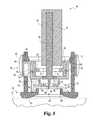
BRIEF DESCRIPTION OF THE DRAWINGSFIG. 1 is a cross-sectional view of a bodily fluid sampling device according to one embodiment of the present invention.
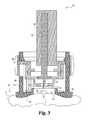
FIG. 2 is a cross-sectional view of theFIG. 1 device during lancing at an alternate site.
FIG. 3 is a cross-sectional view of theFIG. 1 device expressing fluid from the alternate site.
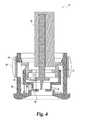
FIG. 4 is a cross-sectional view of theFIG. 1 device configured to lance from a fingertip site.
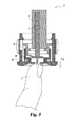
FIG. 5 is a cross-sectional view of theFIG. 1 device lancing the fingertip site.
FIG. 6 is a cross-sectional view of a bodily fluid sampling device according to according to another embodiment.
FIG. 7 is a cross-sectional view of theFIG. 6 device configured to express fluid from an alternate site.
FIG. 8 is an exploded view of theFIG. 6 device.
FIG. 9 is a perspective view of theFIG. 6 device.
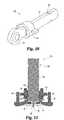
FIG. 10 is a perspective view of a lancing device according to a further embodiment of the present invention.
FIG. 11 is a cross-sectional view of theFIG. 10 device.
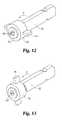
FIG. 12 is a perspective view of theFIG. 10 device configured for a deep penetration depth.
FIG. 13 is a perspective view of theFIG. 10 device configured for a shallow penetration depth.
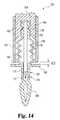
FIG. 14 is a cross-sectional view of a lancing device according to another embodiment.
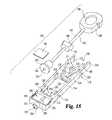
FIG. 15 is an exploded view of a sampling device according to a further embodiment.
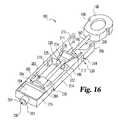
FIG. 16 is a perspective view of theFIG. 15 device.
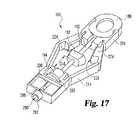
FIG. 17 is a perspective view of theFIG. 16 in an armed configuration.
FIG. 18 is a perspective view of a sampling device according to another embodiment.
FIG. 19 is a top perspective view of theFIG. 18 device in a lancing position.
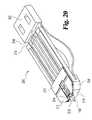
FIG. 20 is a bottom perspective view of theFIG. 18 device in a lancing position.
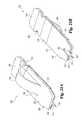
FIG. 21A is a top perspective view of a sampling device according to a further embodiment.
FIG. 21B is a bottom perspective view of theFIG. 21A device.
FIG. 22 is a perspective view of an adjustable holder according to another embodiment holding theFIG. 21A device.
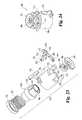
FIG. 23 is an exploded view of a sampling device according to another embodiment.
FIG. 24 is a perspective view of theFIG. 23 device.
FIG. 25 is a front view of theFIG. 23 device.
FIG. 26 is a side view of theFIG. 23 device.
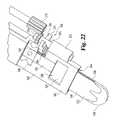
FIG. 27 is a cross-sectional view of theFIG. 23 device configured to express fluid from a fingertip.
FIG. 28 is a cross-sectional view of theFIG. 23 device configured to express fluid from an alternate site.
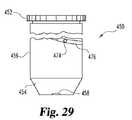
FIG. 29 a front view of a sampling device according to a further embodiment.
FIG. 30 is a cross-sectional view of theFIG. 29 device configured to express fluid from a fingertip.
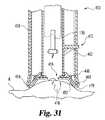
FIG. 31 is a cross-sectional view of theFIG. 29 device configured to express fluid from an alternate site.
DESCRIPTION OF THE SELECTED EMBODIMENTSFor the purposes of promoting an understanding of the principles of the invention, reference will now be made to the embodiments illustrated in the drawings and specific language will be used to describe the same. It will nevertheless be understood that no limitation of the scope of the invention is thereby intended, such alterations and further modifications in the illustrated device, and such further applications of the principles of the invention as illustrated therein being contemplated as would normally occur to one skilled in the art to which the invention relates. One embodiment of the invention is shown in great detail, although it will be apparent to those skilled in the relevant art that some features that are not relevant to the present invention may not be shown for the sake of clarity.
Bodily fluid sampling devices according to the present invention are operable to form an incision with a precise depth and express fluid from both fingertip and alternate sites. The devices can further be configured to allow for the adjustment of the penetration depth of the lancet. In one particular embodiment, the device includes a reference member that provides a reference surface for controlling the penetration depth of a lancet. The reference member is received in a large expression opening of an expression member. During lancing, the reference member flattens the skin in the expression opening such that an incision with a precise depth can be formed. After lancing the skin, the reference member can be retracted from the expression opening so that the larger expression opening can be used to express a sufficient amount of bodily fluid from the alternate site. In one form, a spring automatically retracts the reference member after lancing, and in other forms, cam mechanisms are used to retract the reference member during expression of the fluid. In other embodiments, the reference member is coupled to the lancet in order to control the penetration depth of the lancet. Further aspects of the present concern integrated sampling devices that allow test media to be attached to the lancet after sterilization so as to ensure that the test media remains properly calibrated.
A bodilyfluid sampling device40 according to one embodiment of the present invention is illustrated inFIGS. 1-5. Referring toFIG. 1, thesampling device40 includes anincision forming member42, apenetration depth adjuster44, anexpression member46, and areference member48. For the sake of clarity and brevity, other components of thesampling device40 that are well know in the art, such has hammers, cocking mechanisms and the like that are not important to appreciate the present invention, will not be discussed below. For examples of such components, please refer to U.S. Pat. No. 5,964,718, issued to Duchon et al. on Oct. 12, 1999, which is hereby incorporated by reference in its entirety. Thedevice40 illustrated inFIG. 1 can be back loaded into a sampling device of the type described in U.S. Pat. No. 5,964,718.
As shown inFIG. 1, theincision forming member42 has alancet50 that is attached to alancet body52. In the illustrated embodiment, thelancet50 is in the form of a needle. However, it should be appreciated that thelancet50 can come in other forms, such as a blade. Moreover, although a single lancet is shown, theincision forming member42 in other embodiments can includemultiple lancets50. As depicted inFIG. 1, thelancet body52 has adepth stop surface54, which is used to control the penetration depth of thelancet50. Thelancet50 further includes aflange56 positioned proximal to tip58 of thelancet52, which is configured to cut the skin S. In one form of the present invention, theflange56 can be used as an auxiliary stop in order to prevent over penetration of thelancet52 into the skin S.
With continued reference toFIG. 1, thesampling device40 has adepth control assembly59 that is able to adjust the penetration depth of thelancet52. Thedepth control assembly58 includesadjuster44 andreference member48. As depicted, theadjuster44 has anouter adjustment member60 attached to aninner adjustment member62 that interfaces with thereference member48. Theouter expression member46 defines aslot64 through whicharm66 of theadjuster44 connects theouter adjustment member60 to theinner adjustment member62. Theouter adjustment member60 in the illustrated embodiment is in the form of a ring that encircles theouter expression member46. To adjust the penetration depth of thelancet50, the user rotates theouter adjustment member60 around thedevice40. Theinner adjustment member62 further incorporates an outwardly extendingflange68 that engages an inwardly extendingflange70 in theouter expression member46. As shown inFIG. 1, theinner adjustment member62 defines aninner passageway72 through which thelancet50 extends. Insidepassageway72, theinner adjustment member62 has astop flange74 that is configured to engage thestop surface54 on theincision forming member42.
As depicted, theinner adjustment member62 has at least onethread76 that engages a correspondinggroove78 formed in thereference member48. As should be appreciated, in other embodiments, thereference member48 can be threaded and theinner adjustment member62 can have corresponding grooves. Although thereference member48 surrounds theinner adjustment member62 in the illustrated embodiment, at least a portion of thereference member48 in other embodiments can be received inside theinner adjustment member62. To prevent thereference member48 from rotating with theadjuster44 when the penetration depth is adjusted, theouter expression member46 has aslot80 that engages thereference member48.
Referring toFIG. 1, thereference member48 has acontact portion82 that is adapted to extend through expression opening84 that is defined in theexpression member46. Thecontact portion82 has askin contacting surface86 that contacts the skin S when the incision is formed by thelancet50.Surface86 surrounds anaperture88 through whichtip58 of thelancet50 extends. Distance D1 between theskin contacting surface86 and stopsurface89 on thestop flange74 of theadjuster44 controls the penetration depth of thelancet50. Rotating theouter adjustment member60 changes distance D1, thereby changing the penetration depth of thelancet50.
Extending around opening84 in theouter expression member46 is aridge90 that is adapted to engage thereference member48 so as to control how far thecontact portion82 extends from theexpression member46. Theouter expression member46 further has anexpression surface92 that is angled or inclined towards opening84 in order to promote expression of bodily fluid. In one form, theexpression surface92 has a generally frusto-conical shape. An opening size adjustment orretraction mechanism93 is used to retractreference member48 from the expression opening84 so as to change the opening size for expressing fluid. In the illustrated embodiment,mechanism93 includes aspring94. As will be appreciated from the discussion below concerning the other embodiments, other types ofsize adjustment mechanisms93 can be used to change the size of the opening for expressing fluid.Spring94, which is positioned between theouter expression member46 and thereference member48, biases thereference member48 along with theadjuster44 againstflange70 so that thecontact portion82 is positioned out of theexpression opening84.
As mentioned above, alternate sampling sites A, such as the palm of the hand, forearm, earlobe and the like, may be useful for sampling because lancing these sites tends to be less painful. However, one drawback with the alternate site A is that the amount of fluid that can be expressed from an incision formed in that area is relatively small when compared to fingertip sites. One solution has been to increase the opening size in an expression ring so as to increase the area in which fluid is expressed from the skin. However, due to the larger opening size, the skin tends to bulge to a greater degree, thereby increasing the penetration depth of the lancet by a variable amount when the incision is formed at the alternate site A. Indevice40, the expression opening84 is sized to express a sufficient amount of fluid for testing from the alternate site A. In comparison to the expression opening84, theaperture88 in thereference member48 is relatively small. In one embodiment, theaperture88 is sized to be slightly larger than thelancet tip58 such that thelancet50 is able to slide through theaperture88. The size of thereference member48 minimizes skin deformation around thelancet50 when piercing the skin S, thereby ensuring thedevice40 forms incisions with substantially consistent depths.
During lancing, as shown inFIG. 2, theincision forming member42 is actuated to move towards the skin S. As should be understood, theincision forming member42 can be driven towards the skin S through a number of mechanisms, such as for example by a hammer striking theincision forming member42. As theincision forming member42 moves toward the skin S, thestop surface54 of theincision forming member42 contacts theinner flange74 of theadjuster44 such that thereference member48 is driven toward the skin S. While theadjuster44 and thereference member48 are driven towards the skin S, thearm66 of theadjuster44 slides within theslot64 of theouter expression member46. InFIG. 2, thecontact portion84 of thereference member82 extends through the expression opening84 such that theskin contacting surface86 of thereference member48 contacts and flattens the skin S surrounding thelancet50 as incision I is formed. As previously discussed, the distance D1 between theskin contacting surface86 and thestop surface89 of thestop flange74 controls the penetration depth P1 of thelancet50 in to the skin S.
Referring toFIG. 3, after the incision I is formed in the skin S, thespring94 retracts thereference member48 from theexpression opening84. The user is able to express bodily fluid B from the incision I using thelarger expression opening84. As should be appreciated from the discussion above, this design allows a greater amount of fluid to be expressed from an alternate site A, while at the same time forms an incision having precise depth.
As discussed above, the penetration depth of thelancet50 can be adjusted by rotating theouter adjustment member60 of theadjuster44. As illustrated inFIG. 4, rotating theouter adjustment member60 of theadjuster44 extends thereference member48 from theadjuster44, thereby increasing distance D2 between theskin contacting surface86 of thereference member48 and theflange74 of theadjuster44. Increasing distance D2 in turn reduces the penetration depth P2 of thelancet50, as is illustrated inFIG. 5. Reducing the penetration depth P2 can help reduce the pain associated with lancing at especially sensitive sites, such as fingertip site F.
A bodilyfluid sampling device40aaccording to another embodiment of the present invention will now be described with reference toFIGS. 6-9. Thesampling device40aof the illustrated embodiment is configured to automatically increase the size of the expression opening when fluid is expressed from an alternate site. As illustrated inFIGS. 6 and 8, thesampling device40aincludes asleeve96 that enclosesincision forming member42, which haslancet50 andlancet body52, of the type described above. In the illustrated embodiment,surface54 of thelancet body52 does not act as an end stop for controlling the penetration depth of thelancet50. Rather, a fixed stop inside the mechanism that is used to actuate thelancet50 controls the penetration depth. For instance,device40acan be incorporated into a SOFTCLIX brand lancing device (Boehringer Mannheim GmbH Corporation, Germany) in order to actuate and control the penetration depth of thelancet50. It is contemplated, however, thatdevice40acan be modified such thatsurface54 of thelancet body52 can act as a stop surface for controlling the penetration depth of thelancet50. InFIG. 6, thesleeve96 is slidable over alancet housing98. As shown, thelancet housing98 encloses theincision forming member42. Aspring100 is operatively positioned between thesleeve96 and thehousing98 for biasing thesleeve96. InFIGS. 6 and 8, thesleeve96 is attached to a nut orinner flange102 against which thespring100 engages, and in a similar fashion, thehousing98 has an outwardly extendingflange104 that engages thespring100. In one form, thenut102 threadedly engages thesleeve96, and in another embodiment, thenut102 is integrally formed with thesleeve96. As should be understood,nut102 andflange104 can be attached in other manners. Thesleeve96 further includes one ormore guide arms106 that longitudinally extend from thesleeve96. In the illustrated embodiment, thesleeve96 has a pair ofguide arms106. However, it should be appreciated that thesleeve96 can have a different number ofguide arms106 in other embodiments. Eachguide arm106 has anend stop member107 that extends in an inward radial direction so as to engageflange104 of thehousing98. Thesleeve96 further has anouter collar108 that assists the user in gripping thesleeve96. To prevent rotation of thehousing98 relative to thesleeve96, thehousing98 hasguide ridges109 that longitudinally extend on opposite sides of theguide arms106, as shown inFIG. 8.
Similar to the above described embodiment, thesampling device40aillustrated inFIGS. 6-9 includes an outer expression member or tip46aas well as areference member48a. As shown, thereference member48ahasaperture88 andskin contacting portion82 withskin contacting surface86. Like the embodiment before, theexpression tip46ahas angledexpression surface92 that surroundsexpression opening84. In the illustrated embodiment, theexpression tip46ais glued to thehousing98, and in the another embodiment, theexpression tip46ais integrally formed with thehousing98. It should be understood that theexpression tip46acan be attached to thehousing98 in other manners as generally know by those skilled in the art. As mentioned above, the penetration depth of thelancet50 is control by a fixed stop in the actuation mechanism, such as with a SOFTCLIX brand lancing device. It contemplated that thelancet50 in thesampling device40acan be constructed to have a fixed penetration depth or an adjustable penetration depth, as in the manner described above for the previous embodiment by adjusting registration between thereference member48aand thelancet body52.
As mentioned above, thesampling device40aof the embodiment illustrated inFIGS. 6-9 is designed to automatically retract theskin contacting portion82 of thereference member48afrom the expression opening84 when expressing fluid from an alternate site A. Normally, as depicted inFIG. 6, theskin contacting portion82 of thereference member48ais positioned within theexpression opening84. To automatically retract thereference member48a, thesampling device40aincorporates aretraction mechanism110 that includes one ormore cam arms112 pivotally mounted to thehousing98. In the illustrated embodiment, theretraction mechanism110 incorporates a pair ofcam arms112, but it should be appreciated that theretraction mechanism110 can have more orless cam arms112 than is shown. As depicted inFIGS. 6 and 8, thecam arms112 pivot about housing pivot pins114, which are received inpivot slots116 defined in thehousing98. Each of thecam arms112 extend throughcam arm openings118 in thehousing98 and engage at one end a cam groove orsurface120 that is defined in theguide arms106. The other end of each of thecam arm112 is engage with thereference member48athroughaperture pin122 that is received incam slot124 defined in thereference member48a. In the illustrated embodiment,pin122 extends within a cavity123 (FIG. 8) defined in eachcam arm122.
During lancing, theskin contacting portion82 of thereference member48ais positioned in the expression opening84 in order to control the penetration depth of thelancet50. As illustrated inFIG. 6, thespring100 biases thesleeve96 away from theexpression tip46awhich in turn, through theguide arms106, orients thecam arms112 so as to position thereference member48ain theexpression opening84. When expressing bodily fluid from an incision I formed at an alternate site A, theskin contacting portion82 of thereference member48ais retracted from the expression opening84 such that the bodily fluid can be expressed from the alternate site using thewider expression opening84. To retract the reference member during expression, the user grasps thedevice40abysleeve96 and presses theexpression tip46aagainst the skin S Referring toFIG. 7, while thedevice40ais pressed against the skin S, thesleeve96 slides in direction E along thehousing98, and thespring100 becomes compressed. The stiffness of thespring100 is selected such thatspring100 will compress during expression, but will typically not compress during lancing. As thesleeve96 slides along thehousing98, theguide arms106 pivot thecam arms112 such that thereference member48ais retracted into thedevice40a. Once the user ceases pressing thedevice40aagainst the skin S, thespring100 returns thesleeve96 to the original position shown inFIG. 6, and thecam arms112 return thereference member48aback into theexpression opening84.
Anincision forming member130 according to another embodiment of the present invention will now be described with reference toFIGS. 10-13. As illustrated inFIGS. 10 and 11, theincision forming member130 includes abody portion132, areference member133, asafety cover134 and alancet136. In one embodiment, thebody portion132, thereference member133 and thesafety cover134 are made of plastic; whilelancet136 is made of metal. As should be appreciated, these components can be made of other materials. Thebody portion132 has a pair of opposingnotches138 that are used secure theincision forming member130 to the bodily fluid sampling device. To protect the user from being accidentally cut by thelancet136, thesafety cover134 covers thelancet136 before use. In addition, thesafety cover134 can be used to ensure the sterility of thelancet136. When theincision forming member130 needs to be used, thesafety cover134 can then be removed from thelancet136, as illustrated inFIGS. 11-13. In one form of the present invention, thesafety cover134 is integrally molded with thebody portion132 such that thesafety cover134 can be removed by twisting thecover134 off thebody portion132. In another form, thesafety cover134 is separate from thebody portion132. Like the previous embodiments, thelancet136 inFIG. 11 is configured to form an incision in the skin. By way of nonlimiting example, thelancet136 can be a blade, a needle or the like.
In the embodiment illustrated inFIG. 11, thereference member133 is attached to thebody132 of theincision forming member130 in order to control the penetration depth of thelancet136. As shown, theincision forming member130 is received inside theexpression member46. Theretraction mechanism93 used in the illustrated embodiment isspring94, which is engaged between theexpression member46 and thereference member133. Thereference member133 hascontact portion82 withskin contacting surface86 that controls the penetration depth of thelancet136. After the incision is formed, theincision forming member130 along with thereference member133 are retracted byspring94 such that thecontact portion82 is removed from the expression opening84 in theexpression member46. By retracting thecontact portion82 of thereference member133, the larger expression opening84 can be used to express bodily fluid. It is contemplated, however, that thereference member133 can be retracted in other manners. For instance,incision forming member130 can be incorporated into a SOFTCLIX brand lancing device that can be used to actuate and retract theincision forming member130. To adjust the penetration depth of thelancet136, thereference member133 and thebody portion132 are threadedly mated together. For example, thereference member133 and thebody portion132 can be threadedly mated during the molding process for the parts. As shown inFIG. 11, thereference member140 has an internally threadedportion140 that engages an externally threadedportion142 on thebody portion132 of theincision forming member130. Further, thereference member133 has one ormore wing members144 extending therefrom that engagespring94 and are used to help turn thereference member133 relative to thebody portion132. For instance, as shown inFIGS. 12 and 13, the penetration depth of thelancet136 can be reduced by rotating thereference member133 in a counterclockwise direction C. It should be appreciated that theincision forming member130 can be threaded differently such that the penetration depth is increased by rotating thereference member133 in the counterclockwise direction C.
An incision formingmember assembly150 according to another embodiment of the present invention is illustrated inFIG. 14. As shown, theassembly150 includes abody152 andlancet136 attached to thebody152. In thebody152, living hinges154 (or other spring means) resiliently attach areference member portion155 to the remainder of thebody152.Notches138 are defined in thebody152 to secure the body to aholder156. In the illustrated embodiment, the holder hasexternal threads158 that mate withinternal threads160 ondepth control member162. Thedepth control member162 has acontact edge164 configured to contact astop flange166 on thereference member portion155. Distance D3 betweenedge164 and stop flange166 controls the penetration depth of thelancet136.Assembly150 further includes asafety cover168 that covers thelancet136 in order to protect the user and provide a sterile environment for thelancet136. In thereference member portion155, askin contact portion170 extends from thestop flange166 along thelancet136. Between theskin contact portion170 and thesafety cover168, a groove or an area of weakness172 is formed so that thecover168 can be detached from theskin contact portion170 to expose thelancet136. Once thecover168 is detached, askin contacting surface174 is formed at groove172.
Assembly150 is used in conjunction with anexpression member46 of the type described above. As previously mentioned, variations in skin height due to factors, such as the pressure applied to the skin, the type of skin and the skin location, can significantly alter the penetration depth of traditional lancing devices.Assembly150 is constructed to contact the skin before lancing will occur, which in turn provides a reference surface for controlling the penetration depth into the skin. During lancing, theskin contact portion155 extends through the expression opening84 in theexpression member46, and theskin contacting surface174 ofassembly150 contacts the skin. As theskin contacting surface174 is pressed against the skin by the actuation of thelancet assembly150, the living hinges154 are compressed until thestop edge164contacts flange166. As previously mentioned, the distance D3 betweenedge164 andflange166 controls the penetration depth of thelancet136. Increasing distance D3 by rotating thedepth control member162 relative toholder156 deepens the penetration depth of thelancet136. In contrast, reducing the distance D3 betweenedge164 andflange166 decreases the penetration depth of thelancet136. The living hinges154 aid in retracting thelancet136 from the incision. Whenassembly150 is retracted after lancing the skin, thecontact portion155 is removed from the expression opening84 of theexpression member46, thereby providing a wider opening in which the bodily fluid can be expressed.
A lancingassembly180 according to a further embodiment of the present invention will now be described with reference toFIGS. 15-17. Lancingassembly180 integrates a number of features into a single device; while at the same time allows for sterilization of the lancet without affecting the test strip.Assembly180 includes anincision forming member182,test media184, and acarrier186. As shown, theincision forming member182, which is used to form an incision in the skin, has ahead188, alancet190, apry member192, and asafety cover194. Thehead188 and thecover194 are positioned at opposite ends of thelancet190, and thepry member192 is positioned along thelancet190, between thehead188 and thecover194. In the illustrated embodiment, thehead188 has a pair oflock notches196 for locking theincision forming member182 in an armed position. Thelancet190 in the illustrated embodiment is a needle. However, it should be appreciated thatlancet190 can include other types of instruments that are used to from incision, such as blades for example. Thepry member192 has a pair of pry surfaces198 that are angled towards thelancet190. To make insertion of theincision forming member182 into the carrier easier, surfaces198 are rounded. One of the many functions of thesafety cover194 includes coveringtip200 of the lancet190 (seeFIG. 17) in order to maintain the sterility of thelancet190. Moreover, thecover194 protects users from accidentally cutting themselves. As illustrated, thecover194 in the illustrated embodiment has a general cylindrical shape with analignment flange202 extending therefrom at one end. Thecover194 further has anopening204 that is normally sealed so as to maintain the sterility of thelancet tip200. In one form, thehead188 and thepry member192 are made from a hard plastic; thecover194 is made of a soft plastic; and thelancet190 is metallic. As should be appreciated, these components can be made from other types of materials.
Thetest media184 is used for determining analyte levels in the bodily fluid sample. As should be appreciated, analyte levels can be determined through the chemical, electrical, electrochemical and/or optical properties of the bodily fluid sample collected on the test media, to name a few. For example, thetest media184 in the illustrated embodiment is a chemically reactive reagent test strip. Typically, reagent test strips are sensitive to thermal and/or chemical processes required for sterilization. The sterilization process can affect the results generated by thetest media184, and therefore, recalibration of thetest media184 is required after sterilization. In the embodiment illustrated inFIGS. 15-17, theincision forming member182 can be separately sterilized such that thetest media184 does not have to go through the same sterilization process as theincision forming member182. After sterilization, theincision forming member182 can be installed in thecarrier186, thereby eliminating the need to recalibrate thetest media184.
Referring toFIGS. 15 and 16, thecarrier186 has a pair oflock arms206 that define areceptacle208 in which thehead188 is locked when thelancet182 is in the armed position, as is shown inFIG. 17. Eachlock arm206 has alock tab210 that is constructed to engage acorresponding notch196 in thehead188. Between thelock arms206, the carrier has aconnector211 with aslot212 in which thelancet190 is slidably received. Thecarrier186 further includes a pair of living hinges214 that connect thelock arms206 tosampling portion216 of the lancingassembly180. As shown, the living hinges214 havenotches218 that allow the living hinges214 to bend. Each of the living hinges has two outwardly openingnotches220 that are located proximal theconnector211 and thesampling portion216. Between the outwardly openingnotches220, each livinghinge214 has an inwardly openingnotch222. The living hinges214 haveexpansion members224 that are connected together by atamper evidence link226. Each expansion member has apry surface228, and the pry surfaces228 are constructed to define a pry member cavity230 that receives thepry member192 of theincision forming member182. In the illustrated embodiment, the pry surfaces228 are angled and are concavely shaped to coincide with the shape of thesurfaces198 on thepry member192. Thecarrier186 further includes acover receptacle280 that defines asafety cover cavity282 in which thesafety cover194 of theincision forming member182 is received. As illustrated inFIG. 15,cavity282 includes analignment slot284 that is configured to receive thealignment flange202 of thesafety cover194.
As shown inFIG. 15, thesampling portion216 of thecarrier186 defines atest media cavity286 in which thetest media184 is housed during use. Inside thetest media cavity286, thesampling portion216 further has acapillary channel288. Thecapillary channel288 is configured to allow thelancet182 to extend therethrough during lancing and is configured to draw fluid onto thetest media184 during sampling. Incavity286, thetest media184 is slightly spaced away from thesampling portion216 in order to define a flat capillary space for spreading the fluid sample across thetest media184. As depicted, across member289 extends across a portion of thechannel288 proximal thecover194 so as to prevent removal of theincision forming member182 when theassembly180 is armed. Thechannel288 fluidly communicates with anaperture290 defined inskin contacting portion292. Theskin contacting portion292 has askin contacting surface294 that contacts and flattens the skin around theaperture290 so that thelancet182 can cut an incision with a precise depth.
To arm theassembly180, thehead188 is pushed into thereceptacle208 such that thelock arms206 engage and lock with thenotches196 in thehead188, as is illustrated inFIG. 17. During arming, thepry member192 breaks the tamper evidence link226 by prying theexpansion members224 apart, which in turn bends the living hinges214. As mentioned above, thetamper evidence link226 provides a visual indicator of prior arming or use of thedevice180. Whenassembly180 is armed, thetip200 of thelancet182 pierces through the sealedopening204 in thecover194 and extends into thecapillary channel288. By extending across thecapillary channel288, thecross member289 helps to prevent accidental removal of theincision forming member182 after arming. It should be noted that that thetest media184 is not shown inFIG. 17 so that thetip200 of thelancet182 can be viewed when in the armed position and that thetest media184 is typically attached before arming in the illustrated embodiment. Moreover, it should be noted that thetip200 of thelancet182 in one form is typically positioned withinaperture290 proximal theskin contacting surface294.
After arming,assembly180 can be used to form an incision in the skin. To form the incision, theassembly180 is installed in a sampling device in one embodiment of the present invention. In one form, theassembly180 is armed by the sampling device, and in another form, the assembly is armed before installation in the sampling device. During lancing, theskin contacting surface292 contacts the skin, and thetip200 of thelancet190 is driven throughopening290. In one embodiment, theincision forming member182 is actuated by a hammer, or a similar device, in order to strike thehead188 of theincision forming member182. In one embodiment, the penetration depth of thelancet190 is controlled by an adjustable holder forassembly180 of the type similar to the one described below with reference toFIG. 22. In another embodiment, distance D4 between thepry member192 and thecover194 controls the penetration depth of thelancet190. As theincision forming member182 is driven, the living hinges214 are compressed. After thetip200 of thelancet190 is fully extended, the compressed living hinges214 recoil, thereby retracting thelancet190. The bodily fluid from the incision formed by thelancet190 is collected throughaperture290 and is distributed across thetest media184 viacapillary channel184. The annular space defined inaperture290 between thelancet190 and theskin contacting portion292 forms a low volume capillary for transporting the fluid. The fluid is then transferred to the flat capillary defined between thetest media184 and thesampling portion216 incavity286. In one form, the gaps are small (0.1 mm or less) to promote transfer of the fluid between the annular and flat capillaries. In one embodiment, venting of the capillaries is accomplished via slots orchannels295 formed aroundcavity286.
Asampling device300 according to another embodiment of the present invention is illustrated inFIGS. 18-20.FIG. 18 depicts thedevice300 prior to lancing; whileFIGS. 19 and 20 show thedevice300 during lancing.Sampling device300 includes ahead member302 that has a pair of living hinges orleaf springs304. Thehead302 defines a pair ofopenings306 that are used to secure thedevice300. As shown, the ends of theleaf springs306 that are opposite thehead302 are received inslots306 defined insafety cover308. Thesafety cover308 encapsulateslancet190 to protect thelancet190 from outside contamination. In the illustrated embodiment, thelancet190 is attached to thehead302, and in another embodiment, thelancet190 abuts thehead302. Thecover308 has an encapsulatingsurface310 that covers thelancet190. Before lancing, as depicted inFIG. 18, the encapsulatingsurface310 of thesafety cover308 covers thelancet190. During lancing, as illustrated inFIG. 19, thetip200 of thelancet190 pierces the encapsulatingsurface310 of thecover308. In one embodiment, the encapsulatingsurface310 includes soft foam and/or rubber that surround thetip200 of thelancet190 inside thecover308. Following lancing of the skin, theleaf springs304, which were bent during lancing, retract thelancet190 from the skin.
Like the device shown inFIGS. 15-17, thesampling device300 illustrated inFIGS. 18-20 allowstest media312 to be assembled to the remainder of the device after thelancet190 has been sterilized. As illustrated inFIG. 20, thetest media312 is attached to thesafety cover308, and thetest media312 has anoverhang portion313 that extendspast surface310 on thecover308. In one embodiment, thetest media312 is glued to the covers. As should be appreciated, thetest media312 can be attached in other manners. In the illustrated embodiment, thetest media312 is operable to test analyte levels electrochemically. In another embodiment, thetest media312 is operable to test analyte levels optically. It should be understood that thetest media312 can test analyte levels using other techniques. Proximal to surface310, thetest media312 incorporates acapillary portion314 for drawing bodily fluid into thetest media312 for testing. Theoverhang portion313 of thetest media312 ensures thatcapillary314 is in close proximity to the skin. Thecapillary portion314 is surrounded by askin contacting surface315 that acts as the reference surface for controlling the penetration depth of thelancet190. InFIG. 20, thehead302 and thesafety cover308 have opposing stop surfaces316 and318 that control the penetration depth of thelancet190. In one embodiment, the distance between stop surfaces316 and318 determines the penetration depth of thelancet190. In another embodiment, spacers with varying thicknesses are placed between the stop surfaces316 and318 to adjust the penetration depth of thelancet190.
FIGS. 21-23 illustrate asampling device330 according to another embodiment of the present invention. As shown inFIGS. 21A-B and22,device330 includes ahousing332, a lancet orblade334 slidably received in thehousing332, andtest media336.Housing332 has first338 and second340 sides that are attached together through abead342 to form ablade cavity344 in whichblade334 is received. In the illustrated embodiment, both the first338 and second340 sides are generally flat to give the sampling device an overall flat appearance. In one form,bead342 is an adhesive bead that adheres the first338 and second340 sides together. Conceptually, thehousing332 can be further subdivided intoseparate head346 and skin contacting348 portions.Blade334 is attached to thehead346 and is slidable withinblade cavity344 in theskin contacting portion348 of thehousing332. Thefirst side338 of thehousing332 defines a living hinge orleaf spring350 that connects thehead346 to theskin contacting portion348 of thehousing332. Thehead346 can further havenotches352 for securingdevice330 to a holder.FIGS. 21 and 22 illustrate theleaf spring350 in a flexed state whenblade334 is extended from thehousing332 throughopening353. Next to opening353, thefirst side338 of thehousing332 has askin contacting edge354 that acts as a reference surface for controlling the penetration depth of theblade334. Opposite theedge354, thesecond side340 of thehousing332 has acapillary slot356 for drawing fluid via capillary action into theblade cavity344. As shown, thecapillary slot356 in the illustrated embodiment has a gradual tapered shaped from opening353 to improve fluid flow from the incision into theblade cavity344. As shown inFIG. 23,capillary slot356 as well as opening353 can be covered with asafety cover358 that can be used to maintain the sterility ofblade334 and to protect the user from injury.
In theblade cavity344, especially between theblade334 and thesecond side340 of thehousing332, a gap is formed around theblade334 for drawing bodily fluid from the incision to thetest media336 via capillary action. In one embodiment, the side of theblade334 that faces thetest media336 is coated and/or incorporates hydrophilic material, and the opposite side is coated and/or incorporates hydrophobic material. As should be appreciated, this construction improves the transfer of the fluid onto thetest media336. Thetest media336 can be of the type described above and can be attached to thehousing332 in a number of manners. For instance, thetest media336 can be a chemically reactive reagent strip that is glued to the housing. To ensure proper calibration of thetest media336, thetest media336 can be attached to thehousing332 after theblade334 has been sterilized. Once attached, thetest media334 defines portion of theblade cavity344 and fluid fromslot356 can be drawn to thetest media332 through theblade cavity334.
Aholder360 fordevice330 that is operable to adjust the penetration depth of theblade334 is illustrated inFIG. 22.Holder360 has acover362 with areceptacle364 in whichdevice330 is received and adepth control mechanism366 that is coupled to thecover362. In the illustrated embodiment, a testmedia view window368 is defined in thecover362 so that thetest media336 can be viewed.Window368 can allow thetest media336 to be analyzed optically. Thedepth control mechanism366 has adepth adjustment wheel370 that is rotatably coupled to a bearingmember372 throughrod374, and the bearingmember372 is attached to thecover362. Therod374 has agear376 that is engageable with anactuation gear378.Wheel380 only partially extends aroundrod374, thereby defining agap380 that allowsdevice330 to be mounted inholder360. As shown, thewheel380 has a series ofsteps382 of graduated thickness, and thesteps382 ofwheel380 can be rotated through aslot384 in thecover362.
To insertdevice330 intoholder360, theactuation gear378 rotates thewheel380 such thatgap380 is positioned in theslot384.Device330 is then slid into thereceptacle364 so that thehead346 of thedevice330 is slidpast slot384. Next, theactuation gear378 rotates thewheel380 such that at least one of thesteps382 is positioned in theslot384 between thehead346 and theskin contacting portion348, thereby securing thedevice330 to theholder360. Thestep382 with the appropriate thickness can be positioned in theslot384 between thehead346 and theskin contacting portion348 so as to control the penetration depth of theblade334. During lancing, as theholder360 is driven towards the skin, theskin contacting edge354 contacts the surface of the skin. As theholder360 is driven further, theskin contacting portion348 of thehousing332 slides within thereceptacle364 towards thehead346 of thedevice330 such that theblade334 is uncovered to lance the skin. Theskin contacting portion348 of thehousing332 continues to retract until it engages the selectedstep382 on thewheel380. As previously mentioned, the thickness of thestep382 controls the penetration depth of theblade334. Afterwards, theleaf spring350, which became flexed during lancing, extendsportion348 of thehousing332 so as to recover theblade334. Once the incision is formed, theskin contacting edge354 can remain positioned against the skin (or positioned proximal to the skin) such that the fluid from the incision is drawn via capillary action into theblade cavity344. In one embodiment, the fluid is drawn onto the side of the blade that faces thetest strip336, which is coated with hydrophilic material. From theblade cavity344, the fluid is then deposited onto thetest strip336 for testing.
A lancingdevice400 according to a further embodiment, which incorporates components similar to the embodiments illustrated inFIGS. 1-9, will now be described with reference toFIGS. 23-28. Lancingdevice400 according to the illustrated embodiment is configured to automatically increase the size of the expression opening and maintain the larger sized expression opening when fluid is expressed from an alternate site. As depicted inFIG. 23, the lancingdevice400 includes an outer expression member ortip46b, areference member48b, acam arm112a, asleeve96a, alatch mechanism402, ahousing98a,spring100 andnut102. Similar to the embodiments illustrated inFIGS. 1-9, thereference member48bhasskin contacting portion82 withskin contacting surface86 that surrounds aperture88 (seeFIG. 27). Theexpression tip46binFIG. 28 has anexpression surface92, which has a conical form, and theexpression surface92 surroundsexpression opening84. Theexpression tip46bis attached to thesleeve98a, which is slidably received in thehousing98a. In one form of this embodiment, theexpression tip46bis glued to thesleeve98a. However, it is contemplated that theexpression tip46bcan be secured in other manners.
As depicted inFIG. 23, thesleeve98adefines apair guide slots404 that are configured to receive a pair ofguide bosses406 on thereference member48b. It should be appreciated that thereference member48bcan have more orless guide bosses406 than is shown. In the illustrated embodiment, theguide bosses406 have a generally rectangular shape so as to align thereference member48bin theguide slots404. Around thesleeve98a, thehousing96ahas stoparms408 withstop members410 that are adapted to engage astop flange104aon thesleeve98a. In the illustrated embodiment, the penetration depth of thelancet50 is controlled by the mechanism that is used actuate thelancet50, such as in a SOFTCLIX brand lancing device. It is contemplated, however, that the penetration depth of thelancet50 can be controlled in other manners. For instance, the distance between thestop flange104aand thestop members410 can be used to control the penetration depth of thelancet50. On one of thestops408,arm412, thecam arm112ais pivotally mounted. Botharm412 andcam arm112ahavepivot pin openings414 and416 in which apivot pin418 is received, as is shown inFIGS. 23-24. Thecam arm112ahas alink portion420 that join twoactuation members422 that give thecam arm112aa general u-shape. The end of eachactuation member422,opposite link420, has a referencemember engaging slot424 that are configured to engage cam arm pins426 that extend from theguide bosses406 on thereference member48b. In the illustrated embodiment, theactuation members422 have a generally bowed shape so as to fit around thesleeve98a. Betweenpivot pin openings416 andslots424, eachactuation member422 has asleeve engaging pin428 that are received in a corresponding pivot pin opening430 in thesleeve98a. On thecam arm112a, alock arm portion430 with alock tab432 extends from one of theactuation members422. Referring toFIGS. 25 and 26, one end of thelatch arm402 is pivotally mounted to thehousing96a, and the other end of thelatch arm402 has alatch notch434 configured to engage thelock tab432. In the illustrated embodiment, gravity is used to position thelatch arm402 such that the latch arm is able to engage thelock tab432. In another embodiment, thelatch arm402 incorporates a spring for biasing thelatch arm402 toward thehousing96asuch that thelatch arm402 is able to engage thelock tab432 on thecam arm112a. It should be appreciated thatlatch arm402 can be biased in other manners.
By being able to accurately control the penetration depth of thelancet50, thedevice400 is able to safely lance and express fluid from both fingertips and alternate sites. As previously discussed, the actuation mechanism for thelancet50 controls the penetration depth of thelancet50. With reference toFIGS. 27-28,spring100 is secured between thestop flange104aof thesleeve98aand thenut102, which is secured to thehousing96a. Normally, as shown inFIG. 27, thespring100 biases thesleeve98awith respect to thehousing96asuch that thecam arm112apositions thereference member48bin expression opening84 of theexpression tip46bso that the penetration depth can be precisely controlled during lancing. Typically,device400 is only used to lance the fingertip and is not used to express fluid from the fingertip because fingertips tend to provide an adequate fluid supply without the need to express the fluid. When expressing from an alternate site, as depicted inFIG. 28, the user grips and presses thehousing96atowards the skin. As thehousing96aslides relative to thesleeve98a, thecam arm112apivots such that thereference member48bis retracted from theexpression opening84. The retraction of thereference member48bcreates a large opening in which bodily fluid from an alternate site can be expressed. To ensure that thereference member48bremains in the retracted position during expression of fluid from an alternate site, thelock tab432 on thecam arm112alocks with thelatch arm402. After the fluid has been expressed, thelatch arm402 can be disengaged from thelock tab432 to return thedevice400 to its original configuration, as illustrated inFIG. 27.
Afluid sampling device450 according to a further embodiment of the present invention is illustrated inFIGS. 29-31. With reference toFIG. 29, thedevice450 has anactuation knob452 at one end and a skin contacting orexpression member454 at the other end. Theactuation knob452 is rotatably mounted onhousing456, and theknob452 can be rotated in order to change the shape and size of theexpression member454. Like the previous embodiments,device450 is configured to precisely control the penetration depth of a lancet for safety purposes and is configurable to express fluid from finger as well as from alternate sites. As illustrated inFIG. 30,device450 includeslancet130 that is able to control and adjust its penetration depth, as was described above with reference toFIGS. 10-13. It should be appreciated thatdevice450 can use other types of lancing devices that can control penetration depth of the lancet, such as the embodiments illustrated inFIGS. 14-23. Theexpression member454 has alancet opening458 through whichlancet130 is able to extend during lancing.
As briefly mentioned above, theexpression member454 is reconfigurable to change shapes depending on the expression site. For instance, thesampling device450 inFIG. 30 is configured to express fluid from a fingertip or similar site, and inFIG. 31,device450 is in a configuration to create a larger expression opening in order to express fluid from an alternate site. To accomplish this, thesampling device450 has aninner tube460 slidably mounted inside anouter tube462. Theinner tube460 has a proximal end that is attached to theknob452. The distal end of theinner tube460 has aflange464 that is rotatably coupled to acollar464 such that theflange464 is able to rotate relative to thecollar464. In theexpression member454, living hinges466 connect thecollar464 to theouter tube462, and each livinghinge466 has a relief notch orportion468 that allows the living hinge to bend. As shown, the living hinges466 are covered by a covering470 that definesopening458. In the illustrated embodiment, the covering470 is made of a flexible material that is attached to the living hinges466. By way of nonlimiting example, the covering470 can be made of flexible plastic, rubber or the like. Thecollar466 provides structural support around opening458 so that thedevice450 is able to express fluid from incision I in fingertip F. However, usually expressing the fingertip F is not required in order to obtain an adequate fluid sample.
Thesampling device450 further incorporates anactuation mechanism472 that, in conjunction withknob452, retracts theinner tube460 inside theouter tube462, thereby expanding theexpression member454 to the configuration illustrated inFIG. 31. With reference toFIGS. 29 and 30, theactuation mechanism472 in the illustrated embodiment includes aguide pin474 that extends from theinner tube460 into aguide channel476 in theouter tube462. As depicted inFIG. 29, theguide channel476 extends along a generally spiral shaped path onhousing456. Although theguide channel476 is visible on the outside of the device inFIG. 29, it is contemplated that theguide channel476 can be enclosed so as to be invisible from the outside. By way of example, theactuation mechanism472 operates in a fashion similar to that of a lipstick dispenser. As theknob452 is rotated relative to thehousing456 in a clockwise fashion, as viewed from the proximal end of thedevice450, theguide pin474 slides withinchannel474 such that the distal end of theinner tube460 is drawn inside of theouter tube462. While theinner tube460 retracts inside theouter tube462, the living hinges468 bend to create anexpression opening476 that is larger than opening458 such that thedevice450 is able to express fluid from alternate site A. As illustrated inFIG. 31, the living hinges466 bend atmiddle notch478 to form anouter expression edge480 that defines expression opening476 with anexpression surface482. In the illustrated embodiment, theexpression surface482 has a conical shape. It is contemplated that the shape of theexpression member454 can be changed in other manners. In a further embodiment, theactuation mechanism472 andinner tube460 are eliminated such that the user manually pushes in theexpression member454 to create a dented portion on theexpression member454 so that fluid can be expressed from an alternate site.
As should be appreciated, the above-described devices can be incorporated into an integrated sampling device that further includes a capillary tube or some other wicking means for drawing the bodily fluid sample onto a test strip while the device remains positioned over the incision.Sampling device330, which was described above with reference toFIGS. 21-23, is an example of one such integrated device. As previously mentioned,device330 remains in contact with the skin as the fluid sample is drawn into theblade cavity344 and deposited onto thetest strip336. It is contemplated that other devices described herein can be modified to collect and test a fluid sample in a similar fashion.
While the invention has been illustrated and described in detail in the drawings and foregoing description, the same is to be considered as illustrative and not restrictive in character, it being understood that only the preferred embodiment has been shown and described and that all changes and modifications that come within the spirit of the invention are desired to be protected. All publications, patents, and patent applications cited in this specification are herein incorporated by reference as if each individual publication, patent, or patent application were specifically and individually indicated to be incorporated by reference and set forth in its entirety herein.