US9554712B2 - Systems and methods for generating an artificial photoplethysmograph signal - Google Patents
Systems and methods for generating an artificial photoplethysmograph signalDownload PDFInfo
- Publication number
- US9554712B2 US9554712B2US13/779,487US201313779487AUS9554712B2US 9554712 B2US9554712 B2US 9554712B2US 201313779487 AUS201313779487 AUS 201313779487AUS 9554712 B2US9554712 B2US 9554712B2
- Authority
- US
- United States
- Prior art keywords
- signal
- profile
- ppg
- modulation component
- test unit
- Prior art date
- Legal status (The legal status is an assumption and is not a legal conclusion. Google has not performed a legal analysis and makes no representation as to the accuracy of the status listed.)
- Active, expires
Links
- 238000000034methodMethods0.000titleclaimsdescription33
- 238000012360testing methodMethods0.000claimsabstractdescription159
- 230000029058respiratory gaseous exchangeEffects0.000claimsabstractdescription89
- 230000000541pulsatile effectEffects0.000claimsabstractdescription88
- 230000000241respiratory effectEffects0.000claimsabstractdescription63
- 238000012545processingMethods0.000claimsdescription28
- 230000010412perfusionEffects0.000claimsdescription9
- 238000004590computer programMethods0.000claimsdescription5
- 238000005259measurementMethods0.000description29
- 239000008280bloodSubstances0.000description21
- 210000004369bloodAnatomy0.000description21
- 238000011282treatmentMethods0.000description17
- QVGXLLKOCUKJST-UHFFFAOYSA-Natomic oxygenChemical compound[O]QVGXLLKOCUKJST-UHFFFAOYSA-N0.000description15
- 229910052760oxygenInorganic materials0.000description15
- 239000001301oxygenSubstances0.000description15
- 230000017531blood circulationEffects0.000description13
- 230000033001locomotionEffects0.000description13
- 238000012544monitoring processMethods0.000description10
- 238000010586diagramMethods0.000description8
- 229940079593drugDrugs0.000description7
- 239000003814drugSubstances0.000description7
- 230000036772blood pressureEffects0.000description6
- 238000004891communicationMethods0.000description6
- 238000012986modificationMethods0.000description6
- 230000004048modificationEffects0.000description6
- 230000004962physiological conditionEffects0.000description6
- 238000002106pulse oximetryMethods0.000description6
- 238000005070samplingMethods0.000description6
- 238000001914filtrationMethods0.000description5
- 230000006870functionEffects0.000description5
- 230000000737periodic effectEffects0.000description5
- 238000010521absorption reactionMethods0.000description4
- 210000001061foreheadAnatomy0.000description4
- 230000008569processEffects0.000description4
- 108010054147HemoglobinsProteins0.000description3
- 102000001554HemoglobinsHuman genes0.000description3
- 239000000654additiveSubstances0.000description3
- 230000000996additive effectEffects0.000description3
- 238000004458analytical methodMethods0.000description3
- 230000005540biological transmissionEffects0.000description3
- 238000004364calculation methodMethods0.000description3
- 239000000470constituentSubstances0.000description3
- 230000008878couplingEffects0.000description3
- 238000010168coupling processMethods0.000description3
- 238000005859coupling reactionMethods0.000description3
- 230000000694effectsEffects0.000description3
- 230000005670electromagnetic radiationEffects0.000description3
- 230000036541healthEffects0.000description3
- 238000002483medicationMethods0.000description3
- 230000037081physical activityEffects0.000description3
- 206010003119arrhythmiaDiseases0.000description2
- 230000006793arrhythmiaEffects0.000description2
- 238000001514detection methodMethods0.000description2
- 238000003745diagnosisMethods0.000description2
- 238000005516engineering processMethods0.000description2
- 230000031700light absorptionEffects0.000description2
- 230000003287optical effectEffects0.000description2
- 230000001766physiological effectEffects0.000description2
- 230000004044responseEffects0.000description2
- 239000000523sampleSubstances0.000description2
- 201000002859sleep apneaDiseases0.000description2
- 238000001228spectrumMethods0.000description2
- 238000011269treatment regimenMethods0.000description2
- 206010020772HypertensionDiseases0.000description1
- 108010064719OxyhemoglobinsProteins0.000description1
- 208000004301Sinus ArrhythmiaDiseases0.000description1
- 238000002083X-ray spectrumMethods0.000description1
- 238000002835absorbanceMethods0.000description1
- 230000003444anaesthetic effectEffects0.000description1
- 210000003423ankleAnatomy0.000description1
- 238000013459approachMethods0.000description1
- 210000001367arteryAnatomy0.000description1
- 208000006673asthmaDiseases0.000description1
- 230000002238attenuated effectEffects0.000description1
- 230000006399behaviorEffects0.000description1
- 230000008901benefitEffects0.000description1
- 229940124630bronchodilatorDrugs0.000description1
- 230000005189cardiac healthEffects0.000description1
- 230000036996cardiovascular healthEffects0.000description1
- 210000001715carotid arteryAnatomy0.000description1
- 230000008859changeEffects0.000description1
- 238000006243chemical reactionMethods0.000description1
- 230000000295complement effectEffects0.000description1
- 238000013500data storageMethods0.000description1
- 210000000624ear auricleAnatomy0.000description1
- 230000007613environmental effectEffects0.000description1
- 210000001105femoral arteryAnatomy0.000description1
- 239000012530fluidSubstances0.000description1
- 210000002683footAnatomy0.000description1
- 230000005251gamma rayEffects0.000description1
- 238000009499grossingMethods0.000description1
- 208000019622heart diseaseDiseases0.000description1
- 238000002329infrared spectrumMethods0.000description1
- 230000001788irregularEffects0.000description1
- 229910044991metal oxideInorganic materials0.000description1
- 150000004706metal oxidesChemical class0.000description1
- 238000002044microwave spectrumMethods0.000description1
- 230000035790physiological processes and functionsEffects0.000description1
- 210000002321radial arteryAnatomy0.000description1
- 230000005855radiationEffects0.000description1
- 238000011160researchMethods0.000description1
- 230000036391respiratory frequencyEffects0.000description1
- 230000036387respiratory rateEffects0.000description1
- 239000004065semiconductorSubstances0.000description1
- 230000036555skin typeEffects0.000description1
- 239000007787solidSubstances0.000description1
- 210000002465tibial arteryAnatomy0.000description1
- 210000003371toeAnatomy0.000description1
- 238000002211ultraviolet spectrumMethods0.000description1
- 210000000689upper legAnatomy0.000description1
- 238000001429visible spectrumMethods0.000description1
- 210000000707wristAnatomy0.000description1
Images





Classifications
- A—HUMAN NECESSITIES
- A61—MEDICAL OR VETERINARY SCIENCE; HYGIENE
- A61B—DIAGNOSIS; SURGERY; IDENTIFICATION
- A61B5/00—Measuring for diagnostic purposes; Identification of persons
- A61B5/02—Detecting, measuring or recording for evaluating the cardiovascular system, e.g. pulse, heart rate, blood pressure or blood flow
- A61B5/024—Measuring pulse rate or heart rate
- A61B5/02416—Measuring pulse rate or heart rate using photoplethysmograph signals, e.g. generated by infrared radiation
- A—HUMAN NECESSITIES
- A61—MEDICAL OR VETERINARY SCIENCE; HYGIENE
- A61B—DIAGNOSIS; SURGERY; IDENTIFICATION
- A61B5/00—Measuring for diagnostic purposes; Identification of persons
- A61B5/145—Measuring characteristics of blood in vivo, e.g. gas concentration or pH-value ; Measuring characteristics of body fluids or tissues, e.g. interstitial fluid or cerebral tissue
- A61B5/1455—Measuring characteristics of blood in vivo, e.g. gas concentration or pH-value ; Measuring characteristics of body fluids or tissues, e.g. interstitial fluid or cerebral tissue using optical sensors, e.g. spectral photometrical oximeters
- A61B5/14551—Measuring characteristics of blood in vivo, e.g. gas concentration or pH-value ; Measuring characteristics of body fluids or tissues, e.g. interstitial fluid or cerebral tissue using optical sensors, e.g. spectral photometrical oximeters for measuring blood gases
- A—HUMAN NECESSITIES
- A61—MEDICAL OR VETERINARY SCIENCE; HYGIENE
- A61B—DIAGNOSIS; SURGERY; IDENTIFICATION
- A61B5/00—Measuring for diagnostic purposes; Identification of persons
- A61B5/145—Measuring characteristics of blood in vivo, e.g. gas concentration or pH-value ; Measuring characteristics of body fluids or tissues, e.g. interstitial fluid or cerebral tissue
- A61B5/1495—Calibrating or testing of in-vivo probes
- A—HUMAN NECESSITIES
- A61—MEDICAL OR VETERINARY SCIENCE; HYGIENE
- A61B—DIAGNOSIS; SURGERY; IDENTIFICATION
- A61B5/00—Measuring for diagnostic purposes; Identification of persons
- A61B5/72—Signal processing specially adapted for physiological signals or for diagnostic purposes
- A61B5/7271—Specific aspects of physiological measurement analysis
- A61B5/7278—Artificial waveform generation or derivation, e.g. synthesizing signals from measured signals
- A—HUMAN NECESSITIES
- A61—MEDICAL OR VETERINARY SCIENCE; HYGIENE
- A61B—DIAGNOSIS; SURGERY; IDENTIFICATION
- A61B5/00—Measuring for diagnostic purposes; Identification of persons
- A61B5/02—Detecting, measuring or recording for evaluating the cardiovascular system, e.g. pulse, heart rate, blood pressure or blood flow
- A61B5/0205—Simultaneously evaluating both cardiovascular conditions and different types of body conditions, e.g. heart and respiratory condition
Definitions
- the present disclosurerelates to physiological signal processing, and more particularly relates to generating an artificial photoplethysmograph signal.
- a method for generating an artificial photoplethysmograph (PPG) signalcomprises generating, using processing equipment, a frequency modulation component, an amplitude modulation component, and a baseline modulation component based on a respiratory profile.
- the methodfurther comprises generating, using the processing equipment, a pulse signal based on a pulsatile profile and the frequency modulation component.
- the methodfurther comprises modifying, using the processing equipment, the pulse signal based at least in part on the amplitude modulation component and the baseline modulation component to generate a respiration modulated signal.
- the methodfurther comprises outputting the artificial PPG signal based at least in part on the respiration modulated signal.
- a non-transitory computer-readable storage medium for providing an artificial photoplethysmograph (PPG) signal to an electronic devicehas a computer-readable medium having computer program instructions recorded thereon for generating a frequency modulation component, an amplitude modulation component, and a baseline modulation component based on a respiratory profile, generating a pulse signal based on a pulsatile profile and the frequency modulation component, modifying the pulse signal based at least in part on the amplitude modulation component and the baseline modulation component to generate a respiration modulated signal, and outputting the artificial PPG signal based at least in part on the respiration modulated signal.
- PPGphotoplethysmograph
- a test unitcomprises processing equipment configured to generate a frequency modulation component, an amplitude modulation component, and a baseline modulation component based on a respiratory profile, generate a pulse signal based on a pulsatile profile and the frequency modulation component, modify the pulse signal based at least in part on the amplitude modulation component and the baseline modulation component to generate the artificial PPG signal and output the artificial PPG signal.
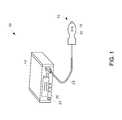
- FIG. 1shows an illustrative patient monitoring system in accordance with some embodiments of the present disclosure
- FIG. 2is a block diagram of the illustrative patient monitoring system of FIG. 1 coupled to a patient and a test unit in accordance with some embodiments of the present disclosure
- FIG. 3shows an illustrative test unit for generating a PPG test signal in accordance with some embodiments of the present disclosure
- FIG. 4shows an illustrative amplitude modulated PPG signal in accordance with some embodiments of the present disclosure
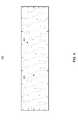
- FIG. 5shows an illustrative frequency modulated PPG signal in accordance with some embodiments of the present disclosure
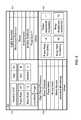
- FIG. 6shows an illustrative parameter selection interface in accordance with some embodiments of the present disclosure
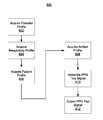
- FIG. 7shows illustrative profiles in accordance with some embodiments of the present disclosure.
- FIG. 8is a flow diagram showing illustrative steps for generating a PPG test signal in accordance with some embodiments of the present disclosure
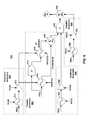
- FIG. 9is a flow diagram showing an illustrative flow for generating a PPG test signal in accordance with some embodiments of the present disclosure.
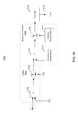
- FIG. 10is a flow diagram showing an illustrative flow for generating a PPG test signal in accordance with some embodiments of the present disclosure.
- a pulse oximetermay include a pulse oximetry sensor device that includes LEDs that generate light that passes through blood perfused tissue.
- a detectordetects the light after it has been passed through the tissue and generates a photoplethysmograph (PPG) signal that is provided to a pulse oximetry monitor, which processes the PPG signal as a representation of the intensity of the received light over time.
- the PPG signalmay generally represent pulsatile blood flow through the tissue, which may vary based on a number of physiological and non-physiological factors.
- Physiological factors that impact the PPG signalmay include pulsatile factors (e.g., heart beat and blood pressure) and respiratory factors (e.g., breathing).
- Non-physiological factorsmay include patient characteristics (e.g., patient age and sensor location) and environmental factors (e.g., sensor type, sensor location, and motion artifacts).
- an artificial PPG signalmay be desirable to generate an artificial PPG signal, for example, for equipment testing and diagnostic purposes, for comparison to real clinical data, for research purposes, or for any other suitable purpose.
- the present disclosureis described in the context of using the artificial PPG signal as a PPG test signal. Given the large number of factors that impact the PPG signal, a particular artificial PPG signal may not be representative of the complete patient population, a diversity of patient physiological conditions, or differing measurement conditions.
- a test unitmay include processing equipment for generating an artificial PPG signal (e.g., a PPG test signal) based on one or more profiles.
- a PPG test signalmay be generated based on a pulsatile profile, a respiratory profile, a patient profile, an artifact profile, any other suitable profile, or any combination thereof.
- the PPG test signalmay be changed by modifying any of the underlying profiles.
- the present disclosureis written in the context of the physiological signal being a PPG signal generated by a pulse oximetry system, and an artificial physiological signal being an artificial PPG signal or PPG test signal. It will be understood that any other suitable artificial physiological signal may be generated in accordance with the teachings of the present disclosure.
- An oximeteris a medical device that may determine the oxygen saturation of the blood.
- One common type of oximeteris a pulse oximeter, which may indirectly measure the oxygen saturation of a patient's blood (as opposed to measuring oxygen saturation directly by analyzing a blood sample taken from the patient).
- Pulse oximetersmay be included in patient monitoring systems that measure and display various blood flow characteristics including, but not limited to, the oxygen saturation of hemoglobin in arterial blood. Such patient monitoring systems may also measure and display additional physiological parameters, such as a patient's pulse rate.
- An oximetermay include a light sensor that is placed at a site on a patient, typically a fingertip, toe, forehead or earlobe, or in the case of a neonate, across a foot.
- the oximetermay use a light source to pass light through blood perfused tissue and photoelectrically sense the absorption of the light in the tissue.
- locations that are not typically understood to be optimal for pulse oximetryserve as suitable sensor locations for the monitoring processes described herein, including any location on the body that has a strong pulsatile arterial flow.
- additional suitable sensor locationsinclude, without limitation, the neck to monitor carotid artery pulsatile flow, the wrist to monitor radial artery pulsatile flow, the inside of a patient's thigh to monitor femoral artery pulsatile flow, the ankle to monitor tibial artery pulsatile flow, and around or in front of the ear.
- Suitable sensors for these locationsmay include sensors for sensing absorbed light based on detecting reflected light.
- the oximetermay measure the intensity of light that is received at the light sensor as a function of time.
- the oximetermay also include sensors at multiple locations.
- a signal representing light intensity versus time or a mathematical manipulation of this signalmay be referred to as the photoplethysmograph (PPG) signal.
- PPG signalmay also refer to an absorption signal (i.e., representing the amount of light absorbed by the tissue) or any suitable mathematical manipulation thereof.
- the light intensity or the amount of light absorbedmay then be used to calculate any of a number of physiological parameters, including an amount of a blood constituent (e.g., oxyhemoglobin) being measured as well as a pulse rate and when each individual pulse occurs.
- the light passed through the tissueis selected to be of one or more wavelengths that are absorbed by the blood in an amount representative of the amount of the blood constituent present in the blood.
- the amount of light passed through the tissuevaries in accordance with the changing amount of blood constituent in the tissue and the related light absorption.
- Red and infrared (IR) wavelengthsmay be used because it has been observed that highly oxygenated blood will absorb relatively less Red light and more IR light than blood with a lower oxygen saturation.
- I ( ⁇ , t )I o ( ⁇ )exp( ⁇ ( s ⁇ o ( ⁇ )+(1 ⁇ s ) ⁇ r ( ⁇ ))/( t )) (1)
- ⁇wavelength
- ttime
- Iintensity of light detected
- I 0intensity of light transmitted
- Soxygen saturation
- l(t)a combination of concentration and path length from emitter to detector as a function of time.
- the traditional approachmeasures light absorption at two wavelengths (e.g., Red and IR), and then calculates saturation by solving for the “ratio of ratios” as follows.
- Rcan be calculated using two points (e.g., PPG maximum and minimum), or a family of points.
- PPG maximum and minimumpoints
- One methodapplies a family of points to a modified version of Eq. 8.
- the blood oxygen saturationcan be determined or estimated using any suitable technique for relating a blood oxygen saturation value to R.
- blood oxygen saturationcan be determined from empirical data that may be indexed by values of R, and/or it may be determined from curve fitting and/or other interpolative techniques.
- FIG. 1is a perspective view of an embodiment of a patient monitoring system 10 .
- System 10may include sensor unit 12 and monitor 14 .
- sensor unit 12may be part of an oximeter.
- Sensor unit 12may include an emitter 16 for emitting light, at one or more wavelengths into a patient's tissue.
- a detector 18may also be provided in sensor unit 12 for detecting the light originally from emitter 16 that emanates from the patient's tissue after passing through the tissue. Any suitable physical configuration of emitter 16 and detector 18 may be used.
- sensor unit 12may include multiple emitters and/or detectors, which may be spaced apart.
- System 10may also include one or more additional sensor units (not shown) that may take the form of any of the embodiments described herein with reference to sensor unit 12 .
- An additional sensor unitmay be the same type of sensor unit as sensor unit 12 , or a different sensor unit type than sensor unit 12 .
- Multiple sensor unitsmay be capable of being positioned at two different locations on a subject's body; for example, a first sensor unit may be positioned on a patient's forehead, while a second sensor unit may be positioned at a patient's fingertip.
- Sensor unitsmay each detect any signal that carries information about a patient's physiological state, such as an electrocardiograph signal, arterial line measurements, or the pulsatile force exerted on the walls of an artery using, for example, oscillometric methods with a piezoelectric transducer.
- system 10may include two or more sensors forming a sensor array in lieu of either or both of the sensor units.
- Each of the sensors of a sensor arraymay be a complementary metal oxide semiconductor (CMOS) sensor.
- CMOScomplementary metal oxide semiconductor
- each sensor of an arraymay be charged coupled device (CCD) sensor.
- CCDcharged coupled device
- a sensor arraymay be made up of a combination of CMOS and CCD sensors.
- the CCD sensormay comprise a photoactive region and a transmission region for receiving and transmitting data whereas the CMOS sensor may be made up of an integrated circuit having an array of pixel sensors. Each pixel may have a photodetector and an active amplifier. It will be understood that any type of sensor, including any type of physiological sensor, may be used in one or more sensor units in accordance with the systems and techniques disclosed herein. It is understood that any number of sensors measuring any number of physiological signals may be used to determine physiological information in accordance with the techniques described herein.
- emitter 16 and detector 18may be on opposite sides of a digit such as a finger or toe, in which case the light that is emanating from the tissue has passed completely through the digit. In some embodiments, emitter 16 and detector 18 may be arranged so that light from emitter 16 penetrates the tissue and is reflected by the tissue into detector 18 , such as in a sensor designed to obtain pulse oximetry data from a patient's forehead.
- sensor unit 12may be connected to and draw its power from monitor 14 as shown.
- the sensormay be wirelessly connected to monitor 14 and include its own battery or similar power supply (not shown).
- Monitor 14may be configured to calculate physiological parameters (e.g., pulse rate, blood oxygen saturation (e.g., SpO 2 ), and respiration information) based at least in part on data relating to light emission and detection received from one or more sensor units such as sensor unit 12 and an additional sensor (not shown).
- the calculationsmay be performed on the sensor units or an intermediate device and the result of the calculations may be passed to monitor 14 .
- monitor 14may include a display 20 configured to display the physiological parameters or other information about the system.
- monitor 14may also include a speaker 22 to provide an audible sound that may be used in various other embodiments, such as for example, sounding an audible alarm in the event that a patient's physiological parameters are not within a predefined normal range.
- the system 10includes a stand-alone monitor in communication with the monitor 14 via a cable or a wireless network link.
- sensor unit 12may be communicatively coupled to monitor 14 via a cable 24 .
- a wireless transmission device(not shown) or the like may be used instead of or in addition to cable 24 .
- Monitor 14may include a sensor interface configured to receive physiological signals from sensor unit 12 , provide signals and power to sensor unit 12 , or otherwise communicate with sensor unit 12 .
- the sensor interfacemay include any suitable hardware, software, or both, which may allow communication between monitor 14 and sensor unit 12 .
- monitor 14may generate a PPG signal based on the signal received from sensor unit 12 .
- the PPG signalmay consist of data points that represent a pulsatile waveform.
- the pulsatile waveformmay be modulated based on the respiration of a patient.
- Respiratory modulationsmay include baseline modulations, amplitude modulations, frequency modulations, respiratory sinus arrhythmia, any other suitable modulations, or any combination thereof. Respiratory modulations may exhibit different phases, amplitudes, or both, within a PPG signal and may contribute to complex behavior (e.g., changes) of the PPG signal.
- the amplitude of the pulsatile waveformmay be modulated based on respiration (amplitude modulation), the frequency of the pulsatile waveform may be modulated based on respiration (frequency modulation), and a signal baseline for the pulsatile waveform may be modulated based on respiration (baseline modulation).
- Monitor 14may analyze the PPG signal (e.g., by demodulating the PPG signal) to determine respiration information based on one or more of these modulations of the PPG signal.
- respiration informationmay be determined from the PPG signal by monitor 14 .
- the PPG signalcould be transmitted to any suitable device for the determination of respiration information, such as a local computer, a remote computer, a nurse station, mobile devices, tablet computers, or any other device capable of sending and receiving data and performing processing operations.
- Informationmay be transmitted from monitor 14 in any suitable manner, including wireless (e.g., WiFi, Bluetooth, etc.), wired (e.g., USE, Ethernet, etc.), or application-specific connections.
- the receiving devicemay determine respiration information as described herein.
- FIG. 2is a block diagram of a patient monitoring system, such as patient monitoring system 10 of FIG. 1 , which may be coupled to a patient 40 in accordance with an embodiment. Certain illustrative components of sensor unit 12 and monitor 14 are illustrated in FIG. 2 .
- Sensor unit 12may include emitter 16 , detector 18 , and encoder 42 .
- emitter 16may be configured to emit at least two wavelengths of light (e.g., Red and IR) into a patient's tissue 40 .
- emitter 16may include a Red light emitting light source such as Red light emitting diode (LED) 44 and an IR light emitting light source such as IR LED 46 for emitting light into the patient's tissue 40 at the wavelengths used to calculate the patient's physiological parameters.
- the Red wavelengthmay be between about 600 nm and about 700 nm
- the IR wavelengthmay be between about 800 nm and about 1000 nm.
- each sensormay be configured to emit a single wavelength.
- a first sensormay emit only a Red light while a second sensor may emit only an IR light.
- the wavelengths of light usedmay be selected based on the specific location of the sensor.
- the term “light”may refer to energy produced by radiation sources and may include one or more of radio, microwave, millimeter wave, infrared, visible, ultraviolet, gamma ray or X-ray electromagnetic radiation. As used herein, light may also include electromagnetic radiation having any wavelength within the radio, microwave, infrared, visible, ultraviolet, or X-ray spectra, and that any suitable wavelength of electromagnetic radiation may be appropriate for use with the present techniques.
- Detector 18may be chosen to be specifically sensitive to the chosen targeted energy spectrum of the emitter 16 .
- detector 18may be configured to detect the intensity of light at the Red and IR wavelengths. Alternatively, each sensor in the array may be configured to detect an intensity of a single wavelength.
- lightmay enter detector 18 after passing through the patient's tissue 40 .
- Detector 18may convert the intensity of the received light into an electrical signal. The light intensity is directly related to the absorbance and/or reflectance of light in the tissue 40 . That is, when more light at a certain wavelength is absorbed or reflected, less light of that wavelength is received from the tissue by the detector 18 .
- detector 18may send the signal to monitor 14 , where physiological parameters may be calculated based on the absorption of the Red and IR wavelengths in the patient's tissue 40 .
- encoder 42may contain information about sensor unit 12 , such as what type of sensor it is (e.g., whether the sensor is intended for placement on a forehead or digit) and the wavelengths of light emitted by emitter 16 . This information may be used by monitor 14 to select appropriate algorithms, lookup tables and/or calibration coefficients stored in monitor 14 for calculating the patient's physiological parameters.
- Encoder 42may contain information specific to patient 40 , such as, for example, the patient's age, weight, and diagnosis. This information about a patient's characteristics may allow monitor 14 to determine, for example, patient-specific threshold ranges in which the patient's physiological parameter measurements should fall and to enable or disable additional physiological parameter algorithms. This information may also be used to select and provide coefficients for equations from which measurements may be determined based at least in part on the signal or signals received at sensor unit 12 . For example, some pulse oximetry sensors rely on equations to relate an area under a portion of a PPG signal corresponding to a physiological pulse to determine blood pressure. These equations may contain coefficients that depend upon a patient's physiological characteristics as stored in encoder 42 .
- Encoder 42may, for instance, be a coded resistor that stores values corresponding to the type of sensor unit 12 or the type of each sensor in the sensor array, the wavelengths of light emitted by emitter 16 on each sensor of the sensor array, and/or the patient's characteristics and treatment information.
- encoder 42may include a memory on which one or more of the following information may be stored for communication to monitor 14 ; the type of the sensor unit 12 ; the wavelengths of light emitted by emitter 16 ; the particular wavelength each sensor in the sensor array is monitoring; a signal threshold for each sensor in the sensor array; any other suitable information; physiological characteristics (e.g., gender, age, weight); or any combination thereof.
- test unit 90may include a test signal generator 92 , a signal output 94 , and an encoder 96 .
- Test signal generator 92may generate a PPG test signal (e.g., as described in FIGS. 3, 8, 9, and 10 ) that may approximate a PPG signal that would be generated by a passing light through a patient's tissue.
- Signal output 94may convert the samples of the PPG test signal to one or more electrical signals that are provided to monitor 12 (e.g., through amplifier 62 ). In this manner, a test signal generated by the test unit 90 may be provided to monitor 14 .
- the signal provided by test unit 90may simulate one (Red or IR) signal typically received at monitor 14 , while in other embodiments the signal provided by test unit 90 may simulate both the Red and IR signals.
- encoder 96may store information similar to encoder 42 . The settings for information stored in encoder 96 may be programmable to allow system parameters to be modified, for example, based on one or more profiles as described herein.
- monitor 14may include a general-purpose microprocessor 48 connected to an internal bus 50 .
- Microprocessor 48may be adapted to execute software, which may include an operating system and one or more applications, as part of performing the functions described herein.
- Also connected to bus 50may be a read-only memory (ROM) 52 , a random access memory (RAM) 54 , user inputs 56 , display 20 , data output 84 , and speaker 22 .
- ROMread-only memory
- RAMrandom access memory
- RAM 54 and ROM 52are illustrated by way of example, and not limitation. Any suitable computer-readable media may be used in the system for data storage.
- Computer-readable mediaare capable of storing information that can be interpreted by microprocessor 48 . This information may be data or may take the form of computer-executable instructions, such as software applications, that cause the microprocessor to perform certain functions and/or computer-implemented methods.
- Such computer-readable mediamay include computer storage media and communication media.
- Computer storage mediamay include volatile and non-volatile, removable and non-removable media implemented in any method or technology for storage of information such as computer-readable instructions, data structures, program modules or other data.
- Computer storage mediamay include, but is not limited to, RAM, ROM, EPROM, EEPROM, flash memory or other solid state memory technology, CD-ROM, DVD, or other optical storage, magnetic cassettes, magnetic tape, magnetic disk storage or other magnetic storage devices, or any other medium that can be used to store the desired information and that can be accessed by components of the system.
- a time processing unit (TPU) 58may provide timing control signals to light drive circuitry 60 , which may control when emitter 16 is illuminated and multiplexed timing for Red LED 44 and IR LED 46 .
- TPU 58may also control the gating-in of signals from detector 18 through amplifier 62 and switching circuit 64 . These signals are sampled at the proper time, depending upon which light source is illuminated.
- the received signal from detector 18may be passed through amplifier 66 , low pass filter 68 , and analog-to-digital converter 70 .
- the digital datamay then be stored in a queued serial module (QSM) 72 (or buffer) for later downloading to RAM 54 as QSM 72 is filled.
- QSMqueued serial module
- processing equipmentthere may be multiple separate parallel paths having components equivalent to amplifier 66 , filter 68 , and/or A/D converter 70 for multiple light wavelengths or spectra received.
- Any suitable combination of componentse.g., microprocessor 48 , RAM 54 , analog to digital converter 70 , any other suitable component shown or not shown in FIG. 2
- bus 50or otherwise coupled (e.g., via an external bus), may be referred to as “processing equipment.”
- microprocessor 48may determine the patient's physiological parameters, such as SpO 2 , pulse rate, and/or respiration information, using various algorithms and/or look-up tables based on the value of the received signals and/or data corresponding to the light received by detector 18 (or generated by signal output 94 ). As is described herein, microprocessor 48 may utilize amplitude demodulation and/or frequency demodulation techniques to determine respiration information from a PPG signal.
- Signals corresponding to information about patient 40may be transmitted from encoder 42 (or encoder 96 ) to decoder 74 .
- These signalsmay include, for example, encoded information relating to patient characteristics.
- Decoder 74may translate these signals to enable microprocessor 48 to determine the thresholds based at least in part on algorithms or look-up tables stored in ROM 52 .
- user inputs 56may be used to enter information, select one or more options, provide a response, input settings, any other suitable inputting function, or any combination thereof.
- User inputs 56may be used to enter information about the patient, such as age, weight, height, diagnosis, medications, treatments, and so forth.
- display 20may exhibit a list of values, which may generally apply to the patient, such as, for example, age ranges or medication families, which the user may select using user inputs 56 .
- Calibration device 80which may be powered by monitor 14 via a communicative coupling 82 , a battery, or by a conventional power source such as a wall outlet, may include any suitable signal calibration device. Calibration device 80 may be communicatively coupled to monitor 14 via communicative coupling 82 , and/or may communicate wirelessly (not shown). In some embodiments, calibration device 80 is completely integrated within monitor 14 . In some embodiments, calibration device 80 may include a manual input device (not shown) used by an operator to manually input reference signal measurements obtained from some other source (e.g., an external invasive or non-invasive physiological measurement system).
- some other sourcee.g., an external invasive or non-invasive physiological measurement system
- Data input/output (I/O) 84may provide for communications with other devices utilizing any suitable transmission medium, including wireless (e.g., WiFi, Bluetooth, etc.), wired (e.g., USE, Ethernet, etc.), or application-specific connections.
- Data I/O 84may receive messages to be transmitted from microprocessor 48 via bus 50 .
- Exemplary messages to be sent in an embodiment described hereinmay include samples of the PPG signal to be transmitted to an external device for determining respiration information.
- Data I/O 84may also receive messages from an external device to be transmitted to microprocessor 48 via bus 50 .
- test unit 86may connect to monitor 14 through data I/O 84 .
- Test unit 86may generate a PPG test signal (e.g., as described in FIGS. 3, 8, 9, and 10 ) that may approximate a PPG signal that would be generated by passing light through a patient's tissue.
- the PPG test signalmay be a set of samples similar to what would be provided to microprocessor 48 through the detection circuitry (e.g., switch 64 , amplifier 66 , filter 68 , A/D converter 70 , and QSM 72 ) of monitor 14 .
- the optical signal attenuated by the tissue of patient 40can be degraded by noise, among other sources.
- One source of noiseis ambient light that reaches the light detector.
- Another source of noiseis electromagnetic coupling from other electronic instruments. Movement of the patient also introduces noise and affects the signal. For example, the contact between the detector and the skin, or the emitter and the skin, can be temporarily disrupted when movement causes either to move away from the skin. Also, because blood is a fluid, it responds differently than the surrounding tissue to inertial effects, which may result in momentary changes in volume at the point to which the oximeter probe is attached.
- Noisee.g., from patient movement
- Processing sensor signalsmay involve operations that reduce the amount of noise present in the signals, control the amount of noise present in the signal, or otherwise identify noise components in order to prevent them from affecting measurements of physiological parameters derived from the sensor signals.
- FIG. 3shows an illustrative embodiment of a test unit 302 in accordance with some embodiments of the present disclosure.
- test unit 302may be implemented in any suitable manner, in an exemplary embodiment test unit 302 may be a general purpose computer (e.g., a personal computer). In other embodiments, test unit 302 may be implemented as an application-specific embedded device. It will be understood that any suitable computing device may perform the functionality of test unit 302 , such as a tablet computer, smart phone, nurse station, physiological monitor, or any other suitable electronic device. It will be understood that any functionality of test unit 302 (e.g., as described in FIGS. 8, 9, and 10 ) may be implemented in hardware, software, or both hardware and software.
- test unit 302may communicate with any suitable electronic device, or be integrated into any suitable electronic device, in exemplary embodiments test unit 302 may be in communication with a computer 304 , simulator 306 , or monitor 308 .
- Test unit 302may communicate with electronic devices in any suitable manner, including wireless (e.g., WIFi, Bluetooth, etc.), wired (e.g., USE, Ethernet, etc.), or application-specific connections such as a connection that simulates the output of a sensor (e.g., test unit 90 of FIG. 2 ).
- wirelesse.g., WIFi, Bluetooth, etc.
- wirede.g., USE, Ethernet, etc.
- application-specific connectionssuch as a connection that simulates the output of a sensor (e.g., test unit 90 of FIG. 2 ).
- Test unit 302may include a user interface such as a keyboard or touch screen to allow a user to input, select, or modify parameters related to generating a PPG test signal (e.g., as depicted in FIG. 6 ). Although any suitable parameters may be used to generate a PPG test signal, in an exemplary embodiment, a PPG test signal may be based upon one or more of a pulsatile profile, a respiratory profile, a patient profile, and an artifact profile, any other suitable profile, or any combination thereof. In some embodiments, test unit 302 may include an analysis or simulator program.
- An analysis or simulator programmay display simulated PPG waveforms based on a PPG test signal, calculate simulated physiological parameters (e.g., pulse rate, oxygen saturation, respiration information, and/or blood pressure) based on a PPG test signal, or perform any other suitable processing operations.
- simulated physiological parameterse.g., pulse rate, oxygen saturation, respiration information, and/or blood pressure
- test unit 302may communicate with a computer 304 , for example, to transmit the PPG test signal to computer 304 .
- a computer 304is described, it will be understood that any suitable computing device (e.g., a tablet computer or smart phone) may be used in accordance with the embodiments described herein.
- test unit 302may generate a PPG signal and transmit data representing the PPG signal to computer 304 .
- Computer 304may display simulated PPG waveforms based on a PPG test signal, calculate simulated physiological parameters (e.g., pulse rate, oxygen saturation, respiration information, and/or blood pressure) based on the PPG test signal, or perform any other suitable processing operations.
- computer 304may utilize the PPG test signal to test algorithms that process a PPG signal.
- test unit 302may communicate with a simulator 306 , for example, to transmit the PPG test signal to simulator 306 .
- a simulator 306may be a device that is configured to generate a simulated PPG waveform based on receiving input data describing a simulated PPG waveform.
- simulator 306may display the simulated PPG waveform and calculate physiological parameters based on the received data.
- simulator 306may generate a simulated PPG waveform for output to another device such as a patient monitor, a computer, or both.
- test unit 302may communicate with a monitor 308 such as monitor 14 , for example, to transmit the PPG test signal to monitor 308 .
- test unit 302may communicate with monitor 308 in any suitable manner, including through a data I/O port of a monitor 308 (e.g., test unit 86 communicating through data I/O 84 in FIG. 2 ) or by simulating a detected sensor signal (e.g., as described for test unit 90 in FIG. 2 ).
- the test unitmay include or may be connected to circuitry or a device that generates a signal that approximates the output of a sensor such as sensor 12 based on a set of samples of the PPG test signal.
- the signalmay be generated by the SRC-MAX manufactured by Nellcor, Inc.
- FIG. 4shows an illustrative amplitude modulated PPG signal in accordance with some embodiments of the present disclosure.
- a PPG signalmay demonstrate multiple modulations based on the respiration of a patient, such as amplitude modulation, frequency modulation, and baseline modulation.
- FIG. 4depicts a PPG signal including at least an amplitude modulation component of the PPG signal due to respiration.
- PPG signal 402may be a periodic signal that is indicative of changes in pulsatile blood flow. Each cycle of PPG signal 402 may generally correspond to a pulse, such that a heart rate may be determined based on PPG signal 402 .
- the volume of the pulsatile blood flowmay also vary in a periodic manner based on respiration.
- the period of a respiratory cyclemay typically be longer than the period of a pulsatile cycle, such that any changes in the pulsatile blood flow due to respiration occur over a numb of pulsatile cycles.
- the amplitude of PPG signal 402may be modulated based on respiration.
- the amplitude of the pulsatile blood flow depicted by PPG signal 402may vary based on a respiratory cycle caused by an amplitude modulation component 404 .
- the respiratory amplitude modulation component 404may impact the amplitude of PPG signal 402 differently based on patient conditions, measurement location, or in other manners, in the exemplary embodiment of FIG. 4 , the amplitude of PPG signal 402 varies in a generally uniform manner based on a respiratory cycle.
- Each cycle of respiratory amplitude modulation component 404may correspond to a breath.
- a single breathmay occur approximately once for every five pulsatile cycles (e.g., heart beats).
- a respiration rate corresponding to respiratory amplitude modulation component 404may be at approximately one fifth of the rate of the pulse rate associated with PPG signal 402 .
- a PPG test signalmay be generated based at least in part on an amplitude modulation signal that is related to the amplitude modulation component 404 of PPG signal 402 .
- FIG. 5shows an illustrative frequency modulated PPG signal in accordance with some embodiments of the present disclosure.
- FIG. 5depicts a PPG signal 502 including at least a frequency modulation component of the PPG signal due to respiration.
- PPG signal 502may be a periodic signal that is indicative of changes in pulsatile blood flow.
- Each cycle of PPG signal 502may generally correspond to pulse, such that a heart rate may be determined based on the frequency of PPG signal 502 .
- the timing of the pulsatile blood flowmay vary in a periodic manner based on respiration.
- the period of a respiratory cyclemay typically be longer than the period of a pulsatile cycle, such that any changes in the pulsatile blood flow due to respiration occur over a number of pulsatile cycles.
- the phase and frequency of PPG signal 502may be modulated based on respiration.
- the timing, frequency, and period associated with each pulsatile cyclemay vary based on a respiratory cycle caused by a frequency modulation component (e.g., 504 , 506 ).
- a series of pulsesmay have a relatively uniform pulse period in the absence of frequency modulation (not depicted).
- the frequency modulation of PPG signal 502may impact the phase and frequency of PPG signal 502 differently based on patient conditions, measurement location, or in other manners
- the pulse period associated with individual pulsesmay vary in a generally uniform manner based on the relative timing of pulses within a respiratory cycle.
- respiratory cycles 504 and 506may each correspond to a breath of a patient, and a respiration rate at approximately one fourth of the pulse rate.
- the pulsatile flow of PPG signal 502may vary such that the period of each pulse is altered based on the relative location within the respiratory cycle, as depicted by pulse periods 508 , 510 , 512 , 514 , 516 , 518 , 520 , and 522 .
- a PPG test signalmay be generated based in part on an amplitude modulation signal that is related to the frequency modulation (e.g., 504 and 506 ) of PPG signal 502 .
- FIG. 6is an illustrative block diagram of a parameter selection interface 600 as described herein.
- the PPG test signalmay be generated based on one or more profiles such as a pulsatile profile, a respiratory profile, a patient profile, and an artifact profile.
- profilessuch as a pulsatile profile, a respiratory profile, a patient profile, and an artifact profile.
- a number of particular profilesare described herein, it will be understood that any suitable profile may be provided for generating a PPG test signal.
- the profiles described hereinare not mutually exclusive, and may be combined or modified in any suitable manner.
- a usermay modify aspects of one or more profiles using parameter selection interface 600 .
- the profilesmay be modified in any suitable manner, in an exemplary embodiment, a user may select or enter a set of patient characteristics, such as a heart rate pattern, a respiration rate pattern, patient age, measurement conditions (e.g., under medication or while exercising), measurement equipment (e.g., sensor and pulse oximeter type) or any other suitable characteristics relating to a patient.
- a usermay select or enter a set of patient characteristics, such as a heart rate pattern, a respiration rate pattern, patient age, measurement conditions (e.g., under medication or while exercising), measurement equipment (e.g., sensor and pulse oximeter type) or any other suitable characteristics relating to a patient.
- measurement equipmente.g., sensor and pulse oximeter type
- each of the profilesmay be modified directly, for example, by directly modifying one or more variables relating to the PPG signal such as heart rate, dichrotic notch location, respiration rate, respiratory amplitude modulation, respiratory frequency modulation, respiratory baseline modulation, patient transmissivity, patient perfusion, and artifact patterns.
- the profilesmay be modified based on an analysis of inputs to the parameter selection interface. For example, a user may select one or more activity or data patterns to modify the modulation components that are generated based on the profiles. For example, activity patterns may be created that introduce predetermined or random changes to the values of any of the profile values over time, for example, based on known physical activity patterns, treatment regimens, or physiological conditions.
- the profilesare described as being acquired in a particular order (i.e., steps 802 - 808 of FIG. 8 ), it will be understood that the profiles could be acquired in any other order, could be acquired in parallel, or could be acquired in any other suitable manner.
- An exemplary parameter selection interface 600may include a patient information section 602 , a physical condition section 604 , a measurement and treatment section 606 , and a parameter section 608 .
- a parameter selection interface 600could be configured in any suitable manner, could include any number of configuration screens, and could include any number or configuration of possible selections for generating one or more profiles.
- Patient information section 602may include basic information related to a patient and relevant health parameters. Although any suitable information may be included in patient information section 602 , in an exemplary embodiment patient information section 602 may include information such as patient name, age, sex, pulse rate, respiration rate, sensor type, and sensor location. These values may be used to generate one or more profiles, such as a pulsatile profile (e.g., based in part on pulse rate) and a respiratory profile (e.g., based in part on respiration rate).
- a pulsatile profilee.g., based in part on pulse rate
- respiration ratee.g., based in part on respiration rate
- values for patient information section 602may be selected in any suitable manner, in an exemplary embodiment values for patient name, pulse rate, respiration rate, and age may be entered manually (e.g., through a keyboard or touch screen) while the values for the patient sex, sensor type, and sensor location may be selected from a menu.
- Physical condition section 604may include information related to physical conditions that may impact the shape of the PPG test signal, and therefore impact one or more profiles. For example, conditions related to heart health or blood circulation (e.g., blood pressure, heart disease, a pacemaker, or arrhythmia) may impact one or more profiles such as the pulsatile profile, while other conditions (e.g., sleep apnea or assisted breathing) may impact one or more other profiles such as a respiratory profile. It will be recognized that any suitable physical conditions may be selected within physical condition section 604 . In an exemplary embodiment, an “other” category may allow for additional physical conditions to be selected based on an associated profile that is provided to the system. Although physical conditions within physical condition section 604 may be selected in any suitable manner, in an exemplary embodiment one or more physical conditions may be selected from a list.
- heart health or blood circulatione.g., blood pressure, heart disease, a pacemaker, or arrhythmia
- other conditionse.g., sleep apnea or assisted breathing
- Measurement and treatment section 606may include information related to measurement conditions or patient treatments that may impact the shape of the PPG test signal, and therefore impact one or more profiles. For example, conditions related to physical activity (e.g., exercise, sleep, or motion artifact) and conditions related to treatments (e.g., anaesthetic or treatment 1) may impact a pulsatile profile, respiratory profile, patient profile and artifact profile. It will be recognized that any suitable measurement conditions or patient treatments may be selected within measurement and treatment section 606 . In an exemplary embodiment, the “treatment 1” and “other” categories may allow for additional treatments or physical activity profiles to be selected based on an associated profile that is provided to the system. Although measurement conditions and patient treatments within measurement and treatment section 606 may be selected in any suitable manner, in an exemplary embodiment one or more measurement conditions or patient treatments may be selected from a list.
- conditions related to physical activitye.g., exercise, sleep, or motion artifact
- treatmentse.g., anaesthetic or treatment 1
- Parameter section 608may include information to allow the variability of the waveform to be modified to reflect physical conditions changing over time. Although any parameters may be included in parameter section. 608 , in an exemplary embodiment parameter section 608 may include percentage values for pulse rate variability, pulse amplitude variability, respiration rate variability, and respiration amplitude variability to be modified. These values may be used to generate one or more profiles, such as a pulsatile profile (e.g., based on pulse rate variability and pulse amplitude variability), respiratory profile (e.g., based on respiration rate variability and respiration amplitude variability), patient profile, and artifact profile. Although values for parameter section 608 may be selected in any suitable manner, in an exemplary embodiment values for pulse rate variability, pulse amplitude variability, respiration rate variability, and respiration amplitude variability age may be entered manually (e.g., through a keyboard or touch screen).
- a pulsatile profilee.g., based on pulse rate variability and pulse amplitude variability
- respiratory profilee.g.,
- FIG. 7depicts illustrative profiles in accordance with some embodiments of the present disclosure.
- profilesmay be generated in any suitable manner, in an exemplary embodiment profiles may be generated based on selections made using parameter selection interface 600 .
- the profilesmay include a pulsatile profile 702 , a respiratory profile 704 , a patient profile 706 , and an artifact profile 708 .
- a pulsatile profile 702may include any suitable profile characteristics, in an exemplary embodiment the pulsatile profile may include a pulse rate pattern PR(t), a first pulsatile component phase ⁇ PLETH1 (t), and a second pulsatile component phase ⁇ PLETH2 (t).
- a respiratory profile 704may include any suitable profile characteristics, in an exemplary embodiment the respiratory profile may include a respiration rate pattern RR(t), a frequency modulation phase ⁇ FM(t), an amplitude modulation phase ⁇ AM(t), a baseline modulation phase ⁇ BM(t), a frequency modulation gain G FM (t), an amplitude modulation gain G AM (t), and a baseline modulation gain G AM (t).
- a patient profile 706may include any suitable profile characteristics, in an exemplary embodiment the respiratory profile may include a perfusion signal P(t) and a transmissivity signal Tr(t).
- an artifact profile 708may include any suitable profile characteristics, in an exemplary embodiment the respiratory profile may include multiplicative artifacts and additive artifacts.
- FIG. 8is a flow diagram showing illustrative steps for generating a PPG test signal in accordance with some embodiments of the present disclosure.
- test unit 302may acquire a pulsatile profile (e.g., that is generated based on values entered in parameter selection interface 600 ).
- the pulsatile profilemay include any suitable information relating to generating a pulsatile component of a PPG test waveform, such as a waveform shape, pulse rate, or both.
- a pulsatile profilemay be acquired in any suitable manner, in an exemplary embodiment aspects of the pulsatile profile may be stored in memory and aspects of the pulsatile profile may be provided by a user.
- a usermay select between multiple pulsatile profiles based on desired characteristics of the PPG test signal (e.g., whether the PPG test signal simulates a neonate or an adult) or based on known physiological conditions or treatments (e.g., exercise patterns, high blood pressure, arrhythmia, or use of a bronchodilator drug by an asthmatic patient).
- desired characteristics of the PPG test signale.g., whether the PPG test signal simulates a neonate or an adult
- known physiological conditions or treatmentse.g., exercise patterns, high blood pressure, arrhythmia, or use of a bronchodilator drug by an asthmatic patient.
- the usermay modify the pulsatile profile, for example, to modify a pulse rate associated with the PPG test signal.
- test unit 302may acquire a respiratory profile (e.g., that is generated based on values entered in parameter selection interface 600 ).
- the respiratory profilemay include any suitable information relating to respiratory modifications to the pulsatile component of a PPG test waveform, such as amplitude modulation, frequency modulation, baseline modulation, respiration rate, or any combination thereof.
- a respiratory profilemay be acquired in any suitable manner, in an exemplary embodiment aspects of the respiratory profile may be stored in memory and aspects of the respiratory profile may be provided by a user.
- a usermay select between multiple respiratory profiles based on desired characteristics of the PPG test signal (e.g., whether the PPG test signal simulates a neonate or an adult) or known physiological conditions or treatments (e.g., exercise patterns, sleep apnea, or assisted breathing)
- desired characteristics of the PPG test signale.g., whether the PPG test signal simulates a neonate or an adult
- known physiological conditions or treatmentse.g., exercise patterns, sleep apnea, or assisted breathing
- the usermay modify the respiratory profile, for example, to modify a respiratory rate associated with the PPG test signal.
- test unit 302may acquire a patient profile (e.g., that is generated based on values entered in parameter selection interface 600 ).
- the patient profilemay include additional suitable information relating to modifications to a PPG test waveform based on patient characteristics such as age, skin type, measurement location, sensor type, sensor location, or any combination thereof.
- a patient profilemay be acquired in any suitable manner, in an exemplary embodiment aspects of the patient profile may be stored in memory and aspects of the patient profile may be provided by a user.
- a usermay select between multiple patient profiles based on desired characteristics of the PPG test signal (e.g., whether the PPG test signal simulates a neonate or an adult) or known measurement conditions (e.g., to simulate noisy measurement conditions, different sensor types, or sensor locations).
- desired characteristics of the PPG test signale.g., whether the PPG test signal simulates a neonate or an adult
- known measurement conditionse.g., to simulate noisy measurement conditions, different sensor types, or sensor locations.
- the usermay modify the patient profile, for example, to select a particular simulated measurement location or sensor type associated with the PPG test signal.
- test unit 302may acquire an artifact profile (e.g., that is generated based on values entered in parameter selection interface 600 ).
- the artifact profilemay include additional information relating to modifications to a PPG test waveform based on artifacts such as motion artifacts.
- an artifact profilemay be acquired in any suitable manner, in an exemplary embodiment aspects of the artifact profile may be stored in memory and aspects of the artifact profile may be provided by a user. For example, in some embodiments an artifact profile may be generated based on known conditions that result in artifacts (e.g., improper sensor placement or patient motion).
- test unit 302may generate the PPG test signal.
- the PPG test signalmay be generated in any suitable manner, in an exemplary embodiment the PPG test signal may be generated as described in FIGS. 9 and 10 , described below.
- test unit 302may output the PPG test signal.
- the PPG test signalmay be output in any suitable manner to any suitable device, in exemplary embodiments the PPG test signal may be provided as a data signal to other processing circuitry of test unit 302 (e.g., a test program running on test unit 302 ), a remote computing device 304 (e.g., a computer, tablet, or smart phone), a simulator 306 , a patient monitor 308 , or any other suitable device.
- FIGS. 9 and 10are signal flow diagrams showing an illustrative flow for generating a PPG test signal in accordance with some embodiments of the present disclosure. Although a particular flow is depicted and described in FIGS. 9 and 10 , it will be understood that the order of the flow may be modified, that additional procedures may be performed or inserted at any point in the flow, and that aspects of the flow may be omitted in any suitable manner.
- the flow depicted in FIGS. 9 and 10includes processing equipment for performing signal processing operations such as signal generators, multipliers, adders, amplifiers, and other processing equipment. It will be understood that each signal processing operation may be implemented in any suitable manner, including hardware, software, hardware and software, discreet circuitry, application-specific circuitry, or any combination thereof.
- Pulsatile generation 904may generally relate to generating a pulse signal based on the pulsatile profile, and may also include as an input the output of frequency modulation 902 .
- Frequency modulation 902may generate a frequency modulation component based on the respiratory profile.
- the pulse signal output from pulsatile generation 904 operationsmay be further modified based on amplitude modulation 906 and baseline modulation 908 .
- Amplitude modulation 906 and baseline modulation 908may be generated based on the respiratory profile.
- the frequency modulated signal output from baseline modulation 908may be the PPG test signal, while in other embodiments additional processing (e.g., based on the patient profile or artifact profile) may be performed to generate the PPG test signal.
- a signal generator 910may generate a signal based on a respiration rate pattern RR(t) and frequency modulation phase ⁇ FM (t) that are based on the respiratory profile.
- signal generator 910may generate any suitable signal type, in an exemplary embodiment the generated signal may be a sine wave having a phase and frequency based on the respiration rate pattern RR(t) and frequency modulation phase ⁇ FM (t).
- signal generator 910(and other signal generators of FIGS. 9 and 10 ) may generate a signal in any suitable manner, in an exemplary embodiment signal generator 910 may be implemented using a combination of software and hardware.
- the same respiration rate pattern RR(t)may also be input to signal generator 922 for generating the amplitude modulation signal and signal generator 926 for generating the baseline modulation signal.
- the respiration rate pattern RR(t)may include any suitable range of respiration rate, such as 3-60 breaths per minute.
- the respiration ratemay be fixed or may vary in any suitable manner.
- a usermay select a fixed respiration rate, or may modify the respiration rate based on an input to test unit 302 .
- respiration rate patternsvary may be based on predetermined patterns associated with physiological activities such as sleep or exercise, physiological conditions such as apneic conditions, or treatments such as assisted breathing.
- respiration rate patternsmay vary randomly within a respiration rate range.
- the frequency modulation phase ⁇ FM (t)may define a phase relationship compared to the phase of a pulsatile component of the signal ⁇ PLETH1 (t), the phase of the amplitude modulation signal ⁇ AM (t), and the phase of the baseline modulation signal ⁇ BM (t).
- Each of these phase valuesmay be selected and modified by a user of test unit 302 , may be based on predetermined respiratory and pulsatile patterns (i.e., as determined by the respiratory and pulsatile profiles), or any combination thereof.
- phase of a first pulsatile component phase ⁇ PLETH1 (t)may be in phase with the baseline modulation signal phase ⁇ BM (t), the frequency modulation signal phase ⁇ FM (t) may have a 20° lag, and the amplitude modulation signal phase ⁇ AM (t) may be 180° out of phase.
- Signal generator 910may output the respiration modulation signal to amplifier 912 .
- Amplifier 912(as well as other amplifiers described in FIGS. 9 and 10 ) may be implemented in any suitable manner, including software, hardware, or a combination of hardware and software.
- Amplifier 912may amplify the respiration modulation signal based on a gain value G FM (t) of the respiratory profile.
- the gain value G FM (t)may be selected and modified by a user of test unit 302 , may be based on predetermined respiratory patterns, or any combination thereof.
- the resulting frequency modulation componentmay then be output to signal generator 914 and signal generator 918 of the pulsatile generation flow 904 to adjust the frequency and phase of the pulsatile signal based on frequency modulation component.
- Signal generator 914may generate a pulsatile signal component of the PPG test signal based on a pulse rate pattern PR(t) and the first pulsatile component phase ⁇ PLETH1 (t) that are based on the pulsatile profile, as well as the frequency modulation component.
- signal generator 914may generate any suitable signal type, in an exemplary embodiment the generated signal may be a sine wave having a phase and frequency based on the pulse rate pattern PR(t), the pulsatile component phase ⁇ PLETH1 (t), and the frequency modulation component.
- the pulse rate pattern PR(t)may include any suitable range of pulse rate, such as 40-250 beats per minute. The pulse rate may be fixed or may vary in any suitable manner.
- a usermay select a fixed pulse rate, or may modify the pulse rate based on an input to test unit 302 .
- pulse rate patternsvary may be based on predetermined patterns associated with physiological activities such as sleep or exercise, physiological conditions such as known heart conditions, or treatment patterns such as heart pacing or medication. In some embodiments, the pulse rate patterns may vary randomly within a pulse rate range.
- Signal generator 914may output the pulsatile component to adder 920 .
- the pulse rate pattern PR(t)may also be multiplied by multiplier 916 and provided to signal generator 918 .
- Signal generator 918may generate a harmonic component to be combined with the pulsatile component at adder 920 .
- a single harmonicis described in herein, it will be understood that multiple harmonic components could be generated to be combined with the pulsatile component of the PPG test signal.
- adding one or more harmonic signals to the fundamental pulsatile componentmay result in a PPG test signal that better matches the shape of an actual PPG signal.
- a PPG signalmay generally include a dichrotic notch that may be approximated as a second harmonic of the underlying pulse rate signal.
- this signal morphologymay be implemented by multiplying the pulse rate pattern by two at multiplier 916 , and generating a second harmonic signal based on the output of multiplier 916 , the frequency modulation component, and a second pulsatile component phase ⁇ PLETH2 (t).
- the pulsatile component of the PPG test signal and the second harmonic component signalsmay then be combined at adder 920 to generate the pulse signal.
- a signal generator 922may generate a signal based on a respiration rate pattern RR(t) and amplitude modulation phase ⁇ AM (t) that are based on the respiratory profile.
- signal generator 922may generate any suitable signal type, in an exemplary embodiment the generated signal may be a sine wave having a phase and frequency based on the respiration rate pattern RR(t) and amplitude modulation phase ⁇ AM (t).
- the respiration rate pattern RR(t) of signal generator 922may be the same respiration rate pattern RR(t) that is provided to signal generator 910 and signal generator 926 .
- Signal generator 922may output the amplitude modulation signal to amplifier 924 .
- Amplifier 924may amplify the amplitude modulation signal based on a gain value G AM (t) that is based on the respiratory profile.
- the gain value G AM (t)may be selected and modified by a user of test unit 302 , may be based on predetermined respiratory patterns, or any combination thereof.
- the gainmay be set in any suitable manner, in an exemplary embodiment the gain may be defined based on a percentage modulation of the PPG test signal. For example, the percentage modulation may be based on the AC amplitude of the amplitude modulation signal divided by the AC amplitude of the fundamental frequency of the PPG test signal.
- the resulting amplitude modulation componentmay then be output to multiplier 930 to be combined with the pulse signal output from adder 920 .
- amplitude modulationmay be implemented in any suitable manner, in an exemplary embodiment, the amplitude modulation may be implemented by multiplying the pulse signal from adder 920 with the amplitude modulation component output from amplifier 924 . In an exemplary embodiment, the pulse signal may be modified by multiplying the pulse signal with the amplitude modulation component at multiplier 930 . The amplitude of the resulting amplitude modulated pulse signal may vary based on respiration, such as is depicted in FIG. 4 . The resulting amplitude modulated pulse signal may be provided to adder 932 to be combined with a baseline modulation component generated according to baseline modulation flow 908 .
- signal generator 926may generate a signal based on a respiration rate pattern RR(t) and amplitude modulation phase ⁇ AM (t) that are based on the respiratory profile.
- signal generator 926may generate any suitable signal type, in an exemplary embodiment the generated signal may be a sine wave having a phase and frequency based on the respiration rate pattern RR(t) and baseline modulation phase ⁇ BM (t).
- the respiration rate pattern RR(t) of signal generator 926may be the same respiration rate pattern RR(t) that is provided to signal generator 910 and signal generator 922 .
- Signal generator 926may output the baseline modulation signal to amplifier 928 .
- Amplifier 928may amplify the baseline modulation signal based on a gain value G BM (t) that is based on the respiratory profile.
- the gain value G BM (t)may be selected and modified by a user of test unit 302 , may be based on predetermined respiratory patterns, or any combination thereof.
- the gainmay be set in any suitable manner, in an exemplary embodiment the gain may be defined based on a percentage modulation of the PPG test signal. For example, the percentage modulation may be based on the AC amplitude of the baseline modulation signal divided by the AC amplitude of the fundamental frequency of the PPG test signal.
- the resulting baseline modulation componentmay then be output to adder 932 to be combined with the amplitude modulated pulse signal output from multiplier 930 .
- baseline modulationmay be implemented in the PPG test signal in any suitable manner
- the baseline modulationmay be implemented by adding the amplitude modulated pulse signal output from multiplier 930 to the baseline modulation component output from amplifier 928 .
- the amplitude modulated pulse signal and baseline modulation componentmay be combined at adder 932 .
- the resulting respiration modulated signalmay have a baseline that varies in accordance with the periodic changes in the baseline modulation component.
- the respiration modulated signalmay be output without additional modulations due to additional profiles, and may be the PPG test signal.
- the respiration modulated signalmay be further processed based on the patient profile and artifact profile. The flow may continue to FIG. 10 as indicated in FIG. 9 .
- the flow depicted in FIG. 10may reflect processing operations for modifying the PPG test signal based on simulated patient characteristics, simulated artifacts, and other signal processing operations.
- the flow depicted in FIG. 10may include a patient characteristic flow 1002 and an artifact flow 1004 .
- Patient characteristic flow 1002may relate to scaling or modifications of the simulated PPG signal based on patient characteristics. It will be understood that patient characteristic flow 1002 may not include all modulations of the PPG test signal due to patient characteristics, since other profiles (such as the pulsatile profile and respiratory profile) may also change in response to changes in patient characteristics.
- the pulsatile blood flow indicated by a PPG signalmay vary from patient to patient based on patient characteristics such as age, skin thickness, measurement location, patient cardiovascular health, or any other suitable patient characteristics.
- patient characteristic flowmay modify a PPG test signal in any suitable manner, in an exemplary embodiment the PPG test signal may be modified based on perfusion and transmissivity values of a patient profile.
- a perfusion signal P(t) and a transmissivity signal Tr(t)may be selected based on a patient profile.
- the signal valuesmay be fixed, may vary over time based on a predetermined pattern, may vary randomly about a predetermined baseline value, may be based on known patient characteristics, or may be implemented in any other suitable manner.
- a user of test unit 302may select from among a set of patient characteristics such as age, sex, sensor location, body mass index, medications, known health conditions, any other suitable characteristic, or any combination thereof. Based on the selections, test unit 302 may generate a patient profile including a perfusion signal P(t) and a transmissivity signal Tr(t).
- the perfusion signal P(t) and transmissivity signal Tr(t)may modify the PPG test signal in any suitable manner
- the perfusion signal P(t)may modify the amplitude of the PPG signal while the transmissivity signal Tr(t) may modify the signal baseline.
- the respiration modulated signal and perfusion signal P(t)may be input to multiplier 1006 , and the resulting signal may be input to adder 1008 along with transmissivity signal Tr(t).
- the resulting patient modulated signalmay be output without additional modulations due to additional profiles, and may be the PPG test signal.
- the patient modulated signalmay be further processed based on the artifact profile.
- the resulting patient modulated signalmay be output from adder 1008 to artifact flow 1004 .
- Artifact flow 1004may modify the patient modulated signal to simulate artifacts that cause non-physiological changes to a PPG signal.
- artifact flowmay simulate any suitable artifacts
- the artifactsmay generally relate to motion artifacts and measurement artifacts that are part of an artifact profile.
- Motion artifactsmay include artifact events due to irregular motion or artifacts due to regular patient motion.
- Motion artifactsmay be selected from a set of predetermined artifact patterns, based on patient physiological characteristics and conditions (e.g., age, medications, or known health conditions), in any other suitable manner, or any combination thereof.
- Measurement artifactsmay include artifact events due to the measurement equipment or process.
- a user of test unit 302may input sensor characteristics or other measurement artifact parameters to generate the artifact profile.
- a user of test unit 302may select from among a set of known sensor types, sensor locations, or any other suitable measurement artifact parameters to generate the artifact profile.
- artifactsmay modify the patient modulated signal in any suitable manner, in an exemplary embodiment the artifacts may generally be categorized as multiplicative artifacts 1010 and additive artifacts 1012 . Multiplicative artifacts may be combined with the patient modulated signal by multiplier 1014 , while additive artifacts may be combined with the output of multiplier 1014 at adder 1016 . The resulting PPG test signal may be output for additional processing (e.g., at truncating step 1018 and filtering step 1020 ).
- the values associated with the PPG test signalmay be modified based on an analog to digital conversion rate and a sampling rate.
- a pulse oximetermay process a received PPG signal (e.g., at microprocessor 48 ) as a digital signal having a certain resolution and sampling rate.
- the PPG test signalmay be truncated to the nearest digital value based on a desired resolution.
- the time scale for samples of the PPG test signalmay be selected based on a sampling rate.
- a user of the test unit 302may select a desired resolution and sampling rate, may select from pulse oximeter types having known resolutions and sampling rates, or the resolution and sampling rate may be selected in any other suitable manner.
- the values of the samples of the PPG signalmay undergo any other suitable filtering operations.
- a particular type of pulse oximeterperforms filtering, smoothing, or interpolating operations before determining physiological parameters (e.g., pulse rate, oxygen saturation (SpO2), respiration rate, blood pressure), or that a sampled PPG signal is filtered in a particular manner before being output to another device for additional processing.
- physiological parameterse.g., pulse rate, oxygen saturation (SpO2), respiration rate, blood pressure
- a sampled PPG signalis filtered in a particular manner before being output to another device for additional processing.
- a Bessel filtere.g. at approximately 4 Hz
- a notch filtere.g., at approximately 11 Hz
Landscapes
- Health & Medical Sciences (AREA)
- Life Sciences & Earth Sciences (AREA)
- Physics & Mathematics (AREA)
- Engineering & Computer Science (AREA)
- Public Health (AREA)
- Surgery (AREA)
- Veterinary Medicine (AREA)
- General Health & Medical Sciences (AREA)
- Animal Behavior & Ethology (AREA)
- Biophysics (AREA)
- Pathology (AREA)
- Biomedical Technology (AREA)
- Heart & Thoracic Surgery (AREA)
- Medical Informatics (AREA)
- Molecular Biology (AREA)
- Physiology (AREA)
- Optics & Photonics (AREA)
- Cardiology (AREA)
- Psychiatry (AREA)
- Computer Vision & Pattern Recognition (AREA)
- Artificial Intelligence (AREA)
- Signal Processing (AREA)
- Spectroscopy & Molecular Physics (AREA)
- Measurement Of The Respiration, Hearing Ability, Form, And Blood Characteristics Of Living Organisms (AREA)
- Measuring Pulse, Heart Rate, Blood Pressure Or Blood Flow (AREA)
Abstract
Description
The present disclosure relates to physiological signal processing, and more particularly relates to generating an artificial photoplethysmograph signal.
A method for generating an artificial photoplethysmograph (PPG) signal comprises generating, using processing equipment, a frequency modulation component, an amplitude modulation component, and a baseline modulation component based on a respiratory profile. The method further comprises generating, using the processing equipment, a pulse signal based on a pulsatile profile and the frequency modulation component. The method further comprises modifying, using the processing equipment, the pulse signal based at least in part on the amplitude modulation component and the baseline modulation component to generate a respiration modulated signal. The method further comprises outputting the artificial PPG signal based at least in part on the respiration modulated signal.
A non-transitory computer-readable storage medium for providing an artificial photoplethysmograph (PPG) signal to an electronic device has a computer-readable medium having computer program instructions recorded thereon for generating a frequency modulation component, an amplitude modulation component, and a baseline modulation component based on a respiratory profile, generating a pulse signal based on a pulsatile profile and the frequency modulation component, modifying the pulse signal based at least in part on the amplitude modulation component and the baseline modulation component to generate a respiration modulated signal, and outputting the artificial PPG signal based at least in part on the respiration modulated signal.
A test unit comprises processing equipment configured to generate a frequency modulation component, an amplitude modulation component, and a baseline modulation component based on a respiratory profile, generate a pulse signal based on a pulsatile profile and the frequency modulation component, modify the pulse signal based at least in part on the amplitude modulation component and the baseline modulation component to generate the artificial PPG signal and output the artificial PPG signal.
The above and other features of the present disclosure, its nature and various advantages will be more apparent upon consideration of the following detailed description, taken in conjunction with the accompanying drawings in which:
A pulse oximeter may include a pulse oximetry sensor device that includes LEDs that generate light that passes through blood perfused tissue. A detector detects the light after it has been passed through the tissue and generates a photoplethysmograph (PPG) signal that is provided to a pulse oximetry monitor, which processes the PPG signal as a representation of the intensity of the received light over time. The PPG signal may generally represent pulsatile blood flow through the tissue, which may vary based on a number of physiological and non-physiological factors. Physiological factors that impact the PPG signal may include pulsatile factors (e.g., heart beat and blood pressure) and respiratory factors (e.g., breathing). Non-physiological factors may include patient characteristics (e.g., patient age and sensor location) and environmental factors (e.g., sensor type, sensor location, and motion artifacts).
It may be desirable to generate an artificial PPG signal, for example, for equipment testing and diagnostic purposes, for comparison to real clinical data, for research purposes, or for any other suitable purpose. For purposes of brevity and clarity, the present disclosure is described in the context of using the artificial PPG signal as a PPG test signal. Given the large number of factors that impact the PPG signal, a particular artificial PPG signal may not be representative of the complete patient population, a diversity of patient physiological conditions, or differing measurement conditions.
In an exemplary embodiment, a test unit may include processing equipment for generating an artificial PPG signal (e.g., a PPG test signal) based on one or more profiles. For example, a PPG test signal may be generated based on a pulsatile profile, a respiratory profile, a patient profile, an artifact profile, any other suitable profile, or any combination thereof. The PPG test signal may be changed by modifying any of the underlying profiles.
For purposes of clarity, the present disclosure is written in the context of the physiological signal being a PPG signal generated by a pulse oximetry system, and an artificial physiological signal being an artificial PPG signal or PPG test signal. It will be understood that any other suitable artificial physiological signal may be generated in accordance with the teachings of the present disclosure.
An oximeter is a medical device that may determine the oxygen saturation of the blood. One common type of oximeter is a pulse oximeter, which may indirectly measure the oxygen saturation of a patient's blood (as opposed to measuring oxygen saturation directly by analyzing a blood sample taken from the patient). Pulse oximeters may be included in patient monitoring systems that measure and display various blood flow characteristics including, but not limited to, the oxygen saturation of hemoglobin in arterial blood. Such patient monitoring systems may also measure and display additional physiological parameters, such as a patient's pulse rate.
An oximeter may include a light sensor that is placed at a site on a patient, typically a fingertip, toe, forehead or earlobe, or in the case of a neonate, across a foot. The oximeter may use a light source to pass light through blood perfused tissue and photoelectrically sense the absorption of the light in the tissue. In addition, locations that are not typically understood to be optimal for pulse oximetry serve as suitable sensor locations for the monitoring processes described herein, including any location on the body that has a strong pulsatile arterial flow. For example, additional suitable sensor locations include, without limitation, the neck to monitor carotid artery pulsatile flow, the wrist to monitor radial artery pulsatile flow, the inside of a patient's thigh to monitor femoral artery pulsatile flow, the ankle to monitor tibial artery pulsatile flow, and around or in front of the ear. Suitable sensors for these locations may include sensors for sensing absorbed light based on detecting reflected light. In all suitable locations, for example, the oximeter may measure the intensity of light that is received at the light sensor as a function of time. The oximeter may also include sensors at multiple locations. A signal representing light intensity versus time or a mathematical manipulation of this signal (e.g., a scaled version thereof, a log taken thereof, a scaled version of a log taken thereof, etc.) may be referred to as the photoplethysmograph (PPG) signal. In addition, the term “PPG signal,” as used herein, may also refer to an absorption signal (i.e., representing the amount of light absorbed by the tissue) or any suitable mathematical manipulation thereof. The light intensity or the amount of light absorbed may then be used to calculate any of a number of physiological parameters, including an amount of a blood constituent (e.g., oxyhemoglobin) being measured as well as a pulse rate and when each individual pulse occurs.
In some applications, the light passed through the tissue is selected to be of one or more wavelengths that are absorbed by the blood in an amount representative of the amount of the blood constituent present in the blood. The amount of light passed through the tissue varies in accordance with the changing amount of blood constituent in the tissue and the related light absorption. Red and infrared (IR) wavelengths may be used because it has been observed that highly oxygenated blood will absorb relatively less Red light and more IR light than blood with a lower oxygen saturation. By comparing the intensities of two wavelengths at different points in the pulse cycle, it is possible to estimate the blood oxygen saturation of hemoglobin in arterial blood.
When the measured blood parameter is the oxygen saturation of hemoglobin, a convenient starting point assumes a saturation calculation based at least in part on Lambert-Beer's law. The following notation will be used herein:
I(λ,t)=Io(λ)exp(−(sβo(λ)+(1−s)βr(λ))/(t)) (1)
where:
λ=wavelength;
t=time;
I=intensity of light detected;
I0=intensity of light transmitted;
S=oxygen saturation;
β0, βr-empirically derived absorption coefficients; and
l(t)=a combination of concentration and path length from emitter to detector as a function of time.
I(λ,t)=Io(λ)exp(−(sβo(λ)+(1−s)βr(λ))/(t)) (1)
where:
λ=wavelength;
t=time;
I=intensity of light detected;
I0=intensity of light transmitted;
S=oxygen saturation;
β0, βr-empirically derived absorption coefficients; and
l(t)=a combination of concentration and path length from emitter to detector as a function of time.
The traditional approach measures light absorption at two wavelengths (e.g., Red and IR), and then calculates saturation by solving for the “ratio of ratios” as follows.
1. The natural logarithm of EQ. 1 is taken (“log” will be used to represent the natural logarithm) for IR and Red to yield
logI=logIo−(sβo+(1−s)βr)l. (2)
2. Eq. 2 is then differentiated with respect to time to yield.
logI=logIo−(sβo+(1−s)βr)l. (2)
2. Eq. 2 is then differentiated with respect to time to yield.
3. Eq. 3, evaluated at the Red wavelength λR, is divided by Eq. 3 evaluated at the IR wavelength λIRin accordance with
4. Solving for S yields
5. Note that, in discrete time, the following approximation can be made:
6. Rewriting Eq. 6 by observing that log A−log B=log (A/B) yields
7. Thus, Eq. 4 can be expressed as
where R represents the “ratio of ratios.”
8. Solving Eq. 4 for S using the relationship of Eq. 5 yields
9. From Eq. 8, R can be calculated using two points (e.g., PPG maximum and minimum), or a family of points. One method applies a family of points to a modified version of Eq. 8. Using the relationship
Eq. 8 becomes
which defines a cluster of points whose slope of y versus X will give R when
x=[I(t2,λIR)−I(t1,λIR)]I(t1,λR), (12)
and
y=[I(t2,λR)−I(t1,λR)]I(t1,λIR). (13)
Once R is determined or estimated, for example, using the techniques described above, the blood oxygen saturation can be determined or estimated using any suitable technique for relating a blood oxygen saturation value to R. For example, blood oxygen saturation can be determined from empirical data that may be indexed by values of R, and/or it may be determined from curve fitting and/or other interpolative techniques.
y=[I(t2,λR)−I(t1,λR)]I(t1,λIR). (13)
Once R is determined or estimated, for example, using the techniques described above, the blood oxygen saturation can be determined or estimated using any suitable technique for relating a blood oxygen saturation value to R. For example, blood oxygen saturation can be determined from empirical data that may be indexed by values of R, and/or it may be determined from curve fitting and/or other interpolative techniques.
Sensor units may each detect any signal that carries information about a patient's physiological state, such as an electrocardiograph signal, arterial line measurements, or the pulsatile force exerted on the walls of an artery using, for example, oscillometric methods with a piezoelectric transducer. According to some embodiments,system 10 may include two or more sensors forming a sensor array in lieu of either or both of the sensor units. Each of the sensors of a sensor array may be a complementary metal oxide semiconductor (CMOS) sensor. Alternatively, each sensor of an array may be charged coupled device (CCD) sensor. In some embodiments, a sensor array may be made up of a combination of CMOS and CCD sensors. The CCD sensor may comprise a photoactive region and a transmission region for receiving and transmitting data whereas the CMOS sensor may be made up of an integrated circuit having an array of pixel sensors. Each pixel may have a photodetector and an active amplifier. It will be understood that any type of sensor, including any type of physiological sensor, may be used in one or more sensor units in accordance with the systems and techniques disclosed herein. It is understood that any number of sensors measuring any number of physiological signals may be used to determine physiological information in accordance with the techniques described herein.
In some embodiments,emitter 16 anddetector 18 may be on opposite sides of a digit such as a finger or toe, in which case the light that is emanating from the tissue has passed completely through the digit. In some embodiments,emitter 16 anddetector 18 may be arranged so that light fromemitter 16 penetrates the tissue and is reflected by the tissue intodetector 18, such as in a sensor designed to obtain pulse oximetry data from a patient's forehead.
In some embodiments,sensor unit 12 may be connected to and draw its power frommonitor 14 as shown. In another embodiment, the sensor may be wirelessly connected to monitor14 and include its own battery or similar power supply (not shown).Monitor 14 may be configured to calculate physiological parameters (e.g., pulse rate, blood oxygen saturation (e.g., SpO2), and respiration information) based at least in part on data relating to light emission and detection received from one or more sensor units such assensor unit 12 and an additional sensor (not shown). In some embodiments, the calculations may be performed on the sensor units or an intermediate device and the result of the calculations may be passed to monitor14. Further, monitor14 may include adisplay 20 configured to display the physiological parameters or other information about the system. In the embodiment shown, monitor14 may also include aspeaker 22 to provide an audible sound that may be used in various other embodiments, such as for example, sounding an audible alarm in the event that a patient's physiological parameters are not within a predefined normal range. In some embodiments, thesystem 10 includes a stand-alone monitor in communication with themonitor 14 via a cable or a wireless network link.
In some embodiments,sensor unit 12 may be communicatively coupled to monitor14 via acable 24. In some embodiments, a wireless transmission device (not shown) or the like may be used instead of or in addition tocable 24.Monitor 14 may include a sensor interface configured to receive physiological signals fromsensor unit 12, provide signals and power tosensor unit 12, or otherwise communicate withsensor unit 12. The sensor interface may include any suitable hardware, software, or both, which may allow communication betweenmonitor 14 andsensor unit 12.
As is described herein, monitor14 may generate a PPG signal based on the signal received fromsensor unit 12. The PPG signal may consist of data points that represent a pulsatile waveform. The pulsatile waveform may be modulated based on the respiration of a patient. Respiratory modulations may include baseline modulations, amplitude modulations, frequency modulations, respiratory sinus arrhythmia, any other suitable modulations, or any combination thereof. Respiratory modulations may exhibit different phases, amplitudes, or both, within a PPG signal and may contribute to complex behavior (e.g., changes) of the PPG signal. For example, the amplitude of the pulsatile waveform may be modulated based on respiration (amplitude modulation), the frequency of the pulsatile waveform may be modulated based on respiration (frequency modulation), and a signal baseline for the pulsatile waveform may be modulated based on respiration (baseline modulation).Monitor 14 may analyze the PPG signal (e.g., by demodulating the PPG signal) to determine respiration information based on one or more of these modulations of the PPG signal.
As is described herein, respiration information may be determined from the PPG signal bymonitor 14. However, it will be understood that the PPG signal could be transmitted to any suitable device for the determination of respiration information, such as a local computer, a remote computer, a nurse station, mobile devices, tablet computers, or any other device capable of sending and receiving data and performing processing operations. Information may be transmitted frommonitor 14 in any suitable manner, including wireless (e.g., WiFi, Bluetooth, etc.), wired (e.g., USE, Ethernet, etc.), or application-specific connections. The receiving device may determine respiration information as described herein.
It will be understood that, as used herein, the term “light” may refer to energy produced by radiation sources and may include one or more of radio, microwave, millimeter wave, infrared, visible, ultraviolet, gamma ray or X-ray electromagnetic radiation. As used herein, light may also include electromagnetic radiation having any wavelength within the radio, microwave, infrared, visible, ultraviolet, or X-ray spectra, and that any suitable wavelength of electromagnetic radiation may be appropriate for use with the present techniques.Detector 18 may be chosen to be specifically sensitive to the chosen targeted energy spectrum of theemitter 16.
In some embodiments,detector 18 may be configured to detect the intensity of light at the Red and IR wavelengths. Alternatively, each sensor in the array may be configured to detect an intensity of a single wavelength. In operation, light may enterdetector 18 after passing through the patient'stissue 40.Detector 18 may convert the intensity of the received light into an electrical signal. The light intensity is directly related to the absorbance and/or reflectance of light in thetissue 40. That is, when more light at a certain wavelength is absorbed or reflected, less light of that wavelength is received from the tissue by thedetector 18. After converting the received light to an electrical signal,detector 18 may send the signal to monitor14, where physiological parameters may be calculated based on the absorption of the Red and IR wavelengths in the patient'stissue 40.
In some embodiments,encoder 42 may contain information aboutsensor unit 12, such as what type of sensor it is (e.g., whether the sensor is intended for placement on a forehead or digit) and the wavelengths of light emitted byemitter 16. This information may be used bymonitor 14 to select appropriate algorithms, lookup tables and/or calibration coefficients stored inmonitor 14 for calculating the patient's physiological parameters.
In some embodiments,sensor unit 12 may be replaced with atest unit 90. In an exemplary embodiment,test unit 90 may include atest signal generator 92, asignal output 94, and anencoder 96.Test signal generator 92 may generate a PPG test signal (e.g., as described inFIGS. 3, 8, 9, and 10 ) that may approximate a PPG signal that would be generated by a passing light through a patient's tissue.Signal output 94 may convert the samples of the PPG test signal to one or more electrical signals that are provided to monitor12 (e.g., through amplifier62). In this manner, a test signal generated by thetest unit 90 may be provided to monitor14. In some embodiments, the signal provided bytest unit 90 may simulate one (Red or IR) signal typically received atmonitor 14, while in other embodiments the signal provided bytest unit 90 may simulate both the Red and IR signals. In some embodiments,encoder 96 may store information similar toencoder 42. The settings for information stored inencoder 96 may be programmable to allow system parameters to be modified, for example, based on one or more profiles as described herein.
In some embodiments, signals from detector18 (or signal output94) andencoder 42 for encoder96) may be transmitted to monitor14. In the embodiment shown, monitor14 may include a general-purpose microprocessor 48 connected to aninternal bus 50.Microprocessor 48 may be adapted to execute software, which may include an operating system and one or more applications, as part of performing the functions described herein. Also connected tobus 50 may be a read-only memory (ROM)52, a random access memory (RAM)54,user inputs 56,display 20,data output 84, andspeaker 22.
In the embodiment shown, a time processing unit (TPU)58 may provide timing control signals tolight drive circuitry 60, which may control whenemitter 16 is illuminated and multiplexed timing forRed LED 44 andIR LED 46.TPU 58 may also control the gating-in of signals fromdetector 18 throughamplifier 62 and switchingcircuit 64. These signals are sampled at the proper time, depending upon which light source is illuminated. The received signal fromdetector 18 may be passed throughamplifier 66,low pass filter 68, and analog-to-digital converter 70. The digital data may then be stored in a queued serial module (QSM)72 (or buffer) for later downloading to RAM54 asQSM 72 is filled. In some embodiments, there may be multiple separate parallel paths having components equivalent toamplifier 66,filter 68, and/or A/D converter 70 for multiple light wavelengths or spectra received. Any suitable combination of components (e.g.,microprocessor 48,RAM 54, analog todigital converter 70, any other suitable component shown or not shown inFIG. 2 ) coupled bybus 50 or otherwise coupled (e.g., via an external bus), may be referred to as “processing equipment.”
In some embodiments,microprocessor 48 may determine the patient's physiological parameters, such as SpO2, pulse rate, and/or respiration information, using various algorithms and/or look-up tables based on the value of the received signals and/or data corresponding to the light received by detector18 (or generated by signal output94). As is described herein,microprocessor 48 may utilize amplitude demodulation and/or frequency demodulation techniques to determine respiration information from a PPG signal.
Signals corresponding to information aboutpatient 40, and particularly about the intensity of light emanating from a patients tissue over time, may be transmitted from encoder42 (or encoder96) todecoder 74. These signals may include, for example, encoded information relating to patient characteristics.Decoder 74 may translate these signals to enablemicroprocessor 48 to determine the thresholds based at least in part on algorithms or look-up tables stored inROM 52. In some embodiments,user inputs 56 may be used to enter information, select one or more options, provide a response, input settings, any other suitable inputting function, or any combination thereof.User inputs 56 may be used to enter information about the patient, such as age, weight, height, diagnosis, medications, treatments, and so forth. In some embodiments,display 20 may exhibit a list of values, which may generally apply to the patient, such as, for example, age ranges or medication families, which the user may select usinguser inputs 56.
Data input/output (I/O)84 may provide for communications with other devices utilizing any suitable transmission medium, including wireless (e.g., WiFi, Bluetooth, etc.), wired (e.g., USE, Ethernet, etc.), or application-specific connections. Data I/O 84 may receive messages to be transmitted frommicroprocessor 48 viabus 50. Exemplary messages to be sent in an embodiment described herein may include samples of the PPG signal to be transmitted to an external device for determining respiration information. Data I/O 84 may also receive messages from an external device to be transmitted tomicroprocessor 48 viabus 50.
In an another exemplary embodiment of a test unit connecting to monitor14,test unit 86 may connect to monitor14 through data I/O 84.Test unit 86 may generate a PPG test signal (e.g., as described inFIGS. 3, 8, 9, and 10 ) that may approximate a PPG signal that would be generated by passing light through a patient's tissue. In the exemplary embodiment oftest unit 86, the PPG test signal may be a set of samples similar to what would be provided tomicroprocessor 48 through the detection circuitry (e.g., switch64,amplifier 66,filter 68, A/D converter 70, and QSM72) ofmonitor 14.
The optical signal attenuated by the tissue ofpatient 40 can be degraded by noise, among other sources. One source of noise is ambient light that reaches the light detector. Another source of noise is electromagnetic coupling from other electronic instruments. Movement of the patient also introduces noise and affects the signal. For example, the contact between the detector and the skin, or the emitter and the skin, can be temporarily disrupted when movement causes either to move away from the skin. Also, because blood is a fluid, it responds differently than the surrounding tissue to inertial effects, which may result in momentary changes in volume at the point to which the oximeter probe is attached.
Noise (e.g., from patient movement) can degrade a sensor signal relied upon by a care provider, without the care provider's awareness. This is especially true if the monitoring of the patient is remote, the motion is too small to be observed, or the care provider is watching the instrument or other parts of the patient, and not the sensor site. Processing sensor signals (e.g., PPG signals) may involve operations that reduce the amount of noise present in the signals, control the amount of noise present in the signal, or otherwise identify noise components in order to prevent them from affecting measurements of physiological parameters derived from the sensor signals.
Althoughtest unit 302 may communicate with any suitable electronic device, or be integrated into any suitable electronic device, in exemplaryembodiments test unit 302 may be in communication with acomputer 304,simulator 306, or monitor308.Test unit 302 may communicate with electronic devices in any suitable manner, including wireless (e.g., WIFi, Bluetooth, etc.), wired (e.g., USE, Ethernet, etc.), or application-specific connections such as a connection that simulates the output of a sensor (e.g.,test unit 90 ofFIG. 2 ).
In some embodiments testunit 302 may communicate with acomputer 304, for example, to transmit the PPG test signal tocomputer 304. Although acomputer 304 is described, it will be understood that any suitable computing device (e.g., a tablet computer or smart phone) may be used in accordance with the embodiments described herein. In an exemplaryembodiment test unit 302 may generate a PPG signal and transmit data representing the PPG signal tocomputer 304.Computer 304 may display simulated PPG waveforms based on a PPG test signal, calculate simulated physiological parameters (e.g., pulse rate, oxygen saturation, respiration information, and/or blood pressure) based on the PPG test signal, or perform any other suitable processing operations. In other embodiments,computer 304 may utilize the PPG test signal to test algorithms that process a PPG signal.
In some embodiments testunit 302 may communicate with asimulator 306, for example, to transmit the PPG test signal tosimulator 306. Asimulator 306 may be a device that is configured to generate a simulated PPG waveform based on receiving input data describing a simulated PPG waveform. In some embodiments,simulator 306 may display the simulated PPG waveform and calculate physiological parameters based on the received data. In other embodiments,simulator 306 may generate a simulated PPG waveform for output to another device such as a patient monitor, a computer, or both.
In some embodiments,test unit 302 may communicate with amonitor 308 such asmonitor 14, for example, to transmit the PPG test signal to monitor308. As is described herein,test unit 302 may communicate withmonitor 308 in any suitable manner, including through a data I/O port of a monitor308 (e.g.,test unit 86 communicating through data I/O 84 inFIG. 2 ) or by simulating a detected sensor signal (e.g., as described fortest unit 90 inFIG. 2 ). In some embodiments, the test unit may include or may be connected to circuitry or a device that generates a signal that approximates the output of a sensor such assensor 12 based on a set of samples of the PPG test signal. Although it will be understood that any suitable circuitry or device may be used, in an exemplary embodiment the signal may be generated by the SRC-MAX manufactured by Nellcor, Inc.
The volume of the pulsatile blood flow may also vary in a periodic manner based on respiration. The period of a respiratory cycle may typically be longer than the period of a pulsatile cycle, such that any changes in the pulsatile blood flow due to respiration occur over a numb of pulsatile cycles. As one example of changes in pulsatile blood flow due to respiration, the amplitude of PPG signal402 may be modulated based on respiration. In the exemplary embodiment depicted inFIG. 4 , the amplitude of the pulsatile blood flow depicted byPPG signal 402 may vary based on a respiratory cycle caused by anamplitude modulation component 404.
Although it will be understood that the respiratoryamplitude modulation component 404 may impact the amplitude of PPG signal402 differently based on patient conditions, measurement location, or in other manners, in the exemplary embodiment ofFIG. 4 , the amplitude ofPPG signal 402 varies in a generally uniform manner based on a respiratory cycle. Each cycle of respiratoryamplitude modulation component 404 may correspond to a breath. For example, as is depicted inFIG. 4 , a single breath may occur approximately once for every five pulsatile cycles (e.g., heart beats). Accordingly, a respiration rate corresponding to respiratoryamplitude modulation component 404 may be at approximately one fifth of the rate of the pulse rate associated withPPG signal 402. As will be described herein, a PPG test signal may be generated based at least in part on an amplitude modulation signal that is related to theamplitude modulation component 404 ofPPG signal 402.
The timing of the pulsatile blood flow may vary in a periodic manner based on respiration. The period of a respiratory cycle may typically be longer than the period of a pulsatile cycle, such that any changes in the pulsatile blood flow due to respiration occur over a number of pulsatile cycles. As one example of changes in pulsatile blood flow due to respiration, the phase and frequency of PPG signal502 may be modulated based on respiration. In the exemplary embodiment depicted inFIG. 5 , the timing, frequency, and period associated with each pulsatile cycle may vary based on a respiratory cycle caused by a frequency modulation component (e.g.,504,506).
In an exemplary embodiment, a series of pulses may have a relatively uniform pulse period in the absence of frequency modulation (not depicted). Although it will be understood that the frequency modulation of PPG signal502 may impact the phase and frequency of PPG signal502 differently based on patient conditions, measurement location, or in other manners, in the exemplary embodiment ofFIG. 5 the pulse period associated with individual pulses may vary in a generally uniform manner based on the relative timing of pulses within a respiratory cycle. For example,respiratory cycles pulse periods PPG signal 502.
In some embodiments, a user may modify aspects of one or more profiles usingparameter selection interface 600. Although the profiles may be modified in any suitable manner, in an exemplary embodiment, a user may select or enter a set of patient characteristics, such as a heart rate pattern, a respiration rate pattern, patient age, measurement conditions (e.g., under medication or while exercising), measurement equipment (e.g., sensor and pulse oximeter type) or any other suitable characteristics relating to a patient. Each of the profiles may be generated based on these characteristics. In some embodiments each of the profiles may be modified directly, for example, by directly modifying one or more variables relating to the PPG signal such as heart rate, dichrotic notch location, respiration rate, respiratory amplitude modulation, respiratory frequency modulation, respiratory baseline modulation, patient transmissivity, patient perfusion, and artifact patterns. In some embodiments, the profiles may be modified based on an analysis of inputs to the parameter selection interface. For example, a user may select one or more activity or data patterns to modify the modulation components that are generated based on the profiles. For example, activity patterns may be created that introduce predetermined or random changes to the values of any of the profile values over time, for example, based on known physical activity patterns, treatment regimens, or physiological conditions. Although in an exemplary embodiment the profiles are described as being acquired in a particular order (i.e., steps802-808 ofFIG. 8 ), it will be understood that the profiles could be acquired in any other order, could be acquired in parallel, or could be acquired in any other suitable manner.
An exemplaryparameter selection interface 600 may include apatient information section 602, aphysical condition section 604, a measurement andtreatment section 606, and aparameter section 608. Although an exemplary configuration of aparameter selection interface 600 is described herein, it will be understood thatparameter selection interface 600 could be configured in any suitable manner, could include any number of configuration screens, and could include any number or configuration of possible selections for generating one or more profiles.
Measurement andtreatment section 606 may include information related to measurement conditions or patient treatments that may impact the shape of the PPG test signal, and therefore impact one or more profiles. For example, conditions related to physical activity (e.g., exercise, sleep, or motion artifact) and conditions related to treatments (e.g., anaesthetic or treatment 1) may impact a pulsatile profile, respiratory profile, patient profile and artifact profile. It will be recognized that any suitable measurement conditions or patient treatments may be selected within measurement andtreatment section 606. In an exemplary embodiment, the “treatment 1” and “other” categories may allow for additional treatments or physical activity profiles to be selected based on an associated profile that is provided to the system. Although measurement conditions and patient treatments within measurement andtreatment section 606 may be selected in any suitable manner, in an exemplary embodiment one or more measurement conditions or patient treatments may be selected from a list.
Atstep 804,test unit 302 may acquire a respiratory profile (e.g., that is generated based on values entered in parameter selection interface600). The respiratory profile may include any suitable information relating to respiratory modifications to the pulsatile component of a PPG test waveform, such as amplitude modulation, frequency modulation, baseline modulation, respiration rate, or any combination thereof. Although a respiratory profile may be acquired in any suitable manner, in an exemplary embodiment aspects of the respiratory profile may be stored in memory and aspects of the respiratory profile may be provided by a user. For example, in some embodiments a user may select between multiple respiratory profiles based on desired characteristics of the PPG test signal (e.g., whether the PPG test signal simulates a neonate or an adult) or known physiological conditions or treatments (e.g., exercise patterns, sleep apnea, or assisted breathing) In other embodiments the user may modify the respiratory profile, for example, to modify a respiratory rate associated with the PPG test signal.
Atstep 806,test unit 302 may acquire a patient profile (e.g., that is generated based on values entered in parameter selection interface600). The patient profile may include additional suitable information relating to modifications to a PPG test waveform based on patient characteristics such as age, skin type, measurement location, sensor type, sensor location, or any combination thereof. Although a patient profile may be acquired in any suitable manner, in an exemplary embodiment aspects of the patient profile may be stored in memory and aspects of the patient profile may be provided by a user. For example, in some embodiments a user may select between multiple patient profiles based on desired characteristics of the PPG test signal (e.g., whether the PPG test signal simulates a neonate or an adult) or known measurement conditions (e.g., to simulate noisy measurement conditions, different sensor types, or sensor locations). In other embodiments the user may modify the patient profile, for example, to select a particular simulated measurement location or sensor type associated with the PPG test signal.
Atstep 808,test unit 302 may acquire an artifact profile (e.g., that is generated based on values entered in parameter selection interface600). The artifact profile may include additional information relating to modifications to a PPG test waveform based on artifacts such as motion artifacts. Although an artifact profile may be acquired in any suitable manner, in an exemplary embodiment aspects of the artifact profile may be stored in memory and aspects of the artifact profile may be provided by a user. For example, in some embodiments an artifact profile may be generated based on known conditions that result in artifacts (e.g., improper sensor placement or patient motion).
Atstep 810,test unit 302 may generate the PPG test signal. Although the PPG test signal may be generated in any suitable manner, in an exemplary embodiment the PPG test signal may be generated as described inFIGS. 9 and 10 , described below. Atstep 812,test unit 302 may output the PPG test signal. Although the PPG test signal may be output in any suitable manner to any suitable device, in exemplary embodiments the PPG test signal may be provided as a data signal to other processing circuitry of test unit302 (e.g., a test program running on test unit302), a remote computing device304 (e.g., a computer, tablet, or smart phone), asimulator 306, apatient monitor 308, or any other suitable device.
The flow depicted inFIG. 9 may reflect processing operations for generating the pulsatile and respiratory aspects of the PPG test signal. Pulsatile generation904 may generally relate to generating a pulse signal based on the pulsatile profile, and may also include as an input the output offrequency modulation 902.Frequency modulation 902 may generate a frequency modulation component based on the respiratory profile. The pulse signal output from pulsatile generation904 operations may be further modified based onamplitude modulation 906 and baseline modulation908.Amplitude modulation 906 and baseline modulation908 may be generated based on the respiratory profile. In some embodiments, the frequency modulated signal output from baseline modulation908 may be the PPG test signal, while in other embodiments additional processing (e.g., based on the patient profile or artifact profile) may be performed to generate the PPG test signal.
Referring to the flow forfrequency modulation 902, asignal generator 910 may generate a signal based on a respiration rate pattern RR(t) and frequency modulation phase θFM(t) that are based on the respiratory profile. Althoughsignal generator 910 may generate any suitable signal type, in an exemplary embodiment the generated signal may be a sine wave having a phase and frequency based on the respiration rate pattern RR(t) and frequency modulation phase θFM(t). Although signal generator910 (and other signal generators ofFIGS. 9 and 10 ) may generate a signal in any suitable manner, in an exemplaryembodiment signal generator 910 may be implemented using a combination of software and hardware. In an exemplary embodiment, the same respiration rate pattern RR(t) may also be input to signalgenerator 922 for generating the amplitude modulation signal andsignal generator 926 for generating the baseline modulation signal. The respiration rate pattern RR(t) may include any suitable range of respiration rate, such as 3-60 breaths per minute. The respiration rate may be fixed or may vary in any suitable manner. In some embodiments, a user may select a fixed respiration rate, or may modify the respiration rate based on an input to testunit 302. In some embodiments, respiration rate patterns vary may be based on predetermined patterns associated with physiological activities such as sleep or exercise, physiological conditions such as apneic conditions, or treatments such as assisted breathing. In some embodiments, respiration rate patterns may vary randomly within a respiration rate range.
The frequency modulation phase θFM(t) may define a phase relationship compared to the phase of a pulsatile component of the signal θPLETH1(t), the phase of the amplitude modulation signal θAM(t), and the phase of the baseline modulation signal θBM(t). Each of these phase values may be selected and modified by a user oftest unit 302, may be based on predetermined respiratory and pulsatile patterns (i.e., as determined by the respiratory and pulsatile profiles), or any combination thereof. In an exemplary embodiment the phase of a first pulsatile component phase θPLETH1(t) may be in phase with the baseline modulation signal phase θBM(t), the frequency modulation signal phase θFM(t) may have a 20° lag, and the amplitude modulation signal phase θAM(t) may be 180° out of phase.
Referring to the flow foramplitude modulation 906, asignal generator 922 may generate a signal based on a respiration rate pattern RR(t) and amplitude modulation phase θAM(t) that are based on the respiratory profile. Althoughsignal generator 922 may generate any suitable signal type, in an exemplary embodiment the generated signal may be a sine wave having a phase and frequency based on the respiration rate pattern RR(t) and amplitude modulation phase θAM(t). In an exemplary embodiment, the respiration rate pattern RR(t) ofsignal generator 922 may be the same respiration rate pattern RR(t) that is provided to signalgenerator 910 andsignal generator 926.
Although amplitude modulation may be implemented in any suitable manner, in an exemplary embodiment, the amplitude modulation may be implemented by multiplying the pulse signal fromadder 920 with the amplitude modulation component output fromamplifier 924. In an exemplary embodiment, the pulse signal may be modified by multiplying the pulse signal with the amplitude modulation component atmultiplier 930. The amplitude of the resulting amplitude modulated pulse signal may vary based on respiration, such as is depicted inFIG. 4 . The resulting amplitude modulated pulse signal may be provided to adder932 to be combined with a baseline modulation component generated according to baseline modulation flow908.
Referring to the flow for baseline modulation908,signal generator 926 may generate a signal based on a respiration rate pattern RR(t) and amplitude modulation phase θAM(t) that are based on the respiratory profile. Althoughsignal generator 926 may generate any suitable signal type, in an exemplary embodiment the generated signal may be a sine wave having a phase and frequency based on the respiration rate pattern RR(t) and baseline modulation phase θBM(t). In an exemplary embodiment, the respiration rate pattern RR(t) ofsignal generator 926 may be the same respiration rate pattern RR(t) that is provided to signalgenerator 910 andsignal generator 922.
Although baseline modulation may be implemented in the PPG test signal in any suitable manner, in an exemplary embodiment, the baseline modulation may be implemented by adding the amplitude modulated pulse signal output frommultiplier 930 to the baseline modulation component output fromamplifier 928. In an exemplary embodiment, the amplitude modulated pulse signal and baseline modulation component may be combined atadder 932. The resulting respiration modulated signal may have a baseline that varies in accordance with the periodic changes in the baseline modulation component. In some embodiments the respiration modulated signal may be output without additional modulations due to additional profiles, and may be the PPG test signal. In the exemplary embodiment described herein, the respiration modulated signal may be further processed based on the patient profile and artifact profile. The flow may continue toFIG. 10 as indicated inFIG. 9 .
The flow depicted inFIG. 10 may reflect processing operations for modifying the PPG test signal based on simulated patient characteristics, simulated artifacts, and other signal processing operations. For example, the flow depicted inFIG. 10 may include a patientcharacteristic flow 1002 and anartifact flow 1004.
Patientcharacteristic flow 1002 may relate to scaling or modifications of the simulated PPG signal based on patient characteristics. It will be understood that patientcharacteristic flow 1002 may not include all modulations of the PPG test signal due to patient characteristics, since other profiles (such as the pulsatile profile and respiratory profile) may also change in response to changes in patient characteristics.
Referring to the patient profile, the pulsatile blood flow indicated by a PPG signal may vary from patient to patient based on patient characteristics such as age, skin thickness, measurement location, patient cardiovascular health, or any other suitable patient characteristics. Although it will be understood that the patient characteristic flow may modify a PPG test signal in any suitable manner, in an exemplary embodiment the PPG test signal may be modified based on perfusion and transmissivity values of a patient profile.
In some embodiments, a perfusion signal P(t) and a transmissivity signal Tr(t) may be selected based on a patient profile. The signal values may be fixed, may vary over time based on a predetermined pattern, may vary randomly about a predetermined baseline value, may be based on known patient characteristics, or may be implemented in any other suitable manner. In an exemplary embodiment, a user oftest unit 302 may select from among a set of patient characteristics such as age, sex, sensor location, body mass index, medications, known health conditions, any other suitable characteristic, or any combination thereof. Based on the selections,test unit 302 may generate a patient profile including a perfusion signal P(t) and a transmissivity signal Tr(t).
Although it will be understood that the perfusion signal P(t) and transmissivity signal Tr(t) may modify the PPG test signal in any suitable manner, in an exemplary embodiment the perfusion signal P(t) may modify the amplitude of the PPG signal while the transmissivity signal Tr(t) may modify the signal baseline. The respiration modulated signal and perfusion signal P(t) may be input tomultiplier 1006, and the resulting signal may be input toadder 1008 along with transmissivity signal Tr(t). In some embodiments the resulting patient modulated signal may be output without additional modulations due to additional profiles, and may be the PPG test signal. In the exemplary embodiment described herein, the patient modulated signal may be further processed based on the artifact profile. The resulting patient modulated signal may be output fromadder 1008 toartifact flow 1004.
Although it will be understood that artifacts may modify the patient modulated signal in any suitable manner, in an exemplary embodiment the artifacts may generally be categorized asmultiplicative artifacts 1010 andadditive artifacts 1012. Multiplicative artifacts may be combined with the patient modulated signal bymultiplier 1014, while additive artifacts may be combined with the output ofmultiplier 1014 atadder 1016. The resulting PPG test signal may be output for additional processing (e.g., at truncatingstep 1018 and filtering step1020).
At truncatingstep 1018, the values associated with the PPG test signal may be modified based on an analog to digital conversion rate and a sampling rate. A pulse oximeter may process a received PPG signal (e.g., at microprocessor48) as a digital signal having a certain resolution and sampling rate. At truncatingstep 1018, the PPG test signal may be truncated to the nearest digital value based on a desired resolution. In addition, the time scale for samples of the PPG test signal may be selected based on a sampling rate. A user of thetest unit 302 may select a desired resolution and sampling rate, may select from pulse oximeter types having known resolutions and sampling rates, or the resolution and sampling rate may be selected in any other suitable manner.
Atfiltering step 1020, the values of the samples of the PPG signal may undergo any other suitable filtering operations. For example, it may be known that a particular type of pulse oximeter performs filtering, smoothing, or interpolating operations before determining physiological parameters (e.g., pulse rate, oxygen saturation (SpO2), respiration rate, blood pressure), or that a sampled PPG signal is filtered in a particular manner before being output to another device for additional processing. For example, in some embodiments, a Bessel filter (e.g. at approximately 4 Hz) and a notch filter (e.g., at approximately 11 Hz) may be implemented atfiltering step 1020.
The foregoing is merely illustrative of the principles of this disclosure and various modifications may be made by those skilled in the art without departing from the scope of this disclosure. The above described embodiments are presented for purposes of illustration and not of limitation. The present disclosure also can take many forms other than those explicitly described herein. Accordingly, it is emphasized that this disclosure is not limited to the explicitly disclosed methods, systems, and apparatuses, but is intended to include variations to and modifications thereof, which are within the spirit of the following claims.
Claims (22)
1. A method for generating an artificial photoplethysmograph (PPG) signal using a test unit, the method comprising:
generating, using the test unit, a frequency modulation component, an amplitude modulation component, and a baseline modulation component based at least in part on a respiratory profile;
generating, using the test unit, a pulse signal based at least in part on a pulsatile profile and the frequency modulation component;
modifying, using the test unit, the pulse signal based at least in part on the amplitude modulation component and the baseline modulation component to generate a respiration modulated signal;
generating, using the test unit, the artificial PPG signal based at least in part on the respiration modulated signal; and
outputting, using the test unit, the artificial PPG signal to a physiological monitor.
2. The method ofclaim 1 , wherein generating the pulse signal comprises:
generating, a heart rate signal based at least in part on the pulsatile profile and the frequency modulation component;
generating a dichrotic notch signal based at least in part on the pulsatile profile and the frequency modulation component; and
combining the heart rate signal and the dichrotic notch signal.
3. The method ofclaim 1 , wherein modifying the pulse signal comprises:
multiplying, with a multiplier, the pulse signal and the amplitude modulation component; and
combining, with an adder, the pulse signal and the baseline modulation component to generate the respiration modulated signal.
4. The method ofclaim 3 , further comprising modifying, using the test unit, the respiration modulated signal based at least in part on a patient profile to generate a patient modulated signal.
5. The method ofclaim 4 , further comprising modifying, using the test unit, the patient modulated signal based at least in part on an artifact profile to generate the artificial PPG signal.
6. The method ofclaim 5 , wherein the pulsatile profile, respiratory profile, patient profile, and artifact profile are generated based at least in part on user inputs to a parameter selection interface.
7. The method ofclaim 4 , wherein the patient profile comprises a perfusion signal and a transmissivity signal.
8. The method ofclaim 1 , further comprising modifying, using the test unit, the respiration modulated signal based at least in part on an artifact profile to generate the artificial PPG signal.
9. The method ofclaim 1 , wherein outputting the artificial PPG signal to the physiological monitor comprises simulating a sensor signal for the physiological monitor.
10. The method ofclaim 1 , wherein the respiratory profile comprises:
a respiration rate pattern;
at least one of: a frequency modulation phase, an amplitude modulation phase, and a baseline modulation phase; and
at least one of a frequency modulation gain, an amplitude modulation gain, and a baseline modulation gain.
11. A non-transitory computer-readable storage medium for providing an artificial photoplethysmograph (PPG) signal to a physiological monitor, the computer-readable medium comprising:
computer program instructions recorded thereon, wherein the computer program instructions, when executed by a test unit, cause the test unit to perform operations comprising:
generating a frequency modulation component, an amplitude modulation component, and a baseline modulation component based at least in part on a respiratory profile;
generating a pulse signal based at least in part on a pulsatile profile and the frequency modulation component;
modifying the pulse signal based at least in part on the amplitude modulation component and the baseline modulation component to generate a respiration modulated signal;
generating the artificial PPG signal based at least in part on the respiration modulated signal; and
outputting the artificial PPG signal to the physiological monitor.
12. The computer-readable medium ofclaim 11 , wherein generating the pulse signal comprises:
generating a heart rate signal based at least in part on the pulsatile profile and the frequency modulation component;
generating a dichrotic notch signal based at least in part on the pulsatile profile and the frequency modulation component; and
combining the heart rate signal and the dichrotic notch signal.
13. The computer-readable medium ofclaim 11 , wherein modifying the pulse signal comprises:
multiplying, with a multiplier, the pulse signal and the amplitude modulation component; and
combining, with an adder, the pulse signal and the baseline modulation component to generate the respiration modulated signal.
14. The computer-readable medium ofclaim 13 , wherein the computer program instructions, when executed by the test unit, cause the test unit to further perform operations comprising:
modifying the respiration modulated signal based at least in part on a patient profile to generate a patient modulated signal.
15. The computer-readable medium ofclaim 14 , wherein the computer program instructions, when executed by the test unit, cause the test unit to further perform operations comprising:
modifying the patient modulated signal based at least in part on an artifact profile to generate the artificial PPG signal.
16. The computer-readable medium ofclaim 15 , wherein the pulsatile profile, respiratory profile, patient profile, and artifact profile are generated based at least in part on user inputs to a parameter selection interface.
17. A system for generating an artificial photoplethysmograph (PPG) signal, the system comprising:
a test unit comprising processing equipment configured to:
generate a frequency modulation component, an amplitude modulation component, and a baseline modulation component based at least in part on a respiratory profile;
generate a pulse signal based at least in part on a pulsatile profile and the frequency modulation component;
modify the pulse signal based at least in part on the amplitude modulation component and the baseline modulation component to generate the artificial PPG signal; and
output the artificial PPG signal to a physiological monitor.
18. The test unit ofclaim 17 , wherein the processing equipment of the test unit is configured to:
generate a heart rate signal based at least in part on the pulsatile profile and the frequency modulation component;
generate a dichrotic notch signal based at least in part on the pulsatile profile and the frequency modulation component; and
combine the heart rate signal and the dichrotic notch signal.
19. The test unit ofclaim 17 , wherein the processing equipment of the test unit is configured to:
multiply, with a multiplier, the pulse signal and the amplitude modulation component; and
combine, with an adder, the pulse signal and the baseline modulation component to generate the respiration modulated PPG signal.
20. The test unit ofclaim 19 , wherein the processing equipment of the test unit is further configured to modify the respiration modulated signal based at least in part on a patient profile to generate a patient modulated signal.
21. The test unit ofclaim 20 , wherein the processing equipment of the test unit is further configured to modify the patient modulated signal based at least in part on an artifact profile to generate the artificial PPG signal.
22. The test unit ofclaim 21 , wherein the pulsatile profile, respiratory profile, patient profile, and artifact profile are generated based at least in part on user inputs to a parameter selection interface.
Priority Applications (1)
| Application Number | Priority Date | Filing Date | Title |
|---|---|---|---|
| US13/779,487US9554712B2 (en) | 2013-02-27 | 2013-02-27 | Systems and methods for generating an artificial photoplethysmograph signal |
Applications Claiming Priority (1)
| Application Number | Priority Date | Filing Date | Title |
|---|---|---|---|
| US13/779,487US9554712B2 (en) | 2013-02-27 | 2013-02-27 | Systems and methods for generating an artificial photoplethysmograph signal |
Publications (2)
| Publication Number | Publication Date |
|---|---|
| US20140244205A1 US20140244205A1 (en) | 2014-08-28 |
| US9554712B2true US9554712B2 (en) | 2017-01-31 |
Family
ID=51389008
Family Applications (1)
| Application Number | Title | Priority Date | Filing Date |
|---|---|---|---|
| US13/779,487Active2035-10-16US9554712B2 (en) | 2013-02-27 | 2013-02-27 | Systems and methods for generating an artificial photoplethysmograph signal |
Country Status (1)
| Country | Link |
|---|---|
| US (1) | US9554712B2 (en) |
Families Citing this family (7)
| Publication number | Priority date | Publication date | Assignee | Title |
|---|---|---|---|---|
| CA2932826A1 (en) | 2014-02-20 | 2015-08-27 | Covidien Lp | Systems and methods for filtering autocorrelation peaks and detecting harmonics |
| US20200260955A1 (en)* | 2015-11-23 | 2020-08-20 | Koninklijke Philips N.V. | Virtual assistant in pulse oximeter for patient surveys |
| EP3461404A1 (en)* | 2017-09-27 | 2019-04-03 | Koninklijke Philips N.V. | A sensor system and sensing method for use in assessment of circulatory volume |
| WO2019177395A1 (en)* | 2018-03-16 | 2019-09-19 | 삼성전자 주식회사 | Method and device for determining cause of trend in vital sign data |
| US20220151492A1 (en)* | 2020-11-19 | 2022-05-19 | Smart Meter Corporation | Pulse oximeter with cellular communication capability |
| CN115381396A (en)* | 2021-05-24 | 2022-11-25 | 华为技术有限公司 | Method and apparatus for assessing sleep breathing function |
| US20220395180A1 (en)* | 2021-06-11 | 2022-12-15 | Smart Meter Corporation | Pulse oximeter with cellular communication capability and temperature reading capabalities |
Citations (151)
| Publication number | Priority date | Publication date | Assignee | Title |
|---|---|---|---|---|
| US3846704A (en) | 1972-12-13 | 1974-11-05 | R Bessette | Apparatus for evaluating athletic performance |
| US4063551A (en) | 1976-04-06 | 1977-12-20 | Unisen, Inc. | Blood pulse sensor and readout |
| EP0072601A1 (en) | 1978-11-24 | 1983-02-23 | Kenneth Layne Kearns | Respiration monitor |
| US4458518A (en) | 1982-07-01 | 1984-07-10 | Medasonics, Inc. | Apparatus and method for calibrating a photoplethysmograph |
| US4958638A (en) | 1988-06-30 | 1990-09-25 | Georgia Tech Research Corporation | Non-contact vital signs monitor |
| US5188108A (en) | 1990-02-15 | 1993-02-23 | Hewlett-Packard Company | Sensor, apparatus and method for non-invasive measurement of oxygen saturation |
| US5368026A (en) | 1993-03-26 | 1994-11-29 | Nellcor Incorporated | Oximeter with motion detection for alarm modification |
| US5398682A (en) | 1992-08-19 | 1995-03-21 | Lynn; Lawrence A. | Method and apparatus for the diagnosis of sleep apnea utilizing a single interface with a human body part |
| US5558096A (en) | 1995-07-21 | 1996-09-24 | Biochem International, Inc. | Blood pulse detection method using autocorrelation |
| US5584295A (en) | 1995-09-01 | 1996-12-17 | Analogic Corporation | System for measuring the period of a quasi-periodic signal |
| US5588425A (en) | 1993-05-21 | 1996-12-31 | Nims, Incorporated | Method and apparatus for discriminating between valid and artifactual pulse waveforms in pulse oximetry |
| US5595176A (en) | 1993-12-07 | 1997-01-21 | Nihon Kohden Corporation | Pulse oximeter |
| US5862805A (en) | 1995-11-16 | 1999-01-26 | Optelmed Ltd. | Apparatus and method for measuring the variability of cardiovascular parameters |
| US5865736A (en) | 1997-09-30 | 1999-02-02 | Nellcor Puritan Bennett, Inc. | Method and apparatus for nuisance alarm reductions |
| US6002952A (en) | 1997-04-14 | 1999-12-14 | Masimo Corporation | Signal processing apparatus and method |
| US6035223A (en) | 1997-11-19 | 2000-03-07 | Nellcor Puritan Bennett Inc. | Method and apparatus for determining the state of an oximetry sensor |
| WO2000021438A1 (en) | 1998-10-15 | 2000-04-20 | University Of Florida Research Foundation | Device for determining respiratory rate from optoplethysmogram |
| US6081742A (en) | 1996-09-10 | 2000-06-27 | Seiko Epson Corporation | Organism state measuring device and relaxation instructing device |
| US6095984A (en) | 1996-04-17 | 2000-08-01 | Seiko Epson Corporation | Arrhythmia detecting apparatus |
| US6129675A (en) | 1998-09-11 | 2000-10-10 | Jay; Gregory D. | Device and method for measuring pulsus paradoxus |
| US6135966A (en) | 1998-05-01 | 2000-10-24 | Ko; Gary Kam-Yuen | Method and apparatus for non-invasive diagnosis of cardiovascular and related disorders |
| US6178261B1 (en) | 1997-08-05 | 2001-01-23 | The Regents Of The University Of Michigan | Method and system for extracting features in a pattern recognition system |
| US6223064B1 (en) | 1992-08-19 | 2001-04-24 | Lawrence A. Lynn | Microprocessor system for the simplified diagnosis of sleep apnea |
| US6229856B1 (en) | 1997-04-14 | 2001-05-08 | Masimo Corporation | Method and apparatus for demodulating signals in a pulse oximetry system |
| US6238351B1 (en) | 1998-09-09 | 2001-05-29 | Ntc Technology Inc. | Method for compensating for non-metabolic changes in respiratory or blood gas profile parameters |
| US6334065B1 (en) | 1998-06-03 | 2001-12-25 | Masimo Corporation | Stereo pulse oximeter |
| US6342039B1 (en) | 1992-08-19 | 2002-01-29 | Lawrence A. Lynn | Microprocessor system for the simplified diagnosis of sleep apnea |
| US6350242B1 (en) | 1995-09-28 | 2002-02-26 | Data Sciences International, Inc. | Respiration monitoring system based on sensed physiological parameters |
| US20020038078A1 (en)* | 2000-09-22 | 2002-03-28 | Nihon Kohden Corporation | Apparatus for measuring/determining concentrations of light absorbing materials in blood |
| US6405076B1 (en) | 1995-09-20 | 2002-06-11 | Protocol Systems, Inc. | Artifact rejector for repetitive physiologic-event-signal data |
| US20020117173A1 (en) | 2001-02-23 | 2002-08-29 | Lawrence A. Lynn | Asthma resuscitation system and method |
| US6449501B1 (en) | 2000-05-26 | 2002-09-10 | Ob Scientific, Inc. | Pulse oximeter with signal sonification |
| US6463311B1 (en) | 1998-12-30 | 2002-10-08 | Masimo Corporation | Plethysmograph pulse recognition processor |
| WO2003000125A1 (en) | 2001-06-22 | 2003-01-03 | Cardiodigital Limited | Wavelet-based analysis of pulse oximetry signals |
| US6506153B1 (en) | 1998-09-02 | 2003-01-14 | Med-Dev Limited | Method and apparatus for subject monitoring |
| US20030036685A1 (en) | 2000-04-27 | 2003-02-20 | Vitalsines International, Inc. | Physiological signal monitoring system |
| US6561986B2 (en) | 2001-01-17 | 2003-05-13 | Cardiodynamics International Corporation | Method and apparatus for hemodynamic assessment including fiducial point detection |
| US6564077B2 (en) | 2001-10-10 | 2003-05-13 | Mortara Instrument, Inc. | Method and apparatus for pulse oximetry |
| WO2003055395A1 (en) | 2001-12-28 | 2003-07-10 | Cardiodigital Limited | Analysis of acoustic medical signals |
| US6606511B1 (en) | 1999-01-07 | 2003-08-12 | Masimo Corporation | Pulse oximetry pulse indicator |
| US6609016B1 (en) | 1997-07-14 | 2003-08-19 | Lawrence A. Lynn | Medical microprocessor system and method for providing a ventilation indexed oximetry value |
| US20030158466A1 (en) | 1997-01-27 | 2003-08-21 | Lynn Lawrence A. | Microprocessor system for the analysis of physiologic and financial datasets |
| US20030163054A1 (en) | 2002-02-22 | 2003-08-28 | Dekker Andreas Lubbertus Aloysius Johannes | Monitoring respiration based on plethysmographic heart rate signal |
| EP1344488A2 (en) | 2002-03-16 | 2003-09-17 | Samsung Electronics Co., Ltd. | Diagnostic method and apparatus using light |
| WO2003084396A1 (en) | 2002-04-01 | 2003-10-16 | Aspect Medical Systems, Inc. | System and method of assessment of arousal, pain and stress during anesthesia and sedation |
| US6684090B2 (en) | 1999-01-07 | 2004-01-27 | Masimo Corporation | Pulse oximetry data confidence indicator |
| US6694178B1 (en) | 1998-01-12 | 2004-02-17 | Energy-Lab Technologies Gmbh | Method and device for representing and monitoring functional parameters of a physiological system |
| US6709402B2 (en) | 2002-02-22 | 2004-03-23 | Datex-Ohmeda, Inc. | Apparatus and method for monitoring respiration with a pulse oximeter |
| US6754516B2 (en) | 2001-07-19 | 2004-06-22 | Nellcor Puritan Bennett Incorporated | Nuisance alarm reductions in a physiological monitor |
| US6783498B2 (en) | 2002-03-26 | 2004-08-31 | Vivometrics, Inc. | Method and system for extracting cardiac parameters from plethysmographic signals |
| WO2004075746A2 (en) | 2003-02-27 | 2004-09-10 | Cardiodigital Limited | Method and system for analysing and processing ph0t0plethysmogram signals using wavelet transform |
| US20040225225A1 (en) | 2001-01-09 | 2004-11-11 | Naumov Valery Arkadievich | Method and device for registering and processing plethysmograms |
| US6839581B1 (en) | 2000-04-10 | 2005-01-04 | The Research Foundation Of State University Of New York | Method for detecting Cheyne-Stokes respiration in patients with congestive heart failure |
| US20050004479A1 (en) | 2001-09-28 | 2005-01-06 | Townsend Neil William | Locating features in a photoplethysmograph signal |
| US20050022606A1 (en) | 2003-07-31 | 2005-02-03 | Partin Dale L. | Method for monitoring respiration and heart rate using a fluid-filled bladder |
| US20050027205A1 (en) | 2001-12-14 | 2005-02-03 | Lionel Tarassenko | Combining measurements from breathing rate sensors |
| US20050049470A1 (en) | 2003-08-27 | 2005-03-03 | Terry Alvin Mark | Multi-domain motion estimation and plethysmographic recognition using fuzzy neural-nets |
| US6896661B2 (en) | 2002-02-22 | 2005-05-24 | Datex-Ohmeda, Inc. | Monitoring physiological parameters based on variations in a photoplethysmographic baseline signal |
| US20050115561A1 (en) | 2003-08-18 | 2005-06-02 | Stahmann Jeffrey E. | Patient monitoring, diagnosis, and/or therapy systems and methods |
| US6905470B2 (en) | 2002-04-15 | 2005-06-14 | Samsung Electronics Co., Ltd. | Apparatus and method for detecting heartbeat using PPG |
| US6925324B2 (en) | 2000-05-30 | 2005-08-02 | Vladimir Shusterman | System and device for multi-scale analysis and representation of physiological data |
| US20050222503A1 (en) | 2004-04-06 | 2005-10-06 | Dunlop David A | Apparatus and method for the treatment of sleep apnea, arrhythmia, and partial epilepsy |
| US20050222502A1 (en) | 2004-03-30 | 2005-10-06 | Cooper Philip G | Methods and apparatus for patient monitoring |
| US6966878B2 (en) | 2003-08-28 | 2005-11-22 | Ge Medical Systems Global Technology Company, Llc | Method and apparatus for obtaining a volumetric scan of a periodically moving object |
| US6970792B1 (en) | 2002-12-04 | 2005-11-29 | Masimo Laboratories, Inc. | Systems and methods for determining blood oxygen saturation values using complex number encoding |
| US6980679B2 (en) | 1998-10-23 | 2005-12-27 | Varian Medical System Technologies, Inc. | Method and system for monitoring breathing activity of a subject |
| US7020507B2 (en) | 2002-01-31 | 2006-03-28 | Dolphin Medical, Inc. | Separating motion from cardiac signals using second order derivative of the photo-plethysmogram and fast fourier transforms |
| US7043293B1 (en) | 2002-12-24 | 2006-05-09 | Cardiodynamics International Corporation | Method and apparatus for waveform assessment |
| US20060122476A1 (en) | 2004-06-28 | 2006-06-08 | Van Slyke Braddon M | Relative phase estimation of harmonic frequency component of a plethysmographic waveform |
| US7070566B2 (en) | 2003-03-13 | 2006-07-04 | Ge Medical Systems Information Technologies, Inc. | Artifact rejection using pulse quality values |
| US7079888B2 (en) | 2002-04-11 | 2006-07-18 | Ansar, Inc. | Method and apparatus for monitoring the autonomic nervous system using non-stationary spectral analysis of heart rate and respiratory activity |
| US20060192667A1 (en) | 2002-01-24 | 2006-08-31 | Ammar Al-Ali | Arrhythmia alarm processor |
| US20060217614A1 (en) | 2005-03-24 | 2006-09-28 | Panu Takala | Determination of the clinical state of a subject |
| US7147601B2 (en) | 2003-09-30 | 2006-12-12 | Smithmarks, Inc. | Signal averaging using gating signal obtained from autocorrelation of input signals |
| US20070004977A1 (en) | 2005-06-29 | 2007-01-04 | Norris Mark A | Wavelet transform of a plethysmographic signal |
| US20070010723A1 (en) | 2005-07-05 | 2007-01-11 | Kimmo Uutela | Determination of the clinical state of a subject |
| US20070032639A1 (en) | 2001-02-01 | 2007-02-08 | Susan Gottesman | Identification of new small RNAs and ORFs of E. coli as mediators of cell and intercell regulation |
| US7177682B2 (en) | 2000-04-14 | 2007-02-13 | Cardiac Pacemakers, Inc. | Highly specific technique for discriminating atrial fibrillation from atrial flutter |
| US20070073120A1 (en) | 2005-09-29 | 2007-03-29 | Li Li | System and method for pre-processing waveforms |
| US20070073124A1 (en) | 2005-09-29 | 2007-03-29 | Li Li | System and method for removing artifacts from waveforms |
| US7215986B2 (en) | 1991-03-07 | 2007-05-08 | Masimo Corporation | Signal processing apparatus |
| US7218966B2 (en) | 2003-04-11 | 2007-05-15 | Cardiac Pacemakers, Inc. | Multi-parameter arrhythmia discrimination |
| US20070129636A1 (en) | 2005-12-01 | 2007-06-07 | Friedman Bruce A | Vital sign monitor utilizing historic patient data |
| US20070149890A1 (en) | 2005-12-22 | 2007-06-28 | Dan Li | Method and apparatus for morphology-based arrhythmia classification using cardiac and other physiological signals |
| US7254425B2 (en) | 2004-01-23 | 2007-08-07 | Abbott Laboratories | Method for detecting artifacts in data |
| US20070213619A1 (en) | 2006-01-17 | 2007-09-13 | The Trustees Of Dartmouth College | Systems And Methods For Noninvasively Monitoring Baroreflex Response And Nominal Blood Volume |
| US20070213621A1 (en) | 2004-11-22 | 2007-09-13 | Widemed Ltd. | Detection of heart failure using a photoplethysmograph |
| US7283870B2 (en) | 2005-07-21 | 2007-10-16 | The General Electric Company | Apparatus and method for obtaining cardiac data |
| US20070255146A1 (en) | 2006-04-26 | 2007-11-01 | Angela Andrews | Atrial fibrillation detection using SPO2 |
| US7336982B2 (en) | 2003-07-07 | 2008-02-26 | Sun Kook Yoo | Photoplethysmography (PPG) device and the method thereof |
| US20080067132A1 (en) | 2006-09-15 | 2008-03-20 | Edward Allan Ross | Method for using photoplethysmography to optimize fluid removal during renal replacement therapy by hemodialysis or hemofiltration |
| US20080077022A1 (en) | 2006-09-27 | 2008-03-27 | Nellcor Puritan Bennett Incorporated | Method and apparatus for detection of venous pulsation |
| US7355512B1 (en) | 2002-01-24 | 2008-04-08 | Masimo Corporation | Parallel alarm processor |
| US7367949B2 (en) | 2003-07-07 | 2008-05-06 | Instrumentarium Corp. | Method and apparatus based on combination of physiological parameters for assessment of analgesia during anesthesia or sedation |
| US7367339B2 (en) | 2002-10-03 | 2008-05-06 | Scott Laboratories, Inc. | Neural networks in sedation and analgesia systems |
| US7398115B2 (en) | 1992-08-19 | 2008-07-08 | Lynn Lawrence A | Pulse oximetry relational alarm system for early recognition of instability and catastrophic occurrences |
| US7403806B2 (en) | 2005-06-28 | 2008-07-22 | General Electric Company | System for prefiltering a plethysmographic signal |
| US7407486B2 (en) | 2002-10-14 | 2008-08-05 | Ge Healthcare Finland Oy | Method and an apparatus for pulse plethysmograph based detection of nociception during anesthesia or sedation |
| US7415297B2 (en) | 2004-03-08 | 2008-08-19 | Masimo Corporation | Physiological parameter system |
| US20080200775A1 (en) | 2007-02-20 | 2008-08-21 | Lynn Lawrence A | Maneuver-based plethysmographic pulse variation detection system and method |
| US20080249382A1 (en) | 2007-04-04 | 2008-10-09 | Lg Electronics Inc. | Blood pressure monitoring apparatus and method |
| US7438683B2 (en) | 2004-03-04 | 2008-10-21 | Masimo Corporation | Application identification sensor |
| WO2008135985A1 (en) | 2007-05-02 | 2008-11-13 | Earlysense Ltd | Monitoring, predicting and treating clinical episodes |
| US20080287815A1 (en) | 2007-05-16 | 2008-11-20 | The Research Foundation Of State University Of New York | Photoplethysmography apparatus and method employing high resolution estimation of time-frequency spectra |
| US7470235B2 (en) | 2005-03-30 | 2008-12-30 | Kabushiki Kaisha Toshiba | Pulse wave detecting device and method therefor |
| US7485095B2 (en) | 2000-05-30 | 2009-02-03 | Vladimir Shusterman | Measurement and analysis of trends in physiological and/or health data |
| EP1507474B1 (en) | 2002-05-29 | 2009-02-11 | Firstbeat Technologies OY | Procedure for deriving reliable information on respiratory activity from heart period measurement |
| US7499835B2 (en) | 2000-06-05 | 2009-03-03 | Masimo Corporation | Variable indication estimator |
| WO2009043028A2 (en) | 2007-09-28 | 2009-04-02 | Tiax Llc | Measurement of physiological signals |
| US7523011B2 (en) | 2005-09-27 | 2009-04-21 | Meidensha Corporation | Method for analyzing signal waveform and analyzing vehicle dynamic characteristic |
| US20090163784A1 (en) | 2006-09-25 | 2009-06-25 | Competitve Technologies, Inc. | Ultra-low-power pulse oximeter implemented with an energy-efficient photoreceptor |
| US7561912B2 (en) | 2005-09-19 | 2009-07-14 | Cardiac Pacemakers, Inc. | Use of periodicity in medical data analysis |
| US20090247837A1 (en) | 2008-03-27 | 2009-10-01 | Nellcor Puritan Bennett Llc | System And Method For Diagnosing Sleep Apnea |
| US7610324B2 (en) | 2003-07-10 | 2009-10-27 | Lidror Troyansky | System for detection and estimation of periodic patterns in a noisy signal |
| US20090306487A1 (en) | 2006-04-11 | 2009-12-10 | The University Of Nottingham | Photoplethysmography |
| US20090306524A1 (en) | 2006-08-02 | 2009-12-10 | Koninklijke Philips Electronics N.V. | Sensor for detecting the passing of a pulse wave from a subject's arterial system |
| US20090326349A1 (en) | 2008-06-30 | 2009-12-31 | Nellcor Puritan Bennett Ireland | Consistent Signal Selection By Signal Segment Selection Techniques |
| US20090326395A1 (en) | 2008-06-30 | 2009-12-31 | Nellcor Puritan Bennett Ireland | Systems and methods for detecting pulses |
| US20090326831A1 (en) | 2008-06-30 | 2009-12-31 | Nellcor Puritan Bennett Ireland | Concatenated Scalograms |
| WO2010030238A1 (en) | 2008-09-15 | 2010-03-18 | Nanyang Technological University | A method for detecting heartbeat and/or respiration |
| US20100081897A1 (en) | 2008-09-30 | 2010-04-01 | Nellcor Puritan Bennett Llc | Transmission Mode Photon Density Wave System And Method |
| US20100081899A1 (en) | 2008-09-30 | 2010-04-01 | Nellcor Puritan Bennett Llc | System and Method for Photon Density Wave Pulse Oximetry and Pulse Hemometry |
| US7690378B1 (en) | 2004-07-21 | 2010-04-06 | Pacesetter, Inc. | Methods, systems and devices for monitoring respiratory disorders |
| US20100113908A1 (en) | 2008-10-31 | 2010-05-06 | Nellcor Puritan Bennett Llc | System And Method For Facilitating Observation Of Monitored Physiologic Data |
| US20100113909A1 (en) | 2008-10-31 | 2010-05-06 | Nellcor Puritan Bennett Llc | System And Method For Facilitating Observation Of Monitored Physiologic Data |
| US20100113904A1 (en) | 2008-11-05 | 2010-05-06 | Nellcor Puritan Bennett Llc | System And Method For Facilitating Observation Of Monitored Physiologic Data |
| US20100174160A1 (en) | 1998-02-11 | 2010-07-08 | Britton Chance | Detection, imaging and characterization of brain tissue |
| US7801591B1 (en) | 2000-05-30 | 2010-09-21 | Vladimir Shusterman | Digital healthcare information management |
| US20100286495A1 (en) | 2009-05-07 | 2010-11-11 | Nellcor Puritan Bennett Ireland | Selection Of Signal Regions For Parameter Extraction |
| US20100292568A1 (en) | 2008-04-03 | 2010-11-18 | Kai Medical, Inc. | Systems and methods for measurement of depth of breath and paradoxical breathing |
| WO2010135518A1 (en) | 2009-05-20 | 2010-11-25 | Sotera Wireless, Inc. | System that monitors patient motion and vital signs |
| US20100324389A1 (en) | 2009-06-17 | 2010-12-23 | Jim Moon | Body-worn pulse oximeter |
| US7869980B2 (en) | 2005-11-03 | 2011-01-11 | International Business Machines Corporation | Using statistics to locate signals in noise |
| US20110021892A1 (en) | 2009-07-23 | 2011-01-27 | Nellcor Puritan Bennett Ireland | Systems and methods for respiration monitoring |
| US20110066062A1 (en) | 2009-09-14 | 2011-03-17 | Matt Banet | Body-worn monitor for measuring respiration rate |
| US20110071406A1 (en) | 2009-09-21 | 2011-03-24 | Nellcor Puritan Bennett Ireland | Determining A Characteristic Respiration Rate |
| US7976472B2 (en) | 2004-09-07 | 2011-07-12 | Masimo Corporation | Noninvasive hypovolemia monitor |
| US8019400B2 (en) | 1994-10-07 | 2011-09-13 | Masimo Corporation | Signal processing apparatus |
| WO2012014065A1 (en) | 2010-07-30 | 2012-02-02 | Nellcor Puritan Bennett Ireland | Systems and methods for determing respiratory effort |
| US8130105B2 (en) | 2005-03-01 | 2012-03-06 | Masimo Laboratories, Inc. | Noninvasive multi-parameter patient monitor |
| WO2012051295A2 (en) | 2010-10-12 | 2012-04-19 | Worcester Polytechnic Institute | System for extracting respiratory rates from a pulse oximeter |
| US8203438B2 (en) | 2008-07-29 | 2012-06-19 | Masimo Corporation | Alarm suspend system |
| US20120232398A1 (en) | 2010-11-05 | 2012-09-13 | Masoud Roham | Wireless fetal monitoring system |
| US8275553B2 (en) | 2008-02-19 | 2012-09-25 | Nellcor Puritan Bennett Llc | System and method for evaluating physiological parameter data |
| US20120253140A1 (en) | 2011-03-30 | 2012-10-04 | Nellcor Puritan Bennett Ireland | Systems And Methods For Autonomic Nervous System Monitoring |
| US20120296219A1 (en) | 2009-10-20 | 2012-11-22 | Worcester Polytechnic Institute | Apparatus and method for respiratory rate detection and early detection of blood loss volume |
| US20120310051A1 (en) | 2011-05-31 | 2012-12-06 | Nellcor Puritan Bennett Ireland | Systems And Methods For Signal Rephasing Using The Wavelet Transform |
| US20130138002A1 (en) | 2011-11-30 | 2013-05-30 | Nellcor Puritan Bennett Llc | Systems and methods for detecting arrhythmia from a physiological signal |
| US20130137936A1 (en) | 2011-11-30 | 2013-05-30 | Nellcor Puritan Bennett Ireland | Systems and methods for determining respiration information using historical distribution |
| US20130172767A1 (en) | 2012-01-04 | 2013-07-04 | Nellcor Puritan Bennett Ireland | Systems and methods for determining respiration information using phase locked loop |
| US8880576B2 (en) | 2011-09-23 | 2014-11-04 | Nellcor Puritan Bennett Ireland | Systems and methods for determining respiration information from a photoplethysmograph |
- 2013
- 2013-02-27USUS13/779,487patent/US9554712B2/enactiveActive
Patent Citations (180)
| Publication number | Priority date | Publication date | Assignee | Title |
|---|---|---|---|---|
| US3846704A (en) | 1972-12-13 | 1974-11-05 | R Bessette | Apparatus for evaluating athletic performance |
| US4063551A (en) | 1976-04-06 | 1977-12-20 | Unisen, Inc. | Blood pulse sensor and readout |
| EP0072601A1 (en) | 1978-11-24 | 1983-02-23 | Kenneth Layne Kearns | Respiration monitor |
| US4458518A (en) | 1982-07-01 | 1984-07-10 | Medasonics, Inc. | Apparatus and method for calibrating a photoplethysmograph |
| US4958638A (en) | 1988-06-30 | 1990-09-25 | Georgia Tech Research Corporation | Non-contact vital signs monitor |
| US5188108A (en) | 1990-02-15 | 1993-02-23 | Hewlett-Packard Company | Sensor, apparatus and method for non-invasive measurement of oxygen saturation |
| US5285784A (en) | 1990-02-15 | 1994-02-15 | Hewlett-Packard Company | Sensor, apparatus and method for non-invasive measurement of oxygen saturation |
| US5285783A (en) | 1990-02-15 | 1994-02-15 | Hewlett-Packard Company | Sensor, apparatus and method for non-invasive measurement of oxygen saturation |
| US8364226B2 (en) | 1991-03-07 | 2013-01-29 | Masimo Corporation | Signal processing apparatus |
| US7496393B2 (en) | 1991-03-07 | 2009-02-24 | Masimo Corporation | Signal processing apparatus |
| US7215986B2 (en) | 1991-03-07 | 2007-05-08 | Masimo Corporation | Signal processing apparatus |
| US5891023A (en) | 1992-08-19 | 1999-04-06 | Lynn; Lawrence A. | Apparatus for the diagnosis of sleep apnea |
| US6760608B2 (en) | 1992-08-19 | 2004-07-06 | Lawrence A. Lynn | Oximetry system for detecting ventilation instability |
| US6223064B1 (en) | 1992-08-19 | 2001-04-24 | Lawrence A. Lynn | Microprocessor system for the simplified diagnosis of sleep apnea |
| US5605151A (en) | 1992-08-19 | 1997-02-25 | Lynn; Lawrence A. | Method for the diagnosis of sleep apnea |
| US7398115B2 (en) | 1992-08-19 | 2008-07-08 | Lynn Lawrence A | Pulse oximetry relational alarm system for early recognition of instability and catastrophic occurrences |
| US6748252B2 (en) | 1992-08-19 | 2004-06-08 | Lawrence A. Lynn | System and method for automatic detection and indication of airway instability |
| US5398682A (en) | 1992-08-19 | 1995-03-21 | Lynn; Lawrence A. | Method and apparatus for the diagnosis of sleep apnea utilizing a single interface with a human body part |
| US6342039B1 (en) | 1992-08-19 | 2002-01-29 | Lawrence A. Lynn | Microprocessor system for the simplified diagnosis of sleep apnea |
| US5368026A (en) | 1993-03-26 | 1994-11-29 | Nellcor Incorporated | Oximeter with motion detection for alarm modification |
| US5588425A (en) | 1993-05-21 | 1996-12-31 | Nims, Incorporated | Method and apparatus for discriminating between valid and artifactual pulse waveforms in pulse oximetry |
| US5595176A (en) | 1993-12-07 | 1997-01-21 | Nihon Kohden Corporation | Pulse oximeter |
| US8019400B2 (en) | 1994-10-07 | 2011-09-13 | Masimo Corporation | Signal processing apparatus |
| US5558096A (en) | 1995-07-21 | 1996-09-24 | Biochem International, Inc. | Blood pulse detection method using autocorrelation |
| US5584295A (en) | 1995-09-01 | 1996-12-17 | Analogic Corporation | System for measuring the period of a quasi-periodic signal |
| US6405076B1 (en) | 1995-09-20 | 2002-06-11 | Protocol Systems, Inc. | Artifact rejector for repetitive physiologic-event-signal data |
| US6350242B1 (en) | 1995-09-28 | 2002-02-26 | Data Sciences International, Inc. | Respiration monitoring system based on sensed physiological parameters |
| US5862805A (en) | 1995-11-16 | 1999-01-26 | Optelmed Ltd. | Apparatus and method for measuring the variability of cardiovascular parameters |
| US6095984A (en) | 1996-04-17 | 2000-08-01 | Seiko Epson Corporation | Arrhythmia detecting apparatus |
| US6081742A (en) | 1996-09-10 | 2000-06-27 | Seiko Epson Corporation | Organism state measuring device and relaxation instructing device |
| US20030158466A1 (en) | 1997-01-27 | 2003-08-21 | Lynn Lawrence A. | Microprocessor system for the analysis of physiologic and financial datasets |
| US6229856B1 (en) | 1997-04-14 | 2001-05-08 | Masimo Corporation | Method and apparatus for demodulating signals in a pulse oximetry system |
| US6002952A (en) | 1997-04-14 | 1999-12-14 | Masimo Corporation | Signal processing apparatus and method |
| US6609016B1 (en) | 1997-07-14 | 2003-08-19 | Lawrence A. Lynn | Medical microprocessor system and method for providing a ventilation indexed oximetry value |
| US6178261B1 (en) | 1997-08-05 | 2001-01-23 | The Regents Of The University Of Michigan | Method and system for extracting features in a pattern recognition system |
| US5865736A (en) | 1997-09-30 | 1999-02-02 | Nellcor Puritan Bennett, Inc. | Method and apparatus for nuisance alarm reductions |
| US6035223A (en) | 1997-11-19 | 2000-03-07 | Nellcor Puritan Bennett Inc. | Method and apparatus for determining the state of an oximetry sensor |
| US6694178B1 (en) | 1998-01-12 | 2004-02-17 | Energy-Lab Technologies Gmbh | Method and device for representing and monitoring functional parameters of a physiological system |
| US20100174160A1 (en) | 1998-02-11 | 2010-07-08 | Britton Chance | Detection, imaging and characterization of brain tissue |
| US6135966A (en) | 1998-05-01 | 2000-10-24 | Ko; Gary Kam-Yuen | Method and apparatus for non-invasive diagnosis of cardiovascular and related disorders |
| US8364223B2 (en) | 1998-06-03 | 2013-01-29 | Masimo Corporation | Physiological monitor |
| US7899507B2 (en) | 1998-06-03 | 2011-03-01 | Masimo Corporation | Physiological monitor |
| US6334065B1 (en) | 1998-06-03 | 2001-12-25 | Masimo Corporation | Stereo pulse oximeter |
| US7894868B2 (en) | 1998-06-03 | 2011-02-22 | Masimo Corporation | Physiological monitor |
| US6506153B1 (en) | 1998-09-02 | 2003-01-14 | Med-Dev Limited | Method and apparatus for subject monitoring |
| US6238351B1 (en) | 1998-09-09 | 2001-05-29 | Ntc Technology Inc. | Method for compensating for non-metabolic changes in respiratory or blood gas profile parameters |
| US6129675A (en) | 1998-09-11 | 2000-10-10 | Jay; Gregory D. | Device and method for measuring pulsus paradoxus |
| US6325761B1 (en) | 1998-09-11 | 2001-12-04 | Gregory D. Jay | Device and method for measuring pulsus paradoxus |
| WO2000021438A1 (en) | 1998-10-15 | 2000-04-20 | University Of Florida Research Foundation | Device for determining respiratory rate from optoplethysmogram |
| US6980679B2 (en) | 1998-10-23 | 2005-12-27 | Varian Medical System Technologies, Inc. | Method and system for monitoring breathing activity of a subject |
| US6816741B2 (en) | 1998-12-30 | 2004-11-09 | Masimo Corporation | Plethysmograph pulse recognition processor |
| US7044918B2 (en) | 1998-12-30 | 2006-05-16 | Masimo Corporation | Plethysmograph pulse recognition processor |
| US6463311B1 (en) | 1998-12-30 | 2002-10-08 | Masimo Corporation | Plethysmograph pulse recognition processor |
| US7988637B2 (en) | 1998-12-30 | 2011-08-02 | Masimo Corporation | Plethysmograph pulse recognition processor |
| US6606511B1 (en) | 1999-01-07 | 2003-08-12 | Masimo Corporation | Pulse oximetry pulse indicator |
| US6684090B2 (en) | 1999-01-07 | 2004-01-27 | Masimo Corporation | Pulse oximetry data confidence indicator |
| US8046040B2 (en) | 1999-01-07 | 2011-10-25 | Masimo Corporation | Pulse oximetry data confidence indicator |
| US6839581B1 (en) | 2000-04-10 | 2005-01-04 | The Research Foundation Of State University Of New York | Method for detecting Cheyne-Stokes respiration in patients with congestive heart failure |
| US7177682B2 (en) | 2000-04-14 | 2007-02-13 | Cardiac Pacemakers, Inc. | Highly specific technique for discriminating atrial fibrillation from atrial flutter |
| US20030036685A1 (en) | 2000-04-27 | 2003-02-20 | Vitalsines International, Inc. | Physiological signal monitoring system |
| US6449501B1 (en) | 2000-05-26 | 2002-09-10 | Ob Scientific, Inc. | Pulse oximeter with signal sonification |
| US7485095B2 (en) | 2000-05-30 | 2009-02-03 | Vladimir Shusterman | Measurement and analysis of trends in physiological and/or health data |
| US6925324B2 (en) | 2000-05-30 | 2005-08-02 | Vladimir Shusterman | System and device for multi-scale analysis and representation of physiological data |
| US7801591B1 (en) | 2000-05-30 | 2010-09-21 | Vladimir Shusterman | Digital healthcare information management |
| US7499835B2 (en) | 2000-06-05 | 2009-03-03 | Masimo Corporation | Variable indication estimator |
| US20020038078A1 (en)* | 2000-09-22 | 2002-03-28 | Nihon Kohden Corporation | Apparatus for measuring/determining concentrations of light absorbing materials in blood |
| US20040225225A1 (en) | 2001-01-09 | 2004-11-11 | Naumov Valery Arkadievich | Method and device for registering and processing plethysmograms |
| US6561986B2 (en) | 2001-01-17 | 2003-05-13 | Cardiodynamics International Corporation | Method and apparatus for hemodynamic assessment including fiducial point detection |
| US20070032639A1 (en) | 2001-02-01 | 2007-02-08 | Susan Gottesman | Identification of new small RNAs and ORFs of E. coli as mediators of cell and intercell regulation |
| US20020117173A1 (en) | 2001-02-23 | 2002-08-29 | Lawrence A. Lynn | Asthma resuscitation system and method |
| US7035679B2 (en) | 2001-06-22 | 2006-04-25 | Cardiodigital Limited | Wavelet-based analysis of pulse oximetry signals |
| US20050070774A1 (en) | 2001-06-22 | 2005-03-31 | Addison Paul Stanley | Wavelet-based analysis of pulse oximetry signals |
| WO2003000125A1 (en) | 2001-06-22 | 2003-01-03 | Cardiodigital Limited | Wavelet-based analysis of pulse oximetry signals |
| US6754516B2 (en) | 2001-07-19 | 2004-06-22 | Nellcor Puritan Bennett Incorporated | Nuisance alarm reductions in a physiological monitor |
| US20050004479A1 (en) | 2001-09-28 | 2005-01-06 | Townsend Neil William | Locating features in a photoplethysmograph signal |
| US6564077B2 (en) | 2001-10-10 | 2003-05-13 | Mortara Instrument, Inc. | Method and apparatus for pulse oximetry |
| US20050027205A1 (en) | 2001-12-14 | 2005-02-03 | Lionel Tarassenko | Combining measurements from breathing rate sensors |
| WO2003055395A1 (en) | 2001-12-28 | 2003-07-10 | Cardiodigital Limited | Analysis of acoustic medical signals |
| US7190261B2 (en) | 2002-01-24 | 2007-03-13 | Masimo Corporation | Arrhythmia alarm processor |
| US20060192667A1 (en) | 2002-01-24 | 2006-08-31 | Ammar Al-Ali | Arrhythmia alarm processor |
| US7355512B1 (en) | 2002-01-24 | 2008-04-08 | Masimo Corporation | Parallel alarm processor |
| US7020507B2 (en) | 2002-01-31 | 2006-03-28 | Dolphin Medical, Inc. | Separating motion from cardiac signals using second order derivative of the photo-plethysmogram and fast fourier transforms |
| US20060211930A1 (en) | 2002-01-31 | 2006-09-21 | Scharf John E | Separating motion from cardiac signals using second order derivative of the photo-plethysmogram and fast fourier transforms |
| US20030163054A1 (en) | 2002-02-22 | 2003-08-28 | Dekker Andreas Lubbertus Aloysius Johannes | Monitoring respiration based on plethysmographic heart rate signal |
| US6702752B2 (en) | 2002-02-22 | 2004-03-09 | Datex-Ohmeda, Inc. | Monitoring respiration based on plethysmographic heart rate signal |
| US6709402B2 (en) | 2002-02-22 | 2004-03-23 | Datex-Ohmeda, Inc. | Apparatus and method for monitoring respiration with a pulse oximeter |
| US6896661B2 (en) | 2002-02-22 | 2005-05-24 | Datex-Ohmeda, Inc. | Monitoring physiological parameters based on variations in a photoplethysmographic baseline signal |
| EP1344488A2 (en) | 2002-03-16 | 2003-09-17 | Samsung Electronics Co., Ltd. | Diagnostic method and apparatus using light |
| US6783498B2 (en) | 2002-03-26 | 2004-08-31 | Vivometrics, Inc. | Method and system for extracting cardiac parameters from plethysmographic signals |
| WO2003084396A1 (en) | 2002-04-01 | 2003-10-16 | Aspect Medical Systems, Inc. | System and method of assessment of arousal, pain and stress during anesthesia and sedation |
| US20040015091A1 (en) | 2002-04-01 | 2004-01-22 | Aspect Medical Systems | System and method of assessment of arousal, pain and stress during anesthesia and sedation |
| US7079888B2 (en) | 2002-04-11 | 2006-07-18 | Ansar, Inc. | Method and apparatus for monitoring the autonomic nervous system using non-stationary spectral analysis of heart rate and respiratory activity |
| US6905470B2 (en) | 2002-04-15 | 2005-06-14 | Samsung Electronics Co., Ltd. | Apparatus and method for detecting heartbeat using PPG |
| EP1507474B1 (en) | 2002-05-29 | 2009-02-11 | Firstbeat Technologies OY | Procedure for deriving reliable information on respiratory activity from heart period measurement |
| US7367339B2 (en) | 2002-10-03 | 2008-05-06 | Scott Laboratories, Inc. | Neural networks in sedation and analgesia systems |
| US7407486B2 (en) | 2002-10-14 | 2008-08-05 | Ge Healthcare Finland Oy | Method and an apparatus for pulse plethysmograph based detection of nociception during anesthesia or sedation |
| US6970792B1 (en) | 2002-12-04 | 2005-11-29 | Masimo Laboratories, Inc. | Systems and methods for determining blood oxygen saturation values using complex number encoding |
| US7440787B2 (en) | 2002-12-04 | 2008-10-21 | Masimo Laboratories, Inc. | Systems and methods for determining blood oxygen saturation values using complex number encoding |
| US7043293B1 (en) | 2002-12-24 | 2006-05-09 | Cardiodynamics International Corporation | Method and apparatus for waveform assessment |
| WO2004075746A2 (en) | 2003-02-27 | 2004-09-10 | Cardiodigital Limited | Method and system for analysing and processing ph0t0plethysmogram signals using wavelet transform |
| US20060258921A1 (en) | 2003-02-27 | 2006-11-16 | Cardiodigital Limited | Method of analyzing and processing signals |
| US7070566B2 (en) | 2003-03-13 | 2006-07-04 | Ge Medical Systems Information Technologies, Inc. | Artifact rejection using pulse quality values |
| US7218966B2 (en) | 2003-04-11 | 2007-05-15 | Cardiac Pacemakers, Inc. | Multi-parameter arrhythmia discrimination |
| US20070293896A1 (en) | 2003-04-11 | 2007-12-20 | Paul Haefner | Multi-parameter arrhythmia discrimination |
| US7336982B2 (en) | 2003-07-07 | 2008-02-26 | Sun Kook Yoo | Photoplethysmography (PPG) device and the method thereof |
| US7367949B2 (en) | 2003-07-07 | 2008-05-06 | Instrumentarium Corp. | Method and apparatus based on combination of physiological parameters for assessment of analgesia during anesthesia or sedation |
| US20080167540A1 (en) | 2003-07-07 | 2008-07-10 | Instrumentarium Corp. | Method and Apparatus Based on Combination of Physiological Parameters for Assessment of Analgesia During Anesthesia or Sedation |
| US7610324B2 (en) | 2003-07-10 | 2009-10-27 | Lidror Troyansky | System for detection and estimation of periodic patterns in a noisy signal |
| US20050022606A1 (en) | 2003-07-31 | 2005-02-03 | Partin Dale L. | Method for monitoring respiration and heart rate using a fluid-filled bladder |
| US20050115561A1 (en) | 2003-08-18 | 2005-06-02 | Stahmann Jeffrey E. | Patient monitoring, diagnosis, and/or therapy systems and methods |
| US20050049470A1 (en) | 2003-08-27 | 2005-03-03 | Terry Alvin Mark | Multi-domain motion estimation and plethysmographic recognition using fuzzy neural-nets |
| US6931269B2 (en) | 2003-08-27 | 2005-08-16 | Datex-Ohmeda, Inc. | Multi-domain motion estimation and plethysmographic recognition using fuzzy neural-nets |
| US6966878B2 (en) | 2003-08-28 | 2005-11-22 | Ge Medical Systems Global Technology Company, Llc | Method and apparatus for obtaining a volumetric scan of a periodically moving object |
| US7147601B2 (en) | 2003-09-30 | 2006-12-12 | Smithmarks, Inc. | Signal averaging using gating signal obtained from autocorrelation of input signals |
| US7254425B2 (en) | 2004-01-23 | 2007-08-07 | Abbott Laboratories | Method for detecting artifacts in data |
| US7438683B2 (en) | 2004-03-04 | 2008-10-21 | Masimo Corporation | Application identification sensor |
| US7415297B2 (en) | 2004-03-08 | 2008-08-19 | Masimo Corporation | Physiological parameter system |
| US20050222502A1 (en) | 2004-03-30 | 2005-10-06 | Cooper Philip G | Methods and apparatus for patient monitoring |
| US20050222503A1 (en) | 2004-04-06 | 2005-10-06 | Dunlop David A | Apparatus and method for the treatment of sleep apnea, arrhythmia, and partial epilepsy |
| US20060122476A1 (en) | 2004-06-28 | 2006-06-08 | Van Slyke Braddon M | Relative phase estimation of harmonic frequency component of a plethysmographic waveform |
| US7690378B1 (en) | 2004-07-21 | 2010-04-06 | Pacesetter, Inc. | Methods, systems and devices for monitoring respiratory disorders |
| US7976472B2 (en) | 2004-09-07 | 2011-07-12 | Masimo Corporation | Noninvasive hypovolemia monitor |
| US20070213621A1 (en) | 2004-11-22 | 2007-09-13 | Widemed Ltd. | Detection of heart failure using a photoplethysmograph |
| US8130105B2 (en) | 2005-03-01 | 2012-03-06 | Masimo Laboratories, Inc. | Noninvasive multi-parameter patient monitor |
| US20060217614A1 (en) | 2005-03-24 | 2006-09-28 | Panu Takala | Determination of the clinical state of a subject |
| US7470235B2 (en) | 2005-03-30 | 2008-12-30 | Kabushiki Kaisha Toshiba | Pulse wave detecting device and method therefor |
| US7403806B2 (en) | 2005-06-28 | 2008-07-22 | General Electric Company | System for prefiltering a plethysmographic signal |
| US20070004977A1 (en) | 2005-06-29 | 2007-01-04 | Norris Mark A | Wavelet transform of a plethysmographic signal |
| US20070010723A1 (en) | 2005-07-05 | 2007-01-11 | Kimmo Uutela | Determination of the clinical state of a subject |
| US7283870B2 (en) | 2005-07-21 | 2007-10-16 | The General Electric Company | Apparatus and method for obtaining cardiac data |
| US7561912B2 (en) | 2005-09-19 | 2009-07-14 | Cardiac Pacemakers, Inc. | Use of periodicity in medical data analysis |
| US7523011B2 (en) | 2005-09-27 | 2009-04-21 | Meidensha Corporation | Method for analyzing signal waveform and analyzing vehicle dynamic characteristic |
| US20070073124A1 (en) | 2005-09-29 | 2007-03-29 | Li Li | System and method for removing artifacts from waveforms |
| US20070073120A1 (en) | 2005-09-29 | 2007-03-29 | Li Li | System and method for pre-processing waveforms |
| US7869980B2 (en) | 2005-11-03 | 2011-01-11 | International Business Machines Corporation | Using statistics to locate signals in noise |
| US20070129636A1 (en) | 2005-12-01 | 2007-06-07 | Friedman Bruce A | Vital sign monitor utilizing historic patient data |
| US20070149890A1 (en) | 2005-12-22 | 2007-06-28 | Dan Li | Method and apparatus for morphology-based arrhythmia classification using cardiac and other physiological signals |
| US20070213619A1 (en) | 2006-01-17 | 2007-09-13 | The Trustees Of Dartmouth College | Systems And Methods For Noninvasively Monitoring Baroreflex Response And Nominal Blood Volume |
| US20090306487A1 (en) | 2006-04-11 | 2009-12-10 | The University Of Nottingham | Photoplethysmography |
| US20070255146A1 (en) | 2006-04-26 | 2007-11-01 | Angela Andrews | Atrial fibrillation detection using SPO2 |
| US20090306524A1 (en) | 2006-08-02 | 2009-12-10 | Koninklijke Philips Electronics N.V. | Sensor for detecting the passing of a pulse wave from a subject's arterial system |
| US7887502B2 (en) | 2006-09-15 | 2011-02-15 | University Of Florida Research Foundation, Inc. | Method for using photoplethysmography to optimize fluid removal during renal replacement therapy by hemodialysis or hemofiltration |
| US20080067132A1 (en) | 2006-09-15 | 2008-03-20 | Edward Allan Ross | Method for using photoplethysmography to optimize fluid removal during renal replacement therapy by hemodialysis or hemofiltration |
| US20090163784A1 (en) | 2006-09-25 | 2009-06-25 | Competitve Technologies, Inc. | Ultra-low-power pulse oximeter implemented with an energy-efficient photoreceptor |
| US20080077022A1 (en) | 2006-09-27 | 2008-03-27 | Nellcor Puritan Bennett Incorporated | Method and apparatus for detection of venous pulsation |
| US20080200775A1 (en) | 2007-02-20 | 2008-08-21 | Lynn Lawrence A | Maneuver-based plethysmographic pulse variation detection system and method |
| US20080249382A1 (en) | 2007-04-04 | 2008-10-09 | Lg Electronics Inc. | Blood pressure monitoring apparatus and method |
| WO2008135985A1 (en) | 2007-05-02 | 2008-11-13 | Earlysense Ltd | Monitoring, predicting and treating clinical episodes |
| US20080287815A1 (en) | 2007-05-16 | 2008-11-20 | The Research Foundation Of State University Of New York | Photoplethysmography apparatus and method employing high resolution estimation of time-frequency spectra |
| WO2009043028A2 (en) | 2007-09-28 | 2009-04-02 | Tiax Llc | Measurement of physiological signals |
| US8275553B2 (en) | 2008-02-19 | 2012-09-25 | Nellcor Puritan Bennett Llc | System and method for evaluating physiological parameter data |
| US20090247837A1 (en) | 2008-03-27 | 2009-10-01 | Nellcor Puritan Bennett Llc | System And Method For Diagnosing Sleep Apnea |
| US20100292568A1 (en) | 2008-04-03 | 2010-11-18 | Kai Medical, Inc. | Systems and methods for measurement of depth of breath and paradoxical breathing |
| US20090326831A1 (en) | 2008-06-30 | 2009-12-31 | Nellcor Puritan Bennett Ireland | Concatenated Scalograms |
| US20090326395A1 (en) | 2008-06-30 | 2009-12-31 | Nellcor Puritan Bennett Ireland | Systems and methods for detecting pulses |
| US20090326349A1 (en) | 2008-06-30 | 2009-12-31 | Nellcor Puritan Bennett Ireland | Consistent Signal Selection By Signal Segment Selection Techniques |
| US8203438B2 (en) | 2008-07-29 | 2012-06-19 | Masimo Corporation | Alarm suspend system |
| WO2010030238A1 (en) | 2008-09-15 | 2010-03-18 | Nanyang Technological University | A method for detecting heartbeat and/or respiration |
| US20100081897A1 (en) | 2008-09-30 | 2010-04-01 | Nellcor Puritan Bennett Llc | Transmission Mode Photon Density Wave System And Method |
| US20100081899A1 (en) | 2008-09-30 | 2010-04-01 | Nellcor Puritan Bennett Llc | System and Method for Photon Density Wave Pulse Oximetry and Pulse Hemometry |
| US20100113909A1 (en) | 2008-10-31 | 2010-05-06 | Nellcor Puritan Bennett Llc | System And Method For Facilitating Observation Of Monitored Physiologic Data |
| US20100113908A1 (en) | 2008-10-31 | 2010-05-06 | Nellcor Puritan Bennett Llc | System And Method For Facilitating Observation Of Monitored Physiologic Data |
| US20100113904A1 (en) | 2008-11-05 | 2010-05-06 | Nellcor Puritan Bennett Llc | System And Method For Facilitating Observation Of Monitored Physiologic Data |
| US20100286495A1 (en) | 2009-05-07 | 2010-11-11 | Nellcor Puritan Bennett Ireland | Selection Of Signal Regions For Parameter Extraction |
| WO2010135518A1 (en) | 2009-05-20 | 2010-11-25 | Sotera Wireless, Inc. | System that monitors patient motion and vital signs |
| US20100324389A1 (en) | 2009-06-17 | 2010-12-23 | Jim Moon | Body-worn pulse oximeter |
| US20110021892A1 (en) | 2009-07-23 | 2011-01-27 | Nellcor Puritan Bennett Ireland | Systems and methods for respiration monitoring |
| US20110066062A1 (en) | 2009-09-14 | 2011-03-17 | Matt Banet | Body-worn monitor for measuring respiration rate |
| US20110071406A1 (en) | 2009-09-21 | 2011-03-24 | Nellcor Puritan Bennett Ireland | Determining A Characteristic Respiration Rate |
| US20120296219A1 (en) | 2009-10-20 | 2012-11-22 | Worcester Polytechnic Institute | Apparatus and method for respiratory rate detection and early detection of blood loss volume |
| WO2012014065A1 (en) | 2010-07-30 | 2012-02-02 | Nellcor Puritan Bennett Ireland | Systems and methods for determing respiratory effort |
| WO2012051295A2 (en) | 2010-10-12 | 2012-04-19 | Worcester Polytechnic Institute | System for extracting respiratory rates from a pulse oximeter |
| US20120232398A1 (en) | 2010-11-05 | 2012-09-13 | Masoud Roham | Wireless fetal monitoring system |
| US20120253140A1 (en) | 2011-03-30 | 2012-10-04 | Nellcor Puritan Bennett Ireland | Systems And Methods For Autonomic Nervous System Monitoring |
| US20120310051A1 (en) | 2011-05-31 | 2012-12-06 | Nellcor Puritan Bennett Ireland | Systems And Methods For Signal Rephasing Using The Wavelet Transform |
| US8880576B2 (en) | 2011-09-23 | 2014-11-04 | Nellcor Puritan Bennett Ireland | Systems and methods for determining respiration information from a photoplethysmograph |
| US20130138002A1 (en) | 2011-11-30 | 2013-05-30 | Nellcor Puritan Bennett Llc | Systems and methods for detecting arrhythmia from a physiological signal |
| US20130137936A1 (en) | 2011-11-30 | 2013-05-30 | Nellcor Puritan Bennett Ireland | Systems and methods for determining respiration information using historical distribution |
| US8755871B2 (en) | 2011-11-30 | 2014-06-17 | Covidien Lp | Systems and methods for detecting arrhythmia from a physiological signal |
| US20130172767A1 (en) | 2012-01-04 | 2013-07-04 | Nellcor Puritan Bennett Ireland | Systems and methods for determining respiration information using phase locked loop |
Non-Patent Citations (13)
| Title |
|---|
| Addison, Paul S. et al., "Developing an Algorithm for Pulse Oximetry Derived Respiratory Rate (RRoxi): A Healthy Volunteer Study," Journal of Clinical Monitoring & Computing, 2012, 26: 45-51. |
| International Search Report and Written Opinion of the International Searching Authority for Application No. PCT/US2013/020338, mailed on Apr. 11, 2013. 6 pages. |
| International Search Report and Written Opinion of the International Searching Authority for Application No. PCT/US2014/014875, mailed on May 15, 2014. 6 pages. |
| International Search Report and Written Opinion of the International Searching Authority for Application No. PCT/US2014/014899, mailed on May 15, 2014. 6 pages. |
| Lesurf, Jim. "FM & PM Demodulation." Oct. 2, 2007. https://web.archive.org/web/20071002193422/http://www.st-andrews.ac.uk/~www-pa/Scots-Guide/RadCom/part13/page1.html. |
| Lesurf, Jim. "FM & PM Demodulation." Oct. 2, 2007. https://web.archive.org/web/20071002193422/http://www.st-andrews.ac.uk/˜www-pa/Scots-Guide/RadCom/part13/page1.html. |
| Lindberg, L.G., Ughall, H., Oberg, PA, "Monitoring of respiratory and heart rates using a fibre-optic sensor," Medical & Biological Engineering & Computing, Sep. 1992. pages 533-537. |
| Long, S. "Phase Locked Loop Circuits." Apr. 27, 2005. https://web.archive.org/web/20081201083334/http://www.ece.ucsb.edu/~long/ece594a/PLL-intro594a-s05.pdf. |
| Long, S. "Phase Locked Loop Circuits." Apr. 27, 2005. https://web.archive.org/web/20081201083334/http://www.ece.ucsb.edu/˜long/ece594a/PLL-intro594a-s05.pdf. |
| Nguyen et al., "Comparison of two Methods for Demodulation of Pulse Signals-Application in Case of Central Sleep Apnea." Journal of Science and Technology, 49(1), 2011, pp. ISSN:0866-708X. |
| Rapaport and Cousin, "New phase-lock tracking instrument for foetal breathing monitoring," Med. & Biol. Eng. & Compo 1982, vol. 20, pp. 1-6. |
| Stagg and Gennser, "Electronic analysis of foetal breathing movements: A practical application of phase-locked-loop principles," Journal of Med. Eng. and Tech., Sep. 1978, vol. 2, No. 5, pp. 246-249. |
| Supplementary European Search Report from the European Patent Office in European Patent Application No. 14749411, dated Aug. 10, 2016. |
Also Published As
| Publication number | Publication date |
|---|---|
| US20140244205A1 (en) | 2014-08-28 |
Similar Documents
| Publication | Publication Date | Title |
|---|---|---|
| US10376157B2 (en) | Systems and methods for determining respiration information using phase locked loop | |
| US9693736B2 (en) | Systems and methods for determining respiration information using historical distribution | |
| US9179876B2 (en) | Systems and methods for identifying portions of a physiological signal usable for determining physiological information | |
| US9060746B2 (en) | Systems and methods for detecting arrhythmia from a physiological signal | |
| US8880576B2 (en) | Systems and methods for determining respiration information from a photoplethysmograph | |
| AU2009265258B2 (en) | Processing and detecting baseline changes in signals | |
| US9119597B2 (en) | Systems and methods for determining respiration information from a photoplethysmograph | |
| US9693709B2 (en) | Systems and methods for determining respiration information from a photoplethysmograph | |
| US20110245690A1 (en) | Systems and methods for measuring electromechanical delay of the heart | |
| US9554712B2 (en) | Systems and methods for generating an artificial photoplethysmograph signal | |
| US10537289B2 (en) | Systems and methods for filtering autocorrelation peaks and detecting harmonics | |
| US20140180044A1 (en) | Methods and systems for determining signal quality of a physiological signal | |
| EP2459059A1 (en) | Systems and methods for continuous non-invasive blood pressure monitoring | |
| US20140221852A1 (en) | Systems and methods for determining respiration information using frequency demodulation | |
| US20130172686A1 (en) | Systems and methods for determining physiological information using autocorrelation with gaps | |
| US20150119664A1 (en) | Systems and methods for identifying ventilated breathing | |
| US20140275877A1 (en) | Systems and methods for determining respiration information based on principal component analysis | |
| US9560978B2 (en) | Systems and methods for determining respiration information from a physiological signal using amplitude demodulation | |
| US10022068B2 (en) | Systems and methods for detecting held breath events | |
| US20140275879A1 (en) | Systems and methods for determining respiration information based on independent component analysis |
Legal Events
| Date | Code | Title | Description |
|---|---|---|---|
| AS | Assignment | Owner name:COVIDIEN LP, MASSACHUSETTS Free format text:ASSIGNMENT OF ASSIGNORS INTEREST;ASSIGNORS:VAN SLYKE, BRADDON M.;KADLEC, RONALD;MCGONIGLE, SCOTT;AND OTHERS;SIGNING DATES FROM 20130221 TO 20130226;REEL/FRAME:029891/0728 | |
| STCF | Information on status: patent grant | Free format text:PATENTED CASE | |
| MAFP | Maintenance fee payment | Free format text:PAYMENT OF MAINTENANCE FEE, 4TH YEAR, LARGE ENTITY (ORIGINAL EVENT CODE: M1551); ENTITY STATUS OF PATENT OWNER: LARGE ENTITY Year of fee payment:4 | |
| MAFP | Maintenance fee payment | Free format text:PAYMENT OF MAINTENANCE FEE, 8TH YEAR, LARGE ENTITY (ORIGINAL EVENT CODE: M1552); ENTITY STATUS OF PATENT OWNER: LARGE ENTITY Year of fee payment:8 |