US9552668B2 - Generation of a three-dimensional representation of a user - Google Patents
Generation of a three-dimensional representation of a userDownload PDFInfo
- Publication number
- US9552668B2 US9552668B2US13/711,639US201213711639AUS9552668B2US 9552668 B2US9552668 B2US 9552668B2US 201213711639 AUS201213711639 AUS 201213711639AUS 9552668 B2US9552668 B2US 9552668B2
- Authority
- US
- United States
- Prior art keywords
- user
- frames
- depth
- head
- rgb
- Prior art date
- Legal status (The legal status is an assumption and is not a legal conclusion. Google has not performed a legal analysis and makes no representation as to the accuracy of the status listed.)
- Active
Links
Images




Classifications
- G—PHYSICS
- G06—COMPUTING OR CALCULATING; COUNTING
- G06T—IMAGE DATA PROCESSING OR GENERATION, IN GENERAL
- G06T17/00—Three dimensional [3D] modelling, e.g. data description of 3D objects
Definitions
- a digital avataris typically accomplished through utilization of online libraries of features, where a user can select from a plurality of different features to generate an avatar that is generally representative of the user. For instance, the user may select a certain head shape, a certain skin color, eyebrows of a predefined shape, etc. in connection with generating a virtualized representation of the user. This process is relatively time-consuming, and often results in creation of an avatar that is not representative of the actual appearance of the individual.
- Systemshave been developed to automatically generate virtualized three-dimensional representations of users. These systems, however, suffer from being inaccurate, complex, and/or expensive. For example, a system has been developed that uses a red-blue-green (RGB) video stream to generate a virtual three-dimensional model of a face of a user. The user is asked to rotate his or her head in front of a camera, and the virtual three-dimensional model of the face of the user is generated based upon the video. Such a system, however, suffers from relatively poor quality, in that it is unable to capture nuanced depths found in human faces.
- RGBred-blue-green
- Another exemplary systemutilizes several laser measurement units in connection with obtaining a relatively dense cloud of points that is used in connection with generating a virtual three-dimensional representation of a face of a user.
- Laser measurement unitsare relatively expensive. Accordingly, such a system is not suitable for use by ordinary consumers. Moreover, such a system is not readily ported to another location, and lacks underlying technology to allow the resulting point cloud to be transformed into an animatable avatar.
- Described hereinare various technologies pertaining to utilizing a commodity RGB camera and depth sensor to generate, in a semi-autonomous manner, a relatively accurate virtual three-dimensional model of a head/face of a user.
- Such three-dimensional modelin an exemplary embodiment, can be employed as a virtualized representation of the individual, which can identify such individual in an online/gaming environment.
- the three-dimensional modelcan relatively accurately represent a shape of a head of the user, a size of the head of the user, coloring of skin of the user, and facial features of the user, including eyes, nose, ears, cheek lines, mouth, etc.
- a plurality of RGB framesare received from a color camera over a range of time, and a plurality of depth frames are received from a depth sensor over the range of time. Both the camera and the depth sensor are configured to capture images of the head/face of the user.
- the RGB framesare subjected to a face tracking algorithm to identify features in the face captured in the RGB frames. Such features can include, but are not limited to, centers of the eyes of the user, center of the nose of the user, and nasal alars of the user.
- a point cloudcan be generated based upon the depth frames and the features identified in the RGB frames, wherein the features in the RGB frames are mapped to depth frames to locate their positions in three-dimensional space, and are subsequently used to align depth frames. Points in the point cloud are representative of respective distances of the head/face of the user from the depth sensor at such points.
- a pre-existing model of a human head shapecan be morphed to fit the three-dimensional point cloud (labeled with the facial features) to represent the shape of the head/face of the user.
- Texturecan be applied to such three-dimensional model to cause the virtual three-dimensional model to accurately represent the user.
- De-noising and skin estimation techniquescan be applied over RGB frames in connection with providing aesthetically pleasing texture to the virtual three-dimensional model of the head/face of the user. For example, techniques such as automatic exposure adjustment and automatic noise reduction with respect to the RGB frames can be utilized to texturize the three-dimensional model of the head/face of the user.
- a texture map generated from the RGB framescan then be mapped to the three-dimensional model, such that features of the face and color are appropriately aligned on the three-dimensional model.
- a sensor unitmay be a periphery device that can be coupled to a computing device, such as a gaming console.
- the sensor unitcan be included in a computing device, such as a desktop computing device, a tablet computing device, or a portable telephone. Accordingly, for example, resolution of the camera and/or resolution of the depth sensor can be relatively low. Utilizing the techniques described herein, however, a relatively accurate virtual three-dimensional representation of the head/face of a user can be generated.
- FIG. 1is a functional block diagram of an exemplary system that facilitates generating a relatively accurate virtual three-dimensional model of a head/face of a user.
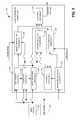
- FIG. 2is a functional block diagram of a model generator component that is employed in connection with generating a relatively accurate virtual three-dimensional model of a head/face of a user.
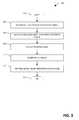
- FIG. 3is a flow diagram that illustrates an exemplary methodology for constructing a virtual three-dimensional mesh of a head/face of a user.
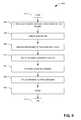
- FIG. 4is a flow diagram that illustrates an exemplary methodology for generating a texture map that is representative of facial texture of a user.
- FIG. 5is a flow diagram illustrating an exemplary methodology for constructing a relatively accurate virtual three-dimensional model of a head/face of a user.
- FIG. 6is an exemplary computing system.
- the terms “component” and “system”are intended to encompass computer-readable data storage that is configured with computer-executable instructions that cause certain functionality to be performed when executed by a processor.
- the computer-executable instructionsmay include a routine, a function, or the like. It is also to be understood that a component or system may be localized on a single device or distributed across several devices.
- the system 100comprises a sensor unit 102 , which includes a camera 104 that captures color (RGB) images and a depth sensor 106 that captures depth images.
- resolution of images captured by the camera 104can be relatively low; such as, for example, less than or equal to 1280 pixels by 960 pixels.
- the resolution of images captured by the camera 104can be 640 pixels by 480 pixels.
- resolution of depth images generated by the depth sensor 106can be relatively low; such as, for example, less than or equal to 1280 pixels by 960 pixels.
- resolution of depth images generated by the depth sensor 106can be 640 pixels by 480 pixels.
- the camera 104 and the depth sensor 106are housed in the sensor unit 102 . It is to be understood, however, that the camera 104 and the depth sensor 106 may be included in separate housings.
- the sensor unit 102may be included in a periphery device that can be coupled to a computing device, such as a sensor that is coupled to a gaming console.
- the sensor unit 102may be included in a computing device, such as a personal computing device, a laptop computing device, a mobile telephone, a tablet computing device, or the like.
- the camera 104may be a web cam.
- the depth sensor 106may utilize any suitable technology in connection with generating depth images. For instance, the depth sensor 106 may utilize an infrared-based depth sensing system, a time of flight depth sensing system, or other suitable depth sensing technology.
- the camera 104 and the depth the sensor 106are aligned to capture RGB images and depth images, respectively, of a head/face of a user 108 .
- the resolution corresponding to the head/face of the user 108 in images captured by the camera 104can be as low as 50 pixels by 50 pixels.
- resolution of the head/face of the user 108 in images captured by the depth sensor 106can be as low as 100 ⁇ 100 pixels.
- the sensor unit 102may be a commodity sensor unit, such that the camera 104 and the depth sensor 106 can be relatively inexpensive, portable, and adaptable to different environments of the user 108 .
- the system 100comprises a receiver component 112 that receives a plurality of RGB images/frames captured by the camera 104 over a range of time.
- Each RGB image/frame in the plurality of RGB images/framescomprises an image of the head/face of the user 108 .
- the receiver component 110also receives a plurality of depth images/frames captured by the depth sensor 106 over the range of time. Similar to the RGB images/frames, each depth image/frame in the plurality of depth images/frames comprises a depth map corresponding to the head/face of the user 108 .
- the camera 104 and the depth sensor 106may be in communication with a common clock, such that the depth camera 104 and the depth sensor 106 are synchronized in time with respect to one another.
- each RGB image/frame generated by the camera 104is aligned in time with a respective depth image/frame generated by the depth sensor 106 .
- the receiver component 110can be configured to synchronize, in time, RGB frames output by the camera 104 with depth frames output by the depth sensor 106 .
- a model generator component 112is in communication with the receiver component 110 and receives the RGB images captured by the camera 104 and the depth images captured by the depth sensor 106 synchronized. As will be described in greater detail below, the model generator component 112 is configured to generate a relatively accurate virtual three-dimensional model of the head/face of the user 108 based at least in part upon the RGB frames output by the camera 104 and the depth frames output by the depth sensor 106 .
- the system 100comprises a data store 114 that can retain a virtual three-dimensional model 116 of the head/face of the user 108 generated by the model generator component 112 .
- the three-dimensional model 116may be utilized in a variety of settings where it is desirable to virtualize the head/face of the user 108 .
- the three-dimensional model 116can be employed to represent the user 108 in an online environment, such as an online gaming environment. That is, the three-dimensional model 116 can be employed as an avatar for the user 108 . Additionally, the three-dimensional model 116 can be animatable. For example, the three-dimensional model 116 can be employed to map to user expressions, which uses features identified in RGB frames as a guideline. In another example, the three-dimensional model 116 can be animated using pre-defined expressions. In such an exemplary embodiment, the knowledge of feature location in the three-dimensional model 116 can be employed when animating the three-dimensional model.
- the model generator component 112can generate the three-dimensional model 116 based upon RGB frames output by the camera 104 and depth frames output by the depth sensor 106 when the head/face of the user 108 is in a variety of different possible positions relative to the sensor unit 102 .
- the user 108can initially orient her head relative to the sensor unit 102 at an offset of approximately 20° to the left (from the perspective of the user).
- the camera 104 and the depth sensor 106can capture a plurality of RGB images and a plurality of depth images (approximately 40), respectively, of the head/face of the user 108 .
- the user 108can look directly at the sensor unit 102 .
- approximately 40 RGB images and 40 depth imagescan be captured by the camera 104 and the depth sensor 106 , respectively.
- the usercan orient her head at an offset of approximately 20° to the right relative to the sensor unit 102 (from the perspective of the user), and again approximately 40 RGB images and 40 depth images can be captured by the camera 104 and depth sensor, respectively.
- the receiver component 110can receive such images corresponding to the different orientations of the head/face of the user 108 relative to the sensor unit 102 , and the model generator component 112 can construct the three-dimensional model 116 of the head/face of the user 108 based upon such RGB images and depth images.
- the user 108can be instructed to initially orient her head/face at an approximately 20° angle to the left relative to the sensor unit 102 , and then slowly, and in a continuous manner, turned her face towards the sensor unit 102 and continue until her face is oriented at an offset of 20° to the right relative to the sensor unit 102 . That is, the user 108 rotates her head/face from left to right relatively slowly in front of the sensor unit 102 , such that both the camera 104 and the depth sensor 106 can capture approximately 100 RGB images and depth images, respectively.
- the receiver component 110can receive such frames and the model generator component 112 can construct the three-dimensional model 116 of the face/head of the user 108 based upon these RGB images and depth images.
- the user 108can look directly at the sensor unit 102 , and RGB images and depth images can be captured based solely upon such images. It is to be understood that capturing RGB images and depth images using a single position of the head/face of the user 108 relative to the sensor unit 102 may result in a decrease in accuracy in the resultant three-dimensional model 116 of the head/face of the user 108 .
- the model generator component 112can perform a variety of actions on RGB images and depth images generated by the sensor unit 102 in connection with generating the three-dimensional model 116 of the head/face of the user 108 .
- the model generator component 112can be configured to align depth images that are to be used in connection with generating the three-dimensional model 116 of the head/face of the user 108 .
- the RGB images generated by the camera 104can be analyzed for features of the face/head of the user 108 therein.
- These featurescan include, for example, centers of the eyes of the user 108 , center of the nose of the user 108 , left and right alars of the nose of the user 108 , amongst other features.
- feature locationscan be mapped from a RGB image to a respective depth image, and feature locations in depth images can be utilized to align depth images with respect to one another. This can result in the generation of a three-dimensional point cloud, which can be employed by the model generator component 112 to generate the three-dimensional model 116 of the head/face of the user 108 .
- the three-dimensional point cloudis in turn employed to morph an existing three-dimensional mesh to construct a mesh that relatively accurately reflects the shape of the head/face in three dimensions.
- the model generator component 112can texturize the three-dimensional mesh of the head/face of the user 108 based at least in part upon the RGB images and mapping of identified texture in the RGB images to the three-dimensional mesh of the head/face of the user 108 .
- texture in RGB images in the three setscan be blended and mapped to the three-dimensional mesh such that features identified in the RGB images are appropriately aligned with the three-dimensional wire mesh, and appropriate color is applied to the three-dimensional wire mesh.
- the texture qualitycan be improved via automatic exposure adjustment and noise reduction prior to the three-dimensional mesh of the head/face of the user 108 being texturized. Further, skin color of the user 108 can be estimated based upon RGB images, and face texture can be synthesized for portions of the head/face not captured in RGB images to provide a consistent look to the resultant three-dimensional model 116 retained in the data store 114 .
- the three-dimensional model 116 of the head/face of the user 108can be employed in any setting where it may be desirable to virtually represent the user 108 .
- Such scenariosinclude online gaming environments, off-line gaming environments, as an avatar for communications, such as in an instant messaging application, augmented reality settings, virtualized exercise or physical therapy programs, or the like.
- the model generator component 112receives RGB frames 202 from the camera 104 as well as depth frames 204 from the depth sensor 106 . Each RGB frame in the RGB frames 202 can be synchronized in time with a respective depth frame from the depth frames 204 .
- the model generator component 112includes a face tracker component 206 that receives the RGB frames 202 and, optionally, the depth frames 204 .
- the face tracker component 206identifies certain features in each RGB frame, wherein such features include, but are not limited to, centers of the eyes of the user 108 , center of the nose of the user 108 , left and right nasal alars of the user 108 , etc. Based upon the identification of such features, the face tracker component 206 , for each RGB frame, can estimate a pose of the user 108 (e.g., a position of the head/face of the user 108 relative to the sensor unit 102 ). The face tracker component 206 can optionally use depth frames to improve feature recognition accuracy. The output of the face tracker component 206 can be locations of identified features in the RGB frames and an estimate of a pose of the user 108 in each RGB frame.
- the model generator component 112also comprises a calibrator component 207 that receives locations of features in the RGB frames 202 output by the face tracker component 206 , as well as the RGB frames 202 and the depth frames 204 , and identifies positions of features in a three-dimensional coordinate system via mapping features identified in a RGB frame to a corresponding depth frame (or mapping the corresponding depth frame to the RGB frame).
- the sensor unit 102may natively support mapping depth frames to RGB frames, but may not support mapping points in an RGB frame to a depth frame.
- the calibrator component 207for each depth frame, can generate triangles based on depth coordinates of the respective depth frame.
- the calibrator component 207can map each triangle from the depth frame to its corresponding RGB frame.
- the calibrator component 207can then, for each identified feature in the RGB frame, identify the triangle from the depth frame to which a respective feature belongs. Subsequently, the calibrator component 207 can compute a distance to each triangle vertex from the identified feature point. Based upon such distances, a three-dimensional coordinate point can be computed by the calibrator component 207 for each feature via interpolation of distances from the triangle vertices.
- the calibrator component 207when identifying a triangle to which an identified feature belongs, can first locate a vertex that is most proximate to the identified feature. It can be inferred that the identified feature belongs to a triangle that has such vertex. Accordingly, the output of the calibrator component 207 can be coordinates in a three-dimensional coordinate system of each identified feature in each RGB frame.
- the model generator component 112additionally comprises a depth smoother component 208 that is employed to accumulate depth data and generate a three-dimensional point cloud.
- the depth smoother component 208receives the depth frames 204 as well as the features identified in each RGB frame by the face tracker component 206 and their respective positions in three-dimensional space.
- the depth smoother component 208accumulates depth data based at least in part upon the coordinates in three-dimensional space computed by the calibrator component 207 . More specifically, in an exemplary embodiment, the depth smoother component 208 can accumulate depth data by aligning the depth frames 204 . To perform frame alignment, the depth smoother component 208 can utilize an interactive closest point (ICP) algorithm. Normal information for each point in each depth frame is employed by the depth smoother component 208 to obtain relatively accurate depth data. The depth smoother component 208 can employ two-directional mapping when creating correspondence between two depth frames to ensure that border points are dropped.
- ICPinteractive closest point
- the depth smoother component 208can utilize the facial feature coordinates output by the calibrator component 207 to calculate a rough rigid transformation between two depth frames.
- Such rigid transformationcan be used as an initial value for the aforementioned ICP algorithm.
- the feature points utilized for the rough rigid transformationcan be eye centers, nose centers, and two nasal alar.
- the depth frames 204include a first depth frame, and a cubic coordinate system can be established based on the position of the head of the user 108 in the first depth frame.
- the first framecan be aligned with a second frame (captured temporally immediately after the first frame) to create an accumulation result.
- Each subsequent framecan be aligned with a current accumulation result first, and thereafter the converted points can be mapped to such cubic accumulation coordinate system and counted to nearby pixels with distance weight.
- the depth smoother component 208can utilize another ICP algorithm to map the accumulated result with the initial depth frame, which can reduce errors being propagated during the accumulation process.
- three separate sets of framescan be captured for three different positions of the head of the user 108 .
- Frames from the three separate viewscan be accumulated by the depth smoother component 208 separately.
- the three accumulated resultscan be aligned and then combined through utilization of alpha blending.
- the alpha blend bandcan be on the outside of the eyes and mouth of the user 108 , which ensures that facial features are all from the frontal view, which has highest accuracy.
- the accumulated depth datacan be referred to as a three-dimensional point cloud.
- the model generator component 112additionally comprises a mesh constructor component 210 which receives the three-dimensional point cloud output by the depth smoother component 208 as well as three-dimensional feature locations output by the calibrator component 207 for each RGB frame. Additionally, the mesh constructor component 210 receives a model base which can be a collection of three-dimensional face shape samples. The mesh constructor component 210 , utilizing such input, generates a relatively accurate three-dimensional wire mesh of the head/face of the user 108 .
- the mesh constructor component 210can construct a principal component analysis (PCA) model of the head/face of the user 108 , wherein such model refers to a target model being expressed as a linear combination of orthogonal shape vectors plus a mean model.
- PCAprincipal component analysis
- Such shape vectors and mean modelcan be calculated offline from a collection of three-dimensional face shape samples. Specifically, predefined three-dimensional face shape samples which have same geometric topology can be employed to compute a PCA basis and a mean model.
- the mesh constructor component 210can align the PCA mean model with the accumulated depth data output by the depth smoother component 208 .
- the mesh constructor component 210can undertake a rough rigid transformation between the PCA mean model and the accumulation depth data, which can be used to convert the PCA basis to depth space. Utilizing the feature points received from the calibrator component 207 , the mesh constructor component 210 can perform a transform matrix calculation.
- the PCA mean modelcan already have such feature points calculated therein.
- such meshcan be a three-dimensional triangulated mesh.
- S′may not have information from the ear of the user 108 to the back of the head of the user 108 , and data on the forehead may have interference due to existence of hair of the user 108 , a mask can be manually generated to select vertices to perform reconstruction.
- the mask rangepresented below, includes major facial features, as well as cheeks of most humans.
- the second portion of Eq. (4)is the regularization constraint.
- ⁇ iis the eigenvalue, which is used to ensure that other vectors (deemed to be less important) have a relatively smaller ⁇ i compared with more important vectors to avoid creation of a strange shape.
- a variety of techniquescan be employed by the mesh constructor component 210 to identify correspondence points in S′ for each v j , where j ⁇ (1, 2, . . . , n).
- the mesh constructor component 210can cluster vertices on the constraint mask into several regions, wherein the regions are based upon identified facial feature definitions (mouth, eyes, nose, cheeks, etc.). Again, different techniques can be used to find correspondence points on the input three-dimensional point cloud for the different regions.
- a nearest point on a plane of the accumulated point cloudcan be located, and a normal value for the source/destination point can be compared with such point on the plane to reject point pairs whose angles between source/destination normal are larger than a pre-defined threshold. This can be particularly useful for finding correspondence points with respect to the chin/forehead.
- the mesh constructor component 210can establish a line from a vertex point on the PCA model in the normal direction, and correspondence can be identified with respect to the three-dimensional point cloud. Subsequently, an angle between the vertex normal and normal of correspondence point on point cloud can be analyzed: if the angle is larger than a pre-defined threshold, the vertex can be ignored; otherwise, the vertex point can be used to establish a point of correspondence. This approach may be particularly useful for finding correspondence points with respect to the nose, lips, and cheeks.
- the mesh constructor component 210can select a vertex point on the PCA model and find a nearest point in the three-dimensional point cloud. Such approach can be particularly useful for finding correspondence points with respect to portions of the head/face other than those mentioned above.
- nose and eye centercan be provided higher weight since they are relatively accurate and typically rigid for most users regardless of user expression, while a mouth feature would be provided with lower weight since positions can change as user expression changes, even if the identification of the feature is accurate.
- cheek contourmay be provided a still lower weight (or even ignored) since it may be difficult to obtain cheek contour with sufficient accuracy.
- the mesh constructor component 210can execute PCA deformation multiple times to obtain suitable results.
- an iterative approachcan be employed in addition to an ICP algorithm to estimate the rigid transformation between accumulated depth data and last step PCA result.
- the PCA basiscan be converted with such updated information, and the PCA model can be analyzed again using such updated basis.
- This iterative approachmay improve the PCA results accuracy, and can cease when E( ⁇ ) is smaller than a pre-defined threshold.
- the mesh constructor component 210can additionally employ Laplacian deformation on the PCA generated model to generate a still more accurate three-dimensional mesh.
- the linear combination approach described above with respect to the PCA modelcan accurately describe most overall shapes, such as cheek shape, fat level in the face, and the like, as well as middle scale features, such as cheek bone height and mouth shape.
- middle scale featuressuch as cheek bone height and mouth shape.
- a linear modelmay fail to accurately represent such features.
- the mesh constructor component 210can employ Laplacian deformation on the PCA generated model to fit the target to the input accumulation depth data.
- the mesh constructor component 210can use vertices on the frontal faces as three-dimensional constraints for deformation, and weighted two-dimensional feature points mapping can be used as a two-dimensional constraint for deformation. Such constraints can work together to obtain final deformation results. Meanwhile, facial feature point information can be used to segment the head into several regions, and regional weight can be given to three-dimensional vertices as a position constraint. The region which is more rigid for people and has less accumulation error would be provided with a higher weight, while a region which is more non-rigid and has more accumulation error would be provided with lower weight, such as the mouth.
- the output of the mesh constructor component 210is a relatively accurate three-dimensional triangular mesh of the head/face of the user 108 .
- textureis to be applied to such three-dimensional mesh.
- textureis based on the RGB frames 202 captured by the camera 104 , wherein synthesis can be employed to determine texture for portions of the head/face of the user 108 not captured in the images/frames 202 .
- the input color framesare aligned correctly with the three-dimensional mesh generated by the mesh constructor component 210 .
- the three-dimensional meshis aligned with the first depth frame, and the rigid transformation is generated from each frame to the first frame, which means that the head model can be mapped to the correct pose for each frame that has been captured and utilized for mapping color to the mesh.
- the model generator component 112can comprise an image preprocessor component 212 , which can employ a variety of preprocessing techniques to improve collective quality of the RGB frames 202 .
- the camera 104may be a commodity camera that outputs relatively low resolution images.
- quality of images captured by the camera 104can be affected by lighting conditions and may be, in general, relatively noisy. Further, in some cases, insufficient light may be on the head/face of the user 108 , and noise pertaining to color of the skin and/or other features of the user may exist in the RGB frames 202 .
- the image preprocessor component 212can utilize adaptive exposure adjustment techniques as well as noise reduction to improve image quality.
- the image preprocessor component 212can analyze an input color image and estimate current exposure distribution. Subsequently, a nonlinear transform can be applied by the image preprocessor component 212 to cause the major color pixels inside an RGB frame to be converted to an appropriate exposure level. In connection with noise reduction, the image preprocessor component 212 can analyze the edge of an input RGB frame in luminance space and color space separately. This can allow for the computation of a noise level, and the image preprocessor component 212 can employ region-based smoothing in the two spaces separately.
- the model generator component 112further comprises a texturizer component 214 that receives the processed RGB frames from the image preprocessor component 212 .
- the texturizer component 214can estimate color of the skin of the user 108 through texture synthesis. With more particularity, the texturizer component 214 can select portions of RGB frames 202 that are separate from the features identified by the face tracker component 206 (features on the front of the face of the user 108 other than the eye, eyebrow, mouth). Pixels in portions of the face other than that which correspond to the identified features can then be clustered by the texturizer component 214 through a K-means approach into five separate categories, and the average color can be calculated for such categories. Utilization of clustering by the texturizer component 214 can facilitate removal of interference caused by excess light, as well as specular and shadow portions of images.
- the texturizer component 214can additionally receive the three-dimensional mesh output by the mesh constructor component 210 to apply texture to such mesh.
- the texturizer component 214can cause a cylinder coordinate system to be set up around the three-dimensional mesh.
- a center point of the headcan be the origin of the cylinder coordinate system, wherein the underside of the cylinder is parallel to the Y-plane of the three-dimensional mesh.
- the texturizer component 214can map each triangle of the three-dimensional mesh onto the cylinder flank. Since the mapping from the three-dimensional mesh triangles to original input color frames already exists, color image frames can be converted to the flank texture.
- the texturizer component 214can employ two masks during the texturizing process. One mask can be used to set a texture mapping boundary, with the assumption that vertices exceeding that boundary are not visible on current views. The other mask can be for the three view embodiment where textures are blended, and can define the frontal view visible boundary. Both of such masks can be predefined in the three-dimensional wire mesh topology.
- a variable that can be considered by the texturizer component 214 when applying texture to the three-dimensional meshis forehead position. As some users have hair on the forehead, which causes noise to appear in a finalized texture, the variable forehead position can be exposed such that the user could adjust the forehead position to remove the hair interference. Further, the texturizer component 214 can receive input from the user 108 to refine color if desired. Using the known mappings, the texturizer component 214 can map appropriate colors to positions in the three-dimensional mesh generated by the mesh constructor component 210 . Additionally, the texturizer component 214 can utilize synthesis techniques for parts of the head/face of the user 108 not captured in RGB images. This can be accomplished through utilization of skin color estimation to fill in parts which do not have texture information, then performance of Poisson filtering to smooth the boundary portion of the texture.
- the model generator component 112may optionally comprise a texture smoother component 216 that can decrease the realism in the resultant three-dimensional model. This may be desirable, as defining texture for hair is difficult and oftentimes hair applied to the three-dimensional model will be cartoonish in appearance. Thus, to provide a consistent look and feel to the resultant three-dimensional model, the texture smoother component 216 can selectively smooth the texture over the head/face of the user 108 resulting in an aesthetically consistent three-dimensional model.
- the model generator component 112may also comprise a hair generator component 217 , which generates hair for application to the three-dimensional mesh generated by the mesh constructor component 210 .
- the hair generator component 217receives processed images from the image preprocessor component 212 , as well as texture information from the texturizer component 214 , and can select a model of hair to be applied to the three-dimensional mesh.
- the hair generator component 217can select a hairstyle from amongst a plurality of templates, wherein the hairstyle can be selected based upon general shape of the head of the user 108 and determined color of the hair of the user (as well as size of the hair of the user 108 ).
- a renderer component 218may optionally be included in the model generator component 112 , wherein the renderer component 218 receives the three-dimensional mesh from the mesh constructor component 210 , smooth texture from the texture smoother component 216 to be applied to the three-dimensional mesh, and hair selected by the hair generator component 214 , and outputs a rendering of the three-dimensional model of the head/face of the user 108 .
- the renderer component 218can cause the three-dimensional model to be stored in a data repository in a format ready for rendering.
- FIGS. 3-5various exemplary methodologies are illustrated and described. While the methodologies are described as being a series of acts that are performed in a sequence, it is to be understood that the methodologies are not limited by the order of the sequence. For instance, some acts may occur in a different order than what is described herein. In addition, an act may occur concurrently with another act. Furthermore, in some instances, not all acts may be required to implement a methodology described herein.
- the acts described hereinmay be computer-executable instructions that can be implemented by one or more processors and/or stored on a computer-readable medium or media.
- the computer-executable instructionsmay include a routine, a sub-routine, programs, a thread of execution, and/or the like.
- results of acts of the methodologiesmay be stored in a computer-readable medium, displayed on a display device, and/or the like.
- the computer-readable mediummay be any suitable computer-readable storage device, such as memory, hard drive, CD, DVD, flash drive, or the like.
- the term “computer-readable medium”is not intended to encompass a propagating signal.
- FIG. 3a flow diagram that illustrates an exemplary methodology for generating the three-dimensional mesh of the head/face of the user 108 is illustrated.
- the methodology 300starts at 302 , and at 304 depth data is accumulated.
- accumulationincludes frame alignment between depth frames, wherein an ICP algorithm is employed in connection with frame alignment.
- facial feature points identified by a face tracking algorithmcan be used to calculate a rough rigid transformation between depth frames, wherein such rigid transformation can be used as an initial value for the ICP algorithm.
- accumulated depth framesare aligned with the first frame.
- frames on three viewscan be accumulated separately at 304 and three accumulated results can be aligned and combined with alpha blending.
- a PCA model basisis adjusted.
- a rough rigid transformation between pre-computed PCA mean model and the accumulated depth datacan be calculated and utilized to convert the PCA basis to depth space.
- a PCA model of the head/face of the user 108can be generated.
- PCA model constructionhas been described above.
- a Laplacian deformationcan be undertaken on the generated PCA model.
- Laplacian deformationcan be utilized to more accurately represent portions of the head/face of the user 108 .
- the methodology 300completes at 314 .
- FIG. 4an exemplary methodology 400 that facilitates applying textures to a three-dimensional mesh of a face/head of the user is illustrated.
- the methodology 400starts at 402 , and at 404 RGB images are subjected to an automatic exposure correction process.
- the RGB imagesare subjected to de-noising, and at 408 the process images are analyzed for a skin color calculation.
- this skin color calculationcan be based upon portions of the face of the user 108 that do not correspond to certain identified features.
- a cylinder coordinate systemis set up around the three-dimensional mesh of the head for the purposes of cylinder texture generation.
- the optional step of color adjustmentmay be undertaken with the aid of input from a user, and at 414 , synthesis can be undertaken to uniformly apply texture across portions of the head/face of the user 108 not captured in the RGB frames.
- filteringcan optionally be undertaken to provide the resultant three-dimensional model of the head/face of the user with a consistent appearance in comparison to, for example, hair of the user.
- the methodology 400completed 418 .
- the methodology 500starts at 502 , and a 504 a plurality of RGB images of a head of a user are received from a camera, wherein the plurality of RGB images are captured by the camera over some range of time.
- a plurality of depth framesare received from a depth sensor, wherein the depth frames are indicative of distances of respective portions of the head of the user from the depths sensor.
- the depth framesare generated by the depths sensors over the range of time.
- the plurality of RGB images and the plurality of depth framescan be synchronized in time.
- At 508at least one feature of the head of the user in the plurality of RGB images is identified, wherein the at least one feature is one of a center of an eye of the user, a center of a nose of the user, a first nasal alar are of the user, or a second nasal alar of the user.
- a three-dimensional mesh of the head of the useris generated based at least in part upon the plurality of depth maps and the identifying of the at least one feature of the head of the user and the RGB images.
- the three-dimensional meshis texturized based at least in part upon the plurality of RGB images. The methodology 500 completes at 514 .
- computing device 600may be used in a system that supports generating a virtual three-dimensional model of a head/face of a user.
- computing device 600includes at least one processor 602 that executes instructions that are stored in a memory 604 .
- the memory 604may be or include RAM, ROM, EEPROM, Flash memory, or other suitable memory.
- the instructionsmay be, for instance, instructions for implementing functionality described as being carried out by one or more components discussed above or instructions for implementing one or more of the methods described above.
- the processor 602may access the memory 604 by way of a system bus 606 .
- the memory 604may also store feature points, a transformation matrix, RGB frames, depth frames, etc.
- the computing device 600additionally includes a data store 608 that is accessible by the processor 602 by way of the system bus 606 .
- the data storemay be or include any suitable computer-readable storage, including a hard disk, memory, etc.
- the data store 608may include executable instructions, RGB frames, depth frames, identified feature points, etc.
- the computing device 600also includes an input interface 610 that allows external devices to communicate with the computing device 600 .
- the input interface 610may be used to receive instructions from an external computer device, from a user, etc.
- the computing device 600also includes an output interface 612 that interfaces the computing device 600 with one or more external devices.
- the computing device 600may display text, images, etc. by way of the output interface 612 .
- the computing device 600may be a distributed system. Thus, for instance, several devices may be in communication by way of a network connection and may collectively perform tasks described as being performed by the computing device 600 .
Landscapes
- Physics & Mathematics (AREA)
- Engineering & Computer Science (AREA)
- Geometry (AREA)
- Computer Graphics (AREA)
- Software Systems (AREA)
- General Physics & Mathematics (AREA)
- Theoretical Computer Science (AREA)
- Processing Or Creating Images (AREA)
Abstract
Description
S=μ+Σi=1kαiØi, (1)
where μ represents the average shape from training samples (the three-dimensional face shape samples mentioned above), Øiare orthogonal shape vectors, αiare scalar values indicating the contributions of the shape deformation from the ith shape vector, and k is the total number of shape vectors. Shape vectors can be sorted in order by importance as determined by their corresponding eigenvalues σi.
E(α)=minα(Σ(∥μ+Σi=1kαiØi−S′∥2)), (2)
for which S′ is the depth accumulation data (the three-dimensional point cloud) that the target PCA model needs to fit. Specifically, since S′ may not have information from the ear of the
E(α)=minα(Σ(∥SF−S′∥2)+ρΣi=1kαi/σi) (3)
E(α)=minα(Σ(∥SF−S′∥2)+ρΣi=1kαi/σi+βi(∥W(SF)−F′∥2)), (4)
where SFis a set of vertices selected from a generated model which represents the facial feature positions of the
E(α,R)=minα,R(Σ(∥R(SF)−S′∥2)+ρΣi=1kαi/σi+Σi=1pβi(∥W(R(SF))−F′∥2)), (5)
where R( ) is the rigid transformation matrix.
Claims (20)
Priority Applications (4)
| Application Number | Priority Date | Filing Date | Title |
|---|---|---|---|
| US13/711,639US9552668B2 (en) | 2012-12-12 | 2012-12-12 | Generation of a three-dimensional representation of a user |
| EP13818877.6AEP2932475A1 (en) | 2012-12-12 | 2013-12-12 | Generation of a three-dimensional representation of a user |
| PCT/US2013/074807WO2014093706A1 (en) | 2012-12-12 | 2013-12-12 | Generation of a three-dimensional representation of a user |
| CN201380065265.3ACN105144247B (en) | 2012-12-12 | 2013-12-12 | Generation of a 3D representation of the user |
Applications Claiming Priority (1)
| Application Number | Priority Date | Filing Date | Title |
|---|---|---|---|
| US13/711,639US9552668B2 (en) | 2012-12-12 | 2012-12-12 | Generation of a three-dimensional representation of a user |
Publications (2)
| Publication Number | Publication Date |
|---|---|
| US20140160123A1 US20140160123A1 (en) | 2014-06-12 |
| US9552668B2true US9552668B2 (en) | 2017-01-24 |
Family
ID=49943512
Family Applications (1)
| Application Number | Title | Priority Date | Filing Date |
|---|---|---|---|
| US13/711,639ActiveUS9552668B2 (en) | 2012-12-12 | 2012-12-12 | Generation of a three-dimensional representation of a user |
Country Status (4)
| Country | Link |
|---|---|
| US (1) | US9552668B2 (en) |
| EP (1) | EP2932475A1 (en) |
| CN (1) | CN105144247B (en) |
| WO (1) | WO2014093706A1 (en) |
Cited By (8)
| Publication number | Priority date | Publication date | Assignee | Title |
|---|---|---|---|---|
| US10510174B2 (en) | 2017-05-08 | 2019-12-17 | Microsoft Technology Licensing, Llc | Creating a mixed-reality video based upon tracked skeletal features |
| US10621791B2 (en) | 2017-11-24 | 2020-04-14 | Industrial Technology Research Institute | Three-dimensional modeling method and system thereof |
| US11232647B2 (en)* | 2017-08-08 | 2022-01-25 | Reald Spark, Llc | Adjusting a digital representation of a head region |
| US11317081B2 (en) | 2016-01-05 | 2022-04-26 | Reald Spark, Llc | Gaze correction of multi-view images |
| US11373322B2 (en)* | 2019-12-26 | 2022-06-28 | Stmicroelectronics, Inc. | Depth sensing with a ranging sensor and an image sensor |
| US11657557B2 (en) | 2018-02-26 | 2023-05-23 | Reald Spark, Llc | Method and system for generating data to provide an animated visual representation |
| US11908241B2 (en) | 2015-03-20 | 2024-02-20 | Skolkovo Institute Of Science And Technology | Method for correction of the eyes image using machine learning and method for machine learning |
| US11941753B2 (en) | 2018-08-27 | 2024-03-26 | Alibaba Group Holding Limited | Face pose estimation/three-dimensional face reconstruction method, apparatus, and electronic device |
Families Citing this family (54)
| Publication number | Priority date | Publication date | Assignee | Title |
|---|---|---|---|---|
| US10262462B2 (en) | 2014-04-18 | 2019-04-16 | Magic Leap, Inc. | Systems and methods for augmented and virtual reality |
| US9691006B2 (en)* | 2013-12-20 | 2017-06-27 | Visual Technology Services Limited | Point cloud simplification |
| GB2521452B (en)* | 2013-12-20 | 2015-12-09 | Visual Technology Services Ltd | Point Cloud Simplification |
| US9792406B2 (en) | 2014-02-10 | 2017-10-17 | Neuronetics, Inc. | Head modeling for a therapeutic or diagnostic procedure |
| KR20150113751A (en)* | 2014-03-31 | 2015-10-08 | (주)트라이큐빅스 | Method and apparatus for acquiring three-dimensional face model using portable camera |
| US9767586B2 (en)* | 2014-07-11 | 2017-09-19 | Microsoft Technology Licensing, Llc | Camera system and method for hair segmentation |
| WO2016018392A1 (en)* | 2014-07-31 | 2016-02-04 | Hewlett-Packard Development Company, L.P. | Three dimensional scanning system and framework |
| EP2993901A1 (en)* | 2014-09-03 | 2016-03-09 | Samsung Electronics Co., Ltd. | Method for displaying images and electronic device thereof |
| US9710965B2 (en)* | 2014-09-10 | 2017-07-18 | Disney Enterprises, Inc. | Capturing and stylizing hair for 3D fabrication |
| GB2532003A (en) | 2014-10-31 | 2016-05-11 | Nokia Technologies Oy | Method for alignment of low-quality noisy depth map to the high-resolution colour image |
| US9626564B2 (en)* | 2014-11-17 | 2017-04-18 | Intel Corporation | System for enabling eye contact in electronic images |
| CN105787884A (en)* | 2014-12-18 | 2016-07-20 | 联想(北京)有限公司 | Image processing method and electronic device |
| EP3040941B1 (en)* | 2014-12-29 | 2017-08-02 | Dassault Systèmes | Method for calibrating a depth camera |
| US9715620B2 (en)* | 2015-05-15 | 2017-07-25 | Itseez 3D, Inc. | Method to position a parallelepiped bounded scanning volume around a person |
| US10783716B2 (en)* | 2016-03-02 | 2020-09-22 | Adobe Inc. | Three dimensional facial expression generation |
| KR102529120B1 (en) | 2016-07-15 | 2023-05-08 | 삼성전자주식회사 | Method and device for acquiring image and recordimg medium thereof |
| US10586380B2 (en)* | 2016-07-29 | 2020-03-10 | Activision Publishing, Inc. | Systems and methods for automating the animation of blendshape rigs |
| CN106296789B (en)* | 2016-08-05 | 2019-08-06 | 深圳迪乐普数码科技有限公司 | It is a kind of to be virtually implanted the method and terminal that object shuttles in outdoor scene |
| US20180101984A1 (en)* | 2016-10-06 | 2018-04-12 | Google Inc. | Headset removal in virtual, augmented, and mixed reality using an eye gaze database |
| KR101851303B1 (en) | 2016-10-27 | 2018-04-23 | 주식회사 맥스트 | Apparatus and method for reconstructing 3d space |
| CN108092950B (en)* | 2016-11-23 | 2023-05-23 | 深圳脸网科技有限公司 | AR or MR social method based on position |
| US10055880B2 (en) | 2016-12-06 | 2018-08-21 | Activision Publishing, Inc. | Methods and systems to modify a two dimensional facial image to increase dimensional depth and generate a facial image that appears three dimensional |
| US10210648B2 (en)* | 2017-05-16 | 2019-02-19 | Apple Inc. | Emojicon puppeting |
| US10937182B2 (en)* | 2017-05-31 | 2021-03-02 | Google Llc | Non-rigid alignment for volumetric performance capture |
| CN107330976B (en)* | 2017-06-01 | 2023-05-02 | 北京大学第三医院 | Human head three-dimensional modeling device and use method |
| EP3425446B1 (en)* | 2017-07-06 | 2019-10-30 | Carl Zeiss Vision International GmbH | Method, device and computer program for virtual adapting of a spectacle frame |
| US10643383B2 (en)* | 2017-11-27 | 2020-05-05 | Fotonation Limited | Systems and methods for 3D facial modeling |
| US11508107B2 (en)* | 2018-02-26 | 2022-11-22 | Didimo, Inc. | Additional developments to the automatic rig creation process |
| US11741650B2 (en) | 2018-03-06 | 2023-08-29 | Didimo, Inc. | Advanced electronic messaging utilizing animatable 3D models |
| CN108549873B (en)* | 2018-04-19 | 2019-12-24 | 北京华捷艾米科技有限公司 | Three-dimensional face recognition method and three-dimensional face recognition system |
| US10917735B2 (en)* | 2018-05-11 | 2021-02-09 | Facebook Technologies, Llc | Head-related transfer function personalization using simulation |
| US10653204B2 (en)* | 2018-05-29 | 2020-05-19 | Matmarket, LLC | High performance footbed and method of manufacturing same |
| CN109118569B (en)* | 2018-08-16 | 2023-03-10 | Oppo广东移动通信有限公司 | Rendering method and device based on three-dimensional model |
| CN109064551B (en)* | 2018-08-17 | 2022-03-25 | 联想(北京)有限公司 | Information processing method and device for electronic equipment |
| FR3085217B1 (en)* | 2018-08-23 | 2021-06-25 | Idemia Identity & Security France | METHOD FOR DETERMINING THE POSITIONING AND IDENTIFICATION OF A THREE-DIMENSIONAL VIEW OF THE FACE |
| CN110910487B (en)* | 2018-09-18 | 2023-07-25 | Oppo广东移动通信有限公司 | Construction method, construction device, electronic device and computer readable storage medium |
| CN109151435B (en)* | 2018-09-30 | 2021-06-29 | Oppo广东移动通信有限公司 | A data processing method, terminal, server and computer storage medium |
| CN109272473B (en)* | 2018-10-26 | 2021-01-15 | 维沃移动通信(杭州)有限公司 | Image processing method and mobile terminal |
| US11049310B2 (en)* | 2019-01-18 | 2021-06-29 | Snap Inc. | Photorealistic real-time portrait animation |
| CN109949412B (en)* | 2019-03-26 | 2021-03-02 | 腾讯科技(深圳)有限公司 | Three-dimensional object reconstruction method and device |
| CN112215050A (en)* | 2019-06-24 | 2021-01-12 | 北京眼神智能科技有限公司 | Nonlinear 3DMM face reconstruction and pose normalization method, device, medium and equipment |
| CN110276774B (en)* | 2019-06-26 | 2021-07-23 | Oppo广东移动通信有限公司 | Object drawing method, device, terminal and computer-readable storage medium |
| US10872457B1 (en)* | 2019-07-18 | 2020-12-22 | Sony Corporation | Facial texture map generation using single color image and depth information |
| US11645800B2 (en) | 2019-08-29 | 2023-05-09 | Didimo, Inc. | Advanced systems and methods for automatically generating an animatable object from various types of user input |
| US11182945B2 (en) | 2019-08-29 | 2021-11-23 | Didimo, Inc. | Automatically generating an animatable object from various types of user input |
| CN112584079A (en) | 2019-09-30 | 2021-03-30 | 华为技术有限公司 | Video call face presentation method, video call device and automobile |
| US11682234B2 (en)* | 2020-01-02 | 2023-06-20 | Sony Group Corporation | Texture map generation using multi-viewpoint color images |
| US11423567B2 (en) | 2020-06-17 | 2022-08-23 | Fotonation Limited | Method and system to determine the location and/or orientation of a head |
| WO2022072372A1 (en)* | 2020-09-29 | 2022-04-07 | Didimo, Inc. | Additional developments to the automatic rig creation process |
| CN112284291A (en)* | 2020-10-22 | 2021-01-29 | 华中科技大学鄂州工业技术研究院 | A three-dimensional scanning method and device capable of obtaining physical texture |
| CN112419144B (en)* | 2020-11-25 | 2024-05-24 | 上海商汤智能科技有限公司 | Face image processing method and device, electronic equipment and storage medium |
| US11893826B2 (en)* | 2021-03-26 | 2024-02-06 | L'oreal | Determining position of a personal care device relative to body surface |
| EP4089641A1 (en)* | 2021-05-12 | 2022-11-16 | Reactive Reality AG | Method for generating a 3d avatar, method for generating a perspective 2d image from a 3d avatar and computer program product thereof |
| US20250239035A1 (en)* | 2024-01-19 | 2025-07-24 | Lenovo Enterprise Solutions (Singapore) Pte Ltd. | Selecting initial correspondences used in co-registration of face images |
Citations (6)
| Publication number | Priority date | Publication date | Assignee | Title |
|---|---|---|---|---|
| US20090310828A1 (en) | 2007-10-12 | 2009-12-17 | The University Of Houston System | An automated method for human face modeling and relighting with application to face recognition |
| US7835568B2 (en) | 2003-08-29 | 2010-11-16 | Samsung Electronics Co., Ltd. | Method and apparatus for image-based photorealistic 3D face modeling |
| US20100302138A1 (en) | 2009-05-29 | 2010-12-02 | Microsoft Corporation | Methods and systems for defining or modifying a visual representation |
| US20120293635A1 (en)* | 2011-05-17 | 2012-11-22 | Qualcomm Incorporated | Head pose estimation using rgbd camera |
| US20120299912A1 (en) | 2010-04-01 | 2012-11-29 | Microsoft Corporation | Avatar-based virtual dressing room |
| US8730231B2 (en)* | 2007-11-20 | 2014-05-20 | Image Metrics, Inc. | Systems and methods for creating personalized media content having multiple content layers |
Family Cites Families (1)
| Publication number | Priority date | Publication date | Assignee | Title |
|---|---|---|---|---|
| EP3190546A3 (en)* | 2003-06-12 | 2017-10-04 | Honda Motor Co., Ltd. | Target orientation estimation using depth sensing |
- 2012
- 2012-12-12USUS13/711,639patent/US9552668B2/enactiveActive
- 2013
- 2013-12-12WOPCT/US2013/074807patent/WO2014093706A1/enactiveApplication Filing
- 2013-12-12EPEP13818877.6Apatent/EP2932475A1/ennot_activeCeased
- 2013-12-12CNCN201380065265.3Apatent/CN105144247B/enactiveActive
Patent Citations (6)
| Publication number | Priority date | Publication date | Assignee | Title |
|---|---|---|---|---|
| US7835568B2 (en) | 2003-08-29 | 2010-11-16 | Samsung Electronics Co., Ltd. | Method and apparatus for image-based photorealistic 3D face modeling |
| US20090310828A1 (en) | 2007-10-12 | 2009-12-17 | The University Of Houston System | An automated method for human face modeling and relighting with application to face recognition |
| US8730231B2 (en)* | 2007-11-20 | 2014-05-20 | Image Metrics, Inc. | Systems and methods for creating personalized media content having multiple content layers |
| US20100302138A1 (en) | 2009-05-29 | 2010-12-02 | Microsoft Corporation | Methods and systems for defining or modifying a visual representation |
| US20120299912A1 (en) | 2010-04-01 | 2012-11-29 | Microsoft Corporation | Avatar-based virtual dressing room |
| US20120293635A1 (en)* | 2011-05-17 | 2012-11-22 | Qualcomm Incorporated | Head pose estimation using rgbd camera |
Non-Patent Citations (26)
| Title |
|---|
| "International Preliminary Report on Patentability for PCT Patent Application No. PCT/US2013/074807", Mailing Date: May 12, 2015, 13 pages. |
| "International Search Report & Written Opinion for PCT Patent Application No. PCT/US2013/074807", Mailed Date: May 22, 2014, Filed Date: Dec. 12, 2013, 16 Pages. |
| "Response to the Written Opinion of the International Search Report (ISR) for PCT Patent Application No. PCT/US2013/074807", Filed Date: Sep. 18, 2014, 7 pages. |
| "Written Opinion for PCT Patent Application No. PCT/US2013/074807", Mailed Date: Mar. 5, 2015, 8 pages. |
| Aitpayev, et al., "Creation of 3D Human Avatar using Kinect", Retrieved at <<http://www.asian-transactions.org/Journals/Vol01Issue06/ATFECM/ATFECM-30120064.pdf>>, Asian Transactions on Fundamentals of Electronics, Communication & Multimedia (ATFECM), vol. 01, Issue 05, Jan. 2012, pp. 1-3. |
| Aitpayev, et al., "Creation of 3D Human Avatar using Kinect", Retrieved at >, Asian Transactions on Fundamentals of Electronics, Communication & Multimedia (ATFECM), vol. 01, Issue 05, Jan. 2012, pp. 1-3. |
| Allen, Brett, Brian Curless, and Zoran Popovic. "The space of human body shapes: reconstruction and parameterization from range scans." ACM Transactions on Graphics (TOG). vol. 22. No. 3. ACM, 2003.* |
| Allen, Brett, Brian Curless, and Zoran Popović. "The space of human body shapes: reconstruction and parameterization from range scans." ACM Transactions on Graphics (TOG). vol. 22. No. 3. ACM, 2003.* |
| Almeida, et al., "On-Line 3D Body Modelling for Augmented Reality", Retrieved at <<http://mail.isr.uc.pt/˜mrl/admin/upload/GRAPP-2012-88-CR.pdf>>, GRAPP 2012-International Conference on Computer Graphics Theory and Applications, Feb. 24, 2012, pp. 1-8. |
| Almeida, et al., "On-Line 3D Body Modelling for Augmented Reality", Retrieved at >, GRAPP 2012-International Conference on Computer Graphics Theory and Applications, Feb. 24, 2012, pp. 1-8. |
| Baltrusaitis, et al., "3D Constrained Local Model for Rigid and Non-Rigid Facial Tracking", In IEEE Conference on Computer Vision and Pattern Recognition, Jun. 16, 2012, pp. 2610-2617. |
| Berger, Kai et al. "Markerless Motion Capture using multiple Color-Depth Sensors", Vision, Modeling, and Visualization, The Eurographics Association, 2011.* |
| Blanz, Volker, Kristina Scherbaum, and H-P. Seidel. "Fitting a morphable model to 3D scans of faces." Computer Vision, 2007. ICCV 2007. IEEE 11th International Conference on. IEEE, 2007.* |
| Bowyer, et al., "A Survey of Approaches and Challenges in 3D and Multi-Modal 3D+2D Face Recognition", In Journal of Computer Vision and Image Understanding, vol. 101, Issue 1, Jan. 1, 2006, pp. 1-15. |
| Chin, Seongah, and Kyoung-Yun Kim. "Expressive 3D face for mobile devices." Consumer Electronics, IEEE Transactions on 54.3 (2008): 1294-1302.* |
| Cho, et al., "A 3D avatar modeling of real world objects using a depth camera", Retrieved at <<http://ieeexplore.ieee.org/stamp/stamp.jsp?tp=&arnumber=5069655>>, 3DTV Conference: The True Vision-Capture, Transmission and Display of 3D Video, May 4, 2009, pp. 1-4. |
| Cho, et al., "A 3D avatar modeling of real world objects using a depth camera", Retrieved at >, 3DTV Conference: The True Vision-Capture, Transmission and Display of 3D Video, May 4, 2009, pp. 1-4. |
| Endres, Felix et al. "An Evaluation of the RGB-D SLAM System", 2012 IEEE International Conference on Robotics and Automation, IEEE, May 2012.* |
| Izadi, et al., "KinectFusion: Real-time 3D Reconstruction and Interaction Using a Moving Depth Camera", Retrieved at <<http://events.ccc.de/congress/2011/Fahrplan/attachments/1969-kinectfusion-uist-comp.pdf>>, 24th annual ACM symposium on User interface software and technology, Oct. 16, 2011, pp. 1-10. |
| Izadi, et al., "KinectFusion: Real-time 3D Reconstruction and Interaction Using a Moving Depth Camera", Retrieved at >, 24th annual ACM symposium on User interface software and technology, Oct. 16, 2011, pp. 1-10. |
| Ogi, et al., "Avatar Communication: Virtual Instructor in the Demonstration Exhibit", Retrieved at <<http://lab.sdm.keio.ac.jp/ogi/papers/HCII2003paper.pdf>>, Proceedings of HCI International, Aug. 28, 2012, pp. 1-5. |
| Ogi, et al., "Avatar Communication: Virtual Instructor in the Demonstration Exhibit", Retrieved at >, Proceedings of HCI International, Aug. 28, 2012, pp. 1-5. |
| Tong, Jing, et al. "Scanning 3d full human bodies using kinects." Visualization and Computer Graphics, IEEE Transactions on 18.4 (Apr. 2012): 643-650.* |
| Tsalakanidou, et al., "Use of Depth and Colour Eigenfaces for Face Recognition", In Journal of Pattern Recognition Letters, vol. 24, Issue 9-10, Jun. 1, 2003, pp. 1427-1435. |
| Zhao, et al., "Chapter 4-3D Morphable Face Model, A Unified Approach for Analysis and Synthesis of Images", In Book-Face Processing: Advanced Modeling and Methods, Jan. 1, 2006, pp. 127-158. |
| Zollhofer, et al., "Automatic Reconstruction of Personalized Avatars From 3D Face Scans", In Journal of Computer Animation and Virtual Worlds, vol. 22, Issue 2-3, Apr. 1, 2011, pp. 195-202.* |
Cited By (12)
| Publication number | Priority date | Publication date | Assignee | Title |
|---|---|---|---|---|
| US11908241B2 (en) | 2015-03-20 | 2024-02-20 | Skolkovo Institute Of Science And Technology | Method for correction of the eyes image using machine learning and method for machine learning |
| US11317081B2 (en) | 2016-01-05 | 2022-04-26 | Reald Spark, Llc | Gaze correction of multi-view images |
| US11854243B2 (en) | 2016-01-05 | 2023-12-26 | Reald Spark, Llc | Gaze correction of multi-view images |
| US12406466B1 (en) | 2016-01-05 | 2025-09-02 | Reald Spark, Llc | Gaze correction of multi-view images |
| US10510174B2 (en) | 2017-05-08 | 2019-12-17 | Microsoft Technology Licensing, Llc | Creating a mixed-reality video based upon tracked skeletal features |
| US11232647B2 (en)* | 2017-08-08 | 2022-01-25 | Reald Spark, Llc | Adjusting a digital representation of a head region |
| US11836880B2 (en) | 2017-08-08 | 2023-12-05 | Reald Spark, Llc | Adjusting a digital representation of a head region |
| US12307621B2 (en) | 2017-08-08 | 2025-05-20 | Reald Spark, Llc | Adjusting a digital representation of a head region |
| US10621791B2 (en) | 2017-11-24 | 2020-04-14 | Industrial Technology Research Institute | Three-dimensional modeling method and system thereof |
| US11657557B2 (en) | 2018-02-26 | 2023-05-23 | Reald Spark, Llc | Method and system for generating data to provide an animated visual representation |
| US11941753B2 (en) | 2018-08-27 | 2024-03-26 | Alibaba Group Holding Limited | Face pose estimation/three-dimensional face reconstruction method, apparatus, and electronic device |
| US11373322B2 (en)* | 2019-12-26 | 2022-06-28 | Stmicroelectronics, Inc. | Depth sensing with a ranging sensor and an image sensor |
Also Published As
| Publication number | Publication date |
|---|---|
| CN105144247B (en) | 2018-10-12 |
| CN105144247A (en) | 2015-12-09 |
| WO2014093706A1 (en) | 2014-06-19 |
| US20140160123A1 (en) | 2014-06-12 |
| EP2932475A1 (en) | 2015-10-21 |
Similar Documents
| Publication | Publication Date | Title |
|---|---|---|
| US9552668B2 (en) | Generation of a three-dimensional representation of a user | |
| US10169905B2 (en) | Systems and methods for animating models from audio data | |
| JP7526412B2 (en) | Method for training a parameter estimation model, apparatus for training a parameter estimation model, device and storage medium | |
| EP3262617B1 (en) | Method for real-time physically accurate and realistic-looking glasses try-on | |
| US20190122411A1 (en) | Systems and Methods for Generating Computer Ready Animation Models of a Human Head from Captured Data Images | |
| US12067662B2 (en) | Advanced automatic rig creation processes | |
| JP4865093B2 (en) | Method and system for animating facial features and method and system for facial expression transformation | |
| JP6874772B2 (en) | Image generator, image generator, and program | |
| US12412339B2 (en) | Method and device for reconstructing three-dimensional faces and storage medium | |
| US20200082595A1 (en) | Image processing apparatus, image processing system, and image processing method as well as program | |
| CN112509040A (en) | Image-based detection of surfaces providing specular reflection and reflection modification | |
| JP2002133446A (en) | Face image processing method and system | |
| US10467793B2 (en) | Computer implemented method and device | |
| US12361663B2 (en) | Dynamic facial hair capture of a subject | |
| JP5526239B2 (en) | Method, device, and computer-readable medium for generating digital pictures | |
| JP2017122993A (en) | Image processor, image processing method and program | |
| CN120782926A (en) | System, medium, and method for animating an avatar from a headset camera | |
| Wang et al. | Face synthesis |
Legal Events
| Date | Code | Title | Description |
|---|---|---|---|
| AS | Assignment | Owner name:MICROSOFT CORPORATION, WASHINGTON Free format text:ASSIGNMENT OF ASSIGNORS INTEREST;ASSIGNORS:YANG, FAN;GONG, MINMIN;LIU, ZICHENG;AND OTHERS;SIGNING DATES FROM 20121126 TO 20121127;REEL/FRAME:029449/0617 | |
| AS | Assignment | Owner name:MICROSOFT TECHNOLOGY LICENSING, LLC, WASHINGTON Free format text:ASSIGNMENT OF ASSIGNORS INTEREST;ASSIGNOR:MICROSOFT CORPORATION;REEL/FRAME:034747/0417 Effective date:20141014 Owner name:MICROSOFT TECHNOLOGY LICENSING, LLC, WASHINGTON Free format text:ASSIGNMENT OF ASSIGNORS INTEREST;ASSIGNOR:MICROSOFT CORPORATION;REEL/FRAME:039025/0454 Effective date:20141014 | |
| STCF | Information on status: patent grant | Free format text:PATENTED CASE | |
| MAFP | Maintenance fee payment | Free format text:PAYMENT OF MAINTENANCE FEE, 4TH YEAR, LARGE ENTITY (ORIGINAL EVENT CODE: M1551); ENTITY STATUS OF PATENT OWNER: LARGE ENTITY Year of fee payment:4 | |
| MAFP | Maintenance fee payment | Free format text:PAYMENT OF MAINTENANCE FEE, 8TH YEAR, LARGE ENTITY (ORIGINAL EVENT CODE: M1552); ENTITY STATUS OF PATENT OWNER: LARGE ENTITY Year of fee payment:8 |