US9474876B1 - Sleep aid efficacy - Google Patents
Sleep aid efficacyDownload PDFInfo
- Publication number
- US9474876B1 US9474876B1US13/842,618US201313842618AUS9474876B1US 9474876 B1US9474876 B1US 9474876B1US 201313842618 AUS201313842618 AUS 201313842618AUS 9474876 B1US9474876 B1US 9474876B1
- Authority
- US
- United States
- Prior art keywords
- sleep
- user
- aid
- medicine
- sleep aid
- Prior art date
- Legal status (The legal status is an assumption and is not a legal conclusion. Google has not performed a legal analysis and makes no representation as to the accuracy of the status listed.)
- Active, expires
Links
- 230000007958sleepEffects0.000titleclaimsabstractdescription326
- 238000000034methodMethods0.000claimsabstractdescription67
- 238000012544monitoring processMethods0.000claimsabstractdescription55
- 238000012806monitoring deviceMethods0.000claimsabstract3
- 239000003814drugSubstances0.000claimsdescription76
- 230000000694effectsEffects0.000claimsdescription23
- 230000008859changeEffects0.000claimsdescription10
- 238000007619statistical methodMethods0.000claimsdescription6
- 238000011156evaluationMethods0.000claims1
- 230000008569processEffects0.000description46
- 229940079593drugDrugs0.000description42
- 230000007613environmental effectEffects0.000description11
- 238000012545processingMethods0.000description11
- 230000007246mechanismEffects0.000description9
- 238000002483medicationMethods0.000description9
- RYYVLZVUVIJVGH-UHFFFAOYSA-NcaffeineChemical compoundCN1C(=O)N(C)C(=O)C2=C1N=CN2CRYYVLZVUVIJVGH-UHFFFAOYSA-N0.000description8
- 238000010586diagramMethods0.000description7
- 230000036541healthEffects0.000description7
- 230000002618waking effectEffects0.000description7
- 206010062519Poor quality sleepDiseases0.000description6
- 238000004458analytical methodMethods0.000description6
- 238000004891communicationMethods0.000description6
- 230000003860sleep qualityEffects0.000description6
- 230000008667sleep stageEffects0.000description6
- LPHGQDQBBGAPDZ-UHFFFAOYSA-NIsocaffeineNatural productsCN1C(=O)N(C)C(=O)C2=C1N(C)C=N2LPHGQDQBBGAPDZ-UHFFFAOYSA-N0.000description4
- 229960001948caffeineDrugs0.000description4
- VJEONQKOZGKCAK-UHFFFAOYSA-NcaffeineNatural productsCN1C(=O)N(C)C(=O)C2=C1C=CN2CVJEONQKOZGKCAK-UHFFFAOYSA-N0.000description4
- 230000001186cumulative effectEffects0.000description4
- 238000013500data storageMethods0.000description4
- LFQSCWFLJHTTHZ-UHFFFAOYSA-NEthanolChemical compoundCCOLFQSCWFLJHTTHZ-UHFFFAOYSA-N0.000description3
- 230000004075alterationEffects0.000description3
- 229940094070ambienDrugs0.000description3
- 230000006399behaviorEffects0.000description3
- 230000003287optical effectEffects0.000description3
- 230000029058respiratory gaseous exchangeEffects0.000description3
- 230000007704transitionEffects0.000description3
- ZAFYATHCZYHLPB-UHFFFAOYSA-NzolpidemChemical compoundN1=C2C=CC(C)=CN2C(CC(=O)N(C)C)=C1C1=CC=C(C)C=C1ZAFYATHCZYHLPB-UHFFFAOYSA-N0.000description3
- 230000036760body temperatureEffects0.000description2
- 239000002775capsuleSubstances0.000description2
- 230000001413cellular effectEffects0.000description2
- 230000001276controlling effectEffects0.000description2
- 230000008878couplingEffects0.000description2
- 238000010168coupling processMethods0.000description2
- 238000005859coupling reactionMethods0.000description2
- 230000000977initiatory effectEffects0.000description2
- 206010022437insomniaDiseases0.000description2
- NOESYZHRGYRDHS-UHFFFAOYSA-NinsulinChemical compoundN1C(=O)C(NC(=O)C(CCC(N)=O)NC(=O)C(CCC(O)=O)NC(=O)C(C(C)C)NC(=O)C(NC(=O)CN)C(C)CC)CSSCC(C(NC(CO)C(=O)NC(CC(C)C)C(=O)NC(CC=2C=CC(O)=CC=2)C(=O)NC(CCC(N)=O)C(=O)NC(CC(C)C)C(=O)NC(CCC(O)=O)C(=O)NC(CC(N)=O)C(=O)NC(CC=2C=CC(O)=CC=2)C(=O)NC(CSSCC(NC(=O)C(C(C)C)NC(=O)C(CC(C)C)NC(=O)C(CC=2C=CC(O)=CC=2)NC(=O)C(CC(C)C)NC(=O)C(C)NC(=O)C(CCC(O)=O)NC(=O)C(C(C)C)NC(=O)C(CC(C)C)NC(=O)C(CC=2NC=NC=2)NC(=O)C(CO)NC(=O)CNC2=O)C(=O)NCC(=O)NC(CCC(O)=O)C(=O)NC(CCCNC(N)=N)C(=O)NCC(=O)NC(CC=3C=CC=CC=3)C(=O)NC(CC=3C=CC=CC=3)C(=O)NC(CC=3C=CC(O)=CC=3)C(=O)NC(C(C)O)C(=O)N3C(CCC3)C(=O)NC(CCCCN)C(=O)NC(C)C(O)=O)C(=O)NC(CC(N)=O)C(O)=O)=O)NC(=O)C(C(C)CC)NC(=O)C(CO)NC(=O)C(C(C)O)NC(=O)C1CSSCC2NC(=O)C(CC(C)C)NC(=O)C(NC(=O)C(CCC(N)=O)NC(=O)C(CC(N)=O)NC(=O)C(NC(=O)C(N)CC=1C=CC=CC=1)C(C)C)CC1=CN=CN1NOESYZHRGYRDHS-UHFFFAOYSA-N0.000description2
- 230000003993interactionEffects0.000description2
- 239000004973liquid crystal related substanceSubstances0.000description2
- 229940126532prescription medicineDrugs0.000description2
- 230000003068static effectEffects0.000description2
- 206010000125Abnormal dreamsDiseases0.000description1
- 206010013975DyspnoeasDiseases0.000description1
- 102000004877InsulinHuman genes0.000description1
- 108090001061InsulinProteins0.000description1
- 206010029412NightmareDiseases0.000description1
- 230000009471actionEffects0.000description1
- 238000013475authorizationMethods0.000description1
- 230000003542behavioural effectEffects0.000description1
- 210000004556brainAnatomy0.000description1
- 230000003925brain functionEffects0.000description1
- 238000006243chemical reactionMethods0.000description1
- 238000007796conventional methodMethods0.000description1
- 230000002596correlated effectEffects0.000description1
- 230000000875corresponding effectEffects0.000description1
- 238000007405data analysisMethods0.000description1
- 239000000850decongestantSubstances0.000description1
- 230000003247decreasing effectEffects0.000description1
- 230000035622drinkingEffects0.000description1
- 230000004424eye movementEffects0.000description1
- 230000006870functionEffects0.000description1
- 239000011521glassSubstances0.000description1
- 229940125396insulinDrugs0.000description1
- 239000007788liquidSubstances0.000description1
- 238000004519manufacturing processMethods0.000description1
- 239000011159matrix materialSubstances0.000description1
- 238000010339medical testMethods0.000description1
- 230000004630mental healthEffects0.000description1
- 238000012986modificationMethods0.000description1
- 230000004048modificationEffects0.000description1
- 230000006855networkingEffects0.000description1
- 239000000820nonprescription drugSubstances0.000description1
- 229940124583pain medicationDrugs0.000description1
- 230000002093peripheral effectEffects0.000description1
- 230000000644propagated effectEffects0.000description1
- 230000036385rapid eye movement (rem) sleepEffects0.000description1
- 238000011160researchMethods0.000description1
- 230000004044responseEffects0.000description1
- 230000011664signalingEffects0.000description1
- 208000019116sleep diseaseDiseases0.000description1
- 208000022925sleep disturbanceDiseases0.000description1
- 230000000007visual effectEffects0.000description1
Images
Classifications
- A—HUMAN NECESSITIES
- A61—MEDICAL OR VETERINARY SCIENCE; HYGIENE
- A61M—DEVICES FOR INTRODUCING MEDIA INTO, OR ONTO, THE BODY; DEVICES FOR TRANSDUCING BODY MEDIA OR FOR TAKING MEDIA FROM THE BODY; DEVICES FOR PRODUCING OR ENDING SLEEP OR STUPOR
- A61M21/00—Other devices or methods to cause a change in the state of consciousness; Devices for producing or ending sleep by mechanical, optical, or acoustical means, e.g. for hypnosis
- A61M21/02—Other devices or methods to cause a change in the state of consciousness; Devices for producing or ending sleep by mechanical, optical, or acoustical means, e.g. for hypnosis for inducing sleep or relaxation, e.g. by direct nerve stimulation, hypnosis, analgesia
- A—HUMAN NECESSITIES
- A61—MEDICAL OR VETERINARY SCIENCE; HYGIENE
- A61B—DIAGNOSIS; SURGERY; IDENTIFICATION
- A61B5/00—Measuring for diagnostic purposes; Identification of persons
- A61B5/48—Other medical applications
- A61B5/4806—Sleep evaluation
- A61B5/4812—Detecting sleep stages or cycles
- A—HUMAN NECESSITIES
- A61—MEDICAL OR VETERINARY SCIENCE; HYGIENE
- A61M—DEVICES FOR INTRODUCING MEDIA INTO, OR ONTO, THE BODY; DEVICES FOR TRANSDUCING BODY MEDIA OR FOR TAKING MEDIA FROM THE BODY; DEVICES FOR PRODUCING OR ENDING SLEEP OR STUPOR
- A61M21/00—Other devices or methods to cause a change in the state of consciousness; Devices for producing or ending sleep by mechanical, optical, or acoustical means, e.g. for hypnosis
- A61M2021/0005—Other devices or methods to cause a change in the state of consciousness; Devices for producing or ending sleep by mechanical, optical, or acoustical means, e.g. for hypnosis by the use of a particular sense, or stimulus
- A61M2021/0027—Other devices or methods to cause a change in the state of consciousness; Devices for producing or ending sleep by mechanical, optical, or acoustical means, e.g. for hypnosis by the use of a particular sense, or stimulus by the hearing sense
- A—HUMAN NECESSITIES
- A61—MEDICAL OR VETERINARY SCIENCE; HYGIENE
- A61M—DEVICES FOR INTRODUCING MEDIA INTO, OR ONTO, THE BODY; DEVICES FOR TRANSDUCING BODY MEDIA OR FOR TAKING MEDIA FROM THE BODY; DEVICES FOR PRODUCING OR ENDING SLEEP OR STUPOR
- A61M21/00—Other devices or methods to cause a change in the state of consciousness; Devices for producing or ending sleep by mechanical, optical, or acoustical means, e.g. for hypnosis
- A61M2021/0005—Other devices or methods to cause a change in the state of consciousness; Devices for producing or ending sleep by mechanical, optical, or acoustical means, e.g. for hypnosis by the use of a particular sense, or stimulus
- A61M2021/0066—Other devices or methods to cause a change in the state of consciousness; Devices for producing or ending sleep by mechanical, optical, or acoustical means, e.g. for hypnosis by the use of a particular sense, or stimulus with heating or cooling
- A—HUMAN NECESSITIES
- A61—MEDICAL OR VETERINARY SCIENCE; HYGIENE
- A61M—DEVICES FOR INTRODUCING MEDIA INTO, OR ONTO, THE BODY; DEVICES FOR TRANSDUCING BODY MEDIA OR FOR TAKING MEDIA FROM THE BODY; DEVICES FOR PRODUCING OR ENDING SLEEP OR STUPOR
- A61M21/00—Other devices or methods to cause a change in the state of consciousness; Devices for producing or ending sleep by mechanical, optical, or acoustical means, e.g. for hypnosis
- A61M2021/0005—Other devices or methods to cause a change in the state of consciousness; Devices for producing or ending sleep by mechanical, optical, or acoustical means, e.g. for hypnosis by the use of a particular sense, or stimulus
- A61M2021/0077—Other devices or methods to cause a change in the state of consciousness; Devices for producing or ending sleep by mechanical, optical, or acoustical means, e.g. for hypnosis by the use of a particular sense, or stimulus with application of chemical or pharmacological stimulus
- A—HUMAN NECESSITIES
- A61—MEDICAL OR VETERINARY SCIENCE; HYGIENE
- A61M—DEVICES FOR INTRODUCING MEDIA INTO, OR ONTO, THE BODY; DEVICES FOR TRANSDUCING BODY MEDIA OR FOR TAKING MEDIA FROM THE BODY; DEVICES FOR PRODUCING OR ENDING SLEEP OR STUPOR
- A61M2205/00—General characteristics of the apparatus
- A61M2205/33—Controlling, regulating or measuring
- A61M2205/332—Force measuring means
- A—HUMAN NECESSITIES
- A61—MEDICAL OR VETERINARY SCIENCE; HYGIENE
- A61M—DEVICES FOR INTRODUCING MEDIA INTO, OR ONTO, THE BODY; DEVICES FOR TRANSDUCING BODY MEDIA OR FOR TAKING MEDIA FROM THE BODY; DEVICES FOR PRODUCING OR ENDING SLEEP OR STUPOR
- A61M2205/00—General characteristics of the apparatus
- A61M2205/35—Communication
- A61M2205/3546—Range
- A61M2205/3553—Range remote, e.g. between patient's home and doctor's office
- A—HUMAN NECESSITIES
- A61—MEDICAL OR VETERINARY SCIENCE; HYGIENE
- A61M—DEVICES FOR INTRODUCING MEDIA INTO, OR ONTO, THE BODY; DEVICES FOR TRANSDUCING BODY MEDIA OR FOR TAKING MEDIA FROM THE BODY; DEVICES FOR PRODUCING OR ENDING SLEEP OR STUPOR
- A61M2205/00—General characteristics of the apparatus
- A61M2205/35—Communication
- A61M2205/3546—Range
- A61M2205/3569—Range sublocal, e.g. between console and disposable
- A—HUMAN NECESSITIES
- A61—MEDICAL OR VETERINARY SCIENCE; HYGIENE
- A61M—DEVICES FOR INTRODUCING MEDIA INTO, OR ONTO, THE BODY; DEVICES FOR TRANSDUCING BODY MEDIA OR FOR TAKING MEDIA FROM THE BODY; DEVICES FOR PRODUCING OR ENDING SLEEP OR STUPOR
- A61M2205/00—General characteristics of the apparatus
- A61M2205/35—Communication
- A61M2205/3576—Communication with non implanted data transmission devices, e.g. using external transmitter or receiver
- A61M2205/3592—Communication with non implanted data transmission devices, e.g. using external transmitter or receiver using telemetric means, e.g. radio or optical transmission
- A—HUMAN NECESSITIES
- A61—MEDICAL OR VETERINARY SCIENCE; HYGIENE
- A61M—DEVICES FOR INTRODUCING MEDIA INTO, OR ONTO, THE BODY; DEVICES FOR TRANSDUCING BODY MEDIA OR FOR TAKING MEDIA FROM THE BODY; DEVICES FOR PRODUCING OR ENDING SLEEP OR STUPOR
- A61M2205/00—General characteristics of the apparatus
- A61M2205/50—General characteristics of the apparatus with microprocessors or computers
- A—HUMAN NECESSITIES
- A61—MEDICAL OR VETERINARY SCIENCE; HYGIENE
- A61M—DEVICES FOR INTRODUCING MEDIA INTO, OR ONTO, THE BODY; DEVICES FOR TRANSDUCING BODY MEDIA OR FOR TAKING MEDIA FROM THE BODY; DEVICES FOR PRODUCING OR ENDING SLEEP OR STUPOR
- A61M2205/00—General characteristics of the apparatus
- A61M2205/50—General characteristics of the apparatus with microprocessors or computers
- A61M2205/502—User interfaces, e.g. screens or keyboards
- A61M2205/505—Touch-screens; Virtual keyboard or keypads; Virtual buttons; Soft keys; Mouse touches
- A—HUMAN NECESSITIES
- A61—MEDICAL OR VETERINARY SCIENCE; HYGIENE
- A61M—DEVICES FOR INTRODUCING MEDIA INTO, OR ONTO, THE BODY; DEVICES FOR TRANSDUCING BODY MEDIA OR FOR TAKING MEDIA FROM THE BODY; DEVICES FOR PRODUCING OR ENDING SLEEP OR STUPOR
- A61M2210/00—Anatomical parts of the body
- A61M2210/08—Limbs
- A61M2210/083—Arms
- A—HUMAN NECESSITIES
- A61—MEDICAL OR VETERINARY SCIENCE; HYGIENE
- A61M—DEVICES FOR INTRODUCING MEDIA INTO, OR ONTO, THE BODY; DEVICES FOR TRANSDUCING BODY MEDIA OR FOR TAKING MEDIA FROM THE BODY; DEVICES FOR PRODUCING OR ENDING SLEEP OR STUPOR
- A61M2230/00—Measuring parameters of the user
- A61M2230/04—Heartbeat characteristics, e.g. ECG, blood pressure modulation
- A61M2230/06—Heartbeat rate only
- A—HUMAN NECESSITIES
- A61—MEDICAL OR VETERINARY SCIENCE; HYGIENE
- A61M—DEVICES FOR INTRODUCING MEDIA INTO, OR ONTO, THE BODY; DEVICES FOR TRANSDUCING BODY MEDIA OR FOR TAKING MEDIA FROM THE BODY; DEVICES FOR PRODUCING OR ENDING SLEEP OR STUPOR
- A61M2230/00—Measuring parameters of the user
- A61M2230/08—Other bio-electrical signals
- A61M2230/10—Electroencephalographic signals
- A—HUMAN NECESSITIES
- A61—MEDICAL OR VETERINARY SCIENCE; HYGIENE
- A61M—DEVICES FOR INTRODUCING MEDIA INTO, OR ONTO, THE BODY; DEVICES FOR TRANSDUCING BODY MEDIA OR FOR TAKING MEDIA FROM THE BODY; DEVICES FOR PRODUCING OR ENDING SLEEP OR STUPOR
- A61M2230/00—Measuring parameters of the user
- A61M2230/18—Rapid eye-movements [REM]
- A—HUMAN NECESSITIES
- A61—MEDICAL OR VETERINARY SCIENCE; HYGIENE
- A61M—DEVICES FOR INTRODUCING MEDIA INTO, OR ONTO, THE BODY; DEVICES FOR TRANSDUCING BODY MEDIA OR FOR TAKING MEDIA FROM THE BODY; DEVICES FOR PRODUCING OR ENDING SLEEP OR STUPOR
- A61M2230/00—Measuring parameters of the user
- A61M2230/50—Temperature
Definitions
- the present inventionrelates to sleeping, and more particularly to improving the efficacy of sleep aids.
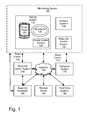
- FIG. 1is a network diagram illustrating one embodiment of the elements that may be part of the system and their relationships.
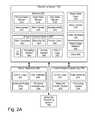
- FIG. 2Ais a block diagram of one embodiment of the system.
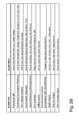
- FIG. 2Bis a table of one embodiment of a set of adjustments recommended, for various sleep aids, based on observed sleep results.
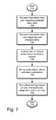
- FIG. 3is an overview flowchart of one embodiment of using the system.
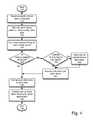
- FIG. 4is a flowchart of one embodiment of communicating with a user in conjunction with initiating sleep.
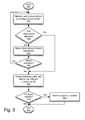
- FIG. 5is a flowchart of one embodiment of adjusting a sleep aid during sleep.
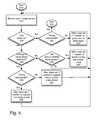
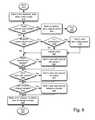
- FIG. 6is a flowchart of one embodiment of alerts utilized to adjust sleep aids based on analysis of the user's sleep.
- FIG. 7is a flowchart of one embodiment of setting up the system.
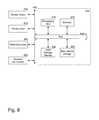
- FIG. 8is a block diagram of one embodiment of a computer system that may be used with the present invention.
- a sleep monitoring systemwhich increases the efficacy of sleep aids by monitoring user's sleep patterns continuously, and in one embodiment adjusting the sleep aids used based on real and continuous data.
- a user taking a popular sleep aidsuch as AMBIEN® may find that it helps in falling asleep, but only if the user is in bed within 30 minutes of taking the medicine, but no earlier than 15 minutes after taking the medicine.
- a sleep monitoring systemthat can provide an alarm, and ensure that the user gets the most out of this drug, would be useful.
- some usershave no difficulty falling asleep, but wake frequently through the night.
- Another type of drugmay be recommended to such users.
- Additional non-drug sleep aidsmay also be utilized.
- Such non-drug sleep aidsmay include breathing machines, music which may have a particular beat pattern, white noise machines, eye masks, temperature adjustments, mattress softness, etc.
- self-medicating with various types of sleep aidssuch as caffeine and alcohol, as well as decongestant medications may have effects on the user's sleep pattern.
- a continuously administered drug-based sleep aidmay be utilized.
- the continuous administrationmay be through a pump, like an insulin pump, or through a time-release capsule, or through other means.
- the sleep monitoring systemmay be used to monitor the user's sleep patterns, and automatically adjust the drug, as needed, through the night.
- the sleep monitoring systemmay, alternatively, be used to monitor the user's sleep patterns, and provide feedback such that a time-release capsule or similar customized drug dispensing method provides the optimal levels of the sleep aid at the times needed by the user.
- the sleep monitoring system's outputmay also, in one embodiment, be provided to the user and/or doctor or other party. This enables the user/doctor/third party to adjust the use of various sleep aids, and/or add or subtract sleep aids from the user's prescription.
- cumulative data from sleep monitoring systemsmay also be made available.
- this datais abstracted and anonymized. This may be used to adjust sleep aids, based on observed data.
- cumulative sleep datamay also be used to prove the efficacy of new sleep aids. For example, instead of very limited clinical trials in a sleep clinic, a larger group of people may be provided with the sleep monitoring system, to receive real-life sleep data, from users' normal environments.
- the sleep monitoring systemmay, in one embodiment, monitor the user for additional medical conditions. For example, some sleep aids may cause health issues.
- the sleep monitoring systemincludes health monitoring.
- the sleep monitoring systemintegrates with a health monitoring system separately implemented. The combination of the sleep monitoring and health monitoring that can ensure that the user is not having a medical reaction to any sleep aids.
- the sleep monitoring systemfurther includes or integrates with an activity monitoring system. It is well known that a user's activities and actions through the day influence his or her sleep. Therefore, having additional daily activity monitoring available may further improve the efficacy and use of sleep aids.
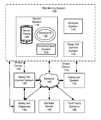
- FIG. 1is a network diagram illustrating one embodiment of the elements that may be part of the system and their relationships.
- the systemincludes a monitoring system 100 .
- the monitoring system 100includes sensor system 110 .
- the sensor system 110may be embodied in a body-worn device such as a wristband 130 , a human carried device such as a smart phone 180 or accelerometer system 185 .
- the sensor system 110may be implemented in a sleep-only device such as an armband or pillow.
- Sensor system 110may be implemented in a combination of various types of sensors, which can be utilized to detect a user's sleep patterns including headsets, cameras, goggles, arm bands, or other mechanisms.
- some of the sensorsmay be in one system, while others are in another system.
- activity monitormay be implemented in a wristband 130
- sleep monitoris implemented in a pillow, etc.
- the monitoring system 100further includes analysis system 140 .
- Analysis systemutilizes the data from the sensor system 110 , to determine the user's sleep phases, and the interaction of the applicable sleep aids with the user's sleep quality and quantity.
- the monitoring system 100includes a sleep aid control system 145 .
- Sleep aid control systemin one embodiment provides real-time adjustment of sleep aids, ranging from medications to environmental conditions, as needed, to ensure a restful sleep for the user.
- the sleep aid control system 150is located outside the monitoring system 100 .
- the interface between the monitoring system 110 and the sleep aid control system 150may be through an audio jack interface, a BluetoothTM or other personal area network interface, or a network interface 160 .
- sleep aid dispenser 185may be coupled to sleep aid control system 150 and/or monitoring system 100 .
- the couplingmay be direct, or via network 160 or other means.
- the sleep aid dispenser 185may be incorporated within the monitoring system 100 , making a unitary system.
- the only necessary elements of the systemare a sensor system that monitors a user's sleep, an analysis system that analyzes the result of the monitoring, and a sleep aid controller/dispenser that controls a relevant sleep aid.
- sleep aid control system 150may interface with, or include, home automation controls.
- the sensing system 100may communicate with the analysis system 140 through an audio jack interface, a BluetoothTM or other personal area network interface, or a network interface 160 , rather than being implemented in the same device.
- Network 160may include one or more of a wireless network (WiFi), cellular network, a local area network, a personal area network (PAN) such as BLUETOOTHTM, or another type of wireless connection.
- WiFiwireless network
- PANpersonal area network
- BLUETOOTHTManother type of wireless connection.
- the network 160may provide access to a computer system 170 , remote server 180 , and/or Internet data on various third party systems 190 .
- the computer system 170may provide additional processing, and may, in one embodiment, provide the user with an additional user interface features.
- the computer system 170may be coupled directly to the monitoring system 100 , continuously or periodically, via direct connection 175 . This could be implemented, in one embodiment, via a Universal Serial Bus (USB), audio input based interface, or other type of wired connection.
- USBUniversal Serial Bus
- server 180may provide data to the monitoring system 100 .
- the monitoring system 100may also provide information to the server 180 .
- a remote server 180may collect data from multiple users, and use cumulative data and statistical analysis to provide predictive recommendations, set default options, and suggest alterations to settings.
- the monitoring system 100may also couple to network 160 to third party systems 190 .
- Third party systems 190may provide environmental data to the sleep sensing system 100 .
- Third party systems 190may also provide sounds to the sleep sensing system 100 , as will be described below.
- third party system 190may be a pharmacy or retailer that can provide the option to purchase additional relevant sleep aids, as recommended.
- FIG. 2is a block diagram of one embodiment of the system, including monitoring system 100 and local system 270 as well as server system 280 , to which the monitoring system 100 may be coupled directly or via a network connection.
- the server system 280may be a local personal computer, a local server computer, or a remote server system, or a system-accessible website or other source of data.
- the monitoring system 200includes one or more sensors 205 .
- the sensors 205may include an accelerometer 210 , a temperature sensor 212 , a heart rate sensor 214 .
- temperature sensor 212may include two sensors, one for the user's body temperature and the other for ambient temperature sensing.
- sensors that detect brain waves 216may also be used.
- brainwave sensors, cameras to observe eye movement, or other sensors 218may also monitor the user's state. Additional sensors to monitor the user's state 218 , and the user's environment 219 may also be part of the sleep sensing system 100 .
- Monitoring system 200further includes sleep state logic 220 .
- Sleep state logic 220receives data from one or more sensors 205 , to determine the user's current sleep state.
- sleep statesmay include awake, light sleep, and deep sleep.
- the sleep statemay be N1, N2, N3, and REM.
- the sleep statemay be light sleep, deep sleep, and REM sleep. Other divisions, or further subdivisions, may also be present.
- sleep statecan be determined by sleep state logic 220 based on the user's micro-movements, body temperature, heart rate, and/or brain function, as determined by sensors 205 .
- Sleep tracker 225receives the current sleep state information from sleep state logic 220 and tracks the overall sleep state for the present sleep cycle. Sleep tracker 225 in one embodiment also adds data to a sleep database 230 .
- the sleep database 230tracks sleep state information longer term. In one embodiment, the information in the sleep database 230 may be used to correlate the use of the sleep aids with sleep patterns, and thus provide predictive modeling for the user.
- the data from sleep database 225may be passed to a computer system 280 using communication logic 235 .
- the data from sleep tracker 225 and sleep state logic 220is used by the sleep stage selector 240 , in one embodiment, to select the optimal current sleep stage for the user.
- data from clock 245 and alarm logic 270is also used by the sleep stage selector 240 .
- data from environment sensor 219may also be used by sleep stage selector 240 .
- data from computing system(s) 280may also be used by the sleep stage selector 240 .
- the optimal next sleep state, as selected by sleep state selector 240is passed to sleep aid control system 250 .
- the optimal next sleep statemay be the same state as the current sleep state.
- Sleep aid control system 250in one embodiment can control one or more of medicine controller 252 , machine controller 254 , and environmental controller 256 .
- Environmental controller 256may control the user's environment, such as temperature, sounds, light levels, etc. to either maintain the user in their current sleep state, or transition them to the appropriate optimal next sleep stage.
- Medicine dispenser 252may be utilized for the same purpose.
- additional machinesmay be controlled via machine controller 254 . Such machines may include positive airflow machines, in one embodiment.
- the medicine dispenser 252may be a sleep pump that dispenses sleep medications in a time-release fashion, to ensure optimal sleep.
- environmental controller 256may include an interface to a home automation system, or other existing control system that may control the environment.
- the usermay enter preferences through user interface 265 , or via a user interface 274 on local computing system 270 , or user interface 298 on server system 280 .
- Interface 298may be accessed through a web page or other interface.
- monitoring system 200includes an activity system 260 monitor the user's activity levels.
- the user's daily activitycan influence the user's sleep quality, and thus the need for sleep aids. Therefore, in one embodiment, the system includes activity system 260 , which uses sensor data to analyze the user's daily activity levels.
- the activity monitoring sensorsmay be implemented in a separate device, and its data may be provided to activity system 260 .
- prompting system 262may prompt the user to input his or her sleep aid consumption.
- the prompting system 262may also provide prompts to the user, to ensure that the user takes medicines at the appropriate time, and/or goes to sleep at the appropriate time, etc.
- the local computer system 270in one embodiment includes a sleep aid control system 276 , to control one or more external sleep aids, which may range from medications, to machines, and to mechanisms. In one embodiment, this element is needed when sleep aid control system 250 is replaced by sleep aid control system 276 , or other external methods of controlling sleep aids.
- Prompting system 278may also be located in local computer systems 270 .
- Server system 280in one embodiment, includes a mechanism to collect sleep data 290 , and statistical analysis logic 292 .
- the statistical analysis logic 292analyzes the abstracted and anonymized data from multiple users. The collective data of these users may be used to generate recommendations, warn of problems, and in one embodiment to enable the use of the system to perform sleep studies.
- statistical analysis logic 292may adjust sleep aids, or recommend changes, based on observed data. In one embodiment, the statistical analysis results may also be used to prove the efficacy of new sleep aids.
- FIG. 3is an overview flowchart of one embodiment of using the system. The process starts at block 310 .
- the systemmonitors the user's sleep pattern and sleep aid use patterns and data. In one embodiment, this may be done using multiple sensing devices, as well as user-entered data.
- the processdetermines whether any sleep aids can be adjusted in real-time. If so, at block 340 , the sleep aid is adjusted if needed, and any adjustment is recorded.
- FIG. 2Bshows a table of potential adjustments that may be made in real time. Such adjustments include increasing sleep medication, altering local temperature, altering local light levels, altering sound levels, airflow, etc.
- the set of adjustments shown in FIG. 2Bare merely exemplary.
- a systemmay have more or fewer controls. In one embodiment, there may be no real-time controls available, and all adjustments may be based on recommending changes to the user, or an appropriate entity such as the user's doctor or health insurance provider.
- the processdetermines whether sleep is complete, e.g., the user has woken up, at block 350 . If the user has not yet woken, the process returns to block 320 to continue monitoring the user's sleep. If the user has woken, the process continues to block 360 . If the sleep aid cannot be adjusted, the process continues directly to block 360 .
- statistical datais collected.
- the statistical datais added to the user database, and cumulative database.
- the statistical dataincludes user sleep data automatically recorded, relevant sleep aids and any sleep aid adjustments made.
- additional datasuch as subjective sleep quality, may also be collected from the user and added to the system.
- the processdetermines whether the user's sleep aids, or sleep habits, need adjustments. If so, at block 380 , these suggested alterations are provided. In one embodiment, the suggested alterations may be provided to the user. Such adjustments may include suggestions to utilize an eye mask, suggestions to add a white noise machine, suggestions to lower the temperature, increase or decrease sleep medication dosage, etc.
- the processthen ends, at block 390 . In this way, the user's sleep is monitored, and the sleep aids are adjusted either in real-time if possible, or via adjustments or alerts after the conclusion of sleep.
- this monitoringmay be useful as part of a sleep study.
- a user's sleep patternsmay be studied, and adjusted by introducing one or more sleep aids over time. This enables a user to participate in a sleep study in their home environment, and determine the optimal sleep aids to use, to have restful and appropriate sleep.
- FIG. 4is a flowchart of one embodiment of communicating with a user in conjunction with initiating sleep. The process starts at block 410 .
- informationis received on the user's sleep aids.
- the usermay be prompted with a list of sleep aids that may be available.
- sleep aid datamay be received, with the user's authorization, from a doctor or other prescriber. Sleep aids range from medicines such as AMBIEN® to environmental adjustments such as wearing an eye mask or using a white noise machine, or non-prescription drugs such as caffeine and alcohol.
- the useris prompted to enter the sleep aids used, their dosage and frequency.
- some or all of this datamay be obtained from medical records released by the user to the system. In one embodiment, some or all of this data may be obtained by other means, such as based on photographs provided by the user.
- the user's sleep patterns, sleep quality, and other sleep datais monitored.
- a number of sleep sessionsare observed before any personalized recommendations are provided to the user.
- default “standard” recommendationsmay be available based on data associated with medications, research, or collected statistical data.
- the systemdetermines the optimal timing for the user's sleep cycles. This is based on the user's historical behavior, as well as known information about the amount of sleep a person fitting the user's profile needs.
- the processdetermines whether there is a medical sleep aid. If so, at block 435 , the process determines whether the system has sufficient data to have calculated an optimal time to take the sleep aid. Many sleep aids have a limited time during which they work best, or a limited duration. Therefore, having a user take a sleep aid too early, such that during the most effective period the user is unlikely to be in bed, is negative. Recommending the optimal time to take the sleep aid can be important. If such data is available, at block 440 , the user is alerted to take the medication at the optimal time.
- the systemthen monitors for the user taking the sleep aid, whether or not the user was alerted, at block 445 .
- the usermanually enters the time when the sleeping aid was taken.
- the useris prompted when it is time to go to bed. This occurs, in one embodiment, whether or not there is a medical sleep aid.
- the useris prompted to set other sleep aids, when available.
- the systemis aware of the available sleep aids.
- the promptingmay include reminders such as “close the blinds and turn on the white noise machine.” The process then ends, at block 465 , as the system switches to monitoring the user's sleep patterns.
- FIG. 5is a flowchart of one embodiment of adjusting a sleep aid during sleep.
- the processstarts at block 510 .
- sleep aidsmay include room temperature, sounds, light levels, bed softness, and other environmental factors. In one embodiment, such factors may also include adjusting the dispensing of sleep medicines.
- Sleep medicinessuch as AMBIEN® and others may be provided in a liquid form, that may be dispensed through a mechanism such as a pump.
- Drug pumpsrelease controlled doses of medication, such as pain medication.
- Such drug pumpsin one embodiment, can be utilized to release controlled doses of sleep medication. Because the dosage is precisely correlated with the user's sleep state and thus need for medication, the overall drug consumption is decreased. This also eliminates many of the side effects of such medications, which are the result of a mismatch between sleep state and drug levels.
- the processdetermines whether the user woke up. In one embodiment, waking up may include entering a very light sleep phase, in which the user is in the “half-asleep” state. If so, at block 525 , the process determines whether the timing is appropriate for waking. If so, the process ends at block 530 . As noted above, the user's statistical data would then be analyzed, and further adjustments made. But the real-time adjustment terminates when the user wakes, in one embodiment.
- the sleep aidis altered to guide user to sleep again.
- some additional medicinemay be added to the user's system, to ensure additional sleep. For another example, it may be that the user is waking in part because the room is too light. If the system has control over blinds, the blinds may be lowered. In one embodiment, if the user is waking as a result of a nightmare—as determined by the pattern of movements—the system may guide the user to full wakefulness, and allow them to return to more restful sleep thereafter. The process then returns to block 515 , to continue monitoring the user's sleep pattern.
- the processdetermines at block 540 whether a change in sleep phase is detected. If no change in sleep phase is detected, the process determines whether the user is remaining in a too shallow sleep phase for too long. In one general, the most restful and necessary sleep is the deep sleep. Therefore, excessive light sleep is not optimal. If the user is not remaining in light sleep for too long, the process continues to block 515 to continue monitoring.
- the sleep aidis altered to assist in entry into deeper sleep. This may include adjusting medication, adjusting airflow, adjusting temperature, adjusting the soundscape, etc. The process then returns to block 515 .
- the processdetermines whether the change in sleep phase is appropriate. As noted, extended deep sleep is important. Furthermore, a certain amount of lighter sleep is needed because that is time when the user dreams, which is necessary for mental health. If the timing is appropriate at block 565 , the process ensures that the current settings for the sleep aid are appropriate to support the transition to the new sleep phase. If needed, the sleep aids may be adjusted at that point. The process then returns to block 515 , to continue monitoring.
- the sleep aidmay be altered to support return to the prior sleep phase. Again, this may include altering medication, airflow, temperature, bed softness, and other environmental factors.
- the exemplary methods shown in FIG. 5are meant to be exemplary.
- the systemcontinuously monitors the current sleep phase, and not just transitions and timing.
- other factorssuch as sleep quality are monitored.
- the changes in sleep aidmay be made in response to the user having a bad dream, not breathing well, waking excessively, etc.
- FIG. 6is a flowchart of one embodiment of alerts utilized to adjust sleep aids based on analysis of the user's sleep. The process starts at block 610 .
- the processadds to the statistical data about the user's sleep patterns. In one embodiment, this may be done throughout a sleep session, or at the end of a sleep session.
- the processdetermines whether the sleep session was sub-optimal. Sub-optimal sleep sessions are those that are not sufficiently restful, too long for the level of refreshment achieved, or otherwise could be improved. If the sleep session was optimal, the process at block 625 sends the statistical data to the server/third party, as indicated by the user's settings. In one embodiment, the settings used for this sleep session are marked as having achieved optimal results. The process then ends at block 630 . In one embodiment, the statistical data is also sent to third parties, such as the maker of one or more of the sleep aids. In one embodiment, the statistical data, anonymized, from multiple users may be utilized by the makers of the sleep aids to evaluate efficacy. In one embodiment, the user may opt into sharing this information with the maker of the sleep aid. In one embodiment, the user may be rewarded, financially or otherwise, for sharing his or her information.
- the process at block 635determines whether the medicine needs adjustment. Medicine may need adjustment due to timing (e.g. a time release medicine needs to be adjusted to provide a higher level of the medication in the early morning), dosage (too low or too high for optimum results), type (some people react negatively to particular medicines, and would do better with a similar but non-identical medication), or other adjustments. If the medicine needs adjustment, the process continues to block 640 .
- timinge.g. a time release medicine needs to be adjusted to provide a higher level of the medication in the early morning
- dosagetoo low or too high for optimum results
- typesome people react negatively to particular medicines, and would do better with a similar but non-identical medication
- the processdetermines whether the medicine is prescription. If so, in one embodiment the system at block 645 notifies the user, doctor, and/or pharmacist.
- a user's prescriptionmay be sufficiently flexible to allow a user to simply alter the medicine as needed. However, in most cases, changes to prescription medications are made with the cooperation of the user's doctor.
- the medicationis adjusted. If the medicine is not prescription, at block 650 , the medication is adjusted, in one embodiment.
- the medicinein this context, may include non-drug medicines such as caffeine and alcohol intake.
- adjusting the medicationsmay include indicating to the user that he or she needs to stop drinking caffeine after 6 p.m., or drink a glass of wine, etc.
- the non-prescription medicinemay be covered by insurance, the system may notify the user's doctor or insurer, or may indicate to the user how to do so.
- the processdetermines whether an environmental adjustment is needed.
- Environmental adjustmentsmay include changes in temperature, bedding, light levels, sounds, and other external conditions.
- the useris requested to make the change. If such adjustments are needed, at block 660 the user is informed and requested to make the adjustment. The process then continues to block 665 .
- the processdetermines additional sleep aids needed. Additional sleep aids may range from an eye mask to add darkness, to a positive airflow providing machine, or a white noise machine. When the system determines that a particular condition causes sleep disturbance, and the system cannot handle that disturbance given the existing conditions, a recommendation for additional sleep aids may be made.
- the useris informed and purchase is requested. In one embodiment, the request may include a link to where the appropriate sleep aid can be purchased, enabling the user to complete the transaction quickly, and easily. In one embodiment, if such sleep aids are covered by insurance, the user is provided an easy process to apply for insurance coverage. in one embodiment, instead of notifying a user, a relevant entity—such as the user's guardian, doctor, or insurance company—may be notified. The process then continues to block 675 .
- the processdetermines whether a user behavior change is needed.
- User behavior changesmay include a change in activity timing, activity levels, food choices, or food levels, or additional behavioral changes.
- the techniques in co-pending application Ser. No. 13/781,742may be used to determine the needed changes. If such changes are needed, at block 680 the user is informed and requested to make the changes. The process then continues to block 685 . At block 685 , the user is prompted to make any other changes that need to be made. The process then ends at block 630 .
- FIG. 7is a flowchart of one embodiment of setting up the system. The process starts at block 710 .
- the systemrequests information from the user regarding the available sleep aids. This may include medications, self-medicating non-prescription medicines, environmental controls, and other factors. In one embodiment, this may include a request to allow the system access to the relevant user medical records, to determine for example prescription sleep aid dosage.
- the processrequests information from the user regarding the user's characteristics.
- the user's characteristicsinclude the user's age, gender, health, and other relevant factors that may influence sleep requirements, and sleep quality. In one embodiment, this may include a request to allow the system access to the relevant user medical records.
- the systeminstructs the user on how to utilize the sleep monitoring system. This may include instructing the user to set up additional sleep aids, or now to set up controls that enable the monitoring system to interact with additional sleep aids.
- the systemhelps the user set up notifications, alerts, and data destinations.
- notificationsmay be sent to the user, the user's doctor, a central database, or other locations.
- the usermay control how much or how little of the user's personal data is shared.
- these types of data sharing settingsmay be pre-set.
- the systemsets the default settings for sleep aids as well as sleep needs, based on the above information.
- these default characteristicsmay be tweaked. For example, a default may be that most people sleep best if they are in bed by 11:30 p.m. and awake by 7:30 a.m. However, observed data may indicate that a particular user considers sleep most restful, and sleeps best when they go to bed at 2 a.m. and wake at 9 a.m. In that case, the system settings may be adjusted. In one embodiment, the default settings may be made available to the user, and adjusted by the user. The set-up then ends.
- FIG. 8is a block diagram of one embodiment of a computer system that may be used with the present invention.
- FIG. 8is a block diagram of a particular machine that may be used with the present invention. It will be apparent to those of ordinary skill in the art, however that other alternative systems of various system architectures may also be used.
- the data processing system illustrated in FIG. 8includes a bus or other internal communication means 840 for communicating information, and a processing unit 810 coupled to the bus 840 for processing information.
- the processing unit 810may be a central processing unit (CPU), a digital signal processor (DSP), or another type of processing unit 810 .
- the systemfurther includes, in one embodiment, a random access memory (RAM) or other volatile storage device 820 (referred to as memory), coupled to bus 840 for storing information and instructions to be executed by processor 810 .
- RAMrandom access memory
- Main memory 820may also be used for storing temporary variables or other intermediate information during execution of instructions by processing unit 810 .
- the systemalso comprises in one embodiment a read only memory (ROM) 850 and/or static storage device 850 coupled to bus 840 for storing static information and instructions for processor 810 .
- ROMread only memory
- static storage device 850coupled to bus 840 for storing static information and instructions for processor 810 .
- the systemalso includes a data storage device 830 such as a magnetic disk or optical disk and its corresponding disk drive, or Flash memory or other storage which is capable of storing data when no power is supplied to the system.
- Data storage device 830in one embodiment is coupled to bus 840 for storing information and instructions.
- the systemmay further be coupled to an output device 870 , such as a cathode ray tube (CRT) or a liquid crystal display (LCD) coupled to bus 840 through bus 860 for outputting information.
- the output device 870may be a visual output device, an audio output device, and/or tactile output device (e.g. vibrations, etc.).
- An input device 875may be coupled to the bus 860 .
- the input device 875may be an alphanumeric input device, such as a keyboard including alphanumeric and other keys, for enabling a user to communicate information and command selections to processing unit 810 .
- An additional user input device 880may further be included.
- cursor control device 880such as a mouse, a trackball, stylus, cursor direction keys, or touch screen, may be coupled to bus 840 through bus 860 for communicating direction information and command selections to processing unit 810 , and for controlling movement on display device 870 .
- the communication device 885may include any of a number of commercially available networking peripheral devices such as those used for coupling to an Ethernet, token ring, Internet, or wide area network, personal area network, cellular network, wireless network or other method of accessing other devices.
- the communication device 885may further be a null-modem connection, or any other mechanism that provides connectivity between the computer system 800 and the outside world.
- control logic or software implementing the present inventioncan be stored in main memory 820 , mass storage device 830 , or other storage medium locally or remotely accessible to processor 810 .
- the present inventionmay also be embodied in a handheld or portable device containing a subset of the computer hardware components described above.
- the handheld devicemay be configured to contain only the bus 840 , the processor 810 , and memory 820 and/or 850 .
- the handheld devicemay be configured to include a set of buttons or input signaling components with which a user may select from a set of available options. These could be considered input device # 1 875 or input device # 2 880 .
- the handheld devicemay also be configured to include an output device 870 such as a liquid crystal display (LCD) or display element matrix for displaying information to a user of the handheld device. Conventional methods may be used to implement such a handheld device. The implementation of the present invention for such a device would be apparent to one of ordinary skill in the art given the disclosure of the present invention as provided herein.
- LCDliquid crystal display
- the present inventionmay also be embodied in a special purpose appliance including a subset of the computer hardware components described above.
- the appliancemay include a processing unit 810 , a data storage device 830 , a bus 840 , and memory 820 , and no input/output mechanisms, or only rudimentary communications mechanisms, such as a small touch-screen that permits the user to communicate in a basic manner with the device.
- the more special-purpose the device isthe fewer of the elements need be present for the device to function.
- communications with the usermay be through a touch-based screen, or similar mechanism.
- the devicemay not provide any direct input/output signals, but may be configured and accessed through a website or other network-based connection through network connection 885 .
- a machine-readable mediumincludes any mechanism for storing information in a form readable by a machine (e.g. a computer).
- a machine readable mediumincludes read-only memory (ROM), random access memory (RAM), magnetic disk storage media, optical storage media, flash memory devices, or other storage media which may be used for temporary or permanent data storage.
- the control logicmay be implemented as transmittable data, such as electrical, optical, acoustical or other forms of propagated signals (e.g. carrier waves, infrared signals, digital signals, etc.).
Landscapes
- Health & Medical Sciences (AREA)
- Life Sciences & Earth Sciences (AREA)
- Anesthesiology (AREA)
- Animal Behavior & Ethology (AREA)
- Veterinary Medicine (AREA)
- Physics & Mathematics (AREA)
- Public Health (AREA)
- Engineering & Computer Science (AREA)
- Biomedical Technology (AREA)
- Heart & Thoracic Surgery (AREA)
- General Health & Medical Sciences (AREA)
- Psychology (AREA)
- Hematology (AREA)
- Acoustics & Sound (AREA)
- Pain & Pain Management (AREA)
- Biophysics (AREA)
- Pathology (AREA)
- Medical Informatics (AREA)
- Molecular Biology (AREA)
- Surgery (AREA)
- Measurement Of The Respiration, Hearing Ability, Form, And Blood Characteristics Of Living Organisms (AREA)
Abstract
Description
The present application claims priority to U.S. Provisional Application 61/737,717 filed on Dec. 14, 2012, and incorporates that application in its entirety by reference.
The present invention relates to sleeping, and more particularly to improving the efficacy of sleep aids.
Sleep has been found to be vital to human health. It influences everything from concentration, to IQ, to weight. However, a significant number of people have difficulty sleeping. Such difficulty ranges from difficulty getting enough sleep, difficulty falling asleep, difficulty breathing while sleeping, waking up repeatedly, etc. Many people attempt to mediate their difficulty sleeping using various sleep aids, including drugs, breathing machines, eye masks, and other things to improve the ability to sleep.
In some instances, people go into sleep clinics, to diagnose their difficulties, and attempt to get treatment.
The present invention is illustrated by way of example, and not by way of limitation, in the figures of the accompanying drawings and in which like reference numerals refer to similar elements and in which:
As sleep aids become more commonly used, the efficacy of a sleep aid, and its interaction with the user's particular patterns of sleep are difficult to optimize. While some users can go to a sleep clinic, that is an expensive option. Additionally, being wired up and sleeping in an unfamiliar place may alter a user's sleep patterns. Furthermore, sleep patterns change over time, seasonally, and based on the user's current circumstances. Therefore, a sleep monitoring system is described, which increases the efficacy of sleep aids by monitoring user's sleep patterns continuously, and in one embodiment adjusting the sleep aids used based on real and continuous data.
For example, a user taking a popular sleep aid such as AMBIEN® may find that it helps in falling asleep, but only if the user is in bed within 30 minutes of taking the medicine, but no earlier than 15 minutes after taking the medicine. A sleep monitoring system that can provide an alarm, and ensure that the user gets the most out of this drug, would be useful. For another example, some users have no difficulty falling asleep, but wake frequently through the night. Another type of drug may be recommended to such users. Additional non-drug sleep aids may also be utilized. Such non-drug sleep aids may include breathing machines, music which may have a particular beat pattern, white noise machines, eye masks, temperature adjustments, mattress softness, etc. Additionally, self-medicating with various types of sleep aids, such as caffeine and alcohol, as well as decongestant medications may have effects on the user's sleep pattern.
In one embodiment, a continuously administered drug-based sleep aid may be utilized. The continuous administration may be through a pump, like an insulin pump, or through a time-release capsule, or through other means. The sleep monitoring system may be used to monitor the user's sleep patterns, and automatically adjust the drug, as needed, through the night. The sleep monitoring system may, alternatively, be used to monitor the user's sleep patterns, and provide feedback such that a time-release capsule or similar customized drug dispensing method provides the optimal levels of the sleep aid at the times needed by the user.
The sleep monitoring system's output may also, in one embodiment, be provided to the user and/or doctor or other party. This enables the user/doctor/third party to adjust the use of various sleep aids, and/or add or subtract sleep aids from the user's prescription.
In one embodiment, cumulative data from sleep monitoring systems may also be made available. In one embodiment, this data is abstracted and anonymized. This may be used to adjust sleep aids, based on observed data. In one embodiment, cumulative sleep data may also be used to prove the efficacy of new sleep aids. For example, instead of very limited clinical trials in a sleep clinic, a larger group of people may be provided with the sleep monitoring system, to receive real-life sleep data, from users' normal environments.
Additionally, the sleep monitoring system may, in one embodiment, monitor the user for additional medical conditions. For example, some sleep aids may cause health issues. In one embodiment, the sleep monitoring system includes health monitoring. In one embodiment, the sleep monitoring system integrates with a health monitoring system separately implemented. The combination of the sleep monitoring and health monitoring that can ensure that the user is not having a medical reaction to any sleep aids.
In one embodiment, the sleep monitoring system further includes or integrates with an activity monitoring system. It is well known that a user's activities and actions through the day influence his or her sleep. Therefore, having additional daily activity monitoring available may further improve the efficacy and use of sleep aids.
The following detailed description of embodiments of the invention makes reference to the accompanying drawings in which like references indicate similar elements, showing by way of illustration specific embodiments of practicing the invention. Description of these embodiments is in sufficient detail to enable those skilled in the art to practice the invention. One skilled in the art understands that other embodiments may be utilized and that logical, mechanical, electrical, functional and other changes may be made without departing from the scope of the present invention. The following detailed description is, therefore, not to be taken in a limiting sense, and the scope of the present invention is defined only by the appended claims.
Themonitoring system 100 further includesanalysis system 140. Analysis system utilizes the data from thesensor system 110, to determine the user's sleep phases, and the interaction of the applicable sleep aids with the user's sleep quality and quantity.
In one embodiment, themonitoring system 100 includes a sleepaid control system 145. Sleep aid control system in one embodiment provides real-time adjustment of sleep aids, ranging from medications to environmental conditions, as needed, to ensure a restful sleep for the user. In another embodiment, the sleepaid control system 150 is located outside themonitoring system 100. In one embodiment, the interface between themonitoring system 110 and the sleepaid control system 150 may be through an audio jack interface, a Bluetooth™ or other personal area network interface, or anetwork interface 160.
In one embodiment, sleepaid dispenser 185 may be coupled to sleepaid control system 150 and/ormonitoring system 100. The coupling may be direct, or vianetwork 160 or other means. In one embodiment, thesleep aid dispenser 185 may be incorporated within themonitoring system 100, making a unitary system. In one such embodiment, the only necessary elements of the system are a sensor system that monitors a user's sleep, an analysis system that analyzes the result of the monitoring, and a sleep aid controller/dispenser that controls a relevant sleep aid. In one embodiment, sleepaid control system 150 may interface with, or include, home automation controls.
In one embodiment, thesensing system 100 may communicate with theanalysis system 140 through an audio jack interface, a Bluetooth™ or other personal area network interface, or anetwork interface 160, rather than being implemented in the same device.Network 160 may include one or more of a wireless network (WiFi), cellular network, a local area network, a personal area network (PAN) such as BLUETOOTH™, or another type of wireless connection.
Thenetwork 160 may provide access to acomputer system 170,remote server 180, and/or Internet data on variousthird party systems 190. Thecomputer system 170 may provide additional processing, and may, in one embodiment, provide the user with an additional user interface features. In one embodiment, thecomputer system 170 may be coupled directly to themonitoring system 100, continuously or periodically, viadirect connection 175. This could be implemented, in one embodiment, via a Universal Serial Bus (USB), audio input based interface, or other type of wired connection.
In one embodiment,server 180 may provide data to themonitoring system 100. In one embodiment, themonitoring system 100 may also provide information to theserver 180. In one embodiment, aremote server 180 may collect data from multiple users, and use cumulative data and statistical analysis to provide predictive recommendations, set default options, and suggest alterations to settings.
In one embodiment, themonitoring system 100 may also couple to network160 tothird party systems 190.Third party systems 190 may provide environmental data to thesleep sensing system 100.Third party systems 190 may also provide sounds to thesleep sensing system 100, as will be described below. In one embodiment,third party system 190 may be a pharmacy or retailer that can provide the option to purchase additional relevant sleep aids, as recommended.
Themonitoring system 200 includes one ormore sensors 205. Thesensors 205 may include anaccelerometer 210, atemperature sensor 212, aheart rate sensor 214. In one embodiment,temperature sensor 212 may include two sensors, one for the user's body temperature and the other for ambient temperature sensing. In one embodiment, sensors that detect brain waves216 may also be used. In one embodiment, brainwave sensors, cameras to observe eye movement, or other sensors218 may also monitor the user's state. Additional sensors to monitor the user's state218, and the user'senvironment 219 may also be part of thesleep sensing system 100.
The data fromsleep tracker 225 and sleepstate logic 220 is used by thesleep stage selector 240, in one embodiment, to select the optimal current sleep stage for the user. In one embodiment, data fromclock 245 andalarm logic 270 is also used by thesleep stage selector 240. In one embodiment, data fromenvironment sensor 219 may also be used bysleep stage selector 240. In one embodiment, data from computing system(s)280 may also be used by thesleep stage selector 240.
The optimal next sleep state, as selected bysleep state selector 240 is passed to sleepaid control system 250. In one embodiment, the optimal next sleep state may be the same state as the current sleep state. Sleepaid control system 250 in one embodiment can control one or more ofmedicine controller 252,machine controller 254, andenvironmental controller 256.Environmental controller 256 may control the user's environment, such as temperature, sounds, light levels, etc. to either maintain the user in their current sleep state, or transition them to the appropriate optimal next sleep stage.Medicine dispenser 252 may be utilized for the same purpose. In one embodiment, additional machines, may be controlled viamachine controller 254. Such machines may include positive airflow machines, in one embodiment. In one embodiment, themedicine dispenser 252 may be a sleep pump that dispenses sleep medications in a time-release fashion, to ensure optimal sleep. In one embodiment,environmental controller 256 may include an interface to a home automation system, or other existing control system that may control the environment.
In one embodiment, the user may enter preferences throughuser interface 265, or via a user interface274 onlocal computing system 270, oruser interface 298 onserver system 280.Interface 298 may be accessed through a web page or other interface.
In one embodiment,monitoring system 200 includes anactivity system 260 monitor the user's activity levels. The user's daily activity can influence the user's sleep quality, and thus the need for sleep aids. Therefore, in one embodiment, the system includesactivity system 260, which uses sensor data to analyze the user's daily activity levels. In another embodiment, the activity monitoring sensors may be implemented in a separate device, and its data may be provided toactivity system 260.
In one embodiment, promptingsystem 262 may prompt the user to input his or her sleep aid consumption. The promptingsystem 262 may also provide prompts to the user, to ensure that the user takes medicines at the appropriate time, and/or goes to sleep at the appropriate time, etc.
Thelocal computer system 270 in one embodiment includes a sleepaid control system 276, to control one or more external sleep aids, which may range from medications, to machines, and to mechanisms. In one embodiment, this element is needed when sleepaid control system 250 is replaced by sleepaid control system 276, or other external methods of controlling sleep aids. Promptingsystem 278 may also be located inlocal computer systems 270.
In one embodiment,statistical analysis logic 292 may adjust sleep aids, or recommend changes, based on observed data. In one embodiment, the statistical analysis results may also be used to prove the efficacy of new sleep aids.
At block320, the system monitors the user's sleep pattern and sleep aid use patterns and data. In one embodiment, this may be done using multiple sensing devices, as well as user-entered data.
Atblock 330, the process determines whether any sleep aids can be adjusted in real-time. If so, at block340, the sleep aid is adjusted if needed, and any adjustment is recorded.FIG. 2B shows a table of potential adjustments that may be made in real time. Such adjustments include increasing sleep medication, altering local temperature, altering local light levels, altering sound levels, airflow, etc. Of course the set of adjustments shown inFIG. 2B are merely exemplary. A system may have more or fewer controls. In one embodiment, there may be no real-time controls available, and all adjustments may be based on recommending changes to the user, or an appropriate entity such as the user's doctor or health insurance provider.
The process then determines whether sleep is complete, e.g., the user has woken up, atblock 350. If the user has not yet woken, the process returns to block320 to continue monitoring the user's sleep. If the user has woken, the process continues to block360. If the sleep aid cannot be adjusted, the process continues directly to block360.
At block360, statistical data is collected. In one embodiment, the statistical data is added to the user database, and cumulative database. In one embodiment, the statistical data includes user sleep data automatically recorded, relevant sleep aids and any sleep aid adjustments made. In one embodiment, additional data, such as subjective sleep quality, may also be collected from the user and added to the system.
Atblock 370, the process determines whether the user's sleep aids, or sleep habits, need adjustments. If so, atblock 380, these suggested alterations are provided. In one embodiment, the suggested alterations may be provided to the user. Such adjustments may include suggestions to utilize an eye mask, suggestions to add a white noise machine, suggestions to lower the temperature, increase or decrease sleep medication dosage, etc. The process then ends, atblock 390. In this way, the user's sleep is monitored, and the sleep aids are adjusted either in real-time if possible, or via adjustments or alerts after the conclusion of sleep.
In one embodiment, this monitoring may be useful as part of a sleep study. A user's sleep patterns may be studied, and adjusted by introducing one or more sleep aids over time. This enables a user to participate in a sleep study in their home environment, and determine the optimal sleep aids to use, to have restful and appropriate sleep.
At block415, information is received on the user's sleep aids. In one embodiment, the user may be prompted with a list of sleep aids that may be available. In one embodiment, sleep aid data may be received, with the user's authorization, from a doctor or other prescriber. Sleep aids range from medicines such as AMBIEN® to environmental adjustments such as wearing an eye mask or using a white noise machine, or non-prescription drugs such as caffeine and alcohol. In one embodiment, the user is prompted to enter the sleep aids used, their dosage and frequency. In one embodiment, some or all of this data may be obtained from medical records released by the user to the system. In one embodiment, some or all of this data may be obtained by other means, such as based on photographs provided by the user.
Atblock 420, the user's sleep patterns, sleep quality, and other sleep data is monitored. In one embodiment, a number of sleep sessions are observed before any personalized recommendations are provided to the user. However, in one embodiment, default “standard” recommendations may be available based on data associated with medications, research, or collected statistical data.
Atblock 425, the system determines the optimal timing for the user's sleep cycles. This is based on the user's historical behavior, as well as known information about the amount of sleep a person fitting the user's profile needs.
Atblock 430, the process determines whether there is a medical sleep aid. If so, atblock 435, the process determines whether the system has sufficient data to have calculated an optimal time to take the sleep aid. Many sleep aids have a limited time during which they work best, or a limited duration. Therefore, having a user take a sleep aid too early, such that during the most effective period the user is unlikely to be in bed, is negative. Recommending the optimal time to take the sleep aid can be important. If such data is available, atblock 440, the user is alerted to take the medication at the optimal time.
The system then monitors for the user taking the sleep aid, whether or not the user was alerted, atblock 445. In one embodiment, the user manually enters the time when the sleeping aid was taken.
At block450, the user is prompted when it is time to go to bed. This occurs, in one embodiment, whether or not there is a medical sleep aid.
Atblock 460, the user is prompted to set other sleep aids, when available. As noted, the system is aware of the available sleep aids. In one embodiment, the prompting may include reminders such as “close the blinds and turn on the white noise machine.” The process then ends, atblock 465, as the system switches to monitoring the user's sleep patterns.
At block515, the user's sleep pattern is monitored. Atblock 520, the process determines whether the user woke up. In one embodiment, waking up may include entering a very light sleep phase, in which the user is in the “half-asleep” state. If so, atblock 525, the process determines whether the timing is appropriate for waking. If so, the process ends atblock 530. As noted above, the user's statistical data would then be analyzed, and further adjustments made. But the real-time adjustment terminates when the user wakes, in one embodiment.
If the timing is found not to be appropriate, at block535, the sleep aid is altered to guide user to sleep again. In one embodiment, if the sleep aid is medicinal in form, some additional medicine may be added to the user's system, to ensure additional sleep. For another example, it may be that the user is waking in part because the room is too light. If the system has control over blinds, the blinds may be lowered. In one embodiment, if the user is waking as a result of a nightmare—as determined by the pattern of movements—the system may guide the user to full wakefulness, and allow them to return to more restful sleep thereafter. The process then returns to block515, to continue monitoring the user's sleep pattern.
If the user is not waking up, atblock 520, the process determines atblock 540 whether a change in sleep phase is detected. If no change in sleep phase is detected, the process determines whether the user is remaining in a too shallow sleep phase for too long. In one general, the most restful and necessary sleep is the deep sleep. Therefore, excessive light sleep is not optimal. If the user is not remaining in light sleep for too long, the process continues to block515 to continue monitoring.
If the user is found to be too long in shallow sleep, atblock 550, the sleep aid is altered to assist in entry into deeper sleep. This may include adjusting medication, adjusting airflow, adjusting temperature, adjusting the soundscape, etc. The process then returns to block515.
If a change in sleep phase is detected, the process determines whether the change in sleep phase is appropriate. As noted, extended deep sleep is important. Furthermore, a certain amount of lighter sleep is needed because that is time when the user dreams, which is necessary for mental health. If the timing is appropriate atblock 565, the process ensures that the current settings for the sleep aid are appropriate to support the transition to the new sleep phase. If needed, the sleep aids may be adjusted at that point. The process then returns to block515, to continue monitoring.
If the timing is not appropriate, atblock 560, the sleep aid may be altered to support return to the prior sleep phase. Again, this may include altering medication, airflow, temperature, bed softness, and other environmental factors.
The exemplary methods shown inFIG. 5 are meant to be exemplary. In one embodiment, the system continuously monitors the current sleep phase, and not just transitions and timing. In one embodiment, other factors such as sleep quality are monitored. For example, the changes in sleep aid may be made in response to the user having a bad dream, not breathing well, waking excessively, etc.
At block615, the process adds to the statistical data about the user's sleep patterns. In one embodiment, this may be done throughout a sleep session, or at the end of a sleep session.
Atblock 620, the process determines whether the sleep session was sub-optimal. Sub-optimal sleep sessions are those that are not sufficiently restful, too long for the level of refreshment achieved, or otherwise could be improved. If the sleep session was optimal, the process atblock 625 sends the statistical data to the server/third party, as indicated by the user's settings. In one embodiment, the settings used for this sleep session are marked as having achieved optimal results. The process then ends atblock 630. In one embodiment, the statistical data is also sent to third parties, such as the maker of one or more of the sleep aids. In one embodiment, the statistical data, anonymized, from multiple users may be utilized by the makers of the sleep aids to evaluate efficacy. In one embodiment, the user may opt into sharing this information with the maker of the sleep aid. In one embodiment, the user may be rewarded, financially or otherwise, for sharing his or her information.
If the sleeps session was suboptimal, the process atblock 635 determines whether the medicine needs adjustment. Medicine may need adjustment due to timing (e.g. a time release medicine needs to be adjusted to provide a higher level of the medication in the early morning), dosage (too low or too high for optimum results), type (some people react negatively to particular medicines, and would do better with a similar but non-identical medication), or other adjustments. If the medicine needs adjustment, the process continues to block640.
Atblock 640, the process determines whether the medicine is prescription. If so, in one embodiment the system atblock 645 notifies the user, doctor, and/or pharmacist. In one embodiment, a user's prescription may be sufficiently flexible to allow a user to simply alter the medicine as needed. However, in most cases, changes to prescription medications are made with the cooperation of the user's doctor. At block650, the medication is adjusted. If the medicine is not prescription, at block650, the medication is adjusted, in one embodiment. In one embodiment, the medicine, in this context, may include non-drug medicines such as caffeine and alcohol intake. In on embodiment, adjusting the medications may include indicating to the user that he or she needs to stop drinking caffeine after 6 p.m., or drink a glass of wine, etc. In another embodiment, if the non-prescription medicine may be covered by insurance, the system may notify the user's doctor or insurer, or may indicate to the user how to do so.
The process then continues to block655. If the medicine did not need adjustment, the process continues directly to block655.
Atblock 655, the process determines whether an environmental adjustment is needed. Environmental adjustments may include changes in temperature, bedding, light levels, sounds, and other external conditions. When the system cannot automatically adjust these sleep aids, the user is requested to make the change. If such adjustments are needed, atblock 660 the user is informed and requested to make the adjustment. The process then continues to block665.
Atblock 665, the process determines additional sleep aids needed. Additional sleep aids may range from an eye mask to add darkness, to a positive airflow providing machine, or a white noise machine. When the system determines that a particular condition causes sleep disturbance, and the system cannot handle that disturbance given the existing conditions, a recommendation for additional sleep aids may be made. Atblock 670, the user is informed and purchase is requested. In one embodiment, the request may include a link to where the appropriate sleep aid can be purchased, enabling the user to complete the transaction quickly, and easily. In one embodiment, if such sleep aids are covered by insurance, the user is provided an easy process to apply for insurance coverage. in one embodiment, instead of notifying a user, a relevant entity—such as the user's guardian, doctor, or insurance company—may be notified. The process then continues to block675.
Atblock 675, the process determines whether a user behavior change is needed. User behavior changes may include a change in activity timing, activity levels, food choices, or food levels, or additional behavioral changes. In one embodiment, the techniques in co-pending application Ser. No. 13/781,742 may be used to determine the needed changes. If such changes are needed, atblock 680 the user is informed and requested to make the changes. The process then continues to block685. Atblock 685, the user is prompted to make any other changes that need to be made. The process then ends atblock 630.
At block730, the process requests information from the user regarding the user's characteristics. The user's characteristics include the user's age, gender, health, and other relevant factors that may influence sleep requirements, and sleep quality. In one embodiment, this may include a request to allow the system access to the relevant user medical records.
Atblock 740, the system instructs the user on how to utilize the sleep monitoring system. This may include instructing the user to set up additional sleep aids, or now to set up controls that enable the monitoring system to interact with additional sleep aids.
Atblock 750, the system helps the user set up notifications, alerts, and data destinations. In one embodiment, notifications may be sent to the user, the user's doctor, a central database, or other locations. In one embodiment, the user may control how much or how little of the user's personal data is shared. In one embodiment, if the user is utilizing the system as part of a medical test or in another setting, these types of data sharing settings may be pre-set.
At block760, the system sets the default settings for sleep aids as well as sleep needs, based on the above information. In one embodiment, each time user data is obtained, these default characteristics may be tweaked. For example, a default may be that most people sleep best if they are in bed by 11:30 p.m. and awake by 7:30 a.m. However, observed data may indicate that a particular user considers sleep most restful, and sleeps best when they go to bed at 2 a.m. and wake at 9 a.m. In that case, the system settings may be adjusted. In one embodiment, the default settings may be made available to the user, and adjusted by the user. The set-up then ends.
The data processing system illustrated inFIG. 8 includes a bus or other internal communication means840 for communicating information, and aprocessing unit 810 coupled to thebus 840 for processing information. Theprocessing unit 810 may be a central processing unit (CPU), a digital signal processor (DSP), or another type ofprocessing unit 810.
The system further includes, in one embodiment, a random access memory (RAM) or other volatile storage device820 (referred to as memory), coupled tobus 840 for storing information and instructions to be executed byprocessor 810.Main memory 820 may also be used for storing temporary variables or other intermediate information during execution of instructions by processingunit 810.
The system also comprises in one embodiment a read only memory (ROM)850 and/orstatic storage device 850 coupled tobus 840 for storing static information and instructions forprocessor 810. In one embodiment the system also includes adata storage device 830 such as a magnetic disk or optical disk and its corresponding disk drive, or Flash memory or other storage which is capable of storing data when no power is supplied to the system.Data storage device 830 in one embodiment is coupled tobus 840 for storing information and instructions.
The system may further be coupled to anoutput device 870, such as a cathode ray tube (CRT) or a liquid crystal display (LCD) coupled tobus 840 throughbus 860 for outputting information. Theoutput device 870 may be a visual output device, an audio output device, and/or tactile output device (e.g. vibrations, etc.).
Aninput device 875 may be coupled to thebus 860. Theinput device 875 may be an alphanumeric input device, such as a keyboard including alphanumeric and other keys, for enabling a user to communicate information and command selections toprocessing unit 810. An additionaluser input device 880 may further be included. One suchuser input device 880 iscursor control device 880, such as a mouse, a trackball, stylus, cursor direction keys, or touch screen, may be coupled tobus 840 throughbus 860 for communicating direction information and command selections toprocessing unit 810, and for controlling movement ondisplay device 870.
Another device, which may optionally be coupled tocomputer system 800, is anetwork device 885 for accessing other nodes of a distributed system via a network. Thecommunication device 885 may include any of a number of commercially available networking peripheral devices such as those used for coupling to an Ethernet, token ring, Internet, or wide area network, personal area network, cellular network, wireless network or other method of accessing other devices. Thecommunication device 885 may further be a null-modem connection, or any other mechanism that provides connectivity between thecomputer system 800 and the outside world.
Note that any or all of the components of this system illustrated inFIG. 8 and associated hardware may be used in various embodiments of the present invention.
It will be appreciated by those of ordinary skill in the art that the particular machine, which embodies the present invention may be configured in various ways according to the particular implementation. The control logic or software implementing the present invention can be stored inmain memory 820,mass storage device 830, or other storage medium locally or remotely accessible toprocessor 810.
It will be apparent to those of ordinary skill in the art that the system, method, and process described herein can be implemented as software stored inmain memory 820 or readonly memory 850 and executed byprocessor 810. This control logic or software may also be resident on an article of manufacture comprising a computer readable medium having computer readable program code embodied therein and being readable by themass storage device 830 and for causing theprocessor 810 to operate in accordance with the methods and teachings herein.
The present invention may also be embodied in a handheld or portable device containing a subset of the computer hardware components described above. For example, the handheld device may be configured to contain only thebus 840, theprocessor 810, andmemory 820 and/or850.
The handheld device may be configured to include a set of buttons or input signaling components with which a user may select from a set of available options. These could be considered input device #1875 or input device #2880. The handheld device may also be configured to include anoutput device 870 such as a liquid crystal display (LCD) or display element matrix for displaying information to a user of the handheld device. Conventional methods may be used to implement such a handheld device. The implementation of the present invention for such a device would be apparent to one of ordinary skill in the art given the disclosure of the present invention as provided herein.
The present invention may also be embodied in a special purpose appliance including a subset of the computer hardware components described above. For example, the appliance may include aprocessing unit 810, adata storage device 830, abus 840, andmemory 820, and no input/output mechanisms, or only rudimentary communications mechanisms, such as a small touch-screen that permits the user to communicate in a basic manner with the device. In general, the more special-purpose the device is, the fewer of the elements need be present for the device to function. In some devices, communications with the user may be through a touch-based screen, or similar mechanism. In one embodiment, the device may not provide any direct input/output signals, but may be configured and accessed through a website or other network-based connection throughnetwork connection 885.
It will be appreciated by those of ordinary skill in the art that any configuration of the particular machine implemented as the computer system may be used according to the particular implementation. The control logic or software implementing the present invention can be stored on any machine-readable medium locally or remotely accessible toprocessor 810. A machine-readable medium includes any mechanism for storing information in a form readable by a machine (e.g. a computer). For example, a machine readable medium includes read-only memory (ROM), random access memory (RAM), magnetic disk storage media, optical storage media, flash memory devices, or other storage media which may be used for temporary or permanent data storage. In one embodiment, the control logic may be implemented as transmittable data, such as electrical, optical, acoustical or other forms of propagated signals (e.g. carrier waves, infrared signals, digital signals, etc.).
In the foregoing specification, the invention has been described with reference to specific exemplary embodiments thereof. It will, however, be evident that various modifications and changes may be made thereto without departing from the broader spirit and scope of the invention as set forth in the appended claims. The specification and drawings are, accordingly, to be regarded in an illustrative rather than a restrictive sense.
Claims (20)
1. A method to improve sleep aid user experience comprising for a user utilizing a sleep aid:
monitoring the user's activity throughout a day;
monitoring sleeping patterns of a user, utilizing a non-intrusive sleep monitoring device to generate sleep statistics;
correlating the sleep statistics to use of the sleep aid, wherein the sleep aid comprises one or more of: medicine, sound generation, airflow control, olfactory output, and wearable devices; and
correlating the sleep aid efficacy and the sleep statistics with an activity level of the user throughout the day;
adjusting a recommendation for the sleep aid based on the sleep statistics, the adjustment to improve the sleep aid efficacy.
2. The method ofclaim 1 , further comprising:
when the sleep aid is adjustable in real-time, automatically adjusting the sleep aid, based on the correlating, to improve the sleep of the user.
3. The method ofclaim 1 , further comprising:
collecting statistical data regarding the sleep; and
using the statistical data to generate one or more proposed changes.
4. The method ofclaim 3 , wherein the proposed changes comprise one or more of automatically adjusting a condition, alerting the user to change a condition, providing information to the user, and providing information to an authorized third party.
5. The method ofclaim 1 , wherein the sleep aid comprises a continuously dispensed medicine, and the system automatically adjusts the medicine level being dispensed to optimize a current sleep.
6. The method ofclaim 1 , further comprising, when the sleep aid is a medicine taken prior to sleep:
calculating an optimal time to take the sleep aid; and
alerting the user to take the sleep aid at the optimal time, to improve the efficacy of the sleep aid, the sleep statistics used to adjust the medicine in subsequent sleep cycles based on the correlating.
7. The method ofclaim 1 , further comprising: collecting statistical data from a plurality of users; and
evaluating efficacy of the sleep aid, based on the statistical data.
8. The method ofclaim 1 , further comprising:
conducting a sleep study by introducing one or more sleep aids to a user, and observing changes in a sleep pattern of the user, and adjusting the recommendation based on a result of the sleep study.
9. A monitoring system comprising:
a non-intrusive sensor to monitor sleeping patterns of a user;
an activity system to monitor the user's activity throughout a day; and
a sleep tracker to correlate sleep statistics derived from the sleeping patterns to use of a sleep aid selected from among: medicine, sound generation, airflow control, olfactory output, and wearable devices;
the sleep tracker further to correlate the sleep aid efficacy and sleep statistics with a timing and an activity level of the user throughout the day; and
a sleep aid control system to adjust a recommendation for the sleep aid based on the sleep statistics.
10. The monitoring system ofclaim 9 , further comprising:
when the sleep aid is adjustable in real-time, the sleep aid control system to automatically adjust the sleep aid, based on the correlating, to improve the sleep of the user.
11. The monitoring system ofclaim 9 , wherein the adjusted recommendation comprises one or more of automatically adjusting a condition, alerting the user to change a condition, providing information to the user, and providing information to an authorized third party.
12. The monitoring system ofclaim 9 , wherein the medicine is a continuously dispensed medicine, and the system automatically adjusts a medicine level being dispensed to optimize a current sleep.
13. The monitoring system ofclaim 9 , further comprising, when the sleep aid is a medicine taken prior to sleep:
the sleep tracker to calculate an optimal time to take the sleep aid; and
a prompting system to alert the user to take the sleep aid at the optimal time, the sleep statistics used to adjust the medicine in subsequent sleep cycles based on the correlating.
14. A sleep aid efficacy evaluation system comprising:
a monitoring system comprising:
a non-intrusive sensor to monitor sleeping patterns of a user;
a sleep tracker to correlate the user's sleep statistics to use of a sleep aid;
a sleep aid control system to adjust a recommendation for the sleep aid based on the sleep statistics, the sleep aid selected from among: medicine, sound generation, airflow control, olfactory output, and wearable devices; and
the sleep tracker to conduct a sleep study by introducing one or more sleep aids to a user, and observing changes in a sleep pattern of the user.
15. The system ofclaim 14 , further comprising:
when the sleep aid is adjustable in real-time, the sleep aid control system to automatically adjust the sleep aid, based on the correlating, to improve the sleep of the user.
16. The system ofclaim 15 , further comprising:
a sleep aid dispensing system to control the dispensing of a continuously dispensed sleep aid.
17. The system ofclaim 14 , further comprising:
a server system to collect statistical data from a plurality of users; and
a statistical analysis logic to evaluate efficacy of the sleep aid, based on the statistical data.
18. The system ofclaim 14 , further comprising:
an activity system to monitor the user's activity throughout a day; and
the sleep tracker further to correlate the sleep aid efficacy and sleep statistics with a timing and an activity level of the user throughout the day.
19. A method to improve sleep aid user experience comprising for a user utilizing a sleep aid:
monitoring sleeping patterns of a user, utilizing a non-intrusive sleep monitoring device to generate sleep statistics;
correlating the sleep statistics to use of the sleep aid, wherein the sleep aid comprises medicine; and
adjusting a recommendation for the sleep aid based on the sleep statistics, the adjustment to improve the sleep aid efficacy, wherein when the medicine is continuously dispensed medicine the adjusting comprises automatically adjusting the medicine level to optimize a current sleep, and when the medicine is taken prior to sleep, the adjusting comprises adjusting the medicine in subsequent sleep cycles based on the correlating.
20. The method ofclaim 19 , further comprising when the medicine is taken prior to sleep:
calculating an optimal time to take the medicine; and
the adjusting the medicine comprises one or more of: adjusting the optimal time and adjusting a dosage.
Priority Applications (4)
| Application Number | Priority Date | Filing Date | Title |
|---|---|---|---|
| US13/842,618US9474876B1 (en) | 2012-12-14 | 2013-03-15 | Sleep aid efficacy |
| US15/333,180US10207075B1 (en) | 2012-12-14 | 2016-10-24 | Sleep aid efficacy |
| US16/274,259US11116934B2 (en) | 2012-12-14 | 2019-02-13 | Sleep monitoring and sleep aid usage |
| US17/308,709US12350442B2 (en) | 2012-12-14 | 2021-05-05 | Sleep monitoring and sleep aid usage |
Applications Claiming Priority (2)
| Application Number | Priority Date | Filing Date | Title |
|---|---|---|---|
| US201261737717P | 2012-12-14 | 2012-12-14 | |
| US13/842,618US9474876B1 (en) | 2012-12-14 | 2013-03-15 | Sleep aid efficacy |
Related Child Applications (1)
| Application Number | Title | Priority Date | Filing Date |
|---|---|---|---|
| US15/333,180ContinuationUS10207075B1 (en) | 2012-12-14 | 2016-10-24 | Sleep aid efficacy |
Publications (1)
| Publication Number | Publication Date |
|---|---|
| US9474876B1true US9474876B1 (en) | 2016-10-25 |
Family
ID=57137601
Family Applications (4)
| Application Number | Title | Priority Date | Filing Date |
|---|---|---|---|
| US13/842,618Active2034-07-13US9474876B1 (en) | 2012-12-14 | 2013-03-15 | Sleep aid efficacy |
| US15/333,180ActiveUS10207075B1 (en) | 2012-12-14 | 2016-10-24 | Sleep aid efficacy |
| US16/274,259Active2033-06-05US11116934B2 (en) | 2012-12-14 | 2019-02-13 | Sleep monitoring and sleep aid usage |
| US17/308,709Active2036-03-06US12350442B2 (en) | 2012-12-14 | 2021-05-05 | Sleep monitoring and sleep aid usage |
Family Applications After (3)
| Application Number | Title | Priority Date | Filing Date |
|---|---|---|---|
| US15/333,180ActiveUS10207075B1 (en) | 2012-12-14 | 2016-10-24 | Sleep aid efficacy |
| US16/274,259Active2033-06-05US11116934B2 (en) | 2012-12-14 | 2019-02-13 | Sleep monitoring and sleep aid usage |
| US17/308,709Active2036-03-06US12350442B2 (en) | 2012-12-14 | 2021-05-05 | Sleep monitoring and sleep aid usage |
Country Status (1)
| Country | Link |
|---|---|
| US (4) | US9474876B1 (en) |
Cited By (26)
| Publication number | Priority date | Publication date | Assignee | Title |
|---|---|---|---|---|
| US20180130117A1 (en)* | 2014-04-08 | 2018-05-10 | White Shelf Research, LLC. | Consumable personalization |
| CN108671359A (en)* | 2018-03-26 | 2018-10-19 | 亘冠智能技术(杭州)有限公司 | Sleep householder method |
| US10207075B1 (en)* | 2012-12-14 | 2019-02-19 | Dp Technologies, Inc. | Sleep aid efficacy |
| US10213157B2 (en)* | 2017-06-09 | 2019-02-26 | Bose Corporation | Active unipolar dry electrode open ear wireless headset and brain computer interface |
| US10261475B1 (en) | 2013-04-19 | 2019-04-16 | Dp Technologies, Inc. | Smart watch extended system |
| US10335060B1 (en) | 2010-06-19 | 2019-07-02 | Dp Technologies, Inc. | Method and apparatus to provide monitoring |
| CN110047575A (en)* | 2019-03-29 | 2019-07-23 | 广东工业大学 | A kind of reaction type sleeping system based on Remote Decision-making |
| US10376670B2 (en) | 2013-07-08 | 2019-08-13 | Resmed Sensor Technologies Limited | Methods and systems for sleep management |
| US10485474B2 (en) | 2011-07-13 | 2019-11-26 | Dp Technologies, Inc. | Sleep monitoring system |
| US10542930B1 (en) | 2017-07-25 | 2020-01-28 | BlueOwl, LLC | Audio assessment for analyzing sleep trends using machine learning techniques |
| US20200038621A1 (en)* | 2018-07-31 | 2020-02-06 | International Business Machines Corporation | Cognitive alarm clock |
| US20200038620A1 (en)* | 2018-07-31 | 2020-02-06 | International Business Machines Corporation | Cognitive alarm clock |
| WO2020081761A1 (en)* | 2018-10-19 | 2020-04-23 | Shalon Ventures Research Llc | Personalized drug dose dispenser and method |
| US20200205727A1 (en)* | 2018-12-26 | 2020-07-02 | Industrial Technology Research Institute | Personalized parameter learning method, sleep-aid device and non-transitory computer readable medium |
| US10959667B2 (en)* | 2014-01-20 | 2021-03-30 | Moonmark Smart Technology (Shanghai) Co., Ltd. | Intelligent sleep system, and user side system and cloud side system thereof |
| US10971261B2 (en) | 2012-03-06 | 2021-04-06 | Dp Technologies, Inc. | Optimal sleep phase selection system |
| WO2021159186A1 (en) | 2020-02-13 | 2021-08-19 | Monash University | Systems and methods for monitoring and control of sleep patterns |
| US11219408B2 (en)* | 2016-08-25 | 2022-01-11 | Night Train Oy | Method and system for determining time window for sleep of a person |
| US20220139544A1 (en)* | 2020-10-07 | 2022-05-05 | Consumer Sleep Solutions Llc | Methods and systems for measuring and improving a sleep environment |
| US11344256B2 (en) | 2017-02-21 | 2022-05-31 | Bose Corporation | Collecting biologically-relevant information using an earpiece |
| US11414923B2 (en)* | 2016-09-27 | 2022-08-16 | Sony Corporation | Light-shielding device and light-shielding method |
| US11648371B2 (en)* | 2019-07-17 | 2023-05-16 | Alan Kelly | Sleep pattern optimization |
| US11648373B2 (en) | 2013-07-08 | 2023-05-16 | Resmed Sensor Technologies Limited | Methods and systems for sleep management |
| US11793455B1 (en) | 2018-10-15 | 2023-10-24 | Dp Technologies, Inc. | Hardware sensor system for controlling sleep environment |
| US11883188B1 (en) | 2015-03-16 | 2024-01-30 | Dp Technologies, Inc. | Sleep surface sensor based sleep analysis system |
| US11963792B1 (en) | 2014-05-04 | 2024-04-23 | Dp Technologies, Inc. | Sleep ecosystem |
Families Citing this family (5)
| Publication number | Priority date | Publication date | Assignee | Title |
|---|---|---|---|---|
| US11382560B2 (en)* | 2019-03-28 | 2022-07-12 | The Trustees Of The University Of Pennsylvania | Systems and methods for sleep optimization |
| TWI749624B (en)* | 2020-07-07 | 2021-12-11 | 鉭騏實業有限公司 | Sleep aid device and method thereof |
| EP3985680A1 (en)* | 2020-10-13 | 2022-04-20 | Koninklijke Philips N.V. | System and method for personalization of sleep restriction therapy |
| WO2023058869A1 (en)* | 2021-10-05 | 2023-04-13 | 이오플로우㈜ | Method and recording medium for calculating injection dosage of drug for treating sleep disorder |
| GB2637011A (en)* | 2024-01-03 | 2025-07-09 | Inoveris Solutions Srl | System and methods for improving sleep quality |
Citations (96)
| Publication number | Priority date | Publication date | Assignee | Title |
|---|---|---|---|---|
| US3798889A (en) | 1973-02-09 | 1974-03-26 | D Chadwick | Artificial sunrise |
| US4228806A (en) | 1978-05-25 | 1980-10-21 | International Rectifier Corporation | Sleep state inhibited wake-up alarm |
| US4297685A (en) | 1979-05-31 | 1981-10-27 | Environmental Devices Corporation | Apparatus and method for sleep detection |
| US4573804A (en) | 1985-04-08 | 1986-03-04 | Kavoussi James P | Scent-awake electronic clock |
| US4858609A (en) | 1987-12-04 | 1989-08-22 | Cole Roger J | Bright light mask |
| US5008865A (en) | 1988-07-20 | 1991-04-16 | Blaine P. Shaffer | Light source with gradually changing intensity |
| WO1993002731A1 (en) | 1991-07-26 | 1993-02-18 | Universite De Rennes 1 | Biological wake-up device to be programmed according to sleep episodes |
| US5335657A (en) | 1991-05-03 | 1994-08-09 | Cyberonics, Inc. | Therapeutic treatment of sleep disorder by nerve stimulation |
| US5458105A (en) | 1993-10-06 | 1995-10-17 | The Sharper Image Corporation | Wrist worn anti-snore apparatus for detecting snoring and for producing vibratory motion |
| JPH08160172A (en) | 1994-11-30 | 1996-06-21 | Seikosha Co Ltd | Alarm clock |
| DE19642316A1 (en) | 1996-10-14 | 1998-04-23 | Dirk Krischenowski | Alarm system for waking sleeping person |
| US5928133A (en) | 1997-01-30 | 1999-07-27 | Halyak; George | User responsive sleep monitoring and awakening device |
| US6239706B1 (en) | 1997-09-17 | 2001-05-29 | Matsushita Electric Industrial Co., Ltd. | In-bed state detection system |
| US6350275B1 (en) | 1997-06-09 | 2002-02-26 | The Board Of Trustees Of The Leland Stanford Junior University | Devices for treating circadian rhythm disorders using LED's |
| US6361508B1 (en) | 2000-04-20 | 2002-03-26 | The United States Of America As Represented By The Secretary Of The Army | Personal event monitor with linear omnidirectional response |
| US20020080035A1 (en) | 2000-06-22 | 2002-06-27 | Konstantin Youdenko | System for awaking a user |
| US6468234B1 (en) | 2000-07-14 | 2002-10-22 | The Board Of Trustees Of The Leland Stanford Junior University | SleepSmart |
| US6547728B1 (en) | 1998-03-31 | 2003-04-15 | Georges Marc Cornuejols | Device for measuring organism condition |
| US20030095476A1 (en) | 2001-11-20 | 2003-05-22 | Mollicone Daniel Joseph | Method and apparatus for a waking control system |
| US20030204412A1 (en) | 2002-04-29 | 2003-10-30 | John Brier | Apparatus and method for providing on-line customized nutrition, fitness, and lifestyle plans based upon a user profile and goals |
| US20030231495A1 (en) | 2002-06-15 | 2003-12-18 | Searfoss Robert Lee | Nightlight for phototherapy |
| US20040034289A1 (en)* | 2000-06-16 | 2004-02-19 | Eric Teller | System for monitoring health, wellness and fitness |
| US20040049132A1 (en) | 2000-06-15 | 2004-03-11 | The Procter & Gamble Company | Device for body activity detection and processing |
| US20040133081A1 (en) | 2002-10-09 | 2004-07-08 | Eric Teller | Method and apparatus for auto journaling of continuous or discrete body states utilizing physiological and/or contextual parameters |
| US20040218472A1 (en) | 2003-04-29 | 2004-11-04 | International Business Machines Corporation | Device for displaying variable data for small screens |
| AU2003203967A1 (en) | 2003-05-01 | 2004-11-18 | The Flinders University Of South Australia | Apparatus for administering light stimulation |
| US20050012622A1 (en) | 2003-05-19 | 2005-01-20 | Sutton William R. | Monitoring and control of sleep cycles |
| US20050075116A1 (en) | 2003-10-01 | 2005-04-07 | Laird Mark D. | Wireless virtual campus escort system |
| US20050143617A1 (en)* | 2003-12-31 | 2005-06-30 | Raphael Auphan | Sleep and environment control method and system |
| US20050154330A1 (en) | 2004-01-09 | 2005-07-14 | Loree Leonor F.Iv | Easy wake wrist watch |
| US6928031B1 (en) | 2000-04-24 | 2005-08-09 | International Business Machines Corp. | Alarm clock system, method of operation and program product therefor |
| US20050190065A1 (en) | 2004-02-26 | 2005-09-01 | Ronnholm Valter A.G. | Natural alarm clock |
| US20050237479A1 (en) | 2004-04-23 | 2005-10-27 | Physician Engineered Products Inc | Head mounted photoeffective device |
| US20060064037A1 (en) | 2004-09-22 | 2006-03-23 | Shalon Ventures Research, Llc | Systems and methods for monitoring and modifying behavior |
| US7106662B1 (en) | 2002-09-03 | 2006-09-12 | Phillip F. Acker, Jr. | Thermal alarm clock |
| US20060266356A1 (en) | 2004-05-26 | 2006-11-30 | Apneos Corp. | System and method for managing sleep disorders |
| US20060293602A1 (en) | 2003-04-16 | 2006-12-28 | Clark Richard C | Sleep management device |
| US20060293608A1 (en) | 2004-02-27 | 2006-12-28 | Axon Sleep Research Laboratories, Inc. | Device for and method of predicting a user's sleep state |
| US20070016095A1 (en) | 2005-05-10 | 2007-01-18 | Low Philip S | Automated detection of sleep and waking states |
| US20070016091A1 (en) | 2005-07-15 | 2007-01-18 | Suunto Oy | Training device and method |
| US20070191692A1 (en) | 2006-02-14 | 2007-08-16 | Yeh-Liang Hsu | Sleeping quality monitor system and method for monitoring a physiological signal |
| US7280439B1 (en) | 2006-01-23 | 2007-10-09 | Daniel Edward Shaddox | Sunlight simulating microprocessor alarm clock |
| US20070251997A1 (en) | 2006-04-28 | 2007-11-01 | Research In Motion Limited | System and method for managing multiple smart card sessions |
| US20080062818A1 (en) | 2003-05-20 | 2008-03-13 | Timex Group B.V. | Wearable electronic device with multiple display functionality |
| US7366572B2 (en) | 2004-03-16 | 2008-04-29 | Medtronic, Inc. | Controlling therapy based on sleep quality |
| US20080191885A1 (en) | 2004-01-09 | 2008-08-14 | Loree Iv Leonor F | Easy wake device |
| US20080234785A1 (en) | 2007-03-23 | 2008-09-25 | Kabushiki Kaisha Toshiba | Sleep controlling apparatus and method, and computer program product thereof |
| US20090030767A1 (en) | 2007-07-24 | 2009-01-29 | Microsoft Corporation | Scheduling and improving ergonomic breaks using environmental information |
| US20090048540A1 (en) | 2007-08-15 | 2009-02-19 | Otto Chris A | Wearable Health Monitoring Device and Methods for Fall Detection |
| US20090082699A1 (en) | 2007-09-21 | 2009-03-26 | Sun Lee Bang | Apparatus and method for refining subject activity classification for recognition of daily activities, and system for recognizing daily activities using the same |
| US20090105785A1 (en) | 2007-09-26 | 2009-04-23 | Medtronic, Inc. | Therapy program selection |
| US20090128487A1 (en) | 2006-03-21 | 2009-05-21 | Koninklijke Philips Electronics N.V. | Indication of the condition of a user |
| US20090143636A1 (en) | 2007-11-30 | 2009-06-04 | Palo Alto Research Center Incorporated | Brain-wave aware sleep management |
| US7572225B2 (en) | 2003-09-18 | 2009-08-11 | Cardiac Pacemakers, Inc. | Sleep logbook |
| US20090203970A1 (en) | 2005-05-19 | 2009-08-13 | Matsushita Electric Works, Ltd. | Sleep apnea test sensor assembly and sleep apnea test equipment using the same |
| WO2009099292A2 (en) | 2008-02-04 | 2009-08-13 | Jin-Sang Hwang | Lifestyle habits rectification method and device |
| US20090207028A1 (en) | 2008-02-19 | 2009-08-20 | Alan Kubey | REM-Sleep Directed Visual Alarm System and Method |
| US20090227888A1 (en) | 2005-12-20 | 2009-09-10 | Smart Valley Software Oy | Method and an apparatus for measuring and analyzing movements of a human or an animal using sound signals |
| US20100010330A1 (en) | 2007-06-01 | 2010-01-14 | Medtronic Minimed, Inc. | Wireless monitor for a personal medical device system |
| KR20100022217A (en) | 2008-08-19 | 2010-03-02 | 황진상 | Apparatus and methods for revising living habits |
| US20100079294A1 (en) | 2008-10-01 | 2010-04-01 | Toyota Motor Engineering & Manufacturing North America, Inc. | Alertness estimator |
| US20100079291A1 (en) | 2008-09-26 | 2010-04-01 | Muve, Inc. | Personalized Activity Monitor and Weight Management System |
| US20100083968A1 (en) | 2008-10-01 | 2010-04-08 | Breathe Technologies | Ventilator with biofeedback monitoring and control for improving patient activity and health |
| US20100100004A1 (en) | 2008-10-16 | 2010-04-22 | Koninklijke Nederlandse Akademie Van Wetenschappen | Skin Temperature Measurement in Monitoring and Control of Sleep and Alertness |
| US20100102971A1 (en) | 2007-02-15 | 2010-04-29 | Smart Valley Software Oy | Arrangement and method to wake up a sleeping subject at an advantageous time instant associated with natural arousal |
| US20100256512A1 (en) | 2007-06-08 | 2010-10-07 | Colin Edward Sullivan | sensor system |
| EP1139187B1 (en) | 2000-02-22 | 2010-10-27 | Boris Eis | Wake up method and device |
| US20100331145A1 (en) | 2009-04-26 | 2010-12-30 | Nike, Inc. | Athletic Watch |
| US20110015467A1 (en)* | 2009-07-17 | 2011-01-20 | Dothie Pamela Ann | Sleep management method and system for improving sleep behaviour of a human or animal in the care of a carer |
| US20110018720A1 (en) | 2009-07-21 | 2011-01-27 | Toyota Motor Engineering And Manufacturing North America | Methods and Systems for Providing Sleep Conditions |
| US20110058456A1 (en) | 2008-05-13 | 2011-03-10 | Koninklijke Philips Electronics N.V. | Apparatus for waking up a user |
| US20110160619A1 (en) | 2009-12-31 | 2011-06-30 | Lctank Llc | Method and apparatus for a scented alarm clock based on sleep state |
| US20110230790A1 (en) | 2010-03-16 | 2011-09-22 | Valeriy Kozlov | Method and system for sleep monitoring, regulation and planning |
| WO2011141840A1 (en) | 2010-05-14 | 2011-11-17 | Koninklijke Philips Electronics N.V. | Efficient circadian and related system modulation with a sleep mask |
| US20110295083A1 (en) | 2009-12-31 | 2011-12-01 | Doelling Eric N | Devices, systems, and methods for monitoring, analyzing, and/or adjusting sleep conditions |
| US20120243379A1 (en) | 2009-09-07 | 2012-09-27 | Eta Sa Manufacture Horlogere Suisse | Watch with an integrated chromatic tuner |
| US20120253220A1 (en) | 2011-03-31 | 2012-10-04 | Toyota Motor Engineering And Manufacturing North America | Methods and Systems for Determining Optimum Wake Time |
| US20130018284A1 (en) | 2011-07-13 | 2013-01-17 | Philippe Kahn | Sleep Monitoring System |
| US20130023214A1 (en) | 2010-04-06 | 2013-01-24 | Koninklijke Philips Electronics N.V. | Centralized dynamic channel allocation for medical body area networks |
| US8398546B2 (en) | 2000-06-16 | 2013-03-19 | Bodymedia, Inc. | System for monitoring and managing body weight and other physiological conditions including iterative and personalized planning, intervention and reporting capability |
| US20130289419A1 (en) | 2011-01-14 | 2013-10-31 | Koninklijke Philips N.V. | Activity visualization device |
| US20130286793A1 (en) | 2010-10-02 | 2013-10-31 | Eiichi Umamoto | Timepiece comprising scale for denoting both time and physical quantity |
| US20130310658A1 (en) | 2012-04-26 | 2013-11-21 | Nathan W. Ricks | Activity Measurement Systems |
| US20140051938A1 (en) | 2007-11-26 | 2014-02-20 | David Brian Goldstein | Device to detect and treat Apneas and Hypopnea |
| US8680974B2 (en) | 2007-06-29 | 2014-03-25 | Roche Diagnostics Operations, Inc. | Device and methods for optimizing communications between a medical device and a remote electronic device |
| US20140135955A1 (en) | 2011-02-17 | 2014-05-15 | Nike, Inc. | Workout User Experience |
| US8738925B1 (en) | 2013-01-07 | 2014-05-27 | Fitbit, Inc. | Wireless portable biometric device syncing |
| US20140200691A1 (en) | 2013-01-17 | 2014-07-17 | Garmin Switzerland Gmbh | Fitness monitor |
| US20140207292A1 (en) | 2013-01-22 | 2014-07-24 | Opower, Inc. | Method and System to Control Thermostat Using Biofeedback |
| US20140219064A1 (en) | 2013-01-31 | 2014-08-07 | Joseph C. Filipi | Medical apparatus for data storage |
| US20140288878A1 (en) | 2013-03-15 | 2014-09-25 | Aliphcom | Identification of motion characteristics to determine activity |
| US8892036B1 (en) | 2007-10-25 | 2014-11-18 | At&T Mobility Ii Llc | Providing an indication of a wireless accessory status |
| US8942719B1 (en) | 2010-09-08 | 2015-01-27 | Sprint Communications Company L.P. | Locating a nearby mobile device without using GPS |
| US20150148871A1 (en) | 2010-07-23 | 2015-05-28 | Biological Illumination, Llc | System for dynamically adjusting circadian rhythm responsive to scheduled events and associated methods |
| US20150190086A1 (en) | 2014-01-03 | 2015-07-09 | Vital Connect, Inc. | Automated sleep staging using wearable sensors |
| US20150265903A1 (en) | 2013-03-26 | 2015-09-24 | Paul T. Kolen | Social web interactive fitness training |
Family Cites Families (27)
| Publication number | Priority date | Publication date | Assignee | Title |
|---|---|---|---|---|
| US6556222B1 (en) | 2000-06-30 | 2003-04-29 | International Business Machines Corporation | Bezel based input mechanism and user interface for a smart watch |
| US6834436B2 (en) | 2001-02-23 | 2004-12-28 | Microstrain, Inc. | Posture and body movement measuring system |
| US7020508B2 (en)* | 2002-08-22 | 2006-03-28 | Bodymedia, Inc. | Apparatus for detecting human physiological and contextual information |
| US8690751B2 (en)* | 2003-12-31 | 2014-04-08 | Raphael Auphan | Sleep and environment control method and system |
| US20050245793A1 (en) | 2004-04-14 | 2005-11-03 | Hilton Theodore C | Personal wellness monitor system and process |
| US7890301B2 (en) | 2004-06-24 | 2011-02-15 | Agilent Technologies, Inc. | Method for cluster head selection in networks accessed by mobile devices |
| US7214749B2 (en) | 2004-07-09 | 2007-05-08 | The Texas A&M University Systems | Catalyst system for high activity and stereoselectivity in the homopolymerization and copolymerization of olefins |
| US20060252999A1 (en) | 2005-05-03 | 2006-11-09 | Devaul Richard W | Method and system for wearable vital signs and physiology, activity, and environmental monitoring |
| WO2008038288A2 (en) | 2006-09-28 | 2008-04-03 | Soniclynx Ltd. | System and method for reducing power consumption in a detection system |
| US20090264789A1 (en) | 2007-09-26 | 2009-10-22 | Medtronic, Inc. | Therapy program selection |
| US9883809B2 (en) | 2008-05-01 | 2018-02-06 | Earlysense Ltd. | Monitoring, predicting and treating clinical episodes |
| US20100061596A1 (en) | 2008-09-05 | 2010-03-11 | Varian Medical Systems Technologies, Inc. | Video-Based Breathing Monitoring Without Fiducial Tracking |
| NZ615517A (en) | 2008-09-23 | 2014-09-26 | Sydney Children’S Hospitals Network Randwick And Westmead | A wireless code game enuresis alarm for the treatment of enuresis |
| US8876737B2 (en) | 2008-12-15 | 2014-11-04 | Intel-Ge Care Innovations Llc | Monitoring sleep stages to determine optimal arousal times and to alert an individual to negative states of wakefulness |
| JP3160172U (en) | 2010-02-26 | 2010-06-17 | ヤマハ発動機株式会社 | Saddle type vehicle seat |
| US20110267196A1 (en)* | 2010-05-03 | 2011-11-03 | Julia Hu | System and method for providing sleep quality feedback |
| US9167991B2 (en) | 2010-09-30 | 2015-10-27 | Fitbit, Inc. | Portable monitoring devices and methods of operating same |
| KR20120092249A (en)* | 2011-02-11 | 2012-08-21 | 우효준 | Apparatus for inducing sleep and method for controlling thereof |
| JP2012226564A (en)* | 2011-04-20 | 2012-11-15 | Sony Corp | Information processing apparatus, information processing method, and program |
| US20150178362A1 (en) | 2011-10-05 | 2015-06-25 | Google Inc. | Device-Group Snapshot |
| JP5614397B2 (en) | 2011-11-07 | 2014-10-29 | 信越半導体株式会社 | Double-side polishing method |
| JP5870706B2 (en)* | 2012-01-20 | 2016-03-01 | オムロンヘルスケア株式会社 | Sleep display program, sleep display method, and sleep display device |
| US20140085077A1 (en) | 2012-09-26 | 2014-03-27 | Aliphcom | Sedentary activity management method and apparatus using data from a data-capable band for managing health and wellness |
| US9474876B1 (en)* | 2012-12-14 | 2016-10-25 | DPTechnologies, Inc. | Sleep aid efficacy |
| US9594354B1 (en) | 2013-04-19 | 2017-03-14 | Dp Technologies, Inc. | Smart watch extended system |
| US20150098309A1 (en) | 2013-08-15 | 2015-04-09 | I.Am.Plus, Llc | Multi-media wireless watch |
| WO2017003764A1 (en) | 2015-07-02 | 2017-01-05 | Select Comfort Corporation | Automation for improved sleep quality |
- 2013
- 2013-03-15USUS13/842,618patent/US9474876B1/enactiveActive
- 2016
- 2016-10-24USUS15/333,180patent/US10207075B1/enactiveActive
- 2019
- 2019-02-13USUS16/274,259patent/US11116934B2/enactiveActive
- 2021
- 2021-05-05USUS17/308,709patent/US12350442B2/enactiveActive
Patent Citations (104)
| Publication number | Priority date | Publication date | Assignee | Title |
|---|---|---|---|---|
| US3798889A (en) | 1973-02-09 | 1974-03-26 | D Chadwick | Artificial sunrise |
| US4228806A (en) | 1978-05-25 | 1980-10-21 | International Rectifier Corporation | Sleep state inhibited wake-up alarm |
| US4297685A (en) | 1979-05-31 | 1981-10-27 | Environmental Devices Corporation | Apparatus and method for sleep detection |
| US4573804A (en) | 1985-04-08 | 1986-03-04 | Kavoussi James P | Scent-awake electronic clock |
| US4858609A (en) | 1987-12-04 | 1989-08-22 | Cole Roger J | Bright light mask |
| US5008865A (en) | 1988-07-20 | 1991-04-16 | Blaine P. Shaffer | Light source with gradually changing intensity |
| US5335657A (en) | 1991-05-03 | 1994-08-09 | Cyberonics, Inc. | Therapeutic treatment of sleep disorder by nerve stimulation |
| WO1993002731A1 (en) | 1991-07-26 | 1993-02-18 | Universite De Rennes 1 | Biological wake-up device to be programmed according to sleep episodes |
| US5458105A (en) | 1993-10-06 | 1995-10-17 | The Sharper Image Corporation | Wrist worn anti-snore apparatus for detecting snoring and for producing vibratory motion |
| JPH08160172A (en) | 1994-11-30 | 1996-06-21 | Seikosha Co Ltd | Alarm clock |
| DE19642316A1 (en) | 1996-10-14 | 1998-04-23 | Dirk Krischenowski | Alarm system for waking sleeping person |
| US5928133A (en) | 1997-01-30 | 1999-07-27 | Halyak; George | User responsive sleep monitoring and awakening device |
| US6350275B1 (en) | 1997-06-09 | 2002-02-26 | The Board Of Trustees Of The Leland Stanford Junior University | Devices for treating circadian rhythm disorders using LED's |
| US6239706B1 (en) | 1997-09-17 | 2001-05-29 | Matsushita Electric Industrial Co., Ltd. | In-bed state detection system |
| US6547728B1 (en) | 1998-03-31 | 2003-04-15 | Georges Marc Cornuejols | Device for measuring organism condition |
| EP1139187B1 (en) | 2000-02-22 | 2010-10-27 | Boris Eis | Wake up method and device |
| US6361508B1 (en) | 2000-04-20 | 2002-03-26 | The United States Of America As Represented By The Secretary Of The Army | Personal event monitor with linear omnidirectional response |
| US6928031B1 (en) | 2000-04-24 | 2005-08-09 | International Business Machines Corp. | Alarm clock system, method of operation and program product therefor |
| US20040049132A1 (en) | 2000-06-15 | 2004-03-11 | The Procter & Gamble Company | Device for body activity detection and processing |
| US8398546B2 (en) | 2000-06-16 | 2013-03-19 | Bodymedia, Inc. | System for monitoring and managing body weight and other physiological conditions including iterative and personalized planning, intervention and reporting capability |
| US20040034289A1 (en)* | 2000-06-16 | 2004-02-19 | Eric Teller | System for monitoring health, wellness and fitness |
| US20020080035A1 (en) | 2000-06-22 | 2002-06-27 | Konstantin Youdenko | System for awaking a user |
| US6468234B1 (en) | 2000-07-14 | 2002-10-22 | The Board Of Trustees Of The Leland Stanford Junior University | SleepSmart |
| US6888779B2 (en) | 2001-11-20 | 2005-05-03 | Pulsar Informatics, Inc. | Method and apparatus for a waking control system |
| US20030095476A1 (en) | 2001-11-20 | 2003-05-22 | Mollicone Daniel Joseph | Method and apparatus for a waking control system |
| US20030204412A1 (en) | 2002-04-29 | 2003-10-30 | John Brier | Apparatus and method for providing on-line customized nutrition, fitness, and lifestyle plans based upon a user profile and goals |
| US20030231495A1 (en) | 2002-06-15 | 2003-12-18 | Searfoss Robert Lee | Nightlight for phototherapy |
| US7106662B1 (en) | 2002-09-03 | 2006-09-12 | Phillip F. Acker, Jr. | Thermal alarm clock |
| US20040133081A1 (en) | 2002-10-09 | 2004-07-08 | Eric Teller | Method and apparatus for auto journaling of continuous or discrete body states utilizing physiological and/or contextual parameters |
| US20060293602A1 (en) | 2003-04-16 | 2006-12-28 | Clark Richard C | Sleep management device |
| US20040218472A1 (en) | 2003-04-29 | 2004-11-04 | International Business Machines Corporation | Device for displaying variable data for small screens |
| AU2003203967A1 (en) | 2003-05-01 | 2004-11-18 | The Flinders University Of South Australia | Apparatus for administering light stimulation |
| US20050012622A1 (en) | 2003-05-19 | 2005-01-20 | Sutton William R. | Monitoring and control of sleep cycles |
| US20070287930A1 (en) | 2003-05-19 | 2007-12-13 | Sutton William R | Monitoring and control of sleep cycles |
| US20080062818A1 (en) | 2003-05-20 | 2008-03-13 | Timex Group B.V. | Wearable electronic device with multiple display functionality |
| US7572225B2 (en) | 2003-09-18 | 2009-08-11 | Cardiac Pacemakers, Inc. | Sleep logbook |
| US20050075116A1 (en) | 2003-10-01 | 2005-04-07 | Laird Mark D. | Wireless virtual campus escort system |
| US20050143617A1 (en)* | 2003-12-31 | 2005-06-30 | Raphael Auphan | Sleep and environment control method and system |
| US20080191885A1 (en) | 2004-01-09 | 2008-08-14 | Loree Iv Leonor F | Easy wake device |
| US20050154330A1 (en) | 2004-01-09 | 2005-07-14 | Loree Leonor F.Iv | Easy wake wrist watch |
| US20050190065A1 (en) | 2004-02-26 | 2005-09-01 | Ronnholm Valter A.G. | Natural alarm clock |
| US20060293608A1 (en) | 2004-02-27 | 2006-12-28 | Axon Sleep Research Laboratories, Inc. | Device for and method of predicting a user's sleep state |
| US7366572B2 (en) | 2004-03-16 | 2008-04-29 | Medtronic, Inc. | Controlling therapy based on sleep quality |
| US20050237479A1 (en) | 2004-04-23 | 2005-10-27 | Physician Engineered Products Inc | Head mounted photoeffective device |
| US20060266356A1 (en) | 2004-05-26 | 2006-11-30 | Apneos Corp. | System and method for managing sleep disorders |
| US20060064037A1 (en) | 2004-09-22 | 2006-03-23 | Shalon Ventures Research, Llc | Systems and methods for monitoring and modifying behavior |
| US7914468B2 (en) | 2004-09-22 | 2011-03-29 | Svip 4 Llc | Systems and methods for monitoring and modifying behavior |
| US20070016095A1 (en) | 2005-05-10 | 2007-01-18 | Low Philip S | Automated detection of sleep and waking states |
| US20090203970A1 (en) | 2005-05-19 | 2009-08-13 | Matsushita Electric Works, Ltd. | Sleep apnea test sensor assembly and sleep apnea test equipment using the same |
| US20070016091A1 (en) | 2005-07-15 | 2007-01-18 | Suunto Oy | Training device and method |
| US20090227888A1 (en) | 2005-12-20 | 2009-09-10 | Smart Valley Software Oy | Method and an apparatus for measuring and analyzing movements of a human or an animal using sound signals |
| US7280439B1 (en) | 2006-01-23 | 2007-10-09 | Daniel Edward Shaddox | Sunlight simulating microprocessor alarm clock |
| US20090069644A1 (en) | 2006-02-14 | 2009-03-12 | Yeh-Liang Hsu | Sleeping quality monitor system and a method for monitoring a physiological signal |
| US20070191692A1 (en) | 2006-02-14 | 2007-08-16 | Yeh-Liang Hsu | Sleeping quality monitor system and method for monitoring a physiological signal |
| US20090128487A1 (en) | 2006-03-21 | 2009-05-21 | Koninklijke Philips Electronics N.V. | Indication of the condition of a user |
| US20070251997A1 (en) | 2006-04-28 | 2007-11-01 | Research In Motion Limited | System and method for managing multiple smart card sessions |
| US20100102971A1 (en) | 2007-02-15 | 2010-04-29 | Smart Valley Software Oy | Arrangement and method to wake up a sleeping subject at an advantageous time instant associated with natural arousal |
| US20080234785A1 (en) | 2007-03-23 | 2008-09-25 | Kabushiki Kaisha Toshiba | Sleep controlling apparatus and method, and computer program product thereof |
| US20100010330A1 (en) | 2007-06-01 | 2010-01-14 | Medtronic Minimed, Inc. | Wireless monitor for a personal medical device system |
| US20100256512A1 (en) | 2007-06-08 | 2010-10-07 | Colin Edward Sullivan | sensor system |
| US8680974B2 (en) | 2007-06-29 | 2014-03-25 | Roche Diagnostics Operations, Inc. | Device and methods for optimizing communications between a medical device and a remote electronic device |
| US20090030767A1 (en) | 2007-07-24 | 2009-01-29 | Microsoft Corporation | Scheduling and improving ergonomic breaks using environmental information |
| US20090048540A1 (en) | 2007-08-15 | 2009-02-19 | Otto Chris A | Wearable Health Monitoring Device and Methods for Fall Detection |
| US20090082699A1 (en) | 2007-09-21 | 2009-03-26 | Sun Lee Bang | Apparatus and method for refining subject activity classification for recognition of daily activities, and system for recognizing daily activities using the same |
| US20090105785A1 (en) | 2007-09-26 | 2009-04-23 | Medtronic, Inc. | Therapy program selection |
| US8892036B1 (en) | 2007-10-25 | 2014-11-18 | At&T Mobility Ii Llc | Providing an indication of a wireless accessory status |
| US20140051938A1 (en) | 2007-11-26 | 2014-02-20 | David Brian Goldstein | Device to detect and treat Apneas and Hypopnea |
| US20090143636A1 (en) | 2007-11-30 | 2009-06-04 | Palo Alto Research Center Incorporated | Brain-wave aware sleep management |
| WO2009099292A2 (en) | 2008-02-04 | 2009-08-13 | Jin-Sang Hwang | Lifestyle habits rectification method and device |
| US8475339B2 (en) | 2008-02-04 | 2013-07-02 | Xiusolution Co., Ltd. | Apparatus and method for correcting life patterns in real time |
| US20090207028A1 (en) | 2008-02-19 | 2009-08-20 | Alan Kubey | REM-Sleep Directed Visual Alarm System and Method |
| US20110058456A1 (en) | 2008-05-13 | 2011-03-10 | Koninklijke Philips Electronics N.V. | Apparatus for waking up a user |
| KR20100022217A (en) | 2008-08-19 | 2010-03-02 | 황진상 | Apparatus and methods for revising living habits |
| US20100079291A1 (en) | 2008-09-26 | 2010-04-01 | Muve, Inc. | Personalized Activity Monitor and Weight Management System |
| US20100083968A1 (en) | 2008-10-01 | 2010-04-08 | Breathe Technologies | Ventilator with biofeedback monitoring and control for improving patient activity and health |
| US20100079294A1 (en) | 2008-10-01 | 2010-04-01 | Toyota Motor Engineering & Manufacturing North America, Inc. | Alertness estimator |
| US20100100004A1 (en) | 2008-10-16 | 2010-04-22 | Koninklijke Nederlandse Akademie Van Wetenschappen | Skin Temperature Measurement in Monitoring and Control of Sleep and Alertness |
| US20100331145A1 (en) | 2009-04-26 | 2010-12-30 | Nike, Inc. | Athletic Watch |
| US20110015467A1 (en)* | 2009-07-17 | 2011-01-20 | Dothie Pamela Ann | Sleep management method and system for improving sleep behaviour of a human or animal in the care of a carer |
| US8179270B2 (en) | 2009-07-21 | 2012-05-15 | Toyota Motor Engineering & Manufacturing North America, Inc. | Methods and systems for providing sleep conditions |
| US20110018720A1 (en) | 2009-07-21 | 2011-01-27 | Toyota Motor Engineering And Manufacturing North America | Methods and Systems for Providing Sleep Conditions |
| US20120243379A1 (en) | 2009-09-07 | 2012-09-27 | Eta Sa Manufacture Horlogere Suisse | Watch with an integrated chromatic tuner |
| US20110295083A1 (en) | 2009-12-31 | 2011-12-01 | Doelling Eric N | Devices, systems, and methods for monitoring, analyzing, and/or adjusting sleep conditions |
| US20110160619A1 (en) | 2009-12-31 | 2011-06-30 | Lctank Llc | Method and apparatus for a scented alarm clock based on sleep state |
| US20110230790A1 (en) | 2010-03-16 | 2011-09-22 | Valeriy Kozlov | Method and system for sleep monitoring, regulation and planning |
| US20130023214A1 (en) | 2010-04-06 | 2013-01-24 | Koninklijke Philips Electronics N.V. | Centralized dynamic channel allocation for medical body area networks |
| US20130060306A1 (en) | 2010-05-14 | 2013-03-07 | Michael Edward Colbauch | Efficient circadian and related system modulation with a sleep mask |
| WO2011141840A1 (en) | 2010-05-14 | 2011-11-17 | Koninklijke Philips Electronics N.V. | Efficient circadian and related system modulation with a sleep mask |
| US20150148871A1 (en) | 2010-07-23 | 2015-05-28 | Biological Illumination, Llc | System for dynamically adjusting circadian rhythm responsive to scheduled events and associated methods |
| US8942719B1 (en) | 2010-09-08 | 2015-01-27 | Sprint Communications Company L.P. | Locating a nearby mobile device without using GPS |
| US20130286793A1 (en) | 2010-10-02 | 2013-10-31 | Eiichi Umamoto | Timepiece comprising scale for denoting both time and physical quantity |
| US20130289419A1 (en) | 2011-01-14 | 2013-10-31 | Koninklijke Philips N.V. | Activity visualization device |
| US20140135955A1 (en) | 2011-02-17 | 2014-05-15 | Nike, Inc. | Workout User Experience |
| US20120253220A1 (en) | 2011-03-31 | 2012-10-04 | Toyota Motor Engineering And Manufacturing North America | Methods and Systems for Determining Optimum Wake Time |
| US20130018284A1 (en) | 2011-07-13 | 2013-01-17 | Philippe Kahn | Sleep Monitoring System |
| US20130310658A1 (en) | 2012-04-26 | 2013-11-21 | Nathan W. Ricks | Activity Measurement Systems |
| US20140232558A1 (en) | 2013-01-07 | 2014-08-21 | Fitbit, Inc. | Wireless portable activity-monitoring device syncing |
| US8738925B1 (en) | 2013-01-07 | 2014-05-27 | Fitbit, Inc. | Wireless portable biometric device syncing |
| US20140200691A1 (en) | 2013-01-17 | 2014-07-17 | Garmin Switzerland Gmbh | Fitness monitor |
| US20140207292A1 (en) | 2013-01-22 | 2014-07-24 | Opower, Inc. | Method and System to Control Thermostat Using Biofeedback |
| US20140219064A1 (en) | 2013-01-31 | 2014-08-07 | Joseph C. Filipi | Medical apparatus for data storage |
| US20140288878A1 (en) | 2013-03-15 | 2014-09-25 | Aliphcom | Identification of motion characteristics to determine activity |
| US20150265903A1 (en) | 2013-03-26 | 2015-09-24 | Paul T. Kolen | Social web interactive fitness training |
| US20150190086A1 (en) | 2014-01-03 | 2015-07-09 | Vital Connect, Inc. | Automated sleep staging using wearable sensors |
Non-Patent Citations (17)
| Title |
|---|
| "Slow Wave Sleep," , Last Modified Jul. 22, 2012, 4 pages. |
| "Slow Wave Sleep," <en.wikipedia.org/wiki/Slow-wave.sub.-sleep>, Last Modified Jul. 22, 2012, 4 pages. |
| Actigraphy, From Wikipedia, the free encyclopedia, downloaded at: http://en.wikipedia.org/wiki/Actigraphy on Apr. 24, 2014, 4 pages. |
| David F. Dinges, , Last Modified Sep. 12, 2012, 2 pages. |
| David F. Dinges, <en.wikipedia.org/wiki/David.Dinges>, Last Modified Sep. 12, 2012, 2 pages. |
| Desai, Rajiv, The Sleep, Archive for Mar. 2011, Dr. Rajiv Desai Blog, Mar. 17, 2011, 46 pages. |
| Jaines, Kira, "Music to Help You Fall Sleep," , May 10, 2010, 2 pages. |
| Jaines, Kira, "Music to Help You Fall Sleep," <http://www.livestrong.com/article/119802-music-fall-sleep/>, May 10, 2010, 2 pages. |
| Jetlog Reviewers Guide, , 2009, 5 pages. |
| Jetlog Reviewers Guide, <http://wwwjetlog.com/fileadmin/Presse.sub.-us/24x7ReviewersGuide.pdf- >, 2009, 5 pages. |
| Lichstein, et al., Actigraphy Validation with Insomnia, SLEEP, vol. 29, No. 2, 2006, pp. 232-239. |
| Patel, et al., Validation of Basis Science Advanced Sleep Analysis, Estimation of Sleep Stages and Sleep Duration, Basis Science, San Francisco, CA, Jan. 2014, 6 pages. |
| Pires, P. D. C. Activity Characterization from Actimetry Sensor Data for Sleep Disorders Diagnosis, Universidade Técnica de Lisboa, Sep. 2008, 60 pages. |
| Pollak, et al., Flow Accurately Does Wrist Actigraphy Identify the States of Sleep and Wakefulness?, Actigraphy and Sleep, Sleep, vol. 24, No. 8, 2001, pp. 957-965. |
| Sound-Remedies.com: Sonic Solutions for Health, Learning & Productivity, , Accessed May 23, 2013, 2 pages. |
| Sound-Remedies.com: Sonic Solutions for Health, Learning & Productivity, <http://www.sound-remedies.com/ammusforslee.html>, Accessed May 23, 2013, 2 pages. |
| Sunseri, Maria, et al, "The SenseWear (TM) Armband as a Sleep Detection Device," <http://sensewear.bodymedia.com/SenseWear-Studies/SW-Whitepaperg/The-SenseWear-armband-as-a-Sleep-Detection-Device>, 2005, 9 pages. |
Cited By (42)
| Publication number | Priority date | Publication date | Assignee | Title |
|---|---|---|---|---|
| US10335060B1 (en) | 2010-06-19 | 2019-07-02 | Dp Technologies, Inc. | Method and apparatus to provide monitoring |
| US11058350B1 (en) | 2010-06-19 | 2021-07-13 | Dp Technologies, Inc. | Tracking and prompting movement and activity |
| US10485474B2 (en) | 2011-07-13 | 2019-11-26 | Dp Technologies, Inc. | Sleep monitoring system |
| US10971261B2 (en) | 2012-03-06 | 2021-04-06 | Dp Technologies, Inc. | Optimal sleep phase selection system |
| US12315615B2 (en) | 2012-03-06 | 2025-05-27 | Dp Technologies, Inc. | Optimal sleep phase selection system |
| US11116934B2 (en) | 2012-12-14 | 2021-09-14 | Huawei Technologies Co., Ltd. | Sleep monitoring and sleep aid usage |
| US10207075B1 (en)* | 2012-12-14 | 2019-02-19 | Dp Technologies, Inc. | Sleep aid efficacy |
| US12350442B2 (en) | 2012-12-14 | 2025-07-08 | Huawei Technologies Co., Ltd. | Sleep monitoring and sleep aid usage |
| US10261475B1 (en) | 2013-04-19 | 2019-04-16 | Dp Technologies, Inc. | Smart watch extended system |
| US11364362B2 (en) | 2013-07-08 | 2022-06-21 | Resmed Sensor Technologies Limited | Methods and systems for sleep management |
| US11986600B2 (en) | 2013-07-08 | 2024-05-21 | Resmed Sensor Technologies Limited | Methods and systems for sleep management |
| US11648373B2 (en) | 2013-07-08 | 2023-05-16 | Resmed Sensor Technologies Limited | Methods and systems for sleep management |
| US10376670B2 (en) | 2013-07-08 | 2019-08-13 | Resmed Sensor Technologies Limited | Methods and systems for sleep management |
| US10959667B2 (en)* | 2014-01-20 | 2021-03-30 | Moonmark Smart Technology (Shanghai) Co., Ltd. | Intelligent sleep system, and user side system and cloud side system thereof |
| US20180130117A1 (en)* | 2014-04-08 | 2018-05-10 | White Shelf Research, LLC. | Consumable personalization |
| US11963792B1 (en) | 2014-05-04 | 2024-04-23 | Dp Technologies, Inc. | Sleep ecosystem |
| US11883188B1 (en) | 2015-03-16 | 2024-01-30 | Dp Technologies, Inc. | Sleep surface sensor based sleep analysis system |
| US11219408B2 (en)* | 2016-08-25 | 2022-01-11 | Night Train Oy | Method and system for determining time window for sleep of a person |
| US11414923B2 (en)* | 2016-09-27 | 2022-08-16 | Sony Corporation | Light-shielding device and light-shielding method |
| US11344256B2 (en) | 2017-02-21 | 2022-05-31 | Bose Corporation | Collecting biologically-relevant information using an earpiece |
| US10213157B2 (en)* | 2017-06-09 | 2019-02-26 | Bose Corporation | Active unipolar dry electrode open ear wireless headset and brain computer interface |
| US11523771B1 (en) | 2017-07-25 | 2022-12-13 | BlueOwl, LLC | Audio assessment for analyzing sleep trends using machine learning techniques |
| US10542930B1 (en) | 2017-07-25 | 2020-01-28 | BlueOwl, LLC | Audio assessment for analyzing sleep trends using machine learning techniques |
| CN108671359A (en)* | 2018-03-26 | 2018-10-19 | 亘冠智能技术(杭州)有限公司 | Sleep householder method |
| US11179540B2 (en)* | 2018-07-31 | 2021-11-23 | International Business Machines Corporation | Cognitive alert system |
| US11179539B2 (en)* | 2018-07-31 | 2021-11-23 | International Business Machines Corporation | Cognitive alert system |
| US20200038621A1 (en)* | 2018-07-31 | 2020-02-06 | International Business Machines Corporation | Cognitive alarm clock |
| US20200038620A1 (en)* | 2018-07-31 | 2020-02-06 | International Business Machines Corporation | Cognitive alarm clock |
| US12343137B1 (en) | 2018-10-15 | 2025-07-01 | Dp Technologies, Inc. | Hardware sensor system for controlling sleep environment |
| US12251214B1 (en) | 2018-10-15 | 2025-03-18 | Dp Technologies, Inc. | Sleep detection and analysis system |
| US12048529B1 (en) | 2018-10-15 | 2024-07-30 | Dp Technologies, Inc. | Hardware sensor system for improved sleep detection |
| US11793455B1 (en) | 2018-10-15 | 2023-10-24 | Dp Technologies, Inc. | Hardware sensor system for controlling sleep environment |
| WO2020081761A1 (en)* | 2018-10-19 | 2020-04-23 | Shalon Ventures Research Llc | Personalized drug dose dispenser and method |
| US20210378916A1 (en)* | 2018-10-19 | 2021-12-09 | Shalon Ventures Research Llc | Personalized drug dose dispenser and method |
| US11547350B2 (en)* | 2018-12-26 | 2023-01-10 | Industrial Technology Research Institute | Personalized parameter learning method, sleep-aid device and non-transitory computer readable medium |
| US20200205727A1 (en)* | 2018-12-26 | 2020-07-02 | Industrial Technology Research Institute | Personalized parameter learning method, sleep-aid device and non-transitory computer readable medium |
| CN110047575B (en)* | 2019-03-29 | 2022-12-16 | 广东工业大学 | Feedback type sleep-aiding system based on remote decision |
| CN110047575A (en)* | 2019-03-29 | 2019-07-23 | 广东工业大学 | A kind of reaction type sleeping system based on Remote Decision-making |
| US11648371B2 (en)* | 2019-07-17 | 2023-05-16 | Alan Kelly | Sleep pattern optimization |
| EP4104185A4 (en)* | 2020-02-13 | 2024-06-12 | Monash University | SYSTEMS AND METHODS FOR MONITORING AND CONTROLLING SLEEP PATTERNS |
| WO2021159186A1 (en) | 2020-02-13 | 2021-08-19 | Monash University | Systems and methods for monitoring and control of sleep patterns |
| US20220139544A1 (en)* | 2020-10-07 | 2022-05-05 | Consumer Sleep Solutions Llc | Methods and systems for measuring and improving a sleep environment |
Also Published As
| Publication number | Publication date |
|---|---|
| US20200121887A1 (en) | 2020-04-23 |
| US10207075B1 (en) | 2019-02-19 |
| US20210402133A1 (en) | 2021-12-30 |
| US11116934B2 (en) | 2021-09-14 |
| US12350442B2 (en) | 2025-07-08 |
Similar Documents
| Publication | Publication Date | Title |
|---|---|---|
| US12350442B2 (en) | Sleep monitoring and sleep aid usage | |
| US12154687B2 (en) | Adaptive interface for continuous monitoring devices | |
| US10521557B2 (en) | Systems and methods for providing dynamic, individualized digital therapeutics for cancer prevention, detection, treatment, and survivorship | |
| US10463300B2 (en) | Body-worn monitor | |
| KR102293340B1 (en) | Presentation of physiological data | |
| US10424183B1 (en) | Smart seating system | |
| KR20240058171A (en) | A system and method for mobile platform designed for digital health management and support for remote patient monitoring | |
| US11766213B1 (en) | Sleep monitoring based compliance and effectiveness tracking engine | |
| KR20220159430A (en) | health monitoring device | |
| US12370105B1 (en) | Sleep quality optimization using a controlled sleep surface | |
| EP4158660A1 (en) | Method and system for remotely identifying and monitoring anomalies in the physical and/or psychological state of an application user using average physical activity data associated with a set of people other than the user | |
| CN114141330A (en) | Sleep management method, system, intelligent mobile device and storage medium | |
| Leith et al. | Lab 1-Smarter Sleep Product Description |
Legal Events
| Date | Code | Title | Description |
|---|---|---|---|
| AS | Assignment | Owner name:DP TECHNOLOGIES, INC., CALIFORNIA Free format text:ASSIGNMENT OF ASSIGNORS INTEREST;ASSIGNORS:KAHN, PHILIPPE;KINSOLVING, ARTHUR;REEL/FRAME:030638/0256 Effective date:20130315 | |
| STCF | Information on status: patent grant | Free format text:PATENTED CASE | |
| AS | Assignment | Owner name:HUAWEI TECHNOLOGIES CO., LTD., CHINA Free format text:ASSIGNMENT OF ASSIGNORS INTEREST;ASSIGNOR:DP TECHNOLOGIES, INC.;REEL/FRAME:050377/0419 Effective date:20190831 | |
| MAFP | Maintenance fee payment | Free format text:PAYMENT OF MAINTENANCE FEE, 4TH YEAR, LARGE ENTITY (ORIGINAL EVENT CODE: M1551); ENTITY STATUS OF PATENT OWNER: LARGE ENTITY Year of fee payment:4 | |
| MAFP | Maintenance fee payment | Free format text:PAYMENT OF MAINTENANCE FEE, 8TH YEAR, LARGE ENTITY (ORIGINAL EVENT CODE: M1552); ENTITY STATUS OF PATENT OWNER: LARGE ENTITY Year of fee payment:8 |