US9467795B2 - Method and apparatus for application optimization and collaboration of wearable devices - Google Patents
Method and apparatus for application optimization and collaboration of wearable devicesDownload PDFInfo
- Publication number
- US9467795B2 US9467795B2US14/483,835US201414483835AUS9467795B2US 9467795 B2US9467795 B2US 9467795B2US 201414483835 AUS201414483835 AUS 201414483835AUS 9467795 B2US9467795 B2US 9467795B2
- Authority
- US
- United States
- Prior art keywords
- wearable devices
- user
- different types
- configuration
- wearable
- Prior art date
- Legal status (The legal status is an assumption and is not a legal conclusion. Google has not performed a legal analysis and makes no representation as to the accuracy of the status listed.)
- Active
Links
Images
Classifications
- H04W4/001—
- G—PHYSICS
- G06—COMPUTING OR CALCULATING; COUNTING
- G06F—ELECTRIC DIGITAL DATA PROCESSING
- G06F3/00—Input arrangements for transferring data to be processed into a form capable of being handled by the computer; Output arrangements for transferring data from processing unit to output unit, e.g. interface arrangements
- G06F3/01—Input arrangements or combined input and output arrangements for interaction between user and computer
- G06F3/017—Gesture based interaction, e.g. based on a set of recognized hand gestures
- H—ELECTRICITY
- H04—ELECTRIC COMMUNICATION TECHNIQUE
- H04B—TRANSMISSION
- H04B1/00—Details of transmission systems, not covered by a single one of groups H04B3/00 - H04B13/00; Details of transmission systems not characterised by the medium used for transmission
- H04B1/38—Transceivers, i.e. devices in which transmitter and receiver form a structural unit and in which at least one part is used for functions of transmitting and receiving
- H04B1/3827—Portable transceivers
- H04B1/385—Transceivers carried on the body, e.g. in helmets
- H—ELECTRICITY
- H04—ELECTRIC COMMUNICATION TECHNIQUE
- H04B—TRANSMISSION
- H04B7/00—Radio transmission systems, i.e. using radiation field
- H04B7/24—Radio transmission systems, i.e. using radiation field for communication between two or more posts
- H04B7/26—Radio transmission systems, i.e. using radiation field for communication between two or more posts at least one of which is mobile
- H—ELECTRICITY
- H04—ELECTRIC COMMUNICATION TECHNIQUE
- H04W—WIRELESS COMMUNICATION NETWORKS
- H04W4/00—Services specially adapted for wireless communication networks; Facilities therefor
- H04W4/50—Service provisioning or reconfiguring
- H—ELECTRICITY
- H04—ELECTRIC COMMUNICATION TECHNIQUE
- H04W—WIRELESS COMMUNICATION NETWORKS
- H04W84/00—Network topologies
- H04W84/02—Hierarchically pre-organised networks, e.g. paging networks, cellular networks, WLAN [Wireless Local Area Network] or WLL [Wireless Local Loop]
- H04W84/10—Small scale networks; Flat hierarchical networks
- H04W84/12—WLAN [Wireless Local Area Networks]
Definitions
- the present disclosurerelates to smart, wearable devices.
- wearable devicesinclude, without limitation, health tracking bands or bands, smart watches, smart phones, computerized eye glasses, smart gloves, head-mounted displays, activity trackers, and the like.
- wearable devicesinclude, without limitation, health tracking bands or bands, smart watches, smart phones, computerized eye glasses, smart gloves, head-mounted displays, activity trackers, and the like.
- wearable devicesmay be worn simultaneously because each device has intrinsic strengths and weaknesses.
- a smart watchmay be preferred for time/date and message notifications; an exercise band for tracking heart rate, steps, and calories; and smart glasses as a multifunction information display and computer.
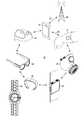
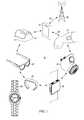
- FIG. 1is a diagram of a wearable system with a mobile device and exemplary wearable devices in accordance with some embodiments.
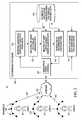
- FIG. 2is a network diagram of a wearable system with a recommendation engine in accordance with some embodiments.
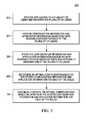
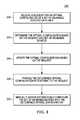
- FIG. 3is a flow chart of a configuration process with the recommendation engine in accordance with some embodiments.
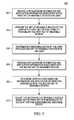
- FIG. 4is a flow chart of a recommendation process with the recommendation engine in accordance with some embodiments.
- FIG. 5is a flow chart of a dynamic reconfiguration process for one of the users with the wearable devices in the wearable system of FIG. 2 in accordance with some embodiments.
- FIG. 6is a block diagram of a server which may be used for the recommendation engine, in other systems, or standalone in accordance with some embodiments.
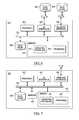
- FIG. 7is a block diagram of a mobile device, which may be used for the mobile device or the wearable devices in accordance with some embodiments.
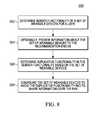
- FIG. 8is a flow chart of a sensor selection process with the wearable devices in accordance with some embodiments.
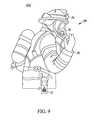
- FIG. 9is a perspective diagram of a first responder with a mobile device and a set of wearable devices in accordance with some embodiments.
- a method associated with one or more wearable devices for a userincludes utilizing the one or more wearable devices, for a set of functionality, in a first configuration by the user, wherein the user is in a specific role; communicating data, in a Personal Area Network (PAN), between the one or more wearable devices and between a mobile device associated with the user; and providing information to a recommendation engine, wherein the information is related to the specific role, the set of functionality, a set of applications, and the first configuration.
- the mobile devicecan include, without limitation, a smart phone, tablet, laptop, radio, and the like, with connectivity to a wide area gateway.
- the configurationcan include device settings, which types of wearable devices are used, and application information, such as which applications are installed, application functionality, application usage information, and user customizable settings in the applications.
- a cloud-based server operating as a recommendation engine associated with wearable devices for a userincludes a network interface communicatively coupled to a network; a processor communicatively coupled to the network interface; and memory storing instructions that, when executed, cause the processor to receive configuration information and application information associated with wearable devices for each of the plurality of users, store the configuration information and application information associated with wearable devices based on roles of the plurality of users, and determine an optimal configuration based on the stored configuration information and application information for each of the roles.
- a mobile device communicatively coupled to one or more wearable devices associated with a userincludes a Personal Area Network (PAN) wireless interface communicatively coupled to the one or more wearable devices; a processor communicatively coupled to the PAN wireless interface; and memory storing instructions that, when executed, cause the processor to form the PAN with the one or more wearable devices; operate an application acting as a recommendation engine; and process data associated with the one or more wearable devices with the recommendation engine.
- PANPersonal Area Network
- a mobile device communicatively coupled to one or more wearable devices associated with a userincludes a Wide Area Network (WAN) and/or a Wireless Local Area Network (WLAN) wireless interface communicatively coupled to a network; a Personal Area Network (PAN) wireless interface communicatively coupled to the one or more wearable devices; a processor communicatively coupled to the PAN wireless interface; and memory storing instructions that, when executed, cause the processor to form the PAN with the one or more wearable devices; operate an application communicatively coupled to a recommendation engine via the network; and communicate data associated with the one or more wearable devices with the recommendation engine.
- WANWide Area Network
- WLANWireless Local Area Network
- PANPersonal Area Network
- a method and apparatus for application optimization and collaboration of wearable devicesthat configures applications on a system of wearable devices to optimize functionality and minimize redundancy.
- the method and apparatusrecommends optimal applications and configurations of smart, wearable devices worn together on a user.
- the method and apparatusprovide dynamic reconfiguration, when possible, of functionality responsive to addition or removal of wearable devices.
- the wearable devicescan be configured in a Personal Area Network (PAN) or the like wirelessly along with an optional connection to a cloud-based analysis server.
- PANPersonal Area Network
- FIG. 1is a diagram of a wearable system 10 with a mobile device 12 and exemplary wearable devices 14 - 24 .
- the exemplary wearable devices 14 - 24are examples of various different wearable devices a user can wear; other wearable devices are also contemplated.
- the mobile device 12can be a smart phone, tablet, Personal Digital Assistant (PDA), etc.
- the mobile device 12may include various wireless interfaces, such as a Wide Area Network (WAN) interfaces to a base station 26 (e.g.
- WANWide Area Network
- LTELong Term Evolution
- eNBsEvolved Node Bs
- PAN interfacese.g., Bluetooth, Bluetooth Low Energy (BLE), iBeacon, ZigBee, wireless USB, etc.
- WLANWireless Local Area Network interfaces
- Wi-FiIEEE 802.11 and variants thereof, etc.
- the wearable devices 14 - 24can include, a smart glove 14 , a smart mask 16 , a smart watch 18 , a smart band 20 , smart glasses 22 , a smart head-mounted computer 24 , and the like. These wearable devices 14 - 24 are presented as examples of wearable devices which can be used with the method and apparatus; other wearable devices are also contemplated. The following provides exemplary functionality of the wearable devices 14 - 24 . Note, all of the wearable devices 14 - 24 can include circuitry, sensors, and wireless interfaces to perform a set of functionality.
- the smart glove 14can be configured to monitor hand movements, measure vital statistics (e.g., pulse, blood pressure, temperature, oxygen levels, etc.), track activity, detect hand gestures for control of other devices, and the like.
- the smart mask 16can attach to a Self Contain Breathing Apparatus (SCBA) or to a helmet, visor, etc.
- SCBASelf Contain Breathing Apparatus
- the smart mask 16can monitor vital statistics (e.g., breathing, temperature, oxygen levels, etc.) and provide a remote microphone, display, etc.
- the smart watch 18can replace a conventional watch 28 and can include a display with a touch screen for various functions such as interacting with the mobile device 12 .
- the smart watch 18can also monitor vital statistics (e.g., pulse, blood pressure, temperature, oxygen levels, etc.) as well as track activity (e.g., pedometer, location, etc.).
- the smart band 20can be worn similar to the smart watch 18 and can monitor vital statistics (e.g., pulse, blood pressure, temperature, oxygen levels, etc.) as well as track activity (e.g., pedometer, location, etc.).
- the smart glasses 22are worn as eyeglasses and can provide a visual display overlaid in view of the user along with interaction with the mobile device 12 .
- the smart glasses 22can also include a video recorder.
- the smart head-mounted computer 24can be a mounted on top of a helmet and can include a video recorder and the like.
- the usercan wear so-called non-smart devices such as the conventional watch 28 .
- the method and apparatusare configured to detect the presence of the non-smart devices.
- the wearable devices 14 - 24are illustrated with PAN links 30 between one another.
- the wearable devices 14 - 24can communicate in a mesh fashion with one another.
- the mobile device 12is illustrated with a WAN/WLAN link 32 to the base station 26 .
- the links 30 , 32are utilized for various communication in the wearable system 10 .
- FIG. 2is a network diagram of a wearable system 50 with a recommendation engine 100 .
- the recommendation engine 100can be implemented on one or more cloud servers.
- the wearable system 50includes a plurality of users 110 , 112 , 115 each fitted with multiple wearable devices 120 .
- the wearable devices 120can include the wearable devices 14 - 24 and the like, and the wearable devices 120 can form a PAN 125 with one another and the mobile device 12 .
- the users 110 , 112 , 115can each have a mobile device 12 .
- the users 110 , 112 , 115via the associated mobile devices 12 , have wireless links 130 , 132 , 135 to a WLAN/WAN 140 , such as the Internet, for communication with the recommendation engine 100 .
- the cloud-based recommendation engine 100also connects to the Internet via a firewall/gateway/web server 150 as is common practice. Also, while only illustrated with the users 110 , 112 , 115 , the wearable system 50 contemplates
- the recommendation engine 100recommends optimal applications and configurations of smart, wearable devices worn together on the user 110 , 112 , 115 based on feedback and analysis.
- the recommendation engine 100is implemented via computer-executable instructions that, when executed, cause a processor to perform various steps.
- the recommendation engine 100includes the steps of receiving anonymous applications and configurations data from the users 110 , 112 , 115 (step 152 ), matching the applications and configurations data against similar crowd-sourced applications and configurations stored in a database 153 (step 155 ), performing an analysis of the differences between the user's applications and configurations and most popular crowd-sourced applications and configurations (step 160 ), and generating recommended applications and configurations (step 165 ) that are provided back to the user 110 , 112 , 115 for manual or automatic updates to the user's wearable configuration.
- the recommended applications and configurationscan be provided via the mobile device 12 .
- the recommended applications and configurationscan be manually configured by the user 110 , 112 , 115 .
- the recommended applications and configurationscan be automatically implemented to configure the wearable devices 120 .
- the mobile device 12can automatically configure/provision the wearable devices 120 based on the recommended applications and configurations.
- a combination of the manual and automatic processescan be used.
- the recommendation engine 100also includes the step of updating the database 153 based on using preferably anonymous configuration data from each of the users 110 , 112 , 115 (step 170 ).
- the updatescan be used to fine tune the analysis over time. That is, the more users 110 , 112 , 115 providing information, the recommendation engine 100 can optimize the analysis based on the users 110 , 112 , 115 , their roles, and usage patterns associated with applications and functionality of the wearable devices 120 .
- anonymous usage informationis collected from each wearable device.
- a recommendation applicationcan be operated on the mobile device 12 for interacting with the recommendation engine 100 and for performing various functions described herein with the PAN 125 .
- the functionality associated with interacting with the recommendation engine 100can be performed directly by the wearable devices 120 (e.g., either wirelessly if available, or when the wearable devices 120 are connected to a device that provides connectivity to the recommendation engine 100 ).
- This anonymous usage informationincludes one or more of: applications installed on each device, application settings, application usage, device settings, device usage, application versions, etc.
- the usage informationmay be anonymous for privacy protection.
- the usage informationcan include the role or function of the user including a specific organization. For example, a member of a certain fire department, police force, company, organization, etc.
- the recommendation engine 100can receive relevant information regarding applications and configurations for specific roles as well as for specific roles by organization and provide the recommended applications and configurations accordingly.
- the user's wearable devices 120 or the mobile device 12periodically transmits these usage statistics to the recommendation engine 100 .
- the recommendation engine 100Comparing each user's wearable applications and configuration against aggregate applications and configurations for a large population of the users 110 , 112 , 115 , the recommendation engine 100 provides crowd-sourced recommendations to the users 110 , 112 , 115 such as optimal application settings for each of the wearable devices 120 based on data derived from other users 110 , 112 , 115 with similar sets of the wearable devices 120 .
- a userwears the smart watch 18 , the smart glasses 22 , the mobile device 12 , a smart ring, and a biometric band (such as the smart band 20 ).
- Each of these wearable devices 120is linked into the PAN 125 .
- At least one of the devicesalso has WAN connectivity, e.g. the mobile device 12 , such as cellular data or Wi-Fi via a gateway such as smart phone or wireless modem.
- the wearable devices 120periodically transmit information, including a device identifier (ID), active/inactive applications, and application settings to the recommendation engine 100 .
- the recommendation engine 100incorporates this information to a large data set derived from anonymous configuration data collected from a large population of wearable users.
- the recommendation engine 100employs well known statistical techniques to correlate configuration and usage information from the users 110 , 112 , 115 with identical or similar sets of wearable devices 120 as well as similar user types or roles (e.g., student, lawyer, tradesmen, emergency first responder, etc.).
- the result of this analysisis that the users 110 , 112 , 115 receive recommendations from the recommendation engine 100 with advice on optimizing the configuration of their own wearable devices 120 based on crowd-sourced data.
- the recommendation engine 100may suggest the following configuration based on a crowd-sourced survey of other users 110 , 112 , 115 with identical or similar wearable hardware and similar roles:
- Firefighter Smart maskBiometric monitoring including temperature, oxygen levels, breathing, etc.
- Smart head- Search, location, and messaging mounted computerSmart radio: Multi-function including Push-to-Talk
- Smart bandBiometric monitoring including pulse, blood pressure, etc.
- Smart ringVibrate/alert for priority messages
- the recommendation engine 100is not simply making recommendations for applications and configurations for a standalone device, but rather looks at the user's 110 , 112 , 115 complete configuration of the wearable devices 120 as a system and compares this data with other users 110 , 112 , 115 who have the same or a similar system of the wearable devices 120 and the same or similar role. Based on the wearable devices 120 and the role, the recommendation engine 100 provides the recommended configuration for configuring each of the wearable devices 120 in a synergistic manner based on crowd-sourced data, from the database 153 .
- the recommendation engine 100can operate with both configuration information and application information.
- the configuration informationcan include, without limitation, which types of wearable devices are used, device settings, user customizable settings in the applications, etc.
- the configuration informationcan include settings related to how something is monitored, such as time of day, or settings related to how information is reported.
- the application informationcan include which applications are installed, application functionality, application usage information, etc.
- the application informationcan include that a smart bracelet is configured for heart rate monitoring and to display a clock, as well as usage information.
- the configuration information and application informationrelate to anything adjustable on or with the wearable devices 120 .
- FIG. 3is a flow chart of a configuration process 200 with the recommendation engine 100 .
- the configuration process 200is used by the recommendation engine 100 to develop and refine data in the database 153 .
- the configuration process 200contemplates operation in the wearable system 50 by the recommendation engine 100 communicating with the users 110 , 112 , 115 .
- the configuration process 200includes providing an application to a plurality of users and registering the plurality of users (step 202 ).
- the applicationcan be configured to coordinate functionality between the wearable devices 120 and the recommendation engine 100 .
- the applicationcan provide information sharing to the recommendation engine 100 from the users 110 , 112 , 115 and optimal applications and configurations for the wearable devices 120 from the recommendation engine 100 .
- the applicationcan be implemented on the mobile device 12 such as a stand-alone application, a web browser plugin, or the like.
- the applicationcan be implemented on one or more of the wearable devices 120 .
- the registration for each of the users 110 , 112 , 115can include setting up an account and at a minimum providing a description of a role or function of each user 110 , 112 , 115 . Other information can also be provided during the registration.
- the configuration process 200includes receiving configuration information and application information, e.g. a first configuration, associated with wearable devices for each of the plurality of users (step 204 ).
- the configuration information and application informationcan be anonymous, but classified by role or function and optionally by the organization.
- the configuration informationcan include which types of wearable devices 120 are used, including brand of the wearable devices 120 , application/functional settings of the wearable devices 120 , time of usage of the wearable devices 120 , and the like.
- the application informationcan include functionality used on the wearable devices 120 , usage information of the wearable devices 120 , applications used on the wearable devices 120 , and the like.
- the configuration information and application informationprovides the recommendation engine 100 a snapshot of which of the wearable devices 120 are used by the users 110 , 112 , 115 and how the wearable devices 120 are used.
- the configuration process 200includes storing the configuration information and application information associated with the wearable devices based on roles and optionally organization of the plurality of users (step 206 ).
- the configuration process 200is developing the database 153 to determine and characterize the optimal applications and configurations by role and optionally by the organization. For example, a typical student will have a different set of the wearable devices 120 and configurations/applications from a first responder. Also, a first responder from one police department, for example the New York Police Department (NYPD), may have both a different set of the wearable devices 120 and configurations/applications from a first responder from another police department, for example the Los Angeles Police Department (LAPD), etc.
- NYPDNew York Police Department
- LAPDLos Angeles Police Department
- the configuration process 200includes determining an optimal configuration based on the stored configuration information and application information for each of the roles (step 208 ).
- the configuration process 200consolidates all of the different configurations and applications from a large number of the users 110 , 112 , 115 by their roles (and optionally by their organization) and derives the optimal configuration for each of the roles (and optionally by organization) based on data mining and analysis of the different configurations and applications from a large number of the users 110 , 112 , 115 .
- the configuration process 200can continually update the optimal applications and configurations based on updates in the stored configuration information and application information for each of the roles (step 210 ).
- the recommendation engine 100will continually receive information regarding configurations and applications, and continually tweak and evolve the optimal configurations and applications.
- FIG. 4is a flow chart of a recommendation process 240 with the recommendation engine 100 .
- the recommendation process 240is used by the recommendation engine 100 to provide one of the users 110 , 112 , 115 an optimal configuration based on data in the database 153 .
- the recommendation process 240contemplates operation in the wearable system 50 by the recommendation engine 100 communicating with the users 110 , 112 , 115 , and in conjunction with the configuration process 200 .
- the configuration process 200is implemented by the recommendation engine 100 communicating with a user of the users 110 , 112 , 115 and, optionally, with the user operating the application from the configuration process 200 .
- the recommendation process 240includes receiving a request for a recommended configuration of a set of wearable devices for a user (step 242 ).
- a specific useris requesting the optimal configuration. This can be done through the application, through a browser plugin, or based on manually inputting the wearable devices 120 .
- the requestcan include the role and optionally the organization of the user. Additionally, the request can include the wearable devices 120 associated with the user.
- the recommendation process 240includes determining the optimal configuration based on the request and the set of wearable devices 120 (step 244 ).
- the recommendation engine 100through the recommendation process 240 , is configured to provide crowd-sourced recommendations to simplify the task of configuring the user's wearable devices 120 .
- the determining step 244focuses on optimizing the functionality provided by each of the wearable devices 120 (e.g., time and alerts on smart watch, biometric indicators on smart band, critical information on head mounted display, etc.).
- the determining step 244also focuses on avoiding duplicate functionality (e.g., multiple devices of the wearable devices 120 do not display the same information such as incoming messages, time/date, event notification, location based services, etc.).
- Recommendationsmay be categorized not only by the wearable devices 120 in use, but also by task, event, occupation, user type, and time-of-day. For example, students may have their wearable devices 120 configured to provide different functions than parents with similar sets of wearable devices 120 . Workers in mission critical fields such as police and fire would likely choose to have different functions display on smart glasses than workers in other fields, etc. Also, wearable configurations may vary during working and non-working hours.
- the recommendation engine 100correlates types of users, job functions, and other segmentation information (information received in the request as well as from the application in the configuration process 200 ) with sets of wearable devices 120 to provide fine-grained recommendations on optimal applications and configurations of the wearable devices 120 .
- Well known data mining, statistical and other data analysis techniquesare employed by the recommendation engine 100 to filter and analyze crowd-sourced information based on data from the user's wearable devices 120 to provide crowd-sourced recommendations.
- the recommendation process 240can include updating the optimal applications and configurations based on the request (step 246 ).
- data from the request by the usercan be incorporated in the database 153 , such as through the configuration process 200 .
- the recommendation process 240includes providing the determined optimal configuration in response to the request (step 248 ).
- the recommendation engine 100can provide the determined optimal configuration over the WAN 140 and through the links 130 , 132 , 135 .
- the recommendation process 240includes manually and/or automatically configuring the set of wearable devices 120 with the determined optimal configuration (step 250 ).
- the wearable devices 120are automatically configured based on the determined optimal configuration and/or the determined optimal configuration is presented to the user 110 , 112 , 115 for manual configuration.
- the users 110 , 112 , 115can view the determined optimal configuration recommended by the recommendation engine 100 , as well as accept and personalize the determined optimal configuration from the recommendation engine 100 .
- Personalized settingsare of course deviations from the determined optimal configuration provided by the recommendation engine 100 . These customizations are anonymously fed back to the recommendation engine 100 further enhancing recommendations for other users.
- Custom settingscan be implemented in various ways known in the art such as thumbs up/thumbs down buttons, menus, etc.
- the recommendation engine 100is typically embodied by a cloud-based server that collects anonymous information from a large population of wearable users and provides crowd-sourced recommendations based on analysis of this information.
- the recommendation engine 100can be limited to a specific workgroup to serve a limited workgroup or social group of users such as fire fighters that have similar wearable devices 120 and applications and configurations.
- the wearable devices 120can exchange configuration statistics, in a peer-to-peer fashion with the mobile device 12 .
- the statisticsmay be viewable, and optionally anonymous, so that new users to the workgroup can leverage the wearable apps and settings used within the workgroup.
- the recommendation engine 100can run on a single wearable device 120 or the application may be distributed across the peer workgroup's wearable device 120 for improved redundancy.
- the statistics from the wearable devices 120may be consolidated and presented for optimization.
- the statisticsare useful in determining procedures looking at historical statistics for specific incidents with the first responders.
- the statisticscan be used for health monitoring purposes, e.g. ensuring employees are maintaining healthy lifestyles to improve group health insurance premiums.
- Various other embodimentsare contemplated.
- FIG. 5is a flow chart of a dynamic reconfiguration process 260 for one of the users 110 , 112 , 115 with the wearable devices 120 .
- the dynamic reconfiguration process 260is used by the wearable devices 120 local to the user 110 , 112 , 115 to reconfigure in order to replace the lost functionality or avoid duplicate functionality when a wearable device is added/removed. That is, the dynamic reconfiguration process 260 is another aspect of the method and apparatus that can, in response to removing one of the wearable devices 120 , trigger the remaining wearable devices 120 to reconfigure in order to replace the lost functionality, if possible.
- the dynamic reconfiguration process 260contemplates operation in the wearable system 50 by the wearable devices 120 , the mobile device 12 , and/or the application, local to the user 110 , 112 , 115 and optionally with the recommendation engine 100 .
- the dynamic reconfiguration process 260contemplates operation with the configuration process 200 and/or the recommendation process 240 .
- the dynamic reconfiguration process 260includes providing configuration information and application information associated with a first set of wearable devices for user 110 , 112 , 115 (step 262 ).
- the recommendation engine 100can be operated with the user 110 , 112 , 115 , either in the mobile device 12 and/or on the wearable devices 120 .
- the applicationcan periodically provide the configuration information and application information to the recommendation engine 100 such as described in the configuration process 200 .
- the step 262can be optional, and the dynamic reconfiguration process 260 also contemplates local operation, at the user 110 , 112 , 115 , without communicating with the recommendation engine 100 .
- the dynamic reconfiguration process 260includes operating the set of wearable devices 120 by the user 110 , 112 , 115 with a first set of functionality provided by the first set of wearable devices 120 (step 264 ).
- the first set of functionalityis a baseline—this is the functionality, presently used by the user 110 , 112 , 115 with the wearable devices 120 .
- the functionalitycan be anything done by the wearable devices 120 , such as gathering sensor data, presenting messages, alerts, etc., and the like.
- the dynamic reconfiguration process 260includes adding/removing a wearable device by the user 110 , 112 , 115 to obtain a second set of wearable devices 120 for the user 110 , 112 , 115 (step 266 ).
- the user 110 , 112 , 115has added or removed one of the wearable devices 120 , and now there is a second set of functionality—which may be different or duplicative of the first set of functionality.
- the dynamic reconfiguration process 260includes providing configuration information and application information associated with the second set of wearable devices 120 to the recommendation engine 100 (step 268 ).
- the dynamic reconfiguration process 260includes determining updated configuration information and application information associated with the second set of wearable devices 120 (step 270 ). The determining is to either accommodate lost functionality where the second set of wearable devices 120 has less devices than the first set of wearable devices 120 or avoid duplicate functionality where the second set of wearable devices 120 has more devices than the first set of wearable devices 120 .
- the dynamic reconfiguration process 260includes adjusting the second set of wearable devices 120 based on the first set of functionality to account for the added/removed wearable device (step 272 ).
- the new configuration sans the smart watch 18can be derived from crowd-sourced recommendations through the recommendation engine 100 .
- the new configurationcan be initiated with or without user intervention.
- adding a wearable devicecan cause the user's set of wearable devices 120 to reconfigure based on recommendations provided by the recommendation engine 100 to avoid duplication and add new functionality. Also, this can operate without the recommendation engine 100 .
- multiple variations of the user's working set of wearable devices 120may be cached in the devices. This eliminates the need to query the recommendation engine 100 each time that devices are added or deleted. Also, cached recommendations may be periodically updated by downloading new recommendations from the recommendation engine 100 . Of course, users can personalize the crowd-sourced recommendations and these customizations may also be cached.
- FIG. 6is a block diagram of a server 300 which may be used for the recommendation engine 100 , in other systems, or standalone.
- the cloud-based recommendation engine 100may be formed as one or more of the servers 300 .
- the server 300may be a digital computer that, in terms of hardware architecture, generally includes a processor 302 , input/output (I/O) interfaces 304 , a network interface 306 , a data store 308 , and memory 310 .
- I/Oinput/output
- FIG. 6depicts the server 300 in a simplified manner, and a practical embodiment may include additional components and suitably configured processing logic to support known or conventional operating features that are not described in detail herein.
- the components ( 302 , 304 , 306 , 308 , and 310 )are communicatively coupled via a local interface 312 .
- the local interface 312may be, for example but not limited to, one or more buses or other wired or wireless connections, as is known in the art.
- the local interface 312may have additional elements, which are omitted for simplicity, such as controllers, buffers (caches), drivers, repeaters, and receivers, among many others, to enable communications. Further, the local interface 312 may include address, control, and/or data connections to enable appropriate communications among the aforementioned components.
- the processor 302is a hardware device for executing software instructions.
- the processor 302may be any custom made or commercially available processor, a central processing unit (CPU), an auxiliary processor among several processors associated with the server 300 , a semiconductor-based microprocessor (in the form of a microchip or chip set), or generally any device for executing software instructions.
- the processor 302is configured to execute software stored within the memory 310 , to communicate data to and from the memory 310 , and to generally control operations of the server 300 pursuant to the software instructions.
- the I/O interfaces 304may be used to receive user input from and/or for providing system output to one or more devices or components.
- I/O interfaces 304may include, for example, a serial port, a parallel port, a small computer system interface (SCSI), a serial ATA (SATA), a fibre channel, Infiniband, iSCSI, a PCI Express interface (PCI-x), an infrared (IR) interface, a radio frequency (RF) interface, and/or a universal serial bus (USB) interface.
- SCSIsmall computer system interface
- SATAserial ATA
- PCI-xPCI Express interface
- IRinfrared
- RFradio frequency
- USBuniversal serial bus
- the network interface 306may be used to enable the server 300 to communicate on a network, such as the Internet, the WAN 140 , and the like, etc.
- the network interface 306may include, for example, an Ethernet card or adapter (e.g., 10BaseT, Fast Ethernet, Gigabit Ethernet, 10 GbE) or a wireless local area network (WLAN) card or adapter (e.g., 802.11a/b/g/n).
- the network interface 306may include address, control, and/or data connections to enable appropriate communications on the network.
- a data store 308may be used to store data.
- the data store 308may include any of volatile memory elements (e.g., random access memory (RAM, such as DRAM, SRAM, SDRAM, and the like)), nonvolatile memory elements (e.g., ROM, hard drive, tape, CDROM, and the like), and combinations thereof. Moreover, the data store 308 may incorporate electronic, magnetic, optical, and/or other types of storage media. In one example, the data store 308 may be located internal to the server 300 such as, for example, an internal hard drive connected to the local interface 312 in the server 300 . Additionally in another embodiment, the data store 308 may be located external to the server 300 such as, for example, an external hard drive connected to the I/O interfaces 304 (e.g., SCSI or USB connection). In a further embodiment, the data store 308 may be connected to the server 300 through a network, such as, for example, a network attached file server.
- the memory 310may include any of volatile memory elements (e.g., random access memory (RAM, such as DRAM, SRAM, SDRAM, etc.)), nonvolatile memory elements (e.g., ROM, hard drive, tape, CDROM, etc.), and combinations thereof. Moreover, the memory 310 may incorporate electronic, magnetic, optical, and/or other types of storage media. Note that the memory 310 may have a distributed architecture, where various components are situated remotely from one another, but can be accessed by the processor 302 .
- the software in memory 310may include one or more software programs, each of which includes an ordered listing of executable instructions for implementing logical functions.
- the software in the memory 310includes a suitable operating system (O/S) 314 and one or more programs 316 .
- O/Soperating system
- the operating system 314essentially controls the execution of other computer programs, such as the one or more programs 316 , and provides scheduling, input-output control, file and data management, memory management, and communication control and related services.
- the one or more programs 316may be configured to implement the various processes, algorithms, methods, techniques, etc. described herein. Specifically, the one or more programs 316 can be configured to implement the various processes 200 , 240 and functionality associated with the recommendation engine 100 .
- FIG. 7is a block diagram of a mobile device 400 , which may be used for the mobile device 12 , the wearable devices 14 - 24 , the wearable devices 120 , or the like.
- the mobile device 400can be a digital device that, in terms of hardware architecture, generally includes a processor 402 , input/output (I/O) interfaces 404 , wireless interfaces 406 , a data store 408 , one or more sensors 410 , and memory 412 .
- I/Oinput/output
- FIG. 7depicts the mobile device 400 in an oversimplified manner, and a practical embodiment may include additional components and suitably configured processing logic to support known or conventional operating features that are not described in detail herein.
- the components ( 402 , 404 , 406 , 408 , 410 , and 412 )are communicatively coupled via a local interface 414 .
- the local interface 414can be, for example but not limited to, one or more buses or other wired or wireless connections, as is known in the art.
- the local interface 414can have additional elements, which are omitted for simplicity, such as controllers, buffers (caches), drivers, repeaters, and receivers, among many others, to enable communications. Further, the local interface 414 may include address, control, and/or data connections to enable appropriate communications among the aforementioned components.
- the processor 402is a hardware device for executing software instructions.
- the processor 402can be any custom made or commercially available processor, a central processing unit (CPU), an auxiliary processor among several processors associated with the mobile device 400 , a semiconductor-based microprocessor (in the form of a microchip or chip set), or generally any device for executing software instructions.
- the processor 402is configured to execute software stored within the memory 412 , to communicate data to and from the memory 412 , and to generally control operations of the mobile device 400 pursuant to the software instructions.
- the processor 402may include a mobile optimized processor such as optimized for power consumption and mobile applications.
- the I/O interfaces 404can be used to receive user input from and/or for providing system output.
- User inputcan be provided via, for example, a keypad, a touch screen, a scroll ball, a scroll bar, buttons, bar code scanner, and the like.
- System outputcan be provided via a display device such as a liquid crystal display (LCD), touch screen, and the like.
- the I/O interfaces 404can also include, for example, a serial port, a parallel port, a small computer system interface (SCSI), an infrared (IR) interface, a radio frequency (RF) interface, a universal serial bus (USB) interface, mini-USB, proprietary interfaces, and the like.
- the I/O interfaces 404can include a graphical user interface (GUI) that enables a user to interact with the mobile device 400 . Additionally, the I/O interfaces 404 may further include an imaging device, i.e. camera, video camera, etc.
- an imaging devicei.e. camera, video camera, etc.
- the wireless interfaces 406enables wireless communication to an external access device or network. Any number of suitable wireless data communication protocols, techniques, or methodologies can be supported by the wireless interfaces 406 , including, without limitation: RF; IrDA (infrared); Bluetooth; Bluetooth Low Energy (BLE); ZigBee (and other variants of the IEEE 802.15 protocol); IEEE 802.11 (any variation); IEEE 802.16 (WiMAX or any other variation); Direct Sequence Spread Spectrum; Frequency Hopping Spread Spectrum; Long Term Evolution (LTE); cellular/wireless/cordless telecommunication protocols (e.g. 3G/4G, etc.); wireless home network communication protocols; proprietary wireless data communication protocols such as variants of Wireless USB; and any other protocols for wireless communication.
- RFradio access device
- IrDAinfrared
- BluetoothBluetooth Low Energy
- ZigBeeand other variants of the IEEE 802.15 protocol
- IEEE 802.11any variation
- IEEE 802.16WiMAX or any other variation
- Direct Sequence Spread SpectrumFrequency Hopping
- the data store 408may be used to store data.
- the data store 408may include any of volatile memory elements (e.g., random access memory (RAM, such as DRAM, SRAM, SDRAM, and the like)), nonvolatile memory elements (e.g., ROM, hard drive, tape, CDROM, and the like), and combinations thereof.
- RAMrandom access memory
- nonvolatile memory elementse.g., ROM, hard drive, tape, CDROM, and the like
- the data store 408may incorporate electronic, magnetic, optical, and/or other types of storage media.
- the sensors 410are used to capture data and/or assist in operation of the mobile device 400 .
- the sensors 410can include a proximity sensor, a light sensor, an accelerometer, a magnetometer, a gyroscope, a thermometer, Global Positioning Satellite (GPS), and the like.
- GPSGlobal Positioning Satellite
- the sensors 410can include a proximity sensor, a light sensor, an accelerometer, a magnetometer, a gyroscope, a thermometer, GPS, a pedometer, a heart monitor, and the like.
- the mobile device 400can use any type of sensor 410 for obtaining data.
- the memory 412may include any of volatile memory elements (e.g., random access memory (RAM, such as DRAM, SRAM, SDRAM, etc.)), nonvolatile memory elements (e.g., ROM, hard drive, etc.), and combinations thereof. Moreover, the memory 412 may incorporate electronic, magnetic, optical, and/or other types of storage media. Note that the memory 412 may have a distributed architecture, where various components are situated remotely from one another, but can be accessed by the processor 402 .
- the software in memory 412can include one or more software programs, each of which includes an ordered listing of executable instructions for implementing logical functions. In the example of FIG. 7 , the software in the memory 412 includes a suitable operating system (O/S) 416 and programs 418 .
- O/Soperating system
- the operating system 416essentially controls the execution of other computer programs, and provides scheduling, input-output control, file and data management, memory management, and communication control and related services.
- the programs 418may include various applications, add-ons, etc. configured to provide end user functionality with the mobile device 400 .
- exemplary programs 418may include, but not limited to, a web browser, social networking applications, streaming media applications, games, mapping and location applications, electronic mail applications, financial applications, and the like.
- the operating system 416 and the programs 418may be integrated to provide a set of functionality.
- some or all of the wearable devices 120contain the sensors 410 (e.g. accelerometers, cameras, microphones, temperature, health sensors, etc.). It is known in the art that sensors in a collaborative system can be shared by other devices in the system. For example, one sensor 410 may measure ambient temperature and other devices can share the data via PAN 125 . Furthermore, when a plurality of similar sensors 410 (e.g. multiple temperature sensors) is present in the PAN 125 , it makes sense to choose one of the sensors 410 to provide measurements and share the output with the wearable devices 120 or application rather than have a plurality of sensors 410 of the same type active.
- sensors 410e.g. accelerometers, cameras, microphones, temperature, health sensors, etc.
- FIG. 8is a flow chart of a sensor selection process 500 with the wearable devices 120 .
- the sensor selection process 500is used by the wearable devices 120 local to the user 110 , 112 , 115 to configure the wearable devices 120 to avoid duplicate sensor 410 functionality.
- the sensor selection process 500contemplates operation in the wearable system 50 of the wearable devices 120 , the mobile device 12 , and/or the application, local to the user 110 , 112 , 115 and optionally with the recommendation engine 100 .
- the sensor selection process 500contemplates operation with the configuration process 200 , the recommendation process 240 , and/or the dynamic reconfiguration process 260 .
- the sensor selection process 500includes determining sensor functionality of a set of wearable devices 120 for a user 110 , 112 , 115 (step 502 ).
- the sensor selection process 500can include providing information about the set of wearable devices 120 to the recommendation engine 100 (step 504 ).
- the user 110 , 112 , 115can utilize the application to communicate with the recommendation engine 100 .
- the recommendation engine 100can assist in performing the sensor selection process 500 .
- the sensor selection process 500includes determining duplicative functionality in the sensor functionality based on the set of wearable devices 120 (step 506 ). Again, this can be performed local to the user 110 , 112 , 115 , such as with the application, and/or with the recommendation engine 100 .
- Duplicative functionalitycan include, without limitation, temperature readings, health monitoring, information display such as time and messages, location, activity monitoring, etc.
- the sensor selection process 500includes configuring the set of wearable devices 120 to avoid the duplicative functionality and to share information over the PAN 125 (step 508 ).
- the application and/or the recommendation engine 100can cause configuration of the set of wearable devices 120 to avoid the duplicative functionality. For example, only one device actively displaying time, only one device actively determining location, etc.
- the other devicescan receive the sensor 410 information via the PAN 125 .
- an improvement over existing artis to utilize the recommendation engine 100 to provide crowd-sourced recommendations.
- a user's wearable devices 120can query the recommendation engine 100 to determine which sensor 410 from among a plurality of similar sensors 410 is considered the best choice (based on crowd-sourced recommendations). The user's wearable devices 120 can then choose this sensor 410 for system-wide sharing and disable similar redundant sensors for power savings.
- sensor recommendationscan be determined based on technical data such as actual performance specifications for available sensors 410 .
- the distinction hereis that crowd sourced data is based on popularity within the user base and indicates a preferred sensor choice based on tracking and ranking the most commonly used sensor applications and configurations amongst a set of available sensors 410 .
- an alternative methodis to load technical information into the recommendation engine 100 such as measured sensor accuracy, power consumption, etc. and use this objective data to choose the sensor 410 .
- the output of an application executing on one of the wearable devices 120 and the mobile device 12 that is a member of the PAN 125can be used by other application(s) on the PAN 125 .
- an application producing location datacan share this information with other applications on the PAN 125 . Since a key aspect of the method and apparatus optimally configures applications running on a user's wearable devices 120 , it is necessary to preserve the linkage of applications, sourcing and sinking data so that information flows are maintained even when the wearable devices 120 are added or removed from the PAN 125 or available applications change based on crowd-sourced optimizations.
- the user 110 , 112 , 115removes a fitness band that was sourcing biometric data to other applications on the PAN 125 , another device/application combination capable of providing this information can be recommended for use or substituted automatically (if available).
- another device/application combination capable of providing this functionalitycan be recommended for use or substituted automatically (if available).
- a device that sinks (consumes) data from other applicationse.g. a smart ring that provides event notifications to the user 110 , 112 , 115
- another device/application combination capable of providing this functionalitycan be recommended for use or substituted automatically (if available).
- the devices 12 , 120 in the PAN 125may be constant; however, the user 110 , 112 , 115 may choose to update their wearable applications configuration based on crowd-sourced data as described herein.
- the new configuration of applicationsmay entail a change to the application or application/device combination sourcing the data.
- the PAN 125may source ambient temperature/humidity from an application on the user's smart watch 18 .
- the user 110 , 112 , 115may then choose to reconfigure their wearable applications configuration based on crowd-sourced recommendations from the recommendation engine 100 .
- the new recommendationsmay include use of a different temperature/humidity application on the user's smart watch 18 or use of a different temperature/humidity application on another device such as the user's smart glasses 22 .
- itis an object of the method and apparatus to maintain the linkage of devices/applications providing data and applications consuming data when there is a change to devices or applications on the PAN 125 .
- the process of maintaining connections between applications on the PAN 125can typically be embodied by using well-known techniques such as Service Discovery Protocols (SDP) that allow applications to make use of one another's services without user intervention.
- SDPService Discovery Protocols
- the method and apparatusmaintains the linkage of combinations of devices and applications sourcing and sinking data following reconfiguration of a wearable device 120 in the PAN 125 triggered by: 1) removing or adding a device (and the resulting reconfiguration based on crowd-sourced data) or; 2) reconfiguring the PAN 125 to use different source and/or sink apps as a result of crowd-sourced recommendations. Also, removal of one of the wearable devices 120 may be triggered by the device breaking or malfunctioning.
- the method and apparatusis sensitive to security concerns. For example, information such as messages is best displayed on the device(s) that provide privacy such as the smart glasses 22 . Less sensitive info may be displayed on publically visible devices like the smart watches 18 .
- the device that displays security sensitive informationcan change dynamically if the PAN 125 is reconfigured by the user adding or removing wearable devices 120 , e.g. if the smart glasses 22 are removed from the PAN 125 , then sensitive messages may be re-routed to the user's mobile device 12 .
- Security rulescan take precedence over preferences provided by the recommendation engine 100 . Therefore, even if the user 110 , 112 , 115 derives applications and configurations from crowd-sourced recommendations, overriding security rules can force certain functions or applications to “stick” with certain devices (e.g. messages are only displayed on privately viewable devices).
- FIG. 1Another exemplary aspect of the method and apparatus is shown in FIG. 1 .
- wrist-worn smart devicese.g., the devices 18 , 20
- many users 110 , 112 , 115will continue to wear traditional mechanical or quartz watches 28 alongside smart bands to provide complementary information such as calories burned, message alerts, etc.
- smart bands incorporating magnetic sensorscan sense the metallic housing of most conventional watches 28 and automatically adapt information displays to avoid duplicating the time displayed on the conventional watches 28 .
- smart devicesmay use Near Field Sensor (NFC) technology to detect adjacent wearable devices 120 on the user's wrist to provide complementary information displays as an alternative to using the PAN 125 .
- NFCNear Field Sensor
- FIG. 9is a perspective diagram of a first responder 600 with a mobile device 12 and a set of wearable devices 120 .
- the first responder 600can be a firefighter
- the set of wearable devices 120can include a smart mask 16 , a smart band 20 , a smart head-mounted computer 24 , and the like.
- the collective functionalitycan include displaying information in the field of view, heart rate monitoring, breathing monitoring, air quality monitoring, 2-way communications (e.g., Push-to-Talk), location mapping, etc.
- the method and apparatusprovide quick setup of the set of wearable devices 120 including optimal applications and configurations based on the crowd-sourcing, either based on this fire department or all fire departments.
- the first responder 600is involved in mission-critical work, and configuration of the wearable devices 120 is cumbersome. Automation of the configuration of the wearable devices 120 is advantageous. Furthermore, recovering lost functionality of the wearable devices 120 is extremely important in life threatening situations, such as when one of the wearable devices 120 breaks or malfunctions. Also, the first responder 600 can be a police officer, an Emergency Medical Technician (EMT), etc.
- EMTEmergency Medical Technician
- Key advantages of the method and apparatusinclude ensuring proper, optimal applications and configurations of the wearable devices 120 based on crowd-sourcing and/or based on specific department requirements as well as providing automated recovery for lost functionality.
- a police officercan include a Mobile Digital Video Recorder (MDVR) worn on his body, and responsive to losing that functionality, audio recording may be turned on the mobile device 12 to ensure at least some of the functionality is recovered, if not all.
- MDVRMobile Digital Video Recorder
- aincludes . . . a”, “contains . . . a” does not, without more constraints, preclude the existence of additional identical elements in the process, method, article, or apparatus that comprises, has, includes, contains the element.
- the terms “a” and “an”are defined as one or more unless explicitly stated otherwise herein.
- the terms “substantially”, “essentially”, “approximately”, “about” or any other version thereof,are defined as being close to as understood by one of ordinary skill in the art, and in one non-limiting embodiment the term is defined to be within 10%, in another embodiment within 5%, in another embodiment within 1% and in another embodiment within 0.5%.
- the term “coupled” as used hereinis defined as connected, although not necessarily directly and not necessarily mechanically.
- a device or structure that is “configured” in a certain wayis configured in at least that way, but may also be configured in ways that are not listed.
- processorssuch as microprocessors, digital signal processors, customized processors and field programmable gate arrays (FPGAs) and unique stored program instructions (including both software and firmware) that control the one or more processors to implement, in conjunction with certain non-processor circuits, some, most, or all of the functions of the method and/or apparatus described herein.
- processorsor “processing devices” such as microprocessors, digital signal processors, customized processors and field programmable gate arrays (FPGAs) and unique stored program instructions (including both software and firmware) that control the one or more processors to implement, in conjunction with certain non-processor circuits, some, most, or all of the functions of the method and/or apparatus described herein.
- FPGAsfield programmable gate arrays
- unique stored program instructionsincluding both software and firmware
- an embodimentcan be implemented as a computer-readable storage medium having computer readable code stored thereon for programming a computer (e.g., comprising a processor) to perform a method as described and claimed herein.
- Examples of such computer-readable storage mediumsinclude, but are not limited to, a hard disk, a CD-ROM, an optical storage device, a magnetic storage device, a ROM (Read Only Memory), a PROM (Programmable Read Only Memory), an EPROM (Erasable Programmable Read Only Memory), an EEPROM (Electrically Erasable Programmable Read Only Memory) and a Flash memory.
Landscapes
- Engineering & Computer Science (AREA)
- Computer Networks & Wireless Communication (AREA)
- Signal Processing (AREA)
- General Engineering & Computer Science (AREA)
- Theoretical Computer Science (AREA)
- Human Computer Interaction (AREA)
- Physics & Mathematics (AREA)
- General Physics & Mathematics (AREA)
- Information Transfer Between Computers (AREA)
- User Interface Of Digital Computer (AREA)
- Telephone Function (AREA)
Abstract
Description
The present disclosure relates to smart, wearable devices. There is a rapidly growing market for wearable, computer-enabled devices which are referred to herein as wearable devices, smart devices, wearables, etc. Examples of wearable devices include, without limitation, health tracking bands or bands, smart watches, smart phones, computerized eye glasses, smart gloves, head-mounted displays, activity trackers, and the like. It is also increasingly common for several wearable devices to be worn simultaneously because each device has intrinsic strengths and weaknesses. For example, a smart watch may be preferred for time/date and message notifications; an exercise band for tracking heart rate, steps, and calories; and smart glasses as a multifunction information display and computer.
Users wearing multiple smart devices together expect the devices to be connected and to work together synergistically to deliver unique and actionable information without duplication. However, because smart devices may provide similar capabilities, there is the potential for redundant, overlapping functionality. For example, a smart watch and smart glasses could both display the time, location, or the user's next calendar appointment. Furthermore, it would be desirable that adding or removing wearable devices would automatically reconfigure the devices so that functionality is not lost, if possible, when a device is removed or duplicated when a new wearable is added. Users also expect wearable devices to be responsive to traditional jewelry such as non-smart watches and adapt.
Accordingly, there is a need for a method and apparatus for application optimization and collaboration of wearable devices that configures applications and application settings on a system of wearable devices to optimize functionality and minimize redundancy.
The accompanying figures, where like reference numerals refer to identical or functionally similar elements throughout the separate views, together with the detailed description below, are incorporated in and form part of the specification, and serve to further illustrate embodiments of concepts that include the claimed invention, and explain various principles and advantages of those embodiments.
Skilled artisans will appreciate that elements in the figures are illustrated for simplicity and clarity and have not necessarily been drawn to scale. For example, the dimensions of some of the elements in the figures may be exaggerated relative to other elements to help to improve understanding of embodiments of the present invention.
The apparatus and method components have been represented where appropriate by conventional symbols in the drawings, showing only those specific details that are pertinent to understanding the embodiments of the present invention so as not to obscure the disclosure with details that will be readily apparent to those of ordinary skill in the art having the benefit of the description herein.
In an exemplary embodiment, a method associated with one or more wearable devices for a user includes utilizing the one or more wearable devices, for a set of functionality, in a first configuration by the user, wherein the user is in a specific role; communicating data, in a Personal Area Network (PAN), between the one or more wearable devices and between a mobile device associated with the user; and providing information to a recommendation engine, wherein the information is related to the specific role, the set of functionality, a set of applications, and the first configuration. The mobile device can include, without limitation, a smart phone, tablet, laptop, radio, and the like, with connectivity to a wide area gateway. The configuration can include device settings, which types of wearable devices are used, and application information, such as which applications are installed, application functionality, application usage information, and user customizable settings in the applications.
In another exemplary embodiment, a cloud-based server operating as a recommendation engine associated with wearable devices for a user includes a network interface communicatively coupled to a network; a processor communicatively coupled to the network interface; and memory storing instructions that, when executed, cause the processor to receive configuration information and application information associated with wearable devices for each of the plurality of users, store the configuration information and application information associated with wearable devices based on roles of the plurality of users, and determine an optimal configuration based on the stored configuration information and application information for each of the roles.
In a further exemplary embodiment, a mobile device communicatively coupled to one or more wearable devices associated with a user includes a Personal Area Network (PAN) wireless interface communicatively coupled to the one or more wearable devices; a processor communicatively coupled to the PAN wireless interface; and memory storing instructions that, when executed, cause the processor to form the PAN with the one or more wearable devices; operate an application acting as a recommendation engine; and process data associated with the one or more wearable devices with the recommendation engine.
In a further exemplary embodiment, a mobile device communicatively coupled to one or more wearable devices associated with a user, includes a Wide Area Network (WAN) and/or a Wireless Local Area Network (WLAN) wireless interface communicatively coupled to a network; a Personal Area Network (PAN) wireless interface communicatively coupled to the one or more wearable devices; a processor communicatively coupled to the PAN wireless interface; and memory storing instructions that, when executed, cause the processor to form the PAN with the one or more wearable devices; operate an application communicatively coupled to a recommendation engine via the network; and communicate data associated with the one or more wearable devices with the recommendation engine.
In various exemplary embodiments, a method and apparatus for application optimization and collaboration of wearable devices are described that configures applications on a system of wearable devices to optimize functionality and minimize redundancy. In one exemplary aspect, the method and apparatus recommends optimal applications and configurations of smart, wearable devices worn together on a user. In another exemplary embodiment, the method and apparatus provide dynamic reconfiguration, when possible, of functionality responsive to addition or removal of wearable devices. Variously, the wearable devices can be configured in a Personal Area Network (PAN) or the like wirelessly along with an optional connection to a cloud-based analysis server.
Exemplary Wearable System
The wearable devices14-24 can include, asmart glove 14, asmart mask 16, asmart watch 18, asmart band 20,smart glasses 22, a smart head-mountedcomputer 24, and the like. These wearable devices14-24 are presented as examples of wearable devices which can be used with the method and apparatus; other wearable devices are also contemplated. The following provides exemplary functionality of the wearable devices14-24. Note, all of the wearable devices14-24 can include circuitry, sensors, and wireless interfaces to perform a set of functionality.
Thesmart glove 14 can be configured to monitor hand movements, measure vital statistics (e.g., pulse, blood pressure, temperature, oxygen levels, etc.), track activity, detect hand gestures for control of other devices, and the like. Thesmart mask 16 can attach to a Self Contain Breathing Apparatus (SCBA) or to a helmet, visor, etc. Thesmart mask 16 can monitor vital statistics (e.g., breathing, temperature, oxygen levels, etc.) and provide a remote microphone, display, etc. Thesmart watch 18 can replace aconventional watch 28 and can include a display with a touch screen for various functions such as interacting with themobile device 12. Thesmart watch 18 can also monitor vital statistics (e.g., pulse, blood pressure, temperature, oxygen levels, etc.) as well as track activity (e.g., pedometer, location, etc.). Thesmart band 20 can be worn similar to thesmart watch 18 and can monitor vital statistics (e.g., pulse, blood pressure, temperature, oxygen levels, etc.) as well as track activity (e.g., pedometer, location, etc.).
Thesmart glasses 22 are worn as eyeglasses and can provide a visual display overlaid in view of the user along with interaction with themobile device 12. Thesmart glasses 22 can also include a video recorder. The smart head-mountedcomputer 24 can be a mounted on top of a helmet and can include a video recorder and the like. Also, the user can wear so-called non-smart devices such as theconventional watch 28. As described herein, in an exemplary aspect, the method and apparatus are configured to detect the presence of the non-smart devices. Note, inFIG. 1 , the wearable devices14-24 are illustrated withPAN links 30 between one another. Of course, the wearable devices14-24 can communicate in a mesh fashion with one another. Themobile device 12 is illustrated with a WAN/WLAN link 32 to thebase station 26. Thelinks wearable system 10.
Crowd-Sourced Configuration of Wearable Devices
Variously, therecommendation engine 100 recommends optimal applications and configurations of smart, wearable devices worn together on theuser recommendation engine 100 is implemented via computer-executable instructions that, when executed, cause a processor to perform various steps. Therecommendation engine 100 includes the steps of receiving anonymous applications and configurations data from theusers user mobile device 12. In an exemplary embodiment, the recommended applications and configurations can be manually configured by theuser wearable devices 120. For example, themobile device 12 can automatically configure/provision thewearable devices 120 based on the recommended applications and configurations. Also, a combination of the manual and automatic processes can be used.
Since theusers recommendation engine 100 also includes the step of updating thedatabase 153 based on using preferably anonymous configuration data from each of theusers more users recommendation engine 100 can optimize the analysis based on theusers wearable devices 120.
With therecommendation engine 100, when thewearable devices 120 are worn together (e.g. thesmart watch 18, thesmart band 20, and/or the smart glasses22) and joined into the PAN124, preferably, anonymous usage information is collected from each wearable device. For example, in addition to therecommendation engine 100, a recommendation application can be operated on themobile device 12 for interacting with therecommendation engine 100 and for performing various functions described herein with thePAN 125. Alternatively, the functionality associated with interacting with therecommendation engine 100 can be performed directly by the wearable devices120 (e.g., either wirelessly if available, or when thewearable devices 120 are connected to a device that provides connectivity to the recommendation engine100). This anonymous usage information includes one or more of: applications installed on each device, application settings, application usage, device settings, device usage, application versions, etc.
Note, the usage information may be anonymous for privacy protection. However, the usage information can include the role or function of the user including a specific organization. For example, a member of a certain fire department, police force, company, organization, etc. In this manner, while privacy is protected, therecommendation engine 100 can receive relevant information regarding applications and configurations for specific roles as well as for specific roles by organization and provide the recommended applications and configurations accordingly.
The user'swearable devices 120 or themobile device 12 periodically transmits these usage statistics to therecommendation engine 100. Comparing each user's wearable applications and configuration against aggregate applications and configurations for a large population of theusers recommendation engine 100 provides crowd-sourced recommendations to theusers wearable devices 120 based on data derived fromother users wearable devices 120.
In an exemplary operation of therecommendation engine 100, a user wears thesmart watch 18, thesmart glasses 22, themobile device 12, a smart ring, and a biometric band (such as the smart band20). Each of thesewearable devices 120 is linked into thePAN 125. At least one of the devices also has WAN connectivity, e.g. themobile device 12, such as cellular data or Wi-Fi via a gateway such as smart phone or wireless modem. Thewearable devices 120 periodically transmit information, including a device identifier (ID), active/inactive applications, and application settings to therecommendation engine 100. Therecommendation engine 100 incorporates this information to a large data set derived from anonymous configuration data collected from a large population of wearable users. Therecommendation engine 100 employs well known statistical techniques to correlate configuration and usage information from theusers wearable devices 120 as well as similar user types or roles (e.g., student, lawyer, tradesmen, emergency first responder, etc.). The result of this analysis is that theusers recommendation engine 100 with advice on optimizing the configuration of their ownwearable devices 120 based on crowd-sourced data. For example, therecommendation engine 100 may suggest the following configuration based on a crowd-sourced survey ofother users
| User Type/Role: | Professional | ||
| Smart watches: | time and event notification | ||
| Smart glasses: | Search, navigation, and messaging | ||
| Smart phone: | Multi-function including email | ||
| Smart band: | Calories, biometric monitoring | ||
| Smart ring: | Vibrate/alert for new calendar events | ||
| and priority messages | |||
Another example for a public safety user can include:
| User Type/Role: | Firefighter | ||
| Smart mask: | Biometric monitoring including temperature, | ||
| oxygen levels, breathing, etc. | |||
| Smart head- | Search, location, and messaging | ||
| mounted | |||
| computer: | |||
| Smart radio: | Multi-function including Push-to-Talk | ||
| Smart band: | Biometric monitoring including pulse, blood | ||
| pressure, etc. | |||
| Smart ring: | Vibrate/alert for priority messages | ||
Therecommendation engine 100 is not simply making recommendations for applications and configurations for a standalone device, but rather looks at the user's110,112,115 complete configuration of thewearable devices 120 as a system and compares this data withother users wearable devices 120 and the same or similar role. Based on thewearable devices 120 and the role, therecommendation engine 100 provides the recommended configuration for configuring each of thewearable devices 120 in a synergistic manner based on crowd-sourced data, from thedatabase 153.
Again, therecommendation engine 100 can operate with both configuration information and application information. The configuration information can include, without limitation, which types of wearable devices are used, device settings, user customizable settings in the applications, etc. For example, the configuration information can include settings related to how something is monitored, such as time of day, or settings related to how information is reported. The application information can include which applications are installed, application functionality, application usage information, etc. For example, the application information can include that a smart bracelet is configured for heart rate monitoring and to display a clock, as well as usage information. Generally and collectively, the configuration information and application information relate to anything adjustable on or with thewearable devices 120.
Theconfiguration process 200 includes receiving configuration information and application information, e.g. a first configuration, associated with wearable devices for each of the plurality of users (step204). The configuration information and application information can be anonymous, but classified by role or function and optionally by the organization. The configuration information can include which types ofwearable devices 120 are used, including brand of thewearable devices 120, application/functional settings of thewearable devices 120, time of usage of thewearable devices 120, and the like. The application information can include functionality used on thewearable devices 120, usage information of thewearable devices 120, applications used on thewearable devices 120, and the like. Basically, the configuration information and application information provides the recommendation engine100 a snapshot of which of thewearable devices 120 are used by theusers wearable devices 120 are used.
Theconfiguration process 200 includes storing the configuration information and application information associated with the wearable devices based on roles and optionally organization of the plurality of users (step206). Here, theconfiguration process 200 is developing thedatabase 153 to determine and characterize the optimal applications and configurations by role and optionally by the organization. For example, a typical student will have a different set of thewearable devices 120 and configurations/applications from a first responder. Also, a first responder from one police department, for example the New York Police Department (NYPD), may have both a different set of thewearable devices 120 and configurations/applications from a first responder from another police department, for example the Los Angeles Police Department (LAPD), etc.
Theconfiguration process 200 includes determining an optimal configuration based on the stored configuration information and application information for each of the roles (step208). Here, theconfiguration process 200 consolidates all of the different configurations and applications from a large number of theusers users configuration process 200 can continually update the optimal applications and configurations based on updates in the stored configuration information and application information for each of the roles (step210). Here, it is expected that therecommendation engine 100 will continually receive information regarding configurations and applications, and continually tweak and evolve the optimal configurations and applications.
Therecommendation process 240 includes receiving a request for a recommended configuration of a set of wearable devices for a user (step242). Here, a specific user is requesting the optimal configuration. This can be done through the application, through a browser plugin, or based on manually inputting thewearable devices 120. The request can include the role and optionally the organization of the user. Additionally, the request can include thewearable devices 120 associated with the user.
Therecommendation process 240 includes determining the optimal configuration based on the request and the set of wearable devices120 (step244). Therecommendation engine 100, through therecommendation process 240, is configured to provide crowd-sourced recommendations to simplify the task of configuring the user'swearable devices 120. The determiningstep 244 focuses on optimizing the functionality provided by each of the wearable devices120 (e.g., time and alerts on smart watch, biometric indicators on smart band, critical information on head mounted display, etc.). The determiningstep 244 also focuses on avoiding duplicate functionality (e.g., multiple devices of thewearable devices 120 do not display the same information such as incoming messages, time/date, event notification, location based services, etc.).
Recommendations may be categorized not only by thewearable devices 120 in use, but also by task, event, occupation, user type, and time-of-day. For example, students may have theirwearable devices 120 configured to provide different functions than parents with similar sets ofwearable devices 120. Workers in mission critical fields such as police and fire would likely choose to have different functions display on smart glasses than workers in other fields, etc. Also, wearable configurations may vary during working and non-working hours.
Therecommendation engine 100 correlates types of users, job functions, and other segmentation information (information received in the request as well as from the application in the configuration process200) with sets ofwearable devices 120 to provide fine-grained recommendations on optimal applications and configurations of thewearable devices 120. Well known data mining, statistical and other data analysis techniques are employed by therecommendation engine 100 to filter and analyze crowd-sourced information based on data from the user'swearable devices 120 to provide crowd-sourced recommendations.
Therecommendation process 240 can include updating the optimal applications and configurations based on the request (step246). Here, data from the request by the user can be incorporated in thedatabase 153, such as through theconfiguration process 200. Therecommendation process 240 includes providing the determined optimal configuration in response to the request (step248). Therecommendation engine 100 can provide the determined optimal configuration over theWAN 140 and through thelinks recommendation process 240 includes manually and/or automatically configuring the set ofwearable devices 120 with the determined optimal configuration (step250). Here, thewearable devices 120 are automatically configured based on the determined optimal configuration and/or the determined optimal configuration is presented to theuser
Theusers recommendation engine 100, as well as accept and personalize the determined optimal configuration from therecommendation engine 100. Personalized settings are of course deviations from the determined optimal configuration provided by therecommendation engine 100. These customizations are anonymously fed back to therecommendation engine 100 further enhancing recommendations for other users. Custom settings can be implemented in various ways known in the art such as thumbs up/thumbs down buttons, menus, etc.
As described herein, therecommendation engine 100 is typically embodied by a cloud-based server that collects anonymous information from a large population of wearable users and provides crowd-sourced recommendations based on analysis of this information. In another exemplary embodiment, therecommendation engine 100 can be limited to a specific workgroup to serve a limited workgroup or social group of users such as fire fighters that have similarwearable devices 120 and applications and configurations.
Thewearable devices 120 can exchange configuration statistics, in a peer-to-peer fashion with themobile device 12. In the exemplary embodiment where therecommendation engine 100 is segregated to a specific workgroup, the statistics may be viewable, and optionally anonymous, so that new users to the workgroup can leverage the wearable apps and settings used within the workgroup. In an exemplary embodiment of this peer-to-peer approach, therecommendation engine 100 can run on a singlewearable device 120 or the application may be distributed across the peer workgroup'swearable device 120 for improved redundancy.
In another exemplary embodiment, in the case of the specific workgroup, the statistics from thewearable devices 120 may be consolidated and presented for optimization. For example, in case of first responders, the statistics are useful in determining procedures looking at historical statistics for specific incidents with the first responders. Also, in the case of an organization, the statistics can be used for health monitoring purposes, e.g. ensuring employees are maintaining healthy lifestyles to improve group health insurance premiums. Various other embodiments are contemplated.
Dynamic Reconfiguration on Device Addition or Removal
Thedynamic reconfiguration process 260 includes providing configuration information and application information associated with a first set of wearable devices foruser recommendation engine 100 can be operated with theuser mobile device 12 and/or on thewearable devices 120. Here, the application can periodically provide the configuration information and application information to therecommendation engine 100 such as described in theconfiguration process 200. Note, thestep 262 can be optional, and thedynamic reconfiguration process 260 also contemplates local operation, at theuser recommendation engine 100.
Thedynamic reconfiguration process 260 includes operating the set ofwearable devices 120 by theuser user wearable devices 120. Again, the functionality can be anything done by thewearable devices 120, such as gathering sensor data, presenting messages, alerts, etc., and the like.
Thedynamic reconfiguration process 260 includes adding/removing a wearable device by theuser wearable devices 120 for theuser user wearable devices 120, and now there is a second set of functionality—which may be different or duplicative of the first set of functionality. Optionally, thedynamic reconfiguration process 260 includes providing configuration information and application information associated with the second set ofwearable devices 120 to the recommendation engine100 (step268).
Thedynamic reconfiguration process 260 includes determining updated configuration information and application information associated with the second set of wearable devices120 (step270). The determining is to either accommodate lost functionality where the second set ofwearable devices 120 has less devices than the first set ofwearable devices 120 or avoid duplicate functionality where the second set ofwearable devices 120 has more devices than the first set ofwearable devices 120. Thedynamic reconfiguration process 260 includes adjusting the second set ofwearable devices 120 based on the first set of functionality to account for the added/removed wearable device (step272).
For example, consider the case where theuser smart watch 18, this may trigger anotherwearable device 120 to display the time and date, such as, for example, a time/date app can be automatically started on the user'ssmart band 20 to replace the lost functions of thesmart watch 18. As described above, the new configuration sans thesmart watch 18 can be derived from crowd-sourced recommendations through therecommendation engine 100. The new configuration can be initiated with or without user intervention. Similarly, adding a wearable device can cause the user's set ofwearable devices 120 to reconfigure based on recommendations provided by therecommendation engine 100 to avoid duplication and add new functionality. Also, this can operate without therecommendation engine 100. Furthermore, multiple variations of the user's working set ofwearable devices 120 may be cached in the devices. This eliminates the need to query therecommendation engine 100 each time that devices are added or deleted. Also, cached recommendations may be periodically updated by downloading new recommendations from therecommendation engine 100. Of course, users can personalize the crowd-sourced recommendations and these customizations may also be cached.
Exemplary Server for the Recommendation Engine
Theprocessor 302 is a hardware device for executing software instructions. Theprocessor 302 may be any custom made or commercially available processor, a central processing unit (CPU), an auxiliary processor among several processors associated with theserver 300, a semiconductor-based microprocessor (in the form of a microchip or chip set), or generally any device for executing software instructions. When theserver 300 is in operation, theprocessor 302 is configured to execute software stored within thememory 310, to communicate data to and from thememory 310, and to generally control operations of theserver 300 pursuant to the software instructions. The I/O interfaces304 may be used to receive user input from and/or for providing system output to one or more devices or components. User input may be provided via, for example, a keyboard, touch pad, and/or a mouse. System output may be provided via a display device and a printer (not shown). I/O interfaces304 may include, for example, a serial port, a parallel port, a small computer system interface (SCSI), a serial ATA (SATA), a fibre channel, Infiniband, iSCSI, a PCI Express interface (PCI-x), an infrared (IR) interface, a radio frequency (RF) interface, and/or a universal serial bus (USB) interface.
Thenetwork interface 306 may be used to enable theserver 300 to communicate on a network, such as the Internet, theWAN 140, and the like, etc. Thenetwork interface 306 may include, for example, an Ethernet card or adapter (e.g., 10BaseT, Fast Ethernet, Gigabit Ethernet, 10 GbE) or a wireless local area network (WLAN) card or adapter (e.g., 802.11a/b/g/n). Thenetwork interface 306 may include address, control, and/or data connections to enable appropriate communications on the network. Adata store 308 may be used to store data. Thedata store 308 may include any of volatile memory elements (e.g., random access memory (RAM, such as DRAM, SRAM, SDRAM, and the like)), nonvolatile memory elements (e.g., ROM, hard drive, tape, CDROM, and the like), and combinations thereof. Moreover, thedata store 308 may incorporate electronic, magnetic, optical, and/or other types of storage media. In one example, thedata store 308 may be located internal to theserver 300 such as, for example, an internal hard drive connected to thelocal interface 312 in theserver 300. Additionally in another embodiment, thedata store 308 may be located external to theserver 300 such as, for example, an external hard drive connected to the I/O interfaces304 (e.g., SCSI or USB connection). In a further embodiment, thedata store 308 may be connected to theserver 300 through a network, such as, for example, a network attached file server.
Thememory 310 may include any of volatile memory elements (e.g., random access memory (RAM, such as DRAM, SRAM, SDRAM, etc.)), nonvolatile memory elements (e.g., ROM, hard drive, tape, CDROM, etc.), and combinations thereof. Moreover, thememory 310 may incorporate electronic, magnetic, optical, and/or other types of storage media. Note that thememory 310 may have a distributed architecture, where various components are situated remotely from one another, but can be accessed by theprocessor 302. The software inmemory 310 may include one or more software programs, each of which includes an ordered listing of executable instructions for implementing logical functions. The software in thememory 310 includes a suitable operating system (O/S)314 and one ormore programs 316. Theoperating system 314 essentially controls the execution of other computer programs, such as the one ormore programs 316, and provides scheduling, input-output control, file and data management, memory management, and communication control and related services. The one ormore programs 316 may be configured to implement the various processes, algorithms, methods, techniques, etc. described herein. Specifically, the one ormore programs 316 can be configured to implement thevarious processes recommendation engine 100.
Exemplary Device for the Mobile Device or Wearable Devices
Theprocessor 402 is a hardware device for executing software instructions. Theprocessor 402 can be any custom made or commercially available processor, a central processing unit (CPU), an auxiliary processor among several processors associated with themobile device 400, a semiconductor-based microprocessor (in the form of a microchip or chip set), or generally any device for executing software instructions. When themobile device 400 is in operation, theprocessor 402 is configured to execute software stored within thememory 412, to communicate data to and from thememory 412, and to generally control operations of themobile device 400 pursuant to the software instructions. In an exemplary embodiment, theprocessor 402 may include a mobile optimized processor such as optimized for power consumption and mobile applications. The I/O interfaces404 can be used to receive user input from and/or for providing system output. User input can be provided via, for example, a keypad, a touch screen, a scroll ball, a scroll bar, buttons, bar code scanner, and the like. System output can be provided via a display device such as a liquid crystal display (LCD), touch screen, and the like. The I/O interfaces404 can also include, for example, a serial port, a parallel port, a small computer system interface (SCSI), an infrared (IR) interface, a radio frequency (RF) interface, a universal serial bus (USB) interface, mini-USB, proprietary interfaces, and the like. The I/O interfaces404 can include a graphical user interface (GUI) that enables a user to interact with themobile device 400. Additionally, the I/O interfaces404 may further include an imaging device, i.e. camera, video camera, etc.
The wireless interfaces406 enables wireless communication to an external access device or network. Any number of suitable wireless data communication protocols, techniques, or methodologies can be supported by the wireless interfaces406, including, without limitation: RF; IrDA (infrared); Bluetooth; Bluetooth Low Energy (BLE); ZigBee (and other variants of the IEEE 802.15 protocol); IEEE 802.11 (any variation); IEEE 802.16 (WiMAX or any other variation); Direct Sequence Spread Spectrum; Frequency Hopping Spread Spectrum; Long Term Evolution (LTE); cellular/wireless/cordless telecommunication protocols (e.g. 3G/4G, etc.); wireless home network communication protocols; proprietary wireless data communication protocols such as variants of Wireless USB; and any other protocols for wireless communication. Thedata store 408 may be used to store data. Thedata store 408 may include any of volatile memory elements (e.g., random access memory (RAM, such as DRAM, SRAM, SDRAM, and the like)), nonvolatile memory elements (e.g., ROM, hard drive, tape, CDROM, and the like), and combinations thereof. Moreover, thedata store 408 may incorporate electronic, magnetic, optical, and/or other types of storage media.
Thesensors 410 are used to capture data and/or assist in operation of themobile device 400. When themobile device 400 is a smart phone, tablet, etc., thesensors 410 can include a proximity sensor, a light sensor, an accelerometer, a magnetometer, a gyroscope, a thermometer, Global Positioning Satellite (GPS), and the like. When themobile device 400 is one of the wearable devices14-24,120, thesensors 410 can include a proximity sensor, a light sensor, an accelerometer, a magnetometer, a gyroscope, a thermometer, GPS, a pedometer, a heart monitor, and the like. Themobile device 400 can use any type ofsensor 410 for obtaining data.
Thememory 412 may include any of volatile memory elements (e.g., random access memory (RAM, such as DRAM, SRAM, SDRAM, etc.)), nonvolatile memory elements (e.g., ROM, hard drive, etc.), and combinations thereof. Moreover, thememory 412 may incorporate electronic, magnetic, optical, and/or other types of storage media. Note that thememory 412 may have a distributed architecture, where various components are situated remotely from one another, but can be accessed by theprocessor 402. The software inmemory 412 can include one or more software programs, each of which includes an ordered listing of executable instructions for implementing logical functions. In the example ofFIG. 7 , the software in thememory 412 includes a suitable operating system (O/S)416 andprograms 418. Theoperating system 416 essentially controls the execution of other computer programs, and provides scheduling, input-output control, file and data management, memory management, and communication control and related services. Theprograms 418 may include various applications, add-ons, etc. configured to provide end user functionality with themobile device 400. For example,exemplary programs 418 may include, but not limited to, a web browser, social networking applications, streaming media applications, games, mapping and location applications, electronic mail applications, financial applications, and the like. When themobile device 400 is a wearable device14-24,120, theoperating system 416 and theprograms 418 may be integrated to provide a set of functionality.
Sensor Selection Through Crowd Sourcing
In another exemplary aspect of the method and apparatus, some or all of thewearable devices 120 contain the sensors410 (e.g. accelerometers, cameras, microphones, temperature, health sensors, etc.). It is known in the art that sensors in a collaborative system can be shared by other devices in the system. For example, onesensor 410 may measure ambient temperature and other devices can share the data viaPAN 125. Furthermore, when a plurality of similar sensors410 (e.g. multiple temperature sensors) is present in thePAN 125, it makes sense to choose one of thesensors 410 to provide measurements and share the output with thewearable devices 120 or application rather than have a plurality ofsensors 410 of the same type active.
Thesensor selection process 500 includes determining sensor functionality of a set ofwearable devices 120 for auser sensor selection process 500 can include providing information about the set ofwearable devices 120 to the recommendation engine100 (step504). Specifically, theuser recommendation engine 100. Therecommendation engine 100 can assist in performing thesensor selection process 500. Thesensor selection process 500 includes determining duplicative functionality in the sensor functionality based on the set of wearable devices120 (step506). Again, this can be performed local to theuser recommendation engine 100. Duplicative functionality can include, without limitation, temperature readings, health monitoring, information display such as time and messages, location, activity monitoring, etc. Thesensor selection process 500 includes configuring the set ofwearable devices 120 to avoid the duplicative functionality and to share information over the PAN125 (step508). Here, the application and/or therecommendation engine 100 can cause configuration of the set ofwearable devices 120 to avoid the duplicative functionality. For example, only one device actively displaying time, only one device actively determining location, etc. The other devices can receive thesensor 410 information via thePAN 125.
Rather than share a pre-determined sensor or force the user to manually choose a sensor from a control panel, an improvement over existing art is to utilize therecommendation engine 100 to provide crowd-sourced recommendations. In a crowd-sourced environment, it is likely thatmany users wearable devices 120 have already evaluated and chosen sensors that provide the best performance, highest accuracy, battery life, etc. Thus, a user'swearable devices 120 can query therecommendation engine 100 to determine whichsensor 410 from among a plurality ofsimilar sensors 410 is considered the best choice (based on crowd-sourced recommendations). The user'swearable devices 120 can then choose thissensor 410 for system-wide sharing and disable similar redundant sensors for power savings.
In another exemplary embodiment, instead of using crowd-sourced recommendations as described above, sensor recommendations can be determined based on technical data such as actual performance specifications foravailable sensors 410. The distinction here is that crowd sourced data is based on popularity within the user base and indicates a preferred sensor choice based on tracking and ranking the most commonly used sensor applications and configurations amongst a set ofavailable sensors 410. By comparison, an alternative method is to load technical information into therecommendation engine 100 such as measured sensor accuracy, power consumption, etc. and use this objective data to choose thesensor 410.
Dynamic Reconfiguration of Application Linkages
The output of an application executing on one of thewearable devices 120 and themobile device 12 that is a member of thePAN 125 can be used by other application(s) on thePAN 125. For example, an application producing location data can share this information with other applications on thePAN 125. Since a key aspect of the method and apparatus optimally configures applications running on a user'swearable devices 120, it is necessary to preserve the linkage of applications, sourcing and sinking data so that information flows are maintained even when thewearable devices 120 are added or removed from thePAN 125 or available applications change based on crowd-sourced optimizations. For example, if theuser PAN 125, another device/application combination capable of providing this information can be recommended for use or substituted automatically (if available). In a similar way, if a device that sinks (consumes) data from other applications (e.g. a smart ring that provides event notifications to theuser
Similarly, thedevices PAN 125 may be constant; however, theuser PAN 125 may source ambient temperature/humidity from an application on the user'ssmart watch 18. Theuser recommendation engine 100. As an example, the new recommendations may include use of a different temperature/humidity application on the user'ssmart watch 18 or use of a different temperature/humidity application on another device such as the user'ssmart glasses 22. In either case, it is an object of the method and apparatus to maintain the linkage of devices/applications providing data and applications consuming data when there is a change to devices or applications on thePAN 125. The process of maintaining connections between applications on thePAN 125 can typically be embodied by using well-known techniques such as Service Discovery Protocols (SDP) that allow applications to make use of one another's services without user intervention. The method and apparatus maintains the linkage of combinations of devices and applications sourcing and sinking data following reconfiguration of awearable device 120 in thePAN 125 triggered by: 1) removing or adding a device (and the resulting reconfiguration based on crowd-sourced data) or; 2) reconfiguring thePAN 125 to use different source and/or sink apps as a result of crowd-sourced recommendations. Also, removal of one of thewearable devices 120 may be triggered by the device breaking or malfunctioning.
Security Precedence
In another exemplary aspect, the method and apparatus is sensitive to security concerns. For example, information such as messages is best displayed on the device(s) that provide privacy such as thesmart glasses 22. Less sensitive info may be displayed on publically visible devices like the smart watches18. The device that displays security sensitive information can change dynamically if thePAN 125 is reconfigured by the user adding or removingwearable devices 120, e.g. if thesmart glasses 22 are removed from thePAN 125, then sensitive messages may be re-routed to the user'smobile device 12. Security rules can take precedence over preferences provided by therecommendation engine 100. Therefore, even if theuser
Mechanical Watch Sensing
Another exemplary aspect of the method and apparatus is shown inFIG. 1 . Even with the popularity of wrist-worn smart devices (e.g., thedevices 18,20),many users conventional watches 28 already display time and date, smart bands incorporating magnetic sensors (Hall effect or similar) can sense the metallic housing of mostconventional watches 28 and automatically adapt information displays to avoid duplicating the time displayed on the conventional watches28. Similarly, smart devices may use Near Field Sensor (NFC) technology to detect adjacentwearable devices 120 on the user's wrist to provide complementary information displays as an alternative to using thePAN 125.
First Responder Application
Key advantages of the method and apparatus include ensuring proper, optimal applications and configurations of thewearable devices 120 based on crowd-sourcing and/or based on specific department requirements as well as providing automated recovery for lost functionality. For example, a police officer can include a Mobile Digital Video Recorder (MDVR) worn on his body, and responsive to losing that functionality, audio recording may be turned on themobile device 12 to ensure at least some of the functionality is recovered, if not all. Various other examples are also contemplated.
In the foregoing specification, specific embodiments have been described. However, one of ordinary skill in the art appreciates that various modifications and changes can be made without departing from the scope of the invention as set forth in the claims below. Accordingly, the specification and figures are to be regarded in an illustrative rather than a restrictive sense, and all such modifications are intended to be included within the scope of present teachings.
The benefits, advantages, solutions to problems, and any element(s) that may cause any benefit, advantage, or solution to occur or become more pronounced are not to be construed as a critical, required, or essential features or elements of any or all the claims. The invention is defined solely by the appended claims including any amendments made during the pendency of this application and all equivalents of those claims as issued.
Moreover in this document, relational terms such as first and second, top and bottom, and the like may be used solely to distinguish one entity or action from another entity or action without necessarily requiring or implying any actual such relationship or order between such entities or actions. The terms “comprises,” “comprising,” “has”, “having,” “includes”, “including,” “contains”, “containing” or any other variation thereof, are intended to cover a non-exclusive inclusion, such that a process, method, article, or apparatus that comprises, has, includes, contains a list of elements does not include only those elements but may include other elements not expressly listed or inherent to such process, method, article, or apparatus. An element proceeded by “comprises . . . a”, “has . . . a”, “includes . . . a”, “contains . . . a” does not, without more constraints, preclude the existence of additional identical elements in the process, method, article, or apparatus that comprises, has, includes, contains the element. The terms “a” and “an” are defined as one or more unless explicitly stated otherwise herein. The terms “substantially”, “essentially”, “approximately”, “about” or any other version thereof, are defined as being close to as understood by one of ordinary skill in the art, and in one non-limiting embodiment the term is defined to be within 10%, in another embodiment within 5%, in another embodiment within 1% and in another embodiment within 0.5%. The term “coupled” as used herein is defined as connected, although not necessarily directly and not necessarily mechanically. A device or structure that is “configured” in a certain way is configured in at least that way, but may also be configured in ways that are not listed.
It will be appreciated that some embodiments may be comprised of one or more generic or specialized processors (or “processing devices”) such as microprocessors, digital signal processors, customized processors and field programmable gate arrays (FPGAs) and unique stored program instructions (including both software and firmware) that control the one or more processors to implement, in conjunction with certain non-processor circuits, some, most, or all of the functions of the method and/or apparatus described herein. Alternatively, some or all functions could be implemented by a state machine that has no stored program instructions, or in one or more application specific integrated circuits (ASICs), in which each function or some combinations of certain of the functions are implemented as custom logic. Of course, a combination of the two approaches could be used.
Moreover, an embodiment can be implemented as a computer-readable storage medium having computer readable code stored thereon for programming a computer (e.g., comprising a processor) to perform a method as described and claimed herein. Examples of such computer-readable storage mediums include, but are not limited to, a hard disk, a CD-ROM, an optical storage device, a magnetic storage device, a ROM (Read Only Memory), a PROM (Programmable Read Only Memory), an EPROM (Erasable Programmable Read Only Memory), an EEPROM (Electrically Erasable Programmable Read Only Memory) and a Flash memory. Further, it is expected that one of ordinary skill, notwithstanding possibly significant effort and many design choices motivated by, for example, available time, current technology, and economic considerations, when guided by the concepts and principles disclosed herein will be readily capable of generating such software instructions and programs and ICs with minimal experimentation.
The Abstract of the Disclosure is provided to allow the reader to quickly ascertain the nature of the technical disclosure. It is submitted with the understanding that it will not be used to interpret or limit the scope or meaning of the claims. In addition, in the foregoing Detailed Description, it can be seen that various features are grouped together in various embodiments for the purpose of streamlining the disclosure. This method of disclosure is not to be interpreted as reflecting an intention that the claimed embodiments require more features than are expressly recited in each claim. Rather, as the following claims reflect, inventive subject matter lies in less than all features of a single disclosed embodiment. Thus the following claims are hereby incorporated into the Detailed Description, with each claim standing on its own as a separately claimed subject matter.
Claims (21)
1. A method associated with a mobile device and a first set of a plurality of different types of wearable devices associated with a first user to provide a first set of functionality to the first user, the method comprising:
utilizing the first set of different types of wearable devices in an initial application and configuration state to provide the first set of functionality to the first user, the first user being an identified first type of user associated with a particular user role;
communicating data, in a Personal Area Network (PAN), between the first set of different types of wearable devices and the mobile device associated with the first user based on the first set of functionality;
transmitting, to a wearable device set application and configuration recommendation engine, the (i) identified first type of user of the first user, (ii) identities of wearable devices in the first set of different types of wearable devices associated with the first user, (iii) application information identifying installed applications of the first set of different types of wearable devices providing the first set of functionality to the first user, and (iv) configuration information identifying customizable device and/or application configurations of the first set of different types of wearable devices; and
receiving, from the wearable device set application and configuration recommendation engine, recommended application information and configuration information, wherein the recommended configuration is based on crowd-sourced data of other mobile devices having a substantially identical set of different types of wearable devices and substantially identical identified first type of user.
2. The method ofclaim 1 , further comprising:
removing a particular wearable device from the first set of different types of wearable devices to form a second set of a plurality of different types of wearable devices; and
automatically adjusting a set of functionality provided by the second set of different types of wearable devices to the first user in a second configuration, determined as a function of the recommended application information and configuration information or second recommended application information and configuration information received from the wearable device set application and configuration recommendation engine, to recover functionality lost by the removing the particular wearable device.
3. The method ofclaim 2 , wherein the automatic adjusting utilizes one or more security rules that are used to override recommendations of wearable device installed applications and customizable device and/or application configurations received from the wearable device set application and configuration recommendation engine.
4. The method ofclaim 1 , further comprising:
prior to receiving the recommended application information and configuration information from the wearable device set application and configuration recommendation engine, transmitting a request for the application information and configuration information to the wearable device set application and configuration recommendation engine.
5. The method ofclaim 4 , further comprising:
displaying the received recommended application information and configuration information and manually configuring the first set of different types of wearable devices based on the received recommended application information and configuration information.
6. The method ofclaim 4 , further comprising automatically configuring the first set of different types of wearable devices based on the received recommended application information and configuration information.
7. The method ofclaim 1 , wherein the first set of different types of wearable devices includes sensors capable of providing duplicative sensor functionality, and the method further comprising:
configuring the first set of different types of wearable devices to avoid the first set of different types of wearable devices providing duplicative sensor functionality; and
sharing sensor information based at least on the avoiding of duplicative sensor functionality over the PAN between the first set of different types of wearable devices and the mobile device.
8. The method ofclaim 7 , wherein the configuring the first set of different types of wearable devices to avoid the first set of different types of wearable devices providing duplicative sensor functionality is based on crowd-sourced data from the wearable device set application and configuration recommendation engine and stored technical data associated with sensors in the first set of different types of wearable devices, the stored technical data including one or both of sensory accuracy and power consumption associated with sensors in the first set of different types of wearable devices.
9. The method ofclaim 1 , wherein a particular wearable device of the first set of different types of wearable devices is a wrist worn device, the method further comprising:
detecting a conventional watch using a magnetic sensor of the wrist worn device; and
adjusting a configuration of the wrist worn device based on the detecting to avoid duplicating functionality at the wrist worn device that is already provided by the conventional watch.
10. The method ofclaim 1 , further comprising:
adding a particular wearable device to the first set of different types of wearable devices to form a second set of a plurality of wearable devices; and
automatically adjusting a set of functionality provided by the second set of wearable devices to the first user in a second configuration, determined as a function of the recommended application information and configuration information or second recommended application information and configuration information received from the wearable device set application and configuration recommendation engine, to avoid duplicative functionality between the added particular wearable device and the remaining wearable devices in the second set of different types of wearable devices.
11. The method ofclaim 1 , wherein the first set of the plurality of different types of wearable devices comprises two or more of i) a vitals and/or activity tracking band, ii) a smart watch, iii) a smart phone, iv) a heads-up display, v) computerized eyeglasses, vi) a smart mask, and vii) smart gloves.
12. A server operating as a wearable device set application and configuration recommendation engine for a plurality of mobile devices, each mobile device associated with a set of different types of wearable devices associated with a respective user and providing a first set of functionality to the respective user, the server comprising:
a network interface communicatively coupled to a network;
a processor communicatively coupled to the network interface; and
memory storing instructions that, when executed, cause the processor to:
receive, from each of the mobile devices, (i) user identity information comprising an identity of a particular user-type of the respective user associated with the mobile device, the particular user-type being associated with a particular user role, (ii) wearable device information identifying wearable devices in a set of different types of wearable devices associated with the mobile device and the respective user, (iii) application information identifying installed applications of the set of different types of wearable devices providing the first set of functionality to the respective user, and (iv) configuration information identifying customizable device and/or application configurations of the set of different types of wearable devices providing the first set of functionality to the respective user,
store local information including the received user identity information, wearable device information, application information, and configuration information associated with each mobile device,
determine, over all mobile devices having a substantially identical combination of user-type and set of different types of wearable devices, an optimal configuration for each combination of user-type and set of different types of wearable devices based on the stored local information; and
transmit, to the particular mobile device out of the plurality of mobile devices, a determined optimal configuration, wherein the optimal configuration is based on crowd-sourced data of other mobile devices in the plurality of mobile devices having a substantially identical set of different types of wearable devices and substantially identical identified first type of user as the particular mobile device.
13. The server ofclaim 12 , wherein the memory storing instructions that, when executed, further cause the processor to:
provide an application to one of the plurality of users, wherein the application is configured to operate on a respective one of the mobile device and/or wearable devices associated with the respective user.
14. The server ofclaim 12 , wherein the memory storing instructions that, when executed, further cause the processor to:
continually update the optimal configuration for each of the combinations of user-type and set of different types of wearable devices, based on further application information and configuration information updates received from the mobile devices.
15. The server ofclaim 12 , wherein the memory storing instructions that, when executed, further cause the processor to:
transmit the determined optimal configuration to the particular mobile device responsive to receiving a request from the particular mobile device for the optimal configuration.
16. The server ofclaim 15 , wherein the memory storing instructions that, when executed, further cause the processor to:
cause automatic configuration of the wearable devices associated with the particular mobile device based on the transmitted optimal configuration.
17. The server ofclaim 12 , wherein the stored configuration information and application information received from each of the mobile devices is anonymized with respect to the plurality of respective users associated with the mobile devices.
18. The server ofclaim 12 , wherein the set of different types of wearable devices are sensors capable of providing duplicative sensor functionality, and wherein the optimal configuration includes configuration of the sensors to avoid duplicative sensor functionality.
19. The server ofclaim 12 , wherein the memory storing instructions that, when executed, further cause the processor to:
compare a particular set of wearable devices associated with a particular mobile device and particular respective user with a second set of different types of wearable devices formed by removal of a particular wearable device from the particular set of different types of wearable devices; and
automatically adjusting a set of functionality provided by the second set of different types of wearable devices in a second optimal configuration to recover functionality for the particular respective user lost by the removal of the particular wearable device in the second set of different types of wearable devices; and
transmit the second optimal configuration to the particular mobile device.
20. The server ofclaim 12 , wherein the memory storing instructions that, when executed, further cause the processor to:
compare a particular set of wearable devices associated with a particular mobile device and particular respective user with a second set of different types of wearable devices formed by addition of a particular wearable device from the particular set of different types of wearable devices; and
automatically adjusting a set of functionality provided by the second set of different types of wearable devices in a second configuration to avoid duplicative functionality to the particular respective user between the added particular wearable device and the remaining wearable devices in the second set of different types of wearable devices.
21. A mobile device communicatively coupled to a first set of a plurality of different types of wearable devices associated with a first user to provide a first set of functionality to the first user, the mobile device comprising:
a Wide Area Network (WAN) and/or a Wireless Local Area Network (WLAN) wireless interface communicatively coupled to a network;
a Personal Area Network (PAN) wireless interface communicatively coupled to the first set of different types of wearable devices;
a processor communicatively coupled to the PAN wireless interface and the WAN and/or WLAN wireless interface; and
memory storing instructions that, when executed, cause the processor to
form the PAN with the first set of different types of wearable devices via the PAN wireless interface;
operate, via the PAN, the first set of different types of wearable devices in an initial application and configuration state to provide the first set of functionality to the first user, the first user being an identified first type of user associated with particular user role; and
transmit, via the WAN and/or WLAN wireless interface, data to a wearable device set application and configuration recommendation engine including the identified first type of user of the first user, identities of wearable devices in the first set of different types of wearable devices associated with the first user, application information identifying installed applications of the first set of different types of wearable devices providing the first set of functionality to the first user, and configuration information identifying customizable device and/or application configurations of the first set of different types of wearable devices; and
receive, from the wearable device set application and configuration recommendation engine, recommended application information and configuration information, wherein the recommended configuration is based on crowd-sourced data of other mobile devices having a substantially identical set of different types of wearable devices and substantially identical identified first type of user.
Priority Applications (6)
| Application Number | Priority Date | Filing Date | Title |
|---|---|---|---|
| US14/483,835US9467795B2 (en) | 2014-09-11 | 2014-09-11 | Method and apparatus for application optimization and collaboration of wearable devices |
| AU2015315713AAU2015315713B2 (en) | 2014-09-11 | 2015-08-12 | Method and apparatus for application optimization and collaboration of wearable devices |
| CA2960467ACA2960467C (en) | 2014-09-11 | 2015-08-12 | Method and apparatus for application optimization and collaboration of wearable devices |
| PCT/US2015/044829WO2016039920A1 (en) | 2014-09-11 | 2015-08-12 | Method and apparatus for application optimization and collaboration of wearable devices |
| EP15757051.6AEP3191920B1 (en) | 2014-09-11 | 2015-08-12 | Method and apparatus for application optimization and collaboration of wearable devices |
| US15/258,777US9729998B2 (en) | 2014-09-11 | 2016-09-07 | Method and apparatus for application optimization and collaboration of wearable devices |
Applications Claiming Priority (1)
| Application Number | Priority Date | Filing Date | Title |
|---|---|---|---|
| US14/483,835US9467795B2 (en) | 2014-09-11 | 2014-09-11 | Method and apparatus for application optimization and collaboration of wearable devices |
Related Child Applications (1)
| Application Number | Title | Priority Date | Filing Date |
|---|---|---|---|
| US15/258,777ContinuationUS9729998B2 (en) | 2014-09-11 | 2016-09-07 | Method and apparatus for application optimization and collaboration of wearable devices |
Publications (2)
| Publication Number | Publication Date |
|---|---|
| US20160080888A1 US20160080888A1 (en) | 2016-03-17 |
| US9467795B2true US9467795B2 (en) | 2016-10-11 |
Family
ID=54015192
Family Applications (2)
| Application Number | Title | Priority Date | Filing Date |
|---|---|---|---|
| US14/483,835ActiveUS9467795B2 (en) | 2014-09-11 | 2014-09-11 | Method and apparatus for application optimization and collaboration of wearable devices |
| US15/258,777ActiveUS9729998B2 (en) | 2014-09-11 | 2016-09-07 | Method and apparatus for application optimization and collaboration of wearable devices |
Family Applications After (1)
| Application Number | Title | Priority Date | Filing Date |
|---|---|---|---|
| US15/258,777ActiveUS9729998B2 (en) | 2014-09-11 | 2016-09-07 | Method and apparatus for application optimization and collaboration of wearable devices |
Country Status (5)
| Country | Link |
|---|---|
| US (2) | US9467795B2 (en) |
| EP (1) | EP3191920B1 (en) |
| AU (1) | AU2015315713B2 (en) |
| CA (1) | CA2960467C (en) |
| WO (1) | WO2016039920A1 (en) |
Cited By (4)
| Publication number | Priority date | Publication date | Assignee | Title |
|---|---|---|---|---|
| US20190236931A1 (en)* | 2018-01-30 | 2019-08-01 | Federal Signal Corporation | Facility safety system |
| US10719900B2 (en) | 2016-10-11 | 2020-07-21 | Motorola Solutions, Inc. | Methods and apparatus to perform actions in public safety incidents based on actions performed in prior incidents |
| US20220058511A1 (en)* | 2020-08-19 | 2022-02-24 | Bank Of America Corporation | Machine learning model builder |
| US20230283519A1 (en)* | 2022-03-02 | 2023-09-07 | Workaround Gmbh | Method for configuring a wearable user equipment, wearable user equipment as well as work system |
Families Citing this family (45)
| Publication number | Priority date | Publication date | Assignee | Title |
|---|---|---|---|---|
| US9443039B2 (en) | 2002-07-08 | 2016-09-13 | Pelagic Pressure Systems Corp. | Systems and methods for dive computers with remote upload capabilities |
| US8174436B2 (en) | 2002-07-08 | 2012-05-08 | American Underwater Products, Inc. | Dive computer with global positioning system receiver |
| US7797124B2 (en) | 2006-12-28 | 2010-09-14 | American Underwater Products, Inc. | Dive computer with free dive mode and wireless data transmission |
| US20160063379A1 (en)* | 2014-09-03 | 2016-03-03 | International Business Machines Corporation | Anonymous Crowd Sourced Software Tuning |
| US10250597B2 (en)* | 2014-09-04 | 2019-04-02 | Veridium Ip Limited | Systems and methods for performing user recognition based on biometric information captured with wearable electronic devices |
| US9821893B2 (en)* | 2014-10-06 | 2017-11-21 | Pelagic Pressure Systems Corp. | System and methods for configurable dive masks with multiple interfaces |
| US9924298B2 (en)* | 2014-10-31 | 2018-03-20 | Welch Allyn, Inc. | Wireless ambulatory care network |
| KR102225400B1 (en)* | 2014-12-04 | 2021-03-09 | 삼성전자주식회사 | Wearable device and method for transmitting message at the same |
| US20160162972A1 (en)* | 2014-12-05 | 2016-06-09 | Google Inc. | Systems and methods of curation and recommendation of applications and accessory devices to provide expanded user experience |
| CN107408158A (en)* | 2015-03-20 | 2017-11-28 | 皇家飞利浦有限公司 | The healthy wearable thing harvested using Intelligent Energy |
| JP6545516B2 (en)* | 2015-04-24 | 2019-07-17 | 株式会社オプティム | Behavior analysis server, behavior analysis method and program for behavior analysis server |
| WO2017020115A1 (en) | 2015-08-05 | 2017-02-09 | Eski Inc. | Methods and apparatus for communicating with a receiving unit |
| US9813857B2 (en) | 2015-08-13 | 2017-11-07 | Eski Inc. | Methods and apparatus for creating an individualized record of an event |
| JP6586818B2 (en)* | 2015-08-21 | 2019-10-09 | オムロンヘルスケア株式会社 | Medical support device, medical support method, medical support program, biological information measuring device |
| US9621678B1 (en)* | 2016-01-13 | 2017-04-11 | Linkedin Corporation | Delivering and displaying content feeds on smartwatch devices |
| KR101681912B1 (en) | 2016-02-05 | 2016-12-02 | (주)거노코퍼레이션 | A wearable device for displaying image using afterimage of light source |
| JP6646214B2 (en)* | 2016-02-10 | 2020-02-14 | 富士通株式会社 | Information processing system, information processing apparatus, information processing method, and information processing program |
| US9788152B1 (en) | 2016-04-01 | 2017-10-10 | Eski Inc. | Proximity-based configuration of a device |
| EP3440650B1 (en)* | 2016-04-07 | 2022-12-14 | Scott Technologies, Inc. | First responder readiness system |
| US9800994B1 (en)* | 2016-04-08 | 2017-10-24 | Quest Software Inc. | Systems and methods for cloud-based device configuration management of heterogeneous devices |
| CN105930135A (en)* | 2016-04-22 | 2016-09-07 | 上海海漾软件技术有限公司 | Wearable device based control method and apparatus |
| US10911255B2 (en)* | 2016-05-31 | 2021-02-02 | Honeywell International Inc. | Devices, methods, and systems for hands free facility status alerts |
| CN109416573B (en)* | 2016-07-12 | 2022-04-12 | 三菱电机株式会社 | equipment control system |
| US10575775B2 (en) | 2016-10-31 | 2020-03-03 | Motorola Solutions, Inc. | Method and apparatus for monitoring hydration using a portable communication device |
| US20190087205A1 (en)* | 2017-09-18 | 2019-03-21 | Microsoft Technology Licensing, Llc | Varying modality of user experiences with a mobile device based on context |
| CN108229391B (en)* | 2018-01-02 | 2021-12-24 | 京东方科技集团股份有限公司 | Gesture recognition device, server thereof, gesture recognition system and gesture recognition method |
| US10974019B2 (en)* | 2018-04-16 | 2021-04-13 | Pulsewear Llc | System for delivering ultra-low frequency (ULF), variable-intensity, non-vibratory tactile stimuli for regulating physiological processes, and modulating mental states |
| CN108990032A (en)* | 2018-06-04 | 2018-12-11 | 上海康斐信息技术有限公司 | Wearable device and its exercise data sharing method, device |
| US10802598B2 (en)* | 2018-08-05 | 2020-10-13 | Pison Technology, Inc. | User interface control of responsive devices |
| JP2020036080A (en)* | 2018-08-27 | 2020-03-05 | Dynabook株式会社 | Electronic device and control method |
| US11652689B2 (en) | 2019-04-25 | 2023-05-16 | Elo Touch Solutions, Inc. | Zero touch deployment and dynamic configuration |
| US11744876B2 (en)* | 2019-06-10 | 2023-09-05 | Sutro Biopharma, Inc. | Immunomodulator antibody drug conjugates and uses thereof |
| EP4000278A1 (en) | 2019-07-17 | 2022-05-25 | Starkey Laboratories, Inc. | Ear-worn electronic device incorporating gesture control system using frequency-hopping spread spectrum transmission |
| WO2021101674A1 (en)* | 2019-11-22 | 2021-05-27 | Starkey Laboratories, Inc. | Ear-worn electronic device incorporating gesture control system using frequency-hopping spread spectrum transmission |
| CN115398942A (en)* | 2020-04-17 | 2022-11-25 | Oppo广东移动通信有限公司 | Data processing method, communication device, and computer storage medium |
| US11693471B2 (en)* | 2020-09-30 | 2023-07-04 | L'oreal | Personal pollution sensing device with extended battery life |
| US11749284B2 (en)* | 2020-11-13 | 2023-09-05 | Google Llc | Dynamically adapting on-device models, of grouped assistant devices, for cooperative processing of assistant requests |
| US11528583B2 (en) | 2020-12-08 | 2022-12-13 | Motorola Solutions, Inc. | Device, method and system for determining a primary location of a public-safety unit |
| US11823162B2 (en) | 2021-06-09 | 2023-11-21 | Bank Of America Corporation | Automatic alerting communications systems and methods |
| WO2023018435A1 (en)* | 2021-08-12 | 2023-02-16 | Google Llc | System for contextually driven, personalized, in-time utility for wearable electronic devices |
| CN114640702B (en)* | 2022-02-28 | 2024-10-11 | 西安歌尔泰克电子科技有限公司 | Wearable device application configuration method and device, wearable device and storage medium |
| US12366923B2 (en) | 2022-09-26 | 2025-07-22 | Pison Technology, Inc. | Systems and methods for gesture inference using ML model selection |
| US12340627B2 (en) | 2022-09-26 | 2025-06-24 | Pison Technology, Inc. | System and methods for gesture inference using computer vision |
| US12366920B2 (en) | 2022-09-26 | 2025-07-22 | Pison Technology, Inc. | Systems and methods for gesture inference using transformations |
| CN117640187B (en)* | 2023-11-27 | 2024-04-19 | 联通沃音乐文化有限公司 | Interaction system and method of VR-based wearable device |
Citations (21)
| Publication number | Priority date | Publication date | Assignee | Title |
|---|---|---|---|---|
| US6842877B2 (en)* | 1998-12-18 | 2005-01-11 | Tangis Corporation | Contextual responses based on automated learning techniques |
| US20080077620A1 (en)* | 2006-09-21 | 2008-03-27 | Apple Inc. | Systems and methods for providing audio and visual cues via a portable electronic device |
| US20100250337A1 (en) | 2009-03-31 | 2010-09-30 | Farhang Kassaei | Application recommendation engine |
| US20100315549A1 (en) | 2008-08-15 | 2010-12-16 | At&T Labs, Inc. | System and method for adaptive content rendition |
| US20120023212A1 (en) | 2010-07-20 | 2012-01-26 | Erik Roth | Selective interaction between networked smart devices |
| US8484636B2 (en) | 2011-05-09 | 2013-07-09 | Google Inc. | Generating application recommendations based on user installed applications |
| US20130198694A1 (en)* | 2011-06-10 | 2013-08-01 | Aliphcom | Determinative processes for wearable devices |
| US20130244714A1 (en) | 2010-03-29 | 2013-09-19 | Motorola Solutions, Inc. | Enhanced public safety communication system |
| US20130271350A1 (en) | 2012-04-13 | 2013-10-17 | Nokia Corporation | Multi-segment wearable accessory |
| US20140039840A1 (en)* | 2010-09-30 | 2014-02-06 | Fitbit, Inc. | Methods and Systems for Classification of Geographic Locations for Tracked Activity |
| WO2014029089A1 (en) | 2012-08-22 | 2014-02-27 | Nokia Corporation | Method and apparatus for exchanging status updates while collaborating |
| US20140120953A1 (en) | 2010-03-23 | 2014-05-01 | Mavizon, Llc | System for event-based intelligent-targeting |
| US8793522B2 (en) | 2011-06-11 | 2014-07-29 | Aliphcom | Power management in a data-capable strapband |
| US20140282178A1 (en)* | 2013-03-15 | 2014-09-18 | Microsoft Corporation | Personalized community model for surfacing commands within productivity application user interfaces |
| US20140350883A1 (en)* | 2013-05-10 | 2014-11-27 | Abraham Carter | Platform for Generating Sensor Data |
| US20140370879A1 (en)* | 2012-02-22 | 2014-12-18 | Qualcomm Incorporated | Proximity Application Discovery and Provisioning |
| US20150035643A1 (en)* | 2013-08-02 | 2015-02-05 | Jpmorgan Chase Bank, N.A. | Biometrics identification module and personal wearable electronics network based authentication and transaction processing |
| US20150039880A1 (en)* | 2013-07-30 | 2015-02-05 | Google Inc. | Mobile computing device and wearable computing device having automatic access mode control |
| US20150281945A1 (en)* | 2014-03-27 | 2015-10-01 | Lg Electronics Inc. | Mobile terminal and controlling method thereof |
| US20150289217A1 (en)* | 2014-04-04 | 2015-10-08 | Samsung Electronics Co., Ltd. | Method and device for measuring amount of user |
| US20150323981A1 (en)* | 2014-05-09 | 2015-11-12 | Mark Yarvis | Coordinated multi-device power management |
- 2014
- 2014-09-11USUS14/483,835patent/US9467795B2/enactiveActive
- 2015
- 2015-08-12EPEP15757051.6Apatent/EP3191920B1/enactiveActive
- 2015-08-12WOPCT/US2015/044829patent/WO2016039920A1/ennot_activeCeased
- 2015-08-12CACA2960467Apatent/CA2960467C/enactiveActive
- 2015-08-12AUAU2015315713Apatent/AU2015315713B2/enactiveActive
- 2016
- 2016-09-07USUS15/258,777patent/US9729998B2/enactiveActive
Patent Citations (21)
| Publication number | Priority date | Publication date | Assignee | Title |
|---|---|---|---|---|
| US6842877B2 (en)* | 1998-12-18 | 2005-01-11 | Tangis Corporation | Contextual responses based on automated learning techniques |
| US20080077620A1 (en)* | 2006-09-21 | 2008-03-27 | Apple Inc. | Systems and methods for providing audio and visual cues via a portable electronic device |
| US20100315549A1 (en) | 2008-08-15 | 2010-12-16 | At&T Labs, Inc. | System and method for adaptive content rendition |
| US20100250337A1 (en) | 2009-03-31 | 2010-09-30 | Farhang Kassaei | Application recommendation engine |
| US20140120953A1 (en) | 2010-03-23 | 2014-05-01 | Mavizon, Llc | System for event-based intelligent-targeting |
| US20130244714A1 (en) | 2010-03-29 | 2013-09-19 | Motorola Solutions, Inc. | Enhanced public safety communication system |
| US20120023212A1 (en) | 2010-07-20 | 2012-01-26 | Erik Roth | Selective interaction between networked smart devices |
| US20140039840A1 (en)* | 2010-09-30 | 2014-02-06 | Fitbit, Inc. | Methods and Systems for Classification of Geographic Locations for Tracked Activity |
| US8484636B2 (en) | 2011-05-09 | 2013-07-09 | Google Inc. | Generating application recommendations based on user installed applications |
| US20130198694A1 (en)* | 2011-06-10 | 2013-08-01 | Aliphcom | Determinative processes for wearable devices |
| US8793522B2 (en) | 2011-06-11 | 2014-07-29 | Aliphcom | Power management in a data-capable strapband |
| US20140370879A1 (en)* | 2012-02-22 | 2014-12-18 | Qualcomm Incorporated | Proximity Application Discovery and Provisioning |
| US20130271350A1 (en) | 2012-04-13 | 2013-10-17 | Nokia Corporation | Multi-segment wearable accessory |
| WO2014029089A1 (en) | 2012-08-22 | 2014-02-27 | Nokia Corporation | Method and apparatus for exchanging status updates while collaborating |
| US20140282178A1 (en)* | 2013-03-15 | 2014-09-18 | Microsoft Corporation | Personalized community model for surfacing commands within productivity application user interfaces |
| US20140350883A1 (en)* | 2013-05-10 | 2014-11-27 | Abraham Carter | Platform for Generating Sensor Data |
| US20150039880A1 (en)* | 2013-07-30 | 2015-02-05 | Google Inc. | Mobile computing device and wearable computing device having automatic access mode control |
| US20150035643A1 (en)* | 2013-08-02 | 2015-02-05 | Jpmorgan Chase Bank, N.A. | Biometrics identification module and personal wearable electronics network based authentication and transaction processing |
| US20150281945A1 (en)* | 2014-03-27 | 2015-10-01 | Lg Electronics Inc. | Mobile terminal and controlling method thereof |
| US20150289217A1 (en)* | 2014-04-04 | 2015-10-08 | Samsung Electronics Co., Ltd. | Method and device for measuring amount of user |
| US20150323981A1 (en)* | 2014-05-09 | 2015-11-12 | Mark Yarvis | Coordinated multi-device power management |
Non-Patent Citations (1)
| Title |
|---|
| International Search Report and Written Opinion for corresponding International Patent Application No. PCT/US2015/044829, mailed on Nov. 3, 2015. |
Cited By (8)
| Publication number | Priority date | Publication date | Assignee | Title |
|---|---|---|---|---|
| US10719900B2 (en) | 2016-10-11 | 2020-07-21 | Motorola Solutions, Inc. | Methods and apparatus to perform actions in public safety incidents based on actions performed in prior incidents |
| US20190236931A1 (en)* | 2018-01-30 | 2019-08-01 | Federal Signal Corporation | Facility safety system |
| US10607474B2 (en)* | 2018-01-30 | 2020-03-31 | Federal Signal Corporation | Facility safety system |
| US20220058511A1 (en)* | 2020-08-19 | 2022-02-24 | Bank Of America Corporation | Machine learning model builder |
| US11966821B2 (en)* | 2020-08-19 | 2024-04-23 | Bank Of America Corporation | Machine learning model builder |
| US20230283519A1 (en)* | 2022-03-02 | 2023-09-07 | Workaround Gmbh | Method for configuring a wearable user equipment, wearable user equipment as well as work system |
| US11968092B2 (en)* | 2022-03-02 | 2024-04-23 | Workaround Gmbh | Method for configuring a wearable user equipment, wearable user equipment as well as work system |
| US12316501B2 (en)* | 2022-03-02 | 2025-05-27 | Workaround Gmbh | Method for configuring a wearable user equipment, wearable user equipment as well as work system |
Also Published As
| Publication number | Publication date |
|---|---|
| AU2015315713A1 (en) | 2017-03-30 |
| AU2015315713B2 (en) | 2017-06-29 |
| EP3191920A1 (en) | 2017-07-19 |
| CA2960467C (en) | 2017-09-12 |
| US20160381488A1 (en) | 2016-12-29 |
| US20160080888A1 (en) | 2016-03-17 |
| EP3191920B1 (en) | 2018-11-28 |
| WO2016039920A1 (en) | 2016-03-17 |
| US9729998B2 (en) | 2017-08-08 |
| CA2960467A1 (en) | 2016-03-17 |
Similar Documents
| Publication | Publication Date | Title |
|---|---|---|
| US9729998B2 (en) | Method and apparatus for application optimization and collaboration of wearable devices | |
| JP6761417B2 (en) | Dynamic wearable device behavior based on schedule detection | |
| EP3234826B1 (en) | Medical bracelet standard | |
| US20150378938A1 (en) | Wearable computer with expandable link capabilities | |
| US10852699B2 (en) | Wearable electronic device and operation method thereof | |
| EP3268882B1 (en) | Wearable and detachable health parameter sensor | |
| KR102446811B1 (en) | Method for integrating and providing data collected from a plurality of devices and electronic device implementing the same | |
| US10049183B2 (en) | Method for analyzing health signal to respond to infectious disease and apparatus thereof | |
| KR102446329B1 (en) | Electronic devices and methods for providing health care services | |
| KR102706555B1 (en) | Electronic device for monitoring a status of a machine and control method thereof | |
| US10697811B2 (en) | Method, apparatus and computer program product for providing sensor data collection and sensor configuration | |
| US20160132652A1 (en) | Communicable disease tracking | |
| CN113545745B (en) | Usage monitoring method of wearable electronic device, medium and electronic device thereof | |
| US11895114B2 (en) | Authenticating and creating accounts on behalf of another user | |
| KR20170042156A (en) | Electronic device and method for implementing of service thereof | |
| US20160135752A1 (en) | Small data aggregator for personal health management | |
| CN110326276B (en) | Electronic equipment and computer-readable recording medium | |
| KR20180005491A (en) | Electronic device, wearable device and method for controlling a display in the electronic device | |
| EP3385841B1 (en) | Device for connecting external device and updating data | |
| US20140143328A1 (en) | Systems and methods for context triggered updates between mobile devices | |
| KR102490673B1 (en) | Method for providing additional information for application and electronic device supporting the same | |
| US20220059232A1 (en) | System, Method, and Computer Program Product for Monitoring Individuals in an Environment to Determine an Onset of Infection | |
| EP4610774A1 (en) | Wearable device with electronic user input unit | |
| JP7741547B2 (en) | Monitoring systems and programs | |
| Luís-Ferreira et al. | Monitoring, Risk Assessment and Actuation for Alzheimer Patients: A Case Study |
Legal Events
| Date | Code | Title | Description |
|---|---|---|---|
| AS | Assignment | Owner name:MOTOROLA SOLUTIONS, INC., ILLINOIS Free format text:ASSIGNMENT OF ASSIGNORS INTEREST;ASSIGNORS:KREITZER, STUART S.;CORRETJER, JESUS F.;REEL/FRAME:033723/0619 Effective date:20140911 | |
| STCF | Information on status: patent grant | Free format text:PATENTED CASE | |
| MAFP | Maintenance fee payment | Free format text:PAYMENT OF MAINTENANCE FEE, 4TH YEAR, LARGE ENTITY (ORIGINAL EVENT CODE: M1551); ENTITY STATUS OF PATENT OWNER: LARGE ENTITY Year of fee payment:4 | |
| MAFP | Maintenance fee payment | Free format text:PAYMENT OF MAINTENANCE FEE, 8TH YEAR, LARGE ENTITY (ORIGINAL EVENT CODE: M1552); ENTITY STATUS OF PATENT OWNER: LARGE ENTITY Year of fee payment:8 |