US9379571B2 - Electrical charging system having energy coupling arrangement for wireless energy transmission therebetween - Google Patents
Electrical charging system having energy coupling arrangement for wireless energy transmission therebetweenDownload PDFInfo
- Publication number
- US9379571B2 US9379571B2US13/450,881US201213450881AUS9379571B2US 9379571 B2US9379571 B2US 9379571B2US 201213450881 AUS201213450881 AUS 201213450881AUS 9379571 B2US9379571 B2US 9379571B2
- Authority
- US
- United States
- Prior art keywords
- electrical
- charging system
- vehicle
- electrical charging
- electrically
- Prior art date
- Legal status (The legal status is an assumption and is not a legal conclusion. Google has not performed a legal analysis and makes no representation as to the accuracy of the status listed.)
- Active, expires
Links
Images








Classifications
- H02J7/025—
- B—PERFORMING OPERATIONS; TRANSPORTING
- B60—VEHICLES IN GENERAL
- B60L—PROPULSION OF ELECTRICALLY-PROPELLED VEHICLES; SUPPLYING ELECTRIC POWER FOR AUXILIARY EQUIPMENT OF ELECTRICALLY-PROPELLED VEHICLES; ELECTRODYNAMIC BRAKE SYSTEMS FOR VEHICLES IN GENERAL; MAGNETIC SUSPENSION OR LEVITATION FOR VEHICLES; MONITORING OPERATING VARIABLES OF ELECTRICALLY-PROPELLED VEHICLES; ELECTRIC SAFETY DEVICES FOR ELECTRICALLY-PROPELLED VEHICLES
- B60L53/00—Methods of charging batteries, specially adapted for electric vehicles; Charging stations or on-board charging equipment therefor; Exchange of energy storage elements in electric vehicles
- B60L53/10—Methods of charging batteries, specially adapted for electric vehicles; Charging stations or on-board charging equipment therefor; Exchange of energy storage elements in electric vehicles characterised by the energy transfer between the charging station and the vehicle
- B60L53/12—Inductive energy transfer
- B60L53/122—Circuits or methods for driving the primary coil, e.g. supplying electric power to the coil
- B—PERFORMING OPERATIONS; TRANSPORTING
- B60—VEHICLES IN GENERAL
- B60L—PROPULSION OF ELECTRICALLY-PROPELLED VEHICLES; SUPPLYING ELECTRIC POWER FOR AUXILIARY EQUIPMENT OF ELECTRICALLY-PROPELLED VEHICLES; ELECTRODYNAMIC BRAKE SYSTEMS FOR VEHICLES IN GENERAL; MAGNETIC SUSPENSION OR LEVITATION FOR VEHICLES; MONITORING OPERATING VARIABLES OF ELECTRICALLY-PROPELLED VEHICLES; ELECTRIC SAFETY DEVICES FOR ELECTRICALLY-PROPELLED VEHICLES
- B60L53/00—Methods of charging batteries, specially adapted for electric vehicles; Charging stations or on-board charging equipment therefor; Exchange of energy storage elements in electric vehicles
- B60L53/30—Constructional details of charging stations
- B60L53/35—Means for automatic or assisted adjustment of the relative position of charging devices and vehicles
- B60L53/38—Means for automatic or assisted adjustment of the relative position of charging devices and vehicles specially adapted for charging by inductive energy transfer
- B60L11/182—
- B60L11/1848—
- B—PERFORMING OPERATIONS; TRANSPORTING
- B60—VEHICLES IN GENERAL
- B60L—PROPULSION OF ELECTRICALLY-PROPELLED VEHICLES; SUPPLYING ELECTRIC POWER FOR AUXILIARY EQUIPMENT OF ELECTRICALLY-PROPELLED VEHICLES; ELECTRODYNAMIC BRAKE SYSTEMS FOR VEHICLES IN GENERAL; MAGNETIC SUSPENSION OR LEVITATION FOR VEHICLES; MONITORING OPERATING VARIABLES OF ELECTRICALLY-PROPELLED VEHICLES; ELECTRIC SAFETY DEVICES FOR ELECTRICALLY-PROPELLED VEHICLES
- B60L53/00—Methods of charging batteries, specially adapted for electric vehicles; Charging stations or on-board charging equipment therefor; Exchange of energy storage elements in electric vehicles
- B60L53/10—Methods of charging batteries, specially adapted for electric vehicles; Charging stations or on-board charging equipment therefor; Exchange of energy storage elements in electric vehicles characterised by the energy transfer between the charging station and the vehicle
- B60L53/12—Inductive energy transfer
- B—PERFORMING OPERATIONS; TRANSPORTING
- B60—VEHICLES IN GENERAL
- B60L—PROPULSION OF ELECTRICALLY-PROPELLED VEHICLES; SUPPLYING ELECTRIC POWER FOR AUXILIARY EQUIPMENT OF ELECTRICALLY-PROPELLED VEHICLES; ELECTRODYNAMIC BRAKE SYSTEMS FOR VEHICLES IN GENERAL; MAGNETIC SUSPENSION OR LEVITATION FOR VEHICLES; MONITORING OPERATING VARIABLES OF ELECTRICALLY-PROPELLED VEHICLES; ELECTRIC SAFETY DEVICES FOR ELECTRICALLY-PROPELLED VEHICLES
- B60L53/00—Methods of charging batteries, specially adapted for electric vehicles; Charging stations or on-board charging equipment therefor; Exchange of energy storage elements in electric vehicles
- B60L53/10—Methods of charging batteries, specially adapted for electric vehicles; Charging stations or on-board charging equipment therefor; Exchange of energy storage elements in electric vehicles characterised by the energy transfer between the charging station and the vehicle
- B60L53/12—Inductive energy transfer
- B60L53/126—Methods for pairing a vehicle and a charging station, e.g. establishing a one-to-one relation between a wireless power transmitter and a wireless power receiver
- B—PERFORMING OPERATIONS; TRANSPORTING
- B60—VEHICLES IN GENERAL
- B60L—PROPULSION OF ELECTRICALLY-PROPELLED VEHICLES; SUPPLYING ELECTRIC POWER FOR AUXILIARY EQUIPMENT OF ELECTRICALLY-PROPELLED VEHICLES; ELECTRODYNAMIC BRAKE SYSTEMS FOR VEHICLES IN GENERAL; MAGNETIC SUSPENSION OR LEVITATION FOR VEHICLES; MONITORING OPERATING VARIABLES OF ELECTRICALLY-PROPELLED VEHICLES; ELECTRIC SAFETY DEVICES FOR ELECTRICALLY-PROPELLED VEHICLES
- B60L53/00—Methods of charging batteries, specially adapted for electric vehicles; Charging stations or on-board charging equipment therefor; Exchange of energy storage elements in electric vehicles
- B60L53/60—Monitoring or controlling charging stations
- B60L53/66—Data transfer between charging stations and vehicles
- B60L53/665—Methods related to measuring, billing or payment
- H—ELECTRICITY
- H02—GENERATION; CONVERSION OR DISTRIBUTION OF ELECTRIC POWER
- H02J—CIRCUIT ARRANGEMENTS OR SYSTEMS FOR SUPPLYING OR DISTRIBUTING ELECTRIC POWER; SYSTEMS FOR STORING ELECTRIC ENERGY
- H02J50/00—Circuit arrangements or systems for wireless supply or distribution of electric power
- H02J50/10—Circuit arrangements or systems for wireless supply or distribution of electric power using inductive coupling
- H—ELECTRICITY
- H02—GENERATION; CONVERSION OR DISTRIBUTION OF ELECTRIC POWER
- H02J—CIRCUIT ARRANGEMENTS OR SYSTEMS FOR SUPPLYING OR DISTRIBUTING ELECTRIC POWER; SYSTEMS FOR STORING ELECTRIC ENERGY
- H02J50/00—Circuit arrangements or systems for wireless supply or distribution of electric power
- H02J50/10—Circuit arrangements or systems for wireless supply or distribution of electric power using inductive coupling
- H02J50/12—Circuit arrangements or systems for wireless supply or distribution of electric power using inductive coupling of the resonant type
- H—ELECTRICITY
- H02—GENERATION; CONVERSION OR DISTRIBUTION OF ELECTRIC POWER
- H02J—CIRCUIT ARRANGEMENTS OR SYSTEMS FOR SUPPLYING OR DISTRIBUTING ELECTRIC POWER; SYSTEMS FOR STORING ELECTRIC ENERGY
- H02J50/00—Circuit arrangements or systems for wireless supply or distribution of electric power
- H02J50/80—Circuit arrangements or systems for wireless supply or distribution of electric power involving the exchange of data, concerning supply or distribution of electric power, between transmitting devices and receiving devices
- H—ELECTRICITY
- H02—GENERATION; CONVERSION OR DISTRIBUTION OF ELECTRIC POWER
- H02J—CIRCUIT ARRANGEMENTS OR SYSTEMS FOR SUPPLYING OR DISTRIBUTING ELECTRIC POWER; SYSTEMS FOR STORING ELECTRIC ENERGY
- H02J50/00—Circuit arrangements or systems for wireless supply or distribution of electric power
- H02J50/90—Circuit arrangements or systems for wireless supply or distribution of electric power involving detection or optimisation of position, e.g. alignment
- H—ELECTRICITY
- H02—GENERATION; CONVERSION OR DISTRIBUTION OF ELECTRIC POWER
- H02J—CIRCUIT ARRANGEMENTS OR SYSTEMS FOR SUPPLYING OR DISTRIBUTING ELECTRIC POWER; SYSTEMS FOR STORING ELECTRIC ENERGY
- H02J7/00—Circuit arrangements for charging or depolarising batteries or for supplying loads from batteries
- H—ELECTRICITY
- H02—GENERATION; CONVERSION OR DISTRIBUTION OF ELECTRIC POWER
- H02J—CIRCUIT ARRANGEMENTS OR SYSTEMS FOR SUPPLYING OR DISTRIBUTING ELECTRIC POWER; SYSTEMS FOR STORING ELECTRIC ENERGY
- H02J7/00—Circuit arrangements for charging or depolarising batteries or for supplying loads from batteries
- H02J7/00032—Circuit arrangements for charging or depolarising batteries or for supplying loads from batteries characterised by data exchange
- H02J7/00036—Charger exchanging data with battery
- H—ELECTRICITY
- H02—GENERATION; CONVERSION OR DISTRIBUTION OF ELECTRIC POWER
- H02J—CIRCUIT ARRANGEMENTS OR SYSTEMS FOR SUPPLYING OR DISTRIBUTING ELECTRIC POWER; SYSTEMS FOR STORING ELECTRIC ENERGY
- H02J7/00—Circuit arrangements for charging or depolarising batteries or for supplying loads from batteries
- H02J7/00047—Circuit arrangements for charging or depolarising batteries or for supplying loads from batteries with provisions for charging different types of batteries
- B60L11/1827—
- B60L11/1829—
- B—PERFORMING OPERATIONS; TRANSPORTING
- B60—VEHICLES IN GENERAL
- B60L—PROPULSION OF ELECTRICALLY-PROPELLED VEHICLES; SUPPLYING ELECTRIC POWER FOR AUXILIARY EQUIPMENT OF ELECTRICALLY-PROPELLED VEHICLES; ELECTRODYNAMIC BRAKE SYSTEMS FOR VEHICLES IN GENERAL; MAGNETIC SUSPENSION OR LEVITATION FOR VEHICLES; MONITORING OPERATING VARIABLES OF ELECTRICALLY-PROPELLED VEHICLES; ELECTRIC SAFETY DEVICES FOR ELECTRICALLY-PROPELLED VEHICLES
- B60L2240/00—Control parameters of input or output; Target parameters
- B60L2240/60—Navigation input
- B60L2240/62—Vehicle position
- B—PERFORMING OPERATIONS; TRANSPORTING
- B60—VEHICLES IN GENERAL
- B60L—PROPULSION OF ELECTRICALLY-PROPELLED VEHICLES; SUPPLYING ELECTRIC POWER FOR AUXILIARY EQUIPMENT OF ELECTRICALLY-PROPELLED VEHICLES; ELECTRODYNAMIC BRAKE SYSTEMS FOR VEHICLES IN GENERAL; MAGNETIC SUSPENSION OR LEVITATION FOR VEHICLES; MONITORING OPERATING VARIABLES OF ELECTRICALLY-PROPELLED VEHICLES; ELECTRIC SAFETY DEVICES FOR ELECTRICALLY-PROPELLED VEHICLES
- B60L53/00—Methods of charging batteries, specially adapted for electric vehicles; Charging stations or on-board charging equipment therefor; Exchange of energy storage elements in electric vehicles
- B60L53/30—Constructional details of charging stations
- B60L53/35—Means for automatic or assisted adjustment of the relative position of charging devices and vehicles
- B—PERFORMING OPERATIONS; TRANSPORTING
- B60—VEHICLES IN GENERAL
- B60Y—INDEXING SCHEME RELATING TO ASPECTS CROSS-CUTTING VEHICLE TECHNOLOGY
- B60Y2200/00—Type of vehicle
- B60Y2200/90—Vehicles comprising electric prime movers
- B60Y2200/91—Electric vehicles
- B—PERFORMING OPERATIONS; TRANSPORTING
- B60—VEHICLES IN GENERAL
- B60Y—INDEXING SCHEME RELATING TO ASPECTS CROSS-CUTTING VEHICLE TECHNOLOGY
- B60Y2200/00—Type of vehicle
- B60Y2200/90—Vehicles comprising electric prime movers
- B60Y2200/92—Hybrid vehicles
- H—ELECTRICITY
- H02—GENERATION; CONVERSION OR DISTRIBUTION OF ELECTRIC POWER
- H02J—CIRCUIT ARRANGEMENTS OR SYSTEMS FOR SUPPLYING OR DISTRIBUTING ELECTRIC POWER; SYSTEMS FOR STORING ELECTRIC ENERGY
- H02J2310/00—The network for supplying or distributing electric power characterised by its spatial reach or by the load
- H02J2310/40—The network being an on-board power network, i.e. within a vehicle
- H02J2310/48—The network being an on-board power network, i.e. within a vehicle for electric vehicles [EV] or hybrid vehicles [HEV]
- Y—GENERAL TAGGING OF NEW TECHNOLOGICAL DEVELOPMENTS; GENERAL TAGGING OF CROSS-SECTIONAL TECHNOLOGIES SPANNING OVER SEVERAL SECTIONS OF THE IPC; TECHNICAL SUBJECTS COVERED BY FORMER USPC CROSS-REFERENCE ART COLLECTIONS [XRACs] AND DIGESTS
- Y02—TECHNOLOGIES OR APPLICATIONS FOR MITIGATION OR ADAPTATION AGAINST CLIMATE CHANGE
- Y02T—CLIMATE CHANGE MITIGATION TECHNOLOGIES RELATED TO TRANSPORTATION
- Y02T10/00—Road transport of goods or passengers
- Y02T10/60—Other road transportation technologies with climate change mitigation effect
- Y02T10/70—Energy storage systems for electromobility, e.g. batteries
- Y02T10/7005—
- Y—GENERAL TAGGING OF NEW TECHNOLOGICAL DEVELOPMENTS; GENERAL TAGGING OF CROSS-SECTIONAL TECHNOLOGIES SPANNING OVER SEVERAL SECTIONS OF THE IPC; TECHNICAL SUBJECTS COVERED BY FORMER USPC CROSS-REFERENCE ART COLLECTIONS [XRACs] AND DIGESTS
- Y02—TECHNOLOGIES OR APPLICATIONS FOR MITIGATION OR ADAPTATION AGAINST CLIMATE CHANGE
- Y02T—CLIMATE CHANGE MITIGATION TECHNOLOGIES RELATED TO TRANSPORTATION
- Y02T10/00—Road transport of goods or passengers
- Y02T10/60—Other road transportation technologies with climate change mitigation effect
- Y02T10/7072—Electromobility specific charging systems or methods for batteries, ultracapacitors, supercapacitors or double-layer capacitors
- Y02T10/7094—
- Y—GENERAL TAGGING OF NEW TECHNOLOGICAL DEVELOPMENTS; GENERAL TAGGING OF CROSS-SECTIONAL TECHNOLOGIES SPANNING OVER SEVERAL SECTIONS OF THE IPC; TECHNICAL SUBJECTS COVERED BY FORMER USPC CROSS-REFERENCE ART COLLECTIONS [XRACs] AND DIGESTS
- Y02—TECHNOLOGIES OR APPLICATIONS FOR MITIGATION OR ADAPTATION AGAINST CLIMATE CHANGE
- Y02T—CLIMATE CHANGE MITIGATION TECHNOLOGIES RELATED TO TRANSPORTATION
- Y02T10/00—Road transport of goods or passengers
- Y02T10/60—Other road transportation technologies with climate change mitigation effect
- Y02T10/72—Electric energy management in electromobility
- Y02T10/7291—
- Y—GENERAL TAGGING OF NEW TECHNOLOGICAL DEVELOPMENTS; GENERAL TAGGING OF CROSS-SECTIONAL TECHNOLOGIES SPANNING OVER SEVERAL SECTIONS OF THE IPC; TECHNICAL SUBJECTS COVERED BY FORMER USPC CROSS-REFERENCE ART COLLECTIONS [XRACs] AND DIGESTS
- Y02—TECHNOLOGIES OR APPLICATIONS FOR MITIGATION OR ADAPTATION AGAINST CLIMATE CHANGE
- Y02T—CLIMATE CHANGE MITIGATION TECHNOLOGIES RELATED TO TRANSPORTATION
- Y02T90/00—Enabling technologies or technologies with a potential or indirect contribution to GHG emissions mitigation
- Y02T90/10—Technologies relating to charging of electric vehicles
- Y02T90/12—Electric charging stations
- Y02T90/121—
- Y02T90/122—
- Y02T90/125—
- Y02T90/128—
- Y—GENERAL TAGGING OF NEW TECHNOLOGICAL DEVELOPMENTS; GENERAL TAGGING OF CROSS-SECTIONAL TECHNOLOGIES SPANNING OVER SEVERAL SECTIONS OF THE IPC; TECHNICAL SUBJECTS COVERED BY FORMER USPC CROSS-REFERENCE ART COLLECTIONS [XRACs] AND DIGESTS
- Y02—TECHNOLOGIES OR APPLICATIONS FOR MITIGATION OR ADAPTATION AGAINST CLIMATE CHANGE
- Y02T—CLIMATE CHANGE MITIGATION TECHNOLOGIES RELATED TO TRANSPORTATION
- Y02T90/00—Enabling technologies or technologies with a potential or indirect contribution to GHG emissions mitigation
- Y02T90/10—Technologies relating to charging of electric vehicles
- Y02T90/14—Plug-in electric vehicles
- Y—GENERAL TAGGING OF NEW TECHNOLOGICAL DEVELOPMENTS; GENERAL TAGGING OF CROSS-SECTIONAL TECHNOLOGIES SPANNING OVER SEVERAL SECTIONS OF THE IPC; TECHNICAL SUBJECTS COVERED BY FORMER USPC CROSS-REFERENCE ART COLLECTIONS [XRACs] AND DIGESTS
- Y02—TECHNOLOGIES OR APPLICATIONS FOR MITIGATION OR ADAPTATION AGAINST CLIMATE CHANGE
- Y02T—CLIMATE CHANGE MITIGATION TECHNOLOGIES RELATED TO TRANSPORTATION
- Y02T90/00—Enabling technologies or technologies with a potential or indirect contribution to GHG emissions mitigation
- Y02T90/10—Technologies relating to charging of electric vehicles
- Y02T90/16—Information or communication technologies improving the operation of electric vehicles
- Y02T90/162—
- Y02T90/163—
- Y—GENERAL TAGGING OF NEW TECHNOLOGICAL DEVELOPMENTS; GENERAL TAGGING OF CROSS-SECTIONAL TECHNOLOGIES SPANNING OVER SEVERAL SECTIONS OF THE IPC; TECHNICAL SUBJECTS COVERED BY FORMER USPC CROSS-REFERENCE ART COLLECTIONS [XRACs] AND DIGESTS
- Y02—TECHNOLOGIES OR APPLICATIONS FOR MITIGATION OR ADAPTATION AGAINST CLIMATE CHANGE
- Y02T—CLIMATE CHANGE MITIGATION TECHNOLOGIES RELATED TO TRANSPORTATION
- Y02T90/00—Enabling technologies or technologies with a potential or indirect contribution to GHG emissions mitigation
- Y02T90/10—Technologies relating to charging of electric vehicles
- Y02T90/16—Information or communication technologies improving the operation of electric vehicles
- Y02T90/167—Systems integrating technologies related to power network operation and communication or information technologies for supporting the interoperability of electric or hybrid vehicles, i.e. smartgrids as interface for battery charging of electric vehicles [EV] or hybrid vehicles [HEV]
- Y02T90/169—
- Y—GENERAL TAGGING OF NEW TECHNOLOGICAL DEVELOPMENTS; GENERAL TAGGING OF CROSS-SECTIONAL TECHNOLOGIES SPANNING OVER SEVERAL SECTIONS OF THE IPC; TECHNICAL SUBJECTS COVERED BY FORMER USPC CROSS-REFERENCE ART COLLECTIONS [XRACs] AND DIGESTS
- Y04—INFORMATION OR COMMUNICATION TECHNOLOGIES HAVING AN IMPACT ON OTHER TECHNOLOGY AREAS
- Y04S—SYSTEMS INTEGRATING TECHNOLOGIES RELATED TO POWER NETWORK OPERATION, COMMUNICATION OR INFORMATION TECHNOLOGIES FOR IMPROVING THE ELECTRICAL POWER GENERATION, TRANSMISSION, DISTRIBUTION, MANAGEMENT OR USAGE, i.e. SMART GRIDS
- Y04S30/00—Systems supporting specific end-user applications in the sector of transportation
- Y04S30/10—Systems supporting the interoperability of electric or hybrid vehicles
- Y04S30/14—Details associated with the interoperability, e.g. vehicle recognition, authentication, identification or billing
Definitions
- This inventiongenerally relates to systems and methods for electronically charging an energy storage device in a ground-based motorized vehicle.
- Electric vehicles and electric-hybrid vehiclesare gaining in popularity with consumers.
- the electric motors in these vehiclesare powered from a battery in the vehicle. If the battery is not self-regenerating, it may need to be electrically charged from a power source that may be located external to the vehicle.
- Conventional vehicle battery charging systemsinclude a coupler that may be plugged in to a vehicle to electrically charge the vehicle's battery.
- This type of electrical charging systemis small enough to be portable with the vehicle and may be releasably coupled, or plugged in to a 120 VAC, 60 Hertz (Hz) power source that is commonly available in the United States. In one scenario, this system may charge a typical vehicle battery within ten (10) hours. While this electrical charging system works well, consumers may desire an electrical charging system that electrically charges the battery in a less amount of time. Consumers may also desire greater convenience to electrically charge the vehicle's battery from an electrical power source without the need to physically plug the vehicle into the power source.
- a reliable and robust vehicular electrical charging systemis needed that enables repeatable electrical charging of a battery in a less amount of time than a conventional low voltage 120 VAC, 60 Hz electrical charging system and which provides user convenience and safety for the human operator of the electrical charging system.
- an electrical charging systemthat takes into consideration a variety of factors in combination to ensure the electrical charging system is reliable, safe, and more convenient for a human operator to operate and use.
- One factoris that an electrical connection system that operates at a voltage of greater than 120 VAC may electrically charge a battery in a less amount of time than the conventional 120 VAC electrical charger.
- a second factoris that an electrical connection system that operates at a frequency greater than 60 Hertz may also provide an electrical connection system that operates with an increased power system efficiency.
- a third factoris having repeatable, reliable positioning of the vehicle to align a transmit and receive inductive coils so that energy may be effectively wirelessly received by the receive coil so that the electrical charging system may electrically operate to electrically charge the battery.
- a fourth factoris that high voltage, high frequency electrical signals need to be reliably and safely electrically shaped and transmitted within the vehicle space with respect to the human operator also being disposed in the vehicular environment.
- a fifth factoris that the electrical charging system needs to effectively control the rate at which the electrical charge system electrically charges the battery.
- a sixth factoris to have a more simplified electrical charging system that has a decreased number of components.
- a seventh factoris to have an electrical charging system that includes both a high voltage, high frequency primary system and a lower voltage, 60 Hz secondary system that allow electrical charging of the battery in a variety of operating conditions encountered by the human operator when operatively using the vehicle for its intended transportation function. Having a primary and a secondary system provides further flexibility and ease of operation for the human operator of the electrical charging system.
- An eighth factoris having a variety of electrical/electronic configurations for on-vehicle shaping of the high power, high frequency signals dependent on the electrical application of use.
- a ninth factoris having an electrical charging system that provides audible or visual indication to the human operator if the electrical charging system is not operating as intended before the human operator leaves the local area where the electrical charging system is disposed.
- a tenth factoris having the ability to simultaneously electrically charge the electrical charging system in a plurality of vehicles.
- an electrical charging systemis capable of electrically charging an energy storage device of a vehicle.
- the electrical charging systemincludes a power transmitter, an energy coupling arrangement that includes an off-vehicle inductive coil and an on-vehicle inductive coil, at least one electrical signal shaping device, and an alignment means.
- the power transmitteris configured to provide energy.
- the off-vehicle inductive coil of the energy coupling arrangementis disposed external to the vehicle.
- the off-vehicle inductive coilis in electrical communication with the power transmitter.
- An on-vehicle inductive coil of the energy coupling arrangementis disposed on the vehicle.
- the on-vehicle inductive coilis configured to receive at least a portion of the energy wirelessly transmitted from the off-vehicle inductive coil.
- the electrical signal shaping deviceis in electrical communication with the on-vehicle inductive coil to electrically shape at least a portion of the received energy and electrically transmit the electrically-shaped energy to electrically charge the energy storage device.
- the alignment meansis configured to communicate with the vehicle to ensure that the vehicle is positioned relative to the off-vehicle inductive coil of the energy coupling arrangement such that the on-vehicle inductive coil receives the energy wirelessly transmitted from the off-vehicle inductive coil.
- a methodis presented to operate an electrical charging system in which the electrical charging system is used to electrically charge an energy storage device disposed on a vehicle.
- a further methodis presented electrically charge an energy storage device by the transmission and acknowledgement of data messages within the electrical charging system.
- a methodis presented to transmit energy through an electrical charging system to electrically charge an energy storage device using reflected and received power measurements of the electrical charging system.
- an electrical charging systemis in electrical communication with a multiswitch in which the multiswitch is also in electrical communication with at least one other electrical charging system so that the multiswitch is configured to simultaneously electrically charge the respective energy storage devices disposed on a plurality of vehicles.
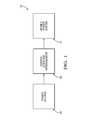
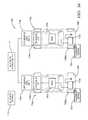
- FIG. 1shows an electrical charging system in simplified block diagram form that is configured to electrically charge an energy storage device in accordance with the invention
- FIG. 2shows a more detailed block diagram of the electrical charging system of FIG. 1 , and further details thereof including an alignment means;
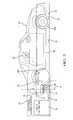
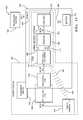
- FIG. 3shows the electrical charging system of FIG. 2 , and further spatial details of the inductive coils thereof between a vehicle and a ground surface;
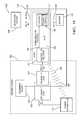
- FIG. 4shows yet another block diagram of the electrical charging system of FIG. 3 , further showing vehicular electrical signal shaping device details thereof;
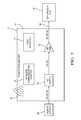
- FIG. 5shows a block diagram of a single power transmitter of the electrical charging system of FIG. 2 , and details thereof;
- FIG. 5Ashows an electrical schematic of the power transmitter of FIG. 5 ;
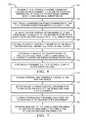
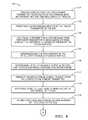
- FIG. 6shows a method to operate the electrical charging system of FIG. 2 that uses an alignment means of the electrical charging system to ensure repeatable energy transmission of electromagnetic energy in an energy coupling arrangement;
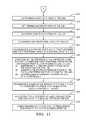
- FIG. 7shows further substeps of the method of FIG. 6 for positioning the vehicle so that the inductive coils are configured to wirelessly communicate one-to-another;
- FIG. 8shows another method to operate the electrical charging system of FIG. 2 based on data message transmission and acknowledgement
- FIG. 9shows additional steps of the method of FIG. 8 ;
- FIG. 10shows a method to transmit energy through the electrical charging system of FIG. 2 using reflected and received power measurements
- FIG. 11shows additional steps of the method of FIG. 10 ;
- FIG. 12shows an electrical charging system that includes a primary system similar to the embodiment of FIG. 2 and a 60 Hertz secondary system that electrically interfaces with the primary system, according to an alternate embodiment of the invention
- FIG. 13shows an electrical charging system that includes a primary and a secondary system and an integral charger electrical device as part of the electrical charging system that has transfer switch functionality disposed therein, according to another alternate embodiment of the invention
- FIG. 14shows an electrical charging system that includes a primary and a secondary system and an integral charger electrical device that includes transfer switch functionality is incorporated therein is included as part of the primary system while the inverter electrical device is removed therefrom, according to a further alternate embodiment of the invention
- FIG. 15shows a block diagram of a primary and a secondary system and the primary system includes a converter, according to another alternate embodiment of the invention.
- FIG. 16shows a plurality of vehicles that respectively include the electrical charging system of FIG. 2 being simultaneously electrically charged through a multiplex power switch according to yet another alternate embodiment of the invention.
- a drivetrain of a vehicleis formed with a group of components in the vehicle that generate power and deliver this power through the tires of the vehicle that engage a road surface.
- a hybrid electric vehicle and an electrical vehicleeach use a traction battery to power the drivetrain of their respective vehicles.
- a hybrid electrical vehicleuses a hydrocarbon fuel engine, or motor in combination with energy supplied by a battery disposed on the vehicle to power the drivetrain of a vehicle.
- An electric vehiclepowers the drivetrain solely by using energy from an energy storage device, or battery.
- the traction battery of the hybrid electric vehicle and the electric vehiclemay include a plurality of batteries connected in series or parallel connection to form a single battery.
- the electrical charge on the batterymay decrease, or become void of electrical charge. If this situation occurs, the battery needs to be electrically recharged back to a fully charged electrical state. Recharging a battery may be accomplished using an electrical charging system.
- the electrical charging systemsupplies the electrical charge to provide and fill the battery with electrical charge.
- a hybrid or electric vehicle's batterymay be electrically charged using a plug-in 120 VAC, 60 Hertz (Hz) electrical charging system when the vehicle is not in motion, such as when parked.
- HzHertz
- Alignment MeansStructures that facilitate alignment of the vehicle so that the alignment of the inductive coils repeatedly occurs.
- Alignment meansmay include a wheel chock, a wheel stop, or a tire indention device.
- a wheel chockis one or more wedges of sturdy material placed ahead or behind a vehicle's wheels to prevent accidental movement of the vehicle. The bottom surface is sometimes coated in rubber to enhance grip with the ground.
- the wheel chockis positioned and secured to the ground surface using an adhesive or fasteners, and when engaged by the tires of the vehicle, ensures at least partial alignment of inductive coils of the electrical charging system with one of the inductive coils disposed on the vehicle and another inductive coil being disposed on the ground surface.
- One edge of the wedgemay have a concave profile to contour to the wheel of the vehicle that increases the force necessary to overrun the chock.
- Another type of alignment meansmay be a tire indention device. When the wheel is disposed within the indention of the tire indention device, this provides indication to a driver of the vehicle that the inductive coils of the electrical charging system are in general alignment one-to-another so that an on-vehicle inductive coil may couple, or receive energy transmitted from the ground-based off-vehicle inductive coil.
- a lateral vehicle alignment membersuch as a tennis ball extending on a string from a ceiling of a residential garage, may also assist in helping the driver of the vehicle position the vehicle so that the inductive coils are sufficiently aligned so that the on-vehicle inductive coil wirelessly receives the energy transmitted from the off-vehicle inductive coil.
- the tennis ballmay be positioned in a predetermined position so that when a front portion of the vehicle engages the tennis ball along a mid-line of the vehicle the vehicle is positioned so that at least a portion of the on-vehicle inductive coil overlies the off-vehicle inductive coil and energy is transmitted/received therebetween.
- the inductive coilsmay be considered aligned when the system power efficiency of the electrical charging system is greater than 75% between the inductive coils. For example, for inductive coils having a general size of 50 centimeters (cm) ⁇ 50 cm with a z-axis direction of 20 cm having at least a 50% overlay of each area of the respective inductive coils may yield 75% or greater system power efficiency. In a general sense, if the system power efficiency of the electrical charging system is greater than 75%, whether or not a portion of respective areas of the inductive coils overlie one another, the inductive coils may be considered to be aligned one-to-another. For example, as best illustrated in FIG.
- Charger Electrical DeviceAn electrical device that takes one form of energy and converts it to a compatible form of energy to electrically charge the energy storage device of the vehicle.
- this charger devicemay receive low frequency AC power and converts it to DC current that is used to subsequently electrically charge a battery in a safe, efficient manner.
- the low frequency AC powermay have a 60 Hz frequency associated with it.
- Energy Coupling ArrangementThe energy coupling arrangement is formed from the off-vehicle inductive coil and the on-vehicle inductive coil.
- the on-vehicle inductive coilwirelessly receives electromagnetic (EM) energy transmitted from the off-vehicle inductive coil.
- EMelectromagnetic
- the energy transferis predominately through magnetic energy coupling.
- Energy Storage DeviceAn electrical device that stores electrical charge.
- the energy storage devicemay also be referred to as a battery.
- the batterymay be a single battery or a plurality of batteries formed in to a battery pack.
- battery packsare typically found on electric or hybrid electric vehicles.
- Electrical Charge System Power EfficiencyThe amount of power input relative to the amount of power output of the electrical charging system. Typically, the system power efficiency may have a range from 0% to 100% with 100% being totally efficient with no loss of power between the input and the output.
- the system power efficiencymay be affected by a number of factors one of which is the electrical components used to construct the electrical charging system which may affect the power loss through the electrical charging system. Also, this term may be referred to as ‘system power efficiency.’
- Electrical Signal Shaping Devicetakes a form of energy as an input from the inductive coils, electrically shapes it in a manner suitable to electrically charge the energy storage device, and electrically transmits the shaped energy to the energy storage device. For instance, as described herein, the electrical signal shaping device is disposed on the vehicle electrically downstream from the on-vehicle inductive coil.
- the electrical signal shaping devicemay be packaged with in a single electronic module or a plurality of modules electrically connected together dependent on the application of use for an electrical charging system.
- the electrical signal shaping devicemay only be a rectifier.
- High Power Electrical Charging SystemAn electrical charging system that has a power output from the power transmitter of at least 900 watts. Preferably, this wattage value is within a range from 900 to 10,000 watts. In some embodiments, an electrical charging system having a power output from a power transmitter of less than 900 watts is not considered to be a high power electrical charging system.
- the power output of the high power electrical charging systemgenerally also outputs an electrical signal that has a frequency that is greater than 60 Hz.
- the electrical charging systemincludes a power transmitter in electrical communication with a power source, an energy coupling arrangement that includes a first and a second inductive coil, and an electrical signal shaping device that includes a controller.
- the electrical charging systemmay also include an alignment means when used in vehicular applications that assists to properly align the second inductive coil in relation to the first inductive coil so that the second inductive coil receives energy from the first inductive coil when the electrical charging system is in operation.
- an alignment meanswhen used in vehicular applications that assists to properly align the second inductive coil in relation to the first inductive coil so that the second inductive coil receives energy from the first inductive coil when the electrical charging system is in operation.
- FIGS. 4-5, 12-15various electrical signal designations are mapped along signal paths in the electrical charging system to better understand the levels of voltage and/or frequency levels of these electrical signals within the various electrical charging system embodiments.
- the electrical charging systemmay not include an alignment means and still be within the spirit and scope of the invention.
- HV HF ACA high voltage, high frequency alternating current (AC) electrical signal.
- the voltage signalis greater than 120 VAC and the frequency of the voltage signal is greater than 60 Hz. The frequency may be in a range of 10 kHz to 450 kHz.
- HV DCA high voltage, direct current (DC) electrical signal.
- the DC voltageis greater than 120 VDC.
- 60 Hz ACA 60 Hz, AC voltage electrical signal.
- the AC voltageis either 120 VAC or 240 VAC dependent on the power source generating the voltage. 120 VAC or 240 VAC, 60 Hz—A 120 VAC or 240 VAC, 60 Hz electrical signal.
- thismay be an electrical signal supplied by the power source to the primary system (240 VAC) or the secondary system (120 VAC, plug-in), such as illustrated in FIGS. 4 and 12 .
- the primary and/or the secondary systemmay be hardwired or pluggable dependent on the electrical application of use.
- Power SourceThis is power supplied by an electrical power grid such as is supplied by a power municipality.
- the high power electrical charging systemelectrically connects to a power source.
- a conventional 60 Hz electrical charging systemalso electrically connects with a power source.
- the power source in electrical connection with the high power electrical charging systemhas a greater voltage than the power source in electrical communication with the 60 Hz electrical charging system.
- Power TransmitterAn electrical device that is part of an electrical charging system.
- a single power transmitteradvantageously includes a DC supply, an RF amplifier, a wireless communication control, and a user interface within a single housing making for a compact, efficient arrangement that may be mounted to wall in a garage, for example, or to a post.
- An integrated power transmitterallows for overall electrical charging system power efficiency to be attained versus having multiple electronic modules that might make up the functionality of power transmission. Multiple electronic modules may experience undesired loss of power that could otherwise result.
- the RF amplifieris in electrical communication with the DC supply.
- the first inductive coilis in electrical communication with an output of the RF amplifier.
- the RF amplifieris capable of delivering a power of greater than 900 Watts at a frequency of greater than 60 Hertz (Hz).
- the frequencyhas a range that is from 15 kHz to 450 kHz.
- the RF amplifiermay also deliver a power of less than 900 Watts dependent on the operation mode of the electrical charging system and the electrical application of use.
- the wireless communication controlwirelessly communicates with the controller portion of the electrical signal shaping device.
- Received PowerAn amount of energy received by the on-vehicle inductive coil.
- Reflected PowerAn amount of energy not able to be wireless transmitted by the off-vehicle inductive coil. For example, the reflected power energy is affected by power that has been lost through the electrical charging system en route to the battery.
- VehicleA vehicle that typically has wheels in communication with a drivetrain driven by a motor or a fuel combustion engine.
- the motoris an electric motor.
- the hybrid electric vehicleincludes an electric motor used in combination with and fuel combustion engine to power the drivetrain of the vehicle.
- a high power electrical charging system 10is configured to electrically charge an energy storage device 12 that further drives one or more electrical loads.
- energy storage device 12may be a traction battery.
- Energy storage device 12is disposed on a ground-based vehicle 13 and configured to provide energy to operate a drivetrain (not shown) of vehicle 13 .
- the energy storage deviceis not limited to supplying electrical current only to the drivetrain, but may also be used to operate any electrical or electrical/mechanical device that requires electrical current.
- the vehiclemay be any type of vehicle that has an energy storage device, or battery that needs electrical charging and includes, but is not limited to a hybrid and/or a hybrid electric vehicle.
- Energy storage device 12may be formed as a single battery or a plurality of batteries such as may be arranged in a battery pack.
- a first portion of electrical charging system 10is disposed external to vehicle 13 and a second portion of electrical charging system 10 is disposed on vehicle 13 .
- Vehicle 13has a length disposed along a longitudinal axis A, as best illustrated in FIGS. 3 and 4 , and is further disposed along a generally planar ground surface 27 .
- electrical charging system 10includes an integrally constructed power transmitter 14 , a first, or off-vehicle inductive coil 16 , a second, or on-vehicle inductive coil 18 , at least one on-vehicle electrical signal shaping device 20 , and an alignment means 22 .
- off-vehicleprovides an indication that the device is disposed external to the vehicle and ‘on-vehicle’ provides an indication that the device is attached or disposed on the vehicle.
- Electrical charging system 10 including electrical signal shaping device 20may be formed of any type of electrical/electronic devices in any type of circuit combination and may include resisters, capacitors, diodes, semiconductors, integrated circuits (ICs), relays, thermal fuses, thermistors, and thermocouples, inductive coils, coils and the like.
- the first portion of electrical charging system 10 disposed external to vehicle 13includes power transmitter 14 and off-vehicle inductive coil 16 in electrical communication with power transmitter 14 .
- Off-vehicle inductive coil 16is fixedly secured to ground surface 27 with fasteners, such as bolts.
- the second portion of electrical charging system 10is disposed on vehicle 13 includes on-vehicle inductive coil 18 and electrical signal shaping device 20 in downstream electrical communication with on-vehicle inductive coil 18 .
- Vehicle 13includes a charger 24 and battery 12 in downstream electrical communication with charger 24 .
- Charger 24is in disposed in downstream electrical communication from electrical signal shaping device 20 .
- Power transmitter 14is in downstream electrical communication with a fixed power source 26 .
- Power source 26has a voltage value that is greater than the 120 VAC, 60 Hz power source used to operate the pluggable, portable charging system as discussed previously in the Background.
- fixed power source 26has a voltage value of 220 or 240 VAC.
- the fixed power source in electrical communication with the power transmittermay have any voltage value that is greater than 120 VAC.
- electrical charging system 10is configured to electrically charge battery 12 in a lessor amount of time than the 60 Hz, 120 VAC pluggable, portable charge system previously discussed herein.
- electrical charging system 10is configured to electrically charge battery 12 .
- Inductive coils 16 , 18form an energy coupling arrangement 28 and on-vehicle inductive coil 18 and electrical signal shaping device 20 form a mobile power system 31 of electrical charging system 10 .
- Mobile power system 31is carried with vehicle 13 as vehicle 13 movingly travels along a road.
- the on vehicle and off-vehicle inductive coils 16 , 18are constructed with a coil that may have a high quality factor (Q factor) and may be formed of Litz wire or copper tubing so that the coil has low resistance at the frequency of operation. Dependent on the electrical application, the Q factor may be greater than 100.
- the inductive coilsmay also include additional electrical components, such as resistors, capacitors, inductors and the like to ensure high efficiency transmission of the magnetic energy therebetween.
- mobile power system 31is a vehicle-based subsystem that is disposed in downstream communication from energy coupling arrangement 28 and energy coupling arrangement 28 is disposed in downstream electrical communication from fixed power source 26 , as best illustrated in FIG. 1 .
- Electromagnetic energyis wirelessly transmitted from off-vehicle inductive coil 16 to on-vehicle inductive coil 18 within energy coupling arrangement 28 . It is desired that the on- and off-vehicle inductive coils each have an operating temperature range from ⁇ 30 degrees to +50 degrees Celsius.
- Power transmitter 14is in electrical communication with a fixed power source 26 and off-vehicle inductive coil 16 . As such, power transmitter 14 and fixed power source 26 form a ground-based wireless power transmitter subsystem. Power source 26 is disposed external to electrical charging system 10 and vehicle 13 . Preferably, power transmitter 14 is hardwired with power source 26 so as to eliminate handling of high voltage power cables electrically connecting power source 26 and power transmitter 14 by a human operator 32 so as to increase the safety of operator 32 and provide further convenience for operator 32 in the operation of electrical charging system 10 . For example, as best shown in FIG. 3 , operator 32 may be the driver of vehicle 13 . Alternatively, the human operator may be any person that has access to electrical charging system 10 .
- Power transmitter 14is in electrical communication with off-vehicle inductive coil 16 through electrical wire cables 34 that carry an electrical output of power transmitter 14 .
- power transmitter 14is configured to supply energy used by electrical charging system 10 to form electrical current that is provided to electrically charge energy storage device 12 .
- Off-vehicle inductive coil 16is in wireless communication with on-vehicle inductive coil 18 in energy coupling arrangement 28 in that on-vehicle inductive coil 18 wirelessly receives, collects, or couples at least a portion of the energy transmitted by off-vehicle inductive coil 16 from energy provided by power transmitter 14 via fixed power source 26 .
- Electromagnetic energyis wirelessly communicated, or transmitted from off-vehicle inductive coil 16 to on-vehicle inductive coil 18 .
- the inductive coils of the energy coupling arrangementmay wirelessly communicate by wireless inductive energy communication or wireless electrical communication. Another form of electrical wireless communication may be capacitive coupling.
- Electrical signal shaping device 20advantageously electrically shapes communicated electromagnetic energy received and captured by on-vehicle inductive coil 18 to produce electrical current in a form useable by energy storage device 12 .
- the produced electrical currentis electrically transmitted through electrical signal shaping device 20 to electrically charge energy storage device 12 .
- this electrical currentis in a form that is useable by a charger prior to the battery being electrically charged.
- Alignment means 22is disposed external to vehicle 13 on ground surface 27 , as best illustrated in FIG. 3 .
- Alignment means 22is a tire block, or wheel chock 37 that is configured for physical engagement, or contact with at least one of the tires 38 a - d of vehicle 13 .
- Wheel chock 37may be commercially purchased or molded by an injection molding machine as is known in the molding art. Wheel chock 37 is positioned on ground surface 27 and may be secured to ground surface 27 using bolts or other type fasteners. As best shown in FIGS. 3 and 4 , wheel chock 37 is engaged with right front tire 38 b .
- the wheel chockmay be strategically positioned in a manner along the ground surface so that any tire on the vehicle could be appropriately engaged such that the inductive coils wirelessly communicate electromagnetic energy therebetween.
- the placement of wheel chock 37ensures vehicle 13 is positioned relative to off-vehicle inductive coil 16 of energy coupling arrangement 28 such that the on-vehicle inductive coil 18 receives the electromagnetic energy wirelessly transmitted from off-vehicle inductive coil 16 .
- On-vehicle inductive coil 18is fixedly attached to vehicle 13 , preferably on an underside portion 39 of vehicle 13 , so that an extended surface of on-vehicle inductive coil faces towards ground surface 27 .
- the on-vehicle inductive coilmay be mounted to a bracket or component frame (not shown) being attached to the vehicle's frame using a fasteners such as bolts or strap ties and the like. Easy access to the on-vehicle inductive coil without other vehicle components being underlying the on-vehicle inductive coil may allow the on-vehicle inductive coil to be more easily serviced.
- on-vehicle inductive coil 18is mounted at the rear of vehicle 13 .
- the on-vehicle inductive coilmay be mounted anywhere along the underside of the vehicle.
- the on-vehicle inductive coilmay be mounted anywhere on the vehicle so that the on-vehicle inductive coil effectively receives energy supplied and transmitted by the off-vehicle inductive coil when sufficiently proximately spaced one-to-another so that electromagnetic energy communicated therebetween.
- Using the secured wheel chock 37allows operator 32 of vehicle 13 to repeatedly position vehicle 13 so that so that at least a respective portion of inductive coils 16 , 18 are axially aligned along axis B when tire 38 b of vehicle 13 engages against a strategically positioned wheel chock 37 .
- wheel chock 37is strategically positioned so that a majority portion of on-vehicle inductive coil 18 overlies off-vehicle inductive coil 16 when tire 38 b engages wheel chock 37 , as best illustrated in FIG. 3 .
- wheel chock 37is positioned on ground surface 27 at a location so that when at least one of the tires 38 a - d of vehicle 13 is positioned and communicates with wheel chock 37 by engaging wheel chock 37 , the on-vehicle inductive coil 18 is also positioned relative to off-vehicle inductive coil 16 so that electromagnetic energy is effectively communicated therebetween from off-vehicle inductive coil 16 to on-vehicle inductive coil 18 .
- the alignment meansmay be an automotive wheel stop or at least one tire indention device.
- the wheel chockmay have a weight that is sufficient to be engaged by at least one tire of the vehicle and not further move so that wireless communication between the inductive coils occurs.
- wheel chock 37is securely positioned on ground surface 27 at a location such that when engaged by tire 38 b of vehicle 13 to ensure that at least a portion of on-vehicle inductive coil 18 overlies at least a portion of off-vehicle inductive coil 16 along an axis B, as best illustrated in FIG. 3 .
- Axis Bis transverse to ground surface 27 and axis A.
- the alignment of at least a portion of one inductive coil 18 overlying the other inductive coil 16 along axis Bensures that electromagnetic energy is wirelessly communicated between inductive coils 16 , 18 .
- wheel chock 37is positioned so that a majority portion of on-vehicle inductive coil 18 axially overlies off-vehicle inductive coil 16 along axis B. Additionally, when vehicle 13 communicates, or engages with wheel chock 37 , a sensory response is produced as a result of vehicle 13 communicating with wheel chock 37 .
- At least one sense organ of operator 32 disposed in vehicle 13senses this sensory input, such that when the at least one sense organ senses the sensory input, at least a portion of on-vehicle inductive coil 18 of energy coupling arrangement 28 overlies off-vehicle inductive coil 16 of energy coupling arrangement 28 .
- the human sense organsare generally recognized as sight by the human eye, smell by the human nose, taste by the human mouth, touch by the human skin, and hearing by the human ear.
- the skin of the driverfeels the touch of the ‘bump’ from the tire of the vehicle engaging the wheel chock which is an indication to the driver of the vehicle to stop movement of the vehicle.
- any alignment meansthat allows the on-vehicle inductive coil to overlie at least a portion of the off-vehicle inductive coil so that electromagnetic energy is wirelessly communicate therebetween falls within the spirit and scope of the invention.
- inductive coils 16 , 18are in general alignment along axis external facing surfaces of inductive coils 16 , 18 separated by a distance d, as best illustrated in FIG. 3 .
- the axial space that spans distance dis an air gap.
- distance dmay be a 15 to 20 centimeter distance in which a 3.3 kW signal out the power transmitter may be effectively transferred.
- a vehicle alignment membermay also be advantageously used by operator 32 to further laterally align the left/right spacing of vehicle 13 when aligning inductive coils 16 , 18 .
- one such aligning memberis a tennis ball hung from a rope from a ceiling in a home garage or office parking structure and strategically positioned so that when a front end of vehicle 13 engages the tennis ball, operator 32 knows inductive coils 16 , 18 are at least partially in alignment along axis B one-to-another.
- Electrical signal shaping device 20is adapted to electrically shape at least a portion of the energy received by on-vehicle inductive coil 18 and electrically transmit this electrically-shaped energy to electrically charge energy storage device 12 .
- Electrical signal shaping device 20includes controller/rectifier block 40 that includes a controller and a rectifier, a ballast resistor 42 , a wireless voltmeter 44 , an inverter 46 , and a transfer switch 48 .
- An electrical output 52 of on-vehicle inductive coil 18is electrically received by controller/rectifier block 40 .
- An electrical output 54 of controller/rectifier block 40is electrically received by inverter 46 .
- the controller portion of the controller/rectifier block 40may be a microcomputer or a microprocessor as is known in the electrical arts.
- the controller portion of the controller/rectifier block 40has wireless data transmission 62 with power transmitter 14 and receives wireless data transmission 64 from power transmitter 14 . Data is also electrically wirelessly communicated 66 from wireless voltmeter 44 to the controller portion of controller/rectifier.
- the controller portion of controller/rectifier block 40also electrically communicates data on a vehicle data communication bus 60 with other vehicular electrical devices.
- Data communication monitored by the controller portion of the controller/rectifier block 40centers around the present electrical charge condition, or state of battery 12 .
- the invertermay not be utilized. If an inverter is not used in the electrical signal shaping device of the electrical charging system the overall system power efficiency of the electrical charging system is desirably increased, the vehicle weight is desirably reduced, and the parts complexity of the electrical charging system is also desirably reduced improving the reliability of the electrical charging system.
- Charger 24is disposed in vehicle 13 external to electrical charging system 10 being associated with the vehicular electronics similar to battery 12 previously described herein. These electrical devices may be disposed on printed circuit boards housed in a single unit or in multiple units as required by the application of use. Alternatively, the controller/rectifier block of the electrical signal shaping device may be disposed as separate, distinct controller and rectifier functional blocks within the electrical charging system.
- the controllermay also operate an algorithm that presents input to the controller that receives information from the vehicle on the data communication bus on the present state of the electrical charge of the battery for determining a new rate of electrical charge that will be allowed by the battery. The newly input information then will determine a new rate of electrical charge allowed for the battery.
- One such algorithmis described in U.S. Pat. No. 7,800,344 entitled “METHOD OF DETERMINING THE ENERGY CAPACITY OF A BATTERY,” which is incorporated by reference in its entirety herein.
- Power transmitter 14receives electrical energy from power source 26 , amplifies the received energy, and supplies the amplified received energy to off-vehicle inductive coil 16 .
- Off-vehicle inductive coil 16wirelessly electromagnetically transmits or propagates at least a portion of the amplified energy to on-vehicle inductive coil 18 .
- On-vehicle inductive coil 18receives at least a portion of the electromagnetic energy transmitted from off-vehicle inductive coil 16 .
- On-vehicle inductive coil 18transmits this received energy to electrical signal shaping device 20 that electrically shapes and electrically transmits this electrically-shaped energy to subsequently electrically charge battery 12 on vehicle 13 .
- the invertoradvantageously allows the simplest integration of the electrical charging system into existing vehicles that include vehicle charger.
- the vehicle chargeris readily able to accept an output of the invertor without additional modification or cost to the overall electrical charging system.
- One undesired disadvantage of using an inverter in the electrical charging systemmay be lower system power efficiency of the overall electrical charging system due to an extra electrical component in the electrical charging system that may be subject to system power efficiency losses.
- the energy supplied by fixed power source 26is received by power transmitter 14 that produces a DC voltage via DC power supply 70 that is modulated and provided electrical gain by amplifier 72 to become a high frequency AC voltage that is output from amplifier 72 and further output from power transmitter 14 on cables 34 .
- the high frequency AC voltage output from amplifier 72may be in range from 10 kHz to 450 kHz. More preferably, this range is from 90 kHz to 170 kHz.
- the higher frequencyalso allows for the inductive coils to be constructed having less mass, less size than would be required if lower frequencies where utilized. Less mass may advantageously allow the vehicle to travel a longer distance than may otherwise be able for a given amount of electronic charge of the battery. This may allow further flexibility in locating the inductive coils on the vehicle and on the ground surface when initially setting up the electrical charging system. Also allows for greater distance d clearance as, best illustrated in FIG. 3 . With a higher system power efficiency, a lower energy cost may desired by the user to electrically charge the battery.
- the high frequency, high AC voltageis electrically transmitted to off-vehicle inductive coil 16 which wirelessly transmits at least a portion of this energy to, and received by on-vehicle inductive coil 18 and further electrically transmits this portion along signal path 52 to controller/rectifier block 40 .
- the rectifier portion of the controller/rectifier block 40electrically rectifies this voltage to produce a corresponding direct current (I DC ).
- This I DC currentis electrically transmitted along signal path 54 to inverter 46 which inverts the corresponding DC current to produce a 50-60 Hz electrical current useful to electrically charge battery 12 .
- This 50-60 Hz electrical currentis transmitted along signal path 58 to transfer switch 48 .
- Power source 26includes a metal enclosure, or housing that surrounds DC power supply 70 , amplifier 72 , user interface 74 , and wireless communication control 76 .
- User interface 74may include LEDs, audible alarms, and a control panel.
- the LEDs and audible alarmsmay indicate fault or status conditions to the human operator of the system. In other embodiments, fault conditions and/or audible alarms may sound off if the inductive coils are not sufficiently aligned as described herein so that the electrical charging system may electrically charge the battery.
- the gist of these featuresincludes getting the attention of the human operator that the battery is not being charged when it should be and describing to the human operator where the fault lies so the problem may be fixed before the human operator leaves the local area of the electrical charging system and the vehicle.
- the human operatormay leave the local area and come back to the vehicle at a later time to find out that the battery had not been electrically charged. This would be an undesired situation as the human operator may not be able to operate the vehicle over a desired distance that has less than a full level of electrical charge.
- the power transmitterincludes a fan for cooling the electronics contained therein.
- Cables 34may further be contained within a liquid-tight, flexible metal conduit for high voltage, high frequency signal carried on cables 34 .
- the power transmittermay further include a head sink to wick heat away from the amplifier on communication control electronics.
- the power transmitter electrical connection to the power sourcemay be contained in a flexible metal conduit.
- the power transmittermay include provisions to attach the power transmitter to a mounting bracket that can further be attached to a wall.
- Transfer switch 48is selectably controlled to a first or a second position by the controller portion of controller/rectifier block 40 along control signal path 56 .
- Control of transfer switch 48 by the controller portion of the controller/rectifier block 40is one approach that allows electrical charging system 10 to control a rate of electrical charge provided to battery 12 .
- transfer switch 48is set to a first position, the 50-60 Hz electrical current is carried on electrical output 58 of inverter 46 is received by charger 24 along signal path 61 .
- transfer switch 48is set to a second position by the controller portion of the controller/rectifier block 40 , the electrical output of inverter 46 is not received by charger 24 along signal path 61 .
- Transfer switch 48is in electrical communication with a charger 24 that regulates and controls the voltage that is useful to electrically charge battery 12 .
- Charger 24is used by electrical systems of vehicle 13 to allow independent vehicular control of battery charging independent of electrical charging system 10 .
- charger 24may further modify or manage the electrical charging of battery 12 from electrical current received from electrical charging system 10 as controlled by electronics disposed in vehicle 13 .
- the vehicle chargermay not be employed.
- controller/rectifier block 40communicates with electrical components disposed on vehicle 13 through a vehicle data communication bus 60 .
- the transfer switchmay be controlled by another electrical device in the vehicle through the vehicle data communication bus communicating with controller/rectifier block 40 .
- Vehicle data communication bus 60may communicate vehicle status information to electrical charging system 10 .
- Wireless voltmeter 44measures the magnitude of the voltage and/or electrical current along signal path 54 of controller/rectifier block 40 . This voltage information is wirelessly communicated with a receiver portion of the controller/rectifier block 40 in electrical charging system 10 . Knowing the on-board vehicle voltage information allows for the variable adjustment of off-vehicle inductive coil 16 by electrical charging system 10 to optimize electrical operation of electrical charging system 10 .
- the energy flow out of the RF amplifieris adjusted based on the voltage.
- Ballast resistor 42is used to minimize the magnitude of the voltage along signal path 54 during electrical start-up of electrical charging system 10 .
- the ballast resistormay not be used in the electrical charging system.
- the electrical current available to charge the battery along signal path 61may be in a range of 10-20 amps DC.
- the electrically-shaped energy electrically transmitted in to electrical signal shaping device 20has a first frequency along signal path 52 and a second frequency along signal path 61 electrically output from transfer switch 48 transmitted to charger 24 and subsequently to battery 12 .
- the first frequencyis greater than the second frequency.
- the second frequencyis at least 45 Hz and the first frequency is disposed in a range from 20 kHz to 200 kHz in contrast to the frequency of an electrical output signal on cables 34 from off-vehicle inductive coil 16 .
- power transmitter 14includes a housing 75 that encloses a plurality of electrical components (not shown) in an integral package.
- the housingmay be constructed of any solid material such as metal or plastic where the metal material may be stamped into form or the plastic material molded.
- the electrical componentsform a respective first electrical portion, a second electrical portion, a third electrical portion, and a fourth electrical portion within housing 75 .
- the portionsmay be formed on one or more printed circuit boards disposed within housing 75 .
- Power transmitter 14has an electrical output carried on cables 34 in electrical communication with off-vehicle inductive coil 16 .
- the first electrical portionis a DC power supply 70 .
- the second electrical portionis amplifier 72 in electrical communication with DC power supply 70 .
- the third electrical portionis a user interface 74 .
- User interface 74provides operating condition information of electrical charging system 10 to operator 32 .
- user interface 74is very useful to alert the human operator of an issue with that would keep the electrical charging system from electrically charging battery. Additionally, it is also advantageous to do so after the human operator, such a driver of the vehicle, exits the vehicle is still in the local area of the electrical charging system. Thus, it is important to get the driver's attention if some condition prevents the electrical charging system from charging the battery. It is also important, the once the driver's attention is focused on the fault condition, that the electrical charging system educate and inform the driver on how to fix the faulty condition so the electrical charging system is allowed to electrically charge the energy storage device.
- the batterymay undesirably remain in an uncharged state, when the human operator otherwise expected the battery to be a fully charged electrical state. For example, if the vehicle is not properly aligned so the second inductive coil receives energy from the first inductive coil, or if the vehicle's transmission is not disposed in the ‘park’ position, these types of conditions may prevent the battery from being electrically charged.
- User interfacehas a visual element 78 seen by eyes of operator 32 .
- Visual element 78is preferably an LCD display.
- LCD 78includes four (4) alphanumeric lines that each display different performance metrics of electrical charging system 10 .
- a first alphanumeric linedisplays information about the general operating conditions of electrical charging system 10 .
- a second alphanumeric linedisplays the output voltage of rectifier portion of controller/rectifier block 40 and the output voltage and power output delivered from the controller/rectifier block 40 to the remaining portion of the electrical charging system and the vehicle.
- a third alphanumeric line displaysshows a DC voltage supplied by DC power supply 70 to amplifier 72 of power transmitter 14 .
- a fourth alpha numeric linedisplays the system power efficiency.
- the LCD displaymay have other arrangements for display information, for instance, error messages when the electrical charging system experiences a fault condition that is useful to the human operator for the operation of the electrical charging system.
- Power transmitter 14also contains a multicolored light 82 .
- Light 82may be operated to alter between different colors of light to indicate various operational status conditions of electrical charging system 10 .
- the lightmay change from green to yellow to red in which may be an undesired electrical charging system fault that keeps electrical charging system 10 from electrically charging energy storage device 12 .
- a red colored light due to a faultmay alternatively be displayed on the LCD display.
- At least one audible elementmay be heard by ears of human operator.
- an audible noisemay be generated through an audio output, such as to a speaker, that provides an indication to the human operator that the electrical charging system is not electrically charging the energy storage device. This would further get the human operator's attention before leaving the local area of the vehicle and the electrical charging system to correct the problem.
- the user interfaceincludes at least one visual element and at least one audible element.
- User interface 74comprises a provision 79 that allows operator 32 of electrical charging system 10 to command electrical charging system 10 to perform at least one operation.
- Provision 79is an ON/OFF push button to turn power transmitter 14 electrically ON so power transmitter 14 is energized to produce energy to transmit to off-vehicle inductive coil 16 or electrically OFF in which power transmitter is powered down and energy is not transmitted to off-vehicle inductive coil 16 .
- User interface 74includes an LCD display. Alternatively, the user interface may include any number of LEDs, lights, a LED display, and at least one push button.
- the fourth electrical portionis a wireless communication control section 76 that wirelessly electrically communicates through antenna 80 with a portion of electrical charging system 10 disposed on vehicle 13 .
- Fourth portion 76is a computer or microprocessor as is known in the art.
- Power transmitter 14analyzes the received data from the controller portion of controller/rectifier block 40 via wireless communication control 76 and adjusts DC power supply 70 to ensure that an output of the rectifier portion of controller/rectifier block 40 is within a range dependent on the electrical application of use for the electrical charging system 10 .
- Control 76may also be used as a receiver/transmitter to communicate with charger 24 and other electronic devices of vehicle 13 through the vehicle data communication bus 60 to ensure optimal electrical charging of battery 12 .
- the controller portion of the controller/rectifier block 40may also receive/transmit data to charger 24 through vehicle data communication bus 60 .
- An electrical signal carried on cables 34 that is output from power transmitter 14has a frequency of greater than 60 Hz and a power output of greater than 900 watts electrically transmitted to off-vehicle inductive coil 16 .
- the power transmittertransmits 3.3 kilowatts (kW).
- the electrical signal carried on cables 34has a frequency value that is disposed in a range from 15 kHz to 450 kHz.
- 3.3 kW output out from the power transmittermay electrically charge a battery having a low level of electrical charge in about 4 hours of time.
- a battery electrically charged to a full level of electrical chargemay allow a vehicle containing the battery to travel up to a maximum of 64.7 km (40 miles).
- Electrical charging system 10is formed to have a system power efficiency that is the same as, or is greater than 75%.
- the 75% or greater system power efficiencyis a desired level so that the electrical charging system is cost effective to operate for the human operator. Having less than 75% may be undesired as this may not be cost effective for the human operator to operate the electrical charging system.
- having a number greater than 75%may be even more desirable as the cost of operating the electrical charging system becomes even less for the human operator.
- Children and/or petsmay be in close proximate to the off-vehicle inductive coil during electrical charging of the energy storage device.
- a human occupantmay occupy the vehicle during the electrical charging of the energy storage device.
- the electrical charging systemmay adjust output voltage from the power transmitter based upon different energy storage device battery voltages used by different vehicle manufacturers. Sending data across the data communication link is required before the electrical charging system may initiate electrical charging of the energy storage device.
- the RF amplifier of the power transmitterwill not be activated until electrical charging of the energy storage device is requested by the vehicle's electronic devices.
- System power efficiencymay remain the same as or greater than 75% efficient as the electrical charge current progressively decreases during the electrical charge cycle.
- Reference numerals 62 , 64 , and 66represent wireless electrical signal energy paths to transmit electronic data between various electrical components in electrical charging system 10 .
- Wireless voltmeter 44measures voltage along signal path 54 of electrical signal shaping device 20 and wirelessly transmits this data measurement information to controller/rectifier block 40 .
- Wireless electrical signal energy 62is wirelessly transmitted from controller/rectifier block 40 to power transmitter 14 .
- Power transmitter 14actively receives signal energy 62 .
- Power transmitter 14also wireless transmits data information to controller/rectifier block 40 .
- the purpose of the wireless energy transmission of signal energy along signal paths 62 , 64 , 66is to optimize the operational performance of electrical charging system 10 to electrically charge energy storage device 12 .
- the electrical charging systemis configured to optimize real-time electrical charging system operation and ensure the system power efficiency is, and remains greater than 75%.
- the controller portion of controller/rectifier block 40may measure the electrical current output on signal path 54 .
- the controller portion of controller/rectifiermay also mathematically generate power readings along signal path 54 , having the electrical current data and the voltage data from wireless voltmeter 44 . Alternatively, the power may be also be actually measured.
- the electrical voltage, electrical current, or power datamay be sent to power transmitter 14 on wireless signal path 62 . Power transmitter 14 receives this data can then adjust its output signal on cables 34 to maintain a power system efficiency of electrical charging system 10 at greater than 75% while electrical charging system is electrically charging energy storage device 12 .
- Power transmitter 14requests controller/rectifier block 40 for voltage, current, or power data along wireless signal path 64 .
- power transmitter 14may request only one type of data, or any combination of data as is required by power transmitter 14 .
- the controller/rectifiermay periodically send any or all of this data to the power transmitter along with wireless data signal path.
- electrical charging system 10is not in use when power transmitter 14 is not in communication with power source 26 . Electrical charging system 10 is also not in use when power transmitter 14 is in communication with power source 26 and the ON/OFF switch 79 on user interface 74 has not been activated by operator 32 . When ON/OFF switch 79 is inactivated electrical charging system 10 is in an OFF state such that energy storage device 12 cannot be electrically charged by electrical charging system 10 .
- electrical charging system 10is partially in use when electrical charging system 10 is in electrical communication with power source 26 and electrical charging system 10 is in an ON state, but inductive coils 16 , 18 are spaced sufficiently far apart so the electromagnetic energy in not wirelessly transmitted/received therebetween. For example, it may not be necessary for inductive coils to at least partially overlie one another for electrical charging system 10 to electrically charge energy storage device 12 . If inductive coils are sufficiently spaced part, either axially or laterally and the electrical charging system has a system power efficiency measured at 75% efficiency or greater by power transmitter 14 , electrical charging system 10 will electrically charge energy storage device 12 if electrical charge is needed by energy storage device 12 . Power transmitter 14 looks at power, voltage, and current carried on output, or cables 34 to determine whether electrical charging system 10 electrically charges energy storage device 12 and at what rate electrical charging system 10 electrically charges energy storage device 12 .
- electrical charging system 10is in use when power transmitter 14 is in electrical communication with power source 26 and the inductive coils 16 , 18 are spaced sufficiently close, such as axial distance d, so that electromagnetic energy transmitted/received between inductive coils 16 , 18 occurs with an system power efficiency of at least 75% as measured by power transmitter 14 , as best illustrated in FIG. 3 .
- electrical charging system 10electrically charges battery 12 of vehicle 13 by method 100 .
- One step 102 in method 100is providing electrical charging system 10 which includes power transmitter 14 , energy coupling arrangement 28 , at least one electrical signal shaping device 20 , and wheel chock 37 , all of which is previously described herein.
- Another step 104 in method 100is electrically energizing power transmitter 14 of electrical charging system 10 so that off-vehicle inductive coil 16 includes energy.
- a further step 106 in method 100is aligning on-vehicle inductive coil 18 of energy coupling arrangement 28 in relation to off-vehicle inductive coil 16 when vehicle 13 communicates with wheel chock 37 such that on-vehicle inductive coil 18 is configured to receive the energy wirelessly transmitted from off-vehicle inductive coil 16 .
- Another step 108 in method 100is receiving at least a portion of the wirelessly transmitted energy by on-vehicle inductive coil 18 from off-vehicle inductive coil 16 .
- a further step 110 in method 100is electrically shaping the portion of the received energy through on-vehicle inductive coil 18 by electrical signal shaping device 20 to produce an electrical charging current configured to electrically charge energy storage device 12 .
- Another step 112 in method 100is electrically transmitting the electrical charging current to energy storage device 12 by electrical signal shaping device 20 to electrically charge energy storage device 12 .
- Electrical charging system 10may control electrical charging of energy storage device 12 by use of an algorithm as previously described herein or controlling the power output to the first inductive coil by the power transmitter, or the controller controlling the operation of the transfer switch. Another way of controlling the electrical charging of the energy storage device is for the user to activate ON/OFF switch 79 to turn the electrical charging system OFF to a non-powered state so that electrical signals carried on cables 34 do not occur.
- the aligning step 106 of method 100further includes the following substeps 114 , 116 , 118 , 120 to further align vehicle 13 so that vehicle 13 may engage wheel chock 37 .
- Using lateral vehicle alignment membermay further assist operator 32 to position vehicle 13 in an efficient manner.
- electrical charging system 10is disposed in a fixed location, such as a home garage or a parking structure, vehicle 13 needs to movingly approach ground-based off-vehicle inductive coil 16 and wheel chock 37 so that the inductive coils 16 , 18 may be configured to wirelessly transmit/receive energy therebetween.
- substep 114 of method 200is movingly approaching, with vehicle 13 , towards wheel chock 37 .
- Substep 116is detecting lateral left or right side tire displacement of vehicle 13 by operator 32 of vehicle 13 and make tire displacement adjustments to align on-vehicle inductive coil 18 with off-vehicle inductive coil 16 .
- Substep 118 of method 200is to continue approaching wheel chock 37 with vehicle 13 having the adjusted tire displacement, and substep 120 of method 200 is stopping movement of vehicle 13 when operator 32 senses with one of the human senses that at least one tire 38 of the vehicle has engaged at least one wheel chock 37 .
- FIGS. 8 and 9yet another method to operate an energy storage device is presented.
- a method 130is presented to electrically charge an energy storage device in a vehicular electrical charging system.
- One step 131 in method 130is providing the electrical charging system that includes a power transmitter, an energy coupling arrangement, at least one electrical signal shaping device that includes a controller and a transfer switch, and the energy coupling arrangement includes an off-vehicle inductive coil and an on-vehicle inductive coil, the off-vehicle inductive coil being in electrical communication with the power transmitter and the on-vehicle inductive coil being disposed on the vehicle, and the electrical signal shaping device being in electrical communication with the on-vehicle inductive coil.
- Another step 133 in method 130is periodically activating an amplifier in the power transmitter by the electrical charging system to determine if the vehicle is in a distance range in which the off-vehicle inductive coil is effective to transmit energy to the on-vehicle inductive coil.
- a further step 135 in method 130is electrically transmitting a data message from the power transmitter to the electrical signal shaping device that is further electrically transmitted to electronic devices in the vehicle to indicate to the electronic devices in the vehicle that electrical charging of the energy storage device by the electrical charging system is available.
- a further step 137 in method 130is acknowledging the data message by the vehicular electronic devices to the electrical charging system.
- Another step 139 in method 130is determining, by the vehicular electronic devices, that electrical charging system charging conditions to electrically charge the energy storage device are met.
- a further step 141 in method 130is transmitting an electrical charge request from the vehicle to the power transmitter.
- Another step 143 in method 130is acknowledging the electrical charge request by the vehicle to the electrical charging system.
- a further step 145 in method 130is transmitting a required charge voltage message by the vehicle to the electrical charging system.
- Another step 147 in method 130is acknowledging the required charge voltage message by the electrical charging system so that the electrical charging system adjusts a voltage of the electrical charging system to electrically charge the energy storage device.
- a further step 147 in method 130is energizing the transfer switch. Alternatively, in other electrical charging system configurations that include only electrical charging system 10 may not require the transfer switch to be energized.
- Another step 149 in method 130is transmitting a ready to electrically charge data message from the vehicular electronic devices to the electrical charging system.
- a further step 151 in method 130is acknowledging the ready to electrically charge message by the electrical charging system to the vehicular electronic devices.
- Another step 155is method 130 is electrically charging the energy storage device by the electrical charging system.
- Wireless signal paths 62 , 64 , and 66transmit voltage, current, and/or power data, as previously described herein, that is useful in determining the reflected and received power measurements as described in method 200 , more particularly steps 206 and 208 .
- Temperature data measured from inductive coils (not shown) disposed adjacent on-board inductive coil 18may also be sent along wireless signal path 62 to power transmitter 14 . This data is useful for the monitoring temperature step 213 of method 200 .
- electrical charging system 10includes other conditions be present to electrically charge battery 12 .
- One condition that electrical charging system 10 needs to knowis whether battery 12 even needs to be electrically charged.
- Another condition electrical charging system 10 needs to knowis if the transmission of vehicle 13 is in the PARK position so that vehicle 13 that provides an indication to the electrical charging system that vehicle 13 is not in motion.
- a further condition the electrical charging system 10 needs to knowis if an ignition key of vehicle 13 is in the OFF position along with the vehicle's audio and video electronic devices being de-energized.
- the electrical charging systemmay additionally need to know that no human operator of the vehicle is disposed within the vehicle cabin space before the electrical charging system will electrically charge the energy storage device.
- These above-mentioned conditionsmay be monitored by electrical charging system 10 over vehicle data communication bus 60 .
- any combination of the abovementioned conditionsmay be used as conditions for the electrical charging system to operate to electrically charge the battery.
- none of these aforementioned conditionsneed be present for the electrical charging system to operate to electrically charge the battery
- method 130further includes a step 157 of electrically transmitting a charge complete data massage from the vehicular electrical devices to electrical charging system 10 .
- Another step 159 in method 130is acknowledging, by the electrical charging system, the charge complete data message.
- a further step 161 in method 130is de-energizing amplifier 72 of power transmitter 14 of electrical charging system 10 and transfer switch 48 of electrical charging system 10 by electrical charging system 10 .
- Another step 163 in method 130is electrically transmitting a power off data message to the vehicular electronic devices by electrical charging system 10 .
- a method 200 to transmit energy through electrical charging system 10 to electrically charge battery 12is now presented.
- One step 202 in method 200is providing electrical charging system 10 that includes power transmitter 14 , energy coupling arrangement 28 , at least one electrical signal shaping device 20 , and wheel chock 37 , as previously described herein.
- Another step 204 in method 200is transmitting a pulse signal from off-vehicle inductive coil 16 to on-vehicle inductive coil 18 . For example, one such pulse has a value of 50+/ ⁇ 10 Watts for a time period of 30+/ ⁇ 10 seconds.
- the pulse signalis sent out when an ignition key of vehicle 13 is in the OFF position and the inductive coils 16 , 18 are aligned as previously described herein. Alternatively, the pulse signal may be sent out when the inductive coils are aligned as previously described herein regardless of the position of the ignition key.
- a further step 206 in method 200is determining, by electrical charging system 10 , a reflected power measurement of electrical charging system 10 as a function of the pulse signal.
- Another step 208 in method 200is determining, by electrical charging system 10 , a received power measurement as a function of the pulse signal.
- a further step 210 in method 200is transferring the energy to electrically charge battery 12 by electrical charging system 10 when the reflected power measurement is less than a predetermined first threshold value and the received power measurement is greater than a predetermined second threshold value, and the predetermined second threshold value is greater than the predetermined first threshold value.
- the predetermined first threshold valueis 25% and the predetermined second threshold value is 75%. Should the requirements for the predetermined first and second thresholds not be met, fault electrical signals and electrical charging system diagnostic fault codes would be set. These fault codes would be sent to the vehicle through the vehicle data communication bus 60 .
- various faults that may be detectedinclude temperature of the battery, battery state of health, battery state of charge, state of the vehicle harness of to/from the battery to identify shorts, opens, and isolation in the harness, object detection between the inductive coils, temperature of the inductive coils, and coil damage between the inductive coils.
- electrical charging system 10checks voltage and current amplitude and their corresponding phase relationship at cables 34 from power transmitter 14 .
- these electrical charging system voltage/current/phase checksare performed every 10+/ ⁇ 1 minute during step 210 of transferring the energy to battery and monitored by power transmitter 14 .
- Step 210may be interrupted by the human operator such as if the on/off button is pressed on power transmitter 14 .
- Step 210may also be interrupted by electrical signal shaping device 20 if electrical charging system 10 detects a vehicle fault as previously discussed herein.
- Another step 212 in method 200is that step 210 of transferring the energy further includes starting an internal timer when step 210 of transferring the energy begins.
- a further step 213 in method 200is monitoring temperature, respectively, at off-vehicle inductive coil 16 and at on-vehicle inductive coil 18 thereat.
- a further step 214 in method 200is continuously determining the reflected power measurement and the received power measurement after the step of starting the internal timer.
- Another step 216 in method 200includes when an electrical charging system power efficiency is less than a predetermined amount of system power efficiency and the internal timer is less than a threshold value and a value of the temperature is less than a predetermined amount, then monitor a state of electrical charge of battery 12 as listed in step 216 .
- the predetermined amount of the system power efficiencyis less than 75%
- the internal timeris less than eight (8) hours
- the value of the temperatureis less than 90 degrees Celsius.
- the step 216 of method 200further includes a step 218 of determining an energy state of the energy storage device.
- a further step 220 of method 200includes determining an output power of the electrical charging system, more particularly, an output power of power transmitter 14 .
- Another step 222 of method 200includes determining an operational status of the electrical charging system.
- the operational status of step 222includes determining the magnitude of DC voltage or DC current that is being supplied to electrical signal shaping device 20 .
- a further step 224 in method 200includes communicating the energy state and the output power and the operational status determined in step 222 to controller portion of the controller/rectifier block 40 of electrical charging system 10 .
- Another step 226 in method 200includes analyzing, by the controller portion of the controller/rectifier block 40 , the energy state, the output power and the status so the controller portion of the controller/rectifier block 40 operatively performs at least one of the following substeps: (i) maintaining an existing operation state as determined in step 222 of electrical charging system 10 by the controller portion of the controller/rectifier block 40 , (ii) modifying the existing operation state of electrical charging system 10 to a different state by the controller portion of the controller/rectifier block 40 , and (iii) stopping energy transfer through electrical charging system 10 by the controller portion of the controller/rectifier block 40 .
- Method 200also includes where the step of monitoring the state of electrical charge of battery 12 further includes a step 228 of communicating data to on-vehicle inductive coil 18 by electrical charging system 10 to configure electrical shutdown of on-vehicle inductive coil 18 by electrical charging system 10 . If the electrical shutdown is not to occur a feedback loop back to step 216 allows for continued monitoring of the charge of the energy storage device and other parameters of the electrical charging system that are associated with method 200 .
- a further step 230 in method 200is electrically shutting down at least the electrical vehicular components of the electrical signal shaping device 20 that include of on-vehicle inductive coil 18 by electrical charging system 10 . The power is also de-energized from power transmitter 14 to the off-vehicle inductive coil 16 .
- the electrical charging systemwill also further interrogate whether the energy storage device 12 is at a fully charged electrical state.
- a further step in method 200is communicating, by electrical charging system 10 , an electrical status indication of electrical charging system 10 to operator 32 . This may include, for example, and indication to the human operator that the energy storage device is fully electrically charged. If the energy storage device is not fully electrically charged and the electrical charging system is still electrically shutting down, information may be provided to the human operator through the user display of the power transmitter 14 the reason for the electrical charging system shutdown.
- FIGS. 12-16each illustrate an alternate embodiment of the invention in contrast with the embodiment of FIGS. 1-8 .
- FIGS. 12-15each have an electrical charging system that includes a primary electrical charging system and a secondary electrical charging system.
- the sey systemis a conventional, low voltage 120 VAC, 60 Hz electrical charging system that is in electrical communication with the electrical signal shaping device of the primary system.
- One type of secondary system suitable for this purposeis described in U.S. Ser. No. 12/950,298 entitled “BATTERY CHARGER HAVING NON-CONTACT ELECTRICAL SWITCH” and another such system is described in U.S. Ser. No.
- These secondary systemsgenerally may include a ground-based power unit, an electrical connection from the power unit suitable for connection to an AC power source, a charge plug connector disposed on a charge couple handle that attaches to a vehicle-based charge receptacle, and a rectifier.
- the rectifier in the secondary systemmay not be utilized.
- the secondary systemmay not be employed in any of the embodiments as illustrated in FIGS. 12-16 .
- a condition for the primary system to electrically charge the batterymay include that the secondary system is not electrically charging the energy storage device during the same time period.
- FIGS. 12-16will now be further described below.
- electrical charging system 300includes a primary electrical charging system 311 and a secondary electrical charging system 329 configured for electrical communication with primary electrical charging system 311 and used to electrically charge an energy storage device 312 .
- Primary electrical charging system 311is electrical charging system 10 as illustrated in the embodiment of FIGS. 1-8 as previously described herein.
- An electrical signal shaping device 320is similar to electrical signal shaping device 20 in the embodiment of FIGS. 1-8 , but only illustratively shows transfer switch 351 in FIG. 12 .
- secondary electrical charging system 329an advantage of electrical charging system 300 is that it incorporates increased flexibility for a human operator of electrical charging system 311 , such as operator 32 in the embodiment of FIG. 3 , for electrically charging energy storage device 312 .
- primary electrical charging system 311When primary electrical charging system 311 is configured to electrically charge energy storage device 312 , primary electrical charging system 311 provides a first electrical current to electrically charge energy storage device 312 .
- secondary electrical charging system 329When secondary electrical charging system 329 is configured to electrically charge battery 312 , secondary electrical charging system 329 provides a second electrical current to electrically charge battery 312 .
- Secondary electrical charging system 329electrically communicates with primary electrical charging system 311 via transfer switch 351 of electrical signal shaping device 320 such that at least a portion of primary electrical charging system 311 provides an electrical transmission conduit for electrical current supplied by secondary electrical charging system 329 when secondary electrical charging system 329 is electrically charging energy storage device 312 .
- Secondary electrical charging system 329is in electrical communication with a 120 VAC, 60 Hz power source 321 and primary electrical charging system 311 is in electrical communication with power source 326 having a greater voltage that 120 VAC, such as 240 VAC.
- Each power source 321 , 326is disposed external to vehicle 313 and electrical charging system 300 .
- An electrical output 355 of transfer switch 351electrically feeds vehicular charger 324 and an electrical output of vehicular charger 324 feeds battery 312 . Operation of transfer switch 351 is controlled by the controller portion of the controller/rectifier of electrical signal shaping device 320 .
- the controller portion of the controller rectifiermay receive data from the vehicle data communication bus similar to the embodiment as illustrated in FIG. 4 previously described herein that indicates whether the secondary system is coupled to the vehicle.
- Primary and secondary electrical charging system 311 , 329are configured to respectively electrically charge energy storage device 312 only when respectively electrically connected to power sources 321 , 326 disposed external to vehicle 313 and primary and secondary electrical charging system 311 , 329 .
- power transmitter 314is hardwired to power source 321 as previously described in the embodiment of FIG. 4 .
- Secondary electrical charging system 329is configured for being plugged in to power source 321 by a human operator.
- power source 326is 240 VAC, 60 Hz electrical signal and power source 321 is a 120 VAC, 60 Hz electrical signal.
- the power sourcesmay be any voltage value that is effective to electrically charge the energy storage device in which the power source for the primary system is a greater voltage than the voltage of the power source for the secondary system.
- the first electrical current of primary electrical charging system 311has a first frequency at output 333 of on-vehicle inductive coil 318 that is input in to electrical signal shaping device 320 .
- a second electrical current at output 331 of secondary electrical charging system 329 that is input to electrical signal shaping device 320has a second frequency.
- the first frequencyhas a greater frequency value than the second frequency.
- the frequency of output 331 of secondary electrical charging system 329is 60 Hz.
- secondary electrical charging system 329is disposed external to vehicle 313 and secondary electrical charging system 329 is configured to releasably couple with vehicle 313 in which a majority portion of secondary electrical charging system 329 resides external to vehicle 313 .
- the primary and secondary electrical charging system 311 , 329may each electrically charge battery 312 with the same amount of electrical current, but primary electrical charging system 311 may electrically charge battery 312 in a less amount of time being supplied with power from a power source (not shown) produced from the 240 VAC, 60 Hz power source 326 than with a 120 VAC, 60 Hz power source 321 .
- the electrical charging systemwhen the secondary system is electrically charging the energy storage device, the electrical charging system prevents the primary system from also electrically charging the energy storage device.
- secondary electrical charging system 329electrically charges battery 312
- primary electrical charging system 311is configured to electrically break from electrically charging battery 312 by the controller portion of controller/rectifier block in electrical signal shaping device 320 selectively switching transfer switch 351 .
- controller portion of controller/rectifier block in primary electrical charging system 311controls the operation of transfer switch 351 to select the coupled secondary electrical charging system 329 or primary electrical charging system 311 to electrically charge battery 312 .
- Secondary electrical charging system 329is configured to supply 50-60 Hz electrical current to energy storage device 312 when at least a portion of the electrical current supplied by the secondary electrical charging system 329 is electrically transmitted through at least a portion of primary electrical charging system 311 that is disposed on vehicle 313 .
- the electrical charging systemmay be configured so that the secondary system may electrically charge the battery in combination with the primary system.
- the secondary systemmay be any type of electrical charging system that is different from the primary system that is still useful to electrically charge the battery.
- the vehicle's electronicsgenerally communicate to the electrical charging system the maximum electrical charging current that it may accept. As long a portion of the secondary system is in communication with the vehicle, such as a handle of the secondary system, the vehicle is prevented from starting being put in to the RUN Ignition key position.
- the secondary systemmay include a pilot line signal that provides basic communication between the vehicle and the wall charger per the SAE J1772 standard. The pilot line ensures the vehicle knows how much power is available to the charger.
- Secondary electrical charging system 329is not in use when transfer switch 351 is not in a state that selects secondary electrical charging system 329 to electrically charge battery 312 . Secondary electrical charging system 329 is also not in use if secondary electrical charging system 329 is not in electrical communication with power source 321 .
- Primary electrical charging system 311is not in use when primary electrical charging system 311 disposed external to vehicle 313 is not electrically connected to power source 326 . Primary electrical charging system 311 is also not in use when transfer switch 351 is not in a state that selects primary electrical charging system 311 to electrically charge battery 312 .
- Primary electrical charging system 311is partially in use when primary electrical charging system 311 disposed external to vehicle 313 is electrically connected to power source 326 and on-vehicle inductive coil 318 of primary electrical charging system 311 does not wireless receive electromagnetic energy from the off-vehicle inductive coil 316 of primary electrical charging system 311 .
- Primary electrical charging system 311is in use when primary electrical charging system 311 disposed external to vehicle 313 is electrically connected to power source 326 and on-vehicle inductive coil 318 of primary electrical charging system 311 wirelessly receives electromagnetic energy from off-vehicle inductive coil 316 of primary electrical charging system 311 to be shaped in to electrical current in electrical signal shaping device 328 of primary electrical charging system 311 . Electrical current flows through electrical signal shaping device 328 when battery 312 requires electrical charge.
- Secondary electrical charging system 329is in use when transfer switch 351 is in a state that selects secondary electrical charging system 329 to electrically charge battery 312 and when secondary electrical charging system 329 is in electrical communication to power source 321 .
- primary system 453includes an electrical signal shaping device 425 that contains a controller/rectifier block 441 , an inverter 480 , and an integral charger 477 .
- the ballast resistor as illustrated in the embodiment of FIG. 4is not used.
- the wireless volt meter functionalityis integrated in to the controller portion of the controller/rectifier.
- Inverter 480is disposed intermediate controller/rectifier block 441 and integral charger 477 .
- Integral charger 477includes the transfer switch functionality in contrast to charger 24 of the embodiment of FIGS. 1-8 that does not include the functionality of transfer switch 48 .
- the controller of electrical signal shaping device 425includes data bus communication 465 with integral charger 477 so that electrical charging system 400 may have enhanced operational control to electrically charge energy storage device 412 .
- This enhanced operation control of electrical devices within electrical charging system 400allows electrical charging system 400 to have increased system power efficiency when the energy storage device 412 is being electrically charged in contrast to the embodiment of FIG. 12 previously described herein.
- Secondary system 429is similar to secondary electrical charging system 329 in the embodiment illustrated in FIG. 12 which is also previously described herein.
- An electrical output 467 of secondary electrical charging system 529electrically feeds integral charger 477 and an electrical output 469 of integral charger 477 electrically feeds energy storage device 412 .
- Elements in FIG. 13 that are similar to elements in the embodiment of FIG. 4have reference numerals that differ by 400 unless otherwise noted.
- a first frequency of a first electrical current input to controller/rectifier block 441 of primary system 453has a greater frequency value than a second frequency of a second electrical current carried on output 467 of secondary system 429 as similarly previously described in the embodiment of FIG. 12 .
- Controller/rectifier block 441measures voltage, current and power as previously described in the embodiment of FIG. 4 .
- Wireless signal paths 462 , 464transmit data as also previously described herein, however, the functionality of wireless voltmeter 44 in the embodiment of FIG. 4 is integrated in with the functionality of the controller portion of controller/rectifier block 441 .
- an electrical charging system 500includes a primary system 551 and a secondary electrical charging system 529 .
- Secondary electrical charging system 529is similar to secondary system 429 in the embodiment of FIG. 13 as previously described herein.
- An electrical signal shaping device 523 of primary system 551includes an integral charger 577 similar to integral charger 477 in the embodiment of FIG. 13 as previously described herein. Integral charger 577 is in direct downstream electrical communication from a controller/rectifier block 541 .
- the transfer switch functionalityis integrated in with integral charger 577 in electrical signal shaping device 523 and electrical signal shaping device 523 contains no inverter electrical device.
- the system power efficiency of electrical charging system 500 to electrically charge energy storage device 512is improved due to integration of transfer switch within the integral charger 577 in combination with the elimination of the inverter.
- Elimination of the invertoralso reduces the vehicular mass of the electrical charging system and hence, also the overall vehicle's mass.
- the invertor devicemay weight may be upwards of 9.1 kilograms (20 pounds) in addition to increasing the overall system power efficiency due to the elimination of this one component.
- Reduced vehicular massis desired so that the vehicle may travel further down the road than if the inverter was still disposed in the electrical charging system.
- the vehiclemay desirably travel further on a given electrical charge of the energy storage device due to this reduced mass.
- the complexity of the electrical charging systemalso is decreased that also further reduces the cost to construct the electrical charging system.
- the controller portion of the controller/rectifier 541directly electrically communicates with integral charger 577 via communication data bus 565 in similar fashion to the electrical charging system embodiment of FIG. 13 .
- Elements in FIG. 14 that are similar to elements in the embodiment of FIG. 4have reference numerals that differ by 500 .
- An electrical output 567 of secondary electrical charging system 529electrically feeds integral charger 577 and an electrical output 569 of integral charger 577 electrically feeds energy storage device 512 .
- a first frequency of a first electrical current input to controller/rectifier 541 of primary system 553has a greater frequency value than a second frequency of a second electrical current carried on output 567 of secondary electrical charging system 529 as similarly previously described in the embodiment of FIG. 12 .
- Controller/rectifier 541measures voltage, current and power as previously described in the embodiment of FIG. 4 .
- Wireless signal paths 562 , 564transmit data as previously described herein.
- the functionality of wireless voltmeter 44 in the embodiment of FIG. 4is integrated in with the functionality of the controller portion of controller/rectifier 541 similar to the embodiment of FIG. 13 .
- an electrical charging system 600also includes a primary electrical charging system 601 and a secondary electrical charging system 629 .
- Primary electrical charging system 601includes a converter as part of a controller/converter block 690 .
- the converter portion of the controller/converter block 690is in direct upstream electrical communication from a transfer switch 649 .
- a charger 651is in electrical communication with transfer switch 649 .
- Transfer switch 649is in direct electrical communication with energy storage device 612 .
- Charger 651does not include transfer switch functionality in contrast with the primary electrical charging system in the embodiments of FIGS.
- a first frequency of a first electrical current input to controller/converter block 690 of primary electrical charging system 601has a greater frequency value than a second frequency of a second electrical current carried on output 667 from secondary electrical charging system 629 as similarly previously described in the embodiment of FIG. 12 .
- Controller/converter block 690measures voltage, current and power as previously described in the embodiment of FIG. 4 .
- Wireless signal paths 662 , 664transmit data as previously described herein.
- the functionality of wireless voltmeter 44 in the embodiment of FIG. 4is integrated in with the functionality of the controller portion of controller/converter block 690 similar to the embodiment of FIGS. 13-14 .
- An Electrical Charging Systemthat Includes a Multiswitch for Simultaneously Electrically Charging Energy Storage Devices in a Plurality of Vehicles
- an electrical charging system 700is illustrated for advantageously simultaneously electrically charging a plurality of batteries 712 a , 712 b disposed in a plurality of vehicles 726 a , 726 b .
- Electrical charging system 700includes a high frequency AC power source 713 , a multiplex power switch 711 disposed intermediate to, and in electrical communication with AC power source 713 and off-vehicle inductive coil No. 1 716 a and off-vehicle inductive coil No. 2 716 b .
- the high frequency power sourcehas a frequency of greater than 100 kHz.
- Electrical charging system 710 a , 710 bare similar to electrical charging system 10 as described in the embodiment as illustrated in FIGS.
- any type of electrical charging system as described hereinmay be disposed in these plurality of vehicles.
- multiswitch electrical charging systemmay be constructed to simultaneously electrically charge the electrical charging system illustrated in FIG. 15 .
- the electrical charging system of FIG. 16may be configured to electrically charge any type of electrical charging system, such as those presented herein.
- one vehiclemay have the electrical charging system of FIG. 4 and another vehicle may have the electrical charging system of FIG. 13 , and yet another vehicle may have the electrical charging system of FIG. 14 in which all the energy storage device's may be simultaneously electrically charged.
- Vehicles 726 a , 726 bhave alignment means 722 a , 722 b and electrical signal shaping devices 720 a , 720 b that include on-vehicle inductive coils 718 a , 718 b similar to the electrical charging system described in the embodiment of FIGS. 1-11 .
- Alignment means 722 a , 722 brespectively engage with tires 738 ba , 738 bb of vehicles 726 a , 726 b .
- Multiplex power switch 711is a single switch configured to multiplex power from AC power source 713 to off-vehicle inductive coils 716 a , 716 b .
- the supply of power from AC power source 713may further be switched among vehicles 726 a , 726 b where it is detected by electrical charging system 700 that electromagnetic energy transmission/reception occurs between inductive coils 716 a & 718 a , 716 b & 718 b.
- the alignment meansmay also be a wheel intention structure in which a portion of a perimeter of the structure has raised edges that is secured to the ground surface.
- the wheel intention structureis such that a tire of the vehicle fits into the intention portion of the structure, so that when disposed in the structure at least a portion of the on-vehicle inductive coil overlies at least a portion of the off-vehicle inductive coil.
- the alignment meansmay further include other aligning members working together or in combination with the wheel chock to increase the reliability of the off-vehicle and on-vehicle inductive coils being in alignment for effective electromagnetic energy transfer between the inductive coils.
- the alignment meansmay be the human operator positioning the vehicle so that the on-vehicle inductive coil and the off-vehicle inductive coil are positioned relative to one another so that the battery may be electrically charged without the use of a wheel chock.
- the electrical charging systemmay not include an alignment means and still be within the spirit and scope of the invention.
- a 60 Hz, 120 VAC pluggable secondary electrical charging systemmay be included or not included in any of the embodiments described herein and still be within the spirit and scope of the invention.
- the use of the secondary systemis dependent on the electrical application of use.
- an electrical charging systemmay include electrical charging system data transmission between the inductive coils in combination to electromagnetic energy transfer.
- the transmission of electrical charging system and/or vehicle data between the inductive coils disposed in the electrical charging systemmay advantageously reduce the parts complexity of the electrical charging system as the wireless links between the power transmitter and the controller portion of the controller/rectifier may not be needed. Additionally, the wireless volt meter component may also not be needed. Vehicle data from the vehicle data bus may also be configured for wireless transmission through the first and the second inductive coil.
- the electrical charging systemmay be configured to send electrical charging system status or fault information out as a text message to the human operator's cell phone. This provides another convenience to the human operator in using the electrical charging system to ensure the battery is fully charged when the vehicle is used again by the human operator.
- the power system efficiency of the electrical charging systemmay have any percentage value between 0% and 100%.
- the wheel chocksmay be electrically wired with sensors in electrical communication with the electrical charging system for enhanced operation of the electrical charging system.
- the tire of the vehicle making contact with the wheel chockmay yet be a further requirement for the electrical charging system to operate to electrically charge the battery.
- the correct alignment of the inductive coils to produce a certain amount of system power efficiency of the electrical charging systemmay automatically shut down the motor and/or the engine of the vehicle. Such information may be transmitted from the electrical charging system to the vehicle over the vehicle data bus.
- a padmay be placed on the ground surface that shows a user where to ideally locate the off-vehicle inductive coil and the wheel chock for optimal electrical charging system performance for a given vehicle of interest during initial set-up of the electrical charging system.
- the chargermay not be integrated within the electrical charging system, but rather may be included as part of the vehicular electronics.
- a reliable and robust vehicular electrical charging systemthat includes a controller has been presented that advantageously allows for consistent alignment of respective inductive coils in relation to one another using a properly positioned wheel chock so that the battery disposed on the vehicle may be electrically charged.
- the wheel chockassists the human operator of the vehicle to positionally move the vehicle such that consistent alignment of the inductive coils is attained so that electromagnetic energy is effectively transmitted/received between the corresponding inductive coils.
- Having a single, integrated power transmitterthat includes a DC supply, an RF amp, a wireless communication control, and a user interface provides up-integration of feature content.
- the user interface of the power transmitterensures the electrical charging system is easier to operate for the human operator and has fewer distinct electrical component parts which may further decrease the cost to manufacture the electrical charging system.
- These featuresmay allow the electrical charging system to electrically charge or recharge the battery without the hassle of plug-in or charging cords so that the electrical charging system is convenient and easy to use for a human operator of the electrical charging system.
- the lack of plugging in power cords for the high power electrical charging systemdesirably may also assist to keep the clothing and hands of the human operator away from dirt and debris that may have accumulated on the vehicle's exterior surfaces. Further, there is no loose charging cord for the human operator to step over or otherwise wind up for further storage. Again, this provides further convenience for the human operator of the electrical charging system.
- the human operatorsimply drives the vehicle into the aligning position with the assistance of the wheel chock and exits the vehicle in a typical, normal fashion and allows the electrical charging system to electrically charge the battery of the vehicle.
- These convenience features of the electrical charging systemmay also further assist to accommodate drivers with physical challenges.
- the wireless electromagnetic transmission/reception between the inductive coilsfurther allows electrical charging of the battery without physical contact by the human operator which allows for a more convenient charging experience for the human operator.
- Electromagnetic energy transferalso advantageously allows a larger positional misalignment between the inductive coils that translates into larger parking misalignment for the vehicle while still having the battery conveniently electrically charged.
- the high power electrical charging systemoperates at frequencies that are greater than 60 Hz.
- the electrical charging systemis operational when the inductive coils are appropriately aligned and an ON/OFF switch on the power transmitter has been activated by the human operator.
- the electrical charging systemmay include a primary and a secondary electrical charging system that allow operation of the electrical charging system in a variety of operating conditions that provides additional flexibility and convenience for the human operator to electrically charge the battery.
- This type of primary/secondary system mechanizationmay allow electric vehicle drivers the ability to electrically charge the vehicle when they are away from the fixed charging source. Energy is transmitted through the electrical charging system in a manner using receive and reflected power measurements to ensure a 75% or higher system power efficiency for the electrical charging system which may lower the operating costs of the electrical charging system for the human operator.
- the charger functionalitymay be included as part of the electrical charging system providing the electrical charging system even more control over how effective and efficiently the battery receives electrical charge.
- a variety of electrical charging system configurationsmay be employed as previously described herein that is dependent on the electrical application of use. One configuration uses an inverter, another configuration an integrated charger, and a third configuration uses a converter.
- the electrical charging systemmay eliminate the inverter so that a lower part count is realized for the electrical charging system, a higher system efficiency of the electrical charging system is achieved, and the electrical charging system has an overall lower weight, or mass.
- the electrical charging systemmay also be formed in a manner to electrically charge a plurality of vehicles using a multiplex power switch that may be useful in parking garages and parking lots where a multitude of vehicles may frequent.
- the multiplex power switch approachmay help advance a global infrastructure for electric vehicle electrical charging.
Landscapes
- Engineering & Computer Science (AREA)
- Power Engineering (AREA)
- Computer Networks & Wireless Communication (AREA)
- Transportation (AREA)
- Mechanical Engineering (AREA)
- Charge And Discharge Circuits For Batteries Or The Like (AREA)
- Electric Propulsion And Braking For Vehicles (AREA)
- Secondary Cells (AREA)
Abstract
Description
Alignment of Inductive Coils—The inductive coils may be considered aligned when the system power efficiency of the electrical charging system is greater than 75% between the inductive coils. For example, for inductive coils having a general size of 50 centimeters (cm)×50 cm with a z-axis direction of 20 cm having at least a 50% overlay of each area of the respective inductive coils may yield 75% or greater system power efficiency. In a general sense, if the system power efficiency of the electrical charging system is greater than 75%, whether or not a portion of respective areas of the inductive coils overlie one another, the inductive coils may be considered to be aligned one-to-another. For example, as best illustrated in
Charger Electrical Device—An electrical device that takes one form of energy and converts it to a compatible form of energy to electrically charge the energy storage device of the vehicle. For example, this charger device may receive low frequency AC power and converts it to DC current that is used to subsequently electrically charge a battery in a safe, efficient manner. For instance, the low frequency AC power may have a 60 Hz frequency associated with it.
Energy Coupling Arrangement—The energy coupling arrangement is formed from the off-vehicle inductive coil and the on-vehicle inductive coil. The on-vehicle inductive coil wirelessly receives electromagnetic (EM) energy transmitted from the off-vehicle inductive coil. Preferably, the energy transfer is predominately through magnetic energy coupling.
Energy Storage Device—An electrical device that stores electrical charge. The energy storage device may also be referred to as a battery. The battery may be a single battery or a plurality of batteries formed in to a battery pack. For example, battery packs are typically found on electric or hybrid electric vehicles.
Electrical Charge System Power Efficiency—The amount of power input relative to the amount of power output of the electrical charging system. Typically, the system power efficiency may have a range from 0% to 100% with 100% being totally efficient with no loss of power between the input and the output. For some electrical applications it may be desired to have the highest system power efficiency as possible thereby having a percentage value closer to 100%. The system power efficiency may be affected by a number of factors one of which is the electrical components used to construct the electrical charging system which may affect the power loss through the electrical charging system. Also, this term may be referred to as ‘system power efficiency.’
Electrical Signal Shaping Device—The electrical signal shaping device takes a form of energy as an input from the inductive coils, electrically shapes it in a manner suitable to electrically charge the energy storage device, and electrically transmits the shaped energy to the energy storage device. For instance, as described herein, the electrical signal shaping device is disposed on the vehicle electrically downstream from the on-vehicle inductive coil. The electrical signal shaping device may be packaged with in a single electronic module or a plurality of modules electrically connected together dependent on the application of use for an electrical charging system. For example, the electrical signal shaping device may only be a rectifier.
High Power Electrical Charging System—An electrical charging system that has a power output from the power transmitter of at least 900 watts. Preferably, this wattage value is within a range from 900 to 10,000 watts. In some embodiments, an electrical charging system having a power output from a power transmitter of less than 900 watts is not considered to be a high power electrical charging system. The power output of the high power electrical charging system generally also outputs an electrical signal that has a frequency that is greater than 60 Hz. The electrical charging system includes a power transmitter in electrical communication with a power source, an energy coupling arrangement that includes a first and a second inductive coil, and an electrical signal shaping device that includes a controller. The electrical charging system may also include an alignment means when used in vehicular applications that assists to properly align the second inductive coil in relation to the first inductive coil so that the second inductive coil receives energy from the first inductive coil when the electrical charging system is in operation. As illustrated in
HV HF AC—A high voltage, high frequency alternating current (AC) electrical signal. Preferably, the voltage signal is greater than 120 VAC and the frequency of the voltage signal is greater than 60 Hz. The frequency may be in a range of 10 kHz to 450 kHz.
HV DC—A high voltage, direct current (DC) electrical signal. Preferably, the DC voltage is greater than 120 VDC.
60 Hz AC—A 60 Hz, AC voltage electrical signal. Generally, the AC voltage is either 120 VAC or 240 VAC dependent on the power source generating the voltage.
120 VAC or 240 VAC, 60 Hz—A 120 VAC or 240 VAC, 60 Hz electrical signal. For example, this may be an electrical signal supplied by the power source to the primary system (240 VAC) or the secondary system (120 VAC, plug-in), such as illustrated in
Power Source—This is power supplied by an electrical power grid such as is supplied by a power municipality. The high power electrical charging system electrically connects to a power source. A conventional 60 Hz electrical charging system also electrically connects with a power source. Preferably, the power source in electrical connection with the high power electrical charging system has a greater voltage than the power source in electrical communication with the 60 Hz electrical charging system.
Power Transmitter—An electrical device that is part of an electrical charging system. A single power transmitter advantageously includes a DC supply, an RF amplifier, a wireless communication control, and a user interface within a single housing making for a compact, efficient arrangement that may be mounted to wall in a garage, for example, or to a post. An integrated power transmitter allows for overall electrical charging system power efficiency to be attained versus having multiple electronic modules that might make up the functionality of power transmission. Multiple electronic modules may experience undesired loss of power that could otherwise result. The RF amplifier is in electrical communication with the DC supply. The first inductive coil is in electrical communication with an output of the RF amplifier. Preferably, the RF amplifier is capable of delivering a power of greater than 900 Watts at a frequency of greater than 60 Hertz (Hz). Preferably, the frequency has a range that is from 15 kHz to 450 kHz. Alternatively, the RF amplifier may also deliver a power of less than 900 Watts dependent on the operation mode of the electrical charging system and the electrical application of use. The wireless communication control wirelessly communicates with the controller portion of the electrical signal shaping device.
Received Power—An amount of energy received by the on-vehicle inductive coil.
Reflected Power—An amount of energy not able to be wireless transmitted by the off-vehicle inductive coil. For example, the reflected power energy is affected by power that has been lost through the electrical charging system en route to the battery.
Vehicle—A vehicle that typically has wheels in communication with a drivetrain driven by a motor or a fuel combustion engine. For an electric vehicle application the motor is an electric motor. The hybrid electric vehicle includes an electric motor used in combination with and fuel combustion engine to power the drivetrain of the vehicle.
Claims (9)
Priority Applications (10)
| Application Number | Priority Date | Filing Date | Title |
|---|---|---|---|
| US13/450,881US9379571B2 (en) | 2011-07-11 | 2012-04-19 | Electrical charging system having energy coupling arrangement for wireless energy transmission therebetween |
| EP12173353.9AEP2546093A3 (en) | 2011-07-11 | 2012-06-25 | Electrical charging system having energy coupling arrangement for wireless energy transmission therebetween |
| EP12173344.8AEP2546953A3 (en) | 2011-07-11 | 2012-06-25 | Electrical charging system having energy coupling arrangement for wireless energy transmission therebetween. |
| EP12173342.2AEP2546950A3 (en) | 2011-07-11 | 2012-06-25 | Electrical charging system having energy coupling arrangement for wireless energy transmission therebetween. |
| EP12173352.1AEP2546092A3 (en) | 2011-07-11 | 2012-06-25 | Electrical charging system having energy coupling arrangement for wireless energy transmission therebetween |
| EP12173350.5AEP2546951A3 (en) | 2011-07-11 | 2012-06-25 | Electrical charging system having energy coupling arrangement for wireless energy transmission therebetween |
| JP2012149022AJP2013034369A (en) | 2011-07-11 | 2012-07-03 | Electrical charging system having energy coupling arrangement for wireless energy transmission therebetween |
| KR1020120075102AKR20130007985A (en) | 2011-07-11 | 2012-07-10 | Electric charging system with energy coupling device for wireless energy transmission |
| CN201210238236.XACN102882245B (en) | 2011-07-11 | 2012-07-10 | There is the charging system of the power coupler unit transmitted for wireless energy betwixt |
| US15/159,312US9707853B2 (en) | 2011-07-11 | 2016-05-19 | Wireless electrical charging system and method of operating same |
Applications Claiming Priority (2)
| Application Number | Priority Date | Filing Date | Title |
|---|---|---|---|
| US201161506242P | 2011-07-11 | 2011-07-11 | |
| US13/450,881US9379571B2 (en) | 2011-07-11 | 2012-04-19 | Electrical charging system having energy coupling arrangement for wireless energy transmission therebetween |
Related Child Applications (1)
| Application Number | Title | Priority Date | Filing Date |
|---|---|---|---|
| US15/159,312DivisionUS9707853B2 (en) | 2011-07-11 | 2016-05-19 | Wireless electrical charging system and method of operating same |
Publications (2)
| Publication Number | Publication Date |
|---|---|
| US20130015812A1 US20130015812A1 (en) | 2013-01-17 |
| US9379571B2true US9379571B2 (en) | 2016-06-28 |
Family
ID=46395499
Family Applications (2)
| Application Number | Title | Priority Date | Filing Date |
|---|---|---|---|
| US13/450,881Active2035-03-21US9379571B2 (en) | 2011-07-11 | 2012-04-19 | Electrical charging system having energy coupling arrangement for wireless energy transmission therebetween |
| US15/159,312ActiveUS9707853B2 (en) | 2011-07-11 | 2016-05-19 | Wireless electrical charging system and method of operating same |
Family Applications After (1)
| Application Number | Title | Priority Date | Filing Date |
|---|---|---|---|
| US15/159,312ActiveUS9707853B2 (en) | 2011-07-11 | 2016-05-19 | Wireless electrical charging system and method of operating same |
Country Status (5)
| Country | Link |
|---|---|
| US (2) | US9379571B2 (en) |
| EP (5) | EP2546093A3 (en) |
| JP (1) | JP2013034369A (en) |
| KR (1) | KR20130007985A (en) |
| CN (1) | CN102882245B (en) |
Cited By (11)
| Publication number | Priority date | Publication date | Assignee | Title |
|---|---|---|---|---|
| US20150293510A1 (en)* | 2012-08-06 | 2015-10-15 | Kyocera Corporation | Management method, control apparatus, and power storage apparatus |
| US20160052415A1 (en)* | 2014-08-25 | 2016-02-25 | Ford Global Technologies, Llc | Self-Locating Multi-Coil System for Wireless Vehicle Charging |
| US20160159227A1 (en)* | 2013-07-22 | 2016-06-09 | Zf Friedrichshafen Ag | Wireless charging device for charging a battery of a vehicle |
| US20170274787A1 (en)* | 2016-03-24 | 2017-09-28 | Ford Global Technologies, Llc | Inductive charger alignment systems for vehicles |
| US20180015836A1 (en)* | 2016-07-17 | 2018-01-18 | Bezan Phiroz Madon | System for Automatically Connecting a Parked Vehicle to a Power Source, Using Intersecting Lines of Contacts |
| US10418863B1 (en) | 2015-09-28 | 2019-09-17 | Apple Inc. | Charging system |
| US10710465B2 (en)* | 2017-11-22 | 2020-07-14 | Alstom Transport Technologies | Positioning system of an electric vehicle in relation to a recharging station |
| US11376968B2 (en)* | 2016-10-17 | 2022-07-05 | Scramoge Technology Limited | Wireless charging device and system for transportation equipment |
| US11394250B2 (en) | 2017-04-07 | 2022-07-19 | Guangdong Oppo Mobile Telecommunications Corp., Ltd. | Wireless charging device, wireless charging method and device to be charged |
| US11437865B2 (en)* | 2017-04-07 | 2022-09-06 | Guangdong Oppo Mobile Telecommunications Corp., Ltd. | Wireless charging system, wireless charging method, and device to-be-charged |
| US11462954B2 (en)* | 2019-06-28 | 2022-10-04 | Beijing Xiaomi Mobile Software Co., Ltd. | Method and apparatus for adjusting coil position |
Families Citing this family (57)
| Publication number | Priority date | Publication date | Assignee | Title |
|---|---|---|---|---|
| US20130134933A1 (en)* | 2011-11-29 | 2013-05-30 | Delphi Technologies, Inc. | Power safety system and method having a plurality of thermally-triggered electrical breaking arrangements |
| US9878626B2 (en)* | 2012-06-14 | 2018-01-30 | Sony Corporation | Electric mobile body, power supply/reception system, and power receiving method for electric mobile body |
| US9931952B2 (en)* | 2012-06-27 | 2018-04-03 | Qualcomm Incorporated | Electric vehicle wireless charging with monitoring of duration of charging operational mode |
| US20140021913A1 (en)* | 2012-07-19 | 2014-01-23 | Ford Global Technologies, Llc | Vehicle battery charging system and method |
| US10773596B2 (en) | 2012-07-19 | 2020-09-15 | Ford Global Technologies, Llc | Vehicle battery charging system and method |
| US9467002B2 (en) | 2012-07-19 | 2016-10-11 | Ford Global Technologies, Llc | Vehicle charging system |
| WO2014038265A1 (en) | 2012-09-05 | 2014-03-13 | ルネサスエレクトロニクス株式会社 | Non-contact charging device, and non-contact power supply system using same |
| KR102028112B1 (en)* | 2013-01-14 | 2019-10-04 | 삼성전자주식회사 | Apparatus for power and data transmission and data reception using mutual resonance, apparatus for power and data reception and data transmission using mutual resonance, method thereof |
| DE102013204519A1 (en)* | 2013-03-15 | 2014-09-18 | Robert Bosch Gmbh | Method and device for increasing the safety when using battery modules |
| JP6167395B2 (en) | 2013-03-22 | 2017-07-26 | パナソニックIpマネジメント株式会社 | Power supply device |
| MY162431A (en)* | 2013-03-29 | 2017-06-15 | Nissan Motor | Non-contact power supply system |
| GB2513610B (en)* | 2013-05-01 | 2016-02-24 | Jaguar Land Rover Ltd | Apparatus and method for indicating vehicle charging status |
| US9114720B2 (en)* | 2013-07-11 | 2015-08-25 | Delphi Technologies, Inc. | Vehicle positioning system for wireless charging stations |
| KR102365975B1 (en)* | 2013-10-25 | 2022-02-22 | 지이 하이브리드 테크놀로지스, 엘엘씨 | Wireless power transmission device for flat furniture and flat furniture having the same |
| US9616828B2 (en)* | 2014-01-06 | 2017-04-11 | Argus Cyber Security Ltd. | Global automotive safety system |
| EP3098895B1 (en)* | 2014-01-20 | 2019-12-25 | Hitachi Automotive Systems, Ltd. | Power supply control system, power supply control apparatus, and power supply control method |
| US9815379B2 (en)* | 2014-01-21 | 2017-11-14 | Qualcomm Incorporated | Systems and methods for electric vehicle induction coil alignment |
| GB2522852A (en)* | 2014-02-05 | 2015-08-12 | Bombardier Transp Gmbh | A method of communication between a vehicle and a wayside control unit for controlling an inductive energy transfer to the vehicle, a vehicle, a wayside contr |
| WO2015128938A1 (en) | 2014-02-25 | 2015-09-03 | 日産自動車株式会社 | Non-contact power supply system and power transmission device |
| RU2664743C2 (en) | 2014-02-25 | 2018-08-22 | Ниссан Мотор Ко., Лтд. | Wireless power supply system and power transmission device |
| CN106030981B (en) | 2014-02-25 | 2017-10-03 | 日产自动车株式会社 | Contactless power supply system and power transmission device |
| EP3128644B1 (en) | 2014-03-18 | 2020-11-18 | IHI Corporation | Contactless power supply system and vehicle power supply system |
| KR101599481B1 (en) | 2014-04-09 | 2016-03-03 | 박성욱 | Apparatus for reducing a harmonics noise |
| US20160052450A1 (en)* | 2014-08-21 | 2016-02-25 | GM Global Technology Operations LLC | Haptic feedback guidance for a vehicle approaching a wireless charging location |
| CN104269944A (en)* | 2014-09-30 | 2015-01-07 | 智慧城市系统服务(中国)有限公司 | Wireless charging system, charging station and electric vehicle |
| PL3031659T3 (en)* | 2014-12-12 | 2019-05-31 | Energybus E V | Modular vehicle system having increased operational safety |
| CN104553833A (en)* | 2014-12-30 | 2015-04-29 | 深圳电擎科技有限公司 | Electromobile electric energy management method and system and power grid management platform |
| CN107206910B (en) | 2015-01-29 | 2018-08-31 | 日产自动车株式会社 | Parking assistance system and parking assistance method |
| CN104619044A (en)* | 2015-02-03 | 2015-05-13 | 南车株洲电力机车有限公司 | Energy storing type vehicle communication system and method |
| CN107683555A (en)* | 2015-05-11 | 2018-02-09 | 德尔福技术有限公司 | Change field frequency to maintain the wireless battery charging system of the phase relation of desired voltage x current |
| CN104875627A (en)* | 2015-06-04 | 2015-09-02 | 中国民航大学 | Wireless charging device for electric motor tractor group |
| CN105024438A (en)* | 2015-07-14 | 2015-11-04 | 合肥华信电动科技发展有限公司 | Intelligent power source monitoring device |
| DE102015117978A1 (en)* | 2015-10-22 | 2017-04-27 | Rwe Ag | Mobile electrical storage |
| US20160107620A1 (en)* | 2015-12-29 | 2016-04-21 | Caterpillar Inc. | Method of assisting machines at worksite |
| CN105922884B (en)* | 2016-05-17 | 2017-04-12 | 江苏中泰停车产业有限公司 | Intelligent wireless charging robot system for garage |
| US10173542B2 (en)* | 2016-06-16 | 2019-01-08 | Ford Global Technologies, Llc | Wireless charging system coil alignment |
| US10298061B2 (en)* | 2016-09-07 | 2019-05-21 | Thunder Power New Energy Vehicle Development Company Limited | Wireless vehicle recharging system |
| US10576833B2 (en)* | 2016-09-26 | 2020-03-03 | Ford Global Technologies, Llc | Vehicle charger positioning method and charger assembly |
| CN110300674A (en)* | 2017-02-20 | 2019-10-01 | 蒂森克虏伯股份公司 | Axle driving unit, axle shaft and motor vehicles including induction charging receiver |
| JP6941775B2 (en)* | 2017-03-03 | 2021-09-29 | パナソニックIpマネジメント株式会社 | Charge availability presentation method and charge availability presentation system |
| KR102027983B1 (en)* | 2017-04-05 | 2019-10-04 | 한국전력공사 | Electric vehicle charging apparatus using pad-mounted transformer and method for charging electric vehicle |
| KR102268987B1 (en) | 2017-04-07 | 2021-06-24 | 광동 오포 모바일 텔레커뮤니케이션즈 코포레이션 리미티드 | Wireless charging device, wireless charging method and charging standby equipment |
| JP6640925B2 (en)* | 2017-05-29 | 2020-02-05 | 京セラ株式会社 | Management system, management method, control device, and storage battery device |
| DE102017210155A1 (en)* | 2017-06-19 | 2018-12-20 | Robert Bosch Gmbh | Charging method for a rechargeable electrochemical energy store |
| US10622826B2 (en)* | 2017-10-25 | 2020-04-14 | Lear Corporation | Wireless charging unit for an electric vehicle |
| CN108099639B (en)* | 2017-11-23 | 2020-07-31 | 珠海格力电器股份有限公司 | Charging method and system for electric vehicle, storage medium and processor |
| CN108565990B (en)* | 2018-06-15 | 2023-08-18 | 西北工业大学 | A wireless power transmission device with constant current output characteristics |
| TWI695561B (en)* | 2019-01-31 | 2020-06-01 | 致茂電子股份有限公司 | Testing apparatus and method for wireless charging module of vehicle |
| CN109969013A (en)* | 2019-04-02 | 2019-07-05 | 贵州翰凯斯智能技术有限公司 | A kind of automatic charging system and charging method of intelligent driving electric car |
| JP6998983B2 (en)* | 2020-03-26 | 2022-01-18 | 本田技研工業株式会社 | Failure determination device and failure determination method for relative position acquisition system |
| CN112092820B (en)* | 2020-09-03 | 2022-03-18 | 广州小鹏汽车科技有限公司 | Initialization setting method for vehicle, and storage medium |
| KR102441208B1 (en)* | 2020-11-23 | 2022-09-06 | 지이 하이브리드 테크놀로지스, 엘엘씨 | Wireless power transmission device for flat furniture and flat furniture capable of wireless charging including the same |
| CN113060030B (en)* | 2021-06-03 | 2021-08-17 | 中国铁路设计集团有限公司 | Fault autonomous charging system and method for intelligent spraying vehicle in beam field |
| US20230268777A1 (en)* | 2022-02-21 | 2023-08-24 | Gregory D'Oliveira Henry | Electric Vehicle Wireless Radio Frequency Battery Charger |
| US12227097B2 (en) | 2022-05-24 | 2025-02-18 | Beta Air Llc | Electric charging station for an electric vehicle and a method for its use |
| US12065059B2 (en) | 2022-05-24 | 2024-08-20 | Beta Air, Llc | Ground service systems and devices for an electric aircraft |
| WO2023215447A2 (en)* | 2022-05-04 | 2023-11-09 | Beta Air, Llc | System for an electric aircraft charging with a cable reel |
Citations (11)
| Publication number | Priority date | Publication date | Assignee | Title |
|---|---|---|---|---|
| US4496896A (en) | 1983-04-14 | 1985-01-29 | Towmotor Corporation | Vehicle battery charging apparatus |
| US6150794A (en) | 1996-05-27 | 2000-11-21 | Sanyo Electric Co., Ltd. | Charging system for motor-driven vehicle |
| US6198244B1 (en) | 1999-12-10 | 2001-03-06 | Delphi Technologies, Inc. | Electronic architecture for controlling a motor vehicle seat |
| WO2005029098A2 (en) | 2003-09-19 | 2005-03-31 | Automotive Systems Laboratory, Inc. | Magnetic sensor |
| US20060284593A1 (en) | 2005-06-21 | 2006-12-21 | Nagy Louis L | Wireless battery charging system and method |
| JP2010068634A (en) | 2008-09-11 | 2010-03-25 | Yazaki Corp | Wireless charging system for vehicle |
| CN101835653A (en) | 2007-10-25 | 2010-09-15 | 丰田自动车株式会社 | Electric vehicle and power supply device for vehicle |
| CN102055250A (en) | 2009-11-09 | 2011-05-11 | 株式会社丰田自动织机 | Resonance type non-contact charging apparatus |
| US20110204845A1 (en) | 2010-02-25 | 2011-08-25 | Evatran Llc | System and method for inductively transferring ac power and self alignment between a vehicle and a recharging station |
| US8841881B2 (en)* | 2010-06-02 | 2014-09-23 | Bryan Marc Failing | Energy transfer with vehicles |
| US8937454B2 (en)* | 2010-01-05 | 2015-01-20 | Access Business Group International Llc | Inductive charging system for electric vehicle |
Family Cites Families (33)
| Publication number | Priority date | Publication date | Assignee | Title |
|---|---|---|---|---|
| JPH0917666A (en)* | 1995-06-28 | 1997-01-17 | Toyota Autom Loom Works Ltd | Positioning method for charging device and its positioning device |
| US5594318A (en)* | 1995-04-10 | 1997-01-14 | Norvik Traction Inc. | Traction battery charging with inductive coupling |
| US5926004A (en)* | 1997-10-10 | 1999-07-20 | Schott Power Systems Incorporated | Method and apparatus for charging one or more electric vehicles |
| JP3870315B2 (en)* | 2001-08-08 | 2007-01-17 | 株式会社日立製作所 | Mobile system |
| JP3626968B2 (en)* | 2001-08-21 | 2005-03-09 | 一路 藤岡 | Power supply device |
| US7722297B2 (en) | 2003-04-15 | 2010-05-25 | Tdy Industries, Inc. | Antirotation tool holder and cutting insert |
| WO2006056014A1 (en) | 2004-11-25 | 2006-06-01 | Optiscan Pty Ltd | Endoscope |
| CN101860089B (en) | 2005-07-12 | 2013-02-06 | 麻省理工学院 | wireless non-radiative energy transfer |
| US7825543B2 (en) | 2005-07-12 | 2010-11-02 | Massachusetts Institute Of Technology | Wireless energy transfer |
| US7952322B2 (en)* | 2006-01-31 | 2011-05-31 | Mojo Mobility, Inc. | Inductive power source and charging system |
| US8216202B2 (en) | 2006-09-22 | 2012-07-10 | The Procter & Gamble Company | Tampon having an asymmetric insertion end |
| US7800344B2 (en) | 2007-02-20 | 2010-09-21 | Delphi Technologies, Inc. | Method of determining the energy capacity of a battery |
| KR20110117732A (en) | 2007-03-27 | 2011-10-27 | 메사추세츠 인스티튜트 오브 테크놀로지 | Wireless energy transfer |
| JP2009089452A (en)* | 2007-09-27 | 2009-04-23 | Denso Corp | Charging system |
| JP4604094B2 (en)* | 2008-01-23 | 2010-12-22 | トヨタ自動車株式会社 | Vehicle power supply device and vehicle window material |
| CN102084442B (en)* | 2008-03-17 | 2013-12-04 | 鲍尔马特技术有限公司 | Inductive transmission system |
| CN102099958B (en) | 2008-05-14 | 2013-12-25 | 麻省理工学院 | Wireless power transfer including interference enhancement |
| JP4536131B2 (en)* | 2008-05-23 | 2010-09-01 | カワサキプラントシステムズ株式会社 | Insulated power feeder for moving objects |
| US8466654B2 (en)* | 2008-07-08 | 2013-06-18 | Qualcomm Incorporated | Wireless high power transfer under regulatory constraints |
| US8482158B2 (en) | 2008-09-27 | 2013-07-09 | Witricity Corporation | Wireless energy transfer using variable size resonators and system monitoring |
| US8692412B2 (en) | 2008-09-27 | 2014-04-08 | Witricity Corporation | Temperature compensation in a wireless transfer system |
| US8692410B2 (en) | 2008-09-27 | 2014-04-08 | Witricity Corporation | Wireless energy transfer with frequency hopping |
| EP3179640A1 (en) | 2008-09-27 | 2017-06-14 | WiTricity Corporation | Wireless energy transfer systems |
| US8324759B2 (en) | 2008-09-27 | 2012-12-04 | Witricity Corporation | Wireless energy transfer using magnetic materials to shape field and reduce loss |
| US8461720B2 (en) | 2008-09-27 | 2013-06-11 | Witricity Corporation | Wireless energy transfer using conducting surfaces to shape fields and reduce loss |
| US8362651B2 (en) | 2008-10-01 | 2013-01-29 | Massachusetts Institute Of Technology | Efficient near-field wireless energy transfer using adiabatic system variations |
| JP2010183804A (en)* | 2009-02-09 | 2010-08-19 | Maspro Denkoh Corp | Power supply system of moving body and moving body |
| JP5481091B2 (en)* | 2009-04-14 | 2014-04-23 | 富士通テン株式会社 | Wireless power transmission apparatus and wireless power transmission method |
| JP2010259204A (en)* | 2009-04-23 | 2010-11-11 | Toyota Motor Corp | Power supply |
| JP5340017B2 (en)* | 2009-04-28 | 2013-11-13 | 三洋電機株式会社 | Built-in battery and charging stand |
| BRPI0924914A2 (en)* | 2009-05-14 | 2016-08-30 | Toyota Motor Co Ltd | contactless energy capture equipment and vehicle incorporating the same |
| EP2431214B1 (en) | 2009-05-14 | 2019-02-27 | Toyota Jidosha Kabushiki Kaisha | Vehicle charging unit |
| US20120126747A1 (en) | 2010-11-19 | 2012-05-24 | Delphi Technologies, Inc. | Battery charger having non-contact electrical switch |
- 2012
- 2012-04-19USUS13/450,881patent/US9379571B2/enactiveActive
- 2012-06-25EPEP12173353.9Apatent/EP2546093A3/ennot_activeWithdrawn
- 2012-06-25EPEP12173352.1Apatent/EP2546092A3/ennot_activeWithdrawn
- 2012-06-25EPEP12173350.5Apatent/EP2546951A3/ennot_activeWithdrawn
- 2012-06-25EPEP12173342.2Apatent/EP2546950A3/ennot_activeWithdrawn
- 2012-06-25EPEP12173344.8Apatent/EP2546953A3/ennot_activeWithdrawn
- 2012-07-03JPJP2012149022Apatent/JP2013034369A/enactivePending
- 2012-07-10KRKR1020120075102Apatent/KR20130007985A/ennot_activeCeased
- 2012-07-10CNCN201210238236.XApatent/CN102882245B/ennot_activeExpired - Fee Related
- 2016
- 2016-05-19USUS15/159,312patent/US9707853B2/enactiveActive
Patent Citations (13)
| Publication number | Priority date | Publication date | Assignee | Title |
|---|---|---|---|---|
| US4496896A (en) | 1983-04-14 | 1985-01-29 | Towmotor Corporation | Vehicle battery charging apparatus |
| US6150794A (en) | 1996-05-27 | 2000-11-21 | Sanyo Electric Co., Ltd. | Charging system for motor-driven vehicle |
| US6198244B1 (en) | 1999-12-10 | 2001-03-06 | Delphi Technologies, Inc. | Electronic architecture for controlling a motor vehicle seat |
| WO2005029098A2 (en) | 2003-09-19 | 2005-03-31 | Automotive Systems Laboratory, Inc. | Magnetic sensor |
| US20060284593A1 (en) | 2005-06-21 | 2006-12-21 | Nagy Louis L | Wireless battery charging system and method |
| CN101835653A (en) | 2007-10-25 | 2010-09-15 | 丰田自动车株式会社 | Electric vehicle and power supply device for vehicle |
| US20120032525A1 (en) | 2007-10-25 | 2012-02-09 | Toyota Jidosha Kabushiki Kaisha | Electrical Powered Vehicle and Power Feeding Device for Vehicle |
| JP2010068634A (en) | 2008-09-11 | 2010-03-25 | Yazaki Corp | Wireless charging system for vehicle |
| CN102055250A (en) | 2009-11-09 | 2011-05-11 | 株式会社丰田自动织机 | Resonance type non-contact charging apparatus |
| US8716974B2 (en) | 2009-11-09 | 2014-05-06 | Kabushiki Kaisha Toyota Jidoshokki | Resonance type non-contact charging apparatus that matches the input impedance of the resonance system with the output impedance of the AC power source |
| US8937454B2 (en)* | 2010-01-05 | 2015-01-20 | Access Business Group International Llc | Inductive charging system for electric vehicle |
| US20110204845A1 (en) | 2010-02-25 | 2011-08-25 | Evatran Llc | System and method for inductively transferring ac power and self alignment between a vehicle and a recharging station |
| US8841881B2 (en)* | 2010-06-02 | 2014-09-23 | Bryan Marc Failing | Energy transfer with vehicles |
Cited By (14)
| Publication number | Priority date | Publication date | Assignee | Title |
|---|---|---|---|---|
| US20150293510A1 (en)* | 2012-08-06 | 2015-10-15 | Kyocera Corporation | Management method, control apparatus, and power storage apparatus |
| US10890883B2 (en)* | 2012-08-06 | 2021-01-12 | Kyocera Corporation | Battery monitoring |
| US20160159227A1 (en)* | 2013-07-22 | 2016-06-09 | Zf Friedrichshafen Ag | Wireless charging device for charging a battery of a vehicle |
| US9649948B2 (en)* | 2014-08-25 | 2017-05-16 | Ford Global Technologies, Llc | Self-locating multi-coil system for wireless vehicle charging |
| US20160052415A1 (en)* | 2014-08-25 | 2016-02-25 | Ford Global Technologies, Llc | Self-Locating Multi-Coil System for Wireless Vehicle Charging |
| US10418863B1 (en) | 2015-09-28 | 2019-09-17 | Apple Inc. | Charging system |
| US20170274787A1 (en)* | 2016-03-24 | 2017-09-28 | Ford Global Technologies, Llc | Inductive charger alignment systems for vehicles |
| US10011182B2 (en)* | 2016-03-24 | 2018-07-03 | Ford Global Technologies, Llc | Inductive charger alignment systems for vehicles |
| US20180015836A1 (en)* | 2016-07-17 | 2018-01-18 | Bezan Phiroz Madon | System for Automatically Connecting a Parked Vehicle to a Power Source, Using Intersecting Lines of Contacts |
| US11376968B2 (en)* | 2016-10-17 | 2022-07-05 | Scramoge Technology Limited | Wireless charging device and system for transportation equipment |
| US11394250B2 (en) | 2017-04-07 | 2022-07-19 | Guangdong Oppo Mobile Telecommunications Corp., Ltd. | Wireless charging device, wireless charging method and device to be charged |
| US11437865B2 (en)* | 2017-04-07 | 2022-09-06 | Guangdong Oppo Mobile Telecommunications Corp., Ltd. | Wireless charging system, wireless charging method, and device to-be-charged |
| US10710465B2 (en)* | 2017-11-22 | 2020-07-14 | Alstom Transport Technologies | Positioning system of an electric vehicle in relation to a recharging station |
| US11462954B2 (en)* | 2019-06-28 | 2022-10-04 | Beijing Xiaomi Mobile Software Co., Ltd. | Method and apparatus for adjusting coil position |
Also Published As
| Publication number | Publication date |
|---|---|
| KR20130007985A (en) | 2013-01-21 |
| EP2546951A2 (en) | 2013-01-16 |
| US9707853B2 (en) | 2017-07-18 |
| EP2546953A3 (en) | 2017-10-25 |
| EP2546951A3 (en) | 2017-10-25 |
| CN102882245A (en) | 2013-01-16 |
| EP2546950A3 (en) | 2017-11-01 |
| US20130015812A1 (en) | 2013-01-17 |
| EP2546950A2 (en) | 2013-01-16 |
| EP2546093A2 (en) | 2013-01-16 |
| EP2546092A2 (en) | 2013-01-16 |
| JP2013034369A (en) | 2013-02-14 |
| EP2546093A3 (en) | 2018-03-07 |
| EP2546953A2 (en) | 2013-01-16 |
| EP2546092A3 (en) | 2017-11-08 |
| CN102882245B (en) | 2016-12-21 |
| US20160264010A1 (en) | 2016-09-15 |
Similar Documents
| Publication | Publication Date | Title |
|---|---|---|
| US9707853B2 (en) | Wireless electrical charging system and method of operating same | |
| US9802497B2 (en) | Electric power transmission device, vehicle, and non-contact electric power transmission and reception system | |
| EP2717429B1 (en) | Contactless electricity supply device | |
| KR101489226B1 (en) | An all in one onboard battery charger for electric vehicle, electric vehicle having the function of the charge, and the system and method for controlling a battery charger for electric vehicle including the on board battery charger | |
| CN103003105B (en) | Modular vehicle system | |
| JP5583186B2 (en) | Coil device having a coil configuration including a ferrite layer and a thermally conductive silicone layer | |
| US9132739B2 (en) | Vehicle and wireless power transmission device | |
| CN103098344B (en) | Contactless power supply device | |
| KR101561761B1 (en) | Vehicle | |
| US20160352120A1 (en) | Electric vehicle high-voltage system alert | |
| CN104283239B (en) | Onboard wireless charging system for mobile terminal | |
| KR101299109B1 (en) | System for controlling a battery charger for electric vehicle and the method thereof | |
| JP2014523232A (en) | Charging system | |
| CN105340153A (en) | Charging device and contactless power supply device | |
| US9656568B2 (en) | Method and arrangement for error detection during charging of an energy storage system | |
| JP7249164B2 (en) | vehicle | |
| JP5831304B2 (en) | Vehicle and vehicle control method | |
| KR20170103180A (en) | Sensor device, display device, wireless charger, method for receiving of status information and wireless power transfer metho | |
| KR20130120228A (en) | An electric vehicle, an electric vehicle charging system and method for charging electric vehicle | |
| KR20180028921A (en) | Method and apparatus for controlling wireless power transfer to electric vehicle using object detection sensor | |
| US20240051408A1 (en) | Vehicle | |
| CN216033774U (en) | Electric motor car power battery relay and anti-theft system control circuit | |
| JP6860430B2 (en) | Contactless power transfer system | |
| JP2014117057A (en) | Non-contact electric power supply device | |
| WO2024226436A1 (en) | Power management apparatus for multiple power supply vehicles |
Legal Events
| Date | Code | Title | Description |
|---|---|---|---|
| AS | Assignment | Owner name:DELPHI TECHNOLOGIES, INC., MICHIGAN Free format text:ASSIGNMENT OF ASSIGNORS INTEREST;ASSIGNORS:BOYER, RICHARD J.;PASHA, BRIAN D.;FUZO, JOHN VICTOR;REEL/FRAME:028075/0137 Effective date:20120418 | |
| STCF | Information on status: patent grant | Free format text:PATENTED CASE | |
| AS | Assignment | Owner name:APTIV TECHNOLOGIES LIMITED, BARBADOS Free format text:ASSIGNMENT OF ASSIGNORS INTEREST;ASSIGNOR:DELPHI TECHNOLOGIES INC.;REEL/FRAME:047143/0874 Effective date:20180101 | |
| MAFP | Maintenance fee payment | Free format text:PAYMENT OF MAINTENANCE FEE, 4TH YEAR, LARGE ENTITY (ORIGINAL EVENT CODE: M1551); ENTITY STATUS OF PATENT OWNER: LARGE ENTITY Year of fee payment:4 | |
| MAFP | Maintenance fee payment | Free format text:PAYMENT OF MAINTENANCE FEE, 8TH YEAR, LARGE ENTITY (ORIGINAL EVENT CODE: M1552); ENTITY STATUS OF PATENT OWNER: LARGE ENTITY Year of fee payment:8 | |
| AS | Assignment | Owner name:APTIV TECHNOLOGIES (2) S.A R.L., LUXEMBOURG Free format text:ENTITY CONVERSION;ASSIGNOR:APTIV TECHNOLOGIES LIMITED;REEL/FRAME:066746/0001 Effective date:20230818 Owner name:APTIV MANUFACTURING MANAGEMENT SERVICES S.A R.L., LUXEMBOURG Free format text:MERGER;ASSIGNOR:APTIV TECHNOLOGIES (2) S.A R.L.;REEL/FRAME:066566/0173 Effective date:20231005 Owner name:APTIV TECHNOLOGIES AG, SWITZERLAND Free format text:ASSIGNMENT OF ASSIGNORS INTEREST;ASSIGNOR:APTIV MANUFACTURING MANAGEMENT SERVICES S.A R.L.;REEL/FRAME:066551/0219 Effective date:20231006 |