US9341128B2 - Fuel consumption based cylinder activation and deactivation control systems and methods - Google Patents
Fuel consumption based cylinder activation and deactivation control systems and methodsDownload PDFInfo
- Publication number
- US9341128B2 US9341128B2US14/449,726US201414449726AUS9341128B2US 9341128 B2US9341128 B2US 9341128B2US 201414449726 AUS201414449726 AUS 201414449726AUS 9341128 B2US9341128 B2US 9341128B2
- Authority
- US
- United States
- Prior art keywords
- possible sequences
- fuel consumption
- ones
- cylinders
- module
- Prior art date
- Legal status (The legal status is an assumption and is not a legal conclusion. Google has not performed a legal analysis and makes no representation as to the accuracy of the status listed.)
- Active, expires
Links
- 239000000446fuelSubstances0.000titleclaimsabstractdescription123
- 238000000034methodMethods0.000titleclaimsabstractdescription29
- 230000009849deactivationEffects0.000titleclaimsdescription17
- 230000004913activationEffects0.000titleclaimsdescription16
- 238000010304firingMethods0.000claimsabstractdescription79
- 230000003213activating effectEffects0.000claimsabstractdescription27
- 230000001133accelerationEffects0.000claimsdescription25
- 239000003570airSubstances0.000description32
- RDYMFSUJUZBWLH-UHFFFAOYSA-NendosulfanChemical compoundC12COS(=O)OCC2C2(Cl)C(Cl)=C(Cl)C1(Cl)C2(Cl)ClRDYMFSUJUZBWLH-UHFFFAOYSA-N0.000description18
- 230000015654memoryEffects0.000description14
- 230000006870functionEffects0.000description10
- 238000002485combustion reactionMethods0.000description9
- 239000000203mixtureSubstances0.000description9
- 230000005540biological transmissionEffects0.000description6
- 230000006835compressionEffects0.000description6
- 238000007906compressionMethods0.000description6
- 238000010586diagramMethods0.000description6
- 238000004590computer programMethods0.000description5
- 238000002347injectionMethods0.000description5
- 239000007924injectionSubstances0.000description5
- 238000013507mappingMethods0.000description5
- 230000001276controlling effectEffects0.000description4
- 239000002826coolantSubstances0.000description3
- 230000007423decreaseEffects0.000description3
- 239000007789gasSubstances0.000description3
- 239000006227byproductSubstances0.000description2
- 229910052799carbonInorganic materials0.000description2
- 239000010432diamondSubstances0.000description2
- 239000012080ambient airSubstances0.000description1
- 230000008901benefitEffects0.000description1
- 229910003460diamondInorganic materials0.000description1
- 238000012986modificationMethods0.000description1
- 230000004048modificationEffects0.000description1
- 230000003287optical effectEffects0.000description1
- 230000001902propagating effectEffects0.000description1
- 230000001105regulatory effectEffects0.000description1
- 239000010979rubySubstances0.000description1
- 230000003068static effectEffects0.000description1
- 230000001360synchronised effectEffects0.000description1
- 238000011144upstream manufacturingMethods0.000description1
- 230000000007visual effectEffects0.000description1
Images


Classifications
- F—MECHANICAL ENGINEERING; LIGHTING; HEATING; WEAPONS; BLASTING
- F02—COMBUSTION ENGINES; HOT-GAS OR COMBUSTION-PRODUCT ENGINE PLANTS
- F02D—CONTROLLING COMBUSTION ENGINES
- F02D41/00—Electrical control of supply of combustible mixture or its constituents
- F02D41/008—Controlling each cylinder individually
- F02D41/0087—Selective cylinder activation, i.e. partial cylinder operation
- F—MECHANICAL ENGINEERING; LIGHTING; HEATING; WEAPONS; BLASTING
- F02—COMBUSTION ENGINES; HOT-GAS OR COMBUSTION-PRODUCT ENGINE PLANTS
- F02D—CONTROLLING COMBUSTION ENGINES
- F02D41/00—Electrical control of supply of combustible mixture or its constituents
- F02D41/0097—Electrical control of supply of combustible mixture or its constituents using means for generating speed signals
- F—MECHANICAL ENGINEERING; LIGHTING; HEATING; WEAPONS; BLASTING
- F02—COMBUSTION ENGINES; HOT-GAS OR COMBUSTION-PRODUCT ENGINE PLANTS
- F02D—CONTROLLING COMBUSTION ENGINES
- F02D41/00—Electrical control of supply of combustible mixture or its constituents
- F02D41/02—Circuit arrangements for generating control signals
- F02D41/04—Introducing corrections for particular operating conditions
- F02D41/10—Introducing corrections for particular operating conditions for acceleration
- F—MECHANICAL ENGINEERING; LIGHTING; HEATING; WEAPONS; BLASTING
- F02—COMBUSTION ENGINES; HOT-GAS OR COMBUSTION-PRODUCT ENGINE PLANTS
- F02D—CONTROLLING COMBUSTION ENGINES
- F02D41/00—Electrical control of supply of combustible mixture or its constituents
- F02D41/02—Circuit arrangements for generating control signals
- F02D41/14—Introducing closed-loop corrections
- F02D41/1401—Introducing closed-loop corrections characterised by the control or regulation method
- F02D41/1406—Introducing closed-loop corrections characterised by the control or regulation method with use of a optimisation method, e.g. iteration
- F—MECHANICAL ENGINEERING; LIGHTING; HEATING; WEAPONS; BLASTING
- F02—COMBUSTION ENGINES; HOT-GAS OR COMBUSTION-PRODUCT ENGINE PLANTS
- F02D—CONTROLLING COMBUSTION ENGINES
- F02D41/00—Electrical control of supply of combustible mixture or its constituents
- F02D41/02—Circuit arrangements for generating control signals
- F02D41/14—Introducing closed-loop corrections
- F02D41/1497—With detection of the mechanical response of the engine
- F02D41/1498—With detection of the mechanical response of the engine measuring engine roughness
- F—MECHANICAL ENGINEERING; LIGHTING; HEATING; WEAPONS; BLASTING
- F02—COMBUSTION ENGINES; HOT-GAS OR COMBUSTION-PRODUCT ENGINE PLANTS
- F02D—CONTROLLING COMBUSTION ENGINES
- F02D41/00—Electrical control of supply of combustible mixture or its constituents
- F02D41/02—Circuit arrangements for generating control signals
- F02D41/14—Introducing closed-loop corrections
- F02D41/1401—Introducing closed-loop corrections characterised by the control or regulation method
- F02D2041/1412—Introducing closed-loop corrections characterised by the control or regulation method using a predictive controller
- F—MECHANICAL ENGINEERING; LIGHTING; HEATING; WEAPONS; BLASTING
- F02—COMBUSTION ENGINES; HOT-GAS OR COMBUSTION-PRODUCT ENGINE PLANTS
- F02D—CONTROLLING COMBUSTION ENGINES
- F02D41/00—Electrical control of supply of combustible mixture or its constituents
- F02D41/02—Circuit arrangements for generating control signals
- F02D41/14—Introducing closed-loop corrections
- F02D41/1401—Introducing closed-loop corrections characterised by the control or regulation method
- F02D2041/1433—Introducing closed-loop corrections characterised by the control or regulation method using a model or simulation of the system
- F—MECHANICAL ENGINEERING; LIGHTING; HEATING; WEAPONS; BLASTING
- F02—COMBUSTION ENGINES; HOT-GAS OR COMBUSTION-PRODUCT ENGINE PLANTS
- F02D—CONTROLLING COMBUSTION ENGINES
- F02D2200/00—Input parameters for engine control
- F02D2200/02—Input parameters for engine control the parameters being related to the engine
- F02D2200/06—Fuel or fuel supply system parameters
- F02D2200/0625—Fuel consumption, e.g. measured in fuel liters per 100 kms or miles per gallon
- F—MECHANICAL ENGINEERING; LIGHTING; HEATING; WEAPONS; BLASTING
- F02—COMBUSTION ENGINES; HOT-GAS OR COMBUSTION-PRODUCT ENGINE PLANTS
- F02D—CONTROLLING COMBUSTION ENGINES
- F02D41/00—Electrical control of supply of combustible mixture or its constituents
- F02D41/02—Circuit arrangements for generating control signals
- F02D41/021—Introducing corrections for particular conditions exterior to the engine
Definitions
- the present disclosurerelates to internal combustion engines and more specifically to cylinder activation and deactivation control systems and methods.
- Air flow into the enginemay be regulated via a throttle.
- the throttlemay adjust throttle area, which increases or decreases air flow into the engine. As the throttle area increases, the air flow into the engine increases.
- a fuel control systemadjusts the rate that fuel is injected to provide a desired air/fuel mixture to the cylinders and/or to achieve a desired torque output. Increasing the amount of air and fuel provided to the cylinders generally increases the torque output of the engine.
- one or more cylinders of an enginemay be deactivated.
- Deactivation of a cylindermay include deactivating opening and closing of intake and exhaust valves of the cylinder and halting fueling of the cylinder.
- One or more cylindersmay be deactivated, for example, to decrease fuel consumption when the engine can produce a requested amount of torque while the one or more cylinders are deactivated.
- a cylinder control system for a vehicleis disclosed.
- a torque request modulegenerates a torque request for an engine based on at least one driver input.
- a firing fraction moduledetermines a target number of activated cylinders of the engine.
- a sequence moduledetermines possible sequences for activating and deactivating cylinders of the engine to achieve the target number of activated cylinders.
- a fueling moduledetermines predicted fuel consumption values for the possible sequences, respectively.
- An identification moduleidentifies first ones of the possible sequences having predicted fuel consumption values that are less than a predetermined amount from a lowest one of the predicted fuel consumption values.
- a selection moduleselects one of the first ones of the possible sequences and sets a selected sequence for activating and deactivating cylinders of the engine to the selected one of the first ones of the possible sequences.
- a command modulebased on the selected sequence, commands one of activation and deactivation of a next cylinder in a predetermined firing order of the cylinders and one of activates and deactivates the next cylinder based on the command.
- the fueling moduledetermines the predicted fuel consumption values for the possible sequences based on the sequences for activating and deactivating cylinders of the possible sequences, respectively.
- the fueling moduledetermines the predicted fuel consumption values further based on one or more cylinder activation/deactivation states of one or more previous cylinders, respectively, in the predetermined firing order of the cylinders.
- the fueling moduledetermines the predicted fuel consumption values further based on an engine speed.
- the fueling moduledetermines the predicted fuel consumption values further based on an engine load.
- the fueling moduledetermines the predicted fuel consumption values for the possible sequences based on the sequences for activating and deactivating cylinders of the possible sequences, respectively, an engine speed, and an engine load.
- an accessory disturbance moduledetermines accessory disturbance values for the first ones of the possible sequences, respectively, and the selection module selects one of the first ones of the possible sequences having a lowest accessory disturbance value.
- a torsion moduledetermines crankshaft torsional vibration values for the first ones of the possible sequences, respectively, and the selection module selects one of the first ones of the possible sequences having a lowest crankshaft torsional vibration value.
- a seat acceleration moduledetermines an acceleration at a seat track within a passenger cabin of the vehicle for the first ones of the possible sequences, respectively, and the selection module selects one of the first ones of the possible sequences having a lowest acceleration.
- the identification modulefurther identifies second ones of the possible sequences having predicted fuel consumption values that are greater than the predetermined amount from the lowest one of the predicted fuel consumption values and prevents the selection module from selecting the second ones of the possible sequences.
- a cylinder control method for a vehicleincludes: generating a torque request for an engine based on at least one driver input; based on the torque request, determining a target number of activated cylinders of the engine; determining possible sequences for activating and deactivating cylinders of the engine to achieve the target number of activated cylinders; determining predicted fuel consumption values for the possible sequences, respectively; identifying first ones of the possible sequences having predicted fuel consumption values that are less than a predetermined amount from a lowest one of the predicted fuel consumption values; selecting one of the first ones of the possible sequences; setting a selected sequence for activating and deactivating cylinders of the engine to the selected one of the first ones of the possible sequences; based on the selected sequence, commanding one of activation and deactivation of a next cylinder in a predetermined firing order of the cylinders; and one of activating and deactivating the next cylinder based on the command.
- the cylinder control methodfurther includes determining the predicted fuel consumption values for the possible sequences based on the sequences for activating and deactivating cylinders of the possible sequences, respectively.
- the cylinder control methodfurther includes determining the predicted fuel consumption values further based on one or more cylinder activation/deactivation states of one or more previous cylinders, respectively, in the predetermined firing order of the cylinders.
- the cylinder control methodfurther includes determining the predicted fuel consumption values further based on an engine speed.
- the cylinder control methodfurther includes determining the predicted fuel consumption values further based on an engine load.
- the cylinder control methodfurther includes determining the predicted fuel consumption values for the possible sequences based on the sequences for activating and deactivating cylinders of the possible sequences, respectively, an engine speed, and an engine load.
- the cylinder control methodfurther includes: determining accessory disturbance values for the first ones of the possible sequences, respectively; and selecting one of the first ones of the possible sequences having a lowest accessory disturbance value.
- the cylinder control methodfurther includes: determining crankshaft torsional vibration values for the first ones of the possible sequences, respectively; and selecting one of the first ones of the possible sequences having a lowest crankshaft torsional vibration value.
- the cylinder control methodfurther includes: determining an acceleration at a seat track within a passenger cabin of the vehicle for the first ones of the possible sequences, respectively; and selecting one of the first ones of the possible sequences having a lowest acceleration.
- the cylinder control methodfurther includes: identifying second ones of the possible sequences having predicted fuel consumption values that are greater than the predetermined amount from the lowest one of the predicted fuel consumption values; and preventing the selection of the second ones of the possible sequences.
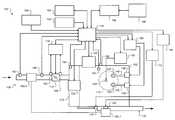
- FIG. 1is a functional block diagram of an example engine system
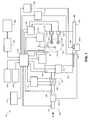
- FIG. 2is a functional block diagram of an example engine control system
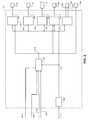
- FIG. 3is a functional block diagram of an example cylinder control module
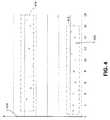
- FIG. 4is an example graph of fuel consumption for a plurality of possible sequences of activating and deactivating cylinders in a predetermined firing order
- FIG. 5is a flowchart depicting an example method of controlling cylinder activation and deactivation.
- an engine control modulemay deactivate one or more cylinders of the engine.
- the ECMmay deactivate one or more cylinders, for example, to decrease fuel consumption.
- the ECMdetermines a target firing fraction for the cylinders of the engine based on an engine torque request.
- a numerator of the target firing fractionmay indicate how many cylinders to activate during the next X number of cylinders in a firing order of the cylinders, where X is the denominator of the target firing fraction.
- the ECMdetermines possible sequences of activated cylinders that can be used to achieve the target firing fraction. Different sequences of activated cylinders may provide different volumetric efficiencies for each cylinder and, therefore, fuel consumption values. According to the present disclosure, the ECM determines a fuel consumption for possible sequences identified to achieve the target firing fraction. The ECM identifies the possible sequence having a lowest fuel consumption value and possible sequences having fuel consumption values that are within a predetermined range of the lowest fuel consumption value. The ECM discards possible sequences having fuel consumption values that are higher than the range.
- the ECMselects one of the (non-discarded) possible sequences and controls the activation and deactivation of cylinders based on the selected possible sequence. For example, the ECM may select the one of the possible sequences that minimizes seat track acceleration, crankshaft torsional vibration, and/or accessory drive disturbances.
- the engine system 100 of a vehicleincludes an engine 102 that combusts an air/fuel mixture to produce torque based on driver input from a driver input module 104 .
- Airis drawn into the engine 102 through an intake system 108 .
- the intake system 108may include an intake manifold 110 and a throttle valve 112 .
- the throttle valve 112may include a butterfly valve having a rotatable blade.
- An engine control module (ECM) 114controls a throttle actuator module 116 , and the throttle actuator module 116 regulates opening of the throttle valve 112 to control airflow into the intake manifold 110 .
- ECMengine control module
- Air from the intake manifold 110is drawn into cylinders of the engine 102 . While the engine 102 includes multiple cylinders, for illustration purposes a single representative cylinder 118 is shown. For example only, the engine 102 may include 2, 3, 4, 5, 6, 8, 10, and/or 12 cylinders.
- the ECM 114may instruct a cylinder actuator module 120 to selectively deactivate some of the cylinders under some circumstances, as discussed further below, which may improve fuel efficiency.
- the engine 102may operate using a four-stroke cycle or another suitable engine cycle.
- the four strokes of a four-stroke cycledescribed below, will be referred to as the intake stroke, the compression stroke, the combustion stroke, and the exhaust stroke.
- the intake strokewill be referred to as the intake stroke, the compression stroke, the combustion stroke, and the exhaust stroke.
- two crankshaft revolutionsare necessary for the cylinder 118 to experience all four of the strokes.
- one engine cyclemay correspond to two crankshaft revolutions.
- the ECM 114controls a fuel actuator module 124 , which regulates fuel injection to achieve a desired air/fuel ratio. Fuel may be injected into the intake manifold 110 at a central location or at multiple locations, such as near the intake valve 122 of each of the cylinders. In various implementations (not shown), fuel may be injected directly into the cylinders or into mixing chambers/ports associated with the cylinders. The fuel actuator module 124 may halt injection of fuel to cylinders that are deactivated.
- the injected fuelmixes with air and creates an air/fuel mixture in the cylinder 118 .
- a piston(not shown) within the cylinder 118 compresses the air/fuel mixture.
- the engine 102may be a compression-ignition engine, in which case compression causes ignition of the air/fuel mixture.
- the engine 102may be a spark-ignition engine, in which case a spark actuator module 126 energizes a spark plug 128 in the cylinder 118 based on a signal from the ECM 114 , which ignites the air/fuel mixture.
- Some types of engines, such as homogenous charge compression ignition (HCCI) enginesmay perform both compression ignition and spark ignition.
- the timing of the sparkmay be specified relative to the time when the piston is at its topmost position, which will be referred to as top dead center (TDC).
- TDCtop dead center
- the spark actuator module 126may be controlled by a timing signal specifying how far before or after TDC to generate the spark. Because piston position is directly related to crankshaft rotation, operation of the spark actuator module 126 may be synchronized with the position of the crankshaft. The spark actuator module 126 may halt provision of spark to deactivated cylinders or provide spark to deactivated cylinders.
- the combustion strokemay be defined as the time between the piston reaching TDC and the time at which the piston returns to a bottom most position, which will be referred to as bottom dead center (BDC).
- BDCbottom dead center
- the pistonDuring the exhaust stroke, the piston begins moving up from BDC and expels the byproducts of combustion through an exhaust valve 130 .
- the byproducts of combustionare exhausted from the vehicle via an exhaust system 134 .
- the intake valve 122may be controlled by an intake camshaft 140
- the exhaust valve 130may be controlled by an exhaust camshaft 142
- multiple intake camshaftsmay control multiple intake valves (including the intake valve 122 ) for the cylinder 118 and/or may control the intake valves (including the intake valve 122 ) of multiple banks of cylinders (including the cylinder 118 ).
- multiple exhaust camshaftsmay control multiple exhaust valves for the cylinder 118 and/or may control exhaust valves (including the exhaust valve 130 ) for multiple banks of cylinders (including the cylinder 118 ). While camshaft based valve actuation is shown and has been discussed, camless valve actuators may be implemented. While separate intake and exhaust camshafts are shown, one camshaft having lobes for both the intake and exhaust valves may be used.
- the cylinder actuator module 120may deactivate the cylinder 118 by disabling opening of the intake valve 122 and/or the exhaust valve 130 .
- the time at which the intake valve 122 is openedmay be varied with respect to piston TDC by an intake cam phaser 148 .
- the time at which the exhaust valve 130 is openedmay be varied with respect to piston TDC by an exhaust cam phaser 150 .
- a phaser actuator module 158may control the intake cam phaser 148 and the exhaust cam phaser 150 based on signals from the ECM 114 .
- variable valve lift(not shown) may also be controlled by the phaser actuator module 158 .
- the intake valve 122 and/or the exhaust valve 130may be controlled by actuators other than a camshaft, such as electromechanical actuators, electrohydraulic actuators, electromagnetic actuators, etc.
- the engine system 100may include a boost device that provides pressurized air to the intake manifold 110 .
- FIG. 1shows a turbocharger including a turbine 160 - 1 that is driven by exhaust gases flowing through the exhaust system 134 .
- the turbochargeralso includes a compressor 160 - 2 that is driven by the turbine 160 - 1 and that compresses air leading into the throttle valve 112 .
- a supercharger(not shown), driven by the crankshaft, may compress air from the throttle valve 112 and deliver the compressed air to the intake manifold 110 .
- a wastegate 162may allow exhaust to bypass the turbine 160 - 1 , thereby reducing the boost (the amount of intake air compression) of the turbocharger.
- the ECM 114may control the turbocharger via a boost actuator module 164 .
- the boost actuator module 164may modulate the boost of the turbocharger by controlling the position of the wastegate 162 .
- multiple turbochargersmay be controlled by the boost actuator module 164 .
- the turbochargermay have variable geometry, which may be controlled by the boost actuator module 164 .
- An intercoolermay dissipate some of the heat contained in the compressed air charge, which is generated as the air is compressed. Although shown separated for purposes of illustration, the turbine 160 - 1 and the compressor 160 - 2 may be mechanically linked to each other, placing intake air in close proximity to hot exhaust. The compressed air charge may absorb heat from components of the exhaust system 134 .
- the engine system 100may include an exhaust gas recirculation (EGR) valve 170 , which selectively redirects exhaust gas back to the intake manifold 110 .
- the EGR valve 170may be located upstream of the turbocharger's turbine 160 - 1 .
- the EGR valve 170may be controlled by an EGR actuator module 172 .
- Crankshaft positionmay be measured using a crankshaft position sensor 180 .
- An engine speedmay be determined based on the crankshaft position measured using the crankshaft position sensor 180 .
- a temperature of engine coolantmay be measured using an engine coolant temperature (ECT) sensor 182 .
- the ECT sensor 182may be located within the engine 102 or at other locations where the coolant is circulated, such as a radiator (not shown).
- a pressure within the intake manifold 110may be measured using a manifold absolute pressure (MAP) sensor 184 .
- MAPmanifold absolute pressure
- engine vacuumwhich is the difference between ambient air pressure and the pressure within the intake manifold 110
- a mass flow rate of air flowing into the intake manifold 110may be measured using a mass air flow (MAF) sensor 186 .
- the MAF sensor 186may be located in a housing that also includes the throttle valve 112 .
- Position of the throttle valve 112may be measured using one or more throttle position sensors (TPS) 190 .
- a temperature of air being drawn into the engine 102may be measured using an intake air temperature (IAT) sensor 192 .
- the engine system 100may also include one or more other sensors 193 .
- the ECM 114may use signals from the sensors to make control decisions for the engine system 100 .
- the ECM 114may communicate with a transmission control module 194 , for example, to coordinate shifting gears in the transmission. For example, the ECM 114 may reduce engine torque during a gear shift.
- the ECM 114may communicate with a hybrid control module 196 , for example, to coordinate operation of the engine 102 and an electric motor 198 .
- the electric motor 198may also function as a generator, and may be used to produce electrical energy for use by vehicle electrical systems and/or for storage in a battery. While only the electric motor 198 is shown and discussed, multiple electric motors may be implemented.
- various functions of the ECM 114 , the transmission control module 194 , and the hybrid control module 196may be integrated into one or more modules.
- Each system that varies an engine parametermay be referred to as an engine actuator.
- Each engine actuatorhas an associated actuator value.
- the throttle actuator module 116may be referred to as an engine actuator, and the throttle opening area may be referred to as the actuator value.
- the throttle actuator module 116achieves the throttle opening area by adjusting an angle of the blade of the throttle valve 112 .
- the spark actuator module 126may also be referred to as an engine actuator, while the corresponding actuator value may be the amount of spark advance relative to cylinder TDC.
- Other engine actuatorsmay include the cylinder actuator module 120 , the fuel actuator module 124 , the phaser actuator module 158 , the boost actuator module 164 , and the EGR actuator module 172 .
- the actuator valuesmay correspond to a cylinder activation/deactivation sequence, fueling rate, intake and exhaust cam phaser angles, boost pressure, and EGR valve opening area, respectively.
- the ECM 114may control the actuator values in order to cause the engine 102 to generate a requested engine output torque.
- a torque request module 204determines a torque request 208 for the engine 102 based on one or more driver inputs 212 .
- the driver inputs 212may include, for example, an accelerator pedal position, a brake pedal position, a cruise control input, and/or one or more other suitable driver inputs.
- the torque request module 204may determine the torque request 208 additionally or alternatively based on one or more other torque requests, such as torque requests generated by the ECM 114 and/or torque requests received from other modules of the vehicle, such as the transmission control module 194 , the hybrid control module 196 , a chassis control module, etc.
- One or more engine actuatorsare controlled based on the torque request 208 and/or one or more other parameters.
- a throttle control module 216may determine a target throttle opening 220 based on the torque request 208 .
- the throttle actuator module 116may adjust opening of the throttle valve 112 based on the target throttle opening 220 .
- a spark control module 224determines a target spark timing 228 based on the torque request 208 .
- the spark actuator module 126generates spark based on the target spark timing 228 .
- a fuel control module 232determines one or more target fueling parameters 236 based on the torque request 208 .
- the target fueling parameters 236may include fuel injection amount, number of fuel injections for injecting the amount, and timing for each of the injections.
- the fuel actuator module 124injects fuel based on the target fueling parameters 236 .
- a phaser control module 237determines target intake and exhaust cam phaser angles 238 and 239 based on the torque request 208 .
- the phaser actuator module 158may regulate the intake and exhaust cam phasers 148 and 150 based on the target intake and exhaust cam phaser angles 238 and 239 , respectively.
- a boost control module 240may determine a target boost 242 based on the torque request 208 .
- the boost actuator module 164may control boost output by the boost device(s) based on the target boost 242 .
- a cylinder control module 244generates a firing command 248 for a next cylinder in a predetermined firing order of the cylinders (“the next cylinder”).
- the firing command 248indicates whether the next cylinder should be activated or deactivated.
- the cylinder control module 244may set the firing command 248 to a first state (e.g., 1) when the next cylinder should be activated and set the firing command 248 to a second state (e.g., 0) when the next cylinder should be deactivated.
- the firing command 248may be generated for a second cylinder immediately following the next cylinder in the predetermined firing order, a third cylinder immediately following the second cylinder in the predetermined firing order, or another cylinder following the next cylinder in the predetermined firing order.
- the cylinder actuator module 120deactivates the intake and exhaust valves of the next cylinder when the firing command 248 indicates that the next cylinder should be deactivated.
- the cylinder actuator module 120allows opening and closing of the intake and exhaust valves of the next cylinder when the firing command 248 indicates that the next cylinder should be activated.
- the fuel control module 232halts fueling of the next cylinder when the firing command 248 indicates that the next cylinder should be deactivated.
- the fuel control module 232sets the target fueling parameters 236 to provide fuel to the next cylinder when the firing command 248 indicates that the next cylinder should be activated.
- the spark control module 224may provide spark to the next cylinder when the firing command 248 indicates that the next cylinder should be activated.
- the spark control module 224may provide or halt spark to the next cylinder when the firing command 248 indicates that the next cylinder should be deactivated.
- Cylinder deactivationis different than fuel cutoff (e.g., deceleration fuel cutoff) in that the intake and exhaust valves of cylinders to which fueling is halted during fuel cutoff may still be opened and closed during fuel cutoff whereas the intake and exhaust valves of cylinders are maintained closed when those cylinders are deactivated.
- fuel cutoffe.g., deceleration fuel cutoff
- FIG. 3is a functional block diagram of an example implementation of the cylinder control module 244 .
- a firing fraction module 304determines a target firing fraction 308 .
- the target firing fraction 308corresponds to a target number of cylinders to be activated out of the next N cylinders in the predetermined firing order of the cylinders.
- Nis an integer that is greater than or equal to the target number of cylinders.
- the target firing fractionmay be a fraction between 0 and 1, inclusive.
- a target firing fraction of 0corresponds to all of the cylinders of the engine 102 being deactivated (and 0 being activated)
- a target firing fraction of 1corresponds to all of the cylinders of the engine 102 being activated (and 0 being deactivated).
- a target firing fraction between 0 and 1corresponds to less than all of the cylinders being activated during the next N cylinders in the predetermined firing order.
- the firing fraction module 304determines the target firing fraction 308 based on the torque request 208 .
- the firing fraction module 304may determine the target firing fraction 308 further based on one or more other parameters, such as a current gear ratio 310 of the transmission and/or a vehicle speed 312 .
- the firing fraction module 304may determine the target firing fraction 308 using one of a function and a mapping that relates the torque request 208 , the gear ratio 310 , and the vehicle speed 312 to the target firing fraction 308 .
- a sequence module 316determines possible sequences 320 for activating and deactivating cylinders to achieve the target firing fraction 308 .
- the possible sequences 320 for each possible value of the target firing fraction 308may be identified during calibration and stored, for example, in memory.
- the sequence module 316determines the possible sequences 320 stored for the target firing fraction 308 .
- Each of the possible sequences 320 for a given target firing fractionincludes a sequence of a plurality of entries for activating and deactivating cylinders to achieve that target firing fraction.
- a possible sequence for achieving a target firing fraction of 5 ⁇ 8may be
- a fueling module 324determines fuel consumption values 328 for the possible sequences 320 , respectively, based on the possible sequences 320 , respectively, an engine speed 332 , and an engine load 336 .
- the fuel consumption value 328 for a possible sequencecorresponds to a predicted brake specific fuel consumption (BSFC) for use of that possible sequence at the engine speed 332 and the engine load 336 .
- BSFCpredicted brake specific fuel consumption
- the fueling module 324may determine the fuel consumption values using one of a function and a mapping that relates possible sequence, the engine speed 332 , and the engine load 336 to fuel consumption value.
- the engine speed 332may be determined, for example, based on crankshaft position measured using the crankshaft position sensor 180 .
- the engine load 336may correspond to a ratio of a current output of the engine 102 and a maximum output of the engine 102 and may be determined, for example, based on a MAF into the engine 102 and/or a MAP.
- the fueling module 324may determine the fuel consumption values further based on one or more other parameters, such as whether one or more cylinders before the next cylinder in the predetermined firing order were activated or deactivated.
- the fuel consumption values 328are proportional to volumetric efficiencies of the engine 102 for use of the possible sequences 320 . Due to differences in the intake system through which air flows into the cylinders, activation of different sets of cylinders provide different volumetric efficiencies. While the present disclosure will be discussed in terms of minimizing fuel consumption, maximizing volumetric efficiency may be used. Additionally or alternatively, minimizing variation on volumetric efficiency between cylinders may be used. For example, a possible sequence producing a lower variation between the volumetric efficiencies of the activated cylinders in that sequence may be selected over a possible sequence producing a higher variation between the volumetric efficiencies of the activated cylinders in that sequence.
- FIG. 4includes an example graph of fuel consumption values 404 determined for a plurality of possible sequences for activating 5 out of 8 cylinders of an 8 cylinder engine at an engine speed and engine load. Diamonds indicate fuel consumption values for the possible sequences, respectively. In the example of FIG. 4 , 18 different possible sequences for activating 5 out of 8 cylinders were used.
- an identification module 340identifies a lowest one of the fuel consumption values 328 determined for the possible sequences 320 , respectively. For example, the identification module 340 may identify the lowest one of the fuel consumption values 328 using a minimum function.
- the identification module 340outputs ones of the possible sequences 320 having fuel consumption values 328 that are within a predetermined amount or percentage of the lowest one of the fuel consumption values 328 .
- the ones of the possible sequences 320 having fuel consumption values 328 that are within the predetermined amount or percentage of the lowest one of the fuel consumption values 328will be referred to as identified possible sequences 344 .
- the identification module 340discards ones of the possible sequences 320 having fuel consumption values 328 that are not within the predetermined amount or percentage of the lowest one of the fuel consumption values 328 . In this manner, the ones of the possible sequences 320 having fuel consumption values 328 that are not within the predetermined amount or percentage of the lowest one of the fuel consumption values 328 are not used to generate the firing command 248 .
- the lowest one of the fuel consumption valuesis indicated by diamond 408 .
- Dashed box 412encircles the fuel consumption values that are within the predetermined amount or percentage of the lowest one of the fuel consumption values.
- the possible sequences associated with the fuel consumption values within the dashed box 412would therefore be the identified possible sequences 344 .
- Dashed box 416encircles fuel consumption values that are not within the predetermined amount or percentage of the lowest one of the fuel consumption values. Possible sequences associated with the fuel consumption values within the dashed box 416 would therefore not be selected for use in controlling activation or deactivation of the next cylinder.
- a selection module 348selects one of the identified possible sequences 344 and generates the firing command 248 for the next cylinder in the predetermined firing order based on the selected one of the identified possible sequences 344 .
- the selection module 348may select one of the identified possible sequences 344 , for example, based on accessory drive system disturbance values 352 determined for the identified possible sequences 344 , respectively, torsion values 356 determined for the identified possible sequences 344 , respectively, and/or seat track acceleration values 360 determined for the identified possible sequences 344 , respectively.
- An accessory disturbance module 364determines the accessory drive system disturbance values 352 for the identified possible sequences 344 , respectively.
- the accessory drive system disturbance values 352may correspond to, for example, predicted changes in speed and/or acceleration in one or more components of a drive system (e.g., accessory drive belt) of accessories of the vehicle for use of the identified possible sequences 344 , respectively.
- the accessory disturbance module 364may determine the accessory drive system disturbance values 352 , for example, using one of a function and a mapping that relates filtered possible sequence to accessory drive system disturbance value.
- a torsion module 368determines the torsion values 356 for the identified possible sequences 344 , respectively.
- the torsion values 356may correspond to, for example, predicted torsional vibration of the crankshaft for use of the identified possible sequences 344 , respectively.
- the torsion module 368may determine the torsion values 356 , for example, using one of a function and a mapping that relates filtered possible sequence to torsion value.
- a seat acceleration module 372determines the seat track acceleration values 360 for the identified possible sequences 344 , respectively.
- the seat track acceleration values 360may correspond to, for example, predicted acceleration in one or more directions at a seat track within a passenger cabin of the vehicle for use of the identified possible sequences 344 , respectively.
- the seat acceleration module 372may determine the seat track acceleration values 360 , for example, using one of a function and a mapping that relates filtered possible sequence to seat track acceleration value.
- the selection module 348may select one of the identified possible sequences 344 , for example, based on the accessory drive system disturbance values 352 , the torsion values 356 , and/or the seat track acceleration values 360 determined for the identified possible sequences 344 , respectively. For example, the selection module 348 may select the one of the identified possible sequences 344 that best minimizes accessory drive disturbances, torsion, and/or seat track acceleration. Alternatively, the selection module 348 may select the one of the identified possible sequences 344 having the minimum one of the fuel consumption values 328 .
- the selection module 348outputs the selected one of the identified possible sequences 344 to a command module 376 .
- the selected one of the identified possible sequences 344will be referred to as a selected target sequence 380 .
- the command module 376sets the firing command 248 for the next cylinder in the predetermined firing order to the first entry in the selected target sequence 380 .
- the cylinder actuator module 120activates or deactivates the next cylinder in the predetermined firing order based on the firing command 248 .
- the fuel control module 232disables fueling of deactivated cylinders.
- Controlmay begin with 504 where the torque request module 204 determines the torque request 208 .
- the firing fraction module 304determines the target firing fraction 308 based on the torque request 208 .
- the firing fraction module 304may determine the target firing fraction 308 further based on one or more other parameters, such as the gear ratio 310 engaged within the transmission and the vehicle speed 312 .
- the sequence module 316determines the possible sequences 320 for activating and/or deactivating cylinders to achieve the target firing fraction 308 .
- the possible sequences 320 for each possible target firing fractionmay be stored in memory, and the sequence module 316 may retrieve the possible sequences 320 for the target firing fraction 308 from memory.
- the fueling module 324determines the fuel consumption values 328 for the possible sequences 320 , respectively, at 516 .
- the fueling module 324determines the fuel consumption value for a possible sequence based on the possible sequence, the engine speed 332 , and the engine load 336 .
- the identification module 340determines the lowest one of the fuel consumption values 328 determined for the possible sequences 320 , respectively.
- the identification module 340filters out ones of the possible sequences 320 having fuel consumption values that are more than the predetermined amount or percentage from the lowest one of the fuel consumption values 328 .
- the identification module 340also outputs one of the possible sequences 320 having fuel consumption values that are less than the predetermined amount or percentage from the lowest one of the fuel consumption values as the identified possible sequences 344 at 524 .
- the selection module 348selects one of the identified possible sequences 344 and outputs the selected one of the identified possible sequences 344 as the selected target sequence 380 .
- the selection module 348may select the one of the identified possible sequences 344 that minimizes seat track acceleration, crankshaft torsion, and/or accessory drive disturbances.
- the accessory disturbance module 364determines the accessory drive system disturbance values 352 for the identified possible sequences 344 , respectively.
- the torsion module 368determines the torsion values 356 for the identified possible sequences 344 , respectively.
- the seat acceleration module 372determines the seat track acceleration values 360 for the identified possible sequences 344 , respectively.
- the command module 376generates the firing command 248 for the next cylinder in the predetermined firing order of the cylinders at 532 according to the first entry in the selected target sequence 380 .
- the cylinder actuator module 120activates or deactivates the next cylinder in the predetermined firing order based on the firing command 248 . While the example of FIG. 5 is shown as ending after 532 , FIG. 5 illustrates one control loop and control loops are performed at a predetermined rate.
- the phrase at least one of A, B, and Cshould be construed to mean a logical (A OR B OR C), using a non-exclusive logical OR, and should not be construed to mean “at least one of A, at least one of B, and at least one of C.” It should be understood that one or more steps within a method may be executed in different order (or concurrently) without altering the principles of the present disclosure.
- moduleor the term ‘controller’ may be replaced with the term ‘circuit.’
- the term ‘module’may refer to, be part of, or include: an Application Specific Integrated Circuit (ASIC); a digital, analog, or mixed analog/digital discrete circuit; a digital, analog, or mixed analog/digital integrated circuit; a combinational logic circuit; a field programmable gate array (FPGA); a processor circuit (shared, dedicated, or group) that executes code; a memory circuit (shared, dedicated, or group) that stores code executed by the processor circuit; other suitable hardware components that provide the described functionality; or a combination of some or all of the above, such as in a system-on-chip.
- ASICApplication Specific Integrated Circuit
- FPGAfield programmable gate array
- the modulemay include one or more interface circuits.
- the interface circuitsmay include wired or wireless interfaces that are connected to a local area network (LAN), the Internet, a wide area network (WAN), or combinations thereof.
- LANlocal area network
- WANwide area network
- the functionality of any given module of the present disclosuremay be distributed among multiple modules that are connected via interface circuits. For example, multiple modules may allow load balancing.
- a server (also known as remote, or cloud) modulemay accomplish some functionality on behalf of a client module.
- codemay include software, firmware, and/or microcode, and may refer to programs, routines, functions, classes, data structures, and/or objects.
- shared processor circuitencompasses a single processor circuit that executes some or all code from multiple modules.
- group processor circuitencompasses a processor circuit that, in combination with additional processor circuits, executes some or all code from one or more modules. References to multiple processor circuits encompass multiple processor circuits on discrete dies, multiple processor circuits on a single die, multiple cores of a single processor circuit, multiple threads of a single processor circuit, or a combination of the above.
- shared memory circuitencompasses a single memory circuit that stores some or all code from multiple modules.
- group memory circuitencompasses a memory circuit that, in combination with additional memories, stores some or all code from one or more modules.
- memory circuitis a subset of the term computer-readable medium.
- computer-readable mediumdoes not encompass transitory electrical or electromagnetic signals propagating through a medium (such as on a carrier wave); the term computer-readable medium may therefore be considered tangible and non-transitory.
- Non-limiting examples of a non-transitory, tangible computer-readable mediuminclude nonvolatile memory circuits (such as a flash memory circuit or a mask read-only memory circuit), volatile memory circuits (such as a static random access memory circuit and a dynamic random access memory circuit), and secondary storage, such as magnetic storage (such as magnetic tape or hard disk drive) and optical storage.
- the apparatuses and methods described in this applicationmay be partially or fully implemented by a special purpose computer created by configuring a general purpose computer to execute one or more particular functions embodied in computer programs.
- the computer programsinclude processor-executable instructions that are stored on at least one non-transitory, tangible computer-readable medium.
- the computer programsmay also include or rely on stored data.
- the computer programsmay include a basic input/output system (BIOS) that interacts with hardware of the special purpose computer, device drivers that interact with particular devices of the special purpose computer, one or more operating systems, user applications, background services and applications, etc.
- BIOSbasic input/output system
- the computer programsmay include: (i) assembly code; (ii) object code generated from source code by a compiler; (iii) source code for execution by an interpreter; (iv) source code for compilation and execution by a just-in-time compiler, (v) descriptive text for parsing, such as HTML (hypertext markup language) or XML (extensible markup language), etc.
- source codemay be written in C, C++, C#, Objective-C, Haskell, Go, SQL, Lisp, Java®, ASP, Perl, Javascript®, HTML5, Ada, ASP (active server pages), Perl, Scala, Erlang, Ruby, Flash®, Visual Basic®, Lua, or Python®.
Landscapes
- Engineering & Computer Science (AREA)
- Chemical & Material Sciences (AREA)
- Combustion & Propulsion (AREA)
- Mechanical Engineering (AREA)
- General Engineering & Computer Science (AREA)
- Output Control And Ontrol Of Special Type Engine (AREA)
Abstract
Description
This application claims the benefit of U.S. Provisional Application No. 62/011,286, filed on Jun. 12, 2014. The disclosure of the above application is incorporated herein by reference in its entirety.
The present disclosure relates to internal combustion engines and more specifically to cylinder activation and deactivation control systems and methods.
The background description provided here is for the purpose of generally presenting the context of the disclosure. Work of the presently named inventors, to the extent it is described in this background section, as well as aspects of the description that may not otherwise qualify as prior art at the time of filing, are neither expressly nor impliedly admitted as prior art against the present disclosure.
Internal combustion engines combust an air and fuel mixture within cylinders to drive pistons, which produces drive torque. In some types of engines, air flow into the engine may be regulated via a throttle. The throttle may adjust throttle area, which increases or decreases air flow into the engine. As the throttle area increases, the air flow into the engine increases. A fuel control system adjusts the rate that fuel is injected to provide a desired air/fuel mixture to the cylinders and/or to achieve a desired torque output. Increasing the amount of air and fuel provided to the cylinders generally increases the torque output of the engine.
Under some circumstances, one or more cylinders of an engine may be deactivated. Deactivation of a cylinder may include deactivating opening and closing of intake and exhaust valves of the cylinder and halting fueling of the cylinder. One or more cylinders may be deactivated, for example, to decrease fuel consumption when the engine can produce a requested amount of torque while the one or more cylinders are deactivated.
In a feature, a cylinder control system for a vehicle is disclosed. A torque request module generates a torque request for an engine based on at least one driver input. A firing fraction module, based on the torque request, determines a target number of activated cylinders of the engine. A sequence module determines possible sequences for activating and deactivating cylinders of the engine to achieve the target number of activated cylinders. A fueling module determines predicted fuel consumption values for the possible sequences, respectively. An identification module identifies first ones of the possible sequences having predicted fuel consumption values that are less than a predetermined amount from a lowest one of the predicted fuel consumption values. A selection module selects one of the first ones of the possible sequences and sets a selected sequence for activating and deactivating cylinders of the engine to the selected one of the first ones of the possible sequences. A command module, based on the selected sequence, commands one of activation and deactivation of a next cylinder in a predetermined firing order of the cylinders and one of activates and deactivates the next cylinder based on the command.
In further features, the fueling module determines the predicted fuel consumption values for the possible sequences based on the sequences for activating and deactivating cylinders of the possible sequences, respectively.
In further features, the fueling module determines the predicted fuel consumption values further based on one or more cylinder activation/deactivation states of one or more previous cylinders, respectively, in the predetermined firing order of the cylinders.
In further features, the fueling module determines the predicted fuel consumption values further based on an engine speed.
In further features, the fueling module determines the predicted fuel consumption values further based on an engine load.
In further features, the fueling module determines the predicted fuel consumption values for the possible sequences based on the sequences for activating and deactivating cylinders of the possible sequences, respectively, an engine speed, and an engine load.
In further features, an accessory disturbance module determines accessory disturbance values for the first ones of the possible sequences, respectively, and the selection module selects one of the first ones of the possible sequences having a lowest accessory disturbance value.
In further features, a torsion module determines crankshaft torsional vibration values for the first ones of the possible sequences, respectively, and the selection module selects one of the first ones of the possible sequences having a lowest crankshaft torsional vibration value.
In further features, a seat acceleration module determines an acceleration at a seat track within a passenger cabin of the vehicle for the first ones of the possible sequences, respectively, and the selection module selects one of the first ones of the possible sequences having a lowest acceleration.
In further features, the identification module further identifies second ones of the possible sequences having predicted fuel consumption values that are greater than the predetermined amount from the lowest one of the predicted fuel consumption values and prevents the selection module from selecting the second ones of the possible sequences.
In a feature, a cylinder control method for a vehicle is disclosed. The cylinder control method includes: generating a torque request for an engine based on at least one driver input; based on the torque request, determining a target number of activated cylinders of the engine; determining possible sequences for activating and deactivating cylinders of the engine to achieve the target number of activated cylinders; determining predicted fuel consumption values for the possible sequences, respectively; identifying first ones of the possible sequences having predicted fuel consumption values that are less than a predetermined amount from a lowest one of the predicted fuel consumption values; selecting one of the first ones of the possible sequences; setting a selected sequence for activating and deactivating cylinders of the engine to the selected one of the first ones of the possible sequences; based on the selected sequence, commanding one of activation and deactivation of a next cylinder in a predetermined firing order of the cylinders; and one of activating and deactivating the next cylinder based on the command.
In further features, the cylinder control method further includes determining the predicted fuel consumption values for the possible sequences based on the sequences for activating and deactivating cylinders of the possible sequences, respectively.
In further features, the cylinder control method further includes determining the predicted fuel consumption values further based on one or more cylinder activation/deactivation states of one or more previous cylinders, respectively, in the predetermined firing order of the cylinders.
In further features, the cylinder control method further includes determining the predicted fuel consumption values further based on an engine speed.
In further features, the cylinder control method further includes determining the predicted fuel consumption values further based on an engine load.
In further features, the cylinder control method further includes determining the predicted fuel consumption values for the possible sequences based on the sequences for activating and deactivating cylinders of the possible sequences, respectively, an engine speed, and an engine load.
In further features, the cylinder control method further includes: determining accessory disturbance values for the first ones of the possible sequences, respectively; and selecting one of the first ones of the possible sequences having a lowest accessory disturbance value.
In further features, the cylinder control method further includes: determining crankshaft torsional vibration values for the first ones of the possible sequences, respectively; and selecting one of the first ones of the possible sequences having a lowest crankshaft torsional vibration value.
In further features, the cylinder control method further includes: determining an acceleration at a seat track within a passenger cabin of the vehicle for the first ones of the possible sequences, respectively; and selecting one of the first ones of the possible sequences having a lowest acceleration.
In further features, the cylinder control method further includes: identifying second ones of the possible sequences having predicted fuel consumption values that are greater than the predetermined amount from the lowest one of the predicted fuel consumption values; and preventing the selection of the second ones of the possible sequences.
Further areas of applicability of the present disclosure will become apparent from the detailed description, the claims and the drawings. The detailed description and specific examples are intended for purposes of illustration only and are not intended to limit the scope of the disclosure.
The present disclosure will become more fully understood from the detailed description and the accompanying drawings, wherein:
In the drawings, reference numbers may be reused to identify similar and/or identical elements.
Internal combustion engines combust an air and fuel mixture within cylinders to generate torque. Under some circumstances, an engine control module (ECM) may deactivate one or more cylinders of the engine. The ECM may deactivate one or more cylinders, for example, to decrease fuel consumption.
The ECM determines a target firing fraction for the cylinders of the engine based on an engine torque request. A numerator of the target firing fraction may indicate how many cylinders to activate during the next X number of cylinders in a firing order of the cylinders, where X is the denominator of the target firing fraction.
The ECM determines possible sequences of activated cylinders that can be used to achieve the target firing fraction. Different sequences of activated cylinders may provide different volumetric efficiencies for each cylinder and, therefore, fuel consumption values. According to the present disclosure, the ECM determines a fuel consumption for possible sequences identified to achieve the target firing fraction. The ECM identifies the possible sequence having a lowest fuel consumption value and possible sequences having fuel consumption values that are within a predetermined range of the lowest fuel consumption value. The ECM discards possible sequences having fuel consumption values that are higher than the range.
The ECM selects one of the (non-discarded) possible sequences and controls the activation and deactivation of cylinders based on the selected possible sequence. For example, the ECM may select the one of the possible sequences that minimizes seat track acceleration, crankshaft torsional vibration, and/or accessory drive disturbances.
Referring now toFIG. 1 , a functional block diagram of anexample engine system 100 is presented. Theengine system 100 of a vehicle includes anengine 102 that combusts an air/fuel mixture to produce torque based on driver input from adriver input module 104. Air is drawn into theengine 102 through anintake system 108. Theintake system 108 may include anintake manifold 110 and athrottle valve 112. For example only, thethrottle valve 112 may include a butterfly valve having a rotatable blade. An engine control module (ECM)114 controls athrottle actuator module 116, and thethrottle actuator module 116 regulates opening of thethrottle valve 112 to control airflow into theintake manifold 110.
Air from theintake manifold 110 is drawn into cylinders of theengine 102. While theengine 102 includes multiple cylinders, for illustration purposes a singlerepresentative cylinder 118 is shown. For example only, theengine 102 may include 2, 3, 4, 5, 6, 8, 10, and/or 12 cylinders. TheECM 114 may instruct acylinder actuator module 120 to selectively deactivate some of the cylinders under some circumstances, as discussed further below, which may improve fuel efficiency.
Theengine 102 may operate using a four-stroke cycle or another suitable engine cycle. The four strokes of a four-stroke cycle, described below, will be referred to as the intake stroke, the compression stroke, the combustion stroke, and the exhaust stroke. During each revolution of a crankshaft (not shown), two of the four strokes occur within thecylinder 118. Therefore, two crankshaft revolutions are necessary for thecylinder 118 to experience all four of the strokes. For four-stroke engines, one engine cycle may correspond to two crankshaft revolutions.
When thecylinder 118 is activated, air from theintake manifold 110 is drawn into thecylinder 118 through anintake valve 122 during the intake stroke. TheECM 114 controls afuel actuator module 124, which regulates fuel injection to achieve a desired air/fuel ratio. Fuel may be injected into theintake manifold 110 at a central location or at multiple locations, such as near theintake valve 122 of each of the cylinders. In various implementations (not shown), fuel may be injected directly into the cylinders or into mixing chambers/ports associated with the cylinders. Thefuel actuator module 124 may halt injection of fuel to cylinders that are deactivated.
The injected fuel mixes with air and creates an air/fuel mixture in thecylinder 118. During the compression stroke, a piston (not shown) within thecylinder 118 compresses the air/fuel mixture. Theengine 102 may be a compression-ignition engine, in which case compression causes ignition of the air/fuel mixture. Alternatively, theengine 102 may be a spark-ignition engine, in which case aspark actuator module 126 energizes aspark plug 128 in thecylinder 118 based on a signal from theECM 114, which ignites the air/fuel mixture. Some types of engines, such as homogenous charge compression ignition (HCCI) engines may perform both compression ignition and spark ignition. The timing of the spark may be specified relative to the time when the piston is at its topmost position, which will be referred to as top dead center (TDC).
Thespark actuator module 126 may be controlled by a timing signal specifying how far before or after TDC to generate the spark. Because piston position is directly related to crankshaft rotation, operation of thespark actuator module 126 may be synchronized with the position of the crankshaft. Thespark actuator module 126 may halt provision of spark to deactivated cylinders or provide spark to deactivated cylinders.
During the combustion stroke, the combustion of the air/fuel mixture drives the piston down, thereby driving the crankshaft. The combustion stroke may be defined as the time between the piston reaching TDC and the time at which the piston returns to a bottom most position, which will be referred to as bottom dead center (BDC).
During the exhaust stroke, the piston begins moving up from BDC and expels the byproducts of combustion through anexhaust valve 130. The byproducts of combustion are exhausted from the vehicle via anexhaust system 134.
Theintake valve 122 may be controlled by anintake camshaft 140, while theexhaust valve 130 may be controlled by anexhaust camshaft 142. In various implementations, multiple intake camshafts (including the intake camshaft140) may control multiple intake valves (including the intake valve122) for thecylinder 118 and/or may control the intake valves (including the intake valve122) of multiple banks of cylinders (including the cylinder118). Similarly, multiple exhaust camshafts (including the exhaust camshaft142) may control multiple exhaust valves for thecylinder 118 and/or may control exhaust valves (including the exhaust valve130) for multiple banks of cylinders (including the cylinder118). While camshaft based valve actuation is shown and has been discussed, camless valve actuators may be implemented. While separate intake and exhaust camshafts are shown, one camshaft having lobes for both the intake and exhaust valves may be used.
Thecylinder actuator module 120 may deactivate thecylinder 118 by disabling opening of theintake valve 122 and/or theexhaust valve 130. The time at which theintake valve 122 is opened may be varied with respect to piston TDC by anintake cam phaser 148. The time at which theexhaust valve 130 is opened may be varied with respect to piston TDC by anexhaust cam phaser 150. Aphaser actuator module 158 may control theintake cam phaser 148 and theexhaust cam phaser 150 based on signals from theECM 114. When implemented, variable valve lift (not shown) may also be controlled by thephaser actuator module 158. In various other implementations, theintake valve 122 and/or theexhaust valve 130 may be controlled by actuators other than a camshaft, such as electromechanical actuators, electrohydraulic actuators, electromagnetic actuators, etc.
Theengine system 100 may include a boost device that provides pressurized air to theintake manifold 110. For example,FIG. 1 shows a turbocharger including a turbine160-1 that is driven by exhaust gases flowing through theexhaust system 134. The turbocharger also includes a compressor160-2 that is driven by the turbine160-1 and that compresses air leading into thethrottle valve 112. In various implementations, a supercharger (not shown), driven by the crankshaft, may compress air from thethrottle valve 112 and deliver the compressed air to theintake manifold 110.
Awastegate 162 may allow exhaust to bypass the turbine160-1, thereby reducing the boost (the amount of intake air compression) of the turbocharger. TheECM 114 may control the turbocharger via aboost actuator module 164. Theboost actuator module 164 may modulate the boost of the turbocharger by controlling the position of thewastegate 162. In various implementations, multiple turbochargers may be controlled by theboost actuator module 164. The turbocharger may have variable geometry, which may be controlled by theboost actuator module 164.
An intercooler (not shown) may dissipate some of the heat contained in the compressed air charge, which is generated as the air is compressed. Although shown separated for purposes of illustration, the turbine160-1 and the compressor160-2 may be mechanically linked to each other, placing intake air in close proximity to hot exhaust. The compressed air charge may absorb heat from components of theexhaust system 134.
Theengine system 100 may include an exhaust gas recirculation (EGR)valve 170, which selectively redirects exhaust gas back to theintake manifold 110. TheEGR valve 170 may be located upstream of the turbocharger's turbine160-1. TheEGR valve 170 may be controlled by anEGR actuator module 172.
Crankshaft position may be measured using acrankshaft position sensor 180. An engine speed may be determined based on the crankshaft position measured using thecrankshaft position sensor 180. A temperature of engine coolant may be measured using an engine coolant temperature (ECT)sensor 182. TheECT sensor 182 may be located within theengine 102 or at other locations where the coolant is circulated, such as a radiator (not shown).
A pressure within theintake manifold 110 may be measured using a manifold absolute pressure (MAP)sensor 184. In various implementations, engine vacuum, which is the difference between ambient air pressure and the pressure within theintake manifold 110, may be measured. A mass flow rate of air flowing into theintake manifold 110 may be measured using a mass air flow (MAF)sensor 186. In various implementations, theMAF sensor 186 may be located in a housing that also includes thethrottle valve 112.
Position of thethrottle valve 112 may be measured using one or more throttle position sensors (TPS)190. A temperature of air being drawn into theengine 102 may be measured using an intake air temperature (IAT)sensor 192. Theengine system 100 may also include one or moreother sensors 193. TheECM 114 may use signals from the sensors to make control decisions for theengine system 100.
TheECM 114 may communicate with atransmission control module 194, for example, to coordinate shifting gears in the transmission. For example, theECM 114 may reduce engine torque during a gear shift. TheECM 114 may communicate with ahybrid control module 196, for example, to coordinate operation of theengine 102 and anelectric motor 198. Theelectric motor 198 may also function as a generator, and may be used to produce electrical energy for use by vehicle electrical systems and/or for storage in a battery. While only theelectric motor 198 is shown and discussed, multiple electric motors may be implemented. In various implementations, various functions of theECM 114, thetransmission control module 194, and thehybrid control module 196 may be integrated into one or more modules.
Each system that varies an engine parameter may be referred to as an engine actuator. Each engine actuator has an associated actuator value. For example, thethrottle actuator module 116 may be referred to as an engine actuator, and the throttle opening area may be referred to as the actuator value. In the example ofFIG. 1 , thethrottle actuator module 116 achieves the throttle opening area by adjusting an angle of the blade of thethrottle valve 112.
Thespark actuator module 126 may also be referred to as an engine actuator, while the corresponding actuator value may be the amount of spark advance relative to cylinder TDC. Other engine actuators may include thecylinder actuator module 120, thefuel actuator module 124, thephaser actuator module 158, theboost actuator module 164, and theEGR actuator module 172. For these engine actuators, the actuator values may correspond to a cylinder activation/deactivation sequence, fueling rate, intake and exhaust cam phaser angles, boost pressure, and EGR valve opening area, respectively. TheECM 114 may control the actuator values in order to cause theengine 102 to generate a requested engine output torque.
Referring now toFIG. 2 , a functional block diagram of an example engine control system is presented. Atorque request module 204 determines atorque request 208 for theengine 102 based on one ormore driver inputs 212. Thedriver inputs 212 may include, for example, an accelerator pedal position, a brake pedal position, a cruise control input, and/or one or more other suitable driver inputs. Thetorque request module 204 may determine thetorque request 208 additionally or alternatively based on one or more other torque requests, such as torque requests generated by theECM 114 and/or torque requests received from other modules of the vehicle, such as thetransmission control module 194, thehybrid control module 196, a chassis control module, etc.
One or more engine actuators are controlled based on thetorque request 208 and/or one or more other parameters. For example, athrottle control module 216 may determine atarget throttle opening 220 based on thetorque request 208. Thethrottle actuator module 116 may adjust opening of thethrottle valve 112 based on thetarget throttle opening 220.
Aspark control module 224 determines atarget spark timing 228 based on thetorque request 208. Thespark actuator module 126 generates spark based on thetarget spark timing 228. Afuel control module 232 determines one or moretarget fueling parameters 236 based on thetorque request 208. For example, thetarget fueling parameters 236 may include fuel injection amount, number of fuel injections for injecting the amount, and timing for each of the injections. Thefuel actuator module 124 injects fuel based on thetarget fueling parameters 236.
Aphaser control module 237 determines target intake and exhaust cam phaser angles238 and239 based on thetorque request 208. Thephaser actuator module 158 may regulate the intake andexhaust cam phasers boost control module 240 may determine atarget boost 242 based on thetorque request 208. Theboost actuator module 164 may control boost output by the boost device(s) based on thetarget boost 242.
Acylinder control module 244 generates afiring command 248 for a next cylinder in a predetermined firing order of the cylinders (“the next cylinder”). The firingcommand 248 indicates whether the next cylinder should be activated or deactivated. For example only, thecylinder control module 244 may set thefiring command 248 to a first state (e.g., 1) when the next cylinder should be activated and set thefiring command 248 to a second state (e.g., 0) when the next cylinder should be deactivated. While thefiring command 248 is and will be discussed with respect to the next cylinder in the predetermined firing order, the firingcommand 248 may be generated for a second cylinder immediately following the next cylinder in the predetermined firing order, a third cylinder immediately following the second cylinder in the predetermined firing order, or another cylinder following the next cylinder in the predetermined firing order.
Thecylinder actuator module 120 deactivates the intake and exhaust valves of the next cylinder when thefiring command 248 indicates that the next cylinder should be deactivated. Thecylinder actuator module 120 allows opening and closing of the intake and exhaust valves of the next cylinder when thefiring command 248 indicates that the next cylinder should be activated.
Thefuel control module 232 halts fueling of the next cylinder when thefiring command 248 indicates that the next cylinder should be deactivated. Thefuel control module 232 sets thetarget fueling parameters 236 to provide fuel to the next cylinder when thefiring command 248 indicates that the next cylinder should be activated. Thespark control module 224 may provide spark to the next cylinder when thefiring command 248 indicates that the next cylinder should be activated. Thespark control module 224 may provide or halt spark to the next cylinder when thefiring command 248 indicates that the next cylinder should be deactivated. Cylinder deactivation is different than fuel cutoff (e.g., deceleration fuel cutoff) in that the intake and exhaust valves of cylinders to which fueling is halted during fuel cutoff may still be opened and closed during fuel cutoff whereas the intake and exhaust valves of cylinders are maintained closed when those cylinders are deactivated.
The firingfraction module 304 determines thetarget firing fraction 308 based on thetorque request 208. The firingfraction module 304 may determine thetarget firing fraction 308 further based on one or more other parameters, such as acurrent gear ratio 310 of the transmission and/or avehicle speed 312. For example, the firingfraction module 304 may determine thetarget firing fraction 308 using one of a function and a mapping that relates thetorque request 208, thegear ratio 310, and thevehicle speed 312 to thetarget firing fraction 308.
Asequence module 316 determinespossible sequences 320 for activating and deactivating cylinders to achieve thetarget firing fraction 308. Thepossible sequences 320 for each possible value of thetarget firing fraction 308 may be identified during calibration and stored, for example, in memory. Thesequence module 316 determines thepossible sequences 320 stored for thetarget firing fraction 308.
Each of thepossible sequences 320 for a given target firing fraction includes a sequence of a plurality of entries for activating and deactivating cylinders to achieve that target firing fraction. For example, a possible sequence for achieving a target firing fraction of ⅝ may be
- [1, 0, 1, 1, 0, 1, 0, 1],
where a 1 indicates an activated cylinder and a 0 indicates a deactivated cylinder. Other possible sequences for achieving a target firing fraction of ⅝ include, but are not limited to: - [1, 1, 0, 1, 0, 1, 0, 1],
- [1, 0, 0, 1, 1, 0, 1, 1], and
- [0, 1, 1, 0, 1, 1, 0, 1].
Multiple possible sequences may be stored for each possible target firing fraction. Exceptions where only 1 possible sequence may be stored include target firing fractions of 0 and 1, where zero and all cylinders are activated.
- [1, 0, 1, 1, 0, 1, 0, 1],
A fuelingmodule 324 determines fuel consumption values328 for thepossible sequences 320, respectively, based on thepossible sequences 320, respectively, anengine speed 332, and anengine load 336. Thefuel consumption value 328 for a possible sequence corresponds to a predicted brake specific fuel consumption (BSFC) for use of that possible sequence at theengine speed 332 and theengine load 336.
The fuelingmodule 324 may determine the fuel consumption values using one of a function and a mapping that relates possible sequence, theengine speed 332, and theengine load 336 to fuel consumption value. Theengine speed 332 may be determined, for example, based on crankshaft position measured using thecrankshaft position sensor 180. Theengine load 336 may correspond to a ratio of a current output of theengine 102 and a maximum output of theengine 102 and may be determined, for example, based on a MAF into theengine 102 and/or a MAP. The fuelingmodule 324 may determine the fuel consumption values further based on one or more other parameters, such as whether one or more cylinders before the next cylinder in the predetermined firing order were activated or deactivated.
The fuel consumption values328 are proportional to volumetric efficiencies of theengine 102 for use of thepossible sequences 320. Due to differences in the intake system through which air flows into the cylinders, activation of different sets of cylinders provide different volumetric efficiencies. While the present disclosure will be discussed in terms of minimizing fuel consumption, maximizing volumetric efficiency may be used. Additionally or alternatively, minimizing variation on volumetric efficiency between cylinders may be used. For example, a possible sequence producing a lower variation between the volumetric efficiencies of the activated cylinders in that sequence may be selected over a possible sequence producing a higher variation between the volumetric efficiencies of the activated cylinders in that sequence.
Referring back toFIG. 3 , an identification module340 identifies a lowest one of the fuel consumption values328 determined for thepossible sequences 320, respectively. For example, the identification module340 may identify the lowest one of the fuel consumption values328 using a minimum function.
The identification module340 outputs ones of thepossible sequences 320 having fuel consumption values328 that are within a predetermined amount or percentage of the lowest one of the fuel consumption values328. The ones of thepossible sequences 320 having fuel consumption values328 that are within the predetermined amount or percentage of the lowest one of the fuel consumption values328 will be referred to as identifiedpossible sequences 344.
The identification module340 discards ones of thepossible sequences 320 having fuel consumption values328 that are not within the predetermined amount or percentage of the lowest one of the fuel consumption values328. In this manner, the ones of thepossible sequences 320 having fuel consumption values328 that are not within the predetermined amount or percentage of the lowest one of the fuel consumption values328 are not used to generate thefiring command 248.
InFIG. 4 , the lowest one of the fuel consumption values is indicated bydiamond 408. Dashedbox 412 encircles the fuel consumption values that are within the predetermined amount or percentage of the lowest one of the fuel consumption values. The possible sequences associated with the fuel consumption values within the dashedbox 412 would therefore be the identifiedpossible sequences 344.
Dashedbox 416 encircles fuel consumption values that are not within the predetermined amount or percentage of the lowest one of the fuel consumption values. Possible sequences associated with the fuel consumption values within the dashedbox 416 would therefore not be selected for use in controlling activation or deactivation of the next cylinder.
Aselection module 348 selects one of the identifiedpossible sequences 344 and generates thefiring command 248 for the next cylinder in the predetermined firing order based on the selected one of the identifiedpossible sequences 344. Theselection module 348 may select one of the identifiedpossible sequences 344, for example, based on accessory drive system disturbance values352 determined for the identifiedpossible sequences 344, respectively, torsion values356 determined for the identifiedpossible sequences 344, respectively, and/or seat track acceleration values360 determined for the identifiedpossible sequences 344, respectively.
Anaccessory disturbance module 364 determines the accessory drive system disturbance values352 for the identifiedpossible sequences 344, respectively. The accessory drive system disturbance values352 may correspond to, for example, predicted changes in speed and/or acceleration in one or more components of a drive system (e.g., accessory drive belt) of accessories of the vehicle for use of the identifiedpossible sequences 344, respectively. Theaccessory disturbance module 364 may determine the accessory drive system disturbance values352, for example, using one of a function and a mapping that relates filtered possible sequence to accessory drive system disturbance value.
Atorsion module 368 determines the torsion values356 for the identifiedpossible sequences 344, respectively. The torsion values356 may correspond to, for example, predicted torsional vibration of the crankshaft for use of the identifiedpossible sequences 344, respectively. Thetorsion module 368 may determine the torsion values356, for example, using one of a function and a mapping that relates filtered possible sequence to torsion value.
Aseat acceleration module 372 determines the seat track acceleration values360 for the identifiedpossible sequences 344, respectively. The seat track acceleration values360 may correspond to, for example, predicted acceleration in one or more directions at a seat track within a passenger cabin of the vehicle for use of the identifiedpossible sequences 344, respectively. Theseat acceleration module 372 may determine the seat track acceleration values360, for example, using one of a function and a mapping that relates filtered possible sequence to seat track acceleration value.
As stated above, theselection module 348 may select one of the identifiedpossible sequences 344, for example, based on the accessory drive system disturbance values352, the torsion values356, and/or the seat track acceleration values360 determined for the identifiedpossible sequences 344, respectively. For example, theselection module 348 may select the one of the identifiedpossible sequences 344 that best minimizes accessory drive disturbances, torsion, and/or seat track acceleration. Alternatively, theselection module 348 may select the one of the identifiedpossible sequences 344 having the minimum one of the fuel consumption values328.
Theselection module 348 outputs the selected one of the identifiedpossible sequences 344 to acommand module 376. The selected one of the identifiedpossible sequences 344 will be referred to as a selectedtarget sequence 380. Thecommand module 376 sets thefiring command 248 for the next cylinder in the predetermined firing order to the first entry in the selectedtarget sequence 380. Thecylinder actuator module 120 activates or deactivates the next cylinder in the predetermined firing order based on thefiring command 248. Thefuel control module 232 disables fueling of deactivated cylinders.
Referring now toFIG. 5 , a flowchart depicting an example method of controlling cylinder activation and deactivation is presented. Control may begin with504 where thetorque request module 204 determines thetorque request 208. At508, the firingfraction module 304 determines thetarget firing fraction 308 based on thetorque request 208. The firingfraction module 304 may determine thetarget firing fraction 308 further based on one or more other parameters, such as thegear ratio 310 engaged within the transmission and thevehicle speed 312.
At512, thesequence module 316 determines thepossible sequences 320 for activating and/or deactivating cylinders to achieve thetarget firing fraction 308. For example, thepossible sequences 320 for each possible target firing fraction may be stored in memory, and thesequence module 316 may retrieve thepossible sequences 320 for thetarget firing fraction 308 from memory.
The fuelingmodule 324 determines the fuel consumption values328 for thepossible sequences 320, respectively, at516. The fuelingmodule 324 determines the fuel consumption value for a possible sequence based on the possible sequence, theengine speed 332, and theengine load 336.
At520, the identification module340 determines the lowest one of the fuel consumption values328 determined for thepossible sequences 320, respectively. At524, the identification module340 filters out ones of thepossible sequences 320 having fuel consumption values that are more than the predetermined amount or percentage from the lowest one of the fuel consumption values328. The identification module340 also outputs one of thepossible sequences 320 having fuel consumption values that are less than the predetermined amount or percentage from the lowest one of the fuel consumption values as the identifiedpossible sequences 344 at524.
At528, theselection module 348 selects one of the identifiedpossible sequences 344 and outputs the selected one of the identifiedpossible sequences 344 as the selectedtarget sequence 380. For example, theselection module 348 may select the one of the identifiedpossible sequences 344 that minimizes seat track acceleration, crankshaft torsion, and/or accessory drive disturbances. Theaccessory disturbance module 364 determines the accessory drive system disturbance values352 for the identifiedpossible sequences 344, respectively. Thetorsion module 368 determines the torsion values356 for the identifiedpossible sequences 344, respectively. Theseat acceleration module 372 determines the seat track acceleration values360 for the identifiedpossible sequences 344, respectively.
Thecommand module 376 generates thefiring command 248 for the next cylinder in the predetermined firing order of the cylinders at532 according to the first entry in the selectedtarget sequence 380. Thecylinder actuator module 120 activates or deactivates the next cylinder in the predetermined firing order based on thefiring command 248. While the example ofFIG. 5 is shown as ending after532,FIG. 5 illustrates one control loop and control loops are performed at a predetermined rate.
The foregoing description is merely illustrative in nature and is in no way intended to limit the disclosure, its application, or uses. The broad teachings of the disclosure can be implemented in a variety of forms. Therefore, while this disclosure includes particular examples, the true scope of the disclosure should not be so limited since other modifications will become apparent upon a study of the drawings, the specification, and the following claims. As used herein, the phrase at least one of A, B, and C should be construed to mean a logical (A OR B OR C), using a non-exclusive logical OR, and should not be construed to mean “at least one of A, at least one of B, and at least one of C.” It should be understood that one or more steps within a method may be executed in different order (or concurrently) without altering the principles of the present disclosure.
In this application, including the definitions below, the term ‘module’ or the term ‘controller’ may be replaced with the term ‘circuit.’ The term ‘module’ may refer to, be part of, or include: an Application Specific Integrated Circuit (ASIC); a digital, analog, or mixed analog/digital discrete circuit; a digital, analog, or mixed analog/digital integrated circuit; a combinational logic circuit; a field programmable gate array (FPGA); a processor circuit (shared, dedicated, or group) that executes code; a memory circuit (shared, dedicated, or group) that stores code executed by the processor circuit; other suitable hardware components that provide the described functionality; or a combination of some or all of the above, such as in a system-on-chip.
The module may include one or more interface circuits. In some examples, the interface circuits may include wired or wireless interfaces that are connected to a local area network (LAN), the Internet, a wide area network (WAN), or combinations thereof. The functionality of any given module of the present disclosure may be distributed among multiple modules that are connected via interface circuits. For example, multiple modules may allow load balancing. In a further example, a server (also known as remote, or cloud) module may accomplish some functionality on behalf of a client module.
The term code, as used above, may include software, firmware, and/or microcode, and may refer to programs, routines, functions, classes, data structures, and/or objects. The term shared processor circuit encompasses a single processor circuit that executes some or all code from multiple modules. The term group processor circuit encompasses a processor circuit that, in combination with additional processor circuits, executes some or all code from one or more modules. References to multiple processor circuits encompass multiple processor circuits on discrete dies, multiple processor circuits on a single die, multiple cores of a single processor circuit, multiple threads of a single processor circuit, or a combination of the above. The term shared memory circuit encompasses a single memory circuit that stores some or all code from multiple modules. The term group memory circuit encompasses a memory circuit that, in combination with additional memories, stores some or all code from one or more modules.
The term memory circuit is a subset of the term computer-readable medium. The term computer-readable medium, as used herein, does not encompass transitory electrical or electromagnetic signals propagating through a medium (such as on a carrier wave); the term computer-readable medium may therefore be considered tangible and non-transitory. Non-limiting examples of a non-transitory, tangible computer-readable medium include nonvolatile memory circuits (such as a flash memory circuit or a mask read-only memory circuit), volatile memory circuits (such as a static random access memory circuit and a dynamic random access memory circuit), and secondary storage, such as magnetic storage (such as magnetic tape or hard disk drive) and optical storage.
The apparatuses and methods described in this application may be partially or fully implemented by a special purpose computer created by configuring a general purpose computer to execute one or more particular functions embodied in computer programs. The computer programs include processor-executable instructions that are stored on at least one non-transitory, tangible computer-readable medium. The computer programs may also include or rely on stored data. The computer programs may include a basic input/output system (BIOS) that interacts with hardware of the special purpose computer, device drivers that interact with particular devices of the special purpose computer, one or more operating systems, user applications, background services and applications, etc.
The computer programs may include: (i) assembly code; (ii) object code generated from source code by a compiler; (iii) source code for execution by an interpreter; (iv) source code for compilation and execution by a just-in-time compiler, (v) descriptive text for parsing, such as HTML (hypertext markup language) or XML (extensible markup language), etc. As examples only, source code may be written in C, C++, C#, Objective-C, Haskell, Go, SQL, Lisp, Java®, ASP, Perl, Javascript®, HTML5, Ada, ASP (active server pages), Perl, Scala, Erlang, Ruby, Flash®, Visual Basic®, Lua, or Python®.
None of the elements recited in the claims is intended to be a means-plus-function element within the meaning of 35 U.S.C. §112(f) unless an element is expressly recited using the phrase “means for”, or in the case of a method claim using the phrases “operation for” or “step for”.
Claims (20)
1. A cylinder control system for a vehicle, comprising:
a torque request module that generates a torque request for an engine based on at least one driver input;
a firing fraction module that, based on the torque request, determines a target number of activated cylinders of the engine;
a sequence module that determines possible sequences for activating and deactivating cylinders of the engine to achieve the target number of activated cylinders;
a fueling module that determines predicted fuel consumption values for the possible sequences, respectively;
an identification module that identifies first ones of the possible sequences having predicted fuel consumption values that are less than a predetermined amount from a lowest one of the predicted fuel consumption values;
a selection module that selects one of the first ones of the possible sequences and that sets a selected sequence for activating and deactivating cylinders of the engine to the selected one of the first ones of the possible sequences; and
a command module that, based on the selected sequence, commands one of activation and deactivation of a next cylinder in a predetermined firing order of the cylinders and that one of activates and deactivates the next cylinder based on the command.
2. The cylinder control system ofclaim 1 wherein the fueling module determines the predicted fuel consumption values for the possible sequences based on the sequences for activating and deactivating cylinders of the possible sequences, respectively.
3. The cylinder control system ofclaim 2 wherein the fueling module determines the predicted fuel consumption values further based on one or more cylinder activation/deactivation states of one or more previous cylinders, respectively, in the predetermined firing order of the cylinders.
4. The cylinder control system ofclaim 2 wherein the fueling module determines the predicted fuel consumption values further based on an engine speed.
5. The cylinder control system ofclaim 2 wherein the fueling module determines the predicted fuel consumption values further based on an engine load.
6. The cylinder control system ofclaim 1 wherein the fueling module determines the predicted fuel consumption values for the possible sequences based on the sequences for activating and deactivating cylinders of the possible sequences, respectively, an engine speed, and an engine load.
7. The cylinder control system ofclaim 1 further comprising an accessory disturbance module that determines accessory disturbance values for the first ones of the possible sequences, respectively,
wherein the selection module selects one of the first ones of the possible sequences having a lowest accessory disturbance value.
8. The cylinder control system ofclaim 1 further comprising a torsion module that determines crankshaft torsional vibration values for the first ones of the possible sequences, respectively,
wherein the selection module selects one of the first ones of the possible sequences having a lowest crankshaft torsional vibration value.
9. The cylinder control system ofclaim 1 further comprising a seat acceleration module that determines an acceleration at a seat track within a passenger cabin of the vehicle for the first ones of the possible sequences, respectively,
wherein the selection module selects one of the first ones of the possible sequences having a lowest acceleration.
10. The cylinder control system ofclaim 1 wherein the identification module further identifies second ones of the possible sequences having predicted fuel consumption values that are greater than the predetermined amount from the lowest one of the predicted fuel consumption values and prevents the selection module from selecting the second ones of the possible sequences.
11. A cylinder control method for a vehicle, comprising:
generating a torque request for an engine based on at least one driver input;
based on the torque request, determining a target number of activated cylinders of the engine;
determining possible sequences for activating and deactivating cylinders of the engine to achieve the target number of activated cylinders;
determining predicted fuel consumption values for the possible sequences, respectively;
identifying first ones of the possible sequences having predicted fuel consumption values that are less than a predetermined amount from a lowest one of the predicted fuel consumption values;
selecting one of the first ones of the possible sequences;
setting a selected sequence for activating and deactivating cylinders of the engine to the selected one of the first ones of the possible sequences;
based on the selected sequence, commanding one of activation and deactivation of a next cylinder in a predetermined firing order of the cylinders; and
one of activating and deactivating the next cylinder based on the command.
12. The cylinder control method ofclaim 11 further comprising determining the predicted fuel consumption values for the possible sequences based on the sequences for activating and deactivating cylinders of the possible sequences, respectively.
13. The cylinder control method ofclaim 12 further comprising determining the predicted fuel consumption values further based on one or more cylinder activation/deactivation states of one or more previous cylinders, respectively, in the predetermined firing order of the cylinders.
14. The cylinder control method ofclaim 12 further comprising determining the predicted fuel consumption values further based on an engine speed.
15. The cylinder control method ofclaim 12 further comprising determining the predicted fuel consumption values further based on an engine load.
16. The cylinder control method ofclaim 11 further comprising determining the predicted fuel consumption values for the possible sequences based on the sequences for activating and deactivating cylinders of the possible sequences, respectively, an engine speed, and an engine load.
17. The cylinder control method ofclaim 11 further comprising:
determining accessory disturbance values for the first ones of the possible sequences, respectively; and
selecting one of the first ones of the possible sequences having a lowest accessory disturbance value.
18. The cylinder control method ofclaim 11 further comprising:
determining crankshaft torsional vibration values for the first ones of the possible sequences, respectively; and
selecting one of the first ones of the possible sequences having a lowest crankshaft torsional vibration value.
19. The cylinder control method ofclaim 11 further comprising:
determining an acceleration at a seat track within a passenger cabin of the vehicle for the first ones of the possible sequences, respectively; and
selecting one of the first ones of the possible sequences having a lowest acceleration.
20. The cylinder control method ofclaim 11 further comprising:
identifying second ones of the possible sequences having predicted fuel consumption values that are greater than the predetermined amount from the lowest one of the predicted fuel consumption values; and
preventing the selection of the second ones of the possible sequences.
Priority Applications (2)
| Application Number | Priority Date | Filing Date | Title |
|---|---|---|---|
| US14/449,726US9341128B2 (en) | 2014-06-12 | 2014-08-01 | Fuel consumption based cylinder activation and deactivation control systems and methods |
| DE102015108396.5ADE102015108396B4 (en) | 2014-06-12 | 2015-05-28 | Method for controlling fuel consumption based on cylinder activation and deactivation |
Applications Claiming Priority (2)
| Application Number | Priority Date | Filing Date | Title |
|---|---|---|---|
| US201462011286P | 2014-06-12 | 2014-06-12 | |
| US14/449,726US9341128B2 (en) | 2014-06-12 | 2014-08-01 | Fuel consumption based cylinder activation and deactivation control systems and methods |
Publications (2)
| Publication Number | Publication Date |
|---|---|
| US20150361907A1 US20150361907A1 (en) | 2015-12-17 |
| US9341128B2true US9341128B2 (en) | 2016-05-17 |
Family
ID=54706897
Family Applications (1)
| Application Number | Title | Priority Date | Filing Date |
|---|---|---|---|
| US14/449,726Active2034-09-28US9341128B2 (en) | 2014-06-12 | 2014-08-01 | Fuel consumption based cylinder activation and deactivation control systems and methods |
Country Status (2)
| Country | Link |
|---|---|
| US (1) | US9341128B2 (en) |
| DE (1) | DE102015108396B4 (en) |
Cited By (6)
| Publication number | Priority date | Publication date | Assignee | Title |
|---|---|---|---|---|
| US9878718B2 (en) | 2016-06-23 | 2018-01-30 | Tula Technology, Inc. | Coordination of vehicle actuators during firing fraction transitions |
| US20180179970A1 (en)* | 2016-06-23 | 2018-06-28 | Tula Technology, Inc. | Coordination of vehicle actuators during firing fraction transitions |
| US10611359B1 (en)* | 2018-12-05 | 2020-04-07 | Tula Technology, Inc. | Managing engine firing fraction changes during gear shifts |
| US10883431B2 (en) | 2018-09-21 | 2021-01-05 | GM Global Technology Operations LLC | Managing torque delivery during dynamic fuel management transitions |
| US11260844B2 (en) | 2018-12-05 | 2022-03-01 | Tula Technology, Inc. | Managing engine firing fraction changes |
| US11685380B1 (en) | 2022-01-14 | 2023-06-27 | Tula Technology, Inc. | Managing engine firing fraction changes during gear shifts |
Families Citing this family (22)
| Publication number | Priority date | Publication date | Assignee | Title |
|---|---|---|---|---|
| US20170370308A1 (en)* | 2016-06-23 | 2017-12-28 | Tula Technology, Inc. | Dynamic skip fire operation of a gasoline compression ignition engine |
| US9638121B2 (en) | 2012-08-24 | 2017-05-02 | GM Global Technology Operations LLC | System and method for deactivating a cylinder of an engine and reactivating the cylinder based on an estimated trapped air mass |
| US9458780B2 (en) | 2012-09-10 | 2016-10-04 | GM Global Technology Operations LLC | Systems and methods for controlling cylinder deactivation periods and patterns |
| US9534550B2 (en) | 2012-09-10 | 2017-01-03 | GM Global Technology Operations LLC | Air per cylinder determination systems and methods |
| US9382853B2 (en) | 2013-01-22 | 2016-07-05 | GM Global Technology Operations LLC | Cylinder control systems and methods for discouraging resonant frequency operation |
| US9416743B2 (en) | 2012-10-03 | 2016-08-16 | GM Global Technology Operations LLC | Cylinder activation/deactivation sequence control systems and methods |
| US9719439B2 (en) | 2012-08-24 | 2017-08-01 | GM Global Technology Operations LLC | System and method for controlling spark timing when cylinders of an engine are deactivated to reduce noise and vibration |
| US9458778B2 (en) | 2012-08-24 | 2016-10-04 | GM Global Technology Operations LLC | Cylinder activation and deactivation control systems and methods |
| US9726139B2 (en) | 2012-09-10 | 2017-08-08 | GM Global Technology Operations LLC | System and method for controlling a firing sequence of an engine to reduce vibration when cylinders of the engine are deactivated |
| US10227939B2 (en) | 2012-08-24 | 2019-03-12 | GM Global Technology Operations LLC | Cylinder deactivation pattern matching |
| US9376973B2 (en) | 2012-09-10 | 2016-06-28 | GM Global Technology Operations LLC | Volumetric efficiency determination systems and methods |
| US9458779B2 (en) | 2013-01-07 | 2016-10-04 | GM Global Technology Operations LLC | Intake runner temperature determination systems and methods |
| US9650978B2 (en) | 2013-01-07 | 2017-05-16 | GM Global Technology Operations LLC | System and method for randomly adjusting a firing frequency of an engine to reduce vibration when cylinders of the engine are deactivated |
| US9494092B2 (en) | 2013-03-13 | 2016-11-15 | GM Global Technology Operations LLC | System and method for predicting parameters associated with airflow through an engine |
| US9441550B2 (en) | 2014-06-10 | 2016-09-13 | GM Global Technology Operations LLC | Cylinder firing fraction determination and control systems and methods |
| US9556811B2 (en) | 2014-06-20 | 2017-01-31 | GM Global Technology Operations LLC | Firing pattern management for improved transient vibration in variable cylinder deactivation mode |
| US9599047B2 (en) | 2014-11-20 | 2017-03-21 | GM Global Technology Operations LLC | Combination cylinder state and transmission gear control systems and methods |
| US10337441B2 (en) | 2015-06-09 | 2019-07-02 | GM Global Technology Operations LLC | Air per cylinder determination systems and methods |
| KR101786672B1 (en)* | 2015-11-03 | 2017-10-18 | 현대자동차 주식회사 | Device for controlling driving mode and method for controlling driving mode using the same |
| US9630611B1 (en)* | 2016-02-03 | 2017-04-25 | Toyota Motor Engineering & Manufacturing North America, Inc. | System and method for acceleration event prediction |
| CN110259586A (en)* | 2019-06-28 | 2019-09-20 | 一汽解放汽车有限公司 | A kind of diesel engine cylinder deactivation gas path control method |
| US11060471B1 (en)* | 2020-01-13 | 2021-07-13 | GM Global Technology Operations LLC | Dedicated exhaust gas recirculation control systems and methods |
Citations (215)
| Publication number | Priority date | Publication date | Assignee | Title |
|---|---|---|---|---|
| US3596640A (en) | 1968-04-05 | 1971-08-03 | Brico Eng | Fuel injection systems for internal combustion engines |
| US4129034A (en) | 1971-04-19 | 1978-12-12 | Caterpillar Tractor Co. | Method and apparatus for checking engine performance |
| US4172434A (en) | 1978-01-06 | 1979-10-30 | Coles Donald K | Internal combustion engine |
| US4377997A (en) | 1979-10-11 | 1983-03-29 | Brunswick Corporation | Ignition timing and detonation controller for internal combustion engine ignition system |
| US4434767A (en) | 1980-12-24 | 1984-03-06 | Nippon Soken, Inc. | Output control system for multicylinder internal combustion engine |
| US4489695A (en) | 1981-02-04 | 1984-12-25 | Nippon Soken, Inc. | Method and system for output control of internal combustion engine |
| US4509488A (en) | 1981-07-23 | 1985-04-09 | Daimler-Benz Aktiengesellschaft | Process and apparatus for intermittent control of a cyclically operating internal combustion engine |
| US4535744A (en) | 1982-02-10 | 1985-08-20 | Nissan Motor Company, Limited | Fuel cut-supply control system for multiple-cylinder internal combustion engine |
| US4770148A (en) | 1986-01-10 | 1988-09-13 | Honda Giken Kogyo Kabushiki Kaisha | Method of controlling operation of internal combustion engines in dependence upon intake air temperature |
| US4887216A (en) | 1986-09-03 | 1989-12-12 | Hitachi, Ltd. | Method of engine control timed to engine revolution |
| US4974563A (en) | 1988-05-23 | 1990-12-04 | Toyota Jidosha Kabushiki Kaisha | Apparatus for estimating intake air amount |
| US4987888A (en) | 1987-04-08 | 1991-01-29 | Hitachi, Ltd. | Method of controlling fuel supply to engine by prediction calculation |
| US5042444A (en) | 1990-03-07 | 1991-08-27 | Cummins Engine Company, Inc. | Device and method for altering the acoustic signature of an internal combustion engine |
| US5094213A (en) | 1991-02-12 | 1992-03-10 | General Motors Corporation | Method for predicting R-step ahead engine state measurements |
| US5226513A (en) | 1990-11-27 | 1993-07-13 | Nissan Motor Co., Ltd. | Torque converter lockup clutch control apparatus |
| US5278760A (en) | 1990-04-20 | 1994-01-11 | Hitachi America, Ltd. | Method and system for detecting the misfire of an internal combustion engine utilizing engine torque nonuniformity |
| US5357932A (en) | 1993-04-08 | 1994-10-25 | Ford Motor Company | Fuel control method and system for engine with variable cam timing |
| US5374224A (en) | 1993-12-23 | 1994-12-20 | Ford Motor Company | System and method for controlling the transient torque output of a variable displacement internal combustion engine |
| US5377631A (en) | 1993-09-20 | 1995-01-03 | Ford Motor Company | Skip-cycle strategies for four cycle engine |
| US5423208A (en) | 1993-11-22 | 1995-06-13 | General Motors Corporation | Air dynamics state characterization |
| US5465617A (en) | 1994-03-25 | 1995-11-14 | General Motors Corporation | Internal combustion engine control |
| US5540633A (en) | 1993-09-16 | 1996-07-30 | Toyota Jidosha Kabushiki Kaisha | Control device for variable displacement engine |
| US5553575A (en) | 1995-06-16 | 1996-09-10 | Servojet Products International | Lambda control by skip fire of unthrottled gas fueled engines |
| US5584266A (en) | 1994-10-18 | 1996-12-17 | Sanshin Kogyo Kabushiki Kaisha | Fuel control for multi-cylinder engine |
| US5669354A (en) | 1996-04-18 | 1997-09-23 | General Motors Corporation | Active driveline damping |
| US5692471A (en) | 1994-03-07 | 1997-12-02 | Robert Bosch Gmbh | Method and arrangement for controlling a vehicle |
| US5720257A (en) | 1994-10-18 | 1998-02-24 | Yamaha Hatsudoki Kabushiki Kaisha | Multiple cylinder engine management system |
| US5813383A (en) | 1996-09-04 | 1998-09-29 | Cummings; Henry W. | Variable displacement diesel engine |
| US5884605A (en) | 1996-09-10 | 1999-03-23 | Nissan Motor Co., Ltd. | Controller and control method for engine ignition timing |
| US5909720A (en) | 1996-07-18 | 1999-06-08 | Toyota Jidosha Kabushiki Kaisha | Driving system with engine starting control |
| US5931140A (en) | 1997-05-22 | 1999-08-03 | General Motors Corporation | Internal combustion engine thermal state model |
| US5934263A (en) | 1997-07-09 | 1999-08-10 | Ford Global Technologies, Inc. | Internal combustion engine with camshaft phase shifting and internal EGR |
| US5975052A (en) | 1998-01-26 | 1999-11-02 | Moyer; David F. | Fuel efficient valve control |
| US5983867A (en) | 1996-09-07 | 1999-11-16 | Robert Bosch Gmbh | Device and method for controlling the amount of fuel supplied to an internal combustion engine |
| US6125812A (en) | 1996-12-17 | 2000-10-03 | Dudley Frank | Fuel injection split engine |
| US6158411A (en) | 1995-06-22 | 2000-12-12 | Fuji Jukogyo Kabushiki Kaisha | Control system for two cycle direct injection engine and the method thereof |
| US6244242B1 (en) | 1999-10-18 | 2001-06-12 | Ford Global Technologies, Inc. | Direct injection engine system and method |
| US6247449B1 (en) | 1995-12-22 | 2001-06-19 | Ab Volvo | Method for reducing vibration in a vehicle and a device for accomplishment of the method |
| US20010007964A1 (en) | 1999-12-30 | 2001-07-12 | Marko Poljansek | Method for determining a transmission ratio for an automatic transmission arranged in a drive train of a motor vehicle |
| US6272427B1 (en) | 1997-09-11 | 2001-08-07 | Robert Bosch Gmbh | Method and device for controlling an internal combustion engine in accordance with operating parameters |
| US6286366B1 (en) | 1998-11-11 | 2001-09-11 | Chrysler Corporation | Method of determining the engine charge temperature for fuel and spark control of an internal combustion engine |
| US6295500B1 (en) | 2000-03-21 | 2001-09-25 | Ford Global Technologies, Inc. | Powertrain control system for a vehicle utilizing vehicle acceleration |
| US6332446B1 (en) | 1999-05-21 | 2001-12-25 | Toyota Jidosha Kabushiki Kaisha | Internal combustion engine having solenoid-operated valves and control method |
| US6334425B1 (en) | 1999-04-28 | 2002-01-01 | Honda Giken Kogyo Kabushiki Kaisha | Air/fuel ratio control system for internal combustion engine |
| US6355986B1 (en) | 1998-04-06 | 2002-03-12 | Onan Corporation | Generator set control apparatus and method to avoid vehicle resonances |
| US6363316B1 (en) | 2000-05-13 | 2002-03-26 | Ford Global Technologies, Inc. | Cylinder air charge estimation using observer-based adaptive control |
| US6360724B1 (en) | 2000-05-18 | 2002-03-26 | Brunswick Corporation | Method and apparatus for controlling the power output of a homogenous charge internal combustion engine |
| US6371075B2 (en) | 1999-01-08 | 2002-04-16 | Siemens Aktiengesellschaft | Method for reactivating a cylinder of a multicylinder internal combustion engine |
| US6385521B1 (en) | 1999-02-16 | 2002-05-07 | Toyota Jidosha Kabushiki Kaisha | Vehicle vibration restraining apparatus and method |
| US20020156568A1 (en) | 2000-11-20 | 2002-10-24 | Knott Christopher Norman | Engine emission analyzer |
| US20020162540A1 (en) | 2001-05-03 | 2002-11-07 | Matthews Gregory Paul | Method and apparatus for deactivating and reactivating cylinders for an engine with displacement on demand |
| US20020189574A1 (en)* | 2001-06-14 | 2002-12-19 | Jin-Gi Kim | System and method for performing partial cylinder cut-off of internal combustion engine |
| US6520140B2 (en)* | 2000-05-24 | 2003-02-18 | Daimlerchrysler Ag | Method of operating an internal combustion engine |
| US6546912B2 (en) | 2001-03-02 | 2003-04-15 | Cummins Engine Company, Inc. | On-line individual fuel injector diagnostics from instantaneous engine speed measurements |
| US20030116130A1 (en) | 2001-05-25 | 2003-06-26 | Mazda Motor Corporation | Control system for internal combustion engine |
| US20030123467A1 (en) | 1998-10-21 | 2003-07-03 | U.S. Philips Corporation | Local area network with a bridge terminal for transmitting data between a plurality of sub-networks |
| US20030131820A1 (en)* | 2002-01-15 | 2003-07-17 | Mckay Daniel Lee | System for controllably disabling cylinders in an internal combustion engine |
| US20030172900A1 (en) | 2002-03-12 | 2003-09-18 | Ford Global Technologies, Inc. | Strategy and control system for deactivation and reactivation of cylinders of a variable displacement engine |
| US6622548B1 (en) | 2002-06-11 | 2003-09-23 | General Motors Corporation | Methods and apparatus for estimating gas temperatures within a vehicle engine |
| US20040007211A1 (en) | 2002-07-10 | 2004-01-15 | Toyota Jidosha Kabushiki Kaisha | Fuel injection amount control apparatus and method of internal combustion |
| US20040034460A1 (en) | 2002-08-13 | 2004-02-19 | Folkerts Charles Henry | Powertrain control system |
| US6694806B2 (en) | 2000-09-20 | 2004-02-24 | Miyama, Inc. | Vehicle state analysis system and its analysis method |
| US20040069290A1 (en) | 2002-10-15 | 2004-04-15 | Electrolux Home Products, Inc. | Method and arrangement for achieving an adjusted engine setting utilizing engine output and/or fuel consumption |
| US6760656B2 (en) | 2002-05-17 | 2004-07-06 | General Motors Corporation | Airflow estimation for engines with displacement on demand |
| US20040129249A1 (en) | 2002-11-28 | 2004-07-08 | Denso Corporation | Cylinder-by-cylinder intake air quantity detecting apparatus for internal combustion engine |
| US20040206072A1 (en) | 2002-06-04 | 2004-10-21 | Gopichandra Surnilla | Method to improve fuel economy in lean burn engines with variable-displacement-like characteristics |
| US20050016492A1 (en) | 2003-07-24 | 2005-01-27 | Matthews Gregory P. | Adaptable modification of cylinder deactivation threshold |
| US20050056250A1 (en) | 2003-09-17 | 2005-03-17 | Stroh David J. | Torque control system |
| US20050098156A1 (en) | 2003-11-12 | 2005-05-12 | Motoki Ohtani | Knocking determination apparatus for internal combustion engine |
| US20050131618A1 (en) | 2003-12-12 | 2005-06-16 | Megli Thomas W. | Cylinder deactivation method to minimize drivetrain torsional disturbances |
| US20050197761A1 (en) | 2004-03-05 | 2005-09-08 | David Bidner | System and method for controlling valve timing of an engine with cylinder deactivation |
| US20050199220A1 (en) | 2004-03-10 | 2005-09-15 | Toyota Jidosha Kabushiki Kaisha | Output control system for internal combustion engine |
| US20050205028A1 (en) | 2004-03-19 | 2005-09-22 | Lewis Donald J | Electromechanical valve operating conditions by control method |
| US20050205045A1 (en) | 2004-03-19 | 2005-09-22 | Michelini John O | Valve control to reduce modal frequencies that may cause vibration |
| US20050205063A1 (en) | 2004-03-19 | 2005-09-22 | Kolmanovsky Ilya V | Method of torque control for an engine with valves that may be deactivated |
| US20050205060A1 (en) | 2004-03-19 | 2005-09-22 | Michelini John O | Cylinder and valve mode control for an engine with valves that may be deactivated |
| US20050204726A1 (en) | 2004-03-19 | 2005-09-22 | Lewis Donald J | Method to reduce engine emissions for an engine capable of multi-stroke operation and having a catalyst |
| US20050204727A1 (en) | 2004-03-19 | 2005-09-22 | Lewis Donald J | Cylinder deactivation for an internal combustion engine |
| US20050205074A1 (en) | 2004-03-19 | 2005-09-22 | Alex Gibson | Engine air-fuel control for an engine with valves that may be deactivated |
| US20050205069A1 (en) | 2004-03-19 | 2005-09-22 | Lewis Donald J | Electromechanical valve timing during a start |
| US20050235743A1 (en) | 2004-04-23 | 2005-10-27 | Stempnik Joseph M | Manifold air flow (MAF) and manifold absolute pressure (MAP) residual electronic throttle control (ETC) security |
| US6978204B2 (en) | 2004-03-05 | 2005-12-20 | Ford Global Technologies, Llc | Engine system and method with cylinder deactivation |
| US6983737B2 (en) | 2001-12-04 | 2006-01-10 | Robert Bosch Gmbh | Method, computer program and control and/or regulating device for operating an internal combustion engine |
| US7024301B1 (en) | 2005-01-14 | 2006-04-04 | Delphi Technologies, Inc. | Method and apparatus to control fuel metering in an internal combustion engine |
| US7028661B1 (en) | 2005-02-24 | 2006-04-18 | Daimlerchrysler Corporation | Method and code for controlling temperature of engine component associated with deactivatable cylinder |
| US7032545B2 (en) | 2004-03-19 | 2006-04-25 | Ford Global Technologies, Llc | Multi-stroke cylinder operation in an internal combustion engine |
| US7044101B1 (en) | 2005-02-24 | 2006-05-16 | Daimlerchrysler Corporation | Method and code for controlling reactivation of deactivatable cylinder using torque error integration |
| US20060107919A1 (en) | 2004-11-22 | 2006-05-25 | Honda Motor Co., Ltd. | Control system for variable-cylinder internal combustion engine |
| US20060112918A1 (en) | 2003-08-25 | 2006-06-01 | Volvo Lastvagnar Ab | Apparatus for an internal combustion engine |
| US7063062B2 (en) | 2004-03-19 | 2006-06-20 | Ford Global Technologies, Llc | Valve selection for an engine operating in a multi-stroke cylinder mode |
| US20060130814A1 (en) | 2004-12-20 | 2006-06-22 | Bolander Thomas E | Variable incremental activation and deactivation of cylinders in a displacement on demand engine |
| US7069718B2 (en) | 2002-06-04 | 2006-07-04 | Ford Global Technologies, Llc | Engine system and method for injector cut-out operation with improved exhaust heating |
| US7086386B2 (en) | 2004-03-05 | 2006-08-08 | Ford Global Technologies, Llc | Engine system and method accounting for engine misfire |
| US20060178802A1 (en) | 2005-01-26 | 2006-08-10 | Bolander Thomas E | Sensor feedback control for noise and vibration |
| US7100720B2 (en) | 2002-03-15 | 2006-09-05 | Honda Giken Kogyo Kabushiki Kaish | Driving power control devices for hybrid vehicle |
| CN1888407A (en) | 2006-07-23 | 2007-01-03 | 燕山大学 | Electrojet engine variable working displacement control technique |
| US20070012040A1 (en) | 2001-11-28 | 2007-01-18 | Volkswagen Aktiengesellschaft | Method for determination of composition of the gas mixture in a combustion chamber of an internal combustion engine with exhaust gas recirculation and correspondingly configured control system for an internal combustion engine |
| US7174879B1 (en) | 2006-02-10 | 2007-02-13 | Ford Global Technologies, Llc | Vibration-based NVH control during idle operation of an automobile powertrain |
| US20070042861A1 (en) | 2003-11-07 | 2007-02-22 | Toyota Jidosha Kabushiki Kaisha | Control device of cylinder reducing operation of multi-cylinder engine |
| US7200486B2 (en) | 2001-10-15 | 2007-04-03 | Toyota Jidosha Kabushiki Kaisha | Apparatus for estimating quantity of intake air for internal combustion engine |
| US7203588B2 (en) | 2003-12-26 | 2007-04-10 | Mitsubishi Heavy Industries, Ltd. | Control device for multi-cylinder internal combustion engine and signaling device capable of providing same with information |
| US20070100534A1 (en) | 2005-11-01 | 2007-05-03 | Toyota Jidosha Kabushiki Kaisha | Engine output calculation method and engine output calculation apparatus |
| US20070101969A1 (en) | 2005-08-22 | 2007-05-10 | Envirofuels, Llc | On-board fuel additive injection systems |
| US20070107692A1 (en) | 2005-11-16 | 2007-05-17 | Tang-Wei Kuo | Method and apparatus to operate a homogeneous charge compression-ignition engine |
| US20070135988A1 (en) | 2005-12-08 | 2007-06-14 | Kidston Kevin S | Apparatus and method for comparing the fuel consumption of an alternative fuel vehicle with that of a traditionally fueled comparison vehicle |
| US20070131196A1 (en) | 2005-12-08 | 2007-06-14 | Alex Gibson | System and method for reducing vehicle acceleration during engine transitions |
| US20070131169A1 (en) | 2001-03-01 | 2007-06-14 | Micron Technology, Inc. | Methods, systems, and apparatus for uniform chemical-vapor depositions |
| US7278391B1 (en) | 2006-09-11 | 2007-10-09 | Gm Global Technology Operations, Inc. | Cylinder deactivation torque limit for noise, vibration, and harshness |
| US20070235005A1 (en) | 2006-04-05 | 2007-10-11 | Donald Lewis | Method for controlling valves during the stop of an engine having a variable event valvetrain |
| US7292231B2 (en) | 2003-02-21 | 2007-11-06 | Seiko Epson Corporation | Writing device for color electronic paper |
| US7292931B2 (en) | 2005-06-01 | 2007-11-06 | Gm Global Technology Operations, Inc. | Model-based inlet air dynamics state characterization |
| US20080000149A1 (en) | 2006-06-30 | 2008-01-03 | Aradi Allen A | Fuel composition |
| US7319929B1 (en) | 2006-08-24 | 2008-01-15 | Gm Global Technology Operations, Inc. | Method for detecting steady-state and transient air flow conditions for cam-phased engines |
| US20080041327A1 (en) | 2004-03-19 | 2008-02-21 | Ford Global Technologies, Llc | Multi-Stroke Cylinder Operation in an Internal Combustion Engine |
| US20080066699A1 (en) | 2006-06-16 | 2008-03-20 | Ford Global Technologies, Llc | Induction air acoustics management for internal combustion engine |
| US7363111B2 (en) | 2003-12-30 | 2008-04-22 | The Boeing Company | Methods and systems for analyzing engine unbalance conditions |
| US20080121211A1 (en) | 2006-11-28 | 2008-05-29 | Michael Livshiz | Torque based air per cylinder and volumetric efficiency determination |
| US20080154468A1 (en) | 2005-04-13 | 2008-06-26 | Ford Global Technologies, Llc | Variable Displacement Engine Operation With NVH Management |
| US20080254926A1 (en) | 2005-08-02 | 2008-10-16 | Schaeffler Kg | Traction Mechanism Drive |
| US20080262698A1 (en) | 2007-04-19 | 2008-10-23 | Lahti John L | Method and apparatus to determine instantaneous engine power loss for a powertrain system |
| US20080288146A1 (en) | 2007-05-17 | 2008-11-20 | Beechie Brian E | Systems and methods for detecting and reducing high driveline torsional levels in automobile transmissions |
| US7464676B2 (en) | 2005-07-22 | 2008-12-16 | Gm Global Technology Operations, Inc. | Air dynamic steady state and transient detection method for cam phaser movement |
| US7472014B1 (en) | 2007-08-17 | 2008-12-30 | Gm Global Technology Operations, Inc. | Fast active fuel management reactivation |
| US20090007877A1 (en) | 2007-07-05 | 2009-01-08 | Raiford Gregory L | Systems and Methods to Control Torsional Vibration in an Internal Combustion Engine with Cylinder Deactivation |
| US20090013667A1 (en) | 2007-07-12 | 2009-01-15 | Ford Global Technologies, Llc | Cylinder Charge Temperature Control for an Internal Combustion Engine |
| US20090013969A1 (en) | 2007-07-12 | 2009-01-15 | Ford Global Technologies, Llc | Cylinder Charge Temperature Control for an Internal Combustion Engine |
| US20090013668A1 (en) | 2007-07-12 | 2009-01-15 | Ford Global Technologies, Llc | Cylinder Charge Temperature Control for an Internal Combustion Engine |
| US20090013669A1 (en) | 2007-07-12 | 2009-01-15 | Ford Global Technologies, Llc | Cylinder Charge Temperature Control for an Internal Combustion Engine |
| CN101353992A (en) | 2007-07-23 | 2009-01-28 | 现代自动车株式会社 | Vibration reducing system at key-off and method thereof |
| US20090042458A1 (en) | 2007-08-10 | 2009-02-12 | Yamaha Marine Kabushiki Kaisha | Multiple-Cylinder Engine for Planing Water Vehicle |
| US7497074B2 (en) | 2004-03-05 | 2009-03-03 | Ford Global Technologies, Llc | Emission control device |
| US7503312B2 (en) | 2007-05-07 | 2009-03-17 | Ford Global Technologies, Llc | Differential torque operation for internal combustion engine |
| US20090118975A1 (en) | 2007-10-09 | 2009-05-07 | Honda Motor Co., Ltd. | Control for internal combustion engine provided with cylinder halting mechanism |
| US20090118986A1 (en) | 2007-11-07 | 2009-05-07 | Denso Corporation | Control device of direct injection internal combustion engine |
| US20090118914A1 (en) | 2007-11-05 | 2009-05-07 | Gm Global Technology Operations, Inc. | Method for operating an internal combustion engine for a hybrid powertrain system |
| US20090177371A1 (en) | 2008-01-04 | 2009-07-09 | Gm Global Technology Operations, Inc. | Component vibration based cylinder deactivation control system and method |
| US20090204312A1 (en) | 2008-02-08 | 2009-08-13 | Toyota Jidosha Kabushiki Kaisha | Controller for internal combustion engine |
| US7577511B1 (en) | 2008-07-11 | 2009-08-18 | Tula Technology, Inc. | Internal combustion engine control for improved fuel efficiency |
| US7581531B2 (en) | 2006-07-19 | 2009-09-01 | Robert Bosch Gmbh | Method for operating an internal combustion engine |
| US20090248278A1 (en) | 2008-04-01 | 2009-10-01 | Toyota Jidosha Kabushiki Kaisha | Multi-cylinder engine |
| US20090241872A1 (en) | 2008-03-28 | 2009-10-01 | Ford Global Technologies, Llc | Temperature Sensing Coordination with Engine Valve Timing Using Electric Valve Actuator |
| US20090248277A1 (en) | 2008-03-25 | 2009-10-01 | Toyota Jidosha Kabushiki Kaisha | Multicylinder engine and method for controlling the same |
| US7614384B2 (en) | 2007-11-02 | 2009-11-10 | Gm Global Technology Operations, Inc. | Engine torque control with desired state estimation |
| US7621262B2 (en) | 2007-05-10 | 2009-11-24 | Ford Global Technologies, Llc | Hybrid thermal energy conversion for HCCI heated intake charge system |
| CN101586504A (en) | 2008-05-21 | 2009-11-25 | 通用汽车环球科技运作公司 | Security for engine torque input air-per-cylinder calculations |
| US20100006065A1 (en) | 2008-07-11 | 2010-01-14 | Tula Technology, Inc. | Internal combustion engine control for improved fuel efficiency |
| US20100010724A1 (en) | 2008-07-11 | 2010-01-14 | Tula Technology, Inc. | Internal combustion engine control for improved fuel efficiency |
| US20100012072A1 (en) | 2008-07-15 | 2010-01-21 | Ford Global Technologies, Llc | Reducing noise, vibration, and harshness in a variable displacement engine |
| US20100030447A1 (en) | 2008-08-01 | 2010-02-04 | Gm Global Technology Operations, Inc. | Method to control vehicular powertrain by monitoring map preview information |
| US20100036571A1 (en) | 2008-08-08 | 2010-02-11 | Hyundai Motor Company | Information method of economical driving for manual transmission vehicle |
| US20100050993A1 (en) | 2008-08-29 | 2010-03-04 | Yuanping Zhao | Dynamic Cylinder Deactivation with Residual Heat Recovery |
| US20100059004A1 (en) | 2007-02-09 | 2010-03-11 | Michael John Gill | Otto-cycle internal combustion engine |
| US7685976B2 (en) | 2006-03-24 | 2010-03-30 | Gm Global Technology Operations, Inc. | Induction tuning using multiple intake valve lift events |
| US20100100299A1 (en) | 2008-07-11 | 2010-04-22 | Tripathi Adya S | System and Methods for Improving Efficiency in Internal Combustion Engines |
| US20100107630A1 (en) | 2008-11-04 | 2010-05-06 | Gm Global Technology Operations, Inc. | Exhaust temperature and pressure modeling systems and methods |
| US7785230B2 (en) | 2007-05-18 | 2010-08-31 | Ford Global Technologies, Llc | Variable displacement engine powertrain fuel economy mode |
| US20100282202A1 (en) | 2009-05-08 | 2010-11-11 | Honda Motor Co., Ltd. | Method for Controlling an Intake System |
| US7836866B2 (en) | 2008-05-20 | 2010-11-23 | Honda Motor Co., Ltd. | Method for controlling cylinder deactivation |
| US20100318275A1 (en) | 2007-11-09 | 2010-12-16 | Fredrik Borchsenius | Method and device for determining a vibration-optimised adjustment of an injection device |
| US20110030657A1 (en) | 2009-07-10 | 2011-02-10 | Tula Technology, Inc. | Skip fire engine control |
| US20110048372A1 (en) | 2008-07-11 | 2011-03-03 | Dibble Robert W | System and Methods for Stoichiometric Compression Ignition Engine Control |
| US7930087B2 (en) | 2006-08-17 | 2011-04-19 | Ford Global Technologies, Llc | Vehicle braking control |
| US20110094475A1 (en) | 2009-10-26 | 2011-04-28 | Gm Global Technology Operations, Inc. | Spark voltage limiting system for active fuel management |
| US7946263B2 (en) | 2008-01-09 | 2011-05-24 | Ford Global Technologies, Llc | Approach for adaptive control of cam profile switching for combustion mode transitions |
| US20110144883A1 (en) | 2010-09-08 | 2011-06-16 | Ford Global Technologies, Llc | Engine Control with Valve Operation Monitoring Using Camshaft Position Sensing |
| JP2011149352A (en) | 2010-01-22 | 2011-08-04 | Toyota Motor Corp | Cylinder cut-off device for internal combustion engine |
| US20110208405A1 (en) | 2008-07-11 | 2011-08-25 | Tula Technology, Inc. | Internal combustion engine control for improved fuel efficiency |
| US20110213540A1 (en) | 2008-07-11 | 2011-09-01 | Tula Technology, Inc. | Internal combustion engine control for improved fuel efficiency |
| US20110264342A1 (en) | 2010-04-22 | 2011-10-27 | Gm Global Technology Operations, Inc. | Feed-forward camshaft phaser control systems and methods |
| US20110265771A1 (en) | 2011-05-12 | 2011-11-03 | Ford Global Technologies, Llc | Methods and Systems for Variable Displacement Engine Control |
| US20110265454A1 (en) | 2011-05-12 | 2011-11-03 | Ford Global Technologies, Llc | Methods and Systems for Variable Displacement Engine Control |
| US20110295483A1 (en) | 2010-06-01 | 2011-12-01 | Gm Global Technology Opeartions, Inc. | Cylinder air mass prediction systems for stop-start and hybrid electric vehicles |
| US20110313643A1 (en) | 2010-06-18 | 2011-12-22 | C.R.F. Societa Consortile Per Azioni | Internal Combustion Engine with Cylinders that can be De-Activated, with Exhaust Gas Recirculation by Variable Control of the Intake Valves, and Method for Controlling an Internal Combustion Engine |
| US20120029787A1 (en) | 2010-07-28 | 2012-02-02 | Gm Global Technology Operations, Inc. | Increased fuel economy mode control systems and methods |
| US20120055444A1 (en) | 2010-09-07 | 2012-03-08 | Ford Global Technologies, Llc | Multi-cylinder internal combustion engine and method for operating a multi-cylinder internal combustion engine |
| US8135410B2 (en) | 1999-06-14 | 2012-03-13 | Ascendent Telecommunications, Inc. | Method and apparatus for communicating with one of plural devices associated with a single telephone number during a disaster and disaster recovery |
| US20120103312A1 (en) | 2010-04-05 | 2012-05-03 | Toyota Jidosha Kabushiki Kaisha | Control device for internal combustion engine |
| US20120109495A1 (en) | 2008-07-11 | 2012-05-03 | Tula Technology, Inc. | Skip fire internal combustion engine control |
| US20120116647A1 (en) | 2010-10-15 | 2012-05-10 | GM Global Technology Operations LLC | Engine control apparatus and a method for transitioning between an all cylinder operation mode and a deactivated cylinder operation mode of a multiple cylinder internal combustion engine |
| US20120143471A1 (en) | 2010-12-01 | 2012-06-07 | Tula Technology, Inc. | Skip fire internal combustion engine control |
| US20120180759A1 (en) | 2011-01-14 | 2012-07-19 | GM Global Technology Operations LLC | Turbocharger boost control systems and methods for gear shifts |
| US20120221217A1 (en) | 2011-02-28 | 2012-08-30 | Cummins Intellectual Property, Inc. | System and method of cylinder deactivation for optimal engine torque-speed map operation |
| US8272367B2 (en) | 2007-05-18 | 2012-09-25 | Honda Motor Co., Ltd. | Control system for internal combustion engine |
| US20120285161A1 (en) | 2011-05-12 | 2012-11-15 | Ford Global Technologies, Llc | Methods and Systems for Variable Displacement Engine Control |
| US20130092128A1 (en) | 2011-10-17 | 2013-04-18 | Tula Technology, Inc. | Firing fraction management in skip fire engine control |
| US20130184949A1 (en)* | 2012-01-12 | 2013-07-18 | Honda Motor Co., Ltd. | Control device for automatic transmission |
| US20130289853A1 (en) | 2012-04-27 | 2013-10-31 | Tula Technology, Inc. | Look-up table based skip fire engine control |
| US8646430B2 (en) | 2007-08-10 | 2014-02-11 | Yamaha Hatsudoki Kabushiki Kaisha | Small planing boat |
| US20140041625A1 (en) | 2010-01-11 | 2014-02-13 | Tula Technology, Inc. | Firing fraction management in skip fire engine control |
| US20140041641A1 (en) | 2012-08-10 | 2014-02-13 | Tula Technology, Inc. | Control of manifold vacuum in skip fire operation |
| US20140053802A1 (en) | 2012-08-24 | 2014-02-27 | GM Global Technology Operations LLC | Cylinder deactivation pattern matching |
| US20140053804A1 (en) | 2012-08-24 | 2014-02-27 | GM Global Technology Operations LLC | Cylinder activation and deactivation control systems and methods |
| US20140053803A1 (en) | 2012-08-24 | 2014-02-27 | GM Global Technology Operations LLC | System and method for deactivating a cylinder of an engine and reactivating the cylinder based on an estimated trapped air mass |
| US20140053805A1 (en) | 2012-08-24 | 2014-02-27 | GM Global Technology Operations LLC | System and method for controlling spark timing when cylinders of an engine are deactivated to reduce noise and vibration |
| US20140069377A1 (en) | 2012-09-10 | 2014-03-13 | GM Global Technology Operations LLC | Volumetric efficiency determination systems and methods |
| US20140069378A1 (en) | 2012-09-10 | 2014-03-13 | GM Global Technologies Operations LLC | Effective cylinder count control systems and methods |
| US20140069376A1 (en) | 2012-09-10 | 2014-03-13 | GM Global Technology Operations LLC | Intake port pressure prediction for cylinder activation and deactivation control systems |
| US20140069374A1 (en) | 2012-09-10 | 2014-03-13 | GM Global Technology Operations LLC | Air mass determination for cylinder activation and deactivation control systems |
| US20140069375A1 (en) | 2012-09-10 | 2014-03-13 | GM Global Technology Operations LLC | Air per cylinder determination systems and methods |
| US20140069178A1 (en) | 2012-09-10 | 2014-03-13 | GM Global Technology Operations LLC | System and method for controlling a firing sequence of an engine to reduce vibration when cylinders of the engine are deactivated |
| US20140069381A1 (en) | 2012-09-10 | 2014-03-13 | GM Global Technology Operations LLC | System and method for controlling a firing sequence of an engine to reduce vibration when cylinders of the engine are deactivated |
| US20140069379A1 (en) | 2012-09-10 | 2014-03-13 | GM Global Technology Operations LLC | Recursive firing pattern algorithm for variable cylinder deactivation in transient operation |
| US20140090624A1 (en) | 2012-10-03 | 2014-04-03 | GM Global Technology Operations LLC | System and method for controlling a firing sequence of an engine to reduce vibration when cylinders of the engine are deactivated |
| US20140090623A1 (en) | 2012-10-03 | 2014-04-03 | GM Global Technology Operations LLC | Cylinder activation/deactivation sequence control systems and methods |
| US20140102411A1 (en) | 2012-10-15 | 2014-04-17 | GM Global Technology Operations LLC | System and method for controlling a firing pattern of an engine to reduce vibration when cylinders of the engine are deactivated |
| US8706383B2 (en)* | 2010-02-15 | 2014-04-22 | GM Global Technology Operations LLC | Distributed fuel delivery system for alternative gaseous fuel applications |
| US20140190449A1 (en) | 2013-01-07 | 2014-07-10 | GM Global Technology Operations LLC | System and method for randomly adjusting a firing frequency of an engine to reduce vibration when cylinders of the engine are deactivated |
| US20140194247A1 (en) | 2013-01-07 | 2014-07-10 | GM Global Technology Operations LLC | Torque converter clutch slip control systems and methods based on active cylinder count |
| US20140190448A1 (en) | 2013-01-07 | 2014-07-10 | GM Global Technology Operations LLC | Intake runner temperature determination systems and methods |
| US20140207359A1 (en) | 2013-01-22 | 2014-07-24 | GM Global Technology Operations LLC | Cylinder control systems and methods for discouraging resonant frequency operation |
| US8833058B2 (en) | 2012-04-16 | 2014-09-16 | Ford Global Technologies, Llc | Variable valvetrain turbocharged engine |
| US20150240671A1 (en) | 2012-11-07 | 2015-08-27 | Hitachi Automotive Systems, Ltd. | Variable valve device for internal combustion engine |
| US20150260117A1 (en)* | 2014-03-13 | 2015-09-17 | Tula Technology Inc. | Method and apparatus for determining optimum skip fire firing profile |
| US20150260112A1 (en) | 2013-03-13 | 2015-09-17 | GM Global Technology Operations LLC | System and method for predicting parameters associated with airflow through an engine |
| US20150354470A1 (en) | 2014-06-10 | 2015-12-10 | GM Global Technology Operations LLC | Cylinder firing fraction determination and control systems and methods |
Family Cites Families (1)
| Publication number | Priority date | Publication date | Assignee | Title |
|---|---|---|---|---|
| DE102013217308B4 (en) | 2012-09-10 | 2020-01-23 | GM Global Technology Operations, LLC (n.d. Ges. d. Staates Delaware) | Method of controlling an ignition sequence of an engine to reduce vibration upon deactivation of cylinders of the engine |
- 2014
- 2014-08-01USUS14/449,726patent/US9341128B2/enactiveActive
- 2015
- 2015-05-28DEDE102015108396.5Apatent/DE102015108396B4/enactiveActive
Patent Citations (253)
| Publication number | Priority date | Publication date | Assignee | Title |
|---|---|---|---|---|
| US3596640A (en) | 1968-04-05 | 1971-08-03 | Brico Eng | Fuel injection systems for internal combustion engines |
| US4129034A (en) | 1971-04-19 | 1978-12-12 | Caterpillar Tractor Co. | Method and apparatus for checking engine performance |
| US4172434A (en) | 1978-01-06 | 1979-10-30 | Coles Donald K | Internal combustion engine |
| US4377997A (en) | 1979-10-11 | 1983-03-29 | Brunswick Corporation | Ignition timing and detonation controller for internal combustion engine ignition system |
| US4434767A (en) | 1980-12-24 | 1984-03-06 | Nippon Soken, Inc. | Output control system for multicylinder internal combustion engine |
| US4489695A (en) | 1981-02-04 | 1984-12-25 | Nippon Soken, Inc. | Method and system for output control of internal combustion engine |
| US4509488A (en) | 1981-07-23 | 1985-04-09 | Daimler-Benz Aktiengesellschaft | Process and apparatus for intermittent control of a cyclically operating internal combustion engine |
| US4535744A (en) | 1982-02-10 | 1985-08-20 | Nissan Motor Company, Limited | Fuel cut-supply control system for multiple-cylinder internal combustion engine |
| US4770148A (en) | 1986-01-10 | 1988-09-13 | Honda Giken Kogyo Kabushiki Kaisha | Method of controlling operation of internal combustion engines in dependence upon intake air temperature |
| US4887216A (en) | 1986-09-03 | 1989-12-12 | Hitachi, Ltd. | Method of engine control timed to engine revolution |
| US4987888A (en) | 1987-04-08 | 1991-01-29 | Hitachi, Ltd. | Method of controlling fuel supply to engine by prediction calculation |
| US4974563A (en) | 1988-05-23 | 1990-12-04 | Toyota Jidosha Kabushiki Kaisha | Apparatus for estimating intake air amount |
| US5042444A (en) | 1990-03-07 | 1991-08-27 | Cummins Engine Company, Inc. | Device and method for altering the acoustic signature of an internal combustion engine |
| US5278760A (en) | 1990-04-20 | 1994-01-11 | Hitachi America, Ltd. | Method and system for detecting the misfire of an internal combustion engine utilizing engine torque nonuniformity |
| US5226513A (en) | 1990-11-27 | 1993-07-13 | Nissan Motor Co., Ltd. | Torque converter lockup clutch control apparatus |
| US5094213A (en) | 1991-02-12 | 1992-03-10 | General Motors Corporation | Method for predicting R-step ahead engine state measurements |
| US5357932A (en) | 1993-04-08 | 1994-10-25 | Ford Motor Company | Fuel control method and system for engine with variable cam timing |
| US5540633A (en) | 1993-09-16 | 1996-07-30 | Toyota Jidosha Kabushiki Kaisha | Control device for variable displacement engine |
| US5377631A (en) | 1993-09-20 | 1995-01-03 | Ford Motor Company | Skip-cycle strategies for four cycle engine |
| US5423208A (en) | 1993-11-22 | 1995-06-13 | General Motors Corporation | Air dynamics state characterization |
| US5374224A (en) | 1993-12-23 | 1994-12-20 | Ford Motor Company | System and method for controlling the transient torque output of a variable displacement internal combustion engine |
| US5692471A (en) | 1994-03-07 | 1997-12-02 | Robert Bosch Gmbh | Method and arrangement for controlling a vehicle |
| US5465617A (en) | 1994-03-25 | 1995-11-14 | General Motors Corporation | Internal combustion engine control |
| US5584266A (en) | 1994-10-18 | 1996-12-17 | Sanshin Kogyo Kabushiki Kaisha | Fuel control for multi-cylinder engine |
| US5720257A (en) | 1994-10-18 | 1998-02-24 | Yamaha Hatsudoki Kabushiki Kaisha | Multiple cylinder engine management system |
| US5553575A (en) | 1995-06-16 | 1996-09-10 | Servojet Products International | Lambda control by skip fire of unthrottled gas fueled engines |
| US6158411A (en) | 1995-06-22 | 2000-12-12 | Fuji Jukogyo Kabushiki Kaisha | Control system for two cycle direct injection engine and the method thereof |
| US6247449B1 (en) | 1995-12-22 | 2001-06-19 | Ab Volvo | Method for reducing vibration in a vehicle and a device for accomplishment of the method |
| US5669354A (en) | 1996-04-18 | 1997-09-23 | General Motors Corporation | Active driveline damping |
| US5909720A (en) | 1996-07-18 | 1999-06-08 | Toyota Jidosha Kabushiki Kaisha | Driving system with engine starting control |
| US5813383A (en) | 1996-09-04 | 1998-09-29 | Cummings; Henry W. | Variable displacement diesel engine |
| US5983867A (en) | 1996-09-07 | 1999-11-16 | Robert Bosch Gmbh | Device and method for controlling the amount of fuel supplied to an internal combustion engine |
| US5884605A (en) | 1996-09-10 | 1999-03-23 | Nissan Motor Co., Ltd. | Controller and control method for engine ignition timing |
| US6125812A (en) | 1996-12-17 | 2000-10-03 | Dudley Frank | Fuel injection split engine |
| US5931140A (en) | 1997-05-22 | 1999-08-03 | General Motors Corporation | Internal combustion engine thermal state model |
| US5934263A (en) | 1997-07-09 | 1999-08-10 | Ford Global Technologies, Inc. | Internal combustion engine with camshaft phase shifting and internal EGR |
| US6272427B1 (en) | 1997-09-11 | 2001-08-07 | Robert Bosch Gmbh | Method and device for controlling an internal combustion engine in accordance with operating parameters |
| US5975052A (en) | 1998-01-26 | 1999-11-02 | Moyer; David F. | Fuel efficient valve control |
| US6355986B1 (en) | 1998-04-06 | 2002-03-12 | Onan Corporation | Generator set control apparatus and method to avoid vehicle resonances |
| US20030123467A1 (en) | 1998-10-21 | 2003-07-03 | U.S. Philips Corporation | Local area network with a bridge terminal for transmitting data between a plurality of sub-networks |
| US6286366B1 (en) | 1998-11-11 | 2001-09-11 | Chrysler Corporation | Method of determining the engine charge temperature for fuel and spark control of an internal combustion engine |
| US6371075B2 (en) | 1999-01-08 | 2002-04-16 | Siemens Aktiengesellschaft | Method for reactivating a cylinder of a multicylinder internal combustion engine |
| US6385521B1 (en) | 1999-02-16 | 2002-05-07 | Toyota Jidosha Kabushiki Kaisha | Vehicle vibration restraining apparatus and method |
| US6334425B1 (en) | 1999-04-28 | 2002-01-01 | Honda Giken Kogyo Kabushiki Kaisha | Air/fuel ratio control system for internal combustion engine |
| US6332446B1 (en) | 1999-05-21 | 2001-12-25 | Toyota Jidosha Kabushiki Kaisha | Internal combustion engine having solenoid-operated valves and control method |
| US8135410B2 (en) | 1999-06-14 | 2012-03-13 | Ascendent Telecommunications, Inc. | Method and apparatus for communicating with one of plural devices associated with a single telephone number during a disaster and disaster recovery |
| US6244242B1 (en) | 1999-10-18 | 2001-06-12 | Ford Global Technologies, Inc. | Direct injection engine system and method |
| US20010007964A1 (en) | 1999-12-30 | 2001-07-12 | Marko Poljansek | Method for determining a transmission ratio for an automatic transmission arranged in a drive train of a motor vehicle |
| US6295500B1 (en) | 2000-03-21 | 2001-09-25 | Ford Global Technologies, Inc. | Powertrain control system for a vehicle utilizing vehicle acceleration |
| US6363316B1 (en) | 2000-05-13 | 2002-03-26 | Ford Global Technologies, Inc. | Cylinder air charge estimation using observer-based adaptive control |
| US6360724B1 (en) | 2000-05-18 | 2002-03-26 | Brunswick Corporation | Method and apparatus for controlling the power output of a homogenous charge internal combustion engine |
| US6520140B2 (en)* | 2000-05-24 | 2003-02-18 | Daimlerchrysler Ag | Method of operating an internal combustion engine |
| US6694806B2 (en) | 2000-09-20 | 2004-02-24 | Miyama, Inc. | Vehicle state analysis system and its analysis method |
| US20020156568A1 (en) | 2000-11-20 | 2002-10-24 | Knott Christopher Norman | Engine emission analyzer |
| US20070131169A1 (en) | 2001-03-01 | 2007-06-14 | Micron Technology, Inc. | Methods, systems, and apparatus for uniform chemical-vapor depositions |
| US6546912B2 (en) | 2001-03-02 | 2003-04-15 | Cummins Engine Company, Inc. | On-line individual fuel injector diagnostics from instantaneous engine speed measurements |
| US20020162540A1 (en) | 2001-05-03 | 2002-11-07 | Matthews Gregory Paul | Method and apparatus for deactivating and reactivating cylinders for an engine with displacement on demand |
| US20030116130A1 (en) | 2001-05-25 | 2003-06-26 | Mazda Motor Corporation | Control system for internal combustion engine |
| US20020189574A1 (en)* | 2001-06-14 | 2002-12-19 | Jin-Gi Kim | System and method for performing partial cylinder cut-off of internal combustion engine |
| US7200486B2 (en) | 2001-10-15 | 2007-04-03 | Toyota Jidosha Kabushiki Kaisha | Apparatus for estimating quantity of intake air for internal combustion engine |
| US20070012040A1 (en) | 2001-11-28 | 2007-01-18 | Volkswagen Aktiengesellschaft | Method for determination of composition of the gas mixture in a combustion chamber of an internal combustion engine with exhaust gas recirculation and correspondingly configured control system for an internal combustion engine |
| US6983737B2 (en) | 2001-12-04 | 2006-01-10 | Robert Bosch Gmbh | Method, computer program and control and/or regulating device for operating an internal combustion engine |
| US20030131820A1 (en)* | 2002-01-15 | 2003-07-17 | Mckay Daniel Lee | System for controllably disabling cylinders in an internal combustion engine |
| US6619258B2 (en) | 2002-01-15 | 2003-09-16 | Delphi Technologies, Inc. | System for controllably disabling cylinders in an internal combustion engine |
| US20030172900A1 (en) | 2002-03-12 | 2003-09-18 | Ford Global Technologies, Inc. | Strategy and control system for deactivation and reactivation of cylinders of a variable displacement engine |
| US7100720B2 (en) | 2002-03-15 | 2006-09-05 | Honda Giken Kogyo Kabushiki Kaish | Driving power control devices for hybrid vehicle |
| US6760656B2 (en) | 2002-05-17 | 2004-07-06 | General Motors Corporation | Airflow estimation for engines with displacement on demand |
| US20040206072A1 (en) | 2002-06-04 | 2004-10-21 | Gopichandra Surnilla | Method to improve fuel economy in lean burn engines with variable-displacement-like characteristics |
| US7069718B2 (en) | 2002-06-04 | 2006-07-04 | Ford Global Technologies, Llc | Engine system and method for injector cut-out operation with improved exhaust heating |
| US6622548B1 (en) | 2002-06-11 | 2003-09-23 | General Motors Corporation | Methods and apparatus for estimating gas temperatures within a vehicle engine |
| US20040007211A1 (en) | 2002-07-10 | 2004-01-15 | Toyota Jidosha Kabushiki Kaisha | Fuel injection amount control apparatus and method of internal combustion |
| US20040034460A1 (en) | 2002-08-13 | 2004-02-19 | Folkerts Charles Henry | Powertrain control system |
| US20040069290A1 (en) | 2002-10-15 | 2004-04-15 | Electrolux Home Products, Inc. | Method and arrangement for achieving an adjusted engine setting utilizing engine output and/or fuel consumption |
| US20040129249A1 (en) | 2002-11-28 | 2004-07-08 | Denso Corporation | Cylinder-by-cylinder intake air quantity detecting apparatus for internal combustion engine |
| US7292231B2 (en) | 2003-02-21 | 2007-11-06 | Seiko Epson Corporation | Writing device for color electronic paper |
| US20050016492A1 (en) | 2003-07-24 | 2005-01-27 | Matthews Gregory P. | Adaptable modification of cylinder deactivation threshold |
| US20060112918A1 (en) | 2003-08-25 | 2006-06-01 | Volvo Lastvagnar Ab | Apparatus for an internal combustion engine |
| US20050056250A1 (en) | 2003-09-17 | 2005-03-17 | Stroh David J. | Torque control system |
| US20070042861A1 (en) | 2003-11-07 | 2007-02-22 | Toyota Jidosha Kabushiki Kaisha | Control device of cylinder reducing operation of multi-cylinder engine |
| US20050098156A1 (en) | 2003-11-12 | 2005-05-12 | Motoki Ohtani | Knocking determination apparatus for internal combustion engine |
| US20050131618A1 (en) | 2003-12-12 | 2005-06-16 | Megli Thomas W. | Cylinder deactivation method to minimize drivetrain torsional disturbances |
| US7203588B2 (en) | 2003-12-26 | 2007-04-10 | Mitsubishi Heavy Industries, Ltd. | Control device for multi-cylinder internal combustion engine and signaling device capable of providing same with information |
| US7363111B2 (en) | 2003-12-30 | 2008-04-22 | The Boeing Company | Methods and systems for analyzing engine unbalance conditions |
| US6978204B2 (en) | 2004-03-05 | 2005-12-20 | Ford Global Technologies, Llc | Engine system and method with cylinder deactivation |
| US7497074B2 (en) | 2004-03-05 | 2009-03-03 | Ford Global Technologies, Llc | Emission control device |
| US20050197761A1 (en) | 2004-03-05 | 2005-09-08 | David Bidner | System and method for controlling valve timing of an engine with cylinder deactivation |
| US7086386B2 (en) | 2004-03-05 | 2006-08-08 | Ford Global Technologies, Llc | Engine system and method accounting for engine misfire |
| US20050199220A1 (en) | 2004-03-10 | 2005-09-15 | Toyota Jidosha Kabushiki Kaisha | Output control system for internal combustion engine |
| US7111612B2 (en) | 2004-03-19 | 2006-09-26 | Ford Global Technologies, Llc | Cylinder and valve mode control for an engine with valves that may be deactivated |
| US20080041327A1 (en) | 2004-03-19 | 2008-02-21 | Ford Global Technologies, Llc | Multi-Stroke Cylinder Operation in an Internal Combustion Engine |
| US20050205063A1 (en) | 2004-03-19 | 2005-09-22 | Kolmanovsky Ilya V | Method of torque control for an engine with valves that may be deactivated |
| US7063062B2 (en) | 2004-03-19 | 2006-06-20 | Ford Global Technologies, Llc | Valve selection for an engine operating in a multi-stroke cylinder mode |
| US20050205069A1 (en) | 2004-03-19 | 2005-09-22 | Lewis Donald J | Electromechanical valve timing during a start |
| US7066121B2 (en) | 2004-03-19 | 2006-06-27 | Ford Global Technologies, Llc | Cylinder and valve mode control for an engine with valves that may be deactivated |
| US20050205060A1 (en) | 2004-03-19 | 2005-09-22 | Michelini John O | Cylinder and valve mode control for an engine with valves that may be deactivated |
| US20050205028A1 (en) | 2004-03-19 | 2005-09-22 | Lewis Donald J | Electromechanical valve operating conditions by control method |
| US7032545B2 (en) | 2004-03-19 | 2006-04-25 | Ford Global Technologies, Llc | Multi-stroke cylinder operation in an internal combustion engine |
| US20050205045A1 (en) | 2004-03-19 | 2005-09-22 | Michelini John O | Valve control to reduce modal frequencies that may cause vibration |
| US7032581B2 (en) | 2004-03-19 | 2006-04-25 | Ford Global Technologies, Llc | Engine air-fuel control for an engine with valves that may be deactivated |
| US20100211299A1 (en) | 2004-03-19 | 2010-08-19 | Ford Global Technologies, Llc | Electromechanical valve timing during a start |
| US7140355B2 (en) | 2004-03-19 | 2006-11-28 | Ford Global Technologies, Llc | Valve control to reduce modal frequencies that may cause vibration |
| US20050205074A1 (en) | 2004-03-19 | 2005-09-22 | Alex Gibson | Engine air-fuel control for an engine with valves that may be deactivated |
| US20050204727A1 (en) | 2004-03-19 | 2005-09-22 | Lewis Donald J | Cylinder deactivation for an internal combustion engine |
| US20050204726A1 (en) | 2004-03-19 | 2005-09-22 | Lewis Donald J | Method to reduce engine emissions for an engine capable of multi-stroke operation and having a catalyst |
| US7069773B2 (en) | 2004-04-23 | 2006-07-04 | General Motors Corporation | Manifold air flow (MAF) and manifold absolute pressure (MAP) residual electronic throttle control (ETC) security |
| US20050235743A1 (en) | 2004-04-23 | 2005-10-27 | Stempnik Joseph M | Manifold air flow (MAF) and manifold absolute pressure (MAP) residual electronic throttle control (ETC) security |
| US20060107919A1 (en) | 2004-11-22 | 2006-05-25 | Honda Motor Co., Ltd. | Control system for variable-cylinder internal combustion engine |
| US7231907B2 (en) | 2004-12-20 | 2007-06-19 | General Motors Corporation | Variable incremental activation and deactivation of cylinders in a displacement on demand engine |
| US20060130814A1 (en) | 2004-12-20 | 2006-06-22 | Bolander Thomas E | Variable incremental activation and deactivation of cylinders in a displacement on demand engine |
| US7024301B1 (en) | 2005-01-14 | 2006-04-04 | Delphi Technologies, Inc. | Method and apparatus to control fuel metering in an internal combustion engine |
| US7509201B2 (en) | 2005-01-26 | 2009-03-24 | General Motors Corporation | Sensor feedback control for noise and vibration |
| US20060178802A1 (en) | 2005-01-26 | 2006-08-10 | Bolander Thomas E | Sensor feedback control for noise and vibration |
| US7044101B1 (en) | 2005-02-24 | 2006-05-16 | Daimlerchrysler Corporation | Method and code for controlling reactivation of deactivatable cylinder using torque error integration |
| US7028661B1 (en) | 2005-02-24 | 2006-04-18 | Daimlerchrysler Corporation | Method and code for controlling temperature of engine component associated with deactivatable cylinder |
| US20080154468A1 (en) | 2005-04-13 | 2008-06-26 | Ford Global Technologies, Llc | Variable Displacement Engine Operation With NVH Management |
| US8145410B2 (en) | 2005-04-13 | 2012-03-27 | Ford Global Technologies, Llc | Variable displacement engine operation with NVH management |
| US7292931B2 (en) | 2005-06-01 | 2007-11-06 | Gm Global Technology Operations, Inc. | Model-based inlet air dynamics state characterization |
| US7464676B2 (en) | 2005-07-22 | 2008-12-16 | Gm Global Technology Operations, Inc. | Air dynamic steady state and transient detection method for cam phaser movement |
| US20080254926A1 (en) | 2005-08-02 | 2008-10-16 | Schaeffler Kg | Traction Mechanism Drive |
| US20070101969A1 (en) | 2005-08-22 | 2007-05-10 | Envirofuels, Llc | On-board fuel additive injection systems |
| US20070100534A1 (en) | 2005-11-01 | 2007-05-03 | Toyota Jidosha Kabushiki Kaisha | Engine output calculation method and engine output calculation apparatus |
| US20070107692A1 (en) | 2005-11-16 | 2007-05-17 | Tang-Wei Kuo | Method and apparatus to operate a homogeneous charge compression-ignition engine |
| US20070135988A1 (en) | 2005-12-08 | 2007-06-14 | Kidston Kevin S | Apparatus and method for comparing the fuel consumption of an alternative fuel vehicle with that of a traditionally fueled comparison vehicle |
| US20070131196A1 (en) | 2005-12-08 | 2007-06-14 | Alex Gibson | System and method for reducing vehicle acceleration during engine transitions |
| US7174879B1 (en) | 2006-02-10 | 2007-02-13 | Ford Global Technologies, Llc | Vibration-based NVH control during idle operation of an automobile powertrain |
| US7685976B2 (en) | 2006-03-24 | 2010-03-30 | Gm Global Technology Operations, Inc. | Induction tuning using multiple intake valve lift events |
| US20070235005A1 (en) | 2006-04-05 | 2007-10-11 | Donald Lewis | Method for controlling valves during the stop of an engine having a variable event valvetrain |
| US20080066699A1 (en) | 2006-06-16 | 2008-03-20 | Ford Global Technologies, Llc | Induction air acoustics management for internal combustion engine |
| US20080000149A1 (en) | 2006-06-30 | 2008-01-03 | Aradi Allen A | Fuel composition |
| US7581531B2 (en) | 2006-07-19 | 2009-09-01 | Robert Bosch Gmbh | Method for operating an internal combustion engine |
| CN1888407A (en) | 2006-07-23 | 2007-01-03 | 燕山大学 | Electrojet engine variable working displacement control technique |
| US7930087B2 (en) | 2006-08-17 | 2011-04-19 | Ford Global Technologies, Llc | Vehicle braking control |
| US7319929B1 (en) | 2006-08-24 | 2008-01-15 | Gm Global Technology Operations, Inc. | Method for detecting steady-state and transient air flow conditions for cam-phased engines |
| US7278391B1 (en) | 2006-09-11 | 2007-10-09 | Gm Global Technology Operations, Inc. | Cylinder deactivation torque limit for noise, vibration, and harshness |
| CN101220780A (en) | 2006-11-28 | 2008-07-16 | 通用汽车环球科技运作公司 | Torque based air per cylinder and volumetric efficiency determination |
| US20080121211A1 (en) | 2006-11-28 | 2008-05-29 | Michael Livshiz | Torque based air per cylinder and volumetric efficiency determination |
| US7440838B2 (en) | 2006-11-28 | 2008-10-21 | Gm Global Technology Operations, Inc. | Torque based air per cylinder and volumetric efficiency determination |
| US20100059004A1 (en) | 2007-02-09 | 2010-03-11 | Michael John Gill | Otto-cycle internal combustion engine |
| US20080262698A1 (en) | 2007-04-19 | 2008-10-23 | Lahti John L | Method and apparatus to determine instantaneous engine power loss for a powertrain system |
| US7503312B2 (en) | 2007-05-07 | 2009-03-17 | Ford Global Technologies, Llc | Differential torque operation for internal combustion engine |
| US7621262B2 (en) | 2007-05-10 | 2009-11-24 | Ford Global Technologies, Llc | Hybrid thermal energy conversion for HCCI heated intake charge system |
| US20080288146A1 (en) | 2007-05-17 | 2008-11-20 | Beechie Brian E | Systems and methods for detecting and reducing high driveline torsional levels in automobile transmissions |
| US7785230B2 (en) | 2007-05-18 | 2010-08-31 | Ford Global Technologies, Llc | Variable displacement engine powertrain fuel economy mode |
| US8272367B2 (en) | 2007-05-18 | 2012-09-25 | Honda Motor Co., Ltd. | Control system for internal combustion engine |
| US20090007877A1 (en) | 2007-07-05 | 2009-01-08 | Raiford Gregory L | Systems and Methods to Control Torsional Vibration in an Internal Combustion Engine with Cylinder Deactivation |
| US20090013668A1 (en) | 2007-07-12 | 2009-01-15 | Ford Global Technologies, Llc | Cylinder Charge Temperature Control for an Internal Combustion Engine |
| US20090013667A1 (en) | 2007-07-12 | 2009-01-15 | Ford Global Technologies, Llc | Cylinder Charge Temperature Control for an Internal Combustion Engine |
| US20090013669A1 (en) | 2007-07-12 | 2009-01-15 | Ford Global Technologies, Llc | Cylinder Charge Temperature Control for an Internal Combustion Engine |
| US20090013969A1 (en) | 2007-07-12 | 2009-01-15 | Ford Global Technologies, Llc | Cylinder Charge Temperature Control for an Internal Combustion Engine |
| US20110107986A1 (en) | 2007-07-12 | 2011-05-12 | Ford Global Technologies, Llc | Cylinder charge temperature control for an internal combustion engine |
| CN101353992A (en) | 2007-07-23 | 2009-01-28 | 现代自动车株式会社 | Vibration reducing system at key-off and method thereof |
| US7499791B2 (en) | 2007-07-23 | 2009-03-03 | Hyundai Motor Company | Vibration reducing system at key-off and method thereof |
| US20090030594A1 (en) | 2007-07-23 | 2009-01-29 | Sung Il You | Vibration reducing system at key-off and method thereof |
| US20090042458A1 (en) | 2007-08-10 | 2009-02-12 | Yamaha Marine Kabushiki Kaisha | Multiple-Cylinder Engine for Planing Water Vehicle |
| US8646430B2 (en) | 2007-08-10 | 2014-02-11 | Yamaha Hatsudoki Kabushiki Kaisha | Small planing boat |
| US7472014B1 (en) | 2007-08-17 | 2008-12-30 | Gm Global Technology Operations, Inc. | Fast active fuel management reactivation |
| US20090118975A1 (en) | 2007-10-09 | 2009-05-07 | Honda Motor Co., Ltd. | Control for internal combustion engine provided with cylinder halting mechanism |
| US7614384B2 (en) | 2007-11-02 | 2009-11-10 | Gm Global Technology Operations, Inc. | Engine torque control with desired state estimation |
| US20090118914A1 (en) | 2007-11-05 | 2009-05-07 | Gm Global Technology Operations, Inc. | Method for operating an internal combustion engine for a hybrid powertrain system |
| US20090118986A1 (en) | 2007-11-07 | 2009-05-07 | Denso Corporation | Control device of direct injection internal combustion engine |
| US20100318275A1 (en) | 2007-11-09 | 2010-12-16 | Fredrik Borchsenius | Method and device for determining a vibration-optimised adjustment of an injection device |
| US8108132B2 (en) | 2008-01-04 | 2012-01-31 | GM Global Technology Operations LLC | Component vibration based cylinder deactivation control system and method |
| US20090177371A1 (en) | 2008-01-04 | 2009-07-09 | Gm Global Technology Operations, Inc. | Component vibration based cylinder deactivation control system and method |
| US7946263B2 (en) | 2008-01-09 | 2011-05-24 | Ford Global Technologies, Llc | Approach for adaptive control of cam profile switching for combustion mode transitions |
| US20090204312A1 (en) | 2008-02-08 | 2009-08-13 | Toyota Jidosha Kabushiki Kaisha | Controller for internal combustion engine |
| US20090248277A1 (en) | 2008-03-25 | 2009-10-01 | Toyota Jidosha Kabushiki Kaisha | Multicylinder engine and method for controlling the same |
| US20090241872A1 (en) | 2008-03-28 | 2009-10-01 | Ford Global Technologies, Llc | Temperature Sensing Coordination with Engine Valve Timing Using Electric Valve Actuator |
| US20090248278A1 (en) | 2008-04-01 | 2009-10-01 | Toyota Jidosha Kabushiki Kaisha | Multi-cylinder engine |
| US7836866B2 (en) | 2008-05-20 | 2010-11-23 | Honda Motor Co., Ltd. | Method for controlling cylinder deactivation |
| US8050841B2 (en) | 2008-05-21 | 2011-11-01 | GM Global Technology Operations LLC | Security for engine torque input air-per-cylinder calculations |
| CN101586504A (en) | 2008-05-21 | 2009-11-25 | 通用汽车环球科技运作公司 | Security for engine torque input air-per-cylinder calculations |
| US20090292435A1 (en) | 2008-05-21 | 2009-11-26 | Gm Global Technology Operations, Inc. | Security for engine torque input air-per-cylinder calculations |
| US20110213541A1 (en) | 2008-07-11 | 2011-09-01 | Tula Technology, Inc. | Internal combustion engine control for improved fuel efficiency |
| US7849835B2 (en) | 2008-07-11 | 2010-12-14 | Tula Technology, Inc. | Internal combustion engine control for improved fuel efficiency |
| US20120109495A1 (en) | 2008-07-11 | 2012-05-03 | Tula Technology, Inc. | Skip fire internal combustion engine control |
| US7886715B2 (en) | 2008-07-11 | 2011-02-15 | Tula Technology, Inc. | Internal combustion engine control for improved fuel efficiency |
| US20110048372A1 (en) | 2008-07-11 | 2011-03-03 | Dibble Robert W | System and Methods for Stoichiometric Compression Ignition Engine Control |
| US7577511B1 (en) | 2008-07-11 | 2009-08-18 | Tula Technology, Inc. | Internal combustion engine control for improved fuel efficiency |
| US20100100299A1 (en) | 2008-07-11 | 2010-04-22 | Tripathi Adya S | System and Methods for Improving Efficiency in Internal Combustion Engines |
| US8616181B2 (en) | 2008-07-11 | 2013-12-31 | Tula Technology, Inc. | Internal combustion engine control for improved fuel efficiency |
| US20100010724A1 (en) | 2008-07-11 | 2010-01-14 | Tula Technology, Inc. | Internal combustion engine control for improved fuel efficiency |
| US7954474B2 (en) | 2008-07-11 | 2011-06-07 | Tula Technology, Inc. | Internal combustion engine control for improved fuel efficiency |
| US8131447B2 (en) | 2008-07-11 | 2012-03-06 | Tula Technology, Inc. | Internal combustion engine control for improved fuel efficiency |
| US8131445B2 (en) | 2008-07-11 | 2012-03-06 | Tula Technology, Inc. | Internal combustion engine control for improved fuel efficiency |
| US20110208405A1 (en) | 2008-07-11 | 2011-08-25 | Tula Technology, Inc. | Internal combustion engine control for improved fuel efficiency |
| US8646435B2 (en) | 2008-07-11 | 2014-02-11 | Tula Technology, Inc. | System and methods for stoichiometric compression ignition engine control |
| US20110213540A1 (en) | 2008-07-11 | 2011-09-01 | Tula Technology, Inc. | Internal combustion engine control for improved fuel efficiency |
| US20110251773A1 (en) | 2008-07-11 | 2011-10-13 | Tula Technology, Inc. | Internal combustion engine control for improved fuel efficiency |
| US8099224B2 (en) | 2008-07-11 | 2012-01-17 | Tula Technology, Inc. | Internal combustion engine control for improved fuel efficiency |
| US20100006065A1 (en) | 2008-07-11 | 2010-01-14 | Tula Technology, Inc. | Internal combustion engine control for improved fuel efficiency |
| US8701628B2 (en) | 2008-07-11 | 2014-04-22 | Tula Technology, Inc. | Internal combustion engine control for improved fuel efficiency |
| US8146565B2 (en) | 2008-07-15 | 2012-04-03 | Ford Global Technologies, Llc | Reducing noise, vibration, and harshness in a variable displacement engine |
| US20100012072A1 (en) | 2008-07-15 | 2010-01-21 | Ford Global Technologies, Llc | Reducing noise, vibration, and harshness in a variable displacement engine |
| US20100030447A1 (en) | 2008-08-01 | 2010-02-04 | Gm Global Technology Operations, Inc. | Method to control vehicular powertrain by monitoring map preview information |
| US20100036571A1 (en) | 2008-08-08 | 2010-02-11 | Hyundai Motor Company | Information method of economical driving for manual transmission vehicle |
| US20100050993A1 (en) | 2008-08-29 | 2010-03-04 | Yuanping Zhao | Dynamic Cylinder Deactivation with Residual Heat Recovery |
| US20100107630A1 (en) | 2008-11-04 | 2010-05-06 | Gm Global Technology Operations, Inc. | Exhaust temperature and pressure modeling systems and methods |
| US20100282202A1 (en) | 2009-05-08 | 2010-11-11 | Honda Motor Co., Ltd. | Method for Controlling an Intake System |
| US20110030657A1 (en) | 2009-07-10 | 2011-02-10 | Tula Technology, Inc. | Skip fire engine control |
| US20110094475A1 (en) | 2009-10-26 | 2011-04-28 | Gm Global Technology Operations, Inc. | Spark voltage limiting system for active fuel management |
| US20140041625A1 (en) | 2010-01-11 | 2014-02-13 | Tula Technology, Inc. | Firing fraction management in skip fire engine control |
| JP2011149352A (en) | 2010-01-22 | 2011-08-04 | Toyota Motor Corp | Cylinder cut-off device for internal combustion engine |
| US8706383B2 (en)* | 2010-02-15 | 2014-04-22 | GM Global Technology Operations LLC | Distributed fuel delivery system for alternative gaseous fuel applications |
| US20120103312A1 (en) | 2010-04-05 | 2012-05-03 | Toyota Jidosha Kabushiki Kaisha | Control device for internal combustion engine |
| US20110264342A1 (en) | 2010-04-22 | 2011-10-27 | Gm Global Technology Operations, Inc. | Feed-forward camshaft phaser control systems and methods |
| US20110295483A1 (en) | 2010-06-01 | 2011-12-01 | Gm Global Technology Opeartions, Inc. | Cylinder air mass prediction systems for stop-start and hybrid electric vehicles |
| US20110313643A1 (en) | 2010-06-18 | 2011-12-22 | C.R.F. Societa Consortile Per Azioni | Internal Combustion Engine with Cylinders that can be De-Activated, with Exhaust Gas Recirculation by Variable Control of the Intake Valves, and Method for Controlling an Internal Combustion Engine |
| US20120029787A1 (en) | 2010-07-28 | 2012-02-02 | Gm Global Technology Operations, Inc. | Increased fuel economy mode control systems and methods |
| US8473179B2 (en) | 2010-07-28 | 2013-06-25 | GM Global Technology Operations LLC | Increased fuel economy mode control systems and methods |
| US20120055444A1 (en) | 2010-09-07 | 2012-03-08 | Ford Global Technologies, Llc | Multi-cylinder internal combustion engine and method for operating a multi-cylinder internal combustion engine |
| US20110144883A1 (en) | 2010-09-08 | 2011-06-16 | Ford Global Technologies, Llc | Engine Control with Valve Operation Monitoring Using Camshaft Position Sensing |
| US20120116647A1 (en) | 2010-10-15 | 2012-05-10 | GM Global Technology Operations LLC | Engine control apparatus and a method for transitioning between an all cylinder operation mode and a deactivated cylinder operation mode of a multiple cylinder internal combustion engine |
| CN102454493A (en) | 2010-10-15 | 2012-05-16 | 通用汽车环球科技运作有限责任公司 | Engine control device and cylinder operation mode switching method for multi-cylinder internal combustion engine |
| US8833345B2 (en) | 2010-10-15 | 2014-09-16 | GM Global Technology Operations LLC | Engine control apparatus and a method for transitioning between an all cylinder operation mode and a deactivated cylinder operation mode of a multiple cylinder internal combustion engine |
| US20120143471A1 (en) | 2010-12-01 | 2012-06-07 | Tula Technology, Inc. | Skip fire internal combustion engine control |
| US8869773B2 (en) | 2010-12-01 | 2014-10-28 | Tula Technology, Inc. | Skip fire internal combustion engine control |
| US20120180759A1 (en) | 2011-01-14 | 2012-07-19 | GM Global Technology Operations LLC | Turbocharger boost control systems and methods for gear shifts |
| US20120221217A1 (en) | 2011-02-28 | 2012-08-30 | Cummins Intellectual Property, Inc. | System and method of cylinder deactivation for optimal engine torque-speed map operation |
| US20110265771A1 (en) | 2011-05-12 | 2011-11-03 | Ford Global Technologies, Llc | Methods and Systems for Variable Displacement Engine Control |
| US20120285161A1 (en) | 2011-05-12 | 2012-11-15 | Ford Global Technologies, Llc | Methods and Systems for Variable Displacement Engine Control |
| US20110265454A1 (en) | 2011-05-12 | 2011-11-03 | Ford Global Technologies, Llc | Methods and Systems for Variable Displacement Engine Control |
| US20130092128A1 (en) | 2011-10-17 | 2013-04-18 | Tula Technology, Inc. | Firing fraction management in skip fire engine control |
| US20130092127A1 (en) | 2011-10-17 | 2013-04-18 | Tula Technology, Inc. | Firing fraction management in skip fire engine control |
| US20130184949A1 (en)* | 2012-01-12 | 2013-07-18 | Honda Motor Co., Ltd. | Control device for automatic transmission |
| US8833058B2 (en) | 2012-04-16 | 2014-09-16 | Ford Global Technologies, Llc | Variable valvetrain turbocharged engine |
| US20130289853A1 (en) | 2012-04-27 | 2013-10-31 | Tula Technology, Inc. | Look-up table based skip fire engine control |
| US20140041641A1 (en) | 2012-08-10 | 2014-02-13 | Tula Technology, Inc. | Control of manifold vacuum in skip fire operation |
| US20140053802A1 (en) | 2012-08-24 | 2014-02-27 | GM Global Technology Operations LLC | Cylinder deactivation pattern matching |
| US20140053804A1 (en) | 2012-08-24 | 2014-02-27 | GM Global Technology Operations LLC | Cylinder activation and deactivation control systems and methods |
| US20140053803A1 (en) | 2012-08-24 | 2014-02-27 | GM Global Technology Operations LLC | System and method for deactivating a cylinder of an engine and reactivating the cylinder based on an estimated trapped air mass |
| US20140053805A1 (en) | 2012-08-24 | 2014-02-27 | GM Global Technology Operations LLC | System and method for controlling spark timing when cylinders of an engine are deactivated to reduce noise and vibration |
| US20140069376A1 (en) | 2012-09-10 | 2014-03-13 | GM Global Technology Operations LLC | Intake port pressure prediction for cylinder activation and deactivation control systems |
| US20140069378A1 (en) | 2012-09-10 | 2014-03-13 | GM Global Technologies Operations LLC | Effective cylinder count control systems and methods |
| US20140069379A1 (en) | 2012-09-10 | 2014-03-13 | GM Global Technology Operations LLC | Recursive firing pattern algorithm for variable cylinder deactivation in transient operation |
| US20140069178A1 (en) | 2012-09-10 | 2014-03-13 | GM Global Technology Operations LLC | System and method for controlling a firing sequence of an engine to reduce vibration when cylinders of the engine are deactivated |
| US20140069375A1 (en) | 2012-09-10 | 2014-03-13 | GM Global Technology Operations LLC | Air per cylinder determination systems and methods |
| US9222427B2 (en) | 2012-09-10 | 2015-12-29 | GM Global Technology Operations LLC | Intake port pressure prediction for cylinder activation and deactivation control systems |
| US9140622B2 (en) | 2012-09-10 | 2015-09-22 | GM Global Technology Operations LLC | System and method for controlling a firing sequence of an engine to reduce vibration when cylinders of the engine are deactivated |
| US20140069381A1 (en) | 2012-09-10 | 2014-03-13 | GM Global Technology Operations LLC | System and method for controlling a firing sequence of an engine to reduce vibration when cylinders of the engine are deactivated |
| US20140069377A1 (en) | 2012-09-10 | 2014-03-13 | GM Global Technology Operations LLC | Volumetric efficiency determination systems and methods |
| US20140069374A1 (en) | 2012-09-10 | 2014-03-13 | GM Global Technology Operations LLC | Air mass determination for cylinder activation and deactivation control systems |
| US20140090624A1 (en) | 2012-10-03 | 2014-04-03 | GM Global Technology Operations LLC | System and method for controlling a firing sequence of an engine to reduce vibration when cylinders of the engine are deactivated |
| US20140090623A1 (en) | 2012-10-03 | 2014-04-03 | GM Global Technology Operations LLC | Cylinder activation/deactivation sequence control systems and methods |
| US20140102411A1 (en) | 2012-10-15 | 2014-04-17 | GM Global Technology Operations LLC | System and method for controlling a firing pattern of an engine to reduce vibration when cylinders of the engine are deactivated |
| US20150240671A1 (en) | 2012-11-07 | 2015-08-27 | Hitachi Automotive Systems, Ltd. | Variable valve device for internal combustion engine |
| US8979708B2 (en) | 2013-01-07 | 2015-03-17 | GM Global Technology Operations LLC | Torque converter clutch slip control systems and methods based on active cylinder count |
| US20140190448A1 (en) | 2013-01-07 | 2014-07-10 | GM Global Technology Operations LLC | Intake runner temperature determination systems and methods |
| US20140194247A1 (en) | 2013-01-07 | 2014-07-10 | GM Global Technology Operations LLC | Torque converter clutch slip control systems and methods based on active cylinder count |
| US20140190449A1 (en) | 2013-01-07 | 2014-07-10 | GM Global Technology Operations LLC | System and method for randomly adjusting a firing frequency of an engine to reduce vibration when cylinders of the engine are deactivated |
| US20140207359A1 (en) | 2013-01-22 | 2014-07-24 | GM Global Technology Operations LLC | Cylinder control systems and methods for discouraging resonant frequency operation |
| US20150260112A1 (en) | 2013-03-13 | 2015-09-17 | GM Global Technology Operations LLC | System and method for predicting parameters associated with airflow through an engine |
| US20150260117A1 (en)* | 2014-03-13 | 2015-09-17 | Tula Technology Inc. | Method and apparatus for determining optimum skip fire firing profile |
| US20150354470A1 (en) | 2014-06-10 | 2015-12-10 | GM Global Technology Operations LLC | Cylinder firing fraction determination and control systems and methods |
Non-Patent Citations (26)
| Title |
|---|
| International Search Report and Written Opinion dated Jun. 17, 2015 corresponding to International Application No. PCT/US2015/019496, 14 pages. |
| U.S. Appl. No. 13/798,351, filed Mar. 13, 2013, Rayl. |
| U.S. Appl. No. 13/798,384, filed Mar. 13, 2013, Burtch. |
| U.S. Appl. No. 13/798,400, filed Mar. 13, 2013, Phillips. |
| U.S. Appl. No. 13/798,435, filed Mar. 13, 2013, Matthews. |
| U.S. Appl. No. 13/798,451, filed Mar. 13, 2013, Rayl. |
| U.S. Appl. No. 13/798,471, filed Mar. 13, 2013, Matthews et al. |
| U.S. Appl. No. 13/798,518, filed Mar. 13, 2013, Beikmann. |
| U.S. Appl. No. 13/798,536, filed Mar. 13, 2013, Matthews et al. |
| U.S. Appl. No. 13/798,540, filed Mar. 13, 2013, Brennan et al. |
| U.S. Appl. No. 13/798,574, filed Mar. 13, 2013, Verner. |
| U.S. Appl. No. 13/798,586, filed Mar. 13, 2013, Rayl et al. |
| U.S. Appl. No. 13/798,590, filed Mar. 13, 2013, Brennan et al. |
| U.S. Appl. No. 13/798,624, filed Mar. 13, 2013, Brennan et al. |
| U.S. Appl. No. 13/798,701, filed Mar. 13, 2013, Burleigh et al. |
| U.S. Appl. No. 13/798,737, filed Mar. 13, 2013, Beikmann. |
| U.S. Appl. No. 13/798,775, filed Mar. 13, 2013, Phillips. |
| U.S. Appl. No. 13/799,116, filed Mar. 13, 2013, Brennan. |
| U.S. Appl. No. 13/799,129, filed Mar. 13, 2013, Beikmann. |
| U.S. Appl. No. 13/799,181, filed Mar. 13, 2013, Beikmann. |
| U.S. Appl. No. 14/211,389, filed Mar. 14, 2014, Liu et al. |
| U.S. Appl. No. 14/300,469, filed Jun. 10, 2014, Li et al. |
| U.S. Appl. No. 14/310,063, filed Jun. 20, 2014, Wagh et al. |
| U.S. Appl. No. 14/548,501, filed Nov. 20, 2014, Beikmann et al. |
| U.S. Appl. No. 14/734,619, filed Jun. 9, 2015, Matthews. |
| U.S. Appl. No. 61/952,737, filed Mar. 13, 2014, Shost et al. |
Cited By (9)
| Publication number | Priority date | Publication date | Assignee | Title |
|---|---|---|---|---|
| US9878718B2 (en) | 2016-06-23 | 2018-01-30 | Tula Technology, Inc. | Coordination of vehicle actuators during firing fraction transitions |
| US9926868B2 (en)* | 2016-06-23 | 2018-03-27 | Tula Technology, Inc | Coordination of vehicle actuators during firing fraction transitions |
| US20180179970A1 (en)* | 2016-06-23 | 2018-06-28 | Tula Technology, Inc. | Coordination of vehicle actuators during firing fraction transitions |
| US10094313B2 (en)* | 2016-06-23 | 2018-10-09 | Tula Technology, Inc. | Coordination of vehicle actuators during firing fraction transitions |
| US10883431B2 (en) | 2018-09-21 | 2021-01-05 | GM Global Technology Operations LLC | Managing torque delivery during dynamic fuel management transitions |
| US10611359B1 (en)* | 2018-12-05 | 2020-04-07 | Tula Technology, Inc. | Managing engine firing fraction changes during gear shifts |
| US10814858B2 (en) | 2018-12-05 | 2020-10-27 | Tula Technology, Inc. | Managing engine firing fraction changes during gear shifts |
| US11260844B2 (en) | 2018-12-05 | 2022-03-01 | Tula Technology, Inc. | Managing engine firing fraction changes |
| US11685380B1 (en) | 2022-01-14 | 2023-06-27 | Tula Technology, Inc. | Managing engine firing fraction changes during gear shifts |
Also Published As
| Publication number | Publication date |
|---|---|
| DE102015108396A1 (en) | 2015-12-17 |
| US20150361907A1 (en) | 2015-12-17 |
| DE102015108396B4 (en) | 2021-11-18 |
Similar Documents
| Publication | Publication Date | Title |
|---|---|---|
| US9341128B2 (en) | Fuel consumption based cylinder activation and deactivation control systems and methods | |
| US10655550B2 (en) | Intake manifold and cylinder airflow estimation systems and methods | |
| US9441550B2 (en) | Cylinder firing fraction determination and control systems and methods | |
| US9416743B2 (en) | Cylinder activation/deactivation sequence control systems and methods | |
| US9458780B2 (en) | Systems and methods for controlling cylinder deactivation periods and patterns | |
| US9382853B2 (en) | Cylinder control systems and methods for discouraging resonant frequency operation | |
| US9458779B2 (en) | Intake runner temperature determination systems and methods | |
| US8979708B2 (en) | Torque converter clutch slip control systems and methods based on active cylinder count | |
| US9599047B2 (en) | Combination cylinder state and transmission gear control systems and methods | |
| US9556811B2 (en) | Firing pattern management for improved transient vibration in variable cylinder deactivation mode | |
| US10337441B2 (en) | Air per cylinder determination systems and methods | |
| US9879616B2 (en) | System and method for adjusting the lift state of a valve actuator and for adjusting the number of active cylinders in an engine to improve fuel economy | |
| US9605567B2 (en) | Oil pump control systems and methods | |
| US9429081B2 (en) | Cylinder re-activation fueling control systems and methods | |
| US11060471B1 (en) | Dedicated exhaust gas recirculation control systems and methods | |
| US11181062B2 (en) | Exhaust gas recirculation control systems and methods | |
| US10145325B2 (en) | System and method for identifying a potential engine stall and controlling a powertrain system to prevent an engine stall | |
| US9545909B2 (en) | Spark control systems and methods for engine torque estimation | |
| US9995236B2 (en) | Fuel control systems and methods for delay compensation | |
| US9605612B2 (en) | System and method for determining the speed of an engine when one or more cylinders of the engine are deactivated | |
| US11073051B2 (en) | Combination oil control valve and fuel injector driver | |
| US10294878B2 (en) | Wastegate control systems and methods for engine sound emission | |
| CN114320632B (en) | System and method for controlling air flow through a cylinder during deceleration fuel cut-off | |
| US10865708B2 (en) | Systems and methods for determining indicated mean effective pressure |
Legal Events
| Date | Code | Title | Description |
|---|---|---|---|
| AS | Assignment | Owner name:GM GLOBAL TECHNOLOGY OPERATIONS LLC, MICHIGAN Free format text:ASSIGNMENT OF ASSIGNORS INTEREST;ASSIGNORS:HAYMAN, ALAN W.;MCALPINE, ROBERT S.;REEL/FRAME:033874/0586 Effective date:20140721 | |
| STCF | Information on status: patent grant | Free format text:PATENTED CASE | |
| MAFP | Maintenance fee payment | Free format text:PAYMENT OF MAINTENANCE FEE, 4TH YEAR, LARGE ENTITY (ORIGINAL EVENT CODE: M1551); ENTITY STATUS OF PATENT OWNER: LARGE ENTITY Year of fee payment:4 | |
| MAFP | Maintenance fee payment | Free format text:PAYMENT OF MAINTENANCE FEE, 8TH YEAR, LARGE ENTITY (ORIGINAL EVENT CODE: M1552); ENTITY STATUS OF PATENT OWNER: LARGE ENTITY Year of fee payment:8 |