US9252915B1 - Systematic adaptation of data delivery - Google Patents
Systematic adaptation of data deliveryDownload PDFInfo
- Publication number
- US9252915B1 US9252915B1US13/967,015US201313967015AUS9252915B1US 9252915 B1US9252915 B1US 9252915B1US 201313967015 AUS201313967015 AUS 201313967015AUS 9252915 B1US9252915 B1US 9252915B1
- Authority
- US
- United States
- Prior art keywords
- data
- network
- subscriber
- subscription
- rate
- Prior art date
- Legal status (The legal status is an assumption and is not a legal conclusion. Google has not performed a legal analysis and makes no representation as to the accuracy of the status listed.)
- Expired - Fee Related, expires
Links
Images

Classifications
- H—ELECTRICITY
- H02—GENERATION; CONVERSION OR DISTRIBUTION OF ELECTRIC POWER
- H02J—CIRCUIT ARRANGEMENTS OR SYSTEMS FOR SUPPLYING OR DISTRIBUTING ELECTRIC POWER; SYSTEMS FOR STORING ELECTRIC ENERGY
- H02J13/00—Circuit arrangements for providing remote indication of network conditions, e.g. an instantaneous record of the open or closed condition of each circuitbreaker in the network; Circuit arrangements for providing remote control of switching means in a power distribution network, e.g. switching in and out of current consumers by using a pulse code signal carried by the network
- H—ELECTRICITY
- H04—ELECTRIC COMMUNICATION TECHNIQUE
- H04L—TRANSMISSION OF DIGITAL INFORMATION, e.g. TELEGRAPHIC COMMUNICATION
- H04L1/00—Arrangements for detecting or preventing errors in the information received
- H04L1/0001—Systems modifying transmission characteristics according to link quality, e.g. power backoff
- H04L1/0002—Systems modifying transmission characteristics according to link quality, e.g. power backoff by adapting the transmission rate
- G—PHYSICS
- G01—MEASURING; TESTING
- G01R—MEASURING ELECTRIC VARIABLES; MEASURING MAGNETIC VARIABLES
- G01R31/00—Arrangements for testing electric properties; Arrangements for locating electric faults; Arrangements for electrical testing characterised by what is being tested not provided for elsewhere
- G01R31/08—Locating faults in cables, transmission lines, or networks
- G—PHYSICS
- G06—COMPUTING OR CALCULATING; COUNTING
- G06Q—INFORMATION AND COMMUNICATION TECHNOLOGY [ICT] SPECIALLY ADAPTED FOR ADMINISTRATIVE, COMMERCIAL, FINANCIAL, MANAGERIAL OR SUPERVISORY PURPOSES; SYSTEMS OR METHODS SPECIALLY ADAPTED FOR ADMINISTRATIVE, COMMERCIAL, FINANCIAL, MANAGERIAL OR SUPERVISORY PURPOSES, NOT OTHERWISE PROVIDED FOR
- G06Q50/00—Information and communication technology [ICT] specially adapted for implementation of business processes of specific business sectors, e.g. utilities or tourism
- G06Q50/06—Energy or water supply
- Y—GENERAL TAGGING OF NEW TECHNOLOGICAL DEVELOPMENTS; GENERAL TAGGING OF CROSS-SECTIONAL TECHNOLOGIES SPANNING OVER SEVERAL SECTIONS OF THE IPC; TECHNICAL SUBJECTS COVERED BY FORMER USPC CROSS-REFERENCE ART COLLECTIONS [XRACs] AND DIGESTS
- Y02—TECHNOLOGIES OR APPLICATIONS FOR MITIGATION OR ADAPTATION AGAINST CLIMATE CHANGE
- Y02B—CLIMATE CHANGE MITIGATION TECHNOLOGIES RELATED TO BUILDINGS, e.g. HOUSING, HOUSE APPLIANCES OR RELATED END-USER APPLICATIONS
- Y02B70/00—Technologies for an efficient end-user side electric power management and consumption
- Y02B70/30—Systems integrating technologies related to power network operation and communication or information technologies for improving the carbon footprint of the management of residential or tertiary loads, i.e. smart grids as climate change mitigation technology in the buildings sector, including also the last stages of power distribution and the control, monitoring or operating management systems at local level
- Y02B70/3225—Demand response systems, e.g. load shedding, peak shaving
- Y—GENERAL TAGGING OF NEW TECHNOLOGICAL DEVELOPMENTS; GENERAL TAGGING OF CROSS-SECTIONAL TECHNOLOGIES SPANNING OVER SEVERAL SECTIONS OF THE IPC; TECHNICAL SUBJECTS COVERED BY FORMER USPC CROSS-REFERENCE ART COLLECTIONS [XRACs] AND DIGESTS
- Y04—INFORMATION OR COMMUNICATION TECHNOLOGIES HAVING AN IMPACT ON OTHER TECHNOLOGY AREAS
- Y04S—SYSTEMS INTEGRATING TECHNOLOGIES RELATED TO POWER NETWORK OPERATION, COMMUNICATION OR INFORMATION TECHNOLOGIES FOR IMPROVING THE ELECTRICAL POWER GENERATION, TRANSMISSION, DISTRIBUTION, MANAGEMENT OR USAGE, i.e. SMART GRIDS
- Y04S20/00—Management or operation of end-user stationary applications or the last stages of power distribution; Controlling, monitoring or operating thereof
- Y04S20/20—End-user application control systems
- Y04S20/222—Demand response systems, e.g. load shedding, peak shaving
Definitions
- FIG. 1is a pictorial diagram of a power grid system.
- FIG. 2is a pictorial diagram of multiple power grid systems.
- FIG. 3is a pictorial diagram of a data delivery system for managing the delivery of power grid data from publishers to subscribers, in accordance with one implementation.
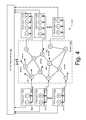
- FIG. 4is a pictorial diagram of power grid data delivery between publishers and subscribers, in accordance with one implementation.
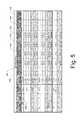
- FIG. 5is a block diagram of a data parameters table for use in managing the delivery of power grid data from publishers to subscribers, in accordance with one implementation.
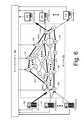
- FIG. 6is a pictorial diagram of data path plans for delivering power grid data from a publisher to a subscriber, in accordance with one implementation.
- FIGS. 7-10are flow diagrams of example processes for systematically adapting power grid data delivery, in accordance with various implementations.
- FIG. 11is a pictorial diagram of an illustrative implementation of a system management component implemented as a server system that may be used with the various implementations.
- This disclosuredescribes, in part, a system management component that utilizes a rate-based system to systematically manage the delivery of data to subscribers to ensure a desired minimum quality of service (“QoS”) for each subscription.
- QoSquality of service
- publishers of power grid datasuch as transmission substations
- Subscriberssuch as control centers, regional security coordinators, neighboring control centers, other substations, etc. will also communicate with the system management component and identify the data to which they wish to subscribe, the desired data rate, desired latency and desired availability (collectively “desired QoS”).
- the subscribersmay also identify a minimum acceptable data rate, minimum acceptable latency and a minimum acceptable availability level (collectively “minimum QoS”).
- the system management componentwill implement routing that will provide the desired QoS for the subscription under normal conditions and provide at least the minimum QoS under all but the most extreme conditions.
- the system management componentcan individually manage the QoS provided to each subscriber (or collectively manage subscriptions with the same desired QoS and/or minimum QoS) and, if needed, adjust that QoS provided to account for network changes (e.g., increased system load, data path disruptions, failures) and/or changes to the power grid.
- the subscriberswill still receive the subscribed to data at a QoS at least matching the minimum QoS and will still be able to utilize the data delivered at a reduced QoS without concern or disruption.
- the publishersdo not have to worry about delivering data to each subscriber or delivering data at different rates.
- Publishersmay simply notify the system management component of the rate at which data will be published and the system management component may control the routing, filtering, availability and delivery of that data to the different subscribers at each subscriber's desired QoS.
- Prior systemssimply published to all subscribers at the same rate, regardless of whether the subscriber desired the data at that rate.
- the load on the network and subscriberscan be reduced by filtering the rate at which data is delivered to each subscriber to correspond with the rate actually desired by the subscriber. This also reduces the load on the subscribers as they no longer have to receive and process undesired data.
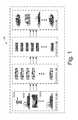
- FIG. 1is a pictorial diagram of a power system 100 .
- the power system 100typically includes one or more power stations 102 , transmission 104 , distribution 106 and users 108 that create demand for the power.
- Power stations 102may include any form of power generation.
- a power station 102may be a wind based power station 102 (A), such as a wind farm, a fossil-fuel based power station 102 (B), a hydroelectric power station 102 (C), etc.
- the power system 100may include any number and type of power stations 102 .
- the distribution 106 stationsare located near the users 108 that create the demand for the power.
- the distribution 106 stationsreceive the bulk transmissions, step down the voltage and distribute the electricity to end users 108 , such as residential housing, businesses, commercial buildings, etc.
- monitoring tools and systemsthat regulate and control the operational state of the power system.
- these monitoring tools and systemsincluded visual graphs that were presented to human operators.
- the human portionallowed for missed packets of data and delay/inconsistency in the data being delivered without significant disruption.
- the rate of deliverywas slow as only a limited amount of data can be viewed by humans at a given time.
- a growing number of the subscribers that receive published data about the power systemare computer applications that work autonomously to adjust and/or monitor the state of the power system.
- Such systemsoften require that data be delivered consistently and at a specific QoS (rate, latency and availability), which is often higher than the QoS needed for applications involving human interaction.
- QoSrate, latency and availability
- Subscribers and publisherscan exist on a wide range of devices, ranging from embedded devices of limited computation power to high-power computers running modeling and/or simulation applications within control centers.
- subscribers and publishersare roles played by the application or computing device and any application or computing device may be a publisher, subscriber or both.
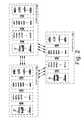
- FIG. 2illustrates three power systems interconnected with one another to help further balance power across systems and prevent disruptions to customers.
- Power System A 200which may represent the Western Grid in North America
- Power System B 202which may represent the Eastern Grid in North America
- Power System C 204which may represent the Texas Grid in North America
- This informationwhile beneficial in increasing knowledge between the power systems, adds yet more complexity to the need for managing in real-time the data sent from publishers of the various power systems to subscribers.
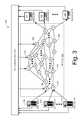
- FIG. 3is a pictorial diagram of a data delivery system 300 for managing the delivery of power grid data from publishers to subscribers, in accordance with one implementation.
- the system management component 302manages network resources to achieve low-latency, reliable delivery of data produced anywhere on the network and sent to multiple other points.
- the system management component 302allocates resources and adapts the network 304 in response to changing power system configurations and/or communication network failures.
- the system management component 302communicates with nodes 306 within the network 304 to provide forwarding instructions for data published by the various publishers 308 , 310 , 312 .
- the nodes 306may be status routers, forwarding engines, message relays and/or any combination thereof.
- the nodes 306forward the data published by the publishers 308 , 310 , 312 through the network 304 to appropriate subscribers 314 , 316 , 318 .
- publishers 308 , 310 , 312may subscribe to the system management component 302 and publish data that is distributed to subscribers 314 , 316 , 318 without the publisher 308 , 310 , 312 having to track, communicate or even know of the existence of the subscribers. This simplifies application programs and gives the system 300 the flexibility to add subscribers and even change the characteristics of existing subscriptions without disrupting the publishers 308 , 310 , 312 .
- a publisher 308 , 310 , 312may simply notify the system management component 302 of the availability of data and the rate at which the data will be published.
- Subscribers 314 , 316 , 318may request that the system management component 302 establish delivery data paths through the network 304 to accomplish delivery of the data to the subscriber at a desired quality of service (QoS), including rate, latency and availability.
- QoSquality of service
- a minimum QoSmay also be specified, including a minimum acceptable data rate, minimum acceptable latency and minimum acceptable availability.
- a priority and/or security requirement for the subscriptionmay also be provided.
- the system management component 302confirms that the desired QoS can be satisfied based on the available resources and the publish rate of the data provided by the publisher.
- the system management component 302may provide rate filtering rules to the nodes to filter out undesired data as part of the forwarding scheme, thereby reducing unnecessary load on the network 304 and the subscriber.
- subscriber 1 314has subscribed to receive data X 408 ( 1 ), data Z 410 ( 1 ), data P 412 ( 1 ) and data R 412 ( 2 ).
- Subscriber 2 316has subscribed to receive data Z 410 ( 1 ), data W 410 ( 2 ), data X 408 ( 1 ) and data Y 408 ( 2 ).
- Subscriber N 318has subscribed to receive data W 410 ( 1 ), data X 408 ( 1 ) and data Y 408 ( 2 ). Similar to the publishers, any number and combination of subscribers may be used with the implementations described herein and each subscriber may subscribe to any number of data publications from any number of different publishers.
- each publisher 308 , 310 , 312is connected to a node 306 via a point-to-point or broker based communication connection.
- the point-to-point connectionmay be an actual point-to-point link, a virtual point-to-point connection established over an IP network, an ATM network, a SONET ring, etc., or a broker based communication connection.
- the network 304may be a combination of both peer-to-peer and broker based connections. Regardless of structure, the connection carries data items from the publisher into the network 304 .
- different subscribersmay subscribe to data items from different publishers. Likewise, those subscribers may request that the data be delivered at different rates, latency, have different levels of availability, and/or the subscriptions may have different levels of priority for each subscriber. For example, subscriber 1 314 , subscriber 2 316 and subscriber N 318 all subscribe to data item X 408 ( 1 ) published by publisher 1 308 . While each is receiving the data, they may be receiving it at different rates. By utilizing the system management component 302 , publisher 1 308 does not need to know the identity of each subscriber or the desired QoS (or minimum QoS) at which they desire to receive data X 408 ( 1 ).
- the publishersimply publishes the data at a publisher specified rate and the system management component 302 communicates with the nodes 306 in the network 304 by providing routing rules and rate filtering rules to ensure that the data is routed to each subscriber at the desired subscription rate with the desired latency and the appropriate number of data paths are available (availability).
- the system management component and the implementations described hereinallow for a publisher to publish data at a single rate and that data is provided to each subscriber at the subscriber's desired QoS, which may be different for each subscriber.
- One constraintbeing that the subscriber's desired rate cannot exceed the published rate.
- This informationis all maintained by the system management component 302 and utilized to establish data paths through the network 304 to ensure availability, in this instance three data paths, for delivery of the data X 408 ( 1 ) from publisher 1 308 to subscriber 1 314 within the desired latency 505 and any rate filtering rules to ensure delivery at the desired rate 502 .
- subscriber 1 314has also subscribed to data P 412 ( 1 ) at a desired rate 502 of 30 Hz, a minimum data rate 504 of 20 Hz, a desired latency 505 of 0-50 ms, a minimum latency 507 of 0-100 ms, one desired data path 506 , one as a minimum data paths 509 and a priority 508 of 3.
- publisher N 312is publishing the data P 412 ( 1 ) at a rate of 60 Hz.
- the system management component 302can provide filtering rules to the nodes 306 within the network 304 to filter undesired data, thereby reducing overall load on the network and the subscriber.
- the information provided by each subscribermay also be used to identify the appropriate data path or data paths between the publisher and subscriber.
- FIG. 6illustrates the three network data paths established for the subscription of subscriber 1 314 for data X 408 ( 1 ) published by publisher 1 308 .
- the data rate, latency, priority and other informationmay be used to define alternative data paths through the network 304 that will ensure delivery of the data at the desired QoS.
- different data pathssuch as data path 1 601 , data path 2 603 and data path 3 605 may be established that can route the data through different areas or geographic regions of the network 304 to provide the desired availability in the event of outages or network interruptions.
- data path 1 601may be the default data path through which data X 408 ( 1 ) is delivered to subscriber 1 314 from publisher 1 308 with data path 2 603 being the first alternate data path and data path 3 605 being the second alternate data path.
- Each data pathis designed to meet at least the minimum acceptable date rate and minimum acceptable latency specified by the subscriber 314 and accepted by the system management component 302 .
- each data pathtransitions through a different segment of the network so that if part of the network is disrupted or overloaded, the data can be shifted to one of the other defined alternate data paths.
- Maintaining multiple data paths for higher priority subscriptionsallows the system management component 302 to modify the routing of data among defined data paths to balance load across the network and/or dynamically reroute data in the event one or more of the data paths becomes disrupted. For example, if the data load on one or more of the nodes 306 used for data path 1 601 increases such that excessive processing delay may disrupt the rate of delivery, rather than reducing the delivery rate, the system management component 302 may proactively reroute the data over data path 2 603 before the load on the node 306 becomes too high. In addition, if the link between nodes 306 in a data path is interrupted, data can be routed across another defined data path without disrupting delivery of the data to the subscriber.
- the rate of data delivery to one or more subscribersmay be reduced so that the network is not overloaded and each subscriber is receiving at least the minimum acceptable data rate for each subscription.
- the lowest priority subscriptionmay have its data rate lowered to the minimum acceptable data rate before other data rates are reduced. If there are multiple subscriptions with low priorities, their data rates may be reduced at the same rate until each reaches the minimum acceptable data rate associated with each subscription.
- a utility functionmay be utilized to determine which one or more of the low priority subscriptions should be modified. For example, modification of each low priority subscription may be considered, and a utility, or loss of utility, resulting from the modification may be determined.
- the low priority subscription that realizes the lowest loss of utility from a modificationmay be selected for QoS reduction.
- the subscription(s) with the largest difference between the desired data rate and the minimum acceptable data ratemay be reduced first.
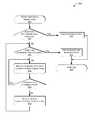
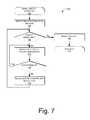
- FIG. 7is a flow diagram of an example process 700 for systematically adapting data delivery, in accordance with one implementation.
- the example process 700 of FIG. 7is illustrated as a collection of blocks in a logical flow graph. Some of the blocks represent operations that can be implemented in hardware, software, or a combination thereof.
- the blocksrepresent computer-executable instructions stored on one or more computer-readable media that, when executed by one or more processors, perform the recited operations.
- computer-executable instructionsinclude routines, programs, objects, components, data structures, and the like that perform particular functions or implement particular abstract data types.
- the computer-readable mediamay include non-transitory computer-readable storage media, which may include hard drives, floppy diskettes, optical disks, CD-ROMs, DVDs, read-only memories (ROMs), random access memories (RAMs), EPROMs, EEPROMs, flash memory, magnetic or optical cards, solid-state memory devices, or other types of storage media suitable for storing electronic instructions.
- the computer-readable mediamay include a transitory computer-readable signal (in compressed or uncompressed form). Examples of computer-readable signals, whether modulated using a carrier or not, include, but are not limited to, signals that a computer system hosting or running a computer program can be configured to access, including signals downloaded or uploaded through the Internet or other networks.
- the example process 700begins upon the detection of an anomaly within the network, as in 702 .
- An anomalymay result from increased load, network failure, disruption, attacks on the network (a.k.a. cyber-attacks), etc. For example, a portion of the network may become disabled or otherwise unavailable (an anomaly). As a result of the anomaly, the data items may need to be rerouted through other segments of the network, the rate of data delivery reduced, and/or the latency increased.
- the anomalyis only impacting a small segment of the network and each subscription receiving data through that segment of the network can be rerouted to alternative data paths without causing other anomalies or disruptions within the network, it may be determined that the anomaly is manageable without reducing the rate of data delivery to subscribers and/or latency of delivery. Rerouting of data across alternative data paths is described in more detail below with respect to FIG. 9 .
- the example process 700manages the anomaly, as in 708 , and completes, as in 710 .
- managing a network anomaly without reducing the data rate and/or increasing the latencymay be done by, for example, rerouting the data paths to unaffected segments of the network.
- the anomalymay be managed by eliminating the data source and/or data causing the cyber-attack. For example, if data traffic arrives on the network claiming to be from a publisher from which data is already being received, it may be determined which set of data is accurate and the false data filtered out of the network.
- Many techniques for managing cyber-attacksare known in the art and will not be discussed in further detail herein.
- the example process 700identifies a low priority subscription, as in 712 . Identifying a low priority subscription may be done systematically. For example, it may first be determined if there is a low priority subscription with a data path through the impacted segment. If there are no low priority subscriptions using the impacted portion of the network, a low priority subscription using a potentially alternative data path through the network may be identified and the QoS reduced so that higher priority subscriptions can be rerouted and delivered at the desired QoS.
- the priority from multiple subscribersmay be considered when identifying a low priority subscription. For example, if multiple subscribers (i.e., two or more subscribers) are subscribing to the data and the data is routed for those subscribers as a single data transmission along the segment of the network for which QoS reduction may occur, the example process 700 may consider only the highest priority for those subscriptions.
- the example process 700may consider only the highest priority for those two subscriptions.
- the data rate for that published datais reduced at node 606 ( 2 )
- itwill be reduced for both subscribers 314 , 318 unless it is separated into different transmission data paths for each subscriber and transmitted as independent data at different rates across the network.
- the remaining portion of the network to be traveled by the datamay be considered when deciding whether to consider only the highest priority for published data for which there are multiple subscribers.
- the minimum acceptable data rate for each subscribermay also be considered.
- the example process 700may only consider the higher minimum acceptable data rate of 50 Hz. Likewise, if subscriber 1 314 has a minimum acceptable latency of 0-15 ms and subscriber N 318 has a minimum acceptable data rate of 0-20 ms, the example process 700 may only consider the shorter minimum acceptable data rate of 0-15 ms. In this instance, only the higher minimum acceptable data rate and/or shorter minimum acceptable latency may be considered because the data for both subscribers is transmitted as a single unit through the affected portion of the network. If the published data is kept as a single data transmission and reduced to 20 Hz or the latency extended to 20 ms, subscriber 1 314 would not receive the data at the specified minimum QoS.
- the published datamay be separated into two data paths so that it can be transmitted at different rates and/or latencies to the different subscribers.
- the example process 700may determine that the data paths for the published data may be separated for delivery to subscriber 1 314 and subscriber N 318 without undue load on the network.
- the data pathsmay be separated at node 606 ( 5 ) and the data rate for subscriber 1 314 reduced to the minimum acceptable rate and routed through the affected node 606 ( 6 ) while data for subscriber N 318 is separated at node 606 ( 5 ) and rerouted through other nodes within the network at the desired data rate.
- the example process 700if it is determined that the low priority subscription is at a minimum data rate and/or minimum latency for the subscriber, the example process 700 returns to block 712 and identifies the next lowest priority subscription. However, if it is determined that the data rate and/or latency for the subscriber are not at a minimum, the data rate and/or latency may be reduced for the low priority subscription, as in 716 . As discussed above, the rate of data delivery for different subscriptions may be reduced by one or more nodes within the data path filtering out data packets. Additionally, if there are multiple subscribers receiving the same data from the same path, the data rate may only be reduced to the highest minimum acceptable rate for those subscribers.
- the data rate for eachmay be reduced until the anomaly is resolved or it can be managed without further reduction of data rates. For example, if there are three low priority subscriptions identified, rather than reducing one subscription from the desired data rate to the minimum acceptable data rate, the data rate for each of the three subscriptions may be reduced a smaller amount.
- the latency for different subscriptionsmay be modified by, for example, one or more nodes within the data path processing and forwarding higher priority data before lower priority data. Additionally, if there are multiple subscribers receiving the same data from the same path, the latency may only be modified to the shortest minimum acceptable rate for those subscribers. In still other instances, if there are multiple low priority subscriptions, the latency for each may be reduced until the anomaly is resolved or it can be managed without further modification of latency. For example, if there are three low priority subscriptions identified, rather than modifying the latency of one subscription from the desired latency to the minimum acceptable latency, the latency for each of the three subscriptions may be modified a smaller amount.
- the example process 700may confirm whether the anomaly affecting the impacted segment of the network is manageable without further QoS reductions for other subscriptions or if additional changes need to be made. Specifically, the example process 700 may return to decision block 706 and continue until either the anomaly is resolved or becomes manageable without further QoS reductions.
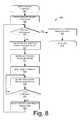
- FIG. 8is a flow diagram of an example process 800 for systematically adapting data rate delivery, in accordance with another implementation.
- the example process 800begins upon the detection of an anomaly within the network, as in 802 .
- An anomalymay result from increased load, network failure, disruption, attacks on the network (a.k.a. cyber-attacks), etc.
- a portion of the networkmay become disabled or otherwise unavailable (an anomaly).
- the data itemsmay need to be rerouted through other segments of the network, the latency modified and/or the rate of data delivery reduced.
- the impacted segment of the networkis identified, as in 804 .
- anomaliesmay only affect a portion of the network or only one or more nodes within the network. For example, an anomaly may be limited to a single node or group of nodes within the network.
- a determinationis made as to whether the anomaly is manageable without altering a rate of data delivery or latency of the data, as in 806 .
- the anomalyis only impacting a small segment of the network and each subscription receiving data through that segment of the network can be rerouted to alternative data paths without causing other anomalies or disruptions within the network, it may be determined that the anomaly is manageable without reducing the rate of delivery of the data to subscribers and/or the latency of delivery. Rerouting of data across alternative data paths is described in more detail below with respect to FIG. 9 .
- the example process 800manages the anomaly, as in 808 , and completes, as in 810 .
- managing a network anomaly without reducing the rate of delivered data and/or increasing the latencymay be done by, for example, rerouting the data paths to unaffected segments of the network.
- the anomalymay be managed by eliminating the data source and/or data causing the cyber-attack. For example, if data traffic arrives on the network claiming to be from a publisher from which data is already being received, it may be determined which set of data is accurate and the false data filtered out of the network.
- Many techniques for managing cyber-attacksare known in the art and will not be discussed in further detail herein.
- the example process 800identifies the priority established by the different subscribers for the data routed through the affected segment of the network, as in 812 .
- the priority for each subscriptionmay be provided by the subscribers when subscribing to the publication and maintained by the system management component.
- a modemay be a system wide consideration applied by the system management component to account for the overall health of the system the current environment and/or the power grid.
- While subscribersmay all view their particular data items as high priority, due to certain events within the system, the one or more modes may be applied to modify those priorities. For example, again referring to FIG. 6 , subscriber 1 314 may assign a high priority to data received from publisher 1 308 and subscriber 2 316 may assign a low priority to data received from publisher N 312 . However, specific network and/or power grid conditions at the time of the network anomaly may result in the system management component applying a mode that elevates the priority of the data published by publisher N 312 for delivery to subscriber N 318 to be above that of the data published by publisher 1 308 and received by subscriber 1 314 .
- Modesmay be established automatically based on network and/or power grid conditions, set manually by operators, publishers and/or subscribers, and/or a combination thereof. Once it is determined if a mode should be applied to one or more of the priorities, they are applied to the priorities, as in 816 .
- the example process 800identifies the lowest priority subscription, as in 818 . Identifying the lowest priority subscription may be done systematically. For example, it may first be determined if there is a low priority subscription with a data path through the impacted segment. If there are no low priority subscriptions using the impacted segment of the network, a low priority subscription using a potentially alternative data path through the network may be identified and the QoS reduced so that higher priority subscriptions can be rerouted and delivered at the desired QoS.
- the data rate for that published datais reduced at node 606 ( 2 )
- itwill be reduced for both subscribers 314 , 318 unless it is separated into different transmission data paths for each subscriber and transmitted as independent data at different rates across the network.
- the remaining portion of the network to be traveled by the datamay be considered when deciding whether to consider only the highest priority for published data for which there are multiple subscribers.
- the minimum acceptable data rate for each subscribermay also be considered.
- the example process 800may only consider the higher minimum acceptable data rate of 50 Hz. Likewise, if subscriber 1 314 has a minimum acceptable latency of 0-15 ms and subscriber N 318 has a minimum acceptable data rate of 0-20 ms, the example process 800 may only consider the shorter minimum acceptable data rate of 0-15 ms. In this instance only the higher minimum acceptable data rate and/or shorter minimum acceptable latency may be considered because the data for both subscribers is transmitted as a single unit through the affected portion of the network. If the published data is kept as a single data transmission and reduced to 20 Hz or the latency extended to 20 ms, subscriber 1 314 would not receive the data at the specified minimum QoS.
- the data pathsmay be separated at node 606 ( 5 ) and the data rate for subscriber 1 314 reduced to the minimum acceptable rate and routed through the affected node 606 ( 6 ) while data for subscriber N 318 is separated at node 606 ( 5 ) and rerouted through other nodes within the network at the desired data rate.
- the data rate for eachmay be reduced until the anomaly is resolved or it can be managed without further reduction of data rates. For example, if there are three low priority subscriptions identified, rather than reducing one subscription from the desired data rate to the minimum acceptable data rate, the data rate for each of the three subscriptions may be reduced a smaller amount.
- the latency for different subscriptionsmay be modified by, for example, one or more nodes within the data path processing and forwarding higher priority data before lower priority data. Additionally, if there are multiple subscribers receiving the same data from the same path, the latency may only be modified to the shortest minimum acceptable rate for those subscribers. In still other instances, if there are multiple low priority subscriptions, the latency for each may be reduced until the anomaly is resolved or it can be managed without further modification of latency. For example, if there are three low priority subscriptions identified, rather than modifying the latency of one subscription from the desired latency to the minimum acceptable latency, the latency for each of the three subscriptions may be modified a smaller amount.
- the example process 800may confirm whether the anomaly affecting the impacted segment of the network is manageable without further QoS reductions for other subscriptions or if additional changes are needed. Specifically, the example process 800 may return to decision block 806 and continue until either the anomaly is resolved or becomes manageable without further QoS reductions. In this example, the example process may return to decision block 806 and if it is determined that the anomaly is not manageable without further QoS reductions, it may again be determined whether one or more modes need to be applied to some or all of the priorities. Alternatively, the previously determined and applied mode(s) may continue to be utilized in identifying the next lowest priority subscription for which the rate is to be reduced.
- FIG. 9is a flow diagram of an example process for correcting a data path interruption for a subscription, in accordance with one implementation.
- the example process 900begins upon detecting the data path interruption for a subscriber that is subscribing to published data within the network, as in 902 .
- a data path interruptionmay result from a failure of the network or other physical interruption.
- one or more nodes within the networkmay temporarily or permanently fail due to power, hardware and/or software problems.
- data paths for multiple subscriptions(for the same or different data) may traverse the same nodes within the network.
- the example process 900may be utilized for each interrupted data path.
- the example processmay update the routing rules that are maintained by each node within the network so that the data traffic is rerouted according to the defined and selected alternative data path.
- the example processcompletes as a 908 .
- Undefined alternative data pathsmay be identified by continuous monitoring of the network and through selection of segments of the network with additional capacity that will still allow delivery of the data within the desired latency. If it is determined that an undefined alternative data path is potentially available, the example process 900 may define and utilize the alternative data path, as in 912 . Similar to defining an alternative data path when a subscription is created, the undefined alternative data path may be dynamically defined for each network segment from the publisher to the subscriber and routing rules updated within the nodes to ensure that the data is properly transmitted to the subscriber with the desired QoS. Upon defining and utilizing a previously undefined alternative data path and rerouting the data through the alternative data path, the example process 900 completes, as in 908 .
- a potential data path with the lowest priority subscriptionis identified, as in 914 .
- identifying the lowest priority subscriptionmay be done systematically. For example, multiple potential alternative data paths may be identified such that, if available capacity existed, the data could be delivered to the subscriber at least at the minimum QoS for that subscriber.
- the priority from multiple subscribersmay be considered when identifying a lower priority subscription. For example, if multiple subscribers (i.e., two or more subscribers) are subscribing to the data and the data is routed for those subscribers as a single data transmission along the segment of the network for which QoS reduction may occur, the example process 900 may consider only the highest priority for those subscriptions.
- subscribersmay identify a desired data rate for a subscription, a minimum acceptable data rate for the subscription, a desired latency, a minimum acceptable latency and a priority for each subscription. Determining if the data rate is at a minimum may consider the minimum acceptable data rate and minimum acceptable latency from multiple subscribers.
- the example process 900may only consider the higher minimum acceptable data rate of 50 Hz.
- the example process 700may only consider the shorter minimum acceptable data rate of 0-15 ms. In this instance only the higher minimum acceptable data rate and/or shorter minimum acceptable latency may be considered because the data for both subscribers is transmitted as a single unit through the affected portion of the network. If the published data is kept as a single data transmission and reduced to 20 Hz or the latency extended to 20 ms, subscriber 1 314 would not receive the data at the specified minimum QoS.
- the data pathsmay be separated at node 606 ( 5 ) and the data rate for subscriber 1 314 reduced to the minimum acceptable rate and routed through the affected node 606 ( 6 ) while data for subscriber N 318 is separated at node 606 ( 5 ) and rerouted through other nodes within the network at the desired data rate.
- the example process 900returns to block 914 and identifies the next lowest priority subscription. However, if it is determined that the data rate and/or latency for the subscriber are not at a minimum, the data rate and/or latency may be reduced for the lower priority subscription, as in 918 . As discussed above, the rate of data delivery for different subscriptions may be reduced by one or more nodes within the data path filtering out data packets. Additionally, if there are multiple subscribers receiving the same data from the same path, the data rate may only be reduced to the highest minimum acceptable rate for those subscribers.
- the data rate for eachmay be reduced until the anomaly is resolved or it can be managed without further reduction of data rates. For example, if there are three low priority subscriptions identified, rather than reducing one subscription from the desired data rate to the minimum acceptable data rate, the data rate for each of the three subscriptions may be reduced a smaller amount.
- the latency for different subscriptionsmay be modified by, for example, one or more nodes within the data path processing and forwarding higher priority data before lower priority data. Additionally, if there are multiple subscribers receiving the same data from the same path, the latency may only be modified to the shortest minimum acceptable rate for those subscribers. In still other instances, if there are multiple low priority subscriptions, the latency for each may be reduced until the anomaly is resolved or it can be managed without further modification of latency. For example, if there are three low priority subscriptions identified, rather than modifying the latency of one subscription from the desired latency to the minimum acceptable latency, the latency for each of the three subscriptions may be modified a smaller amount.
- the example process 900Upon modifying the QoS (data rate and/or latency) of the lower priority subscription, the example process 900 returns to decision block 910 and determines if an alternate data path is now potentially available such that the data may be rerouted and still delivered at a QoS that at least meets the minimum QoS for the subscriber(s) to the published data.
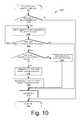
- FIG. 10is a flow diagram of an example process 1000 for adjusting the rate at which data is delivered to subscribers within the network, according to one implementation.
- the example process 1000begins upon detecting available capacity within the network, as in 1002 . Available capacity may result from the correction of an anomaly, reduced data traffic, expanded network capabilities or infrastructure, etc.
- the subscriber with the highest priority subscription that is receiving data below the desired QoSis identified, as in 1006 .
- a determinationis then made as to whether sufficient capacity (e.g., bandwidth or compute capacity) exists along the data path to increase the data rate and/or shorten the latency to the desired data rate and/or desired latency of the subscriber, as in 1008 . If it is determined that sufficient capacity exists, the data rate and/or latency is modified, as in 1010 , and the process completes, as in 1012 .
- sufficient capacitye.g., bandwidth or compute capacity
- the data ratemay be increased by the system management component modifying the filtering rules maintained on the nodes within the network to reduce the amount of data that is filtered along the data path.
- latencymay be reduced by the system management component modifying an order in which processing of data through the nodes is performed, such that the lower priority data is processed in the same order as other data.
- the example process 1000determines which data path defined for the subscription has the highest available capacity, as in 1018 . Upon determining which of the defined data paths for the subscription has the highest available capacity, the example process 1000 may reroute the data to the determined data path, as in 1020 and increase the QoS until capacity is reached, as in 1010 . Upon rerouting the data and increasing the QoS, the example process 1000 completes, as in 1012 . In some implementations, the example process 1000 may also determine if there is an undefined data path that is potentially available such that if the data is routed to that defined path it could be provided to the subscriber according to the desired QoS. Likewise, if no data path (defined or undefined) is available that would allow delivery of the data at the desired QoS, in some implementations, the example process 1000 may consider what data path (defined or undefined) would allow the highest QoS.
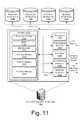
- FIG. 11is a pictorial diagram of an illustrative implementation of a server system, such as the system management component 302 , that may be used in the environments described herein.
- the system management component 302may include a processor 1100 , such as one or more redundant processors, a video display adapter 1102 , a disk drive 1104 , an input/output interface 1106 , a network interface 1108 , and a memory 1112 .
- the processor 1100 , the video display adapter 1102 , the disk drive 1104 , the input/output interface 1106 , the network interface 1108 , and the memory 1112may be communicatively coupled to each other by a communication bus 1110 .
- the video display adapter 1102provides display signals to a local display (not shown in FIG. 11 ) permitting an operator of the system management component 302 to monitor and configure operation of the system management component 302 .
- the input/output interface 1106likewise communicates with external input/output devices not shown in FIG. 11 , such as a mouse, keyboard, scanner, or other input and output devices that can be operated by an operator of the system management component 302 .
- the network interface 1108includes hardware, software, or any combination thereof, to communicate with other computing devices.
- the network interface 1108may be configured to provide communications between the system management component 302 and other computing devices, such as publishers 308 , 310 , 312 , subscribers 314 , 316 , 318 and/or nodes 306 within the network, as shown in FIGS. 3 , 4 and 6 .
- the memory 1112generally comprises random access memory (RAM), read-only memory (ROM), flash memory, and/or other volatile or permanent memory.
- RAMrandom access memory
- ROMread-only memory
- BIOSbinary input/output system
- the memory 1112additionally stores program code and data for providing network services that allow publishers, subscribers and nodes to exchange information and data files with the system management component 302 .
- the memory 1112may include computer executable instructions that when executed by the processor 1100 , enable communication between the publishers, subscribers, nodes and the system management component.
- the system management component 302communicates with the publisher to obtain publisher information, such as the publisher identification, data to be published and rate of publication that is maintained in the publisher information data store 1126 .
- the system management component 302through the computer executable instructions, may communicate with subscribers to receive subscriber information, such as the subscriber identification, data for which the subscriber is subscribing, desired data rate, minimum acceptable data rate, priority and number of data paths for the subscription.
- This informationmay be maintained in the subscriber information data store 1128 .
- the system management component 302may also communicate with the nodes within the network to identify and maintain network information, such as network load, available capacity, connections between nodes, node processing time, etc. that is maintained in the network information data store 1132 . Utilizing the publisher information, subscriber information and network information, the system management component 302 may develop and maintain data paths for each subscription, routing rules for each data path and filtering rules for each subscription. Data paths, routing rules and filtering rules may be maintained in the data path information data store 1130 .
- the memory 1112may also include a routing module 1120 , a priority module 1122 and a filtering module 1124 .
- the modules 1120 - 1124may be executable by the processor 1100 to implement one or more of the functions of the system management component 302 .
- each of the modules 1120 - 1124may represent instructions embodied in one or more software programs stored in the memory 1112 .
- the modules 1120 - 1124can represent hardware, software instructions, or a combination thereof.
- the routing module 1120is configured to define routing instructions for each data path for each subscription and provide those routing instructions to the nodes within the network. In some implementations, the routing module 1120 may also monitor the network in real-time and identify alternative routes through which the data can be routed to avoid network overload or having to reduce the data rate for the subscription.
- the priority module 1122may be configured to coordinate with the routing module 1120 and/or the filtering module 1124 to identify which data paths for which subscriptions should be re-routed or undergo rate modification based on the current network conditions and/or power grid conditions. In some instances the priority module 1122 may only consider the priority of each subscription as provided by the subscribers. In other instances, additional factors, such as the current state of the power grid or the network may be considered when determining which subscriptions should take priority.
- the filtering module 1124may be configured to provide filtering rules to one or more of the nodes within the network based on the publisher information, subscriber information and the current network topology. In some implementations, the filtering module 1120 may also monitor the network in real-time and identify whether the data rates can be adjusted (higher or lower data rates) based on available capacity within the network.
- system management component 302is illustrated in this example as a single server system, in other implementations, the system management component may be implemented over any number of local and/or remote server systems.
- the publisher information 1126 data store, subscriber information 1128 data store, data path information 1130 data store and/or network information 1132 data storemay be integrated with the system management component 302 or otherwise communicatively coupled with the system management component 302 .
- one or more of the publisher information 1126 data store, subscriber information 1128 data store, data path 1130 data store and/or network information 1132 data storemay be located at a remote computing resource (not shown) and communicatively coupled with the system management component 302 .
- the publisher information 1126 data store, subscriber information 1128 data store, data path information 1130 data store and/or network information 1132 data storemay include one or more CD-RW/DVD-RW drives, hard disk drives, tape drives, or other storage devices that are utilized to store digital content and information.
- the data storesmay include lists, arrays, databases, and other data structures used to provide storage and retrieval of data.
- the disclosuredescribes multiple data stores, in some implementations the data stores may be configured as a single data store or multiple data stores.
Landscapes
- Engineering & Computer Science (AREA)
- Quality & Reliability (AREA)
- Computer Networks & Wireless Communication (AREA)
- Signal Processing (AREA)
- Power Engineering (AREA)
- Data Exchanges In Wide-Area Networks (AREA)
Abstract
Description
Claims (27)
Priority Applications (1)
| Application Number | Priority Date | Filing Date | Title |
|---|---|---|---|
| US13/967,015US9252915B1 (en) | 2012-08-15 | 2013-08-14 | Systematic adaptation of data delivery |
Applications Claiming Priority (2)
| Application Number | Priority Date | Filing Date | Title |
|---|---|---|---|
| US201261683616P | 2012-08-15 | 2012-08-15 | |
| US13/967,015US9252915B1 (en) | 2012-08-15 | 2013-08-14 | Systematic adaptation of data delivery |
Publications (1)
| Publication Number | Publication Date |
|---|---|
| US9252915B1true US9252915B1 (en) | 2016-02-02 |
Family
ID=55175070
Family Applications (1)
| Application Number | Title | Priority Date | Filing Date |
|---|---|---|---|
| US13/967,015Expired - Fee RelatedUS9252915B1 (en) | 2012-08-15 | 2013-08-14 | Systematic adaptation of data delivery |
Country Status (1)
| Country | Link |
|---|---|
| US (1) | US9252915B1 (en) |
Cited By (9)
| Publication number | Priority date | Publication date | Assignee | Title |
|---|---|---|---|---|
| US20140280909A1 (en)* | 2013-03-15 | 2014-09-18 | Battelle Memorial Institute | Multi-domain situational awareness for infrastructure monitoring |
| CN111126727A (en)* | 2018-10-30 | 2020-05-08 | 广州供电局有限公司 | Electric power charging distributed parallel anomaly detection method |
| US10979322B2 (en)* | 2015-06-05 | 2021-04-13 | Cisco Technology, Inc. | Techniques for determining network anomalies in data center networks |
| US11184266B1 (en)* | 2020-05-14 | 2021-11-23 | PubNub, Inc. | Method and system for detecting latency in a wide area network |
| US20220236783A1 (en)* | 2021-01-27 | 2022-07-28 | Ford Global Technologies, Llc | Service-oriented architecture in a vehicle |
| US11528283B2 (en) | 2015-06-05 | 2022-12-13 | Cisco Technology, Inc. | System for monitoring and managing datacenters |
| US11888728B1 (en) | 2020-05-14 | 2024-01-30 | PubNub, Inc. | Method and system for detecting latency in a wide area network |
| WO2025076492A1 (en)* | 2023-10-06 | 2025-04-10 | PXiSE Energy Solutions, LLC | Universal power data exchange (upde) for electrical power grid |
| US20250202761A1 (en)* | 2023-12-15 | 2025-06-19 | At&T Intellectual Property I, L.P. | Notification Traffic Anomaly Detection and Traffic Shaping |
Citations (20)
| Publication number | Priority date | Publication date | Assignee | Title |
|---|---|---|---|---|
| US8041772B2 (en)* | 2005-09-07 | 2011-10-18 | International Business Machines Corporation | Autonomic sensor network ecosystem |
| US20110294456A1 (en)* | 2010-05-26 | 2011-12-01 | Qualcomm Incorporated | Adaptive quality of service for wireless communication device |
| US20120082159A1 (en)* | 2010-10-05 | 2012-04-05 | Cisco Technology, Inc. | System and method for providing smart grid communications and management |
| US20120191856A1 (en)* | 2011-01-26 | 2012-07-26 | International Business Machines Corporation | Elastic and scalable publish/subscribe service |
| US8351433B2 (en)* | 2009-09-18 | 2013-01-08 | Schweitzer Engineering Laboratories Inc | Intelligent electronic device with segregated real-time ethernet |
| US8429630B2 (en)* | 2005-09-15 | 2013-04-23 | Ca, Inc. | Globally distributed utility computing cloud |
| US8489722B2 (en)* | 2009-11-24 | 2013-07-16 | International Business Machines Corporation | System and method for providing quality of service in wide area messaging fabric |
| US8509953B2 (en)* | 2008-05-09 | 2013-08-13 | Accenture Global Services Limited | Method and system for managing a power grid |
| US8527622B2 (en)* | 2007-10-12 | 2013-09-03 | Sap Ag | Fault tolerance framework for networks of nodes |
| US8677464B2 (en)* | 2011-06-22 | 2014-03-18 | Schweitzer Engineering Laboratories Inc. | Systems and methods for managing secure communication sessions with remote devices |
| US8751644B2 (en)* | 2006-05-31 | 2014-06-10 | Sap Ag | Modular monitor service for smart item monitoring |
| US8806239B2 (en)* | 2007-08-28 | 2014-08-12 | Causam Energy, Inc. | System, method, and apparatus for actively managing consumption of electric power supplied by one or more electric power grid operators |
| US8824471B2 (en)* | 2011-06-01 | 2014-09-02 | Cisco Technology, Inc. | Maintained message delivery during routing domain migration |
| US8867345B2 (en)* | 2009-09-18 | 2014-10-21 | Schweitzer Engineering Laboratories, Inc. | Intelligent electronic device with segregated real-time ethernet |
| US8872667B2 (en)* | 2011-09-13 | 2014-10-28 | International Business Machines Corporation | Fault isolation and service restoration in an electric grid |
| US8885516B2 (en)* | 2010-10-07 | 2014-11-11 | Schweitzer Engineering Laboratories, Inc. | Systems and methods for extending a deterministic fieldbus network over a wide area |
| US8890505B2 (en)* | 2007-08-28 | 2014-11-18 | Causam Energy, Inc. | System and method for estimating and providing dispatchable operating reserve energy capacity through use of active load management |
| US8892375B2 (en)* | 2008-05-09 | 2014-11-18 | Accenture Global Services Limited | Power grid outage and fault condition management |
| US8929391B2 (en)* | 2011-06-22 | 2015-01-06 | Schweitzer Engineering Laboratories, Inc. | Systems and methods for communications devices having multiple interfaces |
| US8941372B2 (en)* | 2011-12-20 | 2015-01-27 | General Electric Company | Systems and methods for predicting power system instability |
- 2013
- 2013-08-14USUS13/967,015patent/US9252915B1/ennot_activeExpired - Fee Related
Patent Citations (22)
| Publication number | Priority date | Publication date | Assignee | Title |
|---|---|---|---|---|
| US8041772B2 (en)* | 2005-09-07 | 2011-10-18 | International Business Machines Corporation | Autonomic sensor network ecosystem |
| US8429630B2 (en)* | 2005-09-15 | 2013-04-23 | Ca, Inc. | Globally distributed utility computing cloud |
| US8751644B2 (en)* | 2006-05-31 | 2014-06-10 | Sap Ag | Modular monitor service for smart item monitoring |
| US8890505B2 (en)* | 2007-08-28 | 2014-11-18 | Causam Energy, Inc. | System and method for estimating and providing dispatchable operating reserve energy capacity through use of active load management |
| US8806239B2 (en)* | 2007-08-28 | 2014-08-12 | Causam Energy, Inc. | System, method, and apparatus for actively managing consumption of electric power supplied by one or more electric power grid operators |
| US8527622B2 (en)* | 2007-10-12 | 2013-09-03 | Sap Ag | Fault tolerance framework for networks of nodes |
| US8509953B2 (en)* | 2008-05-09 | 2013-08-13 | Accenture Global Services Limited | Method and system for managing a power grid |
| US8892375B2 (en)* | 2008-05-09 | 2014-11-18 | Accenture Global Services Limited | Power grid outage and fault condition management |
| US8867345B2 (en)* | 2009-09-18 | 2014-10-21 | Schweitzer Engineering Laboratories, Inc. | Intelligent electronic device with segregated real-time ethernet |
| US8351433B2 (en)* | 2009-09-18 | 2013-01-08 | Schweitzer Engineering Laboratories Inc | Intelligent electronic device with segregated real-time ethernet |
| US8489722B2 (en)* | 2009-11-24 | 2013-07-16 | International Business Machines Corporation | System and method for providing quality of service in wide area messaging fabric |
| US20110294456A1 (en)* | 2010-05-26 | 2011-12-01 | Qualcomm Incorporated | Adaptive quality of service for wireless communication device |
| US20120082048A1 (en)* | 2010-10-05 | 2012-04-05 | Cisco Technology, Inc. | System and method for providing smart grid communications and management |
| US20120082159A1 (en)* | 2010-10-05 | 2012-04-05 | Cisco Technology, Inc. | System and method for providing smart grid communications and management |
| US8675654B2 (en)* | 2010-10-05 | 2014-03-18 | Cisco Technology, Inc. | System and method for providing smart grid communications and management |
| US8885516B2 (en)* | 2010-10-07 | 2014-11-11 | Schweitzer Engineering Laboratories, Inc. | Systems and methods for extending a deterministic fieldbus network over a wide area |
| US20120191856A1 (en)* | 2011-01-26 | 2012-07-26 | International Business Machines Corporation | Elastic and scalable publish/subscribe service |
| US8824471B2 (en)* | 2011-06-01 | 2014-09-02 | Cisco Technology, Inc. | Maintained message delivery during routing domain migration |
| US8677464B2 (en)* | 2011-06-22 | 2014-03-18 | Schweitzer Engineering Laboratories Inc. | Systems and methods for managing secure communication sessions with remote devices |
| US8929391B2 (en)* | 2011-06-22 | 2015-01-06 | Schweitzer Engineering Laboratories, Inc. | Systems and methods for communications devices having multiple interfaces |
| US8872667B2 (en)* | 2011-09-13 | 2014-10-28 | International Business Machines Corporation | Fault isolation and service restoration in an electric grid |
| US8941372B2 (en)* | 2011-12-20 | 2015-01-27 | General Electric Company | Systems and methods for predicting power system instability |
Non-Patent Citations (1)
| Title |
|---|
| Bakken et al., "Smart Generation and Transmission With Coherent, Real-Time Data", Proceedings of the IEEE, vol. 99, No. 6, Jun. 2011.* |
Cited By (27)
| Publication number | Priority date | Publication date | Assignee | Title |
|---|---|---|---|---|
| US20140280909A1 (en)* | 2013-03-15 | 2014-09-18 | Battelle Memorial Institute | Multi-domain situational awareness for infrastructure monitoring |
| US10497071B2 (en)* | 2013-03-15 | 2019-12-03 | Battelle Memorial Institute | Multi-domain situational awareness for infrastructure monitoring |
| US12224921B2 (en) | 2015-06-05 | 2025-02-11 | Cisco Technology, Inc. | Technologies for managing compromised sensors in virtualized environments |
| US12278746B2 (en) | 2015-06-05 | 2025-04-15 | Cisco Technology, Inc. | Auto update of sensor configuration |
| US12335275B2 (en) | 2015-06-05 | 2025-06-17 | Cisco Technology, Inc. | System for monitoring and managing datacenters |
| US12177097B2 (en) | 2015-06-05 | 2024-12-24 | Cisco Technology, Inc. | Policy utilization analysis |
| US12231307B2 (en) | 2015-06-05 | 2025-02-18 | Cisco Technology, Inc. | System and method for user optimized application dependency mapping |
| US11528283B2 (en) | 2015-06-05 | 2022-12-13 | Cisco Technology, Inc. | System for monitoring and managing datacenters |
| US12231308B2 (en) | 2015-06-05 | 2025-02-18 | Cisco Technology, Inc. | Unique ID generation for sensors |
| US11902122B2 (en) | 2015-06-05 | 2024-02-13 | Cisco Technology, Inc. | Application monitoring prioritization |
| US11902120B2 (en) | 2015-06-05 | 2024-02-13 | Cisco Technology, Inc. | Synthetic data for determining health of a network security system |
| US11924073B2 (en) | 2015-06-05 | 2024-03-05 | Cisco Technology, Inc. | System and method of assigning reputation scores to hosts |
| US11936663B2 (en) | 2015-06-05 | 2024-03-19 | Cisco Technology, Inc. | System for monitoring and managing datacenters |
| US11968102B2 (en) | 2015-06-05 | 2024-04-23 | Cisco Technology, Inc. | System and method of detecting packet loss in a distributed sensor-collector architecture |
| US10979322B2 (en)* | 2015-06-05 | 2021-04-13 | Cisco Technology, Inc. | Techniques for determining network anomalies in data center networks |
| US12192078B2 (en) | 2015-06-05 | 2025-01-07 | Cisco Technology, Inc. | System and method of assigning reputation scores to hosts |
| US12113684B2 (en) | 2015-06-05 | 2024-10-08 | Cisco Technology, Inc. | Identifying bogon address spaces |
| US12212476B2 (en) | 2015-06-05 | 2025-01-28 | Cisco Technology, Inc. | System and method for network policy simulation |
| CN111126727A (en)* | 2018-10-30 | 2020-05-08 | 广州供电局有限公司 | Electric power charging distributed parallel anomaly detection method |
| CN111126727B (en)* | 2018-10-30 | 2022-08-02 | 广东电网有限责任公司广州供电局 | Electric power charging distributed parallel anomaly detection method |
| US11888728B1 (en) | 2020-05-14 | 2024-01-30 | PubNub, Inc. | Method and system for detecting latency in a wide area network |
| US12273262B1 (en) | 2020-05-14 | 2025-04-08 | PubNub, Inc. | Method and system for detecting latency in a wide area network |
| US11184266B1 (en)* | 2020-05-14 | 2021-11-23 | PubNub, Inc. | Method and system for detecting latency in a wide area network |
| US20220236783A1 (en)* | 2021-01-27 | 2022-07-28 | Ford Global Technologies, Llc | Service-oriented architecture in a vehicle |
| WO2025076492A1 (en)* | 2023-10-06 | 2025-04-10 | PXiSE Energy Solutions, LLC | Universal power data exchange (upde) for electrical power grid |
| US12399470B2 (en) | 2023-10-06 | 2025-08-26 | PXiSE Energy Solutions, LLC | Universal power data exchange (UPDE) for electrical power grid |
| US20250202761A1 (en)* | 2023-12-15 | 2025-06-19 | At&T Intellectual Property I, L.P. | Notification Traffic Anomaly Detection and Traffic Shaping |
Similar Documents
| Publication | Publication Date | Title |
|---|---|---|
| US9252915B1 (en) | Systematic adaptation of data delivery | |
| US9857825B1 (en) | Rate based failure detection | |
| US9537747B2 (en) | Publish/subscribe overlay network control system | |
| US9806983B2 (en) | System and method for control flow management in software defined networks | |
| US9686125B2 (en) | Network reliability assessment | |
| RU2667039C2 (en) | Partial replacement of the switch of the program-configurable network in ip networks | |
| US20180083879A1 (en) | Routing of traffic in network through automatically generated and physically distinct communication paths | |
| EP2656548B1 (en) | Communications network management | |
| CN100385869C (en) | Network resource optimization device and method for communication | |
| US8830825B2 (en) | Method and system for priority based (1:1)n ethernet protection | |
| KR20120123262A (en) | System and method for providing quality of service in wide-area messaging fabric | |
| EP2608459A2 (en) | Router, virtual cluster router system and establishion method thereof | |
| CN103166870A (en) | Load balancing clustered system and method for providing services by using load balancing clustered system | |
| CN104618221A (en) | Decentralized message service system | |
| US11800428B2 (en) | Solar-powered relay for coupling remotely-located leaf nodes to a wireless network | |
| US10547384B2 (en) | Multi-layer system optimization | |
| CN102868935A (en) | Scheduling method for responding multiple sources in content distribution network (CDN) | |
| JPWO2014007368A1 (en) | Power network system, power network system control method, and control program | |
| CN113542064B (en) | Network path determination method, network path determination device, electronic apparatus, network path determination medium, and program product | |
| WO2024040976A1 (en) | Energy consumption control method and apparatus for network device | |
| EP2090022B1 (en) | A system and a method relating to network management | |
| Yao et al. | Minimizing disaster backup window for geo-distributed multi-datacenter cloud systems | |
| Wong | Telecommunications network design: Technology impacts and future directions | |
| CN104468831A (en) | Message service network cluster based on network topology | |
| Basu et al. | DRIVE: Dynamic resource introspection and VNF embedding for 5G using machine learning |
Legal Events
| Date | Code | Title | Description |
|---|---|---|---|
| AS | Assignment | Owner name:WASHINGTON STATE UNIVERSITY, WASHINGTON Free format text:ASSIGNMENT OF ASSIGNORS INTEREST;ASSIGNOR:BAKKEN, DAVID EDWARD;REEL/FRAME:031417/0037 Effective date:20130918 Owner name:WASHINGTON STATE UNIVERSITY RESEARCH FOUNDATION, W Free format text:ASSIGNMENT OF ASSIGNORS INTEREST;ASSIGNOR:WASHINGTON STATE UNIVERSITY;REEL/FRAME:031417/0108 Effective date:20131003 | |
| AS | Assignment | Owner name:WASHINGTON STATE UNIVERSITY, WASHINGTON Free format text:ASSIGNMENT OF ASSIGNORS INTEREST;ASSIGNOR:WASHINGTON STATE UNIVERSITY RESEARCH FOUNDATION;REEL/FRAME:035830/0797 Effective date:20140121 | |
| STCF | Information on status: patent grant | Free format text:PATENTED CASE | |
| FEPP | Fee payment procedure | Free format text:MAINTENANCE FEE REMINDER MAILED (ORIGINAL EVENT CODE: REM.); ENTITY STATUS OF PATENT OWNER: SMALL ENTITY | |
| LAPS | Lapse for failure to pay maintenance fees | Free format text:PATENT EXPIRED FOR FAILURE TO PAY MAINTENANCE FEES (ORIGINAL EVENT CODE: EXP.); ENTITY STATUS OF PATENT OWNER: SMALL ENTITY | |
| STCH | Information on status: patent discontinuation | Free format text:PATENT EXPIRED DUE TO NONPAYMENT OF MAINTENANCE FEES UNDER 37 CFR 1.362 | |
| FP | Lapsed due to failure to pay maintenance fee | Effective date:20200202 | |
| AS | Assignment | Owner name:UNITED STATES DEPARTMENT OF ENERGY, DISTRICT OF COLUMBIA Free format text:CONFIRMATORY LICENSE;ASSIGNOR:WASHINGTON STATE UNIVERSITY;REEL/FRAME:055474/0462 Effective date:20151204 |