US9223862B2 - Remote storage and provisioning of local-media index - Google Patents
Remote storage and provisioning of local-media indexDownload PDFInfo
- Publication number
- US9223862B2 US9223862B2US14/222,019US201414222019AUS9223862B2US 9223862 B2US9223862 B2US 9223862B2US 201414222019 AUS201414222019 AUS 201414222019AUS 9223862 B2US9223862 B2US 9223862B2
- Authority
- US
- United States
- Prior art keywords
- local
- media
- playback
- media index
- area network
- Prior art date
- Legal status (The legal status is an assumption and is not a legal conclusion. Google has not performed a legal analysis and makes no representation as to the accuracy of the status listed.)
- Active, expires
Links
Images



Classifications
- G—PHYSICS
- G06—COMPUTING OR CALCULATING; COUNTING
- G06F—ELECTRIC DIGITAL DATA PROCESSING
- G06F3/00—Input arrangements for transferring data to be processed into a form capable of being handled by the computer; Output arrangements for transferring data from processing unit to output unit, e.g. interface arrangements
- G06F3/16—Sound input; Sound output
- G06F3/165—Management of the audio stream, e.g. setting of volume, audio stream path
- G06F17/3074—
- G—PHYSICS
- G06—COMPUTING OR CALCULATING; COUNTING
- G06F—ELECTRIC DIGITAL DATA PROCESSING
- G06F16/00—Information retrieval; Database structures therefor; File system structures therefor
- G06F16/40—Information retrieval; Database structures therefor; File system structures therefor of multimedia data, e.g. slideshows comprising image and additional audio data
- G06F16/41—Indexing; Data structures therefor; Storage structures
- G—PHYSICS
- G06—COMPUTING OR CALCULATING; COUNTING
- G06F—ELECTRIC DIGITAL DATA PROCESSING
- G06F16/00—Information retrieval; Database structures therefor; File system structures therefor
- G06F16/60—Information retrieval; Database structures therefor; File system structures therefor of audio data
- H—ELECTRICITY
- H04—ELECTRIC COMMUNICATION TECHNIQUE
- H04L—TRANSMISSION OF DIGITAL INFORMATION, e.g. TELEGRAPHIC COMMUNICATION
- H04L67/00—Network arrangements or protocols for supporting network services or applications
- H04L67/01—Protocols
- H04L67/10—Protocols in which an application is distributed across nodes in the network
- H—ELECTRICITY
- H04—ELECTRIC COMMUNICATION TECHNIQUE
- H04L—TRANSMISSION OF DIGITAL INFORMATION, e.g. TELEGRAPHIC COMMUNICATION
- H04L67/00—Network arrangements or protocols for supporting network services or applications
- H04L67/01—Protocols
- H04L67/10—Protocols in which an application is distributed across nodes in the network
- H04L67/1097—Protocols in which an application is distributed across nodes in the network for distributed storage of data in networks, e.g. transport arrangements for network file system [NFS], storage area networks [SAN] or network attached storage [NAS]
Definitions
- the disclosureis related to consumer goods and, more particularly, to methods, systems, products, features, services, and other elements directed to media playback or some aspect thereof.
- the Sonos Wireless HiFi Systemenables people to experience music from many sources via one or more networked playback devices. Through a software control application installed on a smartphone, tablet, or computer, one can play what he or she wants in any room that has a networked playback device. Additionally, using the controller, for example, different songs can be streamed to each room with a playback device, rooms can be grouped together for synchronous playback, or the same song can be heard in all rooms synchronously.
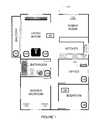
- FIG. 1shows an example media playback system configuration in which certain embodiments may be practiced
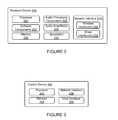
- FIG. 2shows a functional block diagram of an example playback device
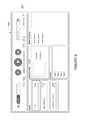
- FIG. 3shows a functional block diagram of an example control device
- FIG. 4shows an example controller interface
- FIG. 5shows an example flow diagram for storing a local-media index on a remote computing device
- FIG. 6shows an example flow diagram for local provisioning of a local-media index when a remote local-media index is inaccessible.
- FIG. 7shows an example operating environment in which the present methods may be practiced
- FIG. 8shows another example controller interface
- FIG. 9shows yet another example controller interface.
- Embodiments described hereininvolve, among other aspects, remote storage and provisioning of a local-media index.
- a local-media indexmay allow a media system within a local area network to identify multimedia items that are stored within the local area network (i.e. local media).
- one or more playback devices of the media playback systemmay access the multimedia items for playback by referencing the local-media index.
- the local-media indexmay identify a file location within the local area network at which the particular multimedia item is stored.
- the one or more playback devicesmay then use the file location to locate a particular multimedia item for playback.
- a controller of the media playback systemmay use such a local-media index to display a list of the multimedia items identified by the local-media index (i.e. a multimedia library).
- Such a local-media indexmay be stored on a playback device of the media playback system (i.e. local provisioning of a local-media index).
- local provisioningmay limit a number of multimedia libraries that the media playback system is capable of supporting.
- the local-media indexmay be stored on a computing device that is remote from the local area network to which the media playback system is connected.
- the local-media indexmay be stored on a computing device accessible via a wide area network (WAN).
- the remote computing devicemay have more data storage than a device within the local area network such that the user may have a larger local-media index or multiple local-media indexes.
- such a configurationmay involve relatively less network bandwidth than some other configurations because transferring the multimedia items over the wide area network may not be required.
- storing a local-media index on a computing device that is remote from the local area networkmay assist in circumstances in which a user may has two or more media playback systems in different locations that are within two different local area networks.
- a usermay have one media playback system at home that is connected to a home local area network and another media playback system at work that is connected to a work local area network.
- the media playback system at home and the media playback system at workmay each access the local-media index over a wide area network.
- This arrangementmay keep any changes to the local-media index consistent between the two or more media playback systems.
- each respective media playback systemmay search other audio sources (e.g. streaming content sources) to provide consistent access to the multimedia items identified in the local-media index.
- the local-media index(i.e. a first local-media index) may become inaccessible over the wide area network due to various network connectivity issues and the like.
- the media playback systemmay then access a local-media index (i.e. a second local-media index) within the local area network.
- the second local-media indexmay, for example, include a portion of the plurality of multimedia items in the first-local media index.
- the media playback systemmay determine the second-local media index based on a list of multimedia items that have been played by the media playback system, such as a recently-played list.
- the media playback systemmay then resume accessing the first local-media index that is remotely stored from the local area network.
- a methodinvolves storing, by a computing system, a local-media index that identifies a plurality of multimedia items that are (1) stored within a local area network, and (2) accessible within the local area network by a playback device of a media playback system within the local area network, and sending a message over a wide area network that indicates at least a portion of the local-media index from the computing system to the media playback system.
- a devicein another aspect, includes a network interface, a processor, a data storage, a data storage, and a program logic stored in the data storage and executable by a processor to: store, in the data storage, a local-media index that identifies a plurality of multimedia items that are (1) stored within a local area network, and (2) accessible within the local area network by a playback device of a media playback system within the local area network, and send a message over a wide area network that indicates at least a portion of the local-media index from the computing system to the media playback system.
- a non-transitory computer readable memoryhas stored thereon instructions executable by a computing device to cause the computing device to perform functions.
- the functionsinclude storing, by a computing system, a local-media index that identifies a plurality of multimedia items that are (1) stored within a local area network, and (2) accessible within the local area network by a playback device of a media playback system within the local area network, and sending a message over a wide area network that indicates at least a portion of the local-media index from the computing system to the media playback system.
- another methodinvolves determining that a first local-media index is inaccessible over a wide area network to the media playback system, wherein the first local-media index identifies a plurality of multimedia items that are stored within a local area network, and wherein the first local-media index is stored on a computing device that is not within the local area network, and after determining that the first local-media index is inaccessible, providing an identification of at least one multimedia item based on a second local-media index that identifies a portion of the plurality of multimedia items.
- the deviceincludes a network interface, a processor, a data storage, a data storage, and a program logic stored in the data storage and executable by a processor to: determine that a first local-media index is inaccessible over a wide area network to the media playback system, wherein the first local-media index identifies a plurality of multimedia items that are stored within a local area network, and wherein the first local-media index is stored on a computing device that is not within the local area network, and after determining that the first local-media index is inaccessible, providing an identification of at least one multimedia item based on a second local-media index that identifies a portion of the plurality of multimedia items.
- non-transitory computer readable memoryhas stored thereon instructions executable by a computing device to cause the computing device to perform functions.
- the functionsinclude determining that a first local-media index is inaccessible over a wide area network to the media playback system, wherein the first local-media index identifies a plurality of multimedia items that are stored within a local area network, and wherein the first local-media index is stored on a computing device that is not within the local area network, and after determining that the first local-media index is inaccessible, providing an identification of at least one multimedia item based on a second local-media index that identifies a portion of the plurality of multimedia items.
- FIG. 1shows an example configuration of a media playback system 100 in which one or more embodiments disclosed herein may be practiced or implemented.
- the media playback system 100as shown is associated with an example home environment having several rooms and spaces, such as for example, a master bedroom, an office, a dining room, and a living room.
- the media playback system 100includes playback devices 102 - 124 , control devices 126 and 128 , and a wired or wireless network router 130 .
- FIG. 2shows a functional block diagram of an example playback device 200 that may be configured to be one or more of the playback devices 102 - 124 of the media playback system 100 of FIG. 1 .
- the playback device 200may include a processor 202 , software components 204 , memory 206 , audio processing components 208 , audio amplifier(s) 210 , speaker(s) 212 , and a network interface 214 including wireless interface(s) 216 and wired interface(s) 218 .
- the playback device 200may not include the speaker(s) 212 , but rather a speaker interface for connecting the playback device 200 to external speakers.
- the playback device 200may include neither the speaker(s) 212 nor the audio amplifier(s) 210 , but rather an audio interface for connecting the playback device 200 to an external audio amplifier or audio-visual receiver.
- the processor 202may be a clock-driven computing component configured to process input data according to instructions stored in the memory 206 .
- the memory 206may be a tangible computer-readable medium configured to store instructions executable by the processor 202 .
- the memory 206may be data storage that can be loaded with one or more of the software components 204 executable by the processor 202 to achieve certain functions.
- the functionsmay involve the playback device 200 retrieving audio data from an audio source or another playback device.
- the functionsmay involve the playback device 200 sending audio data to another device or playback device on a network.
- the functionsmay involve pairing of the playback device 200 with one or more playback devices to create a multi-channel audio environment.
- Certain functionsmay involve the playback device 200 synchronizing playback of audio content with one or more other playback devices.
- a listenerwill preferably not be able to perceive time-delay differences between playback of the audio content by the playback device 200 and the one or more other playback devices.
- the memory 206may further be configured to store data associated with the playback device 200 , such as one or more zones and/or zone groups the playback device 200 is a part of, audio sources accessible by the playback device 200 , or a playback queue that the playback device 200 (or some other playback device) may be associated with.
- the datamay be stored as one or more state variables that are periodically updated and used to describe the state of the playback device 200 .
- the memory 206may also include the data associated with the state of the other devices of the media system, and shared from time to time among the devices so that one or more of the devices have the most recent data associated with the system. Other embodiments are also possible.
- the audio processing components 208may include one or more digital-to-analog converters (DAC), an audio preprocessing component, an audio enhancement component or a digital signal processor (DSP), and so on. In one embodiment, one or more of the audio processing components 208 may be a subcomponent of the processor 202 . In one example, audio content may be processed and/or intentionally altered by the audio processing components 208 to produce audio signals. The produced audio signals may then be provided to the audio amplifier(s) 210 for amplification and playback through speaker(s) 212 . Particularly, the audio amplifier(s) 210 may include devices configured to amplify audio signals to a level for driving one or more of the speakers 212 .
- DACdigital-to-analog converters
- DSPdigital signal processor
- the speaker(s) 212may include an individual transducer (e.g., a “driver”) or a complete speaker system involving an enclosure with one or more drivers.
- a particular driver of the speaker(s) 212may include, for example, a subwoofer (e.g., for low frequencies), a mid-range driver (e.g., for middle frequencies), and/or a tweeter (e.g., for high frequencies).
- each transducer in the one or more speakers 212may be driven by an individual corresponding audio amplifier of the audio amplifier(s) 210 .
- the audio processing components 208may be configured to process audio content to be sent to one or more other playback devices for playback.
- Audio content to be processed and/or played back by the playback device 200may be received from an external source, such as via an audio line-in input connection (e.g., an auto-detecting 3.5 mm audio line-in connection) or the network interface 214 .
- an audio line-in input connectione.g., an auto-detecting 3.5 mm audio line-in connection
- the network interface 214e.g., the Internet
- the network interface 214may be configured to facilitate a data flow between the playback device 200 and one or more other devices on a data network.
- the playback device 200may be configured to receive audio content over the data network from one or more other playback devices in communication with the playback device 200 , network devices within a local area network, or audio content sources over a wide area network such as the Internet.
- the audio content and other signals transmitted and received by the playback device 200may be transmitted in the form of digital packet data containing an Internet Protocol (IP)-based source address and IP-based destination addresses.
- IPInternet Protocol
- the network interface 214may be configured to parse the digital packet data such that the data destined for the playback device 200 is properly received and processed by the playback device 200 .
- the network interface 214may include wireless interface(s) 216 and wired interface(s) 218 .
- the wireless interface(s) 216may provide network interface functions for the playback device 200 to wirelessly communicate with other devices (e.g., other playback device(s), speaker(s), receiver(s), network device(s), control device(s) within a data network the playback device 200 is associated with) in accordance with a communication protocol (e.g., any wireless standard including IEEE 802.11a, 802.11b, 802.11g, 802.11n, 802.11ac, 802.15, 4G mobile communication standard, and so on).
- a communication protocole.g., any wireless standard including IEEE 802.11a, 802.11b, 802.11g, 802.11n, 802.11ac, 802.15, 4G mobile communication standard, and so on.
- the wired interface(s) 218may provide network interface functions for the playback device 200 to communicate over a wired connection with other devices in accordance with a communication protocol (e.g., IEEE 802.3). While the network interface 214 shown in FIG. 2 includes both wireless interface(s) 216 and wired interface(s) 218 , the network interface 214 may in some embodiments include only wireless interface(s) or only wired interface(s).
- a communication protocole.g., IEEE 802.3
- the playback device 200 and one other playback devicemay be paired to play two separate audio components of audio content.
- playback device 200may be configured to play a left channel audio component, while the other playback device may be configured to play a right channel audio component, thereby producing or enhancing a stereo effect of the audio content.
- the paired playback devices(also referred to as “bonded playback devices”) may further play audio content in synchrony with other playback devices.
- the playback device 200may be sonically consolidated with one or more other playback devices to form a single, consolidated playback device.
- a consolidated playback devicemay be configured to process and reproduce sound differently than an unconsolidated playback device or playback devices that are paired, because a consolidated playback device may have additional speaker drivers through which audio content may be rendered. For instance, if the playback device 200 is a playback device designed to render low frequency range audio content (i.e. a subwoofer), the playback device 200 may be consolidated with a playback device designed to render full frequency range audio content.
- the full frequency range playback devicewhen consolidated with the low frequency playback device 200 , may be configured to render only the mid and high frequency components of audio content, while the low frequency range playback device 200 renders the low frequency component of the audio content.
- the consolidated playback devicemay further be paired with a single playback device or yet another consolidated playback device.
- a playback deviceis not limited to the example illustrated in FIG. 2 or to the SONOS product offerings.
- a playback devicemay include a wired or wireless headphone.
- a playback devicemay include or interact with a docking station for personal mobile media playback devices.
- a playback devicemay be integral to another device or component such as a television, a lighting fixture, or some other device for indoor or outdoor use.
- the environmentmay have one or more playback zones, each with one or more playback devices.
- the media playback system 100may be established with one or more playback zones, after which one or more zones may be added, or removed to arrive at the example configuration shown in FIG. 1 .
- Each zonemay be given a name according to a different room or space such as an office, bathroom, master bedroom, bedroom, kitchen, dining room, living room, and/or balcony.
- a single playback zonemay include multiple rooms or spaces.
- a single room or spacemay include multiple playback zones.
- the balcony, dining room, kitchen, bathroom, office, and bedroom zoneseach have one playback device, while the living room and master bedroom zones each have multiple playback devices.
- playback devices 104 , 106 , 108 , and 110may be configured to play audio content in synchrony as individual playback devices, as one or more bonded playback devices, as one or more consolidated playback devices, or any combination thereof.
- playback devices 122 and 124may be configured to play audio content in synchrony as individual playback devices, as a bonded playback device, or as a consolidated playback device.
- one or more playback zones in the environment of FIG. 1may each be playing different audio content.
- the usermay be grilling in the balcony zone and listening to hip hop music being played by the playback device 102 while another user may be preparing food in the kitchen zone and listening to classical music being played by the playback device 114 .
- a playback zonemay play the same audio content in synchrony with another playback zone.
- the usermay be in the office zone where the playback device 118 is playing the same rock music that is being playing by playback device 102 in the balcony zone.
- playback devices 102 and 118may be playing the rock music in synchrony such that the user may seamlessly (or at least substantially seamlessly) enjoy the audio content that is being played out-loud while moving between different playback zones. Synchronization among playback zones may be achieved in a manner similar to that of synchronization among playback devices, as described in previously referenced U.S. Pat. No. 8,234,395.
- the zone configurations of the media playback system 100may be dynamically modified, and in some embodiments, the media playback system 100 supports numerous configurations. For instance, if a user physically moves one or more playback devices to or from a zone, the media playback system 100 may be reconfigured to accommodate the change(s). For instance, if the user physically moves the playback device 102 from the balcony zone to the office zone, the office zone may now include both the playback device 118 and the playback device 102 . The playback device 102 may be paired or grouped with the office zone and/or renamed if so desired via a control device such as the control devices 126 and 128 . On the other hand, if the one or more playback devices are moved to a particular area in the home environment that is not already a playback zone, a new playback zone may be created for the particular area.
- different playback zones of the media playback system 100may be dynamically combined into zone groups or split up into individual playback zones.
- the dining room zone and the kitchen zone 114may be combined into a zone group for a dinner party such that playback devices 112 and 114 may render audio content in synchrony.
- the living room zonemay be split into a television zone including playback device 104 , and a listening zone including playback devices 106 , 108 , and 110 , if the user wishes to listen to music in the living room space while another user wishes to watch television.
- FIG. 3shows a functional block diagram of an example control device 300 that may be configured to be one or both of the control devices 126 and 128 of the media playback system 100 .
- the control device 300may include a processor 302 , memory 304 , a network interface 306 , and a user interface 308 .
- the control device 300may be a dedicated controller for the media playback system 100 .
- the control device 300may be a network device on which media playback system controller application software may be installed, such as for example, an iPhoneTM iPadTM or any other smart phone, tablet or network device (e.g., a networked computer such as a PC or MacTM).
- the processor 302may be configured to perform functions relevant to facilitating user access, control, and configuration of the media playback system 100 .
- the memory 304may be configured to store instructions executable by the processor 302 to perform those functions.
- the memory 304may also be configured to store the media playback system controller application software and other data associated with the media playback system 100 and the user.
- the network interface 306may be based on an industry standard (e.g., infrared, radio, wired standards including IEEE 802.3, wireless standards including IEEE 802.11a, 802.11b, 802.11g, 802.11n, 802.11ac, 802.15, 4G mobile communication standard, and so on).
- the network interface 306may provide a means for the control device 300 to communicate with other devices in the media playback system 100 .
- data and information(e.g., such as a state variable) may be communicated between control device 300 and other devices via the network interface 306 .
- playback zone and zone group configurations in the media playback system 100may be received by the control device 300 from a playback device or another network device, or transmitted by the control device 300 to another playback device or network device via the network interface 306 .
- the other network devicemay be another control device.
- Playback device control commandssuch as volume control and audio playback control may also be communicated from the control device 300 to a playback device via the network interface 306 .
- changes to configurations of the media playback system 100may also be performed by a user using the control device 300 .
- the configuration changesmay include adding/removing one or more playback devices to/from a zone, adding/removing one or more zones to/from a zone group, forming a bonded or consolidated player, separating one or more playback devices from a bonded or consolidated player, among others.
- the control device 300may sometimes be referred to as a controller, whether the control device 300 is a dedicated controller or a network device on which media playback system controller application software is installed.
- the user interface 308 of the control device 300may be configured to facilitate user access and control of the media playback system 100 , by providing a controller interface such as the controller interface 400 shown in FIG. 4 .
- the controller interface 400includes a playback control region 410 , a playback zone region 420 , a playback status region 430 , a playback queue region 440 , and an audio content sources region 450 .
- the user interface 400 as shownis just one example of a user interface that may be provided on a network device such as the control device 300 of FIG. 3 (and/or the control devices 126 and 128 of FIG. 1 ) and accessed by users to control a media playback system such as the media playback system 100 .
- Other user interfaces of varying formats, styles, and interactive sequencesmay alternatively be implemented on one or more network devices to provide comparable control access to a media playback system.
- the playback control region 410may include selectable (e.g., by way of touch or by using a cursor) icons to cause playback devices in a selected playback zone or zone group to play or pause, fast forward, rewind, skip to next, skip to previous, enter/exit shuffle mode, enter/exit repeat mode, enter/exit cross fade mode.
- the playback control region 410may also include selectable icons to modify equalization settings, and playback volume, among other possibilities.
- the playback zone region 420may include representations of playback zones within the media playback system 100 .
- the graphical representations of playback zonesmay be selectable to bring up additional selectable icons to manage or configure the playback zones in the media playback system, such as a creation of bonded zones, creation of zone groups, separation of zone groups, and renaming of zone groups, among other possibilities.
- a “group” iconmay be provided within each of the graphical representations of playback zones.
- the “group” icon provided within a graphical representation of a particular zonemay be selectable to bring up options to select one or more other zones in the media playback system to be grouped with the particular zone.
- playback devices in the zones that have been grouped with the particular zonewill be configured to play audio content in synchrony with the playback device(s) in the particular zone.
- a “group” iconmay be provided within a graphical representation of a zone group. In this case, the “group” icon may be selectable to bring up options to deselect one or more zones in the zone group to be removed from the zone group.
- Other interactions and implementations for grouping and ungrouping zones via a user interface such as the user interface 400are also possible.
- the representations of playback zones in the playback zone region 420may be dynamically updated as playback zone or zone group configurations are modified.
- the playback status region 430may include graphical representations of audio content that is presently being played, previously played, or scheduled to play next in the selected playback zone or zone group.
- the selected playback zone or zone groupmay be visually distinguished on the user interface, such as within the playback zone region 420 and/or the playback status region 430 .
- the graphical representationsmay include track title, artist name, album name, album year, track length, and other relevant information that may be useful for the user to know when controlling the media playback system via the user interface 400 .
- the playback queue region 440may include graphical representations of audio content in a playback queue associated with the selected playback zone or zone group.
- each playback zone or zone groupmay be associated with a playback queue containing information corresponding to zero or more audio items for playback by the playback zone or zone group.
- each audio item in the playback queuemay comprise a uniform resource identifier (URI), a uniform resource locator (URL) or some other identifier that may be used by a playback device in the playback zone or zone group to find and/or retrieve the audio item from a local audio content source or a networked audio content source, possibly for playback by the playback device.
- URIuniform resource identifier
- URLuniform resource locator
- a playlistmay be added to a playback queue, in which case information corresponding to each audio item in the playlist may be added to the playback queue.
- audio items in a playback queuemay be saved as a playlist.
- a playback queuemay be empty, or populated but “not in use” when the playback zone or zone group is playing continuously streaming audio content, such as Internet radio that may continue to play until otherwise stopped, rather than discrete audio items that have playback durations.
- a playback queuecan include Internet radio and/or other streaming audio content items and be “in use” when the playback zone or zone group is playing those items. Other examples are also possible.
- playback queues associated with the affected playback zones or zone groupsmay be cleared or re-associated. For example, if a first playback zone including a first playback queue is grouped with a second playback zone including a second playback queue, the established zone group may have an associated playback queue that is initially empty, that contains audio items from the first playback queue (such as if the second playback zone was added to the first playback zone), that contains audio items from the second playback queue (such as if the first playback zone was added to the second playback zone), or a combination of audio items from both the first and second playback queues.
- the resulting first playback zonemay be re-associated with the previous first playback queue, or be associated with a new playback queue that is empty or contains audio items from the playback queue associated with the established zone group before the established zone group was ungrouped.
- the resulting second playback zonemay be re-associated with the previous second playback queue, or be associated with a new playback queue that is empty, or contains audio items from the playback queue associated with the established zone group before the established zone group was ungrouped.
- Other examplesare also possible.
- the graphical representations of audio content in the playback queue region 440may include track titles, artist names, track lengths, and other relevant information associated with the audio content in the playback queue.
- graphical representations of audio contentmay be selectable to bring up additional selectable icons to manage and/or manipulate the playback queue and/or audio content represented in the playback queue. For instance, a represented audio content may be removed from the playback queue, moved to a different position within the playback queue, or selected to be played immediately, or after any currently playing audio content, among other possibilities.
- a playback queue associated with a playback zone or zone groupmay be stored in a memory on one or more playback devices in the playback zone or zone group, on a playback device that is not in the playback zone or zone group, and/or some other designated device.
- the audio content sources region 450may include graphical representations of selectable audio content sources from which audio content may be retrieved and played by the selected playback zone or zone group. Discussions pertaining to audio content sources may be found in the following section.
- one or more playback devices in a zone or zone groupmay be configured to retrieve for playback audio content (e.g. according to a corresponding URI or URL for the audio content) from a variety of available audio content sources.
- audio contentmay be retrieved by a playback device directly from a corresponding audio content source (e.g., a line-in connection).
- audio contentmay be provided to a playback device over a network via one or more other playback devices or network devices.
- Example audio content sourcesmay include a memory of one or more playback devices in a media playback system such as the media playback system 100 of FIG. 1 , local music libraries on one or more network devices (such as a control device, a network-enabled personal computer, or a network-attached storage (NAS), for example), streaming audio services providing audio content via the Internet (e.g., the cloud), or audio sources connected to the media playback system via a line-in input connection on a playback device or network device, among other possibilities.
- a media playback systemsuch as the media playback system 100 of FIG. 1
- network devicessuch as a control device, a network-enabled personal computer, or a network-attached storage (NAS), for example
- streaming audio servicesproviding audio content via the Internet (e.g., the cloud)
- audio sources connected to the media playback system via a line-in input connection on a playback device or network deviceamong other possibilities.
- audio content sourcesmay be regularly added or removed from a media playback system such as the media playback system 100 of FIG. 1 .
- an indexing of audio itemsmay be performed whenever one or more audio content sources are added, removed or updated. Indexing of audio items may involve scanning for identifiable audio items in all folders/directory shared over a network accessible by playback devices in the media playback system, and generating or updating an audio content database containing metadata (e.g., title, artist, album, track length, among others) and other associated information, such as a URI or URL for each identifiable audio item found. Other examples for managing and maintaining audio content sources may also be possible.
- a media playback systemmay store a local-media index that identifies a plurality of multimedia items that are (1) stored within a local area network, and (2) accessible within the local area network by a playback device of a media playback system within the local area network, and sending a message that indicates at least a portion of the local-media index from the computing system over a wide area network to the media playback system.
- Method 500 shown in FIG. 5presents an embodiment of a method that can be implemented within an operating environment involving, for example, the media playback system 100 of FIG. 1 , one or more of the playback device 200 of FIG. 2 , and one or more of the control device 300 of FIG. 3 .
- Method 500may include one or more operations, functions, or actions as illustrated by one or more of blocks 502 - 504 . Although the blocks are illustrated in sequential order, these blocks may also be performed in parallel, and/or in a different order than those described herein. Also, the various blocks may be combined into fewer blocks, divided into additional blocks, and/or removed based upon the desired implementation.
- each blockmay represent a module, a segment, or a portion of program code, which includes one or more instructions executable by a processor for implementing specific logical functions or steps in the process.
- the program codemay be stored on any type of computer readable medium, for example, such as a storage device including a disk or hard drive.
- the computer readable mediummay include non-transitory computer readable medium, for example, such as computer-readable media that stores data for short periods of time like register memory, processor cache and Random Access Memory (RAM).
- the computer readable mediummay also include non-transitory media, such as secondary or persistent long term storage, like read only memory (ROM), optical or magnetic disks, compact-disc read only memory (CD-ROM), for example.
- the computer readable mediamay also be any other volatile or non-volatile storage systems.
- the computer readable mediummay be considered a computer readable storage medium, for example, or a tangible storage device.
- each block in FIG. 5may represent circuitry that is wired to perform the specific logical functions in the process.
- the methodinvolves storing, by a computing system, a local-media index that identifies a plurality of multimedia items that are (1) stored within a local area network, and (2) accessible within the local area network by a playback device of a media playback system within the local area network.
- the local-media indexmay identify multimedia items that are stored within a local area network (i.e. local media), such as on a computing device that is connected to the local area network.
- the local area networkmay be a computer network that interconnects network devices within a given geographic area, such as within a home or an office.
- a wide area networksuch as the Internet
- the local area networkmay be a sub-network (subnet) of the wide area network.
- a routermay address network devices within the local area network within a certain address range (conventionally, e.g., under Internet Protocol v4, the 192.168.X.X address range).
- Network devices within the local area networkmay then access a wide area network through a gateway which routes between the local area network and the wide area network.
- the gatewaymay be a feature of the router, but other devices may also function as the gateway. Other network arrangements are possible as well.
- FIG. 7shows a block diagram of an operating environment in which the example method may be practiced.
- the operating environmentincludes a local area network 700 and a wide area network 720 .
- the local area network 700 and the wide area networkare interconnected via router 702 , which is functioning as a gateway.
- the media playback systemincludes amplifier 706 and playback device 708 , which may take the form of, for example, playback device 200 of FIG. 2 , or components thereof.
- the media playback devicealso includes controller 710 , which may be embodied as control device 300 of FIG. 3 , for example.
- a computing device 722may store a local-music library index 724 that identifies a plurality of multimedia items (i.e. multimedia items 714 and/or multimedia items 718 ), as discussed further below.
- the computing systemis not within the same local area network as the media playback system.
- the computing systemmay connect to the local area network over a wide area network. Messages that are sent between the computing system and the media playback system may route through the gateway and also through components of the wide area network, such as routers and switches.
- computing device 722is not within of local area network 700 , but is connected to local area network 700 (and devices within the local area network) via wide area network 720 .
- Various components of the media playback systemmay reference the local-media index to perform operations involving one or more multimedia files, such as adding a particular multimedia item to a playlist, or retrieving the multimedia file for playback by one or more playback devices.
- the local-media indexmay identify multimedia items in a music library of the media playback system. Multimedia items stored within the local area network may be added to the music library.
- a controller of the media playback systemmay display a list (e.g. a music library) of the plurality of multimedia items in the local-media index.
- a user of the media playback systemmay then select multimedia items within the list for playback. For example, the controller may display the list of the plurality of multimedia items in the audio sources region 450 of the user interface 400 in FIG. 4 .
- the multimedia itemsmay include various audio and/or video recordings. Each multimedia item is not required to incorporate more than one type of media (e.g. audio and video), but some multimedia items may include more than one type of media (e.g. a movie that includes video and audio).
- the recordingsmay be files within a file system such as File Allocation Table (FAT), New Technology File System (NTFS), Hierarchical File System Plus (HFS+), extended file system (ext), or ZFS, among many other examples now known or later developed.
- the filesmay be stored in any known or later developed file format for storing a recording, such as Waveform Audio File (WAV), MPEG Audio Layer III (MP3), Windows Media Audio (WMA), Advanced Audio Coding (AAC), Ogg, Apple Lossless, or Free Lossless Audio Codec (FLAC).
- WAVWaveform Audio File
- MP3MPEG Audio Layer III
- WMAWindows Media Audio
- AACAdvanced Audio Coding
- OggApple Lossless
- FLACFree Lossless Audio Codec
- the local-media indexmay include a respective file location within the local area network for the multimedia item.
- the respective file locationmay be, for example, a URI, a URL, or some other identifier that may be used to point at a multimedia item stored within a local audio content source or a networked audio content source for retrieval of that multimedia item.
- a usermay have audio files stored on a laptop.
- the local-media indexmay then point to the location of the audio file on the laptop.
- the usermay have audio files stored on a NAS device that is connected to the user's local area network and the local-media index may then point to the network file location for each audio file.
- computing devices connected to the local area network 700may be content sources for the media playback system.
- a laptop 712stores multimedia items 714 which may be accessed within the local area network by the media playback system (e.g. amplifier 706 , playback device 708 , and/or controller 710 ).
- a network-attached storage 716stores multimedia items 718 which may be accessible to the media playback system.
- Other devices within the local area networkmay also store multimedia items for access by the media playback system as well.
- the media playback contentmay also access content, such as streaming audio, over the Internet, in addition to local content.
- the local-media indexmay include one or more items of metadata.
- Such one or more items of metadatamay include, for example, an artist name, an album name, a track name, a track number, or a track length. Additional types of metadata may be included as well, such as album art, for example.
- Each multimedia itemis not required to include the same types of metadata as other multimedia items within the local-media index.
- the computing system that stores the local-media indexmay be any computing system having suitable data storage.
- the data storagemay be direct attached storage, such as a data drive connected over a computer bus such as Serial ATA (SATA) or Universal Serial Bus (USB).
- the data storagemay be networked storage, such as a Storage Area Network (SAN) device or network-attached storage device.
- SANStorage Area Network
- the local-media indexmay have an identifier that indicates a unique user that is assigned to a media playback system. For instance, the identifier may indicate a user name of the unique user.
- the computing systemmay store a plurality of local-media indexes each for different respective users. Each identifier may differentiate the local-media index from other local-media indexes stored by the computing system.
- the computing systemmay receive the local-media index over a wide area network from the media playback system. For instance, the computing system may initially receive the local-media index as part of a set-up procedure. Such a set-up procedure may involve the media playback system indexing local-media items into a local-media index and then sending the local-media index to the computing device. Then, when new multimedia items are available within the local area network, the computing system may receive a new local-media index that may replace the stored local-media index. Alternatively, the computing system may receive a message indicating one or more multimedia items which may prompt the computing system to include identifications for the one or more multimedia items within the local-media index. The computing system may then add the multimedia items from the local-media index. Or, in some circumstances, the message may cause the computing device to remove one or more multimedia items from the local-media index.
- a set-up proceduremay involve the media playback system indexing local-media items into a local-media index and then sending the local-media index to the computing device. Then, when
- the methodinvolves sending, by the computing system, a message that indicates at least a portion of the local-media index.
- the computing systemmay send the message over a wide area network to the media playback system.
- computing device 722may send a message that indicates at least a portion of the local-media index 724 over the wide area network 720 to the media playback system.
- One or more components of the media playback systemsuch as the controller 710 , amplifier 706 , or playback device 708 , may receive the message.
- the computing devicemay receive a request, from the media playback system over the wide area network, to send the message to the media playback system.
- the media playback systemmay send such a request when performing an operation that involves accessing the local-media index.
- a controller of the media playback systemmay send such a request when providing a list of multimedia items in a music library for display.
- a playback device of the media playback systemmay send such a request as an aspect of queuing a multimedia item for playback.
- the requestmay indicate the portion of the local-media index to include in the message.
- the portionmay include particular multimedia files that are in a playlist that is queued for playback by the media playback system.
- the portionmay include the entire local-media index. Then, after receiving the message, the media playback system may cache the local-media index within the local area network.
- the requestmay also indicate the identifier of the media playback system. Then, upon receiving the request, the computing device may retrieve the local-media index for the unique user that is assigned to the media playback system for inclusion in the message.
- embodiments described hereinmay involve storing a local-media index on a remote computing device.
- Method 600 shown in FIG. 6presents an embodiment of a method that can be implemented within an operating environment involving, for example, the media playback system 100 of FIG. 1 , one or more of the playback device 200 of FIG. 2 , and one or more of the control device 300 of FIG. 3 .
- Method 600may include one or more operations, functions, or actions as illustrated by one or more of blocks 602 - 604 . Although the blocks are illustrated in sequential order, these blocks may also be performed in parallel, and/or in a different order than those described herein. Also, the various blocks may be combined into fewer blocks, divided into additional blocks, and/or removed based upon the desired implementation.
- each blockmay represent a module, a segment, or a portion of program code, which includes one or more instructions executable by a processor for implementing specific logical functions or steps in the process.
- the program codemay be stored on any type of computer readable medium, for example, such as a storage device including a disk or hard drive.
- the computer readable mediummay include non-transitory computer readable medium, for example, such as computer-readable media that stores data for short periods of time like register memory, processor cache and Random Access Memory (RAM).
- the computer readable mediummay also include non-transitory media, such as secondary or persistent long term storage, like read only memory (ROM), optical or magnetic disks, compact-disc read only memory (CD-ROM), for example.
- the computer readable mediamay also be any other volatile or non-volatile storage systems.
- the computer readable mediummay be considered a computer readable storage medium, for example, or a tangible storage device.
- each block in FIG. 6may represent circuitry that is wired to perform the specific logical functions in the process.
- the methodinvolves determining that the first local-media index is inaccessible over a wide area network to the media playback system.
- the first local-media indexmay identify a plurality of multimedia items that are stored within the local area network.
- the plurality of multimedia itemsmay be accessible, over the local area network, to a playback device of a media playback system within the local area network.
- the controllermay determine that the first local-media index is inaccessible over the wide area network.
- the playback devicemay determine that the first local-media index is inaccessible over the wide area network.
- the first local-media indexis stored on a computing device that is not within the local area network.
- the first local-media indexmay be stored on a computing device, such as computing device 722 in FIG. 7 , which is not within local area network 700 .
- the first local-media indexmay be accessible, over the wide area network, to devices within the local area network.
- computing device 722may send the local-music library index, or a portion thereof, to the media playback system over wide area network 720 .
- Determining that the first local-media index is inaccessible over the wide area networkmay involve sending a message to a computing system over the wide area network.
- the computing systemmay have the first local-media index stored thereon, or the computing system may otherwise have access to the first local-media index.
- the messagemay request a response from the computing system. For instance, the message may request a response that indicates the first local-media index or a portion thereof.
- the media playback systemmay then determine that first local-media index is inaccessible when the response is not received within a pre-determined amount of time from sending the message (e.g. a time-out period).
- the messagemay include Internet Control Message Protocol (ICMP) echo request packets.
- ICMPInternet Control Message Protocol
- the media playback systemmay then wait for an IMCP response from the computing device.
- the media playback systemmay then determine that first local-media index is inaccessible when the ICMP response is not received within the time-out period.
- Other examplesare possible as well. Other examples may exist as well.
- the media playback systemmay output an indication that the first local-media index is unavailable. For instance, the controller of the media playback system may display an indication.
- FIG. 8shows user interface 400 of FIG. 4 . Displayed on user interface 400 is an indication 800 (“Cloud Library Unavailable”) that the first local-media index is unavailable.
- the playback device of the media playback systemmay output an alert sound or message to indicate that the first local-media index is unavailable.
- the methodinvolves providing an identification of at least one multimedia item based on a second local-media index that identifies a portion of the plurality of multimedia items.
- Providing an identification of at least one multimedia itemmay involve, for example, the controller providing a list of the at least one multimedia item for display.
- the second local-media indexmay identify at least a portion of the multimedia items that are identified by the first local-media index.
- the media playback systemmay determine the second local-media index based on data indicating multimedia items that have been played by the media playback system.
- the datamay include one or more lists of recently-played multimedia items, most popular (i.e. played most often) multimedia items, multimedia items that have been marked as “favorites,” or multimedia items in saved playlists, among other examples. Such items may be added to the second local-media index.
- the media playback systemmay update the one or more lists such that the recently-played, most popular, or “favorite” multimedia items are kept up-to-date with the multimedia items that have been played back by the media playback system.
- the media playback systemmay then add or remove multimedia items from the second local-media index to keep the second local-media index in sync with the one or more lists.
- the media playback systemmay use the one or more lists directly as the second local-media index.
- the one or more listsmay be displayed to the user.
- the one or more listsmay be displayed as playlists.
- the controller of the media playback systemmay be configured for addition or removal of multimedia items from the media playback index by a user, such as by adding or removing multimedia items from the playlists. Other examples are possible as well.
- the media playback systemmay determine the second local-media index either before or after determining the first local-media index is inaccessible. For instance, after determining that the first local-media index is inaccessible, the media playback system may retrieve the determined second local-media index from a data storage within the local area network. Such a second local-media index may be determined before the first local-media index is unavailable and then cached for retrieval when the first local-media index is inaccessible. Alternatively, the media playback system may determine the second local-media index in response to determining that the first local-media index is unavailable. Other examples are possible as well.
- Providing an identification of at least one multimedia itemmay involve a controller providing for display a list of the multimedia items.
- controller 710 of FIG. 7may display the list of the at least one multimedia item.
- the listmay be, for instance, a representation of a music library.
- the listmay be displayed in the audio sources region 450 of user interface 400 in FIG. 4 .
- the listmay be a representation of a playlist, which may be displayed in the playback queue region 440 of user interface 400 , for example.
- a playback devicemay receive the multimedia items over the local area network and provide for playback the multimedia items.
- amplifier 706 or playback device 708may receive the multimedia items over local area network 700 from laptop 712 or network-attached storage 716 that have, respectively, multimedia items 714 and 718 stored thereon. Amplifier 706 or playback device 708 may then playback the multimedia items.
- the media playback systemmay output an indication that the multimedia items are provided based on the second local-media index.
- the controller of the media playback systemmay display an indication.
- FIG. 9shows user interface 400 of FIG. 4 . Displayed on user interface 400 is an indication 900 that the second local-media index (“Local Library”) is active (i.e. the media playback system is currently providing identification of at least one multimedia item based on the second local-media index).
- the playback device of the media playback systemmay output an alert sound or message to indicate that the multimedia items are provided based on the second local-media index.
- the media playback systemdetermines that the first local-media index is accessible over the wide area network. For instance, the media playback system may send a message, over the wide area network, to the computing system that is associated with the first local-media index. Then, after determining that the first local-media index is accessible, the media playback device may provide an identification of at least one multimedia item based on the first-local media index.
- the media playback systemmay send a request to the computing system to send a message indicating at least a portion of the first-local media index.
- the requestmay indicate the portion of the local-media index to include in the message.
- the portionmay include particular multimedia files that are in a playlist that is queued for playback by the media playback system.
- the portionmay include the entire first local-media index. Other examples are possible as well.
- a methodinvolves storing, by a computing system, a local-media index that identifies a plurality of multimedia items that are (1) stored within a local area network, and (2) accessible within the local area network by a playback device of a media playback system within the local area network, and sending a message over a wide area network that indicates at least a portion of the local-media index from the computing system to the media playback system.
- a devicein another aspect, includes a network interface, a processor, a data storage, a data storage, and a program logic stored in the data storage and executable by a processor to: store, in the data storage, a local-media index that identifies a plurality of multimedia items that are (1) stored within a local area network, and (2) accessible within the local area network by a playback device of a media playback system within the local area network, and send a message over a wide area network that indicates at least a portion of the local-media index from the computing system to the media playback system.
- a non-transitory computer readable memoryhas stored thereon instructions executable by a computing device to cause the computing device to perform functions.
- the functionsinclude storing, by a computing system, a local-media index that identifies a plurality of multimedia items that are (1) stored within a local area network, and (2) accessible within the local area network by a playback device of a media playback system within the local area network, and sending a message over a wide area network that indicates at least a portion of the local-media index from the computing system to the media playback system.
- another methodinvolves determining that a first local-media index is inaccessible over a wide area network to the media playback system, wherein the first local-media index identifies a plurality of multimedia items that are stored within a local area network, and wherein the first local-media index is stored on a computing device that is not within the local area network, and after determining that the first local-media index is inaccessible, providing an identification of at least one multimedia item based on a second local-media index that identifies a portion of the plurality of multimedia items.
- the deviceincludes a network interface, a processor, a data storage, a data storage, and a program logic stored in the data storage and executable by a processor to: determine that a first local-media index is inaccessible over a wide area network to the media playback system, wherein the first local-media index identifies a plurality of multimedia items that are stored within a local area network, and wherein the first local-media index is stored on a computing device that is not within the local area network, and after determining that the first local-media index is inaccessible, providing an identification of at least one multimedia item based on a second local-media index that identifies a portion of the plurality of multimedia items.
- non-transitory computer readable memoryhas stored thereon instructions executable by a computing device to cause the computing device to perform functions.
- the functionsinclude determining that a first local-media index is inaccessible over a wide area network to the media playback system, wherein the first local-media index identifies a plurality of multimedia items that are (1) stored within a local area network, and (2) accessible, over the local area network, to a playback device of a media playback system within the local area network, and wherein the first local-media index is stored on a computing device that is not within the local area network, and after determining that the first local-media index is inaccessible, providing an identification of at least one multimedia item based on a second local-media index that identifies a portion of the plurality of multimedia items.
- references herein to “embodiment”means that a particular feature, structure, or characteristic described in connection with the embodiment can be included in at least one example embodiment of an invention.
- the appearances of this phrase in various places in the specificationare not necessarily all referring to the same embodiment, nor are separate or alternative embodiments mutually exclusive of other embodiments.
- the embodiments described herein, explicitly and implicitly understood by one skilled in the artcan be combined with other embodiments.
- At least one of the elements in at least one exampleis hereby expressly defined to include a tangible, non-transitory medium such as a memory, DVD, CD, Blu-ray, and so on, storing the software and/or firmware.
Landscapes
- Engineering & Computer Science (AREA)
- Theoretical Computer Science (AREA)
- General Engineering & Computer Science (AREA)
- Multimedia (AREA)
- General Physics & Mathematics (AREA)
- Physics & Mathematics (AREA)
- Signal Processing (AREA)
- Computer Networks & Wireless Communication (AREA)
- Databases & Information Systems (AREA)
- Data Mining & Analysis (AREA)
- Software Systems (AREA)
- Health & Medical Sciences (AREA)
- Audiology, Speech & Language Pathology (AREA)
- General Health & Medical Sciences (AREA)
- Human Computer Interaction (AREA)
- Information Transfer Between Computers (AREA)
Abstract
Description
Claims (20)
Priority Applications (2)
| Application Number | Priority Date | Filing Date | Title |
|---|---|---|---|
| US14/222,019US9223862B2 (en) | 2014-03-21 | 2014-03-21 | Remote storage and provisioning of local-media index |
| US14/943,664US9733889B2 (en) | 2014-03-21 | 2015-11-17 | Remote storage and provisioning of local-media index |
Applications Claiming Priority (1)
| Application Number | Priority Date | Filing Date | Title |
|---|---|---|---|
| US14/222,019US9223862B2 (en) | 2014-03-21 | 2014-03-21 | Remote storage and provisioning of local-media index |
Related Child Applications (1)
| Application Number | Title | Priority Date | Filing Date |
|---|---|---|---|
| US14/943,664ContinuationUS9733889B2 (en) | 2014-03-21 | 2015-11-17 | Remote storage and provisioning of local-media index |
Publications (2)
| Publication Number | Publication Date |
|---|---|
| US20150269170A1 US20150269170A1 (en) | 2015-09-24 |
| US9223862B2true US9223862B2 (en) | 2015-12-29 |
Family
ID=54142294
Family Applications (2)
| Application Number | Title | Priority Date | Filing Date |
|---|---|---|---|
| US14/222,019Active2034-05-28US9223862B2 (en) | 2014-03-21 | 2014-03-21 | Remote storage and provisioning of local-media index |
| US14/943,664ActiveUS9733889B2 (en) | 2014-03-21 | 2015-11-17 | Remote storage and provisioning of local-media index |
Family Applications After (1)
| Application Number | Title | Priority Date | Filing Date |
|---|---|---|---|
| US14/943,664ActiveUS9733889B2 (en) | 2014-03-21 | 2015-11-17 | Remote storage and provisioning of local-media index |
Country Status (1)
| Country | Link |
|---|---|
| US (2) | US9223862B2 (en) |
Cited By (16)
| Publication number | Priority date | Publication date | Assignee | Title |
|---|---|---|---|---|
| USD771116S1 (en)* | 2014-06-01 | 2016-11-08 | Apple Inc. | Display screen or portion thereof with graphical user interface |
| US9749761B2 (en) | 2015-07-19 | 2017-08-29 | Sonos, Inc. | Base properties in a media playback system |
| US9777884B2 (en) | 2014-07-22 | 2017-10-03 | Sonos, Inc. | Device base |
| USD807907S1 (en) | 2015-06-04 | 2018-01-16 | Apple Inc. | Display screen or portion thereof with animated graphical user interface |
| US9965243B2 (en) | 2015-02-25 | 2018-05-08 | Sonos, Inc. | Playback expansion |
| US10001965B1 (en) | 2015-09-03 | 2018-06-19 | Sonos, Inc. | Playback system join with base |
| US10516591B2 (en)* | 2014-11-24 | 2019-12-24 | Roku, Inc. | Generating playback configurations based on aggregated crowd-sourced statistics |
| USD902221S1 (en) | 2019-02-01 | 2020-11-17 | Apple Inc. | Electronic device with animated graphical user interface |
| US10860284B2 (en) | 2015-02-25 | 2020-12-08 | Sonos, Inc. | Playback expansion |
| USD917563S1 (en) | 2019-02-04 | 2021-04-27 | Apple Inc. | Electronic device with animated graphical user interface |
| USD921649S1 (en)* | 2019-01-04 | 2021-06-08 | Samsung Electronics Co., Ltd. | Display screen or portion thereof with transitional graphical user interface |
| US11115405B2 (en) | 2014-11-21 | 2021-09-07 | Sonos, Inc. | Sharing access to a media service |
| US11172030B2 (en) | 2014-07-14 | 2021-11-09 | Sonos, Inc. | Managing application access of a media playback system |
| US11184666B2 (en) | 2019-04-01 | 2021-11-23 | Sonos, Inc. | Access control techniques for media playback systems |
| USD1012963S1 (en) | 2017-09-10 | 2024-01-30 | Apple Inc. | Electronic device with animated graphical user interface |
| US11943594B2 (en) | 2019-06-07 | 2024-03-26 | Sonos Inc. | Automatically allocating audio portions to playback devices |
Citations (39)
| Publication number | Priority date | Publication date | Assignee | Title |
|---|---|---|---|---|
| US5923902A (en) | 1996-02-20 | 1999-07-13 | Yamaha Corporation | System for synchronizing a plurality of nodes to concurrently generate output signals by adjusting relative timelags based on a maximum estimated timelag |
| US6256554B1 (en) | 1999-04-14 | 2001-07-03 | Dilorenzo Mark | Multi-room entertainment system with in-room media player/dispenser |
| WO2001053994A2 (en) | 2000-01-24 | 2001-07-26 | Friskit, Inc. | Streaming media search and playback system |
| US20010042107A1 (en) | 2000-01-06 | 2001-11-15 | Palm Stephen R. | Networked audio player transport protocol and architecture |
| US20020022453A1 (en) | 2000-03-31 | 2002-02-21 | Horia Balog | Dynamic protocol selection and routing of content to mobile devices |
| US20020026442A1 (en) | 2000-01-24 | 2002-02-28 | Lipscomb Kenneth O. | System and method for the distribution and sharing of media assets between media players devices |
| US6404811B1 (en) | 1996-05-13 | 2002-06-11 | Tektronix, Inc. | Interactive multimedia system |
| US20020124097A1 (en) | 2000-12-29 | 2002-09-05 | Isely Larson J. | Methods, systems and computer program products for zone based distribution of audio signals |
| US6522886B1 (en) | 1999-11-22 | 2003-02-18 | Qwest Communications International Inc. | Method and system for simultaneously sharing wireless communications among multiple wireless handsets |
| US20030157951A1 (en) | 2002-02-20 | 2003-08-21 | Hasty William V. | System and method for routing 802.11 data traffic across channels to increase ad-hoc network capacity |
| US6611537B1 (en) | 1997-05-30 | 2003-08-26 | Centillium Communications, Inc. | Synchronous network for digital media streams |
| US6631410B1 (en) | 2000-03-16 | 2003-10-07 | Sharp Laboratories Of America, Inc. | Multimedia wired/wireless content synchronization system and method |
| US20040024478A1 (en) | 2002-07-31 | 2004-02-05 | Hans Mathieu Claude | Operating a digital audio player in a collaborative audio session |
| US6757517B2 (en) | 2001-05-10 | 2004-06-29 | Chin-Chi Chang | Apparatus and method for coordinated music playback in wireless ad-hoc networks |
| US6778869B2 (en) | 2000-12-11 | 2004-08-17 | Sony Corporation | System and method for request, delivery and use of multimedia files for audiovisual entertainment in the home environment |
| US7130608B2 (en) | 1999-12-03 | 2006-10-31 | Telefonaktiegolaget Lm Ericsson (Publ) | Method of using a communications device together with another communications device, a communications system, a communications device and an accessory device for use in connection with a communications device |
| US7130616B2 (en) | 2000-04-25 | 2006-10-31 | Simple Devices | System and method for providing content, management, and interactivity for client devices |
| US7143939B2 (en) | 2000-12-19 | 2006-12-05 | Intel Corporation | Wireless music device and method therefor |
| US20070142944A1 (en) | 2002-05-06 | 2007-06-21 | David Goldberg | Audio player device for synchronous playback of audio signals with a compatible device |
| US7236773B2 (en) | 2000-05-31 | 2007-06-26 | Nokia Mobile Phones Limited | Conference call method and apparatus therefor |
| US20070185926A1 (en)* | 2005-11-28 | 2007-08-09 | Anand Prahlad | Systems and methods for classifying and transferring information in a storage network |
| US20070283008A1 (en) | 2006-05-30 | 2007-12-06 | Zing Systems, Inc. | Logging of radio listening and interactivity |
| US20080052371A1 (en) | 2006-08-28 | 2008-02-28 | Evolution Artists, Inc. | System, apparatus and method for discovery of music within a social network |
| US20080091717A1 (en) | 2006-09-27 | 2008-04-17 | Zachary Adam Garbow | Generation of Collaborative Playlist Based Upon Musical Preference Data from Multiple Digital Media Players |
| US20080177893A1 (en) | 2007-01-22 | 2008-07-24 | Microsoft Corporation | Dynamically adapting media content streaming and playback parameters for existing streaming and playback conditions |
| US7483538B2 (en) | 2004-03-02 | 2009-01-27 | Ksc Industries, Inc. | Wireless and wired speaker hub for a home theater system |
| US7496623B2 (en) | 2004-04-23 | 2009-02-24 | Yahoo! Inc. | System and method for enhanced messaging including a displayable status indicator |
| US7496633B2 (en) | 2004-04-23 | 2009-02-24 | Yahoo! Inc. | System and method facilitating a shared content experience using enhanced messaging including a displayable status indicator |
| US7571014B1 (en) | 2004-04-01 | 2009-08-04 | Sonos, Inc. | Method and apparatus for controlling multimedia players in a multi-zone system |
| US7643894B2 (en) | 2002-05-09 | 2010-01-05 | Netstreams Llc | Audio network distribution system |
| US7657910B1 (en) | 1999-07-26 | 2010-02-02 | E-Cast Inc. | Distributed electronic entertainment method and apparatus |
| US20100185671A1 (en) | 2009-01-19 | 2010-07-22 | Microsoft Corporation | Personalized media recommendation |
| US7853341B2 (en) | 2002-01-25 | 2010-12-14 | Ksc Industries, Inc. | Wired, wireless, infrared, and powerline audio entertainment systems |
| US20100328312A1 (en) | 2006-10-20 | 2010-12-30 | Justin Donaldson | Personal music recommendation mapping |
| US8014423B2 (en) | 2000-02-18 | 2011-09-06 | Smsc Holdings S.A.R.L. | Reference time distribution over a network |
| US8045952B2 (en) | 1998-01-22 | 2011-10-25 | Horsham Enterprises, Llc | Method and device for obtaining playlist content over a network |
| US8103009B2 (en) | 2002-01-25 | 2012-01-24 | Ksc Industries, Inc. | Wired, wireless, infrared, and powerline audio entertainment systems |
| US8234395B2 (en) | 2003-07-28 | 2012-07-31 | Sonos, Inc. | System and method for synchronizing operations among a plurality of independently clocked digital data processing devices |
| US20130343566A1 (en) | 2012-06-25 | 2013-12-26 | Mark Triplett | Collecting and Providing Local Playback System Information |
Family Cites Families (13)
| Publication number | Priority date | Publication date | Assignee | Title |
|---|---|---|---|---|
| US5440644A (en) | 1991-01-09 | 1995-08-08 | Square D Company | Audio distribution system having programmable zoning features |
| US6469633B1 (en) | 1997-01-06 | 2002-10-22 | Openglobe Inc. | Remote control of electronic devices |
| US6226672B1 (en)* | 1997-05-02 | 2001-05-01 | Sony Corporation | Method and system for allowing users to access and/or share media libraries, including multimedia collections of audio and video information via a wide area network |
| WO1999027681A2 (en) | 1997-11-25 | 1999-06-03 | Motorola Inc. | Audio content player methods, systems, and articles of manufacture |
| US6032202A (en) | 1998-01-06 | 2000-02-29 | Sony Corporation Of Japan | Home audio/video network with two level device control |
| US6990497B2 (en)* | 2001-06-26 | 2006-01-24 | Microsoft Corporation | Dynamic streaming media management |
| EP1389853B1 (en) | 2002-08-14 | 2006-03-29 | Sony Deutschland GmbH | Bandwidth oriented reconfiguration of wireless ad hoc networks |
| US7295548B2 (en) | 2002-11-27 | 2007-11-13 | Microsoft Corporation | Method and system for disaggregating audio/visual components |
| US7630501B2 (en) | 2004-05-14 | 2009-12-08 | Microsoft Corporation | System and method for calibration of an acoustic system |
| US8483853B1 (en) | 2006-09-12 | 2013-07-09 | Sonos, Inc. | Controlling and manipulating groupings in a multi-zone media system |
| JP2010507294A (en) | 2006-10-17 | 2010-03-04 | アベガ システムズ ピーティーワイ リミテッド | Integration of multimedia devices |
| FR2917095B1 (en) | 2007-06-07 | 2009-07-17 | Biomerieux Sa | DEVICE FOR LYING MICROORGANISMS PRESENT IN AN ENVIRONMENTAL OR CLINICAL SAMPLE AND EXTRACTING NUCLEIC ACIDS FROM SAID MICROORGANISMS FOR ANALYSIS. |
| US20140189648A1 (en) | 2012-12-27 | 2014-07-03 | Nvidia Corporation | Facilitated quality testing |
- 2014
- 2014-03-21USUS14/222,019patent/US9223862B2/enactiveActive
- 2015
- 2015-11-17USUS14/943,664patent/US9733889B2/enactiveActive
Patent Citations (41)
| Publication number | Priority date | Publication date | Assignee | Title |
|---|---|---|---|---|
| US5923902A (en) | 1996-02-20 | 1999-07-13 | Yamaha Corporation | System for synchronizing a plurality of nodes to concurrently generate output signals by adjusting relative timelags based on a maximum estimated timelag |
| US6404811B1 (en) | 1996-05-13 | 2002-06-11 | Tektronix, Inc. | Interactive multimedia system |
| US6611537B1 (en) | 1997-05-30 | 2003-08-26 | Centillium Communications, Inc. | Synchronous network for digital media streams |
| US8045952B2 (en) | 1998-01-22 | 2011-10-25 | Horsham Enterprises, Llc | Method and device for obtaining playlist content over a network |
| US6256554B1 (en) | 1999-04-14 | 2001-07-03 | Dilorenzo Mark | Multi-room entertainment system with in-room media player/dispenser |
| US7657910B1 (en) | 1999-07-26 | 2010-02-02 | E-Cast Inc. | Distributed electronic entertainment method and apparatus |
| US6522886B1 (en) | 1999-11-22 | 2003-02-18 | Qwest Communications International Inc. | Method and system for simultaneously sharing wireless communications among multiple wireless handsets |
| US7130608B2 (en) | 1999-12-03 | 2006-10-31 | Telefonaktiegolaget Lm Ericsson (Publ) | Method of using a communications device together with another communications device, a communications system, a communications device and an accessory device for use in connection with a communications device |
| US20010042107A1 (en) | 2000-01-06 | 2001-11-15 | Palm Stephen R. | Networked audio player transport protocol and architecture |
| WO2001053994A2 (en) | 2000-01-24 | 2001-07-26 | Friskit, Inc. | Streaming media search and playback system |
| US20020026442A1 (en) | 2000-01-24 | 2002-02-28 | Lipscomb Kenneth O. | System and method for the distribution and sharing of media assets between media players devices |
| US8014423B2 (en) | 2000-02-18 | 2011-09-06 | Smsc Holdings S.A.R.L. | Reference time distribution over a network |
| US6631410B1 (en) | 2000-03-16 | 2003-10-07 | Sharp Laboratories Of America, Inc. | Multimedia wired/wireless content synchronization system and method |
| US20020022453A1 (en) | 2000-03-31 | 2002-02-21 | Horia Balog | Dynamic protocol selection and routing of content to mobile devices |
| US7130616B2 (en) | 2000-04-25 | 2006-10-31 | Simple Devices | System and method for providing content, management, and interactivity for client devices |
| US7236773B2 (en) | 2000-05-31 | 2007-06-26 | Nokia Mobile Phones Limited | Conference call method and apparatus therefor |
| US6778869B2 (en) | 2000-12-11 | 2004-08-17 | Sony Corporation | System and method for request, delivery and use of multimedia files for audiovisual entertainment in the home environment |
| US7143939B2 (en) | 2000-12-19 | 2006-12-05 | Intel Corporation | Wireless music device and method therefor |
| US20020124097A1 (en) | 2000-12-29 | 2002-09-05 | Isely Larson J. | Methods, systems and computer program products for zone based distribution of audio signals |
| US6757517B2 (en) | 2001-05-10 | 2004-06-29 | Chin-Chi Chang | Apparatus and method for coordinated music playback in wireless ad-hoc networks |
| US7853341B2 (en) | 2002-01-25 | 2010-12-14 | Ksc Industries, Inc. | Wired, wireless, infrared, and powerline audio entertainment systems |
| US8103009B2 (en) | 2002-01-25 | 2012-01-24 | Ksc Industries, Inc. | Wired, wireless, infrared, and powerline audio entertainment systems |
| US20030157951A1 (en) | 2002-02-20 | 2003-08-21 | Hasty William V. | System and method for routing 802.11 data traffic across channels to increase ad-hoc network capacity |
| US20070142944A1 (en) | 2002-05-06 | 2007-06-21 | David Goldberg | Audio player device for synchronous playback of audio signals with a compatible device |
| US7643894B2 (en) | 2002-05-09 | 2010-01-05 | Netstreams Llc | Audio network distribution system |
| US20040024478A1 (en) | 2002-07-31 | 2004-02-05 | Hans Mathieu Claude | Operating a digital audio player in a collaborative audio session |
| US8234395B2 (en) | 2003-07-28 | 2012-07-31 | Sonos, Inc. | System and method for synchronizing operations among a plurality of independently clocked digital data processing devices |
| US7483538B2 (en) | 2004-03-02 | 2009-01-27 | Ksc Industries, Inc. | Wireless and wired speaker hub for a home theater system |
| US7571014B1 (en) | 2004-04-01 | 2009-08-04 | Sonos, Inc. | Method and apparatus for controlling multimedia players in a multi-zone system |
| US7496633B2 (en) | 2004-04-23 | 2009-02-24 | Yahoo! Inc. | System and method facilitating a shared content experience using enhanced messaging including a displayable status indicator |
| US7496623B2 (en) | 2004-04-23 | 2009-02-24 | Yahoo! Inc. | System and method for enhanced messaging including a displayable status indicator |
| US7725533B2 (en) | 2004-04-23 | 2010-05-25 | Yahoo! Inc. | System and method for enhanced messaging including a displayable status indicator relating to another user and an associated playlist or webpage |
| US7725551B2 (en) | 2004-04-23 | 2010-05-25 | Yahoo! Inc. | System and method for enhanced messaging including a displayable status indicator relating to another user and an associated playlist or webpage |
| US20070185926A1 (en)* | 2005-11-28 | 2007-08-09 | Anand Prahlad | Systems and methods for classifying and transferring information in a storage network |
| US20070283008A1 (en) | 2006-05-30 | 2007-12-06 | Zing Systems, Inc. | Logging of radio listening and interactivity |
| US20080052371A1 (en) | 2006-08-28 | 2008-02-28 | Evolution Artists, Inc. | System, apparatus and method for discovery of music within a social network |
| US20080091717A1 (en) | 2006-09-27 | 2008-04-17 | Zachary Adam Garbow | Generation of Collaborative Playlist Based Upon Musical Preference Data from Multiple Digital Media Players |
| US20100328312A1 (en) | 2006-10-20 | 2010-12-30 | Justin Donaldson | Personal music recommendation mapping |
| US20080177893A1 (en) | 2007-01-22 | 2008-07-24 | Microsoft Corporation | Dynamically adapting media content streaming and playback parameters for existing streaming and playback conditions |
| US20100185671A1 (en) | 2009-01-19 | 2010-07-22 | Microsoft Corporation | Personalized media recommendation |
| US20130343566A1 (en) | 2012-06-25 | 2013-12-26 | Mark Triplett | Collecting and Providing Local Playback System Information |
Non-Patent Citations (17)
Cited By (40)
| Publication number | Priority date | Publication date | Assignee | Title |
|---|---|---|---|---|
| USD824420S1 (en) | 2014-06-01 | 2018-07-31 | Apple Inc. | Display screen or portion thereof with graphical user interface |
| USD771116S1 (en)* | 2014-06-01 | 2016-11-08 | Apple Inc. | Display screen or portion thereof with graphical user interface |
| USD805103S1 (en) | 2014-06-01 | 2017-12-12 | Apple Inc. | Display screen or portion thereof with graphical user interface |
| USD916906S1 (en) | 2014-06-01 | 2021-04-20 | Apple Inc. | Display screen or portion thereof with graphical user interface |
| US11483396B2 (en) | 2014-07-14 | 2022-10-25 | Sonos, Inc. | Managing application access of a media playback system |
| US11172030B2 (en) | 2014-07-14 | 2021-11-09 | Sonos, Inc. | Managing application access of a media playback system |
| US9777884B2 (en) | 2014-07-22 | 2017-10-03 | Sonos, Inc. | Device base |
| US11683304B2 (en) | 2014-11-21 | 2023-06-20 | Sonos, Inc. | Sharing access to a media service |
| US11134076B2 (en) | 2014-11-21 | 2021-09-28 | Sonos, Inc. | Sharing access to a media service |
| US12432196B2 (en) | 2014-11-21 | 2025-09-30 | Sonos, Inc. | Accessing a cloud-based service |
| US11539688B2 (en) | 2014-11-21 | 2022-12-27 | Sonos, Inc. | Accessing a cloud-based service |
| US11757866B2 (en) | 2014-11-21 | 2023-09-12 | Sonos, Inc. | Accessing a cloud-based service |
| US11115405B2 (en) | 2014-11-21 | 2021-09-07 | Sonos, Inc. | Sharing access to a media service |
| US11489748B2 (en) | 2014-11-24 | 2022-11-01 | Roku, Inc. | Generating playback configurations based on aggregated crowd-sourced statistics |
| US10516591B2 (en)* | 2014-11-24 | 2019-12-24 | Roku, Inc. | Generating playback configurations based on aggregated crowd-sourced statistics |
| US11467800B2 (en) | 2015-02-25 | 2022-10-11 | Sonos, Inc. | Playback expansion |
| US10860284B2 (en) | 2015-02-25 | 2020-12-08 | Sonos, Inc. | Playback expansion |
| US11907614B2 (en) | 2015-02-25 | 2024-02-20 | Sonos, Inc. | Playback expansion |
| US9965243B2 (en) | 2015-02-25 | 2018-05-08 | Sonos, Inc. | Playback expansion |
| USD807907S1 (en) | 2015-06-04 | 2018-01-16 | Apple Inc. | Display screen or portion thereof with animated graphical user interface |
| US10735878B2 (en) | 2015-07-19 | 2020-08-04 | Sonos, Inc. | Stereo pairing with device base |
| US9749761B2 (en) | 2015-07-19 | 2017-08-29 | Sonos, Inc. | Base properties in a media playback system |
| US10129673B2 (en) | 2015-07-19 | 2018-11-13 | Sonos, Inc. | Base properties in media playback system |
| US12177635B2 (en) | 2015-07-19 | 2024-12-24 | Sonos, Inc. | Playback device base |
| US11528570B2 (en) | 2015-07-19 | 2022-12-13 | Sonos, Inc. | Playback device base |
| US10264376B2 (en) | 2015-07-19 | 2019-04-16 | Sonos, Inc. | Properties based on device base |
| US10001965B1 (en) | 2015-09-03 | 2018-06-19 | Sonos, Inc. | Playback system join with base |
| US10489108B2 (en) | 2015-09-03 | 2019-11-26 | Sonos, Inc. | Playback system join with base |
| US11669299B2 (en) | 2015-09-03 | 2023-06-06 | Sonos, Inc. | Playback device with device base |
| US10976992B2 (en) | 2015-09-03 | 2021-04-13 | Sonos, Inc. | Playback device mode based on device base |
| USD1012963S1 (en) | 2017-09-10 | 2024-01-30 | Apple Inc. | Electronic device with animated graphical user interface |
| USD921649S1 (en)* | 2019-01-04 | 2021-06-08 | Samsung Electronics Co., Ltd. | Display screen or portion thereof with transitional graphical user interface |
| USD902221S1 (en) | 2019-02-01 | 2020-11-17 | Apple Inc. | Electronic device with animated graphical user interface |
| USD917563S1 (en) | 2019-02-04 | 2021-04-27 | Apple Inc. | Electronic device with animated graphical user interface |
| USD1035719S1 (en) | 2019-02-04 | 2024-07-16 | Apple Inc. | Electronic device with animated graphical user interface |
| US11812096B2 (en) | 2019-04-01 | 2023-11-07 | Sonos, Inc. | Access control techniques for media playback systems |
| US11184666B2 (en) | 2019-04-01 | 2021-11-23 | Sonos, Inc. | Access control techniques for media playback systems |
| US12262079B2 (en) | 2019-04-01 | 2025-03-25 | Sonos, Inc. | Access control techniques for media playback systems |
| US11570510B2 (en) | 2019-04-01 | 2023-01-31 | Sonos, Inc. | Access control techniques for media playback systems |
| US11943594B2 (en) | 2019-06-07 | 2024-03-26 | Sonos Inc. | Automatically allocating audio portions to playback devices |
Also Published As
| Publication number | Publication date |
|---|---|
| US20160070531A1 (en) | 2016-03-10 |
| US20150269170A1 (en) | 2015-09-24 |
| US9733889B2 (en) | 2017-08-15 |
Similar Documents
| Publication | Publication Date | Title |
|---|---|---|
| US11538498B2 (en) | Management of media content playback | |
| US9733889B2 (en) | Remote storage and provisioning of local-media index | |
| US9898246B2 (en) | Playback zone representations | |
| US12107929B2 (en) | Service provider user accounts | |
| US9516445B2 (en) | Media content based on playback zone awareness | |
| US12019670B2 (en) | Providing media items from playback history |
Legal Events
| Date | Code | Title | Description |
|---|---|---|---|
| AS | Assignment | Owner name:SONOS, INC., CALIFORNIA Free format text:ASSIGNMENT OF ASSIGNORS INTEREST;ASSIGNOR:BECKHARDT, STEVEN;REEL/FRAME:032569/0761 Effective date:20140331 | |
| STCF | Information on status: patent grant | Free format text:PATENTED CASE | |
| AS | Assignment | Owner name:GORDON BROTHERS FINANCE COMPANY, MASSACHUSETTS Free format text:SECURITY INTEREST;ASSIGNOR:SONOS, INC.;REEL/FRAME:038329/0253 Effective date:20160330 | |
| AS | Assignment | Owner name:SONOS, INC., CALIFORNIA Free format text:RELEASE BY SECURED PARTY;ASSIGNOR:GORDON BROTHERS FINANCE COMPANY;REEL/FRAME:046625/0882 Effective date:20180720 | |
| AS | Assignment | Owner name:JPMORGAN CHASE BANK, N.A., CALIFORNIA Free format text:SECURITY INTEREST;ASSIGNOR:SONOS, INC.;REEL/FRAME:046991/0433 Effective date:20180720 | |
| MAFP | Maintenance fee payment | Free format text:PAYMENT OF MAINTENANCE FEE, 4TH YEAR, LARGE ENTITY (ORIGINAL EVENT CODE: M1551); ENTITY STATUS OF PATENT OWNER: LARGE ENTITY Year of fee payment:4 | |
| AS | Assignment | Owner name:JPMORGAN CHASE BANK, N.A., ILLINOIS Free format text:SECURITY AGREEMENT;ASSIGNOR:SONOS, INC.;REEL/FRAME:058123/0206 Effective date:20211013 | |
| AS | Assignment | Owner name:SONOS, INC., CALIFORNIA Free format text:RELEASE BY SECURED PARTY;ASSIGNOR:JPMORGAN CHASE BANK, N.A.;REEL/FRAME:058213/0597 Effective date:20211013 | |
| MAFP | Maintenance fee payment | Free format text:PAYMENT OF MAINTENANCE FEE, 8TH YEAR, LARGE ENTITY (ORIGINAL EVENT CODE: M1552); ENTITY STATUS OF PATENT OWNER: LARGE ENTITY Year of fee payment:8 |