CROSS-REFERENCE TO RELATED APPLICATIONSNone.
BACKGROUND OF THE INVENTION1. Field of the Invention
The disclosure relates to social networking technology and, particularly, to a device and a method using live video chat in social networking.
2. Description of Related Art
Social networking sites are ubiquitous and popular. People get to know each other on those websites by text chatting, exchanging photos, and videos. However, using those common ways of making friends with strangers requires much efforts and time on each other before they become friends, and thus limiting numbers of strangers one can socialize with.
To address the issue, a creative way of employing live video chat is needed such that friend-making among strangers can be fun, quick and less stressful.
BRIEF DESCRIPTION OF THE SEVERAL VIEWS OF THE DRAWING(S)The foregoing and other exemplary purposes, aspects and advantages of the present invention will be better understood in principle from the following detailed description of one or more exemplary embodiments of the invention with reference to the drawings, in which:
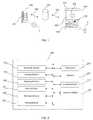
FIG. 1 is a schematic diagram showing a overall exemplary working relationship among a device and two terminals which are connected with the device for live video chat;
FIG. 2 is a block diagram showing functional blocks for the device ofFIG. 1, in accordance with an embodiment;
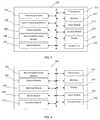
FIG. 3 is a block diagram showing functional blocks for one of the two terminals ofFIG. 1, in accordance with an embodiment;
FIG. 4 is a block diagram showing functional blocks for the other one of the two terminals ofFIG. 1, in accordance with an embodiment;
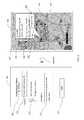
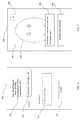
FIG. 5 is a schematic diagram showing both user interfaces, according to one embodiment, of the two terminals ofFIG. 1, when both terminals are in process of starting a live video chat;
FIG. 6 is a schematic diagram showing a user interface of one of the two terminals for accepting live video chat request, according to an embodiment;
FIG. 7 is a schematic diagram showing a user interface of one of the two terminals ofFIG. 1 which represents a on-going live video chat screen, in accordance with an embodiment;
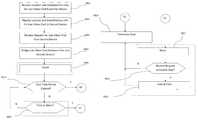
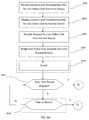
FIGS. 8A-8B are flowcharts illustrating a process in the device ofFIG. 1, of conducting a first live video chat between the two terminals ofFIG. 1, according to an embodiment;
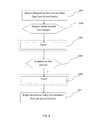
FIG. 9 is a flowchart illustrating a process in the device ofFIG. 1, of conducting a second live video chat between the two terminals ofFIG. 1, according to an embodiment;
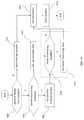
FIG. 10 is a flowchart showing how location information is set by one of the two terminals ofFIG. 1, based on an embodiment; and
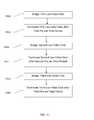
FIG. 11 is yet another flowchart showing a different embodiment of conducting a live video chat.
DETAILED DESCRIPTION OF THE INVENTIONThe invention will now be described in detail through several embodiments with reference to the accompanying drawings.
In general, the word “module”, as used herein, refers to logic embodied in hardware or firmware, or to a collection of software instructions, written in a programming language, such as, Java, C, Objective-C, or assembly. One or more software instructions in the modules may be embedded in firmware, such as EPROM. The modules described herein may be implemented as either software and/or hardware modules and may be stored in any type of non-transitory computer-readable medium or other storage device. Some non-limiting examples of non-transitory computer-readable media include CDs, DVDs, BLU-RAY, flash memory, and hard disk drives.
Referring toFIG. 1, an overall architecture of live video chat system are illustrated by its principle, in accordance with an embodiment. Adevice100, functioning as a server device, is connected to a number of terminals, being either mobile devices, such as smartphones, or other kinds of devices, such as PCs. Theconnections400 and500 can be wired or wireless, using various protocols, such as HTTP protocol, real time messaging protocol (RTMP), real time streaming protocol (RTSP), etc., running through the Internet, or local area networks, or combination of both. Here, twoterminals200, and300 are used as exemplary terminals to illustrate the principles of the invention. Auser2 ofterminal200 can conduct live video chat with auser3 ofterminal300, viadevice100.
FIG. 2 shows functional modules and components thedevice100 has. In one embodiment,device100 can have:
- 1. a receivingmodule101 to receive requests from theterminals200 and300, such as functioning as an event listener to listen on a certain port to receive request for conducting a live video communication, receive video streams using video stream frameworks, such as, ADOBE MEDIA SERVER, RED 5 MEDIA SERVER, and/or APACHE FLEX, etc., to get location information and other information from theterminals200 and300;
- 2. a sendingmodule103 to transmit communication to theterminals200,300, such as sending live video streams;
- 3. amapping module105 to create and render a map in theterminals200 and300, using location information got from theterminal200 or300, tag the location into existing maps, alternatively, themapping module105 may just provide tagging information based on the location information, and theterminals200 and300 may acquires basic mapping directly from a map server (not shown);
- 5. avideo module107 to process video data received from theterminals200 and300, it may buffer, encode and decode according various video stream protocols, such as HTTP streaming, RTMP, RTSP, etc., and prepare the live video objects as needed to facilitate the video communications between theterminals200 and300;
- 4. anattribute module109 for recording and calculating various communications data between theterminals200 and300 to get various characteristics of theuser2 and3, or their attributes as a user of the live video chat, it can use logging schemes to record usage data, or combining logging with database;
- 5. atiming module111 to function as timer for stopping certain events or triggering certain events. e.g., stopping an on-going live video chat session;
- 6. one ormore processors113, to execute and control the modules to perform their respective tasks;
- 7. amemory115 to store the instructions of the modules to be executed by theprocessor113;
- 8. alocation module117 to prepare the location information received from theterminals200 and300 into certain formats, such as converting received position coordinates into ordinary, human-readable address, such as using geo-coding services, for instance, the one from GOOGLE; and
- 9. anaccount module119 to maintain profiles for the users of the terminals, including user ID, age, sex, geographical area, etc. forusers2,3.
FIGS. 3 and 4 show exemplary functional blocks for theterminals200 and300. Although some blocks of theterminal200 are different from some for theterminal300, however, all blocks inFIGS. 3 and 4 can be all contained in eachterminal200 or300, and some of them can be distributed as a single application for eachterminal200 and300. Such that, theterminal200 can also function as theterminal300, and vice versa.
InFIG. 3, theterminal200 has the following modules, according to an embodiment:
- 1. apositioning module202 to acquire position information, such as coordinates from an positioning unit, such as a GPS device (not shown) for the terminal200. Thepositioning module202 is to acquire positioning coordinates to be transmitted to thedevice100 for displaying the location of the terminal200 for the terminal300;
- 2. aindoor positioning module204 for getting indoor positioning information from indoor positioning devices (not shown) when the terminal200 is in an indoor environment, especially when the indoor position information can be translated into a format understandable by thedevice100 and the terminal300, this information will provide more accurate location of the terminal200;
- 3. acamera module206 for shooting video of theuser2 of the terminal200 for video chat, or shooting other videos;
- 4. a requesting/receivingmodule208 to communicate with thedevice100, e.g., to send availableness report, or to send/receive live video stream;
- 5. amedia module210 to prepare video, audio streams for live video chat;
- 6. a processor(s)211 to execute all the modules in the terminal200;
- 7.memory212 to store all instructions for the modules;
- 8. aninput module214 to receive input from theuser2 to operate the terminal200;
- 9. alocation module216 to prepare location information of the terminal200 to send to thedevice100, where the location module can take data from thepositioning module202, and theindoor positioning module204, or alternatively, can set a specific location selected from alocation list220 that is stored in thememory212, or takes input from theinput module214 by theuser2; and
- 10. adisplay218, which is controlled by theprocessor211 to show user interfaces, and live video chat screens.
FIG. 4 shows functional blocks for the terminal300, in accordance with one embodiment. It contains a selectingmodule306 for selecting the terminal200, based on its locations and/or availableness to communicate with, and atiming module318 to time the duration of various on-going events, such as the live video chat between theterminals200 and300. Modules,302,304,308,310,316 are the same or similar to those inFIG. 3, in terms of structures and functionalities. The terminal300 also has a processor(s)312 to execute the modules, and adisplay316 to user interfaces, and live video chat screens.
The principles of the live video chat using thedevice100 and theterminals200 and300 are illustrated by the following flowcharts together with some schematic diagrams, based on exemplary embodiments. The flowcharts show only exemplary tasks in embodiments to describe the principles of the methods, and the order of the tasks is not necessarily fixed as shown, might be altered, and certain steps might be omitted without departing from the principles of the invention.
Referring toFIGS. 8A and 8B, in task S801 the receivingmodule101 receives the availableness and location information from the terminal200 that the terminal200 (or the user2) is ready to has a live video chat. The available information may be prepared by a user interface as depicted byFIG. 5, on the left, thedisplay218 shows a screen for theuser2 to fill out, it is showing the user ID259 (“SF0001”) for example, registered with thedevice100, and alocation box251 for the user to enter the location he desires others to see, or optionally he can use the real positioning coordinates, by selectingoptions253, or choose to use a pre-set list of addresses from thelocation list220. Thelist220 may look like:
- Time Square, NYC, 40° 45′23″N 73° 59′11″W
- Grand Central, NYC, 40° 45′10.08″N 73° 58′35.48″W
- . . .
By using thelist220, theuser2 does not have to reveal his real location, especially when he is at home. By usingoptions253, the process of setting location can be done as shown inFIG. 10. Intask930, if the user agrees to reveal his real location, then thepositioning module202 will try to get positioning coordinates from outdoor positioning systems, e.g., satellite signals, such GPS signals if they are available in tasks932 and934, however, if outdoor signals are not available, then the terminal200 will try to get last saved position coordinates, for example, the set of date saved just before entering a building. Furthermore, as an option, if indoor position information is available, theindoor positioning module204 will try get indoor position information from the indoor. If the user wants to use thepre-set location list220, then, in tasks946, he can select one from thelocation list220. Finally, intask942, theuser2 can choose to enter description of location inbox251 ofFIG. 5, and intask940, thelocation module216 can prepare the location information, and then the requesting/sendingmodule208 sends the data to thedevice100 with theuser2click button257 ofFIG. 5. Optionally, theuser2 can also add comments in abox255 to further describe his situation for being available to have a live video chat.
Going back toFIG. 8A, in task S803, thelocation module117 processes the location data received from the terminal200, and theaccount module119 process the user ID to retrieve necessary profile about theuser2. The sendingmodule103 then sends the data to the terminal300 to display the availableness and the location of the terminal200 on thedisplay314. The format of displaying can vary, it can be in a vertical listing format by listing all available terminals with location information, and/or user profiles, or displaying the data on a map, like themap307 inFIG. 1 with pinpoint303, in another format, or in amap362 inFIG. 5, on the right, withpinpoints364. To be specific, themapping module105 will combine the position coordinates and a relevant map (e.g., map tiles) from a map database (not shown) and tag or mark the map by marking location and other information for the terminal200. Alternatively, thedevice100 can just provide location information and relevant date, except the map tiles that would be provided by the terminal300 itself, and the terminal300 will combine the data with the map and display them.
In task S805, the terminal300 may has a user interface like the one shown in the right part ofFIG. 5, on itsdisplay314, the user interface may have amap362 displayingpinpoints364 of available terminals for live video chat, including the terminal200. In case theuser3 selects the terminal200, a popup window356 might show information regarding the terminal200, such as the user ID350 (same as the user ID259) of theuser2, and location352 (same as thelocation251/253) which may also includes indoor location, if available.Additional description358 can also be provided, taken from thedescription255 from the terminal200. Theuser3 may trigger request to have a live video chat with theuser2 of the terminal200 by clickingbutton360.
A user interface as shown inFIG. 6 might be displayed in the terminal200 on itsdisplay218. The interface may include theuser3'sprofile271, such as a user ID “SF0002,” thelocation273 of the terminal300, and anyadditional comments275 from theuser3. If theuser2 is willing to have a live video cat, then he can clickbutton277 to start the chat. Once the request from the terminal300 is accepted by the terminal200, then in task S807, thedevice100, thevideo module107, together with the receivingmodule101 and the sendingmodule103, will bridge a live video chat. Optionally at this moment, theattribute module109 will keep a first count for the number of first-time video chats between any two terminals in task S809.
During the live video chat, in task S811, thetiming module111 will determine whether a first pre-set time period has elapsed since the start of the chat, if affirmative, in task S815, the video module will terminate by either stopping providing video streaming or cutting off the live video communications between thedevice100 and theterminals200 and300. The reason of doing this is that in many real world situations, a person in a chat is often hesitant to terminate a conversation even if he really want to. Therefore having thedevice100 to terminate the live video chat will relief the parties in the chat from the burden of terminating the chat. This is also important in case theusers2 and3 are totally strangers, and they meet for the first time via the live video chat. People can experience pressure or fear when talking to a stranger for long time, e.g., more than 30 seconds, or so. Therefore, the purpose here is to keep the chat within a short period of time, e.g., less than 30 seconds. It could be as short as a few seconds, or 10, 15 or 20 seconds. When a user feels less pressure in talking to a person online face to face, he tends to use the live video chat more often.
Alternatively, the live video chat can be terminated by theterminals200 and300 themselves. Thetiming module318 in the terminal300 (or a similar module in the terminal200) can track the first pre-set time period and produce a signal to theprocessor312 to control themedia module308 or the requesting/receiving module302 to terminate the chat.
In optional tasks S813 and S817, thetiming module111 may send a signal before the first pre-set time period has elapsed to letdevice100 to warn theuser2, whiling watching thelive image282 of theuser3, that the chat session to going to end soon. Referring toFIG. 7, the users in the chat may see on their terminals ascreen280 showing awarning sign286, or a count-down sign290 to inform the users of the upcoming ending of the chat. A user with certain privilege, e.g., a paid member, may be able to extend the chat session for a certain period of time by clicking thebutton288, for instance.
If a valid (such as one from a paid user) request to extend is received by the receiving module108, the chat will be extended in tasks S819 and S821. Otherwise, the chat will be terminated as in task S815.
If after the first live video chat, either theuser2 or theuser3 wants to have a second live chat, within a pre-set second time period, e.g., with 24 hours, or 48 hours. They can try to request a second live video chat to have a further video talk. Referring toFIG. 9, in task S901, the receivingmodule103 of thedevice100 receives the second request to have a second live video chat. In task S903, the timing module will determine whether this request is within the pre-set second period to be regarded as a request for the second chat. If affirmative, in task S905, theattribute module109 may increase a second count for the user being requested for the second video chat, let's say, theuser2. If theuser2 accepted the request in task S907, a third count may be increased for theuser2 for accepting the request for the second chat. Then thedevice100 can bridge the second chat. It is to be understood that, after the second chat is being bridged, the tasks of S811-S821, as inFIGS. 8A and 8B, could be performed as desired. And the second live video chat can be terminated after a third pre-set time period, which can be equal to or longer than the first pre-set time period.
Based on the three counts, theattribute module109 cam analyze the behavior and characteristics of the users. For instance, if after the first chat, theuser3 requested a second chat, it can be inferred that theuser2 is attractive, and theuser3 is interested in theuser2. A attribute of “attractiveness” of theuser2 can be based on ratio of second count to first count, meaning: out of X number of first live video chat, theuser2 received Y number of requests for a second live video chat. This factor can be represented as a simple fraction (Y/X), or a percentage (Y/X*100%), as shown as354 inFIG. 5, and271 inFIG. 6, respectively. Similarly, a ratio of Y to the value Z of the third count that theuser2 accepted the requests for a second live chat from other users to the Y number of requests for a second live video chat may indicate an attribute of “friendliness” of theuser2, and the calculations can also be displayed to other users, as shown as354 inFIG. 5, and271 inFIG. 6.
In case theusers2 and3 are, at beginning, strangers, it may take more than one occasions of live video chat for them to become acquaintances or friends.FIG. 11 shows an exemplary way for conducting live video chats between theterminals200 and300. In task S950, thedevice100 bridges the first live video chat, and then terminate the chat after the first time period, e.g., in a range of 5-10 seconds in task S952. And then thedevice100 bridges the second live video chat in task S954, and terminates it after a second time period in task S956, here, the second time period may be equal to or longer than the first time period. After these two chats, theusers2 and3 may already have an idea whether they can become friends or not. If a third live video chat does happen in task S958, as bridged by thedevice100, then in task S960, the third chat could be terminated after a third pre-set time period that is longer than both the first and the second time periods. Or alternatively, the third chat could last as long as theusers2 and3 wish, in other words, will be terminated by themselves.
While the invention has been described in terms of several exemplary embodiments, those skilled on the art will recognize that the invention can be practiced with modification within the spirit and scope of the appended claims. In addition, it is noted that, the Applicant's intent is to encompass equivalents of all claim elements, even if amended later during prosecution.