US9201627B2 - Systems and methods for transferring content between user equipment and a wireless communications device - Google Patents
Systems and methods for transferring content between user equipment and a wireless communications deviceDownload PDFInfo
- Publication number
- US9201627B2 US9201627B2US12/652,572US65257210AUS9201627B2US 9201627 B2US9201627 B2US 9201627B2US 65257210 AUS65257210 AUS 65257210AUS 9201627 B2US9201627 B2US 9201627B2
- Authority
- US
- United States
- Prior art keywords
- wireless communications
- communications device
- range
- user equipment
- short
- Prior art date
- Legal status (The legal status is an assumption and is not a legal conclusion. Google has not performed a legal analysis and makes no representation as to the accuracy of the status listed.)
- Active, expires
Links
Images






Classifications
- G—PHYSICS
- G06—COMPUTING OR CALCULATING; COUNTING
- G06F—ELECTRIC DIGITAL DATA PROCESSING
- G06F3/00—Input arrangements for transferring data to be processed into a form capable of being handled by the computer; Output arrangements for transferring data from processing unit to output unit, e.g. interface arrangements
- G06F3/14—Digital output to display device ; Cooperation and interconnection of the display device with other functional units
- G06F3/1454—Digital output to display device ; Cooperation and interconnection of the display device with other functional units involving copying of the display data of a local workstation or window to a remote workstation or window so that an actual copy of the data is displayed simultaneously on two or more displays, e.g. teledisplay
- H—ELECTRICITY
- H04—ELECTRIC COMMUNICATION TECHNIQUE
- H04N—PICTORIAL COMMUNICATION, e.g. TELEVISION
- H04N21/00—Selective content distribution, e.g. interactive television or video on demand [VOD]
- H04N21/40—Client devices specifically adapted for the reception of or interaction with content, e.g. set-top-box [STB]; Operations thereof
- H04N21/41—Structure of client; Structure of client peripherals
- H04N21/4104—Peripherals receiving signals from specially adapted client devices
- H04N21/4126—The peripheral being portable, e.g. PDAs or mobile phones
- H—ELECTRICITY
- H04—ELECTRIC COMMUNICATION TECHNIQUE
- H04N—PICTORIAL COMMUNICATION, e.g. TELEVISION
- H04N21/00—Selective content distribution, e.g. interactive television or video on demand [VOD]
- H04N21/40—Client devices specifically adapted for the reception of or interaction with content, e.g. set-top-box [STB]; Operations thereof
- H04N21/41—Structure of client; Structure of client peripherals
- H04N21/414—Specialised client platforms, e.g. receiver in car or embedded in a mobile appliance
- H04N21/41407—Specialised client platforms, e.g. receiver in car or embedded in a mobile appliance embedded in a portable device, e.g. video client on a mobile phone, PDA, laptop
- H—ELECTRICITY
- H04—ELECTRIC COMMUNICATION TECHNIQUE
- H04N—PICTORIAL COMMUNICATION, e.g. TELEVISION
- H04N21/00—Selective content distribution, e.g. interactive television or video on demand [VOD]
- H04N21/40—Client devices specifically adapted for the reception of or interaction with content, e.g. set-top-box [STB]; Operations thereof
- H04N21/41—Structure of client; Structure of client peripherals
- H04N21/422—Input-only peripherals, i.e. input devices connected to specially adapted client devices, e.g. global positioning system [GPS]
- H04N21/42204—User interfaces specially adapted for controlling a client device through a remote control device; Remote control devices therefor
- H04N21/42206—User interfaces specially adapted for controlling a client device through a remote control device; Remote control devices therefor characterized by hardware details
- H04N21/42221—Transmission circuitry, e.g. infrared [IR] or radio frequency [RF]
- H—ELECTRICITY
- H04—ELECTRIC COMMUNICATION TECHNIQUE
- H04N—PICTORIAL COMMUNICATION, e.g. TELEVISION
- H04N21/00—Selective content distribution, e.g. interactive television or video on demand [VOD]
- H04N21/60—Network structure or processes for video distribution between server and client or between remote clients; Control signalling between clients, server and network components; Transmission of management data between server and client, e.g. sending from server to client commands for recording incoming content stream; Communication details between server and client
- H04N21/63—Control signaling related to video distribution between client, server and network components; Network processes for video distribution between server and clients or between remote clients, e.g. transmitting basic layer and enhancement layers over different transmission paths, setting up a peer-to-peer communication via Internet between remote STB's; Communication protocols; Addressing
- H04N21/647—Control signaling between network components and server or clients; Network processes for video distribution between server and clients, e.g. controlling the quality of the video stream, by dropping packets, protecting content from unauthorised alteration within the network, monitoring of network load, bridging between two different networks, e.g. between IP and wireless
- H04N21/64707—Control signaling between network components and server or clients; Network processes for video distribution between server and clients, e.g. controlling the quality of the video stream, by dropping packets, protecting content from unauthorised alteration within the network, monitoring of network load, bridging between two different networks, e.g. between IP and wireless for transferring content from a first network to a second network, e.g. between IP and wireless
Definitions
- This inventionrelates to interactive application systems, and more particularly, to interactive media guidance application systems in which media guidance application functionality may be provided by a wireless communications device or coordinated between a wireless communications device and one or more user equipment devices.
- Interactive applicationsare typically implemented, at least in part, on a user's equipment (e.g., a set-top box). Examples of interactive applications include interactive program guides, e-mail, home shopping, wagering and other e-commerce applications, financial applications, Web browsers, games, and other user equipment based applications. Running these applications on the user equipment typically prevents other users from watching media content on that user equipment. In addition, running such applications on a stationary user equipment platform may prevent users from accessing the features of those applications when away from the stationary platform.
- an interactive application systemincludes a wireless communications device with a display.
- the wireless communications devicemay be any suitable wireless communications device, such as a touch-screen remote, personal digital assistant (PDA), mobile phone (e.g., a smartphone) or other wireless communications device.
- PDApersonal digital assistant
- the wireless communications devicemay provide a user with access to interactive application functionality remotely or while viewing media content.
- User equipmentmay include one or more of a television, a set-top box, a DVD player/recorder, a Bluray player/recorder, a DVR, a media server, a security camera, GPS navigation unit, etc.
- the wireless communications devicemay include a touch-screen LCD or OLED display, and one or more communication interfaces to communicate with the user equipment.
- the communication interfacesmay include infrared, Bluetooth, Wi-Fi, or any other suitable interface.
- the wireless communications devicemay support many of the features of interactive program guides without interrupting content being presented on user's equipment (e.g., a television). For example, the wireless communications device may display the available video-on-demand listings for a channel while the non video-on-demand listings are displayed on the user's equipment (e.g., a television). Moreover, when a user selects a program listing from the program listings grid (see e.g., FIG. 9 ), the note section of the guide may be unable to show the entire content of the note or program description. The wireless communications device may then receive and display the entire note or description, which may include rich graphics, video, and/or advertisements, in an expanded manner. Additionally, the wireless communications device may receive and display the content being displayed in the video region of the interactive media guidance application (see, FIG. 9 ) while the user browses the program listings on e.g., the television.
- the wireless communications devicemay display the available video-on-demand listings for a channel while the non video-on-demand listings are displayed on the user'
- the wireless communications devicemay provide access to subtitles or alternate language dubbings.
- a Chinese dubbingmay simultaneously be played on the wireless communications device.
- the wireless communications devicemay stream the Chinese dubbing from a media content source (see, FIG. 12 ) via the Internet.
- a programmay be displayed on the television with subtitles in one language, e.g., English, while the same program may be simultaneously displayed on the wireless communications device with subtitles in, e.g., Chinese.
- the wireless communications devicemay be synchronized or may communicate with various other devices and applications. For example, a user may use the wireless communications device to type addresses, search for locations, etc from inside the home instead of having to type on a GPS navigation unit. The wireless communications device may then transfer the entered information to the GPS navigation unit via Wi-Fi, Bluetooth, etc.
- the wireless communications devicemay implement a surfing guide application while the user is watching a broadcast program on user equipment, e.g., the television.
- the surfing guide application running on wireless communications devicemay obtain screenshots of programs playing on other channels, and display the screenshots on wireless communications device (see FIG. 12 ).
- the screenshotsmay be downloaded by the surfing guide application from a server which may be located at a media content source or a media guidance data source (see, FIG. 12 ).
- the servermay be configured to periodically capture screenshots of various channels and store them in a database.
- the corresponding programmay be displayed in a preview area on the wireless communications device.
- the programmay be streamed from the server where the screenshots were downloaded.
- preview areamay display a description of the program, which may also be downloaded from the server.
- the usermay “tap” an on-screen button.
- the surfing guide applicationmay exchange one or more application communications with the primary guide telling the primary guide that the user has indicated a desire to tune to a particular channel.
- the primary guidemay cause the set-top box to tune to the indicated channel.
- wireless communications devicemay communicate directly with the set-top box and instruct the set-top box to tune to the indicated channel.
- media contentmay be transferred between a primary display of the user equipment (e.g., a television) and the wireless communications device.
- a primary display of the user equipmente.g., a television
- wireless communications devicemay be configured to automatically start displaying the content being displayed on the primary display, e.g., a television when the wireless communications device is out of range from, for example, the television or the set-top box.
- wireless communications devicemay then switch to a longer range link such as Wi-Fi and stream the content from e.g., the set-top box over the Wi-Fi link and display it on the wireless communications device.
- the contentmay be streamed directly from the user equipment or may be received from another source such as a media content source.
- wireless communications devicemay be configured to automatically display not only video, but anything that is being displayed on the television when the wireless communications device goes out of range. For example, if the user is browsing program listings, and leaves the room, wireless communications device may automatically display the program listings that were displayed on the television.
- wireless communications devicemay also automatically adjust it's display resolution so as not to distort what is being displayed (e.g., display text so it is legible).
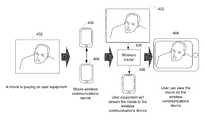
- wireless communications devicemay be configured to allow the user to manually transfer the television display to the wireless communications device. Accordingly, the user may manually select (e.g., by “tapping” an on-screen button on the wireless communications device, or by shaking the wireless communications device) to start streaming content that is being displayed on user equipment to the wireless communications device.
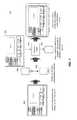
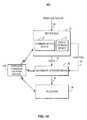
- FIG. 1shows exemplary display screens in accordance with an embodiment of the invention
- FIG. 2shows a simplified diagram of an illustrative interactive media system in accordance with an embodiment of the invention
- FIG. 3shows an exemplary configuration screen in accordance with an embodiment of the invention
- FIG. 4shows an illustrative screen of the surfing guide application in accordance with an embodiment of the present invention
- FIG. 5shows a simplified diagram of an illustrative interactive media system in accordance with an embodiment of the invention
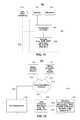
- FIG. 6shows an illustrative process of streaming video to the wireless communications device of FIG. 1 ;
- FIG. 7shows an illustrative process of streaming program guide listings to the wireless communications device of FIG. 1 ;
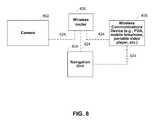
- FIG. 8shows a simplified diagram of an illustrative interactive media system in accordance with an embodiment of the invention.
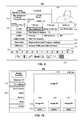
- FIG. 9shows an illustrative display screen using a grid format that may be used to provide guidance for various types of media in accordance with one embodiment of the invention.
- FIG. 10shows an illustrative display screen using a mosaic that may be used to provide guidance for various types of media in accordance with an embodiment of the present invention
- FIG. 11shows an illustrative user equipment device in accordance with an embodiment of the invention
- FIG. 12shows a simplified diagram of an illustrative interactive media system in accordance with an embodiment of the invention
- FIG. 13shows a schematic view of the wireless communications device of FIG. 12 , in accordance with an embodiment of the present invention
- FIG. 14shows a schematic view of the user equipment of FIG. 12 , in accordance with an embodiment of the present invention.
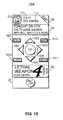
- FIG. 15shows an illustrative remote screen in accordance with an embodiment of the present invention
- FIG. 16shows an illustrative remote screen in accordance with an embodiment of the present invention
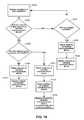
- FIG. 17is a flowchart of illustrative steps involved in providing interactive media guidance and other application features with the wireless communications device of FIG. 12 in accordance with an embodiment of the present invention
- FIG. 18is a flowchart of illustrative steps involved in coordinating features between primary applications running within the user equipment of FIG. 12 and secondary applications running on the wireless communications device of FIG. 12 in accordance with an embodiment of the present invention
- FIG. 19is a flowchart of illustrative steps involved in providing subtitles on the wireless communications device of FIG. 12 in accordance with an embodiment of the present invention.
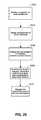
- FIG. 20is a flowchart of illustrative steps involved in providing access to screenshots of other channels on the wireless communications device of FIG. 12 in accordance with an embodiment of the present invention.
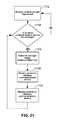
- FIG. 21is a flowchart of illustrative steps involved in automatically streaming content to the wireless communications device in accordance with an embodiment of the present invention.
- Media guidance functionalitymay be provided on a wireless communications device, such as a PDA, a smartphone, a portable video player, a portable music player, a portable gaming machine, or other wireless device.
- the media guidance functionalitymay be coordinated between the wireless communications device and one or more user equipment devices such as a television, a set-top box, a DVD player/recorder, a Bluray player/recorder, a DVR, a media server, a security camera, GPS navigation unit, etc.
- Providing a media guidance application on a wireless communications deviceis discussed in greater detail in, for example, Chiu et al., U.S. patent application Ser. No. 12/495,522, filed Jun. 30, 2009, which is hereby incorporated by reference herein in its entirety.
- wireless communications device 406may be used to provide enhanced viewing options such as multi-language support.
- One example of the type of media guidance functionality that may be provided on wireless communications device 406is providing subtitles and audio dubbings in one or more languages on wireless communications device 406 .
- a programmay be displayed on user equipment 402 (e.g., a television) with subtitles in one language e.g., English, while the same program may be simultaneously displayed on wireless communications device 406 with subtitles in another language e.g., Chinese.
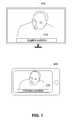
- FIG. 2shows exemplary displays of user equipment 402 (e.g., a television) and wireless communications device 406 . As shown in FIG.
- user equipment 402displays a program while displaying English subtitles 218
- wireless communications device 406displays the same program as displayed on user equipment 402 but with Chinese subtitles 220 .
- Video corresponding to the program or moviemay be streamed to wireless communications device 406 from user equipment 402 over communications path 424 (e.g., Wi-Fi or Bluetooth).
- wireless communications device 406may also provide access to audio dubbings. For example, when watching a movie in English on user equipment 402 (e.g., a television), a Chinese dubbing of the movie may be played on wireless communications device 406 . Thus, the user may watch the movie on the television but listen to the corresponding audio in Chinese on wireless communications device 406 . The audio may be played on a speaker included in wireless communications device 406 or may be played through a pair of headphones connected to wireless communications device 406 .
- audio dubbingsFor example, when watching a movie in English on user equipment 402 (e.g., a television), a Chinese dubbing of the movie may be played on wireless communications device 406 . Thus, the user may watch the movie on the television but listen to the corresponding audio in Chinese on wireless communications device 406 . The audio may be played on a speaker included in wireless communications device 406 or may be played through a pair of headphones connected to wireless communications device 406 .
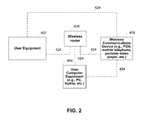
- FIG. 2shows a generalized embodiment of an interactive application system in accordance with an embodiment of the present invention. More specific implementations of the devices shown in FIG. 2 are discussed below in connection with FIGS. 11-14 .
- wireless communications device 406may communicate with user equipment 402 and user computer equipment 404 over communications path 424 .
- Communications path 424may be a wireless link such as Wi-Fi, Bluetooth, etc.
- Communications path 424may allow transfer of data such as audio, video, text, etc between wireless communications device 406 and user equipment 402 and user computer equipment 404 .
- wireless communications device 406may communicate directly with user equipment 402 and user computer equipment 404 .
- Wi-Fi linkwireless communications device 406 may communicate with user equipment 402 and user computer equipment 404 via, for example, wireless router 426 .
- the subtitles and/or the audio dubbingmay be streamed from user equipment 402 (e.g., a set-top box) to wireless communications device 406 over communications path 424 .
- the subtitles and/or the audio dubbingmay be obtained by wireless communications device 406 from a media provider (e.g., media content source 416 ( FIG. 12 )) via the Internet.
- FIG. 3discloses exemplary configuration screen 350 which may be used by a user to enable or disable subtitles and audio dubbings for the wireless communications device.
- configuration screen 350may be used to select a language for the subtitles and the audio dubbing.
- wireless communications device 406may obtain a translation of the subtitles in the user chosen language. For example, wireless communications device 406 may obtain subtitles from user equipment 402 in a language that is available (e.g., English) and use a web service such as BabblefishTM or GoogleTM translate to obtain a translation of the subtitles in the user chosen language.
- wireless communications device 406 and/or user equipment 402may display other supplemental content relating to a program or movie while the program or movie is displayed on user equipment 402 .
- wireless communications device 406may display supplemental content such as, director's comments, actor's comments, reviews, etc.
- the moviemay be streamed to wireless communications device 406 , while the supplemental content is displayed on user equipment 401 (e.g., a television).
- the supplemental contentmay be provided on for example, a DVD or Bluray disc, or alternatively, may be obtained by wireless communications device 406 from media content source 416 or from a third party via the Internet.
- user equipment 402may stream or transfer the content to wireless communications device 406 via Wi-Fi, Bluetooth, etc.
- supplemental content related to sports shows, game shows or showssuch as a poker tournament may be shown on wireless communications device 406 .
- wireless communications devicemay display the players' cards, or during a baseball game, wireless communications device 406 may display the score and other stats.
- This supplemental contentmay be obtained by wireless communications device 406 from for example, user equipment 402 , media content provider 416 or from a third party via the Internet.
- FIG. 4shows an exemplary display screen of the surfing guide application in accordance with an embodiment of the present invention.
- the surfing guide application shown in FIG. 4allows a user to browse, on wireless communications device 406 , screenshots of programs playing on other channels while watching a program on user equipment 402 (e.g., a television).
- a program on user equipment 402e.g., a television
- the surfing guide applicationmay obtain screenshots of programs playing on other channels, and display the screenshots on wireless communications device 406 as shown in FIG. 4 .
- screenshots 1202may be displayed along the bottom of the display area, while a preview area 1206 may be displayed along the top.
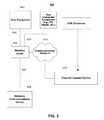
- FIG. 5discloses a generalized embodiment of communications system 500 for providing the surfing guide application on wireless communications device 406 in accordance with an embodiment of the present invention.
- wireless communications device 406may communicate with user equipment 402 over communications path 424 (e.g., a Wi-Fi link) via a wireless router 426 .
- Channel capture device 502may be a server which may be configured to periodically capture screenshots of programs playing on various broadcast channels and store them in a database.
- Channel capture device 502may include a tuner (not shown) to receive DVB (digital video broadcasting) broadcasts of various channels, and may periodically capture and store screenshots of the various channels.
- DVBdigital video broadcasting
- Wireless communications device 406may connect to channel capture device 502 via the Internet using, for example, a Wi-Fi link in a home network.
- a screenshot 1202When the user selects a screenshot 1202 , (e.g., by “tapping” on the screenshot) the corresponding program may be displayed in preview area 1206 .
- the programmay be streamed from channel capture device 502 or from a media provider (e.g., media content source 416 ).
- preview area 1206may display the selected screenshot, or display a description of the program, which may also be downloaded from channel capture device 502 or a media provider (e.g., media content source 416 ).
- the surfing guide applicationmay also obtain other images related to the program, such as cover art, posters, etc. These images may be displayed on wireless communications device 406 in a manner similar to screenshots 1202 as shown in FIG. 4 . These images may also be downloaded from channel capture device 502 which may obtain and store the images on a database. Alternatively, the images be obtained from either a media content provider or from a third party server.
- wireless communications device 406may communicate directly with user equipment 402 , using for example, an IR or Bluetooth link, and instruct user equipment 402 (e.g., a set-top box) to tune to the indicated channel.
- the surfing guide applicationmay exchange one or more application communications with the media guidance application running on user equipment 402 (e.g., a set-top box) telling the media guidance application that the user has indicated a desire to tune to a particular channel. The media guidance application may then cause user equipment 402 (e.g., a set-top box) to tune to the indicated channel.
- the usermay want to easily transfer media content playback or applications between wireless communications device 406 and user equipment 402 .
- several features found in modern smartphonesmay be used to enhance the media guidance functionality provided on wireless communications device 406 and allow the user to transfer content between wireless communications device 406 and user equipment 402 .
- various modern smartphones and portable media playersinclude accelerometers and/or gyroscopes to enable a user to provide input by shaking, or rotating the device.
- a usermay shake wireless communications device 406 a predetermined number of times (e.g., two times) to enable streaming of video that is being displayed on user equipment 402 (e.g., a television) to wireless communications device 406 .
- User equipment 402such as a set-top box or a media server, may stream the video to wireless communications device 406 via wireless router 426 over communications path 424 . As shown in FIG. 6 , the user may then view the program on wireless communications device 406 .
- shaking wireless communications device 406may enable streaming of video from wireless communications device 406 to user equipment 402 (e.g., set-top box). For example, if the user has downloaded a movie or TV show to wireless communications device 406 from a content provider, and prefers to watch it on a larger screen (e.g., a television), the user may simply shake wireless communications device 406 while the movie or TV show is playing, and the movie or TV show will be streamed from wireless communications device 406 to user equipment 402 via wireless router 426 over communications path 424 .
- user equipment 402e.g., set-top box
- the shaking featuremay be applied to various other scenarios. For example, if the user is browsing guide listings on user equipment, (e.g., a television), the user may shake wireless communications device 406 to enable browsing of guide listings on wireless communications device 406 .
- User equipment 402e.g., a set-top box
- the usermay then browse the guide listings on wireless communications device 406 .
- any other suitable gesturemay be utilized. For example, swiping across the touchscreen of wireless communications device 406 , or a pointing gesture made using the wireless communications device 406 , etc may be used to begin transferring of content between user equipment 402 and wireless communications device 406 . Additionally, the gestures may be used to begin or stop transfer of content not only from user equipment 402 to wireless communications device 406 , but also to begin or stop transfer of content from wireless communications device 406 to user equipment 402 . Moreover, content may be transferred to wireless communications device 406 or to user equipment 402 from a third party.
- the usermay perform one of the gestures described above (e.g., shaking, swiping, etc) to begin streaming the video to wireless communications device 406 directly from YouTubeTM, HuluTM, etc.
- the usermay perform one of the gestures (shaking, swiping, etc) to begin streaming the video to user equipment 402 directly from YouTubeTM or HuluTM.
- transferring content between user equipment 402 and wireless communications device 406may be done automatically. For example, while watching a program on user equipment 402 (e.g., a television), the user may need to leave the room (e.g., to use the bathroom), which may cause the user to miss part of the program.
- wireless communications device 406may be configured to automatically start displaying the content being displayed on television when wireless communications device 406 is out of range from user equipment 402 (e.g., a television). Whether wireless communications device 406 is out of range may be determined using a short range link such as infrared or Bluetooth.
- wireless communications device 406may determine that it is out of range. Wireless communications device 406 may use a longer range link (e.g., Wi-Fi, cellular link, etc) to stream the content from user equipment 402 via wireless router 426 , and display it on wireless communications device 406 .
- the longer range linkmay be established upon determining that the short range link is severed or may have been previously established.
- whether wireless communications device 406 is out of range from user equipment 402may be determined using a microphone (not shown) included in wireless communications device 406 .
- the microphonemay be used to listen to the audio playing on user equipment 402 . If the volume of the audio is drastically reduced (e.g., more than 80%), wireless communications device 406 may determine that it is out of range from user equipment 402 , and thus, may switch to a longer range link (e.g., Wi-Fi) to start streaming content from user equipment 402 .
- the longer range linke.g., Wi-Fi, cellular link, etc
- the longer range linkmay be used to determine whether wireless communications device 406 is out of range.
- the longer range linkmay be used to detect movement, or detect positioning (e.g., using signal strength, triangulation, etc).
- wireless communications device 406may be configured to automatically display not only video, but anything that is being displayed on user equipment 402 when wireless communications device 406 goes out of range. For example, if the user is browsing program listings, and leaves the room, wireless communications device 406 may automatically display the program listings that were displayed on user equipment 402 . In some embodiments, wireless communications device 406 ( FIG. 12 ) may also automatically adjust it's display resolution so as not to distort what is being displayed (e.g., display text so it is legible). In another embodiment, wireless communications device 406 may be configured to allow the user to manually select when to display whatever is being displayed on user equipment 402 regardless of whether wireless communications device 406 ( FIG. 12 ) is out of range.
- wireless communications device 406may still be within range of user equipment 402 . Accordingly, the user may manually select (e.g., by “tapping” an on-screen button on the wireless communications device, or by shaking the wireless communications device) to start streaming content that is being displayed on user equipment 402 to wireless communications device 406 .
- wireless communications device 406When wireless communications device 406 comes back within range of user equipment 402 , it may automatically instruct user equipment 402 to begin displaying the content that was being displayed on wireless communications device 406 . If wireless communications device 406 was previously receiving content from a third party (e.g., YouTubeTM, HuluTM, etc), wireless communications device may automatically instruct user equipment 402 to begin streaming content from the third party.
- a third partye.g., YouTubeTM, HuluTM, etc
- wireless communications device 406may be configured to communicate with other network capable devices such as Digital Living Network Alliance SM (DLNA) compliant devices.
- FIG. 8discloses an illustrative communications system according to an embodiment of the present invention.
- User equipment 402may include one or more DLNA compliant devices such as a camera 802 (e.g., a security camera, a baby monitoring camera, etc.) and a GPS navigation unit 804 .
- Wireless communications device 406( FIG. 12 ) may be wirelessly connected to the camera 802 via communications path 424 , and when the camera detects motion, wireless communications device 406 ( FIG. 12 ) may interrupt the content being displayed on wireless communications device 406 ( FIG. 12 ), if any, and automatically start displaying a video feed from the camera.
- the video feed from the cameramay be streamed to wireless communications device 406 ( FIG. 12 ) over communications path 424 .
- the video feedmay also be displayed on user equipment 402 (e.g., a television).
- the usermay manually select to view the video feed from the camera.
- a camera placed in an oven or on top of a stovemay be used to monitor the status of food being cooked.
- the usermay watch a video feed from the camera on wireless communications device 406 to monitor food being cooked while watching a program on user equipment 402 .
- the usermay be able to take wireless communications device 406 outside of the home, while still being able to watch the video feed from the camera.
- wireless communications device 406FIG. 12
- wireless communications device 406may be used to monitor the temperature of a turkey being cooked by communicating with a DLNA enabled thermometer.
- wireless communications device 406may also include a built-in camera which may be used as a webcam.
- a usermay use wireless communications device 406 to have a video chat with another user.
- Wireless communications device 406may use a Wi-Fi link to transmit and receive video and audio to and from the other user via the Internet.
- wireless communications device 406may also include a built-in microphone (not shown).
- a usermay use the microphone to communicate with other users via user equipment 402 or user computer equipment 404 .
- wireless communications device 406may establish a Wi-Fi connection with the computer. The connection may be used by wireless communications device 406 to transmit audio received via the built-in microphone to the computer.
- wireless communications device 406may receive audio from the computer via the Wi-Fi link.
- the wireless communications devicemay be synchronized or communicate with various other devices and applications.
- a usermay use wireless communications device 406 to type addresses, search for locations, etc instead of having to type on GPS navigation unit 804 which may be a portable unit or part of a navigation system in an automobile.
- the entered informationmay be stored on wireless communications device 406 until wireless communications device 406 ( FIG. 12 ) is within range of the GPS navigation unit.
- Wireless communications device 406may then transfer the entered information to the GPS navigation unit over communications path 424 (e.g., Wi-Fi, Bluetooth, etc).
- Interactive television program guidesare well-known guidance applications that, among other things, allow users to navigate among and locate many types of media content including conventional television programming (provided via traditional broadcast, cable, satellite, Internet, or other means), as well as pay-per-view programs, on-demand programs (as in video-on-demand (VOD) systems), Internet content (e.g., streaming media, downloadable media, Webcasts, etc.), and other types of media or video content.
- Guidance applicationsalso allow users to navigate among and locate content related to the video content including, for example, video clips, articles, advertisements, chat sessions, games, etc.
- Multimedia contentmay be recorded and played, displayed or accessed by information content processing devices, such as computerized and electronic devices, but can also be part of a live performance. It should be understood that the invention embodiments that are discussed in relation to media content are also applicable to other types of content, such as video, audio and/or multimedia.
- PCspersonal computers
- PDAspersonal digital assistants
- mobile telephonesor other mobile devices.
- PCspersonal computers
- PDAspersonal digital assistants
- the guidance providedmay be for media content available only through a television, for media content available only through one or more of these devices, or for media content available both through a television and one or more of these devices.
- the media guidance applicationsmay be provided as on-line applications (i.e., provided on a web-site), or as stand-alone applications or clients on hand-held devices such as, PDAs, mobile telephones, or other mobile devices.
- on-line applicationsi.e., provided on a web-site
- stand-alone applications or clients on hand-held devicessuch as, PDAs, mobile telephones, or other mobile devices.
- FIGS. 9-10show illustrative display screens that may be used to provide media guidance, and in particular media listings.
- the display screens shown in FIGS. 9-10may be implemented on any suitable device or platform. While the displays of FIGS. 9-10 are illustrated as full screen displays, they may also be fully or partially overlaid over media content being displayed.
- a usermay indicate a desire to access media information by selecting a selectable option provided in a display screen (e.g., a menu option, a listings option, an icon, a hyperlink, etc.) or pressing a dedicated button (e.g., a GUIDE button) on a remote control or other user input interface or device.
- a selectable optionprovided in a display screen
- a dedicated buttone.g., a GUIDE button
- the media guidance applicationmay provide a display screen with media information organized in one of several ways, such as by time and channel in a grid, by time, by channel, by media type, by category (e.g., movies, sports, news, children, or other categories of programming), or other predefined, user-defined, or other organization criteria.
- categoriese.g., movies, sports, news, children, or other categories of programming
- FIG. 9shows illustrative grid program listings display 100 arranged by time and channel that also enables access to different types of media content in a single display.
- Display 100may include grid 102 with: (1) a column of channel/media type identifiers 104 , where each channel/media type identifier (which is a cell in the column) identifies a different channel or media type available; and (2) a row of time identifiers 106 , where each time identifier (which is a cell in the row) identifies a time block of programming.
- Grid 102also includes cells of program listings, such as program listing 108 , where each listing provides the title of the program provided on the listing's associated channel and time.
- a usercan select program listings by moving highlight region 402 .
- Information relating to the program listing selected by highlight region 402may be provided in program information region 112 .
- Region 112may include, for example, the program title, the program description, the time the program is provided (if applicable), the channel the program is on (if applicable), the program's rating, and other desired information.
- Non-linear programmingmay include content from different media sources including on-demand media content (e.g., VOD), Internet content (e.g., streaming media, downloadable media, etc.), locally stored media content (e.g., video content stored on a digital video recorder (DVR), digital video disc (DVD), video cassette, compact disc (CD), etc.), or other time-insensitive media content.
- On-demand contentmay include both movies and original media content provided by a particular media provider (e.g., HBO On Demand providing “The Sopranos” and “Curb Your Enthusiasm”).
- Internet contentmay include web events, such as a chat session or Webcast, or content available on-demand as streaming media or downloadable media through an Internet web site or other Internet access (e.g. FTP).
- Grid 102may provide listings for non-linear programming including on-demand listing 114 , recorded media listing 116 , and Internet content listing 118 .
- a display combining listings for content from different types of media sourcesis sometimes referred to as a “mixed-media” display.
- the various permutations of the types of listings that may be displayed that are different than display 100may be based on user selection or guidance application definition (e.g., a display of only recorded and broadcast listings, only on-demand and broadcast listings, etc.).
- listings 114 , 116 , and 118are shown as spanning the entire time block displayed in grid 102 to indicate that selection of these listings may provide access to a display dedicated to on-demand listings, recorded listings, or Internet listings, respectively.
- listings for these media typesmay be included directly in grid 102 . Additional listings may be displayed in response to the user selecting one of the navigational icons 120 . (Pressing an arrow key on a user input device may affect the display in a similar manner as selecting navigational icons 120 .)
- Display 100may also include video region 122 , advertisement 124 , and options region 126 .
- Video region 122may allow the user to view and/or preview programs that are currently available, will be available, or were available to the user.
- the content of video region 122may correspond to, or be independent from, one of the listings displayed in grid 102 .
- Grid displays including a video regionare sometimes referred to as picture-in-guide (PIG) displays.
- PIG displays and their functionalitiesare described in greater detail in Satterfield et al. U.S. Pat. No. 6,564,378, issued May 13, 2003 and Yuen et al. U.S. Pat. No. 6,239,794, issued May 29, 2001, which are hereby incorporated by reference herein in their entireties.
- PIG displaysmay be included in other media guidance application display screens of the present invention.
- Advertisement 124may provide an advertisement for media content that, depending on a viewer's access rights (e.g., for subscription programming), is currently available for viewing, will be available for viewing in the future, or may never become available for viewing, and may correspond to or be unrelated to one or more of the media listings in grid 102 . Advertisement 124 may also be for products or services related or unrelated to the media content displayed in grid 102 . Advertisement 124 may be selectable and provide further information about media content, provide information about a product or a service, enable purchasing of media content, a product, or a service, provide media content relating to the advertisement, etc. Advertisement 124 may be targeted based on a user's profile/preferences, monitored user activity, the type of display provided, or on other suitable targeted advertisement bases.
- Advertisement 124may be targeted based on a user's profile/preferences, monitored user activity, the type of display provided, or on other suitable targeted advertisement bases.
- advertisement 124is shown as rectangular or banner shaped, advertisements may be provided in any suitable size, shape, and location in a guidance application display.
- advertisement 124may be provided as a rectangular shape that is horizontally adjacent to grid 102 . This is sometimes referred to as a panel advertisement.
- advertisementsmay be overlaid over media content or a guidance application display or embedded within a display. Advertisements may also include text, images, rotating images, video clips, or other types of media content. Advertisements may be stored in the user equipment with the guidance application, in a database connected to the user equipment, in a remote location (including streaming media servers), or on other storage means or a combination of these locations.
- Options region 126may allow the user to access different types of media content, media guidance application displays, and/or media guidance application features. Options region 126 may be part of display 100 (and other display screens of the present invention), or may be invoked by a user by selecting an on-screen option or pressing a dedicated or assignable button on a user input device.
- the selectable options within options region 126may concern features related to program listings in grid 102 or may include options available from a main menu display.
- Features related to program listingsmay include searching for other air times or ways of receiving a program, recording a program, enabling series recording of a program, setting program and/or channel as a favorite, purchasing a program, or other features.
- Options available from a main menu displaymay include search options, VOD options, parental control options, access to various types of listing displays, subscribe to a premium service, edit a user's profile, access a browse overlay, or other options.
- the media guidance applicationmay be personalized based on a user's preferences.
- a personalized media guidance applicationallows a user to customize displays and features to create a personalized “experience” with the media guidance application. This personalized experience may be created by allowing a user to input these customizations and/or by the media guidance application monitoring user activity to determine various user preferences. Users may access their personalized guidance application by logging in or otherwise identifying themselves to the guidance application. Customization of the media guidance application may be made in accordance with a user profile.
- the customizationsmay include varying presentation schemes (e.g., color scheme of displays, font size of text, etc.), aspects of media content listings displayed (e.g., only HDTV programming, user-specified broadcast channels based on favorite channel selections, re-ordering the display of channels, recommended media content, etc.), desired recording features (e.g., recording or series recordings for particular users, recording quality, etc.), parental control settings, and other desired customizations.
- presentation schemese.g., color scheme of displays, font size of text, etc.
- aspects of media content listings displayede.g., only HDTV programming, user-specified broadcast channels based on favorite channel selections, re-ordering the display of channels, recommended media content, etc.
- desired recording featurese.g., recording or series recordings for particular users, recording quality, etc.
- parental control settingse.g., parental control settings, and other desired customizations.
- the media guidance applicationmay allow a user to provide user profile information or may automatically compile user profile information.
- the media guidance applicationmay, for example, monitor the media the user accesses and/or other interactions the user may have with the guidance application. Additionally, the media guidance application may obtain all or part of other user profiles that are related to a particular user (e.g., from other web sites on the Internet the user accesses, such as www.tvguide.com, from other media guidance applications the user accesses, from other interactive applications the user accesses, from a handheld device of the user, etc.), and/or obtain information about the user from other sources that the media guidance application may access.
- a usercan be provided with a unified guidance application experience across the user's different devices.
- Video mosaic display 200includes selectable options 202 for media content information organized based on media type, genre, and/or other organization criteria.
- television listings option 204is selected, thus providing listings 206 , 208 , 210 , and 212 as broadcast program listings.
- the listings in display 200are not limited to simple text (e.g., the program title) and icons to describe media. Rather, in display 200 the listings may provide graphical images including cover art, still images from the media content, video clip previews, live video from the media content, or other types of media that indicate to a user the media content being described by the listing.
- listing 208may include more than one portion, including media portion 214 and text portion 216 .
- Media portion 214 and/or text portion 216may be selectable to view video in full-screen or to view program listings related to the video displayed in media portion 214 (e.g., to view listings for the channel that the video is displayed on).
- the listings in display 200are of different sizes (i.e., listing 206 is larger than listings 208 , 210 , and 212 ), but if desired, all the listings may be the same size.
- Listingsmay be of different sizes or graphically accentuated to indicate degrees of interest to the user or to emphasize certain content, as desired by the media provider or based on user preferences.
- Various systems and methods for graphically accentuating media listingsare discussed in, for example, Yates, U.S. patent application Ser. No. 11/324,202, filed Dec. 29, 2005, which is hereby incorporated by reference herein in its entirety.
- FIG. 11shows a generalized embodiment of illustrative user equipment device 300 . More specific implementations of user equipment devices are discussed below in connection with FIG. 12 .
- User equipment device 300may receive media content and data via input/output (hereinafter “I/O”) path 302 .
- I/O path 302may provide media content (e.g., broadcast programming, on-demand programming, Internet content, and other video or audio) and data to control circuitry 304 , which includes processing circuitry 306 and storage 308 .
- Control circuitry 304may be used to send and receive commands, requests, and other suitable data using I/O path 302 .
- I/O path 302may connect control circuitry 304 (and specifically processing circuitry 306 ) to one or more communications paths (described below). I/O functions may be provided by one or more of these communications paths, but are shown as a single path in FIG. 11 to avoid overcomplicating the drawing.
- Control circuitry 304may be based on any suitable processing circuitry 306 such as processing circuitry based on one or more microprocessors, microcontrollers, digital signal processors, programmable logic devices, etc. In some embodiments, control circuitry 304 executes instructions for a media guidance application stored in memory (i.e., storage 308 ). In client-server based embodiments, control circuitry 304 may include communications circuitry suitable for communicating with a guidance application server or other networks or servers. Communications circuitry may include a cable modem, an integrated services digital network (ISDN) modem, a digital subscriber line (DSL) modem, a telephone modem, or a wireless modem for communications with other equipment.
- ISDNintegrated services digital network
- DSLdigital subscriber line
- communicationsmay involve the Internet or any other suitable communications networks or paths (which is described in more detail in connection with FIG. 12 ).
- communications circuitrymay include circuitry (e.g. Bluetooth) that enables peer-to-peer communication of user equipment devices, or communication of user equipment devices in locations remote from each other (described in more detail below).
- Memorye.g., random-access memory, read-only memory, or any other suitable memory
- hard drivese.g., hard drives, optical drives, or any other suitable fixed or removable storage devices (e.g., DVD recorder, CD recorder, video cassette recorder, or other suitable recording device)
- storage 308may include one or more of the above types of storage devices.
- user equipment device 300may include a hard drive for a DVR (sometimes called a personal video recorder, or PVR) and a DVD recorder as a secondary storage device.
- Storage 308may be used to store various types of media described herein and guidance application data, including program information, guidance application settings, user preferences or profile information, or other data used in operating the guidance application.
- Nonvolatile memorymay also be used (e.g., to launch a boot-up routine and other instructions).
- Control circuitry 304may include video generating circuitry and tuning circuitry, such as one or more analog tuners, one or more MPEG-2 decoders or other digital decoding circuitry, high-definition tuners, or any other suitable tuning or video circuits or combinations of such circuits. Encoding circuitry (e.g., for converting over-the-air, analog, or digital signals to MPEG signals for storage) may also be provided. Control circuitry 304 may also include scaler circuitry for upconverting and downconverting media into the preferred output format of the user equipment 300 . Circuitry 304 may also include digital-to-analog converter circuitry and analog-to-digital converter circuitry for converting between digital and analog signals.
- the tuning and encoding circuitrymay be used by the user equipment to receive and to display, to play, or to record media content.
- the tuning and encoding circuitrymay also be used to receive guidance data.
- the circuitry described herein, including for example, the tuning, video generating, encoding, decoding, scaler, and analog/digital circuitrymay be implemented using software running on one or more general purpose or specialized processors. Multiple tuners may be provided to handle simultaneous tuning functions (e.g., watch and record functions, picture-in-picture (PIP) functions, multiple-tuner recording, etc.). If storage 308 is provided as a separate device from user equipment 300 , the tuning and encoding circuitry (including multiple tuners) may be associated with storage 308 .
- PIPpicture-in-picture
- a usermay control the control circuitry 304 using user input interface 310 .
- User input interface 310may be any suitable user interface, such as a remote control, mouse, trackball, keypad, keyboard, touch screen, touch pad, stylus input, joystick, voice recognition interface, or other user input interfaces.
- Display 312may be provided as a stand-alone device or integrated with other elements of user equipment device 300 .
- Display 312may be one or more of a monitor, a television, a liquid crystal display (LCD) for a mobile device, or any other suitable equipment for displaying visual images.
- display 312may be HDTV-capable.
- Speakers 314may be provided as integrated with other elements of user equipment device 300 or may be stand-alone units.
- the audio component of videos and other media content displayed on display 312may be played through speakers 314 .
- the audiomay be distributed to a receiver (not shown), which processes and outputs the audio via speakers 314 .
- the guidance applicationmay be implemented using any suitable architecture. For example, it may be a stand-alone application wholly implemented on user equipment device 300 . In such an approach, instructions of the application are stored locally, and data for use by the application is downloaded on a periodic basis (e.g., from the VBI of a television channel, from an out-of-band feed, or using another suitable approach).
- the media guidance applicationis a client-server based application. Data for use by a thick or thin client implemented on user equipment device 300 is retrieved on-demand by issuing requests to a server remote to the user equipment device 300 .
- control circuitry 304runs a web browser that interprets web pages provided by a remote server.
- the media guidance applicationis downloaded and interpreted or otherwise run by an interpreter or virtual machine (run by control circuitry 304 ).
- the guidance applicationmay be encoded in the ETV Binary Interchange Format (EBIF), received by control circuitry 304 as part of a suitable feed, and interpreted by a user agent running on control circuitry 304 .
- EBIFETV Binary Interchange Format
- the guidance applicationmay be a EBIF widget.
- the guidance applicationmay be defined by a series of JAVA-based files that are received and run by a local virtual machine or other suitable middleware executed by control circuitry 304 .
- the guidance applicationmay be, for example, encoded and transmitted in an MPEG-2 object carousel with the MPEG audio and video packets of a program.
- User equipment device 300 of FIG. 11can be implemented in system 400 of FIG. 12 as user equipment 402 , user computer equipment 404 , or any other type of user equipment suitable for accessing media, such as a non-portable gaming machine. For simplicity, these devices may be referred to herein collectively as user equipment or user equipment devices.
- User equipment devices, on which a media guidance application is implemented,may function as a standalone device or may be part of a network of devices. Various network configurations of devices may be implemented and are discussed in more detail below.
- User equipment 402may include a set-top box, an integrated receiver decoder (IRD) for handling satellite television, a television set, a digital storage device, a DVD player/recorder, a Bluray player/recorder, a video-cassette recorder (VCR), a local media server, a webcam, one more security cameras, which may include one or more baby monitoring cameras, a GPS navigation unit, a network capable thermometer, or other user equipment.
- the GPS navigation unitmay be a stand alone portable navigation unit, or alternatively, may be a navigation unit part of an automobile's navigation system. Additionally, any of the devices included in user equipment 402 may be network capable and may communicate over a network using for example, a Wi-Fi link.
- devices included in user equipment 402may be Digital Living Network Alliance SM (DLNA) compliant.
- the devices included in user equipment 402may additionally be capable of communicating over a short range link such as Bluetooth or IR.
- a short range linksuch as Bluetooth or IR.
- One or more of these devicesmay be integrated to be a single device, if desired.
- User computer equipment 404may include a PC, a laptop, a tablet, a WebTV box, a personal computer television (PC/TV), a PC media server, a PC media center, or other user computer equipment.
- WEBTVis a trademark owned by Microsoft Corp.
- Wireless communications device 406may include PDAs, a mobile telephone (e.g., a smartphone with a touchscreen interface), a portable video player, a portable music player, a portable gaming machine, or other wireless devices. Wireless communications device 406 may function as a remote controller of user equipment 402 and user computer equipment 404 .
- each of user equipment 402 , user computer equipment 404 , and wireless communications device 406may utilize at least some of the system features described above in connection with FIG. 11 and, as a result, include flexibility with respect to the type of media content available on the device.
- user equipment 402may be Internet-enabled allowing for access to Internet content
- user computer equipment 404may include a tuner allowing for access to television programming.
- the media guidance applicationmay also have the same layout on the various different types of user equipment or may be tailored to the display capabilities of the user equipment. For example, on user computer equipment, the guidance application may be provided as a web site accessed by a web browser. In another example, the guidance application may be scaled down for wireless communications devices.
- each usermay utilize more than one type of user equipment device (e.g., a user may have a television set and a computer) and also more than one of each type of user equipment device (e.g., a user may have a PDA and a mobile telephone and/or multiple television sets).
- a usermay utilize more than one type of user equipment device (e.g., a user may have a television set and a computer) and also more than one of each type of user equipment device (e.g., a user may have a PDA and a mobile telephone and/or multiple television sets).
- the usermay also set various settings to maintain consistent media guidance application settings across in-home devices and remote devices.
- Settingsinclude those described herein, as well as channel and program favorites, programming preferences that the guidance application utilizes to make programming recommendations, display preferences, and other desirable guidance settings. For example, if a user sets a channel as a favorite on, for example, the web site www.tvguide.com on their personal computer at their office, the same channel would appear as a favorite on the user's in-home devices (e.g., user equipment and user computer equipment) as well as the user's mobile devices, if desired. Therefore, changes made on one user equipment device can change the guidance experience on another user equipment device, regardless of whether they are the same or a different type of user equipment device. In addition, the changes made may be based on settings input by a user, as well as user activity monitored by the guidance application.
- the user equipment devicesmay be coupled to communications network 414 .
- user equipment 402 , user computer equipment 404 , and wireless communications device 406are coupled to communications network 414 via communications paths 408 , 410 , and 412 , respectively.
- Communications network 414may be one or more networks including the Internet, a mobile phone network, mobile device (e.g., Blackberry) network, cable network, public switched telephone network, or other types of communications network or combinations of communications networks.
- BLACKBERRYis a service mark owned by Research In Motion Limited Corp.
- Paths 408 , 410 , and 412may separately or together include one or more communications paths, such as, a satellite path, a fiber-optic path, a cable path, a path that supports Internet communications (e.g., IPTV), free-space connections (e.g., for broadcast or other wireless signals), or any other suitable wired or wireless communications path or combination of such paths.
- Path 412is drawn with dotted lines to indicate that in the exemplary embodiment shown in FIG. 12 it is a wireless path and paths 408 and 410 are drawn as solid lines to indicate they are wired paths (although these paths may be wireless paths, if desired). Communications with the user equipment devices may be provided by one or more of these communications paths, but are shown as a single path in FIG. 12 to avoid overcomplicating the drawing.
- User equipment devicesmay communicate directly with each other via communication paths, such as those described above in connection with paths 408 , 410 , and 412 , as well other short-range point-to-point communication paths, such as USB cables, IEEE 1394 cables, wireless paths (e.g., Bluetooth, infrared, IEEE 802-11x, etc.), or other short-range communication via wired or wireless paths.
- BLUETOOTHis a certification mark owned by Bluetooth SIG, INC.
- wireless communication device 406may transmit and receive remote control commands to and from user equipment 402 via infrared.
- the user equipment devicesmay also communicate with each other directly through an indirect path via communications network 414 .
- System 400includes media content source 416 and media guidance data source 418 coupled to communications network 414 via communication paths 420 and 422 , respectively.
- Paths 420 and 422may include any of the communication paths described above in connection with paths 408 , 410 , and 412 .
- Communications with the media content source 416 and media guidance data source 418may be exchanged over one or more communications paths, but are shown as a single path in FIG. 12 to avoid overcomplicating the drawing.
- there may be more than one of each of media content source 416 and media guidance data source 418but only one of each is shown in FIG. 12 to avoid overcomplicating the drawing.
- media content source 416 and media guidance data source 418may be integrated as one source device. Although communications between sources 416 and 418 with user equipment devices 402 , 404 , and 406 are shown as through communications network 414 , in some embodiments, sources 416 and 418 may communicate directly with user equipment devices 402 , 404 , and 406 via communication paths (not shown) such as those described above in connection with paths 408 , 410 , and 412 .
- Media content source 416may include one or more types of media distribution equipment including a television distribution facility, cable system headend, satellite distribution facility, programming sources (e.g., television broadcasters, such as NBC, ABC, HBO, etc.), intermediate distribution facilities and/or servers, Internet providers, on-demand media servers, and other media content providers.
- programming sourcese.g., television broadcasters, such as NBC, ABC, HBO, etc.
- intermediate distribution facilities and/or serverse.g., Internet providers, on-demand media servers, and other media content providers.
- NBCis a trademark owned by the National Broadcasting Company, Inc.
- ABCis a trademark owned by the ABC, INC.
- HBOis a trademark owned by the Home Box Office, Inc.
- Media content source 416may be the originator of media content (e.g., a television broadcaster, a Webcast provider, etc.) or may not be the originator of media content (e.g., an on-demand media content provider, an Internet provider of video content of broadcast programs for downloading, etc.).
- Media content source 416may include cable sources, satellite providers, on-demand providers, Internet providers, or other providers of media content.
- Media content source 416may also include a remote media server used to store different types of media content (including video content selected by a user), in a location remote from any of the user equipment devices.
- Media guidance data source 418may provide media guidance data, such as media listings, media-related information (e.g., broadcast times, broadcast channels, media titles, media descriptions, ratings information (e.g., parental control ratings, critic's ratings, etc.), genre or category information, actor information, logo data for broadcasters' or providers' logos, etc.), media format (e.g., standard definition, high definition, etc.), advertisement information (e.g., text, images, media clips, etc.), on-demand information, and any other type of guidance data that is helpful for a user to navigate among and locate desired media selections.
- media-related informatione.g., broadcast times, broadcast channels, media titles, media descriptions, ratings information (e.g., parental control ratings, critic's ratings, etc.), genre or category information, actor information, logo data for broadcasters' or providers' logos, etc.
- ratings informatione.g., parental control ratings, critic's ratings, etc.
- genre or category informatione.g., actor information, logo data for broadcasters'
- Media guidance application datamay be provided to the user equipment devices using any suitable approach.
- the guidance applicationmay be a stand-alone interactive television program guide that receives program guide data via a data feed (e.g., a continuous feed, trickle feed, or data in the vertical blanking interval of a channel).
- a data feede.g., a continuous feed, trickle feed, or data in the vertical blanking interval of a channel.
- Program schedule data and other guidance datamay be provided to the user equipment on a television channel sideband, in the vertical blanking interval of a television channel, using an in-band digital signal, using an out-of-band digital signal, or by any other suitable data transmission technique.
- Program schedule data and other guidance datamay be provided to user equipment on multiple analog or digital television channels.
- Program schedule data and other guidance datamay be provided to the user equipment with any suitable frequency (e.g., continuously, daily, a user-specified period of time, a system-specified period of time, in response to a request from user equipment, etc.).
- guidance data from media guidance data source 418may be provided to users' equipment using a client-server approach.
- a guidance application client residing on the user's equipmentmay initiate sessions with source 418 to obtain guidance data when needed.
- Media guidance data source 418may provide user equipment devices 402 , 404 , and 406 the media guidance application itself or software updates for the media guidance application.
- Media guidance applicationsmay be, for example, stand-alone applications implemented on user equipment devices.
- media guidance applicationsmay be client-server applications where only the client resides on the user equipment device.
- media guidance applicationsmay be implemented partially as a client application on control circuitry 304 of user equipment device 300 and partially on a remote server as a server application (e.g., media guidance data source 418 ).
- the guidance application displaysmay be generated by the media guidance data source 418 and transmitted to the user equipment devices.
- the media guidance data source 418may also transmit data for storage on the user equipment, which then generates the guidance application displays based on instructions processed by control circuitry.
- Media guidance system 400is intended to illustrate a number of approaches, or network configurations, by which user equipment devices and sources of media content and guidance data may communicate with each other for the purpose of accessing media and providing media guidance.
- the present inventionmay be applied in any one or a subset of these approaches, or in a system employing other approaches for delivering media and providing media guidance.
- the following three approachesprovide specific illustrations of the generalized example of FIG. 12 .
- user equipment devicesmay communicate with each other within a home network.
- User equipment devicescan communicate with each other directly via short-range point-to-point communication schemes describe above, via indirect paths through a hub, router or other similar device provided on a home network, or via communications network 414 .
- Each of the multiple individuals in a single homemay operate different user equipment devices on the home network.
- Different types of user equipment devices in a home networkmay also communicate with each other to transmit media content. For example, a user may transmit media content from user computer equipment to a portable video player or portable music player.
- usersmay have multiple types of user equipment by which they access media content and obtain media guidance.
- some usersmay have home networks that are accessed by in-home and mobile devices.
- Usersmay control in-home devices via a media guidance application implemented on a remote device (e.g., wireless communications device 406 ).
- a media guidance applicationimplemented on a remote device (e.g., wireless communications device 406 ).
- usersmay access an online media guidance application on a website via a personal computer at their office, or a mobile device such as a PDA or web-enabled mobile telephone.
- the usermay set various settings (e.g., recordings, reminders, or other settings) on the online guidance application to control the user's in-home equipment.
- the online guidemay control the user's equipment directly, or by communicating with a media guidance application on the user's in-home equipment.
- users of user equipment devices inside and outside a homecan use their media guidance application to communicate directly with media content source 416 to access media content.
- users of user equipment 404 and user computer equipment 406may access the media guidance application to navigate among and locate desirable media content.
- Usersmay also access the media guidance application outside of the home using wireless communications devices 406 to navigate among and locate desirable media content.
- a “primary” applicationis intended to mean an interactive application that runs on user equipment 402 and/or user computer equipment 404 .
- a primary applicationmay be a server application that provides application data to wireless communications device 406 in response to one or more application communications, or may be a version of an application that works cooperatively with a version of the application that runs on wireless communications device 406 .
- a “secondary” applicationis intended to mean an interactive application that runs on wireless communications device 406 .
- a secondary applicationmay include a client application that obtains data from a primary application, or may be a version of an interactive application that runs cooperatively with a primary application and that obtains application data from media content source 416 or media guidance data source 418 .
- the primary and secondary applicationsmay communicate by exchanging one or more application communications.
- Application communicationsmay include any client-server or peer-to-peer communication construct suitable for exchanging interactive application data or other data (such as digital frames and display screens for display by wireless communications device 406 ) between the primary and secondary applications via communications path 424 or via communications network 414 through communications paths 412 and 408 .
- Communications path 424may be an infrared link, a Wi-Fi link, a Bluetooth link, a combination of such links, or any other suitable wireless communications link.
- Application communicationsmay include, for example, requests, commands, messages, or remote procedure calls.
- Application communicationsmay also involve complex communications between application constructs running on wireless communications device 406 and user equipment 402 and/or user computer equipment 404 .
- Application communicationsmay, for example, be object based. Objects running in the primary and secondary guides, for example, may communicate using an Object Request Broker (ORB).
- Interactive application datamay, for example, be encapsulated as component object model (COM) objects and persisted to a stream that is transmitted over communications path 424 and/or communications network 414 .
- Application communicationsmay also include, for example, HTML formatted markup language documents (e.g., Web pages), that are exchanged between wireless communications device 406 and an Internet service system.
- HTML formatted markup language documentse.g., Web pages
- User equipment 402and user computer equipment 404 may communicate over communications path 424 .
- Communications path 424may be a direct link between wireless communications device 406 and user equipment 402 and user computer equipment 404 , such as for example, Bluetooth or infrared.
- communications path 424may be routed through for example, a wireless router (not shown) included in a home network. To avoid overcomplicating the drawing, only direct communications paths 424 are shown.
- wireless communications device 406may obtain application and media content data directly from media content source 416 or media guidance data source 418 via, for example, communications network 414 .
- communications path 424may include an RF, Wi-Fi, infrared or Bluetooth link instead of a more complicated link that is better suited for data transmission over wider geographical areas. It may also be more suitable, for example, that when wireless communications device 406 communicates directly with media content source 416 or media guidance data source 418 , communications path 424 may be a link more suited for data transmission over wider geographical areas, such as an Internet link.
- Wireless communications device 406 , user equipment 402 , and user computer equipment 404may communicate using any suitable network and transport layer protocols. They may communicate, for example, using a protocol stack which includes Sequenced Packet Exchange/Internetwork Packet Exchange (SPX/IPX) layers, Transmission Control Protocol/Internet Protocol (TCP/IP) layers, AppleTalk Transaction Protocol/Datagram Delivery Protocol (ATP/DDP) layers, a Wireless Access Protocol (WAP) layer, or any other suitable network or transport layer protocols.
- Wireless communications device 406 and user equipment 402may also be part of an in-home network using, for example, the Jini networking protocol by Sun Microsystems. Network and transport layer protocols may be omitted from the system if desired.
- wireless communications device 406 and user equipment 402may be DLNA and UVNP compliant devices.
- Application datamay be distributed by media guidance data source 418 to user equipment 402 exclusively, to user equipment 402 and wireless communications device 406 jointly, or to just wireless communications device 406 , using any suitable scheme.
- application datamay be provided in a continuous stream or may be transmitted at a suitable time interval (e.g., once per hour). If transmitted continuously, it may not be necessary to store the data locally on user equipment 402 or wireless communications device 406 . Rather, user equipment 402 or wireless communications device 406 may extract data “on the fly” as it is needed.
- media content source 416 or media guidance data source 418may poll user equipment 402 or wireless communications device 406 periodically for certain information (e.g., pay program account information or information regarding programs that have been purchased and viewed using locally-generated authorization techniques).
- Application datamay also be provided using a suitable client-server approach or the Internet.
- a primary applicationmay run totally on user equipment 402 and/or user computer equipment 404 .
- a secondary application running on wireless communications device 406may obtain application data via user equipment 402 and/or user computer equipment 404 .
- the secondary applicationmay obtain application data from a primary application acting as a server via application communications sent to user equipment 402 or user computer equipment 404 via communications path 424 .
- the secondary applicationmay obtain application data directly from user equipment 402 or user computer equipment 404 without involving the primary application.
- User equipment 402may, for example, receive application data as part of a continuous data stream, periodically, or in response to polling requests from media content source 416 or media guidance data source 418 .
- application datamay be automatically provided to wireless communications device 406 without requiring the secondary application to request it from the primary application.
- application datamay be stored by user equipment 402 and forwarded to wireless communications device 406 .
- This approachmay be desirable when, for example, the transfer rates of data between distribution facility 104 and user equipment 402 , and between user equipment 402 and wireless communications device 406 are unequal.
- Wireless communications device 406may be any suitable PDA, mobile telephone, portable video player, portable music player, portable gaming machine, or other portable wireless device.
- the functionality that wireless communications device 406 may provide to the usermay vary depending on its processing circuitry, communications circuitry and memory.
- Wireless communications device 406may be a Windows CE compliant or JAVA-based hand-held PDA style device or smartphone, or may be enabled by any other suitable software operating system for wireless communications devices.
- Wireless communications device 406may include user interface 52 , processing circuitry 54 , storage 56 , and communications device 58 .
- User interface 52may be any suitable input or output device or system, and may include a liquid crystal display (LCD), touch sensitive screen, voice recognition and synthesis circuitry, microphone, speaker, manual buttons or keys, keyboard, or any other suitable user input or output hardware and software.
- User interface 52preferably includes a touch sensitive screen or keypad.
- a touch sensitive screenmay simplify navigation within various types of interactive television applications.
- a touch sensitive screen of wireless communications device 406need only display those buttons or controls that apply to the specific screen that the user is viewing or the specific task that the user is performing.
- an interface displayed on a touch sensitive screenmay change to suit the type of data entry the user is going to perform in the television application. For example, a keyboard may be displayed to provide a user with an opportunity to enter one or more characters, or a number pad may be displayed to simplify numeric entries.
- User interface 52may also include suitable handwriting recognition software for running on a wireless communications device.
- wireless communications device 406may have a combination of push buttons and displays.
- the displaysmay label each push button with text or graphics to indicate to the user the feature associated with a push button.
- the displaysmay change based on the application accessed.
- Control codesmay be downloaded from, for example, user equipment 402 ( FIG. 12 ) via a Bluetooth, infrared, Wi-Fi, or other wireless link to wireless communications device 406 to indicate to wireless communications device 406 the proper labels and features for each push button.
- Processing circuitry 54may include any suitable processor, such as an Intel Pentium®, AMD, or other microprocessor. Wireless communications device 406 may also include storage 56 . Storage 56 may be any suitable memory or other storage device, such as RAM, ROM, flash memory, magnetic or optical disc drive or other storage suitable for a wireless communications device. Processing circuitry 54 may also include suitable circuitry so as to display video. A video signal may be streamed, for example, as an MPEG-2 data stream to wireless communications device 406 via a Wi-Fi or Bluetooth link.
- Wireless communications device 406may also include communications device 58 .
- Communications device 58may be any device suitable for supporting communications between wireless communications device 406 and user equipment 402 over communications path 424 ( FIG. 12 ) and between wireless communications device 406 ( FIG. 12 ) and media content source 416 ( FIG. 12 ) and media guidance data source 418 ( FIG. 12 ) over communications path 412 ( FIG. 12 ).
- Communications device 58may be, for example, a communications port (e.g., a serial port, parallel port, universal serial bus (USB) port, etc.), modem (e.g., any suitable analog or digital standard modem or cellular modem), network interface card (e.g., an Ethernet card, token ring card, etc.), wireless transceiver (e.g., an infrared, radio, cellular, or other suitable analog or digital transceiver), or other suitable communications device for a wireless communications device.
- communications device 58may be a paging-frequency transceiver.
- wireless communications device 406may include multiple communications devices 58 .
- One communications device 58may be used to communicate over communications path 412 , and another may be used to communicate over communications path 424 . Each communications device 58 may be for a different type of communications path. For example, one communications device 58 may be used to download application data or otherwise exchange access communications, and another communications device, such as an infra-red emitter, may be used to control user equipment 402 and other home entertainment equipment using infra-red controls. A paging-frequency emitter may be used, for example, to upload device type information and download infra-red codes. When used in this mode, keys may be displayed on wireless communications device 406 , and the user may touch the keys on the screen to generate commands. The keys may be context sensitive, where only the keys of interest are displayed at any time.
- wireless communications device 406may obtain user commands from user interface 52 , process the commands using processing circuitry 54 , and output a suitable display screen to the user on user interface 52 .
- processing circuitry 54may direct communications device 58 to initiate a session with user equipment 402 ( FIG. 12 ), media content source 416 ( FIG. 12 ) or media guidance data source 418 ( FIG. 12 ).
- Wireless communications device 406may be configured to display, for example, a main menu, which may include interactive advertisements.
- One of the items on the menumay be an interactive program guide. Selecting the guide feature may bring up a guide main menu, display of program listings or any other suitable guide display.
- the devicemay display a description of a program associated with the listing. Advertisements may be programming related, in which case selecting them may bring up more information about a program, allow reminders to be set, or any other suitable function. Advertisements for other products may allow a user to get more information or purchase a product.
- FIG. 14An illustrative arrangement for user equipment 402 ( FIG. 12 ) is shown in FIG. 14 .
- User equipment 402may receive analog video or a digital video stream from media content source 416 at input 26 .
- Data from media guidance data source 418may also be received at input 26 .
- the usermay tune user equipment (e.g., a set top box 28 ) to a desired television channel (analog or digital). The signal for that television channel may then be provided at video output 30 .
- user equipmente.g., a set top box 28
- the signal for that television channelmay then be provided at video output 30 .
- the signal supplied at output 30is typically either a radio frequency (RF) signal on a predefined channel (e.g., channel 3 or 4 ), or a analog demodulated video signal, but may also be a digital signal provided to television 36 on an appropriate digital bus (not shown).
- RFradio frequency
- the video signal at output 30may be received by optional secondary storage device 32 .
- a primary application or primary application clientmay run on set-top box 28 , on television 36 , on optional digital storage device 31 (if television 36 or optional digital storage device 31 has suitable processing circuitry and memory), or on a suitable analog or digital receiver connected to television 36 .
- the interactive television applicationmay also run cooperatively on both television 36 and set-top box 28 .
- Interactive television application systems in which a cooperative interactive television program guide application runs on multiple devicesare described, for example, in Ellis U.S. patent application Ser. No. 09/186,598, filed Nov. 5, 1998, which is hereby incorporated by reference herein in its entirety.
- Secondary storage device 32can be any suitable type of analog or digital program storage device or player (e.g., a videocassette recorder, a digital versatile disc (DVD) player, etc.). Program recording and other features may be controlled by set top box 28 using control link 34 . If secondary storage device 32 is a videocassette recorder, for example, a typical control link 34 involves the use of an infrared transmitter coupled to the infrared receiver in the videocassette recorder that normally accepts commands from a remote control.
- a typical control link 34involves the use of an infrared transmitter coupled to the infrared receiver in the videocassette recorder that normally accepts commands from a remote control.
- Wireless communications device 406may be used to control set top box 28 , secondary storage device 32 , and television 36 .
- Wireless communications device 406may, for example, have different operation modes for operating as an interface to applications and for controlling user equipment 402 ( FIG. 12 ) like a remote control.
- Wireless communications device 406may be programmable based on, for example, the devices in media system 400 ( FIG. 12 ). The user may, for example, select device types from within a suitable setup display.
- wireless communications device 406( FIG. 12 ) may download configuration information from an application (e.g., an interactive media guidance application) running on user equipment 402 .
- an applicatione.g., an interactive media guidance application
- the usermay record programs, application data, or a suitable combination thereof in digital form on optional digital storage device 31 .
- the usermay also download software to digital storage device 31 from the Internet or some other medium.
- Digital storage device 31may be a writeable optical storage device (such as a DVD player capable of handling recordable DVD discs), a magnetic storage device (such as a disk drive or digital tape), or any other digital storage device.
- Interactive television application systems in which program guides have digital storage devicesare described, for example, in Hassell et al. U.S. patent application Ser. No. 09/157,256, filed Sep. 17, 1998, which is hereby incorporated by reference herein in its entirety.
- Digital storage device 31may be contained in set-top box 28 or it may be an external device connected to set-top box 28 via an output port and appropriate interface. If necessary, processing circuitry in set-top box 28 formats the received video, audio and data signals into a digital file format.
- the file formatis an open file format such as the Moving Pictures Expert Group (MPEG) MPEG-2 standard or the Moving Joint Photographic Experts Group (MJPEG) standard.
- MPEGMoving Pictures Expert Group
- MJPEGMoving Joint Photographic Experts Group
- the resulting datamay be streamed to digital storage device 31 via an appropriate bus (e.g., a digital bus), and may be stored on digital storage device 31 .
- an MPEG-2 data stream or series of filesmay be received from media content source 416 ( FIG. 12 ) and stored in digital storage device 31 . For example, files from programs recorded by the user using a remote media server at media content source 416 ( FIG. 12 ) may be stored. Such digital files may be played back to the user when desired.
- Television 36may receive video signals from secondary storage device 32 via communications path 38 .
- the video signals on communications path 38may either be generated by secondary storage device 32 when playing back a prerecorded storage medium (e.g., a videocassette or a recordable digital video disc), by digital storage device 31 when playing back a pre-recorded digital video (e.g., a video for a program that was recorded by the user at a media server remote to or within the user's home), may be passed through from set top box 28 , may be provided directly to television 36 via set-top box 28 if secondary storage device 32 is not included in user equipment 402 , or may be received directly by television 36 .
- a prerecorded storage mediume.g., a videocassette or a recordable digital video disc
- digital storage device 31when playing back a pre-recorded digital video (e.g., a video for a program that was recorded by the user at a media server remote to or within the user's home)
- Video signals provided to television 36correspond to the desired channel to which the user has tuned with set top box 28 .
- Video signalsmay also be provided to television 36 by set-top box 28 when set-top box 28 is used to play back information stored on digital storage device 31 , or when set-top box 28 is used to decode a digital video stream, or digital files transmitted from television distribution facility 29 .
- Set-top box 28may include communications device 37 for communicating directly with media content source 416 ( FIG. 12 ) and media guidance data source 418 ( FIG. 12 ) over communications path 408 , or with wireless communications device 406 over communications path 424 ( FIG. 12 ).
- Communications device 37may be, for example, a communications port (e.g., a serial port, parallel port, universal serial bus (USB) port, etc.), modem (e.g., any suitable analog or digital standard modem or cellular modem), network interface card (e.g., an Ethernet card, token ring card, etc.), wireless transceiver (e.g., an infrared, radio, cellular, Bluetooth, or other suitable analog or digital transceiver), or other suitable communications device.
- a communications porte.g., a serial port, parallel port, universal serial bus (USB) port, etc.
- modeme.g., any suitable analog or digital standard modem or cellular modem
- network interface carde.g., an
- Television 36may also have such a suitable communications device if desired.
- communications device 37may be a paging-frequency or 900 MHz transceiver.
- set-top box 28may have multiple communications devices 37 .
- One communications device 37may be used to communicate with distribution facility 104 , and another may be used to communicate with wireless communications device 406 .
- the primary and secondary applicationsmay include any suitable applications including, without limitation, an interactive program guide application, a home shopping application, web-browser, to-do list, wagering application, or any other application.
- an interactive program guide applicationis implemented on user equipment 402 ( FIG. 12 ) and wireless communications device 406 ( FIG. 12 ).
- program guide datais distributed from media guidance data source 418 ( FIG. 12 ) to an interactive program guide application implemented on user equipment 402 ( FIG. 12 ).
- the interactive program guide applicationmay be implemented using a client-server architecture in which the primary processing power for the application is provided by a server located at, for example, media guidance data source 418 , and user equipment 402 acts as a client processor.
- the interactive program guide applicationmay obtain program guide data from the Internet.
- Interactive program guidestypically limit a user's ability to select interactive objects on a screen by requiring that objects be selected by positioning a highlight region or cursor over the objects.
- a usermay not arrow above or below the column to select an interactive object.
- the usermay be required to perform several key strokes to navigate from one object to another.
- any areacan be selectable, thereby providing the user with an increased ability to access interactive objects.
- Wireless communications device 406may, for example, display a menu modeled after a menu displayed on user equipment 402 ( FIG. 12 ) by an interactive application. The user may select a particular menu option with a single action without having to perform, as with a regular remote control, multiple keystrokes to position a highlight region.
- Wireless communications device 406may include many of the features of interactive program guides, such as listings by time, by channel, by category, favorite channels or any other guide feature. It may allow the user to set reminders and have them appear on the device, with both an audio alert and a display. Via a paging return, for example, the device can be used to set reminders or schedule recordings remotely. Wireless communications device 406 ( FIG. 12 ) may be used for collecting data. For example, it might be used to send out surveys. It may also be used to collect audience ratings information. With an appropriate point-of-purchase device, for example, may be used to distribute electronic coupons.
- the secondary program guide application running on wireless communications device 406may provide a user with an opportunity to coordinate the functions of the primary guide with the functions of the secondary guide, thereby extending the interactivity of the primary and secondary guides.
- the touch sensitive display of wireless communications device 406becomes an integrated part of the on-screen guide.
- Complimentary interactivity between the primary and secondary guidesmay be provided for various program guide functions without interrupting television viewing. For example, browsing through channels and times, accessing program information, ordering pay-per-view programs, setting reminders, and locking programs may all be performed by the user with wireless communications device 406 ( FIG. 12 ) without interrupting the content being displayed on television 36 .
- wireless communications device 406may display information screen 801 which may include rich graphics, video, and/or advertisements.
- the information displayed in information screen 801may be transferred to wireless communications device 406 ( FIG. 12 ) from e.g., set-top box 28 ( FIG. 14 ) over communications path 424 ( FIG. 4 ).
- wireless communications device 406FIG. 12
- the 4may display the video being displayed in video region 122 ( FIG. 9 ).
- the videomay be streamed from user equipment 402 ( FIG. 12 ) (e.g., set-top box 28 ( FIG. 14 )) to wireless communications device 406 ( FIG. 12 ) over communications path 424 ( FIG. 12 ).
- the secondary guidemay provide a user with an opportunity to navigate within the primary guide and access features of the primary guide using wireless communications device 406 .
- FIG. 15shows an illustrative remote screen 1000 .
- Remote screen 1000may include, for example, logo 707 , selectable advertisements 705 , current time 711 and current channel 713 .
- logo 707When a user selects logo 707 from within remote screen 1000 , the secondary guide may instruct the primary guide to display a program listings screen on television 36 .
- the controls of remote screen 1000may be based on and displayed according to the screen displayed by a primary guide or other application, the option highlighted on a particular primary application screen, the content or type of information displayed in a primary application screen, or any other suitable feature, group of features, or content.
- the usermay navigate and control a primary guide by, for example, touching arrows 1003 .
- Navigation within a program guide display screen using wireless communications device 406may be performed within any primary guide display screen.
- the usermay navigate and control a primary guide by using an on-screen trackball 1102 as shown in FIG. 16 .
- Trackball 1102may be rotated horizontally and vertically and the user may “tap” trackball 1102 to select objects or buttons within the primary guide.
- User equipment 402( FIG. 12 ) e.g., a television, may display corresponding actions in the primary guide display screen as the user moves trackball 1102 .
- Various graphical interfaces for an interactive media guidance applicationwhich may be navigated and controlled using the onscreen trackball shown in FIG. 16 are discussed in, for example, Woods, et al., U.S. patent application Ser. No. 12/571,069, filed Sep. 30, 2009, which is hereby incorporated by reference herein in its entirety.
- the secondary program guidemay provide a user with an opportunity to navigate within the primary program guide in other ways.
- the secondary guidemay provide a user with an opportunity to set channels as favorites on the secondary guide, the primary guide, or both.
- the usermay, for example, navigate between listings set as favorites by touching “FAV” 1007 .
- the secondary guidemay re sort program listings with the favorite channels in the most prominent or convenient position as displayed on wireless communications device 406 ( FIG. 12 ) or user equipment 402 ( FIG. 12 ).
- the usermay back up one previous primary guide display screen by, for example, touching “LAST” 1009 .
- the usermay return to primary guide main menu screen 100 by, for example, touching “MENU” 1011 .
- the usermay return to watching television by, for example, touching “EXIT” 709 .
- a usermay indicate a desire to view program information for a particular listing by, for example, positioning highlight region 150 over the listing and touching “INFO” 1013 .
- Other illustrative controls that may be displayed by the secondary guide on wireless communications device 406 when a user highlights a program listing from within a listings screen or other display screenmay include controls for: setting a reminder, locking a program, ordering the program if it is a pay-per-view, seeing other air times of the program, or ordering program-related merchandise such as a CD of the soundtrack, a videotape of the program, or apparel carrying the program's brand.
- video displaysmay also be streamed to wireless communications device 406 ( FIG. 12 ) as a user browses through program listings using the primary guide.
- the video displaymay include video for a program that has its listing displayed and that is being broadcasted at the time of the browse. If system resources do not permit the streaming of video, still shots may be transmitted from user equipment 402 ( FIG. 12 ) to wireless communications device 406 ( FIG. 12 ) for display instead.
- highly compressed videosmay be used to account for bandwidth constraints. Using highly compressed videos may also be desirable when, for example, the resolution of the display of wireless communications device 406 ( FIG. 12 ) would not support high-resolution video.
- the usermay watch a program on user equipment 402 ( FIG. 12 ) while watching a different program on wireless communications device 406 ( FIG. 12 ).
- a programmay be streamed from a media-server to wireless communications device 406 ( FIG. 12 ) while a different program may be provided by set-top box 28 ( FIG. 14 ) to television 36 ( FIG. 14 ).
- set-top box 28may include multiple tuners, and one tuner may be used to receive one program, and another tuner may be used to receive a second program.
- the usermay view one program on television 36 ( FIG. 14 ), and the second program may be streamed using the Wi-Fi link to wireless communications device 406 ( FIG. 12 ).
- Wireless communications device 406may be used to set priorities for the multiple tuners in the event of a conflict. For example, if the user is viewing different programs on television 36 ( FIG. 14 ) and wireless communications device 406 ( FIG. 12 ), and one of the tuners is scheduled to record a program, the user may allow the recording and stop the streaming to wireless communications device 406 ( FIG. 12 ). Alternatively, the user may override the scheduled recording (e.g., reduce the priority of the recording) to be able to continue streaming to wireless communications device 406 ( FIG. 12 ).
- the scheduled recordinge.g., reduce the priority of the recording
- Wireless communications device 406may provide the user with an option to switch the programs being displayed on the respective screens. For example, during a commercial in the program being displayed on television 36 , the user may “tap” a button on wireless communications device 406 ( FIG. 12 ) to switch the programs being displayed on television 36 ( FIG. 14 ) and wireless communications device 406 ( FIG. 12 ). At the end of the commercial, the user may touch the button again to switch the programs being displayed on television 36 ( FIG. 14 ) and wireless communications device 406 ( FIG. 12 ).
- FIGS. 17-21are flowcharts of illustrative steps involved in providing stand-alone and coordinated application features on wireless communications device 406 ( FIG. 12 ). The steps shown in FIGS. 17-21 are illustrative and in practice may be performed in any suitable order.
- FIG. 17is a flowchart of illustrative steps involved in providing interactive television and other application features with wireless communications device 406 ( FIG. 12 ).
- application datasuch as interactive television application data or data for other applications, is provided to wireless communications device 406 .
- the datamay be provided directly from media guidance data source 418 ( FIG. 12 ) to wireless communications device 406 ( FIG. 12 ), media guidance data source 418 ( FIG. 12 ) to wireless communications device 406 ( FIG.
- the interactive television application datamay include any data suitable for interactive media guidance or other applications.
- Interactive media guidance applicationsmay include, for example, applications that provide information related to programming or that provide interactive features associated with programming, such as, for example, interactive television program guides, home shopping applications, e-mail, wagering and financial trading applications.
- home shopping applications and financial trading applicationsmay be interactive applications when features of such applications are provided via user equipment. The features of these applications may be provided with programming related to the features.
- a home shopping applicationmay, for example, provide purchasing opportunities for products and services featured on a home shopping television channel.
- Wireless communications device 406may receive application data (step 1310 ) and provide a user with an opportunity to access the media guidance application with wireless communications device 406 (step 1320 ).
- the interactive media guidance applicationmay run as a stand alone application, as a client that requests data from a server (e.g., a server at media guidance data source 418 or user equipment 402 ), or cooperatively with a primary application running within user equipment 402 .
- wireless communications device 406may provide the user with an opportunity to access other applications such as, for example, PDA-type functions. For example, it may support e-mail, a calendar, a contact list, web browsing, a calculator, etc.
- the secondary program guidemight include advanced communication functions. For example, it might allow a user to remotely monitor the home equipment—find out if the system is turned on, what channel is on, etc. It might also allow a user to listen to audio from a selected TV channel, or offer audio channels.
- FIG. 18is a flowchart of illustrative steps involved in coordinating features between primary applications running within user equipment 402 and secondary applications running on wireless communications device 406 .
- media content source 416 or media guidance data source 418provides application data to a primary application running on user equipment 402 .
- the primary applicationmay be an interactive media guidance application.
- the primary applicationprovides the application data to a secondary application running on wireless communications device 406 using, for example, one or more communications paths ( FIG. 12 ).
- the secondary application running on wireless communications device 406provides a display of interface controls that are coordinated with the features of the primary application.
- the interface controlsmay correspond with navigational features of the primary application.
- the user interface 15includes navigational arrows 1003 to correspond to navigational features of an interactive program guide running on user equipment 402 .
- the user interfacealso includes controls for interactive guide features, such as favorites, last, more information, and menu.
- user interface controlsmay include similar navigational controls, and may include other controls for home shopping features such as purchasing, information, putting items on wish lists, or any other suitable home shopping feature.
- user interface controlsmay include similar navigational controls and may include other controls for features such as buying stocks, selling stocks, more information, or any other suitable feature.
- similar navigational controls and other controls for, for example, back, forward, home, bookmark, or any other suitable featuremay be provided.
- user interface controlsmay be provided for wagering, providing additional information regarding wagering opportunities, or any other suitable feature.
- the interface controlsmay be coordinated with the features of the secondary application using the data provided by the primary application.
- user interface controlsmay be dynamically configurable based on the primary application.
- a library of standard controlsmay be stored by wireless communications device 406 so that the user is provided with a consistent interface across primary applications. Controls that are specialized for particular primary applications may be downloaded if desired.
- wireless communications device 406may display television programming when, for example, the user browses listings while watching a program on user equipment 402 .
- the secondary applicationcontrols the functionality of the primary application based on the user controls selected by the user as indicated on wireless communications device 406 . This may be accomplished by, for example, exchanging one or more access communications with the primary application.
- the primary applicationmay initiate a purchase sequence in response to a user selecting a purchase control on wireless communications device 406 .
- the primary applicationmay sell stock in response to a user selecting a sell control on wireless communications device 406 .
- the systemmay go back to a previously accessed web page in response to a user selecting a back control.
- FIG. 19is a flowchart of illustrative steps involved in providing subtitles and/or dubbings on wireless communications device 406 ( FIG. 12 ).
- user equipment 402FIG. 12
- the programmay be from a channel selected by the user or may be, for example, a movie being played from a DVD.
- the usermay be further asked whether to display subtitles and/or to play a dubbing (step 1506 ). The user may request to play the program on wireless communications device 406 ( FIG. 12 ).
- wireless communications device 406may obtain the program in step 1508 and display the program on wireless communications device 406 ( FIG. 12 ) in step 1510 .
- the programmay be streamed from user equipment 402 ( FIG. 12 ), e.g., set-top box 28 ( FIG. 14 ) via communications path 424 ( FIG. 12 ).
- wireless communications device 406may stream the program directly from the service.
- wireless communications device 406may obtain the program from user equipment 402 ( FIG. 12 ) or from a service (e.g., YouTubeTM, HuluTM, etc) in step 1512 . Additionally, wireless communications device 406 ( FIG. 12 ) may also obtain the subtitles and/or the dubbing in step 1514 . The subtitles and/or the dubbing may be obtained from user equipment 402 ( FIG. 12 ) via communications path 424 ( FIG. 12 ) or may be obtained from media content source 416 ( FIG. 12 ) via communications path 412 ( FIG. 12 ). In step 1516 , wireless communications device 406 ( FIG.
- wireless communications device 406may obtain the subtitles and/or dubbing in step 1520 , and may display the subtitles and/or play the dubbing on wireless communications device 406 in step 1522 .
- FIG. 20is a flowchart of illustrative steps involved in displaying, on wireless communications device 406 , screenshots in the surfing guide application shown in FIG. 12 .
- user equipment 402FIG. 12
- Wireless communications device 406FIG. 12
- the screenshotsmay be obtained from a server at media content source 416 ( FIG.
- Wireless communications device 406may connect to the server using, for example, a Wi-Fi link in the user's home network. The user may select a screenshot by “tapping” it. Once selected, wireless communications device 406 may display the screenshot in greater detail in preview area 1206 ( FIG. 12 ), or may display the program in preview area 1206 ( FIG. 12 ). The program may be streamed from the server via communications path 412 ( FIG. 12 ). Alternatively, or in addition, preview area 1206 may display a description of the program, which may also be downloaded from the server. If the user wishes to watch that program, the user may “tap” watch button 1204 ( FIG.
- the surfing guide applicationmay, in step 1608 , exchange one or more application communications with the primary guide via communications path 424 ( FIG. 12 ) telling the primary guide that the user has indicated a desire to tune to a particular channel.
- the primary guidemay cause user equipment 402 ( FIG. 12 ) to tune to the indicated channel.
- wireless communications device 406FIG. 12
- the selected channelmay be displayed on user equipment 402 ( FIG. 12 ).
- FIG. 21is a flowchart of illustrative steps involved in automatically streaming content to wireless communications device 406 ( FIG. 12 ).
- user equipment 402may display content on user equipment 402 ( FIG. 12 ).
- the contentmay be a program, advertisement, or movie or may be a program guide display (e.g., listings grid as shown in FIG. 9 ).
- wireless communications device 406FIG. 12
- wireless communications device 406may determine if it is out of range from user equipment 402 ( FIG. 12 ) (e.g., television 36 ( FIG. 14 ) or set-top box 28 ( FIG. 14 )). If it is not, user equipment 402 ( FIG. 12 ) may continue to display the content.
- wireless communications device 406( FIG. 12 ) is out of range from user equipment 402 ( FIG. 12 ) may be determined using a short range link such as infrared or Bluetooth. For example, if the user leaves the room with wireless communication device 406 ( FIG. 12 ), the infrared (which requires a line of sight) or Bluetooth link between wireless communications device 406 ( FIG. 12 ) and user equipment 402 ( FIG. 12 ) will likely be broken.
- whether wireless communications device 406 ( FIG. 12 ) is out of range from user equipment 402 ( FIG. 12 )may be determined by detecting the location of the wireless communications device 406 ( FIG. 12 ) using, for example, RFID or GPS.
- wireless communications device 406may, in step 1706 , switch to a longer range link such as Wi-Fi.
- wireless communications device 406may stream the content from user equipment 402 ( FIG. 12 ) over communications path 424 ( FIG. 12 ).
- wireless communications devicemay stream the content directly from the service using the longer range link.
- wireless communications device 406may display the content on wireless communications device 406 ( FIG. 12 ).
- wireless communications device 406may terminate the longer range link (e.g., Wi-Fi) between wireless communications device 406 ( FIG. 12 ) and user equipment 402 ( FIG. 12 ) and re-establish a connection using the short-range link (e.g., infrared or Bluetooth). Additionally, when wireless communications device 406 comes back within range of user equipment 402 , it may automatically instruct user equipment 402 to begin displaying the content that was being displayed on wireless communications device 406 . If wireless communications device 406 was previously receiving content from a third party (e.g., YouTubeTM, HuluTM, etc), wireless communications device may automatically instruct user equipment 402 to begin streaming content from the third party.
- a third partye.g., YouTubeTM, HuluTM, etc
- wireless communications device 406may be configured to automatically display not only video, but anything that is being displayed on user equipment 402 ( FIG. 12 ) when wireless communications device 406 ( FIG. 12 ) goes out of range. For example, if the user is browsing program listings, and leaves the room, wireless communications device 406 ( FIG. 12 ) may automatically display the program listings that were displayed on user equipment 402 ( FIG. 12 ). In some embodiments, wireless communications device 406 ( FIG. 12 ) may also automatically adjust it's display resolution so as not to distort what is being displayed (e.g., display text so it is legible). In one embodiment, wireless communications device 406 ( FIG.
- wireless communications device 406may still be within range of television 36 ( FIG. 14 ) or set-top box 28 ( FIG. 14 ). Accordingly, the user may manually select (e.g., by “tapping” an on-screen button on the wireless communications device) to start streaming content from set-top box 28 ( FIG. 14 ).
Landscapes
- Engineering & Computer Science (AREA)
- Theoretical Computer Science (AREA)
- Multimedia (AREA)
- Signal Processing (AREA)
- Human Computer Interaction (AREA)
- Physics & Mathematics (AREA)
- General Engineering & Computer Science (AREA)
- General Physics & Mathematics (AREA)
- Two-Way Televisions, Distribution Of Moving Picture Or The Like (AREA)
Abstract
Description
Claims (21)
Priority Applications (30)
| Application Number | Priority Date | Filing Date | Title |
|---|---|---|---|
| US12/652,572US9201627B2 (en) | 2010-01-05 | 2010-01-05 | Systems and methods for transferring content between user equipment and a wireless communications device |
| EP17211185.8AEP3367670A1 (en) | 2010-01-05 | 2011-01-04 | Systems and methods for providing media guidance application functionality using a wireless communications device |
| AU2011203723AAU2011203723B2 (en) | 2010-01-05 | 2011-01-04 | Systems and methods for providing media guidance application functionality using a wireless communications device |
| CA2785833ACA2785833C (en) | 2010-01-05 | 2011-01-04 | Systems and methods for providing media guidance application functionality using a wireless communications device |
| CN2011800094376ACN102792679A (en) | 2010-01-05 | 2011-01-04 | Systems and methods for providing media guidance application functionality using a wireless communications device |
| CA3030066ACA3030066A1 (en) | 2010-01-05 | 2011-01-04 | Method and system to provide subtitles on a wireless comminications device |
| EP24174674.2AEP4440126A3 (en) | 2010-01-05 | 2011-01-04 | Systems and methods for providing media guidance application functionality using a wireless communications device |
| JP2012547333AJP5791117B2 (en) | 2010-01-05 | 2011-01-04 | System and method for providing media guidance application functionality using a wireless communication device |
| ARP110100016AAR079832A1 (en) | 2010-01-05 | 2011-01-04 | SYSTEMS AND METHODS TO PROVIDE AN APPLICATION FUNCTIONALITY TO THE MEDIA GUIDE USING A WIRELESS COMMUNICATION DEVICE |
| KR1020197025173AKR20190104230A (en) | 2010-01-05 | 2011-01-04 | Systems and methods for providing media guidance application functionality using a wireless communications device |
| PCT/US2011/020112WO2011084950A2 (en) | 2010-01-05 | 2011-01-04 | Systems and methods for providing media guidance application functionality using a wireless communications device |
| DK11700580.1TDK2522127T3 (en) | 2010-01-05 | 2011-01-04 | SYSTEMS AND PROCEDURES FOR PROVIDING A GUIDE TO A MEDIA USE FUNCTIONALITY WITH A WIRELESS COMMUNICATION DEVICE |
| KR1020187020933AKR102017301B1 (en) | 2010-01-05 | 2011-01-04 | Systems and methods for providing media guidance application functionality using a wireless communications device |
| MX2016011053AMX352002B (en) | 2010-01-05 | 2011-01-04 | Systems and methods for providing media guidance application functionality using a wireless communications device. |
| EP17211186.6AEP3367671A1 (en) | 2010-01-05 | 2011-01-04 | Systems and methods for providing media guidance application functionality using a wireless communications device |
| ES11700580.1TES2634433T3 (en) | 2010-01-05 | 2011-01-04 | Systems and methods to provide multimedia guide application functionality using a wireless communications device |
| EP16207573.3AEP3217650A1 (en) | 2010-01-05 | 2011-01-04 | Systems and methods for providing media guidance application functionality using a wireless communications device |
| MX2015008085AMX341574B (en) | 2010-01-05 | 2011-01-04 | SYSTEMS AND METHODS TO PROVIDE A FUNCTIONALITY OF APPLICATIONS FOR MEDIA GUIDES USING A WIRELESS COMMUNICATIONS DEVICE. |
| KR1020127018711AKR101882005B1 (en) | 2010-01-05 | 2011-01-04 | Systems and methods for providing media guidance application functionality using a wireless communications device |
| MX2017014216AMX365589B (en) | 2010-01-05 | 2011-01-04 | Systems and methods for providing media guidance application functionality using a wireless communications device. |
| EP16207576.6AEP3211882A1 (en) | 2010-01-05 | 2011-01-04 | Systems and methods for providing media guidance application functionality using a wireless communications device |
| MX2012007893AMX2012007893A (en) | 2010-01-05 | 2011-01-04 | SYSTEMS AND METHODS TO PROVIDE A FUNCTIONALITY OF APPLICATIONS FOR MEDIA GUIDES USING A WIRELESS COMMUNICATIONS DEVICE. |
| EP17211187.4AEP3367672A1 (en) | 2010-01-05 | 2011-01-04 | Systems and methods for providing media guidance application functionality using a wireless communications device |
| BR122013032932-3ABR122013032932A2 (en) | 2010-01-05 | 2011-01-04 | SYSTEMS AND METHODS TO PROVIDE MEDIA GUIDANCE APPLICATION FUNCTIONALITY USING A WIRELESS COMMUNICATION DEVICE |
| BR112012016456-2ABR112012016456B1 (en) | 2010-01-05 | 2011-01-04 | METHOD AND SYSTEM TO AUTOMATICALLY TRANSFER CONTENT FROM THE USER'S EQUIPMENT TO A WIRELESS COMMUNICATION DEVICE |
| EP11700580.1AEP2522127B1 (en) | 2010-01-05 | 2011-01-04 | Systems and methods for providing media guidance application functionality using a wireless communications device |
| CA3239931ACA3239931A1 (en) | 2010-01-05 | 2011-01-04 | Method and system to provide subtitles on a wireless comminications device |
| JP2015150609AJP6231524B2 (en) | 2010-01-05 | 2015-07-30 | System and method for providing media guidance application functionality using a wireless communication device |
| JP2017202606AJP6774923B2 (en) | 2010-01-05 | 2017-10-19 | Systems and methods for providing media guidance application functionality with wireless communication devices |
| JP2020168229AJP7286600B2 (en) | 2010-01-05 | 2020-10-05 | Systems and methods for providing media guidance application functionality using wireless communication devices |
Applications Claiming Priority (1)
| Application Number | Priority Date | Filing Date | Title |
|---|---|---|---|
| US12/652,572US9201627B2 (en) | 2010-01-05 | 2010-01-05 | Systems and methods for transferring content between user equipment and a wireless communications device |
Publications (2)
| Publication Number | Publication Date |
|---|---|
| US20110163939A1 US20110163939A1 (en) | 2011-07-07 |
| US9201627B2true US9201627B2 (en) | 2015-12-01 |
Family
ID=44224420
Family Applications (1)
| Application Number | Title | Priority Date | Filing Date |
|---|---|---|---|
| US12/652,572Active2032-07-20US9201627B2 (en) | 2010-01-05 | 2010-01-05 | Systems and methods for transferring content between user equipment and a wireless communications device |
Country Status (1)
| Country | Link |
|---|---|
| US (1) | US9201627B2 (en) |
Cited By (14)
| Publication number | Priority date | Publication date | Assignee | Title |
|---|---|---|---|---|
| US20110173194A1 (en)* | 2008-03-14 | 2011-07-14 | Microsoft Corporation | Implicit user interest marks in media content |
| US20150281767A1 (en)* | 2014-03-31 | 2015-10-01 | Verizon Patent And Licensing Inc. | Systems and Methods for Facilitating Access to Content Associated with a Media Content Session Based on a Location of a User |
| US20170041657A1 (en)* | 2013-02-26 | 2017-02-09 | Roku, Inc. | Method and apparatus for automatic second screen engagement |
| US20170109327A1 (en)* | 2015-05-20 | 2017-04-20 | Shenzhen Skyworth-Rgb Electronic Co., Ltd | Method and system for webpage processing |
| US9918129B2 (en) | 2016-07-27 | 2018-03-13 | The Directv Group, Inc. | Apparatus and method for providing programming information for media content to a wearable device |
| US9992544B2 (en) | 2012-04-07 | 2018-06-05 | Samsung Electronics Co., Ltd. | Method and system for reproducing contents, and computer-readable recording medium thereof |
| US10303357B2 (en) | 2010-11-19 | 2019-05-28 | TIVO SOLUTIONS lNC. | Flick to send or display content |
| US20200097994A1 (en)* | 2018-09-25 | 2020-03-26 | T-Mobile Usa, Inc. | Virtual currency for managing advertising and content delivery |
| US10638201B2 (en) | 2018-09-26 | 2020-04-28 | Rovi Guides, Inc. | Systems and methods for automatically determining language settings for a media asset |
| US11087659B2 (en)* | 2011-03-11 | 2021-08-10 | Cox Communications, Inc. | System, method and device for presenting different functional displays when orientation of the device changes |
| US11146934B2 (en)* | 2019-03-29 | 2021-10-12 | Aptiv Technologies Limited | System and method of reducing a communication range |
| US11588230B2 (en) | 2020-11-12 | 2023-02-21 | Aptiv Technologies Limited | System for transmitting radio frequency signals from a vehicle |
| US12325381B2 (en) | 2020-03-11 | 2025-06-10 | Aptiv Technologies AG | Detection device |
| US12393640B2 (en)* | 2012-08-14 | 2025-08-19 | Microsoft Technology Licensing, Llc | Cooperative web browsing using multiple devices |
Families Citing this family (73)
| Publication number | Priority date | Publication date | Assignee | Title |
|---|---|---|---|---|
| US7548242B1 (en)* | 2002-08-30 | 2009-06-16 | Interactive Sports Holdings, Inc. | Systems and methods for integrating graphic animation technologies in fantasy sports contest applications |
| WO2007095330A2 (en) | 2006-02-15 | 2007-08-23 | Hologic Inc | Breast biopsy and needle localization using tomosynthesis systems |
| US8601526B2 (en) | 2008-06-13 | 2013-12-03 | United Video Properties, Inc. | Systems and methods for displaying media content and media guidance information |
| US9014546B2 (en) | 2009-09-23 | 2015-04-21 | Rovi Guides, Inc. | Systems and methods for automatically detecting users within detection regions of media devices |
| ES2862525T3 (en) | 2009-10-08 | 2021-10-07 | Hologic Inc | Needle Breast Biopsy System and Method of Use |
| US20110167447A1 (en)* | 2010-01-05 | 2011-07-07 | Rovi Technologies Corporation | Systems and methods for providing a channel surfing application on a wireless communications device |
| US9201627B2 (en) | 2010-01-05 | 2015-12-01 | Rovi Guides, Inc. | Systems and methods for transferring content between user equipment and a wireless communications device |
| US20110164175A1 (en)* | 2010-01-05 | 2011-07-07 | Rovi Technologies Corporation | Systems and methods for providing subtitles on a wireless communications device |
| US9159338B2 (en)* | 2010-05-04 | 2015-10-13 | Shazam Entertainment Ltd. | Systems and methods of rendering a textual animation |
| US8789131B2 (en)* | 2010-05-14 | 2014-07-22 | Lg Electronics Inc. | Electronic device and method of sharing contents thereof with other devices |
| US8577399B2 (en)* | 2010-06-15 | 2013-11-05 | Cox Communications, Inc. | Systems and methods for facilitating a commerce transaction over a distribution network |
| JP4857406B1 (en)* | 2010-06-25 | 2012-01-18 | パナソニック株式会社 | Control device and script conversion method |
| US20120062471A1 (en)* | 2010-09-13 | 2012-03-15 | Philip Poulidis | Handheld device with gesture-based video interaction and methods for use therewith |
| US8793753B2 (en)* | 2010-11-22 | 2014-07-29 | International Business Machines Corporation | Transferring a broadcast transmission to a remote device |
| US20120133600A1 (en)* | 2010-11-26 | 2012-05-31 | Hologic, Inc. | User interface for medical image review workstation |
| CA2823542C (en) | 2010-12-31 | 2019-01-29 | Ebay Inc. | Methods and systems for displaying content on multiple networked devices with a simple command |
| JP5664273B2 (en) | 2011-01-21 | 2015-02-04 | ソニー株式会社 | Wireless communication device, program, and wireless communication system |
| US9055162B2 (en)* | 2011-02-15 | 2015-06-09 | Lg Electronics Inc. | Method of transmitting and receiving data, display device and mobile terminal using the same |
| KR20120100045A (en)* | 2011-03-02 | 2012-09-12 | 삼성전자주식회사 | User terminal apparatus, display apparatus, ui providing method and control method thereof |
| JP6057922B2 (en) | 2011-03-08 | 2017-01-11 | ホロジック, インコーポレイテッドHologic, Inc. | System and method for dual energy and / or contrast enhanced breast imaging for screening, diagnosis and biopsy |
| US9854318B2 (en) | 2011-06-06 | 2017-12-26 | Rovi Guides, Inc. | Systems and methods for sharing interactive media guidance information |
| EP2782505B1 (en) | 2011-11-27 | 2020-04-22 | Hologic, Inc. | System and method for generating a 2d image using mammography and/or tomosynthesis image data |
| US20130147686A1 (en)* | 2011-12-12 | 2013-06-13 | John Clavin | Connecting Head Mounted Displays To External Displays And Other Communication Networks |
| FR2985131A1 (en) | 2011-12-23 | 2013-06-28 | France Telecom | CONTROL SYSTEM FOR PLAYING A DATA STREAM ON A RECEIVER DEVICE |
| US9218122B2 (en) | 2011-12-29 | 2015-12-22 | Rovi Guides, Inc. | Systems and methods for transferring settings across devices based on user gestures |
| US9339691B2 (en) | 2012-01-05 | 2016-05-17 | Icon Health & Fitness, Inc. | System and method for controlling an exercise device |
| JP6240097B2 (en) | 2012-02-13 | 2017-11-29 | ホロジック インコーポレイティッド | How to navigate a tomosynthesis stack using composite image data |
| CN103297844A (en)* | 2012-02-24 | 2013-09-11 | 上海融帜信息技术有限公司 | Multi-screen interaction method based on video |
| US9275603B2 (en)* | 2012-04-23 | 2016-03-01 | Intel Corporation | Driving displays at cinematic frame rates |
| KR101924845B1 (en)* | 2012-05-03 | 2019-02-28 | 삼성전자주식회사 | Method and device for providing contents cast service |
| TWI467391B (en)* | 2012-05-07 | 2015-01-01 | Univ Southern Taiwan | Interactive application system of portable electronic device and method thereof |
| CN103748542A (en)* | 2012-08-17 | 2014-04-23 | 弗莱克斯电子有限责任公司 | On-screen setting interaction for interactive television |
| KR101982151B1 (en) | 2012-08-24 | 2019-05-24 | 삼성전자주식회사 | Control Method of Device having Near Field Communication And Device thereof |
| WO2014153158A1 (en) | 2013-03-14 | 2014-09-25 | Icon Health & Fitness, Inc. | Strength training apparatus with flywheel and related methods |
| CN105451657A (en) | 2013-03-15 | 2016-03-30 | 霍罗吉克公司 | System and method for navigating tomosynthesis stack including automatic focusing |
| US10092358B2 (en) | 2013-03-15 | 2018-10-09 | Hologic, Inc. | Tomosynthesis-guided biopsy apparatus and method |
| WO2014194486A1 (en) | 2013-06-05 | 2014-12-11 | Thomson Licensing | Method and apparatus for content distribution for multiscreen viewing |
| WO2014194490A1 (en)* | 2013-06-05 | 2014-12-11 | Thomson Licensing | Method and apparatus for content distribution for multiscreen viewing |
| WO2014194487A1 (en) | 2013-06-05 | 2014-12-11 | Thomson Licensing | Method and apparatus for content distribution for multiscreen viewing |
| MX358108B (en) | 2013-06-05 | 2018-08-06 | Thomson Licensing | Method and apparatus for content distribution for multiscreen viewing. |
| US10545623B2 (en)* | 2013-10-04 | 2020-01-28 | Sony Corporation | Information processing device and information processing method to coordinate with a plurality of information processing devices |
| EP3060132B1 (en) | 2013-10-24 | 2019-12-04 | Hologic, Inc. | System and method for navigating x-ray guided breast biopsy |
| US9674563B2 (en) | 2013-11-04 | 2017-06-06 | Rovi Guides, Inc. | Systems and methods for recommending content |
| CN105848733B (en) | 2013-12-26 | 2018-02-13 | 爱康保健健身有限公司 | Magnetic resistance mechanism in hawser apparatus |
| JP6506769B2 (en) | 2014-02-28 | 2019-04-24 | ホロジック, インコーポレイテッドHologic, Inc. | System and method for generating and displaying tomosynthesis image slabs |
| US10433612B2 (en) | 2014-03-10 | 2019-10-08 | Icon Health & Fitness, Inc. | Pressure sensor to quantify work |
| WO2015191445A1 (en) | 2014-06-09 | 2015-12-17 | Icon Health & Fitness, Inc. | Cable system incorporated into a treadmill |
| WO2015195965A1 (en) | 2014-06-20 | 2015-12-23 | Icon Health & Fitness, Inc. | Post workout massage device |
| US10448307B2 (en) | 2014-07-15 | 2019-10-15 | Comcast Cable Communications, Llc | Systems and methods for managing network devices |
| EP4063737A1 (en)* | 2014-09-03 | 2022-09-28 | Electrolux Appliances Aktiebolag | Control of an operational feature of a cooking appliance |
| US10391361B2 (en) | 2015-02-27 | 2019-08-27 | Icon Health & Fitness, Inc. | Simulating real-world terrain on an exercise device |
| US10057640B2 (en)* | 2015-08-17 | 2018-08-21 | Google Llc | Media content migration based on user location |
| US10091264B2 (en)* | 2015-12-26 | 2018-10-02 | Intel Corporation | Technologies for streaming device role reversal |
| WO2017120469A1 (en) | 2016-01-06 | 2017-07-13 | Tvision Insights, Inc. | Systems and methods for assessing viewer engagement |
| US11540009B2 (en) | 2016-01-06 | 2022-12-27 | Tvision Insights, Inc. | Systems and methods for assessing viewer engagement |
| US10493349B2 (en) | 2016-03-18 | 2019-12-03 | Icon Health & Fitness, Inc. | Display on exercise device |
| US10272317B2 (en) | 2016-03-18 | 2019-04-30 | Icon Health & Fitness, Inc. | Lighted pace feature in a treadmill |
| US10625137B2 (en) | 2016-03-18 | 2020-04-21 | Icon Health & Fitness, Inc. | Coordinated displays in an exercise device |
| US10671705B2 (en) | 2016-09-28 | 2020-06-02 | Icon Health & Fitness, Inc. | Customizing recipe recommendations |
| EP3600047A1 (en) | 2017-03-30 | 2020-02-05 | Hologic, Inc. | System and method for hierarchical multi-level feature image synthesis and representation |
| EP3600052A1 (en) | 2017-03-30 | 2020-02-05 | Hologic, Inc. | System and method for targeted object enhancement to generate synthetic breast tissue images |
| CN110621233B (en) | 2017-03-30 | 2023-12-12 | 豪洛捷公司 | Method for processing breast tissue image data |
| US11770574B2 (en)* | 2017-04-20 | 2023-09-26 | Tvision Insights, Inc. | Methods and apparatus for multi-television measurements |
| WO2018236565A1 (en) | 2017-06-20 | 2018-12-27 | Hologic, Inc. | METHOD AND SYSTEM FOR MEDICAL IMAGING WITH DYNAMIC SELF-LEARNING |
| WO2020068851A1 (en) | 2018-09-24 | 2020-04-02 | Hologic, Inc. | Breast mapping and abnormality localization |
| US11188294B2 (en) | 2019-02-28 | 2021-11-30 | Sonos, Inc. | Detecting the nearest playback device |
| EP3932092A1 (en) | 2019-02-28 | 2022-01-05 | Sonos, Inc. | Playback transitions between audio devices |
| US12210797B2 (en) | 2019-02-28 | 2025-01-28 | Sonos, Inc. | Playback transitions |
| US11942093B2 (en)* | 2019-03-06 | 2024-03-26 | Syncwords Llc | System and method for simultaneous multilingual dubbing of video-audio programs |
| US11917237B2 (en)* | 2020-02-14 | 2024-02-27 | Intel Corporation | Move stream content from point to point over the existing IP gateway |
| CN115914768A (en) | 2021-08-11 | 2023-04-04 | 脸萌有限公司 | Video playing method and device |
| US12254586B2 (en) | 2021-10-25 | 2025-03-18 | Hologic, Inc. | Auto-focus tool for multimodality image review |
| WO2023097279A1 (en) | 2021-11-29 | 2023-06-01 | Hologic, Inc. | Systems and methods for correlating objects of interest |
Citations (353)
| Publication number | Priority date | Publication date | Assignee | Title |
|---|---|---|---|---|
| DE3151492A1 (en) | 1981-11-21 | 1983-07-07 | Gorenje Körting Electronic GmbH & Co, 8217 Grassau | Audio/video home system |
| US4429385A (en) | 1981-12-31 | 1984-01-31 | American Newspaper Publishers Association | Method and apparatus for digital serial scanning with hierarchical and relational access |
| US4625080A (en) | 1983-05-03 | 1986-11-25 | Scott Michael M | Remote video recorder programming apparatus operating over telephone lines |
| WO1987003766A1 (en) | 1985-12-13 | 1987-06-18 | Deutsche Thomson-Brandt Gmbh | Process and/or system for programming a video-recorder |
| US4706121A (en) | 1985-07-12 | 1987-11-10 | Patrick Young | TV schedule system and process |
| US4751578A (en) | 1985-05-28 | 1988-06-14 | David P. Gordon | System for electronically controllably viewing on a television updateable television programming information |
| US4761684A (en) | 1986-11-14 | 1988-08-02 | Video Jukebox Network | Telephone access display system |
| US4787063A (en) | 1984-10-19 | 1988-11-22 | Francis Muguet | Acquisition and transmission system for a recorder and a computer center |
| WO1989003085A1 (en) | 1987-09-28 | 1989-04-06 | Fox James C | Automatic program selector |
| US4908707A (en) | 1987-07-20 | 1990-03-13 | U.S. Philips Corp. | Video cassette recorder programming via teletext transmissions |
| JPH0322770Y2 (en) | 1985-09-21 | 1991-05-17 | ||
| US5036314A (en) | 1988-01-12 | 1991-07-30 | Sarin S.S. Ausiliari E Ricerca Informatica | Method and system for the integrated supply of telematic services and graphic information to user terminals, particularly for advertising purposes |
| US5089885A (en) | 1986-11-14 | 1992-02-18 | Video Jukebox Network, Inc. | Telephone access display system with remote monitoring |
| US5113259A (en) | 1990-04-19 | 1992-05-12 | Thomson Consumer Electronics, Inc. | Data transfer from an external computer to a television receiver having picture-in-picture capability |
| US5132992A (en) | 1991-01-07 | 1992-07-21 | Paul Yurt | Audio and video transmission and receiving system |
| US5155591A (en) | 1989-10-23 | 1992-10-13 | General Instrument Corporation | Method and apparatus for providing demographically targeted television commercials |
| US5223924A (en) | 1992-05-27 | 1993-06-29 | North American Philips Corporation | System and method for automatically correlating user preferences with a T.V. program information database |
| US5233423A (en) | 1990-11-26 | 1993-08-03 | North American Philips Corporation | Embedded commericals within a television receiver using an integrated electronic billboard |
| US5253066A (en) | 1989-06-01 | 1993-10-12 | Vogel Peter S | TV recording and viewing control system |
| WO1994014282A1 (en) | 1992-12-09 | 1994-06-23 | Discovery Communications, Inc. | Set top terminal for cable television delivery systems |
| US5335277A (en) | 1981-11-03 | 1994-08-02 | The Personalized Mass Media Corporation | Signal processing appparatus and methods |
| US5353121A (en) | 1989-10-30 | 1994-10-04 | Starsight Telecast, Inc. | Television schedule system |
| US5359367A (en) | 1989-10-09 | 1994-10-25 | Videologic Limited | Personal computer with broadcast receiver on expansion board controlled by computer microprocessor |
| WO1995001059A1 (en) | 1993-06-22 | 1995-01-05 | Apple Computer, Inc. | Method and apparatus for controlling an audio-visual system for selectively viewing and interacting with programs and services from a number of program/service sources |
| WO1995001056A1 (en) | 1993-06-22 | 1995-01-05 | Apple Computer, Inc. | Methods and apparatus for managing selection of audio-visual program and service offerings |
| US5382983A (en) | 1993-07-29 | 1995-01-17 | Kwoh; Daniel S. | Apparatus and method for total parental control of television use |
| US5410326A (en) | 1992-12-04 | 1995-04-25 | Goldstein; Steven W. | Programmable remote control device for interacting with a plurality of remotely controlled devices |
| US5414756A (en) | 1992-06-26 | 1995-05-09 | Smart Vcr Limited Partnership | Telephonically programmable apparatus |
| WO1995010910A3 (en) | 1993-10-12 | 1995-05-11 | Intel Corp | Server/client architecture and method for multicasting on a computer network |
| US5455570A (en) | 1990-11-27 | 1995-10-03 | Cook; Alex M. | Methods and apparatus for communication program data signals via a remote control unit |
| WO1995028055A1 (en) | 1994-04-08 | 1995-10-19 | Prevue International, Inc. | Interactive scroll program guide |
| US5465113A (en) | 1993-12-13 | 1995-11-07 | At&T Corp. | Programmable channel regulating cable television controller |
| GB2265792B (en) | 1992-02-14 | 1995-11-15 | Hashimoto Corp | Automatic control system for video cassette recorder |
| US5469206A (en) | 1992-05-27 | 1995-11-21 | Philips Electronics North America Corporation | System and method for automatically correlating user preferences with electronic shopping information |
| WO1995032585A1 (en) | 1994-05-20 | 1995-11-30 | Tv Guide On Screen | Electronic television program guide channel system and method |
| US5479266A (en) | 1990-09-10 | 1995-12-26 | Starsight Telecast Inc. | User interface for television schedule system |
| US5481296A (en) | 1993-08-06 | 1996-01-02 | International Business Machines Corporation | Apparatus and method for selectively viewing video information |
| JPH0856352A (en) | 1994-08-11 | 1996-02-27 | Matsushita Electric Ind Co Ltd | Video file server and recording control device |
| WO1996007270A1 (en) | 1994-08-31 | 1996-03-07 | Yuen Henry C | Method and apparatus for displaying television programs and related text |
| US5502504A (en) | 1994-04-28 | 1996-03-26 | Prevue Networks, Inc. | Video mix program guide |
| US5509908A (en) | 1994-04-21 | 1996-04-23 | Novoste Corporation | Angular sheath introducer |
| WO1996013932A1 (en) | 1994-10-27 | 1996-05-09 | Index Systems, Inc. | Apparatus and methods for downloading recorder programming data in a video signal |
| US5523796A (en) | 1994-05-20 | 1996-06-04 | Prevue Networks, Inc. | Video clip program guide |
| US5524195A (en) | 1993-05-24 | 1996-06-04 | Sun Microsystems, Inc. | Graphical user interface for interactive television with an animated agent |
| US5526034A (en) | 1990-09-28 | 1996-06-11 | Ictv, Inc. | Interactive home information system with signal assignment |
| US5528304A (en) | 1994-07-22 | 1996-06-18 | Zenith Electronics Corp. | Picture-in-picture feedback for channel related features |
| WO1996020555A1 (en) | 1994-12-23 | 1996-07-04 | Gemstar Development Corporation | System and method for programming electronic devices from a remote site |
| US5534911A (en) | 1994-11-02 | 1996-07-09 | Levitan; Gutman | Virtual personal channel in a television system |
| US5550576A (en) | 1995-04-17 | 1996-08-27 | Starsight Telecast Incorporated | Method and apparatus for merging television program schedule information received from multiple television schedule information sources |
| US5557338A (en) | 1995-04-05 | 1996-09-17 | Thomson Consumer Electronics, Inc. | Television receiver using received channel guide information and a secondary video signal processor for displaying secondary channel information |
| US5559548A (en) | 1994-05-20 | 1996-09-24 | Davis; Bruce | System and method for generating an information display schedule for an electronic program guide |
| US5559550A (en) | 1995-03-01 | 1996-09-24 | Gemstar Development Corporation | Apparatus and methods for synchronizing a clock to a network clock |
| US5570295A (en) | 1994-03-18 | 1996-10-29 | Lucent Technologies Inc. | System and method of capturing encoded data transmitted over a communications network in a video system |
| US5572442A (en) | 1994-07-21 | 1996-11-05 | Information Highway Media Corporation | System for distributing subscription and on-demand audio programming |
| US5579239A (en) | 1994-02-16 | 1996-11-26 | Freeman; Mitchael C. | Remote video transmission system |
| US5585865A (en) | 1994-03-01 | 1996-12-17 | Sony Corporation | Television broadcast receiver which selects programs by genre and past viewing habits |
| US5585838A (en) | 1995-05-05 | 1996-12-17 | Microsoft Corporation | Program time guide |
| US5589892A (en) | 1993-09-09 | 1996-12-31 | Knee; Robert A. | Electronic television program guide schedule system and method with data feed access |
| US5592551A (en) | 1992-12-01 | 1997-01-07 | Scientific-Atlanta, Inc. | Method and apparatus for providing interactive electronic programming guide |
| US5594509A (en) | 1993-06-22 | 1997-01-14 | Apple Computer, Inc. | Method and apparatus for audio-visual interface for the display of multiple levels of information on a display |
| US5596373A (en) | 1995-01-04 | 1997-01-21 | Sony Corporation | Method and apparatus for providing program oriented information in a multiple station broadcast system |
| US5600364A (en) | 1992-12-09 | 1997-02-04 | Discovery Communications, Inc. | Network controller for cable television delivery systems |
| US5606374A (en) | 1995-05-31 | 1997-02-25 | International Business Machines Corporation | Video receiver display of menu overlaying video |
| DE19531121A1 (en) | 1995-08-24 | 1997-02-27 | Olaf Bostroem | Technical service system with remotely updated system software |
| US5617526A (en) | 1994-12-13 | 1997-04-01 | Microsoft Corporation | Operating system provided notification area for displaying visual notifications from application programs |
| US5619249A (en) | 1994-09-14 | 1997-04-08 | Time Warner Entertainment Company, L.P. | Telecasting service for providing video programs on demand with an interactive interface for facilitating viewer selection of video programs |
| WO1997013368A1 (en) | 1995-10-02 | 1997-04-10 | Starsight Telecast, Incorporated | Systems and methods for providing television schedule information |
| JPH09102827A (en) | 1995-10-05 | 1997-04-15 | Sony Corp | Remote controller and communication equipment |
| US5623613A (en) | 1994-11-29 | 1997-04-22 | Microsoft Corporation | System for displaying programming information |
| US5629733A (en) | 1994-11-29 | 1997-05-13 | News America Publications, Inc. | Electronic television program guide schedule system and method with display and search of program listings by title |
| US5630119A (en) | 1995-05-05 | 1997-05-13 | Microsoft Corporation | System and method for displaying program listings in an interactive electronic program guide |
| US5631995A (en) | 1993-04-01 | 1997-05-20 | U.S. Philips Corporation | Video recorder having circuitry for causing the tuner therein to tune to the same received signal as the tuner in a television receiver connected to the video recorder |
| US5635979A (en) | 1994-05-27 | 1997-06-03 | Bell Atlantic | Dynamically programmable digital entertainment terminal using downloaded software to control broadband data operations |
| US5635978A (en) | 1994-05-20 | 1997-06-03 | News America Publications, Inc. | Electronic television program guide channel system and method |
| US5640484A (en) | 1993-10-20 | 1997-06-17 | E. Guide, Inc. | Switch for automatic selection of television signal sources for delivery of television guide data |
| US5654748A (en) | 1995-05-05 | 1997-08-05 | Microsoft Corporation | Interactive program identification system |
| US5657072A (en) | 1996-04-10 | 1997-08-12 | Microsoft Corporation | Interactive entertainment network system and method for providing program listings during non-peak times |
| WO1997031480A1 (en) | 1996-02-26 | 1997-08-28 | E Guide, Inc. | Cordless phone back link for interactive television system |
| EP0793225A2 (en) | 1996-02-22 | 1997-09-03 | Lucent Technologies Inc. | Remote control of videocassette recorder operations over telephone lines |
| US5666293A (en) | 1994-05-27 | 1997-09-09 | Bell Atlantic Network Services, Inc. | Downloading operating system software through a broadcast channel |
| US5673089A (en) | 1994-12-13 | 1997-09-30 | Gemstar Development Corporation | Apparatus and method for channel scanning by theme |
| WO1997036422A1 (en) | 1996-03-28 | 1997-10-02 | Intel Corporation | Controlling vcr by using personal computer |
| US5675390A (en) | 1995-07-17 | 1997-10-07 | Gateway 2000, Inc. | Home entertainment system combining complex processor capability with a high quality display |
| US5682206A (en) | 1995-09-25 | 1997-10-28 | Thomson Consumer Electronics, Inc. | Consumer interface for programming device |
| US5692214A (en) | 1981-12-14 | 1997-11-25 | Levine; Michael R. | System for unattended recording of video programs by remote control code transmitter module which receives user selections from a personal computer |
| US5694163A (en) | 1995-09-28 | 1997-12-02 | Intel Corporation | Method and apparatus for viewing of on-line information service chat data incorporated in a broadcast television program |
| WO1997047106A1 (en) | 1996-06-03 | 1997-12-11 | Webtv Networks, Inc. | A method and apparatus for using network address information to improve the performance of network transactions |
| US5699107A (en) | 1995-05-05 | 1997-12-16 | Microsoft Corporation | Program reminder system |
| WO1997049237A1 (en) | 1996-06-17 | 1997-12-24 | Starsight Telecast, Inc. | Television schedule system with enhanced features |
| WO1997050251A1 (en) | 1996-06-24 | 1997-12-31 | News America Publications, Inc. | Improved electronic television program guide schedule system and method with pop-up hints |
| WO1998010589A1 (en) | 1996-09-03 | 1998-03-12 | Starsight Telecast, Inc. | Schedule system with enhanced recording capability |
| US5734893A (en) | 1995-09-28 | 1998-03-31 | Ibm Corporation | Progressive content-based retrieval of image and video with adaptive and iterative refinement |
| US5748191A (en) | 1995-07-31 | 1998-05-05 | Microsoft Corporation | Method and system for creating voice commands using an automatically maintained log interactions performed by a user |
| WO1997047143A3 (en) | 1996-06-03 | 1998-05-14 | Webtv Networks Inc | Web browser allowing navigation between hypertext objects using remote control |
| US5758257A (en) | 1994-11-29 | 1998-05-26 | Herz; Frederick | System and method for scheduling broadcast of and access to video programs and other data using customer profiles |
| US5758259A (en) | 1995-08-31 | 1998-05-26 | Microsoft Corporation | Automated selective programming guide |
| WO1998016062B1 (en) | 1997-10-08 | 1998-05-28 | Talking remote control with display | |
| WO1998026584A1 (en) | 1996-12-10 | 1998-06-18 | United Video Properties, Inc. | Internet television program guide system |
| US5781246A (en) | 1993-09-09 | 1998-07-14 | Alten; Jerry | Electronic television program guide schedule system and method |
| US5787259A (en) | 1996-03-29 | 1998-07-28 | Microsoft Corporation | Digital interconnects of a PC with consumer electronics devices |
| US5790202A (en) | 1996-05-15 | 1998-08-04 | Echostar Communications Corporation | Integration of off-air and satellite TV tuners in a direct broadcast system |
| US5788507A (en) | 1994-07-01 | 1998-08-04 | Tv Interactive Data Corporation | Method for remotely controlling a display of information from a storage media |
| US5793964A (en) | 1995-06-07 | 1998-08-11 | International Business Machines Corporation | Web browser system |
| US5798785A (en) | 1992-12-09 | 1998-08-25 | Discovery Communications, Inc. | Terminal for suggesting programs offered on a television program delivery system |
| US5812931A (en) | 1996-02-23 | 1998-09-22 | Yuen; Henry C. | Two-way interactive television system incorporating pager transmitter and receiver for conducting messaging with information provider |
| US5844620A (en) | 1995-08-11 | 1998-12-01 | General Instrument Corporation | Method and apparatus for displaying an interactive television program guide |
| US5850218A (en) | 1997-02-19 | 1998-12-15 | Time Warner Entertainment Company L.P. | Inter-active program guide with default selection control |
| US5858866A (en) | 1996-11-22 | 1999-01-12 | International Business Machines Corportation | Geometrical control of device corner threshold |
| US5867233A (en) | 1996-03-28 | 1999-02-02 | Nec Corporation | Active matrix liquid crystal display substrate with island structure covering break in signal bus line and method of producing same |
| US5880768A (en) | 1995-04-06 | 1999-03-09 | Prevue Networks, Inc. | Interactive program guide systems and processes |
| US5886732A (en) | 1995-11-22 | 1999-03-23 | Samsung Information Systems America | Set-top electronics and network interface unit arrangement |
| US5886746A (en) | 1994-12-13 | 1999-03-23 | Gemstar Development Corporation | Method for channel scanning |
| WO1999014947A1 (en) | 1997-09-18 | 1999-03-25 | United Video Properties, Inc. | Electronic-mail reminder for an internet television program guide |
| US5907323A (en) | 1995-05-05 | 1999-05-25 | Microsoft Corporation | Interactive program summary panel |
| WO1999030491A1 (en) | 1997-12-08 | 1999-06-17 | United Video Properties, Inc. | Program guide system with browsing display |
| US5914746A (en) | 1995-05-05 | 1999-06-22 | Microsoft Corporation | Virtual channels in subscriber interface units |
| US5977964A (en) | 1996-06-06 | 1999-11-02 | Intel Corporation | Method and apparatus for automatically configuring a system based on a user's monitored system interaction and preferred system access times |
| US5986650A (en) | 1996-07-03 | 1999-11-16 | News America Publications, Inc. | Electronic television program guide schedule system and method with scan feature |
| US5988078A (en) | 1991-12-04 | 1999-11-23 | Gemstar Development Corp. | Method and apparatus for receiving customized television programming information by transmitting geographic location to a service provider through a wide-area network |
| US6002394A (en) | 1995-10-02 | 1999-12-14 | Starsight Telecast, Inc. | Systems and methods for linking television viewers with advertisers and broadcasters |
| US6016141A (en) | 1997-10-06 | 2000-01-18 | United Video Properties, Inc. | Interactive television program guide system with pay program package promotion |
| US6097441A (en) | 1997-12-31 | 2000-08-01 | Eremote, Inc. | System for dual-display interaction with integrated television and internet content |
| US6104334A (en) | 1997-12-31 | 2000-08-15 | Eremote, Inc. | Portable internet-enabled controller and information browser for consumer devices |
| US6130726A (en) | 1997-03-24 | 2000-10-10 | Evolve Products, Inc. | Program guide on a remote control display |
| US6169543B1 (en) | 1998-12-28 | 2001-01-02 | Thomson Licensing S.A. | System and method for customizing program guide information to include reminder item or local identifier |
| US6177931B1 (en) | 1996-12-19 | 2001-01-23 | Index Systems, Inc. | Systems and methods for displaying and recording control interface with television programs, video, advertising information and program scheduling information |
| WO2000033576A8 (en) | 1998-12-04 | 2001-02-22 | Index System Inc | System and method for providing news, sports, and local guide services through an electronic program guide |
| US6208384B1 (en) | 1996-07-11 | 2001-03-27 | Douglas G. Brown | Methods and systems for providing information to a television using a personal computer |
| JP2001084662A (en) | 1999-09-13 | 2001-03-30 | Nippon Columbia Co Ltd | Reproducing device |
| US6226618B1 (en) | 1998-08-13 | 2001-05-01 | International Business Machines Corporation | Electronic content delivery system |
| US6226444B1 (en) | 1997-09-30 | 2001-05-01 | Intel Corporation | Method and apparatus for recording program data without commercials |
| US6233734B1 (en) | 1995-01-05 | 2001-05-15 | Videoguide, Inc. | System and method for controlling the broadcast and recording of television programs and for distributing information to be displayed on a television screen |
| US6263503B1 (en) | 1999-05-26 | 2001-07-17 | Neal Margulis | Method for effectively implementing a wireless television system |
| US6268849B1 (en) | 1998-06-30 | 2001-07-31 | United Video Properties, Inc. | Internet television program guide system with embedded real-time data |
| US6310886B1 (en) | 1997-08-28 | 2001-10-30 | Tivo, Inc. | Method and apparatus implementing a multimedia digital network |
| US20010044726A1 (en) | 2000-05-18 | 2001-11-22 | Hui Li | Method and receiver for providing audio translation data on demand |
| US6324338B1 (en) | 1998-08-07 | 2001-11-27 | Replaytv, Inc. | Video data recorder with integrated channel guides |
| WO2001091460A2 (en) | 2000-05-25 | 2001-11-29 | Koninklijke Philips Electronics N.V. | Method and apparatus to adaptively program a recording device |
| US6331877B1 (en) | 1993-09-09 | 2001-12-18 | Tv Guide Magazine Group, Inc. | Electronic television program guide schedule system and method |
| US6357043B1 (en) | 1993-09-09 | 2002-03-12 | United Video Properties, Inc. | Electronic television program guide with remote product ordering |
| US6354378B1 (en) | 1998-11-18 | 2002-03-12 | Schlumberger Technology Corporation | Method and apparatus for formation isolation in a well |
| US20020032907A1 (en) | 1993-03-29 | 2002-03-14 | Daniels John J. | Initiating record from an electronic programming schedule |
| US20020056087A1 (en) | 2000-03-31 | 2002-05-09 | Berezowski David M. | Systems and methods for improved audience measuring |
| US20020056119A1 (en) | 1999-12-23 | 2002-05-09 | Moynihan Michael W. | Personal video channel system |
| WO2001091458A3 (en) | 2000-05-23 | 2002-05-10 | United Video Properties Inc | Interactive television application with watch lists |
| JP2002153684A (en) | 2000-08-30 | 2002-05-28 | Xybernaut Corp | Head mounted display for watching public subtitles and closed caption text in movie theater |
| US20020075402A1 (en) | 2000-09-13 | 2002-06-20 | Pace Micro Technology Plc. | Television system |
| US20020078453A1 (en) | 2000-12-15 | 2002-06-20 | Hanchang Kuo | Hub pages for set top box startup screen |
| US20020090203A1 (en) | 1993-03-05 | 2002-07-11 | Mankovitz Roy J. | Apparatus and method for television program scheduling |
| US6463585B1 (en) | 1992-12-09 | 2002-10-08 | Discovery Communications, Inc. | Targeted advertisement using television delivery systems |
| US20020157099A1 (en) | 2001-03-02 | 2002-10-24 | Schrader Joseph A. | Enhanced television service |
| US20020165770A1 (en) | 2001-05-04 | 2002-11-07 | Individual Network, Inc. | Method and system for providing content with an option |
| US20020165751A1 (en) | 2001-04-17 | 2002-11-07 | Bhargavi Upadhya | Reminder system using a service station |
| US20020174430A1 (en) | 2001-02-21 | 2002-11-21 | Ellis Michael D. | Systems and methods for interactive program guides with personal video recording features |
| US20020194586A1 (en) | 2001-06-15 | 2002-12-19 | Srinivas Gutta | Method and system and article of manufacture for multi-user profile generation |
| US20030005440A1 (en) | 2001-06-27 | 2003-01-02 | Karin Axelsson | Management of electronic program guides |
| US20030026592A1 (en) | 2000-12-28 | 2003-02-06 | Minoru Kawahara | Content creating device and method |
| US6522342B1 (en) | 1999-01-27 | 2003-02-18 | Hughes Electronics Corporation | Graphical tuning bar for a multi-program data stream |
| EP0805594B1 (en) | 1996-04-30 | 2003-03-05 | Sony Corporation | Remote controller, transmitting and receiving apparatus and method |
| US6536041B1 (en) | 1998-06-16 | 2003-03-18 | United Video Properties, Inc. | Program guide system with real-time data sources |
| US20030066085A1 (en) | 1996-12-10 | 2003-04-03 | United Video Properties, Inc., A Corporation Of Delaware | Internet television program guide system |
| US20030070177A1 (en)* | 2001-10-10 | 2003-04-10 | Minolta Co., Ltd | Computer program product for TV telephone system |
| US20030093803A1 (en) | 2000-03-28 | 2003-05-15 | Edison Ishikawa | Distributed cooperative memory for interactive and scalable video-on-demand system |
| US20030110499A1 (en) | 1998-03-04 | 2003-06-12 | United Video Properties, Inc. | Program guide system with targeted advertising |
| US20030140343A1 (en) | 2002-01-18 | 2003-07-24 | General Instrument Corporation | Remote wireless device with EPG display, intercom and emulated control buttons |
| US20030149621A1 (en) | 2002-02-07 | 2003-08-07 | Koninklijke Philips Electronics N.V. | Alternative advertising |
| US6611654B1 (en) | 1999-04-01 | 2003-08-26 | Koninklijke Philips Electronics Nv | Time- and location-driven personalized TV |
| US20030163813A1 (en) | 1996-05-03 | 2003-08-28 | Starsight Telecast, Inc. | Method and system for displaying advertisements in an electronic program guide |
| US6614987B1 (en) | 1998-06-12 | 2003-09-02 | Metabyte, Inc. | Television program recording with user preference determination |
| US20030188311A1 (en) | 1996-12-19 | 2003-10-02 | Starsight Telecast, Inc. | Method and system for displaying advertisements between schedule listings |
| US20030196201A1 (en) | 1995-10-02 | 2003-10-16 | Starsight Telecast, Inc. | Method and system for displaying advertising, video, and program schedule listing |
| US6651253B2 (en) | 2000-11-16 | 2003-11-18 | Mydtv, Inc. | Interactive system and method for generating metadata for programming events |
| US20030237093A1 (en) | 2002-06-19 | 2003-12-25 | Marsh David J. | Electronic program guide systems and methods for handling multiple users |
| US20040023810A1 (en) | 2002-07-26 | 2004-02-05 | Alex Ignatiev | Superconductor material on a tape substrate |
| JP2004080382A (en) | 2002-08-19 | 2004-03-11 | Sony Corp | Apparatus and method for controlling electronic apparatus |
| WO2004023810A1 (en) | 2002-09-05 | 2004-03-18 | Thomson Licensing S.A. | System and method for providing programming in a multi-dwelling unit or multi-tenant unit network |
| US20040064835A1 (en) | 2002-09-26 | 2004-04-01 | International Business Machines Corporation | System and method for content based on-demand video media overlay |
| US20040070491A1 (en)* | 1998-07-23 | 2004-04-15 | Universal Electronics Inc. | System and method for setting up a universal remote control |
| US20040097246A1 (en) | 2002-11-15 | 2004-05-20 | Welch Michael Shannon | Methods and apparatus for displaying textual data embedded in broadcast media signals |
| US20040103434A1 (en) | 2002-11-25 | 2004-05-27 | United Video Properties, Inc. | Interactive television systems with conflict management capabilities |
| US20040117831A1 (en) | 1999-06-28 | 2004-06-17 | United Video Properties, Inc. | Interactive television program guide system and method with niche hubs |
| DE19740079B4 (en) | 1997-09-12 | 2004-07-01 | Ciburski, Guido | Method for remote control of video recorders from the Internet |
| US6760412B1 (en) | 1999-12-21 | 2004-07-06 | Nortel Networks Limited | Remote reminder of scheduled events |
| JP2004215126A (en) | 2003-01-08 | 2004-07-29 | Cyber Business Corp | Multilanguage adaptive moving picture delivery system |
| US20040177370A1 (en) | 2002-12-10 | 2004-09-09 | Mydtv, Inc. | Storage and use of viewer preference data in a device remote from a set-top box |
| US20040210926A1 (en) | 2003-01-08 | 2004-10-21 | Avtrex, Inc. | Controlling access to content |
| US20040210932A1 (en) | 1998-11-05 | 2004-10-21 | Toshiaki Mori | Program preselecting/recording apparatus for searching an electronic program guide for programs according to predetermined search criteria |
| JP2004304372A (en) | 2003-03-28 | 2004-10-28 | Sanyo Electric Co Ltd | Television terminal equipment |
| US6813777B1 (en) | 1998-05-26 | 2004-11-02 | Rockwell Collins | Transaction dispatcher for a passenger entertainment system, method and article of manufacture |
| US6813775B1 (en) | 1999-03-29 | 2004-11-02 | The Directv Group, Inc. | Method and apparatus for sharing viewing preferences |
| US20040268403A1 (en) | 2003-06-26 | 2004-12-30 | Microsoft Corporation | Context-sensitive television tags |
| US6837789B2 (en) | 2000-04-05 | 2005-01-04 | Ods Properties, Inc. | Systems and methods for cross-platform access to a wagering interface |
| US20050028208A1 (en) | 1998-07-17 | 2005-02-03 | United Video Properties, Inc. | Interactive television program guide with remote access |
| US6868225B1 (en) | 1999-03-30 | 2005-03-15 | Tivo, Inc. | Multimedia program bookmarking system |
| US6897904B2 (en) | 2002-01-04 | 2005-05-24 | Microsoft Corporation | Method and apparatus for selecting among multiple tuners |
| US20050120373A1 (en) | 2003-09-15 | 2005-06-02 | Thomas William L. | Systems and methods for exporting digital content using an interactive television application |
| JP2005150831A (en) | 2003-11-11 | 2005-06-09 | Nec Access Technica Ltd | Cellular telephone with tv reception function and remote control function |
| US20050125718A1 (en) | 2002-01-08 | 2005-06-09 | Koninklijke Philips Electronics N. V | Controlling application devices simultaneously |
| EP1363452B1 (en) | 2002-05-14 | 2005-06-15 | Microsoft Corporation | Video recording according to an updated event schedule |
| US20050149966A1 (en) | 2004-01-06 | 2005-07-07 | Fairhurst Jon A. | Interactive television alert manager |
| US20050160461A1 (en) | 2004-01-21 | 2005-07-21 | United Video Properties, Inc. | Interactive television program guide systems with digital video recording support |
| US20050204388A1 (en) | 1998-06-11 | 2005-09-15 | Knudson Edward B. | Series reminders and series recording from an interactive television program guide |
| US6950624B2 (en) | 2001-08-07 | 2005-09-27 | Samsung Electronics Co., Ltd. | Apparatus and method for providing television broadcasting service in a mobile communication system |
| US20050251827A1 (en) | 1998-07-17 | 2005-11-10 | United Video Properties, Inc. | Interactive television program guide system having multiple devices within a household |
| US20050259963A1 (en) | 2004-05-07 | 2005-11-24 | Sony Corporation | Information processing apparatus, information processing method and program for the same |
| US20050278741A1 (en) | 1997-03-31 | 2005-12-15 | Microsoft Corporation | Query-based electronic program guide |
| US20060007479A1 (en)* | 2004-07-06 | 2006-01-12 | Jean-Baptiste Henry | Method of encoding and playing back audiovisual or audio documents and device for implementing the method |
| US20060026635A1 (en) | 2004-07-30 | 2006-02-02 | Microsoft Corporation | Program portals and methods and systems for finding and viewing programs |
| US20060026665A1 (en) | 2000-06-09 | 2006-02-02 | Rodriguez Arturo A | Media-on-demand catalog viewing preference system |
| US7003791B2 (en) | 2000-10-13 | 2006-02-21 | Seiko Epson Corporation | Remote accessible programming |
| US20060053449A1 (en) | 2002-12-10 | 2006-03-09 | Koninklijke Philips Electronics N.V. | Graded access to profile spaces |
| US7020704B1 (en) | 1999-10-05 | 2006-03-28 | Lipscomb Kenneth O | System and method for distributing media assets to user devices via a portal synchronized by said user devices |
| JP2006101261A (en) | 2004-09-30 | 2006-04-13 | Taiyo Yuden Co Ltd | Recording-medium storage case |
| US20060083301A1 (en) | 2004-10-06 | 2006-04-20 | Matsushita Electric Industrial Co., Ltd. | Transmitting device, reconstruction device, transmitting method and reconstruction method for broadcasts with hidden subtitles |
| US20060101492A1 (en) | 2002-10-18 | 2006-05-11 | Lowcock Joshua Peter M | Mobile television reminder alert |
| US20060098221A1 (en) | 2004-11-08 | 2006-05-11 | Sharp Laboratories Of America, Inc. | Systems and methods for providing a configurable user interface on an imaging device |
| EP0774853B1 (en) | 1995-11-15 | 2006-05-24 | Microsoft Corporation | Method and system for graphically displaying and navigating through an interactive voice response menu |
| US7055166B1 (en) | 1996-10-03 | 2006-05-30 | Gotuit Media Corp. | Apparatus and methods for broadcast monitoring |
| US7088952B1 (en) | 1999-09-03 | 2006-08-08 | Ntt Advanced Technology Corporation | Apparatus for transmitting program information, communicating system, method of transmitting program information, method of instructing program recording operation, and method of instructing program purchasing operation |
| US20060190978A1 (en) | 2005-02-18 | 2006-08-24 | Russ Samuel H | Remotely accessing a set-top terminal |
| US20060218573A1 (en) | 2005-03-04 | 2006-09-28 | Stexar Corp. | Television program highlight tagging |
| US20060218604A1 (en) | 2005-03-14 | 2006-09-28 | Steven Riedl | Method and apparatus for network content download and recording |
| US7134130B1 (en) | 1998-12-15 | 2006-11-07 | Gateway Inc. | Apparatus and method for user-based control of television content |
| US20060253874A1 (en) | 2005-04-01 | 2006-11-09 | Vulcan Inc. | Mobile interface for manipulating multimedia content |
| US20060263758A1 (en) | 2005-05-06 | 2006-11-23 | Crutchfield Corporation | System and method of image display simulation |
| US20060265427A1 (en) | 2005-04-05 | 2006-11-23 | Cohen Alexander J | Multi-media search, discovery, submission and distribution control infrastructure |
| JP2006324809A (en) | 2005-05-17 | 2006-11-30 | Sony Corp | Information processor, information processing method, and computer program |
| US20060277579A1 (en) | 2005-06-03 | 2006-12-07 | Mikko Inkinen | System for providing alert notifications for a communication device |
| US20060294574A1 (en) | 2005-06-22 | 2006-12-28 | Cha Sang H | Apparatuses and methods for receiving software/firmware |
| US7165098B1 (en) | 1998-11-10 | 2007-01-16 | United Video Properties, Inc. | On-line schedule system with personalization features |
| US20070033607A1 (en) | 2005-08-08 | 2007-02-08 | Bryan David A | Presence and proximity responsive program display |
| JP2007036911A (en) | 2005-07-29 | 2007-02-08 | Sony Ericsson Mobilecommunications Japan Inc | Mobile terminal device, network broadcasting reception program and network broadcasting reception method |
| US20070036303A1 (en) | 2005-08-03 | 2007-02-15 | Peter Lee | Network, system and method for distributing digital media |
| US20070055989A1 (en) | 2005-09-08 | 2007-03-08 | The Directv Group, Inc. | Mosaic channel video stream with interactive services |
| US20070074245A1 (en) | 2005-09-26 | 2007-03-29 | Microsoft Corporation | Virtual channels |
| JP2007081719A (en) | 2005-09-13 | 2007-03-29 | Onkyo Corp | Network type content playback system and its controller and client |
| US7200852B1 (en) | 1995-12-21 | 2007-04-03 | Block Robert S | Method and apparatus for information labeling and control |
| US20070076665A1 (en) | 2002-08-02 | 2007-04-05 | Biju Nair | System and Method for Seamless Roaming Between Wireless Network |
| WO2007036891A2 (en) | 2005-09-30 | 2007-04-05 | Koninklijke Philips Electronics, N.V. | Maturity rating enforcement via rf-tags |
| US7206892B2 (en) | 2002-06-05 | 2007-04-17 | Lg Electronics Inc. | Method for managing recorded streams in a rewritable recording medium |
| US20070089132A1 (en) | 1998-01-22 | 2007-04-19 | Concert Technology Corporation | Network-enabled audio device |
| US7213089B2 (en) | 2001-04-05 | 2007-05-01 | Fujitsu Limited | System and method for displaying a preview indicating a time-based adjustment of image data or sound data |
| US7224889B2 (en) | 1996-09-25 | 2007-05-29 | Sony Corporation | Editing apparatus and data editing method |
| US20070130283A1 (en) | 2005-12-05 | 2007-06-07 | Sbc Knowledge Ventures Lp | Method for exchanging content between communication devices |
| US20070130089A1 (en) | 2005-12-07 | 2007-06-07 | Fu-Sheng Chiu | Business website method |
| US20070157240A1 (en) | 2005-12-29 | 2007-07-05 | United Video Properties, Inc. | Interactive media guidance system having multiple devices |
| US20070162850A1 (en) | 2006-01-06 | 2007-07-12 | Darin Adler | Sports-related widgets |
| US20070161402A1 (en) | 2006-01-03 | 2007-07-12 | Apple Computer, Inc. | Media data exchange, transfer or delivery for portable electronic devices |
| US20070186240A1 (en) | 1996-12-19 | 2007-08-09 | Gemstar Development Corporation | System and method for targeted advertisement display responsive to user characteristics |
| JP2007524316A (en) | 2004-02-25 | 2007-08-23 | ソニー ドイチュラント ゲゼルシャフト ミット ベシュレンクテル ハフツング | Wireless data transfer method |
| US7268833B2 (en) | 2003-06-02 | 2007-09-11 | Lg Electronics Inc. | Display control method |
| US20070214489A1 (en) | 2006-03-08 | 2007-09-13 | Kwong Wah Y | Media presentation operations on computing devices |
| JP2007274246A (en) | 2006-03-30 | 2007-10-18 | Casio Comput Co Ltd | Receiver and program |
| US7296284B1 (en) | 2001-08-31 | 2007-11-13 | Keen Personal Media, Inc. | Client terminal for displaying ranked program listings based upon a selected rating source |
| US20070283395A1 (en) | 2006-06-01 | 2007-12-06 | Sony Ericsson Mobile Communications Ab | Communication terminal with sender-specific alert signals |
| JP2008035533A (en) | 2007-09-03 | 2008-02-14 | Hitachi Ltd | Receiving apparatus and receiving method |
| US20080046935A1 (en) | 2006-08-18 | 2008-02-21 | Krakirian Haig H | System and method for displaying program guide information |
| US20080046930A1 (en) | 2006-08-17 | 2008-02-21 | Bellsouth Intellectual Property Corporation | Apparatus, Methods and Computer Program Products for Audience-Adaptive Control of Content Presentation |
| US20080059988A1 (en) | 2005-03-17 | 2008-03-06 | Morris Lee | Methods and apparatus for using audience member behavior information to determine compliance with audience measurement system usage requirements |
| US7344084B2 (en) | 2005-09-19 | 2008-03-18 | Sony Corporation | Portable video programs |
| US20080074546A1 (en) | 2006-09-21 | 2008-03-27 | Momen Abdulmohsen A | Warning signal interrupt device |
| US20080077965A1 (en) | 2006-09-27 | 2008-03-27 | Hideki Kamimaki | Contents Receiving System and Client |
| JP2008079039A (en) | 2006-09-21 | 2008-04-03 | Matsushita Electric Ind Co Ltd | Game portable terminal device and information processing terminal |
| WO2008042267A2 (en) | 2006-09-29 | 2008-04-10 | United Video Properties, Inc. | Systems and methods for a modular media guidance dashboard application |
| WO2008047184A1 (en) | 2006-10-20 | 2008-04-24 | Sony Ericsson Mobile Communications Ab | Sharing multimedia content in a peer-to-peer configuration |
| US20080113614A1 (en)* | 2006-11-13 | 2008-05-15 | Apple Computer, Inc. | Personal media devices with wireless communication |
| US20080120668A1 (en) | 2006-11-18 | 2008-05-22 | Frank Chuen-Foo Yau | Integrated IPTV display set and methods |
| US20080126919A1 (en)* | 2006-11-08 | 2008-05-29 | General Instrument Corporation | Method, Apparatus and System for Managing Access to Multimedia Content Using Dynamic Media Bookmarks |
| US20080127253A1 (en) | 2006-06-20 | 2008-05-29 | Min Zhang | Methods and apparatus for detecting on-screen media sources |
| US20080155585A1 (en) | 2006-12-22 | 2008-06-26 | Guideworks, Llc | Systems and methods for viewing substitute media while fast forwarding past an advertisement |
| US20080169929A1 (en) | 2007-01-12 | 2008-07-17 | Jacob C Albertson | Warning a user about adverse behaviors of others within an environment based on a 3d captured image stream |
| US20080184294A1 (en) | 1998-06-16 | 2008-07-31 | United Video Properties, Inc. | Interactive television program guide with simultaneous watch and record capabilities |
| US20080196068A1 (en) | 2007-02-09 | 2008-08-14 | Mitac International Corporation | Portable multimedia device |
| US7428744B1 (en) | 1999-06-18 | 2008-09-23 | Swisscom Mobile Ag | Method and device for detecting data concerning the viewing of video information and the relaying of this information to a central data processing installation |
| US20080282288A1 (en) | 2007-05-10 | 2008-11-13 | Ji Min Heo | Remote control unit and remotely operating method |
| US7458093B2 (en) | 2003-08-29 | 2008-11-25 | Yahoo! Inc. | System and method for presenting fantasy sports content with broadcast content |
| US20080301729A1 (en)* | 2007-05-31 | 2008-12-04 | Alcatel Lucent | Remote control for devices with connectivity to a server delivery platform |
| US20080300985A1 (en)* | 2007-05-31 | 2008-12-04 | University Of Georgia Research Foundation, Inc. | System and Method for Providing Media Content to Physically Proximate Mobile Devices |
| US20090052859A1 (en) | 2007-08-20 | 2009-02-26 | Bose Corporation | Adjusting a content rendering system based on user occupancy |
| JP2009060487A (en) | 2007-09-03 | 2009-03-19 | Sony Corp | Remote controller and remote control system |
| US20090087039A1 (en) | 2007-09-28 | 2009-04-02 | Takayuki Matsuura | Image taking apparatus and image taking method |
| US7518503B2 (en)* | 2005-12-14 | 2009-04-14 | Sony Ericsson Mobile Communications Ab | Portable A/V relay device |
| JP2009081877A (en) | 2008-11-25 | 2009-04-16 | Kyocera Corp | Portable viewing device |
| US20090125971A1 (en)* | 2007-11-14 | 2009-05-14 | At&T Knowledge Ventures, Lp | Systems and Method of Controlling Access to Media Content |
| JP2009111817A (en) | 2007-10-31 | 2009-05-21 | Pioneer Electronic Corp | Viewing program playback apparatus, viewing program playback system, viewing program playback method, and viewing program playback program |
| WO2009067670A1 (en) | 2007-11-21 | 2009-05-28 | Gesturetek, Inc. | Media preferences |
| WO2009067676A1 (en) | 2007-11-21 | 2009-05-28 | Gesturetek, Inc. | Device access control |
| JP2009130866A (en) | 2007-11-27 | 2009-06-11 | Nec Corp | Media playback system and method |
| US20090150925A1 (en) | 2007-12-06 | 2009-06-11 | At&T Labs, Inc. | System and Method of Providing An Alert |
| US20090165046A1 (en) | 2007-12-19 | 2009-06-25 | Verizon Data Services Inc. | Program guide image objects for media content access systems and methods |
| US20090163139A1 (en) | 2007-12-19 | 2009-06-25 | General Instrument Corporation | Apparatus and Method of Mobile Media Presentation Docking Station for Portable Electronic Device |
| US20090174658A1 (en) | 2008-01-04 | 2009-07-09 | International Business Machines Corporation | System and method of adjusting viewing angle for display based on viewer positions and lighting conditions |
| US20090183208A1 (en) | 2007-12-14 | 2009-07-16 | Christensen Kelly M | Systems and methods for scheduling interactive media and events |
| JP2009164655A (en) | 2007-12-11 | 2009-07-23 | Toshiba Corp | Subtitle information transmission device, subtitle information processing device, and cooperation method of these devices |
| US20090210898A1 (en) | 2008-02-14 | 2009-08-20 | Qualcomm Incorporated | Methods and apparatuses for sharing user profiles |
| US20090217335A1 (en)* | 2008-02-27 | 2009-08-27 | Richard Sai Kit Wong | Apparatus and methods for network access |
| US20090222874A1 (en) | 2008-02-29 | 2009-09-03 | Motorola, Inc. | Method, device and system for session mobility of internet protocol television (iptv) content between end user communication devices |
| US20090249391A1 (en) | 2008-03-25 | 2009-10-01 | At&T Intellectual Property, Lp | System and Method of Delivering Event Notifications |
| US20090248914A1 (en) | 2008-03-31 | 2009-10-01 | Samsung Electronics Co., Ltd. | Display apparatus, control method thereof and control method of external device |
| GB2458727A (en) | 2008-03-15 | 2009-10-07 | Blue Tiger Systems Ltd | Delay of audiovisual (AV) signal component for synchronisation with wireless transmission |
| US7603685B2 (en) | 1998-11-03 | 2009-10-13 | United Video Properties, Inc. | Program guide system with combination category search |
| US20090271829A1 (en)* | 2008-04-25 | 2009-10-29 | Sony Ericsson Mobile Communications Ab | Terminals, servers, and methods that find a media server to replace a sensed broadcast program/movie |
| WO2009130862A1 (en) | 2008-04-21 | 2009-10-29 | 三菱電機株式会社 | Information recording device and information recording method |
| US20090288132A1 (en) | 2008-05-14 | 2009-11-19 | Samsung Electronics Co. Ltd. | Method and communication system for controlling appliance device using a mobile device |
| US20090288131A1 (en) | 2008-05-13 | 2009-11-19 | Porto Technology, Llc | Providing advance content alerts to a mobile device during playback of a media item |
| US20090292671A1 (en) | 2008-05-20 | 2009-11-26 | Microsoft Corporation | Motion-based data review and zoom |
| EP2129113A1 (en) | 2008-05-30 | 2009-12-02 | Avaya Inc. | Open cable application platform (OCAP) and set-top box (STB) based calendering application |
| US20090298535A1 (en) | 2008-06-02 | 2009-12-03 | At&T Intellectual Property I, Lp | Smart phone as remote control device |
| WO2009148056A1 (en) | 2008-06-02 | 2009-12-10 | シャープ株式会社 | Booking control apparatus, booking execution apparatus, booking control system and booking control method |
| US20090313658A1 (en) | 2008-06-13 | 2009-12-17 | United Video Properties, Inc. | Systems and methods for displaying media content and media guidance information |
| US20100053458A1 (en) | 2008-08-27 | 2010-03-04 | International Business Machines Corporation | Method and System for Network Enabled Remote Controls Using Physical Motion Detection Remote control Devices |
| US20100071021A1 (en)* | 2008-09-12 | 2010-03-18 | At&T Intellectual Property I, L.P. | System for controlling media presentations |
| US7689556B2 (en) | 2005-01-31 | 2010-03-30 | France Telecom | Content navigation service |
| US20100107194A1 (en) | 1998-08-21 | 2010-04-29 | Mckissick Pamela L | Electronic program guide with advance notification |
| US20100107046A1 (en) | 2008-10-27 | 2010-04-29 | Min Hun Kang | Mobile terminal and operating method thereof |
| US20100146445A1 (en) | 2008-12-08 | 2010-06-10 | Apple Inc. | Ambient Noise Based Augmentation of Media Playback |
| US20100146560A1 (en) | 2008-12-08 | 2010-06-10 | David Bonfrer | Data Transmission from a Set-Top Box |
| US20100146573A1 (en) | 2006-08-01 | 2010-06-10 | Motorola, Inc. | Multi-representation media event handoff |
| US20100154021A1 (en)* | 2008-12-15 | 2010-06-17 | Embarq Holdings Company, Llc | System and method for trnasferring a partially viewed media content file |
| US20100169072A1 (en) | 2008-12-29 | 2010-07-01 | Verizon Data Services India Private Limited | Multi-platform software application simulation systems and methods |
| US20100199313A1 (en) | 2009-02-03 | 2010-08-05 | Samsung Electronics Co., Ltd. | Method of providing iptv service information, hybrid iptv and recording medium thereof |
| US7783632B2 (en) | 2005-11-03 | 2010-08-24 | Microsoft Corporation | Using popularity data for ranking |
| US20100262987A1 (en) | 2009-04-13 | 2010-10-14 | Benjamin Imanilov | Method And System For Synergistic Integration Of Broadcasting And Personal Channels |
| US20100310234A1 (en) | 2006-03-06 | 2010-12-09 | Dotsub Llc | Systems and methods for rendering text onto moving image content |
| US7852416B2 (en)* | 2005-11-30 | 2010-12-14 | Broadcom Corporation | Control device with language selectivity |
| US20110016492A1 (en) | 2009-07-16 | 2011-01-20 | Gemstar Development Corporation | Systems and methods for forwarding media asset events |
| US20110029922A1 (en) | 1991-12-23 | 2011-02-03 | Linda Irene Hoffberg | Adaptive pattern recognition based controller apparatus and method and human-factored interface therefore |
| US7907213B1 (en) | 2006-03-13 | 2011-03-15 | Sprint Communications Company L.P. | Wireless multimedia content at television host device |
| EP2299711A1 (en) | 2008-06-20 | 2011-03-23 | Sharp Kabushiki Kaisha | Data output device, data providing device, data output system, data output device control method, and data providing device control method |
| US20110070819A1 (en) | 2009-09-23 | 2011-03-24 | Rovi Technologies Corporation | Systems and methods for providing reminders associated with detected users |
| US20110069940A1 (en) | 2009-09-23 | 2011-03-24 | Rovi Technologies Corporation | Systems and methods for automatically detecting users within detection regions of media devices |
| US20110072452A1 (en) | 2009-09-23 | 2011-03-24 | Rovi Technologies Corporation | Systems and methods for providing automatic parental control activation when a restricted user is detected within range of a device |
| WO2011037781A2 (en) | 2009-09-25 | 2011-03-31 | Rovi Technologies Corporation | Systems and methods for multiple media guidance application navigation |
| WO2011037761A1 (en) | 2009-09-23 | 2011-03-31 | Rovi Technologies Corporation | Systems and methods for automatically detecting users within detection regions of media devices |
| US20110107388A1 (en)* | 2009-11-02 | 2011-05-05 | Samsung Electronics Co., Ltd. | Method and apparatus for providing user input back channel in audio/video system |
| US20110134320A1 (en) | 2009-12-09 | 2011-06-09 | Echostar Technologies L.L.C. | Apparatus, systems and methods for media device operation preferences based on remote control identification |
| US20110157368A1 (en) | 2009-12-31 | 2011-06-30 | Samsung Techwin Co., Ltd. | Method of performing handoff between photographing apparatuses and surveillance apparatus using the same |
| US20110164175A1 (en) | 2010-01-05 | 2011-07-07 | Rovi Technologies Corporation | Systems and methods for providing subtitles on a wireless communications device |
| US20110167447A1 (en) | 2010-01-05 | 2011-07-07 | Rovi Technologies Corporation | Systems and methods for providing a channel surfing application on a wireless communications device |
| US20110163939A1 (en) | 2010-01-05 | 2011-07-07 | Rovi Technologies Corporation | Systems and methods for transferring content between user equipment and a wireless communications device |
| WO2011084950A2 (en) | 2010-01-05 | 2011-07-14 | Rovi Technologies Corporation | Systems and methods for providing media guidance application functionality using a wireless communications device |
| US20110258211A1 (en) | 2010-04-18 | 2011-10-20 | Kalisky Ofer | System and method for synchronous matching of media samples with broadcast media streams |
| US8060399B2 (en)* | 2006-09-14 | 2011-11-15 | Shah Ullah | Targeting content to network-enabled television devices |
| US8104066B2 (en)* | 2008-10-23 | 2012-01-24 | Sony Corporation | User identification and prioritization using Bluetooth |
| US8122491B2 (en) | 2006-05-18 | 2012-02-21 | Microsoft Corporation | Techniques for physical presence detection for a communications device |
| US20120072964A1 (en) | 2007-05-07 | 2012-03-22 | At&T Intellectual Property I, Lp | STB Messaging System |
| US20120072962A1 (en)* | 2007-12-18 | 2012-03-22 | At&T Intellectual Property I, Lp | Set-Top Box-Based TV Streaming and Redirecting |
| US8331987B2 (en)* | 2007-04-19 | 2012-12-11 | Apple Inc. | Personal area network systems and devices and methods for use thereof |
| EP2154882B1 (en) | 2008-08-15 | 2012-12-12 | Intel Corporation | Techniques for automatically distinguishing between users of a handheld device |
| US20130047189A1 (en) | 2011-02-04 | 2013-02-21 | Qualcomm Incorporated | Low latency wireless display for graphics |
| US20130191875A1 (en) | 2009-09-22 | 2013-07-25 | At & T Intellectual Property I, Lp | Systems And Methods For Remote Web Query And Image Selection Exchange To Video Screen |
| US8799496B2 (en)* | 2009-07-21 | 2014-08-05 | Eloy Technology, Llc | System and method for video display transfer between video playback devices |
| US20140250447A1 (en) | 2013-03-04 | 2014-09-04 | United Video Properties, Inc. | Systems and methods for providing a private viewing experience |
Family Cites Families (4)
| Publication number | Priority date | Publication date | Assignee | Title |
|---|---|---|---|---|
| AU4896397A (en) | 1996-10-08 | 1998-05-05 | Allen Chang | Talking remote control with display |
| CN1153467C (en) | 1996-10-16 | 2004-06-09 | 杰姆斯达发展公司 | Acess to internet data through television system |
| US6806578B2 (en)* | 2000-03-16 | 2004-10-19 | International Business Machines Corporation | Copper pad structure |
| US7747461B2 (en)* | 2002-11-15 | 2010-06-29 | Redknee Inc. | Wireless subscriber loyalty system and method |
- 2010
- 2010-01-05USUS12/652,572patent/US9201627B2/enactiveActive
Patent Citations (394)
| Publication number | Priority date | Publication date | Assignee | Title |
|---|---|---|---|---|
| US5335277A (en) | 1981-11-03 | 1994-08-02 | The Personalized Mass Media Corporation | Signal processing appparatus and methods |
| DE3151492A1 (en) | 1981-11-21 | 1983-07-07 | Gorenje Körting Electronic GmbH & Co, 8217 Grassau | Audio/video home system |
| US5692214A (en) | 1981-12-14 | 1997-11-25 | Levine; Michael R. | System for unattended recording of video programs by remote control code transmitter module which receives user selections from a personal computer |
| US4429385A (en) | 1981-12-31 | 1984-01-31 | American Newspaper Publishers Association | Method and apparatus for digital serial scanning with hierarchical and relational access |
| US4625080A (en) | 1983-05-03 | 1986-11-25 | Scott Michael M | Remote video recorder programming apparatus operating over telephone lines |
| US4787063A (en) | 1984-10-19 | 1988-11-22 | Francis Muguet | Acquisition and transmission system for a recorder and a computer center |
| US4751578A (en) | 1985-05-28 | 1988-06-14 | David P. Gordon | System for electronically controllably viewing on a television updateable television programming information |
| US4706121B1 (en) | 1985-07-12 | 1993-12-14 | Insight Telecast, Inc. | Tv schedule system and process |
| US4706121A (en) | 1985-07-12 | 1987-11-10 | Patrick Young | TV schedule system and process |
| JPH0322770Y2 (en) | 1985-09-21 | 1991-05-17 | ||
| WO1987003766A1 (en) | 1985-12-13 | 1987-06-18 | Deutsche Thomson-Brandt Gmbh | Process and/or system for programming a video-recorder |
| US5089885A (en) | 1986-11-14 | 1992-02-18 | Video Jukebox Network, Inc. | Telephone access display system with remote monitoring |
| US4761684A (en) | 1986-11-14 | 1988-08-02 | Video Jukebox Network | Telephone access display system |
| US4908707A (en) | 1987-07-20 | 1990-03-13 | U.S. Philips Corp. | Video cassette recorder programming via teletext transmissions |
| WO1989003085A1 (en) | 1987-09-28 | 1989-04-06 | Fox James C | Automatic program selector |
| US5036314A (en) | 1988-01-12 | 1991-07-30 | Sarin S.S. Ausiliari E Ricerca Informatica | Method and system for the integrated supply of telematic services and graphic information to user terminals, particularly for advertising purposes |
| US5253066A (en) | 1989-06-01 | 1993-10-12 | Vogel Peter S | TV recording and viewing control system |
| US5253066C1 (en) | 1989-06-01 | 2001-05-22 | United Video Properties Inc | Tv recording and viewing control system |
| US5359367A (en) | 1989-10-09 | 1994-10-25 | Videologic Limited | Personal computer with broadcast receiver on expansion board controlled by computer microprocessor |
| US5155591A (en) | 1989-10-23 | 1992-10-13 | General Instrument Corporation | Method and apparatus for providing demographically targeted television commercials |
| US5353121A (en) | 1989-10-30 | 1994-10-04 | Starsight Telecast, Inc. | Television schedule system |
| US5113259A (en) | 1990-04-19 | 1992-05-12 | Thomson Consumer Electronics, Inc. | Data transfer from an external computer to a television receiver having picture-in-picture capability |
| US5479268A (en) | 1990-09-10 | 1995-12-26 | Starsight Telecast Inc. | User interface for television schedule system |
| US5479266A (en) | 1990-09-10 | 1995-12-26 | Starsight Telecast Inc. | User interface for television schedule system |
| US5526034A (en) | 1990-09-28 | 1996-06-11 | Ictv, Inc. | Interactive home information system with signal assignment |
| US5233423A (en) | 1990-11-26 | 1993-08-03 | North American Philips Corporation | Embedded commericals within a television receiver using an integrated electronic billboard |
| US5455570A (en) | 1990-11-27 | 1995-10-03 | Cook; Alex M. | Methods and apparatus for communication program data signals via a remote control unit |
| US5132992A (en) | 1991-01-07 | 1992-07-21 | Paul Yurt | Audio and video transmission and receiving system |
| US5988078A (en) | 1991-12-04 | 1999-11-23 | Gemstar Development Corp. | Method and apparatus for receiving customized television programming information by transmitting geographic location to a service provider through a wide-area network |
| US20110029922A1 (en) | 1991-12-23 | 2011-02-03 | Linda Irene Hoffberg | Adaptive pattern recognition based controller apparatus and method and human-factored interface therefore |
| GB2265792B (en) | 1992-02-14 | 1995-11-15 | Hashimoto Corp | Automatic control system for video cassette recorder |
| US5223924A (en) | 1992-05-27 | 1993-06-29 | North American Philips Corporation | System and method for automatically correlating user preferences with a T.V. program information database |
| US5483278A (en) | 1992-05-27 | 1996-01-09 | Philips Electronics North America Corporation | System and method for finding a movie of interest in a large movie database |
| US5469206A (en) | 1992-05-27 | 1995-11-21 | Philips Electronics North America Corporation | System and method for automatically correlating user preferences with electronic shopping information |
| US5414756A (en) | 1992-06-26 | 1995-05-09 | Smart Vcr Limited Partnership | Telephonically programmable apparatus |
| US5748716A (en) | 1992-06-26 | 1998-05-05 | Smart Vcr Limited Partnership | Telephonically programmable apparatus |
| US5592551A (en) | 1992-12-01 | 1997-01-07 | Scientific-Atlanta, Inc. | Method and apparatus for providing interactive electronic programming guide |
| US5410326A (en) | 1992-12-04 | 1995-04-25 | Goldstein; Steven W. | Programmable remote control device for interacting with a plurality of remotely controlled devices |
| US5798785A (en) | 1992-12-09 | 1998-08-25 | Discovery Communications, Inc. | Terminal for suggesting programs offered on a television program delivery system |
| US7013478B1 (en) | 1992-12-09 | 2006-03-14 | Sedna Patent Services, Llc | Method and apparatus for interactive program suggestion |
| US5600364A (en) | 1992-12-09 | 1997-02-04 | Discovery Communications, Inc. | Network controller for cable television delivery systems |
| US5734853A (en) | 1992-12-09 | 1998-03-31 | Discovery Communications, Inc. | Set top terminal for cable television delivery systems |
| US5559549A (en) | 1992-12-09 | 1996-09-24 | Discovery Communications, Inc. | Television program delivery system |
| WO1994014282A1 (en) | 1992-12-09 | 1994-06-23 | Discovery Communications, Inc. | Set top terminal for cable television delivery systems |
| US6463585B1 (en) | 1992-12-09 | 2002-10-08 | Discovery Communications, Inc. | Targeted advertisement using television delivery systems |
| US20020090203A1 (en) | 1993-03-05 | 2002-07-11 | Mankovitz Roy J. | Apparatus and method for television program scheduling |
| US6760537B2 (en) | 1993-03-05 | 2004-07-06 | Gemstar Development Corporation | Apparatus and method for television program scheduling |
| US20020032907A1 (en) | 1993-03-29 | 2002-03-14 | Daniels John J. | Initiating record from an electronic programming schedule |
| US5631995A (en) | 1993-04-01 | 1997-05-20 | U.S. Philips Corporation | Video recorder having circuitry for causing the tuner therein to tune to the same received signal as the tuner in a television receiver connected to the video recorder |
| US5524195A (en) | 1993-05-24 | 1996-06-04 | Sun Microsystems, Inc. | Graphical user interface for interactive television with an animated agent |
| US5594509A (en) | 1993-06-22 | 1997-01-14 | Apple Computer, Inc. | Method and apparatus for audio-visual interface for the display of multiple levels of information on a display |
| WO1995001059A1 (en) | 1993-06-22 | 1995-01-05 | Apple Computer, Inc. | Method and apparatus for controlling an audio-visual system for selectively viewing and interacting with programs and services from a number of program/service sources |
| WO1995001056A1 (en) | 1993-06-22 | 1995-01-05 | Apple Computer, Inc. | Methods and apparatus for managing selection of audio-visual program and service offerings |
| US5621456A (en) | 1993-06-22 | 1997-04-15 | Apple Computer, Inc. | Methods and apparatus for audio-visual interface for the display of multiple program categories |
| US5583560A (en) | 1993-06-22 | 1996-12-10 | Apple Computer, Inc. | Method and apparatus for audio-visual interface for the selective display of listing information on a display |
| US5382983A (en) | 1993-07-29 | 1995-01-17 | Kwoh; Daniel S. | Apparatus and method for total parental control of television use |
| US5481296A (en) | 1993-08-06 | 1996-01-02 | International Business Machines Corporation | Apparatus and method for selectively viewing video information |
| US6331877B1 (en) | 1993-09-09 | 2001-12-18 | Tv Guide Magazine Group, Inc. | Electronic television program guide schedule system and method |
| US6418556B1 (en) | 1993-09-09 | 2002-07-09 | United Video Properties, Inc. | Electronic television program guide schedule system and method |
| US5781246A (en) | 1993-09-09 | 1998-07-14 | Alten; Jerry | Electronic television program guide schedule system and method |
| US5589892A (en) | 1993-09-09 | 1996-12-31 | Knee; Robert A. | Electronic television program guide schedule system and method with data feed access |
| US6357043B1 (en) | 1993-09-09 | 2002-03-12 | United Video Properties, Inc. | Electronic television program guide with remote product ordering |
| US6014184A (en) | 1993-09-09 | 2000-01-11 | News America Publications, Inc. | Electronic television program guide schedule system and method with data feed access |
| WO1995010910A3 (en) | 1993-10-12 | 1995-05-11 | Intel Corp | Server/client architecture and method for multicasting on a computer network |
| US5640484A (en) | 1993-10-20 | 1997-06-17 | E. Guide, Inc. | Switch for automatic selection of television signal sources for delivery of television guide data |
| US5465113A (en) | 1993-12-13 | 1995-11-07 | At&T Corp. | Programmable channel regulating cable television controller |
| US5579239A (en) | 1994-02-16 | 1996-11-26 | Freeman; Mitchael C. | Remote video transmission system |
| US5585865A (en) | 1994-03-01 | 1996-12-17 | Sony Corporation | Television broadcast receiver which selects programs by genre and past viewing habits |
| US5570295A (en) | 1994-03-18 | 1996-10-29 | Lucent Technologies Inc. | System and method of capturing encoded data transmitted over a communications network in a video system |
| WO1995028055A1 (en) | 1994-04-08 | 1995-10-19 | Prevue International, Inc. | Interactive scroll program guide |
| US5509908A (en) | 1994-04-21 | 1996-04-23 | Novoste Corporation | Angular sheath introducer |
| US5828420A (en) | 1994-04-28 | 1998-10-27 | Prevue Networks, Inc. | Video mix program guide |
| US5502504A (en) | 1994-04-28 | 1996-03-26 | Prevue Networks, Inc. | Video mix program guide |
| WO1995032585A1 (en) | 1994-05-20 | 1995-11-30 | Tv Guide On Screen | Electronic television program guide channel system and method |
| US5559548A (en) | 1994-05-20 | 1996-09-24 | Davis; Bruce | System and method for generating an information display schedule for an electronic program guide |
| US5523796A (en) | 1994-05-20 | 1996-06-04 | Prevue Networks, Inc. | Video clip program guide |
| US5635978A (en) | 1994-05-20 | 1997-06-03 | News America Publications, Inc. | Electronic television program guide channel system and method |
| US5710601A (en) | 1994-05-20 | 1998-01-20 | Prevue Networks, Inc. | Video clip program guide |
| US5635979A (en) | 1994-05-27 | 1997-06-03 | Bell Atlantic | Dynamically programmable digital entertainment terminal using downloaded software to control broadband data operations |
| US5666293A (en) | 1994-05-27 | 1997-09-09 | Bell Atlantic Network Services, Inc. | Downloading operating system software through a broadcast channel |
| US5788507A (en) | 1994-07-01 | 1998-08-04 | Tv Interactive Data Corporation | Method for remotely controlling a display of information from a storage media |
| US5572442A (en) | 1994-07-21 | 1996-11-05 | Information Highway Media Corporation | System for distributing subscription and on-demand audio programming |
| US5528304A (en) | 1994-07-22 | 1996-06-18 | Zenith Electronics Corp. | Picture-in-picture feedback for channel related features |
| JPH0856352A (en) | 1994-08-11 | 1996-02-27 | Matsushita Electric Ind Co Ltd | Video file server and recording control device |
| WO1996007270A1 (en) | 1994-08-31 | 1996-03-07 | Yuen Henry C | Method and apparatus for displaying television programs and related text |
| US6239794B1 (en) | 1994-08-31 | 2001-05-29 | E Guide, Inc. | Method and system for simultaneously displaying a television program and information about the program |
| US5619249A (en) | 1994-09-14 | 1997-04-08 | Time Warner Entertainment Company, L.P. | Telecasting service for providing video programs on demand with an interactive interface for facilitating viewer selection of video programs |
| WO1996013932A1 (en) | 1994-10-27 | 1996-05-09 | Index Systems, Inc. | Apparatus and methods for downloading recorder programming data in a video signal |
| US5534911A (en) | 1994-11-02 | 1996-07-09 | Levitan; Gutman | Virtual personal channel in a television system |
| US5758257A (en) | 1994-11-29 | 1998-05-26 | Herz; Frederick | System and method for scheduling broadcast of and access to video programs and other data using customer profiles |
| US5629733A (en) | 1994-11-29 | 1997-05-13 | News America Publications, Inc. | Electronic television program guide schedule system and method with display and search of program listings by title |
| US5623613A (en) | 1994-11-29 | 1997-04-22 | Microsoft Corporation | System for displaying programming information |
| US5886746A (en) | 1994-12-13 | 1999-03-23 | Gemstar Development Corporation | Method for channel scanning |
| US5617526A (en) | 1994-12-13 | 1997-04-01 | Microsoft Corporation | Operating system provided notification area for displaying visual notifications from application programs |
| US5673089A (en) | 1994-12-13 | 1997-09-30 | Gemstar Development Corporation | Apparatus and method for channel scanning by theme |
| WO1996020555A1 (en) | 1994-12-23 | 1996-07-04 | Gemstar Development Corporation | System and method for programming electronic devices from a remote site |
| US5596373A (en) | 1995-01-04 | 1997-01-21 | Sony Corporation | Method and apparatus for providing program oriented information in a multiple station broadcast system |
| US6233734B1 (en) | 1995-01-05 | 2001-05-15 | Videoguide, Inc. | System and method for controlling the broadcast and recording of television programs and for distributing information to be displayed on a television screen |
| US5559550A (en) | 1995-03-01 | 1996-09-24 | Gemstar Development Corporation | Apparatus and methods for synchronizing a clock to a network clock |
| US5557338A (en) | 1995-04-05 | 1996-09-17 | Thomson Consumer Electronics, Inc. | Television receiver using received channel guide information and a secondary video signal processor for displaying secondary channel information |
| US5880768A (en) | 1995-04-06 | 1999-03-09 | Prevue Networks, Inc. | Interactive program guide systems and processes |
| US5550576A (en) | 1995-04-17 | 1996-08-27 | Starsight Telecast Incorporated | Method and apparatus for merging television program schedule information received from multiple television schedule information sources |
| US5654748A (en) | 1995-05-05 | 1997-08-05 | Microsoft Corporation | Interactive program identification system |
| US5699107A (en) | 1995-05-05 | 1997-12-16 | Microsoft Corporation | Program reminder system |
| US5914746A (en) | 1995-05-05 | 1999-06-22 | Microsoft Corporation | Virtual channels in subscriber interface units |
| US5630119A (en) | 1995-05-05 | 1997-05-13 | Microsoft Corporation | System and method for displaying program listings in an interactive electronic program guide |
| US5907323A (en) | 1995-05-05 | 1999-05-25 | Microsoft Corporation | Interactive program summary panel |
| US5585838A (en) | 1995-05-05 | 1996-12-17 | Microsoft Corporation | Program time guide |
| US5606374A (en) | 1995-05-31 | 1997-02-25 | International Business Machines Corporation | Video receiver display of menu overlaying video |
| US5793964A (en) | 1995-06-07 | 1998-08-11 | International Business Machines Corporation | Web browser system |
| US5675390A (en) | 1995-07-17 | 1997-10-07 | Gateway 2000, Inc. | Home entertainment system combining complex processor capability with a high quality display |
| US5748191A (en) | 1995-07-31 | 1998-05-05 | Microsoft Corporation | Method and system for creating voice commands using an automatically maintained log interactions performed by a user |
| US5844620A (en) | 1995-08-11 | 1998-12-01 | General Instrument Corporation | Method and apparatus for displaying an interactive television program guide |
| DE19531121A1 (en) | 1995-08-24 | 1997-02-27 | Olaf Bostroem | Technical service system with remotely updated system software |
| US5758259A (en) | 1995-08-31 | 1998-05-26 | Microsoft Corporation | Automated selective programming guide |
| US5682206A (en) | 1995-09-25 | 1997-10-28 | Thomson Consumer Electronics, Inc. | Consumer interface for programming device |
| US5694163A (en) | 1995-09-28 | 1997-12-02 | Intel Corporation | Method and apparatus for viewing of on-line information service chat data incorporated in a broadcast television program |
| US5734893A (en) | 1995-09-28 | 1998-03-31 | Ibm Corporation | Progressive content-based retrieval of image and video with adaptive and iterative refinement |
| WO1997013368A1 (en) | 1995-10-02 | 1997-04-10 | Starsight Telecast, Incorporated | Systems and methods for providing television schedule information |
| US6002394A (en) | 1995-10-02 | 1999-12-14 | Starsight Telecast, Inc. | Systems and methods for linking television viewers with advertisers and broadcasters |
| US6263501B1 (en) | 1995-10-02 | 2001-07-17 | Star Sight | Systems and methods for linking television viewers with advertisers and broadcasters |
| US20030196201A1 (en) | 1995-10-02 | 2003-10-16 | Starsight Telecast, Inc. | Method and system for displaying advertising, video, and program schedule listing |
| JPH09102827A (en) | 1995-10-05 | 1997-04-15 | Sony Corp | Remote controller and communication equipment |
| EP0774853B1 (en) | 1995-11-15 | 2006-05-24 | Microsoft Corporation | Method and system for graphically displaying and navigating through an interactive voice response menu |
| US5886732A (en) | 1995-11-22 | 1999-03-23 | Samsung Information Systems America | Set-top electronics and network interface unit arrangement |
| US7200852B1 (en) | 1995-12-21 | 2007-04-03 | Block Robert S | Method and apparatus for information labeling and control |
| EP0793225A2 (en) | 1996-02-22 | 1997-09-03 | Lucent Technologies Inc. | Remote control of videocassette recorder operations over telephone lines |
| US5812931A (en) | 1996-02-23 | 1998-09-22 | Yuen; Henry C. | Two-way interactive television system incorporating pager transmitter and receiver for conducting messaging with information provider |
| WO1997031480A1 (en) | 1996-02-26 | 1997-08-28 | E Guide, Inc. | Cordless phone back link for interactive television system |
| WO1997036422A1 (en) | 1996-03-28 | 1997-10-02 | Intel Corporation | Controlling vcr by using personal computer |
| US5867233A (en) | 1996-03-28 | 1999-02-02 | Nec Corporation | Active matrix liquid crystal display substrate with island structure covering break in signal bus line and method of producing same |
| US5787259A (en) | 1996-03-29 | 1998-07-28 | Microsoft Corporation | Digital interconnects of a PC with consumer electronics devices |
| US5657072A (en) | 1996-04-10 | 1997-08-12 | Microsoft Corporation | Interactive entertainment network system and method for providing program listings during non-peak times |
| EP0805594B1 (en) | 1996-04-30 | 2003-03-05 | Sony Corporation | Remote controller, transmitting and receiving apparatus and method |
| US20030188310A1 (en) | 1996-05-03 | 2003-10-02 | Starsight Telecast, Inc. | Method and system for displaying advertisements in an electronic program guide |
| US20030164858A1 (en) | 1996-05-03 | 2003-09-04 | Starsight Telecast, Inc. | Method and system for displaying banner advertisements in an electronic program guide |
| US20030163813A1 (en) | 1996-05-03 | 2003-08-28 | Starsight Telecast, Inc. | Method and system for displaying advertisements in an electronic program guide |
| US5790202A (en) | 1996-05-15 | 1998-08-04 | Echostar Communications Corporation | Integration of off-air and satellite TV tuners in a direct broadcast system |
| WO1997047106A1 (en) | 1996-06-03 | 1997-12-11 | Webtv Networks, Inc. | A method and apparatus for using network address information to improve the performance of network transactions |
| WO1997047143A3 (en) | 1996-06-03 | 1998-05-14 | Webtv Networks Inc | Web browser allowing navigation between hypertext objects using remote control |
| US5977964A (en) | 1996-06-06 | 1999-11-02 | Intel Corporation | Method and apparatus for automatically configuring a system based on a user's monitored system interaction and preferred system access times |
| WO1997049237A1 (en) | 1996-06-17 | 1997-12-24 | Starsight Telecast, Inc. | Television schedule system with enhanced features |
| WO1997050251A1 (en) | 1996-06-24 | 1997-12-31 | News America Publications, Inc. | Improved electronic television program guide schedule system and method with pop-up hints |
| US5986650A (en) | 1996-07-03 | 1999-11-16 | News America Publications, Inc. | Electronic television program guide schedule system and method with scan feature |
| US20020194600A1 (en) | 1996-07-03 | 2002-12-19 | United Video Properties, Inc. | Electronic television program guide schedule system and method with scan feature |
| US6208384B1 (en) | 1996-07-11 | 2001-03-27 | Douglas G. Brown | Methods and systems for providing information to a television using a personal computer |
| WO1998010589A1 (en) | 1996-09-03 | 1998-03-12 | Starsight Telecast, Inc. | Schedule system with enhanced recording capability |
| US7224889B2 (en) | 1996-09-25 | 2007-05-29 | Sony Corporation | Editing apparatus and data editing method |
| US7055166B1 (en) | 1996-10-03 | 2006-05-30 | Gotuit Media Corp. | Apparatus and methods for broadcast monitoring |
| US5858866A (en) | 1996-11-22 | 1999-01-12 | International Business Machines Corportation | Geometrical control of device corner threshold |
| WO1998026584A1 (en) | 1996-12-10 | 1998-06-18 | United Video Properties, Inc. | Internet television program guide system |
| US20030066085A1 (en) | 1996-12-10 | 2003-04-03 | United Video Properties, Inc., A Corporation Of Delaware | Internet television program guide system |
| US6177931B1 (en) | 1996-12-19 | 2001-01-23 | Index Systems, Inc. | Systems and methods for displaying and recording control interface with television programs, video, advertising information and program scheduling information |
| US20030208756A1 (en) | 1996-12-19 | 2003-11-06 | Index Systems, Inc. | Method and system for displaying targeted advertisements in an electronic program guide |
| US20070186240A1 (en) | 1996-12-19 | 2007-08-09 | Gemstar Development Corporation | System and method for targeted advertisement display responsive to user characteristics |
| US20030188311A1 (en) | 1996-12-19 | 2003-10-02 | Starsight Telecast, Inc. | Method and system for displaying advertisements between schedule listings |
| US6756997B1 (en) | 1996-12-19 | 2004-06-29 | Gemstar Development Corporation | Systems and methods for displaying and recording control interface with television programs, video, advertising information and program scheduling information |
| US5850218A (en) | 1997-02-19 | 1998-12-15 | Time Warner Entertainment Company L.P. | Inter-active program guide with default selection control |
| US6130726A (en) | 1997-03-24 | 2000-10-10 | Evolve Products, Inc. | Program guide on a remote control display |
| US20050278741A1 (en) | 1997-03-31 | 2005-12-15 | Microsoft Corporation | Query-based electronic program guide |
| US6310886B1 (en) | 1997-08-28 | 2001-10-30 | Tivo, Inc. | Method and apparatus implementing a multimedia digital network |
| DE19740079B4 (en) | 1997-09-12 | 2004-07-01 | Ciburski, Guido | Method for remote control of video recorders from the Internet |
| US20050138660A1 (en) | 1997-09-18 | 2005-06-23 | United Video Properties, Inc. | Electronic mail reminder for an internet television program guide |
| WO1999014947A1 (en) | 1997-09-18 | 1999-03-25 | United Video Properties, Inc. | Electronic-mail reminder for an internet television program guide |
| US6226444B1 (en) | 1997-09-30 | 2001-05-01 | Intel Corporation | Method and apparatus for recording program data without commercials |
| US6016141A (en) | 1997-10-06 | 2000-01-18 | United Video Properties, Inc. | Interactive television program guide system with pay program package promotion |
| WO1998016062B1 (en) | 1997-10-08 | 1998-05-28 | Talking remote control with display | |
| WO1998017064B1 (en) | 1997-10-16 | 1998-10-01 | Access to internet data through a television system | |
| US6564378B1 (en) | 1997-12-08 | 2003-05-13 | United Video Properties, Inc. | Program guide system with browsing display |
| WO1999030491A1 (en) | 1997-12-08 | 1999-06-17 | United Video Properties, Inc. | Program guide system with browsing display |
| US6097441A (en) | 1997-12-31 | 2000-08-01 | Eremote, Inc. | System for dual-display interaction with integrated television and internet content |
| US6104334A (en) | 1997-12-31 | 2000-08-15 | Eremote, Inc. | Portable internet-enabled controller and information browser for consumer devices |
| US20070089132A1 (en) | 1998-01-22 | 2007-04-19 | Concert Technology Corporation | Network-enabled audio device |
| US20030110499A1 (en) | 1998-03-04 | 2003-06-12 | United Video Properties, Inc. | Program guide system with targeted advertising |
| US6813777B1 (en) | 1998-05-26 | 2004-11-02 | Rockwell Collins | Transaction dispatcher for a passenger entertainment system, method and article of manufacture |
| US20050204388A1 (en) | 1998-06-11 | 2005-09-15 | Knudson Edward B. | Series reminders and series recording from an interactive television program guide |
| US6614987B1 (en) | 1998-06-12 | 2003-09-02 | Metabyte, Inc. | Television program recording with user preference determination |
| US20080184294A1 (en) | 1998-06-16 | 2008-07-31 | United Video Properties, Inc. | Interactive television program guide with simultaneous watch and record capabilities |
| US7386871B1 (en) | 1998-06-16 | 2008-06-10 | United Video Properties, Inc. | Program guide system with real-time data sources |
| US6536041B1 (en) | 1998-06-16 | 2003-03-18 | United Video Properties, Inc. | Program guide system with real-time data sources |
| US6268849B1 (en) | 1998-06-30 | 2001-07-31 | United Video Properties, Inc. | Internet television program guide system with embedded real-time data |
| US20060031883A1 (en) | 1998-07-17 | 2006-02-09 | United Video Properties, Inc. | Interactive television program guide with remote access |
| US20050028208A1 (en) | 1998-07-17 | 2005-02-03 | United Video Properties, Inc. | Interactive television program guide with remote access |
| US20050251827A1 (en) | 1998-07-17 | 2005-11-10 | United Video Properties, Inc. | Interactive television program guide system having multiple devices within a household |
| US20040070491A1 (en)* | 1998-07-23 | 2004-04-15 | Universal Electronics Inc. | System and method for setting up a universal remote control |
| US6324338B1 (en) | 1998-08-07 | 2001-11-27 | Replaytv, Inc. | Video data recorder with integrated channel guides |
| US6226618B1 (en) | 1998-08-13 | 2001-05-01 | International Business Machines Corporation | Electronic content delivery system |
| US20100107194A1 (en) | 1998-08-21 | 2010-04-29 | Mckissick Pamela L | Electronic program guide with advance notification |
| US7603685B2 (en) | 1998-11-03 | 2009-10-13 | United Video Properties, Inc. | Program guide system with combination category search |
| US20040210932A1 (en) | 1998-11-05 | 2004-10-21 | Toshiaki Mori | Program preselecting/recording apparatus for searching an electronic program guide for programs according to predetermined search criteria |
| US7165098B1 (en) | 1998-11-10 | 2007-01-16 | United Video Properties, Inc. | On-line schedule system with personalization features |
| US6354378B1 (en) | 1998-11-18 | 2002-03-12 | Schlumberger Technology Corporation | Method and apparatus for formation isolation in a well |
| WO2000033576A8 (en) | 1998-12-04 | 2001-02-22 | Index System Inc | System and method for providing news, sports, and local guide services through an electronic program guide |
| US7134130B1 (en) | 1998-12-15 | 2006-11-07 | Gateway Inc. | Apparatus and method for user-based control of television content |
| US6169543B1 (en) | 1998-12-28 | 2001-01-02 | Thomson Licensing S.A. | System and method for customizing program guide information to include reminder item or local identifier |
| US6522342B1 (en) | 1999-01-27 | 2003-02-18 | Hughes Electronics Corporation | Graphical tuning bar for a multi-program data stream |
| US6813775B1 (en) | 1999-03-29 | 2004-11-02 | The Directv Group, Inc. | Method and apparatus for sharing viewing preferences |
| US6868225B1 (en) | 1999-03-30 | 2005-03-15 | Tivo, Inc. | Multimedia program bookmarking system |
| US6611654B1 (en) | 1999-04-01 | 2003-08-26 | Koninklijke Philips Electronics Nv | Time- and location-driven personalized TV |
| US6263503B1 (en) | 1999-05-26 | 2001-07-17 | Neal Margulis | Method for effectively implementing a wireless television system |
| US7428744B1 (en) | 1999-06-18 | 2008-09-23 | Swisscom Mobile Ag | Method and device for detecting data concerning the viewing of video information and the relaying of this information to a central data processing installation |
| US20040117831A1 (en) | 1999-06-28 | 2004-06-17 | United Video Properties, Inc. | Interactive television program guide system and method with niche hubs |
| US7088952B1 (en) | 1999-09-03 | 2006-08-08 | Ntt Advanced Technology Corporation | Apparatus for transmitting program information, communicating system, method of transmitting program information, method of instructing program recording operation, and method of instructing program purchasing operation |
| JP2001084662A (en) | 1999-09-13 | 2001-03-30 | Nippon Columbia Co Ltd | Reproducing device |
| US7020704B1 (en) | 1999-10-05 | 2006-03-28 | Lipscomb Kenneth O | System and method for distributing media assets to user devices via a portal synchronized by said user devices |
| US6760412B1 (en) | 1999-12-21 | 2004-07-06 | Nortel Networks Limited | Remote reminder of scheduled events |
| US20020056119A1 (en) | 1999-12-23 | 2002-05-09 | Moynihan Michael W. | Personal video channel system |
| US20030093803A1 (en) | 2000-03-28 | 2003-05-15 | Edison Ishikawa | Distributed cooperative memory for interactive and scalable video-on-demand system |
| US20020056087A1 (en) | 2000-03-31 | 2002-05-09 | Berezowski David M. | Systems and methods for improved audience measuring |
| US6837789B2 (en) | 2000-04-05 | 2005-01-04 | Ods Properties, Inc. | Systems and methods for cross-platform access to a wagering interface |
| US20010044726A1 (en) | 2000-05-18 | 2001-11-22 | Hui Li | Method and receiver for providing audio translation data on demand |
| WO2001091458A3 (en) | 2000-05-23 | 2002-05-10 | United Video Properties Inc | Interactive television application with watch lists |
| US20020059610A1 (en) | 2000-05-23 | 2002-05-16 | Ellis Michael D. | Interactive television application with watch lists |
| WO2001091460A2 (en) | 2000-05-25 | 2001-11-29 | Koninklijke Philips Electronics N.V. | Method and apparatus to adaptively program a recording device |
| US20060026665A1 (en) | 2000-06-09 | 2006-02-02 | Rodriguez Arturo A | Media-on-demand catalog viewing preference system |
| JP2002153684A (en) | 2000-08-30 | 2002-05-28 | Xybernaut Corp | Head mounted display for watching public subtitles and closed caption text in movie theater |
| US20020075402A1 (en) | 2000-09-13 | 2002-06-20 | Pace Micro Technology Plc. | Television system |
| US7003791B2 (en) | 2000-10-13 | 2006-02-21 | Seiko Epson Corporation | Remote accessible programming |
| US6651253B2 (en) | 2000-11-16 | 2003-11-18 | Mydtv, Inc. | Interactive system and method for generating metadata for programming events |
| US20020078453A1 (en) | 2000-12-15 | 2002-06-20 | Hanchang Kuo | Hub pages for set top box startup screen |
| US20030026592A1 (en) | 2000-12-28 | 2003-02-06 | Minoru Kawahara | Content creating device and method |
| US20020174430A1 (en) | 2001-02-21 | 2002-11-21 | Ellis Michael D. | Systems and methods for interactive program guides with personal video recording features |
| US20020157099A1 (en) | 2001-03-02 | 2002-10-24 | Schrader Joseph A. | Enhanced television service |
| US7213089B2 (en) | 2001-04-05 | 2007-05-01 | Fujitsu Limited | System and method for displaying a preview indicating a time-based adjustment of image data or sound data |
| US20020165751A1 (en) | 2001-04-17 | 2002-11-07 | Bhargavi Upadhya | Reminder system using a service station |
| US20020165770A1 (en) | 2001-05-04 | 2002-11-07 | Individual Network, Inc. | Method and system for providing content with an option |
| US20020194586A1 (en) | 2001-06-15 | 2002-12-19 | Srinivas Gutta | Method and system and article of manufacture for multi-user profile generation |
| US20030005440A1 (en) | 2001-06-27 | 2003-01-02 | Karin Axelsson | Management of electronic program guides |
| US6950624B2 (en) | 2001-08-07 | 2005-09-27 | Samsung Electronics Co., Ltd. | Apparatus and method for providing television broadcasting service in a mobile communication system |
| US7296284B1 (en) | 2001-08-31 | 2007-11-13 | Keen Personal Media, Inc. | Client terminal for displaying ranked program listings based upon a selected rating source |
| US20030070177A1 (en)* | 2001-10-10 | 2003-04-10 | Minolta Co., Ltd | Computer program product for TV telephone system |
| US6897904B2 (en) | 2002-01-04 | 2005-05-24 | Microsoft Corporation | Method and apparatus for selecting among multiple tuners |
| US20050125718A1 (en) | 2002-01-08 | 2005-06-09 | Koninklijke Philips Electronics N. V | Controlling application devices simultaneously |
| US20030140343A1 (en) | 2002-01-18 | 2003-07-24 | General Instrument Corporation | Remote wireless device with EPG display, intercom and emulated control buttons |
| US20030149621A1 (en) | 2002-02-07 | 2003-08-07 | Koninklijke Philips Electronics N.V. | Alternative advertising |
| EP1363452B1 (en) | 2002-05-14 | 2005-06-15 | Microsoft Corporation | Video recording according to an updated event schedule |
| US7206892B2 (en) | 2002-06-05 | 2007-04-17 | Lg Electronics Inc. | Method for managing recorded streams in a rewritable recording medium |
| US20030237093A1 (en) | 2002-06-19 | 2003-12-25 | Marsh David J. | Electronic program guide systems and methods for handling multiple users |
| US20040023810A1 (en) | 2002-07-26 | 2004-02-05 | Alex Ignatiev | Superconductor material on a tape substrate |
| US20070076665A1 (en) | 2002-08-02 | 2007-04-05 | Biju Nair | System and Method for Seamless Roaming Between Wireless Network |
| JP2004080382A (en) | 2002-08-19 | 2004-03-11 | Sony Corp | Apparatus and method for controlling electronic apparatus |
| US20040104806A1 (en) | 2002-08-19 | 2004-06-03 | Yasuji Yui | Electronic device controlling apparatus and electronic device controlling method |
| US20050246746A1 (en)* | 2002-08-19 | 2005-11-03 | Sony Corporation | Electronic device controlling apparatus and electronic device controlling method |
| WO2004023810A1 (en) | 2002-09-05 | 2004-03-18 | Thomson Licensing S.A. | System and method for providing programming in a multi-dwelling unit or multi-tenant unit network |
| US20040064835A1 (en) | 2002-09-26 | 2004-04-01 | International Business Machines Corporation | System and method for content based on-demand video media overlay |
| US20060101492A1 (en) | 2002-10-18 | 2006-05-11 | Lowcock Joshua Peter M | Mobile television reminder alert |
| US20040097246A1 (en) | 2002-11-15 | 2004-05-20 | Welch Michael Shannon | Methods and apparatus for displaying textual data embedded in broadcast media signals |
| US20040103434A1 (en) | 2002-11-25 | 2004-05-27 | United Video Properties, Inc. | Interactive television systems with conflict management capabilities |
| US20060053449A1 (en) | 2002-12-10 | 2006-03-09 | Koninklijke Philips Electronics N.V. | Graded access to profile spaces |
| US20040177370A1 (en) | 2002-12-10 | 2004-09-09 | Mydtv, Inc. | Storage and use of viewer preference data in a device remote from a set-top box |
| JP2004215126A (en) | 2003-01-08 | 2004-07-29 | Cyber Business Corp | Multilanguage adaptive moving picture delivery system |
| US20040210926A1 (en) | 2003-01-08 | 2004-10-21 | Avtrex, Inc. | Controlling access to content |
| JP2004304372A (en) | 2003-03-28 | 2004-10-28 | Sanyo Electric Co Ltd | Television terminal equipment |
| US7268833B2 (en) | 2003-06-02 | 2007-09-11 | Lg Electronics Inc. | Display control method |
| US20040268403A1 (en) | 2003-06-26 | 2004-12-30 | Microsoft Corporation | Context-sensitive television tags |
| US7458093B2 (en) | 2003-08-29 | 2008-11-25 | Yahoo! Inc. | System and method for presenting fantasy sports content with broadcast content |
| US20050120373A1 (en) | 2003-09-15 | 2005-06-02 | Thomas William L. | Systems and methods for exporting digital content using an interactive television application |
| JP2005150831A (en) | 2003-11-11 | 2005-06-09 | Nec Access Technica Ltd | Cellular telephone with tv reception function and remote control function |
| US20050149966A1 (en) | 2004-01-06 | 2005-07-07 | Fairhurst Jon A. | Interactive television alert manager |
| US20050160461A1 (en) | 2004-01-21 | 2005-07-21 | United Video Properties, Inc. | Interactive television program guide systems with digital video recording support |
| JP2007524316A (en) | 2004-02-25 | 2007-08-23 | ソニー ドイチュラント ゲゼルシャフト ミット ベシュレンクテル ハフツング | Wireless data transfer method |
| US20050259963A1 (en) | 2004-05-07 | 2005-11-24 | Sony Corporation | Information processing apparatus, information processing method and program for the same |
| US20060007479A1 (en)* | 2004-07-06 | 2006-01-12 | Jean-Baptiste Henry | Method of encoding and playing back audiovisual or audio documents and device for implementing the method |
| US20060026635A1 (en) | 2004-07-30 | 2006-02-02 | Microsoft Corporation | Program portals and methods and systems for finding and viewing programs |
| JP2006101261A (en) | 2004-09-30 | 2006-04-13 | Taiyo Yuden Co Ltd | Recording-medium storage case |
| US20060083301A1 (en) | 2004-10-06 | 2006-04-20 | Matsushita Electric Industrial Co., Ltd. | Transmitting device, reconstruction device, transmitting method and reconstruction method for broadcasts with hidden subtitles |
| US20060098221A1 (en) | 2004-11-08 | 2006-05-11 | Sharp Laboratories Of America, Inc. | Systems and methods for providing a configurable user interface on an imaging device |
| US7689556B2 (en) | 2005-01-31 | 2010-03-30 | France Telecom | Content navigation service |
| US20060190978A1 (en) | 2005-02-18 | 2006-08-24 | Russ Samuel H | Remotely accessing a set-top terminal |
| US20060218573A1 (en) | 2005-03-04 | 2006-09-28 | Stexar Corp. | Television program highlight tagging |
| US20060218604A1 (en) | 2005-03-14 | 2006-09-28 | Steven Riedl | Method and apparatus for network content download and recording |
| US20080059988A1 (en) | 2005-03-17 | 2008-03-06 | Morris Lee | Methods and apparatus for using audience member behavior information to determine compliance with audience measurement system usage requirements |
| US20060253874A1 (en) | 2005-04-01 | 2006-11-09 | Vulcan Inc. | Mobile interface for manipulating multimedia content |
| US20060265427A1 (en) | 2005-04-05 | 2006-11-23 | Cohen Alexander J | Multi-media search, discovery, submission and distribution control infrastructure |
| US20060263758A1 (en) | 2005-05-06 | 2006-11-23 | Crutchfield Corporation | System and method of image display simulation |
| JP2006324809A (en) | 2005-05-17 | 2006-11-30 | Sony Corp | Information processor, information processing method, and computer program |
| US20060277579A1 (en) | 2005-06-03 | 2006-12-07 | Mikko Inkinen | System for providing alert notifications for a communication device |
| US20060294574A1 (en) | 2005-06-22 | 2006-12-28 | Cha Sang H | Apparatuses and methods for receiving software/firmware |
| JP2007036911A (en) | 2005-07-29 | 2007-02-08 | Sony Ericsson Mobilecommunications Japan Inc | Mobile terminal device, network broadcasting reception program and network broadcasting reception method |
| US20070036303A1 (en) | 2005-08-03 | 2007-02-15 | Peter Lee | Network, system and method for distributing digital media |
| US20070033607A1 (en) | 2005-08-08 | 2007-02-08 | Bryan David A | Presence and proximity responsive program display |
| US20070055989A1 (en) | 2005-09-08 | 2007-03-08 | The Directv Group, Inc. | Mosaic channel video stream with interactive services |
| JP2007081719A (en) | 2005-09-13 | 2007-03-29 | Onkyo Corp | Network type content playback system and its controller and client |
| US20080134256A1 (en) | 2005-09-19 | 2008-06-05 | Dacosta Behram | Portable video programs |
| US7344084B2 (en) | 2005-09-19 | 2008-03-18 | Sony Corporation | Portable video programs |
| US20070074245A1 (en) | 2005-09-26 | 2007-03-29 | Microsoft Corporation | Virtual channels |
| WO2007036891A2 (en) | 2005-09-30 | 2007-04-05 | Koninklijke Philips Electronics, N.V. | Maturity rating enforcement via rf-tags |
| US7783632B2 (en) | 2005-11-03 | 2010-08-24 | Microsoft Corporation | Using popularity data for ranking |
| US7852416B2 (en)* | 2005-11-30 | 2010-12-14 | Broadcom Corporation | Control device with language selectivity |
| US20070130283A1 (en) | 2005-12-05 | 2007-06-07 | Sbc Knowledge Ventures Lp | Method for exchanging content between communication devices |
| US20070130089A1 (en) | 2005-12-07 | 2007-06-07 | Fu-Sheng Chiu | Business website method |
| US7518503B2 (en)* | 2005-12-14 | 2009-04-14 | Sony Ericsson Mobile Communications Ab | Portable A/V relay device |
| US20070157240A1 (en) | 2005-12-29 | 2007-07-05 | United Video Properties, Inc. | Interactive media guidance system having multiple devices |
| US20070161402A1 (en) | 2006-01-03 | 2007-07-12 | Apple Computer, Inc. | Media data exchange, transfer or delivery for portable electronic devices |
| US20070162850A1 (en) | 2006-01-06 | 2007-07-12 | Darin Adler | Sports-related widgets |
| US20100310234A1 (en) | 2006-03-06 | 2010-12-09 | Dotsub Llc | Systems and methods for rendering text onto moving image content |
| US20070214489A1 (en) | 2006-03-08 | 2007-09-13 | Kwong Wah Y | Media presentation operations on computing devices |
| US7907213B1 (en) | 2006-03-13 | 2011-03-15 | Sprint Communications Company L.P. | Wireless multimedia content at television host device |
| JP2007274246A (en) | 2006-03-30 | 2007-10-18 | Casio Comput Co Ltd | Receiver and program |
| US8122491B2 (en) | 2006-05-18 | 2012-02-21 | Microsoft Corporation | Techniques for physical presence detection for a communications device |
| US20070283395A1 (en) | 2006-06-01 | 2007-12-06 | Sony Ericsson Mobile Communications Ab | Communication terminal with sender-specific alert signals |
| US20080127253A1 (en) | 2006-06-20 | 2008-05-29 | Min Zhang | Methods and apparatus for detecting on-screen media sources |
| US20100146573A1 (en) | 2006-08-01 | 2010-06-10 | Motorola, Inc. | Multi-representation media event handoff |
| US20080046930A1 (en) | 2006-08-17 | 2008-02-21 | Bellsouth Intellectual Property Corporation | Apparatus, Methods and Computer Program Products for Audience-Adaptive Control of Content Presentation |
| US20080046935A1 (en) | 2006-08-18 | 2008-02-21 | Krakirian Haig H | System and method for displaying program guide information |
| US8060399B2 (en)* | 2006-09-14 | 2011-11-15 | Shah Ullah | Targeting content to network-enabled television devices |
| JP2008079039A (en) | 2006-09-21 | 2008-04-03 | Matsushita Electric Ind Co Ltd | Game portable terminal device and information processing terminal |
| US20080074546A1 (en) | 2006-09-21 | 2008-03-27 | Momen Abdulmohsen A | Warning signal interrupt device |
| US20080077965A1 (en) | 2006-09-27 | 2008-03-27 | Hideki Kamimaki | Contents Receiving System and Client |
| WO2008042267A2 (en) | 2006-09-29 | 2008-04-10 | United Video Properties, Inc. | Systems and methods for a modular media guidance dashboard application |
| JP2010510696A (en) | 2006-10-20 | 2010-04-02 | ソニー エリクソン モバイル コミュニケーションズ, エービー | Sharing multimedia content in peer-to-peer configurations |
| WO2008047184A1 (en) | 2006-10-20 | 2008-04-24 | Sony Ericsson Mobile Communications Ab | Sharing multimedia content in a peer-to-peer configuration |
| US20080126919A1 (en)* | 2006-11-08 | 2008-05-29 | General Instrument Corporation | Method, Apparatus and System for Managing Access to Multimedia Content Using Dynamic Media Bookmarks |
| US20080113614A1 (en)* | 2006-11-13 | 2008-05-15 | Apple Computer, Inc. | Personal media devices with wireless communication |
| US20080120668A1 (en) | 2006-11-18 | 2008-05-22 | Frank Chuen-Foo Yau | Integrated IPTV display set and methods |
| US20080155585A1 (en) | 2006-12-22 | 2008-06-26 | Guideworks, Llc | Systems and methods for viewing substitute media while fast forwarding past an advertisement |
| US20080169929A1 (en) | 2007-01-12 | 2008-07-17 | Jacob C Albertson | Warning a user about adverse behaviors of others within an environment based on a 3d captured image stream |
| US20080196068A1 (en) | 2007-02-09 | 2008-08-14 | Mitac International Corporation | Portable multimedia device |
| US8331987B2 (en)* | 2007-04-19 | 2012-12-11 | Apple Inc. | Personal area network systems and devices and methods for use thereof |
| US20120072964A1 (en) | 2007-05-07 | 2012-03-22 | At&T Intellectual Property I, Lp | STB Messaging System |
| US20080282288A1 (en) | 2007-05-10 | 2008-11-13 | Ji Min Heo | Remote control unit and remotely operating method |
| US20080300985A1 (en)* | 2007-05-31 | 2008-12-04 | University Of Georgia Research Foundation, Inc. | System and Method for Providing Media Content to Physically Proximate Mobile Devices |
| US20080301729A1 (en)* | 2007-05-31 | 2008-12-04 | Alcatel Lucent | Remote control for devices with connectivity to a server delivery platform |
| US20090052859A1 (en) | 2007-08-20 | 2009-02-26 | Bose Corporation | Adjusting a content rendering system based on user occupancy |
| JP2009060487A (en) | 2007-09-03 | 2009-03-19 | Sony Corp | Remote controller and remote control system |
| JP2008035533A (en) | 2007-09-03 | 2008-02-14 | Hitachi Ltd | Receiving apparatus and receiving method |
| US20090087039A1 (en) | 2007-09-28 | 2009-04-02 | Takayuki Matsuura | Image taking apparatus and image taking method |
| JP2009111817A (en) | 2007-10-31 | 2009-05-21 | Pioneer Electronic Corp | Viewing program playback apparatus, viewing program playback system, viewing program playback method, and viewing program playback program |
| US20090125971A1 (en)* | 2007-11-14 | 2009-05-14 | At&T Knowledge Ventures, Lp | Systems and Method of Controlling Access to Media Content |
| US8539357B2 (en) | 2007-11-21 | 2013-09-17 | Qualcomm Incorporated | Media preferences |
| WO2009067670A1 (en) | 2007-11-21 | 2009-05-28 | Gesturetek, Inc. | Media preferences |
| WO2009067676A1 (en) | 2007-11-21 | 2009-05-28 | Gesturetek, Inc. | Device access control |
| JP2009130866A (en) | 2007-11-27 | 2009-06-11 | Nec Corp | Media playback system and method |
| US20090150925A1 (en) | 2007-12-06 | 2009-06-11 | At&T Labs, Inc. | System and Method of Providing An Alert |
| JP2009164655A (en) | 2007-12-11 | 2009-07-23 | Toshiba Corp | Subtitle information transmission device, subtitle information processing device, and cooperation method of these devices |
| US20090183208A1 (en) | 2007-12-14 | 2009-07-16 | Christensen Kelly M | Systems and methods for scheduling interactive media and events |
| US20120072962A1 (en)* | 2007-12-18 | 2012-03-22 | At&T Intellectual Property I, Lp | Set-Top Box-Based TV Streaming and Redirecting |
| US20090165046A1 (en) | 2007-12-19 | 2009-06-25 | Verizon Data Services Inc. | Program guide image objects for media content access systems and methods |
| US20090163139A1 (en) | 2007-12-19 | 2009-06-25 | General Instrument Corporation | Apparatus and Method of Mobile Media Presentation Docking Station for Portable Electronic Device |
| US20090174658A1 (en) | 2008-01-04 | 2009-07-09 | International Business Machines Corporation | System and method of adjusting viewing angle for display based on viewer positions and lighting conditions |
| US20090210898A1 (en) | 2008-02-14 | 2009-08-20 | Qualcomm Incorporated | Methods and apparatuses for sharing user profiles |
| US20090217335A1 (en)* | 2008-02-27 | 2009-08-27 | Richard Sai Kit Wong | Apparatus and methods for network access |
| US20090222874A1 (en) | 2008-02-29 | 2009-09-03 | Motorola, Inc. | Method, device and system for session mobility of internet protocol television (iptv) content between end user communication devices |
| GB2458727A (en) | 2008-03-15 | 2009-10-07 | Blue Tiger Systems Ltd | Delay of audiovisual (AV) signal component for synchronisation with wireless transmission |
| US20090249391A1 (en) | 2008-03-25 | 2009-10-01 | At&T Intellectual Property, Lp | System and Method of Delivering Event Notifications |
| US20090248914A1 (en) | 2008-03-31 | 2009-10-01 | Samsung Electronics Co., Ltd. | Display apparatus, control method thereof and control method of external device |
| WO2009130862A1 (en) | 2008-04-21 | 2009-10-29 | 三菱電機株式会社 | Information recording device and information recording method |
| US20110026384A1 (en) | 2008-04-21 | 2011-02-03 | Tomoaki Ryu | Information recording apparatus and information recording method |
| US20090271829A1 (en)* | 2008-04-25 | 2009-10-29 | Sony Ericsson Mobile Communications Ab | Terminals, servers, and methods that find a media server to replace a sensed broadcast program/movie |
| US20090288131A1 (en) | 2008-05-13 | 2009-11-19 | Porto Technology, Llc | Providing advance content alerts to a mobile device during playback of a media item |
| US20090288132A1 (en) | 2008-05-14 | 2009-11-19 | Samsung Electronics Co. Ltd. | Method and communication system for controlling appliance device using a mobile device |
| US20090292671A1 (en) | 2008-05-20 | 2009-11-26 | Microsoft Corporation | Motion-based data review and zoom |
| EP2129113A1 (en) | 2008-05-30 | 2009-12-02 | Avaya Inc. | Open cable application platform (OCAP) and set-top box (STB) based calendering application |
| WO2009148056A1 (en) | 2008-06-02 | 2009-12-10 | シャープ株式会社 | Booking control apparatus, booking execution apparatus, booking control system and booking control method |
| US20090298535A1 (en) | 2008-06-02 | 2009-12-03 | At&T Intellectual Property I, Lp | Smart phone as remote control device |
| US8601526B2 (en) | 2008-06-13 | 2013-12-03 | United Video Properties, Inc. | Systems and methods for displaying media content and media guidance information |
| US20090313658A1 (en) | 2008-06-13 | 2009-12-17 | United Video Properties, Inc. | Systems and methods for displaying media content and media guidance information |
| WO2009151635A1 (en) | 2008-06-13 | 2009-12-17 | United Video Properties, Inc. | Systems and methods for displaying media content and media guidance information |
| EP2299711A1 (en) | 2008-06-20 | 2011-03-23 | Sharp Kabushiki Kaisha | Data output device, data providing device, data output system, data output device control method, and data providing device control method |
| EP2154882B1 (en) | 2008-08-15 | 2012-12-12 | Intel Corporation | Techniques for automatically distinguishing between users of a handheld device |
| US20100053458A1 (en) | 2008-08-27 | 2010-03-04 | International Business Machines Corporation | Method and System for Network Enabled Remote Controls Using Physical Motion Detection Remote control Devices |
| US8266666B2 (en)* | 2008-09-12 | 2012-09-11 | At&T Intellectual Property I, Lp | System for controlling media presentations |
| US20100071021A1 (en)* | 2008-09-12 | 2010-03-18 | At&T Intellectual Property I, L.P. | System for controlling media presentations |
| US8104066B2 (en)* | 2008-10-23 | 2012-01-24 | Sony Corporation | User identification and prioritization using Bluetooth |
| US20100107046A1 (en) | 2008-10-27 | 2010-04-29 | Min Hun Kang | Mobile terminal and operating method thereof |
| JP2009081877A (en) | 2008-11-25 | 2009-04-16 | Kyocera Corp | Portable viewing device |
| US20100146445A1 (en) | 2008-12-08 | 2010-06-10 | Apple Inc. | Ambient Noise Based Augmentation of Media Playback |
| US20100146560A1 (en) | 2008-12-08 | 2010-06-10 | David Bonfrer | Data Transmission from a Set-Top Box |
| US20100154021A1 (en)* | 2008-12-15 | 2010-06-17 | Embarq Holdings Company, Llc | System and method for trnasferring a partially viewed media content file |
| US20100169072A1 (en) | 2008-12-29 | 2010-07-01 | Verizon Data Services India Private Limited | Multi-platform software application simulation systems and methods |
| US20100199313A1 (en) | 2009-02-03 | 2010-08-05 | Samsung Electronics Co., Ltd. | Method of providing iptv service information, hybrid iptv and recording medium thereof |
| US20100262987A1 (en) | 2009-04-13 | 2010-10-14 | Benjamin Imanilov | Method And System For Synergistic Integration Of Broadcasting And Personal Channels |
| WO2011008638A1 (en) | 2009-07-16 | 2011-01-20 | Rovi Technologies Corporation | Systems and methods for forwarding media asset events |
| US20110016492A1 (en) | 2009-07-16 | 2011-01-20 | Gemstar Development Corporation | Systems and methods for forwarding media asset events |
| US8799496B2 (en)* | 2009-07-21 | 2014-08-05 | Eloy Technology, Llc | System and method for video display transfer between video playback devices |
| US20130191875A1 (en) | 2009-09-22 | 2013-07-25 | At & T Intellectual Property I, Lp | Systems And Methods For Remote Web Query And Image Selection Exchange To Video Screen |
| US20110072452A1 (en) | 2009-09-23 | 2011-03-24 | Rovi Technologies Corporation | Systems and methods for providing automatic parental control activation when a restricted user is detected within range of a device |
| US20110069940A1 (en) | 2009-09-23 | 2011-03-24 | Rovi Technologies Corporation | Systems and methods for automatically detecting users within detection regions of media devices |
| WO2011037761A1 (en) | 2009-09-23 | 2011-03-31 | Rovi Technologies Corporation | Systems and methods for automatically detecting users within detection regions of media devices |
| US20110070819A1 (en) | 2009-09-23 | 2011-03-24 | Rovi Technologies Corporation | Systems and methods for providing reminders associated with detected users |
| US20110078731A1 (en) | 2009-09-25 | 2011-03-31 | Rovi Technologies Corporation | Systems and methods for multiple media guidance application navigation |
| WO2011037781A2 (en) | 2009-09-25 | 2011-03-31 | Rovi Technologies Corporation | Systems and methods for multiple media guidance application navigation |
| US20110107388A1 (en)* | 2009-11-02 | 2011-05-05 | Samsung Electronics Co., Ltd. | Method and apparatus for providing user input back channel in audio/video system |
| US20110134320A1 (en) | 2009-12-09 | 2011-06-09 | Echostar Technologies L.L.C. | Apparatus, systems and methods for media device operation preferences based on remote control identification |
| US20110157368A1 (en) | 2009-12-31 | 2011-06-30 | Samsung Techwin Co., Ltd. | Method of performing handoff between photographing apparatuses and surveillance apparatus using the same |
| WO2011084950A2 (en) | 2010-01-05 | 2011-07-14 | Rovi Technologies Corporation | Systems and methods for providing media guidance application functionality using a wireless communications device |
| US20120114303A1 (en) | 2010-01-05 | 2012-05-10 | United Video Properties, Inc. | Systems and methods for providing subtitles on a wireless communications device |
| US20120105720A1 (en) | 2010-01-05 | 2012-05-03 | United Video Properties, Inc. | Systems and methods for providing subtitles on a wireless communications device |
| US20110163939A1 (en) | 2010-01-05 | 2011-07-07 | Rovi Technologies Corporation | Systems and methods for transferring content between user equipment and a wireless communications device |
| US20110167447A1 (en) | 2010-01-05 | 2011-07-07 | Rovi Technologies Corporation | Systems and methods for providing a channel surfing application on a wireless communications device |
| US20110164175A1 (en) | 2010-01-05 | 2011-07-07 | Rovi Technologies Corporation | Systems and methods for providing subtitles on a wireless communications device |
| US20110258211A1 (en) | 2010-04-18 | 2011-10-20 | Kalisky Ofer | System and method for synchronous matching of media samples with broadcast media streams |
| US20130047189A1 (en) | 2011-02-04 | 2013-02-21 | Qualcomm Incorporated | Low latency wireless display for graphics |
| US20140250447A1 (en) | 2013-03-04 | 2014-09-04 | United Video Properties, Inc. | Systems and methods for providing a private viewing experience |
Non-Patent Citations (22)
| Title |
|---|
| "Honey, is there anything good on the remote tonight?", advertisement from Multichannel News, Broadband Week Section, p. 168, Nov. 30, 1998. |
| "How Evolve Works," from the Internet at http://www.evolveproducts.com/network.html, printed on Dec. 28, 1998. |
| "Jini Architecture Overview," by Jim Waldo, from the Internet at http://Java.sun.com/products/jini/whitepapers/architectureoverview.pdf pinted on Jan. 25, 1999. The document bears a copyright date of 1998. |
| "Reaching your subscribers is a complex and costly process-until now," from the Internet at http://www.evolveproducts.com/info.html, printed on Dec. 28, 1998. |
| "Sun's Next Steps in Digital Set-Tops," article in Cablevision, p. 56, Nov. 16, 1998. |
| "The Evolve EZ Guide. The Remote Control," from the Internet at http://www.evolveproducts.com/display2.html, printed on Dec. 28, 1998. |
| "Using StarSight 2," published before Apr. 19, 1995. |
| "What is Jini?", from the Internet at http://java.sun.com/products/jini/whitepapers/whatsjini.pdf, printed on Jan. 25, 1999. |
| "Why Jini Now?", from the internet at http://java.sun.com/products/jini/whitepapers/whyjininow.pdf, printed on Jan. 25, 1999. The document bears a copyright date of 1998. |
| Darrow, et al., "Design Guidelines for Technology-Mediated Social Interaction in a Presence Sensing Physical Space," Carnegie Mellon University Research Showcase, Carnegie Institute of Technology, Jan. 1, 2007, pp. 1-9. |
| Eitz, "Zukunftige Informations-Und Datenangebote Beim Digitalen Fernsehen-EPG Und "Lesezeichen"," Rundfunktechnische Mitteilungen, vol. 41, pp. 67-72, Apr. 30, 1997 (with full English translation attached). |
| Final Office Action dated Jun. 13, 2013 for U.S. Appl. No. 12/652,569. |
| Index Systems Inc., "Gemstar Service Object Model," Data Format Specification, Ver. 2.0.4, pp. 58-59. |
| International Search Report for PCT/US2011/020112 dated Jul. 4, 2011. |
| Jaidev, "XSLT-A Wired and Wireless Case Study," http://csharpcomputing.com/XMLTutorial/Lession15.htm. |
| Neumann, "WDR Online Aufbau Und Perspektiven Automatisierter Online-Dienste Im WDR," Rundfunktechnische Mitteilungen, vol. 41, pp. 56-66, Jan. 21, 1997 (with full English translation attached). |
| Non-Final Office Action for U.S. Appl. No. 12/652,569 dated Nov. 29, 2012. |
| Papers Delivered (Part 1), Gondow, S. et al., "The Architecture of Communication Migration and Media State Management for Distributed Applications on Wearable Networks," 61st National Conference, Information Processing Society of Japan, Oct. 3-5, 2000. |
| Pogue, "State of the Art: For TiVo and Replay, New Reach," N.Y. Times, May 29, 2003. |
| Randerson, "Let Software Catch the Game for You," New Scientist, Jul. 3, 2004. |
| Rogers, "Telcos vs. Cable TV: The Global View," Data Communications, vol. 24, No. 13, New York, pp. 75, 76, 78 and 80, Sep. 21, 1995. |
| U.S. Appl. No. 11/324,202, filed Dec. 29, 2005, Yates. |
Cited By (27)
| Publication number | Priority date | Publication date | Assignee | Title |
|---|---|---|---|---|
| US9378286B2 (en)* | 2008-03-14 | 2016-06-28 | Microsoft Technology Licensing, Llc | Implicit user interest marks in media content |
| US20110173194A1 (en)* | 2008-03-14 | 2011-07-14 | Microsoft Corporation | Implicit user interest marks in media content |
| US12056348B2 (en) | 2010-11-19 | 2024-08-06 | Tivo Solutions Inc. | Flick to send or display content |
| US11662902B2 (en) | 2010-11-19 | 2023-05-30 | Tivo Solutions, Inc. | Flick to send or display content |
| US10303357B2 (en) | 2010-11-19 | 2019-05-28 | TIVO SOLUTIONS lNC. | Flick to send or display content |
| US11397525B2 (en) | 2010-11-19 | 2022-07-26 | Tivo Solutions Inc. | Flick to send or display content |
| US11488508B1 (en) | 2011-03-11 | 2022-11-01 | Cox Communications, Inc. | System, method and device for presenting different functional displays when orientation of the device changes |
| US11087659B2 (en)* | 2011-03-11 | 2021-08-10 | Cox Communications, Inc. | System, method and device for presenting different functional displays when orientation of the device changes |
| US9992544B2 (en) | 2012-04-07 | 2018-06-05 | Samsung Electronics Co., Ltd. | Method and system for reproducing contents, and computer-readable recording medium thereof |
| US10674219B2 (en) | 2012-04-07 | 2020-06-02 | Samsung Electronics Co., Ltd. | Method and system for reproducing contents, and computer-readable recording medium thereof |
| US12393640B2 (en)* | 2012-08-14 | 2025-08-19 | Microsoft Technology Licensing, Llc | Cooperative web browsing using multiple devices |
| US20170041657A1 (en)* | 2013-02-26 | 2017-02-09 | Roku, Inc. | Method and apparatus for automatic second screen engagement |
| US10602211B2 (en)* | 2013-02-26 | 2020-03-24 | Roku, Inc. | Method and apparatus for automatic second screen engagement |
| US20150281767A1 (en)* | 2014-03-31 | 2015-10-01 | Verizon Patent And Licensing Inc. | Systems and Methods for Facilitating Access to Content Associated with a Media Content Session Based on a Location of a User |
| US10341717B2 (en)* | 2014-03-31 | 2019-07-02 | Verizon Patent And Licensing Inc. | Systems and methods for facilitating access to content associated with a media content session based on a location of a user |
| US9898443B2 (en)* | 2015-05-20 | 2018-02-20 | Shenzhen Skyworth-Rgb Electronic Co., Ltd | Method and system for webpage processing |
| US20170109327A1 (en)* | 2015-05-20 | 2017-04-20 | Shenzhen Skyworth-Rgb Electronic Co., Ltd | Method and system for webpage processing |
| US9918129B2 (en) | 2016-07-27 | 2018-03-13 | The Directv Group, Inc. | Apparatus and method for providing programming information for media content to a wearable device |
| US10433011B2 (en) | 2016-07-27 | 2019-10-01 | The Directiv Group, Inc. | Apparatus and method for providing programming information for media content to a wearable device |
| US11704635B2 (en)* | 2018-09-25 | 2023-07-18 | T-Mobile Usa, Inc. | Virtual currency for managing advertising and content delivery |
| US20200097994A1 (en)* | 2018-09-25 | 2020-03-26 | T-Mobile Usa, Inc. | Virtual currency for managing advertising and content delivery |
| US10638201B2 (en) | 2018-09-26 | 2020-04-28 | Rovi Guides, Inc. | Systems and methods for automatically determining language settings for a media asset |
| US20220014893A1 (en)* | 2019-03-29 | 2022-01-13 | Aptiv Technologies Limited | System and Method of Reducing a Communication Range |
| US11146934B2 (en)* | 2019-03-29 | 2021-10-12 | Aptiv Technologies Limited | System and method of reducing a communication range |
| US11729593B2 (en)* | 2019-03-29 | 2023-08-15 | Aptiv Technologies Limited | System and method of reducing a communication range |
| US12325381B2 (en) | 2020-03-11 | 2025-06-10 | Aptiv Technologies AG | Detection device |
| US11588230B2 (en) | 2020-11-12 | 2023-02-21 | Aptiv Technologies Limited | System for transmitting radio frequency signals from a vehicle |
Also Published As
| Publication number | Publication date |
|---|---|
| US20110163939A1 (en) | 2011-07-07 |
Similar Documents
| Publication | Publication Date | Title |
|---|---|---|
| JP7286600B2 (en) | Systems and methods for providing media guidance application functionality using wireless communication devices | |
| US9201627B2 (en) | Systems and methods for transferring content between user equipment and a wireless communications device | |
| US20120114303A1 (en) | Systems and methods for providing subtitles on a wireless communications device | |
| US20110167447A1 (en) | Systems and methods for providing a channel surfing application on a wireless communications device | |
| US8769578B2 (en) | Systems and methods for providing interactive media guidance on a wireless communications device | |
| EP2449538B1 (en) | Systems and methods for providing interactive media guidance on a wireless communications device | |
| US20100333136A1 (en) | Systems and methods for providing interactive media guidance on a wireless communications device | |
| AU2013202955B2 (en) | Systems and Methods for Providing Media Guidance Application Functionality Using a Wireless Communications Device | |
| HK1260269A1 (en) | Systems and methods for providing media guidance application functionality using a wireless communications device | |
| HK1260271A1 (en) | Systems and methods for providing media guidance application functionality using a wireless communications device | |
| HK1260270A1 (en) | Systems and methods for providing media guidance application functionality using a wireless communications device |
Legal Events
| Date | Code | Title | Description |
|---|---|---|---|
| AS | Assignment | Owner name:ROVI TECHNOLOGIES CORPORATION, CALIFORNIA Free format text:ASSIGNMENT OF ASSIGNORS INTEREST;ASSIGNORS:TAM, TERRY;SO, JERRY;WONG, DICK;REEL/FRAME:024121/0370 Effective date:20100319 | |
| AS | Assignment | Owner name:UNITED VIDEO PROPERTIES, INC., CALIFORNIA Free format text:ASSIGNMENT OF ASSIGNORS INTEREST;ASSIGNOR:ROVI TECHNOLOGIES CORPORATION;REEL/FRAME:026286/0539 Effective date:20110516 | |
| AS | Assignment | Owner name:JPMORGAN CHASE BANK, N.A., AS COLLATERAL AGENT, NE Free format text:SECURITY INTEREST;ASSIGNORS:APTIV DIGITAL, INC., A DELAWARE CORPORATION;GEMSTAR DEVELOPMENT CORPORATION, A CALIFORNIA CORPORATION;INDEX SYSTEMS INC, A BRITISH VIRGIN ISLANDS COMPANY;AND OTHERS;REEL/FRAME:027039/0168 Effective date:20110913 | |
| AS | Assignment | Owner name:MORGAN STANLEY SENIOR FUNDING, INC., AS COLLATERAL AGENT, MARYLAND Free format text:PATENT SECURITY AGREEMENT;ASSIGNORS:APTIV DIGITAL, INC.;GEMSTAR DEVELOPMENT CORPORATION;INDEX SYSTEMS INC.;AND OTHERS;REEL/FRAME:033407/0035 Effective date:20140702 Owner name:STARSIGHT TELECAST, INC., CALIFORNIA Free format text:PATENT RELEASE;ASSIGNOR:JPMORGAN CHASE BANK, N.A., AS COLLATERAL AGENT;REEL/FRAME:033396/0001 Effective date:20140702 Owner name:TV GUIDE INTERNATIONAL, INC., CALIFORNIA Free format text:PATENT RELEASE;ASSIGNOR:JPMORGAN CHASE BANK, N.A., AS COLLATERAL AGENT;REEL/FRAME:033396/0001 Effective date:20140702 Owner name:ROVI CORPORATION, CALIFORNIA Free format text:PATENT RELEASE;ASSIGNOR:JPMORGAN CHASE BANK, N.A., AS COLLATERAL AGENT;REEL/FRAME:033396/0001 Effective date:20140702 Owner name:GEMSTAR DEVELOPMENT CORPORATION, CALIFORNIA Free format text:PATENT RELEASE;ASSIGNOR:JPMORGAN CHASE BANK, N.A., AS COLLATERAL AGENT;REEL/FRAME:033396/0001 Effective date:20140702 Owner name:MORGAN STANLEY SENIOR FUNDING, INC., AS COLLATERAL Free format text:PATENT SECURITY AGREEMENT;ASSIGNORS:APTIV DIGITAL, INC.;GEMSTAR DEVELOPMENT CORPORATION;INDEX SYSTEMS INC.;AND OTHERS;REEL/FRAME:033407/0035 Effective date:20140702 Owner name:ROVI TECHNOLOGIES CORPORATION, CALIFORNIA Free format text:PATENT RELEASE;ASSIGNOR:JPMORGAN CHASE BANK, N.A., AS COLLATERAL AGENT;REEL/FRAME:033396/0001 Effective date:20140702 Owner name:INDEX SYSTEMS INC., CALIFORNIA Free format text:PATENT RELEASE;ASSIGNOR:JPMORGAN CHASE BANK, N.A., AS COLLATERAL AGENT;REEL/FRAME:033396/0001 Effective date:20140702 Owner name:ROVI GUIDES, INC., CALIFORNIA Free format text:PATENT RELEASE;ASSIGNOR:JPMORGAN CHASE BANK, N.A., AS COLLATERAL AGENT;REEL/FRAME:033396/0001 Effective date:20140702 Owner name:ALL MEDIA GUIDE, LLC, CALIFORNIA Free format text:PATENT RELEASE;ASSIGNOR:JPMORGAN CHASE BANK, N.A., AS COLLATERAL AGENT;REEL/FRAME:033396/0001 Effective date:20140702 Owner name:ROVI SOLUTIONS CORPORATION, CALIFORNIA Free format text:PATENT RELEASE;ASSIGNOR:JPMORGAN CHASE BANK, N.A., AS COLLATERAL AGENT;REEL/FRAME:033396/0001 Effective date:20140702 Owner name:APTIV DIGITAL, INC., CALIFORNIA Free format text:PATENT RELEASE;ASSIGNOR:JPMORGAN CHASE BANK, N.A., AS COLLATERAL AGENT;REEL/FRAME:033396/0001 Effective date:20140702 Owner name:UNITED VIDEO PROPERTIES, INC., CALIFORNIA Free format text:PATENT RELEASE;ASSIGNOR:JPMORGAN CHASE BANK, N.A., AS COLLATERAL AGENT;REEL/FRAME:033396/0001 Effective date:20140702 | |
| AS | Assignment | Owner name:TV GUIDE, INC., CALIFORNIA Free format text:MERGER;ASSIGNOR:UV CORP.;REEL/FRAME:035848/0270 Effective date:20141124 Owner name:ROVI GUIDES, INC., CALIFORNIA Free format text:MERGER;ASSIGNOR:TV GUIDE, INC.;REEL/FRAME:035848/0245 Effective date:20141124 Owner name:UV CORP., CALIFORNIA Free format text:MERGER;ASSIGNOR:UNITED VIDEO PROPERTIES, INC.;REEL/FRAME:035893/0241 Effective date:20141124 | |
| STCF | Information on status: patent grant | Free format text:PATENTED CASE | |
| CC | Certificate of correction | ||
| MAFP | Maintenance fee payment | Free format text:PAYMENT OF MAINTENANCE FEE, 4TH YEAR, LARGE ENTITY (ORIGINAL EVENT CODE: M1551); ENTITY STATUS OF PATENT OWNER: LARGE ENTITY Year of fee payment:4 | |
| AS | Assignment | Owner name:HPS INVESTMENT PARTNERS, LLC, AS COLLATERAL AGENT, Free format text:SECURITY INTEREST;ASSIGNORS:ROVI SOLUTIONS CORPORATION;ROVI TECHNOLOGIES CORPORATION;ROVI GUIDES, INC.;AND OTHERS;REEL/FRAME:051143/0468 Effective date:20191122 Owner name:HPS INVESTMENT PARTNERS, LLC, AS COLLATERAL AGENT, NEW YORK Free format text:SECURITY INTEREST;ASSIGNORS:ROVI SOLUTIONS CORPORATION;ROVI TECHNOLOGIES CORPORATION;ROVI GUIDES, INC.;AND OTHERS;REEL/FRAME:051143/0468 Effective date:20191122 | |
| AS | Assignment | Owner name:MORGAN STANLEY SENIOR FUNDING, INC., AS COLLATERAL Free format text:PATENT SECURITY AGREEMENT;ASSIGNORS:ROVI SOLUTIONS CORPORATION;ROVI TECHNOLOGIES CORPORATION;ROVI GUIDES, INC.;AND OTHERS;REEL/FRAME:051110/0006 Effective date:20191122 Owner name:ROVI SOLUTIONS CORPORATION, CALIFORNIA Free format text:RELEASE OF SECURITY INTEREST IN PATENT RIGHTS;ASSIGNOR:MORGAN STANLEY SENIOR FUNDING, INC., AS COLLATERAL AGENT;REEL/FRAME:051145/0090 Effective date:20191122 Owner name:APTIV DIGITAL INC., CALIFORNIA Free format text:RELEASE OF SECURITY INTEREST IN PATENT RIGHTS;ASSIGNOR:MORGAN STANLEY SENIOR FUNDING, INC., AS COLLATERAL AGENT;REEL/FRAME:051145/0090 Effective date:20191122 Owner name:INDEX SYSTEMS INC., CALIFORNIA Free format text:RELEASE OF SECURITY INTEREST IN PATENT RIGHTS;ASSIGNOR:MORGAN STANLEY SENIOR FUNDING, INC., AS COLLATERAL AGENT;REEL/FRAME:051145/0090 Effective date:20191122 Owner name:GEMSTAR DEVELOPMENT CORPORATION, CALIFORNIA Free format text:RELEASE OF SECURITY INTEREST IN PATENT RIGHTS;ASSIGNOR:MORGAN STANLEY SENIOR FUNDING, INC., AS COLLATERAL AGENT;REEL/FRAME:051145/0090 Effective date:20191122 Owner name:ROVI TECHNOLOGIES CORPORATION, CALIFORNIA Free format text:RELEASE OF SECURITY INTEREST IN PATENT RIGHTS;ASSIGNOR:MORGAN STANLEY SENIOR FUNDING, INC., AS COLLATERAL AGENT;REEL/FRAME:051145/0090 Effective date:20191122 Owner name:UNITED VIDEO PROPERTIES, INC., CALIFORNIA Free format text:RELEASE OF SECURITY INTEREST IN PATENT RIGHTS;ASSIGNOR:MORGAN STANLEY SENIOR FUNDING, INC., AS COLLATERAL AGENT;REEL/FRAME:051145/0090 Effective date:20191122 Owner name:SONIC SOLUTIONS LLC, CALIFORNIA Free format text:RELEASE OF SECURITY INTEREST IN PATENT RIGHTS;ASSIGNOR:MORGAN STANLEY SENIOR FUNDING, INC., AS COLLATERAL AGENT;REEL/FRAME:051145/0090 Effective date:20191122 Owner name:VEVEO, INC., CALIFORNIA Free format text:RELEASE OF SECURITY INTEREST IN PATENT RIGHTS;ASSIGNOR:MORGAN STANLEY SENIOR FUNDING, INC., AS COLLATERAL AGENT;REEL/FRAME:051145/0090 Effective date:20191122 Owner name:STARSIGHT TELECAST, INC., CALIFORNIA Free format text:RELEASE OF SECURITY INTEREST IN PATENT RIGHTS;ASSIGNOR:MORGAN STANLEY SENIOR FUNDING, INC., AS COLLATERAL AGENT;REEL/FRAME:051145/0090 Effective date:20191122 Owner name:ROVI GUIDES, INC., CALIFORNIA Free format text:RELEASE OF SECURITY INTEREST IN PATENT RIGHTS;ASSIGNOR:MORGAN STANLEY SENIOR FUNDING, INC., AS COLLATERAL AGENT;REEL/FRAME:051145/0090 Effective date:20191122 Owner name:MORGAN STANLEY SENIOR FUNDING, INC., AS COLLATERAL AGENT, MARYLAND Free format text:PATENT SECURITY AGREEMENT;ASSIGNORS:ROVI SOLUTIONS CORPORATION;ROVI TECHNOLOGIES CORPORATION;ROVI GUIDES, INC.;AND OTHERS;REEL/FRAME:051110/0006 Effective date:20191122 | |
| AS | Assignment | Owner name:BANK OF AMERICA, N.A., NORTH CAROLINA Free format text:SECURITY INTEREST;ASSIGNORS:ROVI SOLUTIONS CORPORATION;ROVI TECHNOLOGIES CORPORATION;ROVI GUIDES, INC.;AND OTHERS;REEL/FRAME:053468/0001 Effective date:20200601 | |
| AS | Assignment | Owner name:ROVI SOLUTIONS CORPORATION, CALIFORNIA Free format text:RELEASE BY SECURED PARTY;ASSIGNOR:HPS INVESTMENT PARTNERS, LLC;REEL/FRAME:053458/0749 Effective date:20200601 Owner name:TIVO SOLUTIONS, INC., CALIFORNIA Free format text:RELEASE BY SECURED PARTY;ASSIGNOR:HPS INVESTMENT PARTNERS, LLC;REEL/FRAME:053458/0749 Effective date:20200601 Owner name:ROVI GUIDES, INC., CALIFORNIA Free format text:RELEASE BY SECURED PARTY;ASSIGNOR:HPS INVESTMENT PARTNERS, LLC;REEL/FRAME:053458/0749 Effective date:20200601 Owner name:ROVI TECHNOLOGIES CORPORATION, CALIFORNIA Free format text:RELEASE BY SECURED PARTY;ASSIGNOR:HPS INVESTMENT PARTNERS, LLC;REEL/FRAME:053458/0749 Effective date:20200601 Owner name:VEVEO, INC., CALIFORNIA Free format text:RELEASE BY SECURED PARTY;ASSIGNOR:HPS INVESTMENT PARTNERS, LLC;REEL/FRAME:053458/0749 Effective date:20200601 Owner name:ROVI GUIDES, INC., CALIFORNIA Free format text:RELEASE BY SECURED PARTY;ASSIGNOR:MORGAN STANLEY SENIOR FUNDING, INC.;REEL/FRAME:053481/0790 Effective date:20200601 Owner name:TIVO SOLUTIONS, INC., CALIFORNIA Free format text:RELEASE BY SECURED PARTY;ASSIGNOR:MORGAN STANLEY SENIOR FUNDING, INC.;REEL/FRAME:053481/0790 Effective date:20200601 Owner name:ROVI SOLUTIONS CORPORATION, CALIFORNIA Free format text:RELEASE BY SECURED PARTY;ASSIGNOR:MORGAN STANLEY SENIOR FUNDING, INC.;REEL/FRAME:053481/0790 Effective date:20200601 Owner name:VEVEO, INC., CALIFORNIA Free format text:RELEASE BY SECURED PARTY;ASSIGNOR:MORGAN STANLEY SENIOR FUNDING, INC.;REEL/FRAME:053481/0790 Effective date:20200601 Owner name:ROVI TECHNOLOGIES CORPORATION, CALIFORNIA Free format text:RELEASE BY SECURED PARTY;ASSIGNOR:MORGAN STANLEY SENIOR FUNDING, INC.;REEL/FRAME:053481/0790 Effective date:20200601 | |
| MAFP | Maintenance fee payment | Free format text:PAYMENT OF MAINTENANCE FEE, 8TH YEAR, LARGE ENTITY (ORIGINAL EVENT CODE: M1552); ENTITY STATUS OF PATENT OWNER: LARGE ENTITY Year of fee payment:8 | |
| AS | Assignment | Owner name:ADEIA GUIDES INC., CALIFORNIA Free format text:CHANGE OF NAME;ASSIGNOR:ROVI GUIDES, INC.;REEL/FRAME:069085/0376 Effective date:20220815 |