US9144501B1 - Fracture reduction device and methods - Google Patents
Fracture reduction device and methodsDownload PDFInfo
- Publication number
- US9144501B1 US9144501B1US13/184,576US201113184576AUS9144501B1US 9144501 B1US9144501 B1US 9144501B1US 201113184576 AUS201113184576 AUS 201113184576AUS 9144501 B1US9144501 B1US 9144501B1
- Authority
- US
- United States
- Prior art keywords
- base
- support column
- implant
- base plate
- reduction device
- Prior art date
- Legal status (The legal status is an assumption and is not a legal conclusion. Google has not performed a legal analysis and makes no representation as to the accuracy of the status listed.)
- Active
Links
- 230000009467reductionEffects0.000titleclaimsabstractdescription20
- 238000000034methodMethods0.000titleabstractdescription14
- 208000010392Bone FracturesDiseases0.000claimsabstractdescription22
- 206010017076FractureDiseases0.000claimsabstractdescription22
- 206010010214Compression fractureDiseases0.000claimsabstractdescription13
- 210000000988bone and boneAnatomy0.000claimsdescription11
- 230000007246mechanismEffects0.000claimsdescription5
- 239000007943implantSubstances0.000abstractdescription80
- 238000003780insertionMethods0.000abstractdescription18
- 230000037431insertionEffects0.000abstractdescription18
- 238000013459approachMethods0.000abstractdescription12
- 206010041569spinal fractureDiseases0.000abstractdescription6
- 230000001054cortical effectEffects0.000description8
- 238000012986modificationMethods0.000description5
- 230000004048modificationEffects0.000description5
- 210000003484anatomyAnatomy0.000description4
- 230000008901benefitEffects0.000description4
- 210000004705lumbosacral regionAnatomy0.000description4
- 239000004696Poly ether ether ketoneSubstances0.000description3
- 239000002639bone cementSubstances0.000description3
- 238000011161developmentMethods0.000description3
- 230000001537neural effectEffects0.000description3
- 229920002530polyetherether ketonePolymers0.000description3
- 210000002097psoas muscleAnatomy0.000description3
- 210000000115thoracic cavityAnatomy0.000description3
- 239000011800void materialSubstances0.000description3
- 208000001132OsteoporosisDiseases0.000description2
- 230000000712assemblyEffects0.000description2
- 238000000429assemblyMethods0.000description2
- 230000008468bone growthEffects0.000description2
- 239000004918carbon fiber reinforced polymerSubstances0.000description2
- 238000002513implantationMethods0.000description2
- 208000014674injuryDiseases0.000description2
- 239000000463materialSubstances0.000description2
- 239000007769metal materialSubstances0.000description2
- 238000012544monitoring processMethods0.000description2
- 210000005036nerveAnatomy0.000description2
- 238000012148non-surgical treatmentMethods0.000description2
- 230000000284resting effectEffects0.000description2
- 210000000574retroperitoneal spaceAnatomy0.000description2
- 239000007787solidSubstances0.000description2
- 239000013589supplementSubstances0.000description2
- 208000008035Back PainDiseases0.000description1
- OYPRJOBELJOOCE-UHFFFAOYSA-NCalciumChemical compound[Ca]OYPRJOBELJOOCE-UHFFFAOYSA-N0.000description1
- 229910000684Cobalt-chromeInorganic materials0.000description1
- 239000004593EpoxySubstances0.000description1
- 239000004677NylonSubstances0.000description1
- 208000002847Surgical WoundDiseases0.000description1
- RTAQQCXQSZGOHL-UHFFFAOYSA-NTitaniumChemical compound[Ti]RTAQQCXQSZGOHL-UHFFFAOYSA-N0.000description1
- 229930003316Vitamin DNatural products0.000description1
- QYSXJUFSXHHAJI-XFEUOLMDSA-NVitamin D3Natural productsC1(/[C@@H]2CC[C@@H]([C@]2(CCC1)C)[C@H](C)CCCC(C)C)=C/C=C1\C[C@@H](O)CCC1=CQYSXJUFSXHHAJI-XFEUOLMDSA-N0.000description1
- 208000027418Wounds and injuryDiseases0.000description1
- 229940035676analgesicsDrugs0.000description1
- 239000000730antalgic agentSubstances0.000description1
- 229910052791calciumInorganic materials0.000description1
- 239000011575calciumSubstances0.000description1
- 229960005069calciumDrugs0.000description1
- 239000010952cobalt-chromeSubstances0.000description1
- 230000006835compressionEffects0.000description1
- 238000007906compressionMethods0.000description1
- 238000002788crimpingMethods0.000description1
- 230000006378damageEffects0.000description1
- 238000002224dissectionMethods0.000description1
- 230000005713exacerbationEffects0.000description1
- 238000002594fluoroscopyMethods0.000description1
- 208000037819metastatic cancerDiseases0.000description1
- 208000011575metastatic malignant neoplasmDiseases0.000description1
- 210000003205muscleAnatomy0.000description1
- 230000036403neuro physiologyEffects0.000description1
- 230000000926neurological effectEffects0.000description1
- 229920001778nylonPolymers0.000description1
- 238000002355open surgical procedureMethods0.000description1
- 229920000728polyesterPolymers0.000description1
- 230000008569processEffects0.000description1
- 230000003252repetitive effectEffects0.000description1
- 230000006641stabilisationEffects0.000description1
- 238000011105stabilizationMethods0.000description1
- 239000010935stainless steelSubstances0.000description1
- 229910001220stainless steelInorganic materials0.000description1
- 238000011477surgical interventionMethods0.000description1
- 238000001356surgical procedureMethods0.000description1
- 208000024891symptomDiseases0.000description1
- 230000008685targetingEffects0.000description1
- 210000001519tissueAnatomy0.000description1
- 239000010936titaniumSubstances0.000description1
- 229910052719titaniumInorganic materials0.000description1
- 230000008733traumaEffects0.000description1
- 229920001567vinyl ester resinPolymers0.000description1
- 235000019166vitamin DNutrition0.000description1
- 239000011710vitamin DSubstances0.000description1
- 150000003710vitamin D derivativesChemical class0.000description1
- 229940046008vitamin dDrugs0.000description1
Images






Classifications
- A—HUMAN NECESSITIES
- A61—MEDICAL OR VETERINARY SCIENCE; HYGIENE
- A61F—FILTERS IMPLANTABLE INTO BLOOD VESSELS; PROSTHESES; DEVICES PROVIDING PATENCY TO, OR PREVENTING COLLAPSING OF, TUBULAR STRUCTURES OF THE BODY, e.g. STENTS; ORTHOPAEDIC, NURSING OR CONTRACEPTIVE DEVICES; FOMENTATION; TREATMENT OR PROTECTION OF EYES OR EARS; BANDAGES, DRESSINGS OR ABSORBENT PADS; FIRST-AID KITS
- A61F2/00—Filters implantable into blood vessels; Prostheses, i.e. artificial substitutes or replacements for parts of the body; Appliances for connecting them with the body; Devices providing patency to, or preventing collapsing of, tubular structures of the body, e.g. stents
- A61F2/02—Prostheses implantable into the body
- A61F2/30—Joints
- A61F2/44—Joints for the spine, e.g. vertebrae, spinal discs
- A—HUMAN NECESSITIES
- A61—MEDICAL OR VETERINARY SCIENCE; HYGIENE
- A61B—DIAGNOSIS; SURGERY; IDENTIFICATION
- A61B17/00—Surgical instruments, devices or methods
- A61B17/16—Instruments for performing osteoclasis; Drills or chisels for bones; Trepans
- A61B17/1604—Chisels; Rongeurs; Punches; Stamps
- A—HUMAN NECESSITIES
- A61—MEDICAL OR VETERINARY SCIENCE; HYGIENE
- A61B—DIAGNOSIS; SURGERY; IDENTIFICATION
- A61B17/00—Surgical instruments, devices or methods
- A61B17/16—Instruments for performing osteoclasis; Drills or chisels for bones; Trepans
- A61B17/1662—Instruments for performing osteoclasis; Drills or chisels for bones; Trepans for particular parts of the body
- A61B17/1671—Instruments for performing osteoclasis; Drills or chisels for bones; Trepans for particular parts of the body for the spine
- A—HUMAN NECESSITIES
- A61—MEDICAL OR VETERINARY SCIENCE; HYGIENE
- A61F—FILTERS IMPLANTABLE INTO BLOOD VESSELS; PROSTHESES; DEVICES PROVIDING PATENCY TO, OR PREVENTING COLLAPSING OF, TUBULAR STRUCTURES OF THE BODY, e.g. STENTS; ORTHOPAEDIC, NURSING OR CONTRACEPTIVE DEVICES; FOMENTATION; TREATMENT OR PROTECTION OF EYES OR EARS; BANDAGES, DRESSINGS OR ABSORBENT PADS; FIRST-AID KITS
- A61F2/00—Filters implantable into blood vessels; Prostheses, i.e. artificial substitutes or replacements for parts of the body; Appliances for connecting them with the body; Devices providing patency to, or preventing collapsing of, tubular structures of the body, e.g. stents
- A61F2/02—Prostheses implantable into the body
- A61F2/30—Joints
- A61F2/46—Special tools for implanting artificial joints
- A61F2/4603—Special tools for implanting artificial joints for insertion or extraction of endoprosthetic joints or of accessories thereof
- A61F2/4611—Special tools for implanting artificial joints for insertion or extraction of endoprosthetic joints or of accessories thereof of spinal prostheses
- A—HUMAN NECESSITIES
- A61—MEDICAL OR VETERINARY SCIENCE; HYGIENE
- A61F—FILTERS IMPLANTABLE INTO BLOOD VESSELS; PROSTHESES; DEVICES PROVIDING PATENCY TO, OR PREVENTING COLLAPSING OF, TUBULAR STRUCTURES OF THE BODY, e.g. STENTS; ORTHOPAEDIC, NURSING OR CONTRACEPTIVE DEVICES; FOMENTATION; TREATMENT OR PROTECTION OF EYES OR EARS; BANDAGES, DRESSINGS OR ABSORBENT PADS; FIRST-AID KITS
- A61F2/00—Filters implantable into blood vessels; Prostheses, i.e. artificial substitutes or replacements for parts of the body; Appliances for connecting them with the body; Devices providing patency to, or preventing collapsing of, tubular structures of the body, e.g. stents
- A61F2/02—Prostheses implantable into the body
- A61F2/30—Joints
- A61F2/44—Joints for the spine, e.g. vertebrae, spinal discs
- A61F2/442—Intervertebral or spinal discs, e.g. resilient
- A—HUMAN NECESSITIES
- A61—MEDICAL OR VETERINARY SCIENCE; HYGIENE
- A61F—FILTERS IMPLANTABLE INTO BLOOD VESSELS; PROSTHESES; DEVICES PROVIDING PATENCY TO, OR PREVENTING COLLAPSING OF, TUBULAR STRUCTURES OF THE BODY, e.g. STENTS; ORTHOPAEDIC, NURSING OR CONTRACEPTIVE DEVICES; FOMENTATION; TREATMENT OR PROTECTION OF EYES OR EARS; BANDAGES, DRESSINGS OR ABSORBENT PADS; FIRST-AID KITS
- A61F2/00—Filters implantable into blood vessels; Prostheses, i.e. artificial substitutes or replacements for parts of the body; Appliances for connecting them with the body; Devices providing patency to, or preventing collapsing of, tubular structures of the body, e.g. stents
- A61F2/02—Prostheses implantable into the body
- A61F2/30—Joints
- A61F2/44—Joints for the spine, e.g. vertebrae, spinal discs
- A61F2/4455—Joints for the spine, e.g. vertebrae, spinal discs for the fusion of spinal bodies, e.g. intervertebral fusion of adjacent spinal bodies, e.g. fusion cages
- A61F2/447—Joints for the spine, e.g. vertebrae, spinal discs for the fusion of spinal bodies, e.g. intervertebral fusion of adjacent spinal bodies, e.g. fusion cages substantially parallelepipedal, e.g. having a rectangular or trapezoidal cross-section
- A—HUMAN NECESSITIES
- A61—MEDICAL OR VETERINARY SCIENCE; HYGIENE
- A61F—FILTERS IMPLANTABLE INTO BLOOD VESSELS; PROSTHESES; DEVICES PROVIDING PATENCY TO, OR PREVENTING COLLAPSING OF, TUBULAR STRUCTURES OF THE BODY, e.g. STENTS; ORTHOPAEDIC, NURSING OR CONTRACEPTIVE DEVICES; FOMENTATION; TREATMENT OR PROTECTION OF EYES OR EARS; BANDAGES, DRESSINGS OR ABSORBENT PADS; FIRST-AID KITS
- A61F2/00—Filters implantable into blood vessels; Prostheses, i.e. artificial substitutes or replacements for parts of the body; Appliances for connecting them with the body; Devices providing patency to, or preventing collapsing of, tubular structures of the body, e.g. stents
- A61F2/02—Prostheses implantable into the body
- A61F2/30—Joints
- A61F2002/30001—Additional features of subject-matter classified in A61F2/28, A61F2/30 and subgroups thereof
- A61F2002/30108—Shapes
- A61F2002/3011—Cross-sections or two-dimensional shapes
- A61F2002/30159—Concave polygonal shapes
- A61F2002/30172—T-shaped
- A—HUMAN NECESSITIES
- A61—MEDICAL OR VETERINARY SCIENCE; HYGIENE
- A61F—FILTERS IMPLANTABLE INTO BLOOD VESSELS; PROSTHESES; DEVICES PROVIDING PATENCY TO, OR PREVENTING COLLAPSING OF, TUBULAR STRUCTURES OF THE BODY, e.g. STENTS; ORTHOPAEDIC, NURSING OR CONTRACEPTIVE DEVICES; FOMENTATION; TREATMENT OR PROTECTION OF EYES OR EARS; BANDAGES, DRESSINGS OR ABSORBENT PADS; FIRST-AID KITS
- A61F2/00—Filters implantable into blood vessels; Prostheses, i.e. artificial substitutes or replacements for parts of the body; Appliances for connecting them with the body; Devices providing patency to, or preventing collapsing of, tubular structures of the body, e.g. stents
- A61F2/02—Prostheses implantable into the body
- A61F2/30—Joints
- A61F2002/30001—Additional features of subject-matter classified in A61F2/28, A61F2/30 and subgroups thereof
- A61F2002/30316—The prosthesis having different structural features at different locations within the same prosthesis; Connections between prosthetic parts; Special structural features of bone or joint prostheses not otherwise provided for
- A61F2002/30329—Connections or couplings between prosthetic parts, e.g. between modular parts; Connecting elements
- A61F2002/30331—Connections or couplings between prosthetic parts, e.g. between modular parts; Connecting elements made by longitudinally pushing a protrusion into a complementarily-shaped recess, e.g. held by friction fit
- A61F2002/30362—Connections or couplings between prosthetic parts, e.g. between modular parts; Connecting elements made by longitudinally pushing a protrusion into a complementarily-shaped recess, e.g. held by friction fit with possibility of relative movement between the protrusion and the recess
- A61F2002/3037—Translation along the common longitudinal axis, e.g. piston
- A61F2002/30372—Translation along the common longitudinal axis, e.g. piston with additional means for limiting said translation
- A—HUMAN NECESSITIES
- A61—MEDICAL OR VETERINARY SCIENCE; HYGIENE
- A61F—FILTERS IMPLANTABLE INTO BLOOD VESSELS; PROSTHESES; DEVICES PROVIDING PATENCY TO, OR PREVENTING COLLAPSING OF, TUBULAR STRUCTURES OF THE BODY, e.g. STENTS; ORTHOPAEDIC, NURSING OR CONTRACEPTIVE DEVICES; FOMENTATION; TREATMENT OR PROTECTION OF EYES OR EARS; BANDAGES, DRESSINGS OR ABSORBENT PADS; FIRST-AID KITS
- A61F2/00—Filters implantable into blood vessels; Prostheses, i.e. artificial substitutes or replacements for parts of the body; Appliances for connecting them with the body; Devices providing patency to, or preventing collapsing of, tubular structures of the body, e.g. stents
- A61F2/02—Prostheses implantable into the body
- A61F2/30—Joints
- A61F2002/30001—Additional features of subject-matter classified in A61F2/28, A61F2/30 and subgroups thereof
- A61F2002/30316—The prosthesis having different structural features at different locations within the same prosthesis; Connections between prosthetic parts; Special structural features of bone or joint prostheses not otherwise provided for
- A61F2002/30329—Connections or couplings between prosthetic parts, e.g. between modular parts; Connecting elements
- A61F2002/30476—Connections or couplings between prosthetic parts, e.g. between modular parts; Connecting elements locked by an additional locking mechanism
- A61F2002/30507—Connections or couplings between prosthetic parts, e.g. between modular parts; Connecting elements locked by an additional locking mechanism using a threaded locking member, e.g. a locking screw or a set screw
- A—HUMAN NECESSITIES
- A61—MEDICAL OR VETERINARY SCIENCE; HYGIENE
- A61F—FILTERS IMPLANTABLE INTO BLOOD VESSELS; PROSTHESES; DEVICES PROVIDING PATENCY TO, OR PREVENTING COLLAPSING OF, TUBULAR STRUCTURES OF THE BODY, e.g. STENTS; ORTHOPAEDIC, NURSING OR CONTRACEPTIVE DEVICES; FOMENTATION; TREATMENT OR PROTECTION OF EYES OR EARS; BANDAGES, DRESSINGS OR ABSORBENT PADS; FIRST-AID KITS
- A61F2/00—Filters implantable into blood vessels; Prostheses, i.e. artificial substitutes or replacements for parts of the body; Appliances for connecting them with the body; Devices providing patency to, or preventing collapsing of, tubular structures of the body, e.g. stents
- A61F2/02—Prostheses implantable into the body
- A61F2/30—Joints
- A61F2002/30001—Additional features of subject-matter classified in A61F2/28, A61F2/30 and subgroups thereof
- A61F2002/30316—The prosthesis having different structural features at different locations within the same prosthesis; Connections between prosthetic parts; Special structural features of bone or joint prostheses not otherwise provided for
- A61F2002/30329—Connections or couplings between prosthetic parts, e.g. between modular parts; Connecting elements
- A61F2002/30476—Connections or couplings between prosthetic parts, e.g. between modular parts; Connecting elements locked by an additional locking mechanism
- A61F2002/30515—Connections or couplings between prosthetic parts, e.g. between modular parts; Connecting elements locked by an additional locking mechanism using a locking wedge or block
- A—HUMAN NECESSITIES
- A61—MEDICAL OR VETERINARY SCIENCE; HYGIENE
- A61F—FILTERS IMPLANTABLE INTO BLOOD VESSELS; PROSTHESES; DEVICES PROVIDING PATENCY TO, OR PREVENTING COLLAPSING OF, TUBULAR STRUCTURES OF THE BODY, e.g. STENTS; ORTHOPAEDIC, NURSING OR CONTRACEPTIVE DEVICES; FOMENTATION; TREATMENT OR PROTECTION OF EYES OR EARS; BANDAGES, DRESSINGS OR ABSORBENT PADS; FIRST-AID KITS
- A61F2/00—Filters implantable into blood vessels; Prostheses, i.e. artificial substitutes or replacements for parts of the body; Appliances for connecting them with the body; Devices providing patency to, or preventing collapsing of, tubular structures of the body, e.g. stents
- A61F2/02—Prostheses implantable into the body
- A61F2/30—Joints
- A61F2002/30001—Additional features of subject-matter classified in A61F2/28, A61F2/30 and subgroups thereof
- A61F2002/30316—The prosthesis having different structural features at different locations within the same prosthesis; Connections between prosthetic parts; Special structural features of bone or joint prostheses not otherwise provided for
- A61F2002/30329—Connections or couplings between prosthetic parts, e.g. between modular parts; Connecting elements
- A61F2002/30476—Connections or couplings between prosthetic parts, e.g. between modular parts; Connecting elements locked by an additional locking mechanism
- A61F2002/30517—Connections or couplings between prosthetic parts, e.g. between modular parts; Connecting elements locked by an additional locking mechanism using a locking plate
- A—HUMAN NECESSITIES
- A61—MEDICAL OR VETERINARY SCIENCE; HYGIENE
- A61F—FILTERS IMPLANTABLE INTO BLOOD VESSELS; PROSTHESES; DEVICES PROVIDING PATENCY TO, OR PREVENTING COLLAPSING OF, TUBULAR STRUCTURES OF THE BODY, e.g. STENTS; ORTHOPAEDIC, NURSING OR CONTRACEPTIVE DEVICES; FOMENTATION; TREATMENT OR PROTECTION OF EYES OR EARS; BANDAGES, DRESSINGS OR ABSORBENT PADS; FIRST-AID KITS
- A61F2/00—Filters implantable into blood vessels; Prostheses, i.e. artificial substitutes or replacements for parts of the body; Appliances for connecting them with the body; Devices providing patency to, or preventing collapsing of, tubular structures of the body, e.g. stents
- A61F2/02—Prostheses implantable into the body
- A61F2/30—Joints
- A61F2002/30001—Additional features of subject-matter classified in A61F2/28, A61F2/30 and subgroups thereof
- A61F2002/30316—The prosthesis having different structural features at different locations within the same prosthesis; Connections between prosthetic parts; Special structural features of bone or joint prostheses not otherwise provided for
- A61F2002/30535—Special structural features of bone or joint prostheses not otherwise provided for
- A61F2002/30604—Special structural features of bone or joint prostheses not otherwise provided for modular
- A—HUMAN NECESSITIES
- A61—MEDICAL OR VETERINARY SCIENCE; HYGIENE
- A61F—FILTERS IMPLANTABLE INTO BLOOD VESSELS; PROSTHESES; DEVICES PROVIDING PATENCY TO, OR PREVENTING COLLAPSING OF, TUBULAR STRUCTURES OF THE BODY, e.g. STENTS; ORTHOPAEDIC, NURSING OR CONTRACEPTIVE DEVICES; FOMENTATION; TREATMENT OR PROTECTION OF EYES OR EARS; BANDAGES, DRESSINGS OR ABSORBENT PADS; FIRST-AID KITS
- A61F2/00—Filters implantable into blood vessels; Prostheses, i.e. artificial substitutes or replacements for parts of the body; Appliances for connecting them with the body; Devices providing patency to, or preventing collapsing of, tubular structures of the body, e.g. stents
- A61F2/02—Prostheses implantable into the body
- A61F2/30—Joints
- A61F2/30767—Special external or bone-contacting surface, e.g. coating for improving bone ingrowth
- A61F2/30771—Special external or bone-contacting surface, e.g. coating for improving bone ingrowth applied in original prostheses, e.g. holes or grooves
- A61F2002/30772—Apertures or holes, e.g. of circular cross section
- A—HUMAN NECESSITIES
- A61—MEDICAL OR VETERINARY SCIENCE; HYGIENE
- A61F—FILTERS IMPLANTABLE INTO BLOOD VESSELS; PROSTHESES; DEVICES PROVIDING PATENCY TO, OR PREVENTING COLLAPSING OF, TUBULAR STRUCTURES OF THE BODY, e.g. STENTS; ORTHOPAEDIC, NURSING OR CONTRACEPTIVE DEVICES; FOMENTATION; TREATMENT OR PROTECTION OF EYES OR EARS; BANDAGES, DRESSINGS OR ABSORBENT PADS; FIRST-AID KITS
- A61F2/00—Filters implantable into blood vessels; Prostheses, i.e. artificial substitutes or replacements for parts of the body; Appliances for connecting them with the body; Devices providing patency to, or preventing collapsing of, tubular structures of the body, e.g. stents
- A61F2/02—Prostheses implantable into the body
- A61F2/30—Joints
- A61F2/30767—Special external or bone-contacting surface, e.g. coating for improving bone ingrowth
- A61F2/30771—Special external or bone-contacting surface, e.g. coating for improving bone ingrowth applied in original prostheses, e.g. holes or grooves
- A61F2002/30772—Apertures or holes, e.g. of circular cross section
- A61F2002/30784—Plurality of holes
- A61F2002/30785—Plurality of holes parallel
- A—HUMAN NECESSITIES
- A61—MEDICAL OR VETERINARY SCIENCE; HYGIENE
- A61F—FILTERS IMPLANTABLE INTO BLOOD VESSELS; PROSTHESES; DEVICES PROVIDING PATENCY TO, OR PREVENTING COLLAPSING OF, TUBULAR STRUCTURES OF THE BODY, e.g. STENTS; ORTHOPAEDIC, NURSING OR CONTRACEPTIVE DEVICES; FOMENTATION; TREATMENT OR PROTECTION OF EYES OR EARS; BANDAGES, DRESSINGS OR ABSORBENT PADS; FIRST-AID KITS
- A61F2/00—Filters implantable into blood vessels; Prostheses, i.e. artificial substitutes or replacements for parts of the body; Appliances for connecting them with the body; Devices providing patency to, or preventing collapsing of, tubular structures of the body, e.g. stents
- A61F2/02—Prostheses implantable into the body
- A61F2/30—Joints
- A61F2/30767—Special external or bone-contacting surface, e.g. coating for improving bone ingrowth
- A61F2/30771—Special external or bone-contacting surface, e.g. coating for improving bone ingrowth applied in original prostheses, e.g. holes or grooves
- A61F2002/30795—Blind bores, e.g. of circular cross-section
- A61F2002/30797—Blind bores, e.g. of circular cross-section internally-threaded
- A—HUMAN NECESSITIES
- A61—MEDICAL OR VETERINARY SCIENCE; HYGIENE
- A61F—FILTERS IMPLANTABLE INTO BLOOD VESSELS; PROSTHESES; DEVICES PROVIDING PATENCY TO, OR PREVENTING COLLAPSING OF, TUBULAR STRUCTURES OF THE BODY, e.g. STENTS; ORTHOPAEDIC, NURSING OR CONTRACEPTIVE DEVICES; FOMENTATION; TREATMENT OR PROTECTION OF EYES OR EARS; BANDAGES, DRESSINGS OR ABSORBENT PADS; FIRST-AID KITS
- A61F2/00—Filters implantable into blood vessels; Prostheses, i.e. artificial substitutes or replacements for parts of the body; Appliances for connecting them with the body; Devices providing patency to, or preventing collapsing of, tubular structures of the body, e.g. stents
- A61F2/02—Prostheses implantable into the body
- A61F2/30—Joints
- A61F2/30767—Special external or bone-contacting surface, e.g. coating for improving bone ingrowth
- A61F2/30771—Special external or bone-contacting surface, e.g. coating for improving bone ingrowth applied in original prostheses, e.g. holes or grooves
- A61F2002/30795—Blind bores, e.g. of circular cross-section
- A61F2002/30807—Plurality of blind bores
- A61F2002/30808—Plurality of blind bores parallel
Definitions
- the present applicationdescribes implants, instruments, and methods for treating bone fractures of the human spine.
- Vertebral compression fracturesare crushing injuries to one or more vertebrae and are most commonly associated with osteoporosis. Bones weakened by osteoporosis can collapse and the resulting decrease in vertebral body height can lead to back pain, development of neurological conditions, or exacerbation of preexisting neurologic conditions. Trauma and metastatic cancer are also causes of vertebral compression fractures.
- Non-surgical treatment for vertebral compression fracturesincludes short term bed rest, analgesics, calcium and vitamin D supplements, external bracing, and other conservative measures. If non-surgical treatment does not alleviate the painful symptoms of the fracture, surgical intervention may be required.
- Typical compression fracture patientsare elderly and often do not tolerate open surgical procedures well.
- minimally invasive surgical techniques for treating these fractureshave been developed.
- One such techniqueis percutaneous vertebroplasty which involves injecting bone cement under pressure into the fractured vertebra to provide stabilization.
- a second techniqueis balloon kyphoplasty which uses two balloons that are introduced into the vertebra to reduce the fracture. The balloons are then deflated and removed, and bone cement is placed in the void. While these techniques have seen an increase in popularity, neither consistently elevates the vertebral body end plates sufficiently to fully restore lost bone height for all indications.
- the present inventionis directed at overcoming, or at least improving upon, the disadvantages of the prior art.
- the implantmay be used in the cervical, thoracic, and lumbar spine.
- the implant assemblyincludes a base plate, an elevator plate, and a support column.
- One or more locking mechanismsmay also be provided.
- the implant componentsare available in multiple lengths, widths, and heights to tailor to the size requirements of each fracture.
- the implantis preferably composed of a surgical-grade metal material, including, but not necessarily limited to, titanium, stainless steel, and cobalt chrome.
- the implantmay be composed of a carbon fiber reinforced plastic (CFRP), epoxy, polyester, vinyl ester, nylon, or poly-ether-ether-ketone (PEEK), and/or ceramic-reinforced PEEK, alone or in combination with a surgical-grade metal material.
- CFRPcarbon fiber reinforced plastic
- PEEKpoly-ether-ether-ketone
- the approachis preferably a neurophysiology-guided transpsoas approach in the lumbar spine.
- This approachprovides a large access window to permit introduction of a robust implant better suited for fully restoring the vertebral height while still achieving advantages of a minimally invasive approach such that it is generally well tolerated by elderly patients.
- the neurophysiology guided trans-psoas approach to the lumbar spineis performed as follows. The skin is incised at the appropriate lateral location. Blunt finger dissection through the muscle layers allows safe access into the retroperitoneal space.
- the fingeris used to guide an initial instrument to the surface of the psoas muscle through the retroperitoneal space.
- a neurophysiologic monitoring systemwhich is used to guide the direction of the approach away from nearby nerves.
- the initial instrumentis gently advanced through the psoas muscle.
- the neurophysiologic monitoring systemconfirms location of nerves near the distal end of the instrument. Fluoroscopy may be used simultaneously to assure correct targeting of the vertebral fracture.
- a cavityis created in the vertebral body to receive the implant.
- the cavityis upside down T-shaped and may be created using a single box T-shaped cutter, or, using separate horizontal and vertical cutters (among other options). Multiple tamp-sizers can be used to dilate the T-shaped cut to the appropriate size. As the T-shaped cut is formed, cancellous bone is impacted outwards toward the cortical bone.
- an implantmay be inserted.
- the implantmay include a base assembly, elevator plate, and support column. An appropriate base plate and elevator plate are chosen based on the size requirements of the patient. The elevator plate is lowered onto the base plate over support struts on the base plate.
- This construct including the base plate and elevator plateis introduced into the surgical site. This may be accomplished using a guide rod.
- the implantis introduced or advanced all the way across the vertebral space and positioned so that there is a small overhang over the cortical, lateral aspects of the vertebral body to help stabilize the implant and prevent subsidence in the softer cancellous bone.
- the elevator plateis raised from the base plate using multiple distraction shims.
- the use of multiple distraction shimsincludes, inserting a small shim which distracts the elevator plate a certain height, removing the small shim and then repeating this process with progressively larger shims until the desired height is reached.
- the distractor shimsare simply support column of lesser height than the final support column height required. Once the vertebral end plates are raised to the desired height, the final distraction shim is removed.
- the support columnis inserted into the base plate-elevator plate assembly through a slotted passageway in the support struts. A restrictor pin affixed to the support struts may be provided to prevent disengagement of the elevator plate from the base. The support column is then locked to the base plate.
- bone growth materialmay be used to fill the voids in the vertebra.
- the retractor assembly and all of the surgical instrumentsare removed and the operative corridor is closed.
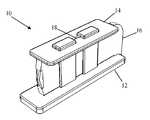
- FIG. 1is a perspective view of a fracture reduction implant assembly for treatment of a vertebral compression, according to one example embodiment
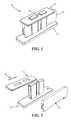
- FIG. 2is an exploded view of the implant assembly of FIG. 1 ;
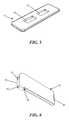
- FIG. 3is a perspective view of a base plate of the implant assembly of FIG. 1 ;
- FIG. 4is a perspective frontal view of the base plate of the implant assembly of FIG. 1 ;
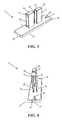
- FIG. 5is a perspective view of an elevator plate of the implant assembly of FIG. 1 ;
- FIG. 6is a perspective view of a support column of the implant assembly of FIG. 1 ;
- FIG. 7is an illustration depicting a vertebral compression fracture that may be treated with the implant assembly of FIG. 1 ;
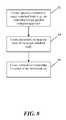
- FIG. 8is a flow chart outlining the steps according to one example method for preparing a target vertebral body for receiving the implant assembly of FIG. 1 ;
- FIG. 9is an illustration depicting the spine of FIG. 7 after preparing the target vertebral body according to the steps of FIG. 8 ;
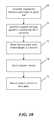
- FIG. 10is a flowchart outlining the steps according to one example method for implanting the implant assembly of FIG. 1 in order to reduce a vertebral compression fracture;
- FIG. 11is a perspective view of the base plate and elevator plate of the implant assembly of FIG. 1 in the insertion position with the elevator plate resting on the base plate;
- FIG. 12is a proximal end view of the base plate and elevator plate of the implant assembly of FIG. 1 in the insertion position;
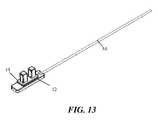
- FIG. 13is a perspective view of the base plate and elevator plate of the implant assembly of FIG. 1 in the closed position with an example embodiment of a guide rod attached to the base plate;
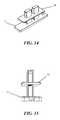
- FIG. 14is a perspective insertion view of the elevator plate of the implant assembly of FIG. 1 in a partially elevated position relative to the base plate;
- FIG. 15is a proximal view of the elevator plate of the implant assembly of FIG. 1 in a partially elevated position relative to the base plate;
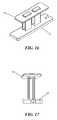
- FIG. 16is a perspective view of the elevator plate of the implant assembly of FIG. 1 in fully elevated position relative to the base plate;
- FIG. 17is a proximal view of the elevator plate of the implant assembly of FIG. 1 in the fully elevated position relative to the base plate;
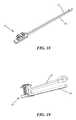
- FIG. 18is a perspective view of the base plate, elevator plate, and support column of the implant assembly of FIG. 1 with a guide rod and support column inserter coupled thereto;
- FIG. 19is another perspective view showing the proximal ends of the base plate, elevator plate, and support column of the implant assembly of FIG. 1 with a guide rod and support column inserter coupled thereto;
- FIG. 20is a perspective view showing the elevator plate of the implant assembly of FIG. 1 in the elevated position with the support column ready for insertion;
- FIG. 21is a perspective view showing the elevator plate of the implant assembly of FIG. 1 in the elevated position with the support column partially inserted;
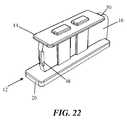
- FIG. 22is a perspective view showing the elevator plate of the implant assembly of FIG. 1 , in the elevated position with the support column fully inserted;
- FIG. 23is an illustration depicting the final implant configuration of the reduction implant assembly of FIG. 1 within the target vertebral body, following deployment of the implant assembly;
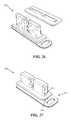
- FIG. 25is an exploded view of the implant assembly of FIG. 24 ;
- FIG. 26is a perspective view of the implant assembly of FIG. 24 with the elevator plate removed;
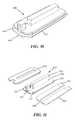
- FIG. 27is a perspective view of a fracture reduction implant assembly for treatment of a vertebral compression fracture, according to yet another example embodiment
- FIG. 28is an exploded view of the implant assembly of FIG. 27 ;
- FIG. 29is a perspective view of the implant assembly in FIG. 27 with the elevator plate removed;
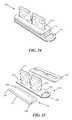
- FIG. 30is a perspective view of a fracture reduction implant assembly for treatment of a vertebral compression fracture, according to still one more example embodiment
- FIG. 31is an exploded view of the implant assembly of FIG. 30 ;
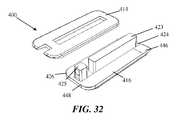
- FIG. 32is a perspective view of the implant assembly in FIG. 30 with the elevator plate removed.
- FIGS. 1-2illustrate one example embodiment of a fracture reduction implant 10 for treating a vertebral fracture.
- the implant 10includes a base assembly 12 , an elevator plate 14 , and a support column 16 .
- the implant 10is inserted into a cavity formed in the fractured (target) vertebral body where it is expanded to restore the height of the vertebra and prevent recollapse in the future.
- the implantis optimized for insertion from a lateral access approach to the spine.
- the implant 10may be used in any of the cervical, thoracic, and lumbar spine and may be sized accordingly.
- the base assembly 12includes a base plate 20 and a pair of support struts 22 extending generally perpendicularly from the base plate 20 .
- the base plate 20has (by way of example) a generally rectangular footprint dimensioned to allow positioning across the vertebral body from a lateral insertion approach.
- the length of base plate 20extends from a distal or leading end 24 to a proximal or trailing end 26 .
- the length of the base plate 20is preferably such that the base plate 20 spans the length of the vertebral body when inserted such that the proximal and distal ends 24 , 26 extends to the cortical outer wall of the vertebral body, providing a solid base for the implant 10 .
- the base plate 20 lengthmay be in the range of 45 mm to 60 mm.
- the base platemay have a width in the range of 14 mm to 26 mm.
- the height of the base assembly 12including the base plate 20 and the support struts 22 , may be in the range of 12 mm to 22 mm. According to one example, multiple base assemblies according to different size configurations are provided in order to match the implant 10 to the particular patient anatomy.
- base assembliesmay be provided with length dimensions increasing in 5 mm increments from 45 mm to 60 mm, width dimensions of 14 mm and 18 mm, and height dimensions increasing in 2 mm increments from 12 mm to 22 mm.
- the support struts 22are centrally located on the base plate 20 and aligned one in front of the other such that there is a distal support strut and a proximal support strut.
- Each support strut 22includes a slot 28 extending from the base plate 12 to an upper surface 30 .
- the slot 28is dimensioned to slidably receive the support column 16 therethrough.
- a pin channel 32is provided in the upper surface 30 of each support strut 22 .
- the pin channels 32are aligned to slidably receive a restrictor pin 18 that prevents removal of the elevator plate 14 from the base assembly 12 .
- FIG. 4illustrates the proximal end 26 of base plate 20 which includes both a notch 34 and a dimple detent 38 for aligning and capturing support column 16 .
- notch 34a guide hole 36 is provided within notch 34 .
- the guide hole 36is dimensioned to receive a guide rod 54 ( FIGS. 18-19 ) which may be used to facilitate insertion of support column 16 along the appropriate path such that the support column 16 is easily passed through the slots 28 in the support struts 22 .
- the elevator plate 14has a rectangular shape like base plate 20 , as illustrated in FIG. 5 .
- the width of elevator plate 14is shorter on either side of midline than the base plate 20 .
- the width of the elevator plate 14may be 7.5 mm shorter on either side of midline than the base plate 20 .
- the elevator plate 14may have the same width or have a greater width than the base plate 20 .
- the elevator plate 14has two holes 40 for receiving the support struts 22 .
- the holes 40are arranged in the elevator plate 14 to align with the support struts 22 and are centrally located with one hole situated in front of the other such that there is a distal hole and a proximal hole.
- FIG. 6illustrates the support column 16 and its features.
- the distal or leading end 48 of the support column 16is dimensioned to facilitate insertion of support column 16 along the appropriate path such that the support column 16 is easily passed through the support slots 28 in the support struts 22 .
- the proximal end 50 of the support column 16contains an inserter rod hole 42 that couples with the inserter rod 52 ( FIGS. 18-19 ), a guide rod aperture 44 that aligns with the guide hole 36 on the base plate 20 and is dimensioned to receive the guide rod 54 (FIGS. 19 - 20 ).
- On the inferior aspect of the support column 16there is a ball 46 that is dimensioned to be complimentary to the dimple detent 24 of the base plate 20 . Together, the ball 46 and dimple detent 24 provide a mechanism for securing the support column 16 to the base plate 20 .
- FIG. 7is an illustration of a fractured vertebra 56 in the human patients spine for which the implant 10 may be deployed for treatment.
- FIG. 8sets forth steps utilized according to one example method for preparing a target vertebra 56 within the spine to receive the implant 10 .
- a lateral approache.g. a neurophysiology-guided transpsoas approach.
- a first, horizontal cutis formed in the vertebral body 56 across the vertebral body from cortical wall to cortical wall. The first horizontal cut is sized to allow passage of the base plate 20 and elevator plate 14 (in the insertion position, i.e.
- a second, vertical cutis formed in the vertebral body 56 .
- the vertical cutis sized to allow passage of the support struts 22 through the cut and connects with horizontal cut to form a (upside down) T-cut cavity.
- a first horizontal cutter and a second vertical cuttersuch as those shown and described in U.S. patent application Ser. No. 13/184,574, filed Jul. 18, 2011 (incorporated by reference herein), may be utilized to form the T-cut cavity.
- FIG. 9illustrates the target vertebral body 56 after the T-cut 58 has been made. At this point, any remaining bony debris left inside the T-cut 58 may be removed using a small curette or other suitable surgical instrument.
- FIGS. 10-22set forth and depict steps utilized according to one example method for deploying the implant into the target vertebral body 56 .
- the implant 10is assembled (according to determined size requirements for the current patient anatomy) for insertion. That is, the holes 40 of the elevator plate 14 are aligned over the support struts 20 and advanced such that the elevator plate 14 rests on the base plate 20 in the insertion position ( FIGS. 11-12 ).
- the restrictor pin 18is placed within the pin channels 32 such that the elevator plate 14 is prevented from removal off the base assembly 12 .
- a guide rod 54(used to facilitate insertion and to later guide later insertion of the support column and distraction shims) is coupled to guide hole 36 on the base plate 20 .
- the assemblyis advanced through the operative corridor and into the T-cut cavity 58 formed in the target vertebra such that the proximal and distal ends of the base plate 20 rest on the cortical bone of the outer wall.
- the elevator plateis elevated to compress the cancellous bone in the interior of the vertebral body towards the cortical endplate, restoring the proper height of the vertebral body.
- a series of sequentially larger distraction shimsare inserted between the elevator plate 14 and the base plate 20 .
- the elevator plate 14has a taped proximal end to facilitate receipt of the tapered distraction shims.
- Each of the sequentially larger distraction shimsare inserted to incrementally raise the elevator plate ( FIGS. 14-15 ) and then removed to make room for the next shim until the desired distraction height is achieved. Once the desired corrective height is achieved the last shim is removed to make room for the support column 16 ( FIGS. 16-17 ).
- the distraction shimsare simply additional support columns (which are provided across a range of heights to accommodate the different implant heights and particular patient anatomy) of smaller height dimension than the final support column.
- the support column 16is advanced into the space formed between the elevator plate 14 and the base plate 20 .
- the inserter rod 52is coupled to the proximal end 50 of the support column 16 at inserter hole 42 .
- the guide hole 44is inserted over the guide rod 54 .
- the support columnis advanced along the guide rod 54 to help align and pass the support column 16 through the slots 28 in the support struts 22 .
- the ball 46 on the inferior surface of the support column 16engages the detent 38 in the upper surface of the base plate to secure the support column 16 to the base plate 20 (step 76 ).
- Additional securing meansmay also be utilized to supplement or replace the ball detent.
- a screwmay be engaged through the support column guide hole 44 and into the guide hole 36 of the base plate 20 (after the guide rod 54 is removed), or by crimping the proximal (trailing) end 50 of the support column 20 to the proximal (trailing) end 26 of the base plate 20 .
- FIG. 23shows the final implantation configuration of the implant 10 in a corrected (reduced) vertebra 60 . It will be appreciated that the cancellous bone above the elevator plate 14 will be compressed toward the cortical endplate creating a void between the elevator plate and the base plate. The void may be filled with one or more of natural and synthetic bone growth materials and bone cement.
- FIGS. 24-32illustrate a number of alternative example embodiments in which one or more modifications are made to the implant assembly 10 .
- the embodiments illustrated in FIGS. 24-32share many similar features with the implant 10 such that while modifications may be discussed below, repeat discussion of all features would be repetitive and unnecessary.
- FIGS. 24-26illustrate an alternate example embodiment of a fracture reduction implant assembly 200 .
- the implant 200includes a base 212 , an elevator plate 214 , and a support column 216 .
- the base 212includes a base plate 220 , extending from a proximal end 226 to a distal end 224 , and a pair of fenestrated support struts 222 , extending generally perpendicularly from the base plate 220 .
- the support struts 222have no slot for passing the support column.
- the support column 216is a U-shaped insert (best viewed in FIG.
- the distraction shims used to elevate the elevation plate and reduce the vertebral fracturemay be support columns of lesser height (which are provided across a range of heights to accommodate the different implant heights and particular patient anatomy) than required for the final construct. In the embodiments shown in FIGS. 24-32 only the smallest heights are shown. Also in the embodiment of FIGS. 24-26
- FIGS. 27-29illustrate another alternate example embodiment of a fracture reduction implant assembly 300 .
- the implant 300includes a base 312 , an elevator plate 314 , and a support column 316 , as shown in FIG. 27 .
- the base 312includes a base plate 320 , extending from a proximal end 326 to a distal end 324 , and a pair of support struts 322 extending generally perpendicularly from the base plate 320 and having slot 328 formed therein.
- the support column 316is shorter than the support column of the implant 10 .
- the support column of the implant 10extends the distance between the proximal support strut and the proximal end of the base plate (relying on engagement between the vertical fin and the base to stop advancement of the support column)
- the support column 316does not extend the distance between the proximal support strut 322 and the proximal end of the base plate 320 .
- Horizontal extensions of the support column proximal end 38engage the support strut 322 to stop advancement of the support column.
- FIGS. 30-32illustrate another alternate example embodiment of a fracture reduction implant assembly 400 .
- the implant 400includes a base 412 , an elevator plate 414 , and a support column 416 .
- the base 412includes a base plate 420 , extending from a proximal end 426 to a distal end 424 , and a pair of support struts 422 extending generally perpendicularly from the base plate 420 .
- the support struts 422are asymmetrical and situated such that there is a long support strut 423 centered on the base plate 420 and a short support strut 425 proximal to the long support strut.
- the short support strutmay sit flush with the proximal end 426 of the base plate.
- the support struts 422are solid and have no slot for passing the support column. Instead, the support column 416 is a U-shaped insert (best viewed in FIG. 31 ) with a closed proximal end 448 and an open distal end 446 separated by arms 447 which straddle the support struts 422 when inserted.
Landscapes
- Health & Medical Sciences (AREA)
- Orthopedic Medicine & Surgery (AREA)
- Engineering & Computer Science (AREA)
- Biomedical Technology (AREA)
- Life Sciences & Earth Sciences (AREA)
- Animal Behavior & Ethology (AREA)
- Veterinary Medicine (AREA)
- Oral & Maxillofacial Surgery (AREA)
- Public Health (AREA)
- Heart & Thoracic Surgery (AREA)
- General Health & Medical Sciences (AREA)
- Surgery (AREA)
- Transplantation (AREA)
- Neurology (AREA)
- Cardiology (AREA)
- Vascular Medicine (AREA)
- Molecular Biology (AREA)
- Medical Informatics (AREA)
- Nuclear Medicine, Radiotherapy & Molecular Imaging (AREA)
- Dentistry (AREA)
- Physical Education & Sports Medicine (AREA)
- Prostheses (AREA)
- Surgical Instruments (AREA)
Abstract
Description
Claims (6)
Priority Applications (1)
| Application Number | Priority Date | Filing Date | Title |
|---|---|---|---|
| US13/184,576US9144501B1 (en) | 2010-07-16 | 2011-07-18 | Fracture reduction device and methods |
Applications Claiming Priority (3)
| Application Number | Priority Date | Filing Date | Title |
|---|---|---|---|
| US36512210P | 2010-07-16 | 2010-07-16 | |
| US36510810P | 2010-07-16 | 2010-07-16 | |
| US13/184,576US9144501B1 (en) | 2010-07-16 | 2011-07-18 | Fracture reduction device and methods |
Publications (1)
| Publication Number | Publication Date |
|---|---|
| US9144501B1true US9144501B1 (en) | 2015-09-29 |
Family
ID=51228985
Family Applications (2)
| Application Number | Title | Priority Date | Filing Date |
|---|---|---|---|
| US13/184,576ActiveUS9144501B1 (en) | 2010-07-16 | 2011-07-18 | Fracture reduction device and methods |
| US13/184,574Active2031-10-18US8795369B1 (en) | 2010-07-16 | 2011-07-18 | Fracture reduction device and methods |
Family Applications After (1)
| Application Number | Title | Priority Date | Filing Date |
|---|---|---|---|
| US13/184,574Active2031-10-18US8795369B1 (en) | 2010-07-16 | 2011-07-18 | Fracture reduction device and methods |
Country Status (1)
| Country | Link |
|---|---|
| US (2) | US9144501B1 (en) |
Cited By (1)
| Publication number | Priority date | Publication date | Assignee | Title |
|---|---|---|---|---|
| US20140088710A1 (en)* | 2010-07-12 | 2014-03-27 | Alphatec Spine, Inc. | Interbody fusion implant and related methods |
Families Citing this family (2)
| Publication number | Priority date | Publication date | Assignee | Title |
|---|---|---|---|---|
| US8900312B2 (en)* | 2013-03-12 | 2014-12-02 | Spine Wave, Inc. | Expandable interbody fusion device with graft chambers |
| US11129728B1 (en)* | 2018-10-03 | 2021-09-28 | Guillermo Molina | Surgically implantable joint spacer |
Citations (116)
| Publication number | Priority date | Publication date | Assignee | Title |
|---|---|---|---|---|
| US4969888A (en) | 1989-02-09 | 1990-11-13 | Arie Scholten | Surgical protocol for fixation of osteoporotic bone using inflatable device |
| US5827289A (en) | 1994-01-26 | 1998-10-27 | Reiley; Mark A. | Inflatable device for use in surgical protocols relating to treatment of fractured or diseased bones |
| WO1998056301A1 (en) | 1997-06-09 | 1998-12-17 | Kyphon Inc. | Systems for treating fractured or diseased bone using expandable bodies |
| WO1999029246A1 (en) | 1997-12-08 | 1999-06-17 | Kyphon Inc. | Systems and methods using expandable bodies to push apart cortical bone surfaces |
| WO1999062416A1 (en) | 1998-06-01 | 1999-12-09 | Kyphon Inc. | Expandable preformed structures for deployment in interior body regions |
| US6213672B1 (en)* | 1997-10-21 | 2001-04-10 | George J. Varga | Telescoping pole & cleaning tool |
| US6241734B1 (en) | 1998-08-14 | 2001-06-05 | Kyphon, Inc. | Systems and methods for placing materials into bone |
| US6248110B1 (en) | 1994-01-26 | 2001-06-19 | Kyphon, Inc. | Systems and methods for treating fractured or diseased bone using expandable bodies |
| US6280456B1 (en) | 1997-08-15 | 2001-08-28 | Kyphon Inc | Methods for treating bone |
| US6419705B1 (en)* | 1999-06-23 | 2002-07-16 | Sulzer Spine-Tech Inc. | Expandable fusion device and method |
| US20030050644A1 (en) | 2001-09-11 | 2003-03-13 | Boucher Ryan P. | Systems and methods for accessing and treating diseased or fractured bone employing a guide wire |
| US6562074B2 (en) | 2001-10-17 | 2003-05-13 | Medicinelodge, Inc. | Adjustable bone fusion implant and method |
| US20030130664A1 (en) | 1998-08-14 | 2003-07-10 | Kyphon Inc. | Systems and methods for treating vertebral bodies |
| US20030171812A1 (en) | 2001-12-31 | 2003-09-11 | Ilan Grunberg | Minimally invasive modular support implant device and method |
| US20040087947A1 (en) | 2002-08-28 | 2004-05-06 | Roy Lim | Minimally invasive expanding spacer and method |
| US6740093B2 (en) | 2000-02-28 | 2004-05-25 | Stephen Hochschuler | Method and apparatus for treating a vertebral body |
| AU2002323730B2 (en) | 1997-06-09 | 2004-09-30 | Kyphon Inc. | Systems for treating fractured or diseased bone using expandable bodies |
| CN2730336Y (en) | 2004-09-20 | 2005-10-05 | 李孔嘉 | Spinal reconstructive reducer implanted in the vertebral body via the vertebral stem |
| US20050278036A1 (en) | 2004-06-09 | 2005-12-15 | Ceravic | Method for restoration of human or animal bone anatomy, and expansible prosthetic implant allowing implementation of this method |
| US20050288678A1 (en) | 1994-01-26 | 2005-12-29 | Kyphon Inc. | Vertebral body having an altered native cancellous bone volume and related treatment methods |
| US6981981B2 (en) | 1994-01-26 | 2006-01-03 | Kyphon Inc. | Inflatable device for use in surgical protocol relating to fixation of bone |
| US20060095138A1 (en) | 2004-06-09 | 2006-05-04 | Csaba Truckai | Composites and methods for treating bone |
| US7044954B2 (en) | 1994-01-26 | 2006-05-16 | Kyphon Inc. | Method for treating a vertebral body |
| US20060122701A1 (en) | 2004-11-23 | 2006-06-08 | Kiester P D | Posterior lumbar interbody fusion expandable cage with lordosis and method of deploying the same |
| US20060129244A1 (en) | 2004-10-25 | 2006-06-15 | Alphaspine, Inc. | Expandable intervertebral spacer method and apparatus |
| US20060155296A1 (en) | 2005-01-07 | 2006-07-13 | Celonova Biosciences, Inc. | Three-dimensional implantable bone support |
| US7114501B2 (en) | 2000-08-14 | 2006-10-03 | Spine Wave, Inc. | Transverse cavity device and method |
| US20060264967A1 (en) | 2003-03-14 | 2006-11-23 | Ferreyro Roque H | Hydraulic device for the injection of bone cement in percutaneous vertebroplasty |
| US7153306B2 (en) | 2000-10-25 | 2006-12-26 | Kyphon Inc. | Systems and methods for reducing fractured bone using a fracture reduction cannula |
| WO2007002108A2 (en) | 2005-06-20 | 2007-01-04 | Synthes (U.S.A.) | Apparatus and methods for treating bone |
| US7166121B2 (en) | 1994-01-26 | 2007-01-23 | Kyphon Inc. | Systems and methods using expandable bodies to push apart cortical bone surfaces |
| US20070032791A1 (en) | 2005-07-14 | 2007-02-08 | Greenhalgh E S | Expandable support device and method of use |
| US20070050030A1 (en) | 2005-08-23 | 2007-03-01 | Kim Richard C | Expandable implant device with interchangeable spacer |
| US20070055259A1 (en) | 2005-08-17 | 2007-03-08 | Norton Britt K | Apparatus and methods for removal of intervertebral disc tissues |
| US20070067034A1 (en) | 2005-08-31 | 2007-03-22 | Chirico Paul E | Implantable devices and methods for treating micro-architecture deterioration of bone tissue |
| US20070093822A1 (en) | 2005-09-28 | 2007-04-26 | Christof Dutoit | Apparatus and methods for vertebral augmentation using linked expandable bodies |
| US7226481B2 (en) | 2000-07-21 | 2007-06-05 | Spineology, Inc. | Expandable porous mesh bag device and methods of use for reduction, filling, fixation, and supporting of bone |
| US7241303B2 (en) | 1994-01-26 | 2007-07-10 | Kyphon Inc. | Devices and methods using an expandable body with internal restraint for compressing cancellous bone |
| US20070162132A1 (en) | 2005-12-23 | 2007-07-12 | Dominique Messerli | Flexible elongated chain implant and method of supporting body tissue with same |
| US20070179611A1 (en) | 2005-12-22 | 2007-08-02 | Dipoto Gene P | Methods and devices for replacement of intervertebral discs |
| US20070255410A1 (en)* | 2006-04-27 | 2007-11-01 | Sdgi Holdings, Inc. | Centrally driven expandable implant and method |
| US20080004705A1 (en)* | 2006-06-14 | 2008-01-03 | Dominique Rogeau | Vertebral replacement device |
| US20080009877A1 (en) | 2006-07-07 | 2008-01-10 | Meera Sankaran | Medical device with expansion mechanism |
| US20080039948A1 (en)* | 2006-07-14 | 2008-02-14 | Lutz Biedermann | Spacer for insertion between two vertebrae |
| US20080045966A1 (en) | 2002-01-14 | 2008-02-21 | Dynamic Spine, Inc. | Apparatus and method for performing spinal surgery |
| US20080058674A1 (en) | 2006-08-29 | 2008-03-06 | Lex Jansen | Tissue extraction device and method of using the same |
| US20080065190A1 (en) | 1994-01-26 | 2008-03-13 | Kyphon Inc. | Methods for treating a fractured and/or diseased and/or weakened bone |
| US20080086133A1 (en) | 2003-05-16 | 2008-04-10 | Spineology | Expandable porous mesh bag device and methods of use for reduction, filling, fixation and supporting of bone |
| WO2008060277A2 (en) | 2006-11-15 | 2008-05-22 | Aoi Medical, Inc. | Tissue cavitation device and method |
| US20080177387A1 (en)* | 2006-11-01 | 2008-07-24 | Warsaw Orthopedic, Inc. | Implants and Related Devices for Monitoring Bony Fusion |
| WO2008097659A2 (en) | 2007-02-08 | 2008-08-14 | Krueger John A | Device, system and method for delivering a curable material into bone |
| US20080234687A1 (en) | 2005-08-16 | 2008-09-25 | Laurent Schaller | Devices for treating the spine |
| US20080249604A1 (en) | 2007-03-30 | 2008-10-09 | Brian Donovan | Apparatus and method for medical procedures within a spine |
| US20080281364A1 (en) | 2007-05-08 | 2008-11-13 | Spineworks Medical, Inc. | Systems, devices and methods for stabilizing bone |
| US20080294167A1 (en) | 2007-05-21 | 2008-11-27 | Brian Schumacher | Articulating cavitation device |
| US20080300598A1 (en) | 2007-05-31 | 2008-12-04 | Spine Wave, Inc. | Expandable Interbody Fusion Device |
| US20090024217A1 (en) | 2007-07-17 | 2009-01-22 | Levy Mark M | Expandable bone device |
| US20090054934A1 (en) | 2007-07-25 | 2009-02-26 | Depuy Spine, Inc. | Expandable fillers for bone cement |
| US7500992B2 (en) | 2004-10-05 | 2009-03-10 | Kung-Chia Li | Distractable body augmenter capable of being planted through a pedicle for vertebral body reconstruction |
| US20090076520A1 (en) | 2007-09-14 | 2009-03-19 | Gil-Woon Choi | Apparatus For Treating Bone |
| US20090088788A1 (en) | 2007-09-28 | 2009-04-02 | Steven Mouw | Methods and apparatus having multiple separately actuatable expandable members |
| US20090138043A1 (en) | 2007-11-28 | 2009-05-28 | Medtronic Spine Llc | Threaded access cannula and methods of using the same |
| US20090138086A1 (en) | 2007-11-27 | 2009-05-28 | Warsaw Orthopedic, Inc. | Stackable Intervertebral Devices and Methods of Use |
| US20090164016A1 (en) | 2007-12-19 | 2009-06-25 | Bassem Georgy | Device and method for orthopedic fracture fixation |
| US20090204215A1 (en)* | 2008-02-07 | 2009-08-13 | K2M, Inc. | Expandable vertebral device with cam lock |
| US20090240334A1 (en) | 2008-03-19 | 2009-09-24 | Richelsoph Marc E | Vertebral device for restoration of vertebral body height |
| US20090247664A1 (en) | 2008-02-01 | 2009-10-01 | Dfine, Inc. | Bone treatment systems and methods |
| US20090276048A1 (en) | 2007-05-08 | 2009-11-05 | Chirico Paul E | Devices and method for bilateral support of a compression-fractured vertebral body |
| US7615052B2 (en) | 2005-04-29 | 2009-11-10 | Warsaw Orthopedic, Inc. | Surgical instrument and method |
| US20090281627A1 (en) | 2005-06-02 | 2009-11-12 | Spinevision | Filling material for filling a vertebral body cavity, intervertebral prosthetic disc nucleus and vertebroplasty prosthesis comprising such a material |
| US7621952B2 (en) | 2004-06-07 | 2009-11-24 | Dfine, Inc. | Implants and methods for treating bone |
| US7623902B2 (en) | 2005-03-07 | 2009-11-24 | Leucadia 6, Llc | System and methods for improved access to vertebral bodies for kyphoplasty, vertebroplasty, vertebral body biopsy or screw placement |
| US20090299373A1 (en) | 2008-05-30 | 2009-12-03 | Cook Incorporated | Kyphoplasty banded balloon catheter |
| US20090299282A1 (en) | 2007-11-16 | 2009-12-03 | Osseon Therapeutics, Inc. | Steerable vertebroplasty system with a plurality of cavity creation elements |
| US20090299401A1 (en) | 2008-06-02 | 2009-12-03 | Loma Vista Medical, Inc. | Inflatable medical devices |
| US20090326538A1 (en) | 2006-12-15 | 2009-12-31 | Sennett Andrew R | Devices and methods for fracture reduction |
| DE102008030690A1 (en) | 2008-07-01 | 2010-01-07 | Hörmansdörfer, Gerd | Expander for producing bony cavity for treating e.g. osteoporotic fracture, has flexibly deformable expansion element comprising leaf spring formed from outer and inner leaves, where outer leaf is positively supported on inner leaf |
| US20100023017A1 (en) | 2006-04-20 | 2010-01-28 | Depuy Spine, Inc. | Instrumentation kit for delivering viscous bone filler material |
| US20100030284A1 (en) | 2005-12-23 | 2010-02-04 | Zimmer Gmbh | Coated textiles |
| US20100030216A1 (en) | 2008-07-30 | 2010-02-04 | Arcenio Gregory B | Discectomy tool having counter-rotating nucleus disruptors |
| US20100036381A1 (en) | 2008-08-07 | 2010-02-11 | Ryan Vanleeuwen | Cavity creator with integral cement delivery lumen |
| US7666227B2 (en) | 2005-08-16 | 2010-02-23 | Benvenue Medical, Inc. | Devices for limiting the movement of material introduced between layers of spinal tissue |
| US20100054075A1 (en) | 2008-09-02 | 2010-03-04 | Cook Incorporated | Vertebroplasty all in one mixer |
| US20100070049A1 (en) | 2008-05-06 | 2010-03-18 | O'donnell Patrick | Method and apparatus for treating compression fractures in vertebral bodies |
| US7682378B2 (en) | 2004-11-10 | 2010-03-23 | Dfine, Inc. | Bone treatment systems and methods for introducing an abrading structure to abrade bone |
| US20100082073A1 (en) | 2008-09-23 | 2010-04-01 | Lanx, Inc. | Methods and Compositions for Stabilization of a Vertebra |
| US20100082033A1 (en) | 2008-09-30 | 2010-04-01 | Dfine, Inc. | System for use in treatment of vertebral fractures |
| US20100087826A1 (en) | 2003-05-16 | 2010-04-08 | Spinewave, Inc. | Tissue Distraction Device |
| US20100100184A1 (en) | 2008-06-24 | 2010-04-22 | John Krueger | Method and structure for stabilizing a vertebral body |
| US7708733B2 (en) | 2003-10-20 | 2010-05-04 | Arthrocare Corporation | Electrosurgical method and apparatus for removing tissue within a bone body |
| US7713273B2 (en) | 2005-11-18 | 2010-05-11 | Carefusion 2200, Inc. | Device, system and method for delivering a curable material into bone |
| WO2010063111A1 (en) | 2008-12-03 | 2010-06-10 | The Royal Institution For The Advancement Of Learning/Mcgill University | Device and method for percutaneous intravertebral osteotomy |
| US7744637B2 (en) | 2001-03-08 | 2010-06-29 | Spine Wave, Inc. | Method for restoring vertebral body height |
| US20100179656A1 (en) | 2008-03-28 | 2010-07-15 | Charles Theofilos | Expandable cage with locking device |
| US7758644B2 (en) | 2002-11-21 | 2010-07-20 | Warsaw Orthopedic, Inc. | Systems and techniques for intravertebral spinal stabilization with expandable devices |
| US20100198225A1 (en) | 2007-04-17 | 2010-08-05 | Thompson Andrew Nmi | Shape memory spine jack |
| US20100217335A1 (en) | 2008-12-31 | 2010-08-26 | Chirico Paul E | Self-expanding bone stabilization devices |
| US7789912B2 (en) | 2004-01-08 | 2010-09-07 | Spine Wave, Inc. | Apparatus and method for injecting fluent material at a distracted tissue site |
| WO2010100287A1 (en) | 2009-03-06 | 2010-09-10 | Somatex Medical Technologies Gmbh | Barrier for implantation into bone, in particular for vertebroplasty |
| DE102009011561A1 (en) | 2009-03-06 | 2010-09-16 | Somatex Medical Technologies Gmbh | Barrier for implantation into bone in vertebroplasty use in injection apparatus, has closure apparatus placed on or in filling hole to automatically close or clog hole after completion of filling of bag |
| US20100234866A1 (en) | 2009-03-13 | 2010-09-16 | Greg Arcenio | Battery operated nucleus disruptor device for intervertebral disc |
| DE102009011566A1 (en) | 2009-03-06 | 2010-09-16 | Somatex Medical Technologies Gmbh | Barrier for implantation into bone in vertebroplasty use in injection apparatus, has closure apparatus placed on or in filling hole to automatically close or clog hole after completion of filling of bag |
| US7803188B2 (en) | 2002-08-27 | 2010-09-28 | Warsaw Orthopedic, Inc. | Systems and methods for intravertebral reduction |
| US20100247478A1 (en) | 2009-02-18 | 2010-09-30 | Clineff Theodore D | Method for stabilizing vertebral body architecture |
| US7811291B2 (en) | 2007-11-16 | 2010-10-12 | Osseon Therapeutics, Inc. | Closed vertebroplasty bone cement injection system |
| US7875078B2 (en) | 2004-08-25 | 2011-01-25 | Spine Wave, Inc. | Expandable interbody fusion device |
| US7901409B2 (en) | 2006-01-20 | 2011-03-08 | Canaveral Villegas Living Trust | Intramedullar devices and methods to reduce and/or fix damaged bone |
| US7909873B2 (en) | 2006-12-15 | 2011-03-22 | Soteira, Inc. | Delivery apparatus and methods for vertebrostenting |
| US7955339B2 (en) | 2005-05-24 | 2011-06-07 | Kyphon Sarl | Low-compliance expandable medical device |
| US7972382B2 (en) | 2006-12-26 | 2011-07-05 | Warsaw Orthopedic, Inc. | Minimally invasive spinal distraction devices and methods |
| US7972340B2 (en) | 1997-08-13 | 2011-07-05 | Kyphon Sarl | Systems and methods for injecting flowable materials into bones |
| US7985228B2 (en) | 2006-08-25 | 2011-07-26 | Kyphon Sarl | Apparatus and methods for use of expandable members in surgical applications |
| US8048030B2 (en) | 1998-12-09 | 2011-11-01 | Cook Medical Technologies Llc | Hollow curved superelastic medical needle and method |
| US8070754B2 (en) | 2007-05-31 | 2011-12-06 | Fabian Henry F | Spine surgery method and instrumentation |
| US8109933B2 (en) | 2007-04-03 | 2012-02-07 | Dfine, Inc. | Bone treatment systems and methods |
| US8114084B2 (en) | 2007-03-07 | 2012-02-14 | Vertech, Inc. | Expandable blade device for stabilizing compression fractures |
- 2011
- 2011-07-18USUS13/184,576patent/US9144501B1/enactiveActive
- 2011-07-18USUS13/184,574patent/US8795369B1/enactiveActive
Patent Citations (134)
| Publication number | Priority date | Publication date | Assignee | Title |
|---|---|---|---|---|
| US4969888A (en) | 1989-02-09 | 1990-11-13 | Arie Scholten | Surgical protocol for fixation of osteoporotic bone using inflatable device |
| US20080065190A1 (en) | 1994-01-26 | 2008-03-13 | Kyphon Inc. | Methods for treating a fractured and/or diseased and/or weakened bone |
| US7166121B2 (en) | 1994-01-26 | 2007-01-23 | Kyphon Inc. | Systems and methods using expandable bodies to push apart cortical bone surfaces |
| US7241303B2 (en) | 1994-01-26 | 2007-07-10 | Kyphon Inc. | Devices and methods using an expandable body with internal restraint for compressing cancellous bone |
| US20080058855A1 (en) | 1994-01-26 | 2008-03-06 | Kyphon, Inc. | Systems and methods treating a vertebral body |
| US20080051825A1 (en) | 1994-01-26 | 2008-02-28 | Kyphon, Inc. | Systems and methods for treating bone using expandable bodies |
| US20050119662A1 (en) | 1994-01-26 | 2005-06-02 | Kyphon Inc. | Systems and methods for treating fractured or diseased bone using expandable bodies |
| US6248110B1 (en) | 1994-01-26 | 2001-06-19 | Kyphon, Inc. | Systems and methods for treating fractured or diseased bone using expandable bodies |
| US7967827B2 (en) | 1994-01-26 | 2011-06-28 | Kyphon Sarl | Methods and devices for treating fractured and/or diseased bone using an expandable structure that remains within the bone |
| US7044954B2 (en) | 1994-01-26 | 2006-05-16 | Kyphon Inc. | Method for treating a vertebral body |
| US5827289A (en) | 1994-01-26 | 1998-10-27 | Reiley; Mark A. | Inflatable device for use in surgical protocols relating to treatment of fractured or diseased bones |
| US6981981B2 (en) | 1994-01-26 | 2006-01-03 | Kyphon Inc. | Inflatable device for use in surgical protocol relating to fixation of bone |
| US20050288678A1 (en) | 1994-01-26 | 2005-12-29 | Kyphon Inc. | Vertebral body having an altered native cancellous bone volume and related treatment methods |
| US20100082036A1 (en) | 1994-01-26 | 2010-04-01 | Kyphon Sarl | Systems and methods for treating fractured or diseased bone using expandable bodies |
| US7682364B2 (en) | 1994-01-26 | 2010-03-23 | Kyphon Sarl | Method for treating a bone |
| US7959638B2 (en) | 1997-06-09 | 2011-06-14 | Kyphon Sarl | Methods and devices for treating bone after high velocity and/or trauma fracture |
| WO1998056301A1 (en) | 1997-06-09 | 1998-12-17 | Kyphon Inc. | Systems for treating fractured or diseased bone using expandable bodies |
| AU2002323730B2 (en) | 1997-06-09 | 2004-09-30 | Kyphon Inc. | Systems for treating fractured or diseased bone using expandable bodies |
| US7972340B2 (en) | 1997-08-13 | 2011-07-05 | Kyphon Sarl | Systems and methods for injecting flowable materials into bones |
| US6280456B1 (en) | 1997-08-15 | 2001-08-28 | Kyphon Inc | Methods for treating bone |
| US8034071B2 (en) | 1997-08-15 | 2011-10-11 | Kyphon Sarl | Systems and methods for forming a cavity in cancellous bone |
| US6213672B1 (en)* | 1997-10-21 | 2001-04-10 | George J. Varga | Telescoping pole & cleaning tool |
| WO1999029246A1 (en) | 1997-12-08 | 1999-06-17 | Kyphon Inc. | Systems and methods using expandable bodies to push apart cortical bone surfaces |
| WO1999062416A1 (en) | 1998-06-01 | 1999-12-09 | Kyphon Inc. | Expandable preformed structures for deployment in interior body regions |
| US6241734B1 (en) | 1998-08-14 | 2001-06-05 | Kyphon, Inc. | Systems and methods for placing materials into bone |
| US20080058826A1 (en) | 1998-08-14 | 2008-03-06 | Kyphon, Inc | Methods and apparatus for placing materials into bone |
| US20030130664A1 (en) | 1998-08-14 | 2003-07-10 | Kyphon Inc. | Systems and methods for treating vertebral bodies |
| US8052661B2 (en) | 1998-12-09 | 2011-11-08 | Cook Incorporated | Hollow curved superelastic medical needle and method |
| US8048030B2 (en) | 1998-12-09 | 2011-11-01 | Cook Medical Technologies Llc | Hollow curved superelastic medical needle and method |
| US6419705B1 (en)* | 1999-06-23 | 2002-07-16 | Sulzer Spine-Tech Inc. | Expandable fusion device and method |
| US6740093B2 (en) | 2000-02-28 | 2004-05-25 | Stephen Hochschuler | Method and apparatus for treating a vertebral body |
| US7226481B2 (en) | 2000-07-21 | 2007-06-05 | Spineology, Inc. | Expandable porous mesh bag device and methods of use for reduction, filling, fixation, and supporting of bone |
| US7114501B2 (en) | 2000-08-14 | 2006-10-03 | Spine Wave, Inc. | Transverse cavity device and method |
| US7153306B2 (en) | 2000-10-25 | 2006-12-26 | Kyphon Inc. | Systems and methods for reducing fractured bone using a fracture reduction cannula |
| US7780734B2 (en) | 2001-03-08 | 2010-08-24 | Spine Wave, Inc. | Tissue distraction device |
| US8123755B2 (en) | 2001-03-08 | 2012-02-28 | Spine Wave, Inc. | Tissue distraction device |
| US7744637B2 (en) | 2001-03-08 | 2010-06-29 | Spine Wave, Inc. | Method for restoring vertebral body height |
| US7749255B2 (en) | 2001-03-08 | 2010-07-06 | Spine Wave, Inc. | Method for fusing adjacent bones |
| US20030050644A1 (en) | 2001-09-11 | 2003-03-13 | Boucher Ryan P. | Systems and methods for accessing and treating diseased or fractured bone employing a guide wire |
| US6562074B2 (en) | 2001-10-17 | 2003-05-13 | Medicinelodge, Inc. | Adjustable bone fusion implant and method |
| US6863673B2 (en) | 2001-10-17 | 2005-03-08 | Movdice Holding, Inc. | Methods for adjustable bone fusion implants |
| US6852129B2 (en)* | 2001-10-17 | 2005-02-08 | Movdice Holding, Inc. | Adjustable bone fusion implant and method |
| US20030171812A1 (en) | 2001-12-31 | 2003-09-11 | Ilan Grunberg | Minimally invasive modular support implant device and method |
| US7261720B2 (en) | 2002-01-11 | 2007-08-28 | Kyphon Inc. | Inflatable device for use in surgical protocol relating to fixation of bone |
| US20080045966A1 (en) | 2002-01-14 | 2008-02-21 | Dynamic Spine, Inc. | Apparatus and method for performing spinal surgery |
| US7803188B2 (en) | 2002-08-27 | 2010-09-28 | Warsaw Orthopedic, Inc. | Systems and methods for intravertebral reduction |
| US20040087947A1 (en) | 2002-08-28 | 2004-05-06 | Roy Lim | Minimally invasive expanding spacer and method |
| US7758644B2 (en) | 2002-11-21 | 2010-07-20 | Warsaw Orthopedic, Inc. | Systems and techniques for intravertebral spinal stabilization with expandable devices |
| US20060264967A1 (en) | 2003-03-14 | 2006-11-23 | Ferreyro Roque H | Hydraulic device for the injection of bone cement in percutaneous vertebroplasty |
| US20080086133A1 (en) | 2003-05-16 | 2008-04-10 | Spineology | Expandable porous mesh bag device and methods of use for reduction, filling, fixation and supporting of bone |
| US20100087826A1 (en) | 2003-05-16 | 2010-04-08 | Spinewave, Inc. | Tissue Distraction Device |
| US7708733B2 (en) | 2003-10-20 | 2010-05-04 | Arthrocare Corporation | Electrosurgical method and apparatus for removing tissue within a bone body |
| US7789912B2 (en) | 2004-01-08 | 2010-09-07 | Spine Wave, Inc. | Apparatus and method for injecting fluent material at a distracted tissue site |
| US7621952B2 (en) | 2004-06-07 | 2009-11-24 | Dfine, Inc. | Implants and methods for treating bone |
| US20050278036A1 (en) | 2004-06-09 | 2005-12-15 | Ceravic | Method for restoration of human or animal bone anatomy, and expansible prosthetic implant allowing implementation of this method |
| US20060095138A1 (en) | 2004-06-09 | 2006-05-04 | Csaba Truckai | Composites and methods for treating bone |
| US7875078B2 (en) | 2004-08-25 | 2011-01-25 | Spine Wave, Inc. | Expandable interbody fusion device |
| CN2730336Y (en) | 2004-09-20 | 2005-10-05 | 李孔嘉 | Spinal reconstructive reducer implanted in the vertebral body via the vertebral stem |
| US7500992B2 (en) | 2004-10-05 | 2009-03-10 | Kung-Chia Li | Distractable body augmenter capable of being planted through a pedicle for vertebral body reconstruction |
| US20060129244A1 (en) | 2004-10-25 | 2006-06-15 | Alphaspine, Inc. | Expandable intervertebral spacer method and apparatus |
| US7682378B2 (en) | 2004-11-10 | 2010-03-23 | Dfine, Inc. | Bone treatment systems and methods for introducing an abrading structure to abrade bone |
| US20060122701A1 (en) | 2004-11-23 | 2006-06-08 | Kiester P D | Posterior lumbar interbody fusion expandable cage with lordosis and method of deploying the same |
| US20060155296A1 (en) | 2005-01-07 | 2006-07-13 | Celonova Biosciences, Inc. | Three-dimensional implantable bone support |
| US7623902B2 (en) | 2005-03-07 | 2009-11-24 | Leucadia 6, Llc | System and methods for improved access to vertebral bodies for kyphoplasty, vertebroplasty, vertebral body biopsy or screw placement |
| US7615052B2 (en) | 2005-04-29 | 2009-11-10 | Warsaw Orthopedic, Inc. | Surgical instrument and method |
| US7955339B2 (en) | 2005-05-24 | 2011-06-07 | Kyphon Sarl | Low-compliance expandable medical device |
| US20090281627A1 (en) | 2005-06-02 | 2009-11-12 | Spinevision | Filling material for filling a vertebral body cavity, intervertebral prosthetic disc nucleus and vertebroplasty prosthesis comprising such a material |
| WO2007002108A2 (en) | 2005-06-20 | 2007-01-04 | Synthes (U.S.A.) | Apparatus and methods for treating bone |
| US20070032791A1 (en) | 2005-07-14 | 2007-02-08 | Greenhalgh E S | Expandable support device and method of use |
| US7666227B2 (en) | 2005-08-16 | 2010-02-23 | Benvenue Medical, Inc. | Devices for limiting the movement of material introduced between layers of spinal tissue |
| US20080234687A1 (en) | 2005-08-16 | 2008-09-25 | Laurent Schaller | Devices for treating the spine |
| US20070055259A1 (en) | 2005-08-17 | 2007-03-08 | Norton Britt K | Apparatus and methods for removal of intervertebral disc tissues |
| US20070050030A1 (en) | 2005-08-23 | 2007-03-01 | Kim Richard C | Expandable implant device with interchangeable spacer |
| US20070067034A1 (en) | 2005-08-31 | 2007-03-22 | Chirico Paul E | Implantable devices and methods for treating micro-architecture deterioration of bone tissue |
| US20070093822A1 (en) | 2005-09-28 | 2007-04-26 | Christof Dutoit | Apparatus and methods for vertebral augmentation using linked expandable bodies |
| US7713273B2 (en) | 2005-11-18 | 2010-05-11 | Carefusion 2200, Inc. | Device, system and method for delivering a curable material into bone |
| US20100087828A1 (en) | 2005-11-18 | 2010-04-08 | Krueger John A | Device, system and method for delivering a curable material into bone |
| US20070179611A1 (en) | 2005-12-22 | 2007-08-02 | Dipoto Gene P | Methods and devices for replacement of intervertebral discs |
| US20070162132A1 (en) | 2005-12-23 | 2007-07-12 | Dominique Messerli | Flexible elongated chain implant and method of supporting body tissue with same |
| US20100030284A1 (en) | 2005-12-23 | 2010-02-04 | Zimmer Gmbh | Coated textiles |
| US7901409B2 (en) | 2006-01-20 | 2011-03-08 | Canaveral Villegas Living Trust | Intramedullar devices and methods to reduce and/or fix damaged bone |
| US20100023017A1 (en) | 2006-04-20 | 2010-01-28 | Depuy Spine, Inc. | Instrumentation kit for delivering viscous bone filler material |
| US20070255410A1 (en)* | 2006-04-27 | 2007-11-01 | Sdgi Holdings, Inc. | Centrally driven expandable implant and method |
| US20080004705A1 (en)* | 2006-06-14 | 2008-01-03 | Dominique Rogeau | Vertebral replacement device |
| US20080009877A1 (en) | 2006-07-07 | 2008-01-10 | Meera Sankaran | Medical device with expansion mechanism |
| US20080039948A1 (en)* | 2006-07-14 | 2008-02-14 | Lutz Biedermann | Spacer for insertion between two vertebrae |
| US7985228B2 (en) | 2006-08-25 | 2011-07-26 | Kyphon Sarl | Apparatus and methods for use of expandable members in surgical applications |
| US20080058674A1 (en) | 2006-08-29 | 2008-03-06 | Lex Jansen | Tissue extraction device and method of using the same |
| US20080177387A1 (en)* | 2006-11-01 | 2008-07-24 | Warsaw Orthopedic, Inc. | Implants and Related Devices for Monitoring Bony Fusion |
| WO2008060277A2 (en) | 2006-11-15 | 2008-05-22 | Aoi Medical, Inc. | Tissue cavitation device and method |
| US20090326538A1 (en) | 2006-12-15 | 2009-12-31 | Sennett Andrew R | Devices and methods for fracture reduction |
| US7909873B2 (en) | 2006-12-15 | 2011-03-22 | Soteira, Inc. | Delivery apparatus and methods for vertebrostenting |
| US7972382B2 (en) | 2006-12-26 | 2011-07-05 | Warsaw Orthopedic, Inc. | Minimally invasive spinal distraction devices and methods |
| WO2008097659A2 (en) | 2007-02-08 | 2008-08-14 | Krueger John A | Device, system and method for delivering a curable material into bone |
| US8114084B2 (en) | 2007-03-07 | 2012-02-14 | Vertech, Inc. | Expandable blade device for stabilizing compression fractures |
| US20080249604A1 (en) | 2007-03-30 | 2008-10-09 | Brian Donovan | Apparatus and method for medical procedures within a spine |
| US8109933B2 (en) | 2007-04-03 | 2012-02-07 | Dfine, Inc. | Bone treatment systems and methods |
| US20100198225A1 (en) | 2007-04-17 | 2010-08-05 | Thompson Andrew Nmi | Shape memory spine jack |
| US20090276048A1 (en) | 2007-05-08 | 2009-11-05 | Chirico Paul E | Devices and method for bilateral support of a compression-fractured vertebral body |
| US20080281364A1 (en) | 2007-05-08 | 2008-11-13 | Spineworks Medical, Inc. | Systems, devices and methods for stabilizing bone |
| US20080294167A1 (en) | 2007-05-21 | 2008-11-27 | Brian Schumacher | Articulating cavitation device |
| US20080300598A1 (en) | 2007-05-31 | 2008-12-04 | Spine Wave, Inc. | Expandable Interbody Fusion Device |
| US8070754B2 (en) | 2007-05-31 | 2011-12-06 | Fabian Henry F | Spine surgery method and instrumentation |
| US7967867B2 (en) | 2007-05-31 | 2011-06-28 | Spine Wave, Inc. | Expandable interbody fusion device |
| US20090024217A1 (en) | 2007-07-17 | 2009-01-22 | Levy Mark M | Expandable bone device |
| US20090054934A1 (en) | 2007-07-25 | 2009-02-26 | Depuy Spine, Inc. | Expandable fillers for bone cement |
| US20090076520A1 (en) | 2007-09-14 | 2009-03-19 | Gil-Woon Choi | Apparatus For Treating Bone |
| US20090088788A1 (en) | 2007-09-28 | 2009-04-02 | Steven Mouw | Methods and apparatus having multiple separately actuatable expandable members |
| US7811291B2 (en) | 2007-11-16 | 2010-10-12 | Osseon Therapeutics, Inc. | Closed vertebroplasty bone cement injection system |
| US20090299282A1 (en) | 2007-11-16 | 2009-12-03 | Osseon Therapeutics, Inc. | Steerable vertebroplasty system with a plurality of cavity creation elements |
| US20090138086A1 (en) | 2007-11-27 | 2009-05-28 | Warsaw Orthopedic, Inc. | Stackable Intervertebral Devices and Methods of Use |
| US20090138043A1 (en) | 2007-11-28 | 2009-05-28 | Medtronic Spine Llc | Threaded access cannula and methods of using the same |
| US20090164016A1 (en) | 2007-12-19 | 2009-06-25 | Bassem Georgy | Device and method for orthopedic fracture fixation |
| US20090247664A1 (en) | 2008-02-01 | 2009-10-01 | Dfine, Inc. | Bone treatment systems and methods |
| US20090204215A1 (en)* | 2008-02-07 | 2009-08-13 | K2M, Inc. | Expandable vertebral device with cam lock |
| US20090240334A1 (en) | 2008-03-19 | 2009-09-24 | Richelsoph Marc E | Vertebral device for restoration of vertebral body height |
| US20100179656A1 (en) | 2008-03-28 | 2010-07-15 | Charles Theofilos | Expandable cage with locking device |
| US20100070049A1 (en) | 2008-05-06 | 2010-03-18 | O'donnell Patrick | Method and apparatus for treating compression fractures in vertebral bodies |
| US20090299373A1 (en) | 2008-05-30 | 2009-12-03 | Cook Incorporated | Kyphoplasty banded balloon catheter |
| US20090299401A1 (en) | 2008-06-02 | 2009-12-03 | Loma Vista Medical, Inc. | Inflatable medical devices |
| US20100100184A1 (en) | 2008-06-24 | 2010-04-22 | John Krueger | Method and structure for stabilizing a vertebral body |
| DE102008030690A1 (en) | 2008-07-01 | 2010-01-07 | Hörmansdörfer, Gerd | Expander for producing bony cavity for treating e.g. osteoporotic fracture, has flexibly deformable expansion element comprising leaf spring formed from outer and inner leaves, where outer leaf is positively supported on inner leaf |
| US20100030216A1 (en) | 2008-07-30 | 2010-02-04 | Arcenio Gregory B | Discectomy tool having counter-rotating nucleus disruptors |
| US20100036381A1 (en) | 2008-08-07 | 2010-02-11 | Ryan Vanleeuwen | Cavity creator with integral cement delivery lumen |
| US20100054075A1 (en) | 2008-09-02 | 2010-03-04 | Cook Incorporated | Vertebroplasty all in one mixer |
| US20100082073A1 (en) | 2008-09-23 | 2010-04-01 | Lanx, Inc. | Methods and Compositions for Stabilization of a Vertebra |
| US20100082033A1 (en) | 2008-09-30 | 2010-04-01 | Dfine, Inc. | System for use in treatment of vertebral fractures |
| WO2010063111A1 (en) | 2008-12-03 | 2010-06-10 | The Royal Institution For The Advancement Of Learning/Mcgill University | Device and method for percutaneous intravertebral osteotomy |
| US20100217335A1 (en) | 2008-12-31 | 2010-08-26 | Chirico Paul E | Self-expanding bone stabilization devices |
| US20100247478A1 (en) | 2009-02-18 | 2010-09-30 | Clineff Theodore D | Method for stabilizing vertebral body architecture |
| DE102009011566A1 (en) | 2009-03-06 | 2010-09-16 | Somatex Medical Technologies Gmbh | Barrier for implantation into bone in vertebroplasty use in injection apparatus, has closure apparatus placed on or in filling hole to automatically close or clog hole after completion of filling of bag |
| DE102009011561A1 (en) | 2009-03-06 | 2010-09-16 | Somatex Medical Technologies Gmbh | Barrier for implantation into bone in vertebroplasty use in injection apparatus, has closure apparatus placed on or in filling hole to automatically close or clog hole after completion of filling of bag |
| WO2010100287A1 (en) | 2009-03-06 | 2010-09-10 | Somatex Medical Technologies Gmbh | Barrier for implantation into bone, in particular for vertebroplasty |
| US20100234866A1 (en) | 2009-03-13 | 2010-09-16 | Greg Arcenio | Battery operated nucleus disruptor device for intervertebral disc |
Cited By (2)
| Publication number | Priority date | Publication date | Assignee | Title |
|---|---|---|---|---|
| US20140088710A1 (en)* | 2010-07-12 | 2014-03-27 | Alphatec Spine, Inc. | Interbody fusion implant and related methods |
| US9402736B2 (en)* | 2010-07-12 | 2016-08-02 | Alphatec Spine, Inc. | Interbody fusion implant and related methods |
Also Published As
| Publication number | Publication date |
|---|---|
| US8795369B1 (en) | 2014-08-05 |
Similar Documents
| Publication | Publication Date | Title |
|---|---|---|
| US11559408B2 (en) | Methods and apparatus for accessing and treating the facet joint | |
| US8870920B2 (en) | Devices and methods for inter-vertebral orthopedic device placement | |
| US10966771B2 (en) | Nested expandable sleeve implant | |
| US10646349B2 (en) | Expandable bone implant | |
| EP2140816B1 (en) | Access and tissue modification systems | |
| US9814598B2 (en) | Spinal implants and implantation system | |
| US8025664B2 (en) | System and method for providing surgical access to a spine | |
| US9414867B2 (en) | Devices and methods for treating vertebral fractures | |
| US7837688B2 (en) | Spinous process spacer | |
| US8512409B1 (en) | Implant with outwardly extending fixation elements | |
| US20050228380A1 (en) | Instruments and methods for minimally invasive spine surgery | |
| EP0528562A2 (en) | Pedicle screw and percutaneous fixation of vertebrae | |
| US20110160772A1 (en) | Systems and methods for performing spinal fusion | |
| US20080009868A1 (en) | Device and method for treating compression fractures | |
| WO2005104971A1 (en) | Support for bone | |
| WO2013119577A1 (en) | Delivery device with interior dilation element channel | |
| WO2011059991A2 (en) | Implantable vertebral frame systems and related methods for spinal repair | |
| US20090254132A1 (en) | Devices and methods for the treatment of bone fracture | |
| US9144501B1 (en) | Fracture reduction device and methods | |
| US11918488B2 (en) | Minimally invasive surgery (MIS) methods and devices | |
| US8292923B1 (en) | Systems and methods for treating spinal stenosis | |
| US20240148414A1 (en) | Methods for single incision anterior and posterior spinal fusion procedure | |
| US20250275791A1 (en) | Pedicle based retractor with screw gate | |
| Landmarks | POSTERIOR LUMBAR INTERBODY FUSION | |
| Brayda-Bruno et al. | Lumbar Surgical Approaches for Nonfusion Techniques |
Legal Events
| Date | Code | Title | Description |
|---|---|---|---|
| AS | Assignment | Owner name:NUVASIVE, INC., CALIFORNIA Free format text:ASSIGNMENT OF ASSIGNORS INTEREST;ASSIGNORS:PIMENTA, LUIZ;EISERMANN, LUKAS;COPP, MATTHEW;AND OTHERS;SIGNING DATES FROM 20120115 TO 20120124;REEL/FRAME:027612/0945 | |
| STCF | Information on status: patent grant | Free format text:PATENTED CASE | |
| AS | Assignment | Owner name:BANK OF AMERICA, N.A., AS ADMINISTRATIVE AGENT, CALIFORNIA Free format text:NOTICE OF GRANT OF SECURITY INTEREST IN PATENTS;ASSIGNORS:NUVASIVE, INC.;IMPULSE MONITORING, INC.;REEL/FRAME:040634/0404 Effective date:20160208 Owner name:BANK OF AMERICA, N.A., AS ADMINISTRATIVE AGENT, CA Free format text:NOTICE OF GRANT OF SECURITY INTEREST IN PATENTS;ASSIGNORS:NUVASIVE, INC.;IMPULSE MONITORING, INC.;REEL/FRAME:040634/0404 Effective date:20160208 | |
| AS | Assignment | Owner name:BANK OF AMERICA, N.A., AS ADMINISTRATIVE AGENT, TE Free format text:NOTICE OF GRANT OF SECURITY INTEREST IN PATENTS;ASSIGNORS:NUVASIVE, INC.;BIOTRONIC NATIONAL, LLC;NUVASIVE CLINICAL SERVICES MONITORING, INC.;AND OTHERS;REEL/FRAME:042490/0236 Effective date:20170425 Owner name:BANK OF AMERICA, N.A., AS ADMINISTRATIVE AGENT, TEXAS Free format text:NOTICE OF GRANT OF SECURITY INTEREST IN PATENTS;ASSIGNORS:NUVASIVE, INC.;BIOTRONIC NATIONAL, LLC;NUVASIVE CLINICAL SERVICES MONITORING, INC.;AND OTHERS;REEL/FRAME:042490/0236 Effective date:20170425 | |
| MAFP | Maintenance fee payment | Free format text:PAYMENT OF MAINTENANCE FEE, 4TH YEAR, LARGE ENTITY (ORIGINAL EVENT CODE: M1551); ENTITY STATUS OF PATENT OWNER: LARGE ENTITY Year of fee payment:4 | |
| AS | Assignment | Owner name:BANK OF AMERICA, N.A., AS ADMINISTRATIVE AGENT, NORTH CAROLINA Free format text:SECURITY INTEREST;ASSIGNORS:NUVASIVE, INC.;NUVASIVE CLINICAL SERVICES MONITORING, INC.;NUVASIVE CLINICAL SERVICES, INC.;AND OTHERS;REEL/FRAME:052918/0595 Effective date:20200224 | |
| MAFP | Maintenance fee payment | Free format text:PAYMENT OF MAINTENANCE FEE, 8TH YEAR, LARGE ENTITY (ORIGINAL EVENT CODE: M1552); ENTITY STATUS OF PATENT OWNER: LARGE ENTITY Year of fee payment:8 |