US9141914B2 - System and method for ranking anomalies - Google Patents
System and method for ranking anomaliesDownload PDFInfo
- Publication number
- US9141914B2 US9141914B2US13/286,150US201113286150AUS9141914B2US 9141914 B2US9141914 B2US 9141914B2US 201113286150 AUS201113286150 AUS 201113286150AUS 9141914 B2US9141914 B2US 9141914B2
- Authority
- US
- United States
- Prior art keywords
- time series
- series data
- windows
- anomalies
- data
- Prior art date
- Legal status (The legal status is an assumption and is not a legal conclusion. Google has not performed a legal analysis and makes no representation as to the accuracy of the status listed.)
- Expired - Fee Related, expires
Links
Images
Classifications
- G—PHYSICS
- G06—COMPUTING OR CALCULATING; COUNTING
- G06N—COMPUTING ARRANGEMENTS BASED ON SPECIFIC COMPUTATIONAL MODELS
- G06N20/00—Machine learning
- G06N99/005—
- G—PHYSICS
- G06—COMPUTING OR CALCULATING; COUNTING
- G06F—ELECTRIC DIGITAL DATA PROCESSING
- G06F16/00—Information retrieval; Database structures therefor; File system structures therefor
- G06F16/20—Information retrieval; Database structures therefor; File system structures therefor of structured data, e.g. relational data
- G06F16/24—Querying
- G06F16/245—Query processing
- G06F16/2457—Query processing with adaptation to user needs
- G06F16/24578—Query processing with adaptation to user needs using ranking
Definitions
- Networked computer systemsare growing in size and complexity due to increased demand for cloud computing, on-line services, and other services.
- Networked computer systems and data centersmay include multiple interconnected servers and associated hardware, systems and applications.
- the hardware, systems, and applications in a networked computer systemmay be monitored to identify anomalous behavior (e.g., anomalies).
- anomaliesmay, for example, include performance issues, failures, misconfigurations, and other anomalous server or data center behaviors.
- Data center anomaliesmay result in service level agreement (SLA) violations, downtimes, and other inefficiencies, which may affect the function of a data center.
- SLAservice level agreement
- Anomaly detection methods and systemsmay identify and output anomalies or alerts to a data center operator or another system. The anomalies or alerts may, for example, include true positives and false alarms.
- anomaliesmay be categorized by severity, criticality, or other parameters.
- a real-time and high data frequency anomaly ranking system or methodmay, therefore, be needed.
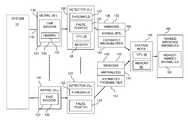
- FIG. 1is a schematic diagram of a anomaly ranking system according to examples of the present invention.
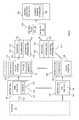
- FIG. 2is a flowchart depicting the operation of an anomaly ranking system according to examples of the present invention
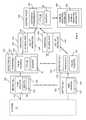
- FIG. 3is a flowchart depicting the operation of an anomaly ranking system according to examples of the present invention.
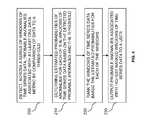
- FIG. 4is a flowchart of a method according to examples of the present invention.
- Anomaly ranking methods and systemsmay be used to determine whether a system (e.g., a networked computer system, a data center, components of a data center, a set of servers, computing devices, or other systems) is functioning properly and to prioritize detected system problems.
- a systeme.g., a networked computer system, a data center, components of a data center, a set of servers, computing devices, or other systems
- anomaliese.g., outlier data
- Time series datamay be monitored in a server, multiple servers, a data center, or other systems.
- Metricse.g., CPU idle time, input/output device rates
- Anomaliesmay, for example, be determined using threshold based methods or approaches.
- Alerts based on detected anomaliesmay be output to a user (e.g., data center or server operator).
- multiple metricsmay be concurrently monitored by multiple anomaly detection systems. As a result, a large number of anomalies may be detected, and the anomalies detected may include true positives and false alarms.
- the anomaliesmay be ranked and/or prioritized.
- Data, time series data, or a stream of datamay be divided into a series of windows, the windows similarly organized or ordered in time.
- Each windowmay include many data observations points, and/or samples.
- Anomalies across multiple metricsmay, for example, be ranked by detecting anomalies in concurrent or series of windows of time-series data, approximating the probability of each window (e.g., the probability of observed data or samples in window exceeding or violating a threshold), and ranking the windows according to their probability (or ranking according to multiple probabilities assigned to each window).
- Anomalies associated with the windowsmay be ranked based on estimated probabilities of the windows.
- Each concurrent window of time series datamay be measured by a separate anomaly detection system and each anomaly detection system may monitor time series data associated with a separate metric.
- the probability of each window of time series datamay be estimated using Gaussian approximation, Bernoulli approximation, and/or other approaches.
- An estimated probability of each window of time series datamay, for example, be an estimate of the aggregate or overall probabilities of observations or metric values in a window of time series data.
- An estimated probability of a windowmay represent probabilities of all observations in the window based on a predetermined or desired false positive rate.
- each anomaly detection systemmay determine a probability of a window of time-series data or observed data based on or assuming a Gaussian probability distribution function.
- the probability of a window of time-series datamay, for example, be determined based on Z-scores for data points (e.g., sample data points, samples, etc.) or an average of data points over window of time-series data.
- Z-score or standard normal scoremay be a quantity or value which indicates how many standard deviations an observation or data point is above or below a mean (e.g., an average).
- Z-scoresmay, for example, be calculated for a sample using data points (e.g., observations) or average of data points over a window of time-series data based on a sample mean or possibly other data. Z-scores may, for example, be calculated using at least one sample mean, ⁇ , one sample standard deviation, ⁇ , and/or other parameters.
- the probability of a window and associated anomaliesmay be output to a central node from each anomaly detection system.
- the central nodemay rank the windows output from each anomaly detection system based on their estimated probabilities (ranking may be according to multiple probabilities assigned to each window).
- the least probable windows (e.g., window associated with the lowest probability of an anomaly) and associated anomaliesmay receive the highest ranking.
- Other partitioning of processing tasksmay be used, in that probabilities need not be created by anomaly detection systems and sent to a central node.
- each anomaly detection systemmay measure time-series data related to a metric over a window of time and may output a number of samples or data points in the window of time series data which exceed a threshold.
- a central nodemay receive the number of samples in a window of time which exceed or have exceeded a threshold from each anomaly detection system and may calculate an estimated probability (e.g. a probability of anomalies occurring for data in the window) for each window based on the number of threshold exceeding samples and other parameters (e.g., a Bernoulli random variable), which may be obtained from a pre-specified or design false positive rate or other information.
- the central nodemay rank the concurrent windows based on the estimated probabilities.
- the least probable windowse.g. windows with least probability of anomalies for data or observations within the windows
- associated anomaliesmay receive the highest ranking.
- One or more estimated probabilitiesmay be calculated for each window.
- a ranked list of anomaliesmay be output to a user.
- Anomaly ranking methods and systemsmay be advantageous in reducing the number of false positives in the anomaly data output to a user.
- Anomaly ranking systemsmay be useful in presenting a user with the most critical anomaly data or window of time series data.
- Anomaly ranking methodsmay be “lightweight” and may process each time series individually.
- Anomaly ranking methodsmay allow many different types of metrics to be measured using different methods and systems and to be compared to determine most critical anomalies across the varied metrics.
- Anomaly ranking methods and systemsmay improve system performance and availability by outputting data to a user, which may allow the user to quickly detect problems, diagnose problems, and to determine potential remedies to anomalous system behavior in a networked computer system and/or data center.
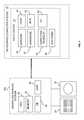
- FIG. 1is a schematic diagram of an anomaly ranking system according to examples of the present invention.
- Anomaly ranking system 100e.g., outlier ranking system, data center anomaly ranking system
- a networked computer system 10may, for example, be or may include a data center 12 or other system(s).
- Anomalies ranking system 100may or may not be a component of a networked computer system 10 , a data center 12 , virtual data center, server 20 , computing device 34 , network of servers 20 , or other device(s) or system(s).
- a networked computer system 10 or data center 12may include a wide variety of computing devices such as servers 20 (e.g., blade servers), host server(s) 44 , hardware 22 , server computing devices 34 (e.g., computers, desktop computers, mobile devices, and other computing devices), input and output (I/O) devices 40 , data bus(es) 42 , data storage devices, telecommunications devices, networking devices, appliances (e.g., devices dedicated to providing a service), and other devices and systems.
- servers 20e.g., blade servers
- host server(s) 44e.g., hardware 22
- server computing devices 34e.g., computers, desktop computers, mobile devices, and other computing devices
- I/Oinput and output
- Anomaly ranking system 100may, for example, include processor(s) or controller(s) 26 (e.g., central processing unit(s)), memory 24 , long term storage 28 , database(s), input device(s) or area(s) 30 , and output device(s) or area(s) 32 .
- processor(s) or controller(s) 26e.g., central processing unit(s)
- memory 24long term storage 28
- database(s)database(s)
- input device(s) or area(s) 30e.g., input device(s) or area(s) 30
- output device(s) or area(s) 32may be combined into, for example, a touch screen display and input which may be part of system 100 .
- Memory 24 or databases 36may include, for example, anomaly detection threshold(s), false positive rates, anomaly data, metrics, window of time series data, and/or other information.
- Databases 36may be stored all or partly in one or both of memory 24 , long term storage 28 , or another device.
- Processor or controller 26may be, for example, a central processing unit (CPU), a chip, or any suitable computing or computational device.
- Processor or controller 26may include multiple processors, and may include general-purpose processors and/or dedicated processors such as graphics processing chips.
- Processor 26may execute code or instructions, for example, stored in memory 24 or long-term storage 28 , to carry out examples of the present invention.
- Memory 24may be or may include, for example, a Random Access Memory (RAM), a read only memory (ROM), a Dynamic RAM (DRAM), a Synchronous DRAM (SD-RAM), a double data rate (DDR) memory chip, a Flash memory, a volatile memory, a non-volatile memory, a memristor, a cache memory, a buffer, a short term memory unit, a long term memory unit, or other suitable memory units or storage units.
- RAMRandom Access Memory
- ROMread only memory
- DRAMDynamic RAM
- SD-RAMSynchronous DRAM
- DDRdouble data rate
- Flash memorya volatile memory, a non-volatile memory, a memristor, a cache memory, a buffer, a short term memory unit, a long term memory unit, or other suitable memory units or storage units.
- Memory 24may be or may include multiple memory units.
- Long term storage 28may be or may include, for example, a hard disk drive, a floppy disk drive, a Compact Disk (CD) drive, a CD-Recordable (CD-R) drive, a universal serial bus (USB) device or other suitable removable and/or fixed storage unit, and may include multiple or a combination of such units.
- a hard disk drivea floppy disk drive
- CDCompact Disk
- CD-RCD-Recordable
- USBuniversal serial bus
- FIG. 2is a flowchart depicting the operation of an anomaly ranking system according to examples of the present invention
- Time-series data 110e.g., time-series information, a data stream, or other data or information
- an anomaly detection system 120e.g., a local anomaly detection system
- Anomaly detection system or module 120may, for example, include processor 26 and memory 24 , and portions of or all of methods described herein may be performed using processor 26 and memory 24 in anomaly detection system 120 .
- Time series data 110may, for example, be associated with, or be a measure of the operation of, a data center 12 (e.g., data center 12 components, servers 20 , computing devices 34 , and other systems).
- a data center 12e.g., data center 12 components, servers 20 , computing devices 34 , and other systems.
- Time-series data 110may, for example, be a stream or collection of data or information related to a metric 130 .
- At least one metric 130e.g., data metric
- Time-series data 110may be monitored by a local anomaly detection system 120 to detect, flag, or identify anomalies or outliers 140 in time-series data 110 .
- Time-series data 110may be monitored by sampling data to generate time series data or metric observations, samples, or data points 134 .
- Anomalies or outliers 140 in time series data 110may be observations (e.g., point observations), samples (e.g., series of observations) and/or data points 134 , or functions of observations (e.g., statistics) that violate or exceed a threshold 122 (e.g., a value of metric 130 ).
- Data metrics 130may, for example, include CPU 26 metrics (e.g., percentage of CPU idle time and other metrics), I/O 40 metrics (e.g., I/O transfers per second, blocks read per second, blocks write per second and other metrics), traffic or server 20 traffic metrics (e.g., packets received per second, packets transmitted per second, bytes received per second, bytes transmitted per second), and/or other metrics 130 .
- Metrics 130may, for example, be defined by or associated with a variety of parameters.
- Anomalies 140may, for example, arise in a variety of ways and may indicate or be symptoms of many different types of anomalous system 10 operation or behavior. Detecting anomalies 140 may, therefore, be useful in identifying anomalous system behavior in data center 12 components (e.g., servers 20 or other devices) or other devices. Anomalous system behavior may, for example, include performance issues, failures, misconfigurations, and other unintended system (e.g., server 20 or other device) or component behaviors.
- Anomalous system behaviormay, for example, include server 20 malfunctions (e.g., server inactive or down, server reboot needed, server health check needed), abnormal network behavior, abnormal I/O device 40 utilization (e.g., abnormal disk I/O access, failing disk array controller(s), host bus adapter (HBA) card failure), abnormal computing device 34 behavior, abnormal application or software 46 behavior (e.g., busy loop process saturating CPU utilization), CPU interference, interference due to heavy batch jobs, and other anomalies.
- server 20 malfunctionse.g., server inactive or down, server reboot needed, server health check needed
- abnormal network behaviore.g., abnormal I/O device 40 utilization (e.g., abnormal disk I/O access, failing disk array controller(s), host bus adapter (HBA) card failure), abnormal computing device 34 behavior, abnormal application or software 46 behavior (e.g., busy loop process saturating CPU utilization), CPU interference, interference due to heavy batch jobs, and other anomalies.
- abnormal I/O device 40 utilizatione.g.
- Anomalies 140 in time series data 110may be detected using threshold-based methods or approaches.
- threshold-based anomaly detection methods and approachesmay be used including parametric, non-parametric, and other types of methods.
- Anomaly detectione.g., performed by local anomaly detection system 120
- may analyze time series data 110e.g., associated with a metric 130
- Thresholds 122may, for example, be a single value (e.g., a metric value), multiple values (e.g., defining upper and lower bounds or boundaries), a range of values, or other set of values.
- Thresholds 122may, for example, be based on a desired false positive rate 124 (e.g., derived implicitly or explicitly from a desired false positive rate).
- a false positive rate 124may, for example, be the probability that a statistic or observation 134 (e.g., an observed metric value 134 ) exceeds a threshold when there is no anomaly 140 .
- False positive rates 124may, for example, be derived from underlying data models.
- Thresholds 122may, in one example, be determined using parametric approaches based on the probability structure or distribution of time series data 110 .
- a Gaussian probability distribution or other approachmay be used. If, for example, a desired false positive rate 124 is less than one percent (1%) and the distribution of time series data 110 is assumed to be Gaussian, a threshold 122 may be set or defined as the sum of the mean ( ⁇ ) of time series data 110 and three times the standard deviation ( ⁇ ).
- Other parametric approachesmay, for example, include but are not limited to R-chart based approaches, multiple adaptive statistical filtering (MASF), supervised learning, unsupervised learning, and other methods and approaches.
- MMFmultiple adaptive statistical filtering
- Thresholds 122may, in one example, be determined using a non-parametric approach (e.g., assuming no underlying stochastic structure and/or ad-hoc approach).
- a Tukey methodmay be used to determine thresholds 122 .
- Time series data 110may, for example, be divided into quartiles and thresholds 122 may be determined based on the quartiles. Quartiles may be determined or chosen based on desired false positive rates.
- Other non-parametric approachesmay include but are not limited to mutual information based, relative entropy based, and other methods and approaches.
- Multiple metrics 130may, for example, be monitored across multiple devices (e.g., a server 20 , multiple servers 20 , hardware 22 , components of system 10 , components of data center 12 , or other devices). Metrics 130 may, for example, be monitored in time series data 110 associated with multiple devices to detect anomalies 140 . Time series data 110 associated with metrics 130 (e.g., k metrics M 1 , M 2 , . . . , M k ) may, for example, be measured or monitored by multiple local anomaly detection systems 120 (e.g., k local anomaly detection systems D 1 , D 2 , . . . , D k ).
- multiple local anomaly detection systems 120e.g., k local anomaly detection systems D 1 , D 2 , . . . , D k .
- Each of multiple time series data 110may, for example, be sampled at the same rate or may be sampled at different rates to generate observed or sample metric values 134 .
- Observed or sample value(s) 134 of a metric at given timese.g., M k (t)
- windows of time series data 132e.g., windows of metrics
- local anomaly detection system 120e.g., D k
- Each observed value of metric 134e.g., M k (t)
- Anomalies 140 and associated information or datamay, for example, be output to a central node 150 (e.g., ranking module) or other system or device.
- Windows of time series data 132may, for example, include at least one sample metric value or observation 134 observed over a window of time W (e.g., from t ⁇ W+1, t ⁇ W+2, . . . , t).
- Windows of time series data 132may, for example, be time-series data 110 or multiple data observations 134 measured or monitored over a period of time (e.g., a window of time, W, or other period of time).
- Windows of time series data 132e.g., M k (t ⁇ d W+1), M k (t ⁇ W+2), . . . , M k (t)
- Average metric value(s) over the window of time series data 132may, for example, be calculated and average metric values may be compared to thresholds 122 by local anomaly detection system 120 .
- Windows of time series data 132 associated with average metric value(s) that exceed or otherwise violate threshold(s) 122may be flagged as or deemed to be anomalies 140 (e.g., anomalous windows).
- An anomalous windowmay, for example, be a window which includes a sample or observed metric value 134 which exceeds or violates threshold 122 , or may be a window which includes sample or observed metric values 134 whose average exceeds or violates threshold 122 .
- Anomalies 140may, for example, be output to a central node 150 (e.g., a ranking module) or other system or device.
- An anomaly 140may, for example, be an observed metric value 134 which exceeds or violates threshold 122 , an anomalous window, a reference or link to an anomalous window, a timestamp of an observed metric value 134 which exceeds or violates threshold 122 , or another value.
- Multiple metrics 130may, for example, be measured over concurrent or approximately concurrent (e.g., with 100 ms or another value) windows of time.
- a first metric 130e.g., M 1
- a window of time series data 132e.g., M 1 (t ⁇ W+1), M 1 (t ⁇ W+2), . . . , M 1 (t)
- M 1 (t)may be monitored or measured by, for example, a first local anomaly detection system 120 .
- k other metric(s) 130may be monitored over window(s) of time series data 132 (e.g., M 2 (t ⁇ W+1), M 2 (t ⁇ W+2), . . . , M 2 (t)) by, for example, k other anomaly detection systems 120 .
- time series data 132e.g., M 2 (t ⁇ W+1), M 2 (t ⁇ W+2), . . . , M 2 (t)
- Each of the k local anomaly detection systems 120may output window of time series data 132 , anomaly data 140 (e.g., data indicating whether window of time series 132 may be or include an anomaly), and/or other data and information.
- One or more estimated probabilities 142 of anomalies for each of multiple windows of time series data 132may, for example, be calculated or determined based on detected probable anomalies 140 , thresholds 122 , and/or other parameters. Estimated probabilities of anomalies of each of multiple windows of time series data 132 may, for example, be determined using a Gaussian approach, Bernoulli approach or other method or approach. Anomalies 140 (e.g., data observations 134 which violate threshold 122 ) may for example be associated with or included in windows of time series data 132 . A window of time series data 132 may be associated with an estimated probability of time series data 132 . An anomaly or anomalies 140 may, for example, be ranked based on the estimated probability of time series data 132 associated with the anomaly or anomalies 140 .
- Estimated probabilities of anomalies 142 for each of the windows of time series data 132may be determined based on the detected probable anomalies 140 using Gaussian approximation based on Z-scores, which may be determined using a sample mean ( ⁇ ) and a standard deviation ( ⁇ ).
- multiple metrics 130 over windows of time series data 132may be monitored for anomalies 140 using a Gaussian method.
- Time series data 132may, for example, be assumed to be Gaussian.
- Each metric 130may be monitored over a window of time series data 132 by comparing the window of time series data 132 to threshold(s) 122 based on the mean ( ⁇ ) and standard deviation ( ⁇ ) of the underlying distribution (e.g., a distribution of time series data 110 ).
- a probability of each observation 134(e.g., M k (t)) in window of time series data 132 may, for example, be calculated.
- time series data 110may, for example, be quantized into a set of buckets (e.g., ⁇ b 1 , b 2 , . . . ⁇ ).
- a bucketmay, for example, be a range of metric 130 values (e.g., if metric 130 is I/O transfers per second (tps), a range may be a range of I/O tps).
- Each bucket(e.g., ⁇ b 1 , b 2 , . . .
- ⁇may, for example, be of equal width or size in terms of a range of metric values (e.g., if metric 130 is I/O transfers per second (tps), each range may be 10 tps in width (e.g., 0-10 tps, 10 tps to 20 tps, etc.)) or may be different widths or sizes.
- Window of time series data 110may, for example, be mapped or transferred to a set of buckets (e.g., ⁇ b 1 , b 2 , . . . ⁇ ) using a mapping function (e.g., Q).
- a probability, ⁇ tilde over (P) ⁇ (b i ), of a data sample (e.g., sample metric value 134 ) falling into a bucket (e.g., b i )may, for example, be determined.
- the probability, ⁇ tilde over (P) ⁇ (b i ), of data sample 134 falling into a bucketmay, for example, be calculated using a cumulative distribution function of the standard Gaussian distribution or other equation, function or approach.
- Z-scores, Z k (t), for each observation, M k (t),may, for example, be calculated based on a sample mean, ⁇ k , and sample standard deviation, ⁇ k , of each metric 130 , M k , using an equation such as:
- the Z-scoresmay, for example, be context dependant.
- mean, ⁇ k , and standard deviation, ⁇ k , values for a metric 130 , M kmay be dependent on time and may be calculated for days of the week, hour of the day, and other periods of time (e.g., using multivariate adaptive statistical filtering (MASF) or other approaches).
- M kmultivariate adaptive statistical filtering
- Z-scoresmay be calculated over window of time series data 132 .
- window of time series data 132e.g., M k (t ⁇ W+1), M k (t ⁇ W+2), . . . , M k (t)
- Wa predefined length of time
- Z-scores over window of time series data 132e.g., Z k (t ⁇ W+1), Z k (t ⁇ W+2), . . .
- Z k (t))may, for example, be calculated based on a sample mean, ⁇ k , and sample standard deviation, ⁇ k , of metric 130 , M k (e.g., time series data 110 associated with metric 130 ).
- Z-scores over window of time series data 132e.g., Z k (t ⁇ W+1), Z k (t ⁇ W+2), . . . , Z k (t)
- Z k (t)may, for example, be calculated by local anomaly detection system 120 or another system or module.
- An estimated probability of anomalies for a window of time series data 142may, for example, be determined or calculated.
- an estimated probability of anomalies 142 for each of the most recent windows of time series data 136 for each of a plurality of monitored time series 110may be determined.
- a most recent window of time series data 136may, for example, be a most temporally recent window of time series data 132 (e.g., most recently measured or sampled window), multiple temporally recent windows 132 or other windows 132 .
- estimated probability of a window of time series data 142may be calculated using an equation such as:
- the constant cmay, for example, be a predetermined constant and may be ignored or disregarded in ranking windows of time series data 132 and/or anomalies 140 .
- the probability distribution functionmay more accurately estimate or approximate probability of data sample lying in bucket b i , P ⁇ tilde over (() ⁇ b i ).
- Estimated probability of a window of time series data 142may, for example, be determined or calculated using anomaly detection system 120 .
- Multiple anomaly detection systems 120may, for example, calculate estimated probability of window time series data 142 (e.g., P k (Z k (t ⁇ W+1),Z k (t ⁇ W+2),K,Z k (t))) for multiple metrics 130 (e.g., M 1 , M 2 , . . . , M k ).
- Anomalies 140 and associated windows of time series data 132 and estimated probability of window time series data 142(e.g., P k (Z k (t ⁇ W+1),Z k (t ⁇ W+2),K,Z k (t)))
- P k (Z k (t ⁇ W+1),Z k (t ⁇ W+2),K,Z k (t))may, for example, be output from anomaly detection systems 120 to a central node 150 or other system or module.
- Central node 150may, for example, receive anomalies 140 and associated windows of time series data 132 and estimated probability of window time series data 142 (e.g., P k (Z k (t ⁇ W+1),Z k (t ⁇ W+2),K,Z k (t))). (In other examples processing organization may be different, and may not rely on a central node or system receiving anomaly data.) Central node 150 may, for example, include processor 26 and memory 24 , and portions of or all of methods described herein may be performed using processor 26 and memory 24 in central node 150 .
- Central node 150may, for example, receive anomalies 140 and associated estimated probability of window time series data 142 (e.g., P k (Z k (t ⁇ W+1),Z k (t ⁇ W+2),K,Z k (t))) at a time (e.g., time t) associated with the end of window of time series data 132 (e.g., from t ⁇ W+1 to t).
- Anomalies 140 and/or associated windows of time series data 132may, for example, be ranked based on associated estimated probability of window time series data 142 (e.g., P k (Z k (t ⁇ W+1),Z k (t ⁇ W+2),K,Z k (t))).
- anomalies 140 and/or associated windows of the time series data 132may be ranked based on the estimated probabilities for each of the most recent windows 136 .
- Anomalies 140 and/or associated windows of time series data 132may, for example, be ranked in ascending order of estimated probability of window time series data 142 (e.g., P k (Z k (t ⁇ W+1),Z k (t ⁇ W+2),K,Z k (t))).
- an anomaly 140 and/or associated window of time series data 132 associated with a least estimated probability of window time series data 142may be a highest ranked or most critical window time series data.
- An anomaly 140 and/or associated window of time series data 132 associated with least estimated probability of window time series data 142may be associated with a highest ranked or most critical anomaly 162 .
- a highest ranked or most critical anomaly 162 and/or window of time series data 132may, for example, be an anomaly 140 and/or window of time series data 132 associated with a least likelihood of occurrence.
- An anomaly 140 associated with a lower likelihood of occurrencemay be less likely to be a false positive than anomaly associated with higher likelihood of occurrence.
- Windows of time series data 132 and/or metrics 130 associated with higher estimated probability of window time series data 142may, for example, include more anomaly false positive(s), anomaly false alarm(s), and/or noise.
- Time series data 110 including more anomaly false positive(s), anomaly false alarm(s), and/or noisemay be less likely to be associated with or representative of anomalous system 10 behavior (e.g., anomalous data center 12 component behavior).
- Windows 132may, in some examples, be ranked according to multiple probabilities assigned to each window.
- Ranked anomalies and/or windows 160e.g., probable anomalies associated with highest ranked windows of time series data and/or windows associated with lowest estimated probabilities
- Ranked anomalies and/or windows 160 or highest ranked anomalies and or windows 162may, for example, be output to a user using output device 32 or similar device.
- Probable anomalies associated with highest ranked windows of time series data 160may, for example, be the probable anomalies associated with the three, five, ten, or any number of highest ranked windows of time series data.
- time series data 110 and/or windows of time series data 132 associated with metrics 130may, for example, not be Gaussian and estimated probabilities of window time series data 142 may, for example, not be calculated based on Z-scores (e.g., based on mean, ⁇ k , and standard deviation, ⁇ k , values for a metric 130 ).
- Estimated probabilities of window time series data 142may, for example, be estimated or approximated based on other parametric, non-parametric, or other distributions (e.g., Weibull distribution, other probability distributions, or other distributions).
- Time series data 110may, for example, be transformed or altered to be compatible with Gaussian probability approaches or other methods.
- Anomaly detection system 120may, for example, output anomalies 140 , estimated probabilities of window time series data 142 , and other data or information related to the parametric, non-parametric, and/or other distribution to central node 150 or other system or module.
- Central node 150 or other system or modulemay, for example, based on estimated probabilities of window time series data 142 and other data or information related to the parametric, non-parametric, and/or other distribution rank anomalies 140 and/or associate windows of time series data 132 .
- Central node 150may similarly determine highest ranked or most critical anomalies 162 and/or associated windows of time series data 132 .
- Anomalies 140 associated with highest ranked windows of time series data 132 and/or highest ranked anomalies 162may, for example, be output to a user and/or other systems, devices, or modules.
- FIG. 3is a flowchart depicting the operation of an anomaly ranking system according to examples of the present invention.
- Estimated probabilities of anomalies associated with each of multiple windows of time series data 132may, for example, be calculated or determined using Bernoulli approximation or other approaches or methods. Bernoulli approximation may, for example, be used to reduce the amount of computation or communication performed by local anomaly detection systems 120 , if local anomaly detection systems 120 do not include probability computation capabilities, or for other reasons.
- each local anomaly detection system 120may, for example, monitor or measure windows of time series data 110 (e.g., M k (t ⁇ W+1), M k (t ⁇ W+2), . . . , M k (t)).
- Each local anomaly detection system 120may, for example, monitor time series data 110 (e.g., associated with a metric).
- Sample metric values 134e.g., M k (t)
- sample metric values 134 in window of time series data 132e.g., M k (t ⁇ W+1), M k (t ⁇ W+2), . . .
- M k (t))may be compared to a threshold 122 (e.g., T k ).
- a threshold 122e.g., T k
- a number of observations, samples, or anomalies 144e.g., W k (t ⁇ W+1:t)
- Number of samples 144may, for example, be output to central node 150 or other system or module.
- Number of samples 144may, for example, be received by central node 150 .
- Estimated probability of window time series data 142 , P kmay, for example, be determined or calculated by central node 150 or other system or module based number of samples 144 (e.g., W k (t ⁇ W+1:t)), length or duration of time window 132 (e.g., W), estimated probability parameter, p k , and/or other parameters on using an equation such as: P k ⁇ p k W k (t-W+1:t) (1 ⁇ p k ) W-W k (t-W+1:t)
- an estimated probability of anomalies 142 for each of the most recent windows of time series data 136 of each of a plurality of monitored time series 110may be determined based number of samples 144 (e.g., W k (t ⁇ W+1:t)), length or duration of time window 132 (e.g., W), estimated probability parameter, p k , and/or other parameters.
- Estimated probability parameter, p kmay, for example, be an estimate of the probability that a sample metric value 134 , M k (t), violates or exceeds threshold 122 , T k .
- Estimated probability parameter, p kmay, for example, be a design false positive rate 124 (e.g., false positive rate), may be based on or derived from a design false positive rate 124 , or may be another parameter.
- Estimated probability or window time series data 142(e.g., P k ) may, for example, be estimated or approximated based on estimated probability, p k , under a model where the event that each measurement violates a threshold is modeled as a Bernoulli random variable.
- Windows of time series data 132e.g., M k (t ⁇ W+1), M k (t ⁇ W+2), . . . , M k (t)
- associated anomalies 140may, for example, be ranked based on estimated probability of window time series 142 , P k , values.
- anomalies 140 and/or windows of the time series data 132may be ranked based on the estimated probabilities for each of the most recent windows 136 .
- Anomalies 140 and/or associated windows of time series data 132may, for example, be ranked in ascending order of estimated probability of window time series data 142 , P k .
- an anomaly 140 associated with least estimated probability of window time series data 142 , P kmay be a highest ranked or most critical anomaly 162 .
- a highest ranked or most critical anomaly 162may, for example, be an anomaly 140 associated with a least likelihood of occurrence.
- windows of time series data 132may, for example, be ranked based on number of metric values 130 , which exceed or violate threshold 122 , T k .
- Ranked anomalies 160 and/or highest ranked anomalies 162may, for example, be output from central node 150 or other system to a user (e.g., networked computer system 10 , data center 12 , or server 20 operator) and/or other systems, devices, or modules. Ranked anomalies 160 and/or highest ranked anomalies 162 may, for example, be output to a user using output device 32 or similar device.
- a usermay, for example, be a data center 12 technician or operator and may fix or resolve performance issues, failures, misconfigurations, and other anomalous server or data center behaviors using ranked anomalies 160 . Ranked anomalies may allow a user to quickly and efficiently identify and resolve the most critical performance issues, failures, misconfigurations, and other anomalous server or data center behaviors.
- Using Bernoulli approximation or another approachmay, for example, reduce local anomaly detection system 120 computation.
- Local anomaly detection systems 120may, for example, determine or calculate a number of anomalies or samples 144 , W k (t ⁇ W+1:t) and output a number of samples 144 to central node 150 .
- Using Bernoulli approximation or another approachmay allow each local anomaly detection system 120 to use different anomaly detection methods or approaches (e.g., Tukey method, Gaussian based methods, parametric, non-parametric, and other types of methods).
- Different anomaly detection methodsmay, for example, be used to determine a number of anomalies or samples 144 which exceed threshold 122 , and number of samples 144 may be output to central node 150 , which may determine estimated probability of window time series data 142 , P k , based on number of samples 144 .
- FIG. 4is a flowchart of a process according to examples of the present invention.
- probable anomaliese.g., anomalies 140 of FIG. 2
- at least one data metrice.g., metric 130 of FIG. 2
- a series of windows of time series datae.g., window of time series data 132 of FIG. 2
- a thresholde.g., threshold 122 of FIG. 2
- estimated probabilities of anomaliese.g., estimated probability of a window of time series data 142 of FIG. 2
- estimated probabilities of anomaliesmay be determined based on the detected probable anomalies and the threshold.
- the estimated probability of anomalies for each most recent window of time series datae.g., most recent window of time series data 132 of FIG. 2
- a plurality of monitored time seriese.g., time series data 110 of FIG. 2
- the windows of time series datamay be ranked (e.g., by central node 150 or other module) based on the estimated probabilities for each of the windows. Ranking may be according to one or multiple probabilities assigned to each window. In one example, the windows of the time series data may be ranked based on the estimated probabilities for each of the most recent windows.
- probable anomalies associated with highest ranked windows of time series datamay be output to a user (e.g., using output device 32 ).
- Examples of the present inventionmay include apparatuses for performing the operations described herein. Such apparatuses may be specially constructed for the desired purposes, or may comprise computers or processors selectively activated or reconfigured by a computer program stored in the computers. Such computer programs may be stored in a computer-readable or processor-readable non-transitory storage medium, any type of disk including floppy disks, optical disks, CD-ROMs, magnetic-optical disks, read-only memories (ROMs), random access memories (RAMs) electrically programmable read-only memories (EPROMs), electrically erasable and programmable read only memories (EEPROMs), magnetic or optical cards, or any other type of media suitable for storing electronic instructions.
- ROMsread-only memories
- RAMsrandom access memories
- EPROMselectrically programmable read-only memories
- EEPROMselectrically erasable and programmable read only memories
- Examples of the inventionmay include an article such as a non-transitory computer or processor readable non-transitory storage medium, such as for example a memory, a disk drive, or a USB flash memory encoding, including or storing instructions, e.g., computer-executable instructions, which when executed by a processor or controller, cause the processor or controller to carry out methods disclosed herein.
- the instructionsmay cause the processor or controller to execute processes that carry out methods disclosed herein.
Landscapes
- Engineering & Computer Science (AREA)
- Theoretical Computer Science (AREA)
- Software Systems (AREA)
- Data Mining & Analysis (AREA)
- Physics & Mathematics (AREA)
- General Engineering & Computer Science (AREA)
- General Physics & Mathematics (AREA)
- Computer Vision & Pattern Recognition (AREA)
- Artificial Intelligence (AREA)
- Databases & Information Systems (AREA)
- Evolutionary Computation (AREA)
- Medical Informatics (AREA)
- Computational Linguistics (AREA)
- Computing Systems (AREA)
- Mathematical Physics (AREA)
- Debugging And Monitoring (AREA)
Abstract
Description
Pk(Zk(t−W+1),Zk(t−W+2),K,Zk(t))≈Πj=t-W+1t{tilde over (P)}(Q(Zk(j)))
Pk≈pkW
Claims (20)
Priority Applications (1)
| Application Number | Priority Date | Filing Date | Title |
|---|---|---|---|
| US13/286,150US9141914B2 (en) | 2011-10-31 | 2011-10-31 | System and method for ranking anomalies |
Applications Claiming Priority (1)
| Application Number | Priority Date | Filing Date | Title |
|---|---|---|---|
| US13/286,150US9141914B2 (en) | 2011-10-31 | 2011-10-31 | System and method for ranking anomalies |
Publications (2)
| Publication Number | Publication Date |
|---|---|
| US20130110761A1 US20130110761A1 (en) | 2013-05-02 |
| US9141914B2true US9141914B2 (en) | 2015-09-22 |
Family
ID=48173433
Family Applications (1)
| Application Number | Title | Priority Date | Filing Date |
|---|---|---|---|
| US13/286,150Expired - Fee RelatedUS9141914B2 (en) | 2011-10-31 | 2011-10-31 | System and method for ranking anomalies |
Country Status (1)
| Country | Link |
|---|---|
| US (1) | US9141914B2 (en) |
Cited By (28)
| Publication number | Priority date | Publication date | Assignee | Title |
|---|---|---|---|---|
| US20140379714A1 (en)* | 2013-06-25 | 2014-12-25 | Compellent Technologies | Detecting hardware and software problems in remote systems |
| US20150207696A1 (en)* | 2014-01-23 | 2015-07-23 | Sodero Networks, Inc. | Predictive Anomaly Detection of Service Level Agreement in Multi-Subscriber IT Infrastructure |
| US10013655B1 (en) | 2014-03-11 | 2018-07-03 | Applied Underwriters, Inc. | Artificial intelligence expert system for anomaly detection |
| US10069900B2 (en) | 2014-08-05 | 2018-09-04 | Oracle International Corporation | Systems and methods for adaptive thresholding using maximum concentration intervals |
| US10621005B2 (en) | 2017-08-31 | 2020-04-14 | Oracle International Corporation | Systems and methods for providing zero down time and scalability in orchestration cloud services |
| US10635563B2 (en) | 2016-08-04 | 2020-04-28 | Oracle International Corporation | Unsupervised method for baselining and anomaly detection in time-series data for enterprise systems |
| US10692255B2 (en) | 2016-02-29 | 2020-06-23 | Oracle International Corporation | Method for creating period profile for time-series data with recurrent patterns |
| US10699211B2 (en) | 2016-02-29 | 2020-06-30 | Oracle International Corporation | Supervised method for classifying seasonal patterns |
| US10776196B2 (en)* | 2018-08-29 | 2020-09-15 | International Business Machines Corporation | Systems and methods for anomaly detection in a distributed computing system |
| US10817803B2 (en) | 2017-06-02 | 2020-10-27 | Oracle International Corporation | Data driven methods and systems for what if analysis |
| US10855548B2 (en) | 2019-02-15 | 2020-12-01 | Oracle International Corporation | Systems and methods for automatically detecting, summarizing, and responding to anomalies |
| US10885461B2 (en) | 2016-02-29 | 2021-01-05 | Oracle International Corporation | Unsupervised method for classifying seasonal patterns |
| US10915830B2 (en) | 2017-02-24 | 2021-02-09 | Oracle International Corporation | Multiscale method for predictive alerting |
| US10949436B2 (en) | 2017-02-24 | 2021-03-16 | Oracle International Corporation | Optimization for scalable analytics using time series models |
| US10963346B2 (en) | 2018-06-05 | 2021-03-30 | Oracle International Corporation | Scalable methods and systems for approximating statistical distributions |
| US10970186B2 (en) | 2016-05-16 | 2021-04-06 | Oracle International Corporation | Correlation-based analytic for time-series data |
| US10997517B2 (en) | 2018-06-05 | 2021-05-04 | Oracle International Corporation | Methods and systems for aggregating distribution approximations |
| US11080612B2 (en)* | 2015-12-30 | 2021-08-03 | International Business Machines Corporation | Detecting anomalous sensors |
| US11082439B2 (en) | 2016-08-04 | 2021-08-03 | Oracle International Corporation | Unsupervised method for baselining and anomaly detection in time-series data for enterprise systems |
| US11120343B2 (en) | 2016-05-11 | 2021-09-14 | Cisco Technology, Inc. | Intelligent anomaly identification and alerting system based on smart ranking of anomalies |
| US11138090B2 (en) | 2018-10-23 | 2021-10-05 | Oracle International Corporation | Systems and methods for forecasting time series with variable seasonality |
| US11232133B2 (en) | 2016-02-29 | 2022-01-25 | Oracle International Corporation | System for detecting and characterizing seasons |
| US11533326B2 (en) | 2019-05-01 | 2022-12-20 | Oracle International Corporation | Systems and methods for multivariate anomaly detection in software monitoring |
| US11537940B2 (en) | 2019-05-13 | 2022-12-27 | Oracle International Corporation | Systems and methods for unsupervised anomaly detection using non-parametric tolerance intervals over a sliding window of t-digests |
| US20230014842A1 (en)* | 2015-06-05 | 2023-01-19 | Cisco Technology, Inc. | Application monitoring prioritization |
| US11887015B2 (en) | 2019-09-13 | 2024-01-30 | Oracle International Corporation | Automatically-generated labels for time series data and numerical lists to use in analytic and machine learning systems |
| US11936663B2 (en) | 2015-06-05 | 2024-03-19 | Cisco Technology, Inc. | System for monitoring and managing datacenters |
| US12001926B2 (en) | 2018-10-23 | 2024-06-04 | Oracle International Corporation | Systems and methods for detecting long term seasons |
Families Citing this family (50)
| Publication number | Priority date | Publication date | Assignee | Title |
|---|---|---|---|---|
| WO2009069763A1 (en)* | 2007-11-30 | 2009-06-04 | Nec Corporation | Call processing time measurement device, call processing time measurement method, and program for call processing time measurement |
| US20140039798A1 (en)* | 2012-07-31 | 2014-02-06 | Chetan K. Gupta | System and methods for grouping similar items within a set |
| US9558056B2 (en) | 2013-07-28 | 2017-01-31 | OpsClarity Inc. | Organizing network performance metrics into historical anomaly dependency data |
| GB2518151A (en) | 2013-09-11 | 2015-03-18 | Ibm | Network anomaly detection |
| WO2015112162A1 (en)* | 2014-01-24 | 2015-07-30 | Hewlett-Packard Development Company, L.P. | Identifying deviations in data |
| US20160162348A1 (en)* | 2014-03-04 | 2016-06-09 | Hewlett Packard Enterprise Development Lp | Automated detection of a system anomaly |
| CN105335134A (en)* | 2014-06-30 | 2016-02-17 | 北京金山安全软件有限公司 | Method and device for processing CPU occupancy rate abnormity of APP and mobile terminal |
| US20170286841A1 (en)* | 2014-09-03 | 2017-10-05 | Nec Corporation | Monitoring device and monitoring method thereof, monitoring system, and recording medium in which computer program is stored |
| US20160149776A1 (en)* | 2014-11-24 | 2016-05-26 | Cisco Technology, Inc. | Anomaly detection in protocol processes |
| US10061632B2 (en)* | 2014-11-24 | 2018-08-28 | Anodot Ltd. | System and method for transforming observed metrics into detected and scored anomalies |
| US10891558B2 (en)* | 2015-01-21 | 2021-01-12 | Anodot Ltd. | Creation of metric relationship graph based on windowed time series data for anomaly detection |
| US10261851B2 (en)* | 2015-01-23 | 2019-04-16 | Lightbend, Inc. | Anomaly detection using circumstance-specific detectors |
| EP3745272B1 (en) | 2015-02-02 | 2022-04-06 | New Relic, Inc. | An application performance analyzer and corresponding method |
| US10225308B1 (en)* | 2015-02-12 | 2019-03-05 | Cloud & Stream Gears Llc | Decremental Z-score calculation for big data or streamed data using components |
| AU2016204068B2 (en) | 2015-06-17 | 2017-02-16 | Accenture Global Services Limited | Data acceleration |
| US9749357B2 (en) | 2015-09-05 | 2017-08-29 | Nudata Security Inc. | Systems and methods for matching and scoring sameness |
| US10587487B2 (en)* | 2015-09-23 | 2020-03-10 | International Business Machines Corporation | Selecting time-series data for information technology (IT) operations analytics anomaly detection |
| US10108411B2 (en) | 2015-10-08 | 2018-10-23 | Lightbend, Inc. | Systems and methods of constructing a network topology |
| JP6599727B2 (en)* | 2015-10-26 | 2019-10-30 | 株式会社Screenホールディングス | Time-series data processing method, time-series data processing program, and time-series data processing apparatus |
| US10169731B2 (en)* | 2015-11-02 | 2019-01-01 | International Business Machines Corporation | Selecting key performance indicators for anomaly detection analytics |
| GB2547202B (en)* | 2016-02-09 | 2022-04-20 | Darktrace Ltd | An anomaly alert system for cyber threat detection |
| CN107451157B (en)* | 2016-06-01 | 2020-12-18 | 阿里巴巴集团控股有限公司 | Abnormal data identification method, device and system, and searching method and device |
| US10713236B2 (en)* | 2016-06-15 | 2020-07-14 | Panorama Software Inc. | Systems and methods for analysis of data stored in a large dataset |
| US10402289B2 (en)* | 2016-09-07 | 2019-09-03 | Nec Corporation | Fine-grained causal anomaly inference for complex system fault diagnosis |
| US10706028B2 (en)* | 2017-04-25 | 2020-07-07 | Citrix Systems, Inc. | Detecting outliers in server transaction time as a form of time series data |
| US10452665B2 (en)* | 2017-06-20 | 2019-10-22 | Vmware, Inc. | Methods and systems to reduce time series data and detect outliers |
| US10749881B2 (en)* | 2017-06-29 | 2020-08-18 | Sap Se | Comparing unsupervised algorithms for anomaly detection |
| US10545817B2 (en)* | 2017-08-28 | 2020-01-28 | Ca, Inc. | Detecting computer system anomaly events based on modified Z-scores generated for a window of performance metrics |
| US10587484B2 (en)* | 2017-09-12 | 2020-03-10 | Cisco Technology, Inc. | Anomaly detection and reporting in a network assurance appliance |
| KR102413096B1 (en) | 2018-01-08 | 2022-06-27 | 삼성전자주식회사 | Electronic device and control method thereof |
| US11036715B2 (en) | 2018-01-29 | 2021-06-15 | Microsoft Technology Licensing, Llc | Combination of techniques to detect anomalies in multi-dimensional time series |
| CN109726364B (en)* | 2018-07-06 | 2023-01-10 | 平安科技(深圳)有限公司 | Power consumption abnormity detection method, device, terminal and computer readable storage medium |
| US11388040B2 (en) | 2018-10-31 | 2022-07-12 | EXFO Solutions SAS | Automatic root cause diagnosis in networks |
| US11645293B2 (en)* | 2018-12-11 | 2023-05-09 | EXFO Solutions SAS | Anomaly detection in big data time series analysis |
| US11265235B2 (en)* | 2019-03-29 | 2022-03-01 | Intel Corporation | Technologies for capturing processing resource metrics as a function of time |
| US20200364586A1 (en)* | 2019-05-13 | 2020-11-19 | Feedzai - Consultadoria e Inovação Tecnólogica, S.A. | Explanation reporting based on differentiation between items in different data groups |
| EP3955178A4 (en)* | 2019-05-20 | 2022-11-30 | Nippon Telegraph And Telephone Corporation | INFORMATION PROCESSING DEVICE, GENERATION METHOD AND GENERATION PROGRAM |
| US11178245B2 (en)* | 2019-07-01 | 2021-11-16 | New Relic, Inc. | Distributed cluster visualization |
| US11803773B2 (en)* | 2019-07-30 | 2023-10-31 | EMC IP Holding Company LLC | Machine learning-based anomaly detection using time series decomposition |
| US11609561B2 (en)* | 2019-11-15 | 2023-03-21 | Halliburton Energy Services, Inc. | Value balancing for oil or gas drilling and recovery equipment using machine learning models |
| US10911471B1 (en)* | 2019-11-27 | 2021-02-02 | The Florida International University Board Of Trustees | Systems and methods for network-based intrusion detection |
| US11157347B2 (en)* | 2019-12-02 | 2021-10-26 | EMC IP Holding Company LLC | Detection of resource bottlenecks in user devices using artificial intelligence and causal graphs |
| US11522766B2 (en) | 2020-02-12 | 2022-12-06 | EXFO Solutions SAS | Method and system for determining root-cause diagnosis of events occurring during the operation of a communication network |
| CN114611862A (en)* | 2020-12-09 | 2022-06-10 | 中兴通讯股份有限公司 | Method and device for generating performance index to difference value, electronic equipment and storage medium |
| CN114727119B (en)* | 2020-12-21 | 2023-10-10 | 北京达佳互联信息技术有限公司 | Live broadcast continuous wheat control method, device and storage medium |
| US12052134B2 (en) | 2021-02-02 | 2024-07-30 | Exfo Inc. | Identification of clusters of elements causing network performance degradation or outage |
| US20230061280A1 (en)* | 2021-08-31 | 2023-03-02 | Oracle International Corporation | Root cause analysis for deterministic machine learning model |
| EP4187388B1 (en)* | 2021-11-25 | 2025-08-20 | Bull SAS | Method and device for detecting aberrant behaviour in a set of executions of software applications |
| CN116955050A (en)* | 2022-04-13 | 2023-10-27 | 微软技术许可有限责任公司 | Detecting an untrusted period of an indicator |
| US20240364720A1 (en)* | 2023-04-26 | 2024-10-31 | Hewlett Packard Enterprise Development Lp | Detecting microservice security attacks based on metric sensitive dependencies |
Citations (6)
| Publication number | Priority date | Publication date | Assignee | Title |
|---|---|---|---|---|
| US20060184264A1 (en)* | 2005-02-16 | 2006-08-17 | Tokyo Electron Limited | Fault detection and classification (FDC) using a run-to-run controller |
| US20090030753A1 (en) | 2007-07-27 | 2009-01-29 | General Electric Company | Anomaly Aggregation method |
| US7533070B2 (en) | 2006-05-30 | 2009-05-12 | Honeywell International Inc. | Automatic fault classification for model-based process monitoring |
| US20100071061A1 (en) | 2005-06-29 | 2010-03-18 | Trustees Of Boston University | Method and Apparatus for Whole-Network Anomaly Diagnosis and Method to Detect and Classify Network Anomalies Using Traffic Feature Distributions |
| US7870440B2 (en) | 2008-03-14 | 2011-01-11 | Oracle America, Inc. | Method and apparatus for detecting multiple anomalies in a cluster of components |
| WO2011023924A1 (en) | 2009-08-26 | 2011-03-03 | Oxford Biosignals Limited | System monitoring |
- 2011
- 2011-10-31USUS13/286,150patent/US9141914B2/ennot_activeExpired - Fee Related
Patent Citations (6)
| Publication number | Priority date | Publication date | Assignee | Title |
|---|---|---|---|---|
| US20060184264A1 (en)* | 2005-02-16 | 2006-08-17 | Tokyo Electron Limited | Fault detection and classification (FDC) using a run-to-run controller |
| US20100071061A1 (en) | 2005-06-29 | 2010-03-18 | Trustees Of Boston University | Method and Apparatus for Whole-Network Anomaly Diagnosis and Method to Detect and Classify Network Anomalies Using Traffic Feature Distributions |
| US7533070B2 (en) | 2006-05-30 | 2009-05-12 | Honeywell International Inc. | Automatic fault classification for model-based process monitoring |
| US20090030753A1 (en) | 2007-07-27 | 2009-01-29 | General Electric Company | Anomaly Aggregation method |
| US7870440B2 (en) | 2008-03-14 | 2011-01-11 | Oracle America, Inc. | Method and apparatus for detecting multiple anomalies in a cluster of components |
| WO2011023924A1 (en) | 2009-08-26 | 2011-03-03 | Oxford Biosignals Limited | System monitoring |
Non-Patent Citations (8)
| Title |
|---|
| A. Patcha and JM Park, "An overview of anomaly detection techniques: Existing solutions and latest technological trends", Computer Networks vol. 51, No. 12, 2007, pp. 3448-3470.* |
| Chandola, V. et al., "Anomaly Detection: A Survey", ACM Computing Surveys, vol. 41, No. 3, Article 15, Jul. 2009, pp. 1-58.* |
| D. Kifer et al., "Detecting Changes in Data Streams", Proc. 30th VLDB Conf., Toronto, Can. 2004, pp. 180-191.* |
| Johnston, Dennis, et al, "Using a Probability Approach to Rank In-Line Inspection Anomalies for Excavation and for Setting Reinspection Intervals", Apr. 18-20, 2000 13 pages. |
| M. Markou and S. Singh, "Novelty detection: a review-part 1: statistical approaches", Signal Processing, vol. 83, pp. 2481-2497, 2003.* |
| Rebbapragada, Umaa, et al. "Finding anomalous periodic time series", Mach. learning, vol. 74, No. 3, 2009, pp. 281-313.* |
| S. Rajasegarar et al., "Anomaly detection in wireless sensor networks", IEEE Wireless Communications, Aug. 2008, pp. 34-40.* |
| Sotiris, V. et al., "Anomaly Detection Through a Bayesian Support Vector Machine", Reliability, IEEE Trans. on, Jun. 2010, pp. 277-286.* |
Cited By (52)
| Publication number | Priority date | Publication date | Assignee | Title |
|---|---|---|---|---|
| US20140379714A1 (en)* | 2013-06-25 | 2014-12-25 | Compellent Technologies | Detecting hardware and software problems in remote systems |
| US9817742B2 (en)* | 2013-06-25 | 2017-11-14 | Dell International L.L.C. | Detecting hardware and software problems in remote systems |
| US20150207696A1 (en)* | 2014-01-23 | 2015-07-23 | Sodero Networks, Inc. | Predictive Anomaly Detection of Service Level Agreement in Multi-Subscriber IT Infrastructure |
| US10013655B1 (en) | 2014-03-11 | 2018-07-03 | Applied Underwriters, Inc. | Artificial intelligence expert system for anomaly detection |
| US10069900B2 (en) | 2014-08-05 | 2018-09-04 | Oracle International Corporation | Systems and methods for adaptive thresholding using maximum concentration intervals |
| US12212476B2 (en) | 2015-06-05 | 2025-01-28 | Cisco Technology, Inc. | System and method for network policy simulation |
| US11968102B2 (en) | 2015-06-05 | 2024-04-23 | Cisco Technology, Inc. | System and method of detecting packet loss in a distributed sensor-collector architecture |
| US12231307B2 (en) | 2015-06-05 | 2025-02-18 | Cisco Technology, Inc. | System and method for user optimized application dependency mapping |
| US12231308B2 (en) | 2015-06-05 | 2025-02-18 | Cisco Technology, Inc. | Unique ID generation for sensors |
| US12224921B2 (en) | 2015-06-05 | 2025-02-11 | Cisco Technology, Inc. | Technologies for managing compromised sensors in virtualized environments |
| US20230014842A1 (en)* | 2015-06-05 | 2023-01-19 | Cisco Technology, Inc. | Application monitoring prioritization |
| US12192078B2 (en) | 2015-06-05 | 2025-01-07 | Cisco Technology, Inc. | System and method of assigning reputation scores to hosts |
| US12177097B2 (en) | 2015-06-05 | 2024-12-24 | Cisco Technology, Inc. | Policy utilization analysis |
| US12113684B2 (en) | 2015-06-05 | 2024-10-08 | Cisco Technology, Inc. | Identifying bogon address spaces |
| US12278746B2 (en) | 2015-06-05 | 2025-04-15 | Cisco Technology, Inc. | Auto update of sensor configuration |
| US11936663B2 (en) | 2015-06-05 | 2024-03-19 | Cisco Technology, Inc. | System for monitoring and managing datacenters |
| US12335275B2 (en) | 2015-06-05 | 2025-06-17 | Cisco Technology, Inc. | System for monitoring and managing datacenters |
| US11924073B2 (en) | 2015-06-05 | 2024-03-05 | Cisco Technology, Inc. | System and method of assigning reputation scores to hosts |
| US11902122B2 (en)* | 2015-06-05 | 2024-02-13 | Cisco Technology, Inc. | Application monitoring prioritization |
| US11902124B2 (en) | 2015-06-05 | 2024-02-13 | Cisco Technology, Inc. | Round trip time (RTT) measurement based upon sequence number |
| US11902120B2 (en) | 2015-06-05 | 2024-02-13 | Cisco Technology, Inc. | Synthetic data for determining health of a network security system |
| US11080612B2 (en)* | 2015-12-30 | 2021-08-03 | International Business Machines Corporation | Detecting anomalous sensors |
| US11928760B2 (en) | 2016-02-29 | 2024-03-12 | Oracle International Corporation | Systems and methods for detecting and accommodating state changes in modelling |
| US11670020B2 (en) | 2016-02-29 | 2023-06-06 | Oracle International Corporation | Seasonal aware method for forecasting and capacity planning |
| US11113852B2 (en) | 2016-02-29 | 2021-09-07 | Oracle International Corporation | Systems and methods for trending patterns within time-series data |
| US10885461B2 (en) | 2016-02-29 | 2021-01-05 | Oracle International Corporation | Unsupervised method for classifying seasonal patterns |
| US11080906B2 (en) | 2016-02-29 | 2021-08-03 | Oracle International Corporation | Method for creating period profile for time-series data with recurrent patterns |
| US11232133B2 (en) | 2016-02-29 | 2022-01-25 | Oracle International Corporation | System for detecting and characterizing seasons |
| US10970891B2 (en) | 2016-02-29 | 2021-04-06 | Oracle International Corporation | Systems and methods for detecting and accommodating state changes in modelling |
| US10699211B2 (en) | 2016-02-29 | 2020-06-30 | Oracle International Corporation | Supervised method for classifying seasonal patterns |
| US10692255B2 (en) | 2016-02-29 | 2020-06-23 | Oracle International Corporation | Method for creating period profile for time-series data with recurrent patterns |
| US10867421B2 (en) | 2016-02-29 | 2020-12-15 | Oracle International Corporation | Seasonal aware method for forecasting and capacity planning |
| US11836162B2 (en) | 2016-02-29 | 2023-12-05 | Oracle International Corporation | Unsupervised method for classifying seasonal patterns |
| US11120343B2 (en) | 2016-05-11 | 2021-09-14 | Cisco Technology, Inc. | Intelligent anomaly identification and alerting system based on smart ranking of anomalies |
| US10970186B2 (en) | 2016-05-16 | 2021-04-06 | Oracle International Corporation | Correlation-based analytic for time-series data |
| US11082439B2 (en) | 2016-08-04 | 2021-08-03 | Oracle International Corporation | Unsupervised method for baselining and anomaly detection in time-series data for enterprise systems |
| US10635563B2 (en) | 2016-08-04 | 2020-04-28 | Oracle International Corporation | Unsupervised method for baselining and anomaly detection in time-series data for enterprise systems |
| US10949436B2 (en) | 2017-02-24 | 2021-03-16 | Oracle International Corporation | Optimization for scalable analytics using time series models |
| US10915830B2 (en) | 2017-02-24 | 2021-02-09 | Oracle International Corporation | Multiscale method for predictive alerting |
| US10817803B2 (en) | 2017-06-02 | 2020-10-27 | Oracle International Corporation | Data driven methods and systems for what if analysis |
| US10678601B2 (en) | 2017-08-31 | 2020-06-09 | Oracle International Corporation | Orchestration service for multi-step recipe composition with flexible, topology-aware, and massive parallel execution |
| US10621005B2 (en) | 2017-08-31 | 2020-04-14 | Oracle International Corporation | Systems and methods for providing zero down time and scalability in orchestration cloud services |
| US10963346B2 (en) | 2018-06-05 | 2021-03-30 | Oracle International Corporation | Scalable methods and systems for approximating statistical distributions |
| US10997517B2 (en) | 2018-06-05 | 2021-05-04 | Oracle International Corporation | Methods and systems for aggregating distribution approximations |
| US10776196B2 (en)* | 2018-08-29 | 2020-09-15 | International Business Machines Corporation | Systems and methods for anomaly detection in a distributed computing system |
| US12001926B2 (en) | 2018-10-23 | 2024-06-04 | Oracle International Corporation | Systems and methods for detecting long term seasons |
| US11138090B2 (en) | 2018-10-23 | 2021-10-05 | Oracle International Corporation | Systems and methods for forecasting time series with variable seasonality |
| US10855548B2 (en) | 2019-02-15 | 2020-12-01 | Oracle International Corporation | Systems and methods for automatically detecting, summarizing, and responding to anomalies |
| US11949703B2 (en) | 2019-05-01 | 2024-04-02 | Oracle International Corporation | Systems and methods for multivariate anomaly detection in software monitoring |
| US11533326B2 (en) | 2019-05-01 | 2022-12-20 | Oracle International Corporation | Systems and methods for multivariate anomaly detection in software monitoring |
| US11537940B2 (en) | 2019-05-13 | 2022-12-27 | Oracle International Corporation | Systems and methods for unsupervised anomaly detection using non-parametric tolerance intervals over a sliding window of t-digests |
| US11887015B2 (en) | 2019-09-13 | 2024-01-30 | Oracle International Corporation | Automatically-generated labels for time series data and numerical lists to use in analytic and machine learning systems |
Also Published As
| Publication number | Publication date |
|---|---|
| US20130110761A1 (en) | 2013-05-02 |
Similar Documents
| Publication | Publication Date | Title |
|---|---|---|
| US9141914B2 (en) | System and method for ranking anomalies | |
| US9600394B2 (en) | Stateful detection of anomalous events in virtual machines | |
| US10963330B2 (en) | Correlating failures with performance in application telemetry data | |
| US10318366B2 (en) | System and method for relationship based root cause recommendation | |
| US10248561B2 (en) | Stateless detection of out-of-memory events in virtual machines | |
| US9391866B1 (en) | Method for qualitative analysis of system performance correlation factors | |
| US10558545B2 (en) | Multiple modeling paradigm for predictive analytics | |
| US9720823B2 (en) | Free memory trending for detecting out-of-memory events in virtual machines | |
| US7412448B2 (en) | Performance degradation root cause prediction in a distributed computing system | |
| US8949676B2 (en) | Real-time event storm detection in a cloud environment | |
| US9886195B2 (en) | Performance-based migration among data storage devices | |
| US20120023041A1 (en) | System and method for predictive network monitoring | |
| US20090234484A1 (en) | Method and apparatus for detecting multiple anomalies in a cluster of components | |
| Viswanathan et al. | Ranking anomalies in data centers | |
| EP4343554A1 (en) | System monitoring method and apparatus | |
| CN114356734A (en) | Service abnormality detection method and device, device, and storage medium | |
| EP4348941A1 (en) | Machine learning time series anomaly detection | |
| US20220107858A1 (en) | Methods and systems for multi-resource outage detection for a system of networked computing devices and root cause identification | |
| US20170364401A1 (en) | Monitoring peripheral transactions | |
| US9489138B1 (en) | Method and apparatus for reliable I/O performance anomaly detection in datacenter | |
| US11438239B2 (en) | Tail-based span data sampling | |
| US9225608B1 (en) | Evaluating configuration changes based on aggregate activity level | |
| US20130275816A1 (en) | Identifying a dimension associated with an abnormal condition | |
| US10917203B2 (en) | Estimate bit error rates of network cables | |
| CN115599303A (en) | Storage system overload protection method, device, electronic equipment and medium |
Legal Events
| Date | Code | Title | Description |
|---|---|---|---|
| AS | Assignment | Owner name:HEWLETT-PACKARD DEVELOPMENT COMPANY, L.P., TEXAS Free format text:ASSIGNMENT OF ASSIGNORS INTEREST;ASSIGNORS:VISWANATHAN, KRISHNAMURTHY;LAKSHMINARAYAN, CHOUDUR;SATTERFIELD, WADE J;AND OTHERS;REEL/FRAME:027830/0158 Effective date:20111031 | |
| ZAAA | Notice of allowance and fees due | Free format text:ORIGINAL CODE: NOA | |
| ZAAB | Notice of allowance mailed | Free format text:ORIGINAL CODE: MN/=. | |
| ZAAA | Notice of allowance and fees due | Free format text:ORIGINAL CODE: NOA | |
| ZAAB | Notice of allowance mailed | Free format text:ORIGINAL CODE: MN/=. | |
| STCF | Information on status: patent grant | Free format text:PATENTED CASE | |
| AS | Assignment | Owner name:HEWLETT PACKARD ENTERPRISE DEVELOPMENT LP, TEXAS Free format text:ASSIGNMENT OF ASSIGNORS INTEREST;ASSIGNOR:HEWLETT-PACKARD DEVELOPMENT COMPANY, L.P.;REEL/FRAME:037079/0001 Effective date:20151027 | |
| AS | Assignment | Owner name:ENTIT SOFTWARE LLC, CALIFORNIA Free format text:ASSIGNMENT OF ASSIGNORS INTEREST;ASSIGNOR:HEWLETT PACKARD ENTERPRISE DEVELOPMENT LP;REEL/FRAME:042746/0130 Effective date:20170405 | |
| AS | Assignment | Owner name:JPMORGAN CHASE BANK, N.A., DELAWARE Free format text:SECURITY INTEREST;ASSIGNORS:ENTIT SOFTWARE LLC;ARCSIGHT, LLC;REEL/FRAME:044183/0577 Effective date:20170901 Owner name:JPMORGAN CHASE BANK, N.A., DELAWARE Free format text:SECURITY INTEREST;ASSIGNORS:ATTACHMATE CORPORATION;BORLAND SOFTWARE CORPORATION;NETIQ CORPORATION;AND OTHERS;REEL/FRAME:044183/0718 Effective date:20170901 | |
| MAFP | Maintenance fee payment | Free format text:PAYMENT OF MAINTENANCE FEE, 4TH YEAR, LARGE ENTITY (ORIGINAL EVENT CODE: M1551); ENTITY STATUS OF PATENT OWNER: LARGE ENTITY Year of fee payment:4 | |
| AS | Assignment | Owner name:MICRO FOCUS LLC, CALIFORNIA Free format text:CHANGE OF NAME;ASSIGNOR:ENTIT SOFTWARE LLC;REEL/FRAME:050004/0001 Effective date:20190523 | |
| AS | Assignment | Owner name:MICRO FOCUS LLC (F/K/A ENTIT SOFTWARE LLC), CALIFORNIA Free format text:RELEASE OF SECURITY INTEREST REEL/FRAME 044183/0577;ASSIGNOR:JPMORGAN CHASE BANK, N.A.;REEL/FRAME:063560/0001 Effective date:20230131 Owner name:NETIQ CORPORATION, WASHINGTON Free format text:RELEASE OF SECURITY INTEREST REEL/FRAME 044183/0718;ASSIGNOR:JPMORGAN CHASE BANK, N.A.;REEL/FRAME:062746/0399 Effective date:20230131 Owner name:MICRO FOCUS SOFTWARE INC. (F/K/A NOVELL, INC.), WASHINGTON Free format text:RELEASE OF SECURITY INTEREST REEL/FRAME 044183/0718;ASSIGNOR:JPMORGAN CHASE BANK, N.A.;REEL/FRAME:062746/0399 Effective date:20230131 Owner name:ATTACHMATE CORPORATION, WASHINGTON Free format text:RELEASE OF SECURITY INTEREST REEL/FRAME 044183/0718;ASSIGNOR:JPMORGAN CHASE BANK, N.A.;REEL/FRAME:062746/0399 Effective date:20230131 Owner name:SERENA SOFTWARE, INC, CALIFORNIA Free format text:RELEASE OF SECURITY INTEREST REEL/FRAME 044183/0718;ASSIGNOR:JPMORGAN CHASE BANK, N.A.;REEL/FRAME:062746/0399 Effective date:20230131 Owner name:MICRO FOCUS (US), INC., MARYLAND Free format text:RELEASE OF SECURITY INTEREST REEL/FRAME 044183/0718;ASSIGNOR:JPMORGAN CHASE BANK, N.A.;REEL/FRAME:062746/0399 Effective date:20230131 Owner name:BORLAND SOFTWARE CORPORATION, MARYLAND Free format text:RELEASE OF SECURITY INTEREST REEL/FRAME 044183/0718;ASSIGNOR:JPMORGAN CHASE BANK, N.A.;REEL/FRAME:062746/0399 Effective date:20230131 Owner name:MICRO FOCUS LLC (F/K/A ENTIT SOFTWARE LLC), CALIFORNIA Free format text:RELEASE OF SECURITY INTEREST REEL/FRAME 044183/0718;ASSIGNOR:JPMORGAN CHASE BANK, N.A.;REEL/FRAME:062746/0399 Effective date:20230131 | |
| FEPP | Fee payment procedure | Free format text:MAINTENANCE FEE REMINDER MAILED (ORIGINAL EVENT CODE: REM.); ENTITY STATUS OF PATENT OWNER: LARGE ENTITY | |
| LAPS | Lapse for failure to pay maintenance fees | Free format text:PATENT EXPIRED FOR FAILURE TO PAY MAINTENANCE FEES (ORIGINAL EVENT CODE: EXP.); ENTITY STATUS OF PATENT OWNER: LARGE ENTITY | |
| STCH | Information on status: patent discontinuation | Free format text:PATENT EXPIRED DUE TO NONPAYMENT OF MAINTENANCE FEES UNDER 37 CFR 1.362 | |
| FP | Lapsed due to failure to pay maintenance fee | Effective date:20230922 |