US9131534B2 - Method and apparatus for configuring sounding signals in a wireless communication network - Google Patents
Method and apparatus for configuring sounding signals in a wireless communication networkDownload PDFInfo
- Publication number
- US9131534B2 US9131534B2US12/672,357US67235708AUS9131534B2US 9131534 B2US9131534 B2US 9131534B2US 67235708 AUS67235708 AUS 67235708AUS 9131534 B2US9131534 B2US 9131534B2
- Authority
- US
- United States
- Prior art keywords
- mobile station
- sounding signal
- configuration parameters
- sending
- command
- Prior art date
- Legal status (The legal status is an assumption and is not a legal conclusion. Google has not performed a legal analysis and makes no representation as to the accuracy of the status listed.)
- Active, expires
Links
- 238000000034methodMethods0.000titleclaimsdescription22
- 238000004891communicationMethods0.000titleclaimsdescription15
- 230000000977initiatory effectEffects0.000claimsabstractdescription55
- 230000008054signal transmissionEffects0.000claimsabstractdescription51
- 230000011664signalingEffects0.000claimsabstractdescription32
- 230000005540biological transmissionEffects0.000claimsdescription13
- 238000000926separation methodMethods0.000abstractdescription5
- 238000010586diagramMethods0.000description10
- 108700026140MAC combinationProteins0.000description2
- 235000019800disodium phosphateNutrition0.000description2
- 230000006978adaptationEffects0.000description1
- 230000001413cellular effectEffects0.000description1
- 238000012512characterization methodMethods0.000description1
- 230000001427coherent effectEffects0.000description1
- 230000000295complement effectEffects0.000description1
- 238000004590computer programMethods0.000description1
- 230000001419dependent effectEffects0.000description1
- 238000001514detection methodMethods0.000description1
- 230000007774longtermEffects0.000description1
- 229920001690polydopaminePolymers0.000description1
- 238000012797qualificationMethods0.000description1
Images


Classifications
- H—ELECTRICITY
- H04—ELECTRIC COMMUNICATION TECHNIQUE
- H04W—WIRELESS COMMUNICATION NETWORKS
- H04W72/00—Local resource management
- H04W72/20—Control channels or signalling for resource management
- H04W72/23—Control channels or signalling for resource management in the downlink direction of a wireless link, i.e. towards a terminal
- H—ELECTRICITY
- H04—ELECTRIC COMMUNICATION TECHNIQUE
- H04L—TRANSMISSION OF DIGITAL INFORMATION, e.g. TELEGRAPHIC COMMUNICATION
- H04L5/00—Arrangements affording multiple use of the transmission path
- H04L5/003—Arrangements for allocating sub-channels of the transmission path
- H04L5/0048—Allocation of pilot signals, i.e. of signals known to the receiver
- H04L5/0051—Allocation of pilot signals, i.e. of signals known to the receiver of dedicated pilots, i.e. pilots destined for a single user or terminal
- H—ELECTRICITY
- H04—ELECTRIC COMMUNICATION TECHNIQUE
- H04W—WIRELESS COMMUNICATION NETWORKS
- H04W72/00—Local resource management
- H04W72/12—Wireless traffic scheduling
- H04W72/1263—Mapping of traffic onto schedule, e.g. scheduled allocation or multiplexing of flows
- H04W72/1268—Mapping of traffic onto schedule, e.g. scheduled allocation or multiplexing of flows of uplink data flows
- H—ELECTRICITY
- H04—ELECTRIC COMMUNICATION TECHNIQUE
- H04W—WIRELESS COMMUNICATION NETWORKS
- H04W99/00—Subject matter not provided for in other groups of this subclass
- H—ELECTRICITY
- H04—ELECTRIC COMMUNICATION TECHNIQUE
- H04W—WIRELESS COMMUNICATION NETWORKS
- H04W28/00—Network traffic management; Network resource management
- H04W28/16—Central resource management; Negotiation of resources or communication parameters, e.g. negotiating bandwidth or QoS [Quality of Service]
- H04W28/18—Negotiating wireless communication parameters
- H—ELECTRICITY
- H04—ELECTRIC COMMUNICATION TECHNIQUE
- H04W—WIRELESS COMMUNICATION NETWORKS
- H04W88/00—Devices specially adapted for wireless communication networks, e.g. terminals, base stations or access point devices
- H04W88/08—Access point devices
Definitions
- the present inventiongenerally relates to wireless communication networks, and particularly relates to configuring sounding signal transmissions in such networks.
- Uplink sounding reference signals(“sounding signals”) are known signals transmitted on the uplink (mobile-terminal-to-network) direction. Such sounding signals can be used by the receiver (the base station) to estimate the uplink channel quality, including the uplink channel quality for different frequency bands. The channel-quality estimates can e.g. be used by the uplink scheduler (located in the base station) to determine a suitable uplink data rate (uplink rate control) or select a suitable frequency band for the uplink transmission for a given mobile terminal (so called channel-dependent frequency-domain scheduling).
- Uplink sounding signalscan also be used by the receiver to estimate the timing of the received signal. Such receive-timing estimates can be used by the network subsequently to adjust the mobile-terminal transmit timing in order to time-align the receive timing of the uplink transmissions of different mobile terminals. Other uses of the uplink sounding signals are also possible.
- 3GPP Technical Specificationsserving as useful references for additional background details include: 3GPP TS 36.211, entitled “Evolved Universal Terrestrial Radio Access (E-UTRA); Physical channels and modulation”; 3GPP TS 36.213, entitled “Evolved Universal Terrestrial Radio Access (E-UTRA); Physical layer procedures”; 3GPP TS 36.321, entitled “Evolved Universal Terrestrial Radio Access (E-UTRA); Medium Access Control (MAC) protocol specification”: and 3GPP TS 36.331, entitled “Evolved Universal Terrestrial Radio Access (E-UTRA); Radio Resource Control (RRC); Protocol specification”.
- E-UTRAEvolved Universal Terrestrial Radio Access
- RRCRadio Resource Control
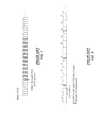
- FIG. 1generally illustrates an OFDM context for sounding signals.
- a sounding signalcan be characterized in the frequency domain by: the index of the first transmitted subcarrier of the sounding signal (index eight is illustrated); the number of transmitted subcarriers of the sounding signal (twelve are illustrated); the spacing between transmitted subcarriers, also sometimes referred to as the repetition factor (RPF) of the sounding signal (a spacing of two is illustrated).
- RPFrepetition factor
- Each subframe of length 1 msconsists of two equal-sized slots of length 0.5 ms. Each slot then consists of seven symbols. Within each slot, one symbol is used as a so called (demodulation) reference signal, which is not the same as the sounding (reference) signals introduced above. Indeed, such demodulation reference signals are used for uplink channel estimation to enable coherent uplink detection. The remaining symbols in each slot are typically used for data transmission. Within each subframe there are thus two demodulation reference symbols and twelve “data” symbols.
- the sounding signal structurecan be characterized as shown in FIG. 3 by: the period (measured in the number of subframes) of the sounding signal, i.e. how often the sounding signal is transmitted (a period of four subframes is shown in FIG.
- different modulationcan be applied to the transmitted subcarriers of the sounding signals.
- This modulationmay differ between different terminals within a cell or different terminals in neighbor cells.
- the modulation of the transmitted subcarriersis assumed to be based on so-called Zadoff-Chu sequences that have been extended to a length equal to the number of transmitted subcarriers.
- the parameters used for the sounding signal transmissionincluding: the frequency domain parameters (bandwidth, number of transmitted subcarriers, spacing between transmitted subcarriers (repetition factor), index of first transmitted subcarrier, etc.); time-domain parameters (period. offset, position within the subframe, etc.); and which modulation symbols to use for the transmitted subcarriers of the sounding reference signal.
- sounding signal configuration parametersmay be implicitly given, for example, by the identity of the cell in which a terminal is active. However, several of the parameters are provided (configured) by means of downlink signaling to the terminal. In many cases, sounding signals are only to be transmitted intermittently, e.g., when the mobile terminal is to transmit data on the uplink. In view of this intermittent transmission, a base station could be configured to send sounding signal configuration parameters to a terminal each time the terminal is intended to transmit sounding signals. However, that arrangement imposes potentially high signaling overhead for managing sounding signal transmissions from a plurality of terminals.
- a base station or other controlling entityseparates the selection of sounding signal parameters (sounding signal configuration) and the signaling of that configuration information to a mobile terminal from the “ordering” or other initiation of sounding signal transmission.
- a mobile stationmay be sent sounding signal configuration information and subsequently be commanded (implicitly or explicitly) to begin sounding signal transmissions according to the previously provided configuration information.
- one or more embodiments presented hereinprovide a method of controlling the transmission of sounding signals by a mobile station operating in a wireless communication network.
- the methodis characterized by sending configuration parameters for a sounding signal to be transmitted by the mobile station, and subsequently sending a command or other initiating signal to the mobile station separately from said configuration parameters, to cause the mobile station to transmit the sounding signal according to said configuration parameters.
- the methodis further characterized by sending updated configuration parameters on a first time basis, and sending commands or other initiating signals to cause the mobile station to transmit the sounding signal on a second, faster time basis.
- FIG. 1is a diagram of conventional sounding signal transmission depicted in a frequency domain, such as might be used in an LTE system.
- FIG. 2is a diagram of conventional uplink time-domain structuring, as used in LTE systems.
- FIG. 3is a diagram of conventional sounding signal transmission depicting a time domain, such as used in LTE systems.
- FIG. 4is a diagram of a wireless communication network, including embodiments of a base station and a mobile station configured according to the sounding signal teachings presented herein.
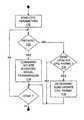
- FIG. 5is a logic flow diagram illustrating one embodiment of a method of separating sounding signal configuration from sounding signal transmission initiation.
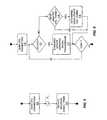
- FIG. 6is a logic flow diagram illustrating example details for the logic flow diagram of FIG. 5 .
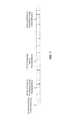
- FIG. 7is a diagram of sounding signal configuration, initiation, and termination (stopping) according to one embodiment of the teachings herein, as depicted in the time domain.
- FIG. 4illustrates a wireless communication network 10 , including a radio access network (RAN) 12 , and a core network (CN) 14 .
- the RAN 12includes one or more base stations 16 (one is illustrated), each supporting wireless communications with one or more mobile stations 18 (one is illustrated).
- the base stations 16communicatively couple the mobile stations 18 to the CN 14 , which in turn communicatively couples to one or more external networks, such as the PSTN, the Internet, etc.
- the wireless communication network 10is an LTE network and the base stations 16 correspondingly are Enhanced Node Bs (eNodeBs), and the mobile stations 18 are LTE-compatible handsets or other wireless communication devices.
- eNodeBsEnhanced Node Bs
- the example base station 16includes one or more antennas 20 , radiofrequency (RF) transceiver circuits 22 , and one or more processing/control circuits 24 , which include network layer/protocol processors 26 , 28 , and 30 . These processors 26 , 28 , and 30 respectively provide physical layer, Medium Access Control (MAC) layer, and Radio Resource Control (RRC) layer processing and control. In terms of implementation, such processors comprise hardware, software, or any combination thereof.
- the base station's processing/control circuits 24include one or more computer systems, e.g., cards or modules including microprocessor/DSP circuits.
- One or more memory circuits and/or storage devices included in the base station 16serve as a computer readable medium or media for storing computer program instructions, including instructions for implementing the sounding signal teachings presented herein.
- the example mobile station 18includes one or more antennas 40 , an RF transceiver 42 , and one or more processing/control circuits 44 .
- these processing/control circuits 44may be implemented via digital processing circuits, such as one or more microprocessors, DSPs, etc.
- the processing/control circuits 44include a baseband processor for processing incoming downlink communication signals after downconversion and digitization via the RF transceiver 42 , and for generating outgoing uplink communication signals for transmission via the RF transceiver 42 and antenna(s) 40 .
- the processing/control circuits 44also include a system controller in one or more embodiments, which may be implemented with the baseband processor or separately from it. The system controller provides overall device control, such as user interface management, etc.
- the base station 16is, in one or more embodiments, configured to control the transmission of sounding signals by the mobile station 18 .
- the base station 16is characterized by one or more processing circuits—e.g., the processing/control circuits 24 —that are configured to send configuration parameters for a sounding signal to be transmitted by the mobile station 18 , and subsequently send a command or other initiating signal to the mobile station 18 separately from said configuration parameters, to cause the mobile station 18 to transmit the sounding signal according to said configuration parameters.
- the base station 16is further characterized in that the one or more processing circuits are configured to send updated configuration parameters on a first time basis, and send commands or other initiating signals to cause the mobile station 18 to transmit the sounding signal on a second, faster time basis. Additionally, in at least one embodiment, the base station 16 is further characterized in that the one or more processing circuits are configured to use Radio Resource Control (RRC) signaling to send the configuration parameters. Still further, in at least one embodiment, the one or more processing circuits are configured to use MAC signaling to send the commands or other initiating signals.
- RRCRadio Resource Control
- MACMedium Access
- the base station's one or more processing circuitsare configured to send one or more additional configuration parameters in conjunction with sending the commands or other initiating signals.
- the mobile station 18transmits the sounding signal based on earlier-received configuration parameters, as modified by or updated by the one or more additional configuration parameters.
- Such operationfor example allows the base station 16 to send basic or nominal sounding signal configurations as desired for the mobile station 18 using slower or less frequent signaling, while still allowing for the base station 16 to update or adjust those configurations as needed at the initiation of sounding signal transmission.
- explicit or implicit initiationmay be used by the base station 16 , and recognized by the mobile station 18 .
- the base station 16is further characterized in that its one or more processing circuits are configured to subsequently send the command or other initiating signal (for initiating sounding signal transmission) to the mobile 18 station implicitly, by sending an uplink scheduling grant to the mobile station 18 .
- the mobile station 18is, in such embodiments, appropriately configured to recognize this form of implicit initiation.
- the base station's one or more processing circuitsare configured to subsequently send the command or other initiating signal to the mobile station 18 explicitly, by sending a sounding signal initiation command via downlink signaling. (The command may, for example, be sent via MAC layer signaling.)
- FIG. 5broadly illustrates the above base station method. It should be understood that this logic flow diagram may represent one aspect of a potentially much more complicated processing flow implemented at the base station 16 . As such, the illustrated processing may be looped or otherwise repeated as needed, for any number of mobile stations 18 . Also, the illustrated processing may be included as part of other processing routines, and the illustration therefore should be understood as a potentially simplified processing flow intended to highlight sounding signal processing of particular interest herein.
- the base station 16sends configuration parameters for a sounding signal to be transmitted by the mobile station 18 (Block 100 ), and subsequently sends a command or other initiating signal to the mobile station 18 separately from the configuration parameters (Block 102 ), to cause the mobile station 18 to transmit the sounding signal according to the configuration parameters.
- “Subsequently” in this contextdenotes some time after, but should not be construed as requiring some minimum separation in time between configuring sounding signal transmission and commanding sounding signal transmission. Rather, it should be understood that the use of “subsequently” denotes or otherwise emphasizes the advantageous separation of sounding signal configuration from the actual commanding of sounding signal transmission. Such separation yields significant flexibility and can reduce signaling overhead.
- the base station 16is, in one or more embodiments, configured to send updated (sounding signal) configuration parameters on a first time basis, and send commands or other initiating signals to cause the mobile station 18 to transmit the sounding signal on a second, faster time basis.
- FIG. 6presents an example flow diagram for carrying out such a method. Again, FIG. 6 may or may not represent stand-alone processing, and it should be understood that the base station 16 may implement the logical processing of FIG. 6 for multiple mobile stations 18 , and may integrate such processing into other functional operations.
- the illustrated processing“begins” with the base station 16 sending (sounding signal) configuration parameters to the mobile station 18 (Block 110 ), and then determining whether to initiate sounding signal transmission by the mobile station 18 (Block 112 ).
- the base station 16may run a software or hardware timer, upon expiration of which it initiates sounding signal transmission by the mobile station 18 .
- the base station 16may determine whether sounding signal transmission should be initiated on an as-needed basis, such as where radio link adaptation changes require, or where channel condition changes are detected.
- the base station 16commands sounding signal transmission by the mobile station 18 (Block 114 ). From there, processing generally continues in looped fashion, although such looping may be ended or overridden as needed or appropriate. If sounding signal transmission is not desired, processing continues from Block 112 by determining whether to send updated configuration parameters (Block 116 ). Again, sounding signal configuration updating may be done on a timed or as needed basis, and may be done more slowly than sounding signal transmission is initiated. If it is desired to update the mobile station's sounding signal configuration, the base station 16 determines the appropriate updated parameters and sends them to the mobile station 18 (Block 118 ), such as via RRC signaling.
- select sounding signal configuration parameter informationcan be sent as part of the initiation shown in Block 114 (such as via MAC layer signaling), and that such additional or updated parameter transmission can be done at every such initiation, for some initiations, or not at all.
- the baseline set of sounding signal parameterswhich in one or more embodiments comprises a more comprehensive or “full” set of sounding signal configuration parameters, can be sent more slowly or as needed, via the separate processing of Block 116 .
- the mobile station 18is configured for operation in the wireless communication network 10 . More particularly, the mobile station 18 is characterized by one or more processing circuits configured to receive configuration parameters for a sounding signal to be transmitted by the mobile station 18 , and subsequently transmit a sounding signal in accordance with the configuration parameters, in response to receiving a separate command or other initiating signal.
- the mobile station 18may be understood as being advantageously configured to allow its sounding signal transmission to be configured separately from sounding signal transmission initiation.
- the mobile station 18is configured to receive one or more RRC layer sounding signal parameter configuration messages from the base station 16 , and to configure its sounding signal transmission parameters accordingly, and to initiate actual sounding signal transmissions as subsequently commanded, according to those previously received configuration parameters. Further, as noted in the context of Block 114 in FIG. 6 , the mobile station 18 may be further characterized in that it transmits its sounding signal additionally in accordance with any additional configuration parameters received with the subsequent command or other initiating signal.
- the subsequent commandsare explicit command messages, such as may be sent to the mobile station 18 via MAC layer signaling. Additionally or alternatively, the subsequent commands are implicit.
- the mobile station 18is configured to interpret at least some uplink scheduling grants from the base station 16 as implicit commands to transmit a sounding signal.
- the start of actual sounding signal transmission by the mobile station 18can be ordered by more rapid signaling. This may be done by means of MAC signaling, as noted (where such signaling is carried out between the MAC protocol entities of the base station 16 and the mobile station 18 ).
- MAC signalingcan be done in different ways, e.g., by inserting the signaling within a MAC Protocol Data Unit (PDU) or using a so called Layer 1/Layer 2 (L1/L2) control channel.
- PDUMAC Protocol Data Unit
- L1/L2Layer 1/Layer 2
- the mobile station 18may also, in addition to the configuration parameters discussed above, use a “duration” parameter specifying for how long, e.g. measured in number of subframes, its sounding signal transmissions should continue after the base station 16 has initiated sounding signal transmission.
- a special caseis the configuration of a duration time of one, implying that only a single sounding signal transmission (one subframe) takes place.
- the mobile station 18is configured to perform “one-shot” sounding signal transmission, which may be advantageous for some operating scenarios, such as where the base station 16 uses brief but frequently repeated one-shot sounding signal transmissions to maintain updated channel estimates, etc., for the mobile station 18 .
- the mobile station 18may be configured to start sounding signal transmission responsive to receiving an uplink scheduling grant, i.e., in response to receiving permission from the network 10 to conduct an uplink data transmission.
- the mobile station 18continues its sounding signal transmission for a certain duration after the last scheduling grant has been received, in accordance with its duration configuration parameter (which may be held as a default value at the mobile station 18 , and/or which may be provided or updated by the base station 16 ).
- the teachings presented hereinprovide an advantageous method and apparatus for separating the selection and sending of sounding signal configuration parameters to a mobile station, from the “ordering” of the mobile station to initiate transmission of its sounding signal (also referred to as a sounding reference signal). That is, one or more embodiments contemplated herein provide a low-overhead method for configuring and initiating sounding signals, based on separating the configuration (setting of the parameters) of sounding signals from the actual initiation of the sounding signal transmission.
- the configurationis done less often than the initiation. Additionally or alternatively, the configuration is done by RRC signaling. In the same or other embodiments, the initiation is done by MAC signaling. In the same or other embodiments, sounding signal transmissions may be stopped by “stop” signaling. In the same or other embodiments, a duration parameter can be included in the configuration parameters used for configuring sounding signal transmissions by a mobile station. In the same or other embodiments, initiation of sounding signal transmission is implicitly given by the reception of a scheduling grant from the network. In the same or other embodiments, the sounding signal transmission continues for a certain time duration after the reception of a scheduling grant.
Landscapes
- Engineering & Computer Science (AREA)
- Signal Processing (AREA)
- Computer Networks & Wireless Communication (AREA)
- Mobile Radio Communication Systems (AREA)
- Reduction Or Emphasis Of Bandwidth Of Signals (AREA)
Abstract
Description
This application claims priority from the United States provisional patent application entitled “Sounding Configuration,” as filed on 8 Aug. 2007 and identified by application Ser. No. 60/954,736.
The present invention generally relates to wireless communication networks, and particularly relates to configuring sounding signal transmissions in such networks.
Uplink sounding reference signals (“sounding signals”) are known signals transmitted on the uplink (mobile-terminal-to-network) direction. Such sounding signals can be used by the receiver (the base station) to estimate the uplink channel quality, including the uplink channel quality for different frequency bands. The channel-quality estimates can e.g. be used by the uplink scheduler (located in the base station) to determine a suitable uplink data rate (uplink rate control) or select a suitable frequency band for the uplink transmission for a given mobile terminal (so called channel-dependent frequency-domain scheduling).
Uplink sounding signals can also be used by the receiver to estimate the timing of the received signal. Such receive-timing estimates can be used by the network subsequently to adjust the mobile-terminal transmit timing in order to time-align the receive timing of the uplink transmissions of different mobile terminals. Other uses of the uplink sounding signals are also possible.
In Long Term Evolution (LTE), as being developed by the Third Generation Partnership Project (3GPP), the uplink sounding signals can be seen as OFDM signals, implying that they consist of a number of subcarriers with suitable modulation applied to each subcarrier. 3GPP Technical Specifications (TSs) serving as useful references for additional background details include: 3GPP TS 36.211, entitled “Evolved Universal Terrestrial Radio Access (E-UTRA); Physical channels and modulation”; 3GPP TS 36.213, entitled “Evolved Universal Terrestrial Radio Access (E-UTRA); Physical layer procedures”; 3GPP TS 36.321, entitled “Evolved Universal Terrestrial Radio Access (E-UTRA); Medium Access Control (MAC) protocol specification”: and 3GPP TS 36.331, entitled “Evolved Universal Terrestrial Radio Access (E-UTRA); Radio Resource Control (RRC); Protocol specification”.
The LTE uplink time-domain structure is outlined inFIG. 2 . Each subframe oflength 1 ms consists of two equal-sized slots of length 0.5 ms. Each slot then consists of seven symbols. Within each slot, one symbol is used as a so called (demodulation) reference signal, which is not the same as the sounding (reference) signals introduced above. Indeed, such demodulation reference signals are used for uplink channel estimation to enable coherent uplink detection. The remaining symbols in each slot are typically used for data transmission. Within each subframe there are thus two demodulation reference symbols and twelve “data” symbols.
Accordingly, if sounding signals are to be transmitted on the uplink, a subset of the data symbols, e.g. every M-th data symbol, can be replaced by sounding signals. Typically the sounding signals are not transmitted in every subframe. Instead, one data symbol in every N-th subframe is replaced by a sounding signal (consisting of a number of subcarriers according toFIG. 1 ). Thus, in the time domain, the sounding signal structure can be characterized as shown inFIG. 3 by: the period (measured in the number of subframes) of the sounding signal, i.e. how often the sounding signal is transmitted (a period of four subframes is shown inFIG. 3 ); the time offset (measured in number of subframes) of the sounding signal (an offset of two subframes is shown inFIG. 3 ); the position of the sounding signal within the subframe, i.e., which data symbol has been replaced by a sounding signal (not explicitly illustrated inFIG. 3 ).
Within the above context, different modulation can be applied to the transmitted subcarriers of the sounding signals. This modulation may differ between different terminals within a cell or different terminals in neighbor cells. As an example, for 3GPP LTE, the modulation of the transmitted subcarriers is assumed to be based on so-called Zadoff-Chu sequences that have been extended to a length equal to the number of transmitted subcarriers. For a terminal to transmit sounding signals, it needs to know the parameters used for the sounding signal transmission including: the frequency domain parameters (bandwidth, number of transmitted subcarriers, spacing between transmitted subcarriers (repetition factor), index of first transmitted subcarrier, etc.); time-domain parameters (period. offset, position within the subframe, etc.); and which modulation symbols to use for the transmitted subcarriers of the sounding reference signal.
Some of these sounding signal configuration parameters may be implicitly given, for example, by the identity of the cell in which a terminal is active. However, several of the parameters are provided (configured) by means of downlink signaling to the terminal. In many cases, sounding signals are only to be transmitted intermittently, e.g., when the mobile terminal is to transmit data on the uplink. In view of this intermittent transmission, a base station could be configured to send sounding signal configuration parameters to a terminal each time the terminal is intended to transmit sounding signals. However, that arrangement imposes potentially high signaling overhead for managing sounding signal transmissions from a plurality of terminals.
The teachings presented herein propose a separation between the configuration of a sounding signal and the initialization of the sounding signal. In other words, in at least one example embodiment proposed herein, a base station or other controlling entity separates the selection of sounding signal parameters (sounding signal configuration) and the signaling of that configuration information to a mobile terminal from the “ordering” or other initiation of sounding signal transmission. Thus, a mobile station may be sent sounding signal configuration information and subsequently be commanded (implicitly or explicitly) to begin sounding signal transmissions according to the previously provided configuration information.
Accordingly, one or more embodiments presented herein provide a method of controlling the transmission of sounding signals by a mobile station operating in a wireless communication network. The method is characterized by sending configuration parameters for a sounding signal to be transmitted by the mobile station, and subsequently sending a command or other initiating signal to the mobile station separately from said configuration parameters, to cause the mobile station to transmit the sounding signal according to said configuration parameters. In at least one embodiment, the method is further characterized by sending updated configuration parameters on a first time basis, and sending commands or other initiating signals to cause the mobile station to transmit the sounding signal on a second, faster time basis.
Of course, the present invention is not limited to the above contexts, nor is it limited to the above features and advantages. Indeed, those skilled in the art will recognize additional features and advantages upon reading the following detailed description, and upon viewing the accompanying drawings.
As a non-limiting example, thewireless communication network 10 is an LTE network and thebase stations 16 correspondingly are Enhanced Node Bs (eNodeBs), and themobile stations 18 are LTE-compatible handsets or other wireless communication devices. Indeed, it should be understood that the term “mobile station” as used herein broadly encompasses essentially any type of wireless communication device including but not limited to cellular radiotelephones, wireless pagers, PDAs, computers, and network/modem cards or modules.
Turning back to the illustrated details, theexample base station 16 includes one ormore antennas 20, radiofrequency (RF)transceiver circuits 22, and one or more processing/control circuits 24, which include network layer/protocol processors processors control circuits 24 include one or more computer systems, e.g., cards or modules including microprocessor/DSP circuits. One or more memory circuits and/or storage devices included in thebase station 16 serve as a computer readable medium or media for storing computer program instructions, including instructions for implementing the sounding signal teachings presented herein.
Similarly, the examplemobile station 18 includes one ormore antennas 40, anRF transceiver 42, and one or more processing/control circuits 44. As with thebase station 16, these processing/control circuits 44 may be implemented via digital processing circuits, such as one or more microprocessors, DSPs, etc. In at least one embodiment, the processing/control circuits 44 include a baseband processor for processing incoming downlink communication signals after downconversion and digitization via theRF transceiver 42, and for generating outgoing uplink communication signals for transmission via theRF transceiver 42 and antenna(s)40. The processing/control circuits 44 also include a system controller in one or more embodiments, which may be implemented with the baseband processor or separately from it. The system controller provides overall device control, such as user interface management, etc.
It should be understood that the illustrated base station and mobile station implementations represent non-limiting examples, in as much as other functional circuit arrangements may be used to implement the sounding signal functionality described herein. Regarding that functionality, thebase station 16 is, in one or more embodiments, configured to control the transmission of sounding signals by themobile station 18. Accordingly, thebase station 16 is characterized by one or more processing circuits—e.g., the processing/control circuits 24—that are configured to send configuration parameters for a sounding signal to be transmitted by themobile station 18, and subsequently send a command or other initiating signal to themobile station 18 separately from said configuration parameters, to cause themobile station 18 to transmit the sounding signal according to said configuration parameters.
In at least one embodiment, thebase station 16 is further characterized in that the one or more processing circuits are configured to send updated configuration parameters on a first time basis, and send commands or other initiating signals to cause themobile station 18 to transmit the sounding signal on a second, faster time basis. Additionally, in at least one embodiment, thebase station 16 is further characterized in that the one or more processing circuits are configured to use Radio Resource Control (RRC) signaling to send the configuration parameters. Still further, in at least one embodiment, the one or more processing circuits are configured to use MAC signaling to send the commands or other initiating signals. As such, sounding signal configuration for themobile station 18 may be carried out by thebase station 16 via RRC layer signaling, and subsequent (or repeated) initiation of sounding signal transmission by themobile station 18 can be carried out by thebase station 16 via MAC layer signaling.
As a further point of characterization, in at least one embodiment, the base station's one or more processing circuits are configured to send one or more additional configuration parameters in conjunction with sending the commands or other initiating signals. In this manner, themobile station 18 transmits the sounding signal based on earlier-received configuration parameters, as modified by or updated by the one or more additional configuration parameters. Such operation for example allows thebase station 16 to send basic or nominal sounding signal configurations as desired for themobile station 18 using slower or less frequent signaling, while still allowing for thebase station 16 to update or adjust those configurations as needed at the initiation of sounding signal transmission.
Regarding such initiation, it is contemplated herein that explicit or implicit initiation may be used by thebase station 16, and recognized by themobile station 18. In at least one embodiment, thebase station 16 is further characterized in that its one or more processing circuits are configured to subsequently send the command or other initiating signal (for initiating sounding signal transmission) to the mobile18 station implicitly, by sending an uplink scheduling grant to themobile station 18. Of course, themobile station 18 is, in such embodiments, appropriately configured to recognize this form of implicit initiation. Additionally, or alternatively, the base station's one or more processing circuits are configured to subsequently send the command or other initiating signal to themobile station 18 explicitly, by sending a sounding signal initiation command via downlink signaling. (The command may, for example, be sent via MAC layer signaling.)
With these qualifications in mind, one sees that thebase station 16 sends configuration parameters for a sounding signal to be transmitted by the mobile station18 (Block100), and subsequently sends a command or other initiating signal to themobile station 18 separately from the configuration parameters (Block102), to cause themobile station 18 to transmit the sounding signal according to the configuration parameters. “Subsequently” in this context denotes some time after, but should not be construed as requiring some minimum separation in time between configuring sounding signal transmission and commanding sounding signal transmission. Rather, it should be understood that the use of “subsequently” denotes or otherwise emphasizes the advantageous separation of sounding signal configuration from the actual commanding of sounding signal transmission. Such separation yields significant flexibility and can reduce signaling overhead.
For example. as noted, thebase station 16 is, in one or more embodiments, configured to send updated (sounding signal) configuration parameters on a first time basis, and send commands or other initiating signals to cause themobile station 18 to transmit the sounding signal on a second, faster time basis.FIG. 6 presents an example flow diagram for carrying out such a method. Again,FIG. 6 may or may not represent stand-alone processing, and it should be understood that thebase station 16 may implement the logical processing ofFIG. 6 for multiplemobile stations 18, and may integrate such processing into other functional operations.
The illustrated processing “begins” with thebase station 16 sending (sounding signal) configuration parameters to the mobile station18 (Block110), and then determining whether to initiate sounding signal transmission by the mobile station18 (Block112). For example, thebase station 16 may run a software or hardware timer, upon expiration of which it initiates sounding signal transmission by themobile station 18. Additionally, or alternatively, thebase station 16 may determine whether sounding signal transmission should be initiated on an as-needed basis, such as where radio link adaptation changes require, or where channel condition changes are detected.
If sounding signal transmission is desired (either time-wise or based on changes in conditions), thebase station 16 commands sounding signal transmission by the mobile station18 (Block114). From there, processing generally continues in looped fashion, although such looping may be ended or overridden as needed or appropriate. If sounding signal transmission is not desired, processing continues fromBlock 112 by determining whether to send updated configuration parameters (Block116). Again, sounding signal configuration updating may be done on a timed or as needed basis, and may be done more slowly than sounding signal transmission is initiated. If it is desired to update the mobile station's sounding signal configuration, thebase station 16 determines the appropriate updated parameters and sends them to the mobile station18 (Block118), such as via RRC signaling.
Note, however, that it is contemplated in at least some embodiments herein to send “tweaked” or select additional parameters as part of commanding sounding signal transmission. Thus, it should be understood that select sounding signal configuration parameter information can be sent as part of the initiation shown in Block114 (such as via MAC layer signaling), and that such additional or updated parameter transmission can be done at every such initiation, for some initiations, or not at all. In any case, the baseline set of sounding signal parameters, which in one or more embodiments comprises a more comprehensive or “full” set of sounding signal configuration parameters, can be sent more slowly or as needed, via the separate processing ofBlock 116.
In a complementary manner, themobile station 18 is configured for operation in thewireless communication network 10. More particularly, themobile station 18 is characterized by one or more processing circuits configured to receive configuration parameters for a sounding signal to be transmitted by themobile station 18, and subsequently transmit a sounding signal in accordance with the configuration parameters, in response to receiving a separate command or other initiating signal. Thus, themobile station 18 may be understood as being advantageously configured to allow its sounding signal transmission to be configured separately from sounding signal transmission initiation.
For example, themobile station 18 is configured to receive one or more RRC layer sounding signal parameter configuration messages from thebase station 16, and to configure its sounding signal transmission parameters accordingly, and to initiate actual sounding signal transmissions as subsequently commanded, according to those previously received configuration parameters. Further, as noted in the context ofBlock 114 inFIG. 6 , themobile station 18 may be further characterized in that it transmits its sounding signal additionally in accordance with any additional configuration parameters received with the subsequent command or other initiating signal. In at least one embodiment, the subsequent commands are explicit command messages, such as may be sent to themobile station 18 via MAC layer signaling. Additionally or alternatively, the subsequent commands are implicit. For example, in at least one embodiment, themobile station 18 is configured to interpret at least some uplink scheduling grants from thebase station 16 as implicit commands to transmit a sounding signal.
Broadly, it should be understood that once the sounding signal configuration has been carried out by thebase station 16. the start of actual sounding signal transmission by themobile station 18 can be ordered by more rapid signaling. This may be done by means of MAC signaling, as noted (where such signaling is carried out between the MAC protocol entities of thebase station 16 and the mobile station18). Such MAC signaling can be done in different ways, e.g., by inserting the signaling within a MAC Protocol Data Unit (PDU) or using a so calledLayer 1/Layer 2 (L1/L2) control channel. Regardless, once the sounding signal transmission has been initiated, it can also be stopped with a similar kind of MAC signaling.
Such operation is illustrated in the example ofFIG. 7 , where a period of two transmission subframes is configured for the sounding signal. To avoid a never-ending sounding signal transmission scenario in a case where themobile station 18 does not correctly detect signaling to stop sounding signal transmission, themobile station 18 may also, in addition to the configuration parameters discussed above, use a “duration” parameter specifying for how long, e.g. measured in number of subframes, its sounding signal transmissions should continue after thebase station 16 has initiated sounding signal transmission.
A special case is the configuration of a duration time of one, implying that only a single sounding signal transmission (one subframe) takes place. Thus, by configuring the duration parameter to one subframe, themobile station 18 is configured to perform “one-shot” sounding signal transmission, which may be advantageous for some operating scenarios, such as where thebase station 16 uses brief but frequently repeated one-shot sounding signal transmissions to maintain updated channel estimates, etc., for themobile station 18.
Further, as previously noted, in an alternative to an explicit initiation signaling, themobile station 18 may be configured to start sounding signal transmission responsive to receiving an uplink scheduling grant, i.e., in response to receiving permission from thenetwork 10 to conduct an uplink data transmission. In such a case, as an alternative to explicit “stopping” of the sounding signal transmission, themobile station 18 continues its sounding signal transmission for a certain duration after the last scheduling grant has been received, in accordance with its duration configuration parameter (which may be held as a default value at themobile station 18, and/or which may be provided or updated by the base station16).
Broadly, the teachings presented herein provide an advantageous method and apparatus for separating the selection and sending of sounding signal configuration parameters to a mobile station, from the “ordering” of the mobile station to initiate transmission of its sounding signal (also referred to as a sounding reference signal). That is, one or more embodiments contemplated herein provide a low-overhead method for configuring and initiating sounding signals, based on separating the configuration (setting of the parameters) of sounding signals from the actual initiation of the sounding signal transmission.
In at least one embodiment, the configuration is done less often than the initiation. Additionally or alternatively, the configuration is done by RRC signaling. In the same or other embodiments, the initiation is done by MAC signaling. In the same or other embodiments, sounding signal transmissions may be stopped by “stop” signaling. In the same or other embodiments, a duration parameter can be included in the configuration parameters used for configuring sounding signal transmissions by a mobile station. In the same or other embodiments, initiation of sounding signal transmission is implicitly given by the reception of a scheduling grant from the network. In the same or other embodiments, the sounding signal transmission continues for a certain time duration after the reception of a scheduling grant.
With these and other examples in mind, those skilled in the art will appreciate that the foregoing description and the accompanying drawings represent non-limiting examples of the methods and apparatus taught herein. As such, the present invention is not limited by the foregoing description and accompanying drawings. Instead, the present invention is limited only by the following claims and their legal equivalents.
Claims (20)
1. A method of controlling the transmission of sounding signals by a mobile station operating in a wireless communication network comprising:
sending configuration parameters for a sounding signal to be transmitted by the mobile station; and
subsequently sending a command or other initiating signal to the mobile station separately from said configuration parameters, to cause the mobile station to transmit the sounding signal according to said configuration parameters, wherein subsequently sending a command or other initiating signal comprises implicitly commanding the mobile station to initiate sounding signal transmission by sending scheduling information to the mobile station.
2. The method ofclaim 1 , further comprising sending updated configuration parameters on a first time basis, and sending commands or other initiating signals to cause the mobile station to transmit the sounding signal on a second, faster time basis.
3. The method ofclaim 1 , further comprising using Radio Resource Control (RRC) signaling to send said configuration parameters.
4. The method ofclaim 3 , further comprising using Medium Access Control (MAC) signaling to send the command or other initiating signal.
5. The method ofclaim 4 , further comprising sending one or more additional configuration parameters in conjunction with sending the commands or other initiating signals, such that the mobile station transmits the sounding signal based on earlier-received said configuration parameters, as modified by or updated by the one or more additional configuration parameters.
6. The method ofclaim 1 , wherein subsequently sending the command or other initiating signal to the mobile station comprises implicitly commanding the mobile station to initiate sounding signal transmission by sending an uplink scheduling grant to the mobile station.
7. The method ofclaim 1 , wherein subsequently sending the command or other initiating signal to the mobile station comprises explicitly commanding the mobile station to initiate sounding signal transmission by sending a sounding signal initiation command via downlink signaling.
8. A base station configured to control the transmission of sounding signals by a mobile station, said base station comprising one or more processing circuits configured to:
send configuration parameters for a sounding signal to be transmitted by the mobile station; and
subsequently send a command or other initiating signal to the mobile station separately from said configuration parameters, to cause the mobile station to transmit the sounding signal according to said configuration parameters, wherein subsequently sending a command or other initiating signal comprises implicitly commanding the mobile station to initiate sounding signal transmission by sending scheduling information to the mobile station.
9. The base station ofclaim 8 , wherein the one or more processing circuits are further configured to send updated configuration parameters on a first time basis, and send commands or other initiating signals to cause the mobile station to transmit the sounding signal on a second, faster time basis.
10. The base station ofclaim 8 , wherein the one or more processing circuits are further configured to use Radio Resource Control (RRC) signaling to send said configuration parameters.
11. The base station ofclaim 10 , wherein the one or more processing circuits are further configured to use Medium Access Control (MAC) signaling to send the commands or other initiating signals.
12. The base station ofclaim 11 , wherein the one or more processing circuits are further configured to send one or more additional configuration parameters in conjunction with sending the commands or other initiating signals, such that the mobile station transmits the sounding signal based on earlier-received said configuration parameters, as modified by or updated by the one or more additional configuration parameters.
13. The base station ofclaim 8 , wherein the one or more processing circuits are further configured to subsequently send the command or other initiating signal to the mobile station implicitly by sending an uplink scheduling grant to the mobile station.
14. The base station ofclaim 8 , wherein the one or more processing circuits are further configured to subsequently send the command or other initiating signal to the mobile station comprises explicitly sending a sounding signal initiation command via downlink signaling.
15. A mobile station configured for operation in a wireless communication network and comprising one or more processing circuits configured to:
receive configuration parameters for a sounding signal to be transmitted by the mobile station; and
subsequently transmit a sounding signal in accordance with the configuration parameters, in response to receiving a separate command or other initiating signal, wherein the separate command or other initiating signal comprises an implicit command that commands the mobile station to initiate sounding signal transmission using scheduling information received by the mobile station.
16. The mobile station ofclaim 15 , wherein the one or more processing circuits are further configured to transmit the sounding signal additionally in accordance with any additional configuration parameters received with the separate command or other initiating signal.
17. A method implemented at a mobile station configured for operation in a wireless communication network, said method comprising:
receiving configuration parameters for a sounding signal to be transmitted by the mobile station; and
subsequently transmitting a sounding signal in accordance with the configuration parameters, in response to receiving a separate command or other initiating signal, wherein the separate command or other initiating signal comprises an implicit command that commands the mobile station to initiate sounding signal transmission using scheduling information received by the mobile station.
18. The method ofclaim 17 , wherein the configuration parameters comprising configuration parameters received with the separate command or other initiating signal.
19. The method ofclaim 1 , wherein the configuration parameters for the sounding signal are of the following types: time domain parameters, frequency domain parameters, or parameters specifying a modulation scheme.
20. The base station ofclaim 8 , wherein the configuration parameters for the sounding signal are of the following types: time domain parameters, frequency domain parameters, or parameters specifying a modulation scheme.
Priority Applications (3)
| Application Number | Priority Date | Filing Date | Title |
|---|---|---|---|
| US12/672,357US9131534B2 (en) | 2007-08-08 | 2008-06-18 | Method and apparatus for configuring sounding signals in a wireless communication network |
| US15/483,171US10264569B2 (en) | 2007-08-08 | 2017-04-10 | Method and apparatus for configuring sounding signals in a wireless communication network |
| US17/512,309USRE49623E1 (en) | 2007-08-08 | 2021-10-27 | Method and apparatus for configuring sounding signals in a wireless communication network |
Applications Claiming Priority (3)
| Application Number | Priority Date | Filing Date | Title |
|---|---|---|---|
| US95473607P | 2007-08-08 | 2007-08-08 | |
| PCT/EP2008/057722WO2009019064A1 (en) | 2007-08-08 | 2008-06-18 | A method and apparatus for configuring sounding signals in a wireless communication network |
| US12/672,357US9131534B2 (en) | 2007-08-08 | 2008-06-18 | Method and apparatus for configuring sounding signals in a wireless communication network |
Related Parent Applications (1)
| Application Number | Title | Priority Date | Filing Date |
|---|---|---|---|
| PCT/EP2008/057722A-371-Of-InternationalWO2009019064A1 (en) | 2007-08-08 | 2008-06-18 | A method and apparatus for configuring sounding signals in a wireless communication network |
Related Child Applications (1)
| Application Number | Title | Priority Date | Filing Date |
|---|---|---|---|
| US14/797,268ContinuationUS9642130B2 (en) | 2007-08-08 | 2015-07-13 | Method and apparatus for configuring sounding signals in a wireless communication network |
Publications (2)
| Publication Number | Publication Date |
|---|---|
| US20110086644A1 US20110086644A1 (en) | 2011-04-14 |
| US9131534B2true US9131534B2 (en) | 2015-09-08 |
Family
ID=39810323
Family Applications (5)
| Application Number | Title | Priority Date | Filing Date |
|---|---|---|---|
| US12/672,357Active2030-06-15US9131534B2 (en) | 2007-08-08 | 2008-06-18 | Method and apparatus for configuring sounding signals in a wireless communication network |
| US14/797,268ActiveUS9642130B2 (en) | 2007-08-08 | 2015-07-13 | Method and apparatus for configuring sounding signals in a wireless communication network |
| US15/483,171ActiveUS10264569B2 (en) | 2007-08-08 | 2017-04-10 | Method and apparatus for configuring sounding signals in a wireless communication network |
| US16/371,782CeasedUS10462780B2 (en) | 2007-08-08 | 2019-04-01 | Method and apparatus for configuring sounding signals in a wireless communication network |
| US17/512,309ActiveUSRE49623E1 (en) | 2007-08-08 | 2021-10-27 | Method and apparatus for configuring sounding signals in a wireless communication network |
Family Applications After (4)
| Application Number | Title | Priority Date | Filing Date |
|---|---|---|---|
| US14/797,268ActiveUS9642130B2 (en) | 2007-08-08 | 2015-07-13 | Method and apparatus for configuring sounding signals in a wireless communication network |
| US15/483,171ActiveUS10264569B2 (en) | 2007-08-08 | 2017-04-10 | Method and apparatus for configuring sounding signals in a wireless communication network |
| US16/371,782CeasedUS10462780B2 (en) | 2007-08-08 | 2019-04-01 | Method and apparatus for configuring sounding signals in a wireless communication network |
| US17/512,309ActiveUSRE49623E1 (en) | 2007-08-08 | 2021-10-27 | Method and apparatus for configuring sounding signals in a wireless communication network |
Country Status (9)
| Country | Link |
|---|---|
| US (5) | US9131534B2 (en) |
| EP (1) | EP2179551B1 (en) |
| KR (1) | KR101407240B1 (en) |
| CN (2) | CN101779425A (en) |
| AT (1) | ATE503325T1 (en) |
| AU (1) | AU2008285803B2 (en) |
| DE (1) | DE602008005754D1 (en) |
| ES (1) | ES2360575T3 (en) |
| WO (1) | WO2009019064A1 (en) |
Cited By (1)
| Publication number | Priority date | Publication date | Assignee | Title |
|---|---|---|---|---|
| US10462780B2 (en) | 2007-08-08 | 2019-10-29 | Telefonaktiebolaget Lm Ericsson (Publ) | Method and apparatus for configuring sounding signals in a wireless communication network |
Families Citing this family (13)
| Publication number | Priority date | Publication date | Assignee | Title |
|---|---|---|---|---|
| WO2009019062A2 (en) | 2007-08-08 | 2009-02-12 | Telefonaktiebolaget Lm Ericsson (Publ) | Channel sounding using multiple sounding signal configurations |
| CN101505485B (en) | 2008-02-05 | 2014-11-05 | 三星电子株式会社 | Method and apparatus for sending SRS in LTE TDD system |
| CN101330325B (en)* | 2008-07-29 | 2012-09-05 | 中兴通讯股份有限公司 | Transmission method for upstream channel measuring reference signal |
| US8532038B2 (en)* | 2008-08-19 | 2013-09-10 | Qualcomm Incorporated | Methods and apparatus for frame exchange for SDMA uplink data |
| JP5555763B2 (en) | 2009-03-17 | 2014-07-23 | インターデイジタル パテント ホールディングス インコーポレイテッド | Method and apparatus for power control of sounding reference signal (SRS) transmission |
| EP2462461A1 (en)* | 2009-08-05 | 2012-06-13 | Andrew LLC | System and method for hybrid location in an lte network |
| JP5574872B2 (en)* | 2010-08-03 | 2014-08-20 | シャープ株式会社 | Base station apparatus, mobile station apparatus, and communication method |
| WO2012148162A2 (en)* | 2011-04-25 | 2012-11-01 | 엘지전자 주식회사 | Method for transceiving reference signal in wireless access system and terminal therefor |
| WO2013153269A1 (en)* | 2012-04-13 | 2013-10-17 | Nokia Corporation | Arrangement for enhanced multi-transmit antenna sounding |
| JP2016103663A (en)* | 2013-03-07 | 2016-06-02 | シャープ株式会社 | Terminal device and base station device |
| KR102382007B1 (en)* | 2017-08-25 | 2022-04-04 | 삼성전자주식회사 | Apparatus and method for sharing band in wireless communication system |
| US12267195B2 (en)* | 2018-10-02 | 2025-04-01 | Huawei Technologies Co., Ltd. | System and method for reducing power consumption using power saving reference signals |
| CN117063570B (en) | 2021-03-22 | 2025-02-28 | 中兴通讯股份有限公司 | System and method for sounding reference signal transmission |
Citations (8)
| Publication number | Priority date | Publication date | Assignee | Title |
|---|---|---|---|---|
| WO2006034577A1 (en) | 2004-09-30 | 2006-04-06 | Nortel Networks Limited | Channel sounding in ofdma system |
| CN1981447A (en) | 2004-08-12 | 2007-06-13 | 摩托罗拉公司 | Method and apparatus for closed loop transmission |
| US20070230373A1 (en)* | 2006-03-31 | 2007-10-04 | Qinghua Li | Efficient training schemes for MIMO based wireless networks |
| US20070253379A1 (en)* | 2006-04-28 | 2007-11-01 | Motorola, Inc. | Method and apparatus for uplink allocation placement in an uplink frame |
| US20080062953A1 (en) | 2000-12-15 | 2008-03-13 | Adaptix, Inc. | Ofdma with adaptive subcarrier-cluster configuration and selective loading |
| US20080268857A1 (en)* | 2007-04-30 | 2008-10-30 | Mccoy James W | Channel sounding techniques for a wireless communication system |
| US20080273494A1 (en)* | 2004-08-12 | 2008-11-06 | Motorola, Inc. | Method and apparatus for closed loop transmission |
| US20090042615A1 (en)* | 2007-08-06 | 2009-02-12 | Koon Hoo Teo | Method for Selecting Antennas in a Wireless Networks |
Family Cites Families (12)
| Publication number | Priority date | Publication date | Assignee | Title |
|---|---|---|---|---|
| JP2701761B2 (en)* | 1994-11-02 | 1998-01-21 | 日本電気株式会社 | Transmission bit rate determination method and apparatus |
| US8213994B2 (en)* | 2002-08-07 | 2012-07-03 | Interdigital Technology Corporation | Mobile communications system and method for providing common channel coverage using beamforming antennas |
| KR100606782B1 (en)* | 2004-06-21 | 2006-08-01 | 엘지전자 주식회사 | Multi-mode mobile terminal and communication service switching method using location information |
| EP1696616A1 (en)* | 2005-02-28 | 2006-08-30 | NTT DoCoMo, Inc. | Transmission rate control method, mobile station, and radio network controller |
| US7903628B2 (en)* | 2005-08-22 | 2011-03-08 | Qualcomm Incorporated | Configurable pilots in a wireless communication system |
| US8199724B2 (en)* | 2005-09-23 | 2012-06-12 | Xr Communications, Llc | Multiple beam antenna base station |
| CN100518371C (en)* | 2006-01-06 | 2009-07-22 | 中兴通讯股份有限公司 | A switching method for digital trunking terminals across dispatching clients |
| US8839362B2 (en)* | 2006-07-31 | 2014-09-16 | Motorola Mobility Llc | Method and apparatus for managing transmit power for device-to-device communication |
| US7986959B2 (en) | 2007-02-14 | 2011-07-26 | Qualcomm Incorporated | Preamble based uplink power control for LTE |
| EP2120477A4 (en)* | 2007-03-01 | 2014-01-01 | Ntt Docomo Inc | BASE STATION DEVICE, USER DEVICE, AND COMMUNICATION CONTROL METHOD |
| CN101981840B (en)* | 2007-06-20 | 2014-12-03 | 诺基亚通信公司 | Low PAR zero auto-correlation zone sequences for code sequence modulation |
| US9131534B2 (en)* | 2007-08-08 | 2015-09-08 | Telefonaktiebolaget L M Ericsson (Publ) | Method and apparatus for configuring sounding signals in a wireless communication network |
- 2008
- 2008-06-18USUS12/672,357patent/US9131534B2/enactiveActive
- 2008-06-18DEDE200860005754patent/DE602008005754D1/enactiveActive
- 2008-06-18ATAT08774134Tpatent/ATE503325T1/ennot_activeIP Right Cessation
- 2008-06-18CNCN200880102288Apatent/CN101779425A/enactivePending
- 2008-06-18AUAU2008285803Apatent/AU2008285803B2/enactiveActive
- 2008-06-18WOPCT/EP2008/057722patent/WO2009019064A1/enactiveApplication Filing
- 2008-06-18ESES08774134Tpatent/ES2360575T3/enactiveActive
- 2008-06-18KRKR1020107002665Apatent/KR101407240B1/enactiveActive
- 2008-06-18EPEP20080774134patent/EP2179551B1/enactiveActive
- 2008-06-18CNCN201810925636.5Apatent/CN109104266A/enactivePending
- 2015
- 2015-07-13USUS14/797,268patent/US9642130B2/enactiveActive
- 2017
- 2017-04-10USUS15/483,171patent/US10264569B2/enactiveActive
- 2019
- 2019-04-01USUS16/371,782patent/US10462780B2/ennot_activeCeased
- 2021
- 2021-10-27USUS17/512,309patent/USRE49623E1/enactiveActive
Patent Citations (9)
| Publication number | Priority date | Publication date | Assignee | Title |
|---|---|---|---|---|
| US20080062953A1 (en) | 2000-12-15 | 2008-03-13 | Adaptix, Inc. | Ofdma with adaptive subcarrier-cluster configuration and selective loading |
| CN1981447A (en) | 2004-08-12 | 2007-06-13 | 摩托罗拉公司 | Method and apparatus for closed loop transmission |
| US20080273494A1 (en)* | 2004-08-12 | 2008-11-06 | Motorola, Inc. | Method and apparatus for closed loop transmission |
| US20120243501A1 (en) | 2004-08-12 | 2012-09-27 | Motorola Mobility, Inc. | Method and Apparatus for Closed Loop Transmission |
| WO2006034577A1 (en) | 2004-09-30 | 2006-04-06 | Nortel Networks Limited | Channel sounding in ofdma system |
| US20070230373A1 (en)* | 2006-03-31 | 2007-10-04 | Qinghua Li | Efficient training schemes for MIMO based wireless networks |
| US20070253379A1 (en)* | 2006-04-28 | 2007-11-01 | Motorola, Inc. | Method and apparatus for uplink allocation placement in an uplink frame |
| US20080268857A1 (en)* | 2007-04-30 | 2008-10-30 | Mccoy James W | Channel sounding techniques for a wireless communication system |
| US20090042615A1 (en)* | 2007-08-06 | 2009-02-12 | Koon Hoo Teo | Method for Selecting Antennas in a Wireless Networks |
Cited By (2)
| Publication number | Priority date | Publication date | Assignee | Title |
|---|---|---|---|---|
| US10462780B2 (en) | 2007-08-08 | 2019-10-29 | Telefonaktiebolaget Lm Ericsson (Publ) | Method and apparatus for configuring sounding signals in a wireless communication network |
| USRE49623E1 (en) | 2007-08-08 | 2023-08-22 | Telefonaktiebolaget Lm Ericsson (Publ) | Method and apparatus for configuring sounding signals in a wireless communication network |
Also Published As
| Publication number | Publication date |
|---|---|
| AU2008285803B2 (en) | 2013-03-21 |
| ES2360575T3 (en) | 2011-06-07 |
| CN101779425A (en) | 2010-07-14 |
| US9642130B2 (en) | 2017-05-02 |
| US20190230637A1 (en) | 2019-07-25 |
| US10462780B2 (en) | 2019-10-29 |
| KR101407240B1 (en) | 2014-06-27 |
| US10264569B2 (en) | 2019-04-16 |
| ATE503325T1 (en) | 2011-04-15 |
| US20110086644A1 (en) | 2011-04-14 |
| US20170223679A1 (en) | 2017-08-03 |
| WO2009019064A1 (en) | 2009-02-12 |
| EP2179551B1 (en) | 2011-03-23 |
| CN109104266A (en) | 2018-12-28 |
| AU2008285803A1 (en) | 2009-02-12 |
| EP2179551A1 (en) | 2010-04-28 |
| US20150327222A1 (en) | 2015-11-12 |
| DE602008005754D1 (en) | 2011-05-05 |
| KR20100054792A (en) | 2010-05-25 |
| USRE49623E1 (en) | 2023-08-22 |
Similar Documents
| Publication | Publication Date | Title |
|---|---|---|
| USRE49623E1 (en) | Method and apparatus for configuring sounding signals in a wireless communication network | |
| US11304196B2 (en) | Random access method for multiple numerology operation | |
| JP6653394B2 (en) | Uplink transmission timing control | |
| US20180234146A1 (en) | Downlink Multiple Input Multiple Output Enhancements for Single-Cell with Remote Radio Heads | |
| US20110249581A1 (en) | Method of Handling Sounding Reference Signal Transmission and Related Communication Device | |
| RU2726641C1 (en) | Signaling on location of reference signals in slots and mini-slots | |
| US10764910B2 (en) | Listen-before-talk period for slotted access with scheduled traffic | |
| US20150223184A1 (en) | Timing Advance Timer Start for Uplink Transmissions | |
| CN107710839B (en) | Communication method and device | |
| US10986599B2 (en) | TA obtaining method and apparatus | |
| EP4193543A1 (en) | Signaling for updating tci state of a coreset with dci | |
| EP4233254A1 (en) | Implicit update of activated tci states | |
| US10009898B2 (en) | Methods and apparatuses for enabling cell activation in a network | |
| US10512100B2 (en) | User device-requested downlink pilots | |
| WO2024065561A1 (en) | Latency reduction during wireless mobility | |
| CN109936873B (en) | Method and device for configuring timing advance | |
| KR102798503B1 (en) | Method and apparatus for performing communication using bwp in wireless communincation system |
Legal Events
| Date | Code | Title | Description |
|---|---|---|---|
| AS | Assignment | Owner name:TELEFONAKTIEBOLAGET LM ERICSSON (PUBL), SWEDEN Free format text:ASSIGNMENT OF ASSIGNORS INTEREST;ASSIGNORS:DAHLMAN, ERIK;JADING, YLVA;PARKVALL, STEFAN;SIGNING DATES FROM 20080718 TO 20080801;REEL/FRAME:023904/0124 | |
| STCF | Information on status: patent grant | Free format text:PATENTED CASE | |
| MAFP | Maintenance fee payment | Free format text:PAYMENT OF MAINTENANCE FEE, 4TH YEAR, LARGE ENTITY (ORIGINAL EVENT CODE: M1551); ENTITY STATUS OF PATENT OWNER: LARGE ENTITY Year of fee payment:4 | |
| MAFP | Maintenance fee payment | Free format text:PAYMENT OF MAINTENANCE FEE, 8TH YEAR, LARGE ENTITY (ORIGINAL EVENT CODE: M1552); ENTITY STATUS OF PATENT OWNER: LARGE ENTITY Year of fee payment:8 |