US9055932B2 - Suture fastener combination device - Google Patents
Suture fastener combination deviceDownload PDFInfo
- Publication number
- US9055932B2 US9055932B2US13/219,004US201113219004AUS9055932B2US 9055932 B2US9055932 B2US 9055932B2US 201113219004 AUS201113219004 AUS 201113219004AUS 9055932 B2US9055932 B2US 9055932B2
- Authority
- US
- United States
- Prior art keywords
- fastener
- opening
- sutures
- actuator shaft
- outer shaft
- Prior art date
- Legal status (The legal status is an assumption and is not a legal conclusion. Google has not performed a legal analysis and makes no representation as to the accuracy of the status listed.)
- Expired - Fee Related, expires
Links
- 239000000463materialSubstances0.000claimsdescription21
- 239000000853adhesiveSubstances0.000claimsdescription4
- 230000001070adhesive effectEffects0.000claimsdescription4
- 239000013013elastic materialSubstances0.000claims1
- 238000000034methodMethods0.000description24
- -1poly(hydroxybutyrate)Polymers0.000description13
- 230000000694effectsEffects0.000description4
- 238000012986modificationMethods0.000description4
- 230000004048modificationEffects0.000description4
- BASFCYQUMIYNBI-UHFFFAOYSA-NplatinumChemical compound[Pt]BASFCYQUMIYNBI-UHFFFAOYSA-N0.000description4
- AEMRFAOFKBGASW-UHFFFAOYSA-NGlycolic acidChemical compoundOCC(O)=OAEMRFAOFKBGASW-UHFFFAOYSA-N0.000description3
- 230000009471actionEffects0.000description3
- 239000000919ceramicSubstances0.000description3
- 230000007246mechanismEffects0.000description3
- 229920001610polycaprolactonePolymers0.000description3
- 229920000728polyesterPolymers0.000description3
- 229920000642polymerPolymers0.000description3
- 229910052715tantalumInorganic materials0.000description3
- GUVRBAGPIYLISA-UHFFFAOYSA-Ntantalum atomChemical compound[Ta]GUVRBAGPIYLISA-UHFFFAOYSA-N0.000description3
- 206010053567CoagulopathiesDiseases0.000description2
- 229920000219Ethylene vinyl alcoholPolymers0.000description2
- PXHVJJICTQNCMI-UHFFFAOYSA-NNickelChemical compound[Ni]PXHVJJICTQNCMI-UHFFFAOYSA-N0.000description2
- KDLHZDBZIXYQEI-UHFFFAOYSA-NPalladiumChemical compound[Pd]KDLHZDBZIXYQEI-UHFFFAOYSA-N0.000description2
- 229920001244Poly(D,L-lactide)Polymers0.000description2
- 229920002732PolyanhydridePolymers0.000description2
- 229920000954PolyglycolidePolymers0.000description2
- BQCADISMDOOEFD-UHFFFAOYSA-NSilverChemical compound[Ag]BQCADISMDOOEFD-UHFFFAOYSA-N0.000description2
- 239000002253acidSubstances0.000description2
- 150000007513acidsChemical class0.000description2
- TZCXTZWJZNENPQ-UHFFFAOYSA-Lbarium sulfateChemical compound[Ba+2].[O-]S([O-])(=O)=OTZCXTZWJZNENPQ-UHFFFAOYSA-L0.000description2
- 230000009286beneficial effectEffects0.000description2
- 230000008901benefitEffects0.000description2
- 239000000560biocompatible materialSubstances0.000description2
- 210000004204blood vesselAnatomy0.000description2
- 229910010293ceramic materialInorganic materials0.000description2
- 230000035602clottingEffects0.000description2
- 229920001577copolymerPolymers0.000description2
- 230000035876healingEffects0.000description2
- 229920001600hydrophobic polymerPolymers0.000description2
- 239000000178monomerSubstances0.000description2
- HLXZNVUGXRDIFK-UHFFFAOYSA-Nnickel titaniumChemical compound[Ti].[Ti].[Ti].[Ti].[Ti].[Ti].[Ti].[Ti].[Ti].[Ti].[Ti].[Ni].[Ni].[Ni].[Ni].[Ni].[Ni].[Ni].[Ni].[Ni].[Ni].[Ni].[Ni].[Ni].[Ni]HLXZNVUGXRDIFK-UHFFFAOYSA-N0.000description2
- 229910001000nickel titaniumInorganic materials0.000description2
- 229910052697platinumInorganic materials0.000description2
- 229920001432poly(L-lactide)Polymers0.000description2
- 229920000747poly(lactic acid)Polymers0.000description2
- 239000004632polycaprolactoneSubstances0.000description2
- 229920000036polyvinylpyrrolidonePolymers0.000description2
- 235000013855polyvinylpyrrolidoneNutrition0.000description2
- 239000001267polyvinylpyrrolidoneSubstances0.000description2
- 229910052709silverInorganic materials0.000description2
- 239000004332silverSubstances0.000description2
- 229910001220stainless steelInorganic materials0.000description2
- 239000010935stainless steelSubstances0.000description2
- 230000001225therapeutic effectEffects0.000description2
- WFKWXMTUELFFGS-UHFFFAOYSA-NtungstenChemical compound[W]WFKWXMTUELFFGS-UHFFFAOYSA-N0.000description2
- 229910052721tungstenInorganic materials0.000description2
- 239000010937tungstenSubstances0.000description2
- 230000002792vascularEffects0.000description2
- QYEXBYZXHDUPRC-UHFFFAOYSA-NB#[Ti]#BChemical compoundB#[Ti]#BQYEXBYZXHDUPRC-UHFFFAOYSA-N0.000description1
- MBMLMWLHJBBADN-UHFFFAOYSA-NFerrous sulfideChemical compound[Fe]=SMBMLMWLHJBBADN-UHFFFAOYSA-N0.000description1
- 206010018852HaematomaDiseases0.000description1
- 208000032843HemorrhageDiseases0.000description1
- 150000008553L-tyrosinesChemical class0.000description1
- ZOKXTWBITQBERF-UHFFFAOYSA-NMolybdenumChemical compound[Mo]ZOKXTWBITQBERF-UHFFFAOYSA-N0.000description1
- 239000004698PolyethyleneSubstances0.000description1
- 229920000331PolyhydroxybutyratePolymers0.000description1
- 229920001710PolyorthoesterPolymers0.000description1
- 239000004743PolypropyleneSubstances0.000description1
- 229910052581Si3N4Inorganic materials0.000description1
- VYPSYNLAJGMNEJ-UHFFFAOYSA-NSilicium dioxideChemical compoundO=[Si]=OVYPSYNLAJGMNEJ-UHFFFAOYSA-N0.000description1
- 229910001362Ta alloysInorganic materials0.000description1
- GWEVSGVZZGPLCZ-UHFFFAOYSA-NTitan oxideChemical compoundO=[Ti]=OGWEVSGVZZGPLCZ-UHFFFAOYSA-N0.000description1
- RTAQQCXQSZGOHL-UHFFFAOYSA-NTitaniumChemical compound[Ti]RTAQQCXQSZGOHL-UHFFFAOYSA-N0.000description1
- 206010052428WoundDiseases0.000description1
- 208000027418Wounds and injuryDiseases0.000description1
- QCWXUUIWCKQGHC-UHFFFAOYSA-NZirconiumChemical compound[Zr]QCWXUUIWCKQGHC-UHFFFAOYSA-N0.000description1
- MCMNRKCIXSYSNV-UHFFFAOYSA-NZrO2Inorganic materialsO=[Zr]=OMCMNRKCIXSYSNV-UHFFFAOYSA-N0.000description1
- 230000002730additional effectEffects0.000description1
- 229910045601alloyInorganic materials0.000description1
- 239000000956alloySubstances0.000description1
- 238000002399angioplastyMethods0.000description1
- 239000003242anti bacterial agentSubstances0.000description1
- 230000003115biocidal effectEffects0.000description1
- 229920000249biocompatible polymerPolymers0.000description1
- 229920002988biodegradable polymerPolymers0.000description1
- 239000004621biodegradable polymerSubstances0.000description1
- 229910052797bismuthInorganic materials0.000description1
- JCXGWMGPZLAOME-UHFFFAOYSA-Nbismuth atomChemical compound[Bi]JCXGWMGPZLAOME-UHFFFAOYSA-N0.000description1
- 230000000740bleeding effectEffects0.000description1
- 239000008280bloodSubstances0.000description1
- 210000004369bloodAnatomy0.000description1
- 239000003795chemical substances by applicationSubstances0.000description1
- 239000000788chromium alloySubstances0.000description1
- 239000011248coating agentSubstances0.000description1
- 238000000576coating methodMethods0.000description1
- 230000000295complement effectEffects0.000description1
- PMHQVHHXPFUNSP-UHFFFAOYSA-Mcopper(1+);methylsulfanylmethane;bromideChemical compoundBr[Cu].CSCPMHQVHHXPFUNSP-UHFFFAOYSA-M0.000description1
- CGMRCMMOCQYHAD-UHFFFAOYSA-Jdicalcium hydroxide phosphateChemical compound[OH-].[Ca++].[Ca++].[O-]P([O-])([O-])=OCGMRCMMOCQYHAD-UHFFFAOYSA-J0.000description1
- KZHJGOXRZJKJNY-UHFFFAOYSA-Ndioxosilane;oxo(oxoalumanyloxy)alumaneChemical compoundO=[Si]=O.O=[Si]=O.O=[Al]O[Al]=O.O=[Al]O[Al]=O.O=[Al]O[Al]=OKZHJGOXRZJKJNY-UHFFFAOYSA-N0.000description1
- 238000006073displacement reactionMethods0.000description1
- 239000003814drugSubstances0.000description1
- 229940079593drugDrugs0.000description1
- 238000005516engineering processMethods0.000description1
- PCHJSUWPFVWCPO-UHFFFAOYSA-NgoldChemical compound[Au]PCHJSUWPFVWCPO-UHFFFAOYSA-N0.000description1
- 229910052737goldInorganic materials0.000description1
- 239000010931goldSubstances0.000description1
- 230000023597hemostasisEffects0.000description1
- 239000000017hydrogelSubstances0.000description1
- 229920001480hydrophilic copolymerPolymers0.000description1
- 229920001477hydrophilic polymerPolymers0.000description1
- 230000002209hydrophobic effectEffects0.000description1
- 208000014674injuryDiseases0.000description1
- 238000013152interventional procedureMethods0.000description1
- 229910052751metalInorganic materials0.000description1
- 239000002184metalSubstances0.000description1
- 150000001247metal acetylidesChemical class0.000description1
- 229910001092metal group alloyInorganic materials0.000description1
- 239000000203mixtureSubstances0.000description1
- 229910052750molybdenumInorganic materials0.000description1
- 239000011733molybdenumSubstances0.000description1
- 229910052863mulliteInorganic materials0.000description1
- 229910052759nickelInorganic materials0.000description1
- 229910052758niobiumInorganic materials0.000description1
- 239000010955niobiumSubstances0.000description1
- GUCVJGMIXFAOAE-UHFFFAOYSA-Nniobium atomChemical compound[Nb]GUCVJGMIXFAOAE-UHFFFAOYSA-N0.000description1
- RHDUVDHGVHBHCL-UHFFFAOYSA-Nniobium tantalumChemical compound[Nb].[Ta]RHDUVDHGVHBHCL-UHFFFAOYSA-N0.000description1
- 150000004767nitridesChemical class0.000description1
- 229920001778nylonPolymers0.000description1
- TWNQGVIAIRXVLR-UHFFFAOYSA-Noxo(oxoalumanyloxy)alumaneChemical compoundO=[Al]O[Al]=OTWNQGVIAIRXVLR-UHFFFAOYSA-N0.000description1
- RVTZCBVAJQQJTK-UHFFFAOYSA-Noxygen(2-);zirconium(4+)Chemical compound[O-2].[O-2].[Zr+4]RVTZCBVAJQQJTK-UHFFFAOYSA-N0.000description1
- 229910052763palladiumInorganic materials0.000description1
- 239000002245particleSubstances0.000description1
- 229920001308poly(aminoacid)Polymers0.000description1
- 239000005014poly(hydroxyalkanoate)Substances0.000description1
- 239000005015poly(hydroxybutyrate)Substances0.000description1
- 229920001606poly(lactic acid-co-glycolic acid)Polymers0.000description1
- 229920002463poly(p-dioxanone) polymerPolymers0.000description1
- 229920002627poly(phosphazenes)Polymers0.000description1
- 229920000515polycarbonatePolymers0.000description1
- 239000004417polycarbonateSubstances0.000description1
- 229920006149polyester-amide block copolymerPolymers0.000description1
- 229920000573polyethylenePolymers0.000description1
- 229920000903polyhydroxyalkanoatePolymers0.000description1
- 229920001155polypropylenePolymers0.000description1
- 229920001299polypropylene fumaratePolymers0.000description1
- 229920000166polytrimethylene carbonatePolymers0.000description1
- 229920002689polyvinyl acetatePolymers0.000description1
- 229920002451polyvinyl alcoholPolymers0.000description1
- 235000019422polyvinyl alcoholNutrition0.000description1
- 230000008569processEffects0.000description1
- 238000007789sealingMethods0.000description1
- 150000003346selenoethersChemical class0.000description1
- 229910021332silicideInorganic materials0.000description1
- HBMJWWWQQXIZIP-UHFFFAOYSA-Nsilicon carbideChemical compound[Si+]#[C-]HBMJWWWQQXIZIP-UHFFFAOYSA-N0.000description1
- 229910010271silicon carbideInorganic materials0.000description1
- HQVNEWCFYHHQES-UHFFFAOYSA-Nsilicon nitrideChemical compoundN12[Si]34N5[Si]62N3[Si]51N64HQVNEWCFYHHQES-UHFFFAOYSA-N0.000description1
- 229910052814silicon oxideInorganic materials0.000description1
- 150000004763sulfidesChemical class0.000description1
- 150000004772telluridesChemical class0.000description1
- 229910052719titaniumInorganic materials0.000description1
- 239000010936titaniumSubstances0.000description1
- OGIDPMRJRNCKJF-UHFFFAOYSA-Ntitanium oxideInorganic materials[Ti]=OOGIDPMRJRNCKJF-UHFFFAOYSA-N0.000description1
- 230000008733traumaEffects0.000description1
- MTPVUVINMAGMJL-UHFFFAOYSA-Ntrimethyl(1,1,2,2,2-pentafluoroethyl)silaneChemical compoundC[Si](C)(C)C(F)(F)C(F)(F)FMTPVUVINMAGMJL-UHFFFAOYSA-N0.000description1
- 238000009966trimmingMethods0.000description1
- 150000003673urethanesChemical class0.000description1
- 229910052726zirconiumInorganic materials0.000description1
- 229910001928zirconium oxideInorganic materials0.000description1
- 229910000859α-FeInorganic materials0.000description1
Images


Classifications
- A—HUMAN NECESSITIES
- A61—MEDICAL OR VETERINARY SCIENCE; HYGIENE
- A61B—DIAGNOSIS; SURGERY; IDENTIFICATION
- A61B17/00—Surgical instruments, devices or methods
- A61B17/0057—Implements for plugging an opening in the wall of a hollow or tubular organ, e.g. for sealing a vessel puncture or closing a cardiac septal defect
- A—HUMAN NECESSITIES
- A61—MEDICAL OR VETERINARY SCIENCE; HYGIENE
- A61B—DIAGNOSIS; SURGERY; IDENTIFICATION
- A61B17/00—Surgical instruments, devices or methods
- A61B17/04—Surgical instruments, devices or methods for suturing wounds; Holders or packages for needles or suture materials
- A61B17/0467—Instruments for cutting sutures
- A—HUMAN NECESSITIES
- A61—MEDICAL OR VETERINARY SCIENCE; HYGIENE
- A61B—DIAGNOSIS; SURGERY; IDENTIFICATION
- A61B17/00—Surgical instruments, devices or methods
- A61B17/04—Surgical instruments, devices or methods for suturing wounds; Holders or packages for needles or suture materials
- A61B17/0487—Suture clamps, clips or locks, e.g. for replacing suture knots; Instruments for applying or removing suture clamps, clips or locks
- A—HUMAN NECESSITIES
- A61—MEDICAL OR VETERINARY SCIENCE; HYGIENE
- A61B—DIAGNOSIS; SURGERY; IDENTIFICATION
- A61B17/00—Surgical instruments, devices or methods
- A61B17/04—Surgical instruments, devices or methods for suturing wounds; Holders or packages for needles or suture materials
- A61B17/0401—Suture anchors, buttons or pledgets, i.e. means for attaching sutures to bone, cartilage or soft tissue; Instruments for applying or removing suture anchors
- A—HUMAN NECESSITIES
- A61—MEDICAL OR VETERINARY SCIENCE; HYGIENE
- A61B—DIAGNOSIS; SURGERY; IDENTIFICATION
- A61B17/00—Surgical instruments, devices or methods
- A61B2017/00004—(bio)absorbable, (bio)resorbable or resorptive
- A—HUMAN NECESSITIES
- A61—MEDICAL OR VETERINARY SCIENCE; HYGIENE
- A61B—DIAGNOSIS; SURGERY; IDENTIFICATION
- A61B17/00—Surgical instruments, devices or methods
- A61B17/0057—Implements for plugging an opening in the wall of a hollow or tubular organ, e.g. for sealing a vessel puncture or closing a cardiac septal defect
- A61B2017/00646—Type of implements
- A61B2017/00663—Type of implements the implement being a suture
- A—HUMAN NECESSITIES
- A61—MEDICAL OR VETERINARY SCIENCE; HYGIENE
- A61B—DIAGNOSIS; SURGERY; IDENTIFICATION
- A61B17/00—Surgical instruments, devices or methods
- A61B2017/00831—Material properties
- A61B2017/0088—Material properties ceramic
- A—HUMAN NECESSITIES
- A61—MEDICAL OR VETERINARY SCIENCE; HYGIENE
- A61B—DIAGNOSIS; SURGERY; IDENTIFICATION
- A61B17/00—Surgical instruments, devices or methods
- A61B2017/00831—Material properties
- A61B2017/00889—Material properties antimicrobial, disinfectant
- A—HUMAN NECESSITIES
- A61—MEDICAL OR VETERINARY SCIENCE; HYGIENE
- A61B—DIAGNOSIS; SURGERY; IDENTIFICATION
- A61B17/00—Surgical instruments, devices or methods
- A61B17/04—Surgical instruments, devices or methods for suturing wounds; Holders or packages for needles or suture materials
- A61B17/0401—Suture anchors, buttons or pledgets, i.e. means for attaching sutures to bone, cartilage or soft tissue; Instruments for applying or removing suture anchors
- A61B2017/0404—Buttons
- A—HUMAN NECESSITIES
- A61—MEDICAL OR VETERINARY SCIENCE; HYGIENE
- A61B—DIAGNOSIS; SURGERY; IDENTIFICATION
- A61B17/00—Surgical instruments, devices or methods
- A61B17/04—Surgical instruments, devices or methods for suturing wounds; Holders or packages for needles or suture materials
- A61B17/0401—Suture anchors, buttons or pledgets, i.e. means for attaching sutures to bone, cartilage or soft tissue; Instruments for applying or removing suture anchors
- A61B2017/0409—Instruments for applying suture anchors
- A—HUMAN NECESSITIES
- A61—MEDICAL OR VETERINARY SCIENCE; HYGIENE
- A61B—DIAGNOSIS; SURGERY; IDENTIFICATION
- A61B17/00—Surgical instruments, devices or methods
- A61B17/04—Surgical instruments, devices or methods for suturing wounds; Holders or packages for needles or suture materials
- A61B17/0401—Suture anchors, buttons or pledgets, i.e. means for attaching sutures to bone, cartilage or soft tissue; Instruments for applying or removing suture anchors
- A61B2017/0414—Suture anchors, buttons or pledgets, i.e. means for attaching sutures to bone, cartilage or soft tissue; Instruments for applying or removing suture anchors having a suture-receiving opening, e.g. lateral opening
- A—HUMAN NECESSITIES
- A61—MEDICAL OR VETERINARY SCIENCE; HYGIENE
- A61B—DIAGNOSIS; SURGERY; IDENTIFICATION
- A61B17/00—Surgical instruments, devices or methods
- A61B17/04—Surgical instruments, devices or methods for suturing wounds; Holders or packages for needles or suture materials
- A61B17/0401—Suture anchors, buttons or pledgets, i.e. means for attaching sutures to bone, cartilage or soft tissue; Instruments for applying or removing suture anchors
- A61B2017/0446—Means for attaching and blocking the suture in the suture anchor
- A61B2017/0454—Means for attaching and blocking the suture in the suture anchor the anchor being crimped or clamped on the suture
- A—HUMAN NECESSITIES
- A61—MEDICAL OR VETERINARY SCIENCE; HYGIENE
- A61B—DIAGNOSIS; SURGERY; IDENTIFICATION
- A61B17/00—Surgical instruments, devices or methods
- A61B17/04—Surgical instruments, devices or methods for suturing wounds; Holders or packages for needles or suture materials
- A61B17/0401—Suture anchors, buttons or pledgets, i.e. means for attaching sutures to bone, cartilage or soft tissue; Instruments for applying or removing suture anchors
- A61B2017/0446—Means for attaching and blocking the suture in the suture anchor
- A61B2017/0458—Longitudinal through hole, e.g. suture blocked by a distal suture knot
- A—HUMAN NECESSITIES
- A61—MEDICAL OR VETERINARY SCIENCE; HYGIENE
- A61B—DIAGNOSIS; SURGERY; IDENTIFICATION
- A61B17/00—Surgical instruments, devices or methods
- A61B17/04—Surgical instruments, devices or methods for suturing wounds; Holders or packages for needles or suture materials
- A61B17/0401—Suture anchors, buttons or pledgets, i.e. means for attaching sutures to bone, cartilage or soft tissue; Instruments for applying or removing suture anchors
- A61B2017/0446—Means for attaching and blocking the suture in the suture anchor
- A61B2017/0461—Means for attaching and blocking the suture in the suture anchor with features cooperating with special features on the suture, e.g. protrusions on the suture
- A61B2017/0462—One way system, i.e. also tensioning the suture
- A—HUMAN NECESSITIES
- A61—MEDICAL OR VETERINARY SCIENCE; HYGIENE
- A61B—DIAGNOSIS; SURGERY; IDENTIFICATION
- A61B17/00—Surgical instruments, devices or methods
- A61B17/04—Surgical instruments, devices or methods for suturing wounds; Holders or packages for needles or suture materials
- A61B17/0469—Suturing instruments for use in minimally invasive surgery, e.g. endoscopic surgery
- A61B2017/0474—Knot pushers
- A—HUMAN NECESSITIES
- A61—MEDICAL OR VETERINARY SCIENCE; HYGIENE
- A61B—DIAGNOSIS; SURGERY; IDENTIFICATION
- A61B17/00—Surgical instruments, devices or methods
- A61B17/04—Surgical instruments, devices or methods for suturing wounds; Holders or packages for needles or suture materials
- A61B17/0487—Suture clamps, clips or locks, e.g. for replacing suture knots; Instruments for applying or removing suture clamps, clips or locks
- A61B2017/0488—Instruments for applying suture clamps, clips or locks
Definitions
- Embodiments of the inventionrelate generally to medical devices. More particularly, embodiments of the invention relate to systems and methods for closing openings in tissue.
- Catheterization and interventional proceduresare generally performed through a patient's vascular system. These procedures often begin by inserting a hollow needle through the patient's skin and tissue into the vascular system. A guide wire may be advanced through the needle and into the patient's blood vessel accessed by the needle. The needle is then removed, enabling an introducer sheath to be advanced over the guide wire into the vessel, e.g., in conjunction with or subsequent to a dilator.
- a catheter or other devicemay then be advanced through a lumen of the introducer sheath and over the guide wire into a position for performing a medical procedure.
- the introducer sheathmay facilitate introducing various devices into the vessel, while minimizing trauma to the vessel wall and/or minimizing blood loss during a procedure.
- the devices and introducer sheathare removed, leaving a puncture site or opening in the vessel wall.
- external pressurewould be applied to the puncture site until clotting and wound sealing occur; however, the patient must remain bedridden for a substantial period after clotting to ensure closure of the opening.
- This proceduremay be time consuming and expensive, requiring as much as an hour of a physician's or nurse's time. It is also uncomfortable for the patient and requires that the patient remain immobilized in the operating room, catheter lab, or holding area. In addition, a risk of hematoma exists from bleeding before hemostasis occurs.
- Embodiments of the inventionrelate to systems and methods for closing opening in tissue.
- Embodiments of the inventioncan close openings in tissue by operating as a knot pushing system or as a knot replacement system.
- a fastener includedcan either push a knot formed in sutures to close the opening or act as a knot replacement such that tying the knot is not required.
- a closure system for closing an opening in tissueincludes a fastener.
- the fastenerincludes an opening formed therein and sutures are received or drawn through the opening.
- the closure systemalso includes a closure device configured to deploy the fastener.
- the closure deviceincludes an outer shaft and an actuator shaft that are configured to deploy the fastener as either a knot replacement or a knot pusher.
- the closure deviceis also configured to trim the sutures after deployment.
- the closure devicemay include cutters formed or included in the outer and actuator shafts that are configured to trim the sutures by relative movement of the outer and actuator shafts.
- a closure device for closing an opening in tissuein another embodiment, includes an actuator shaft and an outer shaft.
- the actuator shaftis configured to move slidably within the outer shaft.
- Each of the outer shaft and the actuator shafthas an opening formed therein with a cutter. Relative movement of the outer and actuator shafts causes the cutters to trim the sutures.
- the outer shaftincludes a recess that is configured to removably receive a fastener. Distal movement of the actuator shaft relative to the outer shaft dislodges the fastener from the recess.
- a method for closing an opening in tissueincludes loading a closure device with a fastener.
- suturesare drawn through the fastener and through an opening a sidewall of the closure device.
- the fasteneris deployed from the closure device and the sutures are trimmed at the opening in the sidewall of the closure device.
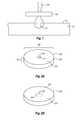
- FIG. 1shows an illustrative embodiment of a fastener that can be implemented as a knot pusher or a knot replacement device and used in closing an opening in tissue;
- FIG. 2Ashows an illustrative embodiment of the fastener shown in FIG. 1 ;
- FIG. 2Bshows another illustrative embodiment of the fastener shown in FIG. 1 ;
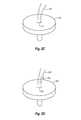
- FIG. 2Cshows the fastener of FIG. 2B engaged with sutures
- FIG. 2Dshows the fastener of FIG. 2B engaged with sutures that include a prepared surface to operate in conjunction with the fastener
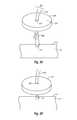
- FIG. 3Ashows the fastener of FIG. 2A operating as a knot pushing closure device to close an opening in tissue
- FIG. 3Bshows the fastener of FIG. 2B operating to close an opening in tissue
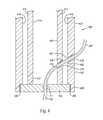
- FIG. 4shows an illustrative embodiment of a closure system that includes a closure device for deploying a fastener
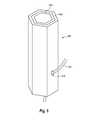
- FIG. 5shows a perspective view of the closure device shown in FIG. 4 ;
- FIG. 6shows an end view of a distal end of the closure device shown in FIG. 4 ;
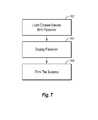
- FIG. 7shows an illustrative example of a method for closing an opening in tissue.
- Embodiments disclosed hereinmore specifically relate to closing openings or holes in the body tissue.
- a fastenermay be deployed to close or substantially close (or aid in closing) a hole through which access to a body lumen is achieved.
- Some embodimentsmay be used or aid in closing and/or substantially closing openings in a blood vessel or other tissue formed during a diagnostic, therapeutic, and/or other procedure.
- Closure of a hole in tissueis often a process that is accomplished by performing a few steps.
- suturesare first placed around the arteriotomy.
- the suturesare typically placed in the vessel wall immediately surrounding or adjacent or proximate the arteriotomy.
- the suturescan be placed in the vessel's walls before and/or after any procedure that may be performed through the arteriotomy. After the procedure is completed or after the sutures are placed, the sutures are cinched together and locked in place to close the opening and allow healing to occur.
- Embodiments of the inventioninclude a closure system capable of closing the opening using a fastener.
- the fastenercan be used as a knot pusher and/or as a knot replacement.
- Embodiments of the inventionrelate to a closure device that can operate as a knot pusher/suture cutter and/or a knot replacement/suture cutter.
- multiple personse.g., physician or nurse
- the closure systemmay also be configured to cut or trim the sutures after deployment of the fastener to push the knot or as a knot replacement.
- Embodiments of the closure system disclosed hereininclude a deployment or closure device and a fastener.
- the closure deviceincludes an outer shaft and an actuator shaft.
- the actuator shaftmay be configured to be displaced proximally and distally relative to the outer shaft.
- the actuator shaftis slidably disposed inside the outer shaft.
- a fastenercan be placed and held in a distal end of the outer shaft of the closure device.
- the suturesare threaded through the fastener or otherwise engaged with the fastener after a pushable knot has been tied in the sutures.
- the suturesmay also be threaded through an opening in a sidewall of both the actuator shaft and the outer shaft.
- the outer shaft or the actuator shaftcan then be used to push on the fastener, which in turn pushes the knot to cinch the sutures and lock the sutures in place.
- the fasteneris pushed towards the opening without displacing the actuator shaft relative to the outer shaft in one embodiment. Because the openings in the sidewalls of the outer shaft and the actuator shaft may be configured as cutters, the sutures can be cut or trimmed by moving the outer shaft relative to the actuator shaft.
- FIG. 1shows an illustrative embodiment of a fastener 100 that is configured to close or aid in closing openings in tissue.
- FIG. 1illustrates an opening 110 in tissue, such as a vessel 112 .
- the opening 110e.g., an arteriotomy
- the opening 110may often be formed during a diagnostic, therapeutic and/or other procedure to access a body lumen 114 . Once the procedure is finished, the opening 110 is usually at least partially closed.
- sutures 102are used to close the opening 110 .
- the sutures 102are placed in the walls of the vessel 112 proximate the opening 110 .
- the sutures 102surround the opening 110 and are drawn through the fastener 100 .
- the suturesmay be placed at various locations about or proximate the opening 110 .
- the fastener 100after the sutures 102 are drawn tight or cinched, can lock the sutures 102 in place while holding the opening 110 closed, allowing the opening 110 to heal.
- locking the sutures 102 in placecan include pushing a knot towards the opening 110 or deploying the fastener 100 as a knot replacement.
- FIG. 1illustrates the fastener 100 as a knot replacement.
- No knotis formed in the sutures 102 and the fastener 100 operates to prevent the sutures 102 from loosening.
- the sutures 102may be locked in place by securing or holding the sutures 102 in the fastener 100 as described in more detail below.
- the suturescan be held by friction or by deforming the knot replacement or the like.
- FIGS. 2A-2Dillustrate various embodiments of a fastener.
- FIG. 2Ashows an illustrative embodiment of a fastener 200 .
- FIG. 2Bshows another illustrative embodiment of a fastener 220 .
- FIG. 2Cillustrates the fastener of FIG. 2B clamping sutures.
- FIG. 2Dillustrates the fastener of FIG. 2B using sutures that are configured to engage with the fastener 220 .
- the fasteners 200 and 220are examples of the fastener 100 illustrated in FIG. 1 .
- the fastener 200 illustrated in FIG. 2Acan be used as a knot pusher and/or as a knot replacement to close the opening 110 in the vessel 112 .
- the fastener 200includes a body 210 and an opening 202 .
- the sutures 102can be drawn through the opening 202 using, for example, a snare device. Once the sutures 102 are drawn through the opening 202 , the fastener 200 can be deployed to close or to aid in closing the opening 110 .
- the fastener 200has a body 210 with dimensions or shape including a thickness 204 , a width 206 and a perimeter 208 .
- the fastener 200 or the body 210may have a diameter of approximately 10 mm. The diameter may be smaller, for example, on the order of 5 mm or 3 mm. Smaller dimensions are also possible.
- a thickness of the body 210by way of example only, may be about 5 mm or smaller such as 4 mm or 3 mm or smaller.
- the arrangement or configuration of the dimensions of the body 210can vary.
- the perimeter 208for example can be circular, elliptical, polygonal or other shape.
- the perimeter and/or other dimensions of the fastener 200may be symmetrical or asymmetrical.
- the width 204may be greater than, equal to, or less than the width 206 .
- a cross section of the body 210may be rectangular, elliptical, cone-shaped, polygonal, or the like.
- Interior walls 212 of the opening 202may be smooth, roughened, jagged, or the like. The walls 212 may be configured to engage and hold the sutures 102 in order to lock the sutures 102 in place.
- the width 204may be configured to exert a certain force on the opening 202 to securely hold the sutures 102 .
- the size or dimensions of the opening 202 and/or the width 204 of the fastener 200may be selected according to the number of sutures 102 to be held and/or the corresponding dimensions of the sutures 102 and/or the type of sutures 102 . This ensures that, for a given situation, the appropriate fastener may be selected.
- the opening 202may have dimensions that accommodate a predetermined number of sutures.
- the opening 202may be sized to permit the passage of a predetermined number of sutures while preventing the passage of a knot formed in the sutures. As a result, distal movement of the fastener 200 pushes or advances a pushable knot towards the opening 110 when closing the opening 110 .
- the opening 202may be configured to frictionally (or otherwise) engage the sutures 102 in a manner that prevents the fastener 200 from sliding along the sutures 102 or otherwise becoming displaced in the absence of sufficient force. As a result, a force can be applied to the fastener 200 to cinch the sutures 102 and deploy the fastener 200 towards the opening 110 .
- the opening 202 or more generally the fastener 200is sufficiently engaged with the sutures 102 to prevent displacement of the fastener 200 and prevent the sutures 102 from loosening at least until the opening is sufficiently healed or until any other appropriate time.
- the body 200is formed of a relatively inelastic material.
- the fastener 200When the fastener 200 is used to push a knot, the relative inelasticity of the fastener 200 ensures that the knot is pushed towards the opening 110 and does not pass through the opening 202 .
- the dimensions of the knotare larger than the dimensions of the opening 202 and the knot will not pass into the opening 202 during the procedure of closing the opening 110 with a knot.
- the fastener 200may also hold the sutures 102 by friction and operate as a knot replacement.
- the size of the opening 202is selected such that the sutures 102 have a tight fit when drawn through the opening 202 .
- the tight fitcan be overcome to deploy the fastener 200 , but exerts sufficient force to prevent the sutures 102 from slipping or loosening.
- the fastener 200can also be crimped and plastically deformed to hold the sutures 102 in place.
- the opening 202is effectively closed on the sutures 102 to clamp the sutures 102 in place.
- FIG. 2Billustrates another example of a fastener 220 .
- the fastener 220may have dimensions like or similar to the dimensions and shape of the fastener 200 . Many of the dimensions of the fastener 200 may also apply to the fastener 220 .
- a body 224 of the fastener 220is more elastic than the body 210 of the fastener 200 .
- a portion 226 of the body 224 , surrounding an opening 222may be more elastic or flexible than the rest of the body 224 such as the portion 228 .
- the opening 222may be formed as a slit in the body 224 or in the portion 226 . Because the body 224 (or portion thereof) is relatively more elastic compared to the fastener 200 , the opening 222 may elastically deform sufficiently to allow the sutures 102 to be drawn through the opening 222 . The elastic force or aspect of the body 224 applies a force on the sutures 102 to lock the sutures 102 in place. The sides or walls of the opening 222 press against the sutures 102 to hold the sutures in place, for example by friction. The friction can be overcome when deploying the fastener 220 but is sufficient to keep the fastener 220 in place and securely hold the sutures 102 in place after deployment.
- FIG. 2Cillustrates an example of the fastener 210 engaged with the sutures 102 and holding the sutures 102 in place. As shown in FIG. 2C , the sides of the opening 222 press against the sutures 102 to hold the sutures 102 in place after the fastener 210 is deployed. A larger width may increase the force with which the sutures 102 are held.
- FIG. 2Dillustrates the fastener 220 that is configured to hold or secure sutures 230 .
- the sutures 230include a prepared surface or area 232 that is configured to engage with the fastener 220 .
- the prepared area 232may include barbs or other feature that are oriented such that the sutures 230 pass through the opening 222 in one direction easier than the other direction.
- the prepared area 232When closing the opening 110 , the prepared area 232 may be oriented such that once the fastener 220 can be pushed distally towards the opening 110 .
- the prepared area 232inhibits or prevents the fastener 220 from moving proximally. When properly deployed, the prepared area 232 may be located in the opening 222 .
- the sutures 230are positioned prior to deployment of the fastener 220 .
- the prepared area 232may be roughened, coated with an adhesive, or otherwise prepared to engage the fastener 220 to lock the sutures 230 in place with the opening 110 closed.
- the fastener 220may hold the sutures 102 , or 230 in place by friction, adhesive, and/or structural impediment (e.g., a roughened surface or barbed surface).
- the opening 202 or 222may also be configured to extend to the perimeter of the fastener.
- the suturescan be loaded into the fastener through the side of the fastener rather than having to use a snare to draw the sutures through the opening.
- the patch formed by the openingmay be a straight line, or include curves, or other path with sharper corners.
- FIG. 3Aillustrates the fastener operating as a knot pusher.
- a pushable or movable knot 302has been formed in the sutures 102 .
- Ends 304 of the sutures 102(which may be color coded to aid in closing the opening to allow the physician to know on which end to pull) are drawn through the opening 202 .
- the opening 202which is typically sized such that the knot 302 cannot enter therein, or more specifically the body 224 proximate the opening 202 can then push the knot 302 towards the opening 110 during deployment of the fastener 200 .
- the fastener 200Once the fastener 200 has pushed the knot such that the sutures 102 are cinched tight and the opening 110 remains closed, the fastener 200 can be removed.
- FIG. 3Billustrates the fastener operating as a know replacement.
- the fastener 210is pushed distally towards the opening 110 after the sutures 102 are drawn through the opening 222 .
- the opening 222 or body of the fastener 220engages the sutures 102 with sufficient force to prevent the sutures 102 from loosening.
- the opening 222may have a frictional fit with the sutures 102 that holds the sutures 102 in place long enough for healing to occur at the opening 110 .
- the opening 222may also have engage the sutures with an adhesive or with structure.
- the interior wallse.g., walls 212 in FIG.
- the sutures 102may have similar impeding structure as previously described.
- FIG. 4shows an illustrative embodiment of a closure system that includes a closure device 400 and the fastener 100 .
- the closure systemcan act or operate as either a knot pushing system or a knot replacement system.
- the closure device 400includes an outer shaft 402 with a proximal end 410 and a distal end 408 .
- the outer perimeter, inner perimeter, and/or cross-sectional shape of the outer shaft 402can be circular, polygonal, or other shape.
- the closure device 400also includes an actuator shaft 404 with a proximal end 414 and a distal end 412 .
- the outer perimeter, inner perimeter, and/or cross-sectional shape of the actuator shaft 404can be circular, polygonal, or other shape.
- the actuator shaft 404can be moved in both distal and proximal directions relative to the outer shaft 402 .
- the outer shaft 402can be moved in both distal and proximal directions relative to the actuator shaft 404 .
- the outer shaft 402 and the actuator shaft 404can be moved at the same time or separately.
- the actuator shaft 404is typically configured to slidably reside inside the outer shaft 402 .
- an outer perimeter or surface 424 of the actuator shaft 404is in contact with an inner perimeter or surface 426 of the outer shaft 402 .
- the friction between the outer surface of the actuator shaft 404 and the inner surface of the outer shaft 402may be sufficient to prevent inadvertent movement but also enable a user to operate the closure device 400 and achieve relative movement between the actuator shaft 404 and the outer shaft 402 .
- the fastener 100is placed or loaded in a recess 406 formed in the distal end 408 of the outer shaft 402 .
- the recess 406is typically sized and configured to hold the fastener 100 .
- the recess 406may be configured such that a surface of the fastener 100 extends out of the recess, is flush with the edge of the recess or is inside of the recess.
- the fastener 100may engage the recess with sufficient friction to enable the closure device 400 to deploy the fastener 100 while retaining the fastener 100 within the recess 406 until the fastener 100 is positively expelled or discharged by the user.
- distal movement of the actuator shaft 404 relative to the outer shaft 402can dislodge or expel the fastener 100 from the recess 406 .
- the sutures 102are drawn through the opening 402 (which is an example of the openings 212 and 222 ) of the fastener 100 and through the openings 416 and 418 , respectively, in the sidewalls of the actuator shaft 404 and the outer shaft 402 .
- the openings 416 and 418are initially aligned such that the sutures 102 can be drawn through them when preparing the closure system.
- the outer shaft 402 and the actuator shaft 404are non-circular or have a cross section that is not a circle, it is easier to maintain alignment of the openings 416 and 418 .
- hexagonally shaped outer and actuator shafts 402 and 404can provide proper alignment for the openings 416 and 418 as well as ensure that the alignment is maintained during use of the closure device 400 .
- the outer shaft 402 and the actuator shaft 404may have a tongue and groove arrangement (another example of a non-circular arrangement) to keep the shafts aligned as discussed herein.
- the inner cross section of the outer shaft 402 and the outer cross sectional shape of the actuator shaft 404may be the same to as to allow for relative movement in the distal and proximal directions while allowing the openings 416 and 418 to be aligned using only proximal and distal movement of the outer and/or actuator shafts rather than rotational movement of the actuator shaft 404 relative to the outer shaft 402 .
- the outer shaft 402 and the actuator shaftare configured to allow for distal and proximal movement but not relative rotational movement in one embodiment.
- FIG. 4illustrates that the closure device 400 and the fastener 100 can be used as a knot pusher.
- a sliding knotis formed in the sutures 102 before the sutures 102 are drawn through the opening 402 and the openings 416 and 418 .
- the outer shaft 402 and the fastener 100can then be used to push the knot to the opening 110 .
- Distal movement of the outer shaft 402translates to distal movement of the fastener 100 , which in turn pushes the knot distally towards the opening 110 .
- the actuator shaft 404is moved distally as well when the closure device is also configured to trim the sutures 102 to prevent the sutures 102 from being trimmed prematurely.
- the closure device 400may include a lock that prevents relative movement until the lock is released by the user.
- the opening 402is sized such that the knot does not pass through the opening 402 .
- the actuator shaft 404can be moved proximally.
- a cutter 420 formed in the actuator shaft 404may engage with a cutter 422 formed in the outer shaft 402 to cut or trim the sutures.
- the sutures 102can be cut or trimmed by a scissor action between the actuator shaft 404 and the outer shaft 402 .
- the closure device 400deploy the fastener 100 as a knot replacement.
- the sutures 102are drawn through the opening 402 and through the openings 416 and 418 .
- the sutures 102can be cinched tight to close the opening 110 and the actuator shaft 404 can be moved distally to dislodge the fastener 100 from the outer shaft 402 .
- the distal movement of the actuator shaft 404can be performed to push the fastener 100 distally while holding on to the ends 304 of the sutures 102 and/or a proximal end of the outer shaft 402 . This ensures that the sutures 102 remain tight until the fastener 100 is properly placed adjacent the opening in the tissue.
- the outer shaft 402can be used to place the fastener 100 against the opening 100 .
- the actuator shaft 404is held against the fastener 100 while the outer shaft 404 is moved proximally.
- the effectis that the fastener 100 is dislodged from the distal end 408 of the outer shaft 402 .
- the fastener 100may frictionally or otherwise engage the sutures 102 as described herein such that the sutures 102 are held in place and the opening 110 remains closed.
- the opening 111is sized such that the knot does not pass through the opening 111 .
- the actuator shaft 404can be moved proximally.
- a cutter 420 formed in the actuator shaft 404may engage with a cutter 422 formed in the outer shaft 402 to cut or trim the sutures.
- the sutures 102can be cut or trimmed by a scissor action between the actuator shaft 404 and the outer shaft 402 .
- the cutters 420 and 422can be formed in sidewalls of the outer shaft 402 and the actuator shaft 404 .
- the cutters 420 and 422can be arranged such that distal and/or proximal movement of the actuator shaft 404 (or of the outer shaft 402 ) trims the sutures 102 , for example, with a scissor effect.
- the openings 416 and 418may have a trapezoidal shape to aid in the scissor effect in both proximal and distal directions.
- the actuator shaft 404 and the outer shaft 402may be configured such that the sutures 102 are cut in the opposite direction using the edges 428 and 430 .
- the edges 428 and 430have a scissor like arrangement with respect to lone another like the cutters 420 and 422 .
- the sutures 102could be trimmed at the same time that the fastener 100 is dislodged from the outer shaft 402 .
- distal movement of the actuator shaft 404can expel the fastener 100 from the outer shaft 402 and trim the sutures 102 at substantially the same time.
- FIG. 5shows a perspective view of the closure device 400 .
- the closure device 400illustrates that the actuator shaft 404 and the outer shaft 402 are configured to be slidably displaced relative to each other.
- the actuator shaft 404may be in contact with the outer shaft 402 .
- the contact between the actuator shaft 404 and the outer shaft 402aids in the scissor action that trims the sutures as previously described.
- the closure device 400may be configured such that a space is present between the actuator shaft 404 and the outer shaft 402 .
- a spacemay facilitate relative movement while still preventing relative rotational movement between the actuator shaft 404 and the outer shaft 402 .
- the spacemay be small enough to not interfere with the ability of the closure device 400 to trim or cut the sutures.
- FIG. 5further illustrates that the sutures exit the closure system through the openings 418 .
- the sutures 102can be grasped by a user of the closure system as necessary to either tighten the sutures and/or deploy the fastener as a knot pusher or a knot replacement.
- FIG. 5also illustrates a lock 502 located, in this example at a proximate end of the closure device 400 .
- the lock 502may be configured to engage with both the outer shaft 402 and the actuator shaft 404 to prevent relative movement between them.
- FIG. 6illustrates a perspective view of the distal end of the closure device 400 .
- FIG. 6illustrates that the recess 406 may be circular in shape while the interior surface 426 may have another shape (e.g., hexagonal or other shape that prevents relative rotational movement between the outer and actuator shafts). This enables the fastener 100 to be more easily loaded into the recess 406 and still enable the openings 416 and 418 to be easily aligned.
- FIG. 6further illustrates that the actuator shaft 404 is proximally withdrawn.
- the recess 406may be configured with a ridge or other retaining mechanism that operates to retain the fastener 100 in the recess 406 .
- the effect of the retaining mechanismcan be overcome and the fastener 100 dislodged by proximal and/or distal translation of the actuator shaft 404 relative to the outer shaft 402 .
- the retaining mechanismincludes dimensions that are sufficiently smaller than the dimensions of the fastener 100 to achieve a frictional fit.
- the fastener 100may be configured with a complementary structure that removably engages with the recess 406 to retain the fastener 100 in the recess until the fastener 100 is positively dislodged by a user.
- the recess 406may include a lip structure that engages with a groove formed on in the fastener 100 .
- FIG. 7illustrates an example of a method for closing an opening in tissue.
- the methodmay begin in box 702 by loading a closure device with a fastener.
- Loading the closure devicecan include drawing the sutures through the fastener as well as through the openings formed in the sidewalls of the actuator and outer shafts of the closure device.
- Loading the closure devicealso include placing the fastener in the recess formed in the distal end of the closure device.
- a knotis formed in the sutures.
- the suturesare typically placed in the tissue prior to loading the closure device.
- the fasteneris deployed.
- Deploying the fastenercan include moving the closure device in a distal direction to push the fastener (and thus the knot when operating as a knot pusher) towards the opening in the tissue.
- the suturecan be dislodged by advancing the actuator shaft distally relative to the outer shaft.
- the distal end of the actuator shaftpresses against the fastener and pushes the fastener out of the distal end of the outer shaft.
- the actuator shaftmay be held stationary while the outer shaft is moved proximally.
- the suturesare trimmed. Because the sutures are threaded through openings in the sidewalls of the closure device, which openings are configured with one or more cutters, the sutures can be trimmed by relative movement of the outer and actuator shaft. By way of example only, the sutures can be trimmed when the fastener is dislodged from the distal end of the outer shaft. Alternatively, the sutures can be trimmed by moving the actuator shaft proximally after the fastener is properly placed.
- Embodiments of the closure systemmay be made of any suitable material, including a bioabsorbable, biodegradable, or bioerodable material.
- suitable materialsmay include polycaprolactone (PCL), poly(D, L-lactic acid), Poly-L-Lactic acid, poly (lactide-co-glycolide), poly(hydroxybutyrate), polyanhydrides, poly(glycolic acid, other bioabsorbable or biodegradable materials or combos thereof.
- At least a portion of the closure devicee.g., that forms the cutting edges or the material defining the openings 416 and 418 ) is formed of a material capable of trimming the sutures.
- the closure system disclosed hereincan be comprised of a variety of known suitable materials, including stainless steel, silver, platinum, tantalum, palladium, nickel, titanium, nitinol, nitinol alloys having tertiary materials, niobium-tantalum alloys optionally doped with a tertiary material, cobalt-chromium alloys, or other known biocompatible materials.
- suitable materialsincluding stainless steel, silver, platinum, tantalum, palladium, nickel, titanium, nitinol, nitinol alloys having tertiary materials, niobium-tantalum alloys optionally doped with a tertiary material, cobalt-chromium alloys, or other known biocompatible materials.
- biocompatible materialscan include a suitable biocompatible polymer in addition to or in place of a suitable metal.
- a device or membercan include biodegradable, bioerodable, or bioabsorbable materials.
- the closure device or fastenercan be made at least in part of a high strength, low modulus metal alloy comprising niobium, tantalum, and at least one element selected from the group consisting of zirconium, tungsten, and molybdenum.
- the materials composing the medical devices or members according to the present inventionmay provide superior characteristics with regard to bio-compatibility, radio-opacity and MRI compatibility.
- the closure device body or other medical device, including the closure devicecan be formed from a ceramic material.
- the ceramiccan be a biocompatible ceramic that optionally can be porous.
- suitable ceramic materialsinclude hydroxylapatite, mullite, crystalline oxides, non-crystalline oxides, carbides, nitrides, silicides, borides, phosphides, sulfides, tellurides, selenides, aluminum oxide, silicon oxide, titanium oxide, zirconium oxide, alumina-zirconia, silicon carbide, titanium carbide, titanium boride, aluminum nitride, silicon nitride, ferrites, iron sulfide, and the like.
- the ceramiccan be provided as sinterable particles that are sintered into the shape of a closure device or layer thereof.
- the closure device or fastenercan include a radiopaque material to increase visibility during placement.
- the radiopaque materialcan be a layer or coating any portion of the device or member.
- the radiopaque materialscan be platinum, tungsten, silver, stainless steel, gold, tantalum, bismuth, barium sulfate, or a similar material.
- the external surface and/or internal surface of the devices or memberscan be coated with another material having a composition different from the primary material.
- the use of a different material to coat the surfacescan be beneficial for imparting additional properties to the device or member, such as providing radiopaque characteristics, drug-reservoirs, and improved biocompatibility.
- the closure devicecan also be formed frombiocompatible polymeric materials that can include a suitable hydrogel, hydrophilic polymer, hydrophobic polymer, biodegradable polymer, bioabsorbable polymer, and monomers thereof.
- suitable polymeric materialscan include nylons, poly(alpha-hydroxy esters), polylactic acids, polylactides, poly-L-lactide, poly-DL-lactide, poly-L-lactide-co-DL-lactide, polyglycolic acids, polyglycolide, polylactic-co-glycolic acids, polyglycolide-co-lactide, polyglycolide-co-DL-lactide, polyglycolide-co-L-lactide, polyanhydrides, polyanhydride-co-imides, polyesters, polyorthoesters, polycaprolactones, polyesters, polyanydrides, polyphosphazenes, polyester amides, polyester urethanes, polycarbonates, polytrimethylene carbonates, polygly
- embodiments of the inventioncan include or be coated with a drug or beneficial agent, for example an antibiotic to improve the use of the closure device.
- a drug or beneficial agentfor example an antibiotic to improve the use of the closure device.
Landscapes
- Health & Medical Sciences (AREA)
- Life Sciences & Earth Sciences (AREA)
- Surgery (AREA)
- Heart & Thoracic Surgery (AREA)
- Engineering & Computer Science (AREA)
- Biomedical Technology (AREA)
- Nuclear Medicine, Radiotherapy & Molecular Imaging (AREA)
- Medical Informatics (AREA)
- Molecular Biology (AREA)
- Animal Behavior & Ethology (AREA)
- General Health & Medical Sciences (AREA)
- Public Health (AREA)
- Veterinary Medicine (AREA)
- Cardiology (AREA)
- Surgical Instruments (AREA)
Abstract
Description
1. The Field of the Invention
Embodiments of the invention relate generally to medical devices. More particularly, embodiments of the invention relate to systems and methods for closing openings in tissue.
2. The Relevant Technology
Catheterization and interventional procedures, such as angioplasty or stenting, are generally performed through a patient's vascular system. These procedures often begin by inserting a hollow needle through the patient's skin and tissue into the vascular system. A guide wire may be advanced through the needle and into the patient's blood vessel accessed by the needle. The needle is then removed, enabling an introducer sheath to be advanced over the guide wire into the vessel, e.g., in conjunction with or subsequent to a dilator.
A catheter or other device may then be advanced through a lumen of the introducer sheath and over the guide wire into a position for performing a medical procedure. Thus, the introducer sheath may facilitate introducing various devices into the vessel, while minimizing trauma to the vessel wall and/or minimizing blood loss during a procedure.
Upon completing the procedure, the devices and introducer sheath are removed, leaving a puncture site or opening in the vessel wall. Traditionally, external pressure would be applied to the puncture site until clotting and wound sealing occur; however, the patient must remain bedridden for a substantial period after clotting to ensure closure of the opening. This procedure may be time consuming and expensive, requiring as much as an hour of a physician's or nurse's time. It is also uncomfortable for the patient and requires that the patient remain immobilized in the operating room, catheter lab, or holding area. In addition, a risk of hematoma exists from bleeding before hemostasis occurs.
Therefore, a need exists to close holes in tissue. There is also a need to provide physicians and nurses with options for closing holes or other openings in tissue.
Embodiments of the invention relate to systems and methods for closing opening in tissue. Embodiments of the invention can close openings in tissue by operating as a knot pushing system or as a knot replacement system. A fastener included can either push a knot formed in sutures to close the opening or act as a knot replacement such that tying the knot is not required.
In one example, a closure system for closing an opening in tissue is provided. The closure system includes a fastener. The fastener includes an opening formed therein and sutures are received or drawn through the opening. The closure system also includes a closure device configured to deploy the fastener. The closure device includes an outer shaft and an actuator shaft that are configured to deploy the fastener as either a knot replacement or a knot pusher. The closure device is also configured to trim the sutures after deployment. The closure device may include cutters formed or included in the outer and actuator shafts that are configured to trim the sutures by relative movement of the outer and actuator shafts.
In another embodiment, a closure device for closing an opening in tissue is provided. The closure device includes an actuator shaft and an outer shaft. The actuator shaft is configured to move slidably within the outer shaft. Each of the outer shaft and the actuator shaft has an opening formed therein with a cutter. Relative movement of the outer and actuator shafts causes the cutters to trim the sutures. The outer shaft includes a recess that is configured to removably receive a fastener. Distal movement of the actuator shaft relative to the outer shaft dislodges the fastener from the recess.
In another embodiment, a method for closing an opening in tissue is provided. The method includes loading a closure device with a fastener. When loading the closure device, sutures are drawn through the fastener and through an opening a sidewall of the closure device. Then, the fastener is deployed from the closure device and the sutures are trimmed at the opening in the sidewall of the closure device.
To further clarify at least some of the advantages and features of the present invention, a more particular description of the invention will be rendered by reference to specific embodiments thereof which are illustrated in the appended drawings. It is appreciated that these drawings depict only illustrated embodiments of the invention and are therefore not to be considered limiting of its scope. Embodiments of the invention will be described and explained with additional specificity and detail through the use of the accompanying drawings in which:
Systems, devices, and methods are disclosed herein for managing access to body lumens through tissue, including management of openings in the tissue. Embodiments disclosed herein more specifically relate to closing openings or holes in the body tissue. Several examples are described below in which a fastener may be deployed to close or substantially close (or aid in closing) a hole through which access to a body lumen is achieved. Some embodiments may be used or aid in closing and/or substantially closing openings in a blood vessel or other tissue formed during a diagnostic, therapeutic, and/or other procedure.
Closure of a hole in tissue (e.g., an arteriotomy) is often a process that is accomplished by performing a few steps. Generally, sutures are first placed around the arteriotomy. The sutures are typically placed in the vessel wall immediately surrounding or adjacent or proximate the arteriotomy. The sutures can be placed in the vessel's walls before and/or after any procedure that may be performed through the arteriotomy. After the procedure is completed or after the sutures are placed, the sutures are cinched together and locked in place to close the opening and allow healing to occur.
Embodiments of the invention include a closure system capable of closing the opening using a fastener. The fastener can be used as a knot pusher and/or as a knot replacement. Embodiments of the invention relate to a closure device that can operate as a knot pusher/suture cutter and/or a knot replacement/suture cutter. Advantageously, multiple persons (e.g., physician or nurse) can use the same device to close an opening in tissue in different ways. One person may use the closure system as a knot pusher while another person may use the closure system as a knot replacement. In both cases, the closure system may also be configured to cut or trim the sutures after deployment of the fastener to push the knot or as a knot replacement.
Embodiments of the closure system disclosed herein include a deployment or closure device and a fastener. The closure device includes an outer shaft and an actuator shaft. The actuator shaft may be configured to be displaced proximally and distally relative to the outer shaft. The actuator shaft is slidably disposed inside the outer shaft.
A fastener can be placed and held in a distal end of the outer shaft of the closure device. When the closure device is operating as a knot pusher, the sutures are threaded through the fastener or otherwise engaged with the fastener after a pushable knot has been tied in the sutures. The sutures may also be threaded through an opening in a sidewall of both the actuator shaft and the outer shaft. The outer shaft or the actuator shaft can then be used to push on the fastener, which in turn pushes the knot to cinch the sutures and lock the sutures in place.
The fastener is pushed towards the opening without displacing the actuator shaft relative to the outer shaft in one embodiment. Because the openings in the sidewalls of the outer shaft and the actuator shaft may be configured as cutters, the sutures can be cut or trimmed by moving the outer shaft relative to the actuator shaft.
The following discussion refers to a vessel and to openings that may be formed in the vessel's wall such as an arteriotomy. One of skill in the art, with the benefit of the present disclosure, can appreciate that embodiments of the invention can be used to close or substantially close gaps, discontinuities, or other openings in tissue in addition to vessels.
In this example, sutures102 are used to close theopening 110. Thesutures 102 are placed in the walls of thevessel 112 proximate theopening 110. In this example, thesutures 102 surround theopening 110 and are drawn through thefastener 100. In other examples, the sutures may be placed at various locations about or proximate theopening 110. Thefastener 100, after thesutures 102 are drawn tight or cinched, can lock thesutures 102 in place while holding theopening 110 closed, allowing theopening 110 to heal. As previously stated, locking thesutures 102 in place can include pushing a knot towards the opening110 or deploying thefastener 100 as a knot replacement.FIG. 1 illustrates thefastener 100 as a knot replacement. No knot is formed in thesutures 102 and thefastener 100 operates to prevent thesutures 102 from loosening. Thesutures 102 may be locked in place by securing or holding thesutures 102 in thefastener 100 as described in more detail below. The sutures can be held by friction or by deforming the knot replacement or the like.
Thefastener 200 illustrated inFIG. 2A can be used as a knot pusher and/or as a knot replacement to close theopening 110 in thevessel 112. Thefastener 200 includes abody 210 and anopening 202. Thesutures 102 can be drawn through theopening 202 using, for example, a snare device. Once thesutures 102 are drawn through theopening 202, thefastener 200 can be deployed to close or to aid in closing theopening 110.
Thefastener 200 has abody 210 with dimensions or shape including athickness 204, awidth 206 and aperimeter 208. Thefastener 200 or thebody 210, by way of example and not limitation, may have a diameter of approximately 10 mm. The diameter may be smaller, for example, on the order of 5 mm or 3 mm. Smaller dimensions are also possible. A thickness of thebody 210, by way of example only, may be about 5 mm or smaller such as 4 mm or 3 mm or smaller. The arrangement or configuration of the dimensions of thebody 210 can vary. Theperimeter 208, for example can be circular, elliptical, polygonal or other shape. The perimeter and/or other dimensions of thefastener 200 may be symmetrical or asymmetrical. Thewidth 204 may be greater than, equal to, or less than thewidth 206. A cross section of thebody 210 may be rectangular, elliptical, cone-shaped, polygonal, or the like.Interior walls 212 of theopening 202 may be smooth, roughened, jagged, or the like. Thewalls 212 may be configured to engage and hold thesutures 102 in order to lock thesutures 102 in place. Thewidth 204 may be configured to exert a certain force on theopening 202 to securely hold thesutures 102. For example, the size or dimensions of theopening 202 and/or thewidth 204 of thefastener 200 may be selected according to the number ofsutures 102 to be held and/or the corresponding dimensions of thesutures 102 and/or the type ofsutures 102. This ensures that, for a given situation, the appropriate fastener may be selected.
Theopening 202 may have dimensions that accommodate a predetermined number of sutures. For example, when thefastener 200 is used as a knot pusher, theopening 202 may be sized to permit the passage of a predetermined number of sutures while preventing the passage of a knot formed in the sutures. As a result, distal movement of thefastener 200 pushes or advances a pushable knot towards the opening110 when closing theopening 110.
When thefastener 200 functions as a knot replacement, theopening 202 may be configured to frictionally (or otherwise) engage thesutures 102 in a manner that prevents thefastener 200 from sliding along thesutures 102 or otherwise becoming displaced in the absence of sufficient force. As a result, a force can be applied to thefastener 200 to cinch thesutures 102 and deploy thefastener 200 towards theopening 110. When the deployment force is removed, theopening 202 or more generally thefastener 200 is sufficiently engaged with thesutures 102 to prevent displacement of thefastener 200 and prevent thesutures 102 from loosening at least until the opening is sufficiently healed or until any other appropriate time.
In one example, thebody 200 is formed of a relatively inelastic material. When thefastener 200 is used to push a knot, the relative inelasticity of thefastener 200 ensures that the knot is pushed towards theopening 110 and does not pass through theopening 202. In this example, the dimensions of the knot are larger than the dimensions of theopening 202 and the knot will not pass into theopening 202 during the procedure of closing theopening 110 with a knot.
Thefastener 200 may also hold thesutures 102 by friction and operate as a knot replacement. In this example, the size of theopening 202 is selected such that thesutures 102 have a tight fit when drawn through theopening 202. The tight fit can be overcome to deploy thefastener 200, but exerts sufficient force to prevent thesutures 102 from slipping or loosening.
In another example, thefastener 200 can also be crimped and plastically deformed to hold thesutures 102 in place. In this example, theopening 202 is effectively closed on thesutures 102 to clamp thesutures 102 in place.
In this example, theopening 222 may be formed as a slit in thebody 224 or in theportion 226. Because the body224 (or portion thereof) is relatively more elastic compared to thefastener 200, theopening 222 may elastically deform sufficiently to allow thesutures 102 to be drawn through theopening 222. The elastic force or aspect of thebody 224 applies a force on thesutures 102 to lock thesutures 102 in place. The sides or walls of theopening 222 press against thesutures 102 to hold the sutures in place, for example by friction. The friction can be overcome when deploying thefastener 220 but is sufficient to keep thefastener 220 in place and securely hold thesutures 102 in place after deployment.
The fastener220 (or the fastener200) may hold thesutures
Theopening
Theclosure device 400 also includes anactuator shaft 404 with aproximal end 414 and adistal end 412. The outer perimeter, inner perimeter, and/or cross-sectional shape of theactuator shaft 404 can be circular, polygonal, or other shape. Theactuator shaft 404 can be moved in both distal and proximal directions relative to theouter shaft 402. Similarly, theouter shaft 402 can be moved in both distal and proximal directions relative to theactuator shaft 404. Theouter shaft 402 and theactuator shaft 404 can be moved at the same time or separately. Theactuator shaft 404 is typically configured to slidably reside inside theouter shaft 402. In one example, an outer perimeter orsurface 424 of theactuator shaft 404 is in contact with an inner perimeter orsurface 426 of theouter shaft 402. The friction between the outer surface of theactuator shaft 404 and the inner surface of theouter shaft 402 may be sufficient to prevent inadvertent movement but also enable a user to operate theclosure device 400 and achieve relative movement between theactuator shaft 404 and theouter shaft 402.
During operation of the closure system, thefastener 100 is placed or loaded in arecess 406 formed in thedistal end 408 of theouter shaft 402. Therecess 406 is typically sized and configured to hold thefastener 100. Therecess 406 may be configured such that a surface of thefastener 100 extends out of the recess, is flush with the edge of the recess or is inside of the recess. Thefastener 100 may engage the recess with sufficient friction to enable theclosure device 400 to deploy thefastener 100 while retaining thefastener 100 within therecess 406 until thefastener 100 is positively expelled or discharged by the user. For example, distal movement of theactuator shaft 404 relative to theouter shaft 402 can dislodge or expel thefastener 100 from therecess 406.
After (or before in some embodiments) thefastener 100 is loaded in therecess 406, thesutures 102 are drawn through the opening402 (which is an example of theopenings 212 and222) of thefastener 100 and through theopenings actuator shaft 404 and theouter shaft 402. Theopenings sutures 102 can be drawn through them when preparing the closure system. When theouter shaft 402 and theactuator shaft 404 are non-circular or have a cross section that is not a circle, it is easier to maintain alignment of theopenings actuator shafts openings closure device 400. In another example, theouter shaft 402 and theactuator shaft 404 may have a tongue and groove arrangement (another example of a non-circular arrangement) to keep the shafts aligned as discussed herein.
More specifically, the inner cross section of theouter shaft 402 and the outer cross sectional shape of theactuator shaft 404 may be the same to as to allow for relative movement in the distal and proximal directions while allowing theopenings actuator shaft 404 relative to theouter shaft 402. In other words, theouter shaft 402 and the actuator shaft are configured to allow for distal and proximal movement but not relative rotational movement in one embodiment.
Theopening 402 is sized such that the knot does not pass through theopening 402. When thesutures 102 are cinched tight and thesutures 102 are locked such that theopening 110 in the vessel or other tissue is closed or substantially closed, theactuator shaft 404 can be moved proximally. When theactuator shaft 404 is moved proximally relative to theouter shaft 402, acutter 420 formed in theactuator shaft 404 may engage with acutter 422 formed in theouter shaft 402 to cut or trim the sutures. In other words, thesutures 102 can be cut or trimmed by a scissor action between theactuator shaft 404 and theouter shaft 402. After the procedure or after the know is pushed, theclosure device 400, including thefastener 100 which is still lodged in therecess 406, can be withdrawn.
In an alternative example, theclosure device 400 deploy thefastener 100 as a knot replacement. In this example, thesutures 102 are drawn through theopening 402 and through theopenings sutures 102 can be cinched tight to close theopening 110 and theactuator shaft 404 can be moved distally to dislodge thefastener 100 from theouter shaft 402. The distal movement of theactuator shaft 404 can be performed to push thefastener 100 distally while holding on to theends 304 of thesutures 102 and/or a proximal end of theouter shaft 402. This ensures that thesutures 102 remain tight until thefastener 100 is properly placed adjacent the opening in the tissue.
For example, theouter shaft 402 can be used to place thefastener 100 against theopening 100. In this case, theactuator shaft 404 is held against thefastener 100 while theouter shaft 404 is moved proximally. The effect is that thefastener 100 is dislodged from thedistal end 408 of theouter shaft 402. In this example, thefastener 100 may frictionally or otherwise engage thesutures 102 as described herein such that thesutures 102 are held in place and theopening 110 remains closed.
Theopening 111 is sized such that the knot does not pass through theopening 111. When thesutures 102 are cinched tight and thesutures 102 are locked such that theopening 110 in the vessel or other tissue is closed or substantially closed, theactuator shaft 404 can be moved proximally. When theactuator shaft 404 is moved proximally relative to theouter shaft 402, acutter 420 formed in theactuator shaft 404 may engage with acutter 422 formed in theouter shaft 402 to cut or trim the sutures. In other words, thesutures 102 can be cut or trimmed by a scissor action between theactuator shaft 404 and theouter shaft 402. After the procedure or after the knot is pushed, theclosure device 400, including thefastener 100 which is still lodged in therecess 406, can be withdrawn.
Thecutters outer shaft 402 and theactuator shaft 404. Thecutters sutures 102, for example, with a scissor effect. In one example, theopenings actuator shaft 404 and theouter shaft 402 may be configured such that thesutures 102 are cut in the opposite direction using theedges openings edges cutters sutures 102 could be trimmed at the same time that thefastener 100 is dislodged from theouter shaft 402. Thus, distal movement of theactuator shaft 404 can expel thefastener 100 from theouter shaft 402 and trim thesutures 102 at substantially the same time.
Therecess 406 may be configured with a ridge or other retaining mechanism that operates to retain thefastener 100 in therecess 406. The effect of the retaining mechanism can be overcome and thefastener 100 dislodged by proximal and/or distal translation of theactuator shaft 404 relative to theouter shaft 402. In one example, the retaining mechanism includes dimensions that are sufficiently smaller than the dimensions of thefastener 100 to achieve a frictional fit. In another embodiment, thefastener 100 may be configured with a complementary structure that removably engages with therecess 406 to retain thefastener 100 in the recess until thefastener 100 is positively dislodged by a user. For example, therecess 406 may include a lip structure that engages with a groove formed on in thefastener 100.
Inbox 704, the fastener is deployed. Deploying the fastener can include moving the closure device in a distal direction to push the fastener (and thus the knot when operating as a knot pusher) towards the opening in the tissue. Once the fastener is adjacent the opening and the sutures are tightened, the suture can be dislodged by advancing the actuator shaft distally relative to the outer shaft. The distal end of the actuator shaft presses against the fastener and pushes the fastener out of the distal end of the outer shaft. In one example, the actuator shaft may be held stationary while the outer shaft is moved proximally.
Inbox 706, the sutures are trimmed. Because the sutures are threaded through openings in the sidewalls of the closure device, which openings are configured with one or more cutters, the sutures can be trimmed by relative movement of the outer and actuator shaft. By way of example only, the sutures can be trimmed when the fastener is dislodged from the distal end of the outer shaft. Alternatively, the sutures can be trimmed by moving the actuator shaft proximally after the fastener is properly placed.
Embodiments of the closure system (e.g., the closure device, fastener, or elements thereof) included therein may be made of any suitable material, including a bioabsorbable, biodegradable, or bioerodable material. Such materials may include polycaprolactone (PCL), poly(D, L-lactic acid), Poly-L-Lactic acid, poly (lactide-co-glycolide), poly(hydroxybutyrate), polyanhydrides, poly(glycolic acid, other bioabsorbable or biodegradable materials or combos thereof. At least a portion of the closure device (e.g., that forms the cutting edges or the material defining theopenings 416 and418) is formed of a material capable of trimming the sutures.
The closure system disclosed herein (can be comprised of a variety of known suitable materials, including stainless steel, silver, platinum, tantalum, palladium, nickel, titanium, nitinol, nitinol alloys having tertiary materials, niobium-tantalum alloys optionally doped with a tertiary material, cobalt-chromium alloys, or other known biocompatible materials. Such biocompatible materials can include a suitable biocompatible polymer in addition to or in place of a suitable metal. A device or member can include biodegradable, bioerodable, or bioabsorbable materials.
In one embodiment, the closure device or fastener can be made at least in part of a high strength, low modulus metal alloy comprising niobium, tantalum, and at least one element selected from the group consisting of zirconium, tungsten, and molybdenum. The materials composing the medical devices or members according to the present invention may provide superior characteristics with regard to bio-compatibility, radio-opacity and MRI compatibility.
Furthermore, the closure device body or other medical device, including the closure device, can be formed from a ceramic material. In one aspect, the ceramic can be a biocompatible ceramic that optionally can be porous. Examples of suitable ceramic materials include hydroxylapatite, mullite, crystalline oxides, non-crystalline oxides, carbides, nitrides, silicides, borides, phosphides, sulfides, tellurides, selenides, aluminum oxide, silicon oxide, titanium oxide, zirconium oxide, alumina-zirconia, silicon carbide, titanium carbide, titanium boride, aluminum nitride, silicon nitride, ferrites, iron sulfide, and the like. Optionally, the ceramic can be provided as sinterable particles that are sintered into the shape of a closure device or layer thereof.
Moreover, the closure device or fastener can include a radiopaque material to increase visibility during placement. Optionally, the radiopaque material can be a layer or coating any portion of the device or member. The radiopaque materials can be platinum, tungsten, silver, stainless steel, gold, tantalum, bismuth, barium sulfate, or a similar material.
It is further contemplated that the external surface and/or internal surface of the devices or members (e.g., exterior and luminal surfaces) as well as the entire body can be coated with another material having a composition different from the primary material. The use of a different material to coat the surfaces can be beneficial for imparting additional properties to the device or member, such as providing radiopaque characteristics, drug-reservoirs, and improved biocompatibility.
The closure device can also be formed frombiocompatible polymeric materials that can include a suitable hydrogel, hydrophilic polymer, hydrophobic polymer, biodegradable polymer, bioabsorbable polymer, and monomers thereof. Examples of such polymers can include nylons, poly(alpha-hydroxy esters), polylactic acids, polylactides, poly-L-lactide, poly-DL-lactide, poly-L-lactide-co-DL-lactide, polyglycolic acids, polyglycolide, polylactic-co-glycolic acids, polyglycolide-co-lactide, polyglycolide-co-DL-lactide, polyglycolide-co-L-lactide, polyanhydrides, polyanhydride-co-imides, polyesters, polyorthoesters, polycaprolactones, polyesters, polyanydrides, polyphosphazenes, polyester amides, polyester urethanes, polycarbonates, polytrimethylene carbonates, polyglycolide-co-trimethylene carbonates, poly(PBA-carbonates), polyfumarates, polypropylene fumarate, poly(p-dioxanone), polyhydroxyalkanoates, polyamino acids, poly-L-tyrosines, poly(beta-hydroxybutyrate), polyhydroxybutyrate-hydroxyvaleric acids, polyethylenes, polypropylenes, polyaliphatics, polyvinylalcohols, polyvinylacetates, hydrophobic/hydrophilic copolymers, alkylvinylalcohol copolymers, ethylenevinylalcohol copolymers (EVAL), propylenevinylalcohol copolymers, polyvinylpyrrolidone (PVP), combinations thereof, polymers having monomers thereof, or the like.
Accordingly, embodiments of the invention can include or be coated with a drug or beneficial agent, for example an antibiotic to improve the use of the closure device.
The invention is susceptible to various modifications and alternative means, and specific examples thereof have been shown by way of example in the drawings and are herein described in detail. It should be understood, however, that the invention is not to be limited to the particular devices or methods disclosed, but to the contrary; the invention is to cover all modifications, equivalents, and alternatives falling within the spirit and scope of the claims.
The invention is susceptible to various modifications and alternative means, and specific examples thereof have been shown by way of example in the drawings and are herein described in detail. It should be understood, however, that the invention is not to be limited to the particular devices or methods disclosed, but to the contrary; the invention is to cover all modifications, equivalents, and alternatives falling within the spirit and scope of the claims.
The present invention may be embodied in other specific forms without departing from its spirit or essential characteristics. The described embodiments are to be considered in all respects only as illustrative and not restrictive. The scope of the invention is, therefore, indicated by the appended claims rather than by the foregoing description. All changes which come within the meaning and range of equivalency of the claims are to be embraced within their scope.
Claims (20)
1. A closure device for closing an opening in tissue, the closure device comprising:
hollow actuator shaft having a distal end, a first opening, and a first cutter formed in the first opening;
an outer shaft having a second opening, and a second cutter formed in the second opening, wherein the actuator shaft is configured to move slidably within the outer shaft;
and
a recess formed in the distal end of the outer shaft and configured to removably receive a fastener having an opening, wherein the hollow actuator shaft includes a hollow interior channel that is aligned with the opening of the fastener so that a suture passing through the opening of the fastener and through the first and second openings extends through the hollow interior channel disposed between the opening in the fastener and the first and second openings of the hollow actuator shaft and the outer shaft, respectively;
wherein positioning the distal end of the actuator shaft against the proximal surface of the fastener and proximal movement of the outer shaft relative to the actuator shaft dislodges the fastener from the recess, and
wherein upon positioning the fastener within the recess formed in the distal end of the outer shaft and the distal end of the actuator shaft against the proximal surface of the fastener, the first opening partially overlaps the second opening in a longitudinal direction of the actuator shaft and the outer shaft.
2. The closure device ofclaim 1 , wherein the fastener pushes a knot when sutures are passed through an opening formed in the fastener after tying a knot in the sutures, wherein the opening is sized to prevent the knot from passing through the opening.
3. The closure device ofclaim 1 , wherein the fastener includes an opening formed therein, wherein the fastener replaces a knot in the sutures when the sutures are locked in the opening in the fastener.
4. The closure device ofclaim 3 , wherein at least a portion of a body of the fastener proximate the opening has an elasticity configured to grip the sutures and hold the sutures in place after deployment of the fastener.
5. The closure device ofclaim 1 , wherein distal or proximal movement of the actuator shaft causes the first cutter to engage with the second cutter to trim sutures that pass through the first opening and the second opening.
6. The closure device ofclaim 1 , wherein the outer shaft and the actuator shaft each have a non-circular shape to prevent rotational movement of the actuator shaft relative to the outer shaft.
7. The closure device ofclaim 6 , wherein the recess formed in the distal end of the outer shaft configured to removably receive a fastener is circular.
8. The closure device ofclaim 1 , wherein the fastener is configured to engage the recess with a frictional fit.
9. The closure device ofclaim 1 , wherein the fastener includes an opening, wherein an inner wall of the opening comprises an adhesive.
10. The closure device ofclaim 1 , wherein the recess includes a lip structure that engages with a groove formed in the fastener to retain the fastener in the recess.
11. The closure device ofclaim 1 , further comprising a lock at a proximal end of the closure device that engages with both the outer shaft and the actuator shaft to prevent relative axial movement therebetween.
12. A closure system for closing an opening in tissue, the closure system comprising:
a flat shaped fastener having a height that is less than its width, the fastener having an opening, wherein sutures are received through the opening; and
a closure device configured to deploy the fastener, the closure device including an outer shaft and an actuator shaft configured to selectively press against and deploy the fastener as either a knot replacement or a knot pusher, the closure device being further configured to trim the sutures after deployment of the fastener,
wherein upon positioning the fastener within the recess formed in the distal end of the outer shaft and the distal end of the actuator shaft against the proximal surface of the fastener, the first opening partially overlaps the second opening in a longitudinal direction of the actuator shaft and the outer shaft, proximal and distal ends of each of the first opening and the second opening being inclined in the same direction towards a longitudinal axis of the outer shaft and the actuator shaft.
13. The closure system ofclaim 12 , wherein the actuator shaft is slidably disposed inside the outer shaft.
14. The closure system ofclaim 13 , wherein the outer shaft includes a first opening having a first cutter and the actuator shaft includes a second opening having a second cutter, wherein the sutures are drawn thorough the first and second openings such that distal or proximal movement of the actuator shaft relative to the outer shaft causes the first cutter and the second cutter to cut the sutures.
15. The closure system ofclaim 14 , wherein the first opening and the second opening each have a trapezoidal shape so as to cut the sutures when the actuator shaft moves distally or when the actuator shaft moves proximally.
16. The closure system ofclaim 14 , wherein the actuator shaft is hollow so as to include a hollow interior channel that is aligned with the opening of the fastener so that the sutures passing through the opening of the fastener and through the first and second openings of the hollow actuator shaft and outer shaft, respectively, extend through the hollow interior channel disposed between the opening in the fastener and the first and second openings of the hollow actuator shaft and the outer shaft, respectively.
17. The closure system ofclaim 12 , wherein the actuator shaft and the outer shaft are shaped to prevent rotational movement of the actuator shaft relative to the outer shaft.
18. The closure system ofclaim 13 , wherein the outer shaft has an inner perimeter with a non-circular shape and an outer perimeter of the actuator shaft has a corresponding non-circular shape that allows relative movement in distal and proximal directions.
19. The closure system ofclaim 13 , wherein a body of the fastener comprises one or more of:
an elastic material, wherein the body is configured to hold the sutures in place by friction; or
an inelastic material, wherein the opening is configured to receive the sutures and prevent a knot from entering the opening when acting as a knot pusher.
20. The closure system ofclaim 12 , wherein the flat shaped fastener has a cross-sectional shape that is non-circular.
Priority Applications (1)
| Application Number | Priority Date | Filing Date | Title |
|---|---|---|---|
| US13/219,004US9055932B2 (en) | 2011-08-26 | 2011-08-26 | Suture fastener combination device |
Applications Claiming Priority (1)
| Application Number | Priority Date | Filing Date | Title |
|---|---|---|---|
| US13/219,004US9055932B2 (en) | 2011-08-26 | 2011-08-26 | Suture fastener combination device |
Publications (2)
| Publication Number | Publication Date |
|---|---|
| US20130053884A1 US20130053884A1 (en) | 2013-02-28 |
| US9055932B2true US9055932B2 (en) | 2015-06-16 |
Family
ID=47744740
Family Applications (1)
| Application Number | Title | Priority Date | Filing Date |
|---|---|---|---|
| US13/219,004Expired - Fee RelatedUS9055932B2 (en) | 2011-08-26 | 2011-08-26 | Suture fastener combination device |
Country Status (1)
| Country | Link |
|---|---|
| US (1) | US9055932B2 (en) |
Cited By (3)
| Publication number | Priority date | Publication date | Assignee | Title |
|---|---|---|---|---|
| US9955960B2 (en) | 2011-02-26 | 2018-05-01 | Abbott Cardiovascular Systems, Inc. | Hinged tissue support device |
| US10143460B2 (en) | 2013-01-17 | 2018-12-04 | Abbott Cardiovascular Systems, Inc. | Access device for accessing tissue |
| US11439383B2 (en) | 2019-08-20 | 2022-09-13 | Abbott Cardiovascular Systems, Inc. | Self locking suture and self locking suture mediated closure device |
Families Citing this family (66)
| Publication number | Priority date | Publication date | Assignee | Title |
|---|---|---|---|---|
| US7722644B2 (en) | 2003-06-11 | 2010-05-25 | Medicine Lodge, Inc. | Compact line locks and methods |
| EP1667586A1 (en) | 2003-09-15 | 2006-06-14 | Abbott Laboratories | Suture locking device and methods |
| US8608797B2 (en) | 2005-03-17 | 2013-12-17 | Valtech Cardio Ltd. | Mitral valve treatment techniques |
| US9883943B2 (en) | 2006-12-05 | 2018-02-06 | Valtech Cardio, Ltd. | Implantation of repair devices in the heart |
| US11259924B2 (en) | 2006-12-05 | 2022-03-01 | Valtech Cardio Ltd. | Implantation of repair devices in the heart |
| US11660190B2 (en) | 2007-03-13 | 2023-05-30 | Edwards Lifesciences Corporation | Tissue anchors, systems and methods, and devices |
| US8382829B1 (en) | 2008-03-10 | 2013-02-26 | Mitralign, Inc. | Method to reduce mitral regurgitation by cinching the commissure of the mitral valve |
| WO2010073246A2 (en) | 2008-12-22 | 2010-07-01 | Valtech Cardio, Ltd. | Adjustable annuloplasty devices and adjustment mechanisms therefor |
| US10517719B2 (en) | 2008-12-22 | 2019-12-31 | Valtech Cardio, Ltd. | Implantation of repair devices in the heart |
| US8911494B2 (en) | 2009-05-04 | 2014-12-16 | Valtech Cardio, Ltd. | Deployment techniques for annuloplasty ring |
| US8241351B2 (en) | 2008-12-22 | 2012-08-14 | Valtech Cardio, Ltd. | Adjustable partial annuloplasty ring and mechanism therefor |
| US8715342B2 (en) | 2009-05-07 | 2014-05-06 | Valtech Cardio, Ltd. | Annuloplasty ring with intra-ring anchoring |
| US8353956B2 (en) | 2009-02-17 | 2013-01-15 | Valtech Cardio, Ltd. | Actively-engageable movement-restriction mechanism for use with an annuloplasty structure |
| US9968452B2 (en) | 2009-05-04 | 2018-05-15 | Valtech Cardio, Ltd. | Annuloplasty ring delivery cathethers |
| US8864797B2 (en)* | 2009-07-02 | 2014-10-21 | Coorstek Medical Llc | Systems and methods for intra-operative tension and fixation of zipknot ACL fixation |
| US10098737B2 (en) | 2009-10-29 | 2018-10-16 | Valtech Cardio, Ltd. | Tissue anchor for annuloplasty device |
| US9180007B2 (en) | 2009-10-29 | 2015-11-10 | Valtech Cardio, Ltd. | Apparatus and method for guide-wire based advancement of an adjustable implant |
| US8734467B2 (en) | 2009-12-02 | 2014-05-27 | Valtech Cardio, Ltd. | Delivery tool for implantation of spool assembly coupled to a helical anchor |
| EP3345573B1 (en) | 2011-06-23 | 2020-01-29 | Valtech Cardio, Ltd. | Closure element for use with annuloplasty structure |
| US10792152B2 (en) | 2011-06-23 | 2020-10-06 | Valtech Cardio, Ltd. | Closed band for percutaneous annuloplasty |
| US8858623B2 (en) | 2011-11-04 | 2014-10-14 | Valtech Cardio, Ltd. | Implant having multiple rotational assemblies |
| EP3656434B1 (en) | 2011-11-08 | 2021-10-20 | Valtech Cardio, Ltd. | Controlled steering functionality for implant-delivery tool |
| EP2881083B1 (en) | 2011-12-12 | 2017-03-22 | David Alon | Heart valve repair device |
| US9138214B2 (en)* | 2012-03-02 | 2015-09-22 | Abbott Cardiovascular Systems, Inc. | Suture securing systems, devices and methods |
| US9498202B2 (en) | 2012-07-10 | 2016-11-22 | Edwards Lifesciences Corporation | Suture securement devices |
| US10016193B2 (en) | 2013-11-18 | 2018-07-10 | Edwards Lifesciences Ag | Multiple-firing crimp device and methods for using and manufacturing same |
| US9216018B2 (en) | 2012-09-29 | 2015-12-22 | Mitralign, Inc. | Plication lock delivery system and method of use thereof |
| EP2911593B1 (en) | 2012-10-23 | 2020-03-25 | Valtech Cardio, Ltd. | Percutaneous tissue anchor techniques |
| WO2014064694A2 (en) | 2012-10-23 | 2014-05-01 | Valtech Cardio, Ltd. | Controlled steering functionality for implant-delivery tool |
| WO2014087402A1 (en) | 2012-12-06 | 2014-06-12 | Valtech Cardio, Ltd. | Techniques for guide-wire based advancement of a tool |
| EP2961351B1 (en) | 2013-02-26 | 2018-11-28 | Mitralign, Inc. | Devices for percutaneous tricuspid valve repair |
| US10449333B2 (en) | 2013-03-14 | 2019-10-22 | Valtech Cardio, Ltd. | Guidewire feeder |
| US20140277131A1 (en)* | 2013-03-15 | 2014-09-18 | Mimosa Medical, Inc. | Tissue anchoring and deployment systems |
| CN105283214B (en) | 2013-03-15 | 2018-10-16 | 北京泰德制药股份有限公司 | Translate conduit, system and its application method |
| WO2015006739A1 (en) | 2013-07-11 | 2015-01-15 | Edwards Lifesciences Corporation | Knotless suture fastener installation system |
| US10070857B2 (en) | 2013-08-31 | 2018-09-11 | Mitralign, Inc. | Devices and methods for locating and implanting tissue anchors at mitral valve commissure |
| WO2015059699A2 (en) | 2013-10-23 | 2015-04-30 | Valtech Cardio, Ltd. | Anchor magazine |
| US9610162B2 (en) | 2013-12-26 | 2017-04-04 | Valtech Cardio, Ltd. | Implantation of flexible implant |
| EP3922213A1 (en) | 2014-10-14 | 2021-12-15 | Valtech Cardio, Ltd. | Leaflet-restraining techniques |
| KR20170077136A (en) | 2014-10-29 | 2017-07-05 | 스미스 앤드 네퓨, 인크. | Modular tissue repair kit and devices and method related thereto |
| EP3229703B1 (en) | 2014-12-10 | 2024-08-28 | Edwards Lifesciences AG | Multiple-firing securing device |
| WO2016105511A1 (en) | 2014-12-24 | 2016-06-30 | Edwards Lifesciences Corporation | Suture clip deployment devices |
| US20160256269A1 (en) | 2015-03-05 | 2016-09-08 | Mitralign, Inc. | Devices for treating paravalvular leakage and methods use thereof |
| US10470759B2 (en)* | 2015-03-16 | 2019-11-12 | Edwards Lifesciences Corporation | Suture securement devices |
| CN104706391B (en)* | 2015-03-26 | 2017-06-20 | 诺琅医疗科技(上海)有限公司 | A kind of pad locking conduit that can cut suture |
| CN107847320B (en) | 2015-04-30 | 2020-03-17 | 瓦尔泰克卡迪欧有限公司 | Valvuloplasty techniques |
| US9700322B2 (en)* | 2015-10-14 | 2017-07-11 | Three Rivers Medical Inc. | Mechanical embolization delivery apparatus and methods |
| US10828160B2 (en) | 2015-12-30 | 2020-11-10 | Edwards Lifesciences Corporation | System and method for reducing tricuspid regurgitation |
| US10702274B2 (en) | 2016-05-26 | 2020-07-07 | Edwards Lifesciences Corporation | Method and system for closing left atrial appendage |
| GB201611910D0 (en) | 2016-07-08 | 2016-08-24 | Valtech Cardio Ltd | Adjustable annuloplasty device with alternating peaks and troughs |
| US10939905B2 (en) | 2016-08-26 | 2021-03-09 | Edwards Lifesciences Corporation | Suture clips, deployment devices therefor, and methods of use |
| US10863980B2 (en) | 2016-12-28 | 2020-12-15 | Edwards Lifesciences Corporation | Suture fastener having spaced-apart layers |
| US11045627B2 (en) | 2017-04-18 | 2021-06-29 | Edwards Lifesciences Corporation | Catheter system with linear actuation control mechanism |
| US10835221B2 (en) | 2017-11-02 | 2020-11-17 | Valtech Cardio, Ltd. | Implant-cinching devices and systems |
| US11135062B2 (en) | 2017-11-20 | 2021-10-05 | Valtech Cardio Ltd. | Cinching of dilated heart muscle |
| CN116531147A (en) | 2018-01-24 | 2023-08-04 | 爱德华兹生命科学创新(以色列)有限公司 | Contraction of annuloplasty structures |
| EP4248904A3 (en) | 2018-01-26 | 2023-11-29 | Edwards Lifesciences Innovation (Israel) Ltd. | Techniques for facilitating heart valve tethering and chord replacement |
| EP3820406B1 (en) | 2018-07-12 | 2023-12-20 | Edwards Lifesciences Innovation (Israel) Ltd. | Annuloplasty systems and locking tools therefor |
| SG11202112651QA (en) | 2019-05-29 | 2021-12-30 | Valtech Cardio Ltd | Tissue anchor handling systems and methods |
| US12364606B2 (en) | 2019-07-23 | 2025-07-22 | Edwards Lifesciences Innovation (Israel) Ltd. | Fluoroscopic visualization of heart valve anatomy |
| JP2022546160A (en) | 2019-08-30 | 2022-11-04 | エドワーズ ライフサイエンシーズ イノベーション (イスラエル) リミテッド | Anchor channel tip |
| EP4034042A1 (en) | 2019-09-25 | 2022-08-03 | Cardiac Implants LLC | Cardiac valve annulus reduction system |
| EP4193934A1 (en) | 2019-10-29 | 2023-06-14 | Edwards Lifesciences Innovation (Israel) Ltd. | Annuloplasty and tissue anchor technologies |
| US12023247B2 (en) | 2020-05-20 | 2024-07-02 | Edwards Lifesciences Corporation | Reducing the diameter of a cardiac valve annulus with independent control over each of the anchors that are launched into the annulus |
| CA3182316A1 (en) | 2020-06-19 | 2021-12-23 | Edwards Lifesciences Innovation (Israel) Ltd. | Self-stopping tissue anchors |
| USD977639S1 (en)* | 2020-11-20 | 2023-02-07 | Palliare Limited | Suture |
Citations (116)
| Publication number | Priority date | Publication date | Assignee | Title |
|---|---|---|---|---|
| US2238563A (en) | 1939-01-24 | 1941-04-15 | Anna J Jacques | Embalming instrument |
| US2416260A (en) | 1943-04-23 | 1947-02-18 | Singer Mfg Co | Needle threader and loop lifter for use with surgical stitching instruments |
| US2449235A (en) | 1945-03-01 | 1948-09-14 | Goodrich Co B F | Cord holder |
| US3766610A (en) | 1971-06-29 | 1973-10-23 | A Thorsbakken | Wedge locking device |
| US3877434A (en) | 1974-02-11 | 1975-04-15 | Sherwood Medical Ind Inc | Vascular tourniquet |
| US4156574A (en) | 1978-02-06 | 1979-05-29 | Boden Ogden W | Cord lock with self locking spring feelers |
| US4705040A (en) | 1985-11-18 | 1987-11-10 | Medi-Tech, Incorporated | Percutaneous fixation of hollow organs |
| US4750492A (en) | 1985-02-27 | 1988-06-14 | Richards Medical Company | Absorbable suture apparatus, method and installer |
| US4807333A (en) | 1987-12-03 | 1989-02-28 | Boden Ogden W | Cord lock with cord removal slot |
| US5292332A (en) | 1992-07-27 | 1994-03-08 | Lee Benjamin I | Methods and device for percutanceous sealing of arterial puncture sites |
| US5342393A (en) | 1992-08-27 | 1994-08-30 | Duke University | Method and device for vascular repair |
| US5364408A (en) | 1992-09-04 | 1994-11-15 | Laurus Medical Corporation | Endoscopic suture system |
| US5383905A (en) | 1992-10-09 | 1995-01-24 | United States Surgical Corporation | Suture loop locking device |
| US5417699A (en) | 1992-12-10 | 1995-05-23 | Perclose Incorporated | Device and method for the percutaneous suturing of a vascular puncture site |
| US5435044A (en) | 1993-04-16 | 1995-07-25 | Yoshida Kogyo K.K. | Cord tightening device |
| US5454140A (en) | 1993-07-30 | 1995-10-03 | Yoshida Kogyo K.K. | Cord locking device |
| US5462558A (en) | 1994-08-29 | 1995-10-31 | United States Surgical Corporation | Suture clip applier |
| US5478353A (en) | 1987-05-14 | 1995-12-26 | Yoon; Inbae | Suture tie device system and method for suturing anatomical tissue proximate an opening |
| US5501692A (en) | 1994-01-28 | 1996-03-26 | Riza; Erol D. | Laparoscopic suture snare |
| US5507754A (en) | 1993-08-20 | 1996-04-16 | United States Surgical Corporation | Apparatus and method for applying and adjusting an anchoring device |
| US5520702A (en) | 1994-02-24 | 1996-05-28 | United States Surgical Corporation | Method and apparatus for applying a cinch member to the ends of a suture |
| US5520070A (en) | 1994-12-02 | 1996-05-28 | Wescon Products Company | Remote valve control assembly |
| US5562689A (en) | 1993-08-20 | 1996-10-08 | United States Surgical Corporation | Apparatus and method for applying and adjusting an anchoring device |
| US5562688A (en) | 1994-03-25 | 1996-10-08 | Riza; Erol D. | Apparatus facilitating suturing in laparoscopic surgery |
| US5569306A (en) | 1995-06-06 | 1996-10-29 | Thal; Raymond | Knotless suture anchor assembly |
| US5572770A (en) | 1995-08-18 | 1996-11-12 | Boden; Robert O. | Self locking cord lock |
| US5584861A (en) | 1992-09-04 | 1996-12-17 | University College London | Device for use in securing a thread |
| US5630824A (en) | 1994-06-01 | 1997-05-20 | Innovasive Devices, Inc. | Suture attachment device |
| US5702397A (en) | 1996-02-20 | 1997-12-30 | Medicinelodge, Inc. | Ligament bone anchor and method for its use |
| US5725529A (en) | 1990-09-25 | 1998-03-10 | Innovasive Devices, Inc. | Bone fastener |
| US5779707A (en) | 1992-11-13 | 1998-07-14 | Bertholet; Maurice | Link piece for bony elements |
| US5868762A (en) | 1997-09-25 | 1999-02-09 | Sub-Q, Inc. | Percutaneous hemostatic suturing device and method |
| US5893856A (en) | 1996-06-12 | 1999-04-13 | Mitek Surgical Products, Inc. | Apparatus and method for binding a first layer of material to a second layer of material |
| US5902311A (en) | 1995-06-15 | 1999-05-11 | Perclose, Inc. | Low profile intraluminal suturing device and method |
| US5941901A (en) | 1998-04-16 | 1999-08-24 | Axya Medical, Inc. | Bondable expansion plug for soft tissue fixation |
| US6086608A (en) | 1996-02-22 | 2000-07-11 | Smith & Nephew, Inc. | Suture collet |
| US6099547A (en) | 1997-02-13 | 2000-08-08 | Scimed Life Systems, Inc. | Method and apparatus for minimally invasive pelvic surgery |
| US6136010A (en) | 1999-03-04 | 2000-10-24 | Perclose, Inc. | Articulating suturing device and method |
| US6190414B1 (en) | 1996-10-31 | 2001-02-20 | Surgical Dynamics Inc. | Apparatus for fusion of adjacent bone structures |
| US6200329B1 (en) | 1998-08-31 | 2001-03-13 | Smith & Nephew, Inc. | Suture collet |
| US6203554B1 (en) | 1999-11-23 | 2001-03-20 | William Roberts | Apparatus, kit and methods for puncture site closure |
| US6206895B1 (en) | 1999-07-13 | 2001-03-27 | Scion Cardio-Vascular, Inc. | Suture with toggle and delivery system |
| US6228096B1 (en) | 1999-03-31 | 2001-05-08 | Sam R. Marchand | Instrument and method for manipulating an operating member coupled to suture material while maintaining tension on the suture material |
| US6231592B1 (en) | 1997-08-01 | 2001-05-15 | Peter M. Bonutti | Method and apparatus for securing a suture |
| US6245080B1 (en) | 1999-07-13 | 2001-06-12 | Scion Cardio-Vascular, Inc. | Suture with toggle and delivery system |
| US6277140B2 (en) | 2000-01-05 | 2001-08-21 | Integrated Vascular Systems, Inc. | Vascular sheath with puncture site closure apparatus and methods of use |
| US20010023352A1 (en) | 1992-09-04 | 2001-09-20 | Gordon Norman S. | Suturing instruments and methods of use |
| US20010044638A1 (en) | 1999-07-13 | 2001-11-22 | Scion Cardio-Vascular, Inc. | Suture with toggle and method of manufacture therefor |
| US20020002401A1 (en) | 2000-06-26 | 2002-01-03 | Mcguckin James F. | Vascular device for valve leaflet apposition |
| WO2002015795A2 (en) | 2000-08-25 | 2002-02-28 | Sutura, Inc. | Suture cutter |
| US6398796B2 (en) | 1999-07-13 | 2002-06-04 | Scion Cardio-Vascular, Inc. | Suture with toggle and delivery system |
| US20020077658A1 (en) | 2000-12-14 | 2002-06-20 | Ginn Richard S. | Apparatus and methods for sealing vascular punctures |
| US20020082641A1 (en) | 2000-12-07 | 2002-06-27 | Ginn Richard S. | Closure device and methods for making and using them |
| US20020107542A1 (en) | 2000-09-01 | 2002-08-08 | Glenn Kanner | Advanced wound site management systems and methods |
| US20020151921A1 (en) | 2000-09-01 | 2002-10-17 | Glenn Kanner | Advanced wound site management systems and methods |
| US20020169478A1 (en) | 1998-12-30 | 2002-11-14 | Schwartz Herbert E. | Suture locking device |
| US20020188318A1 (en) | 2000-12-07 | 2002-12-12 | Carley Michael T. | Closure device and methods for making and using them |
| US20030093096A1 (en) | 1999-09-13 | 2003-05-15 | Mcguckin James F. | Vascular closure |
| US20030144695A1 (en) | 1999-09-13 | 2003-07-31 | Mcguckin James F. | Vascular hole closure device |
| US20030167062A1 (en) | 2003-03-13 | 2003-09-04 | Gambale Richard A | Suture clips,delivery devices and methods |
| US20030195514A1 (en) | 2002-04-16 | 2003-10-16 | Trieu Hai H. | Annulus repair systems and techniques |
| US20030199987A1 (en) | 2001-05-24 | 2003-10-23 | Torax Medical, Inc. | Methods and apparatus for regulating the flow of matter through body tubing |
| US6712837B2 (en) | 2001-05-03 | 2004-03-30 | Radi Medical Systems Ab | Guiding tool for wound closure element |
| US20040093024A1 (en) | 2000-09-01 | 2004-05-13 | James Lousararian | Advanced wound site management systems and methods |
| US6746457B2 (en) | 2001-12-07 | 2004-06-08 | Abbott Laboratories | Snared suture trimmer |
| US20040122451A1 (en) | 2002-12-23 | 2004-06-24 | Wood Timothy J. | Method and device for closing and fusing suture loops |
| US20040158309A1 (en) | 2003-02-10 | 2004-08-12 | W. C. Heraeus Gmbh & Co. Kg | Metal alloy for medical devices and implants |
| US6786915B2 (en) | 2000-04-19 | 2004-09-07 | Radi Medical Systems Ab | Reinforced absorbable medical sealing device |
| US20050038500A1 (en) | 2000-12-27 | 2005-02-17 | Boylan John F. | Radiopaque nitinol alloys for medical devices |
| WO2005027754A1 (en) | 2003-09-15 | 2005-03-31 | Abbott Laboratories | Suture locking device and methods |
| US20050085853A1 (en) | 2003-10-15 | 2005-04-21 | Forsberg Andrew T. | Collagen delivery assembly with blood perfusion holes |
| US20050096697A1 (en) | 2003-11-04 | 2005-05-05 | Forsberg Andrew T. | Vascular insertion sheath with stiffened tip |
| US20050205640A1 (en)* | 2004-03-19 | 2005-09-22 | Tyco Healthcare Group, Lp | Surgical stapling device |
| US7011400B2 (en) | 2002-03-08 | 2006-03-14 | Seiko Epson Corporation | Width detection method and width detection apparatus of record medium and record apparatus |
| US20060235505A1 (en) | 2005-03-14 | 2006-10-19 | Oepen Randolf V | Visible endoprosthesis |
| US20060241579A1 (en) | 2003-12-26 | 2006-10-26 | Terumo Kabushiki Kaisha | Tissue closure and tissue closing device |
| US20060265008A1 (en) | 2005-05-18 | 2006-11-23 | Terumo Kabushiki Kaisha | Tissue closing device |
| US20070010853A1 (en) | 2000-10-06 | 2007-01-11 | Integrated Vascular Systems, Inc. | Apparatus and methods for positioning a vascular sheath |
| US20070060895A1 (en) | 2005-08-24 | 2007-03-15 | Sibbitt Wilmer L Jr | Vascular closure methods and apparatuses |
| US20070149987A1 (en) | 2005-12-22 | 2007-06-28 | Ethicon, Inc. | Vessel wound closure device |
| US20070255317A1 (en)* | 2006-03-22 | 2007-11-01 | Fanton Gary S | Suture passer devices and uses thereof |
| US20070270904A1 (en) | 2000-12-07 | 2007-11-22 | Integrated Vascular Systems, Inc. | Apparatus and Methods for Providing Tactile Feedback while Delivering a Closure Device |
| US20070276488A1 (en) | 2003-02-10 | 2007-11-29 | Jurgen Wachter | Medical implant or device |
| US20070276433A1 (en) | 2006-05-23 | 2007-11-29 | St. Jude Medical Puerto Rico B.V. | Puncture closure apparatuses, sealing plugs, and related methods |
| US7320693B2 (en) | 2003-08-21 | 2008-01-22 | Pollak Stanley B | Methods and instruments for closing laparoscopic trocar puncture wounds |
| US20080065156A1 (en) | 2006-09-08 | 2008-03-13 | Hauser David L | Expandable clip for tissue repair |
| US7361183B2 (en) | 2003-10-17 | 2008-04-22 | Ensure Medical, Inc. | Locator and delivery device and method of use |
| US20080114395A1 (en) | 2005-01-14 | 2008-05-15 | Radi Medical Systems Ab | Closure Device |
| US7390328B2 (en) | 2003-12-19 | 2008-06-24 | Abbott Laboratories | Device and method for suturing of internal puncture sites |
| US7435251B2 (en) | 2004-08-31 | 2008-10-14 | Green David T | System for securing a suture |
| US20090069847A1 (en) | 2007-08-17 | 2009-03-12 | Wilson-Cook Medical Inc. | Suture lock |
| US20090157102A1 (en) | 2007-12-17 | 2009-06-18 | Abbott Laboratories | Clip applier and methods of use |
| US20090306685A1 (en) | 2008-06-10 | 2009-12-10 | Ension, Inc. | Noninvasive trans-catheter method and apparatus for remote suture placement such as for septal defect repair, left atrial appendage closure, pacemaker electrode placement, mitral valve repair, and other inner-cardiac and inner-arterial applications |
| US20090306671A1 (en) | 2008-06-06 | 2009-12-10 | Providence Medical Technology, Inc. | Facet joint implants and delivery tools |
| US7662161B2 (en) | 1999-09-13 | 2010-02-16 | Rex Medical, L.P | Vascular hole closure device |
| US20100042144A1 (en) | 2008-08-12 | 2010-02-18 | Steven Bennett | Medical Device for Wound Closure and Method of Use |
| US7713284B2 (en) | 2006-09-13 | 2010-05-11 | Crofford Theodore W | Self-opening skin staple |
| US20100179590A1 (en) | 2009-01-09 | 2010-07-15 | Abbott Vascular Inc. | Vessel closure devices and methods |
| US20100179589A1 (en)* | 2009-01-09 | 2010-07-15 | Abbott Vascular Inc. | Rapidly eroding anchor |
| US20100256670A1 (en) | 2004-05-17 | 2010-10-07 | Ginn Richard S | Systems And Methods For Closing Internal Tissue Defects |
| US7875043B1 (en) | 2003-12-09 | 2011-01-25 | Sub-Q, Inc. | Cinching loop |
| US20110029012A1 (en)* | 2009-07-28 | 2011-02-03 | St. Jude Medical Puerto Rico Llc | Dual hypotube suture cutting device and methods |
| US7931670B2 (en) | 2003-10-15 | 2011-04-26 | St. Jude Medical Puerto Rico Llc | Tissue puncture closure device with automatic tamping |
| US7947062B2 (en) | 2001-12-26 | 2011-05-24 | Maquet Cardiovascular Llc | Temporary anastomotic seal and method |
| US8128652B2 (en) | 2003-11-13 | 2012-03-06 | St. Jude Medical Puerto Rico Llc | Method and apparatus for sealing an internal tissue puncture incorporating a block and tackle |
| US8262736B2 (en) | 2001-03-27 | 2012-09-11 | Warsaw Orthopedic, Inc. | Radially expanding implants |
| US8337522B2 (en) | 2003-10-15 | 2012-12-25 | St. Jude Medical Puerto Rico Llc | Vascular sealing device with locking hub |
| US20130046331A1 (en) | 2009-04-30 | 2013-02-21 | Mayo Foundation For Medical Education And Research | Body lumen occlusion apparatus and methods |
| US20130110165A1 (en) | 2011-09-23 | 2013-05-02 | Arthrex, Inc. | Soft suture-based anchors |
| US20130218206A1 (en) | 2012-02-16 | 2013-08-22 | Kristyn G. Gadlage | Suture retention device |
| US20130345745A1 (en) | 2011-03-07 | 2013-12-26 | John Jacobs Medical Inc. | Suture thread |
| US20140148824A1 (en) | 2011-10-31 | 2014-05-29 | Olympus Corporation | Tissue ligating device |
| US20140228868A1 (en) | 2013-02-14 | 2014-08-14 | Access Closure, Inc. | Vascular closure apparatus and related method |
| US20140364904A1 (en) | 2011-12-27 | 2014-12-11 | John Jacobs Medical Inc. | Knotless suture, and kit containing same |
| US8932327B2 (en) | 2008-04-01 | 2015-01-13 | Covidien Lp | Anchoring device |
| US8945180B2 (en) | 2010-09-08 | 2015-02-03 | Abbott Cardiovascular Systems, Inc. | Large hole closure device |
- 2011
- 2011-08-26USUS13/219,004patent/US9055932B2/ennot_activeExpired - Fee Related
Patent Citations (142)
| Publication number | Priority date | Publication date | Assignee | Title |
|---|---|---|---|---|
| US2238563A (en) | 1939-01-24 | 1941-04-15 | Anna J Jacques | Embalming instrument |
| US2416260A (en) | 1943-04-23 | 1947-02-18 | Singer Mfg Co | Needle threader and loop lifter for use with surgical stitching instruments |
| US2449235A (en) | 1945-03-01 | 1948-09-14 | Goodrich Co B F | Cord holder |
| US3766610A (en) | 1971-06-29 | 1973-10-23 | A Thorsbakken | Wedge locking device |
| US3877434A (en) | 1974-02-11 | 1975-04-15 | Sherwood Medical Ind Inc | Vascular tourniquet |
| US4156574A (en) | 1978-02-06 | 1979-05-29 | Boden Ogden W | Cord lock with self locking spring feelers |
| US4750492A (en) | 1985-02-27 | 1988-06-14 | Richards Medical Company | Absorbable suture apparatus, method and installer |
| US4705040A (en) | 1985-11-18 | 1987-11-10 | Medi-Tech, Incorporated | Percutaneous fixation of hollow organs |
| US5478353A (en) | 1987-05-14 | 1995-12-26 | Yoon; Inbae | Suture tie device system and method for suturing anatomical tissue proximate an opening |
| US4807333A (en) | 1987-12-03 | 1989-02-28 | Boden Ogden W | Cord lock with cord removal slot |
| US5725529A (en) | 1990-09-25 | 1998-03-10 | Innovasive Devices, Inc. | Bone fastener |
| US5292332A (en) | 1992-07-27 | 1994-03-08 | Lee Benjamin I | Methods and device for percutanceous sealing of arterial puncture sites |
| US5342393A (en) | 1992-08-27 | 1994-08-30 | Duke University | Method and device for vascular repair |
| US7033370B2 (en) | 1992-09-04 | 2006-04-25 | Boston Scientific Scimed, Inc. | Suturing instruments and methods of use |
| US7060077B2 (en) | 1992-09-04 | 2006-06-13 | Boston Scientific Scimed, Inc. | Suturing instruments and methods of use |
| US5575800A (en) | 1992-09-04 | 1996-11-19 | Laurus Medical Corporation | Endoscopic suture system |
| US5364408A (en) | 1992-09-04 | 1994-11-15 | Laurus Medical Corporation | Endoscopic suture system |
| US5584861A (en) | 1992-09-04 | 1996-12-17 | University College London | Device for use in securing a thread |
| US5700272A (en) | 1992-09-04 | 1997-12-23 | Laurus Medical Corporation | Endoscopic suture system |
| US5662664A (en) | 1992-09-04 | 1997-09-02 | Laurus Medical Corporation | Endoscopic suture system |
| US20010023352A1 (en) | 1992-09-04 | 2001-09-20 | Gordon Norman S. | Suturing instruments and methods of use |
| US5383905A (en) | 1992-10-09 | 1995-01-24 | United States Surgical Corporation | Suture loop locking device |
| US5779707A (en) | 1992-11-13 | 1998-07-14 | Bertholet; Maurice | Link piece for bony elements |
| US5613974A (en)* | 1992-12-10 | 1997-03-25 | Perclose, Inc. | Apparatus and method for vascular closure |
| US5417699A (en) | 1992-12-10 | 1995-05-23 | Perclose Incorporated | Device and method for the percutaneous suturing of a vascular puncture site |
| US5435044A (en) | 1993-04-16 | 1995-07-25 | Yoshida Kogyo K.K. | Cord tightening device |
| US5454140A (en) | 1993-07-30 | 1995-10-03 | Yoshida Kogyo K.K. | Cord locking device |
| US5562689A (en) | 1993-08-20 | 1996-10-08 | United States Surgical Corporation | Apparatus and method for applying and adjusting an anchoring device |
| US5507754A (en) | 1993-08-20 | 1996-04-16 | United States Surgical Corporation | Apparatus and method for applying and adjusting an anchoring device |
| US5501692A (en) | 1994-01-28 | 1996-03-26 | Riza; Erol D. | Laparoscopic suture snare |
| US5520702A (en) | 1994-02-24 | 1996-05-28 | United States Surgical Corporation | Method and apparatus for applying a cinch member to the ends of a suture |
| US5562688A (en) | 1994-03-25 | 1996-10-08 | Riza; Erol D. | Apparatus facilitating suturing in laparoscopic surgery |
| US5630824A (en) | 1994-06-01 | 1997-05-20 | Innovasive Devices, Inc. | Suture attachment device |
| US5645553A (en) | 1994-08-29 | 1997-07-08 | United States Surgical Corporation | Suture clip applier |
| US5462558A (en) | 1994-08-29 | 1995-10-31 | United States Surgical Corporation | Suture clip applier |
| US5520070A (en) | 1994-12-02 | 1996-05-28 | Wescon Products Company | Remote valve control assembly |
| US5658313A (en) | 1995-06-06 | 1997-08-19 | Thal; Raymond | Knotless suture anchor assembly |
| US5569306A (en) | 1995-06-06 | 1996-10-29 | Thal; Raymond | Knotless suture anchor assembly |
| US5902311A (en) | 1995-06-15 | 1999-05-11 | Perclose, Inc. | Low profile intraluminal suturing device and method |
| US5572770A (en) | 1995-08-18 | 1996-11-12 | Boden; Robert O. | Self locking cord lock |
| US5702397A (en) | 1996-02-20 | 1997-12-30 | Medicinelodge, Inc. | Ligament bone anchor and method for its use |
| US6086608A (en) | 1996-02-22 | 2000-07-11 | Smith & Nephew, Inc. | Suture collet |
| US5893856A (en) | 1996-06-12 | 1999-04-13 | Mitek Surgical Products, Inc. | Apparatus and method for binding a first layer of material to a second layer of material |
| US6190414B1 (en) | 1996-10-31 | 2001-02-20 | Surgical Dynamics Inc. | Apparatus for fusion of adjacent bone structures |
| US6099547A (en) | 1997-02-13 | 2000-08-08 | Scimed Life Systems, Inc. | Method and apparatus for minimally invasive pelvic surgery |
| US6231592B1 (en) | 1997-08-01 | 2001-05-15 | Peter M. Bonutti | Method and apparatus for securing a suture |
| US5868762A (en) | 1997-09-25 | 1999-02-09 | Sub-Q, Inc. | Percutaneous hemostatic suturing device and method |
| US5941901A (en) | 1998-04-16 | 1999-08-24 | Axya Medical, Inc. | Bondable expansion plug for soft tissue fixation |
| US6200329B1 (en) | 1998-08-31 | 2001-03-13 | Smith & Nephew, Inc. | Suture collet |
| US20020169478A1 (en) | 1998-12-30 | 2002-11-14 | Schwartz Herbert E. | Suture locking device |
| US6136010A (en) | 1999-03-04 | 2000-10-24 | Perclose, Inc. | Articulating suturing device and method |
| US6228096B1 (en) | 1999-03-31 | 2001-05-08 | Sam R. Marchand | Instrument and method for manipulating an operating member coupled to suture material while maintaining tension on the suture material |
| US6245080B1 (en) | 1999-07-13 | 2001-06-12 | Scion Cardio-Vascular, Inc. | Suture with toggle and delivery system |
| US20010044638A1 (en) | 1999-07-13 | 2001-11-22 | Scion Cardio-Vascular, Inc. | Suture with toggle and method of manufacture therefor |
| US20010044639A1 (en) | 1999-07-13 | 2001-11-22 | Levinson Melvin E. | Suture with toggle and delivery system |
| US6206895B1 (en) | 1999-07-13 | 2001-03-27 | Scion Cardio-Vascular, Inc. | Suture with toggle and delivery system |
| US6398796B2 (en) | 1999-07-13 | 2002-06-04 | Scion Cardio-Vascular, Inc. | Suture with toggle and delivery system |
| US7662161B2 (en) | 1999-09-13 | 2010-02-16 | Rex Medical, L.P | Vascular hole closure device |
| US8128653B2 (en) | 1999-09-13 | 2012-03-06 | Rex Medical, L.P. | Vascular hole closure device |
| US20030144695A1 (en) | 1999-09-13 | 2003-07-31 | Mcguckin James F. | Vascular hole closure device |
| US20030093096A1 (en) | 1999-09-13 | 2003-05-15 | Mcguckin James F. | Vascular closure |
| US6203554B1 (en) | 1999-11-23 | 2001-03-20 | William Roberts | Apparatus, kit and methods for puncture site closure |
| US6277140B2 (en) | 2000-01-05 | 2001-08-21 | Integrated Vascular Systems, Inc. | Vascular sheath with puncture site closure apparatus and methods of use |
| US20060190037A1 (en) | 2000-01-05 | 2006-08-24 | Ginn Richard S | Integrated vascular device with puncture site closure component and sealant and methods of use |
| US6786915B2 (en) | 2000-04-19 | 2004-09-07 | Radi Medical Systems Ab | Reinforced absorbable medical sealing device |
| US20020002401A1 (en) | 2000-06-26 | 2002-01-03 | Mcguckin James F. | Vascular device for valve leaflet apposition |
| WO2002015795A2 (en) | 2000-08-25 | 2002-02-28 | Sutura, Inc. | Suture cutter |
| US20040093024A1 (en) | 2000-09-01 | 2004-05-13 | James Lousararian | Advanced wound site management systems and methods |
| US20020151921A1 (en) | 2000-09-01 | 2002-10-17 | Glenn Kanner | Advanced wound site management systems and methods |
| US20020107542A1 (en) | 2000-09-01 | 2002-08-08 | Glenn Kanner | Advanced wound site management systems and methods |
| US20070010853A1 (en) | 2000-10-06 | 2007-01-11 | Integrated Vascular Systems, Inc. | Apparatus and methods for positioning a vascular sheath |
| US20070270904A1 (en) | 2000-12-07 | 2007-11-22 | Integrated Vascular Systems, Inc. | Apparatus and Methods for Providing Tactile Feedback while Delivering a Closure Device |
| US20020188318A1 (en) | 2000-12-07 | 2002-12-12 | Carley Michael T. | Closure device and methods for making and using them |
| US20020082641A1 (en) | 2000-12-07 | 2002-06-27 | Ginn Richard S. | Closure device and methods for making and using them |
| US20020077658A1 (en) | 2000-12-14 | 2002-06-20 | Ginn Richard S. | Apparatus and methods for sealing vascular punctures |
| US20050038500A1 (en) | 2000-12-27 | 2005-02-17 | Boylan John F. | Radiopaque nitinol alloys for medical devices |
| US8262736B2 (en) | 2001-03-27 | 2012-09-11 | Warsaw Orthopedic, Inc. | Radially expanding implants |
| US6712837B2 (en) | 2001-05-03 | 2004-03-30 | Radi Medical Systems Ab | Guiding tool for wound closure element |
| US20030199987A1 (en) | 2001-05-24 | 2003-10-23 | Torax Medical, Inc. | Methods and apparatus for regulating the flow of matter through body tubing |
| US8480691B2 (en) | 2001-12-07 | 2013-07-09 | Abbott Laboratories | Snared suture trimmer |
| US20130296887A1 (en) | 2001-12-07 | 2013-11-07 | Abbott Laboratories | Snared suture trimmer |
| US6746457B2 (en) | 2001-12-07 | 2004-06-08 | Abbott Laboratories | Snared suture trimmer |
| US7842051B2 (en) | 2001-12-07 | 2010-11-30 | Abbott Laboratories | Snared suture trimmer |
| US7147646B2 (en) | 2001-12-07 | 2006-12-12 | Abbott Laboratories | Snared suture trimmer |
| US7947062B2 (en) | 2001-12-26 | 2011-05-24 | Maquet Cardiovascular Llc | Temporary anastomotic seal and method |
| US7011400B2 (en) | 2002-03-08 | 2006-03-14 | Seiko Epson Corporation | Width detection method and width detection apparatus of record medium and record apparatus |
| US20030195514A1 (en) | 2002-04-16 | 2003-10-16 | Trieu Hai H. | Annulus repair systems and techniques |
| US20040122451A1 (en) | 2002-12-23 | 2004-06-24 | Wood Timothy J. | Method and device for closing and fusing suture loops |
| US20070276488A1 (en) | 2003-02-10 | 2007-11-29 | Jurgen Wachter | Medical implant or device |
| US20040158309A1 (en) | 2003-02-10 | 2004-08-12 | W. C. Heraeus Gmbh & Co. Kg | Metal alloy for medical devices and implants |
| US20080312740A1 (en) | 2003-02-10 | 2008-12-18 | Jurgen Wachter | Metal alloy for medical devices and implants |
| US20030167062A1 (en) | 2003-03-13 | 2003-09-04 | Gambale Richard A | Suture clips,delivery devices and methods |
| US7320693B2 (en) | 2003-08-21 | 2008-01-22 | Pollak Stanley B | Methods and instruments for closing laparoscopic trocar puncture wounds |
| WO2005027754A1 (en) | 2003-09-15 | 2005-03-31 | Abbott Laboratories | Suture locking device and methods |
| US8100923B2 (en) | 2003-09-15 | 2012-01-24 | Abbott Laboratories | Suture locking device and methods |
| US20060265010A1 (en)* | 2003-09-15 | 2006-11-23 | Abbott Laboratories | Suture locking device and methods |
| US20120184991A1 (en) | 2003-09-15 | 2012-07-19 | Abbott Laboratories | Suture locking device and methods |
| US20130103077A1 (en) | 2003-10-15 | 2013-04-25 | St. Jude Medical Puerto Rico Llc | Vascular sealing device with locking hub |
| US20050085853A1 (en) | 2003-10-15 | 2005-04-21 | Forsberg Andrew T. | Collagen delivery assembly with blood perfusion holes |
| US8337522B2 (en) | 2003-10-15 | 2012-12-25 | St. Jude Medical Puerto Rico Llc | Vascular sealing device with locking hub |
| US7931670B2 (en) | 2003-10-15 | 2011-04-26 | St. Jude Medical Puerto Rico Llc | Tissue puncture closure device with automatic tamping |
| US8647364B2 (en) | 2003-10-15 | 2014-02-11 | St. Jude Medical Puerto Rico Llc | Tissue puncture closure device with automatic tamping |
| US8579934B2 (en) | 2003-10-17 | 2013-11-12 | Ensure Medical, Inc. | Locator and delivery device and method of use |
| US7361183B2 (en) | 2003-10-17 | 2008-04-22 | Ensure Medical, Inc. | Locator and delivery device and method of use |
| US20050096697A1 (en) | 2003-11-04 | 2005-05-05 | Forsberg Andrew T. | Vascular insertion sheath with stiffened tip |
| US8128652B2 (en) | 2003-11-13 | 2012-03-06 | St. Jude Medical Puerto Rico Llc | Method and apparatus for sealing an internal tissue puncture incorporating a block and tackle |
| US7875043B1 (en) | 2003-12-09 | 2011-01-25 | Sub-Q, Inc. | Cinching loop |
| US7390328B2 (en) | 2003-12-19 | 2008-06-24 | Abbott Laboratories | Device and method for suturing of internal puncture sites |
| US20060241579A1 (en) | 2003-12-26 | 2006-10-26 | Terumo Kabushiki Kaisha | Tissue closure and tissue closing device |
| US20050205640A1 (en)* | 2004-03-19 | 2005-09-22 | Tyco Healthcare Group, Lp | Surgical stapling device |
| US20100256670A1 (en) | 2004-05-17 | 2010-10-07 | Ginn Richard S | Systems And Methods For Closing Internal Tissue Defects |
| US20090012537A1 (en) | 2004-08-31 | 2009-01-08 | Green David T | System for securing a suture |
| US7435251B2 (en) | 2004-08-31 | 2008-10-14 | Green David T | System for securing a suture |
| US20080114395A1 (en) | 2005-01-14 | 2008-05-15 | Radi Medical Systems Ab | Closure Device |
| US20060235505A1 (en) | 2005-03-14 | 2006-10-19 | Oepen Randolf V | Visible endoprosthesis |
| US20060265008A1 (en) | 2005-05-18 | 2006-11-23 | Terumo Kabushiki Kaisha | Tissue closing device |
| US20070060895A1 (en) | 2005-08-24 | 2007-03-15 | Sibbitt Wilmer L Jr | Vascular closure methods and apparatuses |
| US8048108B2 (en) | 2005-08-24 | 2011-11-01 | Abbott Vascular Inc. | Vascular closure methods and apparatuses |
| US8932324B2 (en) | 2005-08-24 | 2015-01-13 | Abbott Vascular Inc. | Redundant tissue closure methods and apparatuses |
| US20070149987A1 (en) | 2005-12-22 | 2007-06-28 | Ethicon, Inc. | Vessel wound closure device |
| US20070255317A1 (en)* | 2006-03-22 | 2007-11-01 | Fanton Gary S | Suture passer devices and uses thereof |
| US20070276433A1 (en) | 2006-05-23 | 2007-11-29 | St. Jude Medical Puerto Rico B.V. | Puncture closure apparatuses, sealing plugs, and related methods |
| US20140336702A1 (en) | 2006-09-08 | 2014-11-13 | Edwards Lifesciences Corporation | Expandable clip for tissue repair |
| US20080065156A1 (en) | 2006-09-08 | 2008-03-13 | Hauser David L | Expandable clip for tissue repair |
| US7713284B2 (en) | 2006-09-13 | 2010-05-11 | Crofford Theodore W | Self-opening skin staple |
| US20090069847A1 (en) | 2007-08-17 | 2009-03-12 | Wilson-Cook Medical Inc. | Suture lock |
| US20090157102A1 (en) | 2007-12-17 | 2009-06-18 | Abbott Laboratories | Clip applier and methods of use |
| US8932327B2 (en) | 2008-04-01 | 2015-01-13 | Covidien Lp | Anchoring device |
| US20090306671A1 (en) | 2008-06-06 | 2009-12-10 | Providence Medical Technology, Inc. | Facet joint implants and delivery tools |
| US20090306685A1 (en) | 2008-06-10 | 2009-12-10 | Ension, Inc. | Noninvasive trans-catheter method and apparatus for remote suture placement such as for septal defect repair, left atrial appendage closure, pacemaker electrode placement, mitral valve repair, and other inner-cardiac and inner-arterial applications |
| US20100042144A1 (en) | 2008-08-12 | 2010-02-18 | Steven Bennett | Medical Device for Wound Closure and Method of Use |
| US20100179590A1 (en) | 2009-01-09 | 2010-07-15 | Abbott Vascular Inc. | Vessel closure devices and methods |
| US20100179589A1 (en)* | 2009-01-09 | 2010-07-15 | Abbott Vascular Inc. | Rapidly eroding anchor |
| US20130046331A1 (en) | 2009-04-30 | 2013-02-21 | Mayo Foundation For Medical Education And Research | Body lumen occlusion apparatus and methods |
| US20110029012A1 (en)* | 2009-07-28 | 2011-02-03 | St. Jude Medical Puerto Rico Llc | Dual hypotube suture cutting device and methods |
| US8945180B2 (en) | 2010-09-08 | 2015-02-03 | Abbott Cardiovascular Systems, Inc. | Large hole closure device |
| US20130345745A1 (en) | 2011-03-07 | 2013-12-26 | John Jacobs Medical Inc. | Suture thread |
| US20130110165A1 (en) | 2011-09-23 | 2013-05-02 | Arthrex, Inc. | Soft suture-based anchors |
| US20140148824A1 (en) | 2011-10-31 | 2014-05-29 | Olympus Corporation | Tissue ligating device |
| US20140364904A1 (en) | 2011-12-27 | 2014-12-11 | John Jacobs Medical Inc. | Knotless suture, and kit containing same |
| US20130218206A1 (en) | 2012-02-16 | 2013-08-22 | Kristyn G. Gadlage | Suture retention device |
| US20140228868A1 (en) | 2013-02-14 | 2014-08-14 | Access Closure, Inc. | Vascular closure apparatus and related method |
Non-Patent Citations (35)
| Title |
|---|
| U.S. Appl. No. 10/941,693, Dec. 31, 2007, Office Action. |
| U.S. Appl. No. 10/941,693, Jul. 9, 2008, Office Action. |
| U.S. Appl. No. 10/941,693, Mar. 2, 2009, Office Action. |
| U.S. Appl. No. 10/941,693, May 7, 2007, Office Action. |
| U.S. Appl. No. 10/941,693, Nov. 17, 2006, Office Action. |
| U.S. Appl. No. 10/941,693, Oct. 23, 2009, Office Action. |
| U.S. Appl. No. 10/941,693, Sep. 28, 2011, Notice of Allowance. |
| U.S. Appl. No. 11/460,863, Apr. 13, 2009, Office Action. |
| U.S. Appl. No. 11/460,863, Feb. 5, 2008, Office Action. |
| U.S. Appl. No. 11/460,863, Jul. 12, 2007, Office Action. |
| U.S. Appl. No. 11/460,863, Oct. 10, 2008, Office Action. |
| U.S. Appl. No. 12/684,470, filed Jan. 8, 2010, Voss et al. |
| U.S. Appl. No. 12/917,195, Aug. 1, 2012, Office Action. |
| U.S. Appl. No. 12/917,195, Aug. 7, 2013, Notice of Allowance. |
| U.S. Appl. No. 12/917,195, filed Nov. 1, 2010, Voss et al. |
| U.S. Appl. No. 12/917,195, Jun. 28, 2012, Office Action. |
| U.S. Appl. No. 12/917,195, May 6, 2013, Office Action. |
| U.S. Appl. No. 13/022,246, filed Feb. 7, 2011, Yribarren. |
| U.S. Appl. No. 13/022,246, Jun. 7, 2013, Office Action. |
| U.S. Appl. No. 13/022,246, May 11, 2012, Office Action. |
| U.S. Appl. No. 13/022,246, Nov. 14, 2013, Notice of Allowance. |
| U.S. Appl. No. 13/022,246, Nov. 28, 2012, Office Action. |
| U.S. Appl. No. 13/035,939, Apr. 10, 2014, Office Action. |
| U.S. Appl. No. 13/035,939, Aug. 21, 2014, Office Action. |
| U.S. Appl. No. 13/035,939, filed Feb. 26, 2011, Ehrenreich. |
| U.S. Appl. No. 13/035,939, Jan. 31, 2013, Office Action. |
| U.S. Appl. No. 13/035,939, Sep. 10, 2013, Office Action. |
| U.S. Appl. No. 13/356,129, May 6, 2014, Office Action. |
| U.S. Appl. No. 13/356,129, Sep. 15, 2014, Office Action. |
| U.S. Appl. No. 13/411,320, Feb. 3, 2015, Office Action. |
| U.S. Appl. No. 13/411,320, filed Mar. 2, 2012, Voss et al. |
| U.S. Appl. No. 14/052,658, filed Oct. 11, 2013, Ehrenreich. |
| U.S. Appl. No. 14/052,658, Mar. 27, 2015, Office Action. |
| U.S. Appl. No. 14/052,658, Sep. 4, 2014, Office Action. |
| U.S. Appl. No. 60/502,925, filed Sep. 15, 2003, Paraschac. |
Cited By (4)
| Publication number | Priority date | Publication date | Assignee | Title |
|---|---|---|---|---|
| US9955960B2 (en) | 2011-02-26 | 2018-05-01 | Abbott Cardiovascular Systems, Inc. | Hinged tissue support device |
| US10143460B2 (en) | 2013-01-17 | 2018-12-04 | Abbott Cardiovascular Systems, Inc. | Access device for accessing tissue |
| US11439383B2 (en) | 2019-08-20 | 2022-09-13 | Abbott Cardiovascular Systems, Inc. | Self locking suture and self locking suture mediated closure device |
| US11918205B2 (en) | 2019-08-20 | 2024-03-05 | Abbott Cardiovascular Systems, Inc. | Self locking suture and self locking suture mediated closure device |
Also Published As
| Publication number | Publication date |
|---|---|
| US20130053884A1 (en) | 2013-02-28 |
Similar Documents
| Publication | Publication Date | Title |
|---|---|---|
| US9055932B2 (en) | Suture fastener combination device | |
| US8945180B2 (en) | Large hole closure device | |
| US12383247B2 (en) | Closure devices and methods | |
| US9414824B2 (en) | Closure devices, systems, and methods | |
| US9414820B2 (en) | Closure devices, systems, and methods | |
| US9782155B2 (en) | Vascular hole closure device | |
| US8100923B2 (en) | Suture locking device and methods | |
| JP6749915B2 (en) | Curved surgical fasteners for securing a prosthesis to tissue | |
| US20070179507A1 (en) | Fistula graft deployment systems and methods | |
| US20110218568A1 (en) | Vessel closure devices, systems, and methods | |
| US10743864B2 (en) | Suturing systems and methods | |
| US12419636B2 (en) | Needle harvesting devices, systems and methods | |
| US20120065648A1 (en) | Suture closure device | |
| EP1701751B1 (en) | Improved ferrule |
Legal Events
| Date | Code | Title | Description |
|---|---|---|---|
| AS | Assignment | Owner name:ABBOTT CARDIOVASCULAR SYSTEMS, INC., CALIFORNIA Free format text:ASSIGNMENT OF ASSIGNORS INTEREST;ASSIGNOR:ROORDA, WOUTER E.;REEL/FRAME:026815/0544 Effective date:20110816 | |
| STCF | Information on status: patent grant | Free format text:PATENTED CASE | |
| MAFP | Maintenance fee payment | Free format text:PAYMENT OF MAINTENANCE FEE, 4TH YEAR, LARGE ENTITY (ORIGINAL EVENT CODE: M1551); ENTITY STATUS OF PATENT OWNER: LARGE ENTITY Year of fee payment:4 | |
| FEPP | Fee payment procedure | Free format text:MAINTENANCE FEE REMINDER MAILED (ORIGINAL EVENT CODE: REM.); ENTITY STATUS OF PATENT OWNER: LARGE ENTITY | |
| LAPS | Lapse for failure to pay maintenance fees | Free format text:PATENT EXPIRED FOR FAILURE TO PAY MAINTENANCE FEES (ORIGINAL EVENT CODE: EXP.); ENTITY STATUS OF PATENT OWNER: LARGE ENTITY | |
| STCH | Information on status: patent discontinuation | Free format text:PATENT EXPIRED DUE TO NONPAYMENT OF MAINTENANCE FEES UNDER 37 CFR 1.362 | |
| FP | Lapsed due to failure to pay maintenance fee | Effective date:20230616 |