US8987136B2 - Semiconductor device and method for manufacturing local interconnect structure thereof - Google Patents
Semiconductor device and method for manufacturing local interconnect structure thereofDownload PDFInfo
- Publication number
- US8987136B2 US8987136B2US13/380,061US201113380061AUS8987136B2US 8987136 B2US8987136 B2US 8987136B2US 201113380061 AUS201113380061 AUS 201113380061AUS 8987136 B2US8987136 B2US 8987136B2
- Authority
- US
- United States
- Prior art keywords
- sidewall spacers
- drain
- source
- gate
- sacrificial
- Prior art date
- Legal status (The legal status is an assumption and is not a legal conclusion. Google has not performed a legal analysis and makes no representation as to the accuracy of the status listed.)
- Active, expires
Links
- 239000004065semiconductorSubstances0.000titleclaimsabstractdescription81
- 238000000034methodMethods0.000titleclaimsabstractdescription47
- 238000004519manufacturing processMethods0.000titleclaimsabstractdescription16
- 125000006850spacer groupChemical group0.000claimsabstractdescription174
- 239000004020conductorSubstances0.000claimsabstractdescription22
- 239000000758substrateSubstances0.000claimsabstractdescription18
- 239000010410layerSubstances0.000claimsdescription66
- 239000000463materialSubstances0.000claimsdescription42
- 229910052581Si3N4Inorganic materials0.000claimsdescription19
- 239000011229interlayerSubstances0.000claimsdescription19
- VYPSYNLAJGMNEJ-UHFFFAOYSA-NSilicium dioxideChemical compoundO=[Si]=OVYPSYNLAJGMNEJ-UHFFFAOYSA-N0.000claimsdescription12
- 238000002955isolationMethods0.000claimsdescription9
- 239000007769metal materialSubstances0.000claimsdescription9
- 239000010409thin filmSubstances0.000claimsdescription8
- 229910052681coesiteInorganic materials0.000claimsdescription6
- 229910052906cristobaliteInorganic materials0.000claimsdescription6
- 239000000377silicon dioxideSubstances0.000claimsdescription6
- 229910052682stishoviteInorganic materials0.000claimsdescription6
- 229910052905tridymiteInorganic materials0.000claimsdescription6
- 238000000151depositionMethods0.000claimsdescription4
- 229910000577Silicon-germaniumInorganic materials0.000claimsdescription3
- 238000001451molecular beam epitaxyMethods0.000claimsdescription3
- 235000012239silicon dioxideNutrition0.000claims1
- 239000002184metalSubstances0.000abstractdescription14
- 229910052751metalInorganic materials0.000abstractdescription14
- 238000005530etchingMethods0.000description15
- 239000013078crystalSubstances0.000description9
- 230000015572biosynthetic processEffects0.000description7
- 230000000694effectsEffects0.000description7
- 238000001039wet etchingMethods0.000description5
- 238000005468ion implantationMethods0.000description4
- 229910052814silicon oxideInorganic materials0.000description4
- 229910052782aluminiumInorganic materials0.000description3
- 238000001312dry etchingMethods0.000description3
- 229910052721tungstenInorganic materials0.000description3
- 229910005883NiSiInorganic materials0.000description2
- 229910010038TiAlInorganic materials0.000description2
- 229910052802copperInorganic materials0.000description2
- 230000002708enhancing effectEffects0.000description2
- 230000002349favourable effectEffects0.000description2
- -1for exampleSubstances0.000description2
- 230000003071parasitic effectEffects0.000description2
- 238000003825pressingMethods0.000description2
- 230000036632reaction speedEffects0.000description2
- 229920006395saturated elastomerPolymers0.000description2
- 229910020177SiOFInorganic materials0.000description1
- 229910045601alloyInorganic materials0.000description1
- 239000000956alloySubstances0.000description1
- 239000005380borophosphosilicate glassSubstances0.000description1
- 238000010586diagramMethods0.000description1
- 125000001475halogen functional groupChemical group0.000description1
- 239000007943implantSubstances0.000description1
- 238000001459lithographyMethods0.000description1
- 230000004048modificationEffects0.000description1
- 238000012986modificationMethods0.000description1
- 229910052759nickelInorganic materials0.000description1
- 229910021420polycrystalline siliconInorganic materials0.000description1
- 229910021332silicideInorganic materials0.000description1
- FVBUAEGBCNSCDD-UHFFFAOYSA-Nsilicide(4-)Chemical compound[Si-4]FVBUAEGBCNSCDD-UHFFFAOYSA-N0.000description1
Images






Classifications
- H01L29/78—
- H—ELECTRICITY
- H10—SEMICONDUCTOR DEVICES; ELECTRIC SOLID-STATE DEVICES NOT OTHERWISE PROVIDED FOR
- H10D—INORGANIC ELECTRIC SEMICONDUCTOR DEVICES
- H10D30/00—Field-effect transistors [FET]
- H10D30/60—Insulated-gate field-effect transistors [IGFET]
- H—ELECTRICITY
- H01—ELECTRIC ELEMENTS
- H01L—SEMICONDUCTOR DEVICES NOT COVERED BY CLASS H10
- H01L21/00—Processes or apparatus adapted for the manufacture or treatment of semiconductor or solid state devices or of parts thereof
- H01L21/70—Manufacture or treatment of devices consisting of a plurality of solid state components formed in or on a common substrate or of parts thereof; Manufacture of integrated circuit devices or of parts thereof
- H01L21/71—Manufacture of specific parts of devices defined in group H01L21/70
- H01L21/768—Applying interconnections to be used for carrying current between separate components within a device comprising conductors and dielectrics
- H01L21/76838—Applying interconnections to be used for carrying current between separate components within a device comprising conductors and dielectrics characterised by the formation and the after-treatment of the conductors
- H01L21/76895—Local interconnects; Local pads, as exemplified by patent document EP0896365
- H—ELECTRICITY
- H01—ELECTRIC ELEMENTS
- H01L—SEMICONDUCTOR DEVICES NOT COVERED BY CLASS H10
- H01L21/00—Processes or apparatus adapted for the manufacture or treatment of semiconductor or solid state devices or of parts thereof
- H01L21/70—Manufacture or treatment of devices consisting of a plurality of solid state components formed in or on a common substrate or of parts thereof; Manufacture of integrated circuit devices or of parts thereof
- H01L21/71—Manufacture of specific parts of devices defined in group H01L21/70
- H01L21/768—Applying interconnections to be used for carrying current between separate components within a device comprising conductors and dielectrics
- H01L21/76897—Formation of self-aligned vias or contact plugs, i.e. involving a lithographically uncritical step
Definitions
- the present inventionrelates to the field of semiconductor manufacturing, and specifically, relates to a semiconductor device and a method for manufacturing a local interconnect structure thereof.
- FIG. 1illustrates contact through-holes formed between a first layer of metal wiring and source/drain regions or a gate region at a lower level in the prior art.
- the contact through-holes 101 , 103 at the source/drain regions and the contact through-holes 105 , 107 at the gate regions of the semiconductor deviceare not in the same depth, which consequently makes it difficult to etch contact through-holes at different regions in a local interconnect structure and to deposit conductive materials.
- the contact through-holes at the source/drain regions and the gate regionsare not in the same depth, it is hard to control the time for stopping etching of the contact through-holes in the local interconnect structure. If the etching is stopped when the bottom of the contact through-hole at the gate region comes into contact with the gate, then the bottoms of the contact through-holes at the source/drain regions usually do not have a sufficient depth to be in contact with the source/drain regions. As a result, the bottoms of the contact through-holes at the source/drain regions will be separated from the source/drain regions by local interconnect dielectric, and thus may not be electrically connected with the source/drain regions.
- gate through-holesgate regions
- source/drain through-holessource/drain through-holes
- the problem that the present invention solvesis to provide a semiconductor device and a method for fabricating a local interconnect structure thereof, so as to get rid of over-etching or insufficient etching occurring at formation of contact through-holes at different regions of a semiconductor device.
- the present inventionprovides a method for manufacturing a local interconnect structure for a semiconductor device, comprising: providing a semiconductor substrate with a gate, wherein the gate is sealed by a cap layer and sidewall spacers; forming sacrificial sidewall spacers outside the sidewall spacers; forming outer sidewall spacers at outer sides of the sacrificial sidewall spacers, wherein the material of the sacrificial sidewall spacers is different from the materials of the sidewall spacers and the outer sidewall spacers; removing the sacrificial sidewall spacers, forming source/drain through-holes between the sidewall spacers and the outer sidewall spacers which are located on the same side, and then forming sacrificial source/drain in the source/drain through-holes; and depositing an interlayer dielectric layer which is made of a material different from that of the sacrificial source/drain; performing planarization and removing the
- planarizationis performed to expose the sacrificial source/drain, and then the sacrificial source/drain is removed.
- planarizationis performed to expose the cap layer, the interlayer dielectric layer is etched to expose the sacrificial source/drain, and then the sacrificial source/drain is removed.
- the methodfurther comprises removing the gate and a gate dielectric layer therebelow to form a new gate and a new gate dielectric layer.
- the methodfurther comprises removing the gate and the gate dielectric layer therebelow to form a new gate and a new gate dielectric layer.
- the new gateis formed with a metal material.
- the methodfurther comprises removing the sidewall spacers or the outer sidewall spacers, and then forming new sidewall spacers or new outer sidewall spacers.
- the new sidewall spacers or the new outer sidewall spacersare made of a low-k material or a Si 3 N 4 stressed thin film.
- the cap layer and the sidewall spacersare made of Si 3 N 4
- the sacrificial sidewall spacers at outer sides of the sidewall spacersare made of SiO 2
- the outer sidewall spacers at outer sides of the sacrificial sidewall spacersare made of Si 3 N 4 .
- the outer sidewall spacersare located over the source/drain of the semiconductor device or extend over a shallow trench isolation between neighboring semiconductor devices.
- the sacrificial source/drainare grown by means of a Molecular Beam Epitaxy method.
- the sacrificial source/drainis Si, SiGe or Si:C.
- the present inventionfurther provides a semiconductor device having a local interconnect structure for semiconductor device manufactured according to aforesaid method, comprising: a semiconductor substrate with a gate and sidewall spacers formed on two sides of the gate; outer sidewall spacers which are formed at outer sides of the sidewall spacers at a certain spacing distance, and source/drain through-holes formed between the sidewall spacers and the outer sidewall spacers which are located on the same side; a conductive material filled into the source/drain through-holes; and an interlayer dielectric layer filled into recesses between the outer sidewall spacers of neighboring semiconductor devices.
- the sidewall spacersare made of Si 3 N 4
- the outer sidewall spacersare made of Si 3 N 4 .
- the outer sidewall spacersextend over a shallow trench isolation between neighboring semiconductor devices.
- the heads of the gate, the sidewall spacers, the outer sidewall spacers and the conductive materialare at the same level.
- the present inventionexhibits following advantages: sacrificial sidewall spacers are formed between the sidewall spacers and outer sidewall spacers on the semiconductor substrate, and after the sacrificial sidewall spacers are removed, the contact through-holes of the source/drain regions are formed immediately between the sidewall spacer and outer sidewall spacer on the same side of the gate. After the conductive material is filled into the source/drain through-holes to form vias, the height of the vias shall be same as the height of the gate.
- the contact through-holeswhich establishes electrical connection between the subsequent first layer of metal wiring and the source/drain regions or the gate region, shall be in the same depth; therefore, over-etching or insufficient etching is prevented from occurring to the contact through-holes during formation of the contact through-holes at different regions in the semiconductor device, and the filling effects on the contact through-holes are also improved at the meantime.
- the present inventionmay integrate the Gate Last Technique at different stages, and newly form gates of different metal materials, and also may further optimize the threshold voltage (Vth) and the saturated drain current (Idsat) between the source and the drain of the semiconductor device.
- Vththreshold voltage
- Idsatsaturated drain current
- the sidewall spacers and outer sidewall spacers on two sides of the gatemay be removed after formation of a local interconnect structure, then new sidewall spacers or outer sidewall spacers may be formed again, and the material for the new sidewall spacers or the outer sidewall spacers may be a low-k material or a Si 3 N 4 stressed thin film.
- a low-k materialis able to reduce the dielectric constants of a local interconnect dielectric/an interlayer dielectric layer, to reduce gate parasitic capacitance and thus to improve performance of a device; meanwhile, the Si 3 N 4 stressed thin film exhibits effects of pulling and pressing the channel material under the gate, so as to improve carrier mobility at the channel region, thereby enhancing the reaction speed of the semiconductor device.
- the outer sidewall spacers on the two sides of the gate in the present inventionmay be located over the source/drain of the semiconductor device, and also may extend till partly or entirely over the shallow trench isolation between the neighboring semiconductor devices; therefore, it becomes possible to adjust flexibly the widths or positions of source/drain through-holes according to the needs of the widths of source/drain through-holes in practice, so as to improve utilization of chip area and to reduce manufacturing cost as well.
- the present inventionis able to manufacture contact through-holes, which establishes electrical connection between the subsequent first layer of metal wiring and the source/drain regions or the gate region at a lower level in the local interconnect structure, in a same depth, and to flexibly arrange the widths or positions of the contact through-holes so as to adjust the depth to width ratio of the contact through-holes into a reasonable range, at which a conductive material shall be easily filled; thus it becomes convenient to use a metal material like Cu as the conductive material to fill the contact through-holes, which thus is favorable for improving electrical mobility effects of metal interconnect wiring and also improving both yield and reliability of the product.
- FIG. 1illustrates contact through-holes formed between a first layer of metal wiring and source/drain regions or a gate region at a lower level in the prior art
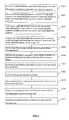
- FIG. 2is a flowchart of a method for manufacturing a local interconnect structure for a semiconductor device according to an embodiment of the present invention
- FIG. 3is a flowchart of a method for manufacturing a local interconnect structure for a semiconductor device according to another embodiment of the present invention.
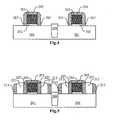
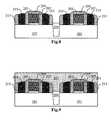
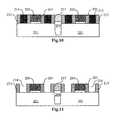
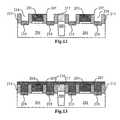
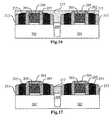
- FIGS. 4-14are cross-sectional views of intermediate structures of a local interconnect structure of a semiconductor device manufactured according to an embodiment of the present invention.
- FIG. 15is the top view of a local interconnect structure for a semiconductor device according to an embodiment of the present invention.
- FIGS. 16-21are cross-sectional views of intermediate structures of a local interconnect structure of a semiconductor device according to another embodiment of the present invention.
- FIG. 2is a flow chart of a method for manufacturing a local interconnect structure for semiconductor device of an embodiment of the present invention.
- the methodcomprises: performing step S 201 to provide a semiconductor substrate with a gate, wherein the gate is surrounded by a cap layer and sidewall spacers; performing step S 202 to form sacrificial sidewall spacers outside the sidewall spacers, wherein the material for the sacrificial sidewall spacers is different from the material for the cap layer and the sidewall spacers; performing step S 203 to form outer sidewall spacers outside the sacrificial sidewall spacers, wherein the material for the outer sidewall spacers is different from the material for the sacrificial sidewall spacers; performing step S 204 to remove the sacrificial sidewall spacers and to form source/drain through-holes between the sidewall spacer and the outer sidewall spacer on the same side; performing step S 205 to form sacrificial source/drain
- FIG. 3is a flowchart of a method for fabricating a local interconnect structure for semiconductor device of another embodiment of the present invention.
- the methodcomprises: performing step S 301 to provide a semiconductor substrate with a gate, wherein the gate is surrounded by a cap layer and sidewall spacers; performing step S 302 to form sacrificial sidewall spacers outside the sidewall spacers, wherein the material for the sacrificial sidewall spacers is different from the material for the cap layer and the sidewall spacers; performing step S 303 to form outer sidewall spacers outside the sacrificial sidewall spacers, wherein the material for the outer sidewall spacers is different from the material for the sacrificial sidewall spacers; performing step S 304 to remove the sacrificial sidewall spacers and to form source/drain through-holes between the sidewall spacer and the outer sidewall spacer on the same side; performing step S 305 to form sacrificial source/
- FIG. 4 to FIG. 14illustrate the cross-sectional structural diagrams of a local interconnect structure of semiconductor device manufactured according to an embodiment of the present invention.
- a semiconductor substrate 201on which a gate dielectric layer 202 is positioned, is provided; a patterned gate 203 is positioned on the gate dielectric layer 202 , and the gate 203 is surrounded by a cap layer 205 on its head and sidewall spacers 207 on its two sides; the neighboring semiconductor devices are isolated by a shallow trench isolation 209 .
- the sidewall spacers 207 and the cap layer 205may be used as a mask to implement ion implantation at the source/drain, so as to form source/drain regions (not shown) in the semiconductor substrate on two sides of the sidewall spacers 207 .
- angle tilt ion implantationmay be performed before formation of sidewall spacers 207 to form source/drain extension regions or a Halo implant region.
- the source/drain regionsalso may be formed through other methods.
- the gate 203may be polycrystalline silicon, Ti, Co, Ni, Al, W, alloy or a metal silicide; the cap layer 205 and the sidewall spacers 207 may be made of Si 3 N 4 , SiO 2 or SiON, etc.; the length of the gate 203 may be 10 ⁇ 50 nm, and the width of the sidewall spacers 207 may be 10 ⁇ 30 nm.
- sacrificial sidewall spacers 211are formed outside the sidewall spacers 207 , wherein the material for the sacrificial sidewall spacers 211 is different from the material for the cap layer 205 and the sidewall spacers 207 .
- the sacrificial sidewall spacers 211may be made of Si 3 N 4 , SiO 2 or SiON, and the width of the sacrificial sidewall spacers 211 may be greater than 10 nm.
- the semiconductor substrate under the sacrificial sidewall spacerscorresponds to at least a portion of the source/drain regions of the device, and the width of the sacrificial sidewall spacers is same as the width of source/drain through-holes to be formed. Accordingly, it becomes easy to adjust the width of the source/drain through-holes of the device in the embodiment of the present invention.
- the embodiment of the present inventionovercomes such an issue.
- outer sidewall spacers 213are formed outside the sacrificial sidewall spacers 211 ; the material for the outer sidewall spacers 213 is different from the material for the sacrificial sidewall spacers 211 ; the spacing distance between the sidewall spacer 207 and the outer sidewall spacer 213 on the same side of the gate 203 is same as the width of source/drain through-holes to be formed in the local interconnect structure.
- the outer sidewall spacers 213may be made of Si 3 N 4 , SiO 2 or SiON, and the width of the outer sidewall spacers 213 may be greater than 10 nm; additionally, the outer sidewall spacers 213 may be located over the source/drain of the semiconductor device, or may extend till partly or entirely over the shallow trench isolation between the neighboring semiconductor devices.
- the outer sidewall spacers 213also may be formed partly or completely on the shallow trench isolation 209 between the neighboring semiconductor devices, as shown in FIG. 6 .
- the sidewall spacers 207 and the outer sidewall spacers 213are removed, and source/drain through-holes 214 are formed between the sidewall spacer 207 and the outer sidewall spacer 213 on the same side of the gate 203 .
- the sacrificial sidewall spacers 211may be removed by means of wet etching, wherein the solution for wet etching may be HF.
- sacrificial source/drain 215are formed within the source/drain through-holes 214 .
- the sacrificial source/drain 215may be formed by means of Molecular Beam Epitaxy (MBE) method; the sacrificial source/drain 215 may be Si, SiGe or Si:C.
- MBEMolecular Beam Epitaxy
- the source/drainmay be formed after removal of the sacrificial sidewall spacers 211 .
- ion implantationmay be performed to the semiconductor substrate to form source/drain regions; alternatively, recesses are formed by way of further etching downwards the semiconductor substrate within the source/drain through-holes 214 , and then the source/drain regions are grown epitaxially within the recesses.
- the method for forming the source/drain regionsmay be selected according to the needs in practice.
- an interlayer dielectric layer 217is deposited on the entire crystal surface, on which the semiconductor device is positioned; the interlayer dielectric layer 217 fills the recesses between the outer sidewall spacers of the neighboring semiconductor devices; and the material for the interlayer dielectric layer 217 is different from the material for the sacrificial source/drain 215 .
- the interlayer dielectric layer 217may be a low-k material, for example, SiO 2 , SiOF, SiCOH, SiO, SiCO, SiCON, SiON, PSG or BPSG, etc.
- the entire crystal surfaceis planarized till the gate 203 and the sacrificial source/drain 215 are exposed.
- the Gate Last Techniquemay be integrated after aforesaid step; namely, the gate 203 and the gate dielectric layer therebelow are removed after the gate is exposed, then a new gate and a gate dielectric layer are formed again; the new gate may be made of a metal material, while the gate dielectric layer may be made of a high-k material.
- the sacrificial source/drain 215are removed to expose the source/drain regions on the semiconductor substrate 201 ; source/drain through-holes 214 are formed again between the sidewall spacer 217 and the outer sidewall spacer 213 on the same side of the gate 203 .
- the sacrificial source/drain 215may be removed by means of dry etching or wet etching.
- source/drainmay be formed after removal of the sacrificial source/drain 215 .
- ion implantationmay be performed to the semiconductor substrate to form the source/drain; alternatively, recesses are formed by way of further etching downwards the semiconductor substrate in the source/drain through-holes 214 , then source/drain regions are grown epitaxially within the recesses.
- the method for forming the source/drain regionsmay be selected according to the needs in practice.
- source/drain contacts 219 of the local interconnect structureare formed at the source/drain regions at the bottoms of the source/drain through-holes 214 .
- the source/drain contacts 219may be NiSi.
- a conductive material 216is deposited on the entire crystal surface, on which the semiconductor device is positioned; the conductive material 216 is filled into the source/drain through-holes 214 to form vias of the local interconnect structure.
- the conductive material 216may be Cu, W, Al or TiAl, etc.
- the entire crystal surfaceis planarized till the gate 203 and the vias 211 are completely exposed so as to form the local interconnect structure for semiconductor device of the present invention.
- the Gate Last Techniquemay be integrated after said step; namely, the gate 203 and the gate dielectric layer therebelow are removed, then a new gate and a gate dielectric layer are formed again; the new gate may be made of a metal material, while the gate dielectric layer may be made of a high-k material.
- the new sidewall spacers or outer sidewall spacersmay be made of a low-k material or a Si 3 N 4 stressed thin film.
- the sacrificial source/drain 215occupy first the space where the source/drain contacts are desirably to be formed; after an interlayer dielectric layer is deposited, the unoccupied space on the surface of the entire semiconductor structure is filled completely by the dielectric; now, the sacrificial source/drain 215 are removed such that source/drain through-holes corresponding to the source/drain regions shall be formed on the flat surface of the semiconductor device structure. As such, a short circuit shall not arise when the contacts are formed within the through-holes.
- FIG. 15illustrates a top view of a completely formed local interconnect structure for semiconductor device; the dashed blocks therein denote source/drain regions in the semiconductor device.
- FIG. 16 to FIG. 21illustrate the cross-sectional structural views of a local interconnect structure for semiconductor device manufactured according to another embodiment of the present invention.
- an interlayer dielectric layer 217(not shown in FIG. 9 ) is deposited on the entire crystal surface of the semiconductor device, the entire crystal surface is planarized, and the planarization shall be stopped immediately when the cap layer 205 on the head of the gate 203 is exposed.
- the interlayer dielectric layer 217 on the entire crystal surfaceis etched till the sacrificial source/drain 215 are exposed.
- the interlayer dielectric layer 217may be removed by means of dry etching or wet etching till the sacrificial source/drain 215 are exposed.
- the sacrificial source/drain 215are removed to expose the source/drain regions on the semiconductor substrate 201 ; then new source/drain through-holes 214 are formed again between the sidewall spacer 207 and the outer sidewall spacer 213 on the same side of the gate 203 .
- the sacrificial source/drain 215may be removed by means of dry etching or wet etching.
- source/drain contacts 219 of the local interconnect structureare formed at the source/drain regions at the bottoms of the source/drain through-holes 214 .
- the source/drain contacts 219may be NiSi.
- a conductive material 216is deposited on the entire crystal surface, on which the semiconductor device is positioned; the conductive material 216 is filled into the source/drain through-holes 214 to form vias of the local interconnect structure.
- the conductive material 216may be Cu, W, Al, TiAl, etc.
- the entire crystal surfaceis planarized till the gate 203 and the vias 221 are completely exposed, so as to form the local interconnect structure for semiconductor device of the present invention.
- the Gate Last Techniquemay be integrated after aforesaid step; namely, the gate 203 and the gate dielectric layer therebelow are removed, then a new gate and a gate dielectric layer are formed again; and the new gate may be made of a metal material, while the gate dielectric layer may be made of a high-k material.
- the top view of the completely formed local interconnect structure for semiconductor devicealso is similar to the one illustrated in FIG. 15 , wherein the dashed blocks therein denote source/drain regions in the semiconductor device.
- FIG. 14 to FIG. 21illustrate a local interconnect structure for semiconductor device manufactured according to the embodiment of the present invention.
- the structurecomprises: a semiconductor substrate 201 with a gate 203 and sidewall spacers 207 formed on two sides of the gate 203 ; outer sidewall spacers 213 formed outside the sidewall spacers at certain spacing distance; source/drain through-holes formed between the sidewall spacer 207 and the outer sidewall spacer 213 on the same side; a conductive material 221 is filled into the source/drain through-holes; an interlayer dielectric layer 217 is filled into recesses between the outer sidewall spacers of the neighboring semiconductor devices.
- the gate dielectric layer under the gate 203also is shown in the drawings.
- the sidewall spacers 207may be Si 3 N 4
- the outer sidewall spacers 221are Si 3 N 4 .
- the outer sidewall spacers 221may extend over the shallow trench isolation 209 between the neighboring semiconductor devices.
- the heads of the gate 203 , the sidewall spacers 207 , the outer sidewall spacers 213 and the conductive material 221are at the same level.
- the present inventionproposes to form removable sacrificial sidewall spacers between the sidewall spacers and the outer sidewall spacers on two sides of the patterned gate on the semiconductor substrate, and to form the contact through-holes at the source/drain regions in the local interconnect structure between the sidewall spacer and the outer sidewall spacer on the same side of the gate immediately after removing the sacrificial sidewall spacers.
- the source/drain through-holesare filled with a conductive material to form vias, the height of the vias shall be same as the height of the gate.
- the contact through-holeswhich establishes electrical connection between the subsequent first layer of metal wiring and the source/drain regions or the gate region at a lower level in the local interconnect structure, shall be made in the same depth, which therefore prevents over-etching or insufficient etching of contact through-holes occurring during formation of contact through-holes in different regions of the semiconductor device, and also improves the filling effects on the contact through-holes at the meantime.
- the present inventionmay integrate the Gate Last Technique at different stages to form again gates of different metal materials, and may further optimize the threshold voltage (Vth) and the saturated drain current (Idsat) between the source and the drain of the semiconductor device.
- Vththreshold voltage
- Idsatsaturated drain current
- the sidewall spacers and outer sidewall spacers on two sides of the gatemay be removed after formation of the local interconnect structure, and then new sidewall spacers or outer sidewall spacers may be formed again, and the material for the new sidewall spacers or the outer sidewall spacers may be a low-k material or a Si 3 N 4 stressed thin film.
- the use of a low-k materialis able to reduce the dielectric constants of the local interconnect dielectric/the interlayer dielectric layer, to reduce gate parasitic capacitance and to improve device performance; besides, the Si 3 N 4 stressed thin film exhibits effects of pulling and pressing the channel material under the gate, so as to improve carrier mobility at the channel region thereby enhancing the reaction speed of a semiconductor device.
- the outer sidewall spacers on the two sides of the gate in the present inventionmay be located over the source/drain of the semiconductor device, and also may extend till partly or entirely over the shallow trench isolation between the neighboring semiconductor devices; therefore, it becomes possible to adjust flexibly the widths or the positions of source/drain through-holes according to the needs of the widths of source/drain through-holes in practice, so as to improve utilization of chip area and to reduce manufacturing cost as well.
- the present inventionis able to manufacture contact through-holes, which establishes electrical connection between the subsequent first layer of metal wiring and the source/drain regions or the gate region at a lower level in the local interconnect structure, in the same depth; besides, the widths or positions of the contact through-holes may be arranged flexibly so as to adjust the depth to width ratio of the contact through-holes into a reasonable range, at which the conductive material shall be easily filled; therefore, it becomes convenient to use a metal material like Cu as the conductive material to fill the contact through-holes, which thus is favorable for improving electrical mobility effects of the metal interconnect wiring and also improves both yield and reliability of the product.
Landscapes
- Engineering & Computer Science (AREA)
- Physics & Mathematics (AREA)
- Condensed Matter Physics & Semiconductors (AREA)
- General Physics & Mathematics (AREA)
- Manufacturing & Machinery (AREA)
- Computer Hardware Design (AREA)
- Microelectronics & Electronic Packaging (AREA)
- Power Engineering (AREA)
- Insulated Gate Type Field-Effect Transistor (AREA)
Abstract
Description
This application is a National Phase application of PCT Application No. PCT/CN2011/071346, filed on Feb. 27, 2011, entitled “Semiconductor Device and Method for Manufacturing Local Interconnect Structure Thereof”, which claims priority to Chinese Application No. 201010259626.6, filed on Aug. 20, 2010. Both the PCT Application and the Chinese Application are incorporated herein by reference in their entireties.
The present invention relates to the field of semiconductor manufacturing, and specifically, relates to a semiconductor device and a method for manufacturing a local interconnect structure thereof.
In the back end interconnect process of manufacturing a semiconductor device, it is necessary to establish electrical connection between a first layer of metal wiring and an active device structure at a lower level having both source/drain regions and a gate region. Accordingly, a local interconnect structure of the semiconductor device must be formed in advance before formation of the first layer of metal wiring. The local interconnect structure comprises contact through-holes for connecting the first layer of metal wiring with the source/drain regions or the gate region at a lower level. However, the contact through-holes at the source/drain regions and the gate region of the semiconductor device usually do not have the same length. For example,FIG. 1 illustrates contact through-holes formed between a first layer of metal wiring and source/drain regions or a gate region at a lower level in the prior art. As shown inFIG. 1 , the contact through-holes holes
Specifically, since the contact through-holes at the source/drain regions and the gate regions are not in the same depth, it is hard to control the time for stopping etching of the contact through-holes in the local interconnect structure. If the etching is stopped when the bottom of the contact through-hole at the gate region comes into contact with the gate, then the bottoms of the contact through-holes at the source/drain regions usually do not have a sufficient depth to be in contact with the source/drain regions. As a result, the bottoms of the contact through-holes at the source/drain regions will be separated from the source/drain regions by local interconnect dielectric, and thus may not be electrically connected with the source/drain regions. However, if the etching is stopped when the bottoms of the contact through-holes at the source/drain regions come into contact with the source/drain regions, then the bottom of the contact through-hole at the gate region shall extend into the gate, which would bring about over-etching of the gate and destroy integrity of the gate. Furthermore, it is likely to cause excessive gate leakage current in the gate dielectric layer below the gate, and thus cause unfavorable effects on controlling of switch for the semiconductor device.
Therefore, there is an urgent need for a method capable of forming contact through-holes at different regions in a local interconnect structure in back end local interconnect process for manufacturing a semiconductor device, and preventing over-etching of contact through-holes at gate regions (hereinafter referred to as gate through-holes) or under-etching of contact through-holes at source/drain regions (hereinafter referred to as source/drain through-holes).
The problem that the present invention solves is to provide a semiconductor device and a method for fabricating a local interconnect structure thereof, so as to get rid of over-etching or insufficient etching occurring at formation of contact through-holes at different regions of a semiconductor device.
In order to solve aforesaid problems, the present invention provides a method for manufacturing a local interconnect structure for a semiconductor device, comprising: providing a semiconductor substrate with a gate, wherein the gate is sealed by a cap layer and sidewall spacers; forming sacrificial sidewall spacers outside the sidewall spacers; forming outer sidewall spacers at outer sides of the sacrificial sidewall spacers, wherein the material of the sacrificial sidewall spacers is different from the materials of the sidewall spacers and the outer sidewall spacers; removing the sacrificial sidewall spacers, forming source/drain through-holes between the sidewall spacers and the outer sidewall spacers which are located on the same side, and then forming sacrificial source/drain in the source/drain through-holes; and depositing an interlayer dielectric layer which is made of a material different from that of the sacrificial source/drain; performing planarization and removing the sacrificial source/drain; forming source/drain contacts at bottom of the source/drain through-holes; depositing a conductive material to fill the source/drain through-holes so as to form contact vias; and performing planarization to expose the gate and the contact vias.
Optionally, at the step of performing planarization and removing the sacrificial source/drain: planarization is performed to expose the sacrificial source/drain, and then the sacrificial source/drain is removed.
Optionally, at the step of performing planarization and removing the sacrificial source/drain: planarization is performed to expose the cap layer, the interlayer dielectric layer is etched to expose the sacrificial source/drain, and then the sacrificial source/drain is removed.
Optionally, after performing planarization to expose the gate and the sacrificial source/drain, the method further comprises removing the gate and a gate dielectric layer therebelow to form a new gate and a new gate dielectric layer.
Optionally, after performing planarization to expose the gate and the vias, the method further comprises removing the gate and the gate dielectric layer therebelow to form a new gate and a new gate dielectric layer.
Optionally, the new gate is formed with a metal material.
Optionally, after performing planarization to expose the gate and the vias, the method further comprises removing the sidewall spacers or the outer sidewall spacers, and then forming new sidewall spacers or new outer sidewall spacers.
Optionally, the new sidewall spacers or the new outer sidewall spacers are made of a low-k material or a Si3N4stressed thin film.
Optionally, the cap layer and the sidewall spacers are made of Si3N4, the sacrificial sidewall spacers at outer sides of the sidewall spacers are made of SiO2, and the outer sidewall spacers at outer sides of the sacrificial sidewall spacers are made of Si3N4.
Optionally, the outer sidewall spacers are located over the source/drain of the semiconductor device or extend over a shallow trench isolation between neighboring semiconductor devices.
Optionally, the sacrificial source/drain are grown by means of a Molecular Beam Epitaxy method.
Optionally, the sacrificial source/drain is Si, SiGe or Si:C.
The present invention further provides a semiconductor device having a local interconnect structure for semiconductor device manufactured according to aforesaid method, comprising: a semiconductor substrate with a gate and sidewall spacers formed on two sides of the gate; outer sidewall spacers which are formed at outer sides of the sidewall spacers at a certain spacing distance, and source/drain through-holes formed between the sidewall spacers and the outer sidewall spacers which are located on the same side; a conductive material filled into the source/drain through-holes; and an interlayer dielectric layer filled into recesses between the outer sidewall spacers of neighboring semiconductor devices.
Optionally, the sidewall spacers are made of Si3N4, and the outer sidewall spacers are made of Si3N4.
Optionally, the outer sidewall spacers extend over a shallow trench isolation between neighboring semiconductor devices.
Optionally, the heads of the gate, the sidewall spacers, the outer sidewall spacers and the conductive material are at the same level.
As compared to the prior art, the present invention exhibits following advantages: sacrificial sidewall spacers are formed between the sidewall spacers and outer sidewall spacers on the semiconductor substrate, and after the sacrificial sidewall spacers are removed, the contact through-holes of the source/drain regions are formed immediately between the sidewall spacer and outer sidewall spacer on the same side of the gate. After the conductive material is filled into the source/drain through-holes to form vias, the height of the vias shall be same as the height of the gate. As such, in a local interconnect structure, the contact through-holes, which establishes electrical connection between the subsequent first layer of metal wiring and the source/drain regions or the gate region, shall be in the same depth; therefore, over-etching or insufficient etching is prevented from occurring to the contact through-holes during formation of the contact through-holes at different regions in the semiconductor device, and the filling effects on the contact through-holes are also improved at the meantime.
The present invention may integrate the Gate Last Technique at different stages, and newly form gates of different metal materials, and also may further optimize the threshold voltage (Vth) and the saturated drain current (Idsat) between the source and the drain of the semiconductor device.
It is also applicable in the present invention that the sidewall spacers and outer sidewall spacers on two sides of the gate may be removed after formation of a local interconnect structure, then new sidewall spacers or outer sidewall spacers may be formed again, and the material for the new sidewall spacers or the outer sidewall spacers may be a low-k material or a Si3N4stressed thin film. The use of a low-k material is able to reduce the dielectric constants of a local interconnect dielectric/an interlayer dielectric layer, to reduce gate parasitic capacitance and thus to improve performance of a device; meanwhile, the Si3N4stressed thin film exhibits effects of pulling and pressing the channel material under the gate, so as to improve carrier mobility at the channel region, thereby enhancing the reaction speed of the semiconductor device.
The outer sidewall spacers on the two sides of the gate in the present invention may be located over the source/drain of the semiconductor device, and also may extend till partly or entirely over the shallow trench isolation between the neighboring semiconductor devices; therefore, it becomes possible to adjust flexibly the widths or positions of source/drain through-holes according to the needs of the widths of source/drain through-holes in practice, so as to improve utilization of chip area and to reduce manufacturing cost as well.
According to aforesaid technical solution, the present invention is able to manufacture contact through-holes, which establishes electrical connection between the subsequent first layer of metal wiring and the source/drain regions or the gate region at a lower level in the local interconnect structure, in a same depth, and to flexibly arrange the widths or positions of the contact through-holes so as to adjust the depth to width ratio of the contact through-holes into a reasonable range, at which a conductive material shall be easily filled; thus it becomes convenient to use a metal material like Cu as the conductive material to fill the contact through-holes, which thus is favorable for improving electrical mobility effects of metal interconnect wiring and also improving both yield and reliability of the product.
The present invention is further described with the specific exemplary embodiments and the accompanying drawings, but it will be understood that they should not be interpreted as limits to the present invention.
Optionally, thesidewall spacers 207 and thecap layer 205 may be used as a mask to implement ion implantation at the source/drain, so as to form source/drain regions (not shown) in the semiconductor substrate on two sides of thesidewall spacers 207. For other embodiments of the present invention, angle tilt ion implantation may be performed before formation ofsidewall spacers 207 to form source/drain extension regions or a Halo implant region. The source/drain regions also may be formed through other methods.
In the present embodiment, thegate 203 may be polycrystalline silicon, Ti, Co, Ni, Al, W, alloy or a metal silicide; thecap layer 205 and thesidewall spacers 207 may be made of Si3N4, SiO2or SiON, etc.; the length of thegate 203 may be 10˜50 nm, and the width of thesidewall spacers 207 may be 10˜30 nm.
As shown inFIG. 5 ,sacrificial sidewall spacers 211 are formed outside thesidewall spacers 207, wherein the material for thesacrificial sidewall spacers 211 is different from the material for thecap layer 205 and thesidewall spacers 207.
In the present embodiment, thesacrificial sidewall spacers 211 may be made of Si3N4, SiO2or SiON, and the width of thesacrificial sidewall spacers 211 may be greater than 10 nm. The semiconductor substrate under the sacrificial sidewall spacers corresponds to at least a portion of the source/drain regions of the device, and the width of the sacrificial sidewall spacers is same as the width of source/drain through-holes to be formed. Accordingly, it becomes easy to adjust the width of the source/drain through-holes of the device in the embodiment of the present invention. However, because the device size in the prior art is scaling down, thus precision of lithography and etching becomes increasingly demanding, whereas the embodiment of the present invention overcomes such an issue.
Next,outer sidewall spacers 213 are formed outside thesacrificial sidewall spacers 211; the material for theouter sidewall spacers 213 is different from the material for thesacrificial sidewall spacers 211; the spacing distance between thesidewall spacer 207 and theouter sidewall spacer 213 on the same side of thegate 203 is same as the width of source/drain through-holes to be formed in the local interconnect structure.
In the present embodiment, theouter sidewall spacers 213 may be made of Si3N4, SiO2or SiON, and the width of theouter sidewall spacers 213 may be greater than 10 nm; additionally, theouter sidewall spacers 213 may be located over the source/drain of the semiconductor device, or may extend till partly or entirely over the shallow trench isolation between the neighboring semiconductor devices.
In the various embodiments of the present invention, with regard to the practical demands of width or position of the contact through-hole at the gate region, theouter sidewall spacers 213 also may be formed partly or completely on theshallow trench isolation 209 between the neighboring semiconductor devices, as shown inFIG. 6 .
As shown inFIG. 7 , in view that the material for thesacrificial sidewall spacers 211 is different from the material for thecap layer 205, thesidewall spacers 207 and theouter sidewall spacers 213, thus thesacrificial sidewall spacers 211 are removed, and source/drain through-holes 214 are formed between thesidewall spacer 207 and theouter sidewall spacer 213 on the same side of thegate 203.
In the present embodiment, thesacrificial sidewall spacers 211 may be removed by means of wet etching, wherein the solution for wet etching may be HF.
As shown inFIG. 8 , sacrificial source/drain 215 are formed within the source/drain through-holes 214.
In the present embodiment, the sacrificial source/drain 215 may be formed by means of Molecular Beam Epitaxy (MBE) method; the sacrificial source/drain 215 may be Si, SiGe or Si:C.
As for other embodiments of the present invention, if no source/drain has been formed at foregoing steps, then the source/drain may be formed after removal of thesacrificial sidewall spacers 211. For example, ion implantation may be performed to the semiconductor substrate to form source/drain regions; alternatively, recesses are formed by way of further etching downwards the semiconductor substrate within the source/drain through-holes 214, and then the source/drain regions are grown epitaxially within the recesses. The method for forming the source/drain regions may be selected according to the needs in practice.
As shown inFIG. 9 , aninterlayer dielectric layer 217 is deposited on the entire crystal surface, on which the semiconductor device is positioned; theinterlayer dielectric layer 217 fills the recesses between the outer sidewall spacers of the neighboring semiconductor devices; and the material for theinterlayer dielectric layer 217 is different from the material for the sacrificial source/drain 215.
In the present embodiment, theinterlayer dielectric layer 217 may be a low-k material, for example, SiO2, SiOF, SiCOH, SiO, SiCO, SiCON, SiON, PSG or BPSG, etc.
As shown inFIG. 10 , the entire crystal surface is planarized till thegate 203 and the sacrificial source/drain 215 are exposed.
In various embodiments of the present invention, the Gate Last Technique may be integrated after aforesaid step; namely, thegate 203 and the gate dielectric layer therebelow are removed after the gate is exposed, then a new gate and a gate dielectric layer are formed again; the new gate may be made of a metal material, while the gate dielectric layer may be made of a high-k material.
As shown inFIG. 11 , the sacrificial source/drain 215 are removed to expose the source/drain regions on thesemiconductor substrate 201; source/drain through-holes 214 are formed again between thesidewall spacer 217 and theouter sidewall spacer 213 on the same side of thegate 203.
In the present embodiment, the sacrificial source/drain 215 may be removed by means of dry etching or wet etching.
As for other embodiments of the present invention, if no source/drain is formed at foregoing steps, then source/drain may be formed after removal of the sacrificial source/drain 215. For example, ion implantation may be performed to the semiconductor substrate to form the source/drain; alternatively, recesses are formed by way of further etching downwards the semiconductor substrate in the source/drain through-holes 214, then source/drain regions are grown epitaxially within the recesses. The method for forming the source/drain regions may be selected according to the needs in practice.
As shown inFIG. 12 , source/drain contacts 219 of the local interconnect structure are formed at the source/drain regions at the bottoms of the source/drain through-holes 214.
In the present embodiment, the source/drain contacts 219 may be NiSi.
Then, as shown inFIG. 13 , aconductive material 216 is deposited on the entire crystal surface, on which the semiconductor device is positioned; theconductive material 216 is filled into the source/drain through-holes 214 to form vias of the local interconnect structure.
In the present embodiment, theconductive material 216 may be Cu, W, Al or TiAl, etc.
Finally, as shown inFIG. 14 , the entire crystal surface is planarized till thegate 203 and thevias 211 are completely exposed so as to form the local interconnect structure for semiconductor device of the present invention.
In various embodiments of the present invention, the Gate Last Technique may be integrated after said step; namely, thegate 203 and the gate dielectric layer therebelow are removed, then a new gate and a gate dielectric layer are formed again; the new gate may be made of a metal material, while the gate dielectric layer may be made of a high-k material.
It is also applicable in other embodiments of the present invention to remove thesidewall spacers 207 orouter sidewall spacers 213 on the two sides of thegate 203, and then to form new sidewall spacers or outer sidewall spacers; the new sidewall spacers or outer sidewall spacers may be made of a low-k material or a Si3N4stressed thin film.
For the embodiment of the present invention, if the conductive contacts are formed immediately after removal of the sacrificial sidewall spacers, the surface of the entire device would be covered with the metal, which nonetheless is hard to remove completely. However, according to the method of the embodiment of the present invention, the sacrificial source/drain 215 occupy first the space where the source/drain contacts are desirably to be formed; after an interlayer dielectric layer is deposited, the unoccupied space on the surface of the entire semiconductor structure is filled completely by the dielectric; now, the sacrificial source/drain 215 are removed such that source/drain through-holes corresponding to the source/drain regions shall be formed on the flat surface of the semiconductor device structure. As such, a short circuit shall not arise when the contacts are formed within the through-holes.
As shown,FIG. 15 illustrates a top view of a completely formed local interconnect structure for semiconductor device; the dashed blocks therein denote source/drain regions in the semiconductor device.
As shown inFIG. 17 , theinterlayer dielectric layer 217 on the entire crystal surface is etched till the sacrificial source/drain 215 are exposed.
In the present embodiment, theinterlayer dielectric layer 217 may be removed by means of dry etching or wet etching till the sacrificial source/drain 215 are exposed.
As shown inFIG. 18 , the sacrificial source/drain 215 are removed to expose the source/drain regions on thesemiconductor substrate 201; then new source/drain through-holes 214 are formed again between thesidewall spacer 207 and theouter sidewall spacer 213 on the same side of thegate 203.
In the present embodiment, the sacrificial source/drain 215 may be removed by means of dry etching or wet etching.
As shown inFIG. 19 , source/drain contacts 219 of the local interconnect structure are formed at the source/drain regions at the bottoms of the source/drain through-holes 214.
In the present embodiment, the source/drain contacts 219 may be NiSi.
Then, as shown inFIG. 20 , aconductive material 216 is deposited on the entire crystal surface, on which the semiconductor device is positioned; theconductive material 216 is filled into the source/drain through-holes 214 to form vias of the local interconnect structure.
In the present embodiment, theconductive material 216 may be Cu, W, Al, TiAl, etc.
Finally, as shown inFIG. 21 , the entire crystal surface is planarized till thegate 203 and thevias 221 are completely exposed, so as to form the local interconnect structure for semiconductor device of the present invention.
In different embodiments of the present invention, the Gate Last Technique may be integrated after aforesaid step; namely, thegate 203 and the gate dielectric layer therebelow are removed, then a new gate and a gate dielectric layer are formed again; and the new gate may be made of a metal material, while the gate dielectric layer may be made of a high-k material.
It is also applicable in other embodiments of the present invention to remove thesidewall spacers 207 orouter sidewall spacers 213 on two sides of thegate 203, and then to form new sidewall spacers or outer sidewall spacers; and the new sidewall spacers or outer sidewall spacers may be made of a low-k material or a Si3N4stressed thin film.
In the present embodiment, the top view of the completely formed local interconnect structure for semiconductor device also is similar to the one illustrated inFIG. 15 , wherein the dashed blocks therein denote source/drain regions in the semiconductor device.
As shown,FIG. 14 toFIG. 21 illustrate a local interconnect structure for semiconductor device manufactured according to the embodiment of the present invention. The structure comprises: asemiconductor substrate 201 with agate 203 andsidewall spacers 207 formed on two sides of thegate 203;outer sidewall spacers 213 formed outside the sidewall spacers at certain spacing distance; source/drain through-holes formed between thesidewall spacer 207 and theouter sidewall spacer 213 on the same side; aconductive material 221 is filled into the source/drain through-holes; aninterlayer dielectric layer 217 is filled into recesses between the outer sidewall spacers of the neighboring semiconductor devices. The gate dielectric layer under thegate 203 also is shown in the drawings.
Optionally, thesidewall spacers 207 may be Si3N4, and theouter sidewall spacers 221 are Si3N4.
Optionally, theouter sidewall spacers 221 may extend over theshallow trench isolation 209 between the neighboring semiconductor devices.
Preferably, in the embodiments of the present invention, the heads of thegate 203, thesidewall spacers 207, theouter sidewall spacers 213 and theconductive material 221 are at the same level.
The present invention proposes to form removable sacrificial sidewall spacers between the sidewall spacers and the outer sidewall spacers on two sides of the patterned gate on the semiconductor substrate, and to form the contact through-holes at the source/drain regions in the local interconnect structure between the sidewall spacer and the outer sidewall spacer on the same side of the gate immediately after removing the sacrificial sidewall spacers. Once the source/drain through-holes are filled with a conductive material to form vias, the height of the vias shall be same as the height of the gate. As such, the contact through-holes, which establishes electrical connection between the subsequent first layer of metal wiring and the source/drain regions or the gate region at a lower level in the local interconnect structure, shall be made in the same depth, which therefore prevents over-etching or insufficient etching of contact through-holes occurring during formation of contact through-holes in different regions of the semiconductor device, and also improves the filling effects on the contact through-holes at the meantime.
The present invention may integrate the Gate Last Technique at different stages to form again gates of different metal materials, and may further optimize the threshold voltage (Vth) and the saturated drain current (Idsat) between the source and the drain of the semiconductor device.
It is also applicable in the present invention that the sidewall spacers and outer sidewall spacers on two sides of the gate may be removed after formation of the local interconnect structure, and then new sidewall spacers or outer sidewall spacers may be formed again, and the material for the new sidewall spacers or the outer sidewall spacers may be a low-k material or a Si3N4stressed thin film. The use of a low-k material is able to reduce the dielectric constants of the local interconnect dielectric/the interlayer dielectric layer, to reduce gate parasitic capacitance and to improve device performance; besides, the Si3N4stressed thin film exhibits effects of pulling and pressing the channel material under the gate, so as to improve carrier mobility at the channel region thereby enhancing the reaction speed of a semiconductor device.
The outer sidewall spacers on the two sides of the gate in the present invention may be located over the source/drain of the semiconductor device, and also may extend till partly or entirely over the shallow trench isolation between the neighboring semiconductor devices; therefore, it becomes possible to adjust flexibly the widths or the positions of source/drain through-holes according to the needs of the widths of source/drain through-holes in practice, so as to improve utilization of chip area and to reduce manufacturing cost as well.
According to aforesaid technical solution, the present invention is able to manufacture contact through-holes, which establishes electrical connection between the subsequent first layer of metal wiring and the source/drain regions or the gate region at a lower level in the local interconnect structure, in the same depth; besides, the widths or positions of the contact through-holes may be arranged flexibly so as to adjust the depth to width ratio of the contact through-holes into a reasonable range, at which the conductive material shall be easily filled; therefore, it becomes convenient to use a metal material like Cu as the conductive material to fill the contact through-holes, which thus is favorable for improving electrical mobility effects of the metal interconnect wiring and also improves both yield and reliability of the product.
The present invention though is described with preferred embodiments, yet they should not be understood as limits to the present invention. A person of ordinary skill in the art should appreciate that any possible modification and change could be made without departing from the spirit and the scope of the invention. Accordingly, the scope of the present invention should be understood as the scope defined by the appended claims of the present invention.
Claims (12)
1. A method for manufacturing a local interconnect structure for a semiconductor device, comprising:
providing a semiconductor substrate with a gate, wherein the gate is sealed by a cap layer and sidewall spacers;
forming sacrificial sidewall spacers outside the sidewall spacers;
forming outer sidewall spacers at outer sides of the sacrificial sidewall spacers, wherein the material of the sacrificial sidewall spacers is different from the materials of the sidewall spacers and the outer sidewall spacers;
removing the sacrificial sidewall spacers, forming source/drain through-holes between the sidewall spacers and the outer sidewall spacers which are located on the same side, and then forming sacrificial source/drain in the source/drain through-holes; and
depositing an interlayer dielectric layer which is made of a material different from that of the sacrificial source/drain;
performing planarization and removing the sacrificial source/drain;
forming source/drain contacts at bottom of the source/drain through-holes;
depositing a conductive material to fill the source/drain through-holes so as to form contact vias; and
performing planarization to expose the gate and the contact vias.
2. The method according toclaim 1 , wherein at the step of performing planarization and removing the sacrificial source/drain: performing planarization to expose the sacrificial source/drain, and then the sacrificial source/drain is removed.
3. The method according toclaim 2 , wherein after performing planarization to expose the gate and the sacrificial source/drain, the method further comprises removing the gate and a gate dielectric layer therebelow to form a new gate and a new gate dielectric layer.
4. The method according toclaim 3 , wherein the new gate is made of a metal material.
5. The method according toclaim 1 , wherein in the step of performing planarization and removing the sacrificial source/drain: planarization is performed to expose the cap layer, the interlayer dielectric layer is etched to expose the sacrificial source/drain, and then the sacrificial source/drain is removed.
6. The method according toclaim 1 , wherein after performing planarization to expose the gate and the vias, the method further comprises removing the gate and a gate dielectric layer therebelow to form a new gate and a new gate dielectric layer.
7. The method according toclaim 1 , wherein after performing planarization to expose the gate and the vias, the method further comprises removing the sidewall spacers or the outer sidewall spacers, and then forming new sidewall spacers or new outer sidewall spacers.
8. The method according toclaim 7 , wherein the new sidewall spacers or the new outer sidewall spacers are made of a low-k material or a Si3N4 stressed thin film.
9. The method accordingclaim 1 , wherein the cap layer and the sidewall spacers are made of Si3N4, the sacrificial sidewall spacers at outer sides of the sidewall spacers are made of SiO2, and the outer sidewall spacers at outer sides of the sacrificial sidewall spacers are made of Si3N4.
10. The method accordingclaim 1 , wherein the outer sidewall spacers are located over the source/drain of the semiconductor device or extend over a shallow trench isolation between neighboring semiconductor devices.
11. The method accordingclaim 1 , wherein the sacrificial source/drain are grown by means of a Molecular Beam Epitaxy method.
12. The method according toclaim 11 , wherein the sacrificial source/drain is Si, SiGe or Si:C.
Applications Claiming Priority (4)
| Application Number | Priority Date | Filing Date | Title |
|---|---|---|---|
| CN201010259626.6ACN102376630B (en) | 2010-08-20 | 2010-08-20 | Semiconductor device and method for manufacturing local interconnection structure thereof |
| CN201010259626.6 | 2010-08-20 | ||
| CN201010259626 | 2010-08-20 | ||
| PCT/CN2011/071346WO2012022144A1 (en) | 2010-08-20 | 2011-02-27 | Semiconductor device and manufacturing method of its local interconnect structure |
Publications (2)
| Publication Number | Publication Date |
|---|---|
| US20120261727A1 US20120261727A1 (en) | 2012-10-18 |
| US8987136B2true US8987136B2 (en) | 2015-03-24 |
Family
ID=45604729
Family Applications (1)
| Application Number | Title | Priority Date | Filing Date |
|---|---|---|---|
| US13/380,061Active2032-10-01US8987136B2 (en) | 2010-08-20 | 2011-02-27 | Semiconductor device and method for manufacturing local interconnect structure thereof |
Country Status (3)
| Country | Link |
|---|---|
| US (1) | US8987136B2 (en) |
| CN (1) | CN102376630B (en) |
| WO (1) | WO2012022144A1 (en) |
Cited By (2)
| Publication number | Priority date | Publication date | Assignee | Title |
|---|---|---|---|---|
| US20150206753A1 (en)* | 2014-01-21 | 2015-07-23 | Taiwan Semiconductor Manufacturing Co., Ltd. | Self-aligned contact and method of forming the same |
| US20150235897A1 (en)* | 2014-02-14 | 2015-08-20 | Taiwan Semiconductor Manufacturing Co., Ltd. | Reverse Tone Self-Aligned Contact |
Families Citing this family (9)
| Publication number | Priority date | Publication date | Assignee | Title |
|---|---|---|---|---|
| US9153483B2 (en)* | 2013-10-30 | 2015-10-06 | Taiwan Semiconductor Manufacturing Company, Ltd. | Method of semiconductor integrated circuit fabrication |
| CN104752329B (en)* | 2013-12-30 | 2017-12-01 | 中芯国际集成电路制造(上海)有限公司 | The forming method of interconnection structure |
| US9553028B2 (en)* | 2014-03-19 | 2017-01-24 | Globalfoundries Inc. | Methods of forming reduced resistance local interconnect structures and the resulting devices |
| CN106952866B (en)* | 2016-01-06 | 2020-03-24 | 中芯国际集成电路制造(上海)有限公司 | Method for manufacturing local interconnection structure |
| US10290544B2 (en) | 2017-10-10 | 2019-05-14 | Globalfoundries Inc. | Methods of forming conductive contact structures to semiconductor devices and the resulting structures |
| CN109841507B (en)* | 2017-11-24 | 2020-11-27 | 中芯国际集成电路制造(上海)有限公司 | Semiconductor device and method of forming the same |
| US10593599B2 (en) | 2018-03-07 | 2020-03-17 | Globalfoundries Inc. | Contact structures |
| JP6689936B2 (en)* | 2018-10-15 | 2020-04-28 | パナソニック株式会社 | Imaging device manufacturing method |
| TWI762196B (en)* | 2020-05-26 | 2022-04-21 | 台灣積體電路製造股份有限公司 | Semiconductor device and manufacturing method thereof |
Citations (3)
| Publication number | Priority date | Publication date | Assignee | Title |
|---|---|---|---|---|
| US5960270A (en) | 1997-08-11 | 1999-09-28 | Motorola, Inc. | Method for forming an MOS transistor having a metallic gate electrode that is formed after the formation of self-aligned source and drain regions |
| US6087706A (en)* | 1998-04-07 | 2000-07-11 | Advanced Micro Devices, Inc. | Compact transistor structure with adjacent trench isolation and source/drain regions implanted vertically into trench walls |
| US6635536B2 (en) | 2000-09-27 | 2003-10-21 | Samsung Electronics Co., Ltd. | Method for manufacturing semiconductor memory device |
- 2010
- 2010-08-20CNCN201010259626.6Apatent/CN102376630B/enactiveActive
- 2011
- 2011-02-27USUS13/380,061patent/US8987136B2/enactiveActive
- 2011-02-27WOPCT/CN2011/071346patent/WO2012022144A1/enactiveApplication Filing
Patent Citations (3)
| Publication number | Priority date | Publication date | Assignee | Title |
|---|---|---|---|---|
| US5960270A (en) | 1997-08-11 | 1999-09-28 | Motorola, Inc. | Method for forming an MOS transistor having a metallic gate electrode that is formed after the formation of self-aligned source and drain regions |
| US6087706A (en)* | 1998-04-07 | 2000-07-11 | Advanced Micro Devices, Inc. | Compact transistor structure with adjacent trench isolation and source/drain regions implanted vertically into trench walls |
| US6635536B2 (en) | 2000-09-27 | 2003-10-21 | Samsung Electronics Co., Ltd. | Method for manufacturing semiconductor memory device |
Non-Patent Citations (3)
| Title |
|---|
| International Preliminary Report on Patentability issued in PCT/CN2011/071346 dated Mar. 7, 2013 (5 pages). |
| International Search Report from PCT/CN2011/071346 dated Jun. 9, 2011 (3 pages). |
| Written Opinion from PCT/CN2011/071346 dated Jun. 9, 2011 (4 pages). |
Cited By (5)
| Publication number | Priority date | Publication date | Assignee | Title |
|---|---|---|---|---|
| US20150206753A1 (en)* | 2014-01-21 | 2015-07-23 | Taiwan Semiconductor Manufacturing Co., Ltd. | Self-aligned contact and method of forming the same |
| US9378963B2 (en)* | 2014-01-21 | 2016-06-28 | Taiwan Semiconductor Manufacturing Co., Ltd. | Self-aligned contact and method of forming the same |
| US20150235897A1 (en)* | 2014-02-14 | 2015-08-20 | Taiwan Semiconductor Manufacturing Co., Ltd. | Reverse Tone Self-Aligned Contact |
| US9412656B2 (en)* | 2014-02-14 | 2016-08-09 | Taiwan Semiconductor Manufacturing Co., Ltd. | Reverse tone self-aligned contact |
| US9812536B2 (en) | 2014-02-14 | 2017-11-07 | Taiwan Semiconductor Manufacturing Co., Ltd. | Reverse tone self-aligned contact |
Also Published As
| Publication number | Publication date |
|---|---|
| CN102376630A (en) | 2012-03-14 |
| WO2012022144A1 (en) | 2012-02-23 |
| CN102376630B (en) | 2013-08-14 |
| US20120261727A1 (en) | 2012-10-18 |
Similar Documents
| Publication | Publication Date | Title |
|---|---|---|
| US8987136B2 (en) | Semiconductor device and method for manufacturing local interconnect structure thereof | |
| TWI399856B (en) | Block crystal fin field effect transistor device | |
| US8836031B2 (en) | Electrical isolation structures for ultra-thin semiconductor-on-insulator devices | |
| US10084085B2 (en) | Fin field effect transistor (FinFET) device structure with stop layer and method for forming the same | |
| CN102148236B (en) | Semiconductor element and its manufacturing method | |
| TWI523237B (en) | Fin field effect transistor with source-drain sidewall spacers and reduced height | |
| US9190486B2 (en) | Integrated circuits and methods for fabricating integrated circuits with reduced parasitic capacitance | |
| US8053897B2 (en) | Production of a carrier wafer contact in trench insulated integrated SOI circuits having high-voltage components | |
| TW201926708A (en) | Semiconductor device | |
| TW201806126A (en) | Air gap above the gate of the transistor and related methods | |
| US10373875B1 (en) | Contacts formed with self-aligned cuts | |
| US11018134B2 (en) | Semiconductor device and method for manufacturing the same | |
| WO2011124088A1 (en) | Gate stack structure, semiconductor device, and methods for manufacturing them | |
| CN102376769A (en) | Ultra-thin body transistor and manufacturing method thereof | |
| US10832967B2 (en) | Tapered fin-type field-effect transistors | |
| US10679894B2 (en) | Airgap spacers formed in conjunction with a late gate cut | |
| US10734381B2 (en) | Fin-FET devices | |
| US9330971B2 (en) | Method for fabricating integrated circuits including contacts for metal resistors | |
| CN103779224A (en) | MOSFET manufacturing method | |
| US10916470B2 (en) | Modified dielectric fill between the contacts of field-effect transistors | |
| US10340362B2 (en) | Spacers for tight gate pitches in field effect transistors | |
| US9337259B2 (en) | Structure and method to improve ETSOI MOSFETS with back gate | |
| CN108987276B (en) | Enlarged sacrificial gate cover for forming self-aligned contacts | |
| CN109390338B (en) | Complementary metal oxide semiconductor element and manufacturing method thereof | |
| CN106486370A (en) | The forming method of semiconductor devices |
Legal Events
| Date | Code | Title | Description |
|---|---|---|---|
| AS | Assignment | Owner name:INSTITUTE OF MICROELECTRONICS, CHINESE ACADEMY OF Free format text:ASSIGNMENT OF ASSIGNORS INTEREST;ASSIGNORS:ZHONG, HUICAI;LIANG, QINGQING;REEL/FRAME:027433/0461 Effective date:20111114 | |
| STCF | Information on status: patent grant | Free format text:PATENTED CASE | |
| MAFP | Maintenance fee payment | Free format text:PAYMENT OF MAINTENANCE FEE, 4TH YR, SMALL ENTITY (ORIGINAL EVENT CODE: M2551); ENTITY STATUS OF PATENT OWNER: SMALL ENTITY Year of fee payment:4 | |
| MAFP | Maintenance fee payment | Free format text:PAYMENT OF MAINTENANCE FEE, 8TH YR, SMALL ENTITY (ORIGINAL EVENT CODE: M2552); ENTITY STATUS OF PATENT OWNER: SMALL ENTITY Year of fee payment:8 |