US8775488B2 - System and method for data caching - Google Patents
System and method for data cachingDownload PDFInfo
- Publication number
- US8775488B2 US8775488B2US13/081,933US201113081933AUS8775488B2US 8775488 B2US8775488 B2US 8775488B2US 201113081933 AUS201113081933 AUS 201113081933AUS 8775488 B2US8775488 B2US 8775488B2
- Authority
- US
- United States
- Prior art keywords
- data
- product assembly
- fsc
- assembly data
- product
- Prior art date
- Legal status (The legal status is an assumption and is not a legal conclusion. Google has not performed a legal analysis and makes no representation as to the accuracy of the status listed.)
- Active, expires
Links
- 238000000034methodMethods0.000titleclaimsabstractdescription52
- 238000012545processingMethods0.000claimsdescription26
- 238000003860storageMethods0.000claimsdescription10
- 230000008569processEffects0.000description30
- 230000015654memoryEffects0.000description7
- 230000004044responseEffects0.000description6
- 230000008901benefitEffects0.000description5
- 230000002093peripheral effectEffects0.000description3
- 238000012546transferMethods0.000description3
- 238000004891communicationMethods0.000description2
- 230000000295complement effectEffects0.000description2
- 238000010276constructionMethods0.000description2
- 230000001934delayEffects0.000description2
- 230000006870functionEffects0.000description2
- 230000006872improvementEffects0.000description2
- 238000007726management methodMethods0.000description2
- 230000007246mechanismEffects0.000description2
- 230000003287optical effectEffects0.000description2
- 230000009471actionEffects0.000description1
- 230000000712assemblyEffects0.000description1
- 238000000429assemblyMethods0.000description1
- 230000006399behaviorEffects0.000description1
- 238000013461designMethods0.000description1
- 238000010586diagramMethods0.000description1
- 238000009826distributionMethods0.000description1
- 230000007613environmental effectEffects0.000description1
- 230000003203everyday effectEffects0.000description1
- 230000000977initiatory effectEffects0.000description1
- 230000003993interactionEffects0.000description1
- 230000014759maintenance of locationEffects0.000description1
- 238000005457optimizationMethods0.000description1
- 238000010926purgeMethods0.000description1
- 230000000717retained effectEffects0.000description1
- 238000006467substitution reactionMethods0.000description1
- 230000001360synchronised effectEffects0.000description1
Images


Classifications
- H—ELECTRICITY
- H04—ELECTRIC COMMUNICATION TECHNIQUE
- H04L—TRANSMISSION OF DIGITAL INFORMATION, e.g. TELEGRAPHIC COMMUNICATION
- H04L67/00—Network arrangements or protocols for supporting network services or applications
- H04L67/50—Network services
- H04L67/56—Provisioning of proxy services
- H04L67/568—Storing data temporarily at an intermediate stage, e.g. caching
- H04L67/5681—Pre-fetching or pre-delivering data based on network characteristics
- H—ELECTRICITY
- H04—ELECTRIC COMMUNICATION TECHNIQUE
- H04L—TRANSMISSION OF DIGITAL INFORMATION, e.g. TELEGRAPHIC COMMUNICATION
- H04L67/00—Network arrangements or protocols for supporting network services or applications
- H04L67/50—Network services
- H04L67/56—Provisioning of proxy services
- H04L67/568—Storing data temporarily at an intermediate stage, e.g. caching
- H04L67/5682—Policies or rules for updating, deleting or replacing the stored data
- H—ELECTRICITY
- H04—ELECTRIC COMMUNICATION TECHNIQUE
- H04L—TRANSMISSION OF DIGITAL INFORMATION, e.g. TELEGRAPHIC COMMUNICATION
- H04L67/00—Network arrangements or protocols for supporting network services or applications
- H04L67/50—Network services
- H04L67/60—Scheduling or organising the servicing of application requests, e.g. requests for application data transmissions using the analysis and optimisation of the required network resources
- H04L67/62—Establishing a time schedule for servicing the requests
Definitions
- the present disclosureis directed, in general, to data caching and retrieval systems and methods, such as retrieval of very complex product lifecycle (PL) or other data.
- PLproduct lifecycle
- Various disclosed embodimentsinclude systems, methods, and apparatuses for policy based assembly data population to pre-defined file cache servers. These can include the abilities to pre-configure and define specific data selection policies based on Bill of Materials and Assembly configuration rules, scheduling capabilities to populate the caches at pre-determined times, and one-to-many cache destinations for the resulting population. Disclosed embodiments improve performance of the client data access response times for remote users of identified data by populating caches within LAN proximity of the users and avoiding multiple requests for authentication and data from the primary stored volume disks, which could be across high latency networks.
- One caching aspect disclosed hereinmodels a second access data flow, without an initial first access user request normally associated with cache population strategies.
- a methodincludes receiving a first pre-caching rule from a policy database, receiving first data corresponding to the first pre-caching rule, and transmitting the first data to a file server cache (FSC) to be pre-cached on the FSC.
- the methodmay also include receiving a request for second data from the FSC and receiving a second pre caching rule from the policy database to be pre-cached on the FSC.
- the second pre-caching rulespecifies third data to be pre-cached on the FSC when the second data is requested.
- the methodmay include receiving the second data and the third data and transmitting the second data and the third data to the FSC.
- FIG. 1depicts a data processing system in which an embodiment can be implemented
- FIG. 2illustrates an example multi-cache system that can implement disclosed embodiments
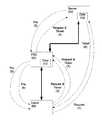
- FIG. 3illustrates a process with a “first access with cache miss” and a “second access with a cache hit”
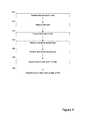
- FIG. 4depicts a flowchart of a pre-caching process in accordance with disclosed embodiments.
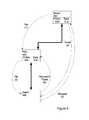
- FIG. 5illustrates a “first access cache hit” process in accordance with disclosed embodiments.
- FSCFile Server Cache
- each remote FSCmust request a “read ticket” or a “write ticket” for permission to read from or write to specific data that is stored on the system that “owns” that data.
- the systemcan ensure, for example, that a piece of data is not being written to by one system at the same time that it is being read by another system.
- the ticketsmust be issued by the owning site even if the data is stored and accessible at a local FSC, to ensure that all the FSCs maintain a consistent set of data.
- each access to a multisite fileresults in a ticket generation call to the owning site. In many cases, this doubles the amount of inter-system communication (“chat”) even though the files are local. Further, storing multiple copies of the same file in various volumes as replicas can drive the storage costs in an “n-square” fashion. More efficient storage can be accomplished by caching the file under a single Server Cache (SC), and only moving portions of the data to individual, local FSCs as that data is needed.
- SCServer Cache
- Systems and methods disclosed hereininclude techniques for “pre-caching” specific data at local FSCs, while avoiding both the delays associated with conventional caching techniques and the inefficiencies of storing unnecessary copies of other data.
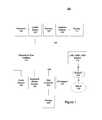
- FIG. 1depicts a block diagram of a data processing system in which an embodiment can be implemented.
- the data processing system depictedincludes a processor 102 connected to a level two cache/bridge 104 , which is connected in turn to a local system bus 106 .
- Local system bus 106may be, for example, a peripheral component interconnect (PCI) architecture bus.
- PCIperipheral component interconnect
- Also connected to local system bus in the depicted exampleare a main memory 108 and a graphics adapter 110 .
- the graphics adapter 110may be connected to display 111 .
- LANlocal area network
- WiFiWireless Fidelity
- I/Oinput/output
- Disk controller 120can be connected to a storage 126 , which can be any suitable machine usable or machine readable storage medium, including but not limited to nonvolatile, hard-coded type mediums such as read only memories (ROMs) or erasable, electrically programmable read only memories (EEPROMs), magnetic tape storage, and user-recordable type mediums such as floppy disks, hard disk drives and compact disk read only memories (CD-ROMs) or digital versatile disks (DVDs), and other known optical, electrical, or magnetic storage devices.
- ROMsread only memories
- EEPROMselectrically programmable read only memories
- CD-ROMscompact disk read only memories
- DVDsdigital versatile disks
- audio adapter 124Also connected to I/O bus 116 in the example shown is audio adapter 124 , to which speakers (not shown) may be connected for playing sounds.
- Keyboard/mouse adapter 118provides a connection for a pointing device (not shown), such as a mouse, trackball, trackpointer, etc.
- FIG. 1may vary for particular implementations.
- other peripheral devicessuch as an optical disk drive and the like, also may be used in addition or in place of the hardware depicted.
- the depicted exampleis provided for the purpose of explanation only and is not meant to imply architectural limitations with respect to the present disclosure.
- a data processing system in accordance with an embodiment of the present disclosureincludes an operating system employing a graphical user interface.
- the operating systempermits multiple display windows to be presented in the graphical user interface simultaneously, with each display window providing an interface to a different application or to a different instance of the same application.
- a cursor in the graphical user interfacemay be manipulated by a user through the pointing device. The position of the cursor may be changed and/or an event, such as clicking a mouse button, generated to actuate a desired response.
- One of various commercial operating systemssuch as a version of Microsoft WindowsTM, a product of Microsoft Corporation located in Redmond, Wash. may be employed if suitably modified.
- the operating systemis modified or created in accordance with the present disclosure as described.
- LAN/WAN/Wireless adapter 112can be connected to a network 130 (not a part of data processing system 100 ), which can be any public or private data processing system network or combination of networks, as known to those of skill in the art, including the Internet.
- Data processing system 100can communicate over network 130 with server system 140 , which is also not part of data processing system 100 , but can be implemented, for example, as a separate data processing system 100 .
- Various embodimentsallow only desired data to be populated in caches and implement an improved file caching design for file management services.
- Some caching behaviorsrequired the data to pass-through the cache as a result of a user action to check-in or check out the data, which would populate the caches as the data passed through the system and file server caches. Because some systems could not selectively populate, users pushed all new data to every site, every night.
- Disclosed embodimentsallow the data of interest by a customer/user to be pre-selected based on criteria to be populated to specific file server caches, and to schedule the population to occur at a desired time to allow for network optimization by transferring during off-usage hours.
- FIG. 2illustrates an example multi-cache system 200 that can implement disclosed embodiments.
- server 210is the primary data store for data 212 .
- Server 210communicates with a plurality of FSCs, including FSC 220 (with data 222 ), FSC 230 (with data 232 ), FSC 240 (with data 242 ), and FSC 250 (with data 252 ).
- the FSCscan be geographically diverse from each other and from server 210 .
- server 210is considered the “owner” of the data 212 , though those of skill in the art will recognize that in this example, and in the other embodiments discussed herein, there can be multiple different servers that each own some data, and in fact each FSC may be the owner of its own data.
- each FSCmay act as a cache for data it does not own, and as the server for data it does own.
- the server 210also manages tickets for the data it owns, though in other implementations, a separate system can be used as the read/write ticket manager.
- Each of these FSCsis accessed by a plurality of users, shown here as users 260 , 270 , 280 , and 290 , respectively, referring to the user's data processing system.
- Each of the FSCscan act as a cache for some or all of the data 212 stored on server 210 , and can thereby improve performance for the respective users since data can be accessed more locally than on the server 210 .
- this improvementis only realized for data that is actually cached at the local FSC so that the user gets a “hit” when accessing the data from the FSC. If the requested data is not cached on the local FSC, the user's request is a “miss”, and the local FSC must first retrieve the requested data from the server 210 .
- FIG. 3illustrates a “first access with cache miss” process and a “second access with a cache hit” process, using a single illustrative server 310 with data 312 , a single FSC 320 with data 322 , and a user 360 , with curved lined indicating various communications.
- a read request1
- server 310which sends a read ticket ( 2 ) back to user 360 .
- This processillustrates a less-efficient process without the benefit of pre-populations.
- User 360then sends the read ticket to FSC 320 with a request ( 3 ) for the data.
- the resultis a “miss” since data 322 doesn't include the requested data.
- FSC 320then forwards the read ticket and data request to server 310 .
- Server 310responds with the requested data from its data 312 , indicated herein as a “file” ( 5 ), but can actually be a single file, multiple files, a portion of a file, or a combination of these. Server 310 sends the file to FSC 320 for storage in data 322 .
- FSC 320then sends the file to the user 360 , as requested ( 6 ). This process is relatively slow, but should only occur the first time the data is accessed during a given retention period.
- FSC 320On the next access, assuming it occurs during the time that data is retained at FSC 320 , the user 360 can obtain a read ticket from server 310 and send it to FSC 320 ( 7 ). Since FSC 320 has already stored the filed in data 322 , FSC 320 can immediately send the file to user 360 ( 8 ), for a much faster cached access. This can be summarized as a “second access cache hit”.
- Disclosed embodimentsinclude systems and methods that use a rules-based process to pre-cache data at each FSC to eliminate or reduce the number of first-access delays as described above. Populating the caches before a user makes a first request allows higher performance for the user/client applications loading the requested data due to the data being in a File Server Cache local to the user, which will typically be within a LAN with better latency than accessing data from the server.
- FIG. 4depicts a flowchart of a process in accordance with disclosed embodiments. Note that this process does not include “ticketing” processes as described herein, since they are not required for all embodiments, but additional processes for ticketing or other housekeeping or coherency functions could be included in the processes described herein.
- a server data processing systemreceives at least a first pre-caching rule from a policy database (step 405 ).
- the first pre-caching ruledefines first data to be pre-cached at a file server cache (FSC) without waiting for a request from a user or other system.
- FSCfile server cache
- thiswill include receiving a plurality of pre-caching rules that correspond to a plurality of different FSCs.
- the first pre-caching rulecan include, for example, a scheduling rule specifying when the first data is to be pre-cached on the FSC, and can include a rule specifying that the first data is always to be updated and pre-cached on the FSC.
- the serverreceives the first data corresponding to the first pre-caching rule (step 410 ). This can include loading the first data from a primary database accessible to the server.
- the servertransmits the first data to the FSC to be pre-cached, according to the first pre-caching rule (step 415 ).
- the serverreceives a request for second data from the FSC (step 420 ).
- the “second data”represents data that was not pre-cached on the FSC, and so has been requested from the server.
- the serverreceives a second pre-caching rule from the policy database in response to the request (step 425 ).
- the second pre-caching rulespecifies third data to be pre-cached on the FSC when the second data is requested.
- second pre-caching rulecan specify additional PLM or BOM data to be pre-cached on an FSC when related data is requested by the FSC.
- the second datacan correspond to a BOM subassembly
- the third datacan correspond to a related BOM subassembly.
- the serverreceives the second data and the third data (step 430 ).
- the servertransmits the second data to the FSC in response to the request, and also transmits the third data to the FSC to be pre-cached on the FSC (step 435 ).
- FIG. 5illustrates a process in accordance with disclosed embodiments, using a single illustrative server 510 with data 512 , a single FSC 520 with data 522 , and a user 560 .
- server 510can also include a policy database 514 ; in various embodiments, FSC 520 can also include a policy database 524 .
- the policy database 514includes rules that describe what data should be pre-cached to FSC 520 (and other attached FSCs), and the conditions for performing the pre-caching.
- Policy database 524can include similar rules specific to that FSC, and can be used as the complement to the server-based pre-caching described below. That is, in some embodiments, the server 410 sends data to be pre-cached at FSC 520 according to its policy database 514 , and can do so without requiring a specific request from ESC 520 . In some embodiments, FSC 520 requests specific data (including acquiring any needed read tickets) from server 510 based on its policy database 524 , and so is the system that is initiating the pre-caching transfer of data. Those of skill in the art will recognize that when only a server-based or FSC-based pre-caching process example is described herein, the complementary process is also intended to be included.
- Server 510pre-caches data at FSC 520 according to the rules of policy database 514 , examples of which are described below, shown here as a file ( 1 ).
- FIG. 5illustrates “second access cache hit” process.
- the first time the user 560 desires specific data from ESC 520a read request is sent from user 560 to server 510 ( 2 ), which sends a read ticket back to user 560 ( 3 ).
- User 560then sends the read ticket to FSC 520 with a request for the data ( 4 ).
- the resultis a “hit” even on the first request, since the requested file has been pre-cached in data 522 .
- FSC 520then sends the file to the user 560 ( 5 ), as requested. This process is performed as quickly on the first read as could be performed on the second read in other systems.
- the pre-caching file transfer ( 1 )occurs before the user makes a request, so the user is not waiting for this to occur.
- the pre-cachingenables the user to receive the requested file much more quickly.
- FIGS. 3 and 5include a ticketing process, but such tickets are not required in all implementations.
- the pre-caching rules stored in a policy databasecan base pre-caching processes on many different considerations.
- a simple rulecould be a scheduling rule that indicates that certain data should be pre-cached in the FSC every night. This is useful, for example, in systems where the FSCs purge some or all of the cache on a regular basis, and ensures that the correct, current data is pre-cached on the FSC every day, hour, or other interval.
- PLMproduct lifecycle management
- BOMbill of materials
- a PLM systemmay also include data with information on environmental or energy costs of producing, operating, or disposing of a product.
- the pre-caching rules stored in the policy databasecan specify, for example, that specific product data is pre-cached to the FSC, since that is the data that is expected to be accessed by the users of that FSC.
- other rulescan specify a dynamic pre-caching based on the actual requests made by the users. For example, if the data is PLM data including a BOM for a product, the user of the client PLM data processing system may only work on specific assemblies or subassemblies of the product at a time, and has no need or desire to access the entire BOM for the product. On the other hand, a user accessing a specific subassembly of a product may often also need access to other subassemblies that are part of the same BOM tree or subtree.
- a pre-caching rulemay specify, for example, that if a user requests the BOM data for a specific subassembly, such as the “second data” above, then the BOM data for other subassemblies in the same BOM tree are pre-cached to the FSC, such as the “third data” above, since it is likely that the user will also require that data.
- the read ticket process to the serveris eliminated. Instead, the FSC is pre-cached with data according to policy database rules. Read requests from users are automatically granted at the FSC without a read ticket, and cached files are automatically transferred. In some cases, if another user writes to a specific file, a “lock” ticket is sent to the server and to any other FSCs that cache that file, locking the file until the newly-written version is synchronized (“synced”) to the server and re-cached to the appropriate FSCs.
- Receivingcan include loading from storage, receiving from another system or process, receiving via an interaction with a user, and other processes or operations to receive the specified information.
- the various steps of the processes described herein, unless otherwise specified,may be omitted, repeated, performed concurrently, sequentially, or in a different order.
- the various aspects, elements, and processes of the embodiments described hereinmay be individually or entirely combined, as may be specified by the claims below.
- machine usable/readable or computer usable/readable mediumsinclude: nonvolatile, hard-coded type mediums such as read only memories (ROMs) or erasable, electrically programmable read only memories (EEPROMs), and user-recordable type mediums such as floppy disks, hard disk drives and compact disk read only memories (CD-ROMs) or digital versatile disks (DVDs).
- ROMsread only memories
- EEPROMselectrically programmable read only memories
- user-recordable type mediumssuch as floppy disks, hard disk drives and compact disk read only memories (CD-ROMs) or digital versatile disks (DVDs).
Landscapes
- Engineering & Computer Science (AREA)
- Computer Networks & Wireless Communication (AREA)
- Signal Processing (AREA)
- Information Retrieval, Db Structures And Fs Structures Therefor (AREA)
- Information Transfer Between Computers (AREA)
Abstract
Description
This application claims the benefit of the filing data of U.S. Provisional Patent Application 61/324,073, filed Apr. 14, 2010, which is hereby incorporated by reference.
The present disclosure is directed, in general, to data caching and retrieval systems and methods, such as retrieval of very complex product lifecycle (PL) or other data.
Improved systems for distributed access to data are desirable.
Various disclosed embodiments include systems, methods, and apparatuses for policy based assembly data population to pre-defined file cache servers. These can include the abilities to pre-configure and define specific data selection policies based on Bill of Materials and Assembly configuration rules, scheduling capabilities to populate the caches at pre-determined times, and one-to-many cache destinations for the resulting population. Disclosed embodiments improve performance of the client data access response times for remote users of identified data by populating caches within LAN proximity of the users and avoiding multiple requests for authentication and data from the primary stored volume disks, which could be across high latency networks. One caching aspect disclosed herein models a second access data flow, without an initial first access user request normally associated with cache population strategies.
Disclosed embodiments include systems, methods, and computer readable mediums. A method includes receiving a first pre-caching rule from a policy database, receiving first data corresponding to the first pre-caching rule, and transmitting the first data to a file server cache (FSC) to be pre-cached on the FSC. The method may also include receiving a request for second data from the FSC and receiving a second pre caching rule from the policy database to be pre-cached on the FSC. The second pre-caching rule specifies third data to be pre-cached on the FSC when the second data is requested. The method may include receiving the second data and the third data and transmitting the second data and the third data to the FSC.
The foregoing has outlined rather broadly the features and technical advantages of the present disclosure so that those skilled in the art may better understand the detailed description that follows. Additional features and advantages of the disclosure will be described hereinafter that form the subject of the claims. Those skilled in the art will appreciate that they may readily use the conception and the specific embodiment disclosed as a basis for modifying or designing other structures for carrying out the same purposes of the present disclosure. Those skilled in the art will also realize that such equivalent constructions do not depart from the spirit and scope of the disclosure in its broadest form.
Before undertaking the DETAILED DESCRIPTION below, it may be advantageous to set forth definitions of certain words or phrases used throughout this patent document: the terms “include” and “comprise,” as well as derivatives thereof, mean inclusion without limitation; the term “or” is inclusive, meaning and/or; the phrases “associated with” and “associated therewith,” as well as derivatives thereof, may mean to include, be included within, interconnect with, contain, be contained within, connect to or with, couple to or with, be communicable with, cooperate with, interleave, juxtapose, be proximate to, be bound to or with, have, have a property of, or the like; and the term “controller” means any device, system or part thereof that controls at least one operation, whether such a device is implemented in hardware, firmware, software or some combination of at least two of the same. It should be noted that the functionality associated with any particular controller may be centralized or distributed, whether locally or remotely. Definitions for certain words and phrases are provided throughout this patent document, and those of ordinary skill in the art will understand that such definitions apply in many, if not most, instances to prior as well as future uses of such defined words and phrases. While some terms may include a wide variety of embodiments, the appended claims may expressly limit these terms to specific embodiments.
For a more complete understanding of the present disclosure, and the advantages thereof, reference is now made to the following descriptions taken in conjunction with the accompanying drawings, wherein like numbers designate like objects, and in which:
The figures discussed below, and the various embodiments used to describe the principles of the present disclosure in this patent document are by way of illustration only and should not be construed in any way to limit the scope of the disclosure. Those skilled in the art will understand that the principles of the present disclosure may be implemented in any suitably arranged device. The numerous innovative teachings of the present application will be described with reference to exemplary non-limiting embodiments.
In many businesses, employees and other users may be geographically separated into many locations, but still require access to data that is primarily hosted on a centralized server. Because those users may require a relatively fast response for requests for data stored on the centralized server, copies of some or all of the data may be “cached” at various other geographic locations, each referred to herein as a File Server Cache (FSC). Replicated files or portions of files may be referred to herein as “stubs.”
To ensure coherency between the data on the main centralized server and the data on the various FSCs, systems can use a “ticket” system. In such a system, each remote FSC must request a “read ticket” or a “write ticket” for permission to read from or write to specific data that is stored on the system that “owns” that data. By managing tickets, the system can ensure, for example, that a piece of data is not being written to by one system at the same time that it is being read by another system. In many cases, the tickets must be issued by the owning site even if the data is stored and accessible at a local FSC, to ensure that all the FSCs maintain a consistent set of data.
In some systems, each access to a multisite file results in a ticket generation call to the owning site. In many cases, this doubles the amount of inter-system communication (“chat”) even though the files are local. Further, storing multiple copies of the same file in various volumes as replicas can drive the storage costs in an “n-square” fashion. More efficient storage can be accomplished by caching the file under a single Server Cache (SC), and only moving portions of the data to individual, local FSCs as that data is needed.
Systems and methods disclosed herein include techniques for “pre-caching” specific data at local FSCs, while avoiding both the delays associated with conventional caching techniques and the inefficiencies of storing unnecessary copies of other data.
Other peripherals, such as local area network (LAN)/Wide Area Network/Wireless (e.g. WiFi)adapter 112, or similar network adapter, may also be connected tolocal system bus 106. Expansion bus interface114 connectslocal system bus 106 to input/output (I/O)bus 116. I/O bus 116 is connected to keyboard/mouse adapter118,disk controller 120, and I/O adapter 122.Disk controller 120 can be connected to astorage 126, which can be any suitable machine usable or machine readable storage medium, including but not limited to nonvolatile, hard-coded type mediums such as read only memories (ROMs) or erasable, electrically programmable read only memories (EEPROMs), magnetic tape storage, and user-recordable type mediums such as floppy disks, hard disk drives and compact disk read only memories (CD-ROMs) or digital versatile disks (DVDs), and other known optical, electrical, or magnetic storage devices.
Also connected to I/O bus 116 in the example shown isaudio adapter 124, to which speakers (not shown) may be connected for playing sounds. Keyboard/mouse adapter118 provides a connection for a pointing device (not shown), such as a mouse, trackball, trackpointer, etc.
Those of ordinary skill in the art will appreciate that the hardware depicted inFIG. 1 may vary for particular implementations. For example, other peripheral devices, such as an optical disk drive and the like, also may be used in addition or in place of the hardware depicted. The depicted example is provided for the purpose of explanation only and is not meant to imply architectural limitations with respect to the present disclosure.
A data processing system in accordance with an embodiment of the present disclosure includes an operating system employing a graphical user interface. The operating system permits multiple display windows to be presented in the graphical user interface simultaneously, with each display window providing an interface to a different application or to a different instance of the same application. A cursor in the graphical user interface may be manipulated by a user through the pointing device. The position of the cursor may be changed and/or an event, such as clicking a mouse button, generated to actuate a desired response.
One of various commercial operating systems, such as a version of Microsoft Windows™, a product of Microsoft Corporation located in Redmond, Wash. may be employed if suitably modified. The operating system is modified or created in accordance with the present disclosure as described.
LAN/WAN/Wireless adapter 112 can be connected to a network130 (not a part of data processing system100), which can be any public or private data processing system network or combination of networks, as known to those of skill in the art, including the Internet.Data processing system 100 can communicate overnetwork 130 withserver system 140, which is also not part ofdata processing system 100, but can be implemented, for example, as a separatedata processing system 100.
Various embodiments allow only desired data to be populated in caches and implement an improved file caching design for file management services.
Some caching behaviors required the data to pass-through the cache as a result of a user action to check-in or check out the data, which would populate the caches as the data passed through the system and file server caches. Because some systems could not selectively populate, users pushed all new data to every site, every night.
Disclosed embodiments allow the data of interest by a customer/user to be pre-selected based on criteria to be populated to specific file server caches, and to schedule the population to occur at a desired time to allow for network optimization by transferring during off-usage hours.
Each of these FSCs is accessed by a plurality of users, shown here asusers
Each of the FSCs can act as a cache for some or all of thedata 212 stored onserver 210, and can thereby improve performance for the respective users since data can be accessed more locally than on theserver 210. However, this improvement is only realized for data that is actually cached at the local FSC so that the user gets a “hit” when accessing the data from the FSC. If the requested data is not cached on the local FSC, the user's request is a “miss”, and the local FSC must first retrieve the requested data from theserver 210.
Note that in this case, the user must wait until all transfers have completed, including the request for data from FSC to the server, and the response of the server to the FSC. This can be a significant delay.
On the next access, assuming it occurs during the time that data is retained atFSC 320, theuser 360 can obtain a read ticket fromserver 310 and send it to FSC320 (7). SinceFSC 320 has already stored the filed indata 322,FSC 320 can immediately send the file to user360 (8), for a much faster cached access. This can be summarized as a “second access cache hit”.
Disclosed embodiments include systems and methods that use a rules-based process to pre-cache data at each FSC to eliminate or reduce the number of first-access delays as described above. Populating the caches before a user makes a first request allows higher performance for the user/client applications loading the requested data due to the data being in a File Server Cache local to the user, which will typically be within a LAN with better latency than accessing data from the server.
In this embodiment, a server data processing system receives at least a first pre-caching rule from a policy database (step405). The first pre-caching rule defines first data to be pre-cached at a file server cache (FSC) without waiting for a request from a user or other system. In many implementations, this will include receiving a plurality of pre-caching rules that correspond to a plurality of different FSCs. The first pre-caching rule can include, for example, a scheduling rule specifying when the first data is to be pre-cached on the FSC, and can include a rule specifying that the first data is always to be updated and pre-cached on the FSC.
The server receives the first data corresponding to the first pre-caching rule (step410). This can include loading the first data from a primary database accessible to the server.
The server transmits the first data to the FSC to be pre-cached, according to the first pre-caching rule (step415).
In some embodiments, the server receives a request for second data from the FSC (step420). In this example, the “second data” represents data that was not pre-cached on the FSC, and so has been requested from the server.
The server receives a second pre-caching rule from the policy database in response to the request (step425). The second pre-caching rule specifies third data to be pre-cached on the FSC when the second data is requested. For example, second pre-caching rule can specify additional PLM or BOM data to be pre-cached on an FSC when related data is requested by the FSC. As an additional example, the second data can correspond to a BOM subassembly, and the third data can correspond to a related BOM subassembly.
The server receives the second data and the third data (step430).
The server transmits the second data to the FSC in response to the request, and also transmits the third data to the FSC to be pre-cached on the FSC (step435).
Thepolicy database 514 includes rules that describe what data should be pre-cached to FSC520 (and other attached FSCs), and the conditions for performing the pre-caching.
User560 then sends the read ticket toFSC 520 with a request for the data (4). Typically, according to disclosed embodiments, the result is a “hit” even on the first request, since the requested file has been pre-cached indata 522.FSC 520 then sends the file to the user560 (5), as requested. This process is performed as quickly on the first read as could be performed on the second read in other systems.
Note that, in the process ofFIG. 5 , the pre-caching file transfer (1) occurs before the user makes a request, so the user is not waiting for this to occur. By eliminating the request, ticket, and file exchange between the FSC and server at the time of the user's request, the pre-caching enables the user to receive the requested file much more quickly.
Note also that the processes ofFIGS. 3 and 5 include a ticketing process, but such tickets are not required in all implementations.
The pre-caching rules stored in a policy database can base pre-caching processes on many different considerations. A simple rule could be a scheduling rule that indicates that certain data should be pre-cached in the FSC every night. This is useful, for example, in systems where the FSCs purge some or all of the cache on a regular basis, and ensures that the correct, current data is pre-cached on the FSC every day, hour, or other interval.
Other rules can be based on the content of the data itself, and the data that is usually required at each FSC. For example, a product lifecycle management (PLM) system will typically manage very large amounts of data for specific products, including such information as a bill of materials (BOM) specifying all or part of the entire product assembly, often in a tree structure and often including multiple product options and variants. A PLM system may also include data with information on environmental or energy costs of producing, operating, or disposing of a product. In such a case, the pre-caching rules stored in the policy database can specify, for example, that specific product data is pre-cached to the FSC, since that is the data that is expected to be accessed by the users of that FSC.
Similarly, other rules can specify a dynamic pre-caching based on the actual requests made by the users. For example, if the data is PLM data including a BOM for a product, the user of the client PLM data processing system may only work on specific assemblies or subassemblies of the product at a time, and has no need or desire to access the entire BOM for the product. On the other hand, a user accessing a specific subassembly of a product may often also need access to other subassemblies that are part of the same BOM tree or subtree. A pre-caching rule may specify, for example, that if a user requests the BOM data for a specific subassembly, such as the “second data” above, then the BOM data for other subassemblies in the same BOM tree are pre-cached to the FSC, such as the “third data” above, since it is likely that the user will also require that data.
Other embodiments provide a similar mechanism to cache the files based on policies and have defined caches always populated avoiding the scheduling aspect of the invention.
Other embodiments push every piece of data to every cache regardless of need or access requirements making every cache equal in terms of content.
In some embodiments, the read ticket process to the server is eliminated. Instead, the FSC is pre-cached with data according to policy database rules. Read requests from users are automatically granted at the FSC without a read ticket, and cached files are automatically transferred. In some cases, if another user writes to a specific file, a “lock” ticket is sent to the server and to any other FSCs that cache that file, locking the file until the newly-written version is synchronized (“synced”) to the server and re-cached to the appropriate FSCs.
Receiving, as used herein and unless otherwise specified, can include loading from storage, receiving from another system or process, receiving via an interaction with a user, and other processes or operations to receive the specified information. The various steps of the processes described herein, unless otherwise specified, may be omitted, repeated, performed concurrently, sequentially, or in a different order. The various aspects, elements, and processes of the embodiments described herein may be individually or entirely combined, as may be specified by the claims below.
The following are incorporated by reference: U.S. Pat. No. 7,634,479, U.S. Patent Publication 2009/0222624, U.S. Patent Publication 2009/0228647, U.S. Pat. Nos. 6,631,451, 7,552,235, 6,470,426, U.S. Patent Publication 2001/00005046, and “Efficient web content delivery using proxy caching techniques” found at time of filing at
http://ieeexplore.ieee.org/xpl/freeabs_all.jsp?tp=&arnumber=1310442&isnumber=29092
Those skilled in the art will recognize that, for simplicity and clarity, the full structure and operation of all data processing systems suitable for use with the present disclosure is not being depicted or described herein. Instead, only so much of a data processing system as is unique to the present disclosure or necessary for an understanding of the present disclosure is depicted and described. The remainder of the construction and operation ofdata processing system 100 may conform to any of the various current implementations and practices known in the art.
It is important to note that while the disclosure includes a description in the context of a fully functional system, those skilled in the art will appreciate that at least portions of the mechanism of the present disclosure are capable of being distributed in the form of instructions contained within a machine-usable, computer-usable, or computer-readable medium in any of a variety of forms, and that the present disclosure applies equally regardless of the particular type of instruction or signal bearing medium or storage medium utilized to actually carry out the distribution. Examples of machine usable/readable or computer usable/readable mediums include: nonvolatile, hard-coded type mediums such as read only memories (ROMs) or erasable, electrically programmable read only memories (EEPROMs), and user-recordable type mediums such as floppy disks, hard disk drives and compact disk read only memories (CD-ROMs) or digital versatile disks (DVDs).
Although an exemplary embodiment of the present disclosure has been described in detail, those skilled in the art will understand that various changes, substitutions, variations, and improvements disclosed herein may be made without departing from the spirit and scope of the disclosure in its broadest form.
None of the description in the present application should be read as implying that any particular element, step, or function is an essential element which must be included in the claim scope: the scope of patented subject matter is defined only by the allowed claims. Moreover, none of these claims are intended to invoke paragraph six of 35 USC §112 unless the exact words “means for” are followed by a participle.
Claims (18)
1. A method performed by a server data processing system connected to communicate with a file server cache (FSC) data processing system, comprising:
receiving a first pre-caching rule from a policy database;
receiving first product assembly data corresponding to the first pre-caching rule, the first product assembly data corresponding to a first subassembly of a product;
transmitting the first product assembly data to the FSC to be pre-cached on the FSC according to the first pre-caching rule, wherein the first pre-caching rule includes a scheduling rule specifying when the first product assembly data is to be pre-cached on the FSC and specifying that when the user requests the first product assembly data, then third product assembly data, corresponding to a second subassembly of the product and part of a common bill-of-materials data structure as the first product assembly data, should be transmitted to the FSC to be pre-cached on the FSC; and
transmitting the third product assembly data to the FSC to be pre-cached on the FSC according to the first pre-caching rule.
2. The method ofclaim 1 , wherein the first pre-caching rule defines the first product assembly data to be pre-cached at the FSC without waiting for a request from a user or other system.
3. The method ofclaim 1 , further comprising:
receiving a request for second product assembly data from the FSC;
receiving a second pre-caching rule from the policy database, the second pre-caching rule specifying that the third product assembly data should be pre-cached on the FSC when the second data is requested;
receiving the second product assembly data and the third product assembly data; and
transmitting the second product assembly data and the third product assembly data to the FSC.
4. The method ofclaim 3 , wherein the second product assembly data and the third product assembly data is product lifecycle management data including multiple product options and variants.
5. The method ofclaim 3 , wherein the second data corresponds to a bill-of-materials (BOM) subassembly of a product, and the third data corresponds to a related BOM subassembly of the product.
6. The method ofclaim 1 , further comprising receiving a read request, corresponding to the first product assembly data, from a user, and sending a read ticket, corresponding to the first product assembly data, to the user.
7. A server data processing system connected to communicate with a file server cache (FSC) data processing system, comprising:
a processor;
an accessible storage device storing a policy database; and
a network adapter connected to communicate with the FSC, the server data processing system configured to
receive a first pre-caching rule from the policy database;
receive first product assembly data corresponding to the first pre-caching rule, the first product assembly data corresponding to a first subassembly of a product;
transmit the first product assembly data to the FSC to be pre-cached on the FSC according to the first pre-caching rule, wherein the first pre-caching rule includes a scheduling rule specifying when the first product assembly data is to be pre-cached on the FSC and specifying that when the user requests the first product assembly data, then third product assembly data, corresponding to a second subassembly of the product and part of a common bill-of-materials data structure as the first product assembly data, should be transmitted to the FSC to be pre-cached on the FSC; and
transmit the third product assembly data to the FSC to be pre-cached on the FSC according to the first pre-caching rule.
8. The server data processing system ofclaim 7 , wherein the first pre-caching rule defines the first product assembly data to be pre-cached at the FSC without waiting for a request from a user or other system.
9. The server data processing system ofclaim 7 , further configured to
receive a request for second product assembly data from the FSC;
receive a second pre-caching rule from the policy database, the second pre-caching rule specifying that the third product assembly data should be pre-cached on the FSC when the second product assembly data is requested;
receive the second product assembly data and the third product assembly data; and
transmit the second product assembly data and the third product assembly data to the FSC.
10. The server data processing system ofclaim 9 , wherein the second product assembly data and the third product assembly data is product lifecycle management data including multiple product options and variants.
11. The server data processing system ofclaim 9 , wherein the second product assembly data corresponds to a bill-of-materials (BOM) subassembly, and the third data corresponds to a related BOM subassembly.
12. The server data processing system ofclaim 7 , further configured to receive a read request, corresponding to the first product assembly data, from a user, and send a read ticket, corresponding to the first product assembly data, to the user.
13. A non-transitory computer-readable medium storing computer-executable instructions that, when executed, cause a server data processing system to perform the steps of:
receiving a first pre-caching rule from a policy database;
receiving first product assembly data corresponding to the first pre-caching rule, the first product assembly data corresponding to a first subassembly of a product;
transmitting the first third product assembly data to the FSC to be pre-cached on the FSC according to the first pre-caching rule, wherein the first pre-caching rule includes a scheduling rule specifying when the first product assembly data is to be pre-cached on the FSC and specifying that when the user requests the first product assembly data, then third product assembly data, corresponding to a second subassembly of the product and part of a common bill-of-materials data structure as the first product assembly data, should be transmitted to the FSC to be pre-cached on the FSC; and
transmit the third product assembly data to the FSC to be pre-cached on the FSC according to the first pre-caching rule.
14. The computer readable medium ofclaim 13 , wherein the first pre-caching rule defines the first product assembly data to be pre-cached at the FSC without waiting for a request from a user or other system.
15. The computer readable medium ofclaim 13 , further comprising:
receiving a request for second product assembly data from the FSC;
receiving a second pre-caching rule from the policy database, the second pre-caching rule specifying that the third product assembly data should be pre-cached on the FSC when the second data is requested;
receiving the second product assembly data and the third product assembly data; and
transmitting the second product assembly data and the third product assembly data to the FSC.
16. The computer readable medium ofclaim 15 , wherein the second product assembly data and the third product assembly data is product lifecycle management data including multiple product options and variants.
17. The computer readable medium ofclaim 15 , wherein the second product assembly data corresponds to a bill-of-materials (BOM) subassembly, and the third product assembly data corresponds to a related BOM subassembly.
18. The computer readable medium ofclaim 13 , further comprising receiving a read request, corresponding to the first product assembly data, from a user, and sending a read ticket, corresponding to the first product assembly data, to the user.
Priority Applications (3)
| Application Number | Priority Date | Filing Date | Title |
|---|---|---|---|
| US13/081,933US8775488B2 (en) | 2010-04-14 | 2011-04-07 | System and method for data caching |
| PCT/US2011/032266WO2011130375A1 (en) | 2010-04-14 | 2011-04-13 | System and method for data caching |
| EP11718557.9AEP2559223B1 (en) | 2010-04-14 | 2011-04-13 | System and method for data caching |
Applications Claiming Priority (2)
| Application Number | Priority Date | Filing Date | Title |
|---|---|---|---|
| US32407310P | 2010-04-14 | 2010-04-14 | |
| US13/081,933US8775488B2 (en) | 2010-04-14 | 2011-04-07 | System and method for data caching |
Publications (2)
| Publication Number | Publication Date |
|---|---|
| US20110258243A1 US20110258243A1 (en) | 2011-10-20 |
| US8775488B2true US8775488B2 (en) | 2014-07-08 |
Family
ID=44789020
Family Applications (1)
| Application Number | Title | Priority Date | Filing Date |
|---|---|---|---|
| US13/081,933Active2031-11-26US8775488B2 (en) | 2010-04-14 | 2011-04-07 | System and method for data caching |
Country Status (3)
| Country | Link |
|---|---|
| US (1) | US8775488B2 (en) |
| EP (1) | EP2559223B1 (en) |
| WO (1) | WO2011130375A1 (en) |
Families Citing this family (7)
| Publication number | Priority date | Publication date | Assignee | Title |
|---|---|---|---|---|
| US10339133B2 (en) | 2013-11-11 | 2019-07-02 | International Business Machines Corporation | Amorphous data preparation for efficient query formulation |
| US20160198014A1 (en)* | 2015-01-05 | 2016-07-07 | Onavo Mobile Ltd. | Techniques for predictive network resource caching |
| US10387387B2 (en)* | 2015-12-17 | 2019-08-20 | Oracle International Corporation | Enabling multi-tenant access to respective isolated data sets organized using different application schemas |
| US10289617B2 (en) | 2015-12-17 | 2019-05-14 | Oracle International Corporation | Accessing on-premise and off-premise datastores that are organized using different application schemas |
| CN108429777B (en)* | 2017-02-15 | 2022-05-13 | 腾讯科技(北京)有限公司 | Data updating method based on cache and server |
| WO2020047840A1 (en)* | 2018-09-07 | 2020-03-12 | 威富通科技有限公司 | Bill information caching method, bill information query method and terminal device |
| US11494374B2 (en)* | 2019-07-15 | 2022-11-08 | Amadeus S.A.S., Sophia Antipolis | Processing database requests |
Citations (15)
| Publication number | Priority date | Publication date | Assignee | Title |
|---|---|---|---|---|
| US6038399A (en)* | 1997-07-22 | 2000-03-14 | Compaq Computer Corporation | Computer manufacturing architecture with two data-loading processes |
| US20030120593A1 (en)* | 2001-08-15 | 2003-06-26 | Visa U.S.A. | Method and system for delivering multiple services electronically to customers via a centralized portal architecture |
| US20030187984A1 (en) | 2002-03-29 | 2003-10-02 | International Business Machines Corporation | Method and apparatus for content pre-fetching and preparation |
| US6697806B1 (en)* | 2000-04-24 | 2004-02-24 | Sprint Communications Company, L.P. | Access network authorization |
| US20050086257A1 (en)* | 2003-10-17 | 2005-04-21 | Measured Progress, Inc. | Item tracking, database management, and relational database system associated with multiple large scale test and assessment projects |
| US20070067821A1 (en)* | 2005-08-31 | 2007-03-22 | Microsoft Corporation | Pre-negotiation and pre-caching media policy |
| US20070136533A1 (en) | 2005-12-09 | 2007-06-14 | Microsfoft Corporation | Pre-storage of data to pre-cached system memory |
| US20080201321A1 (en)* | 2006-09-28 | 2008-08-21 | Dudley Fitzpatrick | Apparatuses, methods and systems for information querying and serving in a virtual world based on profiles |
| US7451225B1 (en) | 2006-09-12 | 2008-11-11 | Emc Corporation | Configuring a cache prefetch policy in a computer system employing object addressable storage |
| US20080288486A1 (en)* | 2007-05-17 | 2008-11-20 | Sang-Heun Kim | Method and system for aggregate web site database price watch feature |
| US7610259B2 (en)* | 2003-12-24 | 2009-10-27 | Hitachi, Ltd. | Management apparatus, program and method for controlling data included in bill of material |
| US7882538B1 (en)* | 2006-02-02 | 2011-02-01 | Juniper Networks, Inc. | Local caching of endpoint security information |
| US20110208808A1 (en)* | 2010-02-22 | 2011-08-25 | Sean Corbett | Method of Optimizing Data Flow Between a Software Application and a Database Server |
| US8332420B2 (en)* | 2010-01-20 | 2012-12-11 | Siemens Product Lifecycle Management Software Inc. | System and method for performing a database query |
| US8364611B2 (en)* | 2009-08-13 | 2013-01-29 | Yahoo! Inc. | System and method for precaching information on a mobile device |
Family Cites Families (7)
| Publication number | Priority date | Publication date | Assignee | Title |
|---|---|---|---|---|
| US6415368B1 (en) | 1999-12-22 | 2002-07-02 | Xerox Corporation | System and method for caching |
| US6968500B2 (en) | 2000-04-05 | 2005-11-22 | Dmitry Mikhailov | Automatic forms handling system |
| US20020103974A1 (en) | 2000-11-29 | 2002-08-01 | Giacomini Peter Joseph | Method and apparatus for economical cache population |
| US6470426B2 (en) | 2000-12-15 | 2002-10-22 | International Business Machines Corporation | Method and apparatus for loading a cache with data with a subsequent purge of stale cache information |
| US7552235B2 (en) | 2003-12-11 | 2009-06-23 | International Business Machines Corporation | Autonomic selection of a request routing policy based upon cache effectiveness |
| US7634479B2 (en) | 2006-12-29 | 2009-12-15 | Trend Micro Incorporated | Pre-populating local URL rating cache |
| US8261026B2 (en) | 2008-03-07 | 2012-09-04 | Apple Inc. | Application cache population from peer application |
- 2011
- 2011-04-07USUS13/081,933patent/US8775488B2/enactiveActive
- 2011-04-13EPEP11718557.9Apatent/EP2559223B1/ennot_activeNot-in-force
- 2011-04-13WOPCT/US2011/032266patent/WO2011130375A1/enactiveApplication Filing
Patent Citations (15)
| Publication number | Priority date | Publication date | Assignee | Title |
|---|---|---|---|---|
| US6038399A (en)* | 1997-07-22 | 2000-03-14 | Compaq Computer Corporation | Computer manufacturing architecture with two data-loading processes |
| US6697806B1 (en)* | 2000-04-24 | 2004-02-24 | Sprint Communications Company, L.P. | Access network authorization |
| US20030120593A1 (en)* | 2001-08-15 | 2003-06-26 | Visa U.S.A. | Method and system for delivering multiple services electronically to customers via a centralized portal architecture |
| US20030187984A1 (en) | 2002-03-29 | 2003-10-02 | International Business Machines Corporation | Method and apparatus for content pre-fetching and preparation |
| US20050086257A1 (en)* | 2003-10-17 | 2005-04-21 | Measured Progress, Inc. | Item tracking, database management, and relational database system associated with multiple large scale test and assessment projects |
| US7610259B2 (en)* | 2003-12-24 | 2009-10-27 | Hitachi, Ltd. | Management apparatus, program and method for controlling data included in bill of material |
| US20070067821A1 (en)* | 2005-08-31 | 2007-03-22 | Microsoft Corporation | Pre-negotiation and pre-caching media policy |
| US20070136533A1 (en) | 2005-12-09 | 2007-06-14 | Microsfoft Corporation | Pre-storage of data to pre-cached system memory |
| US7882538B1 (en)* | 2006-02-02 | 2011-02-01 | Juniper Networks, Inc. | Local caching of endpoint security information |
| US7451225B1 (en) | 2006-09-12 | 2008-11-11 | Emc Corporation | Configuring a cache prefetch policy in a computer system employing object addressable storage |
| US20080201321A1 (en)* | 2006-09-28 | 2008-08-21 | Dudley Fitzpatrick | Apparatuses, methods and systems for information querying and serving in a virtual world based on profiles |
| US20080288486A1 (en)* | 2007-05-17 | 2008-11-20 | Sang-Heun Kim | Method and system for aggregate web site database price watch feature |
| US8364611B2 (en)* | 2009-08-13 | 2013-01-29 | Yahoo! Inc. | System and method for precaching information on a mobile device |
| US8332420B2 (en)* | 2010-01-20 | 2012-12-11 | Siemens Product Lifecycle Management Software Inc. | System and method for performing a database query |
| US20110208808A1 (en)* | 2010-02-22 | 2011-08-25 | Sean Corbett | Method of Optimizing Data Flow Between a Software Application and a Database Server |
Non-Patent Citations (1)
| Title |
|---|
| PCT International Search Report dated Aug. 9, 2011 corresponding to PCT Application No. PCT/US2011/032266 filed Apr. 13, 2011 (8 pages). |
Also Published As
| Publication number | Publication date |
|---|---|
| WO2011130375A1 (en) | 2011-10-20 |
| EP2559223B1 (en) | 2018-11-21 |
| US20110258243A1 (en) | 2011-10-20 |
| EP2559223A1 (en) | 2013-02-20 |
Similar Documents
| Publication | Publication Date | Title |
|---|---|---|
| US8775488B2 (en) | System and method for data caching | |
| US10762055B2 (en) | Utilizing user devices for backing up and retrieving data in a distributed backup system | |
| US9069835B2 (en) | Organizing data in a distributed storage system | |
| JP5841177B2 (en) | Method and system for synchronization mechanism in multi-server reservation system | |
| US9805056B2 (en) | Synchronizing file updates between two cloud controllers of a distributed filesystem | |
| US8788760B2 (en) | Adaptive caching of data | |
| JP5193056B2 (en) | Method and system for maintaining up-to-date data of wireless devices | |
| US20160004718A1 (en) | Using byte-range locks to manage multiple concurrent accesses to a file in a distributed filesystem | |
| CN103858122A (en) | Method and system for maintaining high consistency of distributed replicated content within a client/server system | |
| JP2010524083A (en) | In-memory caching of multitenant data that can be shared and customized | |
| JP2016516233A (en) | Share content items | |
| US8805790B1 (en) | Backing up audio and video files across mobile devices of a user | |
| US12229109B2 (en) | Method and system for using external content type object types | |
| US20070100975A1 (en) | Scalable software blade architecture | |
| US20070101021A1 (en) | Recovering a blade in scalable software blade architecture | |
| KR101822401B1 (en) | Method and apparatus for sharing a collaborative editing document | |
| US8874795B2 (en) | Data synchronization system | |
| US8543700B1 (en) | Asynchronous content transfer | |
| JP7318899B2 (en) | Systems and methods for storing content items in secondary storage | |
| US8812660B2 (en) | Workflow processes and systems | |
| US20160357780A1 (en) | Hierarchical file block variant tracker apparatus coupled to a Librarian and to a remote file service | |
| JP5811799B2 (en) | Information processing apparatus and schedule management program | |
| US20150100573A1 (en) | Method for processing data | |
| US9467525B2 (en) | Shared client caching | |
| US9270548B2 (en) | System and method for data transfer of object properties |
Legal Events
| Date | Code | Title | Description |
|---|---|---|---|
| STCF | Information on status: patent grant | Free format text:PATENTED CASE | |
| MAFP | Maintenance fee payment | Free format text:PAYMENT OF MAINTENANCE FEE, 4TH YEAR, LARGE ENTITY (ORIGINAL EVENT CODE: M1551) Year of fee payment:4 | |
| AS | Assignment | Owner name:SIEMENS INDUSTRY SOFTWARE INC., TEXAS Free format text:CHANGE OF NAME;ASSIGNOR:SIEMENS PRODUCT LIFECYCLE MANAGEMENT SOFTWARE INC.;REEL/FRAME:051171/0024 Effective date:20191021 | |
| MAFP | Maintenance fee payment | Free format text:PAYMENT OF MAINTENANCE FEE, 8TH YEAR, LARGE ENTITY (ORIGINAL EVENT CODE: M1552); ENTITY STATUS OF PATENT OWNER: LARGE ENTITY Year of fee payment:8 |