FIELDThis patent relates generally to pneumatic tools and particularly to a pneumatic nailer.
BACKGROUNDPneumatic tools are commonly used in the construction industry. One type of pneumatic tool is a pneumatic nailer, which is a tool that is used to drive nails into a workpiece. In a standard setting, a pneumatic nailer is coupled to a source of compressed air, typically from a portable air compressor. The pneumatic nailer usually includes a magazine that holds numerous fastening members, such as nails. The nails are typically arranged in a strip or a coil, in which the nails are uniformly spaced apart from each other and are loosely connected by a clip made from a thin layer of plastic, paper, and/or a resin-type material.
To drive a nail into a workpiece with the pneumatic nailer, the operator places an ejector tip of the nailer against the workpiece. After the tip is depressed, the nailer becomes responsive to force applied to a trigger of the nailer. When the trigger is depressed, the nailer activates a pneumatic actuating mechanism inside the nailer, which plunges a ramming member from a ready position toward one of the nails of the strip of nails. The ramming member strikes the nail and causes the nail to disengage from the strip of nails, exit through the ejector tip, and drive into the workpiece. When the operator releases the trigger or the ejector tip is removed from the workpiece, the pneumatic actuating mechanism quickly returns the ramming member to the ready position, where it remains until the sequence is repeated.
Some pneumatic nailers use compressed air to both drive the ramming member toward the nail and also to return the ramming member to the ready position. Generally, it is desirable for pneumatic nailers to efficiently utilize the supply of compressed when driving and returning the ramming member. The efficient use of the compressed air results in less power cycling of the air compressor, which not only conserves electrical power and/or reduces fuel consumption (depending on the type of air compressor), but also increases the operational life of the air compressor.
Therefore, a continuing need exists for a pneumatic nailer that efficiently uses compressed air to drive nails, and that also efficiently uses compressed air to return the ramming member to the ready position.
SUMMARYAccording to one embodiment of the disclosure, a pneumatic nailer for use with a fluid source includes a housing, a cylinder, a piston, a second valve assembly, and an actuator. The housing defines a storage chamber configured for fluid communication with the fluid source. The cylinder has a sleeve, an actuating structure fixed to the sleeve, a first valve assembly connected to the sleeve, and a port assembly formed in the sleeve. The cylinder is configured for movement with respect to the housing between a first cylinder position and a second cylinder position. An inner side of the sleeve defines a sleeve chamber, and an outer side of the sleeve and the housing defines an actuating chamber therebetween on a first side of the actuating structure. The first valve assembly is configured to (i) to allow fluid flow from the sleeve chamber to the actuating chamber and (ii) to prevent fluid flow from the actuating chamber to the sleeve chamber. The piston has a piston head and a driver member extending from the piston head. The piston head is movable within the sleeve chamber between a first piston position and a second piston position. The sleeve and the piston head define (i) a displacement chamber on a first side of the piston head and (ii) a return chamber on an opposite side of the piston head. The port assembly is configured (i) to fluidly couple the return chamber to the actuating chamber when the cylinder is in the first cylinder position and (ii) to fluidly couple the return chamber to atmosphere when the cylinder is in the second cylinder position. The second valve assembly is at least partially positioned within the housing and is moveable between a first valve position and a second valve position. The second valve assembly is configured (i) to fluidly couple the displacement chamber to atmosphere when the second valve assembly is in the first valve position and (ii) to isolate the displacement chamber from atmosphere when the second valve assembly is in the second valve position. The actuator is positionable between an actuated position and a deactuated position and is configured such that (i) when the actuator is moved from the deactuated position to the actuated position the second valve assembly is caused to move from the first valve position to the second valve position and (ii) when the actuator is moved from the actuated position to the deactuated position the second valve assembly is caused to move from the second valve position to the first valve position.
According to another embodiment of the disclosure, a pneumatic nailer for use with a fluid source includes a housing, a cylinder, a first valve assembly, a piston, and a port assembly. The housing defines a storage chamber configured for fluid communication with the fluid source. The cylinder is configured for movement with respect to the housing between a first cylinder position and a second cylinder position. An inner side of the cylinder defines a sleeve chamber and an outer side of the cylinder and the housing defines an actuating chamber therebetween. The first valve assembly is connected to the cylinder and is configured (i) to allow fluid flow from the sleeve chamber to the actuating chamber and (ii) to prevent fluid flow from the actuating chamber to the sleeve chamber. The piston has a piston head and a driver member extending from the piston head. The piston head is movable within the sleeve chamber between a first piston position and a second piston position. The cylinder and the piston head define (i) a displacement chamber on a first side of the piston head and (ii) a return chamber on an opposite side of the piston head. The port assembly is formed in the cylinder and is configured (i) to fluidly couple the return chamber to the actuating chamber when the cylinder is in the first cylinder position and (ii) to fluidly couple the return chamber to atmosphere when the cylinder is in the second cylinder position.
BRIEF DESCRIPTION OF THE FIGURESThe above-described features and advantages, as well as others, should become more readily apparent to those of ordinary skill in the art by reference to the following detailed description and the accompanying figures in which:
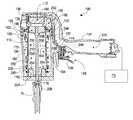
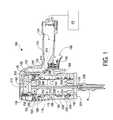
FIG. 1 is a cross sectional view of a pneumatic nailer, shown with a cylinder of the pneumatic nailer in a first cylinder position and a piston of the pneumatic nailer in a first piston position;
FIG. 2 is a cross sectional view of the pneumatic nailer ofFIG. 1, shown with the cylinder in a second cylinder position and the piston positioned between the first piston position and a second piston position;
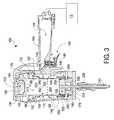
FIG. 3 is a cross sectional view of the pneumatic nailer ofFIG. 1, shown with the cylinder in the second cylinder position and the piston in the second piston position; and
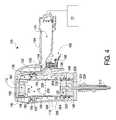
FIG. 4 shows a cross sectional view of the pneumatic nailer ofFIG. 1, shown with the cylinder in the first cylinder position and the piston in the second piston position.
DETAILED DESCRIPTIONFor the purpose of promoting an understanding of the principles of the invention, reference will now be made to the embodiments illustrated in the drawings and described in the following written specification. It is understood that no limitation to the scope of the invention is thereby intended. It is further understood that the invention includes any alterations and modifications to the illustrated embodiments and includes further applications of the principles of the invention as would normally occur to one skilled in the art to which this invention pertains.
As shown inFIG. 1, apneumatic nailer100 includes ahousing104, anactuator108, avalve assembly112, acylinder116, and apiston120. Thehousing104 defines astorage chamber124, astorage chamber126, aconnection chamber132, avent passage136, and avent passage140. Thestorage chamber124 and thestorage chamber126 are fluidly coupled to each other and also fluidly coupled to a fluid source FS, which supplies thestorage chamber124 and thestorage chamber126 with a supply of positive pressure fluid, typically compressed air.
Theactuator108 is at least partially received by thehousing104 and includes avalve member144 and atrigger148. Thevalve member144 is normally biased in a closed position and is movable to an open position. In the closed position, thevalve member144 fluidly decouples thestorage chamber124 and thestorage chamber126 from theconnection chamber132. In the open position, thevalve member144 fluidly couples thestorage chamber124 and thestorage chamber126 to theconnection chamber132.
Thetrigger148 of theactuator108 is pivotally connected to thehousing104 and is normally biased in a deactuated position in which thevalve member144 is maintained in the closed position. Thetrigger148 is movable to an actuated position, which causes thevalve member144 to move to the open position for a period of time of sufficient length for the nailer to drive a nail N into a workpiece (not shown).
Theconnection chamber132 extends from theactuator108 to thevalve assembly112. Also, theconnection chamber132 is in fluid communication with a generallycylindrical drive chamber190 through aport152, as described further below.
With continued reference toFIG. 1, thevalve assembly112 is at least partially positioned within thehousing104 and includes avalve seat156 and aplunger160 that is movable relative to the valve seat. Thevalve assembly112 is normally biased in a vented position (FIGS. 1 and 4) and is movable to an unvented position (FIGS. 2 and 3). When thevalve assembly112 is in the vented position, theplunger160 is separated from thevalve seat156 to enable fluid flow from the valve seat through thevent passage136 to atmosphere. When thevalve assembly112 is in the unvented position, theplunger160 is seated against thevalve seat156 and fluid flow through the valve seat is prevented.
Thecylinder116 is positioned within thehousing104 and includes asleeve164, anactuating structure166, anactuating structure168, acheck valve assembly172, and aport assembly176. Thecylinder116 is configured for movement with respect to thehousing104 between first cylinder position (FIGS. 1 and 4) and a second cylinder position (FIGS. 2 and 3).
Thesleeve164 includes a generally cylindrical and tubular portion of thecylinder116. Aninner side180 of thesleeve164 defines asleeve chamber184. Thesleeve164 is formed from aluminum. In another embodiment, thesleeve164 is formed from another material, including, but not limited to, magnesium, steel, and plastic. The material forming thesleeve164 may be machined, molded, drawn, forged, die cast, and/or injection molded to form the sleeve. When thecylinder116 is in the first cylinder position, thesleeve164 contacts thevalve seat156 and forms a fluid impervious seal.
Theactuating structure166 is fixed to anouter side188 of thesleeve164 and extends radially away therefrom. In particular, theactuating structure166 extends around the circumference of theouter side188 of thesleeve164. Theactuating structure166 is positioned against a portion of thehousing104 and forms a fluid impervious seal that separates thedrive chamber190 from a generallycylindrical vent chamber192. Thevent chamber192 is fluidly coupled to thestorage chamber124 and thestorage chamber126.
Theactuating structure168 is fixed to theouter side188 of thesleeve164 and extends radially away therefrom. Theactuating structure168 extends around the circumference of theouter side188 of thesleeve164. Theactuating structure168 is positioned against a portion of thehousing104 and forms a fluid impervious seal that separates thevent chamber192 from a generallycylindrical actuating chamber196, which extends between theactuating structure168 and a generallycircular shoulder240 of thehousing104 and is bounded by the housing and theouter surface188 of thesleeve164.
Thevalve assembly172 of thecylinder116 is connected to thesleeve164 and includes at least onecheck valve200. Each of thecheck valves200 enables fluid to flow from thesleeve chamber184 into theactuating chamber196, and each check valve prevents fluid flow from the actuating chamber into the sleeve chamber. Thecylinder116 includes approximately fourteen (14) of thecheck valves200; however, other embodiments of the cylinder may include a different number of the check valves.
Theport assembly176 includes at least oneport204 extending through thesleeve164. Thecylinder116 includes eight (8) of theports204; however, other embodiments of the cylinder may include a different number of the ports. When thecylinder116 is positioned in the first cylinder position (FIGS. 1 and 4) theports204 fluidly couple thesleeve chamber184 to theactuating chamber196, and when the cylinder is positioned in the second cylinder position (FIGS. 2 and 3) theports204 fluidly couple the sleeve chamber to atmosphere through thevent port140 of thehousing104.
With continued reference toFIG. 1, thepiston120 includes apiston head208 and adriver member212. Thepiston head208 is positioned in thesleeve164 and is movable within thesleeve chamber184 between a first piston position (FIG. 1) and a second piston position (FIGS. 3 and 4). Thepiston head208 divides thesleeve chamber184 into a generally cylindrical displacement chamber216 (FIG. 2) and a generally cylindrical return chamber220 (FIGS. 1 and 2). Thedisplacement chamber216 is located between thepiston head208 and thevalve assembly112. The return chamber220 (FIGS. 1 and 2) located between thepiston head208 and abumper member224.
Thedriver member212 is connected to thepiston head208 and extends into thereturn chamber220. Thedriver member212 extends out of thehousing104 through thebumper224 and is positioned to contact one of the nails N held by amagazine228 of thenailer100.
Thenailer100 also includes a biasingmember232, which is at least partially positioned in theactuating chamber196 between ashoulder236 extending from theouter surface188 of thesleeve164 and theshoulder240. The biasingmember232 includes a compression spring that is configured to bias thecylinder116 toward the first cylinder position (FIGS. 1 and 4).
In operation, thenailer100 efficiently uses compressed air from the fluid source FS to quickly drive the nail N into a workpiece (not shown). To drive the nail N, thenailer100 is positioned with the nail above a desired nail location of the workpiece with the nailer configured in a deactivated arrangement, as shown inFIG. 1. Next, thetrigger148 is moved from the deactuated position to the actuated position, which causes thevalve member144 to move from the closed position (FIGS. 2 and 3) to the open position (FIGS. 1 and 4). When thevalve member144 is in the open position compressed air flows from thestorage chamber124 into theconnection chamber132 as shown by theflow path244 ofFIG. 1. The compressed air in theconnection chamber132 flows from theactuator108 to thedrive chamber190 along the flow path248 (FIG. 1) and to thevalve assembly112 along the flow path252 (FIG. 1).
As shown inFIG. 2, when the compressed air enters thedrive chamber190 where it causes thecylinder116 to move to the second cylinder position and compresses the biasingmember232. When the compressed air is received by thevalve assembly112, theplunger160 moves toward thepiston120 to the unvented position, which terminates the fluid connection between thedisplacement chamber216 and atmosphere.
With continued reference toFIG. 2, when thecylinder116 is in the second cylinder position and thevalve assembly112 is in the unvented position, the compressed air in thestorage chamber126 flows into thesleeve chamber184 and thedisplacement chamber216, as shown by theflow path256. The compressed air from thestorage chambers124,126 forces thepiston120 to move toward the second piston position. Thepiston120 is shown inFIG. 2 in an intermediate position between the first piston position and the second piston position.
As thepiston120 moves toward the second piston position its movement is substantially unrestricted by air present in thereturn chamber220. Specifically, as the compressed air drives thepiston120 toward the second piston position, air within thereturn chamber220 is evacuated to atmosphere through theport assembly176 and thevent passage140, as shown by flow path260 (FIG. 2). The evacuation of air in thereturn chamber220 enables thepiston120 to move quickly, efficiently, and forcefully to the second piston position. As thepiston120 moves to the second position, substantially none of the air below the piston is compressed; instead, the air below the piston is evacuated through theport assembly176 and thevent passage140, such that more energy is available to drive the nail N.
As shown inFIG. 3, when thepiston120 is in the second piston position, thevalve assembly172 is positioned in thedisplacement chamber216. Accordingly, the compressed air flows through thecheck valves200 of thevalve assembly172 into theactuating chamber196, as shown by flow path262 (FIG. 3). Theactuating chamber196, therefore, stores a quantity of the compressed air that is used to drive the piston to the second piston position. Also, as shown inFIG. 3, thedriver member212 of thepiston120 has contacted the nail N and evacuated the nail from themagazine228 into the workpiece (not shown). Thenailer100 drives the nail N into the workpiece in only a fraction of a second after thetrigger148 is moved to the actuated position.
After thepiston120 is in the second piston position, thevalve144 of theactuator108 closes and isolates thevalve assembly112 from thestorage chambers124,126, thereby causing theplunger160 to move away from the piston to the vented position. Also, thedrive chamber190 becomes isolated from thestorage chambers124,126 and becomes fluidly coupled to atmosphere through a vent opening (not shown) in thehousing104. Accordingly, the force maintaining thecylinder116 in the second cylinder position is significantly reduced, thereby enabling the biasingmember232 and the supply of compressed air in theactuation chamber196 to bias the cylinder to the first cylinder position (FIGS. 1 and 4). The vent opening described above, but not shown, may alternatively be formed in thetrigger148 or in a combination of thehousing104 and the trigger.
With reference toFIG. 4, which shows thecylinder116 after it has moved back to the first cylinder position and thepiston120 in the second piston position, theports204 of theport assembly176 fluidly couple theactuating chamber196 to thereturn chamber220. The configuration of thenailer100 shown inFIG. 4 causes the compressed air stored in theactuating chamber196 to rush into thereturn chamber220 through the ports204 (along flow path264 (FIG. 4)) and to exert a force on thepiston120, which causes the piston to move to the first piston position. Accordingly, thenailer100 uses a portion of the compressed air that was used to drive thepiston120 to the second piston position, to return the piston to the first piston position and to prepare the nailer to drive another one of the nails N. As a result, the overall air consumption of thenailer100 is less than other nailers, which use compressed air directly from thesupply chambers124,126 to return thepiston120 to the first piston position.
Thepiston120 encounters substantially no air resistance as it returns to the first piston position, since thevent assembly112 couples thedisplacement chamber216 to atmosphere to enable the piston to evacuate air in the displacement chamber to atmosphere through thevent passage136. When thepiston120 reaches the first piston position thenailer100 is ready to drive the next nail N in themagazine228.
While the invention has been illustrated and described in detail in the drawings and foregoing description, the same should be considered as illustrative and not restrictive in character. It is understood that only the preferred embodiments have been presented and that all changes, modifications and further applications that come within the spirit of the invention are desired to be protected.