US8686890B2 - Customizable remote control device - Google Patents
Customizable remote control deviceDownload PDFInfo
- Publication number
- US8686890B2 US8686890B2US12/127,550US12755008AUS8686890B2US 8686890 B2US8686890 B2US 8686890B2US 12755008 AUS12755008 AUS 12755008AUS 8686890 B2US8686890 B2US 8686890B2
- Authority
- US
- United States
- Prior art keywords
- button
- remote controller
- convergence
- automation system
- flexible
- Prior art date
- Legal status (The legal status is an assumption and is not a legal conclusion. Google has not performed a legal analysis and makes no representation as to the accuracy of the status listed.)
- Expired - Fee Related, expires
Links
- 239000012528membraneSubstances0.000claimsabstractdescription37
- 230000006870functionEffects0.000claimsdescription90
- 230000006854communicationEffects0.000claimsdescription29
- 238000004891communicationMethods0.000claimsdescription29
- 230000008859changeEffects0.000claimsdescription7
- 238000007747platingMethods0.000claimsdescription2
- 238000000034methodMethods0.000description12
- 230000008901benefitEffects0.000description8
- 238000005516engineering processMethods0.000description8
- 230000008569processEffects0.000description6
- 238000006243chemical reactionMethods0.000description4
- 238000013459approachMethods0.000description2
- 238000013461designMethods0.000description2
- 238000012986modificationMethods0.000description2
- 230000004048modificationEffects0.000description2
- 230000009471actionEffects0.000description1
- 230000003213activating effectEffects0.000description1
- 238000004378air conditioningMethods0.000description1
- 230000007175bidirectional communicationEffects0.000description1
- 230000002457bidirectional effectEffects0.000description1
- 230000036541healthEffects0.000description1
- 238000010438heat treatmentMethods0.000description1
- 230000003993interactionEffects0.000description1
- 238000004519manufacturing processMethods0.000description1
- 239000000463materialSubstances0.000description1
- 230000013011matingEffects0.000description1
- 239000002991molded plasticSubstances0.000description1
- 238000012544monitoring processMethods0.000description1
- 238000012545processingMethods0.000description1
- 230000005236sound signalEffects0.000description1
Images




Classifications
- H—ELECTRICITY
- H01—ELECTRIC ELEMENTS
- H01H—ELECTRIC SWITCHES; RELAYS; SELECTORS; EMERGENCY PROTECTIVE DEVICES
- H01H9/00—Details of switching devices, not covered by groups H01H1/00 - H01H7/00
- H01H9/02—Bases, casings, or covers
- H01H9/0214—Hand-held casings
- H01H9/0235—Hand-held casings specially adapted for remote control, e.g. of audio or video apparatus
- H—ELECTRICITY
- H04—ELECTRIC COMMUNICATION TECHNIQUE
- H04N—PICTORIAL COMMUNICATION, e.g. TELEVISION
- H04N21/00—Selective content distribution, e.g. interactive television or video on demand [VOD]
- H04N21/40—Client devices specifically adapted for the reception of or interaction with content, e.g. set-top-box [STB]; Operations thereof
- H04N21/41—Structure of client; Structure of client peripherals
- H04N21/4104—Peripherals receiving signals from specially adapted client devices
- H04N21/4126—The peripheral being portable, e.g. PDAs or mobile phones
- H04N21/41265—The peripheral being portable, e.g. PDAs or mobile phones having a remote control device for bidirectional communication between the remote control device and client device
- H—ELECTRICITY
- H04—ELECTRIC COMMUNICATION TECHNIQUE
- H04N—PICTORIAL COMMUNICATION, e.g. TELEVISION
- H04N21/00—Selective content distribution, e.g. interactive television or video on demand [VOD]
- H04N21/40—Client devices specifically adapted for the reception of or interaction with content, e.g. set-top-box [STB]; Operations thereof
- H04N21/41—Structure of client; Structure of client peripherals
- H04N21/422—Input-only peripherals, i.e. input devices connected to specially adapted client devices, e.g. global positioning system [GPS]
- H04N21/42204—User interfaces specially adapted for controlling a client device through a remote control device; Remote control devices therefor
- H04N21/42206—User interfaces specially adapted for controlling a client device through a remote control device; Remote control devices therefor characterized by hardware details
- H—ELECTRICITY
- H04—ELECTRIC COMMUNICATION TECHNIQUE
- H04N—PICTORIAL COMMUNICATION, e.g. TELEVISION
- H04N21/00—Selective content distribution, e.g. interactive television or video on demand [VOD]
- H04N21/40—Client devices specifically adapted for the reception of or interaction with content, e.g. set-top-box [STB]; Operations thereof
- H04N21/41—Structure of client; Structure of client peripherals
- H04N21/422—Input-only peripherals, i.e. input devices connected to specially adapted client devices, e.g. global positioning system [GPS]
- H04N21/42204—User interfaces specially adapted for controlling a client device through a remote control device; Remote control devices therefor
- H04N21/42206—User interfaces specially adapted for controlling a client device through a remote control device; Remote control devices therefor characterized by hardware details
- H04N21/42225—User interfaces specially adapted for controlling a client device through a remote control device; Remote control devices therefor characterized by hardware details characterized by types of remote control, e.g. universal remote control
- H—ELECTRICITY
- H04—ELECTRIC COMMUNICATION TECHNIQUE
- H04N—PICTORIAL COMMUNICATION, e.g. TELEVISION
- H04N21/00—Selective content distribution, e.g. interactive television or video on demand [VOD]
- H04N21/40—Client devices specifically adapted for the reception of or interaction with content, e.g. set-top-box [STB]; Operations thereof
- H04N21/41—Structure of client; Structure of client peripherals
- H04N21/422—Input-only peripherals, i.e. input devices connected to specially adapted client devices, e.g. global positioning system [GPS]
- H04N21/42204—User interfaces specially adapted for controlling a client device through a remote control device; Remote control devices therefor
- H04N21/42226—Reprogrammable remote control devices
- H—ELECTRICITY
- H01—ELECTRIC ELEMENTS
- H01H—ELECTRIC SWITCHES; RELAYS; SELECTORS; EMERGENCY PROTECTIVE DEVICES
- H01H2221/00—Actuators
- H01H2221/07—Actuators transparent
- H—ELECTRICITY
- H01—ELECTRIC ELEMENTS
- H01H—ELECTRIC SWITCHES; RELAYS; SELECTORS; EMERGENCY PROTECTIVE DEVICES
- H01H2231/00—Applications
- H01H2231/032—Remote control
- H—ELECTRICITY
- H04—ELECTRIC COMMUNICATION TECHNIQUE
- H04N—PICTORIAL COMMUNICATION, e.g. TELEVISION
- H04N21/00—Selective content distribution, e.g. interactive television or video on demand [VOD]
- H04N21/40—Client devices specifically adapted for the reception of or interaction with content, e.g. set-top-box [STB]; Operations thereof
- H04N21/41—Structure of client; Structure of client peripherals
- H04N21/422—Input-only peripherals, i.e. input devices connected to specially adapted client devices, e.g. global positioning system [GPS]
- H04N21/42204—User interfaces specially adapted for controlling a client device through a remote control device; Remote control devices therefor
- H04N21/42206—User interfaces specially adapted for controlling a client device through a remote control device; Remote control devices therefor characterized by hardware details
- H04N21/42212—Specific keyboard arrangements
- H—ELECTRICITY
- H04—ELECTRIC COMMUNICATION TECHNIQUE
- H04N—PICTORIAL COMMUNICATION, e.g. TELEVISION
- H04N21/00—Selective content distribution, e.g. interactive television or video on demand [VOD]
- H04N21/40—Client devices specifically adapted for the reception of or interaction with content, e.g. set-top-box [STB]; Operations thereof
- H04N21/43—Processing of content or additional data, e.g. demultiplexing additional data from a digital video stream; Elementary client operations, e.g. monitoring of home network or synchronising decoder's clock; Client middleware
- H04N21/436—Interfacing a local distribution network, e.g. communicating with another STB or one or more peripheral devices inside the home
- H04N21/43615—Interfacing a Home Network, e.g. for connecting the client to a plurality of peripherals
Definitions
- the disclosureis directed to a remote controller, particularly to a customizable remote controller for use in a converged and automated system and a method for customizing thereof.
- Household, academic and/or business spacestypically have more than one audio or video device, such as, e.g., a CD/DVD player, a portable MP3 player, a radio frequency (RF) tuner, a preamplifier, a power amplifier, a speaker, a VCR, a DVR, a computer running a media player, a computer connected to some other source of audio or video media (e.g., Internet radio, satellite radio and the like), etc.
- a CD/DVD player from one original equipment manufacturer (OEM)may be provided with its own remote control device and an amplifier device may be provided by an entirely different OEM with its own remote control device.
- OEMoriginal equipment manufacturer
- the same spacemay include a personal computer (PC) having a keyboard and a mouse, and yet another OEM's portable MP3 player with its own control switches. While each audio/video device is doing precisely what it was designed to do, each operates completely independent from the others. As a result, a user ends up going from one keypad or device to another keypad or device, or juggling a series of remote controls in order to control certain of the devices.
- PCpersonal computer
- the audio/video devicesmay not be designed to communicate with other devices (such as, e.g., a television set (TV), ambient lighting, a security system, etc.).
- other devicessuch as, e.g., a television set (TV), ambient lighting, a security system, etc.
- TVtelevision set
- the audio/video devicesmay not be designed to communicate with other devices (such as, e.g., a television set (TV), ambient lighting, a security system, etc.).
- TVtelevision set
- ambient lightinge.g., a security system, etc.
- a userin order to watch a movie, a user must turn on a TV, a DVD player and an audio amplifier by using three different control devices. Then the user must set the TV to receive a video signal from the DVD player, set the audio amplifier to receive an audio signal from the DVD player and use another control device to adjust the lighting of the room.
- audio/video devicesdo not converge as described above because the audio/video devices lack any ability to easily connect and effectively communicate with each other, much less allow for control by a single control device. Even if a single control device was available that could handle all of the functions of the individual audio/video devices and additional functions of controlling the audio/video devices in a converged and automated manner, such a control device would be undesirably large and complicated for a user; and some of the buttons may be rarely or never used in certain circumstances.
- a convergence and automation systemincludes a network implemented with a Web Service for Device (WSD) protocol for enabling interoperable device to device interaction, a plurality of devices connectable to the network and configured to perform a plurality of functions, each device configured to perform at least one of the plurality of functions, a host connectable to the network and configured to converge and automate at least one group of the plurality of functions, and a controller being customizable to control at least one of the plurality of functions and the at least one converged and automated group of functions.
- WSDWeb Service for Device
- the plurality of devicesmay include at least one of an audio device, a video device, an intercom system, an ambient lighting system, a security system or a HVAC system.
- the convergence and automation systemmay further include at least one client connectable to the network, the at least one client being configured to control at least one of the plurality of functions.
- the at least one clientmay include a television, a personal computer, a personal digital assistant, a gaming device, a remote controller, or a telephone.
- the controllermay be configured to control the at least one client.
- the controllermay include at least one addable or removable flexible button.
- the controllermay further include at least one stationary button arranged at a predetermined location on the controller.
- the controllermay be programmable to assign a desired function to the at least one addable or removable flexible button.
- the controllermay include a universal remote controller.
- a remote controller for controlling a remote unitincludes a stationary button assigned to a first function of the remote unit, and a first flexible button assigned to a second function of the remote unit and configured to be addable to or removable from the remote controller.
- the remote controllermay further include a base, a membrane layer mountable on the base, the membrane layer including the stationary button and a first flexible button base, a first flexible button cap mountable on the first flexible button base to form the first flexible button, and a first face mountable on the membrane layer and having a first opening pattern exposing the stationary button and the first flexible button.
- the first flexible button capmay include at least one of a text and a symbol representing the first function of the remote unit.
- the basemay include a power supply configured to provide power to the membrane layer, and a communication unit configured to establish communication between the remote controller and the remote unit.
- the membrane layermay further include a second flexible button base, wherein the remote controller may further include a second flexible cap mountable on the second flexible button base to form a second flexible button.
- the first facemay be replaceable with a second face having a second opening exposing the stationary button and the second flexible button.
- the remote controllermay further include a trim ring arrangeable between the first face and the membrane layer.
- the trim ringmay include a plurality of openings arranged to correspond to the at least one stationary button and the first flexible button.
- the trim ringmay include chrome-plating.
- the remote controllermay further include a backlight configured to illuminate at least one of the stationary button and the first flexible button.
- the membrane layermay include the backlight.
- the remote controllermay be programmable to add, change or delete the second function assigned to the first flexible button.
- a method of customizing a remote controllerconfigured to control a remote unit, the remote controller comprising a plurality of buttons, includes removing a first face from the remote controller, the first face having a first opening pattern covering a first button base, mounting a first button cap on the first button base to form a first button, and attaching a second face to the remote controller, the second face having a second opening pattern exposing the first button.
- the methodmay further include removing a second button from the remote controller, the second button including a second button base and a second button cap.
- the removing the second buttonmay include removing the second button cap from the second button base, wherein first opening pattern of the first face exposes the second button and the second opening pattern of the second face covers the second button cap.
- the methodmay further include assigning a first function of the remote unit to the first button.
- the methodmay further include removing a second function of the remote unit assigned to the second button.
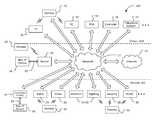
- FIG. 1shows a conceptual overview of a convergence and automation solution (CAS) constructed according to an embodiment of the disclosure
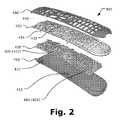
- FIG. 2shows an exploded perspective view of a remote controller constructed according to an embodiment of the disclosure
- FIG. 3shows a configuration of a base of the remote controller shown in FIG. 2 and a remote unit, constructed according to an embodiment of the disclosure
- FIG. 4shows an enlarged perspective view of a membrane layer of the remote controller shown in FIG. 2 , constructed according to an embodiment of the disclosure
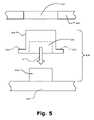
- FIG. 5shows a side view of a button cap and a button base of a flexible button, constructed according to an embodiment of the disclosure
- FIG. 6shows another exploded perspective view of the remote controller shown in FIG. 2 ;
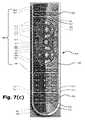
- FIGS. 7( a ), 7 ( b ) and 7 ( c )show the remote controller of FIG. 2 having different face and button configurations, respectively, constructed according to an embodiment of the disclosure.
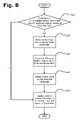
- FIG. 8shows a process for customizing the remote controller shown in FIG. 2 in accordance with an embodiment of the disclosure.
- FIG. 1shows a conceptual overview of a convergence and automation solution (CAS) 100 constructed in accordance with an embodiment of the disclosure.
- the CAS 100may be a combination of hardware and/or software.
- the hardwaremay include a server 10 , a plurality of devices 102 , a plurality of clients 104 and/or the like.
- the server 10 , the devices 102 and the clients 104may be connected to a network 12 , which may be an Internet protocol (IP) based wired and/or wireless network, such as, e.g., a personal area network (PAN), a local area network (LAN), a campus area network (CAN), a metropolitan area network (MAN), a wide area network (WAN) and/or the like.
- IPInternet protocol
- the network 12may be connected to the Internet 14 .
- the server 10may be any type of computer connectable to the network 12 , including, but not limited to, for example, a personal computer (PC), a workstation, a mainframe computer or the like, as the skilled artisan will readily appreciate, without departing from the scope or spirit of the disclosure.
- the devices 102may include any type of electronic devices configured to perform one or more functions, including, but not limited to, for example, an audio device 20 , a video device 22 , an intercom system 24 , an ambient lighting system 26 , a security system 28 , a heating, ventilating and air conditioning (HVAC) system 38 , and/or the like.
- HVACheating, ventilating and air conditioning
- the clients 104may be configured to provide a user with control over one or more of the devices 102 and/or other clients 104 .
- the clients 104may include, but are not limited to, for example, a TV 30 , a PC 32 , a personal digital assistant (PDA) 34 , a controller 36 , a telephone system 37 and/or the like.
- the controller 36may include, but is not limited to, for example, a control panel, a gaming console (e.g., X-BoxTM, Playstation PortableTM and/or the like), and/or the like.
- Some of the clients 104may be configured to perform one or more functions. For example, the user may use the TV 30 to watch TV programs or DVD movies, or to view a control menu when controlling the devices 102 .
- the clients 104may further include one or more remote controllers 40 to control the devices 102 and/or the clients 104 ; or the remote controller 40 may be configured to be a client 104 .
- the usermay use the remote controller 40 to listen to music, watch and/or record video, enjoy family photographs and home movies, as well as adjust the lighting, secure the home, adjust the ambient temperature, distribute music throughout the house, check surveillance cameras and the like.
- the CAS 100may be configured to interact with other devices that are not equipped with an IP-based communication interface, such as, for example, a window shade automation device, a light control device, an audio device, a video device and/or the like.
- the CAS 100may be configured to interact with non-IP devices 52 , 56 (shown in FIG. 1 ) using non-IP based communication channels 60 , 58 , respectively.
- the non-IP based communication channels 60 , 58may include, but are not limited to, for example, a serial port, a parallel port, a USB port, a COM port, a telephone line, a power line and/or the like.
- the non-IP device 52located proximate to the server 10 , may be directly connected to the server 10 via the non-IP based communication channel 60 .
- a link or conversion module 54may be connected to the non-IP device 56 via the non-IP based communication channel 58 to connect the non-IP device 56 to the network 12 .
- the conversion module 54may provide the non-IP device 56 with an Ethernet connection to enable IP based communications with the network 12 .
- the conversion module 54may provide more than one non-IP based communication connection, depending on, e.g., a particular application, as the skilled artisan will readily appreciate.
- the conversion module 54may include one or more of a serial port, a parallel port, a USB port, a COM port, a telephone line, a power line and the like. Accordingly, the non-IP device 56 may communicate with the server 10 , the devices 102 and/or the clients 104 via network 12 and operate as one of the devices 102 .
- the softwaremay enable the hardware such as the server 10 , the devices 102 and the clients 104 to communicate with each other despite different proprietary languages and/or communication protocols that may be used by each of the server 10 , the devices 102 or the clients 104 .
- the usermay be provided with control over most or all of the hardware, including the server 10 , the devices 102 , and the clients 104 in the CAS 100 from the clients 104 .
- the applicationmay operate the CAS 10 such that the server 10 , the devices 102 and the clients 104 may communicate with each other to send instructions and receive feedback.
- the softwaremay integrate centralized device control into a PC-based media environment (such as, e.g., a Microsoft Media CenterTM environment) that may store, organize and play digital media content.
- a PC-based media environmentsuch as, e.g., a Microsoft Media CenterTM environment
- the softwaremay be implemented with a Web Service (WS), a platform independent software system designed to support interoperable machine to machine interaction over the network 12 .
- WSWeb Service
- WSDWeb Service for Device
- some of the server 10 , the devices 102 and the clients 104may be running Microsoft Windows VistaTM or a similar operating system (OS) implemented with Windows SideShowTM or a similar functionality that enables a computer to drive a variety of auxiliary display devices.
- the server 10may communicate with the devices 102 and/or the clients 104 via compatible protocols, such as, for example, but not limited to, the SideShowTM XML communication specifications and/or the like. This may enable the server 10 to display various information of the CAS 100 as a Sideshow GadgetTM or a similar object on the screens of the devices 102 and/or clients 104 .
- the server 10is running a widget engine, such as, e.g., Windows SidebarTM, Yahoo! WidgetsTM and the like, for running and displaying widgets thereon, the server 10 may provide a user interface rendered for monitoring and controlling the devices 102 and/or the clients 104 via the WSD technology.
- the CAS 100may include more than one remote controller 40 to fully take advantage of the rather complex and discrete nature of the CAS 100 .
- one remote controller 40may be required to control the TV set 30 located in one location, e.g., a bedroom, and another remote controller 40 may be required to control the audio device 20 , the video device 22 and the light device 26 or the like in a different location, e.g., a living room.
- the remote controller 40 intended for use in the living roommay include buttons to control the audio device 20 , the video device 22 and the light device 26 , but the remote controller 40 intended for use in the bedroom may not need the buttons for controlling the audio device 20 , the video device 22 and the light device 26 located in the living room.
- the remote controller 40 intended for use in the living roommay be configured differently from the remote controller 40 intended for use in the bedroom.
- One approach to address the above examplemay be to design and manufacture a number of customized remote controllers 40 , each configured for use in a certain room or situation. Another approach may be to build the remote controller 40 to include all of the necessary buttons to control all of the functions of the CAS 100 , so that the remote controller 40 may be used in any room or situation.
- the remote controller 40may be configured to be customizable, as necessary or desired by the user.
- the remote controller 40may be configured such that a user may add and/or remove buttons to and/or from the remote controller 40 , assign new functions to the added buttons, cancel the functions assigned to the removed buttons, and change the functions assigned to the buttons, as necessary or desired by the user.
- FIG. 2shows an exploded view of a remote controller 400 configured to control a remote unit 16 (shown in FIG. 3 ), constructed in accordance with an embodiment of the disclosure.
- the remote controller 400may be used as, but not limited to, the remote controller 40 , shown in FIG. 1 .
- the remote controller 400may be constructed by assembling various components such as, but not limited to, a base 410 , a membrane layer 420 , a trim ring 430 and a face 440 .
- the membrane layer 420may include a plurality of buttons 422 arranged on an upper side thereof and protruding upwardly.
- Both the trim ring 430 and the face 440may have a plurality of openings 432 , 442 arranged corresponding to the plurality of buttons 422 .
- the trim ring 430may be attached to the base 410 to fix the membrane layer 420 therebetween, and the face 440 may be removably attached to the trim ring 430 .
- the remote controller 400may be constructed in different configurations with fewer or more components, without departing from the scope and/or spirit of the disclosure.
- the membrane layer 420may be configured to sense the user's actuation of certain of the buttons 422 , e.g., by depression or touching, and generate certain signal(s) or code(s) corresponding to the actuated button(s) 422 , as is well known in the art.
- each of the buttons 422may be assigned with a unique identification code, which may be transferred to the base 410 when the corresponding button is actuated.
- the membrane layer 420may output the identification code(s) via a set of terminals (not shown), which may be connected to another set of terminals (not shown) of the base 410 .
- the two sets of terminalsmay be configured to form electrical contact when the membrane layer 420 is attached to the base 410 , as is well known in the art.
- the buttons 422 of the membrane layer 420may include one or more stationary buttons 500 and one or more flexible buttons 600 , which are described below with reference to FIGS. 4 , 5 and 6 .
- the base 410may be configured to receive the signal(s) or code(s) from the membrane layer 420 and to transmit the signal(s) or code(s) to the remote unit 16 wirelessly.
- FIG. 3shows an example of a configuration of the base 410 constructed in accordance with an embodiment of the disclosure.
- the base 410may be configured with, but not limited to, a control unit 414 , a wireless communication unit 416 , a power supply unit 418 and a housing 415 .
- the base 410may be constructed in different configurations with fewer or more components, without departing from the scope and/or spirit of the disclosure.
- the housing 415may be configured to engage the face 440 to fix the membrane layer 420 therebetween.
- the control unit 414may be configured to control various operations of the remote controller 400 .
- the power supply unit 418may be configured to provide power to the control unit 414 , wireless communication unit 416 and the membrane layer 420 .
- the power supply unit 418may include, for example, one or more batteries as is well known in the art.
- the wireless communication unit 416may be configured to communicate with the remote unit 16 , which may be one or more of the server 12 , a device 102 or a client 104 of the CAS 100 shown in FIG. 1 .
- the communication between the wireless communication unit 416 and the remote unit 16may be unidirectional (i.e., out-bound data only) or bidirectional (i.e., both in-bound and out-bound data).
- the wireless communication unit 416may include a wireless transmitter (not shown) for unidirectional communication or a wireless transceiver (not shown) for bidirectional communication.
- the wireless transmitter or transceivermay be a wireless Ethernet (e.g., Wi-Fi 802.11(x)) transmitter or transceiver, a Bluetooth transmitter or transreceiver and the like.
- the wireless communication unit 416may include a wireless Ethernet transceiver for exchanging data in a Wi-Fi 802.11(x) compliant data packet format with the remote unit 16 .
- the wireless communication unit 416may include conventional remote control communication devices, such as, e.g., a near infrared (NIR) transmitter or transceiver and/or the like.
- NIRnear infrared
- the wireless transmitter or transceivermay be implemented as a combination of a Bluetooth transmitter or transceiver, a wireless Ethernet transmitter or transceiver, a NIR transmitter or transceiver or the like, without departing from the scope and/or spirit of the disclosure.
- the out-bound datamay include the identification code(s), which may be generated from the membrane layer 420 .
- the remote unit 16may include a modifiable look-up table (not shown) listing the functions corresponding to the identification codes. Upon receiving the identification code(s) from the remote controller 400 , the remote unit 16 may refer to the look-up table to identify the function corresponding to the received identification code(s) and execute the function(s) identified from the received identification code(s). If the user chooses to add, delete or change function(s) assigned to identification code(s), the user may simply modify the look-up table in the remote unit 16 . For example, when the remote controller 400 is used as the remote controller 40 in FIG.
- the look-up tablemay be stored in the server 10 , and the user may use any of the server 10 , the devices 102 or the clients 104 to modify the look-up table by taking advantage of the WSD technology implemented in the CAS 100 .
- the server 10may instruct the devices 102 and/or the clients 104 to execute the function(s) corresponding to the received identification code(s).
- the devices 102 and/or the clients 104may be configured to receive the identification code(s) directly from the remote controller 40 and execute the corresponding function(s) without involving the server 10 .
- the out-bound datamay further include system information data, such as, e.g., remote controller identification data, remote controller location data, remote controller battery status data, and the like.
- system information datasuch as, e.g., remote controller identification data, remote controller location data, remote controller battery status data, and the like.
- the system information data included in the out-bound datamay be displayed as a widget on the server 10 , the devices 102 and/or the clients 104 by taking advantage of the WSD technology implemented in the CAS 100 .
- the server 10 running a widget enginemay display a widget showing the location and battery status of the remote controller 400 on any of the server 10 , the devices 102 and/or the clients 104 .
- the remote controller 400may be configured to receive the in-bound data from the remote unit 16 .
- the remote controller 400may be equipped with a display (not shown), such e.g., an LCD screen or the like.
- the remote controller 400may be configured such that the information included in the in-bound data may be displayed on the display.
- the remote controller 400may receive information from the server 12 and display the information on the display by taking advantage of the WSD technology and Windows SideShowTM or a similar functionality implemented in the CAS 100 .
- the server 10may display a security alert message on the display of the remote controller 400 .
- the remote controller 400may be equipped with an audio device, such as, e.g., a speaker or the like, to generate an alerting sound upon receiving the security alert message from the server 10 .
- the usermay use the remote unit 16 to customize the remote controller 400 .
- the usermay use the server 10 to customize the remote controller 400 by taking advantage of the WSD technology implemented in the CAS 100 .
- the usermay assign functions to the buttons 422 , change or delete the functions assigned to the buttons 422 and/or the like using the server 10 .
- the server 10may send customization instructions to the remote controller 40 , which may be received by the wireless communication unit 416 and executed by the control unit 414 .
- the usermay also be able to customize the remote controller 40 using the devices 102 and/or the clients 104 .
- FIG. 4shows an enlarged perspective view of the membrane layer 420 shown in FIG. 2 .
- the buttons 422 of the membrane layer 420may include one or more stationary buttons 500 and one or more flexible buttons 600 .
- the stationary buttons 500may be assigned to functions that may be found in more than one remote unit 16 .
- the stationary buttons 500may include one or more of the following: a power button 502 , an eject button 504 , a volume control button 522 , a channel control button 524 , a plurality of navigation buttons (e.g., an up button 511 , a down button 512 , a left button 513 , a right button 514 , a selection button 515 and the like), a plurality of device control buttons (e.g., a play button 531 , a stop button 532 , a pause button 533 , a rewind button 534 , a fast forward button 535 , a mute button 536 and the like, a plurality of numeric buttons 540 and/or the like.
- the power button 502may be used to turn on or off all of the devices 102 and/or the clients 104 in an area within communication with the remote controller 40 .
- the device control buttons 531 , 532 , 533 , 534 , 535 , 536may be used to control functions of the audio devices 20 , the video devices 22 , or the clients 104 .
- the stationary buttons 500may be included in all of the different remote controllers 40 in the CAS 100 .
- the flexible buttons 600may be used to control functions that may be unique to a situation.
- an entertainment roommay include a group of the devices 102 , e.g., a projection TV, a Blu-rayTM DVD player, a 7.1 surround system, a digital light dimmer system and/or the like.
- a group of the devices 102e.g., a projection TV, a Blu-rayTM DVD player, a 7.1 surround system, a digital light dimmer system and/or the like.
- certain functions of the group of the devices 102 in the entertainment roommay be converged and automated and may be assigned to one or more flexible buttons 600 of the remote controller 40 intended for use in the entertainment room.
- the remote controller 400 intended for use in the entertainment roommay include a flexible button 600 having, e.g., a label “Cinema” and assigned to activate converged and automated functions for an optimum movie watching experience, such as, e.g., turning on the projection TV, the Blu-rayTM DVD player, the 7.1 surround system, adjusting an ambient light setting of the digital light dimmer system, and/or the like.
- a flexible button 600having, e.g., a label “Cinema” and assigned to activate converged and automated functions for an optimum movie watching experience, such as, e.g., turning on the projection TV, the Blu-rayTM DVD player, the 7.1 surround system, adjusting an ambient light setting of the digital light dimmer system, and/or the like.
- the same “Cinema” buttonmay not be necessary to a different remote controller 400 intended for use in, e.g., a bedroom, where the converged and automated functions for the optimum movie watching experience may not be necessary.
- the remote controller 400may be configured such that the flexible buttons 600 may be added to and/or removed from the remote controller 400 depending on the situation.
- the usermay assign any single function of the remote unit 16 and/or any number of converged and automated functions of one or more remote units 16 to the flexible buttons 600 .
- the usermay change the previously assigned function and/or add a secondary function to both the stationary buttons 500 and the flexible buttons 600 .
- the usermay configure the remote controller 400 such that the volume control button 522 is assigned to a room temperature adjusting function when the remote controller 400 is in a HVAC control mode.
- FIG. 4particularly show the membrane layer 420 including a plurality of flexible buttons 600 , such as, a first flexible button group 610 including flexible buttons 611 , 612 , 613 , 614 , a second flexible button group 620 including flexible buttons 621 , 622 , 623 , 624 , and a third flexible button group 630 including flexible buttons 631 , 632 , 633 , 634 .
- a first flexible button group 610including flexible buttons 611 , 612 , 613 , 614
- a second flexible button group 620including flexible buttons 621 , 622 , 623 , 624
- a third flexible button group 630including flexible buttons 631 , 632 , 633 , 634 .
- the number, shapes, configurations and locations of the flexible buttons 600are not limited to the particular embodiment shown in FIG. 6 , and a different number of flexible buttons 600 in different shapes and/or configurations may be arranged on different locations of the membrane layer 420 , without departing
- the trim ring 430may be attached to the base 410 to fix the membrane layer 420 therebetween.
- the base 410may include a plurality of engagement holes 412
- the trim ring 430may include a plurality of engagement legs 434 arranged corresponding to the plurality of engagement holes 412 .
- the trim ring 430may be attached to the base 410 .
- the base 410 and the trim ring 430may attached to each other using different engagement configurations, without departing from the scope and/or spirit of the disclosure.
- the trim ring 430may include a plurality of openings 432 arranged corresponding to the buttons 442 of the membrane layer 420 . Both the stationary buttons 500 and the flexible buttons 600 may protrude though the openings 432 of the trim ring 430 .
- the face 440may also include a plurality of openings 442 arranged corresponding to the buttons 422 including the stationary buttons 500 and the flexible buttons 600 .
- the face 440may be configured to selectively expose only the desired buttons.
- the face 440may have an opening pattern customized for a particular situation.
- the usermay simply replace the face 440 with another face having a different opening pattern.
- the usermay simply replace the face 440 to another face with an appropriate opening pattern, thereby exposing a desired set of the buttons 422 .
- the opening pattern of the face 440may expose all of the stationary buttons 500 and a selected number of the flexible buttons 600 .
- FIG. 7( a )shows the face 440 configured to expose the stationary buttons 500 and only the flexible buttons 611 , 612 , 613 , 614 of the first flexible button group 610 .
- the face 440may be configured to detachably engage the trim ring 430 .
- the face 440may be snapped into a recess formed on the main surface of the trim ring 430 such that the user can remove the face 440 from the trim ring 430 using a simple tool (such as, e.g., screw driver).
- the face 440may be formed of molded plastic, rubber or the like, which may be manufactured at a relatively low cost.
- FIG. 5shows a side view of a configuration of a flexible button 600 in accordance with an embodiment of the disclosure.
- the flexible button 600may be configured by combining a button base 602 and a button cap 604 .
- the button base 602may protrude upwardly from the membrane layer 420 .
- the button cap 604may be mounted on the button base 602 to form the flexible button 600 .
- the button cap 604may have a recess 605 formed at the bottom thereof to engage the button base 602 by pushing down the button cap 604 toward the button base 602 in a direction shown by an arrow A.
- the button base 602may be configured to be short enough not to reach a lower surface of the face 440 when in a fully assembled configuration.
- the mating of the button base 602 and button caps 604may be absolute such that the button cap 604 may not be removed from the button base 602 without a specialized top cap removal tool (not shown). This may ensure that the remote controller 400 does not pose a health and/or safety risk for adults or children.
- the flexible button 600may be configured with different configurations, without departing from the scope and/or spirit of the disclosure.
- the button cap 604may be mounted on only the desired button base 602 . Upon mounting the button cap 604 on the desired button base 602 , the flexible button 600 may protrude through the opening 442 of the face 440 .
- the button cap 604may have a rim 606 around the bottom side thereof. The circumference of the rim 606 may be larger than that of the opening 442 of the face 440 in order to prevent the button cap 604 from escaping from the button base 602 through the opening 442 .
- This combinational configurationmay be used for the flexible buttons 600 for customizing the remote controller 400 .
- the stationary buttons 500may be also similarly configured if necessary or desired.
- FIG. 6shows another exploded perspective view of a remote controller shown in FIG. 2 .
- the button cap 604may be mounted on the button base 602 by pushing down the button cap 604 toward a corresponding button base 602 in the direction shown by the arrow A.
- the face 440may be attached to the trim ring 430 .
- the face 440may have an opening pattern that matches one or more button caps 604 mounted on corresponding one or more button bases 602 .
- the membrane layer 420may be configured to provide for the backlighting of the button caps 604 in order to provide the same backlighting of every button on the remote.
- the button caps 604may be at least partially transparent or translucent to allow light from the backlight to be seen by the user.
- the button caps 604may include a luminescent material, which may absorb and store light energy.
- the remote controller 400may be easily modified when there is a need or desire for reconfiguration of the buttons 422 or functions associated therewith.
- a usermay reconfigure the remote controller 400 by detaching the face 440 from the trim ring 430 , adding or removing button caps 604 and attaching a (new) face 440 with a matching opening pattern to the trim ring 430 .
- the WSD technologymay provide the user with complete control over programming of each button 422 , which enables the remote controller 400 to function as a universal remote. Accordingly, the remote controller 400 may be modified depending on particular needs, circumstances or preferences, as the skilled artisans will recognize, thereby providing a flexible and versatile control device for handling various functions and operations of a group of devices in a converged and automated manner.
- FIGS. 7( a ), 7 ( b ) and 7 ( c )show various examples of the remote controller 400 with different faces 440 A, 440 B, 440 C, respectively, attached thereon.
- the buttons 442 of the remote controller 400may include the stationary buttons 500 and the flexible buttons 600 .
- the remote controller 400 shown in FIGS. 7( a ), 7 ( b ) and 7 ( c )may have the same number of stationary buttons 500 arranged on the same locations on the different faces 440 A, 440 B, 440 C.
- the stationary buttons 500may include the power button 502 , the eject button 504 , a plurality of the navigation buttons (e.g., the up button 511 , the down button 512 , the left button 513 , the right button 514 , the selection button 515 and the like), the volume control button 522 , the channel control button 524 , a plurality of the device control buttons (e.g., the play button 531 , the stop button 532 , the pause button 533 , the rewind button 534 , the fast forward button 535 , the mute button 536 and the like, a plurality of the numeric buttons 540 and/or the like.
- the navigation buttonse.g., the up button 511 , the down button 512 , the left button 513 , the right button 514 , the selection button 515 and the like
- the volume control button 522e.g., the up button 511 , the down button 512 , the left button 513 , the
- the faces 440 A, 440 B, 440 Cmay have different opening patterns depending on the number and locations of the flexible buttons 600 .
- the face 440 Amay include an opening pattern corresponding to the first flexible button group 610 , which includes the flexible buttons 611 , 612 , 613 , 614 arranged in a single row and assigned to an “AV Mode” function, an “Input” function, a “Menu” function and a “Sleep” function buttons, respectively.
- FIG. 7( a )the face 440 A may include an opening pattern corresponding to the first flexible button group 610 , which includes the flexible buttons 611 , 612 , 613 , 614 arranged in a single row and assigned to an “AV Mode” function, an “Input” function, a “Menu” function and a “Sleep” function buttons, respectively.
- FIG. 7( b )shows the face 440 B having a different opening pattern from the face 440 A, to expose the first flexible button group 610 and a second flexible button group 620 including the flexible buttons 621 , 622 , 623 , 624 arranged in a single row and assigned to a “Lights” function, an “Audio” function, an “Alarm” function and a “Climate” function, respectively.
- FIG. 7( c )shows the face 440 C having an opening pattern different from that of the faces 440 A, 440 B to expose the second flexible button group 620 and a third flexible button group 630 .
- the third flexible button group 630may include the flexible buttons 611 , 612 , 613 , 614 , 631 , 632 , 633 , 634 arranged in two rows and assigned to a “Clear” function, a “Print” function, an “Enter” function, an “Exit” function, an “AV Mode” function. an “Input” function, a “Menu” function and a “Sleep” function, respectively.
- buttons 422may be programmed in any imaginable way possible by taking advantage of the WSD technology.
- the button caps 604may be configured with appropriate pre-printed text such as, for example, “Lights,” “Climate,” “Temp,” “Security,” “Alarm,” “CCTV,” “Camera,” “Movie,” “DVD,” “Print,” “Clear” “Exit,” “DirecTV,” “DISH,” “CABLE,” “TV” “Stereo,” “AVR,” “VCR,” “TiVo,” “Amenities,” “Services,” “Room Service,” “Housekeeping,” “HD-DVD,” “BLU-Ray,” “XM,” “Sirius,” “Sports,” “News,” “HBO,” “CNN,” “ABC,” “NBC,” “CBS,” “FOX,” “ESPN,” “Weather,” “Home,” “Away,” “Party,” “Fire,” “Police,” “
- the button caps 604may use a logo or icon in lieu of text where appropriate due to the size of the button.
- a logomay include a TV station identifier (such as, e.g., NBCTM or CH 122) or home automation action.
- the button caps 604may have the same look and feel as the permanent buttons once they have been mated to the button bases 602 (shown in FIGS. 7 and 8 ).
- FIG. 8shows a process for customizing the remote controller 400 in accordance with an embodiment of the disclosure.
- the process shown in FIG. 8may be perform when one or more functions are added to and/or removed from the remote controller 400 .
- itmay be determined whether it is required to add and/or remove one or more buttons 422 to and/or from the remote controller 400 at step 810 .
- a usermay want add an “Alarm” function for activating the security system 28 shown in FIG. 1 , to the remote controller 400 shown in FIG. 7( a ). Then, the user may determine whether it is necessary to add a new button 422 for the “Alarm” function to the remote controller 400 .
- the remote controller 400may not be necessary to add a new button if the remote controller 400 includes one or more buttons 422 that are not assigned to any functions or assigned to functions that may not be necessary and hence may be replaced with a new function desired by the user.
- the processmay advance to step 850 , in which the one or more functions may be added to and/or removed from the controller 400 by programming the remote controller 400 .
- the usermay remove an existing function assigned to, e.g., the “Input” button 612 shown in FIG.
- the usermay remove the face 440 from the remote controller 400 at step 820 .
- the usermay remove the face 440 a shown in FIG. 7( a ) from the remote controller 400 .
- the removal of the face 440 amay expose one or more buttons bases 602 (shown in FIGS. 5 and 6) of the flexible buttons 621 , 622 , 623 , 624 (shown in FIG. 4 ), which may have been covered by the face 440 a shown in FIG. 7( a ).
- the usermay mount and/or remove one or more buttons caps 604 on and/or from the button basses 602 .
- the usermay mount a button cap 604 labeled “Alarm” on the button base 602 of the flexible button 623 shown in FIG. 7( b ).
- FIG. 7( b )also shows the button caps 604 labeled “Lights,” “Audio” and “Climate” mounted on the button bases 602 of the flexible buttons 621 , 622 , 624 , respectively.
- the usermay attach a new face 440 to the remote controller 400 at step 840 .
- the new face 440may have an open pattern that exposes the newly added button caps 604 and/or covers the button bases 602 from which the button caps 604 are removed.
- FIG. 7( b )shows the face 440 B attached to the remote controller 400 to expose the “Alarm” button cap 604 mounted on the button base 602 of the flexible button 623 .
- FIG. 7( b )shows the face 440 B attached to the remote controller 400 to expose the “Alarm” button cap 604 mounted on the button base 602 of the flexible button 623 .
- the remote controller 400may be programmed at step 850 in order to assign a new function to each of the added buttons 422 and/or remove the function assigned to each of the removed buttons 422 .
- the usermay use the remote unit 16 shown in FIG. 3 to modify a look-up table (not shown) listing the functions corresponding to the identification codes of the buttons 422 of the remote controller 400 .
- the processmay be terminated.
- the remote controller 400may be configured to be customizable as necessary or desired by the user.
- the remote controller 400may be configured such that a user may add and/or remove buttons 422 to and/or from the remote controller 400 , assign new functions to the added buttons, cancel the functions assigned to the removed buttons, and/or change the functions assigned to the buttons, as necessary or desired by the user.
- the remote controller 400may be useful for handling various functions and operations of a group of devices that are connectable in a converged and automated manner.
Landscapes
- Engineering & Computer Science (AREA)
- Multimedia (AREA)
- Signal Processing (AREA)
- Human Computer Interaction (AREA)
- Selective Calling Equipment (AREA)
Abstract
Description
Claims (20)
Priority Applications (1)
| Application Number | Priority Date | Filing Date | Title |
|---|---|---|---|
| US12/127,550US8686890B2 (en) | 2007-05-25 | 2008-05-27 | Customizable remote control device |
Applications Claiming Priority (2)
| Application Number | Priority Date | Filing Date | Title |
|---|---|---|---|
| US94037307P | 2007-05-25 | 2007-05-25 | |
| US12/127,550US8686890B2 (en) | 2007-05-25 | 2008-05-27 | Customizable remote control device |
Publications (2)
| Publication Number | Publication Date |
|---|---|
| US20090027252A1 US20090027252A1 (en) | 2009-01-29 |
| US8686890B2true US8686890B2 (en) | 2014-04-01 |
Family
ID=40075544
Family Applications (1)
| Application Number | Title | Priority Date | Filing Date |
|---|---|---|---|
| US12/127,550Expired - Fee RelatedUS8686890B2 (en) | 2007-05-25 | 2008-05-27 | Customizable remote control device |
Country Status (2)
| Country | Link |
|---|---|
| US (1) | US8686890B2 (en) |
| WO (1) | WO2008148096A1 (en) |
Cited By (2)
| Publication number | Priority date | Publication date | Assignee | Title |
|---|---|---|---|---|
| US10841121B1 (en) | 2019-09-30 | 2020-11-17 | Hilton International Holding Llc | Hospitality system and method of using the same |
| US20210076903A1 (en)* | 2018-05-28 | 2021-03-18 | Olympus Corporation | Endoscope system, control method of endoscope system and storage medium |
Families Citing this family (5)
| Publication number | Priority date | Publication date | Assignee | Title |
|---|---|---|---|---|
| US9355557B2 (en)* | 2008-07-16 | 2016-05-31 | Samsung Electronics Co., Ltd. | Universal remote controller and remote control method thereof |
| KR101601109B1 (en) | 2008-07-16 | 2016-03-22 | 삼성전자주식회사 | Universal remote controller and method for remote controlling thereof |
| FR2956757B1 (en)* | 2010-02-25 | 2012-09-21 | Somfy Sas | ASSIGNING SCENARIOS TO CONTROL BUTTONS. |
| TWM439217U (en)* | 2012-05-02 | 2012-10-11 | shun-fu Luo | All new ui-e1-stroke operation control device |
| DE102017012100A1 (en)* | 2017-12-20 | 2019-06-27 | Fachhochschule Dortmund | Device for influencing the function of technical devices or the like, in particular in a smart home environment, in particular for elderly or physically restricted persons |
Citations (27)
| Publication number | Priority date | Publication date | Assignee | Title |
|---|---|---|---|---|
| US5729222A (en)* | 1993-05-21 | 1998-03-17 | Jerry Iggulden | User-configurable control device |
| US6182094B1 (en)* | 1997-06-25 | 2001-01-30 | Samsung Electronics Co., Ltd. | Programming tool for home networks with an HTML page for a plurality of home devices |
| US6278676B1 (en) | 1998-12-28 | 2001-08-21 | Prince Technology Corporation | Media player system for a vehicle |
| US20030101304A1 (en) | 2001-08-10 | 2003-05-29 | King James E. | Multiprocessor systems |
| US20040004810A1 (en) | 2002-07-02 | 2004-01-08 | Samsung Electronics Co., Ltd. | Computer system having interchangeable LCDs |
| US6792323B2 (en)* | 2002-06-27 | 2004-09-14 | Openpeak Inc. | Method, system, and computer program product for managing controlled residential or non-residential environments |
| US20040218963A1 (en)* | 2003-04-30 | 2004-11-04 | Van Diepen Peter Jan | Customizable keyboard |
| US20040267876A1 (en) | 2003-06-30 | 2004-12-30 | Microsoft Corporation | Ad-hoc service discovery protocol |
| US20050113021A1 (en) | 2003-11-25 | 2005-05-26 | G Squared, Llc | Wireless communication system for media transmission, production, recording, reinforcement and monitoring in real-time |
| US6919817B2 (en)* | 2001-11-19 | 2005-07-19 | Samsung Electronics Co., Ltd. | Remote controller with selection button and accommodating portions |
| US20050198188A1 (en) | 2002-03-14 | 2005-09-08 | Hickman Andrew J. | Automatic discovering of web services |
| US20050198304A1 (en) | 2004-01-15 | 2005-09-08 | Ian Oliver | System and method for access point translation of web service content |
| US20050232583A1 (en) | 2004-04-01 | 2005-10-20 | Tsukasa Kubota | Control apparatus, control method, and control program product |
| US20050262227A1 (en) | 2002-04-29 | 2005-11-24 | Rainer Heller | Directory service in an automation system |
| US20060053234A1 (en) | 2004-09-01 | 2006-03-09 | Microsoft Corporation | Device service provider interface |
| US20060106933A1 (en) | 2002-09-16 | 2006-05-18 | Jingnan Huang | Method for connecting devices in dynamic family networking |
| US20060155802A1 (en) | 2002-05-17 | 2006-07-13 | Zhiqiang He | Method to realize dynamic networking and resource sharing among equipments |
| US7154428B2 (en)* | 2003-06-25 | 2006-12-26 | Universal Electronics Inc. | Remote control with selective key illumination |
| US7170422B2 (en) | 2002-06-24 | 2007-01-30 | Matsushita Electric Industrial Co., Ltd. | Personal programmable universal remote control |
| US20070053376A1 (en) | 2005-09-07 | 2007-03-08 | Seiko Epson Corporation | Control of network plug-and-play compliant device |
| US7203486B2 (en) | 2003-05-19 | 2007-04-10 | France Telecom | Wireless system having a dynamically configured multimodal user interface based on user preferences |
| US20070083679A1 (en) | 2005-09-01 | 2007-04-12 | Hiroshi Kikuchi | Program and method for managing device driver and information processing apparatus |
| WO2007042713A1 (en)* | 2005-10-11 | 2007-04-19 | France Telecom | Method for automatically managing associations between services in a distributed environment |
| US20070104332A1 (en) | 2005-10-18 | 2007-05-10 | Clemens Robert P | System and method for automatic plug detection |
| US7345592B2 (en)* | 2000-12-29 | 2008-03-18 | At&T Delaware Intellectual Property, Inc. | Control unit |
| US7380250B2 (en) | 2001-03-16 | 2008-05-27 | Microsoft Corporation | Method and system for interacting with devices having different capabilities |
| US7586398B2 (en)* | 1998-07-23 | 2009-09-08 | Universal Electronics, Inc. | System and method for setting up a universal remote control |
- 2008
- 2008-05-27USUS12/127,550patent/US8686890B2/ennot_activeExpired - Fee Related
- 2008-05-27WOPCT/US2008/064892patent/WO2008148096A1/enactiveApplication Filing
Patent Citations (28)
| Publication number | Priority date | Publication date | Assignee | Title |
|---|---|---|---|---|
| US5729222A (en)* | 1993-05-21 | 1998-03-17 | Jerry Iggulden | User-configurable control device |
| US6182094B1 (en)* | 1997-06-25 | 2001-01-30 | Samsung Electronics Co., Ltd. | Programming tool for home networks with an HTML page for a plurality of home devices |
| US7586398B2 (en)* | 1998-07-23 | 2009-09-08 | Universal Electronics, Inc. | System and method for setting up a universal remote control |
| US6278676B1 (en) | 1998-12-28 | 2001-08-21 | Prince Technology Corporation | Media player system for a vehicle |
| US7345592B2 (en)* | 2000-12-29 | 2008-03-18 | At&T Delaware Intellectual Property, Inc. | Control unit |
| US7380250B2 (en) | 2001-03-16 | 2008-05-27 | Microsoft Corporation | Method and system for interacting with devices having different capabilities |
| US20030101304A1 (en) | 2001-08-10 | 2003-05-29 | King James E. | Multiprocessor systems |
| US6919817B2 (en)* | 2001-11-19 | 2005-07-19 | Samsung Electronics Co., Ltd. | Remote controller with selection button and accommodating portions |
| US20050198188A1 (en) | 2002-03-14 | 2005-09-08 | Hickman Andrew J. | Automatic discovering of web services |
| US20050262227A1 (en) | 2002-04-29 | 2005-11-24 | Rainer Heller | Directory service in an automation system |
| US20060155802A1 (en) | 2002-05-17 | 2006-07-13 | Zhiqiang He | Method to realize dynamic networking and resource sharing among equipments |
| US7170422B2 (en) | 2002-06-24 | 2007-01-30 | Matsushita Electric Industrial Co., Ltd. | Personal programmable universal remote control |
| US6792323B2 (en)* | 2002-06-27 | 2004-09-14 | Openpeak Inc. | Method, system, and computer program product for managing controlled residential or non-residential environments |
| US20040004810A1 (en) | 2002-07-02 | 2004-01-08 | Samsung Electronics Co., Ltd. | Computer system having interchangeable LCDs |
| US20060106933A1 (en) | 2002-09-16 | 2006-05-18 | Jingnan Huang | Method for connecting devices in dynamic family networking |
| US20040218963A1 (en)* | 2003-04-30 | 2004-11-04 | Van Diepen Peter Jan | Customizable keyboard |
| US7203486B2 (en) | 2003-05-19 | 2007-04-10 | France Telecom | Wireless system having a dynamically configured multimodal user interface based on user preferences |
| US7154428B2 (en)* | 2003-06-25 | 2006-12-26 | Universal Electronics Inc. | Remote control with selective key illumination |
| US20040267876A1 (en) | 2003-06-30 | 2004-12-30 | Microsoft Corporation | Ad-hoc service discovery protocol |
| US20050113021A1 (en) | 2003-11-25 | 2005-05-26 | G Squared, Llc | Wireless communication system for media transmission, production, recording, reinforcement and monitoring in real-time |
| US20050198304A1 (en) | 2004-01-15 | 2005-09-08 | Ian Oliver | System and method for access point translation of web service content |
| US20050232583A1 (en) | 2004-04-01 | 2005-10-20 | Tsukasa Kubota | Control apparatus, control method, and control program product |
| US20060053234A1 (en) | 2004-09-01 | 2006-03-09 | Microsoft Corporation | Device service provider interface |
| US20070083679A1 (en) | 2005-09-01 | 2007-04-12 | Hiroshi Kikuchi | Program and method for managing device driver and information processing apparatus |
| US20070053376A1 (en) | 2005-09-07 | 2007-03-08 | Seiko Epson Corporation | Control of network plug-and-play compliant device |
| WO2007042713A1 (en)* | 2005-10-11 | 2007-04-19 | France Telecom | Method for automatically managing associations between services in a distributed environment |
| US20080201723A1 (en)* | 2005-10-11 | 2008-08-21 | France Telecom | Method of Automatically Managing Associations Between Services in a Distributed Environment |
| US20070104332A1 (en) | 2005-10-18 | 2007-05-10 | Clemens Robert P | System and method for automatic plug detection |
Cited By (3)
| Publication number | Priority date | Publication date | Assignee | Title |
|---|---|---|---|---|
| US20210076903A1 (en)* | 2018-05-28 | 2021-03-18 | Olympus Corporation | Endoscope system, control method of endoscope system and storage medium |
| US12035878B2 (en)* | 2018-05-28 | 2024-07-16 | Olympus Corporation | Endoscope system for assiging multiple functions to a switch, control method of endoscope system and storage medium |
| US10841121B1 (en) | 2019-09-30 | 2020-11-17 | Hilton International Holding Llc | Hospitality system and method of using the same |
Also Published As
| Publication number | Publication date |
|---|---|
| WO2008148096A1 (en) | 2008-12-04 |
| US20090027252A1 (en) | 2009-01-29 |
Similar Documents
| Publication | Publication Date | Title |
|---|---|---|
| US8686890B2 (en) | Customizable remote control device | |
| EP2332318B1 (en) | Touch-sensitive wireless device and on screen display for remotely controlling a system | |
| CA2550783C (en) | Method, system, and computer program product for automatically managing components within a controlled environment | |
| ES2561035T3 (en) | Web browser based remote control for programmable multimedia controller | |
| US9326021B2 (en) | System and method for reconfiguration of an entertainment system controlling device | |
| US8653950B2 (en) | State-based remote control system | |
| US8116889B2 (en) | Method, system, and computer program product for managing controlled residential or non-residential environments | |
| US9633558B2 (en) | Processing method and apparatus for implementing control of target device | |
| CN106462123B (en) | Attachment management system using environment model | |
| US9147342B2 (en) | Techniques for configuring and remotely controlling a multimedia system | |
| US20050128048A1 (en) | Method, system, and computer program product for setup of multi-device control | |
| US20080221715A1 (en) | Method, system, and computer program product for managing controlled residential or non-residential environments | |
| US20090094645A1 (en) | Method of controlling remote-controlled electronic device using universal remote controller and universal remote controller thereof | |
| US20100014834A1 (en) | Control System for Network of Input Devices with Optimization of the Recording Process Based on the Recording Device | |
| CN100394383C (en) | Method and system for automatically managing components in a controlled environment | |
| CN104700604A (en) | Equipment remote control method, device and terminal | |
| CN101019090A (en) | User interface for multi-device control | |
| JP2005340968A (en) | Av apparatus | |
| JP2010062717A (en) | Remote controller apparatus, electric device, control system and control method | |
| CN117043737A (en) | Information processing terminal, information processing method, and program | |
| HK1183530A (en) | Method, system and computer program product for managing controlled residential or non-residential environments |
Legal Events
| Date | Code | Title | Description |
|---|---|---|---|
| AS | Assignment | Owner name:EXCEPTIONAL INNOVATION, LLC, OHIO Free format text:ASSIGNMENT OF ASSIGNORS INTEREST;ASSIGNORS:MOORER, SEALE;VIRGIN, WILLIAM K;MCMAHON, TIMOTHY;REEL/FRAME:021635/0673;SIGNING DATES FROM 20080916 TO 20080928 Owner name:EXCEPTIONAL INNOVATION, LLC, OHIO Free format text:ASSIGNMENT OF ASSIGNORS INTEREST;ASSIGNORS:MOORER, SEALE;VIRGIN, WILLIAM K;MCMAHON, TIMOTHY;SIGNING DATES FROM 20080916 TO 20080928;REEL/FRAME:021635/0673 | |
| STCF | Information on status: patent grant | Free format text:PATENTED CASE | |
| AS | Assignment | Owner name:DEUTSCHE BANK TRUST COMPANY AMERICAS, NEW YORK Free format text:SECURITY INTEREST;ASSIGNORS:EXCEPTIONAL INNOVATION, INC.;QUADRIGA AMERICAS, LLC;REEL/FRAME:036287/0941 Effective date:20150807 | |
| AS | Assignment | Owner name:EXCEPTIONAL INNOVATION, INC., OHIO Free format text:CHANGE OF NAME;ASSIGNOR:EXCEPTIONAL INNOVATION, LLC;REEL/FRAME:039249/0308 Effective date:20040322 | |
| FEPP | Fee payment procedure | Free format text:PAYOR NUMBER ASSIGNED (ORIGINAL EVENT CODE: ASPN); ENTITY STATUS OF PATENT OWNER: LARGE ENTITY Free format text:PAT HOLDER NO LONGER CLAIMS SMALL ENTITY STATUS, ENTITY STATUS SET TO UNDISCOUNTED (ORIGINAL EVENT CODE: STOL); ENTITY STATUS OF PATENT OWNER: LARGE ENTITY | |
| MAFP | Maintenance fee payment | Free format text:PAYMENT OF MAINTENANCE FEE, 4TH YEAR, LARGE ENTITY (ORIGINAL EVENT CODE: M1551) Year of fee payment:4 | |
| FEPP | Fee payment procedure | Free format text:MAINTENANCE FEE REMINDER MAILED (ORIGINAL EVENT CODE: REM.); ENTITY STATUS OF PATENT OWNER: LARGE ENTITY | |
| LAPS | Lapse for failure to pay maintenance fees | Free format text:PATENT EXPIRED FOR FAILURE TO PAY MAINTENANCE FEES (ORIGINAL EVENT CODE: EXP.); ENTITY STATUS OF PATENT OWNER: LARGE ENTITY | |
| STCH | Information on status: patent discontinuation | Free format text:PATENT EXPIRED DUE TO NONPAYMENT OF MAINTENANCE FEES UNDER 37 CFR 1.362 | |
| FP | Lapsed due to failure to pay maintenance fee | Effective date:20220401 |