US8681571B2 - Training a memory controller and a memory device using multiple read and write operations - Google Patents
Training a memory controller and a memory device using multiple read and write operationsDownload PDFInfo
- Publication number
- US8681571B2 US8681571B2US12/815,844US81584410AUS8681571B2US 8681571 B2US8681571 B2US 8681571B2US 81584410 AUS81584410 AUS 81584410AUS 8681571 B2US8681571 B2US 8681571B2
- Authority
- US
- United States
- Prior art keywords
- memory controller
- data
- calibration operation
- coupled
- memory device
- Prior art date
- Legal status (The legal status is an assumption and is not a legal conclusion. Google has not performed a legal analysis and makes no representation as to the accuracy of the status listed.)
- Expired - Fee Related, expires
Links
Images






Classifications
- H—ELECTRICITY
- H03—ELECTRONIC CIRCUITRY
- H03K—PULSE TECHNIQUE
- H03K19/00—Logic circuits, i.e. having at least two inputs acting on one output; Inverting circuits
- H03K19/0175—Coupling arrangements; Interface arrangements
- H03K19/017545—Coupling arrangements; Impedance matching circuits
- G—PHYSICS
- G06—COMPUTING OR CALCULATING; COUNTING
- G06F—ELECTRIC DIGITAL DATA PROCESSING
- G06F13/00—Interconnection of, or transfer of information or other signals between, memories, input/output devices or central processing units
- G06F13/14—Handling requests for interconnection or transfer
- G06F13/16—Handling requests for interconnection or transfer for access to memory bus
- G06F13/1668—Details of memory controller
- G06F13/1694—Configuration of memory controller to different memory types
- G—PHYSICS
- G06—COMPUTING OR CALCULATING; COUNTING
- G06F—ELECTRIC DIGITAL DATA PROCESSING
- G06F13/00—Interconnection of, or transfer of information or other signals between, memories, input/output devices or central processing units
- G06F13/38—Information transfer, e.g. on bus
- G06F13/40—Bus structure
- G06F13/4063—Device-to-bus coupling
- G06F13/4068—Electrical coupling
- G06F13/4072—Drivers or receivers
- G—PHYSICS
- G11—INFORMATION STORAGE
- G11C—STATIC STORES
- G11C29/00—Checking stores for correct operation ; Subsequent repair; Testing stores during standby or offline operation
- G11C29/02—Detection or location of defective auxiliary circuits, e.g. defective refresh counters
- G11C29/022—Detection or location of defective auxiliary circuits, e.g. defective refresh counters in I/O circuitry
- G—PHYSICS
- G11—INFORMATION STORAGE
- G11C—STATIC STORES
- G11C29/00—Checking stores for correct operation ; Subsequent repair; Testing stores during standby or offline operation
- G11C29/02—Detection or location of defective auxiliary circuits, e.g. defective refresh counters
- G11C29/025—Detection or location of defective auxiliary circuits, e.g. defective refresh counters in signal lines
- G—PHYSICS
- G11—INFORMATION STORAGE
- G11C—STATIC STORES
- G11C29/00—Checking stores for correct operation ; Subsequent repair; Testing stores during standby or offline operation
- G11C29/02—Detection or location of defective auxiliary circuits, e.g. defective refresh counters
- G11C29/028—Detection or location of defective auxiliary circuits, e.g. defective refresh counters with adaption or trimming of parameters
- G—PHYSICS
- G11—INFORMATION STORAGE
- G11C—STATIC STORES
- G11C7/00—Arrangements for writing information into, or reading information out from, a digital store
- G11C7/10—Input/output [I/O] data interface arrangements, e.g. I/O data control circuits, I/O data buffers
- G11C7/1051—Data output circuits, e.g. read-out amplifiers, data output buffers, data output registers, data output level conversion circuits
- G11C7/1057—Data output buffers, e.g. comprising level conversion circuits, circuits for adapting load
- G—PHYSICS
- G11—INFORMATION STORAGE
- G11C—STATIC STORES
- G11C7/00—Arrangements for writing information into, or reading information out from, a digital store
- G11C7/10—Input/output [I/O] data interface arrangements, e.g. I/O data control circuits, I/O data buffers
- G11C7/1078—Data input circuits, e.g. write amplifiers, data input buffers, data input registers, data input level conversion circuits
- G11C7/1084—Data input buffers, e.g. comprising level conversion circuits, circuits for adapting load
- G—PHYSICS
- G11—INFORMATION STORAGE
- G11C—STATIC STORES
- G11C2207/00—Indexing scheme relating to arrangements for writing information into, or reading information out from, a digital store
- G11C2207/22—Control and timing of internal memory operations
- G11C2207/2254—Calibration
Definitions
- the present disclosurerelates to training impedance values associated with a memory device coupled to a memory controller.
- the impedances of a memory device and a memory controllercan be trained against each other.
- the trainingmay enable the memory bus to detect a data eye of a signal, such as a signal communicated over a link coupling the memory device to the memory controller.
- the data eyemay include a point on the signal that (when located and sampled) may be used to identify an associated bit as being either a logical one or a zero.
- Trainingmay include adjusting an operating parameter of the memory controller or the memory device.
- An illustrative operating parametermay include a voltage level associated with the signal.
- Mismatching impedances of the memory device and the memory controllermay reduce a width of the data eye, or timing margin, and compromise data accuracy.
- a method to set a voltage value associated with a communication bus that includes a memory controller coupled to a memory devicemay include performing a first calibration operation associated with first data written from a memory controller to a memory device.
- a second calibration operationmay be associated with second data read at the memory controller from the memory device.
- the operating parametermay be set based on a result of at least one of the first and the second calibration operations at the memory device or the memory controller.
- a methodin another embodiment, includes performing a first calibration operation associated with first data read at the memory controller from the memory device.
- a second calibration operationmay be associated with second data read at the memory controller from the memory device.
- the operating parametermay be set based on a result of at least one of the first and the second calibration operations at the memory device or the memory controller.
- a methodin another embodiment, includes performing a first calibration operation associated with first data written from a memory controller to a memory device.
- a second calibration operationmay be associated with second data written from a memory controller to a memory device.
- the operating parametermay be set based on a result of at least one of the first and the second calibration operations at the memory device or the memory controller.
- Signal errorsmay be reduced and the speed at which the communication bus executes may increase.
- the automatic adjustment of operating parametersmay reduce impedance mismatches and yield improvements in timing margins.
- Datamay be read and compared to known data at startup and during real time. System operation may remain uninterrupted while the operating parameters are selectively updated. The updates may increase system speed and accuracy.
- FIG. 1is a block diagram of a first embodiment of a system configured to train a memory device and a memory controller using a combination of a write operation and a read operation;
- FIG. 2is a block diagram of a second embodiment of a system configured to train a memory device and a memory controller using a combination of a write operation and a read operation;
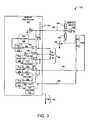
- FIG. 3is a block diagram of a third embodiment of a system configured to train a memory device and a memory controller using a combination of a write operation and a read operation;
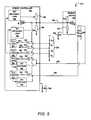
- FIG. 4is a block diagram of a fourth embodiment of a system configured to train a memory device and a memory controller using a combination of a write operation and a read operation;
- FIG. 5is a block diagram of a fifth embodiment of a system configured to train a memory device and a memory controller using a combination of a write operation and a read operation;
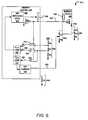
- FIG. 6is a block diagram of a sixth embodiment of a system configured to train a memory device and a memory controller using a combination of a write operation and a read operation;
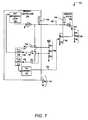
- FIG. 7is a block diagram of a seventh embodiment of a system configured to train a memory device and a memory controller using a combination of a write operation and a read operation;
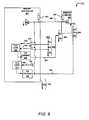
- FIG. 8is a block diagram of an eighth embodiment of a system configured to train a memory device and a memory controller using a combination of a write operation and a read operation;
- FIG. 9is a block diagram of a first embodiment of a system configured to train a memory device and a memory controller using a combination of read operations;
- FIG. 10is a block diagram of a second embodiment of a system configured to train a memory device and a memory controller using a combination of read operations;
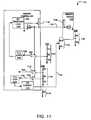
- FIG. 11is a block diagram of a third embodiment of a system configured to train a memory device and a memory controller using a combination of read operations;
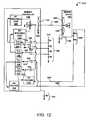
- FIG. 12is a block diagram of a first embodiment of a system configured to train a memory device and a memory controller using a combination of write operations;
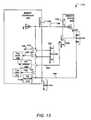
- FIG. 13is a block diagram of a second embodiment of a system configured to train a memory device and a memory controller using a combination of write operations;
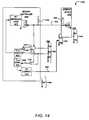
- FIG. 14is a block diagram of a third embodiment of a system configured to train a memory device and a memory controller using a combination of write operations;
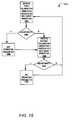
- FIG. 15is a flow diagram of an embodiment of a method to train a memory controller and a memory device using a combination of a read operation and a write operation;
- FIG. 16is a flow diagram of an embodiment of a method to train a memory controller and a memory device using a combination of read operations.
- FIG. 17is a flow diagram of an embodiment of a method to train a memory controller and a memory device using a combination of write operations.
- a memory device and a memory controller linked via a data netmay be trained using a combination of operations that include at least one of a read operation and a write operation.
- a write operationmay include data (e.g., a one or a zero) being communicated via the data net from the driver of the memory controller to the memory device.
- a read operationmay include data (e.g., a one or a zero) being received at the memory controller from a driver of the memory device via the data net.
- the trainingmay include direct or alternating current and may use real time, functional data. Functional or deterministic data may be compared to test data to determine what, if any, adjustments to make to operating parameters of at least one of the memory device and the memory controller.
- the operating parametersmay be automatically adjusted during operations. Signal errors and impedance mismatches may be reduced, and execution speed may be increased.
- the operating parametersmay be managed to increase the timing margin.
- FIG. 1shows a first embodiment of a system 100 configured to train a memory device 102 and a memory controller 104 using a combination of a write operation and a read operation.
- the impedance of a driver 152 of the memory controller 104may be set using a write operation.
- a reference voltage of a first resistor arrangement 108 coupled to the memory controller 104may be set using a read operation.
- the system 100may use a single test path (e.g., a low voltage test path) in each read and write operation.
- An embodiment of the system 100may comprise a communications bus.
- the memory device 102may be coupled to the memory controller 104 via a data net 106 .
- Trainingmay include adjusting one more operating parameters of the memory controller 104 .
- the trainingmay include setting the reference voltage (V ref ) associated with the first resistor arrangement 108 .
- a low voltage value used to set the reference voltagemay be automatically determined and updated.
- the reference voltagemay be set before and updated during operation.
- an operating parametermay include an impedance of the driver 152 of the memory controller 104 .
- the impedance of the driver 152may be set and adjusted to train the memory controller 104 .
- the data net 106may couple a driver 110 of the memory device 102 to an input port of a comparator 112 of the memory controller 104 .
- the resistor arrangement 108may provide a low voltage value to a second input of the comparator 112 .
- the resistor arrangement 108may include a first resistor R 1 associated with the high voltage value.
- the resistor arrangement 108may further include a second resistor R 2 associated with the low voltage value.
- the output of the comparator 112may comprise a first test path 120 coupled to V low logic 114 .
- the V low logic 114may be configured to determine a low voltage value.
- the V low logic 114may be coupled to a digital-to-analog voltage (D/A) voltage device 116 .
- the V low logic 114may be configured to instruct the D/A voltage device 116 to selectively increment or decrement the low voltage value at the first resistor arrangement 108 .
- D/Adigital-to-analog voltage
- the data net 106may additionally be coupled to a first input of a comparator 118 .
- the resistor arrangement 108may provide the reference voltage to a second input of the comparator 118 .
- the output of the comparator 118may comprise a functional path 122 associated with a functional device (not shown).
- the data of the functional path 122may be compared to the data of the first test path 120 .
- a result of the comparisonmay be used to set or adjust the low voltage value.
- the correctness of the test path datamay be determined based on data of the functional path 122 .
- a percentage of the instances when correct data (or incorrect data) is read in the first test path 120may be determined by comparing the test data with the functional data.
- the data of the functional path 122may be used to determine if a one or a zero of the first test path 120 correctly corresponds to a one or zero of the functional path 122 .
- the voltage valuemay be set correctly.
- a predetermined range, ratio, set point, or other criteriamay be specified. For instance, the low voltage value may be too low until some percentage of the data of the first test path 120 matches data of the functional path 122 .
- a comparator 124may receive a data signal at a first input coupled to the data net 106 .
- a second input of the comparator 124may be coupled to a second resistor arrangement 126 .
- the second resistor arrangement 126may include multiple resistors R 3 , R 4 , and R 5 .
- the output of the comparator 124may comprise a second test path 128 coupled to V low logic 130 configured to determine a low voltage value.
- the V low logic 130may be coupled to set impedance logic 140 .
- the V low logic 130may be configured to instruct the set impedance logic 140 to pull down the impedance of the driver 152 .
- the impedance of the driver 152may be adjusted to train the memory controller 104 during a write operation. For example, impedance of the driver 152 may be adjusted when the data of the second test path 128 falls outside of a predetermined range, ratio, set point, or other criteria when compared to corresponding data of the functional path 122 .
- the memory controller 104may be coupled to a third resistor arrangement 144 that includes a resistor R 6 .
- An embodimentmay apply current to the third resistor arrangement 144 to affect impedances associated with a termination device 142 and the driver 152 .
- the memory device 102may be coupled to a fourth resistor arrangement 148 that includes resistors R 7 and R 8 and to a fifth resistor arrangement 190 that includes resistor R 9 .
- the fourth resistor arrangement 148may be configured to provide a reference voltage to the memory device 102 .
- a voltage at the fifth resistor arrangement 190may affect impedances of the driver 110 and a termination device 146 of the memory device 102 .
- the termination devices 142 , 146may each be associated with a load impedance to match line impedance and reduce signal reflection along the data net 106 .
- An illustrative memory device 102may include a Dynamic Random Access Memory (DRAM) memory device, such as a Graphics Double Data Rate (GDDR) DRAM.
- the memory controller 104may be located within any type of computer system including, but not limited to, a desktop computer, a server, a laptop, a handheld device, a tablet personal computer, a set-top box, or another type of computer system that utilizes system memory. Within the computer system, the memory controller 104 may be located in a chipset, in one or more processors coupled to the chipset, or in a discrete component coupled to the system memory.
- the data net 106may include one or more links configured to transmit data between two components within a computer system.
- FIG. 2shows a second embodiment of a system 200 configured to train a memory device 202 and a memory controller 204 using a combination of a write operation and a read operation.
- the impedance of a driver 252 of the memory controller 204may be set using a write operation
- a reference voltage of a first resistor arrangement 208may be set using a read operation.
- the system 200may use both high and low voltage test paths in each read and write operation.
- the memory device 202may be coupled to the memory controller 204 via a data net 206 .
- Trainingmay include adjusting one more operating parameters of the memory controller 204 .
- the trainingmay include setting a reference voltage (V ref ) associated with the first resistor arrangement 208 .
- V refreference voltage
- a low and a high voltage valuemay be used to set the reference voltage may be automatically determined and updated.
- the reference voltagemay be set before and updated during operation.
- an operating parametermay include an impedance of the driver 252 of the memory controller 204 .
- the impedance of the driver 252may be set and adjusted to train the memory controller 204 .
- the data net 206may couple a driver 210 of the memory device 202 to an input port of a comparator 212 of the memory controller 204 .
- a second input of the comparator 212may be coupled to the first resistor arrangement 208 .
- the first resistor arrangement 208may provide a low voltage value to the second input of the comparator 212 .
- the resistor arrangement 208may include a first resistor R 1 associated with the high voltage value.
- the resistor arrangement 208may further include a second resistor R 2 associated with the low voltage value.
- the output of the comparator 212may comprise a low test path 220 coupled to a V low logic 272 configured to determine a low voltage value.
- the V low logic 272may be coupled to a D/A voltage device 216 .
- the V low logic 272may be configured to instruct the D/A voltage device 216 to selectively increment or decrement the low voltage value at the first resistor arrangement 208 .
- the data net 206may additionally be coupled to an input port of a comparator 254 of the memory controller 204 .
- a second input of the comparator 254may be coupled to the first resistor arrangement 208 .
- the first resistor arrangement 208may provide a high voltage value to the second input of the comparator 254 .
- the output of the comparator 254may comprise a high test path 274 coupled to a V high logic 256 configured to determine a high voltage value.
- the V high logic 256may be coupled to a D/A voltage device 258 .
- the V high logic 256may be configured to instruct the D/A voltage device 258 to selectively increment or decrement the high voltage value at the first resistor arrangement 208 .
- the data net 206may additionally be coupled to a first input of a comparator 218 .
- the resistor arrangement 208may provide the reference voltage to a second input of the comparator 218 .
- the output of the comparator 218may comprise a functional path 222 associated with a functional device (not shown).
- the data of the functional path 222may be compared to the data of the low test path 220 and the high test path 274 . Results of the comparison may be used to set or otherwise adjust at least one of the high and low voltage values.
- the correctness of the high and low test path datamay be determined based on data of the functional path 222 .
- a percentage of the instances when correct data (or incorrect data) is readmay be determined by comparing the test data with the functional data.
- a predetermined range, ratio, set point, or other criteriamay be specified, as described herein.
- the test datamay be monitored over several cycles.
- the correctness of the test path datamay be determined based on data of the functional path 222 .
- a percentage of the instances when correct data (or incorrect data) is read in the test data path 220may be determined by comparing the test data with the functional data.
- the data of the functional path 222may be used to determine if a one or a zero of the test path 220 correctly corresponds to a one or zero of the functional path.
- the voltage valuemay be set correctly.
- a predetermined range, ratio, set point, or other criteriamay be specified. For instance, the low voltage value may be too low until some percentage of the data of the test path 220 matches data of the functional path 222 .
- a comparator 224may receive a data signal at a first input coupled to the data net 206 .
- a second input of the comparator 224may be coupled to a second resistor arrangement 226 .
- the second resistor arrangement 226may include resistors R 3 , R 4 , R 5 , and R 6 .
- the output of the comparator 224may comprise a low test path 228 coupled to a V low logic 230 configured to determine a low voltage value.
- the V low logic 230may be coupled to set impedance logic 240 .
- the V low logic 230may be configured to instruct the set impedance logic 240 to pull down the impedance of the driver 252 .
- the impedance of the driver 252may be adjusted to train the memory controller 204 during a write operation. For example, impedance of the driver 252 may be adjusted when the data of the low test path 228 falls outside of a predetermined range, ratio, set point, or other criteria when compared to corresponding data of the functional path 222 .
- a comparator 260may receive a data signal at a first input coupled to the data net 206 .
- a second input of the comparator 260may be coupled to the second resistor arrangement 226 .
- the output of the comparator 260may comprise a high test path 276 coupled to a V high logic 262 configured to determine a high voltage value.
- the V high logic 262may be coupled to set impedance logic 264 .
- the V high logic 262may be configured to instruct the set impedance logic 264 to pull up the impedance of the driver 252 .
- the impedance of the driver 252may be adjusted to train the memory controller 204 during a write operation. For instance, impedance of the driver 252 may be adjusted when the data of the high test path 276 falls outside of a predetermined range, ratio, set point, or other criteria when compared to corresponding data of the functional path 222 .
- the memory device 202may be coupled to a third resistor arrangement 248 that includes resistors R 7 and R 8 and to a fourth resistor arrangement 290 that includes resistor R 9 .
- the third resistor arrangement 148may be configured to provide a reference voltage to the memory device 102 .
- a voltage at the fourth resistor arrangement 290may affect impedances of the driver 110 and termination devices 246 , 248 of the memory device 102 .
- the memory controller 204may include termination devices 242 , 266 and may be coupled to a fifth resistor arrangement 244 .
- the termination devices 242 , 246 , 248 , and 266may each be associated with a load impedance to match line impedance and reduce signal reflection along the data net 206 .
- the fifth resistor arrangement 244may be configured to affect the impedances of the termination devices 242 , 266 and the driver 252 .
- FIGS. 1 and 2thus show embodiments of systems 100 , 200 configured to train voltage values between a memory controller and a memory device using a combination of a read and a write operation.
- the impedances of the drivers 152 , 252may be set using a write operation
- the reference voltages of the resistor arrangements 108 , 208may be set using a read operation.
- the system 100may use a single test path (e.g., a low voltage test path) in each read and write operation.
- the system 200may use both high and low voltage test paths in each read and write operation. Both systems 100 , 200 may facilitate increased data accuracy, timing margins, and processing speed.
- FIG. 3shows a third embodiment of a system 300 configured to train a memory device 302 and a memory controller 304 using a combination of a write operation and a read operation.
- a reference voltage 348 of the memory device 302may be set using a write operation
- a reference voltage of memory controller 304may be set using a read operation.
- the system 300may use both high and low voltage test paths in each read and write operation.
- the system 300may comprise a communications bus.
- the memory device 302may be coupled to the memory controller 304 via a data net 306 .
- Trainingmay include adjusting one more operating parameters of the memory device 302 and the memory controller 304 .
- the trainingmay include setting a reference voltage (V ref ) associated with a first resistor arrangement 308 coupled to the memory controller 304 .
- V refa reference voltage associated with a first resistor arrangement 308 coupled to the memory controller 304 .
- a low and a high voltage valuemay be used to set the reference voltage may be automatically determined and updated.
- the reference voltagemay be set before and updated during operation.
- an operating parametermay include a reference voltage of the memory device 302 .
- the reference voltagemay be set by adjusting high and low voltage values associated with a second resistor arrangement 348 .
- the data net 306may couple a driver 310 of the memory device 302 to an input port of a comparator 324 of the memory controller 304 .
- the first resistor arrangement 308may provide a low voltage value to the second input of the comparator 324 .
- the resistor arrangement 308may include a first resistor R 1 associated with the high voltage value.
- the resistor arrangement 308may further include a second resistor R 2 associated with the low voltage value.
- the output of the comparator 324may comprise a low test path 380 coupled to a V low logic 330 configured to determine a low voltage value.
- the V low logic 330may be coupled to a D/A voltage device 340 .
- the V low logic 330may be configured to instruct the D/A voltage device 340 to selectively increment or decrement the low voltage value at the first resistor arrangement 308 .
- the data net 306may additionally be coupled to an input port of a comparator 360 of the memory controller 304 .
- a second input of the comparator 360may be coupled to the first resistor arrangement 308 .
- the first resistor arrangement 308may provide a high voltage value to the second input of the comparator 360 .
- the output of the comparator 360may comprise a high test path 382 coupled to a V high logic 374 configured to determine a high voltage value.
- the V high logic 374may be coupled to a D/A voltage device 378 .
- the V high logic 374may be configured to instruct the D/A voltage device 378 to selectively increment or decrement the high voltage value at the first resistor arrangement 308 during a read operation.
- the data net 306may additionally be coupled to a first input of a comparator 318 .
- the resistor arrangement 308may provide the reference voltage to a second input of the comparator 318 .
- the output of the comparator 318may comprise a functional path 322 associated with a functional device (not shown).
- the data of the functional path 322may be compared to the data of the low test path 380 and the high test path 382 . Results of the comparison may be used to set or adjust at least one of the high and low voltage values. For instance, the correctness of the high and low test path data may be determined based on data of the functional path 322 . A percentage of the instances when correct data (or incorrect data) is read may be determined by comparing the test data with the functional data. A predetermined range, ratio, set point, or other criteria may be specified, as described herein.
- a comparator 312may receive a data signal at a first input coupled to the data net 306 .
- a second input of the comparator 312may be coupled to a low voltage portion of a second resistor arrangement 348 .
- the second resistor arrangement 348may include resistors R 3 and R 4 and may provide a reference voltage to the memory device 302 .
- the output of the comparator 312may comprise a low test path 320 coupled to a V low logic 372 configured to determine a low voltage value.
- the V low logic 372may be coupled to a D/A voltage device 316 .
- the V high logic 372may be configured to instruct the D/A voltage device 316 to selectively increment or decrement the low voltage value at the second resistor arrangement 348 during a write operation.
- the low voltage valuemay be adjusted when the data of the low test path 320 falls outside of a predetermined range, ratio, set point, or other criteria when compared to corresponding data of the functional path 322 .
- a comparator 354may receive a data signal at a first input coupled to the data net 306 .
- a second input of the comparator 354may be coupled to a high voltage portion of the second resistor arrangement 348 .
- the output of the comparator 354may comprise a high test path 378 coupled to a V high logic 356 configured to determine a high voltage value.
- the V high logic 356may be coupled to a D/A voltage device 358 .
- the V high logic 356may be configured to instruct the D/A voltage device 358 to selectively increment or decrement the high voltage value at the second resistor arrangement 348 during a write operation.
- the high voltage valuemay be adjusted when the data of the high test path 378 falls outside of a predetermined range, ratio, set point, or other criteria when compared to corresponding data of the functional path 322 .
- the memory controller 304may include a termination device 342 and a termination device 366 .
- a third resistor arrangement 344 that includes R 8may be configured to set impedances associated with the termination devices 342 , 366 and the driver 352 .
- the memory device 302may include a termination device 346 and a termination device 368 .
- a fourth resistor arrangement 344 that includes R 7may be configured to set impedances associated with the termination devices 346 , 368 and the driver 310 .
- the termination devices 342 , 346 , 366 , and 368may each be associated with a load impedance to match line impedance and reduce signal reflection along the data net 306 .
- the system 300may train voltage values between the memory controller 304 and the memory device 302 using a combination of a read and a write operation. For instance, the reference voltage associated with the memory controller 304 may be set using a read operation, and the reference voltage associate with the memory device 302 may be set using a write operation. The adjustment of the high and low voltage values may reduce impedance mismatches by adjusting the reference voltage to yield improvements in timing margins.
- FIG. 4shows a fourth embodiment of a system 400 configured to train a memory device 402 and a memory controller 404 using a combination of a write operation and a read operation.
- an impedance of a driver 452 of the memory controller 404may be set using a write operation
- impedances of termination devices 442 , 466may be set using a read operation.
- the system 400may use both high and low voltage test paths in each read and write operation.
- the system 400may comprise a communications bus.
- the memory device 402may be coupled to the memory controller 404 via a data net 406 .
- Trainingmay include adjusting one more operating parameters of the memory controller 404 .
- the trainingmay include setting a pull up impedance at the termination device 442 and setting a pull down impedance at the termination device 466 .
- an operating parametermay include an impedance of the driver 452 of the memory controller 404 .
- the impedance of the driver 452may be set and adjusted to train the memory controller 404 .
- the data net 406may couple a driver 410 of the memory device 402 to an input port of a comparator 424 of the memory controller 404 .
- a second input of the comparator 424may be coupled to a first resistor arrangement 408 .
- the first resistor arrangement 408may include multiple resistors R 1 , R 2 , R 3 , and R 4 .
- the first resistor arrangement 408may provide a low voltage value to the second input of the comparator 424 .
- the output of the comparator 424may comprise a low test path 480 coupled to a V low logic 430 configured to determine a low voltage value.
- the V low logic 430may be coupled to set impedance logic 486 .
- the set impedance logic 486may be configured to pull up the impedance at the termination device 442 .
- the data net 406may additionally be coupled to an input port of a comparator 460 of the memory controller 404 .
- a second input of the comparator 460may be coupled to the first resistor arrangement 408 .
- the first resistor arrangement 408may provide a high voltage value to the second input of the comparator 460 .
- the output of the comparator 460may comprise a high test path 482 coupled to a V high logic 474 configured to determine a high voltage value.
- the V high logic 474may be coupled to set impedance logic 484 .
- the set impedance logic 484may be configured to pull down the impedance at the termination device 466 .
- the data net 406may additionally be coupled to a first input of a comparator 418 .
- the resistor arrangement 408may provide a reference voltage to a second input of the comparator 418 .
- the output of the comparator 418may comprise a functional path 422 associated with a functional device (not shown).
- the data of the functional path 422may be compared to the data of the low test path 480 and the high test path 482 . Results of the comparison may be used to set or adjust at least one of the impedances at the termination devices 442 , 466 .
- the correctness of the high and low test path datamay be determined based on data of the functional path 422 .
- a percentage of the instances when correct data (or incorrect data) is readmay be determined by comparing the test data with the functional data.
- a predetermined range, ratio, set point, or other criteriamay be specified, as described herein.
- a comparator 412may receive a data signal at a first input coupled to the data net 406 .
- a second input of the comparator 412may be coupled to the first resistor arrangement 408 .
- the output of the comparator 412may comprise a low test path 420 coupled to set impedance logic 416 .
- the set impedance logic 416may pull down the impedance of the driver 452 .
- the impedance of the driver 452may thus be adjusted to train the memory controller 404 during a write operation. For instance, impedance of the driver 452 may be adjusted when the data of the low test path 420 falls outside of a predetermined range, ratio, set point, or other criteria when compared to corresponding data of the functional path 422 .
- a comparator 454may receive a data signal at a first input coupled to the data net 406 .
- a second input of the comparator 454may be coupled to the first resistor arrangement 408 .
- the output of the comparator 454may comprise a high test path 478 coupled to set impedance logic 458 .
- the set impedance logic 458may pull up the impedance of the driver 452 .
- the impedance of the driver 452may thus be adjusted to train the memory controller 404 during a write operation. For example, impedance of the driver 452 may be adjusted when the data of the high test path 478 falls outside of a predetermined range, ratio, set point, or other criteria when compared to corresponding data of the functional path 422 .
- the memory device 402may be coupled to a second resistor arrangement 448 that includes resistors R 5 , R 6 and a third resistor arrangement 490 that includes resistor R 7 .
- the second resistor arrangement 448may be configured to provide a reference voltage to the memory device 402 .
- a voltage at the third resistor arrangement 490may affect impedances of termination devices 446 , 468 and the driver 410 .
- the termination devices 446 , 468may each be associated with a load impedance to match line impedance and reduce signal reflection along the data net 406 .
- a fourth resistor arrangement 444may be coupled to the memory controller 404 .
- a voltage at the fourth resistor arrangement 444may affect impedances of the terminal devices 442 , 466 and the driver 452 .
- the system 400may thus train the memory device 402 and the memory controller 404 using a combination of a write operation and a read operation.
- the impedance of the driver 452 of the memory controller 404may be set using a write operation
- the impedance of termination devices 442 , 466 of the memory controller 404may be set using a read operation.
- the system 400may use both high and low voltage test paths in each read and write operation. The adjustment of the high and low voltage values may reduce impedance mismatches by adjusting the reference voltage to yield improvements in timing margins.
- the system 400may facilitate increased data accuracy, timing margins, and processing speed.
- FIG. 5shows a fifth embodiment of a system 500 configured to train a memory device 502 and a memory controller 504 using a combination of a write operation and a read operation.
- a reference voltage (V ref ) associated with the memory device 502may be set using a write operation
- impedances of termination devices 542 , 566 of the memory controller 504may be set using a read operation.
- the system 500may use both high and low voltage test paths in each read and write operation.
- the memory device 502may be coupled to the memory controller 504 via a data net 506 .
- Trainingmay include adjusting one more operating parameters of the memory device 502 and the memory controller 504 .
- the trainingmay include setting a pull up impedance at the termination device 542 and setting a pull down impedance at the termination device 566 .
- an operating parametermay include the reference voltage associated with the memory device 502 .
- the data net 506may couple a driver 510 of the memory device 502 to an input port of a comparator 524 of the memory controller 504 .
- a second input of the comparator 524may be coupled to a first resistor arrangement 508 .
- the first resistor arrangement 508may include multiple resistors R 1 , R 2 , R 3 , and R 4 .
- the first resistor arrangement 508may provide a low voltage value to the second input of the comparator 524 .
- the output of the comparator 524may comprise a low test path 580 coupled to a V low logic 530 configured to determine a low voltage value.
- the V low logic 530may be coupled to set impedance logic 586 .
- the set impedance logic 586may be configured to pull up the impedance at the termination device 542 .
- the data net 506may additionally be coupled to an input port of a comparator 560 of the memory controller 504 .
- a second input of the comparator 560may be coupled to the first resistor arrangement 508 .
- the first resistor arrangement 508may provide a high voltage value to the second input of the comparator 560 .
- the output of the comparator 560may comprise a high test path 582 coupled to a V high logic 574 configured to determine a high voltage value.
- the V high logic 574may be coupled to set impedance logic 584 .
- the set impedance logic 584may be configured to pull down the impedance at the termination device 566 .
- the data net 506may additionally be coupled to a first input of a comparator 518 .
- the resistor arrangement 508may provide the reference voltage to a second input of the comparator 518 .
- the output of the comparator 518may comprise a functional path 522 associated with a functional device (not shown).
- the data of the functional path 522may be compared to the data of the low test path 580 and the high test path 582 . Results of the comparison may be used to set or adjust at least one of the impedances at the termination devices 542 , 566 .
- the correctness of the high and low test path datamay be determined based on data of the functional path 522 .
- a percentage of the instances when correct data (or incorrect data) is readmay be determined by comparing the test data with the functional data.
- a predetermined range, ratio, set point, or other criteriamay be specified, as described herein.
- a comparator 512may receive a data signal at a first input coupled to the data net 506 .
- a second input of the comparator 512may be coupled to a low voltage portion of a second resistor arrangement 558 .
- the second resistor arrangement 558may include resistors R 5 and R 6 and may provide a reference voltage to the memory device 502 .
- the output of the comparator 512may comprise a low test path 578 coupled to a V low logic 572 configured to determine a low voltage value.
- the V low logic 572may be coupled to a D/A voltage device 516 .
- the V high logic 572may be configured to instruct the D/A voltage device 516 to selectively increment or decrement the low voltage value at the second resistor arrangement 558 during a write operation. For instance, the low voltage value may be adjusted when the data of the low test path 578 falls outside of a predetermined range, ratio, set point, or other criteria when compared to corresponding data of the functional path 522 .
- a comparator 554may receive a data signal at a first input coupled to the data net 506 .
- a second input of the comparator 554may be coupled to a high voltage portion of the second resistor arrangement 558 .
- the output of the comparator 554may comprise a high test path 578 coupled to a V high logic 556 configured to determine a high voltage value.
- the V high logic 556may be coupled to a D/A voltage device 558 .
- the V high logic 556may be configured to instruct the D/A voltage device 558 to selectively increment or decrement the high voltage value at the second resistor arrangement 558 during a write operation.
- the high voltage valuemay be adjusted when the data of the high test path 578 falls outside of a predetermined range, ratio, set point, or other criteria when compared to corresponding data of the functional path 522 .
- the memory controller 504may include termination devices 542 , 566 and a third resistor arrangement 544 that includes resistor R 8 .
- a voltage present at the third resistor arrangement 544may affect impedances of the termination devices 542 , 566 and the driver 552 .
- the memory device 502may include termination devices 546 , 568 and a fourth resistor arrangement 590 that includes resistor R 7 .
- a voltage present at the fourth resistor arrangement 590may affect impedances of the termination devices 546 , 568 and the driver 510 .
- the termination devices 542 , 546 , 566 , and 568may each be associated with a load impedance to match line impedance and reduce signal reflection along the data net 506 .
- the system 500may train voltage values between the memory controller 504 and the memory device 502 using a combination of a read and a write operation. For instance, the reference voltage associated with the memory controller 504 may be set using a write operation, and the impedance of the termination devices 542 , 566 of the memory controller 504 may be set using a read operation. Data may be read and compared to functional data during real time. System operation may remain uninterrupted while the high and the low voltage values are selectively updated. The automatic updates may reduce impedance mismatches and offset issues.
- FIG. 6shows a sixth embodiment of a system 600 configured to train a memory device 602 and a memory controller 604 using a combination of a write operation and a read operation.
- a voltage at a first resistor arrangement 690may be set to calibrate a driver 610 of the memory device 602 with an offset from the memory controller 604 .
- An impedance of a termination device 642 of the memory controller 604may be set using a read operation.
- the system 600may comprise a communications bus.
- the memory device 602may be coupled to the memory controller 604 via a data net 606 .
- Trainingmay include adjusting one more operating parameters of at least one of the memory device 602 and the memory controller 604 .
- the trainingmay include setting a pull up impedance at the termination device 642 .
- an operating parametermay include a voltage at the memory device 602 and associated with an offset of the memory controller 604 .
- the data net 606may couple the driver 610 of the memory device 602 to an input port of a comparator 624 of the memory controller 604 .
- a second input of the comparator 624may be coupled to a second resistor arrangement 608 .
- the second resistor arrangement 608may include multiple resistors R 1 , R 2 , and R 3 .
- the second resistor arrangement 608may provide a low voltage value to the second input of the comparator 624 .
- the output of the comparator 624may comprise a low test path 680 coupled to a V low logic 630 configured to determine a low voltage value.
- the V low logic 630may be coupled to set impedance logic 678 .
- the set impedance logic 678may be configured to pull up the impedance at the termination device 642 .
- the data net 606may additionally be coupled to a first input of a comparator 618 .
- the resistor arrangement 608may provide a reference voltage to a second input of the comparator 618 .
- the output of the comparator 618may comprise a functional path 622 associated with a functional device (not shown).
- the data of the functional path 622may be compared to the data of the low test path 680 . Results of the comparison may be used to set or adjust the impedance at the termination device 642 .
- the correctness of the low test path datamay be determined based on data of the functional path 622 .
- a percentage of the instances when correct data (or incorrect data) is readmay be determined by comparing the test data with the functional data.
- a predetermined range, ratio, set point, or other criteriamay be specified, as described herein.
- a comparator 612may receive a data signal at a first input coupled to the data net 606 .
- a second input of the comparator 612may be coupled to a low voltage portion of the second resistor arrangement 608 .
- the output of the comparator 612may comprise a low test path 620 coupled to a V low logic 672 configured to determine a low voltage value.
- the V low logic 672may be coupled to a D/A current device 616 .
- the V high logic 672may be configured to instruct the D/A current device 616 to selectively increment or decrement a current value at the first resistor arrangement 690 during a write operation. For instance, the current may be adjusted according to an offset associated with the memory controller 604 .
- the offsetmay be determined when the data of the low test path 620 falls outside of a predetermined range, ratio, set point, or other criteria when compared to corresponding data of the functional path 622 .
- the first resistor arrangement 690may include multiple resistors R 7 , R 8 .
- the driver 610may be calibrated.
- the voltage on the data net 606may be set via the driver 610 according to the current applied to the first resistor arrangement 690 .
- the memory controller 604may be coupled to a third resistor arrangement 644 that includes a resistor R 4 .
- a voltage at the third resistor arrangement 644may affect impedances of the termination device 642 and the driver 652 .
- the memory device 602may be coupled to a fourth resistor arrangement 648 that includes multiple resistors R 5 , R 6 .
- the fourth resistor arrangement 648may be configured to provide a reference voltage to the memory device 602 .
- the memory device 602may further include a termination device 646 .
- the termination devices 642 , 646may each be associated with a load impedance to match line impedance and reduce signal reflection along the data net 606 .
- the system 600may train voltage values between the memory controller 604 and the memory device 602 using a combination of a read and a write operation. For example, the voltage value affecting the driver 610 of the memory device 602 may be set according to a memory controller offset using a write operation. The impedance of the termination device 642 of the memory controller 604 may be set using a read operation. The system 600 may use low voltage test paths in each read and write operation.
- FIG. 7shows a seventh embodiment of a system 700 configured to train a memory device 702 and a memory controller 704 using a combination of a write operation and a read operation. For instance, during a read operation, a voltage at a first resistor arrangement 790 may be set to calibrate a driver 710 of the memory device 702 according to a memory controller offset. An impedance of a driver 752 of the memory controller 704 may be set using a write operation.
- the memory device 702may be coupled to the memory controller 704 via a data net 706 .
- Trainingmay include adjusting one more operating parameters of at least one of the memory device 702 and the memory controller 704 .
- the trainingmay include setting an impedance of the driver 752 .
- an operating parametermay include a voltage offset applied to the driver 710 of the memory device 702 .
- the data net 706may couple the driver 710 of the memory device 702 to an input port of a comparator 724 of the memory controller 704 .
- a second input of the comparator 724may be coupled to a second resistor arrangement 708 .
- the second resistor arrangement 708may include multiple resistors R 1 , R 2 , and R 3 .
- the second resistor arrangement 708may provide a low voltage value to the second input of the comparator 724 .
- the output of the comparator 724may comprise a low test path 780 coupled to a V low logic 730 configured to determine a low voltage value.
- the V low logic 730may be coupled to set impedance logic 778 .
- the set impedance logic 778may be configured to set the impedance of the driver 752 .
- the data net 706may additionally be coupled to a first input of a comparator 718 .
- the resistor arrangement 708may provide a reference voltage to a second input of the comparator 718 .
- the output of the comparator 718may comprise a functional path 722 associated with a functional device (not shown).
- the data of the functional path 722may be compared to the data of the low test path 780 . Results of the comparison may be used to set or adjust the impedance at the driver 752 .
- the correctness of the low test path datamay be determined based on data of the functional path 722 .
- a percentage of the instances when correct data (or incorrect data) is readmay be determined by comparing the test data with the functional data.
- a predetermined range, ratio, set point, or other criteriamay be specified, as described herein.
- a comparator 712may receive a data signal at a first input coupled to the data net 706 .
- a second input of the comparator 712may be coupled to a low voltage portion of the second resistor arrangement 708 .
- the output of the comparator 712may comprise a low test path 720 coupled to a V low logic 772 configured to determine a low voltage value.
- the V low logic 772may be coupled to a D/A current device 716 .
- the V high logic 772may be configured to instruct the D/A current device 716 to selectively increment or decrement a current value at the first resistor arrangement 790 during the read operation. For example, the current may be adjusted according to an offset associated with the memory controller 704 .
- the offsetmay be determined when the data of the low test path 720 falls outside of a predetermined range, ratio, set point, or other criteria when compared to corresponding data of the functional path 722 .
- the first resistor arrangement 790may include multiple resistors R 7 , R 8 . When the current is applied at the first resistor arrangement 790 , the driver 710 may be calibrated. The voltage on the data net 706 may be set via the driver 710 according to the current applied to the first resistor arrangement 790 .
- the memory controller 704may be coupled to a third resistor arrangement 744 that includes a resistor R 4 .
- a voltage at the third resistor arrangement 744may affect impedances of the termination device 742 and the driver 752 .
- the memory device 702may be coupled to a fourth resistor arrangement 748 that includes resistors R 5 , R 6 .
- the fourth resistor arrangement 748may be configured to provide a reference voltage to the memory device 702 .
- the memory device 702may further include a termination device 746 .
- the termination devices 742 , 746may each be associated with a load impedance to match line impedance and reduce signal reflection along the data net 706 .
- the system 700may train voltage values between the memory controller 704 and the memory device 702 using a combination of a read and a write operation. For instance, the voltage value affecting the driver 710 of the memory device 702 may be set according to a memory controller offset using a read operation. The impedance of the driver 752 of the memory controller 704 may be set using a write operation. The system 700 may use low voltage test paths in each read and write operation.
- FIG. 8shows an eighth embodiment of system 800 configured to train a memory device 802 and a memory controller 804 using a combination of a write and a read operation.
- a voltage at a first resistor arrangement 890may be set to calibrate a driver 810 of the memory device 802 according to a memory controller offset.
- a reference voltage (V ref ) associated with the memory device 802may be set during a write operation.
- the system 800may comprise a communications bus.
- the memory device 802may be coupled to the memory controller 804 via a data net 806 .
- Trainingmay include adjusting one more operating parameters of at least one of the memory device 802 and the controller 804 .
- the trainingmay include setting the reference voltage associated with the memory driver 802 .
- an operating parametermay include the voltage offset applied to the driver 810 of the memory device 802 .
- the data net 806may be coupled to a first input of a comparator 818 .
- a first resistor arrangement 808may provide a reference voltage to a second input of the comparator 818 .
- the output of the comparator 818may comprise a functional path 822 associated with a functional device (not shown).
- a comparator 824may receive a data signal at a first input coupled to the data net 806 .
- a second input of the comparator 824may be coupled to a low voltage portion of a second resistor arrangement 808 .
- the second resistor arrangement 808may include multiple resistors R 1 , R 2 , and R 3 .
- the output of the comparator 824may comprise a low test path 880 coupled to a V low logic 830 configured to determine a low voltage value.
- the V low logic 830may be coupled to a D/A current device 896 .
- the V low logic 830may be configured to instruct a D/A current device 896 to selectively increment or decrement a current value at the first resistor arrangement 890 during the read operation.
- the currentmay be adjusted according to an offset associated with the memory controller 804 .
- the offsetmay be determined when the data of the low test path 880 falls outside of a predetermined range, ratio, set point, or other criteria when compared to corresponding data of the functional path 822 .
- the driver 810may be calibrated.
- the voltage on the data net 806may be set via the driver 810 according to the current applied to the first resistor arrangement 808 .
- a comparator 812may receive a data signal at a first input coupled to the data net 806 .
- a second input of the comparator 812may be coupled to a low voltage portion of a third resistor arrangement 848 .
- the third resistor arrangement 848may include multiple resistors R 5 , R 6 and may provide the reference voltage to the memory device 802 .
- the output of the comparator 812may comprise a low test path 820 coupled to a V low logic 872 configured to determine a low voltage value.
- the V low logic 872may be coupled to a D/A voltage device 816 .
- the V low logic 872may be configured to instruct the D/A voltage device 816 to selectively increment or decrement the low voltage value at the third resistor arrangement 848 during a write operation. For instance, the low voltage value may be adjusted when the data of the low test path 820 falls outside of a predetermined range, ratio, set point, or other criteria when compared to corresponding data of the functional path 822 .
- the memory controller 804may be coupled to a fourth resistor arrangement 844 that includes a resistor R 4 .
- a voltage a the fourth resistor arrangement 844may affect impedances of a termination device 842 and the driver 852 .
- the memory device 802may include a termination device 846 .
- the termination devices 842 , 846may each be associated with a load impedance to match line impedance and reduce signal reflection along the data net 806 .
- the system 800may train voltage values between the memory controller 804 and the memory device 802 using a combination of a read and a write operation. For example, the voltage value affecting the driver 810 of the memory device 802 may be set according to a memory controller offset using a read operation. The reference voltage associated with the memory device 802 may be set using a write operation. The system 800 may use low voltage test paths in each read and write operation.
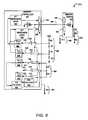
- FIG. 9shows a first embodiment of a system 900 configured to train a memory device 902 and a memory controller 904 using a combination of multiple read operations.
- the impedances of termination devices 942 , 966 of the memory controller 904may be set using a first read operation, and a reference voltage of a first resistor arrangement 908 may be set using a second read operation.
- the system 900may use both high and low voltage test paths in each read operation.
- the system 900may comprise a communications bus.
- the memory device 902may be coupled to the memory controller 904 via a data net 906 .
- Trainingmay include adjusting one more operating parameters of the memory controller 904 .
- the trainingmay include setting a reference voltage (V ref ) associated with the first resistor arrangement 908 .
- V refa reference voltage
- a low and a high voltage valuemay be used to set the reference voltage may be automatically determined and updated.
- the reference voltagemay be set before and updated during operation.
- an operating parametermay include impedances of the termination devices 942 , 966 of the memory controller 904 . The impedances may be set and adjusted to train the memory controller 904 during the first read operation.
- the data net 906may couple a driver 910 of the memory device 902 to an input port of a comparator 912 of the memory controller 904 .
- a second input of the comparator 912may be coupled to the first resistor arrangement 908 .
- the first resistor arrangement 908may provide a low voltage value to the second input of the comparator 912 .
- the resistor arrangement 908may include a first resistor R 1 associated with the high voltage value.
- the resistor arrangement 908may further include a second resistor R 2 associated with the low voltage value.
- the output of the comparator 912may comprise a low test path 920 coupled to a V low logic 972 configured to determine a low voltage value.
- the V low logic 972may be coupled to a D/A voltage device 916 .
- the V low logic 972may be configured to instruct the D/A voltage device 916 to selectively increment or decrement the low voltage value at the first resistor arrangement 908 .
- the data net 906may additionally be coupled to an input port of a comparator 954 of the memory controller 904 .
- a second input of the comparator 954may be coupled to the first resistor arrangement 908 .
- the first resistor arrangement 908may provide a high voltage value to the second input of the comparator 954 .
- the output of the comparator 954may comprise a high test path 974 coupled to a V high logic 956 configured to determine a high voltage value.
- the V high logic 956may be coupled to a D/A voltage device 958 .
- the V high logic 956may be configured to instruct the D/A voltage device 958 to selectively increment or decrement the high voltage value at the first resistor arrangement 908 .
- the data net 906may additionally be coupled to a first input of a comparator 918 .
- the resistor arrangement 908may provide the reference voltage to a second input of the comparator 918 .
- the output of the comparator 918may comprise a functional path 922 associated with a functional device (not shown).
- the data of the functional path 922may be compared to the data of the low test path 920 and the high test path 974 . Results of the comparison may be used to set or adjust at least one of the high and low voltage values. For instance, the correctness of the high and low test path data may be determined based on data of the functional path 922 . A percentage of the instances when correct data (or incorrect data) is read may be determined by comparing the test data with the functional data. A predetermined range, ratio, set point, or other criteria may be specified, as described herein.
- the correctness of the test path datamay be determined based on data of the functional path 922 .
- a percentage of the instances when correct data (or incorrect data) is read in the test data path 920may be determined by comparing the test data with the functional data.
- the data of the functional path 922may be used to determine if a one or a zero of the test path 920 correctly corresponds to a one or zero of the functional path.
- the voltage valuemay be set correctly.
- a predetermined range, ratio, set point, or other criteriamay be specified. For example, the low voltage value may be too low until some percentage of the data of the test path 920 matches data of the functional path 922 .
- a comparator 924may receive a data signal at a first input coupled to the data net 906 .
- a second input of the comparator 924may be coupled to a second resistor arrangement 926 .
- the second resistor arrangement 926may include resistors R 3 , R 4 , R 5 , and R 6 .
- the output of the comparator 924may comprise a low test path 928 coupled to a V low logic 930 configured to determine a low voltage value.
- the V low logic 930may be coupled to set impedance logic 940 .
- the V low logic 930may be configured to instruct the set impedance logic 940 to pull down the impedance of the termination device 966 .
- the impedance of the termination device 966may be adjusted to train the memory controller 904 during the read operation. For instance, impedance of the termination device 966 may be adjusted when the data of the low test path 928 falls outside of a predetermined range, ratio, set point, or other criteria when compared to corresponding data of the functional path 922 .
- a comparator 960may receive a data signal at a first input coupled to the data net 906 .
- a second input of the comparator 960may be coupled to the second resistor arrangement 926 .
- the output of the comparator 960may comprise a high test path 976 coupled to a V high logic 962 configured to determine a high voltage value.
- the V high logic 962may be coupled to set impedance logic 964 .
- the V high logic 962may be configured to instruct the set impedance logic 964 to pull up the impedance of the termination device 942 .
- the impedance of the termination device 966may be adjusted to train the memory controller 904 during the read operation. For example, impedance of the termination device 966 may be adjusted when the data of the high test path 976 falls outside of a predetermined range, ratio, set point, or other criteria when compared to corresponding data of the functional path 922 .
- a third resistor arrangement that is coupled to the memory device 902 and that includes resistors R 7 , R 8may be configured to provide a reference voltage to the memory device 902 .
- a fourth resistor arrangement 944 that includes resistor R 9 coupled to the memory controller 904may affect impedances of the termination devices 942 , 966 and the driver 952 .
- a fifth resistor arrangement 990 that includes resistor R 10 coupled to the memory device 902may affect impedances of termination devices 946 , 968 and the driver 910 .
- FIG. 9thus shows an embodiment of a system 900 configured to train voltage values between a memory controller and a memory device using a combination of read operations.
- the impedances of the termination devices 942 , 966may be set using a first read operation
- the reference voltage of the resistor arrangement 908may be set using a second read operation.
- the system 900may use both high and low voltage test paths in each read and write operation.
- the system 900may facilitate increased data accuracy, timing margins, and processing speed.
- FIG. 10shows a second embodiment of a system 1000 configured to train a memory device 1002 and a memory controller 1004 using a combination of read operations.
- a voltage at a first resistor arrangement 1090may be set to calibrate a driver 1010 of the memory device 1002 according to a memory controller offset.
- a reference voltage (V ref ) associated with a second resistor arrangement 1060 and the memory controller 1004may be set during a second read operation.
- the memory device 1002may be coupled to the memory controller 1004 via a data net 1006 .
- Trainingmay include adjusting one more operating parameters of the memory device 1002 and the memory controller 1004 .
- the trainingmay include setting the reference voltage associated with the memory controller 1004 .
- an operating parametermay include the voltage offset applied to the driver 1010 of the memory device 1002 .
- the data net 1006may be coupled to a first input of a comparator 1018 .
- the second resistor arrangement 1060may provide a reference voltage to a second input of the comparator 1018 .
- the output of the comparator 1018may comprise a functional path 1022 associated with a functional device (not shown).
- a comparator 1024may receive a data signal at a first input coupled to the data net 1006 .
- a second input of the comparator 1024may be coupled to a low voltage portion of a third resistor arrangement 1008 .
- the output of the comparator 1024may comprise a low test path 1080 coupled to a V low logic 1030 configured to determine a low voltage value.
- the V low logic 1030may be coupled to a D/A current device 1096 .
- the V low logic 1030may be configured to instruct the D/A current device 1096 to selectively increment or decrement a current value at the first resistor arrangement 1090 during the read operation.
- the currentmay be adjusted according to an offset associated with the memory controller 1004 .
- the offsetmay be determined when the data of the low test path 1080 falls outside of a predetermined range, ratio, set point, or other criteria when compared to corresponding data of the functional path 1022 .
- the third resistor arrangement 1008may include multiple resistors R 1 , R 2 , and R 3 .
- the driver 1010may be calibrated.
- the voltage on the data net 1006may be set via the driver 1010 according to the current applied to the first resistor arrangement 1090 .
- a comparator 1012may receive a data signal at a first input coupled to the data net 1006 .
- a second input of the comparator 1012may be coupled to a low voltage portion of the second resistor arrangement 1060 .
- the second resistor arrangement 1060may include multiple resistors R 4 , R 5 .
- the output of the comparator 1012may comprise a low test path 1020 coupled to a V low logic 1072 configured to determine a low voltage value.
- the V low logic 1072may be coupled to a D/A voltage device 1016 .
- the V low logic 1072may be configured to instruct the D/A voltage device 1016 to selectively increment or decrement the low voltage value at the second resistor arrangement 1060 during a read operation. For instance, the low voltage value may be adjusted when the data of the low test path 1020 falls outside of a predetermined range, ratio, set point, or other criteria when compared to corresponding data of the functional path 1022 .
- the memory controller 1004may be coupled to a fourth resistor arrangement 1044 that includes a resistor R 6 .
- a voltage at the fourth resistor arrangement 1044may affect impedances at a termination device 1042 and the driver 1052 .
- the memory device 1002may include a termination device 1046 .
- the termination devices 1042 , 1046may each be associated with a load impedance to match line impedance and reduce signal reflection along the data net 1006 .
- the memory device 1002may be coupled to a fifth resistor arrangement 1048 that includes multiple resistors R 9 , R 10 .
- the fifth resistor arrangement 1048may be configured to provide a reference voltage to the memory device 1002 .
- the system 1000may train voltage values between the memory controller 1004 and the memory device 1002 using a combination of a first read and a second read operation. For example, the voltage value affecting the driver 1010 of the memory device 1002 may be set according to a memory controller offset. The reference voltage associated with the memory controller 1004 may be set using a second read operation. The system 1000 may use low voltage test paths in each read and write operation.
- FIG. 11shows a third embodiment of a system 1100 configured to train a memory device 1102 and a memory controller 1104 using a combination of read operations. For instance, during a first read operation, a voltage at a first resistor arrangement 1190 may be set to calibrate a driver 1110 of the memory device 1102 according to a memory controller offset. An impedance of a termination device 1142 of the memory controller 1104 may be set during a second read operation.
- the system 1100may comprise a communications bus.
- the memory device 1102may be coupled to the memory controller 1104 via a data net 1106 .
- Trainingmay include adjusting one more operating parameters of the memory device 1102 and the memory controller 1104 .
- the trainingmay include setting the impedance of the termination device 1142 of the memory controller 1104 .
- an operating parametermay include the voltage offset applied to the driver 1110 of the memory device 1102 via the first resistor arrangement 1190 .
- the data net 1106may be coupled to a first input of a comparator 1118 .
- a second resistor arrangement 1160may provide a reference voltage to a second input of the comparator 1118 .
- the output of the comparator 1118may comprise a functional path 1122 associated with a functional device (not shown).
- a comparator 1112may receive a data signal at a first input coupled to the data net 1106 .
- a second input of the comparator 1112may be coupled to a low voltage portion of the second resistor arrangement 1160 .
- the output of the comparator 1112may comprise a low test path 1120 coupled to a V low logic 1172 configured to determine a low voltage value.
- the V low logic 1172may be coupled to a D/A current device 1116 .
- the V low logic 1172may be configured to instruct the D/A current device 1116 to selectively increment or decrement a current value at the first resistor arrangement 1190 during the read operation. For instance, the current may be adjusted according to an offset associated with the memory controller 1104 .
- the offsetmay be determined when the data of the low test path 1120 falls outside of a predetermined range, ratio, set point, or other criteria when compared to corresponding data of the functional path 1122 .
- the second resistor arrangement 1160may include multiple resistors R 4 , R 5 , and R 6 .
- the driver 1110may be calibrated.
- the voltage on the data net 1106may be set via the driver 1110 according to the current applied to the first resistor arrangement 1190 .
- a comparator 1124may receive a data signal at a first input coupled to the data net 1106 .
- a second input of the comparator 1112may be coupled to a low voltage portion of a third resistor arrangement 1108 .
- the third resistor arrangement 1108may include multiple resistors R 1 , R 2 , and R 3 .
- the output of the comparator 11024may comprise a low test path 1180 coupled to a V low logic 1130 configured to determine a low voltage value.
- the V low logic 1130may be coupled to a set impedance device 1186 .
- the V low logic 1130may be configured to instruct the set impedance device 1186 to selectively pull up or pull down the impedance at the termination device 1142 during a read operation.
- the impedancemay be adjusted when the data of the low test path 1180 falls outside of a predetermined range, ratio, set point, or other criteria when compared to corresponding data of the functional path 1122 .
- the memory controller 1104may be coupled to a fourth resistor arrangement 1144 that includes a resistor R 7 .
- a voltage at the fourth resistor arrangement 1144may affect impedances of the termination device 1142 and the driver 1152 .
- the memory device 1102may include a termination device 1146 .
- the termination devices 1142 , 1146may each be associated with a load impedance to match line impedance and reduce signal reflection along the data net 1106 .
- the memory device 1102may be coupled to a fifth resistor arrangement 1148 that includes multiple resistors R 8 , R 9 .
- the fifth resistor arrangement 1148may be configured to provide a reference voltage to the memory device 1102 .
- the system 1100may train voltage values between the memory controller 1104 and the memory device 1102 using a combination of a first read and a second read operation. For instance, the impedance affecting the driver 1110 of the memory device 1102 may be set according to a memory controller offset. The impedance of the termination device 1142 of the memory controller 1104 may be set using a second read operation. The system 1100 may use low voltage test paths in each read and write operation to increase proving speed and timing margins.
- FIG. 12shows a first embodiment of a system 1200 configured to train a memory device 1202 and a memory controller 1204 using a combination of multiple write operations.
- the impedance of a driver 1252 of the memory controller 1204may be set using a first write operation
- a reference voltage associated with the memory device 1202may be set using a second write operation.
- the memory device 1202may be coupled to the memory controller 1204 via a data net 1206 .
- Trainingmay include adjusting one more operating parameters of the memory device 1202 and the memory controller 1204 .
- the trainingmay include setting the reference voltage associated with the memory device 1202 .
- an operating parametermay include an impedance of the driver 1252 . The impedance may be set and adjusted to train the memory controller 1204 during the second write operation.
- a comparator 1212may receive a data signal at a first input coupled to the data net 1206 .
- a second input of the comparator 1212may be coupled to a low voltage portion of a first resistor arrangement 1248 .
- the first resistor arrangement 1248may include resistors R 5 and R 6 and may provide a reference voltage to the memory device 1202 .
- the output of the comparator 1212may comprise a low test path 1220 coupled to a V low logic 1272 configured to determine a low voltage value.
- the V low logic 1272may be coupled to a D/A voltage device 1216 .
- the V low logic 1272may be configured to instruct the D/A voltage device 1216 to selectively increment or decrement the low voltage value at the first resistor arrangement 1248 during a write operation. For instance, the low voltage value may be adjusted when the data of the low test path 1220 falls outside of a predetermined range, ratio, set point, or other criteria when compared to corresponding data of a functional path 1222 .
- a comparator 1254may receive a data signal at a first input coupled to the data net 1206 .
- a second input of the comparator 1254may be coupled to a high voltage portion of the second resistor arrangement 1248 .
- the output of the comparator 1254may comprise a high test path 1274 coupled to a V high logic 1256 configured to determine a high voltage value.
- the V high logic 1256may be coupled to a D/A voltage device 1258 .
- the V high logic 1256may be configured to instruct the D/A voltage device 1258 to selectively increment or decrement the high voltage value at the first resistor arrangement 1248 during a write operation.
- the high voltage valuemay be adjusted when the data of the high test path 1274 falls outside of a predetermined range, ratio, set point, or other criteria when compared to corresponding data of the functional path 1222 .
- a comparator 1224may receive a data signal at a first input coupled to the data net 1206 .
- a second input of the comparator 1224may be coupled to a second resistor arrangement 1226 .
- the second resistor arrangement 1226may include resistors R 3 , R 4 , R 5 , and R 6 .
- the output of the comparator 1224may comprise a low test path 1228 coupled to a V low logic 1230 configured to determine a low voltage value.
- the V low logic 1230may be coupled to set impedance logic 1240 .
- the V low logic 1230may be configured to instruct the set impedance logic 1240 to pull down the impedance of the driver 1252 .
- the impedance of the driver 1252may be adjusted to train the memory controller 1204 during the write operation. For instance, impedance of the driver 1252 may be adjusted when the data of the low test path 1228 falls outside of a predetermined range, ratio, set point, or other criteria when compared to corresponding data of the functional path 1222 .
- a comparator 1260may receive a data signal at a first input coupled to the data net 1206 .
- a second input of the comparator 1260may be coupled to the second resistor arrangement 1226 .
- the output of the comparator 1260may comprise a high test path 1276 coupled to a V high logic 1262 configured to determine a high voltage value.
- the V high logic 1262may be coupled to set impedance logic 1264 .
- the V high logic 1262may be configured to instruct the set impedance logic 1264 to pull up the impedance of the driver 1252 .
- the impedance of the driver 1252may be adjusted to train the memory controller 1204 during the write operation. For example, impedance of the driver 1252 may be adjusted when the data of the high test path 1276 falls outside of a predetermined range, ratio, set point, or other criteria when compared to corresponding data of the functional path 1222 .
- the memory controller 1204may include a termination device 1242 and a termination device 1266 .
- the memory device 1202may include a termination device 1246 and a termination device 1268 .
- the termination devices 1242 , 1246 , 1266 , and 1268may each be associated with a load impedance to match line impedance and reduce signal reflection along the data net 1206 .
- the memory device 1202may be coupled to a third resistor arrangement 1290 .
- a voltage at the third resistor arrangement 1290may affect impedances of the termination devices 1242 , 1266 and the driver 1252 .
- the memory controller 1204may be coupled to a fourth resistor arrangement 1244 .
- a voltage at the fourth resistor arrangement 1244may affect impedances of the termination devices 1246 , 1268 and the driver 1210 .
- FIG. 12thus shows an embodiment of a system 1200 configured to train voltage values between the memory controller 1204 and the memory device 1202 using a combination of write operations.
- the impedance of the driver 1252may be set using a first write operation
- the reference voltage of the first resistor arrangement 1248may be set using a second write operation.
- the system 1200may use both high and low voltage test paths in each write operation.
- the system 1200may facilitate increased data accuracy, timing margins, and processing speed.
- FIG. 13shows a second embodiment of a system 1300 configured to train a memory device 1302 and a memory controller 1304 using a combination of write operations. For example, during a first write operation, a voltage at a first resistor arrangement 1390 may be set to calibrate a termination device 1346 of the memory device 1302 according to a memory controller offset. A reference voltage (V ref ) associated with the memory device 1302 and a second resistor arrangement 1348 may be set during a second write operation.
- V refreference voltage
- the memory device 1302may be coupled to the memory controller 1304 via a data net 1306 .
- Trainingmay include adjusting one more operating parameters of the memory device 1302 .
- the trainingmay include setting the reference voltage associated with the memory device 1302 .
- an operating parametermay include the current offset for calibration of the termination device 1346 .
- the data net 1306may be coupled to a first input of a comparator 1318 .
- a third resistor arrangement 1308may provide a reference voltage to a second input of the comparator 1318 .
- the output of the comparator 1318may comprise a functional path 1322 associated with a functional device (not shown).
- a comparator 1324may receive a data signal at a first input coupled to the data net 1306 .
- a second input of the comparator 1324may be coupled to a low voltage portion of the third resistor arrangement 1308 .
- the third resistor arrangement 1308may include multiple resistors R 1 , R 2 , and R 3 .
- the output of the comparator 1324may comprise a low test path 1380 coupled to a V low logic 1330 configured to determine a low voltage value.
- the V low logic 1330may be coupled to a D/A current device 1396 .
- the V low logic 1330may be configured to instruct a D/A current device 1396 to selectively increment or decrement a current value at the first resistor arrangement 1390 during the write operation.
- the currentmay be adjusted according to an offset associated with the memory controller 1304 .
- the offsetmay be determined when the data of the low test path 1380 falls outside of a predetermined range, ratio, set point, or other criteria when compared to corresponding data of the functional path 1322 .
- the termination device 1346may be calibrated.
- the voltage on the data net 1306may be set via the termination device 1346 according to the current applied to the third resistor arrangement 1308 .
- a comparator 1312may receive a data signal at a first input coupled to the data net 1306 .
- a second input of the comparator 1312may be coupled to a low voltage portion of the second resistor arrangement 1348 .
- the second resistor arrangement 1348may include multiple resistors R 5 , R 6 and may provide the reference voltage to the memory device 1302 .
- the output of the comparator 1312may comprise a low test path 1320 coupled to a V low logic 1372 configured to determine a low voltage value.
- the V low logic 1372may be coupled to a D/A voltage device 1316 .
- the V low logic 1372may be configured to instruct the D/A voltage device 1316 to selectively increment or decrement the low voltage value at the second resistor arrangement 1358 during a write operation. For instance, the low voltage value may be adjusted when the data of the low test path 1320 falls outside of a predetermined range, ratio, set point, or other criteria when compared to corresponding data of the functional path 1322 .
- the memory controller 1304may be coupled to a fourth resistor arrangement 1344 that includes a resistor R 4 .
- a voltage at the fourth resistor arrangement 1344may affect impedances of a termination device 1342 and the driver 1352 .
- the memory device 1302may include the termination device 1346 .
- the termination devices 1342 , 1346may each be associated with a load impedance to match line impedance and reduce signal reflection along the data net 1306 .
- the system 1300may train voltage values between the memory controller 1304 and the memory device 1302 using a combination of write operations. For example, the current offset affecting the calibration of the termination device 1346 may be set according to a memory controller offset using a first write operation. The reference voltage associated with the memory device 1302 may be set using a second write operation. The system 1300 may use low voltage test paths in each write operation.
- FIG. 14shows a third embodiment of a system 1400 configured to train a memory device 1402 and a memory controller 1404 using a combination of write operations. For instance, during a first write operation, a voltage at a first resistor arrangement 1490 may be set to calibrate a termination device 1146 of the memory device 1402 with an offset from the memory controller 1404 . An impedance of a driver 1452 of the memory controller 1404 may be set using a second write operation.
- the memory device 1402may be coupled to the memory controller 1404 via a data net 1406 .
- Trainingmay include adjusting one more operating parameters of at least one of the memory device 10402 and the memory controller 1404 .
- the trainingmay include setting an impedance at the driver 1452 .
- an operating parametermay include a voltage at the memory device 1402 and associated with an offset of the termination device 1446 .
- the data net 1406may couple the driver 1410 of the memory device 1402 to an input port of a comparator 1424 of the memory controller 1404 .
- a second input of the comparator 1424may be coupled to a second resistor arrangement 1408 .
- the second resistor arrangement 1408may include multiple resistors R 1 , R 2 , and R 3 .
- the second resistor arrangement 1408may provide a low voltage value to the second input of the comparator 1424 .
- the output of the comparator 1424may comprise a low test path 1480 coupled to a V low logic 1430 configured to determine a low voltage value.
- the V low logic 1430may be coupled to set impedance logic 1478 .
- the set impedance logic 1478may be configured to affect the impedance at the driver 1452 .
- the data net 1406may additionally be coupled to a first input of a comparator 1418 .
- the second resistor arrangement 1408may provide a reference voltage to a second input of the comparator 1418 .
- the output of the comparator 1418may comprise a functional path 1422 associated with a functional device (not shown).
- the data of the functional path 1422may be compared to the data of the low test path 1480 . Results of the comparison may be used to adjust or otherwise set the impedance at the driver 1452 .
- the correctness of the low test path datamay be determined based on data of the functional path 1422 .
- a percentage of the instances when correct data (or incorrect data) is readmay be determined by comparing the test data with the functional data.
- a predetermined range, ratio, set point, or other criteriamay be specified, as described herein.
- a comparator 1412may receive a data signal at a first input coupled to the data net 1406 .
- a second input of the comparator 1412may be coupled to a low voltage portion of the second resistor arrangement 1408 .
- the output of the comparator 1412may comprise a low test path 1420 coupled to a V low logic 1472 configured to determine a low voltage value.
- the V low logic 1472may be coupled to a D/A current device 1416 .
- the V high logic 1472may be configured to instruct the D/A current device 1416 to selectively increment or decrement a current value at the first resistor arrangement 1490 during a write operation. For example, the current may be adjusted according to an offset associated with the memory controller 1404 .
- the offsetmay be determined when the data of the low test path 1420 falls outside of a predetermined range, ratio, set point, or other criteria when compared to corresponding data of the functional path 1422 .
- the first resistor arrangement 1490may include multiple resistors R 7 , R 8 .
- the termination device 1446may be calibrated.
- the voltage on the data net 1406may be set via the termination device 1446 according to the current applied to the first resistor arrangement 1490 .
- the memory controller 1404may be coupled to a third resistor arrangement 1444 that includes a resistor R 4 .
- a voltage at the third resistor arrangement 1444may affect impedances of a termination device 1442 and the driver 1452 .
- the memory device 1402may be coupled to a fourth resistor arrangement 1448 that includes resistors R 5 , R 6 .
- the fourth resistor arrangement 1448may be configured to provide a reference voltage to the memory device 1402 .
- the memory device 1402may further include a termination device 1446 .
- the termination devices 1442 , 1446may each be associated with a load impedance to match line impedance and reduce signal reflection along the data net 1406 .
- the system 1400may train voltage values between the memory controller 1404 and the memory device 1402 using a combination of write operations. For instance, the voltage value affecting the termination device 1446 of the memory device 1402 may be set according to a memory controller offset. The impedance of the driver 1452 of the memory controller 1404 may be set using a write operation. The system 1400 may use low voltage test paths in each write operation.
- FIG. 15shows an embodiment of a method 1500 of calibrating a memory device and a memory controller using a combination of a read operation and a write operation.
- the methodmay be executed by a memory bus, such as that shown in each of FIGS. 1-8 .
- a result of one or more of the read and write operationsmay result in updating or otherwise setting an operating parameter, such as an impedance value or voltage value associated with at least one of the memory device and the memory controller.
- a first calibration operation associated with a write operationmay be initiated.
- the driver 152 of the memory controller 104 of FIG. 1may write a zero to the memory device 102 .
- Test data at the memory controller 104may be evaluated during the calibration operation. For instance, data of the test path 128 may be compared to the data of the functional path 122 .
- the systemmay determine if a first operating parameter may be adjusted, 1504 .
- the correctness of the test path datamay be determined based on data of the functional path 122 .
- a percentage of the instances when correct data (or incorrect data) is read in the test data path 128may be determined by comparing the test data with the functional data.
- the data of the functional path 122may be used to determine if a one or a zero of the test path 128 correctly corresponds to a one or zero of the functional path.
- the voltage valuemay be set correctly.
- a predetermined range, ratio, set point, or other criteriamay be specified.
- the first operating parametermay be set, at 1506 .
- Setting the first operating parametermay include setting an impedance value of a driver of the memory controller.
- Setting the first operating parametermay alternatively include setting a reference voltage associated with the memory device.
- the reference voltagemay be communicated using a resistor arrangement coupled to the memory device.
- Setting the first operating parametermay further include setting an impedance of a termination device of the memory device. The impedance may be set according to a determined voltage offset that is associated with the memory controller. The voltage value may be applied to a resistor arrangement coupled to the memory device.
- a calibration operation associated with a read operationmay be initiated.
- the memory controller 104 of FIG. 1may read a zero placed on the data net 106 by the driver 110 of the memory device 102 .
- Test data at the memory controller 104may be evaluated during the calibration operation.
- data of the test path 120may be compared to the data of the functional path 122 .
- the systemmay determine if a second operating parameter may be adjusted, at 1510 .
- the correctness of the test path datamay be determined based on data of the functional path 122 and a predetermined range, ratio, set point, or other criteria.
- the second operating parametermay be set, at 1512 .
- setting the second operating parametermay include setting a reference voltage associated with the memory controller. The reference voltage may be communicated using a resistor arrangement coupled to the memory controller.
- Setting the second operating parametermay alternatively include setting an impedance value of a termination device of the memory controller.
- Setting the second operating parametermay also include setting a voltage value affecting a driver of the memory device. The voltage value may be set according to a determined voltage offset that is associated with the memory controller. The voltage value may be applied to a resistor arrangement coupled to the memory device.
- FIG. 16shows an embodiment of a method 1600 of calibrating a memory device and a memory controller using a combination of read operations.
- the methodmay be executed by a memory bus, such as that shown in each of FIGS. 9-11 .
- a result of one or more of the read operationsmay result in updating or otherwise setting an operating parameter, such as an impedance value or voltage value associated with one or more of the memory device and the memory controller.
- a calibration operation associated with a first read operationmay be initiated.
- the memory controller 1004 of FIG. 10may read a zero from the driver 1010 of the memory device 102 .
- Test data at the memory controller 1004may be evaluated during the calibration operation. For instance, data of the test path 1080 may be compared to the data of the functional path 1022 .
- the systemmay determine if a first operating parameter may be adjusted, 1604 .
- the correctness of the test path datamay be determined based on data of the functional path 1022 .
- a percentage of the instances when correct data (or incorrect data) is read in the test data path 1080may be determined by comparing the test data with the functional data based on a predetermined range, ratio, set point, or other criteria.
- the first operating parametermay be set, at 1606 .
- setting the operating parametermay include setting an impedance value of a termination device of the memory controller.
- Setting the operating parametermay alternatively include setting a voltage value affecting a driver of the memory device.
- the voltage valuemay be set according to a determined voltage offset that is associated with the memory controller.
- the voltage valuemay be applied to a resistor arrangement coupled to the memory device.
- a calibration operation associated with a second read operationmay be initiated.
- the memory controller 1004 of FIG. 10may read a zero placed on the data net 106 by the driver 1010 of the memory device 1002 .
- Test data at the memory controller 1004may be evaluated during the calibration operation.
- data of the test path 1020may be compared to the data of the functional path 1022 .
- the systemmay determine if a second operating parameter may be adjusted, at 1610 .
- the correctness of the test path datamay be determined based on data of the functional path 1022 and a predetermined range, ratio, set point, or other criteria.
- the second operating parametermay be set, at 1612 .
- setting the second operating parametermay include setting a reference voltage associated with the memory controller.
- the reference voltagemay be communicated using a resistor arrangement coupled to the memory controller.
- Setting the operating parametermay alternatively include setting an impedance value of a termination device of the memory controller.
- FIG. 17shows an embodiment of a method 1700 of calibrating a memory device and a memory controller using a combination of write operations.
- the methodmay be executed by a memory bus, such as that shown in each of FIGS. 12-14 .
- a result of one or more of the write operationsmay result in updating or otherwise setting an operating parameter, such as an impedance value or voltage value associated with one or more of the memory device and the memory controller.
- a calibration operation associated with a write operationmay be initiated.
- the driver 1252 of the memory controller 1204 of FIG. 12may write a zero to the memory device 102 .
- Test data at the memory controller 1204may be evaluated during the calibration operation. For instance, data of the test path 1228 may be compared to the data of the functional path 1222 .
- the systemmay determine if a first operating parameter may be adjusted, at 1704 .
- the correctness of the test path datamay be determined based on data of the functional path 1222 .
- a percentage of the instances when correct data (or incorrect data) is read in the test data path 1228may be determined by comparing the test data with the functional data based on a predetermined range, ratio, set point, or other criteria.
- setting the operating parametermay include setting a reference voltage associated with the memory device.
- the reference voltagemay be communicated using a resistor arrangement coupled to the memory device.
- Setting the operating parametermay also include setting an impedance of a termination device of the memory device. The impedance may be set according to a determined voltage offset that is associated with the memory controller. A voltage value may be applied to a resistor arrangement coupled to the memory device.
- a calibration operation associated with a second write operationmay be initiated.
- the memory controller 1204 of FIG. 12may write a one onto the data net 1206 to memory device 1002 .
- Test data at the memory controller 1204may be evaluated during the calibration operation.
- data of the test path 1220may be compared to the data of the functional path 1222 .
- the systemmay determine if a second operating parameter may be adjusted, at 1710 .
- the correctness of the test path datamay be determined based on data of the functional path 1222 and a predetermined range, ratio, set point, or other criteria.
- the second operating parametermay be set, at 1712 .
- setting the second operating parametermay include setting an impedance value of a driver of the memory controller.
- Setting the operating parametermay alternatively include setting a reference voltage associated with the memory device. For instance, the reference voltage may be communicated using a resistor arrangement coupled to the memory device.
- FIGS. 15-17thus show embodiments of methods 1500 , 1600 , and 1700 of training a memory controller and a memory device using different combinations of read and/or write operations.
- the automatic adjustment of operating parametersmay reduce impedance mismatches and yield improvements in timing margins.
- Datamay be read and compared to known data at startup and during real time. System operation may remain uninterrupted while the operating parameters are selectively updated. The updates may increase system speed and accuracy.
- embodimentscan take the form of an entirely hardware embodiment, an entirely software embodiment, or an embodiment containing both hardware and software elements. Further, embodiments may take the form of a computer program product accessible from a computer-usable or computer-readable medium providing program code for use by or in connection with a computer or any instruction execution system.
- a computer-usable or computer readable mediumcan be any apparatus that can contain, store, or communicate the program for use by or in connection with the instruction execution system, apparatus, or device.
- the mediumcan be an electronic, magnetic, optical, electromagnetic, infrared, or semiconductor system (or apparatus or device).
- Examples of a computer-readable mediuminclude a semiconductor or solid state memory, magnetic tape, a removable computer diskette, a random access memory (RAM), a read-only memory (ROM), a rigid magnetic disk, and an optical disk.
- Examples of optical disksinclude compact disc—read only memory (CD-ROM), compact disc—read/write (CD-R/W) and DVD.
- a data processing system suitable for storing and/or executing program codewill include at least one processor coupled directly or indirectly to memory elements through a system bus.
- the memory elementscan include local memory employed during actual execution of the program code, bulk storage, and cache memories that provide temporary storage of at least some program code in order to reduce the number of times code must be retrieved from bulk storage during execution.
- another write/read combinationmay set a reference voltage of a memory controller during a read operation (as shown in the read portion of FIG. 1 ) and may calibrate a termination device of a memory device during a write operation (as shown in the write portion of FIG. 6 ).
- contemplated combinationsare not limited to those shown in the exemplary embodiments.
- calibrationmay be repeated as conditions change for maintenance of desired settings and performance. Unique settings may be saved for different conditions.
- a temperature change greater than a predetermined amount (e.g., twenty degrees Celsius) from the original or last calibrationcould initiate a calibration.
- the conditionmay initiate the retrieval of a previously stored set of calibration values associated with the new temperature.
- Other illustrative conditionsmay include the activation or deactivation of system components (e.g., another bus, an interface, or controller) that may impact the interface.
Landscapes
- Engineering & Computer Science (AREA)
- General Engineering & Computer Science (AREA)
- Theoretical Computer Science (AREA)
- Computer Hardware Design (AREA)
- Physics & Mathematics (AREA)
- General Physics & Mathematics (AREA)
- Computing Systems (AREA)
- Mathematical Physics (AREA)
- For Increasing The Reliability Of Semiconductor Memories (AREA)
- Logic Circuits (AREA)
Abstract
Description
The present disclosure relates to training impedance values associated with a memory device coupled to a memory controller.
In a memory bus, the impedances of a memory device and a memory controller can be trained against each other. The training may enable the memory bus to detect a data eye of a signal, such as a signal communicated over a link coupling the memory device to the memory controller. The data eye may include a point on the signal that (when located and sampled) may be used to identify an associated bit as being either a logical one or a zero. Training may include adjusting an operating parameter of the memory controller or the memory device. An illustrative operating parameter may include a voltage level associated with the signal.
Mismatching impedances of the memory device and the memory controller may reduce a width of the data eye, or timing margin, and compromise data accuracy.
In a particular embodiment, a method to set a voltage value associated with a communication bus that includes a memory controller coupled to a memory device is disclosed. The method may include performing a first calibration operation associated with first data written from a memory controller to a memory device. A second calibration operation may be associated with second data read at the memory controller from the memory device. The operating parameter may be set based on a result of at least one of the first and the second calibration operations at the memory device or the memory controller.
In another embodiment, a method includes performing a first calibration operation associated with first data read at the memory controller from the memory device. A second calibration operation may be associated with second data read at the memory controller from the memory device. The operating parameter may be set based on a result of at least one of the first and the second calibration operations at the memory device or the memory controller.
In another embodiment, a method includes performing a first calibration operation associated with first data written from a memory controller to a memory device. A second calibration operation may be associated with second data written from a memory controller to a memory device. The operating parameter may be set based on a result of at least one of the first and the second calibration operations at the memory device or the memory controller.
Signal errors may be reduced and the speed at which the communication bus executes may increase. The automatic adjustment of operating parameters may reduce impedance mismatches and yield improvements in timing margins. Data may be read and compared to known data at startup and during real time. System operation may remain uninterrupted while the operating parameters are selectively updated. The updates may increase system speed and accuracy.
Features that characterize embodiments are set forth in the claims annexed hereto and forming a further part hereof. However, for a better understanding of embodiments, and of the advantages and objectives attained through their use, reference should be made to the Drawings and to the accompanying descriptive matter.
A memory device and a memory controller linked via a data net may be trained using a combination of operations that include at least one of a read operation and a write operation. A write operation may include data (e.g., a one or a zero) being communicated via the data net from the driver of the memory controller to the memory device. A read operation may include data (e.g., a one or a zero) being received at the memory controller from a driver of the memory device via the data net. The training may include direct or alternating current and may use real time, functional data. Functional or deterministic data may be compared to test data to determine what, if any, adjustments to make to operating parameters of at least one of the memory device and the memory controller. The operating parameters may be automatically adjusted during operations. Signal errors and impedance mismatches may be reduced, and execution speed may be increased. The operating parameters may be managed to increase the timing margin.
Thememory device 102 may be coupled to thememory controller 104 via adata net 106. Training may include adjusting one more operating parameters of thememory controller 104. For example, the training may include setting the reference voltage (Vref) associated with thefirst resistor arrangement 108. A low voltage value used to set the reference voltage may be automatically determined and updated. The reference voltage may be set before and updated during operation. In another example, an operating parameter may include an impedance of thedriver 152 of thememory controller 104. The impedance of thedriver 152 may be set and adjusted to train thememory controller 104.
The data net106 may couple adriver 110 of thememory device 102 to an input port of acomparator 112 of thememory controller 104. Theresistor arrangement 108 may provide a low voltage value to a second input of thecomparator 112. Theresistor arrangement 108 may include a first resistor R1 associated with the high voltage value. Theresistor arrangement 108 may further include a second resistor R2 associated with the low voltage value. The output of thecomparator 112 may comprise afirst test path 120 coupled to Vlowlogic114. The Vlowlogic114 may be configured to determine a low voltage value. The Vlowlogic114 may be coupled to a digital-to-analog voltage (D/A)voltage device 116. The Vlowlogic114 may be configured to instruct the D/A voltage device 116 to selectively increment or decrement the low voltage value at thefirst resistor arrangement 108.
The data net106 may additionally be coupled to a first input of acomparator 118. Theresistor arrangement 108 may provide the reference voltage to a second input of thecomparator 118. The output of thecomparator 118 may comprise afunctional path 122 associated with a functional device (not shown). During a read operation, the data of thefunctional path 122 may be compared to the data of thefirst test path 120. A result of the comparison may be used to set or adjust the low voltage value.
For instance, the correctness of the test path data may be determined based on data of thefunctional path 122. A percentage of the instances when correct data (or incorrect data) is read in thefirst test path 120 may be determined by comparing the test data with the functional data. For example, the data of thefunctional path 122 may be used to determine if a one or a zero of thefirst test path 120 correctly corresponds to a one or zero of thefunctional path 122. At a point when the incorrect data of thetest path 120 switches (i.e., from a zero to a one, or from a one to a zero), the voltage value may be set correctly. A predetermined range, ratio, set point, or other criteria may be specified. For instance, the low voltage value may be too low until some percentage of the data of thefirst test path 120 matches data of thefunctional path 122.
During a write operation, acomparator 124 may receive a data signal at a first input coupled to the data net106. A second input of thecomparator 124 may be coupled to asecond resistor arrangement 126. Thesecond resistor arrangement 126 may include multiple resistors R3, R4, and R5.
The output of thecomparator 124 may comprise asecond test path 128 coupled to Vlowlogic130 configured to determine a low voltage value. The Vlowlogic130 may be coupled to setimpedance logic 140. The Vlowlogic130 may be configured to instruct theset impedance logic 140 to pull down the impedance of thedriver 152. The impedance of thedriver 152 may be adjusted to train thememory controller 104 during a write operation. For example, impedance of thedriver 152 may be adjusted when the data of thesecond test path 128 falls outside of a predetermined range, ratio, set point, or other criteria when compared to corresponding data of thefunctional path 122.
As shown inFIG. 1 , thememory controller 104 may be coupled to athird resistor arrangement 144 that includes a resistor R6. An embodiment may apply current to thethird resistor arrangement 144 to affect impedances associated with atermination device 142 and thedriver 152. Thememory device 102 may be coupled to afourth resistor arrangement 148 that includes resistors R7 and R8 and to afifth resistor arrangement 190 that includes resistor R9. Thefourth resistor arrangement 148 may be configured to provide a reference voltage to thememory device 102. A voltage at thefifth resistor arrangement 190 may affect impedances of thedriver 110 and atermination device 146 of thememory device 102. Thetermination devices
Anillustrative memory device 102 may include a Dynamic Random Access Memory (DRAM) memory device, such as a Graphics Double Data Rate (GDDR) DRAM. Thememory controller 104 may be located within any type of computer system including, but not limited to, a desktop computer, a server, a laptop, a handheld device, a tablet personal computer, a set-top box, or another type of computer system that utilizes system memory. Within the computer system, thememory controller 104 may be located in a chipset, in one or more processors coupled to the chipset, or in a discrete component coupled to the system memory. The data net106 may include one or more links configured to transmit data between two components within a computer system.
Thememory device 202 may be coupled to thememory controller 204 via adata net 206. Training may include adjusting one more operating parameters of thememory controller 204. For example, the training may include setting a reference voltage (Vref) associated with thefirst resistor arrangement 208. A low and a high voltage value may be used to set the reference voltage may be automatically determined and updated. The reference voltage may be set before and updated during operation. In another example, an operating parameter may include an impedance of thedriver 252 of thememory controller 204. The impedance of thedriver 252 may be set and adjusted to train thememory controller 204.
The data net206 may couple adriver 210 of thememory device 202 to an input port of acomparator 212 of thememory controller 204. A second input of thecomparator 212 may be coupled to thefirst resistor arrangement 208. Thefirst resistor arrangement 208 may provide a low voltage value to the second input of thecomparator 212. Theresistor arrangement 208 may include a first resistor R1 associated with the high voltage value. Theresistor arrangement 208 may further include a second resistor R2 associated with the low voltage value. The output of thecomparator 212 may comprise alow test path 220 coupled to a Vlowlogic272 configured to determine a low voltage value. The Vlowlogic272 may be coupled to a D/A voltage device 216. The Vlowlogic272 may be configured to instruct the D/A voltage device 216 to selectively increment or decrement the low voltage value at thefirst resistor arrangement 208.
The data net206 may additionally be coupled to an input port of acomparator 254 of thememory controller 204. A second input of thecomparator 254 may be coupled to thefirst resistor arrangement 208. Thefirst resistor arrangement 208 may provide a high voltage value to the second input of thecomparator 254. The output of thecomparator 254 may comprise ahigh test path 274 coupled to a Vhighlogic256 configured to determine a high voltage value. The Vhighlogic256 may be coupled to a D/A voltage device 258. The Vhighlogic256 may be configured to instruct the D/A voltage device 258 to selectively increment or decrement the high voltage value at thefirst resistor arrangement 208.
The data net206 may additionally be coupled to a first input of acomparator 218. Theresistor arrangement 208 may provide the reference voltage to a second input of thecomparator 218. The output of thecomparator 218 may comprise afunctional path 222 associated with a functional device (not shown). During a read operation, the data of thefunctional path 222 may be compared to the data of thelow test path 220 and thehigh test path 274. Results of the comparison may be used to set or otherwise adjust at least one of the high and low voltage values. For example, the correctness of the high and low test path data may be determined based on data of thefunctional path 222. A percentage of the instances when correct data (or incorrect data) is read may be determined by comparing the test data with the functional data. A predetermined range, ratio, set point, or other criteria may be specified, as described herein. As with other embodiments described herein, the test data may be monitored over several cycles.
For instance, the correctness of the test path data may be determined based on data of thefunctional path 222. A percentage of the instances when correct data (or incorrect data) is read in thetest data path 220 may be determined by comparing the test data with the functional data. For example, the data of thefunctional path 222 may be used to determine if a one or a zero of thetest path 220 correctly corresponds to a one or zero of the functional path. At a point when the incorrect data of thetest path 220 switches (i.e., from a zero to a one, or from a one to a zero), the voltage value may be set correctly. A predetermined range, ratio, set point, or other criteria may be specified. For instance, the low voltage value may be too low until some percentage of the data of thetest path 220 matches data of thefunctional path 222.
During a write operation, acomparator 224 may receive a data signal at a first input coupled to the data net206. A second input of thecomparator 224 may be coupled to asecond resistor arrangement 226. Thesecond resistor arrangement 226 may include resistors R3, R4, R5, and R6. The output of thecomparator 224 may comprise alow test path 228 coupled to a Vlowlogic230 configured to determine a low voltage value. The Vlowlogic230 may be coupled to setimpedance logic 240. The Vlowlogic230 may be configured to instruct theset impedance logic 240 to pull down the impedance of thedriver 252. The impedance of thedriver 252 may be adjusted to train thememory controller 204 during a write operation. For example, impedance of thedriver 252 may be adjusted when the data of thelow test path 228 falls outside of a predetermined range, ratio, set point, or other criteria when compared to corresponding data of thefunctional path 222.
Acomparator 260 may receive a data signal at a first input coupled to the data net206. A second input of thecomparator 260 may be coupled to thesecond resistor arrangement 226. The output of thecomparator 260 may comprise ahigh test path 276 coupled to a Vhighlogic262 configured to determine a high voltage value. The Vhighlogic262 may be coupled to setimpedance logic 264. The Vhighlogic262 may be configured to instruct theset impedance logic 264 to pull up the impedance of thedriver 252. The impedance of thedriver 252 may be adjusted to train thememory controller 204 during a write operation. For instance, impedance of thedriver 252 may be adjusted when the data of thehigh test path 276 falls outside of a predetermined range, ratio, set point, or other criteria when compared to corresponding data of thefunctional path 222.
As shown inFIG. 2 , thememory device 202 may be coupled to athird resistor arrangement 248 that includes resistors R7 and R8 and to afourth resistor arrangement 290 that includes resistor R9. Thethird resistor arrangement 148 may be configured to provide a reference voltage to thememory device 102. A voltage at thefourth resistor arrangement 290 may affect impedances of thedriver 110 andtermination devices memory device 102. Thememory controller 204 may includetermination devices fifth resistor arrangement 244. Thetermination devices fifth resistor arrangement 244 may be configured to affect the impedances of thetermination devices driver 252.
Thememory device 302 may be coupled to thememory controller 304 via adata net 306. Training may include adjusting one more operating parameters of thememory device 302 and thememory controller 304. For example, the training may include setting a reference voltage (Vref) associated with afirst resistor arrangement 308 coupled to thememory controller 304. A low and a high voltage value may be used to set the reference voltage may be automatically determined and updated. The reference voltage may be set before and updated during operation. In another example, an operating parameter may include a reference voltage of thememory device 302. The reference voltage may be set by adjusting high and low voltage values associated with asecond resistor arrangement 348.
The data net306 may couple adriver 310 of thememory device 302 to an input port of acomparator 324 of thememory controller 304. Thefirst resistor arrangement 308 may provide a low voltage value to the second input of thecomparator 324. Theresistor arrangement 308 may include a first resistor R1 associated with the high voltage value. Theresistor arrangement 308 may further include a second resistor R2 associated with the low voltage value. The output of thecomparator 324 may comprise alow test path 380 coupled to a Vlowlogic330 configured to determine a low voltage value. The Vlowlogic330 may be coupled to a D/A voltage device 340. The Vlowlogic330 may be configured to instruct the D/A voltage device 340 to selectively increment or decrement the low voltage value at thefirst resistor arrangement 308.
The data net306 may additionally be coupled to an input port of acomparator 360 of thememory controller 304. A second input of thecomparator 360 may be coupled to thefirst resistor arrangement 308. Thefirst resistor arrangement 308 may provide a high voltage value to the second input of thecomparator 360. The output of thecomparator 360 may comprise ahigh test path 382 coupled to a Vhighlogic374 configured to determine a high voltage value. The Vhighlogic374 may be coupled to a D/A voltage device 378. The Vhighlogic374 may be configured to instruct the D/A voltage device 378 to selectively increment or decrement the high voltage value at thefirst resistor arrangement 308 during a read operation.
The data net306 may additionally be coupled to a first input of acomparator 318. Theresistor arrangement 308 may provide the reference voltage to a second input of thecomparator 318. The output of thecomparator 318 may comprise afunctional path 322 associated with a functional device (not shown). During a read operation, the data of thefunctional path 322 may be compared to the data of thelow test path 380 and thehigh test path 382. Results of the comparison may be used to set or adjust at least one of the high and low voltage values. For instance, the correctness of the high and low test path data may be determined based on data of thefunctional path 322. A percentage of the instances when correct data (or incorrect data) is read may be determined by comparing the test data with the functional data. A predetermined range, ratio, set point, or other criteria may be specified, as described herein.
During a write operation, acomparator 312 may receive a data signal at a first input coupled to the data net306. A second input of thecomparator 312 may be coupled to a low voltage portion of asecond resistor arrangement 348. Thesecond resistor arrangement 348 may include resistors R3 and R4 and may provide a reference voltage to thememory device 302. The output of thecomparator 312 may comprise alow test path 320 coupled to a Vlowlogic372 configured to determine a low voltage value. The Vlowlogic372 may be coupled to a D/A voltage device 316. The Vhighlogic372 may be configured to instruct the D/A voltage device 316 to selectively increment or decrement the low voltage value at thesecond resistor arrangement 348 during a write operation. For example, the low voltage value may be adjusted when the data of thelow test path 320 falls outside of a predetermined range, ratio, set point, or other criteria when compared to corresponding data of thefunctional path 322.
Acomparator 354 may receive a data signal at a first input coupled to the data net306. A second input of thecomparator 354 may be coupled to a high voltage portion of thesecond resistor arrangement 348. The output of thecomparator 354 may comprise ahigh test path 378 coupled to a Vhighlogic356 configured to determine a high voltage value. The Vhighlogic356 may be coupled to a D/A voltage device 358. The Vhighlogic356 may be configured to instruct the D/A voltage device 358 to selectively increment or decrement the high voltage value at thesecond resistor arrangement 348 during a write operation. For example, the high voltage value may be adjusted when the data of thehigh test path 378 falls outside of a predetermined range, ratio, set point, or other criteria when compared to corresponding data of thefunctional path 322.
As shown inFIG. 3 , thememory controller 304 may include atermination device 342 and atermination device 366. Athird resistor arrangement 344 that includes R8 may be configured to set impedances associated with thetermination devices driver 352. Thememory device 302 may include atermination device 346 and atermination device 368. Afourth resistor arrangement 344 that includes R7 may be configured to set impedances associated with thetermination devices driver 310. Thetermination devices
Thesystem 300 may train voltage values between thememory controller 304 and thememory device 302 using a combination of a read and a write operation. For instance, the reference voltage associated with thememory controller 304 may be set using a read operation, and the reference voltage associate with thememory device 302 may be set using a write operation. The adjustment of the high and low voltage values may reduce impedance mismatches by adjusting the reference voltage to yield improvements in timing margins.
Thememory device 402 may be coupled to thememory controller 404 via adata net 406. Training may include adjusting one more operating parameters of thememory controller 404. For instance, the training may include setting a pull up impedance at thetermination device 442 and setting a pull down impedance at thetermination device 466. In another example, an operating parameter may include an impedance of thedriver 452 of thememory controller 404. The impedance of thedriver 452 may be set and adjusted to train thememory controller 404.
The data net406 may couple adriver 410 of thememory device 402 to an input port of acomparator 424 of thememory controller 404. A second input of thecomparator 424 may be coupled to afirst resistor arrangement 408. Thefirst resistor arrangement 408 may include multiple resistors R1, R2, R3, and R4. Thefirst resistor arrangement 408 may provide a low voltage value to the second input of thecomparator 424. The output of thecomparator 424 may comprise alow test path 480 coupled to a Vlowlogic430 configured to determine a low voltage value. The Vlowlogic430 may be coupled to setimpedance logic 486. Theset impedance logic 486 may be configured to pull up the impedance at thetermination device 442.
The data net406 may additionally be coupled to an input port of acomparator 460 of thememory controller 404. A second input of thecomparator 460 may be coupled to thefirst resistor arrangement 408. Thefirst resistor arrangement 408 may provide a high voltage value to the second input of thecomparator 460. The output of thecomparator 460 may comprise ahigh test path 482 coupled to a Vhighlogic474 configured to determine a high voltage value. The Vhighlogic474 may be coupled to set impedance logic484. The set impedance logic484 may be configured to pull down the impedance at thetermination device 466.
The data net406 may additionally be coupled to a first input of acomparator 418. Theresistor arrangement 408 may provide a reference voltage to a second input of thecomparator 418. The output of thecomparator 418 may comprise afunctional path 422 associated with a functional device (not shown). During a read operation, the data of thefunctional path 422 may be compared to the data of thelow test path 480 and thehigh test path 482. Results of the comparison may be used to set or adjust at least one of the impedances at thetermination devices functional path 422. A percentage of the instances when correct data (or incorrect data) is read may be determined by comparing the test data with the functional data. A predetermined range, ratio, set point, or other criteria may be specified, as described herein.
During a write operation, acomparator 412 may receive a data signal at a first input coupled to the data net406. A second input of thecomparator 412 may be coupled to thefirst resistor arrangement 408. The output of thecomparator 412 may comprise alow test path 420 coupled to setimpedance logic 416. Theset impedance logic 416 may pull down the impedance of thedriver 452. The impedance of thedriver 452 may thus be adjusted to train thememory controller 404 during a write operation. For instance, impedance of thedriver 452 may be adjusted when the data of thelow test path 420 falls outside of a predetermined range, ratio, set point, or other criteria when compared to corresponding data of thefunctional path 422.
Acomparator 454 may receive a data signal at a first input coupled to the data net406. A second input of thecomparator 454 may be coupled to thefirst resistor arrangement 408. The output of thecomparator 454 may comprise a high test path478 coupled to setimpedance logic 458. Theset impedance logic 458 may pull up the impedance of thedriver 452. The impedance of thedriver 452 may thus be adjusted to train thememory controller 404 during a write operation. For example, impedance of thedriver 452 may be adjusted when the data of the high test path478 falls outside of a predetermined range, ratio, set point, or other criteria when compared to corresponding data of thefunctional path 422.
As shown inFIG. 4 , thememory device 402 may be coupled to asecond resistor arrangement 448 that includes resistors R5, R6 and athird resistor arrangement 490 that includes resistor R7. Thesecond resistor arrangement 448 may be configured to provide a reference voltage to thememory device 402. A voltage at thethird resistor arrangement 490 may affect impedances oftermination devices driver 410. Thetermination devices fourth resistor arrangement 444 may be coupled to thememory controller 404. A voltage at thefourth resistor arrangement 444 may affect impedances of theterminal devices driver 452.
Thesystem 400 may thus train thememory device 402 and thememory controller 404 using a combination of a write operation and a read operation. For instance, the impedance of thedriver 452 of thememory controller 404 may be set using a write operation, and the impedance oftermination devices memory controller 404 may be set using a read operation. Thesystem 400 may use both high and low voltage test paths in each read and write operation. The adjustment of the high and low voltage values may reduce impedance mismatches by adjusting the reference voltage to yield improvements in timing margins. Thesystem 400 may facilitate increased data accuracy, timing margins, and processing speed.
Thememory device 502 may be coupled to thememory controller 504 via adata net 506. Training may include adjusting one more operating parameters of thememory device 502 and thememory controller 504. For instance, the training may include setting a pull up impedance at thetermination device 542 and setting a pull down impedance at thetermination device 566. In another example, an operating parameter may include the reference voltage associated with thememory device 502.
The data net506 may couple adriver 510 of thememory device 502 to an input port of acomparator 524 of thememory controller 504. A second input of thecomparator 524 may be coupled to afirst resistor arrangement 508. Thefirst resistor arrangement 508 may include multiple resistors R1, R2, R3, and R4. Thefirst resistor arrangement 508 may provide a low voltage value to the second input of thecomparator 524. The output of thecomparator 524 may comprise alow test path 580 coupled to a Vlowlogic530 configured to determine a low voltage value. The Vlowlogic530 may be coupled to setimpedance logic 586. Theset impedance logic 586 may be configured to pull up the impedance at thetermination device 542.
The data net506 may additionally be coupled to an input port of acomparator 560 of thememory controller 504. A second input of thecomparator 560 may be coupled to thefirst resistor arrangement 508. Thefirst resistor arrangement 508 may provide a high voltage value to the second input of thecomparator 560. The output of thecomparator 560 may comprise ahigh test path 582 coupled to a Vhighlogic574 configured to determine a high voltage value. The Vhighlogic574 may be coupled to setimpedance logic 584. Theset impedance logic 584 may be configured to pull down the impedance at thetermination device 566.
The data net506 may additionally be coupled to a first input of acomparator 518. Theresistor arrangement 508 may provide the reference voltage to a second input of thecomparator 518. The output of thecomparator 518 may comprise afunctional path 522 associated with a functional device (not shown). During a read operation, the data of thefunctional path 522 may be compared to the data of thelow test path 580 and thehigh test path 582. Results of the comparison may be used to set or adjust at least one of the impedances at thetermination devices functional path 522. A percentage of the instances when correct data (or incorrect data) is read may be determined by comparing the test data with the functional data. A predetermined range, ratio, set point, or other criteria may be specified, as described herein.
During a write operation, acomparator 512 may receive a data signal at a first input coupled to the data net506. A second input of thecomparator 512 may be coupled to a low voltage portion of asecond resistor arrangement 558. Thesecond resistor arrangement 558 may include resistors R5 and R6 and may provide a reference voltage to thememory device 502. The output of thecomparator 512 may comprise alow test path 578 coupled to a Vlowlogic572 configured to determine a low voltage value. The Vlowlogic572 may be coupled to a D/A voltage device 516. The Vhighlogic572 may be configured to instruct the D/A voltage device 516 to selectively increment or decrement the low voltage value at thesecond resistor arrangement 558 during a write operation. For instance, the low voltage value may be adjusted when the data of thelow test path 578 falls outside of a predetermined range, ratio, set point, or other criteria when compared to corresponding data of thefunctional path 522.
Acomparator 554 may receive a data signal at a first input coupled to the data net506. A second input of thecomparator 554 may be coupled to a high voltage portion of thesecond resistor arrangement 558. The output of thecomparator 554 may comprise ahigh test path 578 coupled to a Vhighlogic556 configured to determine a high voltage value. The Vhighlogic556 may be coupled to a D/A voltage device 558. The Vhighlogic556 may be configured to instruct the D/A voltage device 558 to selectively increment or decrement the high voltage value at thesecond resistor arrangement 558 during a write operation. For example, the high voltage value may be adjusted when the data of thehigh test path 578 falls outside of a predetermined range, ratio, set point, or other criteria when compared to corresponding data of thefunctional path 522.
As shown inFIG. 5 , thememory controller 504 may includetermination devices third resistor arrangement 544 that includes resistor R8. A voltage present at thethird resistor arrangement 544 may affect impedances of thetermination devices driver 552. Thememory device 502 may includetermination devices fourth resistor arrangement 590 that includes resistor R7. A voltage present at thefourth resistor arrangement 590 may affect impedances of thetermination devices driver 510. Thetermination devices
Thesystem 500 may train voltage values between thememory controller 504 and thememory device 502 using a combination of a read and a write operation. For instance, the reference voltage associated with thememory controller 504 may be set using a write operation, and the impedance of thetermination devices memory controller 504 may be set using a read operation. Data may be read and compared to functional data during real time. System operation may remain uninterrupted while the high and the low voltage values are selectively updated. The automatic updates may reduce impedance mismatches and offset issues.
Thememory device 602 may be coupled to thememory controller 604 via adata net 606. Training may include adjusting one more operating parameters of at least one of thememory device 602 and thememory controller 604. For instance, the training may include setting a pull up impedance at thetermination device 642. In another example, an operating parameter may include a voltage at thememory device 602 and associated with an offset of thememory controller 604.
The data net606 may couple thedriver 610 of thememory device 602 to an input port of acomparator 624 of thememory controller 604. A second input of thecomparator 624 may be coupled to asecond resistor arrangement 608. Thesecond resistor arrangement 608 may include multiple resistors R1, R2, and R3. Thesecond resistor arrangement 608 may provide a low voltage value to the second input of thecomparator 624. The output of thecomparator 624 may comprise alow test path 680 coupled to a Vlowlogic630 configured to determine a low voltage value. The Vlowlogic630 may be coupled to setimpedance logic 678. Theset impedance logic 678 may be configured to pull up the impedance at thetermination device 642.
The data net606 may additionally be coupled to a first input of acomparator 618. Theresistor arrangement 608 may provide a reference voltage to a second input of thecomparator 618. The output of thecomparator 618 may comprise afunctional path 622 associated with a functional device (not shown). During a read operation, the data of thefunctional path 622 may be compared to the data of thelow test path 680. Results of the comparison may be used to set or adjust the impedance at thetermination device 642. For example, the correctness of the low test path data may be determined based on data of thefunctional path 622. A percentage of the instances when correct data (or incorrect data) is read may be determined by comparing the test data with the functional data. A predetermined range, ratio, set point, or other criteria may be specified, as described herein.
During a write operation, acomparator 612 may receive a data signal at a first input coupled to the data net606. A second input of thecomparator 612 may be coupled to a low voltage portion of thesecond resistor arrangement 608. The output of thecomparator 612 may comprise alow test path 620 coupled to a Vlowlogic672 configured to determine a low voltage value. The Vlowlogic672 may be coupled to a D/Acurrent device 616. The Vhighlogic672 may be configured to instruct the D/Acurrent device 616 to selectively increment or decrement a current value at thefirst resistor arrangement 690 during a write operation. For instance, the current may be adjusted according to an offset associated with thememory controller 604. The offset may be determined when the data of thelow test path 620 falls outside of a predetermined range, ratio, set point, or other criteria when compared to corresponding data of thefunctional path 622. Thefirst resistor arrangement 690 may include multiple resistors R7, R8. When the current is applied at thefirst resistor arrangement 690, thedriver 610 may be calibrated. The voltage on the data net606 may be set via thedriver 610 according to the current applied to thefirst resistor arrangement 690.
As shown inFIG. 6 , thememory controller 604 may be coupled to a third resistor arrangement644 that includes a resistor R4. A voltage at the third resistor arrangement644 may affect impedances of thetermination device 642 and thedriver 652. Thememory device 602 may be coupled to afourth resistor arrangement 648 that includes multiple resistors R5, R6. Thefourth resistor arrangement 648 may be configured to provide a reference voltage to thememory device 602. Thememory device 602 may further include atermination device 646. Thetermination devices
Thesystem 600 may train voltage values between thememory controller 604 and thememory device 602 using a combination of a read and a write operation. For example, the voltage value affecting thedriver 610 of thememory device 602 may be set according to a memory controller offset using a write operation. The impedance of thetermination device 642 of thememory controller 604 may be set using a read operation. Thesystem 600 may use low voltage test paths in each read and write operation.
Thememory device 702 may be coupled to thememory controller 704 via adata net 706. Training may include adjusting one more operating parameters of at least one of thememory device 702 and thememory controller 704. For example, the training may include setting an impedance of thedriver 752. In another example, an operating parameter may include a voltage offset applied to thedriver 710 of thememory device 702.
The data net706 may couple thedriver 710 of thememory device 702 to an input port of acomparator 724 of thememory controller 704. A second input of thecomparator 724 may be coupled to asecond resistor arrangement 708. Thesecond resistor arrangement 708 may include multiple resistors R1, R2, and R3. Thesecond resistor arrangement 708 may provide a low voltage value to the second input of thecomparator 724. The output of thecomparator 724 may comprise alow test path 780 coupled to a Vlowlogic730 configured to determine a low voltage value. The Vlowlogic730 may be coupled to set impedance logic778. The set impedance logic778 may be configured to set the impedance of thedriver 752.
The data net706 may additionally be coupled to a first input of acomparator 718. Theresistor arrangement 708 may provide a reference voltage to a second input of thecomparator 718. The output of thecomparator 718 may comprise afunctional path 722 associated with a functional device (not shown). During a write operation, the data of thefunctional path 722 may be compared to the data of thelow test path 780. Results of the comparison may be used to set or adjust the impedance at thedriver 752. For instance, the correctness of the low test path data may be determined based on data of thefunctional path 722. A percentage of the instances when correct data (or incorrect data) is read may be determined by comparing the test data with the functional data. A predetermined range, ratio, set point, or other criteria may be specified, as described herein.
During a read operation, acomparator 712 may receive a data signal at a first input coupled to the data net706. A second input of thecomparator 712 may be coupled to a low voltage portion of thesecond resistor arrangement 708. The output of thecomparator 712 may comprise alow test path 720 coupled to a Vlowlogic772 configured to determine a low voltage value. The Vlowlogic772 may be coupled to a D/Acurrent device 716. The Vhighlogic772 may be configured to instruct the D/Acurrent device 716 to selectively increment or decrement a current value at thefirst resistor arrangement 790 during the read operation. For example, the current may be adjusted according to an offset associated with thememory controller 704. The offset may be determined when the data of thelow test path 720 falls outside of a predetermined range, ratio, set point, or other criteria when compared to corresponding data of thefunctional path 722. Thefirst resistor arrangement 790 may include multiple resistors R7, R8. When the current is applied at thefirst resistor arrangement 790, thedriver 710 may be calibrated. The voltage on the data net706 may be set via thedriver 710 according to the current applied to thefirst resistor arrangement 790.
As shown inFIG. 7 , thememory controller 704 may be coupled to athird resistor arrangement 744 that includes a resistor R4. A voltage at thethird resistor arrangement 744 may affect impedances of thetermination device 742 and thedriver 752. Thememory device 702 may be coupled to afourth resistor arrangement 748 that includes resistors R5, R6. Thefourth resistor arrangement 748 may be configured to provide a reference voltage to thememory device 702. Thememory device 702 may further include atermination device 746. Thetermination devices
Thesystem 700 may train voltage values between thememory controller 704 and thememory device 702 using a combination of a read and a write operation. For instance, the voltage value affecting thedriver 710 of thememory device 702 may be set according to a memory controller offset using a read operation. The impedance of thedriver 752 of thememory controller 704 may be set using a write operation. Thesystem 700 may use low voltage test paths in each read and write operation.
Thememory device 802 may be coupled to thememory controller 804 via adata net 806. Training may include adjusting one more operating parameters of at least one of thememory device 802 and thecontroller 804. For instance, the training may include setting the reference voltage associated with thememory driver 802. In another example, an operating parameter may include the voltage offset applied to thedriver 810 of thememory device 802.
The data net806 may be coupled to a first input of acomparator 818. Afirst resistor arrangement 808 may provide a reference voltage to a second input of thecomparator 818. The output of thecomparator 818 may comprise afunctional path 822 associated with a functional device (not shown). During a read operation, acomparator 824 may receive a data signal at a first input coupled to the data net806. A second input of thecomparator 824 may be coupled to a low voltage portion of asecond resistor arrangement 808. Thesecond resistor arrangement 808 may include multiple resistors R1, R2, and R3.
The output of thecomparator 824 may comprise alow test path 880 coupled to a Vlowlogic830 configured to determine a low voltage value. The Vlowlogic830 may be coupled to a D/Acurrent device 896. The Vlowlogic830 may be configured to instruct a D/Acurrent device 896 to selectively increment or decrement a current value at thefirst resistor arrangement 890 during the read operation. For example, the current may be adjusted according to an offset associated with thememory controller 804. The offset may be determined when the data of thelow test path 880 falls outside of a predetermined range, ratio, set point, or other criteria when compared to corresponding data of thefunctional path 822. When the appropriate current is applied at thefirst resistor arrangement 890, thedriver 810 may be calibrated. The voltage on the data net806 may be set via thedriver 810 according to the current applied to thefirst resistor arrangement 808.
During a write operation, acomparator 812 may receive a data signal at a first input coupled to the data net806. A second input of thecomparator 812 may be coupled to a low voltage portion of athird resistor arrangement 848. Thethird resistor arrangement 848 may include multiple resistors R5, R6 and may provide the reference voltage to thememory device 802. The output of thecomparator 812 may comprise alow test path 820 coupled to a Vlowlogic872 configured to determine a low voltage value. The Vlowlogic872 may be coupled to a D/A voltage device 816. The Vlowlogic872 may be configured to instruct the D/A voltage device 816 to selectively increment or decrement the low voltage value at thethird resistor arrangement 848 during a write operation. For instance, the low voltage value may be adjusted when the data of thelow test path 820 falls outside of a predetermined range, ratio, set point, or other criteria when compared to corresponding data of thefunctional path 822.
As shown inFIG. 8 , thememory controller 804 may be coupled to afourth resistor arrangement 844 that includes a resistor R4. A voltage a thefourth resistor arrangement 844 may affect impedances of atermination device 842 and thedriver 852. Thememory device 802 may include atermination device 846. Thetermination devices
Thesystem 800 may train voltage values between thememory controller 804 and thememory device 802 using a combination of a read and a write operation. For example, the voltage value affecting thedriver 810 of thememory device 802 may be set according to a memory controller offset using a read operation. The reference voltage associated with thememory device 802 may be set using a write operation. Thesystem 800 may use low voltage test paths in each read and write operation.
Thememory device 902 may be coupled to thememory controller 904 via adata net 906. Training may include adjusting one more operating parameters of thememory controller 904. For example, the training may include setting a reference voltage (Vref) associated with thefirst resistor arrangement 908. A low and a high voltage value may be used to set the reference voltage may be automatically determined and updated. The reference voltage may be set before and updated during operation. In another example, an operating parameter may include impedances of thetermination devices memory controller 904. The impedances may be set and adjusted to train thememory controller 904 during the first read operation.
The data net906 may couple adriver 910 of thememory device 902 to an input port of acomparator 912 of thememory controller 904. A second input of thecomparator 912 may be coupled to thefirst resistor arrangement 908. Thefirst resistor arrangement 908 may provide a low voltage value to the second input of thecomparator 912. Theresistor arrangement 908 may include a first resistor R1 associated with the high voltage value. Theresistor arrangement 908 may further include a second resistor R2 associated with the low voltage value. The output of thecomparator 912 may comprise a low test path920 coupled to a Vlowlogic972 configured to determine a low voltage value. The Vlowlogic972 may be coupled to a D/A voltage device 916. The Vlowlogic972 may be configured to instruct the D/A voltage device 916 to selectively increment or decrement the low voltage value at thefirst resistor arrangement 908.
The data net906 may additionally be coupled to an input port of acomparator 954 of thememory controller 904. A second input of thecomparator 954 may be coupled to thefirst resistor arrangement 908. Thefirst resistor arrangement 908 may provide a high voltage value to the second input of thecomparator 954. The output of thecomparator 954 may comprise ahigh test path 974 coupled to a Vhighlogic956 configured to determine a high voltage value. The Vhighlogic956 may be coupled to a D/A voltage device 958. The Vhighlogic956 may be configured to instruct the D/A voltage device 958 to selectively increment or decrement the high voltage value at thefirst resistor arrangement 908.
The data net906 may additionally be coupled to a first input of acomparator 918. Theresistor arrangement 908 may provide the reference voltage to a second input of thecomparator 918. The output of thecomparator 918 may comprise afunctional path 922 associated with a functional device (not shown). During a read operation, the data of thefunctional path 922 may be compared to the data of the low test path920 and thehigh test path 974. Results of the comparison may be used to set or adjust at least one of the high and low voltage values. For instance, the correctness of the high and low test path data may be determined based on data of thefunctional path 922. A percentage of the instances when correct data (or incorrect data) is read may be determined by comparing the test data with the functional data. A predetermined range, ratio, set point, or other criteria may be specified, as described herein.
For example, the correctness of the test path data may be determined based on data of thefunctional path 922. A percentage of the instances when correct data (or incorrect data) is read in the test data path920 may be determined by comparing the test data with the functional data. For instance, the data of thefunctional path 922 may be used to determine if a one or a zero of the test path920 correctly corresponds to a one or zero of the functional path. At a point when the incorrect data of the test path920 switches (i.e., from a zero to a one, or from a one to a zero), the voltage value may be set correctly. A predetermined range, ratio, set point, or other criteria may be specified. For example, the low voltage value may be too low until some percentage of the data of the test path920 matches data of thefunctional path 922.
During a second read operation, acomparator 924 may receive a data signal at a first input coupled to the data net906. A second input of thecomparator 924 may be coupled to asecond resistor arrangement 926. Thesecond resistor arrangement 926 may include resistors R3, R4, R5, and R6. The output of thecomparator 924 may comprise alow test path 928 coupled to a Vlowlogic930 configured to determine a low voltage value. The Vlowlogic930 may be coupled to setimpedance logic 940. The Vlowlogic930 may be configured to instruct theset impedance logic 940 to pull down the impedance of thetermination device 966. The impedance of thetermination device 966 may be adjusted to train thememory controller 904 during the read operation. For instance, impedance of thetermination device 966 may be adjusted when the data of thelow test path 928 falls outside of a predetermined range, ratio, set point, or other criteria when compared to corresponding data of thefunctional path 922.
Acomparator 960 may receive a data signal at a first input coupled to the data net906. A second input of thecomparator 960 may be coupled to thesecond resistor arrangement 926. The output of thecomparator 960 may comprise ahigh test path 976 coupled to a Vhighlogic962 configured to determine a high voltage value. The Vhighlogic962 may be coupled to setimpedance logic 964. The Vhighlogic962 may be configured to instruct theset impedance logic 964 to pull up the impedance of thetermination device 942. The impedance of thetermination device 966 may be adjusted to train thememory controller 904 during the read operation. For example, impedance of thetermination device 966 may be adjusted when the data of thehigh test path 976 falls outside of a predetermined range, ratio, set point, or other criteria when compared to corresponding data of thefunctional path 922.
A third resistor arrangement that is coupled to thememory device 902 and that includes resistors R7, R8 may be configured to provide a reference voltage to thememory device 902. Afourth resistor arrangement 944 that includes resistor R9 coupled to thememory controller 904 may affect impedances of thetermination devices driver 952. Afifth resistor arrangement 990 that includes resistor R10 coupled to thememory device 902 may affect impedances oftermination devices driver 910.
Thememory device 1002 may be coupled to thememory controller 1004 via adata net 1006. Training may include adjusting one more operating parameters of thememory device 1002 and thememory controller 1004. For instance, the training may include setting the reference voltage associated with thememory controller 1004. In another example, an operating parameter may include the voltage offset applied to thedriver 1010 of thememory device 1002.
The data net1006 may be coupled to a first input of acomparator 1018. Thesecond resistor arrangement 1060 may provide a reference voltage to a second input of thecomparator 1018. The output of thecomparator 1018 may comprise afunctional path 1022 associated with a functional device (not shown). During a first read operation, acomparator 1024 may receive a data signal at a first input coupled to the data net1006. A second input of thecomparator 1024 may be coupled to a low voltage portion of athird resistor arrangement 1008. The output of thecomparator 1024 may comprise alow test path 1080 coupled to a Vlowlogic1030 configured to determine a low voltage value. The Vlowlogic1030 may be coupled to a D/Acurrent device 1096. The Vlowlogic1030 may be configured to instruct the D/Acurrent device 1096 to selectively increment or decrement a current value at thefirst resistor arrangement 1090 during the read operation. For example, the current may be adjusted according to an offset associated with thememory controller 1004. The offset may be determined when the data of thelow test path 1080 falls outside of a predetermined range, ratio, set point, or other criteria when compared to corresponding data of thefunctional path 1022. Thethird resistor arrangement 1008 may include multiple resistors R1, R2, and R3. When the adjusted current is applied at thefirst resistor arrangement 1090, thedriver 1010 may be calibrated. The voltage on the data net1006 may be set via thedriver 1010 according to the current applied to thefirst resistor arrangement 1090.
During a second read operation, acomparator 1012 may receive a data signal at a first input coupled to the data net1006. A second input of thecomparator 1012 may be coupled to a low voltage portion of thesecond resistor arrangement 1060. Thesecond resistor arrangement 1060 may include multiple resistors R4, R5. The output of thecomparator 1012 may comprise alow test path 1020 coupled to a Vlowlogic1072 configured to determine a low voltage value. The Vlowlogic1072 may be coupled to a D/A voltage device 1016. The Vlowlogic1072 may be configured to instruct the D/A voltage device 1016 to selectively increment or decrement the low voltage value at thesecond resistor arrangement 1060 during a read operation. For instance, the low voltage value may be adjusted when the data of thelow test path 1020 falls outside of a predetermined range, ratio, set point, or other criteria when compared to corresponding data of thefunctional path 1022.
As shown inFIG. 10 , thememory controller 1004 may be coupled to afourth resistor arrangement 1044 that includes a resistor R6. A voltage at thefourth resistor arrangement 1044 may affect impedances at atermination device 1042 and thedriver 1052. Thememory device 1002 may include atermination device 1046. Thetermination devices memory device 1002 may be coupled to afifth resistor arrangement 1048 that includes multiple resistors R9, R10. Thefifth resistor arrangement 1048 may be configured to provide a reference voltage to thememory device 1002.
Thesystem 1000 may train voltage values between thememory controller 1004 and thememory device 1002 using a combination of a first read and a second read operation. For example, the voltage value affecting thedriver 1010 of thememory device 1002 may be set according to a memory controller offset. The reference voltage associated with thememory controller 1004 may be set using a second read operation. Thesystem 1000 may use low voltage test paths in each read and write operation.
Thememory device 1102 may be coupled to thememory controller 1104 via adata net 1106. Training may include adjusting one more operating parameters of thememory device 1102 and thememory controller 1104. For example, the training may include setting the impedance of thetermination device 1142 of thememory controller 1104. In another example, an operating parameter may include the voltage offset applied to the driver1110 of thememory device 1102 via thefirst resistor arrangement 1190.
The data net1106 may be coupled to a first input of acomparator 1118. Asecond resistor arrangement 1160 may provide a reference voltage to a second input of thecomparator 1118. The output of thecomparator 1118 may comprise afunctional path 1122 associated with a functional device (not shown). During a first read operation, acomparator 1112 may receive a data signal at a first input coupled to the data net1106. A second input of thecomparator 1112 may be coupled to a low voltage portion of thesecond resistor arrangement 1160.
The output of thecomparator 1112 may comprise alow test path 1120 coupled to a Vlowlogic1172 configured to determine a low voltage value. The Vlowlogic1172 may be coupled to a D/Acurrent device 1116. The Vlowlogic1172 may be configured to instruct the D/Acurrent device 1116 to selectively increment or decrement a current value at thefirst resistor arrangement 1190 during the read operation. For instance, the current may be adjusted according to an offset associated with thememory controller 1104. The offset may be determined when the data of thelow test path 1120 falls outside of a predetermined range, ratio, set point, or other criteria when compared to corresponding data of thefunctional path 1122. Thesecond resistor arrangement 1160 may include multiple resistors R4, R5, and R6. When the current is applied at thefirst resistor arrangement 1190, the driver1110 may be calibrated. The voltage on the data net1106 may be set via the driver1110 according to the current applied to thefirst resistor arrangement 1190.
During a second read operation, acomparator 1124 may receive a data signal at a first input coupled to the data net1106. A second input of thecomparator 1112 may be coupled to a low voltage portion of athird resistor arrangement 1108. Thethird resistor arrangement 1108 may include multiple resistors R1, R2, and R3. The output of the comparator11024 may comprise alow test path 1180 coupled to a Vlowlogic1130 configured to determine a low voltage value. The Vlowlogic1130 may be coupled to aset impedance device 1186. The Vlowlogic1130 may be configured to instruct theset impedance device 1186 to selectively pull up or pull down the impedance at thetermination device 1142 during a read operation. For example, the impedance may be adjusted when the data of thelow test path 1180 falls outside of a predetermined range, ratio, set point, or other criteria when compared to corresponding data of thefunctional path 1122.
As shown inFIG. 11 , thememory controller 1104 may be coupled to a fourth resistor arrangement1144 that includes a resistor R7. A voltage at the fourth resistor arrangement1144 may affect impedances of thetermination device 1142 and thedriver 1152. Thememory device 1102 may include atermination device 1146. Thetermination devices memory device 1102 may be coupled to afifth resistor arrangement 1148 that includes multiple resistors R8, R9. Thefifth resistor arrangement 1148 may be configured to provide a reference voltage to thememory device 1102.
Thesystem 1100 may train voltage values between thememory controller 1104 and thememory device 1102 using a combination of a first read and a second read operation. For instance, the impedance affecting the driver1110 of thememory device 1102 may be set according to a memory controller offset. The impedance of thetermination device 1142 of thememory controller 1104 may be set using a second read operation. Thesystem 1100 may use low voltage test paths in each read and write operation to increase proving speed and timing margins.
Thememory device 1202 may be coupled to thememory controller 1204 via adata net 1206. Training may include adjusting one more operating parameters of thememory device 1202 and thememory controller 1204. For example, the training may include setting the reference voltage associated with thememory device 1202. In another example, an operating parameter may include an impedance of thedriver 1252. The impedance may be set and adjusted to train thememory controller 1204 during the second write operation.
During a first write operation, acomparator 1212 may receive a data signal at a first input coupled to the data net1206. A second input of thecomparator 1212 may be coupled to a low voltage portion of afirst resistor arrangement 1248. Thefirst resistor arrangement 1248 may include resistors R5 and R6 and may provide a reference voltage to thememory device 1202. The output of thecomparator 1212 may comprise alow test path 1220 coupled to a Vlowlogic1272 configured to determine a low voltage value. The Vlowlogic1272 may be coupled to a D/A voltage device 1216. The Vlowlogic1272 may be configured to instruct the D/A voltage device 1216 to selectively increment or decrement the low voltage value at thefirst resistor arrangement 1248 during a write operation. For instance, the low voltage value may be adjusted when the data of thelow test path 1220 falls outside of a predetermined range, ratio, set point, or other criteria when compared to corresponding data of afunctional path 1222.
Acomparator 1254 may receive a data signal at a first input coupled to the data net1206. A second input of thecomparator 1254 may be coupled to a high voltage portion of thesecond resistor arrangement 1248. The output of thecomparator 1254 may comprise ahigh test path 1274 coupled to a Vhighlogic1256 configured to determine a high voltage value. The Vhighlogic1256 may be coupled to a D/A voltage device 1258. The Vhighlogic1256 may be configured to instruct the D/A voltage device 1258 to selectively increment or decrement the high voltage value at thefirst resistor arrangement 1248 during a write operation. For example, the high voltage value may be adjusted when the data of thehigh test path 1274 falls outside of a predetermined range, ratio, set point, or other criteria when compared to corresponding data of thefunctional path 1222.
During a second write operation, acomparator 1224 may receive a data signal at a first input coupled to the data net1206. A second input of thecomparator 1224 may be coupled to asecond resistor arrangement 1226. Thesecond resistor arrangement 1226 may include resistors R3, R4, R5, and R6. The output of thecomparator 1224 may comprise alow test path 1228 coupled to a Vlowlogic1230 configured to determine a low voltage value. The Vlowlogic1230 may be coupled to setimpedance logic 1240. The Vlowlogic1230 may be configured to instruct theset impedance logic 1240 to pull down the impedance of thedriver 1252. The impedance of thedriver 1252 may be adjusted to train thememory controller 1204 during the write operation. For instance, impedance of thedriver 1252 may be adjusted when the data of thelow test path 1228 falls outside of a predetermined range, ratio, set point, or other criteria when compared to corresponding data of thefunctional path 1222.
Acomparator 1260 may receive a data signal at a first input coupled to the data net1206. A second input of thecomparator 1260 may be coupled to thesecond resistor arrangement 1226. The output of thecomparator 1260 may comprise ahigh test path 1276 coupled to a Vhighlogic1262 configured to determine a high voltage value. The Vhighlogic1262 may be coupled to setimpedance logic 1264. The Vhighlogic1262 may be configured to instruct theset impedance logic 1264 to pull up the impedance of thedriver 1252. The impedance of thedriver 1252 may be adjusted to train thememory controller 1204 during the write operation. For example, impedance of thedriver 1252 may be adjusted when the data of thehigh test path 1276 falls outside of a predetermined range, ratio, set point, or other criteria when compared to corresponding data of thefunctional path 1222.
As shown inFIG. 12 , thememory controller 1204 may include atermination device 1242 and atermination device 1266. Thememory device 1202 may include atermination device 1246 and atermination device 1268. Thetermination devices memory device 1202 may be coupled to athird resistor arrangement 1290. A voltage at thethird resistor arrangement 1290 may affect impedances of thetermination devices driver 1252. Thememory controller 1204 may be coupled to afourth resistor arrangement 1244. A voltage at thefourth resistor arrangement 1244 may affect impedances of thetermination devices driver 1210.
Thememory device 1302 may be coupled to thememory controller 1304 via adata net 1306. Training may include adjusting one more operating parameters of thememory device 1302. For instance, the training may include setting the reference voltage associated with thememory device 1302. In another example, an operating parameter may include the current offset for calibration of thetermination device 1346.
The data net1306 may be coupled to a first input of acomparator 1318. Athird resistor arrangement 1308 may provide a reference voltage to a second input of thecomparator 1318. The output of thecomparator 1318 may comprise afunctional path 1322 associated with a functional device (not shown). During a first write operation, acomparator 1324 may receive a data signal at a first input coupled to the data net1306. A second input of thecomparator 1324 may be coupled to a low voltage portion of thethird resistor arrangement 1308. Thethird resistor arrangement 1308 may include multiple resistors R1, R2, and R3. The output of thecomparator 1324 may comprise alow test path 1380 coupled to a Vlowlogic1330 configured to determine a low voltage value. The Vlowlogic1330 may be coupled to a D/Acurrent device 1396. The Vlowlogic1330 may be configured to instruct a D/Acurrent device 1396 to selectively increment or decrement a current value at thefirst resistor arrangement 1390 during the write operation. For example, the current may be adjusted according to an offset associated with thememory controller 1304. The offset may be determined when the data of thelow test path 1380 falls outside of a predetermined range, ratio, set point, or other criteria when compared to corresponding data of thefunctional path 1322. When the adjusted current may be applied at thesecond resistor arrangement 1390, thetermination device 1346 may be calibrated. The voltage on the data net1306 may be set via thetermination device 1346 according to the current applied to thethird resistor arrangement 1308.
During a second write operation, acomparator 1312 may receive a data signal at a first input coupled to the data net1306. A second input of thecomparator 1312 may be coupled to a low voltage portion of thesecond resistor arrangement 1348. Thesecond resistor arrangement 1348 may include multiple resistors R5, R6 and may provide the reference voltage to thememory device 1302. The output of thecomparator 1312 may comprise alow test path 1320 coupled to a Vlowlogic1372 configured to determine a low voltage value. The Vlowlogic1372 may be coupled to a D/A voltage device 1316. The Vlowlogic1372 may be configured to instruct the D/A voltage device 1316 to selectively increment or decrement the low voltage value at the second resistor arrangement1358 during a write operation. For instance, the low voltage value may be adjusted when the data of thelow test path 1320 falls outside of a predetermined range, ratio, set point, or other criteria when compared to corresponding data of thefunctional path 1322.
As shown inFIG. 13 , thememory controller 1304 may be coupled to a fourth resistor arrangement1344 that includes a resistor R4. A voltage at the fourth resistor arrangement1344 may affect impedances of atermination device 1342 and thedriver 1352. Thememory device 1302 may include thetermination device 1346. Thetermination devices
Thesystem 1300 may train voltage values between thememory controller 1304 and thememory device 1302 using a combination of write operations. For example, the current offset affecting the calibration of thetermination device 1346 may be set according to a memory controller offset using a first write operation. The reference voltage associated with thememory device 1302 may be set using a second write operation. Thesystem 1300 may use low voltage test paths in each write operation.
Thememory device 1402 may be coupled to thememory controller 1404 via adata net 1406. Training may include adjusting one more operating parameters of at least one of the memory device10402 and thememory controller 1404. For example, the training may include setting an impedance at thedriver 1452. In another example, an operating parameter may include a voltage at thememory device 1402 and associated with an offset of thetermination device 1446.
The data net1406 may couple thedriver 1410 of thememory device 1402 to an input port of acomparator 1424 of thememory controller 1404. A second input of thecomparator 1424 may be coupled to asecond resistor arrangement 1408. Thesecond resistor arrangement 1408 may include multiple resistors R1, R2, and R3. Thesecond resistor arrangement 1408 may provide a low voltage value to the second input of thecomparator 1424. The output of thecomparator 1424 may comprise alow test path 1480 coupled to a Vlowlogic1430 configured to determine a low voltage value. The Vlowlogic1430 may be coupled to setimpedance logic 1478. Theset impedance logic 1478 may be configured to affect the impedance at thedriver 1452.
The data net1406 may additionally be coupled to a first input of acomparator 1418. Thesecond resistor arrangement 1408 may provide a reference voltage to a second input of thecomparator 1418. The output of thecomparator 1418 may comprise a functional path1422 associated with a functional device (not shown). During a write operation, the data of the functional path1422 may be compared to the data of thelow test path 1480. Results of the comparison may be used to adjust or otherwise set the impedance at thedriver 1452. For instance, the correctness of the low test path data may be determined based on data of the functional path1422. A percentage of the instances when correct data (or incorrect data) is read may be determined by comparing the test data with the functional data. A predetermined range, ratio, set point, or other criteria may be specified, as described herein.
During a write operation, acomparator 1412 may receive a data signal at a first input coupled to the data net1406. A second input of thecomparator 1412 may be coupled to a low voltage portion of thesecond resistor arrangement 1408. The output of thecomparator 1412 may comprise alow test path 1420 coupled to a Vlowlogic1472 configured to determine a low voltage value. The Vlowlogic1472 may be coupled to a D/Acurrent device 1416. The Vhighlogic1472 may be configured to instruct the D/Acurrent device 1416 to selectively increment or decrement a current value at thefirst resistor arrangement 1490 during a write operation. For example, the current may be adjusted according to an offset associated with thememory controller 1404. The offset may be determined when the data of thelow test path 1420 falls outside of a predetermined range, ratio, set point, or other criteria when compared to corresponding data of the functional path1422. Thefirst resistor arrangement 1490 may include multiple resistors R7, R8. When the current is applied at thefirst resistor arrangement 1490, thetermination device 1446 may be calibrated. The voltage on the data net1406 may be set via thetermination device 1446 according to the current applied to thefirst resistor arrangement 1490.
As shown inFIG. 14 , thememory controller 1404 may be coupled to athird resistor arrangement 1444 that includes a resistor R4. A voltage at thethird resistor arrangement 1444 may affect impedances of atermination device 1442 and thedriver 1452. Thememory device 1402 may be coupled to afourth resistor arrangement 1448 that includes resistors R5, R6. Thefourth resistor arrangement 1448 may be configured to provide a reference voltage to thememory device 1402. Thememory device 1402 may further include atermination device 1446. Thetermination devices
Thesystem 1400 may train voltage values between thememory controller 1404 and thememory device 1402 using a combination of write operations. For instance, the voltage value affecting thetermination device 1446 of thememory device 1402 may be set according to a memory controller offset. The impedance of thedriver 1452 of thememory controller 1404 may be set using a write operation. Thesystem 1400 may use low voltage test paths in each write operation.
At1502, a first calibration operation associated with a write operation may be initiated. For example, thedriver 152 of thememory controller 104 ofFIG. 1 may write a zero to thememory device 102. Test data at thememory controller 104 may be evaluated during the calibration operation. For instance, data of thetest path 128 may be compared to the data of thefunctional path 122.
Based upon the comparison, the system may determine if a first operating parameter may be adjusted,1504. For example, the correctness of the test path data may be determined based on data of thefunctional path 122. A percentage of the instances when correct data (or incorrect data) is read in thetest data path 128 may be determined by comparing the test data with the functional data. For instance, the data of thefunctional path 122 may be used to determine if a one or a zero of thetest path 128 correctly corresponds to a one or zero of the functional path. At a point when the incorrect data of thetest path 128 switches (i.e., from a zero to a one, or from a one to a zero), the voltage value may be set correctly. A predetermined range, ratio, set point, or other criteria may be specified.
When an adjustment is indicated, the first operating parameter may be set, at1506. Setting the first operating parameter may include setting an impedance value of a driver of the memory controller. Setting the first operating parameter may alternatively include setting a reference voltage associated with the memory device. For example, the reference voltage may be communicated using a resistor arrangement coupled to the memory device. Setting the first operating parameter may further include setting an impedance of a termination device of the memory device. The impedance may be set according to a determined voltage offset that is associated with the memory controller. The voltage value may be applied to a resistor arrangement coupled to the memory device.
At1508, a calibration operation associated with a read operation may be initiated. For instance, thememory controller 104 ofFIG. 1 may read a zero placed on the data net106 by thedriver 110 of thememory device 102. Test data at thememory controller 104 may be evaluated during the calibration operation. For example, data of thetest path 120 may be compared to the data of thefunctional path 122.
Based upon the comparison, the system may determine if a second operating parameter may be adjusted, at1510. For instance, the correctness of the test path data may be determined based on data of thefunctional path 122 and a predetermined range, ratio, set point, or other criteria.
When an adjustment is indicated, the second operating parameter may be set, at1512. For example, setting the second operating parameter may include setting a reference voltage associated with the memory controller. The reference voltage may be communicated using a resistor arrangement coupled to the memory controller. Setting the second operating parameter may alternatively include setting an impedance value of a termination device of the memory controller. Setting the second operating parameter may also include setting a voltage value affecting a driver of the memory device. The voltage value may be set according to a determined voltage offset that is associated with the memory controller. The voltage value may be applied to a resistor arrangement coupled to the memory device.
At1602, a calibration operation associated with a first read operation may be initiated. For example, thememory controller 1004 ofFIG. 10 may read a zero from thedriver 1010 of thememory device 102. Test data at thememory controller 1004 may be evaluated during the calibration operation. For instance, data of thetest path 1080 may be compared to the data of thefunctional path 1022.
Based on the comparison, the system may determine if a first operating parameter may be adjusted,1604. For example, the correctness of the test path data may be determined based on data of thefunctional path 1022. A percentage of the instances when correct data (or incorrect data) is read in thetest data path 1080 may be determined by comparing the test data with the functional data based on a predetermined range, ratio, set point, or other criteria.
When an adjustment is indicated, the first operating parameter may be set, at1606. For example, setting the operating parameter may include setting an impedance value of a termination device of the memory controller. Setting the operating parameter may alternatively include setting a voltage value affecting a driver of the memory device. The voltage value may be set according to a determined voltage offset that is associated with the memory controller. The voltage value may be applied to a resistor arrangement coupled to the memory device.
At1608, a calibration operation associated with a second read operation may be initiated. For instance, thememory controller 1004 ofFIG. 10 may read a zero placed on the data net106 by thedriver 1010 of thememory device 1002. Test data at thememory controller 1004 may be evaluated during the calibration operation. For example, data of thetest path 1020 may be compared to the data of thefunctional path 1022.
Based on the comparison, the system may determine if a second operating parameter may be adjusted, at1610. For instance, the correctness of the test path data may be determined based on data of thefunctional path 1022 and a predetermined range, ratio, set point, or other criteria.
When an adjustment is indicated, the second operating parameter may be set, at1612. For example, setting the second operating parameter may include setting a reference voltage associated with the memory controller. For instance, the reference voltage may be communicated using a resistor arrangement coupled to the memory controller. Setting the operating parameter may alternatively include setting an impedance value of a termination device of the memory controller.
At1702, a calibration operation associated with a write operation may be initiated. For example, thedriver 1252 of thememory controller 1204 ofFIG. 12 may write a zero to thememory device 102. Test data at thememory controller 1204 may be evaluated during the calibration operation. For instance, data of thetest path 1228 may be compared to the data of thefunctional path 1222.
Based upon the comparison, the system may determine if a first operating parameter may be adjusted, at1704. For example, the correctness of the test path data may be determined based on data of thefunctional path 1222. A percentage of the instances when correct data (or incorrect data) is read in thetest data path 1228 may be determined by comparing the test data with the functional data based on a predetermined range, ratio, set point, or other criteria.
When an adjustment is indicated, the first operating parameter may be set, at1706. For example, setting the operating parameter may include setting a reference voltage associated with the memory device. The reference voltage may be communicated using a resistor arrangement coupled to the memory device. Setting the operating parameter may also include setting an impedance of a termination device of the memory device. The impedance may be set according to a determined voltage offset that is associated with the memory controller. A voltage value may be applied to a resistor arrangement coupled to the memory device.
At1708, a calibration operation associated with a second write operation may be initiated. For instance, thememory controller 1204 ofFIG. 12 may write a one onto the data net1206 tomemory device 1002. Test data at thememory controller 1204 may be evaluated during the calibration operation. For example, data of thetest path 1220 may be compared to the data of thefunctional path 1222.
Based upon the comparison, the system may determine if a second operating parameter may be adjusted, at1710. For instance, the correctness of the test path data may be determined based on data of thefunctional path 1222 and a predetermined range, ratio, set point, or other criteria.
When an adjustment is indicated, the second operating parameter may be set, at1712. For example, setting the second operating parameter may include setting an impedance value of a driver of the memory controller. Setting the operating parameter may alternatively include setting a reference voltage associated with the memory device. For instance, the reference voltage may be communicated using a resistor arrangement coupled to the memory device.
Particular embodiments can take the form of an entirely hardware embodiment, an entirely software embodiment, or an embodiment containing both hardware and software elements. Further, embodiments may take the form of a computer program product accessible from a computer-usable or computer-readable medium providing program code for use by or in connection with a computer or any instruction execution system. For the purposes of this description, a computer-usable or computer readable medium can be any apparatus that can contain, store, or communicate the program for use by or in connection with the instruction execution system, apparatus, or device.
The medium can be an electronic, magnetic, optical, electromagnetic, infrared, or semiconductor system (or apparatus or device). Examples of a computer-readable medium include a semiconductor or solid state memory, magnetic tape, a removable computer diskette, a random access memory (RAM), a read-only memory (ROM), a rigid magnetic disk, and an optical disk. Examples of optical disks include compact disc—read only memory (CD-ROM), compact disc—read/write (CD-R/W) and DVD. A data processing system suitable for storing and/or executing program code will include at least one processor coupled directly or indirectly to memory elements through a system bus. The memory elements can include local memory employed during actual execution of the program code, bulk storage, and cache memories that provide temporary storage of at least some program code in order to reduce the number of times code must be retrieved from bulk storage during execution.
While the present invention has been illustrated by a description of various embodiments and while these embodiments have been described in considerable detail, it is not the intention of the Applicants to restrict, or any way limit the scope of the appended claims to such detail. For example, while numerous different combinations of operations are described herein, others are contemplated by the underlying principles of the invention. For instance, another write/read combination may set a reference voltage of a memory controller during a read operation (as shown in the read portion ofFIG. 1 ) and may calibrate a termination device of a memory device during a write operation (as shown in the write portion ofFIG. 6 ). As such, contemplated combinations are not limited to those shown in the exemplary embodiments.
In another example, calibration may be repeated as conditions change for maintenance of desired settings and performance. Unique settings may be saved for different conditions. As an example, a temperature change greater than a predetermined amount (e.g., twenty degrees Celsius) from the original or last calibration could initiate a calibration. Alternatively, the condition may initiate the retrieval of a previously stored set of calibration values associated with the new temperature. Other illustrative conditions may include the activation or deactivation of system components (e.g., another bus, an interface, or controller) that may impact the interface.
Further, while some embodiments of the invention are described specifically for a GDDR3 interface from a memory controller to a GDDR3 memory device, the system and method described may be applied to any number of system and sub-system electrical communication buses and generic interfaces. The invention in its broader aspects is therefore not limited to the specific details, representative apparatus, methods, and illustrative examples shown and described. Accordingly, departures may be made from such details without departing from the scope of Applicants' general inventive concept.
Claims (20)
1. A method of setting an operating parameter associated with a communication bus that includes a memory controller coupled to a memory device, the method comprising:
performing a first calibration operation associated with first data written from the memory controller to the memory device using at least one of a low voltage test path that includes a first digital-to-analog voltage device coupled to a Vlowlogic in the memory controller or a high voltage test path that includes a second digital-to-analog voltage device coupled to a Vhighlogic in the memory controller;
performing a second calibration operation associated with second data read at the memory controller from the memory device using at least one of a second low voltage test path coupled to a second Vlowlogic in the memory controller or a second high voltage test path coupled to a second Vhighlogic in the memory controller; and
setting an operating parameter based on a result of at least one of the first calibration operation or the second calibration operation in at least one of the memory device or the memory controller.
2. The method ofclaim 1 , wherein setting the operating parameter further includes setting a reference voltage associated with the memory controller during at least one of the first calibration operation or the second calibration operation.
3. The method ofclaim 1 , wherein setting the operating parameter further includes setting an impedance of a termination device associated with the memory controller during at least one of the first calibration operation or the second calibration operation.
4. The method ofclaim 1 , wherein setting the operating parameter further includes setting a voltage value affecting a driver of the memory device during at least one of the first calibration operation or the second calibration operation.
5. The method ofclaim 1 , wherein setting the operating parameter further includes setting an impedance value of a driver of the memory controller during at least one of the first calibration operation or the second calibration operation.
6. The method ofclaim 1 , wherein setting the operating parameter further includes setting a reference voltage associated with the memory device during at least one of the first calibration operation or the second calibration operation.
7. The method ofclaim 1 , wherein setting the operating parameter further includes setting an impedance of a termination device of the memory device during at least one of the first calibration operation or the second calibration operation.
8. The method ofclaim 1 , wherein at least one of the first calibration operation or the second calibration operation includes comparing functional data to test data at the memory controller, wherein performing the second calibration operation uses the second low voltage test path when the first calibration is performed using the low voltage test path, and wherein performing the second calibration operation uses the second high voltage test path when the first calibration operation is performed using the high voltage test path.
9. The method ofclaim 1 , further comprising performing at least one of the first calibration operation or the second calibration operation during system startup, wherein the second low voltage test path includes a third digital-to-analog voltage device or a first digital-to-analog current device.
10. The method ofclaim 1 , further comprising performing at least one of the first calibration operation or the second calibration operation using functional data during system operation, wherein the second high voltage test path includes a fourth digital-to-analog voltage device or a second digital-to-analog current device.
11. A system comprising:
a memory controller coupled to a memory device, comprising:
at least one of a low voltage test path that includes a first digital-to-analog voltage device coupled to a Vlowlogic in the memory controller or a high voltage test path that includes a second digital-to-analog voltage device coupled to a Vhighlogic in the memory controller to perform a first calibration operation associated with first data written from the memory controller to the memory device; and
at least one of a second low voltage test path coupled to a second Vlowlogic in the memory controller or a second high voltage test path coupled to a second Vhighlogic in the memory controller to perform a second calibration operation associated with second data read at the memory controller from the memory device;
wherein the memory controller sets an operating parameter based on a result of at least one of the first calibration operation or the second calibration operation in at least one of the memory device or the memory controller.
12. The system ofclaim 11 , wherein the memory controller sets the operating parameter by setting a reference voltage associated with the memory controller during at least one of the first calibration operation or the second calibration operation.
13. The system ofclaim 11 , wherein the memory controller sets the operating parameter by setting an impedance of a termination device associated with the memory controller during at least one of the first calibration operation or the second calibration operation.
14. The system ofclaim 11 , wherein setting-the memory controller sets the operating parameter by setting a voltage value affecting a driver of the memory device during at least one of the first calibration operation or the second calibration operation.
15. The system ofclaim 11 , wherein the memory controller sets the operating parameter by setting an impedance value of a driver of the memory controller during at least one of the first calibration operation or the second calibration operation.
16. The system ofclaim 11 , wherein the memory controller sets the operating parameter by setting a reference voltage associated with the memory device during at least one of the first calibration operation or the second calibration operation.
17. The system ofclaim 11 , wherein the memory controller sets the operating parameter by setting an impedance of a termination device of the memory device during at least one of the first calibration operation or the second calibration operation.
18. The system ofclaim 11 , wherein at least one of the first calibration operation or the second calibration operation includes comparing functional data to test data at the memory controller.
19. The system ofclaim 11 , wherein at least one of the first calibration operation or the second calibration operation is performed during system startup.
20. The system ofclaim 11 , wherein at least one of the first calibration operation or the second calibration operation is performed using functional data during system operation.
Priority Applications (1)
| Application Number | Priority Date | Filing Date | Title |
|---|---|---|---|
| US12/815,844US8681571B2 (en) | 2010-06-15 | 2010-06-15 | Training a memory controller and a memory device using multiple read and write operations |
Applications Claiming Priority (1)
| Application Number | Priority Date | Filing Date | Title |
|---|---|---|---|
| US12/815,844US8681571B2 (en) | 2010-06-15 | 2010-06-15 | Training a memory controller and a memory device using multiple read and write operations |
Publications (2)
| Publication Number | Publication Date |
|---|---|
| US20110307671A1 US20110307671A1 (en) | 2011-12-15 |
| US8681571B2true US8681571B2 (en) | 2014-03-25 |
Family
ID=45097189
Family Applications (1)
| Application Number | Title | Priority Date | Filing Date |
|---|---|---|---|
| US12/815,844Expired - Fee RelatedUS8681571B2 (en) | 2010-06-15 | 2010-06-15 | Training a memory controller and a memory device using multiple read and write operations |
Country Status (1)
| Country | Link |
|---|---|
| US (1) | US8681571B2 (en) |
Cited By (6)
| Publication number | Priority date | Publication date | Assignee | Title |
|---|---|---|---|---|
| US9685221B1 (en)* | 2016-06-20 | 2017-06-20 | Phison Electronics Corp. | Memory control circuit unit, memory storage device and reference voltage generation method |
| CN107545918A (en)* | 2016-06-27 | 2018-01-05 | 群联电子股份有限公司 | Memory control circuit unit, memory device and reference voltage generation method |
| US9990983B2 (en) | 2016-06-20 | 2018-06-05 | Phison Electronics Corp. | Memory control circuit unit, memory storage device and signal receiving method |
| US10374894B2 (en)* | 2016-12-16 | 2019-08-06 | Intelligent Platforms, Llc | Uninterruptable verification and control upgrade for real-time control system |
| US20220263509A1 (en)* | 2021-02-16 | 2022-08-18 | Stmicroelectronics S.R.L. | System and method for selecting an operating mode, such as a boot mode, of a micro-controller unit |
| US12353731B2 (en) | 2022-05-27 | 2025-07-08 | Samsung Electronics Co., Ltd. | Memory controller searching for data input/output voltage, memory system, and operating method of the memory system |
Families Citing this family (7)
| Publication number | Priority date | Publication date | Assignee | Title |
|---|---|---|---|---|
| US8289784B2 (en) | 2010-06-15 | 2012-10-16 | International Business Machines Corporation | Setting a reference voltage in a memory controller trained to a memory device |
| KR20120077049A (en)* | 2010-12-30 | 2012-07-10 | 에스케이하이닉스 주식회사 | System and package including a plurality of chips and controller |
| US9374004B2 (en) | 2013-06-28 | 2016-06-21 | Intel Corporation | I/O driver transmit swing control |
| US9218575B2 (en)* | 2013-09-04 | 2015-12-22 | Intel Corporation | Periodic training for unmatched signal receiver |
| US9021154B2 (en)* | 2013-09-27 | 2015-04-28 | Intel Corporation | Read training a memory controller |
| US9910484B2 (en)* | 2013-11-26 | 2018-03-06 | Intel Corporation | Voltage regulator training |
| KR102365110B1 (en) | 2017-09-13 | 2022-02-18 | 삼성전자주식회사 | A memory module including a buffer device supporting training operations for a plurality of memory devieces and a memory system including the same |
Citations (37)
| Publication number | Priority date | Publication date | Assignee | Title |
|---|---|---|---|---|
| US6049221A (en) | 1997-07-08 | 2000-04-11 | Hitachi, Ltd. | Semiconductor integrated circuit system having function of automatically adjusting output resistance value |
| US6130836A (en) | 1992-03-17 | 2000-10-10 | Hitachi, Ltd. | Semiconductor IC device having a control register for designating memory blocks for erasure |
| US6330194B1 (en) | 2000-06-26 | 2001-12-11 | Micron Technology, Inc. | High speed I/O calibration using an input path and simplified logic |
| US6414525B2 (en) | 1997-09-02 | 2002-07-02 | Kabushiki Kaisha Toshiba | I/O interface circuit, semiconductor chip and semiconductor system |
| US6445316B1 (en) | 2000-09-29 | 2002-09-03 | Intel Corporation | Universal impedance control for wide range loaded signals |
| US6463586B1 (en) | 1999-07-01 | 2002-10-08 | Scientific-Atlanta, Inc. | Service navigation systems and methods |
| US20020149972A1 (en) | 2001-04-10 | 2002-10-17 | International Business Machines Corporation | Analog-to-digital converter for monitoring vddq and dynamically updating programmable vref when using high-frequency receiver and driver circuits for commercial memory |
| US6476825B1 (en) | 1998-05-13 | 2002-11-05 | Clemens Croy | Hand-held video viewer and remote control device |
| US20020180807A1 (en) | 2001-06-01 | 2002-12-05 | Koninklijke Philips Electronics N.V. | One-touch URL or program selection |
| US6509908B1 (en) | 1998-05-13 | 2003-01-21 | Clemens Croy | Personal navigator system |
| US20030095156A1 (en) | 2001-11-20 | 2003-05-22 | Universal Electronics Inc. | Hand held remote control device having an improved user interface |
| US6639423B2 (en) | 2002-03-12 | 2003-10-28 | Intel Corporation | Current mode driver with variable termination |
| US20040040039A1 (en) | 2002-08-21 | 2004-02-26 | Bernier Nicklas P. | Managing favorite channels |
| US6762614B2 (en) | 2002-04-18 | 2004-07-13 | Agilent Technologies, Inc. | Systems and methods for facilitating driver strength testing of integrated circuits |
| US6807650B2 (en) | 2002-06-03 | 2004-10-19 | International Business Machines Corporation | DDR-II driver impedance adjustment control algorithm and interface circuits |
| US6828992B1 (en) | 1999-11-04 | 2004-12-07 | Koninklijke Philips Electronics N.V. | User interface with dynamic menu option organization |
| US6885959B2 (en) | 2002-10-29 | 2005-04-26 | Intel Corporation | Circuit and method for calibrating DRAM pullup Ron to pulldown Ron |
| US6889191B2 (en) | 2001-12-03 | 2005-05-03 | Scientific-Atlanta, Inc. | Systems and methods for TV navigation with compressed voice-activated commands |
| US6958942B2 (en) | 2003-11-06 | 2005-10-25 | Via Technologies, Inc. | Circuit calibrating output driving strength of DRAM and method thereof |
| US6978310B1 (en) | 1999-06-11 | 2005-12-20 | Scientific-Atlanta, Inc | Media-on-demand catalog viewing preference system |
| US7093198B1 (en) | 2001-08-16 | 2006-08-15 | Nokia Corporation | Skins for mobile communication devices |
| US7184024B2 (en) | 2000-06-30 | 2007-02-27 | Nokia Corporation | Method and apparatus for mapping an input location with a displayed functional representation |
| US7362622B2 (en) | 2004-04-13 | 2008-04-22 | Infineon Technologies Ag | System for determining a reference level and evaluating a signal on the basis of the reference level |
| US7411407B2 (en) | 2006-10-13 | 2008-08-12 | Agilent Technologies, Inc. | Testing target resistances in circuit assemblies |
| US7439761B2 (en) | 2006-07-12 | 2008-10-21 | Infineon Technologies Ag | Apparatus and method for controlling a driver strength |
| US20080272800A1 (en) | 2007-05-01 | 2008-11-06 | Sony Corporation | Dynamic dual control on-die termination |
| US7489160B2 (en)* | 2006-06-22 | 2009-02-10 | Nec Electronics Corporation | Semiconductor device capable of adjusting output impedance of external semiconductor device and output impedance adjusting method |
| US7514954B2 (en) | 2006-05-10 | 2009-04-07 | Micron Technology, Inc. | Method and apparatus for output driver calibration |
| US7515487B2 (en) | 2005-12-30 | 2009-04-07 | Samsung Electronics Co., Ltd. | Internal reference voltage generating circuit for reducing standby current and semiconductor memory device including the same |
| US7593272B2 (en) | 2005-03-11 | 2009-09-22 | Micron Technology, Inc. | Detection of row-to-row shorts and other row decode defects in memory devices |
| US7710144B2 (en) | 2008-07-01 | 2010-05-04 | International Business Machines Corporation | Controlling for variable impedance and voltage in a memory system |
| US20100192000A1 (en) | 2009-01-29 | 2010-07-29 | International Business Machines Corporation | Setting Controller Termination in a Memory Controller and Memory Device Interface in a Communication Bus |
| US20100188917A1 (en) | 2009-01-29 | 2010-07-29 | International Business Machines Corporation | Setting Memory Device Termination in a Memory Device and Memory Controller Interface in a Communication Bus |
| US20100188919A1 (en) | 2009-01-29 | 2010-07-29 | International Business Machines Corporation | Calibration of Memory Driver With Offset in a Memory Controller and Memory Device Interface in a Communication Bus |
| US20100188908A1 (en) | 2009-01-29 | 2010-07-29 | International Business Machines Corporation | Setting Memory Device VREF in a Memory Controller and Memory Device Interface in a Communication Bus |
| US20120182044A1 (en)* | 2009-10-01 | 2012-07-19 | Rambus Inc. | Methods and Systems for Reducing Supply and Termination Noise |
| US20120224436A1 (en) | 2010-06-15 | 2012-09-06 | Fox Benjamin A | Setting a Reference Voltage in a Memory Controller Trained to a Memory Device |
- 2010
- 2010-06-15USUS12/815,844patent/US8681571B2/ennot_activeExpired - Fee Related
Patent Citations (37)
| Publication number | Priority date | Publication date | Assignee | Title |
|---|---|---|---|---|
| US6130836A (en) | 1992-03-17 | 2000-10-10 | Hitachi, Ltd. | Semiconductor IC device having a control register for designating memory blocks for erasure |
| US6049221A (en) | 1997-07-08 | 2000-04-11 | Hitachi, Ltd. | Semiconductor integrated circuit system having function of automatically adjusting output resistance value |
| US6414525B2 (en) | 1997-09-02 | 2002-07-02 | Kabushiki Kaisha Toshiba | I/O interface circuit, semiconductor chip and semiconductor system |
| US6476825B1 (en) | 1998-05-13 | 2002-11-05 | Clemens Croy | Hand-held video viewer and remote control device |
| US6509908B1 (en) | 1998-05-13 | 2003-01-21 | Clemens Croy | Personal navigator system |
| US6978310B1 (en) | 1999-06-11 | 2005-12-20 | Scientific-Atlanta, Inc | Media-on-demand catalog viewing preference system |
| US6463586B1 (en) | 1999-07-01 | 2002-10-08 | Scientific-Atlanta, Inc. | Service navigation systems and methods |
| US6828992B1 (en) | 1999-11-04 | 2004-12-07 | Koninklijke Philips Electronics N.V. | User interface with dynamic menu option organization |
| US6330194B1 (en) | 2000-06-26 | 2001-12-11 | Micron Technology, Inc. | High speed I/O calibration using an input path and simplified logic |
| US7184024B2 (en) | 2000-06-30 | 2007-02-27 | Nokia Corporation | Method and apparatus for mapping an input location with a displayed functional representation |
| US6445316B1 (en) | 2000-09-29 | 2002-09-03 | Intel Corporation | Universal impedance control for wide range loaded signals |
| US20020149972A1 (en) | 2001-04-10 | 2002-10-17 | International Business Machines Corporation | Analog-to-digital converter for monitoring vddq and dynamically updating programmable vref when using high-frequency receiver and driver circuits for commercial memory |
| US20020180807A1 (en) | 2001-06-01 | 2002-12-05 | Koninklijke Philips Electronics N.V. | One-touch URL or program selection |
| US7093198B1 (en) | 2001-08-16 | 2006-08-15 | Nokia Corporation | Skins for mobile communication devices |
| US20030095156A1 (en) | 2001-11-20 | 2003-05-22 | Universal Electronics Inc. | Hand held remote control device having an improved user interface |
| US6889191B2 (en) | 2001-12-03 | 2005-05-03 | Scientific-Atlanta, Inc. | Systems and methods for TV navigation with compressed voice-activated commands |
| US6639423B2 (en) | 2002-03-12 | 2003-10-28 | Intel Corporation | Current mode driver with variable termination |
| US6762614B2 (en) | 2002-04-18 | 2004-07-13 | Agilent Technologies, Inc. | Systems and methods for facilitating driver strength testing of integrated circuits |
| US6807650B2 (en) | 2002-06-03 | 2004-10-19 | International Business Machines Corporation | DDR-II driver impedance adjustment control algorithm and interface circuits |
| US20040040039A1 (en) | 2002-08-21 | 2004-02-26 | Bernier Nicklas P. | Managing favorite channels |
| US6885959B2 (en) | 2002-10-29 | 2005-04-26 | Intel Corporation | Circuit and method for calibrating DRAM pullup Ron to pulldown Ron |
| US6958942B2 (en) | 2003-11-06 | 2005-10-25 | Via Technologies, Inc. | Circuit calibrating output driving strength of DRAM and method thereof |
| US7362622B2 (en) | 2004-04-13 | 2008-04-22 | Infineon Technologies Ag | System for determining a reference level and evaluating a signal on the basis of the reference level |
| US7593272B2 (en) | 2005-03-11 | 2009-09-22 | Micron Technology, Inc. | Detection of row-to-row shorts and other row decode defects in memory devices |
| US7515487B2 (en) | 2005-12-30 | 2009-04-07 | Samsung Electronics Co., Ltd. | Internal reference voltage generating circuit for reducing standby current and semiconductor memory device including the same |
| US7514954B2 (en) | 2006-05-10 | 2009-04-07 | Micron Technology, Inc. | Method and apparatus for output driver calibration |
| US7489160B2 (en)* | 2006-06-22 | 2009-02-10 | Nec Electronics Corporation | Semiconductor device capable of adjusting output impedance of external semiconductor device and output impedance adjusting method |
| US7439761B2 (en) | 2006-07-12 | 2008-10-21 | Infineon Technologies Ag | Apparatus and method for controlling a driver strength |
| US7411407B2 (en) | 2006-10-13 | 2008-08-12 | Agilent Technologies, Inc. | Testing target resistances in circuit assemblies |
| US20080272800A1 (en) | 2007-05-01 | 2008-11-06 | Sony Corporation | Dynamic dual control on-die termination |
| US7710144B2 (en) | 2008-07-01 | 2010-05-04 | International Business Machines Corporation | Controlling for variable impedance and voltage in a memory system |
| US20100192000A1 (en) | 2009-01-29 | 2010-07-29 | International Business Machines Corporation | Setting Controller Termination in a Memory Controller and Memory Device Interface in a Communication Bus |
| US20100188917A1 (en) | 2009-01-29 | 2010-07-29 | International Business Machines Corporation | Setting Memory Device Termination in a Memory Device and Memory Controller Interface in a Communication Bus |
| US20100188919A1 (en) | 2009-01-29 | 2010-07-29 | International Business Machines Corporation | Calibration of Memory Driver With Offset in a Memory Controller and Memory Device Interface in a Communication Bus |
| US20100188908A1 (en) | 2009-01-29 | 2010-07-29 | International Business Machines Corporation | Setting Memory Device VREF in a Memory Controller and Memory Device Interface in a Communication Bus |
| US20120182044A1 (en)* | 2009-10-01 | 2012-07-19 | Rambus Inc. | Methods and Systems for Reducing Supply and Termination Noise |
| US20120224436A1 (en) | 2010-06-15 | 2012-09-06 | Fox Benjamin A | Setting a Reference Voltage in a Memory Controller Trained to a Memory Device |
Non-Patent Citations (21)
| Title |
|---|
| Entitled "Setting a Reference Voltage in a Memory Controller Trained to a Memory Device" filed Jun. 15, 2010, Benjamin A. Fox, et al. |
| Jedec Standard, "POD18-1.8 V Pseudo Open Drain I/O: JESD8-19", Dec. 2006, JEDEC Solid State Technology Association, Arlington, VA, pp. 1-8. |
| U.S. Appl. No. 12/361,577, entitled "Setting Memory Controller Driver to Memory Device Termination Value in a Communication Bus," filed Jan. 29, 2009, Benjamin A. Fox et al. |
| U.S. Appl. No. 12/361,577; Non-Final Office Action dated Oct. 13, 2010; 9 pages. |
| U.S. Appl. No. 12/361,577; Notice of Allowance dated Mar. 22, 2011; 9 pages. |
| U.S. Appl. No. 12/361,592, entitled "Setting Memory Device VREF in a Memory Controller and Memory Device Interface in a Communication Bus," filed Jan. 29, 2009, Benjamin A. Fox et al. |
| U.S. Appl. No. 12/361,592; Notice of Allowance dated Feb. 25, 2011; 8 pages. |
| U.S. Appl. No. 12/361,602, entitled "Setting Memory Device Termination in a Memory Device and Memory Controller Interface in a Communication Bus," filed Jan. 29, 2009. |
| U.S. Appl. No. 12/361,602; Notice of Allowance dated Mar. 3, 2011; 8 pages. |
| U.S. Appl. No. 12/361,719, entitled "Setting Controller VREF in a Memory Controller and Memory Device Interface in a Communication Bus," filed Jan. 29, 2009, Benjamin A. Fox et al. |
| U.S. Appl. No. 12/361,719; Notice of Allowance dated Sep. 19, 2011; 9 pages. |
| U.S. Appl. No. 12/361,836, entitled "Setting Controller Termination in a Memory Controller and Memory Device Interface in a Communication Bus," filed Jan. 29, 2009, Benjamin A. Fox et al. |
| U.S. Appl. No. 12/361,836; Non-Final Office Action dated Jun. 2, 2011; 7 pages. |
| U.S. Appl. No. 12/361,836; Notice of Allowance dated Sep. 29, 2011; 10 pages. |
| U.S. Appl. No. 12/361,836; Supplemental Notice of Allowability dated Nov. 8, 2011; 2 pages. |
| U.S. Appl. No. 12/361,976, entitled "Calibration of Memory Driver With Offset in a Memory Controller and Memory Device Interface in a Communication Bus," filed Jan. 29, 2009, Benjamin A. Fox et al. |
| U.S. Appl. No. 12/361,976; Notice of Allowance dated Jul. 30, 2010; 6 pages. |
| U.S. Appl. No. 12/815,739; Non-Final Office Action dated Feb. 7, 2012; 10 pages. |
| U.S. Appl. No. 12/815,739; Notice of Allowance dated Jun. 7, 2012; 5 pages. |
| U.S. Appl. No. 13/472,891; Final Office Action dated Jul. 31, 2013; 6 pages. |
| U.S. Appl. No. 13/472,891; Non-Final Office Action dated Mar. 11, 2013; 8 pages. |
Cited By (11)
| Publication number | Priority date | Publication date | Assignee | Title |
|---|---|---|---|---|
| US9685221B1 (en)* | 2016-06-20 | 2017-06-20 | Phison Electronics Corp. | Memory control circuit unit, memory storage device and reference voltage generation method |
| US9990983B2 (en) | 2016-06-20 | 2018-06-05 | Phison Electronics Corp. | Memory control circuit unit, memory storage device and signal receiving method |
| CN107545918A (en)* | 2016-06-27 | 2018-01-05 | 群联电子股份有限公司 | Memory control circuit unit, memory device and reference voltage generation method |
| CN107545918B (en)* | 2016-06-27 | 2020-10-09 | 群联电子股份有限公司 | Memory control circuit unit, storage device and reference voltage generation method |
| US10374894B2 (en)* | 2016-12-16 | 2019-08-06 | Intelligent Platforms, Llc | Uninterruptable verification and control upgrade for real-time control system |
| US10594555B2 (en) | 2016-12-16 | 2020-03-17 | Intelligent Platforms, Llc | Cloud-enabled testing of control systems |
| US10637731B2 (en) | 2016-12-16 | 2020-04-28 | Intelligent Platforms, Llc | Cloud-enabled I/O configuration of a control system |
| US11477083B2 (en) | 2016-12-16 | 2022-10-18 | Intelligent Platforms, Llc | Industrial internet connected control system |
| US20220263509A1 (en)* | 2021-02-16 | 2022-08-18 | Stmicroelectronics S.R.L. | System and method for selecting an operating mode, such as a boot mode, of a micro-controller unit |
| US11705904B2 (en)* | 2021-02-16 | 2023-07-18 | Stmicroelectronics S.R.L. | System and method for selecting an operating mode, such as a boot mode, of a micro-controller unit |
| US12353731B2 (en) | 2022-05-27 | 2025-07-08 | Samsung Electronics Co., Ltd. | Memory controller searching for data input/output voltage, memory system, and operating method of the memory system |
Also Published As
| Publication number | Publication date |
|---|---|
| US20110307671A1 (en) | 2011-12-15 |
Similar Documents
| Publication | Publication Date | Title |
|---|---|---|
| US8681571B2 (en) | Training a memory controller and a memory device using multiple read and write operations | |
| US8289784B2 (en) | Setting a reference voltage in a memory controller trained to a memory device | |
| US7848175B2 (en) | Calibration of memory driver with offset in a memory controller and memory device interface in a communication bus | |
| US8533538B2 (en) | Method and apparatus for training a memory signal via an error signal of a memory | |
| US12184280B2 (en) | Apparatuses and methods for identifying memory devices of a semiconductor device sharing an external resistance | |
| US9658642B2 (en) | Timing control for unmatched signal receiver | |
| US7974141B2 (en) | Setting memory device VREF in a memory controller and memory device interface in a communication bus | |
| EP3324411A1 (en) | A method and apparatus for dynamic memory termination | |
| US7978538B2 (en) | Setting memory device termination in a memory device and memory controller interface in a communication bus | |
| US8922245B2 (en) | Power saving driver design | |
| EP3174056B1 (en) | Data reception chip | |
| US7984326B2 (en) | Memory downsizing in a computer memory subsystem | |
| EP3749970B1 (en) | System and method for receiver equalization and stressed eye testing methodology for ddr5 memory controller | |
| US20120296598A1 (en) | Compensating for jitter during ddr3 memory delay line training | |
| CN105321577B (en) | Data receiver chip | |
| EP3174059B1 (en) | Data reception chip | |
| US8385144B2 (en) | Utilizing two algorithms to determine a delay value for training DDR3 memory | |
| WO2006096366A1 (en) | Output impedance measurement techniques | |
| CN105469817B (en) | Data receiver chip | |
| JP5274648B2 (en) | Test apparatus, calibration method, and program | |
| CN107168831B (en) | Memory reference voltage self-adaption device, method and system and computer | |
| CN205594616U (en) | Reference voltage self -adaptation device, system and computer of memory | |
| CN119007789A (en) | Signal quality optimization method and signal quality optimization system | |
| KR20240045649A (en) | Memory device, memory system and method for operating memory system | |
| JP2019050501A (en) | General-purpose bus control method, general-purpose bus controller and general-purpose bus control program |
Legal Events
| Date | Code | Title | Description |
|---|---|---|---|
| AS | Assignment | Owner name:INTERNATIONAL BUSINESS MACHINES CORPORATION, NEW Y Free format text:ASSIGNMENT OF ASSIGNORS INTEREST;ASSIGNORS:FOX, BENJAMIN A.;HOVIS, WILLIAM P.;LIANG, THOMAS W.;AND OTHERS;REEL/FRAME:024537/0890 Effective date:20100610 | |
| FEPP | Fee payment procedure | Free format text:MAINTENANCE FEE REMINDER MAILED (ORIGINAL EVENT CODE: REM.) | |
| LAPS | Lapse for failure to pay maintenance fees | Free format text:PATENT EXPIRED FOR FAILURE TO PAY MAINTENANCE FEES (ORIGINAL EVENT CODE: EXP.) | |
| STCH | Information on status: patent discontinuation | Free format text:PATENT EXPIRED DUE TO NONPAYMENT OF MAINTENANCE FEES UNDER 37 CFR 1.362 | |
| FP | Lapsed due to failure to pay maintenance fee | Effective date:20180325 |