US8667207B2 - Dynamic reallocation of physical memory responsive to virtual machine events - Google Patents
Dynamic reallocation of physical memory responsive to virtual machine eventsDownload PDFInfo
- Publication number
- US8667207B2 US8667207B2US12/895,750US89575010AUS8667207B2US 8667207 B2US8667207 B2US 8667207B2US 89575010 AUS89575010 AUS 89575010AUS 8667207 B2US8667207 B2US 8667207B2
- Authority
- US
- United States
- Prior art keywords
- memory
- virtual machine
- value
- maximum
- minimum
- Prior art date
- Legal status (The legal status is an assumption and is not a legal conclusion. Google has not performed a legal analysis and makes no representation as to the accuracy of the status listed.)
- Active, expires
Links
Images


Classifications
- G—PHYSICS
- G06—COMPUTING OR CALCULATING; COUNTING
- G06F—ELECTRIC DIGITAL DATA PROCESSING
- G06F9/00—Arrangements for program control, e.g. control units
- G06F9/06—Arrangements for program control, e.g. control units using stored programs, i.e. using an internal store of processing equipment to receive or retain programs
- G06F9/46—Multiprogramming arrangements
- G06F9/50—Allocation of resources, e.g. of the central processing unit [CPU]
- G06F9/5061—Partitioning or combining of resources
- G06F9/5077—Logical partitioning of resources; Management or configuration of virtualized resources
- G—PHYSICS
- G06—COMPUTING OR CALCULATING; COUNTING
- G06F—ELECTRIC DIGITAL DATA PROCESSING
- G06F9/00—Arrangements for program control, e.g. control units
- G06F9/06—Arrangements for program control, e.g. control units using stored programs, i.e. using an internal store of processing equipment to receive or retain programs
- G06F9/44—Arrangements for executing specific programs
- G06F9/455—Emulation; Interpretation; Software simulation, e.g. virtualisation or emulation of application or operating system execution engines
- G06F9/45533—Hypervisors; Virtual machine monitors
- G06F9/45558—Hypervisor-specific management and integration aspects
- G—PHYSICS
- G06—COMPUTING OR CALCULATING; COUNTING
- G06F—ELECTRIC DIGITAL DATA PROCESSING
- G06F9/00—Arrangements for program control, e.g. control units
- G06F9/06—Arrangements for program control, e.g. control units using stored programs, i.e. using an internal store of processing equipment to receive or retain programs
- G06F9/46—Multiprogramming arrangements
- G06F9/50—Allocation of resources, e.g. of the central processing unit [CPU]
- G06F9/5005—Allocation of resources, e.g. of the central processing unit [CPU] to service a request
- G06F9/5011—Allocation of resources, e.g. of the central processing unit [CPU] to service a request the resources being hardware resources other than CPUs, Servers and Terminals
- G06F9/5016—Allocation of resources, e.g. of the central processing unit [CPU] to service a request the resources being hardware resources other than CPUs, Servers and Terminals the resource being the memory
- G—PHYSICS
- G06—COMPUTING OR CALCULATING; COUNTING
- G06F—ELECTRIC DIGITAL DATA PROCESSING
- G06F12/00—Accessing, addressing or allocating within memory systems or architectures
- G06F12/02—Addressing or allocation; Relocation
- G06F12/0223—User address space allocation, e.g. contiguous or non contiguous base addressing
- G06F12/0284—Multiple user address space allocation, e.g. using different base addresses
- G—PHYSICS
- G06—COMPUTING OR CALCULATING; COUNTING
- G06F—ELECTRIC DIGITAL DATA PROCESSING
- G06F9/00—Arrangements for program control, e.g. control units
- G06F9/06—Arrangements for program control, e.g. control units using stored programs, i.e. using an internal store of processing equipment to receive or retain programs
- G06F9/44—Arrangements for executing specific programs
- G06F9/455—Emulation; Interpretation; Software simulation, e.g. virtualisation or emulation of application or operating system execution engines
- G06F9/45533—Hypervisors; Virtual machine monitors
- G06F9/45558—Hypervisor-specific management and integration aspects
- G06F2009/45583—Memory management, e.g. access or allocation
Definitions
- the present disclosuredescribes methods and systems for managing memory in a virtual machine.
- this disclosuredescribes methods and systems for dynamically managing memory to reduce the memory footprint of a virtual machine.
- the re-balancing of memory resourcescan be necessary to ensure that memory resources are efficiently and appropriately utilized. Further, re-balancing memory resources within a virtualization environment and amongst multiple virtual machines can ensure that each virtual machine in the virtualization environment has a minimum memory footprint. Many systems accomplish the re-balancing or redistribution of memory resources by compressing portions of memory or otherwise reducing the amount of memory within a particular virtual machine. In many instances adjusting the memory footprint, or the amount of memory assigned to a particular virtual machine, requires rebooting that virtual machine.
- Re-balancing memory in a virtualization environmentis one way that a control virtual machine conserves memory resources.
- Memory reallocation or re-balancingcan require re-balancing the memory partitions of a physical disk which, as previously mentioned can require rebooting a virtual machine.
- the process of having to reboot a virtual machine each time a control virtual machine needs to re-balance memory resourcescan be inefficient and may limit when and how often a control virtual machine can re-balance the memory resources available in a virtualization environment.
- a memory manager executing within a control virtual machine of the virtualization environmentcan inflate balloon drivers within virtual machines or domains to cause the allocation of additional memory to those virtual machines or domains.
- the memory managercan then track the memory locations of the additional memory, and upon deflating the balloon drivers, can reallocate the memory locations of the additional memory to virtual machines needing additional memory.
- the virtualization environmentin some embodiments, can execute on a computer and can include one or more virtual machines.
- the virtual machinescan execute on the computer within the context of the virtualization environment.
- a memory manager executing on the computer within the context of the virtualization environmentcan identify a maximum memory value and a minimum memory value for each virtual machine of the virtualization environment. Using the identified maximum and minimum memory values, the memory manager can determine a target memory value for each virtual machine of the virtualization environment. The memory manager can then identify at least one virtual machine that has an actual memory usage value less than the target memory value for the at least one virtual machine.
- the memory managercan allocate additional memory to the at least one virtual machine by inflating a balloon driver. Upon allocating the additional memory, the memory manager can de-allocate the additional memory from the at least one virtual machine by deflating the balloon driver. In response to de-allocating the additional memory, the memory manager can then reallocate the de-allocated memory to another virtual machine in the virtualization environment.
- the maximum and minimum memory valuesare maximum and minimum physical memory values. In other embodiments, the maximum and minimum memory values are maximum and minimum dynamic physical memory values.
- the target memory valuesin some embodiments, can be calculated using the maximum memory values, the minimum memory values and a host compression ratio.
- the memory managercan allocate the additional memory to the identified at least one virtual machine until the actual memory usage value of the at least one virtual machine substantially equals the target memory value for the at least one virtual machine. In some instances, the memory manager can de-allocate the additional memory upon determining that the actual memory usage value of the at least one virtual machine substantially equals the target memory value for the at least one virtual machine.
- the memory managerenumerates the memory locations of the de-allocated memory in response to de-allocating the additional memory.
- the memory managercan then reallocate the enumerated memory locations to another virtual machine within the virtualization environment.
- the memory managercan identify a second virtual machine that has an actual memory usage value greater than the target memory value for the second virtual machine. In those embodiments, the memory manager can reclaim an amount of memory from the second virtual machine and reallocate the reclaimed memory to another virtual machine executing within the virtualization environment.
- the memory managerin some embodiments, can identify the maximum and minimum memory values in response to detecting a virtual machine event.
- a virtual machine eventcan be any one of a virtual machine reboot, a virtual machine start, and a dynamic constraint modification.
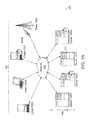
- FIG. 1Adepicts embodiments of network environments that provide remote access to computing devices that can execute application programs.
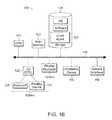
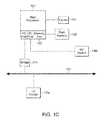
- FIG. 1B and FIG. 1Care block diagrams that depict embodiments of computing devices.
- FIG. 2A and FIG. 2Bare block diagrams that depict embodiments of a virtualization environment.
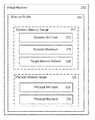
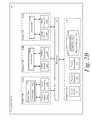
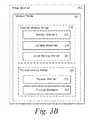
- FIG. 3A and FIG. 3Billustrate embodiments of a virtualization environment using a balloon driver and memory profile.
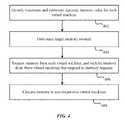
- FIG. 4illustrates an embodiment of a method for dynamic memory control.
- FIG. 1Aillustrates one embodiment of a computing environment 101 that includes one or more client machines 102 A- 102 N (generally referred to herein as “client machine(s) 102 ”) that are in communication with one or more servers 106 A- 106 N (generally referred to herein as “server(s) 106 ”). Installed in between the client machine(s) 102 and server(s) 106 is a network.
- the computing environment 101can include an appliance installed between the server(s) 106 and client machine(s) 102 .
- This appliancecan mange client/server connections, and in some cases can load balance client connections amongst a plurality of backend servers.
- the client machine(s) 102can in some embodiment be referred to as a single client machine 102 or a single group of client machines 102
- server(s) 106may be referred to as a single server 106 or a single group of servers 106 .
- a single client machine 102communicates with more than one server 106
- a single server 106communicates with more than one client machine 102
- a single client machine 102communicates with a single server 106 .
- a client machine 102can, in some embodiments, be referenced by any one of the following terms: client machine(s) 102 ; client(s); client computer(s); client device(s); client computing device(s); local machine; remote machine; client node(s); endpoint(s); endpoint node(s); or a second machine.
- the server 106in some embodiments, may be referenced by any one of the following terms: server(s), local machine; remote machine; server farm(s), host computing device(s), or a first machine(s).
- the client machine 102can be a virtual machine 102 C.
- the virtual machine 102 Ccan be any virtual machine, while in some embodiments the virtual machine 102 C can be any virtual machine managed by a hypervisor developed by XenSolutions, Citrix Systems, IBM, VMware, or any other hypervisor. In other embodiments, the virtual machine 102 C can be managed by any hypervisor, while in still other embodiments, the virtual machine 102 C can be managed by a hypervisor executing on a server 106 or a hypervisor executing on a client 102 .
- the client machine 102can in some embodiments execute, operate or otherwise provide an application that can be any one of the following: software; a program; executable instructions; a virtual machine; a hypervisor; a web browser; a web-based client; a client-server application; a thin-client computing client; an ActiveX control; a Java applet; software related to voice over internet protocol (VoIP) communications like a soft IP telephone; an application for streaming video and/or audio; an application for facilitating real-time-data communications; a HTTP client; a FTP client; an Oscar client; a Telnet client; or any other set of executable instructions.
- Still other embodimentsinclude a client device 102 that displays application output generated by an application remotely executing on a server 106 or other remotely located machine. In these embodiments, the client device 102 can display the application output in an application window, a browser, or other output window.
- the applicationis a desktop, while in other embodiments the application is an application that generates a desktop.
- the server 106executes a remote presentation client or other client or program that uses a thin-client or remote-display protocol to capture display output generated by an application executing on a server 106 and transmits the application display output to a remote client 102 .
- the thin-client or remote-display protocolcan be any one of the following protocols: the Independent Computing Architecture (ICA) protocol manufactured by Citrix Systems, Inc. of Ft. Lauderdale, Fla.; or the Remote Desktop Protocol (RDP) manufactured by the Microsoft Corporation of Redmond, Wash.
- ICAIndependent Computing Architecture
- RDPRemote Desktop Protocol
- the computing environmentcan include more than one server 106 A- 106 N such that the servers 106 A- 106 N are logically grouped together into a server farm 106 .
- the server farm 106can include servers 106 that are geographically dispersed and logically grouped together in a server farm 106 , or servers 106 that are located proximate to each other and logically grouped together in a server farm 106 .
- Geographically dispersed servers 106 A- 106 N within a server farm 106can, in some embodiments, communicate using a WAN, MAN, or LAN, where different geographic regions can be characterized as: different continents; different regions of a continent; different countries; different states; different cities; different campuses; different rooms; or any combination of the preceding geographical locations.
- the server farm 106may be administered as a single entity, while in other embodiments the server farm 106 can include multiple server farms 106 .
- a server farm 106can include servers 106 that execute a substantially similar type of operating system platform (e.g., WINDOWS NT, manufactured by Microsoft Corp. of Redmond, Wash., UNIX, LINUX, or SNOW LEOPARD.)
- the server farm 106can include a first group of servers 106 that execute a first type of operating system platform, and a second group of servers 106 that execute a second type of operating system platform.
- the server farm 106in other embodiments, can include servers 106 that execute different types of operating system platforms.
- the server 106can be any server type.
- the server 106can be any of the following server types: a file server; an application server; a web server; a proxy server; an appliance; a network appliance; a gateway; an application gateway; a gateway server; a virtualization server; a deployment server; a SSL VPN server; a firewall; a web server; an application server or as a master application server; a server 106 executing an active directory; or a server 106 executing an application acceleration program that provides firewall functionality, application functionality, or load balancing functionality.
- a server 106may be a RADIUS server that includes a remote authentication dial-in user service.
- the server 106can be an appliance manufactured by any one of the following manufacturers: the Citrix Application Networking Group; Silver Peak Systems, Inc; Riverbed Technology, Inc.; F5 Networks, Inc.; or Juniper Networks, Inc.
- Some embodimentsinclude a first server 106 A that receives requests from a client machine 102 , forwards the request to a second server 106 B, and responds to the request generated by the client machine 102 with a response from the second server 106 B.
- the first server 106 Acan acquire an enumeration of applications available to the client machine 102 and well as address information associated with an application server 106 hosting an application identified within the enumeration of applications.
- the first server 106 Acan then present a response to the client's request using a web interface, and communicate directly with the client 102 to provide the client 102 with access to an identified application.
- the server 106can, in some embodiments, execute any one of the following applications: a thin-client application using a thin-client protocol to transmit application display data to a client; a remote display presentation application; any portion of the CITRIX ACCESS SUITE by Citrix Systems, Inc. like the METAFRAME or CITRIX PRESENTATION SERVER; MICROSOFT WINDOWS Terminal Services manufactured by the Microsoft Corporation; or an ICA client, developed by Citrix Systems, Inc.
- Another embodimentincludes a server 106 that is an application server such as: an email server that provides email services such as MICROSOFT EXCHANGE manufactured by the Microsoft Corporation; a web or Internet server; a desktop sharing server; a collaboration server; or any other type of application server.
- Still other embodimentsinclude a server 106 that executes any one of the following types of hosted servers applications: GOTOMEETING provided by Citrix Online Division, Inc.; WEBEX provided by WebEx, Inc. of Santa Clara, Calif.; or Microsoft Office LIVE MEETING provided by Microsoft Corporation.
- Client machines 102can, in some embodiments, be a client node that seeks access to resources provided by a server 106 .
- the server 106may provide clients 102 or client nodes with access to hosted resources.
- the server 106functions as a master node such that it communicates with one or more clients 102 or servers 106 .
- the master nodecan identify and provide address information associated with a server 106 hosting a requested application, to one or more clients 102 or servers 106 .
- the master nodecan be a server farm 106 , a client 102 , a cluster of client nodes 102 , or an appliance.
- One or more clients 102 and/or one or more servers 106can transmit data over a network 104 installed between machines and appliances within the computing environment 101 .
- the network 104can comprise one or more sub-networks, and can be installed between any combination of the clients 102 , servers 106 , computing machines and appliances included within the computing environment 101 .
- the network 104can be: a local-area network (LAN); a metropolitan area network (MAN); a wide area network (WAN); a primary network 104 comprised of multiple sub-networks 104 located between the client machines 102 and the servers 106 ; a primary public network 104 with a private sub-network 104 ; a primary private network 104 with a public sub-network 104 ; or a primary private network 104 with a private sub-network 104 .
- LANlocal-area network
- MANmetropolitan area network
- WANwide area network
- a primary network 104comprised of multiple sub-networks 104 located between the client machines 102 and the servers 106 ; a primary public network 104 with a private sub-network 104 ; a primary private network 104 with a public sub-network 104 ; or a primary private network 104 with a private sub-network 104 .
- Still further embodimentsinclude a network 104 that can be any of the following network types: a point to point network; a broadcast network; a telecommunications network; a data communication network; a computer network; an ATM (Asynchronous Transfer Mode) network; a SONET (Synchronous Optical Network) network; a SDH (Synchronous Digital Hierarchy) network; a wireless network; a wireline network; or a network 104 that includes a wireless link where the wireless link can be an infrared channel or satellite band.
- a network 104can be any of the following network types: a point to point network; a broadcast network; a telecommunications network; a data communication network; a computer network; an ATM (Asynchronous Transfer Mode) network; a SONET (Synchronous Optical Network) network; a SDH (Synchronous Digital Hierarchy) network; a wireless network; a wireline network; or a network 104 that includes a wireless link where the wireless link can be
- the network topology of the network 104can differ within different embodiments, possible network topologies include: a bus network topology; a star network topology; a ring network topology; a repeater-based network topology; or a tiered-star network topology. Additional embodiments may include a network 104 of mobile telephone networks that use a protocol to communicate among mobile devices, where the protocol can be any one of the following: AMPS; TDMA; CDMA; GSM; GPRS UMTS; or any other protocol able to transmit data among mobile devices.
- FIG. 1BIllustrated in FIG. 1B is an embodiment of a computing device 100 , where the client machine 102 and server 106 illustrated in FIG. 1A can be deployed as and/or executed on any embodiment of the computing device 100 illustrated and described herein.
- a system bus 150that communicates with the following components: a central processing unit 121 ; a main memory 122 ; storage memory 128 ; an input/output (I/O) controller 123 ; display devices 124 A- 124 N; an installation device 116 ; and a network interface 118 .
- the storage memory 128includes: an operating system, software routines, and a client agent 120 .
- the I/O controller 123in some embodiments, is further connected to a key board 126 , and a pointing device 127 .
- Other embodimentsmay include an I/O controller 123 connected to more than one input/output device 130 A- 130 N.
- FIG. 1Cillustrates one embodiment of a computing device 100 , where the client machine 102 and server 106 illustrated in FIG. 1A can be deployed as and/or executed on any embodiment of the computing device 100 illustrated and described herein.
- a system bus 150that communicates with the following components: a bridge 170 , and a first I/O device 130 A.
- the bridge 170is in further communication with the main central processing unit 121 , where the central processing unit 121 can further communicate with a second I/O device 130 B, a main memory 122 , and a cache memory 140 .
- I/O portsI/O ports
- a memory port 103a main processor.
- Embodiments of the computing machine 100can include a central processing unit 121 characterized by any one of the following component configurations: logic circuits that respond to and process instructions fetched from the main memory unit 122 ; a microprocessor unit, such as: those manufactured by Intel Corporation; those manufactured by Motorola Corporation; those manufactured by Transmeta Corporation of Santa Clara, Calif.; the RS/6000 processor such as those manufactured by International Business Machines; a processor such as those manufactured by Advanced Micro Devices; or any other combination of logic circuits.
- a central processing unit 121characterized by any one of the following component configurations: logic circuits that respond to and process instructions fetched from the main memory unit 122 ; a microprocessor unit, such as: those manufactured by Intel Corporation; those manufactured by Motorola Corporation; those manufactured by Transmeta Corporation of Santa Clara, Calif.; the RS/6000 processor such as those manufactured by International Business Machines; a processor such as those manufactured by Advanced Micro Devices; or any other combination of logic circuits.
- central processing unit 122may include any combination of the following: a microprocessor, a microcontroller, a central processing unit with a single processing core, a central processing unit with two processing cores, or a central processing unit with more than one processing core.
- FIG. 1Cillustrates a computing device 100 that includes a single central processing unit 121
- the computing device 100can include one or more processing units 121 .
- the computing device 100may store and execute firmware or other executable instructions that, when executed, direct the one or more processing units 121 to simultaneously execute instructions or to simultaneously execute instructions on a single piece of data.
- the computing device 100may store and execute firmware or other executable instructions that, when executed, direct the one or more processing units to each execute a section of a group of instructions. For example, each processing unit 121 may be instructed to execute a portion of a program or a particular module within a program.
- the processing unit 121can include one or more processing cores.
- the processing unit 121may have two cores, four cores, eight cores, etc.
- the processing unit 121may comprise one or more parallel processing cores.
- the processing cores of the processing unit 121may in some embodiments access available memory as a global address space, or in other embodiments, memory within the computing device 100 can be segmented and assigned to a particular core within the processing unit 121 .
- the one or more processing cores or processors in the computing device 100can each access local memory.
- memory within the computing device 100can be shared amongst one or more processors or processing cores, while other memory can be accessed by particular processors or subsets of processors.
- the multiple processing unitscan be included in a single integrated circuit (IC).
- ICintegrated circuit
- the processorscan execute a single instruction simultaneously on multiple pieces of data (SIMD), or in other embodiments can execute multiple instructions simultaneously on multiple pieces of data (MIMD).
- SIMDsingle instruction simultaneously on multiple pieces of data
- MIMDmultiple instructions simultaneously on multiple pieces of data
- the computing device 100can include any number of SIMD and MIMD processors.
- the computing device 100can include a graphics processor or a graphics processing unit (Not Shown).
- the graphics processing unitcan include any combination of software and hardware, and can further input graphics data and graphics instructions, render a graphic from the inputted data and instructions, and output the rendered graphic.
- the graphics processing unitcan be included within the processing unit 121 .
- the computing device 100can include one or more processing units 121 , where at least one processing unit 121 is dedicated to processing and rendering graphics.
- One embodiment of the computing machine 100includes a central processing unit 121 that communicates with cache memory 140 via a secondary bus also known as a backside bus, while another embodiment of the computing machine 100 includes a central processing unit 121 that communicates with cache memory via the system bus 150 .
- the local system bus 150can, in some embodiments, also be used by the central processing unit to communicate with more than one type of I/O device 130 A- 130 N.
- the local system bus 150can be any one of the following types of buses: a VESA VL bus; an ISA bus; an EISA bus; a MicroChannel Architecture (MCA) bus; a PCI bus; a PCI-X bus; a PCI-Express bus; or a NuBus.
- MCAMicroChannel Architecture
- computing machine 100examples include an I/O device 130 A- 130 N that is a video display 124 that communicates with the central processing unit 121 . Still other versions of the computing machine 100 include a processor 121 connected to an I/O device 130 A- 130 N via any one of the following connections: HyperTransport, Rapid I/O, or InfiniBand. Further embodiments of the computing machine 100 include a processor 121 that communicates with one I/O device 130 A using a local interconnect bus and a second I/O device 130 B using a direct connection.
- the computing device 100includes a main memory unit 122 and cache memory 140 .
- the cache memory 140can be any memory type, and in some embodiments can be any one of the following types of memory: SRAM; BSRAM; or EDRAM.
- Other embodimentsinclude cache memory 140 and a main memory unit 122 that can be any one of the following types of memory: Static random access memory (SRAM), Burst SRAM or SynchBurst SRAM (BSRAM); Dynamic random access memory (DRAM); Fast Page Mode DRAM (FPM DRAM); Enhanced DRAM (EDRAM), Extended Data Output RAM (EDO RAM); Extended Data Output DRAM (EDO DRAM); Burst Extended Data Output DRAM (BEDO DRAM); Enhanced DRAM (EDRAM); synchronous DRAM (SDRAM); JEDEC SRAM; PC100 SDRAM; Double Data Rate SDRAM (DDR SDRAM); Enhanced SDRAM (ESDRAM); SyncLink DRAM (SLDRAM); Direct Rambus DRAM (DRDRAM); Ferroelectric RAM (FRAM), Ferr
- One embodiment of the computing device 100provides support for any one of the following installation devices 116 : a CD-ROM drive, a CD-R/RW drive, a DVD-ROM drive, tape drives of various formats, USB device, a bootable medium, a bootable CD, a bootable CD for GNU/Linux distribution such as KNOPPIX®, a hard-drive or any other device suitable for installing applications or software.
- Applicationscan in some embodiments include a client agent 120 , or any portion of a client agent 120 .
- the computing device 100may further include a storage device 128 that can be either one or more hard disk drives, or one or more redundant arrays of independent disks; where the storage device is configured to store an operating system, software, programs applications, or at least a portion of the client agent 120 .
- a further embodiment of the computing device 100includes an installation device 116 that is used as the storage device 128 .
- the computing device 100may further include a network interface 118 to interface to a Local Area Network (LAN), Wide Area Network (WAN) or the Internet through a variety of connections including, but not limited to, standard telephone lines, LAN or WAN links (e.g., 802.11, T1, T3, 56 kb, X.25, SNA, DECNET), broadband connections (e.g., ISDN, Frame Relay, ATM, Gigabit Ethernet, Ethernet-over-SONET), wireless connections, or some combination of any or all of the above.
- LANLocal Area Network
- WANWide Area Network
- the Internetmay further include a network interface 118 to interface to a Local Area Network (LAN), Wide Area Network (WAN) or the Internet through a variety of connections including, but not limited to, standard telephone lines, LAN or WAN links (e.g., 802.11, T1, T3, 56 kb, X.25, SNA, DECNET), broadband connections (e.g., ISDN, Frame Relay, ATM, Gigabit Ethernet, Ethernet
- Connectionscan also be established using a variety of communication protocols (e.g., TCP/IP, IPX, SPX, NetBIOS, Ethernet, ARCNET, SONET, SDH, Fiber Distributed Data Interface (FDDI), RS232, RS485, IEEE 802.11, IEEE 802.11a, IEEE 802.11b, IEEE 802.11g, CDMA, GSM, WiMax and direct asynchronous connections).
- One version of the computing device 100includes a network interface 118 able to communicate with additional computing devices 100 ′ via any type and/or form of gateway or tunneling protocol such as Secure Socket Layer (SSL) or Transport Layer Security (TLS), or the Citrix Gateway Protocol manufactured by Citrix Systems, Inc.
- SSLSecure Socket Layer
- TLSTransport Layer Security
- Versions of the network interface 118can comprise any one of: a built-in network adapter; a network interface card; a PCMCIA network card; a card bus network adapter; a wireless network adapter; a USB network adapter; a modem; or any other device suitable for interfacing the computing device 100 to a network capable of communicating and performing the methods and systems described herein.
- Embodiments of the computing device 100include any one of the following I/O devices 130 A- 130 N: a keyboard 126 ; a pointing device 127 ; mice; trackpads; an optical pen; trackballs; microphones; drawing tablets; video displays; speakers; inkjet printers; laser printers; and dye-sublimation printers; or any other input/output device able to perform the methods and systems described herein.
- An I/O controller 123may in some embodiments connect to multiple I/O devices 103 A- 130 N to control the one or more I/O devices.
- I/O devices 130 A- 130 Nmay be configured to provide storage or an installation medium 116 , while others may provide a universal serial bus (USB) interface for receiving USB storage devices such as the USB Flash Drive line of devices manufactured by Twintech Industry, Inc.
- USBuniversal serial bus
- an I/O device 130may be a bridge between the system bus 150 and an external communication bus, such as: a USB bus; an Apple Desktop Bus; an RS-232 serial connection; a SCSI bus; a FireWire bus; a FireWire 800 bus; an Ethernet bus; an AppleTalk bus; a Gigabit Ethernet bus; an Asynchronous Transfer Mode bus; a HIPPI bus; a Super HIPPI bus; a SerialPlus bus; a SCI/LAMP bus; a FibreChannel bus; or a Serial Attached small computer system interface bus.
- an external communication bussuch as: a USB bus; an Apple Desktop Bus; an RS-232 serial connection; a SCSI bus; a FireWire bus; a FireWire 800 bus; an Ethernet bus; an AppleTalk bus; a Gigabit Ethernet bus; an Asynchronous Transfer Mode bus; a HIPPI bus; a Super HIPPI bus; a SerialPlus bus; a SCI/LAMP bus; a FibreChannel bus; or
- the computing machine 100can connect to multiple display devices 124 A- 124 N, in other embodiments the computing device 100 can connect to a single display device 124 , while in still other embodiments the computing device 100 connects to display devices 124 A- 124 N that are the same type or form of display, or to display devices that are different types or forms.
- Embodiments of the display devices 124 A- 124 Ncan be supported and enabled by the following: one or multiple I/O devices 130 A- 130 N; the I/O controller 123 ; a combination of I/O device(s) 130 A- 130 N and the I/O controller 123 ; any combination of hardware and software able to support a display device 124 A- 124 N; any type and/or form of video adapter, video card, driver, and/or library to interface, communicate, connect or otherwise use the display devices 124 A- 124 N.
- the computing device 100may in some embodiments be configured to use one or multiple display devices 124 A- 124 N, these configurations include: having multiple connectors to interface to multiple display devices 124 A- 124 N; having multiple video adapters, with each video adapter connected to one or more of the display devices 124 A- 124 N; having an operating system configured to support multiple displays 124 A- 124 N; using circuits and software included within the computing device 100 to connect to and use multiple display devices 124 A- 124 N; and executing software on the main computing device 100 and multiple secondary computing devices to enable the main computing device 100 to use a secondary computing device's display as a display device 124 A- 124 N for the main computing device 100 . Still other embodiments of the computing device 100 may include multiple display devices 124 A- 124 N provided by multiple secondary computing devices and connected to the main computing device 100 via a network.
- the computing machine 100can execute any operating system, while in other embodiments the computing machine 100 can execute any of the following operating systems: versions of the MICROSOFT WINDOWS operating systems such as WINDOWS 3.x; WINDOWS 95; WINDOWS 98; WINDOWS 2000; WINDOWS NT 3.51; WINDOWS NT 4.0; WINDOWS CE; WINDOWS XP; and WINDOWS VISTA; the different releases of the Unix and Linux operating systems; any version of the MAC OS manufactured by Apple Computer; OS/2, manufactured by International Business Machines; any embedded operating system; any real-time operating system; any open source operating system; any proprietary operating system; any operating systems for mobile computing devices; or any other operating system.
- versions of the MICROSOFT WINDOWS operating systemssuch as WINDOWS 3.x; WINDOWS 95; WINDOWS 98; WINDOWS 2000; WINDOWS NT 3.51; WINDOWS NT 4.0; WINDOWS CE; WINDOWS
- the computing machine 100can execute multiple operating systems.
- the computing machine 100can execute PARALLELS or another virtualization platform that can execute or manage a virtual machine executing a first operating system, while the computing machine 100 executes a second operating system different from the first operating system.
- the computing machine 100can be embodied in any one of the following computing devices: a computing workstation; a desktop computer; a laptop or notebook computer; a server; a handheld computer; a mobile telephone; a portable telecommunication device; a media playing device; a gaming system; a mobile computing device; a netbook; a device of the IPOD family of devices manufactured by Apple Computer; any one of the PLAYSTATION family of devices manufactured by the Sony Corporation; any one of the Nintendo family of devices manufactured by Nintendo Co; any one of the XBOX family of devices manufactured by the Microsoft Corporation; or any other type and/or form of computing, telecommunications or media device that is capable of communication and that has sufficient processor power and memory capacity to perform the methods and systems described herein.
- the computing machine 100can be a mobile device such as any one of the following mobile devices: a JAVA-enabled cellular telephone or personal digital assistant (PDA), such as the i55sr, i58sr, i85s, i88s, i90c, i95cl, or the im1100, all of which are manufactured by Motorola Corp; the 6035 or the 7135, manufactured by Kyocera; the i300 or i330, manufactured by Samsung Electronics Co., Ltd; the TREO 180, 270, 600, 650, 680, 700p, 700w, or 750 smart phone manufactured by Palm, Inc; any computing device that has different processors, operating systems, and input devices consistent with the device; or any other mobile computing device capable of performing the methods and systems described herein.
- PDApersonal digital assistant
- the computing device 100can be any one of the following mobile computing devices: any one series of Blackberry, or other handheld device manufactured by Research In Motion Limited; the iPhone manufactured by Apple Computer; Palm Pre; a Pocket PC; a Pocket PC Phone; or any other handheld mobile device.
- FIG. 2AIllustrated in FIG. 2A is one embodiment of a virtualization environment.
- a computing device 201includes a hardware layer that can include one or more physical disks 204 , one or more physical devices 206 , one or more physical processors 208 and a physical memory 216 .
- firmware 212can be stored within a memory element in the physical memory 216 and can be executed by one or more of the physical processors 208 .
- the computing device 201can further include an operating system 214 that can be stored in a memory element in the physical memory 216 and executed by one or more of the physical processors 208 .
- a hypervisor 202can be stored in a memory element in the physical memory 216 and can be executed by one or more of the physical processors 208 . Executing on one or more of the physical processors 208 can be one or more virtual machines 232 A-C (generally 232 ). Each virtual machine 232 can have a virtual disk 226 A-C and a virtual processor 228 A-C. In some embodiments, a first virtual machine 232 A can execute, on a virtual processor 228 A, a control program 220 that includes a tools stack 224 . In other embodiments, one or more virtual machines 232 B-C can executed, on a virtual processor 228 B-C, a guest operating system 230 A-B.
- the virtualization environment describedincludes a Type 2 hypervisor 202 , or a hypervisor that executes within an operating system 214 executing on the computing device 201 .
- a Type 2 hypervisorin some embodiments, executes within an operating system 214 environment and virtual machines execute at a level above the hypervisor.
- the Type 2 hypervisorexecutes within the context of a user's operating system such that the Type 2 hypervisor interacts with the user's operating system.
- the virtualization environmentincludes a computing device 201 .
- the computing device 201can be any computing device, and in some embodiments the computing device 201 can be any computer, device or computing machine described herein. While FIG. 2A illustrates a single computing device 201 , in some embodiments the modules, programs, virtual machines, and commands stored and executed by the computing device 201 can be executed by more than one computing device 201 . In still other embodiments, the computing device 201 can be a server farm.
- the computing device 201can include a hardware layer 210 that includes one or more pieces of hardware that communicates with the computing machine 201 .
- the hardware layer 210can include any hardware included in the computing device 201 .
- the hardware layer 210can include one or more physical disks 204 , one or more physical devices 206 , one or more physical processors 208 and memory 216 .
- the hardware layer 210can include one or more physical disks 204 .
- a physical disk 204can be any hard disk, while in some embodiments a physical disk 204 can be any hard disk described herein.
- the hardware layer 210can include one physical disk 204 . In other embodiments, the hardware layer 210 can include more than one physical disk 204 .
- the computing device 201in some embodiments, can communicate with an external hard disk that is included in the hardware layer 210 as a physical disk 204 .
- the hardware layer 210can include a processor 208 .
- the processor 208in some embodiments, can be any processor, while in other embodiments the processor 208 can be any processor described herein.
- the processor 208can include one or more processing cores.
- the computing device 201can include one or more processors 208 .
- the computing device 201can include one or more different processors, e.g. a processing unit, a graphics processing unit, or a physics engine.
- Physical devices 206can be any device included in the computing device 201 .
- physical devices 206can be any combination of devices included in the computing device 201 and external devices that communicate with the computing device 201 .
- the computing device 201in some embodiments, can include one or more physical devices 206 .
- a physical device 206can be any of the following: a network interface card; a video card; a keyboard; a mouse; an input device; a monitor; a display device; speakers; an optical drive; a storage device; a universal serial bus connection; any device connected to the computing device 201 ; any device communicating with the computing device 201 ; a printer; a scanner; or any other device or device described herein.
- the hardware layer 210can further include physical memory 216 that can include any type of memory.
- the physical memory 216can include any memory type described herein.
- the physical memory 216can store data, and in some embodiments can store one or more programs, or set of executable instructions.
- FIG. 2Aillustrates one embodiment where firmware 212 is stored within the physical memory 216 of the computing device 201 . Programs or executable instructions stored in the physical memory 216 can be executed by the one or more processors 208 of the computing device 201 .
- Firmware 212can be any combination of executable instructions and hardware that controls hardware communicating with or included within the computing device 201 .
- the firmware 212can control one or more pieces of hardware within the hardware layer 210 .
- Firmware 212in many embodiments, can be executed by one or more processors 208 within the computing device 201 .
- the firmware 212can be boot firmware such as the basic input/output system (BIOS.) Additional firmware 212 executing on the computing device 201 can interface with the BIOS.
- BIOSbasic input/output system
- the computing device 201can include an operating system 214 executed by one or more physical processors 208 .
- the operating system 214is a user operating system that can directly access the hardware devices in the hardware layer 210 .
- the operating system 214can be any operating system and in some embodiments, the operating system 214 can be any operating system described herein.
- FIG. 2Aillustrates one embodiment where the hypervisor 202 executes within the context of the operating system 214 executing on the computing device 201 .
- the operating system 214can be referred to as a host operating system 214 , while the other operating systems can be referred to as guest operating systems.
- Guest operating systemscan include the guest operating systems 230 A-B executing on the virtual machines 232 , and/or the control program 220 .
- the computing device 201can include a hypervisor 202 .
- a hypervisor 202in some embodiments, can be a program that executed by processors 208 on the computing device 201 to manage any number of virtual machines.
- the hypervisor 202can be referred to as a virtual machine monitor, or platform virtualization software.
- a hypervisor 202can be any combination of executable instructions and hardware that monitors virtual machines executing on a computing machine. While FIG. 2A illustrates a virtualization environment that includes a Type 2 hypervisor 202 , the computing device 201 can execute any other type of hypervisor.
- the computing device 201can execute a virtualization environment that includes a Type 1 hypervisor 202 .
- the computing device 201can execute one or more hypervisors 202 . These one or more hypervisors 202 can be the same type of hypervisor, or in other embodiments can be different hypervisor types.
- the hypervisor 202can provide virtual resources to operating systems 230 or control programs 220 executing on virtual machines 232 in any manner that simulates the operating systems 230 or control programs 220 having direct access to system resources.
- System resourcescan include: physical devices; physical disks; physical processors; physical memory 216 and any other component included in the computing device 201 hardware layer 210 .
- the hypervisor 202may be used to emulate virtual hardware, partition physical hardware, virtualize physical hardware, or execute virtual machines that provide access to computing environments.
- the hypervisor 202controls processor scheduling and memory partitioning for a virtual machine 232 executing on the computing device 201 .
- Hypervisor 202may include those manufactured by VMWare, Inc., of Palo Alto, Calif.; the XEN hypervisor, an open source product whose development is overseen by the open source Xen.org community; HyperV, VirtualServer or virtual PC hypervisors provided by Microsoft, or others.
- a computing device 201executes a hypervisor 202 that creates a virtual machine platform on which guest operating systems may execute.
- the computing device 201can be referred to as a host server.
- An example of such a computing deviceis the XEN SERVER provided by Citrix Systems, Inc., of Fort Lauderdale, Fla.
- the hypervisor 202can create a virtual machine 232 A-B (generally 232 ) in which an operating system 230 executes.
- the hypervisor 202loads a virtual machine image to create a virtual machine 232 .
- the hypervisor 202executes an operating system 230 within the virtual machine 232 .
- the virtual machine 232executes an operating system 230 .
- the hypervisor 202controls the execution of at least one virtual machine 232 .
- the hypervisor 202presents at least one virtual machine 232 with an abstraction of at least one hardware resource provided by the computing device 201 .
- the abstractioncan further be referred to as a virtualization or virtual view of the hardware, memory processor and other system resources available on the computing device 201 .
- Hardware or hardware resourcesin some embodiments, can be any hardware resource available within the hardware layer 210 .
- the hypervisor 202controls the manner in which virtual machines 232 access the physical processors 208 available in the computing device 201 . Controlling access to the physical processors 208 can include determining whether a virtual machine 232 should have access to a processor 208 , and how physical processor capabilities are presented to the virtual machine 232 .
- the computing device 201can host or execute one or more virtual machines 232 .
- a virtual machine 232can be called a domain, a guest and/or a DOMAIN U.
- a virtual machine 232is a set of executable instructions that, when executed by a processor 208 , imitate the operation of a physical computer such that the virtual machine 232 can execute programs and processes much like a physical computing device. While FIG. 2A illustrates an embodiment where a computing device 201 hosts three virtual machines 232 , in other embodiments the computing device 201 can host any number of virtual machines 232 .
- the hypervisor 202provides each virtual machine 232 with a unique virtual view of the physical hardware, memory, processor and other system resources available to that virtual machine 232 .
- the unique virtual viewcan be based on any of the following: virtual machine permissions; application of a policy engine to one or more virtual machine identifiers; the user accessing a virtual machine; the applications executing on a virtual machine; networks accessed by a virtual machine; or any other similar criteria.
- the hypervisor 202in other embodiments, provides each virtual machine 232 with a substantially similar virtual view of the physical hardware, memory, processor and other system resources available to the virtual machines 232 .
- Each virtual machine 232can include a virtual disk 226 A-C (generally 226 ) and a virtual processor 228 A-C (generally 228 .)
- the virtual disk 226in some embodiments, is a virtualized view of one or more physical disks 204 of the computing device 201 , or a portion of one or more physical disks 204 of the computing device 201 .
- the virtualized view of the physical disks 204can be generated, provided and managed by the hypervisor 202 .
- the hypervisor 202provides each virtual machine 232 with a unique view of the physical disks 204 .
- the virtual disk 226 included in each virtual machine 232can be unique when compared with the other virtual disks 226 .
- a virtual processor 228can be a virtualized view of one or more physical processors 208 of the computing device 201 .
- the virtualized view of the physical processors 208can be generated, provided and managed by the hypervisor 202 .
- the virtual processor 228has substantially all of the same characteristics of at least one physical processor 208 .
- the virtual processor 208provides a modified view of the physical processors 208 such that at least some of the characteristics of the virtual processor 228 are different than the characteristics of the corresponding physical processor 208 .
- a control program 220may execute at least one application for managing and configuring the guest operating systems executing on the virtual machines 232 and in some embodiments the computing device 201 .
- the control program 220can be called a control operating system, a control domain, domain 0 or dom 0.
- the control program 220in some embodiments, can be DOMAIN o or DOM0 of the XEN hypervisor.
- the control program 220can execute an administrative application or program that can further display a user interface which administrators can use to access the functionality of each virtual machine 232 and/or to manage the virtual machines 232 .
- the user interface generated by the administrative programcan be used to terminate the execution of virtual machines 232 , allocate resources to virtual machines 232 , assign permissions to virtual machines 232 , or manage security credentials associated with virtual machines 232 .
- the control program 220in some embodiments, can start new virtual machines 232 or terminate execution of executing virtual machines 232 . In other embodiments, the control program 220 can directly access hardware and/or resources within the hardware layer 210 . In still another embodiment, the control program 220 can interface with programs and applications executing on the computing device 210 and outside of the context of a virtual machine 232 . Similarly, the control program 220 can interface with programs and applications executing within the context of a virtual machine 232 .
- the hypervisor 202can execute the control program 220 within a virtual machine 232 .
- the hypervisor 202can create and start the virtual machine 232 .
- that virtual machine 232can be referred to as the control virtual machine 232 .
- the control program 220executes within a virtual machine 232 that is authorized to directly access physical resources on the computing device 201 .
- a control program 220 A (Not Shown) on a first computing device 201 A (Not Shown)may exchange data with a control program 220 B (Not Shown) on a second computing device 201 B (Not Shown).
- the first computing device 201 Amay be located remote from the second computing device 201 B.
- the control programs 220 A-Bcan exchange data via a communication link between a hypervisor 202 A (Not Shown) executing on the first computing device 201 A and a hypervisor 202 B (Not Shown) executing on the second computing device 201 B. Through this communication link, the computing devices 201 A-B can exchange data regarding processors and other physical resources available in a pool of resources.
- the hypervisors 202 A-Bcan manage a pool of resources, e.g. the resources available on the first computing device 201 A and the second computing device 201 B, distributed across one or more computing devices 201 A-B.
- the hypervisors 202 A-Bcan further virtualize these resources and make them available to virtual machines 232 executing on the computing devices 201 A-B.
- a single hypervisor 202can manage and control virtual machines 232 executing on both computing devices 201 A-B.
- the control program 220interacts with one or more guest operating systems 230 A-B (generally 230 .)
- the control program 220can communicate with the guest operating systems 230 through a hypervisor 202 .
- the hypervisor 202Through the hypervisor 202 , the guest operating system 230 can request access to physical disks 204 , physical processors 208 , memory 216 , physical devices 206 and any other component in the hardware layer 210 .
- the guest operating systems 230can communicate with the control program 220 via a communication channel established by the hypervisor 202 , such as, for example, via a plurality of shared memory pages made available by the hypervisor 202 .
- control program 220includes a network back-end driver for communicating directly with networking hardware provided by the computing device 201 .
- the network back-end driverprocesses at least one virtual machine request from at least one guest operating system 230 .
- control program 220includes a block back-end driver for communicating with a storage element on the computing device 201 .
- the block back-end driverreads and writes data from the storage element based upon at least one request received from a guest operating system 230 .
- control program 220includes a tools stack 224 .
- a tools stack 224provides functionality for interacting with the hypervisor 202 , communicating with other control programs 220 (for example, on a second computing device 201 B), or managing virtual machines 232 on the computing device 201 .
- the tools stack 224includes customized applications for providing improved management functionality to an administrator of a virtual machine farm.
- at least one of the tools stack 224 and the control program 220include a management API that provides an interface for remotely configuring and controlling virtual machines 232 running on a computing device 201 .
- the control program 220communicates with the hypervisor 202 through the tools stack 224 .
- the hypervisor 202executes a guest operating system 230 within a virtual machine 232 created by the hypervisor 202 .
- the guest operating system 230provides a user of the computing device 201 with access to resources within a computing environment.
- a resourceincludes a program, an application, a document, a file, a plurality of applications, a plurality of files, an executable program file, a desktop environment, a computing environment, or other resource made available to a user of the computing device 201 .
- the resourcemay be delivered to the computing device 201 via a plurality of access methods including, but not limited to, conventional installation directly on the computing device 201 , delivery to the computing device 201 via a method for application streaming, delivery to the computing device 201 of output data generated by an execution of the resource on a second computing device 201 ′ and communicated to the computing device 201 via a presentation layer protocol, delivery to the computing device 201 of output data generated by an execution of the resource via a virtual machine executing on a second computing device 201 ′, or execution from a removable storage device connected to the computing device 201 , such as a USB device, or via a virtual machine executing on the computing device 201 and generating output data.
- the computing device 201transmits output data generated by the execution of the resource to another computing device 201 ′.
- the guest operating system 230in conjunction with the virtual machine on which it executes, forms a fully-virtualized virtual machine that is not aware that it is a virtual machine; such a machine may be referred to as a “Domain U HVM (Hardware Virtual Machine) virtual machine”.
- a fully-virtualized machineincludes software emulating a Basic Input/Output System (BIOS) in order to execute an operating system within the fully-virtualized machine.
- a fully-virtualized machinemay include a driver that provides functionality by communicating with the hypervisor 202 . In such an embodiment, the driver is typically aware that it executes within a virtualized environment.
- the guest operating system 230in conjunction with the virtual machine on which it executes, forms a paravirtualized virtual machine, which is aware that it is a virtual machine; such a machine may be referred to as a “Domain U PV virtual machine”.
- a paravirtualized machineincludes additional drivers that a fully-virtualized machine does not include.
- the paravirtualized machineincludes the network back-end driver and the block back-end driver included in a control program 220 , as described above.
- FIG. 2BIllustrated in FIG. 2B is another embodiment of a virtualization environment that illustrates a Type 1 hypervisor 202 .
- Executing on the computing device 201is a hypervisor 202 that can directly access the hardware and resources within the hardware layer 210 .
- Virtual machines 232 managed by the hypervisor 202can be an unsecure virtual machine 232 B and/or a secure virtual machine 232 C.
- the virtualization environment depicted in FIG. 2Aillustrates a host operating system 214
- the virtualization environment embodiment in FIG. 2Bdoes not execute a host operating system.
- the virtualization environmentincludes a Type 1 hypervisor 202 .
- Type 1 hypervisors 202execute on “bare metal,” such that the hypervisor 202 has direct access to all applications and processes executing on the computing device 201 , all resources on the computing device 201 and all hardware on the computing device 201 or communicating with the computing device 201 . While a Type 2 hypervisor 202 accesses system resources through a host operating system 214 , a Type 1 hypervisor 202 can directly access all system resources.
- the Type 1 hypervisor 202can execute directly on one or more physical processors of the computing device 201 , and can include program data stored in the physical memory 216 .
- the host operating systemcan be executed by one or more virtual machines 232 .
- a user of the computing device 201can designate one or more virtual machines 232 as the user's personal machine.
- This virtual machinecan imitate the host operating system by allowing a user to interact with the computing device 201 in substantially the same manner that the user would interact with the computing device 201 via a host operating system 214 .
- Virtual machines 232can be unsecure virtual machines 232 B and secure virtual machine 232 C. While FIG. 2B illustrates a secure and unsecure virtual machine, sometimes they can be referred to as privileged and unprivileged virtual machines.
- a virtual machine's securitycan be determined based on a comparison of the virtual machine to other virtual machines executing within the same virtualization environment. For example, were a first virtual machine to have access to a pool of resources, and a second virtual machine not to have access to the same pool of resources; the second virtual machine could be considered an unsecure virtual machine 232 B while the first virtual machine could be considered a secure virtual machine 232 A.
- a virtual machine's 323 ability to access one or more system resourcescan be configured using a configuration interface generated by either the control program 220 or the hypervisor 202 .
- the level of access afforded to a virtual machine 232can be the result of a review of any of the following sets of criteria: the user accessing the virtual machine; one or more applications executing on the virtual machine; the virtual machine identifier; a risk level assigned to the virtual machine based on one or more factors; or any other similar criteria.
- unsecure virtual machines 232 Bmay be prevented from accessing resources, hardware, memory locations, and programs that secure virtual machines 232 A may access.
- a secure virtual machine 232 Cmay be able to access one or more company resources, while the unsecure virtual machine 232 B cannot access any company resources.
- FIG. 3AIllustrated in FIG. 3A is one embodiment of a computing device 201 where the control virtual machine 232 A can further execute a memory manager 350 that can reallocate memory to virtual machines 232 executing within the virtualization environment 302 .
- Each of the virtual machines 232can include a memory profile 305 A- 305 N (herein referred to generally as a memory profile 305 ), and each virtual machine 232 can execute a balloon driver 310 A- 310 N (herein generally referred to as a balloon driver 310 .)
- each virtual machine 232can include a memory profile 305 . While FIG. 3A does not illustrate the control virtual machine 232 A as having a memory profile 305 , in some embodiments the control virtual machine 232 A can include a memory profile 305 .
- the memory profile 305in some embodiments, can be any memory profile 305 that dictates at least a maximum amount of physical memory available to a virtual machine 166 and a minimum amount of physical memory available to a virtual machine 166 . In other embodiments, the memory profile 305 can be any memory profile 305 described herein.
- the control program 220can execute a memory manager 350 . While FIG. 3A illustrates a memory manager 350 executing within the control virtual machine 232 A, in other embodiments the memory manager 350 can execute within the hypervisor 202 or on a remote computer. While the memory manager 350 can execute independent of the control program 220 , in some embodiments the memory manager 350 can be a sub-routine or sub-function executing within the control program 220 .
- the memory manager 350in some embodiments, can manage the allocation of dynamic maximum and minimum memory values, the calculation of target memory values, the allocation and reallocation of memory amongst virtual machines 232 in a virtualization environment 302 , and the general management of memory allocation in a virtualization environment 302 .
- the memory manager 350can control the inflation and deflation of balloon drivers 310 within the virtual machines 232 . In still other embodiments, the memory manager 350 can issue inflation and deflation commands to balloon drivers 310 within the virtual machines 232 .
- the memory manager 350can execute on a control virtual machine 232 A, within the context of a control program 220 , within the hypervisor 202 or on a remote computer.
- the balloon driver 310can be any driver that causes an operating system executing on the computing device 201 , the memory manager 350 or the control program 220 to reclaim memory used by the virtual machine(s) 232 executing on the computing device 201 .
- the balloon driver 310can be a driver or other application that executes by or in conjunction with the hypervisor 202 or control program 220 to increase the amount of memory used by each virtual machine 232 .
- Increasing the amount of memory used by each virtual machine 232can include allocating memory pages to one or more virtual machines 232 executing on the computing device 201 , where the allocated memory pages correspond to a pinned or locked range of memory addresses on the physical disk(s) 204 .
- the balloon driverBy increasing the amount of memory used by each virtual machine 232 , the balloon driver effectively reduces the amount of memory available to the operating system executing on the computing device 201 or the control operating system 220 .
- the memory manager 350 or control program 220responsively reclaims used memory.
- the balloon driver 310can retrieve or otherwise intercept the addresses of the memory pages reclaimed by the balloon driver 310 , and forward those page addresses to the control program 220 , the memory manager 350 or another application or object executing within the control virtual machine 232 .
- the balloon driver 310can forward the page addresses to the hypervisor 202 or a memory manager executing within the hypervisor 202 .
- the balloon driver 310can store the reclaimed memory page addresses in a table, database or storage repository in the control virtual machine 232 A so that the memory manager 350 can access the memory addresses once the balloon driver 310 deflates.
- the memory manager 350can enumerate the memory locations (e.g. memory addresses or memory page addresses) of the reclaimed memory. The memory manager 350 can then reallocate memory according to the enumerated memory locations or can store the enumerated memory locations in a table, database or storage repository in the control virtual machine 232 A.
- the memory manager 350can enumerate the memory locations (e.g. memory addresses or memory page addresses) of the reclaimed memory.
- the memory manager 350can then reallocate memory according to the enumerated memory locations or can store the enumerated memory locations in a table, database or storage repository in the control virtual machine 232 A.
- a balloon driver 310can inflate to a predetermined size such that a predetermined amount of memory can be reclaimed.
- This predetermined sizein some embodiments, can be an amount of memory.
- the balloon driver 310can inflate to a size of 10 MB or another memory value amount.
- the predetermined sizecan be determined based on a calculated target memory value.
- a memory manager 350can determine a target memory value for a virtual machine 232 , e.g. 100 MB. The memory manager 350 can then compare the calculated target memory value to an amount of memory actually used by the virtual machine 232 , e.g. compare 100 MB to 90 MB. The difference between the two values can be used to determine the predetermined inflation size, e.g.
- the predetermined inflation sizecan be 10 MB.
- the balloon driver 310can inflate to the predetermined inflation size, e.g. the balloon driver 310 can inflate 10 MB.
- the balloon driver 310can continue to inflate until it reaches a predetermined threshold, or until a process, program or administrator commands the balloon driver 310 to cease inflation.
- the balloon driver 310can inflate until it reaches a threshold.
- the balloon driver 310can inflate until the amount of actual memory used by a virtual machine is substantially equal to a target memory value. Substantially equal can mean that the two numbers are mostly equal but may vary by an acceptable and minor amount or value.
- the balloon driver 310can deflate by de-allocating the memory pages allocated during inflation. De-allocating the memory pages can include de-allocating those memory pages reclaimed by the memory manager 350 .
- the memory manager 350 or control program 220can capture the memory addresses of the memory pages de-allocated during deflation of the balloon driver 310 .
- the memory manager 350 or control program 220can retrieve the memory addresses of the reclaimed memory pages from a table, list or other storage repository within the hypervisor layer. The reclaimed memory pages are effectively free or open for use once the balloon driver 310 finishes deflating.
- the control program 220 , memory manager 350 or hypervisor 202can allocate memory associated with those reclaimed memory pages to virtual machines 232 executing on the computing device 201 .
- FIG. 3Aillustrates a balloon driver 310 that executes within each virtual machine 232 .
- the balloon driver 310can execute within the control virtual machine 232 A or within the hypervisor 202 where the balloon driver 310 can execute in conjunction with the hypervisor 202 .
- One or more balloon drivers 310can reside or execute within each virtual machine 232 executing on the computing device 201 .
- the control program 220 , the memory manager 350 or the hypervisor 202can communicate with each balloon driver 310 such that the hypervisor 202 can issue instructions to the balloon driver(s) 310 to increase or decrease the size of the “balloon” thereby causing memory reclamation.
- the memory footprint of each virtual machine 232can be controlled by issuing instructions to balloon driver(s) 310 within each virtual machine 232 .
- the memory profile 305can include one or more dynamic memory ranges 315 that include each of a dynamic minimum memory value 322 , a dynamic maximum memory value 324 and a target memory amount 326 .
- the memory profile 305can also include a physical memory range 325 that includes a physical minimum memory value 332 and a physical maximum memory value 324 .
- each virtual machine 232 executing on a computing device 201can have a memory profile 305 which can be a configuration setting or can be a profile stored in a control virtual machine 232 A.
- a memory profile 305 for each virtual machine 232can be stored in a table or database accessible by the control virtual machine 232 A, the control program 220 , the memory manager 350 or the hypervisor 202 .
- the memory profile 305can be a setting of an interface within the virtual machine 232 used to communicate and interact with the control virtual machine 232 A.
- Still other embodimentsinclude a memory profile 305 that is a text file or other configuration file stored in the file system of a virtual machine 232 .
- the physical minimum memory value 332(i.e. the static minimum memory value) is less than or equal to the dynamic min value 322 .
- the dynamic min value 322in many embodiments, is less than the dynamic max value 324 .
- the dynamic max value 324in many embodiments, is less than the physical maximum memory value 334 (i.e. the static maximum memory value.)
- the static min 332 and the static max 334are fixed values that remain fixed during execution of the virtual machine on the computing device 201 .
- the dynamic max and min 324 , 322can be configured or changed by an administrator, user, program or service at any time.
- the target memory value 326can be chosen such that the value is substantially always greater than or equal to the dynamic min 322 , and less than or equal to the dynamic max 324 .
- the memory profile 350can include a dynamic memory range 315 that can include a dynamic minimum memory value 322 and a maximum memory value 324 .
- the dynamic minimum and maximum memory values 322 , 324can be chosen based on any of the following criteria: the importance of the virtual machine; a level of importance or criticality assigned to applications and/or processes executing on the virtual machine; an arbitrary risk score determined based on the importance of those processes and/or services executing within the virtual machine; when the virtual machine was created; whether the virtual machine can control the operation of other virtual machines; and any other relevant criteria.
- the minimum and maximum values 322 , 324can be based on the physical minimum and maximum memory value 332 , 334 such that each value is a percentage of the maximum physical memory value 334 .
- the minimum dynamic memory value 322can be twenty percent (20%) of the maximum physical memory value 334
- the maximum dynamic memory value 324can be eighty percent (80%) of the maximum physical memory value 334 .
- the values chosen for the dynamic minimum and maximum values 322 , 324can, in some embodiments, reflect the importance of a particular virtual machine. For example a first virtual machine that has a dynamic minimum and maximum memory value 322 , 324 which is 95% of the actual physical minimum and maximum memory value 332 , 324 for that first virtual machine, may be more important than a second virtual machine that has a dynamic minimum and maximum memory value 322 , 324 that is 75% of the actual physical minimum and maximum memory value 332 , 334 for that second virtual machine. In this example, the first virtual machine may execute more critical or important services and/or applications than the second virtual machine. In some embodiments, the first virtual machine may be designated by the system as the control virtual machine 232 A thereby making the first virtual machine more important than the second virtual machine.
- the control virtual machine 232 A, the control program 220 or the memory manager 350can then, in some embodiments, modify the dynamic maximum memory value of the first virtual machine from 1 gigabyte to 10 gigabytes, and the dynamic minimum memory value of the first virtual machine from 512 megabytes to 1 gigabyte.
- the target memory amount 326can in some embodiments be a memory value determined by analyzing the maximum and minimum dynamic memory values. In some embodiments, the target memory amount 326 can be a number that is between the value range between the maximum and minimum values. Thus, the target memory amount 326 can be determined using the following equation, [Min Dynamic Mem.]+([Max Dynamic Mem.] ⁇ [Min Dynamic Mem.])/2 where the Min Dynamic Mem. value is the minimum dynamic memory value 322 and the Max Dynamic Mem. is the maximum dynamic memory value 324 . In some embodiments the target memory amount 326 can be calculated each time memory is reclaimed from a virtual machine or allocated to a virtual machine.
- the target memory amount 326can be stored in a table, configuration file or other repository along with the dynamic minimum and maximum memory values 322 , 324 .
- This table, configuration file or other repositorycan reside within each virtual machine 232 , within the control virtual machine 232 A, or within a location accessible by the memory manager 350 and/or the control program 220 .
- a stored target memory amount 326can also be recalculated and altered.
- the target memory amount or valuecan be calculated using a host compression ratio.
- the host compression ratiocan represent the memory constraints of a particular virtual machine and can be calculated by the control program 220 or another application anytime a virtual machine or domain is created or destroyed, or anytime a dynamic memory value or dynamic memory constraint is changed.
- a dynamic memory constraintcan be a range of memory values used to quantify a threshold that, when crossed, can cause severe performance degradation.
- a target memory valuecan be calculated using the host compression ratio, for example the target memory value can be calculated using the following equation: (Host Compression Ratio)(Min Dynamic Mem.)+(1 ⁇ Host Compression Ratio)(Max Dynamic Mem.)
- the target memory amount 326can be a value calculated according to the above-mentioned equation, in other embodiments the target memory amount 326 can be any memory value within the range of memory values between the minimum and maximum memory values. In one embodiment this range can be dictated by the dynamic maximum and minimum memory values 324 , 322 , while in other embodiments this range can be dictated by the physical maximum and minimum memory values 332 , 334 .
- the memory profile 305can include a physical memory range 325 that corresponds to the actual physical minimum memory value 332 and physical maximum memory value 334 of the physical disk(s) 228 . These values, in many embodiments, are dictated by the memory included in the computing device 201 , while in other embodiments these values can include memory within the computing device 201 as well as virtual memory and remote memory storages accessible and available to the computing device 201 . While FIG. 3B illustrates a memory profile 305 that includes a physical memory range 325 characterized by the actual physical memory max and min of the computing device 201 , in other embodiments the memory profile may not include a physical memory range 325 .
- the physical minimum and maximum memory valuescan be intuited or otherwise determined by querying a control operating system 220 that controls the physical memory available to virtual machines executing in a virtualization environment.
- the physical minimum memory value 332 and the maximum memory value 334are static memory values which cannot change unless the physical memory available to the computing device 201 changes.
- the memory profile 305 for a virtual machine 232can be altered or configured using an application programming interface provided by the control program 220 or the hypervisor 202 . While in some embodiments any aspect of the memory profile 305 can be altered, in other embodiments the physical memory range 325 cannot be altered. In some embodiments, when a static memory constraint in the memory profile 305 is altered, the change takes effect when the virtual machine 232 is rebooted. In other embodiments, when a dynamic memory constraint in the memory profile 305 is altered, the change takes effect substantially immediately.
- the memory profile 305can have a proportional mode within which the control program 220 or memory manager 350 can automatically assign a target memory amount 326 based on the dynamic minimum memory value 322 and the dynamic maximum memory value 324 .
- the control program 220 or the memory manager 350in some embodiments, can communicate any aspect of the memory profile, e.g. the target memory amount 326 , to the balloon drivers 310 .
- the memory manager 350 or control program 220can configure the memory profile 305 for each virtual machine 232 .
- the memory manager 350 or control program 220can calculate a host compression ratio for each virtual machine 232 and can use that compression ratio to determine a target memory amount 326 for each virtual machine 232 .
- the memory manager 350 or control program 220can assign the target amounts 326 to each virtual machine 232 .
- these target amounts 326can represent a minimized or reduced target amount 326 .
- the memory manager 350can cause the balloon drivers 310 to inflate.
- the memory manager 350can check to see if the reduced target amount 326 was acquired. In situations where this amount 326 was acquired, the memory manager 350 can do nothing. In situations where this amount 326 was not acquired, the memory manager 350 can signal a failure and can reset the target memory amount 326 to the previous target memory amount 326 .
- a memory manager 350can identify the dynamic maximum and minimum memory values 322 , 324 associated with substantially each virtual machine 232 executing within the virtualization environment (Step 402 ), and can further calculate or determine a target memory amount 326 associated with each virtual machine 232 (Step 404 ). Upon identifying these values, the memory manager 350 can then instruct a balloon driver 310 within the virtualization environment to inflate which can then cause the memory manager 350 , the control virtual machine 232 A or a control program 220 to reclaim a predetermined number of memory pages (e.g. amount of memory) from one or more virtual machines.
- a predetermined number of memory pagese.g. amount of memory
- the memory manager 350can request memory from each virtual machine during the reclamation process and can then reclaim memory from those virtual machines that respond to the memory manager's request (Step 406 ). The memory manager 350 can then instruct the balloon driver to deflate, obtain the memory addresses of those memory pages reclaimed during the inflation process and allocate the reclaimed memory pages to those virtual machines that did not respond to the memory manager's request (Step 408 ).
- any one of the steps of the processcan be carried out by a memory manager 350 , a control program 220 , the control virtual machine 232 A or any combination thereof. In other embodiments, at least a portion of the process can be carried out by the hypervisor 202 .
- the memory manager 350can then determine the target memory amount 326 for each virtual machine 232 and can further determine whether the actual memory available to a particular virtual machine 232 is greater than, less than or equal to the determined maximum and minimum memory values (Step 404 ). In some embodiments, when the memory manager 350 determines that the actual memory allocated to or used by a particular virtual machine is less than the target memory amount 326 of that particular virtual machine, the memory manager 350 can allocate additional memory to that virtual machine. Conversely, when the memory manager 350 determines that the actual memory allocated to or used by a particular virtual machine is greater than the target memory amount 326 for that virtual machine, the memory manager 350 can reclaim additional memory from that virtual machine.
- the memory manager 350can identify at least one virtual machine 232 that has an actual memory usage value less than the target memory value or amount 326 assigned to that virtual machine.
- the actual memory usage valuecan be the amount of memory actually used by the virtual machine 232 .
- the memory manager 350can allocate additional memory to the virtual machine 232 , de-allocate the additional memory, and reallocate the additional memory to another virtual machine 232 .
- Allocating additional memory to a virtual machine 232can be accomplished by inflating a balloon driver 310 in that virtual machine 232 .
- Inflation of a balloon driver 310causes the control program 220 or a memory manager resident in the control virtual machine 232 A or the hypervisor 202 to allocate memory page tables or memory addresses to the virtual machine 232 executing the balloon driver 310 .
- This allocated memoryis assigned to the virtual machine 232 such that the memory is no longer available to other virtual machines executing within the virtualization environment.
- Memorycan be allocated to a virtual machine 232 until the amount of actual memory used by the virtual machine 232 substantially equals the target memory value 326 for that virtual machine. In some embodiments, substantially equal can mean that the actual memory usage value equals the target memory value 326 or is a value substantially close to the target memory value 326 .
- the memory manager 350can track or otherwise store the memory addresses of the memory pages allocated to the virtual machine 232 .
- the memory manager 350can enumerate the memory locations, addresses or page table addresses of the allocated memory after the target memory value 326 is reached or after the additional memory is de-allocated from the virtual machine 232 .
- the memory manager 350can execute in conjunction with the memory management module to reclaim memory from those virtual machines identified as having an actual memory usage value greater than the target memory value 326 for those virtual machines (Step 406 ). In other embodiments, the memory manager 350 can merely track an amount of memory reclaimed from each virtual machine.
- the memory manager 350can de-allocate the additional memory from the virtual machine 232 by deflating the balloon driver 310 .
- de-allocation of memoryoccurs once the memory manager 350 has allocated enough memory to a virtual machine 232 , or once the balloon driver 310 inflates enough, so that the actual amount of memory used by the virtual machine 232 equals the target memory value 326 for that virtual machine 232 .
- the memory manager 350can then go back and re-allocate memory to those virtual machines that have an actual memory usage value less than the target memory value 326 for those virtual machines, while purposefully not re-allocating memory to those virtual machine that have an actual, allocated memory value greater than the target memory value 326 .
- the memory allocated to the virtual machine 232can be reallocated to another virtual machine 232 once the balloon driver 310 deflates and the additional memory is de-allocated.
- Reallocating the memorycan include reallocating the enumerated memory addresses or locations to another virtual machine 232 .
- reallocating the memorycan include reallocating an amount of memory equal to the amount of de-allocated memory to another virtual machine 232 . While FIG. 4 illustrates a method where memory is requested from each virtual machine, in some embodiments the method may not include this step, e.g. Step 406 .
- the memory manager 350can allocate memory reclaimed during the balloon driver 310 inflation/deflation process to those virtual machines from which the balloon driver 310 was unable to reclaim memory (Step 408 ).
- the memory manager 350can track from which virtual machines 232 memory was reclaimed and from which virtual machines 232 the memory manager 350 was unable to reclaim memory.
- the memory manager 350can allocate reclaimed memory to non-responsive virtual machines from which the memory manager 350 was unable to reclaim memory.
- the memory manager 350can allocate memory to virtual machines subsequent to the balloon driver 310 inflation/deflation process and without regard to which virtual machines were responsive to the memory manager's 350 request for memory. In these embodiments, the memory manager 350 can evaluate each virtual machine 232 subsequent to the balloon driver's inflation/deflation process to determine which virtual machines require additional memory and which virtual machines do not require additional memory. Virtual machines are identified as requiring additional memory when their actual memory usage is below the target memory amount 326 for those virtual machines. Virtual machines are identified as not requiring additional memory when their actual memory usage is greater than or equal to the target memory amount 326 for those virtual machines.
- the memory manager 350can rank virtual machines according to their memory requirements. Thus, those virtual machines identified as requiring a large amount of additional memory resources may receive additional memory reclaimed during the balloon driver 310 inflation/deflation process first and before other virtual machines identified as requiring a lesser amount of additional memory resources. In some embodiments, the memory manager 350 can take into account whether a particular virtual machine has been identified as a priority or mission-critical virtual machine and may allocate memory to that virtual machine first and regardless of whether other virtual machines require a greater amount of memory.
- the method illustrated in FIG. 4can execute spontaneously and may be triggered by any of the following events: a page fault; a determination that the actual memory allocated to a particular virtual machine has fallen below the target memory amount 326 for that virtual machine; or any other similar event.
- the methodcan execute each time a virtual machine boots or each time the computing device 201 boots.
- the methodcan execute anytime there is a virtual machine event.
- the methodcan execute anytime there is a dynamic constraint modification, e.g. a modification of a dynamic memory range or target memory value.
- control virtual machine 232 Aa control program 220 , a memory manager 350 , a hypervisor 202 , or any other platform or application that can manage memory allocation and disk partitioning.
- control program 220 , hypervisor 202 or memory manager 350can dynamically re-partition physical memory, e.g. physical disk(s) 204 , in response to any number of virtual machine events.
- the virtual machine eventscan include the creation, reboot and stopping of virtual machines.
- memorycan be de-allocated from those virtual machines already executing on the computer 201 , and re-allocated to the newly started virtual machine.
- memorycan be re-allocated to those virtual machines still executing on the computer 201 .
- the hypervisor 202can automatically decrease the amount of memory available to those virtual machines already executing on a computer 201 in response to an increase in the number of virtual machines executing on the computer 201 . In other embodiments, the hypervisor 202 can automatically increase the amount of memory available to those virtual machines executing on a computer 201 in response to a decrease in the number of virtual machines executing on the computer 201 .
- the control program 220 or memory manager 350in other embodiments can maintain the memory allocation targets for all virtual machines at a substantially similar distance from the dynamic max 324 to the dynamic min 322 , while maintaining a high target memory value 326 . In these embodiments, the substantially similar distance can be referred to as a compression ratio. Other embodiments include maintaining memory allocation targets for all virtual machines in a pool at around the same proportional distance from the dynamic min 322 to the dynamic max 324 .
- the control program 220 , memory manager 350 or the control virtual machine 232 Acan respond to the instantiation of a new virtual machine by dynamically reducing the amount of memory allocated to virtual machines executing on the computer 201 .
- This responsecan be achieved by entering an iterative memory de-allocation cycle whenever a new virtual machine is started on a computer 201 that does not have available memory to allocate to the new virtual machine.
- This iterative memory de-allocation cycleprogressively removes memory from virtual machines that respond to a memory de-allocation request.
- the cyclein many embodiments, can execute until enough memory is reclaimed for the new virtual machine.
- the hypervisor 202can then rebalance the target memory values 326 for each virtual machine subsequent to successfully starting the new virtual machine.
Landscapes
- Engineering & Computer Science (AREA)
- Software Systems (AREA)
- Theoretical Computer Science (AREA)
- Physics & Mathematics (AREA)
- General Engineering & Computer Science (AREA)
- General Physics & Mathematics (AREA)
- Stored Programmes (AREA)
Abstract
Description
[Min Dynamic Mem.]+([Max Dynamic Mem.]−[Min Dynamic Mem.])/2
where the Min Dynamic Mem. value is the minimum
(Host Compression Ratio)(Min Dynamic Mem.)+(1−Host Compression Ratio)(Max Dynamic Mem.)
compression ratio=(dynamic max−target)/(dynamic max−dynamic min)
Claims (24)
Priority Applications (1)
| Application Number | Priority Date | Filing Date | Title |
|---|---|---|---|
| US12/895,750US8667207B2 (en) | 2009-09-30 | 2010-09-30 | Dynamic reallocation of physical memory responsive to virtual machine events |
Applications Claiming Priority (2)
| Application Number | Priority Date | Filing Date | Title |
|---|---|---|---|
| US24755509P | 2009-09-30 | 2009-09-30 | |
| US12/895,750US8667207B2 (en) | 2009-09-30 | 2010-09-30 | Dynamic reallocation of physical memory responsive to virtual machine events |
Publications (2)
| Publication Number | Publication Date |
|---|---|
| US20110138147A1 US20110138147A1 (en) | 2011-06-09 |
| US8667207B2true US8667207B2 (en) | 2014-03-04 |
Family
ID=43447788
Family Applications (1)
| Application Number | Title | Priority Date | Filing Date |
|---|---|---|---|
| US12/895,750Active2031-04-29US8667207B2 (en) | 2009-09-30 | 2010-09-30 | Dynamic reallocation of physical memory responsive to virtual machine events |
Country Status (3)
| Country | Link |
|---|---|
| US (1) | US8667207B2 (en) |
| EP (1) | EP2483778B1 (en) |
| WO (1) | WO2011041615A1 (en) |
Cited By (7)
| Publication number | Priority date | Publication date | Assignee | Title |
|---|---|---|---|---|
| US20140164618A1 (en)* | 2012-12-10 | 2014-06-12 | Alcatel-Lucent | Method And Apparatus For Providing A Unified Resource View Of Multiple Virtual Machines |
| US9244743B1 (en)* | 2012-08-01 | 2016-01-26 | Amazon Technologies, Inc. | Remotely interacting with a virtualized machine instance |
| US10169088B2 (en) | 2016-11-29 | 2019-01-01 | Red Hat Israel, Ltd. | Lockless free memory ballooning for virtual machines |
| US20200036602A1 (en)* | 2014-05-05 | 2020-01-30 | Nutanix, Inc. | Architecture for implementing service level management for a virtualization environment |
| US11048427B2 (en) | 2019-02-20 | 2021-06-29 | International Business Machines Corporation | Evacuation of memory from a drawer in a live multi-node system |
| US20220200927A1 (en)* | 2020-12-21 | 2022-06-23 | Microsoft Technology Licensing, Llc | Differential overbooking in a cloud computing environment |
| US12058006B2 (en) | 2022-03-08 | 2024-08-06 | International Business Machines Corporation | Resource topology generation for computer systems |
Families Citing this family (67)
| Publication number | Priority date | Publication date | Assignee | Title |
|---|---|---|---|---|
| US9372712B2 (en)* | 2009-12-17 | 2016-06-21 | International Business Machines Corporation | Optimizing virtual storage size in a virtual computer system based on information related to virtual machines, user inputs and/or configuration parameters |
| US8839238B2 (en)* | 2010-06-11 | 2014-09-16 | International Business Machines Corporation | Dynamic virtual machine shutdown without service interruptions |
| US8484405B2 (en)* | 2010-07-13 | 2013-07-09 | Vmware, Inc. | Memory compression policies |
| US8850156B2 (en)* | 2010-11-03 | 2014-09-30 | Huawei Technologies Co., Ltd. | Method and system for managing virtual machine storage space and physical host |
| US8943259B2 (en)* | 2010-11-16 | 2015-01-27 | Vmware, Inc. | Relieving memory pressure in a host using database memory management |
| US8935456B2 (en)* | 2010-11-16 | 2015-01-13 | Vmware, Inc. | Method and system for integrating database memory management in virtual machines |
| US9086921B2 (en) | 2010-11-16 | 2015-07-21 | Vmware, Inc. | Dynamic database memory management according to swap rates |
| KR20120097136A (en)* | 2011-02-24 | 2012-09-03 | 삼성전자주식회사 | Management of memory pool in a virtualization system |
| US20120263191A1 (en)* | 2011-04-12 | 2012-10-18 | Red Hat Israel, Inc. | Mechanism For Managing Quotas In a Distributed Virtualization Environment |
| US8832687B2 (en)* | 2011-04-20 | 2014-09-09 | Red Hat Israel, Ltd. | Managing quotas in a distributed virtualization environment |
| US9176780B2 (en)* | 2011-08-23 | 2015-11-03 | Vmware, Inc. | Dynamically balancing memory resources between host and guest system based on relative amount of freeable memory and amount of memory allocated to hidden applications |
| US8738868B2 (en)* | 2011-08-23 | 2014-05-27 | Vmware, Inc. | Cooperative memory resource management for virtualized computing devices |
| US8751724B2 (en)* | 2011-09-20 | 2014-06-10 | International Business Machines Corporation | Dynamic memory reconfiguration to delay performance overhead |
| CN103946815B (en)* | 2011-09-30 | 2017-02-15 | 英特尔公司 | Method, storage device and apparatus for zone access control |
| DE102012217202B4 (en)* | 2011-10-12 | 2020-06-18 | International Business Machines Corporation | Method and system for optimizing the placement of virtual machines in cloud computing environments |
| US10896062B2 (en)* | 2011-11-07 | 2021-01-19 | Sap Se | Inter-process memory management |
| US9311250B2 (en) | 2011-12-19 | 2016-04-12 | Intel Corporation | Techniques for memory de-duplication in a virtual system |
| US9348819B1 (en)* | 2011-12-31 | 2016-05-24 | Parallels IP Holdings GmbH | Method and system for file data management in virtual environment |
| US9152548B2 (en)* | 2012-01-17 | 2015-10-06 | Vmware, Inc. | Controlling access to a privileged resource in user-mode system level mobile virtualization using a ptrace () system call |
| US9110728B2 (en)* | 2012-01-31 | 2015-08-18 | Vmware, Inc. | Elastic allocation of computing resources to software applications |
| TW201339838A (en)* | 2012-03-16 | 2013-10-01 | Hon Hai Prec Ind Co Ltd | System and method for managing memory of virtual machines |
| JP5924087B2 (en)* | 2012-04-06 | 2016-05-25 | 富士通株式会社 | Information processing apparatus, control method, and control program |
| US10152409B2 (en) | 2012-04-30 | 2018-12-11 | Vmware, Inc. | Hybrid in-heap out-of-heap ballooning for java virtual machines |
| US10061616B2 (en)* | 2012-05-30 | 2018-08-28 | Red Hat Israel, Ltd. | Host memory locking in virtualized systems with memory overcommit |
| US9940228B2 (en)* | 2012-06-14 | 2018-04-10 | Vmware, Inc. | Proactive memory reclamation for java virtual machines |
| US9183054B2 (en) | 2012-06-30 | 2015-11-10 | International Business Machines Corporation | Maintaining hardware resource bandwidth quality-of-service via hardware counter |
| US9183022B2 (en) | 2012-06-30 | 2015-11-10 | International Business Machines Corporation | Maintaining hardware resource bandwidth quality-of-service via hardware counter |
| US8966213B2 (en) | 2012-07-12 | 2015-02-24 | International Business Machines Corporation | Granting and revoking supplemental memory allocation requests |
| US9753846B2 (en)* | 2012-09-06 | 2017-09-05 | Red Hat, Inc. | Adjusting the operating memory used by a virtual machine during runtime |
| TW201413219A (en)* | 2012-09-26 | 2014-04-01 | Hon Hai Prec Ind Co Ltd | System and method for vehicle navigation |
| US9274839B2 (en)* | 2012-09-27 | 2016-03-01 | Intel Corporation | Techniques for dynamic physical memory partitioning |
| CN103729305B (en)* | 2012-10-11 | 2017-09-08 | 财团法人工业技术研究院 | Method and computer system for memory management of virtual machines |
| US9069669B2 (en) | 2012-10-11 | 2015-06-30 | Industrial Technology Research Institute | Method and computer system for memory management on virtual machine |
| US9239727B1 (en)* | 2012-10-17 | 2016-01-19 | Amazon Technologies, Inc. | Configurable virtual machines |
| US9229760B2 (en)* | 2012-11-12 | 2016-01-05 | International Business Machines Corporation | Virtual memory management to reduce power consumption in the memory |
| US9201896B2 (en) | 2012-11-26 | 2015-12-01 | Red Hat, Inc. | Managing distributed storage quotas |
| US9311164B2 (en) | 2013-02-14 | 2016-04-12 | Red Hat Israel, Ltd. | System and method for ballooning with assigned devices |
| US11669441B1 (en)* | 2013-03-14 | 2023-06-06 | Amazon Technologies, Inc. | Secure virtual machine reboot via memory allocation recycling |
| US9459900B2 (en) | 2014-01-13 | 2016-10-04 | Red Hat Israel, Ltd. | Hypervisor-based balloon page initialization |
| US20150254145A1 (en)* | 2014-03-07 | 2015-09-10 | Microsoft Corporation | Operating system/hypervisor efficiencies for sub-divided privilege levels |
| US9052938B1 (en)* | 2014-04-15 | 2015-06-09 | Splunk Inc. | Correlation and associated display of virtual machine data and storage performance data |
| CN105094980A (en)* | 2014-05-23 | 2015-11-25 | 北京云巢动脉科技有限公司 | System for dynamically adjusting memories of virtual machines |
| CN104657087B (en)* | 2015-02-04 | 2018-01-12 | 杭州华为数字技术有限公司 | A kind of method, apparatus and system of virtual disk mapping |
| US9946573B2 (en)* | 2015-05-20 | 2018-04-17 | Oracle International Corporation | Optimizing virtual machine memory sizing for cloud-scale application deployments |
| US9612967B1 (en)* | 2015-09-25 | 2017-04-04 | Dell Products, L.P. | Cache load balancing by reclaimable block migration |
| US10496547B1 (en)* | 2017-05-10 | 2019-12-03 | Parallels International Gmbh | External disk cache for guest operating system in a virtualized environment |
| US11029863B2 (en)* | 2017-08-31 | 2021-06-08 | Vmware, Inc. | Using non-volatile random access memory as volatile random access memory |
| US10496331B2 (en)* | 2017-12-04 | 2019-12-03 | Vmware, Inc. | Hierarchical resource tree memory operations |
| KR101932523B1 (en) | 2018-07-16 | 2018-12-26 | 서강대학교 산학협력단 | Method for dynamically increasing and decreasing the slots of virtual gpu memory allocated to a virtual machine and computing device implementing the same |
| KR101932522B1 (en) | 2018-07-16 | 2018-12-26 | 서강대학교 산학협력단 | Method for dynamically allocating slot of virtual gpu memory to virtual machine and computing device implementing the same |
| US11188370B2 (en)* | 2019-01-24 | 2021-11-30 | Vmware, Inc. | Memory scheduler using guest-originated statistics |
| US11176054B2 (en) | 2019-03-08 | 2021-11-16 | International Business Machines Corporation | Host virtual address space for secure interface control storage |
| US11068310B2 (en)* | 2019-03-08 | 2021-07-20 | International Business Machines Corporation | Secure storage query and donation |
| US11640311B2 (en)* | 2019-08-27 | 2023-05-02 | EMC IP Holding Company LLC | Providing non-volatile storage for permanent data to virtual machines |
| US11163687B2 (en) | 2019-10-17 | 2021-11-02 | Citrix Systems, Inc. | Provisioning virtual machines with a single identity and cache virtual disk |
| US11394614B2 (en)* | 2020-05-05 | 2022-07-19 | Arista Networks, Inc. | Network device supporting multiple operating systems to enable optimized use of network device hardware |
| JP2021192159A (en)* | 2020-06-05 | 2021-12-16 | 富士通株式会社 | Resource adjusting device, resource adjusting program, and resource adjusting method |
| US11494297B2 (en)* | 2020-07-23 | 2022-11-08 | Vmware, Inc. | Concurrent memory management in a computing system |
| US11463315B1 (en) | 2021-04-21 | 2022-10-04 | EMC IP Holding Company LLC | Creating and managing dynamic workflows based on occupancy |
| US20220342714A1 (en)* | 2021-04-21 | 2022-10-27 | EMC IP Holding Company LLC | Method and system for provisioning workflows with dynamic accelerator pools |
| US12032993B2 (en) | 2021-04-21 | 2024-07-09 | EMC IP Holding Company LLC | Generating and managing workflow fingerprints based on provisioning of devices in a device ecosystem |
| US11669525B2 (en) | 2021-04-21 | 2023-06-06 | EMC IP Holding Company LLC | Optimizing workflow movement through device ecosystem boundaries |
| US11461211B1 (en) | 2021-04-21 | 2022-10-04 | EMC IP Holding Company LLC | Method and system for provisioning workflows with data management services |
| US11972289B2 (en) | 2021-04-21 | 2024-04-30 | EMC IP Holding Company LLC | Method and system for provisioning workflows based on locality |
| US11627090B2 (en) | 2021-04-21 | 2023-04-11 | EMC IP Holding Company LLC | Provisioning workflows using subgraph similarity |
| US12204949B2 (en) | 2021-04-21 | 2025-01-21 | EMC IP Holding Company LLC | Method and system for managing accelerator pools to perform subportions of portions of workflows |
| US12321773B1 (en)* | 2023-12-22 | 2025-06-03 | Parry Labs, Llc | System and method for a safety critical operating environment container architecture |
Citations (9)
| Publication number | Priority date | Publication date | Assignee | Title |
|---|---|---|---|---|
| US20020099901A1 (en)* | 2001-01-25 | 2002-07-25 | Hitachi, Ltd. | Storage system and virtual private volume control method |
| US7047382B2 (en)* | 2000-11-29 | 2006-05-16 | Quickshift, Inc. | System and method for managing compression and decompression and decompression of system memory in a computer system |
| US7143413B2 (en)* | 2002-05-15 | 2006-11-28 | Hewlett-Packard Development Company, L.P. | Method and system for allocating system resources among applications using weights |
| US20070162683A1 (en)* | 2006-01-11 | 2007-07-12 | Naoya Hattori | Method for speeding up page table address update on virtual machine |
| US7266649B2 (en)* | 2003-02-19 | 2007-09-04 | Kabushiki Kaisha Toshiba | Storage apparatus and area allocation method |
| US20080082778A1 (en)* | 2006-09-28 | 2008-04-03 | Hitachi, Ltd. | Virtualization system and area allocation control method |
| US7433951B1 (en)* | 2000-09-22 | 2008-10-07 | Vmware, Inc. | System and method for controlling resource revocation in a multi-guest computer system |
| US7475214B2 (en)* | 2006-08-16 | 2009-01-06 | International Business Machines Corporation | Method and system to optimize java virtual machine performance |
| US8156492B2 (en)* | 2007-09-07 | 2012-04-10 | Oracle International Corporation | System and method to improve memory usage in virtual machines running as hypervisor guests |
- 2010
- 2010-09-30EPEP10769113.1Apatent/EP2483778B1/enactiveActive
- 2010-09-30USUS12/895,750patent/US8667207B2/enactiveActive
- 2010-09-30WOPCT/US2010/051010patent/WO2011041615A1/enactiveApplication Filing
Patent Citations (11)
| Publication number | Priority date | Publication date | Assignee | Title |
|---|---|---|---|---|
| US7433951B1 (en)* | 2000-09-22 | 2008-10-07 | Vmware, Inc. | System and method for controlling resource revocation in a multi-guest computer system |
| US8145763B2 (en)* | 2000-09-22 | 2012-03-27 | Vmware, Inc. | System and method for controlling resource revocation in a multi-guest computer system |
| US7047382B2 (en)* | 2000-11-29 | 2006-05-16 | Quickshift, Inc. | System and method for managing compression and decompression and decompression of system memory in a computer system |
| US20020099901A1 (en)* | 2001-01-25 | 2002-07-25 | Hitachi, Ltd. | Storage system and virtual private volume control method |
| US7143413B2 (en)* | 2002-05-15 | 2006-11-28 | Hewlett-Packard Development Company, L.P. | Method and system for allocating system resources among applications using weights |
| US7996846B2 (en)* | 2002-05-15 | 2011-08-09 | Hewlett-Packard Development Company, L.P. | Allocation of system resources among applications using predefined entitlement values and weight associated with each of the applications |
| US7266649B2 (en)* | 2003-02-19 | 2007-09-04 | Kabushiki Kaisha Toshiba | Storage apparatus and area allocation method |
| US20070162683A1 (en)* | 2006-01-11 | 2007-07-12 | Naoya Hattori | Method for speeding up page table address update on virtual machine |
| US7475214B2 (en)* | 2006-08-16 | 2009-01-06 | International Business Machines Corporation | Method and system to optimize java virtual machine performance |
| US20080082778A1 (en)* | 2006-09-28 | 2008-04-03 | Hitachi, Ltd. | Virtualization system and area allocation control method |
| US8156492B2 (en)* | 2007-09-07 | 2012-04-10 | Oracle International Corporation | System and method to improve memory usage in virtual machines running as hypervisor guests |
Non-Patent Citations (12)
| Title |
|---|
| Carl A. Waldspurger. 2002. Memory resource management in VMware ESX server. SIGOPS Oper. Syst. Rev. 36, SI (Dec. 2002), 181-194.* |
| Haikun Liu et al: "Optimize Performance of Virtual Machine Checkpointing via Memory Exclusion", CHINAGRID Annual Conference, 2009. CHINAGRID '09. Fourth, IEEE, Piscataway, NJ, USA, Aug. 21, 2009, pp. 199-204, XP031564198, ISBN: 978-0-7695-3818-1. p. 201, left-hand column, line 10 right-hand column, line 16; figure 1. |
| Hines, Michael R., and Kartik Gopalan. "Post-copy based live virtual machine migration using adaptive pre-paging and dynamic self-ballooning." Proceedings of the 2009 ACM SIGPLAN/SIGOPS international conference on Virtual execution environments. ACM, 2009.* |
| International Preliminary Report on Patentability on PCT/US2010/051010 dated Apr. 12, 2012. |
| International Search Report on PCT/US2010/051010 dated Feb. 4, 2011. |
| Jin Heo et al: "Memory overbooking and dynamic control of Xen virtual machines in consolidated environments", Integrated network Manangement, 2009. IM'09. IFIP/IEEE International Symposiium on, IEEE, Piscataway, NJ, USA, Jun. 1, 2009;, pp. 630-367, XP031499159, ISBN: 978-14244-3486-2. |
| Lagar-Cavilla, Horacio Andrés, et al. "SnowFlock: rapid virtual machine cloning for cloud computing." Proceedings of the 4th ACM European conference on Computer systems. ACM, 2009.* |
| LeVasseur, Joshua, et al. "Unmodified Device Driver Reuse and Improved System Dependability via Virtual Machines." OSDI. vol. 4. No. 19. 2004.* |
| Menon, Aravind, et al. "Diagnosing performance overheads in the xen virtual machine environment." Proceedings of the 1st ACM/USENIX international conference on Virtual execution environments. ACM, 2005.* |
| Rosenblum et al. Virtual machine monitors: current technology and future trends. May 2005. Computer. vol. 38, No. 5, pp. 39-47.* |
| Weiming Zhao et al: "Dynamic Memory Balancing for Virtual Machines", VEE'09: Proceedings of the 2009 ACM/SIGPLAN/SIGOPS International Conference on Virtual Execution.Environments; Washington, DC, USA; March 11-13, 2009, ACM Press, US, Mar. 11, 2009, pp. 21-30, XP007911487, ISBN: 978-1-60558-375-4 p. 39, left-hand column, line 41 right- hand column, line 5; figure 2 p. 41, left-hand column, line 46 right-hand column, line 29. |
| Written Opinion on PCT/US2010/051010 dated Feb. 4, 2011. |
Cited By (11)
| Publication number | Priority date | Publication date | Assignee | Title |
|---|---|---|---|---|
| US9244743B1 (en)* | 2012-08-01 | 2016-01-26 | Amazon Technologies, Inc. | Remotely interacting with a virtualized machine instance |
| US9652279B1 (en) | 2012-08-01 | 2017-05-16 | Amazon Technologies, Inc. | Remotely interacting with a virtualized machine instance |
| US20140164618A1 (en)* | 2012-12-10 | 2014-06-12 | Alcatel-Lucent | Method And Apparatus For Providing A Unified Resource View Of Multiple Virtual Machines |
| US9548884B2 (en)* | 2012-12-10 | 2017-01-17 | Alcatel Lucent | Method and apparatus for providing a unified resource view of multiple virtual machines |
| US20200036602A1 (en)* | 2014-05-05 | 2020-01-30 | Nutanix, Inc. | Architecture for implementing service level management for a virtualization environment |
| US10826795B2 (en)* | 2014-05-05 | 2020-11-03 | Nutanix, Inc. | Architecture for implementing service level management for a virtualization environment |
| US10169088B2 (en) | 2016-11-29 | 2019-01-01 | Red Hat Israel, Ltd. | Lockless free memory ballooning for virtual machines |
| US11048427B2 (en) | 2019-02-20 | 2021-06-29 | International Business Machines Corporation | Evacuation of memory from a drawer in a live multi-node system |
| US20220200927A1 (en)* | 2020-12-21 | 2022-06-23 | Microsoft Technology Licensing, Llc | Differential overbooking in a cloud computing environment |
| US11595319B2 (en)* | 2020-12-21 | 2023-02-28 | Microsoft Technology Licensing, Llc | Differential overbooking in a cloud computing environment |
| US12058006B2 (en) | 2022-03-08 | 2024-08-06 | International Business Machines Corporation | Resource topology generation for computer systems |
Also Published As
| Publication number | Publication date |
|---|---|
| EP2483778B1 (en) | 2019-09-04 |
| EP2483778A1 (en) | 2012-08-08 |
| WO2011041615A1 (en) | 2011-04-07 |
| US20110138147A1 (en) | 2011-06-09 |
Similar Documents
| Publication | Publication Date | Title |
|---|---|---|
| US8667207B2 (en) | Dynamic reallocation of physical memory responsive to virtual machine events | |
| US9367947B2 (en) | Remote rendering of three-dimensional images using virtual machines | |
| US8413142B2 (en) | Storage optimization selection within a virtualization environment | |
| US8924703B2 (en) | Secure virtualization environment bootable from an external media device | |
| US8015383B2 (en) | System, method and program to manage virtual memory allocated by a virtual machine control program | |
| US9344334B2 (en) | Network policy implementation for a multi-virtual machine appliance within a virtualization environment | |
| US9069438B2 (en) | Allocating virtual machines according to user-specific virtual machine metrics | |
| US8135899B1 (en) | Expansion of virtualized physical memory of virtual machine | |
| US9176787B2 (en) | Preserving, from resource management adjustment, portions of an overcommitted resource managed by a hypervisor | |
| US9015418B2 (en) | Self-sizing dynamic cache for virtualized environments | |
| US9158554B2 (en) | System and method for expediting virtual I/O server (VIOS) boot time in a virtual computing environment | |
| US10761872B1 (en) | Windows memory reduction at boot time by memory page reset to zero for virtual machine | |
| US10228859B2 (en) | Efficiency in active memory sharing |
Legal Events
| Date | Code | Title | Description |
|---|---|---|---|
| AS | Assignment | Owner name:CITRIX SYSTEMS, INC., FLORIDA Free format text:ASSIGNMENT OF ASSIGNORS INTEREST;ASSIGNORS:KNOWLES, JONATHAN;SCOTT, DAVID;REEL/FRAME:025828/0074 Effective date:20110128 | |
| STCF | Information on status: patent grant | Free format text:PATENTED CASE | |
| MAFP | Maintenance fee payment | Free format text:PAYMENT OF MAINTENANCE FEE, 4TH YEAR, LARGE ENTITY (ORIGINAL EVENT CODE: M1551) Year of fee payment:4 | |
| MAFP | Maintenance fee payment | Free format text:PAYMENT OF MAINTENANCE FEE, 8TH YEAR, LARGE ENTITY (ORIGINAL EVENT CODE: M1552); ENTITY STATUS OF PATENT OWNER: LARGE ENTITY Year of fee payment:8 | |
| AS | Assignment | Owner name:WILMINGTON TRUST, NATIONAL ASSOCIATION, DELAWARE Free format text:SECURITY INTEREST;ASSIGNOR:CITRIX SYSTEMS, INC.;REEL/FRAME:062079/0001 Effective date:20220930 | |
| AS | Assignment | Owner name:BANK OF AMERICA, N.A., AS COLLATERAL AGENT, NORTH CAROLINA Free format text:PATENT SECURITY AGREEMENT;ASSIGNORS:TIBCO SOFTWARE INC.;CITRIX SYSTEMS, INC.;REEL/FRAME:062112/0262 Effective date:20220930 Owner name:GOLDMAN SACHS BANK USA, AS COLLATERAL AGENT, NEW YORK Free format text:SECOND LIEN PATENT SECURITY AGREEMENT;ASSIGNORS:TIBCO SOFTWARE INC.;CITRIX SYSTEMS, INC.;REEL/FRAME:062113/0001 Effective date:20220930 Owner name:WILMINGTON TRUST, NATIONAL ASSOCIATION, AS NOTES COLLATERAL AGENT, DELAWARE Free format text:PATENT SECURITY AGREEMENT;ASSIGNORS:TIBCO SOFTWARE INC.;CITRIX SYSTEMS, INC.;REEL/FRAME:062113/0470 Effective date:20220930 | |
| AS | Assignment | Owner name:CLOUD SOFTWARE GROUP, INC. (F/K/A TIBCO SOFTWARE INC.), FLORIDA Free format text:RELEASE AND REASSIGNMENT OF SECURITY INTEREST IN PATENT (REEL/FRAME 062113/0001);ASSIGNOR:GOLDMAN SACHS BANK USA, AS COLLATERAL AGENT;REEL/FRAME:063339/0525 Effective date:20230410 Owner name:CITRIX SYSTEMS, INC., FLORIDA Free format text:RELEASE AND REASSIGNMENT OF SECURITY INTEREST IN PATENT (REEL/FRAME 062113/0001);ASSIGNOR:GOLDMAN SACHS BANK USA, AS COLLATERAL AGENT;REEL/FRAME:063339/0525 Effective date:20230410 Owner name:WILMINGTON TRUST, NATIONAL ASSOCIATION, AS NOTES COLLATERAL AGENT, DELAWARE Free format text:PATENT SECURITY AGREEMENT;ASSIGNORS:CLOUD SOFTWARE GROUP, INC. (F/K/A TIBCO SOFTWARE INC.);CITRIX SYSTEMS, INC.;REEL/FRAME:063340/0164 Effective date:20230410 | |
| AS | Assignment | Owner name:WILMINGTON TRUST, NATIONAL ASSOCIATION, AS NOTES COLLATERAL AGENT, DELAWARE Free format text:SECURITY INTEREST;ASSIGNORS:CLOUD SOFTWARE GROUP, INC. (F/K/A TIBCO SOFTWARE INC.);CITRIX SYSTEMS, INC.;REEL/FRAME:067662/0568 Effective date:20240522 | |
| MAFP | Maintenance fee payment | Free format text:PAYMENT OF MAINTENANCE FEE, 12TH YEAR, LARGE ENTITY (ORIGINAL EVENT CODE: M1553); ENTITY STATUS OF PATENT OWNER: LARGE ENTITY Year of fee payment:12 |