US8659139B2 - Stub minimization using duplicate sets of signal terminals in assemblies without wirebonds to package substrate - Google Patents
Stub minimization using duplicate sets of signal terminals in assemblies without wirebonds to package substrateDownload PDFInfo
- Publication number
- US8659139B2 US8659139B2US13/439,228US201213439228AUS8659139B2US 8659139 B2US8659139 B2US 8659139B2US 201213439228 AUS201213439228 AUS 201213439228AUS 8659139 B2US8659139 B2US 8659139B2
- Authority
- US
- United States
- Prior art keywords
- microelectronic
- terminals
- package
- microelectronic package
- contacts
- Prior art date
- Legal status (The legal status is an assumption and is not a legal conclusion. Google has not performed a legal analysis and makes no representation as to the accuracy of the status listed.)
- Expired - Fee Related
Links
Images







Classifications
- H—ELECTRICITY
- H01—ELECTRIC ELEMENTS
- H01L—SEMICONDUCTOR DEVICES NOT COVERED BY CLASS H10
- H01L23/00—Details of semiconductor or other solid state devices
- H01L23/12—Mountings, e.g. non-detachable insulating substrates
- H01L23/13—Mountings, e.g. non-detachable insulating substrates characterised by the shape
- H—ELECTRICITY
- H01—ELECTRIC ELEMENTS
- H01L—SEMICONDUCTOR DEVICES NOT COVERED BY CLASS H10
- H01L25/00—Assemblies consisting of a plurality of semiconductor or other solid state devices
- H01L25/03—Assemblies consisting of a plurality of semiconductor or other solid state devices all the devices being of a type provided for in a single subclass of subclasses H10B, H10D, H10F, H10H, H10K or H10N, e.g. assemblies of rectifier diodes
- H01L25/04—Assemblies consisting of a plurality of semiconductor or other solid state devices all the devices being of a type provided for in a single subclass of subclasses H10B, H10D, H10F, H10H, H10K or H10N, e.g. assemblies of rectifier diodes the devices not having separate containers
- H01L25/065—Assemblies consisting of a plurality of semiconductor or other solid state devices all the devices being of a type provided for in a single subclass of subclasses H10B, H10D, H10F, H10H, H10K or H10N, e.g. assemblies of rectifier diodes the devices not having separate containers the devices being of a type provided for in group H10D89/00
- H01L25/0657—Stacked arrangements of devices
- H—ELECTRICITY
- H01—ELECTRIC ELEMENTS
- H01L—SEMICONDUCTOR DEVICES NOT COVERED BY CLASS H10
- H01L23/00—Details of semiconductor or other solid state devices
- H01L23/12—Mountings, e.g. non-detachable insulating substrates
- H—ELECTRICITY
- H01—ELECTRIC ELEMENTS
- H01L—SEMICONDUCTOR DEVICES NOT COVERED BY CLASS H10
- H01L23/00—Details of semiconductor or other solid state devices
- H01L23/48—Arrangements for conducting electric current to or from the solid state body in operation, e.g. leads, terminal arrangements ; Selection of materials therefor
- H01L23/488—Arrangements for conducting electric current to or from the solid state body in operation, e.g. leads, terminal arrangements ; Selection of materials therefor consisting of soldered or bonded constructions
- H01L23/498—Leads, i.e. metallisations or lead-frames on insulating substrates, e.g. chip carriers
- H01L23/49838—Geometry or layout
- H—ELECTRICITY
- H01—ELECTRIC ELEMENTS
- H01L—SEMICONDUCTOR DEVICES NOT COVERED BY CLASS H10
- H01L23/00—Details of semiconductor or other solid state devices
- H01L23/48—Arrangements for conducting electric current to or from the solid state body in operation, e.g. leads, terminal arrangements ; Selection of materials therefor
- H01L23/50—Arrangements for conducting electric current to or from the solid state body in operation, e.g. leads, terminal arrangements ; Selection of materials therefor for integrated circuit devices, e.g. power bus, number of leads
- H—ELECTRICITY
- H01—ELECTRIC ELEMENTS
- H01L—SEMICONDUCTOR DEVICES NOT COVERED BY CLASS H10
- H01L24/00—Arrangements for connecting or disconnecting semiconductor or solid-state bodies; Methods or apparatus related thereto
- H01L24/01—Means for bonding being attached to, or being formed on, the surface to be connected, e.g. chip-to-package, die-attach, "first-level" interconnects; Manufacturing methods related thereto
- H01L24/10—Bump connectors ; Manufacturing methods related thereto
- H01L24/15—Structure, shape, material or disposition of the bump connectors after the connecting process
- H01L24/17—Structure, shape, material or disposition of the bump connectors after the connecting process of a plurality of bump connectors
- H—ELECTRICITY
- H01—ELECTRIC ELEMENTS
- H01L—SEMICONDUCTOR DEVICES NOT COVERED BY CLASS H10
- H01L24/00—Arrangements for connecting or disconnecting semiconductor or solid-state bodies; Methods or apparatus related thereto
- H01L24/01—Means for bonding being attached to, or being formed on, the surface to be connected, e.g. chip-to-package, die-attach, "first-level" interconnects; Manufacturing methods related thereto
- H01L24/18—High density interconnect [HDI] connectors; Manufacturing methods related thereto
- H01L24/19—Manufacturing methods of high density interconnect preforms
- H—ELECTRICITY
- H01—ELECTRIC ELEMENTS
- H01L—SEMICONDUCTOR DEVICES NOT COVERED BY CLASS H10
- H01L24/00—Arrangements for connecting or disconnecting semiconductor or solid-state bodies; Methods or apparatus related thereto
- H01L24/01—Means for bonding being attached to, or being formed on, the surface to be connected, e.g. chip-to-package, die-attach, "first-level" interconnects; Manufacturing methods related thereto
- H01L24/18—High density interconnect [HDI] connectors; Manufacturing methods related thereto
- H01L24/20—Structure, shape, material or disposition of high density interconnect preforms
- H—ELECTRICITY
- H01—ELECTRIC ELEMENTS
- H01L—SEMICONDUCTOR DEVICES NOT COVERED BY CLASS H10
- H01L24/00—Arrangements for connecting or disconnecting semiconductor or solid-state bodies; Methods or apparatus related thereto
- H01L24/01—Means for bonding being attached to, or being formed on, the surface to be connected, e.g. chip-to-package, die-attach, "first-level" interconnects; Manufacturing methods related thereto
- H01L24/18—High density interconnect [HDI] connectors; Manufacturing methods related thereto
- H01L24/23—Structure, shape, material or disposition of the high density interconnect connectors after the connecting process
- H01L24/24—Structure, shape, material or disposition of the high density interconnect connectors after the connecting process of an individual high density interconnect connector
- H—ELECTRICITY
- H01—ELECTRIC ELEMENTS
- H01L—SEMICONDUCTOR DEVICES NOT COVERED BY CLASS H10
- H01L25/00—Assemblies consisting of a plurality of semiconductor or other solid state devices
- H01L25/03—Assemblies consisting of a plurality of semiconductor or other solid state devices all the devices being of a type provided for in a single subclass of subclasses H10B, H10D, H10F, H10H, H10K or H10N, e.g. assemblies of rectifier diodes
- H01L25/04—Assemblies consisting of a plurality of semiconductor or other solid state devices all the devices being of a type provided for in a single subclass of subclasses H10B, H10D, H10F, H10H, H10K or H10N, e.g. assemblies of rectifier diodes the devices not having separate containers
- H01L25/065—Assemblies consisting of a plurality of semiconductor or other solid state devices all the devices being of a type provided for in a single subclass of subclasses H10B, H10D, H10F, H10H, H10K or H10N, e.g. assemblies of rectifier diodes the devices not having separate containers the devices being of a type provided for in group H10D89/00
- H01L25/0652—Assemblies consisting of a plurality of semiconductor or other solid state devices all the devices being of a type provided for in a single subclass of subclasses H10B, H10D, H10F, H10H, H10K or H10N, e.g. assemblies of rectifier diodes the devices not having separate containers the devices being of a type provided for in group H10D89/00 the devices being arranged next and on each other, i.e. mixed assemblies
- G—PHYSICS
- G11—INFORMATION STORAGE
- G11C—STATIC STORES
- G11C5/00—Details of stores covered by group G11C11/00
- G11C5/06—Arrangements for interconnecting storage elements electrically, e.g. by wiring
- G11C5/063—Voltage and signal distribution in integrated semi-conductor memory access lines, e.g. word-line, bit-line, cross-over resistance, propagation delay
- H—ELECTRICITY
- H01—ELECTRIC ELEMENTS
- H01L—SEMICONDUCTOR DEVICES NOT COVERED BY CLASS H10
- H01L2224/00—Indexing scheme for arrangements for connecting or disconnecting semiconductor or solid-state bodies and methods related thereto as covered by H01L24/00
- H01L2224/01—Means for bonding being attached to, or being formed on, the surface to be connected, e.g. chip-to-package, die-attach, "first-level" interconnects; Manufacturing methods related thereto
- H01L2224/10—Bump connectors; Manufacturing methods related thereto
- H01L2224/15—Structure, shape, material or disposition of the bump connectors after the connecting process
- H01L2224/16—Structure, shape, material or disposition of the bump connectors after the connecting process of an individual bump connector
- H01L2224/161—Disposition
- H01L2224/16151—Disposition the bump connector connecting between a semiconductor or solid-state body and an item not being a semiconductor or solid-state body, e.g. chip-to-substrate, chip-to-passive
- H01L2224/16221—Disposition the bump connector connecting between a semiconductor or solid-state body and an item not being a semiconductor or solid-state body, e.g. chip-to-substrate, chip-to-passive the body and the item being stacked
- H01L2224/16225—Disposition the bump connector connecting between a semiconductor or solid-state body and an item not being a semiconductor or solid-state body, e.g. chip-to-substrate, chip-to-passive the body and the item being stacked the item being non-metallic, e.g. insulating substrate with or without metallisation
- H—ELECTRICITY
- H01—ELECTRIC ELEMENTS
- H01L—SEMICONDUCTOR DEVICES NOT COVERED BY CLASS H10
- H01L2224/00—Indexing scheme for arrangements for connecting or disconnecting semiconductor or solid-state bodies and methods related thereto as covered by H01L24/00
- H01L2224/01—Means for bonding being attached to, or being formed on, the surface to be connected, e.g. chip-to-package, die-attach, "first-level" interconnects; Manufacturing methods related thereto
- H01L2224/10—Bump connectors; Manufacturing methods related thereto
- H01L2224/15—Structure, shape, material or disposition of the bump connectors after the connecting process
- H01L2224/17—Structure, shape, material or disposition of the bump connectors after the connecting process of a plurality of bump connectors
- H01L2224/171—Disposition
- H01L2224/1712—Layout
- H01L2224/1715—Mirror array, i.e. array having only a reflection symmetry, i.e. bilateral symmetry
- H—ELECTRICITY
- H01—ELECTRIC ELEMENTS
- H01L—SEMICONDUCTOR DEVICES NOT COVERED BY CLASS H10
- H01L2224/00—Indexing scheme for arrangements for connecting or disconnecting semiconductor or solid-state bodies and methods related thereto as covered by H01L24/00
- H01L2224/01—Means for bonding being attached to, or being formed on, the surface to be connected, e.g. chip-to-package, die-attach, "first-level" interconnects; Manufacturing methods related thereto
- H01L2224/18—High density interconnect [HDI] connectors; Manufacturing methods related thereto
- H01L2224/23—Structure, shape, material or disposition of the high density interconnect connectors after the connecting process
- H01L2224/24—Structure, shape, material or disposition of the high density interconnect connectors after the connecting process of an individual high density interconnect connector
- H01L2224/241—Disposition
- H01L2224/24135—Connecting between different semiconductor or solid-state bodies, i.e. chip-to-chip
- H01L2224/24145—Connecting between different semiconductor or solid-state bodies, i.e. chip-to-chip the bodies being stacked
- H—ELECTRICITY
- H01—ELECTRIC ELEMENTS
- H01L—SEMICONDUCTOR DEVICES NOT COVERED BY CLASS H10
- H01L2224/00—Indexing scheme for arrangements for connecting or disconnecting semiconductor or solid-state bodies and methods related thereto as covered by H01L24/00
- H01L2224/01—Means for bonding being attached to, or being formed on, the surface to be connected, e.g. chip-to-package, die-attach, "first-level" interconnects; Manufacturing methods related thereto
- H01L2224/26—Layer connectors, e.g. plate connectors, solder or adhesive layers; Manufacturing methods related thereto
- H01L2224/31—Structure, shape, material or disposition of the layer connectors after the connecting process
- H01L2224/32—Structure, shape, material or disposition of the layer connectors after the connecting process of an individual layer connector
- H01L2224/321—Disposition
- H01L2224/32135—Disposition the layer connector connecting between different semiconductor or solid-state bodies, i.e. chip-to-chip
- H01L2224/32145—Disposition the layer connector connecting between different semiconductor or solid-state bodies, i.e. chip-to-chip the bodies being stacked
- H—ELECTRICITY
- H01—ELECTRIC ELEMENTS
- H01L—SEMICONDUCTOR DEVICES NOT COVERED BY CLASS H10
- H01L2224/00—Indexing scheme for arrangements for connecting or disconnecting semiconductor or solid-state bodies and methods related thereto as covered by H01L24/00
- H01L2224/01—Means for bonding being attached to, or being formed on, the surface to be connected, e.g. chip-to-package, die-attach, "first-level" interconnects; Manufacturing methods related thereto
- H01L2224/26—Layer connectors, e.g. plate connectors, solder or adhesive layers; Manufacturing methods related thereto
- H01L2224/31—Structure, shape, material or disposition of the layer connectors after the connecting process
- H01L2224/32—Structure, shape, material or disposition of the layer connectors after the connecting process of an individual layer connector
- H01L2224/321—Disposition
- H01L2224/32151—Disposition the layer connector connecting between a semiconductor or solid-state body and an item not being a semiconductor or solid-state body, e.g. chip-to-substrate, chip-to-passive
- H01L2224/32221—Disposition the layer connector connecting between a semiconductor or solid-state body and an item not being a semiconductor or solid-state body, e.g. chip-to-substrate, chip-to-passive the body and the item being stacked
- H01L2224/32225—Disposition the layer connector connecting between a semiconductor or solid-state body and an item not being a semiconductor or solid-state body, e.g. chip-to-substrate, chip-to-passive the body and the item being stacked the item being non-metallic, e.g. insulating substrate with or without metallisation
- H—ELECTRICITY
- H01—ELECTRIC ELEMENTS
- H01L—SEMICONDUCTOR DEVICES NOT COVERED BY CLASS H10
- H01L2224/00—Indexing scheme for arrangements for connecting or disconnecting semiconductor or solid-state bodies and methods related thereto as covered by H01L24/00
- H01L2224/01—Means for bonding being attached to, or being formed on, the surface to be connected, e.g. chip-to-package, die-attach, "first-level" interconnects; Manufacturing methods related thereto
- H01L2224/42—Wire connectors; Manufacturing methods related thereto
- H01L2224/47—Structure, shape, material or disposition of the wire connectors after the connecting process
- H01L2224/48—Structure, shape, material or disposition of the wire connectors after the connecting process of an individual wire connector
- H01L2224/481—Disposition
- H01L2224/48135—Connecting between different semiconductor or solid-state bodies, i.e. chip-to-chip
- H01L2224/48145—Connecting between different semiconductor or solid-state bodies, i.e. chip-to-chip the bodies being stacked
- H—ELECTRICITY
- H01—ELECTRIC ELEMENTS
- H01L—SEMICONDUCTOR DEVICES NOT COVERED BY CLASS H10
- H01L2224/00—Indexing scheme for arrangements for connecting or disconnecting semiconductor or solid-state bodies and methods related thereto as covered by H01L24/00
- H01L2224/01—Means for bonding being attached to, or being formed on, the surface to be connected, e.g. chip-to-package, die-attach, "first-level" interconnects; Manufacturing methods related thereto
- H01L2224/42—Wire connectors; Manufacturing methods related thereto
- H01L2224/47—Structure, shape, material or disposition of the wire connectors after the connecting process
- H01L2224/48—Structure, shape, material or disposition of the wire connectors after the connecting process of an individual wire connector
- H01L2224/481—Disposition
- H01L2224/48151—Connecting between a semiconductor or solid-state body and an item not being a semiconductor or solid-state body, e.g. chip-to-substrate, chip-to-passive
- H01L2224/48221—Connecting between a semiconductor or solid-state body and an item not being a semiconductor or solid-state body, e.g. chip-to-substrate, chip-to-passive the body and the item being stacked
- H01L2224/48225—Connecting between a semiconductor or solid-state body and an item not being a semiconductor or solid-state body, e.g. chip-to-substrate, chip-to-passive the body and the item being stacked the item being non-metallic, e.g. insulating substrate with or without metallisation
- H01L2224/4824—Connecting between the body and an opposite side of the item with respect to the body
- H—ELECTRICITY
- H01—ELECTRIC ELEMENTS
- H01L—SEMICONDUCTOR DEVICES NOT COVERED BY CLASS H10
- H01L2224/00—Indexing scheme for arrangements for connecting or disconnecting semiconductor or solid-state bodies and methods related thereto as covered by H01L24/00
- H01L2224/73—Means for bonding being of different types provided for in two or more of groups H01L2224/10, H01L2224/18, H01L2224/26, H01L2224/34, H01L2224/42, H01L2224/50, H01L2224/63, H01L2224/71
- H01L2224/732—Location after the connecting process
- H01L2224/73201—Location after the connecting process on the same surface
- H01L2224/73203—Bump and layer connectors
- H01L2224/73204—Bump and layer connectors the bump connector being embedded into the layer connector
- H—ELECTRICITY
- H01—ELECTRIC ELEMENTS
- H01L—SEMICONDUCTOR DEVICES NOT COVERED BY CLASS H10
- H01L2224/00—Indexing scheme for arrangements for connecting or disconnecting semiconductor or solid-state bodies and methods related thereto as covered by H01L24/00
- H01L2224/73—Means for bonding being of different types provided for in two or more of groups H01L2224/10, H01L2224/18, H01L2224/26, H01L2224/34, H01L2224/42, H01L2224/50, H01L2224/63, H01L2224/71
- H01L2224/732—Location after the connecting process
- H01L2224/73201—Location after the connecting process on the same surface
- H01L2224/73215—Layer and wire connectors
- H—ELECTRICITY
- H01—ELECTRIC ELEMENTS
- H01L—SEMICONDUCTOR DEVICES NOT COVERED BY CLASS H10
- H01L2225/00—Details relating to assemblies covered by the group H01L25/00 but not provided for in its subgroups
- H01L2225/03—All the devices being of a type provided for in the same main group of the same subclass of class H10, e.g. assemblies of rectifier diodes
- H01L2225/04—All the devices being of a type provided for in the same main group of the same subclass of class H10, e.g. assemblies of rectifier diodes the devices not having separate containers
- H01L2225/065—All the devices being of a type provided for in the same main group of the same subclass of class H10
- H01L2225/06503—Stacked arrangements of devices
- H01L2225/06506—Wire or wire-like electrical connections between devices
- H—ELECTRICITY
- H01—ELECTRIC ELEMENTS
- H01L—SEMICONDUCTOR DEVICES NOT COVERED BY CLASS H10
- H01L2225/00—Details relating to assemblies covered by the group H01L25/00 but not provided for in its subgroups
- H01L2225/03—All the devices being of a type provided for in the same main group of the same subclass of class H10, e.g. assemblies of rectifier diodes
- H01L2225/04—All the devices being of a type provided for in the same main group of the same subclass of class H10, e.g. assemblies of rectifier diodes the devices not having separate containers
- H01L2225/065—All the devices being of a type provided for in the same main group of the same subclass of class H10
- H01L2225/06503—Stacked arrangements of devices
- H01L2225/06517—Bump or bump-like direct electrical connections from device to substrate
- H—ELECTRICITY
- H01—ELECTRIC ELEMENTS
- H01L—SEMICONDUCTOR DEVICES NOT COVERED BY CLASS H10
- H01L2225/00—Details relating to assemblies covered by the group H01L25/00 but not provided for in its subgroups
- H01L2225/03—All the devices being of a type provided for in the same main group of the same subclass of class H10, e.g. assemblies of rectifier diodes
- H01L2225/04—All the devices being of a type provided for in the same main group of the same subclass of class H10, e.g. assemblies of rectifier diodes the devices not having separate containers
- H01L2225/065—All the devices being of a type provided for in the same main group of the same subclass of class H10
- H01L2225/06503—Stacked arrangements of devices
- H01L2225/06541—Conductive via connections through the device, e.g. vertical interconnects, through silicon via [TSV]
- H—ELECTRICITY
- H01—ELECTRIC ELEMENTS
- H01L—SEMICONDUCTOR DEVICES NOT COVERED BY CLASS H10
- H01L2225/00—Details relating to assemblies covered by the group H01L25/00 but not provided for in its subgroups
- H01L2225/03—All the devices being of a type provided for in the same main group of the same subclass of class H10, e.g. assemblies of rectifier diodes
- H01L2225/04—All the devices being of a type provided for in the same main group of the same subclass of class H10, e.g. assemblies of rectifier diodes the devices not having separate containers
- H01L2225/065—All the devices being of a type provided for in the same main group of the same subclass of class H10
- H01L2225/06503—Stacked arrangements of devices
- H01L2225/06555—Geometry of the stack, e.g. form of the devices, geometry to facilitate stacking
- H01L2225/06562—Geometry of the stack, e.g. form of the devices, geometry to facilitate stacking at least one device in the stack being rotated or offset
- H—ELECTRICITY
- H01—ELECTRIC ELEMENTS
- H01L—SEMICONDUCTOR DEVICES NOT COVERED BY CLASS H10
- H01L2225/00—Details relating to assemblies covered by the group H01L25/00 but not provided for in its subgroups
- H01L2225/03—All the devices being of a type provided for in the same main group of the same subclass of class H10, e.g. assemblies of rectifier diodes
- H01L2225/04—All the devices being of a type provided for in the same main group of the same subclass of class H10, e.g. assemblies of rectifier diodes the devices not having separate containers
- H01L2225/065—All the devices being of a type provided for in the same main group of the same subclass of class H10
- H01L2225/06503—Stacked arrangements of devices
- H01L2225/06572—Auxiliary carrier between devices, the carrier having an electrical connection structure
- H—ELECTRICITY
- H01—ELECTRIC ELEMENTS
- H01L—SEMICONDUCTOR DEVICES NOT COVERED BY CLASS H10
- H01L2225/00—Details relating to assemblies covered by the group H01L25/00 but not provided for in its subgroups
- H01L2225/03—All the devices being of a type provided for in the same main group of the same subclass of class H10, e.g. assemblies of rectifier diodes
- H01L2225/04—All the devices being of a type provided for in the same main group of the same subclass of class H10, e.g. assemblies of rectifier diodes the devices not having separate containers
- H01L2225/065—All the devices being of a type provided for in the same main group of the same subclass of class H10
- H01L2225/06503—Stacked arrangements of devices
- H01L2225/06575—Auxiliary carrier between devices, the carrier having no electrical connection structure
- H—ELECTRICITY
- H01—ELECTRIC ELEMENTS
- H01L—SEMICONDUCTOR DEVICES NOT COVERED BY CLASS H10
- H01L2225/00—Details relating to assemblies covered by the group H01L25/00 but not provided for in its subgroups
- H01L2225/03—All the devices being of a type provided for in the same main group of the same subclass of class H10, e.g. assemblies of rectifier diodes
- H01L2225/10—All the devices being of a type provided for in the same main group of the same subclass of class H10, e.g. assemblies of rectifier diodes the devices having separate containers
- H01L2225/1005—All the devices being of a type provided for in the same main group of the same subclass of class H10, e.g. assemblies of rectifier diodes the devices having separate containers the devices being integrated devices of class H10
- H01L2225/1011—All the devices being of a type provided for in the same main group of the same subclass of class H10, e.g. assemblies of rectifier diodes the devices having separate containers the devices being integrated devices of class H10 the containers being in a stacked arrangement
- H01L2225/1017—All the devices being of a type provided for in the same main group of the same subclass of class H10, e.g. assemblies of rectifier diodes the devices having separate containers the devices being integrated devices of class H10 the containers being in a stacked arrangement the lowermost container comprising a device support
- H01L2225/1023—All the devices being of a type provided for in the same main group of the same subclass of class H10, e.g. assemblies of rectifier diodes the devices having separate containers the devices being integrated devices of class H10 the containers being in a stacked arrangement the lowermost container comprising a device support the support being an insulating substrate
- H—ELECTRICITY
- H01—ELECTRIC ELEMENTS
- H01L—SEMICONDUCTOR DEVICES NOT COVERED BY CLASS H10
- H01L2225/00—Details relating to assemblies covered by the group H01L25/00 but not provided for in its subgroups
- H01L2225/03—All the devices being of a type provided for in the same main group of the same subclass of class H10, e.g. assemblies of rectifier diodes
- H01L2225/10—All the devices being of a type provided for in the same main group of the same subclass of class H10, e.g. assemblies of rectifier diodes the devices having separate containers
- H01L2225/1005—All the devices being of a type provided for in the same main group of the same subclass of class H10, e.g. assemblies of rectifier diodes the devices having separate containers the devices being integrated devices of class H10
- H01L2225/1011—All the devices being of a type provided for in the same main group of the same subclass of class H10, e.g. assemblies of rectifier diodes the devices having separate containers the devices being integrated devices of class H10 the containers being in a stacked arrangement
- H01L2225/1047—Details of electrical connections between containers
- H01L2225/107—Indirect electrical connections, e.g. via an interposer, a flexible substrate, using TAB
- H—ELECTRICITY
- H01—ELECTRIC ELEMENTS
- H01L—SEMICONDUCTOR DEVICES NOT COVERED BY CLASS H10
- H01L25/00—Assemblies consisting of a plurality of semiconductor or other solid state devices
- H01L25/03—Assemblies consisting of a plurality of semiconductor or other solid state devices all the devices being of a type provided for in a single subclass of subclasses H10B, H10D, H10F, H10H, H10K or H10N, e.g. assemblies of rectifier diodes
- H01L25/04—Assemblies consisting of a plurality of semiconductor or other solid state devices all the devices being of a type provided for in a single subclass of subclasses H10B, H10D, H10F, H10H, H10K or H10N, e.g. assemblies of rectifier diodes the devices not having separate containers
- H01L25/065—Assemblies consisting of a plurality of semiconductor or other solid state devices all the devices being of a type provided for in a single subclass of subclasses H10B, H10D, H10F, H10H, H10K or H10N, e.g. assemblies of rectifier diodes the devices not having separate containers the devices being of a type provided for in group H10D89/00
- H01L25/0655—Assemblies consisting of a plurality of semiconductor or other solid state devices all the devices being of a type provided for in a single subclass of subclasses H10B, H10D, H10F, H10H, H10K or H10N, e.g. assemblies of rectifier diodes the devices not having separate containers the devices being of a type provided for in group H10D89/00 the devices being arranged next to each other
- H—ELECTRICITY
- H01—ELECTRIC ELEMENTS
- H01L—SEMICONDUCTOR DEVICES NOT COVERED BY CLASS H10
- H01L2924/00—Indexing scheme for arrangements or methods for connecting or disconnecting semiconductor or solid-state bodies as covered by H01L24/00
- H01L2924/013—Alloys
- H01L2924/0132—Binary Alloys
- H01L2924/01322—Eutectic Alloys, i.e. obtained by a liquid transforming into two solid phases
- H—ELECTRICITY
- H01—ELECTRIC ELEMENTS
- H01L—SEMICONDUCTOR DEVICES NOT COVERED BY CLASS H10
- H01L2924/00—Indexing scheme for arrangements or methods for connecting or disconnecting semiconductor or solid-state bodies as covered by H01L24/00
- H01L2924/15—Details of package parts other than the semiconductor or other solid state devices to be connected
- H01L2924/151—Die mounting substrate
- H01L2924/153—Connection portion
- H01L2924/1531—Connection portion the connection portion being formed only on the surface of the substrate opposite to the die mounting surface
- H01L2924/15311—Connection portion the connection portion being formed only on the surface of the substrate opposite to the die mounting surface being a ball array, e.g. BGA
- H—ELECTRICITY
- H01—ELECTRIC ELEMENTS
- H01L—SEMICONDUCTOR DEVICES NOT COVERED BY CLASS H10
- H01L2924/00—Indexing scheme for arrangements or methods for connecting or disconnecting semiconductor or solid-state bodies as covered by H01L24/00
- H01L2924/30—Technical effects
- H01L2924/301—Electrical effects
- H01L2924/3011—Impedance
Definitions
- the subject matter of the present applicationrelates to microelectronic packages and assemblies incorporating microelectronic packages.
- a standard chiphas a flat, rectangular body with a large front face having contacts connected to the internal circuitry of the chip.
- Each individual chiptypically is contained in a package having external terminals connected to the contacts of the chip.
- the terminalsi.e., the external connection points of the package, are configured to electrically connect to a circuit panel, such as a printed circuit board.
- the chip packageoccupies an area of the circuit panel considerably larger than the area of the chip itself.
- the “area of the chip”should be understood as referring to the area of the front face.
- flip chipdesigns, the front face of the chip confronts the face of a package dielectric element, i.e., substrate of the package, and the contacts on the chip are bonded directly to contacts on the face of the substrate by solder bumps or other connecting elements.
- the substratecan be bonded to a circuit panel through the external terminals that overlie the substrate.
- the “flip-chip” designprovides a relatively compact arrangement.
- Some flip-chip packagesare commonly referred to as “chip-scale packages” in which each package occupies an area of the circuit panel equal to or slightly larger than the area of the chip's front face, such as disclosed, for example, in certain embodiments of commonly-assigned U.S. Pat. Nos. 5,148,265; 5,148,266; and 5,679,977, the disclosures of which are incorporated herein by reference.
- Certain innovative mounting techniquesoffer compactness approaching or equal to that of conventional flip-chip bonding.
- Sizeis a significant consideration in any physical arrangement of chips.
- devices commonly referred to as “smart phones”integrate the functions of a cellular telephone with powerful data processors, memory and ancillary devices such as global positioning system receivers, electronic cameras, and local area network connections along with high-resolution displays and associated image processing chips.
- Such devicescan provide capabilities such as full internet connectivity, entertainment including full-resolution video, navigation, electronic banking and more, all in a pocket-size device.
- Complex portable devicesrequire packing numerous chips into a small space.
- I/Osinput and output connections
- the components which form the interconnectionsshould not greatly increase the size of the assembly. Similar needs arise in other applications as, for example, in data servers such as those used in internet search engines where increased performance and size reduction are needed.
- DRAMsdynamic random access memory chips
- flash memory chipsare commonly packaged in single- or multiple-chip packages and assemblies.
- Each packagehas many electrical connections for carrying signals, power, and ground between terminals and the chips therein.
- the electrical connectionscan include different kinds of conductors such as horizontal conductors, e.g., traces, beam leads, etc., which extend in a horizontal direction relative to a contact-bearing surface of a chip, vertical conductors such as vias, which extend in a vertical direction relative to the surface of the chip, and wire bonds that extend in both horizontal and vertical directions relative to the surface of the chip.
- microelectronic packagescan incorporate a microelectronic element that is configured to predominantly provide memory storage array function, i.e., a microelectronic element that embodies a greater number of active devices to provide memory storage array function than any other function.
- the microelectronic elementmay be or include a DRAM chip, or a stacked electrically interconnected assembly of such semiconductor chips.
- all of the terminals of such packageare placed in sets of columns adjacent to one or more peripheral edges of a package substrate to which the microelectronic element is mounted.
- FIG. 1further shows a semiconductor chip 11 within the package having element contacts 26 on a face 28 thereof which are electrically interconnected with the columns 14 , 18 of terminals of the package 12 through wire bonds 30 extending through an aperture, e.g., bond window, in the central region 24 of package substrate 20 .
- an adhesive layer 32may be disposed between the face 28 of the microelectronic element 11 and the substrate 20 to reinforce the mechanical connection between the microelectronic element and the substrate, with the wire bonds extending through an opening in the adhesive layer 32 .
- a microelectronic assemblycan include a circuit panel having first and second opposed surfaces and first and second panel contacts at the first and second surfaces, respectively, and first and second microelectronic packages each having terminals mounted to the respective panel contacts.
- Each microelectronic packagecan include a microelectronic element having a face and a plurality of element contacts thereon, a substrate having first and second opposed surfaces, and a plurality of terminals on the second surface configured for connecting the microelectronic package with at least one component external to the package.
- the microelectronic elementcan embody a greater number of active devices to provide memory storage array function than any other function.
- the substratecan have a set of substrate contacts on the first surface facing the element contacts of the microelectronic element and joined thereto.
- the terminalscan be electrically connected with the substrate contacts and can include first terminals arranged at positions within first and second parallel grids.
- the first terminals of each of the first and second gridscan be configured to carry address information usable by circuitry within the microelectronic package to determine an addressable memory location from among all the available addressable memory locations of a memory storage array within the microelectronic element.
- the signal assignments of the first terminals in the first gridcan be a mirror image of the signal assignments of the first terminals in the second grid.
- the first terminals of each of the first and second grids of each microelectronic packagecan be configured to carry all of the address information usable by the circuitry within the respective microelectronic package to determine the addressable memory location.
- the first terminals of each of the first and second grids of each microelectronic packagecan be configured to carry information that controls an operating mode of the microelectronic element of the respective microelectronic package.
- the first terminals of each of the first and second grids of each microelectronic packagecan be configured to carry all of the command signals transferred to the respective microelectronic package, the command signals being write enable, row address strobe, and column address strobe signals.
- the first terminals of each of the first and second grids of each microelectronic packagecan be configured to carry clock signals transferred to the respective microelectronic package, the clock signals being clocks used for sampling signals carrying the address information.
- the first terminals of each of the first and second grids of each microelectronic packagecan be configured to carry all of the bank address signals transferred to the respective microelectronic package.
- the first terminals in the second grid of the first packagecan be connected through the circuit panel to the first terminals in the first grid of the second package.
- the first terminals of the second grid of the first packagecan be aligned within one ball pitch of the corresponding first terminals to which they are connected of the first grid on the second package in x and y orthogonal directions parallel to the first and second circuit panel surfaces.
- the gridscan be aligned with one another in the x and y orthogonal directions such that the terminals of the grids are coincident with one another.
- each position of each gridcan be occupied by one of the terminals.
- at least one position of at least one of the gridsmay not be occupied by a terminal.
- at least half of the positions of the grids of the first and second packagescan be aligned with one another in x and y orthogonal directions parallel to the first surface of the circuit panel.
- the grids of the first and second microelectronic packagescan be functionally and mechanically matched.
- a length of a stub of at least one of electrical connections between one of the first terminals of the first microelectronic package and a corresponding one of the first terminals of the second microelectronic packagecan be less than seven times a minimum pitch of the first terminals of each of the microelectronic packages.
- the electrical connections through the circuit panel between the first terminals of the first and second microelectronic packagescan have an electrical length of approximately a thickness of the circuit panel.
- the total combined length of the conductive elements connecting each pair of electrically coupled first and second panel contacts exposed at the first and second surfaces of the circuit panelcan be less than seven times a smallest pitch of the panel contacts.
- the circuit panelcan include a bus having a plurality of conductors configured to carry all of the address information transferred to each of the microelectronic packages. The conductors can extend in a first direction parallel to the first and second surfaces.
- each of the first and second grids of first terminals of each microelectronic packagecan have a single column.
- the circuit panelmay include no more than one routing layer for routing of the address information between respective connection sites on the circuit panel at which the terminals of one or more of the microelectronic packages are electrically connected.
- each of the first and second grids of first terminals of each microelectronic packagecan have two parallel columns.
- the circuit panelmay include no more than two routing layers for routing of the address information between respective connection sites on the circuit panel at which the terminals of one or more of the microelectronic packages are electrically connected.
- each microelectronic packagecan include a semiconductor element electrically connected to at least some of the respective terminals and the microelectronic element in the respective microelectronic package.
- Each semiconductor elementcan be configured to at least one of: regenerate or at least partially decode at least one of address information or command information received at one or more of the terminals of the respective microelectronic package for transfer to the microelectronic element.
- the microelectronic element of each microelectronic packagecan be a first microelectronic element, and the set of substrate contacts of each substrate can be a first set of substrate contacts.
- Each microelectronic packagecan also include a second microelectronic element having a face and a plurality of element contacts thereon. The second microelectronic element can embody a greater number of active devices to provide memory storage array function than any other function.
- Each substratecan have a second set of substrate contacts on the first surface facing the element contacts of the respective second microelectronic element and joined thereto.
- the terminals of the respective microelectronic packagecan be electrically connected with the second set of substrate contacts.
- the first terminals of each of the first and second grids of each microelectronic packagecan be configured to carry address information usable by circuitry within the respective microelectronic package to determine an addressable memory location from among all the available addressable memory locations of a memory storage array within the first and second microelectronic elements of the respective microelectronic package.
- the circuit panelcan include an element having a coefficient of thermal expansion (“CTE”) of less than 12 parts per million per degree Celsius (“ppm/° C.”).
- the panel contacts at the first and second surfacescan be connected by vias extending through the element.
- the elementcan consist essentially of semiconductor, glass, ceramic or liquid crystal polymer material.
- a systemcan include a microelectronic assembly as described above and one or more other electronic components electrically connected to the microelectronic assembly.
- the systemcan also include a housing, the microelectronic assembly and the one or more other electronic components being assembled with the housing.
- the microelectronic assemblycan be a first microelectronic assembly, the system also including a second microelectronic assembly as described above.
- a modulecan include a plurality of microelectronic assemblies as described above, each microelectronic assembly mounted to, and electrically connected with a second circuit panel for transport of signals to and from each microelectronic assembly.
- a microelectronic assemblycan include a circuit panel having first and second opposed surfaces and first and second panel contacts at the first and second surfaces, respectively, and first and second microelectronic packages each having terminals mounted to the respective panel contacts.
- Each microelectronic packagecan include a microelectronic element having a face and a plurality of element contacts thereon, a substrate having first and second opposed surfaces, and a plurality of terminals on the second surface configured for connecting the microelectronic package with at least one component external to the package.
- the microelectronic elementcan embody a greater number of active devices to provide memory storage array function than any other function.
- the substratecan have a set of substrate contacts on the first surface facing the element contacts of the microelectronic element and joined thereto.
- the terminalscan be electrically connected with the substrate contacts and can include first terminals arranged at positions within first and second parallel grids.
- the first terminals of each of the first and second gridscan be configured to carry a majority of the address information usable by circuitry within the microelectronic package to determine an addressable memory location from among all the available addressable memory locations of a memory storage array within the microelectronic element.
- the signal assignments of the first terminals in the first gridcan be a mirror image of the signal assignments of the first terminals in the second grid.
- the first terminals of each of the first and second grids of each microelectronic packagecan be configured to carry at least three-quarters of the address information usable by the circuitry within the respective microelectronic package to determine the addressable memory location.
- a microelectronic assemblycan include a circuit panel having first and second opposed surfaces and first and second panel contacts at the first and second surfaces, respectively, and first and second microelectronic packages each having terminals mounted to the respective panel contacts.
- Each microelectronic packagecan include a microelectronic element having a face and a plurality of element contacts thereon, a substrate having first and second opposed surfaces, and a plurality of terminals on the second surface configured for connecting the microelectronic package with at least one component external to the package.
- the microelectronic elementcan embody a greater number of active devices to provide memory storage array function than any other function.
- the substratecan have a set of substrate contacts on the first surface facing the element contacts of the microelectronic element and joined thereto.
- the terminalscan be electrically connected with the substrate contacts and can include a first set of first terminals arranged in a first individual column and second set of the first terminals arranged in a second individual column.
- the first terminals of each of the first and second gridscan be configured to carry address information usable by circuitry within the microelectronic package to determine an addressable memory location from among all the available addressable memory locations of a memory storage array within the microelectronic element.
- the signal assignments of the first terminals in the first gridcan be symmetric about an axis extending between the first and second grids with respect to the signal assignments of the first terminals in the second grid.
- FIG. 1is a sectional view illustrating a conventional microelectronic package containing a DRAM chip.
- FIG. 2is a diagrammatic schematic diagram illustrating a microelectronic assembly, e.g., a DIMM module, incorporating a circuit panel and a plurality of microelectronic packages mounted opposite one another to first and second opposite surfaces thereof.
- a microelectronic assemblye.g., a DIMM module
- FIG. 3is a sectional view further illustrating an electrical interconnection between first and second microelectronic packages and a circuit panel in an assembly such as shown in FIG. 2 .
- FIG. 4is a diagrammatic plan view further illustrating the electrical interconnection between first and second microelectronic packages in an assembly such as shown in FIG. 2 .
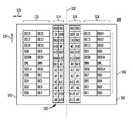
- FIG. 5is a diagrammatic plan view illustrating an arrangement and signal assignment of terminals in a microelectronic package according to an embodiment of the invention.
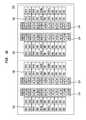
- FIG. 5Ais a fragmentary view showing an alternate arrangement of terminals for a portion of FIG. 5 .
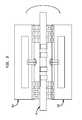
- FIG. 6is a sectional view through line 6 - 6 of FIG. 5 further illustrating the microelectronic package shown in FIG. 5 .
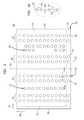
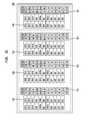
- FIG. 7is a plan view further illustrating an arrangement of terminals in accordance with the embodiment shown in FIGS. 5 and 6 .
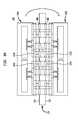
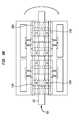
- FIG. 8Ais a sectional view illustrating a microelectronic assembly and first and second microelectronic packages electrically interconnected therewith in accordance with an embodiment of the invention.
- FIG. 8Bis a sectional view illustrating a microelectronic assembly and first and second microelectronic packages electrically interconnected therewith in accordance with an embodiment of the invention.
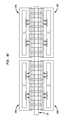
- FIG. 8Cis a sectional view illustrating a microelectronic assembly and four microelectronic packages electrically interconnected therewith in accordance with an embodiment of the invention.
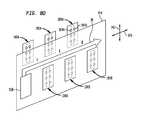
- FIG. 8Dis a schematic diagram illustrating a microelectronic assembly including a circuit panel and microelectronic packages electrically connected thereto, e.g., a memory module, among others, according to an embodiment of the invention.
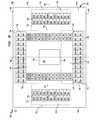
- FIG. 9is a diagrammatic plan view illustrating an arrangement and signal assignment of terminals in a microelectronic package according to an embodiment of the invention.
- FIG. 10is a diagrammatic plan view illustrating an arrangement and signal assignment of terminals in a microelectronic package according to an embodiment of the invention.
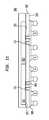
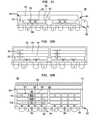
- FIG. 11is a sectional view illustrating a wafer-level microelectronic package according to a variation of the embodiment shown in FIGS. 5-7 .
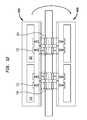
- FIG. 12is a sectional view illustrating a microelectronic assembly and first and second microelectronic packages electrically interconnected therewith in accordance with an embodiment of the invention.
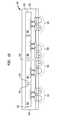
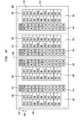
- FIGS. 13 and 14are a sectional view and a plan view illustrating a microelectronic package according to a variation of the embodiment shown in FIGS. 5-7 .
- FIG. 15is a plan view illustrating an alternative arrangement of terminals on a microelectronic package according to a variation of the embodiment shown in FIGS. 13 and 14 .
- FIG. 16is a plan view illustrating another alternative arrangement of terminals on a microelectronic package according to a variation of the embodiment shown in FIGS. 13 and 14 .
- FIG. 17is a plan view illustrating a microelectronic package according to a variation of the embodiment shown in FIGS. 5-7 .
- FIG. 18is a plan view illustrating a microelectronic package according to a variation of the embodiment shown in FIGS. 13 and 14 .
- FIG. 19is a plan view illustrating a microelectronic package according to a variation of the embodiment shown in FIG. 18 .
- FIG. 20is a plan view illustrating a microelectronic package according to a variation of the embodiment shown in FIG. 19 .
- FIG. 21is a sectional view illustrating a microelectronic package including a stacked electrically connected assembly of semiconductor chips therein in accordance with an embodiment of the invention.
- FIG. 22Ais a sectional view illustrating a microelectronic package including a stacked electrically connected assembly of semiconductor chips therein in accordance with an embodiment of the invention.
- FIG. 22Bis a sectional view illustrating a microelectronic package according to a variation of the embodiment shown in FIG. 22A .
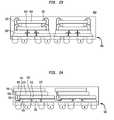
- FIG. 23is a sectional view illustrating a microelectronic package according to a variation of the embodiment shown in FIG. 22A .
- FIG. 24is a sectional view illustrating a microelectronic package according to another variation of the embodiment shown in FIG. 22A .
- FIG. 25is a sectional view illustrating a microelectronic package according to yet another variation of the embodiment shown in FIG. 22A .
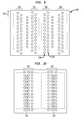
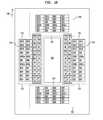
- FIG. 26Ais a diagrammatic plan view illustrating an arrangement and signal assignment of terminals in a microelectronic package according to an embodiment of the invention.
- FIG. 26Bis a plan view further illustrating an arrangement of terminals in accordance with the embodiment shown in FIG. 26A .
- FIG. 26Cis a sectional view through line 26 C- 26 C of FIG. 26A further illustrating the microelectronic package shown in FIG. 26A .
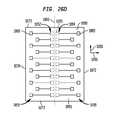
- FIG. 26Dis a plan view illustrating an alternative arrangement of contacts on a microelectronic element according to a variation of the embodiment shown in FIGS. 26A-26C .
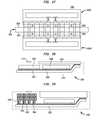
- FIG. 27is a sectional view illustrating a microelectronic assembly and first and second microelectronic packages electrically interconnected therewith in accordance with an embodiment of the invention.
- FIG. 28is a schematic sectional view illustrating a system according to an embodiment of the invention.
- FIG. 29is a schematic sectional view illustrating a system according to an embodiment of the invention.
- the inventorshave recognized improvements which can be made that may help improve the electrical performance of a microelectronic package incorporating a memory storage array chip, and a microelectronic assembly that incorporates such microelectronic package.
- Improvementscan be made particularly for use of a microelectronic package when provided in an assembly such as shown in FIGS. 2-4 , in which a package 12 A is mounted to a surface of a circuit panel with another like package 12 B mounted opposite thereto on an opposite surface of the circuit panel.
- the packages 12 A, 12 Btypically are functionally and mechanically equivalent to one another.
- Other pairs 12 C and 12 D; and 12 E and 12 F, of functionally and mechanically equivalent packagestypically are also mounted to the same circuit panel 34 .
- the circuit panel and the packages assembled theretomay form a portion of an assembly commonly referred to as a dual in-line memory module (“DIMM”).
- DIMMdual in-line memory module
- the packages in each oppositely mounted pair of packagesconnect to contacts on opposite surfaces of the circuit panel so that the packages in each pair overlie one another typically by more than 90% of their respective areas.
- Local wiring within the circuit panel 34connects terminals, e.g., the terminals labeled “1” and “5” on each package to global wiring on the circuit panel.
- the global wiringincludes the signal conductors of a bus 36 used to conduct some signals to connection sites on the circuit panel 34 such as sites I, II and III.
- the packages 12 A, 12 Bare electrically connected to the bus 36 by local wiring coupled to a connection site I
- the packages 12 C, 12 Dare electrically connected to the bus by local wiring coupled to connection site II
- the packages 12 E, 12 Fare electrically connected to the bus by local wiring coupled to connection site III.
- the circuit panel 34electrically interconnects the terminals of the respective packages 12 A, 12 B using local interconnect wiring that appears similar to a crisscross or “shoelace” pattern in which a terminal labeled “1” near one edge of package 12 A connects through the circuit panel 34 to a terminal labeled “1” of package 12 B near the same edge 16 of package 12 B.
- the edge 16 of package 12 B as assembled to circuit panel 34is far from the edge 16 of package 12 A.
- FIGS. 2-4further shows that a terminal labeled “5” near an edge 22 of package 12 A is connected through the circuit panel 34 to a terminal labeled “5” of package 12 B near the same edge 22 of package 12 B. In assembly 38 the edge 22 of package 12 A is far from the edge 22 of package 12 B.
- connections through the circuit panel between terminals on each package, e.g., the package 12 A, to the corresponding terminals on the package mounted opposite thereto, i.e., the package 12 B,are fairly long.
- the circuit panel 34may electrically interconnect a signal conductor of the bus 36 with the terminal of package 12 A marked “1” and the corresponding terminal of package 12 B marked “1”, when the same signal from the bus is to be transmitted to each package.
- the circuit panel 34may electrically interconnect another signal conductor of the bus 36 with the terminal of package 12 A marked “2” and the corresponding terminal of package 12 B marked “2”.
- the same connection arrangementmay also apply to other signal conductors of the bus and corresponding terminals of each package.
- Local wiring between the bus 36 on the circuit panel 34 and each package of the respective pair of packages, e.g., packages 12 A, 12 B ( FIG. 2 ) at a connection site I of the boardcan be in form of unterminated stubs. Such local wiring when relatively long may in some cases impact the performance of the assembly 38 as discussed below.
- the circuit panel 34also requires local wiring to electrically interconnect certain terminals of other packages: the pair of packages 12 C and 12 D, and the pair of packages 12 E and 12 F to the global wiring of the bus 36 , and such wiring can also impact the performance of the assembly in the same way.
- FIG. 4further illustrates the interconnection between microelectronic packages 12 A, 12 B of respective pairs of terminals assigned to carry signals “1”, “2”, “3”, “4”, “5”, “6”, “7”, and “8”.
- all of the columns 14 , 18 of terminalsare exposed near the edges 16 , 22 , respectively, of each package 12 A, 12 B, rather than in a central region 24 of the surface of the substrate, the wiring needed to traverse the circuit panel 34 in a direction 40 transverse to the direction 42 in which the columns 14 , 18 of terminals extend can be quite long.
- the length of a DRAM chipcan be in the range of ten millimeters on each side
- the length of the local wiring in a circuit panel 34 in an assembly 38 seen in FIGS. 2-4 required for some signals to route the same signal to the corresponding terminals of two oppositely mounted packages 12 A, 12 Bcan range between five and ten millimeters and may typically be about seven millimeters.
- the impactsmay be tolerable for some packages containing microelectronic elements of current manufacture.
- the inventorsrecognize that the impacts can become severe. For these assemblies, settling time, ringing, jitter, or intersymbol interference of a transmitted signal may increase to an unacceptable degree.
- the inventorsfurther recognize that the electrical lengths of the unterminated stubs are usually longer than the local wiring that connects the bus 36 on the circuit panel with the terminals of the packages mounted thereto. Unterminated wiring within each package from the package terminals to the semiconductor chip therein adds to the lengths of the stubs.
- the bus 36is a command-address bus of an assembly having a predominant memory storage array function such as a DIMM.
- the command-address bus 36can be configured to carry address information transferred to the microelectronic packages that is usable by circuitry within the packages, e.g., row address and column address decoders, and bank selection circuitry, if present, to determine an addressable memory location from among all the available addressable memory locations of a memory storage array within a microelectronic element in the packages.
- the command-address bus 36can be configured to carry the above-noted address information to connection sites, e.g., sites I, II, and III shown in FIG. 2 . These above-noted address information can then be distributed by local wiring to respective sets of panel contacts on opposite surfaces of the circuit panel, to which packages 12 A, 12 B, 12 C, 12 D, 12 E and 12 F are connected.
- command-address bus 36can be configured to carry all of a group of signals of a command-address bus of the microelectronic element, i.e., command signals, address signals, bank address signals and clock signals that are transferred to the microelectronic packages, wherein the command signals include write enable, row address strobe, and column address strobe signals, and the clock signals are clocks used for sampling the address signals.
- the clock signalscan be of various types, in one embodiment, the clock signals carried by these terminals can be one or more pairs of differential clock signals received as differential or true and complement clock signals.
- certain embodiments of the invention described hereinprovide a microelectronic package configured so as to permit the lengths of stubs to be reduced when first and second such packages are mounted opposite one another on opposite surfaces of a circuit panel, e.g., a circuit board, module board or card, or flexible circuit panel.
- Assemblies which incorporate first and second microelectronic packages mounted opposite one another on a circuit panelcan have significantly reduced stub lengths between the respective packages. Reducing the stub lengths within such assemblies can improve electrical performance, such as by reducing one or more of settling time, ringing, jitter, or intersymbol interference, among others.
- Certain embodiments of the inventionprovide a package or microelectronic assembly in which a microelectronic element, e.g., a semiconductor chip, or stacked arrangement of semiconductor chips, is configured to predominantly provide a memory storage array function.
- a microelectronic elemente.g., a semiconductor chip, or stacked arrangement of semiconductor chips
- the number of active devicese.g., transistors therein that are configured, i.e., constructed and interconnected with other devices, to provide the memory storage array function
- a microelectronic elementsuch as a DRAM chip may have memory storage array function as its primary or sole function.
- such microelectronic elementmay have mixed use and may incorporate active devices configured to provide memory storage array function, and may also incorporate other active devices configured to provide another function such as processor function, or signal processor or graphics processor function, among others.
- the microelectronic elementmay still have a greater number of active devices configured to provide the memory storage array function than any other function of the microelectronic element.
- the microelectronic elementshave faces with a plurality of columns of element contacts on the faces.
- the microelectronic elementsare each flip-chip mounted to the substrate, such that the element contacts of the first and second microelectronic elements face respective first and second sets of substrate contacts on a first surface of a substrate and are joined thereto.
- a microelectronic elementmay include a first semiconductor chip adjacent the substrate and electrically connected thereto, and one or more second semiconductor chips overlying the first semiconductor chip and electrically connected therewith that are configured to predominantly provide memory storage array function.
- a plurality of terminalsmay be provided on the second surface of the substrate that are configured for connecting the microelectronic package with at least one component external to the package.
- the terminals that are electrically connected with the substrate contactsinclude first terminals which are arranged at positions within first and second parallel grids.
- the first and second gridsare configured to carry all of a group of signals of a command-address bus of the microelectronic element; i.e., command signals, address signals, bank address signals and clock signals that are transferred to the microelectronic package, wherein the command signals include write enable, row address strobe, and column address strobe signals, and the clock signals are clocks used for sampling the address signals.
- the clock signalscan be of various types, in one embodiment, the clock signals carried by these terminals can be one or more pairs of differential clock signals received as differential or true and complement clock signals.
- these above-noted signals of the command-address buscan be bussed to multiple microelectronic packages that are connected thereto in parallel.
- Providing duplicate sets of first terminals in first and second parallel grids in which the signal assignments in one grid are a mirror image of the signal assignments in the other gridcan reduce the lengths of stubs in an assembly of first and second microelectronic packages mounted opposite one another to a circuit panel.
- each of the first terminals of the first grid of the first packagecan be aligned within a distance of one ball pitch of the corresponding first terminals of the second, mirror image grid of the second package to which they connect, i.e., the corresponding grids can be aligned within a distance of one ball pitch of one another in orthogonal x and y directions parallel to one of the mounting surfaces of the circuit panel, the ball pitch being no greater than a minimum pitch between any two adjacent parallel columns of the terminals on either package.
- each of the first terminals of the first grid of the second packagecan be so aligned within one ball pitch of the corresponding first terminals of the second, mirror image grid of the first package to which they connect.
- each first terminal of the first packagecan be electrically connected with a corresponding first terminal of the second package, with the mounting locations of each pair of terminals on the opposite circuit panel surfaces being aligned within one ball pitch of each other in orthogonal x and y directions parallel to one of the surfaces of the circuit panel.
- the mounting locations of each pair of connected terminals on the opposite circuit panel surfacesmay even be coincident with one another. Accordingly, the lengths of the electrical connections through the circuit panel between pairs of electrically connected first terminals of the first and second packages can be significantly reduced, in that the terminals in each of these pairs of electrically connected first terminals may overlie one another, or at least be aligned within one ball pitch of one another in x and y orthogonal directions along the first circuit panel surface.
- the circuit panel constructionmay also be simplified in an assembly having this construction because the routing between each electrically connected pair of first terminals can be mostly in a vertical direction, i.e., in a direction through the thickness of the circuit panel. That is, straight through via connections on the circuit panel may be all that is needed to electrically connect each pair of corresponding first terminals of the packages mounted to the opposite surfaces of the circuit panel.
- the number of routing layers of wiring on the circuit panel required to route the signals from the above-noted signals carried by the first terminals, e.g., command-address bus signals, between connection sites where respective pairs of microelectronic packages are connectedmay in some cases be reduced to two or fewer routing layers.
- the microelectronic packagemay also have second terminals other than the first terminals, such terminals typically being configured to carry signals other than the above-noted address or command-address bus signals.
- the second terminalscan include terminals used for carrying uni-directional or bi-directional data signals to and or from the microelectronic element, and data strobe signals, as well as data masks and ODT or “on die termination” signals used to turn on or off parallel terminations to termination resistors.
- Signals or reference potentialssuch as chip select, reset, power supply voltages, e.g., Vdd, Vddq, and ground, e.g., Vss and Vssq, can be carried by the second terminals; none of the signals or reference potentials needs to be carried by the first terminals.
- some or all terminals configured to carry signals other than the above-noted address or command-address bus signalscan be disposed as second terminals in whichever locations on the package they can be placed.
- terminals which are configured to carry signals other than the above noted address or command-address bus signalsmay be disposed in the first grid and the second, mirror image grid of terminals on the package. In this way, it may be possible to reduce the stub lengths in the electrical connections provided on a circuit panel between corresponding terminals, as described above.
- some or all of the terminals which are configured to carry signals other than the above-noted address or command-address bus signalscan be disposed as a set of second terminals in a third grid on the package surface, and another set of the second terminals in a fourth grid on the same package surface, in which the signal assignments of the second terminals in the third grid are a mirror image of the signal assignments of the second terminals in the fourth grid.
- the lengths of the electrical connections through the circuit panel between pairs of electrically connected second terminals of the first and second packagescan be significantly reduced.
- a pair of electrically connected second terminalsmay be aligned within one ball pitch of one another.
- the terminals in each of these pairs of electrically connected second terminalsmay overlie one another, i.e., be coincident with one another.
- benefits similar to those described above for reducing stub lengths and simplifying the construction of a circuit panel for the connections between the first and second packagesmay be obtained when second terminals of a microelectronic package are arranged in this way.
- the package 100can include first and second microelectronic elements 101 , 103 each being configured to predominantly provide memory storage array function, in that each of the first and second microelectronic elements has a greater number of active devices, e.g., transistors, configured to provide memory storage array function than any other function, as indicated above.
- active devicese.g., transistors
- the first and second microelectronic elementshave element contacts 111 , 113 at their respective faces 105 .
- each one of some contacts of the element contacts 111 , 113is dedicated to receiving a respective address signal of the plurality of address signals supplied to the microelectronic element.
- each of such contacts 111 , 113is able to receive one respective address signal of the plurality of address signals supplied to the microelectronic element 101 , 103 from the outside.
- each of the plurality of address signals present at the element contacts 111 , 113can be sampled relative to an edge of a clock used by the respective microelectronic element, i.e., upon on a transition of the clock between first and second different voltage states. That is, each address signal can be sampled upon a rising transition between a lower voltage state and a higher voltage state of the clock, or upon a falling transition between a higher voltage state and a lower voltage state of the clock.
- the plurality of address signalsmay all be sampled upon the rising transition of the clock, or such address signals may all be sampled upon the falling transition of the clock, or in another example, the address signal at one of the element contacts 111 , 113 can be sampled upon the rising transition of the clock and the address signal at one other external contact can be sampled upon the falling transition of the clock.
- microelectronic element 101 , 103configured to predominantly provide memory storage array function
- one or more of the address contacts thereoncan be used in a multiplexed manner.
- a particular element contact 111 , 113 of the respective microelectronic element 101 , 103can receive two or more different signals supplied to the microelectronic element from the outside.
- a first address signalcan be sampled at the particular contact 111 , 113 upon a first transition of the clock between the first and second different voltage states (e.g., a rising transition), and a signal other than the first address signal can be sampled at the particular contact upon a second transition of the clock (e.g., a falling transition) between the first and second voltage states that is opposite the first transition.
- first transition of the clockbetween the first and second different voltage states
- a signal other than the first address signalcan be sampled at the particular contact upon a second transition of the clock (e.g., a falling transition) between the first and second voltage states that is opposite the first transition.
- multiplexing in this mannercan allow a first address signal and a different signal to be received in the same clock cycle on the same element contact 111 , 113 of the respective microelectronic element 101 , 103 .
- multiplexing in this mannercan allow a first address signal and a second different address signal to be received in the same clock cycle on the same element contact 111 , 113 of the respective microelectronic element 101 , 103 .
- the substrate 102can include a dielectric element 122 , which in some cases can consist essentially of polymeric material, e.g., a resin or polyimide, among others.
- the substratecan include a dielectric element having a composite construction such as glass-reinforced epoxy, e.g., of BT resin or FR-4 construction.
- the dielectric elementhas a coefficient of thermal expansion in the plane of the dielectric element, i.e., in a direction parallel to a first surface 108 thereof, of up to 30 parts per million per degree Celsius (hereinafter, “ppm/° C.”).
- the substratecan include a supporting element of material having a coefficient of thermal expansion (“CTE”) of less than 12 parts per million per degree Celsius, on which the terminals and other conductive structure are disposed.
- CTEcoefficient of thermal expansion
- such low CTE elementcan consist essentially of glass, ceramic or semiconductor material or liquid crystal polymer material, or a combination of such materials.
- a first set 121 and a second set 123 of substrate contactsare disposed at a first surface 108 of the substrate, the first set 121 of substrate contacts facing the element contacts 111 of the first microelectronic element and being joined thereto at 138 , such as with a bond metal, e.g., solder, tin, indium, eutectic, or gold, among others, or other conductive bond material, or possibly other structure such as a conductive bump or a micropillar, among possible structures.
- a bond metale.g., solder, tin, indium, eutectic, or gold, among others, or other conductive bond material, or possibly other structure such as a conductive bump or a micropillar, among possible structures.
- a die attach adhesive or underfillmay be disposed between the faces 105 of the microelectronic elements and the surface 108 of the substrate 102 , which may mechanically reinforce the connection between the microelectronic elements and the substrate, and may mechanically support the joints between the microelectronic elements and the substrate.
- the faces 105 of the first and second microelectronic elements 101 , 103can be arranged in a single plane 112 that is parallel to the first surface 108 of the substrate 102 .
- the contacts of each microelectronic elementmay be arranged in a single column as shown for contacts 111 , or the contacts may be arranged in a plurality of columns as shown for contacts 113 .
- Each columnmay contain a contact at each vertical layout position of the column along direction 134 , or a contact may be missing from one or more positions of a column, as in the case of one of the columns of contacts 113 .
- the contactsmay be arranged in an area array over the face 105 of the microelectronic element.
- the contacts of a microelectronic elementcan be arranged in one or more sets of contacts adjacent one or more peripheral edges of the microelectronic element indicated by the dashed lines marking the boundaries of the microelectronic elements 101 , 103 in FIG. 5 .
- the microelectronic elementcan be a single semiconductor chip and the contacts 111 , or 113 thereon may be “chip contacts” which are the contacts of the semiconductor chip.
- a particular microelectronic elementcan include one or more semiconductor chips each having chip contacts, and the contacts 111 , or 113 may include redistribution contacts which are formed on a face 105 thereof, and which are electrically connected to the chip contacts by conductive elements such as traces and vias, for example.
- conductive elementssuch as traces and vias, for example.
- FIG. 26DAn example of such a microelectronic element is described below with reference to FIG. 26D .
- the “contacts” of the microelectronic elements in each of the examples hereincan be arranged in any of these described ways.
- microelectronic element 101may also include additional contacts that may not be disposed within a column of the element contacts. These additional contacts may be used for connection to power, ground, or as contacts available for contact with a probing device, such as may be used for testing.
- the package 100can have first terminals 104 and second terminals 106 for electrically and mechanically connecting the package 100 with a component external to the package 100 , such as a circuit panel, for example.
- the terminals 104 , 106can be electrically conductive pads, posts, or other electrically conductive structure.
- the terminalsin some cases may include joining elements 130 , such as may include a bond metal such as solder, tin, indium, gold, or a eutectic material, among others, or other conductive bond material, and may in some cases also include additional structure such as a conductive bump attached to conductive structure of the substrate such as conductive pads or posts.
- the first terminals 104 and the second terminals 106can be electrically connected with the substrate contacts 121 , 123 through electrically conductive structure on the substrate, such as traces and vias, for example.
- a first set of the first terminals 104can be arranged at positions within a first grid 114 at a second surface 110 of the substrate 102 opposite from the first surface 108 .
- a second set of the first terminals 104can be arranged at positions within a second grid 124 at the second surface 110 of the substrate.
- the first and second gridsare shown extending beyond the outer boundaries of the front surface of the microelectronic elements, that need not be the case.
- each of the first and second grids 114 , 124 of first terminalscan be configured to carry certain signals of the command-address bus, that is, specifically all of a set of address signals of microelectronic elements 101 , 103 configured to provide dynamic memory storage function in a microelectronic package 100 .
- each of the first and second grids 114 , 124are configured to carry sufficient address information transferred to the microelectronic package 100 that is usable by circuitry within the package, e.g., row address and column address decoders, and bank selection circuitry, if present, to determine an addressable memory location from among all the available addressable memory locations of a memory storage array within a microelectronic element in the package.
- each of the first and second grids 114 , 124can be configured to carry all the address information used by such circuitry within the microelectronic package 100 to determine an addressable memory location within such memory storage array.
- each of the first and second grids 114 , 124can be configured to carry a majority of the address information that is used by such circuitry within the microelectronic package 100 to determine an addressable memory location within such memory storage array, and then other terminals such as at least some of the above-referenced second terminals 106 on the microelectronic package would then be configured to carry the remaining part of the address information.
- each of the first and second grids 114 , 124are configured to carry three-quarters or more of the address information that is used by such circuitry within the microelectronic package 100 to determine an addressable memory location within such memory storage array.
- each of the first and second grids 114 , 124may not be configured to carry chip select information, e.g., information usable to select a particular chip within the microelectronic package 100 for access to a memory storage location within the chip.
- chip select informatione.g., information usable to select a particular chip within the microelectronic package 100 for access to a memory storage location within the chip.
- at least one of the first and second grids 114 , 124may indeed carry chip select information.
- the address signals in one embodimentcan include all address signals that are transferred to the package from a component external to the package, e.g., a circuit panel such as the circuit panel 154 described below, which are used for determining a random access addressable memory location within the microelectronic package for read access thereto, or for either read or write access thereto.
- a component external to the packagee.g., a circuit panel such as the circuit panel 154 described below, which are used for determining a random access addressable memory location within the microelectronic package for read access thereto, or for either read or write access thereto.
- At least some of the second terminals 106can be configured to carry signals other than the address signals that are carried by the first terminals 104 of the first and second grids 114 , 124 .
- Signals or reference potentialssuch as chip select, reset, power supply voltages, e.g., Vdd, Vddq, and ground, e.g., Vss and Vssq, can be carried by the second terminals 106 ; none of these signals or reference potentials needs to be carried by the first terminals 104 in any of the embodiments referred to herein, unless otherwise noted.
- each of the first and second grids 114 , 124 of each microelectronic packagecan be configured to carry information that controls an operating mode of at least one of the first and second microelectronic elements 101 , 103 . More specifically, each of the first and second grids 114 , 124 can be configured to carry all of a particular set of command signals and/or clock signals transferred to the microelectronic package 100 .
- the first terminals 104can be configured to carry all of the command signals, address signals, bank address signals, and clock signals transferred to the microelectronic package 100 from an external component, wherein the command signals include row address strobe, column address strobe and write enable.
- a first chip in a microelectronic element having a composite structuresuch as one of the microelectronic elements 901 shown in FIG. 21 , for example, can be configured to regenerate the information that controls the operating mode.
- the first chip in such a composite microelectronic elementcan be configured to partially or fully decode the information that controls the operating mode of the microelectronic element.
- each second chipmay or may not be configured to fully decode one or more of address information, command information, or information that controls an operating mode of the microelectronic element.
- the command signalsare write enable, row address strobe, and column address strobe signals.
- Other signalssuch as ODT (on die termination), chip select, clock enable, are not part of the command signals that need to be carried by the first and second grids 114 , 124 .
- the clock signalscan be clocks used by one or more of the microelectronic elements for sampling the address signals. For example, as seen in FIG.
- the first terminals 104can include clock signals CK and CKB, row address strobe RAS, column address strobe CAS and write enable signals WE, as well as address signals A 0 through A 15 inclusive, and bank address signals BA 0 , BA 1 and BA 2 .
- the second terminals 106can be configured to carry signals other than the command signals, address signals, and clock signals that are carried by the first terminals 104 of the first and second grids 114 , 124 .
- Signals or reference potentialssuch as chip select, reset, power supply voltages, e.g., Vdd, Vddq, and ground, e.g., Vss and Vssq, can be carried by the second terminals 106 ; none of these signals or reference potentials needs to be carried by the first terminals 106 in any of the embodiments referred to herein, unless otherwise noted.
- the particular command signals which need to be carried by the first and second grids 114 , 124can be a different set of signals other than the group of write enable, address strobe, and column address strobe signals which need to be carried in the DRAM case.
- At least some of the second terminals 106 that are configured to carry signals other than the address signalscan be arranged at positions within the first and second grids 114 , 124 . In one example, at least some of the second terminals 106 that are configured to carry signals other than the command signals, address signals, and clock signals can be arranged at positions within the first and second grids 114 , 124 .
- second terminals 106can also include terminals that are configured to be connected to power or ground signals.
- each grid 114 , 124may include first and second parallel columns 136 of terminals.
- the parallel columns 136 of terminals in each gridcan be adjacent to one other.
- at least one terminalmay be disposed between the first and second columns of terminals.
- the gridsmay include a column of terminals for which a column axis 119 extends through a majority of the terminals 104 of such column, i.e., is centered relative thereto.
- one or more of the terminalsmight not be centered relative to the column axis 119 , as in the case of terminals 104 ′.
- these one or more terminalsare considered part of a particular column, even though such terminal(s) might not be centered relative to axis 119 because they are closer to the axis 119 of that particular column than to the axis of any other column.
- the column axis 119may extend through these one or more terminals which are not centered relative to the column axis, or, in some cases, the non-centered terminals may be farther from the column axis such that the column axis 119 may not even pass through these non-centered terminals of the column.
- an encapsulant 146may overlie the first surface 108 of the substrate and may contact the microelectronic elements 101 , 103 therein. In some cases, the encapsulant may overlie surfaces 145 of the microelectronic elements which face away from the substrate 102 .
- the signal assignments of the first terminals in the second grid 124are a mirror image of the signal assignments 124 of the first terminals in the first grid 114 .
- the signal assignments of the first terminals in the first and second gridsare symmetric about an axis 132 between the first and second grids 114 , 124 , the axis 132 in this case extending in a direction 134 in which columns 136 of the first terminals extend.
- a first terminal 104 of the first grid 114 which is assigned to carry the signal CK (clock)is in the same relative vertical position (in direction 134 ) within the grid as the corresponding first terminal 104 of the second grid 114 which is assigned to carry the signal CK.
- the first grid 114contains two columns 136 and the terminal of the first grid 114 assigned to carry the signal CK is in the left column among the two columns 136 of the first grid, the mirror image arrangement requires that the corresponding terminal of the second grid 124 assigned to carry the signal CK is in the right column 136 among the two columns of the second grid.
- the terminal assigned to carry the signal WE(write enable) is also in the same relative vertical position within the grid in each of the first and second grids 114 , 124 .
- the terminal assigned to carry WEis in the right column among the two columns 136 of the first grid, and the mirror image arrangement requires that the corresponding terminal of the second grid 124 assigned to carry the signal WE is in the left column 136 among the two columns of the second grid 124 .
- the same relationshipapplies for each first terminal in each of the first and second grids, at least for each first terminal assigned to carry a command-address bus signal as discussed above.
- the axis 132 about which the signal assignments of the first terminals are symmetriccan be located at various positions on the substrate.
- the axiscan be a central axis of the package that is located equidistant from first and second opposed edges 140 , 142 of the substrate particularly when the columns 136 of the first terminals extend in a direction parallel to the edges 140 , 142 and the first and second grids are disposed at locations which are symmetric about this central axis.
- this axis of symmetry 132can be offset in a horizontal direction 135 from the central axis that is equidistant between edges 140 , 142 .
- the axis 132can be offset from a central axis or line that is parallel to and equidistant from the first and second edges 140 , 142 of the substrate 102 , the offset distance being not more than a distance of three and one-half times a minimum pitch between any two adjacent columns of the first terminals 104 .
- At least one column of terminals of each of the first and second grids 114 , 124can be disposed within an offset distance from a central axis or line that is parallel to and equidistant from the first and second edges 140 , 142 of the substrate 102 , the offset distance being a distance of three and one-half times a minimum pitch between any two adjacent columns of the first terminals 104 .
- the first terminals 104 of the first grid 114can be electrically connected with the first microelectronic element 101
- the first terminals 104 of the second grid 124can be electrically connected with the second microelectronic element 103
- the first terminals 104 of the first grid 114may also be not electrically connected with the second microelectronic element 103
- the first terminals 104 of the second grid 124 of the package 100may also be not electrically connected with the first microelectronic element 101
- the first terminals 104 of each of the first and second grids 114can be electrically connected with each of the first and second microelectronic elements 101 , 103 .
- the second terminals 106can be configured to carry signals other than the above-noted signals of the command-address bus.
- the second terminals 106can include terminals used for carrying uni-directional or bi-directional data signals to and or from the microelectronic element, and data strobe signals, as well as data masks and ODT or “on die termination” signals used to turn on or off parallel terminations to termination resistors.
- Signals such as chip select, reset, clock enable, as well as reference potentials such as power supply voltages, e.g., Vdd, Vddq, or ground, e.g., Vss and Vssq,can be carried by the second terminals 106 ; none of the signals or reference potentials needs to be carried by the first terminals 104 .
- some or all terminals that are configured to carry signals other than the command-address bus signalsto be disposed as second terminals 106 on the package, wherever they can be suitably placed.
- some or all of the second terminals 106can be arranged in the same grids 114 , 124 on the substrate 102 in which the first terminals 104 are arranged.
- Some or all of the second terminals 106may be disposed in the same column or in different columns as some or all of the first terminals 104 . In some cases, one or more second terminals can be interspersed with the first terminals in the same grids or column thereof.
- some or all of the second terminals 106can be disposed in a third grid 116 on the second surface 110 of the substrate, and another set of the second terminals can be disposed in a fourth grid 126 on the package surface 110 .
- the signal assignments of the second terminals in the third grid 116can be a mirror image of the signal assignments of the second terminals in the fourth grid 126 , in like manner to that described above for the first and second grids.
- the third and fourth grids 116 , 126may in some cases extend in the direction 134 in which the first and second grids extend and can be parallel to one another.
- the third and fourth gridsmay also be parallel to the first and second grids 114 , 124 .
- each of the third and fourth grids 116 , 126can extend in another direction 135 which is transverse to or even orthogonal to direction 134 .
- second surface 110 of the substrate 102can have first and second peripheral regions adjacent to the first and second edges 140 , 142 , respectively, wherein a central region separates the first and second peripheral regions.
- first and second grids 114 , 124can be disposed in the central region of the second surface 110
- third and fourth grids 116 , 126can be disposed in the respective first and second peripheral regions.
- FIG. 8Aillustrates an assembly 200 of first and second microelectronic packages 100 A, 100 B, each being a microelectronic package 100 as described with reference to FIGS. 5-7 above, as mounted to opposite first and second surfaces 150 , 152 of a circuit panel 154 .
- the circuit panelcan be of various types, such as a printed circuit board used in a dual-inline memory module (“DIMM”) module, a circuit board or panel to be connected with other components in a system, or a motherboard, among others.
- DIMMdual-inline memory module
- the first and second microelectronic packages 100 A, 100 Bcan be mounted to corresponding contacts 160 , 162 exposed at the first and second surfaces 150 , 152 of the circuit panel 154 .
- each first terminal in the first grid 114 A of the first package 100 Ais aligned with the corresponding first terminal in the second grid 124 B of the second package 100 B which has the same signal assignment and to which it is electrically connected.
- each first terminal in the second grid 124 A of the first package 100 Ais aligned with the corresponding first terminal in the first grid 114 B which has the same signal assignment and to which it is electrically connected.
- each pair of connected terminalscan be within a tolerance, such that each pair of connected terminals can be aligned within one ball pitch of one another in orthogonal x and y directions along the first surface 150 of the circuit panel 154 .
- connected terminals on opposite surfaces of the circuit panelcan be coincident with one another.
- a majority of the positions of the aligned grids of the respective first and second packages 100 A, 100 Be.g., the first grid 114 A of the first package and the second grid 124 B of the second package
- a particular first terminal that carries a signal marked “A” in grid 114 A of the first package 100 Ais aligned with the corresponding first terminal of grid 124 B of the second package 100 B that carries the same signal “A”.
- the lengths of the electrical connections through the circuit panel between each pair of electrically connected first terminals of the first and second packages 100 A, 100 Bcan be significantly reduced, in that the terminals in each of these pairs of electrically connected second terminals may overlie one another, or at least be aligned within one ball pitch of one another.
- the reductions in the lengths of these electrical connectionscan reduce stub lengths in the circuit panel and the assembly, which can help improve the electrical performance, such as reducing settling time, ringing, jitter, or intersymbol interference, among others, for the above-noted signals which are carried by the first terminals and which are transferred to microelectronic elements in both the first and second packages.
- the electrical lengths of stubs on the circuit panel 354 which electrically connect a first terminal 104 A of the first package 100 A with the corresponding first terminal 104 A on the second package 100 Bcan be less than seven times a minimum pitch of the first terminals on each package, for example, less than seven times the pitch 151 between columns 104 A, 104 B of first terminals in FIG. 5 . Stated another way, referring to FIG.
- the total combined length of the conductive elements connecting a pair of electrically coupled first and second panel contacts 160 , 162 exposed at the first and second surfaces of the circuit panel 150 , 152 for electrically interconnecting the first and second panel contacts with one of the command signals, address signals, bank address signals or clock signalscan be less than seven times a smallest pitch of the panel contacts.
- each second terminal of each package's third gridcan be aligned with the corresponding second terminal of the other package's fourth grid which has the same signal assignment and to which it is electrically connected.
- each second terminal in the third grid 116 A of the first package 100 Ais aligned with the corresponding first terminal in the fourth grid 126 B of the second package 100 B which has the same signal assignment and to which it is electrically connected.
- each first terminal in the fourth grid 126 A of the first package 100 Ais aligned with the corresponding first terminal in the third grid 116 B which has the same signal assignment and to which it is electrically connected.
- the alignment of each pair of connected terminalsis within a tolerance, such that each pair of connected terminals can be aligned within one ball pitch of one another in orthogonal x and y directions along the first surface 150 of the circuit panel 154 .
- a particular first terminal that carries a signal marked “B” in grid 116 A of the first package 100 Ais aligned with the corresponding first terminal of grid 126 B of the second package 100 B that carries the same signal “B” and to which it is electrically connected.
- the lengths of the electrical connections through the circuit panel between pairs of electrically connected second terminals 106 of the first and second packagescan be significantly reduced, in that the terminals in each of these pairs of electrically connected second terminals may be coincident with one another, or at least be aligned within one ball pitch of one another in orthogonal x and y directions parallel to the circuit panel surface.
- the alignmentcan be within customary manufacturing tolerances or can be within a tolerance of less than one-half of one ball pitch of one another in x and y orthogonal directions parallel to the first and second circuit panel surfaces, the ball pitch being as described above.
- FIG. 8Cfurther illustrates that two, or more pairs of microelectronic packages each having a construction either as described above or hereinafter can be electrically interconnected with respective panel contacts on a circuit panel 154 , e.g., a board of a dual-inline memory module (“DIMM”), in similar orientations as packages 100 A, 100 B.
- a circuit panel 154e.g., a board of a dual-inline memory module (“DIMM”)
- DIMMdual-inline memory module
- FIG. 8Cshows an additional pair of packages 100 C, 100 D electrically interconnected with circuit panel 154 in opposite orientations facing one another as described above.
- one or more other pairs of packagesmay also be electrically interconnected with circuit panel, such as described above.
- FIG. 8Dillustrates a microelectronic assembly such as, for example, a DIMM, among others, incorporating a circuit panel and a plurality of microelectronic packages mounted opposite one another to first and second opposite surfaces thereof.
- the above-noted address signals or command-address bus signalscan be routed on a bus 36 , e.g., an address bus or command-address bus on the circuit panel or circuit board 354 , in at least one direction 143 between connection sites I, II or III at which respective pairs of microelectronic packages 100 A, 110 B are connected to opposite sides of the circuit panel. Signals of such bus 36 reach each pair of packages at the respective connection sites I, II or III at slightly different times.
- the at least one direction 143can be transverse or orthogonal to a direction 142 in which at least one column 138 of a plurality of contacts on at least one microelectronic element within each package 100 A or 100 B extends.
- the signal conductors of the bus 36 on (i.e., on or within) the circuit panel 354can in some cases be spaced apart from one another in a direction 142 which is parallel to the at least one column 138 of contacts on a microelectronic element within a package 100 A, or 100 B connected to the circuit panel.
- Such a configurationmay help simplify the routing of signal conductors of one or more global routing layers on the circuit panel used to route the signals of the bus 36 .
- first terminals in each grid 114 , 124configured to receive address signals A 3 and A 1 .
- the microelectronic assembly 354can have a microelectronic element 358 that can include a semiconductor chip configured to perform buffering of at least some signals transferred to the microelectronic packages 100 A, 100 B of the assembly 354 .
- a microelectronic element 358 having a buffering functioncan be configured to help provide impedance isolation for each of the microelectronic elements in the microelectronic packages 100 A and 100 B with respect to components external to the microelectronic assembly 354 .
- the microelectronic assembly 354can have a microelectronic element 358 that can include a semiconductor chip configured predominantly to perform a logic function, such as a solid state drive controller, and one or more of the microelectronic elements in the microelectronic packages 100 A and 100 B can each include memory storage elements such as nonvolatile flash memory.
- the microelectronic element 358can include a special purpose processor that is configured to relieve a central processing unit of a system such as the system 1200 ( FIG. 28 ) from supervision of transfers of data to and from the memory storage elements included in the microelectronic elements.
- Such a microelectronic element 354 including a solid state drive controllercan provide direct memory access to and from a data bus on a motherboard (e.g., the circuit panel 1202 shown in FIG. 28 ) of a system such as the system 1200 .
- the command-address bus signalscan be routed between the microelectronic element 358 and each pair of packages 100 A and 100 B at respective connection sites I, II or III.
- a portion of the command-address bus 36 that extends past the connection sites I, II or IIIcan extend in the direction 143 or in another direction transverse to the direction 143 to reach contacts of the microelectronic element 358 .
- the command-address bus 36can extend in the direction 143 to reach contacts of the microelectronic element 358 .
- FIG. 9illustrates a particular arrangement of terminals within respective first grids 214 , 224 , and second grids 216 , 226 of the package 250 , illustrating that terminals at the same relative vertical position within adjacent columns 236 , 238 in each grid may in fact be disposed at positions which are somewhat offset in the vertical layout direction 134 of the package.
- FIG. 10illustrates a particular arrangement of first terminals in first and second parallel grids 244 , 254 , each of which can include three adjacent columns of terminals. As shown in FIG. 10 , the columns may overlie portions of the faces of the microelectronic elements where the element contacts 111 , 113 are disposed. As mentioned above, in some embodiments, it may be possible for signals other than the above-noted command-address bus signals to also be assigned to terminals within the same grids which carry the particular command-address bus signals. FIG. 10 illustrates one possible arrangement thereof.
- the first terminals arranged to carry the above-noted command-address bus signalscan be provided in first and second individual columns of terminals, wherein each respective individual column contains a set of first terminals configured to carry all of the above-noted command address bus signals.
- the first terminalscan further be arranged such that the signal assignments in the first column are a mirror image of the signal assignments in the second column, in that the signal assignments are symmetric about an axis extending in the same direction as the first and second columns and between the individual columns. In this way, the signal assignments of the first terminals in the first column are the same as the signal assignments of the first terminals at the same relative vertical positions in the second column on the package.
- FIG. 11illustrates a variation of the above embodiment in which a package 300 which can be similar in all respects with the package described above relative to FIGS. 5-7 , except that the package 300 can be implemented as a wafer-level package having a dielectric layer 302 formed on the faces 105 of the microelectronic elements 101 , 103 .
- Metalized vias 308are formed, e.g., by plating or depositing a metal or conductive material such as a conductive paste, conductive matrix material, etc. in contact with the element contacts 111 , 113 of each microelectronic element.
- the vias 308may be formed integrally with electrically conductive traces 309 extending in a direction parallel to a surface 310 of the dielectric layer 302 .
- the vias and some or all of the conductive traces of the packagemay be integral parts of a monolithic metal layer.
- one metal layer or more than one such metal layercan be formed by a build-up process of plating, printing, dispensing, screen printing, stenciling or other appropriate technique after forming dielectric layer 302 on the microelectronic elements.
- the structure of the wafer-level package 300 and the techniques for making itcan be applied to any of the other embodiments shown or described in this application.
- FIG. 12illustrates an assembly of first and second packages 400 A, 400 B in which the first and second grids 414 , 424 within each package are now disposed at locations close to the element contacts 111 , 113 of each microelectronic element 101 , 103 .
- the locations of second terminalswhich may or may not be disposed in third and fourth grids as described above, are omitted from FIG. 12 for clarity, as is the case in figures depicting other embodiments described below.
- nearness of the first terminals in the grids 414 , 424 with the element contactsmay also help to reduce the lengths of stubs within each package 400 A, 400 B.
- FIGS. 13-14illustrate a microelectronic package 500 according to a variation of the above-described embodiment of FIGS. 5-7 in which first, second, third and fourth microelectronic elements 501 , 503 , 505 and 507 are incorporated therein.
- the packagefurther depicts four grids 514 , 524 , 534 , 544 of first terminals assigned to carry the above-noted signals of the command-address bus.
- the second terminalswhich are shown in FIG. 14 as grids 516 , 526 , 536 , and 546 , are omitted from FIG. 13 for clarity.
- each grid of first terminalscan be electrically connected with just one of the microelectronic elements, or can be connected to two or more of the microelectronic elements.
- FIG. 14illustrates one possible arrangement of the package 500 showing the grids 514 , 524 , 534 , and 544 of first terminals and one possible arrangement of grids 516 , 526 , 536 , and 546 of second terminals.
- each of the microelectronic elementstypically has two first parallel edges 510 , which may extend in the same direction or a different direction in which the one or more columns of contacts on the microelectronic element extend. In one example, these first edges may each be longer than two second parallel edges 512 of each microelectronic element. In another example, these first edges 510 may merely extend in the same direction as the one or more columns of contacts, while in fact being shorter than the second edges 512 of the same microelectronic element. References to the first and second edges of microelectronic elements in each of the packages described below incorporate these definitions.
- two of the grids 524 , 534 of first terminalscan be disposed close to a centerline 530 of the package separating microelectronic elements 503 , 505 , while the other grids 514 , 544 of first terminals can be disposed near peripheral edges 550 , 552 of the package.
- a package(not shown) containing only three of the above-described microelectronic elements 501 , 503 , 505 , 507 and containing an appropriate number of grids of first terminals, and grids of second terminals for connecting the package to a component external to the package, such as a circuit panel.
- FIG. 15is a plan view illustrating a package 560 according to a variation of that shown in FIG. 14 , in which the positions of the grids of the first terminals on the package are varied.
- the position of the grid 534 within package 560is exchanged with the position of the grid 536 of second terminals, such that the grid 536 is now disposed between the grids 524 , 534 of the first terminals.
- the position of the grid 544 within the package 560is exchanged with the position of the grid 546 of second terminals, such that the grid 546 is now disposed between the grids 534 , 544 of the first terminals.
- FIG. 16is a plan view illustrating a package 570 according to another variation of that shown in FIG. 14 , in which the positions of the grids of the first terminals are varied.
- the position of the grid 524 of first terminals within the package 570is exchanged with the position of the grid 526 of second terminals, such that the grid 524 is now disposed between and adjacent to grids 514 , 526 .
- the position of the grid 534 within the package 570is exchanged with the position of the grid 536 of second terminals, such that the grid 534 is now disposed between and adjacent to grids 536 , 544 .
- FIG. 17is a plan view illustrating a package 600 according to a further variation of the above-described embodiment of FIGS. 5-7 in which first, second, third and fourth microelectronic elements 601 , 603 , 605 , 607 are arranged in a matrix on the substrate, wherein each microelectronic element has first edges 610 which typically are parallel and extend in a first direction along the substrate, and second edges 612 which typically are parallel and extend in a second direction along the substrate. As seen in FIG.
- the microelectronic elementscan be arranged with the first edges 610 of microelectronic elements 601 , 603 adjacent and parallel to one another, and the first edges of microelectronic elements 605 , 607 adjacent and parallel to one another, as well.
- the microelectronic elementsmay be arranged such that one second edge 612 of microelectronic element 601 is adjacent and parallel to the second edge 612 of the other microelectronic element 607 , and one second edge 612 of microelectronic element 603 is adjacent and parallel to one second edge 612 of the other microelectronic element 605 .
- Each of the first edges 610 of microelectronic element 601can in some cases be collinear with the first edges 610 of microelectronic element 607 .
- each of the first edges 610 of microelectronic element 603can in some cases be collinear with the first edges 610 of microelectronic element 605 .
- Grids 651 , 653 , 655 , 657 of second terminalswhich may overlie portions of respective microelectronic elements 601 , 603 , 605 , 607 and are electrically connected therewith, can have terminals disposed in any suitable arrangement, there being no requirement to place these second terminals in grids in which the signal assignments in any one of the grids 651 , 653 , 655 , or 657 are a mirror image of the signal assignments of the terminals in any one of the other grids 651 , 653 , 655 , or 657 .
- the signal assignments of the second terminals in any one of the grids 651 , 653 , 655 , or 657can be a mirror image of the signal assignments of the second terminals in one or two other ones of the grids 651 , 653 , 655 , or 657 , in that the signal assignments of any one of the grids can be symmetric about a vertical axis 680 with respect to the signal assignments of another grid, and/or the signal assignments of any one of the grids can be symmetric about a horizontal axis 682 with respect to the signal assignments of another grid.
- the signal assignments of the third grid 651are symmetric about the vertical axis 680 with respect to the signal assignments of the fourth grid 653 , where the vertical axis 680 extends in a direction 620 which in the example shown is between the grids 651 and 653 .
- the signal assignments of the third grid 651are symmetric about the horizontal axis 682 with respect to the signal assignments of the sixth grid 657 , where the horizontal axis 682 extends in a direction 622 , which in the example shown is between the grids 651 and 657 .
- each of the grids 651 and 657may extend to portions of the substrate surface on both sides of the horizontal axis 682 , and the relationships described above can otherwise be present.
- the signal assignments of the first and fourth grids 651 and 657are symmetric about the vertical axis 680 with respect to the signal assignments of the respective second and third grids 653 and 655 . Also, the signal assignments of the first and second grids 651 and 653 are symmetric about the horizontal axis with respect to the signal assignments of the respective fourth and third grids 657 and 655 .
- FIG. 18is a plan view illustrating a microelectronic package 700 according to another variation of the above-described embodiment ( FIGS. 13-14 ), in which the first edges 710 of first and second microelectronic elements 701 , 703 extend in a first direction 720 parallel to the edge 702 of terminal-bearing substrate surface 704 , and where the second edges 712 of microelectronic elements 701 , 703 extend in a second direction 722 parallel to the terminal-bearing surface 704 of the substrate.
- the package 700further includes third and fourth microelectronic elements 705 , 707 .
- first edges 730 of the third and fourth microelectronic elements 705 , 707extend in the second direction 722
- the second edges 732 of the third and fourth microelectronic elements 705 , 707extend in the first direction 720 .
- first and second grids 714 , 724 of first terminalsconfigured to carry the above-noted command-address bus signals, can be provided in locations on the substrate surface away from the substrate's peripheral edges 740 .
- the signal assignments of the first terminals in the second grid 724can be a mirror image of the signal assignments of the first terminals in the first grid, as described above.
- the first and second grids 714 , 724 of first terminalsmay be disposed between adjacent first edges 710 of the first and second microelectronic elements 701 , 703 and may overlie portions of the third and fourth microelectronic elements 705 , 707 .
- Grids of second terminals 751 , 753 , 755 , 757may at least partially overlie respective microelectronic elements 701 , 703 , 705 , 707 to which the second terminals therein electrically connect.
- the signal assignments of the second terminals in the fourth grid 753can be a mirror image of the signal assignments of the second terminals in the third grid 751 , where the signal assignments of the third and fourth grids 751 and 753 are symmetric about a vertical axis 780 that extends in a direction 720 .
- Fifth and sixth grids 755 , 757 of second terminalswhich may overlie portions of microelectronic elements 705 , 707 and be electrically connected therewith, can have terminals disposed in any suitable arrangement, there being no requirement to place these second terminals in grids in which the signal assignments in one of the grids 755 are a mirror image of the signal assignments of the terminals in the other grid 757 .
- the signal assignments of the fifth grid 755are symmetric about the horizontal axis 782 with respect to the signal assignments of the sixth grid 757 , where the horizontal axis 782 extends in a direction 722 between the grids 751 and 757 .
- the signal class assignments of the second terminals in the fifth grid 755can be symmetric about the vertical axis 780
- the signal class assignments of the second terminals in the sixth grid 757can be symmetric about the vertical axis 780 .
- two signal class assignmentscan be symmetric with respect to one another if the signal assignments are in the same class of assignments, even if the numerical index within the class differs.
- Exemplary signal class assignmentscan include data signals, data strobe signals, data strobe complement signals, and data mask signals.
- the second terminals having signal assignments DQSH# and DQSL#are symmetric about the vertical axis 780 with respect to their signal class assignment, which is data strobe complement, even though those second terminals have different signal assignments.
- the assignments of the data signals to the spatial positions of the second terminals on the microelectronic packagecan have modulo-X symmetry about the vertical axis 780 .
- the modulo-X symmetrycan help preserve signal integrity in an assembly 300 such as seen in FIG. 8A , in which one or more pairs of first and second packages are mounted opposite one another to a circuit panel, and the circuit panel electrically connects corresponding pairs of second terminals of those first and second packages in each oppositely-mounted package pair.
- modulo-X symmetrycan permit electrical connections to be made through the circuit panel so that a terminal DQ 0 of a first package can be electrically connected through the circuit panel to a terminal DQ 8 of the second package which has the same index number modulo X (X being 8 in this case), so that the connection can be made in a direction essentially straight through, i.e., normal to, the thickness of the circuit panel.
- “X”can be a number 2 n (2 to the power of n), wherein n is greater than or equal to 2, or X can be 8 ⁇ N, N being two or more.
- Xmay be equal to the number of bits in a half-byte (4 bits), byte (8 bits), multiple bytes (8 ⁇ N, N being two or more), a word (32 bits) or multiple words.
- the signal assignment of a package terminal DQ 0 in grid 755 configured to carry data signal DQ 0is symmetric about the vertical axis 780 with the signal assignment of another package terminal configured to carry data signal DQ 8 .
- the signal assignments of package terminals DQ 2 and DQ 10 in grid 755have modulo-8 symmetry about the vertical axis, and the same is also true for grid 757 .
- Modulo-8 symmetrysuch as described herein can be seen in grids 755 , 757 with respect to each of the signal assignments of package terminals DQ 0 through DQ 15 .
- the modulo number “X”can be a number other than 2 n (2 to the power of n) and can be any number greater than two.
- the modulo number X upon which the symmetry is basedcan depend upon how many bits are present in a data size for which the package is constructed or configured. For example, when the data size is 10 bits instead of 8, then the signal assignments may have modulo-10 symmetry. It may even be the case that when the data size has an odd number of bits, the modulo number X can have such number.
- the mirror image signal assignments of terminals in grids 714 , 724 , and grids 751 , 753 , and grids 755 , 757may permit the above-described reduction in stub lengths in a circuit panel, as described above relative to FIGS. 5-7 , to be achieved when two packages 700 of like configurations are mounted opposite one another on opposite surfaces of the circuit panel.
- FIG. 18further illustrates that one or more buffer elements 750 can be provided as a microelectronic element disposed in a region of the package 700 between adjacent edges 730 , 710 of the first, second, third and fourth microelectronic elements 701 , 703 , 705 , and 707 .
- Each such buffer elementcan be used to provide signal isolation between terminals of the package, particularly for the above-noted command address bus signals received at the first terminals of the package, and one or more of the microelectronic elements in the package.
- the one or more buffer elementsregenerate signals received at the first terminals, or which are received at the second terminals, and transfers the regenerated signals to the microelectronic elements in the package.
- the area of the substrate 702 between the adjacent edges 710 , 730 of the microelectronic elementsmay permit one or more decoupling capacitors to be provided on or in the package in such area, the one or more decoupling capacitors being connected to internal power supply or ground buses of the package.
- FIG. 19illustrates a variation of the embodiment seen in FIG. 18 , in which the positions of the first and second grids 714 , 724 can be varied so as to overlie at least portions of the first and second microelectronic elements 701 , 703 .
- the positions of the third and fourth microelectronic elements 705 , 707may also change such that portions of first edges 730 of the third and fourth microelectronic elements 705 , 707 may be moved away from the center of the package.
- first edges 730 of the third and fourth microelectronic elementsrun parallel to and are spaced apart from portions of the second edges 712 of the first and second microelectronic elements in direction 720 , such that an amount of area 760 at the center of the package available for connection of one or more buffer elements or decoupling capacitors, or other device may be greater than that shown in FIG. 18 .
- FIG. 20illustrates a microelectronic package 800 according to a variation of the above-described embodiment ( FIG. 19 ).
- the microelectronic elements 801 , 803 , 805 , 807are arranged in a pinwheel-like configuration in which the first edges 810 of microelectronic elements 801 , 803 extend in the same direction 820 as the second edges of microelectronic elements 805 , 807 .
- the first edges 830 of microelectronic elements 805 , 807extend in the same direction 822 as the second edges 812 of the microelectronic elements 801 , 803 .
- a portion of one of the first edges 810 of microelectronic element 801is spaced apart from and parallel to a portion of one of the second edges 832 of microelectronic element 807 .
- a portion of the one of the first edges of microelectronic element 805is spaced apart from and parallel to one of the second edges of microelectronic element 801 .
- FIG. 20further illustrates that the grids 814 , 824 of first terminals having mirror image signal assignments may each partially or fully overlie one or more of the microelectronic elements in the package 800 .
- a central region 850 of the substratewhich is disposed between adjacent edges of the microelectronic elements, and over which none of the faces of the microelectronic elements is disposed, may accommodate one or more buffer elements or decoupling capacitors or both as described above relative to FIGS. 18-19 .
- FIG. 21illustrates a microelectronic package 900 similar to any of the packages described above, in which the microelectronic elements 901 therein are composite structures each of which can include two or more semiconductor chips which are stacked one above the other and are electrically interconnected with each other, and in which each may be connected with the substrate contacts 908 .
- the microelectronic elements 901 thereinare composite structures each of which can include two or more semiconductor chips which are stacked one above the other and are electrically interconnected with each other, and in which each may be connected with the substrate contacts 908 .
- each microelectronic element 901may include a first semiconductor chip 932 having contacts 906 facing and joined with corresponding substrate contacts 908 of the substrate, as well as a second semiconductor chip 934 having contacts 910 electrically connected with the first semiconductor chip 932 and the substrate 902 by through-silicon vias (“TSVs”) 950 that extend in a direction of a thickness 952 of the first semiconductor chip 932 , i.e., in a direction between first and second opposed faces 938 , 942 of the chip 932 .
- TSVsthrough-silicon vias
- the TSVs 950can be electrically connected with the element contacts 908 of the first semiconductor chip 932 , such as by traces extending along a face 942 of the first semiconductor chip 932 .
- any electrical connections between the first and second semiconductor chipscan be made in this manner, such connections are well-suited for the distribution of power and ground to the first and second semiconductor chips.
- the TSVs 950may extend only partially through a thickness of the first semiconductor chip, and be connected with internal circuitry within the first semiconductor chip 932 , rather than being connected to traces on the face 942 of the first semiconductor chip 932 or being connected directly to the contacts of the first semiconductor chip.
- each of the first and second semiconductor chips 932 , 934can be configured such that each such semiconductor chip embodies a greater number of active devices to provide memory storage array function than any other function.
- each of the first and second semiconductor chipscan include a memory storage array and all circuitry required for inputting data to and outputting data from the memory storage array.
- each of the semiconductor chipscan include circuitry configured to receive external data input from terminals of the package, as well as circuitry configured to transfer data output from such semiconductor chip to terminals of the package.
- each first and each second semiconductor chip 932 , 934can be a dynamic random access memory (“DRAM”) chip or other memory chip that is capable of inputting and outputting data from the memory storage array within such semiconductor chip and receiving and transmitting such data to a component external to the microelectronic package.
- DRAMdynamic random access memory
- signals to and from the memory storage array within each DRAM chip or other memory chipmay not require buffering by an additional semiconductor chip within the microelectronic package.
- the one or more second semiconductor chips 934may embody a greater number of active devices to provide memory storage array function than any other function, but the first semiconductor chip 932 may be a different type of chip.
- the first semiconductor chip 932can be configured, e.g., designed, constructed, or set up, to buffer signals, i.e., regenerate signals received at the terminals for transfer to the one or more second semiconductor chips 934 , or to regenerate signals received from one or more of the second semiconductor chips 934 for transfer to the terminals, or to regenerate signals being transferred in both directions from the terminals to the one or more second semiconductor chips 934 ; and from the one or more semiconductor chips to the terminals of the microelectronic package.
- Signals that are regenerated by a first semiconductor chip 932 operating as a buffer element, which are then transferred to the one or more second semiconductor chipscan be routed through TSVs connected to internal circuitry, for example.
- the first semiconductor chip 932can be configured to partially or fully decode at least one of address information or command information received at the terminals, such as at the first terminals. The first chip can then output the result of such partial or full decoding for transfer to the one or more second semiconductor chips 934 .
- the first semiconductor chip 932can be configured to buffer the address information, or in one example, the command signals, address signals, and clock signals that are transferred to the one or more second semiconductor chips 934 .
- the first semiconductor chip 932can be a buffer chip that embodies a greater number of active devices to provide a buffering function in transferring signals to other devices, e.g., to the one or more second semiconductor chips 934 , than for any other function.
- the one or more second semiconductor chips 934can be reduced function chips that have memory storage arrays but which can omit circuitry common to DRAM chips, such as buffer circuitry, decoders, predecoders, or wordline drivers, among others.
- the first chip 932can function as a “master” chip in the stack and to control operations in each of the second semiconductor chips 934 .
- the second semiconductor chips 934can be configured such that they are not capable of performing the buffering function.
- the stacked arrangement of the first and second semiconductor chipscan be configured such that the buffering function required in the microelectronic package can be performed by the first semiconductor chip 932 , and cannot be performed by any of the second semiconductor chips 934 in the stacked arrangement.
- the one or more second semiconductor chipscan be implemented in one or more of the following technologies: DRAM, NAND flash memory, RRAM (“resistive RAM” or “resistive random access memory”), phase-change memory (“PCM”), magnetoresistive random access memory, e.g. such as may embodiment tunnel junction devices, static random access memory (“SRAM”), spin-torque RAM, or content-addressable memory, among others.
- the microelectronic packagemay also include through-silicon vias 960 extending partially or completely through one or more of the second semiconductor chips 934 and may also extend through the first semiconductor chip 932 .
- each of the second semiconductor chips 934can be functionally and mechanically equivalent to any other of the second semiconductor chips.
- the first semiconductor chip 932can be configured to regenerate or at least partially decode received information or signals and then transfer the regenerated information or signals to the one or more of the second semiconductor chips 934 , e.g., through the TSVs 960 between the first and second chips 932 , 934 and within the stack of second chips 934 .
- FIG. 22Billustrates a variation of the microelectronic package shown in FIG. 22A .
- semiconductor chip 964which can be configured to regenerate or at least partially decode address information or other information, e.g., regenerate signals for transfer to other semiconductor chips in the package, is not located adjacent to the first surface 108 of the substrate 902 . Rather, in this case, the semiconductor chip 964 can be disposed at a position within the package that overlies one or more other semiconductor chips. For example, as shown in FIG. 22B , the chip 964 at least partially overlies the semiconductor chip 962 that is disposed adjacent to the first surface 108 of the substrate 902 and at least partially overlies semiconductor chips 963 A and 963 B which are disposed atop semiconductor chip 962 .
- the semiconductor chips 962 , 963 A, and 963 Bmay include memory storage arrays. As in the examples described above, such chips 962 , 963 A, and 963 B may each incorporate circuits configured to buffer, e.g., temporarily store, data that is to be written to such chip, or data that is being read from such chip, or both. Alternatively, the chips 962 , 963 A, and 963 B may be more limited in function and may need to be used together with at least one other chip that is configured to temporarily store data that is to be written to such chip or data that is being read from such chip, or both.
- the semiconductor chip 964can be electrically connected to terminals of the microelectronic package, e.g., to grids in which the first terminals 904 and the second terminals 906 are disposed, through electrically conductive structure, e.g., TSVs 972 a and 972 b (collectively TSVs 972 ), that connect to contacts exposed at the first surface 108 of the substrate 902 .
- electrically conductive structuree.g., TSVs 972 a and 972 b (collectively TSVs 972 )
- the electrically conductive structuree.g., the TSVs 972
- the electrically conductive structurecan electrically connect to the semiconductor chip 964 through contacts 938 on the chip 964 and through conductors (not shown) that extend along the face 943 of the chip 964 , or along a confronting face 931 of the chip 963 A, or along the faces 931 , 943 of both of the chips 963 A, 964 .
- the semiconductor chip 964may be configured to regenerate or at least partially decode signals or information that it receives through the conductive structure, e.g., the TSVs 972 , and it may be configured to transfer the regenerated or at least partially decoded signals or information to other chips within the package such as to the chips 962 , 963 A, and 963 B.
- the semiconductor chips 962 , 963 A, and 963 Bcan be electrically connected to the semiconductor chip 964 and to one another by a plurality of through-silicon vias (“TSVs”) 972 , 974 , and 976 that can extend through one, two, or three or more of such chips.
- TSVsthrough-silicon vias
- Each such TSVmay electrically connect with wiring within the package, e.g., conductive pads or traces of two or more of the semiconductor chips 962 , 963 A, 963 B, and 964 .
- signals or informationcan be transferred from the substrate 902 to the chip 964 along a first subset of TSVs 972 a
- signals or informationcan be transferred from the chip 964 to the substrate along a second subset of TSVs 972 b .
- at least a portion of the TSVs 972can be configured to have signals or information be transferred in either direction between the chip 964 and the substrate 902 , depending on the particular signals or information.
- through silicon viasmay extend through the thicknesses of all semiconductor chips 962 , 963 A, and 963 B, even though each through silicon via may not electrically connect with each such semiconductor chip through which it extends.
- a heat sink or heat spreader 968which may include a plurality of fins 971 , can be thermally coupled to a face of the semiconductor chip 964 , e.g., a rear face 933 thereof, such as through a thermally conductive material 969 such as thermal adhesive, thermally conductive grease, or solder, among others.
- the microelectronic assembly 995 shown in FIG. 22Bmay be configured to operate as a memory module capable of transferring a designated number of data bits per cycle onto or off of the microelectronic package through the first and second terminals provided therefor on the substrate.
- the microelectronic assemblymay be configured to transfer a number of data bits such as thirty-two data bits, sixty-four data bits, or ninety-six data bits, among other possible configurations, to or from an external component such as a circuit panel that can be electrically connected with the terminals 904 , 906 .
- the bits transferred to and from the packageinclude error correction code bits
- the number of bits transferred per cycle to or from the packagemay be thirty-six bits, seventy-two bits, or one-hundred-eight bits. Other data widths are possible other than those that are specifically described here.
- FIG. 23further illustrates a microelectronic package 990 according to a variation of the embodiment seen in FIG. 22A .
- the first semiconductor chip 934is interconnected with the substrate 902 in the same manner as described above relative to FIG. 21 .
- the one or more second semiconductor chips 934may be electrically interconnected with the first semiconductor chip 932 through wire bonds 925 .
- the wire bondsmay connect each second chip 934 directly with the first semiconductor chip 932 as shown in FIG. 23 .
- the wire bondscan be cascaded, with some wire bonds connecting adjacent second chips 934 together and other wire bonds connecting the first chip 932 with the second chip 934 adjacent to the first chip, but not necessarily directly connecting the first chip 932 with each of the second chips 934 .
- the second semiconductor chips 934are placed with their front faces and contacts 931 thereon facing upwardly, that is, facing away from the first semiconductor chip 932 .
- the first and second semiconductor chips 932 , 934can be mounted together in the microelectronic package is for each of the first and second semiconductor chips 932 , 934 to be placed with their front faces and contacts 931 facing downwardly, that is, towards the substrate 902 .
- the contacts 931can be electrically connected to corresponding contacts 941 on the front face 942 of the first semiconductor chip 932 through wire bonds 936 .
- the contacts 941can be electrically connected to the element contacts 939 on the first semiconductor chip 932 such as by traces 938 extending along the front face 942 of the first semiconductor chip 932 , with the connections between the element contacts 939 and the substrate contacts 908 being as described above relative to FIG. 21 .
- Each second chip 934 in the package shown in FIG. 24can be connected with the first chip 932 either directly by a wire bond extending therebetween or indirectly through a series of cascaded wire bonds, as described above.
- FIG. 25illustrates a microelectronic package according to a further variation of the embodiment described above relative to FIG. 22A , in which connections between contacts of the one or more second semiconductor chips 934 and the first semiconductor chip 932 can include traces 940 which extend along one or more edges of the microelectronic element 930 , i.e., along edges of the semiconductor chips 932 , 934 within the microelectronic element.
- the electrical connections between the semiconductor chips 932 , 934may further include traces 944 , 946 that extend along front faces of the first semiconductor chip 932 and the second semiconductor chips 934 , respectively.
- the front faces 942 of the second semiconductor chipsmay face upwardly away from the substrate 902 or downwardly towards the substrate 902 .
- FIGS. 26A-26CA microelectronic package 1000 according to an embodiment of the invention is illustrated in FIGS. 26A-26C .
- the package 1000can include a microelectronic element 1001 configured to predominantly provide memory storage array function, in that the microelectronic element has a greater number of active devices, e.g., transistors, configured to provide memory storage array function than any other function, as indicated above.
- the microelectronic package 1000 shown in FIGS. 26A-26Cis similar to the microelectronic package 100 shown in FIGS. 5-7 , except that the microelectronic package 1000 includes only a single microelectronic element 1001 configured to predominantly provide memory storage array function.
- the signal assignments of the first terminals in the second grid 1024are a mirror image of the signal assignments of the first terminals in the first grid 1014 .
- the signal assignments of the first terminals in the first and second gridsare symmetric about an axis 1032 between the first and second grids 1014 , 1024 , the axis 1032 in this case extending in a direction 1042 in which columns 1036 of the first terminals extend.
- the second terminals 106can be disposed in third, fourth, fifth, and sixth grids 1016 , 1017 , 1017 , and 1019 on the second surface 1010 of the substrate 1002 .
- the signal assignments of the second terminals in the third grid 1016can be a mirror image of the signal assignments of the second terminals in the fourth grid 1017 , in like manner to that described above for the first and second grids.
- each of the fifth and sixth grids 1018 , 1019can extend in another direction 1035 which is transverse to or even orthogonal to the direction 1042 in which the first, second, third, and fourth grids extend.
- the third, fourth, fifth, and sixth grids 1016 , 1017 , 1018 , and 1019are each disposed adjacent a periphery 1025 of the second surface 1010 of the substrate 1002 .
- a microelectronic packagecan include a single microelectronic element 1001 that is disposed adjacent to and electrically connected with a substrate 1002
- a microelectronic element 1001can be modified by making the microelectronic element 1001 a composite structure that can include two or more stacked semiconductor ships, to produce microelectronic packages such as those shown and described above with respect to FIGS. 21-25 .
- Such embodiments including a single composite microelectronic elementcan be the same as those shown in FIGS. 21-25 , except there may be only one composite microelectronic element structure, rather than two composite microelectronic elements structures as shown in FIGS. 21-25 .
- the microelectronic element 1001 of FIGS. 26A-26Ccan be one of the microelectronic elements 901 shown in FIG. 21 , in which the microelectronic element is a composite microelectronic element that can include a first semiconductor chip 932 having contacts 906 facing and joined with corresponding substrate contacts 908 of the substrate, as well as a second semiconductor chip 934 having contacts 910 electrically connected with the first semiconductor chip 932 and the substrate 902 by through-silicon vias (“TSVs”) 950 which extend in a direction of a thickness 952 of the first semiconductor chip 932 .
- TSVsthrough-silicon vias
- the microelectronic element 1001 of FIGS. 26A-26Ccan be one of the composite microelectronic elements shown in FIG. 22A , in which the microelectronic package can also include through-silicon vias 960 extending partially or completely through one or more of the second semiconductor chips 934 and can also extend through the first semiconductor chip 932 .
- the microelectronic element 1001 of FIGS. 26A-26Ccan be one of the composite microelectronic elements shown in FIG. 23 , in which the first semiconductor chip 934 is interconnected with the substrate 902 in the same manner as described above relative to FIG. 21 .
- the one or more second semiconductor chips 934may be electrically interconnected with the first semiconductor chip 932 through wire bonds 925 .
- the wire bondsmay connect each second chip 934 directly with the first semiconductor chip 932 as shown in FIG. 23 .
- the microelectronic element 1001 of FIGS. 26A-26Ccan be one of the composite microelectronic elements shown in FIG. 24 , in which another way the first and second semiconductor chips 932 , 934 can be mounted together in the microelectronic package is for each of the first and second semiconductor chips 932 , 934 to be placed with their front faces and contacts 931 facing downwardly, that is, towards the substrate 902 . In that way, the contacts 931 can be electrically connected to corresponding contacts 941 on the front face 942 of the first semiconductor chip 932 through wire bonds 936 .
- the microelectronic element 1001 of FIGS. 26A-26Ccan be one of the composite microelectronic elements shown in FIG. 25 , in which connections between contacts of the one or more second semiconductor chips 934 and the first semiconductor chip 932 can include traces 940 that extend along one or more edges of the microelectronic element 930 , i.e., along edges of the semiconductor chips 932 , 934 within the microelectronic element.
- FIG. 26Dillustrates a variation of the microelectronic element 1001 shown in FIGS. 26A-26C in which contact pads 1085 of a microelectronic element 1090 can be disposed in one or two columns 1092 , 1094 near the center of the microelectronic element, e.g., adjacent a central axis 1080 of the microelectronic element.
- the element contacts that are joined to corresponding contacts 1021 ( FIG. 26C ) of the substratecan be redistribution contacts 1088 , 1089 on the microelectronic element.
- Some or all of the redistribution contacts 1088 , 1089 that are electrically connected with the contact pads 1085can be displaced from the contact pads in one or more directions 1095 , 1096 along a face of the microelectronic element 1090 .
- the redistribution contacts 1088 , 1089can be disposed in a plurality of columns 1098 , 1099 that are closer to the edges 1070 , 1072 of the microelectronic element 1090 than the columns 1092 , 1094 of contact pads 1085 .
- the redistribution contacts 1088 , 1089can be distributed in an area array exposed at the surface 1091 of the microelectronic element 1090 .
- the redistribution contacts 1088 , 1089can be distributed along one or more peripheral edges 1070 , 1072 of the microelectronic element that extend in a first direction 1095 , or can be distributed along one or more peripheral edges 1071 , 1073 of the microelectronic element that extend in a second direction 1096 transverse to the first direction 1095 .
- the redistribution contacts 1088 , 1089can be distributed along two or more of the peripheral edges 170 , 171 , 172 , and 173 of the microelectronic element.
- the redistribution contacts 1088 , 1089can be disposed on the same face 1091 of the microelectronic element 1090 as the contact pads 1085 , or can be disposed on a face of the microelectronic element opposite from the contact pads.
- each contact pad 1085can be connected to a redistribution contact 1088 , 1089 .
- Such one or more contact pads 1085 that are not connected to a redistribution contactmay or may not be electrically connected to one or more corresponding terminals of the microelectronic package in which the microelectronic element 1090 is disposed.
- FIG. 27illustrates an assembly 1100 of first and second microelectronic packages 1000 A, 1000 B, each being a microelectronic package 1000 as described with reference to FIGS. 26A-26C above, as mounted to opposite first and second surfaces 1050 , 1052 of a circuit panel 1054 .
- the circuit panelcan be of various types, such as a printed circuit board used in a dual-inline memory module (“DIMM”) module, a circuit board or panel to be connected with other components in a system, or a motherboard, among others.
- DIMMdual-inline memory module
- the first and second microelectronic packages 1000 A, 1000 Bcan be mounted to corresponding contacts 1060 , 1062 exposed at the first and second surfaces 1050 , 1052 of the circuit panel 1054 , respectively.
- the microelectronic assembly 1100 shown in FIG. 27is similar to the microelectronic package 200 shown in FIG. 8A , except that each of the microelectronic packages 1000 A, 1000 B include only a single microelectronic element configured to predominantly provide memory storage array function.
- microelectronic packages and microelectronic assemblies described above with reference to FIGS. 5-27can be utilized in construction of diverse electronic systems, such as the system 1200 shown in FIG. 28 .
- the system 1200 in accordance with a further embodiment of the inventioncan include one or more modules or components 1206 , such as the microelectronic packages and/or microelectronic assemblies as described above, in conjunction with other electronic components 1208 and 1210 .
- the systemcan include a circuit panel, motherboard, or riser panel 1202 such as a flexible printed circuit board, and the circuit panel can include numerous conductors 1204 , of which only one is depicted in FIG. 28 , interconnecting the modules or components 1206 , 1208 , and/or 1210 with one another.
- a circuit panel 1202can transport signals to and from each of the microelectronic packages and/or microelectronic assemblies included in the system 1200 .
- thisis merely exemplary; any suitable structure for making electrical connections between the modules or components 1206 can be used.
- the system 1200can also include a processor such as the semiconductor chip 1208 , such that each module or component 1206 can be configured to transfer a number N of data bits in parallel in a clock cycle, and the processor can be configured to transfer a number M of data bits in parallel in a clock cycle, M being greater than or equal to N.
- a processorsuch as the semiconductor chip 1208 , such that each module or component 1206 can be configured to transfer a number N of data bits in parallel in a clock cycle, and the processor can be configured to transfer a number M of data bits in parallel in a clock cycle, M being greater than or equal to N.
- the component 1208is a semiconductor chip and component 1210 is a display screen, but any other components can be used in the system 1200 .
- the system 1200can include any number of such components.
- Modules or components 1206 and components 1208 and 1210can be mounted in a common housing 1201 , schematically depicted in broken lines, and can be electrically interconnected with one another as necessary to form the desired circuit.
- the housing 1201is depicted as a portable housing of the type usable, for example, in a cellular telephone or personal digital assistant, and screen 1210 can be exposed at the surface of the housing.
- a structure 1206includes a light-sensitive element such as an imaging chip
- a lens 1211 or other optical devicealso can be provided for routing light to the structure.
- the simplified system shown in FIG. 28is merely exemplary; other systems, including systems commonly regarded as fixed structures, such as desktop computers, routers and the like can be made using the structures discussed above.
- microelectronic packages and microelectronic assemblies described above with reference to FIGS. 5-27can also be utilized in construction of an electronic system such as the system 1300 shown in FIG. 29 .
- the system 1300 in accordance with a further embodiment of the inventionis the same as the system 1200 shown in FIG. 28 , except the component 1206 has been replaced by a plurality of components 1306 .
- Each of the components 1306can be or can include one or more of the microelectronic packages or microelectronic assemblies described above with reference to FIGS. 5-27 .
- one or more of the components 1306can be a variation of the microelectronic assembly 200 shown in FIG. 8A , in which the circuit panel 154 includes exposed edge contacts, and the circuit panel 154 of each microelectronic assembly 200 can be suitable for insertion into a socket 1305 .
- Each socket 1305can include a plurality of contacts 1307 at one or both sides of the socket, such that each socket 1305 can be suitable for mating with corresponding exposed edge contacts of a corresponding component 1306 such as the above-described variation of the microelectronic assembly 200 .
- the systemcan include a second circuit panel 1302 or motherboard such as a flexible printed circuit board, and the second circuit panel can include numerous conductors 1304 , of which only one is depicted in FIG. 29 , interconnecting the components 1306 with one another.
- a modulesuch as the system 1300 can include a plurality of components 1306 , each component 1306 being the above-described variation of the microelectronic assembly 200 .
- Each component 1306can be mounted to, and electrically connected with the second circuit panel 1302 for transport of signals to and from each component 1306 .
- the specific example of the system 1300is merely exemplary; any suitable structure for making electrical connections between the components 1306 can be used.
- the rear surface of one or more of the microelectronic elementscan be at least partially exposed at an exterior surface of the microelectronic package after completing fabrication.
- the rear surface of one or more of the microelectronic elementscan be partially or fully exposed at an exterior surface of an encapsulant 146 in the completed microelectronic package 100 .
- the microelectronic packages and microelectronic assembliesmay include a heat spreader partly or entirely made of any suitable thermally conductive material.
- suitable thermally conductive materialinclude, but are not limited to, metal, graphite, thermally conductive adhesives, e.g., thermally-conductive epoxy, a solder, or the like, or a combination of such materials.
- the heat spreadercan be a substantially continuous sheet of metal.
- the heat spreadercan include a metallic layer disposed adjacent to one or more of the microelectronic elements.
- the metallic layermay be exposed at a rear surface of the microelectronic package.
- the heat spreadercan include an overmold or an encapsulant covering at least the rear surface of one or more of the microelectronic elements.
- the heat spreadercan be in thermal communication with at least one of the front surface and rear surface of one or more of the microelectronic elements such as the microelectronic elements 101 and 103 shown in FIG. 6 .
- the heat spreadercan extend between adjacent edges of adjacent ones of the microelectronic elements. The heat spreader can improve heat dissipation to the surrounding environment.
- a pre-formed heat spreader made of metal or other thermally conductive materialmay be attached to or disposed on the rear surface of one or more of the microelectronic elements with a thermally conductive material such as thermally conductive adhesive or thermally conductive grease.
- the adhesiveif present, can be a compliant material that permits relative movement between the heat spreader and the microelectronic element to which it is attached, for example, to accommodate differential thermal expansion between the compliantly attached elements.
- the heat spreadermay be a monolithic structure. Alternatively, the heat spreader may include multiple spreader portions spaced apart from one another.
- the heat spreadermay be or include a layer of solder joined directly to at least a portion of a rear surface of one or more of microelectronic elements such as the microelectronic elements 101 and 103 shown in FIG. 6 .
- each packagecan incorporate any of the types of microelectronic elements shown and described above relative to FIGS. 5-7 , 9 , 10 , 26 A- 26 C, or any of FIG. 21 , 22 , 23 , 24 , or 25 , being either bare semiconductor chips, or vertically stacked and electrically interconnected semiconductor chips, or one or more semiconductor chips having a redistribution layer thereon.
Landscapes
- Engineering & Computer Science (AREA)
- Microelectronics & Electronic Packaging (AREA)
- Power Engineering (AREA)
- Computer Hardware Design (AREA)
- Physics & Mathematics (AREA)
- Condensed Matter Physics & Semiconductors (AREA)
- General Physics & Mathematics (AREA)
- Geometry (AREA)
- Manufacturing & Machinery (AREA)
- Semiconductor Memories (AREA)
- Dram (AREA)
Abstract
Description
Claims (30)
Priority Applications (17)
| Application Number | Priority Date | Filing Date | Title |
|---|---|---|---|
| US13/439,228US8659139B2 (en) | 2011-10-03 | 2012-04-04 | Stub minimization using duplicate sets of signal terminals in assemblies without wirebonds to package substrate |
| PCT/US2012/057173WO2013052321A2 (en) | 2011-10-03 | 2012-09-26 | Stub minimization using duplicate sets of signal terminals in assemblies without wirebonds to package substrate |
| KR1020147012125AKR20140081856A (en) | 2011-10-03 | 2012-09-26 | Stub minimization using duplicate sets of signal terminals in assemblies without wirebonds to package substrate |
| EP12791306.9AEP2764513B1 (en) | 2011-10-03 | 2012-09-26 | Stub minimization using duplicate sets of signal terminals in assemblies without wirebonds to package substrate |
| JP2014534599AJP5964438B2 (en) | 2011-10-03 | 2012-09-26 | Stub minimization using a dual set of signal terminals in the assembly without wire bonding to the package substrate |
| EP12794789.3AEP2769409A1 (en) | 2011-10-03 | 2012-10-03 | Stub minimization for multi-die wirebond assemblies with orthogonal windows |
| TW101136590ATWI520284B (en) | 2011-10-03 | 2012-10-03 | Stub minimization using duplicate sets of signal terminals in assemblies without wirebonds to package substrate |
| PCT/US2012/000425WO2013052080A1 (en) | 2011-10-03 | 2012-10-03 | Stub minimization for multi-die wirebond assemblies with orthogonal windows |
| KR1020147012149AKR20140085497A (en) | 2011-10-03 | 2012-10-03 | Stub minimization for multi-die wirebond assemblies with orthogonal windows |
| TW101136576ATWI501254B (en) | 2011-10-03 | 2012-10-03 | Stub minimization for multi-die wirebond assemblies with orthogonal windows |
| JP2014534530AJP5947904B2 (en) | 2011-10-03 | 2012-10-03 | Stub minimization for multi-die wirebond assemblies with orthogonal windows |
| US13/859,271US8670261B2 (en) | 2011-10-03 | 2013-04-09 | Stub minimization using duplicate sets of signal terminals |
| US14/187,627US9281271B2 (en) | 2011-10-03 | 2014-02-24 | Stub minimization using duplicate sets of signal terminals having modulo-x symmetry in assemblies without wirebonds to package substrate |
| US14/199,169US9224431B2 (en) | 2011-10-03 | 2014-03-06 | Stub minimization using duplicate sets of signal terminals |
| US14/962,734US9530458B2 (en) | 2011-10-03 | 2015-12-08 | Stub minimization using duplicate sets of signal terminals |
| US15/060,240US9515053B2 (en) | 2011-10-03 | 2016-03-03 | Microelectronic packaging without wirebonds to package substrate having terminals with signal assignments that mirror each other with respect to a central axis |
| US15/366,095US20170084584A1 (en) | 2011-10-03 | 2016-12-01 | Stub minimization using duplicate sets of signal terminals in assemblies without wirebonds to package substrate |
Applications Claiming Priority (5)
| Application Number | Priority Date | Filing Date | Title |
|---|---|---|---|
| US201161542553P | 2011-10-03 | 2011-10-03 | |
| US201161542488P | 2011-10-03 | 2011-10-03 | |
| US201161542495P | 2011-10-03 | 2011-10-03 | |
| US201261600483P | 2012-02-17 | 2012-02-17 | |
| US13/439,228US8659139B2 (en) | 2011-10-03 | 2012-04-04 | Stub minimization using duplicate sets of signal terminals in assemblies without wirebonds to package substrate |
Related Parent Applications (2)
| Application Number | Title | Priority Date | Filing Date |
|---|---|---|---|
| US13/354,747Continuation-In-PartUS8254155B1 (en) | 2011-10-03 | 2012-01-20 | Stub minimization for multi-die wirebond assemblies with orthogonal windows |
| US13/440,199Continuation-In-PartUS8653646B2 (en) | 2011-10-03 | 2012-04-05 | Stub minimization using duplicate sets of terminals for wirebond assemblies without windows |
Related Child Applications (3)
| Application Number | Title | Priority Date | Filing Date |
|---|---|---|---|
| US13/439,273Continuation-In-PartUS8436477B2 (en) | 2011-10-03 | 2012-04-04 | Stub minimization using duplicate sets of signal terminals in assemblies without wirebonds to package substrate |
| US201213595486AContinuation-In-Part | 2011-10-03 | 2012-08-27 | |
| US14/187,627ContinuationUS9281271B2 (en) | 2011-10-03 | 2014-02-24 | Stub minimization using duplicate sets of signal terminals having modulo-x symmetry in assemblies without wirebonds to package substrate |
Publications (2)
| Publication Number | Publication Date |
|---|---|
| US20130082374A1 US20130082374A1 (en) | 2013-04-04 |
| US8659139B2true US8659139B2 (en) | 2014-02-25 |
Family
ID=47991796
Family Applications (6)
| Application Number | Title | Priority Date | Filing Date |
|---|---|---|---|
| US13/439,273Expired - Fee RelatedUS8436477B2 (en) | 2011-10-03 | 2012-04-04 | Stub minimization using duplicate sets of signal terminals in assemblies without wirebonds to package substrate |
| US13/439,317Expired - Fee RelatedUS8659140B2 (en) | 2011-10-03 | 2012-04-04 | Stub minimization using duplicate sets of signal terminals in assemblies without wirebonds to package substrate |
| US13/439,228Expired - Fee RelatedUS8659139B2 (en) | 2011-10-03 | 2012-04-04 | Stub minimization using duplicate sets of signal terminals in assemblies without wirebonds to package substrate |
| US14/187,627Expired - Fee RelatedUS9281271B2 (en) | 2011-10-03 | 2014-02-24 | Stub minimization using duplicate sets of signal terminals having modulo-x symmetry in assemblies without wirebonds to package substrate |
| US15/060,240Expired - Fee RelatedUS9515053B2 (en) | 2011-10-03 | 2016-03-03 | Microelectronic packaging without wirebonds to package substrate having terminals with signal assignments that mirror each other with respect to a central axis |
| US15/366,095AbandonedUS20170084584A1 (en) | 2011-10-03 | 2016-12-01 | Stub minimization using duplicate sets of signal terminals in assemblies without wirebonds to package substrate |
Family Applications Before (2)
| Application Number | Title | Priority Date | Filing Date |
|---|---|---|---|
| US13/439,273Expired - Fee RelatedUS8436477B2 (en) | 2011-10-03 | 2012-04-04 | Stub minimization using duplicate sets of signal terminals in assemblies without wirebonds to package substrate |
| US13/439,317Expired - Fee RelatedUS8659140B2 (en) | 2011-10-03 | 2012-04-04 | Stub minimization using duplicate sets of signal terminals in assemblies without wirebonds to package substrate |
Family Applications After (3)
| Application Number | Title | Priority Date | Filing Date |
|---|---|---|---|
| US14/187,627Expired - Fee RelatedUS9281271B2 (en) | 2011-10-03 | 2014-02-24 | Stub minimization using duplicate sets of signal terminals having modulo-x symmetry in assemblies without wirebonds to package substrate |
| US15/060,240Expired - Fee RelatedUS9515053B2 (en) | 2011-10-03 | 2016-03-03 | Microelectronic packaging without wirebonds to package substrate having terminals with signal assignments that mirror each other with respect to a central axis |
| US15/366,095AbandonedUS20170084584A1 (en) | 2011-10-03 | 2016-12-01 | Stub minimization using duplicate sets of signal terminals in assemblies without wirebonds to package substrate |
Country Status (1)
| Country | Link |
|---|---|
| US (6) | US8436477B2 (en) |
Cited By (17)
| Publication number | Priority date | Publication date | Assignee | Title |
|---|---|---|---|---|
| US8848391B2 (en) | 2012-08-27 | 2014-09-30 | Invensas Corporation | Co-support component and microelectronic assembly |
| US8848392B2 (en) | 2012-08-27 | 2014-09-30 | Invensas Corporation | Co-support module and microelectronic assembly |
| US8917532B2 (en) | 2011-10-03 | 2014-12-23 | Invensas Corporation | Stub minimization with terminal grids offset from center of package |
| US8981547B2 (en) | 2011-10-03 | 2015-03-17 | Invensas Corporation | Stub minimization for multi-die wirebond assemblies with parallel windows |
| US9070423B2 (en) | 2013-06-11 | 2015-06-30 | Invensas Corporation | Single package dual channel memory with co-support |
| US9224431B2 (en) | 2011-10-03 | 2015-12-29 | Invensas Corporation | Stub minimization using duplicate sets of signal terminals |
| US9281271B2 (en) | 2011-10-03 | 2016-03-08 | Invensas Corporation | Stub minimization using duplicate sets of signal terminals having modulo-x symmetry in assemblies without wirebonds to package substrate |
| US9281296B2 (en) | 2014-07-31 | 2016-03-08 | Invensas Corporation | Die stacking techniques in BGA memory package for small footprint CPU and memory motherboard design |
| US9287216B2 (en) | 2011-07-12 | 2016-03-15 | Invensas Corporation | Memory module in a package |
| US9287195B2 (en) | 2011-10-03 | 2016-03-15 | Invensas Corporation | Stub minimization using duplicate sets of terminals having modulo-x symmetry for wirebond assemblies without windows |
| US9368477B2 (en) | 2012-08-27 | 2016-06-14 | Invensas Corporation | Co-support circuit panel and microelectronic packages |
| US9373565B2 (en) | 2011-10-03 | 2016-06-21 | Invensas Corporation | Stub minimization for assemblies without wirebonds to package substrate |
| US9377824B2 (en) | 2011-10-03 | 2016-06-28 | Invensas Corporation | Microelectronic assembly including memory packages connected to circuit panel, the memory packages having stub minimization for wirebond assemblies without windows |
| US9484080B1 (en) | 2015-11-09 | 2016-11-01 | Invensas Corporation | High-bandwidth memory application with controlled impedance loading |
| US9679613B1 (en) | 2016-05-06 | 2017-06-13 | Invensas Corporation | TFD I/O partition for high-speed, high-density applications |
| US9691437B2 (en) | 2014-09-25 | 2017-06-27 | Invensas Corporation | Compact microelectronic assembly having reduced spacing between controller and memory packages |
| US12224260B2 (en) | 2020-12-09 | 2025-02-11 | Samsung Electronics Co., Ltd. | Semiconductor package including a dualized signal wiring structure |
Families Citing this family (14)
| Publication number | Priority date | Publication date | Assignee | Title |
|---|---|---|---|---|
| WO2010138480A2 (en) | 2009-05-26 | 2010-12-02 | Rambus Inc. | Stacked semiconductor device assembly |
| CN102598255A (en) | 2009-10-23 | 2012-07-18 | 拉姆伯斯公司 | Stacked semiconductor device |
| WO2013165387A1 (en)* | 2012-05-01 | 2013-11-07 | Hewlett-Packard Development Company, L.P. | Packaged memory dies that share a chip select line |
| US10026666B2 (en) | 2013-10-18 | 2018-07-17 | Rambus Inc. | Stacked die package with aligned active and passive through-silicon vias |
| KR20160103194A (en) | 2015-02-23 | 2016-09-01 | 주식회사 우진플라임 | Injection molding device for injection molding machine have turning barrel |
| US10090251B2 (en)* | 2015-07-24 | 2018-10-02 | Infineon Technologies Ag | Semiconductor chip having a dense arrangement of contact terminals |
| TWI612858B (en)* | 2017-02-17 | 2018-01-21 | 盟立自動化股份有限公司 | Carrier substrate and method for removing adhesive layer from carrier substrate |
| KR20190014993A (en)* | 2017-08-04 | 2019-02-13 | 에스케이하이닉스 주식회사 | Semiconductor package including indicating pattern |
| US10181449B1 (en)* | 2017-09-28 | 2019-01-15 | Taiwan Semiconductor Manufacturing Co., Ltd. | Semiconductor structure |
| US11244909B2 (en)* | 2020-03-12 | 2022-02-08 | Advanced Semiconductor Engineering, Inc. | Package structure and method for manufacturing the same |
| TWI763337B (en)* | 2021-02-26 | 2022-05-01 | 瑞昱半導體股份有限公司 | Package substrate and chip package structure using the same |
| US20230018448A1 (en)* | 2021-07-14 | 2023-01-19 | Qualcomm Incorporated | Reduced impedance substrate |
| KR20230021291A (en) | 2021-08-05 | 2023-02-14 | 삼성전자주식회사 | A image sensor |
| US20230178502A1 (en)* | 2021-12-03 | 2023-06-08 | Intel Corporation | Methods and apparatus to reduce thickness of on-package memory architectures |
Citations (142)
| Publication number | Priority date | Publication date | Assignee | Title |
|---|---|---|---|---|
| US3670208A (en) | 1970-07-13 | 1972-06-13 | Logic Dynamics Inc | Microelectronic package, buss strip and printed circuit base assembly |
| US5148265A (en) | 1990-09-24 | 1992-09-15 | Ist Associates, Inc. | Semiconductor chip assemblies with fan-in leads |
| US5148266A (en) | 1990-09-24 | 1992-09-15 | Ist Associates, Inc. | Semiconductor chip assemblies having interposer and flexible lead |
| US5480840A (en) | 1992-07-14 | 1996-01-02 | At&T Global Information Solutions Company | Multi-chip module with multiple compartments |
| US5679977A (en) | 1990-09-24 | 1997-10-21 | Tessera, Inc. | Semiconductor chip assemblies, methods of making same and components for same |
| US5777391A (en) | 1994-12-20 | 1998-07-07 | Hitachi, Ltd. | Semiconductor device having an improved connection arrangement between a semiconductor pellet and base substrate electrodes and a method of manufacture thereof |
| US5821614A (en) | 1994-05-06 | 1998-10-13 | Seiko Epson Corporation | Card type semiconductor device |
| US5929517A (en) | 1994-12-29 | 1999-07-27 | Tessera, Inc. | Compliant integrated circuit package and method of fabricating the same |
| US5936305A (en) | 1997-11-20 | 1999-08-10 | Micron Technology, Inc. | Stacked leads-over chip multi-chip module |
| US5973403A (en) | 1996-11-20 | 1999-10-26 | Micron Technology, Inc. | Device and method for stacking wire-bonded integrated circuit dice on flip-chip bonded integrated circuit dice |
| US6086386A (en) | 1996-05-24 | 2000-07-11 | Tessera, Inc. | Flexible connectors for microelectronic elements |
| US6130116A (en) | 1996-12-13 | 2000-10-10 | Tessera, Inc. | Method of encapsulating a microelectronic assembly utilizing a barrier |
| KR20010002214A (en) | 1999-06-12 | 2001-01-05 | 마이클 디. 오브라이언 | A semiconductor packages and manufacturing method for it |
| US6197665B1 (en) | 1998-04-15 | 2001-03-06 | Tessera, Inc. | Lamination machine and method to laminate a coverlay to a microelectronic package |
| US20010002727A1 (en) | 1997-09-16 | 2001-06-07 | Tsukasa Shiraishi | Semiconductor device and module of the same |
| US6252264B1 (en) | 1999-07-30 | 2001-06-26 | International Business Machines Corporation | Integrated circuit chip with features that facilitate a multi-chip module having a number of the chips |
| US6255899B1 (en) | 1999-09-01 | 2001-07-03 | International Business Machines Corporation | Method and apparatus for increasing interchip communications rates |
| US6261867B1 (en) | 1998-03-13 | 2001-07-17 | Stratedge Corporation | Method of making a package for microelectronic devices using iron oxide as a bonding agent |
| US20010022740A1 (en) | 1999-09-02 | 2001-09-20 | Nuxoll James P. | Semiconductor devices having mirrored terminal arrangements, devices including same, and methods of testing such semiconductor devices |
| US6297960B1 (en) | 1998-06-30 | 2001-10-02 | Micron Technology, Inc. | Heat sink with alignment and retaining features |
| US6323436B1 (en)* | 1997-04-08 | 2001-11-27 | International Business Machines Corporation | High density printed wiring board possessing controlled coefficient of thermal expansion with thin film redistribution layer |
| US20020000583A1 (en) | 1995-11-09 | 2002-01-03 | Goro Kitsukawa | System with meshed power and signal buses on cell array |
| US6343019B1 (en) | 1997-12-22 | 2002-01-29 | Micron Technology, Inc. | Apparatus and method of stacking die on a substrate |
| US20020027019A1 (en) | 2000-09-05 | 2002-03-07 | Seiko Epson Corporation | Semiconductor device and method of manufacture thereof, circuit board, and electronic instrument |
| US20020030261A1 (en) | 1999-12-17 | 2002-03-14 | Rolda Ruben A. | Multi-flip-chip semiconductor assembly |
| JP2002076252A (en) | 2000-08-31 | 2002-03-15 | Nec Kyushu Ltd | Semiconductor device |
| US6376769B1 (en) | 1999-05-18 | 2002-04-23 | Amerasia International Technology, Inc. | High-density electronic package, and method for making same |
| US6380318B1 (en) | 1997-07-25 | 2002-04-30 | Nippon Mektron, Limited | Process for producing modified acrylic rubber |
| US6384473B1 (en) | 2000-05-16 | 2002-05-07 | Sandia Corporation | Microelectronic device package with an integral window |
| US20020053732A1 (en) | 1999-05-06 | 2002-05-09 | Hitachi, Ltd. | Semiconductor device |
| EP1205977A2 (en) | 2000-11-07 | 2002-05-15 | Infineon Technologies AG | Memory device with central connecting area |
| US20020066950A1 (en) | 2000-12-04 | 2002-06-06 | Fairchild Semiconductor Corporation | Flip chip in leaded molded package with two dies |
| US6426560B1 (en) | 1999-08-06 | 2002-07-30 | Hitachi, Ltd. | Semiconductor device and memory module |
| US6433422B1 (en) | 1999-05-31 | 2002-08-13 | Mitsubishi Denki Kabushiki Kaisha | Semiconductor integrated circuit having semiconductor packages for mounting integrated circuit chips on both sides of a substrate |
| US6445594B1 (en) | 2000-02-10 | 2002-09-03 | Mitsubishi Denki Kabushiki Kaisha | Semiconductor device having stacked semiconductor elements |
| US6462423B1 (en) | 2000-08-31 | 2002-10-08 | Micron Technology, Inc. | Flip-chip with matched lines and ground plane |
| US20020171142A1 (en) | 2001-05-21 | 2002-11-21 | Kinsman Larry D. | Bumped die and wire bonded board-on-chip package |
| US20030064547A1 (en) | 1999-02-01 | 2003-04-03 | Salman Akram | High density modularity for IC's |
| US20030089978A1 (en) | 1999-02-26 | 2003-05-15 | Hitachi, Ltd. | Memory-module and a method of manufacturing the same |
| US20030089982A1 (en) | 2001-08-16 | 2003-05-15 | Robert Feurle | Sharing of multiple-access signal line in a printed circuit board |
| US6577004B1 (en) | 2000-08-31 | 2003-06-10 | Micron Technology, Inc. | Solder ball landpad design to improve laminate performance |
| US20030107908A1 (en) | 2001-12-06 | 2003-06-12 | Samsung Electronics Co., Ltd. | Integrated circuit device and module with integrated circuits |
| US6617695B1 (en) | 2000-05-30 | 2003-09-09 | Mitsubishi Denki Kabushiki Kaisha | Semiconductor device and semiconductor module using the same |
| US6620648B2 (en) | 1999-08-17 | 2003-09-16 | Micron Technology, Inc. | Multi-chip module with extension |
| US6619973B2 (en) | 1995-05-26 | 2003-09-16 | Rambus, Inc. | Chip socket assembly and chip file assembly for semiconductor chips |
| US6633078B2 (en) | 2000-03-21 | 2003-10-14 | Mitsubishi Denki Kabushiki Kaisha | Semiconductor device, method for manufacturing an electronic equipment, electronic equipment and portable information terminal |
| US20030205801A1 (en) | 2002-05-03 | 2003-11-06 | Baik Hyung Gil | Ball grid array package with stacked center pad chips and method for manufacturing the same |
| US20030211660A1 (en) | 2001-12-12 | 2003-11-13 | Micron Technology, Inc. | BOC BGA package for die with I-shaped bond pad layout |
| US6661089B2 (en) | 2000-05-19 | 2003-12-09 | Siliconware Precision Industries Co., Ltd. | Semiconductor package which has no resinous flash formed on lead frame and method for manufacturing the same |
| US20040016999A1 (en) | 2002-07-29 | 2004-01-29 | Mitsubishi Denki Kabushiki Kaisha | Semiconductor device |
| US6692987B2 (en) | 2001-12-12 | 2004-02-17 | Micron Technology, Inc. | BOC BGA package for die with I-shaped bond pad layout |
| US20040061211A1 (en) | 2002-10-01 | 2004-04-01 | Mitsubishi Denki Kabushiki Kaisha | Semiconductor package |
| US20040061577A1 (en) | 2002-02-01 | 2004-04-01 | James Breisch | Dual referenced microstrip |
| US20040090756A1 (en) | 2002-11-07 | 2004-05-13 | Kwun-Yo Ho | Chip packaging structure and manufacturing process thereof |
| US6742098B1 (en) | 2000-10-03 | 2004-05-25 | Intel Corporation | Dual-port buffer-to-memory interface |
| US20040112088A1 (en) | 2000-11-30 | 2004-06-17 | Tetsuji Ueda | Blank for an optical member as well as vessel and method of producing the same |
| US6765288B2 (en) | 2002-08-05 | 2004-07-20 | Tessera, Inc. | Microelectronic adaptors, assemblies and methods |
| US20040145042A1 (en) | 2003-01-14 | 2004-07-29 | Sadayuki Morita | Semiconductor device |
| US6781220B2 (en) | 2001-05-30 | 2004-08-24 | Infineon Technologies Ag | Printed circuit board for semiconductor memory device |
| US20040164382A1 (en) | 2003-02-21 | 2004-08-26 | Gerber Mark A. | Multi-die semiconductor package |
| US20040184240A1 (en) | 2003-03-18 | 2004-09-23 | Ultratera Corporation | Semiconductor package with heat sink |
| US6876088B2 (en) | 2003-01-16 | 2005-04-05 | International Business Machines Corporation | Flex-based IC package construction employing a balanced lamination |
| US6894381B2 (en) | 2002-12-17 | 2005-05-17 | Infineon Technologies Ag | Electronic device having a stack of semiconductor chips and method for the production thereof |
| US20050116358A1 (en) | 2003-11-12 | 2005-06-02 | Tessera,Inc. | Stacked microelectronic assemblies with central contacts |
| US6906415B2 (en) | 2002-06-27 | 2005-06-14 | Micron Technology, Inc. | Semiconductor device assemblies and packages including multiple semiconductor devices and methods |
| US20050194672A1 (en) | 2003-11-04 | 2005-09-08 | Tessera, Inc. | Stacked packages and systems incorporating the same |
| US6943057B1 (en) | 2004-08-31 | 2005-09-13 | Stats Chippac Ltd. | Multichip module package and fabrication method |
| US20050206585A1 (en) | 2000-09-27 | 2005-09-22 | Stewart Roger G | Display devices and integrated circuits |
| US20050258532A1 (en) | 2004-05-24 | 2005-11-24 | Yasuhiro Yoshikawa | Semiconductor device |
| KR20050119414A (en) | 2004-06-16 | 2005-12-21 | 삼성전자주식회사 | Stacked package comprising two edge pad-type semiconductor chips and method of manufacturing the same |
| US6982485B1 (en) | 2002-02-13 | 2006-01-03 | Amkor Technology, Inc. | Stacking structure for semiconductor chips and a semiconductor package using it |
| US20060004981A1 (en) | 2004-06-30 | 2006-01-05 | Bains Kuljit S | Apparatus and method for initialization of a double-sided dimm having at least one pair of mirrored pins |
| US20060081983A1 (en) | 2004-10-14 | 2006-04-20 | Giles Humpston | Wafer level microelectronic packaging with double isolation |
| US7061105B2 (en) | 2000-01-31 | 2006-06-13 | Hitachi, Ltd. | Semiconductor device and a method of manufacturing the same |
| US7091064B2 (en) | 2002-04-04 | 2006-08-15 | Micron Technology, Inc. | Method and apparatus for attaching microelectronic substrates and support members |
| US20060207788A1 (en) | 2005-03-15 | 2006-09-21 | Chil-Nam Yoon | Memory module and signal line arrangement method thereof |
| US7138709B2 (en) | 2003-06-30 | 2006-11-21 | Intel Corporation | Microelectronic package array |
| KR20060120365A (en) | 2005-05-19 | 2006-11-27 | 삼성테크윈 주식회사 | Semiconductor chip stack package |
| US7151319B2 (en) | 2003-06-27 | 2006-12-19 | Hitachi, Ltd. | Semiconductor device |
| US20060290005A1 (en) | 2005-06-28 | 2006-12-28 | Jochen Thomas | Multi-chip device and method for producing a multi-chip device |
| US7170158B2 (en) | 2001-06-29 | 2007-01-30 | Samsung Electronics Co., Ltd. | Double-sided circuit board and multi-chip package including such a circuit board and method for manufacture |
| US20070025131A1 (en) | 2005-07-29 | 2007-02-01 | Hermann Ruckerbauer | Semiconductor memory module and system |
| US20070108592A1 (en) | 2004-12-02 | 2007-05-17 | Siliconware Precision Industries Co., Ltd. | Method for fabricating semiconductor package |
| US20070120245A1 (en) | 2005-11-28 | 2007-05-31 | Yasuhiro Yoshikawa | Semiconductor device |
| US20070143553A1 (en) | 2004-02-05 | 2007-06-21 | Micron Technology, Inc. | Dynamic command and/or address mirroring system and method for memory modules |
| US20070187836A1 (en) | 2006-02-15 | 2007-08-16 | Texas Instruments Incorporated | Package on package design a combination of laminate and tape substrate, with back-to-back die combination |
| US7262507B2 (en) | 2003-12-26 | 2007-08-28 | Nec Electronics Corporation | Semiconductor-mounted device and method for producing same |
| KR20070088177A (en) | 2006-02-24 | 2007-08-29 | 삼성테크윈 주식회사 | Semiconductor package and manufacturing method thereof |
| US7272888B2 (en) | 1996-03-07 | 2007-09-25 | Tessera, Inc. | Method of fabricating semiconductor chip assemblies |
| US20070241441A1 (en) | 2006-04-17 | 2007-10-18 | Stats Chippac Ltd. | Multichip package system |
| US20080012110A1 (en) | 2006-07-17 | 2008-01-17 | Micron Technology, Inc. | Microelectronic packages with leadframes, including leadframes configured for stacked die packages, and associated systems and methods |
| US7324352B2 (en)* | 2004-09-03 | 2008-01-29 | Staktek Group L.P. | High capacity thin module system and method |
| US20080061423A1 (en) | 2006-09-12 | 2008-03-13 | Martin Brox | Method for producing a circuit module comprising at least one integrated circuit |
| US20080088033A1 (en) | 2006-10-17 | 2008-04-17 | Tessera, Inc. | Microelectronic packages and methods therefor |
| US20080098277A1 (en)* | 2006-10-23 | 2008-04-24 | International Business Machines Corporation | High density high reliability memory module with power gating and a fault tolerant address and command bus |
| US7368319B2 (en) | 2006-03-17 | 2008-05-06 | Stats Chippac Ltd. | Stacked integrated circuit package-in-package system |
| US7372169B2 (en) | 2005-10-11 | 2008-05-13 | Via Technologies, Inc. | Arrangement of conductive pads on grid array package and on circuit board |
| US7389937B2 (en) | 2004-12-15 | 2008-06-24 | Kabushiki Kaisha Toshiba | Card-shaped memory device incorporating IC card function |
| US20080150155A1 (en) | 2006-12-20 | 2008-06-26 | Shanggar Periaman | Stacked-die packages with silicon vias and surface activated bonding |
| US7405471B2 (en) | 2000-10-16 | 2008-07-29 | Legacy Electronics, Inc. | Carrier-based electronic module |
| US20080182443A1 (en)* | 2006-10-12 | 2008-07-31 | International Business Machines Corporation | Socket and Method for Compensating for Differing Coefficients of Thermal Expansion |
| JP3143893U (en) | 2008-02-14 | 2008-08-07 | 華泰電子股▲分▼有限公司 | Multi-chip sealed package |
| US20080185705A1 (en) | 2005-12-23 | 2008-08-07 | Tessera, Inc. | Microelectronic packages and methods therefor |
| US7414312B2 (en) | 2005-05-24 | 2008-08-19 | Kingston Technology Corp. | Memory-module board layout for use with memory chips of different data widths |
| JP2008198841A (en) | 2007-02-14 | 2008-08-28 | Elpida Memory Inc | Semiconductor device |
| US20080230888A1 (en) | 2007-03-19 | 2008-09-25 | Nec Electronics Corporation | Semiconductor device |
| US20080265397A1 (en) | 2007-04-30 | 2008-10-30 | Chipmos Technology Inc. | Chip-Stacked Package Structure |
| US7476975B2 (en) | 2004-08-23 | 2009-01-13 | Seiko Epson Corporation | Semiconductor device and resin structure therefor |
| KR20090008341A (en) | 2006-05-15 | 2009-01-21 | 산요덴키가부시키가이샤 | Refrigeration unit |
| US20090065948A1 (en) | 2007-09-06 | 2009-03-12 | Micron Technology, Inc. | Package structure for multiple die stack |
| US7518226B2 (en) | 2007-02-06 | 2009-04-14 | Stats Chippac Ltd. | Integrated circuit packaging system with interposer |
| US20090108425A1 (en) | 2007-10-30 | 2009-04-30 | Samsung Electronics Co. Ltd. | Stacked package and method of manufacturing the same |
| US7535110B2 (en) | 2006-06-15 | 2009-05-19 | Marvell World Trade Ltd. | Stack die packages |
| US7550842B2 (en) | 2002-12-12 | 2009-06-23 | Formfactor, Inc. | Integrated circuit assembly |
| KR20090086314A (en) | 2008-02-08 | 2009-08-12 | 가부시끼가이샤 르네사스 테크놀로지 | Semiconductor devices |
| US20090250255A1 (en)* | 2008-04-02 | 2009-10-08 | Spansion Llc | Connections for electronic devices on double-sided circuit board |
| US20090250822A1 (en) | 2008-04-07 | 2009-10-08 | Nanya Technology Corporation | Multi-chip stack package |
| US20090294938A1 (en)* | 2008-05-27 | 2009-12-03 | Nan-Cheng Chen | Flip-chip package with fan-out wlcsp |
| US7633147B2 (en) | 2002-09-26 | 2009-12-15 | Elpida Memory, Inc. | Semiconductor unit having two device terminals for every one input/output signal |
| US20090314538A1 (en) | 2008-06-20 | 2009-12-24 | Houssam Jomaa | Dual epoxy dielectric and photosensitive solder mask coatings, and processes of making same |
| US7642635B2 (en) | 2003-02-28 | 2010-01-05 | Elpida Memory, Inc. | Stacked semiconductor package |
| US20100052111A1 (en) | 2008-08-26 | 2010-03-04 | Kabushiki Kaisha Toshiba | Stacked-chip device |
| US20100102428A1 (en) | 2008-10-28 | 2010-04-29 | Samsung Electronics Co., Ltd | Semiconductor package |
| JP2010098098A (en) | 2008-10-16 | 2010-04-30 | Denso Corp | Method of manufacturing electronic apparatus |
| US20100182040A1 (en) | 2009-01-22 | 2010-07-22 | International Business Machines Corporation | Programmable through silicon via |
| US7763969B2 (en) | 2005-12-23 | 2010-07-27 | Phoenix Precision Technology Corporation | Structure with semiconductor chips embeded therein |
| US7763964B2 (en) | 2007-02-20 | 2010-07-27 | Kabushiki Kaisha Toshiba | Semiconductor device and semiconductor module using the same |
| US7795721B2 (en) | 2004-06-30 | 2010-09-14 | Nec Electronics Corporation | Semiconductor device and method for manufacturing the same |
| US20100244278A1 (en) | 2009-03-27 | 2010-09-30 | Chipmos Technologies Inc. | Stacked multichip package |
| US20100244272A1 (en) | 2008-06-10 | 2010-09-30 | Micron Technology, Inc. | Packaged microelectronic devices and methods for manufacturing packaged microelectronic devices |
| WO2010120310A1 (en) | 2009-04-17 | 2010-10-21 | Hewlett-Packard Company | Method and system for reducing trace length and capacitance in a large memory footprint background |
| US20100295166A1 (en) | 2009-05-21 | 2010-11-25 | Samsung Electronics Co., Ltd. | Semiconductor package |
| USRE41972E1 (en) | 1994-07-20 | 2010-11-30 | Sandvik Intellectual Property Ab | Aluminum oxide coated tool |
| US20100301466A1 (en) | 2009-05-29 | 2010-12-02 | Renesas Technology Corp. | Semiconductor device |
| US20100327457A1 (en) | 2008-02-19 | 2010-12-30 | Liquid Design Systems, Inc. | Semiconductor chip and semiconductor device |
| US20110042824A1 (en) | 2009-08-20 | 2011-02-24 | Fujitsu Limited | Multi-chip module and method of manufacturing the same |
| US7989940B2 (en) | 2003-12-19 | 2011-08-02 | Tessera, Inc. | System and method for increasing the number of IO-s on a ball grid package by wire bond stacking of same size packages through apertures |
| US20110193226A1 (en) | 2010-02-08 | 2011-08-11 | Micron Technology, Inc. | Microelectronic devices with through-substrate interconnects and associated methods of manufacturing |
| US20110193178A1 (en) | 2010-02-09 | 2011-08-11 | Taiwan Semiconductor Manufacturing Company, Ltd. | Bottom-Notched SiGe FinFET Formation Using Condensation |
| US20110254156A1 (en)* | 2007-12-03 | 2011-10-20 | Stats Chippac, Ltd. | Semiconductor Device and Method of Wafer Level Package Integration |
| US20120020026A1 (en) | 2010-07-23 | 2012-01-26 | Tessera Research Llc | Microelectronic elements with post-assembly planarization |
| US20120018863A1 (en) | 2010-07-23 | 2012-01-26 | Tessera Research Llc | Microelectronic elements with rear contacts connected with via first or via middle structures |
Family Cites Families (117)
| Publication number | Priority date | Publication date | Assignee | Title |
|---|---|---|---|---|
| US5163024A (en) | 1983-12-30 | 1992-11-10 | Texas Instruments Incorporated | Video display system using memory with parallel and serial access employing serial shift registers selected by column address |
| US4747081A (en) | 1983-12-30 | 1988-05-24 | Texas Instruments Incorporated | Video display system using memory with parallel and serial access employing serial shift registers selected by column address |
| US5210639A (en) | 1983-12-30 | 1993-05-11 | Texas Instruments, Inc. | Dual-port memory with inhibited random access during transfer cycles with serial access |
| JPH0115997Y2 (en) | 1984-11-27 | 1989-05-11 | ||
| JPS63232389A (en) | 1987-03-20 | 1988-09-28 | 株式会社日立製作所 | Wiring method for surface mount package |
| JPS641257A (en) | 1987-06-23 | 1989-01-05 | Fujitsu Ltd | Semiconductor device |
| US5731633A (en) | 1992-09-16 | 1998-03-24 | Gary W. Hamilton | Thin multichip module |
| JPH07147386A (en) | 1993-09-29 | 1995-06-06 | Toshiba Micro Electron Kk | Semiconductor device and its manufacturing method and apparatus used for it |
| US6177636B1 (en) | 1994-12-29 | 2001-01-23 | Tessera, Inc. | Connection components with posts |
| TW312044B (en) | 1996-02-23 | 1997-08-01 | Mitsubishi Electric Corp | The semiconductor package |
| JPH09237800A (en) | 1996-02-29 | 1997-09-09 | Toshiba Corp | Semiconductor device |
| JP2891665B2 (en) | 1996-03-22 | 1999-05-17 | 株式会社日立製作所 | Semiconductor integrated circuit device and method of manufacturing the same |
| US20040061220A1 (en) | 1996-03-22 | 2004-04-01 | Chuichi Miyazaki | Semiconductor device and manufacturing method thereof |
| JP3335575B2 (en) | 1997-06-06 | 2002-10-21 | 松下電器産業株式会社 | Semiconductor device and manufacturing method thereof |
| JPH1187640A (en) | 1997-09-09 | 1999-03-30 | Hitachi Ltd | Semiconductor device and electronic device |
| US5949700A (en) | 1998-05-26 | 1999-09-07 | International Business Machines Corporation | Five square vertical dynamic random access memory cell |
| JP3420703B2 (en) | 1998-07-16 | 2003-06-30 | 株式会社東芝 | Method for manufacturing semiconductor device |
| JP3179420B2 (en) | 1998-11-10 | 2001-06-25 | 日本電気株式会社 | Semiconductor device |
| JP3490314B2 (en) | 1998-12-24 | 2004-01-26 | シャープ株式会社 | Multi-chip type semiconductor device |
| US6461895B1 (en) | 1999-01-05 | 2002-10-08 | Intel Corporation | Process for making active interposer for high performance packaging applications |
| US6856013B1 (en) | 1999-02-19 | 2005-02-15 | Micron Technology, Inc. | Integrated circuit packages, ball-grid array integrated circuit packages and methods of packaging an integrated circuit |
| US6710446B2 (en) | 1999-12-30 | 2004-03-23 | Renesas Technology Corporation | Semiconductor device comprising stress relaxation layers and method for manufacturing the same |
| US6518794B2 (en) | 2000-04-24 | 2003-02-11 | International Business Machines Corporation | AC drive cross point adjust method and apparatus |
| JP2002118199A (en) | 2000-10-10 | 2002-04-19 | Mitsubishi Electric Corp | Semiconductor device |
| US6658530B1 (en) | 2000-10-12 | 2003-12-02 | Sun Microsystems, Inc. | High-performance memory module |
| JP4608763B2 (en) | 2000-11-09 | 2011-01-12 | 日本電気株式会社 | Semiconductor device |
| US6628528B2 (en) | 2000-11-30 | 2003-09-30 | Theodore Zale Schoenborn | Current sharing in memory packages |
| JP5004385B2 (en) | 2001-08-03 | 2012-08-22 | ルネサスエレクトロニクス株式会社 | Semiconductor memory chip and semiconductor memory device using the same |
| US6977440B2 (en) | 2001-10-09 | 2005-12-20 | Tessera, Inc. | Stacked packages |
| WO2003032370A2 (en) | 2001-10-09 | 2003-04-17 | Tessera, Inc. | Stacked packages |
| US6831301B2 (en) | 2001-10-15 | 2004-12-14 | Micron Technology, Inc. | Method and system for electrically coupling a chip to chip package |
| US6740821B1 (en) | 2002-03-01 | 2004-05-25 | Micron Technology, Inc. | Selectively configurable circuit board |
| JP2003264256A (en)* | 2002-03-08 | 2003-09-19 | Hitachi Ltd | Semiconductor device |
| TW567593B (en) | 2002-03-21 | 2003-12-21 | Nanya Technology Corp | Packaging method of memory and apparatus of the same |
| DE10234951B4 (en) | 2002-07-31 | 2009-01-02 | Qimonda Ag | Process for the production of semiconductor circuit modules |
| US7294928B2 (en) | 2002-09-06 | 2007-11-13 | Tessera, Inc. | Components, methods and assemblies for stacked packages |
| JP3742051B2 (en) | 2002-10-31 | 2006-02-01 | エルピーダメモリ株式会社 | Memory module, memory chip, and memory system |
| US6961259B2 (en) | 2003-01-23 | 2005-11-01 | Micron Technology, Inc. | Apparatus and methods for optically-coupled memory systems |
| US7102217B2 (en) | 2003-04-09 | 2006-09-05 | Micron Technology, Inc. | Interposer substrates with reinforced interconnect slots, and semiconductor die packages including same |
| JP3940694B2 (en) | 2003-04-18 | 2007-07-04 | 株式会社東芝 | Semiconductor device and manufacturing method thereof |
| JP4419049B2 (en) | 2003-04-21 | 2010-02-24 | エルピーダメモリ株式会社 | Memory module and memory system |
| WO2005048307A2 (en) | 2003-11-08 | 2005-05-26 | Chippac, Inc. | Flip chip interconnection pad layout |
| JP4119866B2 (en) | 2004-05-12 | 2008-07-16 | 富士通株式会社 | Semiconductor device |
| JP4543755B2 (en) | 2004-05-31 | 2010-09-15 | パナソニック株式会社 | Semiconductor integrated circuit |
| DE102004049356B4 (en) | 2004-10-08 | 2006-06-29 | Infineon Technologies Ag | Semiconductor module with an internal semiconductor chip stack and method for producing the same |
| US20060087013A1 (en) | 2004-10-21 | 2006-04-27 | Etron Technology, Inc. | Stacked multiple integrated circuit die package assembly |
| JP4674850B2 (en) | 2005-02-25 | 2011-04-20 | ルネサスエレクトロニクス株式会社 | Semiconductor device |
| JP4707446B2 (en) | 2005-04-26 | 2011-06-22 | 富士通セミコンダクター株式会社 | Semiconductor device |
| CN101278394B (en) | 2005-10-03 | 2010-05-19 | 罗姆股份有限公司 | Semiconductor device |
| US20070260841A1 (en) | 2006-05-02 | 2007-11-08 | Hampel Craig E | Memory module with reduced access granularity |
| JP2007013146A (en) | 2006-06-26 | 2007-01-18 | Renesas Technology Corp | Semiconductor integrated circuit device |
| JP4362784B2 (en) | 2006-07-06 | 2009-11-11 | エルピーダメモリ株式会社 | Semiconductor device |
| US7793043B2 (en) | 2006-08-24 | 2010-09-07 | Hewlett-Packard Development Company, L.P. | Buffered memory architecture |
| JP4791924B2 (en) | 2006-09-22 | 2011-10-12 | 株式会社東芝 | Semiconductor memory device |
| US20080088030A1 (en) | 2006-10-16 | 2008-04-17 | Formfactor, Inc. | Attaching and interconnecting dies to a substrate |
| JP4389228B2 (en) | 2006-11-29 | 2009-12-24 | エルピーダメモリ株式会社 | Memory module |
| KR101257912B1 (en)* | 2007-02-14 | 2013-04-24 | 삼성전자주식회사 | Semiconductor memory device and method of arranging terminals of the same, and memory module comprising the device and method of arranging terminals and lines on board of the same |
| CN101617371B (en) | 2007-02-16 | 2014-03-26 | 莫塞德技术公司 | Non-volatile semiconductor memory with multiple external power supplies |
| US7644216B2 (en) | 2007-04-16 | 2010-01-05 | International Business Machines Corporation | System and method for providing an adapter for re-use of legacy DIMMS in a fully buffered memory environment |
| TW200842998A (en) | 2007-04-18 | 2008-11-01 | Siliconware Precision Industries Co Ltd | Semiconductor device and manufacturing method thereof |
| SG148054A1 (en) | 2007-05-17 | 2008-12-31 | Micron Technology Inc | Semiconductor packages and method for fabricating semiconductor packages with discrete components |
| TWI335055B (en) | 2007-06-29 | 2010-12-21 | Chipmos Technologies Inc | Chip-stacked package structure |
| US10074553B2 (en) | 2007-12-03 | 2018-09-11 | STATS ChipPAC Pte. Ltd. | Wafer level package integration and method |
| JP5497266B2 (en) | 2008-01-31 | 2014-05-21 | ピーエスフォー ルクスコ エスエイアールエル | Semiconductor module, substrate and wiring method |
| JP2009206429A (en)* | 2008-02-29 | 2009-09-10 | Toshiba Corp | Storage |
| US8008764B2 (en) | 2008-04-28 | 2011-08-30 | International Business Machines Corporation | Bridges for interconnecting interposers in multi-chip integrated circuits |
| US7855445B2 (en) | 2008-04-29 | 2010-12-21 | Silicon Laboratories, Inc. | Circuit device including rotated stacked die |
| US8264085B2 (en) | 2008-05-05 | 2012-09-11 | Infineon Technologies Ag | Semiconductor device package interconnections |
| JP2010080801A (en)* | 2008-09-29 | 2010-04-08 | Hitachi Ltd | Semiconductor device |
| JP2010093109A (en)* | 2008-10-09 | 2010-04-22 | Renesas Technology Corp | Semiconductor device, method of manufacturing the same, and method of manufacturing semiconductor module |
| KR101479461B1 (en) | 2008-10-14 | 2015-01-06 | 삼성전자주식회사 | Laminated package and method of manufacturing the same |
| JP2010147070A (en) | 2008-12-16 | 2010-07-01 | Elpida Memory Inc | Semiconductor device |
| TWM363079U (en) | 2009-03-24 | 2009-08-11 | Xintec Inc | Semiconductor device and layout structure for array package |
| US8586870B2 (en) | 2009-03-27 | 2013-11-19 | Molex Incorporated | Microelectronic component support with reinforced structure |
| JP2010282510A (en) | 2009-06-05 | 2010-12-16 | Elpida Memory Inc | Memory module |
| JP5593053B2 (en) | 2009-10-09 | 2014-09-17 | ピーエスフォー ルクスコ エスエイアールエル | Semiconductor device |
| TWI390645B (en) | 2009-10-22 | 2013-03-21 | Powertech Technology Inc | Back-to-back chip assembly stacked packaging method and structure |
| US8304286B2 (en) | 2009-12-11 | 2012-11-06 | Stats Chippac Ltd. | Integrated circuit packaging system with shielded package and method of manufacture thereof |
| US8508954B2 (en) | 2009-12-17 | 2013-08-13 | Samsung Electronics Co., Ltd. | Systems employing a stacked semiconductor package |
| JP2011155203A (en) | 2010-01-28 | 2011-08-11 | Elpida Memory Inc | Semiconductor device |
| KR101871317B1 (en) | 2010-08-13 | 2018-06-27 | 테사 소시에타스 유로파에아 | Method for encapsulating an electronic arrangement |
| TWI533412B (en) | 2010-08-13 | 2016-05-11 | 金龍國際公司 | Semiconductor device package structure and forming method of the same |
| KR101766725B1 (en)* | 2010-10-06 | 2017-08-09 | 삼성전자 주식회사 | Semiconductor device having a chip stack, Semiconductor system and fabrication method thereof |
| US8378478B2 (en) | 2010-11-24 | 2013-02-19 | Tessera, Inc. | Enhanced stacked microelectronic assemblies with central contacts and vias connected to the central contacts |
| JP4979097B2 (en) | 2010-12-06 | 2012-07-18 | ルネサスエレクトロニクス株式会社 | Multi-chip module |
| KR101061531B1 (en) | 2010-12-17 | 2011-09-01 | 테세라 리써치 엘엘씨 | Enhanced stacked microelectronic assemblies with central contacts and improved ground or power distribution |
| KR101118711B1 (en) | 2010-12-17 | 2012-03-12 | 테세라, 인코포레이티드 | Enhanced stacked microelectric assemblies with central contacts |
| US9143140B2 (en) | 2011-02-15 | 2015-09-22 | Cavium, Inc. | Multi-function delay locked loop |
| US8466544B2 (en) | 2011-02-25 | 2013-06-18 | Stats Chippac, Ltd. | Semiconductor device and method of forming interposer and opposing build-up interconnect structure with connecting conductive TMV for electrical interconnect of Fo-WLCSP |
| US9171792B2 (en) | 2011-02-28 | 2015-10-27 | Advanced Semiconductor Engineering, Inc. | Semiconductor device packages having a side-by-side device arrangement and stacking functionality |
| JP2012222326A (en)* | 2011-04-14 | 2012-11-12 | Elpida Memory Inc | Semiconductor device |
| US8970028B2 (en) | 2011-12-29 | 2015-03-03 | Invensas Corporation | Embedded heat spreader for package with multiple microelectronic elements and face-down connection |
| US8338963B2 (en) | 2011-04-21 | 2012-12-25 | Tessera, Inc. | Multiple die face-down stacking for two or more die |
| US8304881B1 (en) | 2011-04-21 | 2012-11-06 | Tessera, Inc. | Flip-chip, face-up and face-down wirebond combination package |
| US8890304B2 (en) | 2011-06-08 | 2014-11-18 | Tessera, Inc. | Fan-out microelectronic unit WLP having interconnects comprising a matrix of a high melting point, a low melting point and a polymer material |
| US9117811B2 (en) | 2011-06-13 | 2015-08-25 | Tessera, Inc. | Flip chip assembly and process with sintering material on metal bumps |
| KR20130005465A (en) | 2011-07-06 | 2013-01-16 | 삼성전자주식회사 | Semiconductor stack package apparatus |
| US8421237B2 (en) | 2011-07-07 | 2013-04-16 | Cisco Technology, Inc. | Stacked memory layers having multiple orientations and through-layer interconnects |
| US8823165B2 (en) | 2011-07-12 | 2014-09-02 | Invensas Corporation | Memory module in a package |
| US8502390B2 (en) | 2011-07-12 | 2013-08-06 | Tessera, Inc. | De-skewed multi-die packages |
| US8513817B2 (en) | 2011-07-12 | 2013-08-20 | Invensas Corporation | Memory module in a package |
| JP5947904B2 (en) | 2011-10-03 | 2016-07-06 | インヴェンサス・コーポレイション | Stub minimization for multi-die wirebond assemblies with orthogonal windows |
| US8441111B2 (en) | 2011-10-03 | 2013-05-14 | Invensas Corporation | Stub minimization for multi-die wirebond assemblies with parallel windows |
| TWI515864B (en) | 2011-10-03 | 2016-01-01 | 英帆薩斯公司 | Stub minimization with terminal grids offset from center of package |
| US8405207B1 (en) | 2011-10-03 | 2013-03-26 | Invensas Corporation | Stub minimization for wirebond assemblies without windows |
| US8436457B2 (en) | 2011-10-03 | 2013-05-07 | Invensas Corporation | Stub minimization for multi-die wirebond assemblies with parallel windows |
| US8525327B2 (en) | 2011-10-03 | 2013-09-03 | Invensas Corporation | Stub minimization for assemblies without wirebonds to package substrate |
| US8345441B1 (en) | 2011-10-03 | 2013-01-01 | Invensas Corporation | Stub minimization for multi-die wirebond assemblies with parallel windows |
| US8653646B2 (en) | 2011-10-03 | 2014-02-18 | Invensas Corporation | Stub minimization using duplicate sets of terminals for wirebond assemblies without windows |
| US8436477B2 (en) | 2011-10-03 | 2013-05-07 | Invensas Corporation | Stub minimization using duplicate sets of signal terminals in assemblies without wirebonds to package substrate |
| KR101894823B1 (en) | 2011-10-03 | 2018-09-04 | 인벤사스 코포레이션 | Stub minimization for multi-die wirebond assemblies with parallel windows |
| TWM426922U (en) | 2011-11-08 | 2012-04-11 | Wistron Neweb Corp | Memory card connector |
| US8848391B2 (en) | 2012-08-27 | 2014-09-30 | Invensas Corporation | Co-support component and microelectronic assembly |
| US8787034B2 (en) | 2012-08-27 | 2014-07-22 | Invensas Corporation | Co-support system and microelectronic assembly |
| US8848392B2 (en) | 2012-08-27 | 2014-09-30 | Invensas Corporation | Co-support module and microelectronic assembly |
| US8902680B2 (en) | 2013-01-23 | 2014-12-02 | Micron Technology, Inc. | Identifying stacked dice |
| US9070423B2 (en) | 2013-06-11 | 2015-06-30 | Invensas Corporation | Single package dual channel memory with co-support |
- 2012
- 2012-04-04USUS13/439,273patent/US8436477B2/ennot_activeExpired - Fee Related
- 2012-04-04USUS13/439,317patent/US8659140B2/ennot_activeExpired - Fee Related
- 2012-04-04USUS13/439,228patent/US8659139B2/ennot_activeExpired - Fee Related
- 2014
- 2014-02-24USUS14/187,627patent/US9281271B2/ennot_activeExpired - Fee Related
- 2016
- 2016-03-03USUS15/060,240patent/US9515053B2/ennot_activeExpired - Fee Related
- 2016-12-01USUS15/366,095patent/US20170084584A1/ennot_activeAbandoned
Patent Citations (164)
| Publication number | Priority date | Publication date | Assignee | Title |
|---|---|---|---|---|
| US3670208A (en) | 1970-07-13 | 1972-06-13 | Logic Dynamics Inc | Microelectronic package, buss strip and printed circuit base assembly |
| US5148265A (en) | 1990-09-24 | 1992-09-15 | Ist Associates, Inc. | Semiconductor chip assemblies with fan-in leads |
| US5148266A (en) | 1990-09-24 | 1992-09-15 | Ist Associates, Inc. | Semiconductor chip assemblies having interposer and flexible lead |
| US5679977A (en) | 1990-09-24 | 1997-10-21 | Tessera, Inc. | Semiconductor chip assemblies, methods of making same and components for same |
| US5480840A (en) | 1992-07-14 | 1996-01-02 | At&T Global Information Solutions Company | Multi-chip module with multiple compartments |
| US5821614A (en) | 1994-05-06 | 1998-10-13 | Seiko Epson Corporation | Card type semiconductor device |
| USRE41972E1 (en) | 1994-07-20 | 2010-11-30 | Sandvik Intellectual Property Ab | Aluminum oxide coated tool |
| USRE41722E1 (en) | 1994-12-20 | 2010-09-21 | Renesas Electronics Corp. | Semiconductor device having an improved connection arrangement between a semiconductor pellet and base substrate electrodes and a method of manufacture thereof |
| USRE41721E1 (en) | 1994-12-20 | 2010-09-21 | Renesas Electronics Corporation | Semiconductor device having an improved connected arrangement between a semiconductor pellet and base substrate electrodes |
| US5777391A (en) | 1994-12-20 | 1998-07-07 | Hitachi, Ltd. | Semiconductor device having an improved connection arrangement between a semiconductor pellet and base substrate electrodes and a method of manufacture thereof |
| USRE41478E1 (en) | 1994-12-20 | 2010-08-10 | Renesas Electronics Corporation | Semiconductor device having an improved connection arrangement between a semiconductor pellet and base substrate electrodes and a method of manufacture thereof |
| USRE42972E1 (en) | 1994-12-20 | 2011-11-29 | Renesas Electronics Corporation | Semiconductor device having an improved connection arrangement between a semiconductor pellet and base substrate electrodes and a method of manufacture thereof |
| US5929517A (en) | 1994-12-29 | 1999-07-27 | Tessera, Inc. | Compliant integrated circuit package and method of fabricating the same |
| US6619973B2 (en) | 1995-05-26 | 2003-09-16 | Rambus, Inc. | Chip socket assembly and chip file assembly for semiconductor chips |
| US20020000583A1 (en) | 1995-11-09 | 2002-01-03 | Goro Kitsukawa | System with meshed power and signal buses on cell array |
| US7272888B2 (en) | 1996-03-07 | 2007-09-25 | Tessera, Inc. | Method of fabricating semiconductor chip assemblies |
| US6086386A (en) | 1996-05-24 | 2000-07-11 | Tessera, Inc. | Flexible connectors for microelectronic elements |
| US6707141B2 (en) | 1996-06-26 | 2004-03-16 | Micron Technology, Inc. | Multi-chip module substrate for use with leads-over chip type semiconductor devices |
| US5973403A (en) | 1996-11-20 | 1999-10-26 | Micron Technology, Inc. | Device and method for stacking wire-bonded integrated circuit dice on flip-chip bonded integrated circuit dice |
| US6821815B2 (en) | 1996-12-13 | 2004-11-23 | Tessera, Inc. | Method of assembling a semiconductor chip package |
| US6130116A (en) | 1996-12-13 | 2000-10-10 | Tessera, Inc. | Method of encapsulating a microelectronic assembly utilizing a barrier |
| US6323436B1 (en)* | 1997-04-08 | 2001-11-27 | International Business Machines Corporation | High density printed wiring board possessing controlled coefficient of thermal expansion with thin film redistribution layer |
| US6380318B1 (en) | 1997-07-25 | 2002-04-30 | Nippon Mektron, Limited | Process for producing modified acrylic rubber |
| US20010002727A1 (en) | 1997-09-16 | 2001-06-07 | Tsukasa Shiraishi | Semiconductor device and module of the same |
| US5936305A (en) | 1997-11-20 | 1999-08-10 | Micron Technology, Inc. | Stacked leads-over chip multi-chip module |
| US6343019B1 (en) | 1997-12-22 | 2002-01-29 | Micron Technology, Inc. | Apparatus and method of stacking die on a substrate |
| US6261867B1 (en) | 1998-03-13 | 2001-07-17 | Stratedge Corporation | Method of making a package for microelectronic devices using iron oxide as a bonding agent |
| US6197665B1 (en) | 1998-04-15 | 2001-03-06 | Tessera, Inc. | Lamination machine and method to laminate a coverlay to a microelectronic package |
| US6297960B1 (en) | 1998-06-30 | 2001-10-02 | Micron Technology, Inc. | Heat sink with alignment and retaining features |
| US7061092B2 (en) | 1999-02-01 | 2006-06-13 | Micron Technology, Inc. | High-density modularity for ICS |
| US20030064547A1 (en) | 1999-02-01 | 2003-04-03 | Salman Akram | High density modularity for IC's |
| US20030089978A1 (en) | 1999-02-26 | 2003-05-15 | Hitachi, Ltd. | Memory-module and a method of manufacturing the same |
| US6452266B1 (en) | 1999-05-06 | 2002-09-17 | Hitachi, Ltd. | Semiconductor device |
| US20020053732A1 (en) | 1999-05-06 | 2002-05-09 | Hitachi, Ltd. | Semiconductor device |
| US6376769B1 (en) | 1999-05-18 | 2002-04-23 | Amerasia International Technology, Inc. | High-density electronic package, and method for making same |
| US6433422B1 (en) | 1999-05-31 | 2002-08-13 | Mitsubishi Denki Kabushiki Kaisha | Semiconductor integrated circuit having semiconductor packages for mounting integrated circuit chips on both sides of a substrate |
| KR20010002214A (en) | 1999-06-12 | 2001-01-05 | 마이클 디. 오브라이언 | A semiconductor packages and manufacturing method for it |
| US6252264B1 (en) | 1999-07-30 | 2001-06-26 | International Business Machines Corporation | Integrated circuit chip with features that facilitate a multi-chip module having a number of the chips |
| US6426560B1 (en) | 1999-08-06 | 2002-07-30 | Hitachi, Ltd. | Semiconductor device and memory module |
| US6620648B2 (en) | 1999-08-17 | 2003-09-16 | Micron Technology, Inc. | Multi-chip module with extension |
| US6255899B1 (en) | 1999-09-01 | 2001-07-03 | International Business Machines Corporation | Method and apparatus for increasing interchip communications rates |
| US20010022740A1 (en) | 1999-09-02 | 2001-09-20 | Nuxoll James P. | Semiconductor devices having mirrored terminal arrangements, devices including same, and methods of testing such semiconductor devices |
| US20020030261A1 (en) | 1999-12-17 | 2002-03-14 | Rolda Ruben A. | Multi-flip-chip semiconductor assembly |
| US7633146B2 (en) | 2000-01-31 | 2009-12-15 | Elpida Memory Inc. | Semiconductor device and a method of manufacturing the same |
| US7061105B2 (en) | 2000-01-31 | 2006-06-13 | Hitachi, Ltd. | Semiconductor device and a method of manufacturing the same |
| US6445594B1 (en) | 2000-02-10 | 2002-09-03 | Mitsubishi Denki Kabushiki Kaisha | Semiconductor device having stacked semiconductor elements |
| US6633078B2 (en) | 2000-03-21 | 2003-10-14 | Mitsubishi Denki Kabushiki Kaisha | Semiconductor device, method for manufacturing an electronic equipment, electronic equipment and portable information terminal |
| US6384473B1 (en) | 2000-05-16 | 2002-05-07 | Sandia Corporation | Microelectronic device package with an integral window |
| US6661089B2 (en) | 2000-05-19 | 2003-12-09 | Siliconware Precision Industries Co., Ltd. | Semiconductor package which has no resinous flash formed on lead frame and method for manufacturing the same |
| US6617695B1 (en) | 2000-05-30 | 2003-09-09 | Mitsubishi Denki Kabushiki Kaisha | Semiconductor device and semiconductor module using the same |
| US6462423B1 (en) | 2000-08-31 | 2002-10-08 | Micron Technology, Inc. | Flip-chip with matched lines and ground plane |
| JP2002076252A (en) | 2000-08-31 | 2002-03-15 | Nec Kyushu Ltd | Semiconductor device |
| US6577004B1 (en) | 2000-08-31 | 2003-06-10 | Micron Technology, Inc. | Solder ball landpad design to improve laminate performance |
| US20020053727A1 (en) | 2000-08-31 | 2002-05-09 | Naoto Kimura | Semiconductor device |
| US20020027019A1 (en) | 2000-09-05 | 2002-03-07 | Seiko Epson Corporation | Semiconductor device and method of manufacture thereof, circuit board, and electronic instrument |
| US20050206585A1 (en) | 2000-09-27 | 2005-09-22 | Stewart Roger G | Display devices and integrated circuits |
| US6742098B1 (en) | 2000-10-03 | 2004-05-25 | Intel Corporation | Dual-port buffer-to-memory interface |
| US7405471B2 (en) | 2000-10-16 | 2008-07-29 | Legacy Electronics, Inc. | Carrier-based electronic module |
| EP1205977A2 (en) | 2000-11-07 | 2002-05-15 | Infineon Technologies AG | Memory device with central connecting area |
| US6560134B2 (en) | 2000-11-07 | 2003-05-06 | Infineon Technologies Ag | Memory configuration with a central connection area |
| US20040112088A1 (en) | 2000-11-30 | 2004-06-17 | Tetsuji Ueda | Blank for an optical member as well as vessel and method of producing the same |
| US20020066950A1 (en) | 2000-12-04 | 2002-06-06 | Fairchild Semiconductor Corporation | Flip chip in leaded molded package with two dies |
| US6744137B2 (en) | 2001-05-21 | 2004-06-01 | Micron Technology, Inc. | Bumped die and wire bonded board-on-chip package |
| US20020171142A1 (en) | 2001-05-21 | 2002-11-21 | Kinsman Larry D. | Bumped die and wire bonded board-on-chip package |
| US6781220B2 (en) | 2001-05-30 | 2004-08-24 | Infineon Technologies Ag | Printed circuit board for semiconductor memory device |
| US7170158B2 (en) | 2001-06-29 | 2007-01-30 | Samsung Electronics Co., Ltd. | Double-sided circuit board and multi-chip package including such a circuit board and method for manufacture |
| US20030089982A1 (en) | 2001-08-16 | 2003-05-15 | Robert Feurle | Sharing of multiple-access signal line in a printed circuit board |
| US6894379B2 (en)* | 2001-08-16 | 2005-05-17 | Infineon Technologies Ag | Sharing of multiple-access signal line in a printed circuit board |
| US20030107908A1 (en) | 2001-12-06 | 2003-06-12 | Samsung Electronics Co., Ltd. | Integrated circuit device and module with integrated circuits |
| US20030211660A1 (en) | 2001-12-12 | 2003-11-13 | Micron Technology, Inc. | BOC BGA package for die with I-shaped bond pad layout |
| US6692987B2 (en) | 2001-12-12 | 2004-02-17 | Micron Technology, Inc. | BOC BGA package for die with I-shaped bond pad layout |
| US6720666B2 (en) | 2001-12-12 | 2004-04-13 | Micron Technology, Inc. | BOC BGA package for die with I-shaped bond pad layout |
| US20040061577A1 (en) | 2002-02-01 | 2004-04-01 | James Breisch | Dual referenced microstrip |
| US6982485B1 (en) | 2002-02-13 | 2006-01-03 | Amkor Technology, Inc. | Stacking structure for semiconductor chips and a semiconductor package using it |
| US7091064B2 (en) | 2002-04-04 | 2006-08-15 | Micron Technology, Inc. | Method and apparatus for attaching microelectronic substrates and support members |
| US20030205801A1 (en) | 2002-05-03 | 2003-11-06 | Baik Hyung Gil | Ball grid array package with stacked center pad chips and method for manufacturing the same |
| US6906415B2 (en) | 2002-06-27 | 2005-06-14 | Micron Technology, Inc. | Semiconductor device assemblies and packages including multiple semiconductor devices and methods |
| US20040016999A1 (en) | 2002-07-29 | 2004-01-29 | Mitsubishi Denki Kabushiki Kaisha | Semiconductor device |
| JP2004063767A (en) | 2002-07-29 | 2004-02-26 | Renesas Technology Corp | Semiconductor device |
| US6765288B2 (en) | 2002-08-05 | 2004-07-20 | Tessera, Inc. | Microelectronic adaptors, assemblies and methods |
| US7633147B2 (en) | 2002-09-26 | 2009-12-15 | Elpida Memory, Inc. | Semiconductor unit having two device terminals for every one input/output signal |
| US6836007B2 (en) | 2002-10-01 | 2004-12-28 | Renesas Technology Corp. | Semiconductor package including stacked semiconductor chips |
| US20040061211A1 (en) | 2002-10-01 | 2004-04-01 | Mitsubishi Denki Kabushiki Kaisha | Semiconductor package |
| US20040090756A1 (en) | 2002-11-07 | 2004-05-13 | Kwun-Yo Ho | Chip packaging structure and manufacturing process thereof |
| US7550842B2 (en) | 2002-12-12 | 2009-06-23 | Formfactor, Inc. | Integrated circuit assembly |
| US6894381B2 (en) | 2002-12-17 | 2005-05-17 | Infineon Technologies Ag | Electronic device having a stack of semiconductor chips and method for the production thereof |
| US20040145042A1 (en) | 2003-01-14 | 2004-07-29 | Sadayuki Morita | Semiconductor device |
| US6876088B2 (en) | 2003-01-16 | 2005-04-05 | International Business Machines Corporation | Flex-based IC package construction employing a balanced lamination |
| US20040164382A1 (en) | 2003-02-21 | 2004-08-26 | Gerber Mark A. | Multi-die semiconductor package |
| US7642635B2 (en) | 2003-02-28 | 2010-01-05 | Elpida Memory, Inc. | Stacked semiconductor package |
| US20040184240A1 (en) | 2003-03-18 | 2004-09-23 | Ultratera Corporation | Semiconductor package with heat sink |
| US7151319B2 (en) | 2003-06-27 | 2006-12-19 | Hitachi, Ltd. | Semiconductor device |
| US7145226B2 (en) | 2003-06-30 | 2006-12-05 | Intel Corporation | Scalable microelectronic package using conductive risers |
| US7138709B2 (en) | 2003-06-30 | 2006-11-21 | Intel Corporation | Microelectronic package array |
| US7589409B2 (en) | 2003-11-04 | 2009-09-15 | Tessera, Inc. | Stacked packages and microelectronic assemblies incorporating the same |
| US20050194672A1 (en) | 2003-11-04 | 2005-09-08 | Tessera, Inc. | Stacked packages and systems incorporating the same |
| US20050116358A1 (en) | 2003-11-12 | 2005-06-02 | Tessera,Inc. | Stacked microelectronic assemblies with central contacts |
| US7061121B2 (en) | 2003-11-12 | 2006-06-13 | Tessera, Inc. | Stacked microelectronic assemblies with central contacts |
| US7989940B2 (en) | 2003-12-19 | 2011-08-02 | Tessera, Inc. | System and method for increasing the number of IO-s on a ball grid package by wire bond stacking of same size packages through apertures |
| US7262507B2 (en) | 2003-12-26 | 2007-08-28 | Nec Electronics Corporation | Semiconductor-mounted device and method for producing same |
| US20070143553A1 (en) | 2004-02-05 | 2007-06-21 | Micron Technology, Inc. | Dynamic command and/or address mirroring system and method for memory modules |
| US20050258532A1 (en) | 2004-05-24 | 2005-11-24 | Yasuhiro Yoshikawa | Semiconductor device |
| KR20050119414A (en) | 2004-06-16 | 2005-12-21 | 삼성전자주식회사 | Stacked package comprising two edge pad-type semiconductor chips and method of manufacturing the same |
| US20060004981A1 (en) | 2004-06-30 | 2006-01-05 | Bains Kuljit S | Apparatus and method for initialization of a double-sided dimm having at least one pair of mirrored pins |
| US7795721B2 (en) | 2004-06-30 | 2010-09-14 | Nec Electronics Corporation | Semiconductor device and method for manufacturing the same |
| US7476975B2 (en) | 2004-08-23 | 2009-01-13 | Seiko Epson Corporation | Semiconductor device and resin structure therefor |
| US6943057B1 (en) | 2004-08-31 | 2005-09-13 | Stats Chippac Ltd. | Multichip module package and fabrication method |
| US7324352B2 (en)* | 2004-09-03 | 2008-01-29 | Staktek Group L.P. | High capacity thin module system and method |
| US20060081983A1 (en) | 2004-10-14 | 2006-04-20 | Giles Humpston | Wafer level microelectronic packaging with double isolation |
| US20070108592A1 (en) | 2004-12-02 | 2007-05-17 | Siliconware Precision Industries Co., Ltd. | Method for fabricating semiconductor package |
| US7389937B2 (en) | 2004-12-15 | 2008-06-24 | Kabushiki Kaisha Toshiba | Card-shaped memory device incorporating IC card function |
| US20060207788A1 (en) | 2005-03-15 | 2006-09-21 | Chil-Nam Yoon | Memory module and signal line arrangement method thereof |
| KR20060120365A (en) | 2005-05-19 | 2006-11-27 | 삼성테크윈 주식회사 | Semiconductor chip stack package |
| US7414312B2 (en) | 2005-05-24 | 2008-08-19 | Kingston Technology Corp. | Memory-module board layout for use with memory chips of different data widths |
| US20060290005A1 (en) | 2005-06-28 | 2006-12-28 | Jochen Thomas | Multi-chip device and method for producing a multi-chip device |
| US20070025131A1 (en) | 2005-07-29 | 2007-02-01 | Hermann Ruckerbauer | Semiconductor memory module and system |
| US7372169B2 (en) | 2005-10-11 | 2008-05-13 | Via Technologies, Inc. | Arrangement of conductive pads on grid array package and on circuit board |
| US20070120245A1 (en) | 2005-11-28 | 2007-05-31 | Yasuhiro Yoshikawa | Semiconductor device |
| US7763969B2 (en) | 2005-12-23 | 2010-07-27 | Phoenix Precision Technology Corporation | Structure with semiconductor chips embeded therein |
| US20080185705A1 (en) | 2005-12-23 | 2008-08-07 | Tessera, Inc. | Microelectronic packages and methods therefor |
| US20070187836A1 (en) | 2006-02-15 | 2007-08-16 | Texas Instruments Incorporated | Package on package design a combination of laminate and tape substrate, with back-to-back die combination |
| KR20070088177A (en) | 2006-02-24 | 2007-08-29 | 삼성테크윈 주식회사 | Semiconductor package and manufacturing method thereof |
| US7368319B2 (en) | 2006-03-17 | 2008-05-06 | Stats Chippac Ltd. | Stacked integrated circuit package-in-package system |
| US20070241441A1 (en) | 2006-04-17 | 2007-10-18 | Stats Chippac Ltd. | Multichip package system |
| KR20090008341A (en) | 2006-05-15 | 2009-01-21 | 산요덴키가부시키가이샤 | Refrigeration unit |
| US7535110B2 (en) | 2006-06-15 | 2009-05-19 | Marvell World Trade Ltd. | Stack die packages |
| US20080012110A1 (en) | 2006-07-17 | 2008-01-17 | Micron Technology, Inc. | Microelectronic packages with leadframes, including leadframes configured for stacked die packages, and associated systems and methods |
| US7692931B2 (en) | 2006-07-17 | 2010-04-06 | Micron Technology, Inc. | Microelectronic packages with leadframes, including leadframes configured for stacked die packages, and associated systems and methods |
| US20080061423A1 (en) | 2006-09-12 | 2008-03-13 | Martin Brox | Method for producing a circuit module comprising at least one integrated circuit |
| US20080182443A1 (en)* | 2006-10-12 | 2008-07-31 | International Business Machines Corporation | Socket and Method for Compensating for Differing Coefficients of Thermal Expansion |
| US20080088033A1 (en) | 2006-10-17 | 2008-04-17 | Tessera, Inc. | Microelectronic packages and methods therefor |
| US20080098277A1 (en)* | 2006-10-23 | 2008-04-24 | International Business Machines Corporation | High density high reliability memory module with power gating and a fault tolerant address and command bus |
| US20080150155A1 (en) | 2006-12-20 | 2008-06-26 | Shanggar Periaman | Stacked-die packages with silicon vias and surface activated bonding |
| US7518226B2 (en) | 2007-02-06 | 2009-04-14 | Stats Chippac Ltd. | Integrated circuit packaging system with interposer |
| JP2008198841A (en) | 2007-02-14 | 2008-08-28 | Elpida Memory Inc | Semiconductor device |
| US7763964B2 (en) | 2007-02-20 | 2010-07-27 | Kabushiki Kaisha Toshiba | Semiconductor device and semiconductor module using the same |
| US20080230888A1 (en) | 2007-03-19 | 2008-09-25 | Nec Electronics Corporation | Semiconductor device |
| US20080265397A1 (en) | 2007-04-30 | 2008-10-30 | Chipmos Technology Inc. | Chip-Stacked Package Structure |
| US20090065948A1 (en) | 2007-09-06 | 2009-03-12 | Micron Technology, Inc. | Package structure for multiple die stack |
| US20090108425A1 (en) | 2007-10-30 | 2009-04-30 | Samsung Electronics Co. Ltd. | Stacked package and method of manufacturing the same |
| US20110254156A1 (en)* | 2007-12-03 | 2011-10-20 | Stats Chippac, Ltd. | Semiconductor Device and Method of Wafer Level Package Integration |
| US20090200680A1 (en) | 2008-02-08 | 2009-08-13 | Renesas Technology Corp. | Semiconductor device |
| KR20090086314A (en) | 2008-02-08 | 2009-08-12 | 가부시끼가이샤 르네사스 테크놀로지 | Semiconductor devices |
| JP3143893U (en) | 2008-02-14 | 2008-08-07 | 華泰電子股▲分▼有限公司 | Multi-chip sealed package |
| TWM338433U (en) | 2008-02-14 | 2008-08-11 | Orient Semiconductor Elect Ltd | Multi-chip package structure |
| US20100327457A1 (en) | 2008-02-19 | 2010-12-30 | Liquid Design Systems, Inc. | Semiconductor chip and semiconductor device |
| US20090250255A1 (en)* | 2008-04-02 | 2009-10-08 | Spansion Llc | Connections for electronic devices on double-sided circuit board |
| US20090250822A1 (en) | 2008-04-07 | 2009-10-08 | Nanya Technology Corporation | Multi-chip stack package |
| US20090294938A1 (en)* | 2008-05-27 | 2009-12-03 | Nan-Cheng Chen | Flip-chip package with fan-out wlcsp |
| US20100244272A1 (en) | 2008-06-10 | 2010-09-30 | Micron Technology, Inc. | Packaged microelectronic devices and methods for manufacturing packaged microelectronic devices |
| US20090314538A1 (en) | 2008-06-20 | 2009-12-24 | Houssam Jomaa | Dual epoxy dielectric and photosensitive solder mask coatings, and processes of making same |
| US20100052111A1 (en) | 2008-08-26 | 2010-03-04 | Kabushiki Kaisha Toshiba | Stacked-chip device |
| JP2010098098A (en) | 2008-10-16 | 2010-04-30 | Denso Corp | Method of manufacturing electronic apparatus |
| US20100102428A1 (en) | 2008-10-28 | 2010-04-29 | Samsung Electronics Co., Ltd | Semiconductor package |
| US20100182040A1 (en) | 2009-01-22 | 2010-07-22 | International Business Machines Corporation | Programmable through silicon via |
| US20100244278A1 (en) | 2009-03-27 | 2010-09-30 | Chipmos Technologies Inc. | Stacked multichip package |
| WO2010120310A1 (en) | 2009-04-17 | 2010-10-21 | Hewlett-Packard Company | Method and system for reducing trace length and capacitance in a large memory footprint background |
| US20100295166A1 (en) | 2009-05-21 | 2010-11-25 | Samsung Electronics Co., Ltd. | Semiconductor package |
| US20100301466A1 (en) | 2009-05-29 | 2010-12-02 | Renesas Technology Corp. | Semiconductor device |
| US20110042824A1 (en) | 2009-08-20 | 2011-02-24 | Fujitsu Limited | Multi-chip module and method of manufacturing the same |
| US20110193226A1 (en) | 2010-02-08 | 2011-08-11 | Micron Technology, Inc. | Microelectronic devices with through-substrate interconnects and associated methods of manufacturing |
| US20110193178A1 (en) | 2010-02-09 | 2011-08-11 | Taiwan Semiconductor Manufacturing Company, Ltd. | Bottom-Notched SiGe FinFET Formation Using Condensation |
| US20120020026A1 (en) | 2010-07-23 | 2012-01-26 | Tessera Research Llc | Microelectronic elements with post-assembly planarization |
| US20120018863A1 (en) | 2010-07-23 | 2012-01-26 | Tessera Research Llc | Microelectronic elements with rear contacts connected with via first or via middle structures |
Non-Patent Citations (59)
| Title |
|---|
| Elpida User's Manual, "Introduction to GDDR5 SGRAM", Document No. E1600E10 (Ver. 1.0), Published Mar. 2010, Japan, URL: http:'www.elpida.com. |
| Hynix, "2GB (64Mx32) GDDR5 SGRAM HRGQ2H24AFR", Nov. 2011-Feb. 2012. |
| International Search Report and Written Opinion dated Mar. 21, 2013 for Application No. PCT/US2012/000425. |
| International Search Report and Written Opinion dated Mar. 21, 2013 for Application No. PCT/US2012/057911. |
| International Search Report and Written Opinion for Application No. PCT/US2012/046049 dated Jan. 10, 2013. |
| International Search Report and Written Opinion for Application No. PCT/US2012/046049 dated Nov. 29, 2012. |
| International Search Report and Written Opinion for Application No. PCT/US2012/046249 dated Mar. 20, 2013. |
| International Search Report and Written Opinion for Application No. PCT/US2012/046255 dated Mar. 20, 2013. |
| International Search Report and Written Opinion for Application No. PCT/US2012/057170 dated Mar. 22, 2013. |
| International Search Report and Written Opinion for Application No. PCT/US2012/057179 dated Apr. 4, 2013. |
| International Search Report and Written Opinion for Application No. PCT/US2012/057200 dated Mar. 1, 2013. |
| International Search Report and Written Opinion for Application No. PCT/US2012/057204 dated Aug. 30, 2013. |
| International Search Report and Written Opinion for Application No. PCT/US2012/057554 dated Feb. 28, 2013. |
| International Search Report and Written Opinion for Application No. PCT/US2012/057563 dated Mar. 5, 2013. |
| International Search Report and Written Opinion for Application No. PCT/US2012/057810 dated Jul. 23, 2013. |
| International Search Report and Written Opinion for Application No. PCT/US2012/057895 dated Jun. 10, 2013. |
| International Search Report and Written Opinion for Application No. PCT/US2012/058229 dated Jul. 3, 2013. |
| International Search Report and Written Opinion for Application No. PCT/US2012/058273 dated Mar. 6, 2013. |
| International Search Report and Written Opinion for Application No. PCT/US2012/058398 dated Jul. 4, 2013. |
| International Search Report and Written Opinion for Application No. PCT/US2012/058407 dated Mar. 28, 2013. |
| International Search Report and Written Opinion for Application No. PCT/US2012/058423 dated Mar. 20, 2013. |
| International Search Report and Written Opinion for Application No. PCT/US2012/058434 dated Jun. 21, 2013. |
| International Search Report and Written Opinion for Application No. PCT/US2012/058557 dated Mar. 12, 2013. |
| International Search Report for Application No. PCT/US2012/057173 dated Aug. 5, 2013. |
| International Search Report for Application No. PCT/US2012/057905 dated Aug. 20, 2013. |
| Kang, et al., 8Gb 3D DDR3 DRAM Using Through-Silicon-Via Technology, IEEE, International Solid-State Circuits Conference, 2009, pp. 130-132. |
| Kang, et al., 8Gb 3D DDR3 DRAM Using Through-Silicon-Via Technology, IEEE, International Solid-State Circuits Conference, 2009, Samsung Electronics, Hwasung, Korea. |
| Partial International Search Report dated Oct. 12, 2012 in International Patent Appl. No. PCT/US2012/046249. |
| Partial International Search Report dated Oct. 12, 2012 in International Patent Appl. No. PCT/US2012/046255. |
| Partial International Search Report dated Oct. 26, 2012 in International Patent Appl. No. PCT/US2012/046049. |
| Partial Search Report for Application No. PCT/US2012/000425 dated Jan. 30, 2013. |
| Partial Search Report for Application No. PCT/US2012/057170 dated Jan. 31, 2013. |
| Partial Search Report for Application No. PCT/US2012/057554 dated Jan. 24, 2013. |
| Partial Search Report for Application No. PCT/US2012/058273 dated Jan. 24, 2013. |
| Partial Search Report for Application No. PCT/US2012/058557 dated Feb. 4, 2013. |
| Sandforce, "SF-2200 & SF-2100 Client SSD Processors", 2011. |
| U.S. Appl. No. 13/080,876, filed Apr. 6, 2011. |
| U.S. Appl. No. 13/306,068, filed Nov. 29, 2011. |
| U.S. Appl. No. 13/306,300, filed Nov. 29, 2011. |
| U.S. Appl. No. 13/337,565, filed Dec. 27, 2011. |
| U.S. Appl. No. 13/337,575, filed Dec. 27, 2011. |
| U.S. Appl. No. 13/346,185, filed Jan. 9, 2012. |
| U.S. Appl. No. 13/346,201, filed Jan. 9, 2012. |
| U.S. Appl. No. 13/354,747. filed Jan. 20, 2012. |
| U.S. Appl. No. 13/354,772, filed Jan. 20, 2012. |
| U.S. Appl. No. 13/439,273, filed Apr. 4, 2012. |
| U.S. Appl. No. 13/439,286, filed Apr. 5, 2012. |
| U.S. Appl. No. 13/439,299, filed Apr. 4, 2012. |
| U.S. Appl. No. 13/439,317, filed Apr. 5, 2012. |
| U.S. Appl. No. 13/439,354, filed Apr. 4, 2012. |
| U.S. Appl. No. 13/440,199, filed Apr. 5, 2012. |
| U.S. Appl. No. 13/440,212, filed Apr. 5, 2012. |
| U.S. Appl. No. 13/440,280, filed Apr. 5, 2012. |
| U.S. Appl. No. 13/440,290, filed Apr. 5, 2012. |
| U.S. Appl. No. 13/440,299, filed Apr. 5, 2012. |
| U.S. Appl. No. 13/440,313, filed Apr. 5, 2012. |
| U.S. Appl. No. 13/440,515, filed Apr. 5, 2012. |
| US Amendment for U.S. Appl. No. 13/439,299 dated Jan. 18, 2013. |
| US Non Final Office Action dated Oct. 18, 2012 for U.S. Appl. No. 13/439,299. |
Cited By (32)
| Publication number | Priority date | Publication date | Assignee | Title |
|---|---|---|---|---|
| US9287216B2 (en) | 2011-07-12 | 2016-03-15 | Invensas Corporation | Memory module in a package |
| US9508629B2 (en) | 2011-07-12 | 2016-11-29 | Invensas Corporation | Memory module in a package |
| US9224431B2 (en) | 2011-10-03 | 2015-12-29 | Invensas Corporation | Stub minimization using duplicate sets of signal terminals |
| US9423824B2 (en) | 2011-10-03 | 2016-08-23 | Invensas Corporation | Stub minimization for multi-die wirebond assemblies with parallel windows |
| US10090280B2 (en) | 2011-10-03 | 2018-10-02 | Invensas Corporation | Microelectronic package including microelectronic elements having stub minimization for wirebond assemblies without windows |
| US9214455B2 (en) | 2011-10-03 | 2015-12-15 | Invensas Corporation | Stub minimization with terminal grids offset from center of package |
| US10032752B2 (en) | 2011-10-03 | 2018-07-24 | Invensas Corporation | Microelectronic package having stub minimization using symmetrically-positioned duplicate sets of terminals for wirebond assemblies without windows |
| US9281271B2 (en) | 2011-10-03 | 2016-03-08 | Invensas Corporation | Stub minimization using duplicate sets of signal terminals having modulo-x symmetry in assemblies without wirebonds to package substrate |
| US9377824B2 (en) | 2011-10-03 | 2016-06-28 | Invensas Corporation | Microelectronic assembly including memory packages connected to circuit panel, the memory packages having stub minimization for wirebond assemblies without windows |
| US8917532B2 (en) | 2011-10-03 | 2014-12-23 | Invensas Corporation | Stub minimization with terminal grids offset from center of package |
| US9287195B2 (en) | 2011-10-03 | 2016-03-15 | Invensas Corporation | Stub minimization using duplicate sets of terminals having modulo-x symmetry for wirebond assemblies without windows |
| US9679876B2 (en) | 2011-10-03 | 2017-06-13 | Invensas Corporation | Microelectronic package having at least two microelectronic elements that are horizontally spaced apart from each other |
| US8981547B2 (en) | 2011-10-03 | 2015-03-17 | Invensas Corporation | Stub minimization for multi-die wirebond assemblies with parallel windows |
| US10643977B2 (en) | 2011-10-03 | 2020-05-05 | Invensas Corporation | Microelectronic package having stub minimization using symmetrically-positioned duplicate sets of terminals for wirebond assemblies without windows |
| US9679838B2 (en) | 2011-10-03 | 2017-06-13 | Invensas Corporation | Stub minimization for assemblies without wirebonds to package substrate |
| US9530458B2 (en) | 2011-10-03 | 2016-12-27 | Invensas Corporation | Stub minimization using duplicate sets of signal terminals |
| US10692842B2 (en) | 2011-10-03 | 2020-06-23 | Invensas Corporation | Microelectronic package including microelectronic elements having stub minimization for wirebond assemblies without windows |
| US9496243B2 (en) | 2011-10-03 | 2016-11-15 | Invensas Corporation | Microelectronic assembly with opposing microelectronic packages each having terminals with signal assignments that mirror each other with respect to a central axis |
| US9373565B2 (en) | 2011-10-03 | 2016-06-21 | Invensas Corporation | Stub minimization for assemblies without wirebonds to package substrate |
| US9515053B2 (en) | 2011-10-03 | 2016-12-06 | Invensas Corporation | Microelectronic packaging without wirebonds to package substrate having terminals with signal assignments that mirror each other with respect to a central axis |
| US8848392B2 (en) | 2012-08-27 | 2014-09-30 | Invensas Corporation | Co-support module and microelectronic assembly |
| US9368477B2 (en) | 2012-08-27 | 2016-06-14 | Invensas Corporation | Co-support circuit panel and microelectronic packages |
| US8848391B2 (en) | 2012-08-27 | 2014-09-30 | Invensas Corporation | Co-support component and microelectronic assembly |
| US9460758B2 (en) | 2013-06-11 | 2016-10-04 | Invensas Corporation | Single package dual channel memory with co-support |
| US9070423B2 (en) | 2013-06-11 | 2015-06-30 | Invensas Corporation | Single package dual channel memory with co-support |
| US9281296B2 (en) | 2014-07-31 | 2016-03-08 | Invensas Corporation | Die stacking techniques in BGA memory package for small footprint CPU and memory motherboard design |
| US9691437B2 (en) | 2014-09-25 | 2017-06-27 | Invensas Corporation | Compact microelectronic assembly having reduced spacing between controller and memory packages |
| US10026467B2 (en) | 2015-11-09 | 2018-07-17 | Invensas Corporation | High-bandwidth memory application with controlled impedance loading |
| US9484080B1 (en) | 2015-11-09 | 2016-11-01 | Invensas Corporation | High-bandwidth memory application with controlled impedance loading |
| US9928883B2 (en) | 2016-05-06 | 2018-03-27 | Invensas Corporation | TFD I/O partition for high-speed, high-density applications |
| US9679613B1 (en) | 2016-05-06 | 2017-06-13 | Invensas Corporation | TFD I/O partition for high-speed, high-density applications |
| US12224260B2 (en) | 2020-12-09 | 2025-02-11 | Samsung Electronics Co., Ltd. | Semiconductor package including a dualized signal wiring structure |
Also Published As
| Publication number | Publication date |
|---|---|
| US8436477B2 (en) | 2013-05-07 |
| US9515053B2 (en) | 2016-12-06 |
| US20130082395A1 (en) | 2013-04-04 |
| US20130082374A1 (en) | 2013-04-04 |
| US20160190100A1 (en) | 2016-06-30 |
| US8659140B2 (en) | 2014-02-25 |
| US9281271B2 (en) | 2016-03-08 |
| US20170084584A1 (en) | 2017-03-23 |
| US20130082380A1 (en) | 2013-04-04 |
| US20140167279A1 (en) | 2014-06-19 |
Similar Documents
| Publication | Publication Date | Title |
|---|---|---|
| US9515053B2 (en) | Microelectronic packaging without wirebonds to package substrate having terminals with signal assignments that mirror each other with respect to a central axis | |
| US10643977B2 (en) | Microelectronic package having stub minimization using symmetrically-positioned duplicate sets of terminals for wirebond assemblies without windows | |
| US10090280B2 (en) | Microelectronic package including microelectronic elements having stub minimization for wirebond assemblies without windows | |
| US9679838B2 (en) | Stub minimization for assemblies without wirebonds to package substrate | |
| US9530458B2 (en) | Stub minimization using duplicate sets of signal terminals | |
| EP2764513B1 (en) | Stub minimization using duplicate sets of signal terminals in assemblies without wirebonds to package substrate |
Legal Events
| Date | Code | Title | Description |
|---|---|---|---|
| AS | Assignment | Owner name:INVENSAS CORPORATION, CALIFORNIA Free format text:ASSIGNMENT OF ASSIGNORS INTEREST;ASSIGNORS:CRISP, RICHARD DEWITT;ZOHNI, WAEL;HABA, BELGACEM;AND OTHERS;REEL/FRAME:028031/0148 Effective date:20120402 | |
| AS | Assignment | Owner name:ROYAL BANK OF CANADA, AS COLLATERAL AGENT, CANADA Free format text:SECURITY INTEREST;ASSIGNORS:INVENSAS CORPORATION;TESSERA, INC.;TESSERA ADVANCED TECHNOLOGIES, INC.;AND OTHERS;REEL/FRAME:040797/0001 Effective date:20161201 | |
| FEPP | Fee payment procedure | Free format text:MAINTENANCE FEE REMINDER MAILED (ORIGINAL EVENT CODE: REM.) | |
| LAPS | Lapse for failure to pay maintenance fees | Free format text:PATENT EXPIRED FOR FAILURE TO PAY MAINTENANCE FEES (ORIGINAL EVENT CODE: EXP.) | |
| STCH | Information on status: patent discontinuation | Free format text:PATENT EXPIRED DUE TO NONPAYMENT OF MAINTENANCE FEES UNDER 37 CFR 1.362 | |
| FP | Lapsed due to failure to pay maintenance fee | Effective date:20180225 | |
| AS | Assignment | Owner name:FOTONATION CORPORATION (F/K/A DIGITALOPTICS CORPORATION AND F/K/A DIGITALOPTICS CORPORATION MEMS), CALIFORNIA Free format text:RELEASE BY SECURED PARTY;ASSIGNOR:ROYAL BANK OF CANADA;REEL/FRAME:052920/0001 Effective date:20200601 Owner name:DTS LLC, CALIFORNIA Free format text:RELEASE BY SECURED PARTY;ASSIGNOR:ROYAL BANK OF CANADA;REEL/FRAME:052920/0001 Effective date:20200601 Owner name:PHORUS, INC., CALIFORNIA Free format text:RELEASE BY SECURED PARTY;ASSIGNOR:ROYAL BANK OF CANADA;REEL/FRAME:052920/0001 Effective date:20200601 Owner name:IBIQUITY DIGITAL CORPORATION, MARYLAND Free format text:RELEASE BY SECURED PARTY;ASSIGNOR:ROYAL BANK OF CANADA;REEL/FRAME:052920/0001 Effective date:20200601 Owner name:TESSERA ADVANCED TECHNOLOGIES, INC, CALIFORNIA Free format text:RELEASE BY SECURED PARTY;ASSIGNOR:ROYAL BANK OF CANADA;REEL/FRAME:052920/0001 Effective date:20200601 Owner name:INVENSAS BONDING TECHNOLOGIES, INC. (F/K/A ZIPTRONIX, INC.), CALIFORNIA Free format text:RELEASE BY SECURED PARTY;ASSIGNOR:ROYAL BANK OF CANADA;REEL/FRAME:052920/0001 Effective date:20200601 Owner name:TESSERA, INC., CALIFORNIA Free format text:RELEASE BY SECURED PARTY;ASSIGNOR:ROYAL BANK OF CANADA;REEL/FRAME:052920/0001 Effective date:20200601 Owner name:INVENSAS CORPORATION, CALIFORNIA Free format text:RELEASE BY SECURED PARTY;ASSIGNOR:ROYAL BANK OF CANADA;REEL/FRAME:052920/0001 Effective date:20200601 Owner name:DTS, INC., CALIFORNIA Free format text:RELEASE BY SECURED PARTY;ASSIGNOR:ROYAL BANK OF CANADA;REEL/FRAME:052920/0001 Effective date:20200601 |