US8601332B2 - Systems and methods for monitoring a memory system - Google Patents
Systems and methods for monitoring a memory systemDownload PDFInfo
- Publication number
- US8601332B2 US8601332B2US13/561,837US201213561837AUS8601332B2US 8601332 B2US8601332 B2US 8601332B2US 201213561837 AUS201213561837 AUS 201213561837AUS 8601332 B2US8601332 B2US 8601332B2
- Authority
- US
- United States
- Prior art keywords
- memory
- vault
- communicatively coupled
- processor
- vaults
- Prior art date
- Legal status (The legal status is an assumption and is not a legal conclusion. Google has not performed a legal analysis and makes no representation as to the accuracy of the status listed.)
- Active
Links
Images





Classifications
- G—PHYSICS
- G06—COMPUTING OR CALCULATING; COUNTING
- G06F—ELECTRIC DIGITAL DATA PROCESSING
- G06F11/00—Error detection; Error correction; Monitoring
- G06F11/07—Responding to the occurrence of a fault, e.g. fault tolerance
- G06F11/0703—Error or fault processing not based on redundancy, i.e. by taking additional measures to deal with the error or fault not making use of redundancy in operation, in hardware, or in data representation
- G06F11/0706—Error or fault processing not based on redundancy, i.e. by taking additional measures to deal with the error or fault not making use of redundancy in operation, in hardware, or in data representation the processing taking place on a specific hardware platform or in a specific software environment
- G06F11/073—Error or fault processing not based on redundancy, i.e. by taking additional measures to deal with the error or fault not making use of redundancy in operation, in hardware, or in data representation the processing taking place on a specific hardware platform or in a specific software environment in a memory management context, e.g. virtual memory or cache management
- G—PHYSICS
- G06—COMPUTING OR CALCULATING; COUNTING
- G06F—ELECTRIC DIGITAL DATA PROCESSING
- G06F11/00—Error detection; Error correction; Monitoring
- G06F11/07—Responding to the occurrence of a fault, e.g. fault tolerance
- G06F11/0703—Error or fault processing not based on redundancy, i.e. by taking additional measures to deal with the error or fault not making use of redundancy in operation, in hardware, or in data representation
- G06F11/0751—Error or fault detection not based on redundancy
- G06F11/0754—Error or fault detection not based on redundancy by exceeding limits
- G—PHYSICS
- G06—COMPUTING OR CALCULATING; COUNTING
- G06F—ELECTRIC DIGITAL DATA PROCESSING
- G06F11/00—Error detection; Error correction; Monitoring
- G06F11/07—Responding to the occurrence of a fault, e.g. fault tolerance
- G06F11/0703—Error or fault processing not based on redundancy, i.e. by taking additional measures to deal with the error or fault not making use of redundancy in operation, in hardware, or in data representation
- G06F11/0766—Error or fault reporting or storing
- G—PHYSICS
- G06—COMPUTING OR CALCULATING; COUNTING
- G06F—ELECTRIC DIGITAL DATA PROCESSING
- G06F11/00—Error detection; Error correction; Monitoring
- G06F11/30—Monitoring
- G06F11/3003—Monitoring arrangements specially adapted to the computing system or computing system component being monitored
- G06F11/3034—Monitoring arrangements specially adapted to the computing system or computing system component being monitored where the computing system component is a storage system, e.g. DASD based or network based
- G—PHYSICS
- G06—COMPUTING OR CALCULATING; COUNTING
- G06F—ELECTRIC DIGITAL DATA PROCESSING
- G06F11/00—Error detection; Error correction; Monitoring
- G06F11/30—Monitoring
- G06F11/3003—Monitoring arrangements specially adapted to the computing system or computing system component being monitored
- G06F11/3037—Monitoring arrangements specially adapted to the computing system or computing system component being monitored where the computing system component is a memory, e.g. virtual memory, cache
- G—PHYSICS
- G06—COMPUTING OR CALCULATING; COUNTING
- G06F—ELECTRIC DIGITAL DATA PROCESSING
- G06F11/00—Error detection; Error correction; Monitoring
- G06F11/30—Monitoring
- G06F11/3058—Monitoring arrangements for monitoring environmental properties or parameters of the computing system or of the computing system component, e.g. monitoring of power, currents, temperature, humidity, position, vibrations
- G—PHYSICS
- G06—COMPUTING OR CALCULATING; COUNTING
- G06F—ELECTRIC DIGITAL DATA PROCESSING
- G06F11/00—Error detection; Error correction; Monitoring
- G06F11/30—Monitoring
- G06F11/3058—Monitoring arrangements for monitoring environmental properties or parameters of the computing system or of the computing system component, e.g. monitoring of power, currents, temperature, humidity, position, vibrations
- G06F11/3062—Monitoring arrangements for monitoring environmental properties or parameters of the computing system or of the computing system component, e.g. monitoring of power, currents, temperature, humidity, position, vibrations where the monitored property is the power consumption
- G—PHYSICS
- G06—COMPUTING OR CALCULATING; COUNTING
- G06F—ELECTRIC DIGITAL DATA PROCESSING
- G06F11/00—Error detection; Error correction; Monitoring
- G06F11/30—Monitoring
- G06F11/34—Recording or statistical evaluation of computer activity, e.g. of down time, of input/output operation ; Recording or statistical evaluation of user activity, e.g. usability assessment
- G06F11/3409—Recording or statistical evaluation of computer activity, e.g. of down time, of input/output operation ; Recording or statistical evaluation of user activity, e.g. usability assessment for performance assessment
- G06F11/3433—Recording or statistical evaluation of computer activity, e.g. of down time, of input/output operation ; Recording or statistical evaluation of user activity, e.g. usability assessment for performance assessment for load management
- G—PHYSICS
- G06—COMPUTING OR CALCULATING; COUNTING
- G06F—ELECTRIC DIGITAL DATA PROCESSING
- G06F11/00—Error detection; Error correction; Monitoring
- G06F11/30—Monitoring
- G06F11/34—Recording or statistical evaluation of computer activity, e.g. of down time, of input/output operation ; Recording or statistical evaluation of user activity, e.g. usability assessment
- G06F11/3452—Performance evaluation by statistical analysis
- G—PHYSICS
- G06—COMPUTING OR CALCULATING; COUNTING
- G06F—ELECTRIC DIGITAL DATA PROCESSING
- G06F11/00—Error detection; Error correction; Monitoring
- G06F11/30—Monitoring
- G06F11/34—Recording or statistical evaluation of computer activity, e.g. of down time, of input/output operation ; Recording or statistical evaluation of user activity, e.g. usability assessment
- G06F11/3466—Performance evaluation by tracing or monitoring
- G06F11/3471—Address tracing
- Y—GENERAL TAGGING OF NEW TECHNOLOGICAL DEVELOPMENTS; GENERAL TAGGING OF CROSS-SECTIONAL TECHNOLOGIES SPANNING OVER SEVERAL SECTIONS OF THE IPC; TECHNICAL SUBJECTS COVERED BY FORMER USPC CROSS-REFERENCE ART COLLECTIONS [XRACs] AND DIGESTS
- Y02—TECHNOLOGIES OR APPLICATIONS FOR MITIGATION OR ADAPTATION AGAINST CLIMATE CHANGE
- Y02D—CLIMATE CHANGE MITIGATION TECHNOLOGIES IN INFORMATION AND COMMUNICATION TECHNOLOGIES [ICT], I.E. INFORMATION AND COMMUNICATION TECHNOLOGIES AIMING AT THE REDUCTION OF THEIR OWN ENERGY USE
- Y02D10/00—Energy efficient computing, e.g. low power processors, power management or thermal management
Definitions
- Various embodiments described hereinrelate to systems and methods associated with semiconductor memories and systems and methods for monitoring a memory system.
- Microprocessor technologyhas evolved at a faster rate than that of semiconductor memory technology.
- a mis-match in performanceoften exists between the modern host processor and the semiconductor memory subsystem to which the processor is mated to receive instructions and data. For example, it is estimated that some high-end servers idle three out of four clocks waiting for responses to memory requests.
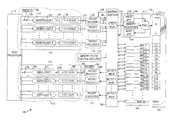
- FIG. 1is a block diagram of a memory system according to various example embodiments of the current invention.
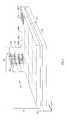
- FIG. 2is a cut-away conceptual view of a stacked-die 3D memory array stacked with a logic die according to various example embodiments.
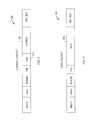
- FIGS. 3 and 4are packet diagrams showing fields associated with example packets according to various example embodiments.
- FIG. 5is a block diagram of a memory vault controller and associated modules according to various example embodiments.
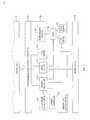
- FIG. 5Ais a block diagram of a memory system according to various example embodiments.
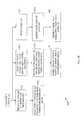
- FIGS. 6A , 6 B, 6 C, and 6 Dare flow diagrams illustrating a method according to various example embodiments.
- FIG. 1is a block diagram of a memory system 100 according to various example embodiments of the current invention.
- One or more embodimentsoperate to substantially concurrently transfer a plurality of outbound streams of commands, addresses, and/or data between one or more originating devices (e.g., one or more processors) and a set of stacked-array memory “vaults.” Increased memory system density, bandwidth, parallelism, and scalability may result.
- Multi-die memory array embodiments hereinaggregate control logic that is normally located on each individual memory array die in previous designs. Subsections of a stacked group of dies, referred to herein as a “memory vault,” share common control logic.
- the memory vault architecturestrategically partitions memory control logic to increase energy efficiency while providing a finer granularity of powered-on memory banks.
- Embodiments hereinalso enable a standardized host processor to memory system interface. The standardized interface may reduce re-design cycle times as memory technology evolves.
- FIG. 2is a cut-away conceptual view of a stacked-die 3D memory array 200 stacked with a logic die 202 according to various example embodiments.
- the memory system 100incorporates one or more stacks of tiled memory arrays such as the stacked-die 3D memory array 200 .
- Multiple memory arrayse.g., the memory array 203
- Each of the stacked diesis logically divided into multiple “tiles” (e.g., the tiles 205 A, 205 B, and 205 C associated with the stacked die 204 ).
- Each tilee.g., the tile 205 C
- each memory array 203may be configured as one or more independent memory banks in the memory system 100 .
- the memory arrays 203are not limited to any particular memory technology and may include dynamic random-access memory (DRAM), static random access memory (SRAM), flash memory, etc.
- a stacked set of memory array tiles 208may include a single tile from each of the stacked dies (e.g., the tiles 212 B, 212 C and 212 D, with the base tile hidden from view in FIG. 1 ).
- Power, address, and/or data and similar common signalsmay traverse the stacked set of tiles 208 in the “Z” dimension 220 on conductive paths (e.g., the conductive path 224 ), such as through-wafer interconnects (TWIs).
- TWIsthrough-wafer interconnects
- the stacked-die 3D memory array 200is thus partitioned into a set of memory “vaults” (e.g., the memory vault 230 ).
- Each memory vaultincludes a stacked set of tiles, one tile from each of a plurality of stacked dies.
- Each tile of the vaultincludes one or more memory arrays (e.g., the memory array 240 ).
- the resulting set of memory vaults 102is shown in FIG. 1 .
- Control, switching, and communication logic described here belowis fabricated onto the logic die 202 .
- the memory system 100includes a plurality of memory vault controllers (MVCs) 104 (e.g., the MVC 106 ).
- MVCsmemory vault controllers
- Each MVCis communicatively coupled to a corresponding memory vault (e.g., the memory vault 110 ) in a one-to-one relationship.
- Each MVCis thus capable of communicating with a corresponding memory vault independently from communications between other MVCs and their respective memory vaults.
- the memory system 100also includes a plurality of configurable serialized communication link interfaces (SCLIs) 112 .
- the SCLIs 112are divided into an outbound group of SCLIs 113 (e.g., the outbound SCLI 114 ) and an inbound group of SCLIs 115 .
- Each of the plurality of SCLIs 112is capable of concurrent operation with the other SCLIs 112 .
- the SCLIs 112communicatively couple the plurality of MVCs 104 to one or more host processor(s) 114 .
- the memory system 100presents a highly abstracted, multi-link, high-throughput interface to the host processor(s) 114 .
- the memory system 100may also include a matrix switch 116 .
- the matrix switch 116is communicatively coupled to the plurality of SCLIs 112 and to the plurality of MVCs 104 .
- the matrix switch 116is capable of cross-connecting each SCLI to a selected MVC.
- the host processor(s) 114may thus access the plurality of memory vaults 102 across the plurality of SCLIs 112 in a substantially simultaneous fashion.
- This architecturecan provide the processor-to-memory bandwidth needed by modern processor technologies, including multi-core technologies.
- the memory system 100may also include a memory fabric control register 117 communicatively coupled to the matrix switch 116 .
- the memory fabric control register 117accepts memory fabric configuration parameters from a configuration source and configures one or more components of the memory system 100 to operate according to a selectable mode.
- the matrix switch 116 and each of the plurality of memory vaults 102 and the plurality of MVCs 104may normally be configured to operate independently of each other in response to separate memory requests. Such a configuration may enhance memory system bandwidth as a result of the parallelism between the SCLIs 112 and the memory vaults 102 .
- the memory system 100may be reconfigured via the memory fabric control register 117 to cause a subset of two or more of the plurality of memory vaults 102 and a corresponding subset of MVCs to operate synchronously in response to a single request.
- the latter configurationmay be used to access a wider-than-normal data word to decrease latency, as further described below.
- Other configurationsmay be enabled by loading a selected bit pattern into the memory fabric control register 117 .
- FIGS. 3 and 4are packet diagrams showing fields associated with example packets 300 and 400 , respectively, according to various example embodiments.
- the memory system 100may also include a plurality of packet decoders 118 (e.g., the packet decoder 120 ) communicatively coupled to the matrix switch 116 .
- the host processor(s) 114assemble an outbound packet 122 that in some embodiments may be similar in structure to the example packet 300 or 400 . That is, the outbound packet 122 may contain a command field 310 , an address field 320 , and/or a data field 410 .
- the host processor 114then sends the outbound packet 122 across an outbound SCLI (e.g., the outbound SCLI 114 ) to the packet decoder 120 in a manner further explained below.
- an outbound SCLIe.g., the outbound SCLI 114
- the outbound SCLI 114may include a plurality of outbound differential pair serial paths (DPSPs) 128 .
- the DPSPs 128are communicatively coupled to the host processor(s) 114 and may collectively transport the outbound packet 122 . That is, each DPSP of the plurality of outbound DPSPs 128 may transport a first data rate outbound sub-packet portion of the outbound packet 122 at a first data rate.
- the outbound SCLI 114may also include a deserializer 130 communicatively coupled to the plurality of outbound DPSPs 128 .
- the deserializer 130converts each first data rate outbound sub-packet portion of the outbound packet 122 to a plurality of second data rate outbound sub-packets.
- the plurality of second data rate outbound sub-packetsis sent across a first plurality of outbound single-ended data paths (SEDPs) 134 at a second data rate.
- SEDPsoutbound single-ended data paths
- the outbound SCLI 114may also include a demultiplexer 138 communicatively coupled to the deserializer 130 .
- the demultiplexer 138converts each of the plurality of second data rate outbound sub-packets to a plurality of third data rate outbound sub-packets.
- the plurality of third data rate outbound sub-packetsis sent across a second plurality of outbound SEDPs 142 to the packet decoder 120 at a third data rate.
- the third data rateis slower than the second data rate.
- the packet decoder 120receives the outbound packet 122 and extracts the command field 310 (e.g., of the example packet 300 ), the address field 320 (e.g., of the example packet 300 ), and/or the data field (e.g., of the example packet 400 ). In some embodiments, the packet decoder 120 decodes the address field 320 to determine a corresponding set of memory vault select signals. The packet decoder 120 presents the set of memory vault select signals to the matrix switch 116 on an interface 146 . The vault select signals cause the input data paths 148 to be switched to the MVC 106 corresponding to the outbound packet 122 .
- the memory system 100may include a plurality of packet encoders 154 (e.g., the packet encoder 158 ) communicatively coupled to the matrix switch 116 .
- the packet encoder 158may receive an inbound memory command, an inbound memory address, and/or inbound memory data from one of the plurality of MVCs 104 via the matrix switch 116 .
- the packet encoder 158encodes the inbound memory command, address, and/or data into an inbound packet 160 for transmission across an inbound SCLI 164 to the host processor(s) 114 .
- the packet encoder 158may segment the inbound packet 160 into a plurality of third data rate inbound sub-packets.
- the packet encoder 158may send the plurality of third data rate inbound sub-packets across a first plurality of inbound single-ended data paths (SEDPs) 166 at a third data rate.
- the memory system 100may also include a multiplexer 168 communicatively coupled to the packet encoder 158 .
- the multiplexer 168may multiplex each of a plurality of subsets of the third data rate inbound sub-packets into a second data rate inbound sub-packet.
- the multiplexer 168sends the second data rate inbound sub-packets across a second plurality of inbound SEDPs 170 at a second data rate that is faster than the third data rate.
- the memory system 100may further include a serializer 172 communicatively coupled to the multiplexer 168 .
- the serializer 172aggregates each of a plurality of subsets of the second data rate inbound sub-packets into a first data rate inbound sub-packet.
- the first data rate inbound sub-packetsare sent to the host processor(s) 114 across a plurality of inbound differential pair serial paths (DPSPs) 174 at a first data rate that is faster than the second data rate.
- DPSPsdifferential pair serial paths
- FIG. 5is a block diagram of an MVC (e.g., the MVC 106 ) and associated modules according to various example embodiments.
- the MVC 106may include a programmable vault control logic (PVCL) component (e.g., the PVCL 510 ).
- the PVCL 510interfaces the MVC 106 to the corresponding memory vault (e.g., the memory vault 110 ).
- the PVCL 510generates one or more bank control signals and/or timing signals associated with the corresponding memory vault 110 .
- the PVCL 510may be configured to adapt the MVC 106 to a memory vault 110 of a selected configuration or a selected technology.
- the memory system 100may initially be configured using currently-available DDR2 DRAMs.
- the memory system 100may subsequently be adapted to accommodate DDR3-based memory vault technology by reconfiguring the PVCL 510 to include DDR3 bank control and timing logic.
- the MVC 106may also include a memory sequencer 514 communicatively coupled to the PVCL 510 .
- the memory sequencer 514performs a memory technology dependent set of operations based upon the technology used to implement the associated memory vault 110 .
- the memory sequencer 514may, for example, perform command decode operations, memory address multiplexing operations, memory address demultiplexing operations, memory refresh operations, memory vault training operations, and/or memory vault prefetch operations associated with the corresponding memory vault 110 .
- the memory sequencer 514may comprise a DRAM sequencer.
- memory refresh operationsmay originate in a refresh controller 515 .
- the memory sequencer 514may be configured to adapt the memory system 100 to a memory vault 110 of a selected configuration or technology.
- the memory sequencer 514may be configured to operate synchronously with other memory sequencers associated with the memory system 100 .
- Such a configurationmay be used to deliver a wide data word from multiple memory vaults to a cache line (not shown) associated with the host processor(s) 114 in response to a single cache line request.
- the MVC 106may also include a write buffer 516 .
- the write buffer 516may be communicatively coupled to the PVCL 510 to buffer data arriving at the MVC 106 from the host processor(s) 114 .
- the MVC 106may further include a read buffer 517 .
- the read buffer 517may be communicatively coupled to the PVCL 510 to buffer data arriving at the MVC 106 from the corresponding memory vault 110 .
- the MVC 106may also include an out-of-order request queue 518 .
- the out-of-order request queue 518establishes an ordered sequence of read and/or write operations to the plurality of memory banks included in the memory vault 110 .
- the ordered sequenceis chosen to avoid sequential operations to any single memory bank in order to reduce bank conflicts and to decrease read-to-write turnaround time.
- the MVC 106may also include a memory vault repair logic (MVRL) component 524 .
- the MVRL 524may be communicatively coupled to the memory vault 110 to perform defective memory array address remapping operations using array repair logic 526 .
- the MVRL 524may also perform TWI repair operations associated with the memory vault 110 using TWI repair logic 528 .
- FIG. 5Ais a block diagram of a memory system 5000 according to various example embodiments.
- the memory system 5000may include a set of memory vaults 102 (e.g., the memory vault 110 ) and a corresponding set of MVCs 104 (e.g., the MVC 106 ).
- the MVCsare fabricated on a logic die (e.g., the logic die 202 of FIG. 2 ) stacked with memory array dies (e.g., the memory array die 204 of FIG. 2 ), as previously discussed.
- FIG. 5Arefers to connections between the example memory vault 110 , the example MVC 106 , and various structural elements associated with the monitoring and control of the memory system 5000 . It is noted, however, that the connections and functionality described below and illustrated on FIG. 5A apply to each one of the set of memory vaults 102 and to each one of the set of MVCs 104 .
- the memory system 5000may also include a system monitor processor 5004 (which could include an embedded processor or a state machine, for example).
- the system monitor processor 5004is communicatively coupled to each of the set of memory vaults 102 and to each of the set of MVCs 104 .
- the processor 5004monitors at least one operation parameter, such as a first set of operational parameters, associated with the memory vault and performs alerting and/or reporting operations to a host device (not shown in FIG. 5A ).
- the processor 5004may also adjust at least one operation parameter, such as a second set of operational parameters, associated with the memory vault 110 , as further described below.
- the memory system 5000may further include one or more sensors (e.g., the voltage sensor 5006 , the temperature sensor 5008 and/or a bit error detector) communicatively coupled to the system monitor processor 5004 .
- the sensors 5006 and 5008are merely examples; other sensors may be included in various embodiments.
- the sensorsmay sense a set of values (e.g., a set of voltages or a set of temperatures) associated with the first set of operational parameters.
- a sensor monitoring module 5010may be communicatively coupled to the system monitor processor 5004 .
- the sensor monitoring module 5010stores the set of sensed values.
- the sensor monitoring module 5010also compares the sensed values to a corresponding set of alert threshold values.
- the memory system 5000may also include a statistical analysis module 5012 communicatively coupled to the system monitor processor 5004 .
- the statistical analysis module 5012performs statistical calculations on the set of sensed values.
- the memory system 5000may further include a reporting and alert module 5014 communicatively coupled to the system monitor processor 5004 .
- the reporting and alert module 5014alerts the host device if a sensed value exceeds a corresponding alert threshold value. In some embodiments, the reporting and alert module 5014 also reports statistical and performance data to the host device.
- a power distribution system 5016may be communicatively coupled to the system monitor processor 5004 .
- the power distribution system 5016receives operational parameter sensor data (e.g., voltage level measurements or temperature measurements) from sensors (e.g., the sensors 5006 and 5008 ) within the memory vault 110 .
- the power distribution system 5016adjusts supply voltage levels to subsections (e.g., to a memory array die or to an individual memory array on the die) of the memory vault 110 according to a power usage level associated with each array.
- the memory system 5000may also include an error monitor, such as an error correction code (ECC) module 5020 , communicatively coupled to a dynamic repair module 5022 .
- ECCerror correction code
- the dynamic repair module 5022may be coupled to the ECC module 5020 via the MVRL 524 .
- the ECC module 5020detects one or more soft error corrections, hard bit failures, refresh adjustments, and/or failed vias.
- the dynamic repair module 5022is communicatively coupled to the system monitor processor 5004 .
- the dynamic repair module 5022receives notifications of the soft error corrections, hard bit failures, refresh adjustments, and/or via failures and takes corrective action.
- Memory vault repair logic (MVRL) 524may be communicatively coupled to the dynamic repair module 5022 .
- the MVRL 524redirects the memory requests from the failed memory arrays to the spare memory arrays.
- the MVRL 524also redirects the memory vault signals from the failed vias to the spare vias.
- the memory system 5000may further include a PVCL 510 .
- the PVCL 510transfers data and address words between the host device and the memory vault 110 via communication links (e.g., the communication links 112 of FIG. 1 ), as previously described.
- the PVCL 510also decodes the address words to obtain subsection addresses (e.g., die addresses, array addresses, row addresses, and column addresses) corresponding to each of a number of memory vault subsections.
- a traffic density monitor 5026may be communicatively coupled to the system monitor processor and/or to the PVCL 510 .
- the traffic density monitor 5026monitors the frequency of access to each of several memory vault subsections.
- the traffic density monitor 5026also monitors traffic volumes across the communication links and reports frequency-of-access and traffic volume statistics to the host device.
- the traffic density monitor 5026is configured to direct the PVCL 510 to perform load-balancing operations.
- the traffic density monitor 5026may direct the PVCL 510 to substitute subsection addresses corresponding to underutilized subsections of the memory vault 110 in place of subsection addresses corresponding to over-utilized subsections. Such operations may result in decreased latency and/or higher throughput.
- the traffic density monitor 5026may be configured to provide feed-forward information to the power distribution system 5016 .
- the feed-forward informationmay include recent history and/or projections of subsection utilization, for example.
- the power distribution system 5016may utilize the feed-forward information to anticipate power requirements at the various subsections of the memory vault 110 .
- the memory system 5000may also include a data eye monitor 5028 communicatively coupled to the system monitor processor 5004 and/or to the PVCL 510 .
- the data eye monitor 5028conducts periodic data strobe positioning adjustment routines and tracks trends related to data strobe drift on an individual memory vault basis. That is, data strobe timing to a memory vault, to a memory vault die, or to a memory cell array on a die may be adjusted incrementally through a range while performing a sequence of read or write accesses. Limits of the range may be determined by detecting read or write errors.
- the center of the rangemay be calculated as a mid-point between the limits and may be selected as the desired strobe timing, the center of the “data eye.”
- data strobe adjustmentmay be performed individually for each of several dies comprising a memory vault. Any of the components previously described may be implemented in a number of ways, including embodiments in hardware, software, firmware, or combinations thereof. It is noted that “software” in this context refers to statutory software structures and not to mere software listings.
- the memory system 100the memory arrays 200 , 203 , 240 , 527 ; the die 202 , 204 ; the tiles 205 A, 205 B, 205 C, 208 , 212 B, 212 C, 212 D; the “Z” dimension 220 ; the paths 224 , 148 ; the memory vaults 230 , 102 , 110 ; the MVCs 104 , 106 ; the SCLIs 112 , 113 , 114 , 115 , 164 ; the processor(s) 114 ; the matrix switch 116 ; the register 117 ; the packets 300 , 400 , 122 , 160 ; the packet decoders 118 , 120 ; the fields 310 , 320 , 410 ; the DPSPs 128 , 174 ; the deserializer 130 ; the SEDPs 134 , 142 , 166 , 170 ; the demultiplexer 138 ; the interface
- the modulesmay include hardware circuitry, optical components, single or multi-processor circuits, memory circuits, software program modules and objects (but not software listings), firmware, and combinations thereof, as desired by the architect of the memory system 100 and as appropriate for particular implementations of various embodiments.
- the apparatus and systems of various embodimentsmay be useful in applications other than a high-density, multi-link, high-throughput semiconductor memory subsystem 5000 .
- various embodiments of the inventionare not to be so limited.
- the illustration of the memory system 5000is intended to provide a general understanding of the structure of various embodiments. It is not intended to serve as a complete description of all the elements and features of apparatus and systems that might make use of the structures described herein.
- novel apparatus and systems of various embodimentsmay comprise or be incorporated into electronic circuitry used in computers, communication and signal processing circuitry, single-processor or multi-processor modules, single or multiple embedded processors, multi-core processors, data switches, and application-specific modules including multilayer, multi-chip modules.
- Such apparatus and systemsmay further be included as sub-components within a variety of electronic systems, such as televisions, cellular telephones, personal computers (e.g., laptop computers, desktop computers, handheld computers, tablet computers, etc.), workstations, radios, video players, audio players (e.g., MP3 (Motion Picture Experts Group, Audio Layer 3) players), vehicles, medical devices (e.g., heart monitor, blood pressure monitor, etc.), set top boxes, and others.
- Some embodimentsmay include a number of methods.
- FIGS. 6A , 6 B, 6 C, and 6 Dare flow diagrams illustrating a method 1000 according to various example embodiments.
- the method 1000includes monitoring at least one operational parameter associated with a memory vault such as voltage, temperature, timing parameters, memory vault utilization statistics, and/or data errors, among others.
- the method 1000may also include adjusting at least one operational parameter associated with the memory vault, such as supply voltage, data strobe timing, and/or defective memory array substitution.
- the method 1000may further include performing alerting and reporting operations to a host device.
- the method 1000may commence at block 1006 with receiving a set of alert threshold values.
- the method 100may continue with storing the set of alert threshold values, at block 1010 .
- the method 1000may also include sensing a set of values associated with the first set of operational parameters, at block 1012 , and storing the set of sensed values, at block 1014 .
- the method 1000may further include comparing the set of sensed values to corresponding ones of the set of alert threshold values, at block 1016 .
- the method 1000may also include performing statistical calculations on the set of sensed values, at block 1020 , and reporting statistical and performance data to the host device, at block 1022 . In some embodiments, the method 1000 may further include alerting the host device if a sensed value exceeds a corresponding alert threshold value, at block 1024 .
- the method 1000may continue at block 1028 with receiving one or more voltage level measurements or temperature measurements from sensors within the memory vault.
- Various embodimentsmay include the sensors at a memory vault level, at a memory array die level, or even at the memory array level.
- the method 1000may also include adjusting supply voltage levels within the memory vault responsive to the voltage level measurements or temperature measurements, at block 1032 . Such adjustments may be made on the memory vault level, at the memory array die level, or at the memory array level.
- the method 1000may continue at block 1036 with detecting one or more soft error corrections, hard bit failures, and/or refresh adjustments.
- the errorsmay be detected at an ECC module (e.g., the ECC module 5020 of FIG. 5A ), at the PVCL (e.g., the PVCL 510 of FIG. 5A ), and/or at some other suitable point within the logic die 202 or within a memory vault itself.
- the method 1000may also include receiving notifications of the soft error corrections, hard bit failures, and/or refresh adjustments, at block 1040 . Such notifications may, for example, be received at the dynamic repair module 5022 of FIG. 5A , and may be indicative of a failed or failing memory array.
- the method 1000may further include redirecting memory requests from failed memory arrays to spare memory arrays, at block 1042 .
- the method 1000may continue at block 1046 with detecting one or more failed conductive paths (referred to hereinafter as a “failed via”), such as a failed through-wafer interconnect (e.g., a conductive path that extends at least partially through a wafer). Failed via events may be detected at the ECC module, at a PVCL, and/or at some other suitable point within the logic die 202 or within the memory vault itself.
- the method 1000may also include receiving notifications of the failed vias, at block 1048 . Such notifications may, for example, be received at the dynamic repair module 5022 of FIG. 5A .
- the method 1000may further include redirecting memory vault signals from the failed vias to spare vias, at block 1050 .
- the method 1000may continue further at block 1054 with transferring data and/or address words across communication links between the host device and the memory vault.
- the method 1000may also include decoding the address words to obtain memory vault subsection addresses, at block 1056 .
- Each subsection addresscorresponds to a subsection of the memory vault.
- a subsectionmay comprise a die or a memory array, for example.
- the method 1000may also include monitoring traffic volumes across the communication links, at block 1058 , and reporting the traffic volumes to the host device, at block 1060 .
- the method 1000may further include monitoring frequencies of access to each of the subsections of the memory vault, at block 1062 , and reporting the frequencies of access to the host device, at block 1064 .
- the method 1000may continue at block 1068 with balancing the utilization of the various subsections of the memory vault by managing memory address allocation. For example, a host device operating system may allocate physical memory to lesser-used memory vault subsections based upon reports of subsection utilization received at the host device from the memory subsystem.
- the method 1000may also include substituting subsection addresses to balance utilization of the various subsections of the memory vault, at block 1070 .
- the MVCmay be directed to substitute lesser-used subsection addresses for heavily used subsection addresses to balance memory vault subsection utilization.
- the method 1000may further include providing feed-forward subsection utilization information to a power distribution system, at block 1074 .
- the subsection utilization informationmay be used to anticipate power requirements at the various subsections of the memory vault.
- the method 1000may also include individually adjusting power availability to the various subsections of the memory vault, at block 1076 . For example, the supply voltage may be increased to memory arrays for which a high access load is anticipated.
- the method 1000may continue at block 1080 with conducting a periodic data strobe positioning adjustment routine. That is, data strobe timing to a memory vault, to a memory vault die, or to a memory cell array on a die may be adjusted incrementally through a range while performing a sequence of read or write accesses. Limits of the range may be determined by detecting read or write errors. The center of the range may be calculated as a mid-point between the limits and may be selected as the desired strobe timing, the center of the “data eye.” In some embodiments, the method 1000 may include tracking trends related to data strobe drift at the memory vault, the memory vault die, or at a memory cell array on the die, at block 1082 .
- a software programmay be launched from a computer-readable medium in a computer-based system to execute functions defined in the software program.
- Various programming languagesmay be employed to create software programs designed to implement and perform the methods disclosed herein.
- the programsmay be structured in an object-oriented format using an object-oriented language such as Java or C++.
- the programsmay be structured in a procedure-oriented format using a procedural language, such as assembly or C.
- the software componentsmay communicate using well-known mechanisms, including application program interfaces, inter-process communication techniques, and remote procedure calls, among others.
- the teachings of various embodimentsare not limited to any particular programming language or environment.
- the apparatus, systems, and methods described hereinmay operate to monitor and adjust operational parameters associated with a memory vault.
- the operational parametersmay be statistically analyzed and reported to a host device coupled to the memory vault.
- Alert thresholdsmay be set and alerts issued to the host device if one or more parameters exceed the corresponding thresholds.
- These tasksmay be performed by modules on a logic die stacked with the memory vault, thus offloading such processing from the host device.
- Higher levels of integration between the monitoring/control functions and the memory vaultmay result in increased performance at lower cost.
- data strobe calibrationmay be performed individually for each die in a stack of dies corresponding to the memory vault.
- memory array dies with a broader range of timing capabilitiesmay be used to manufacture a memory vault. Increased manufacturing yields and decreased costs may result.
- inventive subject mattermay be referred to herein individually or collectively by the term “invention” merely for convenience and without intending to voluntarily limit this application to any single invention or inventive concept, if more than one is in fact disclosed.
- inventive conceptany arrangement calculated to achieve the same purpose may be substituted for the specific embodiments shown.
- This disclosureis intended to cover any and all adaptations or variations of various embodiments. Combinations of the above embodiments and other embodiments not specifically described herein will be apparent to those of skill in the art upon reviewing the above description.
Landscapes
- Engineering & Computer Science (AREA)
- Theoretical Computer Science (AREA)
- Physics & Mathematics (AREA)
- Computing Systems (AREA)
- General Physics & Mathematics (AREA)
- General Engineering & Computer Science (AREA)
- Quality & Reliability (AREA)
- Mathematical Physics (AREA)
- Techniques For Improving Reliability Of Storages (AREA)
- Debugging And Monitoring (AREA)
- Memory System (AREA)
- Radar Systems Or Details Thereof (AREA)
- Alarm Systems (AREA)
- Burglar Alarm Systems (AREA)
Abstract
Description
Claims (28)
Priority Applications (1)
| Application Number | Priority Date | Filing Date | Title |
|---|---|---|---|
| US13/561,837US8601332B2 (en) | 2009-01-12 | 2012-07-30 | Systems and methods for monitoring a memory system |
Applications Claiming Priority (3)
| Application Number | Priority Date | Filing Date | Title |
|---|---|---|---|
| US12/352,381US8032804B2 (en) | 2009-01-12 | 2009-01-12 | Systems and methods for monitoring a memory system |
| US13/250,688US8234528B2 (en) | 2009-01-12 | 2011-09-30 | Systems and methods for monitoring a memory system |
| US13/561,837US8601332B2 (en) | 2009-01-12 | 2012-07-30 | Systems and methods for monitoring a memory system |
Related Parent Applications (1)
| Application Number | Title | Priority Date | Filing Date |
|---|---|---|---|
| US13/250,688ContinuationUS8234528B2 (en) | 2009-01-12 | 2011-09-30 | Systems and methods for monitoring a memory system |
Publications (2)
| Publication Number | Publication Date |
|---|---|
| US20120297241A1 US20120297241A1 (en) | 2012-11-22 |
| US8601332B2true US8601332B2 (en) | 2013-12-03 |
Family
ID=42317217
Family Applications (3)
| Application Number | Title | Priority Date | Filing Date |
|---|---|---|---|
| US12/352,381Active2029-10-17US8032804B2 (en) | 2009-01-12 | 2009-01-12 | Systems and methods for monitoring a memory system |
| US13/250,688ActiveUS8234528B2 (en) | 2009-01-12 | 2011-09-30 | Systems and methods for monitoring a memory system |
| US13/561,837ActiveUS8601332B2 (en) | 2009-01-12 | 2012-07-30 | Systems and methods for monitoring a memory system |
Family Applications Before (2)
| Application Number | Title | Priority Date | Filing Date |
|---|---|---|---|
| US12/352,381Active2029-10-17US8032804B2 (en) | 2009-01-12 | 2009-01-12 | Systems and methods for monitoring a memory system |
| US13/250,688ActiveUS8234528B2 (en) | 2009-01-12 | 2011-09-30 | Systems and methods for monitoring a memory system |
Country Status (7)
| Country | Link |
|---|---|
| US (3) | US8032804B2 (en) |
| EP (1) | EP2386084B1 (en) |
| JP (2) | JP2012515381A (en) |
| KR (1) | KR101603814B1 (en) |
| CN (1) | CN102272737B (en) |
| TW (1) | TWI505089B (en) |
| WO (1) | WO2010081157A2 (en) |
Cited By (4)
| Publication number | Priority date | Publication date | Assignee | Title |
|---|---|---|---|---|
| US20160124785A1 (en)* | 2014-10-30 | 2016-05-05 | Siemens Aktiengesellschaft | System and method of safety monitoring for embedded systems |
| US9606851B2 (en) | 2015-02-02 | 2017-03-28 | International Business Machines Corporation | Error monitoring of a memory device containing embedded error correction |
| US9871021B2 (en) | 2016-05-10 | 2018-01-16 | Samsung Electronics Co., Ltd. | Data storage device having multi-stack chip package and operating method thereof |
| US9940457B2 (en) | 2015-02-13 | 2018-04-10 | International Business Machines Corporation | Detecting a cryogenic attack on a memory device with embedded error correction |
Families Citing this family (87)
| Publication number | Priority date | Publication date | Assignee | Title |
|---|---|---|---|---|
| US8032804B2 (en) | 2009-01-12 | 2011-10-04 | Micron Technology, Inc. | Systems and methods for monitoring a memory system |
| US8127185B2 (en)* | 2009-01-23 | 2012-02-28 | Micron Technology, Inc. | Memory devices and methods for managing error regions |
| US8018752B2 (en) | 2009-03-23 | 2011-09-13 | Micron Technology, Inc. | Configurable bandwidth memory devices and methods |
| US8996836B2 (en) | 2009-12-18 | 2015-03-31 | Micron Technology, Inc. | Stacked device detection and identification |
| JP5421152B2 (en) | 2010-03-08 | 2014-02-19 | ルネサスエレクトロニクス株式会社 | Semiconductor integrated circuit |
| US8412882B2 (en)* | 2010-06-18 | 2013-04-02 | Microsoft Corporation | Leveraging chip variability |
| US8464107B2 (en)* | 2010-06-28 | 2013-06-11 | Qualcomm Incorporated | Surrogate circuit for testing an interface |
| US8364813B2 (en) | 2010-11-02 | 2013-01-29 | International Business Machines Corporation | Administering incident pools for event and alert analysis |
| US8386602B2 (en) | 2010-11-02 | 2013-02-26 | International Business Machines Corporation | Relevant alert delivery in a distributed processing system |
| US8621277B2 (en)* | 2010-12-06 | 2013-12-31 | International Business Machines Corporation | Dynamic administration of component event reporting in a distributed processing system |
| US8805999B2 (en) | 2010-12-07 | 2014-08-12 | International Business Machines Corporation | Administering event reporting rules in a distributed processing system |
| US8737231B2 (en) | 2010-12-07 | 2014-05-27 | International Business Machines Corporation | Dynamic administration of event pools for relevant event and alert analysis during event storms |
| US8868984B2 (en) | 2010-12-07 | 2014-10-21 | International Business Machines Corporation | Relevant alert delivery in a distributed processing system with event listeners and alert listeners |
| KR101214285B1 (en)* | 2010-12-30 | 2012-12-20 | 에스케이하이닉스 주식회사 | Memory system and operating method thereof |
| US9658678B2 (en) | 2011-03-31 | 2017-05-23 | Intel Corporation | Induced thermal gradients |
| US9490003B2 (en)* | 2011-03-31 | 2016-11-08 | Intel Corporation | Induced thermal gradients |
| US8756462B2 (en) | 2011-05-24 | 2014-06-17 | International Business Machines Corporation | Configurable alert delivery for reducing the amount of alerts transmitted in a distributed processing system |
| US8645757B2 (en) | 2011-05-26 | 2014-02-04 | International Business Machines Corporation | Administering incident pools for event and alert analysis |
| US8676883B2 (en) | 2011-05-27 | 2014-03-18 | International Business Machines Corporation | Event management in a distributed processing system |
| US9213621B2 (en) | 2011-05-27 | 2015-12-15 | International Business Machines Corporation | Administering event pools for relevant event analysis in a distributed processing system |
| US8880943B2 (en) | 2011-06-22 | 2014-11-04 | International Business Machines Corporation | Restarting event and alert analysis after a shutdown in a distributed processing system |
| US8392385B2 (en) | 2011-06-22 | 2013-03-05 | International Business Machines Corporation | Flexible event data content management for relevant event and alert analysis within a distributed processing system |
| US8713366B2 (en) | 2011-06-22 | 2014-04-29 | International Business Machines Corporation | Restarting event and alert analysis after a shutdown in a distributed processing system |
| US9419650B2 (en) | 2011-06-22 | 2016-08-16 | International Business Machines Corporation | Flexible event data content management for relevant event and alert analysis within a distributed processing system |
| TWI430094B (en) | 2011-09-22 | 2014-03-11 | Phison Electronics Corp | Memory storage device, memory controller, and temperature management method |
| US20130097215A1 (en) | 2011-10-18 | 2013-04-18 | International Business Machines Corporation | Selected Alert Delivery In A Distributed Processing System |
| US9178936B2 (en) | 2011-10-18 | 2015-11-03 | International Business Machines Corporation | Selected alert delivery in a distributed processing system |
| US20130097272A1 (en) | 2011-10-18 | 2013-04-18 | International Business Machines Corporation | Prioritized Alert Delivery In A Distributed Processing System |
| US8887175B2 (en) | 2011-10-18 | 2014-11-11 | International Business Machines Corporation | Administering incident pools for event and alert analysis |
| US8713581B2 (en) | 2011-10-27 | 2014-04-29 | International Business Machines Corporation | Selected alert delivery in a distributed processing system |
| TWI454910B (en)* | 2011-11-03 | 2014-10-01 | Winbond Electronics Corp | Method of operating a memory device, method of reading a digital memory, and memory device thereof |
| HK1201632A1 (en)* | 2011-11-25 | 2015-09-04 | 考文森智财管理公司 | Memory system and method using stacked memory device dice |
| US8867286B2 (en)* | 2011-12-20 | 2014-10-21 | Industrial Technology Research Institute | Repairable multi-layer memory chip stack and method thereof |
| DE112011105998T5 (en) | 2011-12-23 | 2014-09-18 | Intel Corporation | Memory operations using system temperature sensor data |
| CN105718223B (en)* | 2011-12-27 | 2019-11-12 | 英特尔公司 | The method and apparatus of management work load memory distribution |
| CN107273302B (en) | 2011-12-27 | 2021-02-09 | 英特尔公司 | Method, apparatus and system for managing workload memory allocation |
| US8869007B2 (en) | 2012-06-14 | 2014-10-21 | International Business Machines Corporation | Three dimensional (3D) memory device sparing |
| US8874979B2 (en) | 2012-06-14 | 2014-10-28 | International Business Machines Corporation | Three dimensional(3D) memory device sparing |
| US9478502B2 (en)* | 2012-07-26 | 2016-10-25 | Micron Technology, Inc. | Device identification assignment and total device number detection |
| US8954811B2 (en) | 2012-08-06 | 2015-02-10 | International Business Machines Corporation | Administering incident pools for incident analysis |
| US9697147B2 (en) | 2012-08-06 | 2017-07-04 | Advanced Micro Devices, Inc. | Stacked memory device with metadata management |
| US8922243B2 (en) | 2012-12-23 | 2014-12-30 | Advanced Micro Devices, Inc. | Die-stacked memory device with reconfigurable logic |
| US8943366B2 (en) | 2012-08-09 | 2015-01-27 | International Business Machines Corporation | Administering checkpoints for incident analysis |
| US9170948B2 (en) | 2012-12-23 | 2015-10-27 | Advanced Micro Devices, Inc. | Cache coherency using die-stacked memory device with logic die |
| US9135185B2 (en) | 2012-12-23 | 2015-09-15 | Advanced Micro Devices, Inc. | Die-stacked memory device providing data translation |
| US9201777B2 (en) | 2012-12-23 | 2015-12-01 | Advanced Micro Devices, Inc. | Quality of service support using stacked memory device with logic die |
| US9065722B2 (en) | 2012-12-23 | 2015-06-23 | Advanced Micro Devices, Inc. | Die-stacked device with partitioned multi-hop network |
| US10042750B2 (en) | 2013-03-15 | 2018-08-07 | Micron Technology, Inc. | Apparatuses and methods for adaptive control of memory using an adaptive memory controller with a memory management hypervisor |
| JP6195342B2 (en)* | 2013-03-27 | 2017-09-13 | キヤノン株式会社 | Information processing apparatus and memory access control method |
| US9361184B2 (en) | 2013-05-09 | 2016-06-07 | International Business Machines Corporation | Selecting during a system shutdown procedure, a restart incident checkpoint of an incident analyzer in a distributed processing system |
| US10083069B2 (en)* | 2013-06-27 | 2018-09-25 | Sandisk Technologies Llc | Word line defect detection and handling for a data storage device |
| US9286948B2 (en) | 2013-07-15 | 2016-03-15 | Advanced Micro Devices, Inc. | Query operations for stacked-die memory device |
| US9170860B2 (en) | 2013-07-26 | 2015-10-27 | International Business Machines Corporation | Parallel incident processing |
| US9658902B2 (en) | 2013-08-22 | 2017-05-23 | Globalfoundries Inc. | Adaptive clock throttling for event processing |
| US9256482B2 (en) | 2013-08-23 | 2016-02-09 | International Business Machines Corporation | Determining whether to send an alert in a distributed processing system |
| US9602337B2 (en) | 2013-09-11 | 2017-03-21 | International Business Machines Corporation | Event and alert analysis in a distributed processing system |
| US9086968B2 (en) | 2013-09-11 | 2015-07-21 | International Business Machines Corporation | Checkpointing for delayed alert creation |
| US9389943B2 (en) | 2014-01-07 | 2016-07-12 | International Business Machines Corporation | Determining a number of unique incidents in a plurality of incidents for incident processing in a distributed processing system |
| KR102088343B1 (en) | 2014-02-05 | 2020-03-12 | 삼성전자주식회사 | Semiconductor memory device |
| US8929169B1 (en) | 2014-05-13 | 2015-01-06 | Sandisk Technologies Inc. | Power management for nonvolatile memory array |
| US20160162185A1 (en)* | 2014-12-05 | 2016-06-09 | Sandisk Technologies Inc. | Data programming for a memory having a three-dimensional memory configuration |
| US10020031B2 (en)* | 2015-05-21 | 2018-07-10 | Arm Limited | Location-based optimization for memory systems |
| KR102602694B1 (en)* | 2015-12-15 | 2023-11-15 | 삼성전자주식회사 | Method for operating storage controller and method for operating storage device including same |
| US10078544B2 (en)* | 2015-12-19 | 2018-09-18 | Intel Corporation | Apparatus and method for an on-chip reliability controller |
| KR102529171B1 (en)* | 2016-02-26 | 2023-05-04 | 삼성전자주식회사 | Memory device diagnosis system |
| US9767892B1 (en)* | 2016-04-27 | 2017-09-19 | Altera Corporation | Memory elements with dynamic pull-up weakening write assist circuitry |
| US10013192B2 (en) | 2016-08-17 | 2018-07-03 | Nxp Usa, Inc. | Soft error detection in a memory system |
| US9753806B1 (en) | 2016-10-14 | 2017-09-05 | International Business Machines Corporation | Implementing signal integrity fail recovery and mainline calibration for DRAM |
| KR102030462B1 (en)* | 2017-12-08 | 2019-10-10 | 현대오트론 주식회사 | An Apparatus and a Method for Detecting Errors On A Plurality of Multi-core Processors for Vehicles |
| US10740177B2 (en)* | 2018-01-16 | 2020-08-11 | International Business Machines Corporation | Optimizing error correcting code in three-dimensional stacked memory |
| US20190273649A1 (en)* | 2018-03-02 | 2019-09-05 | Nxp B.V. | Vehicle quality of service device |
| US10446246B2 (en)* | 2018-03-14 | 2019-10-15 | Silicon Storage Technology, Inc. | Method and apparatus for data refresh for analog non-volatile memory in deep learning neural network |
| JP6991446B2 (en)* | 2018-05-18 | 2022-01-12 | 日本電信電話株式会社 | Packet processing device and its memory access control method |
| US10895983B2 (en)* | 2018-11-06 | 2021-01-19 | Micron Technology, Inc. | Memory element profiling and operational adjustments |
| KR102835731B1 (en)* | 2018-12-20 | 2025-07-18 | 에스케이하이닉스 주식회사 | Apparatuses that detect error of data stored in memory device and operating method thereof |
| US10990480B1 (en) | 2019-04-05 | 2021-04-27 | Pure Storage, Inc. | Performance of RAID rebuild operations by a storage group controller of a storage system |
| US10923199B2 (en) | 2019-05-01 | 2021-02-16 | Micron Technology, Inc. | Peak current management in a memory array |
| US11449245B2 (en)* | 2019-06-13 | 2022-09-20 | Western Digital Technologies, Inc. | Power target calibration for controlling drive-to-drive performance variations in solid state drives (SSDs) |
| US11599299B2 (en)* | 2019-11-19 | 2023-03-07 | Invensas Llc | 3D memory circuit |
| US11188244B2 (en)* | 2020-04-14 | 2021-11-30 | Micron Technology, Inc. | Adjusting trim settings to improve memory performance or reliability |
| JP7500263B2 (en)* | 2020-04-27 | 2024-06-17 | キオクシア株式会社 | MEMORY DEVICE AND METHOD FOR CALIBRATING TEMPERATURE SENSOR - Patent application |
| US11372572B2 (en)* | 2020-05-08 | 2022-06-28 | Kyndryl, Inc. | Self-relocating data center based on predicted events |
| US11307782B2 (en) | 2020-06-03 | 2022-04-19 | Micron Technology, Inc. | Host identification and verification system and method for a memory system |
| US11600355B2 (en)* | 2020-07-28 | 2023-03-07 | Micron Technology, Inc. | Monitoring and adjusting access operations at a memory device |
| US12165740B2 (en) | 2021-08-31 | 2024-12-10 | Micron Technology, Inc. | Memory traffic monitoring |
| US20240087636A1 (en)* | 2022-09-08 | 2024-03-14 | Advanced Micro Devices, Inc. | Dynamic Memory Operations |
| US12346578B2 (en)* | 2023-06-26 | 2025-07-01 | SanDisk Technologies, Inc. | Distributed temperature sensing scheme to suppress peak Icc in non-volatile memories |
Citations (19)
| Publication number | Priority date | Publication date | Assignee | Title |
|---|---|---|---|---|
| US20020034377A1 (en) | 2000-09-21 | 2002-03-21 | Nec Corporation | System and method for reproducing moving images |
| US6430103B2 (en) | 2000-02-03 | 2002-08-06 | Hitachi, Ltd. | Semiconductor integrated circuit device with memory banks and read buffer capable of storing data read out from one memory bank when data of another memory bank is outputting |
| US6747887B2 (en) | 2000-09-18 | 2004-06-08 | Intel Corporation | Memory module having buffer for isolating stacked memory devices |
| US20040151043A1 (en) | 1997-04-04 | 2004-08-05 | Elm Technology Corporation | Three dimensional structure memory |
| US20040260957A1 (en) | 2003-06-20 | 2004-12-23 | Jeddeloh Joseph M. | System and method for selective memory module power management |
| US6912680B1 (en) | 1997-02-11 | 2005-06-28 | Micron Technology, Inc. | Memory system with dynamic timing correction |
| US20050139977A1 (en) | 2003-12-25 | 2005-06-30 | Elpida Memory, Inc | Semiconductor integrated circuit device |
| US7132739B2 (en) | 2002-07-26 | 2006-11-07 | Intel Corporation | Encapsulated stack of dice and support therefor |
| US20070195613A1 (en) | 2006-02-09 | 2007-08-23 | Rajan Suresh N | Memory module with memory stack and interface with enhanced capabilities |
| US20080010435A1 (en) | 2005-06-24 | 2008-01-10 | Michael John Sebastian Smith | Memory systems and memory modules |
| US20080016401A1 (en) | 2003-08-19 | 2008-01-17 | Micro Technology, Inc. | System and method for on-board diagnostics of memory modules |
| US7402897B2 (en) | 2002-08-08 | 2008-07-22 | Elm Technology Corporation | Vertical system integration |
| US20090196093A1 (en) | 2008-01-31 | 2009-08-06 | Qimonda Ag | Stacked die memory |
| US7622961B2 (en) | 2005-09-23 | 2009-11-24 | Intel Corporation | Method and apparatus for late timing transition detection |
| US20100005376A1 (en) | 2008-07-02 | 2010-01-07 | Micron Technology, Inc. | Method and apparatus for repairing high capacity/high bandwidth memory devices |
| US20100091537A1 (en) | 2006-12-14 | 2010-04-15 | Best Scott C | Multi-die memory device |
| US20100106901A1 (en) | 2007-07-18 | 2010-04-29 | Fujitsu Limited | Memory refreshing apparatus and method for memory refresh |
| WO2010081157A2 (en) | 2009-01-12 | 2010-07-15 | Micron Technology, Inc. | Systems and methods for monitoring a memory system |
| US7769964B2 (en) | 2006-08-21 | 2010-08-03 | Intel Corporation | Technique to perform memory reference filtering |
Family Cites Families (13)
| Publication number | Priority date | Publication date | Assignee | Title |
|---|---|---|---|---|
| TW594743B (en)* | 2001-11-07 | 2004-06-21 | Fujitsu Ltd | Memory device and internal control method therefor |
| US20040004861A1 (en)* | 2002-07-05 | 2004-01-08 | Impinj, Inc. A Delware Corporation | Differential EEPROM using pFET floating gate transistors |
| JP4419049B2 (en)* | 2003-04-21 | 2010-02-24 | エルピーダメモリ株式会社 | Memory module and memory system |
| US20040215912A1 (en)* | 2003-04-24 | 2004-10-28 | George Vergis | Method and apparatus to establish, report and adjust system memory usage |
| US20050041453A1 (en)* | 2003-08-22 | 2005-02-24 | Brazis Paul W. | Method and apparatus for reading and writing to solid-state memory |
| US7219294B2 (en)* | 2003-11-14 | 2007-05-15 | Intel Corporation | Early CRC delivery for partial frame |
| US7450456B2 (en)* | 2005-03-30 | 2008-11-11 | Intel Corporation | Temperature determination and communication for multiple devices of a memory module |
| US7327592B2 (en)* | 2005-08-30 | 2008-02-05 | Micron Technology, Inc. | Self-identifying stacked die semiconductor components |
| WO2007028109A2 (en)* | 2005-09-02 | 2007-03-08 | Metaram, Inc. | Methods and apparatus of stacking drams |
| US7562271B2 (en)* | 2005-09-26 | 2009-07-14 | Rambus Inc. | Memory system topologies including a buffer device and an integrated circuit memory device |
| WO2007095080A2 (en)* | 2006-02-09 | 2007-08-23 | Metaram, Inc. | Memory circuit system and method |
| JP2008140220A (en)* | 2006-12-04 | 2008-06-19 | Nec Corp | Semiconductor device |
| JP2008251070A (en)* | 2007-03-29 | 2008-10-16 | Hitachi Ltd | Semiconductor memory device |
- 2009
- 2009-01-12USUS12/352,381patent/US8032804B2/enactiveActive
- 2010
- 2010-01-12CNCN201080004431.5Apatent/CN102272737B/enactiveActive
- 2010-01-12KRKR1020117018848Apatent/KR101603814B1/enactiveActive
- 2010-01-12WOPCT/US2010/020786patent/WO2010081157A2/enactiveApplication Filing
- 2010-01-12EPEP10729673.3Apatent/EP2386084B1/enactiveActive
- 2010-01-12JPJP2011545530Apatent/JP2012515381A/enactivePending
- 2010-01-12TWTW099100727Apatent/TWI505089B/enactive
- 2011
- 2011-09-30USUS13/250,688patent/US8234528B2/enactiveActive
- 2012
- 2012-07-30USUS13/561,837patent/US8601332B2/enactiveActive
- 2015
- 2015-01-05JPJP2015000218Apatent/JP5952923B2/enactiveActive
Patent Citations (30)
| Publication number | Priority date | Publication date | Assignee | Title |
|---|---|---|---|---|
| US6912680B1 (en) | 1997-02-11 | 2005-06-28 | Micron Technology, Inc. | Memory system with dynamic timing correction |
| US20040151043A1 (en) | 1997-04-04 | 2004-08-05 | Elm Technology Corporation | Three dimensional structure memory |
| US6430103B2 (en) | 2000-02-03 | 2002-08-06 | Hitachi, Ltd. | Semiconductor integrated circuit device with memory banks and read buffer capable of storing data read out from one memory bank when data of another memory bank is outputting |
| US6747887B2 (en) | 2000-09-18 | 2004-06-08 | Intel Corporation | Memory module having buffer for isolating stacked memory devices |
| US20020034377A1 (en) | 2000-09-21 | 2002-03-21 | Nec Corporation | System and method for reproducing moving images |
| US7132739B2 (en) | 2002-07-26 | 2006-11-07 | Intel Corporation | Encapsulated stack of dice and support therefor |
| US7132311B2 (en) | 2002-07-26 | 2006-11-07 | Intel Corporation | Encapsulation of a stack of semiconductor dice |
| US20080254572A1 (en) | 2002-08-08 | 2008-10-16 | Elm Technology Corporation | Vertical system integration |
| US7402897B2 (en) | 2002-08-08 | 2008-07-22 | Elm Technology Corporation | Vertical system integration |
| US20080237591A1 (en) | 2002-08-08 | 2008-10-02 | Elm Technology Corporation | Vertical system integration |
| US20080284611A1 (en) | 2002-08-08 | 2008-11-20 | Elm Technology Corporation | Vertical system integration |
| US20040260957A1 (en) | 2003-06-20 | 2004-12-23 | Jeddeloh Joseph M. | System and method for selective memory module power management |
| US20080016401A1 (en) | 2003-08-19 | 2008-01-17 | Micro Technology, Inc. | System and method for on-board diagnostics of memory modules |
| US20050139977A1 (en) | 2003-12-25 | 2005-06-30 | Elpida Memory, Inc | Semiconductor integrated circuit device |
| US20080010435A1 (en) | 2005-06-24 | 2008-01-10 | Michael John Sebastian Smith | Memory systems and memory modules |
| US7622961B2 (en) | 2005-09-23 | 2009-11-24 | Intel Corporation | Method and apparatus for late timing transition detection |
| US20070195613A1 (en) | 2006-02-09 | 2007-08-23 | Rajan Suresh N | Memory module with memory stack and interface with enhanced capabilities |
| US7769964B2 (en) | 2006-08-21 | 2010-08-03 | Intel Corporation | Technique to perform memory reference filtering |
| US20100091537A1 (en) | 2006-12-14 | 2010-04-15 | Best Scott C | Multi-die memory device |
| US20100106901A1 (en) | 2007-07-18 | 2010-04-29 | Fujitsu Limited | Memory refreshing apparatus and method for memory refresh |
| US20090196093A1 (en) | 2008-01-31 | 2009-08-06 | Qimonda Ag | Stacked die memory |
| US20100005376A1 (en) | 2008-07-02 | 2010-01-07 | Micron Technology, Inc. | Method and apparatus for repairing high capacity/high bandwidth memory devices |
| WO2010081157A2 (en) | 2009-01-12 | 2010-07-15 | Micron Technology, Inc. | Systems and methods for monitoring a memory system |
| US20100180150A1 (en) | 2009-01-12 | 2010-07-15 | Micron Technology, Inc. | Systems and methods for monitoring a memory system |
| WO2010081157A3 (en) | 2009-01-12 | 2010-10-21 | Micron Technology, Inc. | Systems and methods for monitoring a memory system |
| US8032804B2 (en) | 2009-01-12 | 2011-10-04 | Micron Technology, Inc. | Systems and methods for monitoring a memory system |
| EP2386084A2 (en) | 2009-01-12 | 2011-11-16 | Micron Technology, Inc. | Systems and methods for monitoring a memory system |
| CN102272737A (en) | 2009-01-12 | 2011-12-07 | 美光科技公司 | Systems and methods for monitoring a memory system |
| US20120023376A1 (en) | 2009-01-12 | 2012-01-26 | Jeddeloh Joe M | Systems and methods for monitoring a memory system |
| US8234528B2 (en) | 2009-01-12 | 2012-07-31 | Micron Technology, Inc. | Systems and methods for monitoring a memory system |
Cited By (7)
| Publication number | Priority date | Publication date | Assignee | Title |
|---|---|---|---|---|
| US20160124785A1 (en)* | 2014-10-30 | 2016-05-05 | Siemens Aktiengesellschaft | System and method of safety monitoring for embedded systems |
| US9606851B2 (en) | 2015-02-02 | 2017-03-28 | International Business Machines Corporation | Error monitoring of a memory device containing embedded error correction |
| US9747148B2 (en) | 2015-02-02 | 2017-08-29 | International Business Machines Corporation | Error monitoring of a memory device containing embedded error correction |
| US10019312B2 (en) | 2015-02-02 | 2018-07-10 | International Business Machines Corporation | Error monitoring of a memory device containing embedded error correction |
| US9940457B2 (en) | 2015-02-13 | 2018-04-10 | International Business Machines Corporation | Detecting a cryogenic attack on a memory device with embedded error correction |
| US9871021B2 (en) | 2016-05-10 | 2018-01-16 | Samsung Electronics Co., Ltd. | Data storage device having multi-stack chip package and operating method thereof |
| US10103129B2 (en) | 2016-05-10 | 2018-10-16 | Samsung Electronics Co., Ltd. | Data storage device having multi-stack chip package and operating method thereof |
Also Published As
| Publication number | Publication date |
|---|---|
| TW201030515A (en) | 2010-08-16 |
| WO2010081157A3 (en) | 2010-10-21 |
| US20120023376A1 (en) | 2012-01-26 |
| EP2386084B1 (en) | 2019-08-14 |
| KR20110110799A (en) | 2011-10-07 |
| EP2386084A2 (en) | 2011-11-16 |
| JP2012515381A (en) | 2012-07-05 |
| WO2010081157A2 (en) | 2010-07-15 |
| CN102272737A (en) | 2011-12-07 |
| KR101603814B1 (en) | 2016-03-16 |
| TWI505089B (en) | 2015-10-21 |
| JP2015109100A (en) | 2015-06-11 |
| US20120297241A1 (en) | 2012-11-22 |
| EP2386084A4 (en) | 2013-09-11 |
| US8032804B2 (en) | 2011-10-04 |
| JP5952923B2 (en) | 2016-07-13 |
| CN102272737B (en) | 2015-07-08 |
| US20100180150A1 (en) | 2010-07-15 |
| US8234528B2 (en) | 2012-07-31 |
Similar Documents
| Publication | Publication Date | Title |
|---|---|---|
| US8601332B2 (en) | Systems and methods for monitoring a memory system | |
| US8683164B2 (en) | Stacked-die memory systems and methods for training stacked-die memory systems | |
| US8607002B2 (en) | Memory prefetch systems and methods | |
| US8199599B2 (en) | Variable memory refresh devices and methods | |
| US9583157B2 (en) | Memory device power managers and methods | |
| US20180358111A1 (en) | Switched interface stacked-die memory architecture |
Legal Events
| Date | Code | Title | Description |
|---|---|---|---|
| FEPP | Fee payment procedure | Free format text:PAYOR NUMBER ASSIGNED (ORIGINAL EVENT CODE: ASPN); ENTITY STATUS OF PATENT OWNER: LARGE ENTITY | |
| STCF | Information on status: patent grant | Free format text:PATENTED CASE | |
| CC | Certificate of correction | ||
| AS | Assignment | Owner name:U.S. BANK NATIONAL ASSOCIATION, AS COLLATERAL AGENT, CALIFORNIA Free format text:SECURITY INTEREST;ASSIGNOR:MICRON TECHNOLOGY, INC.;REEL/FRAME:038669/0001 Effective date:20160426 Owner name:U.S. BANK NATIONAL ASSOCIATION, AS COLLATERAL AGEN Free format text:SECURITY INTEREST;ASSIGNOR:MICRON TECHNOLOGY, INC.;REEL/FRAME:038669/0001 Effective date:20160426 | |
| AS | Assignment | Owner name:MORGAN STANLEY SENIOR FUNDING, INC., AS COLLATERAL AGENT, MARYLAND Free format text:PATENT SECURITY AGREEMENT;ASSIGNOR:MICRON TECHNOLOGY, INC.;REEL/FRAME:038954/0001 Effective date:20160426 Owner name:MORGAN STANLEY SENIOR FUNDING, INC., AS COLLATERAL Free format text:PATENT SECURITY AGREEMENT;ASSIGNOR:MICRON TECHNOLOGY, INC.;REEL/FRAME:038954/0001 Effective date:20160426 | |
| FPAY | Fee payment | Year of fee payment:4 | |
| AS | Assignment | Owner name:U.S. BANK NATIONAL ASSOCIATION, AS COLLATERAL AGENT, CALIFORNIA Free format text:CORRECTIVE ASSIGNMENT TO CORRECT THE REPLACE ERRONEOUSLY FILED PATENT #7358718 WITH THE CORRECT PATENT #7358178 PREVIOUSLY RECORDED ON REEL 038669 FRAME 0001. ASSIGNOR(S) HEREBY CONFIRMS THE SECURITY INTEREST;ASSIGNOR:MICRON TECHNOLOGY, INC.;REEL/FRAME:043079/0001 Effective date:20160426 Owner name:U.S. BANK NATIONAL ASSOCIATION, AS COLLATERAL AGEN Free format text:CORRECTIVE ASSIGNMENT TO CORRECT THE REPLACE ERRONEOUSLY FILED PATENT #7358718 WITH THE CORRECT PATENT #7358178 PREVIOUSLY RECORDED ON REEL 038669 FRAME 0001. ASSIGNOR(S) HEREBY CONFIRMS THE SECURITY INTEREST;ASSIGNOR:MICRON TECHNOLOGY, INC.;REEL/FRAME:043079/0001 Effective date:20160426 | |
| AS | Assignment | Owner name:JPMORGAN CHASE BANK, N.A., AS COLLATERAL AGENT, ILLINOIS Free format text:SECURITY INTEREST;ASSIGNORS:MICRON TECHNOLOGY, INC.;MICRON SEMICONDUCTOR PRODUCTS, INC.;REEL/FRAME:047540/0001 Effective date:20180703 Owner name:JPMORGAN CHASE BANK, N.A., AS COLLATERAL AGENT, IL Free format text:SECURITY INTEREST;ASSIGNORS:MICRON TECHNOLOGY, INC.;MICRON SEMICONDUCTOR PRODUCTS, INC.;REEL/FRAME:047540/0001 Effective date:20180703 | |
| AS | Assignment | Owner name:MICRON TECHNOLOGY, INC., IDAHO Free format text:RELEASE BY SECURED PARTY;ASSIGNOR:U.S. BANK NATIONAL ASSOCIATION, AS COLLATERAL AGENT;REEL/FRAME:047243/0001 Effective date:20180629 | |
| AS | Assignment | Owner name:MICRON TECHNOLOGY, INC., IDAHO Free format text:RELEASE BY SECURED PARTY;ASSIGNOR:MORGAN STANLEY SENIOR FUNDING, INC., AS COLLATERAL AGENT;REEL/FRAME:050937/0001 Effective date:20190731 | |
| AS | Assignment | Owner name:MICRON SEMICONDUCTOR PRODUCTS, INC., IDAHO Free format text:RELEASE BY SECURED PARTY;ASSIGNOR:JPMORGAN CHASE BANK, N.A., AS COLLATERAL AGENT;REEL/FRAME:051028/0001 Effective date:20190731 Owner name:MICRON TECHNOLOGY, INC., IDAHO Free format text:RELEASE BY SECURED PARTY;ASSIGNOR:JPMORGAN CHASE BANK, N.A., AS COLLATERAL AGENT;REEL/FRAME:051028/0001 Effective date:20190731 | |
| MAFP | Maintenance fee payment | Free format text:PAYMENT OF MAINTENANCE FEE, 8TH YEAR, LARGE ENTITY (ORIGINAL EVENT CODE: M1552); ENTITY STATUS OF PATENT OWNER: LARGE ENTITY Year of fee payment:8 | |
| MAFP | Maintenance fee payment | Free format text:PAYMENT OF MAINTENANCE FEE, 12TH YEAR, LARGE ENTITY (ORIGINAL EVENT CODE: M1553); ENTITY STATUS OF PATENT OWNER: LARGE ENTITY Year of fee payment:12 |